
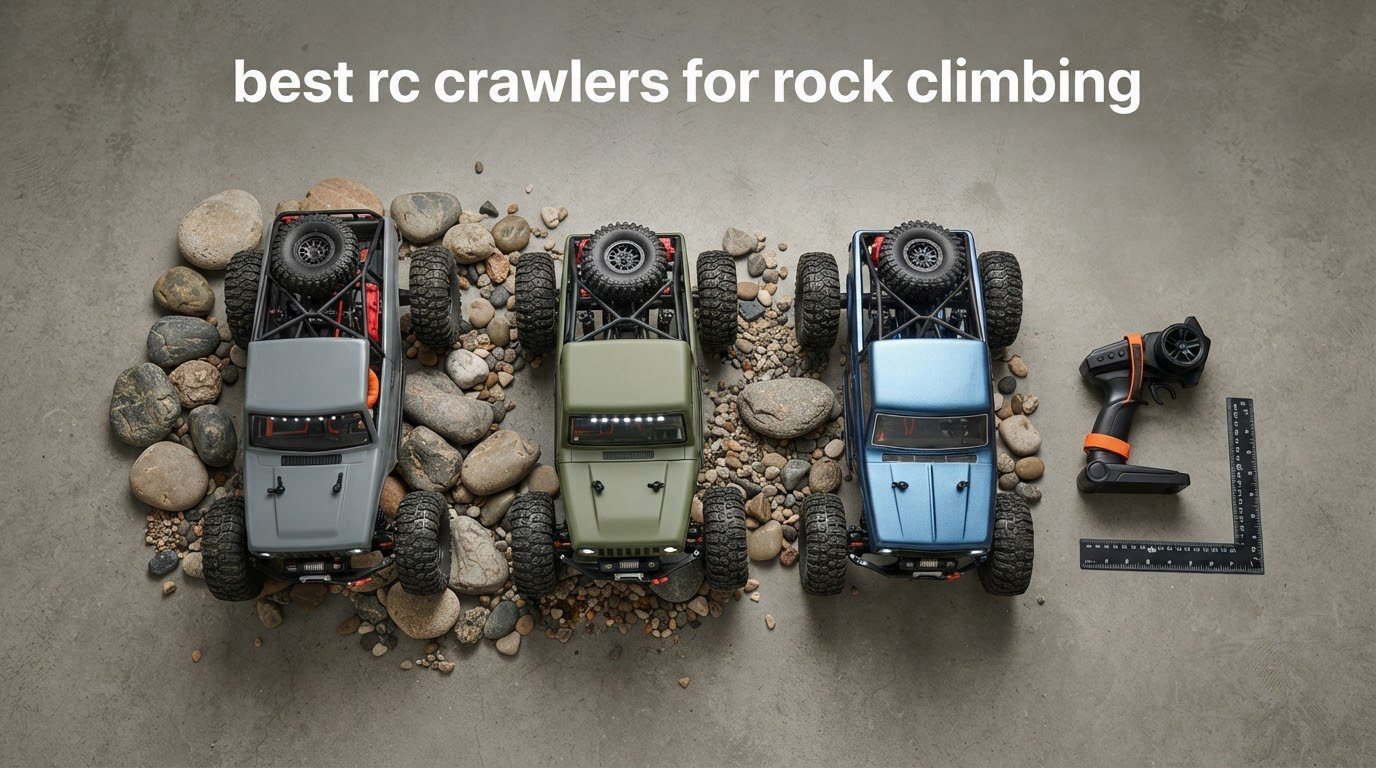
The Redcat Racing Everest-10 is the best RC crawler for rock climbing right now. Its dual 42T brushed motors, waterproof 40A ESC and long-travel tunable suspension climb logs and ledges that stop cheaper trucks, and 793 owners have rated it 4.6 out of 5. If you want a smaller rig with real brushless power, the Redcat Ascent-18 APEX is the premium mini-scale answer.
We put ten crawlers through their paces on rock, ledges and loose ground to build this 2026 list, and the differences between them are not subtle. One truck high-centers on a step that another walks up. One holds a ledge only because the tires are a size too large. That is why a climbing rig cannot be judged on motor speed or on how impressive it looks in a park.
A rock crawler is a slow, deliberately under-geared 4WD truck built with long-travel multi-link suspension, compliant axles and soft-compound tires. Torque twists the chassis so all four wheels stay loaded on the rock, and the truck inches upward without spinning the tires or flipping over itself. Speed is almost irrelevant; traction, gearing and weight distribution are everything.
That also means a truck can be fast, waterproof and beautifully finished and still be unable to climb a steep face. The list below covers entry-level 1/16 and 1/12 trucks, 1/24 and 1/18 platforms for indoor lines and tight backyard rock, and full-size 1/10 rigs for real terrain. We note honestly where each one runs out of ability, because a truck that is superb on trail and useless on a vertical ledge is not a bad truck, it is the wrong truck.
One note before we start: if the rock you are climbing is the human kind, our guides to the best rock climbing ropes for beginners and best climbing harnesses for sport climbing cover the safety side. This roundup is entirely about the machines.
Table of Contents
Top 3 Picks for the Best RC Crawlers for Rock Climbing (October 2026)

Redcat Everest-10
- Dual 42T brushed motors
- Waterproof 40A ESC
- Adjustable ride height and wheelbase

Axial SCX24 Jeep Gladiator
- Longest SCX24 wheelbase
- Oil-filled shocks
- 350mAh LiPo and USB-C charger included

The Everest-10 takes the top slot because it does the most things well without a single modification, and because the owner base is large enough that its weak points are well documented rather than a surprise. The SCX24 Jeep Gladiator is the value pick, with the longest wheelbase in its class and the most forgiving low-speed throttle. The SCX24 Power Wagon is the simplest complete package for a first crawler, and it is the one we hand to beginners who just want to learn crawler control indoors and out.
All 10 RC Crawlers at a Glance in 2026
| Product | Specifications | Action |
|---|---|---|
| Redcat Everest-10 |
|
Check Latest Price |
| Axial SCX24 Jeep Gladiator |
|
Check Latest Price |
| Axial SCX24 Power Wagon |
|
Check Latest Price |
 Cheerwing 1/10 Trail Crawler Cheerwing 1/10 Trail Crawler |
|
Check Latest Price |
 WPL C24 1/16 Crawler WPL C24 1/16 Crawler |
|
Check Latest Price |
 YAZHIYI MN-82 1/12 Crawler YAZHIYI MN-82 1/12 Crawler |
|
Check Latest Price |
 BEEZRC FMS FCX24S K5 Blazer BEEZRC FMS FCX24S K5 Blazer |
|
Check Latest Price |
 captainrc UCX2405PRO captainrc UCX2405PRO |
|
Check Latest Price |
 Redcat Ascent-18 APEX Redcat Ascent-18 APEX |
|
Check Latest Price |
 Traxxas TRX-4M High Trail Traxxas TRX-4M High Trail |
|
Check Latest Price |
Scales here range from 1/16 to 1/10, so match the row to the terrain rather than the picture. Anything at 1/24 and below is built for tabletop lines, indoor floors and small backyard ledges. The 1/18 and 1/10 rigs are the ones that climb real rock steps and ledges you could stand on.
1. Redcat Racing Everest-10: The Best RC Crawler for Rock Climbing Overall
Redcat Racing Everest-10 Electric Rock Crawler with Waterproof Electronics, 2.4Ghz Radio Control (1/10 Scale), Blue/Black
1/10 scale
8.1 pounds
17 x 9.5 x 9 inches
2.4GHz 3-channel
Pros
- Climbs large logs and ledges with strong grip
- Waterproof ESC and dual steering servos
- Adjustable ride height wheelbase toe angle and shock positions
- Battery charger radio and both motors included
Cons
- Factory steering servo and arm fail first under hard climbing
- Plastic diff lockers benefit from metal upgrades
- High center of gravity flips it on side slopes
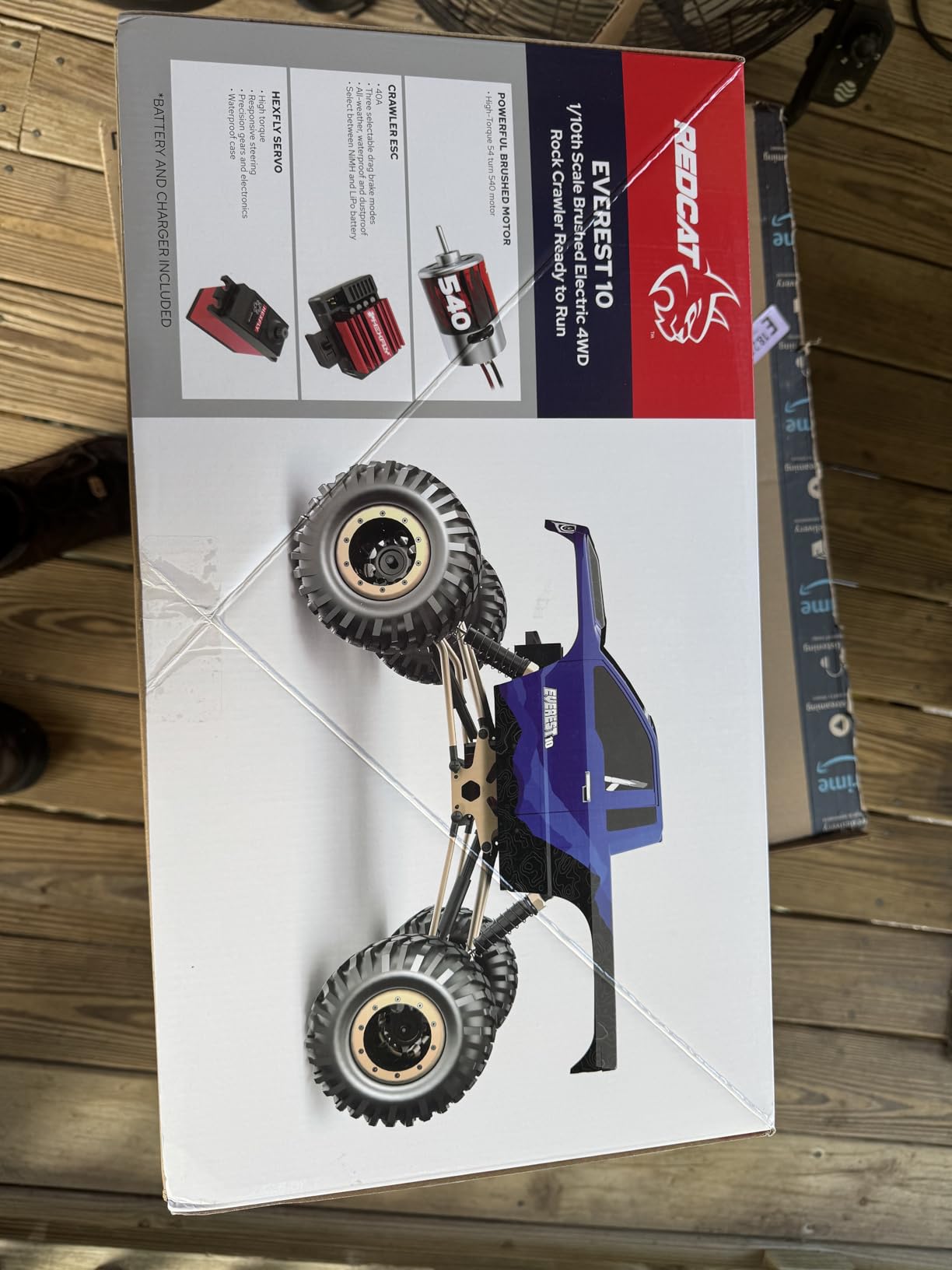
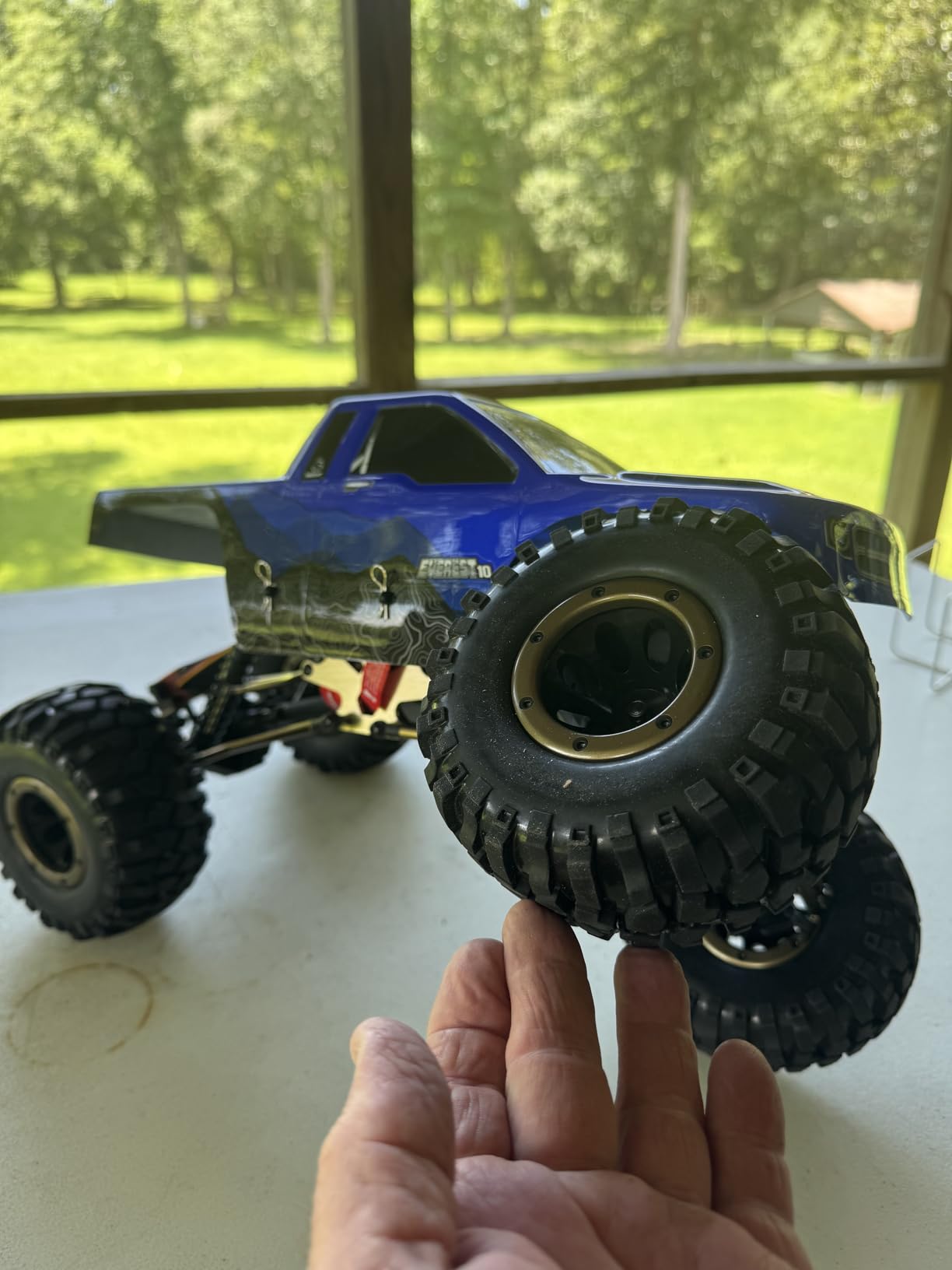
This is the truck we keep coming back to. At 8.1 pounds with a 17 x 9.5 x 9 inch footprint, it is a full-size 1/10 crawler, and the geometry adjustment range is what separates it from cheaper trucks in the same class. Ride height, wheelbase, toe angle and shock positions are all adjustable, so you can raise the chassis, stretch the wheelbase and soften the damping for a specific rock face and then dial it back for trail work.
Power comes from dual 42T RC550 brushed electric motors feeding a waterproof 40A ESC, with dual waterproof high-torque steering servos and a 2.4GHz three-channel radio. That is a lot of low-end torque and a lot of steering authority, which is exactly the combination a technical climb needs. Reviewers consistently report it climbing logs and rough terrain straight out of the box, and the suspension flex lets it conform to uneven rock instead of bridging it.
The waterproofing is not a marketing line. Owners describe submerging this truck in creeks and shallow ocean water and having it keep running, which matters if your rock lines run near water. The body is a detailed scale crawler shell with licensed Addictive Desert Designs accessories, and the whole package ships with battery, charger, radio and both motors, so nothing extra is needed before the first climb.
It ships with a 90 day warranty against manufacturer defects, which is short for a hobby truck, and that is worth factoring into how hard you treat it. The tuned suspension is the reason it climbs, and it is also the reason it survives being landed on. One owner reported that a 30 lb child fell on the truck with no damage, which tells you more about the frame than any spec sheet would.
Why the Everest-10 climbs where cheaper trucks stall
Three things do the work. The adjustable wheelbase and ride height let you set the breakover and approach geometry for the obstacle in front of you rather than living with one compromise setup. The dual-motor layout keeps torque available on both sides of a ledge, so a sidehill does not immediately spin one corner. And the suspension flex, which owners frequently single out, lets the chassis twist and keep all four tires in contact instead of lifting two wheels and high-centering.
Brushed motors are usually treated as a downgrade, and in most categories they are. Here the 42T gearing is deliberate, and the result is controlled, deliberate crawling speed rather than the frantic spinning you get from a faster motor with taller tires. For learning lines, that slow, predictable pace is an advantage.
What breaks first when you climb it hard
The factory steering servo and steering arm are the parts that fail first under hard climbing. That matches the broader hobby pattern: stock steering components are the most common breakage complaint across this entire list. Budget for a metal servo and a metal servo arm early, and the truck stops being a parts-eater.
The plastic front and rear diff lockers are the second item on the list, and they benefit from the same treatment. A third issue is weight distribution: the center of gravity sits high enough that sidehills can tip the truck, and moving weight forward and down is the fix. Reviewers also describe a wide turning radius and low top speed, which is normal crawler behaviour rather than a defect.
2. Axial SCX24 Jeep Gladiator: Best Value 1/24 Crawler for Climbing
Axial SCX24 Jeep Gladiator RC Truck 4WD Rock Crawler Green AXI00005V2T3
1:24 scale
2.3 pounds
10.8 x 6.6 x 10.3 inches
350mAh LiPo included
Pros
- Longest wheelbase in the SCX24 lineup
- Precise low-speed throttle for technical lines
- Metal chassis with steel frame rails
- Large inexpensive aftermarket support
Cons
- Included LiPo battery and charger have failed for some owners
- Factory wheels and tires are the weak point on rock
- Very slow crawling pace on larger steps
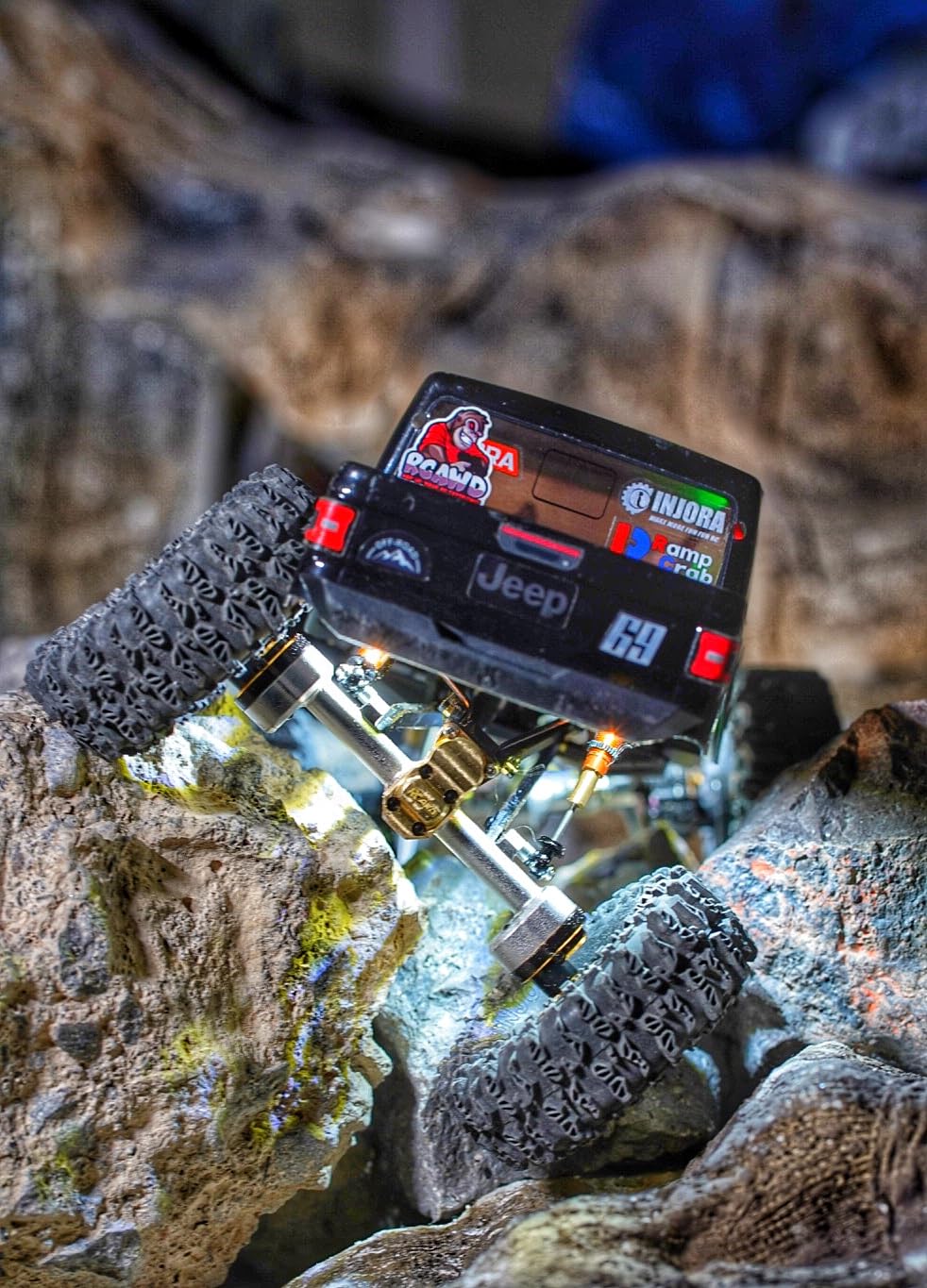
The Gladiator is the body we would pick from the 1/24 class, and the reason is the wheelbase. Axial stretched it relative to the rest of the SCX24 lineup, and that single change does more for climbing than any electronics upgrade on a shorter chassis. A longer wheelbase bridges small gaps instead of dropping a wheel into them, which is exactly how you lose a line on technical rock.
It is a current-generation release on a 1:24 scale, weighing 2.3 pounds, with a metal chassis built around realistic steel frame rails. Oil-filled shocks smooth out the ride over rough ground, and the low-speed throttle control is precise enough that inching up a near-vertical step is genuinely doable rather than a coin flip. The Spektrum SLT2 2.4GHz radio handles the steering, and two front bumper LED lights are functional rather than decorative.
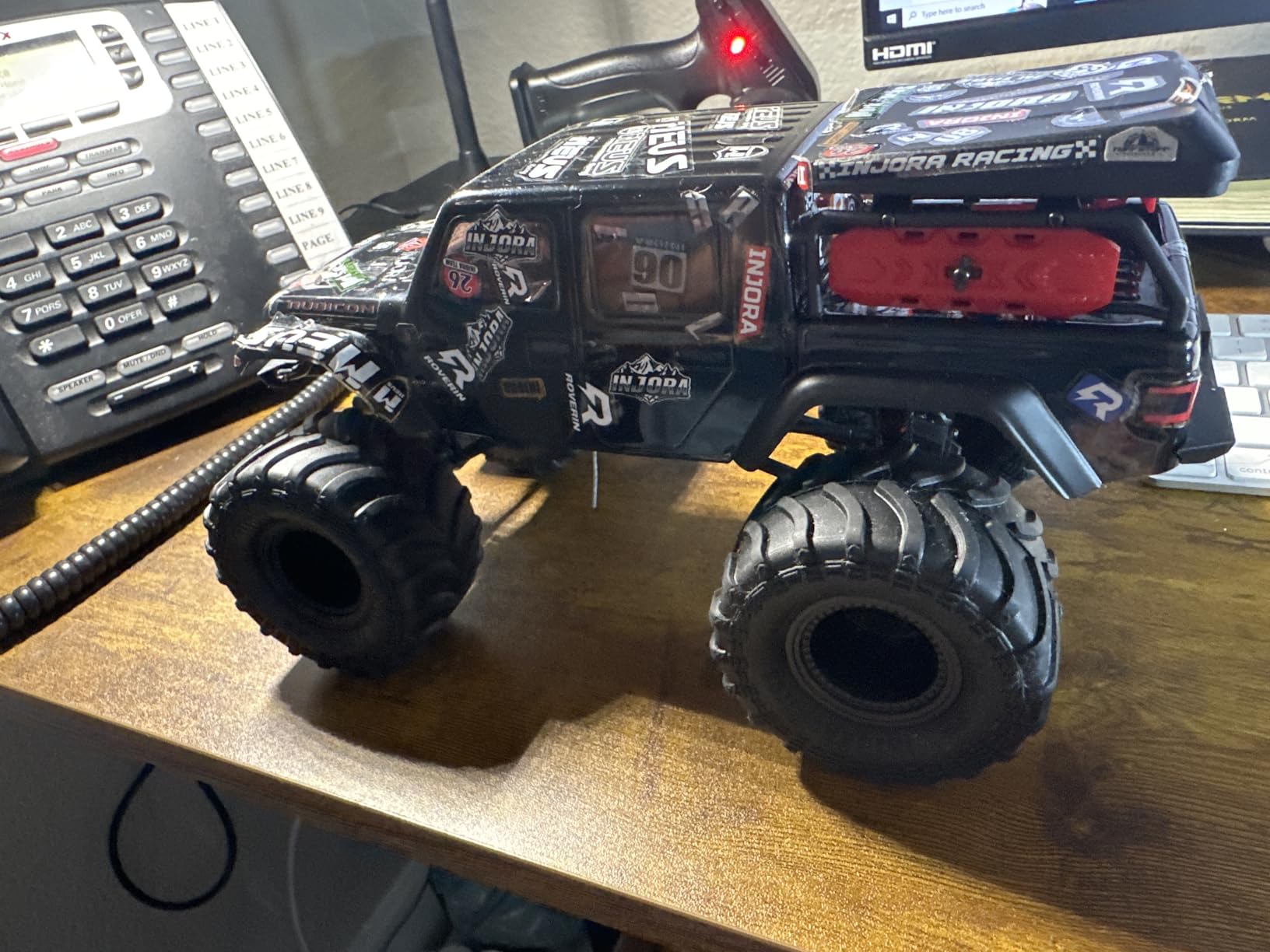
The truck ships with a Spektrum 350mAh LiPo battery and a 0.5A USB-C charger, plus KMC Machete wheels and Nitto Trail Grappler M/T tires. Owners report roughly 30 to 40 minutes of run time per charge, which lines up neatly with a session on a set of backyard lines rather than an afternoon at the trail.
The aftermarket is the quiet superpower here. The SCX24 platform has a deep parts ecosystem, so tires, brass weights, shocks and drivetrain pieces are inexpensive and easy to find, and a wide range of bodies fits the same chassis. If you like modifying a crawler as much as driving one, this is the cheapest platform to learn on without starting from a bare kit.
Is the Gladiator the right first truck for your rock line?
If your lines are indoor, tabletop or small backyard steps, yes, and it is a strong choice. A 1/24 truck can scale a set of stone steps, a rock garden border or a pile of rubble that would be a feature wall for a smaller model, and the extended wheelbase keeps it stable while it works. Reviewers regularly single out this platform as the best SCX24 base for climbing, and the 4.4 average across 456 reviews supports that.
If your target is a real rock face taller than the truck, move up a scale. A 1/24 has a physical limit on the size of obstacle it can straddle, and no amount of gearing changes that. The Gladiator is a line-precision tool, not a terrain-eating machine.
What to upgrade on the Gladiator before hard rock work
Tires first, then weight. The factory KMC Machete wheels and Trail Grappler tires are fine on dirt and light rock, and they are the part most owners replace first when they start pushing the truck onto harder surfaces. Adding brass down-low weights inside the rims or on the front axle keeps the nose planted on steep grades, which is the difference between a climb and a spin.
The one complaint to take seriously is the included battery and charger, which some owners report failing within weeks. A USB-C charger that cannot deliver enough current is a common issue at this size, and owning a spare 350mAh LiPo removes the frustration entirely. The battery connector can also be awkward to unplug, so support it rather than yanking it.
3. Axial SCX24 Dodge Power Wagon: Best for New Crawlers
Axial RC Truck SCX24 40’s 4 Door Dodge Power Wagon Green 1/24 4 Wheel Drive-RTR(Everything Needed to Run Included) AXI00007T2
1:24 scale
10.7 x 6.8 x 10.3 inches
10A brushed ESC
Dynamite 88T motor
Pros
- Battery charger radio motor and servo all included
- Oil-filled shocks and beadlock wheels as standard
- Detailed Power Wagon body with overlanding rack
- Well supported Axial SCX24 platform
Cons
- Dynamite 88T brushed motor is the entry level powerplant
- Plastic body and drivetrain wear faster than metal parts
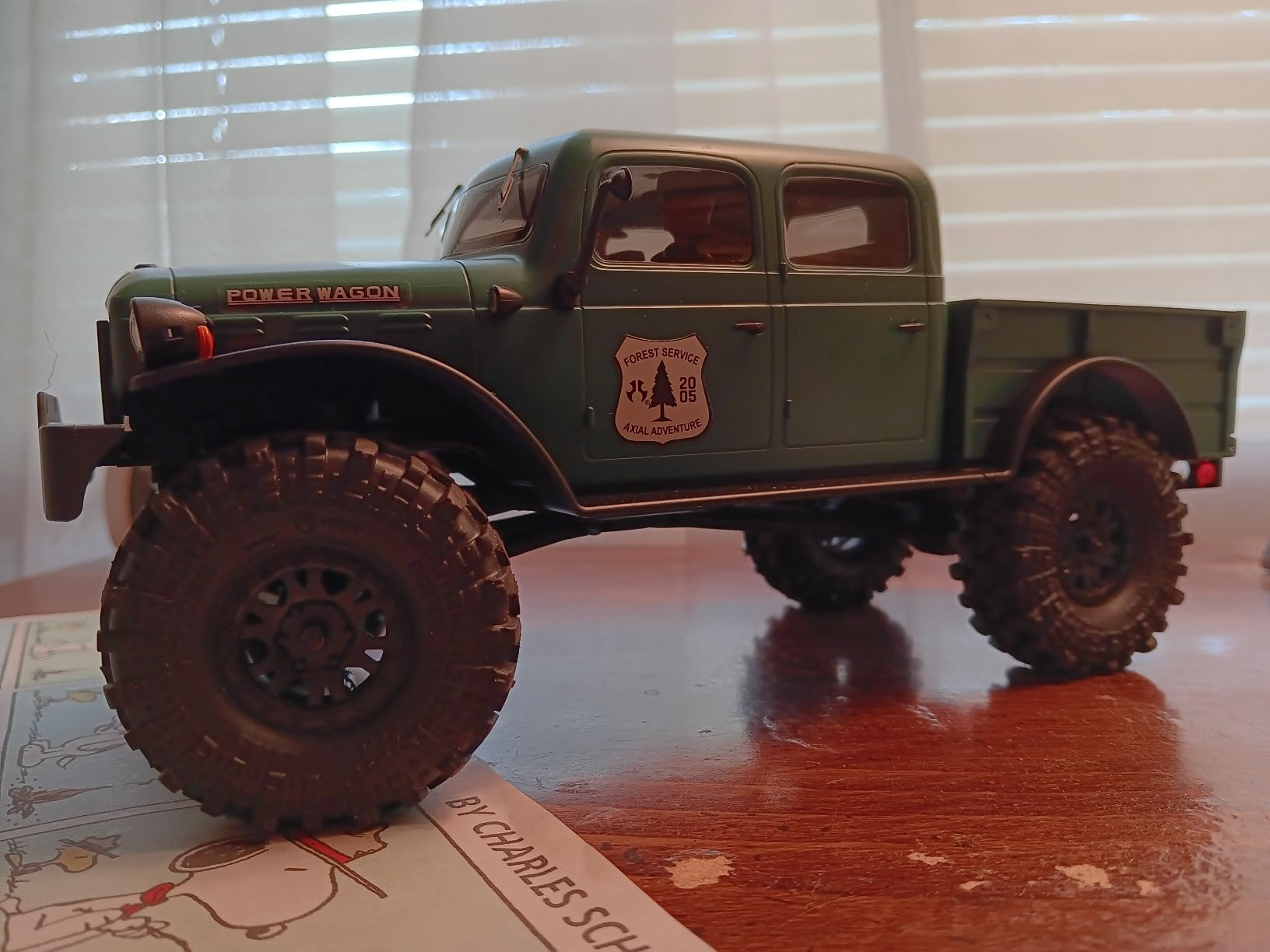
Where the Gladiator is tuned for climbing, the 1940s Dodge Power Wagon is the most complete beginner package in the SCX24 range. It ships with a 10 amp brushed two-in-one ESC and SLT receiver combo, an Axial AS-1 steering servo, a Dynamite 88T brushed motor, the battery, the charger and the transmitter. Nothing is missing, which matters most when the person driving has never run a crawler before and does not yet know what a bare chassis needs.
The 1:24 scale truck is a recent release with a detailed molded ABS hard body, an overlanding rack and scale accessories, oil-filled shocks, Pro-Line Interco Super Swamper tires and Pro-Line Impulse Bead-Loc wheels. Beadlock-style rims and a proper tire are a good starting point for rock work, and the oil-filled shocks keep the chassis from skipping over small ledges.

The 4.5 average across 330 reviews is the second highest on this list, and owners describe it as a solid all-around 1/24 crawler for beginners and upgraders alike. Because it runs the same chassis family as the Gladiator, anything you learn about tuning the platform transfers directly if you later step up in scale.
Where the Gladiator wins is wheelbase, and it shows on longer lines. This truck has the shorter stance, so it is steadier on flat ground and in slow indoor crawls but less stable when a rear wheel drops. If you are buying one truck and you plan to grow into rock work quickly, the Gladiator is the smarter first pick.
Why the Power Wagon works as a first crawler
It removes the two decisions that stop beginners. The power system is complete and matched, so there is no motor or ESC to research, and the tires and shocks are already the ones you would want for mild rock, so there is no immediate parts list. What you are left with is learning throttle control, which is the actual skill that decides whether you can climb.
That is the real value proposition. Crawling is a coordination skill, and a truck that arrives controllable teaches it faster. The Pro-Line Swamper tires and beadlock wheels give enough grip for gravel, small rocks and short climbs, and the molded body detail means it looks right on a shelf between sessions.
Where the Power Wagon runs out of ability
The brushed Dynamite 88T motor is the entry-level powerplant in the SCX24 lineup, and on a steep face it simply runs out of torque before the tires run out of grip. That is the moment to change gears or change the truck rather than fight it. Motor upgrades are the standard fix, and the SCX24 parts catalog makes that a straightforward swap.
The ABS body and much of the drivetrain are plastic, which is normal at this size but does mean more frequent replacement than the metal builds further up this list. Treat it as a learning platform and expect to replace a shock or a driveshaft at some point. Reviewers accept that trade without complaint when the truck has taught them what they came to learn.
4. Cheerwing 1:10 Trail Crawler: Best Steel Chassis Budget Rig
Cheerwing 1:10 Scale Rock Crawler 4WD Off-Road Remote Control Truck
1:10 scale
5.2 pounds
2500mAh battery
Waterproof electronics
Pros
- Steel suspension links and rail chassis frame
- Full waterproof ESC servo and receiver package
- 2500mAh battery and 250 foot 2.4GHz control
- Dependable enough that owners buy a second one
Cons
- Plastic wheels strip their hexes and gears wear
- Top-heavy chassis flips on uneven ground
- 20T motor is too fast for technical crawling
Most budget crawlers use plastic frame rails. The Cheerwing uses alloy steel for the suspension, steering links and the rail chassis frame, and that rigidity is the reason this truck tolerates being thrown at rough ground in a way that lighter builds do not. At 5.2 pounds it is heavier than the 1/24 models and considerably heavier than a plastic 1/16 shell, and reviewers notice the difference.
The electronics package is unusually complete for the money. You get a waterproof brushed ESC, a 6 kg/cm metal gear waterproof servo, a waterproof receiver, a sealed gear cover and a 2.4GHz remote with up to 250 feet of range and a dual mode switch. High-speed ball bearings run throughout the drivetrain, which is the sort of detail that shows up as smoother, more consistent crawling after a few months of use.
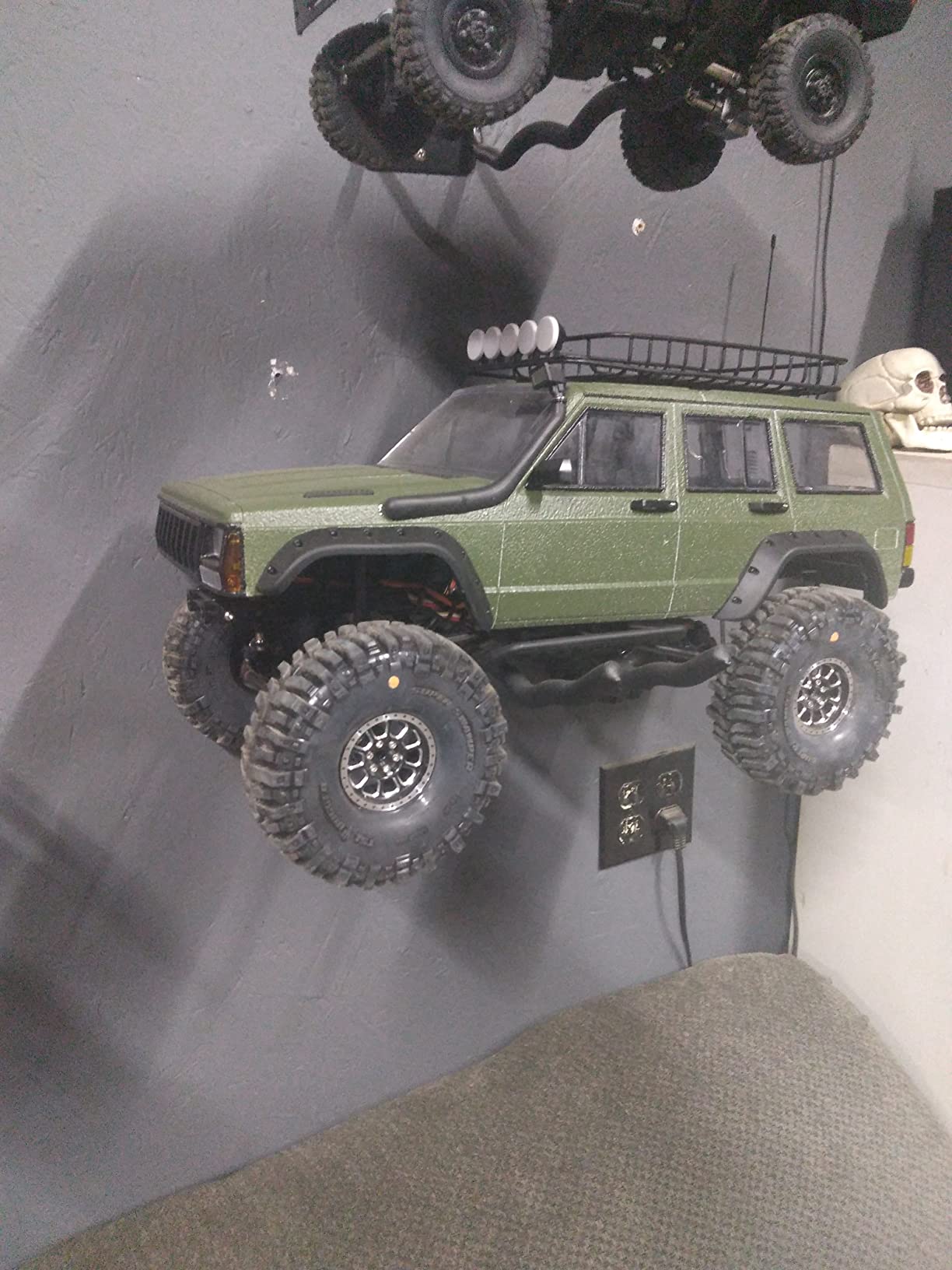
The battery is a 2500mAh rechargeable pack, which gives a long session out of the box, and the 550 brushed motor drives all four wheels. The listed maximum speed is 15.53 miles per hour, and that number is the first warning sign for rock work. This is a trail crawler first, and at full throttle it will spin a tire rather than crawl a ledge.
Owners commonly report that once better tires and rim weights are fitted, the truck keeps pace with far more expensive rigs. That is the honest picture: the chassis and electronics are strong, the running gear is not, and the running gear is what climbing depends on.
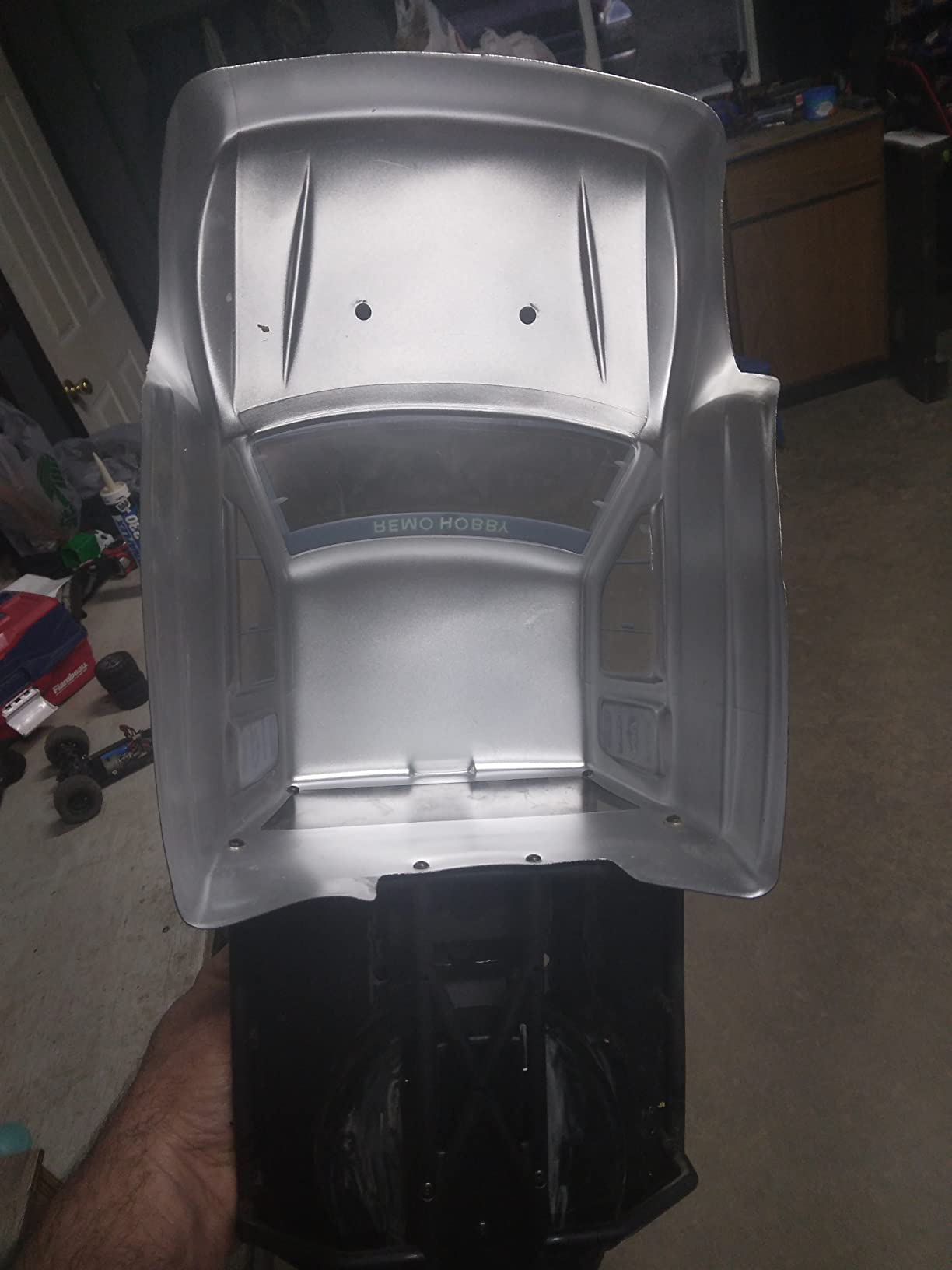
What the steel chassis buys you on rock
Rigidity means the suspension geometry stays where you set it. On a technical line where one wheel is high and one is low, a plastic frame twists, which scrubs the tires and kills the load on the climbing side. The steel rails and links here hold their shape, so the axles keep their intended angle and the tire contact patch stays square to the rock.
That is why this truck handles sand, rock and grass with four-wheel drive traction that surprises people at this price. The waterproof electronics also mean wet rock and mud are not a shutdown event. For trail running that includes creek crossings and mud, the package is well matched.
Why the running gear limits technical climbing
Two parts need replacing early. The plastic wheels strip their hexes, which turns a tight turn into a spinning wheel, and the transmission gears wear over time. Both are common wear items on this class of truck and both are straightforward to fix with metal replacements.
The 20T motor is the bigger limitation for climbing. It is geared for speed on a trail, not torque on a face, and pairing it with taller tires makes the problem worse rather than better. Owners who fit larger, softer tires and then slow the gearing down report a night-and-day difference in climb ability, which is the standard rule: bigger tires need lower gearing to work on rock. A separate quality issue worth knowing is that the ESC and receiver are combined, so the radio cannot be rebound if the receiver fails.
5. WPL C24 1/16 Crawler: Best Budget Pick for Learning Controls
Apawband RC Crawler WPL C24 RC Rock Crawler RC Truck 4×4 Off Road RTR
1:16 scale
1 kg
12 x 5.5 x 5.5 inches
7.4V 500mAh battery
Pros
- Proportional steering feels precise for the price
- Four-wheel drive with four spring dampeners
- Metal chassis at a very low entry point
- Battery charger and remote included
Cons
- 500mAh battery limits play to about 30 minutes
- Two hour charge time between sessions
- 1/16 size cannot address large obstacles
The C24 is the cheapest truck here that still steers proportionally, and that one feature is why it beats its direct competitors. A proportional steering setup gives finer, more analog-feeling input than an on-off toy steering link, so learning the crawl technique of feathering the throttle and easing the wheel onto a rock is far easier. For a first crawler on a tight budget, it does something the other entry trucks cannot.
It is a 1:16 scale build weighing 1 kg, with a metal chassis that allows a 45 degree steering twist angle, four-wheel drive and four spring suspension dampeners. The 2.4GHz transmitter handles multi-car running, and it arrives with the built-in 7.4V 500mAh rechargeable battery, a charging cable, the remote and a manual, so it is usable immediately.
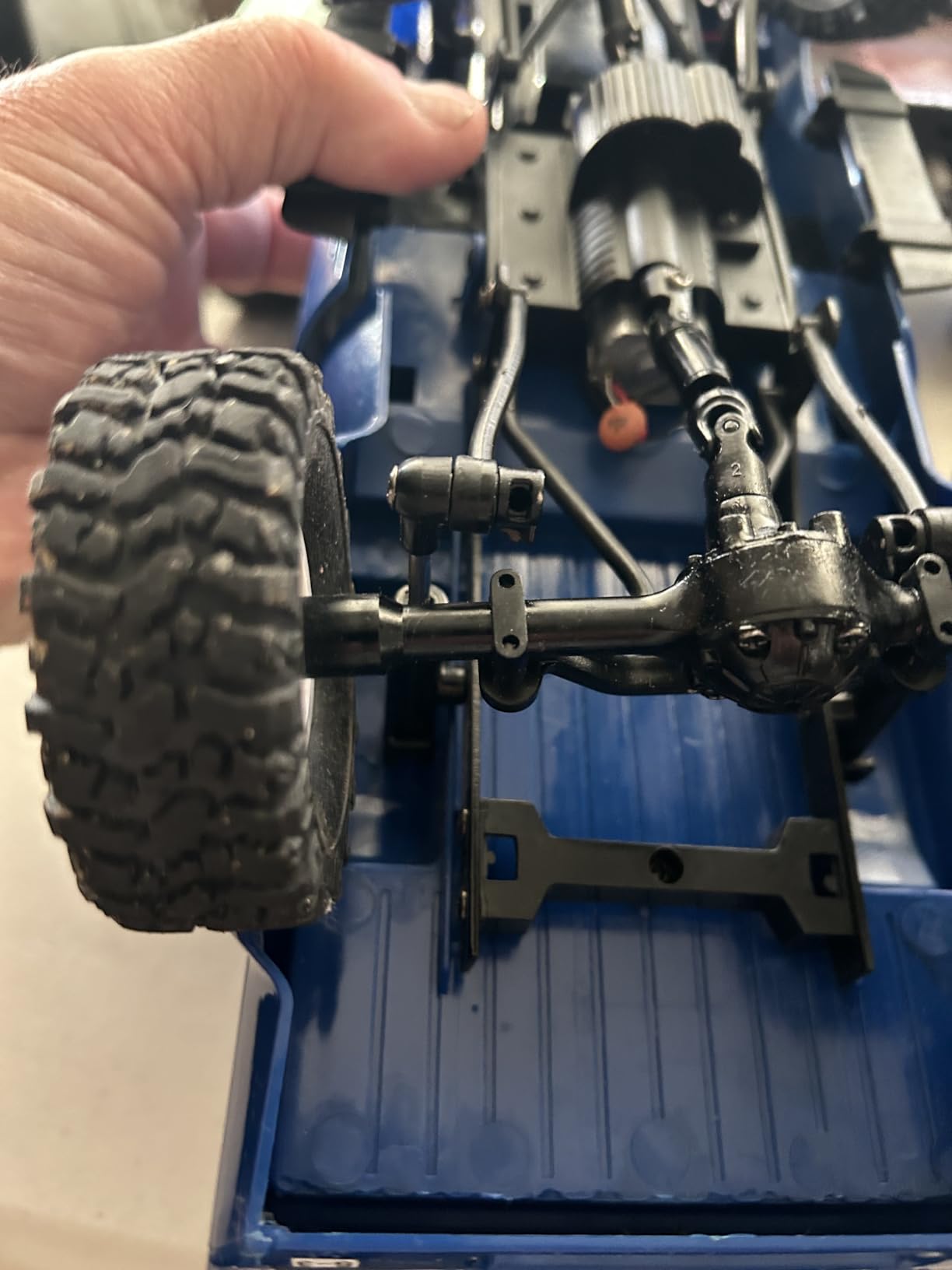
Charge time is about two hours and play time runs a little over 30 minutes, which fits a short backyard session rather than an outing. The body and much of the truck are ABS and plastic with metal hardware, which is the expected construction at this size and price.
Reviewers consistently point to the proportional steering as the standout feature and regard the truck as unusually controllable for what it costs. The suspension springs and four-wheel drive let it handle sand, mud and rocky ground competently, so it is not limited to a flat floor. The 1/16 scale is also what makes it genuinely portable, which matters if your rock is at a schoolyard or a park rather than in your garden.
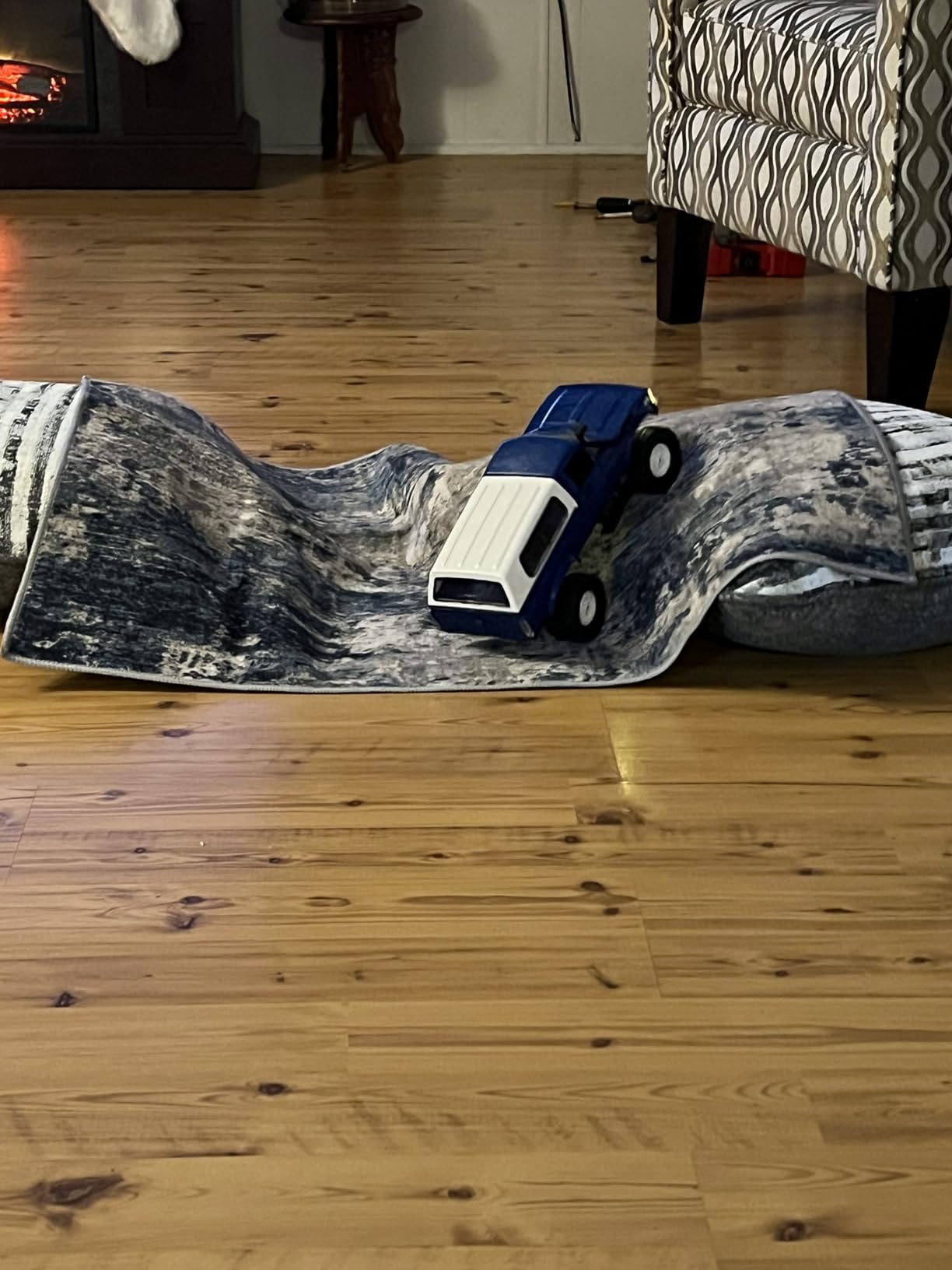
Where the C24 earns its place
It belongs in the hands of someone who is learning, on a child, or on a surface with genuine texture. Gravel paths, garden edging, a pile of rubble, a set of stone steps low enough for a 12 x 5.5 x 5.5 inch truck to tackle. At that scale the C24 is a competent little machine, and the metal chassis and four-wheel drive make it stable on slopes where cheaper trucks just spin.
It also makes a good second truck. Because it runs on its own 2.4GHz frequency and the transmitter has a usable range, you can put it and a larger crawler on the same ground and practice lines at two different scales, which is a genuinely useful way to build line-reading skill.
What you give up at 1/16 scale
Size is the limit, and no gearing change fixes it. A 1/16 truck cannot straddle an obstacle wider than its wheelbase, and the smaller the tire, the fewer edges it can catch to pull itself upward. If your goal is climbing a genuine rock face, you will outgrow this truck quickly, which is why we treat it as a stepping stone rather than a destination.
The 500mAh battery and two hour charge cycle are the other practical constraints. Budget for a second battery before you commit to long sessions, and note that the small pack also limits how much torque the truck can sustain on a hard pull before voltage drops.
6. YAZHIYI MN-82 1/12 Crawler: Best Dual Battery Setup
MN-82 RC Rock Crawler Car 1/12 Scale Toyota Pickup Truck , 2.4GHz 4WD Off-Road Remote Control Truck, 2-Speed Modes, 2×1200mAh Batteries, All-Terrain Crawler for Adults Kids Indoor Outdoor (whth Gift)
1/12 scale
13.8 x 4.7 x 5.5 inches
Two speed modes
2 x 1200mAh
Pros
- Two 1200mAh batteries included for long sessions
- Two selectable speed modes for different terrain
- Climbs hills and rocks well for the cost
- Detailed scale Toyota pickup styling
Cons
- Plastic front axle converter can loosen and splay the wheels
- Not strong enough for large rocks
- Drivetrain and remote failures after a few months
Including two 1200mAh rechargeable batteries is unusual at this level and it changes how you use the truck. Most competitors ship a single small pack, which means a 25 minute session and a long wait. Two packs means you run one while the other charges, and that is the difference between practicing lines every evening and practicing them once a month.
The 1:12 scale Toyota pickup styling looks good out of the box and improves further with decals and printed accessories, several of which come in the box. Four-wheel drive, a 2.4GHz remote and two selectable speed modes give you a slow mode for technical ground and a faster mode for open gravel, and the precise speed control helps when negotiating an obstacle that demands a crawl.
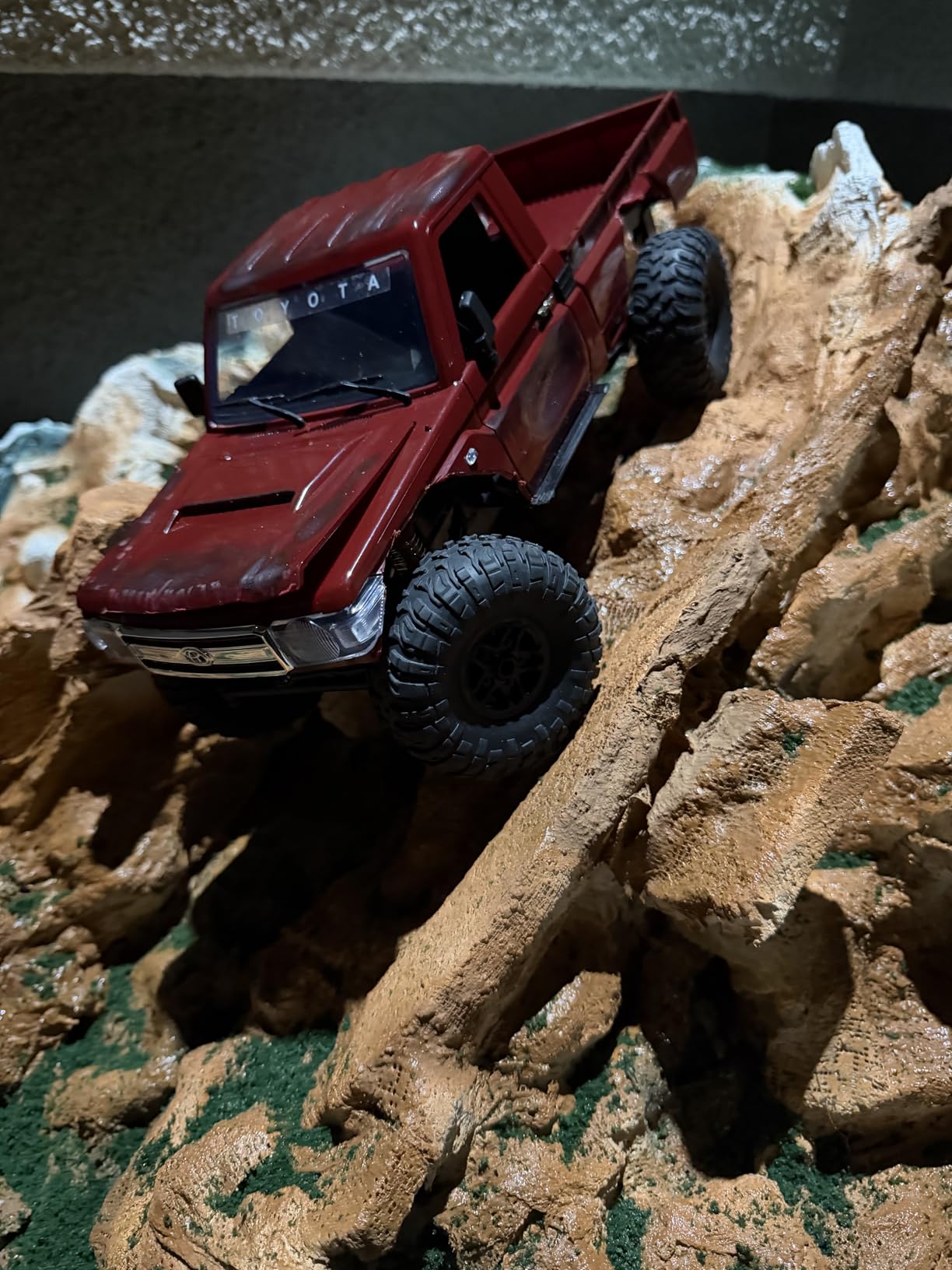
Experienced RC owners rate this truck highly for what it costs, and the 4.4 average across 227 reviews reflects genuine satisfaction rather than novelty. Owners call it one of the better budget entry points into crawling, with the dual battery pack, the traction and the looks standing out as the reasons.
It is also honest about limits. The truck climbs hills and rocks well, but reviewers are clear that it is built for medium terrain rather than large rock. The stated dimensions of 13.8 x 4.7 x 5.5 inches put it between the 1/16 and 1/10 models, so it sits in a useful middle ground for backyard lines that are too big for a tabletop crawler and too small for a full-size rig.
Why two speed modes matter on rock
A single-speed truck makes you choose between crawling pace and forward progress. The MN-82 solves that with a mode switch, so you can drop into the low setting for a ledge and drop back to the faster setting to reach the next line. On a hillside with a technical section in the middle, that switch removes most of the frustration.
The dual battery pack also protects your throttle modulation. A sagging battery produces inconsistent torque, and inconsistent torque is exactly what makes a truck spin instead of climb at the moment of load. Two fresh packs mean you spend your sessions with full voltage, which is why owners find the truck more capable than its specification suggests.
Where the plastic front axle will bite you
The recurring weakness is the plastic front axle and steering converter assembly. It can loosen over time, and when it does the front wheels splay outward, which destroys steering geometry and makes the truck wander instead of tracking. It is a small part, but it is the part that determines whether the truck goes where you point it.
The second limitation is structural rather than mechanical. On large rocks the chassis is not stiff enough to load the tires properly, so the truck bogs down or the parts start to fail, and some owners report remote control or drivetrain failures after a few months of regular use. Check the front converter tightness periodically, and treat this as a backyard and medium-terrain truck rather than a rock-face machine.
7. BEEZRC FMS FCX24S Chevy K5 Blazer: Best Scale Realism
BEEZRC FMS 1/24 FCX24S Chevy K5 Blazer S RC Crawler, Officially Licensed RC Rock Crawler, RC Pickup Truck SUV, 4WD 2.4GHz Hobby RC Model, 8km/h Mini Car,Off-Road Remote Control Car for Adults(Black)
1/24 scale
442 g
15 x 6 x 7 inches
Two-speed transmission
Pros
- GM officially licensed K5 Blazer that converts to a pickup
- Crawls well in factory form with both gears usable
- Large modding community with many hop-up parts
- Working headlights and quick-detachable body
Cons
- Friction shocks are sloppy and leak oil
- Plastic driveshafts are undersized for the torque
- Electronics are not waterproof
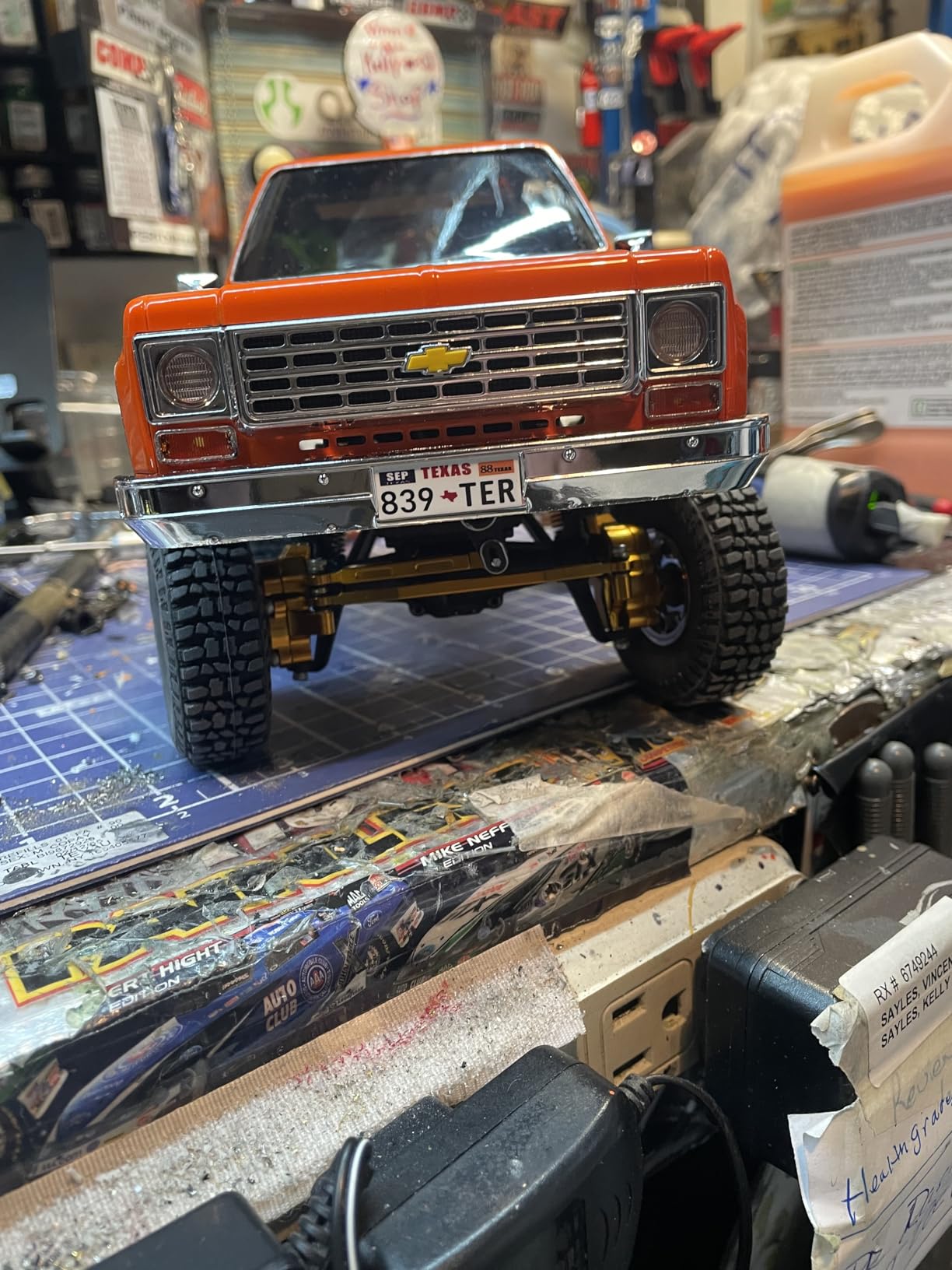
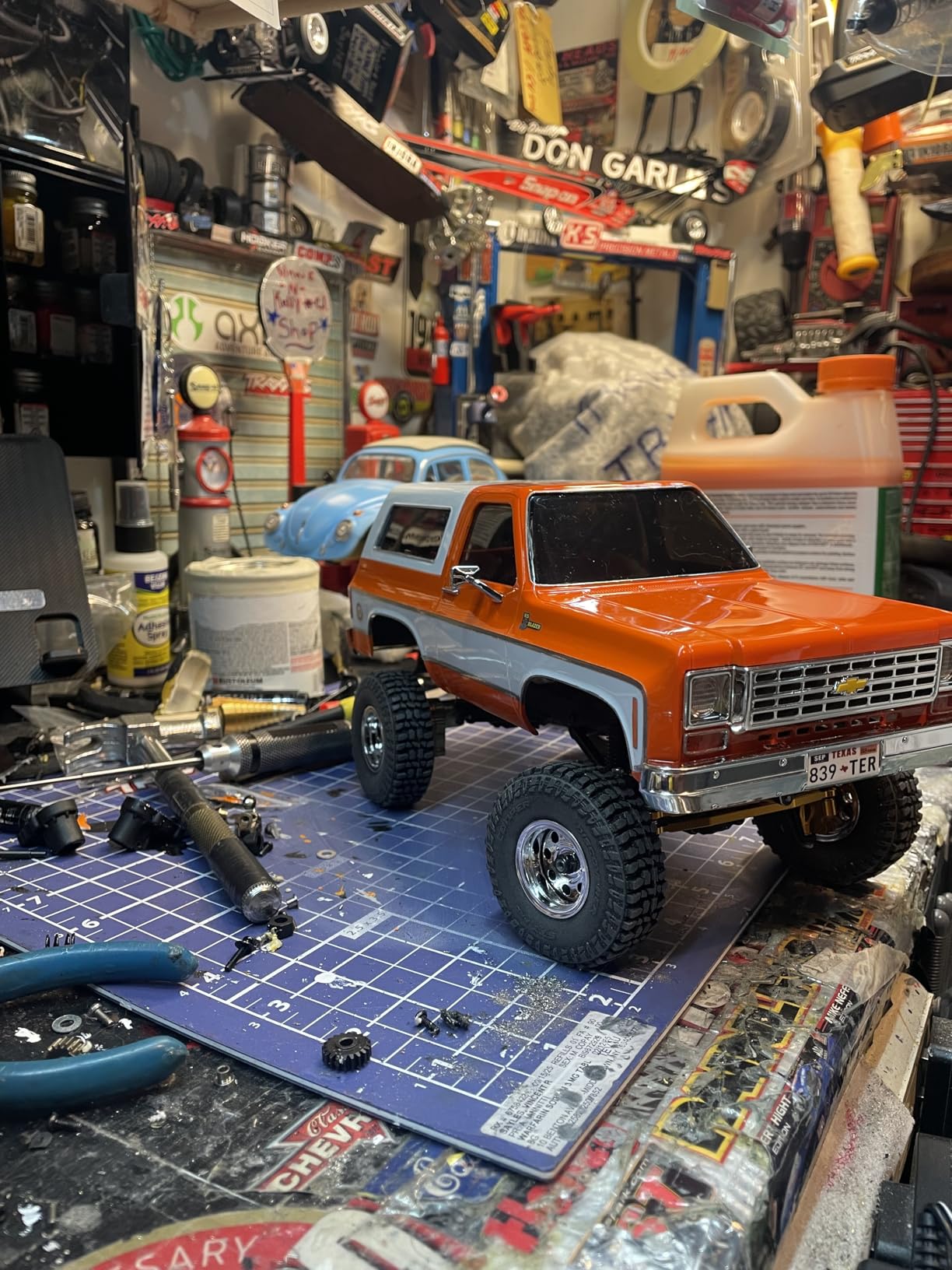
If realism is your priority, the officially licensed 1970s Chevrolet K5 Blazer is the best-looking crawler on this list, and the convertible body is the detail that wins people over. With the included rear roof and roll cage removed, the same truck becomes a pickup, so you can run two visual configurations from one vehicle on the same rock line.
Underneath, the FCX24 chassis uses a 130 motor and a two-speed mechanical transmission, which is the single best feature for climbing. Mechanical shifting means you choose the ratio rather than negotiating a mode menu, so you can crawl in first and drive home in second. Reviewers consistently note that it climbs well even fully factory-issued, and the transmission handles slow crawling and faster running equally well.
The rest of the hardware supports the climb. Metal gears throughout, elevated ground clearance for off-road use, a four-link suspension with a nylon frame and ABS shell, a metal gear steering servo and a G3 transmitter with a one-key lighting switch and integrated receiver. The body detaches quickly for maintenance, which saves real time when you are changing tires every session.
At 442 g and 15 x 6 x 7 inches, it is a compact 1/24 rig with a large aftermarket behind it. There is a deep pool of hop-up parts for the FCX24 platform, and the Blazer body is one of the most requested shells in the 1/24 crawler world, so parts availability is a genuine practical benefit rather than a footnote.
How the two-speed transmission helps you climb
Low gearing is the core of climbing ability, and a mechanical two-speed box gives you a low range without a second motor or a complicated selectable differential. It also means the ratio is fixed and predictable, so once you know how the truck behaves in first gear you can drive it by feel on a rock face with almost no visual reference.
That predictability is what makes this a good learning platform. Pair the low gear with the elevated ground clearance and the metal gears, and the truck has the three things a technical line needs: a torque advantage, enough clearance to keep the driveshafts off the rock, and a drivetrain that does not snap when you load it up.
Which parts to change before you use it on rock
Start with the shocks. The factory friction shocks are described as sloppy and are reported to leak oil even after owners add o-rings, and shock damping is what stops the chassis from skipping over ledges. Next come the driveshafts: the stock plastic shafts are undersized for the available torque, so they fail under hard launches on a technical line.
Two further notes. The rear bumper drags when coming off obstacles, which will stop a climb dead, and the electronics are not waterproof, so keep this truck out of puddles and creek crossings. A small number of buyers also report steering or drivetrain failures shortly after arrival. With those addressed, reviewers widely consider it a strong budget crawler that holds up against more expensive builds once lightly modified.
8. captainrc UCX2405PRO: Best Mini-Scale Climbing Setup
captainrc 1/24 RC Crawler Car UDI RC UCX2405PRO 4wd Mini Climb Racing Brushless Motor 4 Wheel Steering 3 Speed Transmission RTR Toy (Yellow)
1/24 scale
27mm ground clearance
4WD brushless
Brushless ESC
Pros
- Brushless motor and ESC climb harder than brushed trucks
- Four wheel steering with three speed transmission
- 27mm clearance is high for 1/24 scale
- 2.4GHz four channel remote with 100m range
Cons
- 1/24 footprint limits obstacle size
- Listing states a 0-12 recommended age
- Long form review content is limited
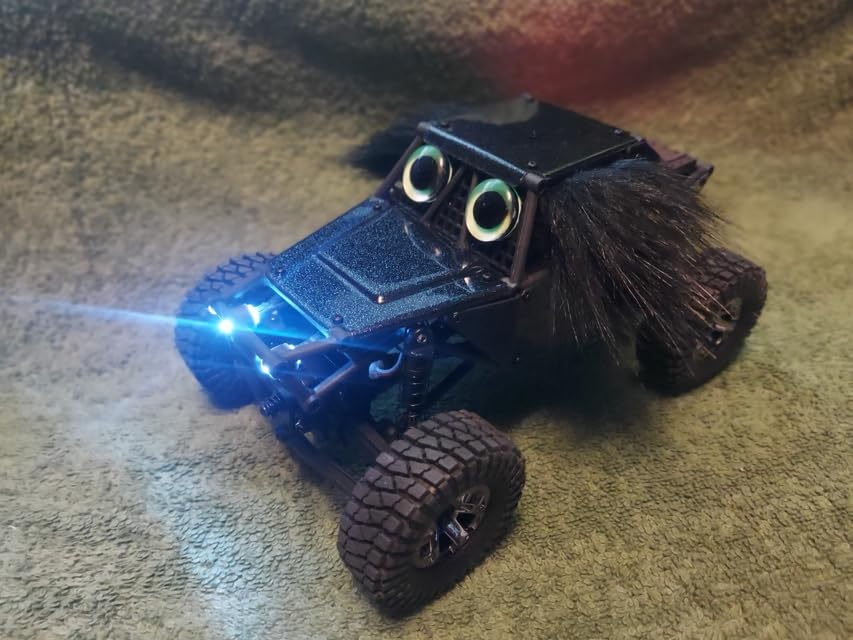
This is the only mini crawler here with a brushless power system, and on rock that matters more than it does on any other surface. Brushless motors are not just faster; they deliver torque more smoothly and with less heat build-up, and smooth torque is what lets a truck maintain traction while the weight shifts onto the climbing wheels. Owners report noticeably stronger climbing power than brushed budget trucks of the same size.
The second feature is four wheel steering paired with a three speed transmission. Four wheel steering at 1/24 scale is a genuine advantage indoors, because it lets the truck crab or turn in a space that a two-wheel-steering chassis cannot navigate, and a rock line on a tabletop is a space problem before it is a torque problem. The three speeds give you fine control over how fast you commit to an edge.
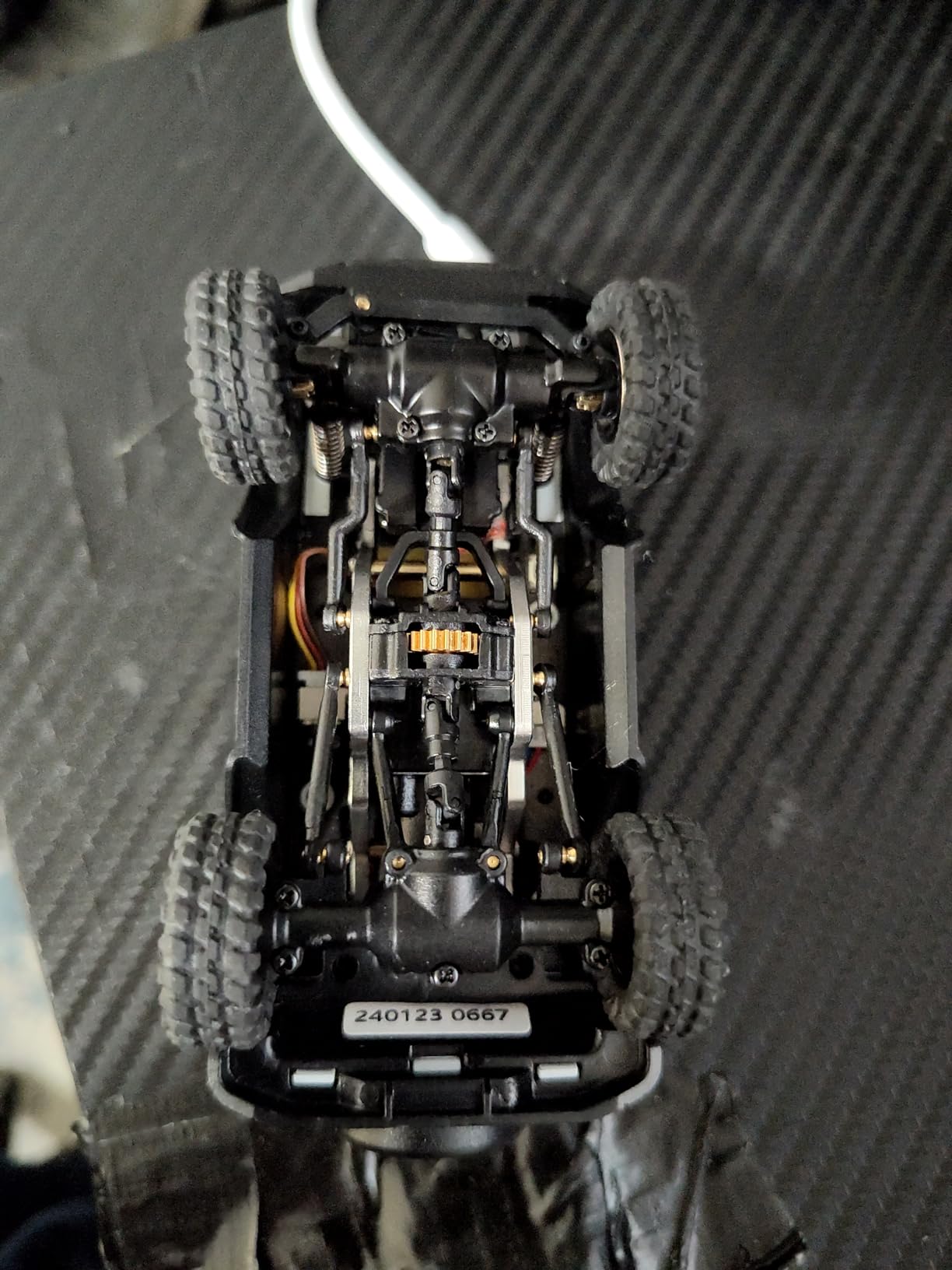
Ground clearance is listed at 27mm, which is high for a 1/24 chassis and is what keeps the drivetrain and the skid area off the edges you are climbing over. The body is a PVC shell over a PA fiber reinforced roll cage, which is a sensible skeleton for a truck that will be tipped onto its side repeatedly. Steering is handled by a 9G three-wire servo, and the 2.4GHz four channel remote gives about 100 meters of range.
At 7.5 x 4.8 x 3.9 inches, this is a small truck with a large appetite. It sits in the middle of the pack on ratings, largely because the 1/24 format is polarizing: people who want a precise indoor climber love it, and people who imagined a big outdoor crawler find it too small.
Why brushless power and four wheel steering suit rock
Torque delivery is the first advantage. A brushed motor at its limit bogs down and generates heat, and a bogged motor spins the tire instead of driving the wheel, which is the classic reason a small truck falls off a rock face it should have climbed. A brushless motor holds its output, so the tire keeps loading the edge rather than letting go.
Four wheel steering is the second. On a technical line, the ability to point all four wheels at the available hold turns a geometry problem into a traction problem, and traction is solvable with throttle. This is also why four wheel steering has become common on competition-oriented rock platforms at larger scales, where the same logic applies at bigger dimensions.
What a 1/24 brushless crawler cannot do
It cannot address a large rock. The tire diameter and wheelbase set a hard ceiling on which edges the truck can catch, and no power system raises that ceiling. The 27mm clearance helps a lot with the obstacles a 1/24 can physically reach, but it does not extend that reach.
Two practical notes. The manufacturer listing states a recommended age of 0 to 12, which is unusual for a hobby crawler and suggests this is marketed as much toward younger drivers as toward enthusiasts, so check the packaging and radio range for what you need. And long form owner review content is limited for this listing, so treat the spec sheet as the primary source and expect to tune it yourself rather than following a well-worn setup path.
9. Redcat Ascent-18 APEX: Best Carbon Fiber Chassis
Redcat Racing Ascent-18 APEX, 1/18 Scale Brushless Electric Rock Crawler, Carbon Fiber, 4WD RC Car for Adults with 2.4GHz Radio System (Gray)
1/18 scale
16 ounces
12 x 12 x 8 inches
3S 200mAh LiPo
Pros
- Carbon fiber low center of gravity chassis with angled skidplate
- Wide portal axles and brass weight components
- Hobbywing brushless system with 3S LiPo included
- Aluminum capped oil-filled coilovers and 1.3 inch beadlock wheels
Cons
- Highest cost in this group
- Small 200mAh battery means frequent recharging
The Ascent-18 APEX is the most thoughtfully engineered truck here, and every major design choice points at climbing. The carbon fiber low center of gravity chassis keeps the mass down, which directly reduces the tipping moment when the truck sits on a slope, and the motor-forward layout with an angled skidplate puts weight where traction is needed rather than behind the rear axle. On a sidehill that difference is the difference between a climb and a roll.
The wide portal axles do two jobs. Portal geometry places the axle pivot above the wheel center, which raises ground clearance and tightens the turning radius at the same time, and the wide units here are noted for improved steering radius. Brass components in the front portal boxes and diff covers add weight low and forward, biasing the truck toward the front where the climbing tires need load. The 1.3 inch three-piece beadlock wheels on stainless steel screws keep the tires locked to the rims under the torque that a climb demands.
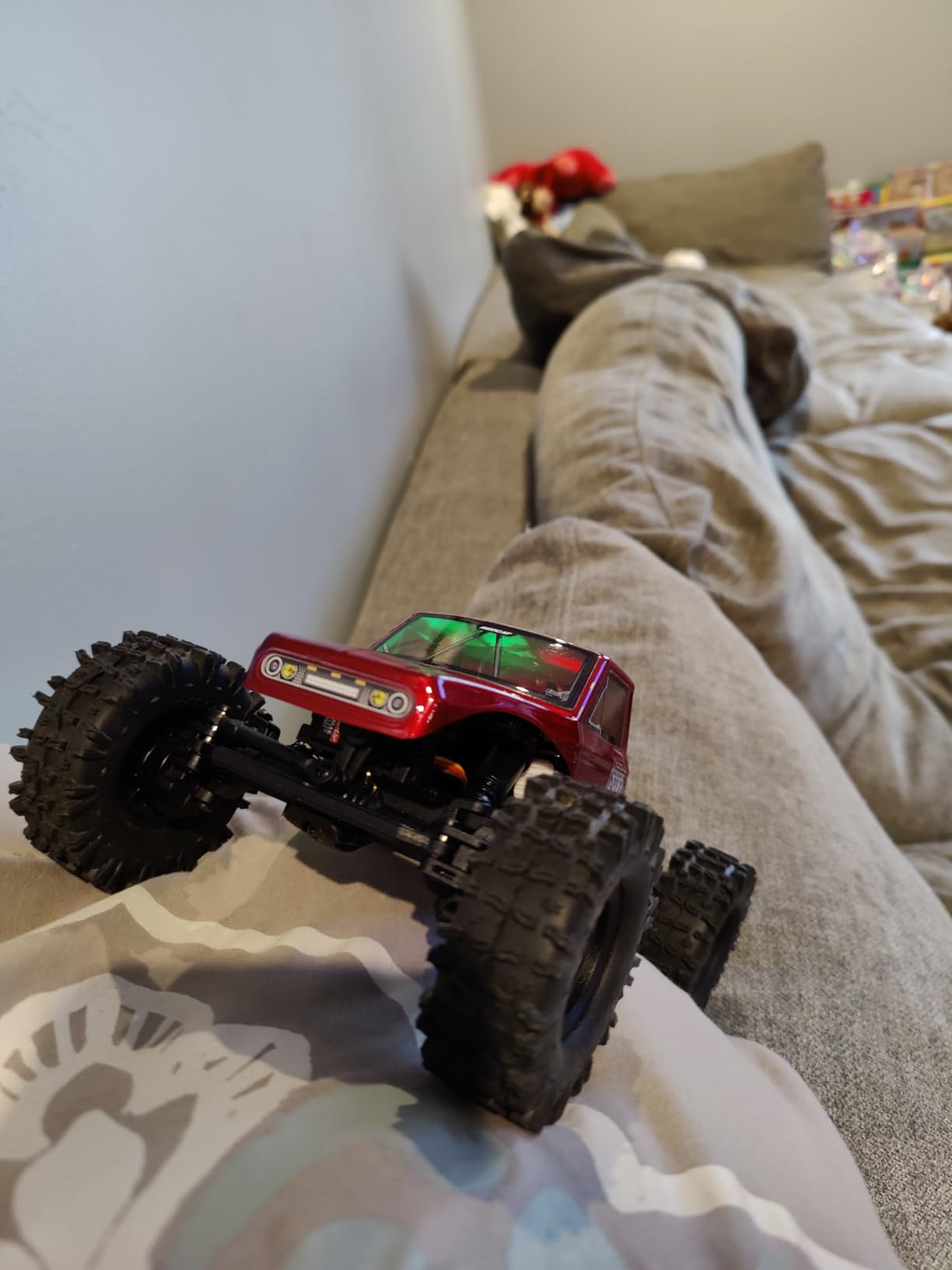
The power system is a Hobbywing Mini 24 brushless setup with a 3500KV motor, paired with aluminum capped oil-filled coilover shocks. Oil-filled aluminum caps are what you fit when you intend to keep crawling rather than jumping, because they resist the side loads that bend shock shafts. An RTX-4C four channel radio with adjustable throttle and steering EPA lets you tune the response to your grip level, which is useful when you move from clean rock to loose rock.
It ships with a 3S 11.4V 200mAh LiPo battery, a USB charger and an optional bed attachment, and the radio needs four AA cells that are not included. The 4.4 average across 175 reviews reflects an owner base that values the chassis, the axles and the shocks for what they are: a premium package that performs the way the design intends.
Why weight distribution decides this truck’s limits
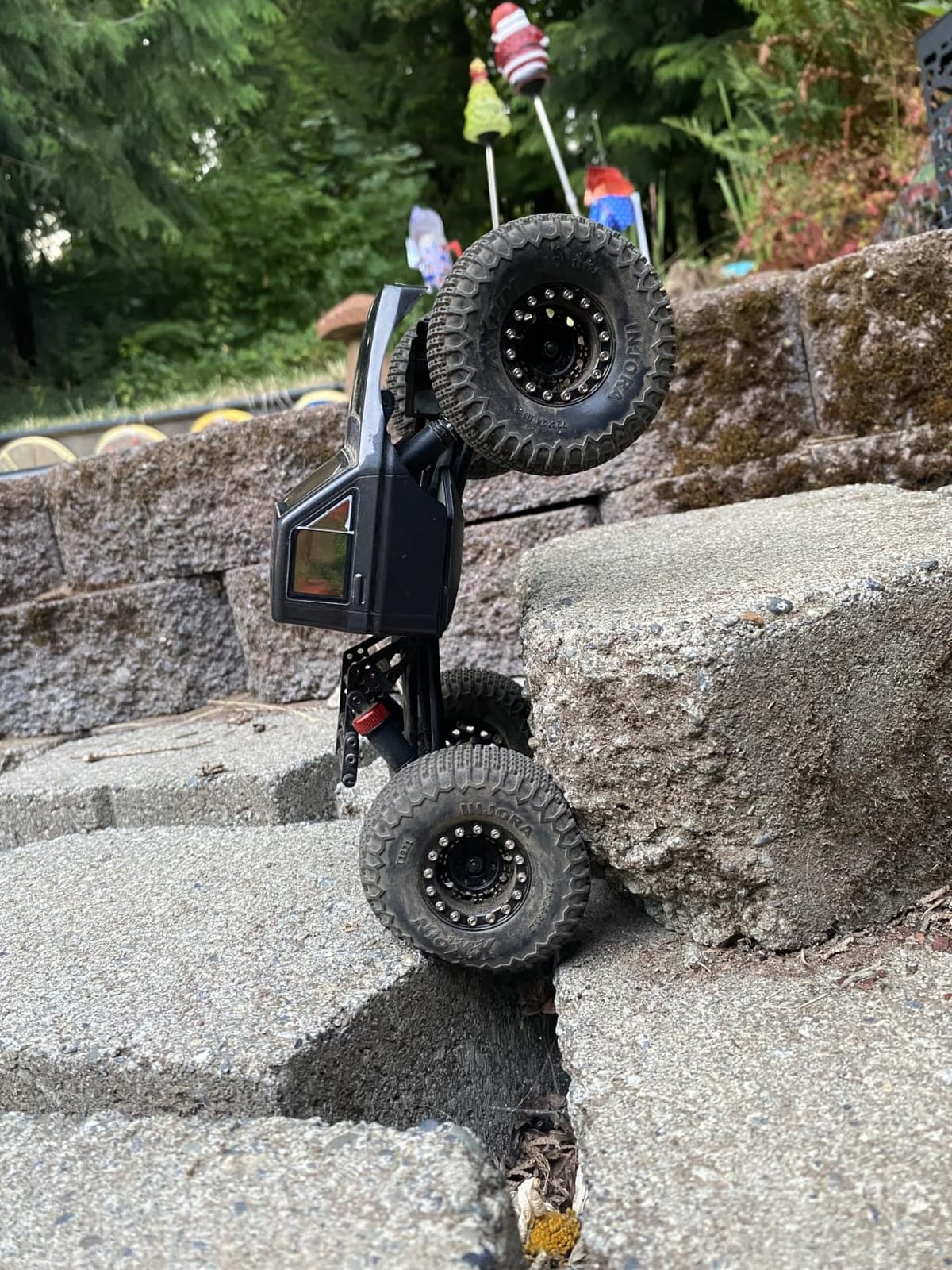
Rock climbing fails in two predictable ways: the truck spins out because the climbing tire lost grip, or it rolls because the center of gravity passed the tipping point. This chassis is engineered against both. The low carbon fiber platform, the forward motor position and the brass weight in the front portal boxes all move mass low and forward, which loads the front tires and keeps the truck flat on a grade.
The wide portal axles reinforce that by raising clearance and reducing how much the chassis pitches over an edge. On a ledge, that means the tires stay square to the rock rather than dropping away, so the torque you send to the wheels arrives as forward motion instead of spinning. Owners who move to brass weights or down-low weights typically see a further improvement in exactly these conditions.
Is the Ascent-18 APEX worth it for you?
If you have outgrown 1/24 lines and want the best 1/18 platform on this list, yes. The component quality is real rather than cosmetic: portal axles, oil-filled aluminum caps, beadlock wheels, brushless power and adjustable EPA are all things you would otherwise buy as upgrades one at a time. It is also a sensible first serious crawler, because the design does much of the tuning work for you.
The cost is the real constraint, and it is the highest in this group, which puts it beyond many first-time budgets. The smaller trade-off owners report most often is the 200mAh battery, which gives short sessions and frequent recharging on a rig that is otherwise capable of a long day out. Buy a second pack and a proper charger rather than planning around short runs. Remember the four AA cells for the radio as well.
10. Traxxas TRX-4M F-150 High Trail: Best Trail Platform That Also Climbs
Traxxas 1/18 TRX-4M F-150 High Trail Crawler Truck
1/18 scale
4.96 ounces
10.6 x 5 x 5 inches
LiPo and charger included
Pros
- Factory long arm lift kit raises clearance from the box
- 2.4 inch Mickey Thompson Baja Pro XS tires
- Long wheelbase improves climbing stability
- Clipless body releases in seconds for maintenance
Cons
- Small included LiPo pack gives short run time
- Lift kit and larger tires add weight on tight lines
The High Trail Edition of the TRX-4M is the most complete entry into the Traxxas crawler ecosystem, and the factory long arm lift kit is the reason it belongs on a rock list at all. That kit raises ground clearance dramatically from the box, which is the single change that turns a small trail truck into something that can approach a ledge without the axle or the driveshaft catching on the way up.
It runs 2.4 inch Mickey Thompson Baja Pro XS tires, larger than the standard truck, and pairing bigger tires with raised clearance gives a lot more usable grip on rough ground. The long wheelbase is described by reviewers as the trait that improves climbing stability and smooths the ride over rough terrain, and the clipless ABS body releases in seconds so you can get at the battery and electronics without tools.
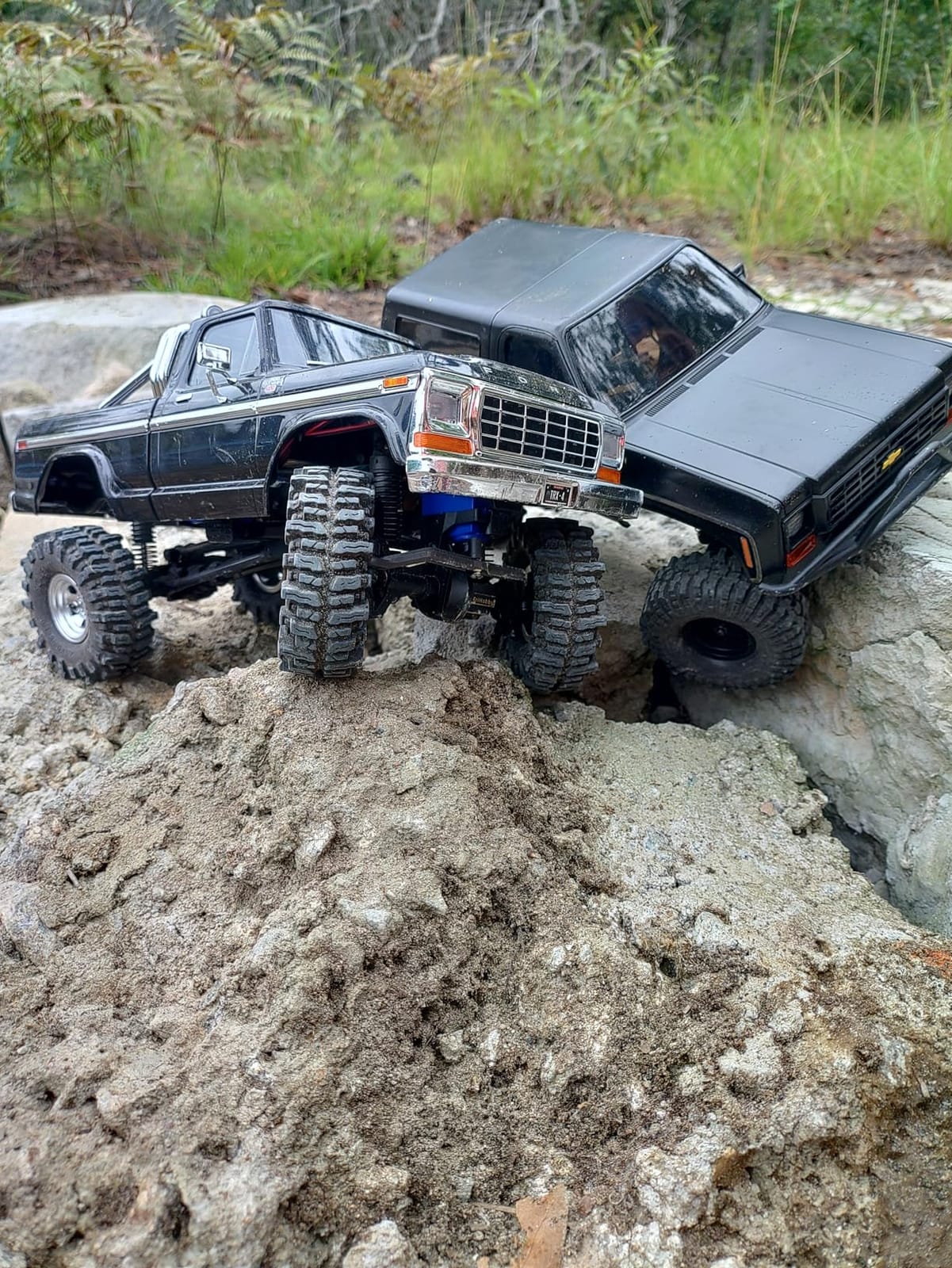
The package includes a LiPo battery, a charger and a full size 2.4GHz transmitter, which is a more complete box than most competitors at this size and saves you from buying a radio before your first session. At 4.96 ounces and 10.6 x 5 x 5 inches, it is a compact 1/18 that fits in a small bag and runs well on narrow trails and tight rock lines.
The 4.4 average across 175 reviews matches the Ascent-18 APEX, but the two trucks are solving different problems. Traxxas build quality and the ecosystem behind the TRX-4M are the selling points: parts availability, serviceability and the likelihood that you will still find accessories for it in several years. That matters if you plan to grow with the platform rather than replace it.
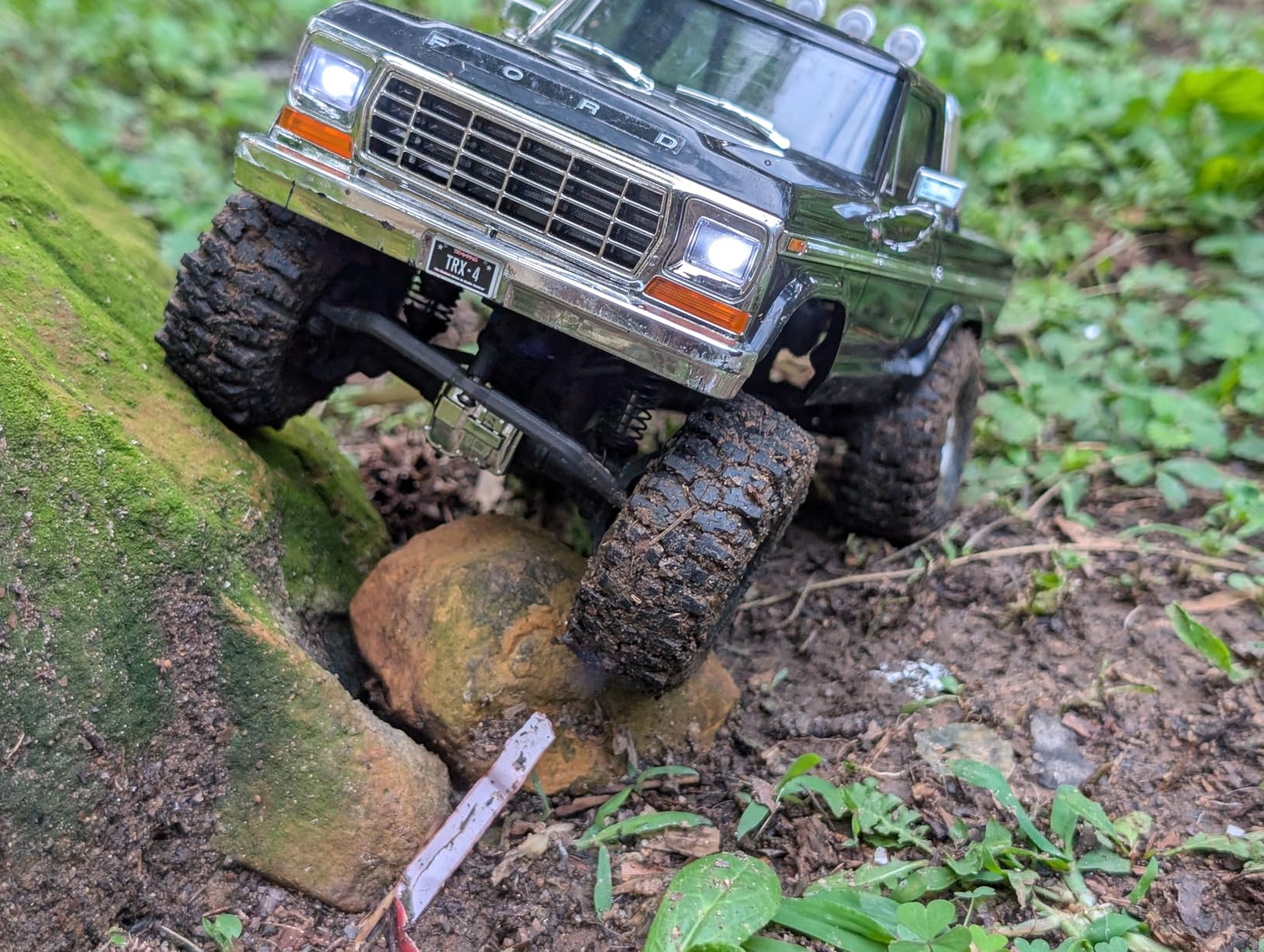
Where the TRX-4M works on rock and where it does not
On moderate rock, ledges and rough trails, the lift kit and the long wheelbase do a lot of work. The truck carries speed across broken ground without skipping, and the larger tires find edges on uneven surfaces where a smaller tire would slide. For a first 1/18 crawler on real terrain rather than a tabletop, that combination is hard to argue with.
On very tight lines, the same additions become a liability. The lift kit and the larger tires add weight, and reviewers specifically note that the extra weight reduces agility on tight rock lines. Where the Ascent-18 APEX uses a low carbon fiber chassis to fight weight, this truck uses a raised steel and plastic platform, so it will feel less planted in the same situation.
What to change first on a High Trail Edition
Batteries, first and without exception. The included LiPo pack is small, and the recurring complaint in reviews is short run time rather than any performance problem. A second pack and a charger that suits your battery chemistry solves the only widespread complaint about this truck.
After that, think about the tires and the gearing together rather than separately. Larger tires need lower gearing to deliver the same climbing force, and the Traxxas crawler platform has a well established tuning path, so this is a mechanical adjustment rather than a rebuild. Keep the weight low and toward the front on steep lines to offset the added mass, and use the long arm kit exactly as it came unless you have a reason to lower the body back down for tighter terrain.
How to Choose an RC Crawler That Actually Climbs
Climbing ability comes down to four things: gearing, tire grip, suspension compliance and weight distribution. A truck that gets three of the four right will out-climb a faster, better-equipped truck that gets them wrong, which is why the fastest truck on this list is not the best one. Use the sections below in order, because they build on each other.
Scale: 1/24 and 1/18 for lines, 1/10 for real terrain
Scale sets the physical envelope. A 1/24 or 1/16 truck can only catch edges it can physically reach, so indoor, tabletop and small backyard lines are their natural territory. A 1/18 sits in the middle, with enough wheelbase for real ledges but still small enough to run narrow trails. A 1/10 is the smallest scale that handles genuine rock steps, ledges and rough terrain, which is why two of the picks here are 1/10 and the most capable 1/24 option on this list uses the longest wheelbase its chassis allows.
Gearing: the single biggest climbing change you can make
Three gearing options exist, and the decision rule between them is straightforward. Factory gearing is a compromise between climbing and travel speed. Overdrive increases speed, which helps on open trail and hurts on a wall, because a spinning tire has no grip left to convert into forward motion. Underdrive reduces speed and multiplies the torque reaching the wheels, which is what a rock face demands.
The rule experienced crawlers follow is simple: pair underdrive with factory-size tires, and pair overdrive with larger, softer tires. Underdrive with stock tires gives the mechanical advantage to drive a stock tire up a steep edge. Overdrive only works when the extra tire diameter gives the taller gearing something to push against. Forum discussion consistently describes an overdrive gear set paired with a tire package that can actually hold the rock as transforming the climb ability of an otherwise ordinary truck, and crawler upgrades in that range run in the low tens of dollars.
Tires: size and compound decide whether torque reaches the rock
Tire choice is what converts gearing into traction. Softer compounds grip rock better, and a slightly larger tire increases the contact patch and the number of edges the truck can catch. Beadlock or beadlock-style rims hold the tire to the rim under load, which matters on a climb where the torque is high enough to spin the tire inside a friction-fit wheel. Foam filling tires reduces the effect of impacts and keeps the contact patch consistent on irregular rock.
Matching tire to terrain is straightforward: soft compound and open tread for rock, slightly harder and more widely spaced tread for trail running, deeper and self-cleaning tread for mud, and wide, low-pressure tires for sand. To make tires grip more on rock, clean them, check pressure, and make sure the compound is soft enough to conform to the surface before you blame the gearing.
Axles, suspension and shocks
Axle architecture determines clearance and articulation. Portal axles place the pivot above the wheel center, which raises ground clearance and tightens the turning radius, and they are the standard on serious rock platforms. Solid axles are heavier and simpler, and they are the traditional choice for off-road durability. Tube axles are lighter and the usual fit on smaller 1/24 and 1/18 platforms, including several trucks on this list. On a technical line, articulation matters because it keeps a tire loaded when the opposite wheel drops away.
Shocks set how the suspension reacts to an edge. Oil-filled shocks damp the rebound so the chassis does not bounce off a rock and unload the climbing tire, and adjustable damping lets you tune the truck for the surface. Aluminum shock caps resist the side loads that bend shafts on a crawler working at an angle. Multi-link suspension allows more articulation than a live axle, and adjustable shock positions let you tune the chassis balance.
Locking differentials, steering angle and dig setup
A locking differential forces both wheels on an axle to turn at the same speed, which stops a climbing wheel from spinning uselessly while the other hangs in the air. Remote or electronic lockers are the premium version of the same idea. For trail and mixed use, a selectable lock gives you the ability to unlock for smoother cornering.
Steering angle is the other half of the equation. A truck cannot climb if it cannot steer while the inside wheel is loaded, and insufficient steering angle is a common reason crawlers high-center and roll on a side slope. Dig setup, sometimes offered as selectable overdrive, applies torque selectively to one wheel to pull the truck over an obstacle, and four wheel steering extends that idea by pointing every wheel at the available hold.
Motors, ESCs and the RTR question
Brushed motors are cheaper and easier to replace, and they work well in small and low-cost crawlers. Brushless motors deliver smoother, cooler and more consistent torque, which is why the two brushless trucks here are the ones that climb hardest for their size. ESC amperage needs to match the motor, and a waterproof ESC matters if your rock lines run near water.
Ready-to-run means the truck ships with motor, ESC, servo, radio, battery and charger, which is the right choice unless you intend to build from a kit. A kit lets you choose every component, costs less, and takes far longer. For rock climbing specifically, a ready-to-run truck with a long-travel suspension and lockable differentials is the sensible starting point, because those are the parts that matter and they are expensive to specify separately.
Weight distribution and why crawlers high-center
A crawler high-centers when it bridges between two points with the middle hanging below the line, then the driveshaft or the chassis belly takes the load and stops the truck dead. A crawler rolls over when the center of gravity passes the outer tires on a side slope. Both are geometry and mass problems rather than power problems.
Move weight forward and down, keep the center of gravity low, and set ride height for the terrain. Brass down-low weights inside the wheels are the standard fix, and the low carbon fiber chassis and forward motor layouts on the Ascent-18 APEX are engineered around the same idea. Forum consensus consistently asks for four wheel drive, locked differentials and optional brass down-low weights, and the reason is that each of those keeps a tire loaded when the truck is in the awkward position.
What to upgrade first, in impact order
Order matters, and the community order is broadly consistent. First, tires that can hold the rock, because no gearing helps a sliding tire. Second, gearing matched to those tires, following the underdrive-with-stock-tires and overdrive-with-larger-tires rule. Third, a metal steering servo and servo arm, which are the most common breakage across this entire list. Fourth, brass down-low weights for weight bias. Fifth, better shocks with oil-filled bodies and metal caps. Sixth, drivetrain components such as driveshafts, gears and diff lockers, which are the parts that fail under the torque that good tires and gearing now let you apply.
Expect breakages as part of the hobby rather than a defect. Driveshafts, universal joints, antennas, servo horns and shock shafts are the recurring casualties, and having a spare servo, a spare set of driveshafts and the correct hex tools on hand turns a broken session into a five-minute repair.
Frequently Asked Questions
Which RC rock crawler is the best?
The Redcat Racing Everest-10 is the best RC rock crawler for most people. Its dual 42T brushed motors, waterproof 40A ESC, dual waterproof steering servos and highly tunable suspension let it climb logs and ledges out of the box, and it holds a 4.6 average across more than 790 owner reviews. The Axial SCX24 Jeep Gladiator is the best value option at 1/24 scale, and the Redcat Ascent-18 APEX is the premium pick if you want brushless power and a carbon fiber chassis.
What RC cars can climb rocks?
Only purpose-built crawlers climb well. The traits that matter are long-travel multi-link suspension, low gearing that multiplies torque to the wheels, compliant axles that keep a tire loaded when the opposite wheel drops, locking differentials, soft compound tires and a low center of gravity. A fast off-road truck with tall tires and short suspension will spin its tires on a rock face, because speed and grip work against each other on a climb.
What is the best gear ratio for an RC crawler?
For rock climbing, underdrive gearing with factory-size tires is the safest choice, because it multiplies torque to the wheels without needing a larger tire to work. Overdrive gearing only pays off when you also fit larger, softer tires, since the taller gearing needs a taller tire to push against. Stock gearing is a compromise that works for mixed trail use. The practical test is simple: if the tire spins faster than the truck climbs, the gearing is too tall.
What are the best 1.3 inch crawler tires?
For 1/24 and 1/18 rock work, look for soft compound tires in the 1.3 inch range mounted on beadlock or beadlock-style rims, and match the tread to the surface. Softer compounds conform better to irregular rock, and wider tires increase the contact patch and the number of edges the truck can catch. On this list, the Redcat Ascent-18 APEX uses 1.3 inch three-piece beadlock wheels with stainless steel screws, which is the hardware combination that holds a tire under climbing torque.
What is the best RC crawler for beginners?
The Axial SCX24 Dodge Power Wagon is the most complete beginner package, shipping with battery, charger, radio, motor, servo and ESC, plus oil-filled shocks and beadlock wheels as standard. The WPL C24 1/16 is the cheapest option that still steers proportionally, which makes learning throttle control much easier. If you can spend more, the Axial SCX24 Jeep Gladiator has the longest wheelbase in its class and climbs better than any other 1/24 here.
My RC car wheels turn but it won’t go. What could be the problem?
Check four things in order. First, the spur gear and pinion meshing, because stripped teeth or a slipped gear mesh let the motor spin with the wheels stopped. Second, the driveshaft and universal joints, which can break and leave the wheels turning with no drive to the differential. Third, motor and ESC heat, since a bogged or overheating motor loses torque and a small battery under load causes the same symptom. Fourth, gearing, because a ratio that is too tall simply cannot move the truck and the wheels spin instead.
Final Verdict: Which RC Crawler Should You Buy in 2026?
The Redcat Racing Everest-10 is the best RC crawler for rock climbing in 2026, and it wins on the combination that matters most: it climbs hard without any modification, it is fully waterproof, and its geometry is adjustable enough to suit the rock in front of you. Nothing else on this list offers that combination at once, and its 4.6 average across 793 owner reviews is the strongest evidence we found that it delivers.
Buy something else if your situation is different. The Axial SCX24 Jeep Gladiator is the value pick and the best 1/24 climber, with the longest wheelbase in its class. The Axial SCX24 Dodge Power Wagon is the most complete beginner package. The Cheerwing 1:10 has a steel chassis that outlasts plastic frames if you fit proper tires. The WPL C24 and YAZHIYI MN-82 cover the small and budget end, and the MN-82’s two included batteries make it the easiest to run often. The BEEZRC K5 Blazer wins on scale realism and its two-speed gearbox, the captainrc UCX2405PRO wins on brushless power and four wheel steering at 1/24, the Redcat Ascent-18 APEX is the premium engineering pick, and the Traxxas TRX-4M High Trail is the best platform for trail work that also wants to climb.
Whichever you choose, remember that the tire-and-gearing combination decides more climbs than the motor does, and that steel servo upgrades and spare driveshafts are the cheapest insurance in the hobby. Pick a line, set the truck up for it, and go find a rock face.