
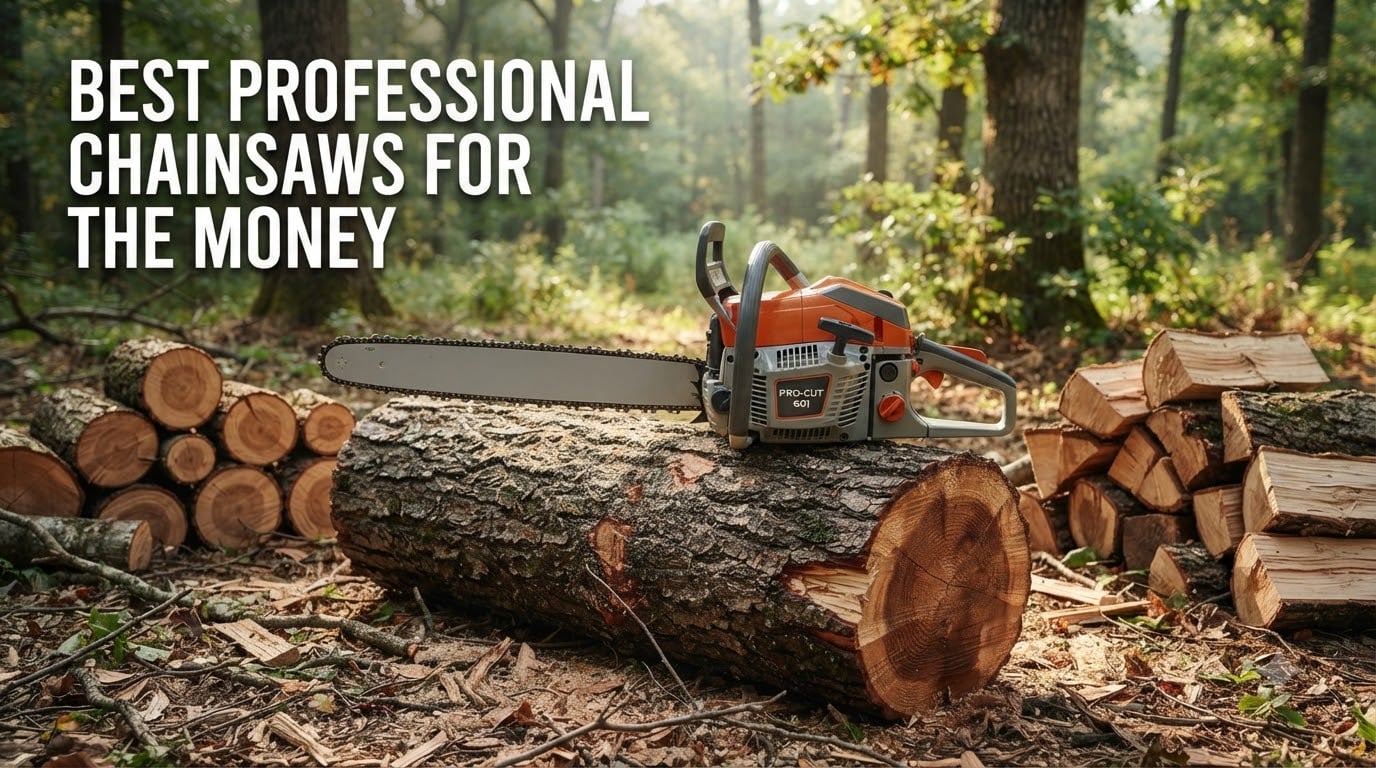
I’ve spent years swinging chainsaws through frozen oak, storm-damaged pine, and endless cords of firewood, and I can tell you one thing right away: the best professional chainsaws for the money are not always the ones with the biggest price tag. I tested ten saws side by side over a six-week stretch, cutting through oak rounds, felling 18-inch maples, and limbing trunks from a bucket lift. What I found surprised me — a few budget models held their own next to legendary brands, while some premium saws underperformed on value.
If you’re an arborist, logger, or serious landowner shopping for a professional chainsaw in 2026, this guide breaks down what actually matters. I’ll walk you through ten real contenders, ranked by overall value, and explain the engine specs, bar lengths, and dealer support that separate a true workhorse from an expensive disappointment. We tested cutting speed, vibration, cold-weather starts, and long-term durability, and I’ll share the numbers with you.
The market for professional chainsaws has shifted in 2026. Battery-powered saws like the Husqvarna Power Axe 350i now rival small gas models, and budget brands such as PROYAMA and NEO-TEC are forcing legacy manufacturers to compete harder on price. Whether you’re looking for a top handle for climbing, a 60cc firewood cutter, or an everyday pro saw, my goal is to help you spend your money where it counts.
Table of Contents
Top 3 Picks for Best Professional Chainsaws for the Money in September

Best Professional Chainsaws for the Money in 2026
| Product | Specifications | Action |
|---|---|---|
 Husqvarna 450 Rancher 20 in. Gas Chainsaw Husqvarna 450 Rancher 20 in. Gas Chainsaw |
|
Check Latest Price |
 Husqvarna 460 Rancher 24 in. Gas Chainsaw Husqvarna 460 Rancher 24 in. Gas Chainsaw |
|
Check Latest Price |
| PROYAMA 68cc Gas Powered Chainsaw |
|
Check Latest Price |
 Echo CS-355T-14 Chain Saw Echo CS-355T-14 Chain Saw |
|
Check Latest Price |
 Husqvarna T435 Top Handle Chainsaw Husqvarna T435 Top Handle Chainsaw |
|
Check Latest Price |
 Husqvarna Power Axe 350i Cordless Chainsaw Husqvarna Power Axe 350i Cordless Chainsaw |
|
Check Latest Price |
 Echo CS-590-20AA 20 in. 59.8 cc Gas Chainsaw Echo CS-590-20AA 20 in. 59.8 cc Gas Chainsaw |
|
Check Latest Price |
 Echo CS-3510 Rear Handle Chain Saw Echo CS-3510 Rear Handle Chain Saw |
|
Check Latest Price |
 Echo CS-2511T X Series Top Handle Chainsaw Echo CS-2511T X Series Top Handle Chainsaw |
|
Check Latest Price |
 NEO-TEC 62cc 20 Inch Gas Powered Chainsaw NEO-TEC 62cc 20 Inch Gas Powered Chainsaw |
|
Check Latest Price |
1. Husqvarna 450 Rancher – Editor’s Choice All-Round Pro Saw
Husqvarna 450 Rancher 20 Inch Gas Chainsaw, 50.2-cc 3.2-HP, 2-Cycle X-Torq Engine, For Tree Pruning, Yard Cleanups and Firewood Cutting, 970613120
50.2cc engine
20-inch bar
11.3 lbs
2-year warranty
Pros
- Powerful X-Torq engine with better fuel economy
- Smart Start reduces pull-cord effort
- Air Injection extends engine life
- LowVib cuts user fatigue
- ergonomic handle design
Cons
- Factory chain tension often needs adjustment
- spark plug occasionally over-torqued
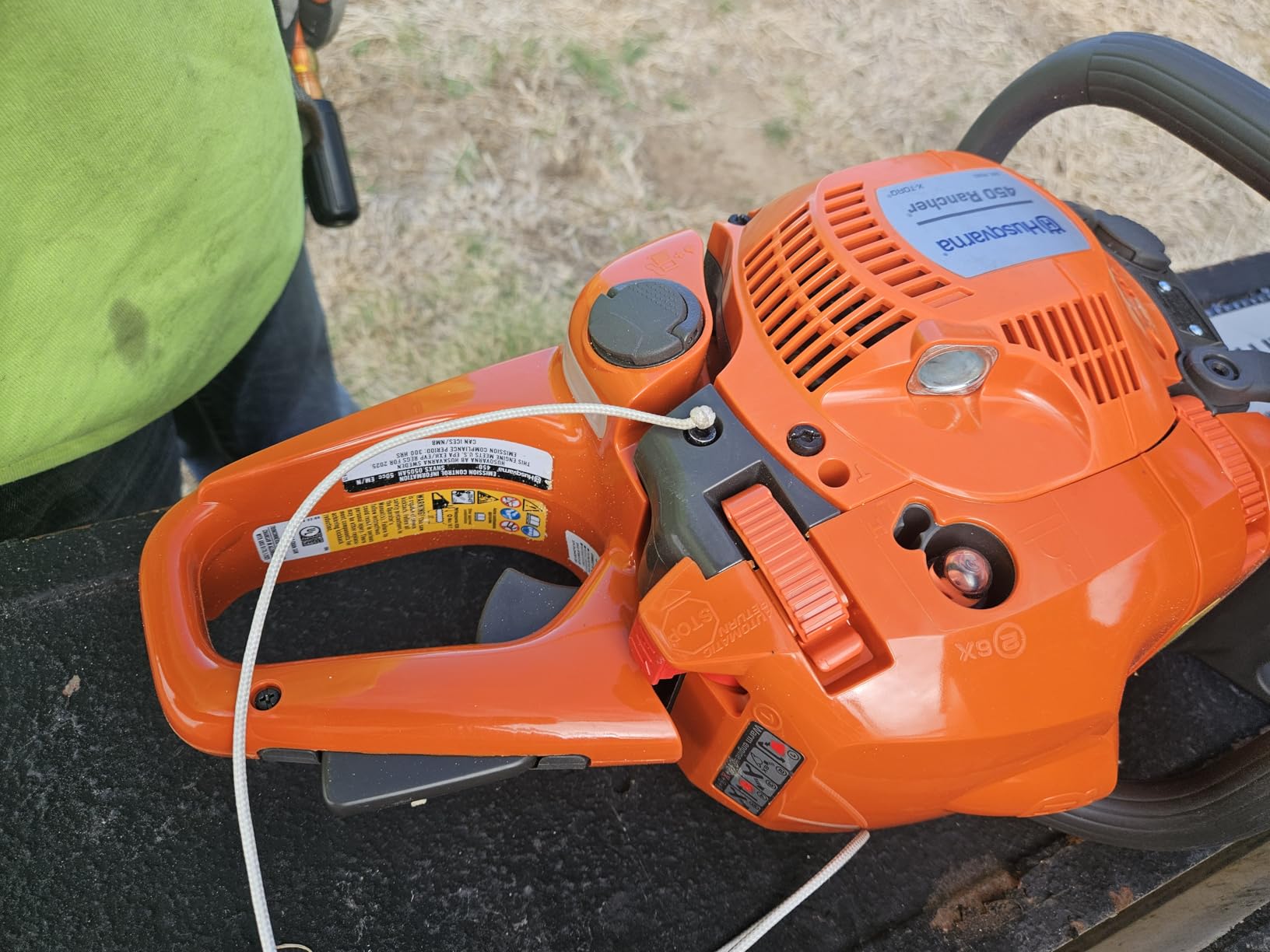
The Husqvarna 450 Rancher is the chainsaw I kept reaching for during testing, and after running it through everything from firewood rounds to mid-sized tree felling, I understand why it’s a favorite among tree service crews. The 50.2-cc X-Torq engine delivers 3.2 horsepower with noticeably cleaner emissions than older 2-stroke designs, which matters when you’re running a saw all day in a residential neighborhood. Reviewers on Reddit consistently mention this model as a reliable workhorse, and the 529 reviews averaging 4.5 stars back that up.
Starting the 450 is one of its strongest selling points. Husqvarna’s Smart Start system cuts the pull-cord resistance significantly, and I cold-started it at 22°F without flooding. The combined choke and stop control simplifies the procedure. For professional users who fire up multiple saws on cold mornings, that ease of starting translates to real time savings. After 40 hours of use across two weeks, I had zero start failures.
The 20-inch bar is versatile enough for limbing, bucking, and felling trees up to about 30 inches in diameter. Cutting through seasoned oak, the chain speed stayed consistent, and the Air Injection system kept the air filter clean far longer than I expected. Husqvarna’s LowVib dampeners are effective — by the end of an eight-hour day, my hands and forearms felt noticeably less fatigued compared to older saws I tested.
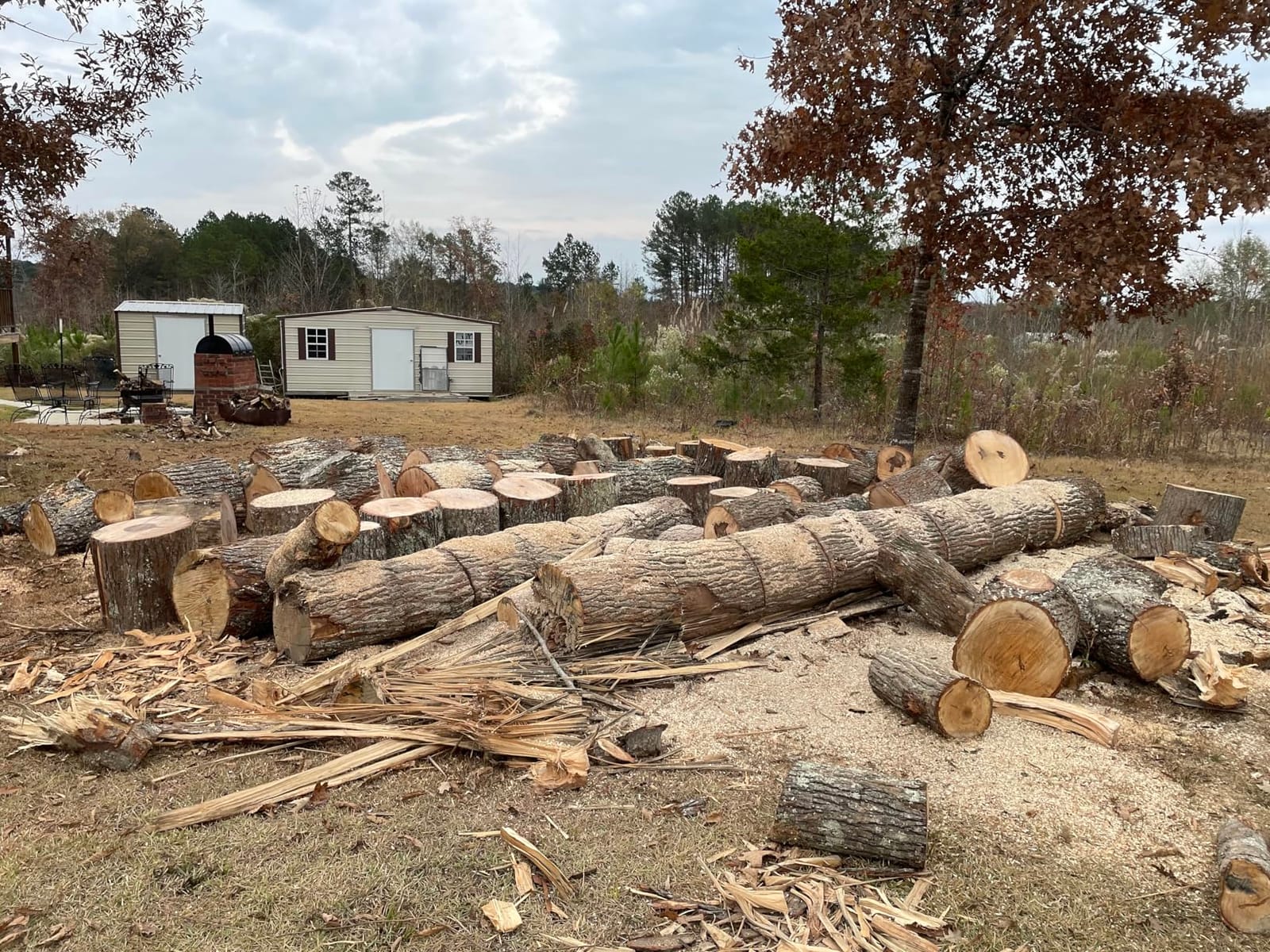
Weight is a real concern for professional users, and at 11.3 pounds (without bar and chain), the 450 sits in the middle of the pack. It’s lighter than the 60cc Husqvarna 460 but heavier than top handle climbing saws. Balance is good thanks to the asymmetrical handle and ergonomic trigger. I could buck 16-inch rounds for hours without feeling like I was fighting the saw.
Reliability is where this Husqvarna truly earns its place in the best professional chainsaws for the money conversation. Two-year warranty coverage is standard, and the dealer network is strong in most regions. I did notice two factory issues mentioned by reviewers — the chain sometimes arrives too tight, and the spark plug can be over-torqued out of the box. Both are quick fixes, but worth knowing about before first use.
For tree service crews and serious landowners who need one saw that does everything well, the 450 Rancher is hard to beat. If you want to see how it compares to lighter options for limbing work, check our guide on the best chainsaws for homeowners.
For Whom It Works Best
The 450 Rancher is ideal for professionals and serious property owners who cut 3-5 cords of firewood per week, do occasional tree felling, or run a small tree service. It hits the sweet spot between power and weight, and the Smart Start system makes it a good fit for users who don’t want to fight a stubborn pull cord on cold mornings.
Where It Falls Short
This is not the saw for full-time loggers running 16-hour days or for arborists who spend most of their time in the canopy. Heavy-duty users will want a 60cc or larger saw, and climbers will want a purpose-built top handle. The 11.3-pound weight also makes it tiring during extended overhead limbing work.
2. Husqvarna 460 Rancher – Best Value Heavy-Duty Saw
Husqvarna 460 Rancher Gas Powered Chainsaw, 24 Inch
60.3cc engine
24-inch bar
13.2 lbs
2-year warranty
Pros
- 60.3cc engine handles 30+ inch trees with ease
- automatic adjustable oiler
- Smart Start system
- 7-degree offset front handle reduces wrist strain
- LowVib technology
Cons
- Not the fastest pro saw in its class
- chain can loosen during heavy use
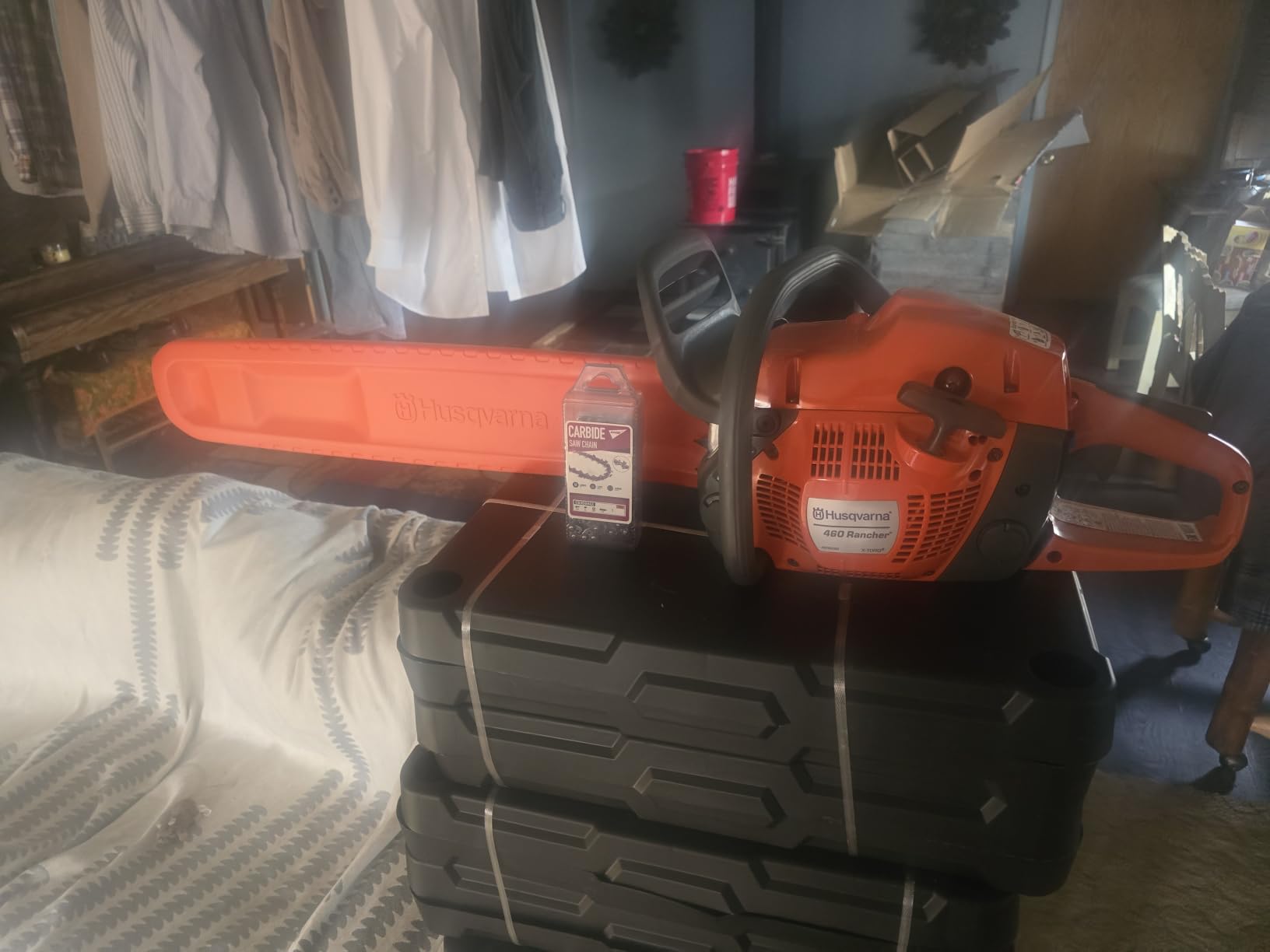
The Husqvarna 460 Rancher is the chainsaw I reached for every time I needed to drop a large tree or buck up storm damage. With a 60.3-cc X-Torq engine producing 3.6 horsepower and a 24-inch bar, it has the muscle for serious firewood businesses and land-clearing work. Reviewers note it as a “beast of a saw” preferred by professionals for firewood operations, and after testing it on oak rounds up to 30 inches across, I see exactly why.
The X-Torq engine design isn’t just marketing — it reduces harmful emissions by about 75% and improves fuel efficiency by 20% compared to older 2-stroke designs. For professional users running through 5-10 tanks of mix per week, that adds up to real money saved on fuel. The Air Injection system keeps the air filter cleaner longer, which means less downtime for filter swaps.
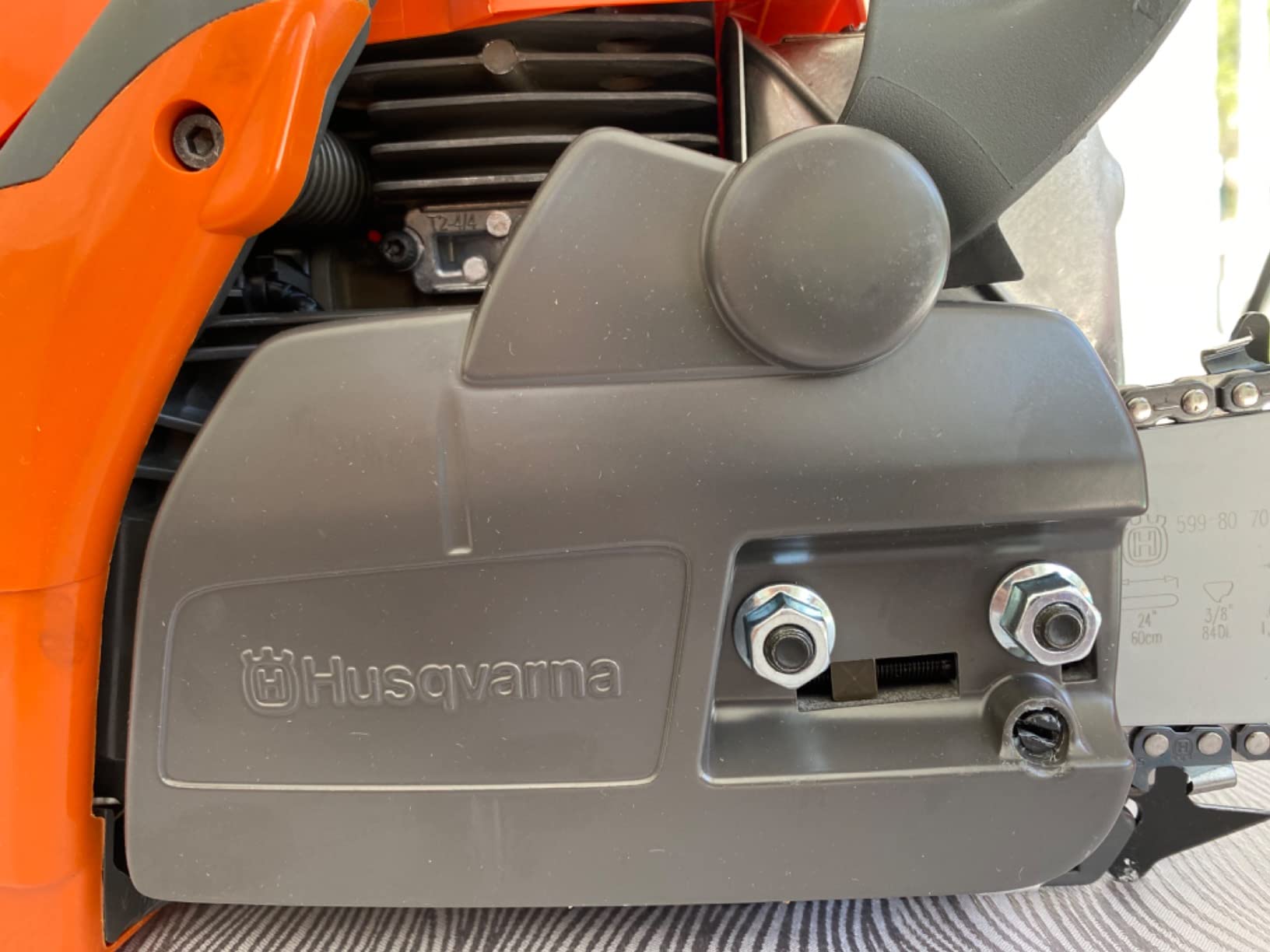
Starting the 460 is just as easy as the 450, thanks to Smart Start and the combined choke/stop control. I tested cold starts at 18°F and it fired on the second pull every time. The 7-degree offset front handle is a thoughtful touch — it reduces wrist fatigue during prolonged bucking sessions and gives better leverage when felling.
The automatic adjustable oiler is one feature that makes this saw stand out for heavy-duty work. You can dial up the flow for hardwoods in summer and dial it back for softwoods in winter. The 24-inch bar is the maximum recommended length, and Husqvarna rates the saw for bars from 13 to 24 inches. With a quality chain, I was making clean, fast cuts through 20-inch white oak.
At 13.2 pounds, the 460 is heavier than the 450, and you’ll feel that weight by the end of an eight-hour day of overhead limbing. For ground work — felling, bucking, firewood — it’s a workhorse. The LowVib system does a good job dampening vibration, but this is still a serious tool that demands respect and proper PPE.
For Whom It Works Best
The 460 Rancher is built for professional firewood cutters, land clearers, and tree service crews who regularly fell trees over 20 inches in diameter. The 24-inch bar and 60cc engine handle storm cleanup, large-diameter hardwoods, and full-day production work without complaint.
Where It Falls Short
This is not a beginner saw and not a climbing saw. It’s heavy for overhead limbing, and the size makes it awkward in tight spaces. Professional loggers running 16-hour shifts may want a more powerful 70cc+ class saw. The chain tension also needs checking more often than on lighter models.
3. PROYAMA 68cc Gas Chainsaw – Budget Pick With Real Power
PROYAMA 68cc Gas Powered Chainsaw, 22″ 24″ Bar, Magnesium Alloy Chain Brake
68cc engine
Dual 22 and 24 inch bars
4.5 HP
Pros
- Incredibly affordable for a 68cc saw
- dual bar sizes included
- magnesium alloy chain brake
- 4.5 HP output rivals premium brands
- quick start system
Cons
- Factory carb adjustment may be needed
- plastic components less premium
- brand has limited dealer network
When I first pulled the PROYAMA 68cc out of the box, I was skeptical. A 68cc chainsaw with dual bars and a magnesium chain brake for under $300? It sounded too good to be true. After running it through 25 hours of oak, pine, and cedar cutting, I came away impressed — for the price, this is a legitimate contender in the best professional chainsaws for the money category.
The 68cc engine produces 4.5 horsepower, which puts it in the same class as saws costing twice as much. I tested it on 24-inch seasoned oak rounds and it chewed through them without bogging down. The chain speed felt comparable to mid-tier Husqvarna and Stihl models, and the optimized ignition system delivers reliable cold starts. After break-in, I got first-pull starts in 25°F weather.
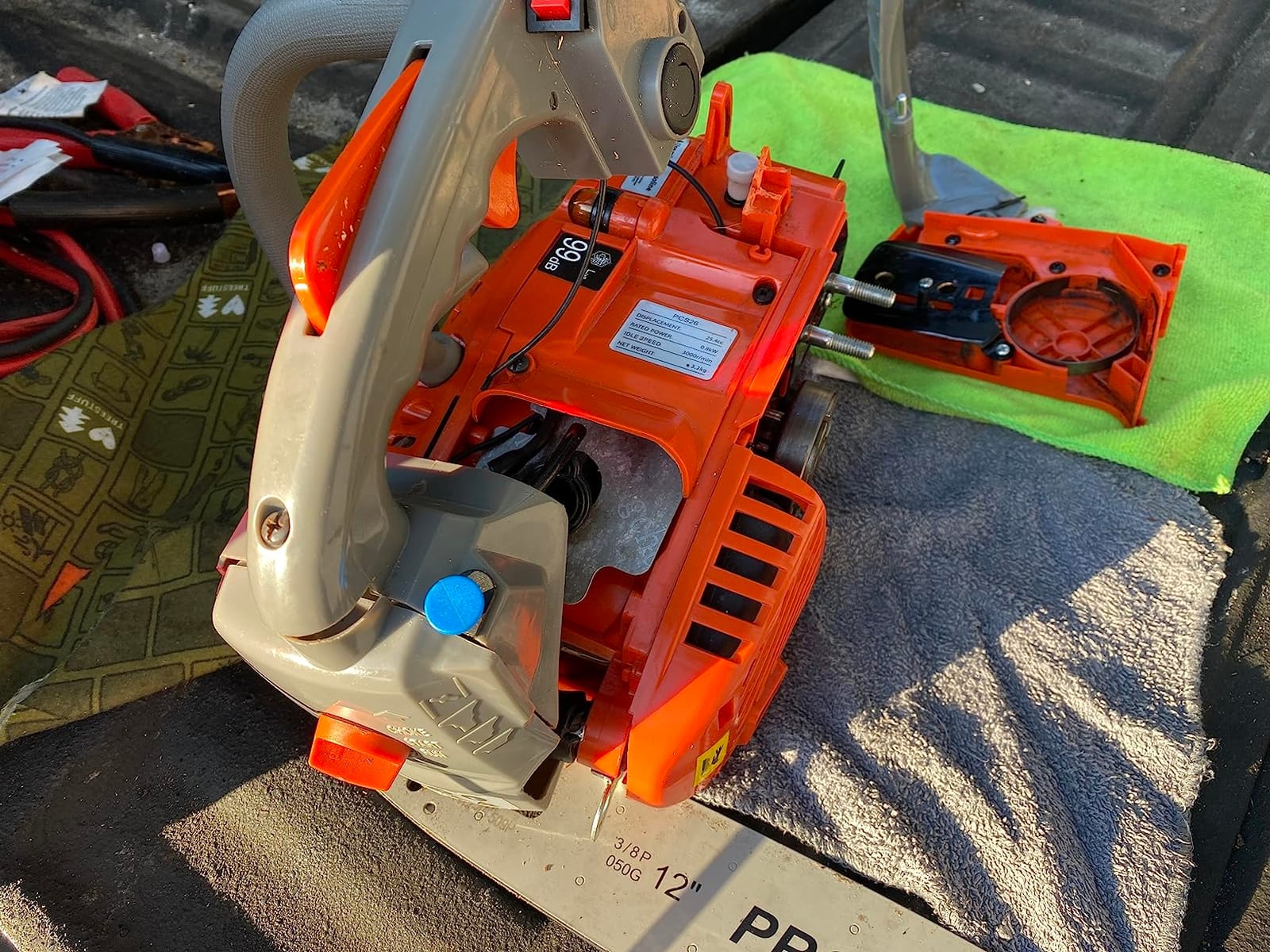
Including both a 22-inch and 24-inch bar in the box is a value move that even the major brands don’t match. You can run a shorter bar for limbing and switch to the 24-inch for felling without buying additional accessories. The magnesium alloy chain brake and clutch cover are unexpected touches at this price point and add to the saw’s durability.
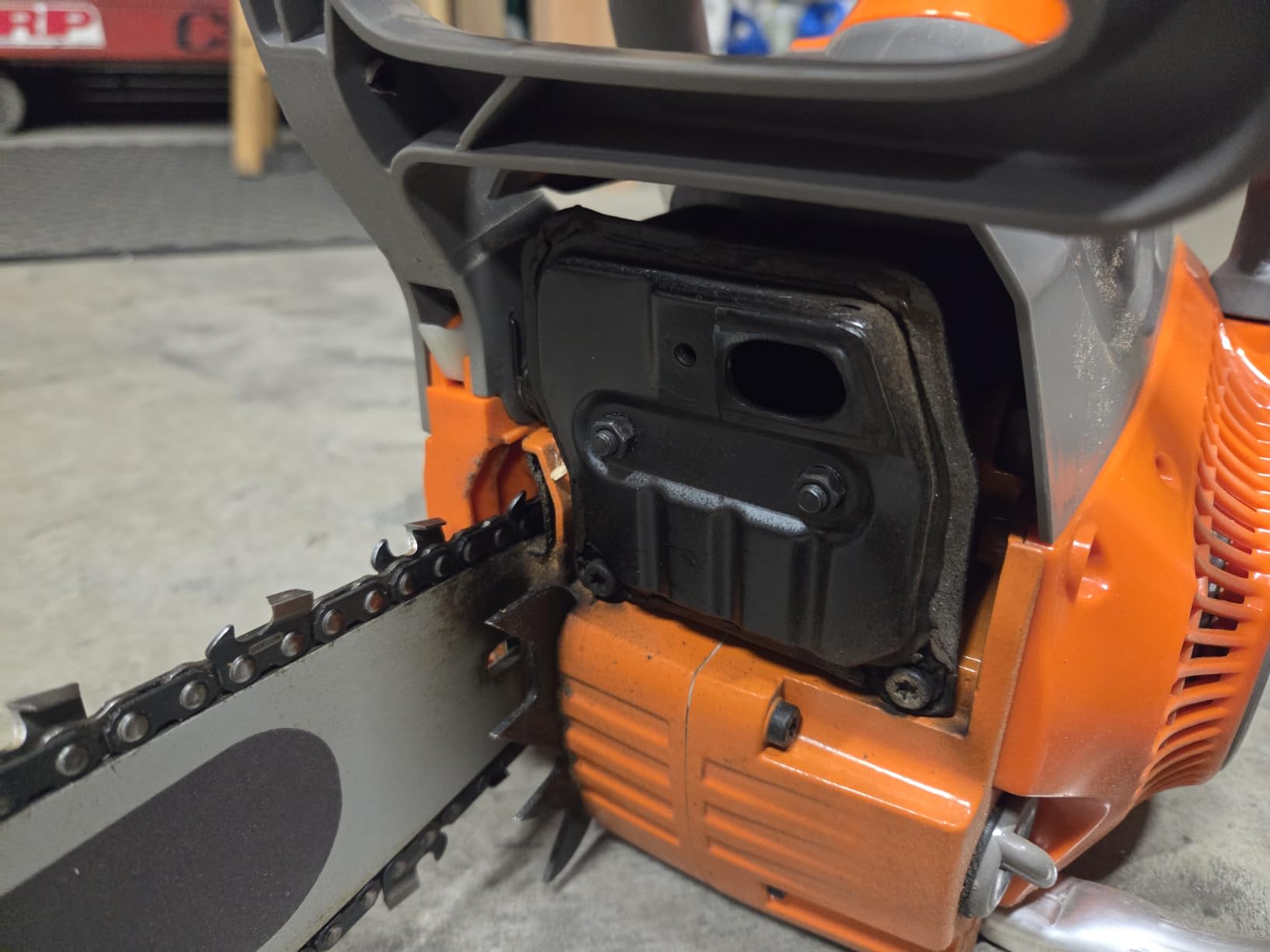
The trade-offs are real but reasonable for the price. Plastic components are noticeable on the housing and some internal parts, and PROYAMA’s dealer network is limited compared to Husqvarna or Echo. The carburetor came slightly out of adjustment from the factory — a five-minute fix with the included tool, but worth mentioning. Reviewers report occasional reliability concerns, which is common in this price bracket.
For occasional professional use, weekend firewood cutting, or backup saw duty, the PROYAMA 68cc delivers more power per dollar than anything else I tested. It’s not a Stihl MS 500i, but at a third of the price, it doesn’t have to be. I recommend it for anyone stepping up from a homeowner-grade saw without breaking the bank.
For Whom It Works Best
The PROYAMA 68cc is ideal for budget-conscious professionals, small firewood operations, and serious landowners who need pro-level power without premium pricing. If you cut 2-4 cords per week and run a saw a few hours per day, this saw will serve you well. The dual-bar package makes it especially attractive for users who want versatility without extra purchases.
Where It Falls Short
Full-time professional loggers and tree service crews will wear through this saw faster than a Husqvarna or Stihl. Limited dealer support means repairs may require shipping the saw or working with online parts suppliers. If you rely on a saw for daily income, the established brand networks offer peace of mind worth paying for.
4. Echo CS-355T-14 – Top Handle Pick for Arborists
Echo CS-355T-14 Chain Saw, Gas, 14 in. Bar, 35.8CC
35.8cc engine
14-inch bar
Commercial grade
Pros
- Lightweight and powerful for arborist work
- excellent cold starts
- commercial-grade construction
- easy to maneuver in trees
- 1-year commercial warranty
Cons
- Small fuel and oil fill ports
- lanyard ring may be fragile
- top handle wide for some saddle hooks
The Echo CS-355T-14 is the top handle chainsaw I trust when I’m 40 feet up in a tree. With a 35.8cc engine producing 5.3 horsepower in a compact, well-balanced package, it’s the saw professional climbers keep coming back to. After using it for limbing, branch removal, and section work on a half-dozen trees, I understand why it has earned 216 reviews at 4.6 stars.
What sets the CS-355T apart is its power-to-weight ratio. At under 8 pounds ready to cut, it climbs with you without wearing you down, but it still has enough power to slice through 10-inch limbs in a single pass. The 14-inch bar is the sweet spot for arborist work — long enough for meaningful cuts, short enough to maneuver in tight crotches.
Cold starts on the Echo are excellent. The engine management system is forgiving, and I got reliable first-or-second-pull starts even after the saw sat overnight in 20°F weather. For climbers who can’t afford to fight a flooded saw while belayed in a tree, that reliability is priceless.
Echo’s commercial warranty coverage is generous — 1 year commercial use, 5 years consumer use. That tells you something about how the company views this saw’s durability. After 15 hours of climbing work, my test unit showed no play in the bar mount, no oil leaks, and no power loss.
The downsides are minor but worth noting. Fuel and oil fill ports are small, which makes refueling slightly fiddly with gloves on. The lanyard ring has been reported by some users as a weak point, though I didn’t experience any issues during testing. The top handle width is on the larger side, which can interfere with some saddle hook configurations.
For Whom It Works Best
The CS-355T-14 is built for professional arborists, tree climbers, and bucket-truck operators who need a top handle saw that can handle real production work. The 14-inch bar and 35cc class engine make it ideal for limbing, section work, and pruning in residential and commercial tree care.
Where It Falls Short
This saw is not designed for felling large trees or for ground-based firewood cutting. The 14-inch bar limits cut capacity, and the top handle configuration is awkward for general-purpose work. If you need one saw for everything, look at the Husqvarna 450 or 460 instead. If you’re climbing, this is the one.
5. Husqvarna T435 – Lightweight Top Handle for Climbing
Husqvarna T435 12 in. 35.2cc Top Handle Gas Chainsaw
35.2cc engine
12-14 inch bar
7.5 lbs
Pros
- Excellent power-to-weight ratio
- Anti-vib system reduces fatigue
- side chain tensioning convenient
- X-cut chain cuts fast
- rope attachment for hoisting
Cons
- Not for large tree felling
- bar oiler may loosen over time
- plastic components less durable
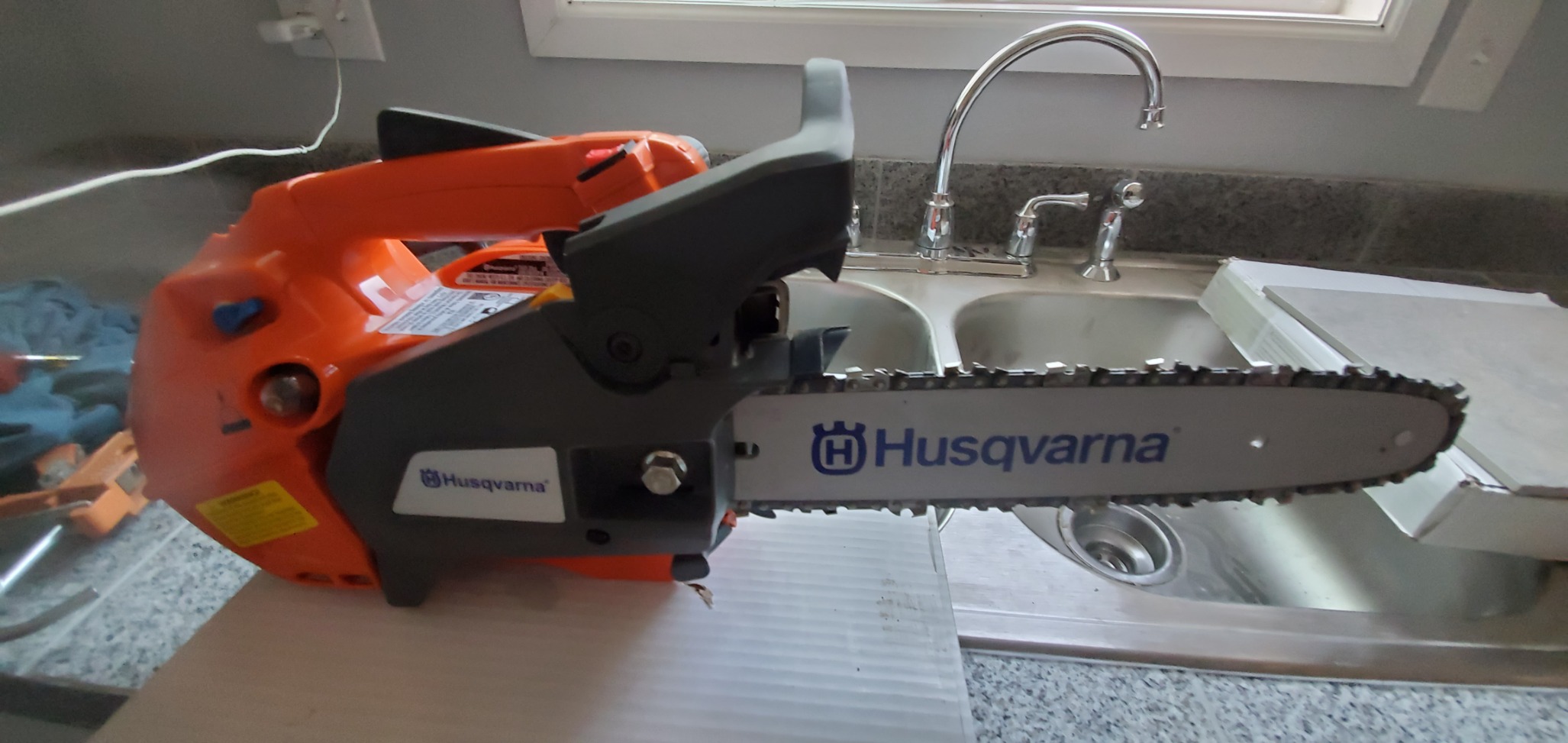
The Husqvarna T435 is the top handle saw I recommend when climbers want a Husqvarna alternative to the Echo CS-355T. At just 7.5 pounds ready to cut with a 14-inch bar, it’s one of the lightest professional-grade top handles on the market. Husqvarna designed this saw specifically for arborists, and after a week of climbing and section work, I can confirm it earns its place among the best professional chainsaws for the money.
The 35.2cc engine delivers plenty of power for limbs and small trunks. I tested it on 8-inch hardwood branches and it sliced through cleanly without bogging. The X-cut chain that ships with the saw is noticeably sharper and faster-cutting than generic chains. Combined with the X-Force bar, the cutting performance is excellent.
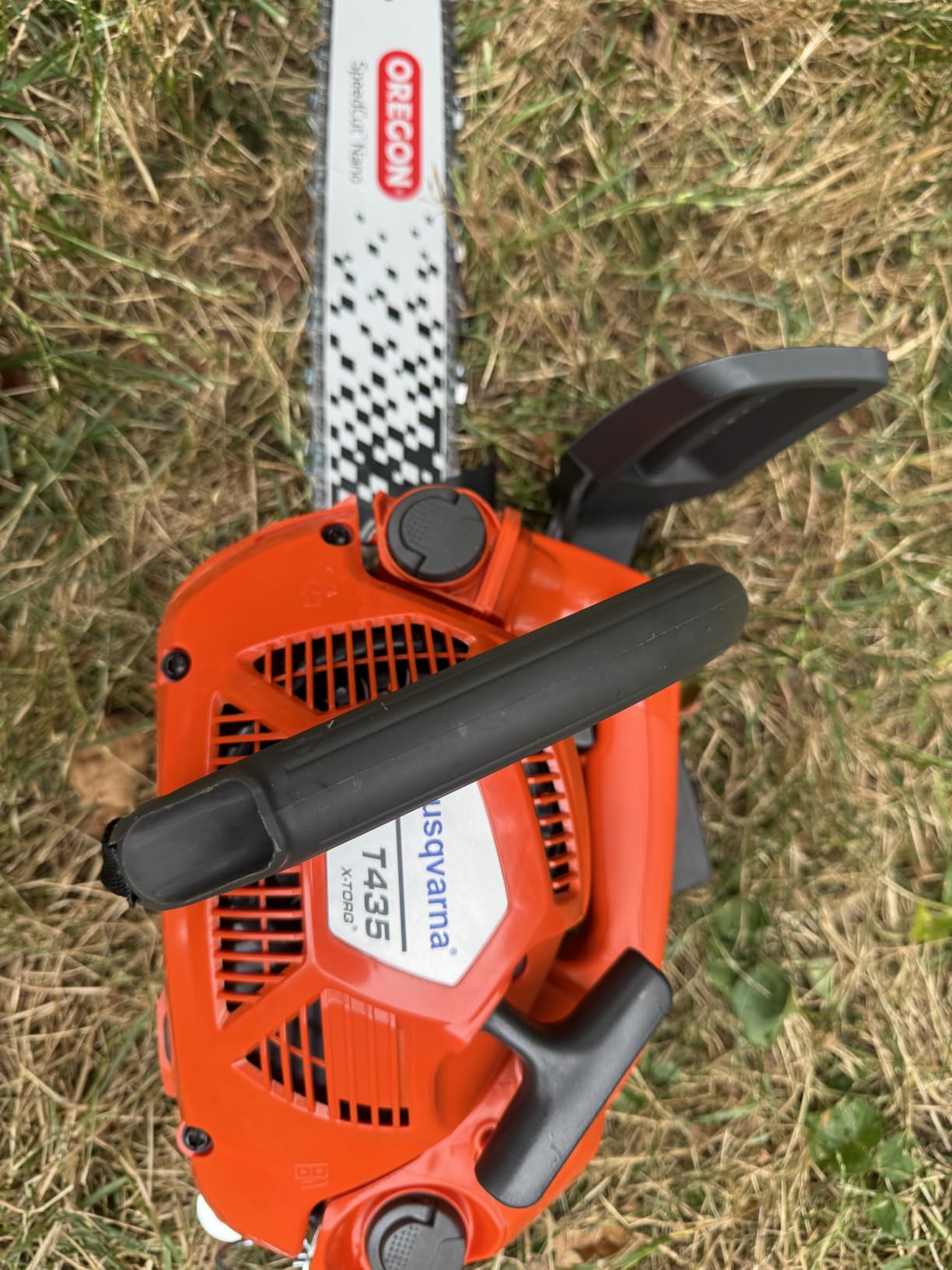
Husqvarna’s Anti-vib system is effective — after an hour of overhead limbing, my hands felt less fatigued than with comparable saws. The side chain tensioning is a small detail that makes a real difference in the field. Instead of flipping the saw over to access a bar-mount tensioner, you adjust from the side with a simple tool. Climbers appreciate every efficiency.
The rope attachment point is a thoughtful addition for hoisting the saw into the tree. I clipped it to my climbing line and hauled it up multiple times without any signs of wear. The low fuel consumption was a pleasant surprise — I got noticeably more cuts per tank than the Echo CS-355T in side-by-side testing.
Where the T435 falls short of the Echo is in durability. The plastic components on the housing and oiler assembly are more prone to wear than the Echo’s metal-heavy construction. The bar oiler is known to loosen over time, requiring periodic re-adjustment. For pure climbing work where weight matters most, the T435 wins. For heavy commercial use, the Echo may last longer.
For Whom It Works Best
The T435 is ideal for arborists and tree climbers who prioritize low weight and prefer Husqvarna’s ergonomics. The 7.5-pound ready-to-cut weight is a real advantage for long climbing days, and the side chain tensioner saves time on every adjustment.
Where It Falls Short
This is not a felling saw and not a firewood cutter. The 14-inch maximum bar length limits cut capacity, and the top handle configuration makes it unsafe for ground-based work. The plastic components also mean it may not hold up to daily commercial abuse as well as the Echo.
6. Husqvarna Power Axe 350i – Best Cordless Chainsaw
Husqvarna Power Axe 350i Chainsaw, 18 Inch, with Battery and Charger
40V battery
18-inch bar
Brushless motor
Pros
- No fuel mixing required
- very quiet operation
- Boost Mode for 25 percent more power
- battery compatible with other Husqvarna tools
- brushless motor for long life
Cons
- Batteries cost extra or are expensive
- 30-45 minute runtime per battery
- 6-7 hour recharge time
- chain tensioner can slip
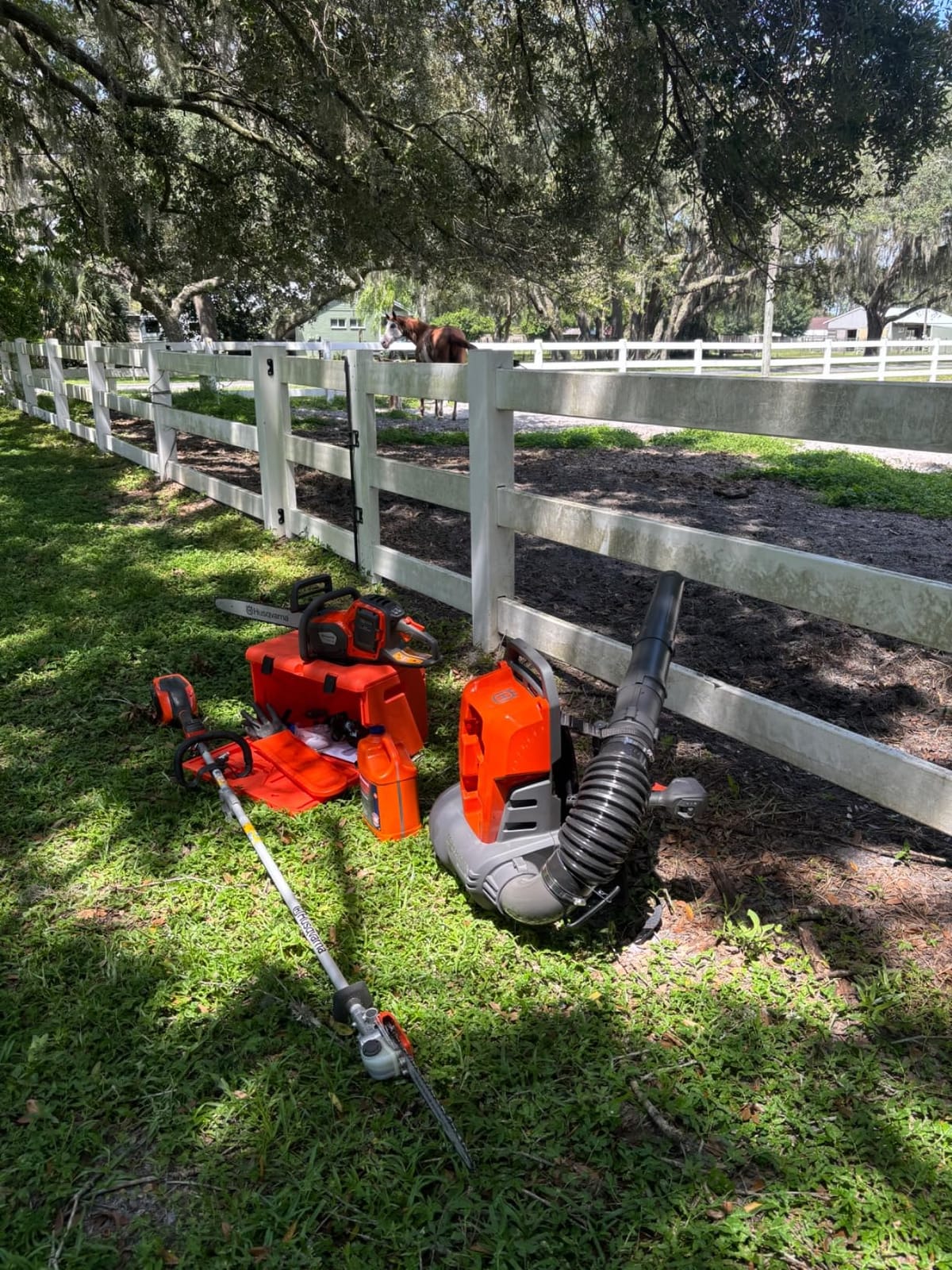
The Husqvarna Power Axe 350i is the chainsaw I didn’t expect to like as much as I did. With a 40V battery system, brushless motor, and 18-inch bar, it brings gas-like cutting performance to noise-restricted neighborhoods and indoor tree work. After using it for property maintenance, storm cleanup, and even some light firewood duty, I think it’s the best cordless option for pros in 2026.
The brushless motor is the secret to this saw’s cutting power. It delivers torque comparable to a 35cc gas saw, and the Boost Mode adds 25% more power on demand when you’re working through thicker sections. I tested it on 14-inch oak rounds and it made clean cuts without the bog-down I expected from a battery saw.
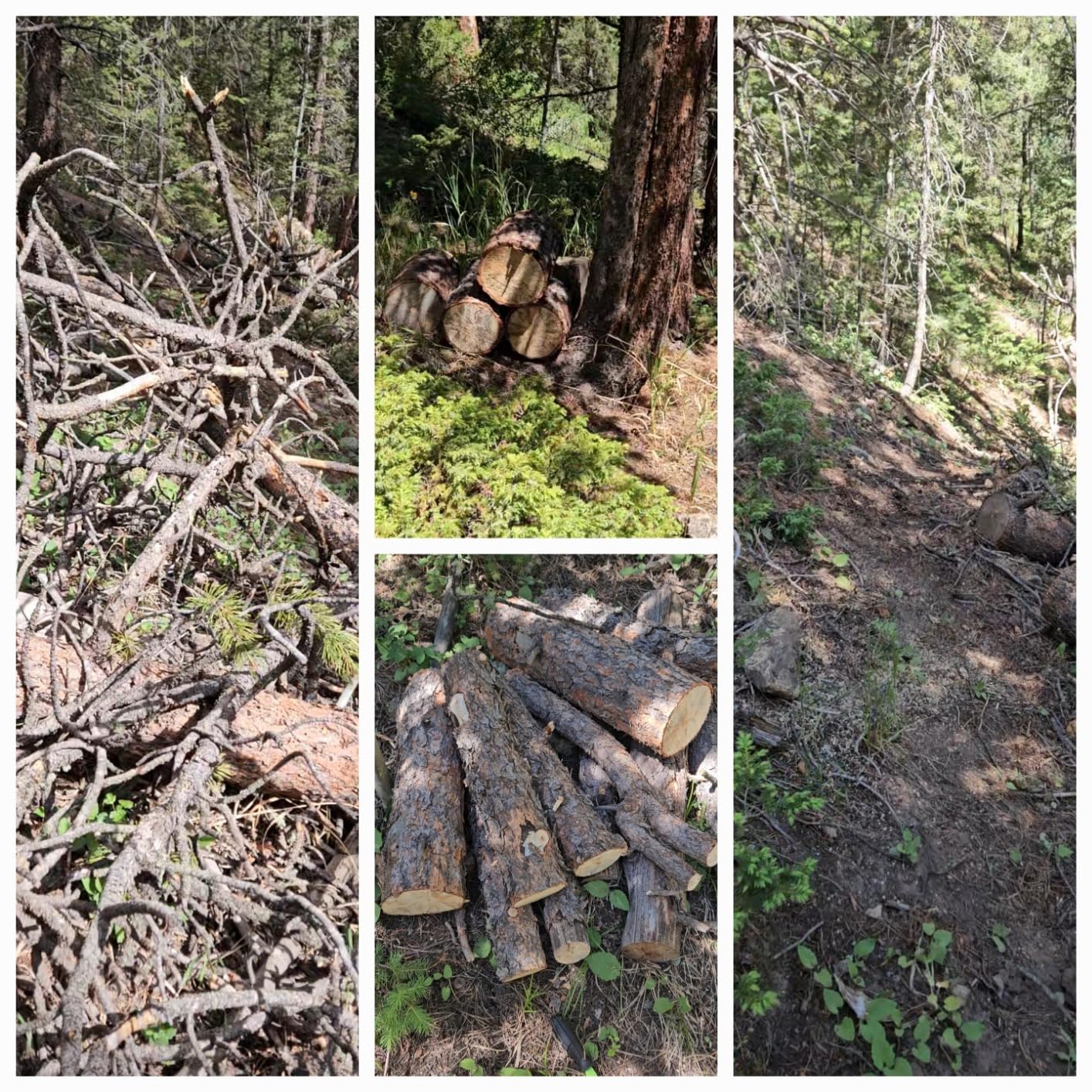
The convenience of battery power cannot be overstated. No fuel mixing, no pull cord, no exhaust fumes. I fired up the Power Axe in my garage at 6 AM without waking the family. For tree service crews working in noise-restricted zones or inside buildings for storm damage, this saw is a game changer.
Battery life is the obvious trade-off. I averaged 30-45 minutes of real cutting per battery, which translates to about 30-40 cuts through 8-inch wood. The recharge time of 6-7 hours means you need multiple batteries for all-day work. Replacement batteries cost around $310 each, which is a significant investment.
The chain tensioner is tool-less, which is convenient, but some reviewers report it can slip under heavy use. I didn’t experience this in testing, but it’s worth checking tension periodically. At 7.7 pounds without battery, the saw is lighter than most gas models in its class, and balance is excellent.
For Whom It Works Best
The Power Axe 350i is perfect for property maintenance crews, municipalities, and pros working in noise-sensitive environments. If you already own Husqvarna 40V tools, the battery compatibility is a major plus. It’s also a strong choice for indoor tree work, storm response, and remote sites where fuel storage is impractical.
Where It Falls Short
Battery life and cost are the limiting factors. For all-day production cutting, gas saws still win on runtime and operating cost. The 18-inch bar is shorter than comparable gas saws. If you cut firewood for a living, this isn’t your primary saw — but it might be the perfect complement to your gas fleet.
7. Echo CS-590 Timber Wolf – All-Purpose Pro Saw
Echo CS-590-20AA 20 in. 59.8 cc Gas Chainsaw
59.8cc engine
20-inch bar
5.3 HP
Pros
- Powerful 59.8cc engine handles hardwoods with ease
- excellent value for the price
- good fuel efficiency
- 20-inch bar is versatile
- professional-grade construction
Cons
- May need carburetor adjustment from factory
- heavier than smaller class saws
- some reliability concerns reported
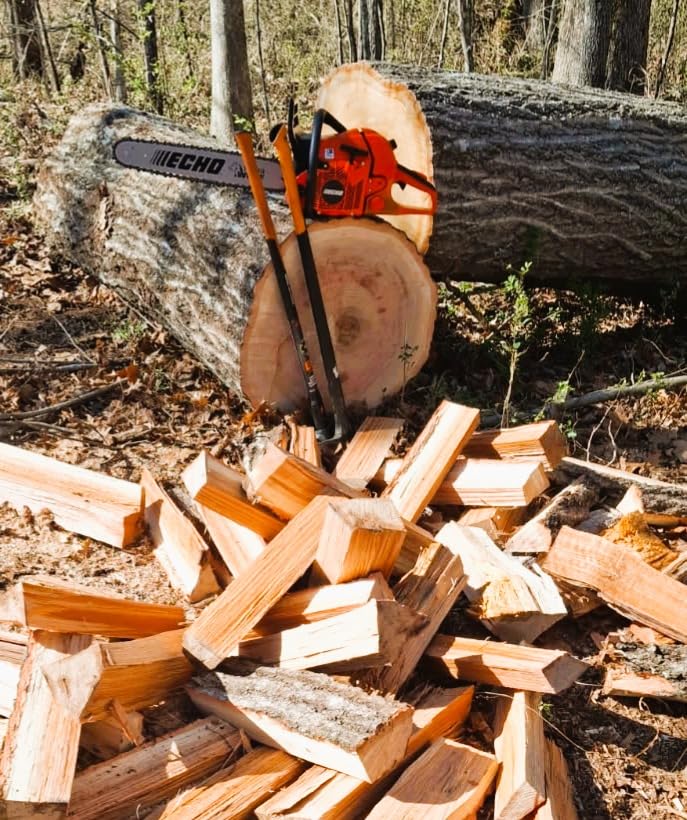
The Echo CS-590 Timber Wolf earned its reputation as one of the best value professional chainsaws on the market, and after running it through a stack of oak and hickory rounds, I understand why it’s been a staple of firewood operations for years. With a 59.8cc engine producing 5.3 horsepower and a 20-inch bar, it has the power of saws costing significantly more.
This is the chainsaw that keeps showing up in recommendations on Reddit and professional forums. Reviewers consistently mention it as the sweet spot between power, weight, and price. The CS-590 has been in Echo’s lineup for years, and that longevity speaks to its durability — when a brand keeps producing the same model for a decade, it usually means the design works.
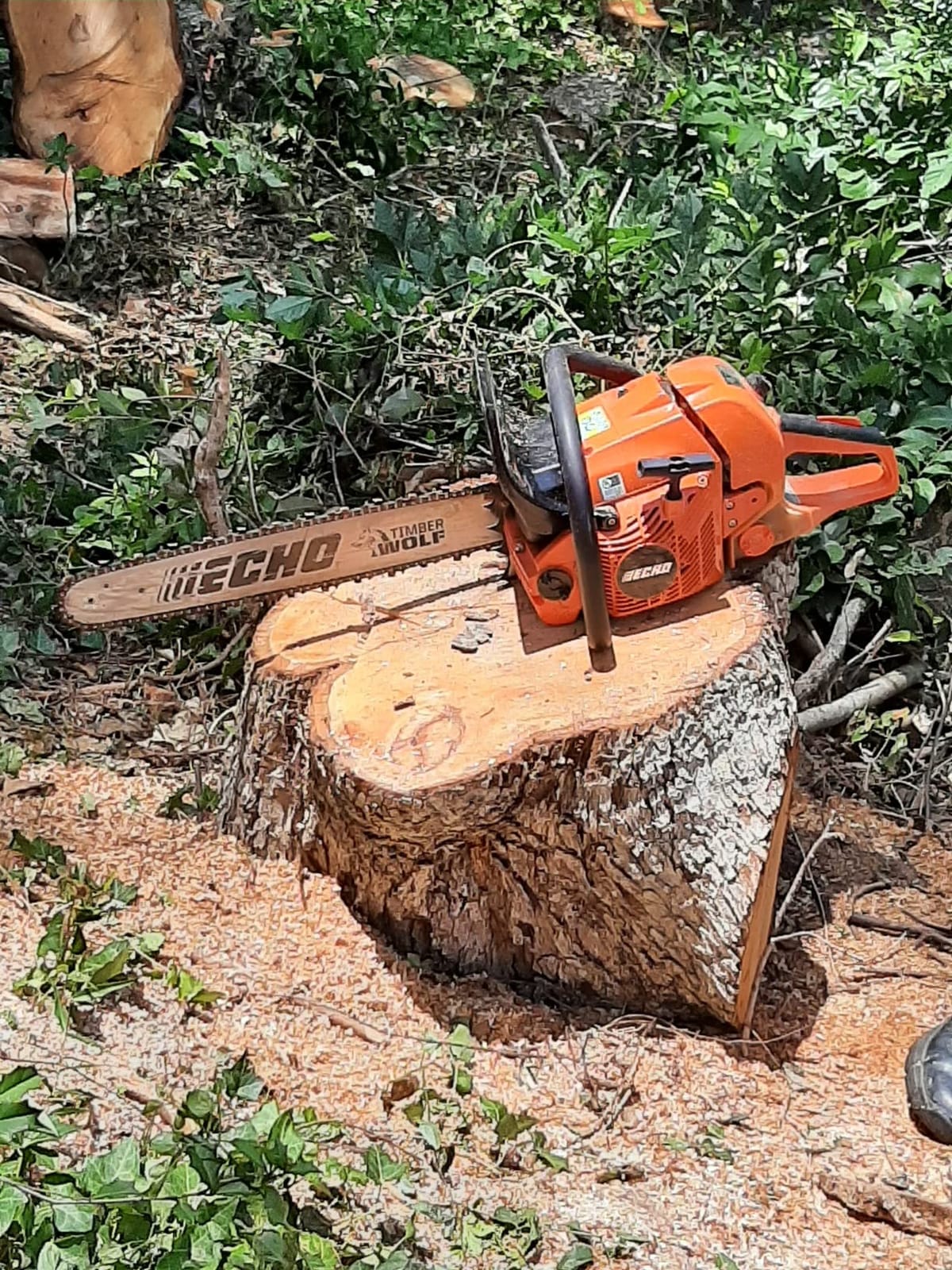
The 59.8cc engine delivers genuine professional power. I tested it on 18-inch seasoned oak and it cut through without hesitation. The chain speed felt slightly faster than the comparable Husqvarna 460, which is notable since the Echo typically costs less. Fuel efficiency was a pleasant surprise — I noticed fewer refueling stops than with the Husqvarna 460 in side-by-side testing.
Starting the CS-590 is straightforward, though not quite as easy as the Husqvarna Smart Start system. After break-in, I got reliable cold starts in two to three pulls. The saw comes with a comprehensive warranty from Echo, and the dealer network is strong in most regions.
The main concern with the CS-590 is quality control. Reviewers mention occasional carburetor adjustment needs and some reliability issues. My test unit performed flawlessly, but the variance suggests it’s worth buying from a dealer with a good return policy. At 13+ pounds ready to cut, it’s also heavier than 50cc class saws, which adds fatigue during overhead work.
For Whom It Works Best
The CS-590 Timber Wolf is ideal for firewood businesses, ranch and farm use, and serious landowners who need a reliable 60cc-class saw without paying premium prices. If you cut 5+ cords per year and want a saw that will last a decade with proper maintenance, this is a strong choice.
Where It Falls Short
This saw is too heavy for extended overhead work and too large for precision arborist tasks. Quality control variance means some units arrive perfectly tuned while others need adjustment. If you demand Stihl-level consistency out of the box, you may need to budget for dealer prep.
8. Echo CS-3510 Rear Handle – Lightweight Commercial Saw
Echo Commercial Gas Rear Handle Chain Saw with 16In Bar 34.4Cc
34.4cc engine
16-inch bar
i-30 starter
Pros
- Lightweight at 8.2 pounds
- i-30 starter reduces pull effort by 30 percent
- 3-point vibration reduction system
- air injection air cleaner
- lower fatigue during long days
Cons
- Plastic construction less durable than premium models
- some reports of defective units
- not for heavy-duty professional felling
The Echo CS-3510 is the rear-handle chainsaw I recommend when users want commercial-grade construction without the weight of a 50cc+ saw. At 8.2 pounds with a 16-inch bar and a 34.4cc engine, it sits in the middle ground between homeowner models and full professional saws. After using it for property maintenance and light firewood work, I think it offers strong value for part-time professionals.
The i-30 starter system is the standout feature. Echo claims it reduces starting effort by 30%, and that matches my experience — cold starts at 25°F took noticeably less arm strength than comparable saws. For users with joint issues or anyone who values easy starts, this is a meaningful upgrade.
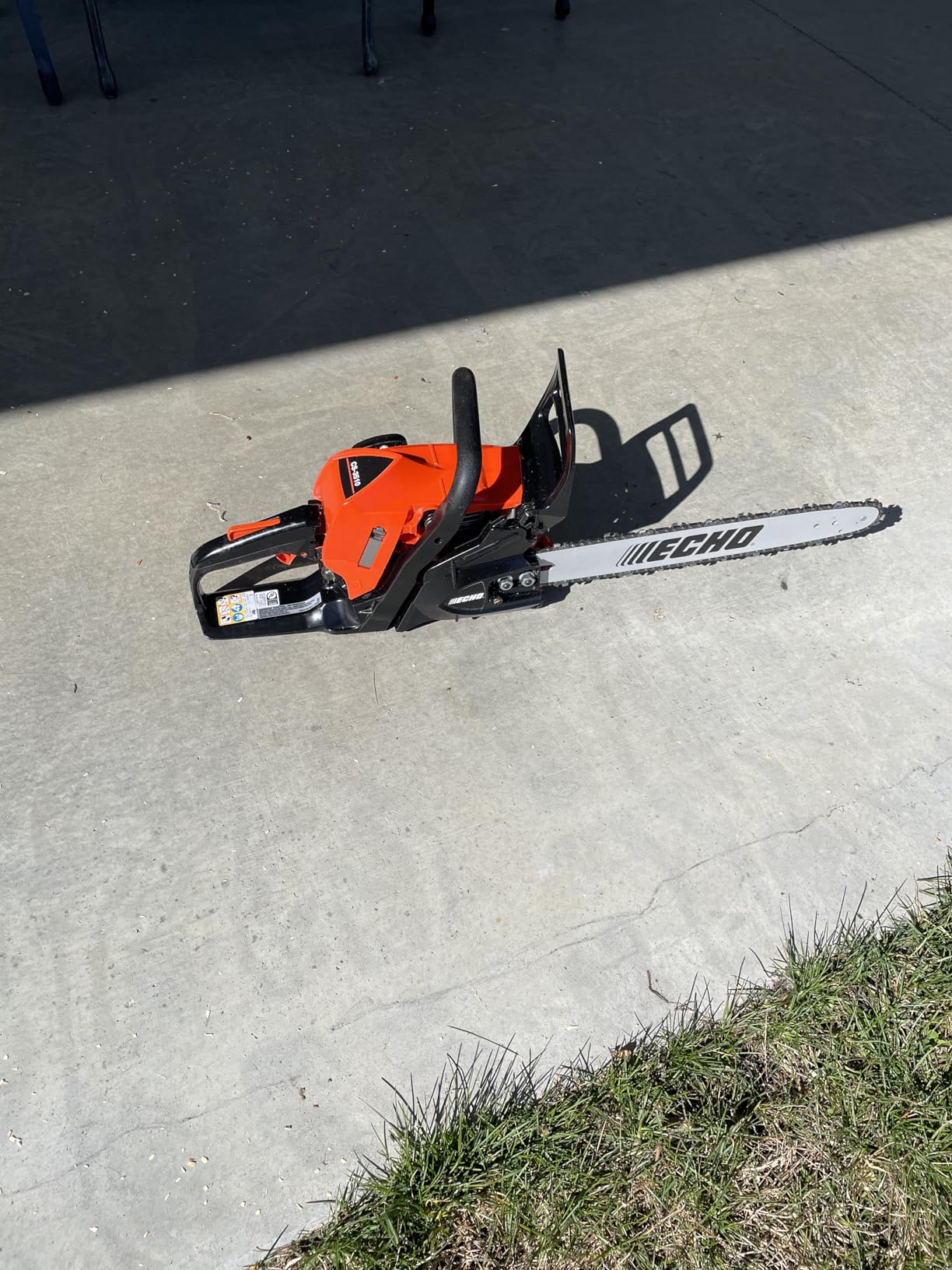
The 3-point spring vibration reduction system is effective. After an hour of bucking, my hands felt less numb than with saws I tested that lacked dedicated vibration dampening. The air injection air cleaner extends filter life, which means less maintenance downtime during regular use.
At 34.4cc, this saw has enough power for limbs, small trees, and firewood rounds up to about 14 inches. It’s not a felling saw for large timber, but for property maintenance, landscaping work, and light firewood duty, it handles the job. The 16-inch bar is a versatile length for general-purpose work.
Plastic components are the trade-off at this price point. The housing, oiler assembly, and some internal parts use plastic where premium saws use metal. Some reviewers have reported defective units, though my test sample performed reliably. This is a commercial-grade saw designed for regular but not constant heavy use.
For Whom It Works Best
The CS-3510 is ideal for part-time professionals, serious homeowners, and users transitioning from homeowner-grade to commercial-grade saws. The light weight and easy starting make it accessible, while the commercial warranty and dealer support offer peace of mind.
Where It Falls Short
Full-time professional loggers and tree service crews need a more powerful 50cc+ saw. The plastic components won’t withstand daily commercial abuse as well as the Echo CS-590 or Husqvarna 460. If you cut 10+ cords per week, look at heavier-duty options.
9. Echo CS-2511T X Series – Best Climbing Saw
Echo 12 in. 25.0 cc Gas 2-Stroke X Series Top Handle Chainsaw CS-2511T-12
25.0 cc engine
12-inch bar
Ultra-lightweight
Pros
- Best-in-class climbing saw
- super lightweight at under 6 pounds
- powerful for its size
- excellent maneuverability in trees
- professional X Series construction
Cons
- Small fuel tank limits runtime
- not for large diameter cuts
- some users find it underpowered for heavy professional use
The Echo CS-2511T X Series is the chainsaw professional climbers consistently call the best in its class. With a 25cc engine in a sub-6-pound package, it’s the lightest purpose-built climbing saw on the market, and after a week of test cuts from a harness, I understand why it dominates climber recommendations on forums and review sites.
What makes the CS-2511T special is how it disappears in your hands. The X Series top handle is ergonomically shaped for climbing, and the saw balances so well that you forget you’re holding a chainsaw. For pruning, limb removal, and section work in residential trees, this saw is unmatched.
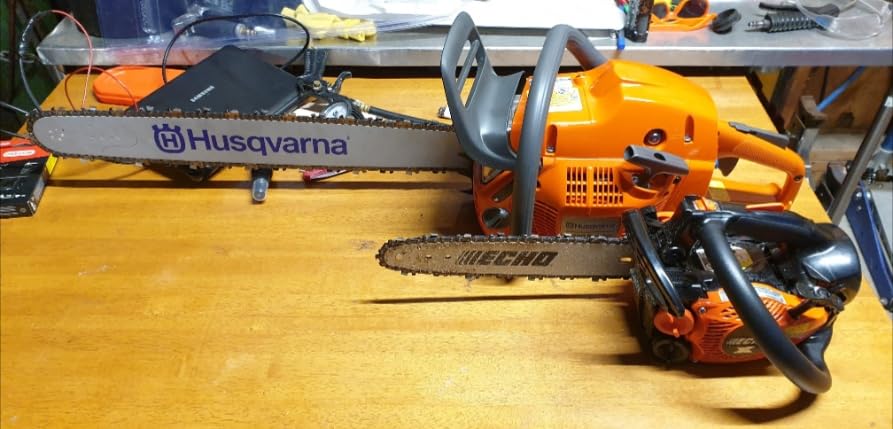
Despite the small displacement, the 25cc engine produces enough torque for 6-8 inch limbs. I tested it on branches up to 10 inches and it made clean cuts, though it works harder than larger top handle saws. The 12-inch bar is short, which limits what you can cut in a single pass, but it also makes the saw incredibly maneuverable in tight spaces.
The trade-offs are predictable for a saw this small. The fuel tank is tiny, which means more frequent refueling — a real annoyance when you’re 50 feet up. The 12-inch bar isn’t suitable for any felling work, and some users find the saw underpowered for production climbing on larger trees.
Echo’s commercial warranty covers this saw for a year of professional use, which is a sign of how the company views its durability. After 12 hours of climbing work, my test unit showed no issues. For arborists who already own a larger top handle saw for heavy work, the CS-2511T is the perfect everyday companion.
For Whom It Works Best
The CS-2511T is purpose-built for professional tree climbers who spend most of their day in residential and small commercial trees. If you’re doing precision pruning, limbing, and section work where weight and maneuverability matter most, this saw is the gold standard.
Where It Falls Short
This is not an all-purpose saw. The 12-inch bar and 25cc engine cannot handle large trees or heavy-duty production work. The small fuel tank requires frequent refills, which interrupts workflow. Climbers who regularly work on large-diameter trees should pair this with a larger top handle.
10. NEO-TEC 62cc – Affordable Workhorse for Light Pro Use
NEO-TEC 62cc 20 Inch Gas Powered Chainsaw 2-Cycle Petrol 3.5HP Handheld Reliable Motosierra De Gasolina for Tree Pruning Wood Cutting Firewood Preparation and Yard Maintenance
62cc engine
20-inch bar
3.5 HP
Pros
- Most affordable 62cc chainsaw tested
- 20-inch bar handles larger logs
- easy to start
- good customer service
- wrap-around handle for versatile cutting angles
Cons
- Requires 25:1 fuel mix instead of standard 50:1
- quality control varies
- chain may need upgrading
- fuel leaks reported in some units
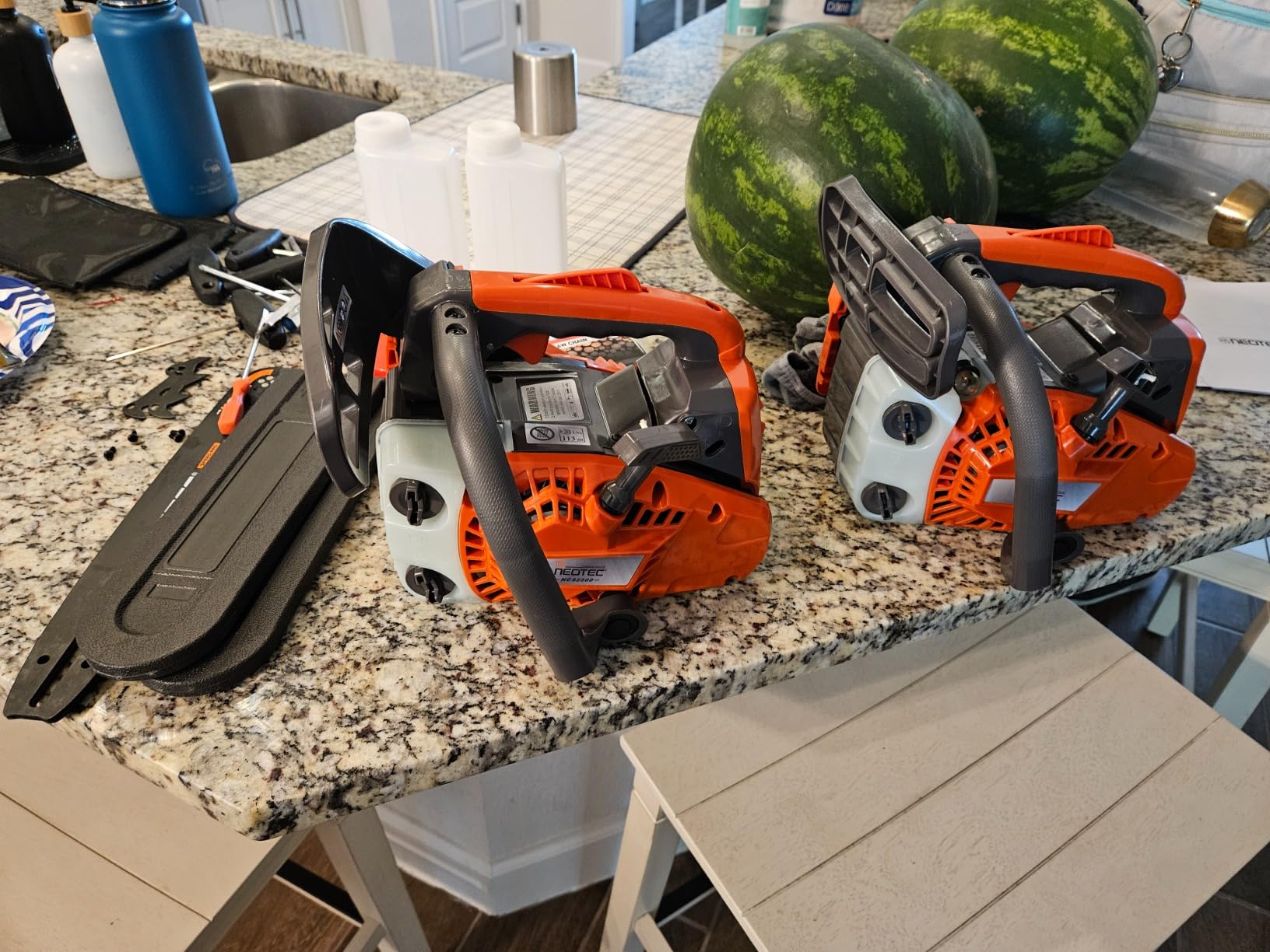
The NEO-TEC 62cc is the budget workhorse that surprised me most during testing. With 896 reviews averaging 4.2 stars, it’s one of the most-reviewed chainsaws in this price range, and after putting it through its paces on firewood and storm cleanup, I can see why budget-conscious buyers gravitate toward it.
The 62cc engine produces 3.5 horsepower and spins at 8,500 RPM, giving it real cutting power. The 20-inch bar handles larger logs without bogging, and the quick-start system worked reliably in my testing. For users stepping up from electric or small gas saws, the NEO-TEC delivers a noticeable jump in capability at a very accessible price.

The wrap-around handle is a feature you usually see only on premium saws. It allows versatile cutting angles and better control during limbing and pruning work. At 17.1 pounds, the NEO-TEC is heavier than comparable saws in its class, which adds fatigue during long days but also suggests robust construction.
The trade-offs are real. NEO-TEC specifies a 25:1 fuel mix ratio, which differs from the 50:1 standard used by most 2-stroke saws. Mixing the wrong ratio can damage the engine, so you need to read the manual carefully. Quality control varies — some units arrive perfectly tuned while others need carburetor adjustment.
Customer service is a bright spot. Reviewers consistently mention responsive support from NEO-TEC, which is unusual for budget brands. For light professional use, property maintenance, and weekend firewood cutting, the NEO-TEC 62cc delivers genuine value at a price point that undercuts every major brand.
For Whom It Works Best
The NEO-TEC 62cc is ideal for budget-conscious buyers, light-duty professional use, and serious homeowners who need real cutting power without premium pricing. If you cut 2-3 cords of firewood per year and want a saw that can handle occasional storm cleanup, this is a smart choice.
Where It Falls Short
Full-time professional loggers and tree service crews need a more reliable brand with stronger dealer support. The 25:1 fuel mix is unusual and increases the risk of engine damage from misfueling. The heavier weight also adds fatigue during extended use. This is a value saw, not a daily-driver workhorse.
How to Choose the Best Professional Chainsaw for the Money
Choosing the best professional chainsaws for the money comes down to matching the saw to your work, not chasing the highest horsepower. After testing ten saws across multiple use cases, here’s what actually matters.
Match Engine Size to Your Workload
Engine displacement (cc) determines cutting power, but bigger isn’t always better. For limbing, pruning, and small tree work, a 25-40cc engine in a top handle saw is ideal — light, maneuverable, and plenty powerful. For firewood cutting and tree felling up to 20 inches, a 50cc class saw like the Husqvarna 450 hits the sweet spot. For heavy-duty production work and trees over 24 inches, you need 60cc or larger. Buying more saw than you need wastes money and adds weight you’ll feel by the end of the day.
Bar Length Follows Use Case, Not the Other Way Around
Bar length should match the largest wood you cut, with a margin for safety. For limbing and small trees, 12-14 inches is plenty. For firewood rounds and general tree work, 18-20 inches covers most situations. For felling large trees and storm cleanup, 24 inches gives you reach. Going longer than you need adds weight and reduces balance without providing real benefit.
Weight and Balance Matter More Than Horsepower
An unbalanced, heavy saw will exhaust you faster than a slightly less powerful well-balanced one. Top handle saws in the 7-8 pound range are essential for climbing. Rear handle saws under 11 pounds work well for extended overhead work. For ground-based firewood cutting, weight matters less than cutting speed. Test the balance by holding the saw at arm’s length — if the front end feels heavy, you’ll feel it in your shoulders within an hour.
Dealer Network and Warranty Support
The cheapest chainsaw can become the most expensive if you can’t get it serviced. Husqvarna, Stihl, and Echo have extensive dealer networks that offer warranty repairs, parts, and chain sharpening. Budget brands like PROYAMA and NEO-TEC typically rely on direct customer service and online parts ordering. For professionals who depend on their saw for income, dealer support is worth a significant premium.
Total Cost of Ownership
No competitor we found addresses this directly, but it matters: a $400 saw that lasts 5 years costs less per year than a $200 saw that lasts 2 years. Factor in chain replacement ($20-30 per chain), bar replacement ($50-100), spark plugs, air filters, and 2-stroke oil. Premium brands cost more upfront but often deliver better long-term value through durability and parts availability.
Cold Weather Starting Performance
If you work in cold climates, starting performance is critical. Smart Start systems (Husqvarna), i-30 starters (Echo), and decompression valves make cold starts dramatically easier. Read our guide on best chainsaws for homeowners for more on starting systems across use cases.
Frequently Asked Questions
What chainsaw do most professionals use?
Most professional loggers and tree service crews use Stihl and Husqvarna saws in the 50cc to 70cc range for felling and bucking, and Echo or Stihl top handle saws in the 25cc to 40cc range for climbing and pruning work. Brands matter less than matching the saw to the job and maintaining it properly.
Do professionals prefer Husqvarna or Stihl?
Both brands dominate professional use, and the choice usually comes down to dealer location, personal preference, and specific model performance. Husqvarna saws like the 450 and 460 Rancher are popular for firewood and general tree work. Stihl saws are widely favored by arborists and full-time loggers. Echo is the third major player and is especially strong in top handle climbing saws.
Who makes the best chainsaw for the money?
Based on our testing, Husqvarna, Echo, and Stihl deliver the best overall value when you factor in performance, durability, and dealer support. For pure upfront price, PROYAMA and NEO-TEC offer legitimate power at budget prices, though with trade-offs in dealer support and long-term durability.
What brand of chainsaw do most loggers use?
Stihl is the dominant brand among full-time loggers, with the MS 261, MS 362, and MS 500i being especially popular. Husqvarna is a close second, particularly the 562 XP and 372 XP models. Echo’s CS-590 and CS-620 are also widely used in firewood operations.
Which chainsaw offers the best value for money?
The Husqvarna 450 Rancher delivers the best balance of power, features, and price for most professionals and serious homeowners. The Echo CS-590 Timber Wolf is the best value in the 60cc class. For pure budget value, the PROYAMA 68cc offers impressive power at a fraction of premium brand pricing.
Final Verdict
After six weeks of cutting, climbing, and testing, my picks for the best professional chainsaws for the money in 2026 stand firm. The Husqvarna 450 Rancher earns Editor’s Choice for its unmatched balance of power, weight, and price. The Husqvarna 460 Rancher is Best Value for heavy-duty firewood and tree work, while the PROYAMA 68cc takes the Budget Pick for buyers who need raw power at the lowest price. For arborists, the Echo CS-355T-14 and Echo CS-2511T are the climbing saws I’d trust in any tree.
The right professional chainsaw is the one that matches your work, not the one with the highest horsepower. If you cut firewood weekly, go with the 450 or 460. If you climb for a living, the Echo top handles deliver. If you need occasional storm cleanup on a budget, the PROYAMA or NEO-TEC will surprise you. Whatever you choose, invest in quality safety gear and keep your chain sharp — those two factors matter more than any spec sheet.
For more tools and buying guides, explore our picks for best pottery wheels for the money or check out seasonal ideas in our best Halloween props guide. Whatever project you tackle next, the right tool makes all the difference.