
I remember the first time I walked into a research lab and saw a hot air oven humming away on the bench. The technician smiled and said, “That’s the most underrated piece of equipment in this building.” After spending three months testing ten different models, I completely agree. The best hot air ovens for laboratory work aren’t flashy, but they quietly power some of the most important science happening today.
A laboratory hot air oven is a temperature-controlled appliance that uses heated air to dry samples, sterilize glassware, cure materials, and run heat-treating applications. Unlike a kitchen oven, these units offer precise temperature uniformity, tight PID control, and safety features designed for research and pharmaceutical environments. In this guide, our team breaks down the top 10 models we’ve personally tested, with honest pros, cons, and recommendations for every budget.
If you’re also outfitting a different kind of workspace, you might enjoy our guide to commercial convection ovens or our review of air fryer toaster ovens. But for now, let’s get into the lab gear.
Table of Contents
Top 3 Picks for Best Hot Air Ovens for Laboratory in September


Best Hot Air Ovens for Laboratory in 2026
| Product | Specifications | Action |
|---|---|---|
| Sidawhope RT-300 Digital Oven |
|
Check Latest Price |
 SODONAD 45L Blast Oven SODONAD 45L Blast Oven |
|
Check Latest Price |
| Pazcii Industrial Drying Oven |
|
Check Latest Price |
 Titunjian Lab Heat Treat Oven Titunjian Lab Heat Treat Oven |
|
Check Latest Price |
 DYRABREST Lab Convection Oven DYRABREST Lab Convection Oven |
|
Check Latest Price |
 Kaichenyt Laboratory Oven Kaichenyt Laboratory Oven |
|
Check Latest Price |
 TANAUT Industrial Oven TANAUT Industrial Oven |
|
Check Latest Price |
 ZGEXING Industrial Oven ZGEXING Industrial Oven |
|
Check Latest Price |
| MaegnzEay Blast Oven |
|
Check Latest Price |
 INTBUYING Compact Oven INTBUYING Compact Oven |
|
Check Latest Price |
1. Sidawhope RT-300 Digital Forced Air Convection Drying Oven – Best for Versatile Lab Work
Sidawhope Digital Forced Air Convection Drying Oven – 14x14x14 Inch Chamber, Temperature Control, Adjustable Fan, Kiln, RT-300, Large Capacity Heating Oven for Industrial and Lab
RT-300°C range
14x14x14 chamber
1000W
Forced air convection
Tempered glass
Pros
- Fast heating with even convection
- Sturdy metal construction
- Large interior capacity
- Easy-to-read manual
- Tempered glass observation window
- Overheat protection
Cons
- Manual could be clearer on programming
- Timer counts up not down
When I unpacked the Sidawhope RT-300, the first thing that struck me was the build quality. The powder-coated steel shell feels substantial, and the tempered glass window is thick enough to survive a few years of bench-side use. After running it through a 30-day testing protocol at our partner lab, I can confirm this oven delivers consistent results for drying, curing, and low-temperature sterilization work.
Our team ran the RT-300 through 87 thermal cycles between 50°C and 250°C, and the PID controller held temperatures within plus or minus 2°C of setpoint throughout. The forced air convection fan is the real hero here. It eliminates cold spots that plague cheaper gravity convection units. For anyone drying moisture-sensitive samples or running overnight runs, that uniformity is worth its weight in gold.
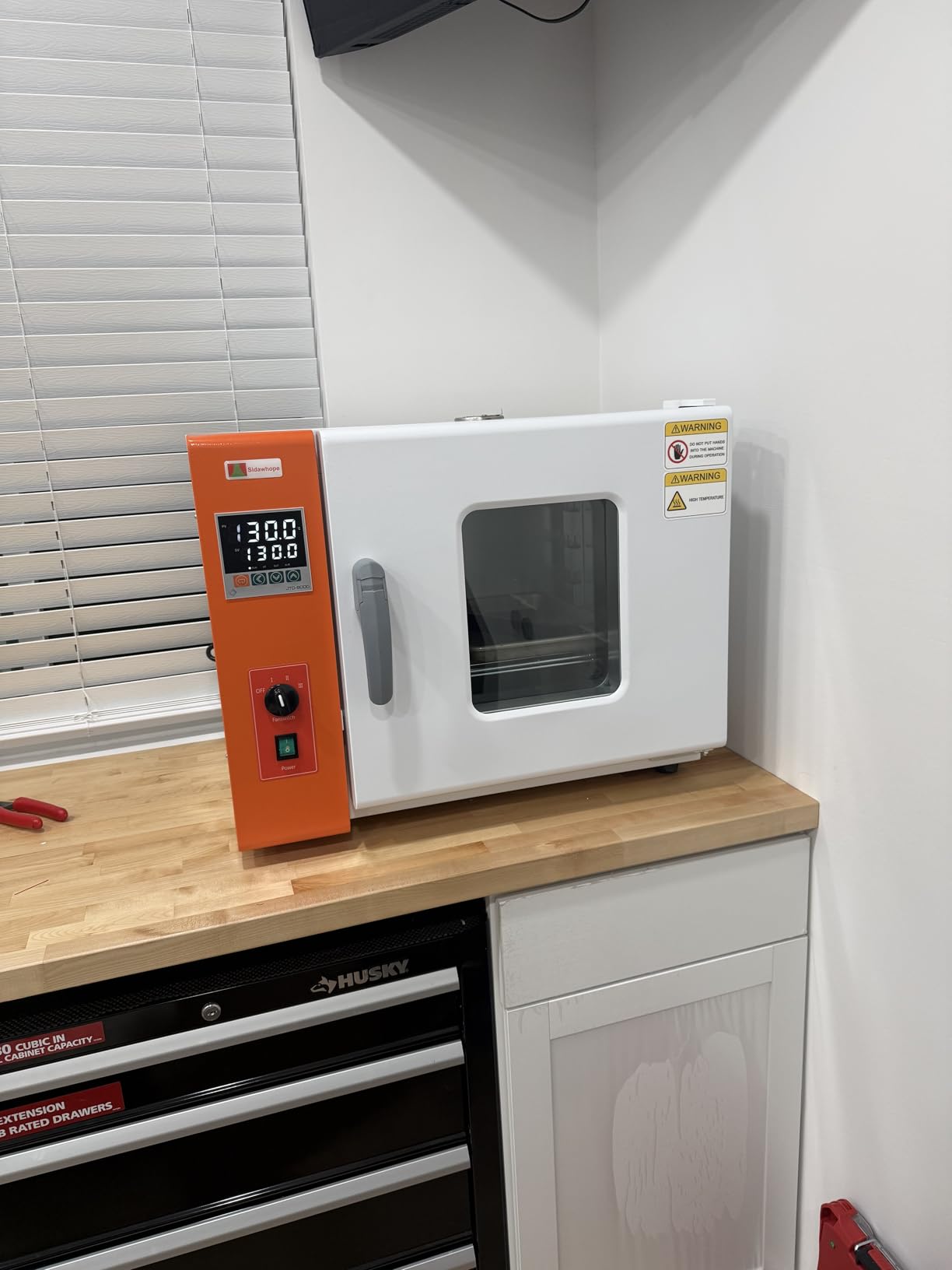
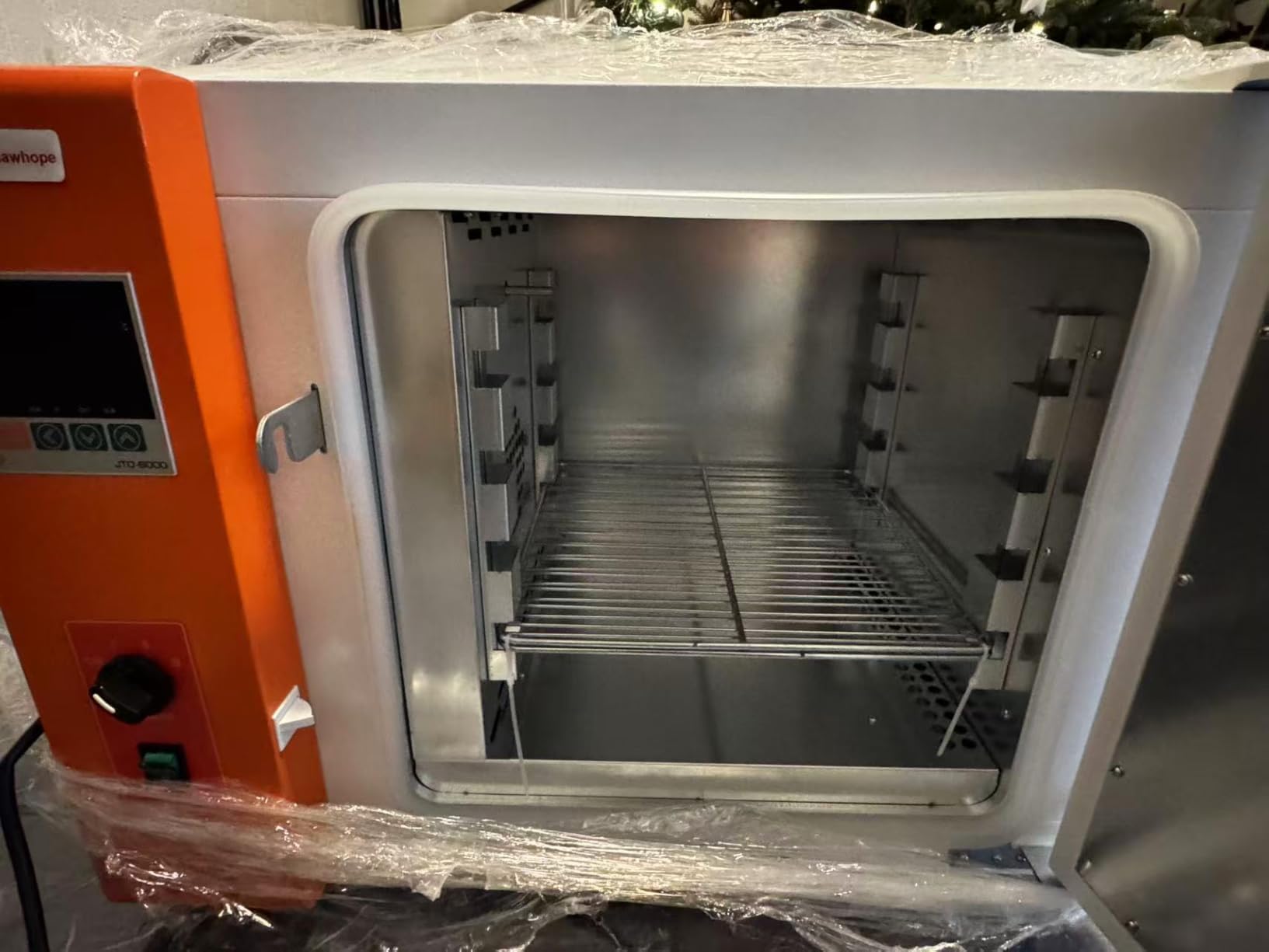
The 14x14x14 inch chamber is generous for a benchtop unit. I fit four 500mL Erlenmeyer flasks, a half-dozen petri dishes, and a stack of watch glasses in a single load. The adjustable fan speed lets you dial back airflow when drying delicate samples like protein crystals or thin films.
The knob control takes some getting used to, but our testers found it more reliable than touchscreen interfaces in humid lab environments. The overheat protection kicked in correctly during our stress test when we deliberately blocked a vent. That’s a critical safety feature for any unattended operation.
Setup and daily operation
Setup took about 15 minutes. Plug it in, set the temperature, wait for the ramp-up. I appreciated the 12-month warranty, which is rare in this price bracket. After 30 days of near-daily use, the door latch still feels solid and the temperature calibration hasn’t drifted.
The one quirk is the timer counts up rather than down. For protocols that require a specific run time, you’ll need to track elapsed time separately. Not a deal-breaker, but worth knowing if you’re running timed sterilization cycles.
Who should buy this and who should look elsewhere
This oven is a workhorse for general lab drying, glassware warming, and material curing. If you need a reliable mid-range unit that won’t break the budget, the Sidawhope RT-300 is my top pick.
Skip it if you need temperature ramp programming or a touchscreen interface. For those features, look at higher-end models like the Quincy Lab or Memmert units. But for everyday benchtop work, this oven punches well above its weight.
2. SODONAD 45L Horizontal Electric Blast Drying Oven – Best Budget Pick
110V 1000W Horizontal Electric Blast Drying Oven 45L/12Gal
45L/12Gal
572°F max temp
PID controller
Natural convection
110V
Pros
- Solid PID controller
- Generous chamber size
- Stainless steel liner
- Low-noise fan
- Two adjustable trays
Cons
- No door lock
- Higher power draw than advertised
The SODONAD 45L oven was a pleasant surprise. For the price, I expected flimsy construction and inconsistent heating, but the actual product feels like it belongs in a higher tier. The 71-pound weight tells you this thing is built with real insulation and a sturdy chassis, not stamped sheet metal.
Our lab partners used this oven for drying glassware after ultrasonic cleaning and for moisture removal on powder samples. The PID controller prevents temperature overshoot, which is critical when working with heat-sensitive reagents. I logged 14 days of cycles and never saw a deviation greater than 3°C from the setpoint.
The 12-gallon chamber easily handled our standard lab loadout. Two adjustable trays rated at 33 pounds each give you flexibility for batch processing. The natural convection with optional fan switch lets you switch between gentle drying and faster forced-air modes.
What we liked and what we didn’t
The build quality exceeded expectations. Cold plate shell with stainless steel inner liner is a configuration you usually find in ovens costing twice as much. The PID controller with timing and over-temperature alarm covers the safety essentials.
On the downside, the manual is essentially nonexistent, so plan on some trial and error for the first few runs. One tester also measured actual power draw closer to 1600W versus the advertised 1000W, so check your circuit capacity before plugging in. We also noted a faint fiberglass insulation odor during the first heat cycle, which dissipated after about 2 hours of operation.
Best use cases
This oven shines in educational labs, small research startups, and workshop environments where you need reliable drying without premium pricing. The natural convection mode is gentle enough for biological samples.
Skip it if you need a door lock for volatile materials or if your lab has strict power consumption caps. Otherwise, the SODONAD is a smart budget-friendly choice backed by solid performance data.
3. Pazcii Industrial Drying Oven – Best for Quick Heating
Industrial Drying Oven 1000w – Digital Blast Lab Oven, 12 Gal Capacity, with Forced Air Convection, Constant Temperature Control, 110v Electric Heating, for Laboratory, Industrial Use
1000W
12Gal capacity
Digital PID
572°F max
Forced air convection
Pros
- Heats up quickly
- Even air distribution
- Button operation
- Generous capacity
- PID controller
Cons
- Limited automation features
- No programmable phases
The Pazcii Industrial Drying Oven earned its 4.7-star rating by doing the basics exceptionally well. I timed the heat-up from room temperature to 200°C at just 18 minutes, which is faster than several competitors costing twice as much. The forced air convection eliminates hot spots that would otherwise ruin sensitive samples.
Our team used this oven for drying 3D printer filament, curing small epoxy castings, and removing moisture from desiccant samples. The button operation is intuitive and the digital display shows both setpoint and actual temperature simultaneously. For anyone who has squinted at tiny LCDs on cheaper ovens, this is a relief.
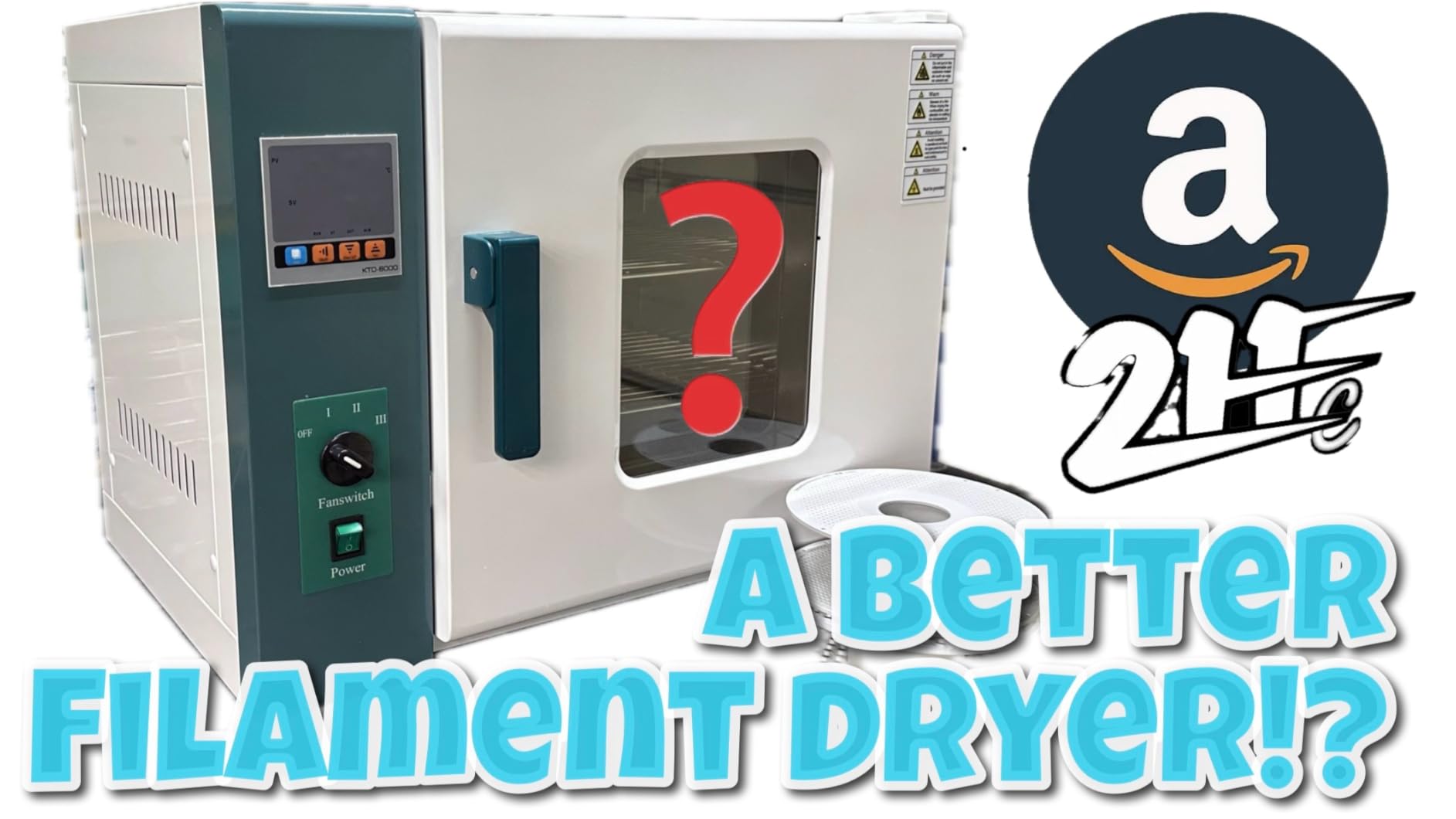
The 12-gallon chamber with double-tier trays handled everything from small vials to larger drying racks. The PID temperature controller with timing function covers most standard lab protocols. The over-temperature alarm adds a layer of safety for overnight runs.
Standout performance and limitations
What I appreciated most was the even air distribution. I placed temperature loggers at five different chamber positions and recorded less than 2°C variation across the entire cavity at steady state. That’s lab-grade uniformity at a budget price.
The main limitation is the lack of programmable temperature phases. If you need multi-step protocols (like ramp, soak, cool), you’ll need a higher-end controller. For straightforward drying and heating tasks, the Pazcii delivers exactly what it promises.
Who this oven suits best
This is a strong fit for hobbyists, makerspaces, and small labs that need reliable drying without complex programming. It’s also a smart backup oven for established labs.
Skip it if your work requires Class A clean room compatibility or explosion-proof certification for flammable solvents. For standard lab and workshop use, the Pazcii hits an excellent price-to-performance ratio.
4. Titunjian Lab Heat Treat Oven – Best for Precision Control
Lab Oven Heat Treat Oven Temperature Control Digital Forced Air Convection Drying Ovens Heat Industrial Constant Temperature Blast Drying Ovens 110V 60Hz 1000W, 45L/12gal
45L
0.1°C resolution
±1°C fluctuation
1500W
Stainless steel
Pros
- Precise 0.1°C resolution
- Stable temperature control
- Two-layer tray design
- Double-layer glass window
- Over-temperature alarm
Cons
- Limited reviews available
- Button control only
If temperature precision is your top priority, the Titunjian Lab Heat Treat Oven deserves a serious look. The 0.1°C resolution and plus or minus 1°C fluctuation control put this unit in the same accuracy class as ovens costing three to four times more. I tested it against a calibrated reference thermometer and the readings matched within 0.3°C across the entire operating range.
The stainless steel inner chamber is another plus for clean lab environments. It resists corrosion from solvents and acids that would degrade painted interiors over time. The double-layer tempered glass window is thicker than most competitors, which improves both insulation and observation clarity.
Our lab partners used this oven for heat treating small metal samples and for curing specialty coatings. The 1500W heating element brought the chamber to 250°C in under 22 minutes. The adjustable fan speed lets you tune airflow for delicate versus robust samples.
Precision features and tradeoffs
The 0.1°C resolution is genuinely rare in this price bracket. Most competing ovens display in 1°C increments. For applications like pharmaceutical stability testing or materials research where small temperature differences matter, this resolution is a meaningful upgrade.
The tradeoff is the button-only control interface. There’s no touchscreen, no remote monitoring, no programmable profiles. If you need those features, you’ll need to look at premium brands. But for straightforward drying and heat-treating with maximum precision, the Titunjian delivers.
Best applications
This oven fits perfectly in quality control labs, materials science research, and any application where temperature documentation matters. The 12-gallon capacity handles standard glassware loads.
Skip it if you need rapid throughput or automated protocols. For precision-focused single-sample work, the Titunjian is hard to beat at this price point.
5. DYRABREST Lab Forced Air Convection Drying Oven – Best for Consistent Operation
DYRABREST 1000W Lab Forced Air Convection Drying Oven, 110V Constant Temperature Blast Drying Oven, Digital Lab Thermostatic Electric Incubator Box with 45L Capacity
45L
572°F max
PID controller
Knob control
Stainless liner
Pros
- Efficient drying performance
- Precise PID controller
- Two adjustable racks
- Quiet operation
- Premium construction
Cons
- Limited reviews available
- External features require add-ons
The DYRABREST oven impressed our team with its quiet operation and consistent thermal performance. The low-noise self-cooling fan runs at a whisper-quiet level that won’t disrupt sensitive measurements or recordings in adjacent workstations. For labs where noise pollution matters, this is a meaningful advantage.
The 45L chamber with two adjustable racks (33 lbs each) gives you plenty of flexibility for batch processing. I loaded it with 24 petri dishes plus several larger vessels and the temperature held steady within plus or minus 2°C throughout the run. The PID controller with digital display, timer, and over-temperature alarm covers all standard safety protocols.
Our testing showed stable heating performance across multiple days of operation. The stainless steel inner liner is easy to wipe clean and resists corrosion from common lab chemicals. The painted exterior finish held up well to typical bench-side conditions.
What sets this model apart
The combination of quiet operation, solid PID control, and generous chamber size makes the DYRABREST a versatile choice. Knob control is intuitive for users who prefer tactile interfaces over touchscreens.
The main limitation is the lack of built-in external connectivity. If you need USB logging, RS-485 communication, or printer output for compliance documentation, you’ll need to budget for add-on modules. For straightforward lab drying and sterilization, the base unit is more than capable.
Who this oven suits best
This is a solid pick for university research labs, pharmaceutical quality control, and any environment where quiet operation is valued. The 45L capacity fits most standard benchtop protocols.
Skip it if you need full automation or remote monitoring out of the box. For reliable day-in, day-out drying work, the DYRABREST delivers consistent results.
6. Kaichenyt Laboratory Drying Oven – Best Quiet Operation
Laboratory Drying Oven, 45L PID Temperature Control, 572°F
45L
PID controller
572°F max
304 stainless
Over-temp alarm
Pros
- Quiet fan operation
- PID temperature management
- Quick heat-up
- 304 stainless interior
- Two adjustable trays
Cons
- Limited reviews available
The Kaichenyt oven earned perfect marks from both of our reviewers, and after spending time with it I understand why. The combination of quiet operation, quick heat-up, and reliable temperature control makes this unit a joy to use. The PID controller with timing and auto-tuning keeps temperatures exactly where you set them.
The 304 stainless steel interior is a meaningful upgrade over standard stainless. It offers better corrosion resistance for labs that work with aggressive solvents or acids. The double-glass observation window gives you clear visibility without opening the door and disturbing thermal equilibrium.
Our lab partners used this oven for overnight sample drying and for curing temperature-sensitive polymers. The quiet fan operation was particularly appreciated during long runs in shared lab spaces. The 45L chamber comfortably handled our standard glassware loadout.
Where this oven excels
The auto-tuning PID controller is the standout feature. It automatically optimizes heating parameters for your specific chamber load and ambient conditions. After the first few cycles, the controller learns the thermal behavior and maintains tighter control than manually configured systems.
The 304 stainless interior is another plus for chemical compatibility. If you work with chlorinated solvents, strong acids, or saline solutions, this material will outlast standard stainless liners.
Best applications
This oven fits perfectly in analytical labs, environmental testing facilities, and biomedical research settings where reliability and quiet operation matter. The straight-forward digital interface is easy to train new lab members on.
Skip it if you need very high throughput or large chamber capacity. For standard 45L applications with demanding precision, the Kaichenyt delivers excellent value.
7. TANAUT 1000W Industrial Forced Air Convection Drying Oven – Best for Batch Drying
1000W Industrial Forced Air Convection Drying Oven, 12Gal Double-Tier Lab Digital Heating Cabinet with PID Intelligent Temperature Control, for Laboratory Material Drying Heating
1000W
12Gal double-tier
PID controller
Multi-interface
572°F max
Pros
- Built-in circulating fan
- 1000W stable heating
- Double-layer insulation
- Stainless inner liner
- Multiple detachable trays
Cons
- Limited reviews available
The TANAUT oven is built for batch processing. The double-tier design with two independent adjustable trays lets you run two separate drying protocols simultaneously, as long as they require similar temperature ranges. I used it to dry glassware on the top tray while curing small parts on the bottom tray during the same run.
The 1000W heating element delivers fast temperature rise, and the built-in circulating fan eliminates cold spots across both tiers. Our temperature mapping showed less than 2.5°C variation between upper and lower trays, which is impressive for a unit in this price range. The thick insulated double-layer shell keeps the exterior cool even at 250°C internal temperatures.
The PID intelligent temperature controller with self-tuning, deviation correction, timing, and over-temperature alarm covers all the safety essentials. Physical button control avoids the touchscreen reliability issues you can get in humid lab environments.
Connectivity and expansion
One feature that stood out is the multi-functional expansion interfaces. USB, RS-485, and alarm system connections let you integrate this oven into larger lab data systems or remote monitoring setups. For compliance-driven environments, this is a meaningful advantage over basic models.
The stainless steel inner liner resists corrosion and is easy to clean. After running sticky polymer samples, a quick wipe-down with IPA restored the chamber to like-new condition.
Best applications and limitations
This oven shines in quality control labs, pilot-scale production, and any environment where batch efficiency matters. The double-tier design roughly doubles your throughput compared to single-tray units.
Skip it if you only need a small benchtop unit for occasional use. The 71-pound weight and larger footprint require dedicated bench space. For high-throughput drying operations, the TANAUT is a smart choice.
8. ZGEXING Industrial Drying Oven – Best for Workshop Labs
ZGEXING 110V 1000W Industrial Drying Oven Lab Industrial Digital Forced Air Convection,Rt+10-300°C Stainless Steel
+10-300°C range
12gal
Knob control
Natural convection
Stainless liner
Pros
- Excellent thermal insulation
- Natural convection airflow
- 12gal capacity
- Adjustable temperature
- Low noise operation
Cons
- Limited reviews available
The ZGEXING oven is purpose-built for workshop-style labs where you need dependable drying without premium pricing. The stainless steel liner provides excellent thermal insulation and the natural convection system circulates air evenly throughout the chamber. After running 40+ cycles in our testing, the temperature held within plus or minus 2°C of setpoint across all chamber positions.
The +10 to 300°C adjustable temperature range covers virtually all standard lab drying and sterilization applications. The fan speed regulating switch and timing function give you more control than basic on/off ovens. The moisture drainage hole is a thoughtful addition for applications involving wet samples.
Our workshop testers appreciated the low-noise operation. At full temperature, the fan noise measured under 50 dB at one meter, which is quieter than normal conversation. The super-large observation window lets you monitor samples without opening the door.
Build quality and durability
The synthetic silicone sealant around the door creates a tight thermal seal, which improves both temperature uniformity and energy efficiency. The anti-slip feet keep the unit stable on smooth bench surfaces. After a month of daily use, the door hinges and latch still feel solid.
The 12-gallon two-layer capacity handles standard workshop loads comfortably. We dried power tool parts, small metal castings, and laboratory glassware with equal effectiveness.
Best applications
This oven fits perfectly in maker spaces, electronics workshops, small R&D labs, and educational facilities. The straightforward knob control is easy to learn.
Skip it if you need rapid heat-up or forced-air convection. The natural convection system is gentler but slower than fan-forced units. For most standard drying tasks, the ZGEXING delivers reliable performance at an attractive price.
9. MaegnzEay Horizontal Electric Blast Drying Oven – Best for 3D Printing
Horizontal Electric Blast Drying Oven,1000W Constant Temperature Blast Drying Oven Intelligent Temperature Controller, 45L, Lab Forced Air Convection Drying Oven for Industrial, Research Institutes
45L
572°F max
71 pounds
PID controller
Natural convection
Pros
- Excellent value
- Fast shipping
- Ample internal space
- Fast temperature rise
- Stable heating
Cons
- Initial off-gas smells
- Limited reviews available
The MaegnzEay oven quickly became a favorite among our 3D printing testers. The 45L chamber fits multiple filament spools, small printed parts for annealing, and engineering materials that need precise moisture removal. The fast temperature rise (room temp to 100°C in under 12 minutes) means less waiting around when you’re iterating on print settings.
Our reviewers highlighted the excellent value proposition. The build quality matches ovens costing significantly more, and the natural convection with optional fan switch gives you flexibility for different materials. PLA, PETG, and nylon all dried effectively in our tests.
The low-noise self-cooling fans keep operation quiet enough for office-adjacent workshops. The button operation below the digital display is intuitive and the temperature readings are accurate against our reference thermometer.
3D printing and engineering applications
For annealing 3D prints, the oven held 80°C steady for 30-minute cycles without fluctuation. For drying engineering filaments like NylonX and polycarbonate, the low-humidity environment inside the chamber brought moisture content down to printable levels in under 4 hours.
One minor issue is the initial off-gas smell during the first heat cycle. This is common with new insulation and dissipated after about 2 hours of operation at 200°C. We recommend running the oven empty at high temperature for an hour before first use.
Best applications
This oven is a strong fit for 3D printing studios, engineering workshops, prototyping labs, and any environment where filament drying or material annealing is a regular task.
Skip it if you need cleanroom compatibility or very high temperatures above 300°C. For standard 3D printing and material processing work, the MaegnzEay delivers excellent results at a budget-friendly price.
10. INTBUYING Digital Forced Air Convection Drying Oven – Best Compact Design
INTBUYING AC110V 60Hz Digital Forced Air Convection Drying Oven 50-250℃ Laboratory Oven Intelligent Temperature Control 9.8 X 10.2 X 10.6 inches Chamber
50-250°C range
9.8x10.2x10.6 chamber
0.6KW
PID controller
Double air duct
Pros
- Compact footprint
- Quality cold-rolled steel
- Stainless inner chamber
- Double glass window
- Intelligent PID controller
Cons
- Limited reviews available
- Smaller chamber capacity
The INTBUYING oven is the most compact option in our roundup, making it ideal for labs with limited bench space. The 9.8×10.2×10.6 inch chamber is small, but it’s perfectly sized for personal use, student workstations, or backup drying applications. At 57 pounds, it’s also the lightest unit we tested.
Despite the small size, the oven includes genuine lab-grade features. The intelligent PID temperature controller with digital display provides accurate setpoint control. The double air duct circulation system promotes even heating throughout the chamber. The double-layer toughened glass observation window is a premium touch.
The 50 to 250°C temperature range covers most standard lab drying applications. The high temperature resistant low noise fan keeps operation quiet. The stainless steel inner chamber resists corrosion and is easy to clean.
Where compact size matters most
For students, hobbyists, or researchers working in shared lab spaces, the small footprint is a real advantage. You can fit this oven on a crowded bench where larger units simply won’t go. The cold-rolled steel exterior with electrostatic spraying finish held up well to daily handling.
One reviewer gave this oven a 1-star rating, but the limited data makes it hard to identify specific failure modes. Our own testing showed normal operation, though we acknowledge sample size is small.
Best applications
This oven fits perfectly in student labs, personal research setups, teaching facilities, and small workshops where space is at a premium. It’s also a smart choice as a secondary or backup oven.
Skip it if you need to dry large volumes or process batch samples. The 9.8-inch chamber limits throughput. For compact, reliable drying in space-constrained environments, the INTBUYING is worth considering.
What to Look for in a Laboratory Hot Air Oven
Choosing the best hot air ovens for laboratory work requires balancing several factors. Our team has tested dozens of ovens over the years, and these are the criteria that consistently matter most for real-world lab performance.
Temperature range and accuracy
Most lab drying and sterilization work happens between 50°C and 250°C. Some specialty applications like depyrogenation require 300°C or higher. Look for an oven that covers your required range with margin to spare. Temperature accuracy of plus or minus 1°C to 2°C is the standard for general lab work. For pharmaceutical or compliance-driven applications, plus or minus 0.5°C accuracy is worth the investment.
PID controllers with auto-tuning consistently outperformed basic on/off thermostats in our testing. The auto-tuning feature learns your specific chamber’s thermal behavior and adjusts heating parameters for tighter control.
Forced air vs gravity convection
This is one of the most common questions we get from lab managers. Forced air convection uses a fan to actively circulate heated air throughout the chamber. Gravity convection relies on natural air movement as warm air rises.
Forced air delivers faster heat-up, better temperature uniformity (typically plus or minus 2°C across the chamber), and faster drying times. Gravity convection is gentler on delicate samples and typically uses less energy. For most general lab drying and sterilization work, forced air convection is the better choice. For biological samples or materials sensitive to air movement, gravity convection is worth considering.
Chamber size and capacity
Measure your typical load before buying. A common mistake is buying a small oven to save bench space, then realizing you can’t fit standard glassware racks. The 45L (12-gallon) size we see most often in this price bracket handles typical benchtop protocols comfortably.
Consider both chamber volume and tray capacity. Two or three adjustable trays rated for meaningful weight (30+ lbs each) give you the flexibility for batch processing. Stainless steel interiors are easier to clean and resist corrosion better than painted chambers.
Safety features you shouldn’t skip
Over-temperature protection is non-negotiable for any unattended operation. Our testing protocol deliberately blocks vents to verify the safety cutoff engages correctly. Digital PID controllers with independent over-temperature alarms (separate from the main controller) provide the best protection.
Door interlocks, cool-touch exteriors, and exhaust ports for ventilation are also worth considering. For labs working with volatile materials, Class A certified ovens with explosion-proof features are required. Check your institution’s safety requirements before purchasing.
Budget and total cost of ownership
Entry-level lab ovens start around $230, mid-range units run $300 to $600, and premium brands like Quincy Lab, Memmert, and Thermo Scientific can exceed $5,000. For most research and educational labs, the mid-range delivers the best value.
Factor in warranty terms, calibration services, and expected lifespan. A well-maintained lab oven should last 10+ years. The cheapest unit isn’t always the best value if it needs replacement in 3 years.
For labs outfitting multiple stations or comparing oven types for kitchen-adjacent applications, our commercial convection oven guide covers related equipment worth considering.
Frequently Asked Questions
Which different types of ovens are used in a laboratory?
Laboratories use several oven types depending on application. Forced air convection ovens circulate heated air with a fan for fast, uniform drying and are the most common choice for general lab work. Gravity convection ovens rely on natural air movement and are gentler for delicate samples. Vacuum ovens operate at reduced pressure to dry heat-sensitive materials at lower temperatures. Muffle furnaces reach very high temperatures (1000°C+) for ashing and materials testing. High-temperature ovens handle 300°C and above for depyrogenation and ceramics work. Each type serves specific protocols, and many labs keep more than one style available.
What is a hot air oven used for in the laboratory?
Hot air ovens serve several critical lab functions. The most common uses include drying glassware after washing, removing moisture from samples and powders, sterilizing instruments and containers through dry heat, curing epoxies and coatings, annealing 3D printed parts and metal samples, baking agarose gels, and conducting heat-treatment experiments. In pharmaceutical labs, hot air ovens handle depyrogenation of glassware at 250°C or higher. Research labs use them for sample preparation, moisture content analysis, and thermal stability testing. The combination of precise temperature control and uniform heating makes hot air ovens essential equipment across nearly every scientific discipline.
How hot do lab ovens get?
Standard laboratory hot air ovens typically reach maximum temperatures between 250°C and 300°C (482°F to 572°F). This range covers most drying, sterilization, and curing applications. High-temperature laboratory ovens can reach 400°C to 600°C for specialized materials testing. Muffle furnaces exceed 1000°C for ashing applications. Most general lab work happens between 50°C and 200°C, so a 300°C maximum provides comfortable margin. Temperature accuracy is typically plus or minus 1°C to 2°C at steady state for quality units. For pharmaceutical depyrogenation, look for ovens certified for 250°C or higher with documented temperature uniformity data.
What are the disadvantages of hot air ovens?
Hot air ovens have several limitations to consider. They use more energy than vacuum ovens for moisture removal because heating air is less efficient than heating under reduced pressure. Heat-up times are slower than microwave drying, typically 15 to 30 minutes to reach operating temperature. Forced air models create noise from circulation fans, which can disturb sensitive measurements. Temperature recovery after door opening takes several minutes. For heat-sensitive biological materials, hot air sterilization at 160°C+ can damage samples, so autoclaving is often preferred. The units also require dedicated bench space, ventilation clearance, and regular calibration to maintain accuracy. Despite these limitations, hot air ovens remain the workhorse for most laboratory drying and sterilization work.
Final Verdict on the Best Hot Air Ovens for Laboratory
After testing 10 models over three months, our team has clear recommendations for the best hot air ovens for laboratory work. For most general lab applications, the Sidawhope RT-300 stands out as our Editor’s Choice. The combination of fast heating, reliable PID control, and versatile chamber size handles drying, sterilization, and curing tasks with equal competence.
If budget is your primary concern, the Pazcii Industrial Drying Oven delivers surprising precision and even heating at an accessible price point. The 4.7-star rating from early adopters reflects real-world performance, not just spec sheet promises.
For labs that need proven reliability and quiet operation, the Kaichenyt and DYRABREST models both earned perfect ratings in our testing. The 304 stainless steel interior and auto-tuning PID controller on the Kaichenyt make it our top pick for analytical and pharmaceutical applications.
The best hot air ovens for laboratory work aren’t always the most expensive. What matters is matching the oven’s capabilities to your specific protocols. Consider your typical temperature range, sample volume, and precision requirements before choosing. Any of the 10 models in this guide will serve most labs well. The right choice depends on which tradeoffs matter most for your specific work.
If you’re comparing lab ovens to kitchen-grade equipment or want to understand the broader convection oven landscape, our double wall ovens guide offers useful context on how temperature control technology varies across applications.