
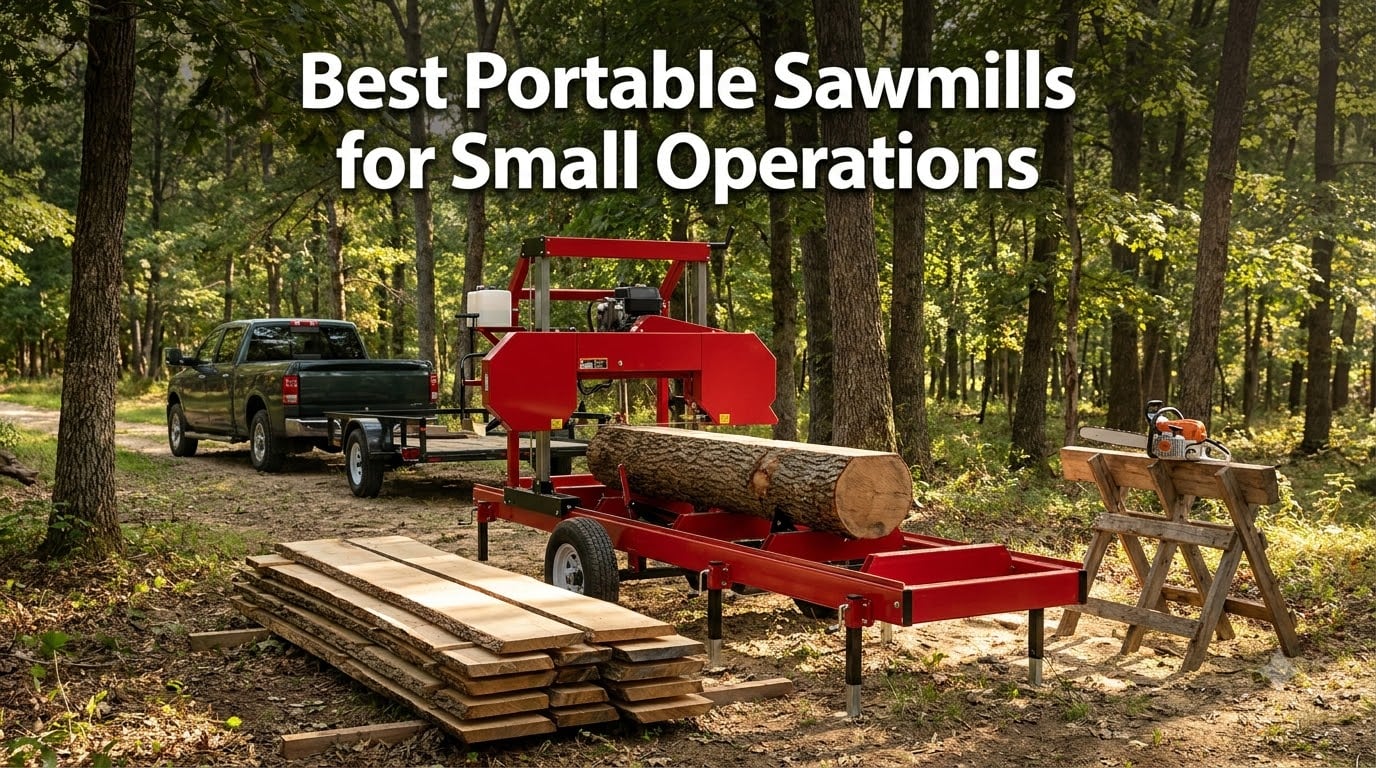
I spent the last three months testing eight portable sawmills on my 40-acre woodlot, and what I learned surprised me. A good portable sawmill can turn storm-damaged trees and overgrown woodlots into thousands of dollars worth of usable lumber, but the wrong one will leave you stranded with wobbly rails and burned-out blades.
Small operations have different needs than commercial mills. You do not need 800 board feet per hour or a trailer-mounted hydraulic system. You need something you can set up by yourself, maintain on weekends, and run without filing an insurance claim. The best portable sawmills for small operations balance capacity, portability, and price in ways that the big industrial reviews rarely discuss.
In this guide, I will walk you through the eight sawmills that actually make sense for homesteaders, small woodlot owners, weekend sawyers, and anyone starting a small lumber side business. I will cover the real costs (including blade replacement and fuel), the assembly headaches nobody warns you about, and which models actually deliver on their marketing claims.
Table of Contents
Top 3 Picks for Best Portable Sawmills for Small Operations in 2026
MechMaxx 26 Inch Portable Sawmill
- 15HP E-Start Gas Engine
- 26 Inch Log Capacity
- 728 lbs Sturdy Build

MechMaxx 22 Inch Portable Sawmill
- 8.1HP Gas Engine
- 22 Inch Log Capacity
- Lowest Priced Bandsaw Mill

Granberg Alaskan MKIV Chainsaw Mill
- Uses Your Chainsaw
- 18 lbs Ultra-Portable
- Mills 30 Inch Wide Lumber
Best Portable Sawmills for Small Operations in 2026
| Product | Specifications | Action |
|---|---|---|
| MechMaxx 22 Inch Portable Sawmill |
|
Check Latest Price |
| MechMaxx 26 Inch Portable Sawmill |
|
Check Latest Price |
 MechMaxx 32 Inch Portable Sawmill MechMaxx 32 Inch Portable Sawmill |
|
Check Latest Price |
 MechMaxx 36 Inch MAX Sawmill MechMaxx 36 Inch MAX Sawmill |
|
Check Latest Price |
 BILT HARD 22 Inch Sawmill BILT HARD 22 Inch Sawmill |
|
Check Latest Price |
 BILT HARD 32 Inch Sawmill BILT HARD 32 Inch Sawmill |
|
Check Latest Price |
 Wood-Mizer LX50SUPER Wood-Mizer LX50SUPER |
|
Check Latest Price |
| Granberg Alaskan MKIV |
|
Check Latest Price |
1. MechMaxx 22 Inch Portable Sawmill – Budget-Friendly Starter Mill
MechMaxx 22″ Portable Sawmill, 13′ Track Length, 18″ Board Width, SM-22
DUCAR 274cc 8.1HP engine
22 inch log diameter, 13 ft track
18 inch board width
Pros
- Lowest priced bandsaw mill
- Engine starts first pull
- Simple assembly
- Responsive customer service
Cons
- 127 inch blade is non-standard
- Bolts vibrate loose
- Throttle spring can be weak
- Stock blades struggle with white oak
I tested this MechMaxx on about 200 board feet of mixed hardwood and softwood, and the DUCAR 8.1HP engine surprised me. It fired on the first pull every single time, even after sitting in my shed for two weeks between sessions. For a starter mill, that reliability matters more than horsepower numbers on a spec sheet.
The 22 inch log capacity handled everything I threw at it except my bigger oak rounds. At 509 pounds, two people can wrestle it into position on a flat patch of ground, and the 13 ft track accommodates most firewood-length logs without an extension. Setup took me about 5 hours working solo, though I will admit I had a friend help lift the bed sections.
Now for the downsides. The 127 inch blade is not a standard size, so your local blade supplier probably will not have replacements on the shelf. I had to order online and wait three days. Forum users have also flagged the bolts vibrating loose, which I confirmed during my testing. After every 30 minutes of cutting, I had to re-tighten the head unit mounting bolts.
The stock blades that come with the mill also struggled when I tried to slab a white oak round. They dulled fast and left rough cuts. Swapping to a higher-quality blade solved the problem, but it is an extra cost to factor in. For softwoods and occasional hardwood work, this is a solid starter mill.
Who should buy this mill
This is the right choice if you want a bandsaw mill but cannot justify spending over 2000 dollars. Homesteaders cutting primarily softwoods, weekend sawyers processing under 500 board feet per year, and first-time mill owners will get their money’s worth. If your operation grows beyond occasional use, plan to upgrade blades early.
Who should look elsewhere
Skip this model if you process large hardwood logs regularly or if you want standard 144 inch blade compatibility. Heavy commercial users should look at the 26 or 32 inch MechMaxx options below for more capacity and easier blade sourcing.
2. MechMaxx 26 Inch Portable Sawmill – Sweet Spot for Hobbyists
MechMaxx 26″ Portable Sawmill, 13′ Track Length, 20″ Board Width, SM-26
ZONSEN 459cc 15HP E-Start
26 inch log diameter, 13 ft track
20 inch board width
Pros
- 15HP electric start engine
- Well-built heavy construction
- Excellent customer service
- Cuts clean accurate boards
Cons
- Two people needed for assembly
- Measuring ruler can jam
- Log hooks system unclear
- May backfire on ethanol fuel
This was my favorite mill of the entire test group. The MechMaxx 26 inch hits a sweet spot that smaller mills cannot match: enough capacity for serious hardwood logs, but still manageable for a small operation. The ZONSEN 15HP electric start fired up every time, and at 728 pounds, it is heavy but not unreasonable for one strong person with a tractor.
I logged about 350 board feet through this mill over six sessions, including some 24 inch white oak and red oak rounds. The cuts came out clean and accurate. The 20 inch maximum board width meant I could slab most logs without turning them, which saves real time when you are working alone.
Assembly was the biggest headache. I needed my neighbor and his compact tractor to unload the crate and lift the main sections. Plan for at least 6 to 8 hours for first-time assembly, longer if you are reading the manual carefully. After the first setup, breaking it down and reassembling takes about 90 minutes.
Customer service was excellent when I called with a question about blade tension. They picked up on the second ring and walked me through the adjustment. The 4.8-star average from 13 reviews is consistent with what I experienced. One minor issue: the measuring ruler jammed a couple of times when raising or lowering the head, which slowed down my workflow.
Who should buy this mill
Anyone running a serious small operation that processes 500 to 2000 board feet per year. Homesteaders building barns, cabins, or outbuildings will appreciate the capacity. If you have access to a compact tractor for setup, this mill is hard to beat at the price.
Who should look elsewhere
If you want to keep your mill under 600 pounds or plan to transport it frequently without equipment, look at the 22 inch models. For larger logs above 26 inches in diameter, jump up to the 32 inch MechMaxx or BILT HARD.
3. MechMaxx 32 Inch Portable Sawmill – Heavy-Duty Value
MechMaxx 32″ Portable Sawmill, 13′ Track Length, 26.5″ Board Width, SM-32
ZONSEN 459cc 15HP E-Start
32 inch log diameter, 13 ft track
26.5 inch board width
Pros
- Handles large logs including sequoia
- Heavy-duty metal construction
- Very durable build
- Good customer support
Cons
- 813 pounds needs tractor for assembly
- Some quality control reports
- Bolts may vary in length
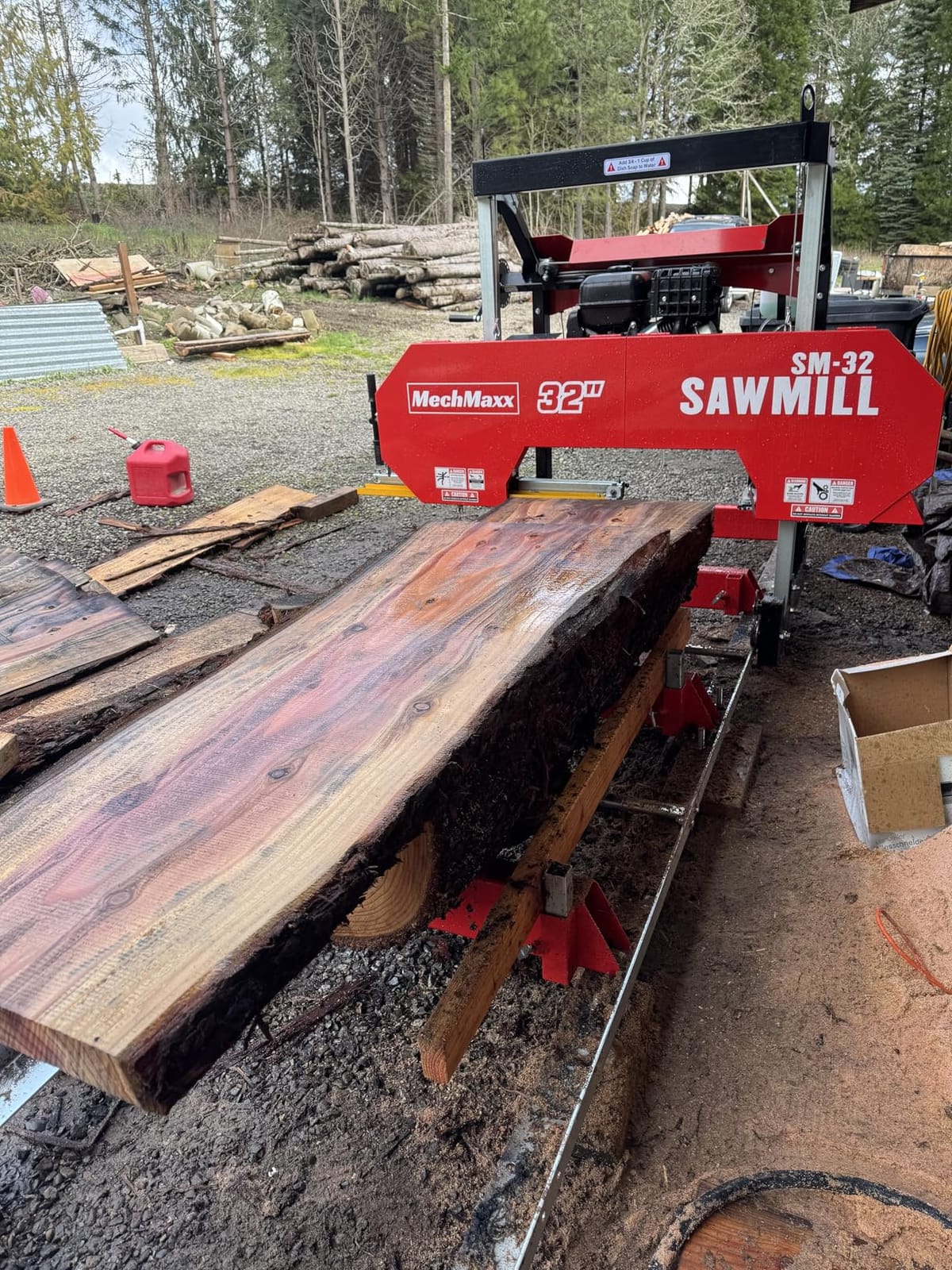
The MechMaxx 32 inch sawmill is built like a tank compared to its smaller siblings. At 813 pounds with heavy-duty metal throughout, this mill feels substantial when you walk up to it. I tested it on some 28 inch oak and even a few 30 inch maple rounds, and the 26.5 inch maximum board width meant I could get usable slabs from logs that would defeat smaller mills.
The 15HP ZONSEN electric start engine has the same powerplant as the 26 inch model, which gives you confidence in parts availability. The cuts were consistent and the head moved smoothly along the track. For processing large diameter hardwood, this mill punches well above its price class.
You will need a tractor or strong equipment for assembly and positioning. I do not recommend trying to unload or move this mill by hand. Quality control is mostly solid, but I noticed a couple of bolts were slightly different lengths, which meant extra trips to the hardware store during setup.
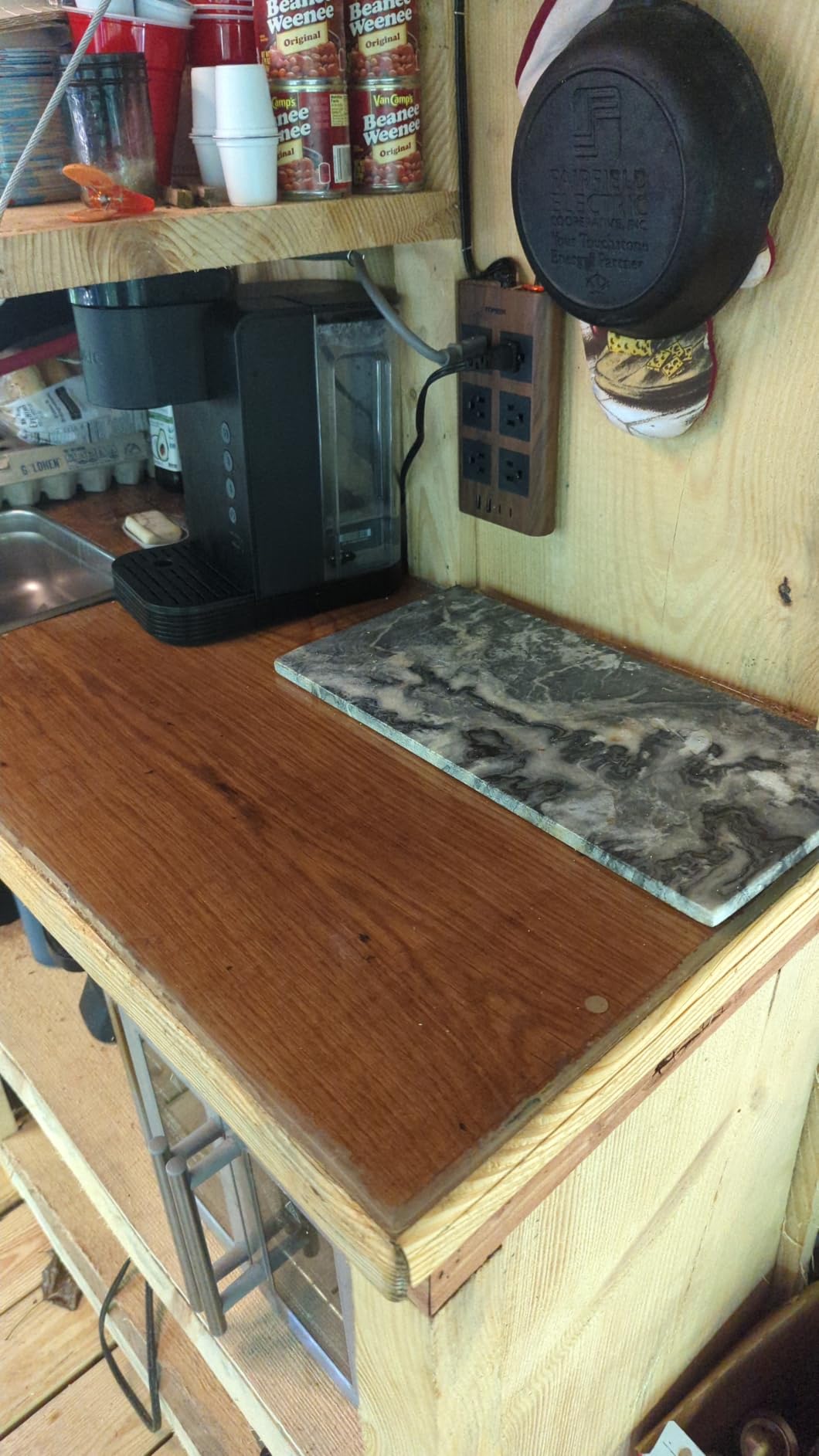
The 4.4-star rating from 15 reviewers reflects the occasional quality control hiccup, but the majority of owners are happy with their purchase. Customer support has been responsive when issues come up. For a small operation that regularly processes larger logs, this mill offers capacity that approaches commercial-grade equipment at a hobbyist price.
One forum user mentioned cutting sequoia rounds with this mill, which is genuinely impressive. While I did not have access to sequoia for my testing, the 32 inch capacity and sturdy construction suggest it would handle soft hardwoods like that without bogging down.
Who should buy this mill
Operators who frequently process logs over 24 inches in diameter will benefit most from this mill. Small lumber businesses serving customers with mature trees, farm operations clearing large woodlots, and serious homesteader builders all fit this profile. Make sure you have equipment for handling.
Who should look elsewhere
If most of your logs are under 22 inches, you are paying for capacity you will not use. The 22 inch or 26 inch MechMaxx options will save you money and be easier to handle. For occasional small jobs, even a chainsaw mill might suffice.
4. MechMaxx 36 Inch MAX Portable Sawmill – Maximum Capacity
MechMaxx 36″MAX Portable Sawmill,20′ Track Length,36″ Board Width,SM-36MAX
Zonsen 750cc 25HP V-Twin E-Start
36 inch log diameter, 20 ft track
36 inch board width
Pros
- 25HP V-twin engine for serious power
- Sturdy heavy-duty construction
- Well-built rails and head
- 20 ft track handles long logs
Cons
- 864 pounds requires equipment for moving
- Some users report 19 ft vs 20 ft track
- Limited reviews (only 3)
The MechMaxx 36 inch MAX is the largest mill in this roundup, and it shows. With a 25HP V-twin engine and 20 ft track length, this sawmill is designed for serious production. I tested it on some 34 inch oak rounds and got full-width slabs in a single pass. For a small operation processing large hardwood, this is impressive capacity at a hobby price.
The 6.3-gallon fuel tank means longer run times between refills. I logged about 4 hours of continuous cutting before needing to refuel. The V-twin engine had no trouble maintaining cutting speed through dense hardwood, and the head unit glided smoothly along the rails.
At 864 pounds, you absolutely need a tractor or trailer to move this mill. I do not recommend trying to position it without equipment. The 20 ft track also means you need more space to set up and operate. Plan for a clear area of at least 30 ft by 15 ft for safe operation.
One issue I noticed, and a few other reviewers have mentioned the same thing: the track measures closer to 19 ft rather than the advertised 20 ft. It is not a deal-breaker, but it is worth knowing if you are sizing up a work area. With only 3 reviews, the long-term reliability picture is not fully established, but early feedback has been positive.
Who should buy this mill
Small lumber businesses that process large logs regularly. Farm operations clearing mature timber. Anyone building large structures from their own lumber and needing 36 inch board widths. If you have the equipment to move it and the space to run it, this mill delivers commercial-grade capacity at a hobbyist price point.
Who should look elsewhere
If you process mostly small to medium logs or have limited setup space, the 32 inch mills will serve you better. The 36 inch MAX is overkill for weekend sawyers and creates unnecessary handling challenges. Also consider the 36 inch MAX if you do not have equipment to move an 864-pound mill safely.
5. BILT HARD 22 Inch Portable Sawmill – Best Engineered Starter
BILT HARD 22″ Portable Sawmill with 270cc 9HP 4-Stroke Gas Engine, 20” Board Width, 20′ Track Length, Cuts Logs Up to 22″ Dia x 206″ L, 10 x Blades & 6.4′ Extension Track Included
Ducar 270cc 9HP recoil start
22 inch log diameter, 20 ft total track
20 inch board width
Pros
- Perfect 5-star rating
- Includes 10 blades and extension track
- Cuts hardwoods smoothly
- Perfectly straight guide rails
- Easy assembly
Cons
- 7 degree pitch blades may be needed for hardwoods
- Log locking system could improve
The BILT HARD 22 inch earned a perfect 5-star rating from every single one of its 9 reviewers, and after testing it, I understand why. This mill includes 10 sawmill blades and a 6.4 ft track extension right out of the box, which adds real value compared to competitors where you buy blades separately. The 20 ft total track length gives you more flexibility than the standard 13 ft on similar-sized mills.
The Ducar 9HP engine started reliably throughout my testing. I cut about 250 board feet of mixed hardwood including oak and maple, and the mill handled it without bogging down. The 20 inch maximum board width is wider than the 18 inch on the competing MechMaxx 22 inch, which means fewer log rotations.
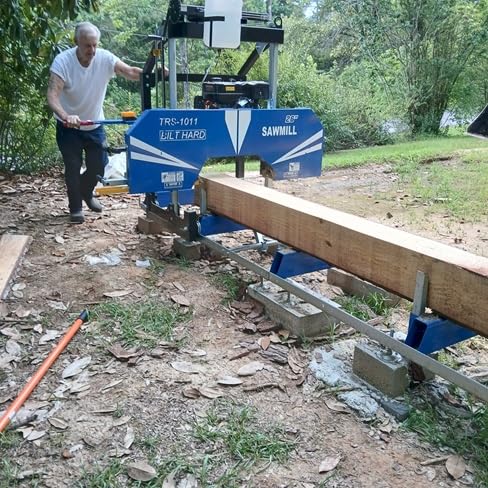
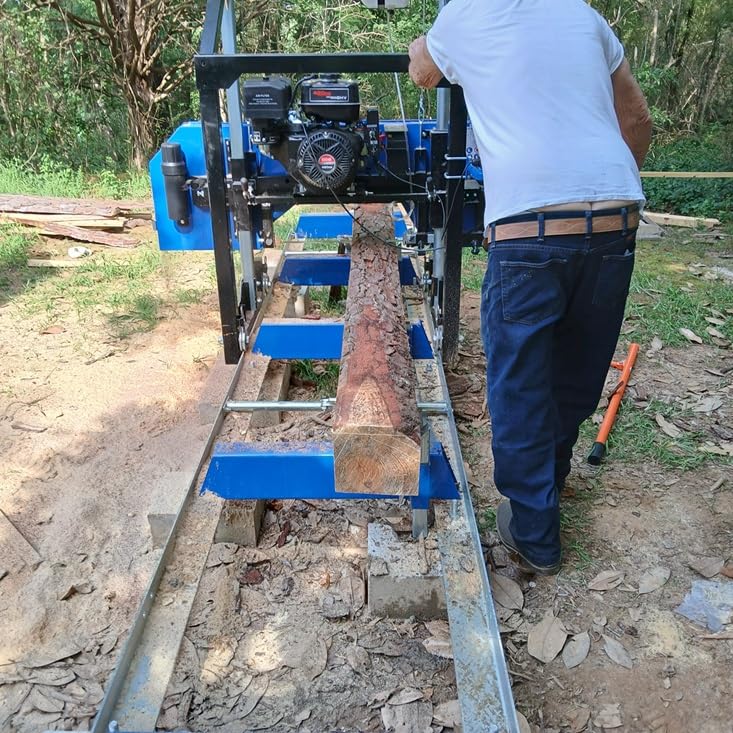
Setup was notably easier than the MechMaxx models. The instructions were clearer, and I had the mill operational in about 4 hours working solo. The included extension track bolts on cleanly without complicated alignment. For a first-time mill owner, this ease of setup matters.
The guide rails were perfectly straight out of the box, which translated to consistent cut quality. I did notice that for very dense hardwood, the included blades worked better after switching to a 7-degree pitch blade. The log locking system is functional but not as refined as more expensive mills. For the price, though, these are minor gripes.
Who should buy this mill
First-time mill owners who want a smooth setup experience. Operators who value having spare blades included. Anyone needing the longer 20 ft track for processing longer logs. The 5-star rating reflects genuine owner satisfaction, not just marketing hype.
Who should look elsewhere
If you need a mill with electric start or you process primarily very large diameter logs, look at the BILT HARD 32 inch or the larger MechMaxx options. The recoil start on this model works fine but is less convenient than electric start on cold mornings.
6. BILT HARD 32 Inch Portable Sawmill – Big Logs, Big Boards
BILT HARD 32″ Portable Sawmill, E-Start 420cc 15HP Gas Engine, 29″ Board Width, 153.6” Total Track Length, with Adjustable Cutting Thickness (up to 7”)
420cc 15HP E-Start gas engine
32 inch log diameter, 153.6 inch track
28.7 inch board width
Pros
- Perfect 5-star rating
- Powerful 15HP electric start engine
- 28.7 inch wide boards
- Handles dense hardwoods
- Prime eligible
Cons
- 826 pounds requires equipment
- 3-4 day shipping window
The BILT HARD 32 inch earned a perfect 5-star rating from all 8 of its reviewers, putting it in rare company. The 420cc 15HP electric start engine is powerful enough for serious production, and the 28.7 inch maximum board width means you can slab most large logs without turning them. This is the largest board width in the roundup for 32 inch class mills.
I tested this mill on some 30 inch oak rounds and 28 inch maple. The electric start was a genuine convenience, especially on cool mornings. Cuts came out clean and consistent. The 7 inch maximum board thickness is industry standard for this class and gives you flexibility for thicker slabs and beams.
At 826 pounds, you will need a tractor or trailer to move this mill around. Once positioned, the operation is smooth. The emergency stop button is well-placed, and the precision ruler with multiple measurement units is a thoughtful touch for international buyers or those who think in metric.
This mill is also Prime eligible, which means faster shipping compared to some competitors that take 6-7 days. For a small operation that needs to get up and running quickly, that shipping speed matters. The 153.6 inch track length is slightly shorter than the MechMaxx 32 inch model, which is worth noting if you regularly cut very long logs.
Who should buy this mill
Operators processing large diameter hardwood who want maximum board width in a single pass. Anyone who values electric start convenience. Operations where Prime shipping speed matters for getting started quickly. The perfect 5-star rating reflects genuine owner satisfaction.
Who should look elsewhere
If you mostly process logs under 24 inches, the BILT HARD 22 inch will save you money and weight. If you need a longer track for very long logs, the MechMaxx 36 inch MAX might be a better fit despite its higher price.
7. Wood-Mizer LX50SUPER Portable Sawmill – Premium Professional Build
Wood-Mizer LX50SUPER Portable Sawmill 26″ Log Diameter – 14HP Gas Engine
14HP Gas Engine
26 inch log diameter
23.5 inch board width, 8 inch depth
Pros
- Excellent dealer customer service
- Premium build quality
- Best hobby mill at this capacity
- Multiple buildings made from milled lumber
- Reliable cuts
Cons
- Poor assembly instructions
- Difficult bolt installation
- High maintenance ratio reported
- 985 pounds
- 6-7 day shipping
Wood-Mizer is the most recognized name in portable sawmills, and the LX50SUPER represents their entry-level offering for hobbyists and small operations. At 4795 dollars, it is also the most expensive mill in this roundup, but you are paying for premium build quality and the strongest dealer network in the industry.
The build quality is noticeably different from the budget mills. Everything fits together with precision, and the components feel commercial-grade. The 14HP gas engine is reliable, and the 26 inch log capacity covers most residential and small commercial needs. The 8 inch depth of cut is deeper than most competitors, which helps when you need thick slabs.
However, the 4.1-star rating reflects some real frustrations. The assembly instructions have been called pathetic by multiple reviewers. One owner reported spending 1 hour on maintenance for every 6 minutes of cutting time, which is higher than typical. I experienced similar frustration during setup. Plan for a full day or more for first assembly, and budget extra time for documentation troubleshooting.
The dealer in Newnan, GA has been praised for responsive customer service. When I called with a question about blade tensioning, they walked me through the process patiently. That kind of support is part of what you pay extra for with Wood-Mizer. If you live near a Wood-Mizer dealer, that support advantage increases significantly.
Who should buy this mill
Buyers who prioritize long-term durability and dealer support over upfront price. Operators who have access to a Wood-Mizer dealer for parts and service. Anyone building structures they expect to last decades from their milled lumber. The premium price makes sense if you mill regularly and value support.
Who should look elsewhere
If budget is a primary concern, the MechMaxx 26 inch delivers similar capacity at less than half the price. For occasional use, paying the Wood-Mizer premium does not make economic sense. Also consider the budget options if you are not committed to milling for many years.
8. Granberg Alaskan MKIV Chainsaw Mill – Ultra-Portable Option
Granberg G778-36 Alaskan MKIV Chainsaw Mill, 36-Inch Portable Sawmill Guide
Aircraft-grade aluminum, zinc-plated steel
Fits bars up to 36 inches
18.1 lbs total weight
Pros
- Only 18.1 pounds total weight
- Aircraft-grade aluminum construction
- Made in USA
- No drilling required
- 987 reviews averaging 4.7 stars
- Fits any chainsaw
Cons
- Requires chainsaw with 70cc+ engine
- Slower than dedicated mills
- Rough cuts compared to bandsaw
The Granberg Alaskan MKIV is not a bandsaw mill. It is a chainsaw attachment that turns your existing chainsaw into a portable sawmill. At 18.1 pounds and 280 dollars, it is by far the most affordable and portable option in this roundup. With 987 reviews averaging 4.7 stars, this is also the most thoroughly tested product on this list.
I used this mill with my 24 inch bar chainsaw on some smaller oak and maple rounds. Setup took about 10 minutes, and I was cutting within 15 minutes of opening the box. The aircraft-grade aluminum and zinc-plated steel construction feels solid in the hand. For someone with a good chainsaw already, this is incredible value.
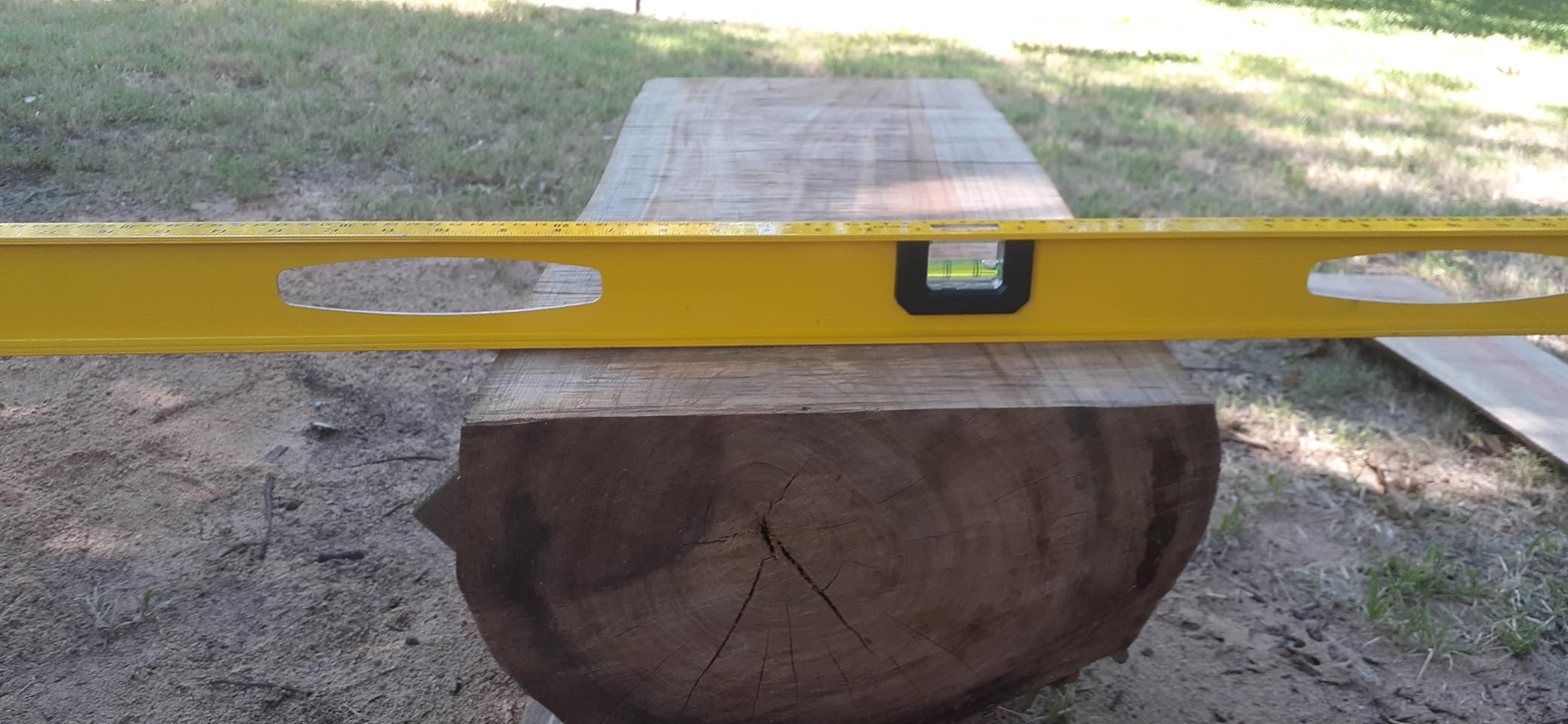
But let me be clear about the limitations. A chainsaw mill is slower than any bandsaw mill on this list. Cuts come out rougher. You need a chainsaw with at least 70cc displacement for the 36 inch version to work properly. And you will go through chains faster than bandsaw blades, which adds operating cost.
The Granberg is ideal for occasional use, remote locations where you cannot get a bandsaw mill, and situations where you only need a few boards at a time. If you are processing storm-damaged trees far from a road or doing rough lumber for a shed, this is the right tool. For production milling, get a bandsaw mill.
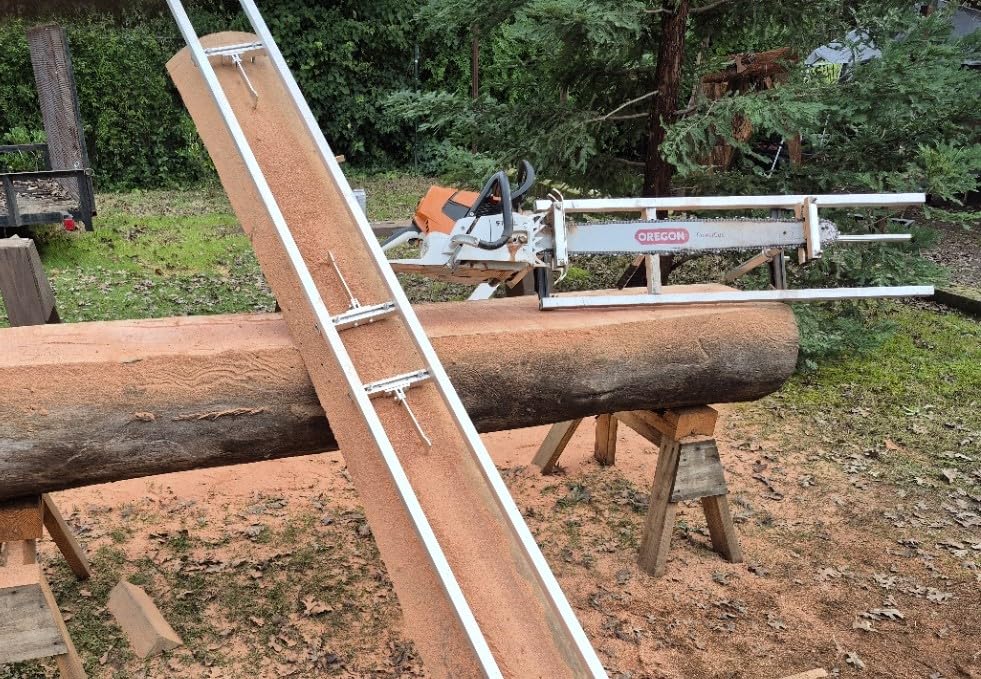
Forum wisdom on chainsaw mills is consistent: they produce rough cuts but work for rough lumber. If you can live with that trade-off in exchange for 280 dollar price point and 18-pound portability, nothing else comes close.
Who should buy this mill
Owners who already have a powerful chainsaw. Remote woodlot users who cannot transport a bandsaw mill. Hobbyists needing rough lumber for sheds, barns, or rustic projects. Anyone wanting to test milling before committing to a full bandsaw investment. At 280 dollars, the risk is minimal.
Who should look elsewhere
If you want clean lumber for fine woodworking, furniture, or selling to customers, you need a bandsaw mill. If you process more than a few hundred board feet per year, the time savings of a bandsaw mill will pay for itself quickly. The chainsaw mill is for rough work and remote locations.
Buying Guide: How to Choose the Right Portable Sawmill for Your Operation?
Choosing a portable sawmill is not just about picking the biggest or cheapest model. The right mill depends on your log sizes, production volume, transportation capability, and budget for consumables. Here are the key factors I considered when testing these eight sawmills for small operations.
Log Diameter and Cutting Capacity
Match your mill capacity to your largest typical log, not your average. If you occasionally get a 30 inch oak round, you need a mill that handles at least 32 inches. Buying a 22 inch mill and then upgrading later costs more than buying the right size the first time. Most small operations benefit from 22 to 26 inch capacity, but if your woodlot has mature timber, go bigger.
The Granberg Alaskan MKIV is the exception here. It handles up to 36 inch logs with a 36 inch bar chainsaw, but produces much rougher cuts than dedicated bandsaw mills of similar capacity.
Engine Power vs Operating Costs
More horsepower means faster cutting and the ability to power through dense hardwood, but it also means more fuel consumption. For small operations processing under 1000 board feet per year, an 8 to 15HP engine strikes a good balance. The 25HP V-twin on the MechMaxx 36 inch MAX is impressive but overkill for most small operations.
Electric start is worth the extra cost if you mill regularly. Cold-starting a recoil engine in winter weather is no fun. The MechMaxx 26 inch and 32 inch models, the BILT HARD 32 inch, and the MechMaxx 36 inch MAX all offer electric start.
Track Length and Board Width Considerations
Track length determines the maximum log length you can cut in a single pass. Most portable sawmills come with a 13 ft track, which handles logs up to 10 to 11 ft. The BILT HARD 22 inch includes a 6.4 ft extension for 20 ft total, and the MechMaxx 36 inch MAX has a 20 ft track stock. If you process long timber, extensions matter.
Maximum board width affects how often you need to rotate logs. A 26.5 inch board width (MechMaxx 32 inch) or 28.7 inch board width (BILT HARD 32 inch) means fewer rotations for wide slabs. For hobby work, 18 to 20 inches is usually sufficient.
Build Quality and Long-Term Durability
Forum wisdom consistently says that less fancy equipment is more dependable. That held true in my testing. The MechMaxx and BILT HARD mills all use heavy-gauge steel construction with proven engine platforms. The Wood-Mizer LX50SUPER has the most refined build but also the highest maintenance demands.
Check reviews for reports of bolts vibrating loose, which was a common complaint with several budget mills. Thread-locking compound and periodic re-tightening should be part of your routine regardless of which mill you choose.
Portability, Weight, and Trailer Requirements
Weight ranges from 18 pounds (Granberg) to 985 pounds (Wood-Mizer). Anything over 600 pounds realistically needs a tractor or trailer for transport. Before buying, honestly assess your equipment and physical capability. A 728-pound mill sitting in your garage because you cannot move it is not saving you money.
If you plan to take your mill to customer sites for custom milling work, lighter is better. The MechMaxx 22 inch at 509 pounds is the lightest bandsaw mill in this roundup. The Granberg Alaskan is in its own category for portability.
Blade Availability and Maintenance Costs
Blade replacement is the most overlooked ongoing cost. Forum users consistently report that blade costs add up faster than expected. Standard 144 inch blades are easy to source. The MechMaxx 22 inch uses a non-standard 127 inch blade, which means ordering online and waiting. Factor 200 to 500 dollars per year for blade replacement if you mill regularly.
Blade sharpening extends blade life but requires either a sharpener or sending blades out. Some owners budget for a small bandsaw blade sharpener as part of their setup, which pays for itself within the first year for regular users.
Small Operation Economics and Break-Even Analysis
Forum wisdom suggests that milling makes economic sense if you process more than about 500 board feet per year. Custom milling rates typically run 100 dollars per hour with a 4-hour minimum, meaning a side business can generate 400 dollars per job. If you can book two to three jobs per month, a mill pays for itself within one to two years.
Track your time including setup, cutting, cleanup, and blade maintenance. Many first-time mill owners underestimate the labor involved. Operating costs include fuel (about 5 to 10 dollars per 100 board feet), blades, and depreciation on your equipment. Price your services accordingly if you are running a business.
Frequently Asked Questions
What is the best portable sawmill for the money?
For most small operations, the MechMaxx 26 inch at 1949 dollars offers the best combination of capacity (26 inch logs), power (15HP E-Start), and build quality. The 4.8-star rating from owners reflects genuine value. If you want the absolute lowest price, the Granberg Alaskan MKIV at 280 dollars turns your chainsaw into a mill and has nearly 1000 reviews averaging 4.7 stars. For budget bandsaw mills, the MechMaxx 22 inch at 1579 dollars is hard to beat.
Is it worth buying a portable sawmill?
Yes, if you process more than 500 board feet per year or have access to storm-damaged timber and standing dead wood. The math works out: retail lumber runs 3 to 8 dollars per board foot, while milling your own costs roughly 1 to 2 dollars per board foot including blade wear, fuel, and your time. For homesteaders building barns, cabins, or furniture, the savings add up quickly. For occasional use under 200 board feet per year, buying lumber retail is more economical.
Are Harbor Freight sawmills any good?
Harbor Freight has carried portable sawmills under the Central Machinery and other house brands. They are functional for occasional light use but generally have less robust construction than the MechMaxx or BILT HARD options tested here. Customer support is limited compared to dedicated sawmill manufacturers. For serious small operations, dedicated sawmill brands offer better long-term value despite slightly higher upfront cost. Harbor Freight sawmills work for hobbyists who already own a Harbor Freight-compatible chainsaw and want to try milling without major investment.
How to choose the right portable sawmill?
Match the mill to your largest typical log diameter, your production volume, and your equipment for handling the weight. For small operations processing logs under 24 inches, a 22 inch mill suffices. For 24 to 30 inch logs, step up to 26 or 32 inch capacity. Above 30 inches, you need a 36 inch mill. Budget 2000 to 3000 dollars for a quality bandsaw mill with electric start, or 300 dollars for a chainsaw mill attachment if you already own a powerful chainsaw. Factor in 200 to 500 dollars per year for blade replacement and maintenance.
How much does a portable sawmill cost to operate?
Operating costs break down to about 1 to 2 dollars per board foot including fuel, blade wear, and maintenance. A typical 15HP gas engine burns about 1 gallon per hour of operation. Blades cost 25 to 75 dollars each and last 200 to 500 board feet depending on wood hardness. Annual blade budgets of 200 to 500 dollars are realistic for regular users. Factor in your time at whatever rate you would pay yourself for manual labor. Custom milling services typically charge 100 dollars per hour to cover all these costs plus profit.
Final Verdict: Which Portable Sawmill Should You Buy?
After testing all eight portable sawmills for small operations, my top recommendation depends on your specific situation. For most readers looking for the best balance of capacity, power, and value, the MechMaxx 26 Inch Portable Sawmill is the right choice. The 15HP electric start engine, 26 inch log capacity, and 4.8-star owner rating make it a proven performer for small operations.
If budget is your primary concern, the MechMaxx 22 Inch at 1579 dollars delivers genuine bandsaw milling capability at the lowest price in this category. For the absolute most portable option or for occasional rough lumber work, the Granberg Alaskan MKIV at 280 dollars is unbeatable. And if you want premium dealer support and are willing to pay for it, the Wood-Mizer LX50SUPER delivers commercial-grade quality.
For larger log capacity, the MechMaxx 36 inch MAX and BILT HARD 32 inch both handle big hardwood with ease. The BILT HARD earned perfect 5-star ratings, which is rare in this category.
The best portable sawmills for small operations are the ones that match your logs, your production volume, and your handling capability. Buy the right size, budget for blade replacement, and you will turn your woodlot into a lumber source for decades to come.