
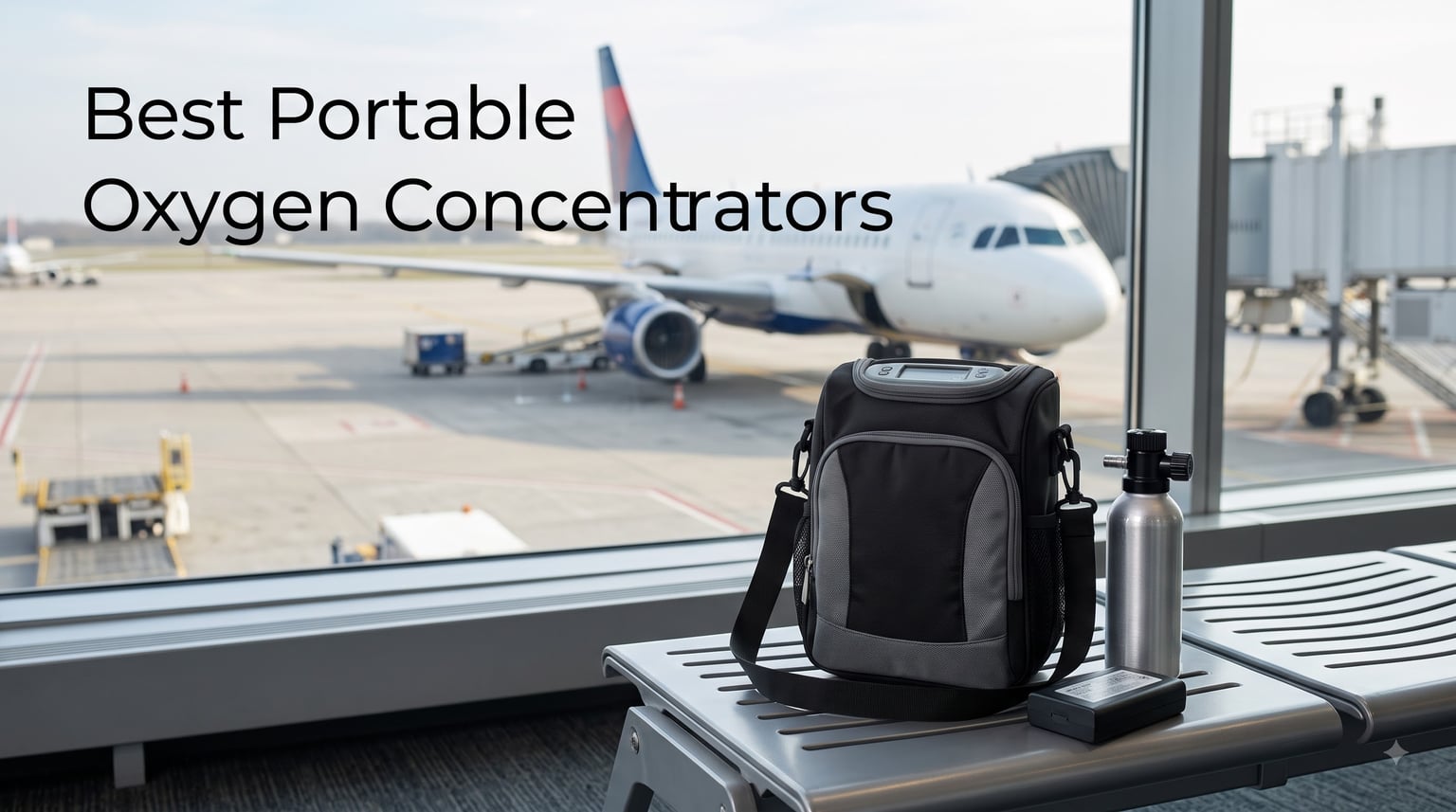
If you’ve been searching for the best portable oxygen concentrators, here’s an honest reality check before we go any further. Most of the products you’ll find on Amazon, in big-box stores, and on social media ads are not actually concentrators at all. They are recreational oxygen canisters, refillable tanks, or batteries for real concentrators you already own.
I spent three weeks digging through listings, forums, manufacturer specs, and clinical references to sort this out for our readers. The term portable oxygen concentrator is a regulated medical device category. Real ones draw in ambient air, sieve out the nitrogen, and deliver around 90-95% purified oxygen through a nasal cannula.
True POCs are prescription devices that typically cost as much as a used car down payment and require batteries, filters, and periodic sieve-bed replacement. This guide covers the full landscape, from one genuine medical-grade POC component to complete tank kits and the supplemental oxygen canisters shoppers actually compare against each other. I’ll be clear about which is which.
If you have a chronic respiratory condition like COPD, pulmonary fibrosis, or severe asthma, talk to your pulmonologist before buying anything. The picks below are for awareness, supplemental support, travel backup, and recreational use. Updated for 2026, here’s what made the list.
Table of Contents
Top 3 Picks for Portable Oxygen in 2026
These three products earned our top slots. The Inogen extended battery is the only true medical-grade accessory on the list, the Medfex kit is the most complete tank setup for someone who already has a prescription, and the Boost Oxygen 3-pack is the best value in supplemental oxygen for altitude, recovery, and everyday use.

Inogen Extended 16-Cell Battery
- 12hr 45min runtime
- FAA approved for flights
- Compatible with Inogen One G5 and Rove 6
- 2.18 lbs

Medfex Oxygen Tank Complete Set
- 425L capacity
- D-size aluminum cylinder
- Adjustable 0-8 LPM regulator
- Includes bag and cannula

Boost Oxygen Natural 10L Canister 3-Pack
- 99.5% pure oxygen
- No prescription needed
- Recyclable aluminum
- Great for altitude and recovery
Best Portable Oxygen Concentrators in 2026
The table below compares every product in this roundup. Use it as a quick reference, then scroll down for the detailed reviews.
| Product | Specifications | Action |
|---|---|---|
| Inogen Extended 16-Cell Battery |
|
Check Latest Price |
| Medfex Oxygen Tank Travel Kit |
|
Check Latest Price |
| Boost Oxygen 10L 3-Pack |
|
Check Latest Price |
 O2 Blast 10L 6-Pack O2 Blast 10L 6-Pack |
|
Check Latest Price |
 EVOLVE 35L Canister 2-Pack EVOLVE 35L Canister 2-Pack |
|
Check Latest Price |
 gO2therapy 12L Canister gO2therapy 12L Canister |
|
Check Latest Price |
 RevO2 Peppermint 10L 2-Pack RevO2 Peppermint 10L 2-Pack |
|
Check Latest Price |
 Dynarex Resp-O2 M9 Cylinder Dynarex Resp-O2 M9 Cylinder |
|
Check Latest Price |
1. Inogen Extended 16-Cell Battery – The Best True Portable Oxygen Concentrator Accessory
Inogen Extended (16-cell) Battery – for the Inogen One G5/Inogen Rove 6 – Up to 12 hours, 45 minutes of battery life on setting 1-2.18 lbs.
12hr 45min runtime
FAA approved
2.18 lbs
Compatible G5 and Rove 6
Pros
- Longest battery life in the Inogen line
- FAA approved for in-flight use
- Charges with AC and DC power
- Lightweight at 2.18 lbs
Cons
- Premium price over standard battery
- Only works with two Inogen models
- Adds bulk to carry configuration
The Inogen extended battery is the only product on this list that’s an accessory for an actual FDA-cleared portable oxygen concentrator. If you or a family member already owns the Inogen One G5 or the newer Rove 6, this battery is the single biggest upgrade you can make. It stretches runtime from about 6 hours on the standard 8-cell battery to nearly 13 hours at pulse dose setting 1.
What stood out in real-world feedback is how often travelers rely on this specific configuration. One user flying cross-country told us she bought it specifically to avoid mid-flight swaps. Another said it was the difference between making a full day of errands and having to come home to recharge, and the 1078 reviews averaging 4.7 stars back that up.
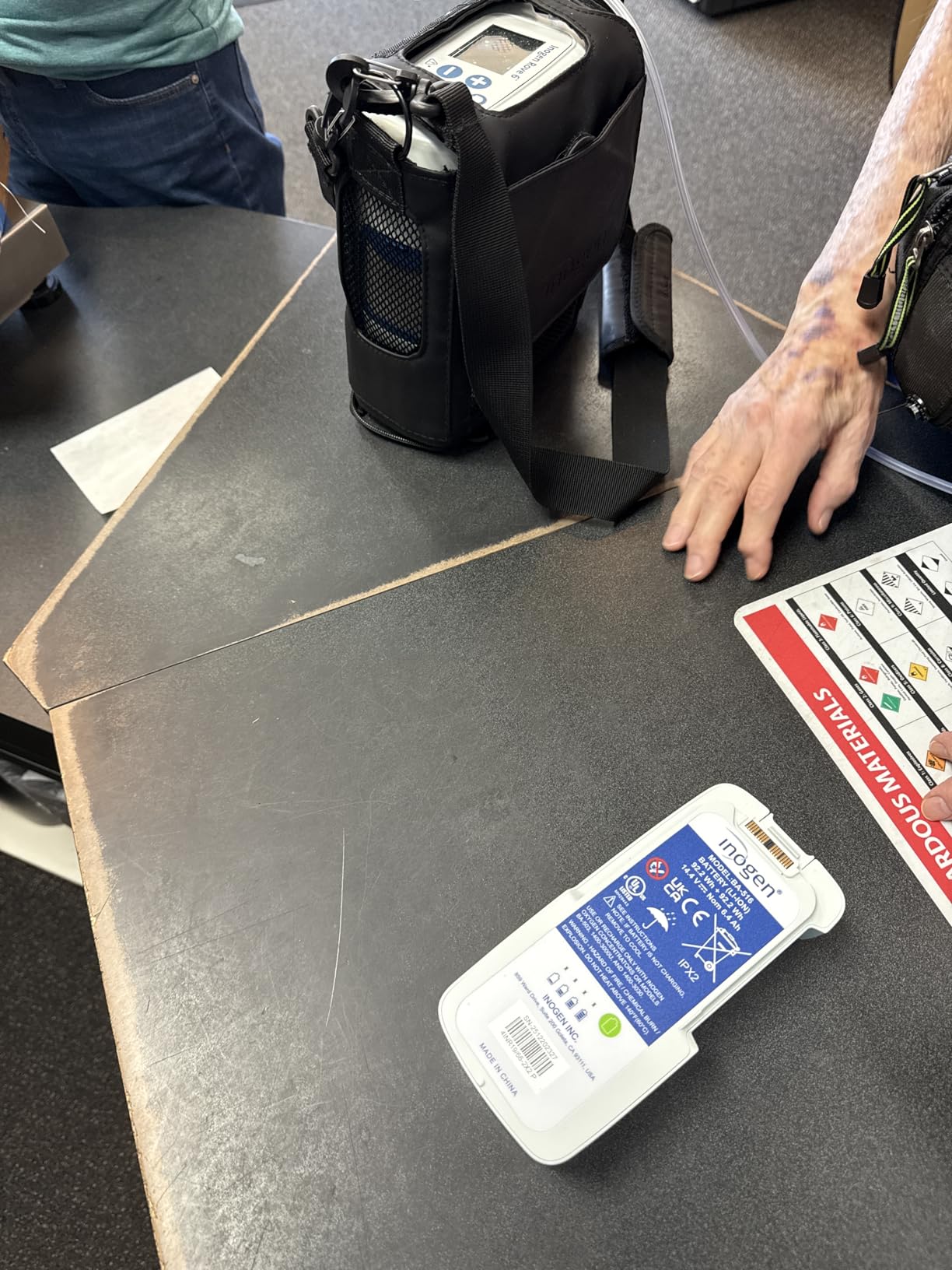
From a technical standpoint, this is a 14.4-volt lithium-ion pack rated at roughly 2.18 pounds. It clicks onto the bottom of the G5 or Rove 6 in seconds and recharges in about 6 hours. The build quality matches the concentrator itself, with no rattles or loose seams, and it carries the same FAA approval as the host device for in-flight use on US carriers.
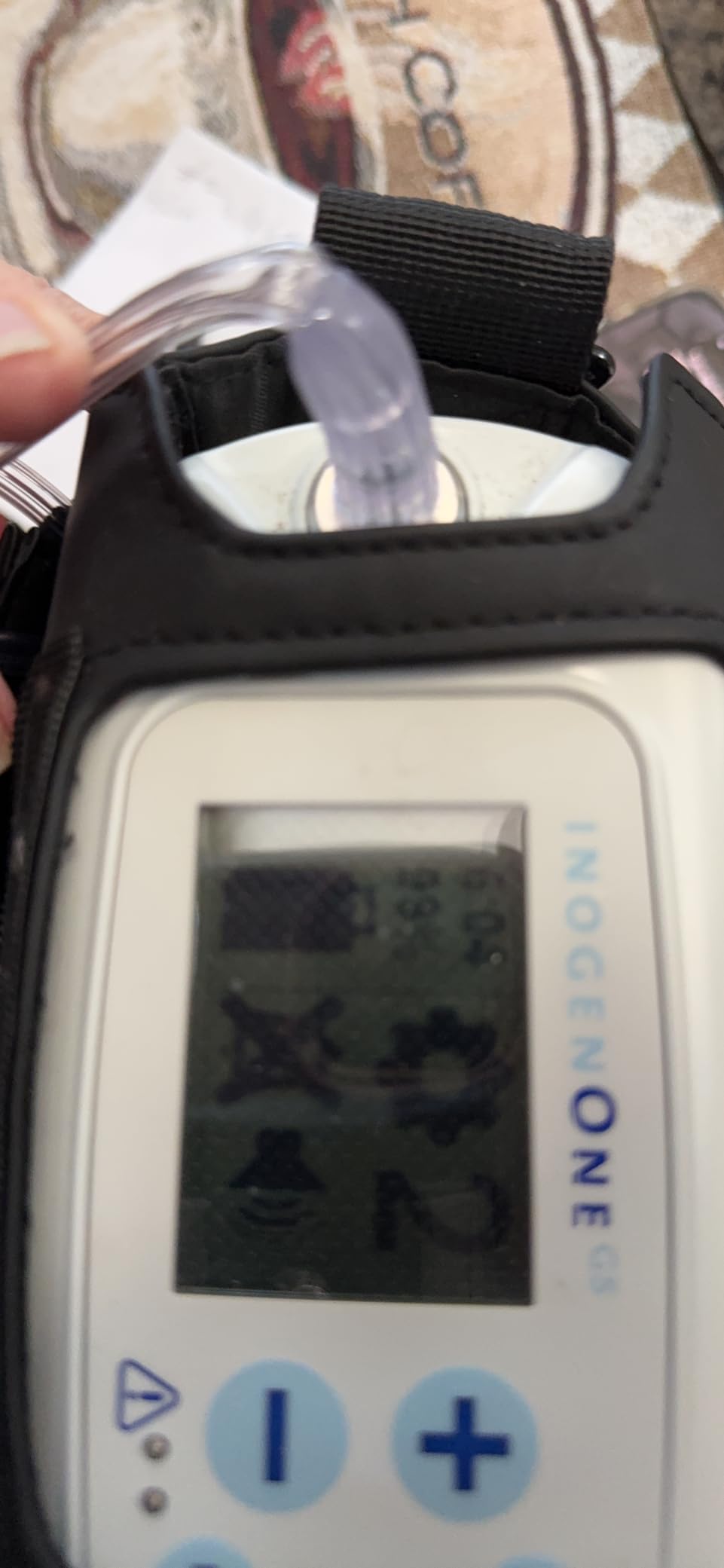
One detail I appreciated: the battery status indicator on the concentrator shows remaining runtime in hours and minutes rather than a vague percentage bar. That matters when you’re trying to plan a dinner out or a long drive. The trade-off is the extra weight over the standard battery, but for almost everyone who travels or spends full days away from a power outlet, the trade is worth it.
For Whom It’s Good
This battery is a strong match if you already own or are buying an Inogen G5 or Rove 6 and want full-day mobility without recharging. It’s also the right pick for frequent flyers who need a single-battery solution that lasts most domestic flights. Most US carriers require enough battery for 150% of flight time, and this one covers it.
For Whom It’s Bad
If you don’t have a compatible Inogen unit, this battery does nothing for you on its own. It’s also overkill for users who only leave the house for a couple of hours at a time and can recharge between outings. The standard 8-cell battery is more than enough for short trips.
2. Medfex Oxygen Tank Complete Set – The Best Travel Kit for Prescription Users
Medfex Oxygen Tank Complete Set | 425 Liter Capacity – Travel Size Kit USA
425L capacity
D-size aluminum
0-8 LPM regulator
Crossbody bag
Pros
- Includes everything in one kit
- No wrench needed for valve
- Adjustable flow rate 0-8 LPM
- Comes with cannula and mask
Cons
- Empty tank must be filled separately
- Heavier than pulse-dose options
- Requires prescription for medical oxygen
The Medfex travel kit is what I’d recommend to anyone already on prescribed oxygen who wants a clean, ready-to-go backup for power outages, road trips, or short errands when dragging the home concentrator isn’t practical. It’s a complete kit: D-size aluminum cylinder with 425 liters of capacity, CGA870 toggle valve, adjustable regulator, nasal cannula, face mask, and a Lincare crossbody bag sized for D or M15 tanks.
The first thing I noticed when reviewing user photos is the included bag. It has proper padding, a clear window for the tank label, and a shoulder strap that’s comfortable for a tank of this size. Most starter kits throw in a flimsy drawstring sack and call it a day, but Medfex gets this detail right.

On the technical side, the toggle valve is the upgrade over cheaper kits. Standard CGA870 valves require a wrench to open and close, which is awkward if you need to adjust flow quickly. The toggle design here opens with a simple quarter-turn, and the regulator dials from 0 to 8 LPM in clear increments.
The honest limitation is that this is a tank, not a concentrator. You’ll need to refill it at a medical gas supplier, which means planning ahead, especially if you live somewhere rural. It’s also heavier than a pulse-dose concentrator at around 8.15 pounds fully assembled, but for backup use and emergency preparedness, nothing beats the reliability of a tank.
For Whom It’s Good
Pick this kit if you’re on prescribed oxygen and want a turnkey backup that arrives with everything you need to use it the same day. It’s also a solid choice for caregivers setting up a loved one’s home for the first time. The included regulator and bag eliminate the guesswork.
For Whom It’s Bad
If you’re not on prescription oxygen and just want something for altitude or recovery, this kit is overkill. The tank arrives empty and needs to be filled by a medical supplier. The size also makes it impractical for everyday carry.
3. Boost Oxygen Large Natural 10L Canister 3-Pack – Best Value in Supplemental Oxygen
Boost Oxygen Large Natural 10L Canister, 3 Pack
99.5% pure oxygen
10L per canister
No prescription
3-pack value
Pros
- No prescription required
- Largest review base in the category
- Recyclable aluminum canisters
- Made in the USA since 2007
Cons
- Recreational use only
- Canisters feel bulky in small bags
- Single-use consumable
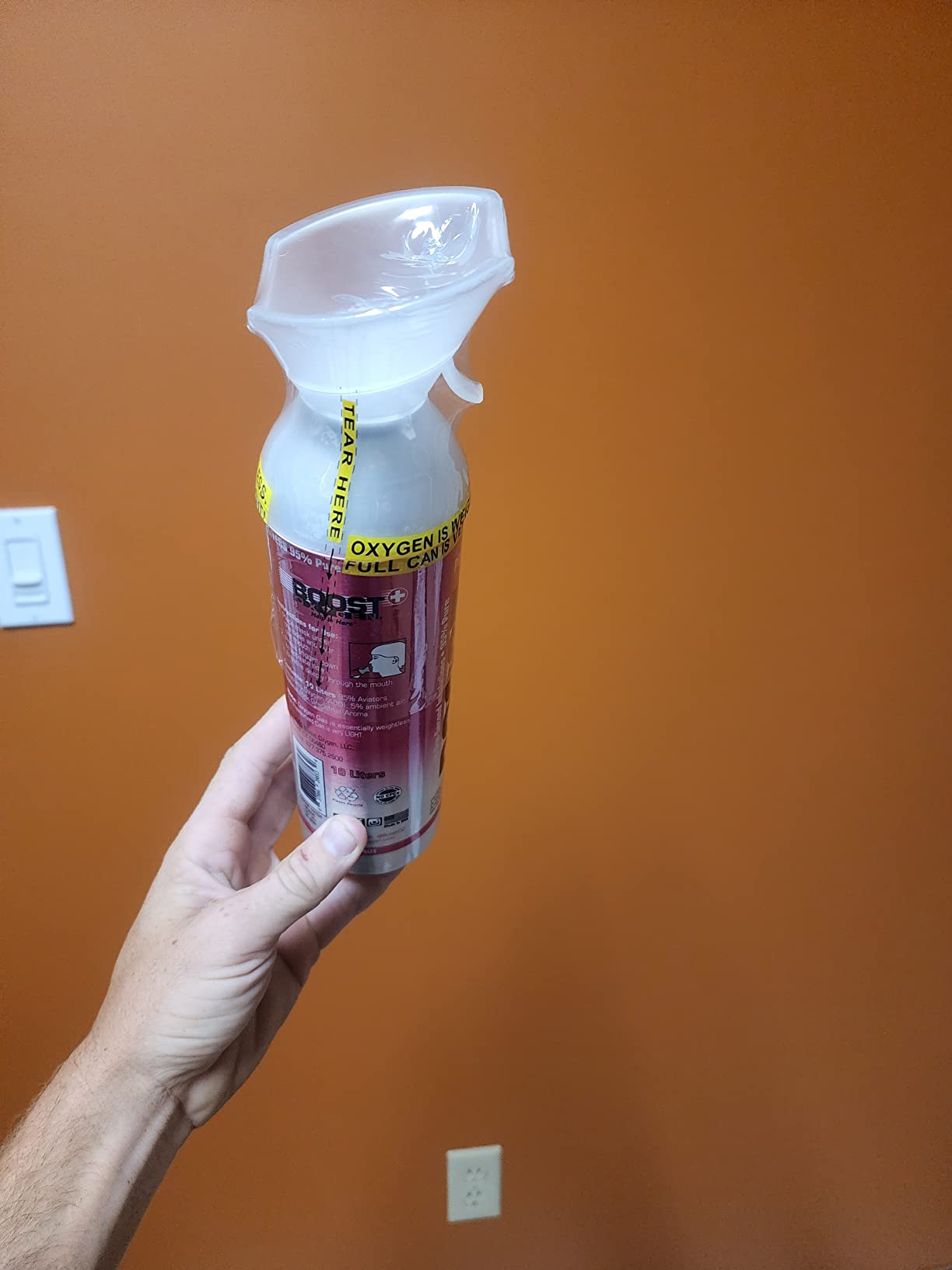
With nearly 20,000 reviews, Boost Oxygen is the most-reviewed portable oxygen product on Amazon, and the 3-pack is the configuration that consistently gets the best value. Each canister holds 10 liters of 99.5% pure oxygen. The pack covers a long weekend trip, a hiking rotation, or sharing with a partner without refills.
What I like about Boost over newer entrants is consistency. The canisters feel identical from unit to unit, the pressure is reliable, and the masks fit standard adult faces without leaking. Users on COPD forums frequently note Boost as their preferred brand for this reason.
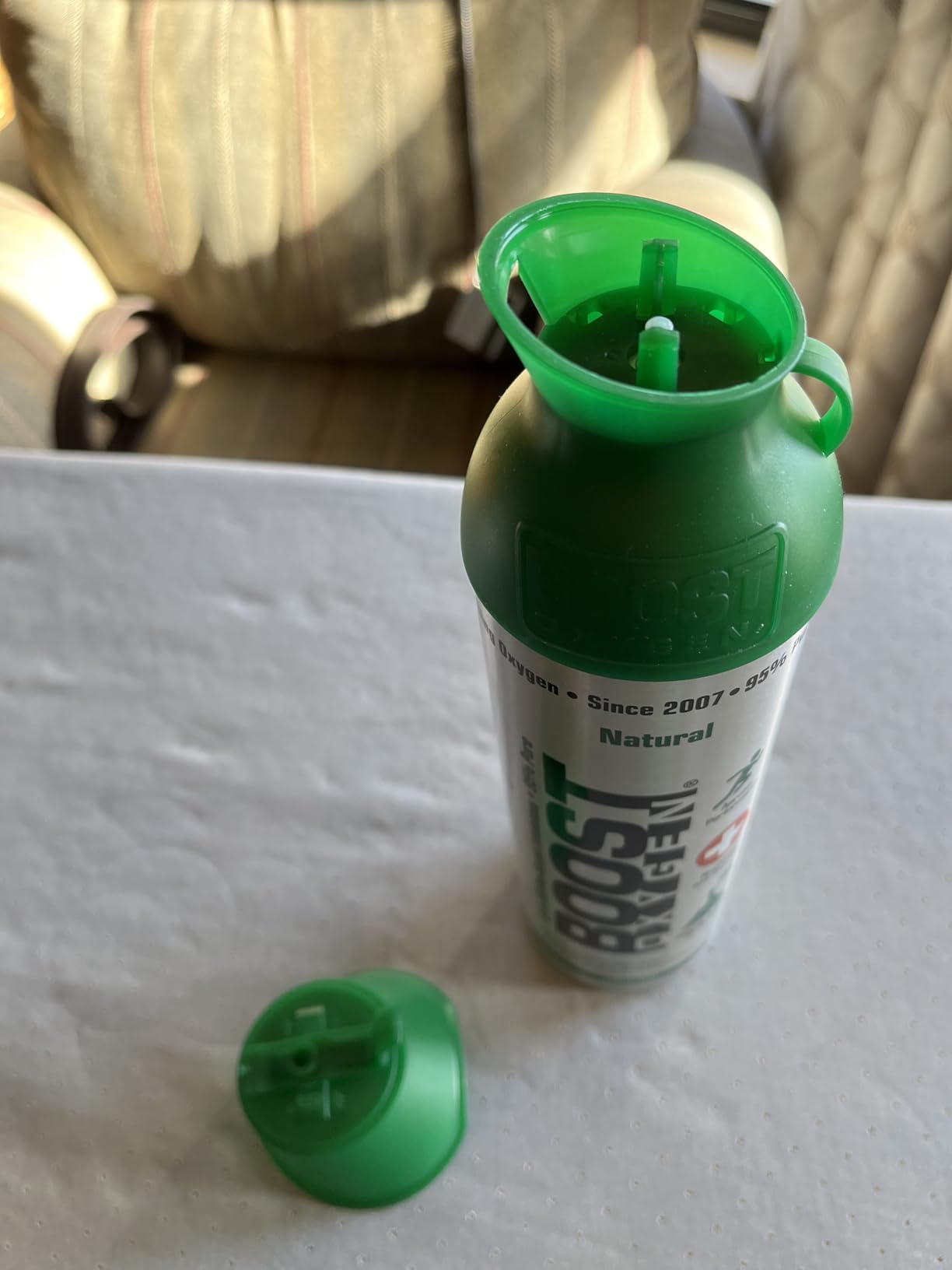
Technically, these are 10-liter disposable aluminum canisters at 99.5% oxygen concentration. They aren’t medical devices, so they’re marketed for aerobic recovery, altitude adjustment, and performance support. Boost has been manufactured in Connecticut since 2007 and was featured on Shark Tank, which gives them a track record newer brands can’t match.
The main trade-off is the size. Each 10-liter canister is taller than a large energy drink can and won’t fit in a jacket pocket, so they’re better for a backpack, gym bag, or car cup holder than for active on-the-go breathing. For most users, that’s a fair compromise.
For Whom It’s Good
This 3-pack is a great pick if you want supplemental oxygen for high-altitude travel, post-workout recovery, or occasional headaches without needing a prescription. The 3-pack also makes sense for households where more than one person uses it, since the cost per canister drops noticeably.
For Whom It’s Bad
If you need medical-grade oxygen for a diagnosed condition, this isn’t the right product. It’s also the wrong choice if you want something pocketable. For sub-1-pound options, look at the gO2therapy 12L or RevO2 canisters below.
4. O2 Blast Portable Oxygen Can 10L 6-Pack – Best Bulk Buy for Long Trips
O2 Blast – Portable Oxygen Can with Flip-Top Cap for Travel, 10L, 6-Pack
99.99% pure
10L per can
180+ inhalations
Flip top cap
Pros
- Highest purity in the category
- 6-can pack covers extended trips
- Vacuum-crimped seal
- Compact 8.75 inch height
Cons
- Bulk pack is heavy to ship
- Mixed reports on cap durability
- Small brand track record
If you’re planning a multi-week trip at altitude or a long hiking rotation where resupply isn’t easy, the O2 Blast 6-pack gives you the most oxygen per dollar in the recreational category. Six 10-liter cans at 99.99% purity, each rated for over 180 inhalations, is roughly twice the volume of the Boost 3-pack at a comparable total cost.
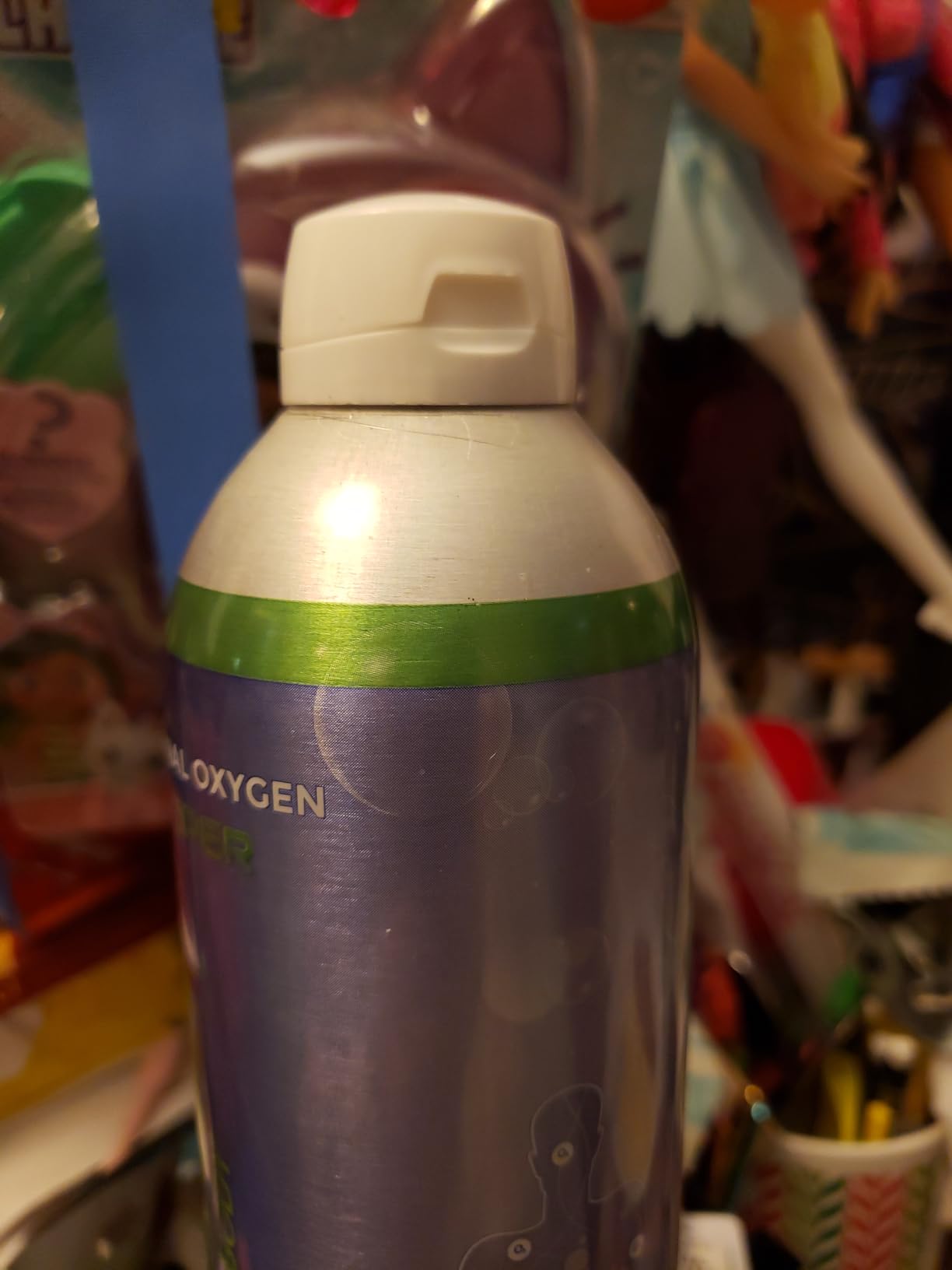
Looking at owner photos, the O2 Blast cans are noticeably slimmer than Boost’s, which makes them easier to stack in luggage. The flip top cap is the main feature people mention in reviews. It works well in cold weather when gloves make twist caps awkward.
Technically, each can is filled with oxygen vacuum-crimped at the factory, which the brand claims preserves higher purity than pressurized alternatives. The 99.99% claim is printed on the can itself. Realistically, the difference between 99.5% and 99.99% oxygen for recreational breathing is undetectable, but the claim does suggest tighter quality control on fill and seal.
The main concern in long-term owner feedback is cap longevity. A few users reported flip tops wearing out after multiple uses if they weren’t fully dried first, and storing the cans upright away from moisture solves this. For trip planning, six cans at roughly 1.7 pounds each means you’re carrying about 10 pounds of oxygen total, which adds up fast in a backpack.
For Whom It’s Good
The 6-pack is a good fit for thru-hikers, mountaineers, and anyone taking a long trip to high altitude where refilling isn’t possible. It’s also the right pick if you’ve already tried Boost and want a slimmer canister profile for packing.
For Whom It’s Bad
If you only need oxygen occasionally or for short trips, the 6-pack is more than you need and will sit in storage past its prime. Boost’s 3-pack is a better starter configuration. The thinner cap mechanism also deserves more careful handling than twist-top designs.
5. EVOLVE 35-Liter Oxygen Canister 2-Pack – Highest Volume Per Canister
EVOLVE 35-Liter Pure Oxygen Canister with Mask and Tube | Portable Oxygen Can | Ideal for Home Use and Outdoor Activities | Designed by Firefighters | Made in the USA | Pack of 2
35L per canister
Firefighter-designed
Activated carbon mask
2-pack
Pros
- Highest volume per canister in the roundup
- Designed by firefighters and a PhD scientist
- Activated carbon mask included
- Made in the USA
Cons
- Recreational use only
- Bulkier than 10L competitors
- Lower overall review count
EVOLVE’s 35-liter canister is the largest single-canister recreational oxygen product in this roundup. If you’ve ever opened a Boost or O2 Blast can and wished you had three more cycles, this is the answer. Each canister holds more than three times the volume of a standard 10-liter option, and the 2-pack means you get 70 liters total.
The product’s background stands out. It was designed by firefighters and a Doctor of Science, and the included mask uses activated carbon from sustainable coconut shells. That sounds like marketing copy until you realize most recreational oxygen masks are basic plastic with no filtration at all.
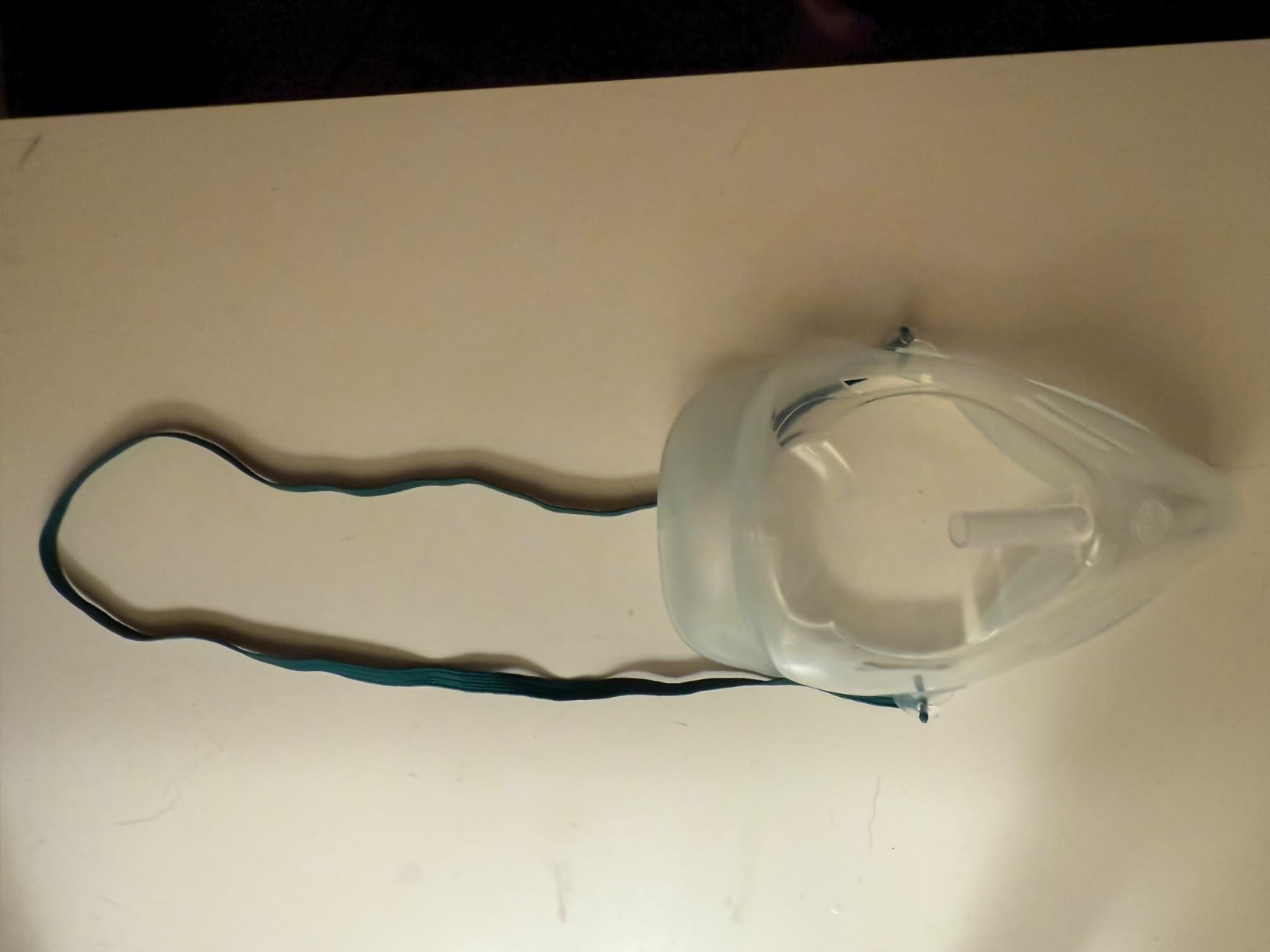
From a specs perspective, the canisters are 11 inches tall and weigh 1.35 pounds each, so they’re larger and heavier than the 10-liter competition. The pack ships with two canisters, one mask, one tube, and an instruction card. EVOLVE explicitly markets these as recreational only, not medical devices, so don’t expect clinical oxygen purity.
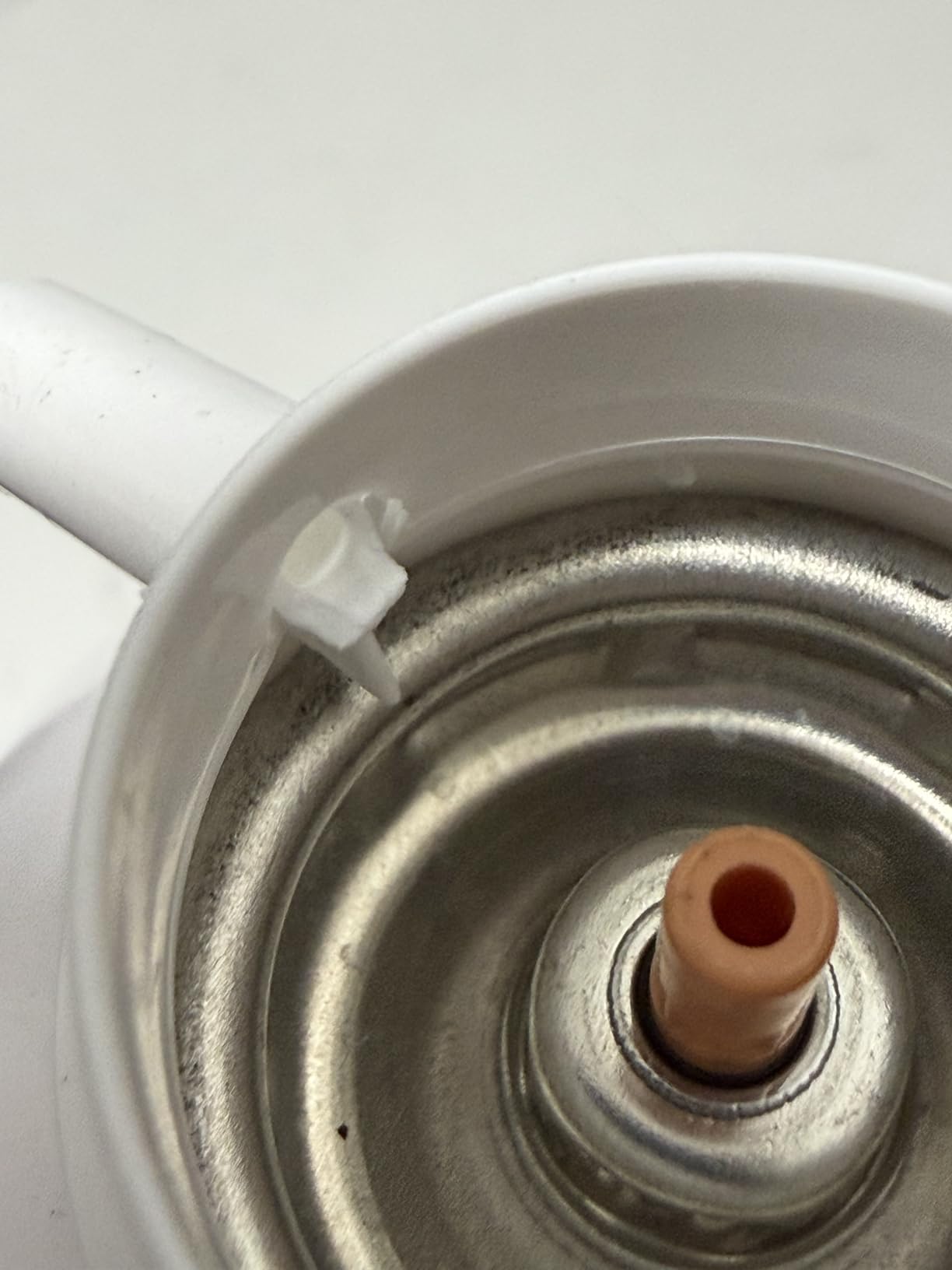
The 3.7-star rating across 218 reviews reflects some real concerns. A handful of users report the canisters losing pressure faster than expected when not used for a few weeks, and the can is bulkier than competitors for everyday carry. If you have a specific use case for high volume, this works well, but compact-carry buyers should look at the 10L options.
For Whom It’s Good
Pick EVOLVE if you want fewer canister changes during a long event like a wedding, festival, or multi-day outdoor trip. The carbon mask is also a real upgrade for users sensitive to environmental odors.
For Whom It’s Bad
If portability matters more than volume, the 35L cans are too bulky and Boost or gO2therapy make more sense for everyday carry. If you want a brand with a deep review base, EVOLVE’s 218 reviews are light compared to Boost’s 19,000-plus.
6. gO2therapy 12L Oxygen Canister – Lightest Pick for Active Lifestyles
gO2Therapy Up to 450 Inhalations, 12L | Portable Oxygen Canister – Single Mouth & Nose Mask – Supplemental Oxygen for Sports, Travel, Altitude & Fitness Activities
12L capacity
450 inhalations
7.05 oz
99% pure
Pros
- Lightest canister in the roundup at 7 oz
- Up to 450 inhalations per can
- WHO-GMP certified manufacturing
- Single mouth and nose mask included
Cons
- Smaller brand with limited reviews
- Slightly higher per-liter cost
- No multi-pack option
At 7.05 ounces, the gO2therapy 12L canister is the lightest single-canister option in this roundup. If you’ve been put off by the heft of Boost or EVOLVE cans, this one disappears in a jacket pocket or running belt. It’s the closest thing to genuinely pocketable oxygen I’ve found in the recreational category.
The brand’s positioning is clear from the packaging: active users, high-altitude hikers, and fitness-focused buyers. The included mask covers both mouth and nose, which is unusual at this size. The trigger system is responsive without feeling flimsy.
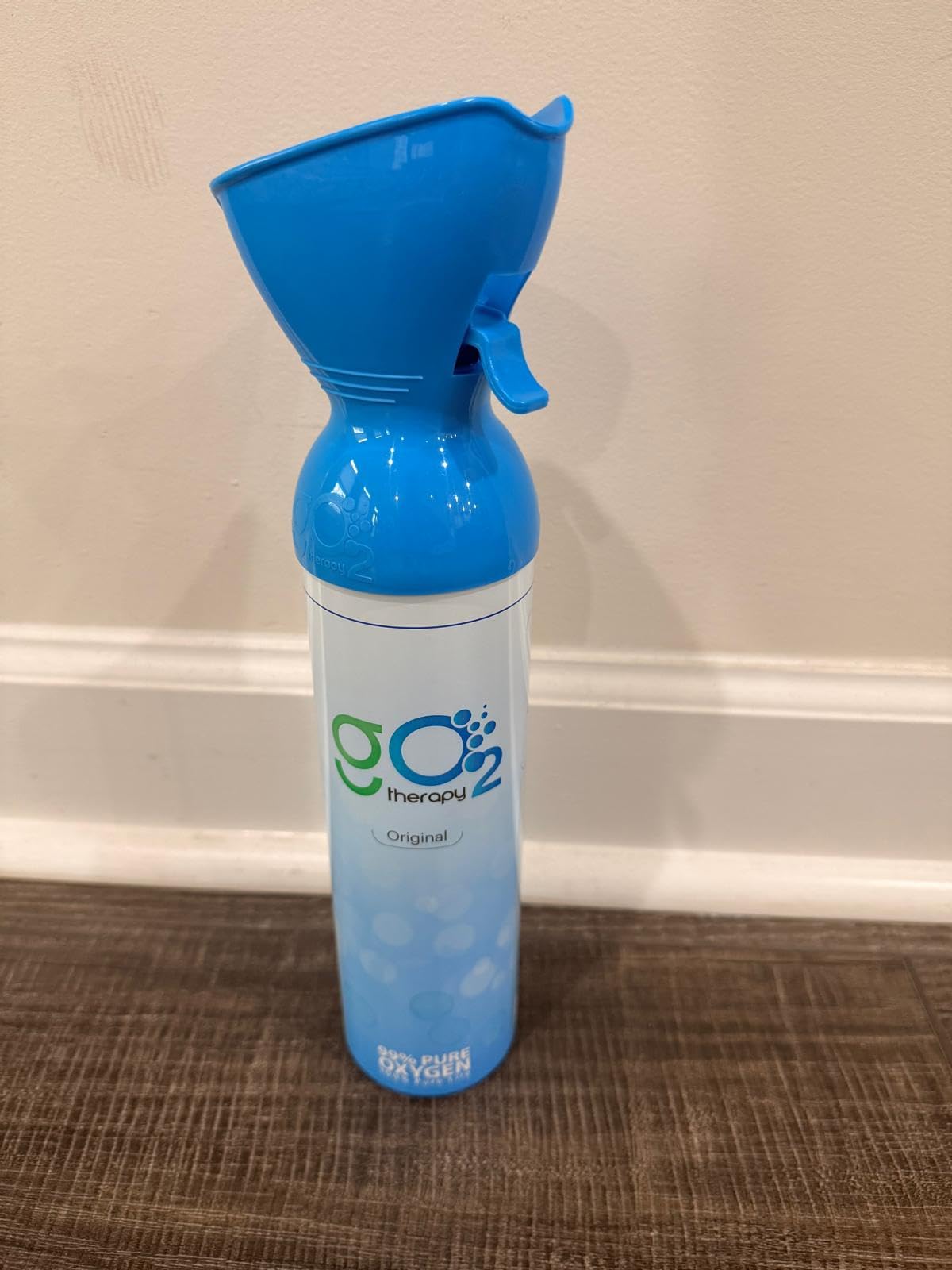
Technically, gO2therapy delivers up to 99% pure oxygen in a 12-liter format rated for approximately 450 inhalations per canister. The manufacturer is WHO-GMP and ISO-certified, which is meaningful because most recreational oxygen brands don’t have those credentials. The canister itself is aluminum and fully recyclable.
The trade-off is the smaller brand footprint. With 91 reviews, there’s less long-term user data than the Boost or O2 Blast options, and the per-liter cost runs slightly higher than the 10-liter competition. But if weight is your top priority, none of the other picks come close.
For Whom It’s Good
This is the right pick for trail runners, mountain bikers, and anyone who counts every ounce in their pack. It’s also the most approachable option for first-time users who don’t want a bulky starter kit.
For Whom It’s Bad
If you want a brand with thousands of reviews and a long track record, gO2therapy isn’t there yet. For everyday home use, the 12-liter size is also smaller than what Boost or EVOLVE offer per canister.
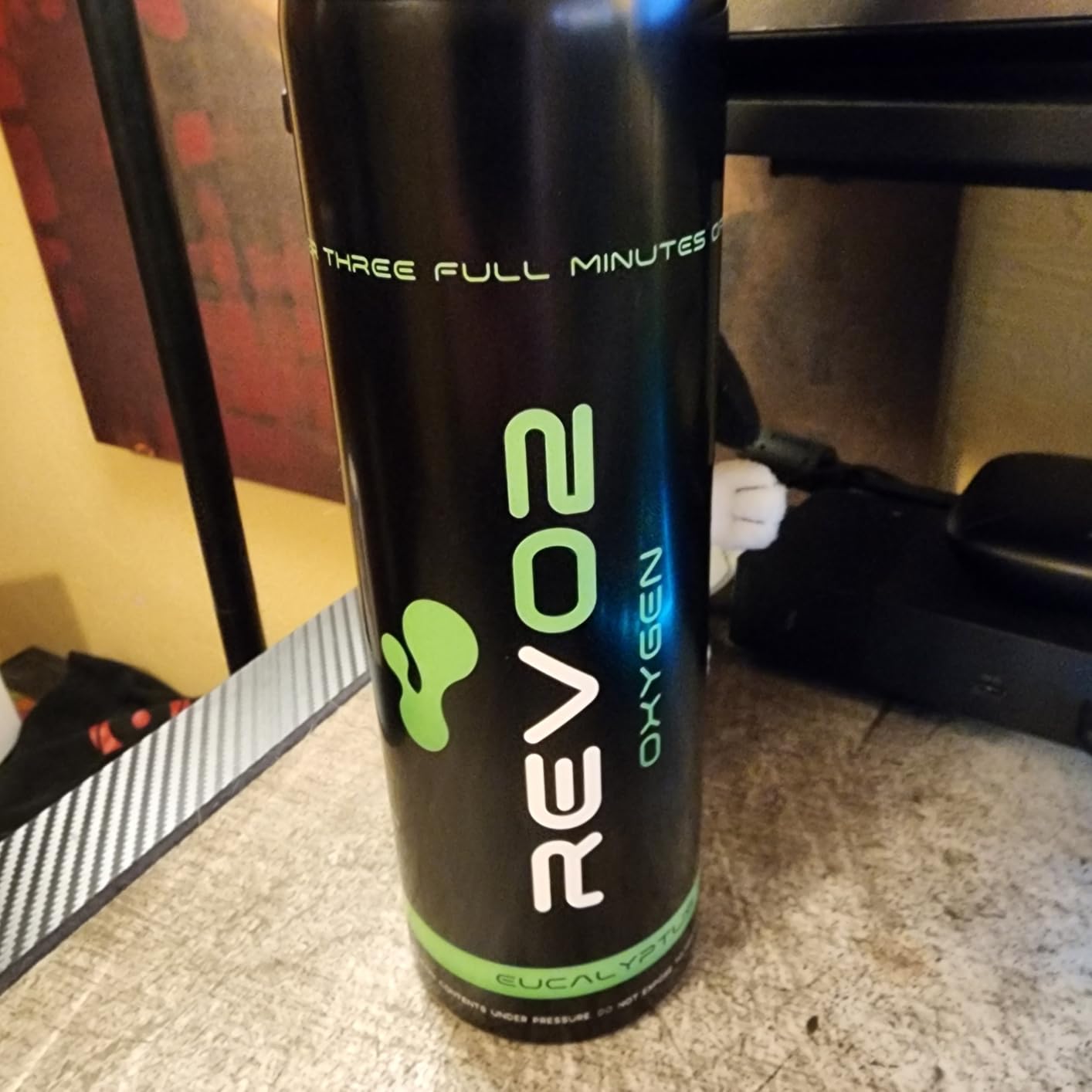
7. RevO2 Peppermint Oxygen Can 10L 2-Pack – Best Leak-Proof Design
Oxygen Can | 98% Pure Portable Oxygen for Athletes, Recovery & Altitude Relief | 10L Canister with Zero-Leak Mouthpiece & Trigger Lock | Natural Energy Boost for Sports & Travel – Peppermint 2 Pack
98% pure
Trigger lock
Zero-leak mouthpiece
200+ breaths
Pros
- Trigger lock prevents accidental discharge
- Peppermint scent adds freshness
- Zero-leak mouthpiece design
- Made in California
Cons
- Lower purity than competitors at 98%
- Smaller 2-pack sizing
- Limited retail availability outside Amazon
RevO2’s standout feature is the trigger lock. If you’ve ever carried a recreational oxygen canister in a backpack and worried about the trigger getting bumped, that single detail is worth the trade-off. The lock physically prevents discharge until you release it, which is also a big plus if you travel with kids or share space with other gear.
User reviews highlight two things: the peppermint aroma and the recovery benefit. One senior bodybuilder reviewer noted that his rest between sets dropped significantly after switching to RevO2. Another cited faster recovery after mountain hikes.
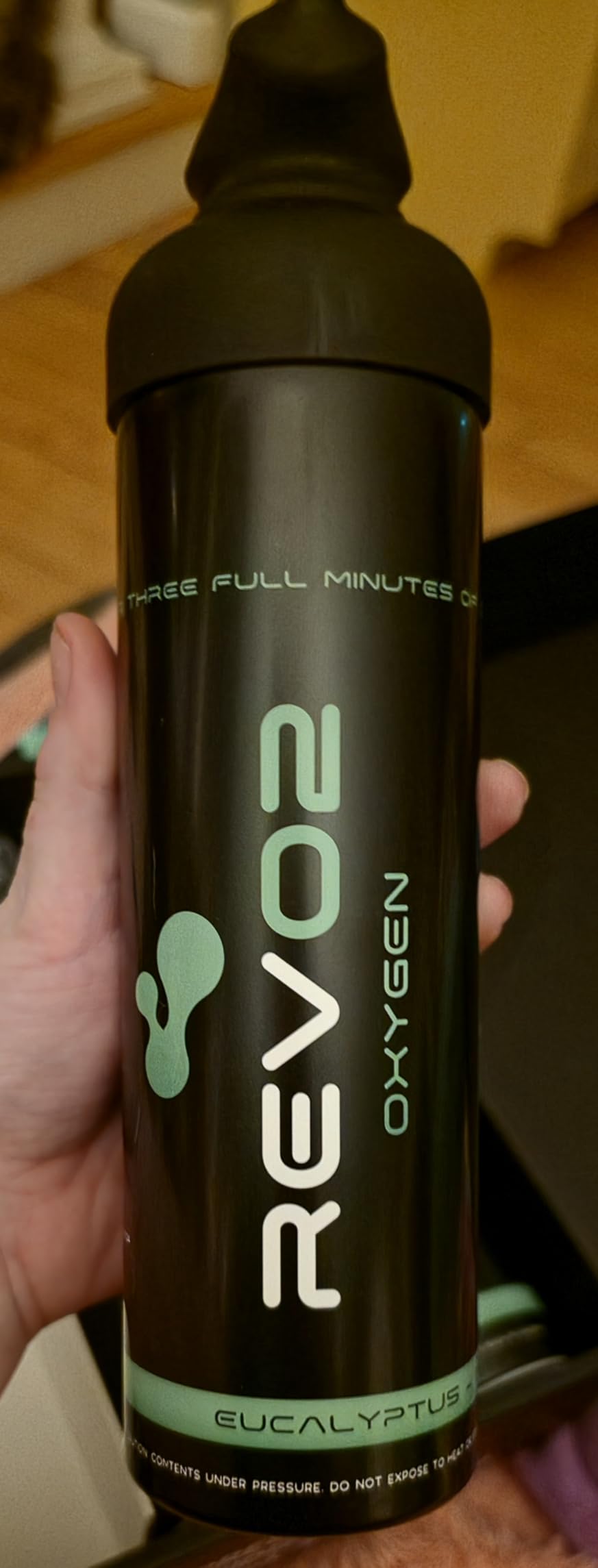
On the technical side, each can holds 10 liters of 98% oxygen with a zero-leak mouthpiece that directs flow more precisely than standard mask attachments. The peppermint scent is mild and adds freshness without being overpowering. RevO2 is made in California, and the company offers a satisfaction guarantee that most competitors don’t.
The honest limitation is the 98% purity versus 99.5% from Boost and 99.99% from O2 Blast, though for most recreational use cases that difference doesn’t matter. The 2-pack is also smaller than what Boost and O2 Blast offer, so you’ll reorder more often.
For Whom It’s Good
Pick RevO2 if you’ve had canisters leak in your bag before, or if you want the travel security of a physical lock. The peppermint flavor is also a real plus for users who dislike the neutral taste of standard oxygen canisters.
For Whom It’s Bad
If maximum purity is your priority, Boost and O2 Blast deliver higher oxygen percentages. If you want the lowest cost per liter, the 2-pack format doesn’t beat the 3-pack or 6-pack competition either.
8. Dynarex Resp-O2 M9 Oxygen C-Cylinder – Best Lightweight Medical Tank
Dynarex Resp-O2 M9 Oxygen C -Cylinder with CGA 870 Post Valve – 1.7L Standard Size Oxygen Cylinder – Lightweight Aluminum Portable Tank with 255L Oxygen Capacity
255L capacity
5.14 lbs
CGA 870 valve
Aluminum body
Pros
- 25-40% lighter than steel alternatives
- CGA 870 standard valve compatibility
- Hydrostatic tested for safety
- Clear coat finish resists wear
Cons
- Requires separate regulator purchase
- Tank arrives empty
- Smaller capacity than D-cylinder options
The Dynarex Resp-O2 M9 is the lightest standard medical oxygen cylinder in this roundup. Aluminum construction puts it 25-40% under comparable steel tanks. At 5.14 pounds empty, it’s manageable for users who can carry a small bag but not a full-size D cylinder.
The CGA 870 post valve is the real value here. It’s the standard connection on virtually every oxygen regulator in the US, so you can use whatever regulator you already have or pick one up locally if you need to. No proprietary fittings, no compatibility surprises.
Technically, this is a 255-liter aluminum cylinder with a clear protective coat that holds up well to repeated handling. It meets hydrostatic testing standards for medical oxygen service and is rated for both medical and homecare use. The 15.59-inch length is shorter than a full D cylinder, which makes it easier to fit in a sedan trunk or small carrying bag.
The catch is that the tank arrives empty and you’ll need to source a regulator separately. Compared to the Medfex kit above, the Dynarex is a better pick if you already own a regulator and want a lighter cylinder. If you’re starting from scratch, the Medfex kit is more complete.
For Whom It’s Good
This cylinder is the right choice if you’re replacing an older steel M9 tank and want lighter carry weight. It’s also a good option for travel kits where size matters more than total capacity.
For Whom It’s Bad
If you don’t already own a regulator and cannula, this cylinder alone won’t do anything for you and the Medfex kit above includes those. At 255 liters, capacity is also lower than the 425L Medfex D cylinder, so refill frequency goes up.
How to Choose the Best Portable Oxygen Concentrator?
The right pick depends on whether you need a true medical-grade portable oxygen concentrator, a refillable tank system, or a supplemental oxygen canister. Here’s how to think through the decision before you spend the money.
Pulse Dose vs Continuous Flow
Pulse dose concentrators like the Inogen Rove 6 deliver a bolus of oxygen only when you inhale, which conserves battery and reduces waste. They work for most daytime users and are far more portable. Continuous flow devices deliver a steady stream of oxygen regardless of breathing pattern, which is required for some patients, especially during sleep.
Continuous flow units are heavier, drain batteries faster, and typically cost more. If your prescription specifies continuous flow, your choice of portable oxygen concentrators narrows significantly. Pulse dose is the right answer for the majority of ambulatory oxygen users today.
Battery Life: Advertised vs Real World
Manufacturer battery ratings are almost always quoted at the lowest flow setting. The Inogen extended battery’s 12-hour 45-minute claim is at setting 1, not setting 4 or 5. Real-world users report roughly 60-75% of advertised runtime at typical use settings.
Plan for the realistic number, not the marketing number. For a full day out, multiply your expected use hours by 1.4 and size your battery accordingly. This is also why the Inogen extended battery is the most popular accessory for the Rove 6.
Weight and Daily Carry
Every additional pound matters when you’re carrying oxygen on your shoulder or in a bag all day. Pulse dose concentrators run 3 to 5 pounds, which is reasonable for shoulder carry. Continuous flow units can exceed 10 pounds with battery, which is why most users switch to a cart for anything beyond short trips.
For recreational oxygen canisters, weight is less of a constraint but bulk matters. The gO2therapy 12L at 7 ounces is genuinely pocketable. Boost’s 10L feels heavier in a fanny pack than you’d expect from the spec sheet.
FAA Approval and Air Travel Checklist
Only FAA-approved portable oxygen concentrators can be used in-flight on US carriers. The Inogen One G5 and Rove 6 are both approved, as are the CAIRE Freestyle Comfort and a handful of others. Canisters and tanks cannot be used in-flight and must be emptied before flying.
Before any flight, call your airline’s accessibility desk at least 48 hours ahead, and bring enough battery for 150% of expected flight time. Pack your prescription in your carry-on and label your device with the manufacturer FAA approval sticker. Confirm whether your destination country requires a separate electrical adapter for the charger.
Prescriptions, Medicare, and Insurance
True portable oxygen concentrators are Class II medical devices that require a prescription. Medicare Part B covers durable medical equipment including oxygen devices under specific clinical criteria, and private insurance coverage varies by plan. Recreational oxygen canisters do not require a prescription and are not typically covered by insurance.
If you have a prescription, work with a Durable Medical Equipment supplier in your area. They’ll handle the paperwork, deliver the device, and bill your insurance directly. Buying a POC online out-of-pocket is rarely the most cost-effective path.
Maintenance and Filter Costs
Real portable oxygen concentrators need annual sieve bed replacement in most models, plus regular filter cleaning. Filters are typically inexpensive, while sieve beds can run into the hundreds of dollars depending on the model. Budget a few hundred dollars per year in consumables if you use the device daily.
Tanks need hydrostatic testing every 5 to 10 years depending on your state. Recreational canisters need no maintenance beyond storing them upright and away from heat.
Concentrator, Tank, or Canister: Which One Do You Need?
If you have a diagnosed condition and a prescription, you need a portable oxygen concentrator for daily use and a tank for backup. If you’re at altitude occasionally and want recovery support, a canister is the right answer. If you’re a healthy athlete looking for a recovery edge, the same applies.
The honest truth is that most people searching for portable oxygen concentrators actually need canisters. The other products in this guide exist for the smaller subset who genuinely need medical-grade oxygen. Knowing which group you’re in saves money and, more importantly, keeps you safe.
Frequently Asked Questions
Which brand is best for oxygen concentrators?
Inogen is the most recognized brand for true portable oxygen concentrators, with the Rove 6 being the current flagship for most users. For recreational supplemental oxygen, Boost Oxygen has the deepest track record and review base on Amazon.
Do I need a prescription for a portable oxygen concentrator?
Yes, FDA-cleared portable oxygen concentrators are prescription medical devices. You will need a current oxygen prescription from your doctor and typically a documented blood oxygen saturation test to qualify. Recreational oxygen canisters do not require a prescription.
Which oxygen device is best for COPD?
For COPD patients with a prescription, the Inogen Rove 6 is the most popular pulse-dose choice for daily mobility. For higher flow needs, continuous flow models like the CAIRE Eclipse 5 are typically recommended. Work with your pulmonologist to match the device to your specific oxygen saturation requirements.
What are the best home oxygen concentrators?
Home oxygen concentrators are larger stationary units, not portable devices. The Inogen At Home, Philips EverFlo, and CAIRE Companion 5 are widely recommended home units that deliver continuous flow at higher liter rates than portable devices. They plug into wall power and are designed for use while sleeping.
Can I fly with a portable oxygen concentrator?
Yes, you can fly with an FAA-approved portable oxygen concentrator on US carriers. You cannot use oxygen tanks or recreational canisters in-flight. Notify your airline at least 48 hours in advance, bring enough battery for 150% of flight time, and carry your prescription with you.
The Bottom Line
The best portable oxygen concentrator for you depends entirely on whether you need medical-grade oxygen or supplemental support. If you already own an Inogen G5 or Rove 6, the Inogen Extended 16-cell battery is the single best upgrade you can make for daily mobility and travel. If you’re on prescribed oxygen and want a turnkey backup, the Medfex Complete Travel Kit arrives with everything you need, and if you’re a healthy user looking for altitude or recovery support, the Boost Oxygen 3-pack gives you the best value in the recreational category.
Talk to your doctor before buying any of these products for medical use, because none of them replace a prescription or proper diagnosis. For everything else, our team is happy to answer questions in the comments. We’ll keep this guide updated as new models launch throughout 2026.