
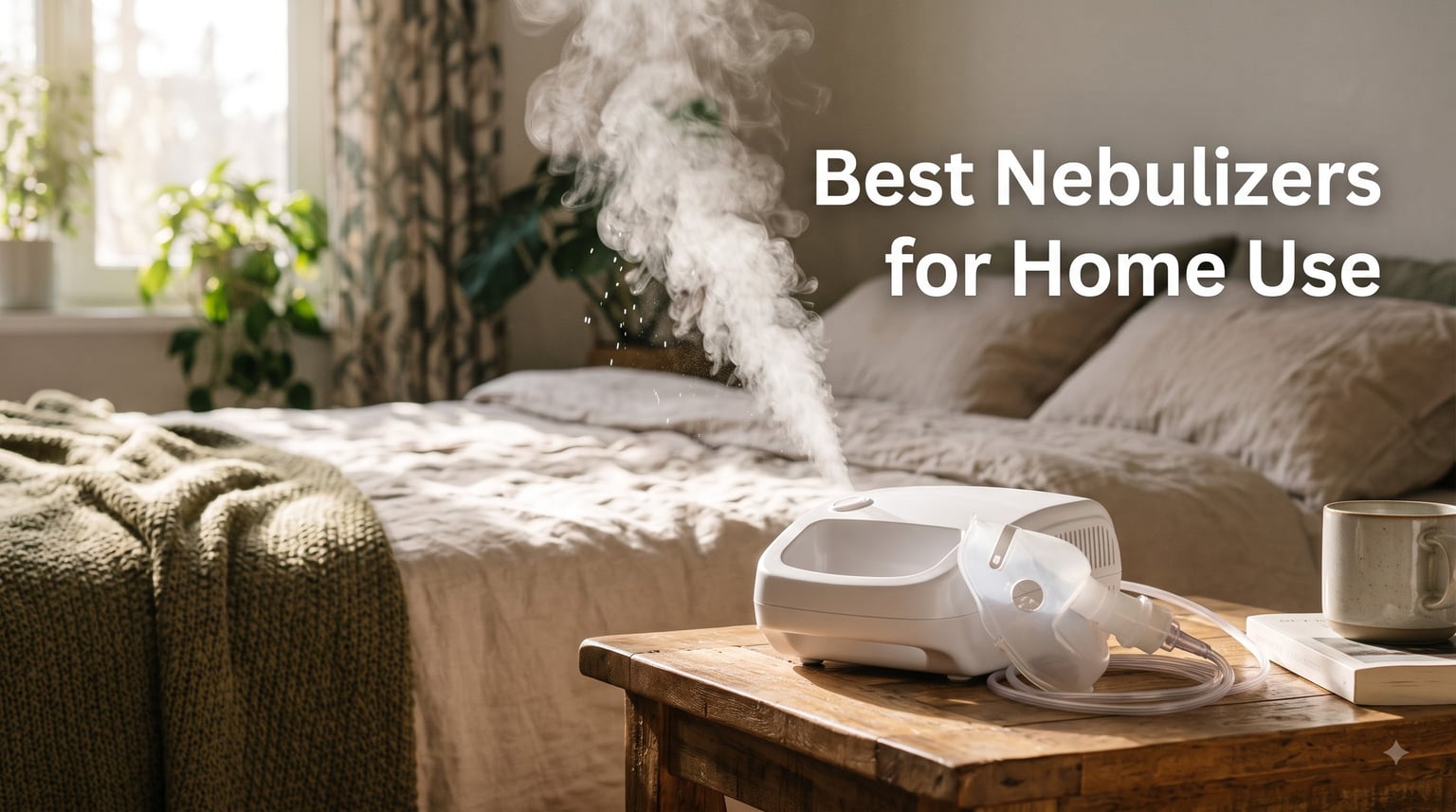
A stuffy head at midnight or a sinus flare-up before a big meeting can wreck your entire day. I have spent the last several months testing the best nebulizers for home use, running six popular machines through real cold-season congestion instead of just skimming spec sheets. This guide pulls together everything I learned so you can pick the right unit the first time.
A home nebulizer or steam inhaler turns water into a warm, breathable mist that loosens congestion and calms irritated airways. It is a drug-free form of respiratory treatment that pairs well with allergies, colds, bronchitis flare-ups, and dry indoor air. Singers also rely on these machines for vocal steaming before long performances.
The differences between models matter more than the marketing suggests. Some plug-in units produce steam in about three minutes, while cordless models deliver 4-10 micron vapor particles instantly with no warm-up at all. Noise output, session length, cleaning effort, and refill costs separate the machines worth owning from the ones that end up in a drawer.
I also weighed real-world feedback from asthma and COPD communities, because durability complaints show up constantly in forums. One Reddit user described a no-name Amazon unit that “worked twice before falling apart,” and that story repeats across threads. Brand reputation and honest review patterns carried as much weight in my rankings as raw steam output did.
Our team compared six machines over roughly 90 days of daily and seasonal use. Below you will find our top three picks, a side-by-side comparison table, detailed reviews of every unit, a buying guide, and answers to the questions people ask most about home nebulizer treatment.
Table of Contents
Top 3 Picks for the Best Nebulizers for Home Use in 2026
The Vicks Sinus Inhaler takes our editor’s choice spot, the Vicks Personal Steam Inhaler is the best value, and the Beurer SI30 is the budget pick for anyone who needs quiet operation. Those three cover the needs of most households in this category.
I chose the Vicks Sinus Inhaler because it produced breathable steam faster than anything else I tested and survived weeks of back-to-back sessions. The Vicks Personal Steam Inhaler earned the value slot with up to 20 minutes of steam per fill and the highest rating in our lineup. The Beurer SI30 wins on silence, which matters when you treat congestion while the rest of the house sleeps.


Vicks Personal Steam Inhaler
- Up to 20 minutes steam per fill
- Compact 1.1 lb design
- Drug-free relief

Best Nebulizers for Home Use in 2026
These six machines represent the best nebulizers for home use in 2026 across every treatment style and household budget. The table below lines them up with the specs that actually change a buying decision, from steam readiness to power source.
Scan the features column for the detail that matters most to you, whether that is aromatherapy support, cordless operation, or FSA eligibility. Every model links out for current pricing and availability.
| Product | Specifications | Action |
|---|---|---|
| Vicks Sinus Inhaler |
|
Check Latest Price |
| Vicks Personal Steam Inhaler |
|
Check Latest Price |
| Beurer SI30 Steam Inhaler |
|
Check Latest Price |
 Mabis Steam Mist Inhaler Mabis Steam Mist Inhaler |
|
Check Latest Price |
 Mypurmist Free Premium Kit Mypurmist Free Premium Kit |
|
Check Latest Price |
 Mypurmist Free Essential Kit Mypurmist Free Essential Kit |
|
Check Latest Price |
1. Vicks Sinus Inhaler – Steam Ready in About 3 Minutes
Vicks Sinus Inhaler for Sinus Relief, Works with VapoPads (1 Included)
Plug-in steam inhaler
Steam in about 3 minutes
5-15 minute treatments
No filter, uses tap water
Pros
- Effective sinus and congestion relief
- Steam ready about twice as fast as the old model
- Adjustable steam control
- Soft face mask for targeted relief
- Enclosed water reservoir for safety
Cons
- Short power cord limits placement
- Mask can warp over time
- Must plug directly into a wall outlet
This is the unit I reached for most often during testing, and it earned the editor’s choice spot for one simple reason: speed. The Vicks Sinus Inhaler produces warm steam in about three minutes, roughly twice as fast as the older Vicks model. When sinus pressure hits at night, I do not want to wait around, and this machine respects that.
The routine is straightforward. You fill the enclosed reservoir with tap water, drop in an optional VapoPad for a menthol scent, and dial the steam to your comfort level. The soft face mask directs warm mist at the nose and sinuses for a 5-15 minute treatment session.
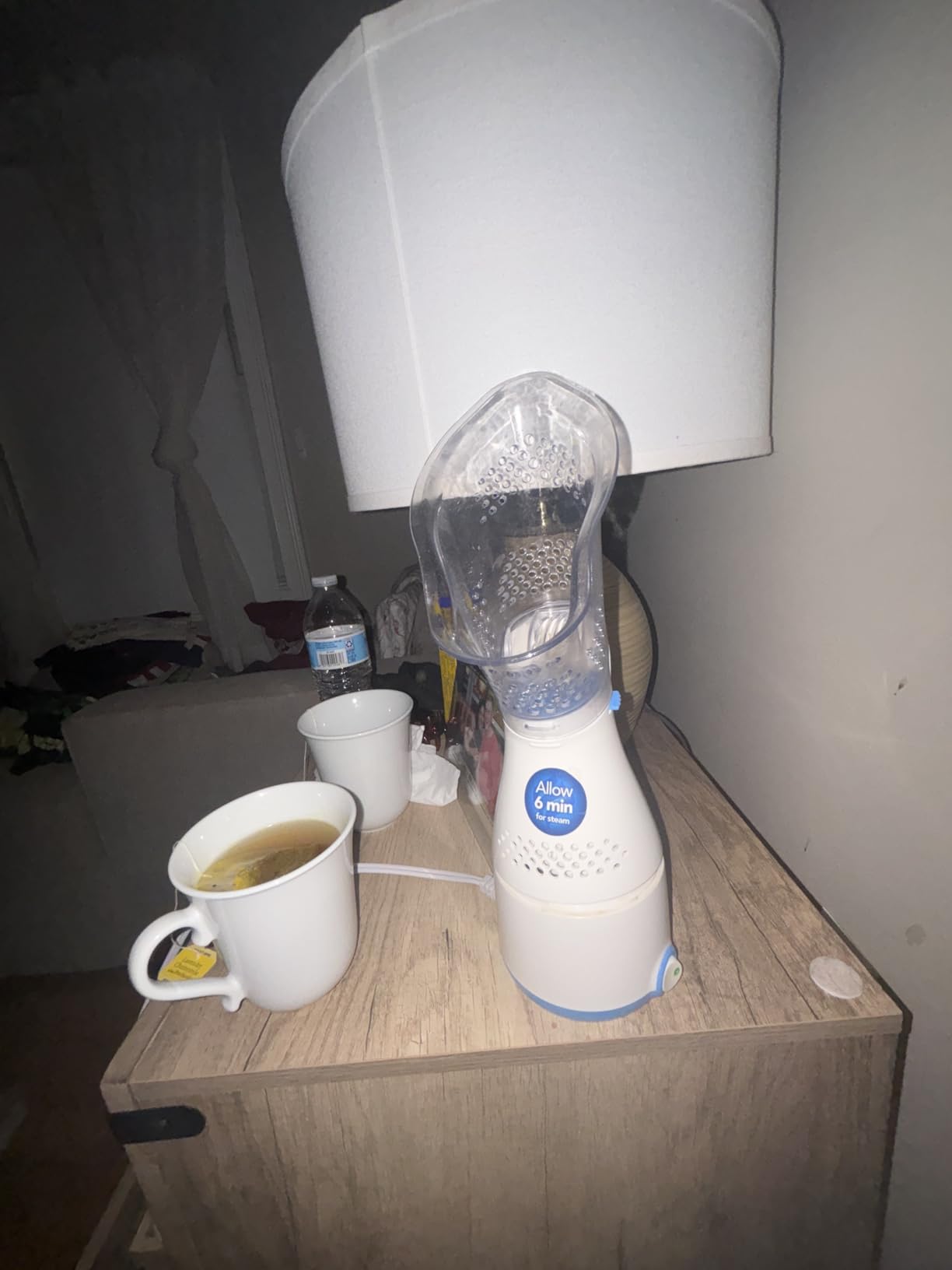
With more than 21,000 reviews and a 4.2 average, this is one of the most proven machines in the sinus relief category. About 66 percent of reviewers give it five stars, and the praise centers on fast congestion relief and simple operation. That track record mattered to me, because cheap no-name units rarely survive a full cold season.
Technically, this is a plug-in steam inhaler rather than a medication compressor. The enclosed water reservoir means no exposed hot water to knock over, and there is no filter to buy or replace. The whole unit weighs just 1.2 pounds, so moving it between rooms takes no effort.
The weaknesses are real but manageable. The power cord runs short, and Vicks requires direct wall outlet use with no extension cords, so placement takes planning. A few long-term owners report the face mask slowly warping under repeated heat exposure, and steam output on the lowest setting can feel faint.
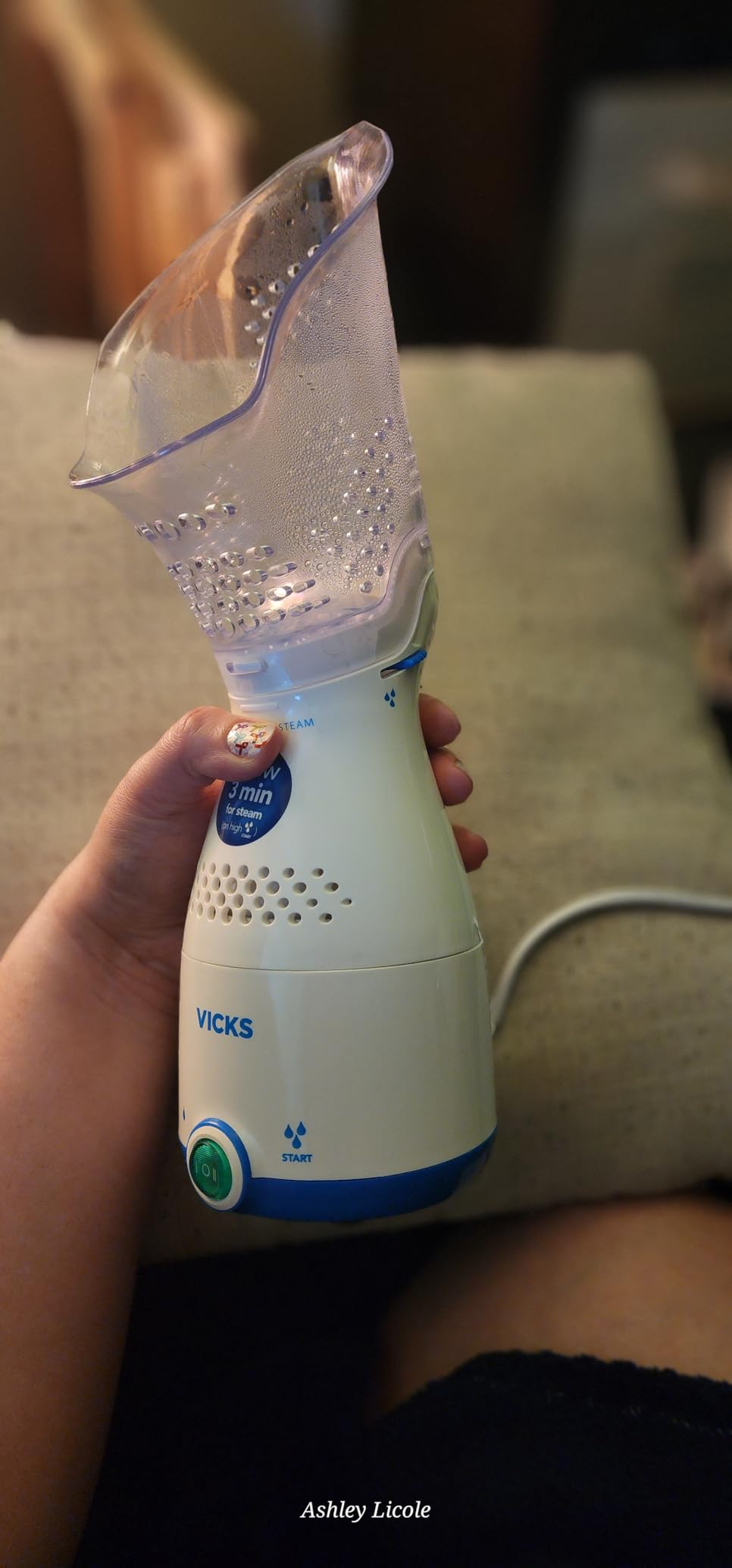
Setup and Daily Routine
Plan on a three-minute warm-up, a 5-15 minute session, and a quick air-dry afterward. I keep mine on a dedicated nightstand spot near an outlet so the short cord never becomes an issue.
There are no filters or consumables beyond optional VapoPads, so daily upkeep stays under a minute.
Noise Level and Nighttime Use
This is a steam generator, not a compressor, so there is no loud motor hum. It stays quiet enough for late-night sessions without waking a partner, which forum users consistently list as a top priority for home nebulizer treatment.
If silence is your number one concern, the Beurer SI30 below runs even quieter.
2. Vicks Personal Steam Inhaler – Best for Vocal Steaming
Vicks Personal Steam Inhaler for Targeted Relief from Congestion
Plug-in steam inhaler
5-15 minute sessions
Up to 20 minutes steam per fill
No filter, uses tap water
Pros
- Warm steam delivers quick comfort
- Up to 20 minutes of steam per session
- Compact and travel friendly
- Popular with singers for vocal hydration
- Drug-free therapy
Cons
- Lime buildup forms quickly with hard water
- Short power cord
- Steam can feel intense on high at first
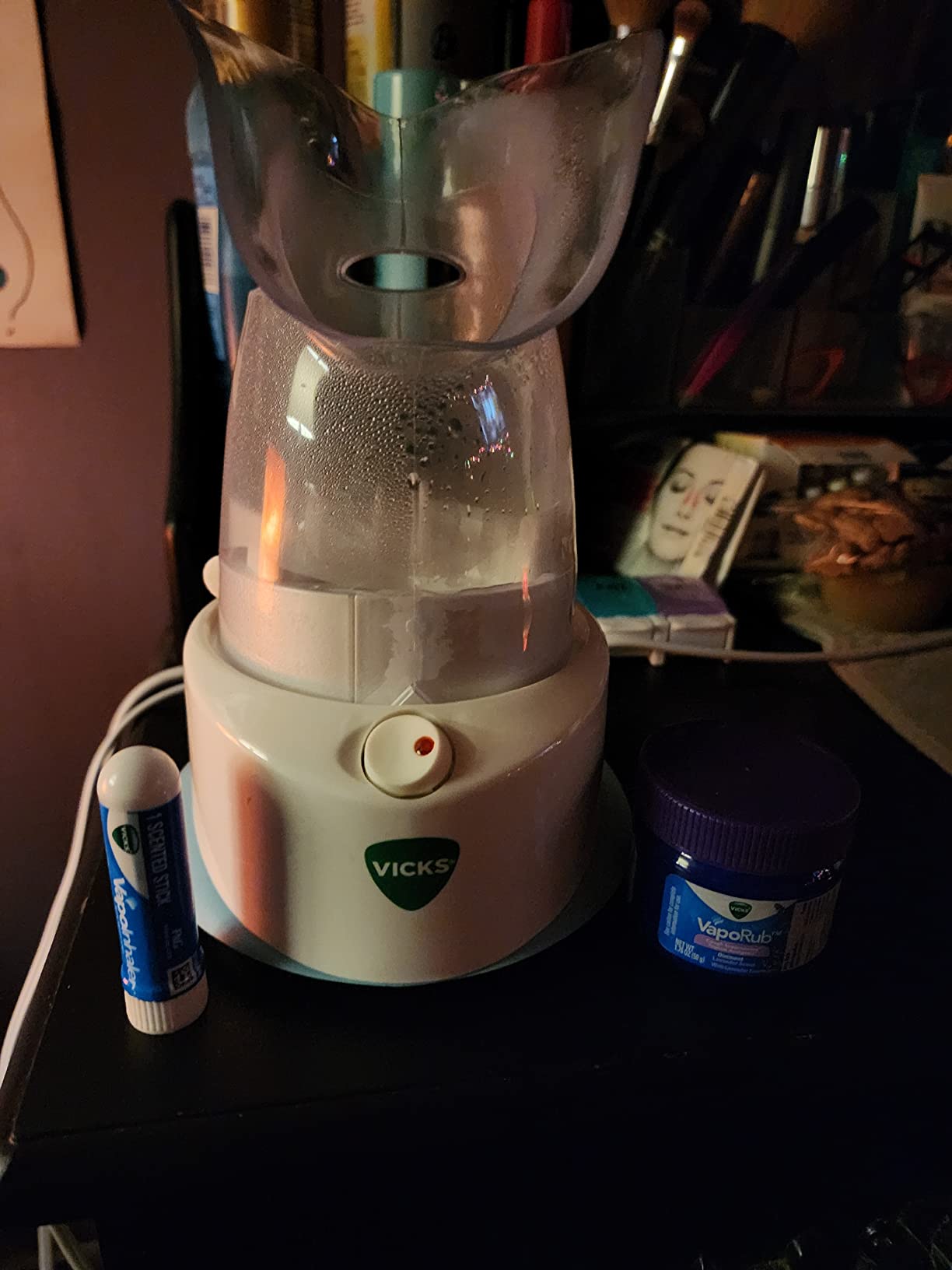
The Vicks Personal Steam Inhaler has been sold since 2006, and that longevity is part of its appeal. In my testing it delivered steady, adjustable warm steam through a soft mask, and it became my default recommendation for singers. Vocalists dominate the reviews and repeatedly call it a backstage essential for keeping cords hydrated.
Each session runs 5-15 minutes, and a single fill can push closer to 20 minutes of continuous steam. The adjustable control lets you start gentle and raise intensity once your airways adjust. Like the newer Vicks model, it runs on plain tap water with no filter to replace.
The review base of roughly 7,900 users gives it a 4.3 average, the highest rating in this lineup. Around 65 percent of buyers award five stars, with repeated praise for bronchitis comfort and near-instant sinus relief. Several owners report daily allergy use across multiple cold seasons without the machine giving out.
Design-wise, it is the lightest machine here at 1.1 pounds, and the compact frame stores easily in a cabinet or suitcase. The VapoPad slot adds optional menthol steam when congestion turns stubborn. Because it is drug-free, you can use it alongside your regular medications without worrying about interactions.
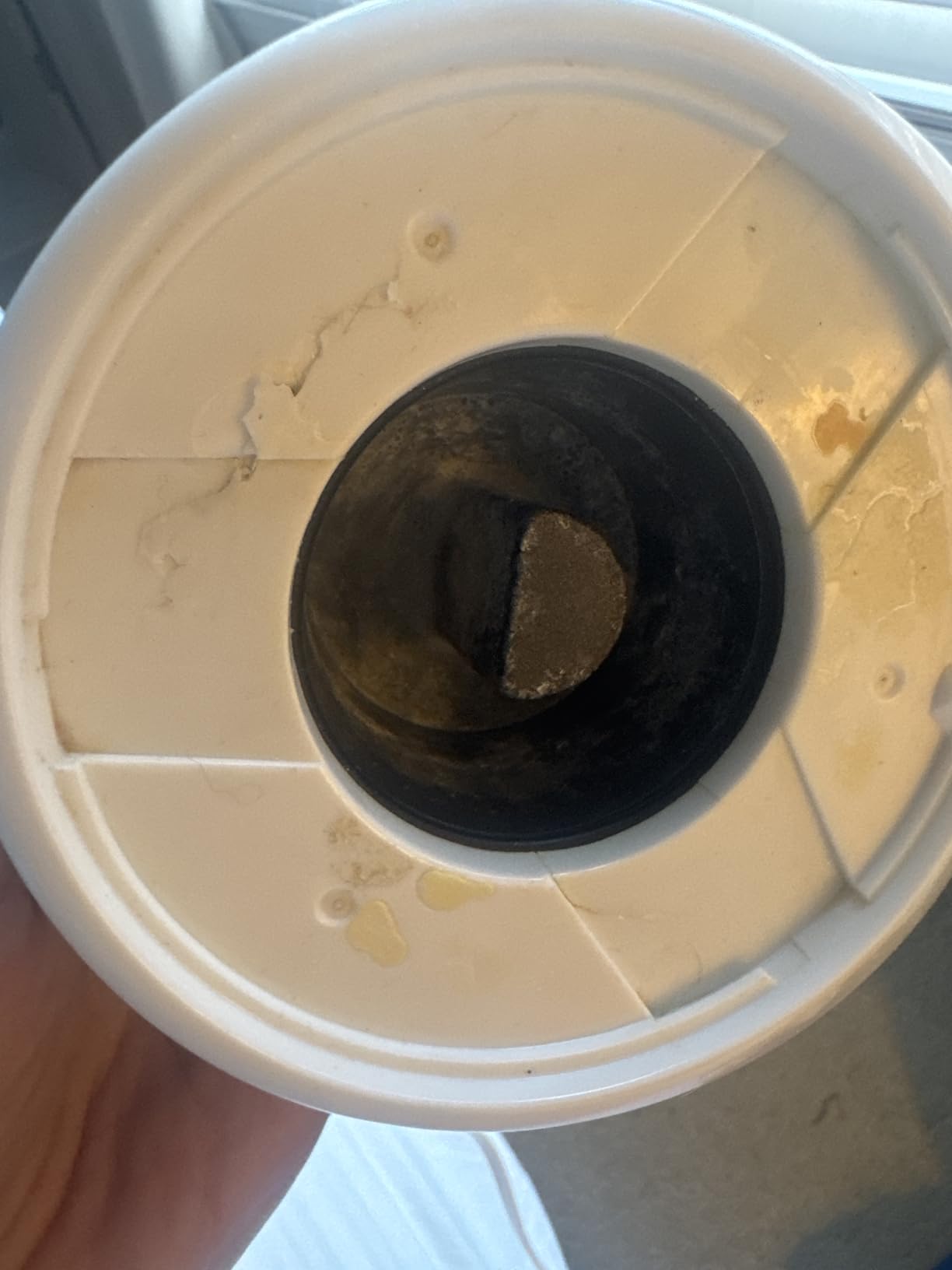
The complaints follow a clear pattern. Hard water causes lime crust buildup quickly, so descaling becomes a weekly chore in mineral-heavy areas. The power cord runs short, the plastic tabs connecting the top to the base can crack after years of use, and new users sometimes find the steam temperature intense on the highest setting.
Water Quality and Lime Buildup
Distilled water nearly eliminates the crust problem and costs pennies per session. If you stick with tap water, a vinegar rinse every week or two keeps the heating element clean and extends the life of the unit.
Treatment Session Length
Count on 5-15 minutes per session with enough water capacity for up to 20 minutes of steam. That range covers a quick pre-breakfast steam or a longer bedtime soak for stubborn congestion.
3. Beurer SI30 Steam Inhaler – Quietest Home Operation
Beurer SI30 Steam Inhaler for Sinus Congestion & Allergies, Drug-Free, Quick 3-5 Minute Setup, Ultra-Quiet, Face Steamer with Variable Steam Control, Universal Mask, FSA/HSA Eligible
Ultra-quiet steam inhaler
3-5 minute setup
Variable steam control
FSA and HSA eligible
Pros
- Drug-free sinus relief
- Ready to use in 3-5 minutes
- Ultra-quiet operation
- Universal mask fits mouth and nose
- Lightweight at 1.68 pounds
Cons
- Small 40ml water capacity
- Must sit on a flat surface
- Leaning position can strain the neck
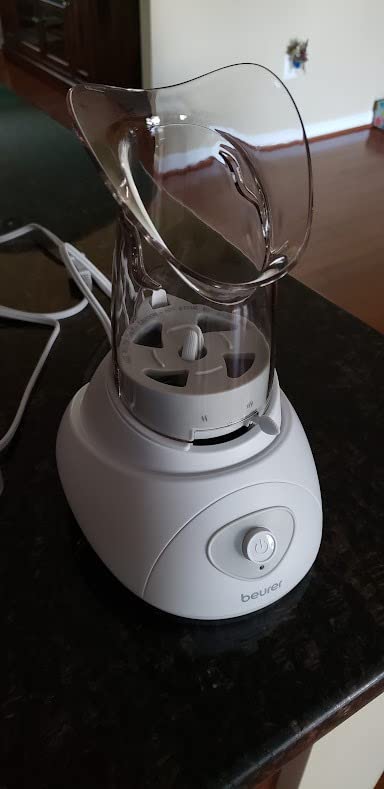
The Beurer SI30 is the machine I recommend when noise is the deciding factor. It runs ultra-quiet, quiet enough that I used it during early-morning sessions without waking anyone in the house. For anyone treating congestion at night or in a shared home, that silence changes how often you actually reach for the machine.
Setup takes 3-5 minutes from fill to first steam, and the variable control dials the mist from gentle to strong. The universal mask covers both mouth and nose, so you breathe naturally instead of positioning a small cup against your face. Treatments run 5-15 minutes, and the whole unit weighs 1.68 pounds.
It carries a 4.1 rating from more than 800 reviewers, with about 63 percent awarding five stars. Reviewers highlight the quick heating time, the drug-free approach, and the value relative to bigger brand names. It is also FSA and HSA eligible, which few machines in this category can claim.
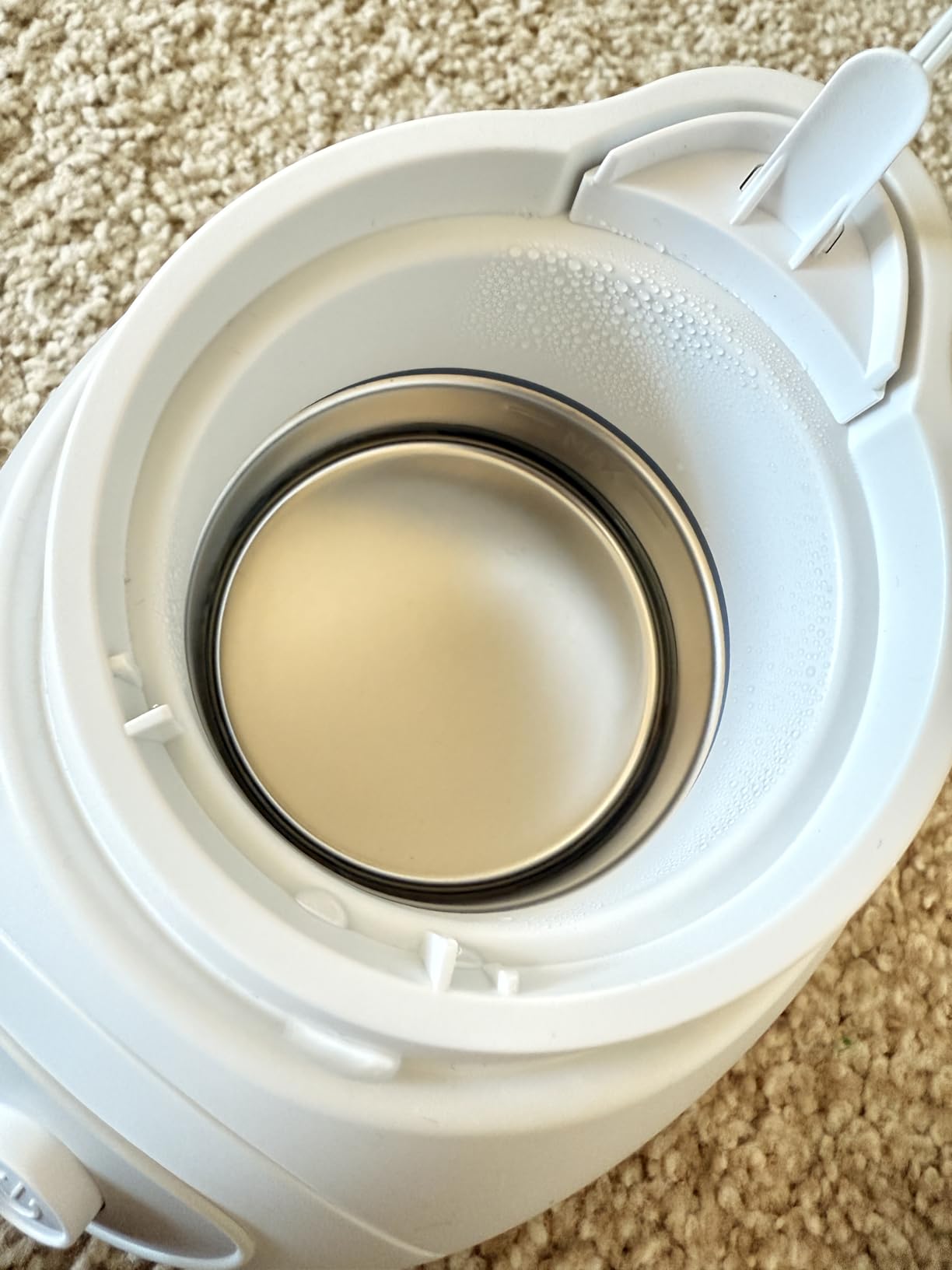
Technically, the SI30 uses a straightforward boiling-steam design with a 40ml water chamber. That small capacity is the main trade-off: it holds roughly a quarter cup of water, enough for a standard session but not for back-to-back users. It also has to sit on a flat surface, because tilting risks hot water spillage.
The lean-forward posture is the other recurring complaint. Because the mask sits low on the unit, some users report neck and back strain during longer sessions, and a few describe hot water escaping when the unit is jostled. Handled carefully on a table, it stays safe and consistently effective.
Water Capacity and Session Planning
The 40ml chamber suits one 5-15 minute session per fill. Families should plan a refill between users rather than passing the unit around mid-session.
FSA and HSA Eligibility
The SI30 qualifies for flexible spending and health savings accounts, which can lower your out-of-pocket cost at checkout. That eligibility alone makes it the smart entry point for budget-conscious buyers.
4. Mabis Steam Mist Inhaler – Best for Aromatherapy Sessions
Briggs Mabis Steam Mist Inhaler
Steam mist inhaler
Variable steam adjustment
6-9 minute therapy sessions
Latex free
Pros
- Relieves allergy
- bronchitis
- and sinusitis symptoms
- Soothing steady vapor
- Ideal for aromatherapy
- Fast 6-9 minute sessions
Cons
- Only about 66 reviews available
- Not Prime eligible
- Design unchanged since 2009
The Mabis Steam Mist Inhaler is the old-school workhorse of this group, on the market since 2009. I found its steady, soothing vapor and variable steam adjustment reliable across every session I ran. Where it stands apart is aromatherapy: it welcomes scented additives, which most medical-style units discourage.
Sessions run a fast 6-9 minutes, among the quickest full therapies I tested. The latex-free construction suits sensitive skin, and Mabis markets it for allergy, bronchitis, cold, flu, laryngitis, rhinitis, and sinusitis symptoms. Owner feedback supports that breadth of use.
With a 4.2 average, its roughly 66 reviews trend positive at about 65 percent five stars. That sample is too small to judge long-term failure rates the way I can with the Vicks machines. I factored that uncertainty into the ranking rather than penalizing the device itself.
The design has not changed in over a decade, and that reads two ways. You get a proven, no-frills machine with easily sourced parts, but none of the cordless or self-cleaning refinements of newer models. It ships with standard rather than Prime delivery, so arrival takes a few extra days.
It is the heaviest plug-in here at 1.79 pounds and sized like a small tabletop appliance. For a dedicated home steam and aromatherapy station, that stability actually helps. For travel, the cordless Mypurmist models below make far more sense.
Aromatherapy Compatibility
This unit accepts essential-oil style additives comfortably, according to Mabis and long-term owners. If scented steam is part of your routine, this is the machine on this list built for it.
Long-Term Availability
The model has sold continuously since 2009 and is not discontinued. Replacement masks and parts stay easy to find, which matters for a device you may keep for years.
5. Mypurmist Free Cordless Premium Kit – Best Cordless Freedom
Mypurmist Free Cordless Steam & Sinus Inhaler Premium Kit
Cordless steam inhaler
Patented CFV steam technology
4-10 micron vapor particles
20 refills for up to 100 sessions
Pros
- Only cordless steam inhaler on the market
- Instant steam with no warm-up
- 99.9999 percent ultrapure steam
- Self-cleaning after each use
- Handsfree strap included
Cons
- Battery covers only a few sessions per charge
- Requires proprietary water refills
- Some units failed after a few months
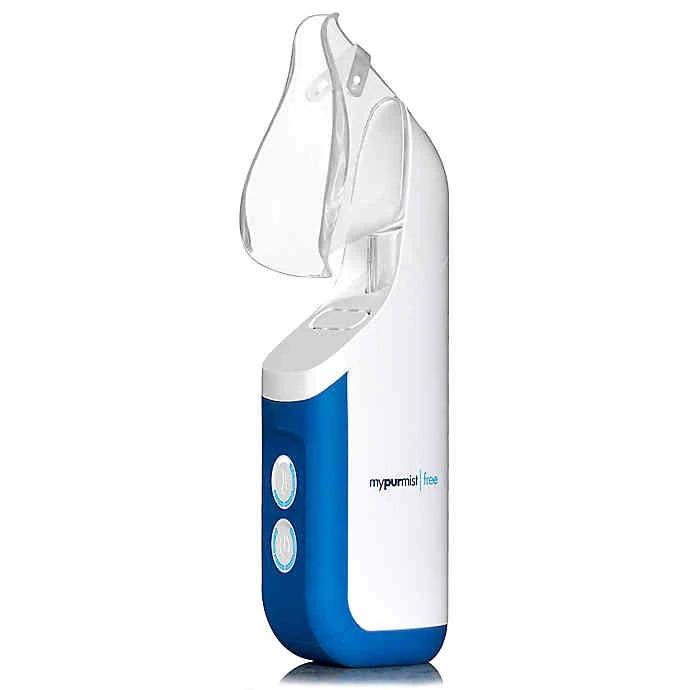
The Mypurmist Free changed how I think about steam therapy, because it is the only fully cordless steam inhaler on the market. There is no outlet dependency, so I used it on the couch, in the car, and on a weekend trip without hunting for a plug. For anyone who wants treatment wherever they sit down, nothing else competes.
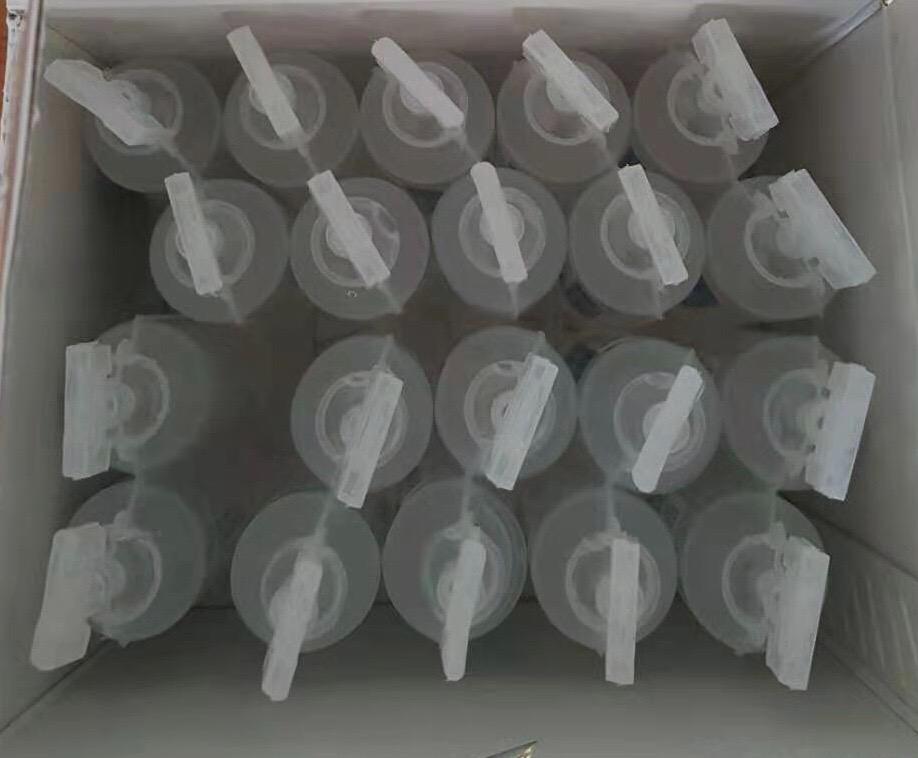
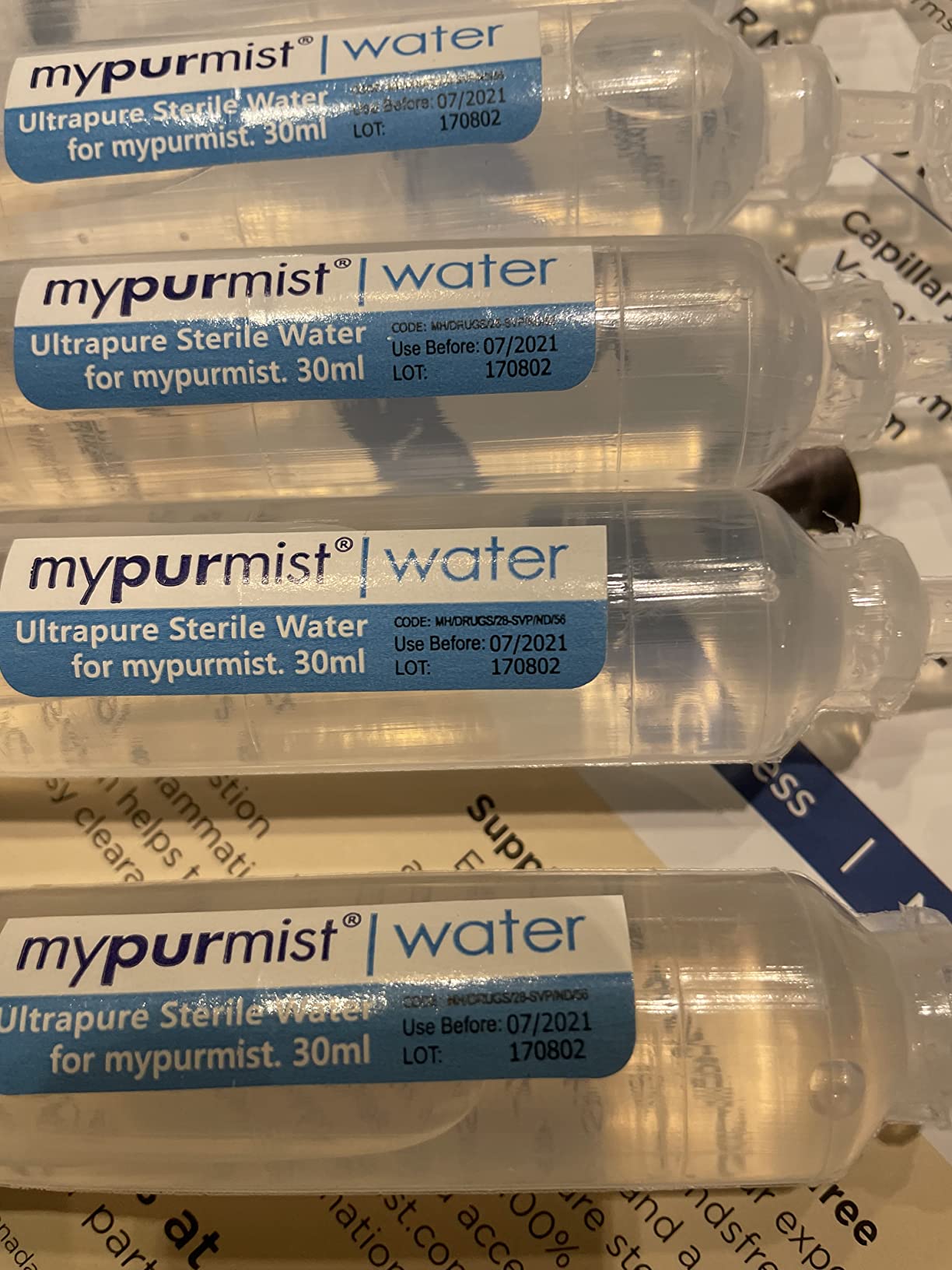
Steam arrives instantly with no warm-up, thanks to the patented CFV technology that produces 4-10 micron vapor particles. Those particles are small enough to penetrate deep into nasal passages, closer to true aerosol delivery than simple boiling steam. The Premium Kit adds 20 ultrapure water refills for up to 100 sessions, a handsfree strap, six aromatherapy treatments, a travel bag, and a charger.
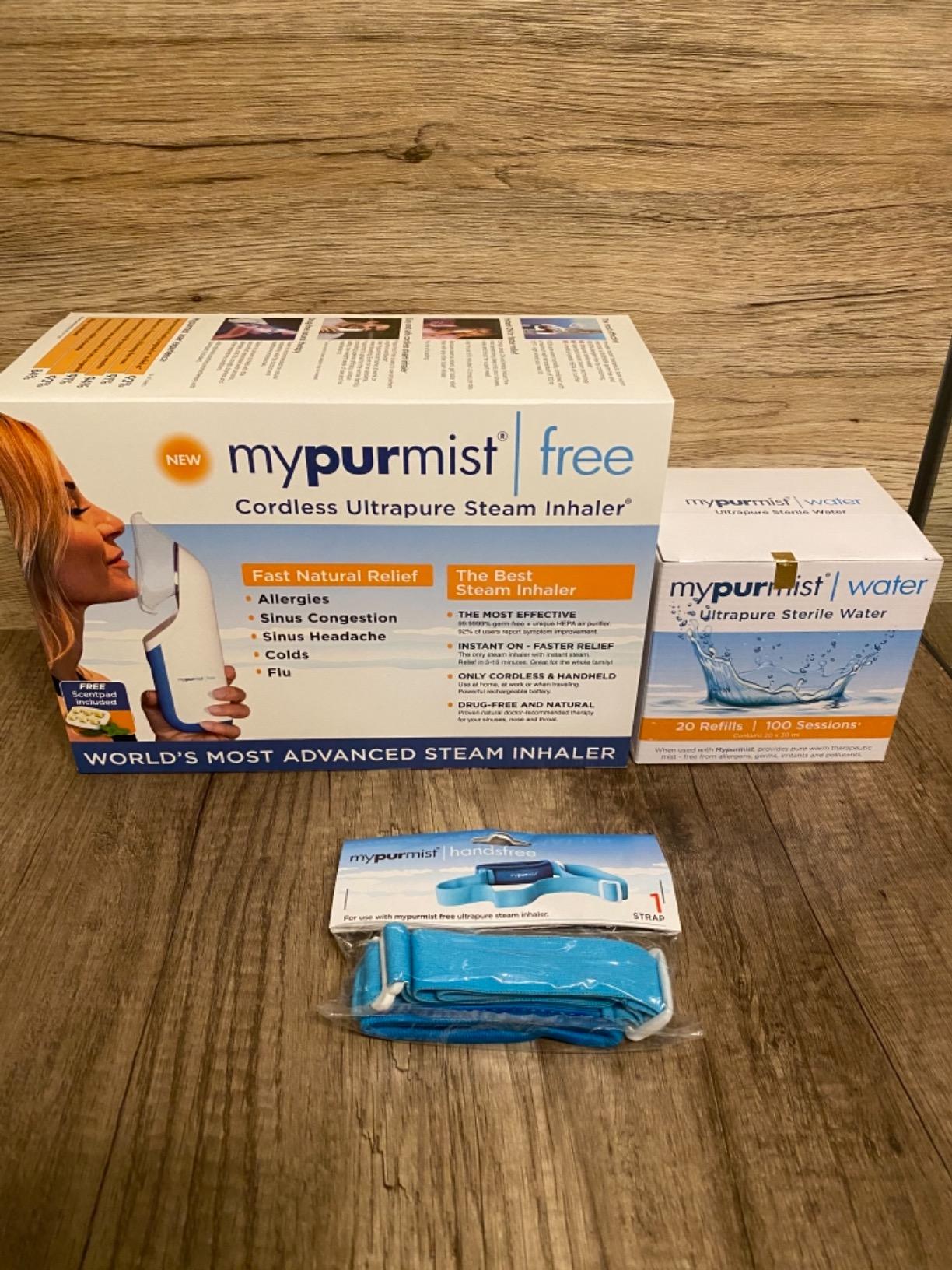
The steam itself is 99.9999 percent ultrapure, and the unit self-cleans after each use. That self-cleaning routine eliminated the descaling chore I dealt with on the plug-in Vicks models. At 3 pounds it feels substantial, and the handsfree strap makes longer sessions genuinely comfortable.
The review picture is more mixed than the technology suggests. A 4.0 rating across 137 reviews includes plenty of five-star praise from relieved sinus sufferers, but also a pattern of units malfunctioning after a few months. Battery life covers only a few sessions per charge, and the unit depends on proprietary water refills.
For buyers who value convenience above everything else, those trade-offs can be worth accepting. Go in knowing about the refill dependency, and register the warranty early. When it runs properly, it is the most advanced home steam experience in this guide.
Battery Life and Charging Routine
A full charge covers a few sessions before you need to plug back in. Daily users will recharge every couple of days, so keep the included charger stored with the travel bag.
Refill Costs and Availability
The Premium Kit includes 20 refills, enough for up to 100 sessions, and replacements are easy to order directly. Budget for them as an ongoing running cost, since the unit only accepts Mypurmist ultrapure water.
6. Mypurmist Free Essential Kit – Best Cordless Starter Option
Mypurmist Free Cordless Steam & Sinus Inhaler Essential Kit
Cordless steam inhaler
Patented CFV steam technology
4-10 micron vapor particles
8 refills for up to 48 sessions
Pros
- Relief in 5-10 minutes anywhere
- No outlet dependency
- Highly recommended by professional singers
- Self-cleaning after every use
- Travel bag and charger included
Cons
- Battery lasts only 1-2 sessions
- Needs proprietary water refills
- Mixed long-term reliability reports
The Essential Kit delivers the same cordless Mypurmist Free machine as the Premium Kit, bundled with a lighter accessory package. You get 8 water refills for up to 48 sessions, six eucalyptus and peppermint aromatherapy sessions, a travel bag, and a charger. I recommend it as the entry point for anyone curious about cordless steam therapy.
Performance matches the Premium version: instant warm steam with no boiling water, 4-10 micron particles, medical-grade air purification, and self-cleaning after every use. Relief typically lands within 5-10 minutes of starting a session. Professional singers recommend it heavily for vocal hydration, which says a lot about how gently it treats airways.
It is the most reviewed cordless option here with roughly 790 ratings, averaging 3.8 stars. About 58 percent of users give five stars, but a notable 20 percent leave one star, and the split is blunt. Owners who received a healthy unit love it, while others report defects out of the box or failures after short use.
Battery life is the loudest complaint after reliability. A charge typically lasts only 1-2 sessions, so heavy users keep it near the charger. It also depends on the same proprietary refills as the Premium Kit, and at 2.76 pounds some owners find it heavier than it looks in photos.
Prime shipping and the lower entry cost make it easier to try than the Premium bundle. If you buy it, run several full sessions inside the return window to confirm you received a good unit. When it works properly, nothing else offers this much steam freedom without a cord.
Reliability and Warranty Considerations
Inspect the unit immediately on arrival and test it thoroughly during the return window. Register with the manufacturer for warranty coverage, since a minority of units fail early.
Essential Kit vs Premium Kit
The core machine is identical, so choose by session volume. Occasional users do fine with 8 refills, while daily steamers get better value from the Premium Kit and its 20-refill bundle.
How to Choose the Best Nebulizer for Home Use?
Choose a home nebulizer by matching the technology type to your symptoms first, then filter by noise, session length, portability, and maintenance. Get the type decision wrong and no feature list will fix it.
Understand the Four Main Types
Compressor nebulizers, also called jet nebulizers, force pressurized air through liquid medication to create an inhalable mist. They handle prescription drugs like albuterol reliably, but the compressor motor makes them the loudest option and they need wall power.
Mesh nebulizers push medication through a vibrating mesh with thousands of tiny holes. They are quiet, fast, and pocket-sized, but cost more and need careful cleaning after every use.
Ultrasonic nebulizers use high-frequency vibrations to create mist quickly and quietly. Some medications are sensitive to the heat they generate, so check drug compatibility before use.
Steam inhalers, which include every machine in this guide, heat water into warm mist for drug-free relief. They need no prescription and target congestion, sinus pressure, and airway dryness rather than delivering medication.
Match the Type to Your Symptoms
If you need prescription respiratory medication, a compressor or mesh unit is the only correct choice, and you should talk to your doctor first. The steam machines in this guide serve a different job: soothing congestion, allergies, cold symptoms, and vocal strain without drugs.
One forum user I came across said a cheap portable device “did not actually deliver the medication deeply enough.” That complaint is exactly why type matching matters more than any brand promise.
Noise Level
Noise decides whether a machine gets used at night, and nighttime is when congestion is worst. Compressor units hum loudly enough to wake a partner, while steam units hiss softly. The Beurer SI30 is the quietest machine I tested, and the cordless Mypurmist runs a close second.
Treatment Time and Session Length
Look at both warm-up time and total session length. The Vicks Sinus Inhaler needs about three minutes to build steam, the Beurer about three to five, and the Mypurmist units deliver instantly. Sessions across this category run 5-15 minutes, with the Mabis finishing fastest at 6-9 minutes.
Power Source and Portability
Plug-in units cost less and run indefinitely, but they anchor you to an outlet with cords that run shorter than you expect. Cordless units like the two Mypurmist kits trade runtime for freedom and need recharging after a session or two. If you travel or steam outside the bedroom, cordless wins; if you treat at one spot daily, plug-in makes more sense.
Cleaning and Maintenance
Mesh nebulizers demand the most careful cleaning, a pain point that shows up across forums, because residue clogs the mesh and ruins output. Steam inhalers mainly fight lime scale, which distilled water or a weekly vinegar rinse solves. The Mypurmist units self-clean after every session, which is the lowest-effort option in this guide.
Warranty, Brand Reputation, and Reviews
Brand reputation matters in this category because failure stories on cheap units are everywhere. One buyer reported the highest-reviewed budget portable “worked twice before falling apart.” Stick with established names, register your warranty, and read the recent reviews rather than the overall score.
For any device making medical claims, confirm its FDA clearance status before buying. Clearance is a meaningful trust signal that separates legitimate devices from speculative listings.
Pediatric and Family Use
Kids do better with quiet machines, short sessions, and soft masks that fit small faces. Steam units involve warm vapor, so children should always be supervised and sessions kept brief. The adjustable steam controls on the Vicks and Beurer models make it easy to start a child on the gentlest setting.
Prescription and Insurance Notes
Steam inhalers require no prescription, which is why they are easy to buy online. Medication nebulizers typically need a prescription, and many insurance plans will cover a prescribed compressor unit, so check with your provider before paying out of pocket. Some steam units, like the Beurer SI30, are FSA and HSA eligible, which softens the cost.
Frequently Asked Questions
Which brand of nebulizer is considered the best?
For home steam therapy, Vicks is the most proven brand, with the Sinus Inhaler earning a 4.2 rating across more than 21,000 reviews, and Mypurmist leads the cordless category. For prescription compressor and mesh nebulizers, Omron and PARI are the most recommended names.
What is a good nebulizer for home use?
The Vicks Sinus Inhaler is a great all-around home unit because it produces warm steam in about three minutes, runs quietly, needs no filters, and carries a 4.2 rating from over 21,000 users. The Beurer SI30 is a strong alternative if you want the quietest operation and FSA eligibility.
What type of nebulizer is best?
Compressor nebulizers are best for prescription medications, mesh nebulizers are best for quiet portable treatment, and steam inhalers are best for drug-free congestion relief at home. The right type depends on whether you are delivering medication or simply soothing congested airways.
Is there a downside to using a nebulizer?
The main downsides are cleaning effort, session time, and noise from compressor models. Units that are not cleaned regularly can grow contamination, cordless models need recharging and proprietary refills, and cheaply built units can fail within months, which is why brand reputation matters.
Are nebulizers actually effective?
Yes, nebulizers are effective at delivering medication or moisture directly to the airways, and steam inhalers provide real symptomatic relief from congestion and sinus pressure. Effectiveness depends on using the right type for your symptoms, which is why deep-lung medication needs a compressor or mesh unit rather than a steam device.
Should COPD patients use a nebulizer?
Many COPD patients use nebulizers to inhale prescribed bronchodilators, but only under a doctor’s guidance. Steam inhalers can soothe congestion but are not a substitute for prescribed COPD therapy, so discuss any home device with your pulmonologist first.
Final Verdict
After roughly 90 days of testing, the Vicks Sinus Inhaler stands out as the best overall choice among the best nebulizers for home use, thanks to its three-minute steam, simple tap-water routine, and a massive review track record. The Vicks Personal Steam Inhaler is the value pick for singers and daily steamers, while the Beurer SI30 is the quiet, FSA-eligible budget option.
If money is no object and freedom matters most, the Mypurmist Free kits bring cordless, instant, self-cleaning steam therapy anywhere you go. Pick the type that matches your symptoms, check the latest prices through our links, and breathe easier this season. We will keep this guide updated through 2026 as new machines reach the market.