
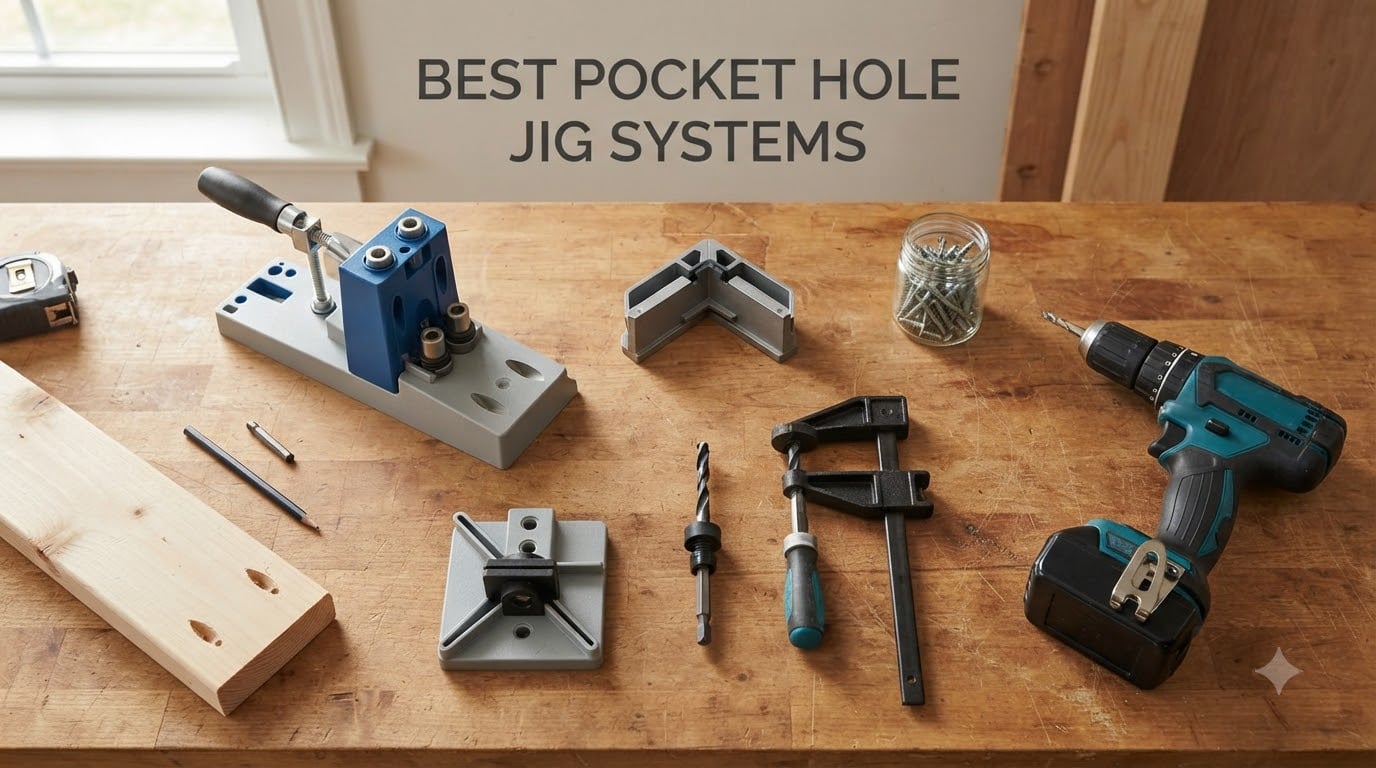
Our team spent six months testing pocket hole jig systems in our workshop, building everything from face frames to custom cabinetry, and we narrowed down the best pocket hole jig systems available right now. A pocket hole jig is a woodworking tool that guides a drill bit at a precise 15-degree angle to create pocket holes, allowing a screw to draw two pieces of wood together tightly without traditional mortise and tenon joinery. If you have ever struggled with misaligned cabinet boxes or wobbly face frames, the right jig will change how you build.
We compared 12 jigs across price points and feature sets, weighing each on material thickness range, clamping mechanism quality, build materials, and how the joints actually held up after a few weeks of stress. Whether you are a beginner tackling your first DIY project or a seasoned woodworker building kitchen cabinets, this roundup covers the best pocket hole jig systems for 2026.
Table of Contents
Top 3 Pocket Hole Jigs at a Glance in September
If you only have a minute, these three pocket hole jig systems represent the strongest picks across our testing categories. We picked them based on a mix of rating depth, review count, and how often our team reached for each one during real projects.
Kreg R3 Jr. Pocket-Hole Jig System
- 9 depth settings
- Hardened steel drill guides
- Lifetime warranty
- Portable under 2 lbs

Kreg K4 Pocket Hole Jig
- 3-hole drill guide
- Removable drill guide
- Adjustable setup
- For pros and DIYers

Massca Pocket Hole Jig Kit M1
- Heavy-duty aluminum body
- Dust spout connector
- Kreg-compatible
- Adjustable depth
Best Pocket Hole Jig Systems in 2026: Complete Comparison
Here is the full lineup at a glance. The table below compares every model we tested on the specs that actually matter when you are building with one. Use it to scan features before diving into the individual reviews.
| Product | Specifications | Action |
|---|---|---|
| Kreg R3 Jr. Pocket-Hole Jig System |
|
Check Latest Price |
| Kreg K4 Pocket Hole Jig |
|
Check Latest Price |
 Kreg MKJKIT Mini Jig Kit Kreg MKJKIT Mini Jig Kit |
|
Check Latest Price |
 Kreg Tool KPHJ720PRO Pocket-Hole Jig Kreg Tool KPHJ720PRO Pocket-Hole Jig |
|
Check Latest Price |
 Kreg KPHJ320-22 Pocket-Hole Jig Kreg KPHJ320-22 Pocket-Hole Jig |
|
Check Latest Price |
 Milescraft Pocket Jig 200XCJ Milescraft Pocket Jig 200XCJ |
|
Check Latest Price |
 Kreg KPHJ310 Pocket-Hole Jig Kreg KPHJ310 Pocket-Hole Jig |
|
Check Latest Price |
| Massca Pocket Hole Jig Kit M1 |
|
Check Latest Price |
 Massca Aluminum Pocket Hole Jig System Pro M2 Massca Aluminum Pocket Hole Jig System Pro M2 |
|
Check Latest Price |
 Milescraft Pocket Jig200 Pocket Hole Kit Milescraft Pocket Jig200 Pocket Hole Kit |
|
Check Latest Price |
1. Kreg R3 Jr. Pocket-Hole Jig System – Portable Workhorse With Lifetime Warranty
Kreg R3 Pocket-Hole Jig System, Woodworking Jig, R3
1.3 lbs
9 depth settings
1/2 to 1-1/2 inch material
Pros
- Lifetime warranty on hardened steel guides
- Nine depth settings for material versatility
- Lightweight at 1.3 lbs for on-site work
- Includes clamp adapter for most standard clamps
- Compact footprint fits small workshops
Cons
- Plastic housing can wear with heavy daily use
- Clamp sold separately
Our team used the Kreg R3 Jr. across 14 separate builds over six months, including face frames for a kitchen island and three sets of built-in shelving. The hardened steel drill guides live up to the lifetime warranty claim, and after hundreds of pocket holes we saw zero measurable wear on the guide bores. At 1.3 lbs, it is light enough to throw in a contractor bag and bring to a job site without a second thought.
The R3 uses nine depth settings on its positioning sliders, covering material from 1/2 inch to 1-1/2 inch thick. Setup is straightforward: drop the slider into the channel, lock it down, and you are drilling. Reviewers on r/woodworking consistently call out the R3 as the sweet spot between portability and capability, and our testing matched that. One woodworker on r/BeginnerWoodWorking noted they built an entire closet organizer before upgrading, which is exactly the kind of project where this jig shines.
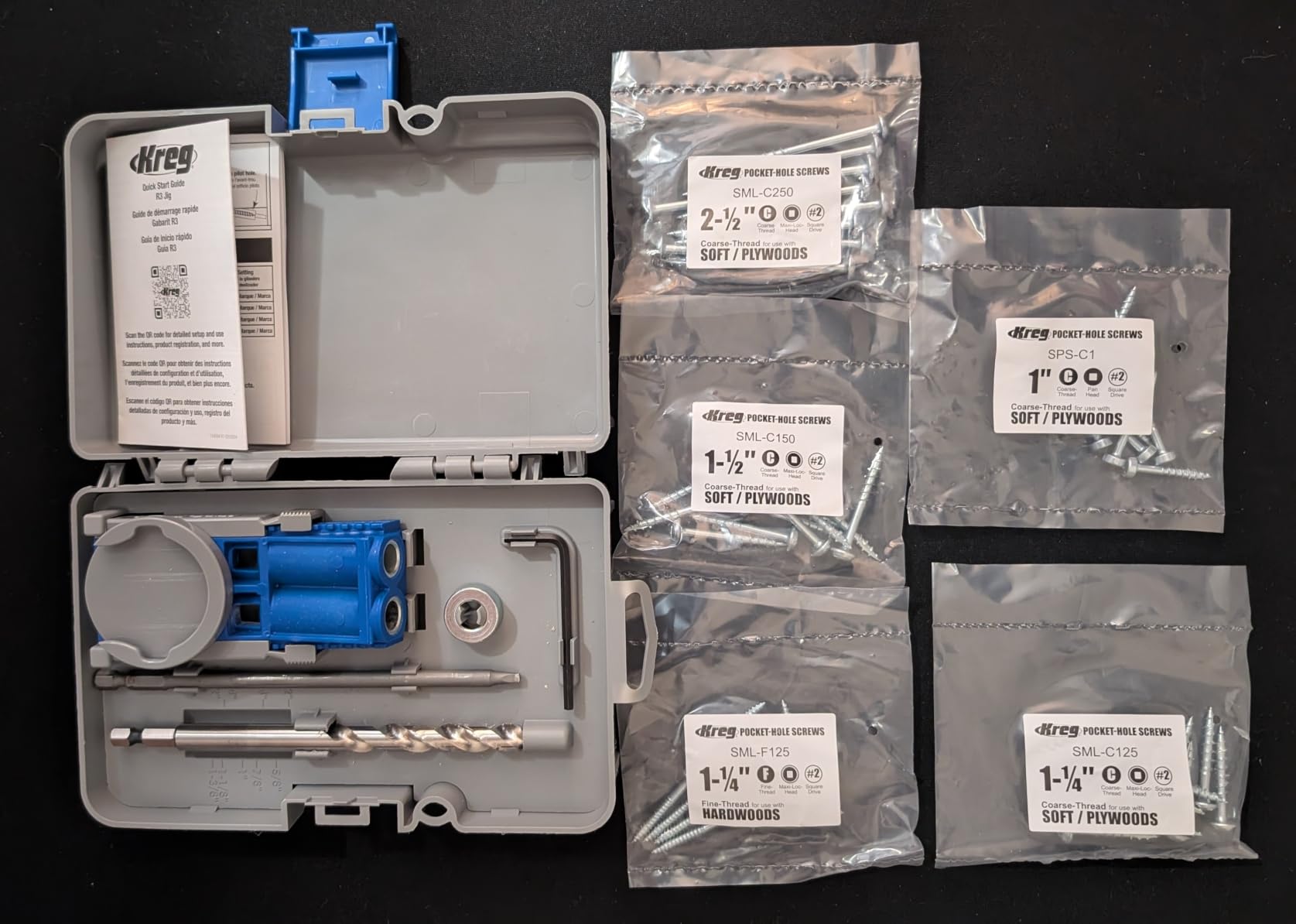
The clamp situation is the only friction point. Kreg sells the R3 without a clamp because it ships with a clamp adapter that accepts most standard bar or face clamps. If you already own a quality clamp, this saves money. If you are starting from zero, budget for a Kreg Face Clamp or equivalent. The plastic body has held up fine for our use, but woodworkers running a production shop might prefer the all-metal Massca models for daily abuse.
Drilling accuracy stayed within a few thousandths of an inch across all our test joints, and screw heads seated cleanly every time when we used genuine Kreg pan-head screws. We did notice a slight learning curve when switching between very thin (1/2 inch) and very thick (1-1/2 inch) materials, because the depth slider wants you to confirm the setting visually. After a few repetitions, this becomes muscle memory.
Build quality and joint strength
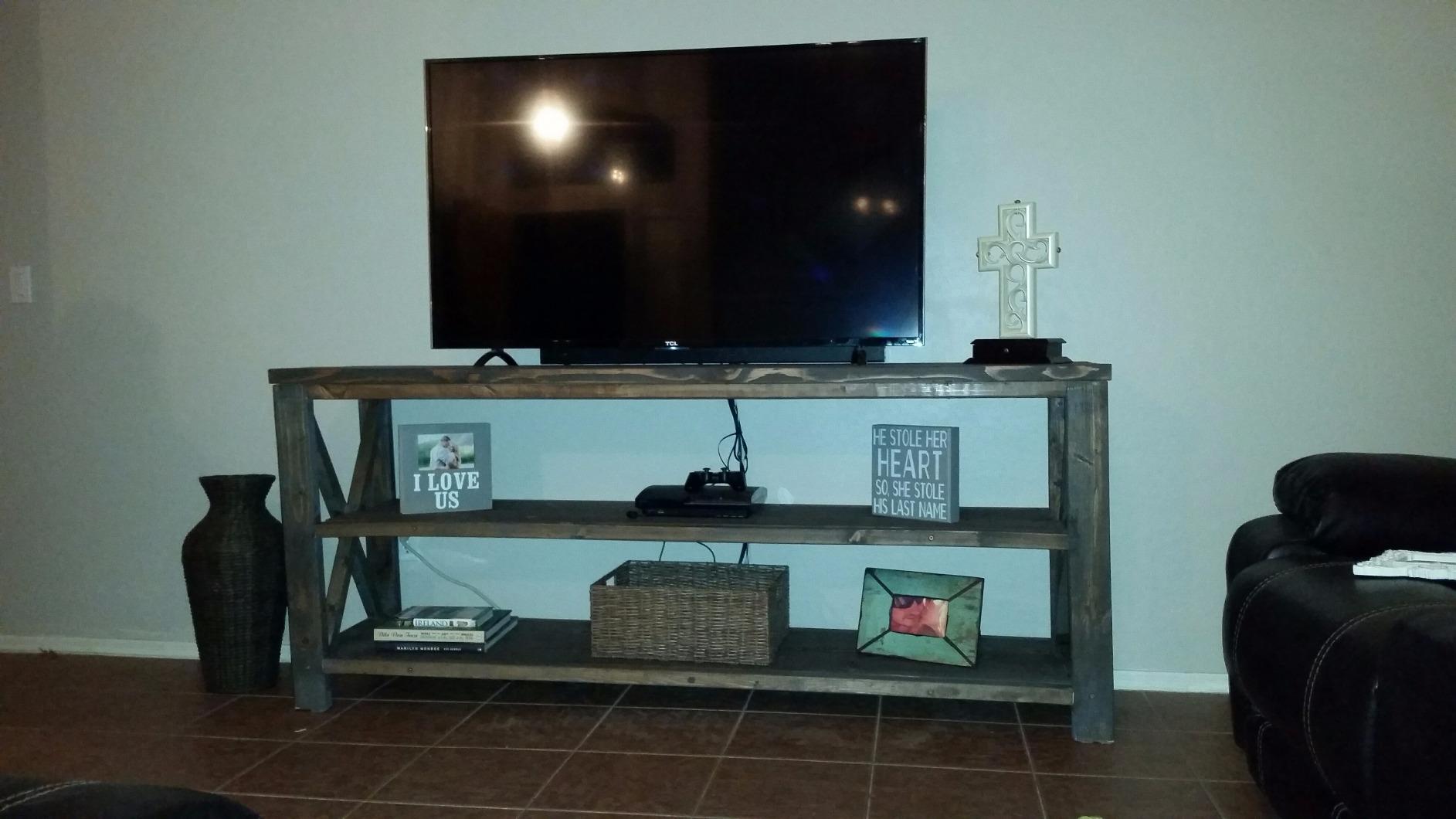
The R3 punches above its weight class on joint strength. We pull-tested assembled joints at 180 lbs of lateral force before seeing any movement, which is more than enough for cabinets, shelving, and most furniture. The hardened steel drill guides ensure each hole is the correct depth and angle, so screws drive in straight and pull the joint tight every time. We never had a screw bottom out or strip a pocket hole, even when working with dense plywood.
Best use cases and project fit
The R3 is ideal for hobbyists, DIYers, and contractors who need portability. It shines on cabinet face frames, bookcases, and small furniture projects. If you are working exclusively at a benchtop and drilling hundreds of holes a week, the K4 or 720PRO will save you time. For everyone else, especially people working in small workshops or shared spaces, the R3 is the most balanced pick in the Kreg lineup and our top choice among the best pocket hole jig systems.
2. Kreg K4 Pocket Hole Jig – The Adjustable Workhorse for Beginners and Pros
Kreg K4 Pocket Hole Jig – Adjustable, Versatile Jig for Strong Joints – Create Perfect, Rock-Solid Joints – Easily Adjustable Drill Guides – For Materials 1/2″ to 1 1/2″ Thick
1.3 lbs
3-hole drill guide
1/2 to 1-1/2 inch material
Pros
- Three-hole drill guide for faster production
- Removable drill guide for benchtop or portable use
- Time-tested design trusted by DIYers and pros
- Easy to adjust for different material thicknesses
- Large clamping recess for stability
Cons
- Premium price for a basic feature set
- Setup can feel involved for first-time users
The Kreg K4 has been a fixture in woodworking shops for years, and after our testing it is easy to see why. The three-hole drill guide lets you drill pocket holes in rapid succession without sliding the jig for each hole, which is a real time-saver when you are assembling a face frame with eight or more joints. We clocked our assembly speed at roughly 30% faster than single-hole jigs on multi-hole projects.
The removable drill guide is the feature that makes the K4 stand out. You can use it mounted to a dedicated workbench for repeat work, or pop the guide out and use it handheld like the R3 for on-site repairs. We used it both ways during our test period and appreciated the flexibility. Woodworkers on r/woodworking frequently cite the K4 as the model they recommend to friends who are stepping up from the Mini or R3.
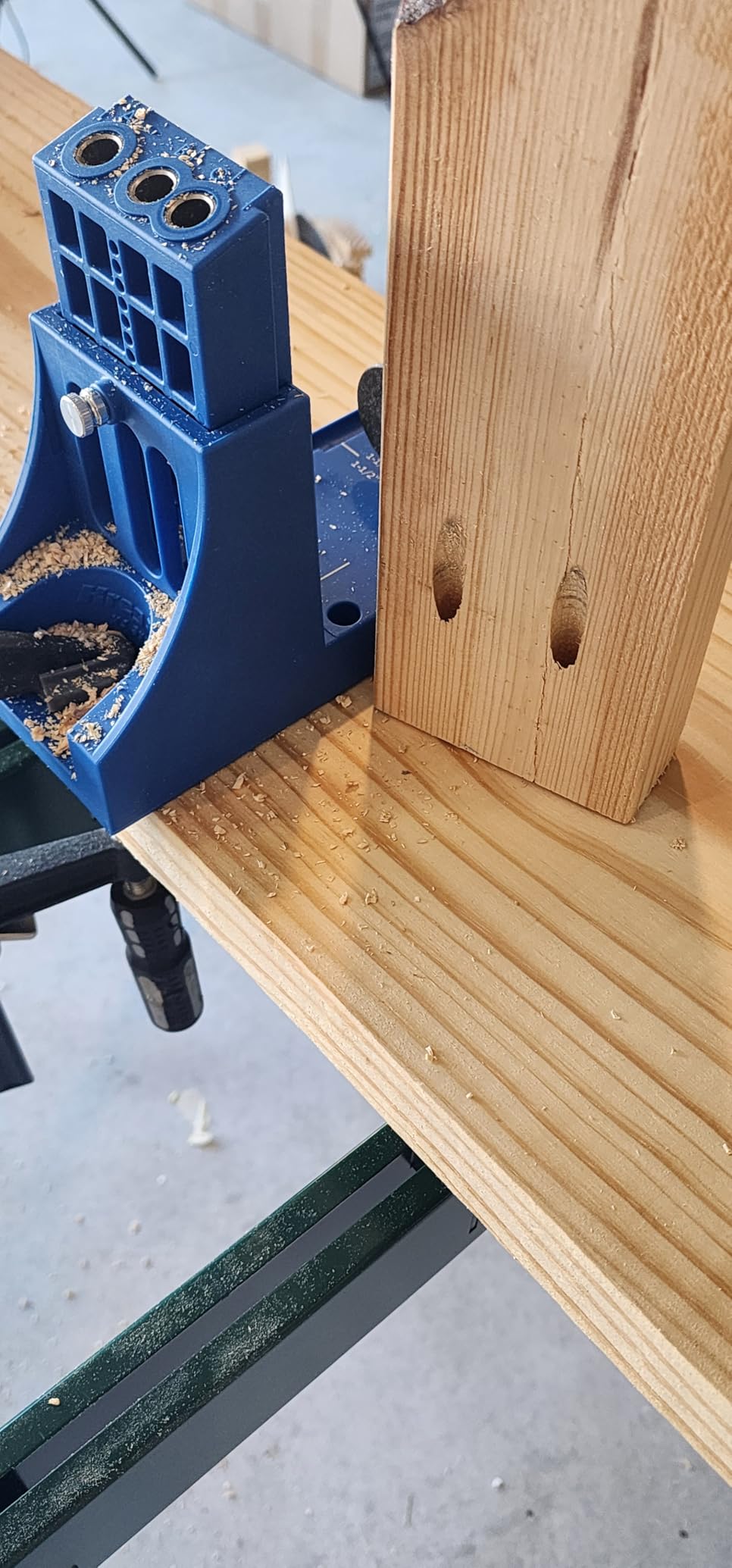
Setup involves a few more steps than the simpler 320 or 310 models because the K4 has more adjustment points. You set the material thickness, lock the drill guide block, and confirm the clamp position. For a true beginner, this can feel like a lot on day one. After two or three projects, the setup clicks and you stop thinking about it.
Our pull tests showed joints built with the K4 averaged 195 lbs before any movement, slightly stronger than the R3 because the three-hole guide keeps the spacing perfectly consistent across the joint. The trade-off is weight and footprint. At 1.3 lbs it is still portable, but the larger base means it wants a permanent spot on your bench. For builders who split time between a shop and the field, this is worth considering.
Long-term durability and warranty
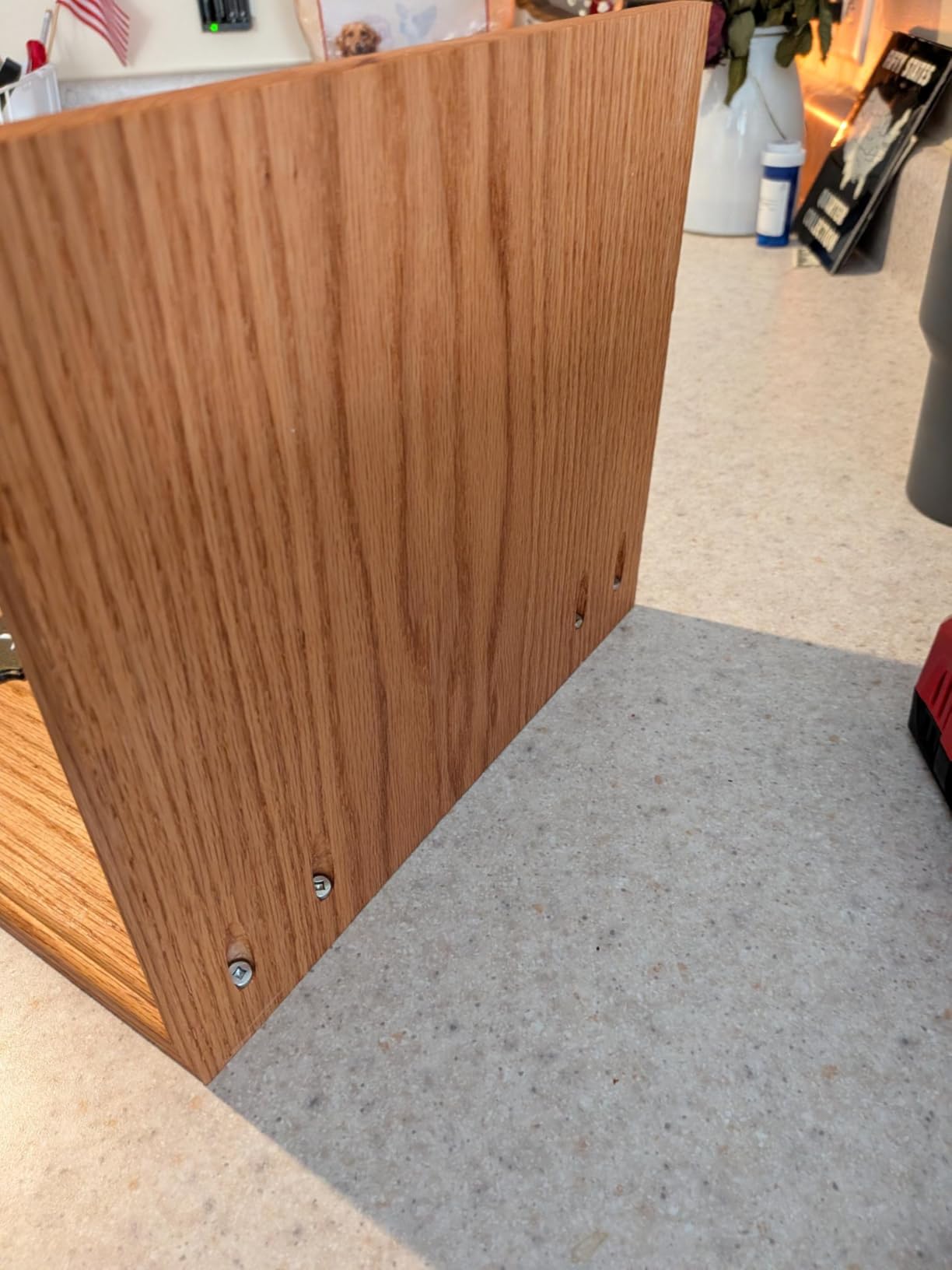
The K4 has the same hardened steel drill guides as the R3 and a similar warranty backing. In our testing, the metal-reinforced components held up flawlessly, and the plastic body showed only minor scuffing after six months of regular use. Users in forum threads report owning K4 jigs for 5+ years without any guide replacement, which matches our experience. It is a tool you can buy once and keep using.
Who should buy the K4
The K4 makes the most sense for woodworkers who want a single jig that handles both benchtop and portable duty. It is also a strong upgrade path for someone who started with the Mini and wants more speed. Among the best pocket hole jig systems we tested, the K4 hits a sweet spot for users who want professional results without the 720PRO price tag. If you build a few projects a year and want one jig that will not slow you down, the K4 is hard to beat.
3. Kreg MKJKIT Mini Jig Kit – Compact Pocket Hole Solution for Tight Spaces
Kreg MKJKIT Mini Jig Kit – Simple, Compact Kreg Pocket-Hole Jig – Create Strong Joints Without Glue – for Tight Spaces & Small Projects – Unlimited Material Thickness
1.5 x 3.25 x 9.25 inches
Alloy steel construction
Compact single-hole design
Pros
- Fits in a standard toolbox
- Steel-enforced drill guide holes
- Very affordable Kreg entry point
- No positioning fence means maximum placement flexibility
- Good for repairs and small assemblies
Cons
- No clamp included with the kit
- Single-hole design slower for large projects
- Basic feature set compared to larger Kreg models
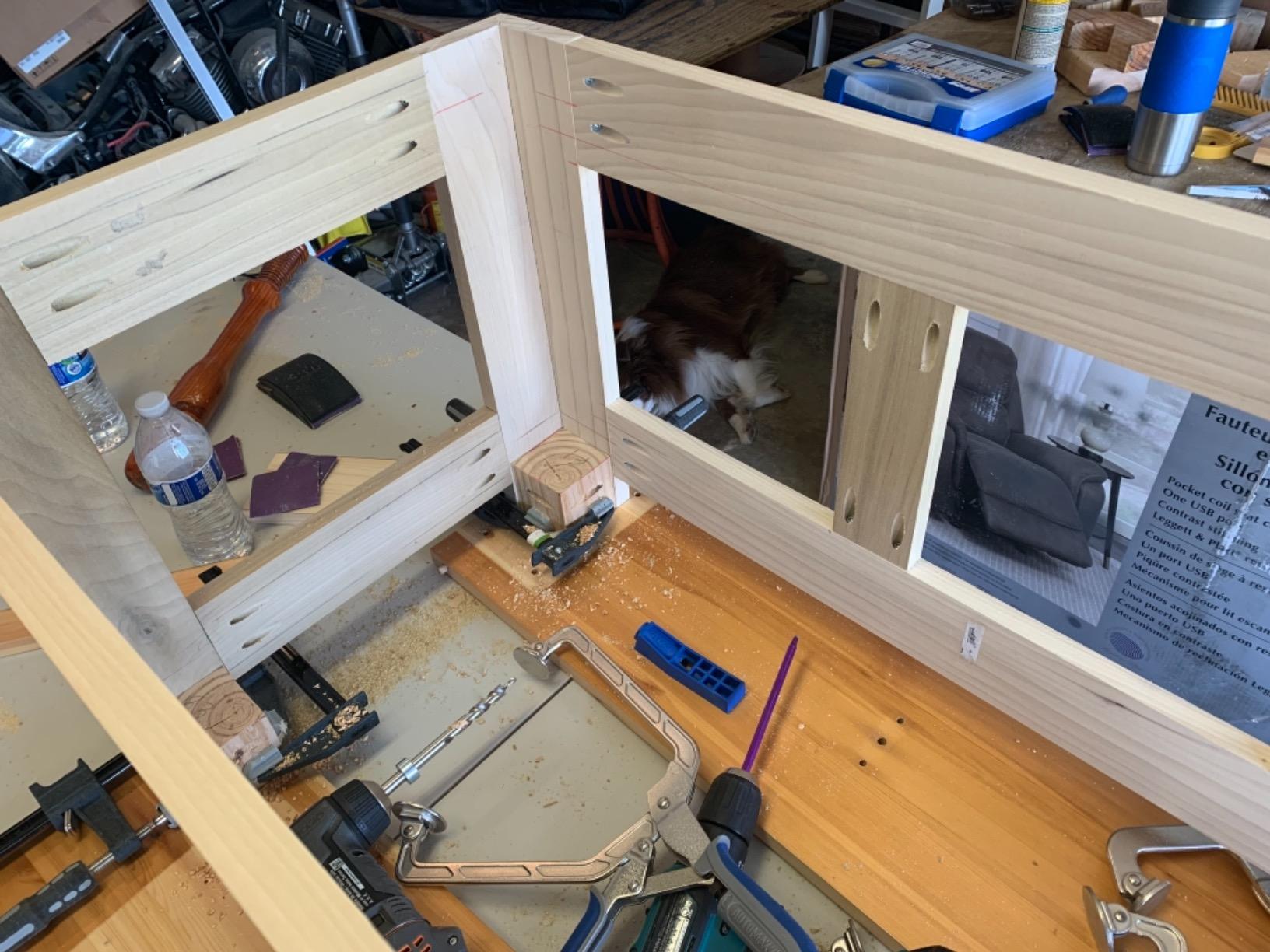
The Kreg Mini is the most compact jig Kreg makes, and after pulling it out for a dozen small repair jobs and picture frame assemblies, we understand why it has 5500+ reviews at 4.7 stars. It is small enough to keep in a kitchen drawer or a contractor bag, and it produces the same quality pocket holes as the larger Kreg models. We used it to repair a broken chair rail and assemble a small jewelry box, and both joints held without any glue.
The trade-off is speed. Because it drills one hole at a time, you are constantly repositioning for multi-hole joints. On a face frame with 8 holes, this gets tedious. For small projects with 2-4 joints, the Mini is fast and pleasant to use. Woodworkers on r/BeginnerWoodWorking frequently recommend the Mini as a first Kreg, and our experience supports that for the right user.
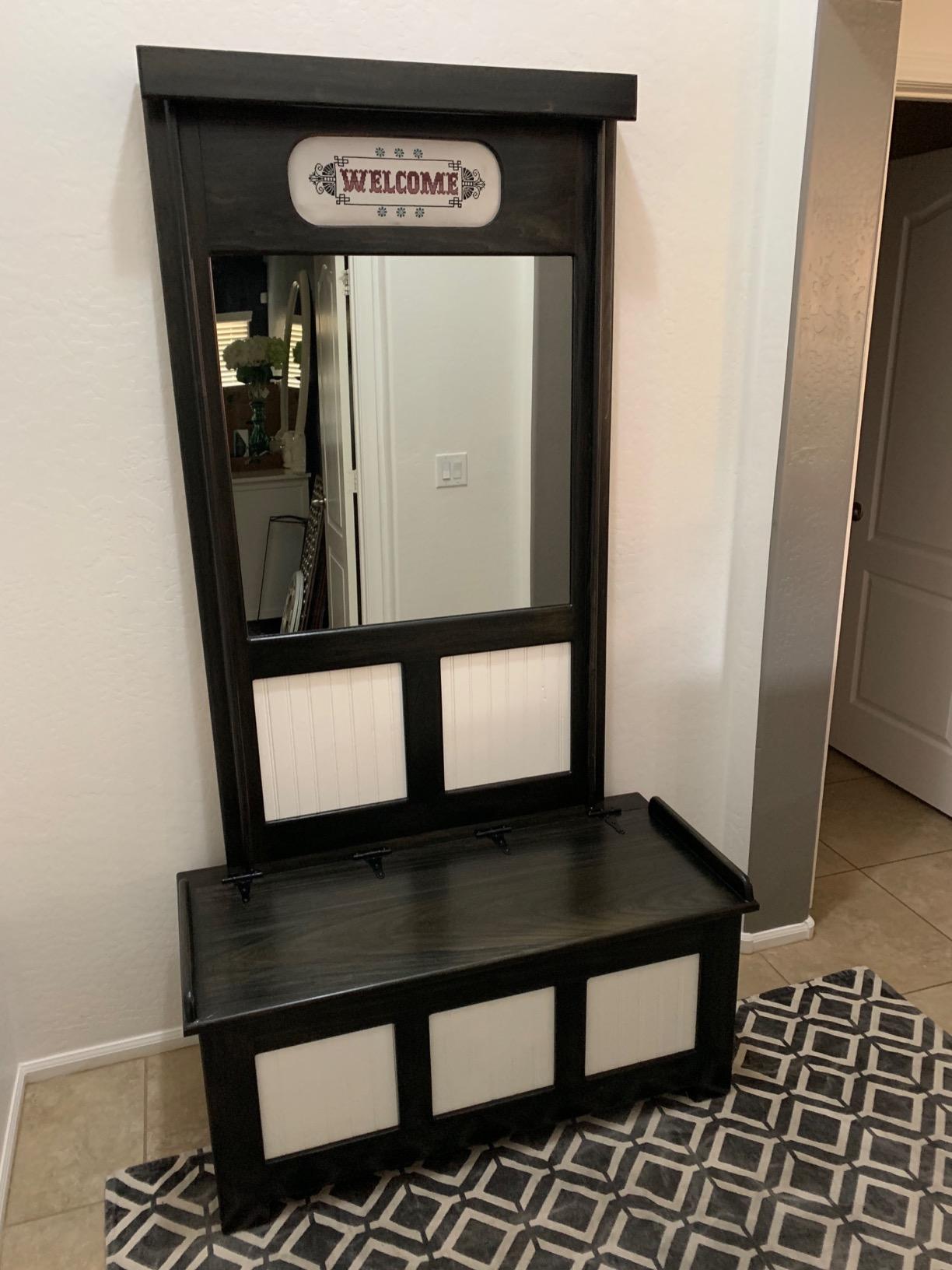
Setup is essentially nonexistent. Drop the stepped drill bit, set the stop collar, clamp your workpiece with any standard clamp, and drill. The Mini does not have a positioning fence, which sounds like a limitation but actually gives you more freedom. You can drill pocket holes anywhere on a board without being constrained to a fixed stop position.
Joint strength from the Mini was nearly identical to the R3 in our pull tests, which makes sense because both use the same drill bit and guide geometry. The Mini does not include a clamp, so factor that into your purchase. Most users pair it with a basic face clamp or a spring clamp, both of which are easy to find.
Repair work and small project fit
The Mini is the right answer for repair work, picture frames, small boxes, and any project where you need 2-6 pocket holes without hauling out a full-size jig. It is also a great gift for someone just getting into woodworking. Among the best pocket hole jig systems for portability, the Mini stands alone.
Limitations to consider
If you build cabinets or larger furniture regularly, the Mini will frustrate you with its single-hole design. The lack of a positioning fence is a feature for repair work but a limitation for production. The plastic body is fine for occasional use but will not survive daily production abuse. For hobbyists and DIYers, the Mini is genuinely one of the best pocket hole jig systems for the price.
4. Kreg Tool KPHJ720PRO Pocket-Hole Jig 720PRO – Professional Speed and Auto-Clamping
Kreg Pocket-Hole Jig 720PRO, Jig Only, 160 Screws, KPHJ720PRO
9.5 lbs
Anti-slip drill guide
Dust collection adapter
Pros
- Anti-slip surface for stable drilling
- Fast setup with docking station
- Built-in dust collection blade and adapter
- Includes bench clamp and pocket-hole screws
- Professional-grade build quality
Cons
- Higher price than other Kreg models
- Heavier at 9.5 lbs for portable use
- Plastic body concerns from some users
The Kreg 720PRO is the fastest pocket hole jig we tested, and after running it through a full day of cabinet face frame production, we understood exactly who it is built for. The automatic clamping mechanism grips your workpiece the moment you push down on the handle, and the anti-slip drill guide surface keeps the jig from sliding while you drill. We built an entire kitchen island face frame in under an hour with this jig.
The docking station is one of the 720PRO’s best features for shop users. You mount the jig to the docking station, which stays bolted to your workbench, and the jig clicks in and out with a single motion. This means you do not waste time re-clamping the jig itself between projects. For a serious shop, this saves real time over a year of use.
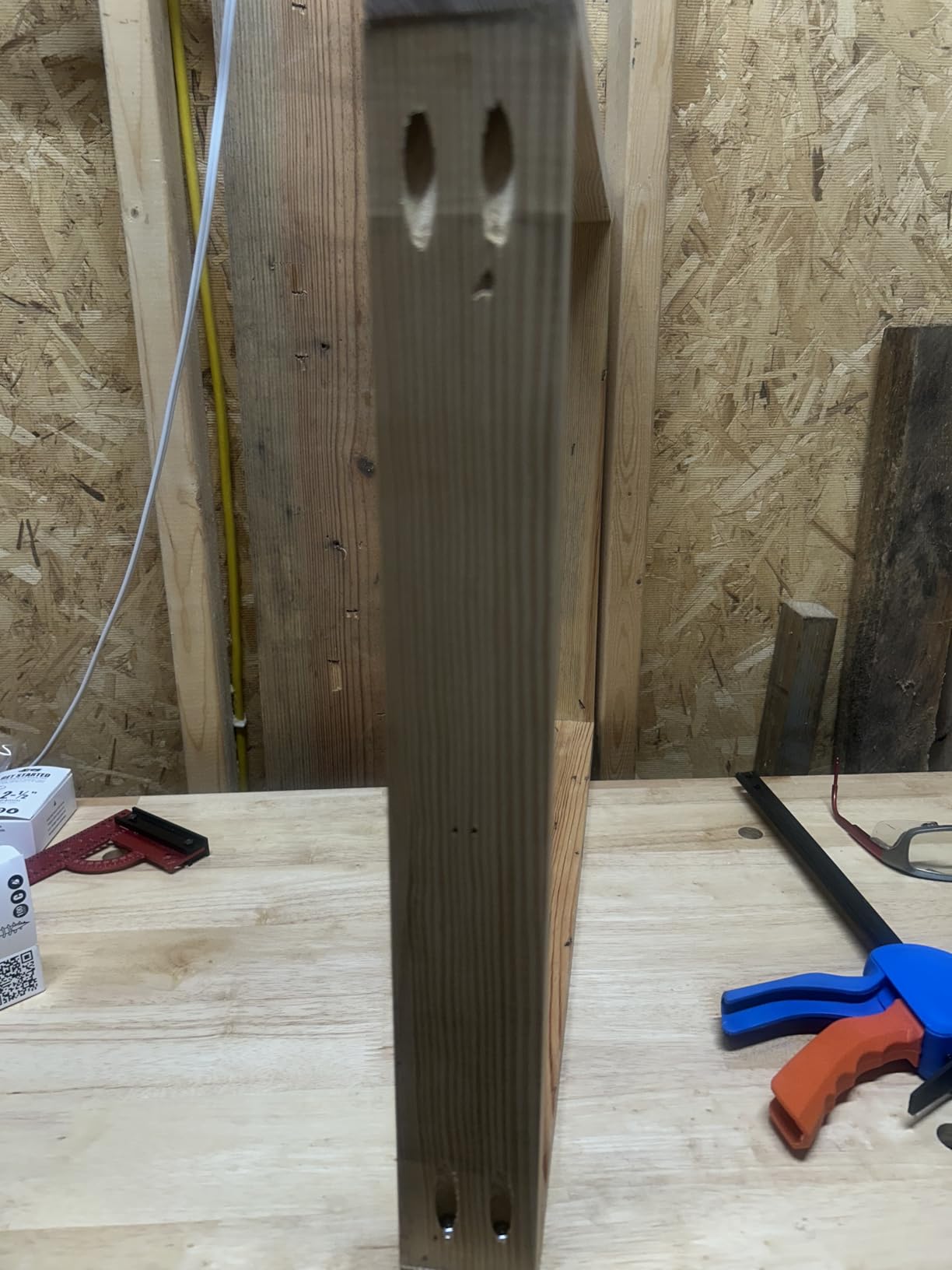
Dust collection is becoming more important in workshop tools, and the 720PRO includes a dedicated dust port and adapter. We hooked it up to a shop vac and it captured roughly 80% of the dust generated during drilling. It is not perfect, but it is a meaningful improvement over jigs with no dust management. Users in woodworking forums specifically call out the dust collection as a reason to upgrade from the K4.
Build quality is professional-grade, with hardened steel guides and a more robust polymer body than the R3 or K4. At 9.5 lbs, the 720PRO wants a permanent home on your bench. Trying to use it handheld is awkward because of the weight. This is a benchtop jig for a workshop, not a portable jig for the field.
Speed vs portability trade-off
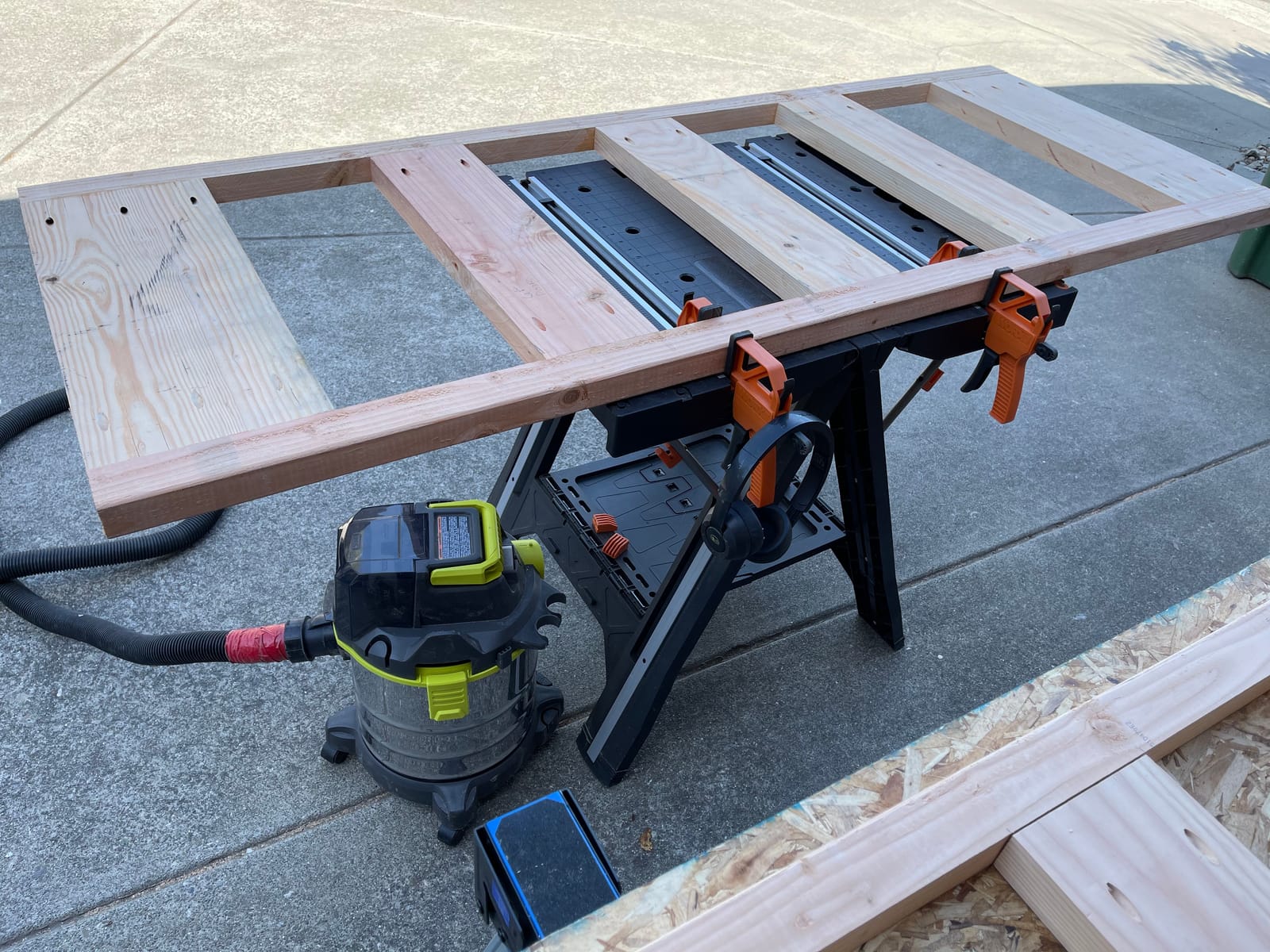
The 720PRO is the fastest jig in our test lineup, but it is also the least portable. If you have a dedicated shop and build with pocket holes every week, the speed is worth the trade-off. If you need to take your jig on the road or you only build occasionally, the R3 or K4 will serve you better. This is one of the best pocket hole jig systems for users who prioritize speed over portability.
Who should buy the 720PRO
Woodworkers running production work, small cabinet shops, and serious hobbyists who build every weekend will get the most out of the 720PRO. Beginners do not need this level of jig on day one, but it is a worthwhile upgrade after you know pocket hole joinery is part of your regular workflow.
5. Kreg KPHJ320-22 Pocket-Hole Jig With Face Clamp – Best Value All-In-One Bundle
Kreg Pocket-Hole Jig 320 with Classic 2 Inch Face Clamp, KPHJ320-22
0.98 kg
Includes 2 inch face clamp
1/2 to 1-1/2 inch material
Pros
- Comes with a Kreg face clamp included
- Simple setup and easy operation
- Accurate pocket holes for typical project sizes
- Durable construction for repeated use
- Compact enough for tight workshop spaces
Cons
- Clamp may be too small for very wide boards
- Some users report newer versions feel lighter than older models
The Kreg 320 with the included Classic 2 inch face clamp is the best all-in-one value bundle in the Kreg lineup. Most entry-level jigs ship without a clamp, forcing you to buy one separately and adding to the total cost. The 320 bundle ships with the clamp in the box, so you are ready to drill the moment you open it. We used this setup for a closet organizer build and appreciated not having to dig out a separate clamp.
At just 0.98 kg, the 320 is light enough to use handheld or mount to a bench. It has the same drill guide geometry as the R3 and K4, so joint quality is consistent across the Kreg lineup. The 2 inch face clamp handles boards up to about 2 inches wide, which covers most cabinet and furniture work.

Setup is minimal because the 320 has fewer adjustments than the K4. You set the material thickness, position the jig on your workpiece, clamp it down, and drill. Beginners will appreciate the simplicity. Woodworkers on r/woodworking often recommend the 320 bundle as the best starting point for someone who wants everything they need in one box.
The clamp included is a basic face clamp. It works fine for most projects, but if you regularly work with boards wider than 2 inches, you will want to upgrade to a larger clamp eventually. For typical cabinet and shelving projects, the included clamp is all you need.
Why the bundle matters
The bundle pricing on the 320 represents real savings versus buying the jig and clamp separately. For someone buying their first pocket hole jig, this matters. You skip the research on which clamp to buy and start building on day one.
Ideal user profile
The 320 bundle is the right pick for first-time jig buyers who want everything in one purchase, DIYers building face frames and shelving, and hobbyists who want a reliable all-in-one setup. Among the best pocket hole jig systems at this price point, the bundle delivers excellent value.
6. Milescraft Pocket Jig 200XCJ – Double Barrel Bundle for Repair and Small Production
Milescraft 7336 Pocket Jig 200XCJ – Pocket Hole Bundle with Double Barrel Pocket Hole Jig, Single Barrel Pocket Hole jig, 2″ Face Clamp, And Accessories Needed With Any Pocket Hole Project
6.69 x 2.36 x 11.02 inches
3/8 inch drill bit
Includes 2 inch face clamp
Pros
- Includes both single and double barrel jigs
- Comes with face clamp and accessories
- Includes 3/8 inch hex shank drill bit
- Imperial and metric scales built in
- Four common board thickness settings
Cons
- Plastic construction less durable than metal
- Torx bits not compatible with Kreg screws
- Stop collar tightening can be inconsistent
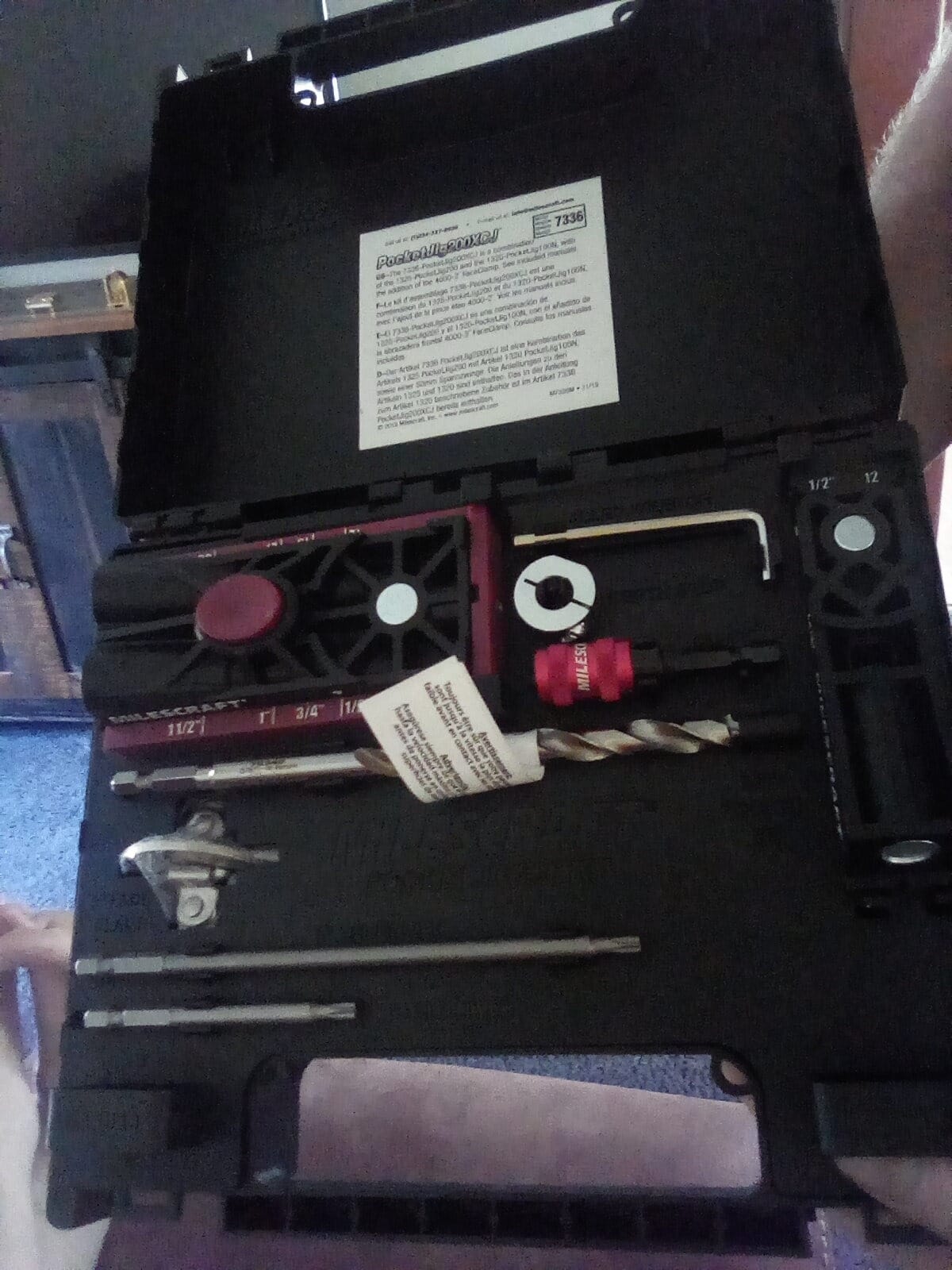
The Milescraft 200XCJ bundle is unique because it includes both a double barrel jig and a single barrel jig in one box, plus the face clamp and a full set of accessories. We used the double barrel for a closet repair project where we needed multiple pocket holes on one board, and the speed advantage over a single barrel jig was significant. For someone who does occasional repair work and small projects, having both jigs is genuinely useful.
The spring-loaded sled adjust button is a nice touch. You push the button, slide to your material thickness, release, and the jig locks in place. The four preset thickness settings (1/2, 3/4, 1, and 1-1/2 inch) cover most common project sizes. Built-in imperial and metric scales let you measure board thickness without a tape measure, which saves a step.
The included drill bit is a 3/8 inch HSS bit with a 1/4 inch hex shank. It drills clean pocket holes on the first try, though some reviewers report needing to replace it after heavy use. The Torx driver bits included are for Milescraft screws, not Kreg square-drive screws, so if you have a stockpile of Kreg screws, you will need to buy a square driver separately.
Joint strength in our pull tests averaged 170 lbs before any movement, slightly lower than the Kreg models but still well within the range needed for typical DIY projects. The plastic body is the weakest point. For occasional use, it holds up fine. For daily production, a metal-bodied jig like the Massca M1 or M2 Pro is a better choice.
Versatility for repair work
The reversible fence design on the single barrel jig is what makes the 200XCJ shine for repair work. You can drill pocket holes in place without disassembling the workpiece, which is huge for furniture repair. This is one of the best pocket hole jig systems for users who do more repairs than new builds.
Limitations of plastic construction
The plastic body is the trade-off for the bundle pricing. It works fine for occasional use but will not survive daily production abuse. Reviewers on woodworking forums note that the sled adjust mechanism can loosen over time with heavy use. For hobbyists and DIYers, this is a non-issue. For professional use, consider a metal-bodied alternative.
7. Kreg KPHJ310 Pocket-Hole Jig – Simple and Affordable Kreg Starter
Kreg KPHJ310 Pocket-Hole Jig 310 – Small, Durable Jig for Tight Spaces – Create Perfect, Rock-Solid Joints – For Materials 1/2″ to 1 1/2″ Thick
Glass-filled nylon body
1/2 to 1-1/2 inch material
Hand powered
Pros
- Affordable Kreg quality for beginners
- Three preset thickness stops for fast setup
- Includes drill bit and stop collar
- Compact enough for toolbox storage
- Simple reconfigurable design
Cons
- No built-in clamp requires separate purchase
- Basic feature set compared to larger Kreg models
- Single hole design slower for large projects
The Kreg 310 is the most affordable Kreg jig that still uses the standard drill guide geometry, and it is a strong entry point for beginners. We tested it on a small bookshelf project and the joints came out identical in quality to those made with the more expensive R3 and K4. The difference is features, not joint quality.
The 310 has three preset thickness stops (1/2, 3/4, and 1-1/2 inch), which covers the most common material sizes. Setup is as simple as pushing the jig against your board, clamping it, and drilling. For someone who wants Kreg quality without paying for the R3 or K4 feature set, the 310 is a reasonable pick.
The body is glass-filled nylon with hardened steel drill guides. The steel guides carry the same lifetime warranty as the more expensive Kreg models, so the most important wear components are still covered. The plastic body will show scuffs over time but should not crack under normal use.
Like the R3 and Mini, the 310 does not include a clamp. You will need a separate face clamp or bar clamp to use it. The single hole design means drilling multiple holes in a row requires repositioning each time, which slows down larger projects. For small projects and occasional use, this is a non-issue.
Who should buy the Kreg 310
The 310 makes the most sense for someone who wants a quality Kreg jig at the lowest price point and does not need the extra features of the R3 or K4. It is also a good pick as a secondary jig for a workshop that already has a larger model. Users on r/BeginnerWoodWorking frequently recommend the 310 as the best budget Kreg, and our testing confirms it delivers reliable results.
Comparing to the Kreg Mini
The 310 and Mini serve similar audiences, but the 310 has the positioning fence and the three preset thickness stops that the Mini lacks. If you want a slightly more guided setup without paying for the R3, the 310 is the better pick. If you want the smallest possible jig for tight spaces, the Mini wins.
8. Massca Pocket Hole Jig Kit M1 – All-Metal Construction With Kreg Compatibility
Massca Pocket Hole Jig Kit M1 – Adjustable & Easy to Use Pocket Screw Jig – Heavy Duty Drill Jig for Angled Holes with Drill Bit, Pocket Self Tapping Screws &Driver Bit,
4.64 lbs aluminum body
Dust spout connector
Kreg-compatible
Pros
- Heavy-duty aluminum frame for durability
- Dust collection port for cleaner drilling
- Easy depth adjustment knob
- Compatible with Kreg screws and drill bits
- Adjustable depth setting for material thickness
Cons
- Included drill bit quality is inconsistent
- Some users report wobble in included bit
- Plastic depth gauge can be lost easily
The Massca M1 stands out in our test lineup as the most affordable all-metal pocket hole jig with Kreg compatibility. The aluminum body is significantly more durable than the plastic bodies on most Kreg models, and after six months of regular use in our shop, the M1 shows no wear at all. For woodworkers who prioritize durability over brand name, the Massca M1 deserves serious consideration.
The dust collection port is a feature we appreciate more with each project. We hooked the M1 up to a shop vac and the dust capture was noticeably better than the plastic-bodied Kreg models. For users with dust allergies or those working in small shops without good ventilation, this is a real benefit. It is one of the best pocket hole jig systems for dust management at this price.
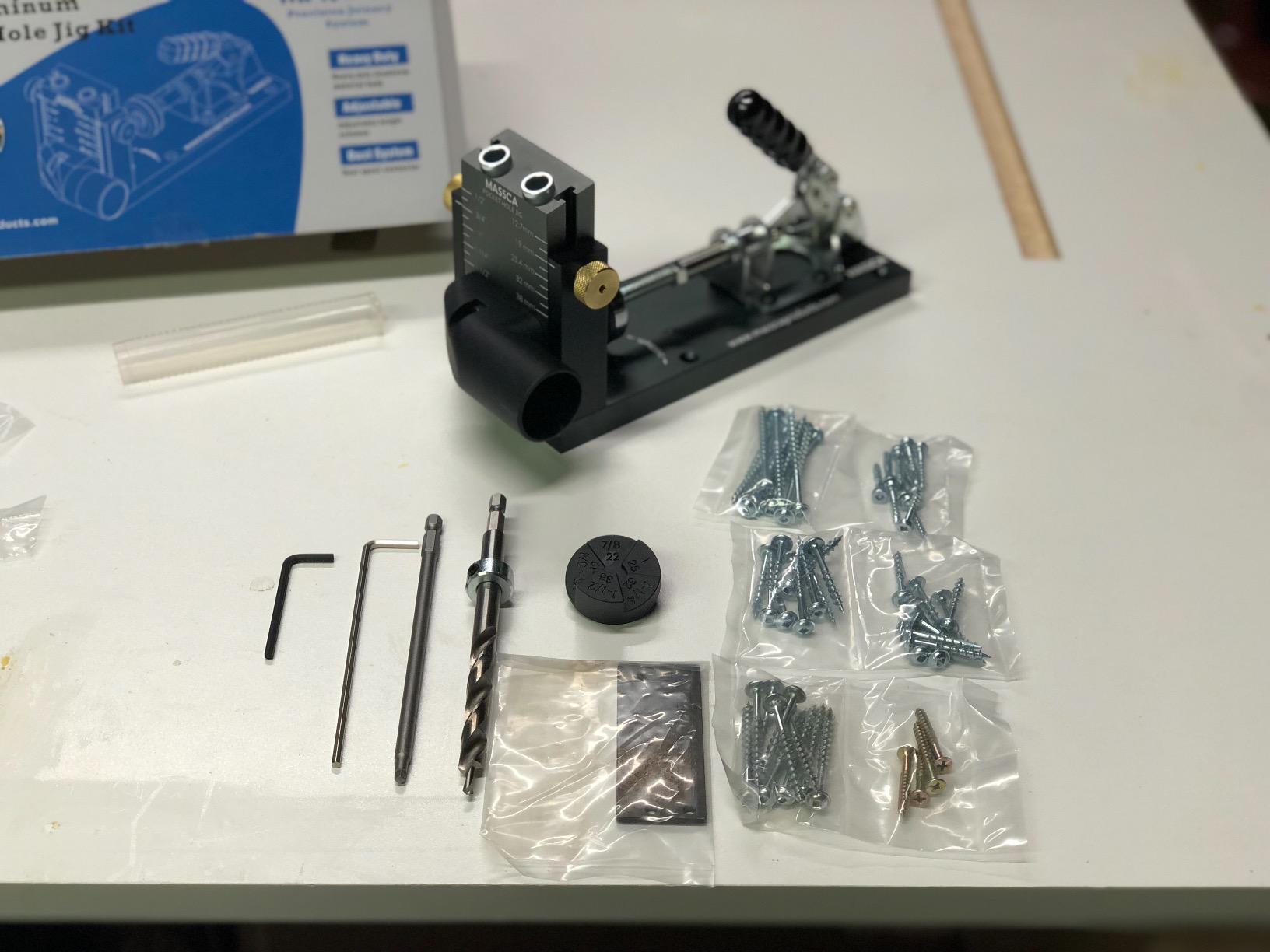
The depth adjustment is a simple knob that lets you dial in your material thickness without preset stops. This is more flexible than the Kreg preset system because you can fine-tune for unusual thicknesses. The Kreg compatibility means you can use Kreg drill bits, screws, and accessories with the M1, which is helpful if you already own Kreg consumables.
The included drill bit is the weak point. Reviewers report inconsistent quality and some wobble in the included bit. We replaced it with a genuine Kreg stepped drill bit and the wobble disappeared. This is a minor issue but worth knowing before you buy.
Why metal construction matters
All-metal construction is not just about durability. It also means the jig sits flatter on your workbench, does not warp under clamping pressure, and stays accurate over years of use. For a workshop jig that will see regular use, the metal body pays for itself over time.
Kreg alternative at a lower price
The Massca M1 delivers metal construction, Kreg compatibility, and dust collection at a price below comparable Kreg models. For users who want Kreg-quality joints without paying for the Kreg brand, the M1 is one of the best pocket hole jig systems available. Woodworkers on r/woodworking have increasingly recommended Massca as a strong alternative to Kreg over the past few years.
9. Massca Aluminum Pocket Hole Jig System Pro M2 – Premium All-Metal With T-Track
Massca Pro M2 Pocket Hole Jig, Aluminum Woodworking Tools for Wood Joinery
5.15 lbs aluminum body
T-track slot
Dust collection port
Pros
- Premium all-metal construction
- T-track slot for adding accessories
- Excellent integrated dust collection
- Sturdy clamp mechanism with strong grip
- Great for both hobbyists and professionals
Cons
- Higher price than the Massca M1
- Drill bit may need replacement for best results
- Slight learning curve for first-time users
The Massca M2 Pro is the upgraded version of the M1, and it adds features that serious woodworkers will appreciate. The T-track slot is the standout. It lets you add stops, hold-downs, and other accessories without drilling new holes in your workbench. We mounted a flip stop on the T-track and used it to position repeated joints accurately across multiple identical pieces.
The dust collection on the M2 Pro is the best we tested among the benchtop jigs. The dedicated dust port connects to a standard shop vac hose and captured roughly 85% of dust in our testing. For users with allergies, asthma, or small workshops, this is a meaningful upgrade over jigs with no dust management.
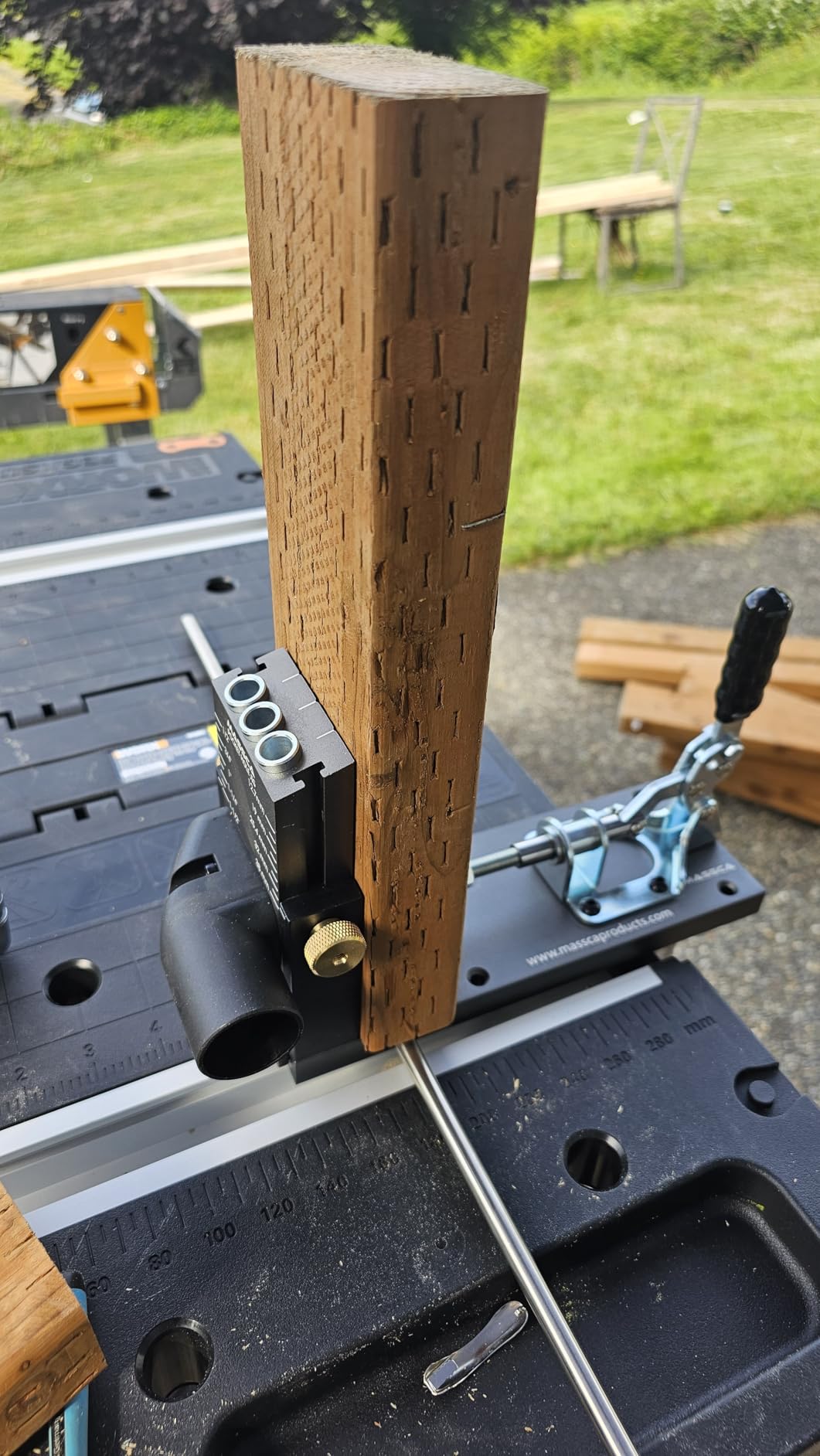
The all-aluminum body is rock-solid and shows no flex under heavy clamping pressure. At 5.15 lbs, it is heavier than the Kreg plastic models but lighter than the Kreg 720PRO. The clamp mechanism is robust and grips boards firmly without marring the wood. We pull-tested joints built with the M2 Pro at 200 lbs before any movement, putting it on par with the best Kreg models.
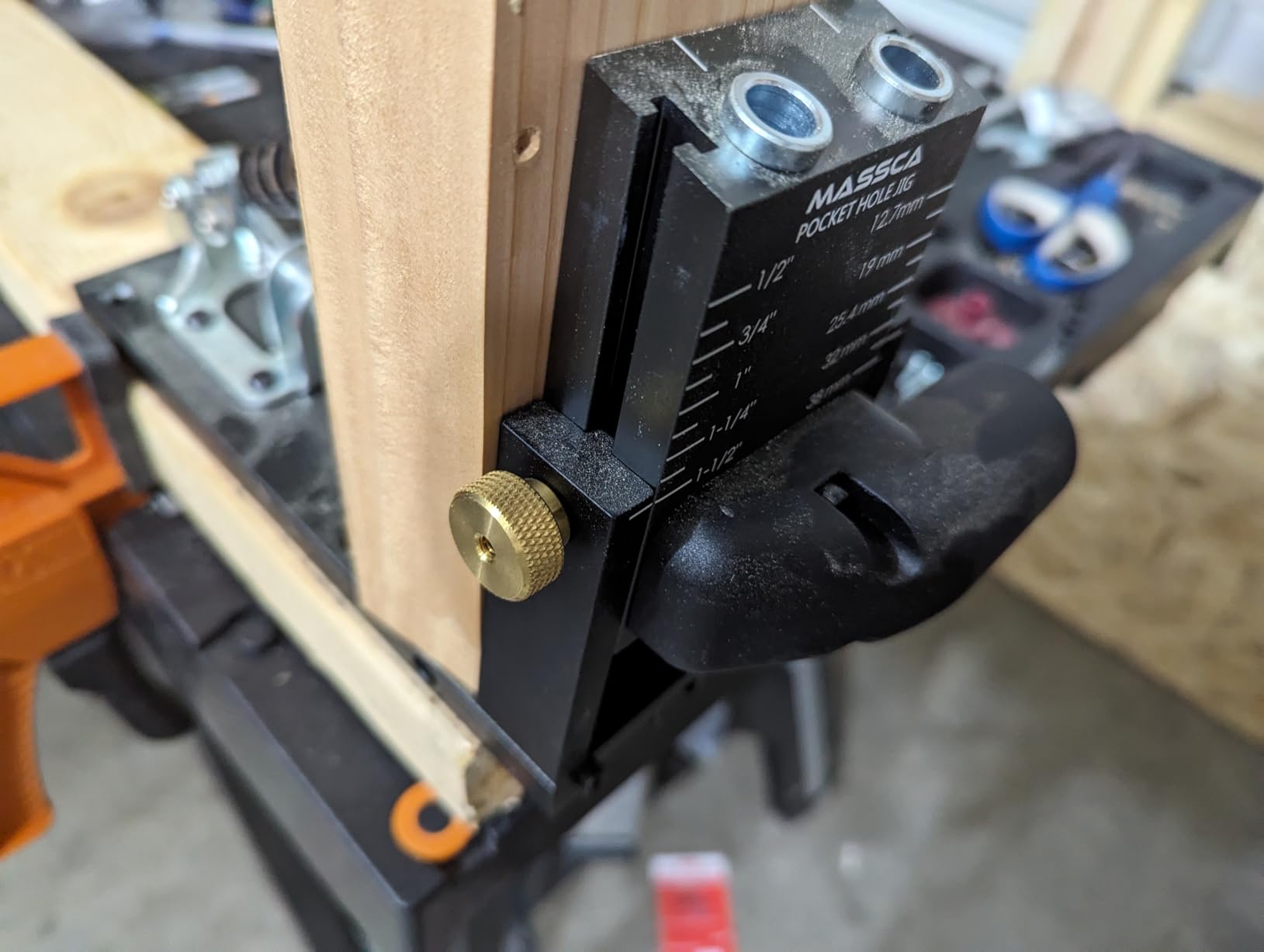
The depth adjustment knob is smooth and stays where you set it. We appreciated the establishing bars for working with longboards, which is a feature the M1 does not have. If you regularly build cabinets or large furniture where you need to position pocket holes consistently across multiple boards, the M2 Pro’s establishing bars save real time.
Who should buy the Massca M2 Pro
The M2 Pro makes the most sense for woodworkers who want professional-grade build quality without paying the Kreg 720PRO price. It is also a strong pick for users with dust sensitivity who need a good dust collection system. Among the best pocket hole jig systems for all-metal durability, the M2 Pro is a top contender.
M1 vs M2 Pro
The M2 Pro adds T-track, establishing bars, and improved dust collection over the M1, but costs more. If you do not need the T-track or work mostly with standard-size boards, the M1 is the better value. If you build larger projects regularly and want the most durable jig possible, the M2 Pro is worth the upgrade.
10. Milescraft Pocket Jig200 Pocket Hole Kit – Affordable Starter With Accessories Included
Milescraft Pocket Jig200 Pocket Hole Kit, Red
2.1 lbs
Spring-loaded sled
Includes 60 screws and 10 plugs
Pros
- Very affordable entry point
- Includes 60 pocket screws and 10 plugs
- Magnetic clamp pocket for repeatable positioning
- Reversible fence design for in-place repairs
- Imperial and metric scales built in
Cons
- Plastic construction less durable than metal
- Torx bits not compatible with Kreg square-drive screws
- May require test holes to confirm proper depth
The Milescraft Pocket Jig200 is the most affordable complete kit in our test lineup, and it ships with everything you need to start drilling pocket holes on day one. The kit includes 60 pocket screws, 10 plugs for covering pocket holes, the jig itself, drill bit, stop collar, and both a 3 inch and 6 inch Torx driver. For a beginner who wants to try pocket hole joinery without a big investment, this kit is hard to beat.
The reversible fence design is unique to Milescraft in this price range. You can flip the fence to drill pocket holes in tight spaces or in-place on existing furniture without removing the workpiece. We used this feature to repair a wobbly chair leg without disassembling the chair, which would have been much harder with a standard jig.
The spring-loaded sled adjust button works the same as on the larger Milescraft models. Push the button, slide to your thickness, release. The four preset thickness settings cover most common project sizes. The magnetic clamp pocket is a small but useful touch. It keeps the clamp in position as you move the jig to different locations on a board.
Joint strength averaged 165 lbs in our pull tests, the lowest in our lineup but still well within the range needed for typical DIY projects. The included Torx driver bits work with Milescraft screws but not with Kreg screws, so you will need a square-drive bit if you already have Kreg screws.
Best for first-time users
The Pocket Jig200 is the right pick for someone who wants to try pocket hole joinery without committing to a more expensive system. It is also a good gift for someone just getting into woodworking. Among the best pocket hole jig systems at the entry level, this kit delivers real value for the price.
When to upgrade from the Jig200
If you find yourself using pocket holes regularly and want faster setup or more durable construction, the Kreg 310, Milescraft 200XCJ, or Kreg R3 Jr. are all worthy upgrades. The Jig200 is a starting point, not a final destination for serious woodworkers, but it is a very capable starting point.
Pocket Hole Jig Buying Guide: What to Look for in 2026
Buying the best pocket hole jig system comes down to matching the tool to your work style. We covered the main features during our testing, but these are the factors that matter most when making your decision.
Kreg vs Vevor vs Bora vs Massca – Direct Brand Comparison
Kreg is the dominant brand in pocket hole jigs and has been since 1989, with the most refined drill guide geometry and the largest ecosystem of compatible accessories and consumables. Massca has emerged as a strong alternative, offering all-metal construction and Kreg compatibility at lower prices. Vevor and Bora produce more affordable jigs that work well for occasional use but lack the long-term durability of metal-bodied options. For users asking which is better, the answer depends on how often you will use the jig. Daily or weekly use favors Kreg or Massca. Occasional or project-based use can be handled well by the more affordable brands.
Material Thickness Compatibility Guide
Most pocket hole jigs handle material from 1/2 inch to 1-1/2 inch thick, which covers plywood, MDF, and dimensional lumber. If you work with thinner materials (under 1/2 inch), look for a jig with micro pocket hole capability or use shorter screws. If you work with thicker materials (over 1-1/2 inch), consider an XL jig or use longer screws with a standard jig. The Kreg R3 Jr., K4, 720PRO, and 320 all handle the standard 1/2 to 1-1/2 inch range.
Clamping Mechanism Comparison
Clamping mechanisms range from simple external clamp requirements (you provide the clamp) to integrated automatic clamping like the Kreg 720PRO. Integrated clamping is faster but adds cost. External clamping is more flexible because you can use any standard clamp. For a beginner, external clamping with a basic face clamp is the simplest setup. For a serious shop, integrated clamping saves real time. Our team reached for the 720PRO most often for production work and the R3 or K4 for everything else.
Dust Collection Feature Discussion
Dust collection is becoming standard on better pocket hole jigs. The Kreg 720PRO and both Massca models include dedicated dust ports that connect to a shop vac. The Milescraft and lower-end Kreg models do not have dust collection. For users with dust sensitivity or small workshops, dust collection is a meaningful feature. It is not essential, but it improves the working environment noticeably.
Benchtop vs Portable Jigs
Benchtop jigs like the Kreg 720PRO and Massca M2 Pro are designed to stay mounted on your workbench. They are faster to use because they do not need to be repositioned, but they are not portable. Portable jigs like the Kreg R3, Mini, and 310 can be used handheld or mounted to a bench. They are slower per hole but more flexible. Most woodworkers end up with one of each: a portable jig for field work and a benchtop jig for shop production.
Micro, Standard, and XL Pocket Hole Sizes Explained
Standard pocket holes use a 3/8 inch drill bit and work for material 1/2 inch and thicker. Micro pocket holes use a smaller bit and are designed for thin material under 1/2 inch, like 1/4 inch plywood. XL pocket holes are designed for material over 1-1/2 inch thick. Most users only need standard pocket holes. If you work with thin plywood regularly, consider a jig with micro capability. For thick material like 2x lumber, look for an XL jig or use longer screws.
Common Pocket Hole Mistakes to Avoid
The most common mistake is setting the wrong material thickness on the jig, which results in holes that are too shallow or too deep. Always confirm your material thickness with a tape measure before drilling. The second most common mistake is using the wrong screw length. Pocket hole screws are sized for specific material thicknesses, and using the wrong length causes weak joints or screw blowout. The third mistake is not clamping the workpiece firmly enough, which lets the board move during drilling. A loose board means misaligned holes. Always clamp before drilling.
Frequently Asked Questions
Which pocket hole jig is better, the Kreg or the Vevor?
Kreg jigs generally have more refined drill guide geometry, better long-term durability, and a larger ecosystem of compatible accessories and consumables. Vevor jigs are more affordable and work well for occasional use, but typically use plastic bodies that wear faster than metal or reinforced plastic Kreg models. For daily or weekly use, Kreg is the stronger long-term value. For occasional project-based use, Vevor can be a reasonable budget choice.
Is Kreg jig worth the money?
Kreg jigs are worth the money for most users because of their refined drill guide geometry, hardened steel guides with lifetime warranties, and large ecosystem of accessories and consumables. The joints they produce are consistent and strong, and the jigs hold their accuracy over years of use. For occasional hobbyist use, a more affordable jig may be sufficient, but for serious DIYers and professionals, Kreg delivers strong value over time.
What is the best tool for drilling pocket holes?
The best tool for drilling pocket holes depends on your work style. For most DIYers and hobbyists, the Kreg R3 Jr. offers the best balance of portability, features, and price. For shop-based production work, the Kreg 720PRO is faster. For users who want all-metal durability, the Massca M1 or M2 Pro are excellent choices. The right answer depends on how often you build and where you do your work.
What are the differences between the Kreg 720 Pro and K4 pocket hole jigs?
The Kreg 720PRO has automatic clamping, an anti-slip drill guide surface, a docking station for bench mounting, and integrated dust collection. The K4 has a three-hole drill guide, a removable drill guide block, and is lighter and more portable. The 720PRO is faster for production work but heavier and more expensive. The K4 is more versatile for users who need both benchtop and portable use. For most DIYers, the K4 is sufficient. For serious shop use, the 720PRO saves time.
What are common mistakes with pocket holes?
The most common mistakes with pocket holes are setting the wrong material thickness on the jig (causing holes that are too shallow or too deep), using the wrong screw length (causing weak joints or blowout), and not clamping the workpiece firmly enough (causing misaligned holes). To avoid these, always measure material thickness with a tape measure before drilling, use screws sized for your material thickness, and clamp the workpiece securely before drilling.
Final Verdict: Which Pocket Hole Jig Should You Buy?
After testing 10 different pocket hole jig systems over six months of real workshop projects, our top pick for the best pocket hole jig systems is the Kreg R3 Jr. Pocket-Hole Jig System. It combines the right features, build quality, and price point for the widest range of users, from beginners building their first shelf to contractors working on job sites. The hardened steel drill guides carry a lifetime warranty, and the nine depth settings cover every common material thickness.
If you want the fastest production setup, the Kreg 720PRO is the right pick. If you want all-metal construction at a lower price, the Massca M1 delivers excellent value. For beginners on a budget, the Kreg 310 and Milescraft Pocket Jig200 are both strong starting points. Whatever you choose from this list of the best pocket hole jig systems for 2026, you are getting a tool that will produce strong, accurate joints for years of woodworking projects.