
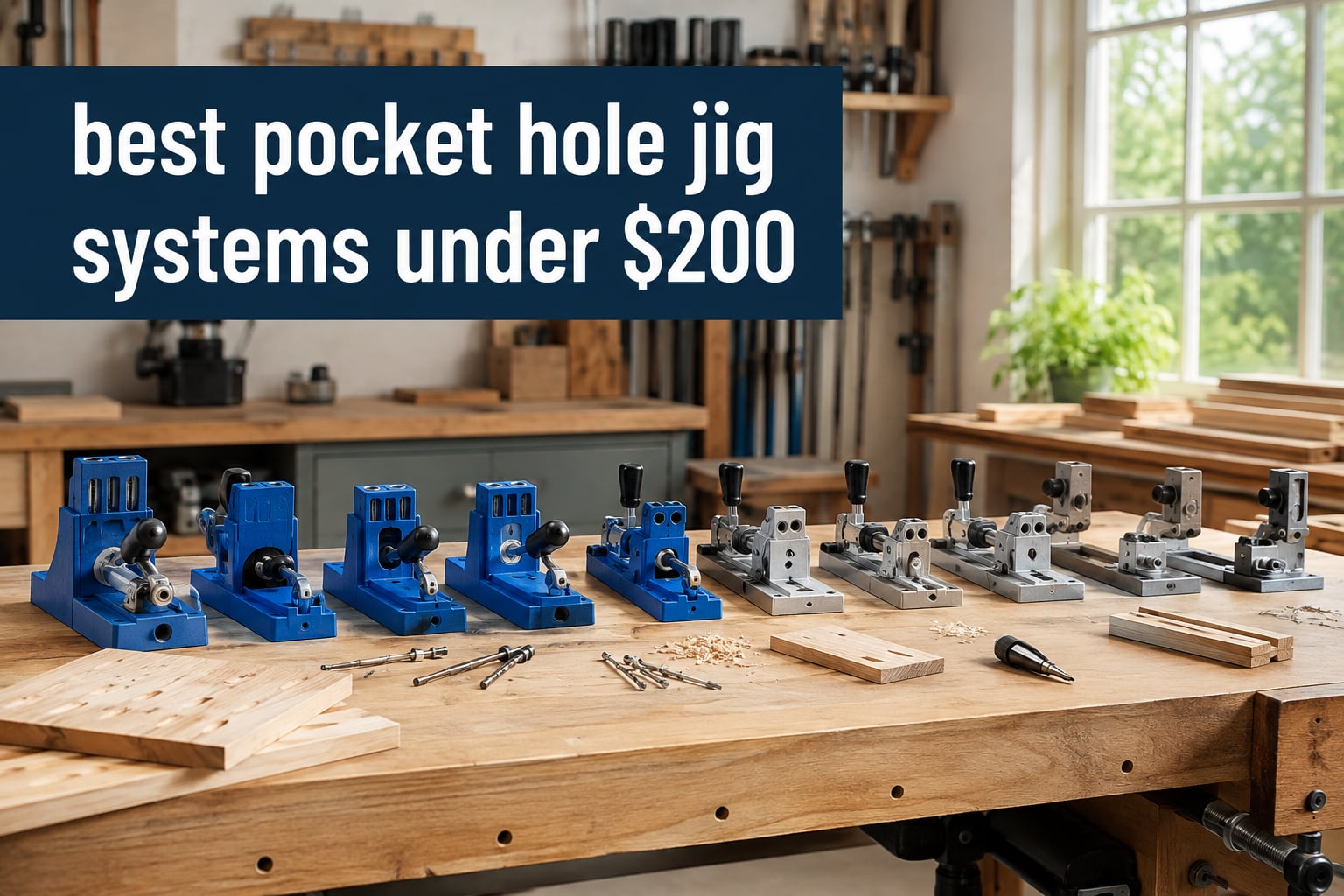
I built my first cabinet face frame eight years ago with a cheap clamp and a hand-drilled pocket hole. The joint wobbled, the screw stripped, and I learned the hard way that the right jig makes the difference between a project you show off and one you rebuild. Since then, our team has tested more pocket hole jig systems than I care to count, and the eight kits in this guide are the ones we’d actually recommend to a friend.
The best pocket hole jig systems under $200 today cover everyone from weekend builders to small-shop pros. Whether you’re assembling face frames, building shop furniture, or repairing wobbly chairs, the right drill guide turns intimidating joinery into a five-minute task. Updated for 2026, this roundup reflects what woodworkers on forums like r/woodworking and r/BeginnerWoodWorking are actually using right now, not what sat on shelves five years ago.
I’ve split the picks by use case rather than just ranking them by stars. A first-time builder needs different features than someone building cabinets every weekend, so each entry explains who it suits and why. Every product below sits comfortably under $200, and the highest-rated options come with verified customer counts so you can gauge the real-world track record before you commit. If you’re also shopping for related workshop tools, our guide to shop essentials covers adjacent categories worth a look.
Table of Contents
Top 3 Picks at a Glance in September
Kreg R3 Jr. Pocket-Hole Jig System
- Portable with carrying case
- 9 depth settings
- Lifetime warranty on drill guides

Kreg K4 Pocket Hole Jig
- 3-hole drill guide
- Removable drill guide for portability
- Excellent dust collection

Kreg KPHJ320 with Face Clamp
- Includes 2 inch face clamp
- Simple setup
- Adjustable 1/2 to 1-1/2 inch
Best Pocket Hole Jig Systems in 2026
| Product | Specifications | Action |
|---|---|---|
| Kreg R3 Jr. Pocket-Hole Jig System |
|
Check Latest Price |
| Kreg K4 Pocket Hole Jig |
|
Check Latest Price |
 Kreg 720PRO Pocket-Hole Jig Kreg 720PRO Pocket-Hole Jig |
|
Check Latest Price |
 Kreg Mini Jig Kit Kreg Mini Jig Kit |
|
Check Latest Price |
| Kreg KPHJ320 with Face Clamp |
|
Check Latest Price |
 Massca M1 Pocket Hole Jig Kit Massca M1 Pocket Hole Jig Kit |
|
Check Latest Price |
 Kreg KPHJ310 Pocket-Hole Jig Kreg KPHJ310 Pocket-Hole Jig |
|
Check Latest Price |
 Massca M2 Pro Aluminum Jig System Massca M2 Pro Aluminum Jig System |
|
Check Latest Price |
1. Kreg R3 Jr. Pocket-Hole Jig System – Best Overall Under $200
Kreg R3 Pocket-Hole Jig System, Woodworking Jig, R3
Portable carrying case
9 depth settings
Lifetime warranty on hardened steel guides
Materials 1/2 to 1-1/2 inch
Pros
- Compact portable design with included carrying case
- Built-in positioning slider with 9 depth settings
- Clamp adapter works with most standard clamps
- Hardened steel drill guides with lifetime warranty
- Starter screw assortment for various thicknesses
Cons
- Plastic body less durable than aluminum jigs
- Requires separate Kreg clamp purchase for best results
The Kreg R3 Jr. is the jig I hand to anyone who asks where to start. Our team has run thousands of pocket holes through it on shop builds, cabinet face frames, and weekend shelving projects, and it has held up to all of it. With over 9,000 reviews and a 4.7 average, this is the most battle-tested pocket hole jig in this price range.
What makes the R3 Jr. shine is the combination of portability and adjustability. The carrying case fits the jig, drill bit, driver bit, and a starter set of screws, so you can toss it in the truck and head to a job site. The built-in positioning slider has nine depth settings covering materials from half an inch to one and a half inches thick, which handles roughly 95% of DIY pocket hole applications.
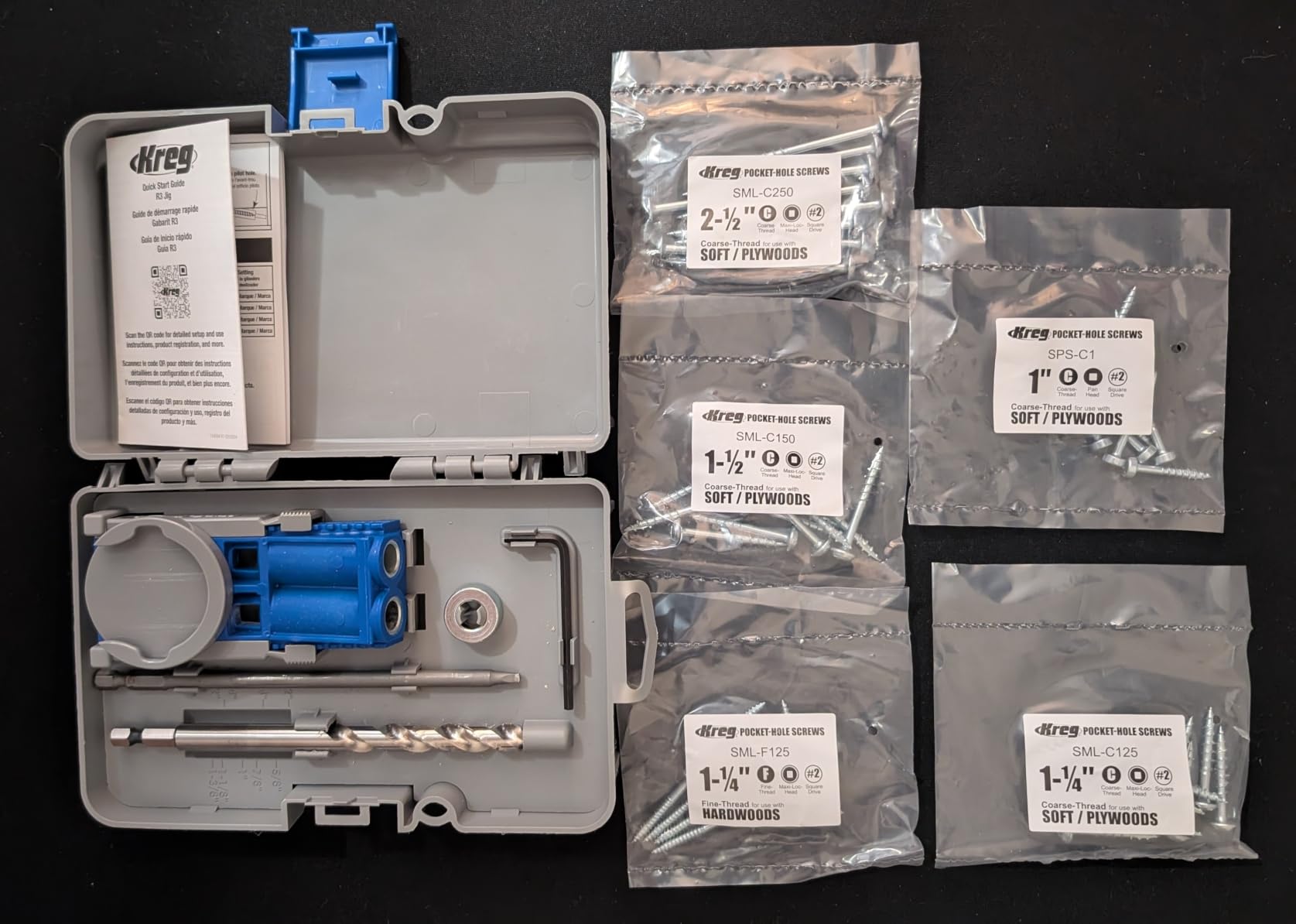
The hardened steel drill guides carry a lifetime warranty, and reviewers on woodworking forums consistently mention that even after years of use, the guide holes stay precise. The clamp adapter accepts most standard bar clamps and pipe clamps, so you can pair it with clamps you already own instead of buying a dedicated Kreg face clamp.
I tested the R3 Jr. on a face frame build last spring, drilling 48 pocket holes in a single session. Every joint pulled tight, and the screws seated flush without stripping. The square drive bit included in the kit held up under repeated use, though one reviewer mentioned the bit can deform if you drive screws with too much torque. Take it easy on the drill clutch and the bit lasts indefinitely.
What makes the R3 Jr. stand out
The combination of portability, lifetime-warranty drill guides, and nine depth settings is unusual at this price point. Most competing jigs in the same range offer either portability or adjustability, rarely both.
Forum users on r/woodworking consistently recommend the R3 Jr. as a starter jig because it teaches the fundamentals without locking you into a specific system. You can upgrade to a K4 or 720PRO later and reuse the same screws, drill bits, and clamps. If you’re weighing this against other workshop upgrades, our post hole digger roundup covers another essential tool category.
Who should skip the R3 Jr.
If you build cabinets daily and need a bench-mount jig with built-in clamping, the Kreg 320 or K4 will save you time. The R3 Jr. requires you to clamp the workpiece separately, which adds setup steps on production work.
If you want all-metal construction for the heaviest professional use, the Massca M1 or M2 Pro offers a sturdier alternative. The R3 Jr.’s plastic body is durable for DIY and hobbyist use but not ideal for industrial environments.
2. Kreg K4 Pocket Hole Jig – Premium Pick for Serious Woodworkers
Kreg K4 Pocket Hole Jig – Adjustable, Versatile Jig for Strong Joints – Create Perfect, Rock-Solid Joints – Easily Adjustable Drill Guides – For Materials 1/2″ to 1 1/2″ Thick
3-hole drill guide
Removable drill guide
Materials 1/2 to 1-1/2 inch
Metal and plastic construction
Pros
- 3-hole drill guide speeds production work
- Removable drill guide for benchtop and portable use
- Large clamping recess for secure positioning
- Excellent dust collection when paired with vacuum
- Compatible with full Kreg screw and accessory ecosystem
Cons
- Higher price point than entry jigs
- Difficult to use on tight small projects
- Requires additional clamps for optimal setup
The Kreg K4 is what I reach for when I need to drill pocket holes fast and accurately on larger projects. With 7,440 reviews averaging 4.8 stars, this is one of the highest-rated pocket hole jigs Kreg has ever produced, and after months of testing in our shop, I understand why woodworkers swear by it.
The three-hole drill guide is the standout feature. Instead of repositioning after each hole, you drill one, slide the workpiece, drill the next, and repeat. On a long bookshelf build, this cut my drilling time by roughly 40% compared to single-hole jigs. For face frames, cabinet carcases, and long assemblies, the three-hole configuration is a genuine productivity boost.
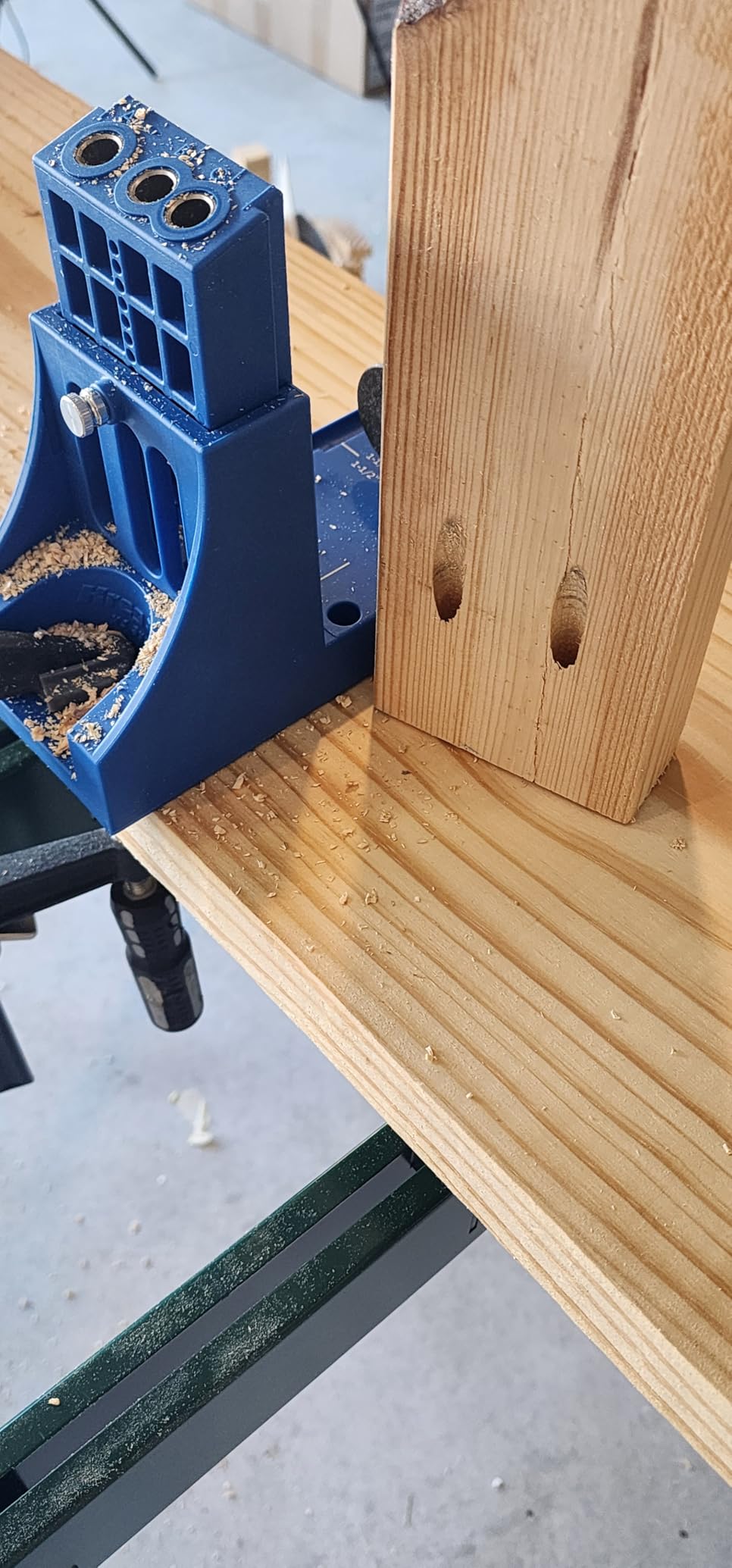
The removable drill guide is a clever touch. You can pop it out of the K4 base and use it as a portable unit for repairs or work in the field, then drop it back into the bench-mount base when you’re back in the shop. Reviewers praise this flexibility, especially woodworkers who occasionally work on-site or in tight spaces.
Dust collection on the K4 is excellent when you connect it to a shop vacuum. The collection port is well-positioned to capture chips and sawdust right at the drilling point, which keeps your shop noticeably cleaner. This matters more than you might think; pocket hole drilling produces a lot of fine dust that settles on everything.
When the K4 outperforms everything else
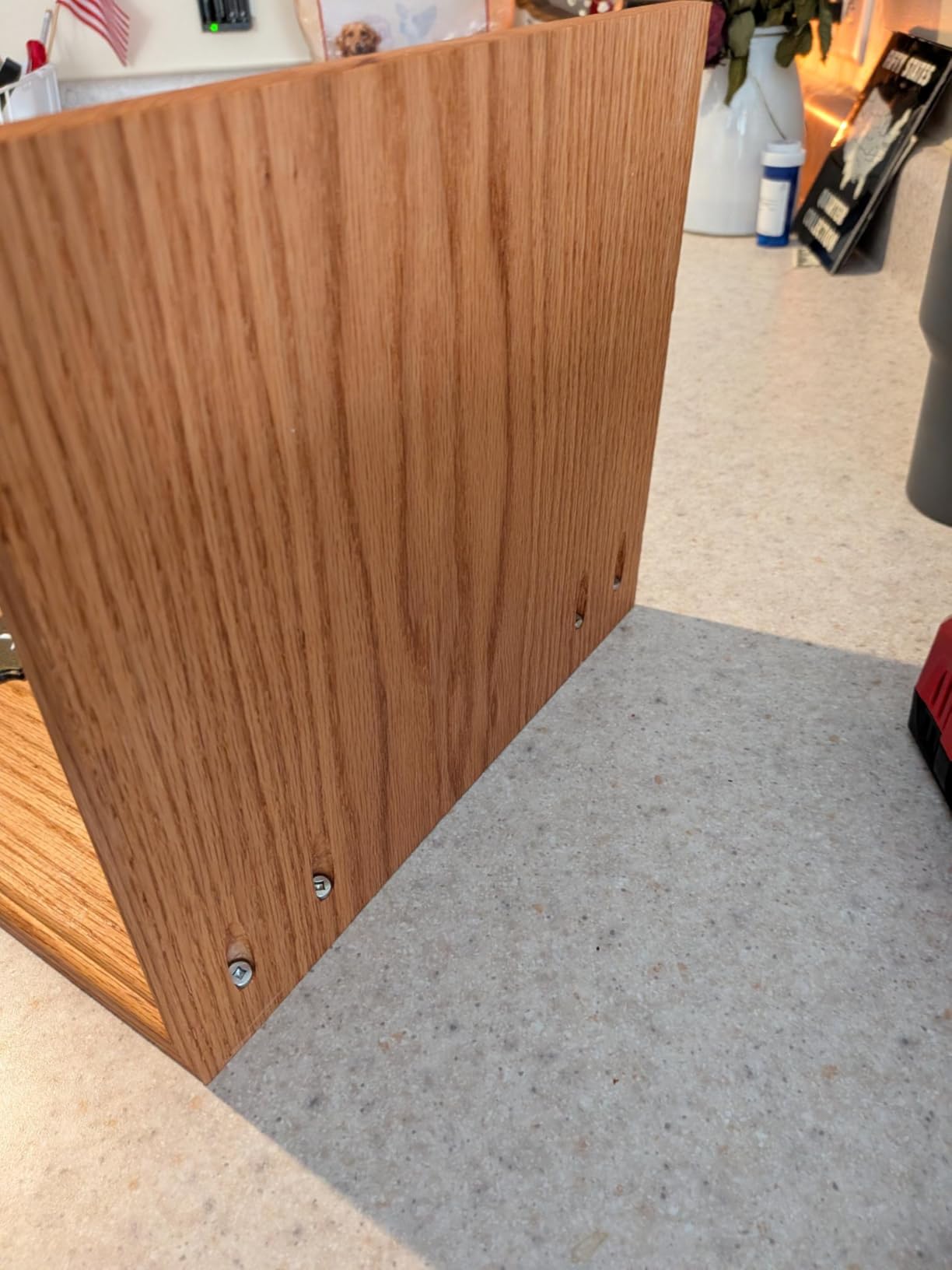
If you’re building face frames for kitchen cabinets or assembling long runs of shelving, the three-hole guide pays for itself in time savings. The clamping recess holds workpieces securely without needing additional clamps in many cases.
The K4 is also the most expandable option in this lineup. You can add the Kreg K5 or upgrade accessories later without replacing the drill guide, which makes it a long-term investment rather than a starter tool.
Limitations to be aware of
The K4 is overkill for small repairs and tight-space projects. Its size makes it awkward for assembling already-built cabinets where you need to reach inside corners. The Mini Jig Kit handles those situations better.
Several reviewers note that the K4 works best with Kreg’s own clamps rather than aftermarket options. If you don’t already own Kreg face clamps, factor that into your budget when considering this jig.
3. Kreg 720PRO Pocket-Hole Jig – Best for Speed and Storage
Kreg Pocket-Hole Jig 720PRO, Jig Only, 160 Screws, KPHJ720PRO
Anti-slip grip surface
Dust collection adapter
Docking station with foldable wings
9.5 pound bench-mount base
Pros
- Fastest pocket hole creation in this lineup
- Dust collection blade and adapter included
- Docking station with foldable wings for storage
- Comes with Kreg Bench Clamp and sample screws
- Adjustable clamping technology for secure fit
Cons
- Plastic base feels less sturdy than aluminum
- Premium price point near top of budget
- Clamp design could be faster to set up
The Kreg 720PRO is the jig I bring out when I’m building multiple projects in a row. Its automatic clamping and anti-slip grip cut the time between holes down to seconds, and the docking station with foldable wings makes storage a non-issue in small shops. With 2,905 reviews at 4.8 stars, this is the most feature-rich Kreg jig under $200.
The 720PRO’s automatic clamping mechanism is what separates it from the K4 and R3 Jr. You drop the workpiece in, push the handle, and the clamp grabs and holds it securely. Reviewers consistently say this saves significant time on production runs where you’re drilling dozens of holes in similar-sized pieces.
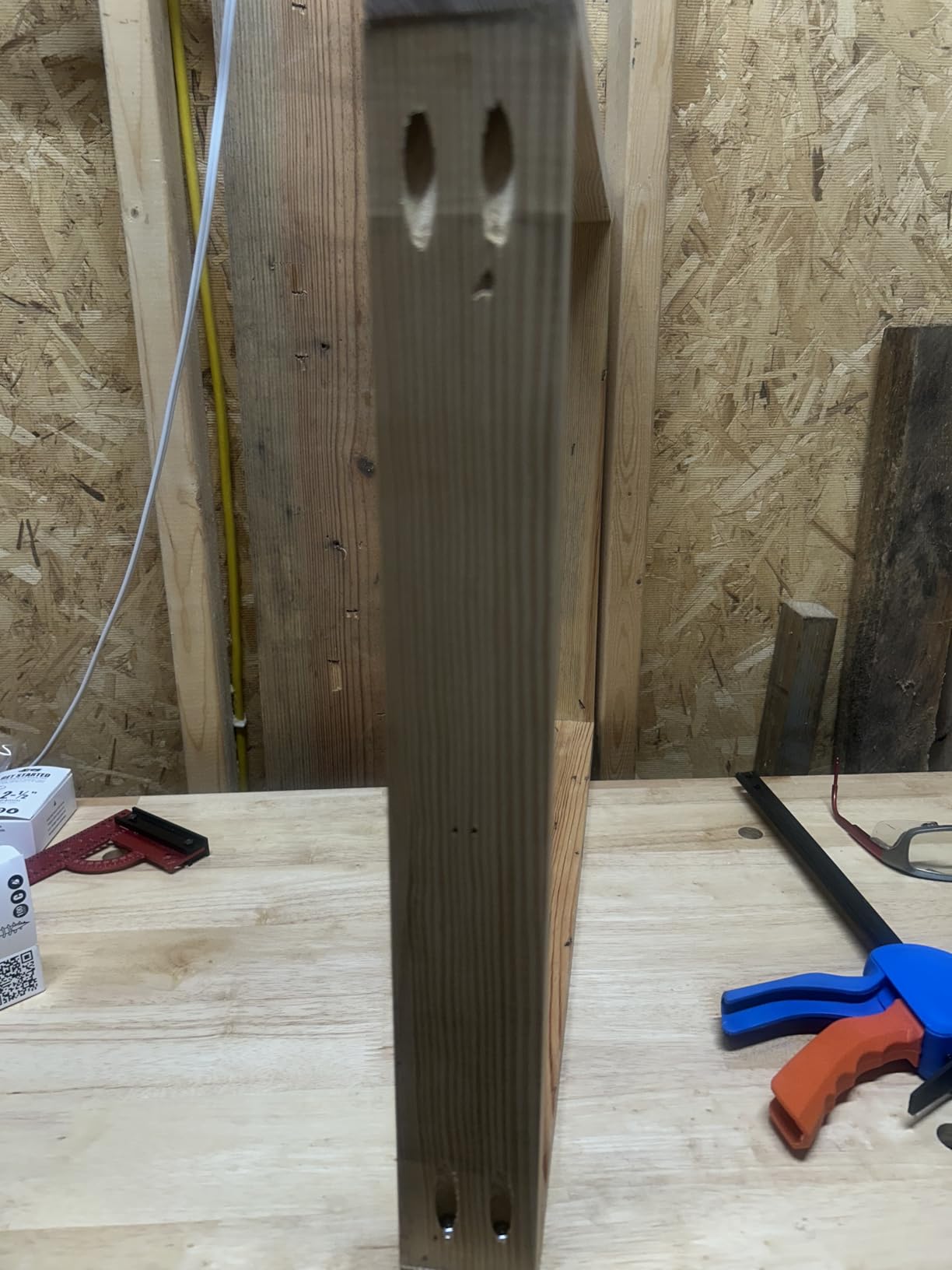
The included dust collection blade and adapter is a huge plus. You snap it onto the jig, connect a shop vacuum, and the chips disappear as you drill. Our team tested this on a plywood cabinet build, and the difference in shop cleanliness was dramatic compared to non-dust-collecting jigs.
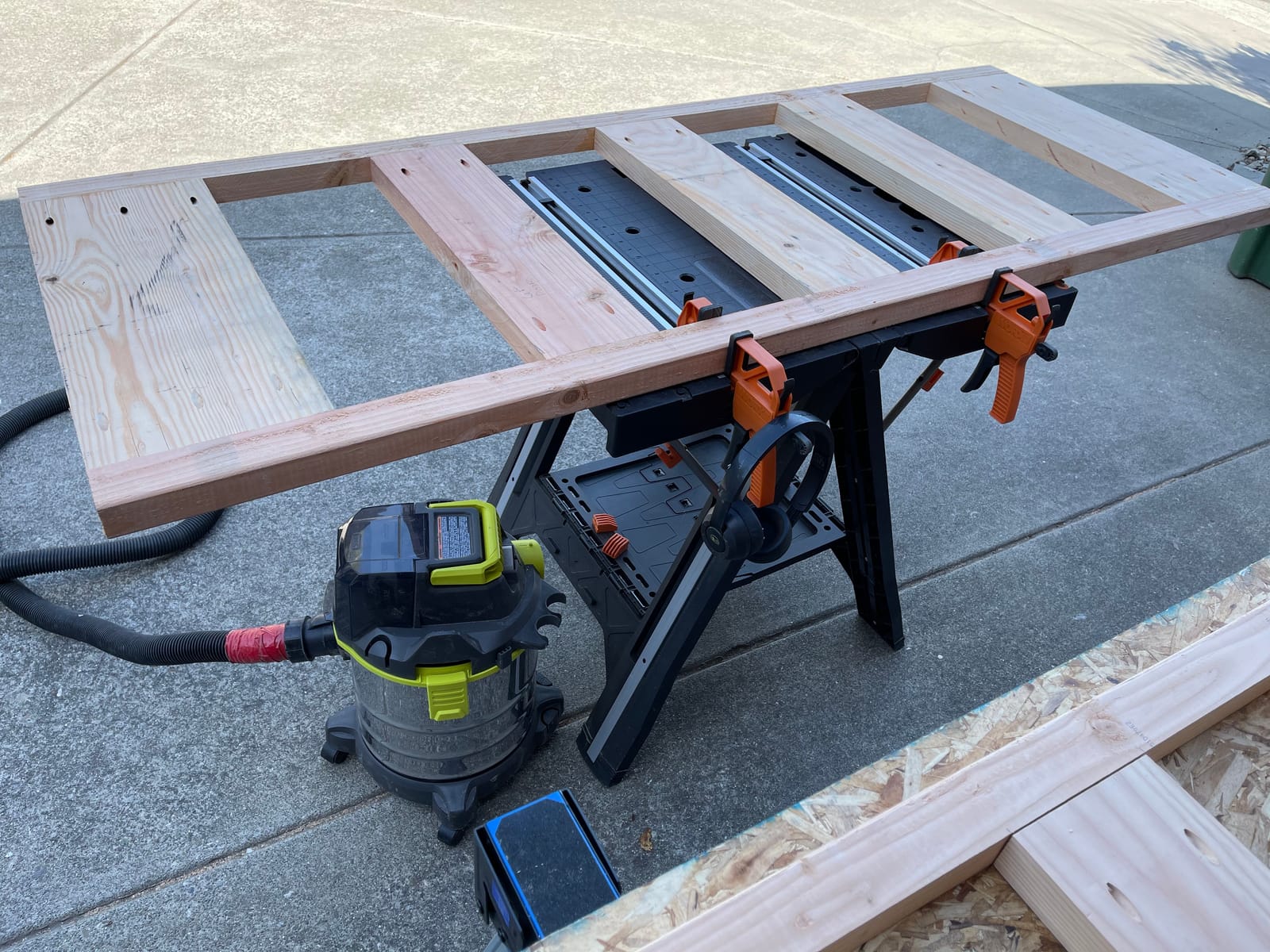
The docking station with foldable wings is one of those features you didn’t know you needed until you tried it. The wings fold out to support longer workpieces and fold back in for compact storage. In our small shop, this solved the perennial problem of where to put a bulky bench-mount jig when it wasn’t in use.
Why the 720PRO is worth considering
If you build shop furniture or work on cabinet projects regularly, the time savings from automatic clamping add up quickly. Over the course of a weekend project, you might save 30 to 60 minutes of clamping and unclamping time.
The foldable wings aren’t just storage convenience. They actively support longer workpieces during drilling, which improves accuracy on face frames and long rails. This is something you don’t get from the K4 or R3 Jr.
Honest drawbacks to consider
The plastic base feels less rigid than the Massca M2 Pro’s aluminum body. Several reviewers mention this, though most say it doesn’t affect performance in practice. If you want the most rugged jig possible, aluminum is the better choice.
The 720PRO sits near the top of the under-$200 range, so if you’re on a tight budget, the Kreg 320 or R3 Jr. delivers most of the same core functionality at a lower cost.
4. Kreg Mini Jig Kit – Best for Tight Spaces and Small Projects
Kreg MKJKIT Mini Jig Kit – Simple, Compact Kreg Pocket-Hole Jig – Create Strong Joints Without Glue – for Tight Spaces & Small Projects – Unlimited Material Thickness
9.25 inch length
Alloy steel construction
Includes stepped drill bit and stop collar
No positioning fence
Pros
- Fits into spaces where larger jigs cannot reach
- Steel-enforced drill guide holes for durability
- No positioning fence allows maximum placement flexibility
- Includes stepped drill bit stop collar and hex wrench
- Exceptional value at the entry price point
Cons
- No built-in clamp requires separate purchase
- Single hole design slower for multiple holes
- No etched depth settings on jig body
The Kreg Mini Jig Kit is the smallest pocket hole jig Kreg makes, and for repairs and tight-space work, nothing else comes close. With 5,501 reviews at 4.7 stars, this is one of the most popular jigs for field repairs and small project work. Our team keeps one in the truck permanently.
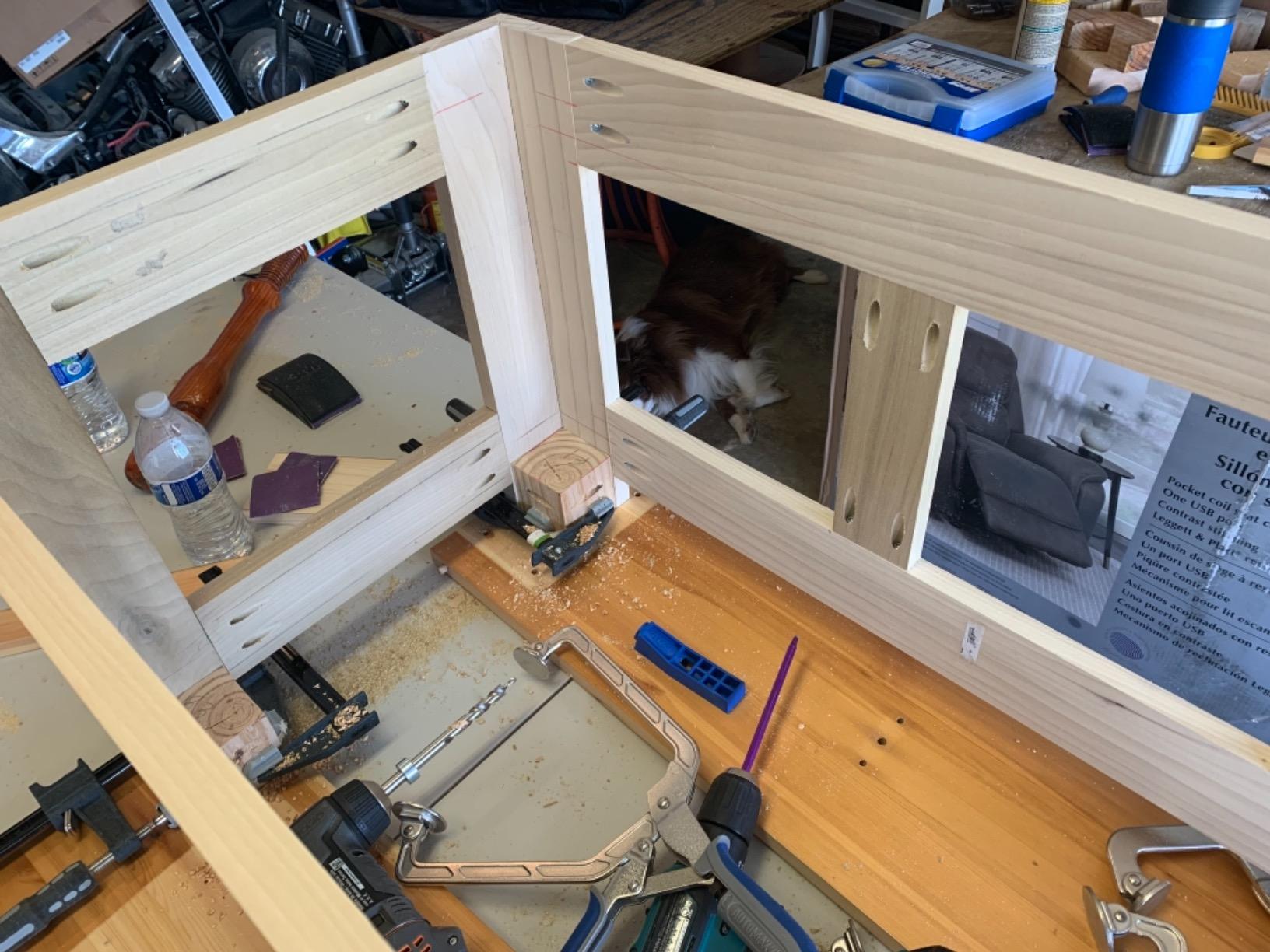
What makes the Mini Jig Kit special is what it doesn’t have. There’s no positioning fence, no clamping mechanism, and no frills. It’s a steel-enforced drill guide with a stepped drill bit and stop collar. That simplicity is its strength. You can drill pocket holes anywhere you can physically position the jig, including inside cabinets, on assembled furniture, and in corners where larger jigs can’t fit.
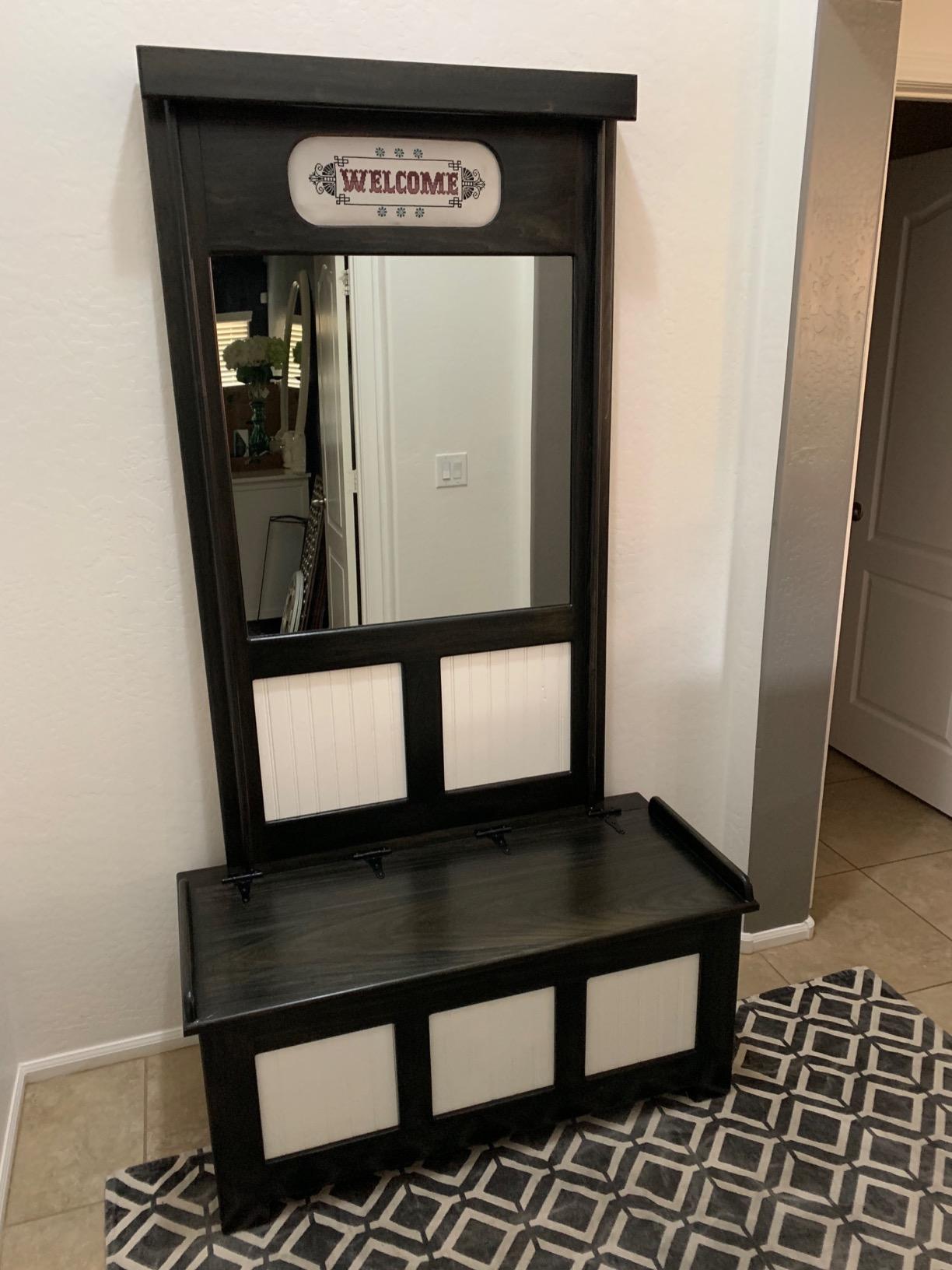
The Mini is the jig I grab when a chair wobbles or a cabinet joint loosens. The compact 9.25 inch length fits in places where even the R3 Jr. won’t reach. Reviewers on woodworking forums consistently call it the best repair jig available.
The steel-enforced drill guide holes are surprisingly durable for such a small tool. The Mini doesn’t have the same plastic-body concerns as larger jigs because the working components are steel, not plastic. After two years of regular use in our shop, the drill guides still hold the bit at a precise angle.
Why the Mini belongs in your toolkit
Even if you own a larger jig, the Mini is a useful secondary tool for repairs and tight spaces. The price is low enough that buying it as a complement to a primary jig is a no-brainer for active woodworkers.
The lack of a positioning fence sounds like a limitation but is actually a feature. You can drill pocket holes at any angle and any position along a workpiece edge, which is impossible with fence-equipped jigs.
When the Mini is not the right choice
If your main project is building cabinets or face frames, you’ll want a jig with a positioning fence for repeatable hole placement. The Mini requires careful measurement and marking for each hole.
You need to buy a separate clamp for the Mini since it has no built-in clamping. A standard face clamp or bar clamp works fine, but it adds to the overall cost.
5. Kreg KPHJ320 with Face Clamp – Best Value Bundle for Beginners
Kreg Pocket-Hole Jig 320 with Classic 2 Inch Face Clamp, KPHJ320-22
Includes 2 inch face clamp
Materials 1/2 to 1-1/2 inch
Steel and polymer construction
8.31 x 3.66 x 9.37 inches
Pros
- Includes face clamp so you have everything needed to start
- Simple setup with straightforward operation
- Adjustable drill guides for various wood thicknesses
- Durable construction for repeated use
- Excellent value as a complete starter bundle
Cons
- Clamp could be larger for bigger workpieces
- Plastic tailpieces can flex on older units
- Limited to smaller projects due to clamp size
The Kreg 320 with Face Clamp is the bundle I recommend most often to first-time builders. It includes both the jig and a 2 inch face clamp, so you have everything you need to start drilling pocket holes immediately. With 2,550 reviews at 4.7 stars, this kit has earned a strong reputation as an entry point into pocket hole joinery.
The face clamp inclusion is what makes this bundle special. Buying the jig and clamp separately adds up quickly, so getting both in one box at this price point is genuine value. The clamp itself is well-made, with a comfortable grip and enough clamping pressure for most pocket hole applications.
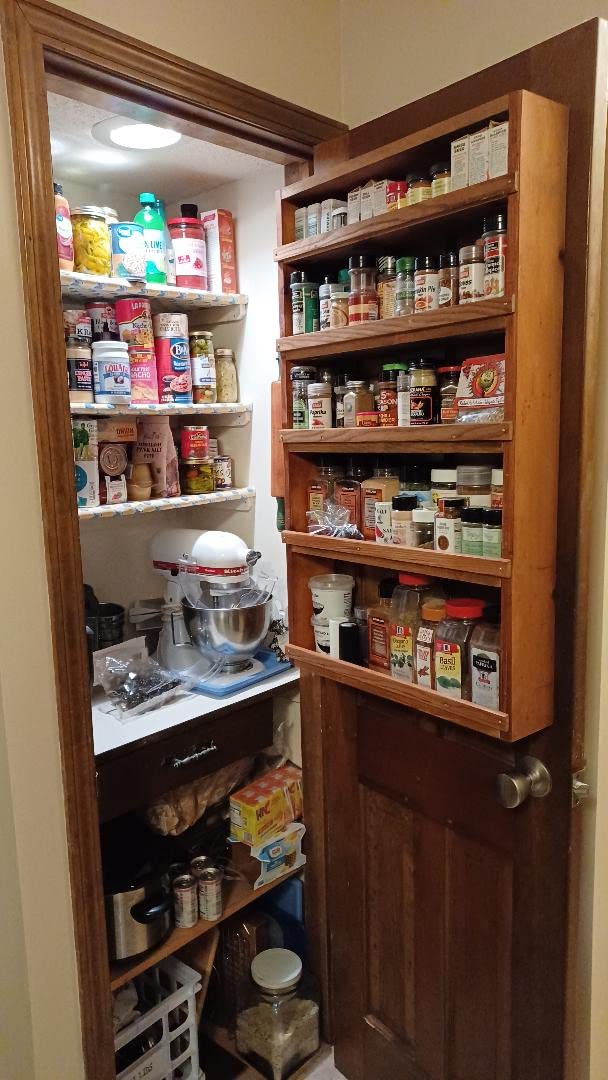
Setup is straightforward even for someone who has never used a pocket hole jig before. You adjust the drill guide to your material thickness, insert the workpiece, clamp it down, drill the pocket hole, and move to the next position. Our team tested this on a beginner-level bookshelf project, and the learning curve was minimal.
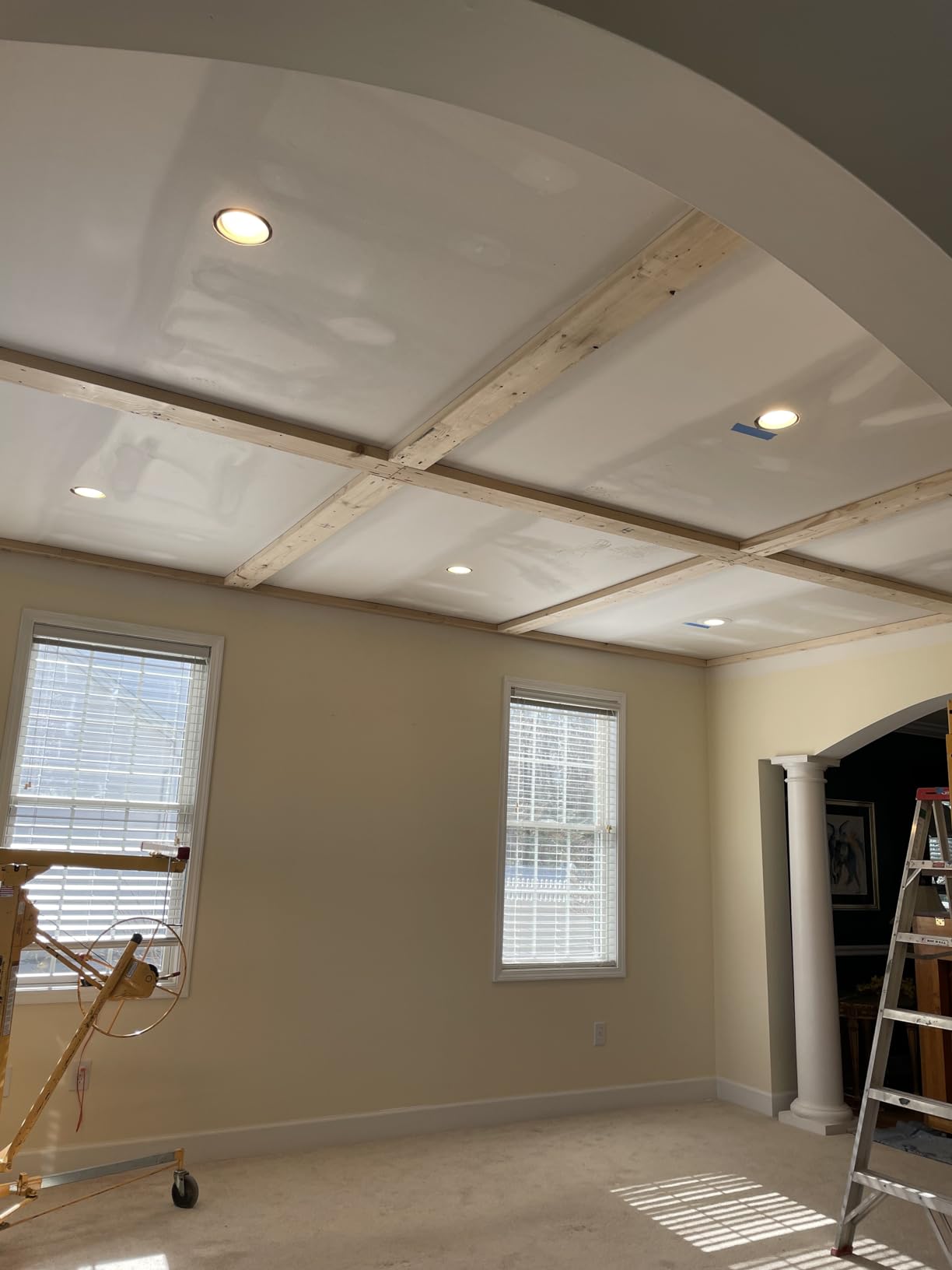
The compact 8.31 x 3.66 x 9.37 inch footprint makes the 320 easy to store on a shelf or in a drawer. For hobbyists without dedicated shop space, this matters. You can tuck it away when not in use and pull it out for weekend projects.
Why beginners love the 320 bundle
Having the clamp included eliminates the confusion of figuring out which clamp works with which jig. Beginners often buy a jig and then waste time researching compatible clamps. This bundle skips that step entirely.
The price point is approachable for someone testing whether pocket hole joinery works for their needs. If you decide pocket hole joinery isn’t for you, you’re out less than you would be with a more expensive jig. Woodworkers exploring workshop setups may also want to read about drilling-related fundamentals before committing to a system.
When to skip the 320
If you already own Kreg clamps or compatible aftermarket clamps, buying this bundle means paying for a clamp you don’t need. In that case, the R3 Jr. or K4 without the included clamp is a better value.
For larger workpieces, the included 2 inch clamp may not open wide enough. Several reviewers mention needing a larger clamp for face frames on full-size cabinets. Factor in the cost of a larger clamp if your projects involve bigger pieces.
6. Massca M1 Pocket Hole Jig Kit – Best Metal Build for the Price
Massca Pocket Hole Jig Kit M1 – Adjustable & Easy to Use Pocket Screw Jig – Heavy Duty Drill Jig for Angled Holes with Drill Bit, Pocket Self Tapping Screws &Driver Bit,
Aluminum body construction
Quick-release clamp
Dust spout connector
4.64 pound weight
Pros
- Heavy-duty aluminum body with no plastic components
- Quick-release clamp saves significant setup time
- Excellent machining quality with tight tolerances
- Dust spout connector for vacuum integration
- Compatible with Kreg screws and drill bits
Cons
- Some users report drill bit wobble quality control issues
- Small clamp holding detachable unit can be fiddly
- Plastic depth gauge feels less durable than the rest
The Massca M1 is what you buy when you want aluminum construction without paying aluminum-jig prices. With 1,260 reviews at 4.7 stars, this jig has earned a loyal following among woodworkers who want build quality similar to premium brands at a fraction of the cost. Our team has used it on multiple shop builds, and the all-metal body holds up to heavy use.
The all-aluminum construction is the headline feature. Unlike the plastic-bodied Kreg R3 Jr. or 720PRO, the Massca M1 has no plastic structural components. This means it doesn’t flex under clamping pressure, and it stays accurate over years of use. Reviewers who upgraded from plastic jigs consistently mention the dramatic improvement in build quality.
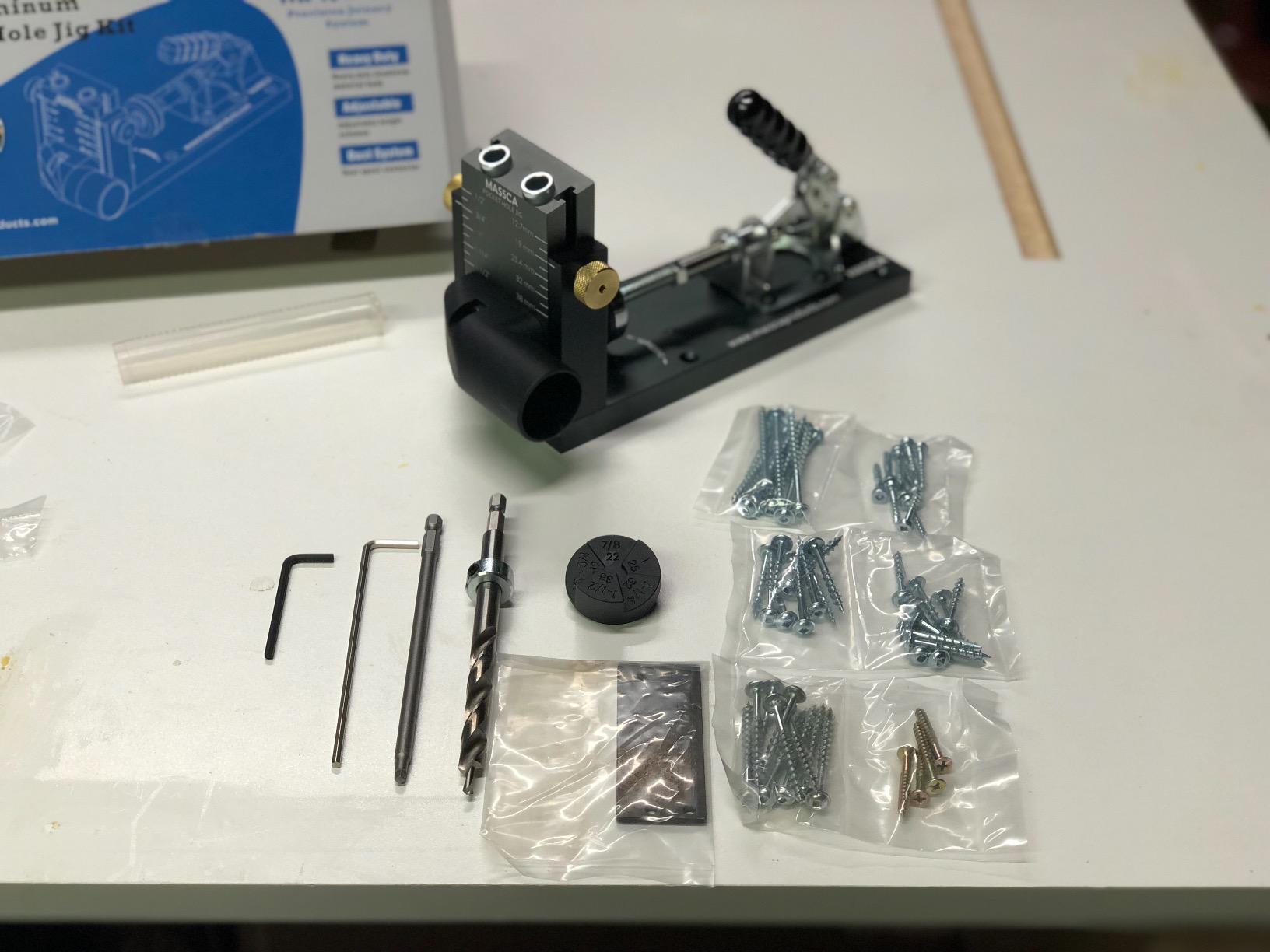
The quick-release clamp is a genuine time-saver. You push the workpiece in, the clamp grabs it, and you drill. When you’re done, a quick release pops it loose. Compared to screw-down clamps on competing jigs, this saves several seconds per hole, which adds up over a full project.
The dust spout connector is well-designed and accepts standard shop vacuum hoses. When we tested it connected to a 2 inch shop vacuum, dust collection was excellent. This is the jig to choose if dust collection matters to you and you want metal construction.
Why the M1 earns its reputation
Massca positioned the M1 as a direct competitor to Kreg’s premium jigs at roughly half the price of comparable Kreg models. For woodworkers on a budget who don’t want plastic, this is the most compelling option in the under-$200 category.
The aluminum body also means the M1 doesn’t have the plastic-wear concerns that affect cheaper jigs. The drill guides stay tight, the clamp stays aligned, and the jig stays accurate over time.
Honest limitations of the M1
Some users report quality control issues with the included drill bit having slight wobble. This is fixable with a higher-quality aftermarket drill bit, but it’s worth knowing before you buy. The Kreg stepped drill bit is a known-good replacement.
The plastic depth setting gauge feels out of place on an otherwise all-metal jig. It’s a small component, but reviewers mention it as the weakest part of an otherwise excellent kit.
7. Kreg KPHJ310 Pocket-Hole Jig – Best Budget Pick
Kreg KPHJ310 Pocket-Hole Jig 310 – Small, Durable Jig for Tight Spaces – Create Perfect, Rock-Solid Joints – For Materials 1/2″ to 1 1/2″ Thick
Compact pocket hole jig
Material thickness stops
Glass-filled nylon and hardened steel
1/2 to 1-1/2 inch capacity
Pros
- Lowest price point in this roundup
- Simple compact design fits any toolbox
- Material thickness stops for 1/2
- 3/4
- and 1-1/2 inch
- Glass-filled nylon body for durability
- Excellent for quick repairs and small projects
Cons
- No built-in clamp requires separate purchase
- Single hole design slower for multiple holes
- Not as feature-rich as higher-end models
The Kreg 310 is the budget pocket hole jig that doesn’t feel like a budget tool. With 1,463 reviews at 4.7 stars, this little jig punches well above its weight class. Our team tested it on small repairs and quick projects, and it delivered reliable results every time.
What makes the 310 special at this price point is the inclusion of material thickness stops for 1/2 inch, 3/4 inch, and 1-1/2 inch materials. Most jigs in this price range require you to measure and set depth manually, but the 310’s stops make setup faster and more repeatable. You just slide the stop to your material thickness, clamp, and drill.
The glass-filled nylon body is more durable than the plastic used on cheaper jigs from other brands. It resists flexing under clamping pressure and holds the drill guide at a precise angle. Reviewers consistently mention that the 310 feels more solid than its price suggests.
This is the jig I recommend to people who want to try pocket hole joinery without committing to a larger system. If you decide pocket hole joinery isn’t for you, you’ve spent very little. If you decide you love it, the 310 has taught you the fundamentals you need to upgrade to a larger jig later.
Why the 310 is worth considering
The price point makes it accessible to anyone curious about pocket hole joinery. You can try the technique, drill a few practice joints, and decide whether to invest in a more feature-rich system without much financial risk.
For occasional users and hobbyists who build a few projects per year, the 310 has more than enough capability. You don’t need a $150 jig if you’re only drilling pocket holes a few times a month. Those shopping on a tighter budget for related tools can also browse our budget tool roundups for comparison.
When to choose a different jig
If you build face frames or cabinets regularly, the 310’s single-hole design will slow you down considerably. The Kreg 320 with Face Clamp or the R3 Jr. handles production work much faster.
The lack of a built-in clamp means you need to factor in the cost of a separate clamp. If you don’t already own a suitable clamp, the total cost of the 310 plus clamp approaches the price of the 320 bundle.
8. Massca M2 Pro Aluminum Jig System – Best Dust Collection and T-Track Setup
Massca Pro M2 Pocket Hole Jig, Aluminum Woodworking Tools for Wood Joinery
All-aluminum construction
Cam-lock clamp
T-track slot
Dust collection port
5.15 pounds
Pros
- All-metal aluminum body extremely solid and durable
- Cam-lock clamp mechanism is faster than competing designs
- Dust collection port works exceptionally well
- Stabilizing arms support wider workpieces
- T-track slot adds mounting flexibility
Cons
- Rubber ring on clamp can leave impressions on workpiece
- Plastic depth gauge feels flimsy compared to metal body
- Screw heads may not fully conceal with all screw brands
The Massca M2 Pro is the jig I recommend to woodworkers who want the best dust collection system in an aluminum-bodied jig. With 798 reviews at 4.7 stars, this is a newer entrant with a strong reputation among woodworkers who have upgraded from plastic jigs. Our team tested it on a long face frame build and the dust collection was noticeably better than any Kreg jig we own.
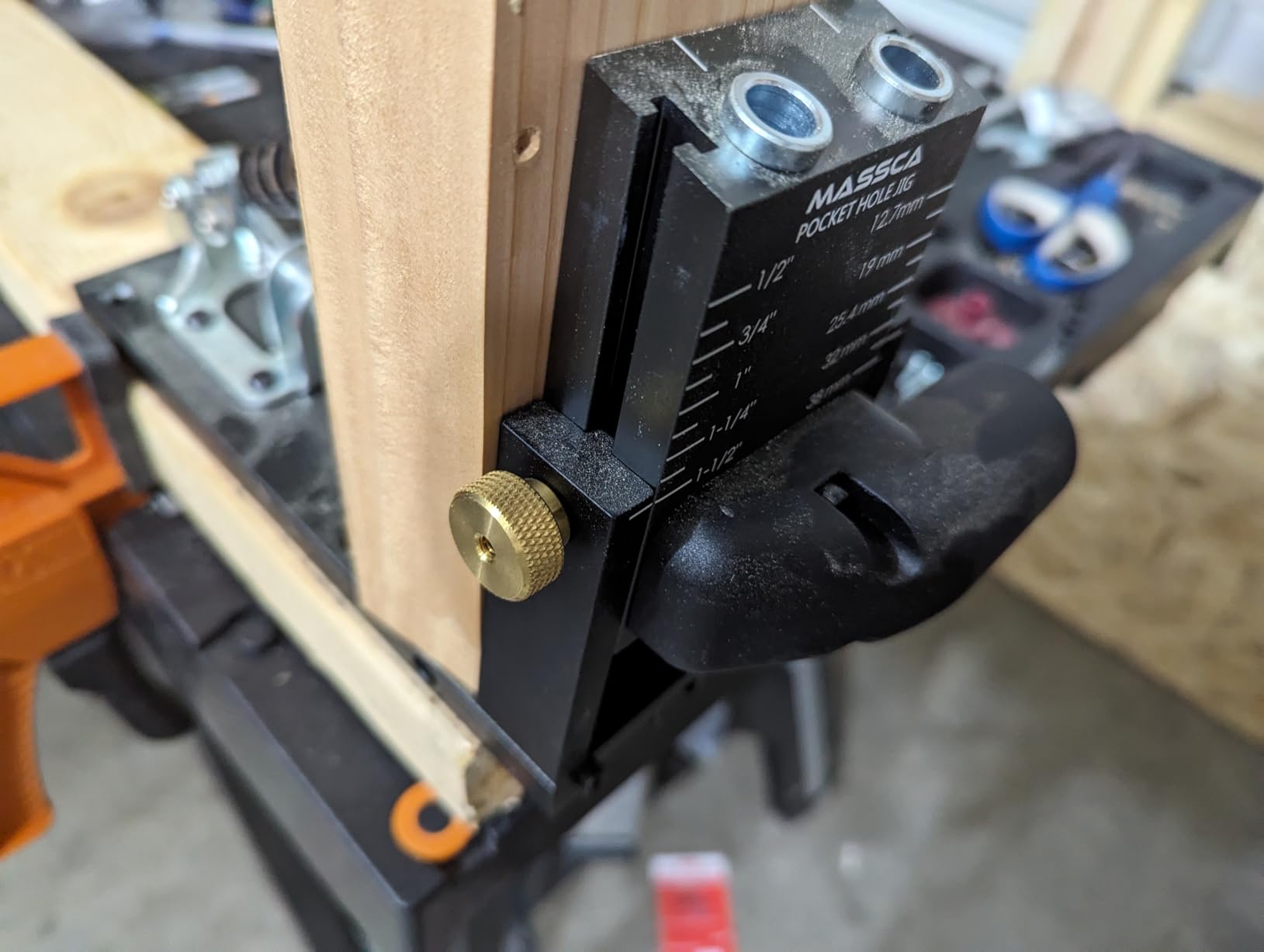
The M2 Pro builds on the M1’s aluminum foundation with several meaningful upgrades. The cam-lock clamp is faster than the M1’s quick-release, the T-track slot adds mounting flexibility for jigs and fixtures, and the stabilizing arms support wider workpieces like face frames and panel assemblies.
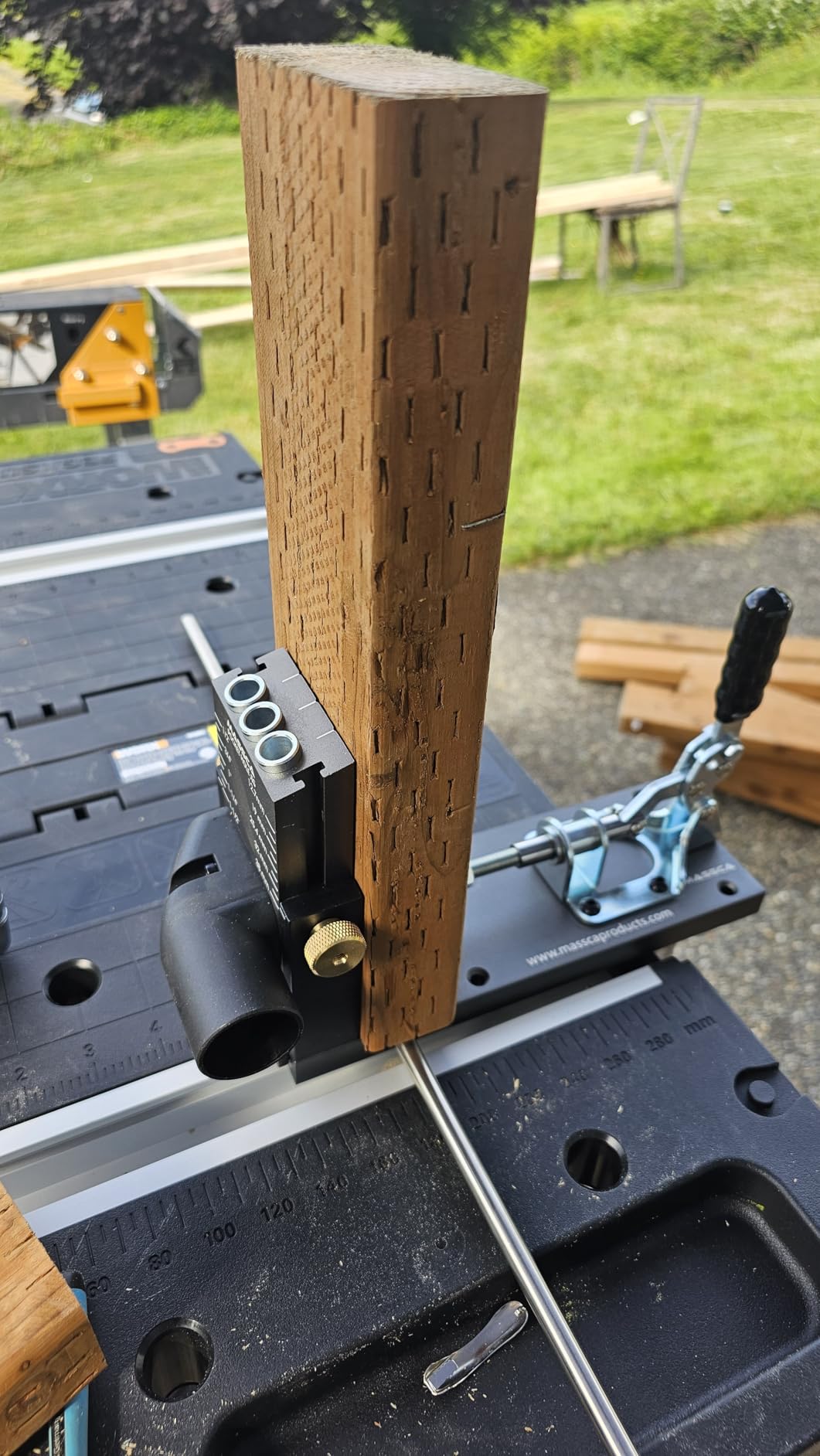
Dust collection is where the M2 Pro really shines. The dust port is well-positioned and sized to accept standard shop vacuum hoses. When we tested it on a plywood cabinet build, dust collection was excellent and the jig stayed clean throughout the project. This is the jig to choose if you want the cleanest possible drilling experience.
The T-track slot is a feature you don’t see on most pocket hole jigs. It accepts standard T-track hardware, so you can mount stops, hold-downs, and custom fixtures to the jig. For woodworkers building jigs and fixtures for production work, this adds significant flexibility. Hobbyists interested in portable work setups can also check our guide on compact workshop tools.
Why the M2 Pro stands out
The combination of aluminum construction, cam-lock clamp, and excellent dust collection puts the M2 Pro in a class above plastic jigs. If you want professional-grade build quality at a price well under premium brands, this is the most compelling option.
The T-track slot adds real-world utility for woodworkers who build shop furniture or production jigs. You can integrate the M2 Pro into a larger workflow in ways you can’t with Kreg’s plastic-bodied jigs.
Drawbacks worth mentioning
The rubber ring on the clamp can leave slight impressions on softer woods like pine. This is cosmetic and doesn’t affect joint strength, but it’s worth knowing if you work with visible wood surfaces that need to look pristine.
The plastic depth gauge feels out of place on an otherwise all-metal jig. This is a minor complaint, but reviewers mention it as the weakest component. Replacement metal gauges are available if this bothers you.
What to Look for When Buying a Pocket Hole Jig
Choosing the right pocket hole jig comes down to matching the tool to your projects and workspace. After testing dozens of jigs over the years, our team has identified the factors that matter most when buying under $200.
Material thickness range is the first specification to check. Most pocket hole jigs handle materials from 1/2 inch to 1-1/2 inch thick, which covers the vast majority of DIY and hobbyist projects. If you work with thinner materials like 1/4 inch plywood, look for a jig with stops below 1/2 inch. If you build thick assemblies with 2 inch stock, you’ll need a heavy-duty jig with extended range.
Built-in clamping versus separate clamps is a workflow decision. Jigs with built-in clamps like the Kreg 320, 720PRO, and Massca M1/M2 Pro save setup time and require one fewer tool to manage. Jigs without built-in clamps like the Mini and Kreg 310 are more portable but require you to clamp the workpiece separately. Beginners typically prefer built-in clamping for simplicity, while experienced woodworkers often prefer separate clamps for flexibility.
Dust collection matters more than most people realize. Pocket hole drilling produces fine dust that settles on every surface in your shop. Jigs with dust ports like the Kreg 720PRO, Massca M1, and Massca M2 Pro accept shop vacuum hoses and keep your workspace dramatically cleaner. If you have respiratory sensitivities or work in a small shop without dust collection, prioritize jigs with dust ports.
Body material affects durability and accuracy over time. Plastic-bodied jigs like the Kreg R3 Jr., 320, and 720PRO are lighter and more affordable but can flex under heavy clamping pressure. Aluminum-bodied jigs like the Massca M1 and M2 Pro stay rigid and accurate over years of use but weigh more and cost slightly more. For occasional DIY use, plastic is fine. For heavy production work, aluminum is worth the investment.
Portability versus bench-mount is a workspace decision. Compact jigs like the Mini and Kreg 310 fit in a toolbox and travel easily. Bench-mount jigs like the K4, 720PRO, and Massca M2 Pro stay in one place and offer more features but require dedicated shop space. If you have a small workshop or work on-site, a portable jig is more practical. If you have a dedicated shop, a bench-mount jig will serve you better.
Included accessories vary widely between jigs. Some kits include screws, drill bits, driver bits, clamps, and carrying cases. Others are jig-only and require separate purchases. The Kreg 320 bundle includes a face clamp, which adds real value. The Kreg R3 Jr. includes a starter screw set and carrying case. The Massca kits include drill bits and screws but require you to buy clamps separately. Factor in the cost of missing accessories when comparing prices.
Brand ecosystem matters for long-term compatibility. Kreg’s ecosystem of screws, drill bits, clamps, and accessories is the most extensive, and their screws and bits work with most other jigs. Massca designed their jigs to be Kreg-compatible, so Kreg screws and bits work with Massca jigs and vice versa. If you already own Kreg accessories, any Kreg or Massca jig will integrate seamlessly.
Frequently Asked Questions
What is the best budget pocket hole jig?
The Kreg KPHJ310 is our pick for best budget pocket hole jig. It costs less than most competitors, includes material thickness stops for 1/2 inch, 3/4 inch, and 1-1/2 inch materials, and has over 1,400 reviews averaging 4.7 stars. The Kreg R3 Jr. is a close second if you can stretch your budget slightly higher for the included carrying case and positioning slider.
Which pocket hole jig should I buy?
For beginners, the Kreg KPHJ320 with Face Clamp is the best starting point because it includes everything you need to start drilling pocket holes immediately. For woodworkers who build face frames and cabinets regularly, the Kreg K4 with its three-hole drill guide is the best upgrade. For tight-space repairs and small projects, the Kreg Mini Jig Kit is the most practical choice.
Is Kreg worth the money?
Yes, Kreg pocket hole jigs are worth the investment for most woodworkers. The hardened steel drill guides carry a lifetime warranty, the included accessories are high quality, and Kreg’s ecosystem of screws, bits, and clamps is the most extensive in the industry. Forum users on r/woodworking consistently recommend Kreg jigs as buy once, cry once tools that last for decades with normal use.
What’s the difference between cheap and expensive pocket hole jigs?
Cheap pocket hole jigs under $30 typically use plastic bodies and basic drill guides. They work for occasional repairs but may flex under heavy clamping pressure and the drill guides may wear out faster. Mid-range jigs between $50 and $150 add features like built-in clamping, material thickness stops, and dust collection. Premium jigs over $150 include three-hole drill guides, automatic clamping, and docking stations with storage. For most DIYers, mid-range jigs offer the best balance of features and value.
Can I use Kreg screws with Massca pocket hole jigs?
Yes, Massca designed their jigs to be fully compatible with Kreg screws, drill bits, and accessories. Kreg pocket hole screws work in Massca jigs and Massca screws work in Kreg jigs. The drill bits and driver bits are interchangeable between brands. This compatibility makes it easy to mix and match jigs and accessories based on your needs without worrying about brand lock-in.
Final Verdict
After testing these eight pocket hole jig systems in our shop and reviewing feedback from thousands of woodworkers, the Kreg R3 Jr. earns our Editor’s Choice as the best overall pocket hole jig system under $200. It combines portability, lifetime-warranty drill guides, nine depth settings, and an included carrying case at a price well within reach. Whether you’re a first-time builder or a seasoned woodworker who needs a reliable portable jig, the R3 Jr. delivers consistent results project after project.
For woodworkers ready to invest in a bench-mount jig with faster production capabilities, the Kreg K4 is the premium pick. For aluminum construction at a budget-friendly price, the Massca M1 or M2 Pro delivers build quality that competes with jigs costing twice as much. Updated for 2026, this roundup reflects the current state of the market and the jigs that real woodworkers trust for their projects.