
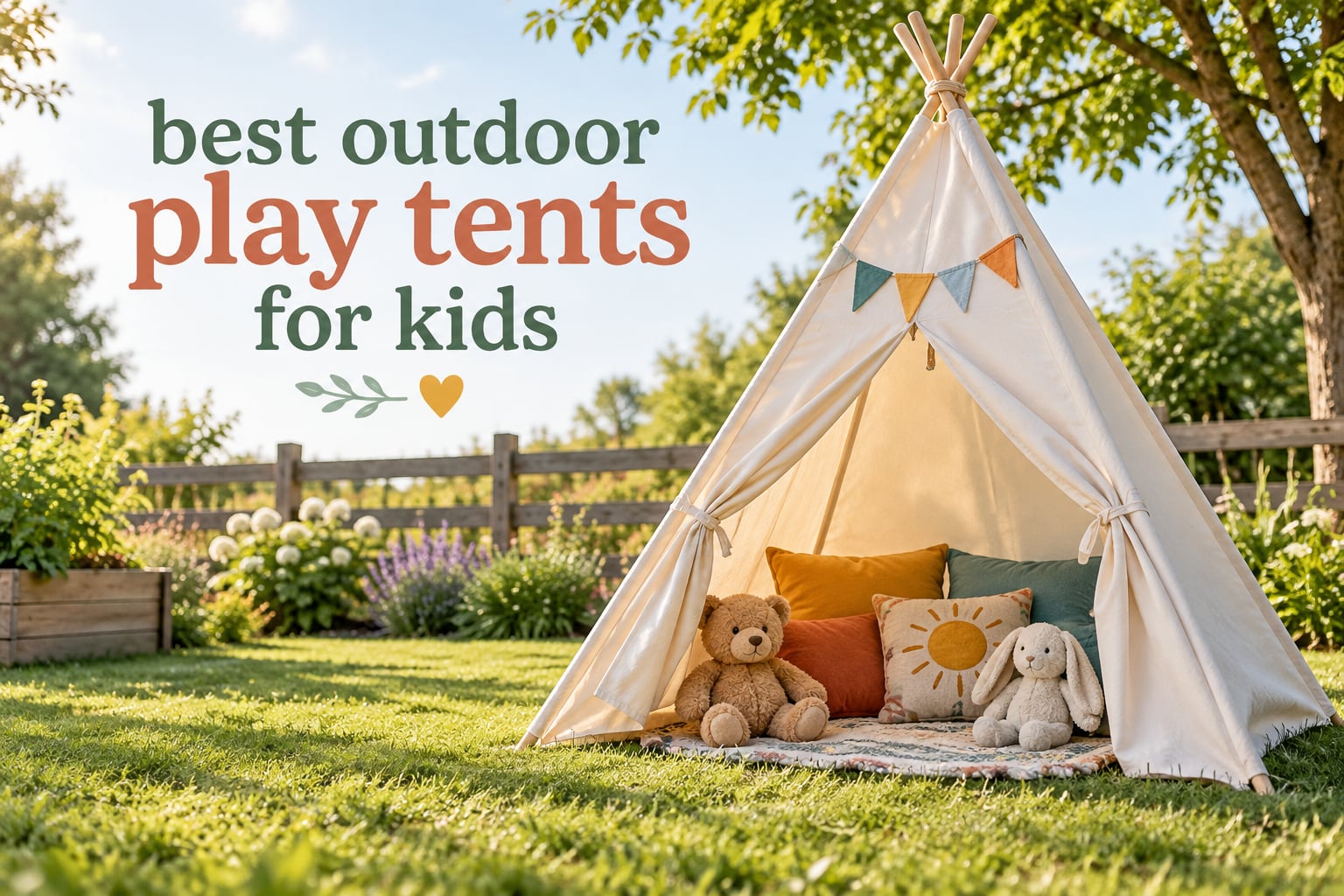
An outdoor play tent is a child-sized fabric shelter, usually a cotton canvas or polyester teepee, a sprung pop-up dome, or a rigid-frame playhouse, built for backyard or patio imaginative play rather than for real camping weather. Most assemble in under ten minutes with no tools, fold flat into a bag, and move in and out of the house with the kids. Out of the twelve we compared, the Monobeach Princess Castle Tent is the best outdoor play tent for most families, the NARMAY 60-inch dome wins on standing height over a large floor, and the porayhut light-up house serves sensory and bedtime use better than anything else here.
That last point matters more than most guides admit. Parents of autistic and ADHD children describe play tents as genuine self-regulation tools, and forum threads repeat the same idea: an enclosed, controllable space lowers the sensory load of an open room. A tent that looks like decor to one adult often functions like a calm-down corner to the child using it.
Our list below covers the full spread of what parents actually buy: themed castles and space domes, plain teepees, modular tunnel sets, an inflatable fort, and two that double as nap shelters. We read the published specifications and the aggregated review data for every tent, cross-checked failure modes that keep recurring in parent forums, and left out anything where the fabric, frame or safety information was too thin to judge. Nothing here has been pitched in a lab; these are child-sized play tents, and weather claims below come from the manufacturers, not from storm testing.
If you are also outfitting the yard, our guide to kids walkie talkies for outdoor play covers the same age range and pairs well with a tent that gives kids somewhere to go.
Best overall: Monobeach Princess Castle Tent. Best teepee: USA Toyz Happy Hut. Best for sensory retreats: porayhut light-up play house. Best modular set: UTEX 8 in 1. Best for the largest enclosed space: Skywin inflatable fort.
Table of Contents
Top 3 Picks for the Best Outdoor Play Tents for Kids in 2026

Monobeach Princess Castle Tent
- Castle design for up to 3 kids
- 55 x 55 x 53 inch footprint
- Polyester taffeta with star lights
NARMAY 60 x 60 Inch Dome Tent
- 60 x 60 x 44 inch dome
- Waterproof floor
- Oversized top mesh panels

FUN LITTLE TOYS Camping Set
- 4.8 star average across 11073 reviews
- 17-piece camping accessory bundle
- Collapsible pop-up structure
Best Outdoor Play Tents for Kids (October 2026)
Every tent below is built to be moved rather than pitched permanently, and the specs that decide day-to-day use are footprint, frame material, floor waterproofing, and how many children fit inside without them sitting on the door flap.
| Product | Specifications | Action |
|---|---|---|
| Monobeach Princess Castle Tent |
|
Check Latest Price |
 USA Toyz Happy Hut Teepee USA Toyz Happy Hut Teepee |
|
Check Latest Price |
| FUN LITTLE TOYS Camping Set Tent |
|
Check Latest Price |
 Play22 Knight Castle Tent Play22 Knight Castle Tent |
|
Check Latest Price |
 alprang Galaxy Dome Tent alprang Galaxy Dome Tent |
|
Check Latest Price |
| NARMAY Easy Fun Dome Tent |
|
Check Latest Price |
 Super Duper 4 Kid Play Tent Super Duper 4 Kid Play Tent |
|
Check Latest Price |
 UTEX 8 in 1 Pop Up Set UTEX 8 in 1 Pop Up Set |
|
Check Latest Price |
 Little Dove Extra Large Teepee Little Dove Extra Large Teepee |
|
Check Latest Price |
 Britik Fire Truck Pop Up Tent Britik Fire Truck Pop Up Tent |
|
Check Latest Price |
 Skywin Inflatable Forest Fort Skywin Inflatable Forest Fort |
|
Check Latest Price |
 porayhut Light-Up Play House porayhut Light-Up Play House |
|
Check Latest Price |
1. Monobeach Princess Castle Tent – Best Overall Outdoor Play Tent for Most Families
Monobeach Princess Tent Girls Large Playhouse Kids Castle Play Tent with Star Lights Toy for Children Indoor and Outdoor Games, 55” x 53” (DxH)
Polyester castle tent
55 x 55 x 53 inch
Ages 36 months to 9
4.3 pounds
Pros
- Castle theme kids ask for by name
- Up to 3 children fit inside
- Polyester taffeta wipes clean
- Star lights included in the box
- Simple pole-and-connector setup
Cons
- Plastic poles flex under rough play
- One door limits parent visibility
- Limited ventilation in hot weather
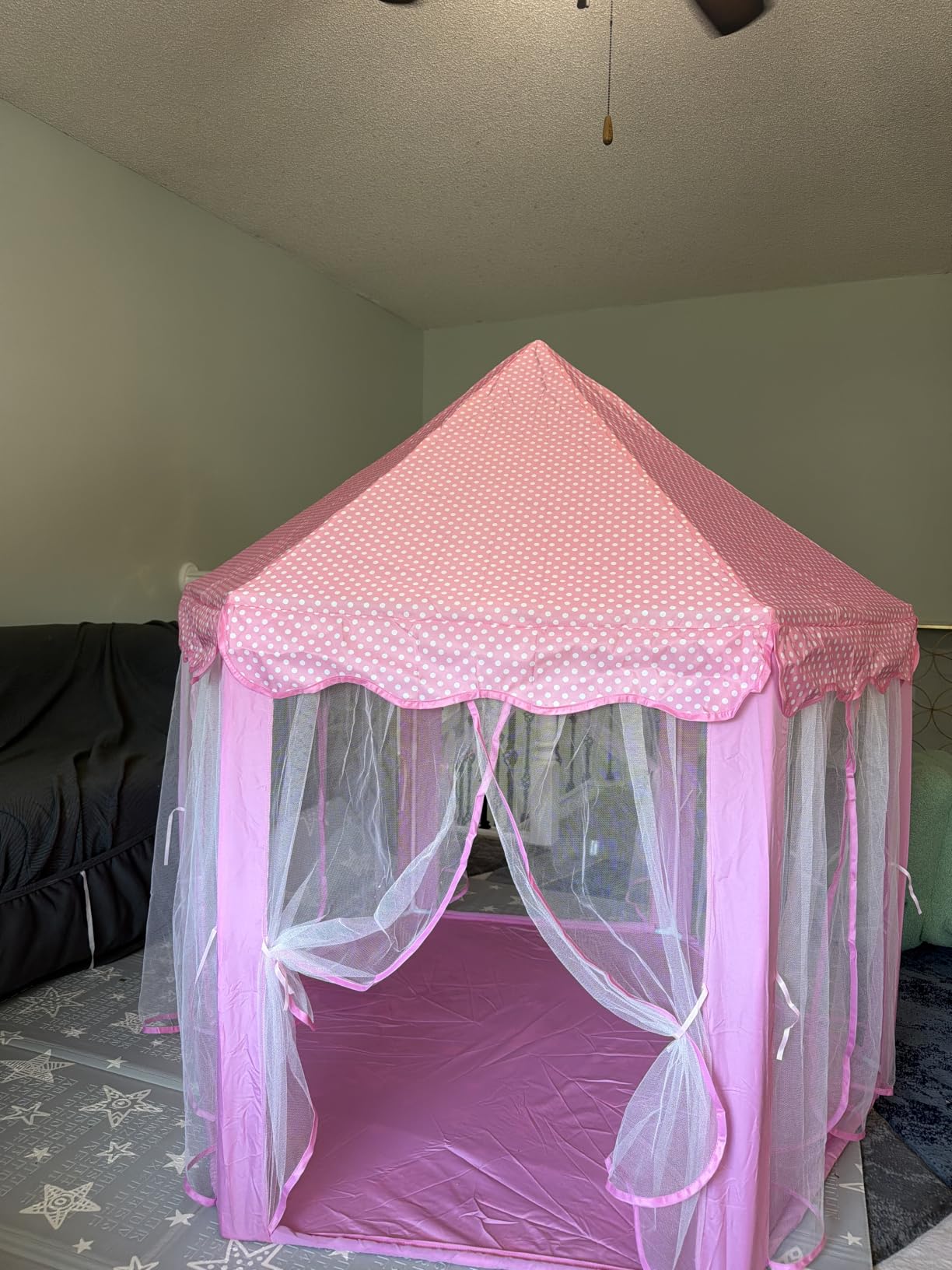
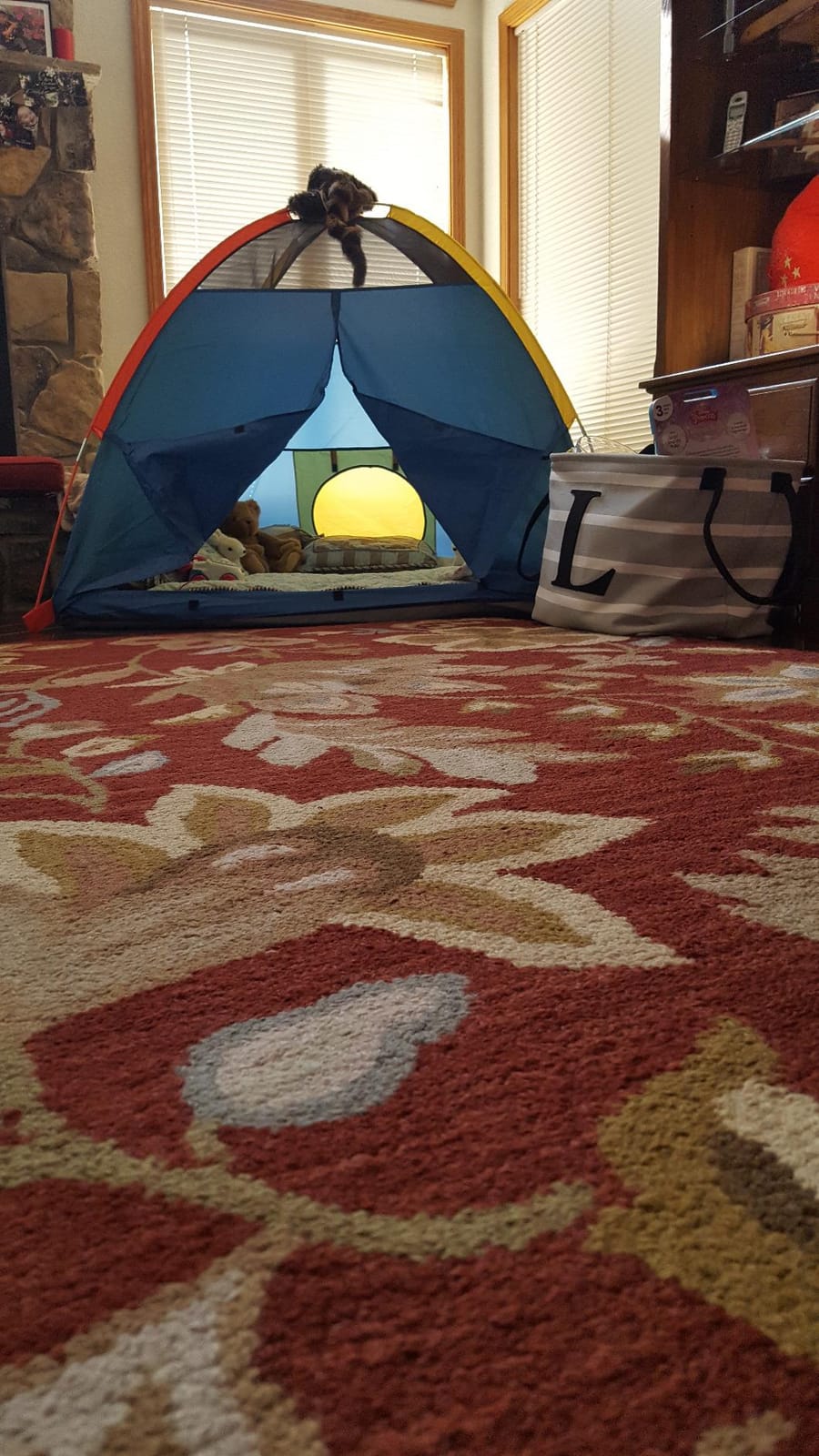
The Monobeach castle is the tent I recommend to parents who want one structure that works in the living room on a wet Saturday and in the yard on a dry one. At 55 inches on a side with a 53 inch peak, it swallows two kids comfortably and a third if they are small, and the 4.3 pound weight means one adult can carry it out to the patio without a second pair of hands.
Across 34450 reviews the average sits at 4.7 stars, and 82 percent are five star, which makes this the most heavily reviewed tent we compared. Owners consistently single out the castle styling as the reason it works as a birthday present, plus the fact that the polyester taffeta survives a wipe-down after a birthday party.
Setup is the older style: color-coded plastic poles push through fabric sleeves and lock into plastic connectors. It is genuinely tool-free but it is not a sprung pop-up, so budget five to ten minutes the first time and expect a short learning curve on the connectors. Once the poles are in, the star lights thread through the roof ridge in about a minute.
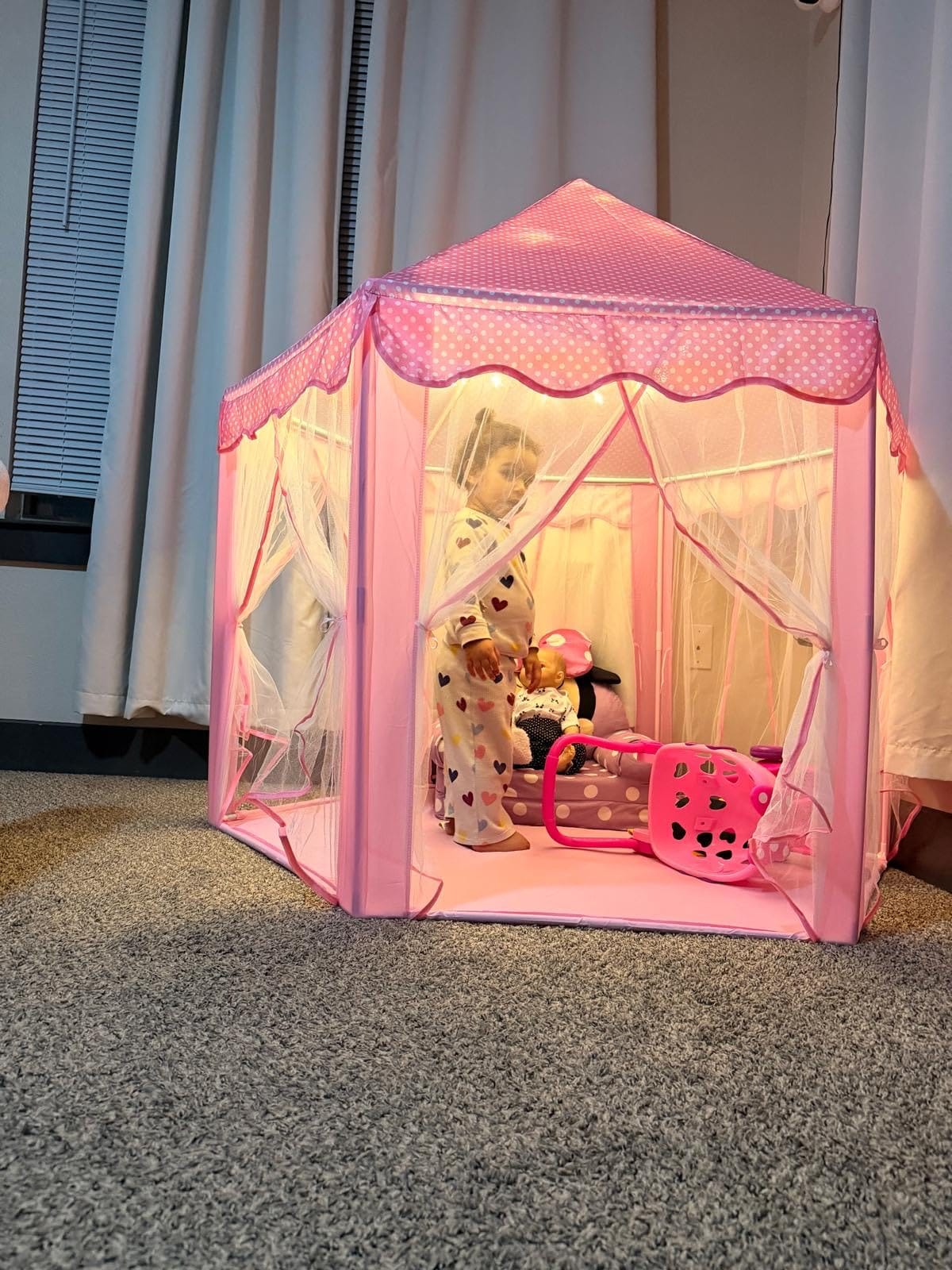
Two things gave us pause. The poles are rigid plastic rather than fiberglass or steel, and reviewers describe them flexing when a child leans hard on the wall or jumps against the seam, which over time pushes the connector joints out of alignment. And because there is a single entrance with no side window, a parent standing outside cannot see much of what is happening inside once the flaps are tied back.
Ventilation is the other watch point. Polyester taffeta is fine in spring and autumn, but on a hot still afternoon the interior heats up quickly and there is no mesh panel to release it. Parents who leave it up through summer report peeling the fabric back and clipping the front corners to the frame for airflow.
Who this tent suits
A family with one to three children between roughly three and nine who want a themed den that looks good in a photo and survives a weekly wipe-down. The castle styling is what sells it as a present, and the wipe-clean fabric is what keeps it in use a year later.
It is also the easiest of the twelve to carry outside for a supervised afternoon, and the star lights are a genuine hit for sleepovers once the room is dim.
If your child has a toddler who still charges around inside, watch the pole connectors. Toddlers hooking onto a flexing wall are how the frame gets knocked out of square, and that is the most common reason this style of tent gets returned.
Where it falls short
It is a calm-weather tent. The manufacturer lists it for indoor and outdoor use at home, backyards and parks, but nothing in the specification suggests it holds its shape in rain or wind, and the thin plastic poles are the first thing to deform. If you need something that stays up through a whole season outdoors, look at the Super Duper steel-framed dome instead.
It is also one of the busiest sellers in the category, which means the most common complaints are widely repeated. If you want a taller interior where a child can stand and jump, the USA Toyz Happy Hut is the build for that: its 62.5 inch peak clears a standing five-year-old, where this castle tops out at 53 inches.
2. USA Toyz Happy Hut Teepee – Best Teepee for Standing and Jumping
USA Toyz Happy Hut Teepee Tent for Kids – Indoor Pop Up Teepee Kids Playhouse Tents for Boys, Girls, Toddlers with Portable Storage Bag (Blue)
Polyester tent with a water-resistant finish
43 x 43 x 62.5 inch
Ages 3 and up
Storage tote included
Pros
- 62.5 inch height is the tallest here
- letting kids stand and jump
- Full floor plus mesh windows
- Wipes clean when wet
- Folds flat with no tools
Cons
- Thin fabric and pole pockets can tear
- Door flaps rarely stay tied shut
- Pole tips unreinforced and can poke through in wind
Between the two fabric teepees here, the Happy Hut is the taller build at 62.5 inches from floor to tip, which is what lets a child stand and jump rather than crouch. That vertical space is what separates it from the castle domes where everything happens at kneeling height.
It is also quick to reconfigure. The poles fold down short, drop into the floor pockets, and the whole thing opens in seconds with no assembly, which is the feature parents mention most when they describe a teepee that actually gets used rather than abandoned after a week.
Across 19420 reviews the average is 4.4 stars, with 71 percent at five. Reviewers like the look, the standing height and the fact that the fabric can be sponged clean after a muddy session. Customer service for replacements comes up often too, which matters more than it sounds for a tent with this many owners.
The full floor and mesh windows also make it work as a nap nook, since a parent can see in from outside without opening the door flaps, and that vertical room is what keeps a five-year-old sitting inside it rather than leaning out of the opening.
The weaknesses are all about construction. The polyester is thin and the pole pockets are the first place it tears, because the load from the frame concentrates in one seam. And the tie string on the door flap slips constantly, so the tent rarely stays closed, which turns it into a drafty tunnel during pretend play.
The pole tips are the part we would watch most outdoors. They are not reinforced, and reviewers describe the ends poking through the fabric in wind. That is fine on a calm patio and a problem on an exposed lawn, which is why we treat this as an indoor teepee that can visit the yard rather than a backyard fixture.
Who this tent suits
A child aged three and up who has outgrown crawling and wants a den they can stand in, read in, or keep a fort-building project inside. The full floor and mesh windows make it a good nap nook too, since you can see in without opening the flaps.
It is a strong pick for a small bedroom where floor space is tight, because when it is folded the whole thing disappears into the included tote and stands on end in a closet.
Where it falls short
This is not the tent for real weather. Thin polyester, unreinforced tips and no included tie-downs mean you would be anchoring it yourself every time you put it outside. In anything above a light breeze it will move, and the door that will not stay tied will flap hard enough to bend a pole joint.
It is also not for a very rough user. A child who treats walls as something to jump against will find the seam weakness within a few months, and replacement is usually cheaper than repair.
3. FUN LITTLE TOYS Pop Up Camping Set – Best Overall Play Value for Ages Three and Up
FUN LITTLE TOYS Pop Up Play Tent with Camping Gear and Tools Set, Outdoor Toys for Kids
Pop-up tent plus 17-piece accessory set
31 x 31 x 36 inch
Ages 3 and up
Collapsible
Pros
- 4.8 stars
- the highest average of the twelve
- 17-piece camping accessory set
- Collapses flat for storage
- Works as a play or reading nook
Cons
- Pretend food is thin plastic that dents
- Whistle collects grime
- Small footprint suits one or two toddlers
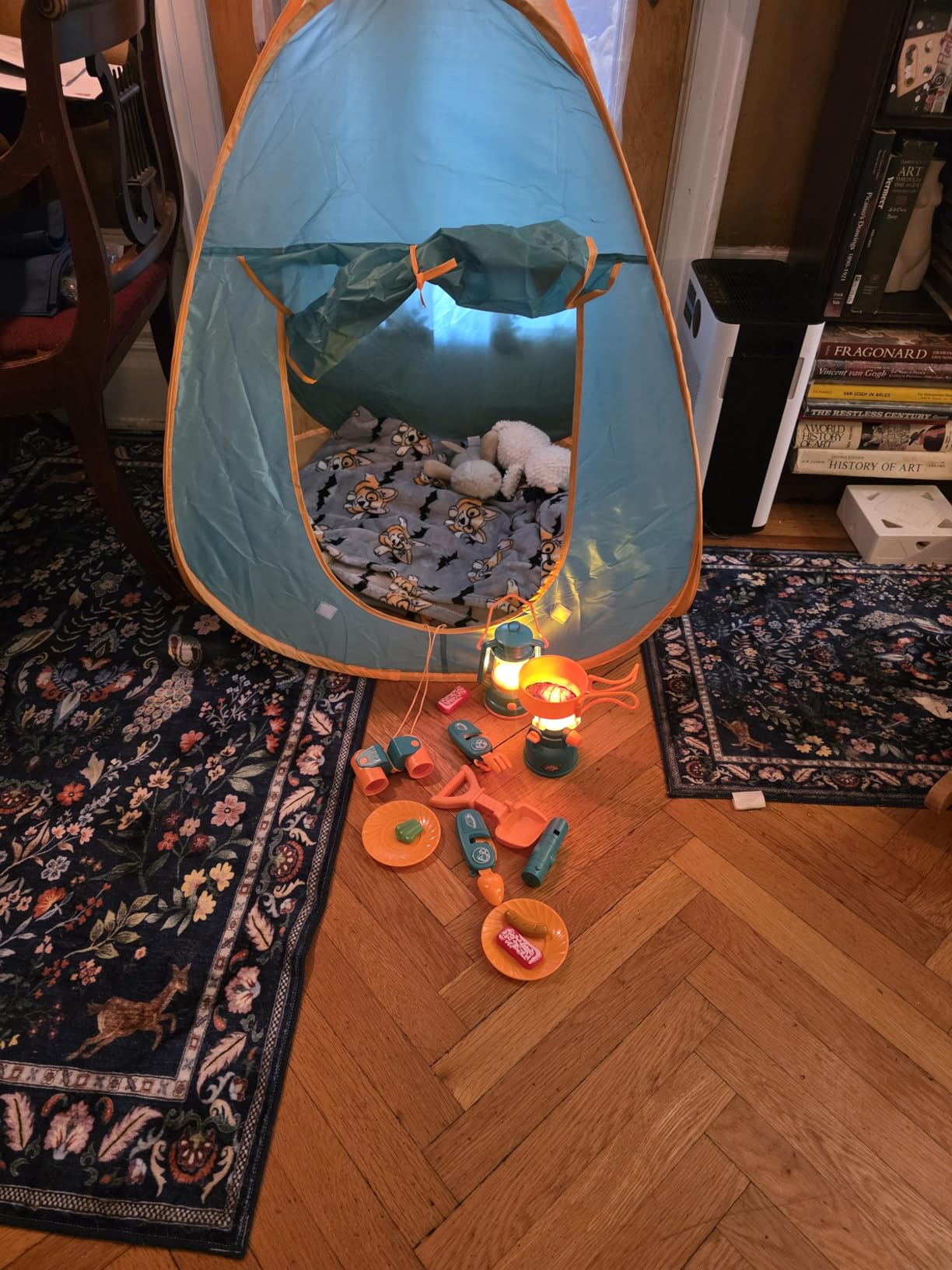
What separates this from a plain pop-up tent is everything inside the bag. You get a 17-piece camping kit: a stove, an oil lamp, binoculars, a utility knife, a whistle, cookware and a shovel, plus the tent itself. That is the difference between a tent your child sits inside and a set that gets played with for months.
The tent is the smallest footprint here at 31 by 31 by 36 inches, and that is the trade-off. It works as a nap nook, a reading nook or a two-toddler den, and the collapsible structure packs it into a corner of a closet. What it will not do is hold a group.
Its 4.8 star average across 11073 reviews is the highest of the twelve, with 84 percent at five stars. Buyers describe it as a gift that works, easy to assemble and stable once set up, with accessories that are not too fiddly for small hands. Very few reviews in the set regret the bundle.
The accessory quality is the honest caveat. The food pieces and cookware are thin plastic that dents when dropped, and the survival whistle is genuinely hard to keep clean once a toddler has blown into it. Neither ruins the set, but both are the parts that disappoint after the first week.
The tent body itself is straightforward fabric on a collapsible frame, and the listed manufacturer age is 36 months, with the product page also recommending ages three and up. In practice we would treat it as a three-to-six-year-old toy: old enough to run pretend camping, young enough that the scale still feels like a real shelter.
Who this tent suits
A parent looking for one purchase that covers pretend play, quiet time and a nap spot without a second accessory purchase. It is also the easiest option here to hand to a grandparent or take to a park, since it collapses flat and weighs very little.
Pair it with a foam mat and it becomes a screen-free afternoon setup that works as well in a living room as it does on a patio. The lamp and stove light up with two AA batteries each, which adds a glow factor that holds up after dark.
Where it falls short
Size, mostly. With two children over six inside, one of them ends up sitting outside. If your goal is a shared fort for siblings, step up to the UTEX 8-piece set or the Little Dove extra-large teepee.
It is also a lightweight fabric structure, so treat backyard sessions as supervised calm-weather play rather than anything that has to survive a gust or a downpour.
4. Play22 Knight Castle Tent – Best for Two or Three Children on a Nap
Knight Castle Kids Play Tent for Toddlers – Gray Red Portable Pop Up Tent
Polyester knight castle
40 x 40 x 53 inch
Ages 3 and up
3 pounds
Pros
- Comfortably holds 2 to 3 children
- Two mesh side windows plus roll-up door
- Folds into the zipper case
- Doubles as a nap spot or ball pit
Cons
- Fabric and stitching tear within weeks
- Support ties can be untied by children
- Awkward to assemble alone
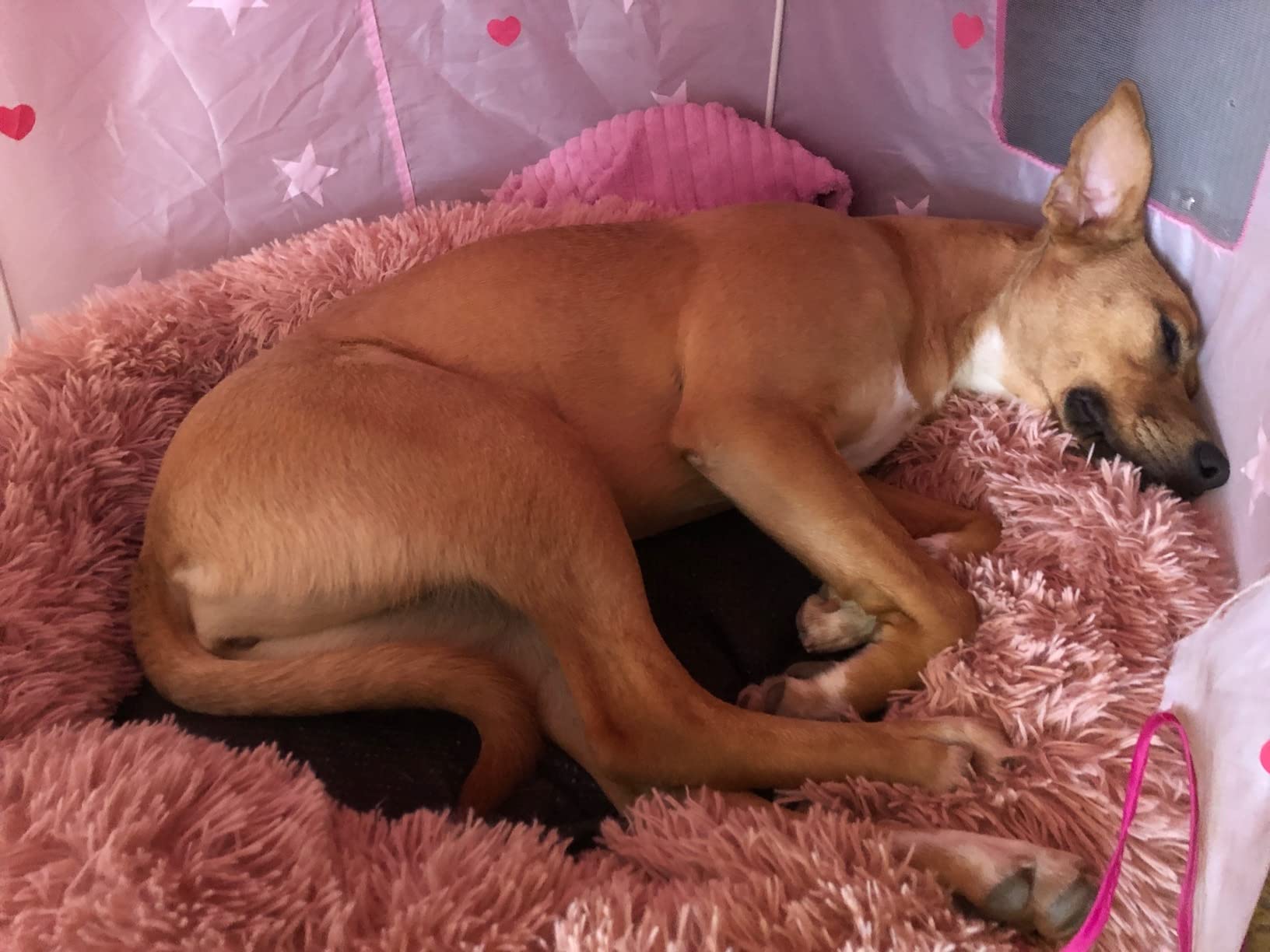
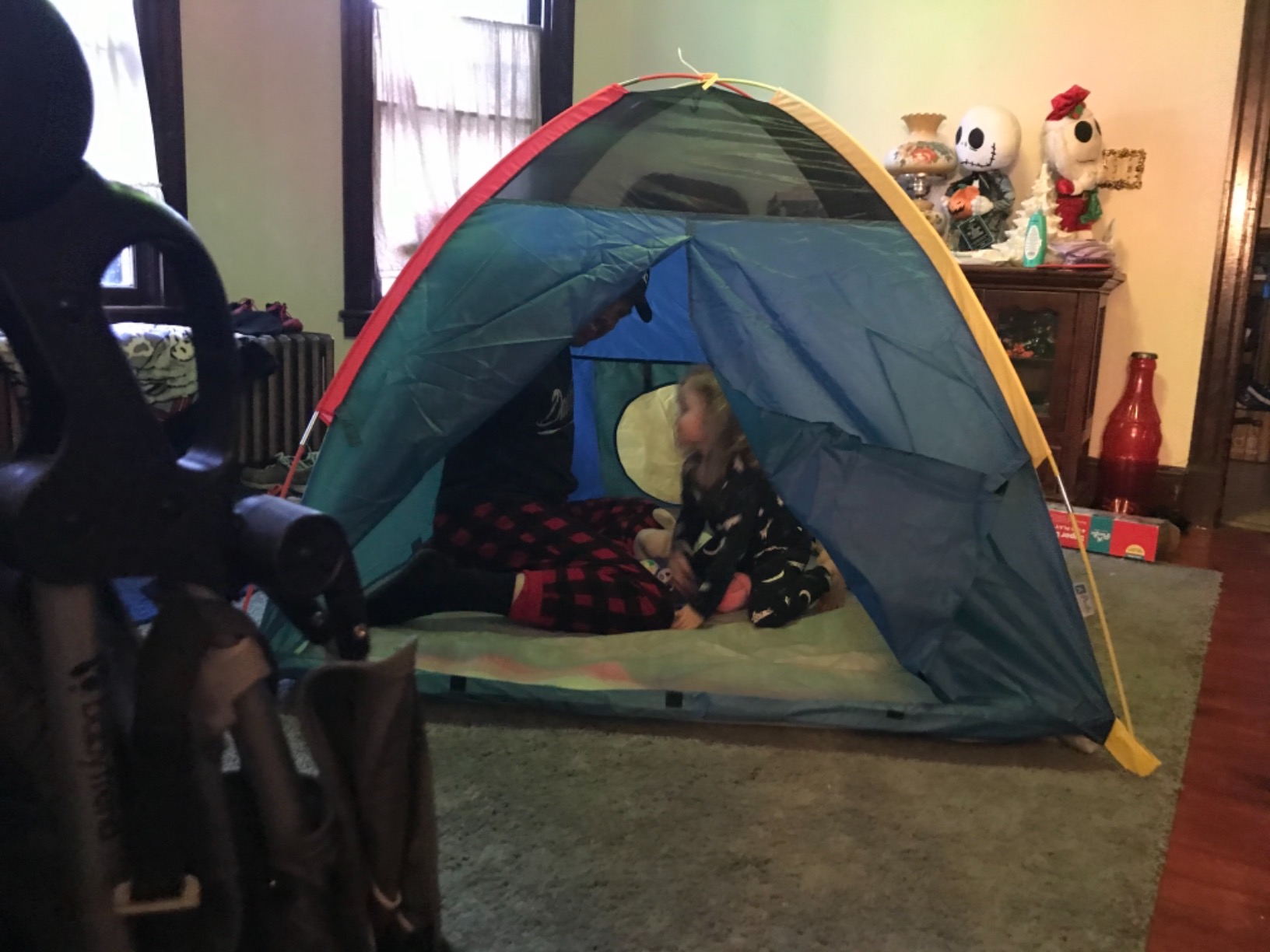
The Knight Castle is a grey and red castle dome that suits a house with two or three kids who nap in shifts rather than together. At 40 inches across and 53 inches tall there is room for two children lying down, and reviewers routinely describe it working as a nap spot, a ball pit or a play den on different weeks of the same month.
Airflow is handled better here than in the Monobeach castle. Two mesh side windows and a roll-up front door give a parent sightlines into the interior and let warm air out, which is what makes it workable on a covered patio rather than just in a bedroom.
Its 4.4 star average comes from 6316 reviews, 71 percent of them five star. Owners like the castle look, the two-to-three child capacity and the fact that it packs into the zipper case. They also say it feels sturdy once it is up, which is the surprise given how thin the material looks.
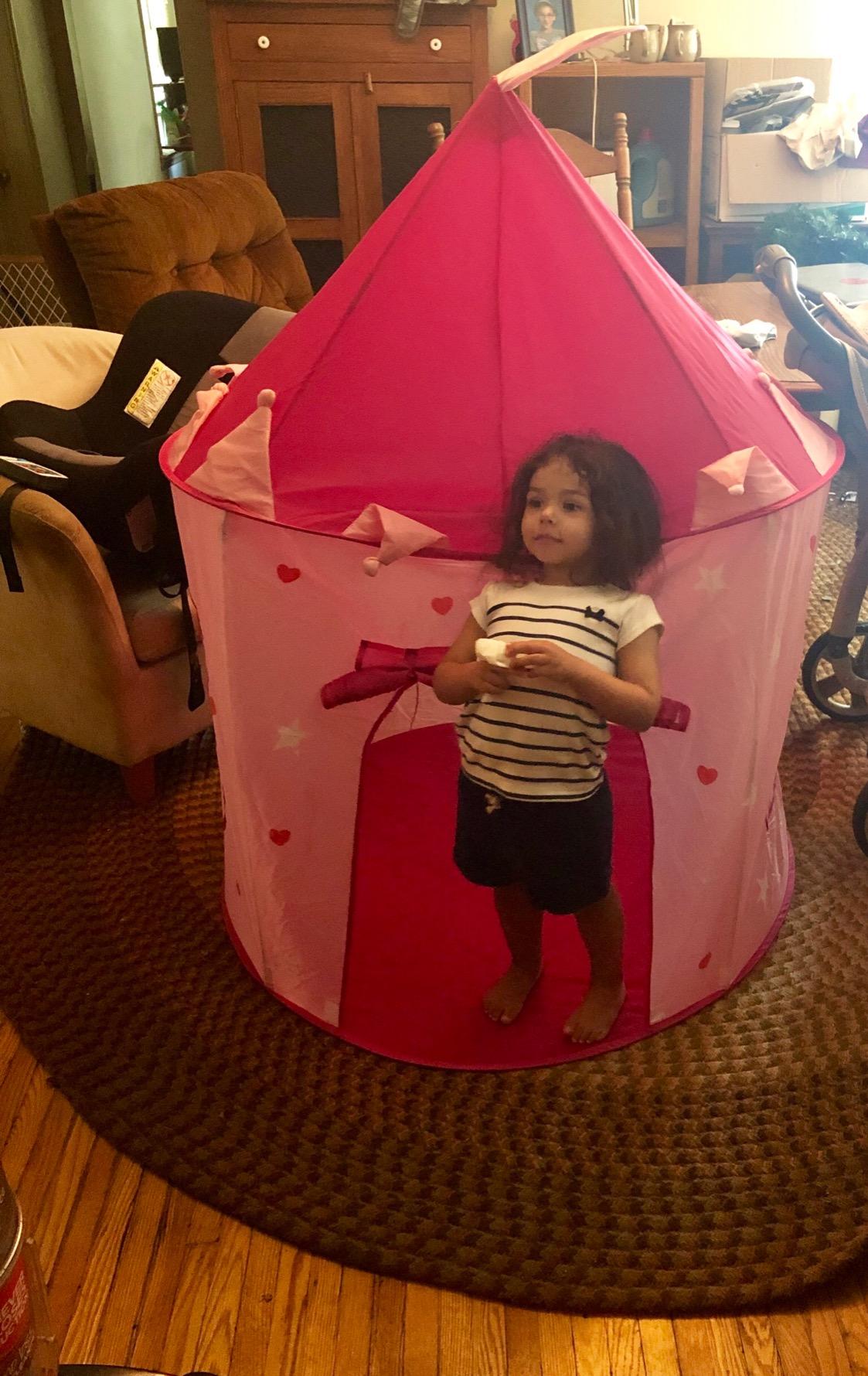
The recurring complaints are durability and assembly. Fabric and stitching are thin enough that reviewers report tearing within weeks of ordinary play, and the support rods are held by ties that an older child can reach and untie, after which the frame twists or collapses. That second one is the real issue, because a castle that folds while a child is inside it ends the fun fast.
Assembly is awkward solo. Multiple owners describe needing a large adult on the floor and a second pair of hands to hold the rods while the sleeves go on. Plan for that before you promise a five-minute setup.
Who this tent suits
Families with two or three children aged three and up who want a castle theme in grey and red rather than pink, and who like the idea of one tent rotating through nap time, ball pit time and reading time. It is also a good fit for a playroom shared by children of similar ages.
Because it folds into the included case, it suits renters and anyone moving house. Two mesh windows also make it a better choice than the Monobeach castle if supervising from outside matters to you.
Where it falls short
The untieable support ties are the reason we would not put this in the hands of a child old enough to reach the top of the frame and pull. Three years and up is the listed guidance, but the practical ceiling is younger than that label suggests.
It is also the bulkiest of the small castles when set up, and the circular footprint takes over a small room. If you need floor space for other furniture, the NARMAY dome gives more usable area at 60 inches square than this 40 inch footprint provides.
5. alprang Galaxy Dome – Best Space and Astronomy Theme Tent
alprang Space World Play Tent Galaxy Dome Playhouse for Boys and Girls Imaginative Play-Astronaut Space for Kids Indoor and Outdoor Fun, Perfect Kid’s Gift- 47″ x 47″ x 43″
Space dome
47 x 47 x 43 inch
Double-stitched polyester
1.9 pounds
Pros
- Galaxy print drives role play
- Double-stitched polyester resists tearing
- Two poles set up in about 10 minutes
- Mesh top panel for airflow and visibility
- Fits 2 to 4 children plus kid furniture
Cons
- Fiberglass segments can snap when folded tight
- Floor fabric is not water resistant
- Must be fully disassembled to move rooms
Of the twelve here, this is the one that survives rough play best. The fabric is double-stitched rather than single, and reviewers repeatedly single out how it holds up against dragging toys, climbing in and out, and general tumble-around use. At 4.6 stars across 6150 reviews, with 78 percent at five, it is a durable option that is not the biggest.
Space is the other draw. A 47 inch square footprint at 43 inches high fits two to four children and, according to owners, an adult kneeling inside. The mesh top panel is unusually practical: it gives airflow and lets a parent look down into the tent from a standing position.
Two flexible fiberglass poles do the work, and setup is around ten minutes the first time with no tools involved.
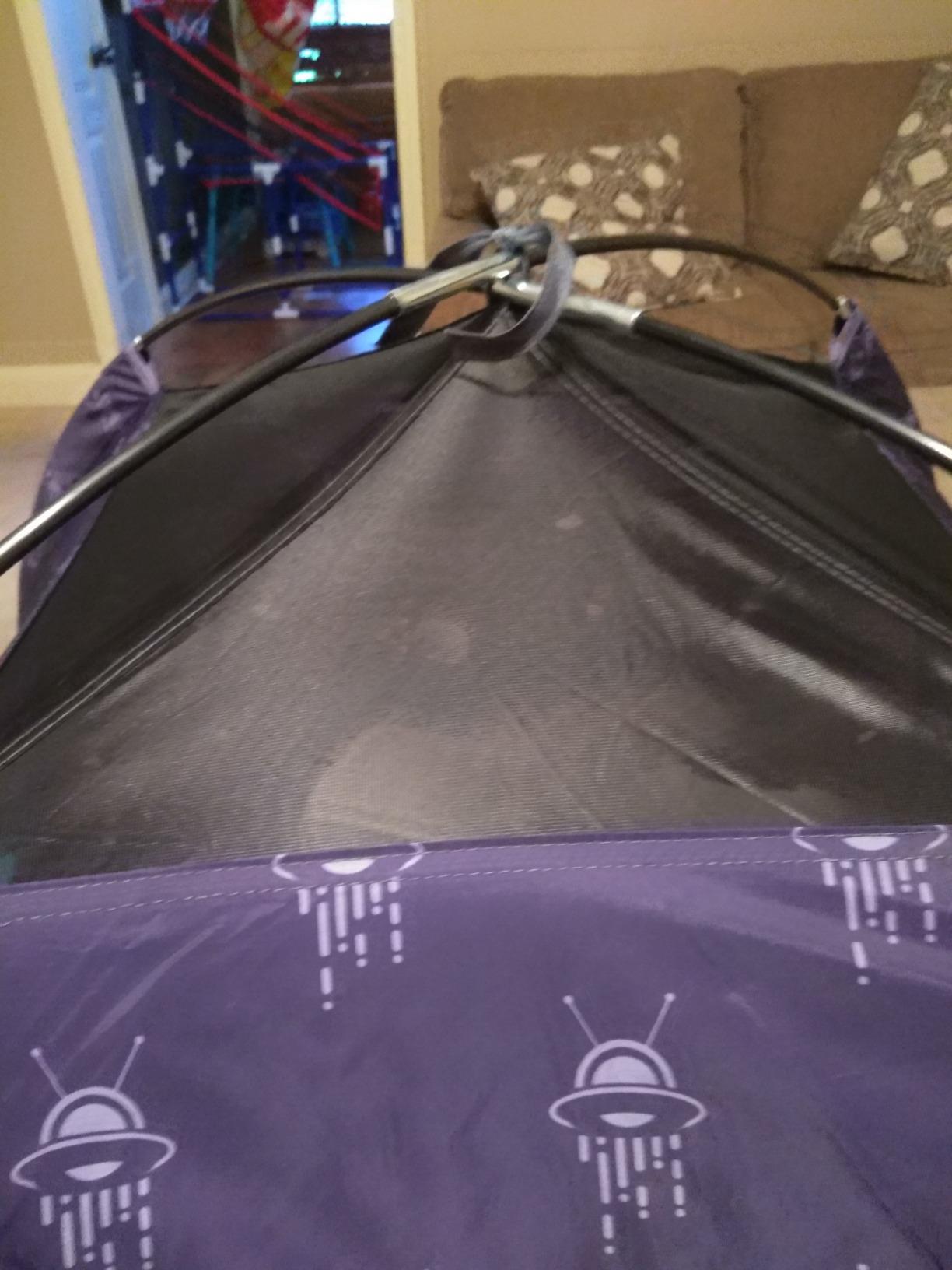
Two specific failure modes recur. The fiberglass pole segments can snap if the dome is folded tightly for storage, which is a real risk given the tent has to be fully disassembled to move between rooms. And the floor fabric is not water resistant, so on damp grass it needs a tarp underneath or the whole base ends up wet.
The last thing to know before you buy is the moving cost. Because it comes apart rather than folding flat, relocating it from living room to patio means rebuilding the frame, which changes how often you will realistically use it outdoors.
Who this tent suits
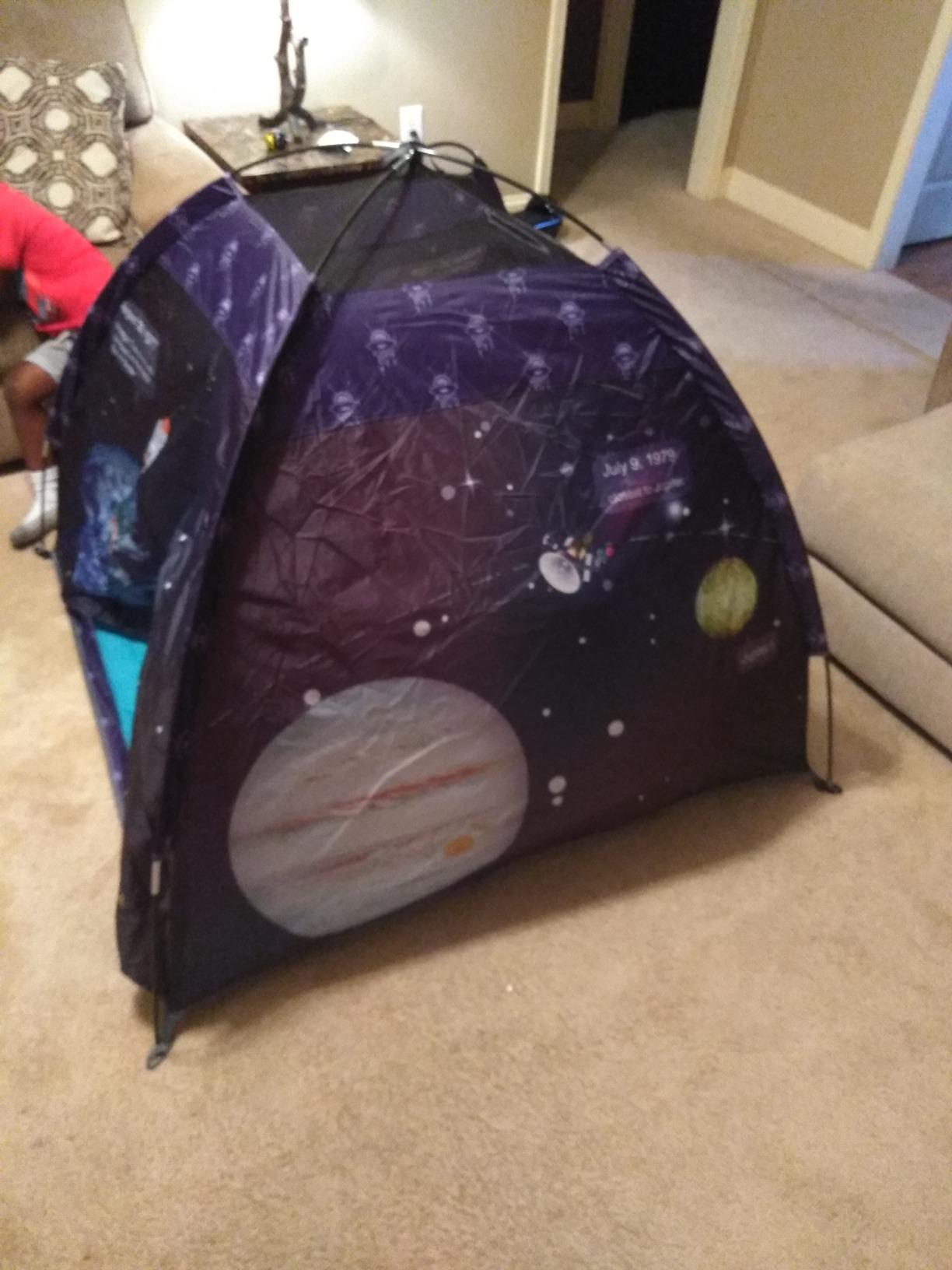
A child obsessed with space, rockets or astronauts who wants a den that looks like the inside of a spacecraft. The star print does most of the work in terms of play value, and parents say it turns into a launch control room within a day.
It suits a family with two to four children, or one child plus a large soft play set. The 47 inch footprint gives more usable floor than the 40 inch castles while staying small enough for a living room.
Where it falls short
Outdoors, the floor is the limit. Without a tarp, a damp lawn transfers straight through to whatever the children are sitting on, and the tent is not intended to be a rain shelter.
For a family that wants the tent to live outside permanently, or that moves it daily, the constant reassembly will get old. Choose a fold-flat sprung frame if that is your pattern.
6. NARMAY Easy Fun Dome Tent – Best for Standing Room Across a Wide Floor
NARMAY® Play Tent Easy Fun Dome Tent for Kids Indoor/Outdoor Fun – 60 x 60 x 44 inch
60 x 60 x 44 inch dome
Waterproof floor
Mesh top panels
Ages 3 and up
Pros
- Roomy 60 x 60 x 44 inch dome
- Five-year-olds can stand up inside
- Waterproof floor keeps skin dry
- Oversized top mesh panels for airflow
- Color-coded pockets for fast setup
Cons
- No stakes or tie-downs included
- Repacking into the bag is fiddly
- Best stability is indoors
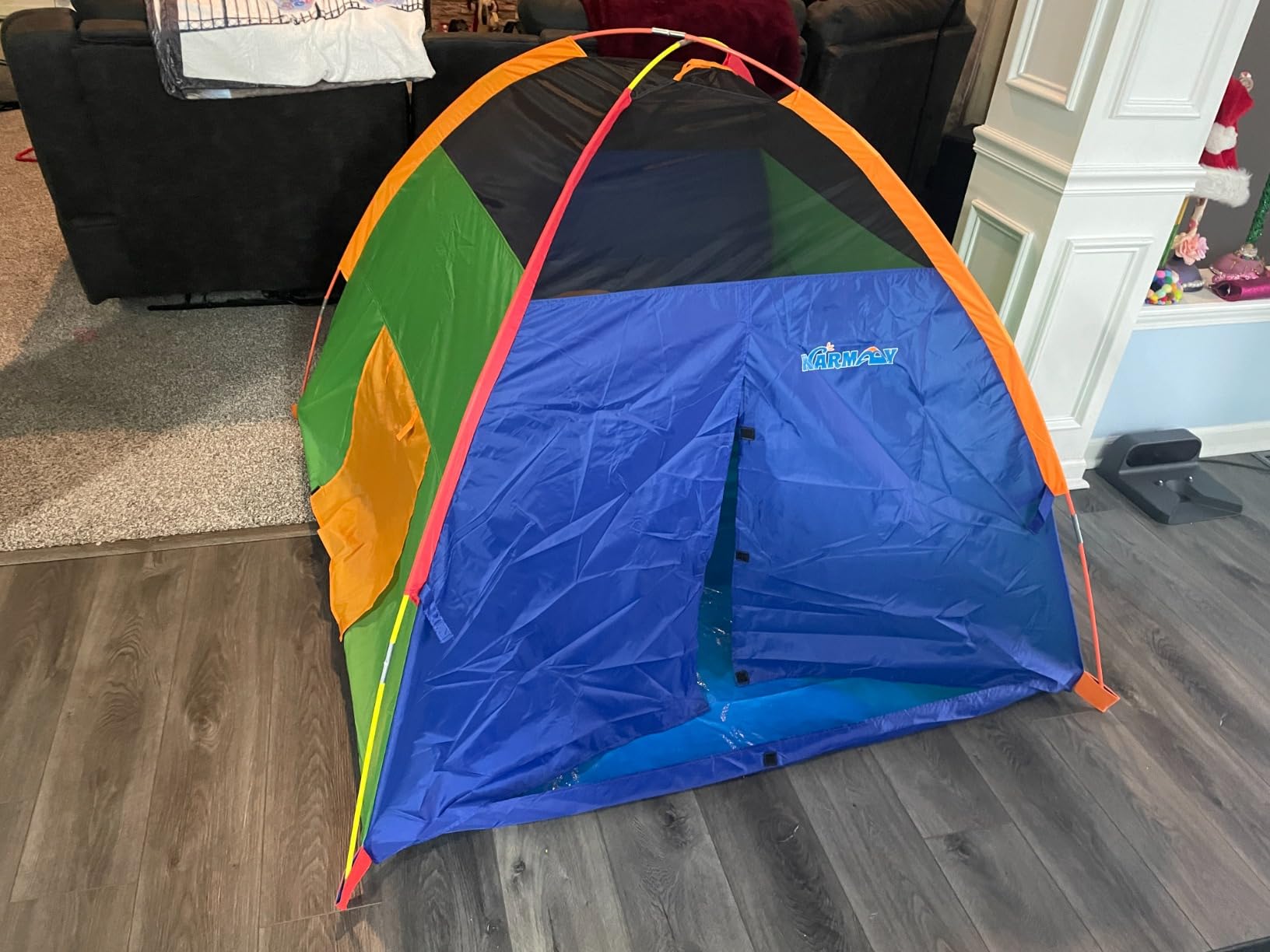
The NARMAY dome solves a problem most of these tents create: not enough room to actually sit as a family. At 60 by 60 inches with a 44 inch peak, a five-year-old can stand up inside, and the waterproof floor means damp grass is not automatic damp children. For a family with several kids who all want to be in the same structure, that combination is hard to find.
It is also the quickest frame to work with. Color-coded pole pockets mean you are matching colours rather than counting holes, and owners report setup in under five minutes once the first time is behind you. The oversized top mesh panels move a lot of air for a structure this size, which matters in a closed dome.
Its 4.7 star average from 2928 reviews sits alongside the Monobeach castle. Reviewers consistently describe it as bigger than expected and good value, which is the reaction you want from a tent that looks large in photos.
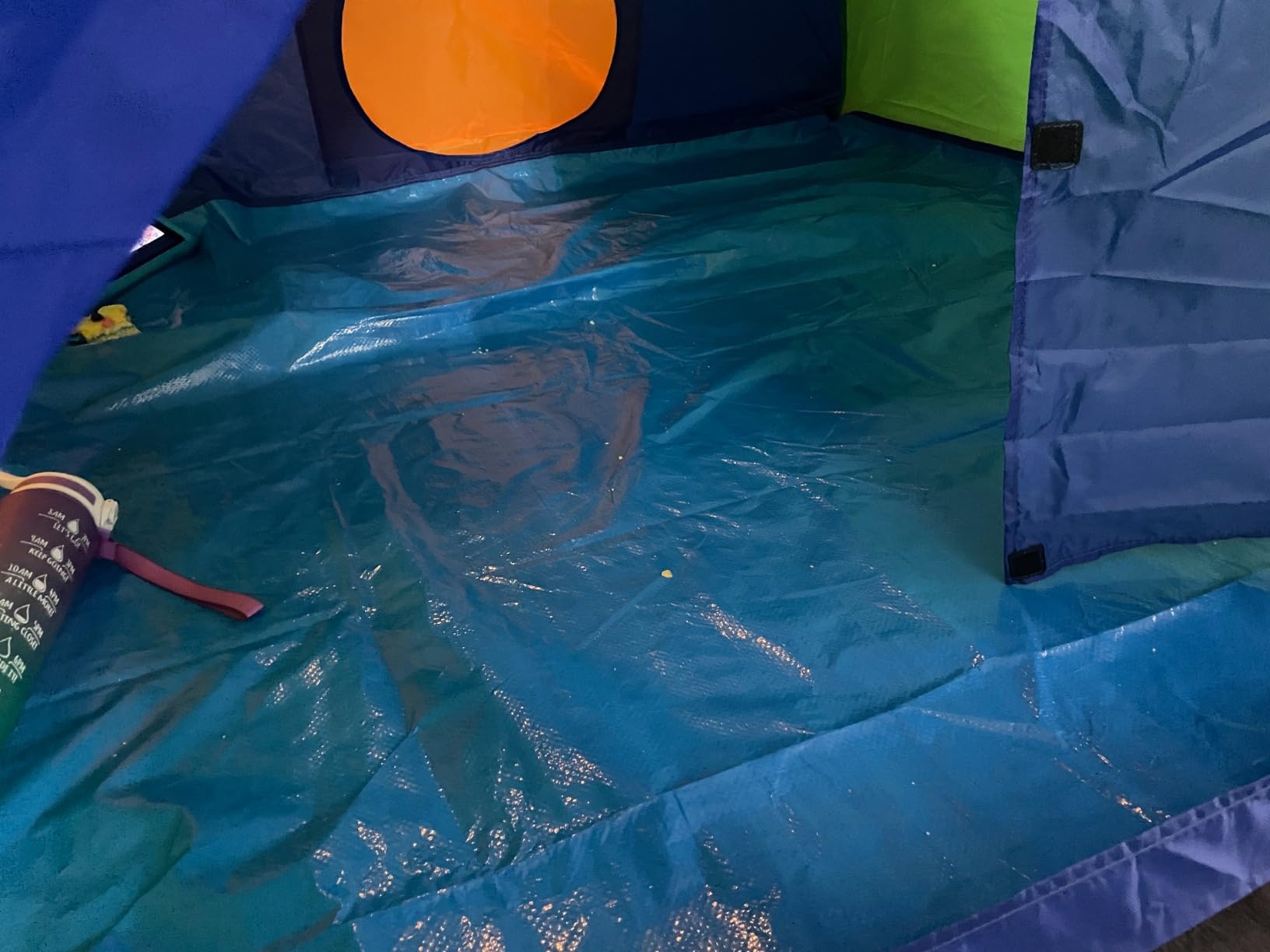
Two notes. The package includes no stakes and no tie-downs, so outdoor use is short-term unless you add your own anchoring, and the big dome is exactly why it needs anchoring. And folding it back into the carry bag is fiddly, because the colour-coded pockets make assembly easy but do nothing for pack-down. Expect a short argument with the fabric before it goes in the bag.
Stability is at its best indoors. The shock-corded PE-coated fiberglass poles give a rounder, more forgiving shape than a straight-pole dome, but 60 inches of fabric still catches a gust like a sail.
Who this tent suits
Families with two or three children who all need to be inside the same tent at once, or a child who wants to stand rather than crawl. The waterproof floor makes it the most practical option here for a covered patio, a damp lawn or a floor that gets wet.
It also works as a base for indoor fort building: the 60 inch square gives room for a table, cushions and two kids to sit at it without their legs sticking out.
Where it falls short
It needs anchor points that do not come with it. On an exposed lawn this is a sail, and the absence of included tie-downs is the single most common outdoor complaint in the reviews.
The 44 inch peak is tall enough for a young child to stand but not an adult, and the footprint is large enough that it will dominate a small living room. Measure before you commit.
7. Super Duper 4 Kid Play Tent – Best Steel Frame for Repeated Rough Play
Super Duper 4 Kid Play Tent
Steel frame dome
46 x 58 x 58 inch
Interior padding
16 ounces
Pros
- Spring steel frame tolerates rough play
- Holds 3 to 4 kids with room to stand
- Interior padding adds safety and comfort
- Meets CPAI-84 and ASTM F963 standards
- Tunnel collapses flat for storage
Cons
- Roughly 4 by 4 foot floor footprint
- Velcro door fasteners lose their grip
- Thin floor tarp suits mild weather
The Super Duper 4 Kid is the tent in our set built around a sprung alloy steel frame, and that single fact changes its character. Where plastic and fiberglass flex, steel springs back. Reviewers describe it taking the kind of treatment that breaks cheaper tents, and the 4.7 star average across 2752 reviews comes with unusually long, detailed reviews, which usually signals a product owners feel strongly about.
It also publishes its safety standards, which almost nothing else in this roundup does. The listing states it meets CPAI-84 and ASTM F963 and that the construction is flame retardant, which is verifiable language rather than marketing. For a family screening for material concerns, that is a meaningful difference from an unlisted fabric tent.
Size works in its favour. At 46 inches high by 58 inches across, it holds three to four elementary-aged children with room to stand, and the interior padding means a child who falls asleep inside is not landing on bare floor.
The floor is the weak point. It is a thin tarp that reviewers describe as better suited to indoors than to harsh weather, so the same tent that shrugs off a jumping child will not keep a family dry. Plan on a groundsheet if this goes outside.
The Velcro door and window fasteners are the other failure point parents report. They lose their grip after a few months of opening and closing, which turns a T-style zip door into a gap that lets light and air in. And the written instructions are limited, so the first assembly takes longer than the sprung frame suggests it should.
Who this tent suits
A household with three or four children, or one very physical child, where the deciding factor is how long the tent survives rather than how cute it is. The steel frame and published safety standards also suit anyone who has been burned by a fabric tent that went at the seams after two months.
It suits older children better than toddlers, since the standing height and the tunnel entry both reward a child who can move independently. The tunnel collapses flat, so it stores well for a family with limited space.
Where it falls short
It is big. Roughly a four by four foot floor footprint, with a 58 inch span, means it claims an entire corner of a room, and the interior padding adds to the volume rather than saving it.
It is also the bulkiest item to reposition despite the light fabric, since the sprung frame is floppy until it is locked. In a breeze it needs holding down. Treat it as a destination tent rather than a carry-it-outside tent.
8. UTEX 8 in 1 Pop Up Play Tent Set – Best Modular Set That Rebuilds Into Different Shapes
UTEX 8 in 1 Pop Up Kids Play Tent with 4 Tunnel, Indoor/Outdoor Playhouse
Eight-piece modular set
190T tear-resistant taffeta
36 months to 7 years
Pros
- Rebuilds into a ball pit
- maze
- tunnels or caves
- Collapses flat to almost nothing
- Mesh windows give airflow and peekaboo
- Tear-resistant 190T polyester handles hose-downs
Cons
- Ground anchors on weak stitching that can tear free
- Tunnel-to-tent joints use two hooks and feel fragile
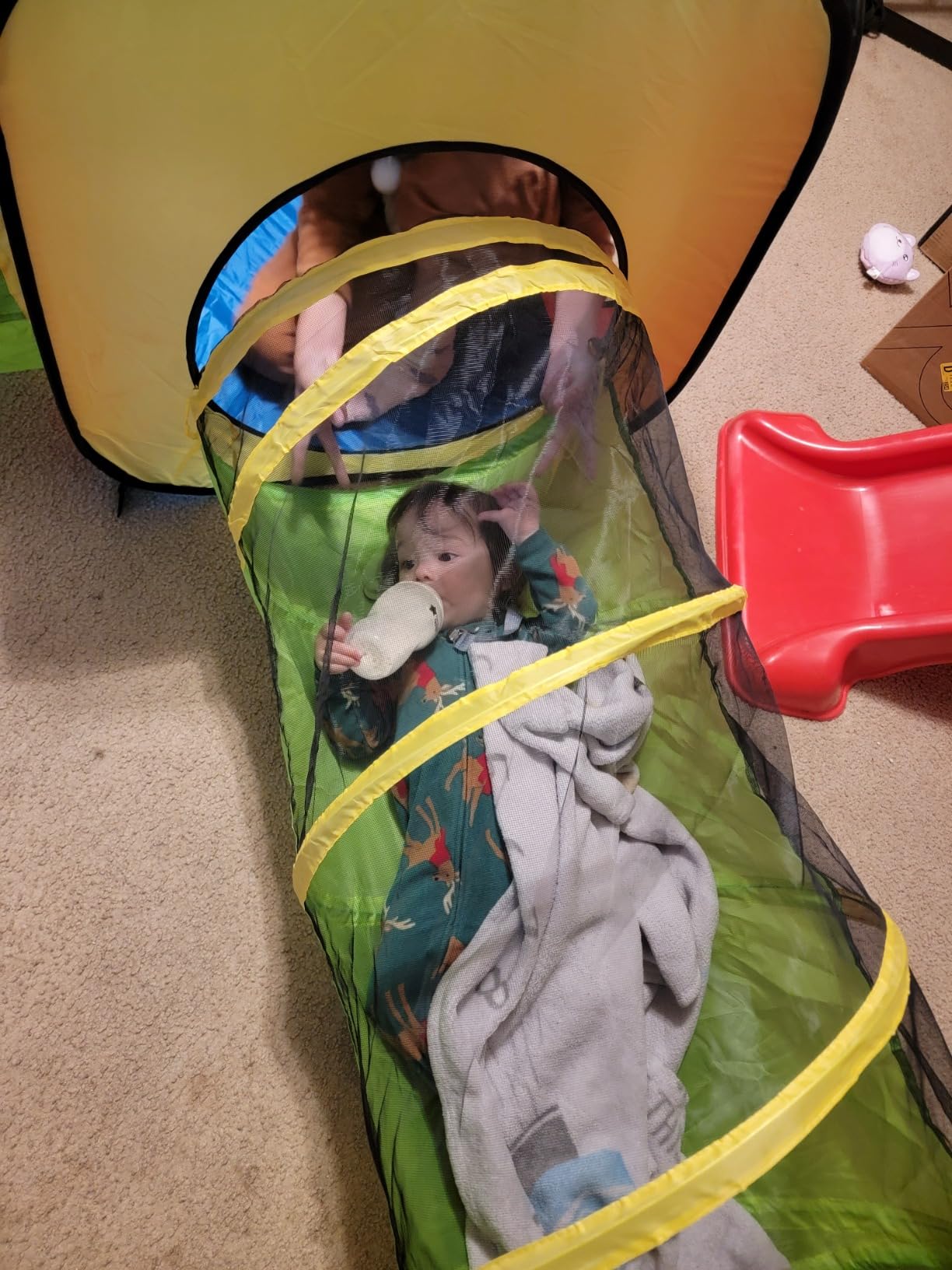
The UTEX set works as a system rather than a single tent. Two square tent houses, two teepees and two long tunnels reconnect into a ball pit, a racing lane, a maze or a cave, and because the pieces lock together rather than being permanently sewn, the layout can change weekly. For two children old enough to argue about the arrangement, that is the appeal.
It also stores better than most of the others here. Eight pieces fold flat to almost nothing, which means the whole set lives in a closet between outdoor sessions rather than permanently occupying a playroom corner. That matters most for families who move it in and out of the house.
The 190T tear-resistant polyester taffeta is thicker and more robust than the standard polyester on most play tents here, and owners say it takes a hose-down without complaint. At 4.5 stars across 2147 reviews with 75 percent at five, satisfaction is solid but not emphatic.
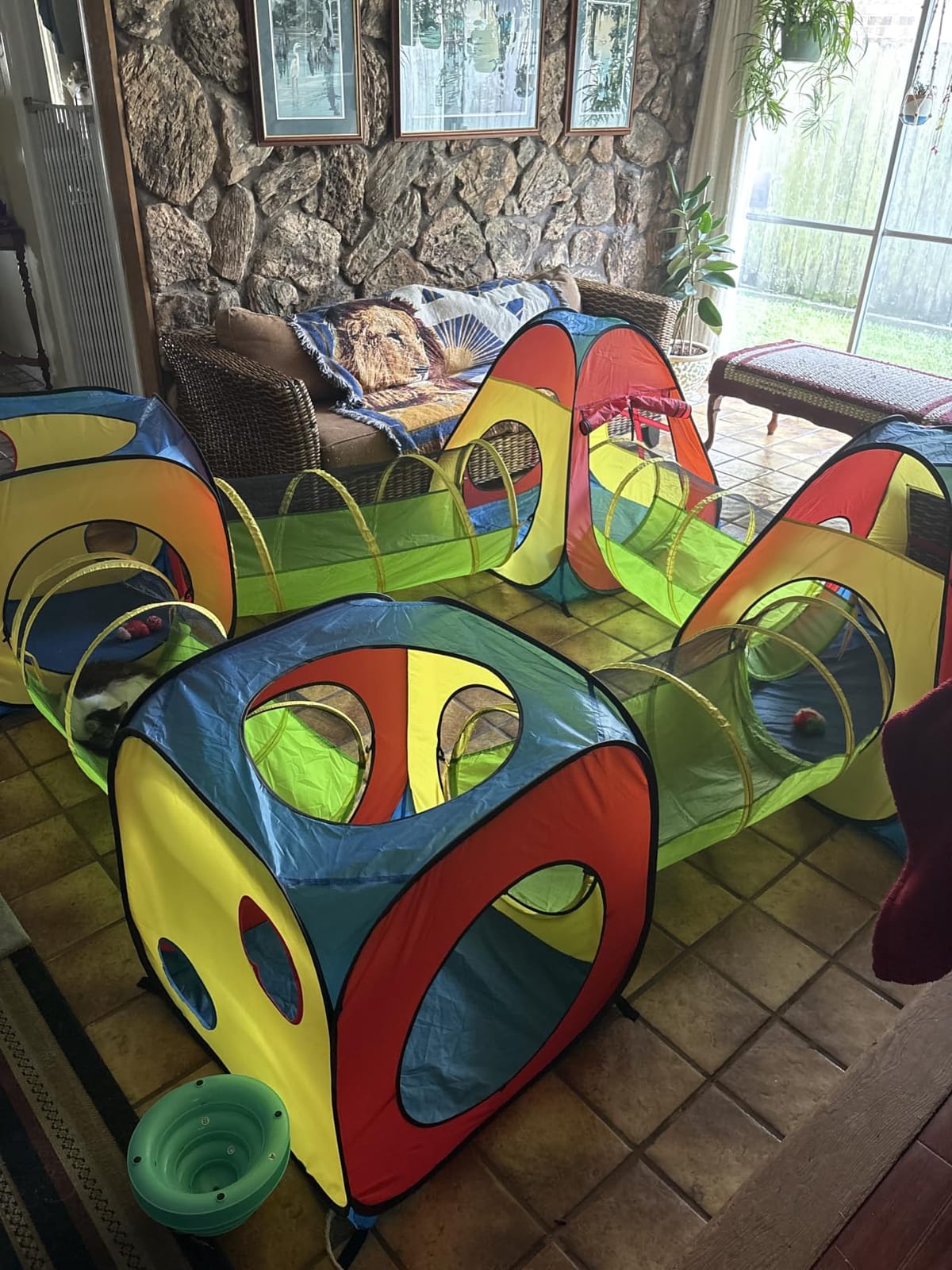
The ground anchors are the honest problem. They are included, which almost no competitor does, but the stitching is not strong enough to trust, and several reviewers report them ripping off in wind. That is a specific failure rather than a general complaint, and it means this set should not be left standing outdoors unattended.
The tunnel-to-tent connections use just two hooks each and feel fragile under repeated assembly. If your children will rebuild the layout daily, expect to re-seat connections more often than the tool-free marketing suggests.
Who this tent suits
Two or more children who want a play structure they control, particularly if they enjoy rearranging things. The tunnelled layout works especially well for hide and seek, race play and ball games in a way a single open dome cannot.
It suits a family that wants one set to move between indoors, a flat patio and a park lawn, because the pack-down is fast and the pieces are light. The mesh windows give enough airflow and visibility for supervised outdoor play.
Where it falls short
Outdoor durability is the limit, and specifically the anchoring rather than the fabric. The taffeta itself handles weather well, but the tent cannot be left up in wind without weights you add yourself.
It also needs real floor space. Fully assembled it covers a large area, so on a small patio you will be choosing between layouts rather than placing one complete configuration.
9. Little Dove Extra Large Teepee – Best for Five or More Children in One Space
Little Dove Extra Large Kids Play Tent with Flags & Star Lights, Portable & Foldable Teepee Tents, Dome Tent Playhouse for Indoor & Outdoor Use, Kids Tent for Boys & Girls, 59x39x59 in, Cream
Machine-washable polyester
59 x 39 x 59 inch
Star lights and flags
Ages 3 and up
Pros
- Fits 5 or more children inside
- Machine-washable fabric is rare in this category
- Two-pole tool-free setup folds compactly
- Double windows with tiebacks for airflow
- Rated number 7 in the category
Cons
- 39 inch depth fits one mattress rather than a full twin
- About 6 percent of reviews are one star on durability
- Flag and light strings snag on the door
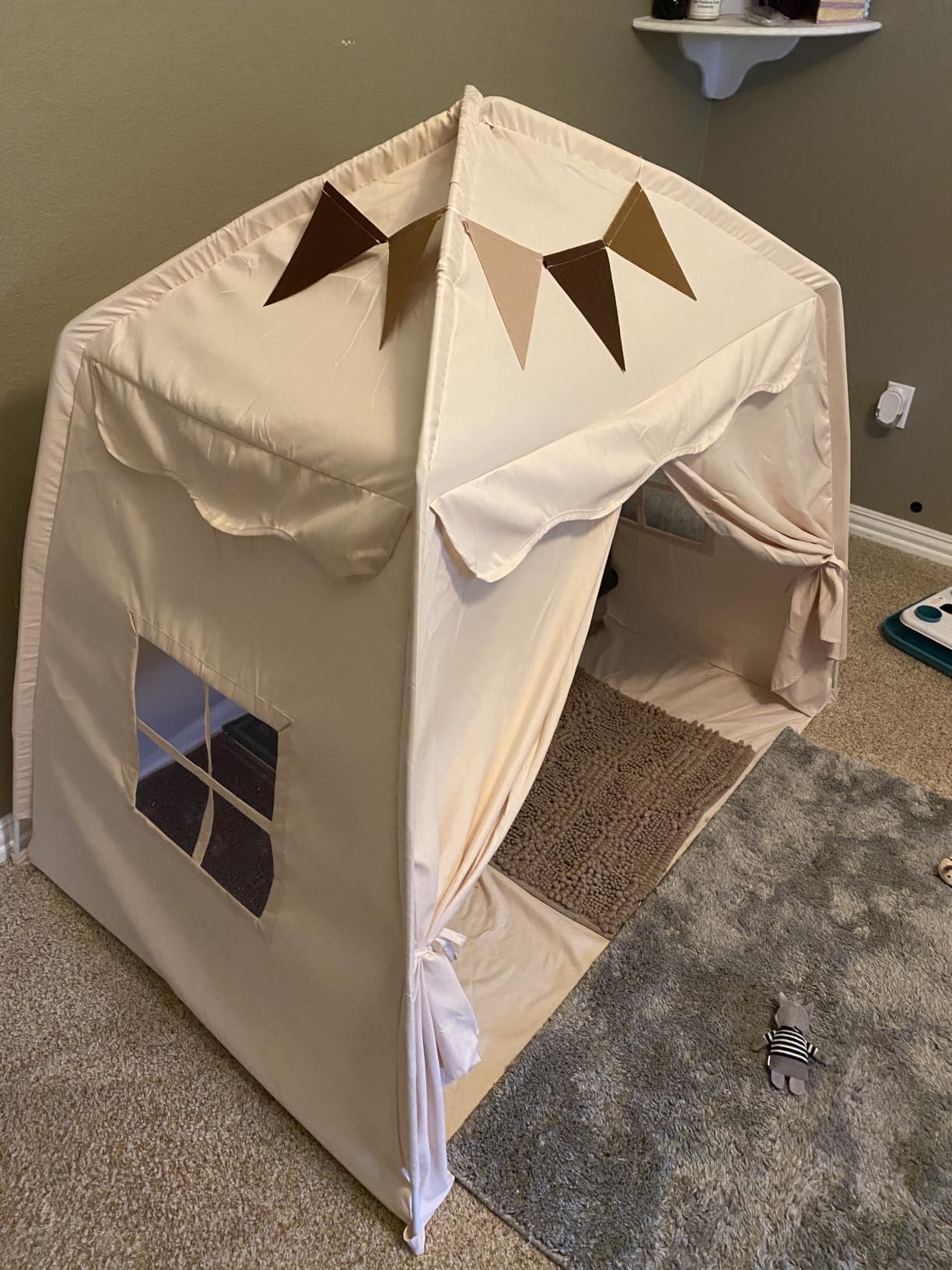
This is the pick when the constraint is how many children need to be inside at once. At 59 by 39 by 59 inches it holds five or more, and the listing is rated for ages three upward, which makes it a genuinely useful shared den rather than a one-or-two-child hideaway.
Machine washability is the detail that sets it apart. Most tents here are wipe-clean at best, and a machine-washable shell means one that has been rained on or crawled in for a year can go in the wash rather than be written off.
Setup is a two-pole, tool-free operation that reviewers describe as straightforward, and the double windows with tiebacks give ventilation plus parent visibility. The decorative flags and star lights come in the box and cover four colour options.
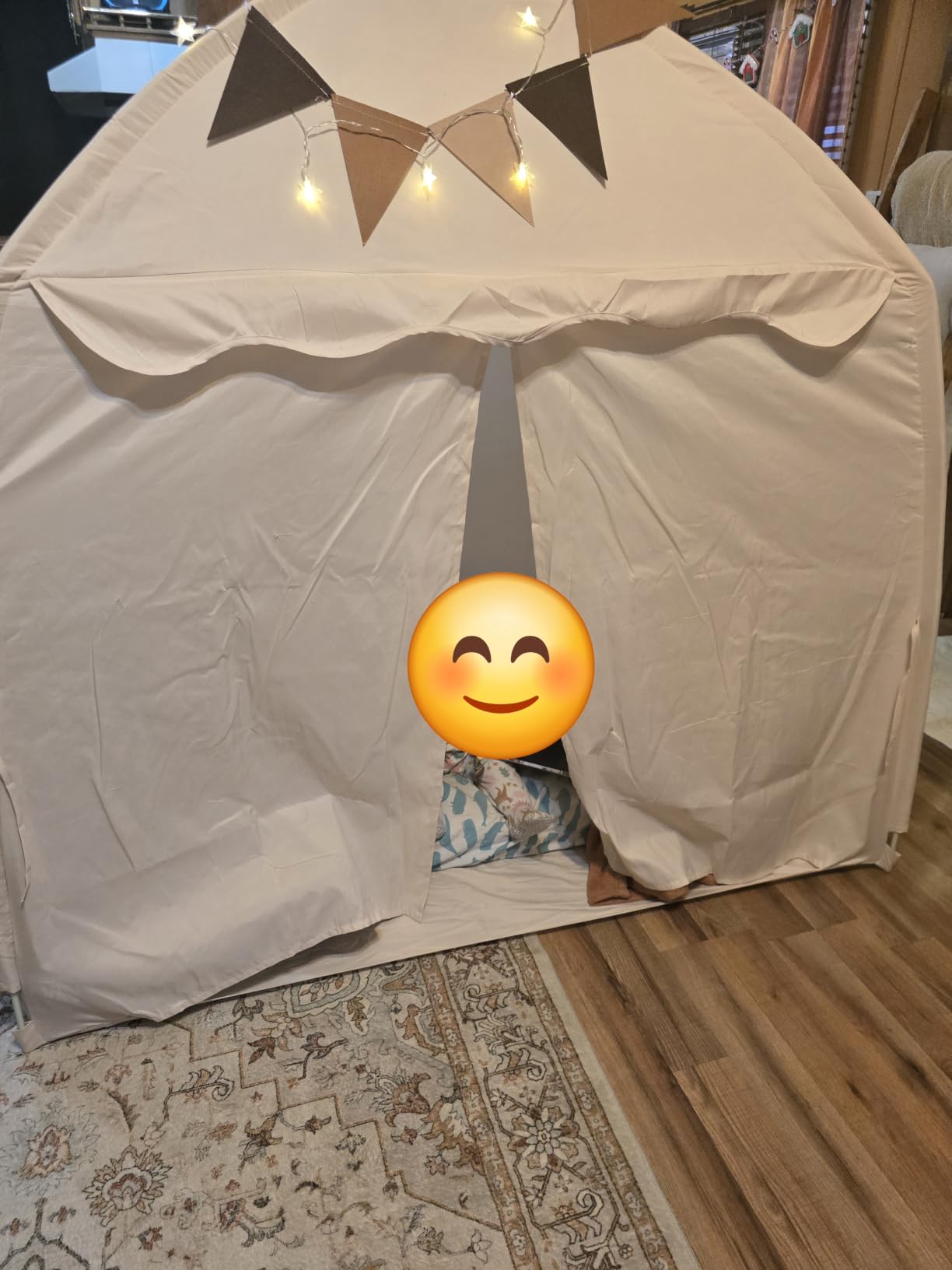
Read the dimensions twice if nap or sleepover use is the plan. The 39 inch depth is the limiting number: it fits a single mattress but not a full twin, and reviewers flag this specifically as the mistake that catches people out. A crib mattress fits comfortably; anything wider than a single does not.
Durability is average rather than strong. Around 6 percent of reviews are one star, and those cluster on units that failed at the seams or poles sooner than expected. That is a normal failure rate for a fabric tent at this class, but it is worth weighing against the washer-friendly upside.
Who this tent suits
A large family or a sibling group of five or more who need one shared space for pretend play, a sleepover gathering or a floor-level fort. The boho styling with flags and star lights also suits a child who has moved past castles.
It suits parents who value washability. If your household’s version of outdoor play involves mud, grass and sprinkler overspray, being able to wash the shell changes the ownership experience more than any other feature in this list.
Where it falls short
The footprint is tall but narrow. If your use case is sleeping rather than sitting, the 39 inch depth rules out the twin-bed arrangement that people usually imagine.
The decorative strings are also a supervision point. Star lights and flag cords near the door opening snag on small hands and can be pulled, so this is a supervised-play structure rather than something to leave a toddler alone inside.
10. Britik Fire Truck Pop Up Tent – Best Lightweight Vehicle-Themed Tent for Travel
Britik Fire Truck Pop Up Tent Kids, Indoor Outdoor Playhouse Toy for 3+
Alloy steel frame
44.1 x 27.5 x 27.5 inch
1.5 pounds
Ages 3 and up
Pros
- Unfolds and stands in seconds
- Weighs only 1.5 pounds
- Wipe-clean fabric
- Roll-up door and rounded edges
Cons
- Light enough to tip or blow over
- No side windows for airflow or visibility
- 27.5 inch ceiling means adults duck
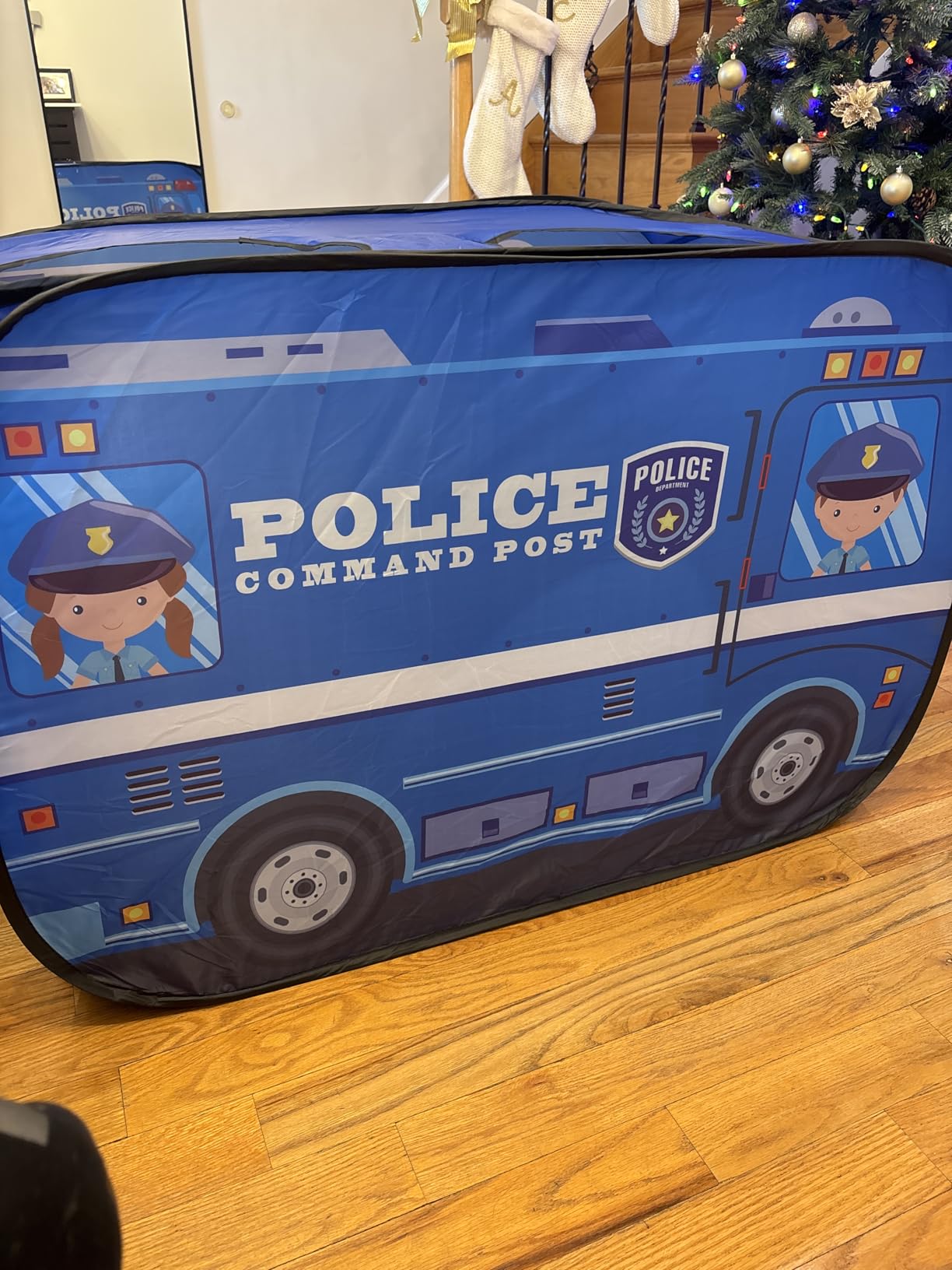
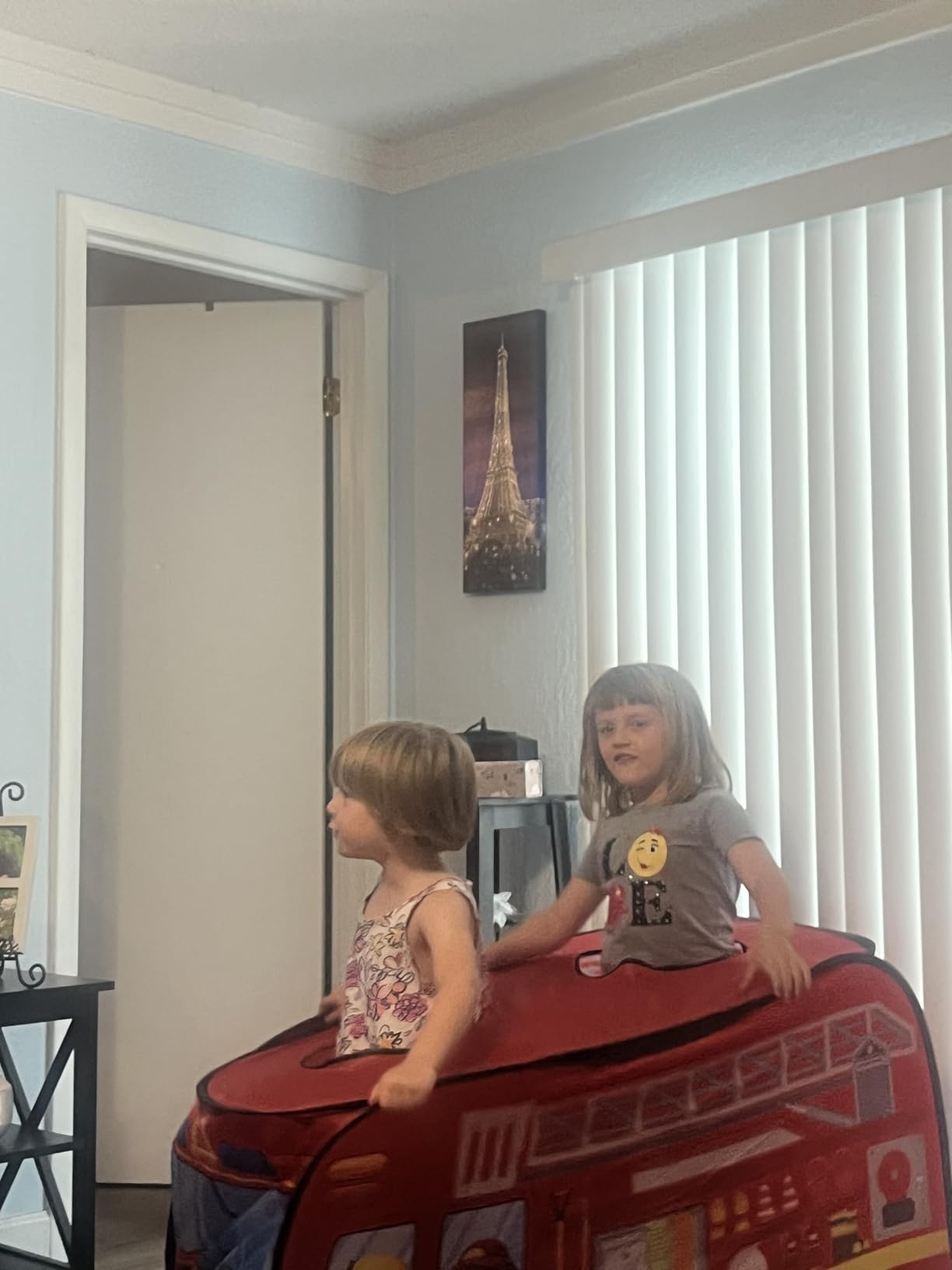
The Britik tent is about convenience. It weighs 1.5 pounds, opens in seconds with no assembly step, and folds down small enough to live permanently in a car boot. For families who use the park, the beach or someone else’s driveway, that changes how often the tent actually gets used.
The vehicle theme works on more than aesthetics. A fire truck playhouse gives a child a role to play rather than a static den, and the top opening turns into a target for a basket-shooting game that adds activity to an otherwise sedentary structure.
At 4.6 stars across 1251 reviews with 82 percent at five, the rating sits well above the 4.4 average of most similarly priced tents. Owners praise the theme, the instant setup and the portability, and note it doubles as a toy storage cube when the tent is not in use.
The flip side of being light is being light. There are no side windows for airflow or for a parent to look in, and the structure tips or shifts in wind unless you put something heavy inside it. Several owners use it as a play tent with soft toys as ballast, which works but is not weatherproofing.
The 27.5 inch ceiling also means an adult has to duck to enter. That is fine for children and awkward for a parent trying to settle a sleeping child inside, and it is the practical reason this stays a daytime tent rather than a nap space.
Who this tent suits
A child aged three and up who likes vehicles, and a family whose play happens away from home: grandparents, campsites, parks, a holiday rental.
It is also the easiest of the twelve to hand to someone else because there is nothing to assemble and nothing to lose.
It also works as a travel companion. If your family already packs kids walkie talkies for a park trip, this is one of the few tents here that genuinely fits in the same bag.
Where it falls short
Stability outdoors is the real constraint. At 1.5 pounds it moves in a light breeze, and the absence of side windows means it also traps heat and hides the interior from view. It works on a still, dry day.
The height rules out sleeping in it, and the awkward refold into the storage bag means every pack-away is a small job.
11. Skywin Inflatable Forest Fort – Best for the Biggest Single Play Space
Air Tent for Kids with Door, Toddler Tents Indoor 77 x 50 in – Forest Fort
Inflatable dome
77 x 77 x 50 inch
Needs a 20 inch fan
Ages 3 to 14
Pros
- Huge 77 x 77 x 50 inch play space
- Inflates in about 30 seconds with a box fan
- No poles and no complicated setup
- Breathable polyester with a full door
- Folds into a bag at 1.8 pounds
Cons
- Requires a 20 inch box fan that is not included
- Needs continuous power so it is not for off-grid use
- Too large for small rooms and travel
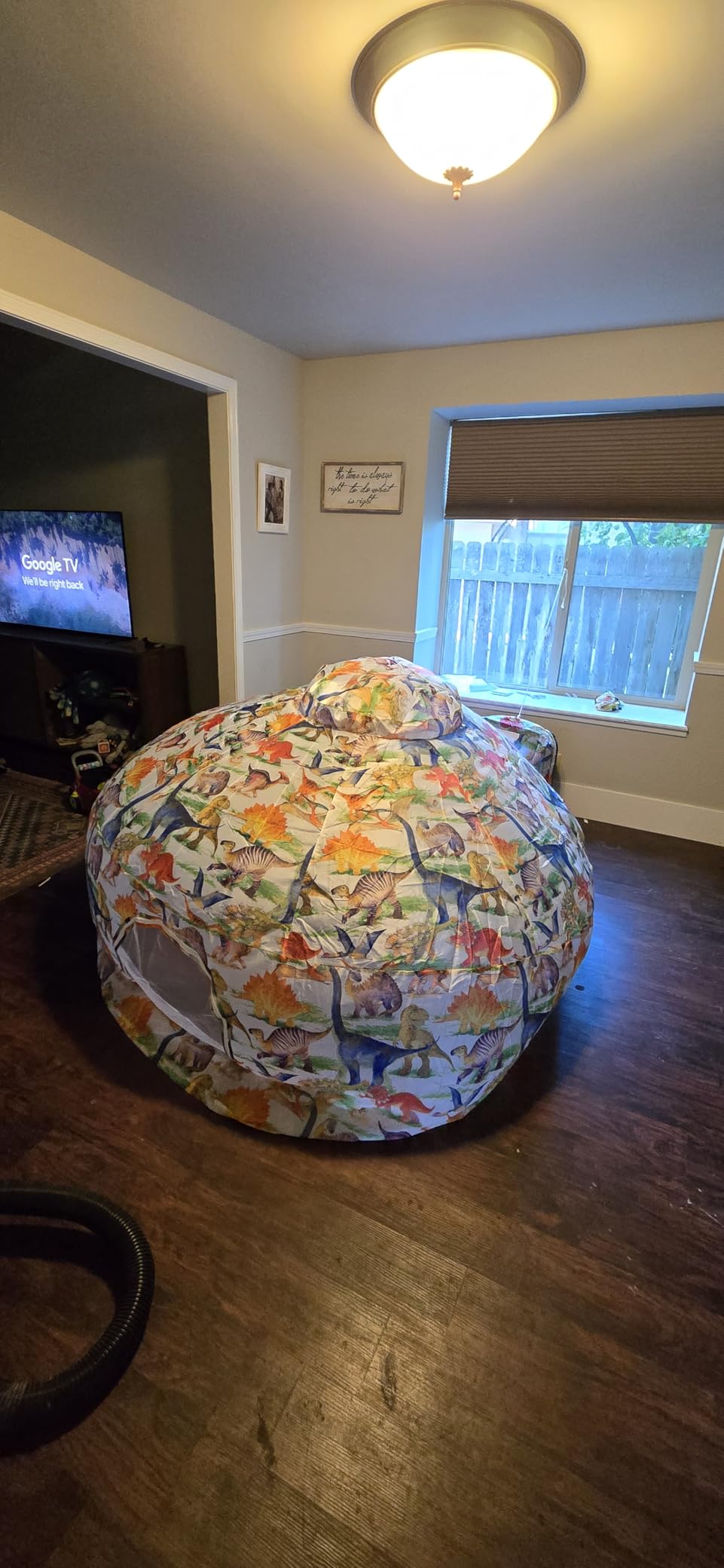
The Skywin inflatable fort is the only option here with no frame at all, and that single design choice produces the fastest setup in the roundup. Connect a household box fan to the inlet and it is inflated in about 30 seconds. Nothing to assemble, no poles to thread, nothing to mis-thread next time.
The payoff is the interior. At 77 inches across and 50 inches high it holds multiple children or a parent and children together, which makes it genuinely usable as a family fort rather than a single child’s den. Owners repeatedly describe it as the biggest private space their kids have had indoors.
The camo and star pattern lands well with children who like adventure themes, and the full door with breathable polyester means it stays usable in a warm room. At 4.6 stars across 1023 reviews with 80 percent at five, satisfaction is strong.
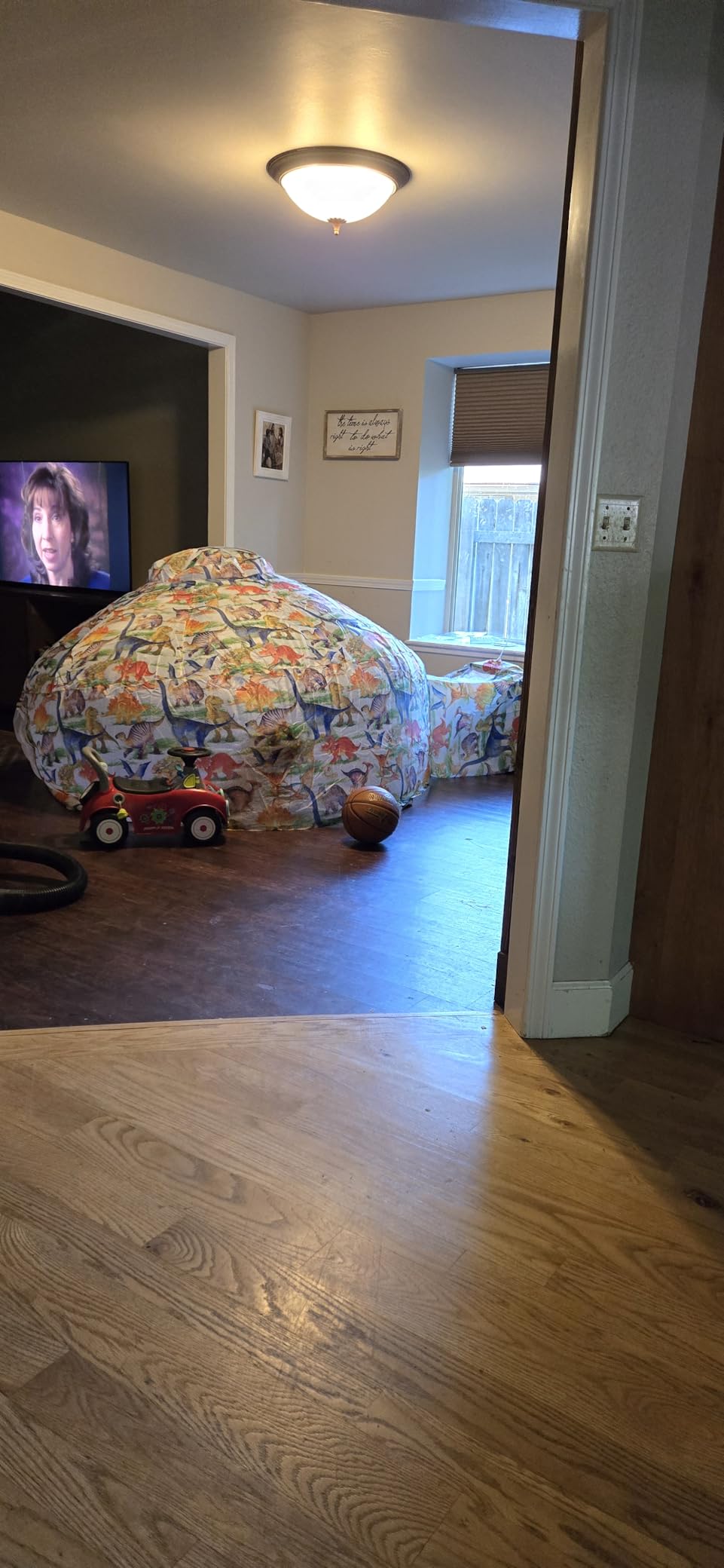
One requirement dominates everything else: the 20 inch box fan is not included, and you must already have one. This is stated repeatedly in reviews because it is the detail that catches people out at the moment of assembly rather than at the point of purchase.
The second constraint is power. Because it stays inflated only while air flows, it needs a continuous outlet and cannot be used at a campsite, a beach without power, or anywhere off-grid. That makes it an indoor structure with patio potential, not an outdoor product, despite the size.
Who this tent suits
It suits a family with several children who want a shared fort large enough to sit in together, in a room with enough floor space to justify it. The stated age range runs from three upward, so older children get as much out of it as toddlers do, which is unusual in this category.
It is a good choice for a playroom, a converted garage or a large living room where a rigid dome would feel cramped. Because it folds into a bag at 1.8 pounds, it can move between two indoor spaces easily.
Where it falls short
Outdoors, the power requirement is disqualifying for anything beyond a covered patio near an outlet. And at 77 inches across, it is impractical for small rooms and for travel; the pack-down is easy but the object you are packing is enormous.
It is also the least repairable option here. There is no frame to replace and no seam to restitch, so a puncture or a failed seam means the structure is finished.
12. porayhut Light-Up Play House – Best Sensory Retreat and Sleepover Tent
Kids Play Tent-Portable Playhouse Children House -Easy Set up Indoor Outdoor with Carry Bag for Kids-Light Strip Design for Night use -Space for Children and Parents-Birthday
Wheel-hub frame
66.1 x 36.2 x 42.9 inch
Fits a twin mattress
Folds to 33 inches
Pros
- Opens in about 3 seconds with no assembly
- Interior fits over a twin bed or crib mattress
- Three-color LED lighting with remote
- Folds to 33 inches and weighs 7.2 pounds
- Soft wear-resistant polyester described as formaldehyde-free
Cons
- Higher cost than every other tent here
- Light settings cycle rather than holding a fixed colour
- USB light strip needs a power source that is not included
The porayhut is the only tent here designed explicitly as a sensory space, and it shows in the dimensions. At 66.1 by 36.2 by 42.9 inches the interior fits over a twin bed or a crib mattress, which means a child can sleep inside rather than just sit in it. That single feature changes which families can use it.
The wheel-hub frame opens in roughly three seconds with no assembly, then folds down to 33 by 5.5 by 5.5 inches. That flat fold is what makes it a travelling structure rather than a permanent fixture, and the included carry bag means it moves between rooms and houses easily.
Three zip doors and two screened zip windows give a level of enclosure and airflow that matters for a calming space. At 4.7 stars across 439 reviews, 85 percent of them five star, that is the highest share of top ratings across the twelve.
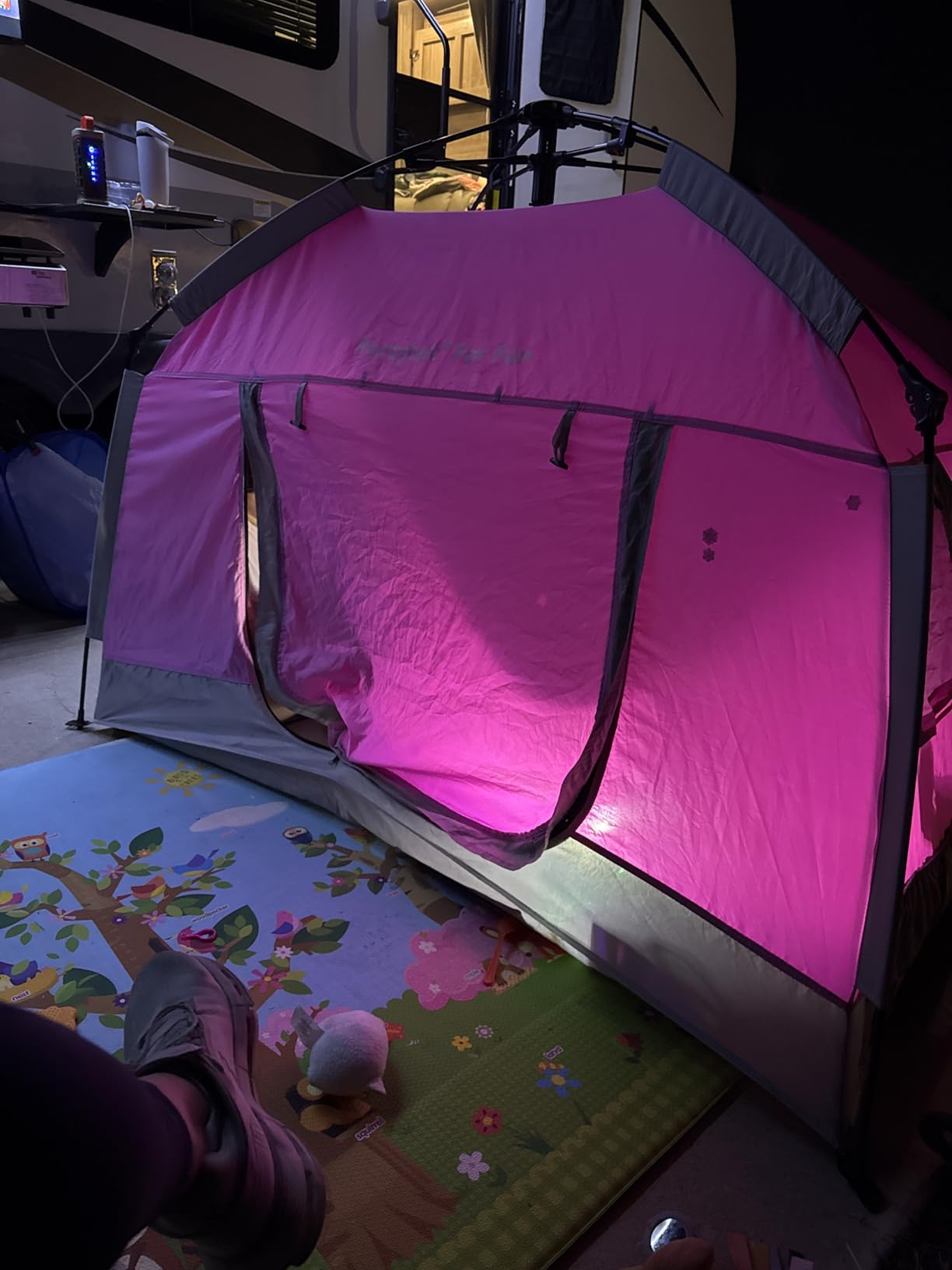
The light strip is the feature that divides opinion. It cycles through three colours and, on some builds, does not hold a fixed setting on the remote, so a child who wants one predictable colour may not get one. It also needs a USB power source, which is not included, so you need a power bank or a socket nearby.
It carries the highest cost tag of the twelve we compared, and that difference is worth stating plainly: you are paying for the frame mechanism, the sleepover dimensions and the light. Parents of autistic and sensory-processing children are the group most likely to say the same, and reviewers recommend it warmly for exactly that use.
Who this tent suits
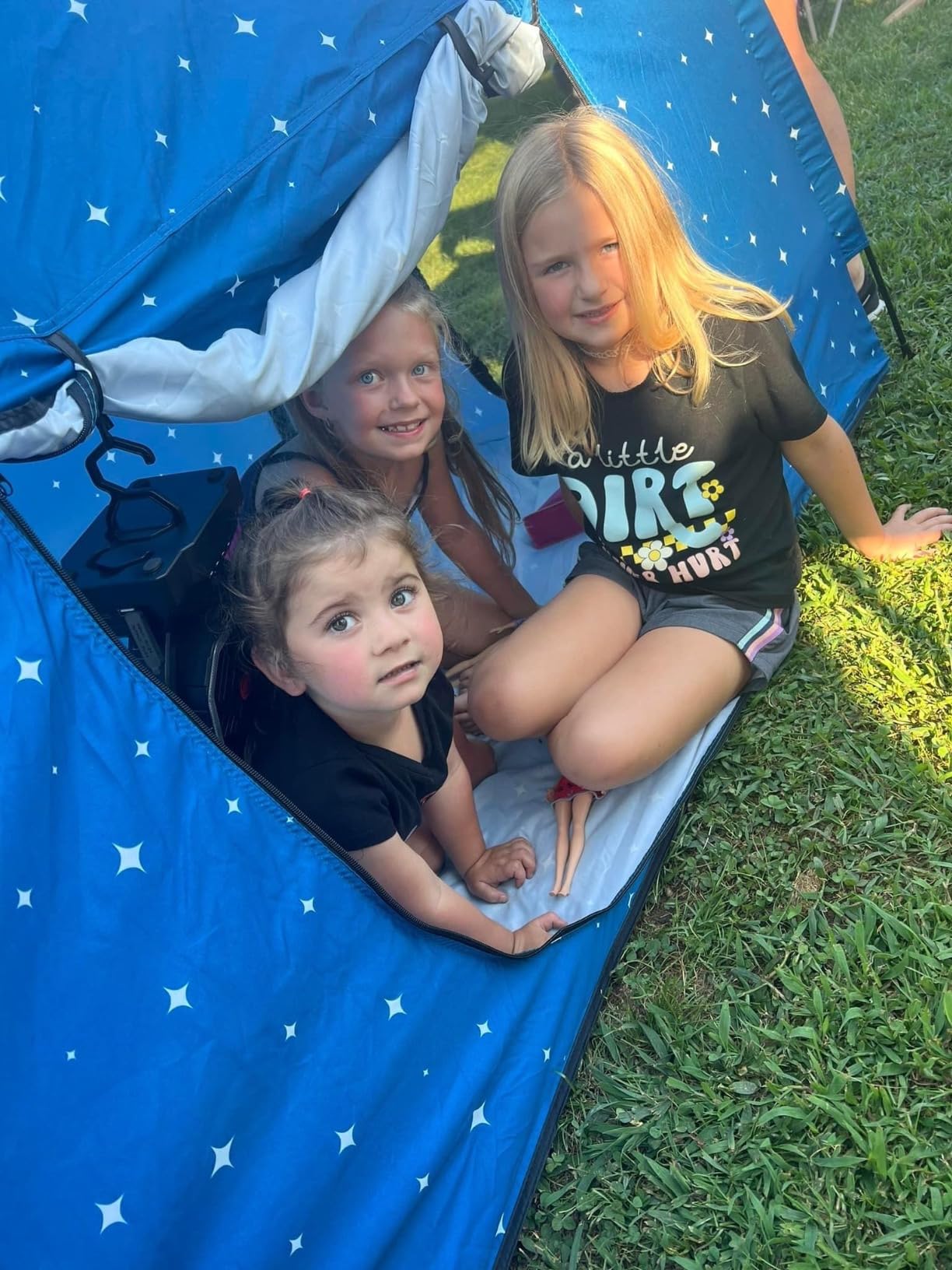
A child aged three and up who uses a tent as a calm-down space, a sleepover base, or somewhere to nap during the day. It is the only one here that fits over a twin mattress, so sleepover guests get a real bed rather than a floor.
It suits travelling families, because the flat fold to 33 inches and a 7.2 pound weight mean it can travel to a relative’s house instead of staying in a playroom. The three doors also make it workable for a child who needs to enter from different sides.
Where it falls short
It costs the most here, and if your child will use it only as an occasional daytime den, you are paying a premium over simpler options that serve the same purpose.
The lighting depends on a power source you supply, and the colour cycling is not fully controllable on every build. For a sensory space, inconsistent lighting is the wrong kind of inconsistency, so test it before relying on it for calm-down time.
How to Choose an Outdoor Play Tent for Kids
Start with construction, because it decides everything else. A sprung frame or inflatable dome opens in seconds and folds flat, a pole-and-teepee frame takes five to ten minutes and usually folds into a bag but not always, and a modular set gives you shape changes at the cost of more pieces to handle. Parent threads describe the sprung options as the ones that actually get reused, because the barrier to using them is zero.
Next comes material. Polyester taffeta is the default here, it wipes clean, it does not mildew as fast as cotton and it is far cheaper, but it is thin and tears at seams. Cotton canvas is heavier and breathes better in heat, which is why we would use it in a warm climate, but it needs a dry store between uses. Foam and EVA play mats are for indoor floor comfort rather than shelter, so treat them as an accessory rather than a tent.
Frame material is the durability switch. Steel survives rough play and springs back; fiberglass is light and fine indoors but can splinter and can snap when folded tight; plastic connectors flex and creep out of alignment under pressure. If you have a child who jumps against walls, put the frame material above the theme in your priorities.
Size should be matched to the number of children, not to the child’s age label. As a working guide, a 30 to 31 inch footprint suits one toddler, 40 to 47 inches suits two children, 47 to 60 inches suits three or four or one child plus kid furniture, and anything above 60 inches is built for groups of five or more. Height matters separately: below about 36 inches is a sit-down space, and above 44 inches a child can stand.
On age, the honest answer is that most of these are listed from three years and up. Practical use rarely follows the label. Children use a tent meaningfully until roughly eight or nine, after which the fort moves to tables, sheets and clip-together kits. For a child who is ten, a tent is a prop; a rigid fort or a wooden playhouse is usually a better investment.
Finally, screen the fabric. Parent threads raise PFAS and flame retardant concerns more often than any other safety question about these products, and there is no easy way to check a listing that does not state it. Look for published standards first: the Super Duper 4 Kid tent states CPAI-84 and ASTM F963 compliance and describes its construction as flame retardant. The porayhut tent states its polyester is formaldehyde-free. Where nothing is stated, ask the manufacturer in the question thread before you buy, and do not treat a vague claim as a certification.
How to Anchor and Store a Play Tent Outdoors
Most play tents are rated for calm-weather use. Treating a covered patio as outdoor play is realistic; leaving a fabric dome standing on an exposed lawn through wind is what produces the shredded-mesh photos in the reviews. Anchor it properly and most of these will hold.
First, position the tent with its broad face away from prevailing wind. A dome presents less sail area side-on than it does face-on, and this step costs nothing.
Second, weigh the base rather than relying on pegs in soft ground. A sandbag, a bucket of soil or a heavy potted plant on each of the four base corners does more than a stake in lawn, and it works on a patio where stakes are not an option.
Third, if you are using guy lines, attach them to the frame at the ridge or upper seam rather than to the fabric at floor level, where the first tear will otherwise start.
Fourth, bring it in when the wind picks up rather than waiting. A pop-up dome is designed to move and be reset; a teepee caught mid-turn is how poles break.
For storage, dry the tent fully before folding it, because damp fabric folded into a bag for a week is how mildew starts. That question comes up repeatedly in parent forums and it is the single most avoidable failure in this category.
Machine-washable models can go in the wash on a gentle cycle. For everything else, wipe with a damp cloth and mild soap, air it in shade rather than direct sun, and check the seams while it is open. UV exposure fades polyester and weakens string lights faster than anything else in the tent, so a covered position is worth more than a sunny one.
For larger yard projects alongside the tent, our instant tents guide covers the real-weather shelters, and our baby play yard picks are worth a look if your child is under three and you want supervised containment instead of a tent.
Safety Notes Worth Reading Before You Buy
Supervision is the baseline. Every tent here is a fabric structure, and every review set describes tipping as an industry-wide problem rather than a brand-specific one. A toddler leaning against a wall or hugging the fabric is enough to move most of the pop-up domes. Keep young children in sight, and put something heavy in the base of the light ones.
String lights run warm. The Monobeach castle, the Little Dove teepee and the porayhut house all include decorative lighting. Parents report lights getting hot after about an hour of use, and reports of plug failure are the reason we treat any included light as a supervised-use item. Unplug anything left overnight, and keep the cords out of reach of a toddler who might chew them.
Fiberglass poles splinter. Several tents here use fiberglass rods, and the recurring complaint is segments cracking when the frame is folded too tightly, releasing shards inside the fabric. Teach children to carry a collapsed tent rather than bend it, and check the rods before the frame goes back up.
Decorative cords snag. Flags, tie strings and light cables on the Little Dove and Monobeach models are small loops at the door opening. They are a pulling hazard in the hands of a determined toddler rather than a serious one, but they are why we would not leave a three-year-old alone inside one of these.
Finally, be honest about materials. Only two products here publish anything verifiable about their fabric treatment. If you are screening for chemicals, treat the rest as unknown, ask the manufacturer, and check any tent you already own that has sat in full sun for years before a young child sleeps in it.
Frequently Asked Questions
At what age is it appropriate for children to use a play tent?
Most play tents are listed from three years and up, and that is a reasonable floor because of the climbing and untying involved. Under three, a tent is still usable but only as supervised floor play. From about eight or nine, children tend to outgrow it and move on to forts built over tables.
What is a good play camping tent for kids?
For pretend camping, the FUN LITTLE TOYS pop-up set wins on bundled value, with 17 pretend accessories and a 4.8 star average. For real weather, no tent on this list is a substitute for a proper camping tent. The closest match is a small family camping tent rather than anything fabric and framed for play.
What is the best quality tent for kids?
Quality here comes down to frame material and stitching rather than fabric thickness. The Super Duper 4 Kid tent uses an alloy steel sprung frame and lists CPAI-84 and ASTM F963 compliance, which is the most durable and best-documented option here. The alprang Galaxy dome is the strongest fabric alternative.
What is a good play tent for a 10-year-old?
A 10-year-old will usually treat a small teepee as a prop, so look at size and multifunction instead. The Skywin inflatable fort at 77 by 77 by 50 inches holds several children or an adult, and the porayhut house fits over a twin mattress, which makes both usable by older children for sleepovers and fort building.
What is the best outdoor tent for kids?
The NARMAY dome gives you the most usable footprint here at 60 by 60 by 44 inches with a waterproof floor, but no play tent in this list is rated for sustained wind or rain. Use it on a covered patio, anchor it with sandbags, and treat every one of these as calm-weather play rather than weather shelter.
What are people saying about the Lalo play tent?
Lalo does not appear among the twelve tents we compared, so we cannot give you a hands-on verdict. Judge it on the same criteria we used: the frame material, whether the stitching is double, whether a waterproof floor is stated, and whether the listing publishes any safety certification. Reviews that praise a play tent for holding up for years are usually describing a steel frame.
Which Outdoor Play Tent Should You Buy?
If you want one tent that works for most families, buy the Monobeach Princess Castle. It holds up to three children, folds into a bag, carries at 4.3 pounds and has the most reviews of anything we compared. For a teepee a child can stand inside, take the USA Toyz Happy Hut and keep it on a calm patio. For a child who needs a calming space rather than a play prop, the porayhut light-up house is the one built for that job. For standing room across a wide floor, the NARMAY dome fits three or four children under a waterproof floor, and the Skywin inflatable fort goes further still if you have the space and a box fan.
Pick by the failure you can live with. Thin plastic poles that flex, a door flap that will not stay tied, a floor that is not waterproof, and a bag that is awkward to repack are all normal in fabric play tents and none of them are defects. A steel frame that springs back and a published safety standard are not normal, and only one tent here offers both. If you are furnishing a playroom, our kids play kitchen guide covers the other end of the room where the tent will sit.
Whichever one you choose, take it outside on a still day, anchor the corners, and bring it back in when the wind picks up. That habit alone will outlast the fabric.