
Choosing the best mini trampolines for toddlers is harder than it looks, because almost every listing looks the same in a thumbnail. Three details decide whether a model works in your home: whether it has a handlebar or an enclosure, whether the bounce comes from steel springs or elastic bands, and how much floor space it eats up.
We put ten of the most reviewed toddler mini trampolines side by side, read thousands of customer reviews, and looked closely at weight limits, stability, storage and assembly. The short version: the Little Tikes 3 Foot Trampoline is the one most families end up keeping, and it stays our top pick for 2026.
This guide covers everything from 36-inch handlebar models for a 2-year-old to 55-inch enclosed setups that a 6-year-old can still use. If your child is older or you need something for a full backyard, our guides to the best trampolines for toddlers and best trampolines for kids cover the wider age range.
Table of Contents
Pediatricians Advise Against Trampoline Use Under Age 6, and That Deserves a Straight Answer
The American Academy of Pediatrics recommends against home trampoline use for children under six, and no review roundup should pretend that guidance does not exist. The reasoning is injury data: most trampoline injuries happen in the first few bounces, when a child is still learning to control their landing.
So why do so many families buy one anyway? Because a supervised 36-inch mini trampoline is not the same risk profile as a full-size backyard trampoline with a 6-foot mat and a 12-foot enclosure. The surface is small, the bounce is short, and a handlebar gives a toddler something solid to hold while their coordination catches up.
Our read: if you buy one, buy an indoor mini model rated for the youngest age in your house, keep it away from furniture and windows, supervise every session, and treat it as a five-minute energy outlet rather than a daycare. Parents of sensory-seeking children often describe a trampoline as a daily sanity saver, and that group tends to notice the same thing we did, which is that a controlled bounce buys calm for the rest of the afternoon.
If your child is 5 or 6 and bouncing hard, move up to an enclosed 55-inch model instead. We covered those in detail in our guide to trampolines with enclosures.
Top 3 Mini Trampolines for Toddlers in 2026
The Little Tikes 3 Foot Trampoline wins for most families, the ATIVAFIT 36-inch elastic band model takes the value slot for anyone living above a downstairs neighbour, and the BCAN SP1 is the pick when certification and a no-gap mat matter more than brand name.

Best Mini Trampolines for Toddlers (October 2026)
All ten models below are sized for toddlers, and the differences come down to bounce type, safety rail style and footprint. Weight limits here are manufacturer recommendations, and static numbers do not always match how a child actually loads the mat.
| Product | Specifications | Action |
|---|---|---|
| Little Tikes 3 Foot Trampoline |
|
Check Latest Price |
 ATIVAFIT 36 Inch Elastic Band Trampoline ATIVAFIT 36 Inch Elastic Band Trampoline |
|
Check Latest Price |
| BCAN SP1 36 Inch Kids Trampoline |
|
Check Latest Price |
 FitinOne 55 Inch Enclosed Trampoline FitinOne 55 Inch Enclosed Trampoline |
|
Check Latest Price |
 SZBOB 55 Inch Toddler Trampoline SZBOB 55 Inch Toddler Trampoline |
|
Check Latest Price |
 ATIVAFIT 36 Inch Foldable Trampoline ATIVAFIT 36 Inch Foldable Trampoline |
|
Check Latest Price |
 BCAN BT1 36 Inch Foldable Trampoline BCAN BT1 36 Inch Foldable Trampoline |
|
Check Latest Price |
 Fisher-Price WonderJump 36 Inch Fisher-Price WonderJump 36 Inch |
|
Check Latest Price |
 SPORTSOUL 36 Inch Foam Handle Trampoline SPORTSOUL 36 Inch Foam Handle Trampoline |
|
Check Latest Price |
 JOY SPOT 36 Inch Foldable Trampoline JOY SPOT 36 Inch Foldable Trampoline |
|
Check Latest Price |
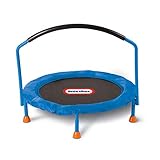
1. Little Tikes 3 Foot Trampoline Is the Best Overall Mini Trampoline for Toddlers
Little Tikes 3′ Trampoline – (Amazon Exclusive)
36 inch round,foam handlebar,55 lb limit,ages 3 to 6,13 lb unit weight
Pros
- Sturdy frame that survives daily bouncing
- Handlebar builds toddler confidence
- Assembles in one sitting
- Compact 3 foot footprint
- Covered springs block foot access
Cons
- Blue edge trim lifts and needs refitting
- Handle foam sleeve can tear
- Leg fittings sometimes uneven
This is the model most parents mean when they say the little one has a trampoline, and the volume of real-world use behind it is hard to argue with. More than 33k ratings come in at a 4.7 average with 82 percent five-star, and the pattern in the long-form reviews is consistent: this is the first trampoline most families buy and the one they still have three years later.
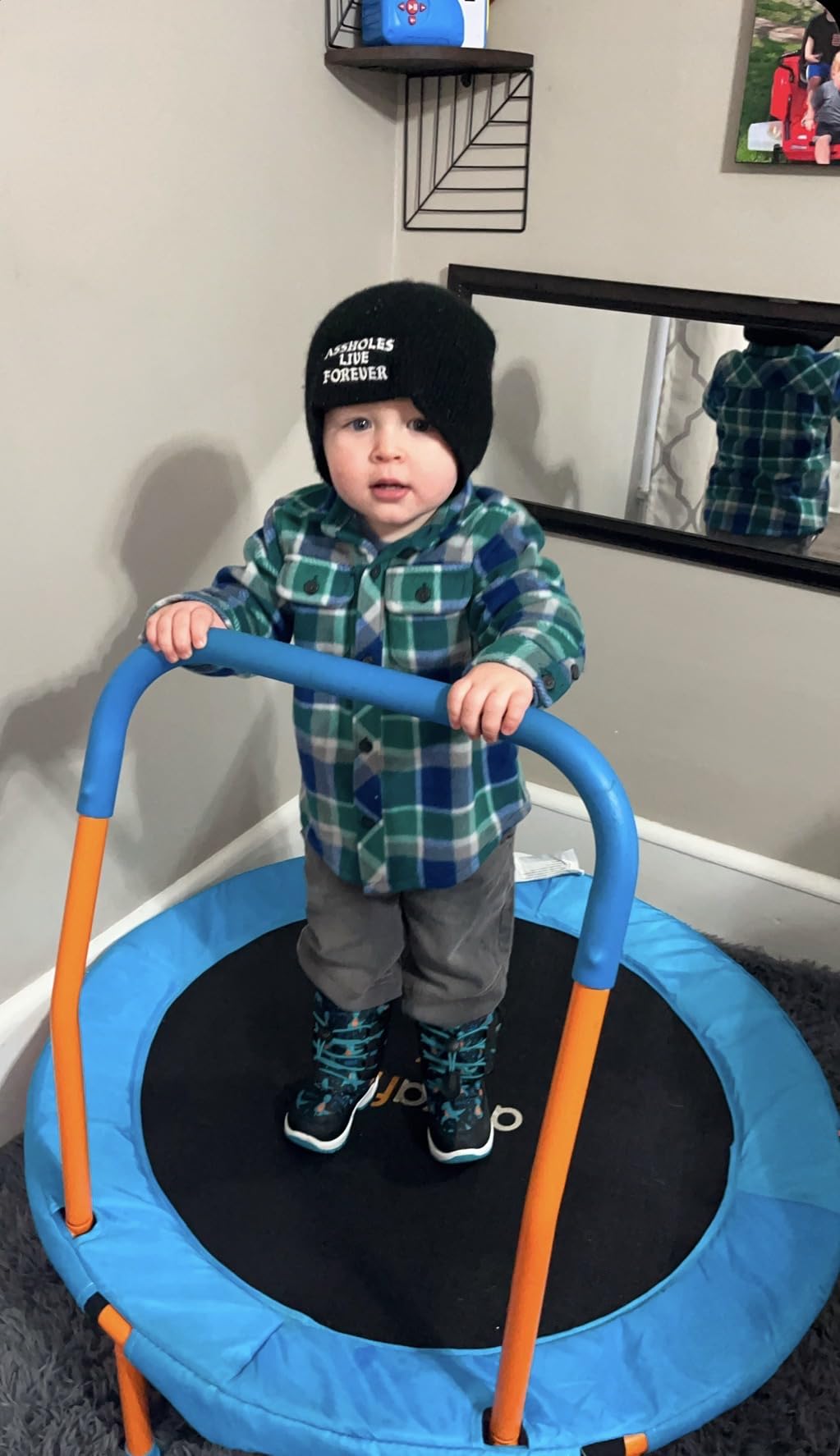
The handlebar is the reason it works for toddlers. A 3-year-old can hold on, bounce a few times and stop without an adult sprinting across the room. Combined with the covered spring ring and the foam pad, it removes most of the ways a small child gets hurt on an open-frame mini trampoline.
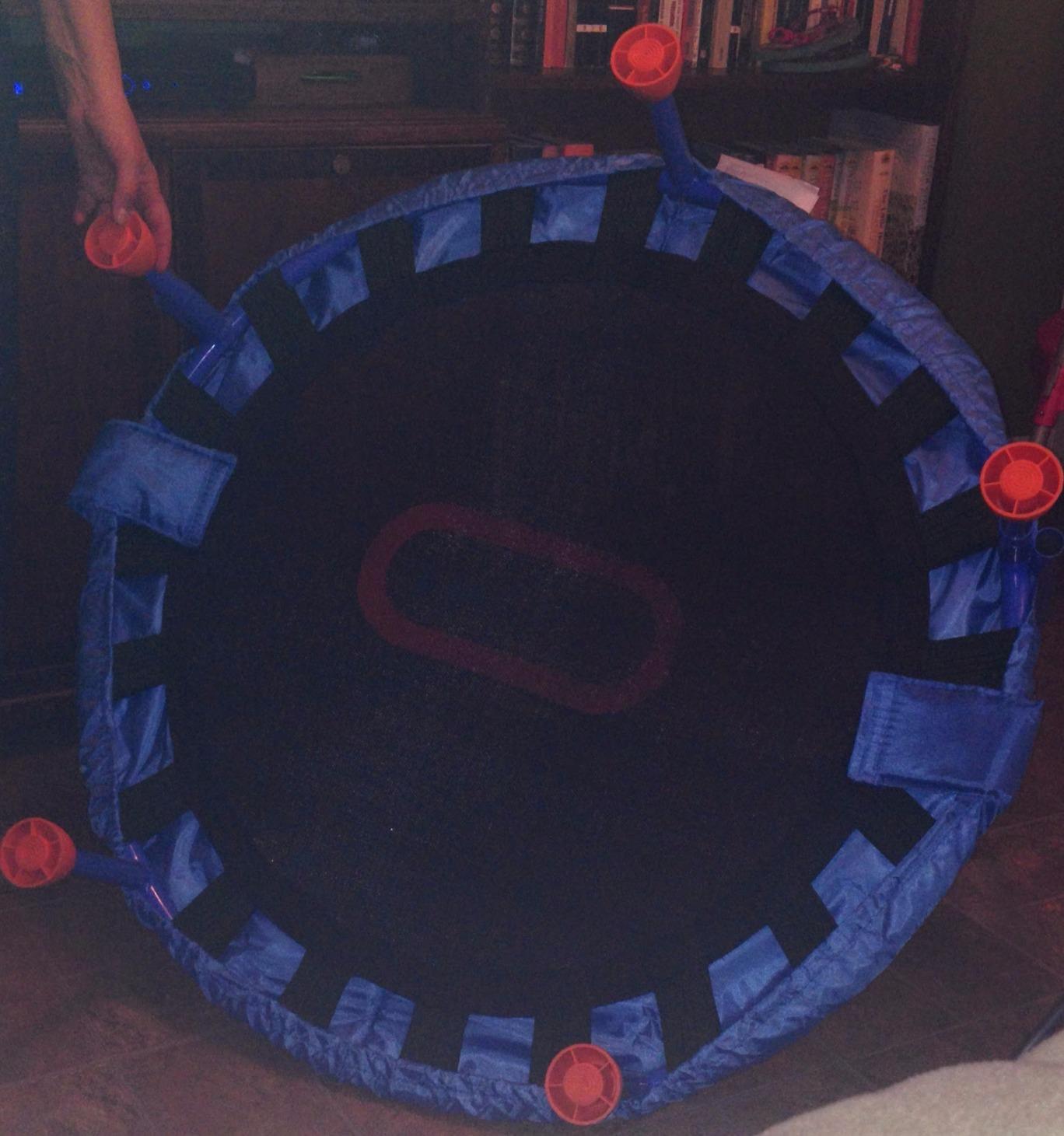
What stands out on inspection is the frame. It is a plastic and metal combination rather than all-steel, and it is specified for indoor use only, which is worth being clear about. Put it on carpet or a padded playroom floor, not on a wet patio or a hardwood surface where it can slide.
Owners describe it as the default recommendation for a reason: replacement parts exist, the brand is long established, and used units keep their resale value better than most competitors. Parents who have cycled through two or three trampolines often say the Little Tikes is the one they hand down rather than replace.
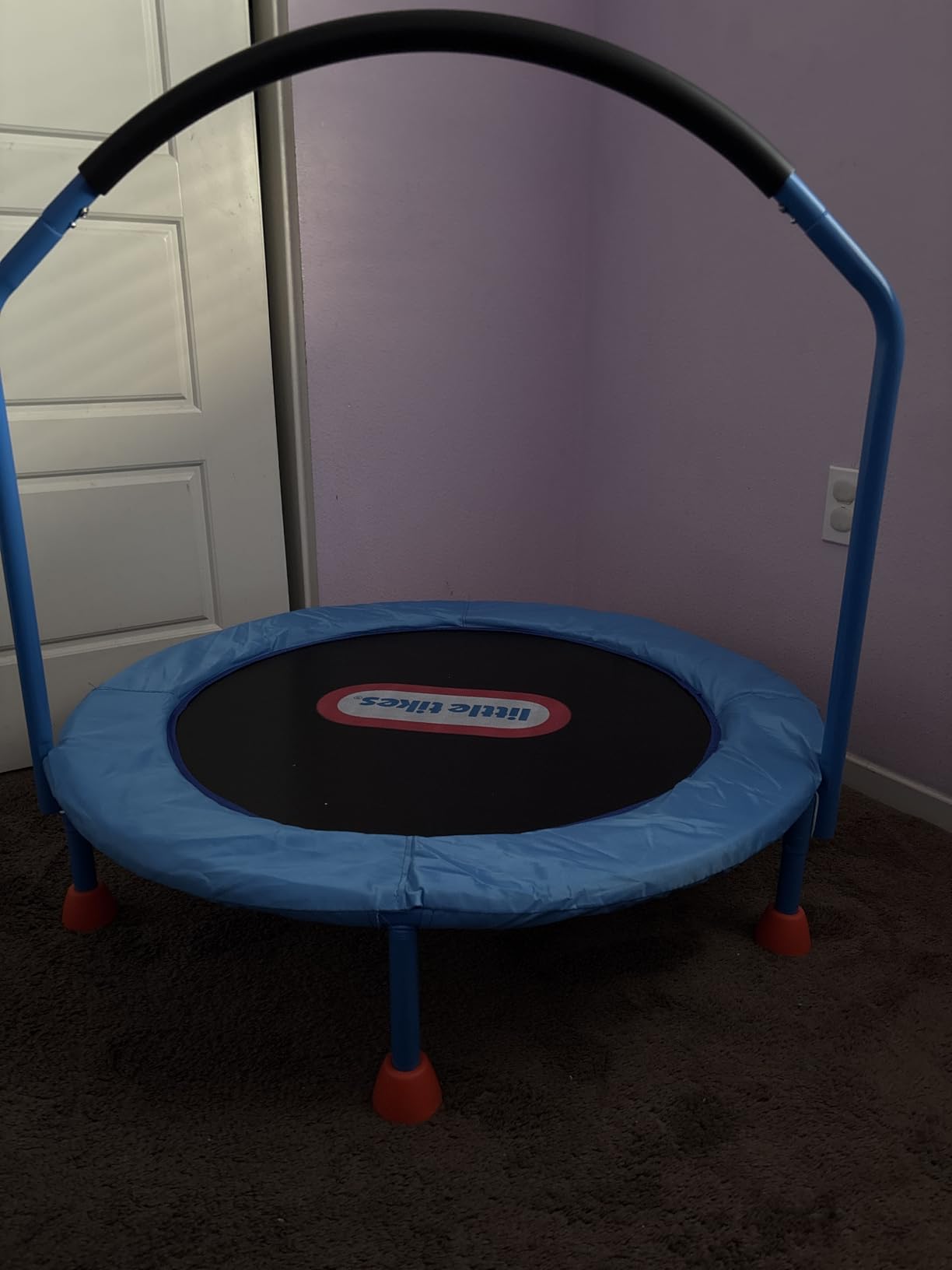
Why the Little Tikes 3 Foot works for a nervous 2-year-old
The 55-pound limit sounds restrictive until you remember who it is designed for. It is not a fitness rebounder for adults; it is a first trampoline for a child who is still learning to stop bouncing. The 26.25-inch mat-to-handle height and the 3-foot diameter give a small body a short, predictable bounce rather than the bottoming-out sensation that scares beginners.
The assembly is genuinely quick. Most families put it together in one sitting with no springs under tension, which matters because spring tension is the number one assembly complaint we saw across this whole category.
Where the Little Tikes 3 Foot falls short
The criticisms are cosmetic rather than structural, but they are consistent. The blue edge trim around the mat lifts over time and has to be pressed back into place, and the foam sleeve on the handle can tear if a toddler chews on it, which several reviewers mention.
The other recurring note is that the back legs can creep a little on soft mats during very vigorous bouncing. If you keep it on low-pile carpet and check the feet every few months, this is a minor issue rather than a dealbreaker.
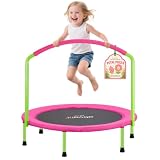
2. ATIVAFIT 36 Inch Elastic Band Trampoline Is the Best Value Pick for Apartments
ATIVAFIT 36“ Kids Trampoline with Big Handle Compact Indoor/Outdoor Mini Trampoline for Toddlers 2‑6 Years (Pink)
36 inch round,elastic band bounce,alloy steel frame,24.95 kg max load
Pros
- Spring-free design is quiet and pinch-free
- Suction cup feet grip tile and hardwood
- Adjustable handlebar grows with the child
- Waterproof Oxford mat
- Tools included for fast assembly
Cons
- 36 inch footprint uses noticeable floor space
- Bounce is gentler than steel springs
This is the model to buy if noise is your biggest worry. The bounce comes from elastic bands rather than steel springs, and reviewers describe it as one of the quiet options in this group. In a flat or a second-floor apartment, that difference is often the whole decision for a family.
The floor feet are the other quiet advantage. Rubber suction cups protect hard flooring and grip tile, while wide rubber-tipped legs take over on carpet. Across the reviews, the flooring feedback is unusually positive for this category, which usually generates complaints about sliding and floor marks.
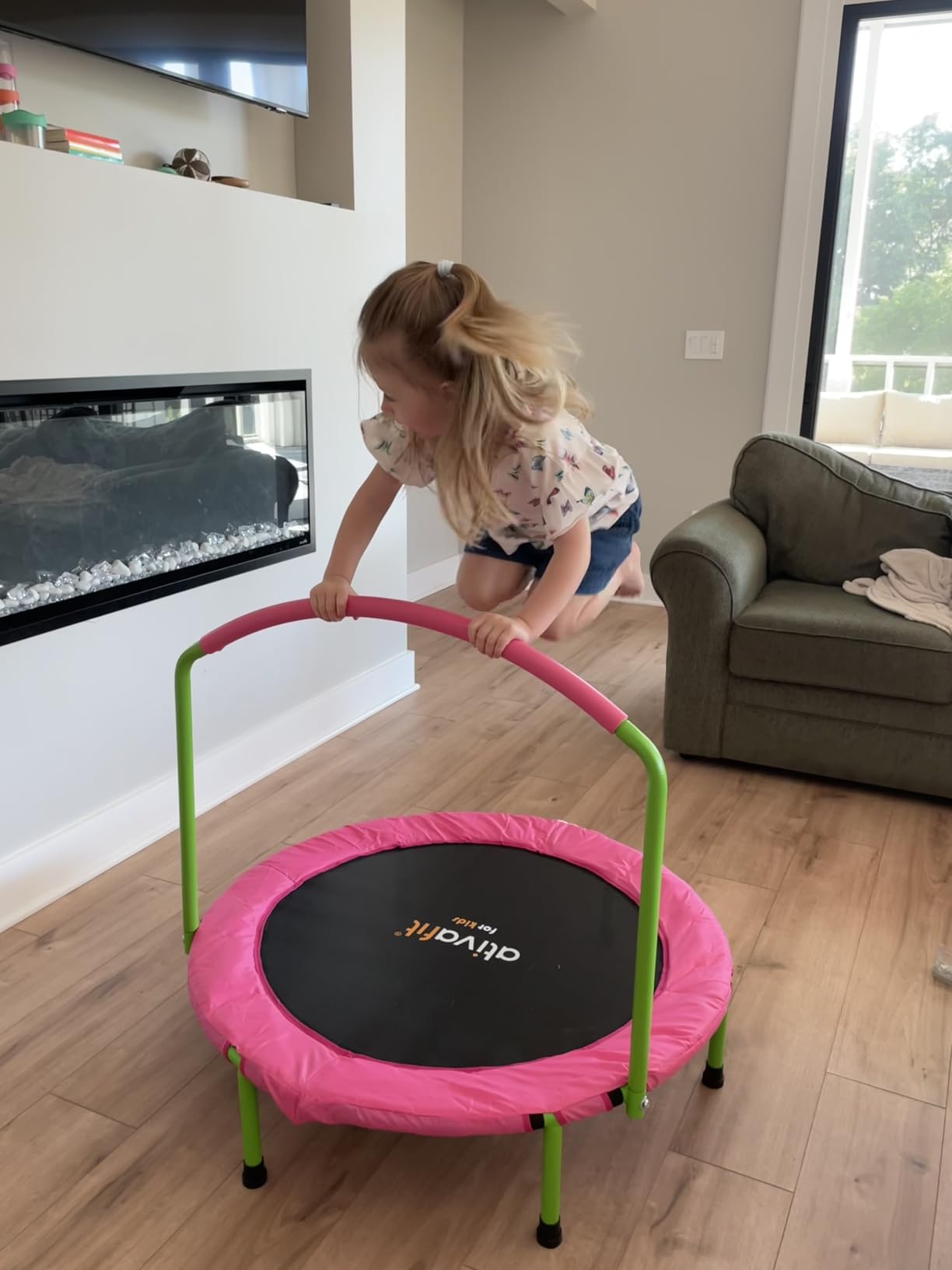
At 4.5 stars from 3043 reviews, this sits slightly below the Little Tikes on satisfaction, and the reason is bounce. Bands give a slower, softer response than steel springs, and some reviewers wanted more height off the mat. For a toddler, that is usually the right trade, because a short bounce is harder to lose control on.
The adjustable handlebar is a nice touch that most 36-inch models do not offer. It lets you raise the rail as your child grows instead of buying a new trampoline in a year, which answers the outgrowing problem better than most competing frames.
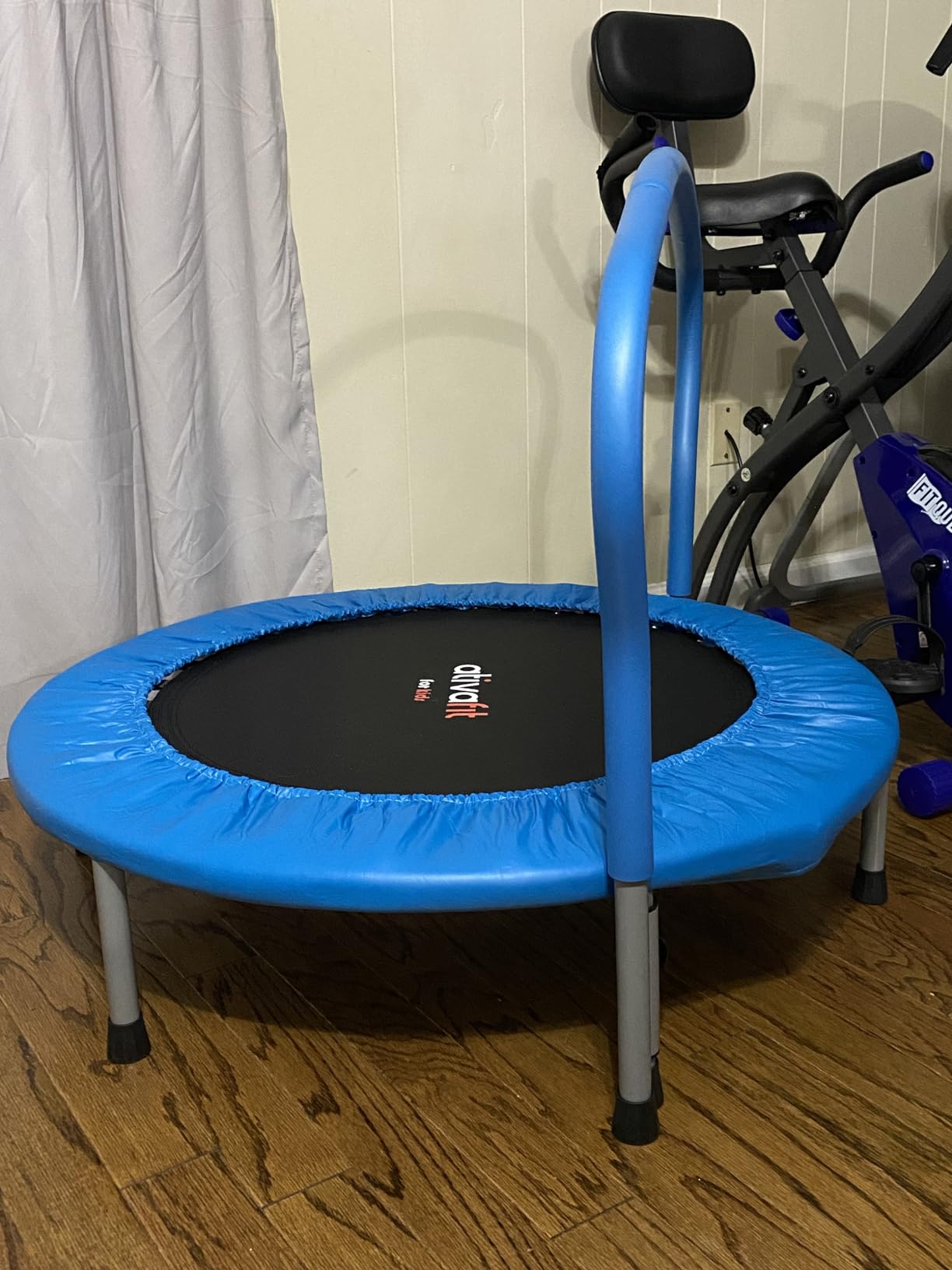
Why this is the right pick below stairs
Noise is the least discussed topic in trampoline roundups and one of the most common questions in parent forums. Steel springs under a jumping toddler are loud, and in a building that sound carries. An elastic band rig removes the metallic ring entirely, and this model also sits low enough to dampen floor transfer.
It is also the pick for a playroom that doubles as living space. The Oxford mat wipes clean, the frame is alloy steel rather than plastic, and the unit weighs 14.3 pounds, so it can be moved between rooms without much fuss.
Where the ATIVAFIT elastic band model falls short
Two limitations come up repeatedly. The 36-inch diameter is a real square meter of floor in a small room, and the gentler band bounce means a child who likes to launch will not get the same lift as they would from a spring model.
Reviewers also note that 24.95 kg is a static limit, not a promise that a heavier child bouncing hard will not push through the mat. As with every trampoline, supervise and keep sessions short.
3. BCAN SP1 36 Inch Kids Trampoline Is the Most Versatile with Verified Certification
BCAN SP1 36” Kids Toddler Trampoline Indoor, Foam Handle | FED Fitness
36 inch round,28 enclosed springs,ASTM certified,220 lb capacity,13.7 lb unit
Pros
- ASTM certified with fully enclosed springs
- Upgraded no-gap stitched mat
- T-shaped foam handle aids balance
- Six-leg support resists wobble
- Folds flat in five assembly steps
Cons
- Centre of handlebar is not foam covered
- Pad and spring wear after heavy use
- Occasional loose screws
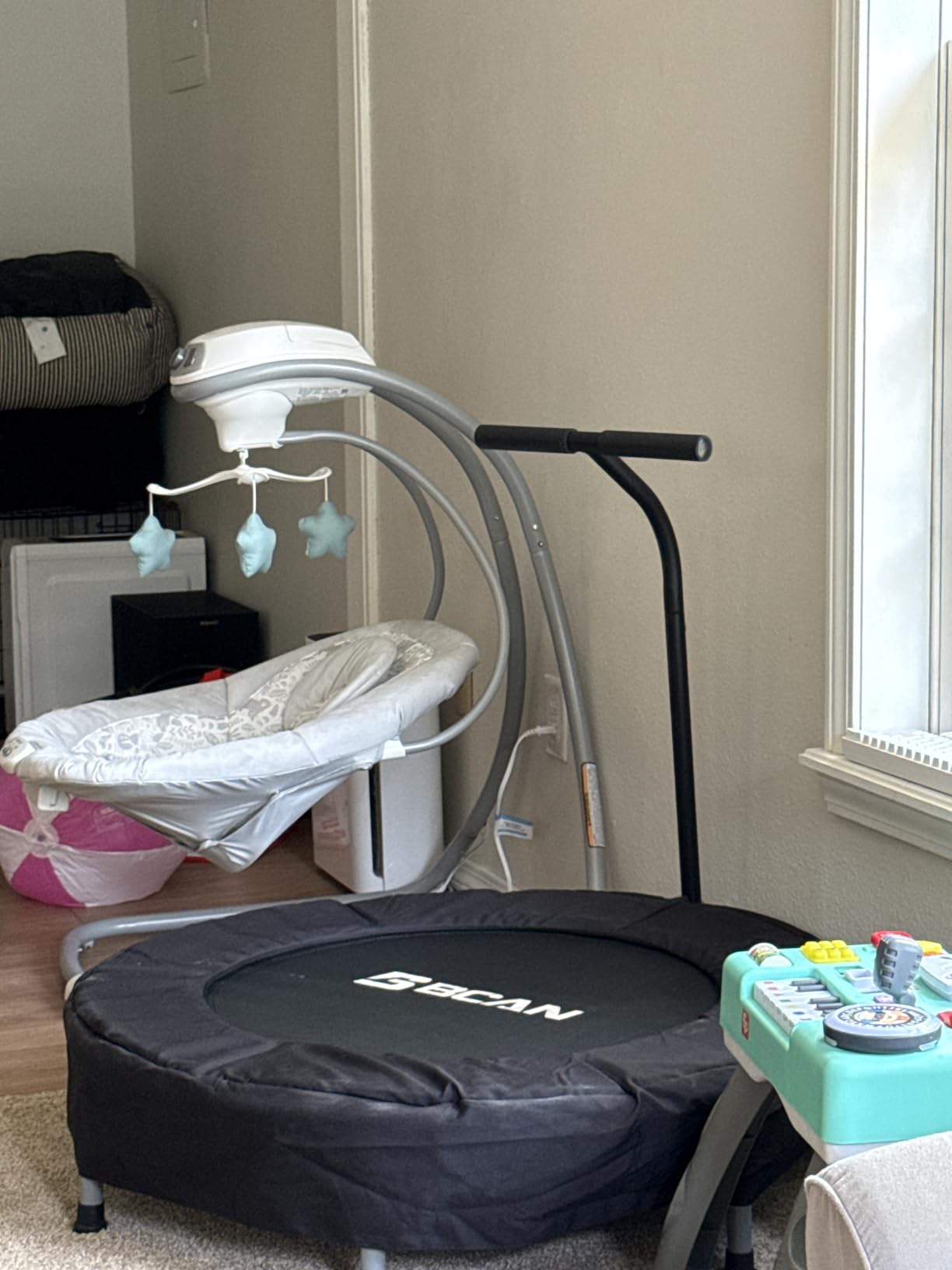
Certification is the reason this one stands apart. ASTM certification on a toddler trampoline is not decorative paperwork, and among parents who look for that mark before buying, the BCAN SP1 comes up repeatedly. And the BCAN SP1 is the model forum users mention when they ask about a trampoline for very young children.
The spring layout is thorough: 28 thickened no-drop springs, fully enclosed so a small foot cannot reach them, and a reinforced steel frame with balanced leg geometry. That leg design is visible in the way it stays put when a child bounces off-centre, which is exactly the moment generic mini trampolines start to wobble.
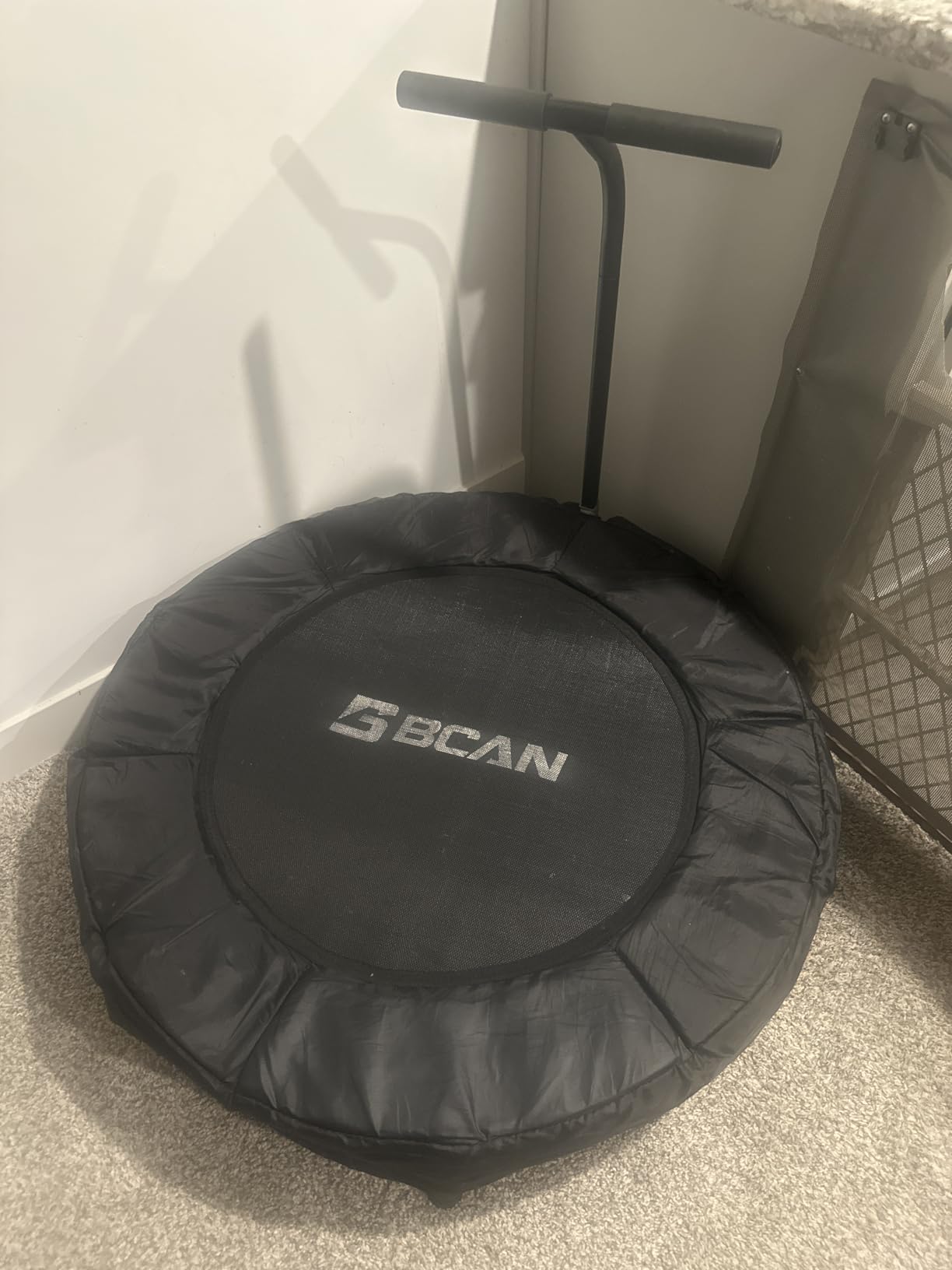
The latest mat upgrade is worth knowing about. The mat is stitched directly to the pad with tighter stitching and greater thickness, so there is no gap between the jumping surface and the foam ring. That closes one of the two most common ways small children catch a foot on a mini trampoline.
At 4.6 stars from 1670 reviews, with 82 percent five-star, it holds its own against much better-known brands. The folding frame also means it can go flat against a wall when playtime ends, which most 36-inch handlebar models cannot do.
Why safety certification is worth paying for here
Parents comparing trampolines often fixate on the weight limit, and BCAN lists 220 pounds, which is far above a toddler’s needs. The more useful number is the construction: a certified frame, enclosed springs, a no-gap mat and non-slip rubber feet together. Those are the features that decide whether a 2-year-old gets hurt, not the headline capacity.
Assembly takes five steps and one person, which we consider the best in this group. There is no spring-tensioning stage, so it is realistic to build it after bedtime rather than saving for a weekend.
Where the BCAN SP1 falls short
The most common complaint is specific and easy to fix: the centre section of the handlebar is not foam-covered, and some parents wrap it themselves before handing it over. It is a minor modification, but you should budget for it if your child chews on the rail.
Long-term durability is the second theme. Reviewers report wear on the pad and springs after extended heavy use, plus the occasional screw that loosens over time. A monthly check of the fittings is sensible insurance.
4. FitinOne 55 Inch Enclosed Trampoline Is the Best Pick When You Want an Enclosure Net
FitinOne 55″ Toddler Mini Trampoline for Kids, Indoor Outdoor Toys with Swing, 440lbs Baby Kids Trampoline, Gymnastics Bar, Birthday Gifts for Boy Girl Age 1-8
55 inch round,full safety net,440 lb capacity,30 springs,3 level adjustable bar
Pros
- Transparent net keeps the child fully visible
- Six foam padded handlebars on the enclosure
- Anti-tip U-shaped leg design
- Very high weight capacity
- Large accessory bundle included
Cons
- 55 inch footprint is bulky indoors
- Net makes assembly more involved
- Listing details vary between spring counts
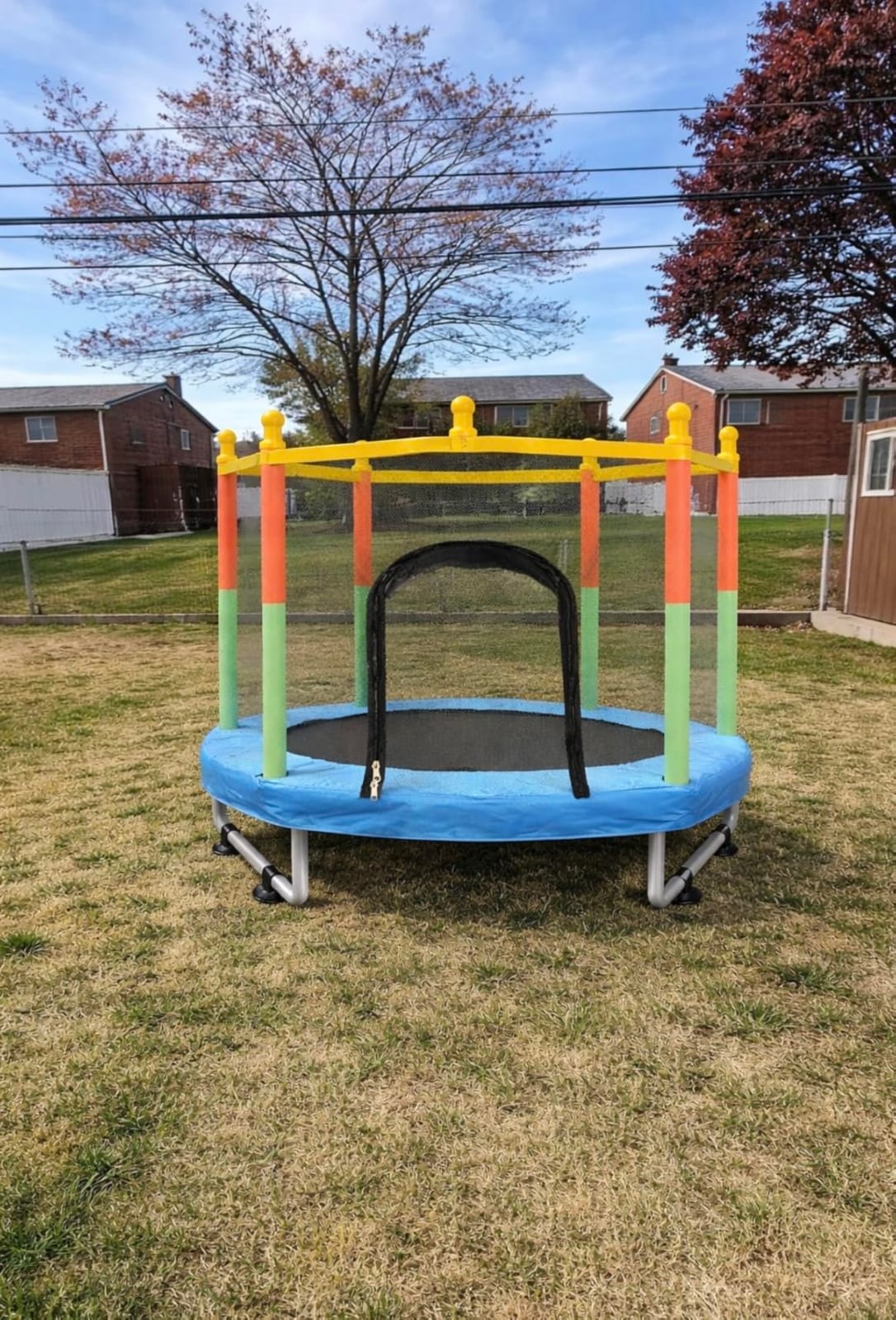
If you have the floor space, an enclosure removes the single biggest argument against a toddler trampoline, which is the open edge. This 55-inch model surrounds the whole jumping area with a raised circular enclosure, foam-padded at six points, so there is no direction a child can bounce out of.
The transparent net matters more than it sounds. Parents worried about a child climbing or falling against an opaque mesh report being able to see the whole surface at a glance, which turns a supervise-from-the-sofa situation into something much calmer.
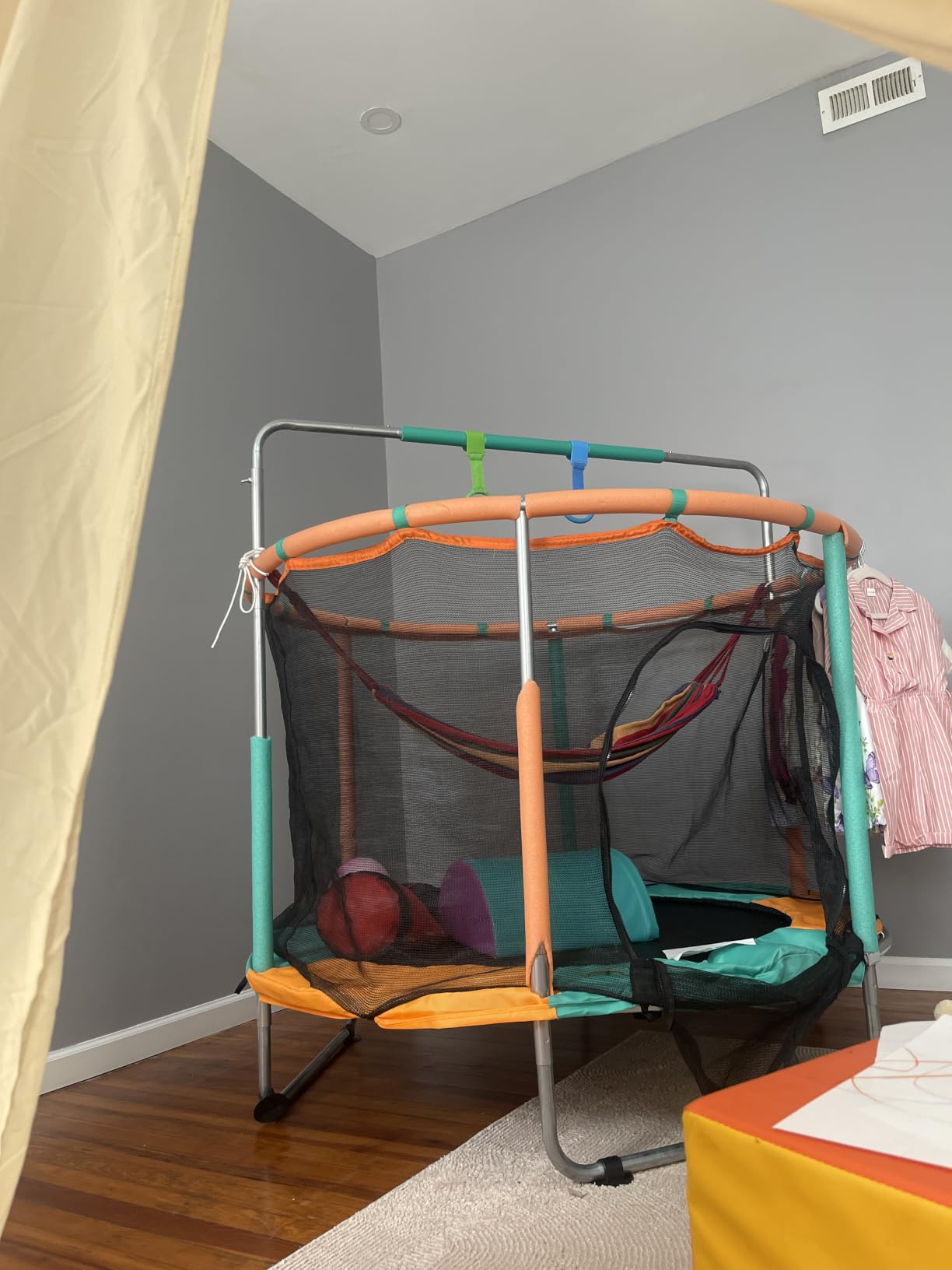
At 4.4 stars from 1159 reviews, this has the widest rating spread of the 55-inch models we looked at, with 73 percent five-star. The accessory bundle is unusually generous for the category: a swing, rings, sandbags, an ocean ball and a spring installation tool all ship in the box.
The 440-pound capacity means this is the model in our roundup that can genuinely be handed down. A toddler uses it now, a 7 or 8-year-old uses it later, and the three-level adjustable horizontal bar adapts as the child grows.
Why an enclosure is worth the floor space
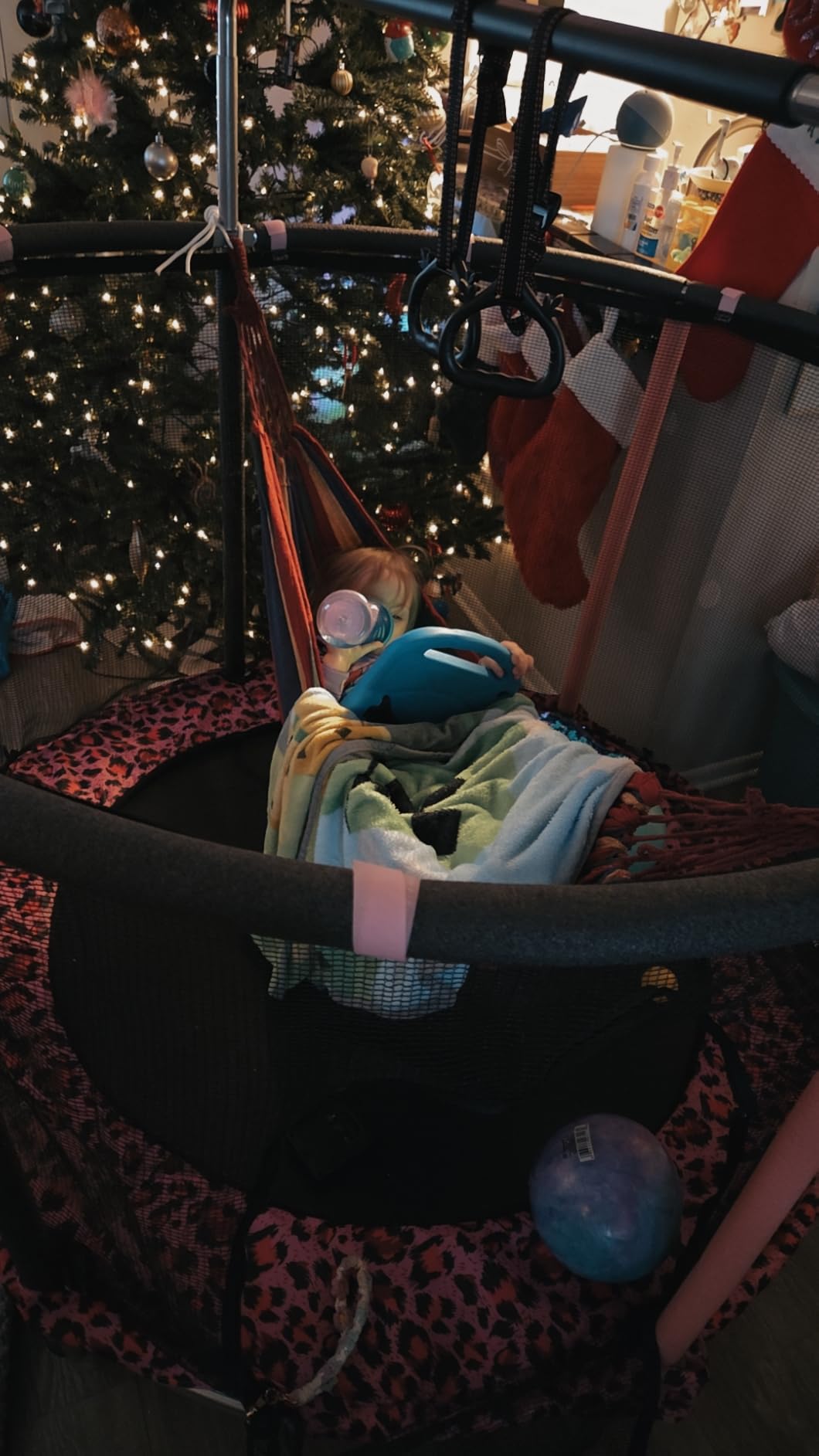
Handlebar models stop a child from falling off the side while holding on. An enclosure catches them when they let go, which is the moment that actually causes injuries. For a family that wants the trampoline in a playroom rather than a supervised corner, that difference is worth a large footprint.
The three-level adjustable bar is also what makes this a long-term buy. You are not replacing the trampoline when your child outgrows a handlebar height, you are moving the bar.
Where the FitinOne 55 Inch falls short
Size is the obvious drawback. Several owners describe it taking up a quarter of a child’s room, and at 55 inches it is not a casual purchase for a small apartment. If floor space is tight, our 36-inch picks are a better fit.
Assembly effort is higher than an open-frame model because the net has to be fitted pole by pole, and the listing details themselves are inconsistent about the spring count. Budget an extra sitting for setup.
5. SZBOB 55 Inch Toddler Trampoline Is the Best Budget Enclosed Model
Toddler Trampoline for Kids Ages 1-8, 55” Small Trampoline Indoor Outdoor
55 inch round,36 steel springs,220 lb capacity,19.4 lb unit,galvanized frame
Pros
- Fully galvanized frame resists rust
- Three-layer integrated no-gap pad
- Large suction cup feet reduce rolling
- Net entry has dual metal zippers
- Springs hidden in closed design
Cons
- Net assembly is fiddly and sequence sensitive
- Heaviest unit at 19.4 pounds
- Large 55 inch floor space needed
This is the 55-inch enclosed option to look at if the FitinOne is out of reach, and it earns its place on two specific strengths: a fully galvanized frame that resists rust, and suction cup feet that are unusually effective at stopping the unit rolling when a child bounces hard.
Rolling is the quiet failure mode of enclosed trampolines. With no handlebar to hold, a child bouncing off-centre shifts the whole frame, and on hard flooring that becomes a tip-over risk. Two suction cups per U-shaped leg address it directly.
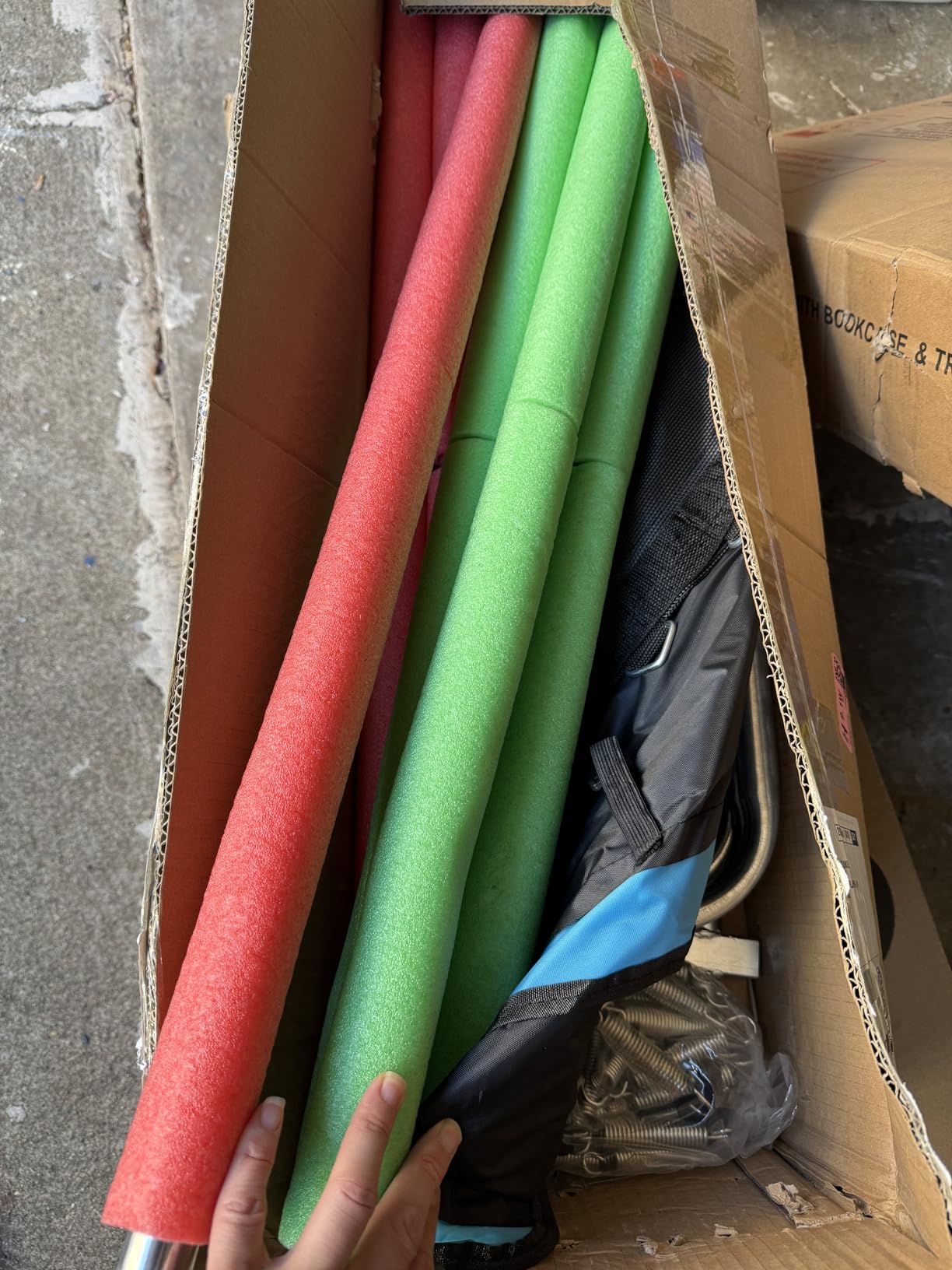
At 4.2 stars from 956 ratings, it has the lowest average in our set and one of the larger shares of one-star reviews at 10 percent. That is worth being honest about, and the pattern is narrow: almost every deduction traces back to the enclosure net rather than the frame or the mat.
The three-layer thickened integrated pad with a no-gap jumping cloth is a genuinely good design choice, and the dual metal zippers make entry and exit easier than a single flap when a toddler is impatient.
Why this one suits a garage, basement or covered patio
The galvanized coating is the feature that separates it from cheaper 55-inch frames. If your trampoline will live somewhere with variable humidity rather than inside a climate-controlled room, corrosion resistance becomes the thing that determines how long the frame lasts.
At 220 pounds capacity and 36 springs, it comfortably covers the toddler-through-early-elementary range, which makes it a plausible hand-me-down if your family is done with mini trampolines afterwards.
Where the SZBOB 55 Inch falls short
It weighs 19.4 pounds, and that matters if you plan to move it between rooms or store it seasonally. There is no folding frame here, so disassembly is the only way to free up floor space.
The net is the weak point. Reviewers describe the pole-by-pole fitting as the hardest part of assembly and easy to get wrong, so read the sequence before you start rather than improvising.
6. ATIVAFIT 36 Inch Foldable Trampoline Is the Best Pick for a Small Playroom
Ativafit 36inch Mini Toddler Trampoline for Kids Ages 1-6 Indoor Outdoor Folding Small Rebounder Trampoline with Foam Handle Safety Padded Cover Fun for Kids
36 inch round,silent elastic bands,55 lb limit,23.6 inch height,foldable frame
Pros
- Silent band bounce avoids spring noise
- Waterproof grippy Oxford mat
- Six-leg frame with safety lock
- Folds flat for storage
- Highest-rated foldable in the set
Cons
- Softer bounce than spring models
- 55 lb limit suits toddlers only
- One year warranty
Same brand as our value pick, different execution. This foldable 36-inch model scored 4.7 stars from 841 reviews with 84 percent five-star, the second-strongest rating profile in our set, and the difference is that the frame collapses.
Storage is the reason to choose it. A trampoline that lives permanently in the middle of a playroom gets ignored eventually; one that folds and slides behind a sofa keeps getting used. Parents in small homes regularly name this as the feature that decides the purchase.
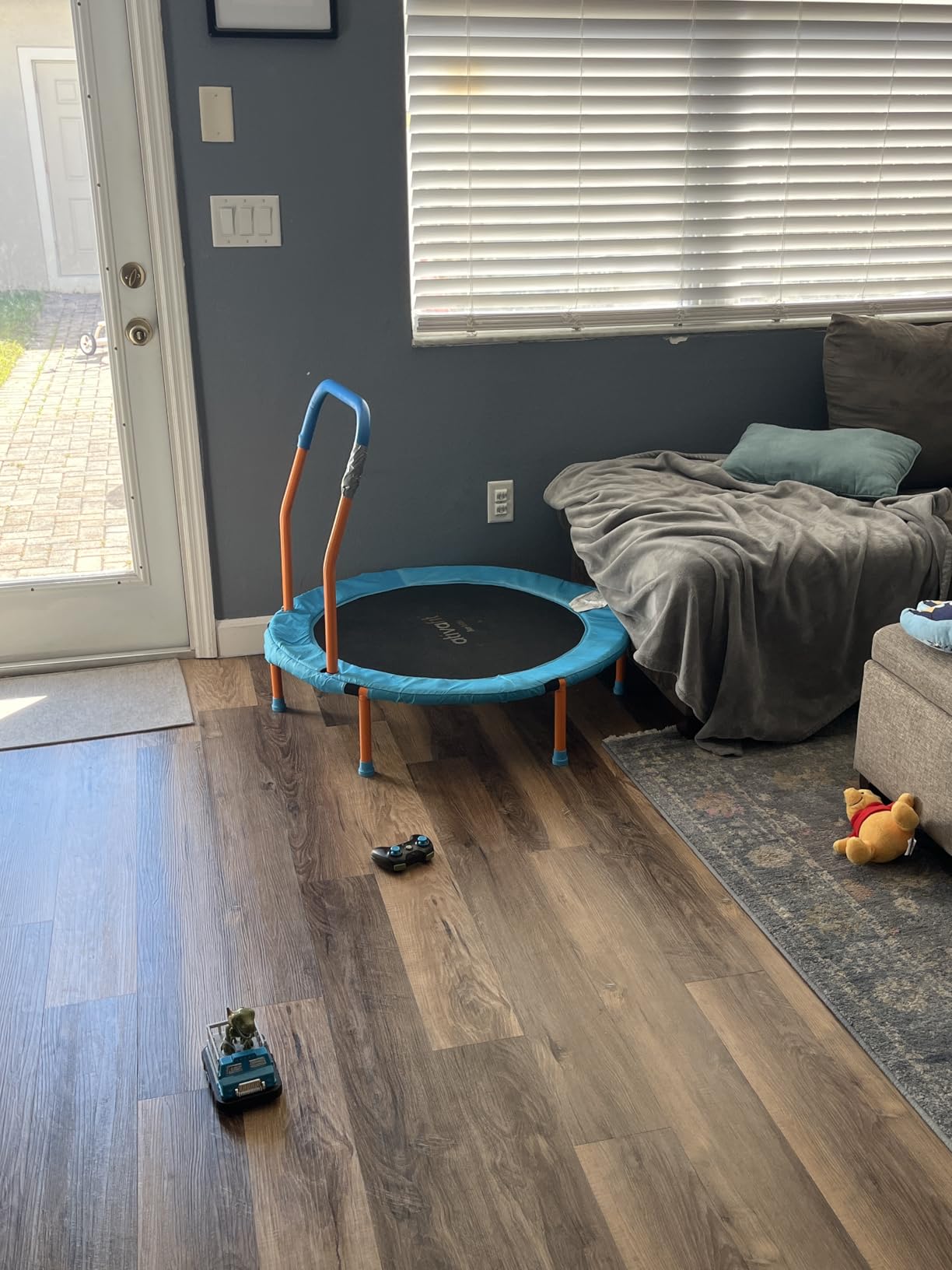
The six-leg frame with a safety lock is the other differentiator. Most 36-inch competitors use four or five legs, and reviewers comparing the two ATIVAFIT models with cheaper imports repeatedly note that six legs feels planted during off-centre bouncing.
The mat is waterproof Oxford cloth with grip that holds up when it is wet, which makes this one of the few models here we would consider using outdoors on a dry patio as well as indoors on carpet.
Why quiet and foldable beats loud and permanent
Apartment living and folding storage reinforce each other. If the trampoline can be put away in ninety seconds, a floor mat on carpet stays down, which removes the underlay problem that quiet apartment dwellers otherwise have to solve. That combination came up repeatedly in parent forum threads about noise complaints.
For a 3-year-old who has moved past the stage of needing to hold on, the softer band bounce is also comfortable. It is not a rebounder for an adult, and the 55-pound limit makes that clear.
Where the foldable ATIVAFIT falls short
The bounce is noticeably softer than a spring rig, and reviewers who expected the lively response of a steel-spring trampoline were disappointed. Know what you are buying: a quiet, controlled rebound rather than a big launch.
The 55-pound limit and the one-year warranty are both narrower than some competitors. Treat it as a toddler trampoline, and choose it for quiet operation and foldability rather than for high load ratings.
7. BCAN BT1 36 Inch Trampoline Is the Best Pick for Apartment Storage
BCAN BT1 36” Toddler Trampoline, ASTM Certified-Foldable Mini Trampolines for Kids Ages 1-6, Adjustable Handle, Safety Pad & Foldable Legs, Baby Trampoline Indoor/Garden, Gift for Boy and Girl, Beige
36 inch round,no-gap mat,two-level handle,folds to quarter size,tool-free build
Pros
- Folds to a quarter of its size
- No-gap integrated mat with no exposed metal
- Two-level adjustable foam handle
- Anti-tip design with safety pins
- Soft neutral colours
Cons
- Higher price point than other 36 inch models
- Frame can shift on hard floors when jumped hard
- Elastic band bounce is softer
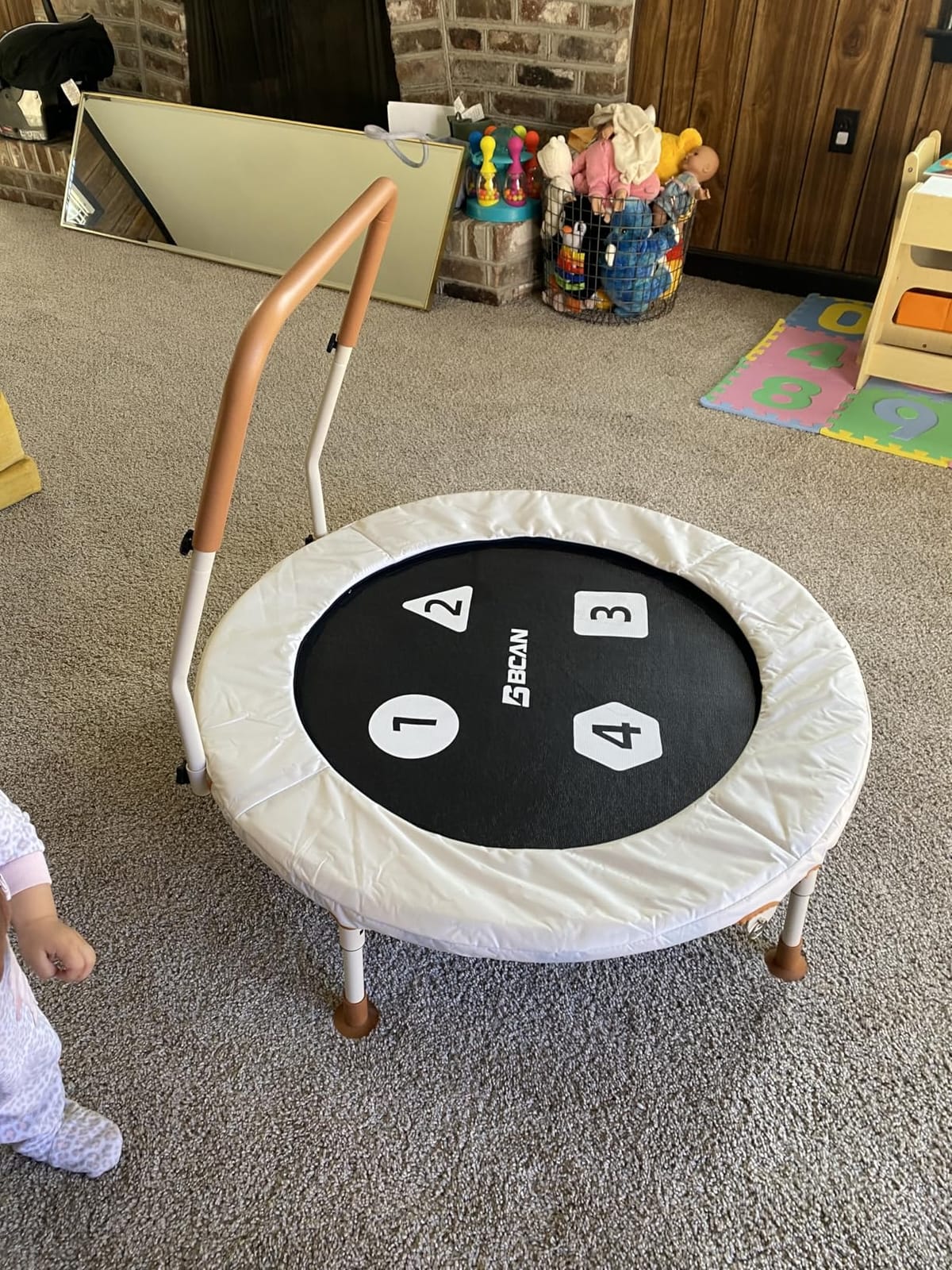
This is the most aggressively designed for small spaces product we reviewed. It folds to roughly a quarter of its assembled size with detachable handles, which means it goes behind a sofa or under a bed rather than into a garage.
Reviewers are unusually enthusiastic about the folding experience, describing daily fold-and-put-away routines as the reason the unit stays in use. A trampoline you can clear away in a minute gets used on a rainy Tuesday rather than gathering dust in a corner.
The no-gap integrated mat is the safety headline. There are no exposed metal springs anywhere on the jumping surface, because the elastic band system and the stitched mat leave no metal edge for a small foot to catch. Several parents describe that as the single feature they cared most about.
The two-level handlebar is adjustable, and the assembly is tool-free and takes about five minutes. The beige colour scheme is deliberately neutral, which sounds trivial until you are trying to keep a child’s toy visible in a living room.
Why folding changes how often a trampoline gets used
Most indoor trampolines quietly become furniture. Once the frame is bolted together and sitting in the middle of the floor, parents tend to restrict use because of the tripping risk. A model that folds removes that friction, which is why storage design keeps appearing as a deciding factor in parent conversations.
It also solves the noise problem partially, since the whole unit moves out of the way between sessions. That matters in a shared-wall apartment more than most product pages admit.
Where the BCAN BT1 falls short
It carries a higher price point than the other 36-inch models in this set, and that gap is real enough that a family on a tight budget should compare it against the SP1 or the JOY SPOT option before committing.
There is also a note about movement on hard floors during vigorous bouncing. On carpet with the anti-tip legs seated properly this is a non-issue, but on bare hardwood you would want a mat underneath.
8. Fisher-Price WonderJump 36 Inch Trampoline Is the Best Pick for Preschoolers
Fisher-Price Mini Trampoline, WonderJump 36″ Round Bouncer, Multicolor
36 inch round,foam grip handlebar,55 lb capacity,tool-free setup,removable handle
Pros
- Highest average rating in the set at 4.8
- Six non-slip foot pads
- Corrosion-resistant powder-coated frame
- Tool-free assembly in minutes
- Removable handlebar folds for storage
Cons
- 55 lb capacity limits it to preschoolers
- Full 36 inch height with handle is bulky in tight rooms
This one has the highest average rating in our set at 4.8 stars, with 91 percent five-star ratings and only 1 percent one-star. The catch is the sample size: 298 reviews is a fraction of the review base the Little Tikes has accumulated, so treat the rating as promising rather than battle-tested.
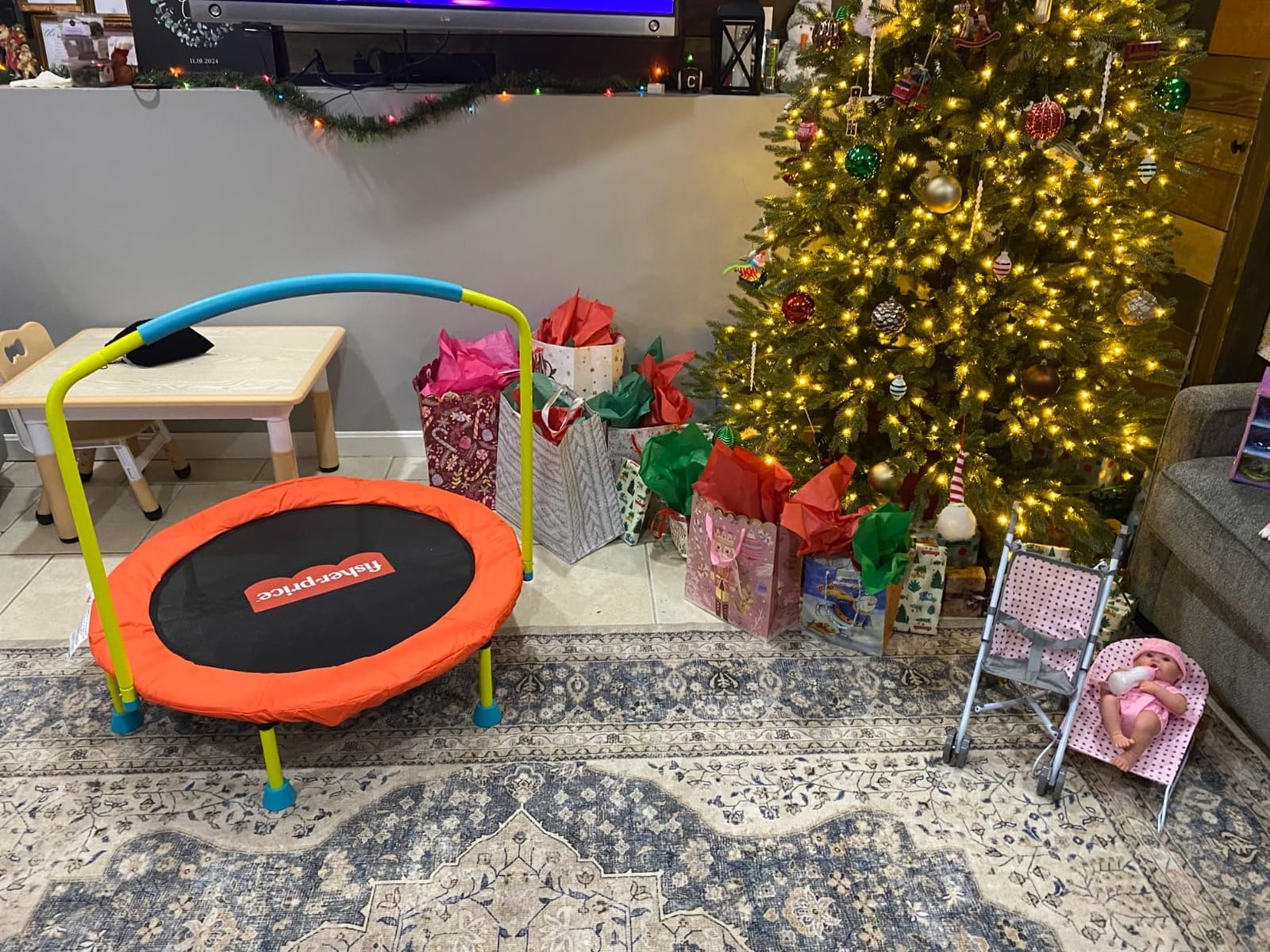
What it does well is straightforward. Six non-slip foot pads and a powder-coated steel frame give it more stability hardware than most 36-inch competitors, and the soft foam grip handlebar is the kind of detail that shows up in a room full of parents comparing close-up photos.
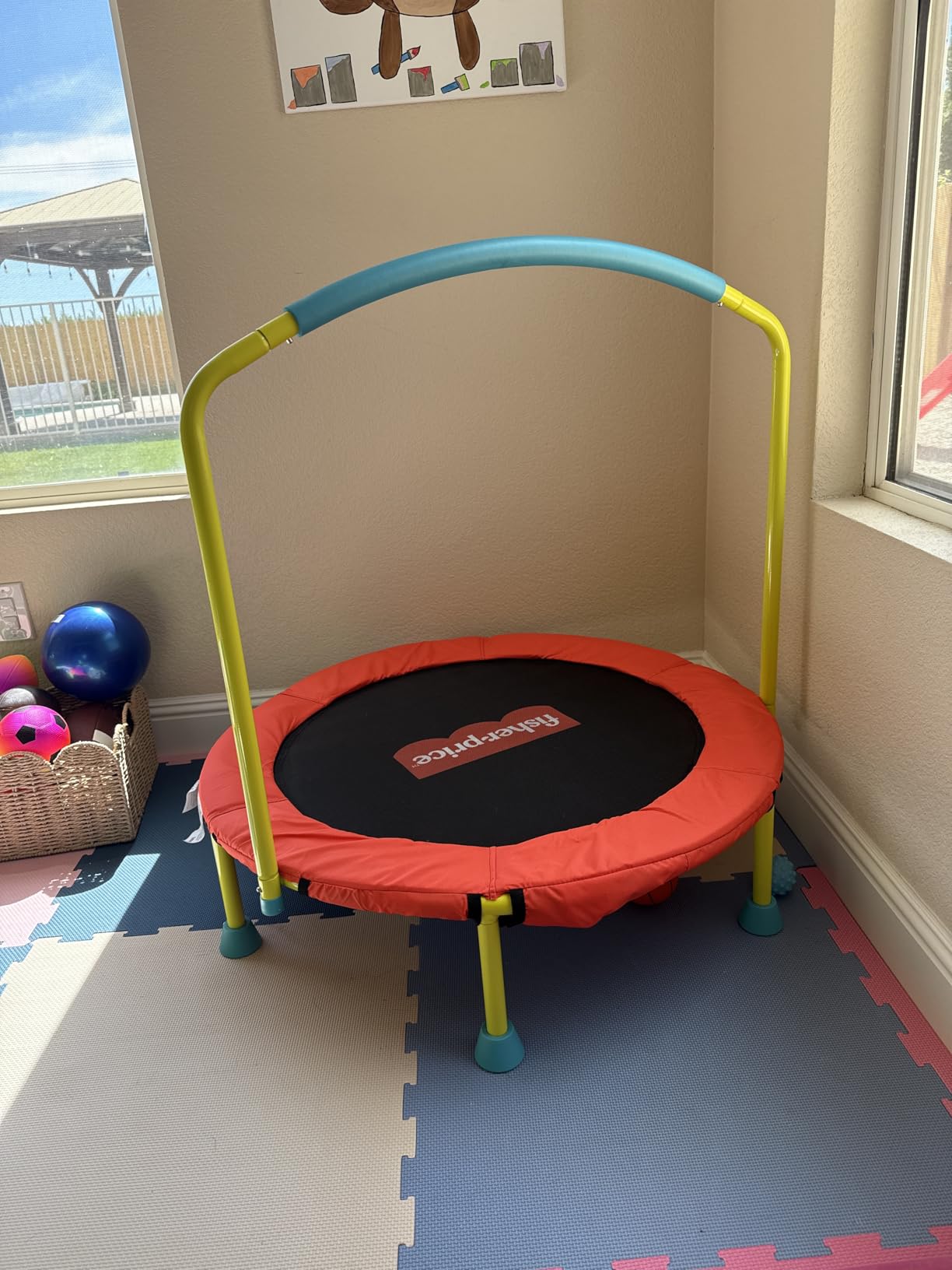
Assembly is tool-free and takes minutes, which is a genuine advantage when you are assembling toddler gear in the middle of an evening. The removable handlebar and foldable design mean it stores in a small space once play is over.
The brand name carries its own weight with grandparents and with sitters, which is a real consideration when the person watching your child is not you. Recognisable branding reduces the amount of explanation required every time someone else supervises.
Why this suits a 3-and-4-year-old best
The 55-pound limit lines up almost exactly with a typical 4-year-old, so this is the trampoline to buy for a child who has moved past the two-handed-holding stage but has not yet grown into a full-size model. The handlebar still offers a hand to grab without limiting the bounce the way a full enclosure limits floor space.
For a preschool setting, the combination of high rating, tool-free setup and a washable mat is the practical shortlist. Nothing about it is exotic, which is the point at this age.
Where the Fisher-Price WonderJump falls short
The smaller review base is the first thing to weigh. A 4.8 average from 298 ratings tells you new owners are happy; it does not tell you how the padding looks after three years of daily use, and that is exactly the information long-term reviews on the Little Tikes provide.
Its 36-inch height including the handlebar also makes it the bulkiest of the 36-inch models on this list, which matters in a tight room. Measure ceiling-adjacent furniture clearance before you order.
9. SPORTSOUL 36 Inch Foam Handle Trampoline Is the Best Pick for a Heavy-Duty Base
SPORTSOUL Mini Trampoline for Kids 3-6 with Super Safe Foam Handle Bar
36.7 inch round,NBR foam handlebar,88 lb max load,6 galvanized legs,13.4 lb unit
Pros
- Three-layer no-gap mat with 12 elastic straps
- Tear-resistant NBR foam handlebar
- Six galvanized legs with rubber feet
- Springs and mat tested over 300000 bounces
Cons
- Assembly is harder than the instructions suggest
- Frame shifts during hard bouncing
- Handle height is short for small toddlers
- Shipping covers must be removed
The engineering detail that stands out here is the mat construction. It is a three-layer thickened pad stitched to a polypropylene jumping mat and fixed with 12 elastic straps and six sewing lines, which is a more involved build than the single-layer stitched mats common at this size.
That construction is what produces the no-gap surface, and it is also why the spring cover stays put under repeated impact. Reviewers single out the padding as well-constructed more often than they praise anything else on this unit.
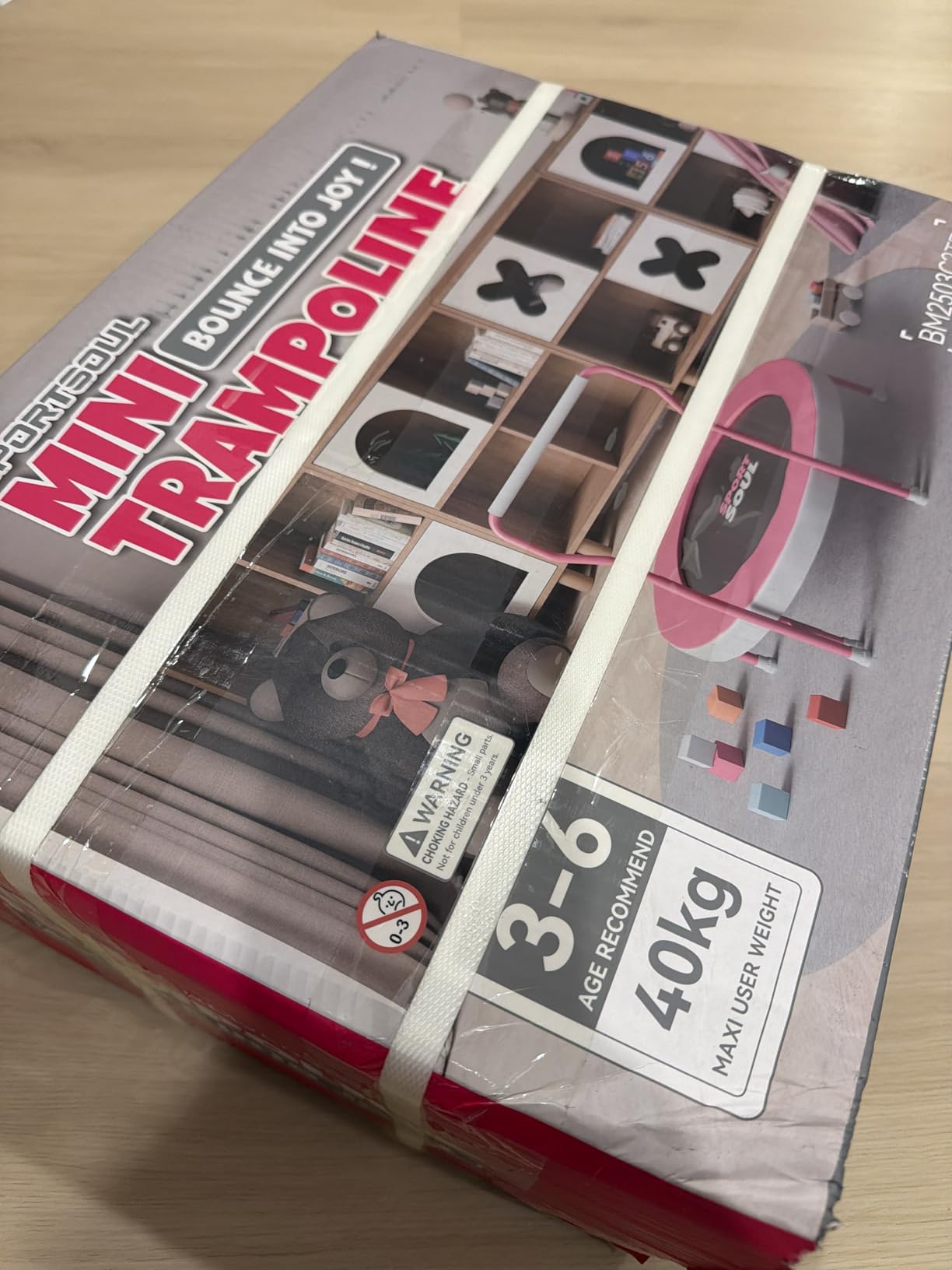
The six-leg galvanized base with rubber feet is the quiet feature. Six legs is more support than most 36-inch models use, and the rubber feet are what keep it from sliding and keep the floor protected at the same time.
At 4.6 stars from 258 ratings, it sits with the other well-regarded options, with 81 percent five-star. The listed 88 lb max load is higher than the 55 lb limit on many 36-inch models, which gives a little more headroom for a growing child.
Why the build quality matters for repeat use
A toddler trampoline that gets used daily for two or three years is a different buying decision than one used occasionally. Mat and padding are the components that fail first, and a stitched three-layer build with multiple fixing points resists that failure better than a single seam.
If you are planning to hand this one down to a second child, that is where the difference shows up. A mat that has been reinforced at twelve points is far more likely to survive the next two years of a heavier five-year-old.
Where the SPORTSOUL falls short
Assembly is the main complaint, and it comes with a specific instruction: several owners say it is harder than the written guide suggests and can need two people. Budget an hour and read the manual first.
Two smaller issues also come up. The frame can shift or lift when a child bounces hard and fast, and the handle height is short for the smallest toddlers. Also note that the grey protective covers sit over the foam handrails for shipping and must come off before use.
10. JOY SPOT 36 Inch Foldable Trampoline Is the Best Pick for Very Short Toddlers
36-Inch Toddler Trampoline with Foam Handle, 3FT Foldable Mini Rebounder
36 inch round,elastic band design,100 lb weight limit,six-leg frame,13.8 lb unit
Pros
- Quiet spring-free design with no pinch points
- Low handlebar suits very short toddlers
- Folds flat under a bed or in a closet
- 100 lb limit outlasts the 55 lb common at 36 inch
- Anti-tip six-leg frame with safety lock
Cons
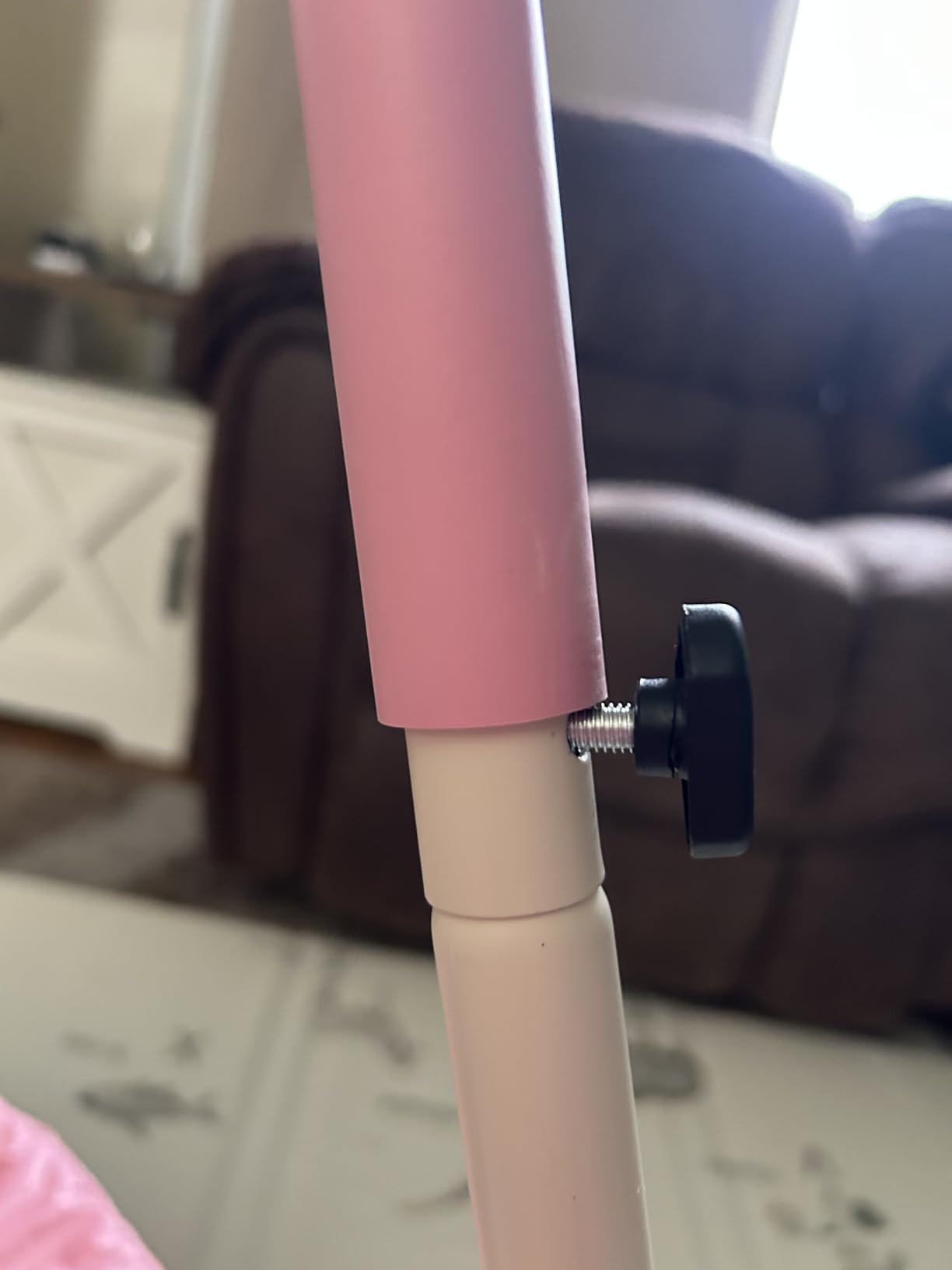
- Handlebar bolts sit awkwardly and are hard to install
- Removing the handle needs a tool
- Folds flat only after handle removal
The defining feature here is handlebar height. Most 36-inch handlebar models sit high enough that a small toddler has to reach up and grip the rail. This one is deliberately lower, which suits children who are still short for their age and who otherwise end up hanging off the bar instead of holding it.
The 100-pound weight limit is also the highest we saw among 36-inch units, which buys real headroom. That means a 5 or 6-year-old can still use it comfortably instead of outgrowing it at 55 pounds.
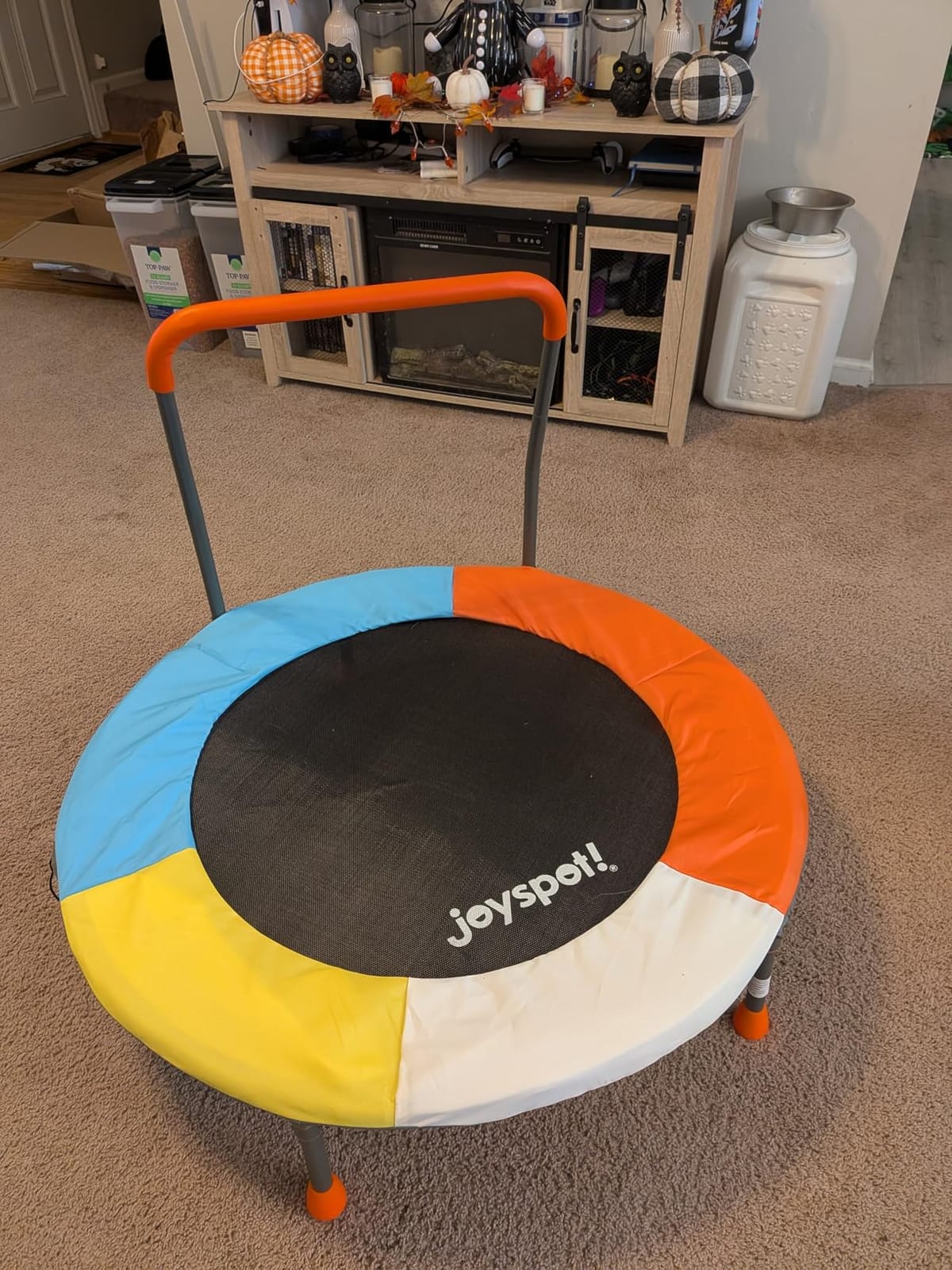
The spring-free elastic band design means no pinch points and very little noise, and the Oxford mat is waterproof and wipes clean. It also holds on wet grass, which makes it one of the few units here that works for both indoor and occasional outdoor bouncing.
At 4.5 stars from 107 ratings, this has the smallest review base in our set, so treat the rating with proportion. What stands out in the feedback is that 78 percent of buyers gave five stars while a 9 percent cluster gave three, which points to enthusiasm with a specific friction point rather than general dissatisfaction.
Why a low handlebar solves a real problem
Handlebar height is not a detail when the child is 90 percent of the height they will be at age four. A rail set too high turns a stability aid into something a toddler leans on or hangs from, which is exactly the tip-over scenario parents worry about. Setting it lower turns the bar into something a small hand can actually wrap around.
Add the 100-pound limit and the fold-flat frame, and you have a trampoline that covers roughly ages 2 to 6, which is a longer useful window than most 36-inch models offer.
Where the JOY SPOT falls short
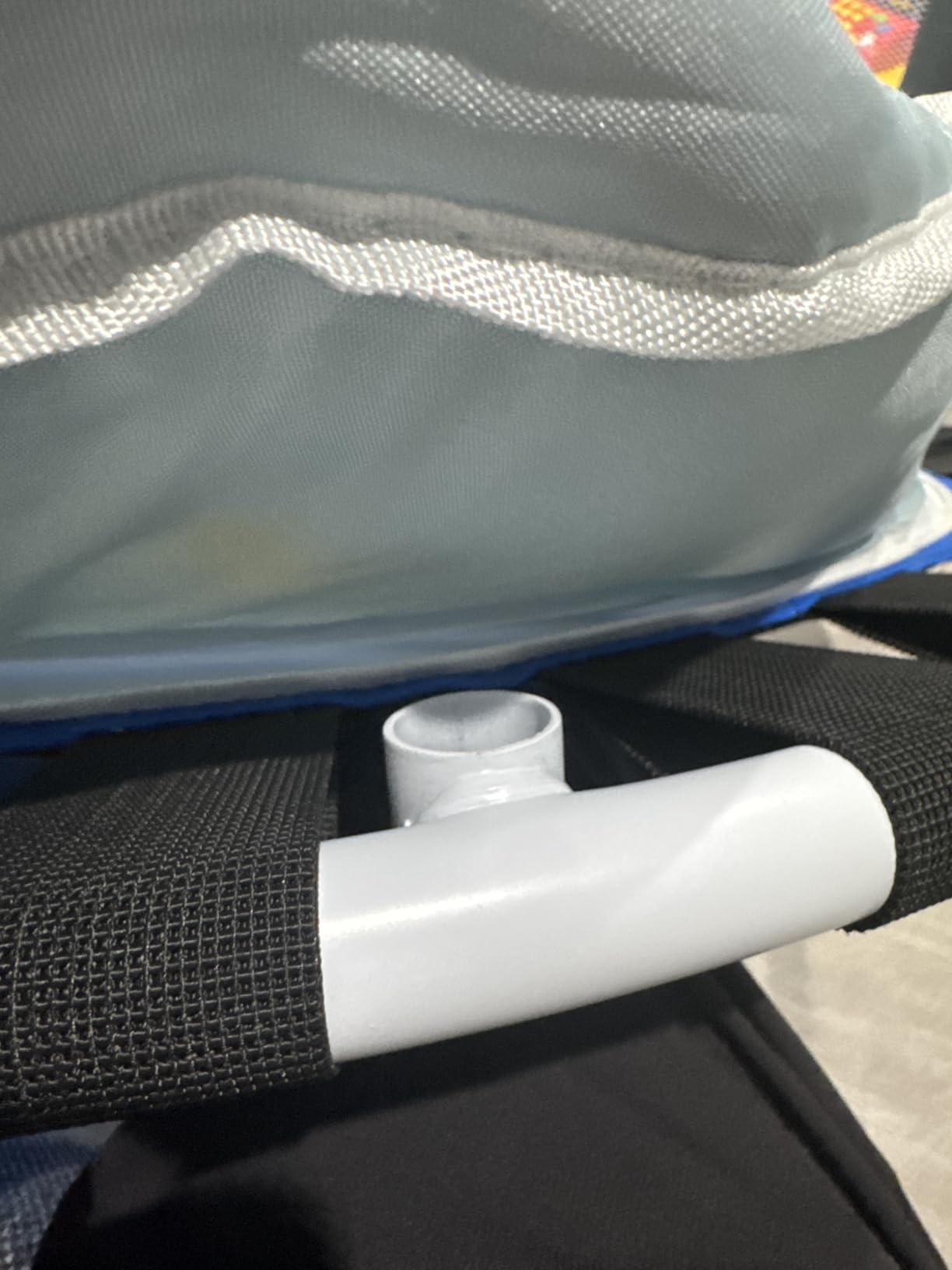
The friction point reviewers mention is the handlebar itself. The bolts sit in an awkward position and are difficult to install, and removing the handle requires a tool, which partly undercuts the fold-flat claim. Check that you are comfortable with a small bit of assembly before you commit.
The frame also lifts slightly under energetic jumping, and the smallest review base in the group means long-term durability data is thin. Nothing here is a dealbreaker, but it is the pick we would verify most carefully before buying.
How to Choose a Mini Trampoline for Toddlers
Match the safety rail to your child’s age, choose the bounce system based on your floor type and noise tolerance, and buy a footprint you can live with. Everything else is preference.
Handlebar or enclosure net? Pick a handlebar under 5 and an enclosure above it
A handlebar gives a toddler something to hold, which stops the wandering-off-the-edge problem at its source. It is compact, cheaper to build, and does not eat floor space. It does nothing once the child stops holding it, which is why it works best under about age 5.
An enclosure catches a child who lets go, at the cost of a much larger footprint and a harder assembly. For a 5-year-old bouncing properly, or for a family that wants the trampoline in an open room, an enclosure is the safer long-term answer. Our enclosure guide covers the larger models in more detail.
Steel springs or elastic bands? Bands for noise and fingers, springs for bounce
Elastic bands remove the pinch hazard entirely, cut noise dramatically, and give a slower, gentler rebound that a toddler can control. The trade-off is that bands wear out. Parents report replacing band sets somewhere between six and twelve months of daily use, so check whether the manufacturer sells replacements before you buy.
Steel springs give a livelier bounce and are cheaper to replace, but they need full coverage. A no-gap mat plus an enclosed spring ring is the minimum. Never use a model where small fingers can reach a spring coil.
What size does a toddler actually need? 36 inches for most homes
Measure the space, not the mat. A 36-inch round trampoline needs roughly a 6-by-6-foot clear area once you account for the frame and for a supervising adult, and a 55-inch model needs close to 8 by 8. That is the single most common reason families return a trampoline.
Height matters less than footprint, but note that the Fisher-Price WonderJump stands 36 inches tall including the handlebar, so check overhead clearance near furniture and ceiling fans.
Age and weight limits by stage
At 1 to 2 years, treat the trampoline as a supervised bounce rather than independent play, and choose the lowest handlebar height you can find. The JOY SPOT and the BCAN BT1 both suit this stage.
At 2 to 3 years, a standard handlebar model with covered springs and a no-gap mat is the sweet spot. That is the Little Tikes 3 Foot, the BCAN SP1, or the ATIVAFIT elastic band models.
At 3 to 5 years, you can move to higher limits. Anything rated 88 to 100 pounds keeps working as your child grows, and an enclosure becomes worth considering near age 5. For outdoor use at this stage, our rectangle trampoline guide covers larger formats.
Five safety checks before every session
Check the mat for gaps and tears, confirm the spring cover is intact, look for loose screws at the leg fittings, verify the frame has not shifted, and keep furniture, windows and hard edges well clear. Ninety seconds of checking replaces most of the anxiety.
Then set rules that match the guidance: one jumper at a time, no flips, no bouncing off the handlebar, and stop before anyone is tired, because most injuries happen late in a session when control drops.
Noise, floors and apartment living
Most of the noise comes from the mat slapping the springs under hard bouncing, so flooring does more than you would expect. A carpet or foam play mat under the trampoline cuts both airborne and floor-transmitted sound, and it also stops the unit sliding.
If you cannot control what is underneath, choose an elastic band model. It is the single change with the biggest effect on how loud the trampoline is, and it is why the two ATIVAFIT band models and the JOY SPOT appear high in our list for apartments.
Assembly, storage and what happens when they outgrow it
Assembly ranges from about five minutes tool-free on the BCAN BT1 to an hour with two people on the SPORTSOUL. Anything with steel springs takes longer and wants two adults. Check the manual before you start rather than improvising, especially on enclosed models with a pole-by-pole net.
On outgrowing, work down the limits: 55-pound models stop around age 4, 88 to 100-pound models carry to about 6, and 220-pound models carry well past that. That is why we would pick a 100-pound unit over a 55-pound one when the price gap is small.
Plan for the next stage rather than the end of the first one. Handing a trampoline to a sibling is common, and a heavier frame with a replaceable mat outlasts a lightweight one every time.
Frequently Asked Questions
What is a good mini trampoline for a 2-year-old?
The best mini trampolines for toddlers at age 2 are 36-inch models with a low foam handlebar, covered or spring-free bounce and a no-gap mat. Our top pick is the Little Tikes 3 Foot Trampoline, and the JOY SPOT and BCAN BT1 suit shorter toddlers because of their lower handlebar height.
Can a 2 year old use a mini trampoline?
A 2-year-old can use a mini trampoline with close adult supervision, but only a model rated for ages 3 and under with a handlebar they can grip. The American Academy of Pediatrics advises against trampoline use under age 6, so keep sessions short, stay within arm’s reach and choose an indoor 36-inch model rather than a full-size trampoline.
What is the safest trampoline for a 3-year-old?
The safest option for a 3-year-old is an indoor mini trampoline with a foam handlebar, a no-gap stitched mat and fully covered or absent springs. The BCAN SP1 is the pick in our roundup because it carries ASTM certification alongside a no-gap mat and 28 enclosed springs.
What age is recommended for kids trampolines?
Most 36-inch mini trampolines are labelled for ages 3 to 6, while springless models with adjustable handles sometimes start at ages 1 to 3. Always check the manufacturer’s stated age range and weight limit before use, and treat the weight limit as a ceiling rather than a target.
Are trampolines good for gymnastics?
Bouncing on a mini trampoline builds balance, coordination and core strength, which is why occupational and physical therapists often recommend it. For actual gymnastics skills, models with an adjustable horizontal bar, such as the enclosed 55-inch options, let a child practise support holds and swings.
Which Mini Trampoline for Toddlers Should You Buy in 2026
For most families, the Little Tikes 3 Foot Trampoline is the one to buy. It has the largest base of real-world use of anything in our roundup, a handlebar a toddler can actually hold, and a track record of owners still using theirs three years in.
Live below a neighbour or on a hard floor, pick an elastic band model instead. The ATIVAFIT 36-inch with adjustable handle covers that case well, and the foldable ATIVAFIT solves storage at the same time. If certification is your priority, the BCAN SP1 carries ASTM approval with a genuinely well-built no-gap mat.
Once your child turns five and stops needing the handle, move up to an enclosed 55-inch model rather than buying a bigger open frame. That is where the best mini trampolines for toddlers stop being toddler equipment and start being equipment for the next three years.