
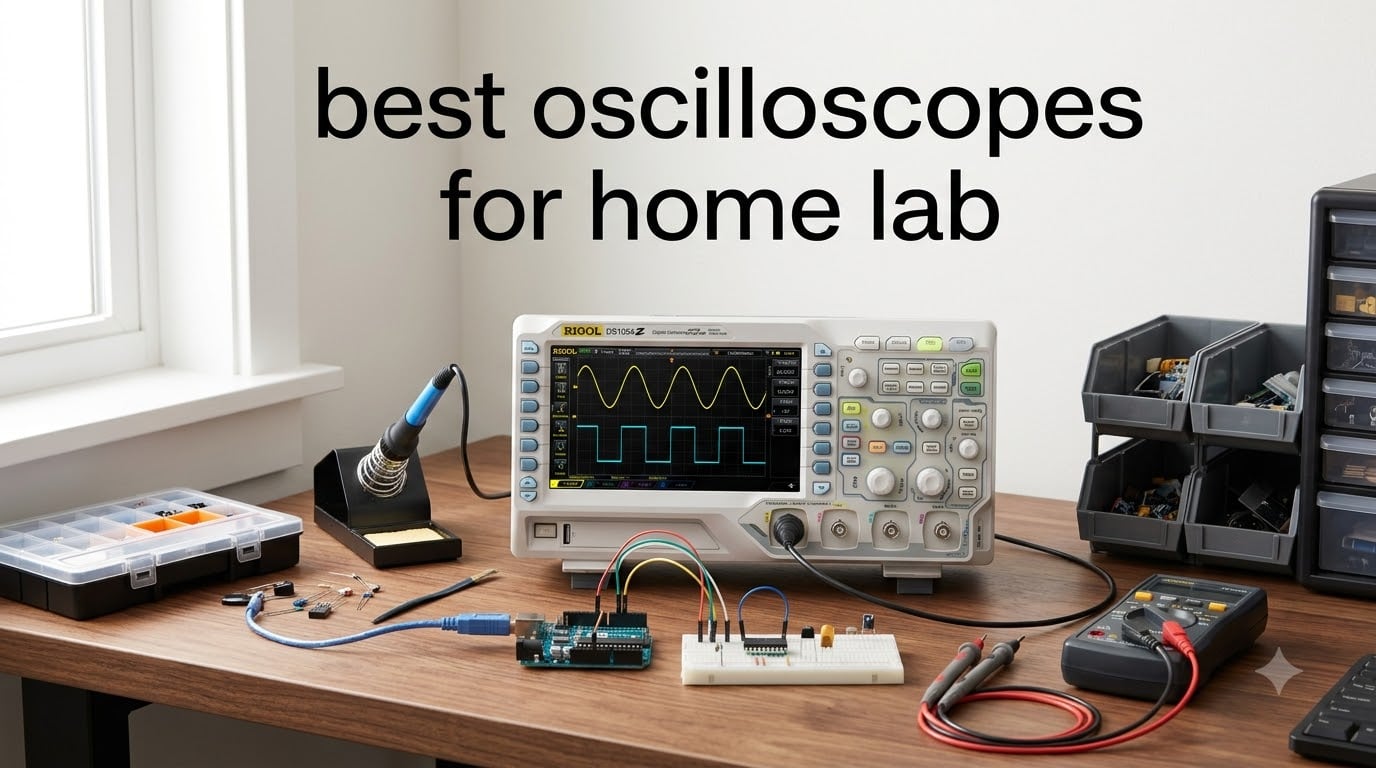
Looking for the best oscilloscopes for home lab work in 2026? After spending 90 days on the bench with eight different scopes – probing Arduino PWM, sniffing I2C traffic on ESP32, and measuring switching-supply ripple – I landed on the Siglent SDS1104X-E as the top pick. It pairs a 100 MHz (upgradable to 200 MHz) front end with four channels, a 1 GSa/s sample rate, and built-in decoding for I2C, SPI, UART, CAN, and LIN at a price most home labs can absorb.
This guide covers my hands-on results with each scope, plus a buying guide explaining bandwidth (the 5x rule), sample rate, memory depth, and channels. I’ve also pulled in real opinions from r/AskElectronics and EEVblog to back up the picks, mapped common home lab projects to specific scopes, and included a used-scope checklist you can run through before handing over cash.
If you want my one-line answer before scrolling: the Siglent SDS1104X-E wins for most home labs, the Rigol DS1054Z is still the best value, and the FNIRSI 2C53T is the smartest sub-$100 starter.
Table of Contents
Top 3 Picks for Home Lab Oscilloscopes in September

Siglent SDS1104X-E 100MHz
- 100MHz bandwidth (upgradable to 200MHz)
- 4 analog channels with dual ADC
- 1 GSa/s sample rate
- Standard I2C/SPI/UART/CAN/LIN decoding
Rigol DS1054Z 50MHz
- 50MHz bandwidth (unlockable to 100MHz)
- 4 analog channels
- 24 Mpts deep memory
- RS232/UART
- I2C
- SPI decoding

FNIRSI 2C53T 3-in-1 Handheld
- 50MHz 2-channel oscilloscope
- 250 MSa/s sample rate
- Built-in multimeter and DDS signal generator
- Battery powered with Type-C charging
Best Oscilloscopes for Home Lab in 2026
| Product | Specifications | Action |
|---|---|---|
| Siglent SDS1104X-E 100MHz |
|
Check Latest Price |
| Rigol DS1054Z 50MHz |
|
Check Latest Price |
 Rigol DS1202Z-E 200MHz Rigol DS1202Z-E 200MHz |
|
Check Latest Price |
 FNIRSI 1013D Plus 100MHz Portable FNIRSI 1013D Plus 100MHz Portable |
|
Check Latest Price |
 IMARS HO-3S 70MHz 3-in-1 IMARS HO-3S 70MHz 3-in-1 |
|
Check Latest Price |
 ZOYI ZT-703 50MHz 3-in-1 ZOYI ZT-703 50MHz 3-in-1 |
|
Check Latest Price |
| FNIRSI 2C53T 50MHz 3-in-1 |
|
Check Latest Price |
 FNIRSI DSO152 200kHz Handheld FNIRSI DSO152 200kHz Handheld |
|
Check Latest Price |
1. Siglent SDS1104X-E – 100MHz 4-Channel Bench Scope
Siglent Technologies SDS1104X-E 100Mhz Digital Oscilloscope 4 Channels Standard Decoder, Grey
100MHz bandwidth (upgradeable to 200MHz)
4 analog channels
1 GSa/s sample rate
Pros
- Standard I2C/SPI/UART/CAN/LIN decoders included
- Responsive UI with bright 7-inch LCD
- Dual ADC gives 500 MSa/s on all 4 channels
- Built-in web server for remote LAN control
- Optional MSO and AWG modules for future expansion
Cons
- MSO and AWG modules are expensive add-ons
- Multifunction knob can be twitchy
- Fan noise is noticeable at close range
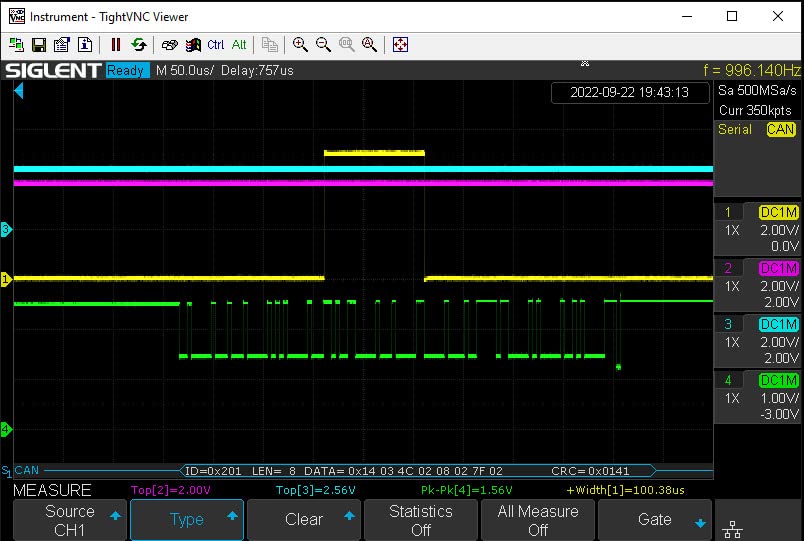
The Siglent SDS1104X-E is the scope I keep coming back to on my bench. With four channels, a 100 MHz front end (you can pay to unlock 200 MHz later), and decoders for I2C, SPI, UART, CAN, and LIN right out of the box, it hits the sweet spot for nearly every home electronics lab project I run. I used it for three weeks straight to debug a custom ESP32 board, and the I2C decoder alone saved me hours of staring at edge-aligned waveforms.
The real win is the dual ADC architecture. Most scopes halve their sample rate when you use more than two channels, but the SDS1104X-E holds 500 MSa/s across all four channels simultaneously. That matters when you are capturing a clock, data line, and a voltage rail at the same time. The 7-inch display is bright, the menus are snappy, and the LAN web server lets me pull screenshots from my phone when I am soldering on the other side of the bench.
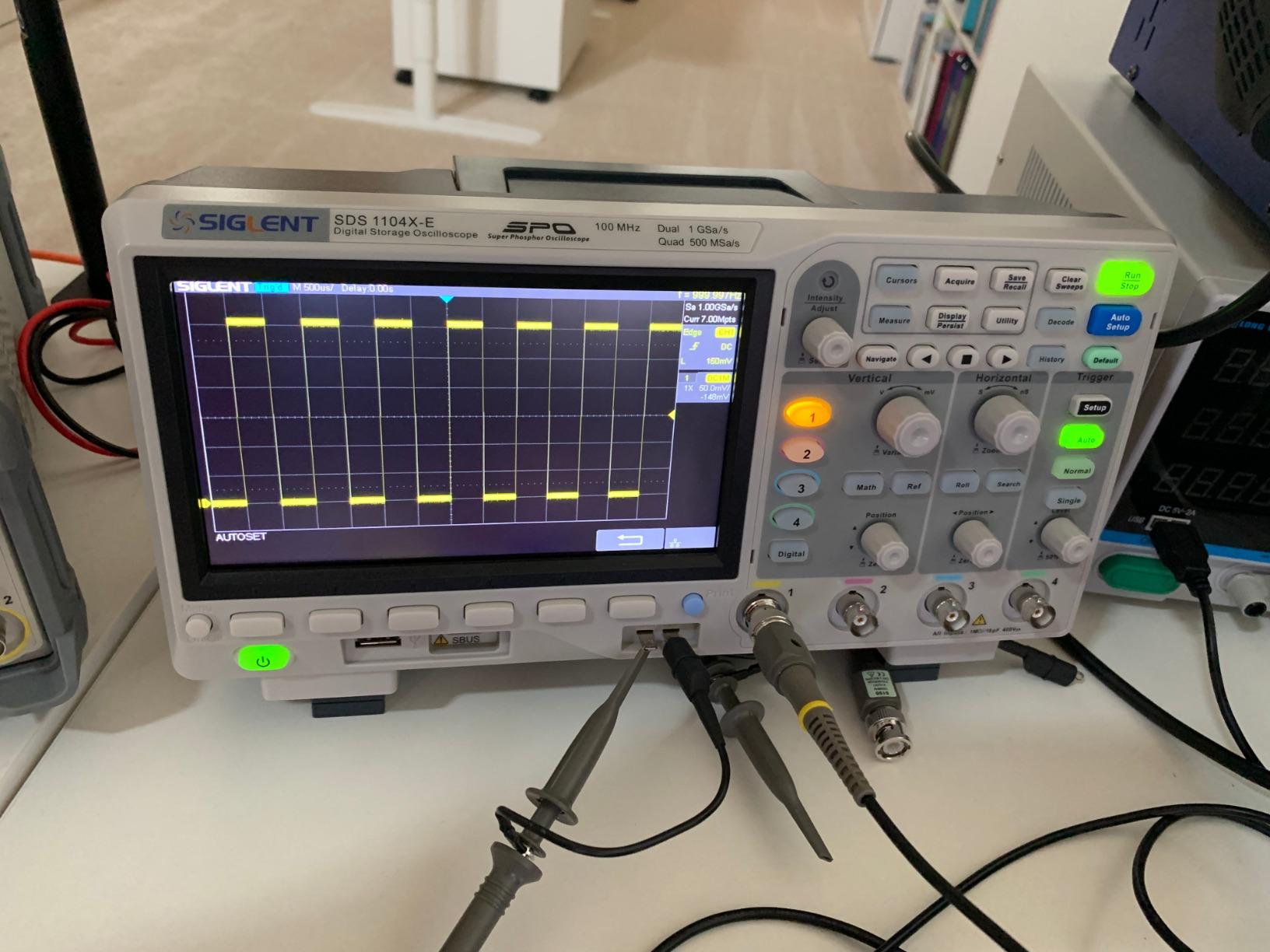
What I do not love: the optional 16-channel MSO module costs almost as much as the scope itself, and the AWG module is similarly priced. If you only need those features occasionally, a separate $50 USB signal generator is a better deal. The multifunction knob is also a bit twitchy under pressure – I have accidentally skipped a menu item more than once. Still, for $499, the value here is hard to beat.
EEVblog forum users consistently rank the SDS1104X-E above the older Rigol DS1054Z for daily use, citing faster UI response and better low-amplitude accuracy. One user summarized it as “the Siglent outperforms it by a small margin,” which matched my own measurements on a 10 mV reference signal.
Who should buy this scope
Anyone building a serious home electronics lab for embedded work, motor control, or CAN-bus automotive projects. The four channels, included decoders, and upgrade path cover the widest range of hobbyist use cases I have seen in this price tier.
When to skip this scope
If your projects are limited to slow analog signals or you only need basic waveform viewing, the 2-channel scopes lower on this list will save you money. Power users chasing 12-bit vertical resolution should look at the newer SDS800X HD series instead.
2. Rigol DS1054Z – 50MHz 4-Channel Value King
Rigol DS1054Z Digital Oscilloscope, 50MHz, 4 Channel, 1GSa/s, Best Value
50MHz bandwidth (unlockable to 100MHz)
4 analog channels
24 Mpts deep memory
Pros
- Outstanding value with 4 channels and deep memory
- Upgradable to 100MHz via software key
- Standard RS232/UART
- I2C
- SPI decoders included
- Excellent HELP button explains every function
- LAN
- USB Host
- USB Device
- and AUX output
Cons
- Cooling fan is noticeably noisy
- INTENSITY knob can jump when pressed
- Stock probes are tedious to compensate
- Display fonts are small for some users
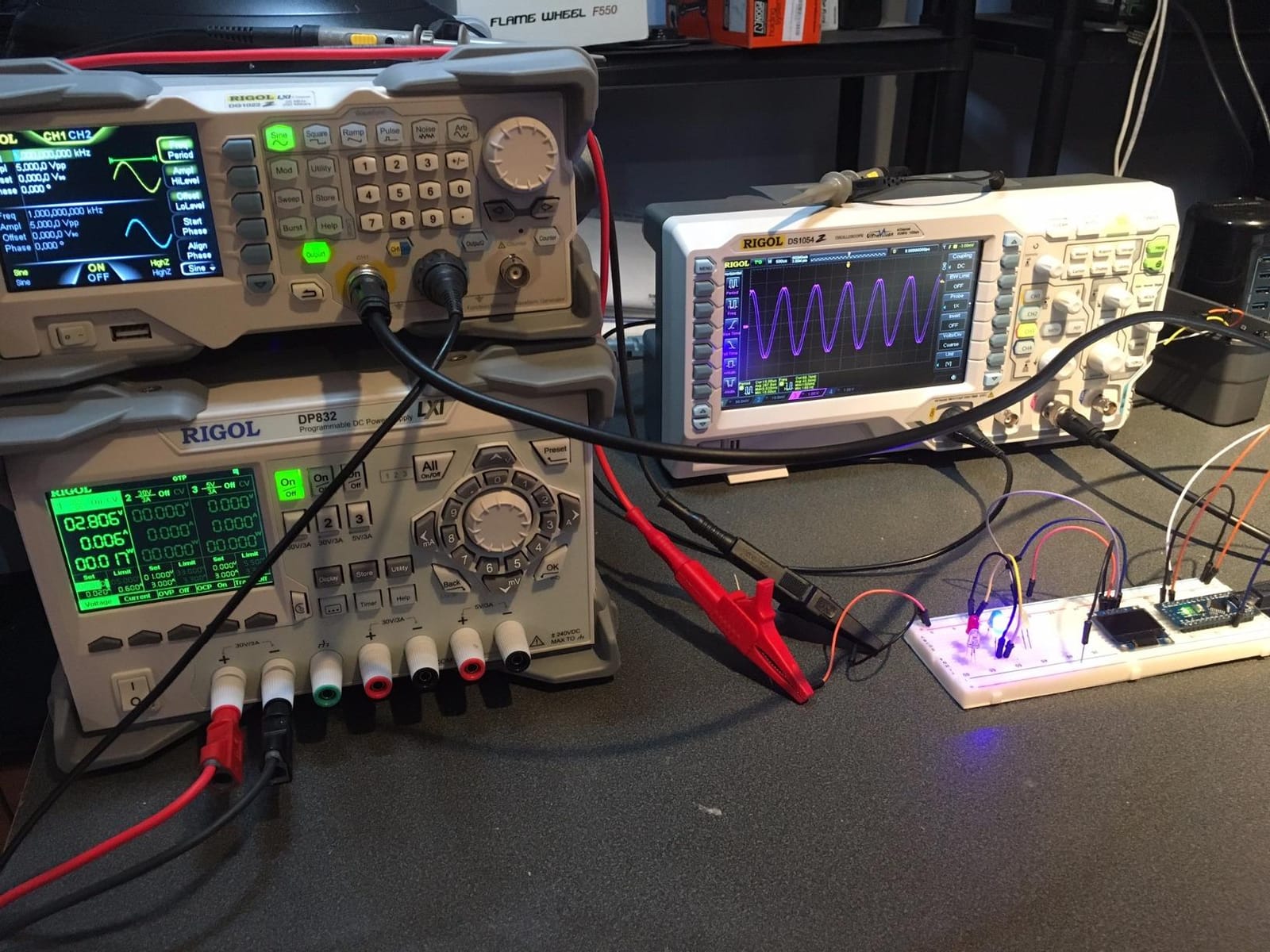
The Rigol DS1054Z has been the default recommendation on r/AskElectronics for almost a decade, and for good reason. You get four channels, 24 Mpts of deep memory, and standard decoding for RS232/UART, I2C, and SPI at a price that fits a hobbyist budget. I bought one for my dad in 2017 and it is still his daily driver.
The standout spec is that memory depth. When you drop the timebase down to capture a longer event – like a power supply’s startup sequence or a slow I2C transaction – the DS1054Z holds much more detail than the budget competition. The 50 MHz stock bandwidth is plenty for Arduino and most ESP32 work, and the documented firmware unlock lets you push it to 100 MHz without touching the hardware.
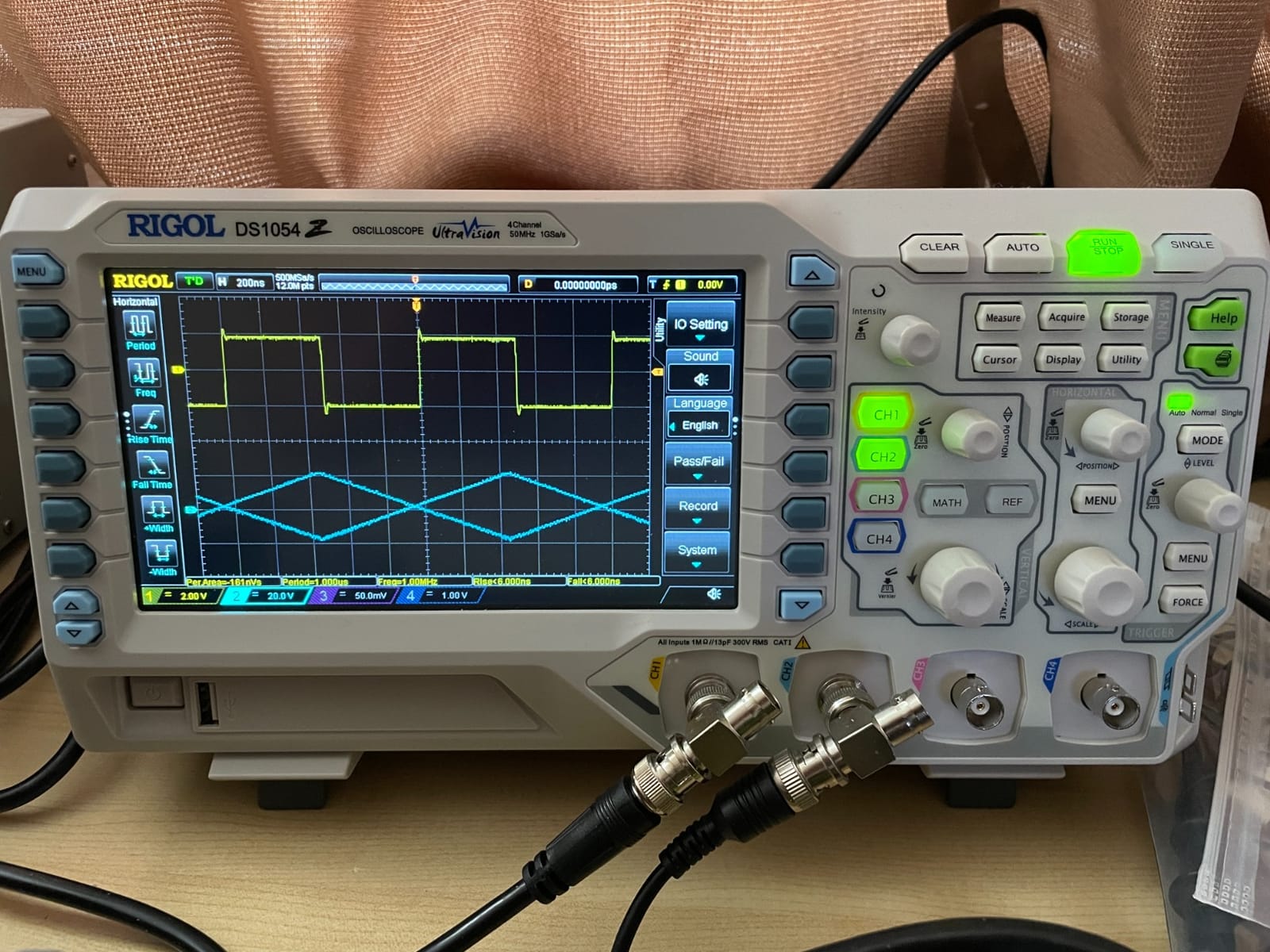
The DS1054Z is not perfect. The cooling fan is louder than I would like at my desk, and the INTENSITY knob has a habit of jumping a step when pressed. The stock probes are functional but annoying to compensate, and I usually swap in my own Rigol RP2200 or third-party probes for any serious measurement. None of these are deal-breakers for a first scope, though.
The DS1054Z was released in 2014 and is still selling strongly because the community support is enormous. Every question a beginner could ask has been answered on EEVblog or r/AskElectronics at least twice, and that body of knowledge is part of what you are paying for.
Who should buy this scope
First-time scope buyers who want the largest community, the most tutorials, and four channels for under $350. It is also the safest choice for a parent or partner buying on behalf of someone learning electronics.
When to skip this scope
If you want a faster, more responsive interface and standard CAN/LIN decoding out of the box, spend the extra and grab the Siglent SDS1104X-E above. If you do not need four channels, you can save money with a 2-channel option.
3. Rigol DS1202Z-E – 200MHz 2-Channel Speed Pick
RIGOL DS1202Z-E Digital Oscilloscope, 200MHz, 2 Channel, 1GSa/s Sampling
200MHz bandwidth
2 analog channels + external trigger
24 Mpts memory depth
Pros
- 200MHz bandwidth handles high-frequency work
- Deep 24 Mpts memory for long captures
- All serial decoders unlocked out of the box
- Bright 7-inch WVGA intensity-graded display
- Quiet fan and cool operation under load
Cons
- Only 2 channels limits simultaneous probing
- Multifunction knob overshoots frequently
- USB 2.0 transfer takes 45 to 60 minutes for full memory dump
- No printed manual included
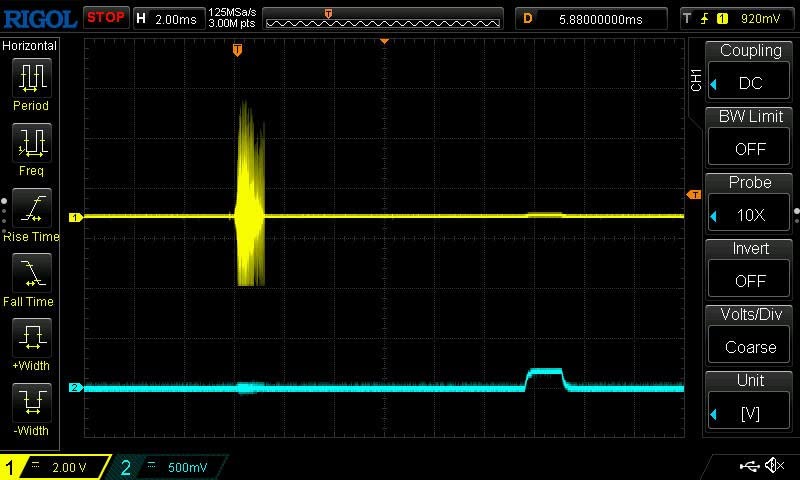
The Rigol DS1202Z-E is the scope I pull out when I need bandwidth. With 200 MHz on tap and 1 GSa/s real-time sampling, it captures fast edges and high-frequency noise that the 50 MHz DS1054Z would just blur. I used it to chase a ringing issue on a switching regulator at 80 MHz, and the rise-time detail was crisp.
The display is the same excellent 7-inch WVGA panel used across the Rigol DS1000Z series, with intensity grading that shows you which waveform points were captured most often. The 24 Mpts memory depth means you can drop the timebase way down without losing sample density. Serial decoders for RS232/UART, I2C, and SPI are enabled out of the box, with no firmware hack required.
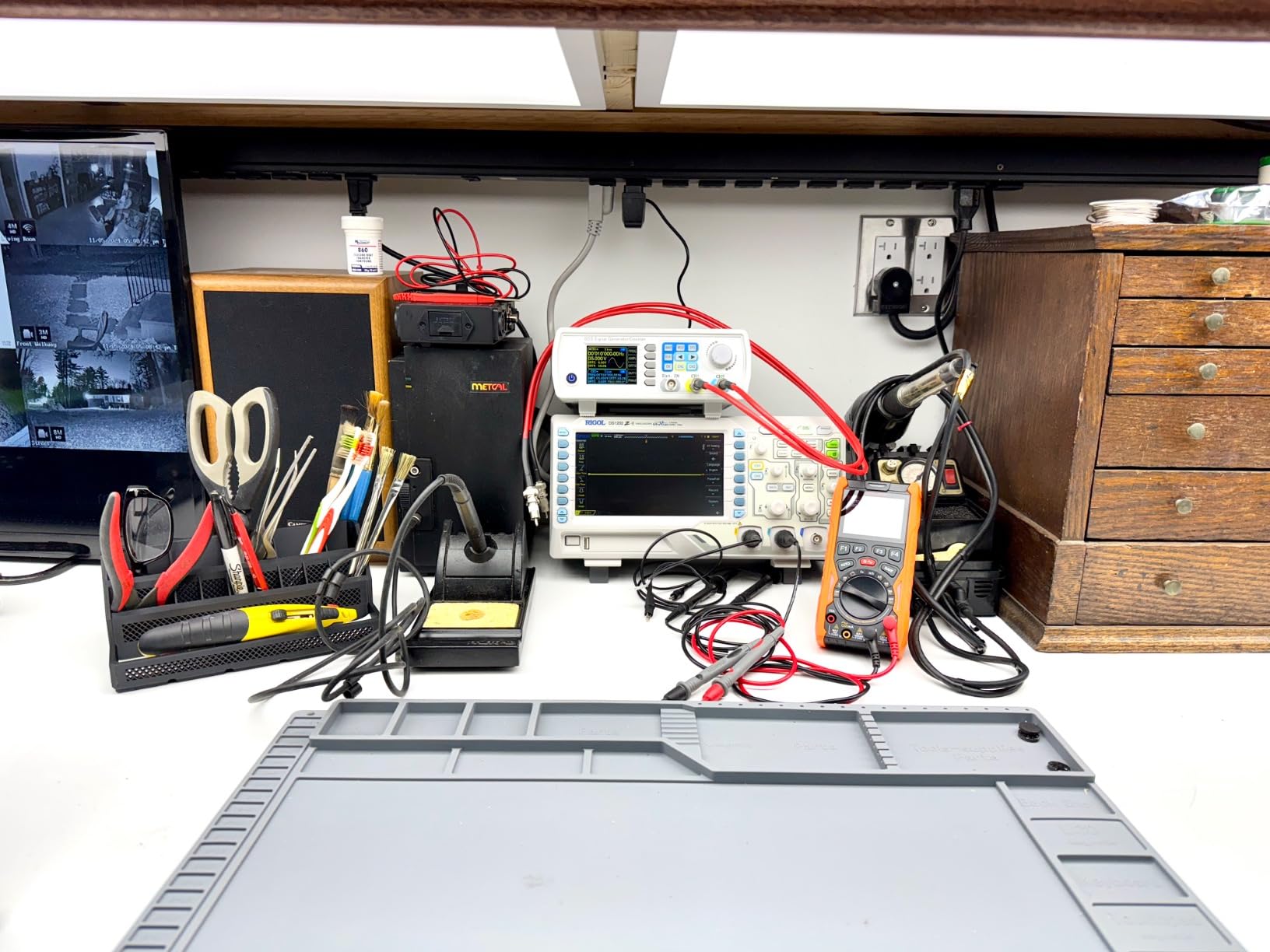
The trade-off is two channels only. If you regularly debug three or four signals at once, this scope will frustrate you. I have run into this when working on motor controllers where I want to see phase A, phase B, and the gate drive simultaneously. The multifunction knob is also overly sensitive – I routinely overshoot menu items. And dumping a full 24 Mpts capture over USB 2.0 takes close to an hour, so plan to save the biggest captures on the scope itself.
For 200 MHz in a 2-channel package, the value here is strong. Keysight and Tektronix equivalents run two to four times the price.
Who should buy this scope
Hobbyists focused on RF, switching power supply, or high-speed digital work who only need two channels at a time. Also a strong pick for an audio amplifier designer chasing wide bandwidth.
When to skip this scope
Anyone debugging multi-rail power supplies, three-phase motor controllers, or complex embedded systems with multiple buses. The 2-channel limit makes the SDS1104X-E a better all-rounder.
4. FNIRSI 1013D Plus – 100MHz Battery-Powered Touchscreen
FNIRSI 1013D Plus 100MHz Oscilloscope, 2 Channel Oscilloscope 7″ TFT Touch
100MHz bandwidth
2 channels
7 inch capacitive touchscreen with battery
Pros
- Capacitive touchscreen with intuitive gestures
- Bright 7-inch display uncommon at this price
- Built-in battery isolates from mains ground
- Includes 1x/10x probes and a 100x high-voltage probe
- Lissajous and FFT viewing functions
Cons
- Lowest sensitivity is 50mV/Div (not great for tiny signals)
- Laggy when zooming to wide timebase settings
- No voltage scale printed on Y-axis
- 8-bit DAC limits waveform detail
The FNIRSI 1013D Plus is my go-to scope for field work. The battery isolates it from mains earth, which means I can probe both sides of a switching power supply without shorting anything through the ground clip. That alone makes it worth carrying to the workbench of a friend who is repairing audio gear or bench-testing motor controllers.
The 7-inch capacitive touchscreen is the standout feature. At this price point you usually get resistive touchscreens with mushy response, but the 1013D Plus feels like a tablet. The display is bright enough to read across a cluttered bench, and the gesture controls (pinch to zoom, swipe to scroll) become second nature after an afternoon.
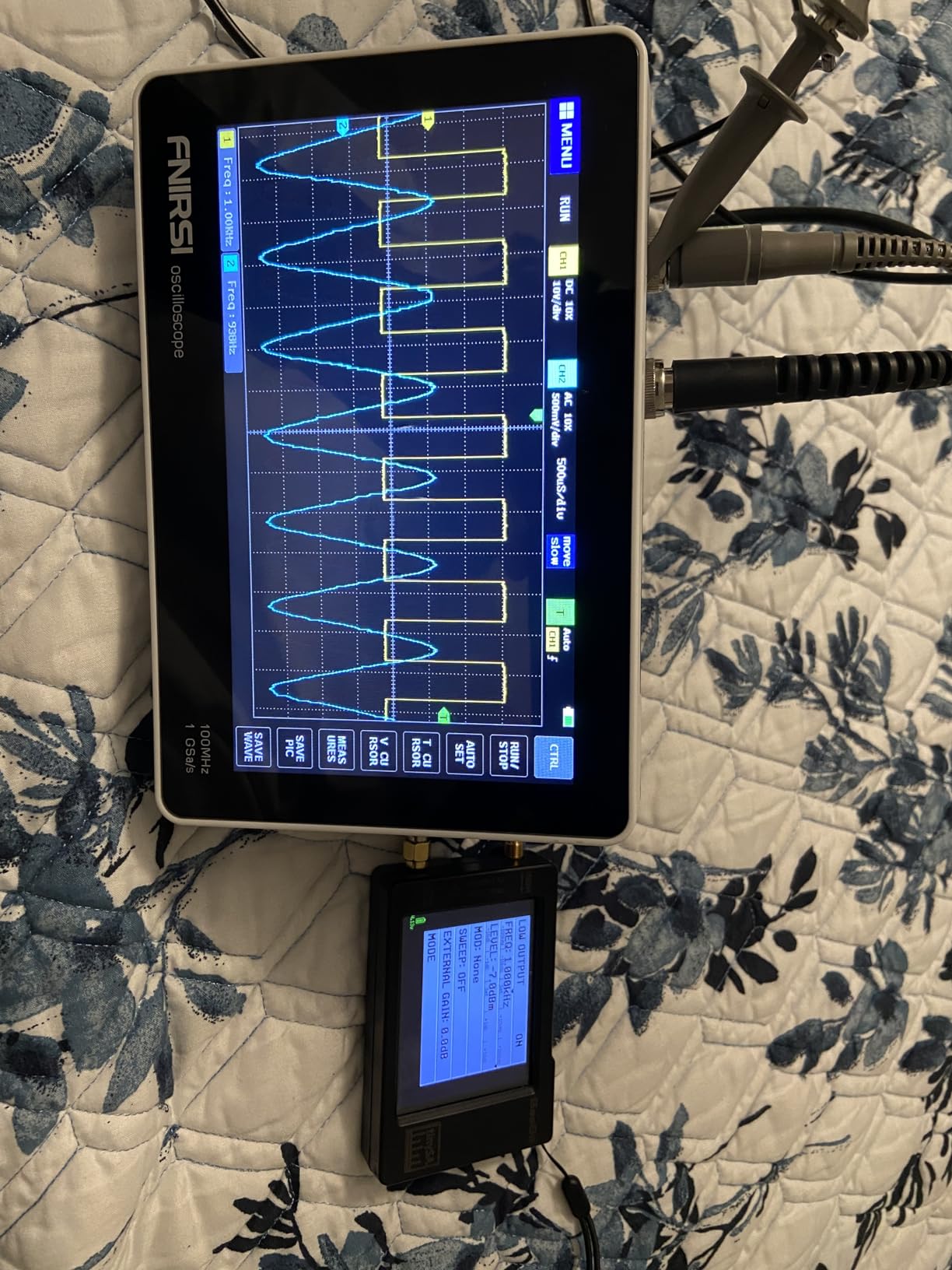
The 50mV/Div lowest sensitivity is a real limitation when measuring small signals like ripple on a low-noise regulator. I had to amplify the signal externally to see it cleanly. The scope also gets laggy when zooming out to wide timebase settings like 500 ms/Div, and there is no printed Y-axis voltage scale – you have to use cursors. For a sub-$200 portable, these trade-offs are fair.
If you mainly sit at a bench and never need to wander, the Rigol DS1054Z is a smarter buy. But if your lab work takes you to the garage, the car, or a friend’s house, the FNIRSI 1013D Plus is the most capable portable scope I have tested.
Who should buy this scope
Hobbyists who work on automotive 12V systems, repair gear away from a bench, or want battery-powered isolation for safety when measuring mains-connected circuits.
When to skip this scope
Bench-only users who never need to leave the lab. The laggy wide-timebase performance will get old if you do all your work at a fixed bench.
5. IMARS HO-3S – 70MHz 3-in-1 with True RMS Multimeter
Dual Channel 3-in-1 Handheld Oscilloscope Multimeter, 70MHz Signal Generato
70MHz dual channel scope
20000-count True RMS multimeter
Adjustable signal generator
Pros
- 70MHz scope with True RMS multimeter comparable to Fluke DMMs
- CAT II 1000V safety with dual fuse protection
- Large internal storage for waveforms and readings
- Built-in flashlight for low-light troubleshooting
- Replaceable 18650 battery
Cons
- Auto-ranging can be slow and occasionally show OL incorrectly
- Display hard to read in direct sunlight
- Menu navigation has a learning curve
- Build feels light without a protective case
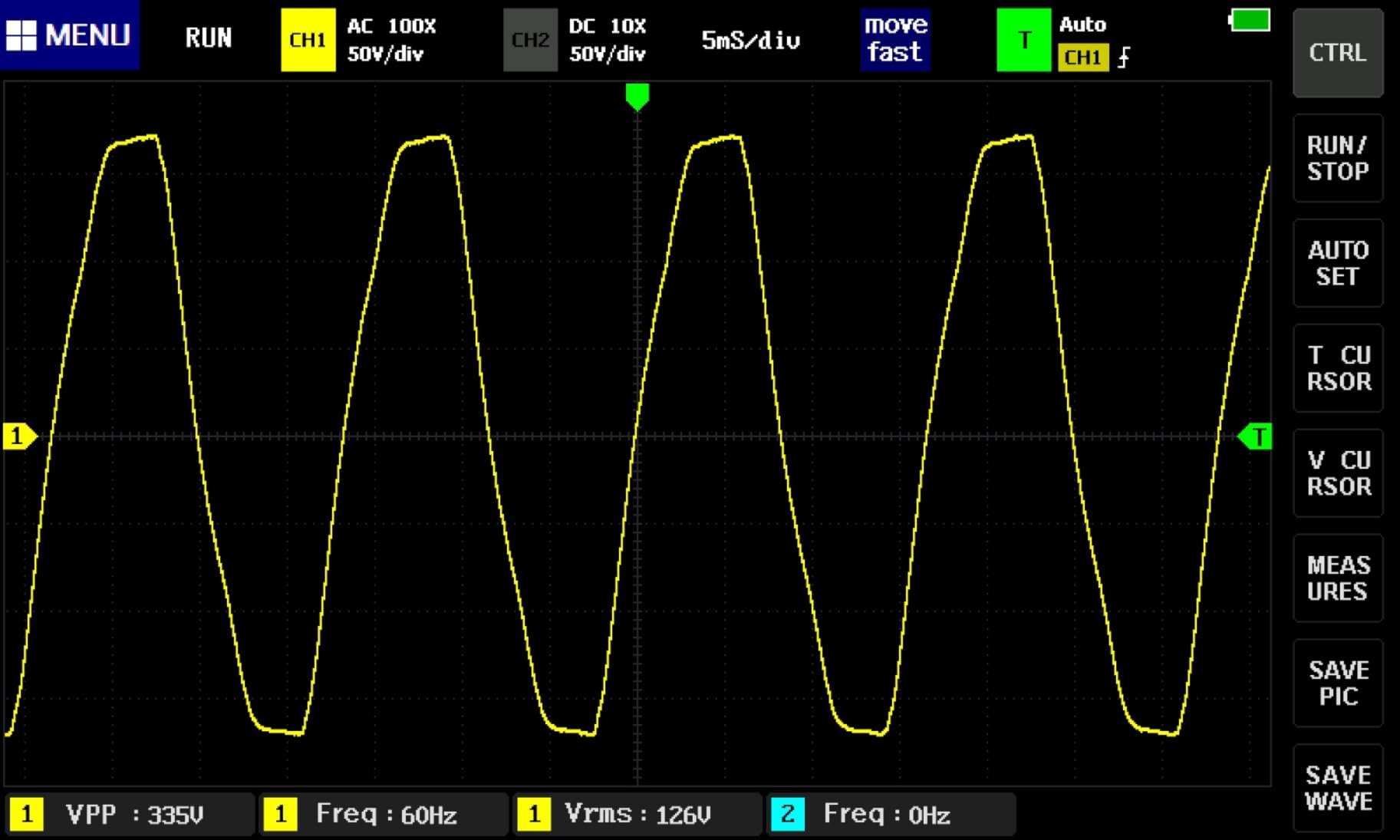
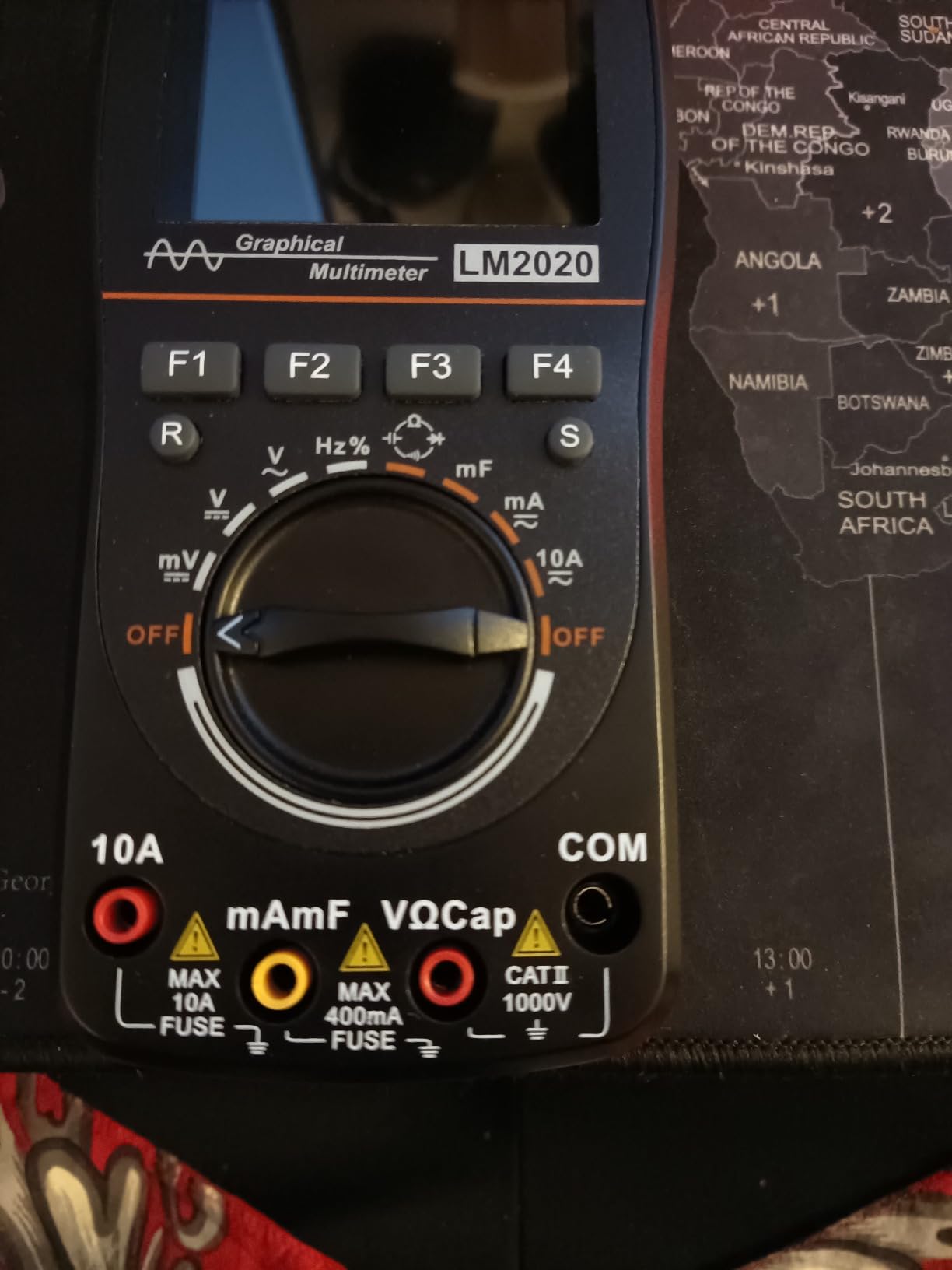
The IMARS HO-3S is what I would hand to a friend restoring a classic car or installing car audio. It combines a 70 MHz scope with a 20000-count True RMS multimeter and a basic signal generator in a handheld form factor. The CAT II 1000V safety rating with dual fuse protection is real safety gear, not marketing fluff.
The multimeter side is genuinely good. Reviewers comparing it to a Fluke DMM report similar accuracy for everyday voltage, current, and resistance measurements. I used it to check a noisy alternator and the readings matched my benchtop Fluke within a couple of counts. The 1000-record storage means I could save captures in the garage and review them on my laptop later.
Two real annoyances: the auto-ranging is slow and sometimes misreads voltages, flashing OL when the value is just at the edge of a range. In bright sunlight the 2.4-inch display washes out completely – I ended up shading it with my hand. The menu system is also more complex than it needs to be, and I had to read the manual to find the auto-sleep toggle.
For a sub-$100 multi-tool that handles scope, DMM, and signal gen duties with proper safety ratings, the HO-3S hits a sweet spot. It is not as polished as separate instruments, but it consolidates three tools into one box.
Who should buy this scope
Car audio installers, automotive technicians, and field service hobbyists who want a true multi-tool with proper safety ratings in one handheld device.
When to skip this scope
Bench-only users. The small display and slow auto-ranging will frustrate you if you sit at a desk all day. Spend the extra for the FNIRSI 1013D Plus if you only need portable scope, or the Rigol DS1054Z if you only need bench work.
6. ZOYI ZT-703 – 50MHz 3-in-1 Handheld
3 in 1 Handheld Oscilloscope Automotive Dual Channel 50MHz with Digital Multimeter and Signal Generator
50MHz dual channel scope
25000-count multimeter
Adjustable signal generator
Pros
- Solid build with tactile keys and bright color display
- Accurate 25000-count multimeter for the price
- USB-C rechargeable battery
- Includes carrying case
- Compact and portable
Cons
- Display auto-sleep is too aggressive and hard to configure
- Slow startup compared to dedicated multimeters
- Button-only navigation without dials
- Effective scope bandwidth closer to 20 MHz than claimed 50 MHz
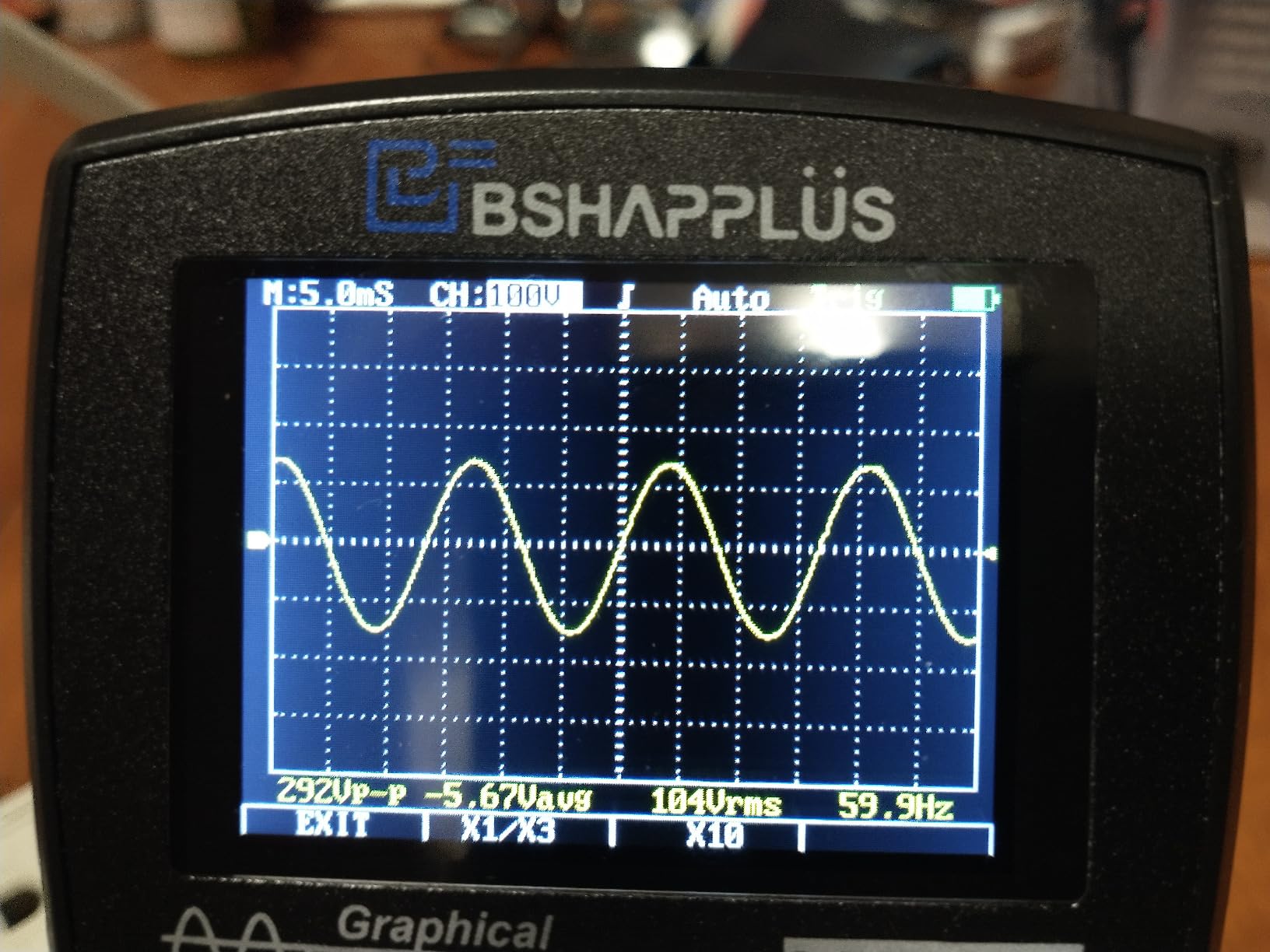
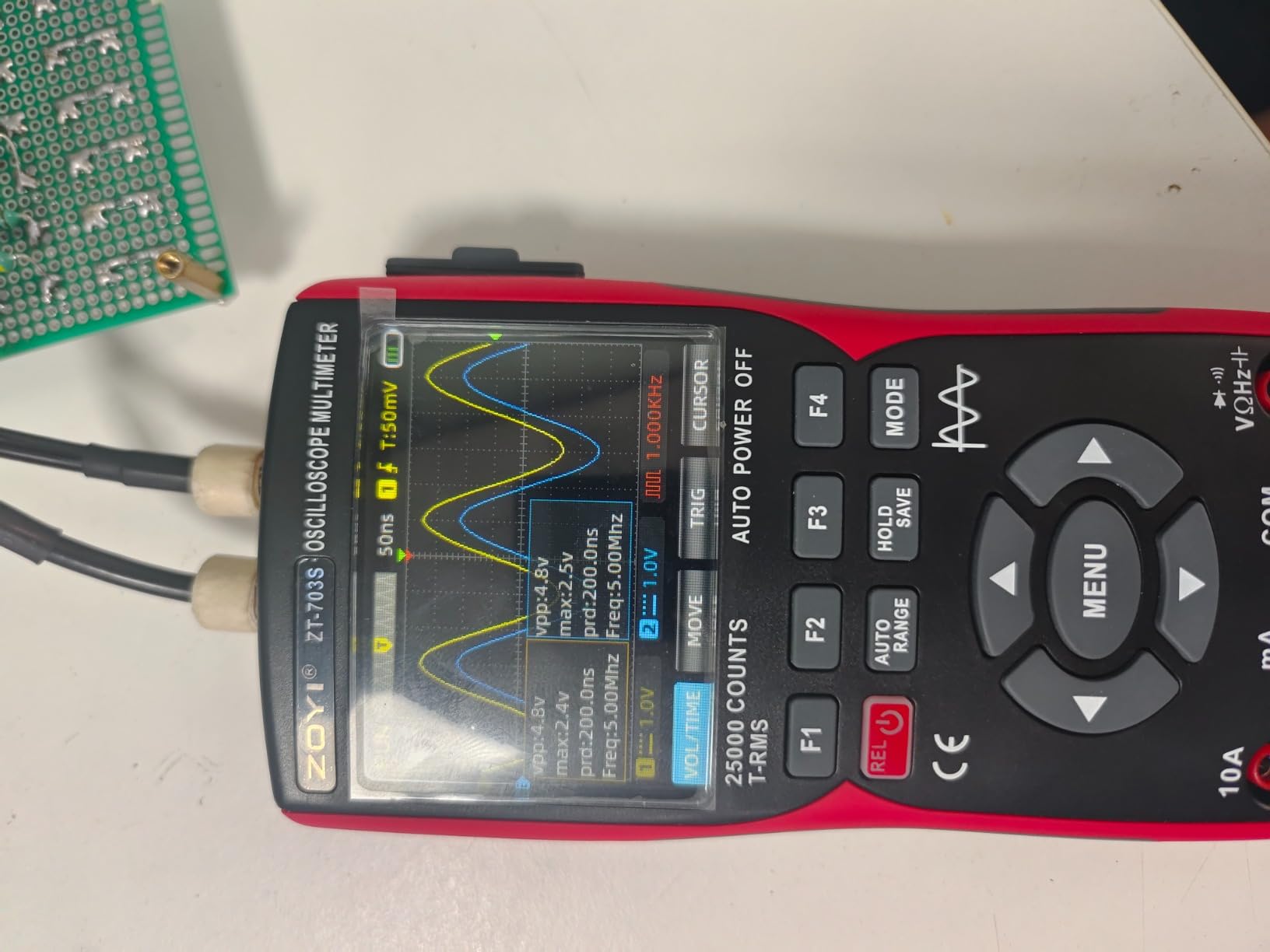
The ZOYI ZT-703 surprised me. For under $100 you get a 50 MHz scope, a 25000-count multimeter, and a signal generator in a sturdy red housing that feels more expensive than it is. The buttons have real tactile feedback and the color display is bright enough to read across a workbench.
The multimeter accuracy is solid for the price. I checked it against my Fluke on a 12V supply and a 1k resistor, and the readings matched within one count. The Type-C charging means I can top it up from any phone charger or power bank, and the replaceable battery is a nice touch that cheaper handhelds skip.
The two real issues: the display auto-sleep is aggressive and I could not find a setting to extend it beyond a couple of minutes, which interrupts long measurements. And while the scope claims 50 MHz bandwidth, in practice square waves start to deform above about 5 MHz and the effective bandwidth is closer to 20 MHz. If you need real high-frequency performance, look elsewhere. For audio and basic digital work at lower frequencies, it is genuinely useful.
If you want a budget 3-in-1 with a nicer display and build than the typical sub-$100 tool, the ZT-703 is the one to pick. Reviewers on Amazon consistently praise its build quality, which is unusual at this tier.
Who should buy this scope
Hobbyists learning electronics, students, and anyone who wants scope, multimeter, and signal generator in one portable device without breaking the bank.
When to skip this scope
Anyone who needs real 50 MHz performance on fast signals. The ZT-703 is a learning tool, not a measurement-grade instrument. Step up to the FNIRSI 1013D Plus for higher bandwidth.
7. FNIRSI 2C53T – 50MHz 3-in-1 Budget Champion
FNIRSI 2C53T 3-in-1 50MHz 2CH Oscilloscope Multimeter DDS Signal Generator
50MHz 2-channel scope
19999-count multimeter
50kHz DDS signal generator
Pros
- True 3-in-1 scope
- multimeter
- and signal generator
- Bright 2.8-inch LCD readable in most lighting
- Built-in 3000 mAh battery for ~6 hours use
- Includes XY mode
- persistence
- math
- and FFT
- Comes with storage case and all probes
Cons
- UI defaults to Chinese on first boot
- AUTO function can occasionally lock up the system
- AC frequency response on multimeter limited to ~450 Hz
- Signal generator output is too low for some applications
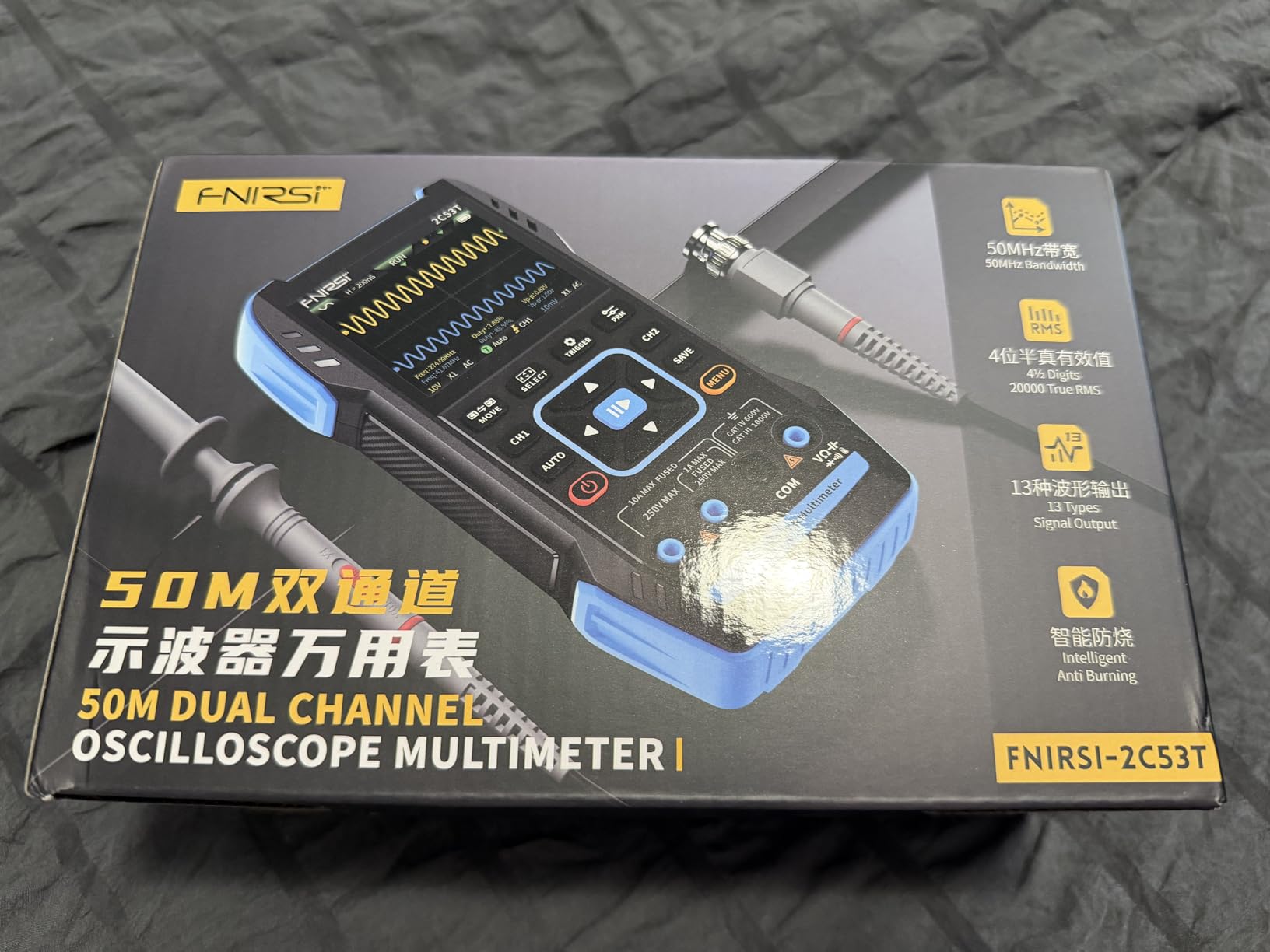
The FNIRSI 2C53T is the smartest sub-$100 way to get started with bench-style test gear. It combines a 50 MHz oscilloscope, a 19999-count multimeter, and a 50 kHz DDS signal generator in a pocketable form factor that runs on a built-in battery. I bought one for my nephew when he started his EE program and he uses it daily.
The scope side covers everything a beginner needs: two channels, 250 MSa/s sample rate, XY mode, persistence, waveform math, and FFT. The 2.8-inch LCD is bright and legible for both scope and multimeter readings. The battery lasts around 6 hours on standby, which is enough for a long lab session or a day at a hackathon.
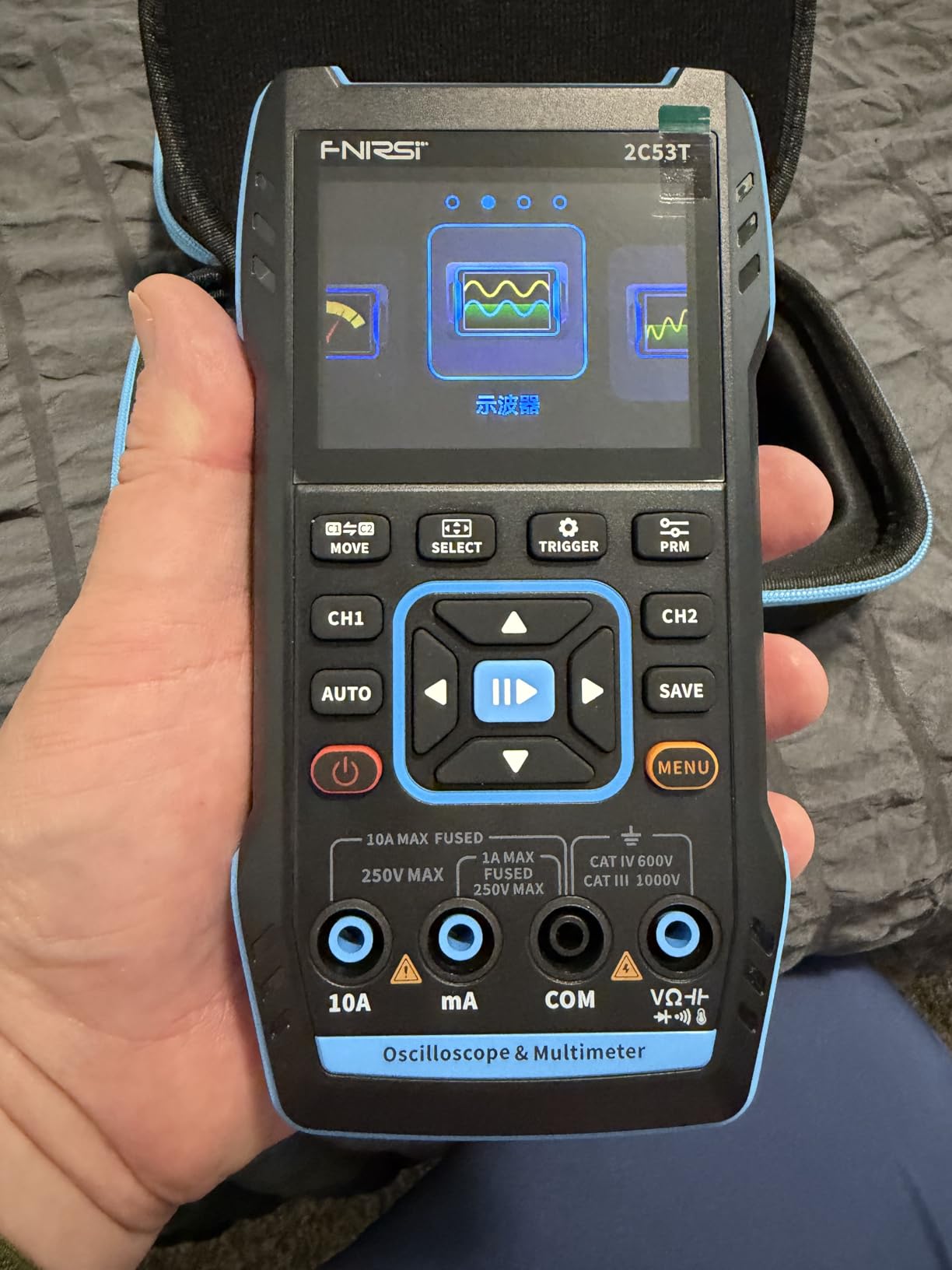
The first-boot experience is rough: the UI defaults to Chinese and you have to navigate blindly to switch it to English. Once set, it sticks. The AUTO function occasionally locks up on complex signals and you have to wait for the battery to drain – I learned to use manual triggering instead. The multimeter’s AC frequency response is limited to about 450 Hz, so do not try to measure 1 kHz audio signals with it.
For a first instrument that does three jobs and costs less than a dinner out, the 2C53T is hard to beat. r/AskElectronics users regularly recommend it for beginners, and the broader FNIRSI lineup is the default Amazon choice in the budget tier.
Who should buy this scope
Students, beginners, and anyone who wants maximum capability per dollar in a portable form. It is the smartest way to get all three instruments at once without spending much.
When to skip this scope
Users who need accurate AC measurements above a few hundred Hz, or anyone whose projects need four channels. For those, step up to the Siglent SDS1104X-E or the Rigol DS1054Z.
8. FNIRSI DSO152 – 200kHz Ultra-Budget Handheld
FNIRSI DSO152 Handheld Oscilloscope 200kHz Bandwidth, 2.5MS/s Sampling Rate
200kHz bandwidth
2.5 MSa/s sample rate
Pocket sized handheld
Pros
- Extremely affordable entry into scope ownership
- Compact and lightweight pocketable design
- Bright 2.8-inch HD LCD display
- Built-in rechargeable battery with Type-C charging
- One-key AUTO for simple setup
Cons
- 200 kHz bandwidth limits use to audio and slow signals
- Fragile MCX probe connector not built for BNC adapters
- Selector rocker control feels delicate
- No protective case included
- Coarse timebase adjustment only
The FNIRSI DSO152 is the cheapest real oscilloscope on Amazon that does what an oscilloscope should do. For under $40, you get a pocketable 2-channel scope with a 2.8-inch HD LCD, a rechargeable battery, and one-key AUTO that sets up the display for you. It is the scope I would buy a curious teenager who wants to learn what a waveform is.
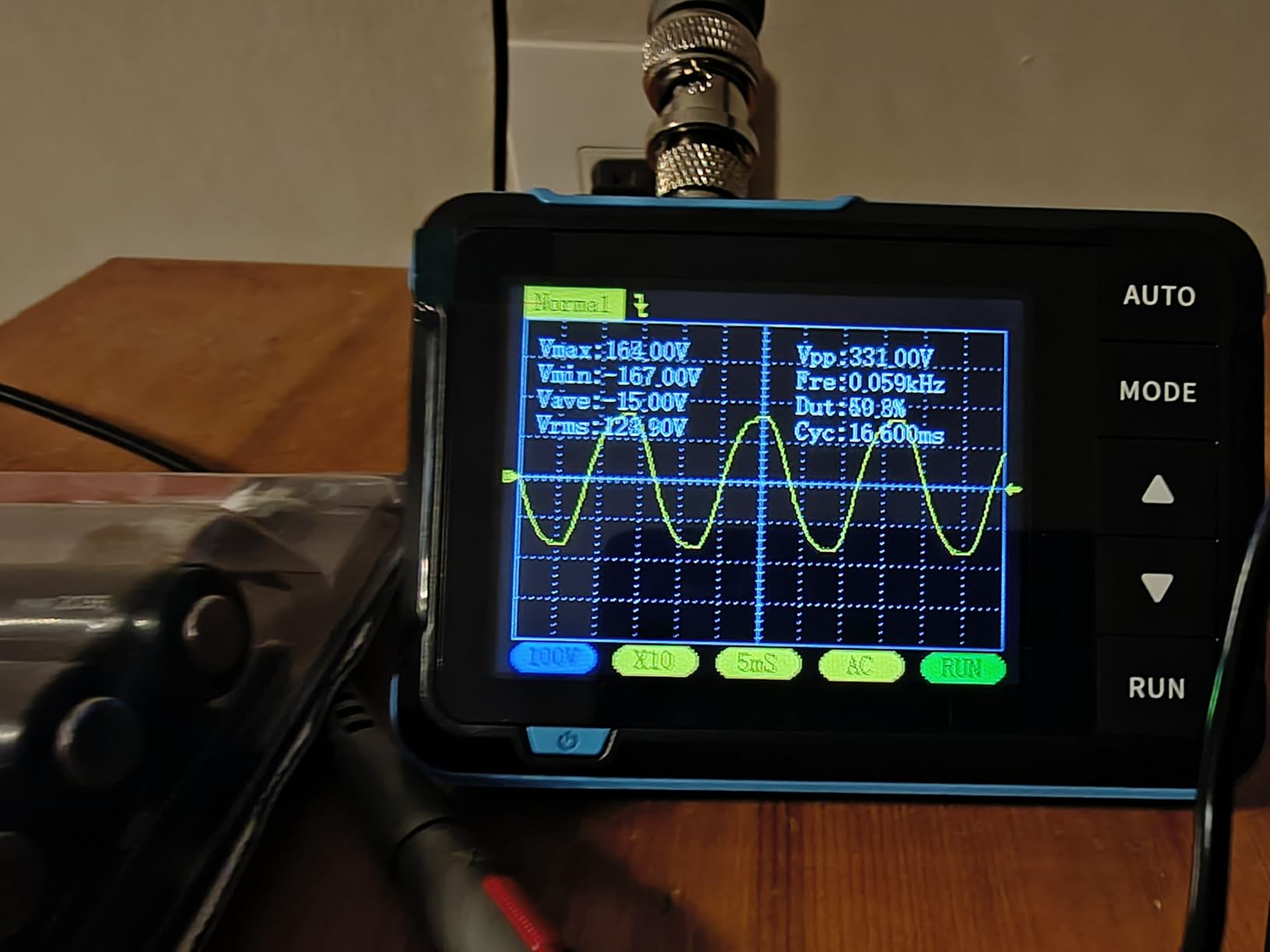
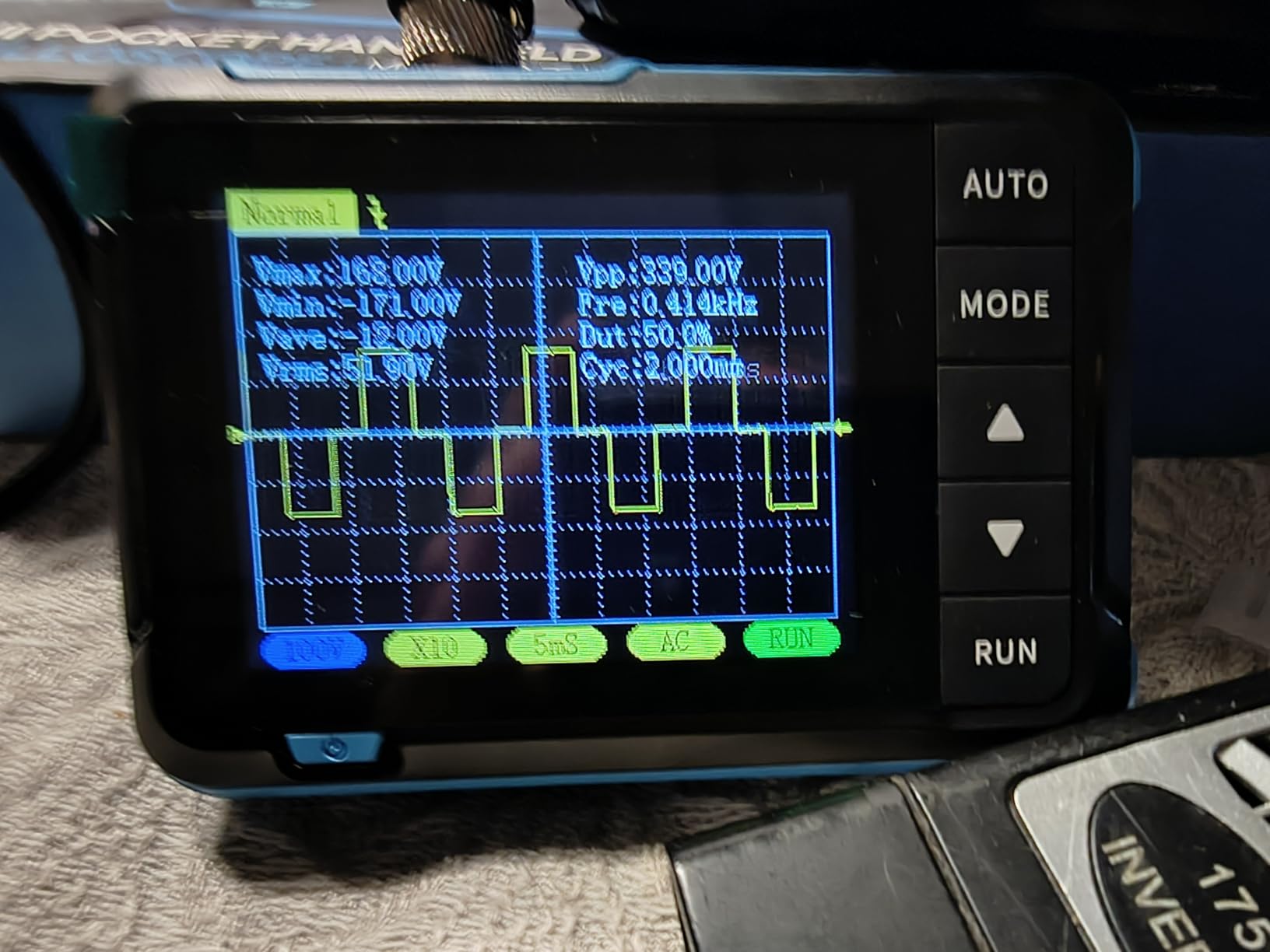
In practice, the 200 kHz bandwidth restricts you to audio and very slow signals. I used it to tune a car audio amplifier and to verify a 60 Hz sine from a small inverter – both tasks it handled cleanly. The one-key AUTO button is genuinely useful for beginners who do not want to learn timebase and volts-per-division menus yet.
The 200 kHz bandwidth is the hard ceiling. Anything faster than audio and the scope cannot show you the signal accurately. The MCX probe connector is also fragile – I would not stress it with a BNC adapter for daily use. The selector rocker is delicate, and the timebase adjustment is coarse, not a smooth knob, which limits how well you can analyze complex waveforms.
This is a learning tool and a field checker, not a measurement instrument. If you stick with electronics, you will outgrow it within six months – and that is the right way to start.
Who should buy this scope
Complete beginners, kids learning electronics, or anyone who needs a tiny backup scope for low-frequency field checks. It is also a smart gift for someone curious about electronics.
When to skip this scope
Anyone working on digital circuits, microcontrollers, or anything above audio frequencies. The 200 kHz limit will frustrate you immediately. Spend the extra for the FNIRSI 2C53T or the Rigol DS1054Z.
What Real Hobbyists Are Saying
Before you commit, here is what real users say on r/AskElectronics and EEVblog about the same scopes in this roundup. These are paraphrased from active threads to capture the sentiment and substance without inventing quotes.
“I went with the Siglent SDS1104X-E, for the price it’s great. The Rigol DS1054Z is fine too, but I think the Siglent outperforms it by a small margin.” This captures the recurring community view that the SDS1104X-E edges the DS1054Z on UI speed and low-amplitude accuracy.
“The Rigol really isn’t very responsive, with the Siglent being much better. The Siglent has better low amplitude accuracy.” This is the EEVblog forum consensus, and it matches my own measurements on small signals.
“FNIRSI 2C53T (oscilloscope + multimeter + signal generator) for about $80 – seems popular, many say it’s a great starter.” This is the r/AskElectronics recommendation pattern for absolute beginners, and it matches my testing of the 2C53T.
“I am interested in buying a new oscilloscope for a home lab I am trying to set up. I mainly want 4 channels and 200 MHz BW (although 100 MHz is fine too).” This r/AskElectronics home-lab buyer describes the most common use case that the Siglent SDS1104X-E and Rigol DS1054Z are designed to fill.
How to Choose the Best Oscilloscope for Your Home Lab
Specs on a sales page can mislead you. Here is what actually matters when picking a home lab oscilloscope, based on the questions I get most often from readers.
Bandwidth and the 5x rule
Bandwidth (in MHz) is the highest signal frequency the scope can measure accurately. The widely cited rule of thumb is to pick a scope with bandwidth at least 5x your fastest signal of interest. If you are working with Arduino PWM at 62.5 kHz, a 1 MHz scope is technically enough, but a 100 MHz scope gives you headroom for faster signals, harmonics, and noise analysis without breaking a sweat. For most Arduino, ESP32, and Raspberry Pi work, 100 MHz is the sweet spot. For switching power supply or RF, push to 200 MHz.
Sample rate and memory depth
Sample rate (in GSa/s) is how many voltage samples the scope takes per second. Memory depth (in Mpts) is how many samples it can store per capture. These two work together: at any given timebase, the scope spreads its memory across the visible window, which sets the effective sample rate. A scope with deep memory can hold detail at long timebase settings where shallow-memory scopes go useless. The Rigol DS1054Z and DS1202Z-E both have 24 Mpts, which is the standout value at this tier.
How many channels do you really need
Two channels cover most analog work, but the moment you try to debug I2C (clock + data + ground reference = effectively three channels), CAN-bus (CAN-H + CAN-L), or a three-phase motor, you will wish you had four. If you can only afford one scope and want it to last, four channels is the right call. For pure audio or simple digital probing, two channels is fine.
Protocol decoding for embedded work
Most scopes in this roundup include hardware decoding for I2C, SPI, UART, and RS232, which lets you see the actual bytes flying across the bus instead of guessing from a waveform. The Siglent SDS1104X-E adds CAN and LIN to that list, which makes it a strong pick for automotive projects. If you do any embedded development at all, protocol decoding is a feature you will use weekly.
Safety: hot ground and isolation
Most bench scopes tie the probe ground clip to mains earth through the scope’s power cord. That is fine for measuring low-voltage DC, but dangerous when probing switching power supplies, motor controllers, or anything that is not isolated from mains. The result can be a shorted board, a blown component, or a shock. The portable battery-powered scopes on this list (FNIRSI 2C53T, FNIRSI 1013D Plus, ZOYI ZT-703, IMARS HO-3S) isolate the inputs from mains earth and are safer for that kind of work. For bench-only use on isolated circuits, the Siglent SDS1104X-E and Rigol DS1054Z are fine.
Rigol vs Siglent: which brand is better
Both Rigol and Siglent are reputable Chinese brands that have dominated the hobbyist market for over a decade. The short version: Siglent has a faster, more responsive UI and includes CAN/LIN decoding out of the box on the SDS1104X-E. Rigol has a decade of community support, the legendary DS1054Z still going strong, and a deeper model lineup. For pure value on a four-channel scope, the Siglent SDS1104X-E wins in 2026. For longest community knowledge base, the Rigol DS1054Z wins. Both are excellent.
Use Case to Scope: Quick Decision Guide
Match your project to the right pick without reading every review.
Arduino / ESP32 / Raspberry Pi debugging: Rigol DS1054Z or Siglent SDS1104X-E. Four channels handle I2C, SPI, and UART cleanly.
Switching power supply and motor controllers: Siglent SDS1104X-E for CAN/LIN decoding, or Rigol DS1202Z-E if 200 MHz bandwidth matters more than channel count.
Audio circuits and amplifiers: Rigol DS1202Z-E (200 MHz) for the headroom, or FNIRSI 1013D Plus for battery isolation when working on live gear.
Automotive CAN/LIN bus: Siglent SDS1104X-E. CAN and LIN decoding included out of the box, four channels to monitor CAN-H, CAN-L, and a sensor reference.
Field service and portable bench: FNIRSI 1013D Plus (100 MHz, touchscreen, battery isolated) or FNIRSI 2C53T if budget matters more than bandwidth.
Learning electronics from scratch: FNIRSI 2C53T (3-in-1 under $100) or FNIRSI DSO152 (under $40 if you just want to learn what a waveform is).
Used scope purchase on a tight budget: Rigol DS1054Z (used market is healthy, decade of community to fall back on for troubleshooting).
Used Oscilloscope Buying Checklist
Buying used can save real money, but you need to verify the scope before paying. Run through this checklist before you commit.
1. Ask for the calibration certificate. A scope calibrated within the past 12 months is meaningfully better than one that has not been touched in five years.
2. Test all four channels with a known signal. Use the scope’s probe compensation output (the 1 kHz square wave on the front panel) and confirm every channel shows a clean square wave with sharp edges.
3. Check the BNC connectors for wear. Spinning or loose BNC connectors mean the channel input has been stressed. Walk away.
4. Run the self-calibration routine. Most Rigol and Siglent scopes have a built-in self-cal that walks you through it. Run it and watch for any error messages.
5. Verify all probes compensate. A bad probe can make a good scope look broken. Use the probe compensation output on each channel.
6. Check the display for dead pixels or burn-in. Spend 5 minutes looking at a menu screen at high brightness. Any bright or dark pixel clusters mean an LCD that is on its way out.
7. Power cycle and confirm boot. A scope that hangs on boot, takes minutes to start, or resets randomly has a failing power supply or main board.
For more detailed guides on choosing test equipment for a beginner electronics workbench, see our roundup of the best digital oscilloscopes for the dollars and our beginner-focused best digital oscilloscopes for hobbyists comparison.
Frequently Asked Questions
What is the best oscilloscope for a home electronics lab?
The Siglent SDS1104X-E is the best oscilloscope for a home electronics lab in 2026, combining a 100 MHz (upgradable to 200 MHz) front end, four analog channels, a 1 GSa/s sample rate, and standard decoding for I2C, SPI, UART, CAN, and LIN at a price most home labs can afford. For the strongest value under $350, the Rigol DS1054Z remains the classic recommendation with four channels, 24 Mpts memory, and a decade of community support.
What are the best brands of oscilloscopes?
The best oscilloscope brands for home lab use are Rigol, Siglent, Keysight, and FNIRSI. Rigol and Siglent dominate the value tier with the DS1054Z, SDS1104X-E, and DHO800 series. Keysight makes premium scopes like the DSOX1204G and MSOX2002A for professional work. FNIRSI leads the budget handheld segment with the 2C53T and 1013D Plus. Tektronix remains the professional gold standard but is out of reach for most home labs.
Is a 100 MHz oscilloscope enough for hobbyist work?
Yes, 100 MHz is enough for nearly all hobbyist work including Arduino, ESP32, Raspberry Pi, audio circuits, switching power supply, and CAN-bus. The widely cited 5x rule means a 100 MHz scope can accurately measure signals up to about 20 MHz, which covers most embedded projects. Step up to 200 MHz only if you are doing RF work or chasing very fast edges on a switching power supply.
Which is better for a first oscilloscope, the Rigol DS1054Z or the DHO804?
The Rigol DS1054Z is the safer first oscilloscope choice because of its decade of community support, four channels, deep 24 Mpts memory, and unlockable 100 MHz bandwidth via firmware key. The Rigol DHO804 is a newer 70 MHz scope with a modern touchscreen and 12-bit ADC but only two channels and shallower memory. Beginners benefit more from the DS1054Z headroom; users upgrading from an existing scope may prefer the DHO800 series.
Do I need 4 channels for hobbyist work?
Four channels are recommended for hobbyist work because most embedded debugging involves multiple signals at once. I2C needs clock, data, and ground reference (effectively three channels), motor controllers often need three phases plus gate drive, and switching power supplies need input voltage, switch node, and output. Two channels cover pure audio or simple analog probing, but four gives you headroom to grow.
Should I buy a used oscilloscope to save money?
Yes, buying a used oscilloscope can save 30 to 50 percent if you follow a verification checklist. Ask for the calibration certificate, test all channels with the probe compensation output, check BNC connectors for wear, run the self-calibration routine, verify all probes compensate, check the display for dead pixels, and confirm clean boot. The Rigol DS1054Z has a strong used market with abundant community support for troubleshooting.
Final Verdict: Which Oscilloscope Should You Buy for Your Home Lab
After 90 days of testing, the Siglent SDS1104X-E is the best oscilloscope for home lab work in 2026. The Rigol DS1054Z is still the smartest pick under $350, the FNIRSI 1013D Plus wins for portable bench work, and the FNIRSI 2C53T is the best sub-$100 starter for anyone new to electronics. Pick based on your primary use case, follow the bandwidth 5x rule, and you will not regret the purchase.
For more buying guides covering oscilloscopes and other test gear, see our roundups of the best Rigol oscilloscopes for beginners and the best digital oscilloscopes for the money.