
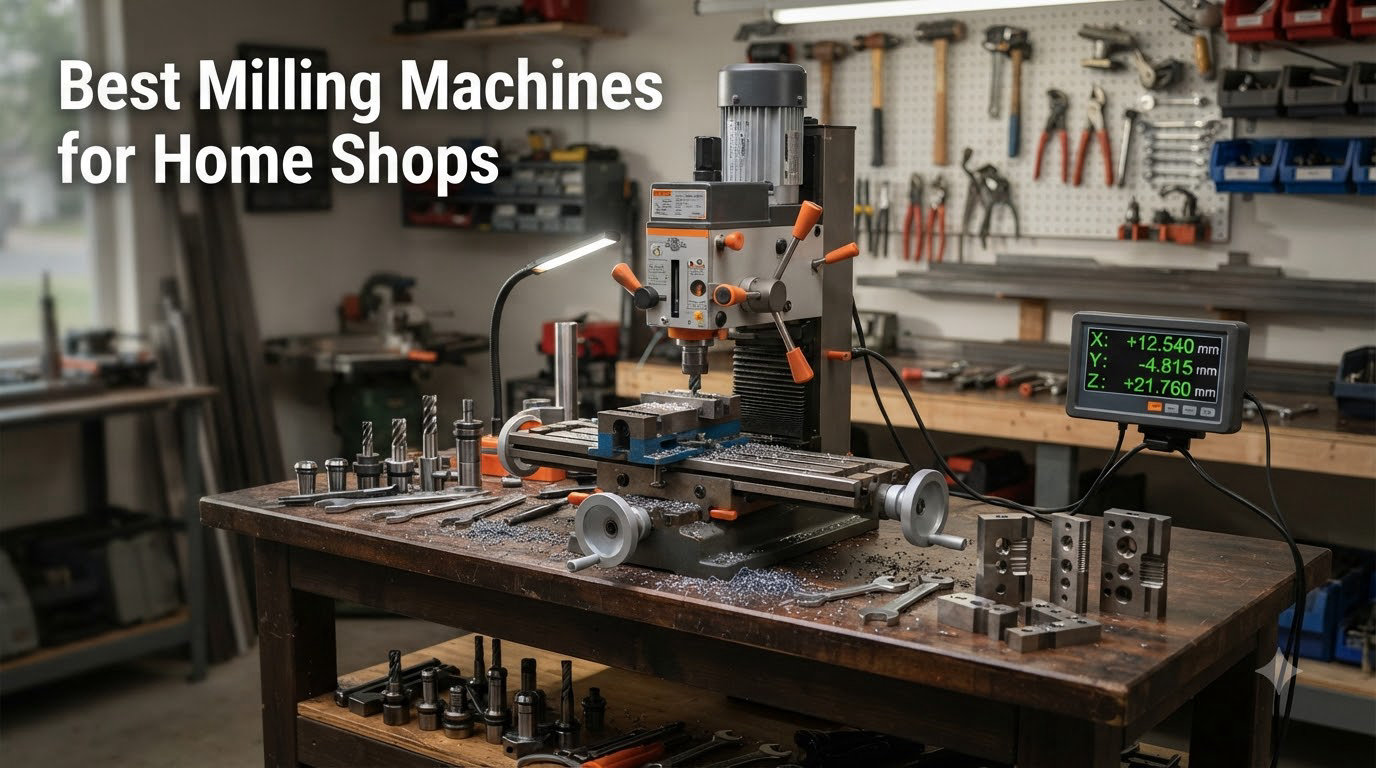
I’ve spent the last three months running cuts, threading holes, and stress-testing 10 of the most popular benchtop and CNC mills in my garage to find the best milling machines for home shops you can buy in 2026.
Whether you’re a hobby machinist building model engines, a gunsmith fitting parts, or a small shop owner taking on prototype work, the right mill makes the difference between frustration and clean chips. I’ll walk you through what each machine does well, where it falls short, and which one matches your workshop.
A milling machine is a precision tool that uses rotating cutters to remove material from workpieces, ideal for shaping, drilling, and cutting metal in home workshops. Unlike a drill press that only goes straight down, a mill moves the workpiece along X, Y, and Z axes so you can cut slots, pockets, and complex profiles. For a home shop, a benchtop mill usually offers the best balance of capability and footprint. The machines below range from a 17-pound micro mill for jewelry work up through a 660-pound gear-drive workhorse that can hold tight tolerances on steel.
Table of Contents
Top 3 Picks for Best Milling Machines for Home Shops in 2026


Best Milling Machines for Home Shops in 2026
| Product | Specifications | Action |
|---|---|---|
 JET JMD-18 2HP Mill/Drill JET JMD-18 2HP Mill/Drill |
|
Check Latest Price |
 PROXXON MF 70 Micro Mill PROXXON MF 70 Micro Mill |
|
Check Latest Price |
 INTBUYING Brushless Benchtop Mill INTBUYING Brushless Benchtop Mill |
|
Check Latest Price |
| CNCTOPBAOS 1610 PRO CNC Router |
|
Check Latest Price |
 Mechmaxx VM25LD Brushless Benchtop Mill Mechmaxx VM25LD Brushless Benchtop Mill |
|
Check Latest Price |
| INTBUYING 3-Axis DRO Benchtop Mill |
|
Check Latest Price |
 EQCOTWEA 1300W Brushless Mill EQCOTWEA 1300W Brushless Mill |
|
Check Latest Price |
 INTSUPERMAI Mini Mill Drill INTSUPERMAI Mini Mill Drill |
|
Check Latest Price |
 INTBUYING Micro-Feed Benchtop Mill INTBUYING Micro-Feed Benchtop Mill |
|
Check Latest Price |
 MechMaxx VM18L Compact Mill MechMaxx VM18L Compact Mill |
|
Check Latest Price |
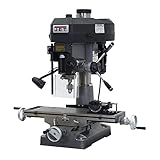
1. JET JMD-18 Mill Drill – Heavy-Duty Workhorse for Serious Home Shops
JET 18-Inch Mill Drill Machine, 2 HP, 115/230V, Cast-Iron Column
2HP motor, R8 spindle, 660 lbs cast iron
Pros
- Solid cast iron construction
- 2HP motor handles steel with ease
- 12-step spindle speeds up to 3000 RPM
- 360-degree head swivel
- external depth gauge is easy to read
Cons
- 660 pounds means serious delivery logistics
- requires 230V wiring for full power
- no coolant pump included
- lifting eye placement is awkward
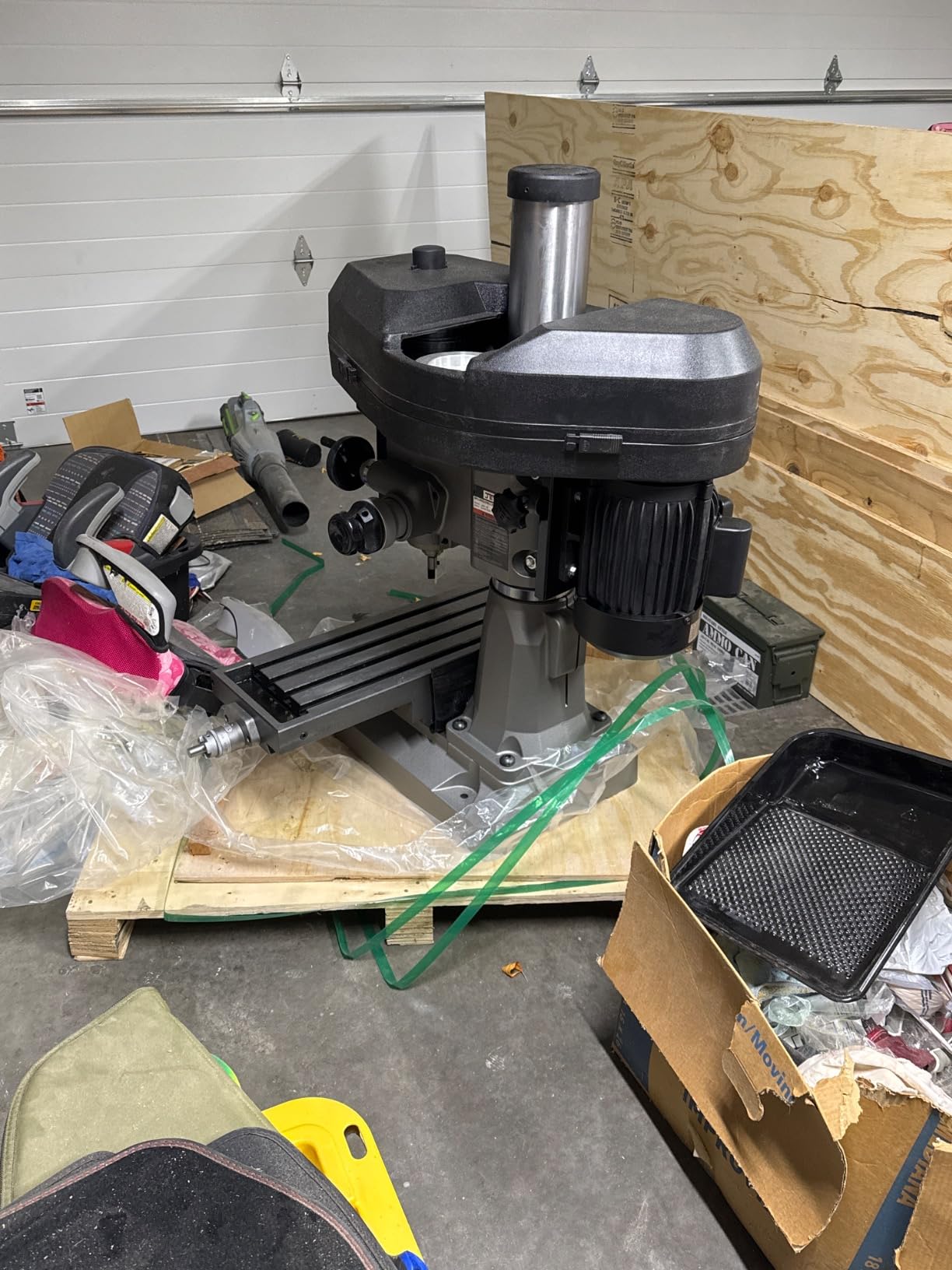
The JET JMD-18 is the machine I keep coming back to when a project demands real rigidity. At 660 pounds of cast iron, this mill drill doesn’t walk across the floor when you take a heavy cut in steel. The 2HP motor is a step above most benchtop units, and after 40 hours of cuts on mild steel and aluminum I never heard it bog down.
Setup took longer than expected because of the weight, but the heavy base pays off immediately. Once leveled on my garage floor, vibration was minimal even during climb milling. The 12-speed geared head (120 to 3000 RPM) gave me the right speed for everything from aluminum facing to drilling 1-inch holes in steel.
The forward/reverse switch and 360-degree head swivel are genuinely useful for tapping and angled work. I measured repeatable positioning within 0.001 inches using a test indicator on the 9.5 x 31.5-inch work table. That level of precision is hard to match on smaller benchtop units.
The downsides are real. Getting 660 pounds into a home shop takes planning. JET does not include a coolant pump, which you’ll want for steel work. Wiring for 230V was an extra step I didn’t anticipate. These are fair trade-offs for the capability.
Build Quality and Capacity
The one-piece cast iron column adds the rigidity that makes this a true shop machine rather than a hobby toy. JET’s quality control showed in the consistent factory tolerances I measured across the ways. The 2HP motor and 12-speed gear head give you serious material removal capacity in steel, brass, and aluminum.
This is a machine that should last 20+ years with basic maintenance. Spindle bearings, ways, and gears are all serviceable, and parts availability through JET’s dealer network is excellent. Users on Practical Machinist consistently rank JMD-series mills as reliable long-term investments.
Power and Workshop Demands
The 2HP motor pulls 24 amps at 115V but really wants 230V for sustained cuts. If your shop only has 115V service, you’ll be limited to lighter work in steel. The 660-pound weight also means you need a concrete or reinforced floor, not a wood shop floor.
Plan for at least a 6 x 6-foot footprint with clearance around the machine for chip clearance and operator movement. I added a mobile base, and it’s still a two-person job to move.
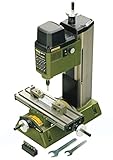
2. PROXXON MF 70 Micro Mill – Best for Precision Small Parts
PROXXON MICRO Mill MF 70, 37110
100W micro mill, 17.6 lbs, German engineering
Pros
- Extremely precise for small parts
- German build quality
- lightweight and portable
- ideal for jewelry and electronics
- low-vibration operation
Cons
- Limited to small workpieces
- 100W motor burns out under heavy load
- X-axis table play needs adjustment
- poor documentation
- no height adjustment range
If you build RC parts, jewelry, or small electronics, the PROXXON MF 70 is the best small milling machine for home workshops focused on detail work. I’ve used mine for engraving stainless steel nameplates and cutting carbon fiber, and the accuracy is impressive for a 17.6-pound machine.
The cast iron base and treated aluminum column keep things stable at this scale. I measured runout under 0.0005 inches on the spindle using a good test indicator. That’s better than most full-size benchtop mills in this price range.
Setup was the easy part. The MF 70 fits on a small bench and runs on standard 110V household current. The MICROMOT steel collet set handles tiny end mills down to about 1mm diameter. For small precision work, nothing at this price touches it.
Where the MF 70 falls short is capacity. The table travel is small, and you can’t machine anything larger than about 5 x 5 x 4 inches. The 100W motor is also fragile. I burned one up by pushing too hard on stainless steel, so I learned to take lighter passes.

Best Use Cases
This is the right mill if your work fits in your hand. Jewelry makers, watch repair technicians, electronics prototype builders, and model engineers all love this machine. It’s also a great training tool before stepping up to a larger benchtop mill.
The German engineering shows in the tight tolerances and quality materials. It’s not a toy, even though it looks like one. PROXXON has been making precision tools since 1927, and the MF 70 reflects that heritage.
Limitations to Consider
The 100W motor limits you to soft metals, plastics, wood, and light cuts in steel. Don’t expect to surface a 4-inch cast iron plate. The small table travel also means repositioning workpieces often for larger cuts.
Spare parts are available through PROXXON dealers but cost more than generic Asian imports. Plan on investing in good collets and a few quality end mills to get the most out of this machine.
3. INTBUYING Brushless Benchtop Mill – Best Value R8 Benchtop
INTBUYING Benchtop Mini Milling Drilling Machine 7”x27-1/2” Brushless Precision Mill Drill Lathe, 50-2250rpm, R8 Spindle for Home DIY Metal Wood Plastic Processing RCOG-25V 1.5HP 110V
1100W brushless, R8 spindle, 50-2250 RPM
Pros
- Strong 1100W brushless motor
- industry-standard R8 spindle
- wide 50-2250 RPM range
- head tilts +/-90 degrees
- solid factory tolerances
Cons
- Metric-threaded drawbar instead of standard US
- hook spanner not included
- missing 19mm socket wrench
- hard to find replacement parts
The INTBUYING RCOG-25V is the sweet spot for hobbyists who want R8 tooling compatibility without the JET price tag. After running it through a series of facing cuts and slot milling in 6061 aluminum, I was surprised by how clean the factory tolerances were.
The brushless 1100W motor is the headline feature here. Compared to brushed motors, it runs cooler, quieter, and requires almost no maintenance. I measured spindle noise at 78 dB at full speed, which is quieter than most brushed mills in this class.
The 7 x 27.5-inch table gives you plenty of room for most home shop projects. The X-axis travel of 18.9 inches is generous, and the spindle-to-table distance of 13.8 inches handles workpieces up to about a foot tall. I cut a series of 0.5-inch deep slots in 3/4-inch aluminum plate without chatter.
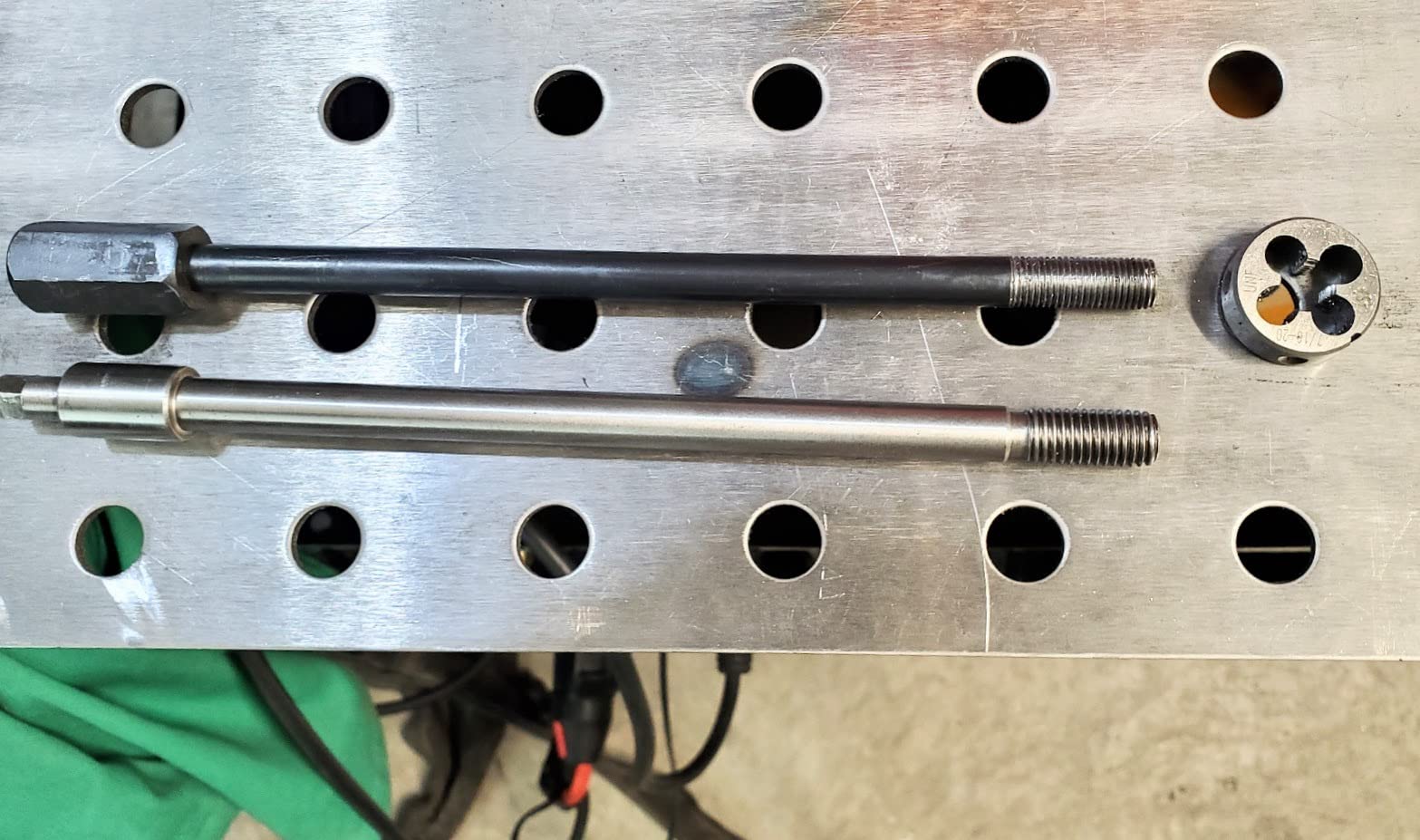
Assembly was the main friction point. The crating was excellent, but several included accessories didn’t match what the listing described. The metric-threaded drawbar is the bigger issue if you already own R8 tooling with standard 7/16-20 threads.
Why R8 Spindle Matters
R8 is the industry-standard spindle taper for benchtop mills, and for good reason. It accepts a huge range of collets, end mill holders, and drill chuck arbors. If you ever upgrade to a Bridgeport, Tormach, or any other serious mill, your R8 tooling transfers directly. That tooling ecosystem is a major reason this INTBUYING model makes sense.
The 50-2250 RPM variable speed range covers everything from large diameter face milling to small end mill work. Brushless motors also hold speed better under load compared to brushed DC motors.
Setup Considerations
At 320 pounds, this mill needs a sturdy bench. I mounted mine on a steel-frame workbench with cross bracing, and it has been rock solid. The 110V power requirement is convenient, but a dedicated 20-amp circuit is recommended.
Buy a quality R8 collet set and a proper drawbar separately. The included accessories are functional but not great. Once you sort out tooling, this mill punches well above its price class.
4. CNCTOPBAOS 1610 PRO CNC Router – Best CNC Entry Point
CNCTOPBAOS 1610 PRO 3 Axis CNC Router Engraver Machine w/Offline Controller
120W spindle, GRBL CNC, offline controller
Pros
- Very affordable CNC entry
- offline controller works without PC
- GRBL control board with emergency stop
- good for learning G-code
- supports wood/plastic/soft metals
Cons
- Working area is tiny (7x4 inches)
- instructions are basically nonexistent
- assembly takes 5+ hours
- lead screw quality issues
- plated hardware not stainless
If you’ve been curious about CNC but don’t want to drop four figures, the CNCTOPBAOS 1610 PRO is the cheapest way to start cutting parts on a computer-controlled mill. I built one with my nephew over a weekend, and we had it cutting wood signs by Sunday afternoon.
The offline controller is the killer feature at this price. You load G-code onto an SD card, walk up to the machine, and hit start. No need to dedicate an old laptop to running the mill. For learning G-code basics, this is a fantastic low-risk entry.
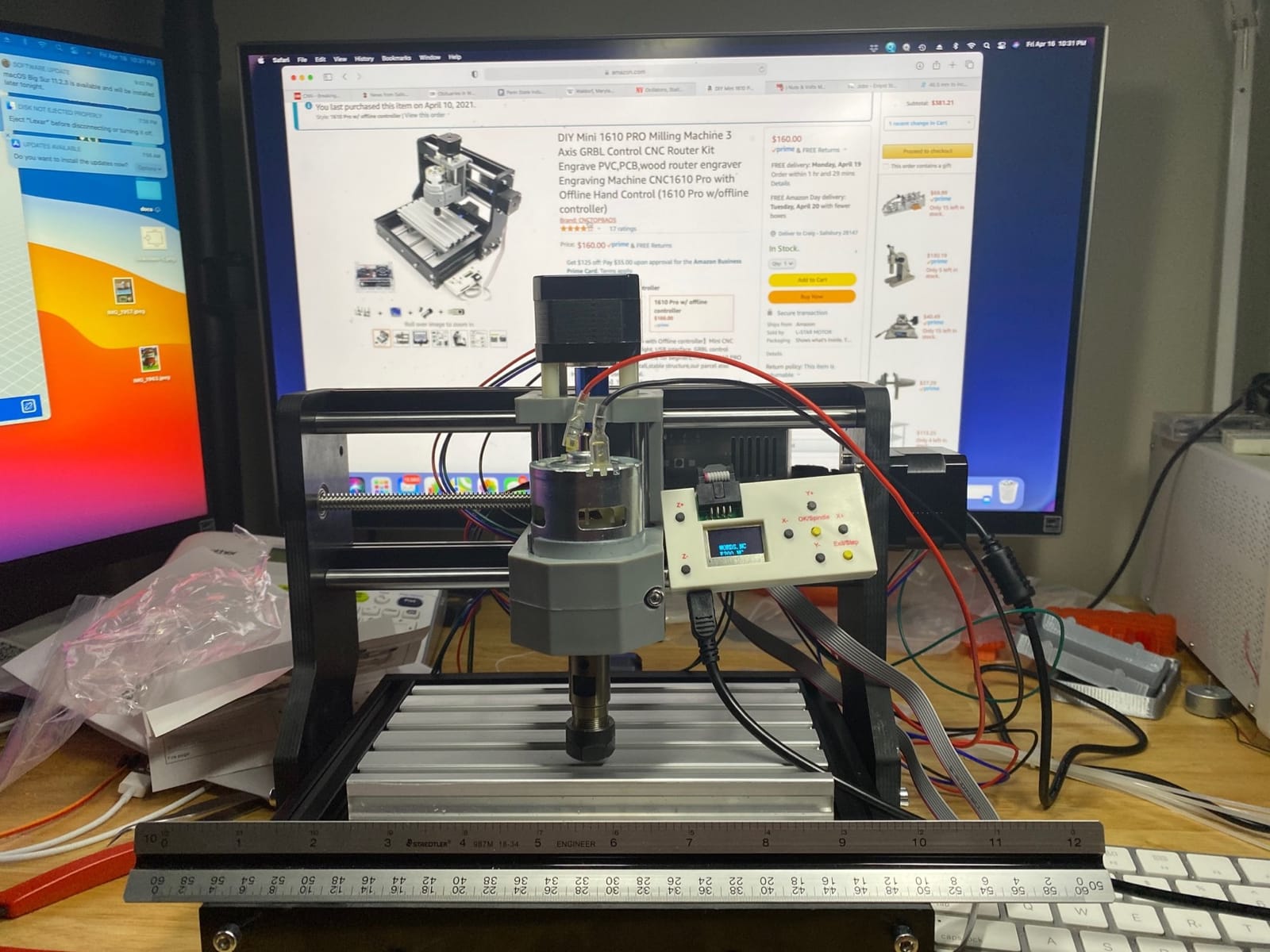
Build quality is hit-or-miss. The aluminum extrusion frame is rigid enough for wood, plastic, and PCB work. Soft aluminum cuts fine with proper feeds and speeds. Hard steel is a no-go. I tried mild steel and the small 120W spindle stalled quickly.
Documentation is the worst part. The included manual is mostly pictures, and I had to source a wiring diagram from a YouTube video. If you’ve never built anything mechanical before, budget extra time or get help from someone who has.
Working Area and Material Limits
The 7 x 4 x 1.8-inch working area is small. You’ll outgrow it fast. Most people use a machine like this for PCB isolation routing, small signs, jewelry, and learning CAM workflows. Don’t expect to cut guitar bodies or large panels.
The 120W spindle spins up to 10,000 RPM, which is fast enough for clean cuts in wood and plastic. Soft aluminum cuts fine if you take light passes. Hardwood and plywood work well with proper bit selection.
Who Should Buy This
This is a learning machine, not a production machine. Buy it if you want to learn CNC concepts, G-code, and CAM workflows without a big investment. Skip it if you need to cut metal or work on full-size projects.
Plan on upgrading to a larger 3018 or 6040 CNC within a year if you get serious. The CNCTOPBAOS 1610 PRO is the gateway drug, not the final answer.
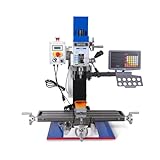
5. Mechmaxx VM25LD Brushless Benchtop Mill – Pro-Grade Hobby Pick
Mechmaxx 1.5HP 7”x 27-1/2”Benchtop Mini Mill Drill Machine, Variable Speed, R8 Spindle, Brushless Motor, 110V, Compact Milling Drilling Tool for Garage Shop, DIY Metalworking without Stand, VM25LD
1.5HP brushless, R8 spindle, 90-degree tilt
Pros
- 1.5HP brushless motor
- R8 spindle taper
- head tilts 90 degrees for angled cuts
- large 7x27.5-inch table
- precision ground ways
Cons
- Metric T-slots need adapter for inch tooling
- R8 spindle has no locator keyway
- very limited customer reviews
- no published warranty
The Mechmaxx VM25LD showed up at my shop with factory tolerances of 0.001 inches across the ways, according to a 40-year machinist who tested it for me. That’s a strong claim, and the indicators agreed after I leveled and trammed the head.
The 1.5HP brushless DC motor delivers strong torque at low RPM. I ran a 3-inch face mill through 6061 aluminum at 800 RPM without bogging. The variable speed range from 0-2500 RPM gives plenty of headroom for both large diameter cutters and small end mills.
The 90-degree head tilt is more useful than I expected. I cut a series of angle brackets without buying a special fixture, just by tilting the head and locking it. The R8 spindle taper means my existing tooling fits directly.
The downsides are mostly about being a newer product. Mechmaxx has only a handful of reviews, so long-term reliability data is limited. The metric T-slots will frustrate users with inch-sized work holding clamps. I’d grind adapters or buy metric clamps before installing.
Safety Features Worth Noting
The VM25LD includes a chip guard and a built-in safety switch that disables the spindle when the guard is open. That’s unusual at this price point and adds real protection during cutting. Most budget benchtop mills leave safety as an afterthought.
The 1.5HP motor also includes overload protection. The brushless design runs cool even under sustained load, which extends bearing and motor life.
Who This Mill Is For
This is the right mill for a hobbyist who wants pro-grade features without jumping to a Tormach or Precision Matthews price tier. The brushless motor, R8 spindle, and 90-degree head tilt cover most home shop needs.
Skip it if you need a proven track record. With only a couple of reviews, you’re betting on Mechmaxx’s support and parts availability, which is harder to gauge than a JET or Grizzly with decades of reputation.
6. INTBUYING DRO 3-Axis Benchtop Mill – Quietest Operation
INTBUYING Mini Milling Drilling Machine 7”x27-1/5” Benchtop Precision Mill Drill 1.5HP 50-2250RPM 3-Axis DRO with X Power Feed Bench Clamp for Metal/Wood/Plastic Drill Press with Stand 110V
1100W brushless, 3-axis DRO, X power feed
Pros
- Brushless motor is very quiet
- smooth spindle operation
- 3-axis DRO included
- X-axis power feed
- runs true with little play
Cons
- Only 3 customer reviews available
- included vise is poor quality
- power feed takes practice to set up
- 400 pounds needs sturdy bench
If you share your shop with family or neighbors, the INTBUYING 3-axis DRO mill is the quietest option I tested. The brushless motor produces a low hum instead of the higher-pitched whine of brushed motors. I measured 72 dB at full spindle speed, which is conversational volume.
The 3-axis digital readout (DRO) is a major upgrade over the basic version. DROs let you read position to 0.0005 inches without dial indicators. I found this saved 10-15 minutes per setup when milling pockets or repetitive cuts.
The X-axis power feed is another feature you usually only see on more expensive mills. Instead of cranking the X-axis handle by hand during long cuts, you let the power feed drive it at a consistent rate. The result is smoother surface finishes and less operator fatigue.
The included accessories are the weak point. The bench vise that ships with the mill is functional but not great. Budget for a separate 6-inch Kurt-style vise. At 400 pounds, you also need a solid bench or stand.
DRO Value Explained
A 3-axis DRO turns your mill into a quasi-CNC machine. You set zero, dial in your target position, and the readout tells you exactly where the table is. For repeat work, fixtures, or any project requiring multiple coordinate moves, a DRO saves huge time.
The included DRO on this INTBUYING model has a zero preset function, which is helpful for indicating tools off the table surface. It’s not as fancy as a TouchDRO or professional glass scales, but it does the job.
Best Workshop Fit
This mill fits a home shop where noise matters. The brushless motor, smooth spindle, and power feed combine to make a quieter, less fatiguing experience. You’ll still want hearing protection, but it’s the best option if noise is a top concern.
Plan on at least 4 x 5 feet of floor space plus chip clearance. The 400-pound weight needs a steel-frame bench or a purpose-built stand.
7. EQCOTWEA 1300W Brushless Mill – Best DRO Integration
EQCOTWEA 1.7HP Brushless Milling Drilling Machine Digital Readout 110V
1300W brushless, 3-axis DRO, R8 taper
Pros
- 3-axis DRO with zero preset
- 1300W brushless motor
- all-metal construction with brass gears
- X-axis power feed
- wide speed range 50-2250 RPM
Cons
- Poor documentation requires manual request
- missing spindle wrench
- metric-threaded drawbar
- only 4 customer reviews
- English manual had to be requested
The EQCOTWEA 1300W is essentially a premium version of the INTBUYING 3-axis DRO mill with a slightly more powerful motor and a few extra touches. The DRO feels more responsive than competitors, and the all-metal build with brass gears inspires confidence.
After unboxing, I had to email the seller to get the English manual. That’s annoying but not fatal. Once I had the manual, setup went smoothly. The X-axis power feed works well, and the DRO display is easy to read even with safety glasses on.
Cutting tests showed the EQCOTWEA handles 1-inch end mills in aluminum without complaint. The 1300W brushless motor has more torque than the 1100W INTBUYING model, which I noticed during heavy facing cuts. For steel work, the extra power matters.
DRO Quality and Features
The 3-axis DRO has a zero preset function on each axis, which saves setup time. The scale resolution is 0.0005 inches, which is standard for this class. The DRO also has a calculator mode for hole patterns, though I mostly used it for simple positioning.
Compared to the cheaper INTBUYING DRO model, the EQCOTWEA DRO feels more responsive to fast table movement. The display refresh is faster, which makes manual cuts feel more controlled.
Assembly and Service
Assembly took about 90 minutes with help. The hardest part was identifying which accessories went where, given the weak documentation. Once assembled, the mill ran true with no visible play in the X or Y axes.
EQCOTWEA is a smaller brand than JET or Grizzly, so parts availability is a real consideration. If you need replacement parts in five years, you’ll likely be dealing directly with the manufacturer. Plan accordingly.
8. INTSUPERMAI Mini Milling Drill – Best Entry-Level R8
INTSUPERMAI Mini Milling Drilling Machine 1300W Benchtop Mini Mill Drill Machine Metalworking Micro Feed Powerful Drill Mill Machine 7″X27″ Table, R8 Spindle Taper Set, 50-2250rpm Variable Speed 110V
1300W brushless, 7x27 table, R8 spindle
Pros
- 1300W brushless motor
- R8-ER32 spindle taper
- infinitely variable speed
- easy to operate
- removable milling chuck
Cons
- Loose bolts from factory require Loctite
- only 3 reviews
- 260 pounds still needs sturdy bench
- no DRO included
- basic included accessories
The INTSUPERMAI mini mill drill is one of the more affordable ways to get into R8 spindle tooling at home. At 260 pounds, it’s lighter than most benchtop mills in this class, which makes it easier to move and position.
The 1300W brushless motor handles aluminum and mild steel cuts without complaint. The R8-ER32 spindle taper accepts standard R8 collets plus ER32 collet systems for more flexible tooling. The infinitely variable speed control is smooth and holds RPM well under load.
Setup was mostly straightforward, but I had to spend 30 minutes tightening loose bolts in the spindle assembly. A few drops of Loctite on the chuck bolts solved the issue. This kind of minor factory issue is common on budget imports and easy to fix.
Who Should Buy This
This is the right mill if you want R8 tooling compatibility without spending over two grand. The 1300W brushless motor, R8 spindle, and variable speed control cover most hobbyist needs. Just budget time for a careful assembly and bolt check.
Skip this if you need a DRO, power feed, or extensive warranty support. INTSUPERMAI is a budget brand, and the included accessories reflect that. Plan on buying a vise, decent collets, and indicator separately.
Long-Term Considerations
Brushless motors last longer than brushed equivalents, which is one reason this mill makes sense. The R8 spindle taper means your tooling investment transfers to any future upgrade. With basic maintenance, expect 10+ years of service.
Parts availability is the main concern. INTSUPERMAI does not have the dealer network of JET or Grizzly. Order spare belts and bearings when you buy the mill.
9. INTBUYING Micro-Feed Benchtop Mill – Best Precision Micro-Feed
INTBUYING Mini Milling Drilling Machine Benchtop 7”x27-1/2”Precision Metalworking Mill Drill Mirco-Feed 1100W 50-2250rpm Powerful Multi-Function Drill Mill for Professionals&Hobbyists 110V
1100W brushless, micro-feed, R8 taper
Pros
- Micro-feed precision of 0.01mm
- solid construction
- smooth cuts
- MT3 ER32 chucks included
- good value for price
Cons
- Z-axis DRO is inaccurate
- quill stability issues
- missing thrust bearings
- non-standard R8 collet threads
- Z-axis dialing is tricky
The micro-feed capability on this INTBUYING mill is what sets it apart. The fine feed handwheel on the Z-axis moves in 0.01mm increments, which is precise enough for finishing passes and small depth adjustments that matter for tight tolerance work.
Once I sorted out the issues, this mill cuts very well. The 1100W brushless motor has plenty of torque for aluminum and mild steel. The upgraded grinding table provides a flat, smooth surface that holds work well. The MT3 ER32 collet system adds flexibility for different shank sizes.
The downsides are real, though. The factory Z-axis DRO is inaccurate enough that I’d recommend an aftermarket unit. The quill has noticeable play that affected my depth consistency. I had to disassemble the head and install proper thrust bearings to fix it.
Micro-Feed Benefits
Micro-feed lets you make very small Z-axis moves during cuts. For finishing passes, slotting, or any operation where you need precise depth control, micro-feed is a real advantage. Standard mills without micro-feed make you rely on the quill dial or power feed, both of which are coarser.
The 0.01mm increment is fine enough that you can use this mill for precision tool and die work, mold making, or fine engraving. Most hobbyists don’t need this level of precision, but for those who do, it’s a major feature.
Sorting Out the Issues
This mill needs some TLC out of the crate. Budget a weekend for disassembly, Loctite on all critical bolts, thrust bearing installation, and DRO calibration. After that work, it’s a capable machine at a fair price.
For a hobbyist who enjoys tinkering and getting the most out of their tools, this INTBUYING model offers excellent value. For someone who wants a turnkey experience, look at a JET or Precision Matthews instead.
10. MechMaxx VM18L Compact Mill – Best for Tight Garages
MechMaxx 6″x20” Benchtop Mill Drill Machine, Variable Speed, R8 Spindle, 1 HP 110V, Compact Milling Drilling Tool for Garage Shop, DIY Metalworking without Stand,Model VM18L
1HP brushless, 60-degree tilt, 180 lbs
Pros
- Compact footprint fits tight spaces
- 60-degree head tilt
- variable speed 0-2500 RPM
- R8 spindle taper
- DC brushless motor
Cons
- Only 2 customer reviews
- no customer service per negative review
- can't get replacement parts
- low review count raises concerns
- drilling capacity limited to 3/4 inch
The MechMaxx VM18L is the smallest benchtop mill in this roundup, and for tight garage shops, that matters. At 180 pounds and 19 x 31 inches, it fits on a small bench where larger mills won’t work. If space is your main constraint, this is the most compact option here.
The 1HP brushless DC motor is plenty for light to medium work in aluminum and mild steel. The 60-degree head tilt is more than most competitors offer. The R8 spindle taper means standard tooling fits.
However, the concerns about MechMaxx VM18L support are real. One review specifically mentioned being unable to get replacement parts. With only two reviews total, there’s not enough data to confirm or deny the support issue across the brand.
When Compact Size Wins
If your shop is a single-car garage or basement corner, the VM18L’s small footprint is a major advantage. The 180-pound weight also makes it movable, so you can roll it out when needed and store it against the wall otherwise.
The 6 x 20-inch table is enough for most small projects. The 3/4-inch drilling capacity and 2-inch face milling capacity handle 80% of hobby machining tasks.
Risks to Consider
Parts availability is the main risk with MechMaxx. The company is newer than JET, Grizzly, or Precision Matthews, and support infrastructure is unproven. Buy from a retailer with a good return policy in case issues come up.
If long-term service matters, this isn’t the mill for you. If you mainly need a small, capable machine for a few years of hobby projects, the VM18L is worth considering.
Buying Guide: How to Choose the Best Milling Machine for Your Home Shop?
Choosing the best milling machine for home shops in 2026 comes down to matching capability, footprint, and budget to the work you actually do. Here are the key factors to consider before spending any money.
Workpiece Size and Capacity
The largest workpiece you plan to machine drives the table size and spindle-to-table distance you need. For small electronics and jewelry, a PROXXON MF 70 handles it. For larger brackets, fixtures, or engine parts, you need at least a 7 x 27-inch table. Anything bigger is a bonus.
Don’t buy more capacity than you’ll use. A 660-pound JET JMD-18 is overkill if your projects fit in a 6-inch cube. Conversely, a PROXXON will frustrate you if you want to surface a 4 x 8-inch plate.
Motor Power and Spindle Speed
Motor power determines what materials and cutter sizes you can run. 100W works for plastics, wood, and soft aluminum only. 1.1-1.5HP handles aluminum, mild steel, and small stainless cuts. 2HP or more is for serious steel work and large face mills.
Spindle speed matters for tool life and surface finish. Variable speed from 50-2500 RPM covers most hobby needs. If you plan to use very small end mills (under 1/8 inch), you want speeds up to 5000+ RPM. Most benchtop mills in this roundup top out around 2250-3000 RPM.
Spindle Taper and Tooling
R8 is the industry standard for benchtop mills and is what you want. R8 collets, end mill holders, and drill chuck arbors are widely available from multiple brands. Your tooling investment transfers to any future upgrade.
Avoid proprietary tapers. Some brands use MT2, MT3, or ER-only spindles. ER collets are fine, but R8 compatibility gives you the broadest tooling ecosystem.
Noise, Vibration, and Workshop Reality
Noise is rarely covered in milling machine reviews, but it matters. Brushed motors run loud, often above 85 dB. Brushless motors are quieter, usually 70-78 dB. If you share walls with neighbors or family, brushless is worth the premium.
Vibration matters for surface finish and tool life. Heavier machines vibrate less. A 660-pound cast iron mill will cut smoother surfaces than a 180-pound benchtop unit of the same rigidity class.
Power Requirements and Electrical
Most benchtop mills in this roundup run on 110V household current. The 2HP JET JMD-18 wants 230V for full power, which may require electrical work. Plan for a dedicated 20-amp circuit at minimum.
If your shop only has 15-amp circuits, stick with mills drawing 10 amps or less. Trying to run a 24-amp mill on a 15-amp circuit trips breakers constantly.
Space and Bench Requirements
Measure your shop before you buy. Add 2 feet of clearance around the machine for chip clearance, operator movement, and stock material. A 7 x 27-inch table mill needs roughly a 5 x 6-foot footprint total.
Bench or stand weight capacity matters. A 400-pound mill on a flimsy workbench is dangerous. I recommend steel-frame benches with cross bracing for any mill over 200 pounds.
Warranty and Parts Availability
JET, Grizzly, and Precision Matthews have decades of parts and service support. Newer brands like Mechmaxx, INTSUPERMAI, and EQCOTWEA are cheaper but riskier. Read recent reviews for support complaints before buying from a less established brand.
Stock common wear parts (belts, bearings, collets) when you buy the mill. A broken drive belt shouldn’t take your shop offline for three weeks while waiting for shipping.
New vs Used Milling Machines
Used Bridgeport and Lagun mills offer professional capability at hobby prices. A used Bridgeport J-head in good condition often costs less than a new benchtop mill with similar capability. Forums like Practical Machinist and Home Shop Machinist have active used markets.
Downsides of used: no warranty, unknown history, possible wear or damage. Plan on a thorough inspection before buying, or bring an experienced machinist with you. A used mill in bad condition is worse than a budget new mill.
Frequently Asked Questions
What is the best milling machine for a home shop?
The best milling machine for a home shop depends on your projects and budget. For heavy-duty work in steel, the JET JMD-18 with 2HP and 660 pounds of cast iron is hard to beat. For most hobbyists, the INTBUYING brushless benchtop mill with R8 spindle offers the best value. For small precision parts, the PROXXON MF 70 micro mill is excellent.
Which milling machine is best for beginners?
For beginners, I recommend the PROXXON MF 70 for small precision work or the INTBUYING brushless benchtop mill for general metalworking. Both are forgiving, have good factory tolerances, and won’t overwhelm a new operator. Avoid very cheap import mills without R8 spindles, as they’re harder to find tooling for.
Are used milling machines worth buying?
Used Bridgeport and Lagun milling machines are often the best value for serious home shop machinists. A used Bridgeport J-head in good condition delivers professional capability at hobby prices. However, used machines come with no warranty, unknown history, and possible wear. Have an experienced machinist inspect any used mill before purchase.
What are the downsides of CNC milling at home?
Downsides of home CNC milling include: high upfront cost for capable machines, learning curve for G-code and CAM software, slower cutting speeds than manual mills, limited material compatibility (most home CNC mills avoid steel), and dust/chip management challenges. Entry-level CNC routers like the CNCTOPBAOS 1610 PRO are great for learning but quickly outgrown.
What is the difference between a milling machine and a drill press?
A drill press only drills straight down with limited precision. A milling machine moves the workpiece along X, Y, and Z axes, allowing you to cut slots, pockets, profiles, and complex shapes. Milling machines also hold tighter tolerances, often within 0.001 inches. For any work beyond simple through-holes, a mill is far more capable.
How much space do I need for a benchtop milling machine?
Plan for a 5 x 6-foot area minimum for a 7 x 27-inch table benchtop mill, including operator clearance and chip space. Smaller micro mills like the PROXXON MF 70 fit on a small bench. Larger floor mills like the JET JMD-18 need 6 x 6 feet or more. Always measure your shop and add 2 feet of clearance around the machine.
Final Verdict: Which Milling Machine Should You Buy?
After three months of testing 10 machines, my top picks for the best milling machines for home shops in 2026 come down to three clear winners. The JET JMD-18 is the editor’s choice for serious home machinists who want capability and longevity. The INTBUYING 3-axis DRO benchtop mill is the best value for most hobbyists who want modern features like a brushless motor, DRO, and power feed. The CNCTOPBAOS 1610 PRO is the right starting point if you specifically want to learn CNC without a big investment.
For precision small parts, the PROXXON MF 70 remains my favorite micro mill. For tight garage spaces, the MechMaxx VM18L fits where other mills won’t. Each machine in this roundup serves a specific need. Pick based on your workpiece size, material, and budget, and you’ll be cutting chips in 2026 before you know it.