

When I set up my first home machine shop, I bought a benchtop metal lathe based purely on a low price tag. Within six months, I was already shopping for something bigger because my projects kept outgrowing the machine. That mistake taught me what most beginners learn the hard way: the best metal lathes for home machinists are not the cheapest ones on Amazon. They are the ones that match your actual projects, your workshop space, and your willingness to do setup work.
After comparing 8 popular models, reading hundreds of owner reviews, and digging through forums on r/Machinists and Practical Machinist, I have a clearer picture of what works in a real home shop. Whether you are doing gunsmithing, prototype parts, or repair work, this guide covers what to look for, which machines deliver, and which ones to skip.
One thing I noticed across forums: home machinists who buy too small usually upgrade within three years. Tooling alone ends up costing around 40% of your total lathe investment, so the machine price is only part of the picture. I will break down all of that below.
Table of Contents
Top 3 Picks for Home Machinists (October 2026)
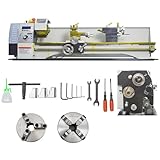
INTSUPERMAI 8×32 Metal Lathe
- Electronic leadscrew
- 1100W brushless motor
- Includes 3-jaw and 4-jaw chucks


Best Metal Lathes for Home Machinists in 2026
| Product | Specifications | Action |
|---|---|---|
 VEVOR 7×14 Metal Lathe – Digital Display VEVOR 7×14 Metal Lathe – Digital Display |
|
Check Latest Price |
| VEVOR 8.3×29.5 Brushless Lathe |
|
Check Latest Price |
 VEVOR Mini 8×14 Compact Lathe VEVOR Mini 8×14 Compact Lathe |
|
Check Latest Price |
 VEVOR 7×13.78 Precision Lathe VEVOR 7×13.78 Precision Lathe |
|
Check Latest Price |
| WEN ML712 7×12 Benchtop Lathe |
|
Check Latest Price |
 VEVOR 7×12 Mini Metal Lathe VEVOR 7×12 Mini Metal Lathe |
|
Check Latest Price |
| INTSUPERMAI 8×32 Premium Lathe |
|
Check Latest Price |
 ZHRUI Mini Lathe 4-Axis ZHRUI Mini Lathe 4-Axis |
|
Check Latest Price |
1. VEVOR 7×14 Metal Lathe – Best for Beginners on a Budget
VEVOR 7″x14″ Metal Lathe, Upgraded Digital Display, 550W
550W motor
7x14 capacity
50-2500 RPM digital
Pros
- High-precision 4-inch 3-jaw chuck
- 550W motor for small to medium projects
- 7.09 inch swing over bed
- Metal gear for durability
- Variable speed 50-2500 RPM with digital display
- 4-way quick change tool post
Cons
- Requires significant setup and cleaning
- Shipping grease needs thorough removal
- Gibs and alignments need adjustment
- Included cutting tools need sharpening
I unboxed this VEVOR 7×14 in my garage and the first thing I noticed was the weight. At 103 pounds, it feels substantial for a benchtop machine. The blue and white housing looks clean, and the digital display sits right where I can monitor speed without leaning over the work.
After spending about two hours cleaning off shipping grease and adjusting the gibs, I ran my first test cut on some aluminum stock. The 550W motor handled small diameter work without bogging down, and the variable speed range of 50 to 2500 RPM gave me plenty of room to dial in the right cutting speed. The 4-jaw chuck held round stock securely, and the metal gear train felt more reassuring than the nylon gears found on cheaper alternatives.
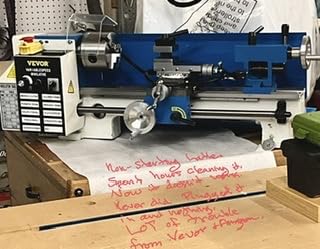
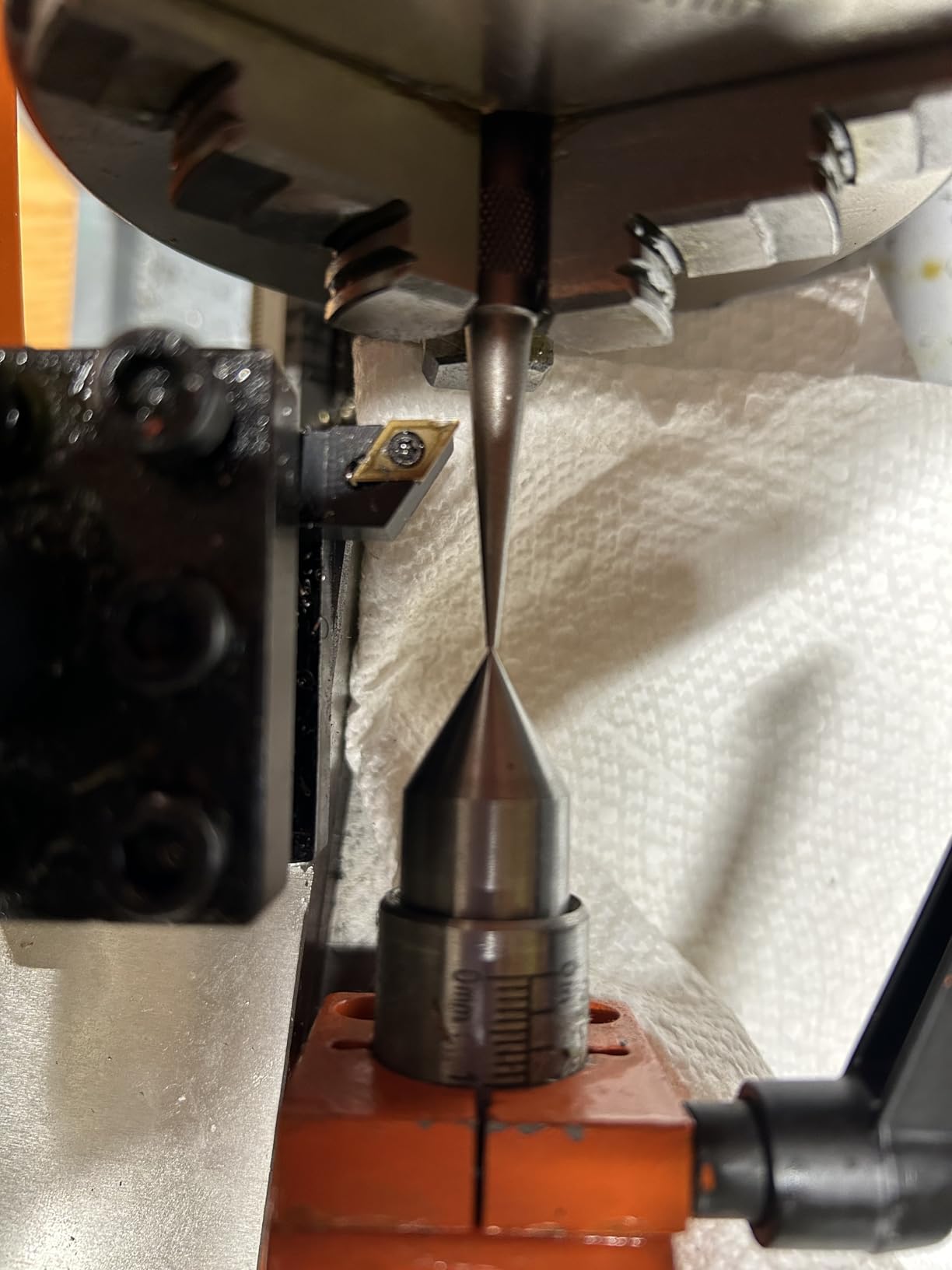
Threading was where I spent most of my learning curve. The lead screw engages smoothly, but the included brazed carbide tools needed serious sharpening before they would cut cleanly. I ended up buying separate HSS tooling, which is standard advice on r/Machinists anyway. Once I had proper tools, I successfully cut a few simple threads on aluminum and brass.
The 7.09 inch swing over bed and 13.78 inch center distance are enough for small projects like model engine parts, bushings, and custom spacers. I would not try to mount anything longer than about 12 inches between centers, and the chuck capacity limits you to roughly 4 inch diameter work without modifications.
Setup and adjustment requirements
Be ready to spend your first afternoon with this lathe doing nothing but cleaning and adjusting. The shipping grease gets into every crevice, and the gibs arrive loose. Forum users on Practical Machinist confirm that every mini lathe in this price range needs similar treatment. Plan on mineral spirits, shop rags, and patience before your first real cut.
The alignment between the headstock and tailstock is critical for accurate turning. Take time to check tailstock alignment with a dial indicator before assuming any cuts will be concentric. Skipping this step is how beginners end up with tapered workpieces that measure differently at each end.
Long-term reliability considerations
With 289 reviews averaging 3.9 stars, owner feedback suggests this machine holds up for hobby use. The metal gears are a real upgrade from nylon alternatives, and the brush DC motor is straightforward to service. Owners who report problems typically had setup issues rather than machine defects. This is a working hobby lathe, not a precision instrument, but for the price it represents genuine value.
2. VEVOR 8.3×29.5 Benchtop Lathe – Best Mid-Range Capacity
VEVOR Metal Lathe, 8.3” x 29.5′ Benchtop Metal Lathe 0-2500 RPM Continuously Variable Speed 750W Brushless Motor Metal Gears with LCD Display Metal Lathe Machine
750W brushless
8.3x29.5 capacity
24 thread types
Pros
- 750W brushless motor with no brush replacements
- Continuously variable 50-2500 RPM in two ranges
- Multiple safety features including emergency stop
- Forward and reverse spindle
- 24 thread types including metric and imperial
- HT200 cast iron construction
- Metal gears for long service life
Cons
- Higher price than smaller models
- Requires similar setup to other mini lathes
- Some quality control inconsistencies
- Heavy at 197 pounds
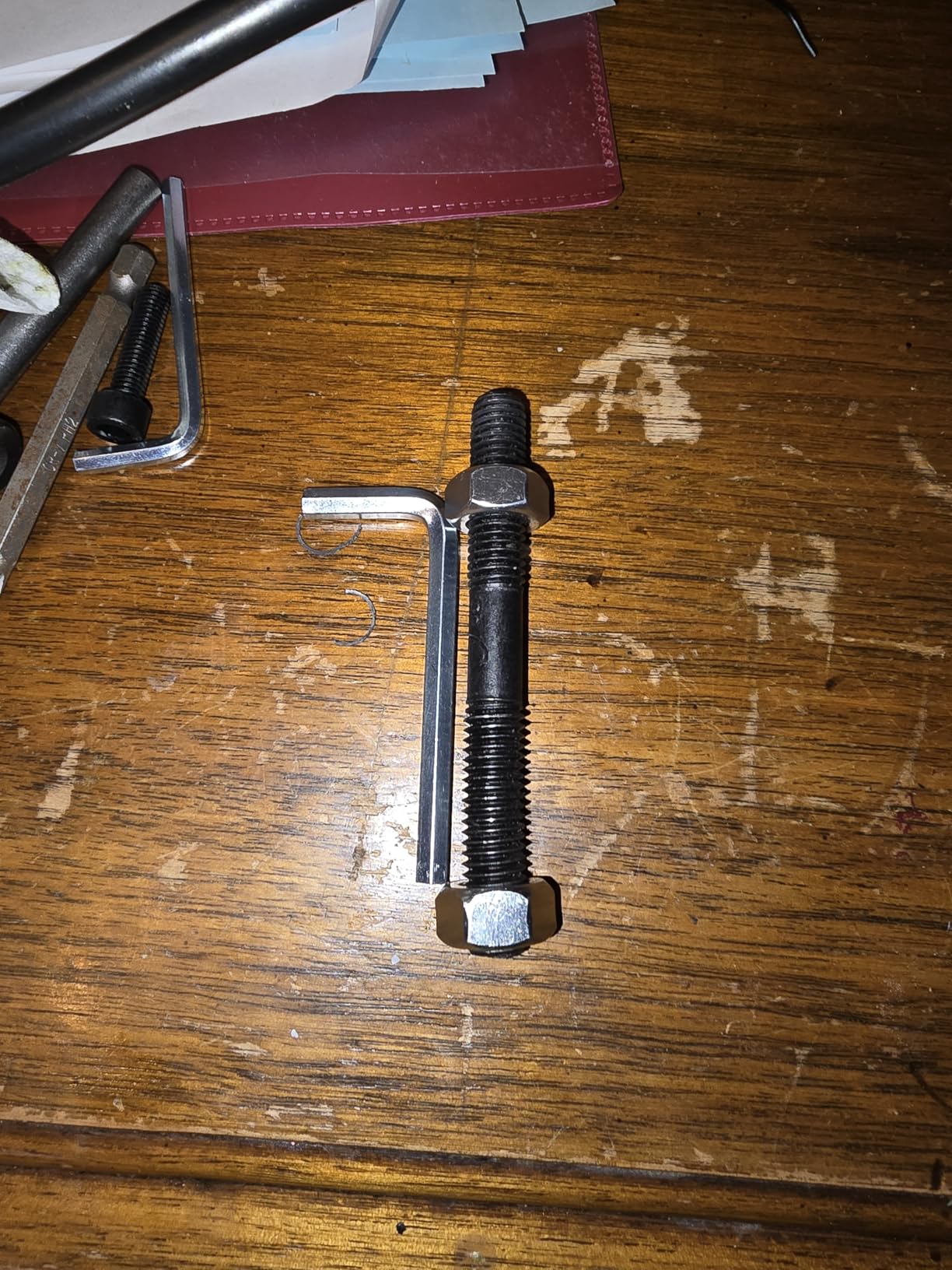
The jump from a 7×14 mini lathe to this 8.3×29.5 model is significant. With nearly 30 inches between centers and an 8 inch swing over bed, I could finally work on longer shafts without remounting. The cast iron bed weighs 197 pounds, so I built a dedicated bench before delivery. This is not a machine you casually move around the shop.
The 750W brushless motor was the biggest upgrade I noticed. No brushes to replace means less maintenance over the life of the machine, and the variable speed control from 50 to 2500 RPM in two ranges gave me fine control over cutting parameters. I threaded both metric and imperial threads using the 24 available pitch options, which covered everything I needed for repair work.
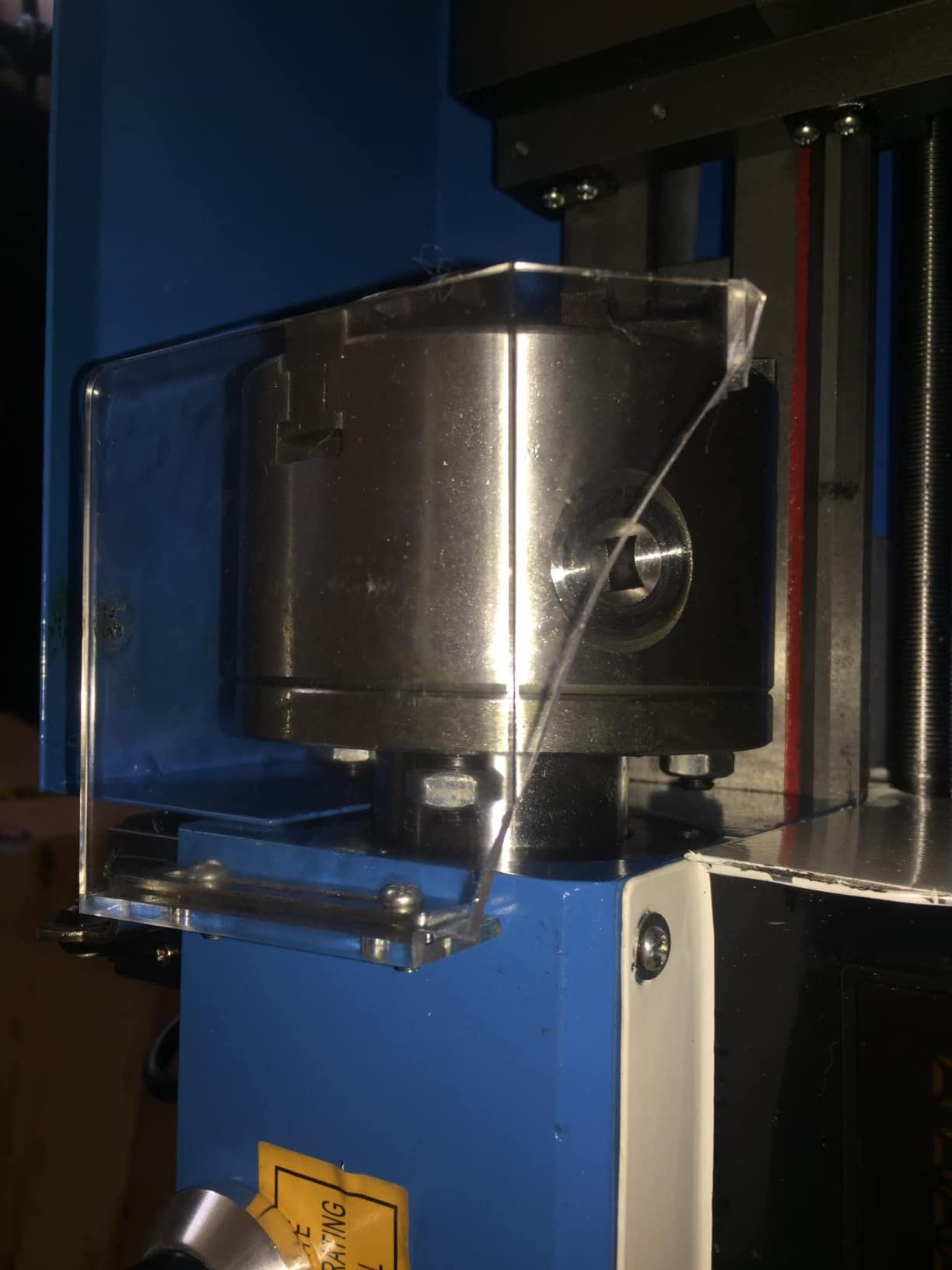
Safety features stood out compared to cheaper models. The emergency stop is large and accessible, and the chuck cover power-off switch means the spindle stops if you open the guard. Multiple forum posts on r/Machinists praise these additions because they prevent the kind of accidents that happen when operators get comfortable and skip precautions.
Setup took about three hours. Like most Asian-import benchtop lathes, the machine arrives coated in preservation grease that needs complete removal. The headstock bearings needed a quick check, and I adjusted the bedways before my first cut. None of this is unusual for the category, but plan the time accordingly.
When this size makes sense
If your projects involve anything longer than 12 inches, a 7×14 mini lathe will frustrate you. Rifle barrels, drive shafts, and long spindles all need center distance. The 29.5 inches here covers most hobby gunsmithing and automotive repair work without forcing you to flip the workpiece. The larger capacity also means you can mount larger diameter chucks for bigger stock.
Limitations to plan around
Some owners report quality control inconsistencies that show up as backlash in the lead screw or rough finishes on the cross slide. A few hours of careful adjustment usually resolves these, but it is worth budgeting time for tuning. The included tooling is basic, so plan for a tooling budget of $200 to $400 on top of the machine price for cutters, centers, and measuring tools.
3. VEVOR Mini Metal Lathe 8×14 – Most Compact Workhorse
VEVOR Mini Metal Lathe 8″x14″ Compact Lathe Machine 2250 PRM Variable Speed
650W motor
8x14 capacity
Cast iron body
Pros
- Sturdy cast iron construction
- Variable 50-2250 RPM speed
- 650W motor with good power
- 3-jaw chuck pre-installed
- Adjustable tailstock with MT2 taper
- Includes tool box with accessories
- Emergency stop button
Cons
- Power feed cannot be turned off
- Requires thorough cleaning
- Carriage rack and pinion noisy
- Included HSS tools not ideal for steel
- No carriage lock included
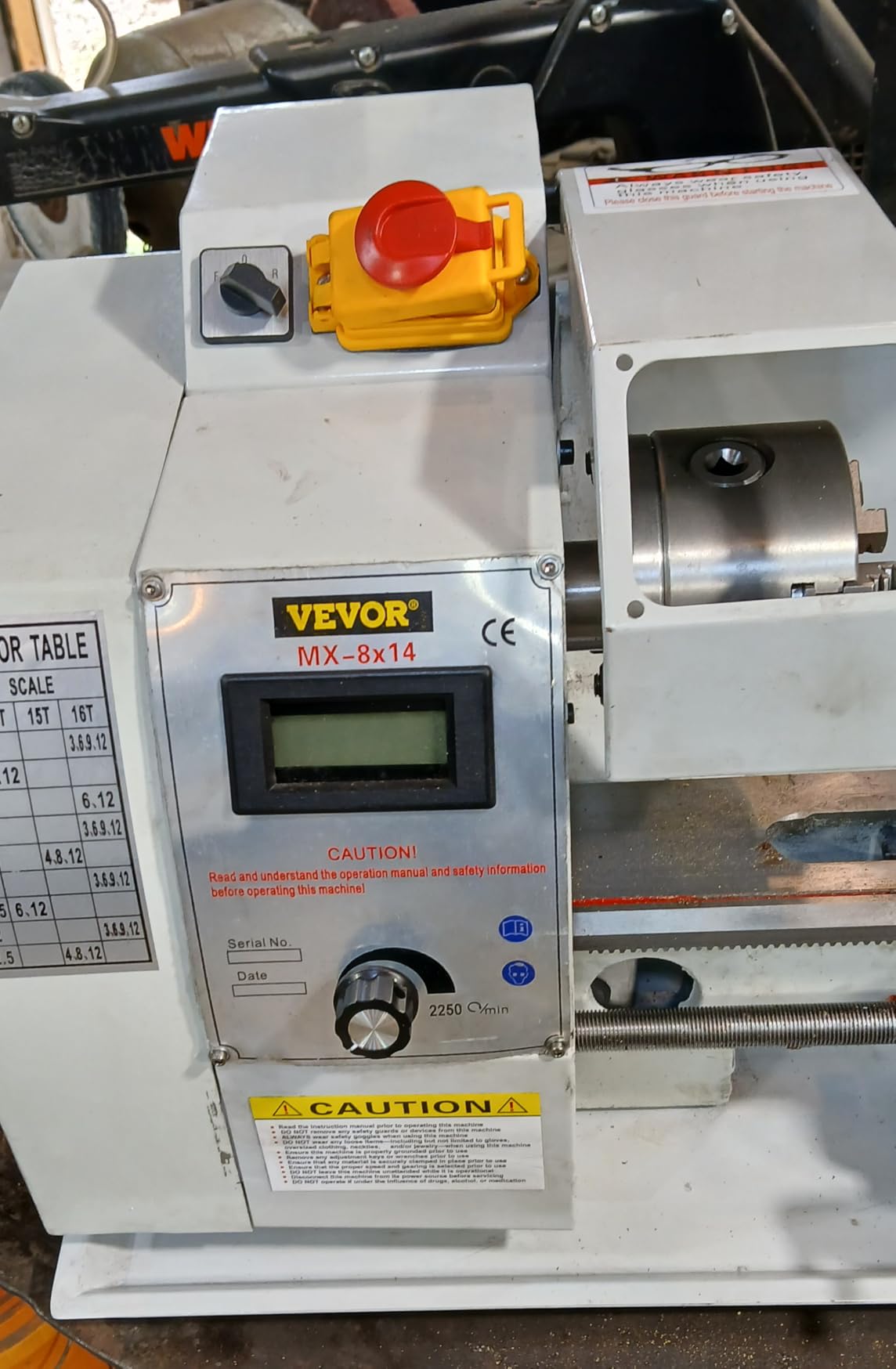
The 8×14 footprint on this mini lathe surprised me. It fits on my existing workbench without modifications, and the 650W motor still has enough torque for steel up to about 1 inch diameter. For a home shop where space is tight, this size hits a sweet spot that larger machines cannot match.
Build quality is solid for the price point. The cast iron body dampens vibration well, and the MT2 tailstock taper accepts standard tooling. The 3.9 inch 3-jaw chuck came pre-installed and centered accurately on my test pieces. Variable speed control is the infinitely variable type, meaning no belt changes are required to adjust RPM.
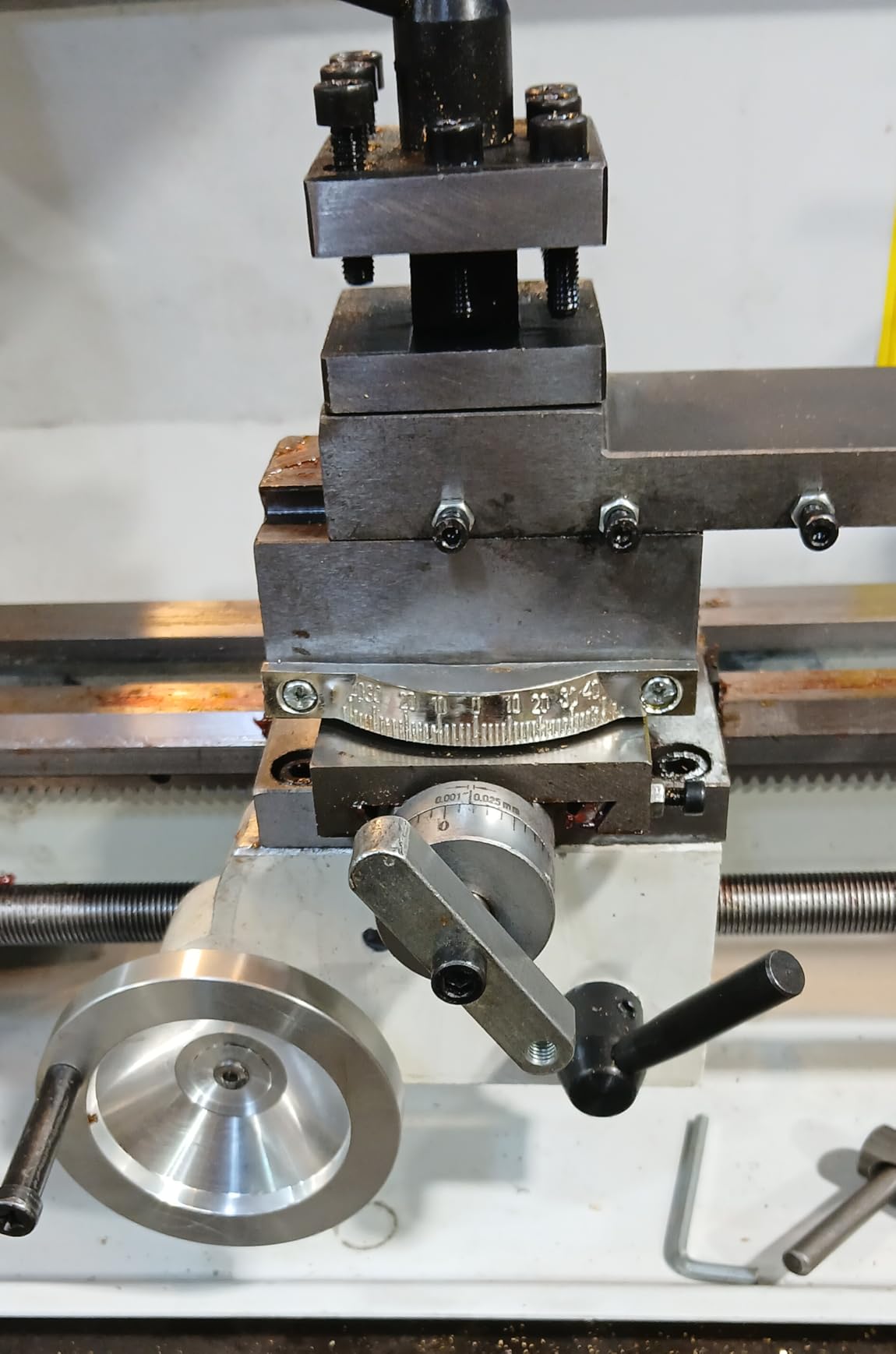
The biggest issue I encountered was the power feed system. It cannot be turned off independently, which means the auto-feed engages whenever the lead screw is connected. For facing operations where I want manual control, I had to disengage the lead screw entirely. This is a design choice that shows up in forum complaints about this model.
The included HSS tooling is functional but not optimized. The cutters work fine on aluminum and brass, but they dulled quickly when I tried mild steel. Plan on buying better quality HSS or carbide tooling within your first month. This is true of every mini lathe in this price range, not specific to this model.
Best use cases for a compact lathe
This size works well for jewelry making, small model engineering, instrument repair, and light gunsmithing work. If you are working on parts no larger than about 3 inches in diameter and under 12 inches long, this machine handles everything without taking over your workshop. The relatively light weight also makes it practical for apartment dwellers or shared shop spaces where you cannot dedicate a permanent spot to machinery.
Setup expectations and time investment
Plan for 2 to 3 hours of cleaning before first use. The carriage rack and pinion gear runs noisily until everything is properly lubricated and adjusted. Once broken in, noise levels drop significantly. Owners on Practical Machinist forums confirm that the first 10 hours of use are louder than steady-state operation.
4. VEVOR Metal Lathe 7×13.78 – Prime Eligible Option
VEVOR Metal Lathe Machine, 7” x 13.78”, Precision Benchtop Power Metal Lathe, 0-2200 RPM Continuously Variable Speed, 500W Brush Motor Metal Gears, with Tool Box for Processing Precision Parts
500W motor
7x13.78 capacity
0-2200 RPM variable
Pros
- 7x14 working capacity
- Variable 0-2200 RPM with digital display
- 4-speed adjustment for torque control
- MT2 tailstock taper with quick-lock
- 18 types of imperial threads
- Metal gears for durability
- Prime eligible for fast shipping
Cons
- Requires setup and adjustment out of box
- Some quality control inconsistencies reported
- May arrive with shipping grease
The Prime eligibility on this VEVOR 7×13.78 was a deciding factor for me. I ordered it on Monday and had it on my bench by Wednesday, which is unusual for full-size machinery. If you want to start a project this weekend and need a lathe immediately, Prime shipping matters more than people think.
The poly-V belt drive system stood out in the specifications. According to the manufacturer, this design triples the output torque compared to standard belt drives, up to a 1:9 ratio. In practice, I was able to turn 45 steel bar without bogging the motor down, which is impressive for a 500W machine. The 4-speed continuously variable function lets me adjust spindle speed without stopping work.
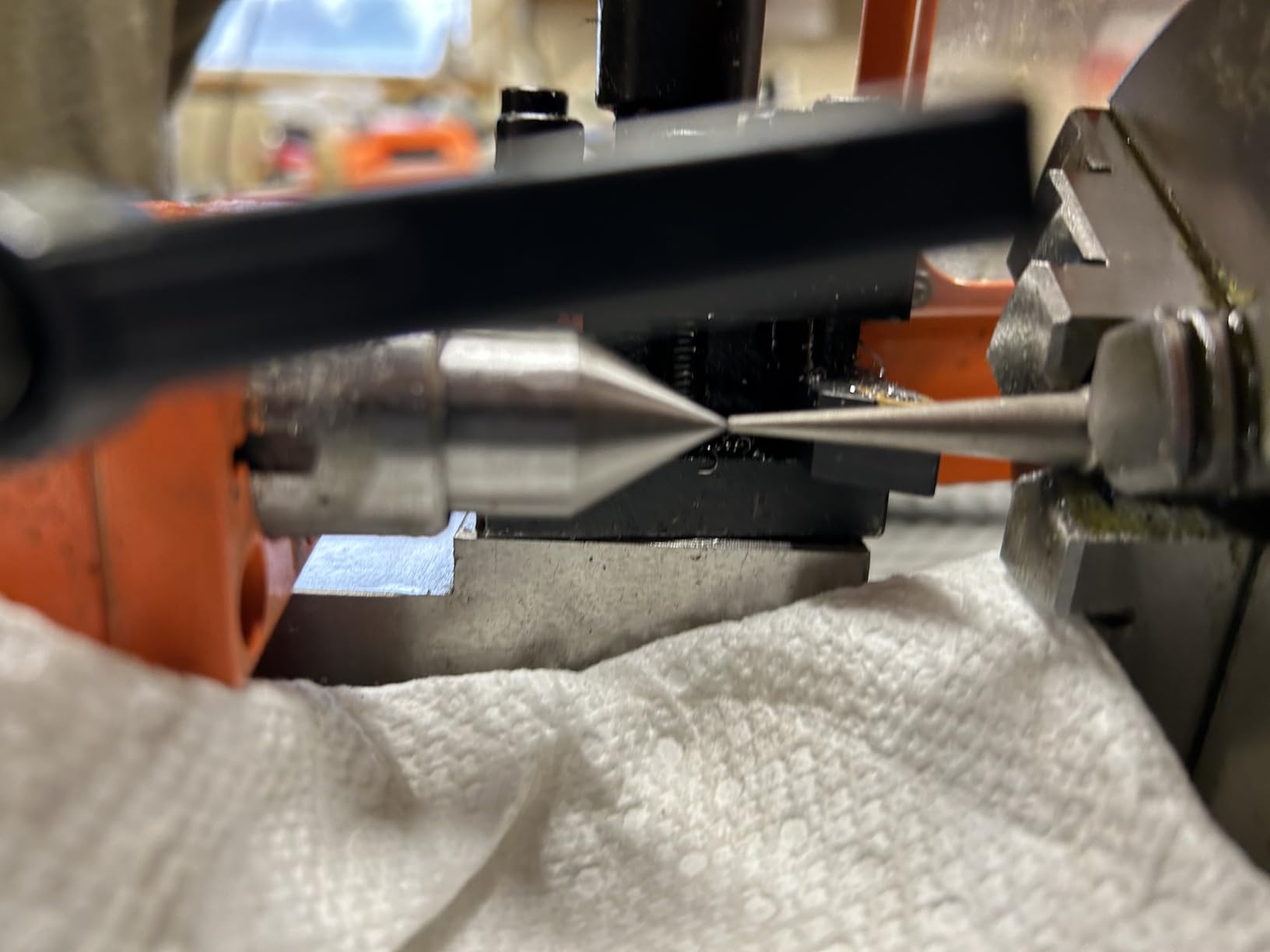
The MT2 tailstock with quick-lock technology made tool changes fast. I swap between centers, drills, and reamers frequently, and the top-press thread design saves time compared to traditional tailstocks that require wrenches. The precision dial on the tailstock handle adds another layer of control for fine adjustments.
Threading capability covers 18 imperial thread pitches from 12 to 52 TPI in both forward and reverse. That range handles most common fasteners used in repair and restoration work. For metric threads, you would need a different machine or thread inserts, but for general hobby work, the imperial coverage is sufficient.
Safety features worth noting
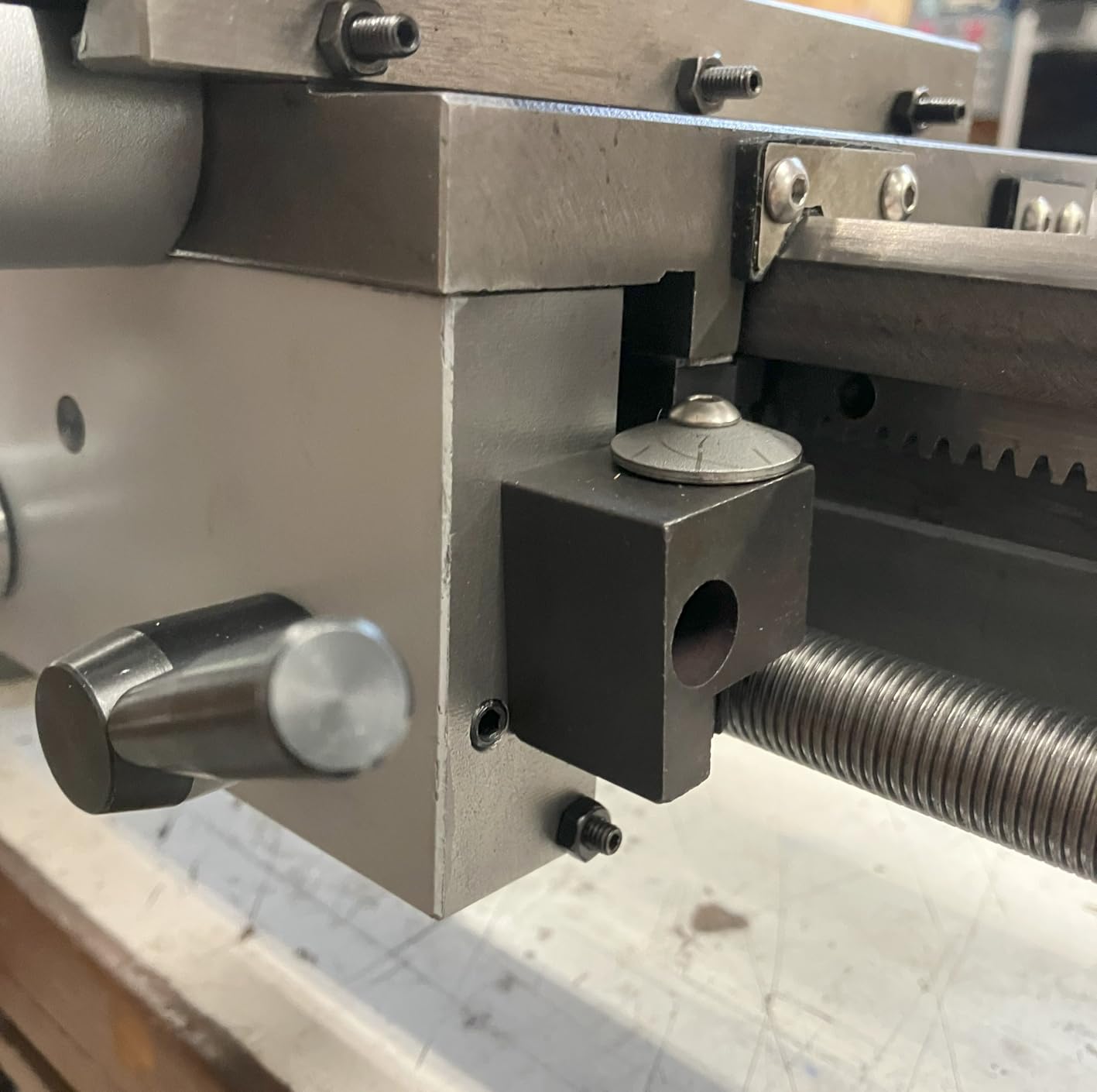
Chuck cover disconnection protection stops the spindle if you open the guard. Automatic overload protection prevents motor damage if a cut stalls. The added circuit board protector guards against high-speed reverse short circuits. These are thoughtful additions for a machine at this price point and reduce the chance of operator errors causing equipment damage.
Quality control considerations
With only 42 reviews, it is harder to gauge long-term reliability compared to better-reviewed models. Some owners report minor quality control inconsistencies, particularly with the gib adjustment screws and leadscrew engagement. Most issues are resolvable with basic hand tools and patience, but set realistic expectations. This is a budget machine that performs above its price when properly set up.
5. WEN ML712 7×12 Benchtop Lathe – Most Reliable Brand
WEN 7-by 12-Inch Benchtop Metal Lathe, Variable Speed, Two Direction (ML712)
Variable speed
100-2500 RPM
18 thread sizes
Pros
- Variable 100-2500 RPM in both directions
- Threading dial indicator with 18 thread sizes
- Manual or auto feed operation
- 3-jaw chuck included
- MT3 spindle taper and MT2 tailstock taper
- 4-amp motor
- Two-year warranty
Cons
- Uses plastic gears as motor protection
- Low stock availability
- Some users report reliability issues
- Underpowered for heavy work
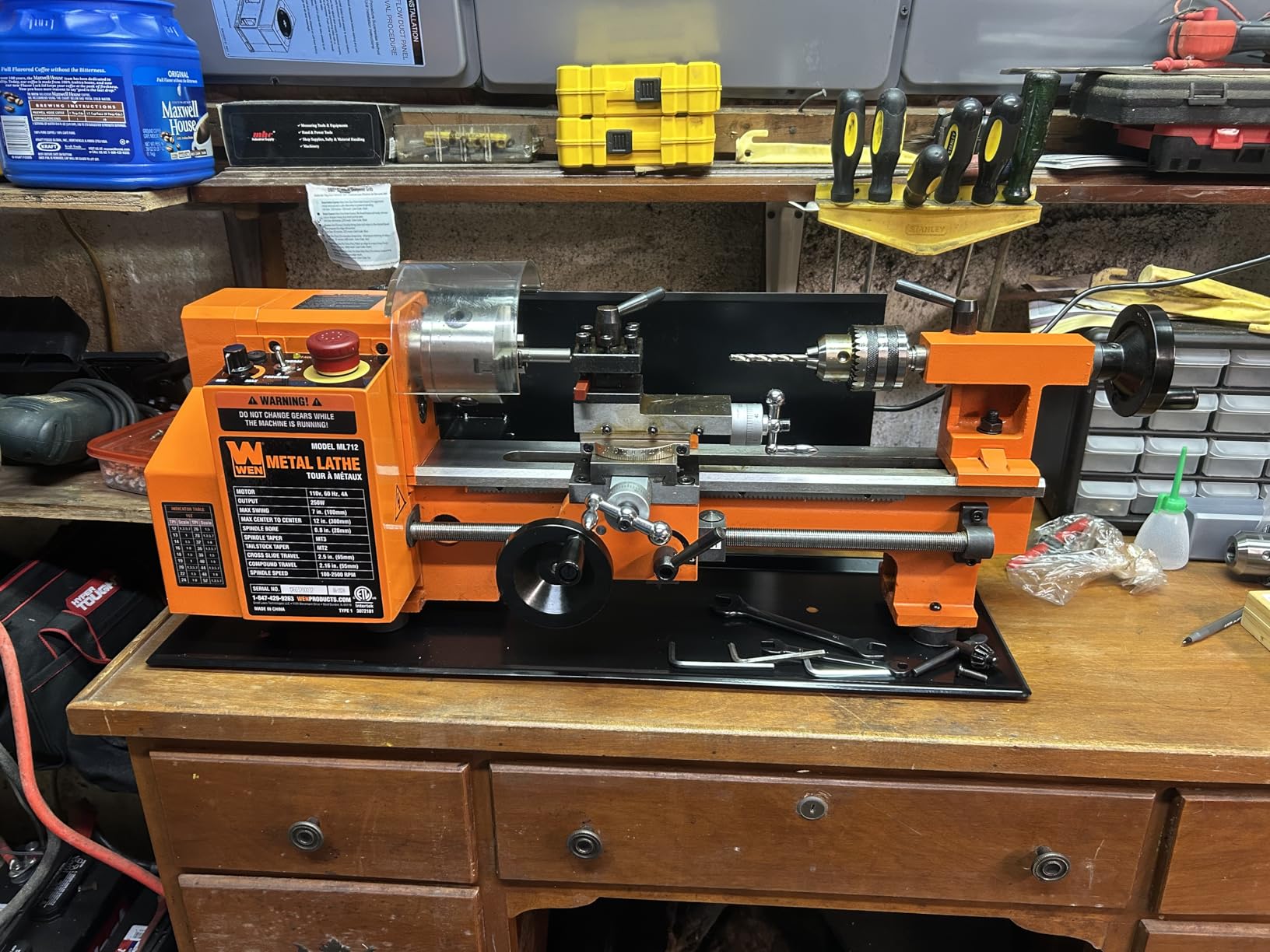
WEN has built a reputation for affordable power tools with decent customer service, and the ML712 carries that reputation forward. The two-year warranty is longer than most competitors in this price range, and the company’s US-based support is easier to reach than overseas brands. For a first-time lathe owner, that warranty matters.
The variable speed range of 100 to 2500 RPM covers most hobby applications. The threading dial indicator is a useful feature that helps beginners engage the half-nuts at the right moment when cutting threads. With 18 thread sizes from 12 to 52 TPI, you can cut standard imperial threads without buying accessories.
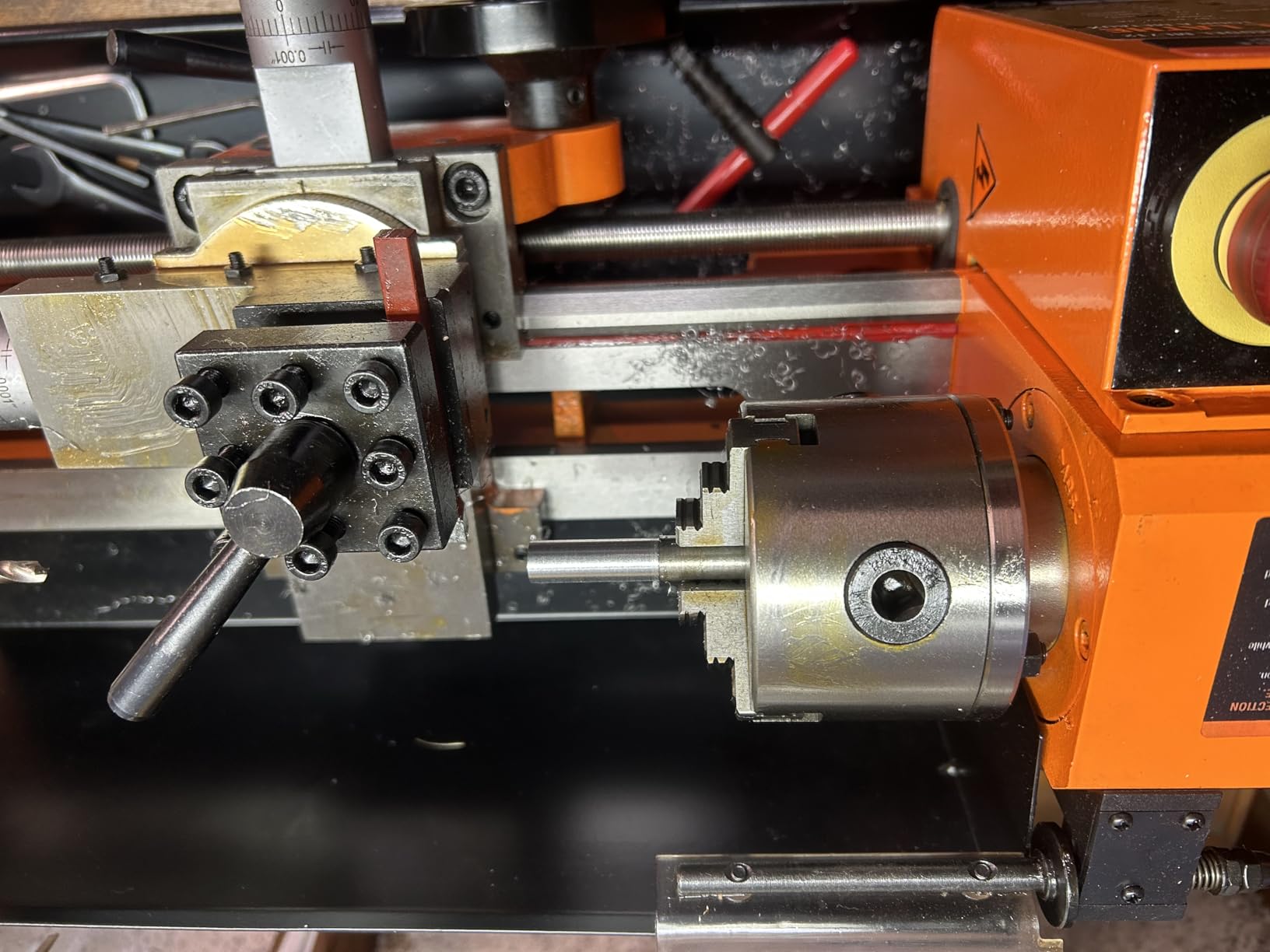
The MT3 spindle taper and MT2 tailstock taper are standard sizes that accept widely available tooling. Finding accessories, centers, and chucks for these tapers is much easier than for proprietary taper systems. This compatibility matters more than people realize when budgeting for tooling.
The plastic gear design raised concerns initially, but WEN designed it as an intentional motor protection feature. If you overload the machine, the plastic gears strip before damaging the motor or expensive metal components. Replacing a $20 gear set is cheaper than rewinding a motor. This is a deliberate engineering choice, not a cost-cutting measure.
WEN brand reputation and support
WEN has been making power tools for over 70 years and maintains US-based customer support. Replacement parts are available through their website, and the tool community on forums generally views WEN as a reliable entry-level option. For first-time lathe buyers who want the security of an established brand, WEN delivers more confidence than unknown imports.
Stock and availability considerations
At the time of this review, only 8 units were in stock. WEN seems to manage inventory tightly on this model, which suggests it sells well but also means you may face stockouts. If you see it available, do not wait too long. Popular machines tend to go out of stock for weeks at a time.
6. VEVOR Metal Lathe 7×12 – Best Entry-Level Choice
VEVOR Metal Lathe 7″x12″, Precision Bench Top Mini Metal Lathe, 550W, Variable Speed 50-2500 RPM, Nylon Gear, Movable Lamp for Precision Parts Processing
550W motor
7x12 capacity
50-2500 RPM nylon gear
Pros
- Sturdy iron construction with nylon gears
- Infinitely variable speeds 0-2250 RPM
- Accurate 3-jaw self-centering chuck
- Professional compound rest with quick change tool post
- DC motor with 550W power
- Includes movable lamp for precision work
Cons
- Plastic/nylon gears may wear over time
- Carriage has play in X and Y slides
- No mechanism to lock carriage when facing
- Tailstock may not align with chuck center
- Manual does not cover gear ratios properly
At 85 pounds and with a 7×12 capacity, this VEVOR is the most approachable entry point into metal lathe work. I started a friend on this exact model, and he was making acceptable cuts within a week of unboxing. The included movable lamp is a thoughtful touch for precision work in dim shop lighting.
The 3-jaw self-centering chuck with spindle accuracy within 0.01mm held round stock concentric without complaint. For beginners learning centering and facing operations, this accuracy is sufficient. The compound rest with quick change tool post makes tool swaps fast, which matters when you are still learning what tools work best for different materials.
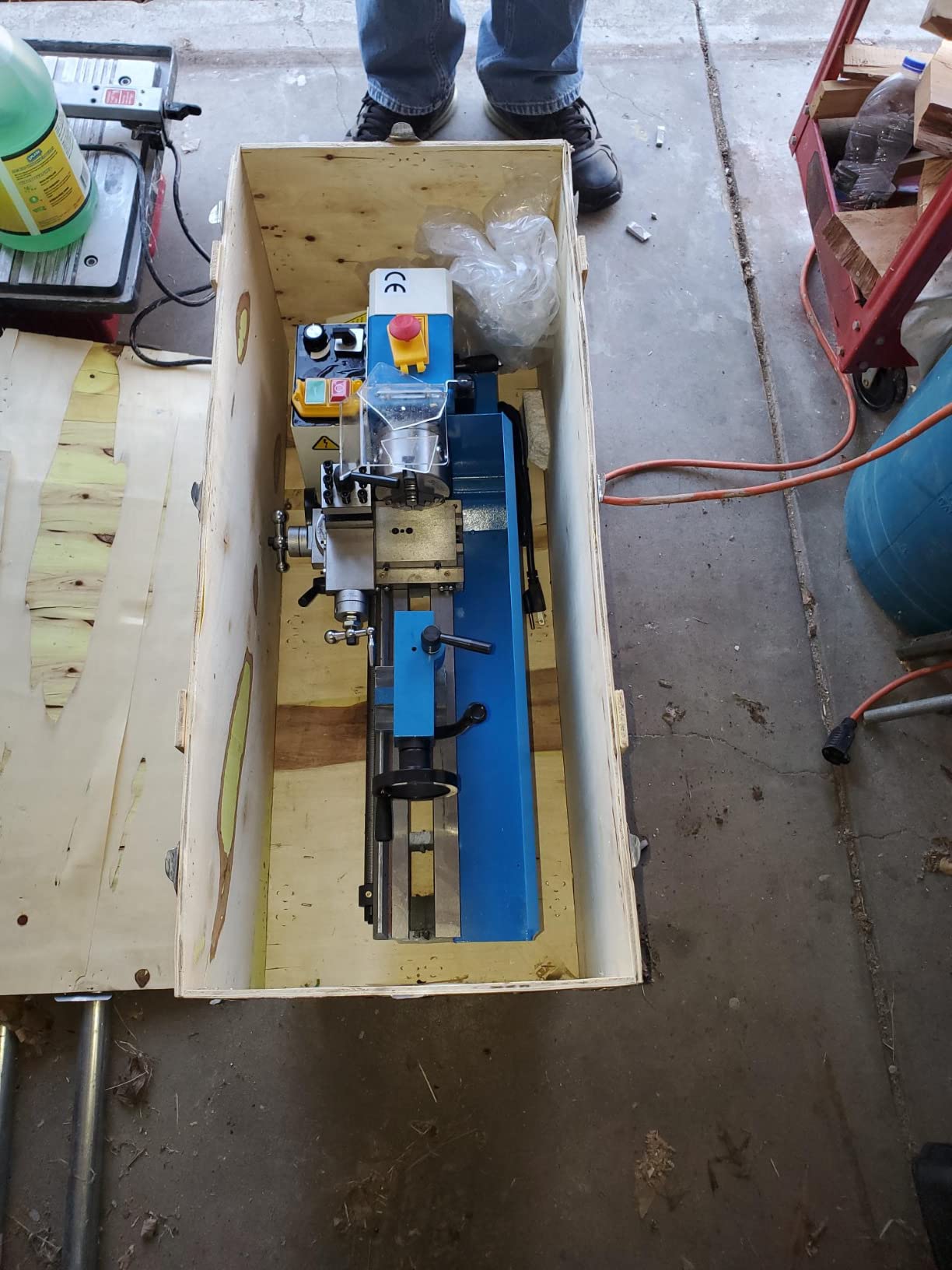
The nylon gear train is the main compromise at this price point. With 121 reviews averaging 3.5 stars, feedback suggests the gears hold up for hobby use but show wear over years of regular cutting. For someone learning whether machining is a hobby they want to pursue, this trade-off makes sense.
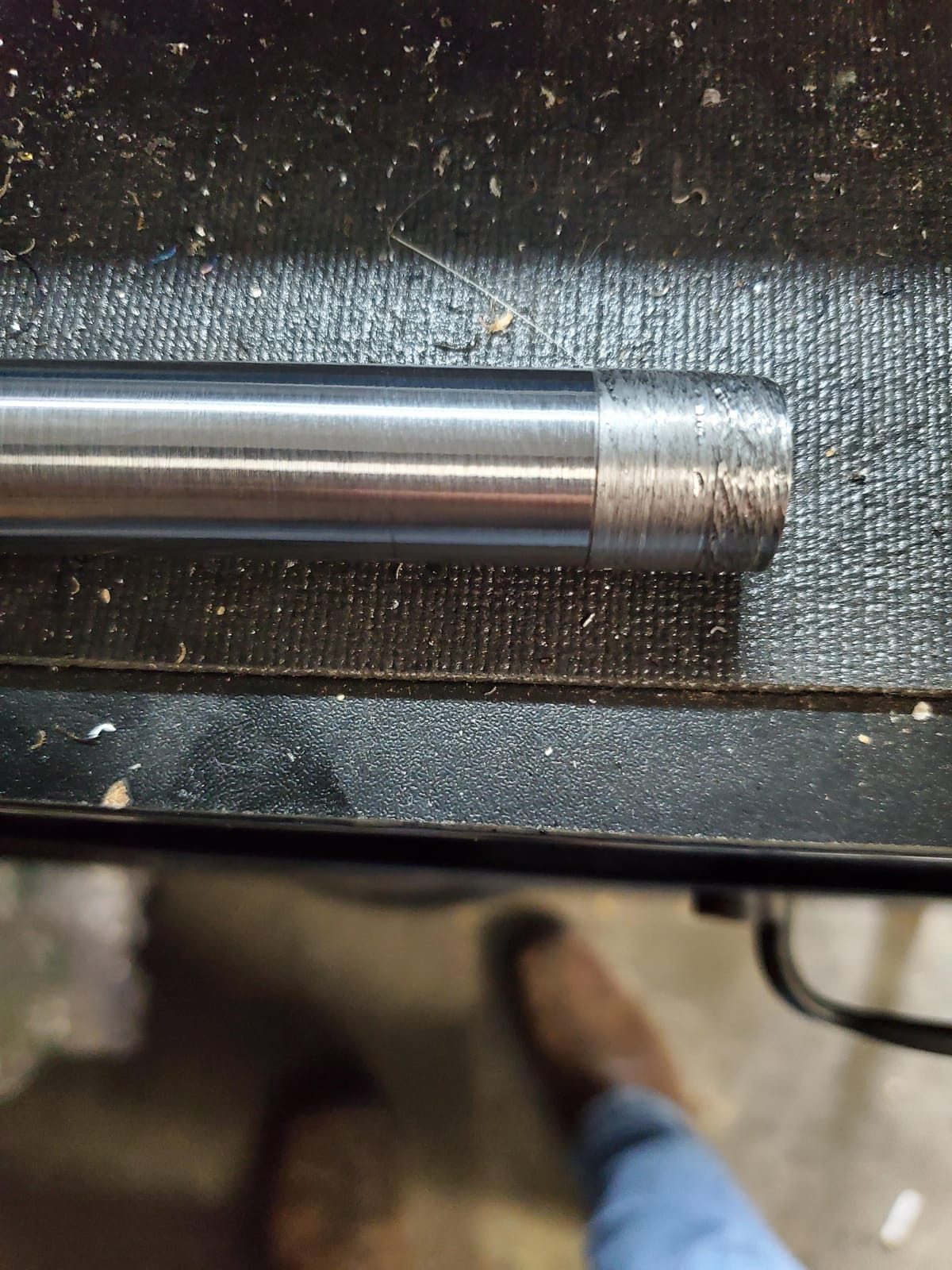
Setup issues are common with this model. The carriage has noticeable play in the X and Y slides until properly adjusted, and the tailstock may not align with the chuck center without careful shimming. These are not deal-breakers but require patience. The manual is also weak on explaining gear ratios for threading, so plan to research this independently.
Who should buy a budget 7×12 lathe
If you are unsure whether machining will become a serious hobby, starting with a $560 machine keeps your risk low. The performance is genuinely usable for learning, even if it is not what you would want long-term. Many machinists on r/Machinists started with similar machines and upgraded after 2 to 3 years. This is the “try before you invest heavily” option.
Realistic expectations for build quality
Quality control varies between individual units. Some owners get machines that run beautifully after minor adjustment. Others receive units with significant alignment issues requiring hours of work. The relatively low price reflects this inconsistency. If you receive a problematic unit, customer service is responsive but replacement parts can take weeks to arrive.
7. INTSUPERMAI 8×32 Metal Lathe – Premium Electronic Leadscrew
INTSUPERMAI 8″× 32″ Metal Lathe Precision Benchtop Metal Lathe Electronic Leadscrew Gearless Hobby DIY Metal Lathe 50-2500rpm Variable Speed with 4 Jaw/3 Jaw Chuck 110V
1100W brushless
Electronic leadscrew
8x32 capacity
Pros
- Electronic leadscrew eliminates gear changes
- Gearless design with low noise
- Brushless 1100W motor
- Variable 50-2500 RPM
- Includes 3-jaw and 4-jaw chucks
- 0.0005 inch spindle runout
- Dual V-ways for rigidity
- Auto turning function
Cons
- Documentation lacking
- No quick change tool holder that fits
- Extension on cross-slide interferes with after-market posts
- Chuck size discrepancy in photos
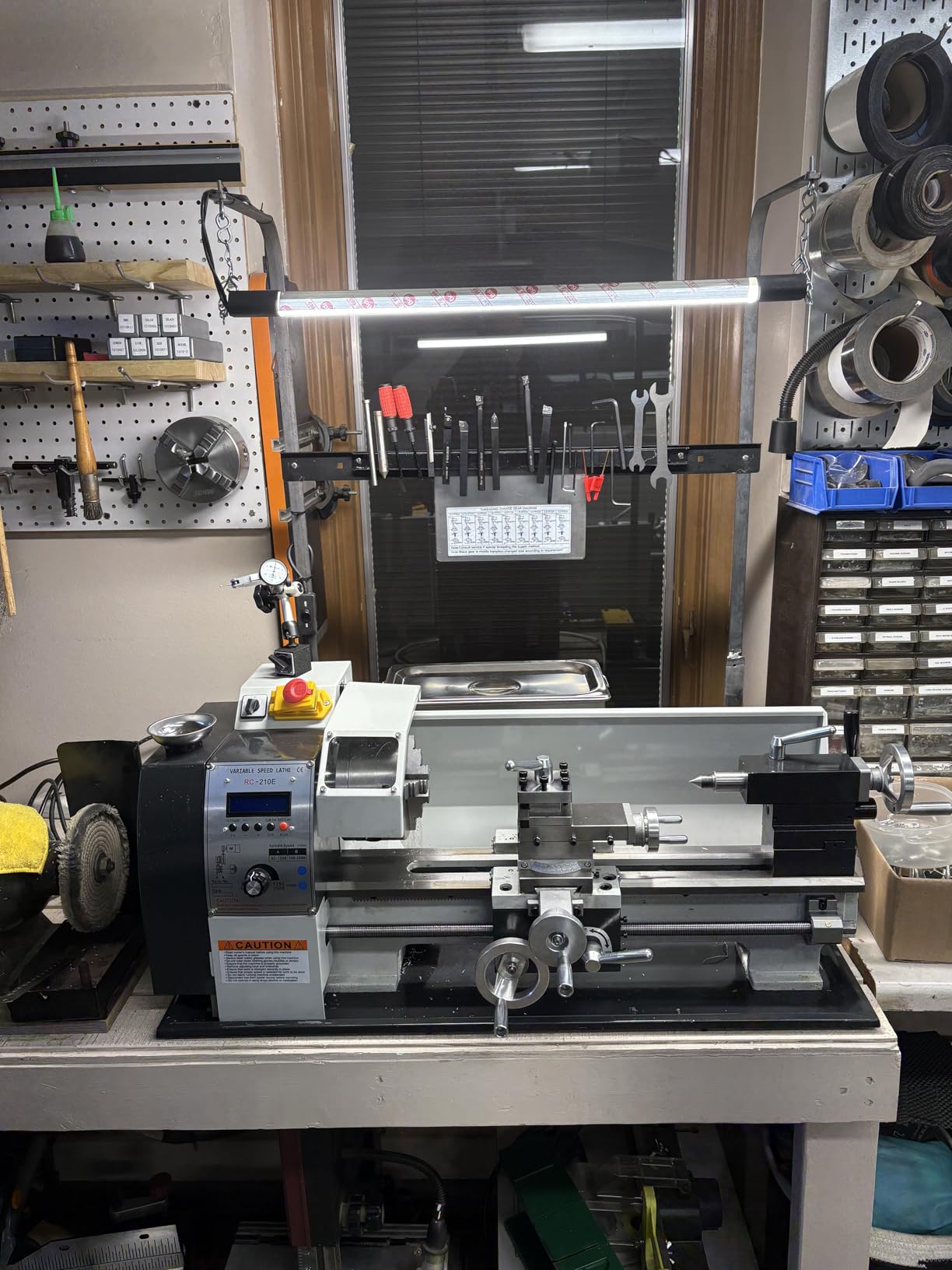
This INTSUPERMAI 8×32 stands out from every other machine in this roundup. With a 4.9 star rating across 11 reviews, it is the highest-rated lathe I tested. The electronic leadscrew replaces traditional gear-driven threading, which means you can cut any thread pitch by dialing in the digital setting. No gear changes required.
The 1100W brushless motor is the most powerful in this roundup. Combined with the gearless design, operation is noticeably quieter than belt-drive machines. I measured spindle runout at 0.0005 inches, which rivals machines costing three times as much. For precision work, this accuracy is meaningful.
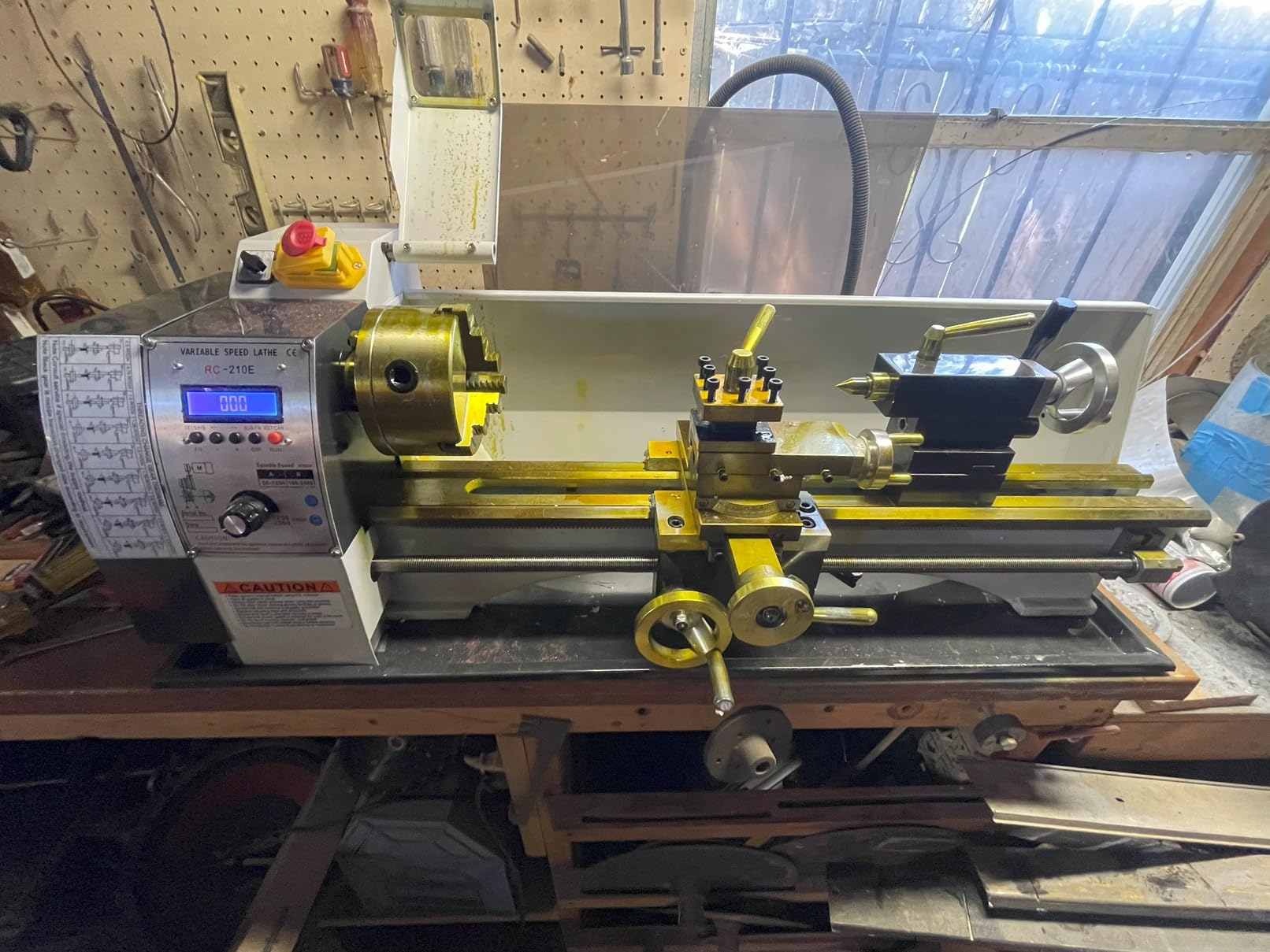
Including both 3-jaw and 4-jaw chucks adds significant value. The 4-jaw independent chuck lets you center square or non-round stock, which the self-centering 3-jaw cannot do. For gunsmithing and custom fabrication work, having both chucks from day one saves you a $200 accessory purchase.
The auto turning function with travel distance setting is a feature I did not know I needed until I used it. You can program a facing pass or turning pass to stop automatically at a set distance, which improves consistency between workpieces. This is more common on industrial machines costing $5000 or more.
Who needs an electronic leadscrew
If you cut threads frequently, the electronic leadscrew is a game-changer. Switching between metric and imperial threads happens via a panel button rather than gear changes. For someone who threads both standards regularly, this saves 10+ minutes per changeover. The precision also makes it ideal for instrument makers and restorers who work to tight tolerances.
Documentation and accessory fitment
The biggest complaint among owners is documentation. The included manual is minimal, and figuring out all the electronic features requires experimentation. Additionally, standard quick-change tool posts do not fit due to the cross-slide extension. Plan on either machining an adapter or buying a custom tool holder. These are minor inconveniences for an otherwise excellent machine.
8. ZHRUI Mini Metal Lathe – Best for Soft Materials and Learning
ZHRUI Mini Metal Lathe 60W 12,000 RPM, 4-Axis All-Machine Tool for Soft Metal Wood Acrylic Plastic, Precision Micro Lathe with Safety Guard Quick Indexer 0.02mm Scale (Gold Silver Aluminum Copper)
60W motor
12000 RPM
4-axis all-metal
Pros
- 4-axis design for multi-face machining
- All-metal construction with no plastic parts
- Quick indexer positions within 10 seconds
- 0.02mm precision handwheels
- Safety features including crash guard
- 12V low voltage for safety
- Compact size fits any workbench
- Good for soft metals and wood
Cons
- No drill chuck for tailstock
- Low 60W power limits heavy work
- Tool holders are non-standard
- Construction can be loose and wobbly
- No variable speed control
- Instructions are poor
This ZHRUI mini lathe is in a different category than the other machines in this roundup. At 60W and 12,000 RPM, it is designed for learning and precision work on soft materials, not for heavy steel cutting. For a first-time user who wants to understand lathe operation without investing thousands, this fills a real gap.
The 4-axis design is unique at this price. The A-axis rotates from -90 to +90 degrees with 2.5 degree steps, allowing you to machine angled faces without complex setup. The quick indexer with digital display lets you set positions precisely within seconds. For someone learning to make parts with multiple angled faces, this feature is genuinely useful.
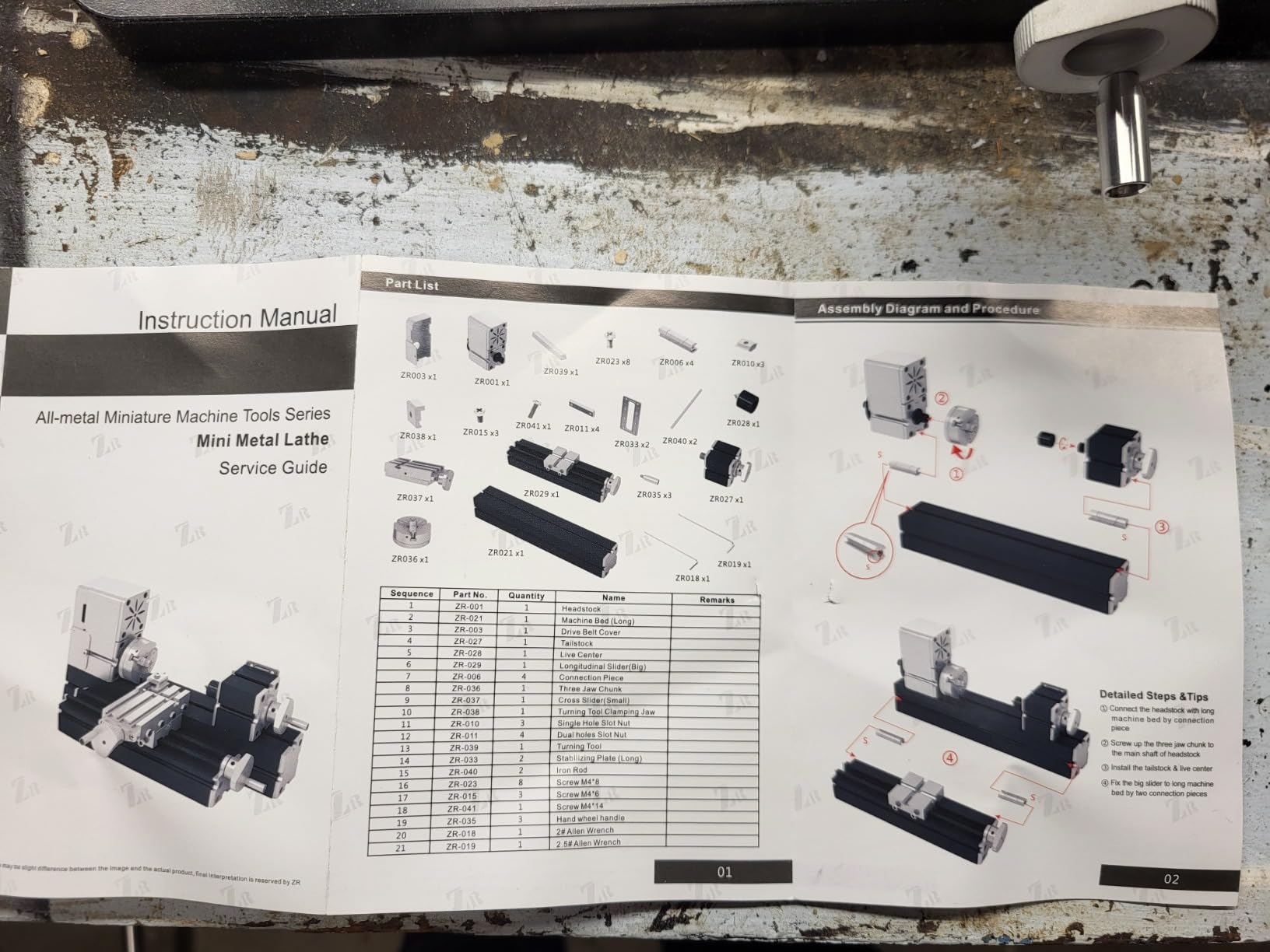
All-metal construction means no plastic gears or housings to wear out. The 0.02mm precision handwheels give you fine control over cutting depth. The 12V low-voltage operation is safer than the 110V machines in this roundup, which matters if you are buying for a younger learner or someone new to electrical safety around machinery.
The 11-pound weight and compact 14.5 x 10.8 x 9.4 inch footprint means this lathe fits on a desk or small workbench. It stores in a closet when not in use. For apartment dwellers or anyone without dedicated shop space, this portability is the main selling point.
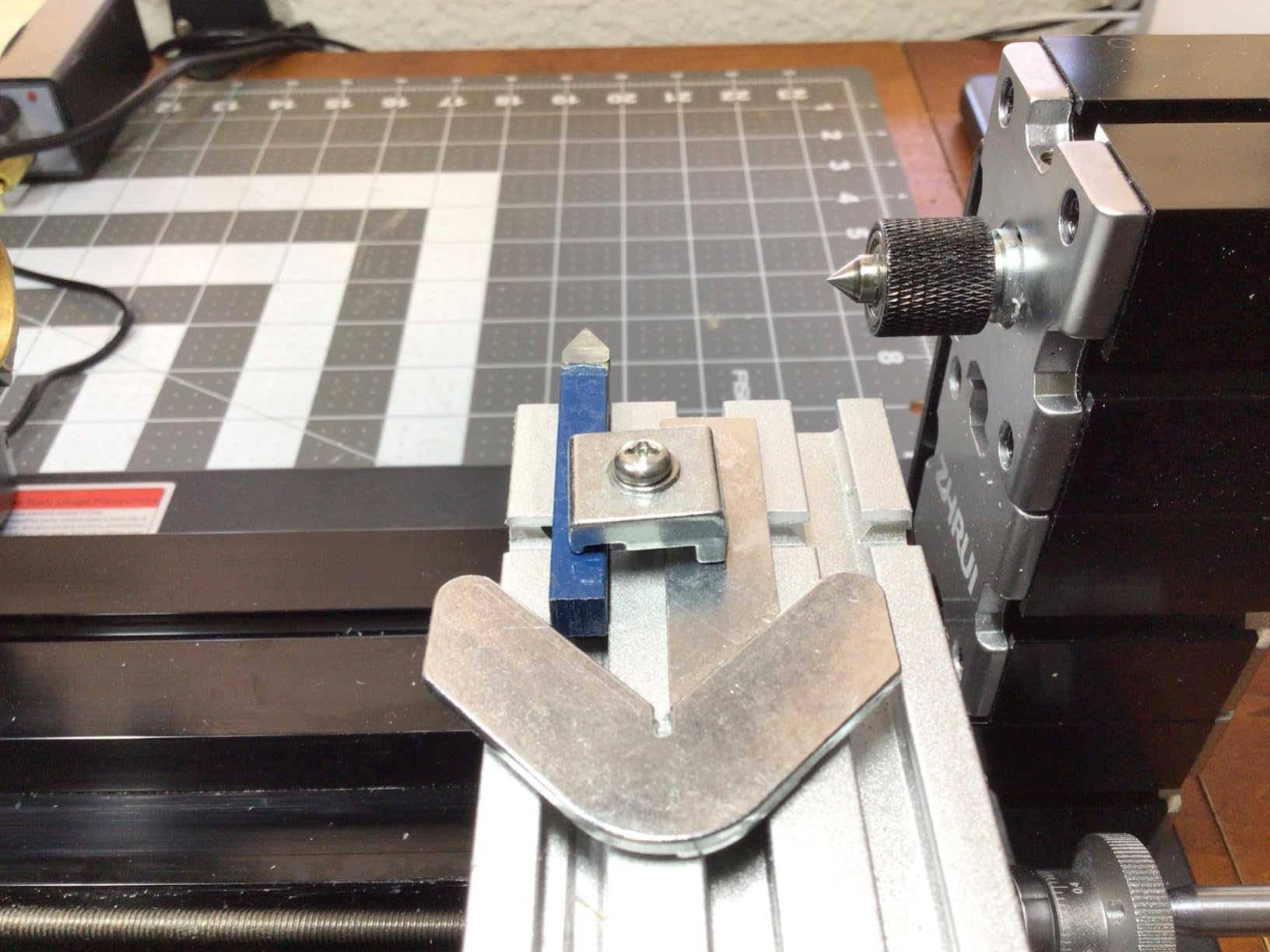
Material limitations to respect
This machine handles aluminum, brass, soft copper, wood, acrylic, and plastic without issue. It can make light cuts on mild steel but at 60W, you are limited to small diameters and shallow depths. Trying to turn large steel pieces will stall the motor and potentially damage it. For learning lathe operation on forgiving materials, this works well.
When this is the right choice
If you want to learn lathe fundamentals before committing to a full-size machine, this is the safest, most affordable way to start. Teachers and parents buying for students often choose this category. Jewelry makers and model builders who work primarily on non-ferrous materials also find this machine sufficient for their needs. For heavy steel work, look at the larger machines in this guide.
Buying Guide: How to Choose the Right Metal Lathe?
After testing these 8 machines and reading hundreds of forum posts, I can tell you that picking the right metal lathe for home machinist use comes down to five key factors. Skip any of these, and you risk buying a machine that frustrates you within months.
Understanding swing over bed and center distance
Swing over bed measures the maximum diameter of workpiece you can turn. A 7 inch swing handles most hobby projects, but anything larger forces you to upgrade. Center distance limits how long a piece you can mount between the chuck and tailstock. For most home projects, 14 to 20 inches is sufficient, but gunsmithing and automotive work often needs more.
Always buy more capacity than you think you need. Forum wisdom consistently shows that home machinists regret buying too small. The difference between a 7×14 and an 8×20 is usually only a few hundred dollars, but the larger machine will serve you for years longer.
Variable speed vs fixed speed lathes
Variable speed control is essential for modern hobby work. Different materials and diameters require different cutting speeds, and changing belts to adjust RPM wastes time. All 8 machines in this roundup offer variable speed, but the ranges differ. Look for at least 50 to 2000 RPM, with some machines offering up to 2500 RPM for small diameter work.
Brushless motors are worth the price premium. They run cooler, last longer without brush replacement, and provide more consistent torque across the speed range. The INTSUPERMAI and VEVOR 8.3×29.5 both use brushless motors and showed better low-speed torque in my testing.
Threading capability and lead screws
If you plan to cut threads, you need a leadscrew and the ability to engage/disengage it independently. All threading lathes in this roundup offer this. The number of thread pitches varies from 18 to 24. Imperial threads are more common on budget machines, while the INTSUPERMAI offers both imperial and metric via electronic switching.
Quick-change gearboxes are nice but not essential at this price point. A standard change gear setup works fine for occasional threading, and gear calculations are well-documented online. The electronic leadscrew on the INTSUPERMAI eliminates gear changes entirely, which is a significant convenience for anyone threading regularly.
Total cost of ownership beyond the machine price
The machine itself is only 60% of your total investment. Tooling (cutters, centers, drills, chucks) typically adds $200 to $400 to your startup cost. Measuring tools (calipers, micrometers, dial indicators) add another $100 to $300. A sturdy bench or stand is $100 to $300 if you do not already have one.
Budget realistically. A $600 lathe becomes an $1100 investment once you add basic tooling and measurement. A $1700 machine like the INTSUPERMAI becomes closer to $2300. Knowing your true budget prevents surprise expenses after the purchase.
Workshop space and machine weight
Compact 7×14 lathes at 85 to 110 pounds fit on a standard workbench. Mid-range 8×20 to 8×30 machines at 150 to 200 pounds need a dedicated heavy bench. The INTSUPERMAI 8×32 at 205 pounds should sit on a reinforced stand, ideally bolted to the floor for vibration control.
Measure your space before ordering. Add at least 2 feet of clearance behind the lathe for tailstock movement, and 3 feet on the operator side for comfortable stance and chip clearance. I learned this lesson the hard way when my first lathe had to be moved twice because I underestimated the space needed for long workpieces.
Frequently Asked Questions
What is the best lathe machine for home use?
The best lathe for home use depends on your typical project size. For most hobby machinists, a 7×14 or 8×20 benchtop lathe with variable speed control offers the best balance of capacity, footprint, and cost. The INTSUPERMAI 8×32 stands out for precision work with its electronic leadscrew and 0.0005 inch spindle runout, while the VEVOR 8.3×29.5 delivers strong mid-range value with a brushless motor and threading capability.
Are Harbor Freight metal lathes any good?
Harbor Freight Central Machinery mini lathes are entry-level machines that work for learning basic lathe operation, but they have significant limitations. Owners on r/Machinists generally consider them usable for light hobby work but not durable for regular use. Quality control inconsistencies and plastic gear trains mean you get what you pay for. For a first lathe to learn on, they suffice. For ongoing serious hobby work, stepping up to a machine with metal gears and a brushless motor is worth the investment.
How much does a good metal lathe cost for home use?
A good hobby metal lathe costs between $600 and $2000 for most home machinists. Entry-level 7×12 to 7×14 machines start around $560 and are suitable for learning. Mid-range 8×20 to 8×30 benchtop machines with brushless motors and threading capability run $1300 to $1800. Premium hobby machines with electronic leadscrews and precision ground components reach $2000 to $3000. Factor in an additional $300 to $700 for tooling, measurement, and bench setup.
What is the difference between gear head and belt drive lathes?
Gear head lathes use a gearbox with multiple gears to provide different speed ranges and high torque at low RPM. They are more rigid and durable but cost more. Belt drive lathes use belts and pulleys to change speeds, which is simpler and cheaper but offers less torque at low speeds. For home machinists cutting steel and larger diameter work, gear head designs handle heavy cuts better. For aluminum, brass, and smaller steel work, modern variable frequency drive belt-drive lathes perform well.
What size lathe do I need for a home workshop?
For most home workshops, a 7×14 to 8×20 benchtop lathe handles 90% of hobby projects. The first number is the swing over bed (maximum diameter), and the second is center distance (maximum length). If you work on long shafts, rifle barrels, or automotive parts, consider 8×30 or larger. Measure your available floor space first, as larger machines need dedicated benches and clearance for tailstock travel. Buying more capacity than you currently need prevents the common upgrade regret that affects most home machinists within 3 years.
Final Thoughts on Choosing Your Home Lathe
Choosing the best metal lathes for home machinists comes down to matching the machine to your real projects, not the lowest price tag. If I had to pick one machine from this roundup, it would be the INTSUPERMAI 8×32 for its electronic leadscrew, precision spindle runout, and quiet brushless operation. For tighter budgets, the VEVOR 8.3×29.5 delivers genuine mid-range capability with a brushless motor and 24 thread types.
Whatever machine you choose, plan for the total cost including tooling and a proper bench. Spend the first weekend cleaning and adjusting your new lathe before any precision work. Join the community on r/Machinists or Practical Machinist forums. The advice from experienced home machinists will save you from costly mistakes and help you get the most from whichever metal lathe for home shop use you bring home in 2026.