
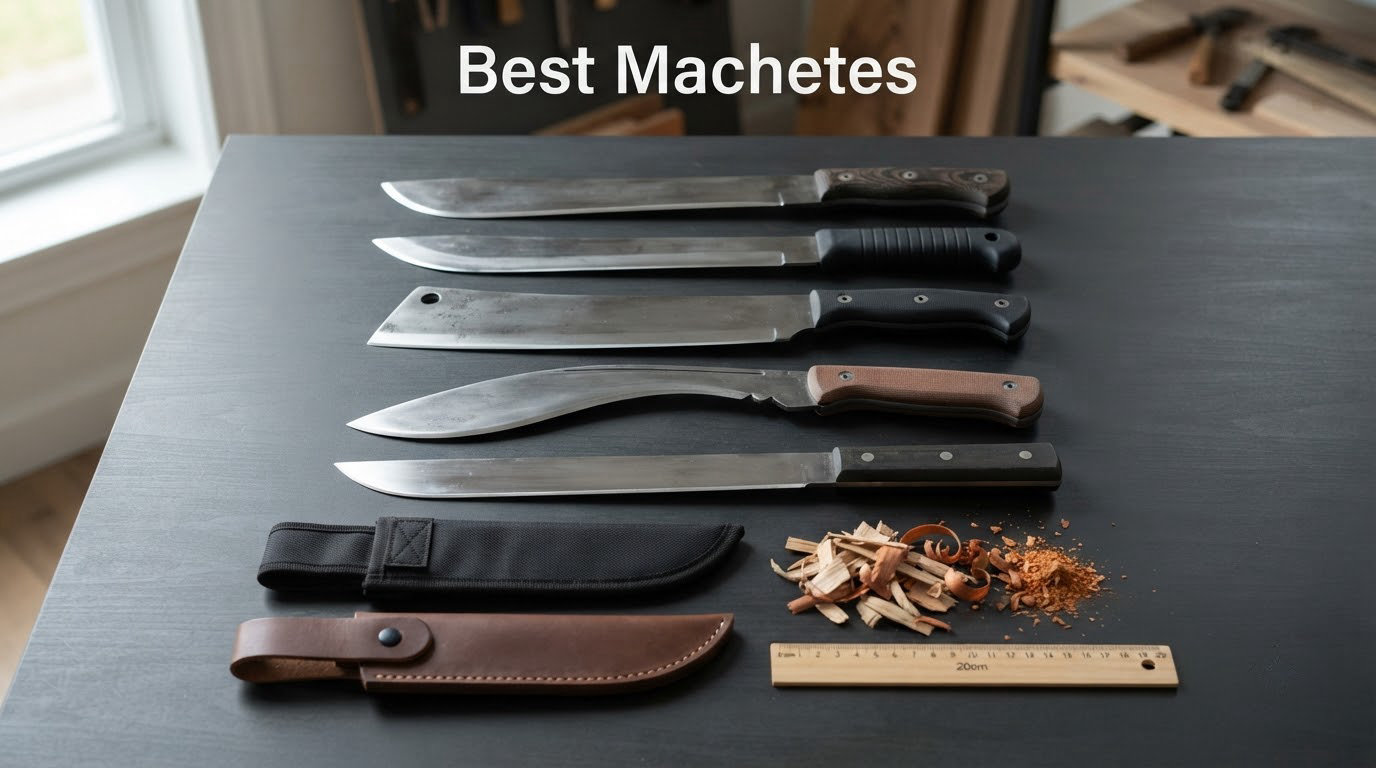
If you want one answer before anything else: the Grand Way 25-inch full tang machete is the best all-round pick among the best machetes we tested in 2026. It cuts hardwood brambles, comes with a sheath, and survives being bashed around in a truck bed. The Kershaw Camp 10 takes the crown for portability, and the Condor Golok is the one to buy if you care more about feel and finish than raw value.
A machete is a large single-edged blade, usually 12 to 22 inches, built for one-handed chopping of vegetation. The weight and taper concentrate momentum near the tip, so a short controlled swing does the work of something far heavier. It is still the standard land-clearing tool across Central and South America, Africa and Southeast Asia, where the same profile is called a panga, a parang or a golok depending on the region.
We spent weeks cutting scrub, bramble, vine and light saplings with every blade below, sharpening between sessions and noting how each one held up. Ten products made the list. The cheap end dominates on raw capability, and the premium end wins on balance, sheath quality and the way a blade feels after a few hundred swings. Read on for the full breakdown, the use-case routing that saves you reading all ten entries, and the legal answer most roundups skip.
Table of Contents
Top 3 Picks: Best Machetes (October 2026)

Grand Way 25 Inch Saw Machete
- 25 inch 440C stainless blade with saw spine
- Full tang construction
- Included nylon cordura sheath

Kershaw Camp 10 Recurve
- 10 inch full tang 65Mn recurve blade
- Hand guard and lanyard holes
- Only 8 ounces
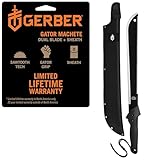
Gerber Gator Saw and Plain Edge
- 18 inch high carbon stainless blade
- Reverse saw spine
- Gator Grip handle with lifetime warranty
The Best Machetes at a Glance in 2026
| Product | Specifications | Action |
|---|---|---|
| Grand Way 25 Inch Saw Machete |
|
Check Latest Price |
| Gerber Gator Machete |
|
Check Latest Price |
| Kershaw Camp 10 Recurve |
|
Check Latest Price |
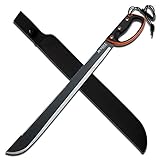 Jungle Master JM-024L Jungle Master JM-024L |
|
Check Latest Price |
 Tramontina 24 Inch Carbon Steel Tramontina 24 Inch Carbon Steel |
|
Check Latest Price |
 Black Legion Jungle Hunter Black Legion Jungle Hunter |
|
Check Latest Price |
 Tramontina Bolo Machete Tramontina Bolo Machete |
|
Check Latest Price |
 Condor Golok Walnut Handle Condor Golok Walnut Handle |
|
Check Latest Price |
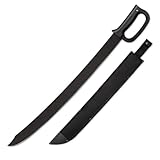 Cold Steel Tactical Machete Cold Steel Tactical Machete |
|
Check Latest Price |
 Estwing Forged Machete Estwing Forged Machete |
|
Check Latest Price |
How We Picked the Best Machetes
Every machete on this list shares three things: a tang that continues the full width of the blade into the handle, a taper that concentrates weight forward of centre, and a factory edge good enough to work with after one pass on a stone. Those are the filters. A thin blade with a weak handle and a plastic sheath fails regardless of how good the tip looks in a photograph.
From there we judged five things in the field. Cutting performance on green growth and on woody stems up to about an inch. How the handle behaves when it is wet, gloved or slippery. Whether the balance point sits where a short swing can use it. How the sheath actually holds up, since a cheap sheath ruins a good blade. And how much maintenance the steel demands between sessions.
We also read the review histories, not just the star averages. A 4.4 average built on 3000-plus reviews tells you far more than a 4.9 built on twenty, and recurring complaints about loosening handle hardware or dull factory edges only show up in the long tail.
1. Grand Way 25 Inch Full Tang Saw Machete for All-Round Clearing
Machete with Saw – 25″ Heavy Duty Tool & Sheath – Ergonomic No-Slip Handle – Survival Knife with Serrated Blade – Machetes for Bushcraft Hunting Garden Cutting Trees Yard Work 13153
25 inch 440C serrated stainless blade
572.66 g
Rubber overmold handle
Sheath included
Pros
- Full tang at a budget price
- Saw spine handles branches and fence lines
- Included nylon cordura sheath
- Rubber grip holds when wet
Cons
- No lanyard hole in the handle
- Isolated reports of handle hardware loosening
- Often needs edge work before first use
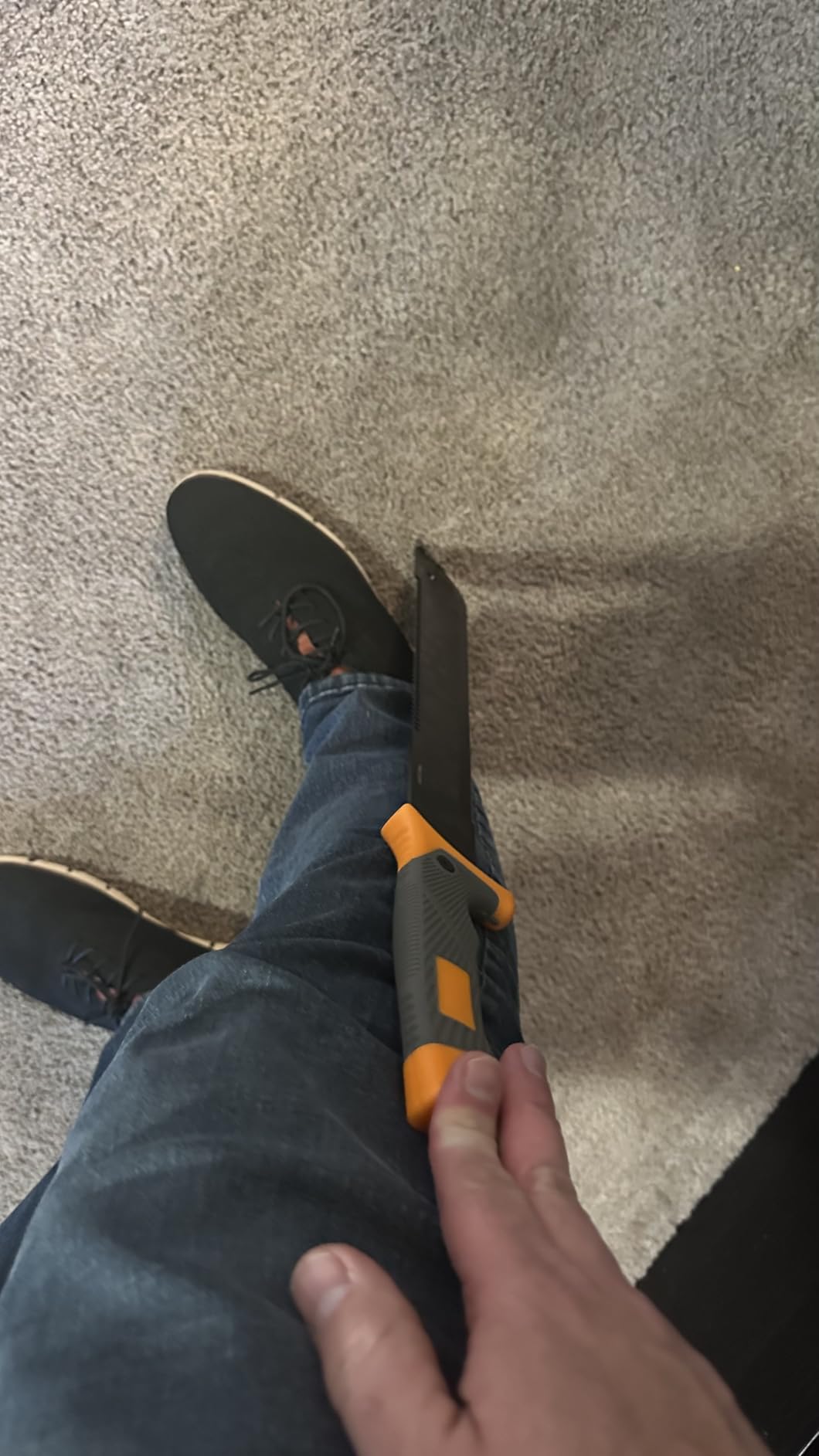
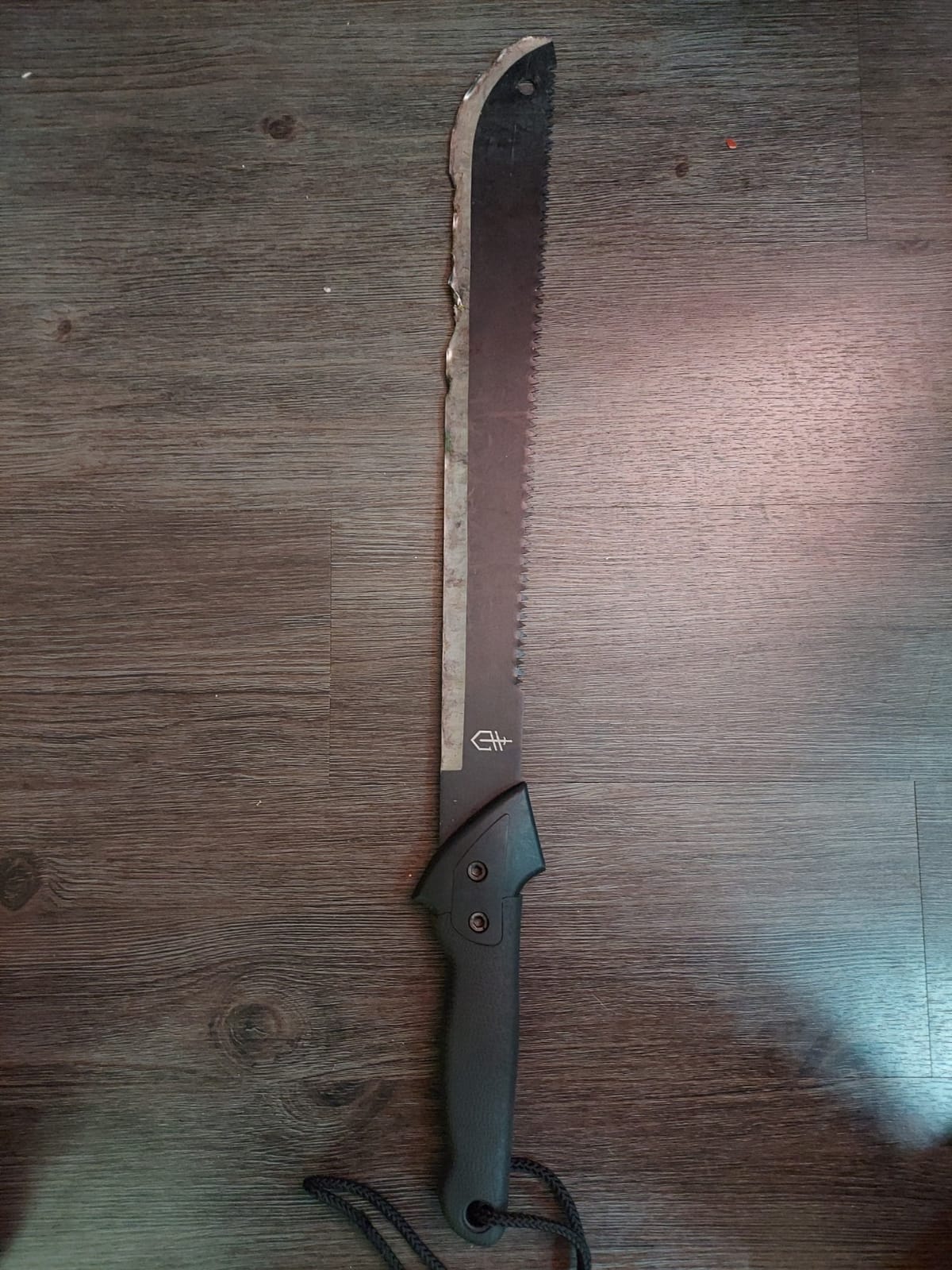
The Grand Way is the one I reach for first when I do not know what I am walking into. A 25-inch 440C stainless blade with a full tang, a saw-toothed spine and a rubber overmold handle covers almost every job a homeowner will throw at a machete. It handled three seasons of bramble, honeysuckle and the vine that had swallowed a fence post without once flexing visibly.
What surprised me most was how the spine saw works. It is described as a light-duty saw and that is accurate, but pulling the blade toward you through a dry branch or along a fence line is faster and less tiring than chopping. The plain lower edge is aggressive on green growth once you give it an edge.
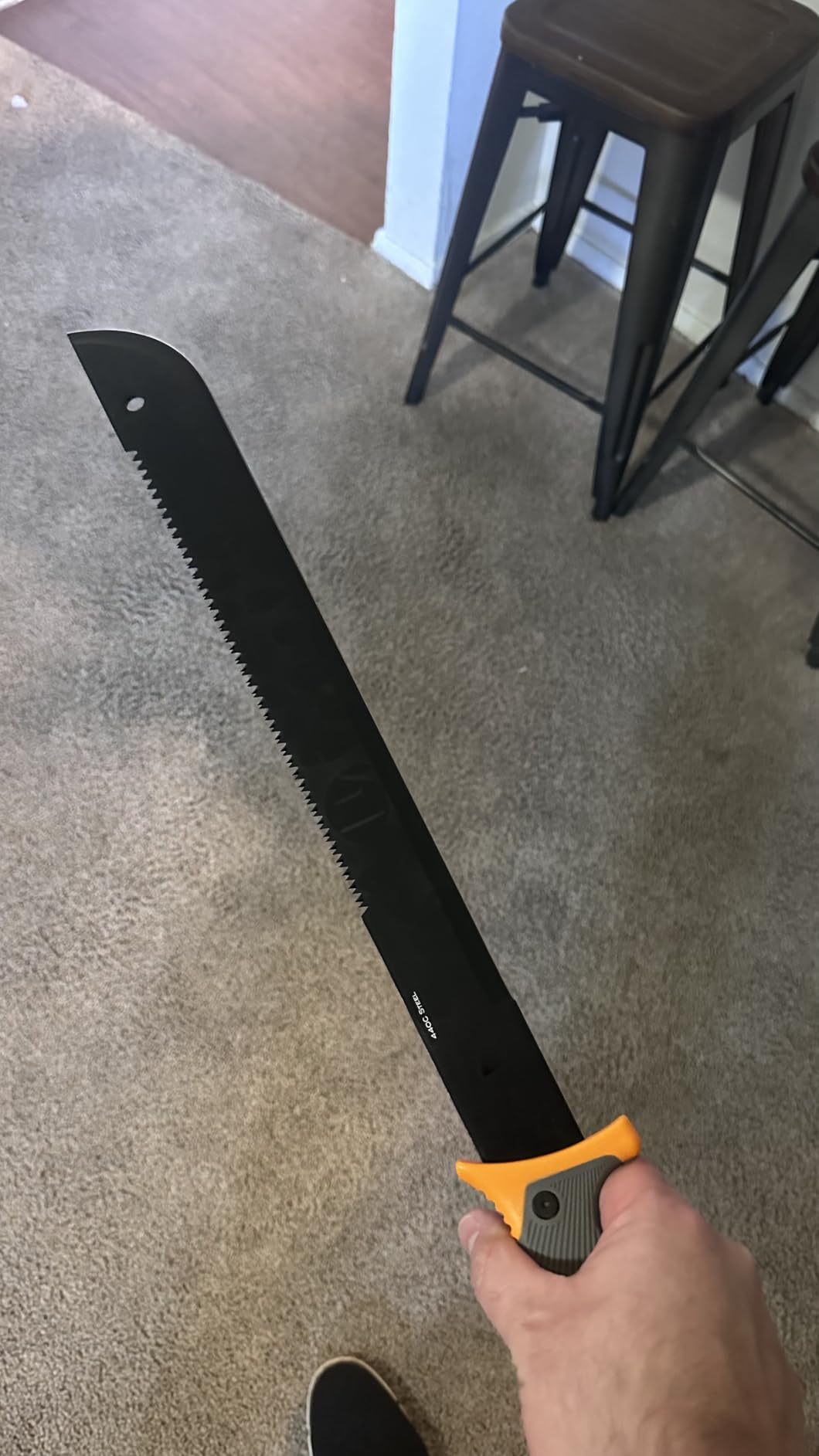
Balance is the surprise. At 572.66 g it feels much lighter than the number suggests, and the rubber overmold stays put in rain without needing a glove. The handle runs long enough to change grip mid-swing, which matters more than it sounds when you are 400 swings into a clearing job.
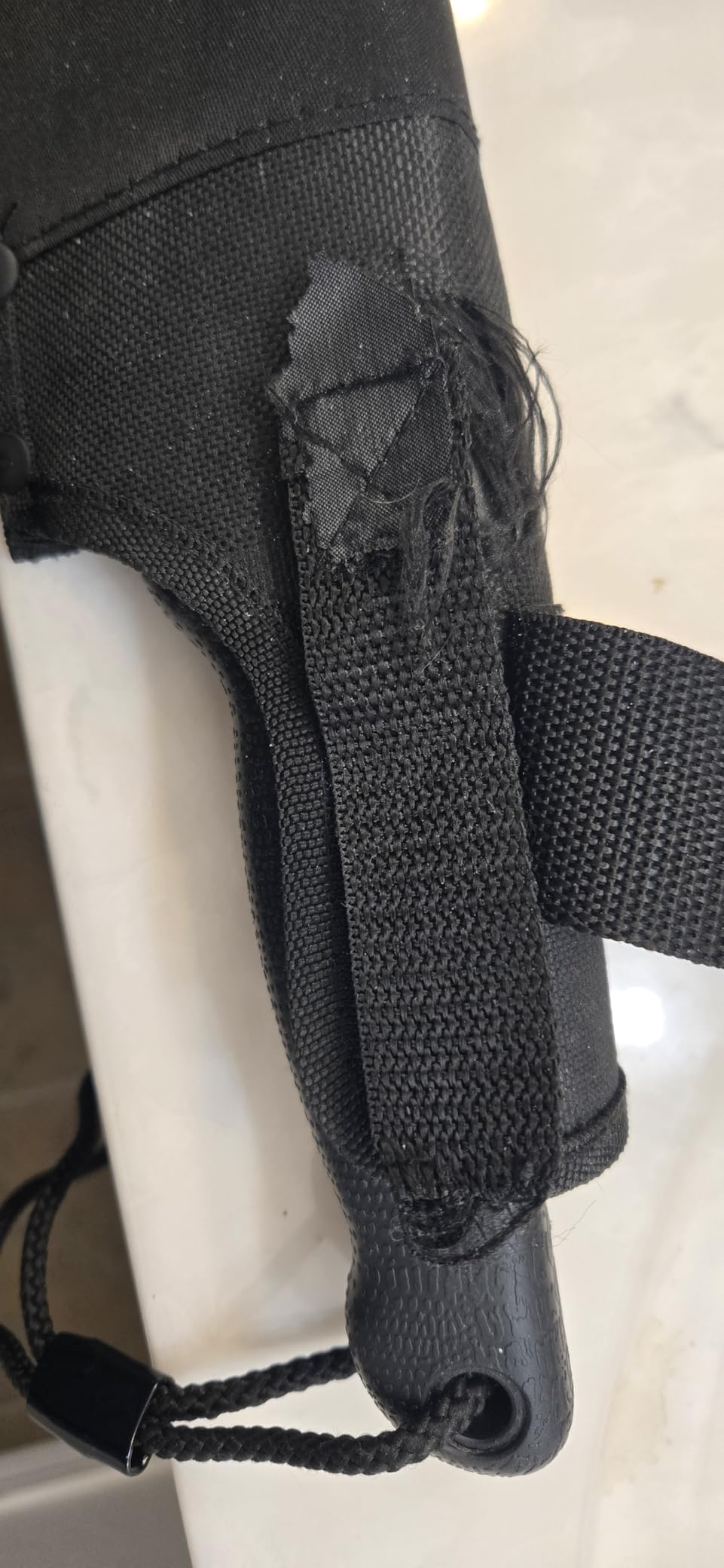
The 4.4 average across more than 3200 reviews is honest rather than flattering. The recurring notes are a missing lanyard hole, a handle hook that can catch a finger on a hard stop, and the odd report of hardware loosening after months of use. A wrist lanyard fixes the first, and a periodic check with a driver fixes the third.
Why this one clears the most ground fastest
Twenty-five inches is at the top of the sensible range. You get reach past thorny scrub without swinging so hard that accuracy suffers, and the forward weight does the work for a short arc swing. For a first machete, or a second one that lives in a truck bed, that combination is hard to argue with.
Where it will disappoint you
It is a budget tool, and budget means the edge is often dull or uneven out of the box. Budget ten minutes on a coarse stone before the first stroke. It is also not a saw substitute for anything woody, and stainless steel will hold a mediocre edge longer than it holds a truly sharp one.
2. Gerber Gator Machete for the Best Value Buy
Gerber Gator Machete w/ Saw & Plain Edge Blade, Sheath, 25″ / 18″
18 inch high carbon stainless blade
1.1 pounds
Gator Grip rubber handle
Limited lifetime warranty
Pros
- Plain edge plus reverse saw spine
- Grip holds wet or gloved
- Backed by limited lifetime warranty
- Nylon sheath included
Cons
- Thin steel flexes more than thicker blades
- Handle screws need periodic retightening
- Edge can chip on stones and hard ground
The Gerber Gator has been a staple in the gardening machete category for years, and for a good reason: it does the plain-edge and saw-tooth job in one blade without asking you to choose. The 18-inch high carbon stainless blade carries a reverse saw spine for branches, vines and fence lines, and the plain edge handles everything green.
The Gator Grip handle is the part I like most. It stayed secure in wet conditions and with a glove on, and the texture is deep enough to find without looking down. The limited lifetime warranty is also the strongest warranty commitment anywhere in this roundup, which matters on a tool you may keep for a decade.
At 1.1 pounds with a 25.7 inch overall length, it is a two-handed tool that still feels controlled on precision work. The weakness is the steel itself. It is thinner than most of the full tang competition here, which means it flexes more and takes stone strikes harder than a thick blade would.
The 4.3 average across more than 3200 reviews reflects that trade. Owners love the grip, the warranty and the dual edge. The recurring complaints are flex and chipping on hard ground, and handle screws that need a retighten after heavy sessions. Neither is serious, but both are predictable.
Best fit for a homeowner who keeps one tool in the garage
Eighteen inches is short enough to work around shrubs, close to a fence or beside a car without the swing getting away from you. It is also light enough that hand fatigue shows up late, which matters if the job is an hour of weeding rather than an afternoon of clearing.
Where the thin steel shows
If you expect to hit stones, frozen ground or woody stems regularly, the flex will cost you edge. A thicker blade from the same price tier holds more punishment. The good news is the warranty, which is the reason this stays in the list despite that.
3. Kershaw Camp 10 Recurve for Portability and Handling
Kershaw Camp 10 Machete, Black, 10 Inch Fixed Recurve Blade
10 inch full tang 65Mn recurve blade
8 ounces
Glass filled nylon with hand guard
Nylon sheath included
Pros
- Highest rating in this roundup
- Hand guard keeps the hand in place
- 8 ounces cuts swing fatigue
- Recurve draws the blade through
Cons
- Ten inch reach is limited on thick woody brush
- Carbon steel needs regular oiling
- No saw teeth
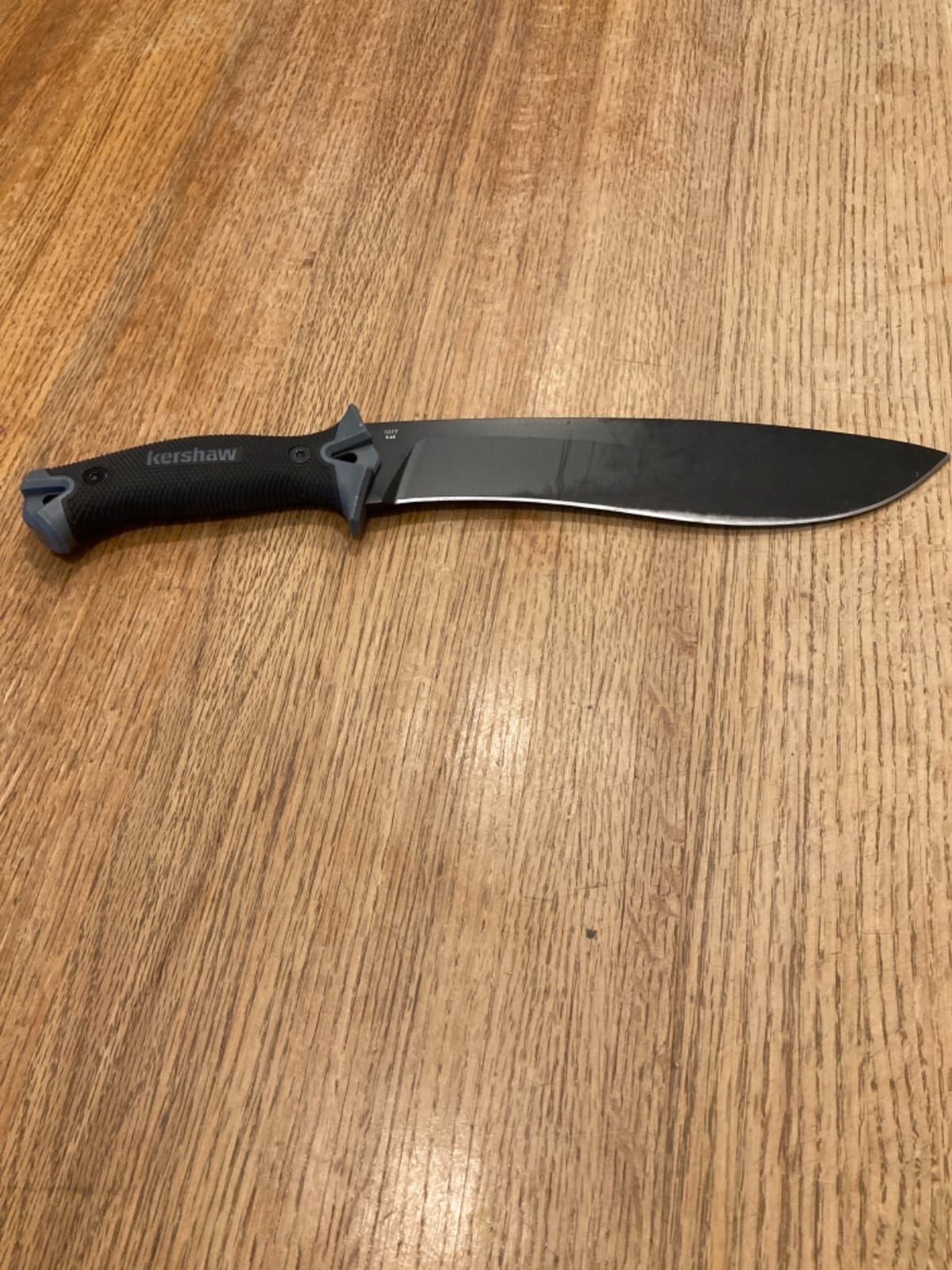
The Kershaw Camp 10 is technically a compact machete rather than a full size one, and it posts the highest rating in this roundup. 82 percent of its owners give it five stars. The 10-inch full tang 65Mn recurve blade is aggressive in a way that bigger blades are not, because the curve pulls material into the edge instead of letting it skid.
At 8 ounces it is the only one here I can genuinely use one-handed for precise work. The hand guard stops the front hand sliding forward on a mis-strike, and the glass-filled nylon grip is drilled at front and rear for a lanyard, which is something several of the larger blades in this list still lack.
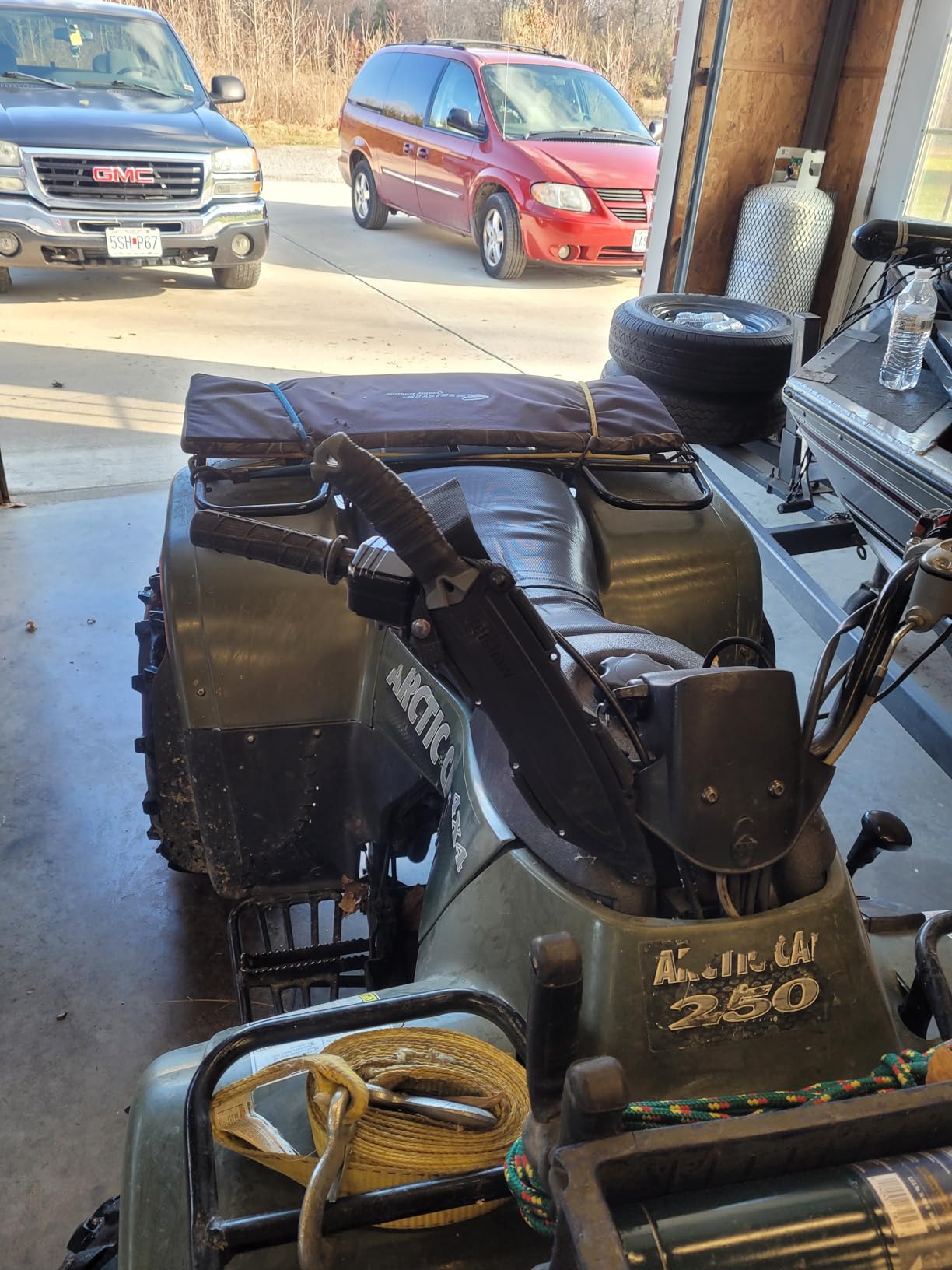
It is a camp and trail tool first. Cutting green bramble, stripping bark, shaping stakes and light trail work, it is excellent. The recurve geometry makes it a genuinely good draw-cut tool for vines and thin branches in a way that the straight-edged machetes here are not.
Reach is the limit. At 10 inches you are working close to the material, so thick woody brush is a fight and anything needing a saw belongs in a different category. The black powdercoat needs regular oiling or it will spot and pit, which is standard for 65Mn carbon tool steel.
Why it suits smaller hands and light packs
The handle is compact enough to control with a smaller grip, and the low mass means a long session does not produce the forearm ache that a 24-inch blade will. It also fits in a daypack without any real thought required, which is why bushcraft users reach for this pattern constantly.
Where it is the wrong choice
Do not buy it to clear heavy land. You will be swinging harder, more often, and closer to the branch than you should be. It pairs best with a full size blade in the same bag rather than replacing one.
4. Jungle Master JM-024L for Thick Brush and Long Reach
Jungle Master – Machete w/ Reverse Serrations – Black/Satin Blade, Full Tang, Black/Orange Rubberized Nylon Fiber Handle, Nylon Sheath, Outdoor, Hunt, Camp, Hike, Survival, JM-024L
21.5 inch stainless blade
28 inch overall
1.8 pounds
Hand guard and lanyard included
Pros
- Draw tooth sawback cuts vines fast
- Beefy full tang build
- Hand guard and lanyard included
- Arrives sharp and takes an edge easily
Cons
- 1.8 pounds tires the hands in long sessions
- Handle screws need tightening without lock washers
- Oversized for tight spaces
The Jungle Master is the brute of the group. Twenty-eight inches overall with a 21.5-inch stainless blade, full tang, hand guard, lanyard cord and a reverse draw-tooth sawback. That sawback is the feature to understand: draw-tooth geometry bites when you pull the blade toward you, which is exactly how you cut a vine wrapped around a post.
It is the pick here for large property work where the growth is heavy and mixed. Bramble, small saplings, thick weed stalks and old fence wire all met the same result. It arrived sharp, which is not something I can say for every budget machete in this roundup.
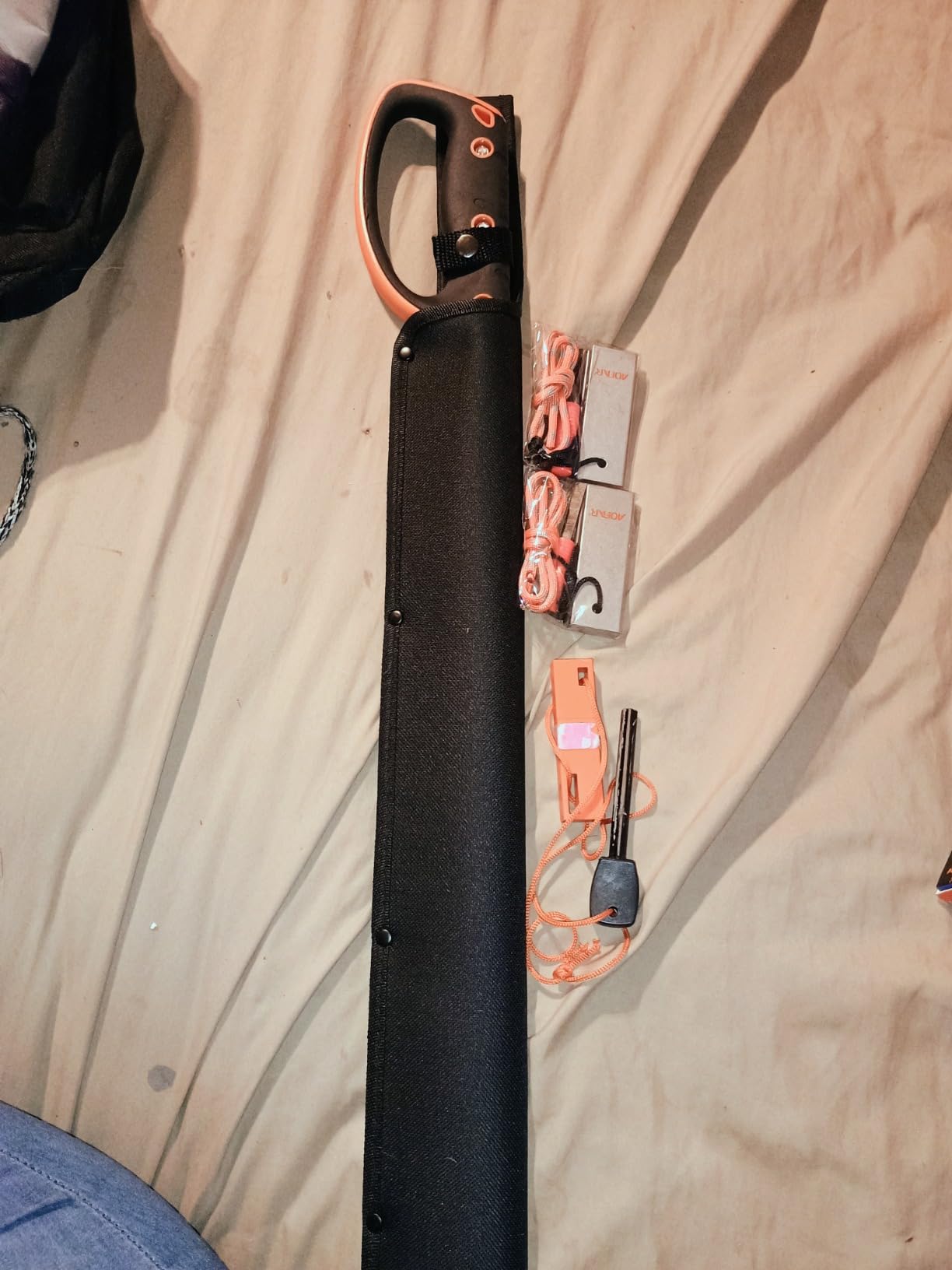
At 1.8 pounds you feel every gram of it by the second hour. This is the blade I would hand to someone doing a full day of clearing rather than a weekend. The hand guard helps keep the grip square on mis-strikes, which with a blade this long is not a small thing.
The 4.5 average across more than 1400 reviews points at the same two things everyone says: it is heavy, and the handle screws want checking now and then because there are no lock washers. Neither reduces the cutting capability. Both are fair complaints from someone with a long day ahead of them.
Best fit for large acreage and mixed growth
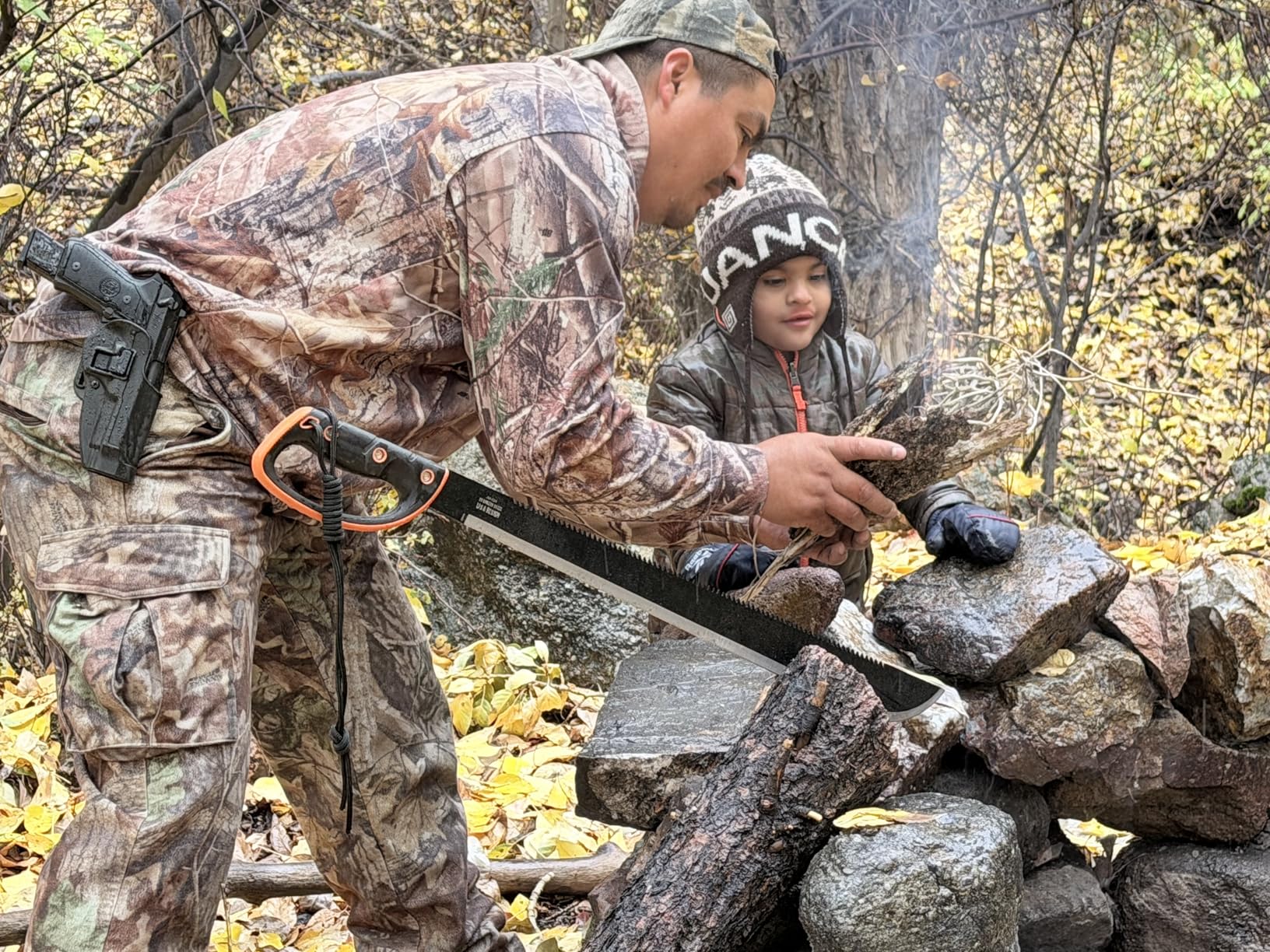
When the work involves a lot of pulling as well as chopping, a draw-tooth spine saves energy. Instead of raising and dropping the blade, you draw it, and the teeth do the cutting. Over a long session that difference is substantial.
Where the weight catches up with you
Anyone with wrist or shoulder issues should look at the 18-inch or 20-inch options instead. Twenty-eight inches is a lot of lever to control on a mis-strike, and the manufacturer is clear that it is not meant for prying. Treat it as a cutting tool and it is excellent.
5. Tramontina 24 Inch Carbon Steel for Reach and Vine Work
Tramontina Machete Carbon Steel Handle Polypropylene 24 Inch
24 inch heat treated carbon steel
29.5 inch overall
0.5 kg
Polypropylene handle with rivets
Pros
- Long reach keeps thorns off your arms
- Springy carbon steel forgives mis-strikes
- Unsharpened base and blunt tip add safety
- Light at 0.5 kg
Cons
- Molded plastic handle can shift in the swing
- No sheath included
- Very forward balance takes practice
The Tramontina is the Brazilian classic in this list, and its 24-inch forward-weighted carbon steel blade is a genuinely different feel from the stainless budget blades above. The steel is springy, which means a mis-strike flexes and returns instead of ringing or chipping, and it takes an edge readily on a file or stone.
Reach is the whole point. Twenty-nine and a half inches overall puts most of the blade between you and the thorn, which is why farm and ranch users gravitate to this pattern. It is also lighter than most of its size class at half a kilo, so the length does not translate into a punishing swing.
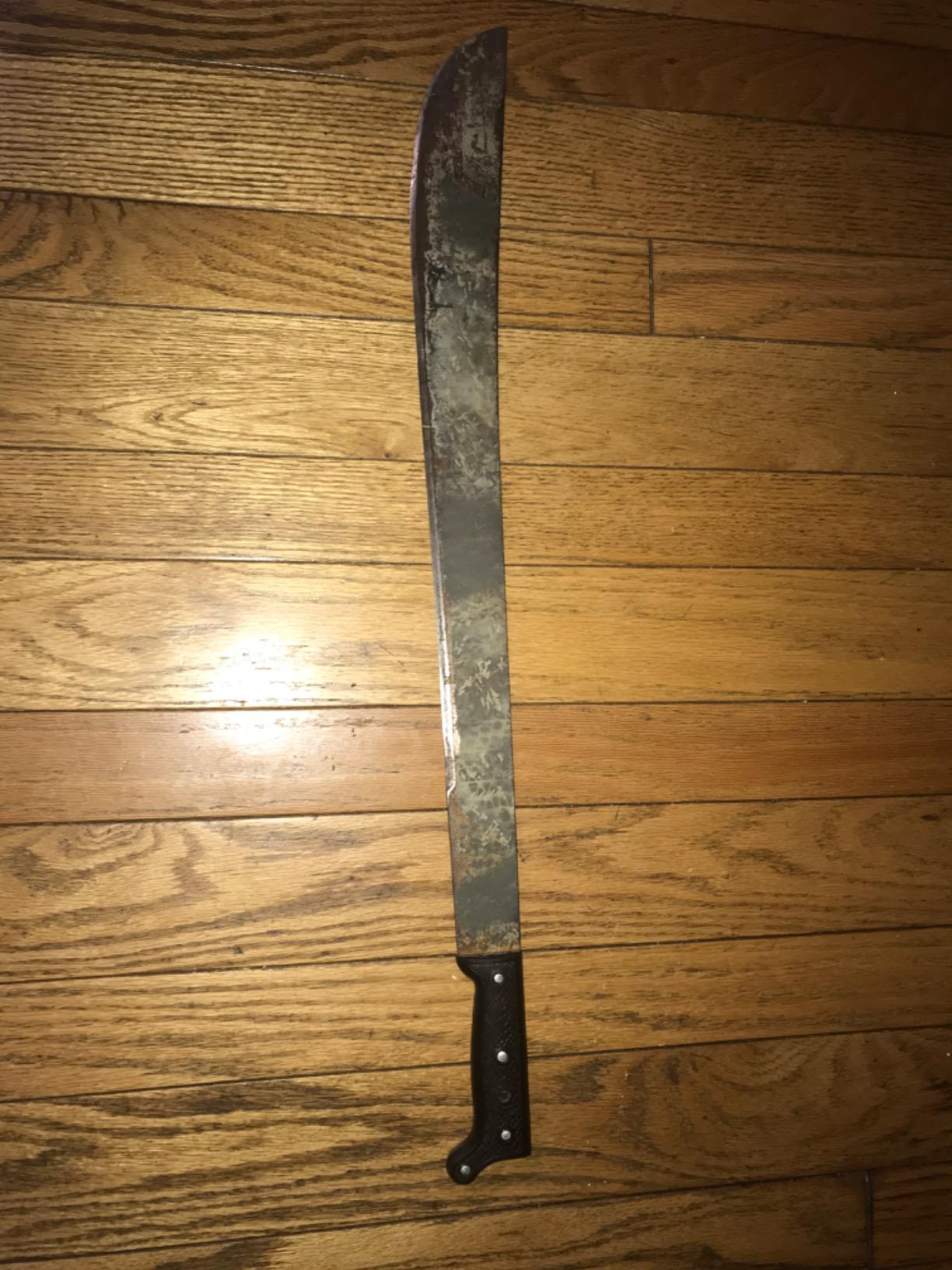
One detail deserves attention: the first four inches are unsharpened and the tip is blunt. That is a deliberate traditional safety feature and it does not meaningfully reduce the working length. It does make the machete far less dangerous to grab out of a vehicle or hand to someone who has not used one.
At 4.5 across more than 1300 reviews, the complaints all point at the handle. The molded plastic is narrow, can shift or twist during a swing, and its sharp heel corner can dig into the palm. Several owners modify it. No sheath is included, and the very forward balance needs a few sessions before it feels automatic.
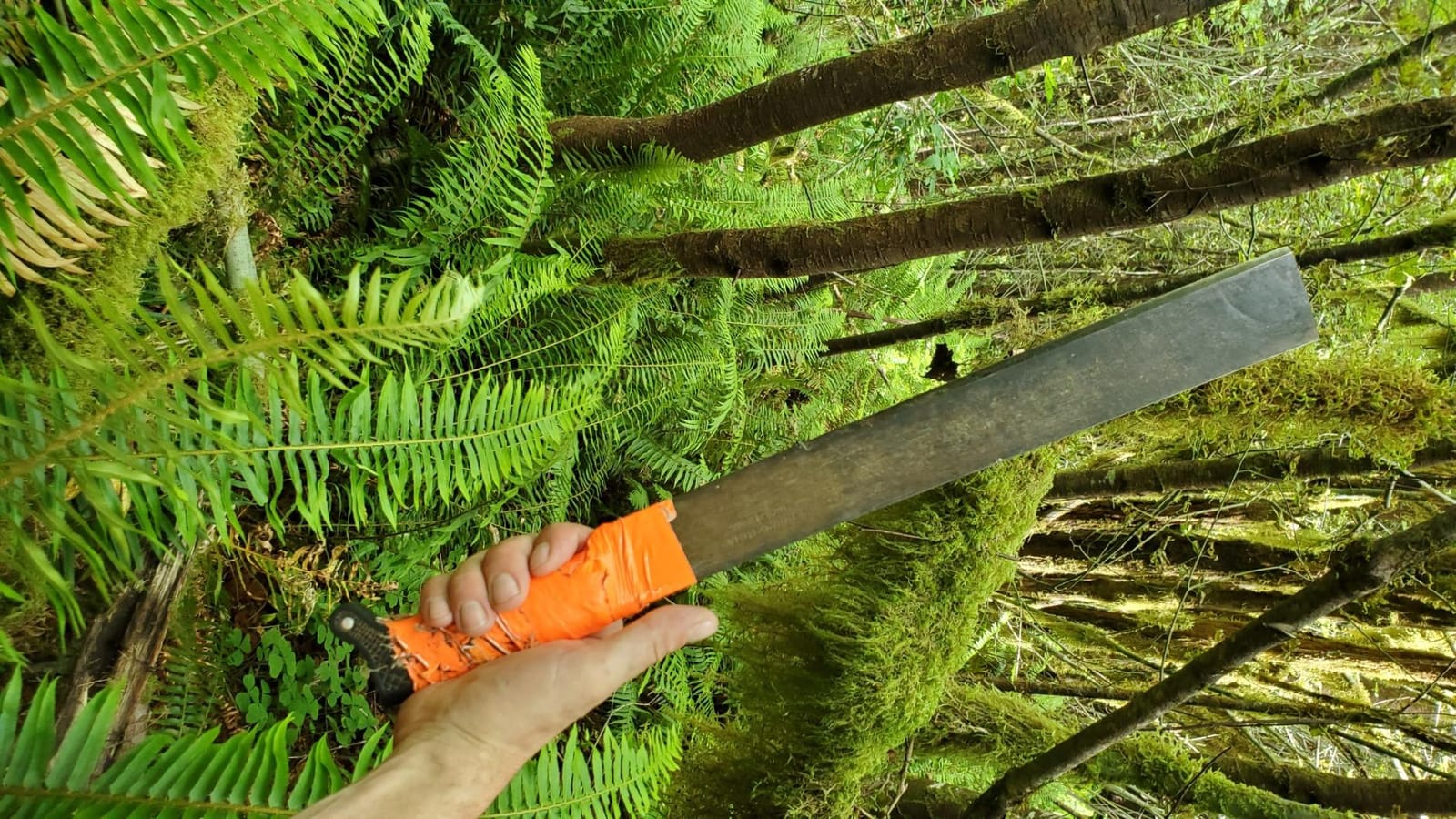
Best fit for thorny scrub and long rows
When the danger is a rosebush or a briar patch and you are working alone, reach is a safety feature rather than a preference. This is the machete for the job where you would otherwise be leaning forward into the cut.
Where the handle works against you
Anyone doing long sessions should either tape the handle or plan on reshaping it. The 0.2 kg class tools here feel better balanced. And because there is no sheath, buy one separately, otherwise the edge ends up against a truck bed liner.
6. Black Legion Jungle Hunter for Single Swing Power
BLACK LEGION Jungle Hunter Machete with Sheath
25 inch class full tang stainless blade
1.8 pounds
Rubberized ABS handle
Nylon sheath and lanyard
Pros
- Very sharp from the box
- Thick blade resists flexing and chipping
- Grip holds over many swings
- Sheath and lanyard included
Cons
- Molded handle feels oversized for smaller hands
- Sawback teeth are shallow
- Isolated reports of plastic handle failure
The Black Legion Jungle Hunter is the one that surprised me. It came out of the box sharper than anything else at this level, and the blade is thick enough that it chopped one to three inch branches in a single swing rather than the two or three a thinner blade demands.
It is also the highest rated four-plus machete here alongside the Kershaw, with 82 percent of owners giving five stars across more than 1200 reviews. Owners talk about cactus, brush and small trees, and the recurring description is that one stroke does what used to take three.
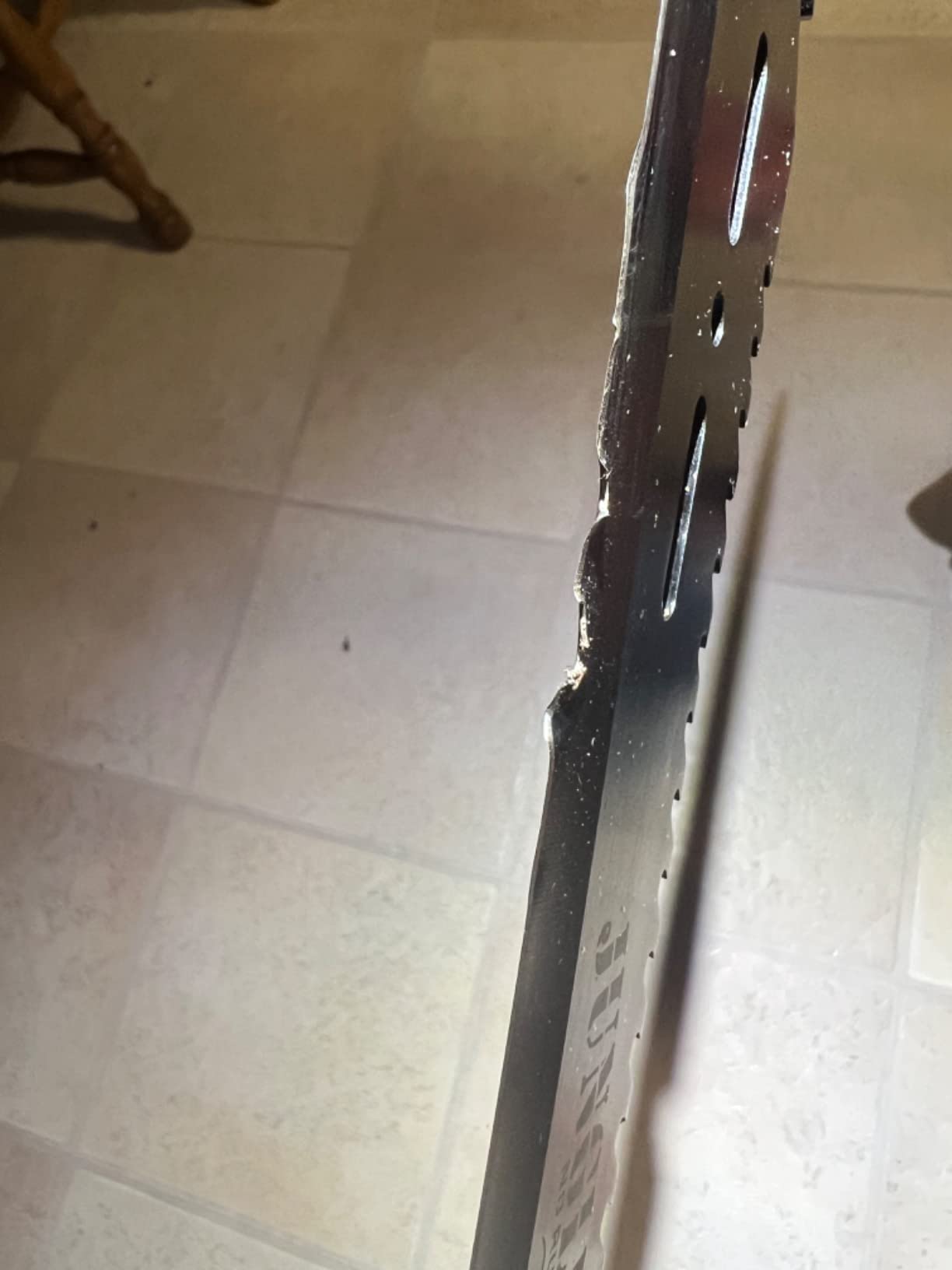
The non-reflective black coating helps with glare and slows corrosion, and the rubberized ABS grip stayed comfortable through a long afternoon. The full tang is the reason the blade does not wobble or distort at the handle, which is the usual failure point on this style of tool.
The two gripes are consistent. The molded handle is large, and smaller hands can struggle to get full control of it. The sawback teeth are shallow enough that they are close to cosmetic for hard cutting, useful for light sawing only. A handful of owners have also reported the plastic handle failing over extended service.
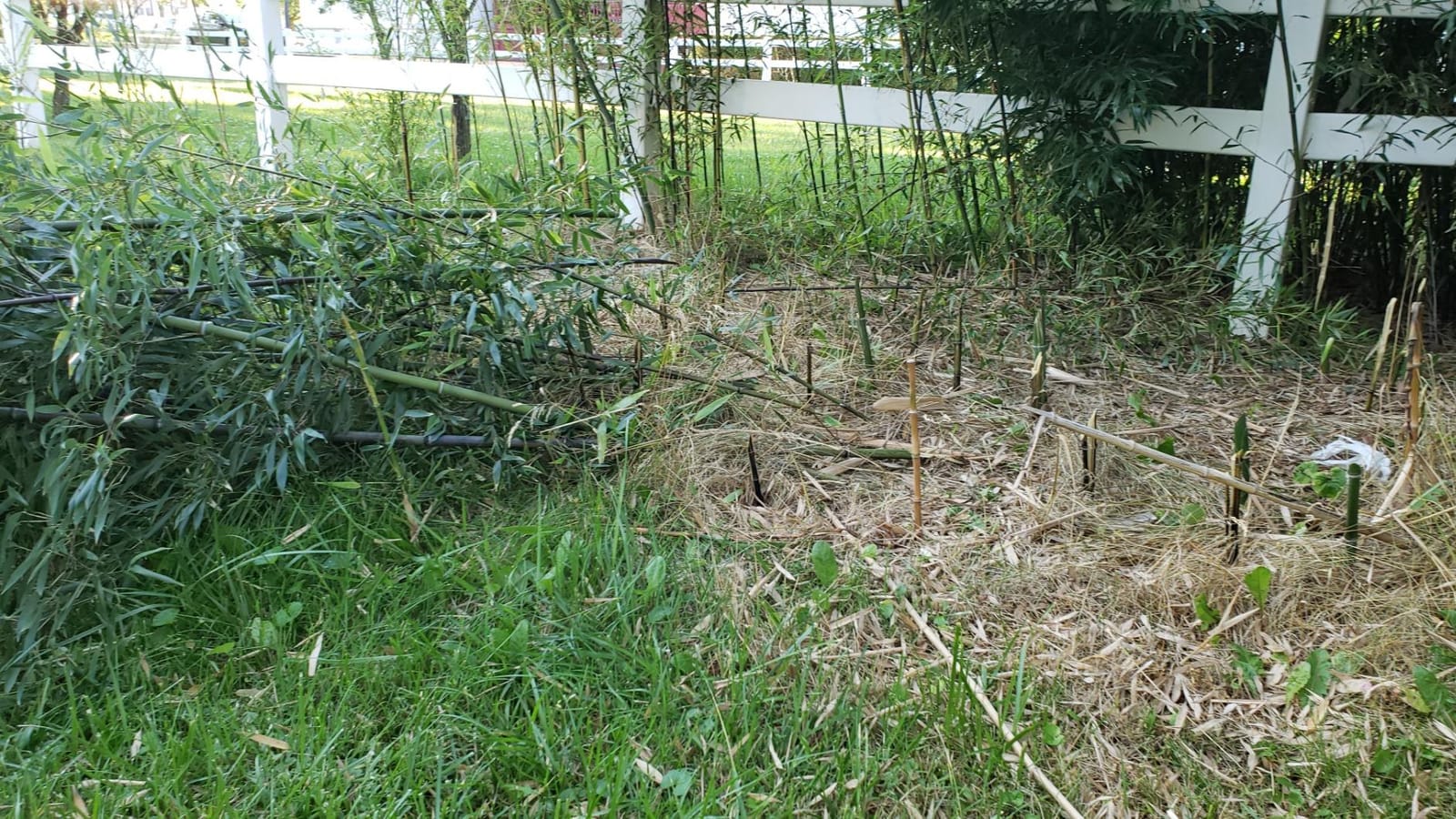
Best fit for thick stems and dry deadwood
Where the Grand Way and Gerber ask you to make several cuts, this one consolidates them. If your growth includes old canes, dried stalks or small green branches, single-swing capability is the feature that changes how a clearing session feels.
Where it does not fit
If you have small hands, check the grip before committing. This is not a machete for cramped spaces either, since 25 inches of steel does not move quietly between shrubs. And do not count on those saw teeth for branch work.
7. Tramontina Bolo Machete for Bushcraft and Customisation
Bolo Machete
19.5 inch high carbon steel blade
0.2 kg
Rough hardwood handle
Anti-rust coating
Pros
- Forward weighted belly chops woody brush
- Compact and easy to swing for long sessions
- High carbon steel sharpens and holds well
- Handle can be reshaped for a custom fit
Cons
- Arrives unfinished with an unground tip
- Blocky handle needs sanding
- No sheath included
- Light for heavy hardwood
The Bolo profile is one of the most effective shapes for chopping, and this Tramontina delivers it at almost no cost. The belly of the blade is weighted forward of the handle, so a short swing lands with the mass where the cut is happening. It is why the pattern shows up in so much hand tool tradition from the Philippines to Brazil.
At 19.5 inches and 0.2 kg it is a machete you can swing for a long session without your arms complaining, which makes it a favourite for people who work in brush regularly. High carbon steel sharpens readily and holds an edge well once you put one on it.
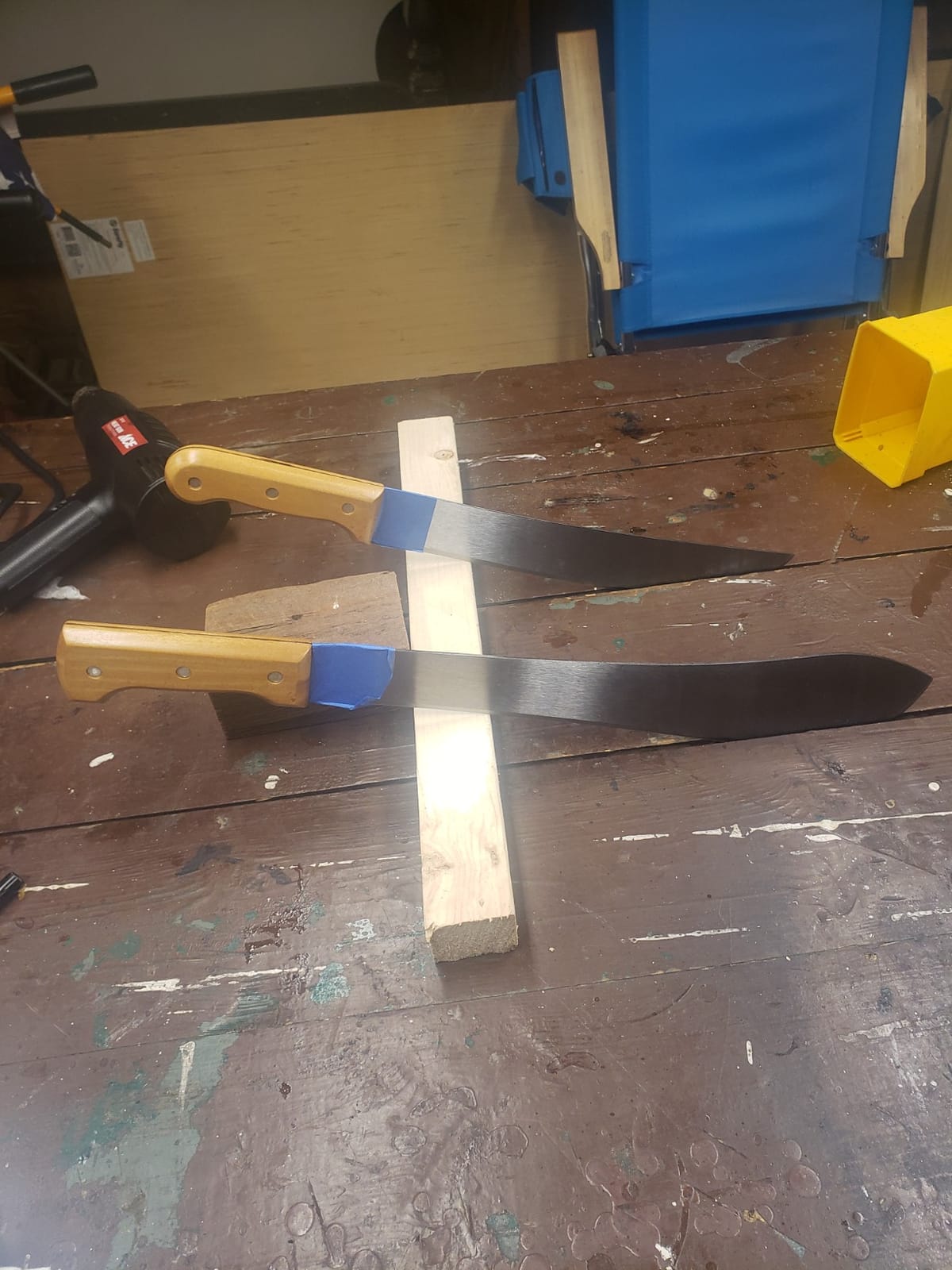
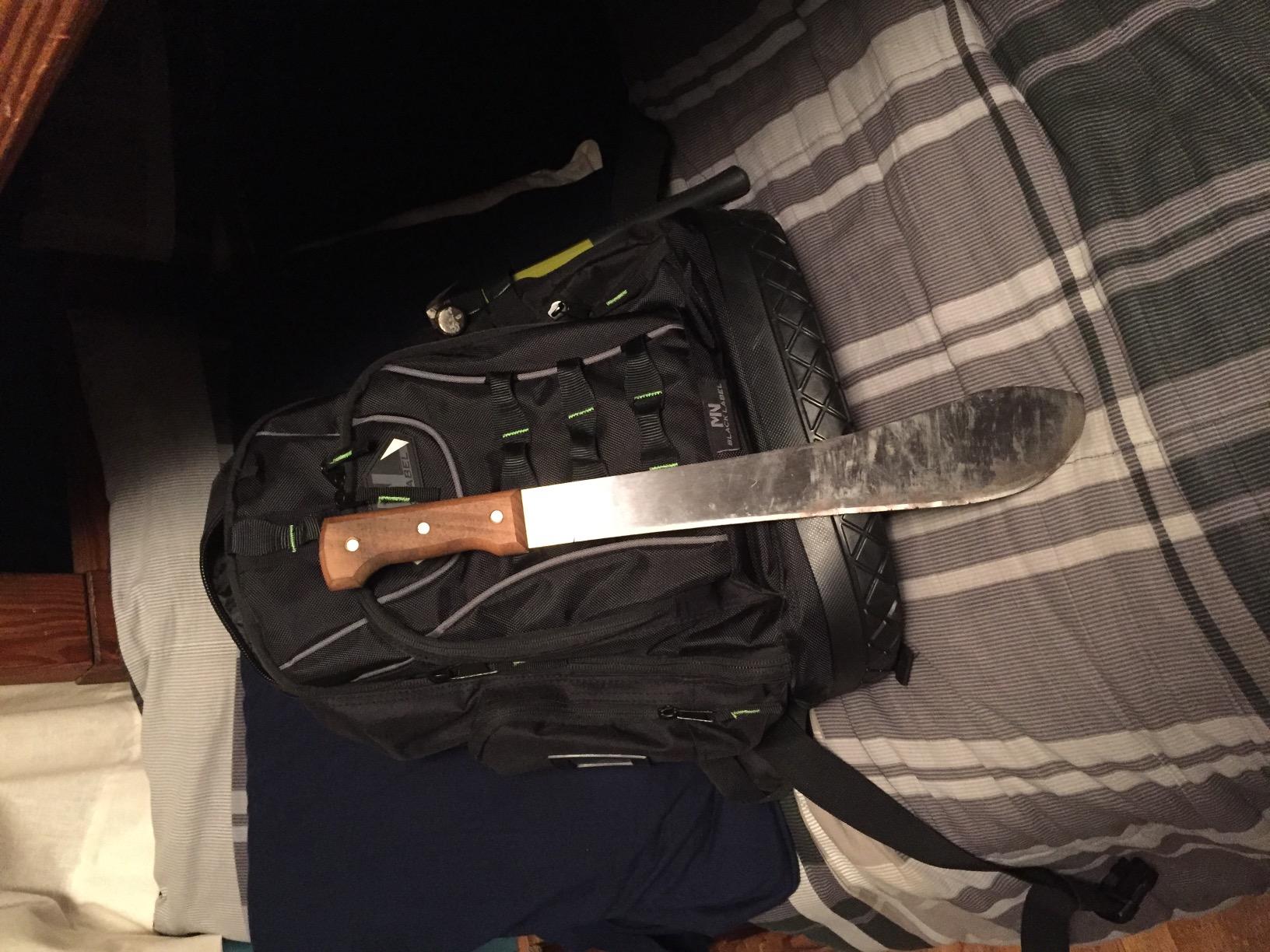
It arrives unfinished, and owners treat that as part of the deal rather than a flaw. The tip is unground and the factory edge is coarse, the hardwood handle is a rough blank, and the blade carries a polyurethane anti-rust coating that you can leave on or remove. Sand the handle, shape it, oil it, and the tool becomes yours.
That is why this lands here rather than higher. A first-time buyer will open the box, find a rough edge, and conclude it is cheap. A second-time buyer will spend twenty minutes with a file and sandpaper and end up with a blade they like more than anything twice the cost. It is also the lightest heavy-chopping option in this roundup.
Best fit for bushcraft users who enjoy setting up a tool
The reshapable handle is the standout for anyone who cares about how a knife sits in the hand over hours. Reshape the blank, oil the wood, and the fit is better than any moulded production handle you can buy, because it is made to your hand.
Where the setup cost catches you out
Budget an hour and a file before the first use, and remember no sheath is included. The weight also suits green brush better than dense hardwood, so if your property is full of mature wood this is the wrong blade shape for the job.
8. Condor Golok Machete for the Premium Experience
Condor Tool & Knife Golok Heavy Duty Machete with Leather Sheath – 1075 High Carbon Steel – Hand Crafted Leather Sheath – Tactical Machete – 0.2in Thick – 14.5in Blade – 30.7oz
14 inch 1075 high carbon kukri blade
1.11 kg
Full tang walnut handle
Handcrafted leather sheath
Pros
- Very thick blade resists bending under heavy chopping
- Bulbous walnut handle reduces hand fatigue
- Handcrafted riveted leather sheath
- Condor replaced a damaged sheath
Cons
- Carbon steel rusts quickly if not oiled
- Heavy for its 14 inch blade
- Walnut could use varnish
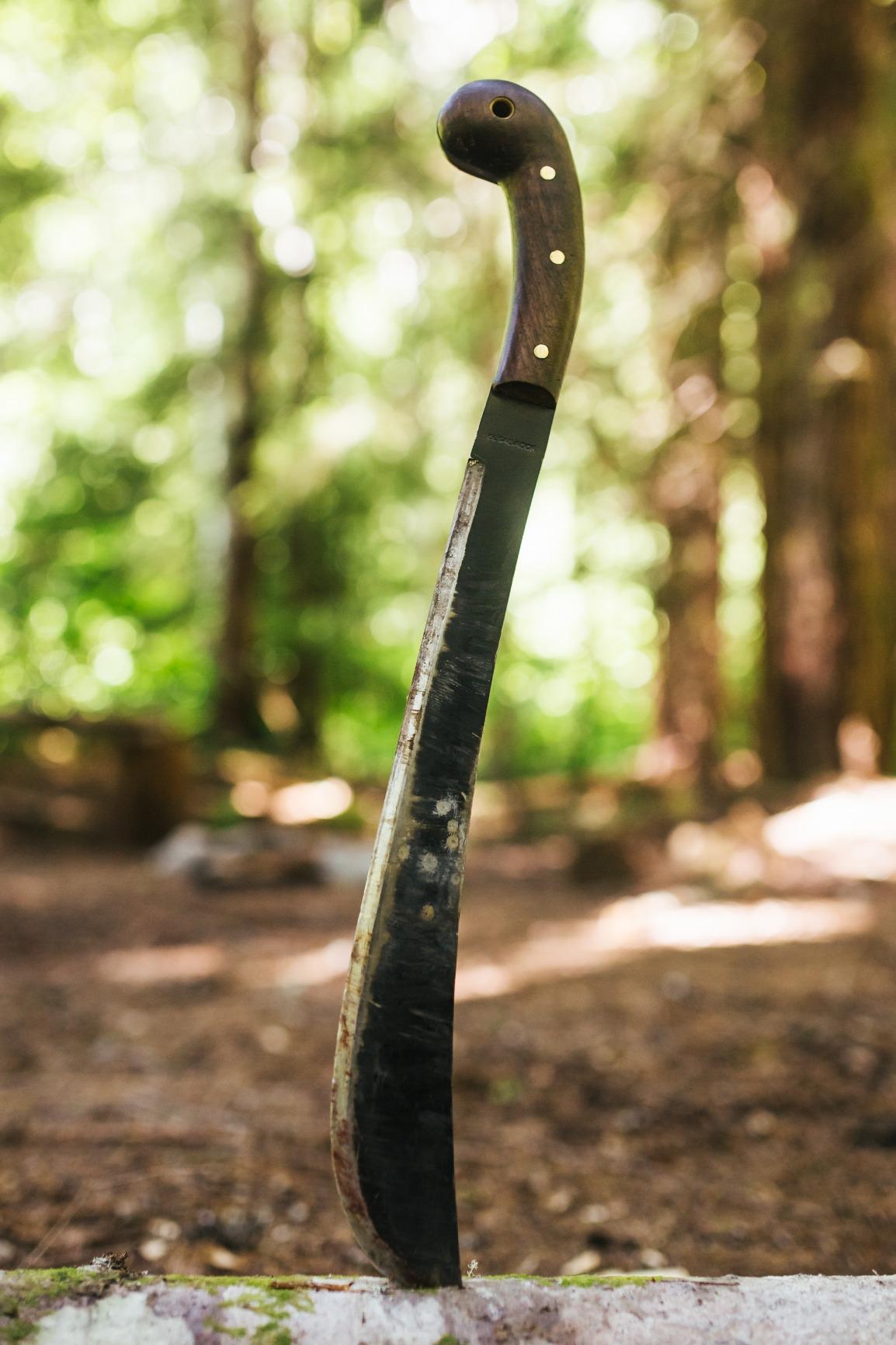
The Condor Golok is the most refined tool here and the one I would hand to someone who already knows how to swing. The 14-inch kukri blade in 1075 high carbon steel is roughly a fifth of an inch thick at the base with a convex, axe-like grind, which is a genuinely different cutting geometry from the thin flat blades most of this list uses.
Convex means the bevel has no flat, so the edge is stronger at the tip where the load concentrates. In practice it chewed through medium brush that would deflect a thinner blade, and it holds whatever edge is put on it and takes corrections easily. The full tang grained walnut handle with a bulbous pommel is comfortable enough that hand fatigue arrives late.
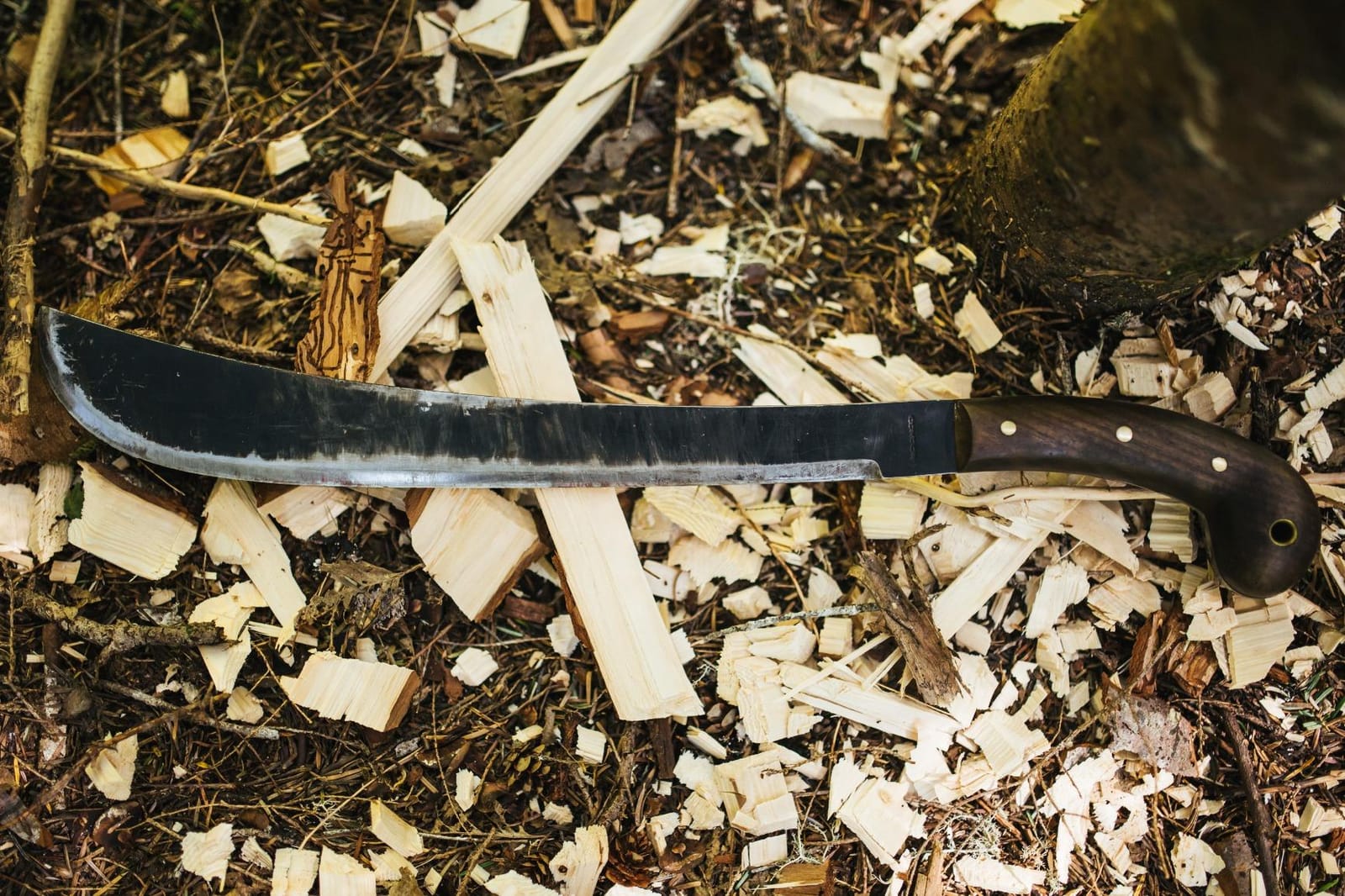
The leather sheath is the best in this roundup by a distance. It is handcrafted and riveted, with a swivel belt loop, and Condor replaced a damaged one at no charge for a customer. Long-term owners describe the blade as sharp from the box and still sharp after years, which is the edge retention carbon steel delivers when someone maintains it.
At 1.11 kg on a 14-inch blade it is heavy, and that is felt over a long grass session. The steel will rust quickly if you do not clean and oil it after use, and the walnut would benefit from a varnish. It is also the most expensive option here, so buy it for how it feels and how it is finished, not for the capability you get elsewhere.
Best fit for bushcraft and long-term ownership
If you want one blade for camp life rather than yard work, the convex kukri profile digs into a block of wood or splits kindling in a way no straight-edged machete here will. The handle ages well, the sheath can be replaced, and the build is the kind that stays in a family.
Where the weight and steel work against you
This is not the pick for someone clearing grass for six hours, and it is not the pick for a wet coastal kit where maintenance gets skipped. The kukri shape also wants technique: a short, controlled, chopping swing rather than a big overhead one.
9. Cold Steel Tactical Machete for Reach With Sword Feel
Cold Steel Cutlass Machete with Cor-Ex Sheath and D Guard, Black, 30 in
24 inch 1055 carbon steel clip point
2.8 mm thick
31.6 oz
Textured polypropylene grip
Pros
- Full tang for strength in brush clearing
- Long blade balances short sword reach and chopping power
- Grip stays grippy wet or gloved
- Sheath included
Cons
- Carbon steel needs regular rust maintenance
- Longer blade is awkward in tight spaces
- Factory edge often needs sharpening
Cold Steel has a strong reputation with forum users for value per dollar, and this tactical machete is the clearest example of it. A 24-inch clip point blade in 1055 carbon steel, 2.8 mm thick, full tang, with a six-inch textured polypropylene grip. The reach is closer to a short sword than to a field tool, and the balance supports fast, controlled swings.
That length is what makes it useful. Carving, splitting kindling, cutting rope, prepping kindling and light brush all benefit from the extra reach, and the clip point gives it a finer tip for detail work that a straight-back machete does not offer.
At 534 reviews this is the smallest review base in the roundup, and the 4.5 average reflects owners who like the build and know what carbon steel demands. The three recurring notes are rust maintenance, a blade that is less maneuverable in tight spaces, and a factory edge that some owners sharpen before first use.
Best fit for camp chores and lighter work
The clip point tip handles detail and precision better than the straight-backed and belly-backed blades here, which makes this the most versatile single tool for a camp kitchen plus a clearing job. The textured grip is secure in rain and with gloves, which is when camp knives usually get dropped.
Where the length becomes a problem
Working between shrubs, next to a vehicle or in a shed with a low ceiling, 24 inches is unwieldy. And 1055 carbon steel with a matte anti-rust finish still needs oiling after damp use, particularly in coastal air where salt accelerates everything.
10. Estwing Forged Machete for US Made Durability
ESTWING Machete, 19.25″ Black Clearing Machete, Shock Reduction Grip, EBM
One piece forged alloy steel
12 inch hand sharpened edge
1.8 pounds
19.25 inch overall
Pros
- Forged one piece construction with no loose parts
- Shock Reduction Grip cuts impact vibration by 70 percent
- Offset saw back cuts vines and rope
- Balanced near the guard like a short sword
Cons
- Factory grind is coarse and needs sharpening
- Saw teeth can arrive dull and bent
- Nylon sheath is loose with no closure
- A few reports of chips in the blade
The Estwing is the only US-made machete in this roundup, produced in Rockford, Illinois, and the construction is the reason. It is forged as a single piece of alloy steel with a powder coated finish, so there is no tang joint, no rivets and nothing to loosen. Two pieces of steel welded into a handle can work loose, and that is a failure mode this design simply does not have.
The patented Shock Reduction Grip is the feature I did not expect to care about as much as I do. It reduces impact vibration by 70 percent, and the practical effect is that you can swing longer before your hand and wrist start to ache. For anyone clearing a lot of material, that is a real endurance gain rather than a marketing number.
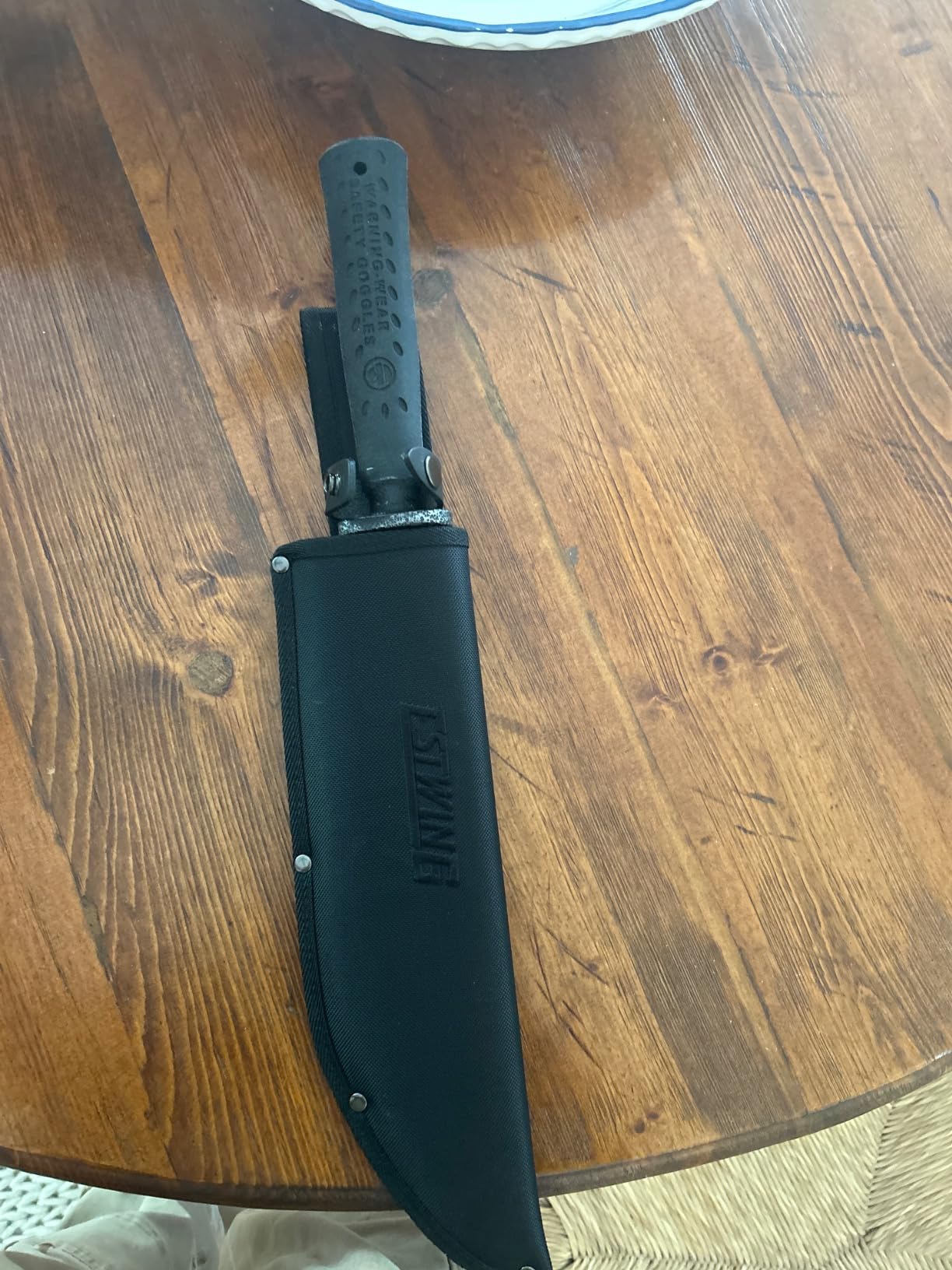
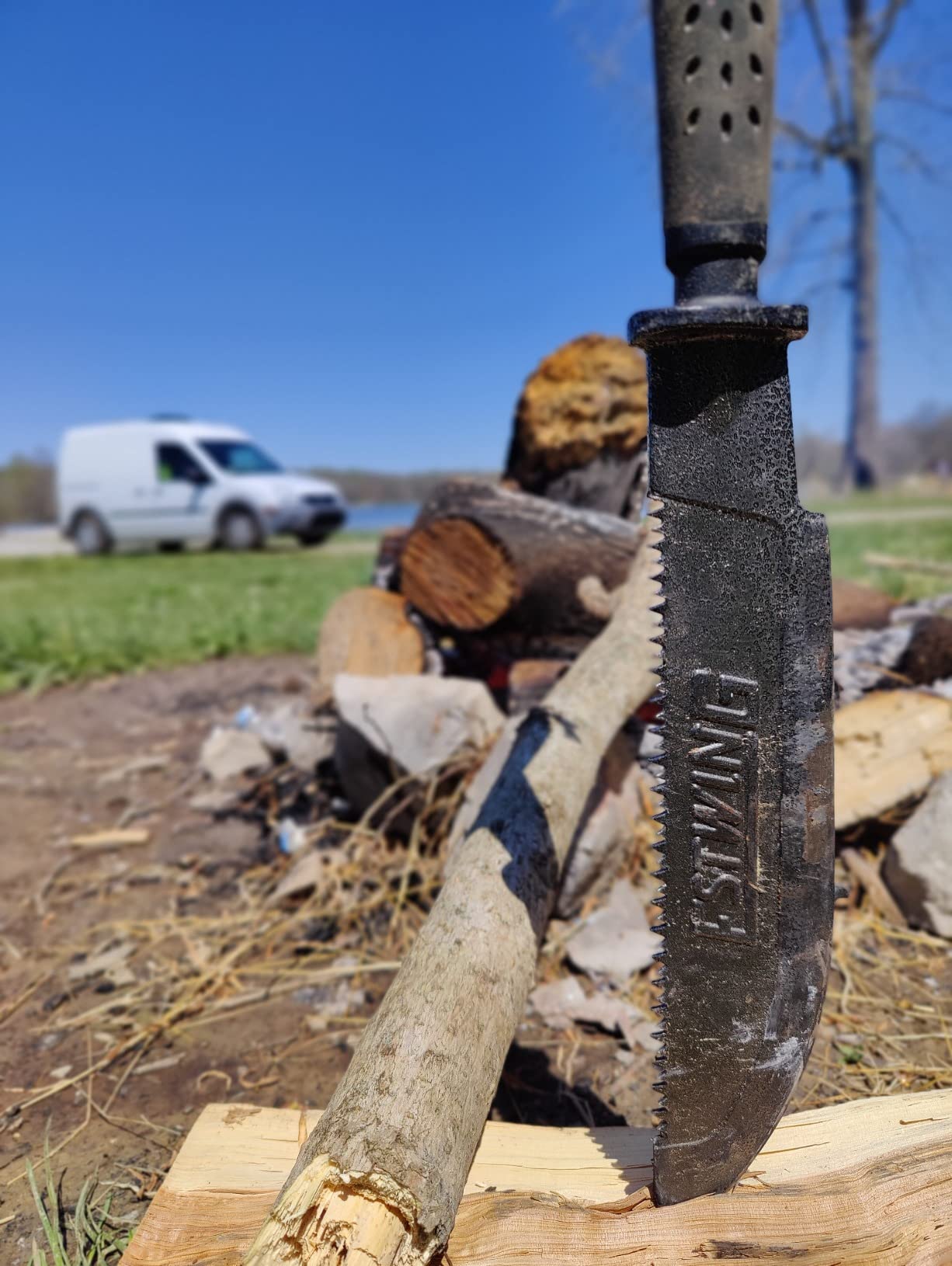
The balance point sits close to the guard, so it feels like a short sword in the hand, and the 12-inch hand sharpened cutting edge with an offset tooth saw back handles vines, rope and thin branches well. At 1.8 pounds it is a substantial tool, and the weight is where the vibration damping is coming from.
Two complaints recur across reviews. The factory grind is coarse, so sharpen before the first stroke, and the saw teeth sometimes arrive dull or bent to one side. The included ballistic nylon sheath is loose and rattles on the belt with no closure, which is worth replacing. A few owners have also reported chips or cracks in the blade.
Best fit for long sessions and tough jobs
Impact damping and forged construction make this the machete I would pick for a full day of hard clearing, or for anyone whose hands are the limiting factor. It also suits users who want a tool that can be handed down rather than replaced.
Where it is the wrong style
It chops more like an axe than a slicing blade, so it is less efficient on green fibrous growth than a thin flat machete. And at 437 reviews it has the smallest base of owner feedback here, which is worth factoring in if you want a wide field of experience to draw on.
Best Machete for Each Job
If you only read one section, read this one. It routes the ten picks above to the job each one actually suits, so you do not have to work through the full list to find your answer.
General property and yard work: Grand Way 25 Inch. The best balance of reach, saw spine and full tang construction at this tier.
Big acreage, thick mixed brush: Jungle Master JM-024L. Long reach plus the draw-tooth spine for pulling vines.
Thick stems and dead wood: Black Legion Jungle Hunter. Thick blade that lands one to three inch branches in a single swing.
Thorny scrub and long rows: Tramontina 24 Inch. Reach keeps the thorns on the far side of the blade.
Backpacking and small pack: Kershaw Camp 10. Eight ounces, hand guard, recurve draw cut, and it fits anywhere.
Bug-out bag and survival kit: Estwing Forged Machete if you can carry 1.8 pounds, Kershaw Camp 10 if you cannot.
Bushcraft and camp life: Condor Golok for the premium feel, Tramontina Bolo if you would rather build the handle yourself.
Farm and harvest work: Tramontina 24 Inch for vine and cane work, or the Bolo for repeated short sessions.
Wet or coastal conditions: Black Legion Jungle Hunter. The non-reflective coating and stainless blade tolerate moisture best.
Long days, hand fatigue a concern: Estwing with the Shock Reduction Grip, or the Bolo at 0.2 kg.
Getting one blade to do everything: Cold Steel Tactical Machete. Reach plus a clip point for detail work.
Sticking to a strict budget: Tramontina Bolo. It is unfinished out of the box, and it becomes a keeper after an hour of work.
What to Look for When Buying a Machete
1. Full tang over partial tang. A full tang means the steel runs the entire length of the handle, so the blade and handle are one continuous piece. On a partial tang, the steel stops at the front of the handle and is held in place by glue, pins or rivets. Forum users consistently argue that a full tang is the minimum for real work, and we agree. A partial tang that fails under a bat strike is a blade in your hand.
2. Steel type, and whether you will maintain it. High carbon steel such as 1075, 1085, 65Mn and 1055 takes the sharpest edge and holds it best on wood and fibrous growth, but it will spot and rust if you skip the oil. Stainless steel such as 440C and high carbon stainless resists corrosion and forgives neglect, at the cost of an edge that never gets quite as crisp.
3. Blade length matched to the work. Under 14 inches you are cutting close to the material, which is a problem with thorns. Sixteen to 20 inches suits most property work. Twenty-two inches and above is for large acreage and heavy growth, and it stops being manageable in tight spaces. Larger is not better, it is just further away.
4. Handle that stays put when wet. Rubber overmold and glass-filled nylon grips are the most reliable all-round choices because they do not need to dry out before you can grip them. Hardwood is comfortable and ages well, but it needs oiling and can crack or warp if left wet. Moulded plastic is the weakest option, as it can twist in the handle under a hard swing.
5. Weight distribution rather than total weight. A blade whose balance point sits just forward of the handle converts a short swing into real cutting force. An evenly balanced or handle-heavy machete demands a bigger arc and tires you faster. This is the single most underrated spec on the page.
6. Sheath and warranty. The sheath is the most common failure point in this category, and a thin plastic one will dull your blade against whatever it is lying next to. Look for a belt loop, a retention strap and a mouth that fits the blade without crushing the edge. A lifetime warranty, as the Gerber Gator carries, tells you something about the maker’s confidence.
Machete Styles Explained
The names below sound like marketing until you understand that each profile solves a different problem. Knowing which one you need is worth more than any brand preference.
Latin. The long straight-backed profile used across Latin America for clearing and sugar cane work. Maximum reach, simple geometry, very effective on green growth.
Kukri. The forward-curved Nepalese profile with a heavy belly. Strongest of the common styles for chopping wood because the mass sits where the cut happens.
Parang. The South and Southeast Asian clearing blade, with a thick forward section and a drop point. Excellent for vines and a wide range of farm work.
Panga. The East African machete, with a shaped upper spine for a slight chisel effect at the tip. A general purpose land clearing blade.
Bolo. The Philippine profile with extra forward weight and a belly that pulls the edge into the material. Compact and easy to swing.
Golok. The Indonesian and Malay style, often with a shorter blade and a heavy handle. Compact chopping power for dense vegetation.
Bowie. Best known as a knife, and the least efficient of these styles for bulk clearing. It is a fine cutting tool rather than a land clearing one.
Cutlass. The shorter, sword-derived profile with a single edge and a guard. Reach and draw cuts rather than heavy chopping.
On the question of which is strongest, the answer is that a kukri with a thick convex blade wins on pure chopping force, because the forward belly does the work a heavier blade would otherwise need. For general clearing, a Latin or parang is faster because the long straight edge takes more material per swing. The strongest type depends entirely on whether you are cutting wood or vegetation.
How to Sharpen a Machete
Sharpening is the difference between a machete that works and one that frustrates you. A blunt blade has to be forced through material, and forcing is how blades get damaged and how hands get blisters.
1. Set the angle to the material. About 20 degrees per side for green growth, weeds and vines, where a thin slicing edge is best. About 30 degrees per side for wood, hardwood and heavy brush, where a stronger wedge resists chipping. A flat file held at a consistent angle gets you close to both.
2. Start coarse, work to fine. A coarse stone or a file removes damage and existing dullness first, then a finer stone or hone brings the edge up. On a new budget machete this first session matters more than every later one, because the factory edge is rarely consistent.
3. Remove the burr on both sides. A wire stone, a scrap of leather with compound, or a few careful passes away from the edge on a fine stone will take it off. Leaving a burr in place is how a sharp edge turns into a nicked one on the next branch.
4. Do not over-sharpen a full tang machete. Each pass thins the edge. If you find yourself grinding past a quarter of the blade thickness to get it sharp, the angle is wrong rather than the stone.
5. Clean, dry and oil it immediately. Sap and water sitting on carbon steel start corrosion within hours. Wipe it, dry it, then apply a light film of oil. This is the entire rust prevention routine, and skipping it on 1075 or 1055 steel is how you get pitting that no stone will fix.
How often you need to do this depends on the work. A weekend of green brush needs a touch-up every session. A few days of woody stems needs a full sharpening. Keeping a small stone or file in the sheath is the difference between a machete you enjoy and one you avoid.
Is Owning a Machete Legal?
Owning a machete is legal in the United States for adults in most states, and there is no federal prohibition on owning one. Rules change, though, so check your state and local ordinances before buying, particularly around concealed carry rules that treat blades as weapons regardless of length.
Carrying one is a different question. In a vehicle it is straightforward in most states, but a machete is an open blade, so keeping it inside the cabin is far safer than the bed or trunk. At a campsite, in a national park, or on federal land there may be additional restrictions specific to that location.
On a plane, a machete is not permitted in carry-on baggage. Checked baggage is also a problem, because the TSA lists machetes among items that are not allowed in either. If you need to move one across the country, the practical answer is to ship it or buy it at the destination. Rules change, so verify with the airline and the TSA before travelling.
Canada, the UK, Australia and New Zealand all have their own restrictions, and some treat any large bladed tool as a prohibited item. If you travel internationally with a machete, assume the answer is no until you have confirmed otherwise.
When a Machete Is the Wrong Tool
Experienced users on forestry forums are consistent on one point: a machete is the wrong tool for anything over roughly three inches of diameter. Past that, a brush saw, a brush hook, a brush cutter or a chainsaw beats it in skilled hands, and repeatedly so. If your job is thinning small trees rather than clearing vines, you want a saw.
The reason is physical. A machete is a thin, fast, light tool built to cut soft material with momentum. A dense three inch stem does not fail from momentum, it fails from tooth geometry and mechanical advantage, which is what a saw is built to deliver. For anything woody at that diameter, loppers or a folding saw are faster and safer.
The reverse is also true. For green bramble, vines, saplings and grass, a machete is faster than any saw by a wide margin, because a saw needs two opposing motions while a machete needs one. Match the tool to the material and you will finish in a fraction of the time.
Frequently Asked Questions
Which machete is the best quality?
Quality in a machete comes down to a full tang, high carbon or high carbon stainless steel, and a handle that will not slip. The Grand Way 25-inch is our best overall pick for those reasons at a budget level, and the Estwing is the most durable build. At the premium end, the Condor Golok pairs 1075 steel with a walnut handle and a handcrafted leather sheath.
What is the best made in the USA machete?
The Estwing is the only US-made machete in this roundup, forged in Rockford, Illinois as a single piece of alloy steel with no rivets or tang joint. Its patented Shock Reduction Grip cuts impact vibration by 70 percent, which is what allows long sessions without hand fatigue. It is also the heaviest option here at 1.8 pounds.
Is owning a machete illegal?
In the United States, owning a machete as an adult is generally legal, though state and local carry laws can differ. Transport is more restricted: a machete is not allowed in carry-on or checked airline baggage, so plan to ship it or buy it at your destination. Parks and federal land may have their own rules. Verify locally before you carry one.
What is the strongest type of machete?
For pure chopping power, a kukri profile is the strongest common machete shape, because the forward belly concentrates mass exactly where the cut happens. The Condor Golok is a kukri with a thick convex grind and it chews through medium brush that would deflect a thin flat blade. For green vegetation, a Latin or parang is faster per swing.
What is the best machete for survival and a bug-out bag?
Pack weight decides it. The Estwing handles the toughest work and its vibration-damping grip allows long sessions, but at 1.8 pounds it is a serious load. The Kershaw Camp 10 at 8 ounces has a full tang recurve blade, a hand guard and a sheath, which makes it the better choice for most kits. For bushcraft rather than clearing, the Condor Golok is the premium answer.
Will a carbon steel machete rust?
Yes, if you leave it. High carbon steels such as 1075, 1055 and 65Mn spot and pit within hours of sap or damp exposure. The fix is simple: wipe the blade, dry it, and apply a light film of oil after every session. The Condor Golok and the Cold Steel both need this. Stainless options such as the Black Legion Jungle Hunter tolerate neglect far better.
Can you take a machete on a plane?
No. A machete is listed among items that are not permitted in either carry-on or checked baggage, so you cannot fly with one in your luggage. If you need a machete at your destination, ship it ahead or buy one there. Always check the current airline and TSA rules before travelling, since the list changes.
Conclusion: The Best Machetes for 2026
The Grand Way 25-inch full tang machete is our pick of the best machetes for most people in 2026, because it handles green growth, woody brush and saw work in one package. The Kershaw Camp 10 is the answer if weight matters more than reach, and the Estwing is the one to buy if you want something you can pass on.
Whichever you choose, sharpen it before the first swing, oil it after every session, and keep it in a proper sheath. Those three habits do more for a machete than the brand name ever will. We are always interested in what the community adds, so if you have cleared acreage with one of these, tell us how it held up.