
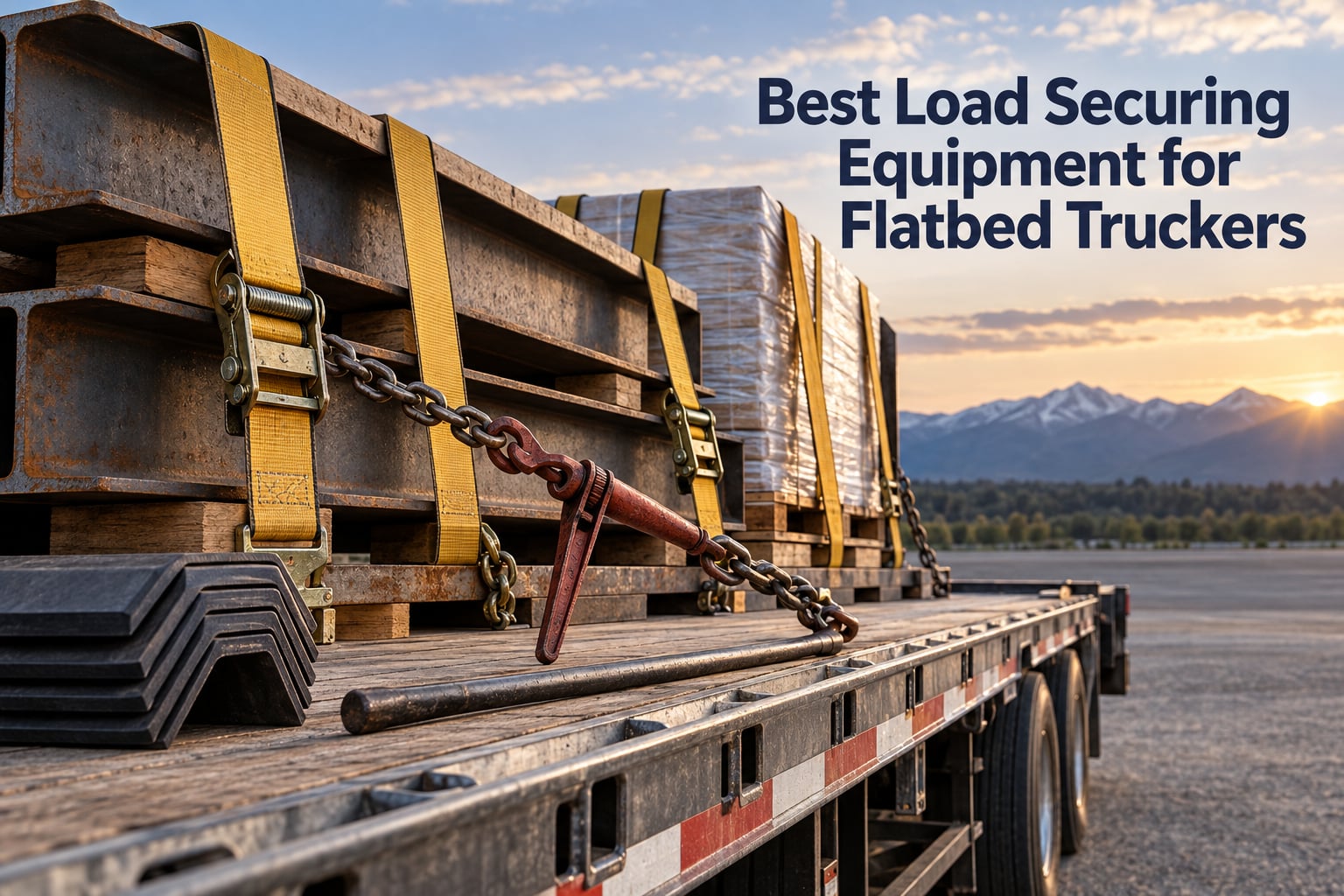
Load securing equipment for flatbed truckers comes down to seven categories: winch straps and ratchet straps, Grade 70 or Grade 80 transport chain, ratchet and lever binders, stake pocket anchors, edge protectors, winch bars, and tarps with tarp straps. Every piece of that gear exists to satisfy one federal rule, 49 CFR 393 Subpart I, which requires freight to be restrained against 0.8g forward, 0.5g rearward and 0.5g lateral movement with no more than half an inch of shift.
The rule imposes two separate tests, and most roadside citations happen because drivers pass one and fail the other. Your tie-down count has to meet the minimum for the length and weight of the load, and the combined working load limit of all tie-downs has to equal at least 50 percent of the cargo weight. A truck with eight light straps can pass the count test and still fail the aggregate WLL test on a 30,000 lb coil.
Veteran flatbedders on The Truckers Report and the Flatbed Trucking Forum repeat the same baseline kit over and over: 5/16 or 3/8 inch Grade 70 chain, 4 inch winch straps, binders, edge protection, and a winch bar long enough to reach your front winch. Our working number matches theirs, roughly 4,000 lb of restraint per strap and 6,000 lb per chain, and we built the picks below around that set.
Table of Contents
Top 3 Picks for Flatbed Load Securing in October

Mytee Products 5/8 Inch Stake Pocket…
- 5400 lbs WLL per ring
- 18000 lbs total
- 4 pin holes for height adjustment
- Hitch pin with locking cotter pin

Everest 2 Inch x 27 Ft Ratchet Tie Down
- 3333 lb working load
- 10000 lb break strength
- Webbing side protector
- Double J-hook

VEVOR 4 Inch x 30 Ft Winch Straps 10-Pack
- 6000 lbs WLL per strap
- 18000 lb break strength
- Polyester webbing that resists water
- Powder-coated flat hooks
Those three cover the parts of a trailer everything else hangs from. Rated anchors first, then one workhorse strap you can reach for on almost any load, then a bulk pack of 4 inch winch straps for freight that needs real restraint.
Flatbed Load Securing Equipment in 2026 at a Glance
All twelve picks below, with the rating each one carries. Every product in this table has a stamped working load limit you can use in the aggregate WLL calculation, which is the number that decides whether a load passes the second half of the federal test.
| Product | Specifications | Action |
|---|---|---|
| Mytee Products 5/8 Inch Stake Pocket D-Ring 4-Pack |
|
Check Latest Price |
| Everest 2 Inch x 27 Ft Ratchet Tie Down |
|
Check Latest Price |
| VEVOR 4 Inch x 30 Ft Winch Straps 10-Pack |
|
Check Latest Price |
 VEVOR 2 Inch x 27 Ft Ratchet Straps 4-Pack VEVOR 2 Inch x 27 Ft Ratchet Straps 4-Pack |
|
Check Latest Price |
 VEVOR G80 Chain and Ratchet Binder Kit VEVOR G80 Chain and Ratchet Binder Kit |
|
Check Latest Price |
 SENKEYFE G80 5/16 Inch Safety Chain 2-Pack SENKEYFE G80 5/16 Inch Safety Chain 2-Pack |
|
Check Latest Price |
 Mytee Products Stake Pocket Winch 4-Pack Mytee Products Stake Pocket Winch 4-Pack |
|
Check Latest Price |
 ENJ LASHING Edge Protectors 20-Pack ENJ LASHING Edge Protectors 20-Pack |
|
Check Latest Price |
 Mytee Products 40 Inch Combination Winch Bar Mytee Products 40 Inch Combination Winch Bar |
|
Check Latest Price |
 DC Cargo Mall 40.5 Inch Winch Bar DC Cargo Mall 40.5 Inch Winch Bar |
|
Check Latest Price |
 DC Cargo Mall Tarp Straps 50-Pack DC Cargo Mall Tarp Straps 50-Pack |
|
Check Latest Price |
 ROBLOCK 21 Inch EPDM Tarp Straps 10-Pack ROBLOCK 21 Inch EPDM Tarp Straps 10-Pack |
|
Check Latest Price |
Read the WLL column as your aggregate budget rather than a per-item number. Four of the 2 inch ratchet straps, for example, give 13,332 lb of combined working load limit, which is what you compare against half the weight of the freight.
What a Complete Flatbed Securement Kit Contains
A working flatbed kit has seven parts: straps, chains, binders, anchors, edge protectors, a winch bar, and tarp hardware. Ratings matter more than brand here, because a stamped working load limit is what an inspector reads and what your aggregate WLL calculation is built on.
Straps for palletized freight, lumber, and anything that should not sit on steel.
Transport chain for steel, coils, and heavy machinery where webbing can saw through.
Binders to take up slack in chain, either ratchet or lever type.
Anchors including stake pocket D-rings, rub rail D-rings, and front-end winch points.
Edge protectors so straps and chains never contact a raw corner.
Winch bars for leverage on strap and binder handles without wrecking your hands.
Tarp straps and bungees to hold covering material, which is weather protection, never securement.
If you are outfitting an F-350 hotshot rather than a 53 foot conestoga, the same categories apply at smaller scale. Two inch ratchet straps and a 40 inch bar cover most hotshot work, and you can read our equipment trailer picks for the trailer side of the equation.
1. Mytee Products 5/8 Inch Stake Pocket D-Ring 4-Pack for Anchor Points Everywhere
4 Pack 5/8 Inch Stake Pocket D Rings, 18000 lbs | Heavy Duty Adjustable Trailer Stake Pocket Tie Down Utility for Flatbed Trucks & Trailer w/Hitch Pin, 4 Holes for Adjustment
5400 lb WLL per ring
18000 lb total for 4 pack
4 pin holes for height adjustment
Locking hitch pin
Pros
- 4.8 stars across 2148 reviews
- 5400 lb WLL per ring adds up fast
- Four pin holes let you tune height per load
- Works with grab hooks and j-hooks and S-hooks
Cons
- 18.4 lb for the 4-pack is real weight to lift
- You must confirm your stake pockets are a standard 2 by 4 inch
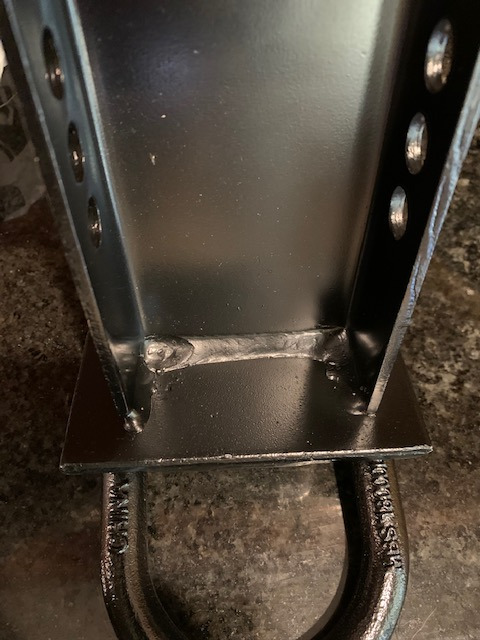
Anchors are the least glamorous item in the kit and the one that limits everything else. When I count how much aggregate working load limit a trailer can actually deliver, the stake pocket rings on a standard flatbed are usually the number that decides whether a heavy load is secureable at all. This 4-pack carries 5,400 lb of working load limit per ring, which is 18,000 lb across the set.
Four pin holes per ring is the detail that matters day to day. Moving a ring up or down a stake pocket changes the angle of pull on a strap or a chain, and a better angle means more of the rated capacity actually resists load shift instead of pulling the cargo forward.
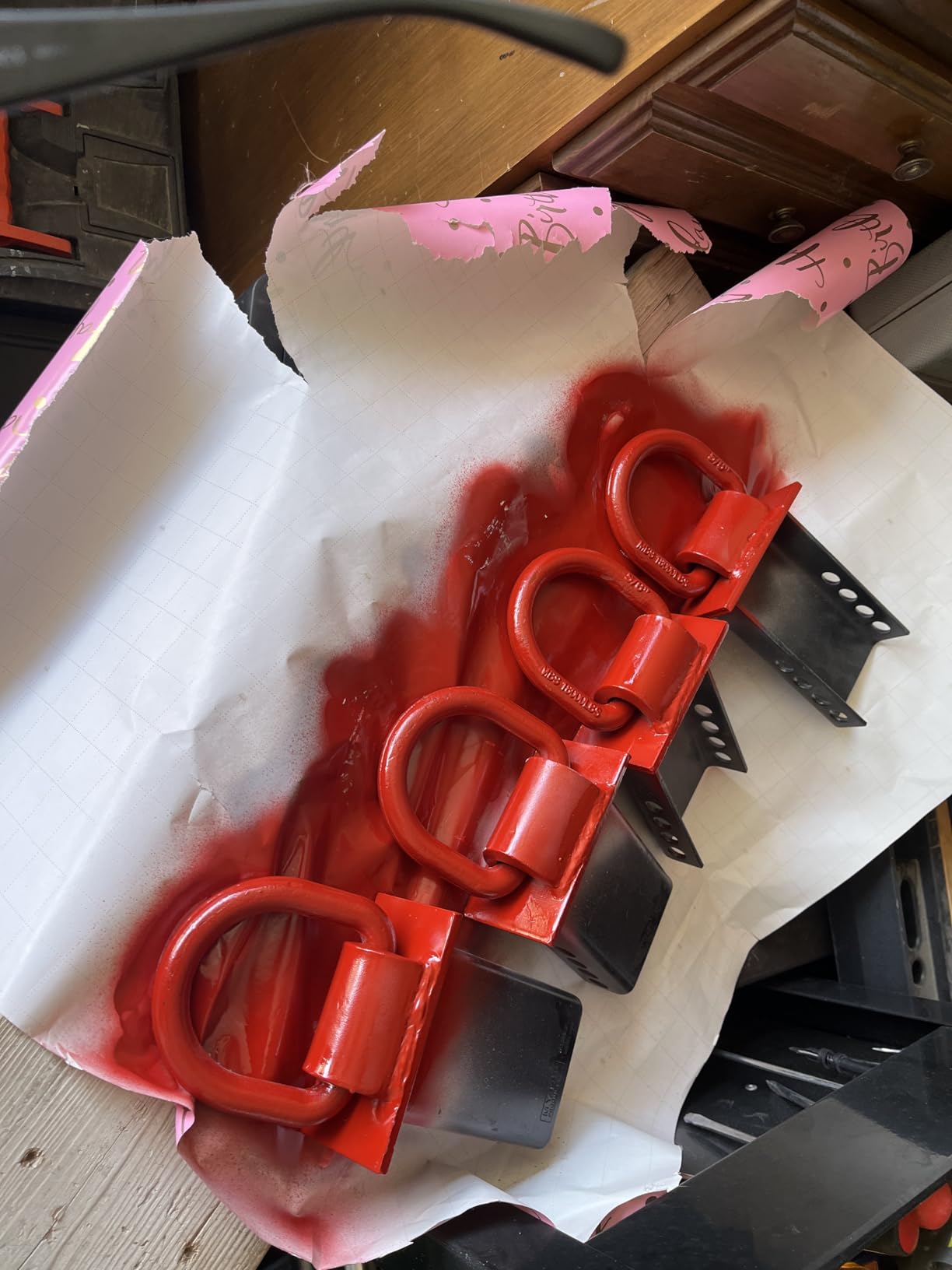
The hardware takes grab hooks, J-hooks, S-hooks, shackles, ratchet straps, winch straps and chain binders, so one anchor type covers the whole kit. The included 1/2 inch hitch pin with a locking cotter pin keeps the ring from walking out of the pocket under tension, which is the failure mode that strands a load at a weigh station.
Buyer feedback on this set runs warm, with roughly 87 percent of reviews landing at five stars, and the recurring note is that the strength per ring feels higher than drivers expected for the class of steel. Installation is straightforward if your pockets match the standard 2 by 4 inch dimension.
When these anchors decide your load
On a 48 foot step deck running structural steel, the number of rated anchor points available often sets the tie-down count you can legally reach. Four rings at 5,400 lb each give you 18,000 lb of aggregate capacity, which covers a wide range of loads on its own. For a hotshot with only a handful of pockets, the same rings concentrate capacity where you need it most.
They also matter as indirect tie-down attachment points when direct securement to the freight is not possible, such as crateized cargo that cannot be hooked.
What to check before ordering
Measure the pocket opening and the pocket depth first, because a ring sized for a 2 by 4 inch pocket will rattle in a 3 by 4 inch one. The four-pack also weighs 18.4 lb, so plan where on the trailer you will store them rather than pulling them out one at a time from a deep toolbox.
2. Everest 2 Inch x 27 Ft Ratchet Tie Down for Everyday Securement
Everest – S1022 Premium Ratchet Tie Down 1 PK 2 IN. X 27 FT 3333 LBS. Working Load 10000 LBS. Break Strength Flat-Hook Cargo Straps – Moving Appliances and Equipment – Vibrant Everest Yellow
3333 lb working load
10000 lb break strength
2 inch by 27 ft polyester
Webbing side protector
Pros
- Most reviewed cargo strap in the roundup
- Smooth ratchet reduces hand fatigue
- Side protector webbing resists abrasion
- Flat hooks fit standard anchors
Cons
- Flat hooks handle angled tension less well than J-hooks
- 2 inch width is light for structural steel
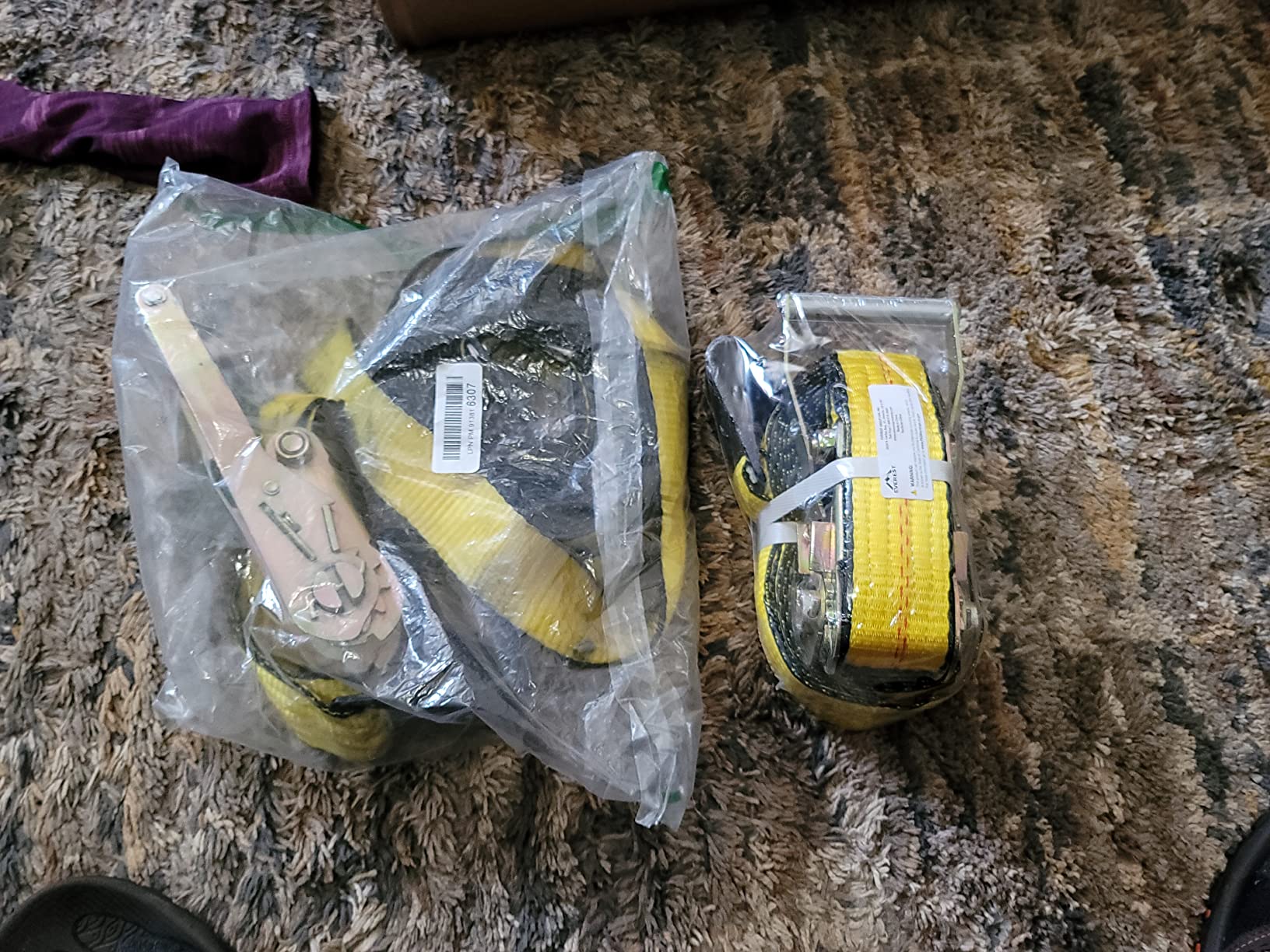
This is the strap I reach for first, because a 2 inch by 27 foot ratchet tie down with 3,333 lb of working load limit covers the majority of flatbed loads I have seen. That figure is the working load limit, not the break strength, and the 10,000 lb break number is what happens if you overload it completely.
The difference matters when you do the aggregate math. If a load weighs 20,000 lb, you need 10,000 lb of combined working load limit, and each of these contributes 3,333 lb. Drivers who count break strength instead of working load limit end up with a fraction of the restraint they thought they had.
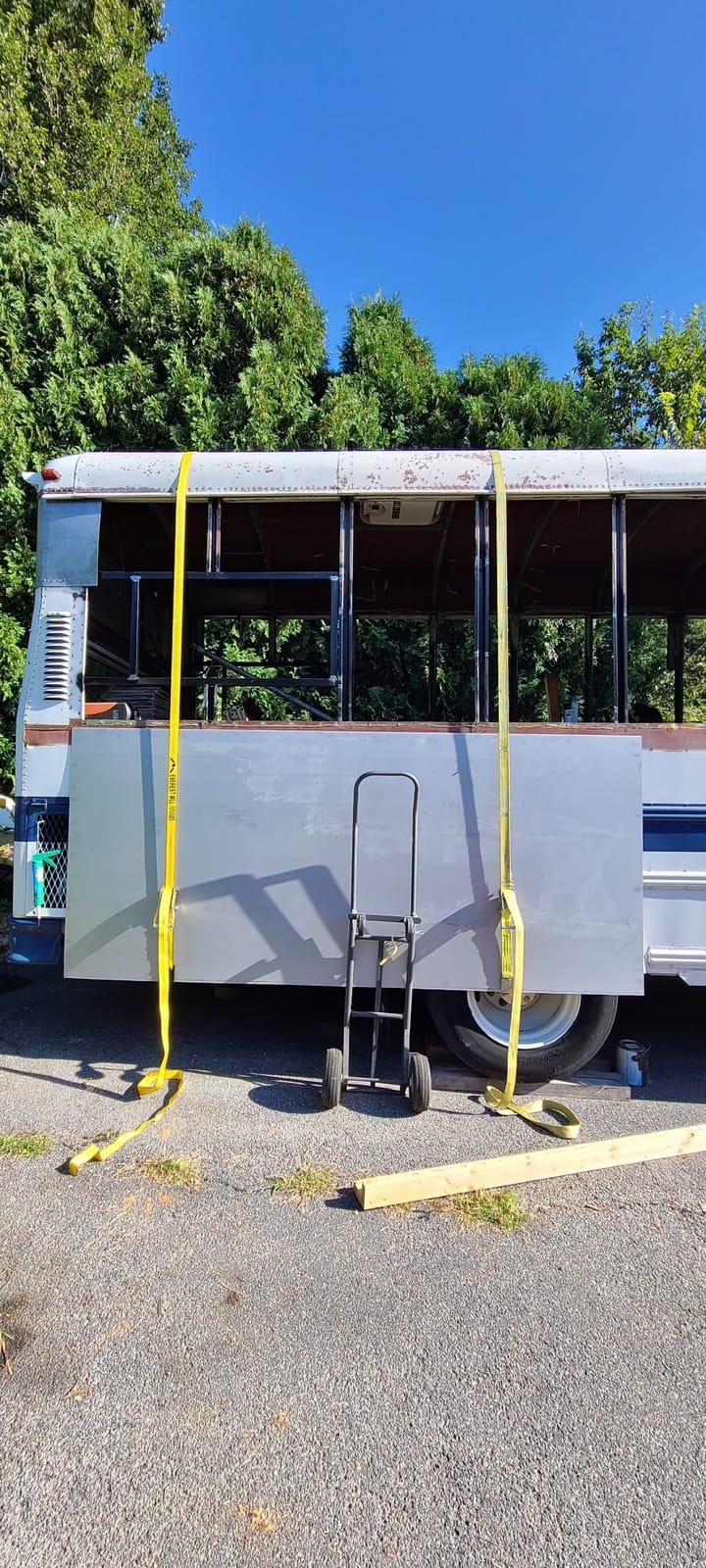
The ratchet latch design is intended to reduce stress on your fingers, which shows up after a day of tightening and releasing. A webbing side protector and extra black stitching guard the part of the strap that takes the most abrasion, right where it runs through the ratchet body.
Feedback consistently describes smooth ratchet operation and durability under daily commercial use. This is also the strap most often used for non-freight jobs like securing a motorcycle or a UTV, so it earns its trailer space even on a dedicated flatbed.
Where this strap fits the load plan
Two inch webbing is the right call for palletized freight, boxed building materials, appliances, and any cargo you would be upset to see cut by a chain. Forum regulars put it in the same tier as 4 inch straps for general work, just with a lower ceiling for heavy structural loads.
It doubles as over-strap material. Running one over the top and one under the frame of a machine is common practice, though a strap or chain in the headache rack does little for load shift.
Where it stops being enough
For steel, I-beams, and anything with a hard edge that can saw webbing, move up to 4 inch winch straps and put edge protection under every line. The flat hooks also spread angled pressure less evenly than J-hooks, so on a load with a lot of diagonal geometry you will fight the hook more than you would with a J-hook end.
3. VEVOR 4 Inch x 30 Ft Winch Straps 10-Pack for Heavy Restraint
VEVOR Truck Straps, 4″ x 30′ Tie Down w/Flat Hooks 18,000lbs Break Strength
6000 lb WLL per strap
18000 lb break strength
4 inch by 30 ft polyester
Steel flat hooks
Pros
- 6000 lb working load limit per strap
- Polyester webbing resists water and does not stretch
- Soft pliable webbing with no coiled memory
- Bright colour reads well in a pre-trip walkaround
Cons
- Flat hooks do not fit every anchor style
- Some quality inconsistency reported after a few months
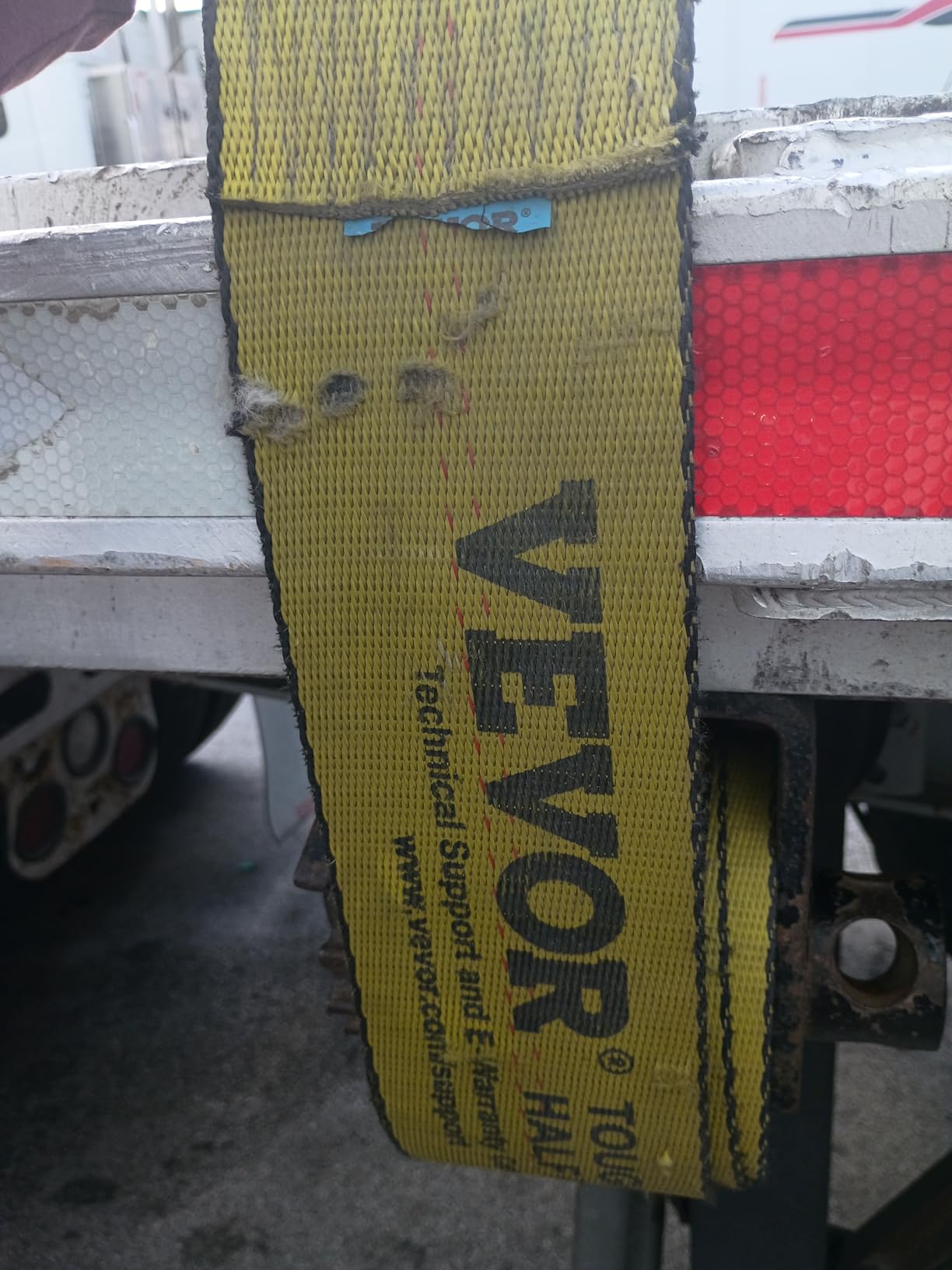
Ten of these cover most of what an owner-operator does in a year. Each strap has a 6,000 lb working load limit and an 18,000 lb assembly break strength, in 4 inch wide polyester webbing at 30 feet long, which is long enough to run over a tall machine and still reach a front winch.
Polyester is the reason I prefer this webbing for wet-weather and cold-weather work. It does not absorb water, shrink, or stretch the way some fabrics do, so its working load limit stays honest after a full season in rain and snow.
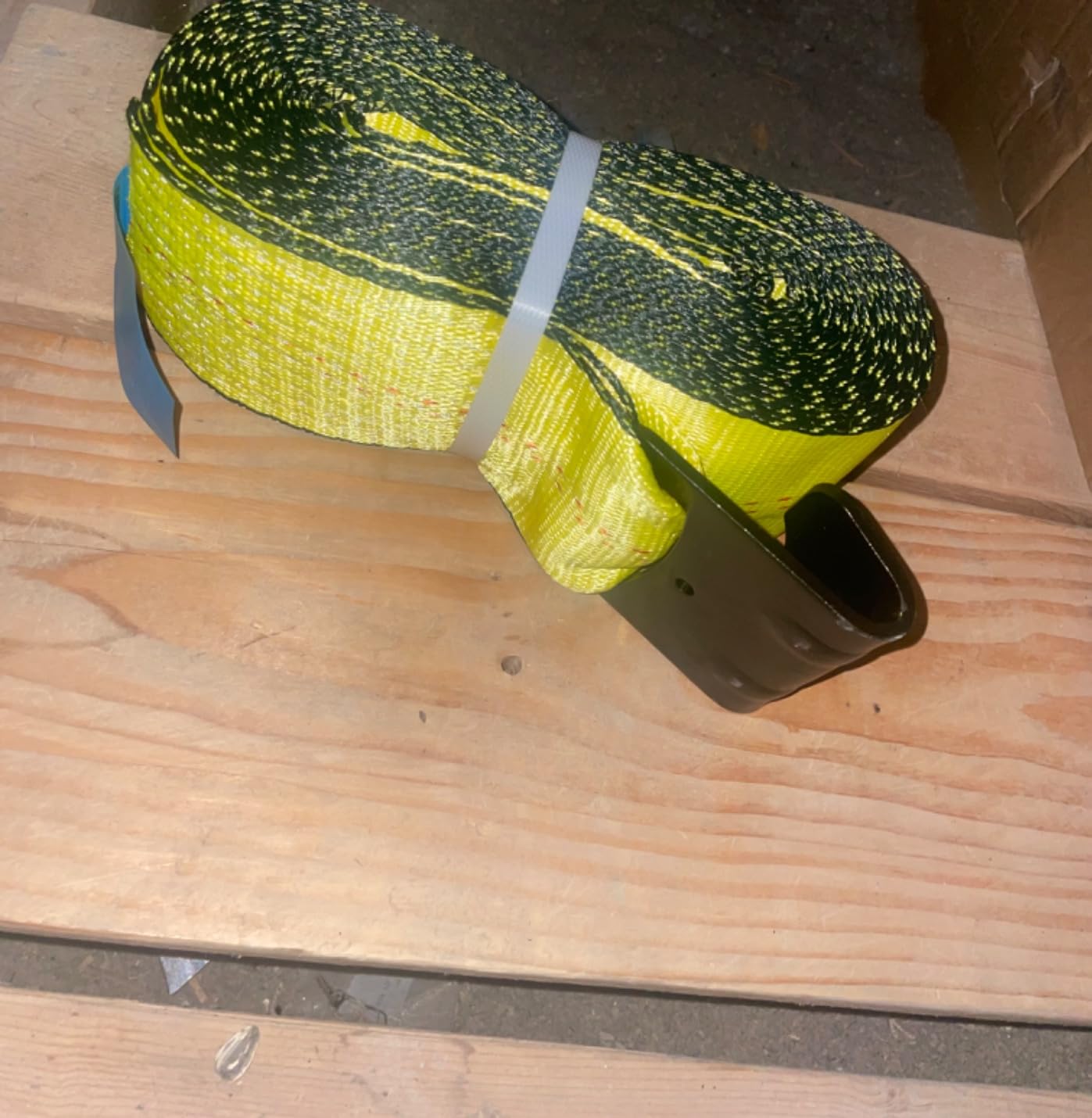
The specific detail reviewers mention most is that the webbing arrives soft and pliable rather than rolled with coiled memory, so it lays flat against a deck without fighting you on the first pass. A coating on the webbing adds stability, and the flat hooks are black powder-coated carbon structural steel.
Because this is a 10-pack, you can build a 50 percent aggregate WLL margin on a mid-weight load without hunting for spare straps in a toolbox. That is the fastest way to pass the second half of the federal test.
How I match these to freight
Structural steel, I-beams, pipe bundles, and palletized building material are the natural fits. Two of these straps give you 12,000 lb of working load limit, so a 20,000 lb load needs at least two and a margin beyond that, and you can add more without changing hardware.
On loads with hard corners, put an edge protector under every strap line. That single habit removes the most common cause of webbing damage, which is abrasion, not overload.
Things worth confirming first
The flat hooks are the limitation here. If your securement points are J-hook or ring style, you will need an adapter or a different strap end, and mixing hook types across a load makes pre-trip checks slower. A small number of buyers also report quality variation after a few months of use, so inspect webbing and stitching at every walkaround rather than assuming the whole pack matches.
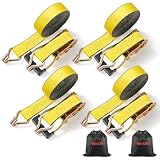
4. VEVOR 2 Inch x 27 Ft Ratchet Straps 4-Pack for Light Duty and Hotshot Work
VEVOR Ratchet Tie Down Straps (4-Pack), 10000 lb Break Strength, Heavy Duty Double J Hooks, 2″ x 27′ with Padded Handles – Ideal for Moving, Securing Cargo, Appliances, Lawn Equipment, and More
3333 lb working load
10000 lb break strength
Zinc coated double J-hooks
Padded quick-release ratchet
Pros
- Double J-hooks fit more anchor styles
- Quick-release ratchet with padded handles
- Storage bag included for trailer tidiness
- Four straps is a workable hotshot starting count
Cons
- Release lever can be stiff at first
- Light duty only
- not rated for securing vehicles on a trailer
Four straps with a 3,333 lb working load limit and 10,000 lb break strength is a sensible hotshot complement rather than a substitute for heavy webbing. The double J-hook ends are the reason to pick this set over a flat-hook version, because J-hooks seat into ring and eye anchors far more reliably.
Galvanized zinc coating on the hooks resists rust, and the straps are E-Track compatible, so they also work in a pickup bed with a proper track system. If you run an F-350 flatbed, this is the scale of gear that matches the trailer.
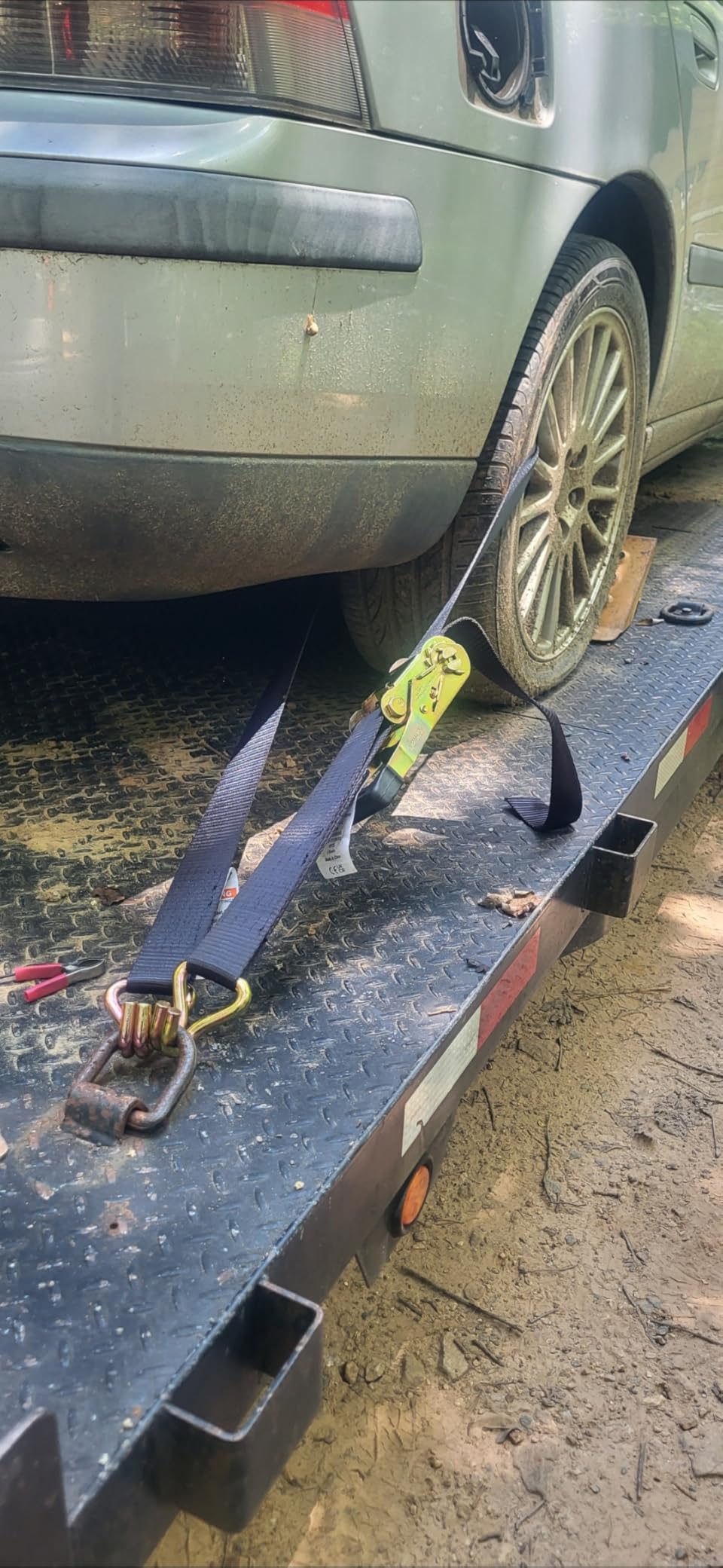
The quick-release ratchet with padded handles is a comfort detail that matters on a short load and a long day. Buyers also like that the set arrives with a non-woven storage bag, which keeps four straps from becoming a tangle behind the headache rack.
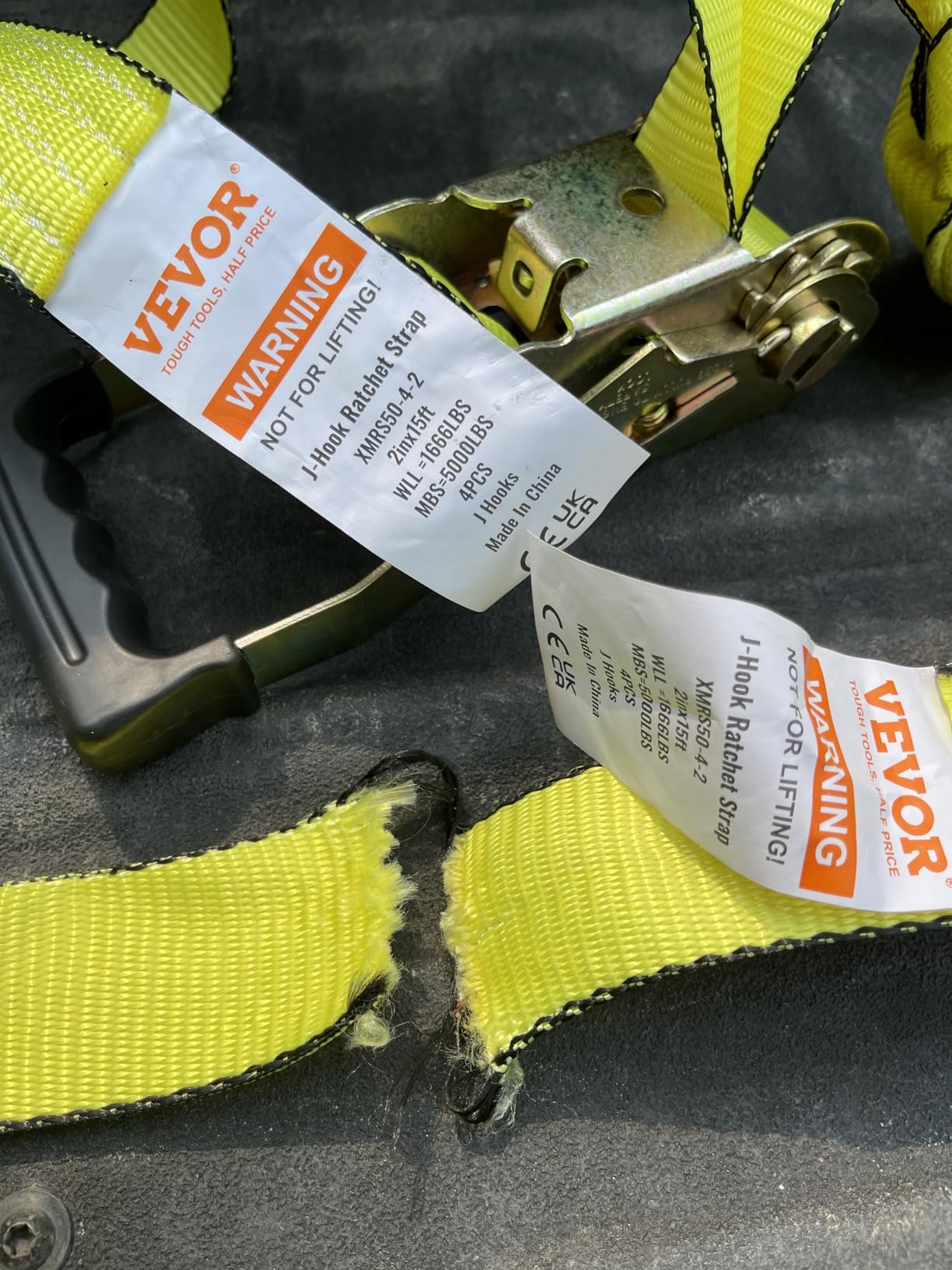
Rated at 3,333 lb working load limit each, four straps give 13,332 lb of aggregate capacity, which covers equipment loads in the 20,000 lb range with a little margin when you add a chain line or two.
Best uses on a light flatbed
Motorcycles, UTVs, small tractors, mowers, appliances, and palletized freight all sit comfortably inside these ratings. They are also the right choice for tarping, where you want something lighter than a 4 inch winch strap to hold covering material down.
For owner-operators moving to a longer flatbed, treat this as an addition rather than a foundation. You will still want 4 inch straps for structural loads.
Limits to plan around
These are not rated for securing a vehicle on a trailer, which is the most important caveat in the listing. The quick-release lever can also feel stiff until you learn the motion, and a few owners report webbing wear after repeated heavy use, so keep them out of the load path on abrasive steel.
5. VEVOR G80 Chain and Ratchet Binder Kit for Steel and Machinery
VEVOR Chain and Binder Kit, 3/8″-1/2″ Ratchet Load Binders 9200 lbs Working Load Limit, 3/8″ x 10′ G80 Chains with Grab Hooks, Ratchet Binders and Chains for Truck, Tie Down, Hauling, Towing, 2 Set
9200 lb binder working load
30000 lb break strength
3/8 inch by 10 ft G80 chain
Grab hook ends
Pros
- Two complete chain and binder sets in one package
- Adjusts to both 3/8 and 1/2 inch chain
- 9200 lb binder working load limit
- Non-slip textured rubber grip
Cons
- Handles can unscrew from the binder body
- Weighs 54 lb for two sets
Chain is the correct answer over webbing for steel, coils, and machinery, and this kit puts two complete sets in the box. You get 3/8 inch by 10 foot G80 chains with grab hooks and ratchet load binders rated at 9,200 lb working load limit with 30,000 lb break strength, twice over.
Ten feet of chain is short for a full flatbed length, so these lines work best as direct tie-downs on a compact piece of freight rather than as full-length runs. The adjustable hook width from 23.23 to 30.31 inches lets you tension across a wide range of load widths without swapping binders.
A ratchet binder is also the safer of the two binder types to stand behind. Lever binders gain speed but can release stored energy violently if the handle comes free, and that snap-back injury is raised repeatedly in flatbed forums.
Most buyers describe the set as comparable to higher-priced branded kits at a fraction of the cost, and the non-slip rubber grip with a textured pattern makes the handle usable with a gloved hand. The G80 chain is properly heat-treated alloy, not a marketing label.
At 54 lb for both sets, weight is the trade-off. I would rather carry two solid sets than five questionable ones, because a binder that fails at 3 a.m. in a truck stop costs far more than the weight difference.
How I use a 10 foot chain
Short chains earn their place on concentrated loads: a single skid of structural steel, an excavator counterweight, a machine base sitting on dunnage. Wrap the chain around the load, cross over the top, and hook into an anchor on the opposite side so the chain works in direct tension.
Always place an edge protector between chain and steel edge. Chain on a raw corner is the fastest way to lose working load limit, and inspectors look for exactly that contact pattern.
The handle problem to fix on day one
A recurring complaint is that the handle can unscrew from the binder body during use. Check the handle thread at every pre-trip and re-tighten it, and carry a wrench for the job. It is a five-minute task that prevents a binder coming apart mid-haul.
6. SENKEYFE G80 5/16 Inch Safety Chain 2-Pack for Corrosion Resistance
SENKEYFE G80 5/16″x36″ Trailer Safety Chains with Hooks,2-Pack,EP Black
4900 lb working load
17000 lb break strength
5/16 inch by 36 inch G80
Clevis safety hooks
Pros
- G80 heat-treated alloy steel
- 4900 lb working load per chain
- Electrophoresis surface treatment resists rust
- Two chains per pack
Cons
- Only 5/16 inch
- which limits the heaviest hauls
- Short 36 inch length suits trailers and light tows rather than full flatbed runs
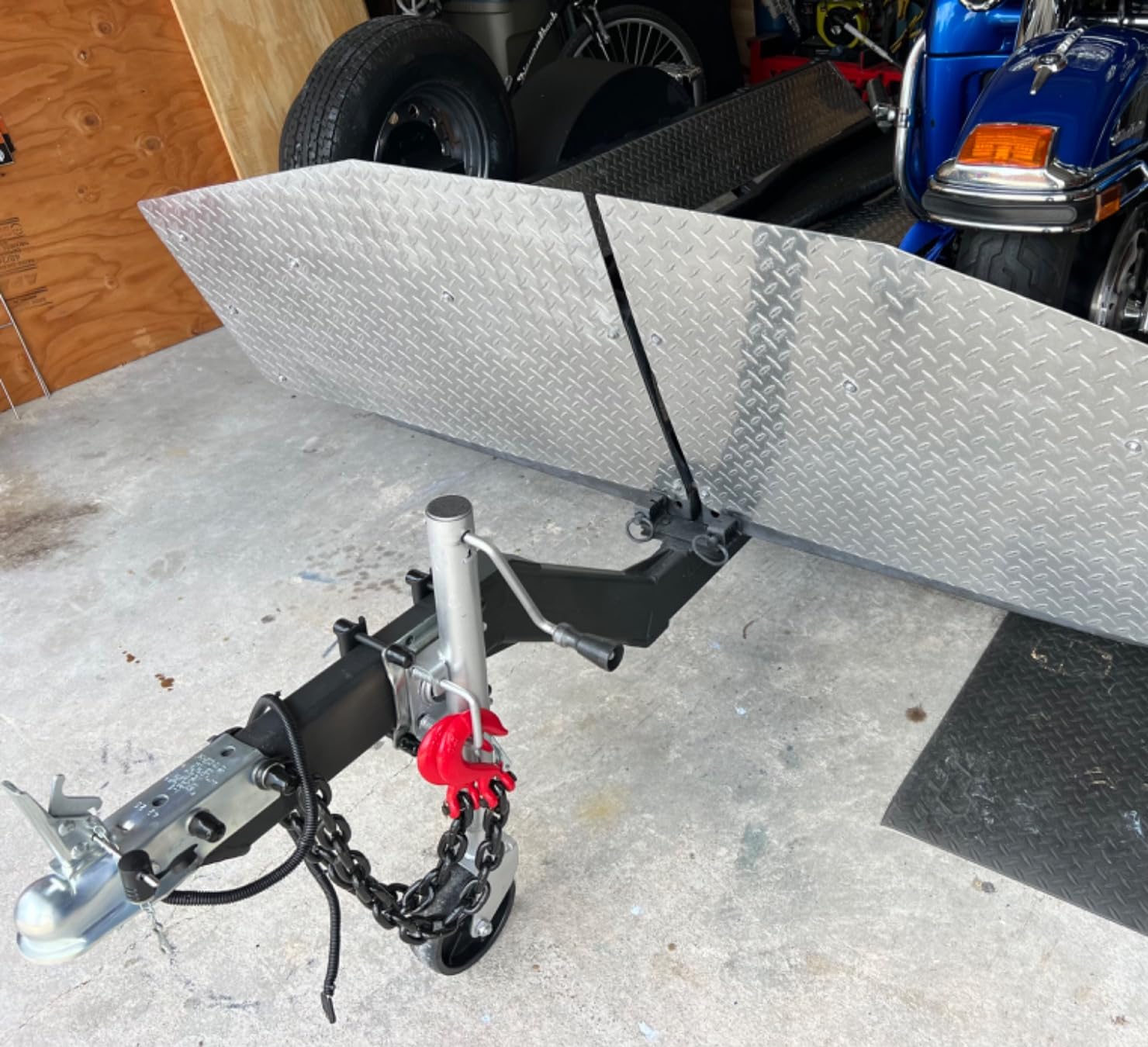
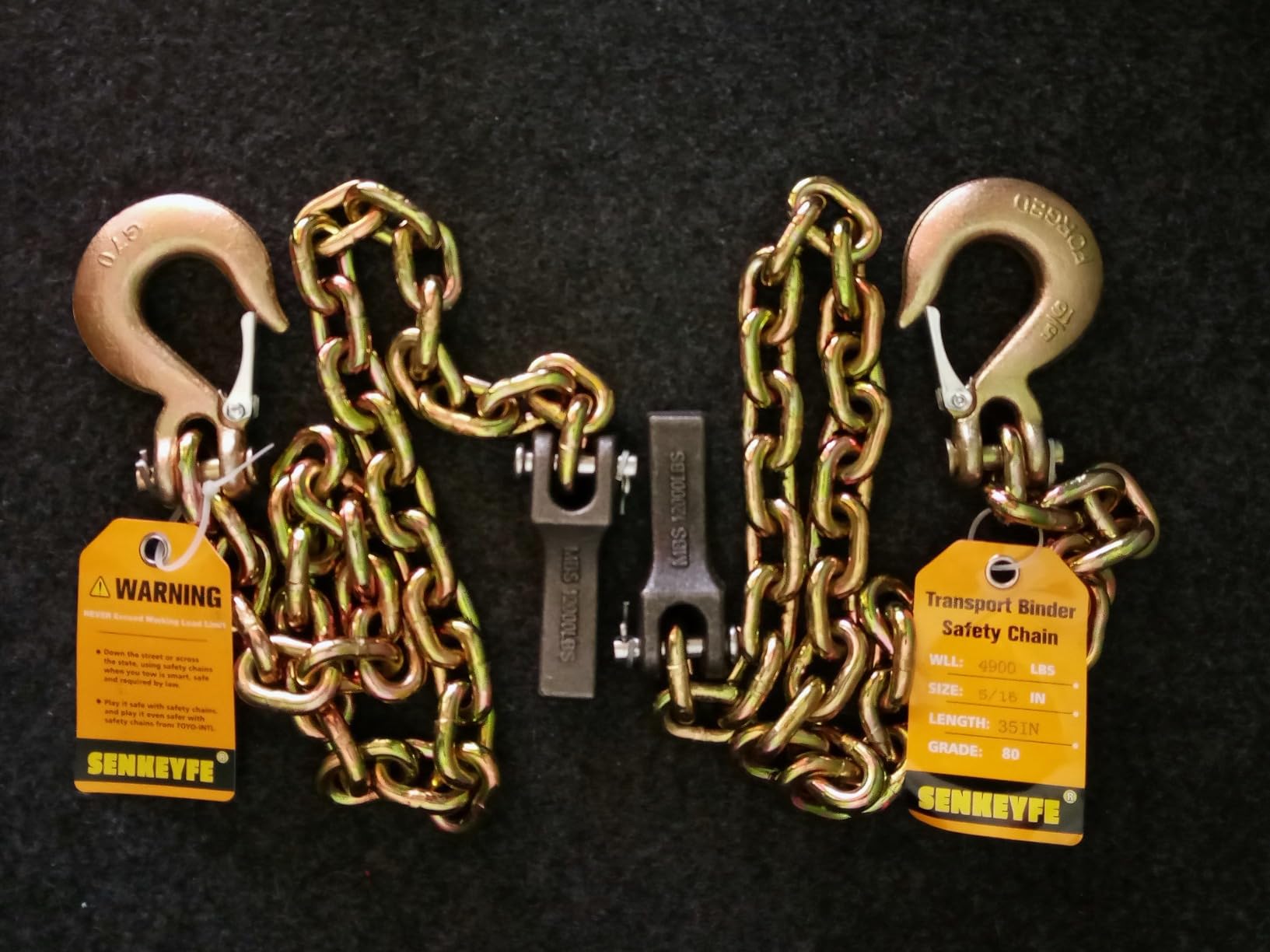
At 5/16 inch and 36 inches long, this pair is built more for trailers and light towing than for full-length flatbed runs, and I want to be clear about that before you buy. Where it shines is corrosion resistance: the electrophoresis-treated surface held up well in feedback from drivers working wet coastal and winter routes.
Each chain has a 4,900 lb working load and a 17,000 lb break strength in G80 heat-treated alloy, with two clevis safety hooks and full welding along the length. The #1 best seller rank in its tow hook category is not a fluke for a part this small.
Five sixteenth inch Grade 80 is a sensible diameter for hotshots, equipment trailers, and backup chains on a smaller truck. For a 48 foot flatbed carrying structural steel, you would want 3/8 inch or larger.
Where these chains earn their place
Use them as secondary and backup chains, as tie-downs on a smaller piece of machinery, or as trailer safety chains where a higher grade than stock is wanted. Two chains give 9,800 lb of working load, which on a 15,000 lb piece of freight covers a good share of the aggregate requirement on its own.
The treated surface also makes them a better northern or coastal choice than untreated chain, where rust starts eating at the surface of the links within a season.
What the shorter length means for you
Thirty-six inch chains cannot span a wide load or reach from a stake pocket on one side of a coil to an anchor on the other. Buy them for a job they can do, and buy longer chain for the big hauls. Because this is a newer design, long-term field data is thinner than for established chain brands, so inspect links more often at first.
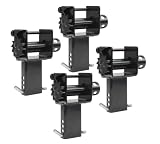
7. Mytee Products Stake Pocket Winch 4-Pack for Mobile Winch Points
Mytee Products 4 Pack Trailer Stake Pocket Winch Flatbed Utility Capacity# 16200 lbs
5400 lb working load each
16200 lb total
Fits flush and outside pockets
4 cotter pin holes
Pros
- Adds a winch point wherever a stake pocket exists
- 5400 lb working load limit per winch
- Fits both flush and outside pocket styles
- Black powder coat resists corrosion
Cons
- Not intended to hold 30 feet of strap
- Weighs 42 lb for the 4-pack
- 7 percent of reviews are one star
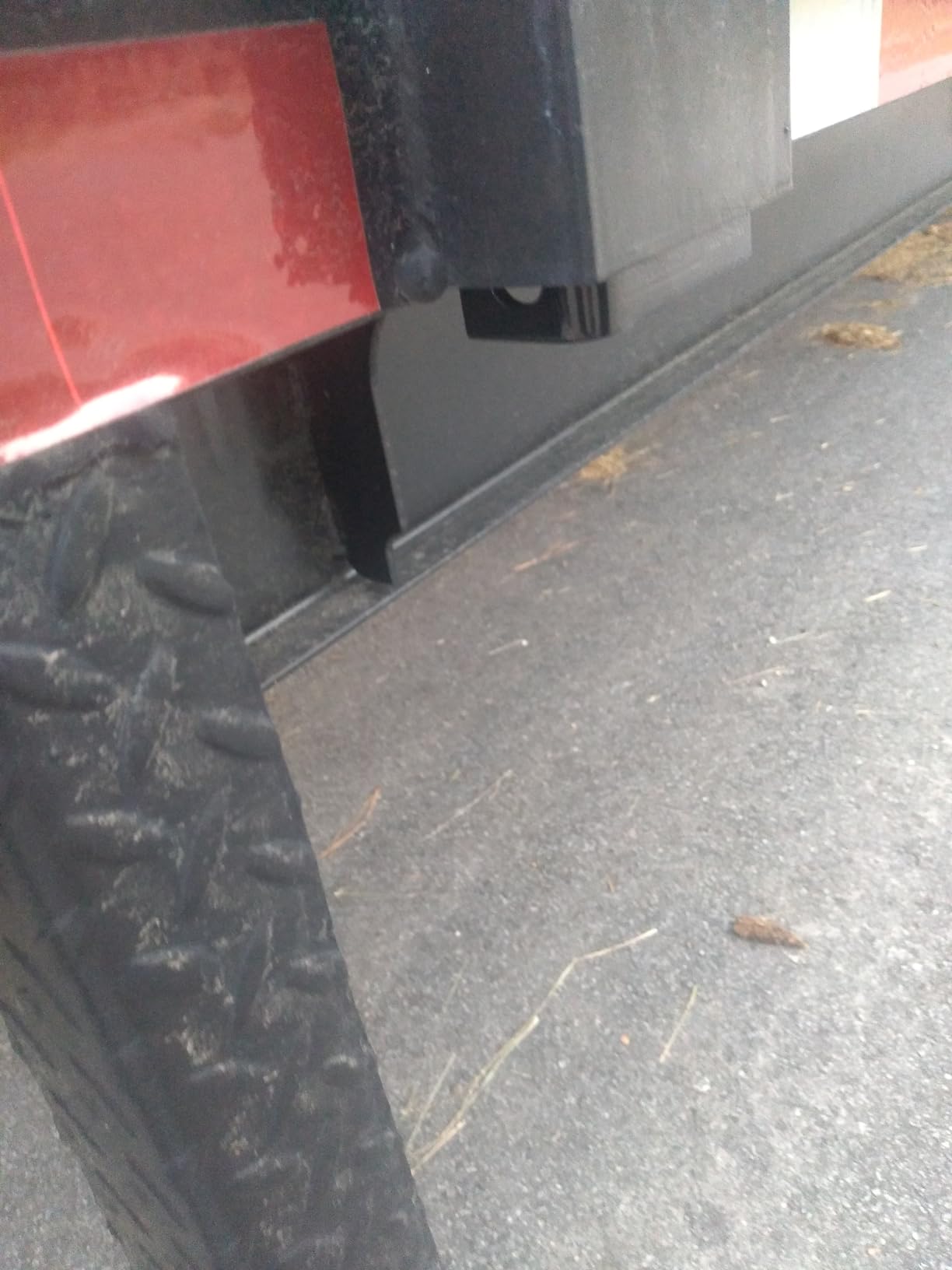
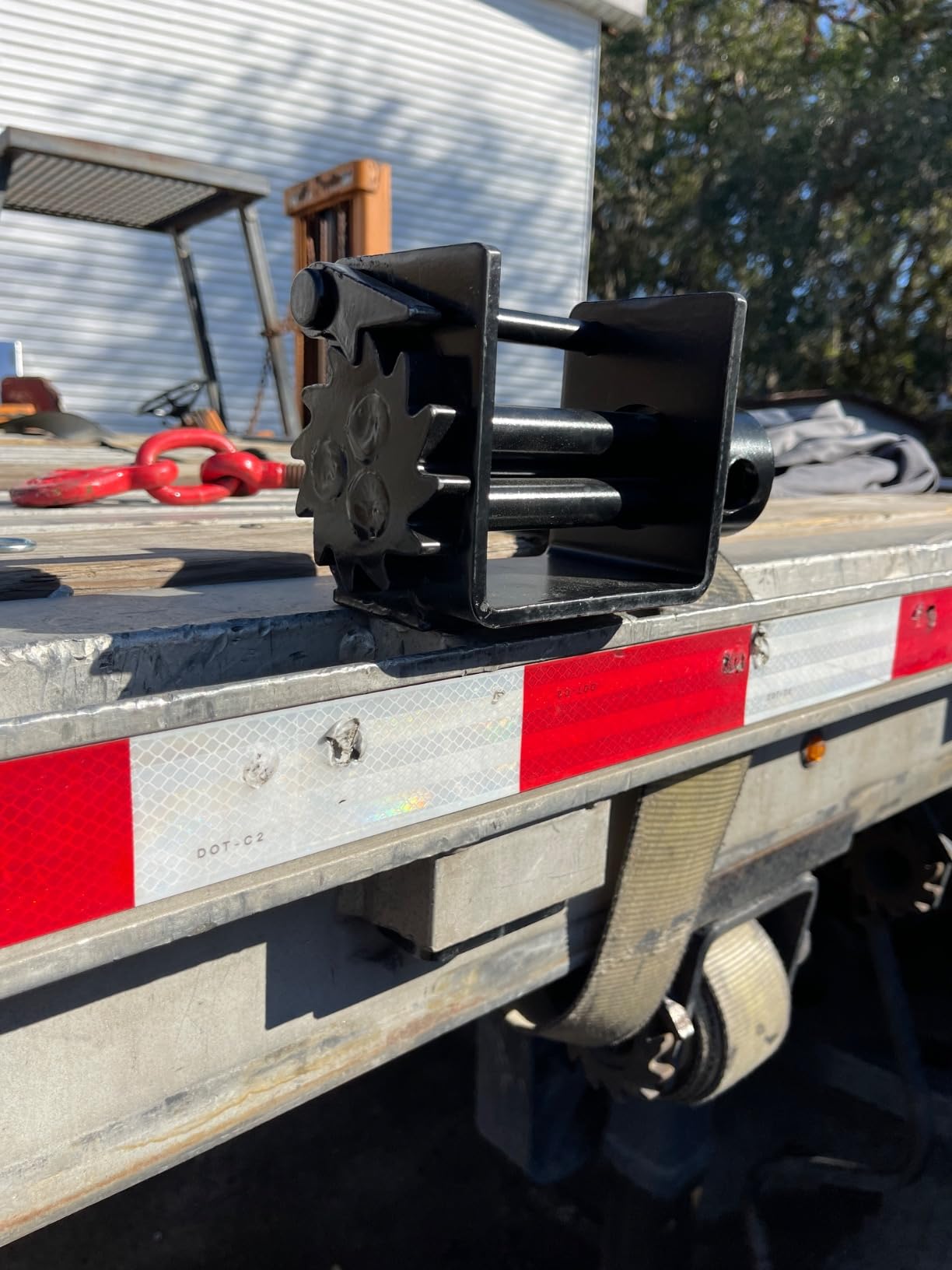
A fixed front winch is great right up until a load needs a pull point six feet further back. These stake pocket winches solve that, giving you 5,400 lb of working load limit each and 16,200 lb across the four, at any pocket on the trailer.
They fit common flush and outside stake pockets and have four cotter pin holes for placement, so you can set the height to match your strap angle. The black powder-coated carbon steel construction is the same material you would weld to a rail.
The most important line in the listing is the limit: they are for temporary placement, not for storing 30 feet of strap. Think of them as a pull point you set, tension, and remove, not as a permanent rack.
Feedback calls them convenient, and drivers like being able to carry a spare winch rather than depending on the one bolted to the headboard. That redundancy pays off on a multi-stop run where the second load needs a different pull point than the first.
At 42 lb for the set, this is heavy gear, though lighter than the two-set chain and binder package. I would install two on the trailer permanently and keep two in a saddlebag or a rear toolbox.
When a portable winch point changes the load
On a stepped load, a portable winch in the correct pocket lets you pull straight down instead of at an angle, which is where much of the lost capacity comes from on a badly planned setup. It also lets you re-anchor a strap after a partial unload without repacking the whole trailer.
On a multi-stop route, being able to move your winch to the second load is a real time saver and reduces the temptation to rush securement.
What to look at before you rely on them
Roughly 7 percent of reviews are one star, and the complaints centre on durability under hard use plus the storage limitation. Check the cotter pins and hardware at every walkaround, and never leave a loaded strap stored on the spool. If you need permanent strap storage, this is not the part for that job.
8. ENJ LASHING Edge Protectors 20-Pack for Cargo Corners
ENJ Flatbed Edge Protectors for Cargo Loads Corner Protectors Flatbed Used Together with Webbing to Protect Cargo, 20 Pack
20 piece set
9.5 by 6.2 by 3.7 inch high density polyethylene
Reusable, recovers shape after folding
Protects cargo and webbing from edges
Pros
- Twenty protectors cover multiple loads for years
- Large contact area at 9.5 inches
- Returns to shape after deformation
- Top rating in the roundup alongside the stake pocket D-rings
Cons
- Soft enough to deform under very heavy corner loads
- Polyethylene is not a substitute for steel on extreme edges
Edge protection is the cheapest insurance in the kit. Every strap or chain that crosses a hard corner will saw through itself or cut the cargo without one, and a 20-pack gives you enough for several full loads before you need to think about it again.
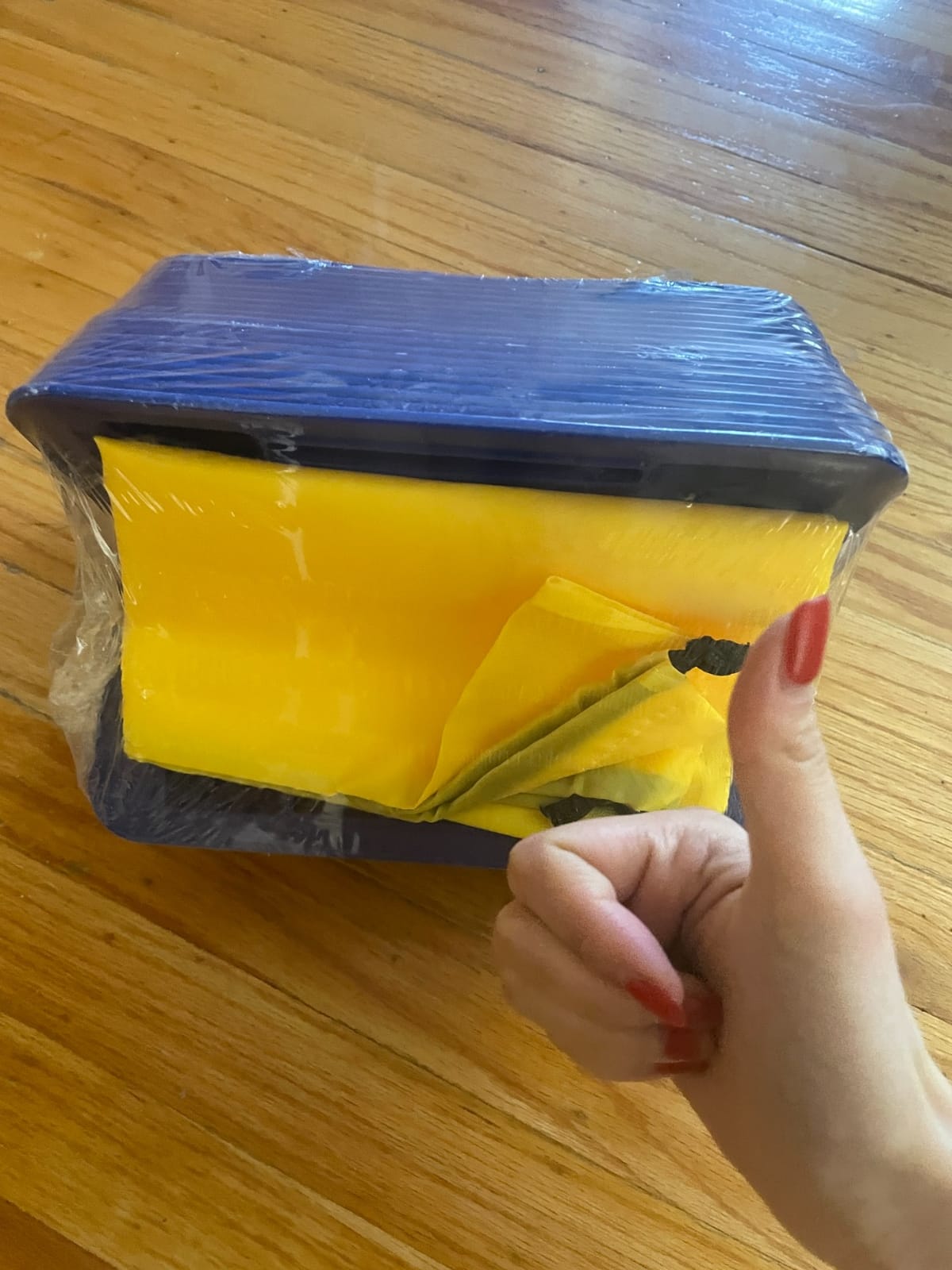
These are high density polyethylene at 9.5 by 6.2 by 3.7 inches, a large contact area compared with small corner boards. The useful property is that they fold and recover to their original shape, so after being compressed under a strap they go back instead of staying crushed.
Drivers on flatbed forums report that these perform as well as pricier options, and some use carpet under straps as a cheap field fix when a protector is not to hand. Having a real protector in the box beats the improvised version every time.
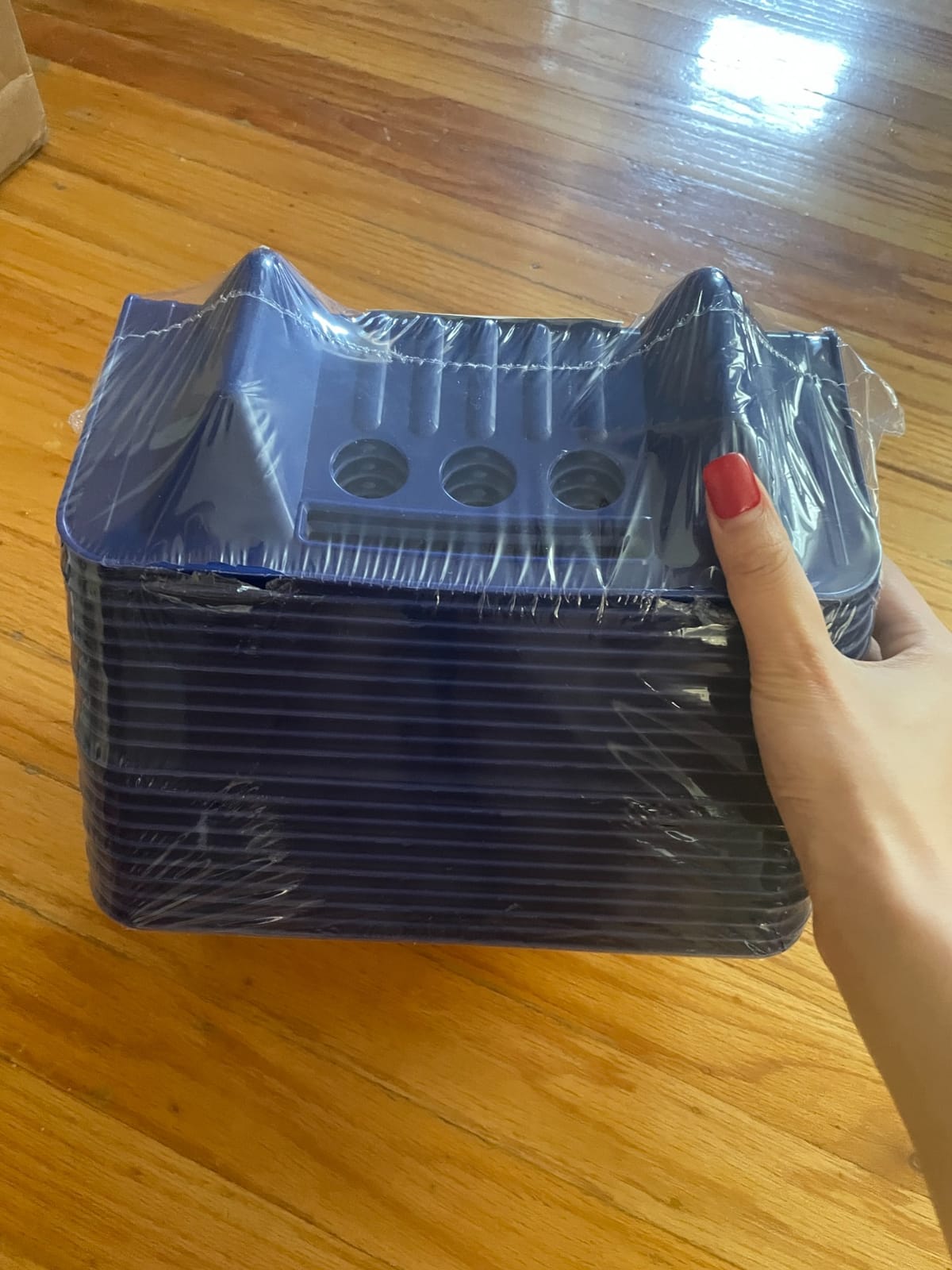
They are also reusable across loads, so the effective cost per haul drops fast. I keep a handful permanently on the trailer and the rest in a bag, and I place one under every strap or chain line that crosses an edge, no matter how short the run.
Colour choice matters more than people expect. Blue and black are both offered, and matching the deck or the freight makes them easier to spot during a walkaround at night.
Do you need them on every load
Yes, whenever a tie-down crosses an edge. Strapped palletized freight, sheet goods, plywood, banded steel, and concrete all need them, and a single unprotected strap line on a sharp corner is a cut-down waiting to happen. On smooth cargo with no corner contact, they are not doing any work.
For extra-heavy corner loads, use them in pairs so the load is shared across two edges rather than concentrated on one.
Where plastic falls short
The honest limitation is that polyethylene is soft compared with steel or composite V-boards. Under a very heavy concentrated corner load these can deform, and a deformed protector stops spreading the load the way it did new. Inspect them at each stop, and retire any that have taken a set.
9. Mytee Products 40 Inch Combination Winch Bar for Two Jobs in One Tool
Mytee Products 40″ Combination Winch Bar for Flatbed Trailer – Black & Orange Powder Coated Carbon-Steel Combo Winch Bar with Non-Slip Handle & Square Head for Chain Lever Binders
40 inch length
1-5/16 inch bar diameter
Carbon structural steel with alloy steel square head
Knurled grip with angled grooved tip
Pros
- Square head drives chain lever binders
- Knurled surface gives a firm grip
- 40 inch length covers most front winches
- Powder coat resists corrosion
Cons
- Sold as a single unit
- Weight is not stated in the listing
- Bar diameter is heavier than a plain strap bar
A winch bar is a hand safety tool as much as a tool. Without one you crouch over a strap ratchet with bare fingers on a wet deck, and that is exactly the situation that produces hand injuries and back strain. The combination design here handles both jobs: a 40 inch carbon steel bar with a square head for lever binders and a grooved tip for winch straps.
The 1-5/16 inch bar diameter is heavier than a light strap bar, which is a good thing for leverage and a mild annoyance when you lift it. The knurled grip is where your hand actually sits, and the ridged surface keeps it from slipping when your gloves are wet.
The angled grooved tip is shaped to drop into the winch notch and stay there, which is the difference between tightening a strap and having the bar shoot out from under the load.
Why the square head matters on a chain load
When you are using a lever binder instead of a ratchet binder, the square head gives the lever a socket to work against. That is why one bar covering both strap and binder work is worth the slightly heavier steel, especially if you carry lever binders for speed on repetitive loads.
Forty inches reaches most front-mounted winches, though it is a shorter reach than a 40.5 inch bar. Check your furthest winch before ordering.
Before it goes in the truck
Confirm the length fits your reach and that the square head matches your binder handle size. The listing does not state a weight, so if you load it on a ladder or work overhead with one bar, check the feel before you depend on it. Given the safety role, I would buy two so a damaged or lost bar does not end your day.
10. DC Cargo Mall 40.5 Inch Winch Bar for Maximum Reach
DC Cargo Mall 40.5″ Winch Bar – Extra Long Non-Slip Handle Use with Bolt-On or Weld Style Deep Storage Winch for Flatbed Trailers and Trucks
40.5 inch extra long length
Non-slip ridged handle
Carbon steel with chrome finish
Tapered angled end for winch engagement
Pros
- Longest bar in the roundup
- giving the most mechanical advantage
- Carbon steel with chrome finish resists corrosion
- Safety nipple stops the bar slipping out
- Works with bolt-on and weld-style deep winches
Cons
- Weighs 6.59 lb
- Heavy users report replacing one about once a year
Length is the whole argument for this bar. At 40.5 inches it is the longest option here, and extra length on a strap ratchet translates directly into more turning force from the same arm motion, which means fewer pulls to get a strap down to tension.
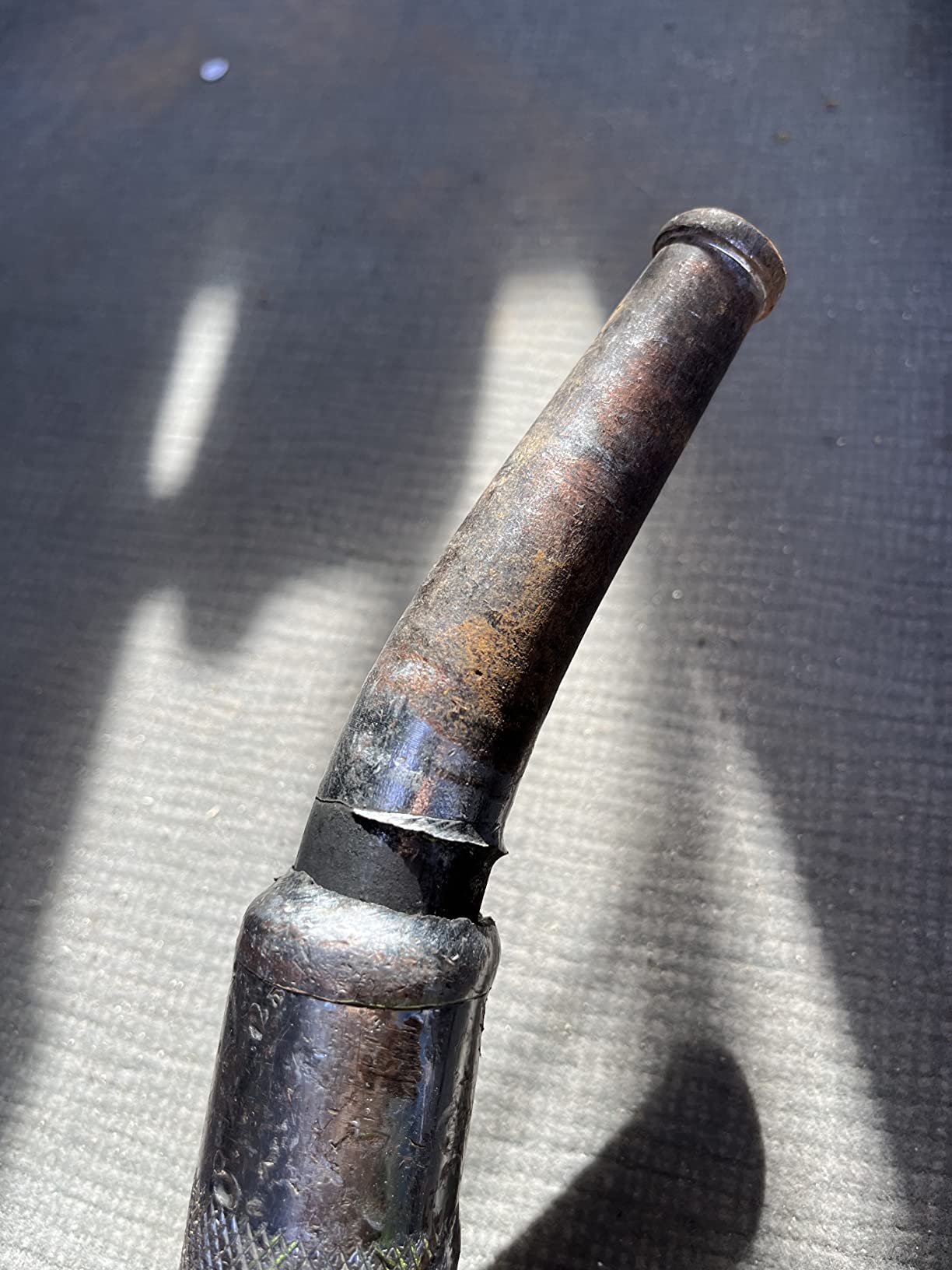
The handle is ridged rather than smooth, and the tip is tapered and angled to fit into a winch notch cleanly. A safety nipple at the end is the detail I care about most, because a bar that slides out of the winch under load is a bar that lands somewhere you do not want it.
Chrome-finished carbon steel holds up to weather and road salt, and it fits both bolt-on and weld-style deep storage winches, so it works with a factory front winch or a replacement rail winch.
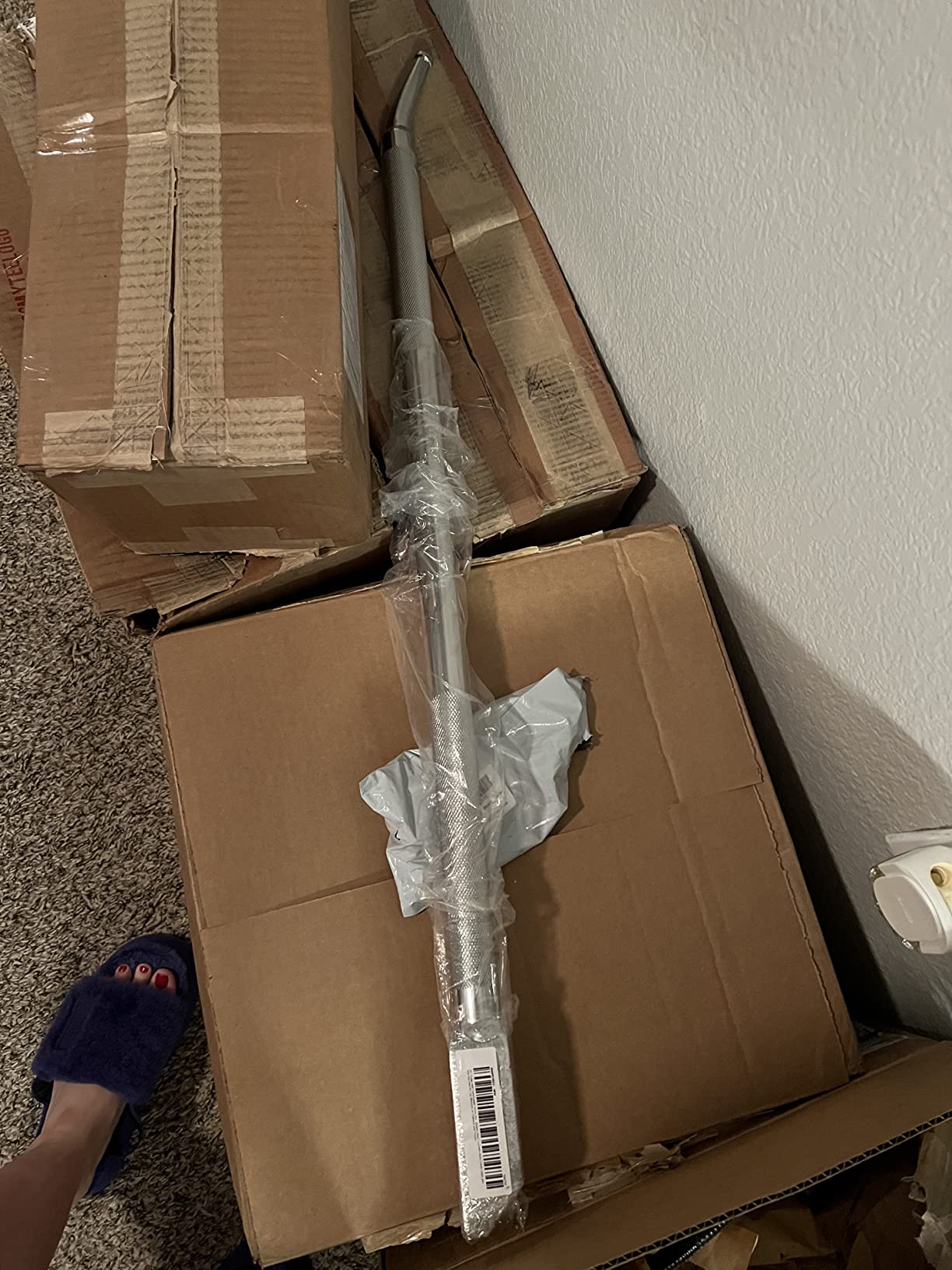
Feedback from commercial flatbed drivers is consistent on the leverage and grip, and the bar is described as correct in angle for flatbed winches. That combination of length and a working grip is what turns a two-minute strap job into a one-minute strap job, repeatedly, all day.
Drivers on equipment forums treat the bar as the single highest-value small purchase in a kit, and the injury-prevention argument is as strong as the speed argument.
When length actually changes your day
On a wide front winch mounted well forward of the trailer edge, a shorter bar means more force per pull and more body strain to compensate. On long coil or lumber loads where you are tightening six or eight lines in fading daylight, the extra reach pays for itself in fewer awkward positions and less fatigue.
It also helps when you are working a loaded strap down to the last quarter turn, which is where leverage matters most and where hand injuries happen.
Weight and durability to plan around
At 6.59 lb this is not a light tool, and some heavy users report replacing one roughly annually under abuse. Treat it as consumable equipment rather than a lifetime purchase, and keep a second bar on the trailer. A bent bar under load is a worse outcome than a spare one in the toolbox.
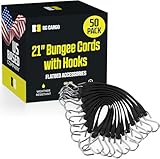
11. DC Cargo Mall Tarp Straps 50-Pack for Freezing Routes
DC Cargo (Pack of 50) Tarp Straps for Flatbed Trailers, 21″ Long Natural Rubber Bungee Cord Tie-Downs Ideal for Securing Tarps, Canvases, Cargo in Cold Climates | Tie-Downs w/Metal S-Hooks
50 pack of 21 inch straps
Natural rubber rated for cold climates
Zinc-plated steel S-hook ends
400 lb capacity per strap
Pros
- Natural rubber does not snap in freezing temperatures
- 50 straps covers many tarps at once
- Reinforced zinc-plated S-hooks
- Reusable and flexible
Cons
- Rubber degrades with long UV exposure
- S-hooks can slip where a ratchet would hold
If you run northern routes in winter, this is the tarp strap to buy. The material is natural rubber, chosen specifically because it does not stiffen and snap in freezing temperatures, which is the standard failure for cheaper bungee on a January tarp job.
Fifty straps at 21 inches long is a quantity that matters. A single tarp can consume a dozen, and losing the pack halfway through a cold morning because your last bungee snapped is a delay you will feel all day.
Each strap has a 400 lb load capacity and a zinc-plated steel S-hook at the end, and the set is reusable as long as the rubber stays flexible.
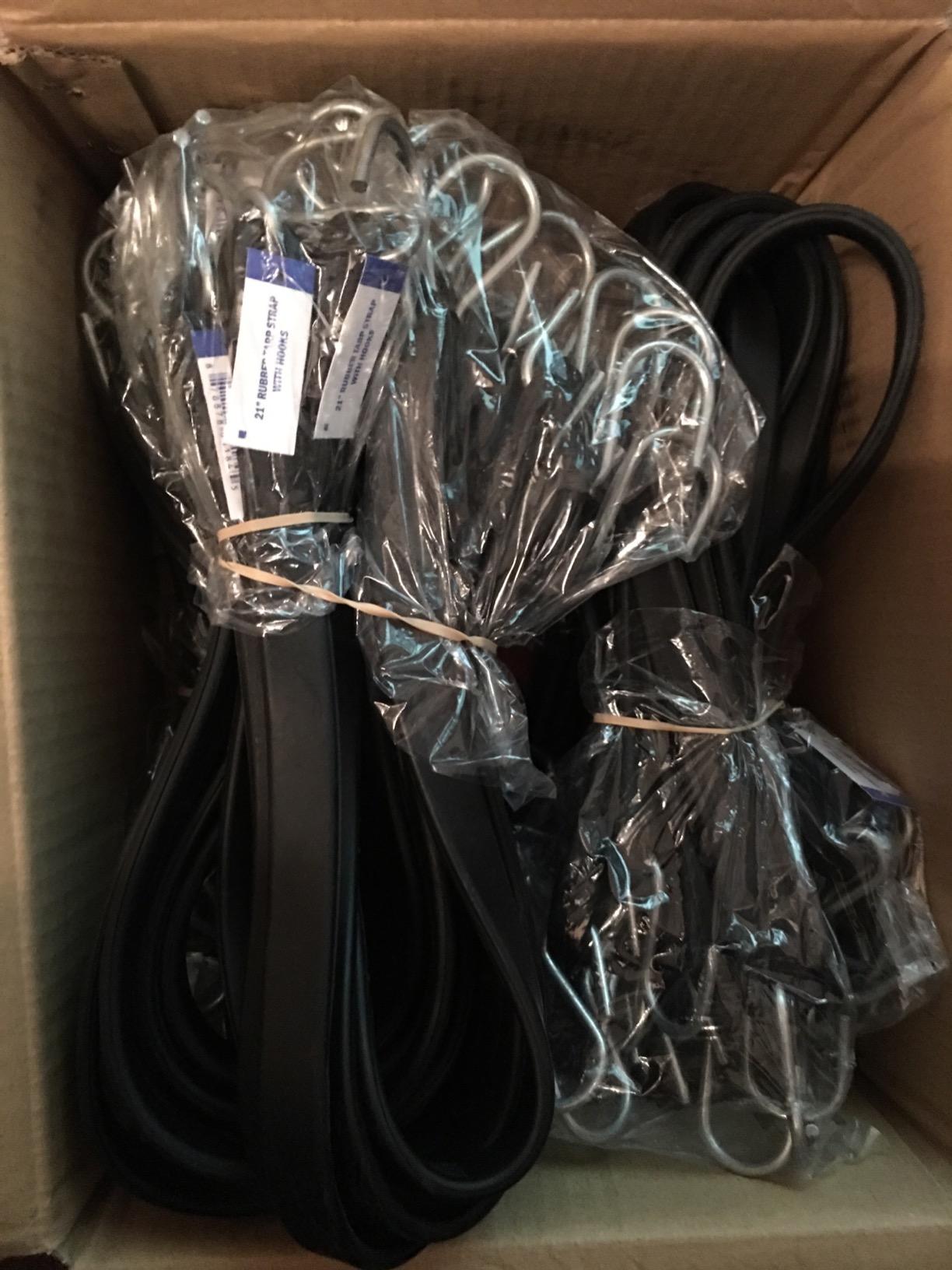
Feedback highlights the cold-weather performance first, then the bulk quantity and the versatility across tarps, canvases, and general cargo. Drivers running flatbeds, box trucks, and boats all use them for the same job of holding covering material down.
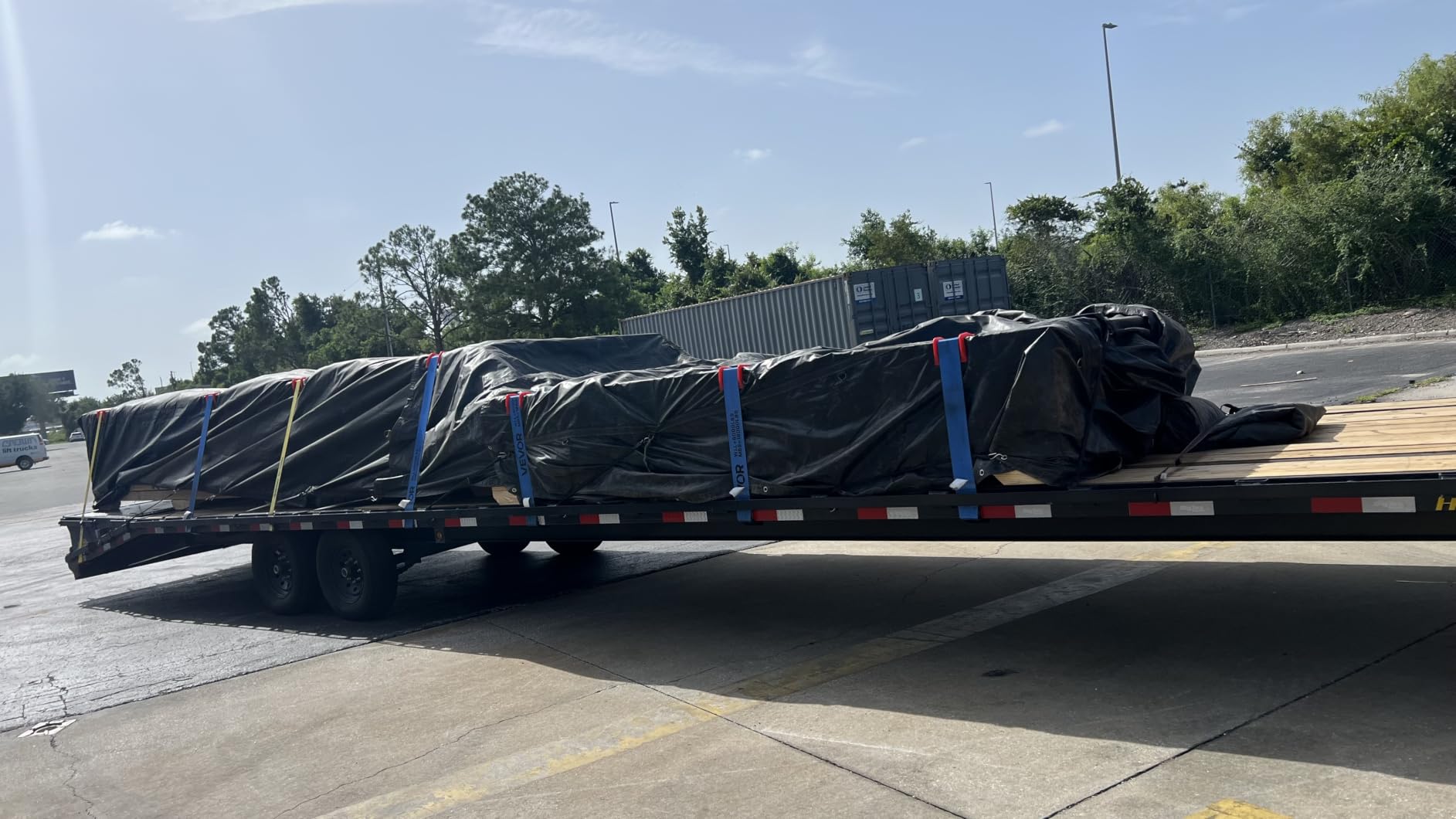
The important caveat, and one drivers raise themselves, is that tarps and bungees are weather protection. They are not tie-downs, and a load held only by bungees is not a secured load under the federal rule.
Why cold weather changes what you buy
Rubber that goes brittle below freezing will snap while you are standing on a snowy deck with a tarp flapping in the wind. That is exactly the situation where a snapped bungee sends a loose tarp across a highway. Natural rubber holds its flexibility in the cold, which is why this pack is built the way it is.
Keep a few spares in the cab during winter, because a snapped strap mid-route with a closed store in front of you is a long wait.
Watch for sun damage
UV exposure is the other enemy of rubber, and drivers report that tarp straps left in the sun all season go brittle. Store this pack out of direct sunlight, and replace any strap that has gone pale, hard, or shows surface cracking. S-hooks can also slip off a tarp edge where a ratchet strap would hold, so use them on the covering, not on the freight.
12. ROBLOCK 21 Inch EPDM Tarp Straps 10-Pack for Sun and Heat Exposure
ROBLOCK 21″ Rubber Tarp Straps with 150% Max Stretch, 100% EPDM Bungee Cords with Metal Crimped S Hooks, Ideal for Securing Tarps, Cargo, Canvases, Weatherproof (10 Pack)
10 pack of 21 inch straps
100 percent EPDM rubber with 150 percent stretch
UV protected and oxidation resistant
Stainless steel crimped S-hooks
Pros
- EPDM rubber rated for UV exposure and oxidation
- Stays flexible in freezing and hot weather
- 150 percent stretch gives strong tension
- 1900 reviews of long-term feedback
Cons
- S-hooks sometimes arrive unassembled and need a special tool
- Some packages arrive missing hooks
- 150 lb capacity is the lowest of the three tarp straps here
This is the southern and western answer to the previous pick. EPDM rubber is UV protected and oxidation resistant, so it holds up under long stretches of high sun where natural rubber eventually degrades, and the manufacturer describes it as roughly 30 percent thicker than standard straps.
Stretch of up to 150 percent lets a short 21 inch strap pull a tarp tight against a convex load, which is the situation a shorter strap handles badly. Load capacity is 150 lb per strap, which is plenty for holding tarp material and not enough to secure freight.
With 1,900 reviews, this tarp strap carries more owner feedback than the other two tarp strap options here, and that volume of reports is useful on its own because it shows how the rubber holds up over time.
Which tarp strap fits your route
Cold routes and freezing tarp jobs favour the natural rubber pack, since flexibility in the cold is the priority. Long sun-heavy routes favour this EPDM set, since UV and oxidation resistance is the priority. Drivers who split the year between both carry a pack of each.
For the tarps themselves, weight and material matter: 18 oz vinyl with a cold-crack rating around -40F for northern lumber loads, and lighter material for milder climates where it will not be stressed as hard.
The one thing to check on arrival
Multiple buyers report S-hooks arriving unassembled or missing from the package, and fitting them can need a special tool. Open the box before you leave the store, count the hooks, and assemble them at the trailer rather than at a customer yard. The stainless steel crimped S-hooks themselves are rustproof and hold up well once fitted.
Straps vs Chains: Which One Does Your Freight Need?
Straps are lighter, faster, gentler on painted and finished surfaces, and easier to inspect. Chains are heavier, tougher, and the only correct answer for steel, coils, and machinery where a sharp edge will cut webbing in a single haul.
The practical answer is that most flatbeds carry both, and the decision is made per load rather than per trailer. New drivers on flatbed forums say they learn this by watching real loads and riding with a trainer far faster than by reading the regulation text, which most of them describe as close to unreadable.
Two rules keep the confusion away. Webbing never crosses a sharp edge without a protector, and chain never carries a load that is better held with webbing, such as a painted machine surface. Everything else is judgement.
Chain Grade Explained: Grade 43 vs Grade 70 vs Grade 80
Grade 43 chain is the general-purpose tie-down grade many drivers own first, and it is not adequate for most flatbed securement. Grade 70 is the standard workhorse for flatbed and heavy hauling. Grade 80 is the strongest of the three, roughly 25 percent stronger than Grade 70 in the same diameter, and it costs more and is heavier to handle.
Veteran flatbedders name 5/16 or 3/8 inch Grade 70 as the baseline kit, which lines up with the aggregate working load limit math on a typical structural load. Grade 80 earns its place on the heaviest steel, machinery, and oversize work, and on anything where you want more restraint in a smaller package.
Using Grade 43 where Grade 70 is required is listed by drivers as a deal breaker they would refuse to ship with. Match the grade to the load and verify that the grade marking on the chain is readable at the walkaround.
How to Secure a Flatbed Load Step by Step
Work through these in order every time. The sequence matters because the last few steps are wasted if the first ones were rushed.
Inspect the deck, then inspect your gear. Retire anything with a cut, a missing tag, or a deformed link before it goes near the load.
Position the freight, then set the blocking and dunnage so it cannot slide before any tie-down is tensioned.
Count the anchor points you plan to use and check them against the tie-down count minimum for your cargo length and weight.
Place an edge protector at every corner where a strap or chain will make contact.
Attach the first lines, alternating sides, and run them at a downward angle so the load is pulled down rather than forward.
Set binders or ratchets, working from the centre of the load outward so tension is even across the whole piece.
Tarp if required, then re-check every line, because tarping often means leaning on and disturbing the load.
Walk it again at the first 50 miles, then at intervals of 150 miles or three hours, whichever comes first.
That last cadence is the one drivers most often skip and inspectors most often check. Securement that held when you left the yard is not the securement that arrived, especially after a hard stop at a light.
When to Retire Your Tie-Downs
Damaged gear earns no credit at roadside, so retirement criteria should be measurable rather than a feeling. Drivers list the following as non-negotiable.
Any cut, frayed, or fuzzy webbing, or any strap with a knot or a twist in it.
An unreadable or missing working load limit tag on a strap, chain, or binder.
Chain links worn past roughly 10 percent of their original thickness, or any deformed or cracked link.
Any chain or strap that contacted a sharp edge without a protector, until it has been inspected closely.
Grade 43 chain used where Grade 70 is required.
Rubber tarp straps that have gone hard, pale, or cracked from cold or UV exposure.
Binder handles that no longer hold tight, or ratchet mechanisms that do not fully release and lock.
Edge protectors that have taken a permanent set and no longer spread the load.
Photograph your completed securement at every stop. If freight shifts and damages the trailer, the photos are your evidence, and consistent securement across every driver in a small fleet is what stops a repeat citation from becoming a pattern.
Frequently Asked Questions
What are the requirements for securing flatbed cargo?
Under 49 CFR 393 Subpart I, cargo must be restrained against forward, rearward, lateral, and vertical movement, and may not shift more than half an inch. Tie-downs must meet the minimum count for the cargo’s length and weight, and their combined working load limit must equal at least 50 percent of the cargo weight. Both tests must be passed independently.
How many tie-downs do I need for a flatbed load?
At least one tie-down is required for cargo 5 feet or shorter, two for cargo over 5 feet up to 10 feet, and one additional tie-down for every 10 feet beyond that. Separately, the aggregate working load limit of all tie-downs must be at least half the weight of the cargo, so a long light load and a short heavy load can have very different answers.
What equipment is needed for flatbed trucking?
A working kit contains straps, transport chain, ratchet or lever binders, rated anchors such as stake pocket D-rings, edge protectors, a winch bar, and tarps with tarp straps. Ratings matter more than brands, because the stamped working load limit is what an inspector reads and what your aggregate WLL calculation is built on.
Straps or chains: which one should I use for my load?
Use web straps for palletized freight, lumber, and finished surfaces, and use transport chain for steel, coils, and machinery where an edge would cut webbing. Most flatbeds carry both. Webbing never crosses a sharp edge without a protector, and chain is the correct default for anything dense and abrasive.
How often should I check my load securement?
Re-check the load within the first 50 miles, then at intervals of 150 miles or three hours, whichever comes first, and always after a hard stop or after tarping. Also re-tension after any partial unload, because removing freight changes the geometry of everything still on the deck.
Do tarps count as cargo securement?
No. Tarp straps and bungees hold covering material against weather and wind. They are never a tie-down, and a load held only by bungees is not a secured load. Tarp and secure separately, then walk the whole load again because tarping disturbs the tie-downs.
When should worn chains and straps be replaced?
Replace straps with any cut, frayed, or fuzzy webbing, any missing or unreadable working load limit tag, or any strap with a knot or twist. Retire chain with links worn past about 10 percent of original thickness, or any deformed or cracked link, and retire rubber tarp straps that have gone hard or cracked.
How much should I budget for a first securement kit?
Build it in stages. Start with a set of rated anchors, four or six general purpose ratchet straps, a set of chain and binders, a pack of edge protectors, and a winch bar, then add bulk winch straps and tarp hardware once the trailer is earning. Buy the highest review count hardware you can afford, because untested gear costs more in a roadside delay than it saves.
Final Verdict for Flatbed Load Securing
Start with the Mytee Products 5/8 inch stake pocket D-rings, because rated anchors set the ceiling on everything else you can secure. Add the Everest 2 inch ratchet strap for general work and the VEVOR 4 inch winch straps for steel and heavy freight, then fill the gaps with the G80 chain and binder kit, a pack of edge protectors, and a long winch bar.
Two numbers decide whether the load is legal: the tie-down count for your cargo length and weight, and the aggregate working load limit of at least 50 percent of the cargo weight. Check both, every time, and retire any gear that fails the criteria above before it fails a roadside inspection. That discipline matters more than any single brand on this list.