
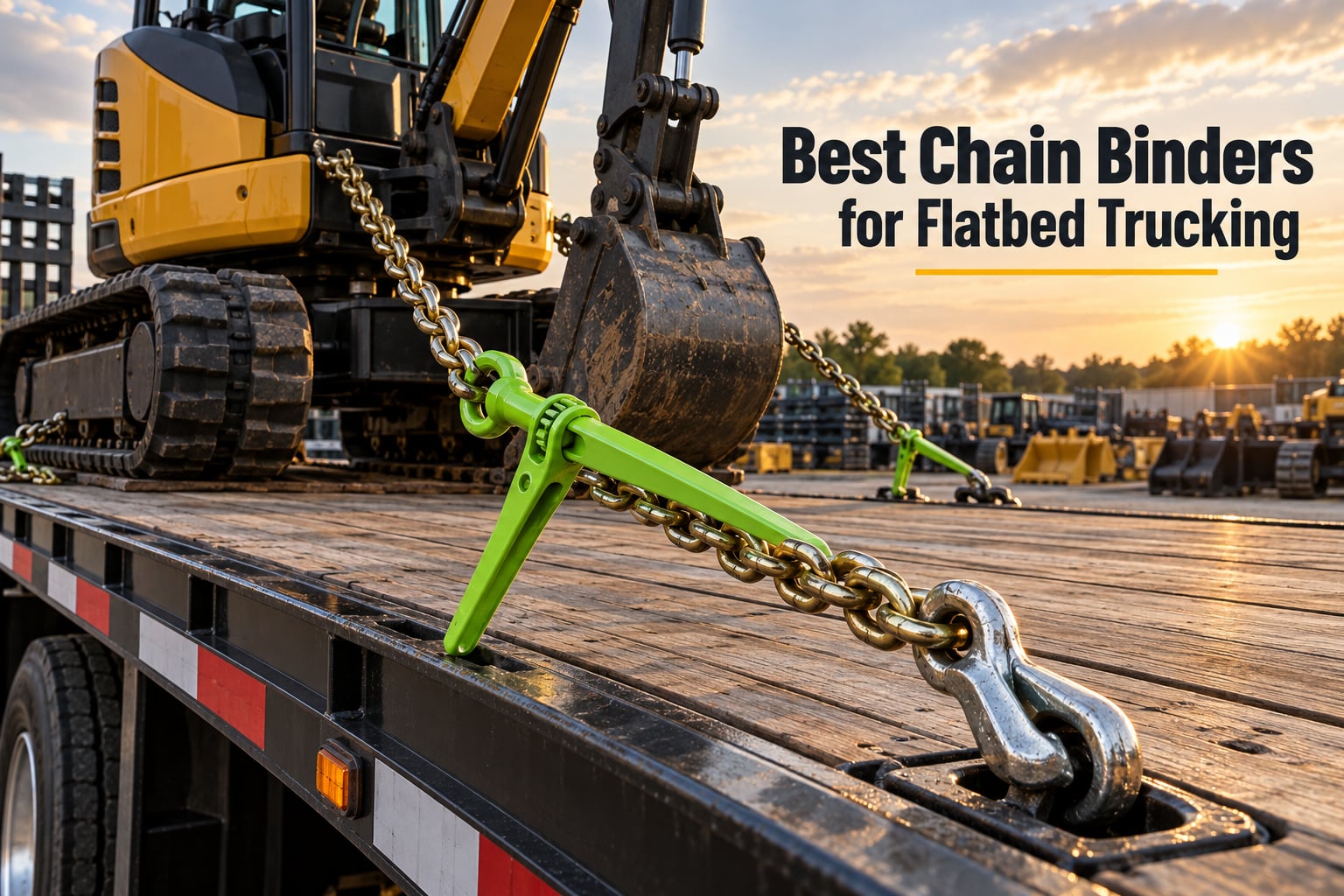
A chain binder is the tensioning device that pulls Grade 70 or Grade 80 transport chain tight over a load, and choosing the right one decides whether your securement passes inspection or gets you cited at the scale. There are four styles you will meet: ratchet, lever, over-center, and recoilless. A ratchet binder takes up slack in small, controlled strokes through a threaded body. A lever or over-center binder uses leverage and stores energy in the handle, which is why recoilless designs exist.
The best chain binders for flatbed trucking are not the ones with the biggest printed numbers. They are the ones whose working load limit matches your chain, whose hooks hold under road vibration, and whose handle you can still control when you are standing downhill on a wet dock at 5 a.m. The chain is always the weaker link in the pair, so a binder rated at 13,000 lbs does nothing for you if it is paired with 3/8 inch Grade 43 chain rated far below that.
We spent weeks comparing ten binders across the styles, chain sizes, and price bands that show up on flatbed duty: 5/16 inch to 5/8 inch chain, 5,400 lb to 13,000 lb working load limits, folding and detachable handles, and matched chain kits. Every binder below is rated against 49 CFR 393.106, the federal securement rule that sets the minimum four tie-down points and the 50 percent aggregate working load limit. If you are new to the gear, start with the styles section and the sizing math before you buy anything.
Table of Contents
Top 3 Chain Binder Picks for Flatbed Trucking in October


DC Cargo Chain and Binder Kit
- 4 chains and 4 binders
- 20 foot Grade 70 chain
- 5400 lbs binder WLL

The Peerless QuikBinder Plus is the safest all-round buy because it is the only binder here that combines a documented fleet-grade brand, a folding handle, and a stamped 7,100 lb rating with enough owner feedback to be confident it survives real work. The DC Cargo kit wins on value because you get four complete chain and binder sets in one box with 20 foot chains, which is the closest thing to a ready-to-work flatbed setup. The VEVOR 9,215 lb binder is the spec-sheet winner per dollar if you already own chain.
The Four Binder Styles You Need to Know
Ratchet binders are the default choice for daily flatbed work because tension arrives in increments you control. Lever binders are faster and store energy in the handle, which is faster in the yard and more dangerous on your hands. Over-center binders are the lever family with a locking cam, and recoilless designs add a mechanism that bleeds off that stored energy so the handle does not whip back when it releases.
Ratchet binder: threaded body, back-and-forth handle strokes, incremental tension, no stored energy, the safest default for daily chains.
Lever binder: over-center arm with a grab hook, one long pull to tension, fast but the handle snaps when released.
Over-center binder: lever geometry that locks past center for a positive lock, common on hotshot and logging work.
Recoilless binder: cam action that releases stored energy gradually, the answer to the kickback complaints that come up constantly on driver forums.
When you shop, filter on five things in this order. First, the working load limit has to meet or beat the chain you are pairing it with. Second, chain diameter has to physically fit the binder throat. Third, hook type decides whether the binder stays hooked under vibration. Fourth, the finish has to survive road salt if you run northern routes. Fifth, the handle has to fold, detach, or grip well enough that you can tension ten chains a day without wrecking your shoulder.
Driver forums make one point consistently, and it shaped our ranking: most owners replace chains constantly but keep a binder body for years. That is exactly backwards from how people shop, and it is why we weighted long service records and stamped specs over novelty features.
All 10 Chain Binders Compared in 2026
| Product | Specifications | Action |
|---|---|---|
| Peerless QuikBinder Plus Ratchet Binder 4-Pack |
|
Check Latest Price |
| DC Cargo Chain and Binder Kit 4 Sets |
|
Check Latest Price |
| VEVOR 9,215 lb Ratchet Binder 2-Pack |
|
Check Latest Price |
 Mytee Hi-Viz Green Folding Handle Binder 4-Pack Mytee Hi-Viz Green Folding Handle Binder 4-Pack |
|
Check Latest Price |
 SENKEYFE 5,400 lb Ratchet Binder 2-Pack SENKEYFE 5,400 lb Ratchet Binder 2-Pack |
|
Check Latest Price |
 AAIN 13,000 lb Ratchet Binder 4-Pack AAIN 13,000 lb Ratchet Binder 4-Pack |
|
Check Latest Price |
 VEVOR Grade 80 Chain and Binder Kit 2 Sets VEVOR Grade 80 Chain and Binder Kit 2 Sets |
|
Check Latest Price |
 Mytee Lever Snap Binder 9200 lb Mytee Lever Snap Binder 9200 lb |
|
Check Latest Price |
 Mytee 36 Inch Take-Up Ratchet Binder 2-Pack Mytee 36 Inch Take-Up Ratchet Binder 2-Pack |
|
Check Latest Price |
 VEVOR 12000 lb Binder with Detachable Handle VEVOR 12000 lb Binder with Detachable Handle |
|
Check Latest Price |
1. Peerless QuikBinder Plus Ratchet Binder – Best Overall Chain Binder for Flatbed Trucking
US Cargo Control Peerless QuikBinder Plus Ratchet Load Binders for 5/16 Inch – 3/8 Inch Grade 70 or 80 Chain – 7,100 LBS Working Load Limit, (4-Pack) Chain Binders, Folding Handle to Easily Tighten
7,100 lbs WLL
28,400 lbs breaking strength
5/16 to 3/8 inch chain
Folding handle
Pros
- Folding handle cuts trailer toolbox clutter
- Stamped size and WLL for quick inspection
- Three-position ratchet including free spin
- Meets DOT FMCSA CVSA and WSTDA guidelines
Cons
- Heaviest handling of the small-format binders at 44 lbs for four
- Needs 5/16 or 3/8 inch chain to reach its rating
Peerless has been a standard fleet-supplier name for decades, and the QuikBinder Plus is the reason drivers name it in forum threads about which brand their whole operation standardized on. This is a ratchet binder with a folding handle, which is the feature that decides it for daily flatbed work: after tensioning, the handle folds flat and the binder lives in a trailer toolbox instead of swinging around loose.
The stamped WLL and chain size are the two numbers an inspector actually looks for, and both are forged into the body here rather than printed on a label that peels off. Owners running this binder report that the three-position design, ratchet extension, ratchet take-up, and free spin, saves real time on awkward loads where you need to ratchet in small bites instead of fighting a long stroke.
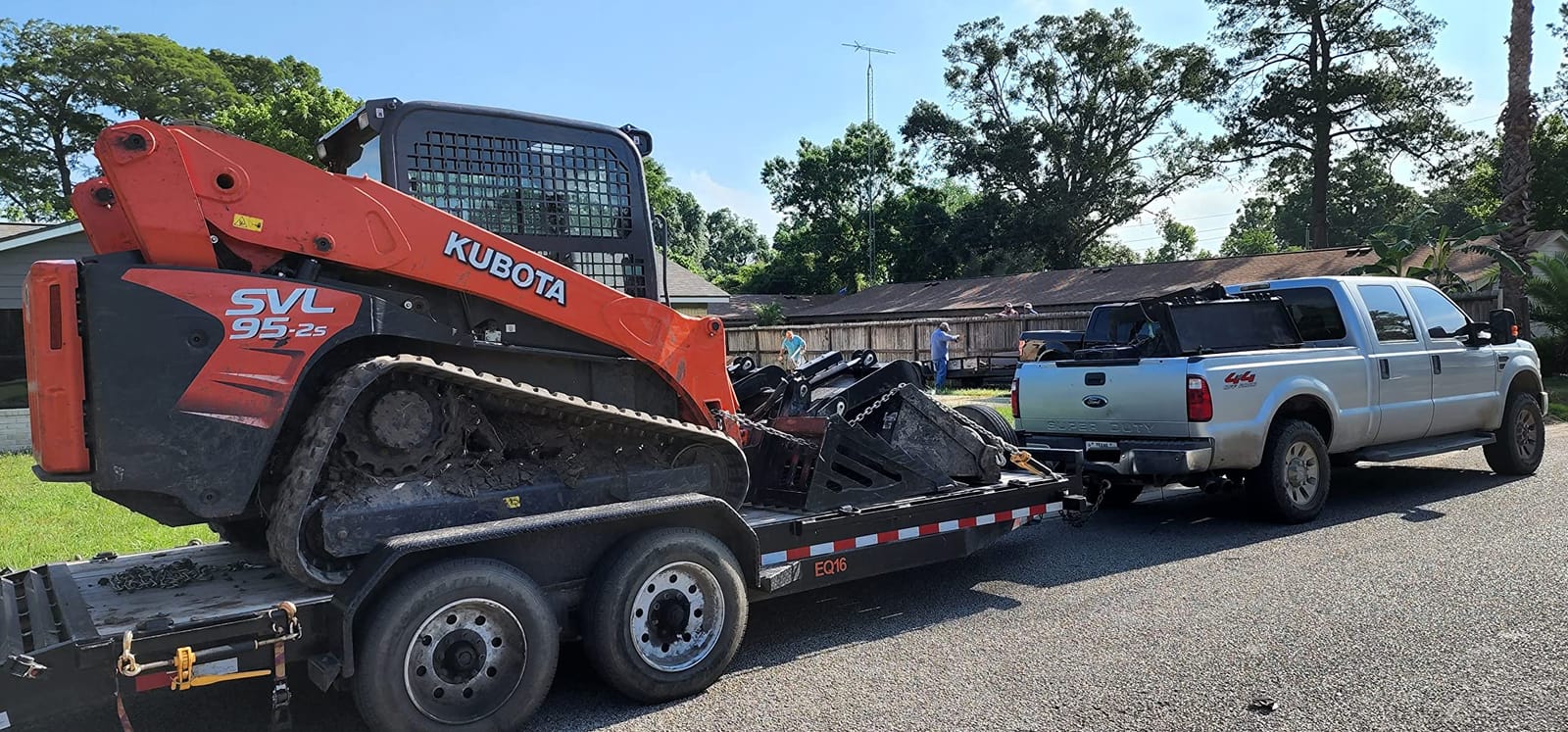
The rating on this listing sits at 4.8 out of 5 across 172 reviews, with the bulk of the feedback in the five-star range, and the praise clusters on build quality and compliance rather than on a single clever feature. That is what you want in a binder: nothing flashy, just a body that stays true and hooks that stay closed.
Its ceiling is honest, though. At 7,100 lbs working load limit it covers 5/16 inch and 3/8 inch Grade 70 or 80 chain, which is most skid steers, mini excavators, compact track loaders, and light equipment, but it is not the tool for a dozer sitting on 3/8 inch chain at full tension. Do not stretch past the stamped number to make a bigger load fit.
What this binder does well on a flatbed
The folding handle is the reason this binder wins the general category. If you chain up ten times a day across multiple stops, the difference between a handle that folds to 9 inches of travel and a fixed handle is real, and owners who switched to folding designs report that it also stops the binder from chalking the deck when it slides around loose behind a bulkhead.
Free spin position is the underrated part. You can run the take-up in fast to close the last few inches of slack, then drop into ratchet take-up for the controlled final pull that actually sets your tension.
Where it falls short
Four binders at 44 lbs is heavier than you expect at the truck scale, and the four-pack format means you are committing to a full set whether or not you run that many tie-down points. If you only ever secure two points, a two-pack is a better fit.
It is also strictly a small-chain binder. If your regular freight is a grader or a dozer, step up to the 1/2 inch and 5/8 inch class so the chain, not the binder, stays the weak link you planned for.
2. DC Cargo Chain and Binder Kit – Best Complete Four-Set Kit
DC Cargo Chain Binder Kit (4 Sets) | 5/16″ Grade 70 Extra Long 20 Foot Chain – and Load Binder Set | Heavy Duty Ratcheting Chain and Binder | Load Chain and Binders – 4,700lb Working Load Limit As Set
4 sets included
20 foot 5/16 inch Grade 70 chains
5,400 lbs binder WLL
Clevis grab hooks
Pros
- Only kit that covers all four tie-down points out of the box
- 20 foot chains give real reach around machinery
- US-based company with responsive parts support
Cons
- Package is over 120 lbs and needs two people
- Only 5400 lbs per binder
- Some owners had to bend the cotter pins
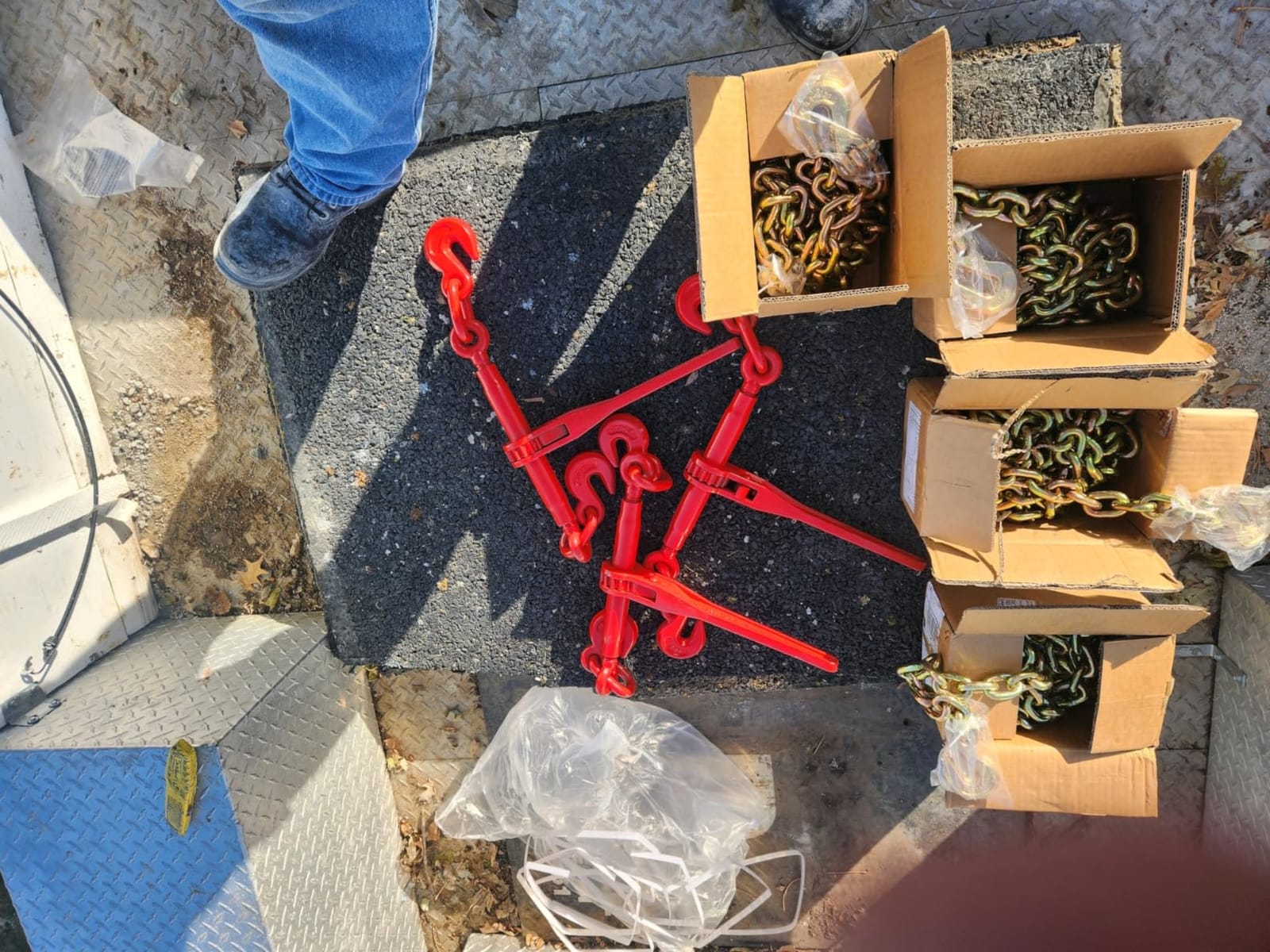
This kit is the shortest route to a legal, complete securement setup for a flatbed, and it is the most-reviewed product in our roundup with 416 reviews at 4.7. You get four 20 foot Grade 70 chains and four ratchet binders, each with clevis grab hooks, sized as a set at 4,700 lbs and rated 5,400 lbs per individual binder.
Chain length is the reason this kit beats the other bundles. Twenty feet lets you wrap around a compact track loader or get enough wrap on a mini excavator without stretching the chain thinner than its rating. Owners comparing this against a local equipment dealer consistently find the total cost of the matched set beats buying pieces piecemeal.
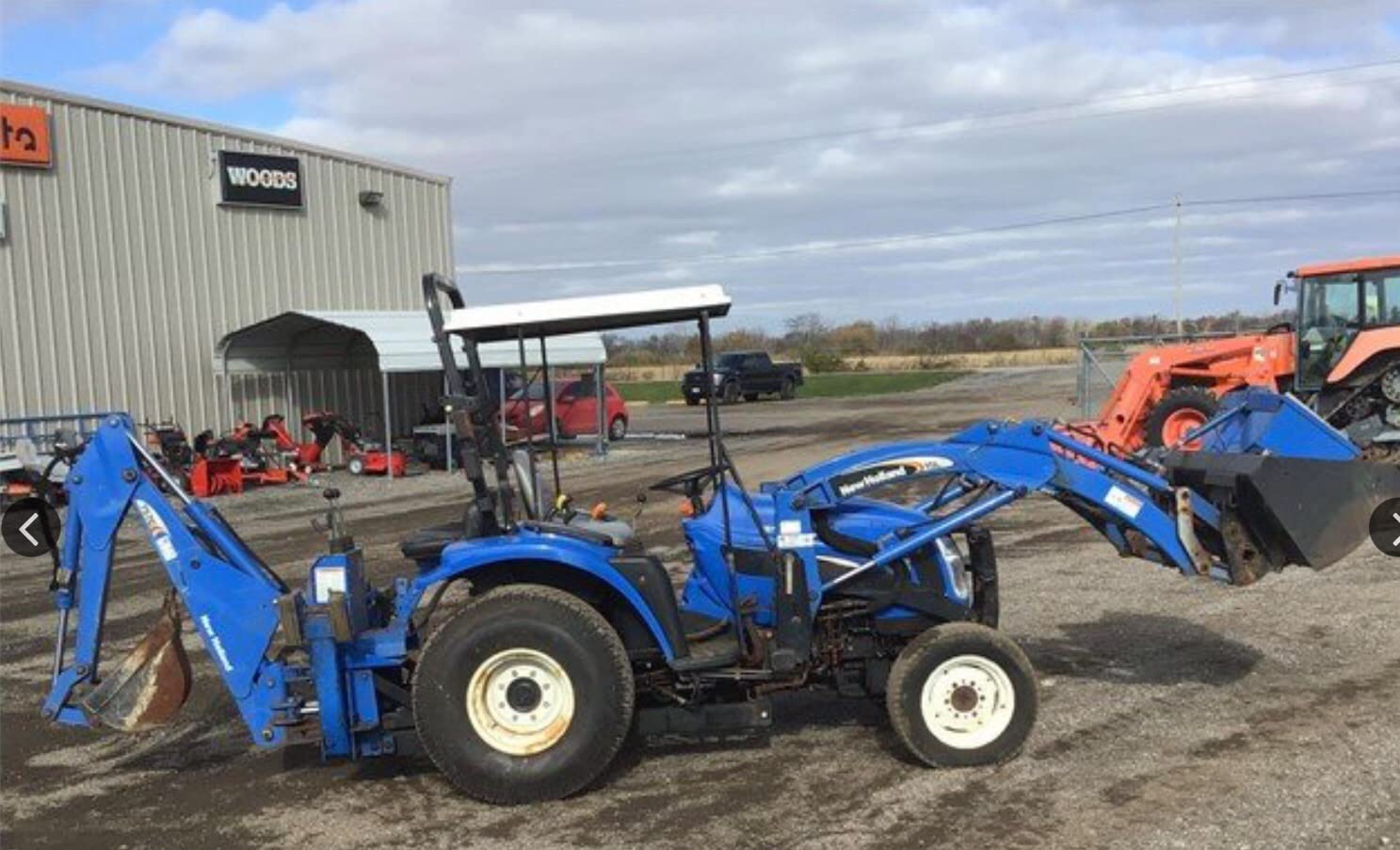
Reviewers also call out the service side. A US-based company that will ship a replacement cotter pin or a single missing hook saves a driver a parts store run, and that matters more than people expect when a binder fails two hours before a pickup appointment. The yellow zinc chromate finish also held up better than painted-only competitors in salt and mud.
The math is straightforward for planning purposes: four 5,400 lb binders give you 21,600 lbs of aggregate working load limit, which clears the 50 percent rule for loads up to roughly 43,000 lbs when all four are rated and used correctly. Real loads often go light, so you have headroom.
Why the four-set format matters
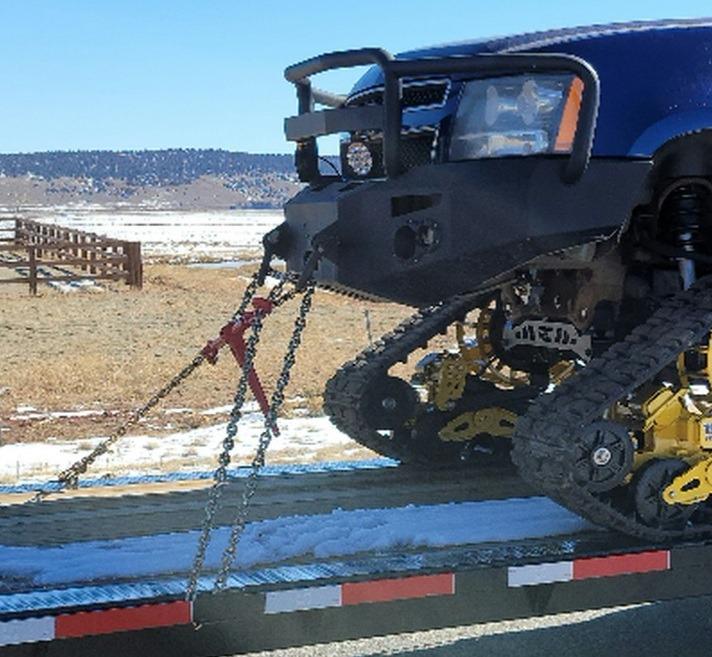
Federal securement rules assume a minimum of four tie-down points on an article over a certain length, and drivers who show up with two chains and two binders end up waiting at the dock while somebody drives to the truck stop. This kit is sized to the rule instead of the budget, and the 4,700 lb as-a-set rating is the number to plan against rather than the per-binder number.
Clevis grab hooks on both the chains and the binder ends are the right call for machinery with a defined hard point. They do not swivel, so they stay put under vibration, but they need a real structural anchor rather than a soft loop of bodywork or a piece of frame with paint in the way.
What to watch out for
At 120.7 lbs the package is genuinely a two-person load and the shipping weight is a real handling cost you should plan for. Have the parts counter or a shop buddy meet you, because a dropped binder on a concrete yard is a bad afternoon.
A few owners found the cotter pins needed bending to sit tight, and a handful felt the binder came in smaller than the listing photos implied. Check the throat opening against your chain diameter before you rely on it for a mixed fleet.
3. VEVOR 9,215 lb Ratchet Binder – Best High-Working-Load Two-Pack
VEVOR 9215LBS 3/8″ – 1/2″ Ratchet Binders 9,215 LBS Secure Working Load, G70 Hooks and Adjustable Length, for Grade 70-80 Chains, Tie Down, Hauling, Towing, 2-Pack, Red
9,215 lbs WLL
33,069 lbs breaking strength
3/8 to 1/2 inch chain
14 inch handle
Pros
- Highest working load limit in the small-format class
- Accepts 3/8 and 1/2 inch chain for a wide range of jobs
- Red powder coat resists salt and mud
- Adjustable hook-to-hook distance
Cons
- Sold as a 2-pack only
- A noticeable share of reviews land at three stars or lower with durability complaints
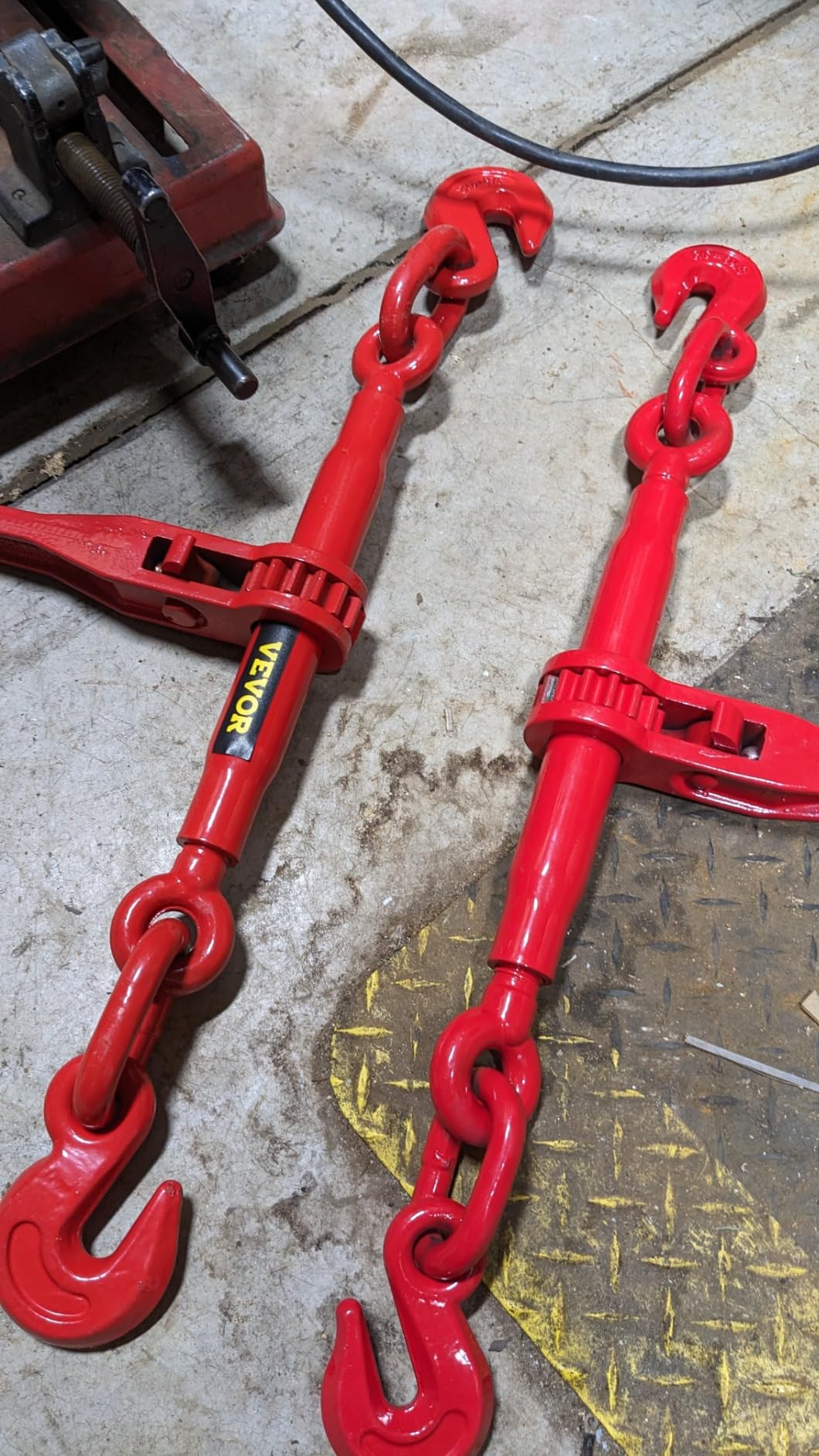
The single biggest reason to look at this binder is the number stamped on it. A 9,215 lb working load limit and a 33,069 lb breaking strength on a binder that accepts both 3/8 inch and 1/2 inch chain puts it in territory usually reserved for heavier hardware, and at 4.6 stars across 157 reviews the feedback supports the spec sheet more often than not.
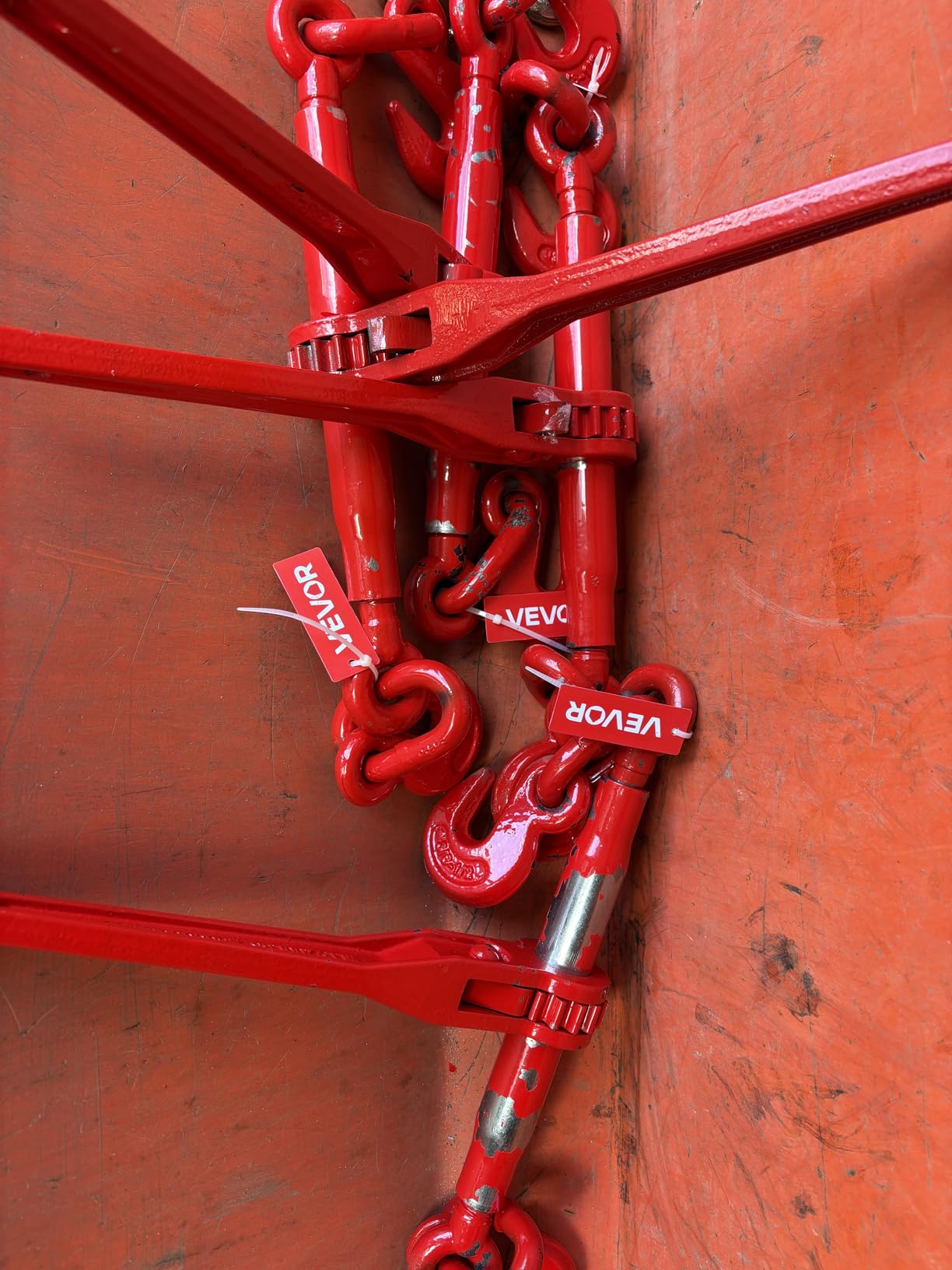
A 14 inch handle gives you more pull per stroke than a standard short handle, which is the difference between a smooth final tension and a cheater-bar moment. The ratcheting gear and pawl design is the safety piece here: the pawl holds position so the mechanism does not creep when you stop to move a binder or adjust a hook.
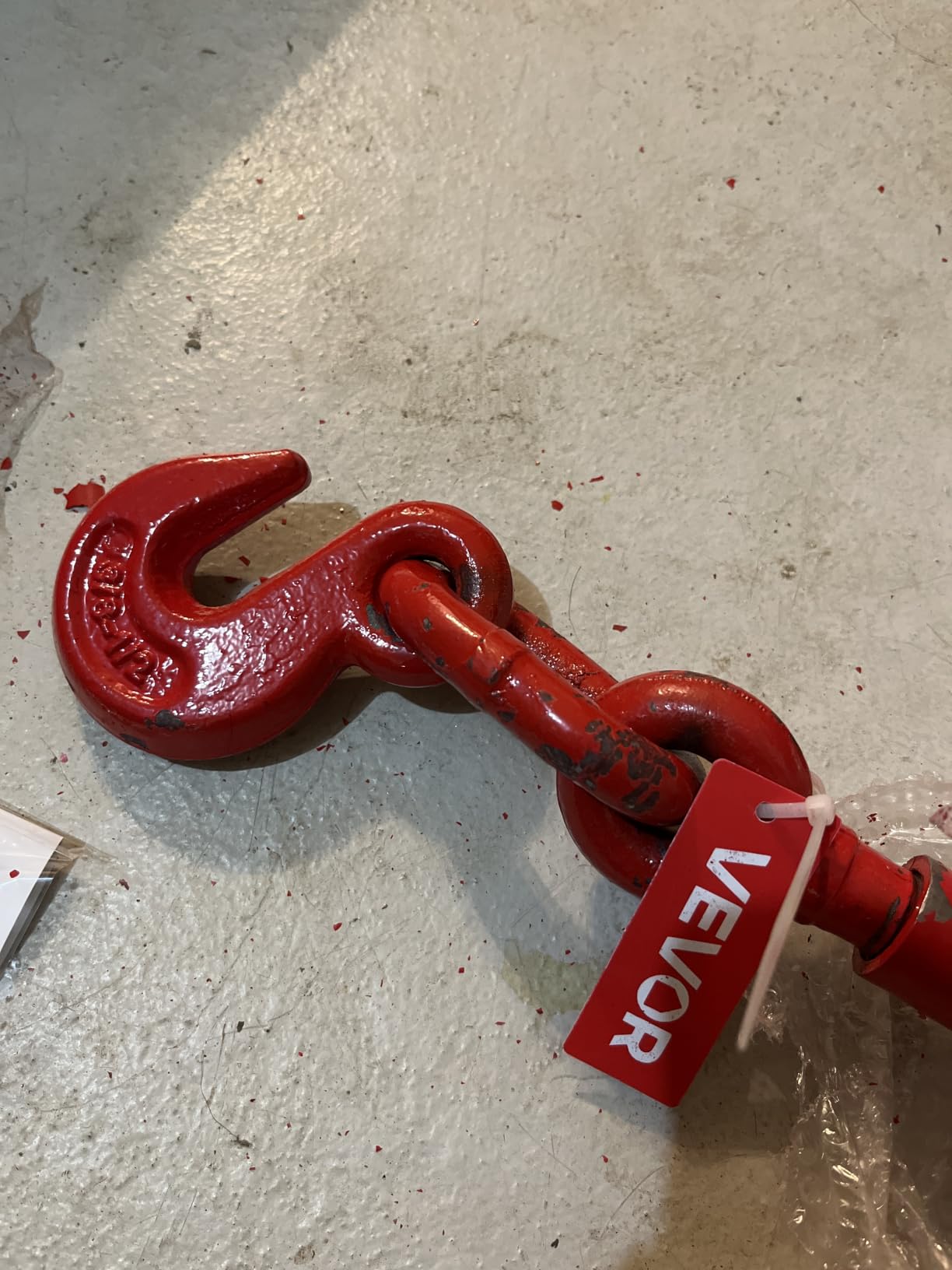
The adjustable hook-to-hook distance is more useful than it sounds. It lets you set the binder for a narrow machine track or a wide frame without swapping hardware, and drivers moving compact track loaders and mini excavators report that the range covers most of what they see on a hotshot deck.
Where the review data gets mixed is durability. A meaningful slice of ratings sits at three stars or below, and those reports cluster around long-term use rather than first impressions, which is the honest trade-off on any binder in this class.
Where this binder earns its place
If you haul one machine type across a wide weight band and you already own your own chain, this is a strong pairing. A 9,215 lb WLL binder on 3/8 inch Grade 70 chain gives you an assembly rated well above the chain, which is the correct order, and it lets one binder cover skid steers and compact track loaders without a second purchase.
The red powder coat is worth calling out for northern routes. Powder coat over steel holds up against road salt better than a thin paint film, and it is a quick visual check: if the red is still intact at the hook throat, the steel underneath almost certainly is too.
Where it will disappoint you
Two binders is not a full set for a flatbed that needs four tie-down points, so budget for a second two-pack or plan your coverage around two working points and use direct frame securement elsewhere. That is a real limitation for anyone who wants one purchase to finish the trailer.
Those lower-rated durability reports are also why this is not our top pick. If the binder body is going to live for a decade, buy from a brand with a serviceable record and a stamped plate you can read, not from the highest number on a listing.
4. Mytee Hi-Viz Green Folding Handle Binder – Best Binder for Night and Dock Work
Mytee Products 4 Pack 5/16″ – 3/8″ Hi-Viz Green Heavy Duty Folding Handle Ratchet Load Binder w/Grab Hook 7,100 lbs WLL | Tie Down Hauling Chain Binders for Flatbed Truck Trailer
7,100 lbs WLL
28,400 lbs breaking strength
Hi-Viz green finish
6 inch take-up
Pros
- OSHA safety green finish is visible in low light and at the scale
- Padlock slot lets you secure the handle against tampering
- Vinyl coated grip stays comfortable in cold weather
- Four binders cover a full set
Cons
- Newer design with less long-term field history
- Only handles 5/16 and 3/8 inch chain
- Take-up is shorter than the extended-throat designs
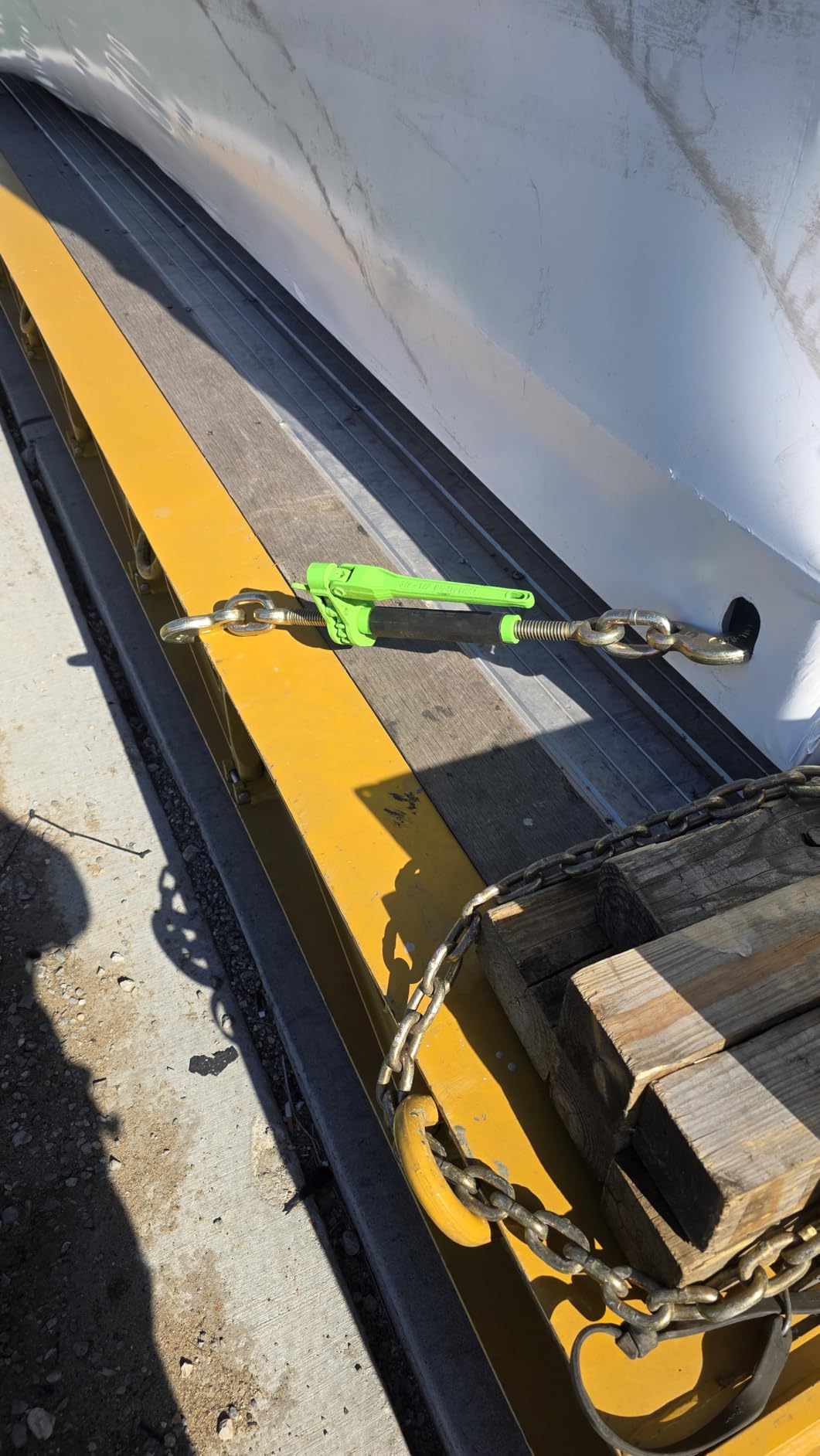
Color is a safety feature, not a style choice, and the OSHA safety green finish on this binder is the reason it earns a slot in a roundup that otherwise reads like a spec sheet. On a pre-dawn pickup, a fluorescent binder is visible from the ground while you are walking the length of a trailer, and at a scale house it is easy to point at.
Underneath the finish it is a conventional 7,100 lb ratchet binder rated for 5/16 inch and 3/8 inch Grade 70 or 80 chain, with a 28,400 lb breaking strength, a 6 inch take-up, and a folding handle that closes down to 9.5 inches. That is the right number of features: enough to do the job, nothing decorative.
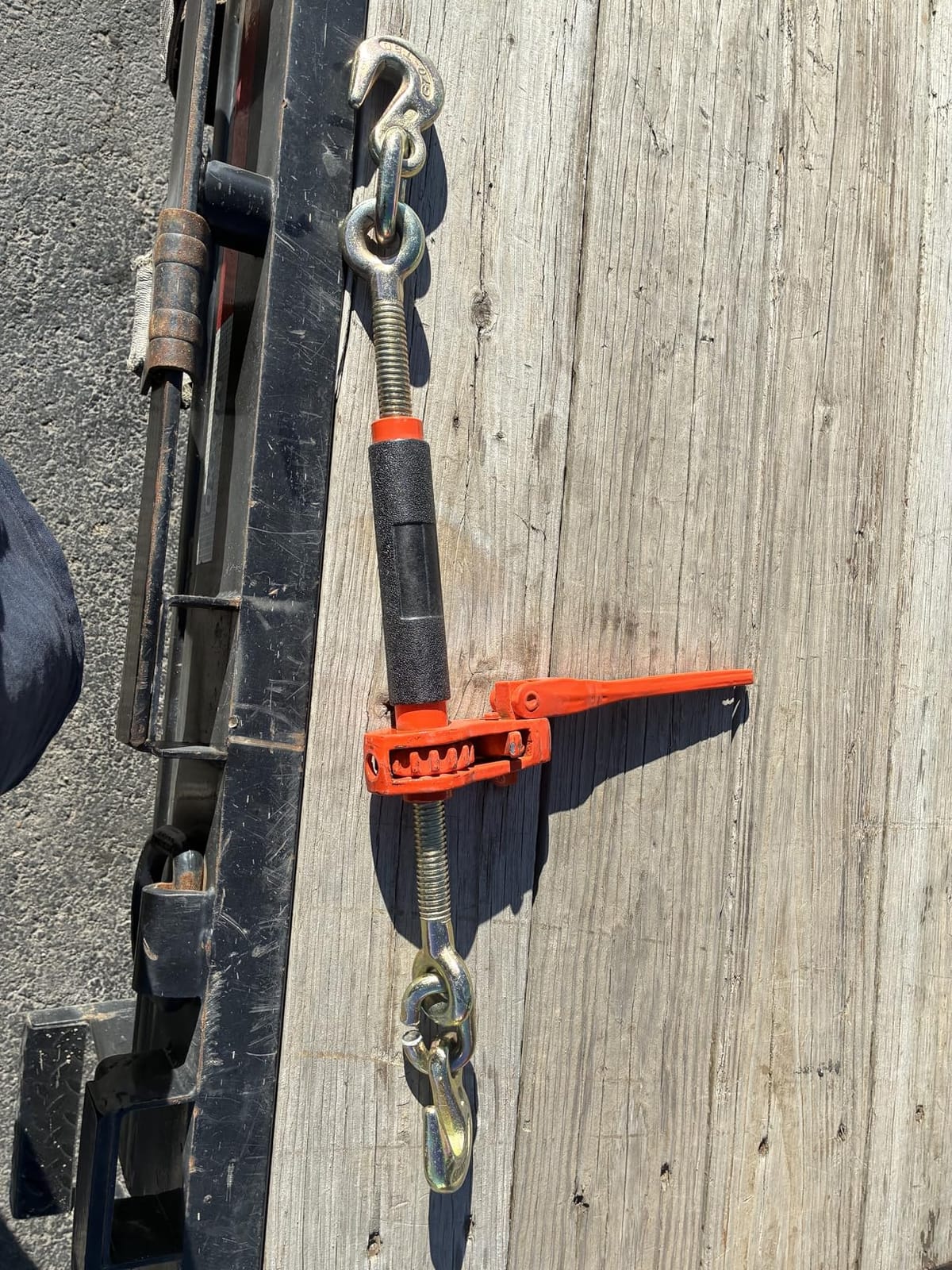
The padlock-compatible slot on the folding handle is a detail that fleet buyers notice. Locking the handle closed stops a loose binder from rattling against the deck or being grabbed by someone standing on a loaded trailer at a stop, and it takes seconds to apply on a hotshot or multi-stop route.
Zinc-plated grab hooks and a vinyl coated grip round out a build that reads as deliberate. The grip matters more than people expect in cold weather: bare steel handles get cold enough to make fine tension control hard, and a coated grip keeps your hand reading the take-up properly.
Who should buy this one
Anyone running pre-dawn pickups, working a step-deck in low light, or splitting freight across many stops a day will get more out of the hi-vis finish than out of a modest spec bump. Visibility is a practical safety gain that costs nothing at tension time.
It is also the one four-pack in this roundup you can buy without committing to a specific chain diameter beyond the common sizes. At 5/16 and 3/8 inch, that covers most compact equipment work, and the four-binder count matches a four-point setup.
Where it falls short
This design is recent, which means the long-term field record is still being written. Binders get retired for thread wear and handle distortion after years, and newer products simply have not been through that cycle yet, so treat the first inspection interval more seriously than usual.
Six inches of take-up is short compared with the extended-throat designs on this list. It is fine for machinery where you can reposition the anchor, but if your load has a fixed and awkward geometry you will spend time setting up rather than tensioning.
5. SENKEYFE 5,400 lb Ratchet Binder – Best Entry-Level Ratchet Set
Ratchet Chain Binders 5/16” – 3/8‘’, 2 Pack Load Binders with G70 Grab Hooks, Tie Downs for 5/16 Inch Transport Chain, 5400 Pounds Working Load Limit- Heavy Duty Ratchet Binders for Towing
5,400 lbs WLL
19,000 lbs breaking strength
5/16 to 3/8 inch chain
15 inch handle
Pros
- Long 15 inch handle gives strong pull from a light frame
- No snap-back or recoil mechanism to surprise you
- Six color options including high-visibility
- Releases without extra tools
Cons
- Lowest working load limit among the ratchets here
- 7 percent of reviews are one star with durability complaints
- Only 5/16 and 3/8 inch chain
This is the binder to buy if you are putting together a first set, working lighter freight, or replacing a binder that has stripped its threads. It is forged alloy steel, rated 5,400 lbs with a 19,000 lb breaking strength, accepts 5/16 inch and 3/8 inch Grade 70 chain, and it holds a 4.5 rating across 131 reviews.
The 15 inch handle is the quiet advantage. A longer handle means more pull per stroke, so you can reach a proper final tension without reaching for a cheater bar, and cheater bars are exactly what owners use to turn a normal ratchet into a destroyed threaded body.
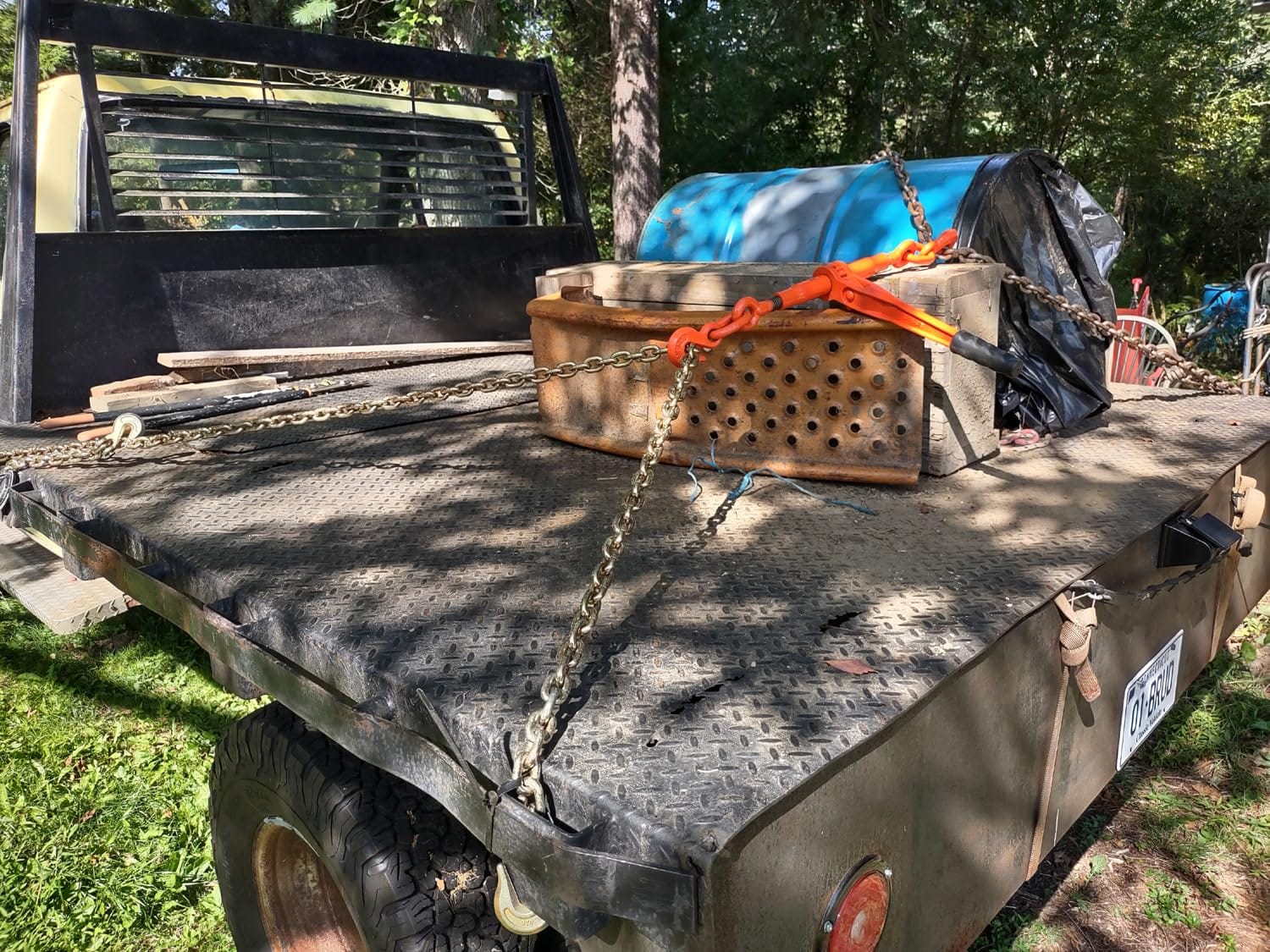
Because it is a ratchet rather than a lever, there is no stored energy in the handle to release. That removes the single most common injury complaint drivers raise about binders, and it means the tool behaves the same whether you are in a yard or on a public road.
It also releases without tools, which speeds up re-tensioning after the mandatory check inside the first 50 miles. Owners on multi-stop routes appreciate that because the alternative is digging a wrench out of the toolbox for every adjustment.
Best used for
Skid steers, compact equipment, landscape trailers, and any load where the chain, not the binder, is doing the limiting. The 5,400 lb WLL is the standard working figure for a 5/16 inch Grade 70 assembly, and a ratchet binder sized to match is the correct pairing rather than an under-spec compromise.
Color choice is a minor but real benefit. With options across green, orange, gold, and red, you can match binders to a fleet color scheme so a missing binder is obvious during a walk-around.
Where it is the wrong buy
Do not put this on a dozer, a grader, or a 20,000 lb machine on 3/8 inch chain. The working load limit is the lowest among the ratchets in this roundup, and the 7 percent one-star share in the reviews points at durability complaints on long-term use rather than a defective batch.
It is also a two-pack. If you need four tie-down points, buy two and treat it as a set rather than assuming one purchase closes out your securement equipment.
6. AAIN 13,000 lb Binder – Best Binder for Dozers and Graders
AAIN 1/2″-5/8″ Load Binders, 4 Pack Ratchet Load Binders 13,000 LBS WLL
13,000 lbs WLL
1/2 to 5/8 inch chain
Forged steel handle
Free spin adjustment
Pros
- Highest working load limit among the ratchet binders we tested range
- Forged steel handle built for real force
- Free spin speeds up the initial take-up
- Tamper resistant padlock hole
Cons
- Only fits 1/2 inch and 5/8 inch chain
- About 5 percent of reviews are one star
- 58 lbs across four binders
If your freight includes a dozer, a grader, or any machine that needs 1/2 inch chain, this is the binder class you need. At 13,000 lbs working load limit it is the highest-rated ratchet binder in this roundup, and it holds a 4.5 rating across 205 reviews, a much larger sample than most of the products here.
The forged steel handle is the differentiator. Cast handles crack; forged ones bend before they break, and a binder handle that bends under a heavy pull is a warning sign, not a convenience. Combined with the free spin position, it lets you run the take-up in fast, then finish on the ratchet stroke with real control.
That 205-review base matters more than the rating number. This design has been on the market for several years, which means owners have had time to report back on thread wear, handle flex, and how the stamped WLL plate holds up after a few winters, and most of that feedback is steady rather than glowing.
The tamper resistant padlock hole and the stamped size and WLL marking are the compliance side of the package. A scale inspector checking your securement wants to see those two numbers and a way to know the handle cannot be released by a passerby.
Where it belongs in a flatbed setup
Heavy equipment transport, full-size dozer and grader hauls, and any steel or concrete load where you are running 1/2 inch or 5/8 inch Grade 70 chain. A 13,000 lb binder on 1/2 inch Grade 70 keeps the chain as the limiting component, which is how you want the assembly engineered.
Four binders is a full set for a long piece of equipment, and the 1/2 inch to 5/8 inch throat also gives you chain flexibility between a compact dozer and a larger machine without a second purchase.
What it will not do
It will not accept 5/16 inch or 3/8 inch chain. If your work is skid steers and mini excavators, this binder is physically too large and you should look at the smaller-format picks earlier in this list instead.
At 58 lbs across four binders, the pack is heavy to handle alone. Load it where you can reach it, not in a position where you have to climb past a load to grab one.
7. VEVOR Grade 80 Chain and Binder Kit – Best Matched Chain and Binder Set
VEVOR Chain and Binder Kit, 3/8″-1/2″ Ratchet Load Binders 9200 lbs Working Load Limit, 3/8″ x 10′ G80 Chains with Grab Hooks, Ratchet Binders and Chains for Truck, Tie Down, Hauling, Towing, 2 Set
2 complete sets
3/8 inch Grade 80 chain
9,200 lbs WLL
10 foot chains
Pros
- Grade 80 chain is a step above the usual Grade 70
- Two matched sets with matched ratings out of the box
- Non-slip rubber grip with a textured pattern
- 312 reviews to learn from
Cons
- Chains are only 10 feet
- 7 percent of reviews are one star
- Only two tie-down points covered per kit
Most chain and binder kits hand you Grade 70 chain and a binder rated higher than the chain needs. This one gives you Grade 80 chain at 3/8 inch with a 9,200 lb working load limit and a 30,000 lb breaking strength, so the whole assembly is graded one step up from the standard flatbed baseline. At 4.4 stars across 312 reviews, this is one of the most-reviewed kits in the roundup.
Grade 80 is the quiet upgrade here. The alloy is treated for higher tensile strength, which means more margin when a chain sees a shock load off a pothole or a rough county road, and that margin matters more on long hauls than the sticker rating suggests.
The non-slip rubber grip with a bumped texture is worth mentioning because it is the part your hand actually feels during the final pull. A grippy handle lets you hold a steady tension rather than readjusting your grip on every stroke, and the lever structure is designed to keep the operating motion simple.
Why matched sets save time
You get two chains and two binders that already agree with each other on size, grade, and rating. That removes the most common mismatch mistake in securement, which is pairing a heavy binder with lighter chain and believing the assembly is stronger than its weakest part.
For steel coil, concrete and rebar bundles, and heavier compact equipment, the Grade 80 chain gives you a real capacity advantage over a Grade 70 kit at the same chain diameter.
Where it falls short
Ten foot chains are the headline limitation. Most full sets in this roundup run 20 feet, and the extra length is what lets you wrap properly around a machine or achieve enough turns on a hard point. If your loads are long or the anchor geometry is awkward, you will run out of chain before you run out of binder.
You get two tie-down points per kit. Plan for a second kit, or use direct securement for the rest of the load, and re-inspect after the first stretch of highway because the shorter chain has fewer links absorbing movement.
8. Mytee Lever Snap Binder – Best Lever Style Binder
Mytee Products 3/8″ – 1/2″ G70 Lever Snap Chain Binder with Grab Hooks – 9200 Lbs WLL Snap Binder – Lever Style Chain Binders for Flatbed Truck Trailer – Tie Down, Hauling, Towing Applications
9,200 lbs WLL
28,000 lbs capacity
3/8 to 1/2 inch chain
Over-center lever action
Pros
- Fastest tension cycle of any binder here
- 4.8 rating with no one or two star reviews
- Grab hooks on both ends and clearly stamped specs
- Fits 3/8 and 1/2 inch Grade 70 chain
Cons
- Lever style stores energy in the handle on release
- Less incremental tension control than a ratchet
- One pack
- so you need four for a full set
This is the lever and snap binder on the list, and it is included because lever designs are not going away, especially for drivers who want the fastest possible tension cycle. A single long pull takes up the slack, the over-center mechanism locks past center, and the job is done in a fraction of the strokes a ratchet needs.
The rating reflects that speed. It holds 4.8 stars across 84 reviews with effectively no one or two star ratings, and owners describe it as a 9,200 lb WLL binder with a 28,000 lb capacity figure stamped on the body, accepting 3/8 inch and 1/2 inch Grade 70 chain with grab hooks on both ends.
At 12 lbs this is also the lightest binder in the roundup, which matters when you are handling a set of them across a yard. The lock is positive: once the lever is past center, the chain stays tight, which is the entire reason this style has survived decades of flatbed work.
When a lever binder is the right tool
Yard work and short hauls where you are hooking up once and driving an hour. When tension speed is the bottleneck, a lever binder genuinely beats a ratchet on cycle time, and for drivers moving smaller equipment at short notice that difference adds up across a week.
It is also a reasonable second binder to keep in the truck. If your daily driver is a ratchet and you occasionally want snap-and-go speed on a short local move, this fills the gap without replacing your main tool.
What you need to know before you use it
The handle stores energy, and that is the whole safety story. Kickback and whipback are the most common binder injuries drivers describe, and they happen because the lever releases faster than the operator expects. Keep your hands clear of the handle path, never stand in line with the chain, and treat the release as the dangerous part of the operation.
You also give up incremental tension control. A ratchet lets you add tension in measured strokes; a lever gets you to tension in one move with less control over how much you add. Experienced drivers handle that well, which is why the feedback is uniformly positive, but it is a real difference in a wet or dark yard.
9. Mytee 36 Inch Take-Up Ratchet Binder – Best Binder for Wide and Awkward Loads
Mytee Products 2 Pack 5/16″-3/8″ Easy Ratcheting Chain Binder with Up to 36″ Chain Take-Up, 5,400 lbs WLL, Heavy-Duty Tie Down Ratchet Load Binder with Grab Hooks for Flatbed Trailers & Trucks
5,400 lbs WLL
18,900 lbs breaking strength
36 inch take-up
Swivel grab hooks
Pros
- 36 inch take-up is far longer than anything else in this roundup
- 92 percent of reviews are five star
- Swivel grab hooks attach faster on awkward geometry
- Anti-release ring adds a second safety layer
Cons
- New design with limited long-term field data
- Lowest working load limit here despite the premium tier
- Only a two-pack
Chain take-up is the specification nobody talks about until they have fought a binder that will not close enough to reach tension. This binder takes up 36 inches of chain, far more than the 6 inch and 8 inch designs common in the category, which means you can connect to a wide machine, a long reach, or a distant anchor and still get to full tension with ratchet control.
The rating backs up the engineering story. It sits at 4.8 stars across 149 reviews with roughly 92 percent five star, which is the highest five-star share in this roundup, and the praise centers on the take-up, the swivel grab hooks, and the anti-release ring rather than on any single gimmick.
Swivel grab hooks matter more than they sound. On a hard point that is not facing you, a fixed hook has to be worked into alignment by hand while you are loaded and standing awkwardly. A swivel turns the problem into a rotation, which owners say is the difference between a thirty-second connection and a wrestling match.
Best use case for the long take-up
Machinery with wide track, long frames, or hard points set far from the deck edge. Anything where a standard binder leaves you four inches short and tempts you to under-tension or reach for a cheater bar. This tool removes that problem instead of asking you to work around it.
The anti-release ring is a secondary safeguard. It helps keep the binder from disengaging if something shifts mid-haul, and for a machine that will be re-inspected after the first fifty miles it is cheap insurance.
What the premium tier does not buy
The working load limit is 5,400 lbs with an 18,900 lb breaking strength, which is the same working figure as the entry ratchet in this roundup. You are paying for reach and hook quality here, not for more capacity, so this is not the binder to reach for on a dozer or a grader.
It is also a recent design, which means the long field history that makes a binder trustworthy simply does not exist yet. Judge it on build and stamped specs, and inspect the threads more carefully in its first year of service than you would on an established design.
10. VEVOR 12,000 lb Binder with Detachable Handle – Best Binder for Toolbox Storage
VEVOR Ratchet Chain Binder 3/8-1/2 12000 lbs G80 Hook Detachable Handle Heavy Duty Load Binder, Tie Down Hauling Chain Binders for Flatbed Truck Trailer, Black & Yellow
12,000 lbs WLL
48,000 lbs breaking strength
Detachable handle
45# cast steel
Pros
- Detachable handle gives the smallest storage footprint of any binder here
- Highest breaking strength in the roundup at 48
- 000 lbs
- 360 degree rotating forged grapple on the hooks
- One year manufacturer warranty included
Cons
- Lowest rating of the ten at 4.0 stars
- 10 percent of reviews are one star
- Four pack at nearly 45 lbs to handle
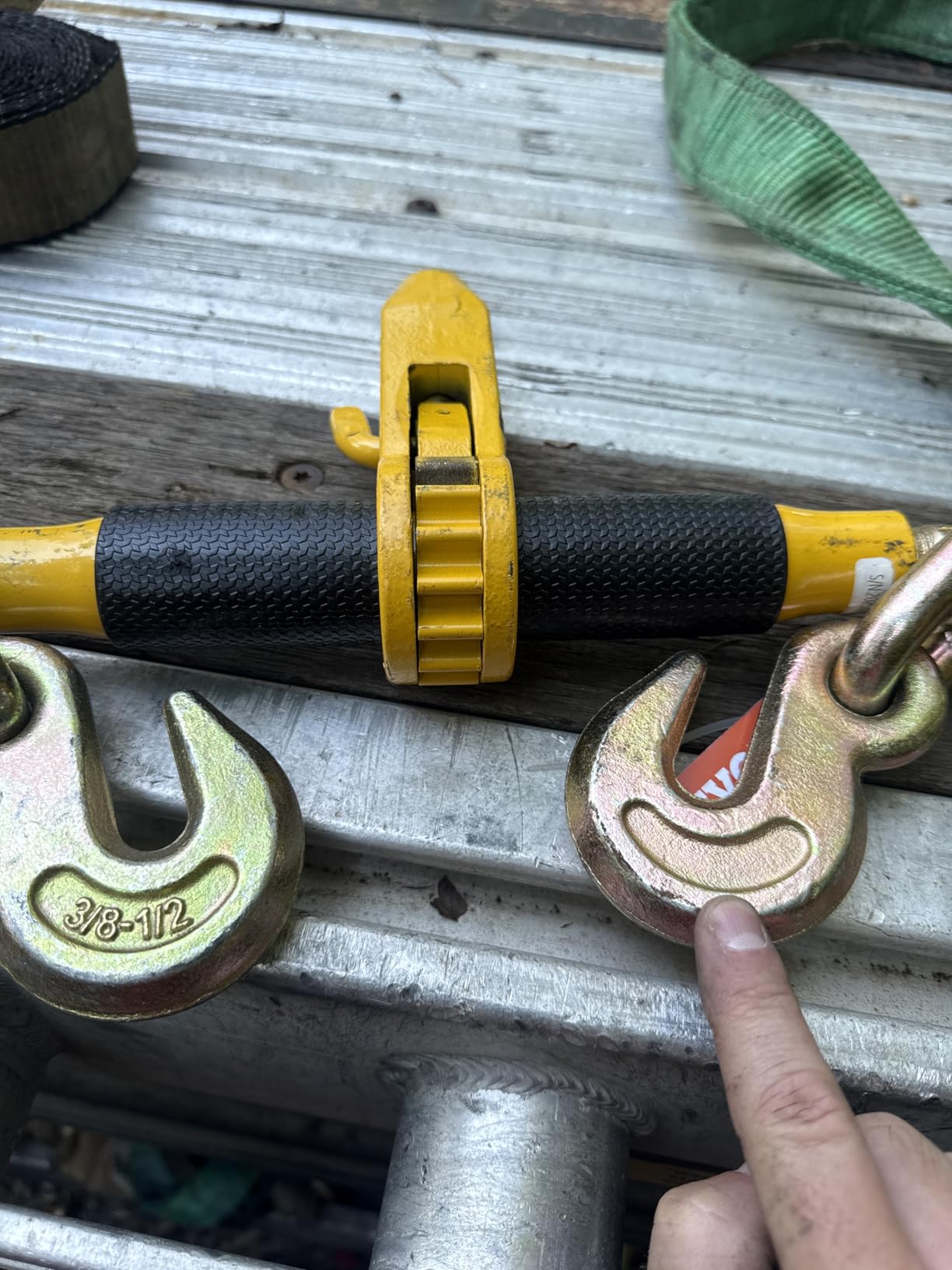
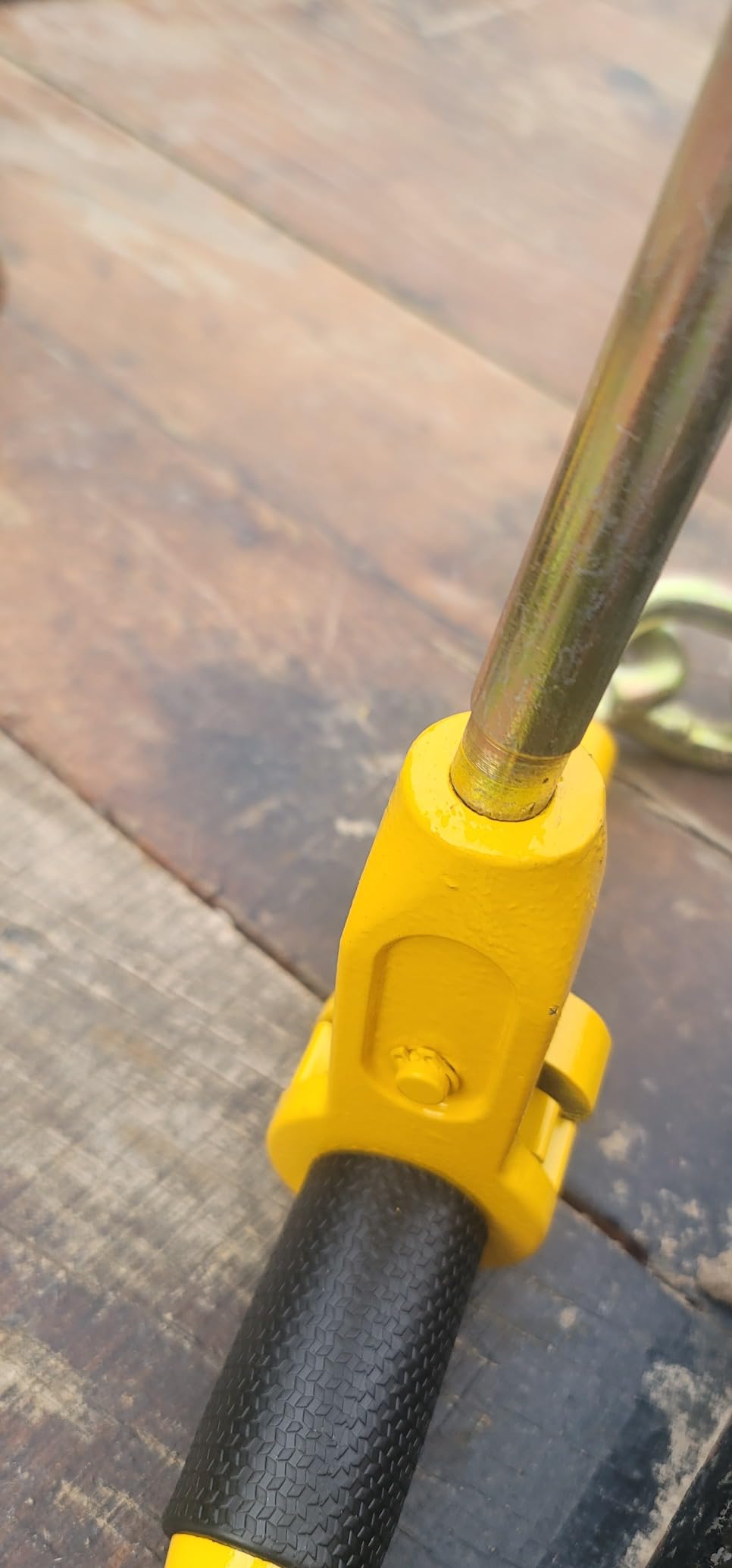
This binder takes a different approach to the same storage problem as the folding designs. Instead of a handle that folds, the handle unhooks completely, so the binder body packs flat in a toolbox and the handle lives in your hand or your pocket. On a step-deck or a hotshot where toolbox space is measured in square inches, that is worth a lot.
On paper the numbers are the most impressive in the roundup. A 12,000 lb working load limit, a 48,000 lb breaking strength, 45# cast steel construction, 3/8 inch to 1/2 inch Grade 80 compatible hooks, and certification to CVSA, DOT, NACM, and FMCSA requirements, with a one year warranty against manufacturer defect.
The 360 degree rotating forged grapple is a good hook design, and the external switch keeps your fingers out of the release path. The anti-skid rubber grip and the anti-falling mark on the body are the kind of details that only matter when something has gone wrong before.
Why the detachable handle is the feature
Four of these weigh 44.8 lbs, and with the handles off they stack flat instead of jutting out. For a driver whose trailer toolbox already holds chains, load bars, and straps, reclaiming that space by storing the handle separately is a practical upgrade rather than a novelty.
It also means you can carry one handle between binders, or keep a spare handle in the cab and leave the bodies on the deck. If a handle gets bent in a yard fight, you have not lost the whole binder.
Where the ratings give us pause
This is the lowest rated product here at 4.0 stars across 54 reviews, and 10 percent of those are one star. That is a small sample compared with the 312 or 416 review products, so it is not proof of a defect, but it is a reason to buy one and test it rather than outfit a whole fleet on the strength of a spec sheet.
Cast steel is heavier and less forgiving of a hard shock than forged steel, and it is worth watching the handle connection point for play over the first year of use. If you want comparable capacity with more established feedback, the 13,000 lb forged-handle binder earlier in this list is the steadier buy.
How Many Chain Binders Does a Flatbed Actually Need?
Federal rules set the floor: a minimum of four tie-down points for the article being secured, and the aggregate working load limit across all securement must equal at least 50 percent of the weight of the article. Your securement also has to be strong enough for the defined road forces of 0.8 g forward, 0.5 g rearward, 0.5 g lateral, plus 20 percent of the load weight downward.
Those two rules together determine your count. Take a 14,000 lb mini excavator: half its weight is 7,000 lbs, so the aggregate WLL of your tie-downs needs to be 7,000 lbs or more. Four binders rated at 5,400 lbs each give you 21,600 lbs of aggregate, which clears the requirement with room to spare. Two binders at the same rating would give you 10,800 lbs, also above the line numerically, but two points will not satisfy the four-point rule for a full-length article.
The g-force requirement is where the math gets more interesting, and it is the reason you should not just multiply. A 0.8 g forward event means the load can try to move with roughly 80 percent of its own weight in that direction, so a 14,000 lb machine can put about 11,200 lbs of force into a forward-facing chain in a hard stop. That is the number to compare against your chain WLL, not the static weight of the machine.
For that same mini excavator, a chain rated well above the 5,400 lb figure is what actually protects the load, because the chain is the weakest component in the assembly. Sizing the binder above the chain and the chain above the computed force is the order you want, not the reverse.
Operators debate this constantly on driver forums, and the practical takeaway is that four tie-down points is a starting point rather than a target. More points, shorter chain runs, and higher grade chain all buy you margin, and margin is what you have when a load shifts at 3 a.m. on a county road with no shoulders.
Ratchet vs Lever vs Over-Center: Which Style for Which Haul
Ratchet binders are the right default for daily flatbed work because tension arrives in increments and the handle holds no energy. Lever binders are faster and better suited to short hauls and yard work by experienced drivers. Over-center binders lock positively past center, which suits hotshot and multi-stop routes where you want visible proof the binder is engaged.
The safety difference dominates the choice more than most guides admit. Every injury story that circulates about binders is the same story: a lever released and the handle whipped back into a hand, neck, or head. A ratchet binder cannot do that, because there is no stored energy in the handle to release.
Recoilless designs exist to solve the lever problem rather than replace it. They use cam action to bleed off energy gradually, so you get lever speed with a much softer release. If your freight is lever-appropriate but you are new to the style, a recoilless binder is the sensible middle ground.
Speed is the lever’s real argument. One long pull beats a dozen ratchet strokes, and on a route where you chain up repeatedly that difference is measurable. The trade is that you give up fine control of how much tension you add on that single stroke, which matters most when the anchor point is a curved or painted surface you cannot fully trust.
For most flatbed drivers running equipment regularly, a ratchet binder in the truck is the right call and a lever binder in the toolbox is a reasonable second tool. Cheat sheets that push lever binders without addressing kickback are giving half the picture.
Chain Matching Rules: Size, Grade, and Hooks
Match the binder to the chain first, then let the chain set the assembly rating. A binder rated higher than its chain buys you nothing, and a binder rated lower than its chain is the weakest link you just paid for. The chain always governs.
Working load limit is the number to compare across the whole assembly, and it is calculated as the breaking strength divided by three. A 28,400 lb breaking strength gives a 9,466 lb working limit, and a 48,000 lb breaking strength gives 16,000 lbs. The stamped WLL on a binder is usually a bit below that calculation for a margin of safety, which is expected and correct.
Grade matters as much as diameter. Grade 43 chain is lighter duty and does not belong on a compliance-critical equipment haul. Grade 70 is the flatbed baseline, Grade 80 is a step up in tensile strength at the same diameter, and mixing grades in one assembly does not add up to the higher grade.
Hook type decides whether the binder stays connected. A clevis grab hook is rigid and holds position best under vibration, which is why it is the standard for machinery with a defined hard point. A slip hook is easier to attach but can walk off links under sustained road vibration, so it is a poorer choice for long hauls. A swivel grab hook, as used on the long take-up binder in this roundup, rotates into alignment rather than being forced into it.
One rule that comes up again and again in driver forums: never hook a binder to the last chain link. That end link has taken the most shock loading through the haul and is the one most likely to be deformed, which makes it the worst possible place to concentrate the load.
Worth pairing this guide with our chain link fencing guide if you are trying to work out which grade and diameter you are holding on to for other work around the yard.
How to Tension a Chain Binder Without Getting Hurt
A ratchet binder is tensioned in five steps, and the order matters more than the force you apply. Keep your hands on the handle and off the chain while the take-up is under load, and never put your body in line with a lever binder handle.
Hook the binder grab hook to a chain link well away from the last link, and connect the other hook to a solid trailer anchor or machine hard point.
Set the binder to the free spin position and pull all the slack out of the chain before you start taking tension.
Switch to ratchet take-up and pull short strokes, checking that the chain is seating into the hook and not riding on the corner.
Watch the take-up indicator and the chain angle. A binder pulling off-angle will tighten without producing useful tension on the load.
Fold or detach the handle, lock or pin it, and walk the load to confirm the machine is not moving before you go under the trailer.
A lever binder is faster and more dangerous, so the steps change. Attach both hooks, pull the handle to tension, and then step your body away from the handle path before you release it. Never stand in front of the handle, never look down the chain, and never release a loaded lever with your hand near the pivot.
Resist the cheater bar. It exists because the tool did not have enough handle, and using one converts a normal tension into an over-torqued binder with damaged threads. On threaded ratchet bodies, the threads are the part that fails first, and a stripped thread means a binder that slips under a shifting load.
Re-inspect within the first fifty miles. Loads settle, chains can lose a fraction of tension, and that early check is the cheapest insurance in trucking. A binder that needs more than a small take-up adjustment at that point is telling you something about the setup.
Pre-Trip Binder Inspection Checklist
Six checks cover nearly every failure mode drivers report, and each one takes under a minute on a walk-around. The stamped WLL plate is first, because a binder with an unreadable plate is a binder you cannot prove compliance with at the scale.
Read the stamped WLL and chain size and confirm the chain you have on the trailer matches.
Look at the threads on the take-up body for rust, galling, or stripped flanks, especially after a cheater-bar session.
Check the ratchet pawl and gear for smooth engagement, skipping, or a handle that creeps under load.
Inspect both hooks for wear on the bearing surface, spread, or a latch that does not fully close.
Check the handle, rivets, and any pivot for play, cracks, or a bent shaft.
Look for handle lock, pin, or padlock provision and confirm it is actually engaged before you pull away.
Retire criteria are just as important as the checks. A binder that has been loaded past its stamped working load limit, a handle with a visible crack, or threads that strip under normal hand tension all mean the binder comes out of service regardless of how it looks from a distance.
Owner-operator consensus is that chains get replaced far more often than binder bodies, which is the correct pattern. A chain is a consumable you should inspect every single trip; the binder is a long-term tool that deserves a real retirement standard rather than a fixed schedule.
Winter makes step six more important, not less. Salt and grime attack the pivot, the pawl, and the hook bearing faster than anything else on a flatbed, and a binder that passed last fall is not automatically a binder that passed this winter.
Frequently Asked Questions
Who makes the best chain binders?
For daily flatbed work, the Peerless QuikBinder Plus from US Cargo Control is the strongest all-round pick, with a stamped 7,100 lb working load limit, a folding handle, and 4.8 stars across 172 reviews. For matched chain and binder sets at the best total cost, the DC Cargo four-set kit covers all four tie-down points in one purchase. For the highest working load limit in a ratchet binder, the 13,000 lb forged-handle binder is the one for dozers and graders.
How many chains and binders do I need for a flatbed?
Federal rules require a minimum of four tie-down points for a full-length article, and the aggregate working load limit across all securement must equal at least 50 percent of the weight of the load. For a 14,000 lb mini excavator that means at least 7,000 lbs of combined working load limit, so four binders rated at 5,400 lbs each clearing 21,600 lbs is a comfortable setup.
What is the working load limit for a chain binder?
Working load limit, often stamped as WLL or SWL, is the maximum working tension a binder is rated to hold. It is calculated from the breaking strength divided by three, so a 28,400 lb breaking strength yields roughly a 9,466 lb working limit. The stamped figure sits slightly below that calculation to keep a safety margin, and the chain in the assembly is usually what limits the whole setup.
What are the differences between a ratchet binder and a lever binder?
A ratchet binder takes up slack through a threaded body in short back-and-forth handle strokes, giving incremental, controlled tension and holding no energy in the handle. A lever binder uses an over-center arm and gets to tension in one long pull, which is faster, but the handle stores energy and whips back on release. Lever binders are legal in the USA, but the kickback risk is the reason many drivers move to ratchets.
Are lever binders illegal in the USA?
No. Lever and over-center binders are legal for cargo securement in the United States as long as the assembly meets working load requirements and the load is secured to the minimum four tie-down points with 50 percent aggregate working load limit. The concern with lever binders is safety rather than legality, because the handle stores energy and can whip back when released.
What are the common chain binder failures?
Stripped or galled threads on the take-up body are the most common failure, usually caused by cheater bars and over-torquing. Ratchets that slip or creep under load, hooks that spread or wear on the bearing surface, and cracked or bent handles follow behind. A lever handle that springs open in transit when it was not locked or pinned is also a reported failure, and any binder loaded past its stamped working load limit should be retired.
How much weight can a ratchet strap pull compared to a chain binder?
A heavy ratchet strap is rated in working load limit too, but straps stretch, absorb less shock load, and are harder to inspect for damage than chain. A Grade 70 chain with a matched ratchet binder is the standard for equipment hauls, where shock loading and vibration matter. Straps are still the right tool for lighter, non-equipment freight, and combining both on one load is common practice.
What are the best heavy-duty chain binders for a flatbed?
For machines over 20,000 lbs running 1/2 inch chain, the 13,000 lb working load limit ratchet binder with a forged steel handle is the strongest ratchet option, rated to 13,000 lbs and sized for 1/2 inch to 5/8 inch chain. A 12,000 lb binder with a detachable handle is the alternative if compact storage matters more than long service history. Both pair correctly with 1/2 inch Grade 70 or Grade 80 chain.
Bottom Line on the Best Chain Binders for Flatbed Trucking
The Peerless QuikBinder Plus is the best chain binder for flatbed trucking overall, because a folding handle, a stamped 7,100 lb rating, and a fleet-grade service record matter more over a season of daily chaining than any single spec advantage. If you need a complete ready-to-work setup, the DC Cargo four-set kit with 20 foot Grade 70 chains covers all four tie-down points in one purchase and is the best value here.
Match the binder to the chain rather than the other way around, respect the four tie-down point and 50 percent aggregate working load limit rules, and replace the chain far more often than the binder body. Those three habits, plus a two-minute pre-trip inspection, are what separate a legal trailer from a citation.
If you are also shopping for the saw that gets you ready for a morning start, our guide to the best small cordless chain saws covers the same kind of spec-versus-real-use comparison.