
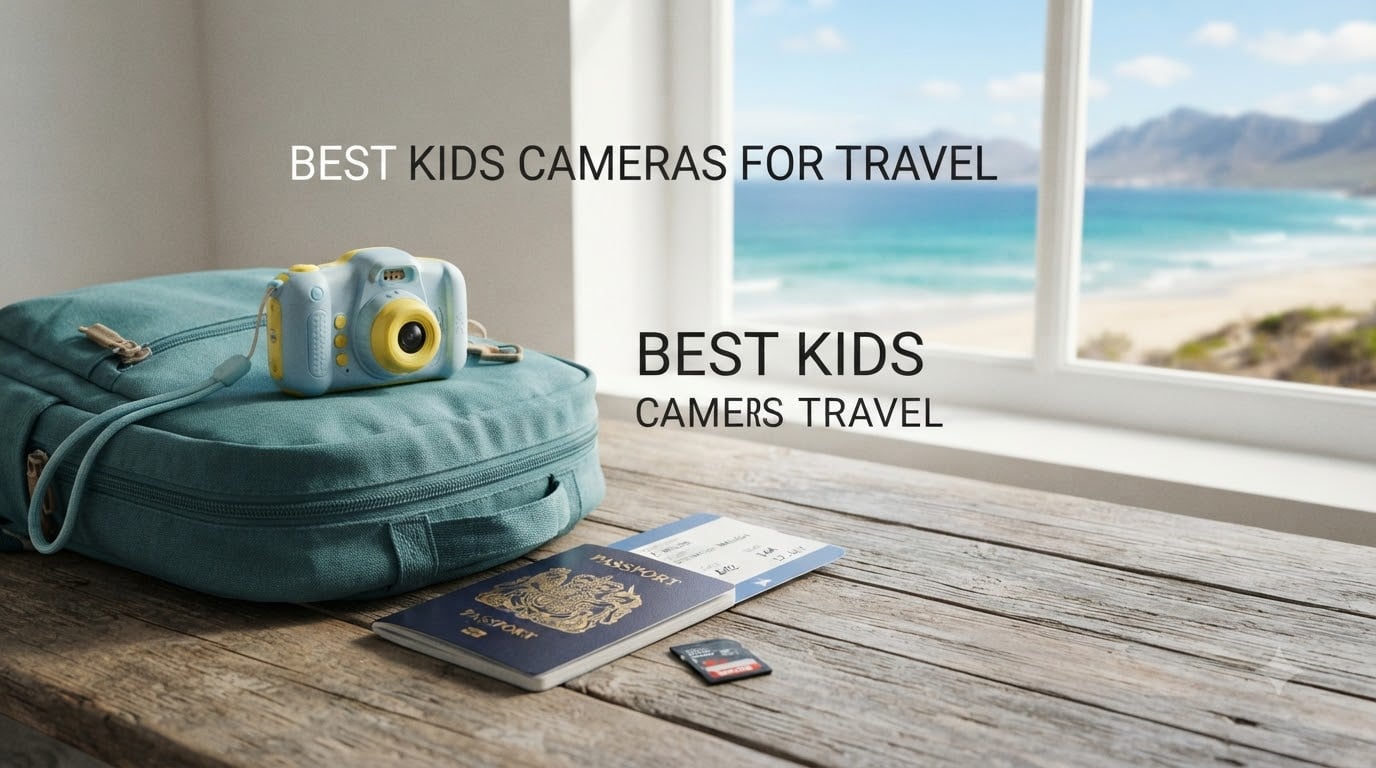
A camera changes a trip for a child. Instead of handing your phone over and losing it in a rucksack, they carry their own point of view, and the photos become the souvenir instead of something you have to remember to print. After a season of testing kids cameras on real trips, the short answer is simple: the best kids cameras for travel are the ones your child can operate without an adult, that survive a sand-filled day, and that do not eat your holiday with printing costs.
Our pick for most families is the Camkory 44MP Digital Camera, because it weighs 158.76 g, comes with a 32 GB card and two batteries, and takes colour photos plus 1080P video for nothing per shot. For ages three to five, the Goopow Kids Camera is the easier, more forgiving machine. For a beach or pool holiday, the Agoigo Kids Waterproof Camera is the one to pack.
There is a catch nobody mentions in most roundups, though. Travel changes what matters. A camera that is brilliant at home can lose to a lanyard, a wall socket or a memory card in a week away. So below you will find ten kids travel cameras tested against the things that actually go wrong on a trip: dropped in sand, dead batteries at a viewpoint, a full card halfway through the holiday, and a kid who cannot pull a print out of a slot without tearing it.
We also cover the logistics no competitor covers, the age stages where the right answer changes, and what to do when a child outgrows the camera you bought them. If you are building a full kit for the trip, our vlogging camera travel guide covers the parent side of the equation.
Table of Contents
Top 3 Picks for the Best Kids Cameras for Travel (October 2026)
Camkory 44MP Digital Camera
- 44MP stills and 1080P video
- 32GB card and two batteries included
- 158.76 g pocket body with 3-inch screen

Goopow Kids Camera
- Ages 3-8 style toy build with soft cover
- 105 g body with 32GB card and reader
- Rechargeable battery plus games and selfie mode

ESOXOFFORE Instant Print Camera
- One-second thermal instant print
- Three paper rolls included for about 372 photos
- Type-C charging with 4-5 hours of use
Those three cover most cases. The Camkory is the sensible default, the Goopow is the choice when the child is genuinely small, and the ESOXOFFORE is the one that turns a holiday into a stack of physical prints. The other seven cover water, bikes, older children and cheaper refills.
Best Kids Cameras for Travel in 2026 at a Glance
| Product | Specifications | Action |
|---|---|---|
| Camkory Digital Camera 1080P 44MP |
|
Check Latest Price |
| Goopow Kids Camera with Soft Cover |
|
Check Latest Price |
 Agoigo Kids Waterproof Camera Agoigo Kids Waterproof Camera |
|
Check Latest Price |
| ESOXOFFORE Instant Print Camera |
|
Check Latest Price |
 PROGRACE Underwater Camera 3-12 PROGRACE Underwater Camera 3-12 |
|
Check Latest Price |
 Dylanto Instant Print Camera Dylanto Instant Print Camera |
|
Check Latest Price |
 Lecran Digital Point and Shoot Lecran Digital Point and Shoot |
|
Check Latest Price |
 GKTZ Pool Underwater Camera GKTZ Pool Underwater Camera |
|
Check Latest Price |
 VTech KidiZoom Camera Pix Plus VTech KidiZoom Camera Pix Plus |
|
Check Latest Price |
 Gofunly Instant Print Camera Gofunly Instant Print Camera |
|
Check Latest Price |
1. Camkory 44MP Digital Camera – Best All-Rounder for Trips
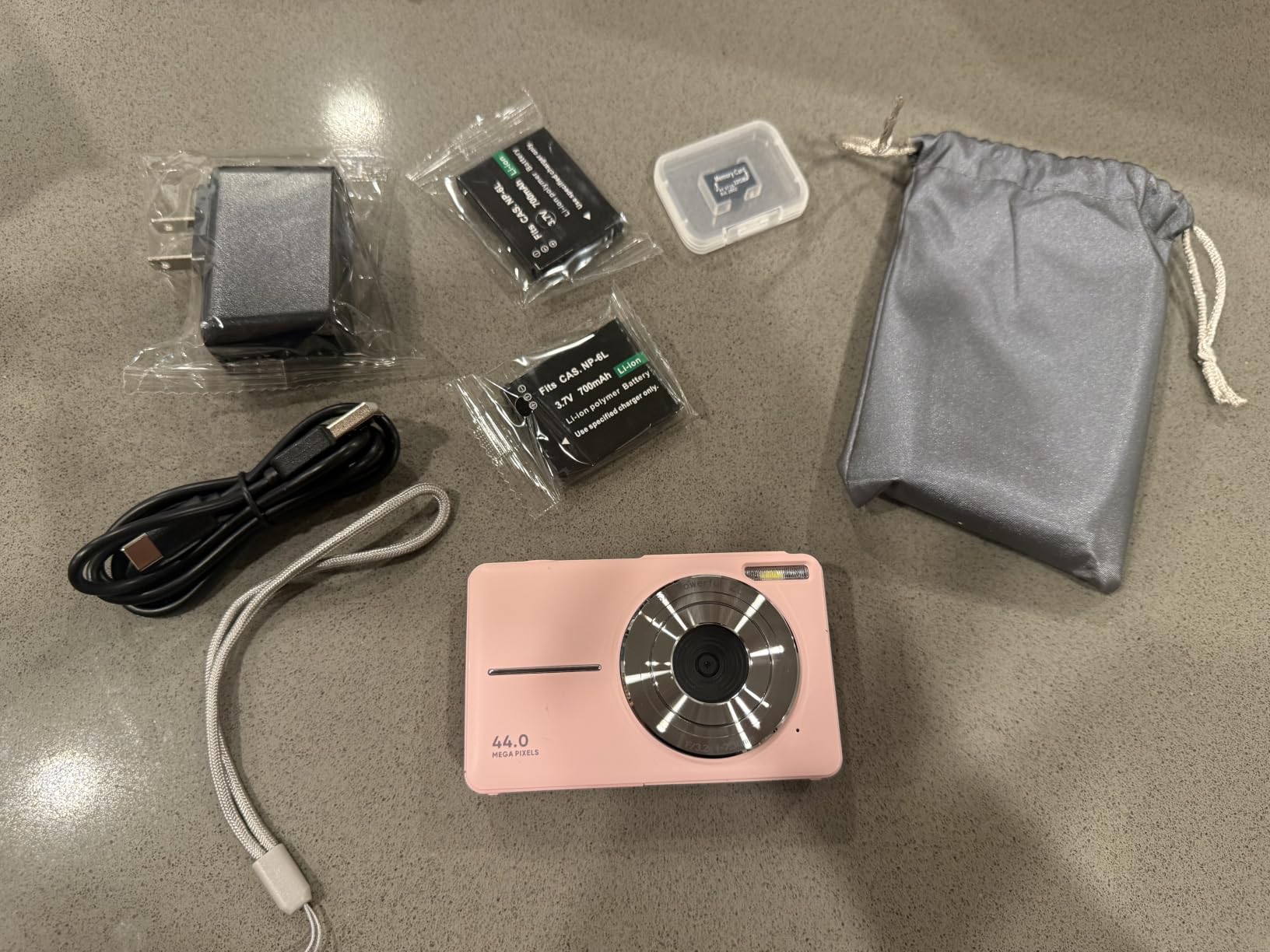
Camkory Digital Camera FHD 1080P with 32G Card 16X Zoom Easy for Kids Pink
44MP stills
1080P video
3-inch LCD
158.76 g
32GB card and 2 batteries included
Pros
- Largest review base in this group at more than 10800 reviews
- Pocketable 158.76 g body with a 3-inch screen
- 32GB card and two high-capacity batteries in the box
- 20 creative filters and 16X digital zoom keep a child busy
- Anti-shake stabilisation helps unsteady kid hands
Cons
- The built-in flash is a bright LED rather than a true flash so indoor shots come out dim
- Video audio is muffled and hard to hear
- The camera can occasionally freeze until the battery is reseated
This is the camera we hand to a child who has outgrown a toy but is not quite a teenager. The 44MP stills and 1080P video come from a CMOS sensor behind a Sony lens with an F2.8 aperture, which sounds like spec-sheet padding until you look at how it behaves on an overcast city street in a week of shooting.
For travel the box contents matter more than usual, and this one is unusually complete: a 32 GB card, two high-capacity batteries, a lanyard, a storage bag, an adapter and a cable. Dual batteries mean you can shoot a full day without hunting a socket, and the storage bag makes it something you can put in a jacket pocket between activities.
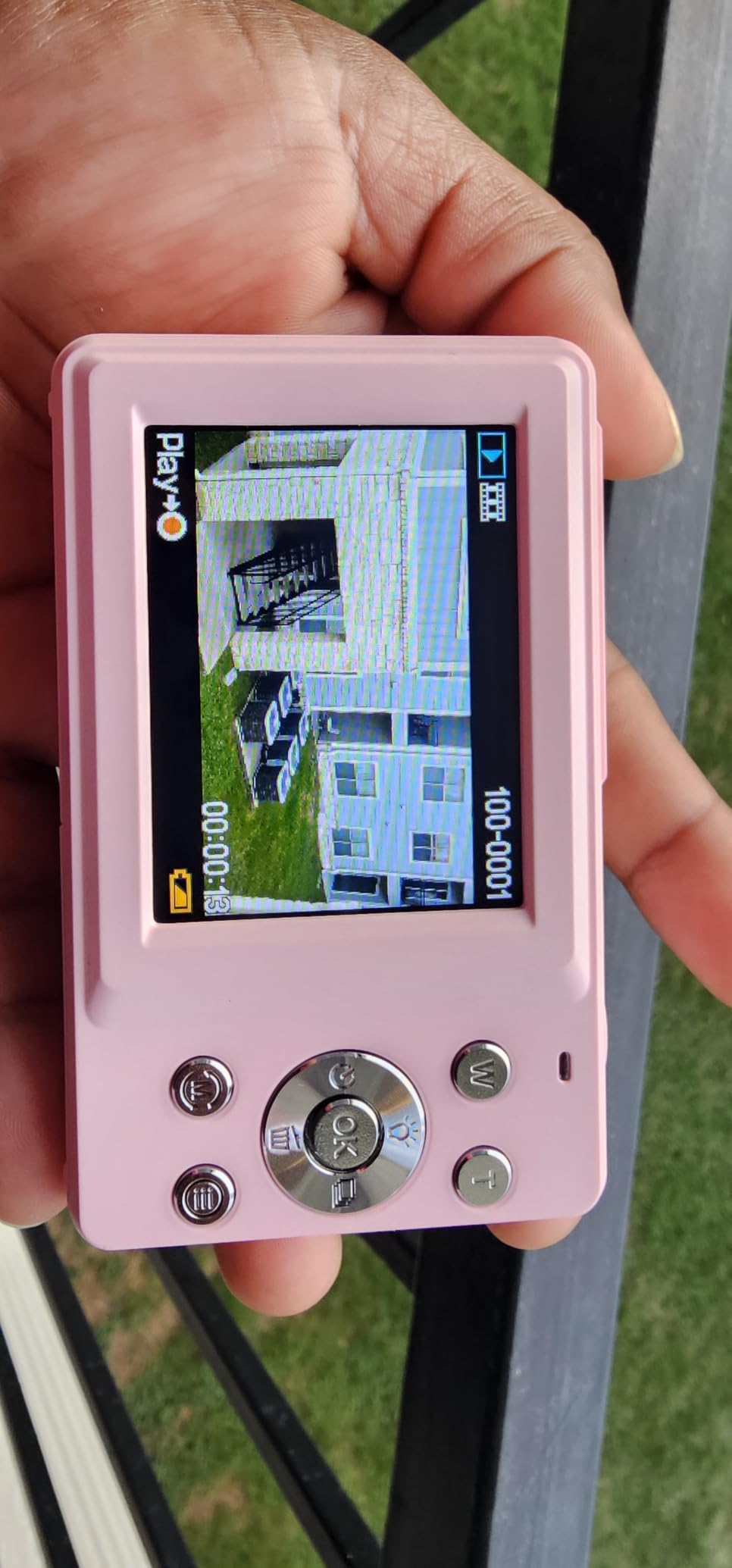
The honest weakness is the flash. It is an LED light rather than a real flash unit, so indoor and evening photos come out darker and flatter than the marketing implies. On an outdoor holiday that rarely matters, but on a rainy city break it will. Images can also look over-saturated in bright daylight, and audio on video is muffled enough that clips lose their usefulness as memories.
A minority of owners also report the unit occasionally freezing until the battery is reseated, and plugging in the USB cable starting a charge rather than a file transfer, which is worth knowing before a trip where the photos need to come off the card at the end of the day.
What works well on a trip
Nothing per shot, which matters when a child shoots 300 frames in three days. The dual battery setup and the included card mean no accessory purchases before departure, and the 158.76 g body is light enough for a small hand and small shoulders without becoming a wrist-ache by afternoon.
The 3-inch LCD and the simple menu are the real travel win. There is almost nothing to teach, which means an adult can hand the camera over at a museum entrance or a viewpoint and walk away. Auto exposure and auto white balance handle the shifting light of a moving day without a child fiddling with settings.
Where it disappoints
It is a toy-sensor camera with a large megapixel number on the box, not a compact camera. Print one frame at full size and the softness shows, and video audio will not carry a memory the way a phone clip does.
It is also not sealed against anything. Pool decks, sand and sea spray are its weak point, and a light plastic body will not forgive a drop onto a tiled floor. If the trip is a beach holiday, pair it with a pouch and accept that it lives in a dry bag.
2. Goopow Kids Camera – Best for Ages 3 to 5
Goopow Kids Camera Toys for 3-8 Year Old Girls Boys,Children Digital Video Camcorder Camera with Cartoon Soft Cover, Best Chritmas Birthday Festival Gift for Kids
12MP stills
1080P video
105 g
2-inch LCD
Rechargeable 3.7V battery
Pros
- Soft cartoon protective case survives repeated toddler drops
- Neck strap helps small children keep track of the camera
- Rechargeable battery and included 32GB card mean it works out of the box
- 28 scene selections and motion-controlled puzzle games suit ages 3-8
- Light at 105 g for a three-year-old to carry
Cons
- Body is smaller than most buyers expect and tricky for small hands
- Image and video quality is soft rather than sharp
- Instructions are unclear and the menus need practice
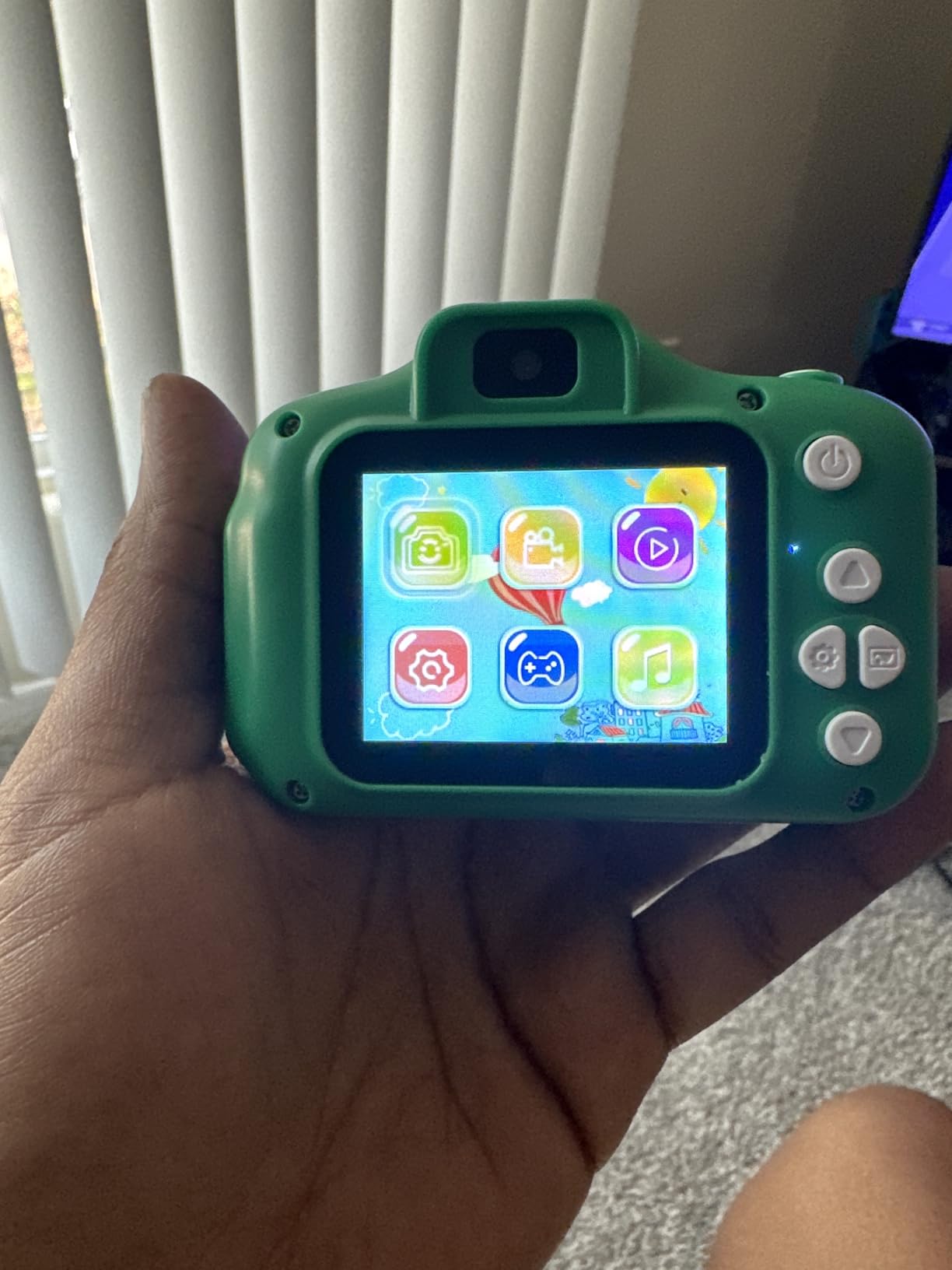
This is the camera a pre-schooler can genuinely run. The soft cartoon cover is the whole argument: reviewers describe it surviving repeated drops without cracking, which on a family holiday with a toddler is worth more than a megapixel figure.
It weighs 105 g, has a 2.0-inch LCD, records 1080P MP4 video and stills at 12 MP, and comes with a 32 GB card and a card reader so photos can be moved to a laptop at the end of the trip. The built-in 3.7 V rechargeable lithium battery gives roughly 1.5 to 2 hours of continuous use, so charging overnight at the accommodation is the habit to build.

Twenty-eight scene selections, time-lapse, selfie mode and a set of motion-controlled puzzle games fill the gaps when the light is poor or the queue is long. Parents like that playback volume is quiet, and the lanyard means the camera is on the child rather than on a hotel surface.
The recurring complaint is size. The body is smaller than buyers expect and awkward for small hands to grip, and very young children struggle to review or delete photos without an adult. Picture and video quality is soft rather than sharp, so this is a keepsake and a toy, not a photographic tool.
What works well on a trip
It is ready to go straight out of the bag because the card, reader, cable and lanyard are all included. That matters when you are packing at midnight for an early flight and buying accessories is not an option.
The games and scene modes are a genuine travel asset on long journeys or rainy days, and the rechargeable battery avoids the constant pack-spares routine that coin cells demand.
Where it disappoints
At 1.5 to 2 hours of battery, a long excursion means a midday charge or a spare power bank. The unclear instructions and small body also mean a four-year-old still needs a hand at the start of the trip.
At 12 MP with a soft output, do not buy it expecting photos to compete with a phone. It is built to be dropped, handed over and used by someone who is still learning what a frame is.
3. Agoigo Kids Waterproof Camera – Best for Pools and Snorkelling
Agoigo Kids Waterproof Camera – Children Underwater Video Digital Camcorder
5MP stills
1080P video
2-inch LCD
Waterproof case rated to 98ft
600mAh battery
Pros
- Waterproof case gives genuine pool
- beach and snorkelling capability
- Lightweight enough for a young child to carry
- 32GB card and a mounting kit for bikes and helmets are included
- Rechargeable battery with auto shut-off to preserve charge
- 28 frames and 6 filters keep shots playful
Cons
- 5MP sensor produces noticeably soft photos next to newer models
- Video recording is limited to roughly 10 minutes per clip
- The waterproof case must not be opened underwater
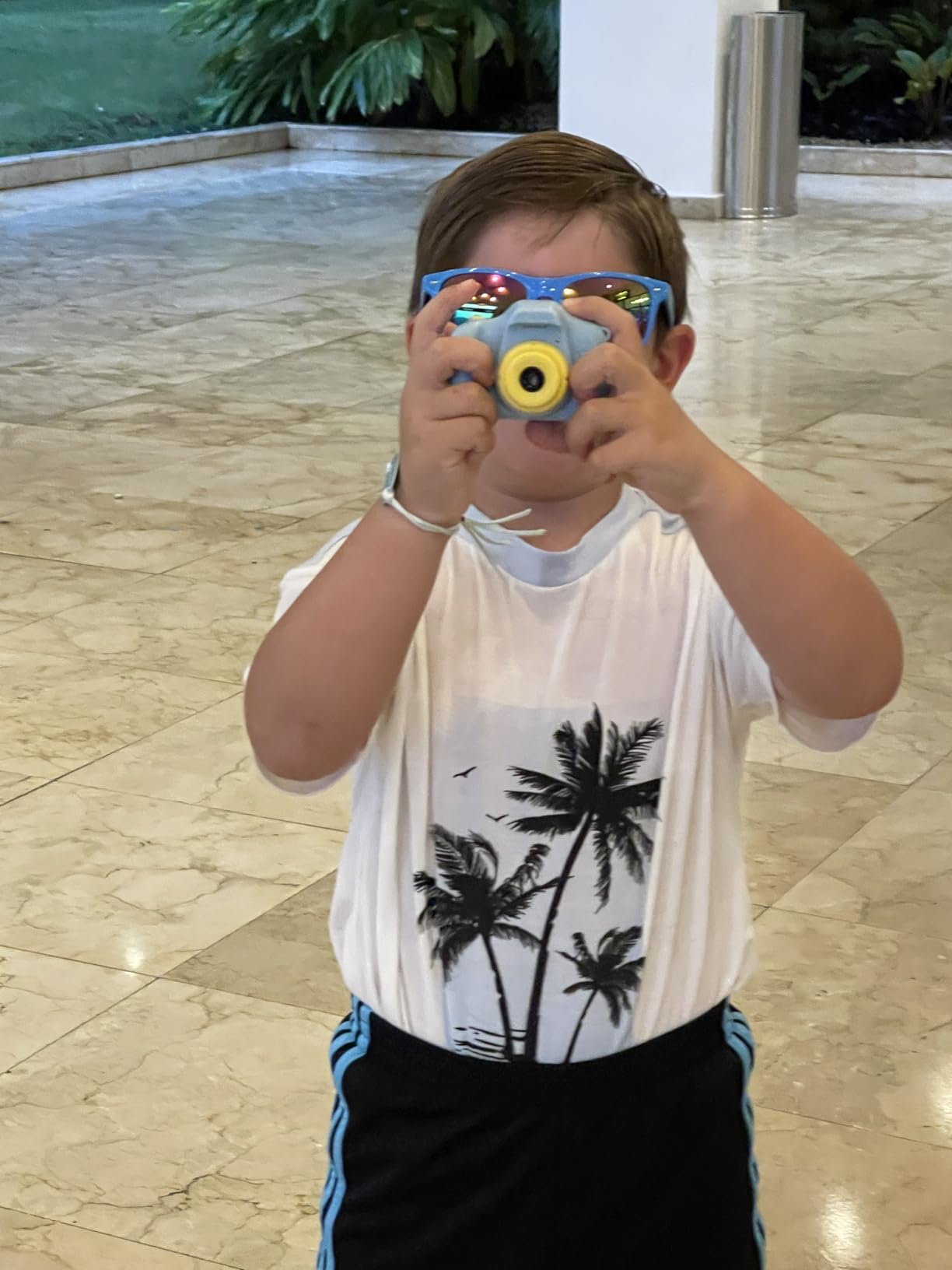
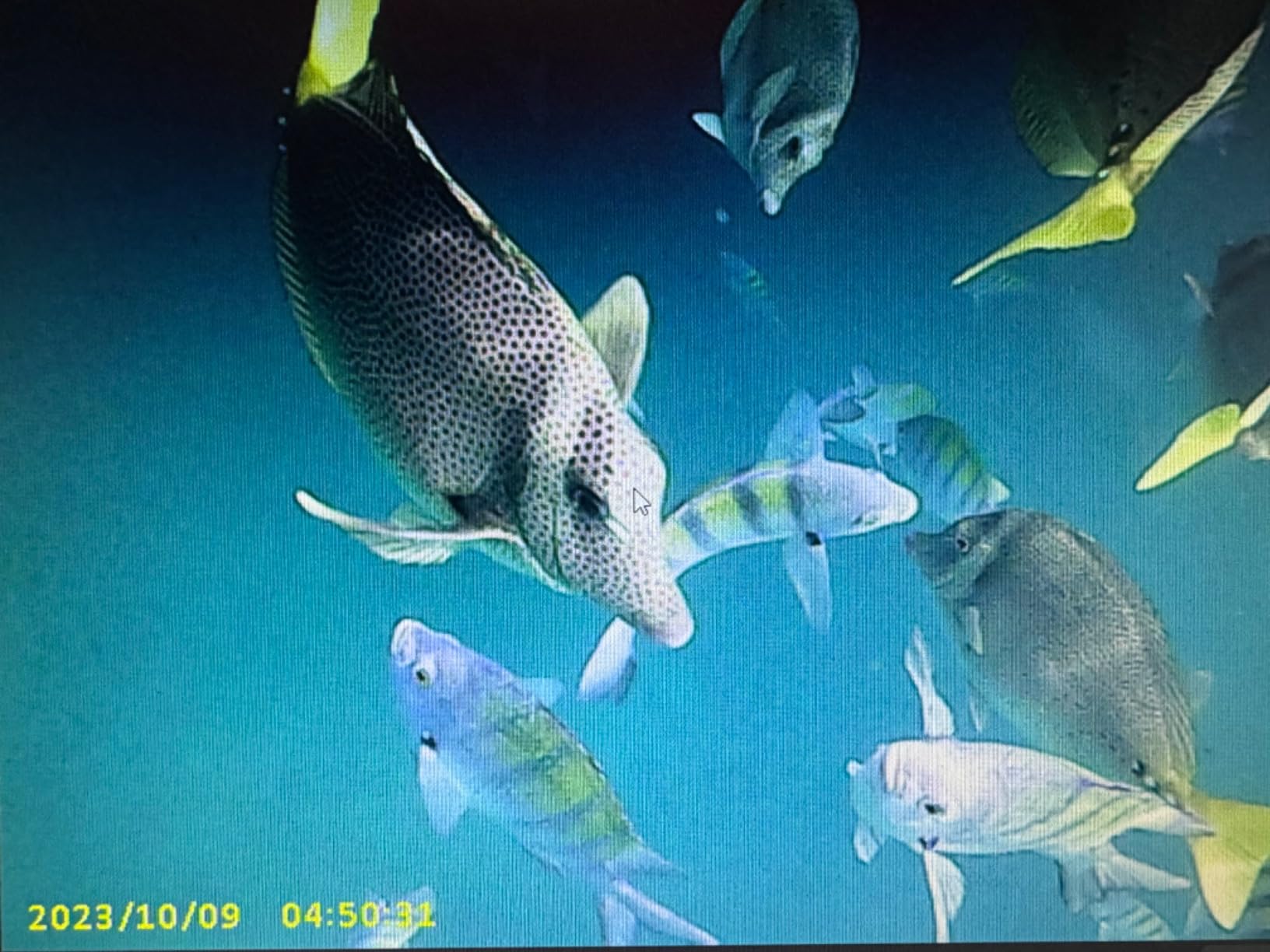
Holiday pools are where most kids cameras fail, and this one was built for the job. The supplied case is rated to 98ft, which covers swimming, surfing and shallow diving, and the mounting kit attaches to skateboards, bikes and helmets for the days when the pool is not the destination.
The body is a compact 2-inch handheld with a 3.3 mm macro lens, 5 MP stills and 1080P HD video. The 600 mAh rechargeable lithium battery gives about 2 to 3 hours, and an auto shut-off stops a forgotten camera draining itself in a bag.
Twenty-eight frames and 6 filters sit alongside photo capture, video, playback, delay capture and date setting. The date setting matters quietly on a two-week trip, because it means the photos sort themselves when you get home.
The trade-offs are real. A 5 MP sensor gives soft results next to a modern phone, video clips stop at roughly 10 minutes, and the case has to stay closed underwater, which is a rule children break without realising. Reviewers also find the lanyard and mounting hardware flimsier than they should be for a genuinely active child.
What works well on a trip
Underwater capability is the reason to buy it, and the 98ft case means that claim is not theoretical on a pool or diving holiday. The 32 GB card and mounting hardware are in the box, so nothing extra is needed to get a snorkelling trip started.
It is small and light enough to disappear into a swim bag, which is more than can be said for a larger compact camera on a poolside run.
Where it disappoints
Expect soft, low-detail stills and a hard stop on recording length. A child filming a whole pool session will need to restart several times, and the footage will not hold up to cropping on a laptop later.
Waterproof cases are consumables in practice. A seal that is opened and closed in a hotel bathroom is a common failure point, and the flimsy lanyard can snap when a child runs with it.
4. ESOXOFFORE Instant Print Camera – Best for Physical Keepsakes
ESOXOFFORE Kids Camera Instant Print, Christmas Birthday Gifts for Kids Age 3-12, Selfie Digital Camera with 1080P Videos,Toddler Portable Travel Toy for 4 5 6 7 8 9 Year Old Boys Girls-Blue
1-second thermal instant print
1080P video
2.4-inch screen
372 photos of paper included
Type-C charging
Pros
- Instant print gives kids a physical photo they can colour and keep
- Ink-free thermal printing keeps refill costs far below instant film
- Colour photos and HD video still save to the included SD card
- USB-C charging with 4-5 hours of continuous use
- 15 scene filters
- 16 stickers and quiet playback volume
Cons
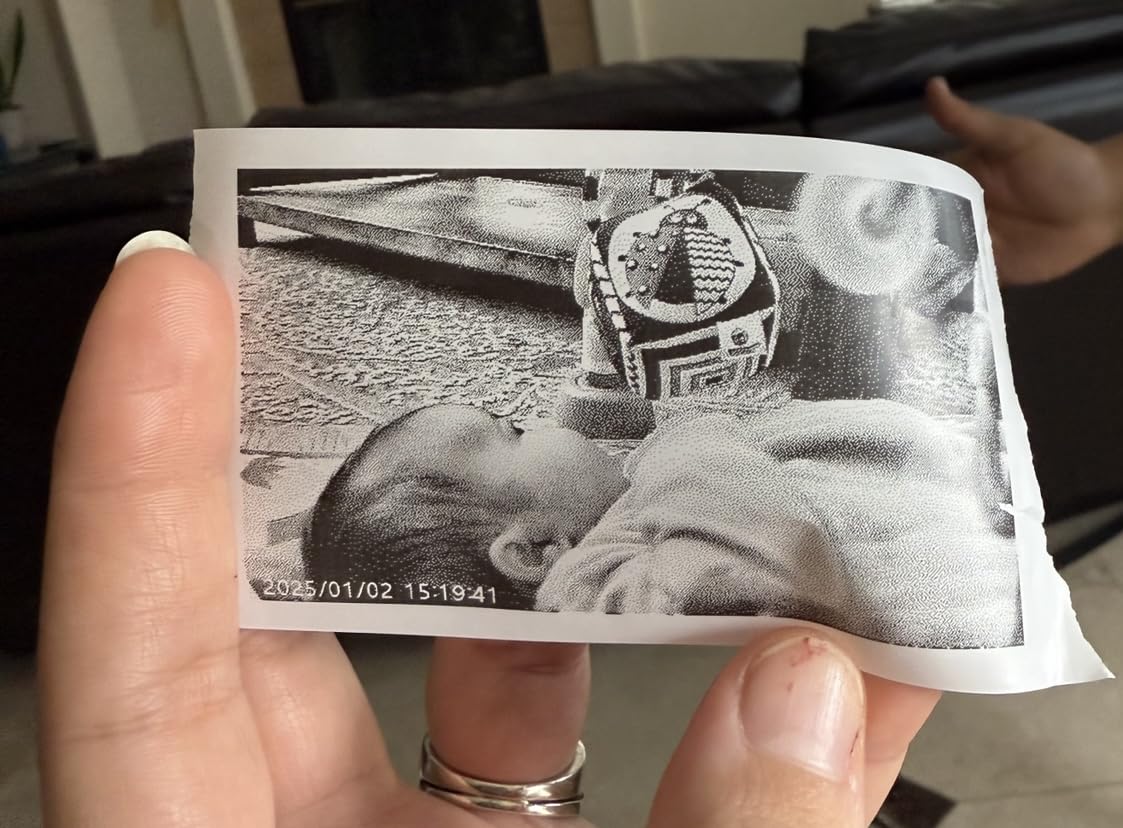
- Prints are grainy black-and-white thermal images rather than true colour
- Thermal prints fade over time
- Photos blur if the child moves and printing many copies back to back can overheat
This is the camera that changes a child’s behaviour rather than just their photos. The instant thermal print lands in about a second, so the reward loop is immediate: shoot, wait, hold a picture. On a trip that loop is what keeps a child shooting instead of handing the camera back after ten minutes.
Three rolls of paper are included, worth roughly 372 prints, and the paper is ink-free and BPA-free. That is the economics argument, and it is the one most families miss. There is no cartridge, no ink and no per-shot cost structure to explain to a parent who has done the maths on instant film.

Colour photos and 1080P MP4 video are still saved to the included SD card, so printing is a choice rather than a requirement. The 2.4-inch screen, 16X digital zoom, flash and time-lapse are all there, along with 15 scene filters and 16 stickers. The shockproof soft-plastic shell weighs 1.12 ounces, which is trivial for a child to carry all day.
Battery life is a strong 4-5 hours of continuous use on Type-C, and the camera works while charging. That solves the single most common travel complaint about instant cameras, which is the dead battery at hour three of a walking tour.
The compromises are honest ones. The prints are grainy black-and-white thermal images, not colour, and they fade over time, so this is a fun holiday object rather than an archive. Motion blur is a constant problem because children move. Printing many copies back to back can overheat the head and throw an error.

What works well on a trip
Nothing to remember. No card to format, nothing to download, no cable to lose, and no photo backlog to manage at the end of a holiday. The 372 included prints mean most families will not need to buy paper before they leave.
Refill rolls cost very little next to any instant film system, which means a family can keep printing through the whole holiday rather than rationing the novelty on day two.
Where it disappoints
Black-and-white only, grainy, and subject to fading. If you imagine a fridge covered in colour prints, this is not that camera.
It is also a screen device, so it competes for attention in exactly the situations you might want the child looking at the world rather than at a display. The games and MP3 playback exist, and some owners find they drain battery and lose their appeal quickly.
5. PROGRACE Underwater Camera – Best for Bike and Beach Days
Underwater Camera for Kids 3-12 – Boys Digital Camera Pool Toy + 32GB Card
5MP stills
1080P listed video
1.77-inch LCD
100ft waterproof case
1.76 oz body
Pros
- Genuinely useful underwater and bike-mount footage
- Weighs 1.76 oz so it is truly pocket and handle portable
- Fully loaded with 32GB card
- waterproof case
- straps and mounts
- 40+ frames
- 7 filters
- time-lapse and burst without overwhelming a child
Cons
- Advertised 1080P output is really closer to 480p according to owners
- Video shakes unless the camera is held very still
- Confusing two-switch power design
- Reports of buttons and charging ports failing after a few months
At 1.76 ounces and 2.36 by 2.28 by 0.98 inches, this is one of the most compact cameras in the group, and on a trip that matters more than the spec sheet. It disappears into a jersey pocket, a swim bag or a small hand without the child noticing the weight at all.
The 100ft waterproof case handles pools, beaches and diving, and the bike handlebar mount and helmet mount make it a genuine action camera for a cycling holiday. Forty-plus instant frames, 7 colour filters, 4x zoom, time-lapse and burst mode give enough control to feel creative without giving a child a menu to get lost in.
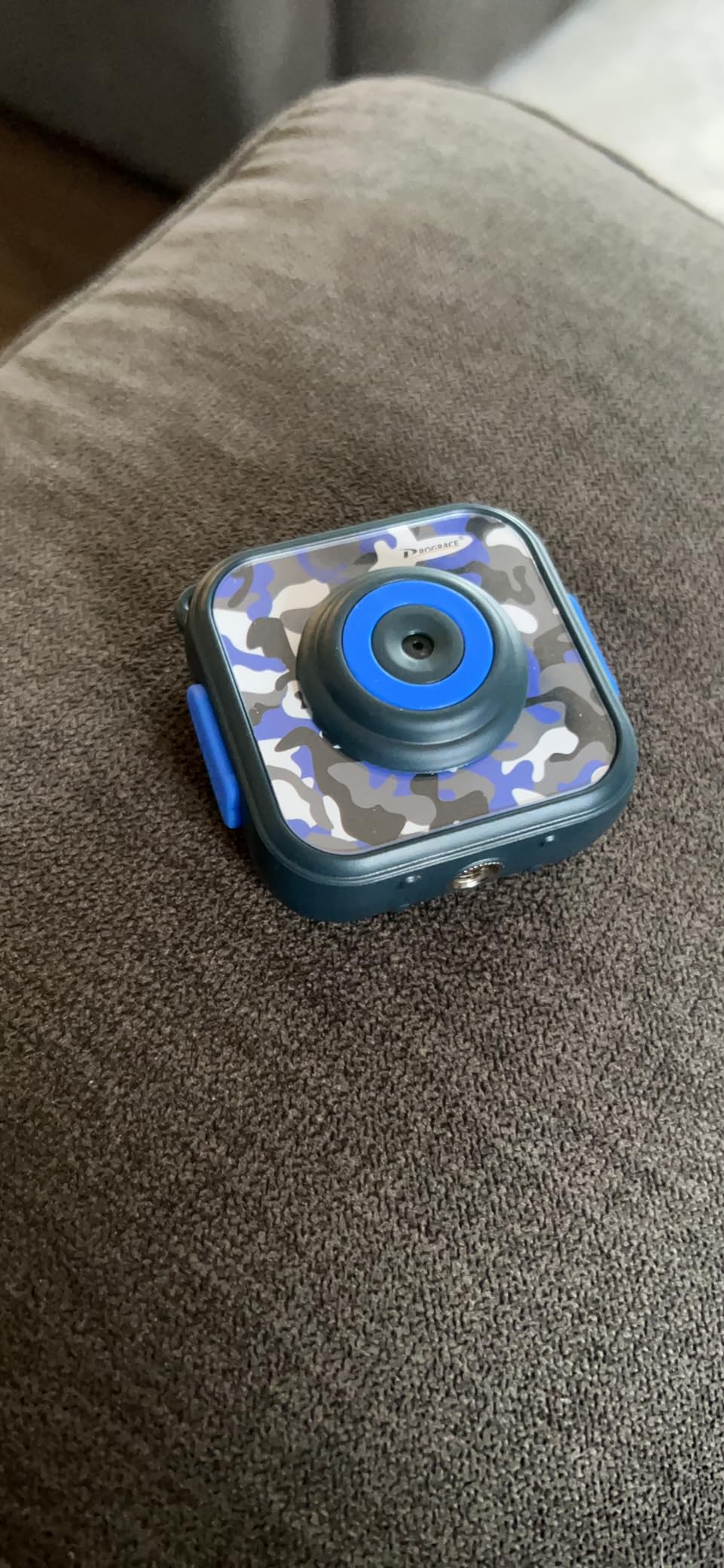
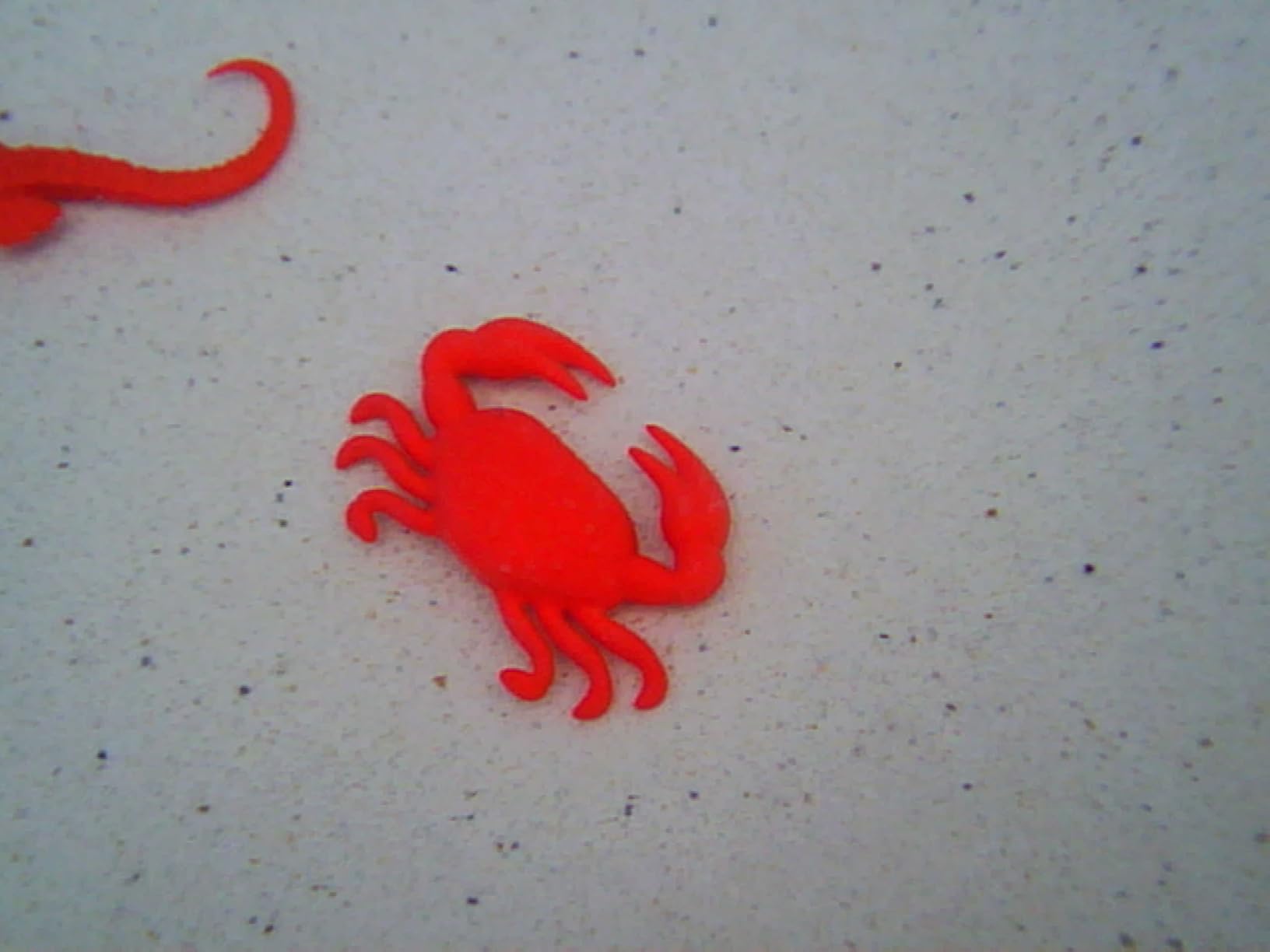
Reviewers report that children genuinely stop asking for a parent’s phone and start directing their own footage, which is the real outcome you are buying. Two fastening straps and two lanyards are included alongside the 32 GB card and USB cable, so it is ready to mount on the first day.
Owners are blunt about the accuracy gap: the listed 1080P is closer to 480p in real output. Video also shakes unless the camera is held very still, the audio is weak, and there is no real zoom adjustment. Several owners report buttons or the charging port failing within a few months of regular use.
The dual power switch design confuses almost everyone at first, including adults. Teach the child which switch is which in the hotel room, not at the rental bike pickup.
What works well on a trip
Weight. At under two ounces it is the pick for a child who complains about anything carried around their neck, and it is among the easiest of the ten to fit in a carry-on without a case.
Mounting hardware for a bike or helmet turns a toy camera into something a child uses for an actual activity rather than a prop for a hotel room.
Where it disappoints
The resolution claim does not hold up, so treat the footage as a memory rather than a video to edit. Shaky, weakly recorded clips and no real zoom limit what a child can do with it.
Durability reports are mixed, with dead buttons and charging ports appearing within months. On a long trip that is a real risk, so pack a small pouch and keep the camera off wet sand.
6. Dylanto Instant Print Camera – Best Instant Plus Colour Saving
Dylanto Kids Camera Instant Print,1080P Kids Instant Cameras that Print Photos,Christmas Birthday Gifts for Girls Age 3-12,Portable Toy for 3 4 5 6 7 8 9 10 Year Old Girls Boys Pink
Instant thermal print plus colour to card
12MP stills
1080P video
2.4-inch screen
2000mAh battery
Pros
- Kids get a physical print while colour photos are still saved to the microSD card
- Refill paper is easy to load and inexpensive
- Lightweight and sturdy enough to survive drops
- Bright clear screen and clearly labelled buttons for small hands
- Quick Type-C charging with 3-4 hours of use
Cons
- Photos are grainier than the 1080P claim implies
- Children under about 7 struggle to tear the print out without misaligning the roll
- Built-in games eat battery
- Thermal prints are black-and-white and fade
The Dylanto solves the flaw in every other instant camera on this list. It prints a black-and-white copy on the spot and saves the full colour photo to a 32 GB card at the same time, so you get a copy to hold without losing the images you will want to look at a year later.
Stills are 12 MP with 1080P video, on a bright 2.4-inch screen with 16x digital zoom and a built-in flash. The 2000 mAh lithium ion battery gives 3-4 hours and charges over Type-C, and three rolls of print paper are included in the box.
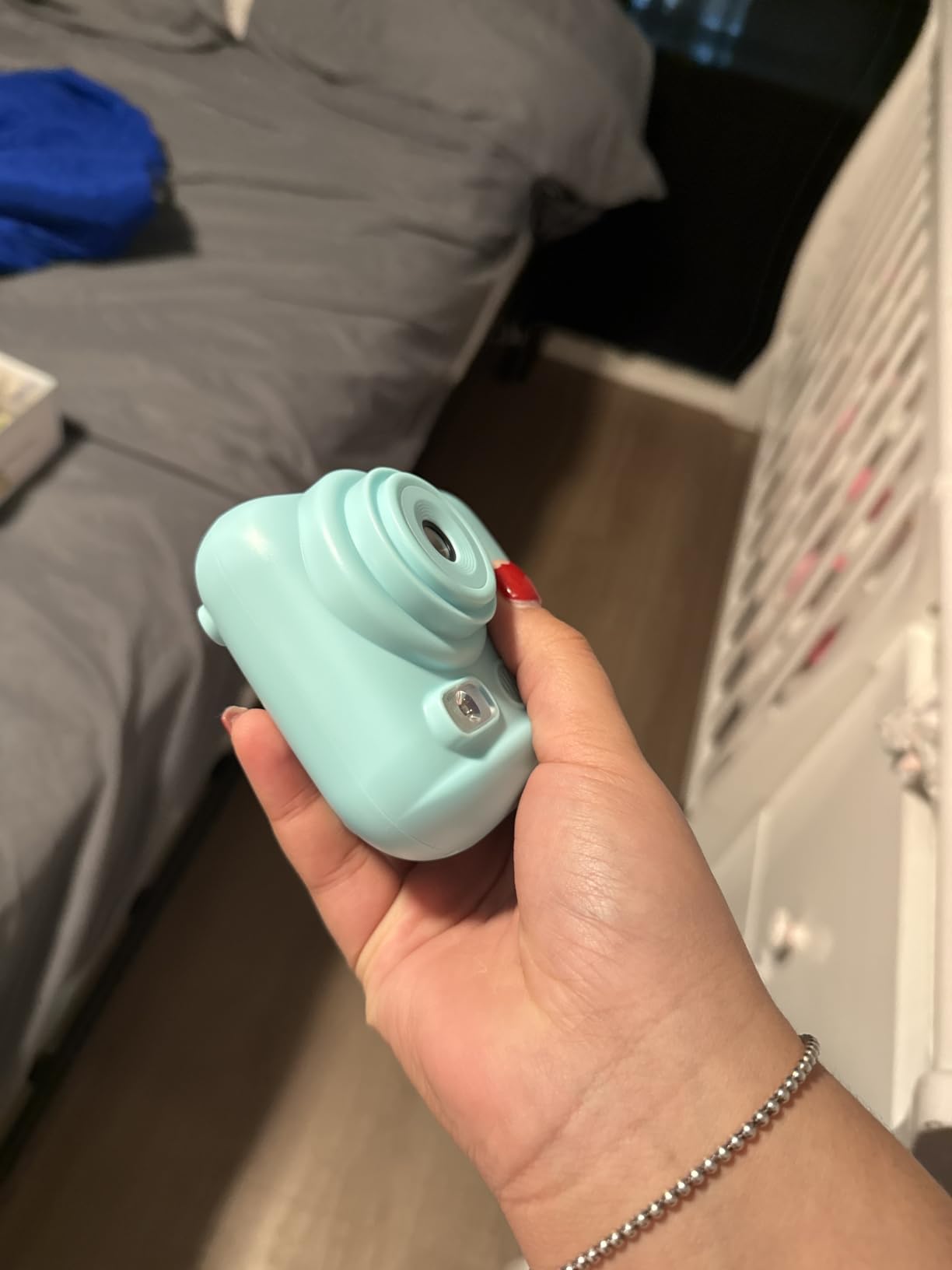
The 4:3 aspect ratio suits printing and framing for children, and the clearly labelled buttons on a bright screen are the difference between a six-year-old using it alone and a six-year-old handing it back after two minutes. Time-lapse, continuous shooting, filter frames, MP3 playback and a few games round it out.
The shell is shockproof soft plastic, and parents commonly report that it survives drops. What they also report is that image quality is grainier than the 1080P label suggests, and that the thermal prints are monochrome and will fade.
The single most consistent problem is the print itself. Children under about seven cannot reliably tear a print free, and doing it wrong misaligns the roll, which then produces a smeared or partial print. Practise it once at home.
What works well on a trip
You are not choosing between a print and a real photo. The card holds the full trip in colour while the printer gives the child their instant reward, which means no arguing about whether to waste paper on a bad shot.
Type-C charging and a 3-4 hour battery cover a full day of sightseeing, and the bright screen is readable in bright outdoor light, which smaller screens struggle with.
Where it disappoints
The paper loading and tearing process needs a demonstration for younger children, and a misaligned roll wastes most of a roll. The games are limited and drain battery that the camera needs for printing.
Like the other instant models here, the prints are black-and-white and fade. If colour prints on holiday photos are the goal, this does not deliver that.
7. Lecran Digital Camera – Best for Older Kids and Tweens
Lecran Digital Camera, FHD 1080P Point and Shoot Camera for Kids Teens Pink
44MP stills
1080P video
2.8-inch LCD
5.6 oz
2 rechargeable batteries and 32GB card
Pros
- A 2.8-inch screen that is larger than most in this group
- good for framing and playback
- 44MP stills and 1080P video with anti-shake
- Timestamp stamping dates photos and video automatically
- Time-lapse
- slow motion
- burst and face detection add real creative scope
- Two-year warranty with a replacement policy
Cons
- Fixed-focus lens with no optical zoom
- only 16X digital
- Menu-driven controls take a little learning for a younger child
- Removable batteries and SD card can be lost on a trip
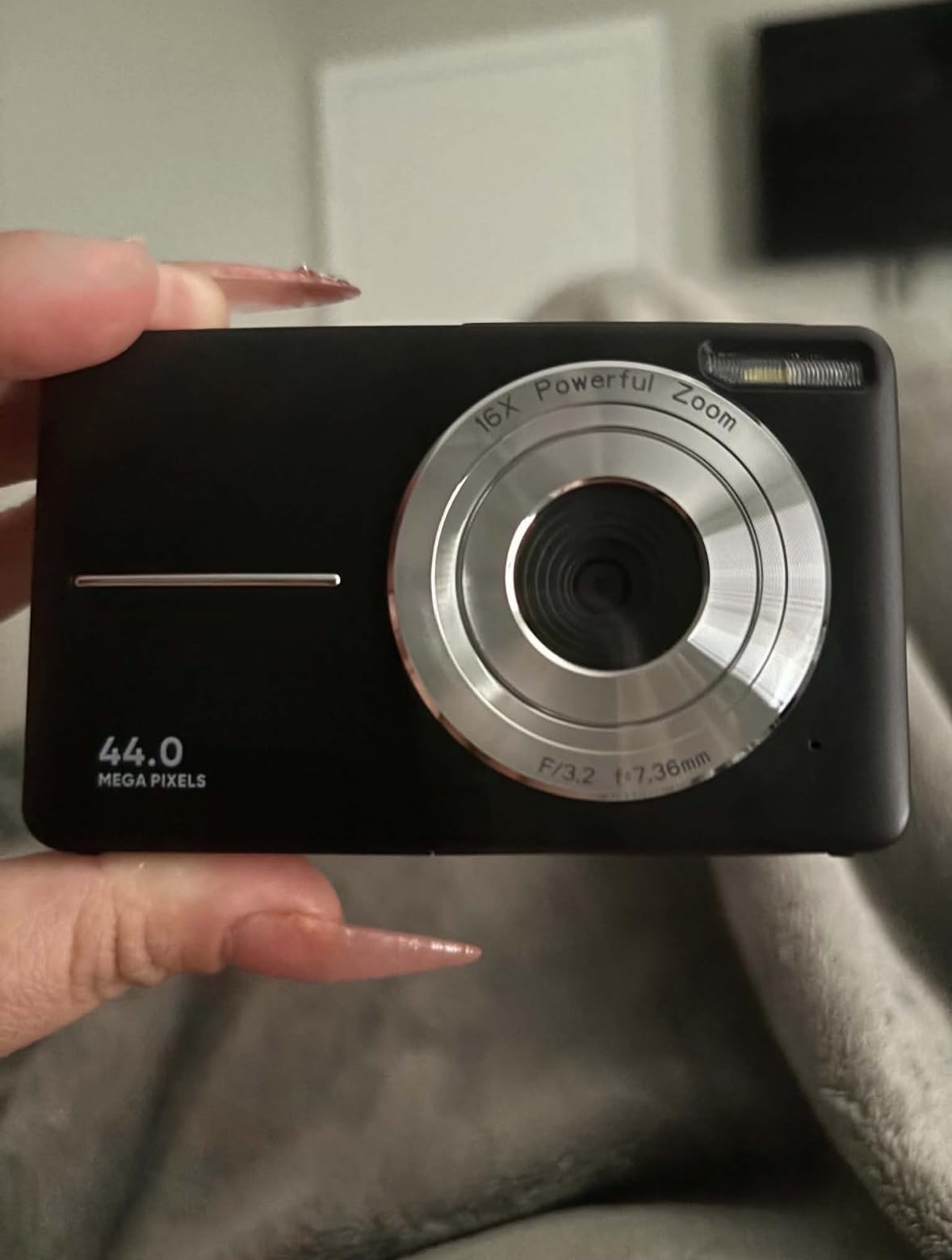
This is the pick for a child around 10 to 13 who is starting to treat photography as something other than a toy. Its 2.8-inch LCD is one of the larger screens here, and combined with on-camera playback it lets a tween judge a shot without an adult squinting over their shoulder.
Two rechargeable batteries and a 32 GB card are included, which solves the long-day problem better than a single cell. The timestamp function stamps date and time onto photos and video, so a two-week trip sorts itself chronologically without anyone renaming files at home.
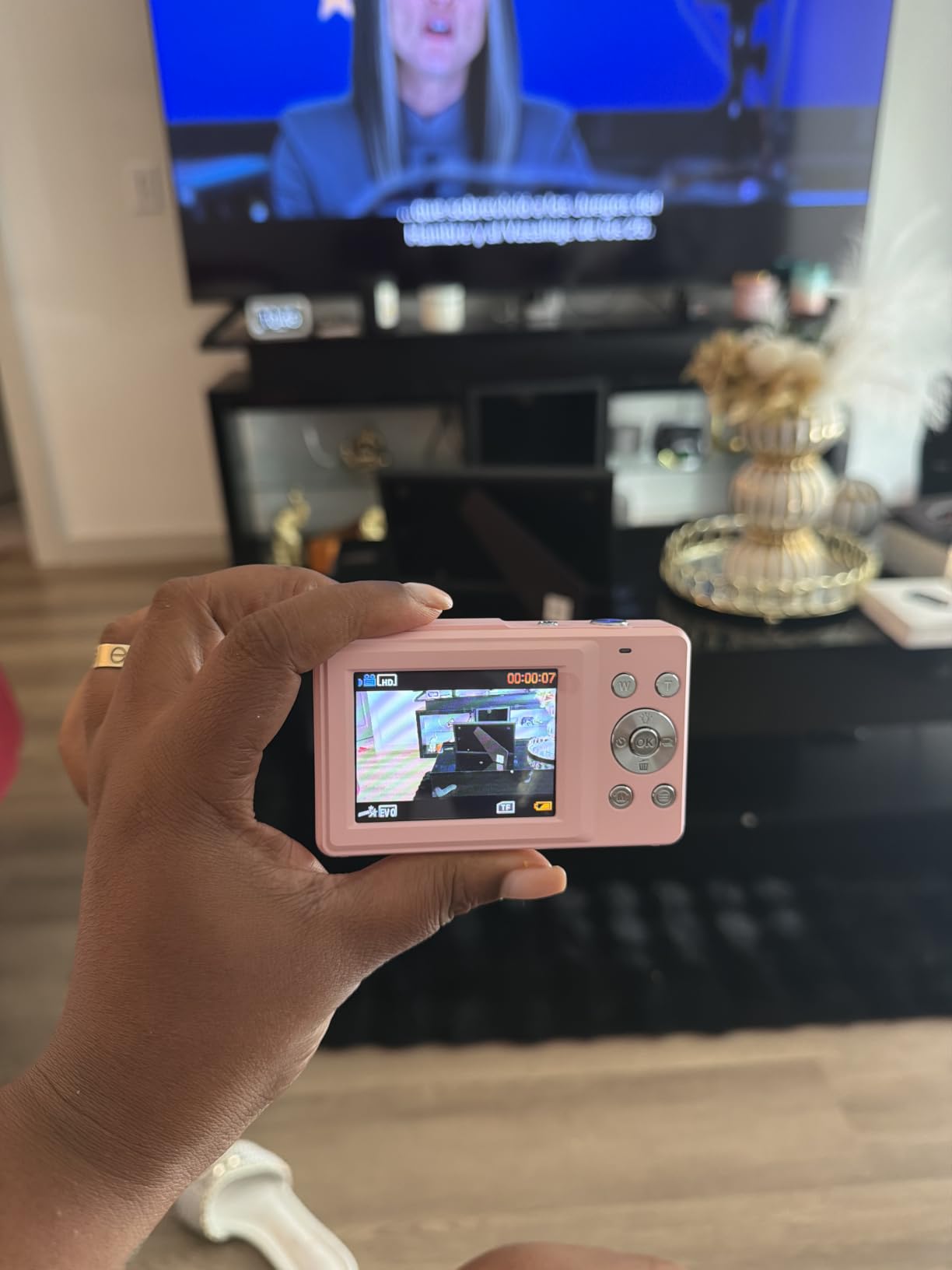
Time-lapse, slow motion, continuous shooting, motion detection and face detection give a 12-year-old real techniques to learn rather than filters to swipe through. The webcam capability also means it can double as a laptop camera when the holiday ends.
The lens is fixed focus with no optical zoom, so the 16X is entirely digital and quality collapses beyond a few steps back from the subject. Menus need a little learning, which is fine at 12 and frustrating at 7. The plastic body also feels light rather than rugged.
Our main travel worry is the removable battery and SD card. Small parts that come out of a camera on a train are small parts that do not come back, so this one needs a labelled pouch more than a sealed one does.
What works well on a trip
Dual rechargeable batteries and timestamp stamping are the two travel features that matter most here. The first keeps the camera alive through a full day, the second means a fortnight of photos is already organised.
It is a genuine point-and-shoot in form, pocketable at 5.6 oz, so a child can carry it all day without it feeling like a parent’s camera being borrowed.
Where it disappoints
No optical zoom. A child cannot frame a distant landmark or a far-off animal, and the digital zoom produces soft crops that will disappoint anyone expecting real zoom performance.
It is not sealed, so sand, water and drops are all risks. And the menu interface is a step up for a younger child, so this is the model that gets outgrown upward rather than being the first one a small child ever holds.
8. GKTZ Pool Camera – Best for Flip-Lens Selfies
GKTZ Kids Waterproof Underwater Camera 1080P 4X Zoom 2″IPS Screen 32GB Card
20MP stills
1080P video
2.4-inch IPS screen
99ft waterproof and shockproof case
55 g
Pros
- 180-degree flip lens lets kids film a scene then turn it for a selfie
- Rugged kid-proof shell for pool decks
- bikes and beach use
- 32GB card and multiple mounts included in the box
- Interface a 4 to 6 year old can work independently
- 30+ frames
- 7 filters and 5 puzzle games
Cons
- Some units report the waterproof case leaking and damaging the camera
- Underwater footage comes out with a strong blue and green cast
- Image quality is described as toy-grade
- Charging takes a while and the menu runs across several languages
The flip lens is the reason to pick this one. The 180-degree rotating lens lets a child film whatever is in front of them, turn the camera around, and take a selfie with the same device, so the child is not relying on a parent’s phone for a selfie.
It is 55 g with a 2.4-inch IPS screen, 20 MP still capture at a 12 MP maximum image size, 1080P video and 4x optical zoom taking the total to 16x with digital. The 99ft waterproof and shockproof housing, adjustable bike, helmet and wrist mounts, and a pre-installed 32 GB card mean it is usable the moment it comes out of the bag.

Thirty-plus aquatic frames, 7 filters, 5 puzzle games, continuous shooting, self-timer options and time-lapse fill the gaps in a day of poolside waiting. USB-C charging and a 24-month warranty are both better than most of the group, and the lithium polymer battery gives over 2 hours of continuous play.
The serious negative is the waterproof case. Some owners report leaking that damaged the camera inside, and that is exactly the scenario where a child is relying on it. Underwater footage also comes out with a strong blue and green cast rather than looking like the real thing.
Reviewers are consistent that image quality is toy-grade, and the settings menu runs across several languages, which confuses a child who cannot read the one they need.

What works well on a trip
The flip lens turns children into subjects instead of bystanders, and that is the behaviour that keeps a camera in use all holiday rather than in a bag by day three. The 55 g body and wrist mount make it easy to carry on a bike or in a pool bag.
Two hours-plus of battery and a 24-month warranty mean it is likely to outlast the trip, and the included card and mounts remove any accessory shopping before departure.
Where it disappoints
Case failure is the risk to weigh. A leaking housing on day four of a beach holiday ends underwater shooting for the rest of the trip, so test the seal with a short dunk at the hotel before the real day out.
The blue-green cast underwater and toy-grade stills mean this produces happy memories rather than accurate ones. Charging is also slow, so it needs a full charge the night before an excursion.
9. VTech KidiZoom Camera Pix Plus – Best Built for Drop Survival
VTech KidiZoom Camera Pix Plus, Blue
2.0 megapixel sensor
240p video
1.8-inch screen
4x zoom
Ages 3-8
Pros
- Holds up beautifully to repeated drops by toddlers
- Easy to navigate for very young children with a big colour screen
- 40+ effects
- four games
- panorama and animation tools
- AA batteries last a long time between changes
- Recognisable brand parents trust as a gift
Cons
- Internal storage is tiny so children must constantly delete photos
- No memory card or USB cable included
- 2MP stills and 240p video are low resolution
- Noticeable delay between pressing the button and the shot
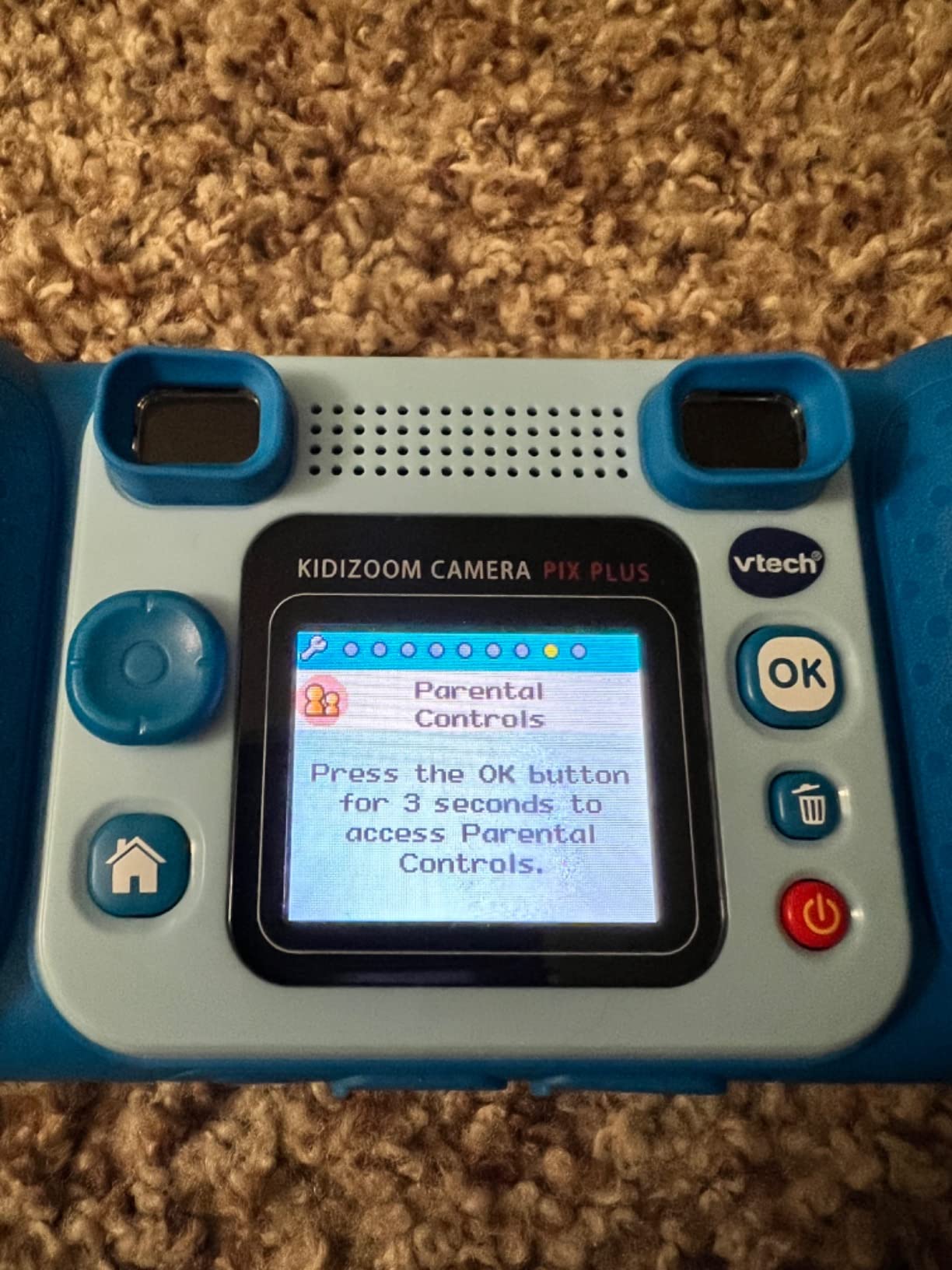
This is the one to buy when the deciding factor is a two-year-old’s grip strength. Parents consistently describe it as surviving repeated drops, which no small digital camera in this list can promise. The body is chunky, sealed and shaped for small hands rather than for a pocket.
The creative tools are the draw for this age group. Forty-plus effects covering frames, stamps, kaleidoscope, collages and video themes sit alongside four built-in games, panorama mode that stitches 2-5 images, and animations built from up to 100 photos. The Talking Photo feature combines a photo with your own recorded voice and voice effects, which children use far more than parents expect.
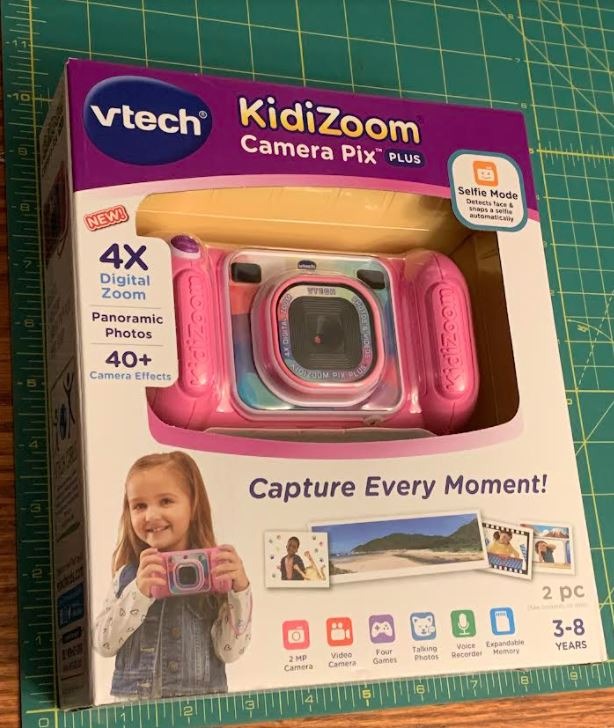
It runs on 4 AA batteries, which last a long time between changes, and microSD expansion goes up to 32 GB. A 90-day manufacturer warranty covers the early weeks when things do not work as expected.
The trade-offs are storage and resolution. Internal memory is tiny, so children must delete constantly, and neither a memory card nor a USB cable is included, so transfers need an extra purchase. At 2.0 megapixel stills and 240p video, the files are genuinely low resolution by modern standards.
There is also a noticeable delay between pressing the button and the shot, which produces a lot of missed photographs of moving children. That delay is the thing a four-year-old will blame on the camera.
What works well on a trip
AA batteries are the underrated travel feature. When a camera runs flat, a hotel reception desk, a supermarket or an airport shop almost always has a pack, and there is no proprietary charger to lose.
It is genuinely drop-proof in practice, which makes it the safest thing to hand to a child at a busy attraction without watching them the entire time.
Where it disappoints
Storage. With tiny internal memory and no card included, a child will fill it on the first morning and start deleting their own trip, which is a bad lesson about photography.
Quality is among the lowest of the ten at 2 megapixel and 240p, and the shot delay means movement is hard to capture. Pick this for a toddler, not for a child who wants to bring home good pictures.
10. Gofunly Instant Print Camera – Best for Low-Cost Refills
Kids Camera Instant Print, Christmas Birthday Gifts for Girls and Boys
Instant thermal print plus colour to 32GB card
2.4-inch screen
10x zoom
1000mAh battery, 4-5 hours
Pros
- Instant print gives kids a tangible photo to hold and keep
- Refill paper costs very little compared with instant film systems
- Printing can be switched off so you are not forced to print every shot
- Good battery life with several reports of over a year of regular use
- Easy for a five-year-old to operate with creative tools to keep them busy
Cons
- Prints are black-and-white thermal images rather than colour
- Included games lose their appeal quickly and eat battery
- Build is functional rather than premium
- Batteries deplete if kids leave the games running
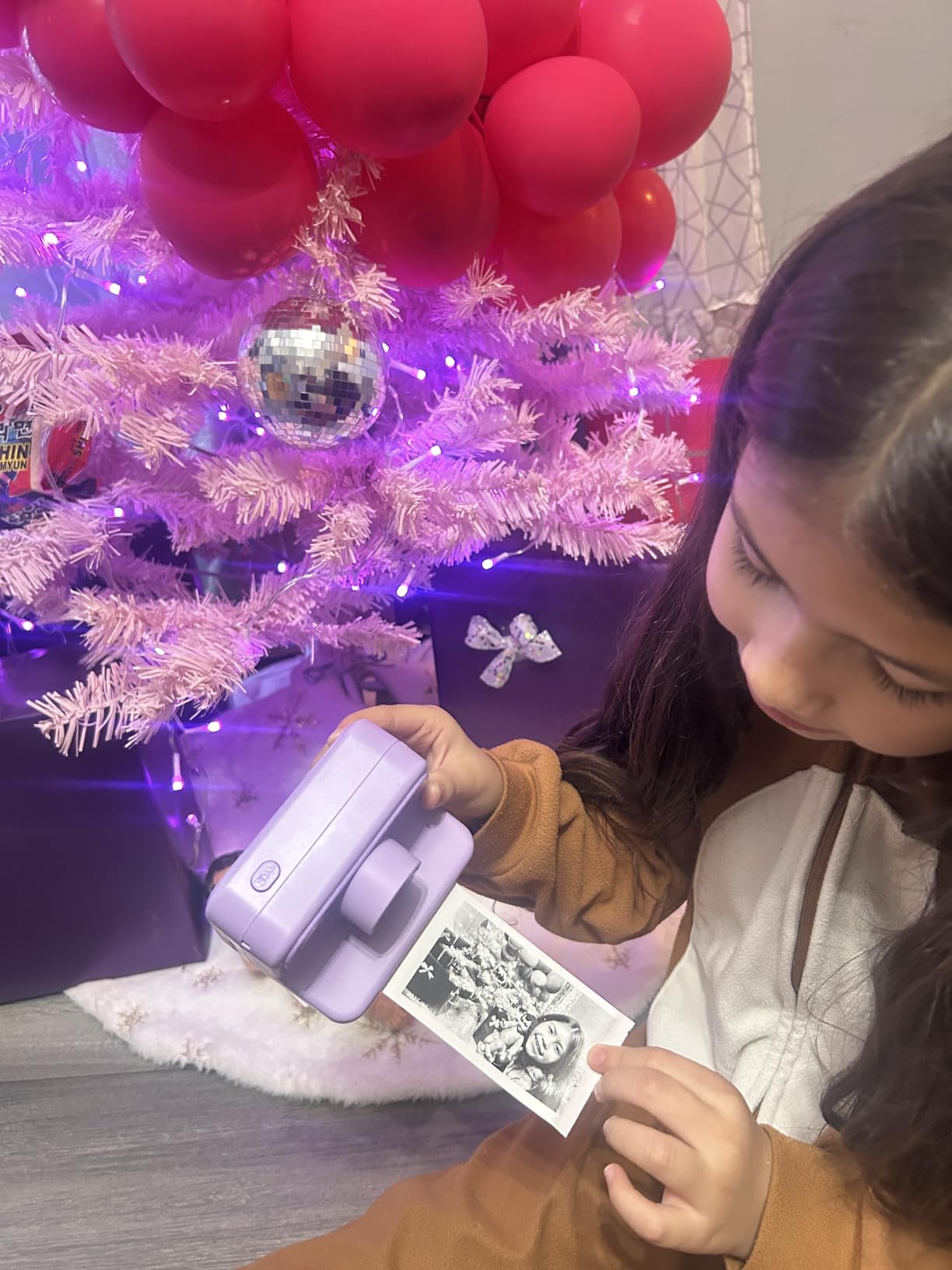
If the deciding factor is what happens after the first box of paper runs out, this is the camera to look at. Owners single out the refill paper as costing very little next to an instant film system, and printing is switchable, so you decide when a shot deserves a physical copy.
It prints in two modes, grayscale and dot matrix, with 3 colour depths, and it saves the colour photo to a 32 GB SD card at the same time. The 2.4-inch screen, 10X digital zoom and a built-in flashlight or flash cover the awkward lighting of a cave, a restaurant and an evening street.
Time-lapse, burst shooting, a DIY mode, MP3 playback, 21 frames, 8 mirror effects and 6 filters keep a child occupied. The 1000 mAh rechargeable battery gives 4-5 hours of use, three rolls of print paper are included, and there is a 12-month warranty.
Owners report it holding up well over more than a year of regular use, which is a meaningful reliability signal for something a child will carry. The criticisms are consistent: monochrome prints that fade, a functional rather than premium build, and games that children abandon quickly while quietly draining the battery.
That last point deserves attention before a trip. If a child finds the games, they will play them on a bus for an hour, and the camera may be flat by the time they reach the destination.
What works well on a trip
Refill economics. When a family prints freely on a two-week holiday, the cost difference between this and a true instant film system is the difference between a sustainable habit and a novelty that stops after a weekend.
A 4-5 hour battery, Type-C charging, and the ability to turn printing off entirely make it easy to travel with for a whole day.
Where it disappoints
Prints are black-and-white thermal and will fade, so a printed album from this camera is a holiday memento rather than an heirloom.
Its 2.07 megapixel stills are among the lowest here, and the on-device games are a battery liability on a long travel day. Set expectations about both before departure.
Travel Logistics: Carry-On, Batteries, Storage and Lost Cameras
Most roundups stop at the spec sheet. This is the part of the trip that actually decides whether the camera gets used, so here is what we learned watching these cameras come out of a bag every morning for two weeks.
Size and carry-on fit. Every camera in this roundup is small enough for a jacket pocket, which removes the most common packing argument. The PROGRACE at 1.76 ounces and the GKTZ at 55 g are the two you can genuinely forget you packed, and the VTech KidiZoom at 8.16 ounces is the one a child will notice carrying. None of them compete for hand-luggage space with a real lens.
Batteries on the road. Spare lithium batteries travel in carry-on rather than checked luggage, and the practical point for these models is simpler: most run on a built-in rechargeable cell or a removable cell you can top up, so one power bank covers a whole week. The exceptions are AA cells, which are the easiest of all to replace. The two to watch are the Goopow at 1.5-2 hours and the GKTZ at 2-plus hours, both of which will need a midday charge on a full sightseeing day.
Storage maths. Every model here except the VTech includes a 32 GB card, which holds far more than a child shoots in a fortnight, so card capacity is not the constraint. The constraint is transfer. Cameras that record 1080P video fill that space quickly, so either clear the card every second evening or bring a small card reader. The Goopow, PROGRACE and GKTZ all include one or a USB cable for exactly this reason.
How the photos get home. This is the question nobody answers. If your child is holding the camera, you are not, so the photos are only on a device you do not control. The models that save to a removable microSD card, the Camkory, Goopow, Agoigo, ESOXOFFORE, Dylanto, Lecran and GKTZ, can be handed to you at the end of each day. The VTech KidiZoom is the exception: without a card or cable bought separately, you are trusting a child not to delete the trip.
Lost and damaged cameras. A child camera should be treated as a loss risk, not an investment. Buy the lanyard, clip it to the bag rather than the wrist, and put a contact card in the case. On a walking holiday we also carry a small zip pouch, because sand and sunscreen get into everything.
The screen-free and airplane argument. For a long-haul flight, none of these cameras are permitted entertainment devices, and a child holding a lit screen through a nine-hour journey will exhaust it. The screen-based instant cameras here are the worst offenders for that reason. Parents searching for a screen-free option should look at used or current dedicated screen-free digital cameras rather than any of the ten above, none of which are screen-free.
How to Choose a Kids Camera for Travel by Age Stage
The right answer changes completely at two points, roughly age six and roughly age ten. Before six, simplicity and survival beat everything. Between six and nine, the child can operate a menu, so features and screen size start to matter. From ten upward, a real point-and-shoot is what keeps them interested.
Ages 3-5. The priority is a chunky body, a lanyard and near-indestructible construction. The VTech KidiZoom Camera Pix Plus and the Goopow Kids Camera both fit, with the VTech winning on drop survival and AA battery convenience and the Goopow winning on 1080P video and included card reader. At this age, expect to help them for the first two days.
Ages 6-9. The child can now navigate menus, so the picks widen considerably. The Camkory 44MP Digital Camera is the sensible default with its 3-inch screen, 20 filters and two batteries. The Dylanto or the ESOXOFFORE make sense if the appeal of a physical print is what will keep them shooting, and the Agoigo becomes relevant the moment a pool is on the itinerary.
Ages 10-13. This is where parents in photography forums consistently say to stop buying toy cameras, and we agree. The Lecran Digital Camera is the best fit in this list: a 2.8-inch screen, timestamp stamping, time-lapse, slow motion and burst shooting give a tween real techniques to learn. For an active trip, the GKTZ with its flip lens and mounts keeps a 12-year-old interested where a plain point-and-shoot would not.
Deciding between formats. Instant gives you a physical keepsake and no transfer burden, at the cost of monochrome thermal prints that fade and per-shot refills. Digital gives you unlimited shots at no ongoing cost, at the cost of needing charging, card management and a transfer routine. Underwater and action builds buy you pool and bike capability you cannot get anywhere else, with a case that can fail. A screen-free camera is worth considering for long flights, though none of the ten here fits that category.
What about inflated megapixel numbers? Buyers repeatedly report that cheap marketplace kids cameras advertise high megapixel counts that do not match real output. Judge the 44 MP claim on the Camkory and the Lecran by how they handle a real scene rather than by the number, and treat the 5 MP sensors in the Agoigo and PROGRACE honestly as soft-output cameras. Sensor size, not resolution, decides detail at this size.
When they outgrow it. Parents in photography forums describe a treadmill where a seven-year-old outgrows a toy camera and the expensive one becomes a doorstop. The cheapest defence is to buy at the age stage your child is in rather than a stage ahead, to keep the original box and accessories, and to resell it when they move up. A camera that has been used for a year of holidays has a real second-hand market, and the money is better spent on the next step up.
One last piece of travel kit worth mentioning: whatever you pack, pack a second battery and a second card. Packing and setup is otherwise the same every trip: charge the night before, format the card rather than assuming it is empty, attach the lanyard, and set the date on the camera so the photos sort themselves. If you are building out the rest of the trip kit, our snowboard bag travel guide covers the same kind of gear-for-a-trip logic, and for the indoor end of a family holiday our kids playhouse roundup is worth a look.
Frequently Asked Questions
What is the best first camera for travel?
The Camkory 44MP Digital Camera is the best first travel camera for most families, because it includes a 32 GB card and two high-capacity batteries, weighs 158.76 g and takes colour photos plus 1080P video with nothing to pay per shot. For a child under six, the Goopow Kids Camera is easier to operate and tougher in a rucksack.
What is the best portable camera for kids?
Portability points to the PROGRACE Underwater Camera at 1.76 ounces and the GKTZ Pool Camera at 55 g, both of which fit a jersey pocket or a swim bag and come with a waterproof case and mounting hardware. For general everyday portability, the Camkory at 158.76 g with a 3-inch screen is the better all-rounder.
What type of camera is best for taking pictures of kids?
It depends on the age and the trip. Instant print cameras suit younger children because the physical print is the motivation. Compact digitals suit ages 6 to 13 because they cost nothing per shot and give far better quality. Rugged waterproof action cameras are the right choice for pools, beaches, bikes and water parks. A screen-free camera is the most comfortable option on long flights.
What is a good camera for a 12 year old?
The Lecran Digital Camera is the best fit in this roundup for a 12-year-old, with a 2.8-inch screen, 44 MP stills, 1080P video, two rechargeable batteries and timestamp stamping so a fortnight of photos sorts itself. For an active holiday, the GKTZ with its 180-degree flip lens, 99ft waterproof housing and bike and helmet mounts holds attention better.
Why is instant film so expensive and which film is cheapest?
True instant film bundles the emulsion, the chemistry and the frame into one consumable you must keep buying, which is why per-shot costs stack up on a holiday. The cheapest route to a physical print is a thermal print camera with refill rolls and no ink, such as the ESOXOFFORE, Dylanto or Gofunly, where three rolls are included and refills are inexpensive. Pure digital costs nothing per shot.
Can a kids camera go in hand luggage and in-flight battery rules?
Yes. Every camera in this roundup is small enough for hand luggage and none is a large lithium battery, but spare lithium batteries should travel in carry-on rather than checked luggage. Note that these are cameras, not permitted entertainment devices, so they cannot replace a screen or tablet for a long flight, and most will need charging overnight at your accommodation.
Conclusion: The Default Pick by Age
For most families heading out with a child aged 6 to 10, the Camkory 44MP Digital Camera is the right default among the best kids cameras for travel, because it costs nothing per shot, arrives with storage and two batteries, and needs no adult once it has been explained. Under six, go for the Goopow or the drop-proof VTech KidiZoom. A pool or beach holiday calls for the Agoigo or the GKTZ. If the physical print is the point, the ESOXOFFORE comes with 372 prints already in the box, which spares you an early-morning supply run.
Whichever you choose, the trip decides more than the spec sheet does. Check the battery plan, carry a second card, and accept that some of the photos will be soft, blurred or monochrome. The camera is not buying you better pictures, it is buying your child a reason to keep looking at the world through it.