
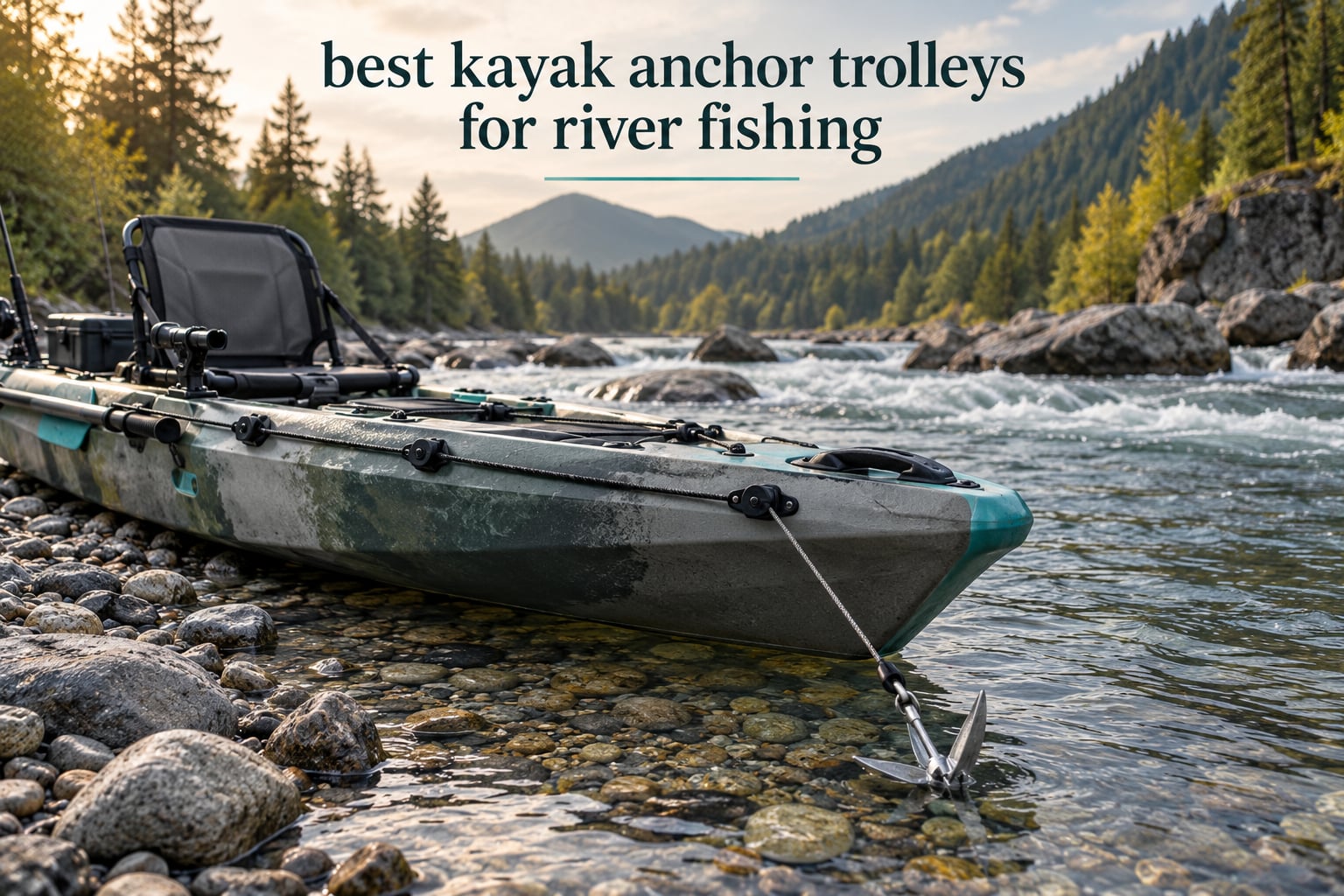
The best kayak anchor trolley for river fishing is the YakAttack LeverLoc, because it locks with a single lever, ships with every screw and bolt you need, and lets you slide the anchor point bow to stern so the kayak weathervanes into the current instead of being pushed sideways. It is the trolley most new river anglers in the r/kayakfishing community reach for first.
That matters more on moving water than on a lake. A drifting kayak means you are casting at a moving target, fighting fish while the current decides when you stop, and spending half the trip recovering gear you never had a chance to set down. A trolley line gives you back that control, and it lets you change the angle of the boat in seconds rather than re-rigging from the bow cleat every time the seam moves.
We compared ten anchor trolley kits built for exactly this job, weighing the hardware, line length, mounting options, and how each one behaves in current. Nothing here is a lakes-only anchor dressed up for a river. Everything is built around a bow-to-stern line you can clamp wherever the river is pushing hardest.
We also cover the questions forum threads keep circling but no roundup answers: where to put the ring in current, which side to mount on, how much line to run, and when anchoring is simply the wrong call. If you are still deciding on a setup for the boat itself, our kayak roof rack guide covers transport, and anchor windlasses for boats is worth a look if you ever move up to a larger craft.
Table of Contents
Top 3 Picks: Best Kayak Anchor Trolleys for River Fishing in 2026
These three cover the realistic range of river situations. The YakAttack LeverLoc is the all-round answer, the H2o Kayaks kit is the value pick, and the YakGear AK1 Deluxe is what you want when the current is doing real work.
YakAttack LeverLoc Kit
- Lever clamp locks line fast
- All install hardware in box
- Made in USA
H2o Kayaks Trolley Kit
- Marine grade stainless fixings
- 9 m of 4mm trolley line
- Complete pad eye and pulley kit
Quick Comparison of the Best Kayak Anchor Trolleys for River Fishing in 2026
All ten kits below mount a line along one gunwale and give you a sliding ring to clamp. The differences that actually change how they behave in a river are line length, the type of lock, and whether the hardware is stainless.
| Product | Specifications | Action |
|---|---|---|
| YakAttack LeverLoc Kit |
|
Check Latest Price |
| H2o Kayaks Trolley Kit |
|
Check Latest Price |
 YakGear AK1 Deluxe YakGear AK1 Deluxe |
|
Check Latest Price |
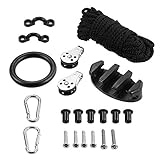 ISURE MARINE Kit ISURE MARINE Kit |
|
Check Latest Price |
 YYST Kit with Rope YYST Kit with Rope |
|
Check Latest Price |
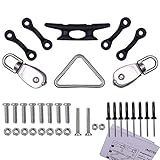 YYST No-Rope Pack YYST No-Rope Pack |
|
Check Latest Price |
 YUSOVE 316 Stainless Set YUSOVE 316 Stainless Set |
|
Check Latest Price |
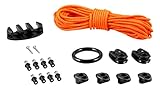 Wilderness Systems Kit Wilderness Systems Kit |
|
Check Latest Price |
 Atader Toggle Clamp Kit Atader Toggle Clamp Kit |
|
Check Latest Price |
 EDSRDPLT 35-Piece Set EDSRDPLT 35-Piece Set |
|
Check Latest Price |
1. Best Kayak Anchor Trolleys for River Fishing Overall: YakAttack LeverLoc
YakAttack LeverLoc Anchor Trolley Kit – Easy Install – Made in USA
LeverLoc tensioning lock
All installation hardware included
Made in USA
Designed only for kayak anchor duty
Pros
- Purpose-designed trolley rather than generic hardware
- All install hardware in the box
- 84 percent of reviews are five star
- Ranks near the top of Kayak Accessories
- Made in the USA
Cons
- Costs more than generic import kits
- Listings do not accurately state the component dimensions
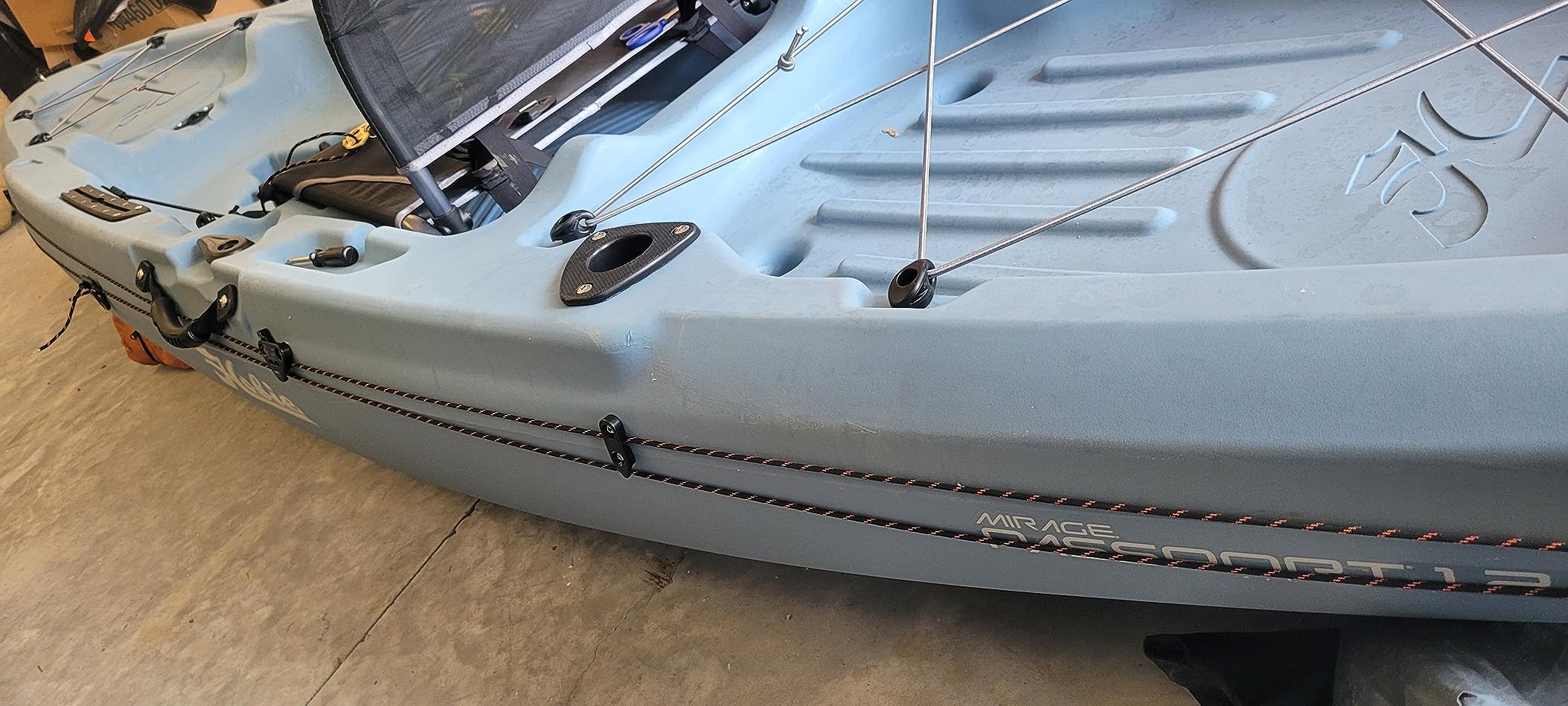
I keep the LeverLoc on the boat I fish rivers most, and the reason is the lock. Most kits use a zig-zag cleat, which means threading, pulling and trimming a bight of line. The LeverLoc clamps down with a lever instead, so when a seam shifts while I am fighting a fish I can move the ring one-handed without clipping my line.
Installation is the other reason. Every screw, bolt and washer needed for the job is in the box, which removes the single most common complaint we found across cheap kits: arriving with hardware that does not suit your hull and then having to make a second purchase. Fit it on the side opposite your casting arm and you can put the anchor anywhere in seconds.
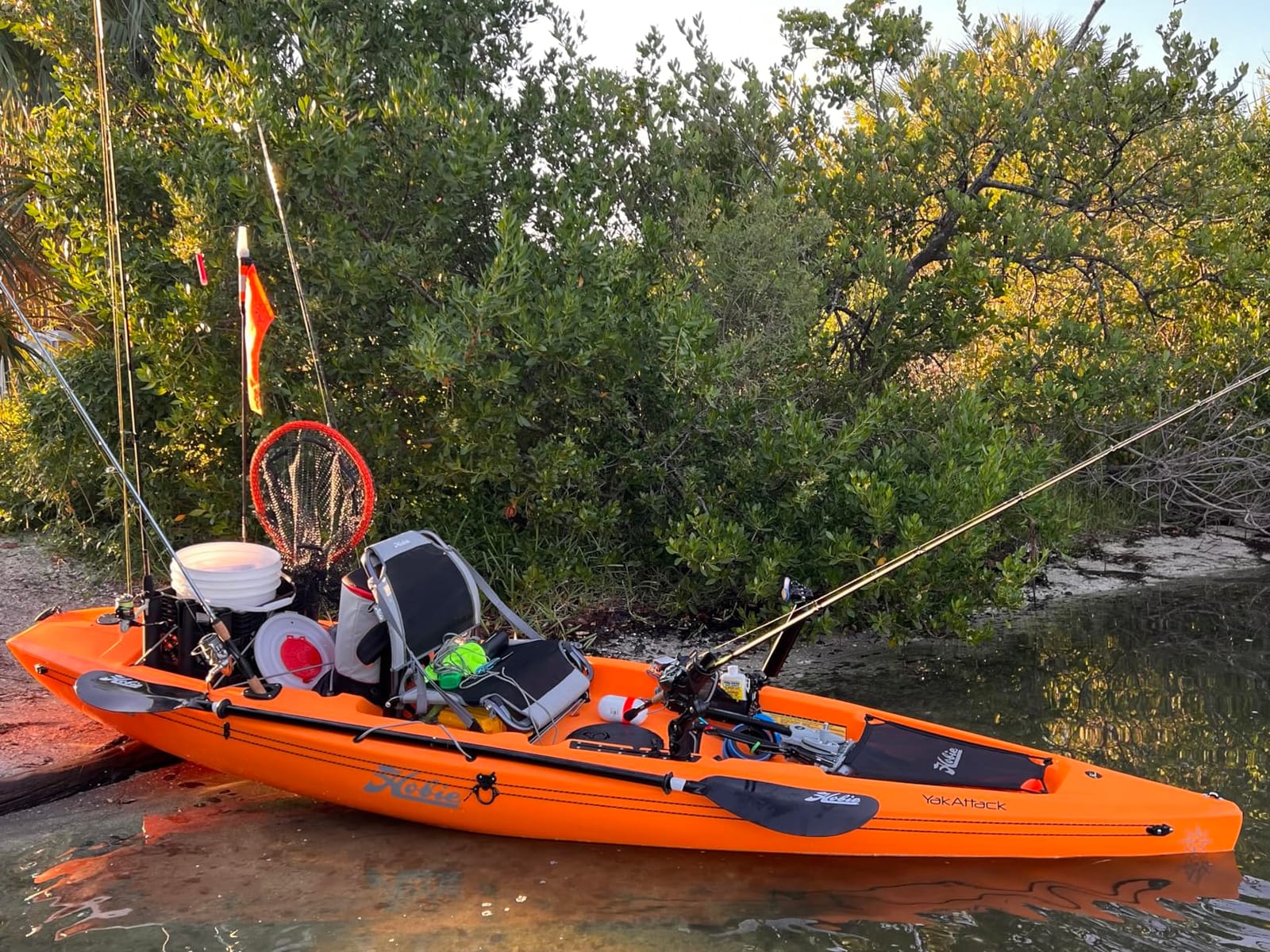
The retailer listings do not state the carcass dimensions accurately, so measure your mounting area before you order. Buyers consistently describe the install as straightforward and the hardware as built for the actual job rather than assembled from generic parts, and the sales rank shows this is still a heavily ordered trolley among new anglers.
One thing to plan for: the lever clamp works best when the line is pre-stretched and sized to your hull, not left at full factory length. Slack line in a river finds every gunwale edge you own.
Is the LeverLoc Lock Reliable in Fast River Current?
With 84 percent of reviews at five stars and 11 percent at four, the failure rate on the clamp itself is low. Tensioning is handled by the internal cam, which is the part engineered for this specific job rather than borrowed from a generic cleat design.
The realistic limitation is line length, not the lock. Run more line than you think you need and trim it to fit after a month of use, because cord that is slightly too long puts constant uneven load on the clamp.
Is This the Right Trolley for a First River Kayak?
Yes. This is the one most new anglers in r/kayakfishing choose by name, and several Pelican Sentinel 100X owners specifically paired the LeverLoc with that hull. It is purpose-built, it includes hardware, and the learning curve is close to zero.
Buy it before you need it. Fitting a trolley in the parking lot is a calm ten-minute job, and doing the same fit at a river ramp with rising water is how holes end up in a hull that should not have any.
2. Best Value Kayak Anchor Trolleys for River Fishing: H2o Kayaks Trolley Kit
H2o Kayak Canoe Anchor Trolley Kit
A4 marine grade stainless fixings
9 m of 4mm 8-plait braid line
10.08 ounces total weight
Includes screws bolts and rivets
Pros
- Largest review base in the group at 4.6 across 1156 reviews
- Marine grade stainless and polypropylene throughout
- Includes screws bolts and rivets with washers
- Works with no-drill and rivet-only installs
Cons
- Supplied rivets have a short grip range on thick hulls
- Only two pad eyes included so extra line guides help
- Thin written instructions
More owners have run this kit than any other on this list, and the 4.6 average across 1156 reviews reflects that it simply works. The whole system is A4 marine grade stainless and polypropylene, which is the right material pairing for water that is constantly wet and occasionally full of sand.
At 10.08 ounces the whole trolley is light enough to carry from the car to the ramp in one hand, which is a real consideration when you are parking a long way from a river access. It has been fitted to everything from a Lifetime Tamarack to an Old Town Predator, so hull compatibility is not a gamble.
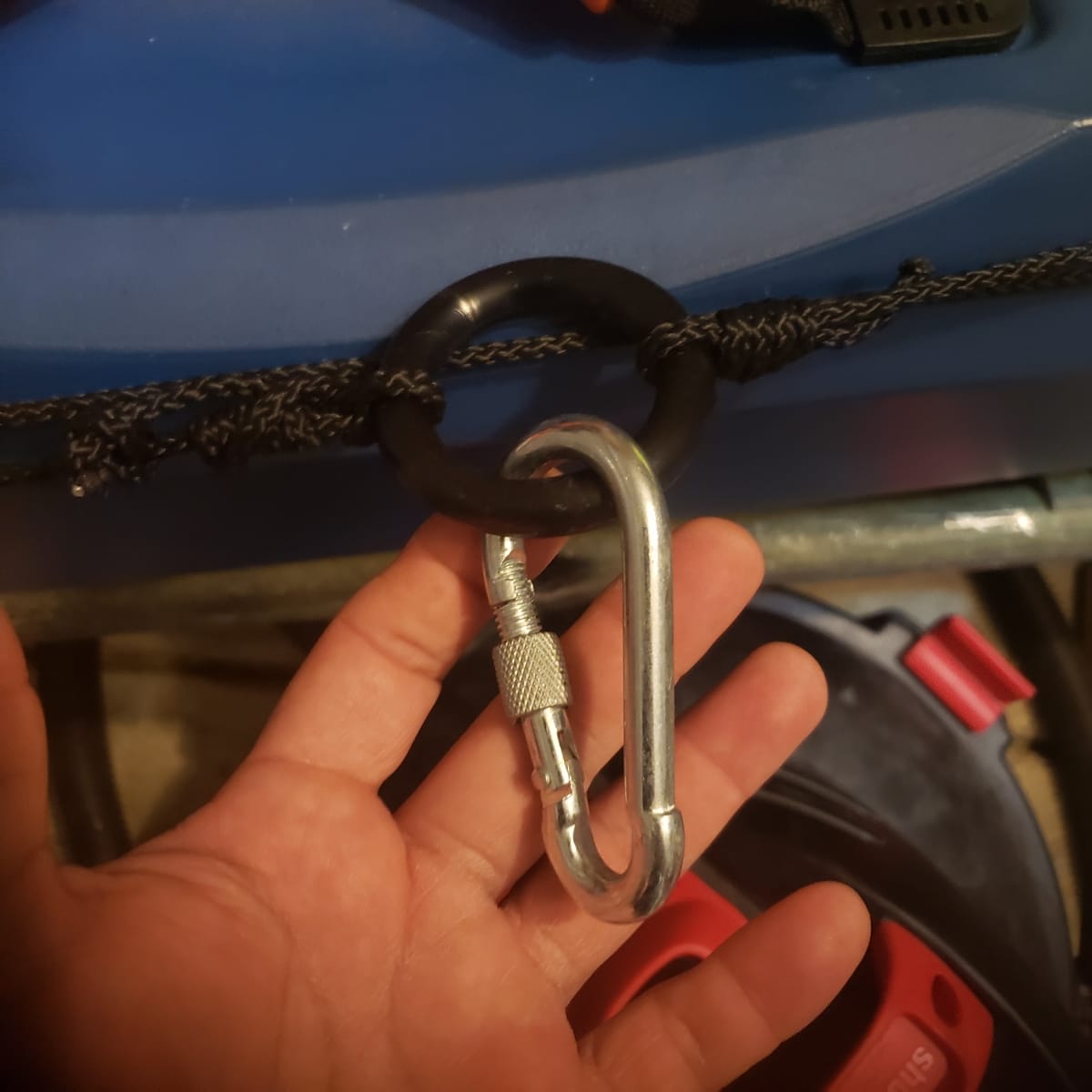
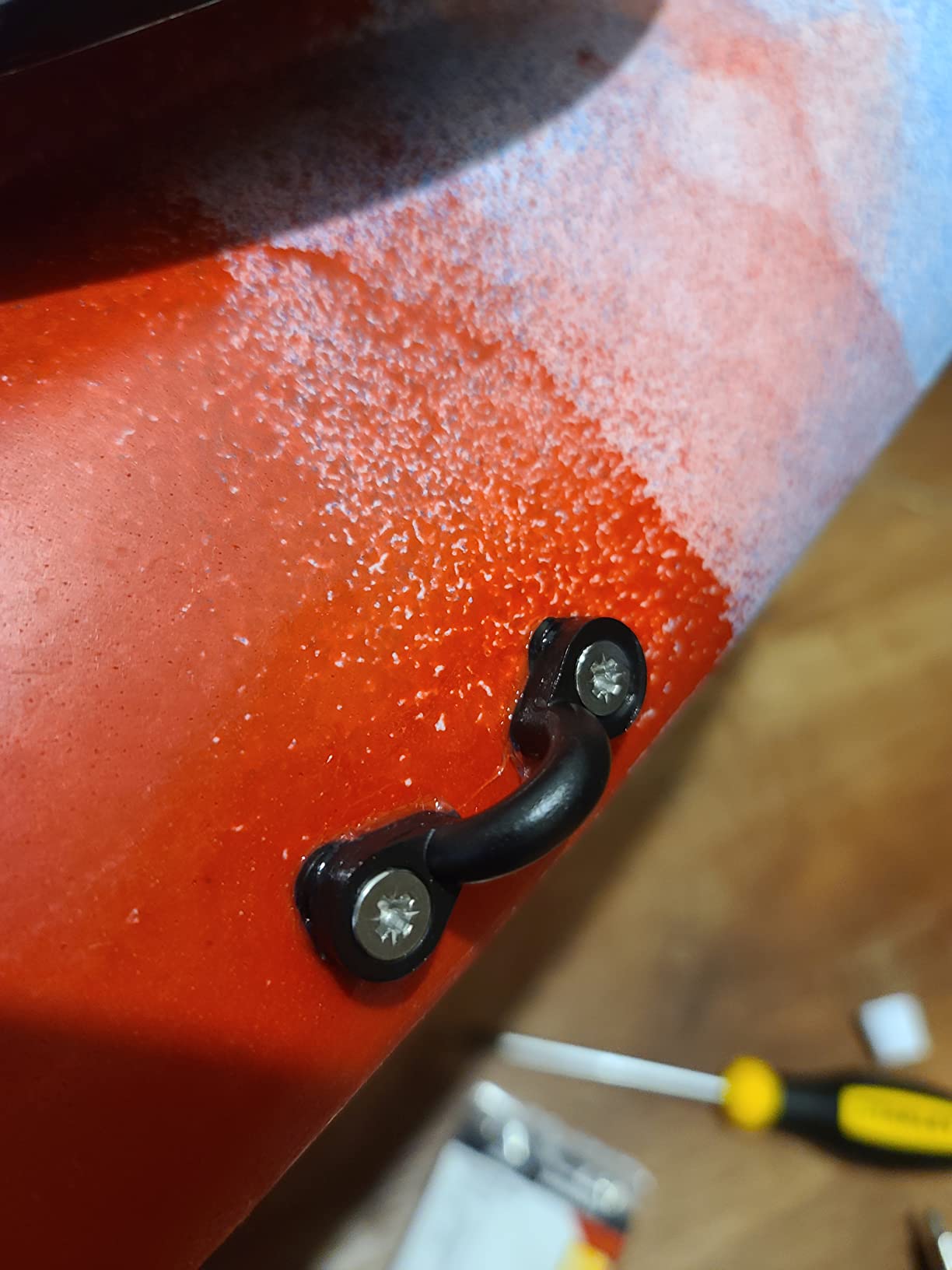
The recurring complaint is the supplied rivet length. Several buyers replaced them with longer stainless rivets or well nuts, and on a thick or textured hull you will almost certainly do the same. The rigging ring is plastic rather than steel, which is fine on a river where you are not in salt water constantly.
Only two pad eyes come in the box, so many owners add a couple of their own line guides to keep the trolley line off the deck and out of the way of gear. Budget for that if you fish from a packed bow.
Will the Stainless Hardware Survive a Full Season of River Water?
A4 marine grade stainless in continuous freshwater exposure holds up well, and the polypropylene line hardware does not corrode at all. This is the combination that makes the kit viable for a season of wet hulls, spray and mud rather than a single day on a lake.
Rinse it after every trip anyway, especially the pulleys. Grit in a sheave is what makes a trolley ring drag instead of sliding, and that drag is what gets you sideways in current.
Is the Thin Instruction Sheet a Real Problem?
It is the weakest part of the package, and most owners learn the install from videos. If you have drilled a kayak before it is a non-issue, and if you have not, the well nut method covered later in this guide will get you a watertight result without guessing.
For a first trolley on a budget, nothing else in this roundup gives you this much hardware in the box at this quality level. That is why it takes the value slot despite not being the cheapest listing here.
3. Best Kayak Anchor Trolleys for River Fishing in Fast Current: YakGear AK1 Deluxe
YakGear AK1 Deluxe Anchor Trolley with Pulleys
Harken pulleys
30 feet of rope
Mini zig-zag cleat
Three year warranty
Pros
- Harken pulleys give the smoothest line travel in the group
- 30 ft line lets the bow swing into the current
- Includes cleat instructions and full hardware
- Backed by a three year manufacturer warranty
Cons
- Priced above generic kits with similar hardware
- Nylon components rather than all-metal fittings
The reason to pick the AK1 Deluxe over cheaper kits is the pulleys. Harken pulleys are the reason the line runs without the stutter and catch that makes a trolley ring stick halfway through a reposition, and in a river the last thing you want is a ring that binds while the current is building on you.
Thirty feet of rope is the other river-specific advantage. That length gives you enough scope to let the bow turn into the current and settle rather than holding the kayak sideways into the flow, which is the entire point of a trolley in moving water.
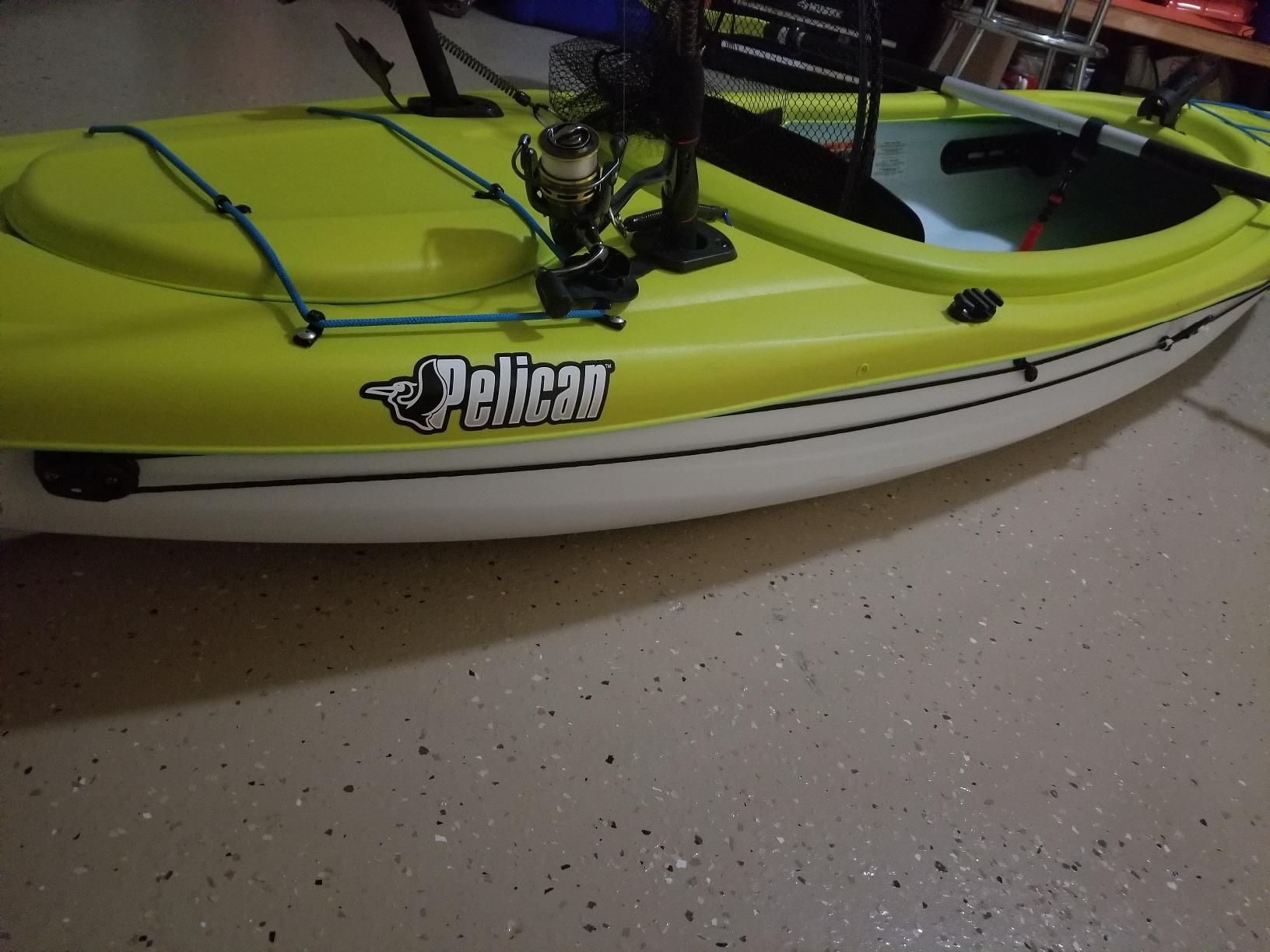
It ships with a mini zig-zag cleat for stable positioning, plus instructions and the hardware needed to install. The three year manufacturer warranty is the longest explicit warranty in this roundup, which tells you something about how the manufacturer expects the hardware to wear.
It is not a low-cost kit and the nylon components are a step down from all-metal fittings. But most owners buying it accept the gap because the pulleys are what they came for, and the pulley is what you feel every single time you move the ring.
Why Does Line Length Matter More in a River Than on a Lake?
On a lake, a short line is fine because wind is the only force acting on you. In current, scope is the difference between holding a stable angle and getting spun broadside, because a longer line lets the bow fall into the flow and shear off the load instead of taking the full push.
Thirty feet is a sensible working length for most 10 to 12 foot fishing kayaks. Measure your gunwale run before buying and cut to fit, because excess line is what catches on gear.
Is the Zig-Zag Cleat a Problem in a Boat Full of Gear?
It is stable but it is a friction clamp, so it needs a properly tensioned bight. Rough it up with a couple of wraps and you will not lose tension, and the mini cleat takes up less deck space than a full-size model.
Set the ring slightly aft of amidships on a normal river day and move it forward only when you are setting up on a head of a pool. That single habit is what turns a trolley from a gimmick into a positioning tool.
4. Best Kayak Anchor Trolleys for River Fishing in Shallow Water: ISURE MARINE Flush-Mount Kit
ISURE MARINE Kayak Canoe Anchor Trolley Kit Eyes Wellnuts Screws Kayak Accessories Zig Zag Cleat Rigging Ring Pulleys DIY Boat 30 Feet Rope
Flush mounted pulleys
30 ft reflective tracer paracord
21 pieces including M5 well nuts
Trolley line detaches to double as a dock line
Pros
- Flush mounted pulleys keep the line tight and snag-free against the hull
- Reflective tracer line stays visible in low light
- Detachable line doubles as a dock rope
- Well nuts included for blind installs
Cons
- Higher three star share points to uneven quality control
- Flush mounting needs care and the instructions are not a highlighted feature
Flush mounting is the whole idea here, and it is genuinely the right approach for shallow river water. Standard pad eye and carabiner mounts leave hardware proud of the hull where it can catch weed, line or a paddle blade, and in a shallow riffle that is a constant annoyance.
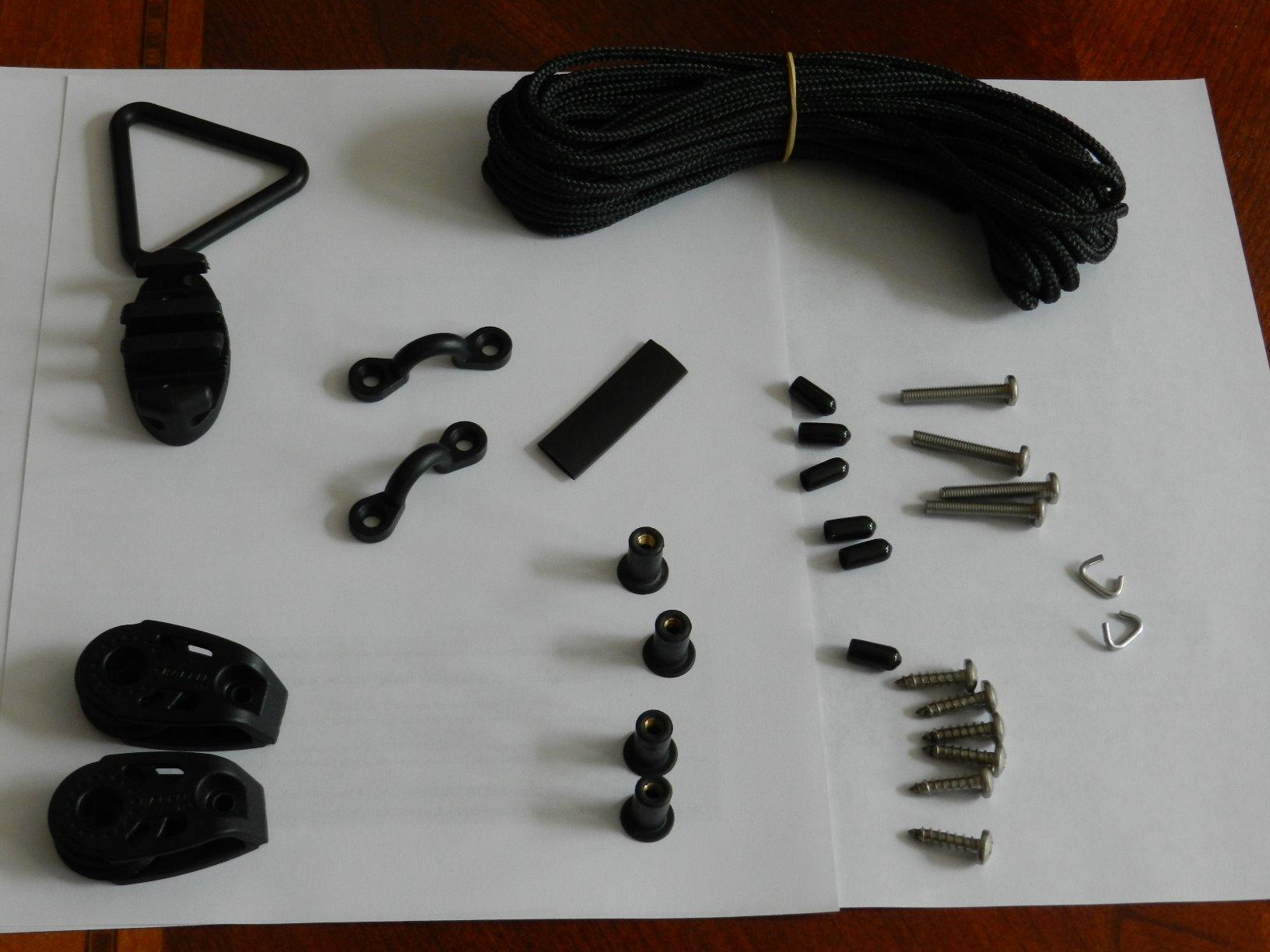
The 21-piece kit is unusually complete. You get 30 feet of paracord with a reflective tracer, two pulleys, two pad eyes, two carabiners, a zig-zag cleat, a rigging ring, and six M5 screws with six matching well nuts, which is everything needed for a closed-deck blind install.
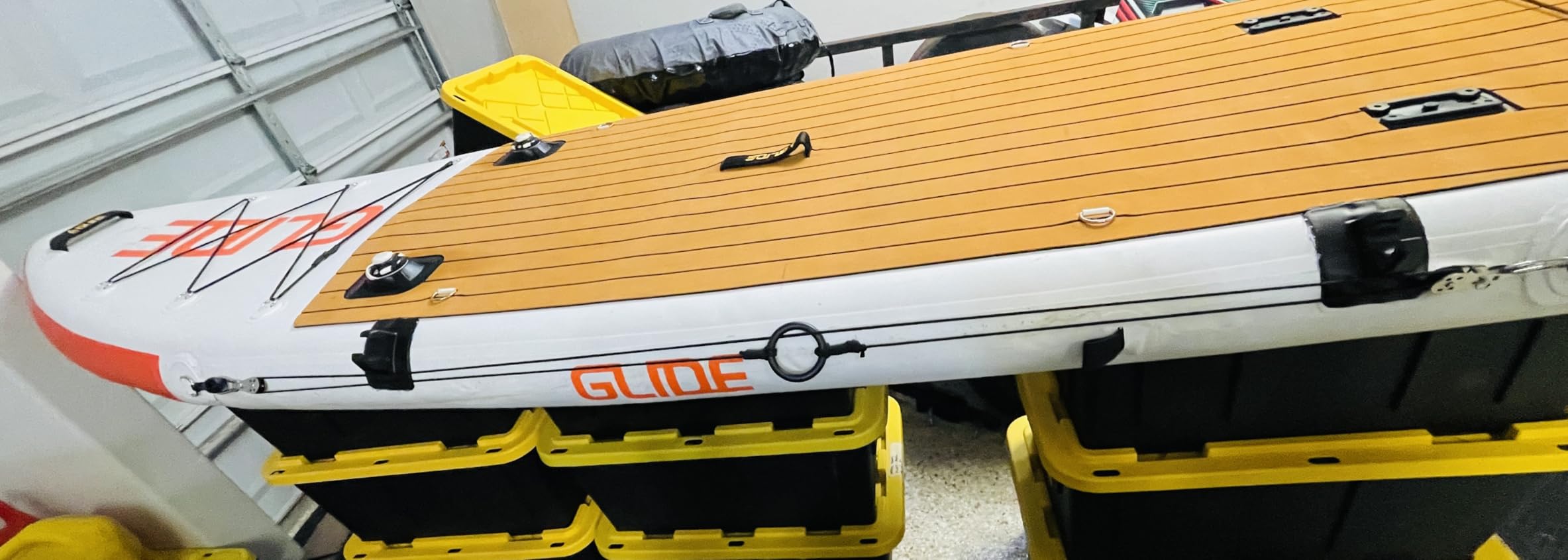
The removable line is a detail that pays off repeatedly. Because the trolley line detaches from the ring, the same rope you use for anchoring is the rope you tie your boat to at a launch, which removes one more line to coil and lose in the bow.
Reflective tracer matters more than most buyers expect. On shaded water at first light, being able to see your own trolley line running from the ring to the bow is how you avoid a surprise slack line across the deck mid-cast.
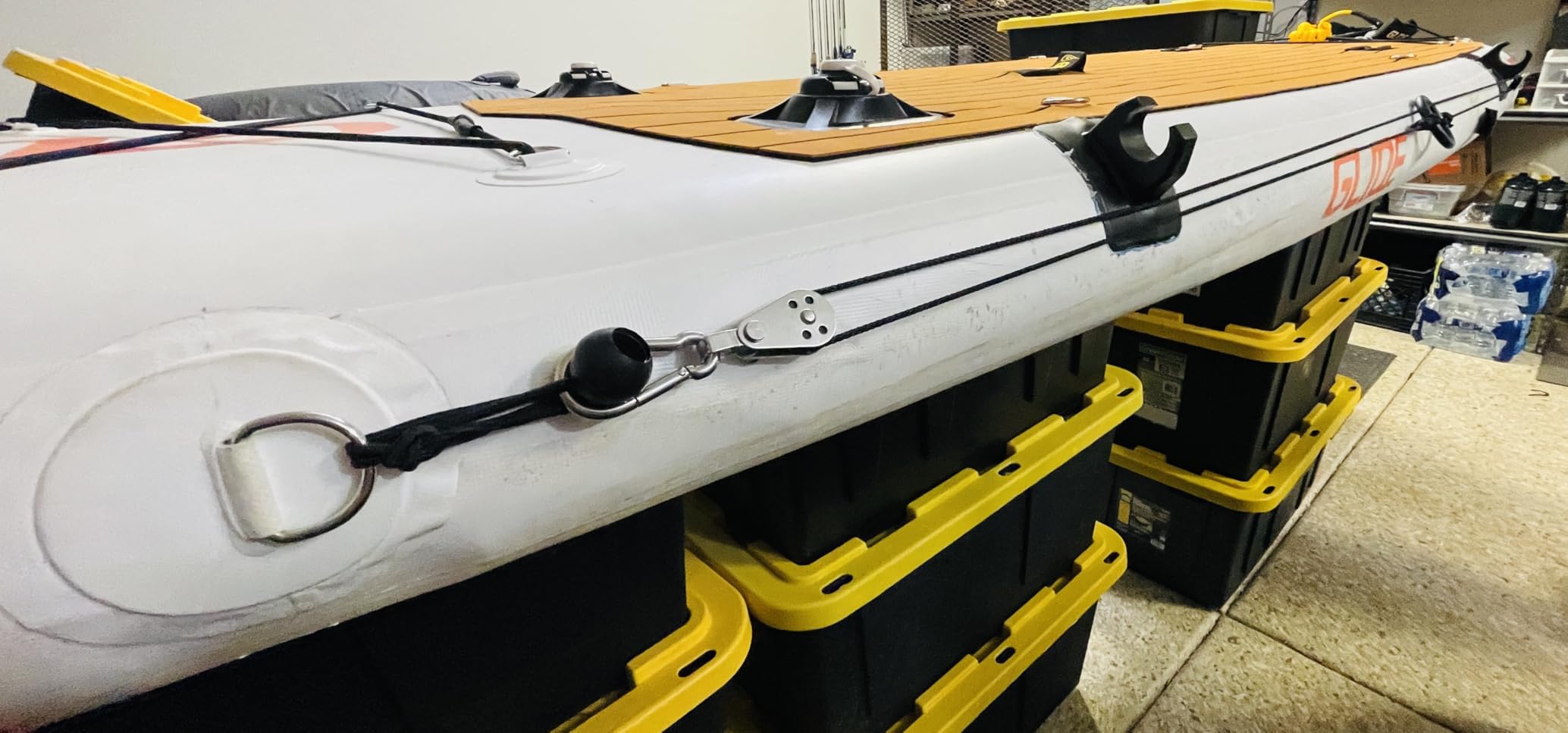
Is Flush Mounting Worth the Extra Install Effort?
On shallow rocky water, yes, because a pad eye is exactly the shape that snags. If you have never drilled a hull, the well nuts in this kit let you do a blind install from outside only, which removes the biggest reason people skip a trolley entirely.
Mark your pulley positions carefully before you drill. The whole benefit disappears if the two pulleys are not perfectly aligned, and a template traced from the hull edge helps more than the paper instructions will.
What Should You Watch For After a First Season?
The three star share is one of the higher ones in this group, so inspect the pulleys and carabiners before the season starts. A sheave that has developed a groove will slow the ring down, and that is the failure mode that gets noticed mid-fight.
Wash the kit in fresh water after each trip. Flush mounted hardware traps silt, and silt is what turns a smooth pulley into a sticky one.
5. Budget Kayak Anchor Trolleys for River Fishing: YYST Kit with 30 Feet of Rope
Kayak Canoes Anchor Trolley Kit System w/Pulleys Pad Eye Cleats Ring 30 Feet of Rope
4 pad eyes with 8 screws 8 nuts and 8 rivets
3 inch anchor cleat
2 stainless pulleys with nylon sheave
8.8 ounces
Pros
- Full hardware set plus 30 ft of line
- works straight out of the box
- Simple cord pull lets you reorient quickly when current shifts
Cons
- Supplied cord is described as elasticised and has stretched with use
- Lowest five star share in the group at 63 percent
- Instructions are hard to follow
- Screws may be too long for some hulls
This is the kit to buy if you want a working trolley this season without thinking about it. Four pad eyes with eight stainless screws and nuts, eight rivets, a three inch cleat, two stainless pulleys with nylon sheaves, a two inch nylon ring and 30 feet of braid line, all in an 8.8 ounce package.
For an angler who fishes a slow seam or a deep pool on a small river, that is genuinely all you need. The cord pull lets you reorient quickly when the current or wind shifts, which is the most common adjustment you will make in a session.
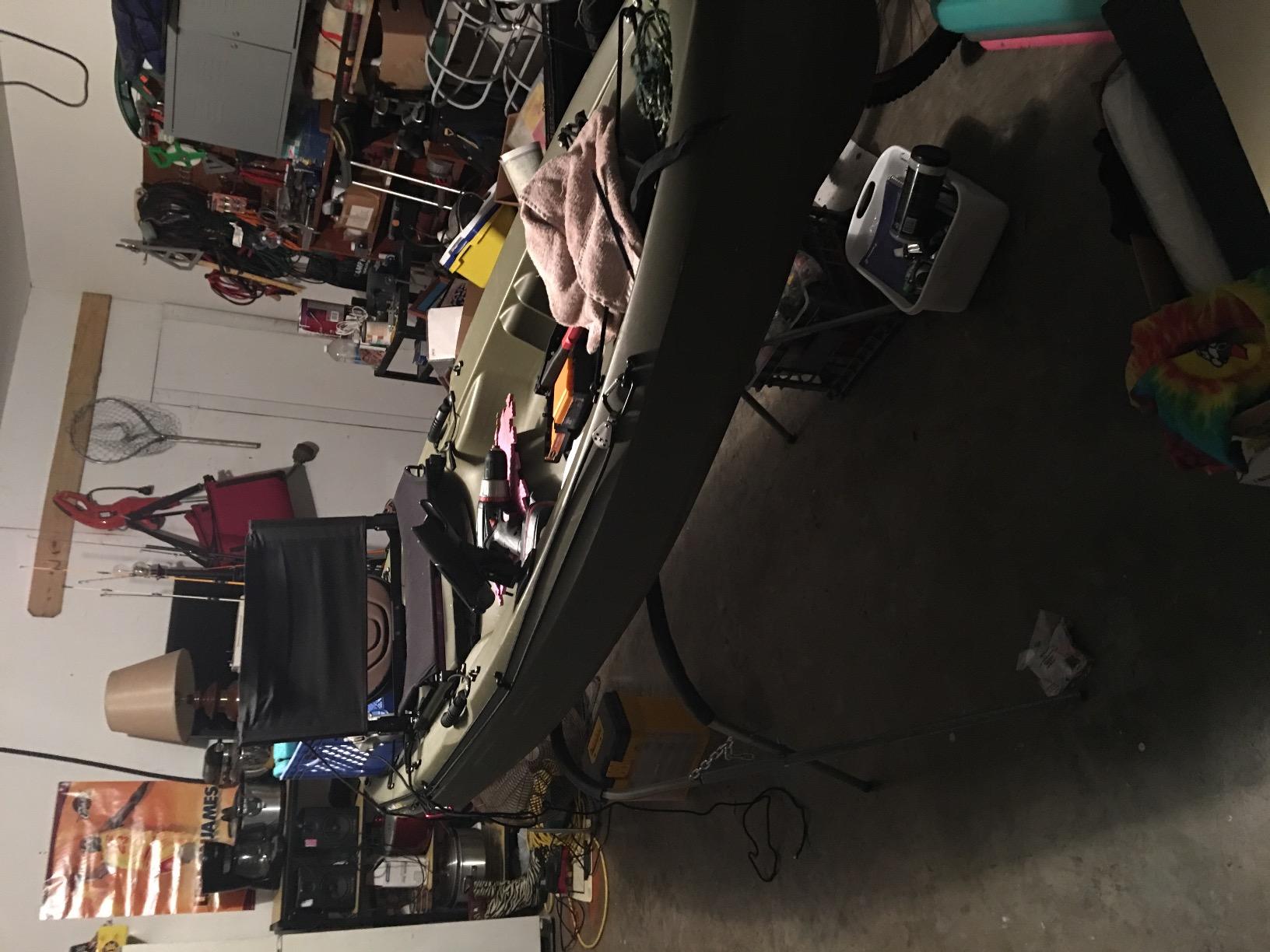
The cord is the weak point. Owners describe the supplied line as elasticised and report it stretching with use, and several replaced it before their first full season. If you already keep paracord and a splicing habit, that is a five minute fix. If you do not, buy the line with the kit.
The screws can also be too long for thin hulls, so measure your deck thickness and use the rivets if the screws bottom out inside the boat. The instructions are genuinely hard to follow, which is another reason to work from the install guide in this article instead of the paper.
Is This Trolley Strong Enough for Moving Water?
It handles slow to moderate current, which covers the majority of river fishing where you are working a seam or holding a pool. The nylon sheaves run fine as long as they are kept free of grit, and the stainless pad eye screws are the structural part that matters.
What it is not built for is being anchored hard in heavy flow. If the current is pushing the kayak with real force, the stretch in that cord becomes a problem because the ring will drift under load.
What Should a First-Time Owner Add?
Replace the supplied line with a fresh 30 foot length of your own braid or paracord and you have upgraded the single most failure-prone part. Add two extra line guides so the trolley line stays off your deck, and the kit is done.
Total spend is a small one either way, and the parts are all standard sizes. That is what makes this the sensible entry point for a budget build.
6. Best Kayak Anchor Trolleys for River Fishing DIY Rig Hardware: YYST No-Rope Pack
YYST Kayak Canoe Anchor Trolley Kit System Pulley Cleat Pad Eye Ring Rivets – NO Ropes
4 pad eyes with 8 screws 8 nuts and 8 rivets
3 inch anchor cleat
2 stainless pulleys
2 inch nylon ring
No cord included
Pros
- Lowest-cost route if you already keep paracord
- Includes both screws and rivets for open and closed hulls
- Nylon ring can be repositioned away from the hull
- Suits building a custom retractable anchor setup
Cons
- No rope included so it is not usable out of the box
- Highest three star share in the group at 12 percent
- Some rivets do not seat fully
This is the same hardware set as the previous kit with the line deliberately left out, and that is exactly why it exists. If you already run paracord in your boat, or if you want to build a retractable river anchor with a different line system, this is the cheapest way to get quality pad eyes, cleat and pulleys.
Both screws and rivets are included, so it suits a polyethylene hull where you can fasten from inside or a composite hull where you cannot. The three inch cleat and two inch nylon ring do the same job as any kit in this roundup.
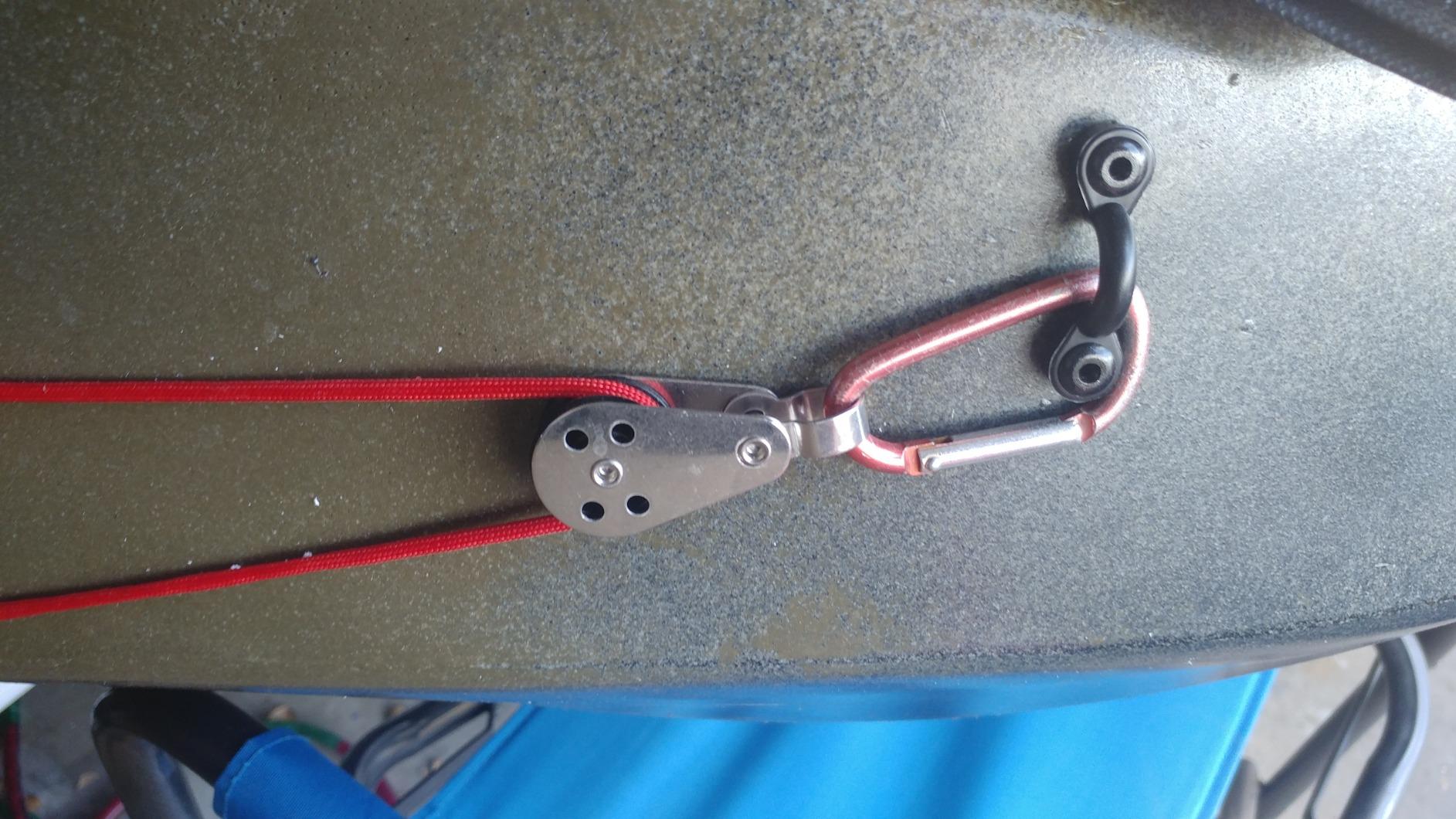
The nylon ring can be repositioned after fitting, which matters more than it sounds. On a kayak loaded with a seat, a cooler and a net, being able to move the ring to wherever the deck space is keeps the line off your gear and away from the paddle stroke.
You will need to buy your own line, and you should treat that as a feature rather than a shortfall. Choose a length based on your measured gunwale run rather than the generic 30 feet, and cut it slightly long so you can re-trim after the first season.
Is a DIY Trolley Build Worth the Extra Work?
It is worth it if you already have line and a few drill bits, and not worth it if you do not. The pieces here are the same pieces used in complete kits, so the build quality is identical once it is done. The only thing you lose is a single set of printed instructions.
Several owners in r/kayakfishing build exactly this style of setup, pairing a carabiner and cleat with paracord or with a retractable dog leash. It is an established approach, not a workaround.
What Are the Biggest Installation Mistakes With This Kit?
Using the supplied rivets on a hull where they do not have enough grip. Some rivets do not seat fully, and a rivet that has not collapsed is a hard stop that will let the pad eye work loose. Seat each one fully or switch that mounting point to a screw and well nut.
The other mistake is running the line too tight. Pre-stretch paracord before you size it, because cord that is cut to length unstretched will tighten up in the first week and start pulling the ring toward one end.
7. Best Complete Kayak Anchor Trolleys for River Fishing: YUSOVE 316 Stainless Set
Kayak Anchor Trolley Kit Anchor Wizard Kayak LeverLock Anchor Trolley,Anchor System for Kayak Canoes Boat etc,Rope Cleat carabiner Pulley Anchor Ring Pad Eyes 30 Feet paracord,With Bolts Screws Rivets
316 stainless ring pad eyes and carabiner
30 ft of 5mm paracord
Two 5mm elastic shock rings
Installs on either side
Pros
- 316 stainless ring pad eyes and carabiner for corrosion resistance
- Two elastic shock rings dampen movement and keep the line taut
- Well written directions that explain each step
- Bolts screws and rivets all included
- 84 percent five star rating
Cons
- Larger and heavier package than the simpler kits
- Mounting position still has to be worked out on your own hull
The elastic shock rings are the part of this kit that solves a real river problem. A 316 stainless ring, pad eyes and carabiner take corrosion well, and the two 5mm elastic rings dampen kayak movement and hold the trolley line taut so the ring does not walk along the line while you are casting.
For moving water that matters more than it sounds. A slack trolley line is a trip hazard across a loaded deck and a line that dives under the gunwale, and the elastic rings solve both without you having to re-tension between every cast.
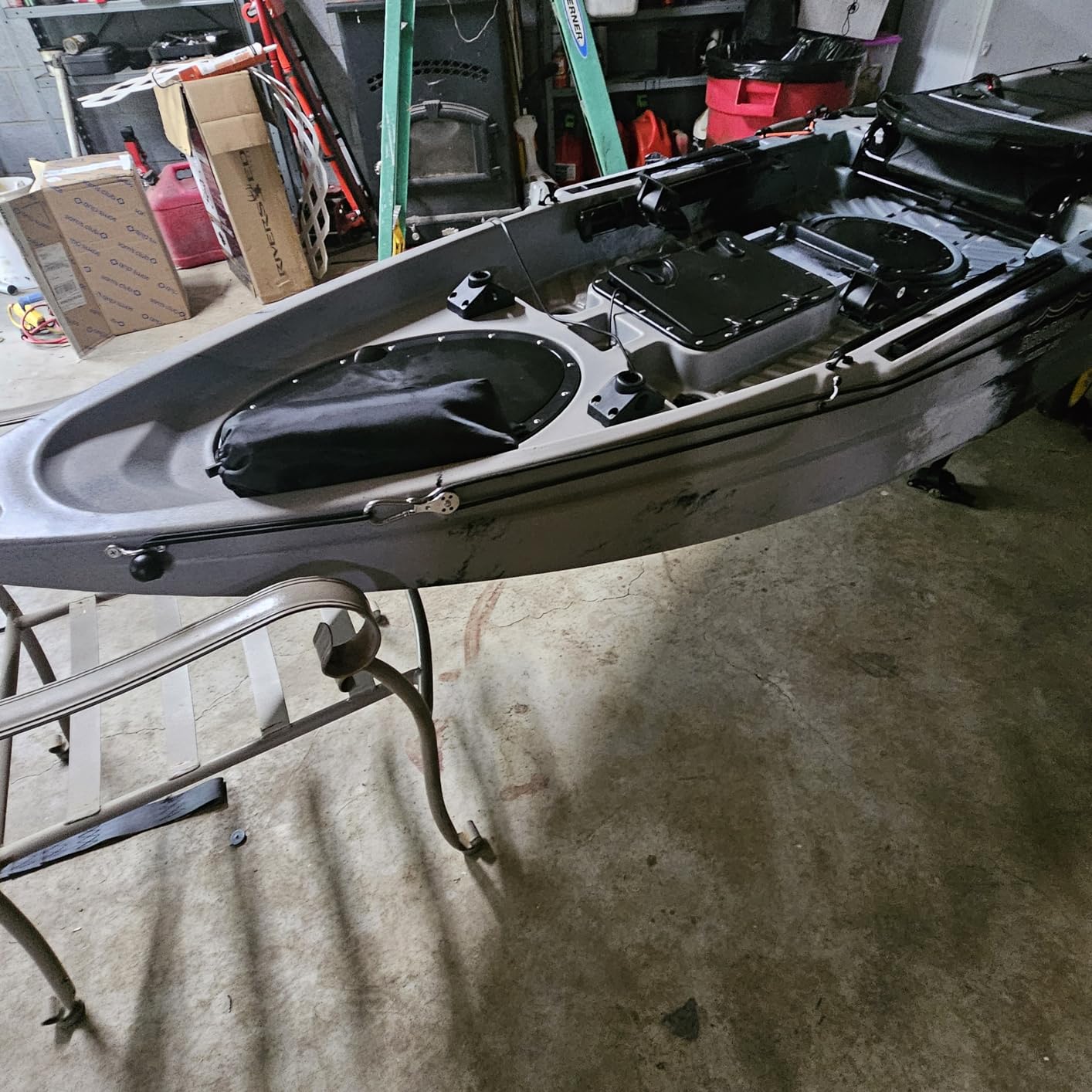
The instructions are unusually clear, and reviewers single them out. They explain why each step matters rather than just listing parts, which is the single biggest difference between this kit and the generic ones at a similar tier.
Everything is included: rope cleat, anchor ring, two pulleys, two spring snap hooks, two elastic rings, four pad eyes, and ten each of rivets, bolts and screws. You do not need a rivet gun or a second hardware run. It ranks near the top of Kayak Hardware with only 2 percent of reviews at one star.
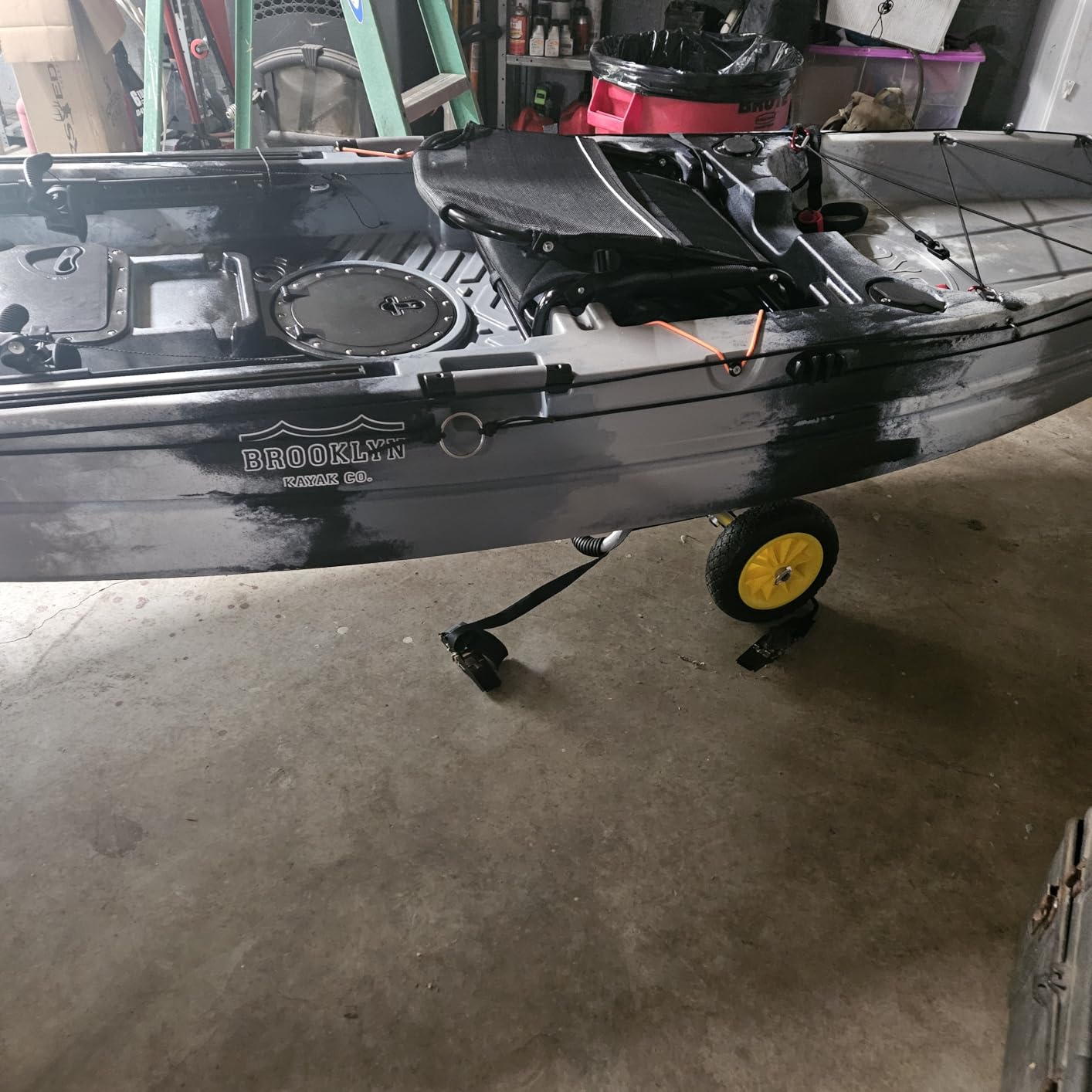
Do Elastic Rings Actually Help in a River?
Yes, in moderate current. They absorb the surge that comes with a passing branch or a boat wake and keep the line under light tension rather than going fully slack every time the kayak moves. On fast water you still want the ring clamped tightly, so do not treat them as a substitute for a good lock.
They also cut noise. A line slapping against a hull in moving water is loud, and a river clear enough that noise matters is exactly where this kit earns its place.
Is the Heavier Package a Problem?
It is the bulkiest box in this roundup, mostly because of the quantity of fasteners and the stainless hardware. Everything fits in a standard dry bag, and the 0.52 kg figure is the packaged weight rather than the installed weight.
The one thing the kit cannot tell you is where the mounting positions should sit on your hull. That is a measuring job, and the placement guidance later in this guide is the part you actually need to work out yourself.
8. Best Kayak Anchor Trolleys for River Fishing in Clear Water: Wilderness Systems
Wilderness Systems Anchor Trolley Kit for Kayaks, 8070132
40 ft of 1/4 inch reflective static cord
Self-sealing well nuts included
Works with 3lb anchors and 3/4 inch stakeout poles
15.04 ounces
Pros
- Quiet hardware with no dangling metal to spook fish
- Longest line in the group at 40 ft of reflective static cord
- Self-sealing well nuts keep the hull dry without extra sealant
- Clear illustrated installation instructions
Cons
- Most expensive kit in this roundup
- Rubber grommets on line guides have failed in some reports
- Reports of line guides missing from the box and wrong cleat screws
- Smallest review base in the group at 65
This is the one to buy when the water is clear and you are fishing shallow enough that a chain rattle puts every fish in the pool down. There is no dangling metal on the running surface, and owners consistently point at the quiet hardware as the reason it works on pressured water.
Forty feet of quarter inch reflective static cord is the longest line in this roundup by a wide margin, and the reflective strand means you can find your own line at first light. It is also compatible with stakeout poles up to three quarter inch diameter, which makes it useful on shallow flats where a trolley and a pole do the same job.
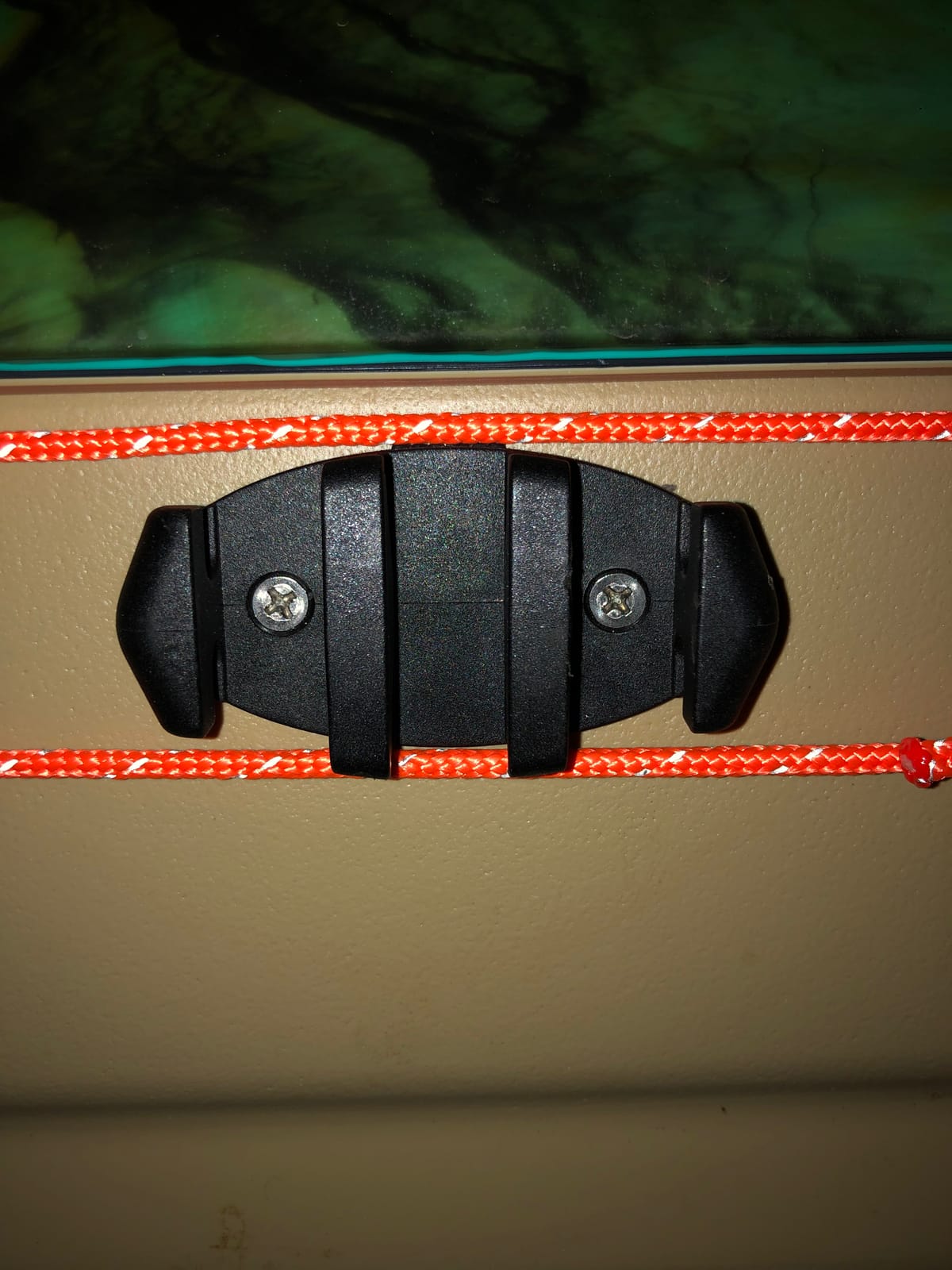
The self-sealing well nuts are genuinely useful and are the thing most competing kits push onto you as a separate step. They are rated to work with 3lb anchors on most sit-on-top and sit-inside kayaks, which is the right ballpark for a river.
There is a real quality caveat at this level of spend. There are reports of rubber grommets on the line guides failing and leaving holes in a hull, and reports of boxes arriving without line guides or with the wrong cleat screws. Inspect the full contents before you drill anything.
Is Quiet Hardware Worth Paying More For?
On shallow clear water over gravel, absolutely. Fish spook from a hull knock or a metal ring tapping the deck far more readily than from the anchor itself, and once the pool is blown you can wait a long time for it to settle again.
On stained or deep water it makes much less difference, and in that case the H2o or YakAttack kits give you the same function for a fraction of the outlay.
How Do You Check the Kit Before Drilling?
Count the line guides, check the cleat screws against the cleat thread, and pull the grommets onto a test length of cord to confirm they grip. Ten minutes of checking in a parking lot is the difference between a clean install and patching holes afterwards.
If anything is missing, the hardware is all standard size, so it is easy to make up. The review base is the smallest here, so expect a slower answer if something does need replacing.
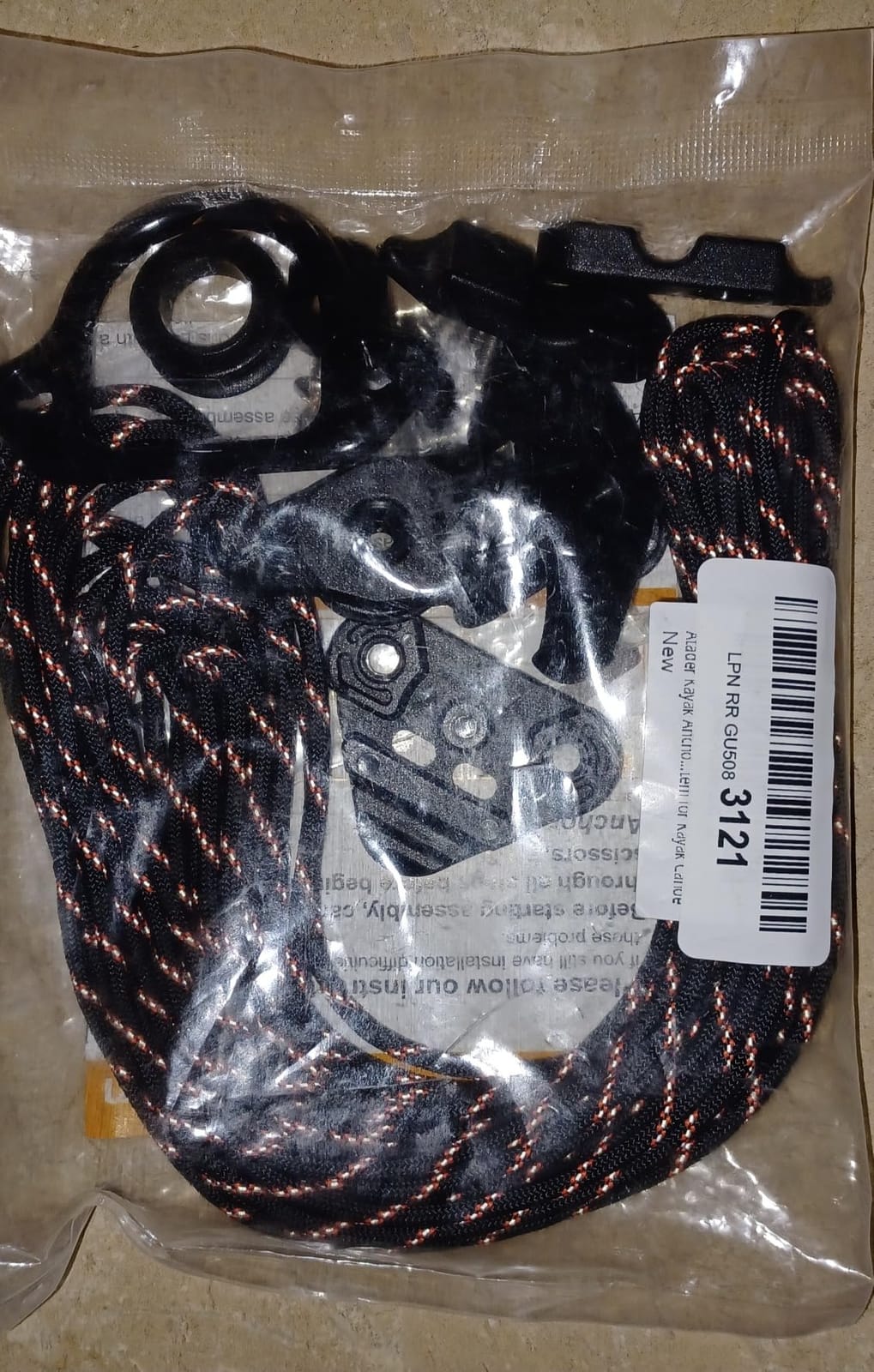
9. Best Kayak Anchor Trolleys for River Fishing with Fast Lock Changes: Atader Toggle Clamp Kit
Atader Kayak Anchor Trolley Kit, Standard Anchor Trolley System for Kayak Canoe, Suitable for Freshwater and Saltwater Use, with Stainless Steel Screws
Toggle clamp base locks the rope
35 ft reflective tracer paracord
Quiet running pulleys
Installs in about 10 minutes
Pros
- Highest average rating in the group at 4.8 with no one or two star reviews
- Toggle clamp locks simply by flipping and stores the ring when not in use
- Quiet pulleys and a patterned cord that makes line movement visible
- River users report the kayak holding position under heavy flow
Cons
- Included fasteners are not stainless so saltwater anglers must swap them
- Lever clamp reported as feeling flimsy under serious tension
- Paracord shrinks after wetting and drying
- Not a good choice for closed hulls
The Atader design solves the two things that annoy me most about a trolley. The toggle clamp locks with a flip instead of a threaded bight, and the same clamp stores the ring when you are not anchoring, so nothing is left dangling in the bow for a whole drift-fishing trip.
That stow function is bigger than it sounds. A loose ring rattling around a loaded deck is noise and a lost line, and on this kit it clips into the base and stays there. The 4.8 average is the highest in this roundup, with 85 percent of reviews at five stars and none at one or two stars.
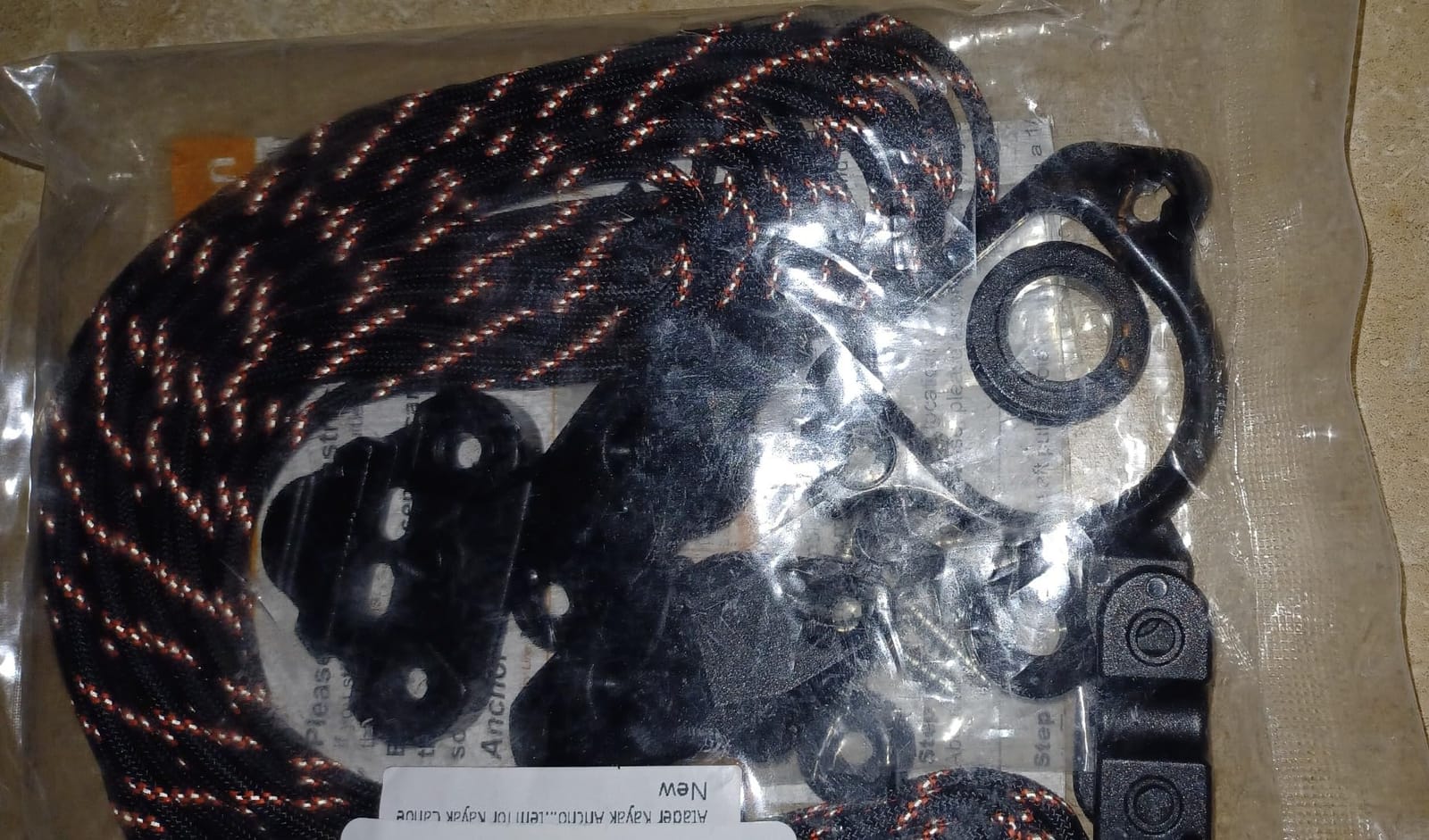
Thirty-five feet of reflective tracer paracord, a pad hook that holds the line along the hull side instead of letting it ride over the gunwale, and quiet running pulleys. Owners fishing river current report the kayak holding position under heavy flow, which is the result that matters most here.
Two drawbacks deserve a real mention. The included fasteners are not stainless, so anyone fishing brackish or salt water should swap them before first use, and the lever clamp is reported by some as feeling flimsy under serious tension over time.
Is a Toggle Clamp Stronger Than a Zig-Zag Cleat?
It is faster by a wide margin, which is its real advantage. A cleat needs a tensioned bight and takes a moment; the toggle locks in a fraction of that. Strength is comparable for normal anchoring loads, with some reviewers reporting the lever feeling less solid once the kayak is pulling hard on the line for an extended period.
Size the anchor to the current rather than relying on the clamp to hold more than it should. If the current is pushing hard enough that you are constantly at full tension, the problem is the load, not the lock.
What Should You Do About Paracord Shrinkage?
Leave extra length and re-trim after the first wet season, because paracord tightens as it wets and dries repeatedly. This is a normal characteristic of the material rather than a fault, but it will slowly pull the ring toward one end of the loop if you cut it exact.
The screw and nut fixings are also a poor choice on a closed hull where you cannot reach the inside. If your kayak is closed deck, either use a kit with well nuts or plan the blind install method before you start.
10. Best Kayak Anchor Trolleys for River Fishing Hardware Drawer: EDSRDPLT 35-Piece Set
EDSRDPLT 2005 Kayak Anchor Trolley Kit Mounting Hardware for Kayak Canoe Boats Water Sports
0.39 in x 32.81 ft line
Stainless steel pulley blocks
Four lengths of M5 screws plus 1/4-20 screws
35 pieces, two year warranty
Pros
- Generous 32.81 ft of line
- enough for longer kayaks
- Deep hardware selection with M5 screws in four lengths
- Stainless pulley blocks resist corrosion and wear
- Two year warranty and an install that suits all skill levels
Cons
- Smallest review base in the group at 45 reviews
- No customer review text was returned for this listing
- Cleat is described as a general tie-down as much as an anchor cleat
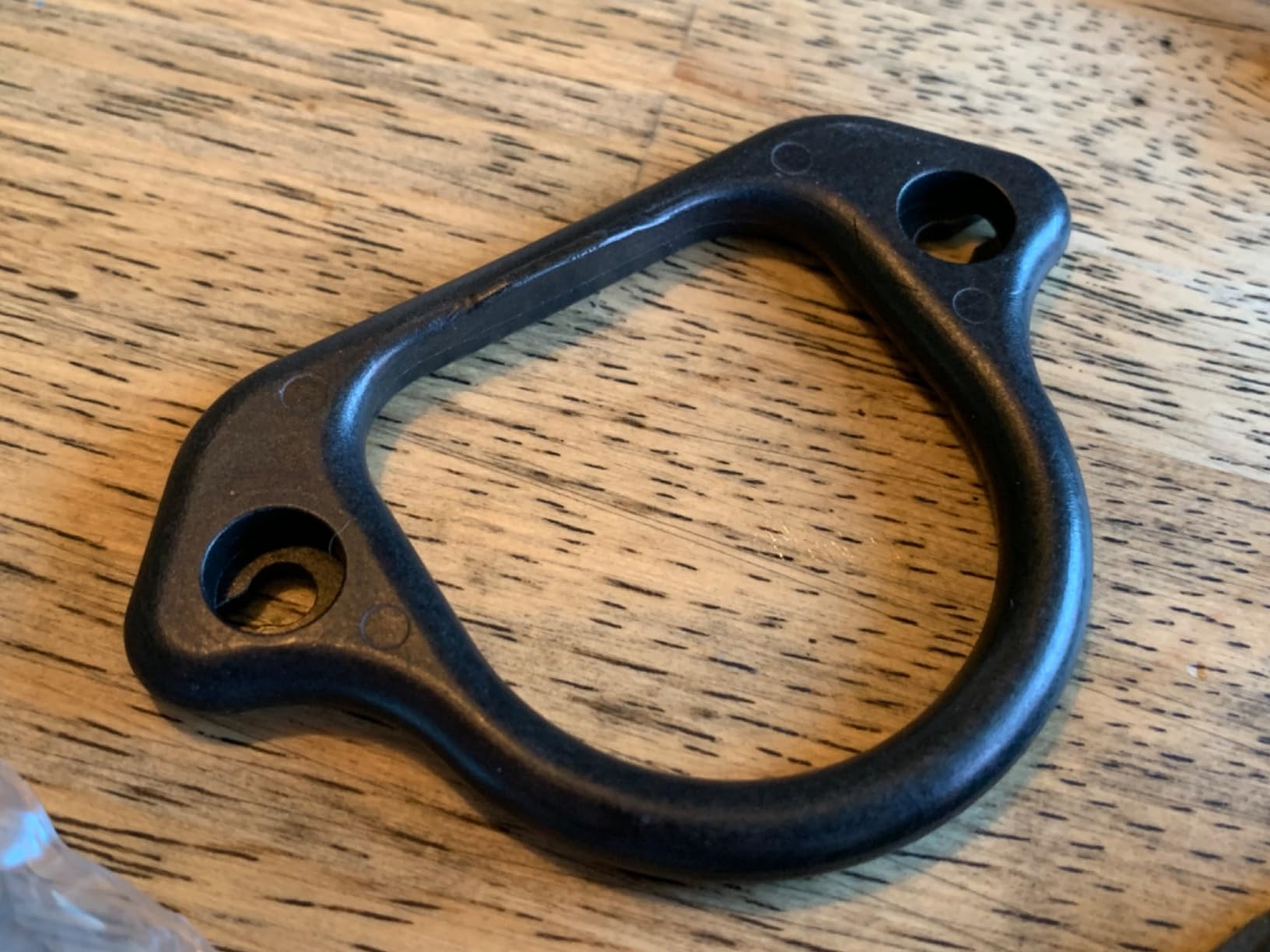
The thing that sets this kit apart is the fastener selection. You get M5 screws in four different lengths plus quarter inch 20 screws, along with pad eyes, stainless pulley blocks, a rigging O ring and a nylon zig-zag cleat, all in a 35 piece package.
That solves the single most common install failure on cheap kits. Every hull thickness you will ever drill wants a different screw length, and having four in the box means you can match the fastener instead of bottoming a screw out through the deck liner.
The 32.81 feet of line is unusually generous, which suits longer kayaks and gives you more scope than most kits in this group. The stainless pulley blocks are the right choice for a boat that lives in water, since plain plated steel is where trolleys usually start to fail.
The nylon cleat does double duty as a tie-down for paddles, nets and poles, which is handy on a small boat. Two year warranty is stated on the listing, though with only 45 reviews there is limited long-term owner feedback to draw on.
Is a 35-Piece Kit Overkill for a River Trolley?
Not really. On a river you will eventually add a line guide, replace a cleat screw after a gravel bar, or need a spare pad eye mid-season, and having the fix in the box avoids a second trip. Think of the extra pieces as spares rather than packaging.
The one caution is that a nylon cleat doing double duty as a general tie-down will see more load cycles than a dedicated anchor cleat. Check it periodically if you are routinely hanging gear off it.
Should You Buy This Over a Better-Reviewed Kit?
If your hull thickness is unusual, or you have drilled before and know exactly which screw lengths you need, the hardware variety here is genuinely useful. If you are a first-time installer, pick something with clearer instructions and more owner history instead.
At 4.5 across 45 reviews the rating is in line with the generic mid-tier kits, and the standout spec is genuinely the 32.81 feet of line with stainless pulley blocks. Verify the full parts list on arrival before you start drilling.
How to Choose the Best Kayak Anchor Trolleys for River Fishing
Choose by current strength, then line length, then material. Anchor weight is the first decision and most people get it wrong, so start there: the community rule of thumb on r/kayakfishing is that if the current is too swift to wade fish, it is too much to anchor in. Within what is safe, 3 lb anchors are reported by several users to hold better than 1.5 lb, and the Wilderness Systems kit is built around 3 lb anchors on typical hulls.
Next, line length. Scope is the ratio of deployed line to depth, and on a kayak in 4 to 6 feet of water you want at least 20 feet of line. Thirty feet gives you room to let the bow fall into the current, which is what stops the kayak being held sideways into the flow.
Third, hardware material. A4 or 316 marine grade stainless is what you want on a river, because the hardware lives in a wet environment permanently. The H2o, YUSOVE and YakGear kits all use stainless fittings; the Atader kit ships non-stainless fasteners that need swapping if you fish brackish water.
Fourth, the lock type. A lever or toggle clamp locks faster than a zig-zag cleat, which matters when you are repositioning in current with a fish on. A cleat is fine if you set up once and stay put for a while.
Fifth, mounting method. Well nuts for closed hulls, rivets for polyethylene, and no-drill track mounts if you refuse to drill. If you have never done a hull install, our deep pour epoxy guide covers sealing and finishing techniques that are useful for sealing well nut installs properly.
Anchor Placement in River Current: Bow vs Stern Trolley Position and Which Side to Mount
Mount the ring toward the stern for most river fishing, and mount the trolley on the side opposite your casting hand. That answer resolves the argument that runs endlessly through the forums, where advice on stripersonline’s surftalk forum leans toward stern placement unless chop or the current and wind direction make it uncomfortable.
The reasoning is mechanical. With the anchor point aft, the bow is free to swing into the flow, so the kayak presents a narrow profile to the current rather than being pinned sideways. On a river that reads as the boat tracking steadily rather than crabbing across the seam.
Move toward the bow when you are working a head of a pool or a seam that is pushing directly at you and you want the nose pinned. Move further aft when the current is behind you and you want the line to run clean off the stern without crossing your paddle stroke.
Side matters less for the trolley than most people think, but it does matter for the line. Mounting opposite your casting hand keeps the trolley line away from your paddle and away from the side you are leaning over, and it means a strike never pulls the line across your lap.
Route the line through guides so it sits along the hull side. The Atader kit has a pad hook for exactly this, and the ISURE kit uses flush mounted pulleys. Both keep the line out of the water, off the deck, and away from anything you might snag.
Matching Your Kayak Anchor Trolley to the River Bottom
Match the anchor, not the trolley, to the bottom. The trolley is only the delivery system; what holds you is the flukes and how they bite.
On rock and cobble, use a folding grapnel with pointed vinyl-coated flukes. Vinyl coating matters because bare steel marks a hull and can cut line, and pointed flukes find gaps between rocks that a flat fluke slides across. Expect a higher snag rate here and be ready to work the anchor free with the line rather than yanking it.
On sand and gravel braid, almost anything holds. This is the easiest bottom to anchor on and the one where a 3 lb grapnel is more than enough, because the flukes bury and the weight of the boat does the work.
On mud, a wide-fluke anchor works best because mud gives no grip at all until something has area behind it. Mud is also where the pull feels most deceptive, because the anchor holds and then the suction releases without warning.
On heavy vegetation, anchor shallow or find a clean lane. Weeds and roots grab flukes and hold the kayak against a force you did not plan for, which is the fastest route to a broached boat in a narrow creek.
How to Install a Kayak Anchor Trolley on a Kayak: Step by Step
A trolley install is twenty minutes if you measure first. Position the bow and stern pulleys or pad eyes along one gunwale, roughly level with each other and clear of any rigging or grab loops. A template traced from the hull edge gets both ends in the same plane, which is what keeps the line running smoothly.
Then mark the ring or cleat position. Most anglers set it slightly aft of amidships as a default. Before drilling, confirm the line path clears your paddle, your deck lines and your knees when seated.
Choose your fastening method. For a polyethylene hull, rivets are the clean answer and the EDSRDPLT kit gives you the size range to match your thickness. For a composite or closed-deck kayak, drill from outside and use well nuts on the inside, which is why the ISURE and Wilderness Systems kits include them.
If you will not drill at all, a track-mounted or suction pad system is the compromise, and it is a legitimate choice rather than a failure. The limitation is that track pads cannot carry heavy loads, so pair them with a lighter anchor and a shorter line.
Seal every hole, run a bead of sealant from the inside if you can reach it, and let it cure fully before the boat gets wet. A leaking well nut will quietly soak the foam in your kayak, and that damage does not show up for months.
Finally, size and fit the line. Pre-stretch it, cut it to your measured run plus a little, thread it through both ends, and trim only after a month of use. Check the anchor windlasses guide if you ever move to a boat where a powered winch makes more sense.
Kayak Anchor Trolley vs Dumbbell vs Stakeout Pole for River Fishing
A dumbbell works. Many anglers on r/kayakfishing use a simple 5 lb dumbbell as a river anchor instead of a full trolley system, and it is the cheapest effective option on shallow, slow water. What you give up is every benefit of the trolley: you cannot reposition without hand-lining the rope in, and the deck gets tangled every time.
A stakeout pole is the better answer on shallow flats and clear water, and the Wilderness Systems and Atader kits are both compatible with poles up to three quarter inch diameter. A pole is quiet, fast to set and impossible to snag on rock, but it only works where you can reach bottom.
A trolley is the only one of the three that lets you control your angle. That is the whole argument for spending on one, and on any water with real current it is the only option that scales when the river comes up.
When NOT to Anchor Your Kayak in River Current
Do not anchor in current too swift to wade fish. That is the community rule of thumb and it exists because above that threshold the force on the line exceeds what a seated angler can safely manage, and the kayak is a small object pointed at a moving wall of water.
Do not anchor in a rising stage with debris in it. A branch or a log caught on your line transfers the river directly to your hull with no warning, and the river will be stronger after you hit it.
Do not anchor above an undercut bank or below a strainer, and do not anchor in a place where you cannot swim clear downstream. If you cannot answer the question of exactly where you would surface and get to shore, that is not a place to set an anchor.
Do not fight a fish hard while pinned in current. If you hook something serious in fast water, release the drag and let the line run. A broken line is a good outcome. There is no version of this where holding on is the smarter call.
Check the gauge and any upstream rain before you launch, and treat visibly rising water as a reason to fish somewhere else rather than a reason to pick a heavier anchor.
Frequently Asked Questions
What is the best trolley for kayaks?
The YakAttack LeverLoc is the best trolley for most kayaks because it locks with a single lever instead of a threaded cleat and includes all installation hardware. It is also the trolley most new river anglers choose first.
Should you use an anchor trolley on a sit-in kayak?
Yes. A sit-in kayak is one of the best platforms for a trolley because the enclosed deck gives clean mounting points along the gunwale and keeps gear contained. The main change is using well nuts on a closed hull, because you cannot reach the inside to add nuts.
What size anchor do I need for a fishing kayak in river current?
For a fishing kayak in river current, a 3 lb anchor is the working default, and users report it holds better than a 1.5 lb anchor. Weight is less important than scope, so pair it with at least 20 feet of line for 4 to 6 feet of water.
How much anchor line do I need for a kayak?
You need at least 20 feet of line for typical river depths of 4 to 6 feet, and 30 feet gives you the scope to let the bow swing into the current. Kits with 35 or 40 feet of line give you more room to reposition without re-cutting.
Will anchoring damage my kayak hull?
Anchoring will not damage the hull if you use well nuts or rivets properly and seal every hole from the inside. Use vinyl-coated flukes so nothing metal drags the hull, and keep the trolley ring from swinging into the deck while you work a fish.
Can you anchor a kayak in fast moving water?
You can anchor in moderate current, but not in water too swift to wade fish, which is the community rule of thumb. Above that threshold the load on the line exceeds what a seated angler can manage safely, so drift instead.
Is an anchor trolley worth it?
An anchor trolley is worth it on any water with current or wind because it lets you reposition the anchor hands-free instead of hand-lining rope in every time you move. On flat shallow water a stakeout pole does the same job more cheaply.
What is the best fishing kayak cart?
A fishing kayak cart is a different tool from an anchor trolley, used to move the boat from a vehicle to a launch rather than to hold it in place. A two-wheeled balloon-style cart with a solid frame is the most common choice for carrying gear and a loaded hull.
Final Verdict on the Best Kayak Anchor Trolleys for River Fishing in 2026
The YakAttack LeverLoc is the best kayak anchor trolley for river fishing because the lever lock lets you reposition one-handed in current and the box contains every fastener you need. For a budget build the H2o Kayaks kit gives you marine grade stainless hardware and a full line at a lower outlay, and the YakGear AK1 Deluxe is the choice when the current is pushing hard and pulley quality decides the outcome.
Fit the trolley before you need it, mount it opposite your casting hand with the ring slightly aft, and give yourself 30 feet of line and a 3 lb anchor. Then check the gauge before you launch, because no trolley is worth putting between you and a river that is above what you can wade.