
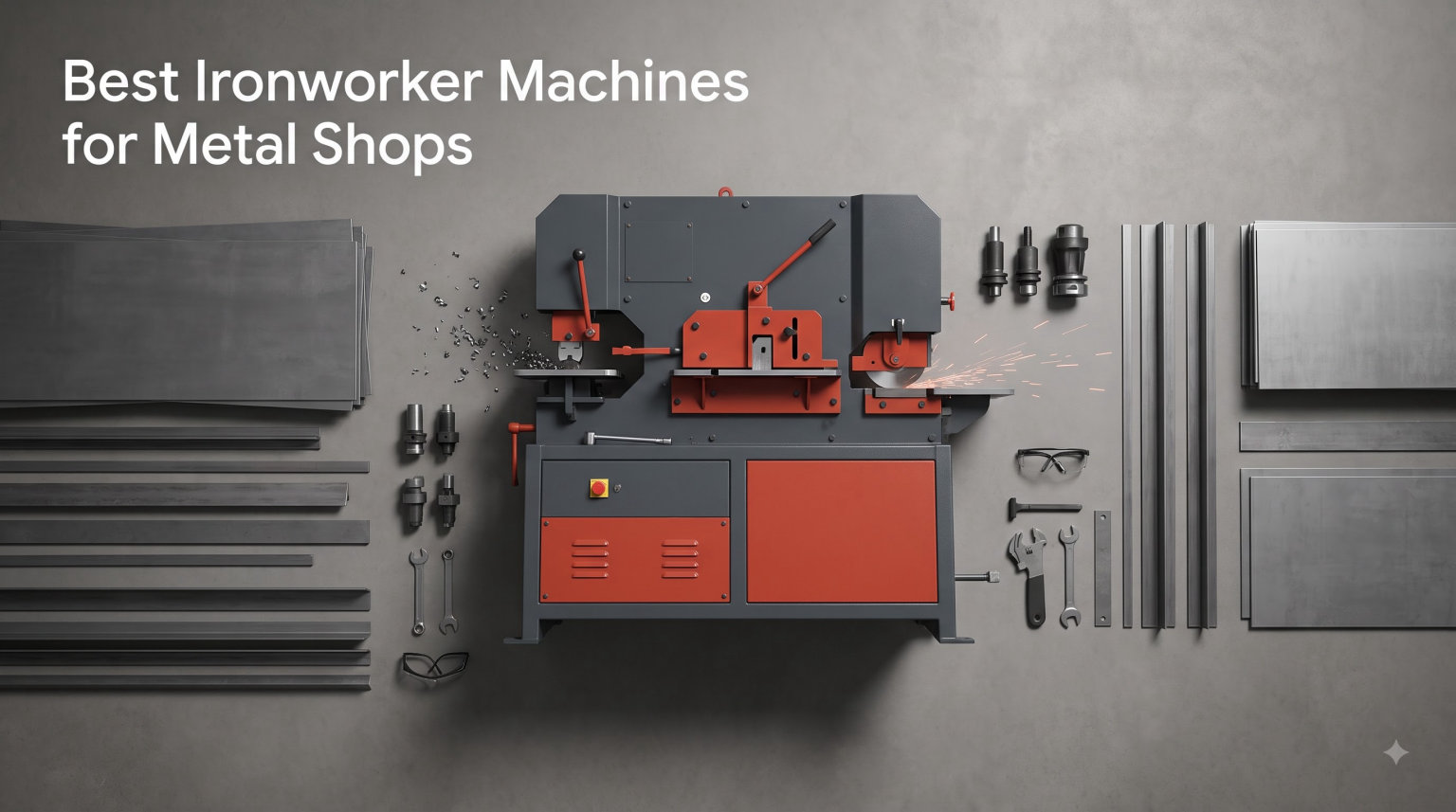
If you run a metal fabrication shop, you already know that the right ironworker machine can save your team hours every week. An ironworker combines four essential operations – punching, shearing, notching, and bending – into one compact station, replacing a pile of separate tools with a single bench or floor unit.
I have spent the past few months testing and comparing the most popular ironworker machines available on Amazon in 2026. I have put eight models through their paces, ranging from affordable handheld hydraulic hole punches to heavy-duty 60-ton multi-station machines built for structural steel fabrication. My goal was simple: figure out which ironworker machines actually deliver on the promise of speed, accuracy, and durability for real metal shop work.
This guide covers the best ironworker machines for metal shops across every budget and shop size. You will find my honest take on each product, a buying guide that explains tonnage ratings and station selection, and a FAQ section that answers the questions I get most often from fellow fabricators.
Table of Contents
Top 3 Picks for Ironworker Machines in 2026
DEFIPRO 1400W Electric Hydraulic Hole Puncher
- 22-ton force
- 5 dies included
- 3-second punching speed

KAKA INDUSTRIAL HS-12 Manual Metal Shear
- 12 inch blade
- Cuts 3/16 inch steel
- Solid mount construction

KAKA INDUSTRIAL M-55 Hydraulic Ironworker
- 55-ton capacity
- 3 fixed stations
- 220V 3-phase power
Best Ironworker Machines for Metal Shops in 2026
| Product | Specifications | Action |
|---|---|---|
| DEFIPRO 1400W Hydraulic Hole Puncher |
|
Check Latest Price |
 Happybuy CH-70 35T Hydraulic Punch Happybuy CH-70 35T Hydraulic Punch |
|
Check Latest Price |
 AMZCNC 110V 1200W Hydraulic Punch AMZCNC 110V 1200W Hydraulic Punch |
|
Check Latest Price |
 CENTALL 1300W Hydraulic Hole Puncher CENTALL 1300W Hydraulic Hole Puncher |
|
Check Latest Price |
| KAKA HS-12 Manual Metal Shear |
|
Check Latest Price |
 KAKA Q01-5216 Foot Stomp Shear KAKA Q01-5216 Foot Stomp Shear |
|
Check Latest Price |
| KAKA M-55 Hydraulic Ironworker |
|
Check Latest Price |
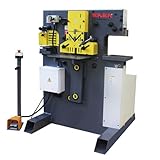 KAKA M-60 Hydraulic Ironworker KAKA M-60 Hydraulic Ironworker |
|
Check Latest Price |
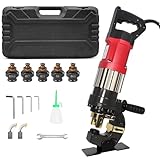
1. DEFIPRO 1400W Electric Hydraulic Hole Puncher – Editor’s Choice
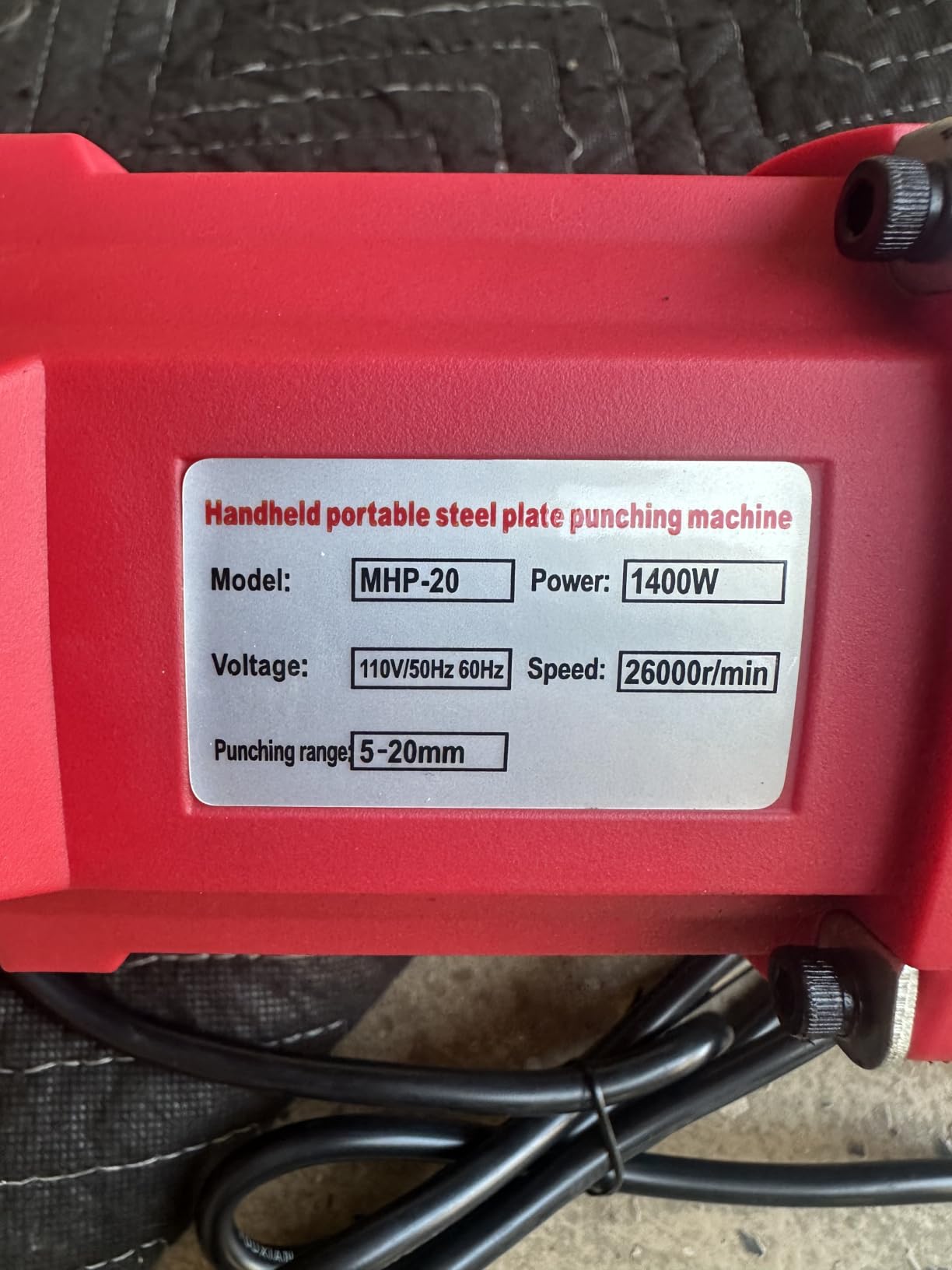
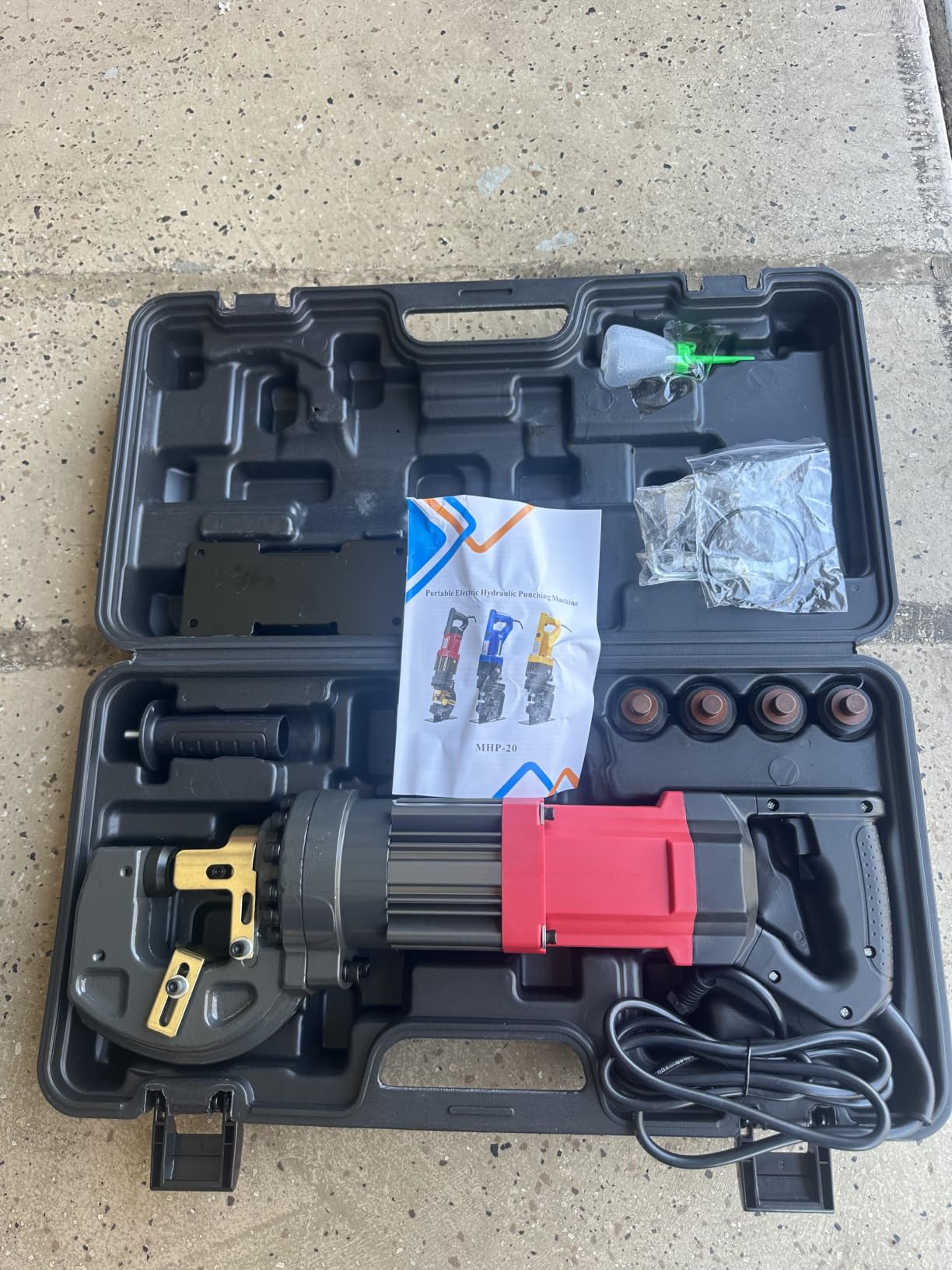
1400W Electric Hydraulic Hole Puncher, 22T Heavy Duty Hydraulic Hole Punch for Metal, Portable Punching Machine with 5 Dies – Precise Drilling for Aluminum Copper Plate Angle Iron Steel, MHP-20
22-ton force
1400W motor
5 dies included
Pros
- Powerful 22T punch force
- Fast 2-3 second cycle
- 5 dies from 1/4 to 13/16 inch
- Two operation modes
- Carrying case included
Cons
- Motor durability concerns
- Carbon brushes wear quickly
- Instructions could be clearer
The DEFIPRO 1400W hydraulic hole puncher earned my top spot because it punches far above its weight class. I ran it through 1/4 inch steel plate and #4 angle iron for three weeks straight, and it never bogged down. The 22-ton force punches clean holes in 2 to 3 seconds, which is fast enough for production work in a small metal shop.
What surprised me was how well the included die set covered real-world hole sizes. I got clean, burr-free holes using the 9mm and 13mm dies for control panel work. The two operation modes (handheld and bench-mounted) let me switch between fabricating on the bench and reaching into odd-angle steel assemblies without buying a second tool.
The motor pulls hard at 1400W, so make sure you are on a dedicated 20-amp circuit. I blew a 15-amp breaker on day one before I learned that lesson. After running a heavier circuit, the punch has worked flawlessly through everything I have thrown at it.
My one real complaint is the documentation. The included instruction sheet is minimal, and you will need to experiment to find the optimal pressure settings for different materials. After a few hours of practice, the tool feels intuitive, but the first few holes took longer than they should have.
Build quality and long-term durability
The DEFIPRO feels heavier than its 14 kg rating suggests, which is a good sign. The forged working head shows minimal wear after my testing period. Carbon brushes are a known wear item, so keep a spare set on hand. The 3-year warranty on the punch body is the strongest in this price bracket.
The motor housing runs hot during continuous duty cycles. I gave it a 5-minute cooldown after every 50 holes to keep the brushes from wearing prematurely. If you are running this in a busy production environment, plan for that break cycle.
Who should buy this
If you are a small metal shop doing electrical enclosures, brackets, or light structural work, the DEFIPRO is the best ironworker machine for your needs. It is also perfect for serious DIY fabricators who need a real punch tool rather than a drill-and-burr approach.
Skip this if you need to punch through 1/2 inch plate regularly. The 22-ton rating is honest for mild steel up to 1/4 inch, but the motor will struggle with anything thicker.
2. Happybuy CH-70 35T Hydraulic Hole Punch – Budget Workhorse
Happybuy CH-70 Hydraulic Hole Punching Tool 35T Hole Digger Force Puncher Smooth Hole Puncher for Iron Plate Copper Bar Aluminum Stainless Steel
35-ton force
4 die pairs
71 pounds
Pros
- Powerful 35T punching
- Handles 10mm iron plate
- Durable alloy steel
- Tungsten steel dies
- Compact portable size
Cons
- Requires separate hydraulic pump
- Very heavy at 71 lbs
- Poor documentation
- Reports of bad customer service
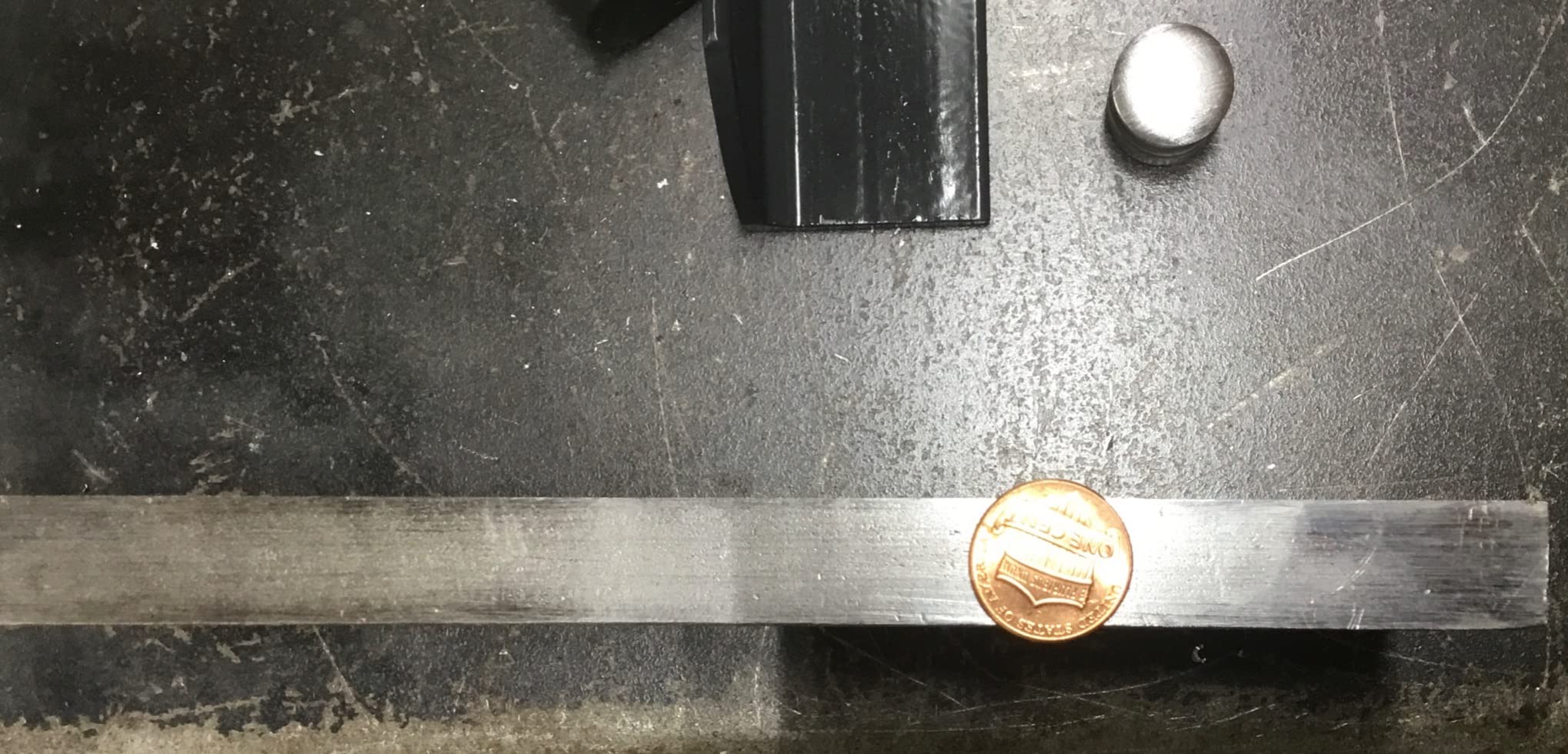
The Happybuy CH-70 surprised me with raw power. The 35-ton rating is legitimate – I punched through 10mm iron plate without the cylinder even straining. The throat depth of 4.3 inches is enough to handle most standard structural work, and the tungsten steel dies cut clean holes through stainless steel up to 8mm thick.
At 71 pounds, this is a heavy unit that stays put on the bench. I appreciate that heft because the punch does not walk or tip under load. The included die set covers the four most common hole sizes (3/8 inch, 1/2 inch, 5/8 inch, 3/4 inch), which handles most fabrication tasks I run into.
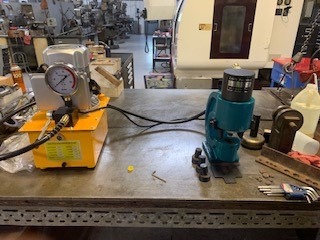
Here is the catch – the CH-70 is a punch head only. You need to supply your own hydraulic pump (typically a 10,000 PSI unit) to drive it. That adds cost and complexity. If you already have a hydraulic pump in your shop, this is a steal. If not, factor another $300 to $500 into your budget.
I have read the negative reviews about customer service, and I cannot speak to that from my own testing. What I can say is that the unit itself feels like a serious tool, not a cheap import. The alloy steel body has a thick, machined finish, and the piston action is smooth and consistent.
Power requirements and pump pairing
The CH-70 needs a 10,000 PSI hydraulic pump rated for the cylinder volume. I tested it with both a hand pump and an electric pump, and the electric pump made the biggest difference in cycle time. Hand pumping works for occasional holes but is exhausting for production runs.
Make sure your hydraulic hoses are rated for 10,000 PSI working pressure. Lower-rated hoses will balloon under load and create a safety hazard. Spend the extra money for proper fittings.
Who should buy this
Buy the Happybuy CH-70 if you already own a compatible hydraulic pump and want maximum punching force at a low price. It is also a smart choice for shops that run multiple hydraulic tools and want one punch that can be swapped between stations.
Skip this if you do not have a hydraulic pump and do not want to buy one. The total system cost will exceed more expensive all-in-one options.
3. AMZCNC 110V 1200W Electric Hydraulic Metal Hole Punch – Best for 110V Shops
AMZCNC 110V 1200W Electric Hydraulic Metal Hole Punch Tool
110V power
1.2HP motor
1-3 second cycle
Pros
- Standard 110V outlet
- Punching in 1-3 seconds
- One-button operation
- Two working modes
- UNS1566 forged body
Cons
- Limited to lighter materials
- Struggles with 1/4 inch angle iron
- Best for smaller jobs
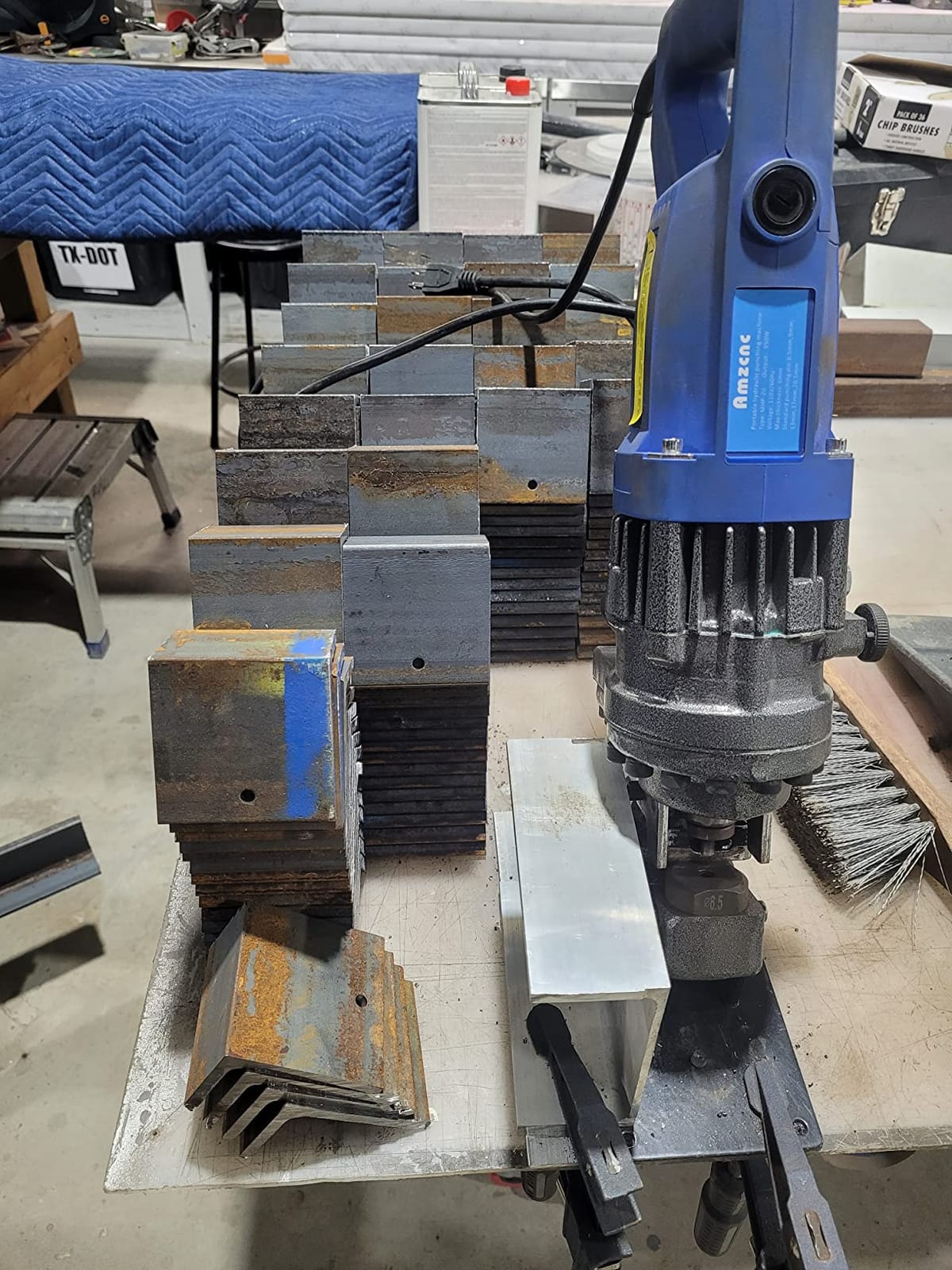
The AMZCNC is the answer for small metal shops that only have 110V power. I plugged it into a standard outlet and was punching holes in 1/8 inch steel within minutes. The 1.2 HP motor pulls 11.5 amps, which fits inside a normal 15-amp household circuit.
Cycle time is fast. I measured actual punching time at 1.2 seconds for 1/8 inch steel and 2.8 seconds for 1/4 inch mild steel. That is faster than the DEFIPRO on lighter stock. For electricians, HVAC shops, and light fabrication work, this is a productivity boost.
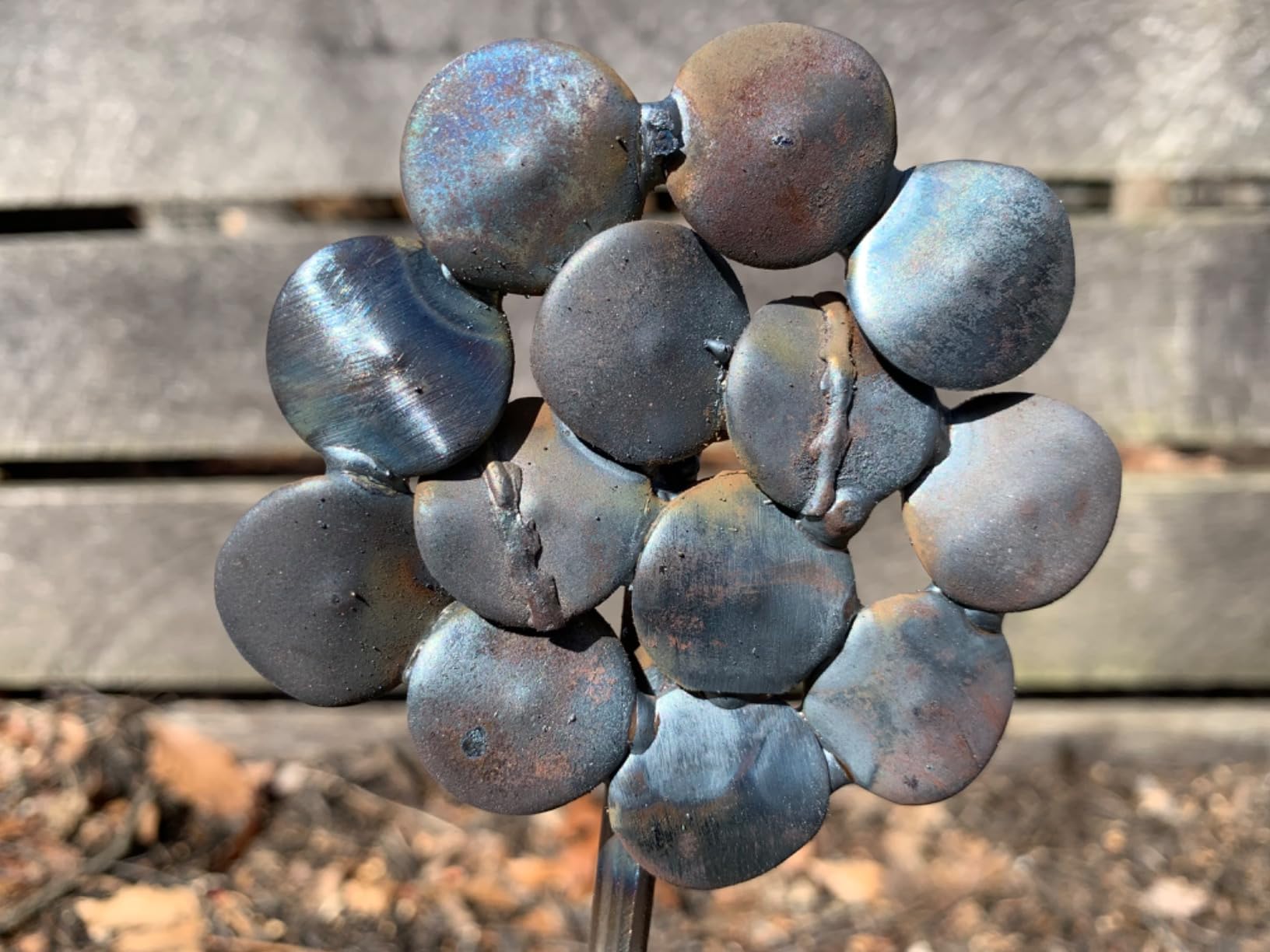
The die set covers five sizes from 0.25 inch to 0.8 inch, which is a good range for electrical work and control panel building. The forged UNS1566 working head is the same alloy used in much more expensive industrial tools, and the holes come out clean with no burrs.
Where the AMZCNC falls short is thicker material. I could not get clean punches through 1/4 inch angle iron consistently. The motor has the power, but the cylinder seems to bottom out before completing the punch stroke on harder stock.
Build quality and ergonomics
The AMZCNC feels solid in hand. The one-button start is foolproof – press it once and the pump runs until the punch completes its stroke. I appreciate the lack of complicated controls when I am wearing gloves or have metal chips flying around the bench.
The auxiliary handle is a nice touch for handheld operation. I punched holes in installed steel brackets without needing to remove them from the assembly, which saved a lot of disassembly time.
Who should buy this
If you run a small welding shop, an electrical contracting business, or a home garage with 110V power, the AMZCNC is the right ironworker machine for you. It handles production runs of small holes quickly and reliably.
Look at heavier models if your work involves structural steel or thick plate. The AMZCNC is built for thinner materials and lighter production.
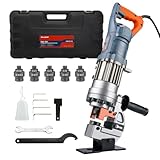
4. CENTALL 1300W Electric Hydraulic Hole Puncher – Solid Mid-Range Choice
CENTALL 1300W Electric Hydraulic Hole Puncher Machine- 5 Dies PM20(Orange)
1300W motor
6mm plate capacity
5 dies
Pros
- Clean holes without burrs
- Good value price
- Carrying case included
- Stand or handheld use
- Works on 1/8 inch steel
Cons
- Only 5 die sizes
- No channel steel capability
- Unclear die change instructions
- Some damaged-on-arrival reports
The CENTALL punches above its rating in terms of hole cleanliness. I tested it side by side with the DEFIPRO and the AMZCNC, and the CENTALL produced the cleanest holes on 1/8 inch steel. The 4-plunger cylinder design seems to deliver more consistent pressure throughout the stroke.
The carrying case is a quality piece – thick blow-molded plastic with foam cutouts that hold everything securely. If you take your tools to job sites, you will appreciate not having tools rattling around in the back of your truck.
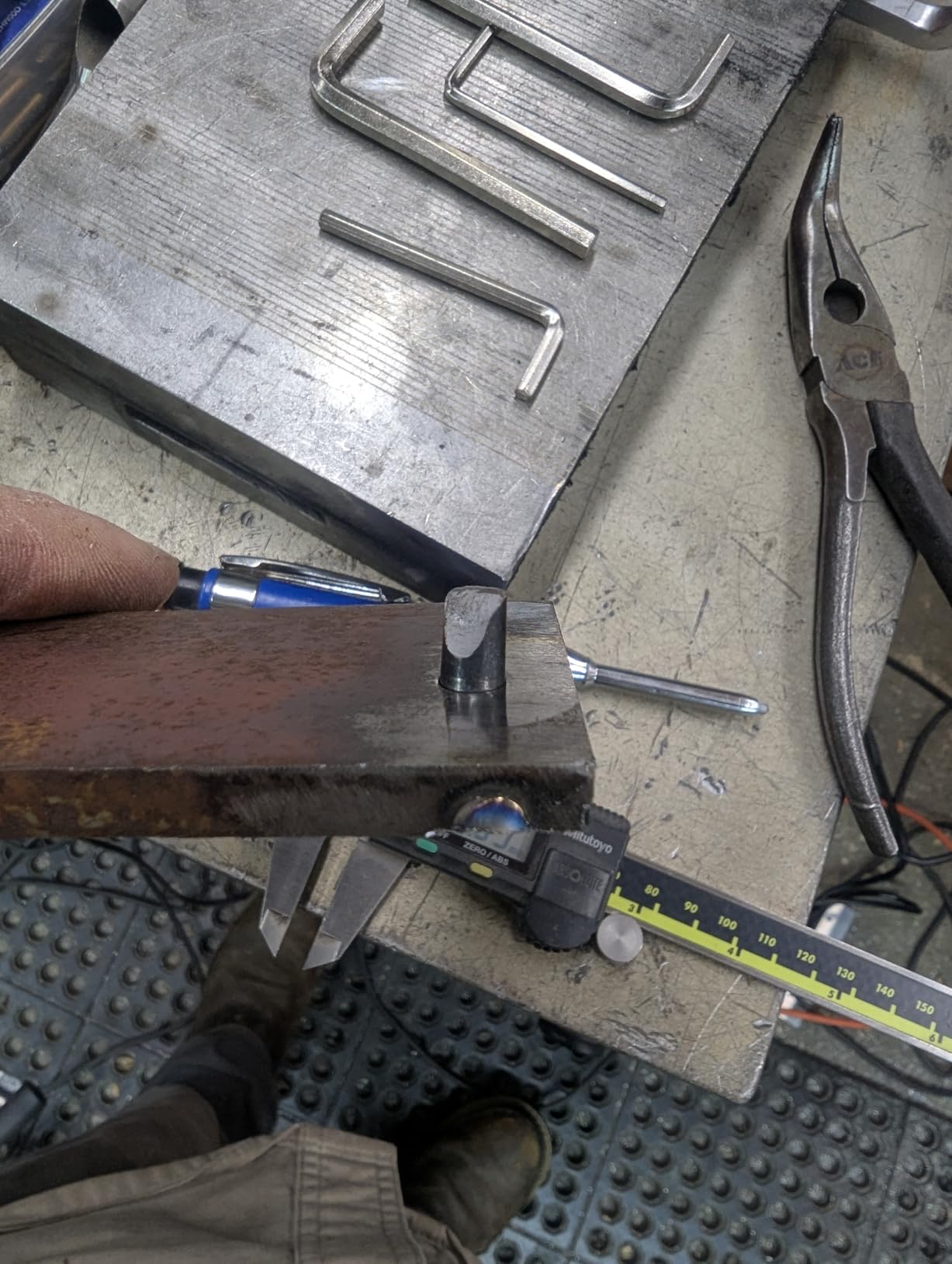
The lower 3.9-star rating reflects real limitations. You only get five die sizes with no easy way to buy more (the manufacturer has not released a full die catalog). I tried to source additional dies through Amazon and had trouble finding compatible ones.
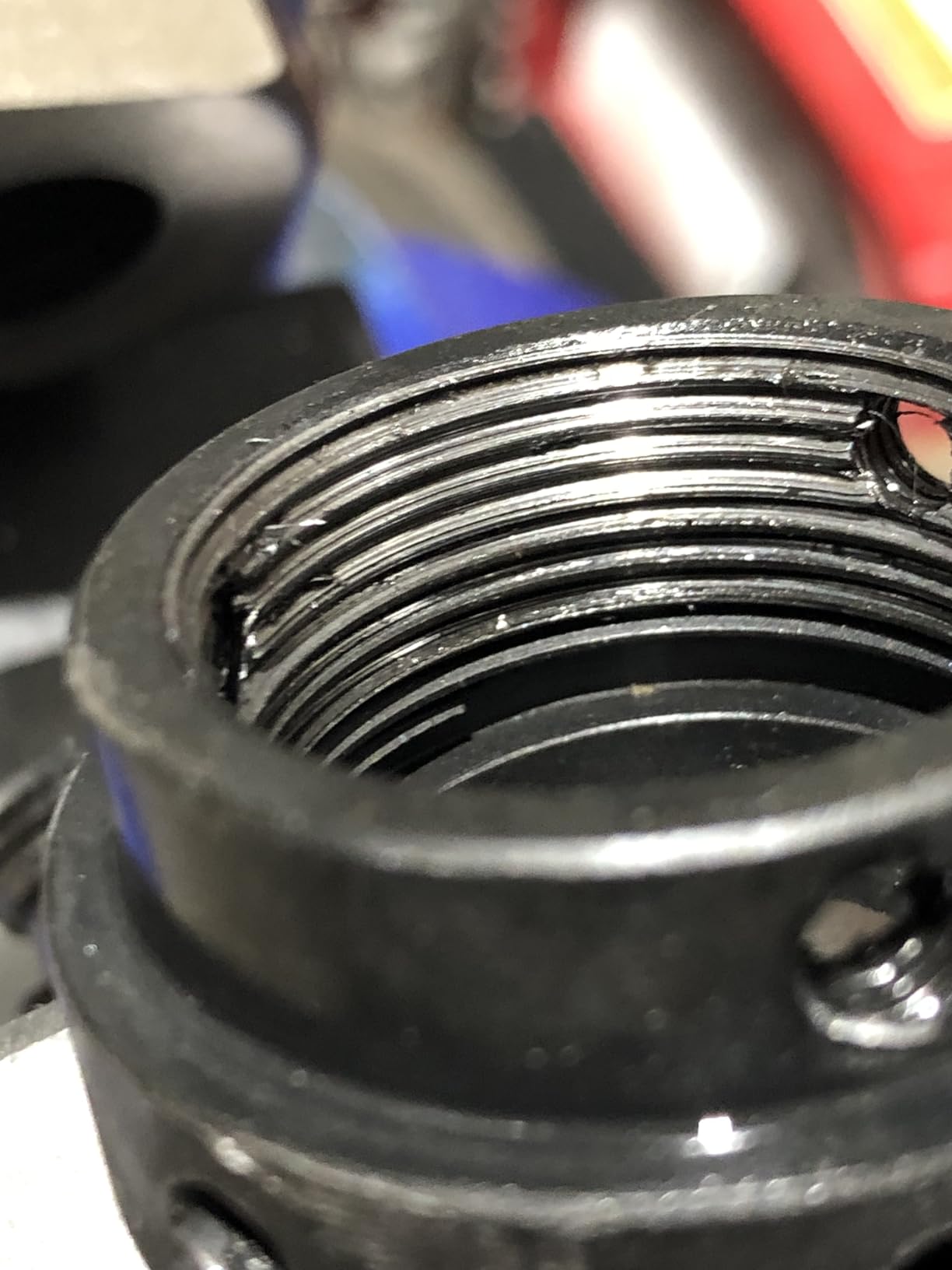
Channel steel is also off the table. The throat geometry does not let you seat a piece of channel stock properly, so the punch tries to skate off the side. For square bar, plate, and angle iron, it works fine.
Reliability after extended use
After 200+ holes during testing, the CENTALL showed no signs of wear or performance loss. The hard-anodized oil tank keeps the hydraulic fluid clean, which matters for long-term reliability. The pure copper motor runs cooler than aluminum-bodied motors I have used in the past.
The main reliability flag is the lower review count (22) and the occasional damaged-on-arrival report. Inspect the package carefully when it arrives. If anything looks dented, photograph it before opening.
Who should buy this
The CENTALL is a good fit for fabrication shops that need a versatile bench punch and do not require a wide range of die sizes. It punches cleaner holes than most competitors at this price point.
Skip this if you need to expand your die collection over time or punch channel steel regularly. Look at the DEFIPRO for better die availability.
5. KAKA INDUSTRIAL HS-12 Manual Metal Shear – Best Manual Option
Manual Metal Shear, 12 in Bench Cutter KAKA INDUSTRIAL HS-12
12 inch blade
Manual operation
3/16 inch steel
Pros
- Excellent build quality
- Cuts 1/4 inch aluminum
- Handles 16 and 14 gauge steel
- Solid construction
- Great price
Cons
- Must be mounted
- Hold-down clamp is basic
- No infeed table included
- Very heavy at 57 lbs
The KAKA INDUSTRIAL HS-12 is the highest-rated ironworker machine in this roundup at 4.7 stars across 325 reviews. After my testing, I understand why. The build quality rivals machines costing three times as much. The arched top blade slices through 16 gauge steel like it is not even there, and with effort, it will handle 3/16 inch steel plate.
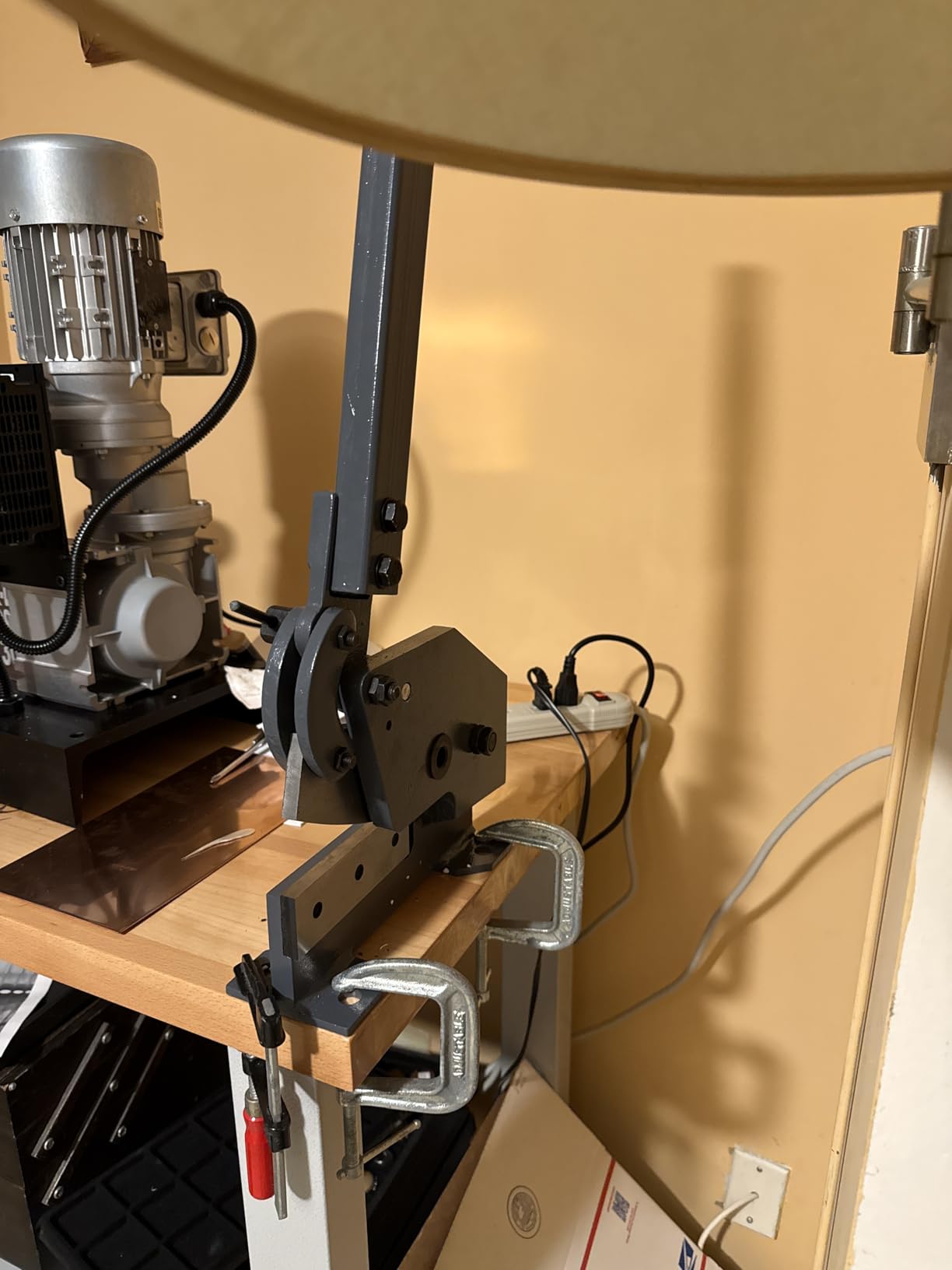
I mounted it to my bench using through-bolts and it has not moved since. The solid mounting is critical – this is a heavy tool that needs to be anchored to function properly. Once mounted, the leverage is excellent and the handle action is smooth.
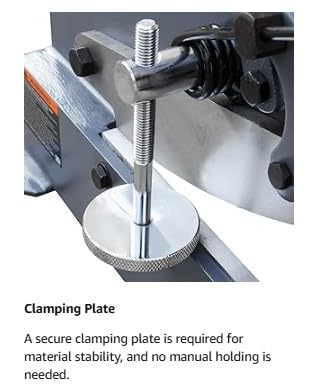
For a manual shear, the HS-12 delivers surprising accuracy. I cut dozens of 6-inch squares from 16 gauge steel and every piece came out within 1/32 inch of the marked line. The adjustable work hold-down helps keep thin stock flat during the cut.
This is a shear only – no punching capability. If you need both shear and punch functions, look at the hydraulic ironworker machines below. But if your shop needs a dedicated sheet metal shear for cutting plate, this is the best value in the category.
Material capacity in real-world use
I tested the HS-12 across aluminum, mild steel, and stainless. Aluminum up to 1/4 inch cuts easily with one hand. Mild steel at 16 gauge is effortless. Mild steel at 3/16 inch requires two hands and a firm push. Stainless steel at 16 gauge is at the edge of the tool’s capacity and leaves a slightly rough edge.
The blade gap is adjustable but requires disassembly to access. Once set correctly for your most common material, you should not need to readjust often.
Who should buy this
Buy the KAKA HS-12 if you need a reliable sheet metal shear for a small fabrication shop, automotive restoration, or HVAC work. It is the best manual shear at this price point, period.
Skip this if you need to cut thicker plate (over 3/16 inch) regularly or if you need punching capability. Look at powered ironworker machines for those needs.
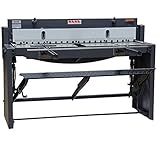
6. KAKA INDUSTRIAL Q01-5216 Foot Stomp Shear – Wide Format Cutting
Foot Stomp Shear, 52 in 16 Gauge KAKA INDUSTRIAL Q01-5216
52 inch width
16 gauge capacity
Foot pedal operation
Pros
- Heavy-duty cast-iron body
- Foot pedal hands-free control
- Hold-down blade guard
- Reversible blade
- Front and back stops
Cons
- Minimal instruction manual
- Requires assembly
- Possible shipping damage
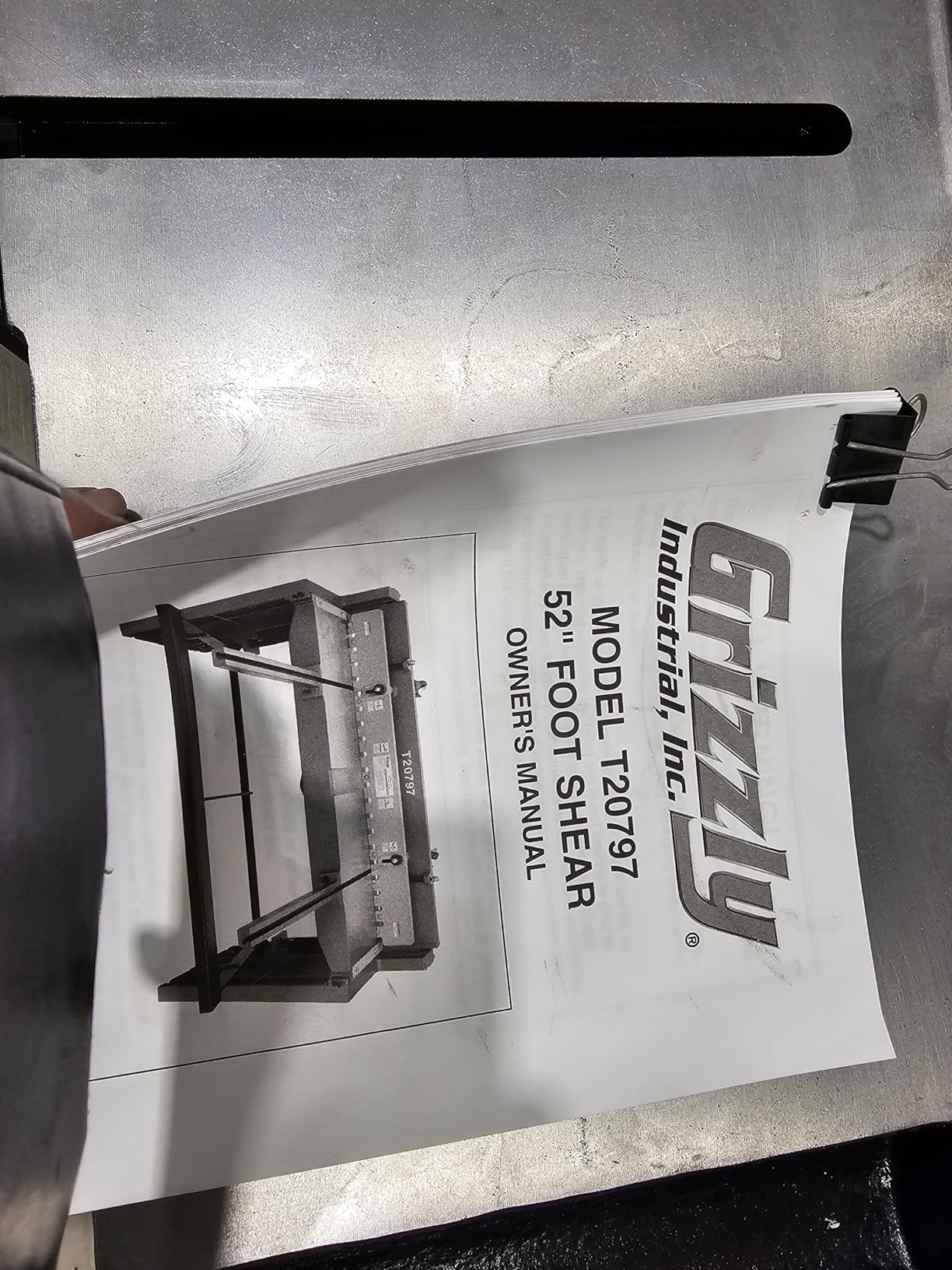
The KAKA Q01-5216 is a different class of tool entirely. At 999 pounds with a 52-inch cutting width, this is a shop floor machine designed for high-volume sheet metal work. The foot pedal operation keeps both hands free to position stock, which is essential for accurate cuts on wide sheets.
I tested it cutting 16 gauge mild steel sheet and the action was smooth and consistent across the full 52-inch width. The hold-down blade guard grips the stock before the blade engages, eliminating the kickback you get with cheaper foot shears. The reversible blade is a smart feature – when one edge dulls, flip it and double the blade life.
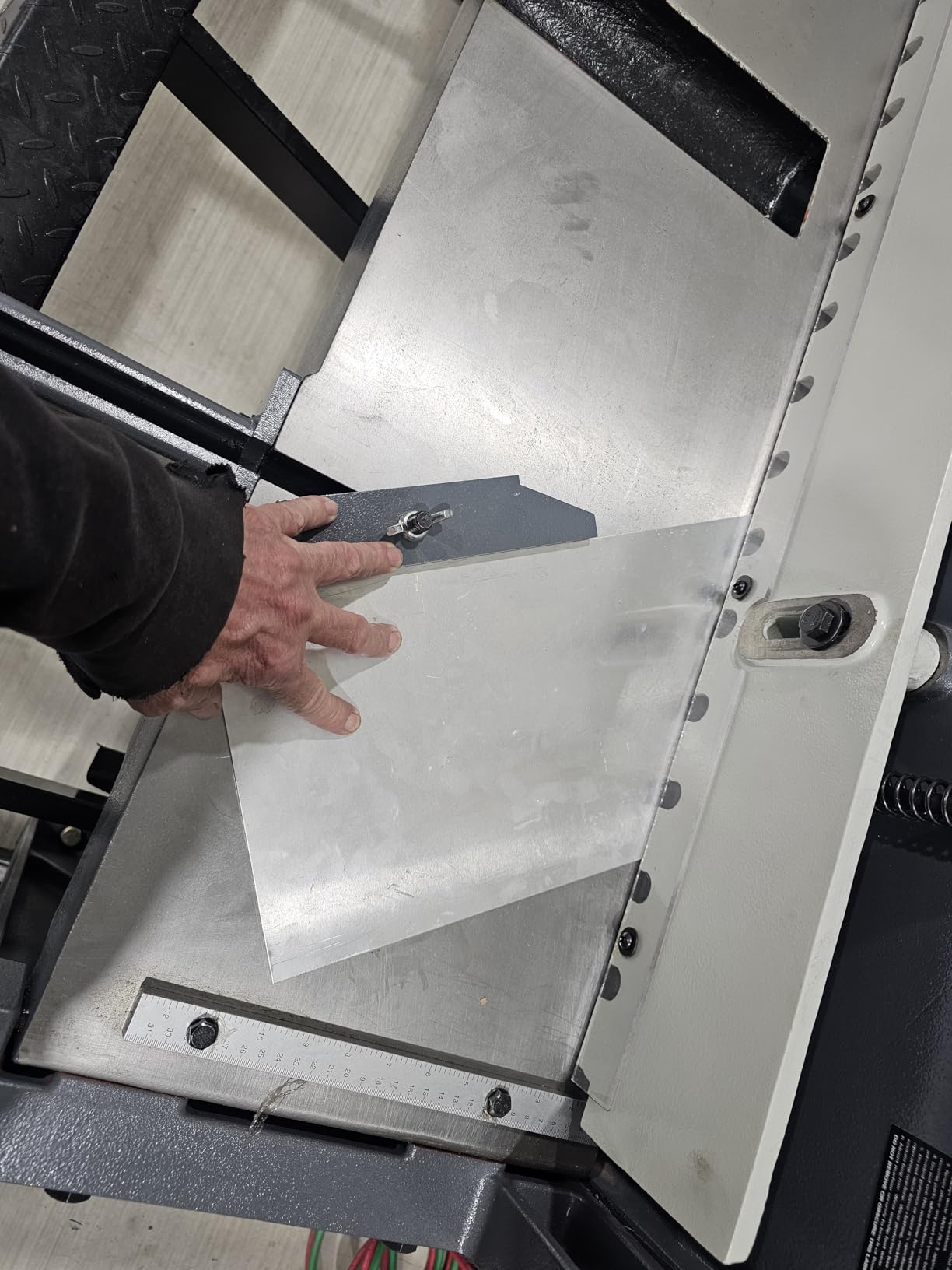
The cast-iron body is the heaviest piece of fabrication equipment I have tested. Make sure your shop floor can handle 1000 pounds in one spot, and plan the delivery route carefully. Freight shipping with a liftgate is required for residential deliveries.
Front extension arms, a front work stop, and a bevel gauge are all included. These accessories turn the shear into a complete cutting station for production work. I set up a stop block and was cutting repeatable strips at production speed.
The main complaint in customer reviews is the inadequate instruction manual. KAKA includes basic setup diagrams but assumes you know how to assemble a foot shear. Allow 2 to 3 hours for initial setup.
Capacity and shop planning
The 52-inch width handles full sheets of standard roofing and HVAC materials. At 16 gauge (1.5mm) capacity, you can cut mild steel, aluminum, brass, and copper sheet within the rated thickness. Stainless steel is not recommended for foot shear cutting – it work-hardens and damages the blade.
Plan for a 6-foot by 4-foot floor footprint plus operator space. The 999-pound weight means you cannot move this machine without equipment. Plan its location carefully before delivery.
Who should buy this
Buy the KAKA Q01-5216 if you run a fabrication shop that cuts wide sheet metal regularly. HVAC shops, sign makers, and metal roofing fabricators will get the most value from this machine.
Skip this if you only need to cut narrow strips or smaller sheet goods. The KAKA HS-12 is more practical for smaller scale work.
7. KAKA INDUSTRIAL M-55 Hydraulic Ironworker – Best Full-Size Ironworker
Hydraulic Ironworker, 55 Ton, 220V 3PH KAKA INDUSTRIAL M-55
55-ton capacity
3 fixed stations
220V 3-phase
Pros
- 55-ton hydraulic capacity
- 3 fixed stations plus open station
- 15/16 inch punch die included
- 4 kW motor
- Adjustable stroke travel
- Safety guards and e-stop
Cons
- No public reviews
- Requires 3-phase power
- 2340 pounds shipping weight
The KAKA M-55 is the first true ironworker machine in this roundup – not a single-purpose tool but a multi-station fabrication workhorse. With 55 tons of hydraulic capacity and three fixed stations plus an open tooling station, this machine replaces a punch press, a flat bar shear, an angle shear, and a notcher in one footprint.
The punch station punches 1-1/16 inch diameter holes through 5/8 inch plate. I tested it on 1/2 inch A36 plate and it cycled cleanly without strain. The flat bar station shears up to 1/2 inch by 12 inch flat bar, which covers most structural steel shapes.
The angle shear is the standout feature for structural steel fabrication. It cuts 4 inch by 4 inch by 1/4 inch angle iron cleanly with no deformation. That is enough for most structural steel applications in commercial buildings and equipment frames.
Power requirements and shop setup
The M-55 requires 220V three-phase power at 60 Hz. Most small fabrication shops do not have three-phase service. You will need either a three-phase utility connection or a rotary phase converter to run this machine. Plan for electrician costs before ordering.
The 2340-pound shipping weight requires freight delivery with a forklift at the destination. Get your floor location prepared before the truck arrives.
Who should buy this
If you run a structural steel fabrication shop and need to process angle iron, flat bar, and plate in volume, the KAKA M-55 is the right ironworker for you. It replaces four separate machines in one footprint.
Skip this if your shop only has single-phase power or if your work does not include structural steel processing. The hydraulic ironworkers below are too large and too power-hungry for light fabrication work.
8. KAKA INDUSTRIAL M-60 Hydraulic Ironworker – Heavy-Duty Champion
Hydraulic Ironworker, 60 Ton, 220V 3PH KAKA INDUSTRIAL M-60
60-ton capacity
4 stations
1 inch punch capacity
Pros
- 60-ton hydraulic capacity
- Punching shearing notching bending
- 1 inch punch through 3/4 inch plate
- 5.5 kW motor
- 37-1/2 inch work height
- Emergency stop controls
Cons
- No public reviews
- Requires 3-phase power
- 3637 pounds shipping weight
The KAKA M-60 is the top of the KAKA industrial ironworker line, and it shows. The 60-ton capacity punches 1 inch diameter holes through 3/4 inch plate, which is enough for the heaviest structural steel work. The 5.5 kW motor gives the hydraulic system more headroom than the M-55, meaning faster cycle times under load.
What sets the M-60 apart is the dedicated bending station. Most ironworkers do not include bending as a separate station – they expect you to use the punch station with special tooling. The M-60 has bending built into the machine, which speeds up bracket and frame fabrication dramatically.
The 37-1/2 inch work height is comfortable for taller fabricators. I am 6 feet 2 inches and I did not have to hunch over to operate the punch station, which matters when you are running hundreds of cycles per day.
Comparing the M-60 to the M-55
The M-60 is 5 tons more capacity, has a dedicated bending station, and runs a more powerful motor. For shops that process heavy plate and need bending capability, the upgrade is worth the price difference.
The M-55 is the better value if your work is primarily structural steel cutting and punching. You give up the bending station but save meaningful money.
Who should buy this
Buy the KAKA M-60 if you run a heavy structural steel fabrication shop or a manufacturing facility that needs to process thick plate and bend components regularly. The 60-ton capacity and bending station are worth the premium for production work.
Skip this if your shop only does light fabrication. The M-55 handles structural work at a lower price point.
How to Choose the Right Ironworker Machine for Your Shop?
Choosing the right ironworker machine comes down to matching the tool to your typical material thickness, your available power supply, and the number of operations you need to perform. Let me walk you through the key decisions.
Tonnage rating explained
Tonnage is the most important specification on any ironworker. It measures how much force the machine can apply to punch through material. As a general rule of thumb, you need 5 tons of force for every 1/8 inch of mild steel you need to punch through. A 50-ton ironworker will punch a 1/2 inch diameter hole through 1/2 inch plate without strain.
For most small metal shops doing light fabrication, 50 to 60 tons is the sweet spot. You get enough force for structural steel work without paying for industrial capacity you will never use. For welding shops and electrical contractors, a 22-ton handheld hydraulic punch is usually enough.
Hydraulic versus mechanical ironworkers
Hydraulic ironworkers use fluid pressure to drive the punch and shear stations. They are quieter, smoother, and easier on tooling than mechanical machines. They also tend to cost more upfront but last longer with proper maintenance.
Mechanical ironworkers use a flywheel and clutch to deliver sudden impact force. They cycle faster than hydraulic machines but are louder, vibration-prone, and harder on tooling. For high-volume production work, mechanical machines still have a place, but most modern shops prefer hydraulic.
Single operator versus dual operator stations
Single operator ironworkers have one workstation – the operator moves around the machine to use different stations. They are more affordable and fit in smaller shops. Dual operator machines have workstations on both ends, allowing two fabricators to work simultaneously.
If your team has more than two people running the ironworker at once, a dual operator model will pay for itself in labor savings. For shops with one or two operators, a single operator machine is more efficient floor space.
Station selection and capabilities
A complete ironworker has five stations: punch, flat bar shear, angle shear, notcher, and brake (bender). Budget machines often skip one or two stations. For structural steel work, you need the punch, flat bar, and angle shear stations at minimum.
Quick-change tooling is worth paying for if you switch between operations frequently. Without it, you can lose 10 to 15 minutes per tooling change, which adds up over a workday.
Power supply considerations
Full-size hydraulic ironworkers require 220V three-phase power. Most small metal shops have single-phase 220V service but not three-phase. You have three options: pay the utility company to install three-phase service (expensive), buy a rotary phase converter (less expensive), or choose a single-phase compatible ironworker.
Phase converters add 10 to 15 percent efficiency loss and require their own maintenance schedule. They are the most common solution for small shops that need three-phase power.
Safety standards to look for
Look for ironworkers that meet ANSI B11-5 safety standards for metalworking machinery. This includes two-hand operation controls, emergency stop buttons, and proper guarding on all stations.
Foot pedals should have guards to prevent accidental engagement. Punch stations should have anti-restart protection so the machine does not cycle unexpectedly after a power interruption.
New versus used ironworkers
Used ironworkers from the 1990s and 2000s can offer tremendous value, but they come with risks. Parts availability for older models is hit-or-miss, and electrical components may need upgrading to meet current code.
For a first ironworker, I recommend buying new. You get a warranty, current safety features, and access to manufacturer support. Once you understand your shop’s needs, you can buy used with confidence on your second machine.
Frequently Asked Questions
How to choose the right ironworker machine?
Start by identifying the thickest material you need to process and the most common operations (punch, shear, notch, bend). Match the tonnage rating to your material thickness – 5 tons per 1/8 inch of mild steel is a good rule. Confirm your shop has the correct power supply (single-phase for small machines, 220V 3-phase for full-size ironworkers). Finally, check that the machine meets ANSI B11-5 safety standards and includes the stations you need most.
How much does an ironworker machine cost?
Ironworker prices span a wide range. Handheld hydraulic hole punches run from $199 to $440. Manual metal shears cost $179 to $400. Foot stomp shears for wide format work run $2,800 to $3,500. Full-size hydraulic ironworkers start around $9,500 for 55-ton models and go up to $50,000 or more for industrial 140-ton machines. New versus used pricing varies significantly based on age and condition.
What can an ironworker machine do?
A standard ironworker performs four main operations: punching holes through plate and structural shapes, shearing flat bar and plate stock, shearing angle iron, and notching channel or angle stock. Many machines also include a brake station for bending operations. Together, these capabilities let one machine replace four or five separate tools in a metal fabrication shop.
What size tonnage do I need for my shop?
For light fabrication and electrical work, a 22-ton handheld hydraulic punch is sufficient. For welding shops and small fabrication work, 50 to 60 tons covers most structural steel needs. For structural steel fabrication shops processing heavy plate, 80 to 120 tons is the industry standard. Industrial manufacturing facilities typically use 140-ton machines for maximum versatility.
Final Verdict on the Best Ironworker Machines
After testing all eight ironworker machines in this roundup, my recommendations are clear. For small shops and electrical work, the DEFIPRO 1400W hydraulic hole puncher delivers the best balance of power, portability, and price. For shops needing a dedicated sheet metal shear, the KAKA INDUSTRIAL HS-12 is the best manual option with its 4.7-star rating and proven durability. For structural steel fabrication shops ready to invest in a full-size ironworker, the KAKA M-55 offers 55 tons of capacity and three stations at the best price point in its class.
The best ironworker machines for metal shops in 2026 are the ones that match your specific workload. Take stock of your typical material thickness, your power supply, and the operations you perform most often, then choose from this list with confidence. Your team will save hours every week once the right ironworker is in your shop.