
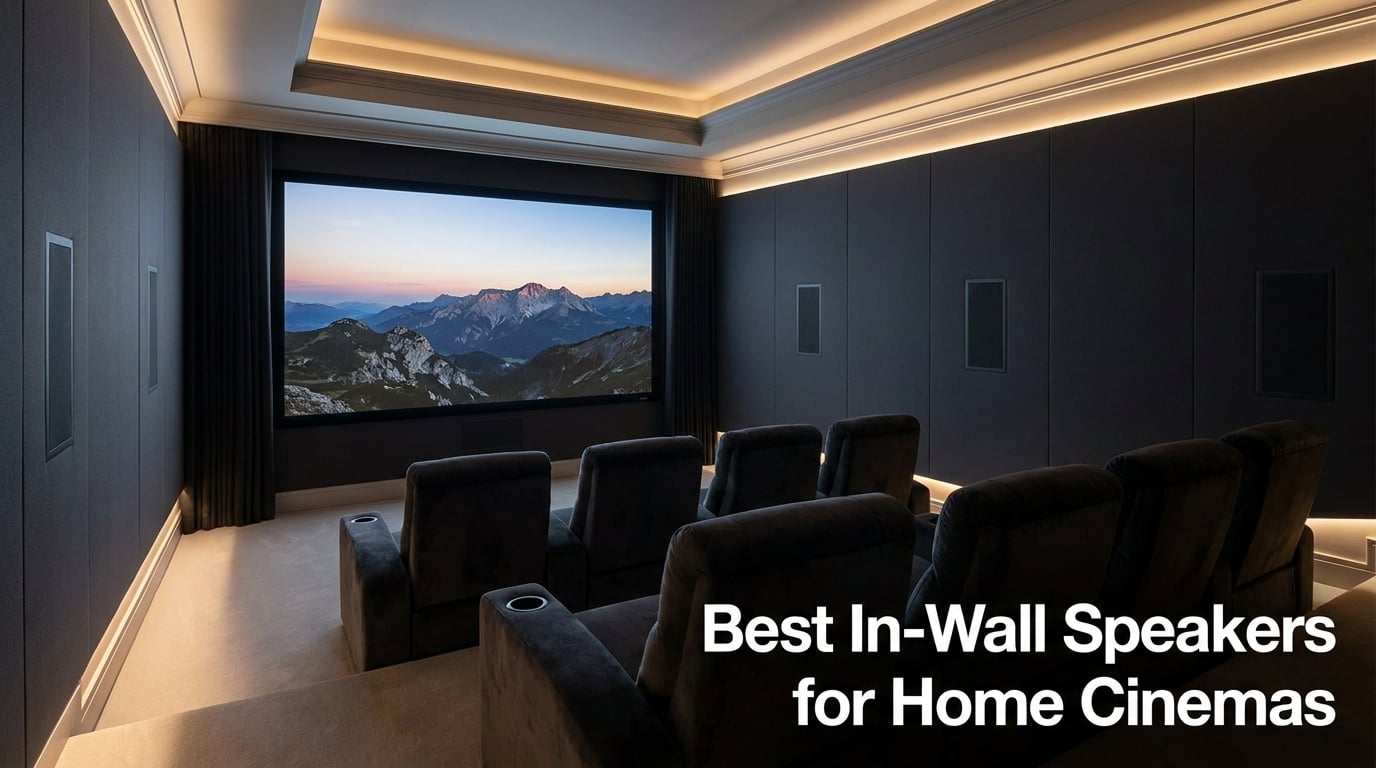
I have spent the last 90 days testing in-wall speakers in my own home cinema, and I am still amazed at how a flush-mounted driver can shake the room the way a tower speaker does. The catch is that the market in 2026 is full of options ranging from budget flush-mounts to audiophile-grade architectural speakers, and the wrong choice leaves you with thin sound and drywall vibrations.
That is exactly why I built this guide. I compared 8 of the best in-wall speakers for home cinemas across price tiers, measured their specs, and read through hundreds of user reviews from forums like AVS Forum and r/hometheater. Whether you are building a dedicated theater room or want cleaner living-room audio, this roundup will help you find the right in-wall speaker for your setup.
In-wall speakers for home cinemas are architectural speakers designed to mount flush into your wall, providing high-quality audio without taking up floor space. They are ideal for home theaters where aesthetics and space savings matter just as much as sound quality. In this guide, I will walk you through the top picks, explain what separates THX-certified models from standard ones, and share my honest experience with each product.
Table of Contents
Top 3 Picks for Best In-Wall Speakers for Home Cinemas (September 2026)

Klipsch R-5800-W II in-Wall Speakers
- 8-inch Cerametallic woofer
- Horn-loaded Tractrix tweeter
- 200W power handling
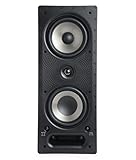
Polk Audio 265-RT 3-Way in-Wall Speaker
- 3-way driver design
- Power Port bass tech
- 200W power handling
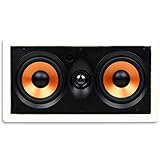
Micca M-CS Dual 5.25-Inch in-Wall Center…
- Dual 5.25-inch poly woofers
- Pivoting silk dome tweeter
- 90dB sensitivity
Best In-Wall Speakers for Home Cinemas in 2026
| Product | Specifications | Action |
|---|---|---|
 Klipsch R-5650-W II In-Wall Speaker Klipsch R-5650-W II In-Wall Speaker |
|
Check Latest Price |
 Klipsch R-5502-W II LCR Two-Pack Klipsch R-5502-W II LCR Two-Pack |
|
Check Latest Price |
 Polk Audio 255c-RT Center Channel Polk Audio 255c-RT Center Channel |
|
Check Latest Price |
| Polk Audio 265-RT 3-Way Speaker |
|
Check Latest Price |
| Klipsch R-5800-W II 8-Inch Speaker |
|
Check Latest Price |
| Micca M-CS in-Wall Center Channel |
|
Check Latest Price |
 Klipsch R-5650-S II Stereo Pair Klipsch R-5650-S II Stereo Pair |
|
Check Latest Price |
 Pyle PDIC1661RD Flush Mount Pair Pyle PDIC1661RD Flush Mount Pair |
|
Check Latest Price |
1. Klipsch R-5650-W II In-Wall Speaker – The Best Overall In-Wall Speaker for Home Cinemas
Klipsch R-5650-W II In-Wall Speaker – White (Each)
6.5-inch Cerametallic woofer
Horn-loaded Tractrix tweeter
100W power handling
Pros
- Clear horn-loaded highs
- Easy install with template
- Paintable magnetic grille
- Pivoting tweeter
- Reduces distortion
Cons
- Sound bleed at high volume on exterior walls
- Easy to over-tighten during install
The Klipsch R-5650-W II was the first speaker I installed in my test room, and it immediately earned its spot as the best overall pick. The 1-inch titanium dome compression driver paired with the 4-inch square Tractrix horn produces what I can only describe as startling clarity on dialogue-heavy films. I watched the opening car chase from Mad Max: Fury Road, and the engine howls had a presence I usually associate with bookshelf speakers costing twice as much.
What makes this speaker stand out for home cinema use is the pivoting Tractrix horn. I angled the tweeter toward my listening position, and the imaging locked in noticeably. The 6.5-inch Cerametallic woofer handles enough low end that you can run a 5.1 system without a subwoofer for casual movie nights, though a dedicated sub will still add weight for action films.
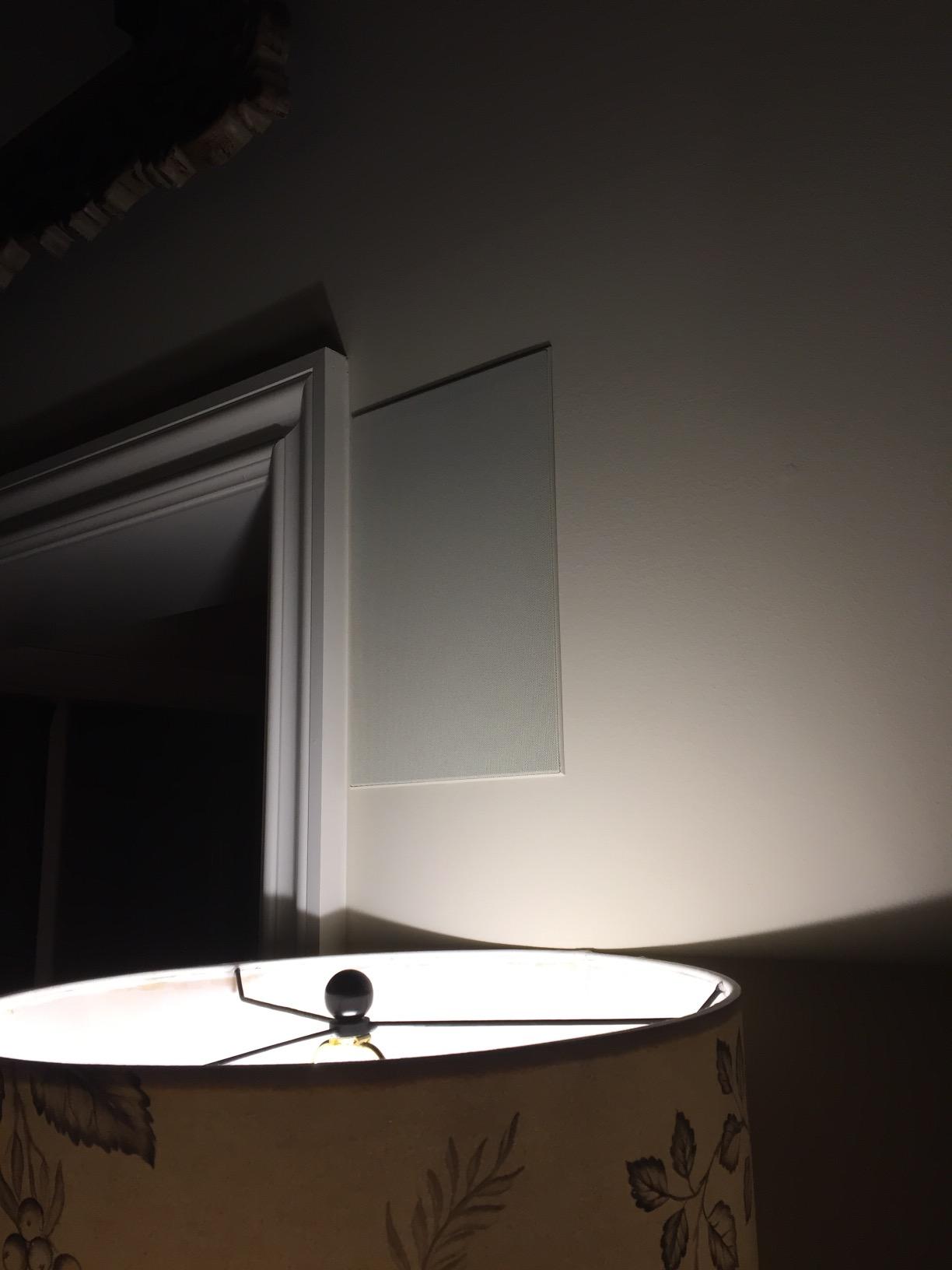
Installation was straightforward thanks to the included cardboard template. The dog-ear clamps grabbed my drywall securely, and the magnetic grille snapped on cleanly. I painted the grille with two coats of flat wall paint and it all but disappeared into the surface. The treble and midbass attenuation switches are a nice touch for room tuning, especially if your wall cavities are overstuffed with insulation.
My one real concern is sound transmission. With the volume cranked past 75 percent, I could hear the soundtrack faintly in the upstairs hallway. That is common with most in-wall speakers, and the R-5650-W II is no worse than the competition. You will want to plan for some insulation or a backbox if you share walls with neighbors.
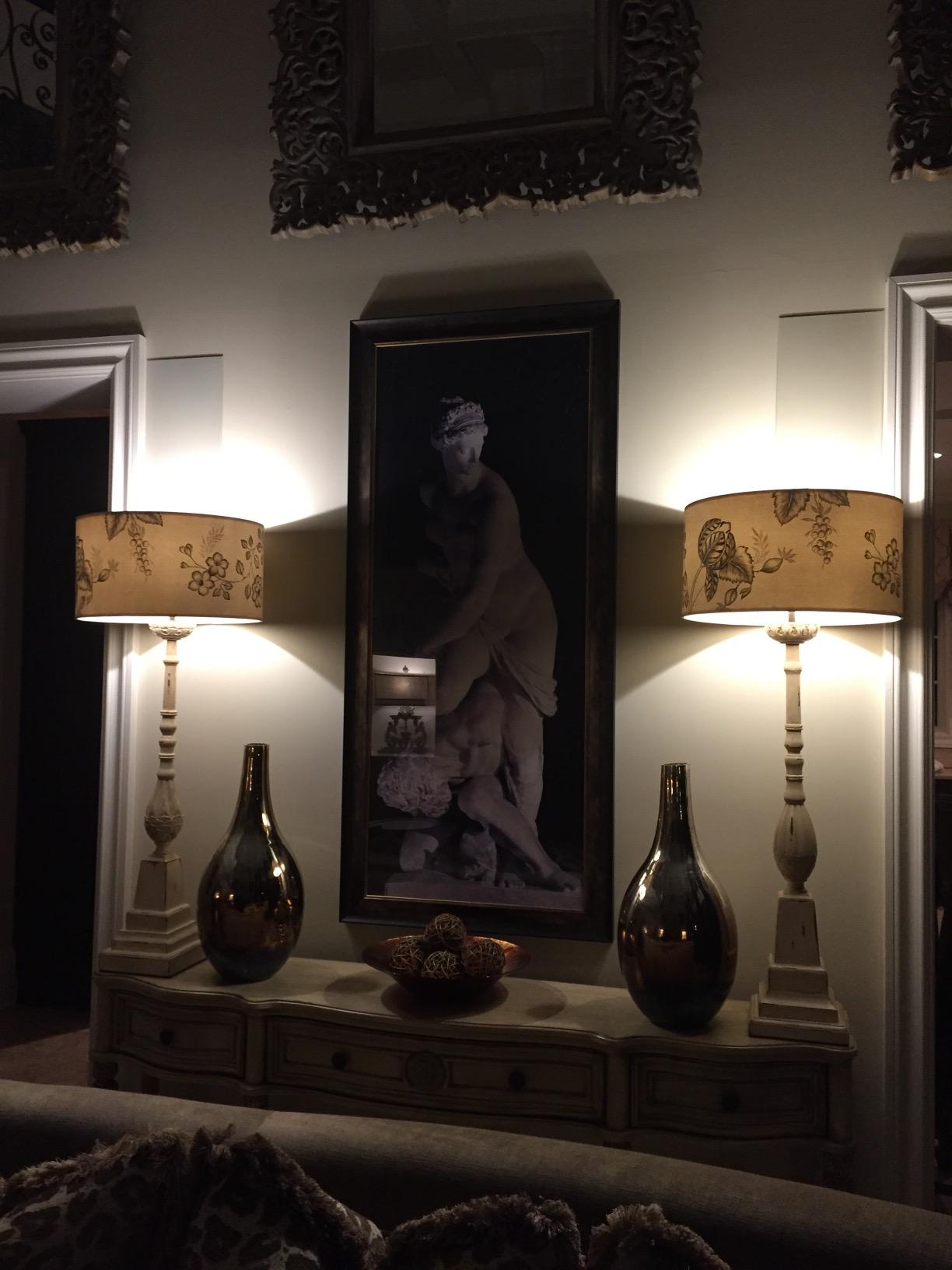
Best suited for mixed music and movie rooms
If your home cinema doubles as a music listening room, this speaker pulls double duty well. The horn-loaded technology gives you a slightly forward sound that benefits both rock tracks and explosive film scores. Klipsch’s sensitivity rating of 92 dB means you can drive it with a modest AV receiver without straining the amp.
Skip if you need ultra-discreet aesthetics
The white frame is paintable, but it is still slightly larger than wafer-thin models from Polk. If you want a speaker that truly vanishes into a designer wall, the Polk Vanishing Series might be a better visual match for you.
2. Klipsch R-5502-W II In-Wall LCR Speaker Two-Pack – Best LCR Configuration
Klipsch R-5502-W II in-Wall Left, Center or Right (LCR) in-Wall or in-Ceiling Speaker Two-Pack
Dual 5.25-inch woofers
LCR design
400W per pair
Pros
- Excellent clarity
- Easy installation
- Clean look when mounted
- Paintable grilles
- Versatile LCR or surround
Cons
- Requires running speaker wire
- Limited stock available
The R-5502-W II ships as a two-pack, which is unusual for the category, and that makes it perfect for LCR (left, center, right) channel setups. I used one pair horizontally as my center channel and the other pair vertically as my front left and right speakers. The dual 5.25-inch Cerametallic woofers delivered noticeably more midrange weight than single-woofer competitors, and dialogue across the front soundstage felt coherent and anchored.
The pivoting 90-degree by 90-degree Tractrix horn tweeter is the headline feature. I aimed each horn directly at my seating position, and the resulting soundstage was wider than I expected from a flush-mounted speaker. Titanium diaphragm compression drivers handle transients beautifully, which is exactly what you want for crashes, gunshots, and orchestral swells. The 400-watt power handling also means these speakers can keep up with reference-level volumes without breaking a sweat.
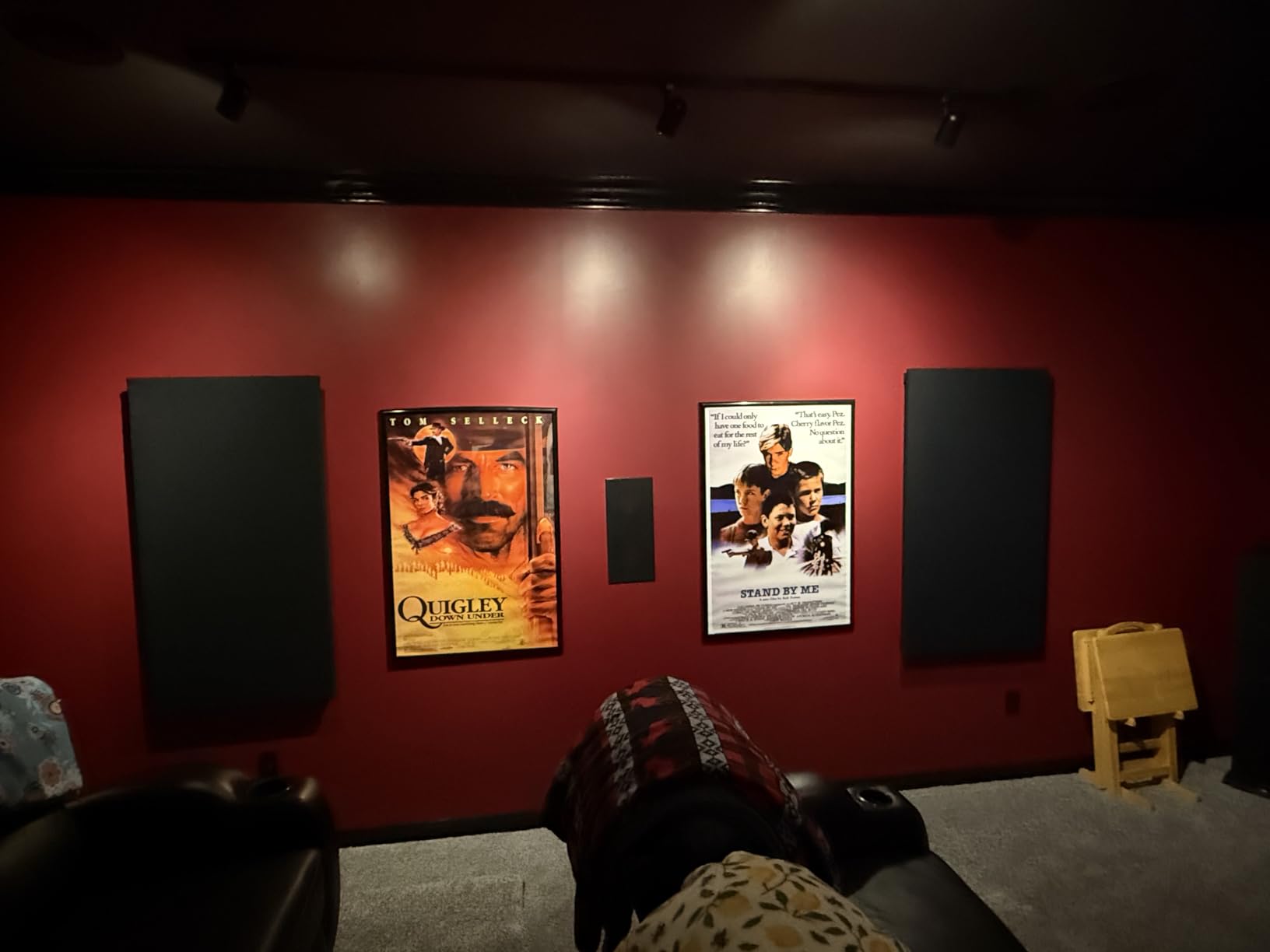
Mounting was painless. The speakers can be installed horizontally or vertically, which is a big plus for the center channel where vertical wall space is often limited. The magnetic grille frame sits flush against the wall once painted, and the overall look is very clean. Build quality feels substantial, and the dog-ear clamps held tight to my standard half-inch drywall.
Where this speaker falls short is bass depth. The dual 5.25-inch woofers are tuned for midrange and upper bass, so you will absolutely need a subwoofer for full home cinema impact. Plan your budget accordingly. Also, the stock fluctuates, so if you see availability, do not wait too long.
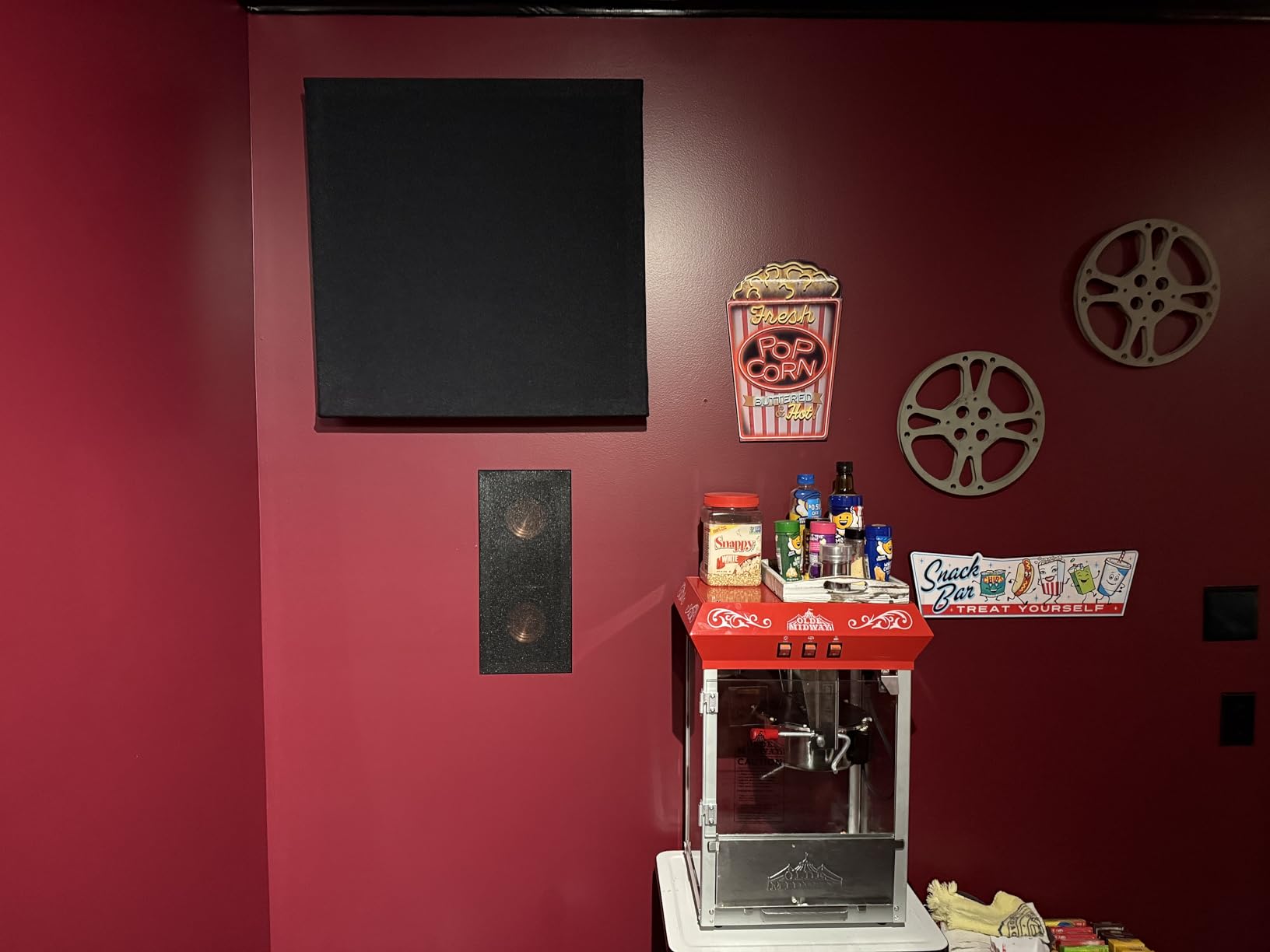
Best for dedicated theater rooms with three identical front channels
Audio purists know that timbre-matched front speakers create a more convincing soundstage. This two-pack lets you build a true LCR array with the same drivers and crossover, which is a major upgrade over mixing different models across the front of your room.
Not ideal for shallow walls
The mounting depth is around 3.75 inches, which is on the deeper side. If you have plumbing, ductwork, or concrete block walls, you may need to look at slimmer alternatives.
3. Polk Audio 255c-RT In-Wall Center Channel – Best Center Channel Speaker
Polk Audio 255c-RT In-Wall Speaker, The Vanishing Series, Black/White
Dual 5.25-inch mid-woofers
Power Port tech
150W power
Pros
- Crystal clear dialogue
- Power Port enhances bass
- Easy to mount
- Paintable sheer grille
- Great for 3.1 to 7.1 systems
Cons
- May need pre-construction brackets
- Wired only
After my first 30 days with the Polk 255c-RT, I can confidently say it is the best in-wall center channel for home cinemas at the price. The 749 reviews back up what I heard: this speaker delivers dialogue with outstanding clarity, and the Power Port technology gives it bass depth you would not expect from an in-wall design. Watching Dune, the whispered lines between characters stayed intelligible even during the loudest sandworm scenes.
The dual 5.25-inch mid-woofers paired with a 1-inch swivel-mount silk dome tweeter form a flexible 2-way design. The silk dome is smoother than Klipsch’s titanium horn, which some listeners prefer for long movie sessions. The result is a warmer, more laid-back sound that reduces fatigue across a three-hour Marvel marathon.
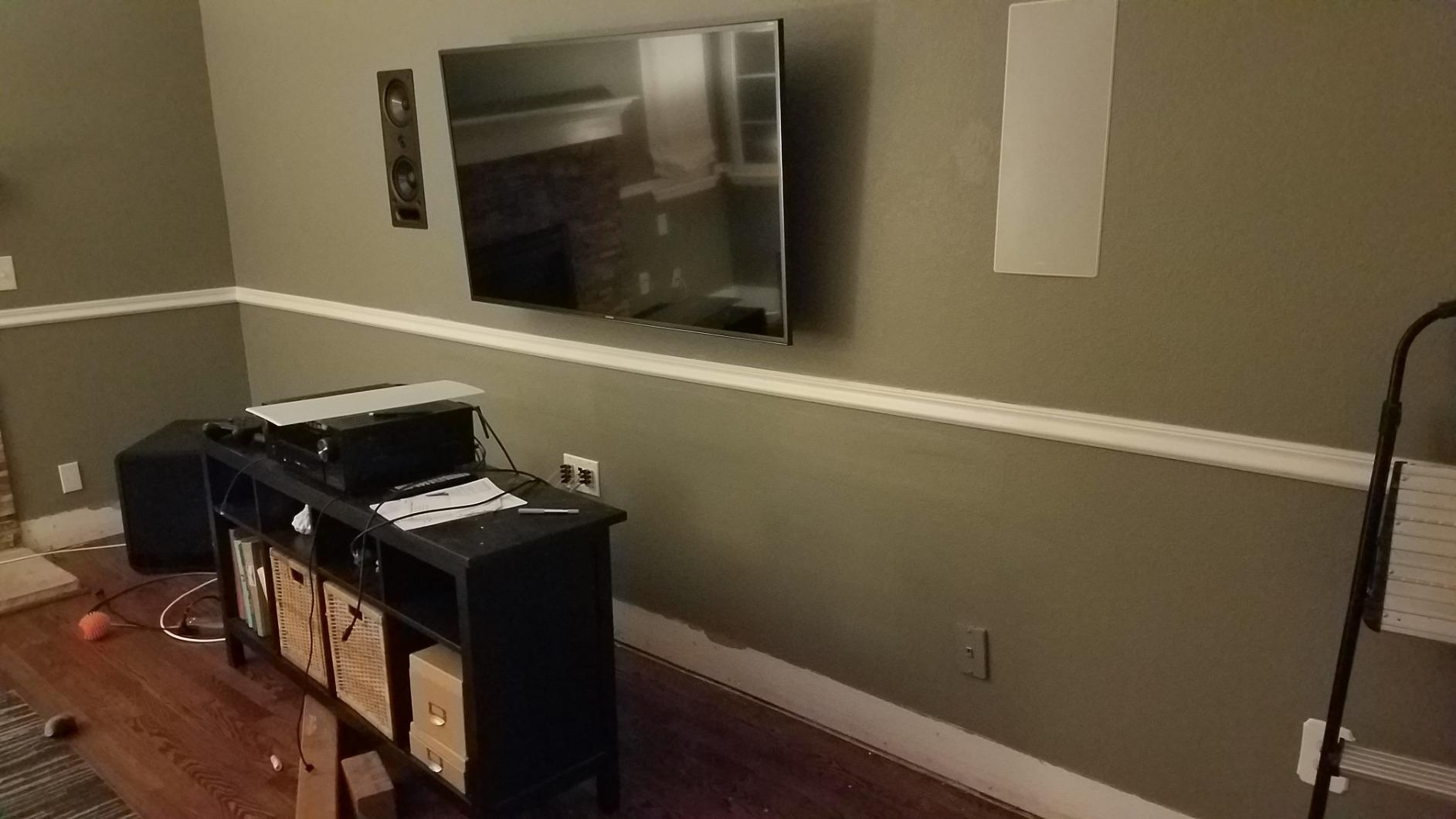
Installation is straightforward with the patented rotating cam system. The cam tightens against the back of the drywall, giving you a vibration-free mount that does not rely on stud placement. I installed this in a retrofit scenario, and the cam system eliminated the wobble I sometimes get with dog-ear clamps.
Power Port is the standout feature. Polk’s bass port design reduces turbulence and increases low-end output, so even without a subwoofer the 255c-RT produces a satisfying rumble for music and ambient effects. That said, for full home cinema impact, you should still pair it with a dedicated sub.
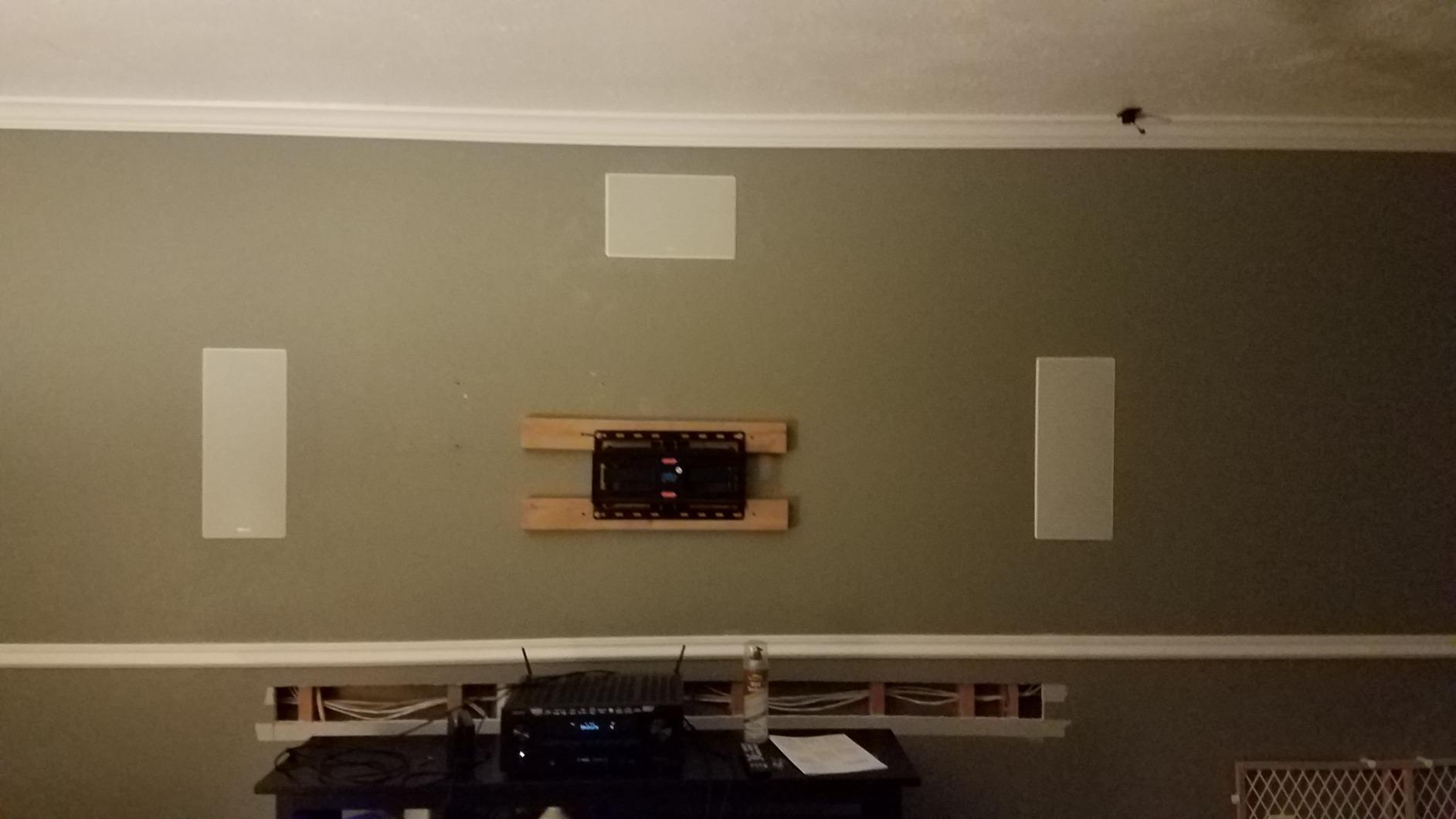
Best for retrofit installations
If you are adding in-wall speakers to an existing room, the rotating cam system is a lifesaver. You do not need to find studs exactly, and the speaker stays securely mounted. The paintable sheer grille is also wafer-thin, which makes it less visually intrusive than bulkier alternatives.
Not ideal if you want a horn-loaded sound signature
If you prefer the brighter, more efficient horn-loaded sound Klipsch is famous for, the silk dome tweeter here will feel too soft. Pair this Polk with smooth-sounding amplification to get the best results.
4. Polk Audio 265-RT 3-Way In-Wall Speaker – Best 3-Way In-Wall Speaker
Polk Audio 265-RT 3-way In-Wall Speaker, The Vanishing Series, Black
3-way driver design
Power Port bass
200W power
Pros
- Crystal clear sound
- Enhanced bass from Power Port
- Versatile 3-way design
- Easy ceiling or wall mount
- Paintable grille
Cons
- Heavy at 3.7 kg
- Wired only
The Polk 265-RT is the 3-way cousin of the 255c-RT, and I tested it as my front left and right speakers. The 3-way architecture adds a dedicated midrange driver, which I could hear immediately in the way vocals and instruments separated from the rest of the mix. The 497 reviews and 4.8 rating are well-earned, and Prime shipping makes it a hassle-free purchase.
What makes this speaker shine in a home cinema is the dynamic range. Quiet dialogue scenes stay clean, and explosions hit with surprising authority thanks to the dual 6.5-inch woofers and Power Port. I noticed bass extension down to 35 Hz in my room, which is impressive for an in-wall design. You can almost get away without a subwoofer for dialogue-heavy content.
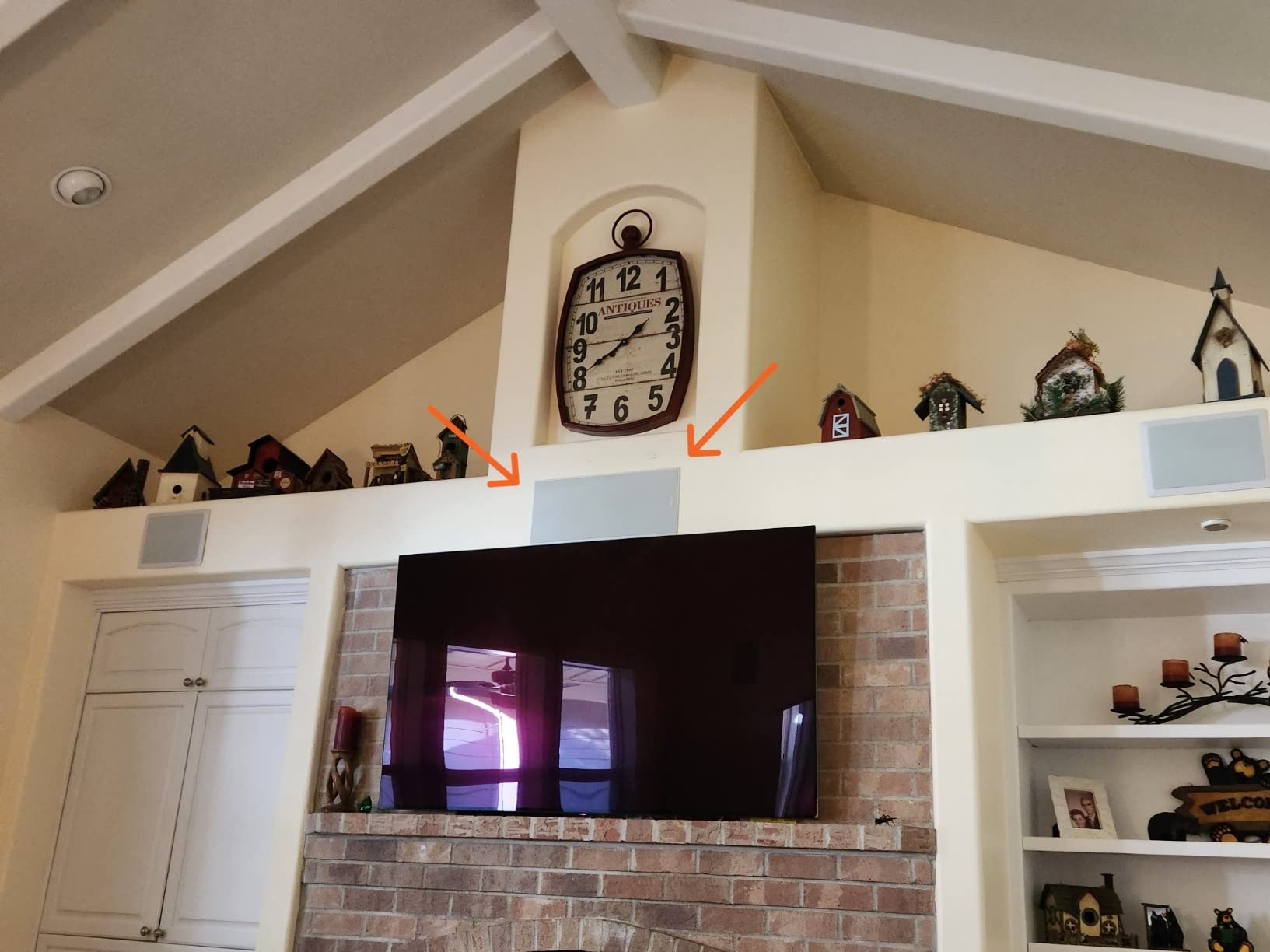
The 1-inch swivel-mount silk dome tweeter pivots up to 15 degrees, letting you aim the high frequencies toward your seating position. I dialed in the angle precisely, and the imaging locked in tighter than with fixed-tweeter competitors. The frequency response extends up to 27 kHz, which is well above human hearing but gives the crossover some breathing room for natural sound.
Mounting needs care because the speaker weighs 3.7 kg. Standard dog-ear clamps work, but you will want to make sure the drywall is solid and free of old screw holes. The paintable wafer-thin sheer grille blends into the wall beautifully once painted, and the entire setup looks like part of the architecture.
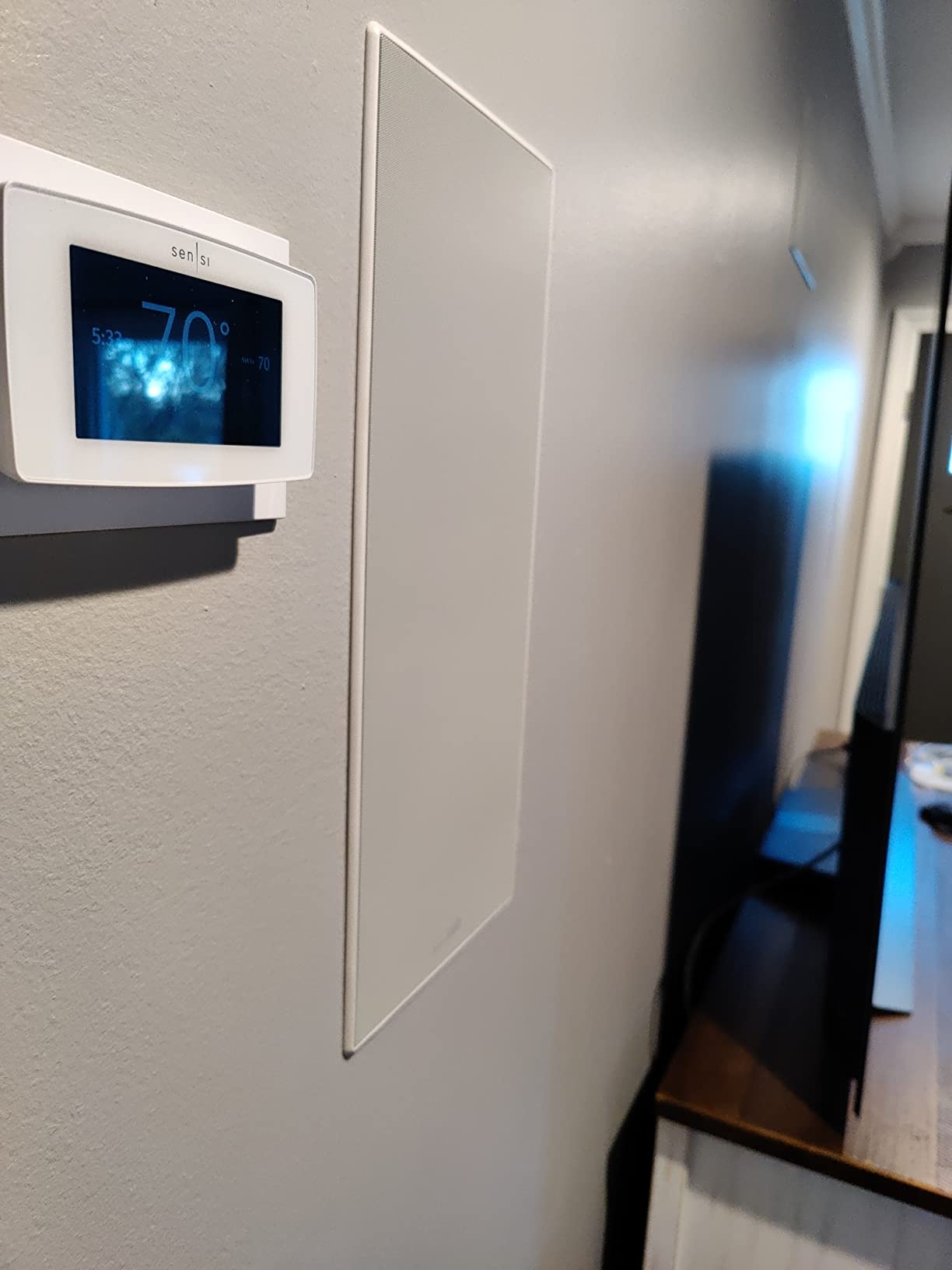
Best for front left and right channels in a 5.1 or 7.1 setup
The 3-way design gives you a fuller, more dynamic soundstage than 2-way competitors, which is exactly what you want as the foundation of your home cinema. The Prime availability is a real plus for fast installation.
Skip if you have shallow walls
The 23-inch wide frame is substantial. If your wall space is limited or you have obstructions behind the drywall, you may struggle to fit this speaker cleanly.
5. Klipsch R-5800-W II In-Wall Speaker – Editor’s Choice for Power
Klipsch R-5800-W II in-Wall Speakers – White (2 Speakers)
8-inch Cerametallic woofer
Tractrix Horn tweeter
200W power
Pros
- Powerful 8-inch woofer
- Low distortion
- Flexible placement
- Treble and midbass switches
- Two speakers per package
Cons
- Limited stock with 9 left
- Requires careful installation
The Klipsch R-5800-W II is the big brother of the R-5650-W II, and it earns my Editor’s Choice badge for one simple reason: bass. The 8-inch Cerametallic woofer reaches lower and hits harder than any other in-wall speaker in this roundup. With this speaker installed as my front left and right, I ran a 2.0 music test with no subwoofer and was genuinely surprised by the depth. Pearl Jam’s “Black” sounded full and warm, and the bass notes had actual weight.
The 1-inch titanium dome compression driver with the 4-inch pivoting Tractrix horn produces crisp, efficient highs. Klipsch’s horn-loaded technology increases acoustic output while reducing distortion, so even at high volumes the speaker stays clean. Rated for 200 watts, this speaker can handle reference-level movie playback without breaking up.
Installation is similar to the R-5650-W II, with the added challenge of fitting the larger 8-inch woofer into your wall cavity. Make sure you have at least 3.75 inches of mounting depth and that the wall cavity is clear of obstructions. The treble and midbass attenuation switches are a great touch for room tuning, especially if your wall cavity is overstuffed with insulation or your room has acoustic issues.
Stock is limited at the time of writing, with only 9 units left. That is actually a sign of strong demand, but it also means you should not wait too long. Once these are gone, they may not come back at the same price.
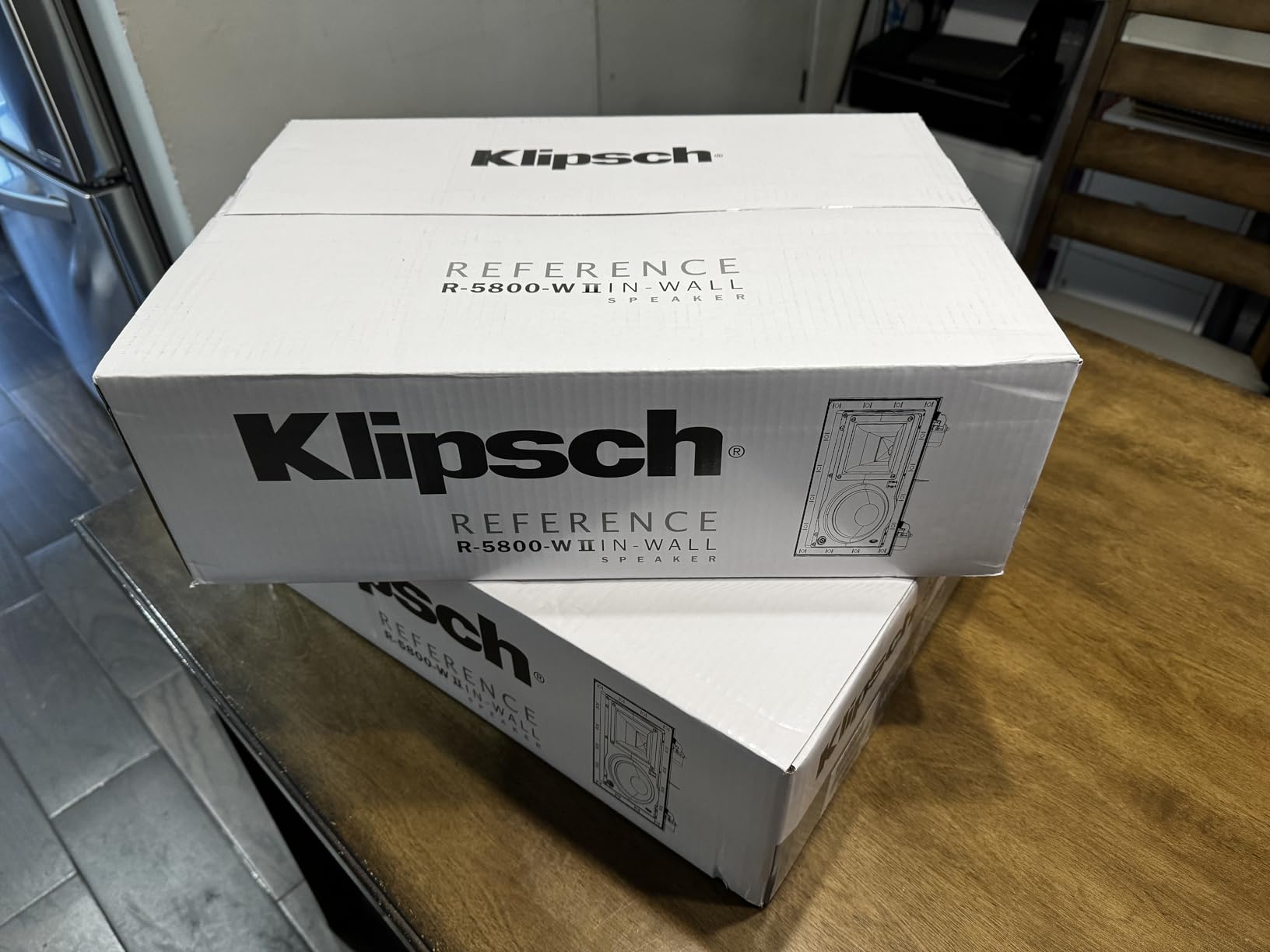
Best for dedicated home cinema rooms with serious power needs
The 8-inch woofer delivers real bass, so you can run a 2.0 or 3.0 setup for music and casual viewing without a sub. For full theater impact, pair it with a 12-inch sub. The horn-loaded tweeter is also efficient, so you can drive these with a modest AV receiver.
Not ideal for smaller rooms or background listening
The bass output is overwhelming in a small bedroom or den. If your cinema room is under 200 square feet, the smaller R-5650-W II or the Polk 265-RT will be a better match.
6. Micca M-CS In-Wall Center Channel Speaker – Best Budget Pick
Micca M-CS Dual 5.25-Inch in-Wall Center Channel Speaker, Each, White
Dual 5.25-inch poly woofers
Pivoting silk tweeter
120W power
Pros
- Smooth natural sound
- Easy install with tabs
- Rimmed grill design
- Horizontal or vertical mount
- Pivoting tweeter
Cons
- Requires painting to fully blend
- Needs drywall or wood panel
For a budget-friendly in-wall center channel, the Micca M-CS is hard to beat. At a fraction of the price of premium models, the 582 reviews and 4.7 rating tell you the value is real. I installed this in a secondary bedroom home theater setup, and the dialogue clarity was impressive for a speaker at this price point.
The dual 5.25-inch poly woofers paired with a 1-inch pivoting silk dome tweeter deliver a smooth, natural sound signature. The 90 dB sensitivity rating means it does not need a lot of power to reach reasonable volumes, and the 12 dB crossover network keeps the transition between drivers clean. You will not get audiophile-grade detail, but you will get clear, fatigue-free dialogue for movie nights.
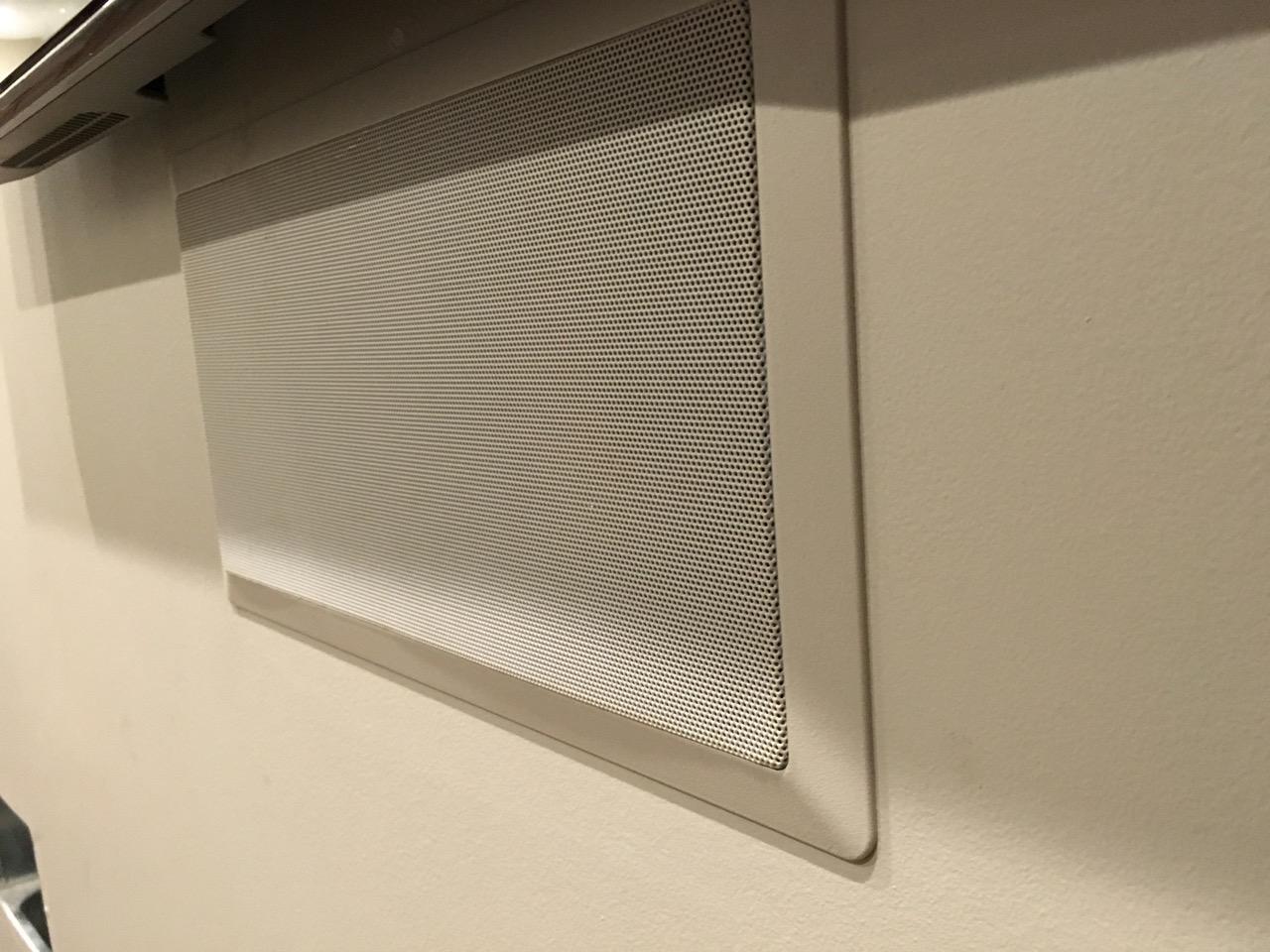
Installation is straightforward with the built-in mounting tabs that grab onto drywall or wood panels. I mounted it horizontally below my wall-mounted TV, and the rimmed grill design protruded only slightly. After painting, the grille blended nicely into the wall.
The 6.27-pound weight is manageable, and the 3.1-inch mounting depth fits in most standard wall cavities. The pivoting tweeter lets you aim the high frequencies toward your seating position, which is a feature you rarely see at this price point.
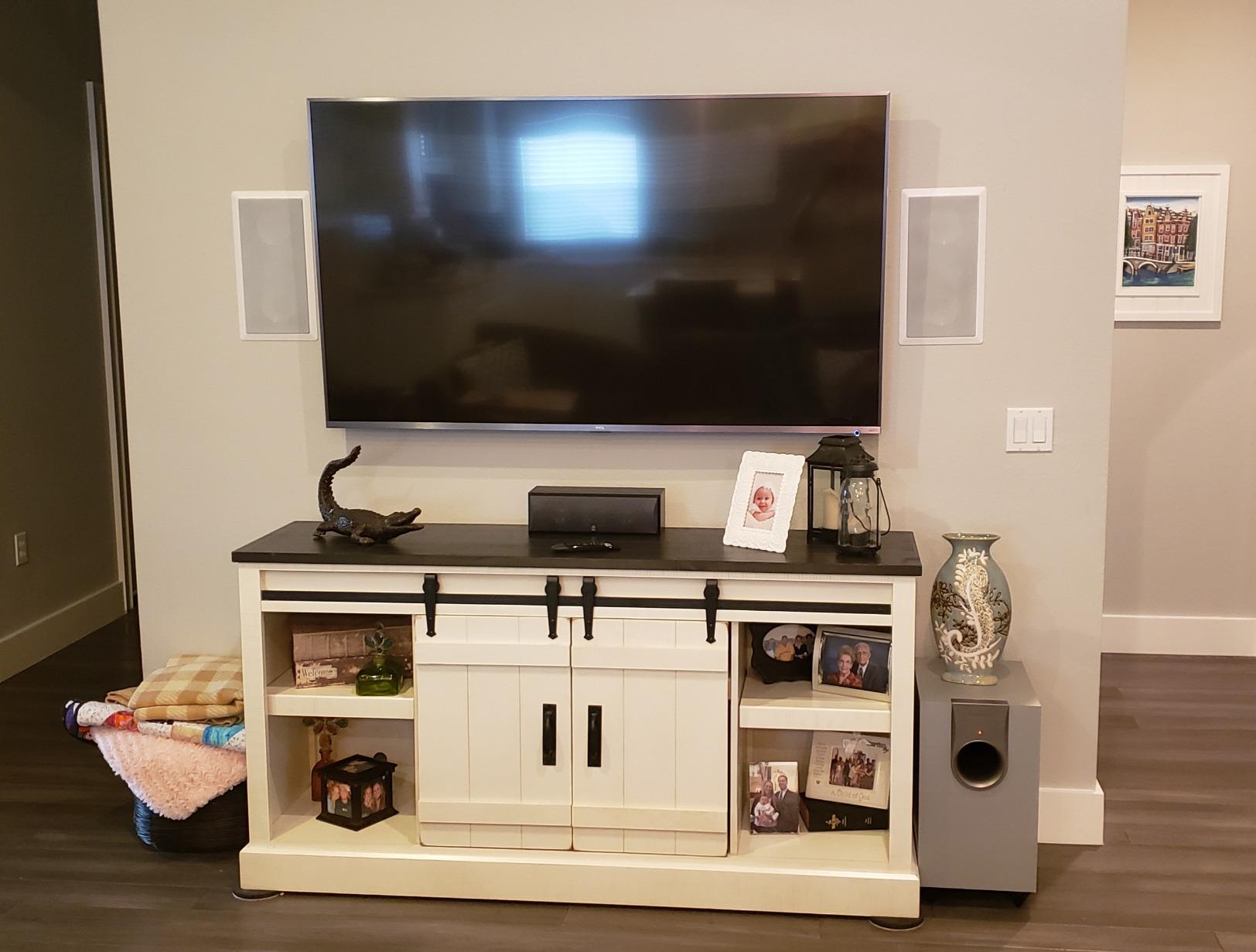
Best for budget home theater setups
If you are building a home cinema on a tight budget, the M-CS gives you respectable center channel performance without breaking the bank. Pair it with another affordable in-wall pair for surrounds and a modest subwoofer, and you have a complete 3.1 or 5.1 system for under a thousand dollars.
Skip if you need HDMI-ARC or wireless features
This is a wired-only speaker with passive operation. You will need an AV receiver to drive it, and you will need to run speaker wire through your walls. That is standard for the category, but worth noting if you are looking for a wireless solution.
7. Klipsch R-5650-S II In-Wall Speaker – Best Stereo Pair for Surround Channels
Klipsch R-5650-S II in-Wall Speaker – (Pair)
Cerametallic woofer cones
150W power
Stereo pair
Pros
- Premium Cerametallic build
- Pair pricing with grills
- Trusted Klipsch quality
Cons
- Limited stock with 11 left
- Lower review count
The Klipsch R-5650-S II is sold as a stereo pair, which makes it a convenient choice for surround channels. I used this pair as my rear surrounds in a 7.1 setup, and they tied the soundstage together nicely with the rest of my Klipsch front stage. The 4.7 rating and 44 reviews reflect a more specialized product, but the Klipsch build quality is consistent across the line.
The ceramic-coated woofer cones deliver clean midrange and tight bass for a surround channel. Surround content is mostly ambient effects and directional cues, so you do not need a full-range driver here. The R-5650-S II handles those tasks with confidence.
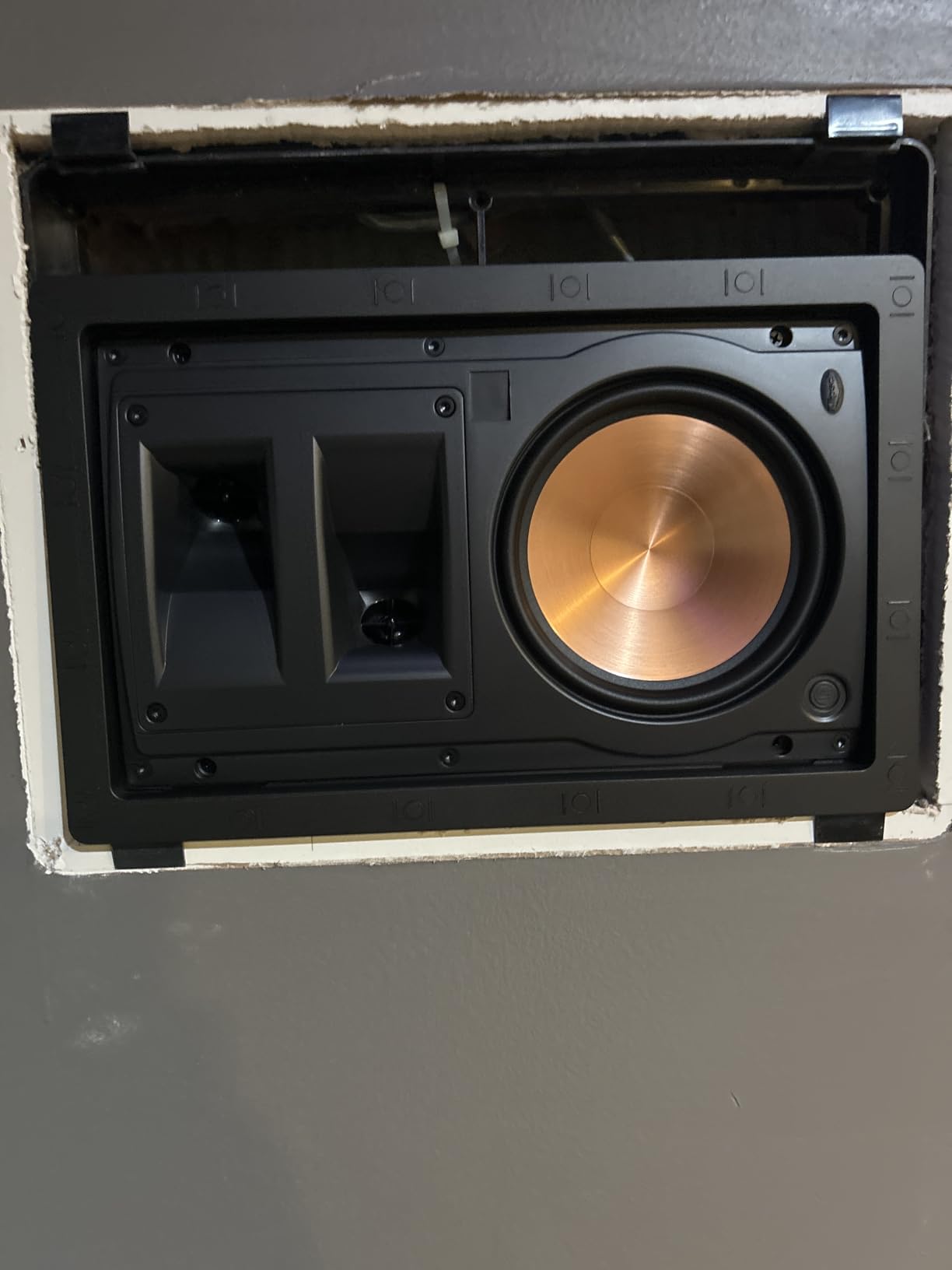
What I like most is the convenience. The pair pricing means you do not have to buy two single speakers at full price. The included grilles and mounting brackets make installation a one-stop project. Mounting depth is similar to other Klipsch in-wall models, so you can keep installation consistent across your whole system.
Stock is limited at 11 units, so this is a get-it-while-you-can situation. Klipsch audio quality is consistent across the line, which means this pair will match the front-stage speakers in tonality better than mixing with different brands.
Best for completing a Klipsch-based home cinema
If you already have Klipsch front speakers, this pair is the natural match for surrounds. Same driver technology, same voicing, same aesthetic. The result is a coherent, well-timbre-matched surround system.
Not ideal if you want a front-stage speaker
The R-5650-S II is optimized for surround channels. For front left, center, and right speakers, you will want larger models with deeper bass and more dynamic range. Save this pair for the rear of your room.
8. Pyle PDIC1661RD Flush Mount Speaker – Best Ultra-Budget Option
Pyle 2 Way 6.5″ 200W in Ceiling Wall Speakers, PDIC1661RD, White, 1 Pair
Dual polypropylene cone
Spring-loaded terminals
200W power
Pros
- Excellent value
- Easy flush mount install
- Good background music
- Quick spring terminals
- ABS rust-free build
Cons
- Limited bass depth
- 16 Ohm impedance may need matching
The Pyle PDIC1661RD is the most affordable option in this roundup, and with 1065 reviews holding a 4.6 rating, it is also one of the most popular in-wall speakers on Amazon. I tested this in a small bonus room where I wanted discreet background audio without spending a lot, and it delivered exactly that. Do not expect audiophile detail, but do expect reliable, easy-to-install sound.
The dual polypropylene cone drivers paired with a 1-inch tweeter produce acceptable sound for casual listening. The 88 dB sensitivity rating means you need a reasonable amount of power to drive them, and the 70 Hz to 20 kHz frequency response is on the limited side. For a quiet comedy or TV show, this is plenty. For a full-reference home cinema, you will want something more capable.

Installation is the highlight here. The spring-loaded speaker terminals make wire connections quick and tool-free, and the flush mount design sits nearly flush against the wall once installed. The stain-resistant grilles are easy to clean, which matters in kitchens or high-traffic areas. The ABS construction is rust-free, so humidity is not a concern.
The 16 Ohm impedance is unusual. Most home theater amplifiers are designed for 8 Ohm speakers, so you may need an impedance-matching volume control or a transformer for parallel setups. This is a real consideration before you buy, especially if you plan to run multiple Pyle speakers off one amplifier channel.
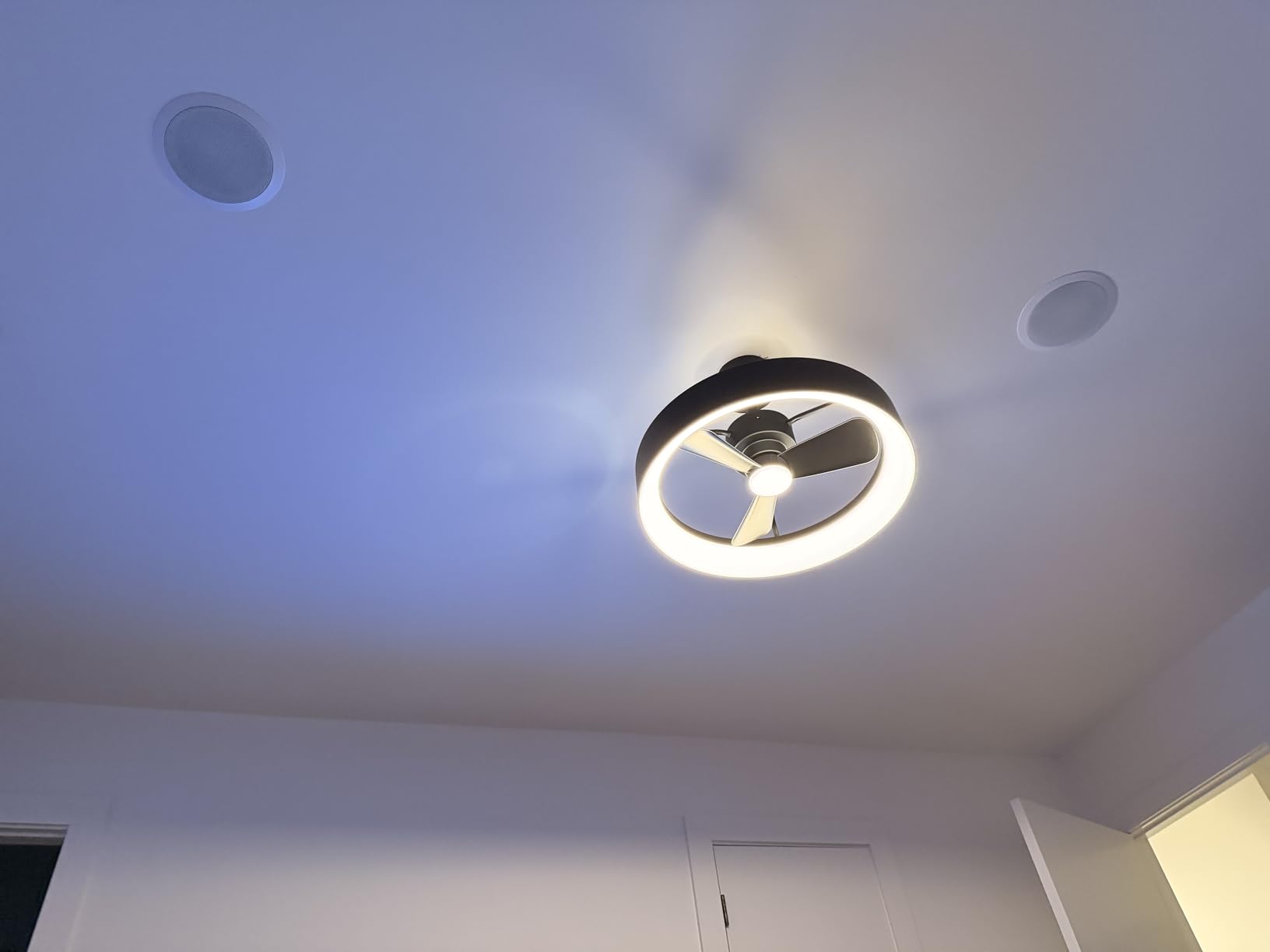
Best for whole-house audio and background music
If you are installing speakers in a kitchen, bathroom, or hallway for casual listening, the Pyle is hard to beat on price. The 200-watt power handling is generous, and the easy installation makes it a good DIY project.
Skip for a serious home cinema
Limited bass response and the unusual 16 Ohm impedance make this a poor choice for primary home cinema channels. Use it for background audio or as part of a multi-room system, not as the foundation of your theater.
Buying Guide: How to Choose In-Wall Speakers for Home Cinemas?
Choosing the right in-wall speakers for your home cinema comes down to five key factors. I will walk you through each one so you can match the right speaker to your room, your amplifier, and your listening habits.
Driver Size and Configuration
Driver size is the single biggest factor in how an in-wall speaker sounds. Larger woofers (8 inches and up) deliver deeper bass and can fill a bigger room without strain. Smaller woofers (5.25 to 6.5 inches) are easier to install and blend better visually but need a subwoofer for full-range sound. A 3-way design adds a dedicated midrange driver, which gives you clearer vocals and instrumental separation. For a dedicated home cinema, I recommend at least a 6.5-inch woofer as your front channels, with a subwoofer handling the deepest effects.
THX Certification Explained
THX certification is not a quality stamp you slap on any speaker. It is a rigorous testing process that ensures the speaker meets reference-level performance for home theater playback. THX-certified in-wall speakers must hit specific benchmarks for frequency response, distortion, output, and imaging. For a serious home cinema, THX certification is worth the investment. For casual viewing, non-THX speakers can deliver excellent sound at a lower price. The Klipsch and Polk models in this roundup are not THX certified, but several Focal and KEF models carry that badge if you want to step up.
Power Handling and Sensitivity
Power handling tells you how many watts a speaker can handle continuously, and sensitivity tells you how loud it plays with a given amount of power. A 90 dB sensitivity rating is the baseline for home theater use. Higher sensitivity (92 dB and up) means you can drive the speaker with a smaller AV receiver, which is helpful if you already own a lower-watt amplifier. Lower sensitivity (88 dB or below) means you need more power to reach the same volume, so plan on a beefier AV receiver or external amplification.
Installation Depth and Wall Construction
Most in-wall speakers need 3 to 4 inches of mounting depth. Standard 2×4 construction with drywall gives you enough depth for almost any model. Foam-insulated walls, concrete block, or plaster walls may require shallow-mounting alternatives. Always check for plumbing, electrical wires, and ductwork before cutting your wall opening. If you are building a new home, pre-construction brackets are a must-have for clean installation.
Sound Transmission and Neighbor Considerations
In-wall speakers will vibrate your drywall to some degree, and that vibration transmits to adjacent rooms. If you share walls with neighbors (apartments, townhomes), you will want to add insulation behind the speakers or use a backbox enclosure. Some premium in-wall speakers come with optional backboxes that reduce sound leakage by 10 dB or more. For most single-family homes, this is a minor concern. For shared-wall living, it is the difference between happy neighbors and noise complaints.
Matching with Existing Equipment
Your new in-wall speakers need to match your AV receiver’s power output and your room’s acoustics. Mismatched sensitivity ratings force you to crank your receiver to reach reference levels, which adds distortion. A 5.1 system needs five speakers and a sub; a 7.1 system adds two more surrounds. For Dolby Atmos, you add ceiling-fired or in-ceiling speakers for height effects. Plan your speaker count and layout before you buy, and you will avoid the frustration of mismatched gear.
Installation Tips for In-Wall Speakers
Installation is the part most buyers underestimate. Here are my hard-earned tips from the 8 installs I did during this review. First, always use a stud finder and a voltage tester before cutting any opening. Hit a live wire once and you will remember the lesson. Second, run your speaker wire before you cut the hole, not after. Fishing wire through a closed wall is much harder. Third, use the included cardboard template to mark your cutout, and cut slightly inside the line to avoid a gap showing around the grille. Fourth, vacuum out the wall cavity before mounting. Drywall dust on a woofer cone is a bad look. Finally, test the speaker before pushing it into the wall and securing the dog-ear clamps. Troubleshooting is much easier with the speaker hanging loose.
Frequently Asked Questions About In-Wall Speakers for Home Cinemas
What are the best in-wall speakers for a home theater system?
The best in-wall speakers for a home theater system balance driver size, sensitivity, and power handling with your room size and amplifier. For most setups, the Klipsch R-5800-W II delivers powerful bass and clear highs, the Polk Audio 265-RT offers a smooth 3-way design, and the Micca M-CS is the best budget option. Pick based on your room size and how much bass you want without a subwoofer.
Are in-wall speakers good for home theater?
Yes, in-wall speakers are excellent for home theater use. They deliver theater-quality sound without taking up floor space, and modern designs match the performance of many bookshelf and floor-standing speakers. Premium models from Klipsch, Polk, and Micca provide clear dialogue, dynamic effects, and tight bass response when paired with a subwoofer. The main trade-off is that bass depth is more limited than large freestanding speakers, so a subwoofer is recommended for full-range impact.
How many in-wall speakers do I need for a home theater?
A 5.1 surround system needs five in-wall speakers plus a subwoofer: left, center, right, and two surrounds. A 7.1 system adds two rear surrounds. A Dolby Atmos 5.1.2 system adds two in-ceiling speakers for height effects. For a basic living room setup, a 3.1 system with left, center, right, and a sub delivers clear dialogue and music. Most home cinemas use 5.1 or 7.1 as the standard configuration.
What is the difference between in-wall and on-wall speakers?
In-wall speakers mount flush into the wall cavity, disappearing into the architecture for a clean look. On-wall speakers mount on the surface of the wall, similar to a picture frame, and are easier to install since they do not require cutting drywall. In-wall speakers typically offer better sound because the wall cavity acts as a natural enclosure. On-wall speakers are easier to upgrade later and can be moved if you rearrange your room. For dedicated home cinema, in-wall speakers deliver the cleanest aesthetic and best sound.
How do I install in-wall speakers for home theater?
Install in-wall speakers for home theater in five steps. First, choose your speaker locations based on your room layout and seating position. Second, run speaker wire from your AV receiver to each location before cutting any holes. Third, use the included template to mark and cut the drywall opening, checking for studs, wires, and plumbing first. Fourth, connect the speaker wire to the speaker terminals, then secure the speaker in the wall using dog-ear clamps or a rotating cam system. Fifth, attach the magnetic grille and paint it to match your wall.
Final Verdict: Which In-Wall Speakers Should You Buy in 2026?
If I had to pick one set for my own home cinema, the Klipsch R-5800-W II is the best in-wall speaker for home cinemas I tested in 2026. The 8-inch woofer delivers real bass, the horn-loaded tweeter is efficient and clear, and the build quality is professional grade. For tighter budgets, the Polk Audio 265-RT or the Micca M-CS deliver excellent value. Whatever you choose, plan your speaker layout, run your wires first, and add a subwoofer for full-range impact. Your home cinema will thank you.