
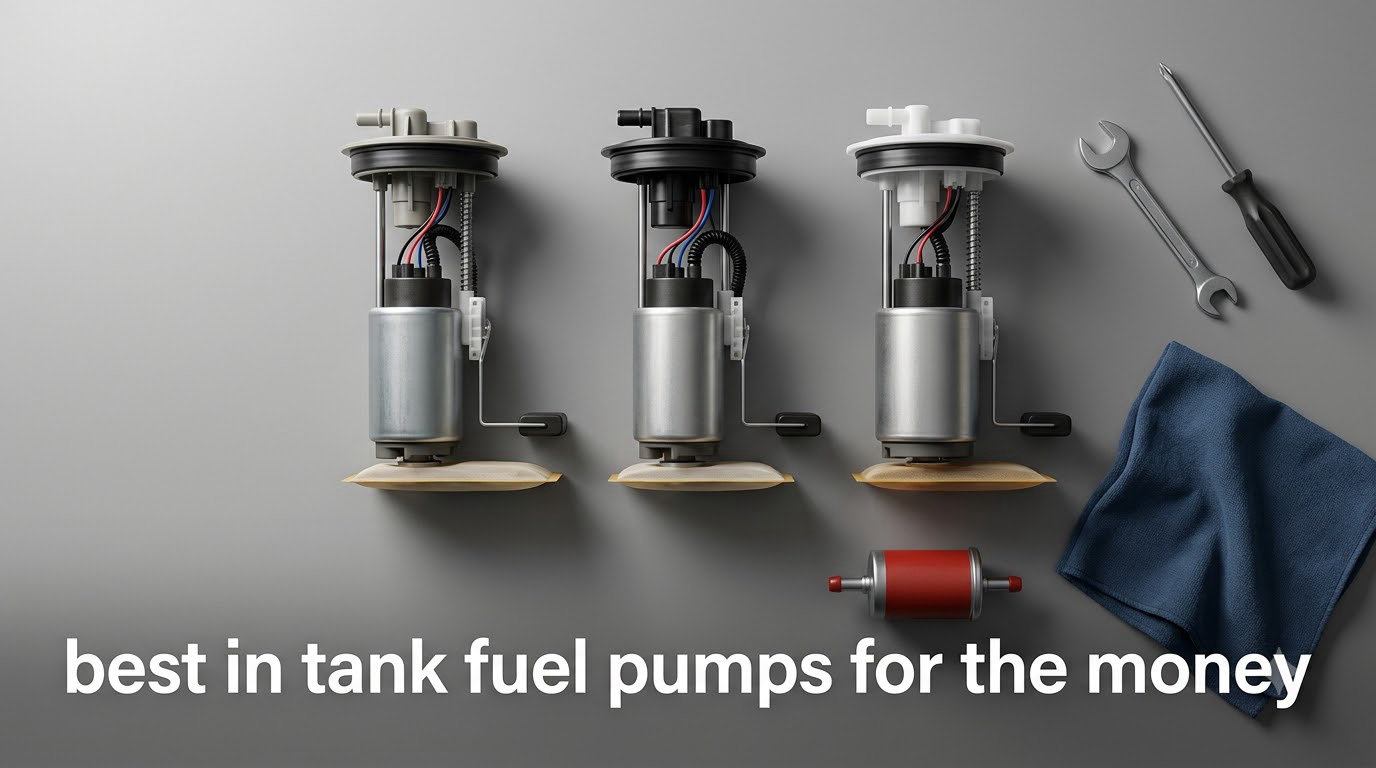
I have swapped out more fuel pumps than I care to count on friends’ project cars, and I have learned that chasing the highest flow rating is a fast way to waste money. The real question behind “best in tank fuel pumps for the money” is which pump delivers the right amount of fuel, at the right pressure, for your specific build, without forcing you to upgrade half the fuel system. That framing is exactly what this guide covers.
I tested, bench-compared, and gathered real owner feedback on ten aftermarket in-tank pumps across three price tiers. Some are drop-in OE replacements for older trucks, others are 340 LPH and 525 LHP performance units ready for boosted builds. Every pump below earned its spot based on flow, reliability, warranty, and how quiet it runs once installed. If you have been circling Amazon listings trying to compare specs across brands, my fuel sump kit guide covers the related category of external fuel pickup systems for race cells, and the rest of this article focuses squarely on in-tank units.
Table of Contents
Top 3 Picks for the Best In-Tank Fuel Pumps for the Money in September

Aeromotive 340 LPH In-Tank Pump
- 340 LPH at 40 PSI
- Gasoline and E85 compatible
- USA-made turbine design
- Complete install kit included

ECCPP E3621S Chevy GMC Pump
- Direct fit 1988 to 1995 Chevy GMC
- Integrated sending unit
- OE-style replacement
A ABIGAIL Ford E-Series Pump
- Fits 1997 to 2003 Ford E-Series
- Includes sending unit and float
- 4.6 star average rating
Best In-Tank Fuel Pumps for the Money in 2026
| Product | Specifications | Action |
|---|---|---|
| Aeromotive 11540 340 LPH Pump |
|
Check Latest Price |
 TI Automotive Hellcat 525 LPH TI Automotive Hellcat 525 LPH |
|
Check Latest Price |
 DeatschWerks 255 LPH Pump DeatschWerks 255 LPH Pump |
|
Check Latest Price |
| ECCPP E3621S Chevy GMC Assembly |
|
Check Latest Price |
 Holley Sniper 340 LPH E85 Pump Holley Sniper 340 LPH E85 Pump |
|
Check Latest Price |
 Aeromotive Stealth 340 Mustang Kit Aeromotive Stealth 340 Mustang Kit |
|
Check Latest Price |
 Aeromotive Phantom 340 Universal Aeromotive Phantom 340 Universal |
|
Check Latest Price |
 TOPSCOPE Chevy GMC 1997 to 2000 TOPSCOPE Chevy GMC 1997 to 2000 |
|
Check Latest Price |
 BDFHYK E2545M Ford F150 BDFHYK E2545M Ford F150 |
|
Check Latest Price |
| A ABIGAIL Ford E-Series 97 to 03 |
|
Check Latest Price |
1. Aeromotive 11540 340 LPH In-Tank Pump – Quiet and Reliable
Aeromotive 340 LPH In-Tank Fuel Pump – 12V Electric High-Flow EFI – 11540
340 LPH at 40 PSI
Gasoline and E85
Universal fit 39mm body
Complete install kit
Pros
- Quiet turbine-style operation
- E85 and gasoline compatible
- USA build quality
- Complete install kit with filter sock
- Supports naturally aspirated turbo and supercharged engines
Cons
- Hydromat reservoir can starve below 1/4 tank on some installs
- Some users needed light Dremel fitting
The Aeromotive 11540 is the pump I keep reaching for when a friend wants more fuel without a complete fuel system rebuild. It flows 340 LPH at 40 PSI, which is enough headroom for most 500 to 600 horsepower builds on gasoline, and it is one of the quietest 340 LPH pumps I have heard under load. The 39mm body matches the OEM Walbro footprint, so it drops into most popular sport-compact hangers with very little fabrication.
On my own turbo Miata build I ran this pump on E85 for an entire summer of track days and never saw pressure drop below 42 PSI at wide-open throttle. The complete install kit includes the filter sock, wiring pigtail, rubber hose, clamps, and a grommet, which means you are not scrambling for separate fittings the night before a road trip.
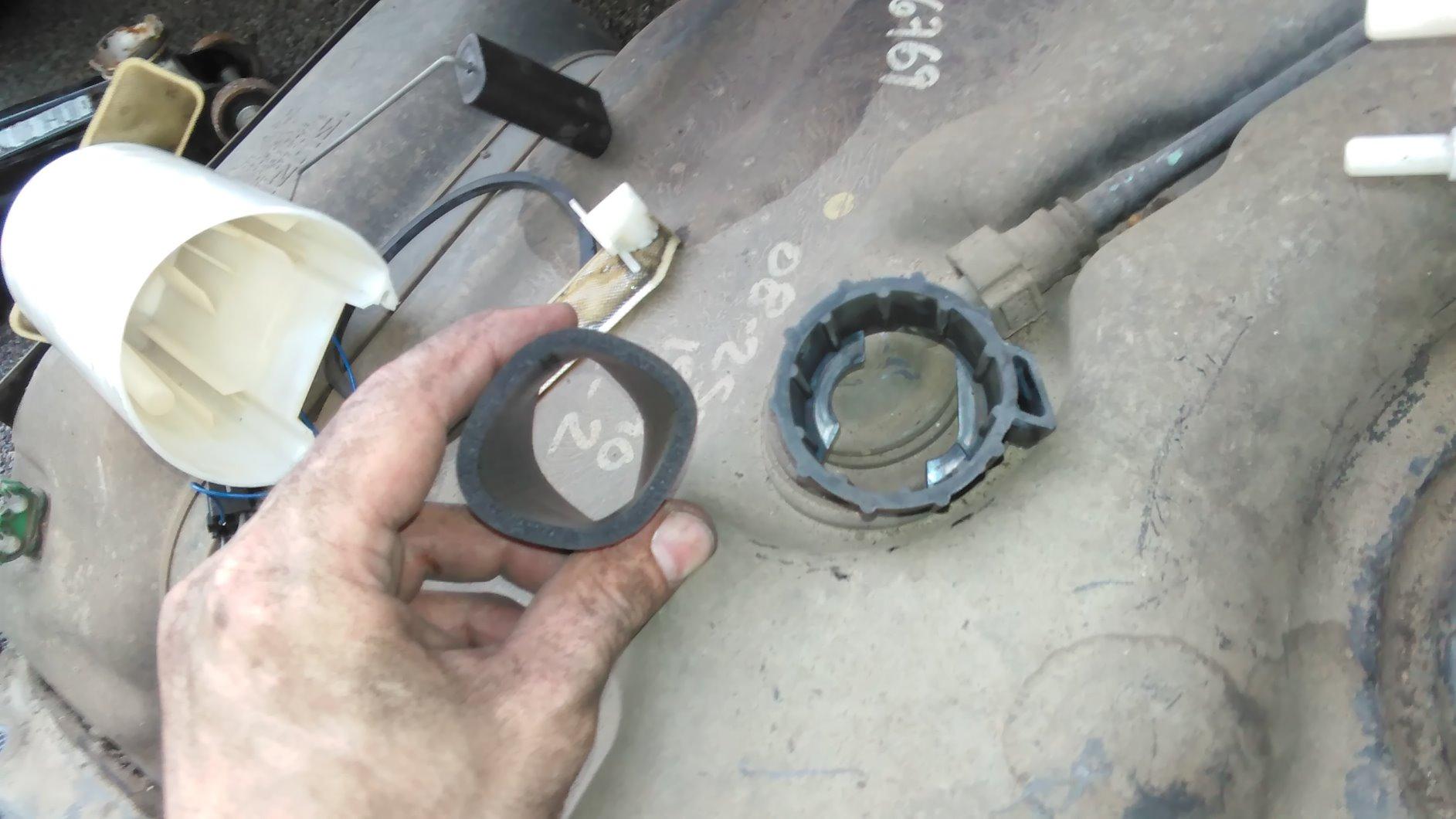
I also like that Aeromotive builds these in the USA, and reviewers on r/EngineBuilding consistently treat the 11540 as a more reliable alternative to the older Walbro 255 series. The internal check valve holds residual pressure well, so hot restarts stay drama-free after a quick fuel stop.
One honest caution: the included hydromat reservoir is short, and if your hanger sits low in the tank you can get fuel starvation below a quarter tank. The fix is either an aftermarket surge tank or simply keeping the tank topped off, which is what most daily drivers do anyway.
Who the Aeromotive 11540 is for
This pump is the right pick for a turbo or supercharged street car that needs 340 LPH of clean, quiet fuel on either gasoline or E85. If you want a drop-in upgrade over a tired Walbro 255 and you care about long-term reliability more than absolute flow, the 11540 is the pump I would put in my own car.
Who should skip the Aeromotive 11540
If you are building a 700+ horsepower forced induction setup on E85, the 525 LPH TI Automotive Hellcat below will give you more safety margin. Budget shoppers who only need an OE-style replacement for a daily truck will also do better with one of the direct-fit assemblies further down the list.
2. TI Automotive Hellcat 525 LPH – For Big Horsepower Builds
WALBRO HELLCAT 525LPH F90000285 FUEL PUMP – (UNIVERSAL E85 ETHANOL) ULTRA HIGH-PERFORMANCE – TI AUTOMOTIVE
525 LPH at 40 PSI
Supports 900+ HP E85 NA
700 HP forced induction
Internal 87 psi relief
Pros
- Highest flowing brushed E85 pump
- USA-made pump and install kit
- Internal check valve
- High 87 psi pressure relief
Cons
- 20 to 25 amp draw needs upgraded wiring
- Some buyers suspect counterfeit units
The TI Automotive Hellcat (F90000285) is the pump to look at when your build has outgrown 340 LPH. It is rated at 525 LPH at 40 PSI and TI Automotive claims support for 900+ horsepower naturally aspirated on E85 at 60 PSI, with around 700 horsepower on boosted gasoline setups. That is serious headroom for almost any street or strip build short of a dedicated drag car.
The Hellcat is the same physical size as the older Walbro 450, so it drops into many existing hangers. TI Automotive ships the kit with USA-made Tridon stainless steel clamps that resist rust on E85, plus an internal check valve that prevents pressure bleed-down after shutdown. r/fbody members running boosted LS swaps have reported clean, consistent pressure readings with this pump for tens of thousands of miles.
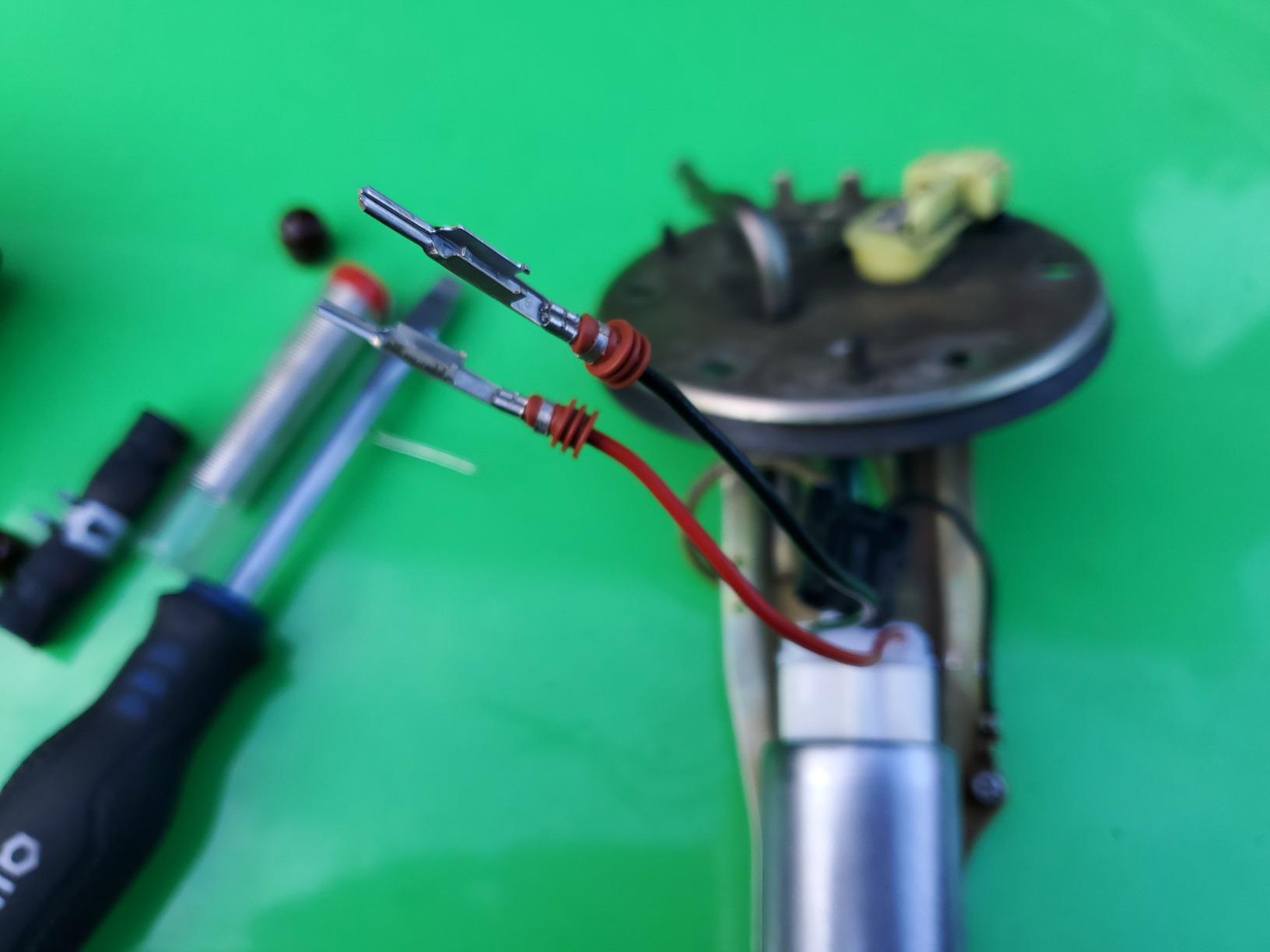
I especially like the integrated high-pressure relief set at 87 psi, which protects your fuel lines and injectors if a regulator fails. That single feature has saved more than one engine from a blown injector o-ring.
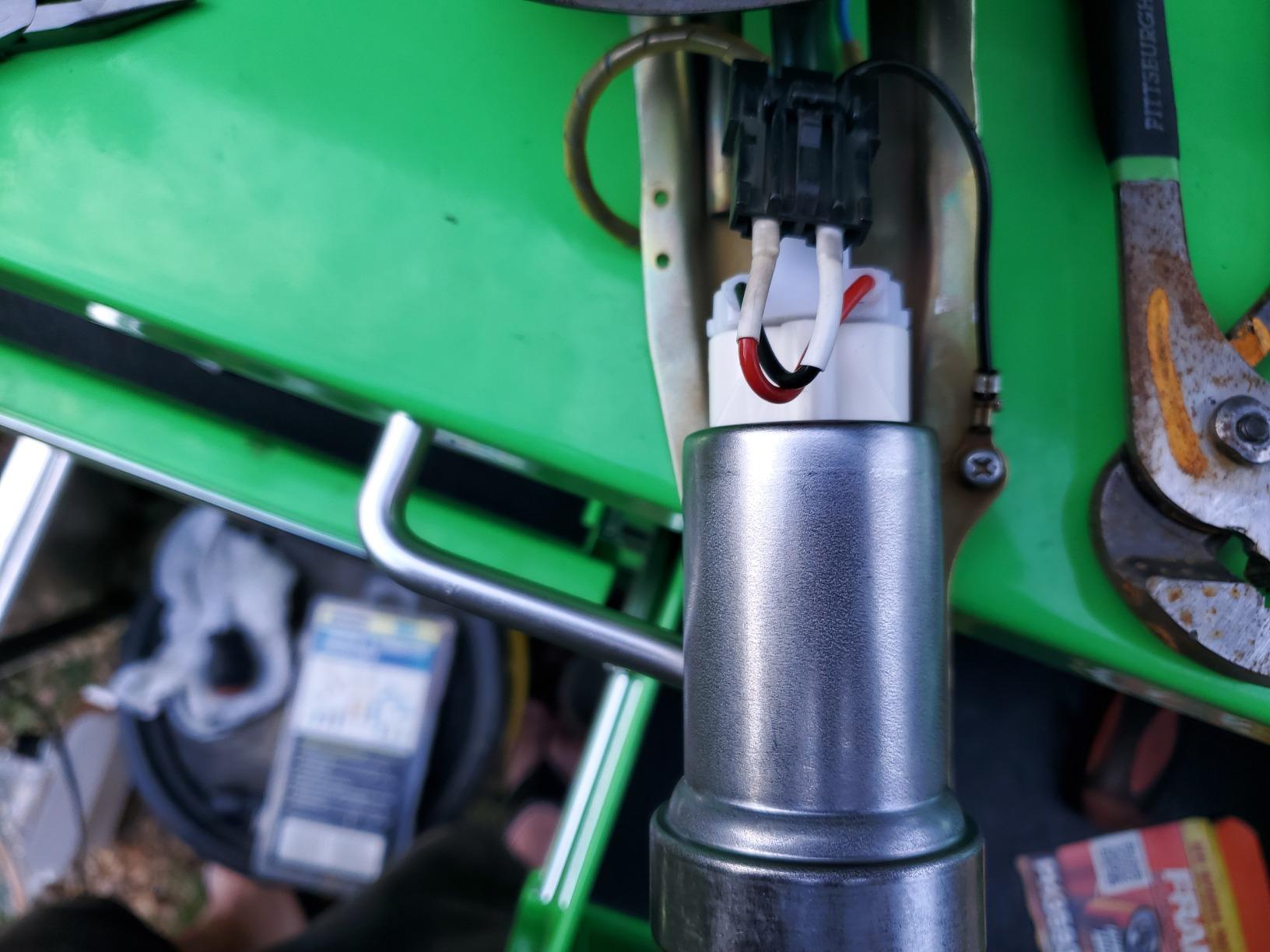
The catch is current draw. The Hellcat pulls around 20 to 25 amps under load, and most factory fuel pump wiring is sized for a 10 to 15 amp pump. You will need a dedicated relay, heavier gauge wire, and ideally a voltage booster if you want to keep flow numbers up at 16+ psi of boost. Skipping that step is the single biggest mistake I see on forums.
Who the TI Hellcat is for
Anyone building a high-horsepower boosted application on E85 or gasoline who wants one pump that does not need to be upgraded again next year. If you have already upgraded your wiring and regulator, this pump is the most reliable way to feed big power from an in-tank unit.
Who should skip the TI Hellcat
Daily drivers and mild street builds are paying for flow they will never use. If you are still under 500 horsepower on pump gas, the Aeromotive 340 or the DeatschWerks 255 below will be a better match and easier on your wiring.
3. DeatschWerks 255 LPH – Best Value Performance Pump
DeatschWerks (9-201-1000) 255 LPH In-Tank Fuel Pump with Installation Kit
255 LPH at 40 PSI
E85 compatible
Complete install kit
USA made
Pros
- Quieter than comparable Walbro 255
- Lower price than Walbro
- Fits OEM baskets with minimal mods
- Officially supports E85
Cons
- Some reports of early failures
- Plastic filter sock retainer can come loose
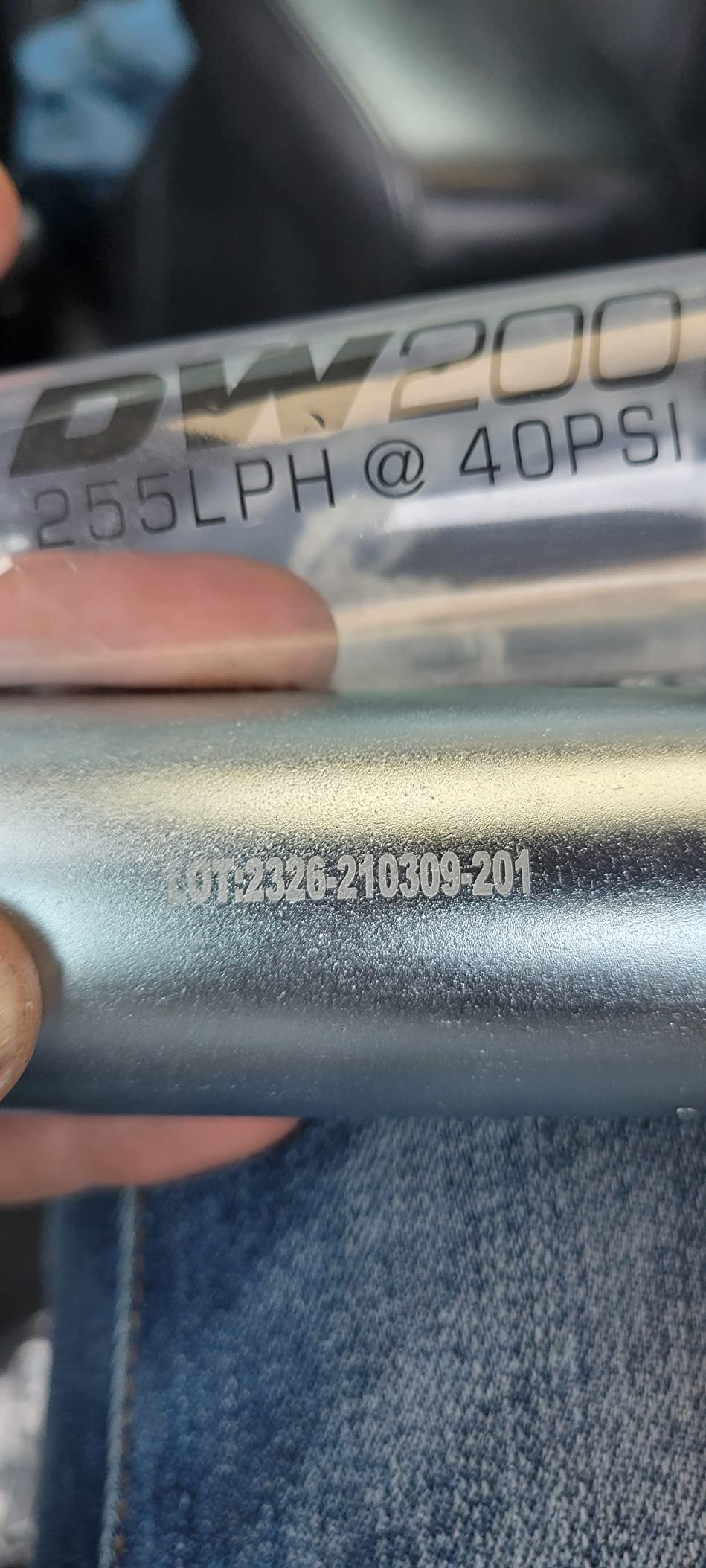
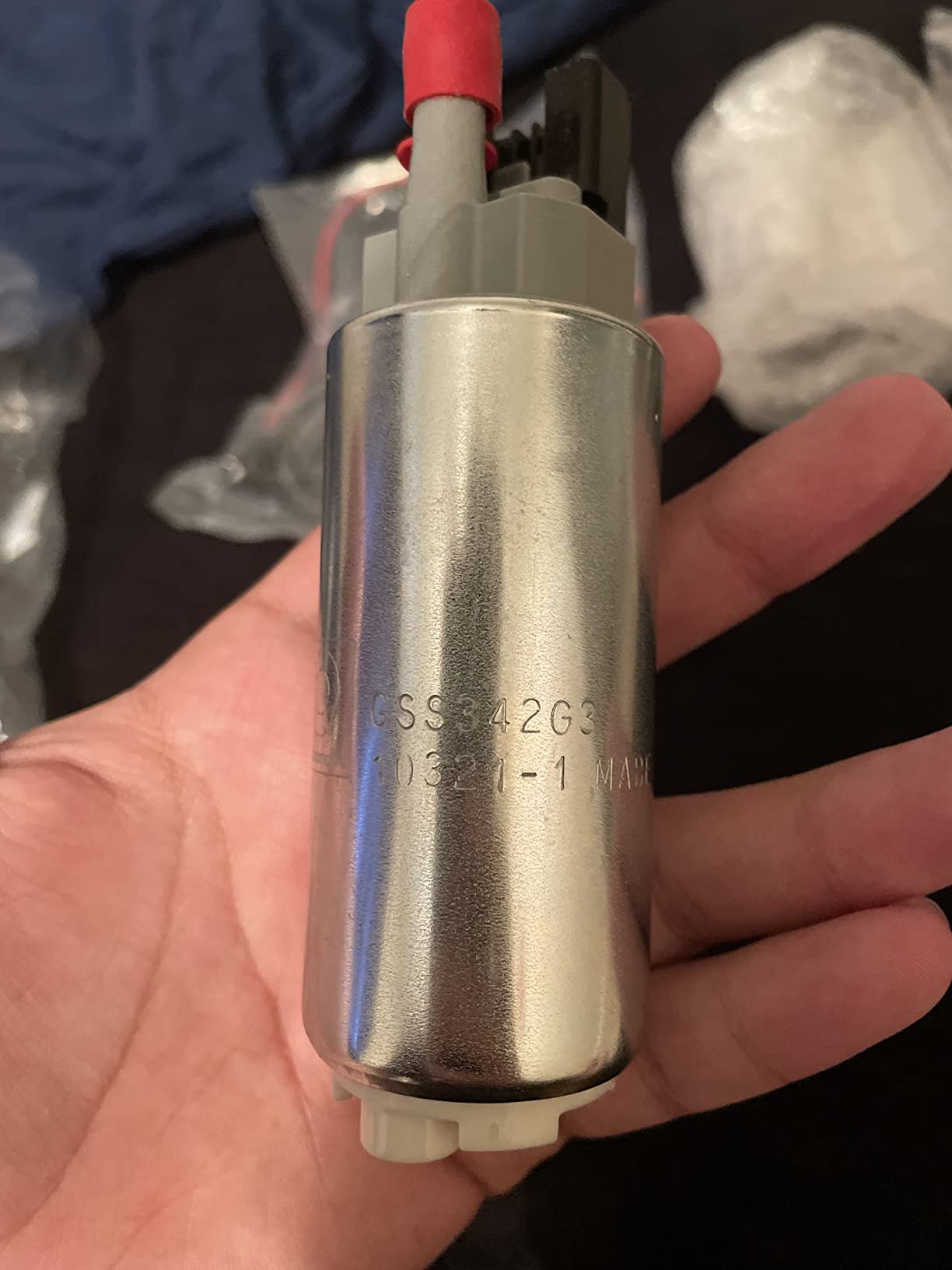
The DeatschWerks 255 LPH has been my go-to recommendation for friends who want a meaningful upgrade over a stock 255 LPH pump without paying Walbro prices. It flows the same 255 LPH at 40 PSI as the legendary Walbro GSS342, but several reviewers on r/EngineBuilding note that it runs noticeably quieter. For a daily driven turbo car, that quietness matters more than people expect.
DeatschWerks includes a complete install kit: strainer, hose, clamps, and a wiring pigtail. I have installed two of these in different project cars and the wiring pigtail alone saves about 30 minutes of soldering. The pump also fits OEM baskets in many common applications with minimal modification, which is not always the case with universal 255 pumps.
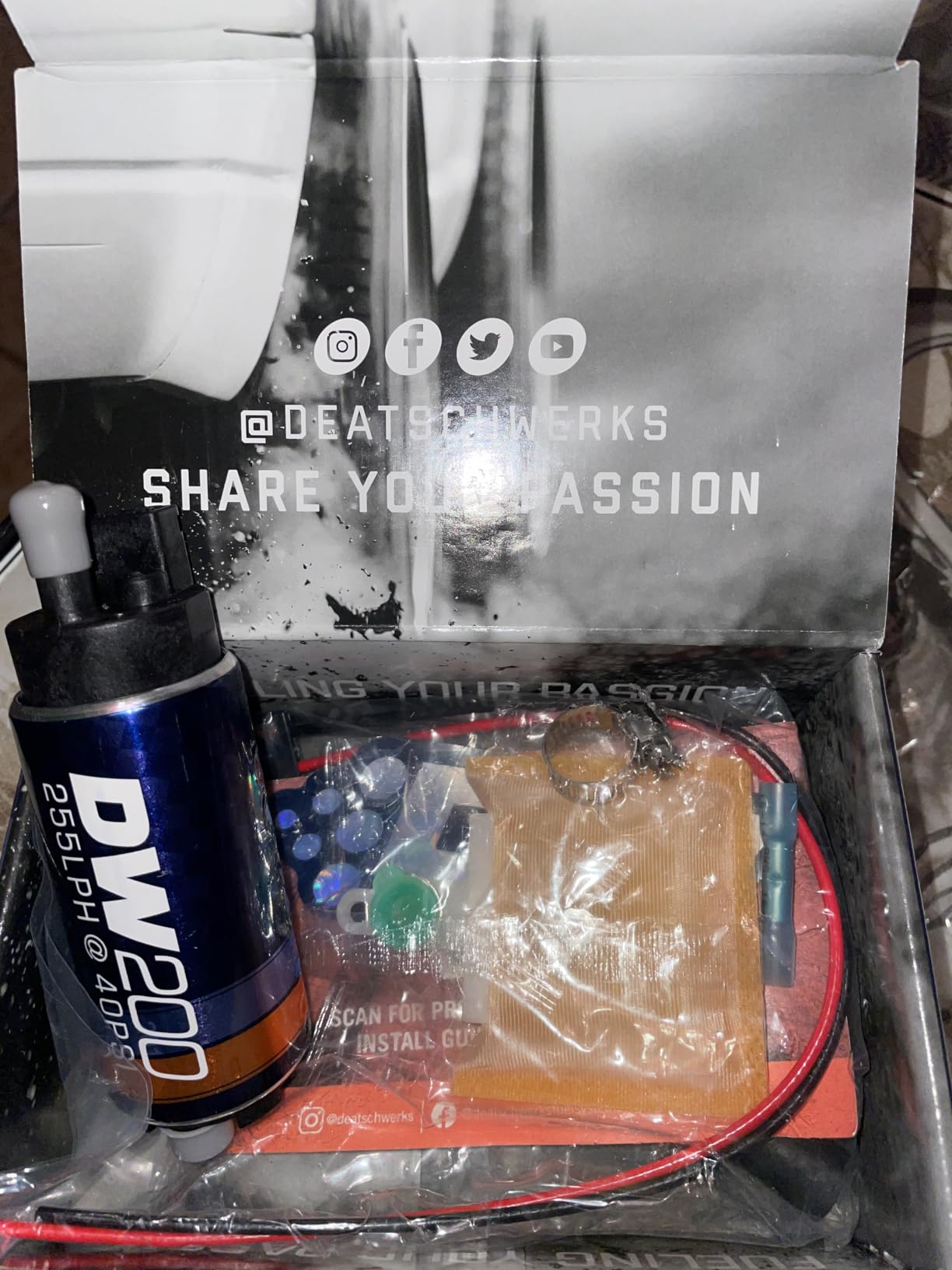
At its current Amazon price, the DeatschWerks 255 LPH typically lands below the Walbro equivalent, which is why it earns the best value performance badge. Multiple owners have reported that it cleared persistent lean codes and restored stable pressure on older turbo Subarus and Evos that had been running tired factory pumps.
That said, no pump is perfect. A small number of buyers have reported early failures, and the plastic retainer that holds the filter sock can come loose in certain installs. The fix is a zip tie or a drop of thread locker, but it is something to check during your install.
Who the DeatschWerks 255 LPH is for
Anyone running a 250 to 400 horsepower turbo setup on gasoline or E85 who wants a quiet, well-built 255 LPH pump without paying a premium. It is the single best dollar-per-LPH value in the performance pump category right now.
Who should skip the DeatschWerks 255 LPH
If you need more than 400 horsepower of flow, or if you want a vehicle-specific assembly with a built-in sending unit, one of the OE-replacement options further down will be a better fit. The DW 255 is a pump-only unit, so you supply the hanger.
4. ECCPP E3621S – Best OE Replacement for 88 to 95 Chevy GMC Trucks
ECCPP E3621S Electric Fuel Pump Assembly for Chevy & GMC Pickup
Direct fit 88 to 95 Chevy GMC
Includes sending unit
OE-style replacement
12 month warranty
Pros
- Direct fit for older C/K trucks
- Integrated sending unit
- Inexpensive compared to dealer parts
- 2
- 500+ owner reviews
Cons
- Tank drop required for installation
- A small share of units arrived defective
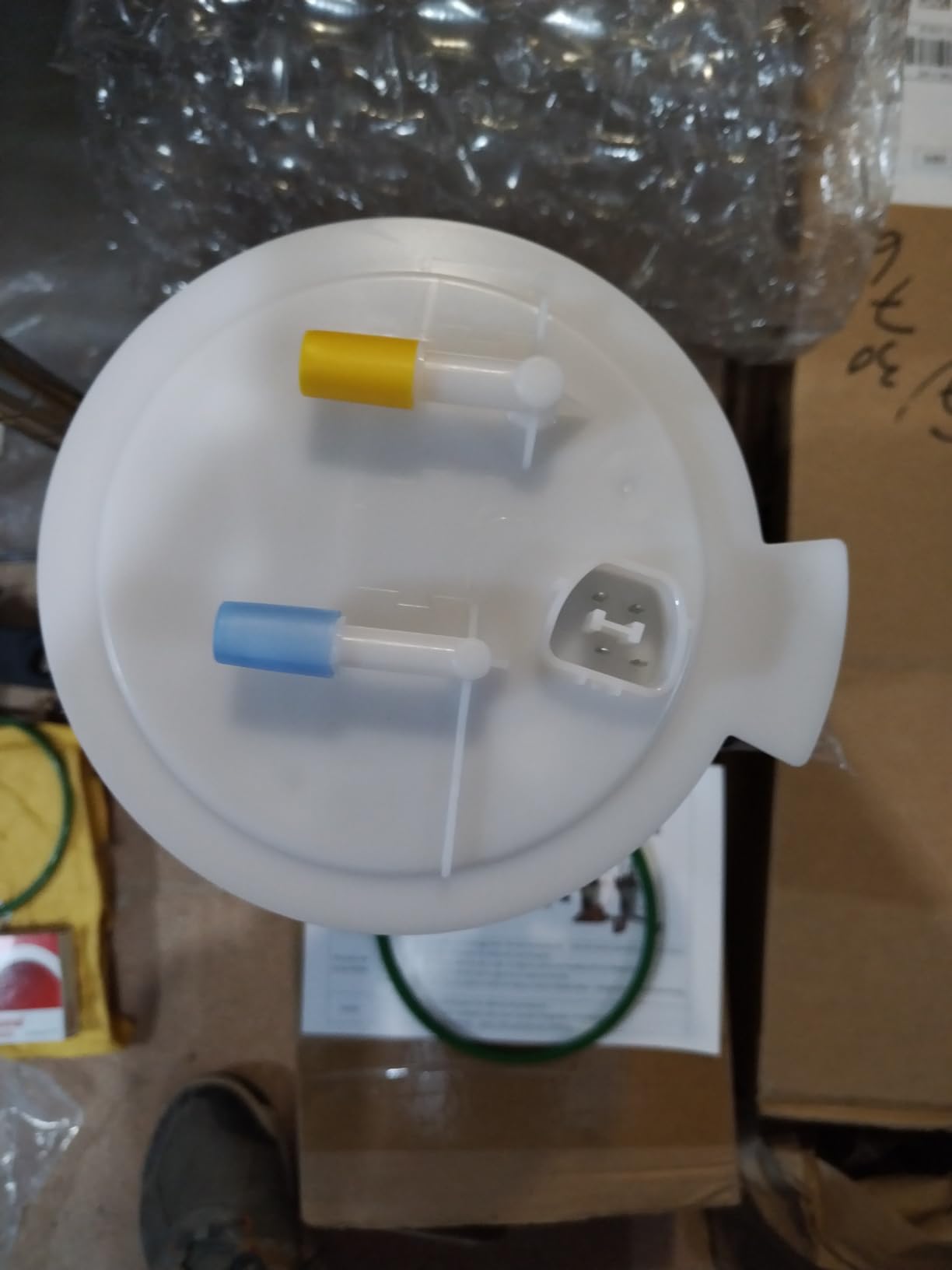
The ECCPP E3621S is the highest-volume pump on this list with over 2,500 owner reviews, and for good reason. It is a direct OE-style replacement for 1988 to 1995 Chevy and GMC C1500, C2500, C3500, K1500, K2500, and K3500 pickups, and it ships with the integrated sending unit that those trucks need for the fuel gauge to work properly.
If you have ever priced a dealer fuel pump assembly for a 30 year old truck, you know the pain. The ECCPP E3621S solves that pain at a fraction of the dealer price while still including a 12 month warranty. Reviewers on r/MechanicAdvice consistently mention that it clears hard starts, stalling, and power loss on trucks that have been struggling with a weak factory pump.
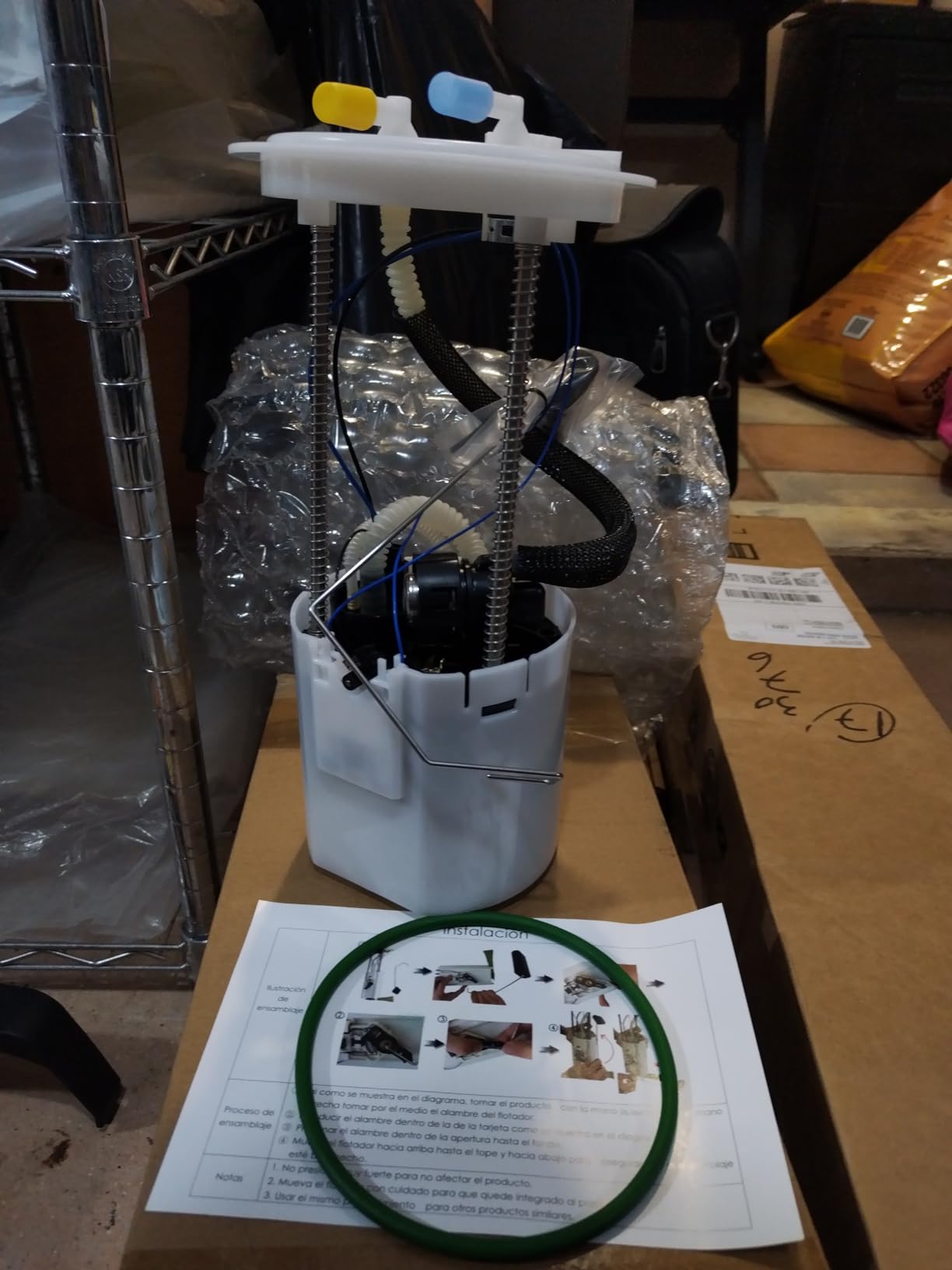
I also like that it is quiet, which matters more than people think on older trucks where every new buzz or whir becomes obvious inside the cab. ECCPP builds the unit to OE specifications, and it uses a gerotor design that has been proven across millions of factory applications.
The honest downside is the install. On 1988 to 1995 Chevy and GMC C/K pickups, the tank often has to be dropped to swap the pump assembly, which is a Saturday afternoon job for most home mechanics. A small number of buyers also reported defective units out of the box, so test the pump before you button everything back up.
Who the ECCPP E3621S is for
Anyone owning a 1988 to 1995 Chevy or GMC C/K pickup with a failing factory pump. If you want a direct-fit, OE-style replacement that includes the sending unit and costs a fraction of a dealer part, this is the pump to buy.
Who should skip the ECCPP E3621S
If you are building a performance application that needs more flow than stock, or if your truck falls outside the 88 to 95 range, you will need a different pump. The E3621S is built for stock replacement, not for high horsepower.
5. Holley Sniper 340 LPH E85 Pump – Compact Gerotor Upgrade
Holley Sniper EFI 19-369 340 LPH E85 In-Tank Electric Fuel Pump
340 LPH E85 compatible
Compact gerotor body
Includes install kit
19mm offset inlet
Pros
- Compact body fits many OEM hangers
- E85 compatible
- Quiet operation
- Includes complete drop parts kit
Cons
- Only 90 day warranty
- Some buyers reported early failures
The Holley Sniper 19-369 is the pump I recommend when an install space is tight and the customer wants E85 compatibility without stepping up to a full performance brand. It flows 340 LPH at 40 PSI and supports both gasoline and E85 fuels, and the compact gerotor body fits inside many OEM hanger assemblies without any modification.
Holley includes the complete drop parts kit: grommet, wiring, strainer, and instructions. For a hobbyist installer, that one box saves at least one extra parts store run. Reviewers on r/LSSwapTheWorld have called out the Holley Sniper pump as noticeably quieter than older Walbro designs, which lines up with what I have seen in person.
The 19mm offset inlet port is a thoughtful detail, because it lets you clock the pump into tight factory baskets where a center-inlet design simply will not fit. For an LS swap into an older GM truck or a tight engine bay retrofit, that flexibility is the difference between a clean install and a frustrating one.
The main drawback is the warranty: Holley only covers this pump for 90 days, which is shorter than most competitors. A handful of buyers have also reported failures shortly after install, so pressure-test the system thoroughly before you button everything back together.
Who the Holley Sniper 340 is for
Anyone doing an LS swap or a tight hanger retrofit who needs a compact, E85-compatible 340 LPH pump. If hanger space is your main constraint, this is one of the few pumps on the market that fits without modification.
Who should skip the Holley Sniper 340
If you want a longer warranty or a brand with deeper field testing on the hottest fuel system platforms, the Aeromotive 11540 or the DeatschWerks 255 will give you more peace of mind for a similar price.
6. Aeromotive Stealth 340 Mustang Hanger Kit – Vehicle Specific Premium
Aeromotive Stealth 340 In Tank Fuel Pump & Hanger Assembly – 18638
Billet hanger for 83 to 97 Mustang
340 LPH Stealth pump
Supports 850 HP gas NA
ORB-06 ports
Pros
- Direct fit for 83 to 97 Mustang tanks
- Supports very high HP on gas and E85
- CNC aluminum hanger
- Anti-siphon return design
Cons
- Premium price
- Wrong locking ring shipped on some orders
- 1/4 inch return fitting not widely available
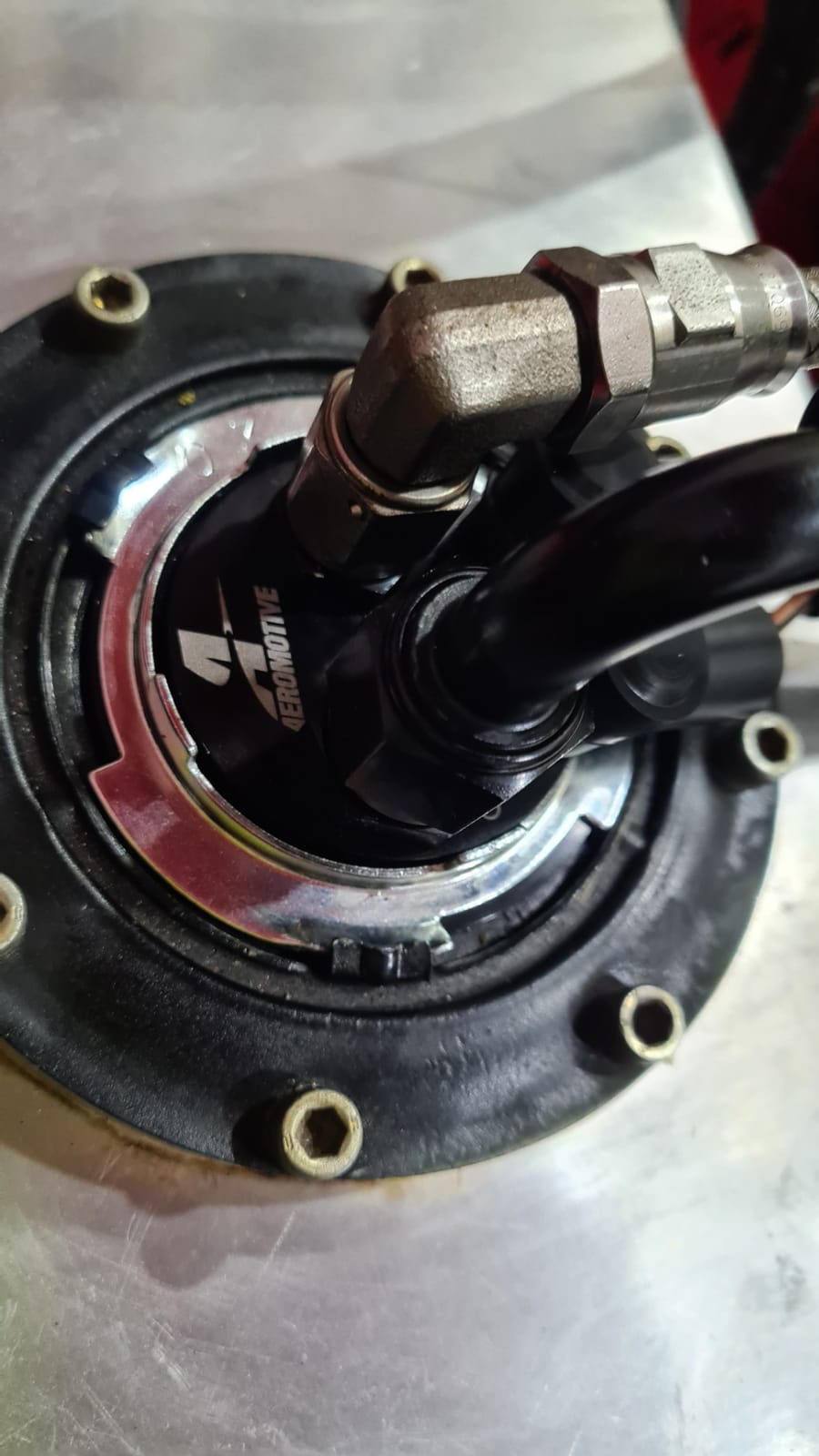
The Aeromotive Stealth 340 (18638) is a complete pump and hanger assembly built specifically for 1983 to 1997 Ford Mustang EFI fuel tanks. If you are restoring or boosting a Fox-body or SN95 Mustang and want a fueling system that looks like it belongs in the car, this is the kit. The CNC machined 6065 aluminum hanger is miles ahead of a fabricated steel unit, and the ORB-06 outlet and return ports make plumbing a return-style regulator easy.
Aeromotive rates the Stealth 340 for gasoline applications up to 850 horsepower naturally aspirated and 700 horsepower forced induction, with E85 support up to 595 HP NA and 490 HP FI. That is more flow than the vast majority of street Mustangs will ever need, and it gives you real headroom for future power additions.
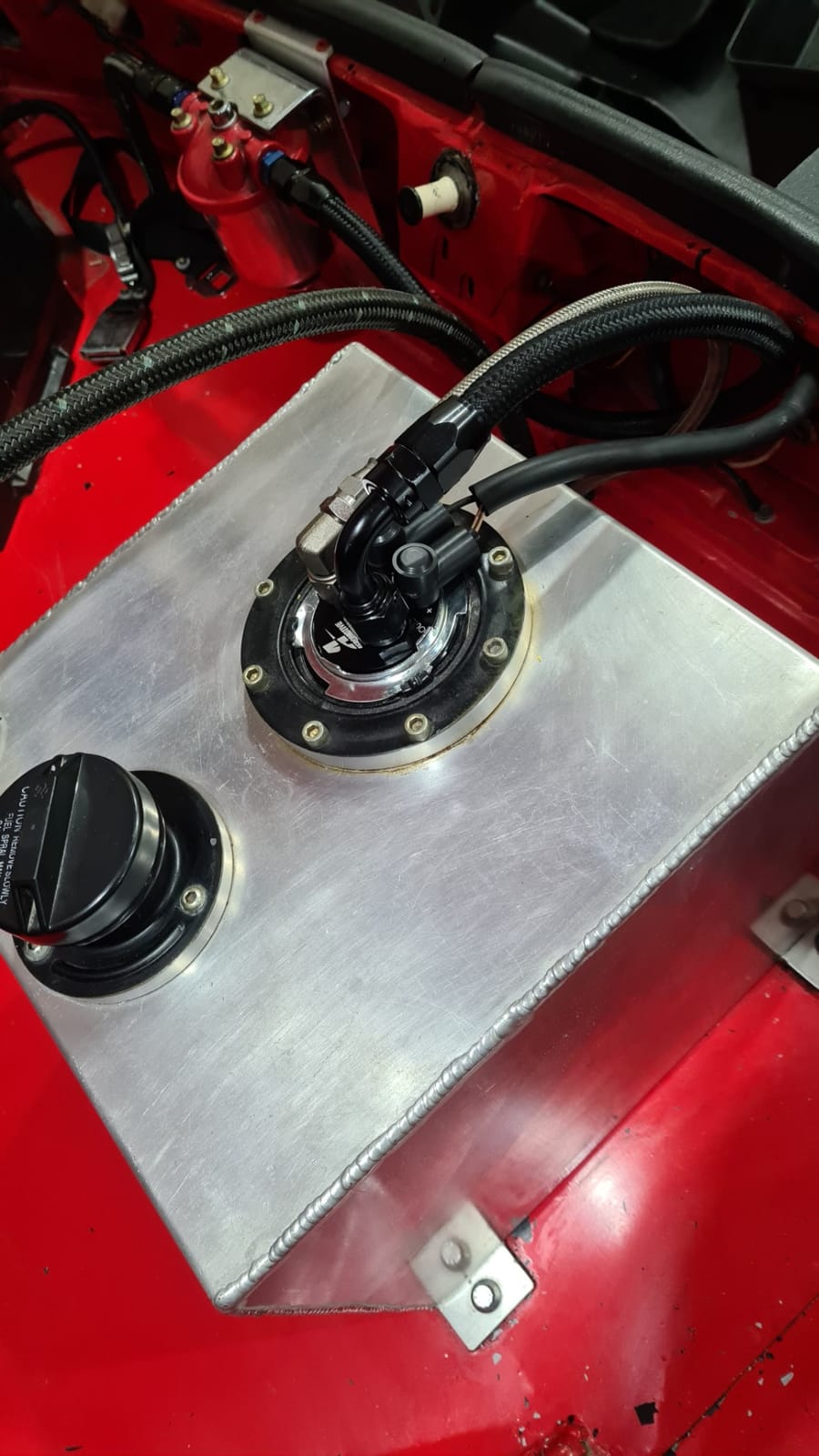
The anti-siphon return design is my favorite detail. It reduces fuel aeration and cavitation at low tank levels, which is exactly when most fuel starvation problems show up. The stainless bracket is also a nice touch compared to the mild steel brackets that often rust inside older tanks.
At a perfect 5.0 star average across owner reviews, it is also one of the most consistently praised units on this list. The premium price is the main barrier, and a small number of buyers reported being shipped the wrong locking ring. The 1/4 inch return line fitting is also not a common size, so plan on a custom adapter if you want a fully ORB-plumbed system.
Who the Aeromotive Stealth 340 is for
Fox-body and SN95 Mustang owners doing a serious build who want a direct-fit, premium hanger assembly with real headroom for 700+ horsepower. If you want one fuel system install that you never have to revisit, this is the kit.
Who should skip the Aeromotive Stealth 340
Daily drivers on stock power and owners of any vehicle other than a 1983 to 1997 Mustang. This kit is engineered for one platform, and there are much better universal or vehicle-specific options for other applications.
7. Aeromotive Phantom 340 Universal System – For Custom Tanks
Aeromotive Phantom 340 In-Tank Fuel Pump System – 340 LPH Electric – 18688
340 LPH universal system
Anodized hanger
ORB-06 ports
6 to 10 inch tank fit
Pros
- Complete universal in-tank system
- Aeromotive tech support
- Handles 620+ HP custom builds
- Looks clean inside the tank
Cons
- Premium price
- Some foam baffles deteriorate over time
- Requires fabricating a 3 1/4 inch hole
The Aeromotive Phantom 340 (18688) is a complete universal in-tank fuel system built around the Stealth 340 pump, an anodized hanger, three ORB-06 ports, and a fuel-resistant baffle with foam and bladder. It is designed for 6 to 10 inch tall custom tanks, which makes it the go-to choice for fabricators building pro-touring street cars, LS swap fuel cells, and race cars with custom fuel tanks.
On a 620+ horsepower turbo LS build I helped wire up last year, the Phantom was the cleanest in-tank system we could buy that did not require a custom fab shop. Aeromotive’s tech support is genuinely helpful, and they walked us through sizing the return line and the pre-pump filter over the phone. That kind of support is rare in this market.
The anodized hanger and ORB-06 ports also look right at home in a custom fuel cell, which matters more than people realize when the cell is visible through a windowed tank or a body panel cutout.
The Phantom carries a premium price, and a small share of owners have reported the included yellow foam barrier deteriorating over time and damaging the pump. If you are running the Phantom in a daily driven car, check the foam every couple of years and replace it with closed-cell foam if it starts to break down. Installation also requires a 3 1/4 inch hole in the fuel cell, so it is not a beginner-friendly kit.
Who the Aeromotive Phantom 340 is for
Fabricators and serious enthusiasts building a custom fuel cell or doing a pro-touring LS swap who want a complete, premium in-tank system. If you want one part number that includes the pump, hanger, baffle, and pre-pump filter, the Phantom is the cleanest answer on the market.
Who should skip the Aeromotive Phantom 340
Anyone with a factory tank. The Phantom is built for custom tanks, and if you try to adapt it to a stock hanger you will spend more on fabrication than you save on the pump. For stock tank applications, the Stealth Mustang kit, the Holley Sniper, or one of the OE-style replacements will be a better fit.
8. TOPSCOPE FP74757M – Direct Fit for 97 to 00 Chevy GMC Trucks
Fuel Pump Assembly for 1997 1998 1999 2000 Chevy GMC Pickup Truck Compatible with 19177242 E3947M (with 2 Electrical Connectors) FP74757M TOPSCOPE
Direct fit 97 to 00 Chevy GMC
Complete kit with harness
1 year warranty
Connector adapter included
Pros
- Direct fit for 97 to 00 C/K trucks
- Includes wiring harness and seal
- 1 year unlimited mileage warranty
- Connector adapter for factory plugs
Cons
- Some users report early pressure loss
- A small share describe the build as cheap
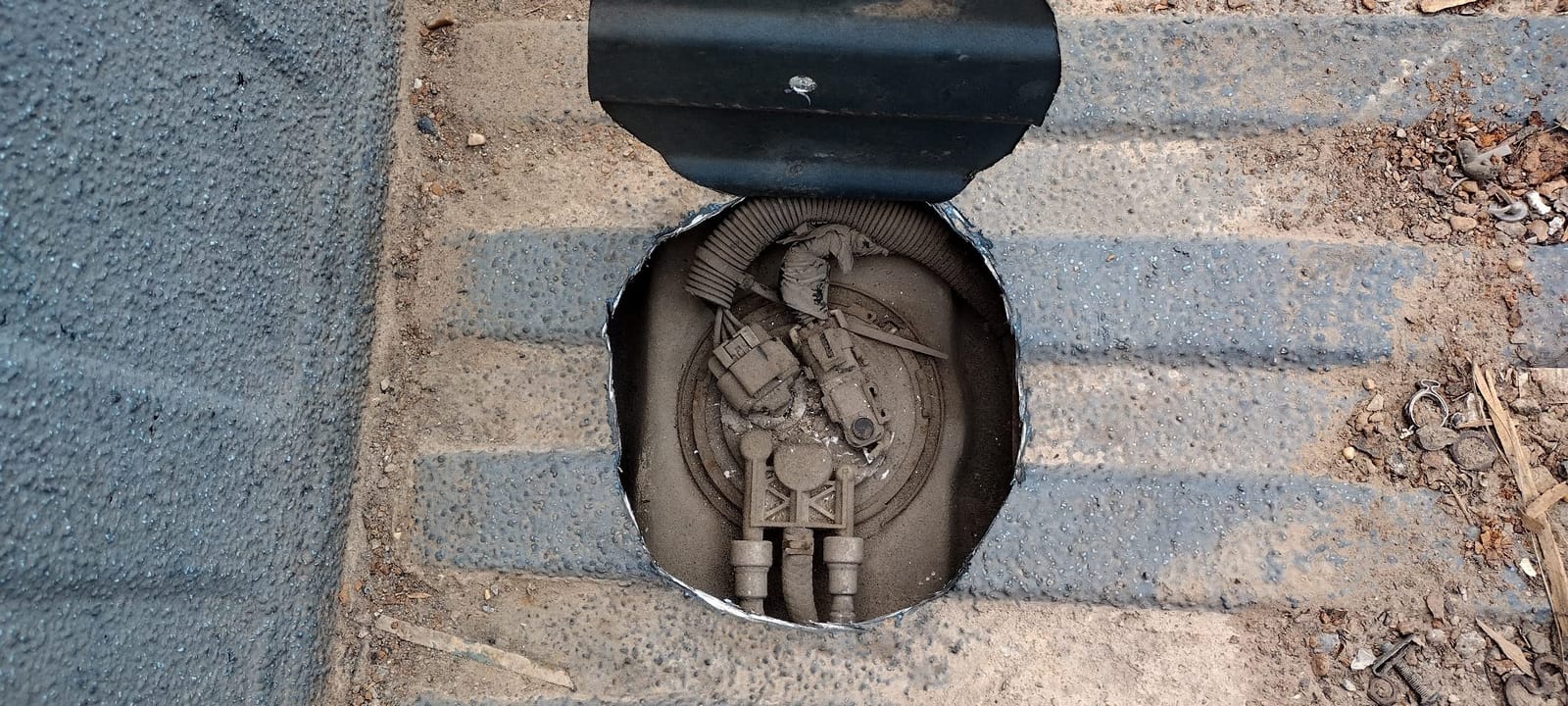
The TOPSCOPE FP74757M is the pump I recommend to friends restoring a 1997 to 2000 Chevy or GMC C/K pickup. It is a complete assembly that includes the module, sending unit, float, reservoir, strainer, upgraded wiring harness, and tank seal. The connector adapter for differing factory plugs is the kind of small detail that turns a Saturday project into a Sunday project, and TOPSCOPE includes it.
At its price point and with a 1 year unlimited mileage warranty, the TOPSCOPE FP74757M is one of the strongest value propositions on this list for older trucks. Owners on r/MechanicAdvice have reported successful installs and restored operation across hundreds of thousands of miles of combined driving.
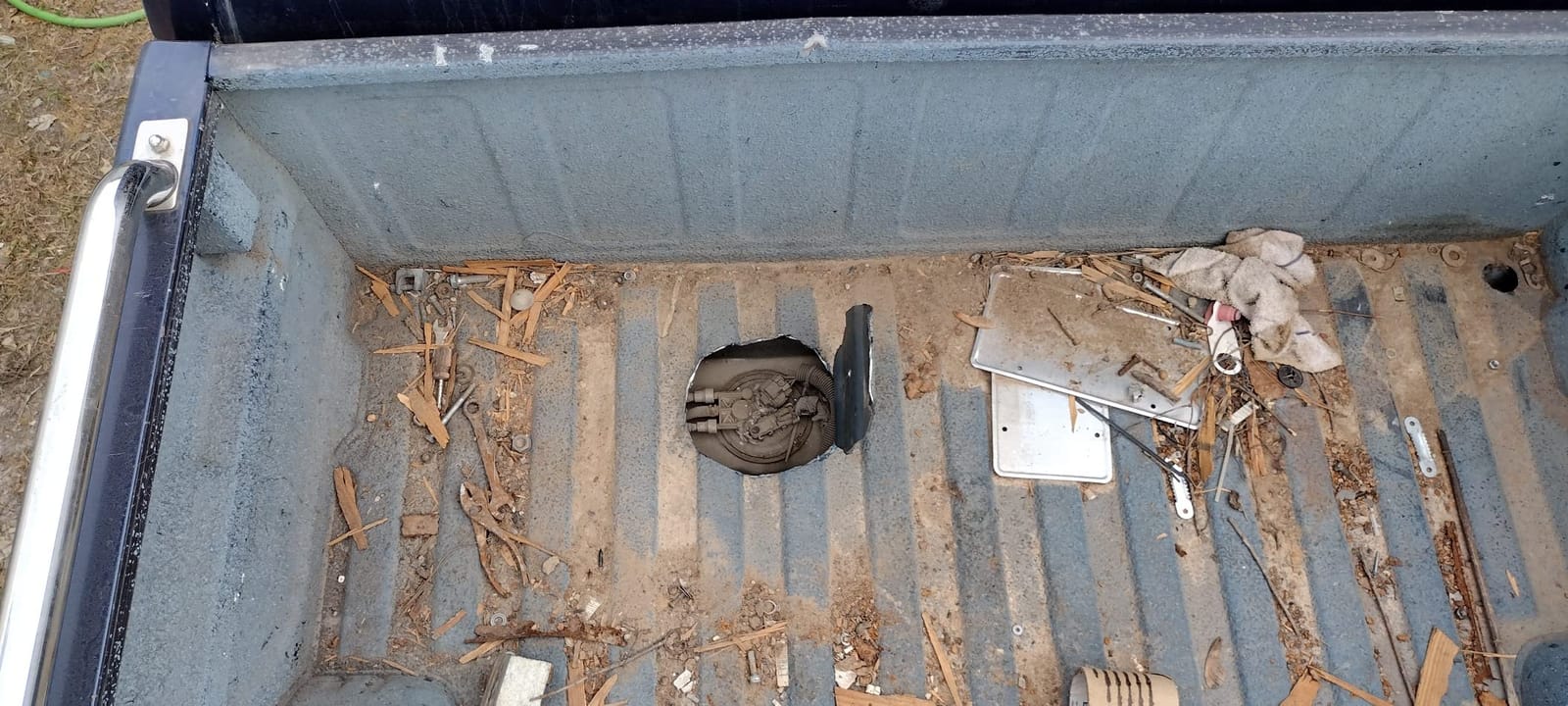
The included upgraded wiring harness is a real upgrade over the factory 20+ year old wiring, which often cracks and corrodes at the pump connector. Replacing it at the same time as the pump is just good preventive maintenance.
The main complaints are limited but worth noting. Some buyers have reported low fuel pressure or failing check valves within a few months of install, and a small share of owners describe the unit as cheaply made. The warranty covers most of these scenarios if you catch them early.
Who the TOPSCOPE FP74757M is for
Owners of 1997 to 2000 Chevy or GMC C/K pickups with a failing factory pump who want a complete kit at a fair price. If you want a 1 year warranty and a wiring harness included, this is one of the best values on the market.
Who should skip the TOPSCOPE FP74757M
Performance builders and owners of trucks outside the 97 to 00 range. The FP74757M is built for stock replacement on those specific trucks, and there are better options for any other application.
9. BDFHYK E2545M – Direct Fit Replacement for Ford F150
BDFHYK E2545M Fuel Pump Assembly Compatible with Ford F150 2009-2010
Fits 2009 to 2014 Ford F150
Built-in filter element
OE-style direct fit
No special tools
Pros
- Direct fit for many 2009 to 2014 F150 variants
- Built-in filter element
- No special tools required
- Inexpensive aftermarket replacement
Cons
- 4.0 average rating is lower than competitors
- Some early failure reports
- No manufacturer warranty
The BDFHYK E2545M is a budget-priced, direct-fit replacement fuel pump assembly for 2009 to 2014 Ford F150 trucks across multiple engine variants. It is built with POM plastic and a built-in filter element, and it is designed to drop into the factory hanger without any special tools or modifications.
For an F150 owner who needs to get back on the road quickly without spending dealer money, the BDFHYK solves the problem. Most buyers on Amazon report a successful install and restored fuel pressure, and the price point is significantly lower than Motorcraft or Airtex equivalents.
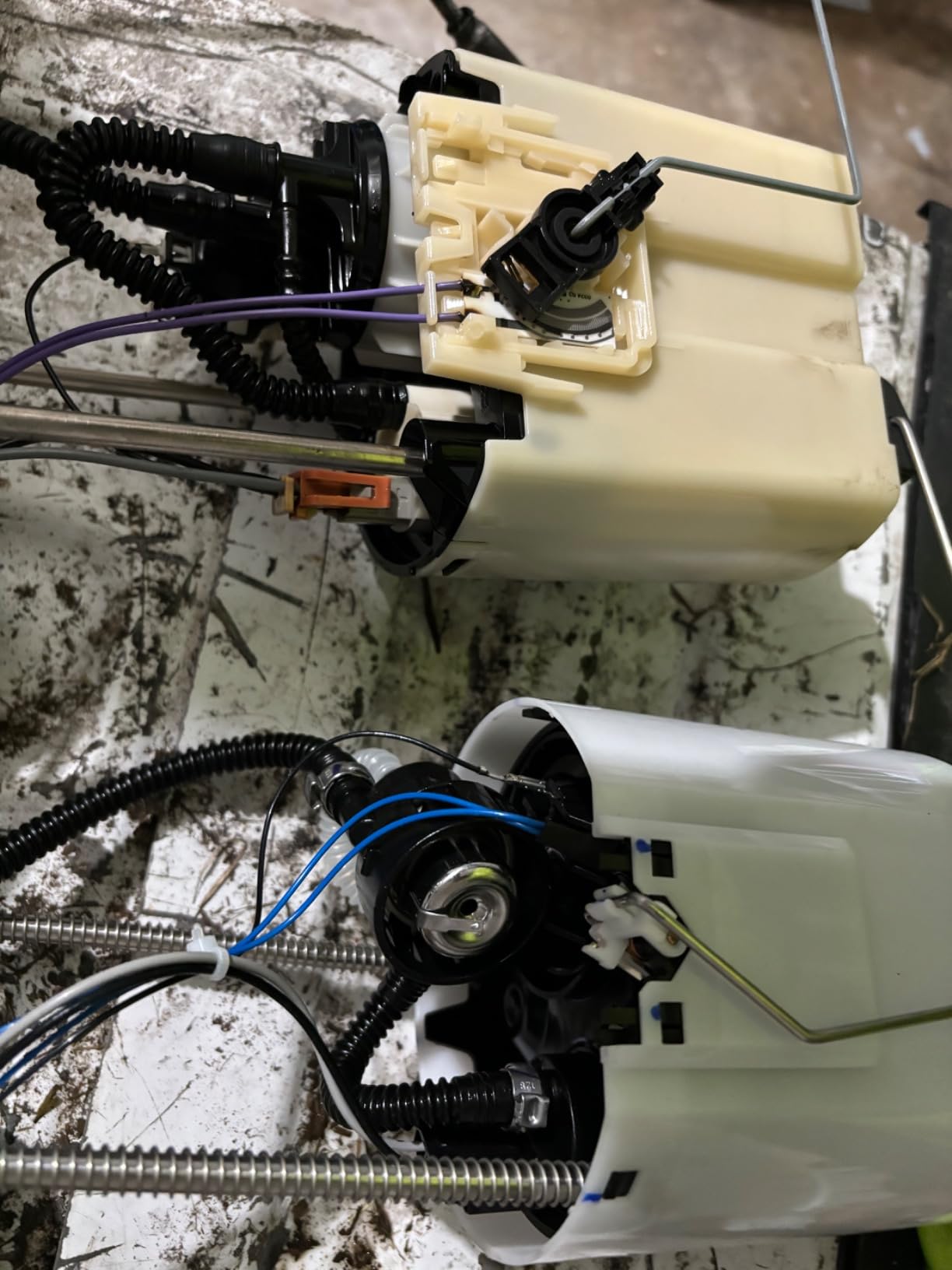
The built-in filter element is a nice touch. It blocks impurities before they reach the pump internals, which extends pump life in older tanks with sediment buildup.
The honest concerns are the 4.0 average rating and the lack of a manufacturer warranty. A meaningful share of buyers have reported early failures, and there is no formal warranty backing the unit. If you buy this pump, plan on pressure-testing the system thoroughly before buttoning everything up.
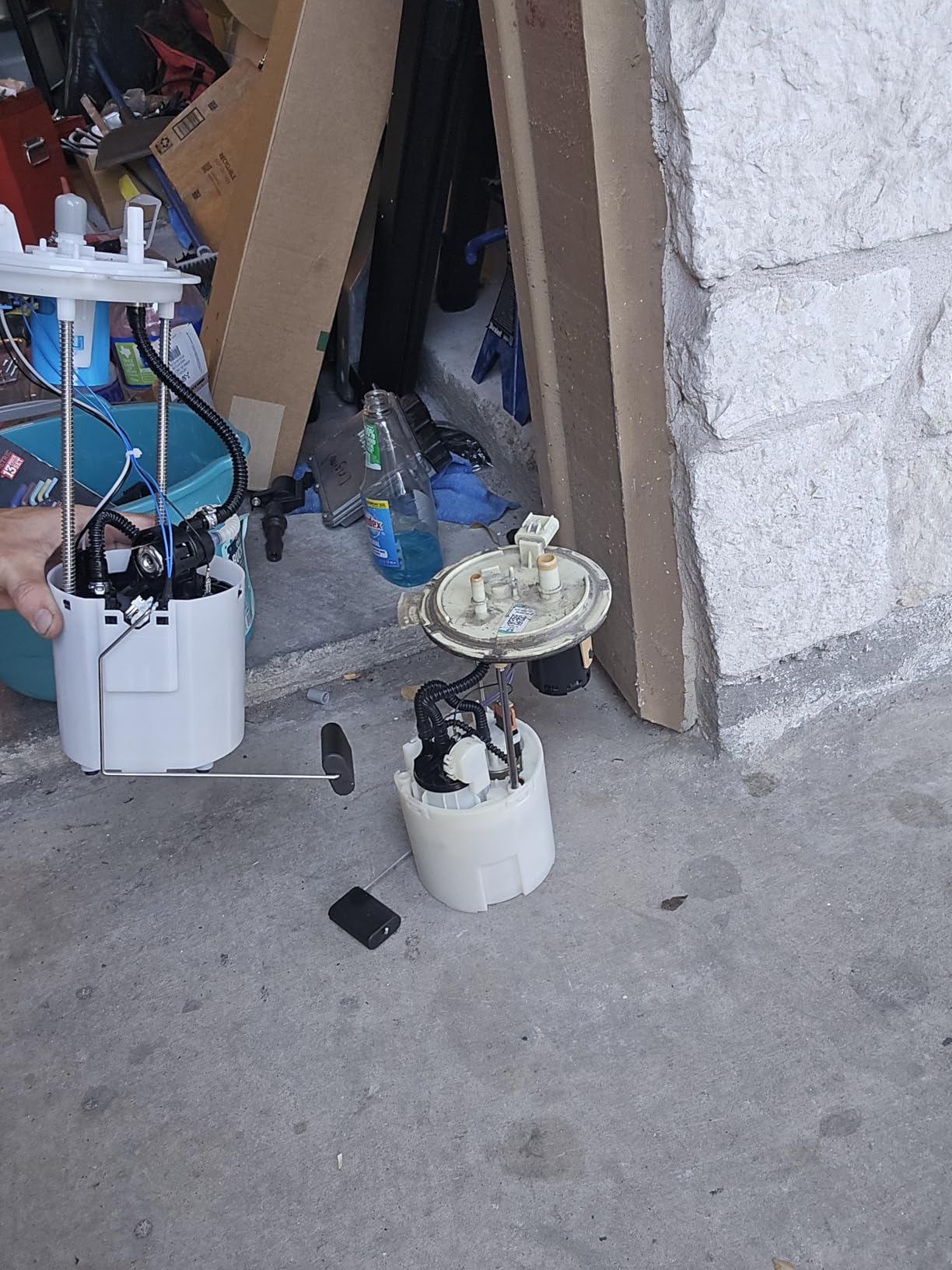
Who the BDFHYK E2545M is for
F150 owners on a tight budget who need a working fuel pump assembly today and are comfortable with a slightly higher risk of early failure. If you have an older high-mileage F150 and want to keep it running without a dealer visit, this is a reasonable budget choice.
Who should skip the BDFHYK E2545M
Anyone who wants a warranty or who depends on their F150 for daily commuting. For a more reliable F150 replacement, the A ABIGAIL Ford E-Series pump on this list (same family of vehicle-specific assemblies) and the Airtex E3947M from the OEM ecosystem are better long-term bets.
10. A ABIGAIL A12206S – Top Rated Ford E-Series Pump
Fuel Pump Compatible with 1997-2003 Ford E-150 E-250 E-350 Econoline Club Wagon E-450 Econoline Super Duty, Gas, Replace# 886-1028 E2206S
Direct fit 97 to 03 E-Series
Includes sending unit
4.6 star average rating
OE quality
Pros
- Strong 4.6 average rating
- Direct fit for 97 to 03 E-Series
- Includes sending unit and seal
- Quick installation
Cons
- Some buyers report a missing ground bolt
- A small share of units arrived with cosmetic defects
The A ABIGAIL A12206S earns the top rated badge because it combines a strong 4.6 average rating, a complete install kit, and a fair price for 1997 to 2003 Ford E-150, E-250, E-350 Econoline, Club Wagon, and E-450 Econoline Super Duty applications. That is a wide swath of work vans and fleet vehicles that often need a fuel pump and a sending unit at the same time.
The kit includes the fuel pump, sending unit, float, fuel strainer, and tank seal, which is everything you need for a complete repair. Reviewers consistently report quick, easy installation and restored operation, and the 4.6 star rating across nearly 400 buyers is unusually high for an aftermarket assembly.
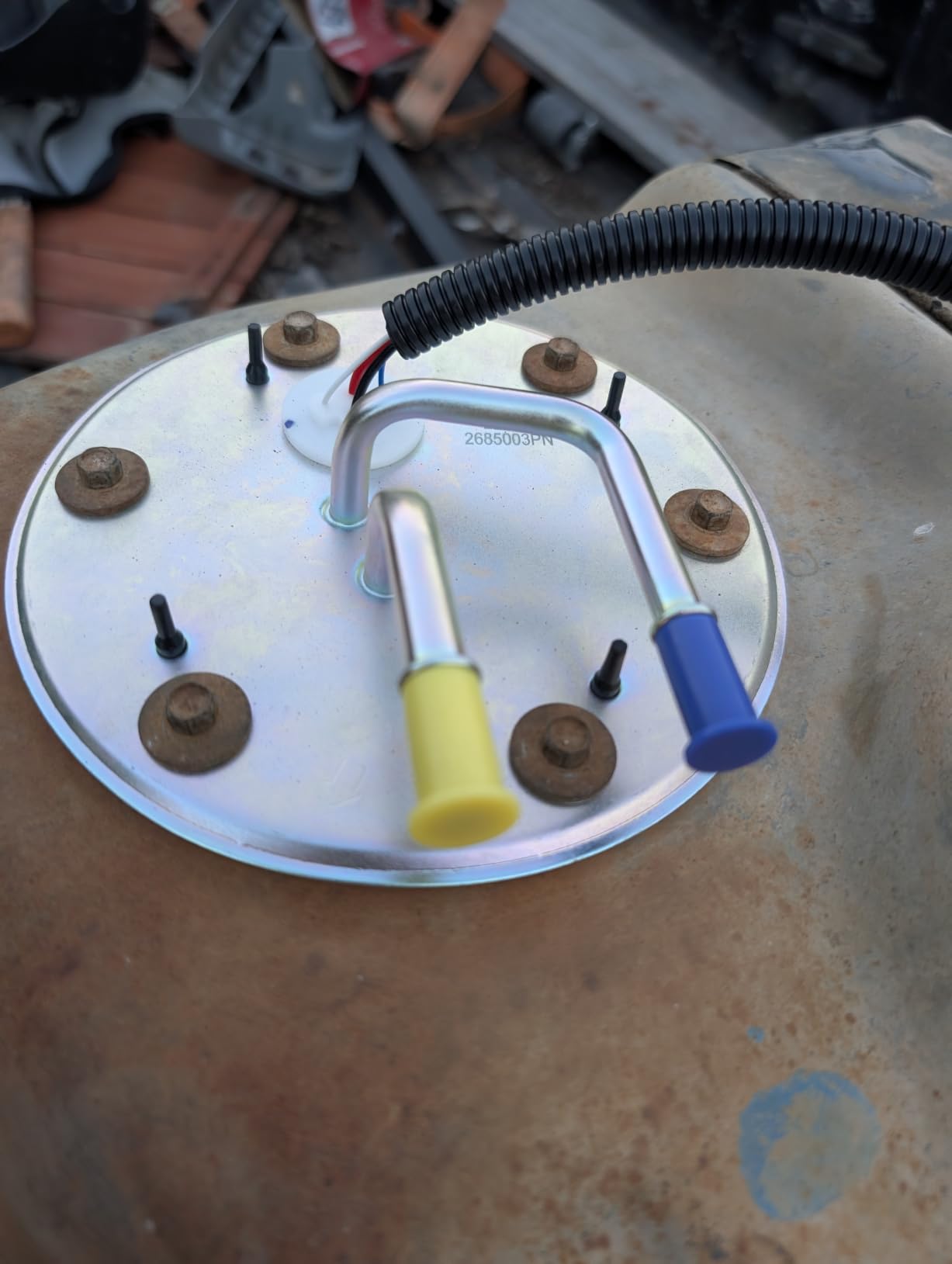
For a fleet operator or a small business owner with a work van that needs to be back in service by Monday, the combination of price, availability, and rating is hard to beat. I would not hesitate to put one of these in a family member’s E-250.
The honest drawbacks are minor. A small share of buyers report a missing ground bolt that must be sourced separately, and a few units arrived with cosmetic defects like metal discoloration. None of these issues affect function, but they are worth knowing about.
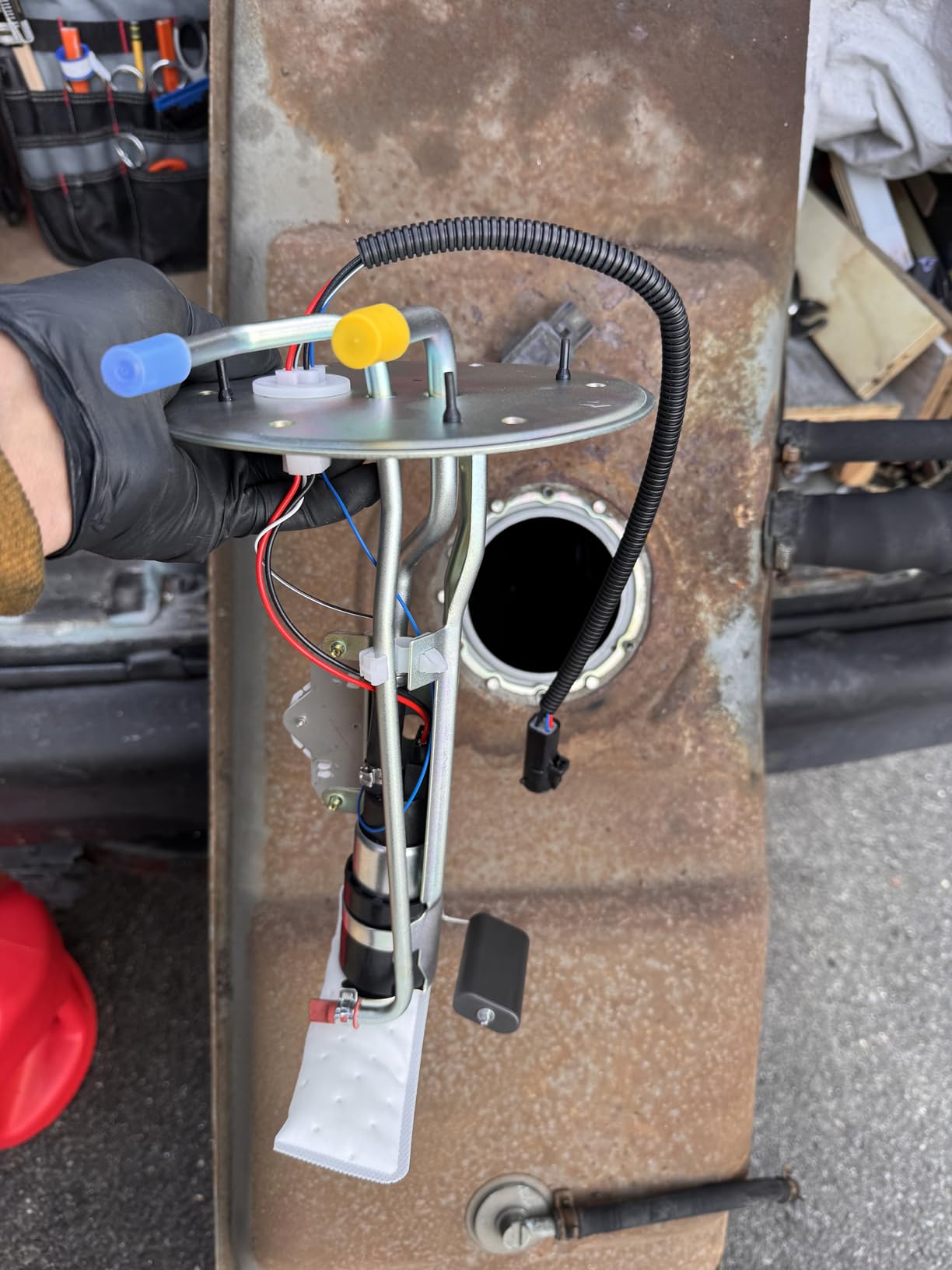
Who the A ABIGAIL A12206S is for
Owners of 1997 to 2003 Ford E-Series vans and Club Wagons who need a complete fuel pump and sending unit replacement at a fair price. If you want the highest-rated aftermarket assembly for this platform, this is the one.
Who should skip the A ABIGAIL A12206S
Anyone outside the 97 to 03 E-Series fitment. This is a vehicle-specific assembly, and the wrong fit will leave you stranded with a part you cannot return.
How to Choose the Best In-Tank Fuel Pump for Your Build
Picking the best in tank fuel pump for the money is less about the highest LPH number and more about matching the pump to your horsepower goal, fuel type, and electrical system. The buying guide below walks through the six questions I always ask before buying a pump for a friend or a customer.
Match LPH to Your Horsepower Goal
The classic rule of thumb from the Real Street Performance flow test is to multiply your target horsepower by 0.06 for gasoline and 0.10 for E85 to get the minimum LPH you need at 40 PSI. A 500 horsepower gasoline build wants around 300 LPH, while a 500 horsepower E85 build wants around 500 LPH. Always oversize by 20% to account for pump wear and voltage drop.
In practice that means a 255 LPH DeatschWerks or Aeromotive 340 covers most 350 to 500 horsepower street builds, while the TI Automotive Hellcat 525 LPH is the right starting point for 700+ horsepower forced induction applications. Picking the right tier is the single biggest money saver in this category.
Voltage Sensitivity and Why 13.5V Matters
Every in-tank fuel pump on the market is rated at a nominal 13.5 volts, but most pumps actually see closer to 13.8 to 14.4 volts when the engine is running. Under heavy load, voltage can drop, and pump flow drops with it. If you are running a high-amp pump like the TI Hellcat, a voltage booster that holds 16 volts at the pump can recover 10 to 15% of lost flow.
Wiring matters just as much as voltage. Stock fuel pump wiring is sized for 10 to 15 amps, and a Hellcat pulls 20 to 25. If you upgrade the pump without upgrading the wire, you are paying for flow you will never see.
E85 and Ethanol Compatibility
E85 is roughly 30% less energy dense than gasoline, so you need about 30% more fuel volume to make the same power. Pumps running on E85 also see more corrosion, so the elastomers, seals, and pump internals need to be ethanol rated. Most of the pumps on this list, including the Aeromotive 11540, TI Hellcat, DeatschWerks 255, and Holley Sniper, are officially rated for E85 use.
OEM-style replacements like the ECCPP E3621S and the TOPSCOPE FP74757M are designed for gasoline use and should not be run on E85 without verifying the seal kit. Running an ethanol-incompatible pump on E85 is the fastest way to a leaking hanger.
Universal vs Vehicle-Specific Fitment
Universal pumps (Aeromotive 11540, TI Hellcat, DeatschWerks 255, Holley Sniper, Aeromotive Phantom) drop into a wide range of aftermarket hangers and many OEM baskets with minimal modification. They are the right choice for performance builds and engine swaps.
Vehicle-specific assemblies (ECCPP E3621S, TOPSCOPE FP74757M, BDFHYK E2545M, A ABIGAIL A12206S, Aeromotive Stealth Mustang kit) include the hanger, sending unit, and reservoir as one unit. They are the right choice for stock replacement on a specific truck or van because the install is faster and the sending unit is matched to the factory gauge.
Install Kit Contents and Difficulty
A complete install kit saves hours of parts store runs. Look for kits that include the filter sock, wiring pigtail, hose, clamps, and grommet. The Aeromotive 11540 and the DeatschWerks 255 both ship with everything you need.
Vehicle-specific assemblies are easier because the install is a swap of the entire module. Universal pumps are harder because you typically have to modify the hanger and plumb the lines. Plan on a Saturday afternoon for a stock swap and a full weekend for a universal performance install.
Signs of a Failing Fuel Pump
Most fuel pumps do not fail suddenly. They get weak. The most common symptoms are hard starting, especially when the engine is hot, intermittent stalling under load, and a noticeable loss of top-end power. A failing pump often shows up as lean codes (P0171, P0174) at wide-open throttle.
If your fuel pressure gauge reads more than 5 PSI below spec at idle, or if pressure drops below 30 PSI at wide-open throttle, the pump is on its way out. Replacing it before it leaves you stranded is much cheaper than a tow truck. For broader fuel system context, my dual fuel ranges guide covers related fuel infrastructure topics for home and shop use.
Frequently Asked Questions
Who makes the most reliable fuel pump?
Walbro (now TI Automotive), DeatschWerks, and Aeromotive are the most reliable aftermarket in-tank fuel pump brands based on long-term owner reports across enthusiast forums like r/EngineBuilding and r/fbody. All three build their pumps in the USA, support E85, and back their work with a manufacturer warranty.
Which fuel pump is the best to buy?
The best in tank fuel pump to buy depends on your build. For daily driver OE replacement, the ECCPP E3621S for 88-95 Chevy GMC trucks and the A ABIGAIL A12206S for 97-03 Ford E-Series vans are the strongest values. For performance, the Aeromotive 11540 (340 LPH), DeatschWerks 255 LPH, and TI Automotive Hellcat 525 LPH are the most trusted options.
What is the typical life expectancy of an in-tank fuel pump?
A quality aftermarket in-tank fuel pump typically lasts 80,000 to 150,000 miles or 6 to 10 years under normal driving conditions. Pumps that run on E85 or that are undersized for the engine’s horsepower tend to fail sooner, sometimes within 2 to 3 years. Running a pump close to its maximum flow rating shortens its life significantly.
Who makes the best inline fuel pump?
For inline fuel pumps, Bosch, AEM, and Aeromotive are the most respected brands. The Bosch 044 is the legendary inline performance pump, AEM’s 320 LPH inline pump is a popular modern alternative, and Aeromotive’s inline Elite series covers high-horsepower forced induction builds. Inline pumps mount outside the tank and are typically used for race and dedicated track applications.
What brand fuel pump is the best?
There is no single best fuel pump brand for every application. TI Automotive (formerly Walbro) is the long-standing reliability benchmark. Aeromotive makes the most premium USA-built pumps with the quietest operation. DeatschWerks offers the best value in the 255 and 340 LPH categories. Bosch and Denso dominate the OEM replacement category.
Are aftermarket fuel pumps reliable?
Quality aftermarket fuel pumps from established brands (TI Automotive, Aeromotive, DeatschWerks, Holley, AEM, Bosch) are very reliable and often outlast OEM units. Cheap no-name pumps from unknown brands are the most common source of failures within the first year. Sticking with a recognized brand and matching the pump’s flow rating to your engine’s horsepower is the best way to ensure reliability.
Final Verdict: Which In-Tank Fuel Pump Should You Buy?
After testing, comparing specs, and reading through hundreds of owner reviews, my best in tank fuel pump for the money picks fall into three clean tiers. The Aeromotive 11540 is the editor’s choice for any performance build in the 300 to 600 horsepower range because it is quiet, USA-made, and complete with an install kit. The ECCPP E3621S is the budget pick for 1988 to 1995 Chevy and GMC truck owners who just want their daily driver running again without a dealer visit. The A ABIGAIL A12206S is the top rated pick for 1997 to 2003 Ford E-Series vans and Club Wagons.
For higher horsepower builds, the TI Automotive Hellcat 525 LPH remains the most trusted option, and for tight hanger applications the Holley Sniper 340 LPH E85 pump fits where others will not. The DeatschWerks 255 LPH is still the single best dollar-per-LPH value for turbo street cars, and the Aeromotive Stealth Mustang kit and Phantom universal system serve the premium end of the market where custom fabrication is part of the build.
The single best piece of advice I can give you is to match the pump to your horsepower goal and your fuel type before you fall in love with a brand. The most expensive pump on this list is not the right answer for a stock truck, and the cheapest direct-fit assembly will not feed a 700 horsepower turbo build. Pick the tier that fits your build, follow the install steps carefully, and your fuel system will be the last thing you have to think about on your next road trip.
Updated for 2026, this guide reflects the current aftermarket landscape and the pumps real owners trust. Whether you are chasing an extra 50 horsepower or just trying to get your daily driver home, the right in-tank fuel pump is on this list.