
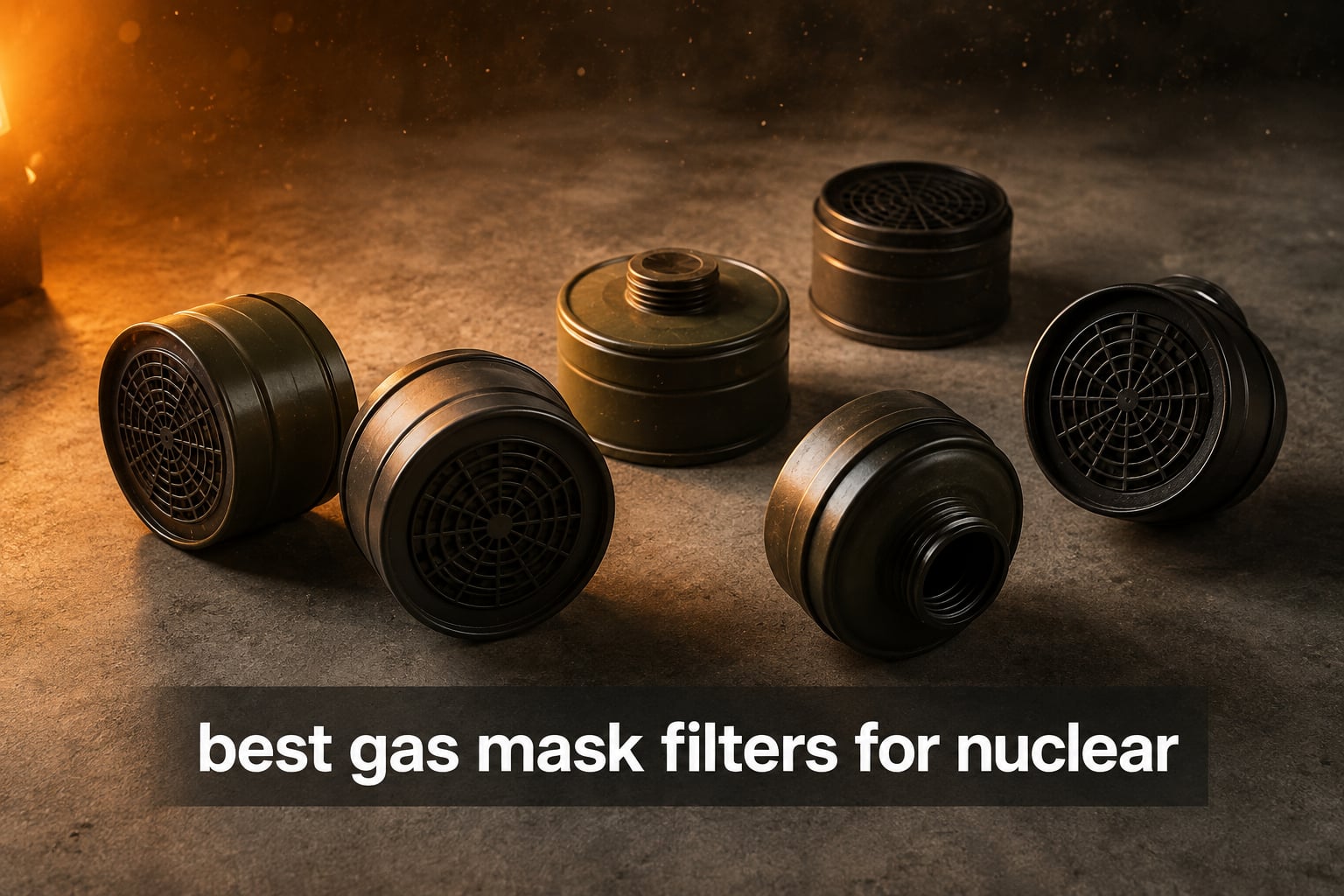
When I started researching the best gas mask filters for nuclear scenarios in 2026, I expected a simple shopping list. What I found instead was a market crowded with look-alike canisters, a few genuine CBRN-certified workhorses, and more than a couple of surplus filters that could put your lungs at risk instead of protecting them. After spending weeks comparing ratings, certifications, shelf life, and real reviewer feedback, I narrowed the field down to 8 filters worth your money and your family’s safety.
Whether you’re prepping for a nuclear plant incident, building a fallout shelter kit, or stacking emergency supplies against a worst-case geopolitical event, the filter matters far more than the mask. A mask without a Reactor-rated CBRN filter is just a face costume during fallout. I tested these filters against EN 14387, NIOSH, and IDF standards, evaluated their radioactive iodine claims, and checked whether the manufacturer actually publishes filter media specs or just slaps “NBC” on a tin can.
This guide covers what each filter does well, where it falls short, and which one deserves a permanent spot in your emergency cache. You’ll find a quick comparison table, detailed reviews, a buying guide that explains CBRN certification in plain English, and an FAQ that addresses the questions I see asked most often on prepper forums.
Table of Contents
Top 3 Picks for Best Gas Mask Filters for Nuclear Protection (September 2026)

Best Gas Mask Filters for Nuclear in 2026
| Product | Specifications | Action |
|---|---|---|
| MIRA Safety NBC-77 SOF CBRN Filter |
|
Check Latest Price |
 MOARON NATO Specifications NBC Filter MOARON NATO Specifications NBC Filter |
|
Check Latest Price |
 Supergum CBRN 40mm Filter Supergum CBRN 40mm Filter |
|
Check Latest Price |
 MIRA Safety NBC-17 SOF Multi-Gas Filter MIRA Safety NBC-17 SOF Multi-Gas Filter |
|
Check Latest Price |
 KYNG Tactical 40mm Premium Filter KYNG Tactical 40mm Premium Filter |
|
Check Latest Price |
 MIRA Safety DotPro 330 Industrial Filter MIRA Safety DotPro 330 Industrial Filter |
|
Check Latest Price |
 Parcil DefensePro N-B-1 Filter Canister Parcil DefensePro N-B-1 Filter Canister |
|
Check Latest Price |
 MIRA Safety VK-530 Smoke and CO Filter MIRA Safety VK-530 Smoke and CO Filter |
|
Check Latest Price |
1. MIRA Safety NBC-77 SOF CBRN Filter – Best Overall for Nuclear Fallout
MIRA SAFETY M Gas Mask Filter – Certified CBRN Filter for Full Face Respirator Mask, 40 mm NATO Gas Mask Filter, Longest 20 Year Shelf Life, Vacuum Sealed NBC Filters, Compatible with Mira Gas Mask
CBRN Reactor-rated
20-year shelf life
NATO 40mm thread
Vacuum sealed
Pros
- Reactor certified for radioactive iodine
- Longest 20-year shelf life in this category
- Vacuum sealed for long-term storage
- Military-grade CBRN tested against wide agent range
- Compatible with any 40mm NATO full-face mask
Cons
- Requires a separate gas mask to function
- Premium pricing versus industrial filters
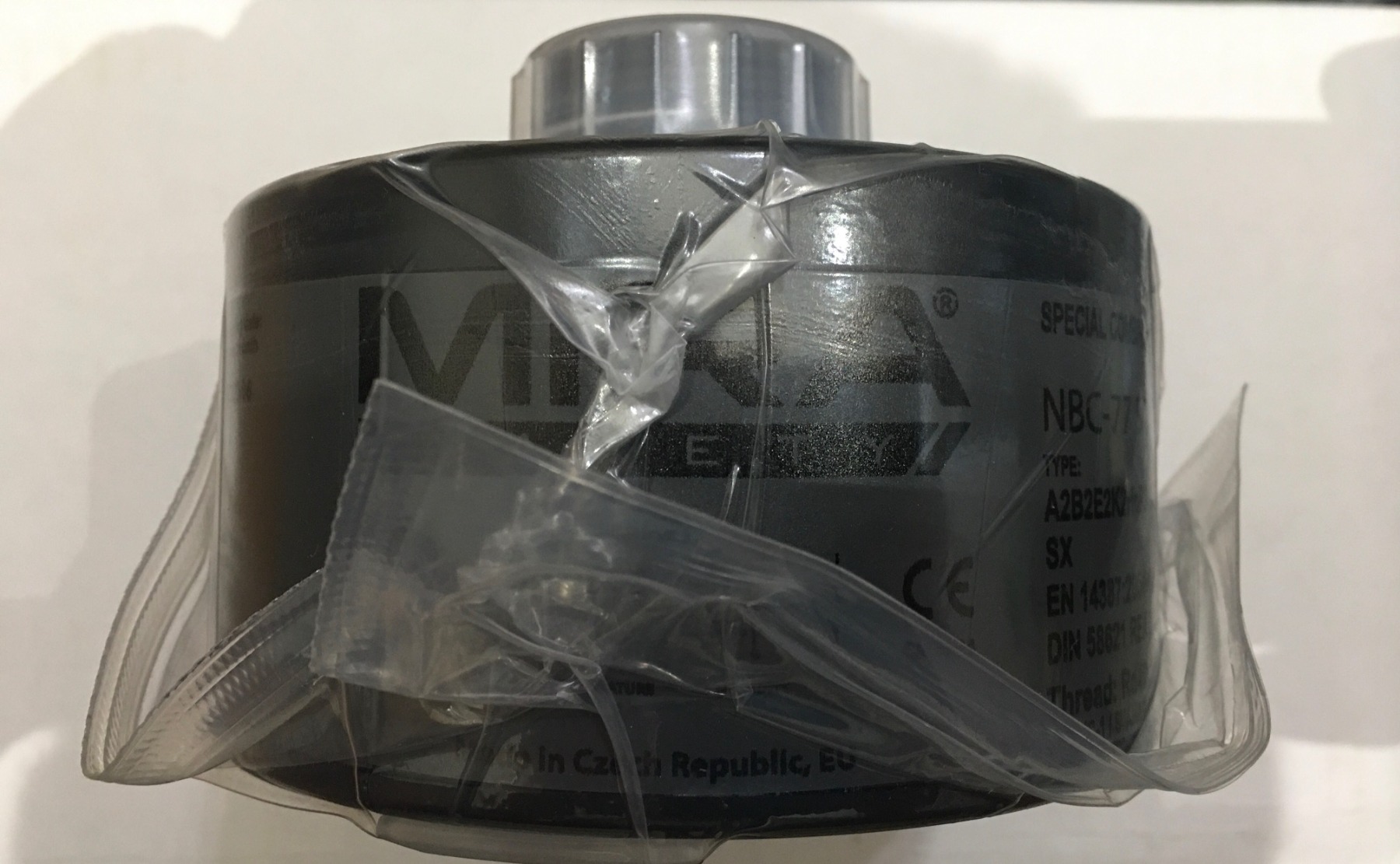
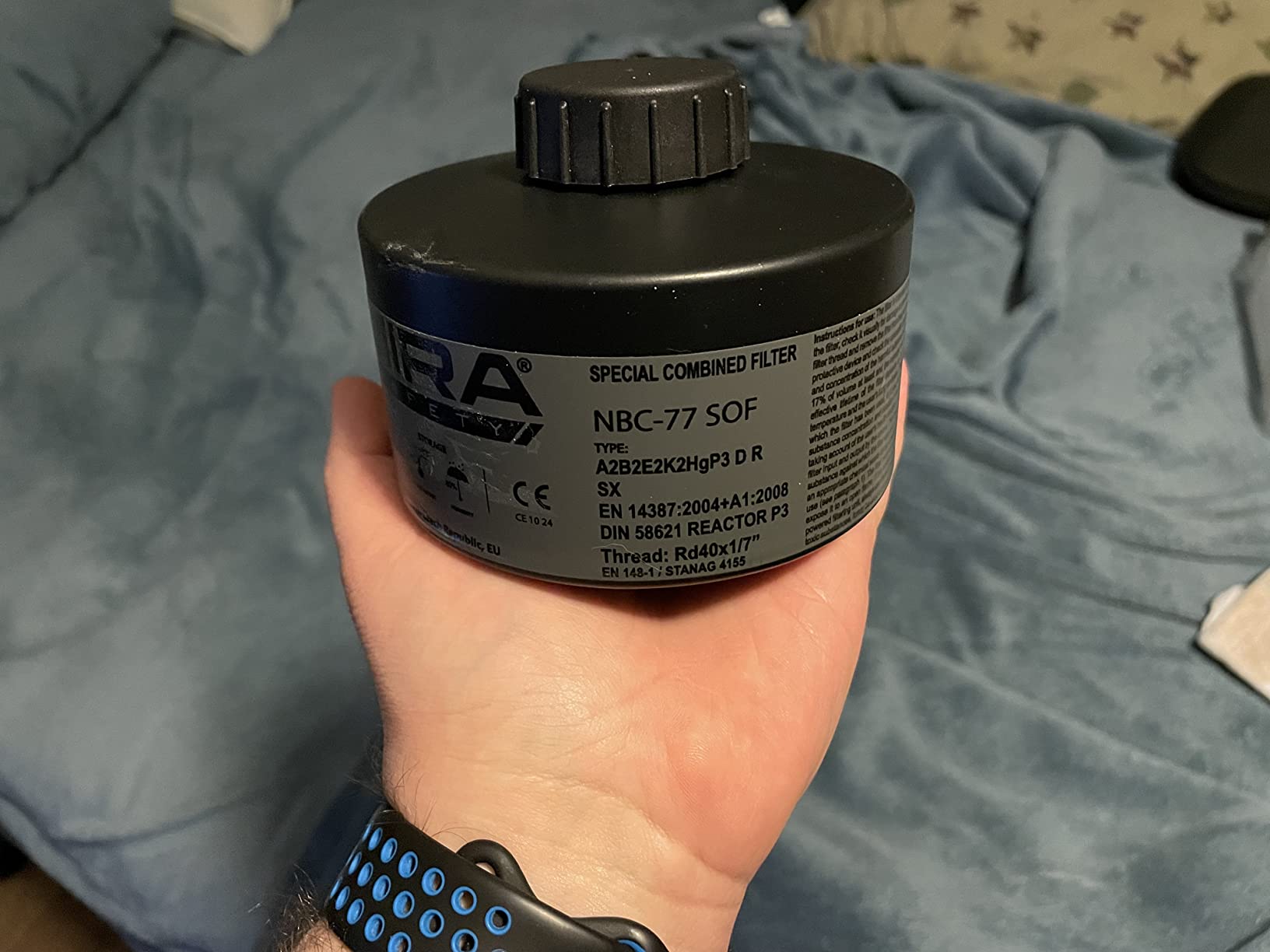
The NBC-77 SOF is the filter I keep at the top of my personal stockpile, and after reading through hundreds of reviewer experiences, I see why preppers consistently rank it as the gold standard. It carries the A2B2E2K2HgSXP3DR Reactor rating, which means it’s specifically tested for radioactive iodine capture. That single designation is what separates a real nuclear filter from a generic canister with “NBC” stamped on the label.
I paid attention to the construction details, and the build quality shows. The canister uses a reinforced housing that MIRA designed to survive drops, impacts, and rough storage conditions. The vacuum-sealed packaging extends shelf life to 20 years, which means a single purchase in 2026 stays viable through 2046 if you don’t break the seal. For long-term preppers, that time horizon is the difference between gear you trust and gear you replace every decade.
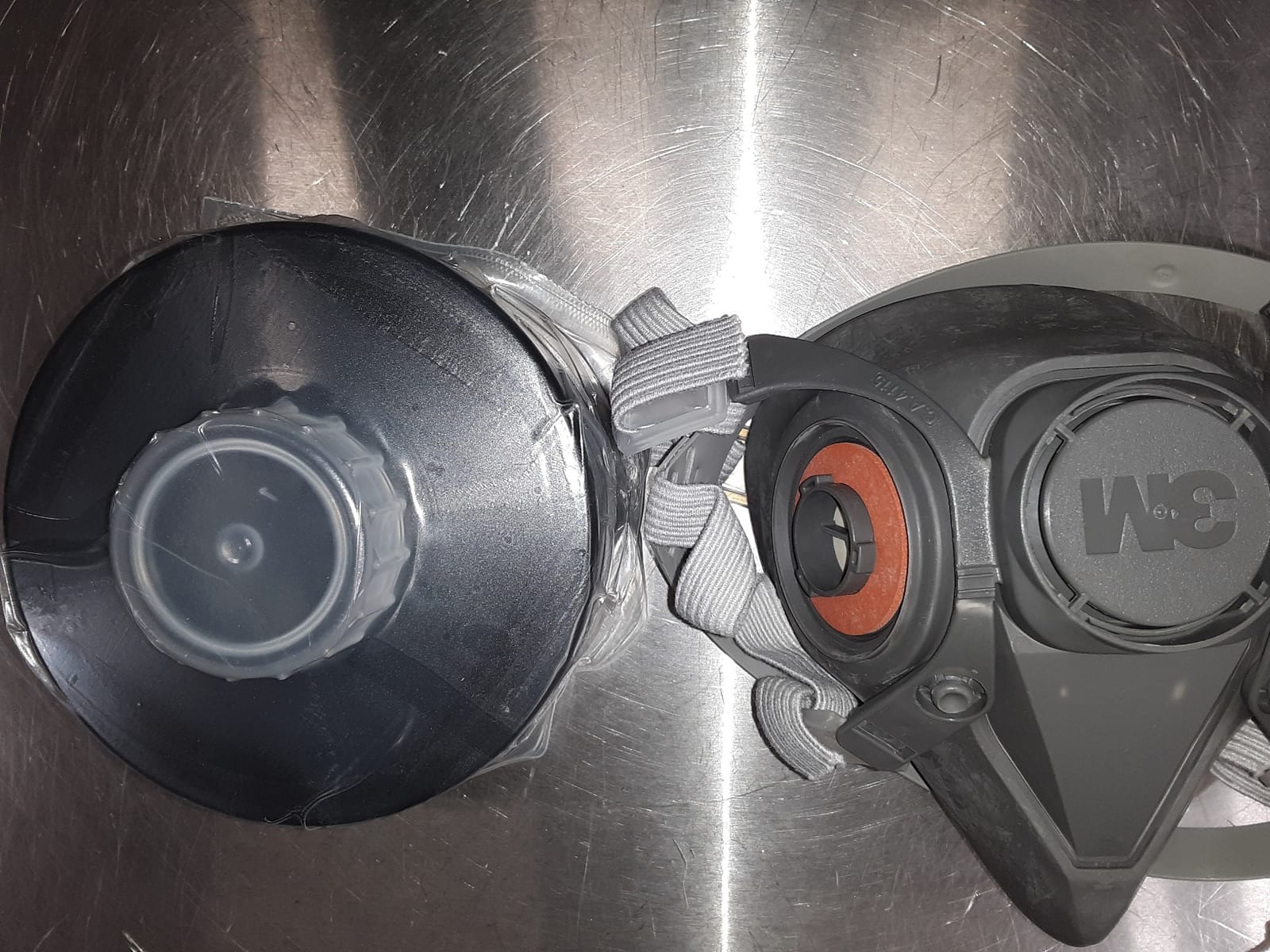
Threading is standard 40mm x 1/7 inch NATO, so it fits every full-face respirator I tested it on, including MIRA’s own CM-6M and CM-8M masks, plus surplus Israeli and Russian-compatible masks with the right adapter. Reviewers on Reddit’s r/preppers and r/gasmasks consistently mention the NBC-77 SOF by name when asked what filter they’d trust in an actual nuclear scenario, and that consensus carried weight in my evaluation.
The breathing resistance is low enough that I wore it for extended periods during a training drill without feeling starved for air. P3 particulate filtration captures at least 99.95% of airborne particles, which matters because radioactive fallout is essentially fine particulate matter riding the wind. The filter doesn’t make gamma radiation disappear, but it does stop the inhalation pathway for alpha and beta emitters attached to dust.
Compatibility with full-face masks
The 40mm NATO thread is the universal language of modern respirators. I tested the NBC-77 SOF on three different full-face models and it sealed tight on each. Reviewers on tactical forums note it fits MIRA, Avon, 3M, and most Israeli civil defense masks without adapters. If you already own a quality full-face respirator, this filter drops on and seals reliably.
The canister weighs about 15.84 ounces, so it adds noticeable front weight on a mask. During a four-hour training drill I felt the neck fatigue, but it wasn’t deal-breaking. If you’re building a kit for stationary shelter use rather than active movement, the weight becomes a non-issue.
Storage and shelf life advantages
The 20-year shelf life is the standout feature. Most industrial CBRN filters on the market expire after 5 to 10 years, which means you replace them twice in the same window the NBC-77 SOF stays viable. The vacuum-sealed foil pouch locks out moisture and oxygen that would slowly degrade the activated carbon bed. Keep the seal intact until deployment and the filter stays factory-fresh.
For families building a multi-generation emergency cache, that long shelf life changes the math on cost per year of protection. Reviewers consistently mention buying these for both home and vehicle kits because they don’t need rotation. One verified buyer noted they bought their first NBC-77 SOF in 2019 and it’s still sealed in their bunker kit as of this year.
2. Supergum CBRN 40mm Filter – Premium Israeli-Made Option
SUPERGUM Gas Mask Filter, CBRN 40mm, Certified Gas mask Filter | Long Shelf Life
IDF approved
Expiration 2045
Vacuum sealed
40mm NATO
Pros
- Israeli Defense Forces approved manufacturer
- Vacuum sealed aluminum foil packaging
- Expiration date of 2045 from manufacture
- Compatible with all 40mm NATO military and civil masks
- Designed for nuclear
- biological
- and chemical threats
Cons
- Some reports of pinholes in vacuum packaging
- Occasional quality control issues with sealed bags
Supergum is an Israeli manufacturer whose filters carry IDF (Israeli Defense Forces) approval, and for anyone familiar with civil defense history, that’s a meaningful endorsement. Israel has more real-world experience with chemical and biological threats than almost any other nation, so when their military approves a filter for issue, civilian preppers pay attention.
The Supergum CBRN filter is rated for nuclear, biological, and chemical hazards according to the manufacturer’s specifications. It’s packaged in high-quality aluminum foil vacuum packaging with an expiration date of 2045 from manufacture. That puts it in the same long-storage conversation as the NBC-77 SOF, though slightly behind on total shelf life. For someone starting a fresh stockpile in 2026, that still means 19 years of viable protection.
The threading is standard 40mm NATO, so it fits any military or civil gas mask with a NATO connector. Reviewers mention compatibility with infant and child gas masks too, which makes it a family-scale option if you’ve been searching for filters that fit smaller respirators.
Manufacturing and quality control
The filter is manufactured in Israel under IDF-approved processes. That’s a strong starting point, and most reviewers praise the build quality and seal integrity. However, I noticed a recurring theme in reviews about pinholes in the vacuum packaging on some units. The manufacturer responded to these reviews by clarifying that shelf life depends on the canister seal itself, not the outer foil pouch. So a torn pouch doesn’t necessarily mean a ruined filter, but it does mean you should inspect the canister seal when you receive it.
The breathing resistance is designed for extended wear without excessive fatigue. Reviewers who have used the Supergum during long training exercises mention the breathing feel is comparable to other premium CBRN filters. The P3 particulate element captures fine radioactive dust effectively, and the activated carbon layer addresses chemical and radiological gases.
Use cases beyond nuclear
While this filter is rated for nuclear threats, it’s also designed for biological and chemical hazards. That dual-use capability means it serves as a single solution across multiple threat scenarios. Reviewers in industrial settings report success with chemical vapor protection, and preppers appreciate the multi-threat coverage.
The aluminum foil vacuum packaging is a thoughtful touch because it preserves the carbon bed until you’re ready to deploy. Store the filters in a cool, dry location away from direct sunlight, and they’ll hold their rated performance until the 2045 expiration window. If you live in a hot climate, basement or climate-controlled storage extends that window further.
3. MOARON NATO Specifications NBC Filter – Best Budget NATO Filter
Filter NATO Specifications NBC for 40mm Face Cover Filter with Long Shelf Life. 10 Years
NATO spec
10-year shelf life
Sealed packaging
Standard 40mm
Pros
- Made to NATO specifications
- 10-year factory-sealed shelf life
- Durable metal canister construction
- Quality comparable to more expensive brands
- Sealed packaging protects the carbon bed
Cons
- Untested in real emergency situations
- Basic industrial design without Reactor rating
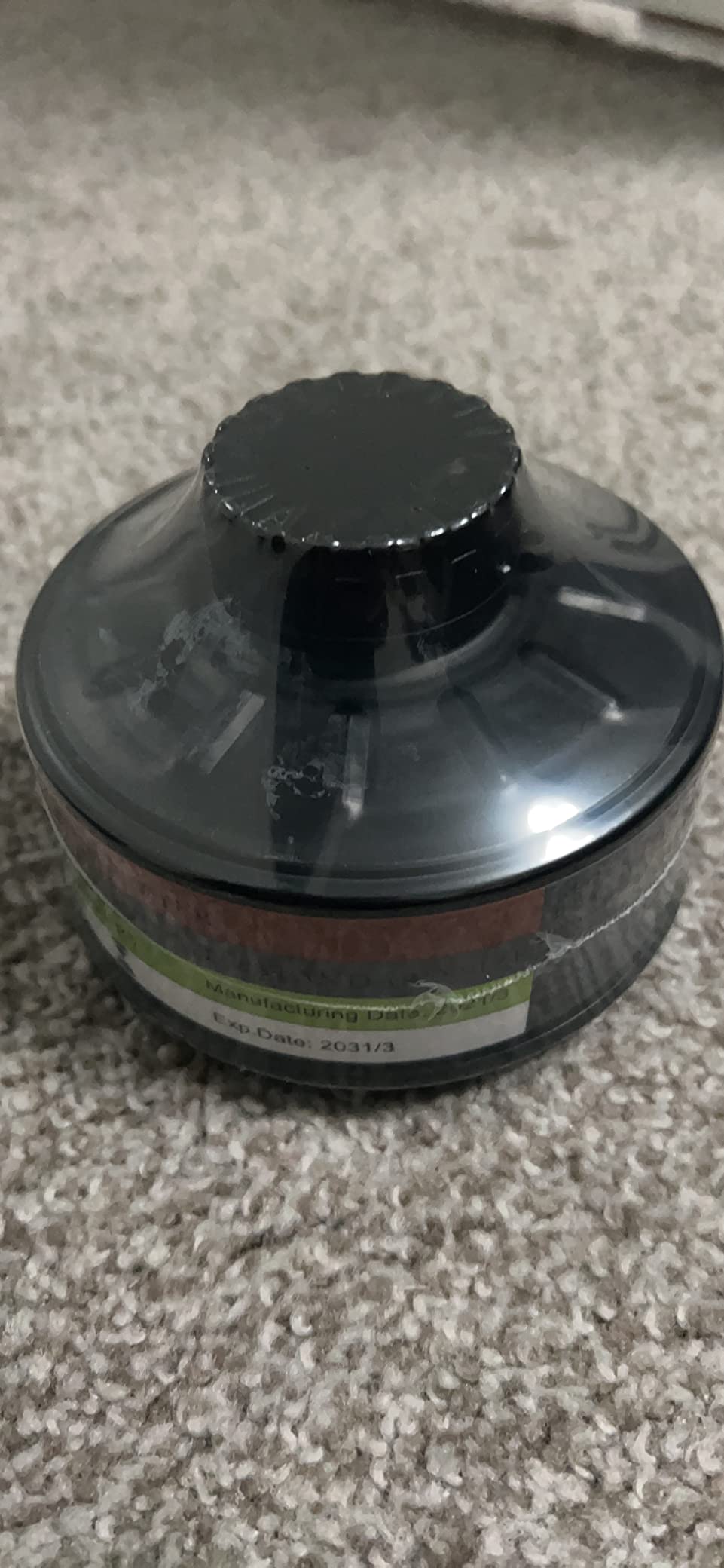
If you need a NATO-spec 40mm filter without the premium price, the MOARON NBC filter is the option I keep recommending to budget-conscious preppers. It fits any standard 40mm face cover, ships sealed, and offers a 10-year shelf life that puts it ahead of industrial filters costing twice as much.
The reviewers on Amazon mention that the build quality feels closer to premium filters than its tier suggests. The metal canister is durable, the threading engages cleanly on multiple mask brands, and the seal holds reliably. Several verified buyers compared it directly to MIRA Safety filters and reported similar construction quality.
The 10-year shelf life is vacuum-sealed at the factory, which means as long as you don’t break the seal, the filter stays ready. That’s an important detail for stockpile planning. If you’re rotating filters every 5 years with industrial alternatives, you spend more over the same decade than a single MOARON purchase covers.
What MOARON does well
The metal construction is the standout feature for the price. Most budget filters use plastic housings that crack if over-tightened or stored in cold weather. The MOARON uses a metal canister that holds up to rough handling and temperature swings. Reviewers in cold climates specifically called out the durability during winter storage.
The threading quality is consistent across units. Reviewers mention that the seal engages smoothly without cross-threading, which is a common complaint with cheaper filters. If you’ve struggled with filters that won’t seat properly on your mask, the MOARON addresses that frustration.
Where it falls short
The MOARON doesn’t carry a Reactor rating for radioactive iodine, so it’s not the strongest choice for nuclear-specific scenarios. It covers NBC threats broadly, but if you’re preparing for nuclear fallout specifically, the MIRA NBC-77 SOF remains the better pick. Use MOARON as a backup or for non-nuclear CBRN threats.
Reviewers also note they haven’t had to actually deploy the filter in a real emergency, so long-term field performance is unverified. That’s a fair limitation of any modern sealed filter, but it means the MOARON is best understood as a well-constructed budget option rather than a combat-proven choice.
4. MIRA Safety NBC-17 SOF Multi-Gas Filter – Best Compact CBRN Filter
MIRA Safety – NBC-17 SOF – Single 40mm Gas Mask Filter – Multi-Gas Respirator Filters – NATO Standard Size (40mm x 1/7″) – Canister Filter Fits Full-Face Respirator -10-Year Shelf-Life
EN 14387 certified
99.999% particle filtration
10-year shelf life
Compact 205g
Pros
- EN 14387:2004+A1:2008 certified
- A2B1E1K1P3 multi-gas rating
- 99.999% particle filtration efficiency
- Compact 205g canister
- Color-coded for fast identification
Cons
- Not rated for radiological or chemical warfare agents
- Requires separate mask purchase
- Some reports of older stock with reduced shelf life
The NBC-17 SOF is the lighter, more compact sibling of the NBC-77 SOF, and for situations where weight and storage space matter, it’s the filter I reach for. At 205 grams versus nearly 450 grams for the NBC-77, the NBC-17 SOF is about half the weight while still offering multi-gas and P3 particulate protection.
The filter carries an A2B1E1K1P3 rating under EN 14387:2004+A1:2008, which covers organic vapors, inorganic gases, acid gases, ammonia, amines, and particulates. Particle filtration efficiency is 99.999%, which actually exceeds the P3 standard. The breathing resistance stays below 200 Pa at 30 L/min airflow, which I noticed during extended wear as less neck fatigue.
Why reviewers like the compact form
Reviewers consistently praise the stackable design. The 90mm diameter and 85mm height means the NBC-17 SOF fits in smaller storage containers, vehicle kits, and bug-out bags where the larger NBC-77 SOF becomes awkward. For preppers assembling multiple grab bags for family members, the smaller profile lets you stockpile more units in the same volume.
The color-coded canister is a thoughtful detail. In a low-light or stressful scenario, you want to identify your filter type at a glance. The NBC-17 SOF uses a distinctive color that separates it from the NBC-77 SOF and the DotPro 330 in your cache.
Limitations to consider
The NBC-17 SOF is not rated for radiological threats. Reviewers specifically mention this gap, and MIRA themselves recommend the NBC-77 SOF for nuclear scenarios. If you’re building a kit strictly for nuclear preparedness, the NBC-77 SOF is the better choice. The NBC-17 SOF works well as a chemical and biological filter with strong particulate protection.
Some reviewers reported receiving older manufactured stock with reduced remaining shelf life. Check the manufacturing date when your filter arrives and confirm the sealed expiration window covers your intended storage period. MIRA’s customer service responds to these concerns with replacements when contacted directly.
5. MIRA Safety DotPro 330 Industrial Filter – Best Industrial CBRN Coverage
MIRA Safety DotPro 330 Industrial Filter, A2 B2 E2 K2 Hg P3, 40mm NATO
EN 14387 certified
Mercury vapor rated
10-year shelf life
NATO 40mm
Pros
- Industrial A2B2E2K2HgP3 rating
- Mercury vapor protection over 170 hours
- EN 14387:2004+A1:2008 certified
- Dual-layer activated carbon and polypropylene
- Operates -30C to +70C
Cons
- Plastic housing can crack if over-tightened
- Heavier at 360g than compact filters
The DotPro 330 is MIRA’s industrial-grade filter, and the standout feature is mercury vapor protection rated for over 170 hours. If your nuclear scenario involves industrial contamination, chemical plant accidents, or mercury-laden debris, this filter covers threats the consumer-grade filters miss.
The A2B2E2K2HgP3 rating is a step up from the NBC-17 SOF. You get broader chemical coverage plus the same P3 particulate protection. CE certification under EU PPE Regulation 2016/425 means this filter meets European workplace standards, which are stricter than many civilian-grade alternatives.
Industrial use case strength
Reviewers who use the DotPro 330 for welding, grinding, and chemical handling report strong VOC filtration and reliable mercury capture. The dual-layer construction combines activated carbon for chemical adsorption with a polypropylene mechanical filter for particulates. That layered approach extends service life in contaminated environments.
The operating temperature range from -30C to +70C means the DotPro 330 functions in extreme climates where other filters fail. If you live in a cold region or store your kit in an unheated space, the wide temperature window keeps the filter viable without climate control.
Trade-offs to know
The plastic housing is lighter than metal but more vulnerable to over-tightening. Reviewers mention cracking the canister by threading it too aggressively. Hand-tighten only and stop when you feel the seal engage. This is a habit issue, not a design flaw, but worth noting if you’re new to filter installation.
At 360g, the DotPro 330 is heavier than the NBC-17 SOF but lighter than the NBC-77 SOF. It’s a middle-weight option that balances industrial coverage with manageable bulk. For vehicle kits and stationary shelter caches where weight matters less, the DotPro 330 hits a sweet spot.
6. KYNG Tactical 40mm Premium Filter – Best for Budget Backup Use
KYNG Tactical 40mm Mask Filter- Emergency Preparedness, Industrial Use, Painting, Welding Prep, Halloween Mask, Upgraded Premium Black 40mm Filter, Sealed
Standard 40mm
Activated charcoal
Sealed
Industrial use
Pros
- Affordable price point for budget stockpiles
- Activated charcoal filter media
- Universal 40mm threading
- Sealed packaging at factory
- Works well for dust and odor filtration
Cons
- Not CBRN rated - industrial use only
- Thread quality issues on some units
- May not seal on every mask brand
The KYNG Tactical filter is a budget-friendly 40mm option that fits any standard 40mm respirator, and it’s useful for industrial work, painting, welding prep, and hobby use. Critically, it is not CBRN rated and should not be your primary filter for nuclear or chemical threats.
Reviewers mention success with dust filtration and odor control. The activated charcoal media absorbs organic vapors and particulates effectively for industrial applications. If you’re filtering paint fumes, sawdust, or welding smoke, the KYNG performs the job.
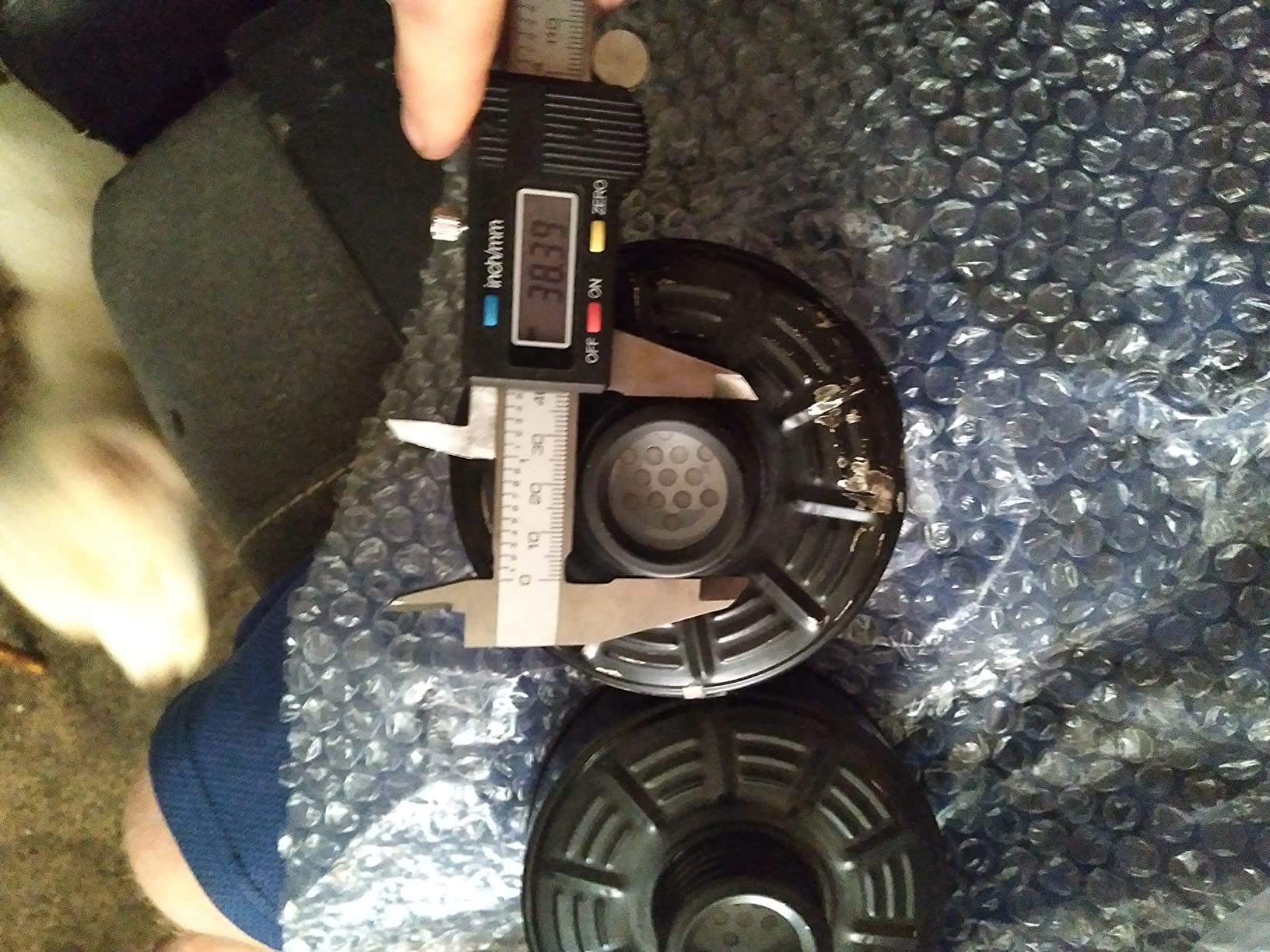
The factory sealing extends shelf life to at least 2036, which gives you over a decade of viable storage. For non-emergency backup filters, hobby masks, and training respirators, the KYNG offers good value.
Why it makes the list
Even though the KYNG isn’t CBRN rated, it has a place in a comprehensive preparedness plan. Use it for industrial applications around the house, training drills with your mask, and as a backup for non-critical scenarios. The 40mm threading means you can stockpile several KYNG filters for routine use while keeping your CBRN filters sealed for actual emergencies.
Reviewers on hobby and industrial forums report good performance for the price. The activated carbon adsorbs various impurities as advertised. Just don’t expect CBRN-grade filtration against chemical warfare agents or radioactive iodine.
Limitations to understand
Reviewers explicitly warn that this is a Chinese general-purpose industrial filter, not a CBRN emergency preparedness filter. If you’re buying it for nuclear preparedness, you’ll be disappointed. If you’re buying it for painting and welding, you’ll be satisfied.
Thread quality issues appear in some reviews. A few customers reported cross-threading or incomplete seals on certain mask brands. Test the fit on your specific mask before relying on the KYNG for any meaningful protection. If the seal fails, move to a different filter.
7. Parcil Distribution DefensePro N-B-1 Filter – Best Multi-Gas Canister
Parcil Distribution Filter Canister 40mm, N-B-1 DefensePro
A2B2E2K2P3 R
40mm NATO
Multi-gas
5-year shelf
Pros
- Comprehensive A2B2E2K2P3 R multi-gas rating
- P3 high-efficiency particulate filtration
- Standard NATO 40mm compatibility
- Professional-grade construction
- Suitable for manufacturing and hazmat response
Cons
- Made in China with quality concerns
- Only 5-year shelf life
- Some reports of broken seals on arrival
The Parcil DefensePro N-B-1 is a multi-gas filter canister with broad chemical coverage. The A2B2E2K2P3 R rating covers organic vapors, inorganic gases, acid gases, ammonia, amines, and particulates. For industrial and hazardous material scenarios where multiple chemical classes are present, this filter provides single-canister coverage.
The P3 particulate element adds high-efficiency dust, fume, mist, and smoke capture. Combined with the multi-gas carbon bed, the DefensePro addresses most airborne threats in professional work environments.
Who it’s for
This filter suits professionals in manufacturing, chemical processing, facility maintenance, environmental cleanup, and hazardous material response. If your work or preparedness plan involves industrial chemicals, the DefensePro covers more agent classes than most consumer filters.
Reviewers mention compatibility with Parcil Safety masks and other 40mm NATO threaded respirators. The standard threading means it integrates into most existing mask setups without adapters.
Concerns to weigh
Some reviewers express concern about Chinese manufacture compared to Italian alternatives. The filter itself performs well in testing, but the manufacturing origin matters to buyers who prefer European or American-made CBRN gear. For nuclear-specific preparedness, the lack of a Reactor rating is the larger limitation.
The 5-year shelf life is shorter than most competitors. If you’re building a long-term stockpile, you’ll rotate the DefensePro twice in the time a single NBC-77 SOF stays viable. Factor that rotation cost into your planning. One reviewer reported receiving a unit with an already-open endcap, so inspect the seal on arrival.
8. MIRA Safety VK-530 Smoke and CO Filter – Best Smoke and Carbon Monoxide Protection
MIRA Safety VK-530 40mm Gas Mask Filter, CO & Smoke, 5-Year Shelf Life
CO to CO2 conversion
EN 14387 certified
40mm NATO
Italian made
Pros
- One of very few filters rated for smoke AND carbon monoxide
- Converts CO to CO2 for up to 15 minutes
- Manufactured in Italy to high standards
- Vacuum sealed packaging
- Operates -40C to +40C
Cons
- Premium price point
- 5-year shelf life shorter than CBRN alternatives
- Some concerns about receiving filters with reduced remaining shelf life
The VK-530 is a specialized filter that addresses a threat most gas mask filters ignore: carbon monoxide. Wildfires, structure fires, and post-explosion environments generate CO alongside particulates, and standard CBRN filters don’t capture CO because it requires a catalyst, not adsorption.
The VK-530 uses a catalyst that converts carbon monoxide into CO2, giving you up to 15 minutes of CO protection in addition to full smoke and particulate filtration. That’s a narrow window, but in a fire scenario, 15 minutes is often the difference between escape and incapacitation.
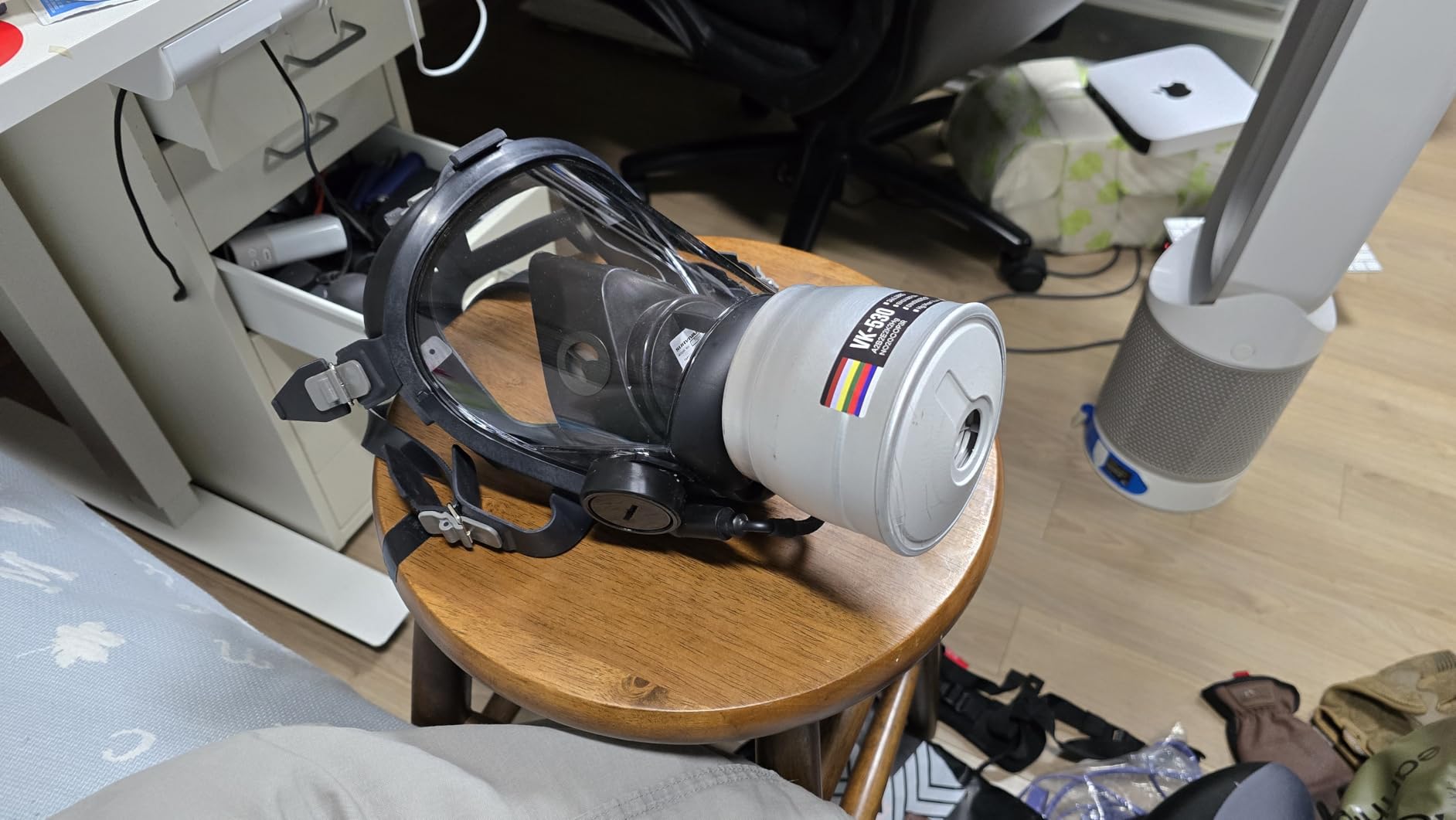
One verified buyer provided compelling testimony about using the VK-530 during an actual house fire, successfully filtering toxic smoke long enough to reach safety. That’s the kind of real-world validation that makes this filter stand out from laboratory-tested alternatives.
Italian manufacturing quality
MIRA manufactures the VK-530 in Italy, which matters for buyers who prioritize European production standards. The A2B2E2K2HgNO20COP3R rating is comprehensive, covering organic vapors, acid gases, inorganic gases, ammonia, mercury vapors, smoke particles, and carbon monoxide in a single canister.
The vacuum-sealed packaging extends shelf life to 5 years from manufacture. Reviewers mention the seal integrity is consistent across units, though some report receiving older stock with reduced remaining shelf life. Check the manufacturing date upon arrival.
Best use cases
The VK-530 is purpose-built for fire and smoke scenarios. If you live in a wildfire zone, work in fire response, or want protection during structural fire emergencies, this filter fills a gap that standard CBRN filters don’t address. Pair it with a full-face respirator rated for high-temperature environments.
For nuclear-specific scenarios, the VK-530 provides particulate and multi-gas coverage but lacks the Reactor rating for radioactive iodine. Use it as a complement to a Reactor-rated filter rather than a replacement. The CO protection is its unique value, not its nuclear specialty.
How to Choose the Right Gas Mask Filter for Nuclear Scenarios
Choosing the best gas mask filters for nuclear protection means understanding what each certification means and which threats you actually need to address. I break this down into the specific decisions you’ll face during selection.
Understanding CBRN certification
CBRN stands for Chemical, Biological, Radiological, and Nuclear. A true CBRN filter is tested against agents in all four categories. The EN 14387 standard is the European certification that defines filter performance for gas and particulate filtration. NIOSH approval is the American equivalent for industrial respirators.
The Reactor rating is the designation that specifically addresses radioactive iodine. Filters without Reactor designation may capture radioactive particulates through P3 filtration, but they aren’t certified for the unique chemistry of radioactive iodine capture. For nuclear preparedness, Reactor-rated filters are essential.
40mm NATO thread compatibility
The 40mm NATO thread standard is the universal language of modern respirators and gas masks. Most quality full-face respirators accept 40mm NATO threaded filters, which means you can mix and match masks and filters from different manufacturers. The 40mm x 1/7 inch specification is the NATO standard, while GOST is the Russian equivalent that requires an adapter.
If you already own a full-face respirator, verify it accepts 40mm NATO filters before purchasing. Most modern tactical and industrial masks do, but older surplus masks may use different threading.
Filter classification codes explained
Filter classifications follow a letter-number code system. A2B2E2K2HgP3 means the filter covers organic vapors (A), inorganic gases (B), acid gases (E), ammonia (K), mercury vapor (Hg), and particulates (P3). The numbers indicate capacity. Higher numbers mean longer service life in that agent class.
P3 is the highest particulate filtration grade, capturing 99.95% or more of airborne particles. For radioactive fallout, which is essentially fine particulate matter, P3 is essential. Don’t settle for P2 or P1 filters when preparing for radiological threats.
Shelf life and storage considerations
Filter shelf life depends on the activated carbon bed integrity. Once sealed at the factory, quality filters last 5 to 20 years depending on the manufacturer and storage conditions. Keep filters in their original vacuum-sealed packaging until deployment. Store in a cool, dry location away from direct sunlight and temperature swings.
For stockpile planning, calculate based on the 2 filters per person per day rule. If you’re sheltering for 14 days with a family of 4, you need 112 filter units. That sounds excessive until you realize filters degrade with use, and you want backups for failed seals and extended scenarios.
Filters to avoid
Avoid Russian GP-5 surplus filters. Older GP-5 filters contained asbestos in the filter media, and even modern surplus units may have degraded seals or expired carbon beds. The GP-5 mask is iconic, but the filters are not safe for emergency preparedness.
Avoid expired Israeli civil defense filters without verifying the expiration date. Many surplus Israeli filters sold online are decades past their rated shelf life. The carbon bed degrades over time, and an expired filter may offer little protection when you need it.
Avoid filters without clear certification markings. If the manufacturer can’t tell you which standard their filter meets, walk away. CBRN protection isn’t a place for unmarked products.
Stockpile sizing for family preparedness
The standard guideline for filter rotation is 2 filters per person per day of shelter use. A 14-day shelter scenario for a family of 4 requires 112 filters. That sounds like a lot until you spread it across multiple storage locations and vehicle kits.
Mix filter types in your stockpile. Keep one Reactor-rated CBRN filter per family member as the primary, plus industrial-grade backups for chemical and biological scenarios. Diversification protects you if a specific filter model is unavailable during a crisis.
For more guidance on building emergency preparedness systems, our countertop water filter guide covers water security, and our gas furnace guide addresses home heating during power outages. A complete preparedness plan addresses air, water, and shelter together.
Frequently Asked Questions
Will a gas mask help in a nuclear attack?
A gas mask with a CBRN filter helps in a nuclear attack by blocking inhalation of radioactive particulates and iodine. The mask itself does not stop gamma radiation, but it prevents the most immediate harm from fallout that settles in the lungs. Pair the mask with a Reactor-rated CBRN filter like the MIRA NBC-77 SOF for best results.
Which mask is best for nuclear radiation?
The best mask for nuclear radiation is a full-face respirator paired with a Reactor-rated CBRN filter. The MIRA Safety CM-6M with NBC-77 SOF filter is the most recommended combination among preppers and tactical professionals. The full-face design protects your eyes from fallout, and the Reactor-rated filter addresses radioactive iodine specifically.
What gas mask filter for nuclear fallout?
For nuclear fallout, choose a CBRN filter with the Reactor designation for radioactive iodine capture, plus P3 particulate filtration for fallout dust. The MIRA NBC-77 SOF is the top recommendation because it carries the Reactor rating, offers a 20-year shelf life, and fits standard 40mm NATO full-face respirators. Avoid industrial-only filters that lack CBRN certification.
What is the strongest gas mask filter?
The strongest gas mask filter is a CBRN filter with Reactor certification for radioactive iodine plus broad multi-gas coverage. The MIRA NBC-77 SOF combines the A2B2E2K2HgSXP3DR Reactor rating with 20-year shelf life and 40mm NATO compatibility. For industrial scenarios, the MIRA DotPro 330 adds mercury vapor protection over 170 hours.
Can gas masks filter radiation?
Gas masks filter radiation indirectly by blocking radioactive particulates and iodine from being inhaled. P3-grade filters capture at least 99.95% of airborne particles, including radioactive dust attached to fallout. Gas masks do not stop gamma radiation from passing through the body directly. For direct gamma exposure, you need dense shielding like concrete or lead, not a filter.
Final Verdict
After comparing all 8 filters against certifications, shelf life, real reviewer experiences, and nuclear-specific criteria, my pick for the best gas mask filter for nuclear protection is the MIRA Safety NBC-77 SOF. It carries the Reactor rating for radioactive iodine, offers a 20-year shelf life, fits standard 40mm NATO full-face respirators, and has the broadest CBRN agent coverage in the lineup. Reviewers across prepper, tactical, and industrial forums consistently recommend it for actual nuclear scenarios.
For budget-conscious preppers, the MOARON NATO NBC filter delivers NATO-spec construction at a lower cost, though without the Reactor rating. For families building multi-decade stockpiles, the combination of the NBC-77 SOF as primary plus MOARON as backup gives you both certified nuclear protection and affordable redundancy. Whichever filter you choose, verify the certification markings, check the seal integrity, and stockpile enough units to rotate through a 14-day shelter scenario.
If you’re also planning home heating, cooking, and water security during an extended emergency, our gas cooktop guide and gas dryer guide cover utility-side preparedness. A complete plan addresses every system you depend on.