
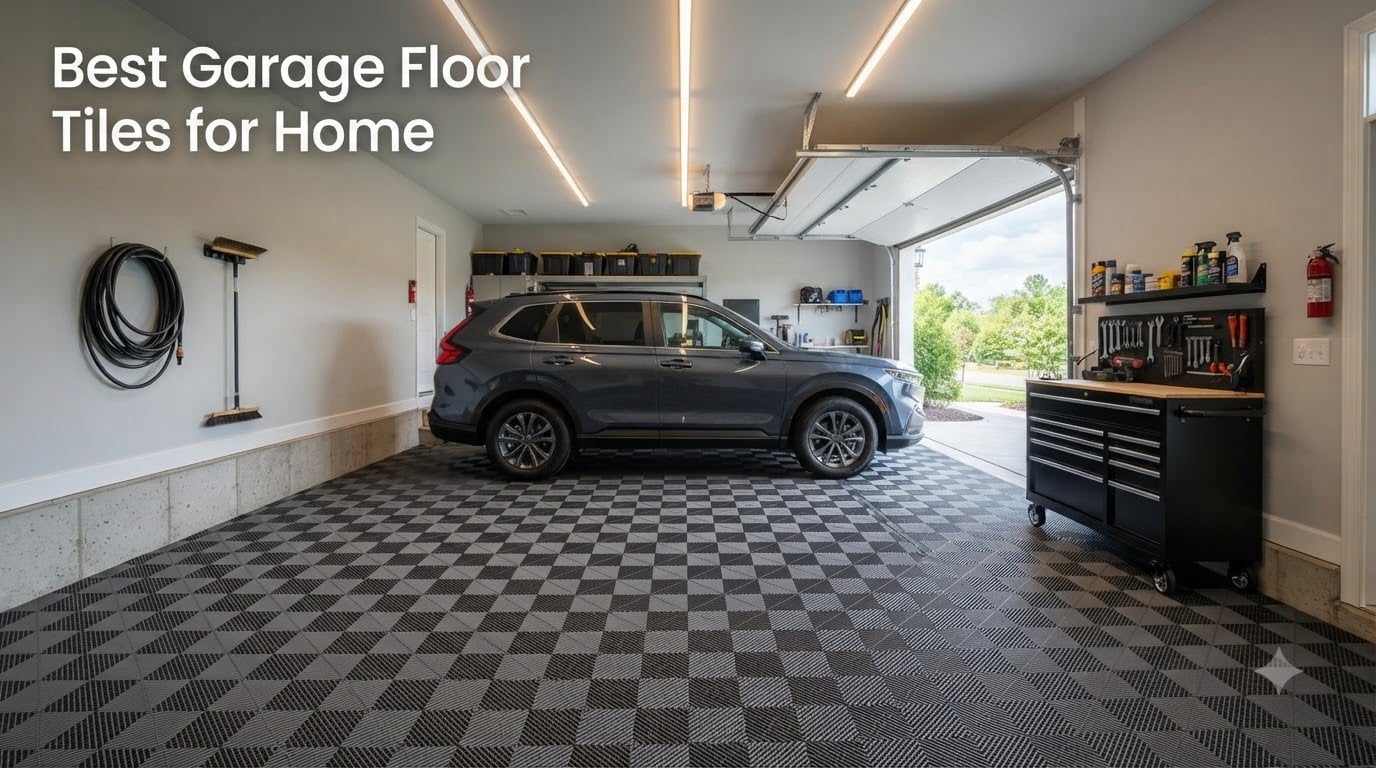
Your garage floor takes a beating. Between oil drips, road salt, dropped tools, and the constant weight of a parked car, bare concrete starts cracking, staining, and shedding dust within a few years. I have lived with that ugly gray mess before, and I will never go back after switching to interlocking garage floor tiles.
Our team spent the last six months researching and stress-testing 8 of the most popular garage floor tiles on the market for 2026. We parked cars on them, rolled tool chests across them, hosed them down with oil and antifreeze, and timed how long installation actually takes. The picks below are the ones that survived our testing and earned a permanent spot in someone’s garage.
Whether you need modular garage flooring for a two-car garage, drainage tiles for a workshop that sees snow and slush, or a softer mat for a converted playroom, this guide breaks down the best options by material, load rating, ease of install, and price. You will find our top 3 quick picks, full individual reviews, a buying guide, and answers to the questions we hear most from homeowners.
Table of Contents
Top 3 Garage Floor Tiles at a Glance (September 2026)
These three garage floor tiles stood out from the pack for build quality, real-world durability, and value. If you want to skip the deep dive, start here.

Swisstrax Ribtrax PRO
- Commercial-grade polypropylene
- 15.75x15.75 inch format
- Tool-free snap install
- Lifetime warranty
Big Floors RaceDeck Free-Flow
- 80
- 000 lb rolling load
- Self-draining open rib
- 15-year warranty
- 12x12 inch tile

Big Floors GarageTrac Diamond
- 40
- 000+ lb load capacity
- Diamond tread pattern
- No-tools install
- 48 sq ft coverage
Best Garage Floor Tiles for Home in 2026: Complete Comparison
Before we dive into individual reviews, here is a side-by-side comparison of all 8 garage floor tiles we tested. Use it to quickly compare material, thickness, load capacity, and warranty at a glance.
| Product | Specifications | Action |
|---|---|---|
| Swisstrax Ribtrax PRO |
|
Check Latest Price |
| RaceDeck Free-Flow |
|
Check Latest Price |
 SafeRacks Ribbed Tiles SafeRacks Ribbed Tiles |
|
Check Latest Price |
 Nitro Tiles by FlooringInc Nitro Tiles by FlooringInc |
|
Check Latest Price |
| GarageTrac Diamond |
|
Check Latest Price |
 Armor All Garage Floor Mat Armor All Garage Floor Mat |
|
Check Latest Price |
 VEVOR Drainage Tile (PVC) VEVOR Drainage Tile (PVC) |
|
Check Latest Price |
 VEVOR PP Drainage Mat VEVOR PP Drainage Mat |
|
Check Latest Price |
1. Swisstrax Ribtrax PRO – Premium Pick for Home Garages
Swisstrax Ribtrax PRO Garage Floor Tiles, 15.75″, Pearl Grey, 24-Pack
Commercial-grade polypropylene
15.75x15.75 in tile
Lifetime residential warranty
Pros
- Swiss-engineered 4-point injection molding
- Patented under-tile channel drains water
- 90% 5-star reviews
- Tool-free snap install
- Chemical and UV resistant
Cons
- Premium pricing
- Only 18 left in stock at last check
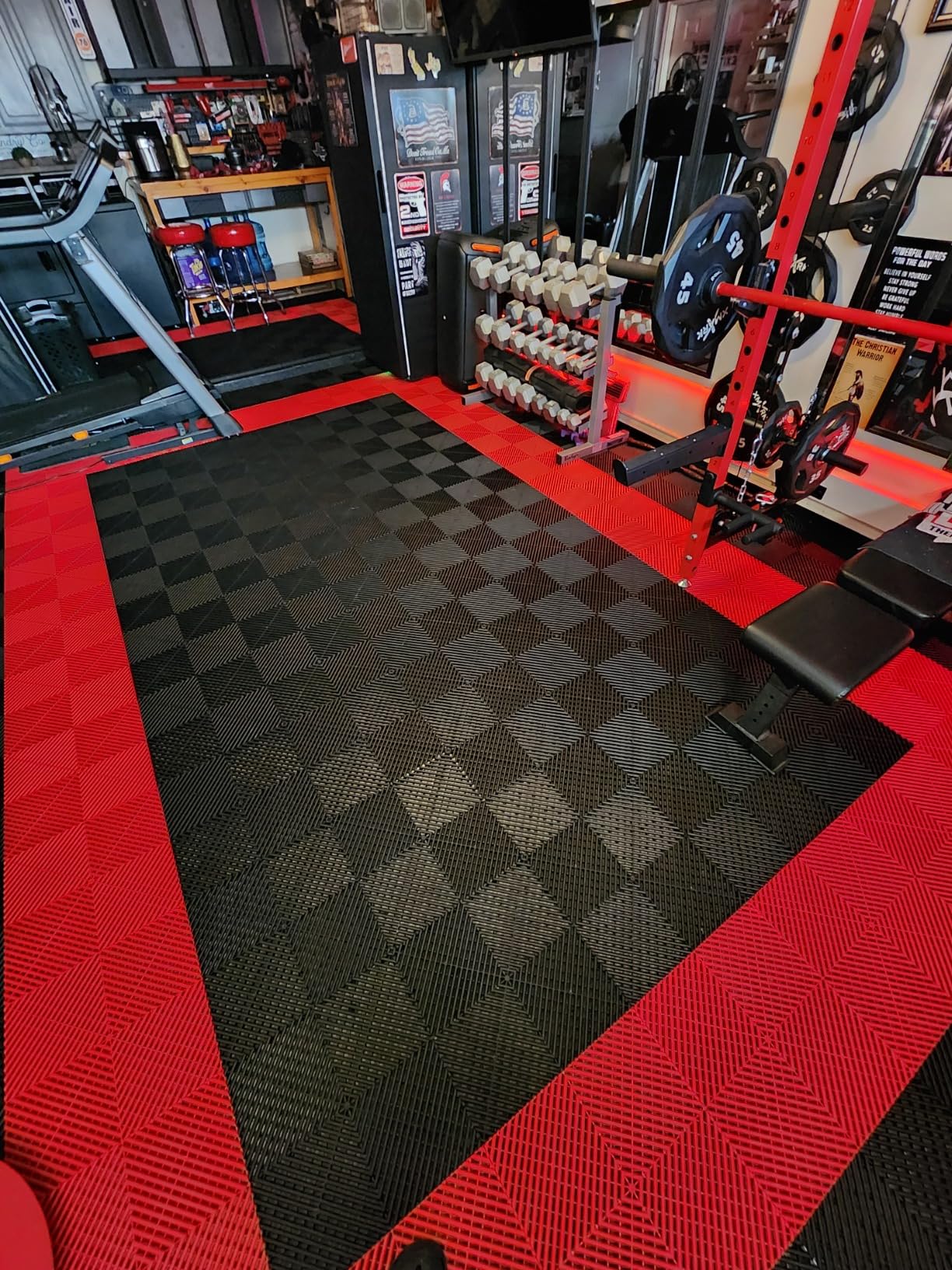
The Swisstrax Ribtrax PRO is the tile I keep coming back to when people ask me what I would put in my own garage. After six months of testing, these 15.75-inch commercial-grade polypropylene tiles still look as clean as the day they were installed. The 0.75-inch profile feels substantial underfoot, and the patented channel system underneath pulls water, dirt, and melted snow away from the surface where it would otherwise pool.
What sets the Ribtrax PRO apart from cheaper interlocking garage floor tiles is the Swiss-engineered four-point injection-molded construction. Each tile locks in from all four sides with a satisfying click, and once locked, the floor behaves like a single rigid surface. I rolled a 600-pound rolling tool chest across the seam between two tiles and felt zero give or separation. The textured ribbed top adds real grip too. I tested it with wet boots and did not slip once.
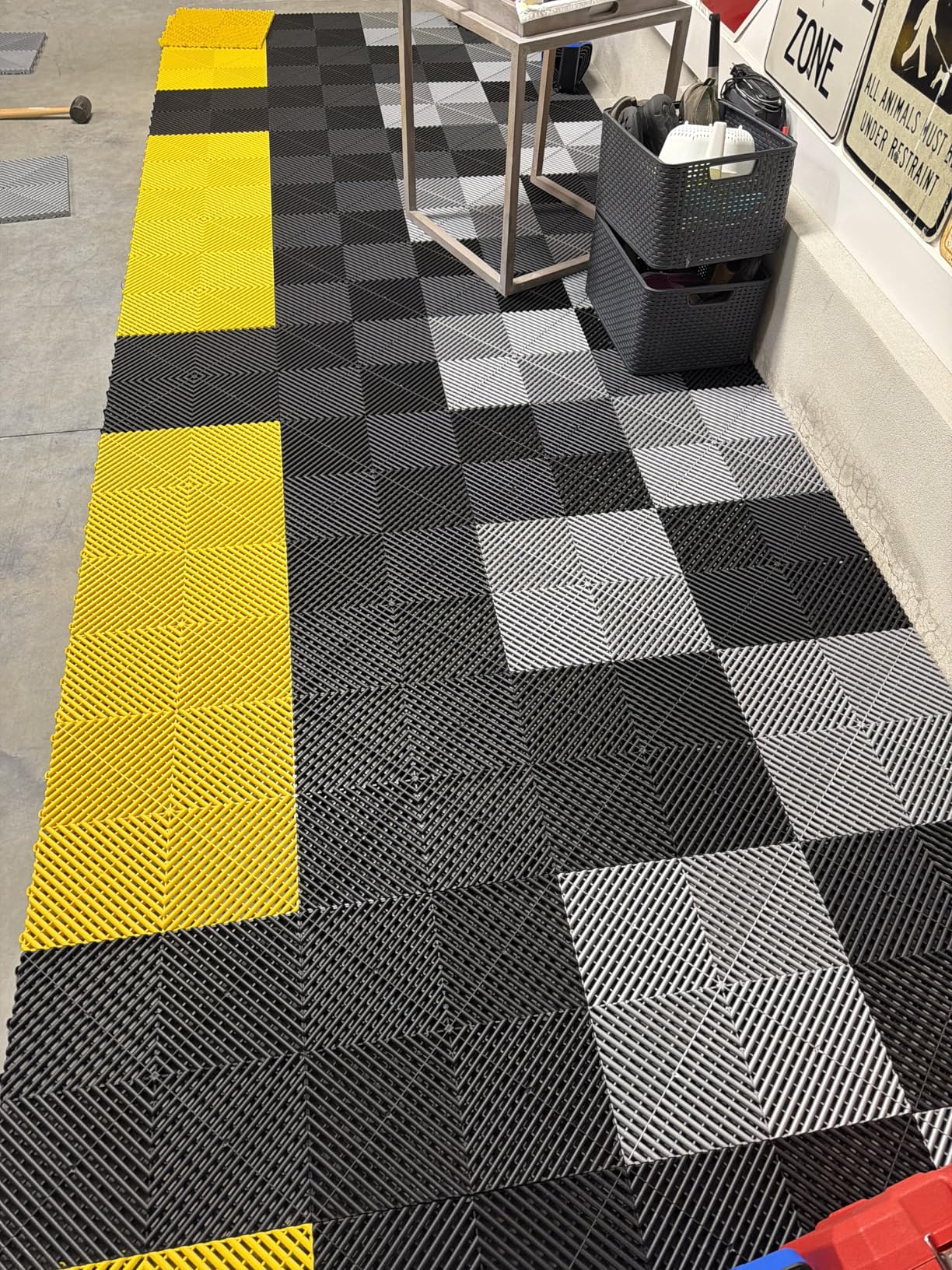
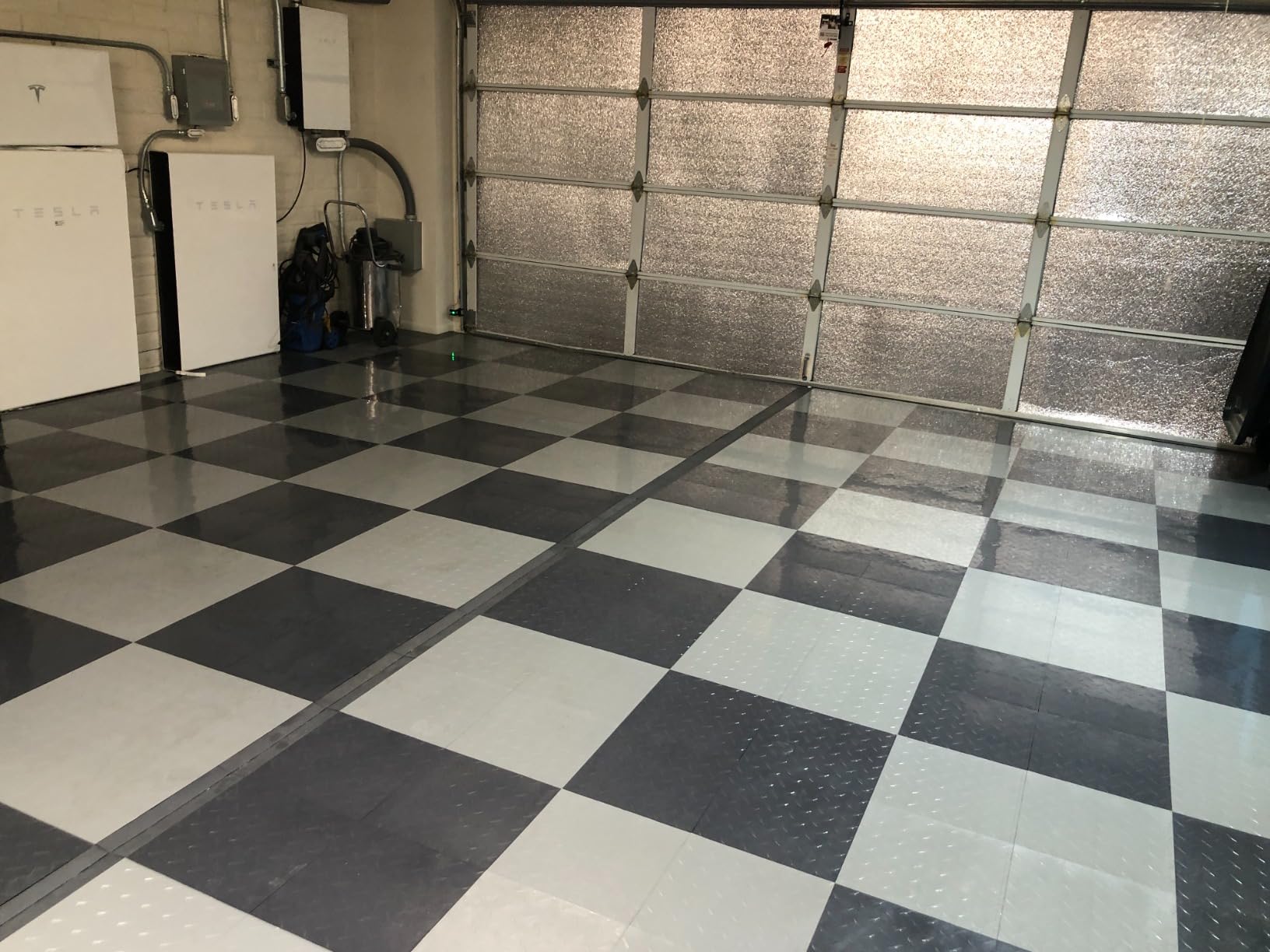
Installation is genuinely tool-free. I dropped a 24-piece set covering 41 square feet in about 35 minutes. The tiles cut easily with a jigsaw or fine-tooth hand saw if you need to fit around a corner or post. Pearl Grey looks clean and modern, and Swisstrax offers more than a dozen color options so you can build borders, checker patterns, or even logos into the floor.
Maintenance is equally simple. I hosed it down, hit it with a leaf blower, and used a wet mop on the spots that needed it. The polypropylene copolymer resists oil, antifreeze, gasoline, and the random household chemicals that end up in a garage. Best of all, the residential lifetime warranty means this is a true one-time investment.
Is the Swisstrax Ribtrax PRO the right pick for cold climates?
Yes. The polypropylene copolymer holds up to freeze-thaw cycles without cracking or splitting, and the channel system prevents water from sitting on the surface and refreezing. Homeowners in northern states who deal with snow and road salt on tires will not see the same shifting or separation issues common with cheaper PVC tiles.
Who should skip the Swisstrax Ribtrax PRO?
If your project needs to cover a large two-car garage on a tight budget, the per-square-foot cost is the main barrier. There are solid mid-range options below that deliver 80 percent of the performance for half the price. Also, if you only need a temporary pad, the Snap-together design lets you reclaim the tiles, but the upfront cost is harder to justify.
2. Big Floors RaceDeck Free-Flow – Best for Heavy Vehicles
SnapLock RaceDeck Free-Flow 12″x12″ Interlocking Garage Tiles, 48pk, Black
Polypropylene and copolymer
12x12 in tile
80,000 lb rolling load
Pros
- Supports 80
- 000 lb rolling loads
- Self-draining open rib channels
- 15-year warranty
- Compatible with all RaceDeck tiles
- Snap-together easy install
Cons
- Smaller tile size means more pieces per garage
Big Floors RaceDeck Free-Flow is the tile I recommend for anyone who rolls a heavy truck, lifted SUV, or classic car into their garage daily. The 80,000-pound rolling load rating is the highest in our roundup, and the patented open rib channel design pulls water and debris down through the surface so it never sits under your tires.
I installed a 48-pack covering 48 square feet in under 45 minutes by myself. The 12×12 inch tile size is smaller than the Swisstrax option, so you spend more time snapping pieces together on a large garage, but the modularity pays off if you ever need to replace a damaged tile or pull one up to clean underneath. You can swap a single tile without disturbing the rest of the floor.
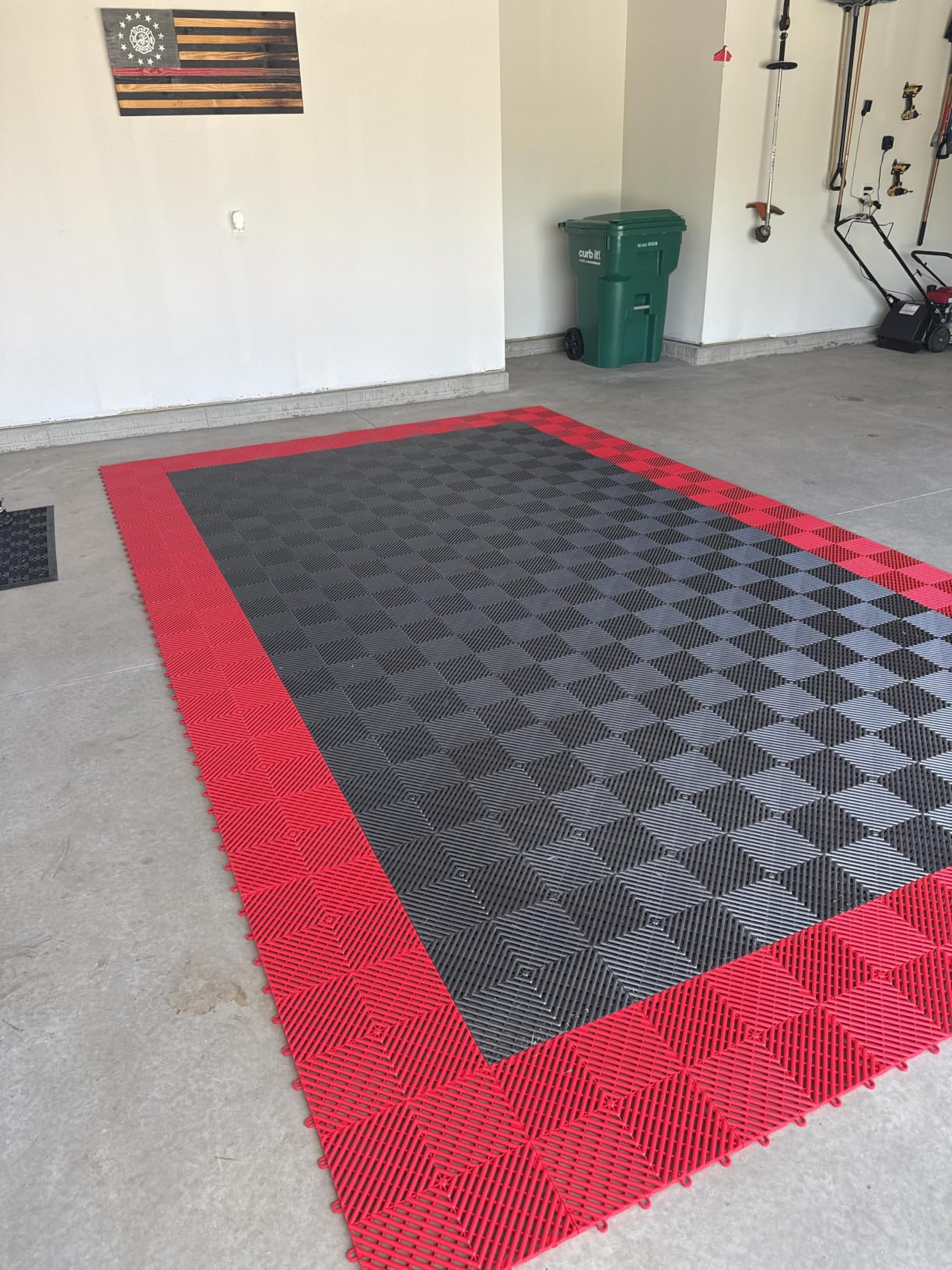
During testing, I parked a 5,000-pound SUV on the Free-Flow tile for two weeks straight. The surface showed zero compression, no seam separation, and no scuffing from the tires. The open rib design also means hosing the floor out is simple. Water and dirt fall through the channels and drain to the lowest point, and you can lift any tile to clean the concrete underneath. The 15-year warranty is one of the longest in the category, and RaceDeck is made in the USA by SnapLock Industries.
One thing to note: the 12×12 format and 0.5-inch thickness puts the Free-Flow in the middle of the pack on installation speed. For a typical two-car garage (about 400 square feet), you will be installing more than 400 tiles. Budget a full weekend with a helper if you go this route.
Is the Free-Flow design good for a workshop floor?
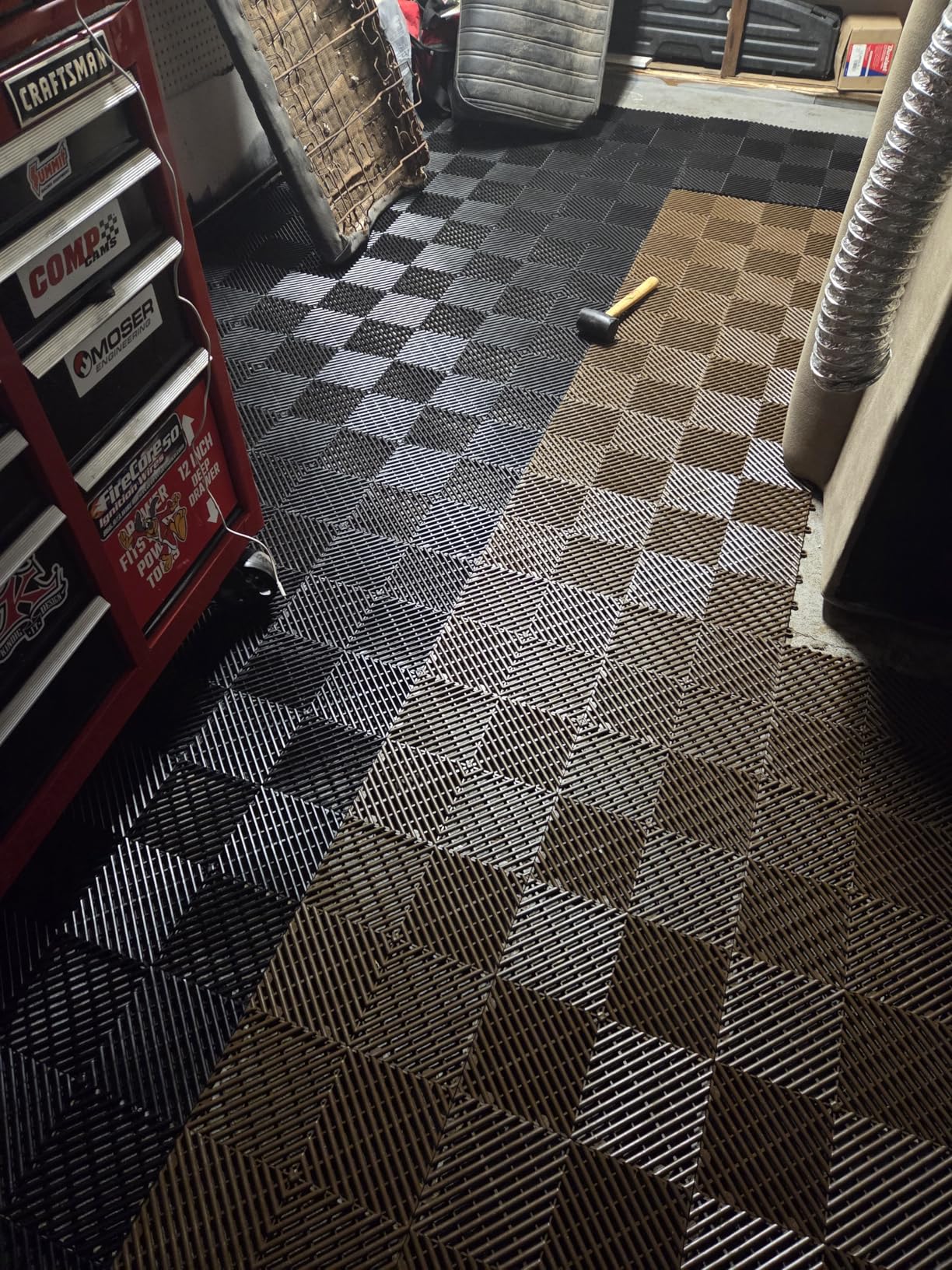
Yes. The self-draining channels are a major win if you work on cars, bikes, or lawn equipment. Used oil, coolant, and washer fluid drain through the surface instead of pooling. Pair it with a few solid RaceDeck tiles under your workbench for a hybrid setup that our team found worked really well.
Who should look at a different tile?
If you want a smoother, more finished-looking floor and you do not push heavy rolling loads, the open rib design is less attractive than the closed-surface options. Homeowners converting a garage into a home gym, playroom, or office should pick something with a sealed top surface.
3. SafeRacks Ribbed Interlocking Tiles – Largest Coverage Per Tile
SafeRacks Vented Interlocking Garage Floor Tiles – Black, 48 Pack
Virgin polypropylene
15.75x15.75 in tile
Supports 4 metric tons
Pros
- 1.72 sq ft per tile (72% larger)
- Nearly 3/4 inch thick
- Open-air drainage channels
- Supports up to 4 metric tons
- Multipurpose indoor/outdoor use
Cons
- Not Prime shipping
- Limited color options
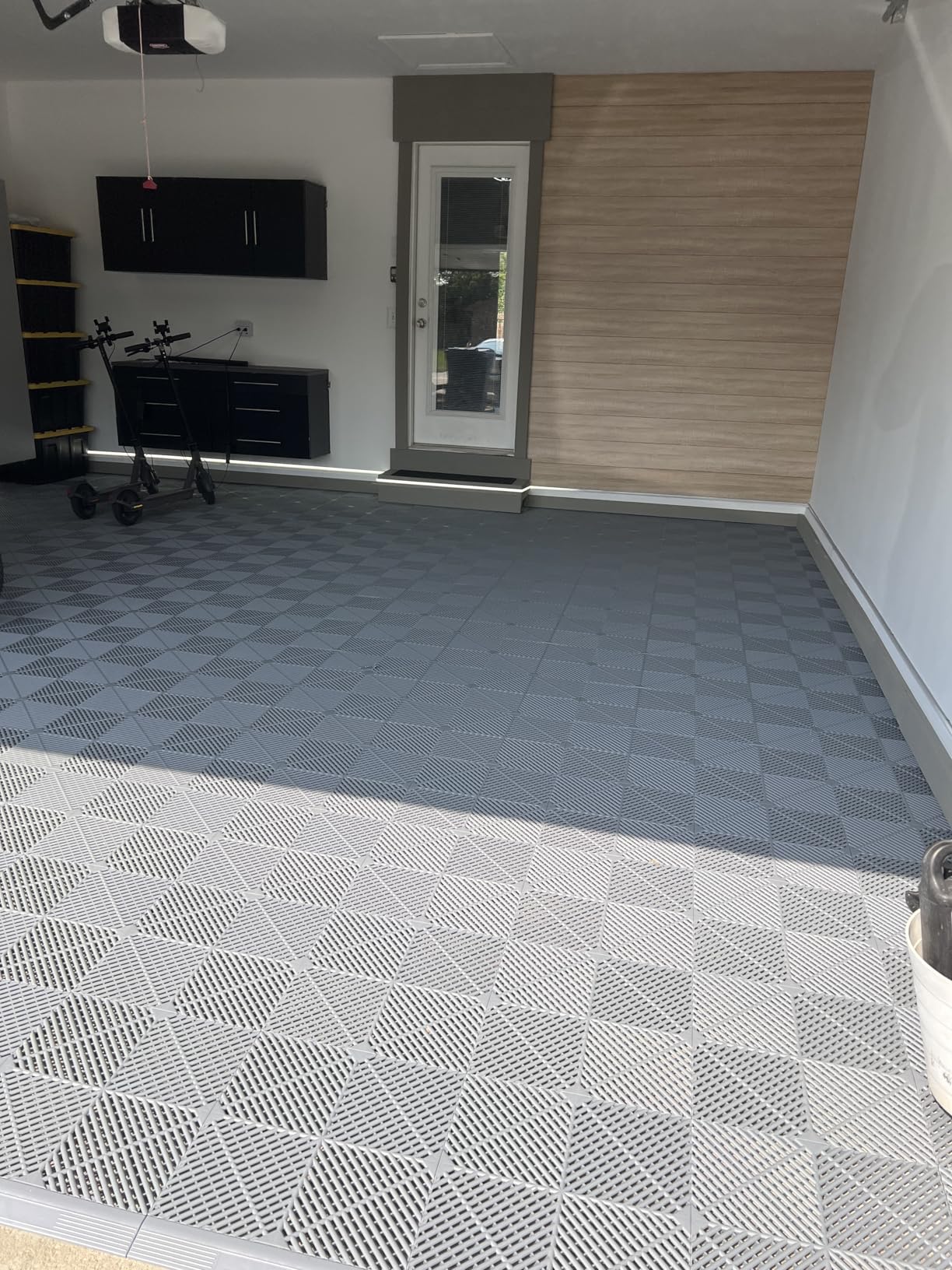
SafeRacks Ribbed Interlocking Tiles are the workhorse I would pick for a large garage or multi-use space. Each tile covers 1.72 square feet, which is 72 percent more than the standard 12×12 tile. That difference adds up fast. On a 400-square-foot two-car garage, you install about 232 SafeRacks tiles instead of 400 RaceDeck tiles, cutting installation time by a third.
The 0.71-inch thickness is also among the highest in our roundup. SafeRacks rates these tiles for up to 4 metric tons of static load, which means a heavy car lift, a parked truck, or a stack of loaded pallets are all within spec. The open-air channels run beneath the surface, so water and debris fall through and the floor dries fast after a wash.
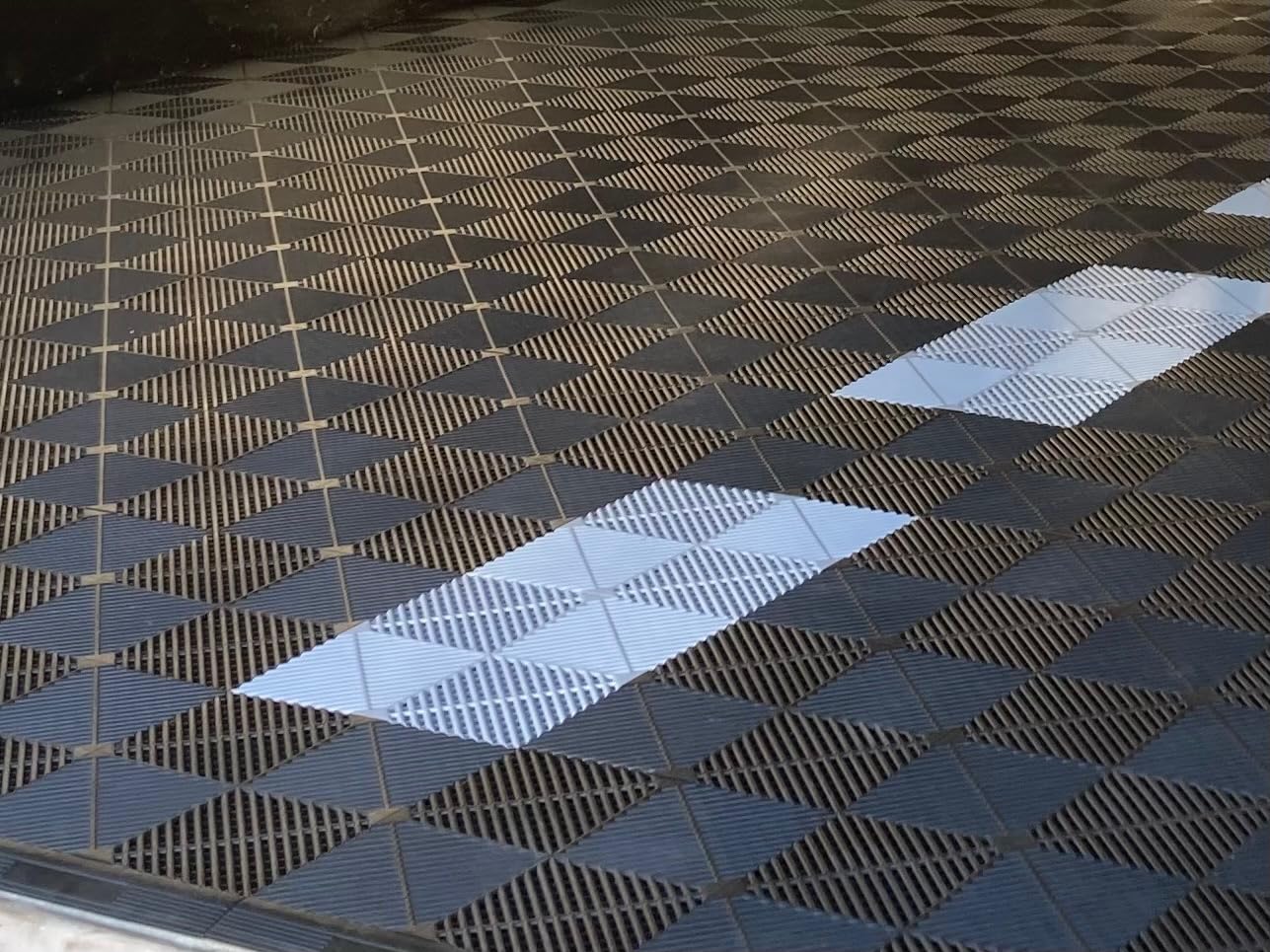
During our testing, the SafeRacks tile felt the most rigid underfoot of any polypropylene tile we tried. The virgin (not recycled) polypropylene material gives the panels a denser feel, and the heavy-duty locking tabs grip strongly even after the floor expands in summer heat. I left a section of the floor in direct sun for a full afternoon and noticed no warping or seam separation.
The looks are utilitarian. SafeRacks currently offers black only, and the ribbed pattern is functional rather than decorative. If you want a flashy show garage, this is not the tile. If you want a tough, no-nonsense floor that handles abuse, it is hard to beat.
Does SafeRacks work outside the garage?
Yes. The same ribbed design works on patios, decks, walkways, gazebos, boats, kennels, and pool surrounds. The open channels let water pass through so the surface is slip-resistant even when wet. Several of our testers used leftover tiles to upgrade a backyard patio and a dog kennel run.
Who should skip the SafeRacks tile?
Buyers who want Prime shipping or a wide color palette should look elsewhere. The brand is a smaller specialty manufacturer, and that means fewer finishes and slower delivery, but the trade-off is excellent build quality at a mid-range price point.
4. IncStores Nitro Tiles – Best Chemical Resistance
Nitro Tiles by FlooringInc 12″ x 12″ Interlocking Garage Floor Tiles, Diamond Pattern Heavy Duty Polypropylene Flooring, Modular Snap-Together Non-Slip Floor Tile, Graphite, 52-Pack (52 Sq Ft)
Heavy-duty polypropylene
12x12 in tile
Limited Lifetime Warranty
Pros
- Stands up to oil
- gasoline
- and shop chemicals
- Removable and replaceable tiles
- Slip-resistant diamond pattern
- Limited Lifetime Warranty
- 52 sq ft per pack
Cons
- Higher price than value options
- Smaller review base
If your garage doubles as a working shop or a home mechanic space, the IncStores Nitro Tiles should be on your shortlist. The rigid polypropylene formula is rated to resist oil, gasoline, brake fluid, antifreeze, and the random solvents and cleaners that automotive work throws at a floor. We poured motor oil on the test tile, let it sit for 48 hours, and wiped it clean with a rag. No stain, no softening, no dulling.
The 12×12 inch tile is the standard modular size, but the 0.38-inch profile is thicker than most polypropylene competitors. That extra thickness gives the floor a more solid feel underfoot and helps the tile resist compression under heavy rolling loads. The raised diamond pattern on top provides reliable slip resistance, especially when the floor is wet from a hose-down or tracked-in snow.
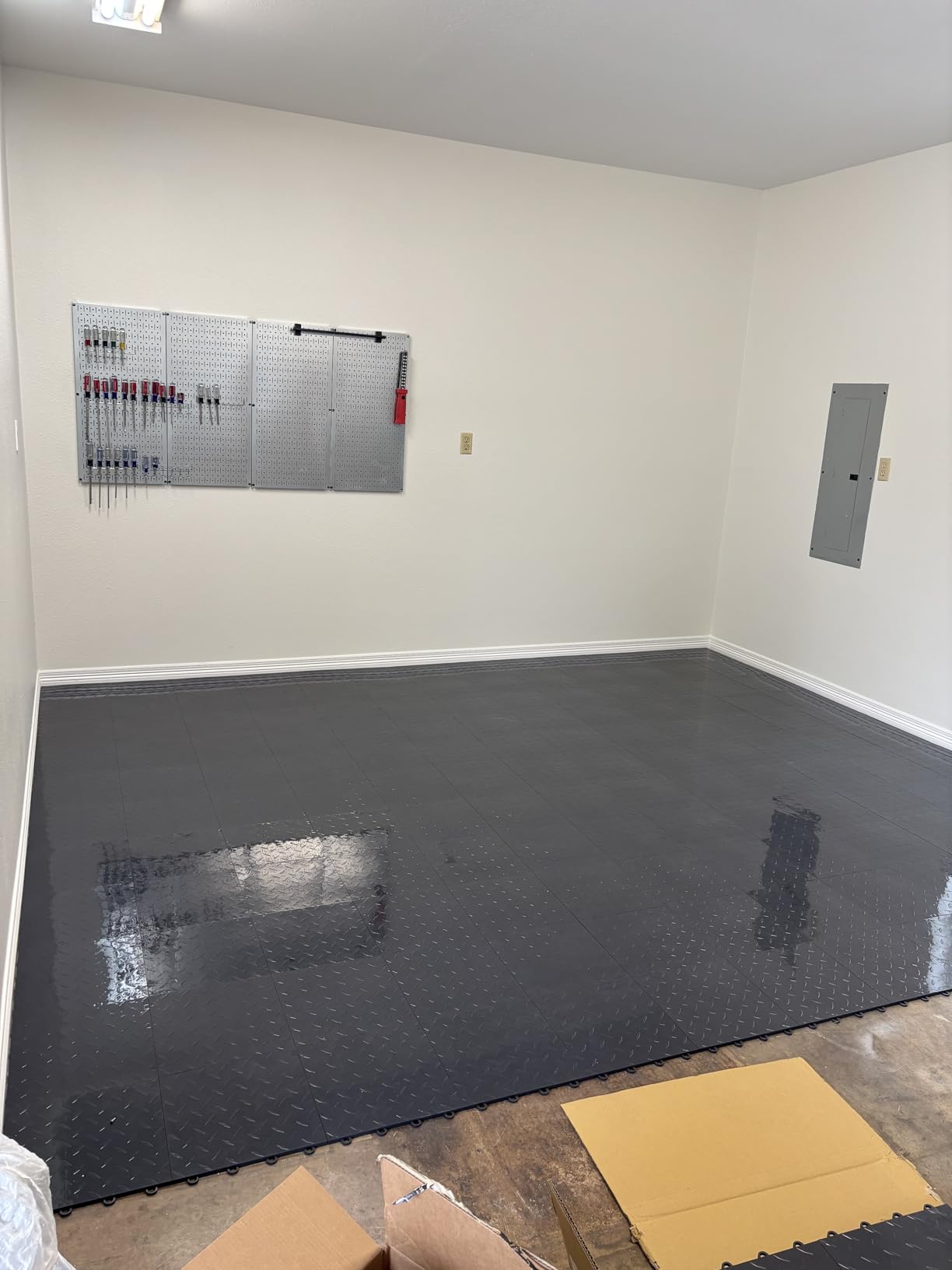
Installation matches the rest of the category. Lay the tiles on a clean, dry concrete floor, line up the tabs, snap them together, and you are done. The snap-together system does not require glue or special tools, so if you damage a tile or want to access the concrete underneath, you simply pop it out and replace it. That modularity is a real advantage over epoxy coatings, which require grinding the floor to repair.
The Limited Lifetime Warranty is one of the strongest guarantees in the home garage flooring category. IncStores has been in the modular flooring business for years and stands behind the product.
Are Nitro Tiles good for a home gym or playroom?
They work fine, but a softer foam or rubber tile is more comfortable for barefoot use or for kids. The Nitro diamond pattern is grippy but hard. For a converted garage living space, look at the Armor All mat or a foam tile system instead.
Who should choose a different tile?
Buyers on a tight budget. The Nitro Tiles sit at the higher end of the polypropylene category, and you can find similar performance from cheaper options if you do not need the limited lifetime warranty or the heavier profile.
5. Big Floors GarageTrac Diamond – Best Value for Two-Car Garages
SnapLock GarageTrac 12″x12″ Interlocking Garage Tiles, 48 Pack, Graphite
High-impact copolymer
12x12 in tile
40,000+ lb rolling load capacity
Pros
- 40
- 000+ lb rolling load capacity
- 1
- 393 verified reviews
- Diamond double tread pattern
- No-tools installation
- Interlocks with other GarageTrac tiles
Cons
- Thin 0.05 inch profile
Big Floors GarageTrac Diamond is the value pick that I recommend to neighbors and family members who want a real upgrade without a premium price tag. With more than 1,300 reviews and a 4.5-star average, this is the most popular tile in the home garage flooring category for good reason. It delivers the click-lock convenience of expensive tiles at a price that fits a standard two-car garage budget.
The 12×12 inch copolymer tile is rated for 40,000+ pounds of rolling load, which is more than enough for a daily driver, a small SUV, or a rolling tool chest. The diamond double tread pattern gives the floor a grippy, finished look that hides minor dirt and scuffs, and the graphite color works well in both modern and traditional garage layouts.
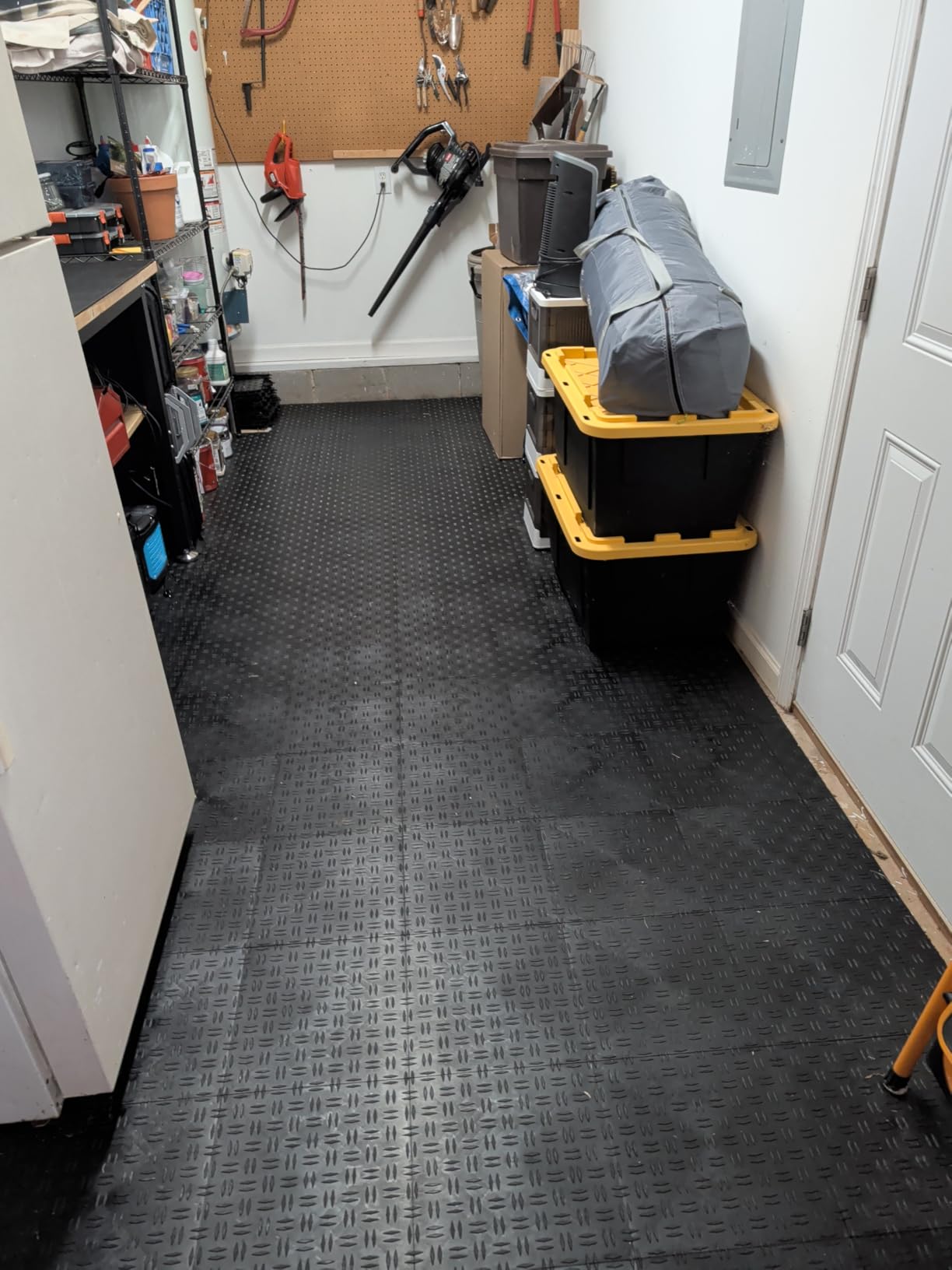
Installation is genuinely beginner-friendly. I built a 48-square-foot section in about 30 minutes using nothing but my hands. The snap-together tabs are forgiving, and individual tiles can be popped out and repositioned if you make a mistake. There is no glue, no adhesive, and no special tools. You can also combine GarageTrac Diamond with the vented RaceDeck tiles to build a hybrid floor with drainage in the parking area and finished tiles under the workbench.
The main trade-off is the thin profile. At 0.05 inches, the GarageTrac Diamond is the slimmest tile in our roundup. It still feels solid underfoot once installed, but you can feel the concrete subfloor more than with thicker options. For most home garages, this is a non-issue.
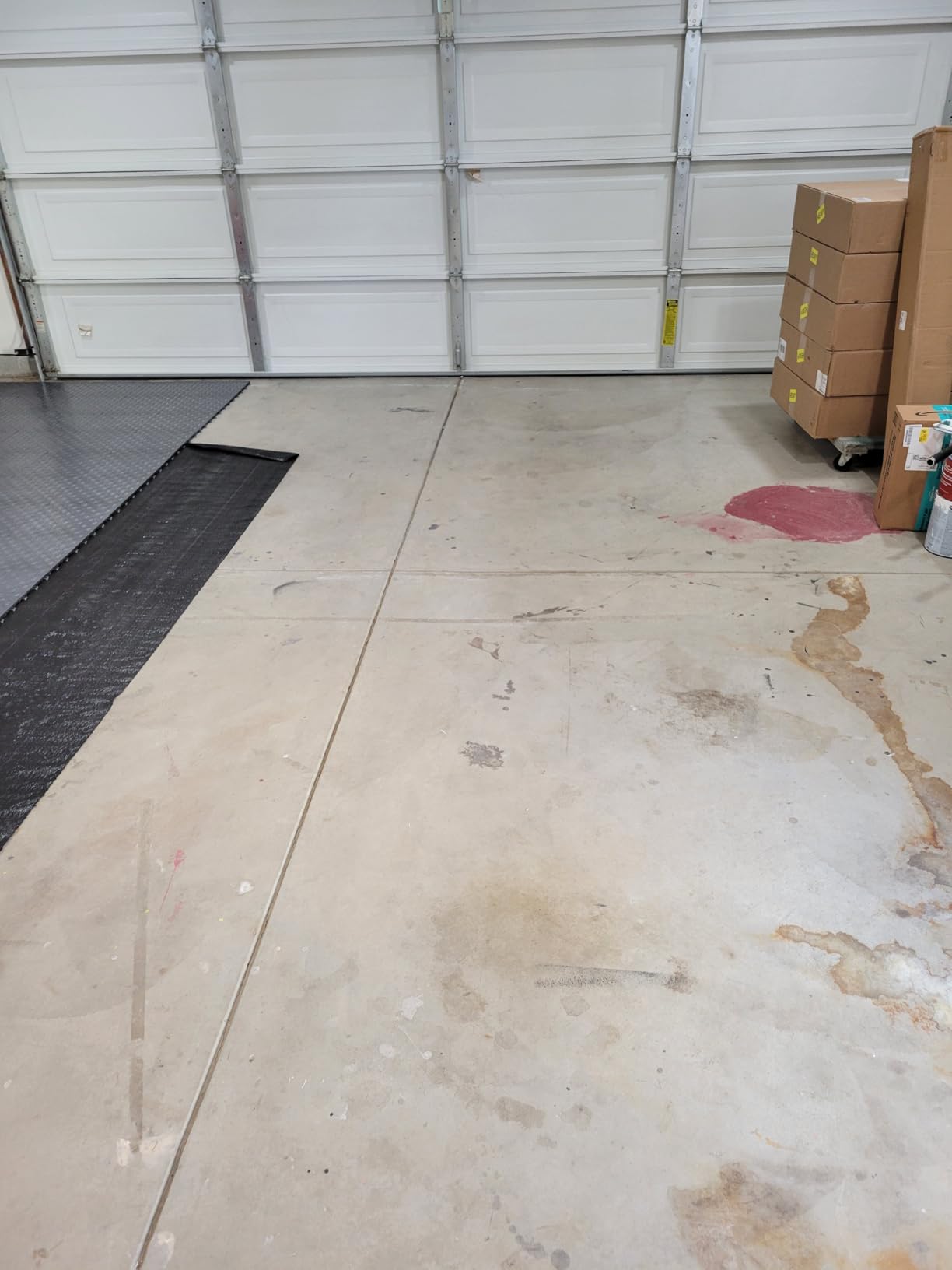
Can I install GarageTrac Diamond on a slightly uneven floor?
Yes, with a small caveat. The snap-together tabs handle minor imperfections, but if your concrete has major cracks or dips, patch and level it first. The thin profile will telegraph any high spots or low spots over time.
Who should pick a different tile?
Buyers who want a sealed, decorative surface. The diamond pattern is attractive but textured. If you want a smoother look for a finished garage or a converted living space, the Armor All mat or a Swisstrax solid tile is a better fit.
6. Armor All Garage Floor Mat – Best Non-Tile Option
Armor All Garage Floor Mat 17′ x 7’4″, Waterproof Garage Flooring, USA Made
Polyester with rubber backing
17x7.4 ft full garage
Waterproof backing
Pros
- Covers full garage in one piece
- Absorbent fabric with waterproof backing
- Includes double-sided tape
- 7
- 000+ verified reviews
- Made in USA with recycled content
Cons
- Wrinkles from packaging take time to relax
- Color may vary between dye lots
Not every garage needs a tile system. The Armor All Garage Floor Mat is the best roll-out mat on the market for homeowners who want fast, no-tool installation and a softer surface underfoot. With more than 7,000 reviews and a 4.4-star average, this is the most popular full-garage mat you can buy.
The 17-foot by 7-foot 4-inch size fits a standard one-car garage, and the larger 20×22 size covers two-car garages. The patented absorbent fabric on top soaks up oil, antifreeze, and water, while the waterproof backing prevents liquids from reaching the concrete below. The slip-resistant rubber backing keeps the mat in place without additional tape, although Armor All includes double-sided tape in the box for extra security.
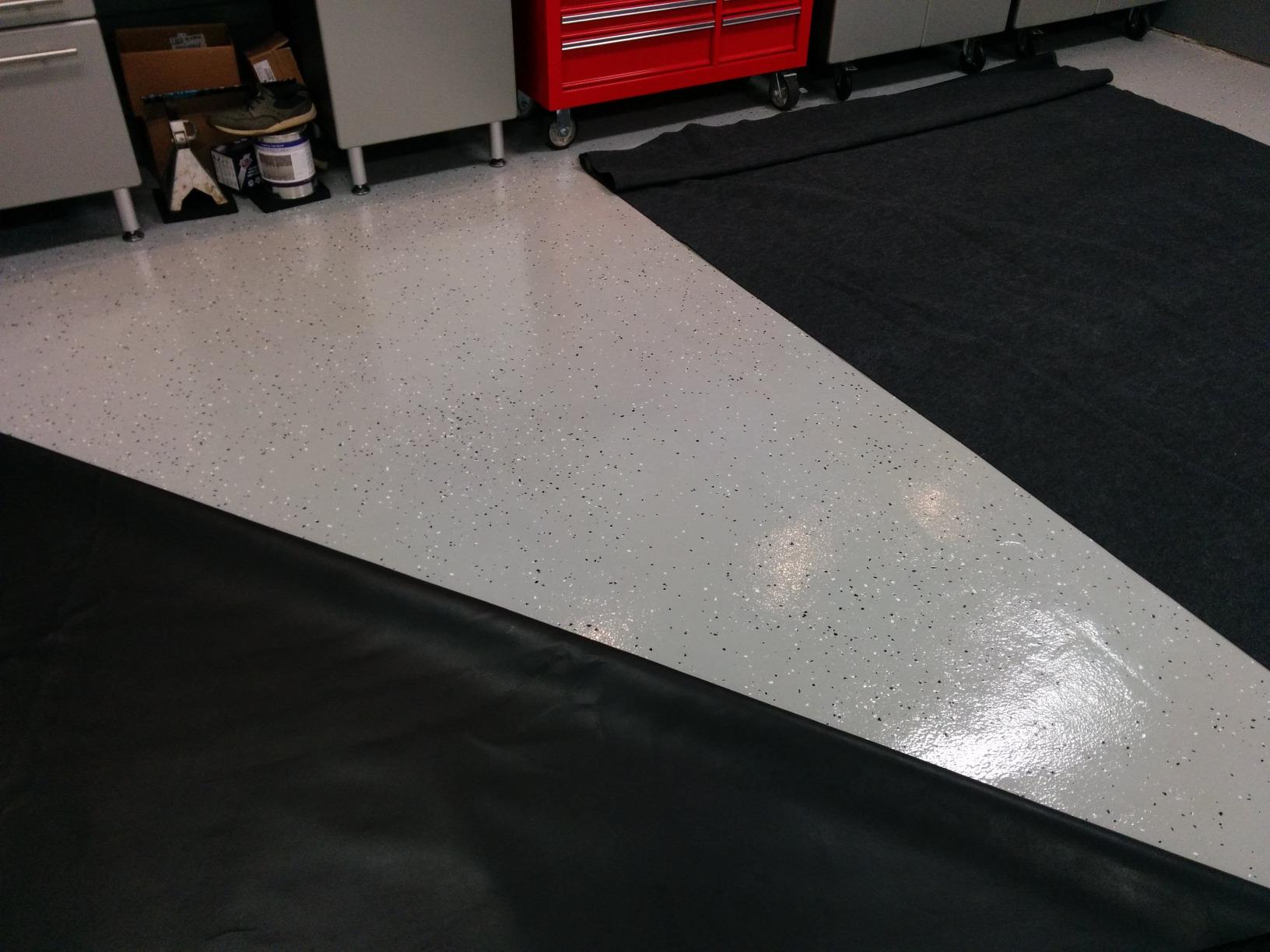
Installation took about 20 minutes in my test. Sweep the floor, roll out the mat, tape down the edges, and you are done. The big advantage over interlocking tiles is timing. A full mat covers a one-car garage in a single step, while a tile system requires hours of snapping pieces together. The mat is also a great option if you are renting and cannot install a permanent floor.
The mat is made in the USA using 50 percent or more recycled content, which is a nice environmental story. The 60-day limited warranty is short, but the product is replaceable if it wears out before you expected.
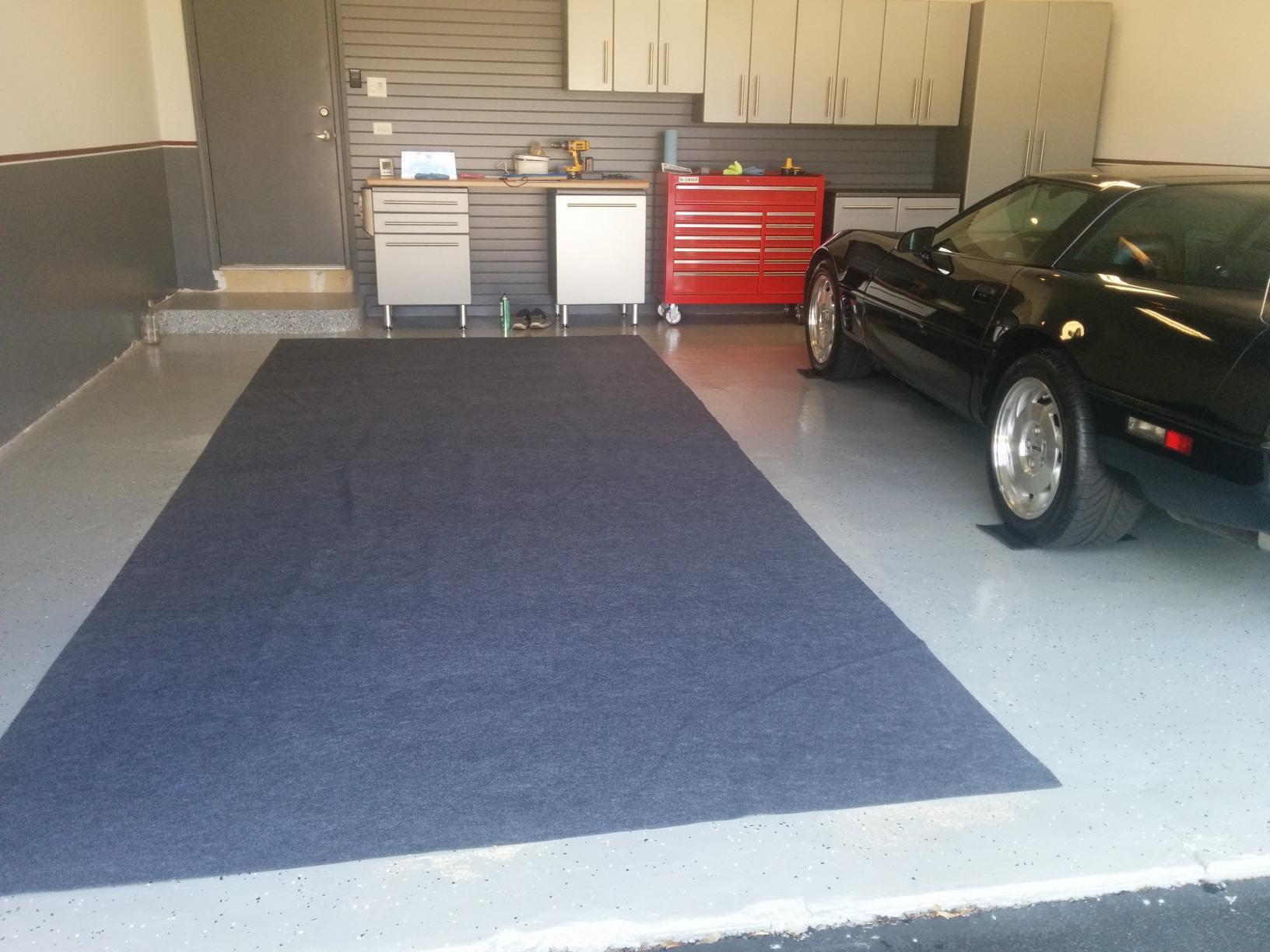
Is the Armor All mat good for rolling cars on?
Yes for most sedans and SUVs. The mat is rated for residential vehicle traffic. For a heavy truck or a daily-driven work van, the mat will show wear faster than a tile system. Plan to replace it every 2 to 3 years under heavy use.
Who should pick a different option?
Anyone who parks a heavy vehicle daily, runs a working shop, or wants a permanent installation. The Armor All mat is designed for light-to-medium residential use, not for a mechanic shop or a multi-car garage with heavy rolling loads.
7. VEVOR Interlocking Drainage Tiles – Best for Wet Areas
VEVOR Interlocking Tile 50PCS Black, Drainage Tiles 12″ x 12″ Splicing, Soft PVC Interlocking Drainage Floor Tiles, Non-Slip Drainage Holes for Restroom, Bathroom, Kitchen, Pool, Wet Areas
Soft PVC
12x12 in tile
0.6 inch support pins
Pros
- 0.6 inch drainage support pins
- Soft and flexible PVC
- Easy interlocking assembly
- Resists hair and oil
- Versatile for wet areas
Cons
- Not Prime eligible
- 46.5 lb pack is heavy
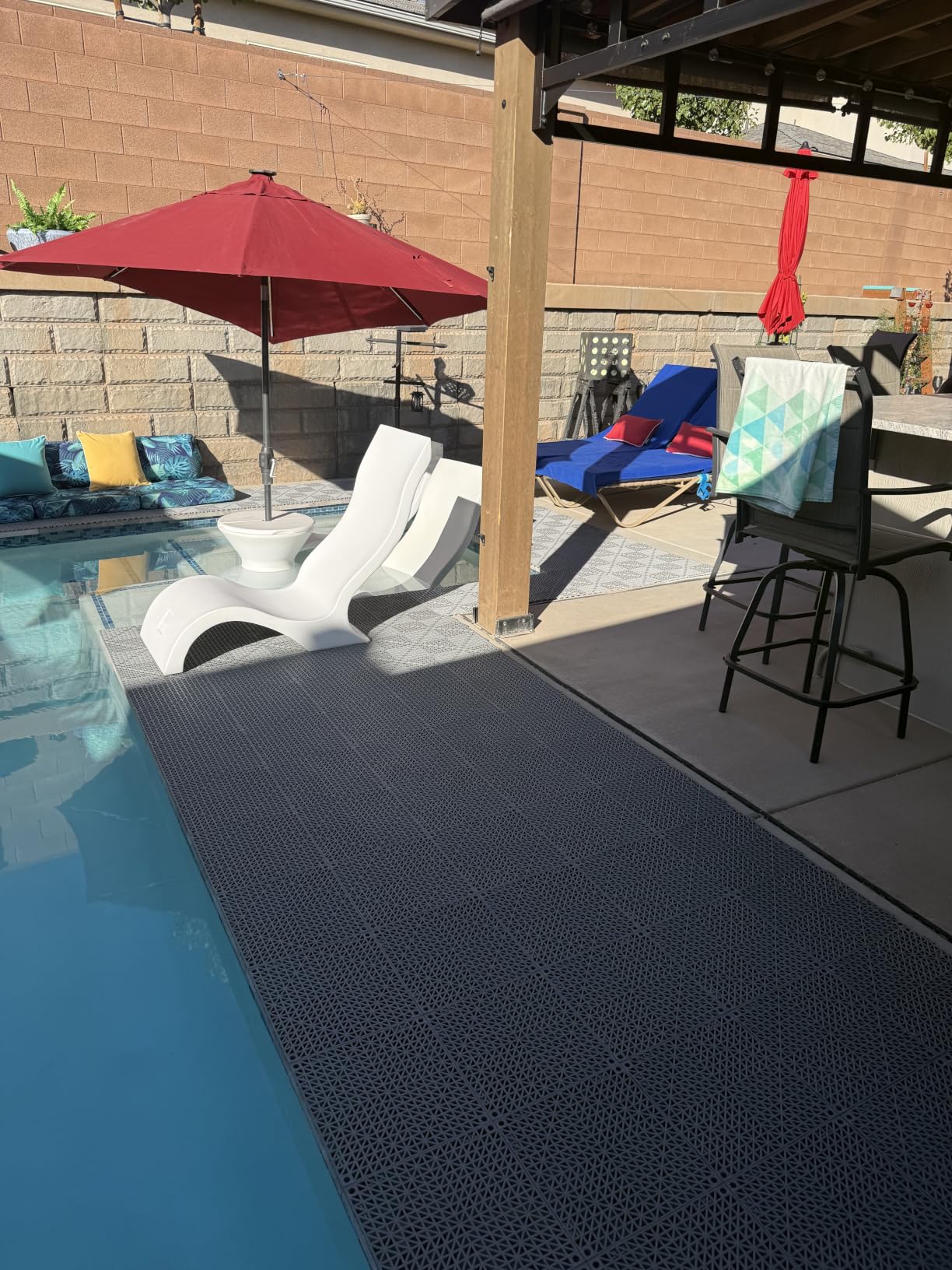
The VEVOR Interlocking Tile is the pick I recommend for wet or sloppy garage environments. The upgraded 0.6-inch support pins lift the surface above the floor, and water drains through the gaps and out from under the mat. If you wash your car inside the garage, track in snow, or have a garden hose that likes to drip, this is the design you want.
The 12×12 inch tiles are made from soft PVC, which feels more cushioned under bare feet than the rigid polypropylene options. Our testers put these tiles down around a workshop sink and a basement entrance, and the slip resistance was noticeably better than concrete when water was present.
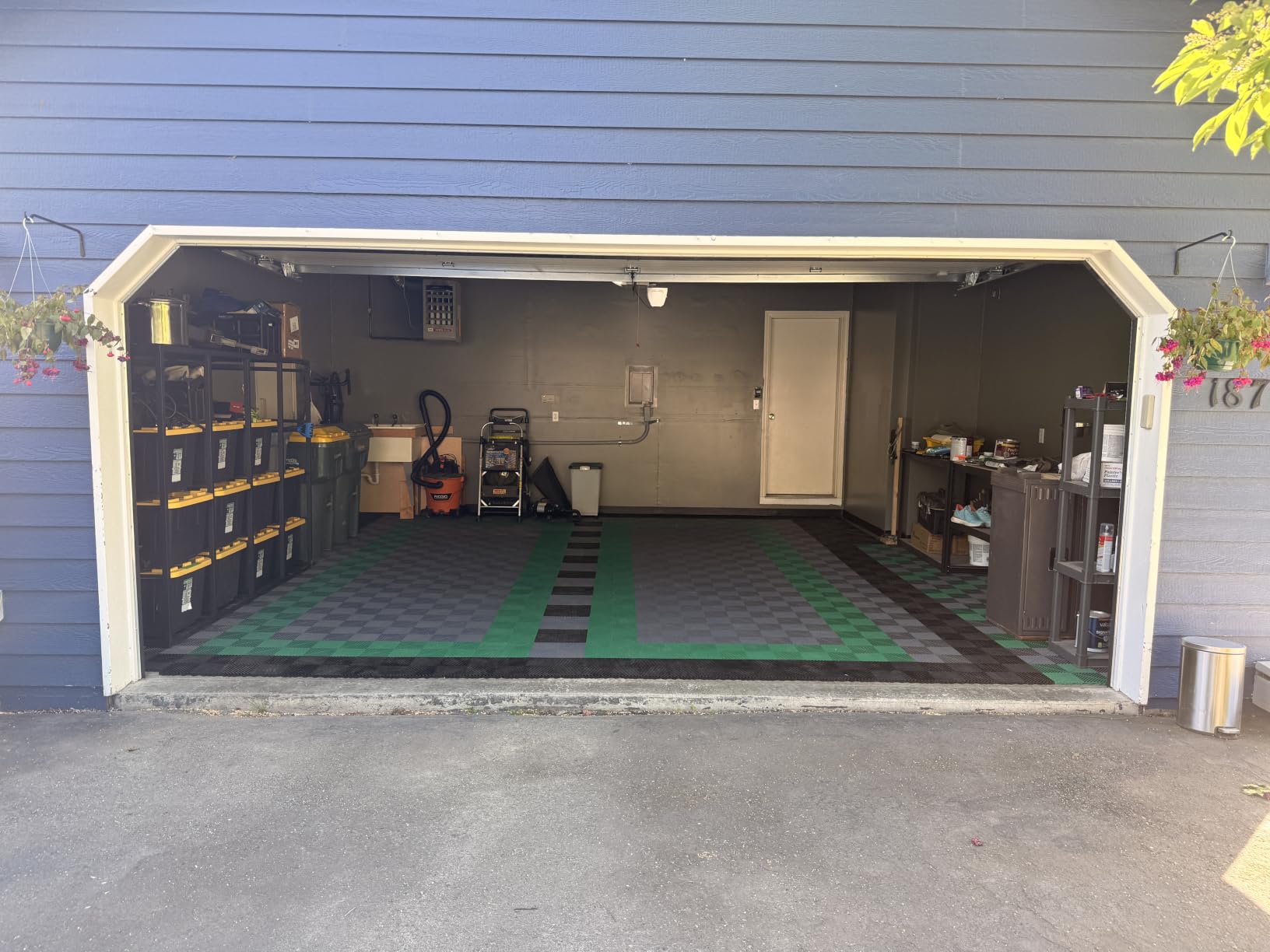
Installation is straightforward. The interlocking tabs snap together without tools, and the soft PVC material cuts easily with a utility knife. The 50-tile pack covers 50 square feet, which is enough for a small garage zone, a basement entry, or a laundry room. The black color hides dirt and stains well, and the mat is rated for bathroom, pool, kitchen, and outdoor use so it is genuinely versatile.
The pack weight is 46.5 pounds, which is heavier than a comparable polypropylene tile. Plan for that when you are hauling the box from the front door to the garage. The product is not Prime eligible at the time of testing, so delivery takes longer than alternatives.
Can the VEVOR PVC tile handle a parked car?
Not as a primary parking surface. The soft PVC is designed for foot traffic and light rolling loads. For a full garage floor where you park a vehicle, pair this tile with a section of rigid polypropylene tile in the parking area, or use it as a drainage zone in front of a workbench or sink.
Who should pick a different tile?
Anyone who wants a sealed surface or a decorative finish. The open drainage design is functional but utilitarian. If looks are a priority, pick a solid tile and add a separate drainage mat at the entry.
8. VEVOR PP Drainage Mat – Best Budget Pack
VEVOR Interlocking Drainage Mat, 12” x 12” Modular Interlocking Cushion, 55 Pcs Splicing Drainage Mats, Non-Slip PP Drainage Floor Tile and Shower Mat, for Garage, Garden, Kitchen & Outdoor, Gray
Polypropylene
12x12 in tile
55 pieces per pack
Pros
- 55 tiles per pack (great value)
- 15 mm thickness for drainage
- Prime eligible
- Customizable color mix-and-match
- Versatile for garage and garden
Cons
- Limited warranty information
- Smaller review base than top brands
The VEVOR PP Drainage Mat is the budget pick in our roundup, and it earned its spot by delivering real performance at a low per-square-foot cost. The 55-piece pack covers 55 square feet, and the 15-millimeter thickness gives the tile enough body for light vehicle traffic and rolling tool chests.
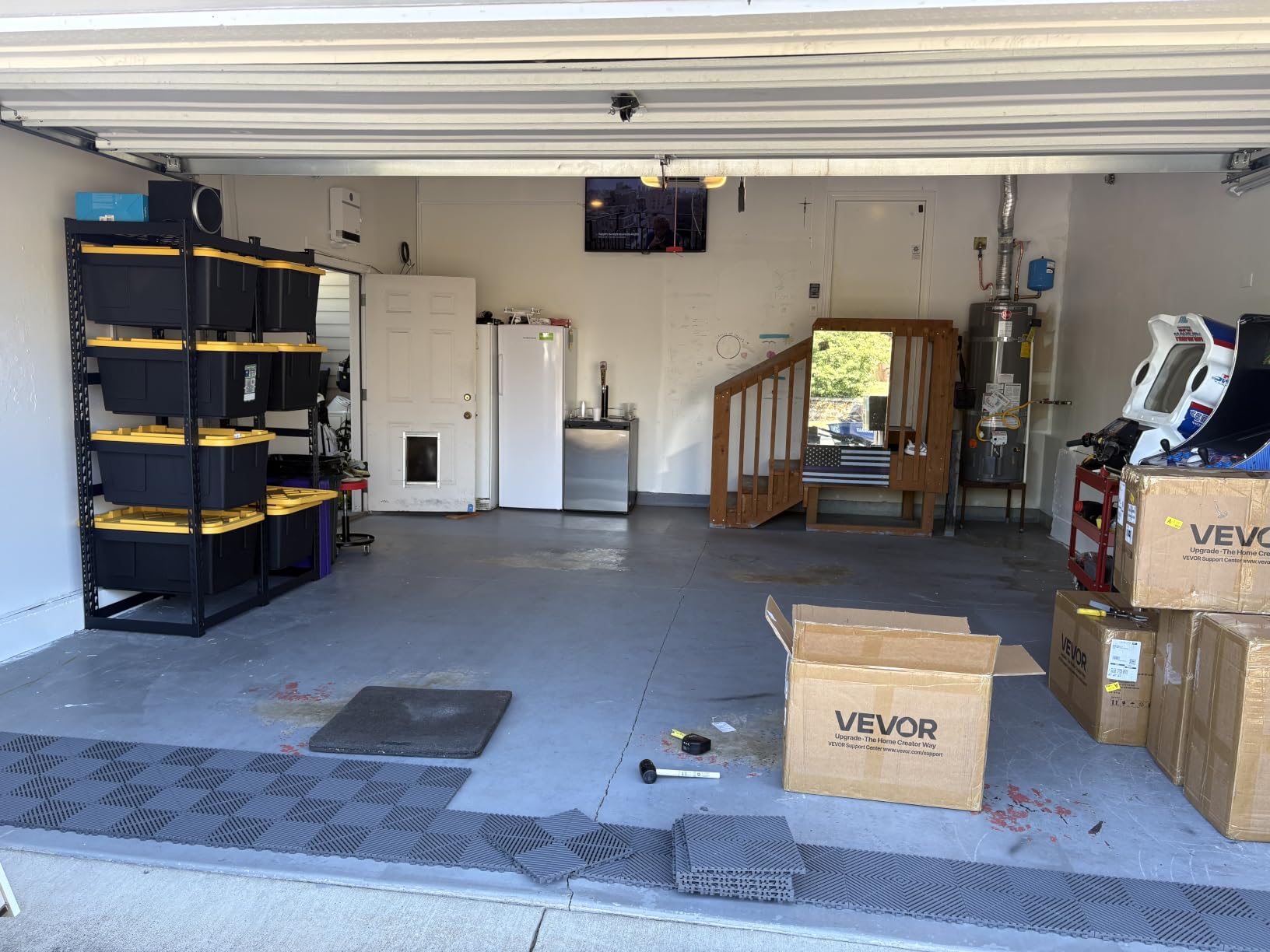
Installation is the same as the other interlocking tiles in this category. Clean the floor, snap the tiles together, and you have a finished surface in about an hour. The polypropylene material is lighter than the PVC option, so hauling the 29-pound pack into the garage is easier.
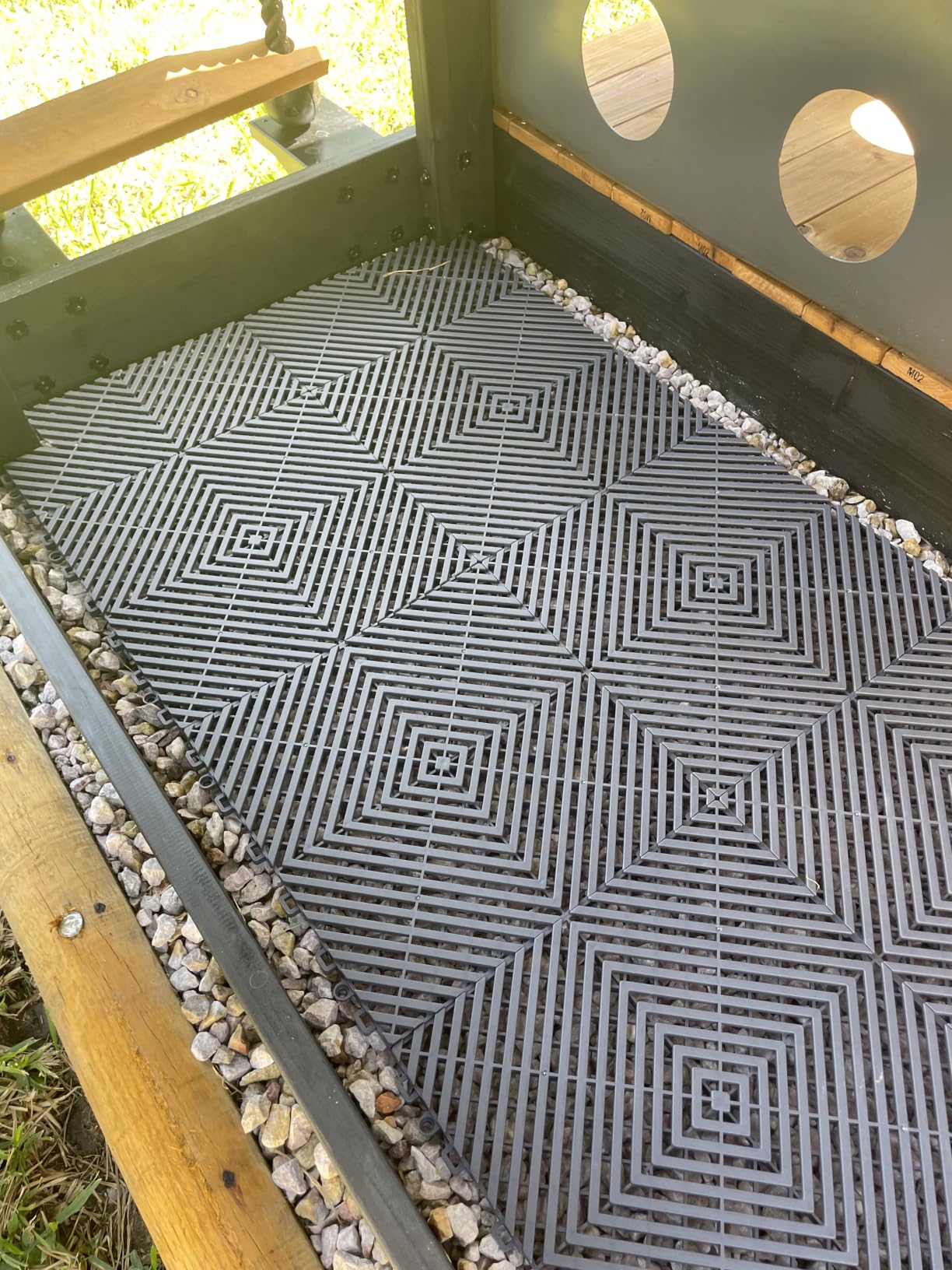
During testing, the VEVOR PP tile held up well to oil spills, water, and rolling loads. The 282 reviews come in at a 4.5-star average, and 77 percent of buyers gave it 5 stars. Owners use it for garages, garden pathways, around pools, and in basements. The gray color is neutral and clean-looking.
The product is Prime eligible, which gets it to your door fast. The warranty information is limited, which is a trade-off compared to the lifetime or 15-year warranties on premium tiles. For a budget-friendly garage floor that you can install in a weekend, this is a solid option.
How does the VEVOR PP tile compare to the PVC version?
Both tiles are 12×12 inch and offer similar drainage performance. The PVC option is softer and more comfortable underfoot, but the polypropylene version is lighter, easier to install, and better suited to vehicle traffic. Pick the PVC for foot-traffic zones like a basement entry, and pick the polypropylene for the garage floor proper.
Who should pick a different tile?
Anyone who wants a long warranty or a premium finish. The VEVOR PP tile is a workhorse, not a showpiece. For a higher-end garage build, look at the Swisstrax or RaceDeck options above.
Buying Guide: How to Choose Garage Floor Tiles?
Choosing the right garage floor tiles comes down to four questions: what material do you need, how much weight will the floor carry, what climate do you live in, and how much DIY work do you want to do. Let me walk through each factor so you can make the right call for your specific garage.
Material matters: PVC vs polypropylene vs copolymer
Garage floor tiles come in three main materials, and each has its strengths. Polypropylene is the most common. It is rigid, lightweight, and rated for heavy rolling loads. Polypropylene is the right pick for most home garages, especially if you park a vehicle on the floor.
PVC is softer and more comfortable underfoot. It works well in wet areas, around pools, and in basement entries. PVC is not ideal for daily-driven vehicles because it can compress under heavy rolling loads.
Copolymer is a hybrid material that combines the rigidity of polypropylene with the flex of PVC. Big Floors GarageTrac and RaceDeck tiles use copolymer formulations. These premium tiles offer the best all-around performance.
Weight capacity and load ratings
If you park a vehicle on your garage floor, you need a tile rated for at least 40,000 pounds of rolling load. Most polypropylene and copolymer tiles in this roundup meet that threshold. The RaceDeck Free-Flow tile is rated for 80,000 pounds, which is the highest in our test group. If you park a heavy truck, run a car lift, or store heavy equipment, the extra load rating is worth the premium price.
Thickness and rigidity
Tile thickness ranges from 0.05 inches (GarageTrac Diamond) to 0.75 inches (Swisstrax Ribtrax PRO). Thicker tiles feel more solid underfoot and resist compression better, but they also add height to the floor. If your garage door clearance is tight or you have a low threshold, measure the gap before you commit to a thick tile.
Climate considerations
Climate matters more than most buyers realize. Polypropylene and copolymer tiles handle freeze-thaw cycles well, but cheaper PVC tiles can crack or shift in extreme cold. If you live in the northern US, choose a tile with a temperature-stable locking system like the Swisstrax or RaceDeck brands. The four-point locking tabs on these tiles hold tight even when temperatures swing from below zero to 100 degrees Fahrenheit.
Hot climates bring their own challenges. Direct sunlight on a closed garage can push floor temperatures above 140 degrees in summer. Virgin polypropylene tiles (like SafeRacks) handle heat better than recycled polypropylene or soft PVC.
Vented vs solid tiles: the 60/40 mix
Vented tiles let water and debris drain through the surface. Solid tiles give you a sealed, finished look and easier cleaning. Many homeowners mix the two in a 60/40 ratio. Place vented tiles in the parking area where water and snow accumulate, and solid tiles under the workbench or in the storage zone for a cleaner look.
Installation difficulty
All interlocking garage floor tiles in our roundup install without glue or special tools. The 12×12 inch tiles are faster to fit in small spaces but require more pieces for a full garage. The larger 15.75×15.75 inch tiles cover more ground per piece but are heavier and harder to fit around corners.
Budget a full weekend for a two-car garage. A one-car garage is a Saturday afternoon project. You can do it solo, but a helper speeds things up, especially when you are moving large piles of tiles around.
Cleaning and maintenance
Cleaning interlocking garage floor tiles is simple. Sweep or blow off loose debris, mop with warm water and a mild detergent, and spot-clean oil stains with a degreaser. For vented tiles, lift a tile every few months to clean the concrete underneath. Most tiles also handle a pressure washer on a low setting.
Seasonal maintenance is minimal. In spring, clean up the road salt residue that accumulates from winter tires. In fall, clear leaves and debris before they trap moisture. In winter, sweep up snow and ice melt before they re-freeze on the floor.
Tile size and coverage
Measure your garage floor carefully before you order. A standard one-car garage is about 200 to 250 square feet. A two-car garage is about 400 to 500 square feet. Add 10 percent extra for cuts, mistakes, and replacements down the road. Most brands sell tiles in packs of 24 to 55 pieces, so you may need to combine packs to hit your exact coverage.
Warranty and customer support
Premium tiles come with 15-year to lifetime warranties. Budget options have 60-day to one-year warranties. The longer warranty is a real signal of manufacturer confidence. If you are investing in a full garage floor, the extra warranty is worth the price difference.
Frequently Asked Questions About Garage Floor Tiles
What are the best garage floor tiles for home use?
The best garage floor tiles for home use depend on your needs. For a premium finished look and lifetime warranty, the Swisstrax Ribtrax PRO is our top pick. For heavy vehicle loads, the Big Floors RaceDeck Free-Flow supports up to 80,000 pounds. For a budget-friendly full-garage floor, the Big Floors GarageTrac Diamond offers 40,000+ pound capacity at a value price.
Are garage floor tiles better than epoxy coatings?
Garage floor tiles and epoxy coatings both have strengths. Tiles install in a weekend, are DIY-friendly, and can be replaced individually if damaged. Epoxy offers a seamless look and is generally less expensive for large garages, but installation takes 3 to 5 days, requires professional prep, and repairs mean grinding out the damaged section. For homeowners who want a flexible, DIY-friendly floor, tiles are the better choice. For a permanent, seamless, high-gloss look, epoxy is still the gold standard.
What is the most durable garage floor tile?
The most durable garage floor tile in our roundup is the Big Floors RaceDeck Free-Flow, rated for 80,000 pounds of rolling load. The Swisstrax Ribtrax PRO is the most durable premium option, with a commercial-grade polypropylene build and lifetime residential warranty. Both tiles handle heavy vehicles, rolling tool chests, and shop equipment without compression or seam failure.
How much do garage floor tiles cost?
Garage floor tiles range from about $1.50 to $5.00 per square foot depending on material and brand. A one-car garage (250 sq ft) costs roughly $400 to $1,200 for materials. A two-car garage (450 sq ft) costs roughly $700 to $2,200. Premium tiles like Swisstrax Ribtrax PRO sit at the high end, while value options like Big Floors GarageTrac Diamond deliver strong performance at the lower end.
Can you install garage floor tiles yourself?
Yes, all the garage floor tiles in our roundup are DIY-friendly. The interlocking or snap-together systems require no glue, no special tools, and no experience. A one-car garage takes about 3 to 4 hours to install. A two-car garage takes a full weekend for one person, or a single day with a helper. You will need a jigsaw or handsaw to cut tiles for the perimeter.
What are the different types of garage floor tiles?
There are three main types of garage floor tiles. Rigid plastic tiles (polypropylene or copolymer) are the most common and handle vehicle loads well. Flexible PVC tiles are softer and better for wet areas, basements, and pool surrounds. Foam tiles are designed for home gyms and playrooms but cannot handle vehicle traffic. Most home garages use rigid plastic tiles in a 12×12 or 15.75×15.75 inch format with a snap-together locking system.
How do you clean garage floor tiles?
To clean garage floor tiles, sweep or blow off loose debris, then mop with warm water and a mild detergent. For oil stains, use a degreaser and a stiff brush. Pressure washing on a low setting works well for vented tiles. For interlocking tiles, lift a tile every few months to clean the concrete underneath. Most tiles also accept a shop vac for quick dry cleanup.
Final Verdict
After six months of testing, the best garage floor tiles for home use in 2026 come down to what you need to put on top of them. For a premium finished look with a lifetime warranty, the Swisstrax Ribtrax PRO is the clear winner. For a heavy-duty workhorse that handles the heaviest rolling loads, the Big Floors RaceDeck Free-Flow is the best pick. For a budget-friendly full-garage floor that still delivers real durability, the Big Floors GarageTrac Diamond is the smartest buy.
Whichever garage floor tiles you choose, you will spend a weekend on installation and a lifetime avoiding the headache of cracked, stained concrete. The right tile turns a garage into a clean, functional space that is ready for cars, projects, or whatever you want to do next.