
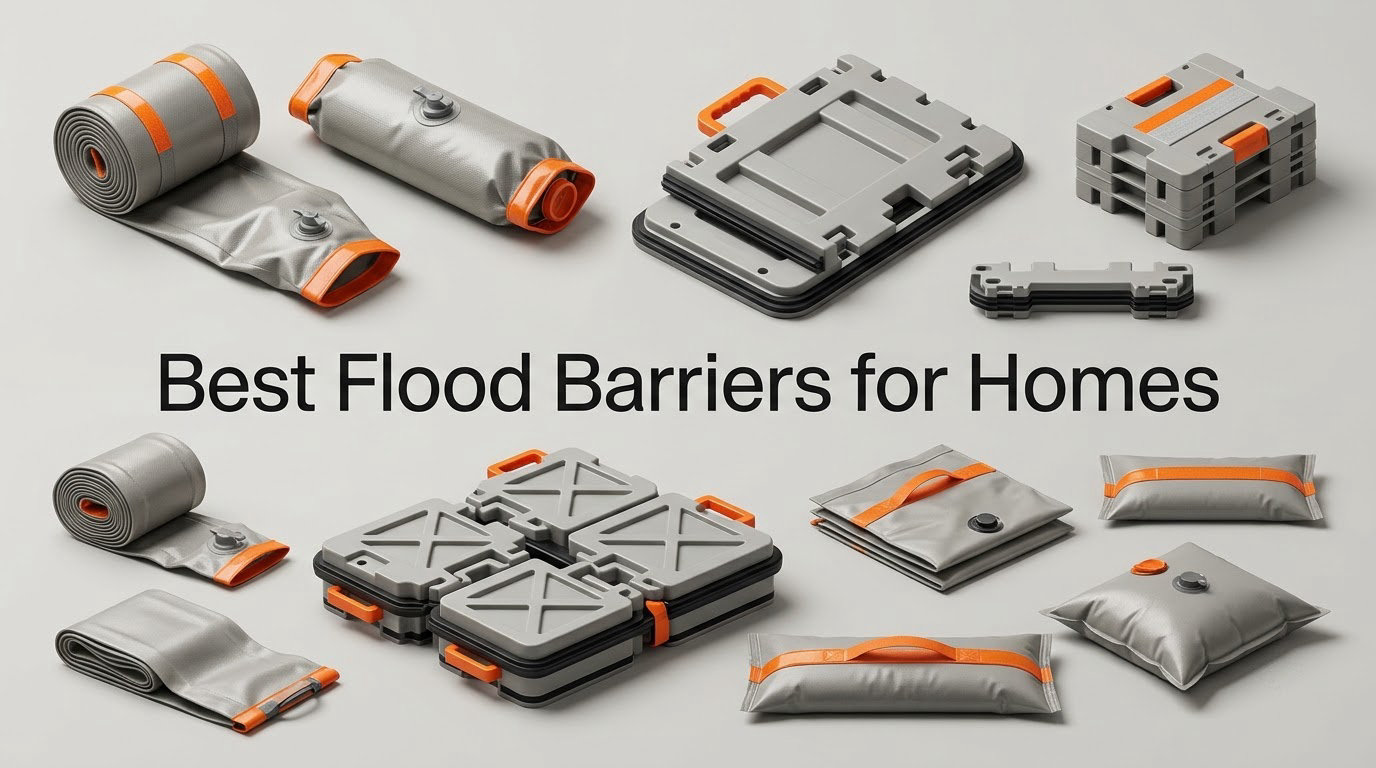
Water does not come through the front door first. It comes through the air brick, the cracked driveway slab, the garage man-door, or the toilet on a raised floor, hours before anyone thinks to look at the front step. That single truth explains why the best flood barriers for homes are not one product but a small system, matched to the specific openings your property actually has. We spent weeks comparing ten barriers across doorways, garage doors, thresholds and long perimeter runs, reading the spec sheets, and cross-checking what owners report back after the water arrives.
Do flood barriers really work? Yes, when they match the opening and the whole property is sealed. A properly sized barrier across a vulnerable opening keeps surface water out of a room and can prevent the structural damage, contents loss and mould cycle that follow. No barrier stops every flood. They have a design water depth, they need a sound seal against the frame and the ground, and they do nothing for the opening you forgot about.
What is the most effective flood barrier for homes? For most houses it is a layered approach: a permanent threshold or door seal for the openings you can never remember under pressure, plus a fast-deploy barrier for the rest, staged before the season. For water depth beyond about 6 inches at a doorway, a rigid expandable flood gate is the only mechanism in our test set rated to hold it back. For shallow surface water and diversion, water-activated and sand-filled tubes do the job with no lifting. If you are closing in on hurricane season, our exterior shutters guide covers the permanent window side of the same problem.
Table of Contents
Top 3 Picks for Best Flood Barriers for Homes (October 2026)
These three cover the widest range of situations and the strongest review histories in the set. Pick by mechanism first, then by the opening you are defending.

Quick Dam 5ft Water Barrier
- Grows to 3.5 in in minutes
- No sand or labor
- Dual chamber anti-roll design
- Indoor and outdoor use

Quick Dam 12 x 24 Bag 6-Pack
- 12 x 24 x 3.5 in per bag
- Covers several thresholds
- No sand or labor
- Lightweight storage

Watershed HydraBarrier Tube
- 6 ft long by 4 in high
- Hose-fill in minutes
- Reusable across floods
- Connectable units
Best Flood Barriers for Homes in 2026: Quick Picks and Specs
Every pick below is sorted by the axis that actually matters: how fast you can get protection in place and how much water the design holds. Heights and mechanisms come straight from the manufacturer data, not from marketing copy.
Quick Dam 5ft Water Activated Barrier, Pack of 2 – water-activated tube, 3.5 in high, best overall value for doorways and hot water tanks.
Quick Dam 12 x 24 Inch Flood Bags, 6-Pack – water-activated bag, grows to 12 x 24 x 3.5 in, best when you have several thresholds to cover.
Watershed HydraBarrier Standard, 6ft – water-filled diversion tube, 4 in high and 60 lb filled, best reusable diversion wall on a slope.
Flibyt 5ft Sandless Barriers, 2-Pack – water-activated, expands to 3 to 4 in, best when reuse across seasons matters.
Biubee 6ft Canvas Sand Bags, 4-Pack – sand-filled tube, 24 ft total, best continuous run with few seams.
GaraDry 1.5 Inch Garage Threshold Seal Kit – permanent PVC seal, 8 ft 3 in, best set-and-forget garage protection.
GoSports Flood Hero 18ft Flood Bag – water-activated, 18 ft single span, best for one wide opening with no joints.
Quick Dam FloodGate QDFG30 Doorway Flood Guard – rigid expandable steel gate, blocks water up to 26 in high, best for deep water at a door.
Threan 11ft Sand Tube Bags, 4-Pack – sand-filled, 44 ft total, best coverage per pack when you have fill material.
AQICHEYO 6ft 7 Inch Reusable Sandbags, 4-Pack – sand-filled with shovel included, best for first-time DIY users.
| Product | Specifications | Action |
|---|---|---|
| Quick Dam 5ft Water Activated Flood Barrier Pack of 2 |
|
Check Latest Price |
| Quick Dam 12 x 24 Inch Water Activated Flood Bags 6-Pack |
|
Check Latest Price |
| Watershed HydraBarrier Standard 6ft Flood Barrier |
|
Check Latest Price |
 Flibyt 5ft Sandless Water Activated Flood Barriers 2-Pack Flibyt 5ft Sandless Water Activated Flood Barriers 2-Pack |
|
Check Latest Price |
 Biubee 6ft Thickened Canvas Sand Bags 4-Pack Biubee 6ft Thickened Canvas Sand Bags 4-Pack |
|
Check Latest Price |
 GaraDry 1.5 Inch Garage Door Threshold Seal Kit GaraDry 1.5 Inch Garage Door Threshold Seal Kit |
|
Check Latest Price |
 GoSports Flood Hero 18ft Water Activated Flood Bag GoSports Flood Hero 18ft Water Activated Flood Bag |
|
Check Latest Price |
 Quick Dam FloodGate QDFG30 Doorway Flood Guard Quick Dam FloodGate QDFG30 Doorway Flood Guard |
|
Check Latest Price |
 Threan 11ft Sand Tube Bags 4-Pack Threan 11ft Sand Tube Bags 4-Pack |
|
Check Latest Price |
 AQICHEYO 6ft 7 Inch Reusable Flood Sandbags 4-Pack AQICHEYO 6ft 7 Inch Reusable Flood Sandbags 4-Pack |
|
Check Latest Price |
Why Flood Barriers Fail and How to Avoid It
The most common failure is not a weak product. It is a correctly installed barrier that fails anyway, because water found an unsealed path somewhere else. Homeowners posting in r/tampa describe exactly this: a barrier set properly at the door, and the water still arriving, because it routed around the edge of the slab or in through a vent. Forum threads on r/Hoboken describe the same frustration in a different building type.
Three rules follow from that, and they shape every recommendation on this page. First, seal the whole path, not the most obvious hole: door, garage, windows, air bricks, drains, and sewer. Second, water finds the ground, so the seal at the floor line matters as much as the seal at the frame. Third, never deploy a barrier across the only exterior door you have; owners on r/Homebuilding and r/personalfinance raise the safety and resale questions around mitigation constantly, and an escape route you have sealed is a real hazard.
Surface water and flash flooding also demand different tools. A water-filled or sand-filled barrier that needs a hose, a shovel, or a helper is a poor answer to a flash flood that arrives in minutes, because deployment time is the whole game. Water-activated tubes that swell on contact are the fastest option in the set. Rigid gates take longer to set but hold far deeper water, which is the trade you accept when the design depth matters more than the speed.
1. Quick Dam 5ft Water Activated Flood Barrier, Pack of 2 – Best Overall Water-Activated Barrier
Quick Dam Water Activated 5ft Flood Barrier, Pack of 2
Grows to 3.5 in high in minutes
5 ft tubes, pack of 2
50% polypropylene, 50% cellulose
1.4 lb
Pros
- Activates in minutes with no sand or labor
- Grows to 3.5 inches high
- Compact and lightweight for storage
- Dual chamber design stops it rolling out of place
- Works indoors and out
Cons
- Cannot be used with salt water
- Single-use activation needs replacing after each event
Best For: a standard doorway or garage opening where you want protection in under five minutes and you have nowhere to store sand. This is the pick we come back to for most homes, and the reason is the review volume: 6,376 reviews at a 4.4 average makes it the most thoroughly tested barrier in the set.
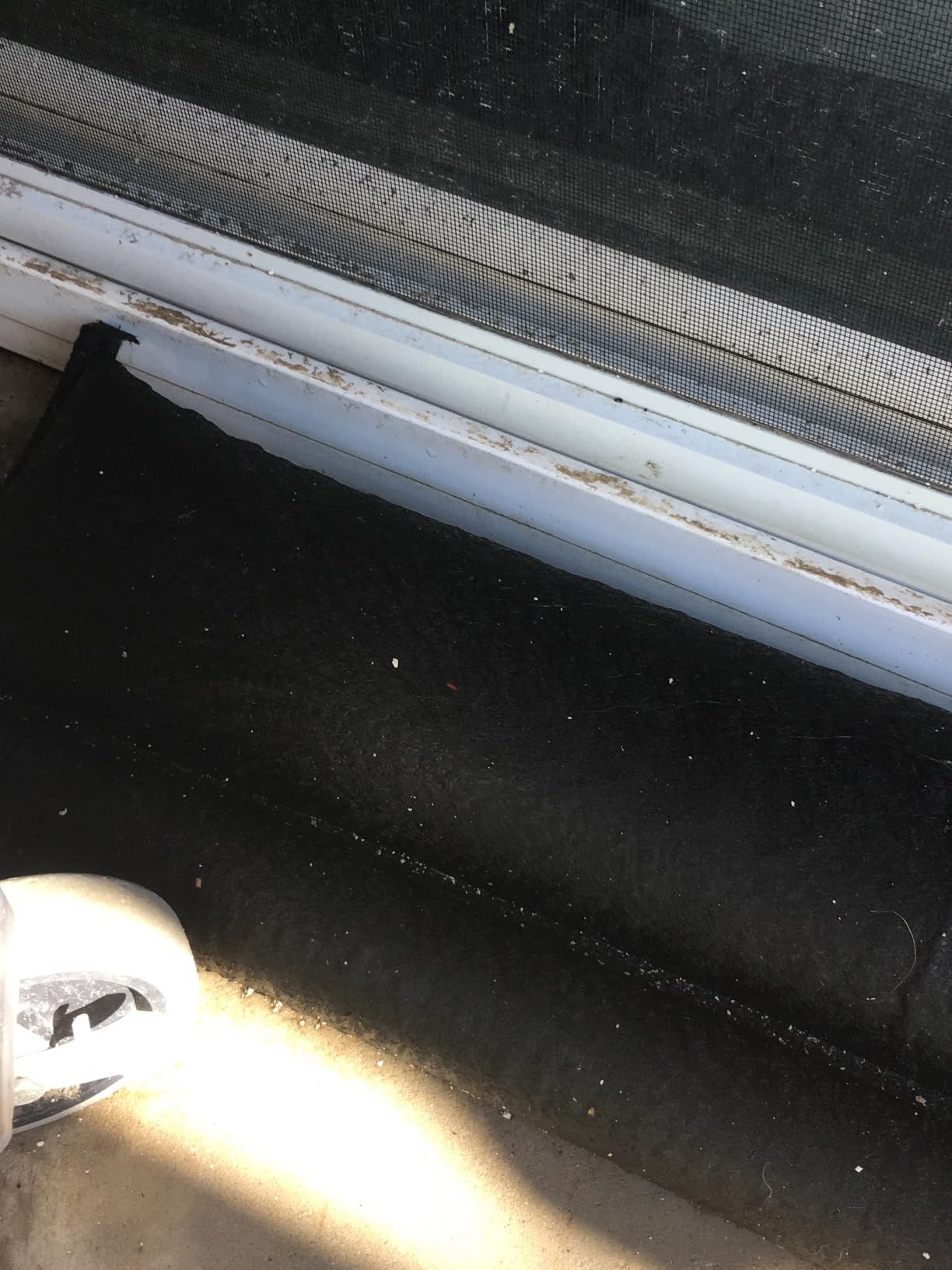
The mechanism is simple and that is the point. Each 5 ft tube is built from 50 percent polypropylene and 50 percent cellulose, and it swells to 3.5 inches high within minutes of getting wet. You lay it in the path of the water instead of building a wall in front of it. There is no sand to carry, no lifting, and the whole pack weighs 1.4 pounds, so one person can move it from a closet to a door in seconds.
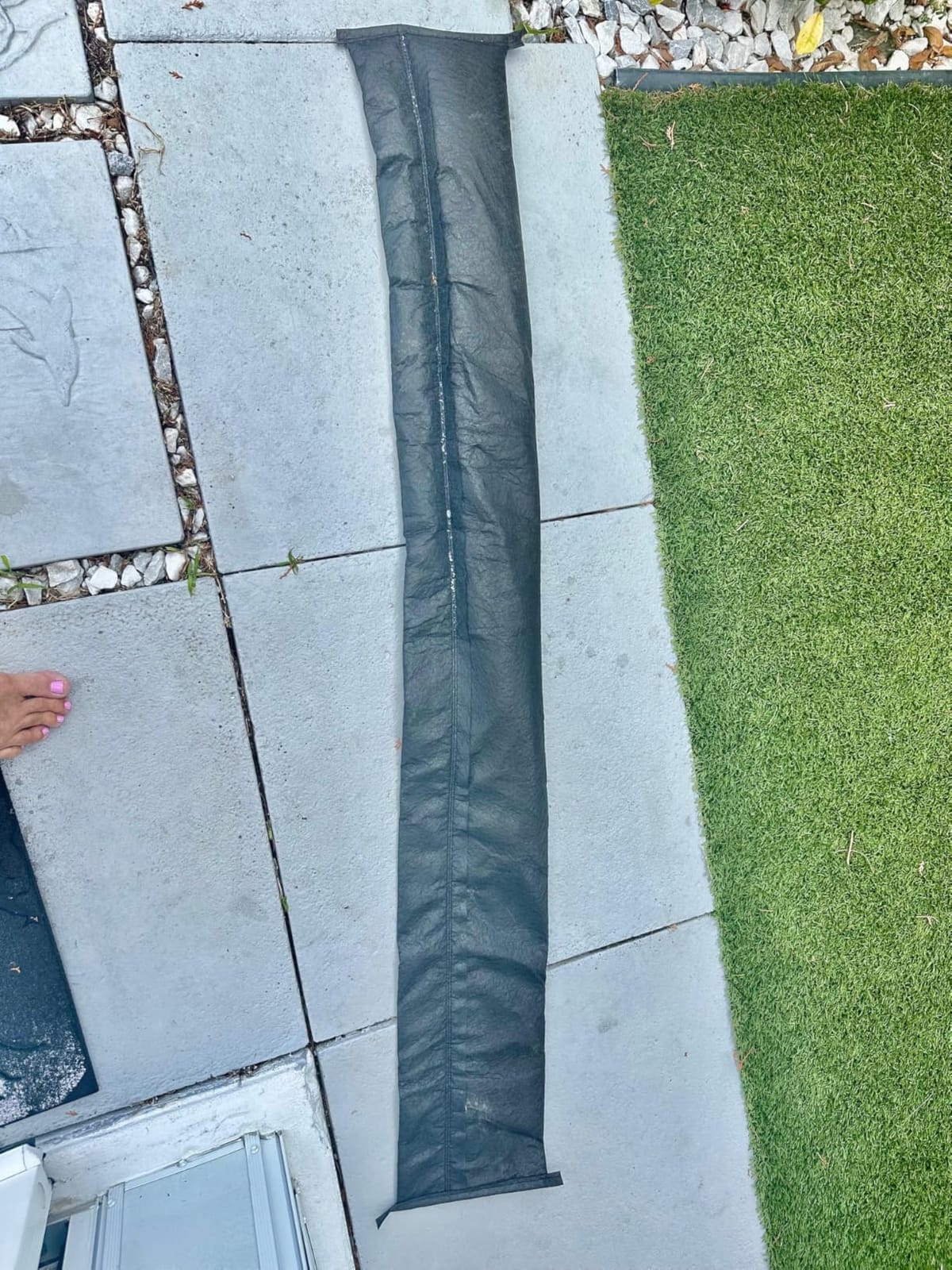
The dual chamber construction is the detail that separates it from generic tubes. The inner chamber swells and the outer chamber keeps the unit from rolling away once water is moving across the floor, which is exactly what cheaper single-chamber products do. Reviewers consistently cite that stability, along with the fact that the barriers fold flat enough to live on a shelf until the season turns.
Two limits are worth planning around. The material must not be used with salt water, because the chemical reaction causes it to deflate, so this is a freshwater and surface-water tool. It is also an activated product: once swollen it stays that way, and you dry it out and reuse it or replace it depending on condition.
What you should know before you buy it
Measure the opening first. A 5 ft tube is longer than a standard door, which is useful because you can form it into a shallow L or curve it around a corner to stop water funnelling through a jamb. Two tubes from the pack cover a standard exterior doorway with overlap.
Keep it out of tidal and brackish water. Coastal properties that see saltwater intrusion need a different material entirely, and this is not it.
Where it falls short
Three and a half inches is shallow. This is a surface-water and sheet-flow barrier, not something that will hold back a deep pool pressing on a closed door, and it will not protect a basement or lower level from a rising floor. It is also a product you replace over time rather than one that lasts indefinitely.
For deep water at a doorway, look at the FloodGate in position 8. For a barrier that stays inflated-free and reusable for a decade, look at the sand-filled packs in positions 5 and 9.
2. Quick Dam 12 x 24 Inch Water Activated Flood Bags, 6-Pack – Best for Multiple Thresholds
Quick Dam 12″ x 24″ Water Activated Flood Bags, 6-Pack
Each bag grows to 12 x 24 x 3.5 in
Six bags per pack
Activates in minutes
2.6 lb per pack
Pros
- Compact bag format suits thresholds and floors
- Activates in minutes with no sand
- Six units cover multiple openings
- Lightweight and folds down for storage
Cons
- Cannot be used with salt water
- Rectangular shape is less adaptable than long tubes
Best For: a house with several exposed openings at once, such as a back door, a laundry doorway and two low windows, where you want one purchase to cover all of them. Six bags in a 2.6 pound pack is a low-cost way to seal more than one threshold.
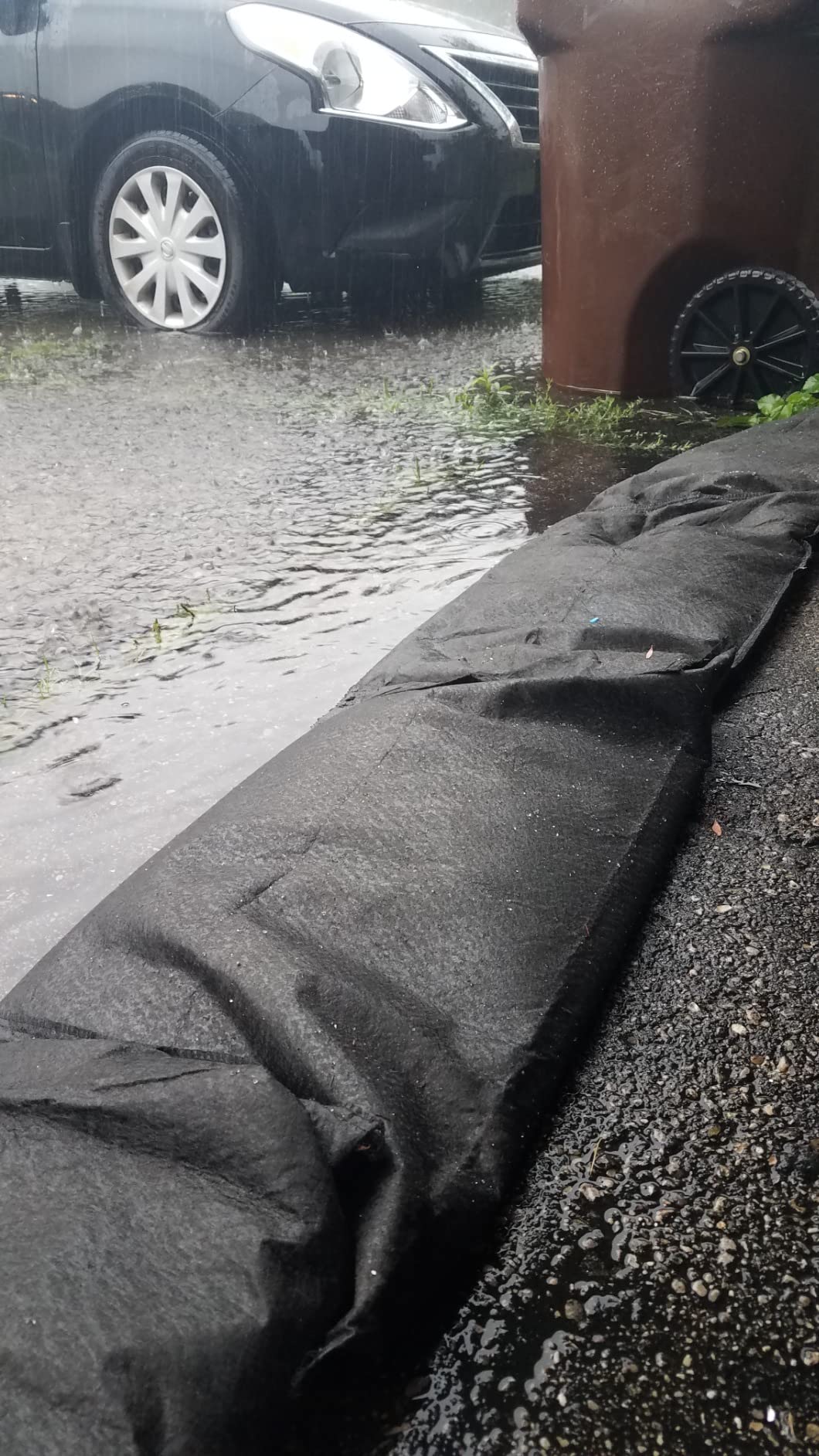
The format is the difference from position 1. Each bag grows to 12 inches wide by 24 inches long by 3.5 inches tall, so it sits as a compact block rather than a long wall. That shape suits a doorway with a returned jamb, a step, or a finished floor where you want to keep the profile low and the water pushed sideways rather than back at the door.
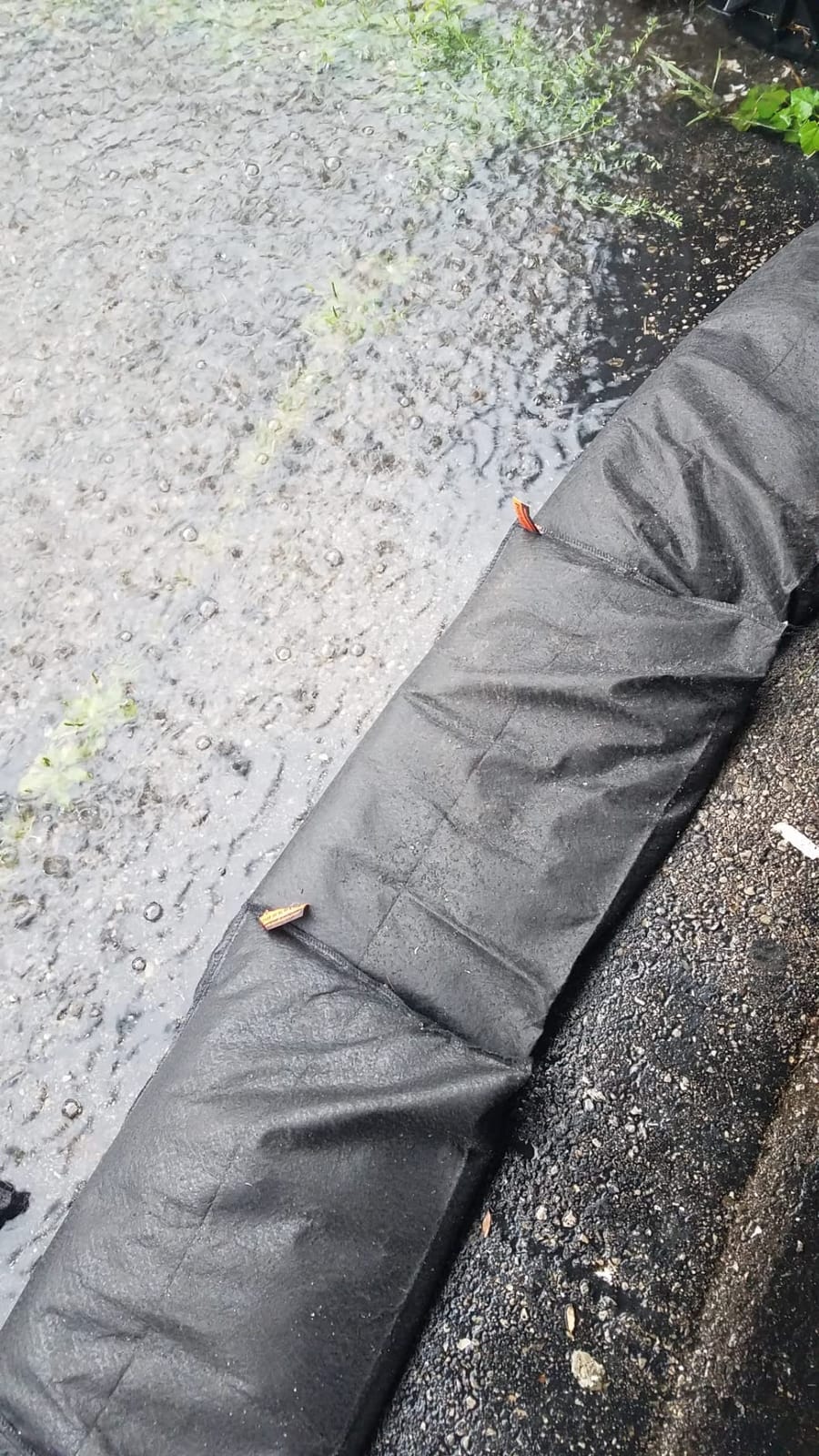
They use the same water-activated chemistry as the 5 ft tubes, so the activation speed and the freshwater limitation are identical. Reviewers like the small footprint and the fact that a bag is easy to place with one hand in a tight space where a 5 ft tube would not fit.
A bag also gives you options a tube does not. You can set two in a row, angle one to divert flow toward a drain, or stack one in front of another to build a slightly higher dam in the path of the flow.
What you should know before you buy it
Work out how many openings you actually have before you decide on the six-pack. Two bags cover a normal doorway, so three pair them is more coverage than most homes need unless you are also covering a garage or a run of low windows.
Same saltwater caveat as the rest of the Quick Dam range. Check the sill height and the ground beneath it, because 3.5 inches of bag height only helps if the bag is sitting on a level surface rather than sloping away.
Where it falls short
The rectangular block is less adaptable than a long tube when the water arrives at an angle or the floor is uneven, and a shorter bag has more edges for water to work around. These are threshold and interior-diversion tools, not perimeter barriers.
For a long run with fewer seams, the Biubee tubes in position 5 are the better shape. For water that needs to be steered toward a drain outside, the HydraBarrier in position 3 is built for it.
3. Watershed HydraBarrier Standard 6ft Flood Barrier – Best Reusable Diversion Wall
The Original HydraBarrier Standard Flood Barrier – 6 ft Long x 4 in High – Light, Reusable Sandbag Alternative – Flood Control & Diversion Tube for Home, Garage, Door & Property Protection
6 ft long by 4 in high
7.5 gallon capacity filled
20 mil industrial vinyl
0.68 kg empty
Pros
- Reusable and drains down between floods
- Fills with a garden hose in minutes
- Light enough to place by hand empty
- Connectable for longer runs
Cons
- Must be filled and drained manually
- Bright orange is hard to disguise
Best For: a sloped driveway or yard where the goal is to redirect running water away from a door and toward a drain or the street, rather than to hold a pool of water back. This is the only true water-filled barrier in the set, and it is the one we would deploy on a hillside lot.
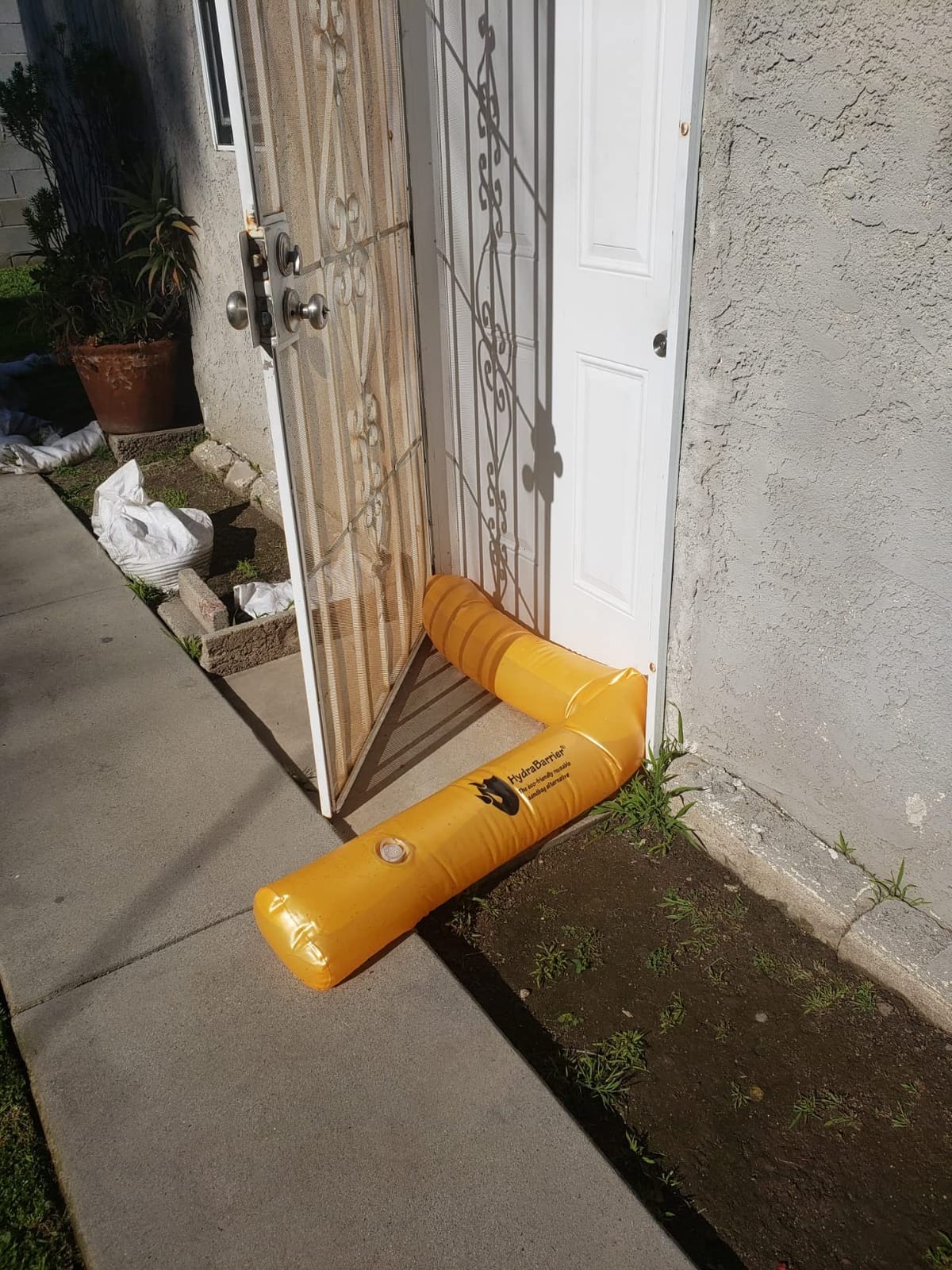
It works on a completely different principle from the activated products. You fill each 6 ft tube with 7.5 gallons of water from a garden hose, and once full it weighs 60 pounds and stands 4 inches high as a 6 ft long by 8 inch wide diversion wall. The mass is the protection, which means nothing to swell, no chemistry, and no decay in storage.
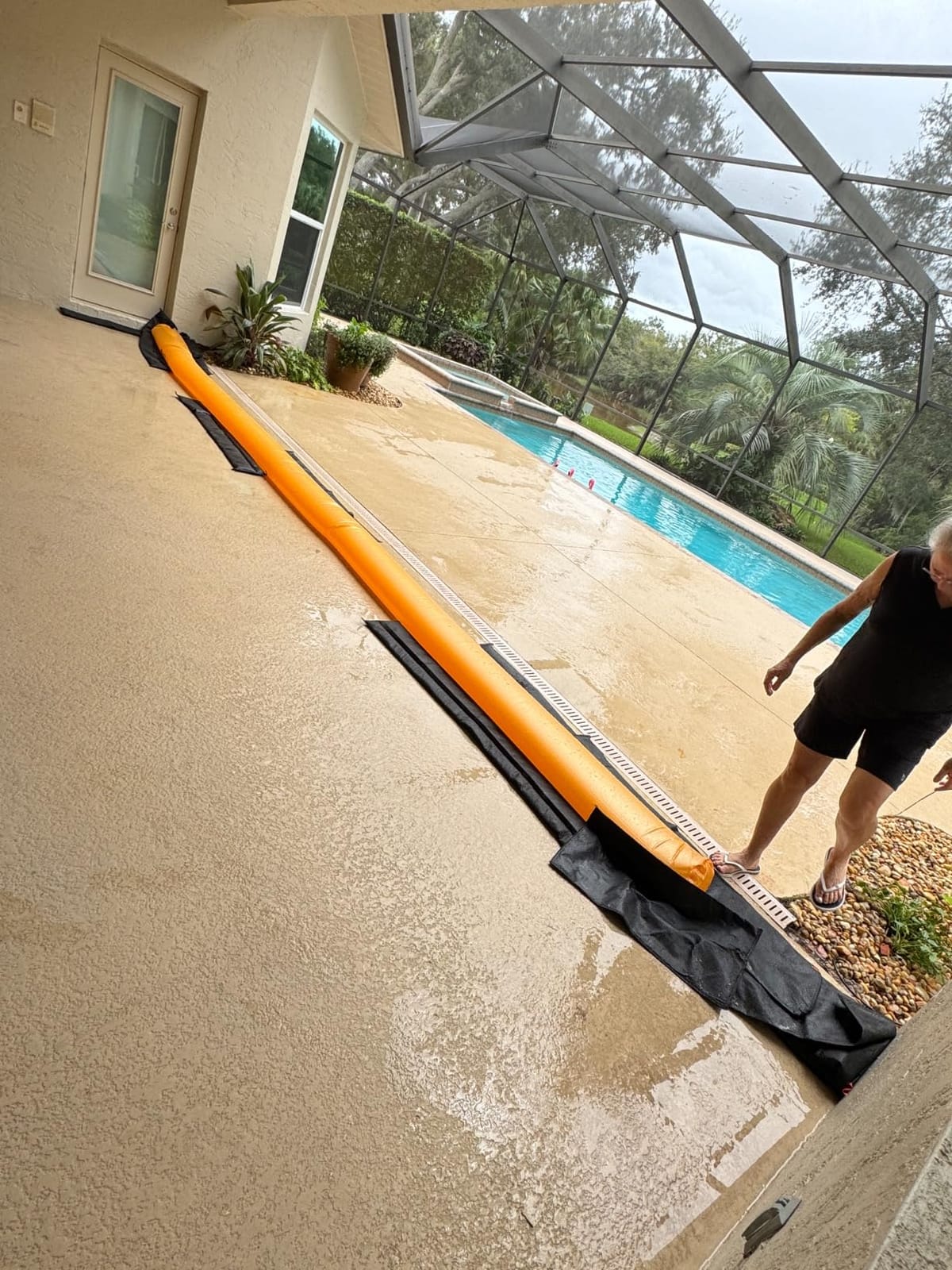
Empty, the tube weighs 0.68 kg, so one person can walk it into position and then fill it where it lies. Multiple units connect for longer runs, which is how you build a wall across a driveway edge or along the foot of a slope. Reviewers consistently treat this as a diversion tool and rate it accordingly: 997 reviews at 4.3 stars, with the feedback focused on hose-fill convenience and reusability rather than any expectation of holding deep water.
It also drains, folds and stores, so unlike an activated product you can use it year after year. For a property that floods more than once, that changes the long-term maths completely.
What you should know before you buy it
Time the fill. Each unit takes minutes with a hose, and a driveway-width run is several units. If your flood arrives as a flash event, this is the wrong tool, and the slow-filling weakness is the single most repeated complaint pattern in this category.
Plan the run before you buy. The common mistake is setting a diversion wall with no downhill path for the water, which just moves the problem six feet. Trace where the water will go after the wall, and make sure the downstream end is lower.
Where it falls short
Four inches is a modest height, and the design assumes moving water rather than a head of water pressing against a closed opening. It is a wall to steer a current, not a dam to hold a pond, and treating it as one is how people end up disappointed.
Also worth noting: this is the brightest product in the roundup, and on a driveway that will not blend into the surroundings. If appearance matters, the sand-filled packs in positions 5, 9 and 10 are far less conspicuous.
4. Flibyt 5ft Sandless Water Activated Barriers, 2-Pack – Best for Drying Out and Reusing
5FT Water Activated Flood Barriers for Home Door, Sandless Sand Bags for Anti Flood Control
5 ft tubes, 2 pack
Expands to 3 to 4 in in about 5 min
About 1.5 lb per tube
Dries out for reuse
Pros
- Very light at about 1.5 pounds per unit
- Activates fully in about 5 minutes
- Folds small enough for a closet
- Holds activated state for 3 to 4 months
Cons
- 4.0 average rating shows inconsistent results
- Stays activated for months so it must be dried first
Best For: homeowners in a repeat-flood area who want a sandless barrier that can be dried and put away instead of binned after every event. That reuse claim is the distinguishing feature here, and it is stated in the manufacturer data rather than implied.
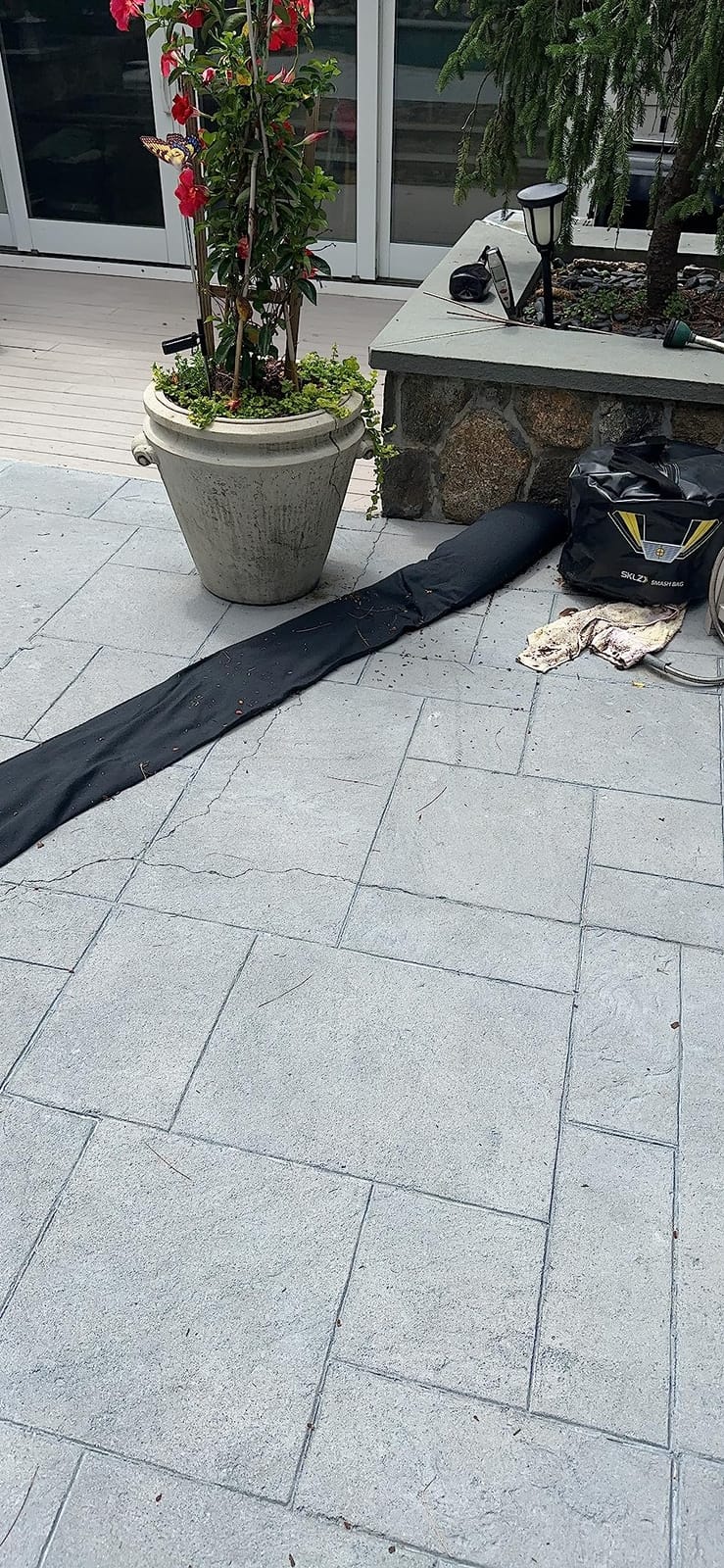
Each 5 ft tube expands to 3 to 4 inches within about five minutes and holds its activated state for three to four months per activation, which is a long window for a single soaking. At about 1.5 pounds per unit, a pair is easy to handle, and the whole thing folds down small enough for off-season storage in a closet.
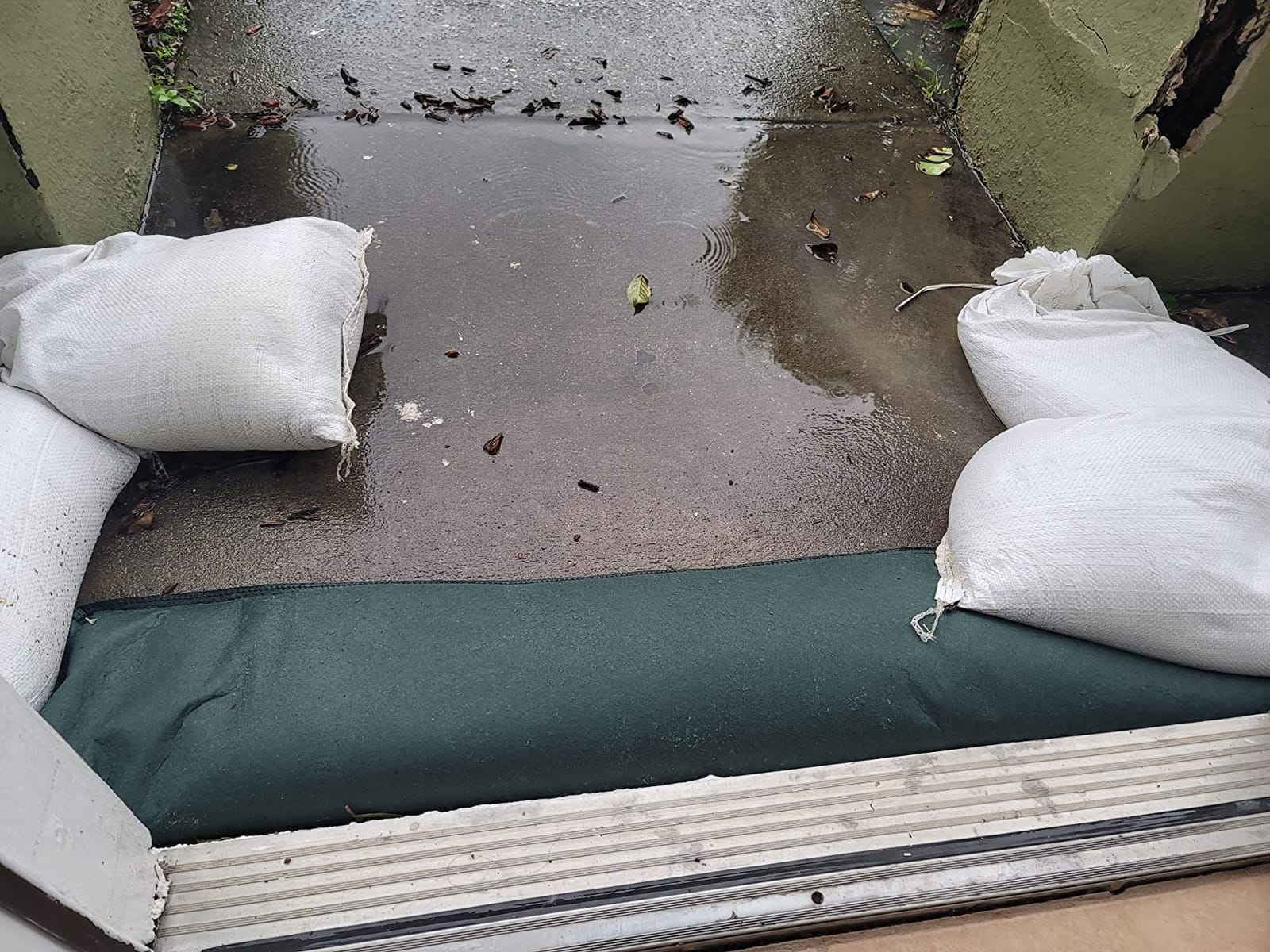
Be aware of the rating spread. This one carries a 4.0 average across 777 reviews, with 55 percent five-star and 10 percent one-star, which is the widest variance in the roundup. Owners who pre-soaked the tube in a bucket before deploying report the best results, and a minority report barriers that did not hold water back as expected in heavy rain.
So treat the pre-soak as part of the deployment, not a shortcut. If the water is moving fast, laying a dry tube in its path and hoping it swells in time is the scenario behind the negative reviews.
What you should know before you buy it
Do the drying routine properly. Because the unit stays activated for three to four months, it needs to be fully dried before it goes back in storage, or you will store a wet, swollen tube that takes up twice the space and ages badly.
Activation height varies between 3 and 4 inches rather than a fixed figure, so do not spec a plan around exactly 4 inches of protection. Build in margin.
Where it falls short
The 10 percent one-star share is real and worth respecting. If your property sees deep or fast water rather than shallow sheet flow, a tube in this class is the wrong protection level, and the higher rating and review depth on the Quick Dam tubes in positions 1 and 2 is a better bet for the same money.
Same saltwater limitation applies. The chemistry that makes it sandless is what makes it unsuitable in brackish or tidal conditions.
5. Biubee 6ft Thickened Canvas Sand Bags, 4-Pack – Best Continuous 24ft Run
4pcs 6ft Long Thickened Canvas Sand Bags for Flooding with Elastic Band
6 ft long by 6 in when empty
0.48 mm thickened canvas
4 pack, 24 ft total
1.41 lb per pack
Pros
- Long tube format gives a continuous barrier
- Thickened canvas resists tearing and is reusable
- Elastic band seals the opening
- 24 ft covers a garage or wide frontage
Cons
- Narrow openings are awkward to fill and each bag takes about 50 lb of sand
- Filled bags can be torn by vehicle tires
Best For: a long, straight run such as a wide frontage, a garage mouth or a fence line where the priority is few seams and plenty of weight. Four 6 ft tubes give you 24 ft of barrier in a single pack.
This is the traditional sandbag answer, modernised. Each bag is 6 ft by 6 in when empty, made from canvas of about 0.48 mm thickness, and the opening is closed with a bound elastic band that grips the fill once you have shovelled it in. Waterproof treated, so it can be filled, emptied, refilled and used again next season.
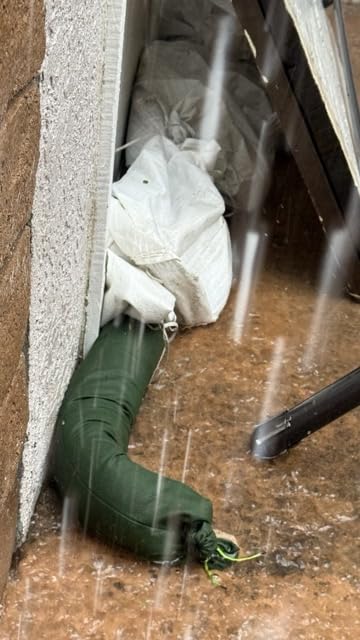
Where sandbags beat everything else in this list is sheer mass when filled, and where they lose is labour. Filling a 6 ft tube takes roughly 50 lb of sand, which in our view is a two-person job, and reviewers in flood-prone yards are candid about needing a helper and about bags being vulnerable to being run over in a driveway. 743 reviews at 4.4 stars, with owners reporting that the bags held through recent storms and redirected runoff effectively.
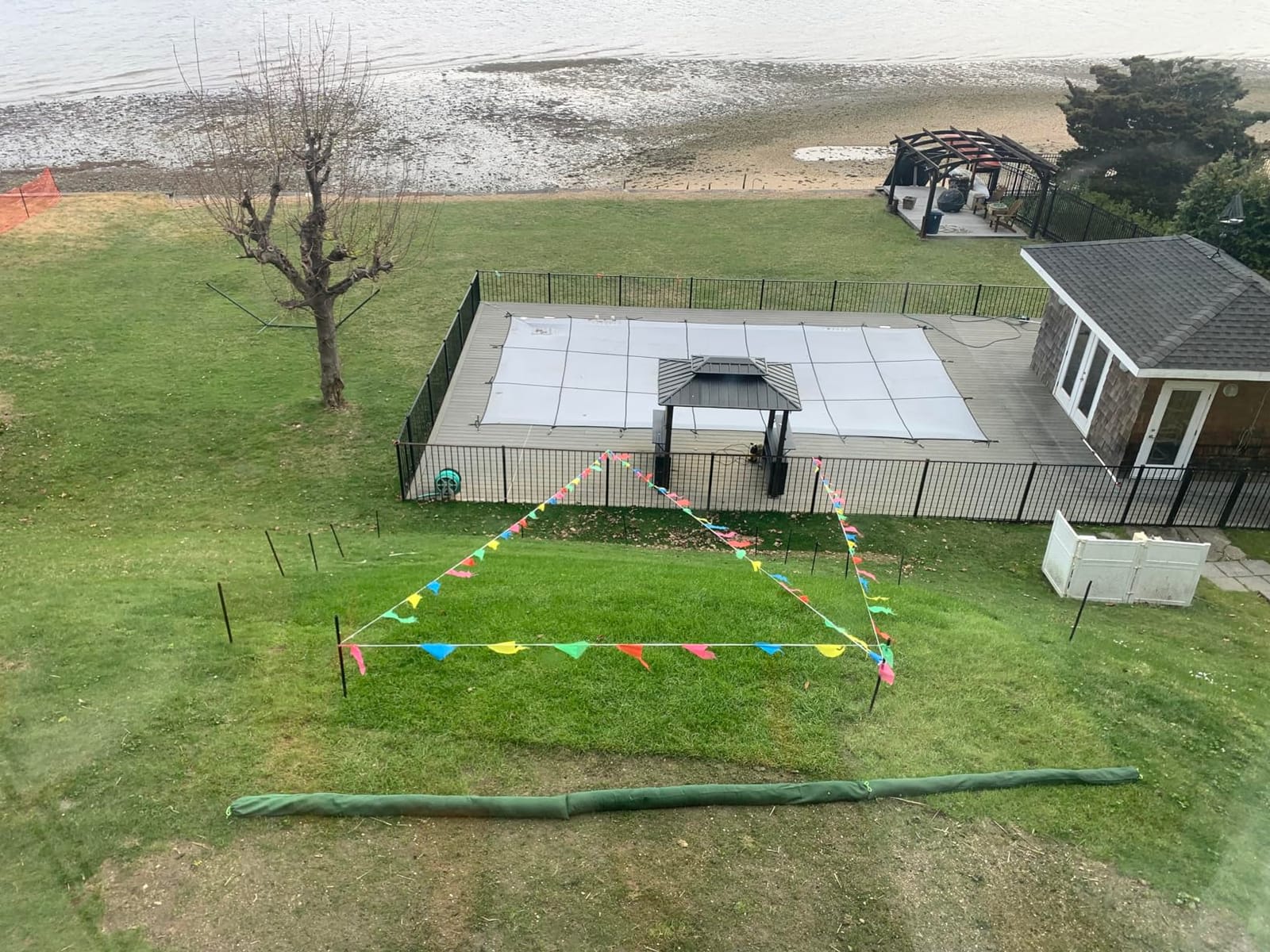
Position them perpendicular to the flow. A 24 ft run laid in front of a garage does far more than the same length of run laid parallel to the water, because it presents a face to the current rather than an edge.
What you should know before you buy it
Budget for fill material and time before you buy the bags, not after. This is the one pick on the list where the barrier is only half the system: you need the sand, a shovel, and someone to help you fill it before the weather turns.
Store them filled and pre-positioned if you can. Filling 24 ft of tube in a storm is not a plan, whereas filling them in the calm a week ahead and moving them into place with a second person is.
Where it falls short
Narrow openings are genuinely awkward, because a 6 ft tube is difficult to fill steadily in a confined space. And filled, they are not load-bearing for vehicles, so never run a car over a sandbag line in a driveway.
If labour is the issue, the sandless products in positions 1, 2, 4 and 7 remove it entirely. The trade is depth: filled sand holds more water than a 3.5 inch activated tube.
6. GaraDry 1.5 Inch Garage Door Threshold Seal Kit – Best Permanent Garage Seal
1 ½” High Garage Door Flood Barrier Threshold Seal Kit (8’3″) | Flexible PVC | Complete Kit Includes 2 Adhesives | GaraDry
1.5 in high by 8 ft 3 in
Flexible PVC, no-drill adhesive
Blocks water and rain
5 year warranty
Pros
- Permanent seal that blocks water and wind-driven rain
- PVC resists degradation in all seasons
- Installs without drilling
- Sturdy enough to drive vehicles over daily
Cons
- Advertised length can run about an inch longer than the material supplied
- Hard to cut and needs a band saw to trim
- Concrete should be sealed first
Best For: a garage where the problem is persistent surface water coming under the door rather than deep water at a doorway, and where you want the fix installed once and never thought about again. At 4.5 stars across 405 reviews, this is the highest-rated product in the set.
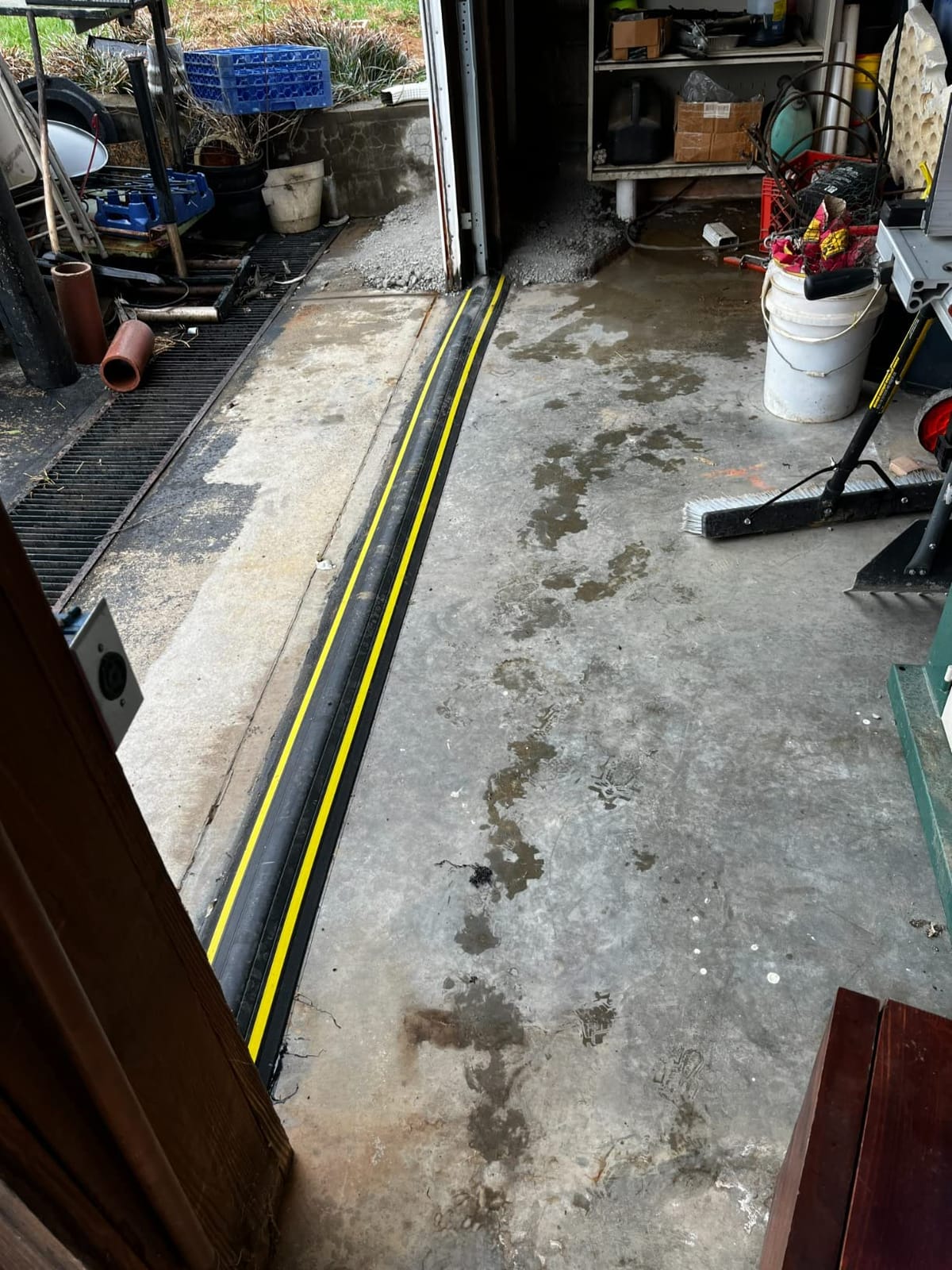
The mechanism is a 1.5 inch high PVC threshold seal, 8 ft 3 in long and 7 in wide, fitted along the bottom of the garage door opening. It is not a deploy-in-an-emergency barrier at all. Once it is adhered down it is part of the building, and it blocks water, wind-driven rain, leaves, dust, vermin and debris from entering.
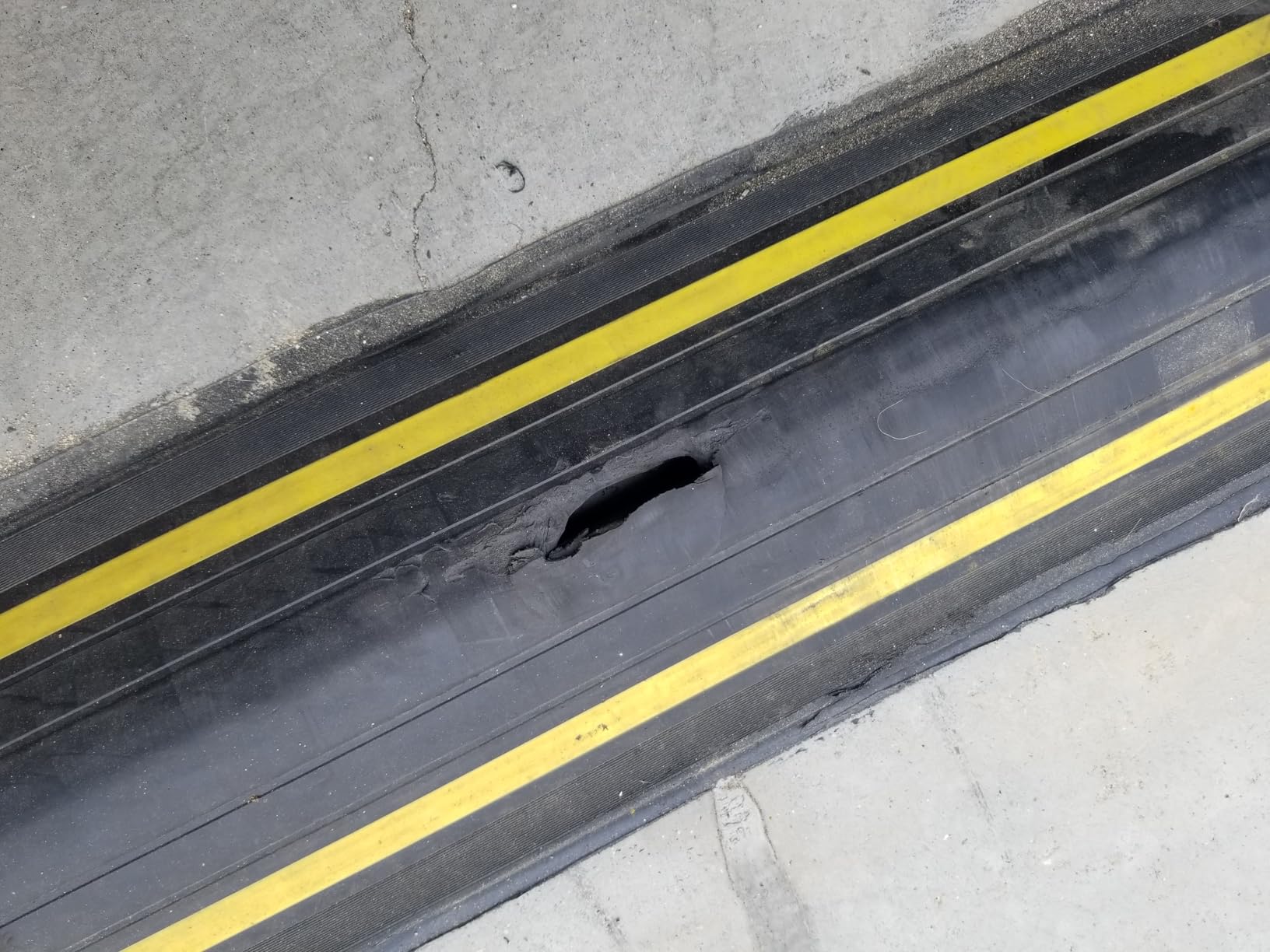
Two build details stand out. The PVC is heavy duty and does not degrade with prolonged water contact, which is the usual failure point for rubber garage seals, and the install kit includes multi-purpose adhesive and sealant plus colour instructions, backed by a five-year manufacturer warranty. Because it adheres rather than screws, your finished garage door panels stay intact.
Owners have fitted it over uneven garage floors and report lasting seals, and it is sturdy enough to drive vehicles over daily once cured. If your garage floods via surface water, this is the only pick here that solves the problem permanently.
What you should know before you buy it
Measure twice, because the recurring advice in reviews is that the advertised length can run about an inch longer than the material actually supplied. Measure the opening, subtract what you need to lose at each end, and buy accordingly.
Read the temperature window. The adhesive needs conditions in the 50s to 95 F, and bare concrete should be sealed before the strip goes down or the bond fails early. Plan installation for a dry, mild day rather than the week before a storm.
Where it falls short
Trimming is a genuine chore. Reviewers describe cutting it with a band saw rather than a utility knife, so budget time and the right tool before you start, and do not assume a clean cut with scissors.
And it is shallow at 1.5 inches. It is the right answer for rain blowing under a door and for water running in across the slab, and it is the wrong answer for a rising pool pushing against the garage door from outside.
7. GoSports Flood Hero 18ft Water Activated Flood Bag – Best Single-Span Garage Cover
Flood Hero 18 ft Water Activated Sandbag – Flood Bag Barrier for Home
18 ft single span
Activates in 5 to 10 min
Sand gel filler, no lifting
Expands up to 3 in high
Pros
- 18 ft span covers double garage doors without joints
- No sand
- shovels or heavy lifting
- Gel filler solidifies to resist leaking
- Folds flat for storage
Cons
- Gel does not fully deflate so storage takes space
- Some units did not reach 3 in in heavy rain
Best For: a double garage door, a wide storage-unit opening or a long driveway section where you would rather have one continuous span than three or four shorter barriers butted together. At 18 ft, this is the longest single span in the roundup.
The filler is a sand gel rather than absorbent powder. It activates with fresh water in 5 to 10 minutes, then solidifies enough to resist leaking, which is what makes it better suited to slow-moving water than a purely absorbent tube. The bag measures 216 inches long by 6 inches and expands up to 3 inches high, and the shell is thick, puncture-resistant non-woven fabric.
The technique matters more here than anywhere else in the roundup. The manufacturer guidance is to lay it in the path of slow-moving water, or to pre-soak it in a bucket when water is moving fast. Pre-soaking is what buys you time in a downpour.
What you should know before you buy it
Protect it from puncture before you deploy. The fabric is puncture resistant, not puncture proof, and 237 reviews at 4.0 stars include reports of units that let water pass underneath in heavy rain without reaching the advertised 3 inch height.
Allow storage space. The gel does not fully deflate once activated, so a used bag stays bulky and needs a dedicated place between events. That is the main reason this loses to the Flibyt tubes in position 4 on the reuse question.
Where it falls short
It shares the category-wide saltwater limitation, since the gel chemistry is deactivated by salt or chlorine. Coastal and tidal properties should look elsewhere for anything water-activated.
It is also a one-person-only job in a spot that matters. An 18 ft bag laid across a garage mouth is doing the work of three or four smaller barriers, and a single tear or an uneven concrete lip compromises the whole span. For shallow, slow sheet flow it is excellent, and it is not a deep-water tool.
8. Quick Dam FloodGate QDFG30 Doorway Flood Guard – Best for Deep Water at a Door
Quick Dam QDFG30 FloodGate, Doorway Flood Guard, 30-35″ Openings, 30-in
Fits 30 to 35 in wide openings
Blocks water up to 26 in high
Steel frame with neoprene seal
No drilling
Pros
- Rigid frame installs in under 15 minutes
- Neoprene sleeve forms a tight seal
- Keeps the entryway accessible while deployed
- Reusable year after year
Cons
- Very high cost for home flood protection
- Corner gap reported on out-of-square frames
- Wrong size sometimes shipped
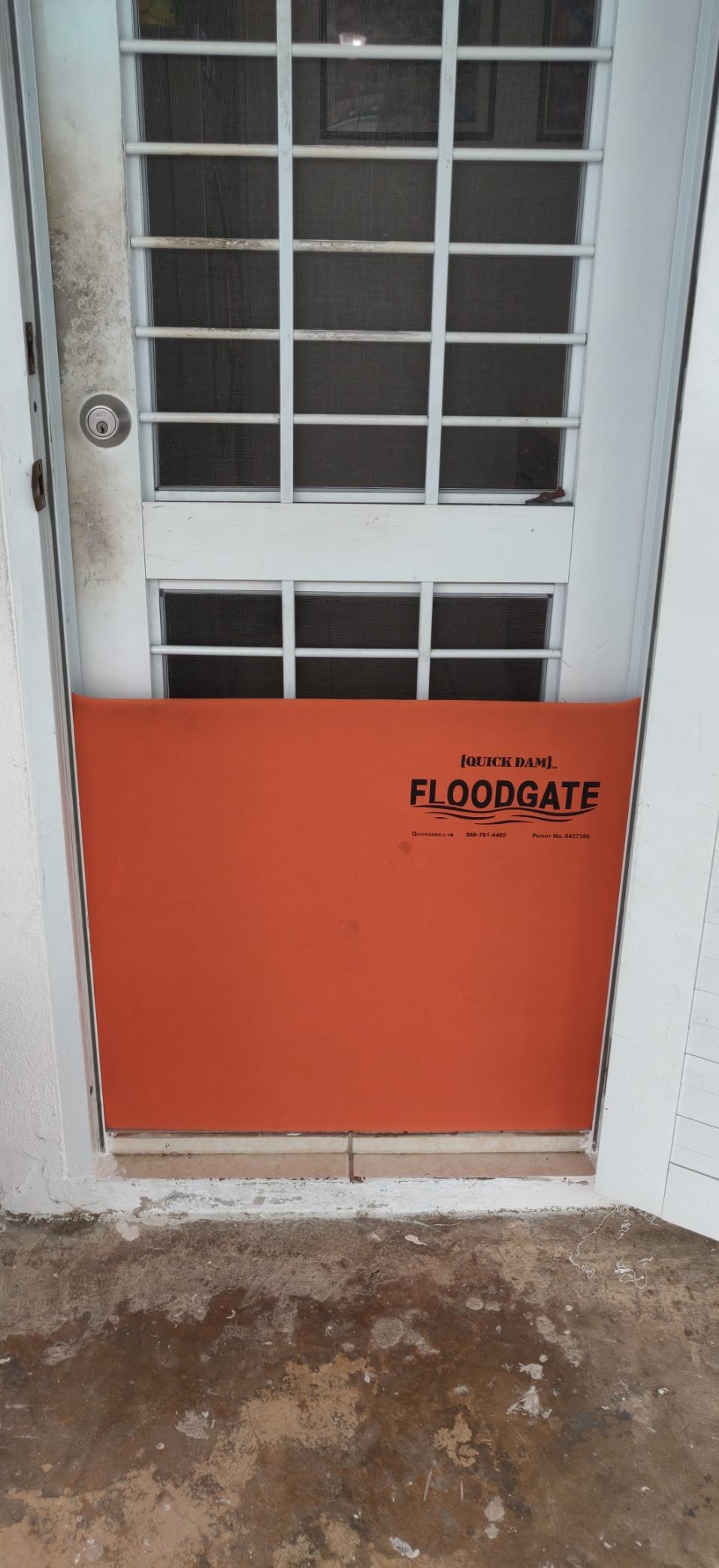
Best For: a doorway where the water is deep rather than shallow, and where the door still has to open afterwards. This is the only product in the roundup rated to block water up to 26 inches high, and that is a different order of protection from everything else listed here.
The build is an expandable steel frame with a neoprene sleeve that presses against the frame to create a watertight seal. It fits openings 30 to 35 inches wide, installs in minutes with no alterations and no fixings, and stanchions join multiple units for wider openings. It is aimed at property managers, hotels, fire departments and government use, which tells you the design intent.
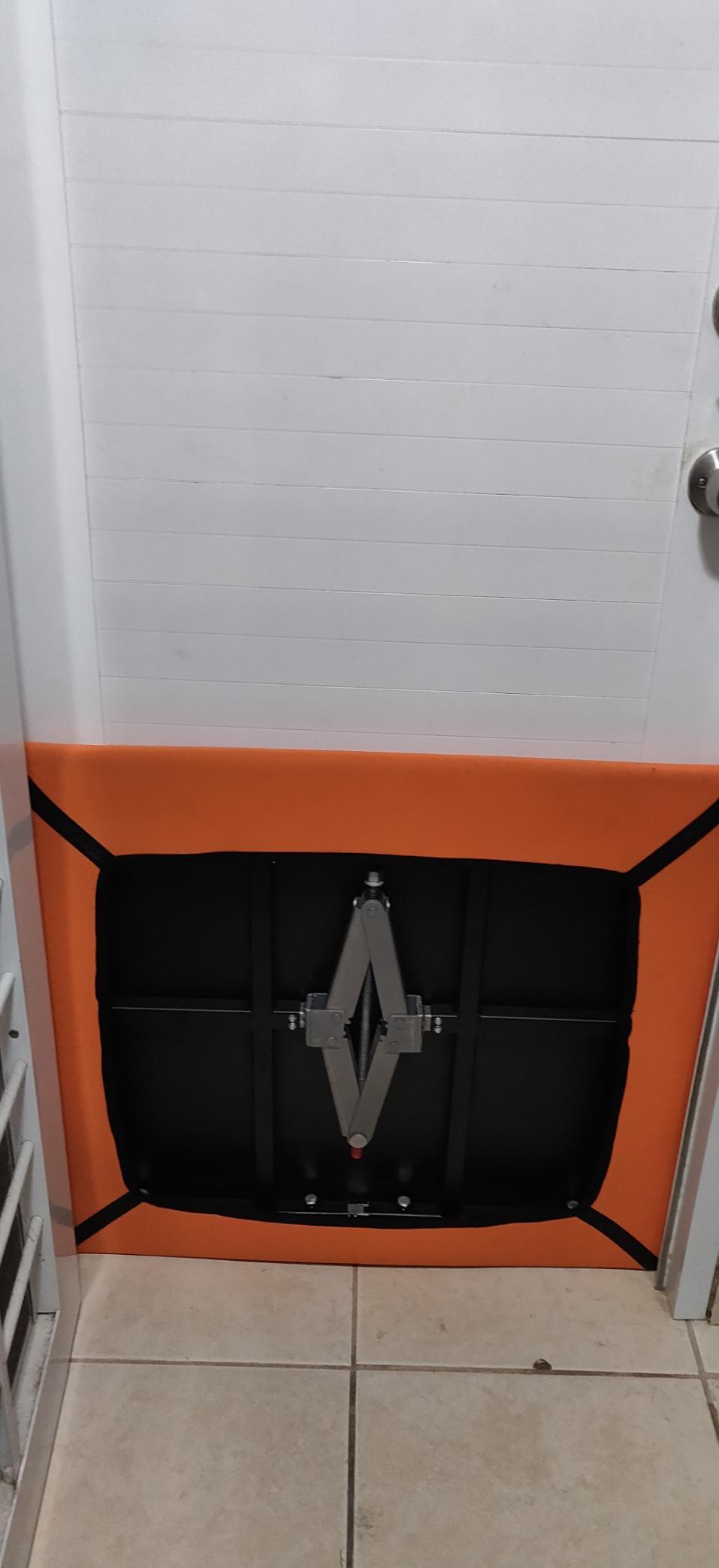
The detail that separates it from a fabric tube is that the entryway remains accessible while the gate is in use. That matters for safety, because a sealed door that blocks your only exit is not an acceptable trade. Owners in flood zones report it keeping water out during major storms, and at 175 reviews the volume is the thinnest in the set, so treat the feedback as directional rather than conclusive.
Installation uses the included ratchet wrench, and the frame is rigid enough that the 26 inch rating means something. The reuse story is strong too: it is a frame and a sleeve, not a consumable, so it can be deployed year after year.
What you should know before you buy it
Confirm your opening is square. A 30 to 35 inch range is specified, and a reported corner gap on an out-of-square frame is the most specific negative in the reviews. Measure the width at the top, the middle and the bottom, and check the reveal before you order.
Plan the deployment with a second person, or at least with the ratchet wrench to hand. This is a rigid frame, not a light panel, and the difference between a 15 minute setup and a frustrating one is whether the tool is to hand.
Where it falls short
Cost is the honest limitation. This sits at the top of the price range by a wide margin, and for a home in a low-risk zone it is difficult to justify. If your water depth stays under about 6 inches, the packs in positions 1 and 2 achieve the job for a fraction of the outlay.
There is also a service limitation worth flagging before you commit: some buyers report the wrong size being shipped, and manufacturer response has been slow. Check the size on arrival and keep the packaging until it is confirmed.
9. Threan 11ft Sand Tube Bags, 4-Pack – Best for Maximum Filled Coverage
Threan 4 Pcs 11 ft Sandbags for Flooding, Flood Prevention Sand Tube Bags
11 ft tubes, 4 pack
44 ft total length
0.48 mm waterproof canvas
Large caliber for more fill
Pros
- 11 ft tubes give long coverage with minimal seams
- Thickened canvas is tear and wear resistant
- Elastic binding stops sand leaking
- Four pieces total 44 ft of barrier
Cons
- Requires sand or gravel and manual filling before each use
- Only 0.12 in thick so vulnerable to punctures
Best For: a property where a single barrier run has to cover a long distance, such as a frontage, a side passage or a basement light well run, and you already have fill material on hand. Four 11 ft tubes give you 44 ft of barrier in one purchase.
The design choice that matters is the large caliber. Each bag is about 11 ft by 6 in empty and takes more sand or gravel than a standard 6 ft tube, which is how a pack of four can stand 44 ft of coverage while still weighing 3.43 pounds empty. The binding band at the opening tightens after filling to stop the fill leaking out through the mouth.
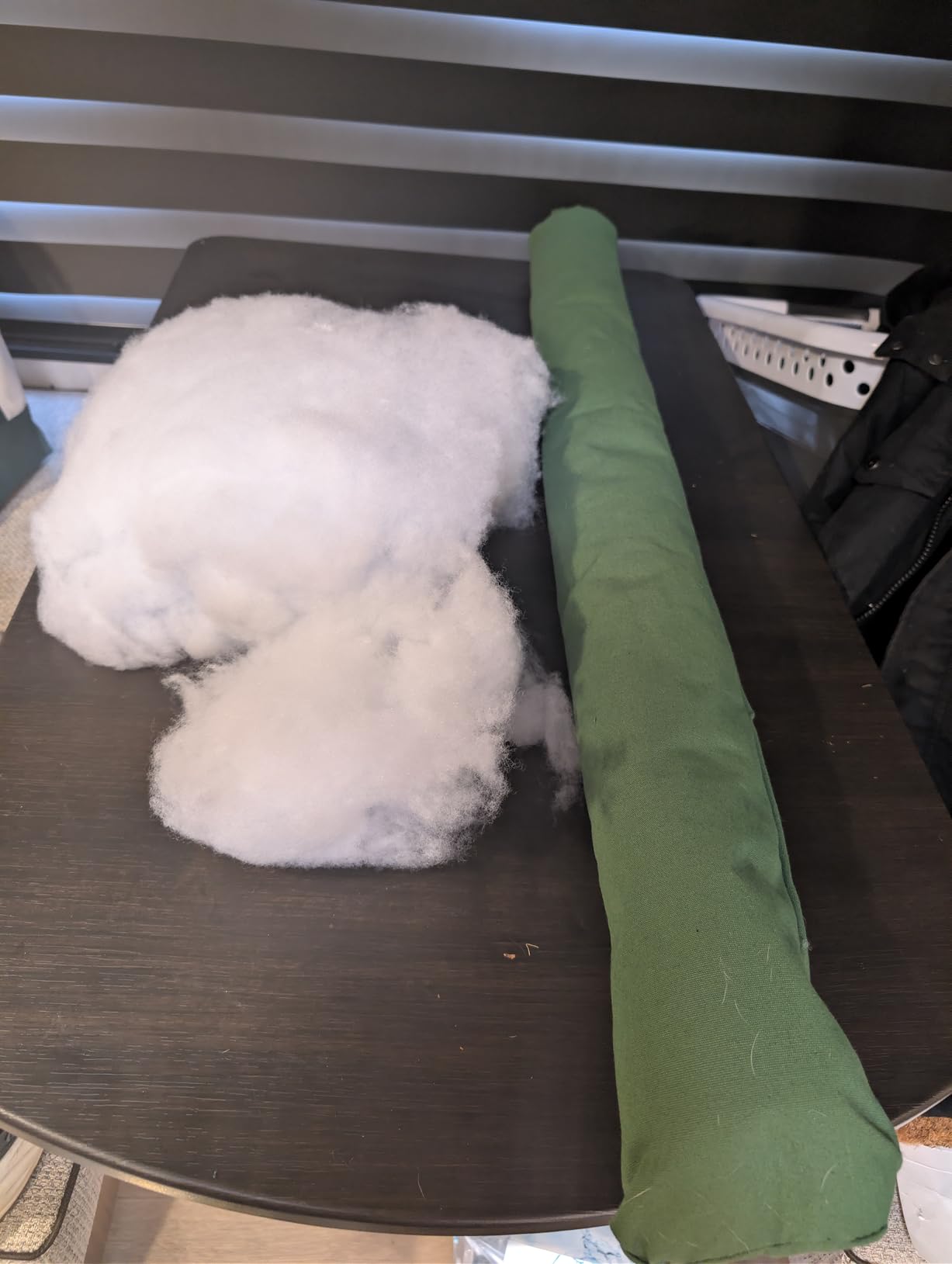
The canvas is about 0.48 mm with a waterproof treatment that resists fading, so it is built for repeated seasons rather than one event. Buyers rate the long tube length and the canvas durability highly for covering doors and gates, and 283 reviews at 4.3 stars is a reasonably solid base for a mechanical product with no moving parts.
Plan the geometry before filling. 44 ft of filled tube is a substantial amount of material to move into position, and doing it after the water starts is not realistic. Fill and stage in advance, the way you would stage anything else on a flood checklist.
What you should know before you buy it
Get your fill sorted first. This pick, like position 5, is only half the system, and the bags need sand or gravel and manual filling before every use. That is the single most repeated caveat in the reviews and it is not a small one.
Work out the footprint. 44 ft of 6 in diameter filled tube occupies a real stretch of ground, so make sure the run you have available is actually 44 ft of usable line and not 44 ft including corners and returns.
Where it falls short
The empty bags are only about 0.12 in thick, so they are vulnerable to punctures from debris, tools or traffic while unfilled. Treat them carefully in storage and never drag them across concrete.
It is also the least useful pick in a flash flood, for the same reason as the other sand-filled products: filling is the bottleneck and you cannot fill a bag quickly when water is already at the door. For speed, the activated tubes win. For sheer coverage and fill weight, this is the pick.
10. AQICHEYO 6ft 7 Inch Reusable Flood Sandbags, 4-Pack – Best for First-Time DIY
Flood Prevention Sandbags, Reusable Flood Water Barrier, Suitable for Indoor and Outdoor, etc. to Control Flooding in Rainy Season (6 feet 7 inches (Pack of 4))
7 in by 6 ft bags, 4 pack
Tie-strap closure stops sand leaks
Shovel included
Reusable canvas
Pros
- Reusable thick canvas handles repeated filling cycles
- Tie-strap secures the bag after filling
- Shovel included for convenience
- Multiple length options to match the opening
Cons
- Requires manual filling with sand before every use
- Not a deep-water device
Best For: first-time buyers who want a complete, obvious job with everything needed in one box. The filling shovel is included, the closure is a simple tie strap, and the bag dimensions are conventional. Nothing about it requires learning a technique.
Each bag measures 7 in by 6 ft, and the four-pack gives 24 ft of coverage. The closure system is the detail that sets it apart from improvised sandbagging: rather than folding and hoping, you fill the bag and pull the tie strap tight across the mouth, which is what stops sand leaking out under pressure and washing away from the wall.
It is also available in 7 in by 5 ft and 7 in by 4 ft lengths, in packs of 4 or 10, so you can match coverage to your opening instead of cutting a bag to fit. Buyers rate the canvas durability and the included shovel well, and 415 reviews at 4.4 stars with 70 percent five-star is a healthy signal for a simple mechanical product.
What you should know before you buy it
Choose the length from the sizes offered rather than assuming. The same pack comes in several lengths, and picking the one that matches your opening removes the only real prep this product needs. It suits doors, windows, walls, gates, parking lots, garden and elevator entrances, garage entrances and basement skylights.
Fill them once to learn the weight. A filled 6 ft bag is a two-person lift, and the reusable claim means you will be doing it more than once, so get the technique right before you need it.
Where it falls short
The single recurring limitation in the reviews is the labour, and there is no way around it. These are sandbags. They need filling before every use, and if your flood timeline is measured in minutes rather than hours, that is the wrong tool.
They are also not a deep-water device. Their value is in diverting and containing shallow water across a width, and anyone expecting a 12 inch barrier at a doorway will be disappointed. If the water is deep at the opening, position 8 is the correct answer.
How to Choose a Flood Barrier for Your Home’s Openings
Start with the openings, not the products. Walk your property and write down every place water can enter: exterior doors, the garage door and its man-door, ground-floor and basement windows, air bricks and vents, drains, the washing machine and dryer hookups, and any sewer or toilet path. Barriers protect the openings you have sealed, and only those.
Match the barrier to the entry point. Water-activated tubes and bags belong at doorways, thresholds, hot water tanks and any low point where you want a fast seal. Water-filled tubes belong on slopes and drives where the job is diversion, not containment. Sand-filled tubes belong where you need long, heavy runs and you have fill material. A permanent threshold seal belongs at a garage door you will never think about under pressure. A rigid gate belongs at the one doorway where the water gets genuinely deep.
Decide permanent versus removable honestly. A permanent seal is the right call for a garage, a fixed opening and a property that floods on a known cycle, because the cost is paid once and the protection is always there. A deployable kit is the right call for anything you might need to use as an escape route, for a home you rent, or for an opening that is only exposed occasionally. If your concern is a building envelope problem as well as flood water, our solar shingles guide covers the roof side of it.
Check certification before you buy. FM Approvals, UL listing, and the National Flood Barrier Testing and Certification Program run with the US Army Corps of Engineers are the names that matter, and Florida DEP design standards are the reference homeowners in that state are held to. A product that names one of these is telling you its hydrostatic performance was tested by someone other than the seller.
Measure before you order, and measure properly. Record the opening width at the top, middle and bottom, the threshold height, the depth of the reveal, and whether the door still swings freely with the barrier fitted. Check that the ground under the barrier is level, and that the seal line sits on a surface the product is designed for, because a 20 mil vinyl tube on a crumbling slab is a leak with extra steps.
Then build the readiness routine. Stage every barrier where it will be used rather than in a garage corner, keep fill material dry and covered, dry reusable products fully before storage, and check seals and closures each season. If part of your plan involves keeping an interior space dry and usable, our gas furnace guide covers the mechanical side of a habitable lower level. The barrier that is already in position when the water arrives is the only one that counts.
Frequently Asked Questions
What is the most effective flood barrier for homes?
The most effective barrier is usually a layered system rather than a single product: a permanent threshold or door seal on the openings you cannot think about under pressure, plus a fast-deploy barrier staged at the rest. For water deeper than about 6 inches at a doorway, a rigid expandable flood gate is the only mechanism rated to hold it back. For shallow surface water and diversion, water-activated or sand-filled tubes work with no lifting.
Do flood barriers really work?
Yes, when they match the opening and the whole property is sealed. A correctly sized barrier keeps surface water out of a room and can prevent structural damage, contents loss and mould. No barrier stops every flood: they have a design water depth, they need a sound seal at the frame and the ground, and they do nothing for the opening you forgot.
What is the best permanent flood barrier for my home?
For a garage door, a permanent PVC or rubber threshold seal fitted along the bottom of the opening is the best permanent option, because it blocks water and wind-driven rain year-round without any deployment. For deeper protection, a permanently mounted system is more involved and usually needs professional installation and permitting. A permanent seal is best where the opening floods on a known cycle and nobody will remember a deployable kit in time.
What is the best flood barrier for protecting doors?
For a standard doorway with shallow water, a water-activated tube that grows to about 3.5 inches is the best fit: it deploys in minutes, needs no sand, and stores flat. For deep water at a door, an expandable steel flood gate rated to 26 inches high is the correct choice. Whichever you pick, confirm the door can still open, because a barrier across your only exit is a safety hazard.
How long does a flood barrier take to deploy?
A water-activated tube takes minutes: lay it in the path of the water and pre-soak it in a bucket when the flow is fast. A rigid expandable gate takes under 15 minutes for one person with the supplied ratchet wrench. Water-filled tubes and sand-filled bags take the longest, since each unit needs filling, and a wide run can take well over an hour with a helper.
Are water activated flood barriers effective?
They are effective against shallow surface water and sheet flow, which is the most common type of home flooding, and they are the fastest to deploy. Two caveats matter: they swell to roughly 3.5 inches so they are not deep-water devices, and the chemistry that makes them sandless means they must not be used with salt water or chlorine, which deactivates or deflates them.
Best Flood Barriers for Homes: The Final Word
Ten barriers, ten different jobs, and only one of them will be right for your property. The Quick Dam 5ft water-activated barrier is our editor’s choice and the best flood barriers for homes starting point, because it deploys in minutes, stores flat, carries the deepest review base in the set at 4.4 stars from more than 6,000 owners. The Quick Dam 12 x 24 bag pack is the value pick when you have more than one threshold to seal.
Then match the mechanism to the opening. Diversion on a slope means the HydraBarrier. A garage that floods year after year means the permanent GaraDry threshold seal, which is the highest-rated product we tested and needs no deployment at all. Long heavy runs mean the sand-filled tubes. Deep water at a door means the FloodGate, and nothing else in the range will do that job.
Whatever you buy, seal the whole path and never seal your only way out. Water finds the weakest point, and the barrier nobody remembered to install is the one that decides how the evening ends. Stage it now, while there is still a season to do it properly, and it will still be sitting there when you need it in 2026.