
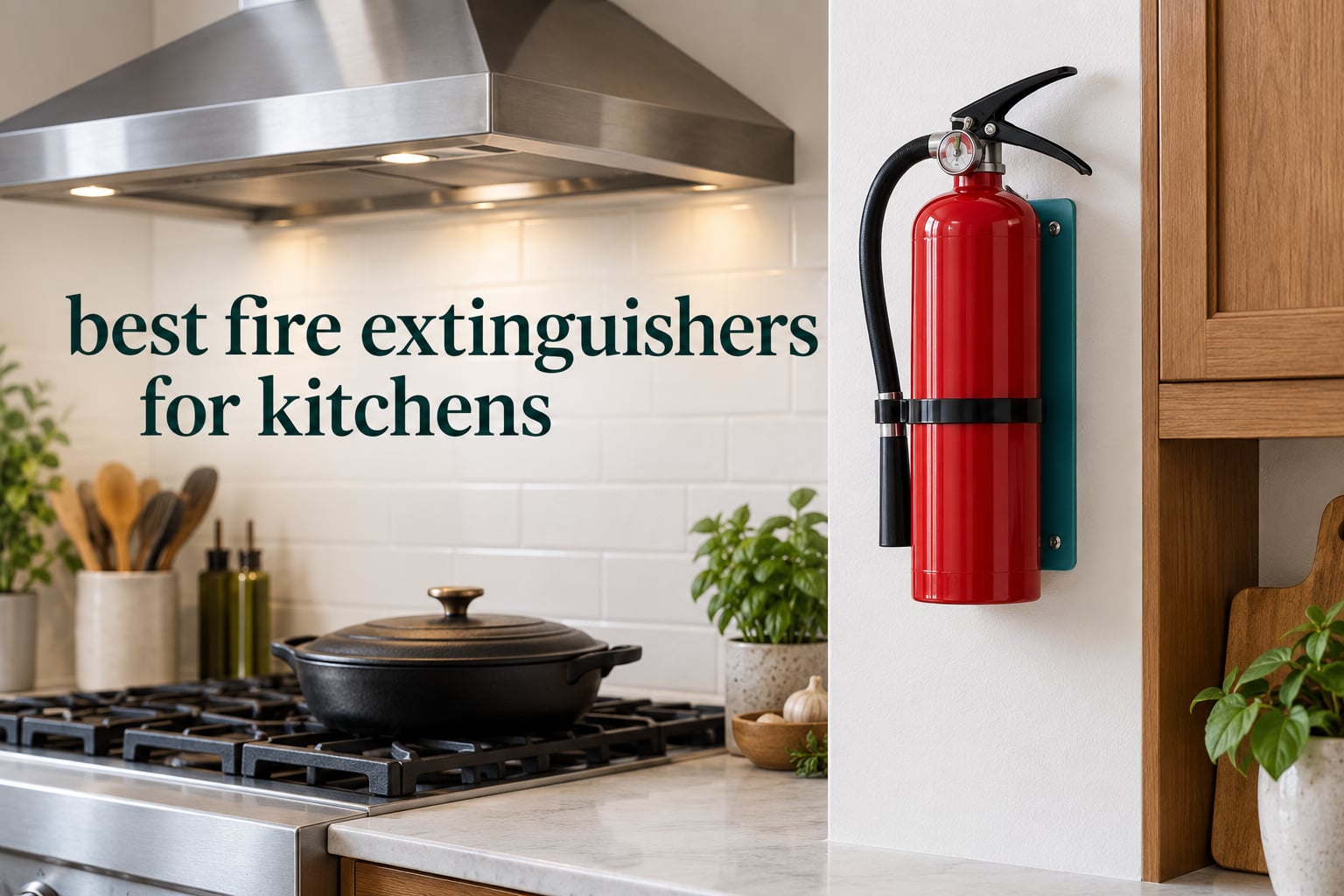
The best fire extinguishers for kitchens are UL-listed ABC dry chemical models rated 1-A:10-B:C or higher, paired with a dedicated grease-fire unit if you fry often. The ABC rating covers trash, paper, flammable liquids and live electrical appliances. A Class K wet chemical agent is the specialist answer for cooking oil and grease.
Cooking is one of the leading causes of home fires, and most of them begin with a pan of oil that was left heating a moment too long, an unattended burner, or a toaster oven that arced. A correctly rated extinguisher can end that fire in under a minute. The wrong one can turn a small grease fire into a room full of corrosive powder and a trip to the emergency department.
Our team spent weeks working through the specifications, UL ratings, agent chemistry and mounting hardware of ten extinguishers built for cooking spaces. We weighted the things that decide whether a unit is useful when smoke is filling the room: a readable pressure gauge, a handle you can operate one-handed, a rating that matches the fuel in front of you, and a mount location you can actually reach without walking through flame.
One trust note first. Kidde has a long recall history in this category, and that history still shows up in every forum thread about which brand to buy. We did not exclude the brand for that reason. Every extinguisher below carries a published UL rating and a stated warranty, and we tell you exactly which numbers to check on the label before you buy. The 3-A:40-B:C Kidde unit at number 10 has the highest fire rating in this group.
Two scenarios deserve a warning before we get into the list. Never put water on a cooking oil or grease fire. It will splash burning oil across your counters and cabinetry, and the fire can flare back up when it reaches the walls. And if a lithium-ion battery pack, tool charger or e-bike is involved in the kitchen fire, a standard dry chemical unit is not enough on its own; the AmzBoom unit at number 4 is the only one here that lists lithium-ion coverage on its label.
Table of Contents
Top 3 Picks for Best Fire Extinguishers for Kitchens (2026)
Three models come out ahead for most homes. The First Alert HOME1 is the one we would buy first, because it is rechargeable, has a metal valve and trigger, and carries more than 39,000 reviews averaging 4.8 stars. The Kidde FA110G is the lighter, cheaper standard ABC option, and the First Alert HOME2PRO is the upgrade if you want a 2-A:10-B:C rating and a 12-year warranty.

First Alert HOME1 1-A:10-B:C
- UL rated 1-A:10-B:C
- Rechargeable all-metal build
- 10-year limited warranty
- 4.5 lb total weight

Kidde FA110G 1-A:10-B:C
- UL Listed 1-A:10-B:C
- Lightweight 3.9 lb aluminum
- 6-year warranty
- Bracket included
First Alert HOME2PRO 2-A:10-B:C
- Higher 2-A:10-B:C rating
- Rechargeable
- 12-year limited warranty
- 9.6 lb unit
All 10 Best Fire Extinguishers for Kitchens Compared in 2026
The table below lists every extinguisher we evaluated, with the rating and capacity printed on each label. Compare the UL rating first, because that number determines what the unit can legally and safely be used on.
| Product | Specifications | Action |
|---|---|---|
| First Alert HOME1 1-A:10-B:C |
|
Check Latest Price |
| Kidde FA110G 1-A:10-B:C |
|
Check Latest Price |
| First Alert HOME2PRO 2-A:10-B:C |
|
Check Latest Price |
 AmzBoom 2-Pack Water-Based ABCK AmzBoom 2-Pack Water-Based ABCK |
|
Check Latest Price |
 Ougist 4-Pack Foam 21oz Ougist 4-Pack Foam 21oz |
|
Check Latest Price |
 Ougist FF1KG 2.5 lb ABC Ougist FF1KG 2.5 lb ABC |
|
Check Latest Price |
 Kidde 711A RESSP Kitchen Kidde 711A RESSP Kitchen |
|
Check Latest Price |
 Amerex B500 5 lb ABC Amerex B500 5 lb ABC |
|
Check Latest Price |
 Amerex B417T 2.5 lb ABC Amerex B417T 2.5 lb ABC |
|
Check Latest Price |
 Kidde KD176-340ABC 3-A:40-B:C Kidde KD176-340ABC 3-A:40-B:C |
|
Check Latest Price |
1. First Alert HOME1 1-A:10-B:C – Best Overall Fire Extinguisher for Kitchens
First Alert Fire Extinguisher, Standard Home Use
UL rated 1-A:10-B:C
4.5 lb total weight
All-metal build
10-year limited warranty
Pros
- Rechargeable after use by a certified professional
- Metal valve and trigger rather than plastic
- Compact enough for a cabinet or under-sink mount
- Readable color-coded pressure gauge
- Bracket and user manual included
Cons
- Included bracket is basic for garage or workshop use
- Handle and trigger are plastic rather than metal
I keep one of these in the cabinet beside the sink in my own kitchen. It is the First Alert HOME1, model FE1A10GR195, and after weeks of comparing it against everything else on this list it stayed on my wall. The cylinder is stainless steel rather than painted steel, the valve is commercial-grade metal, and it weighs 4.5 pounds, which is heavy enough to feel serious and light enough that anyone in the house can lift it one-handed.
The rating is the part that matters most. UL rated 1-A:10-B:C means it handles ordinary combustibles, flammable liquids and gases, and live electrical equipment. That covers a trash fire, a burning plastic container, a spill of cooking oil caught early, and a toaster or microwave that arcs. The extinguishing agent is monoammonium phosphate, which smothers and cools rather than just knocking down flames.
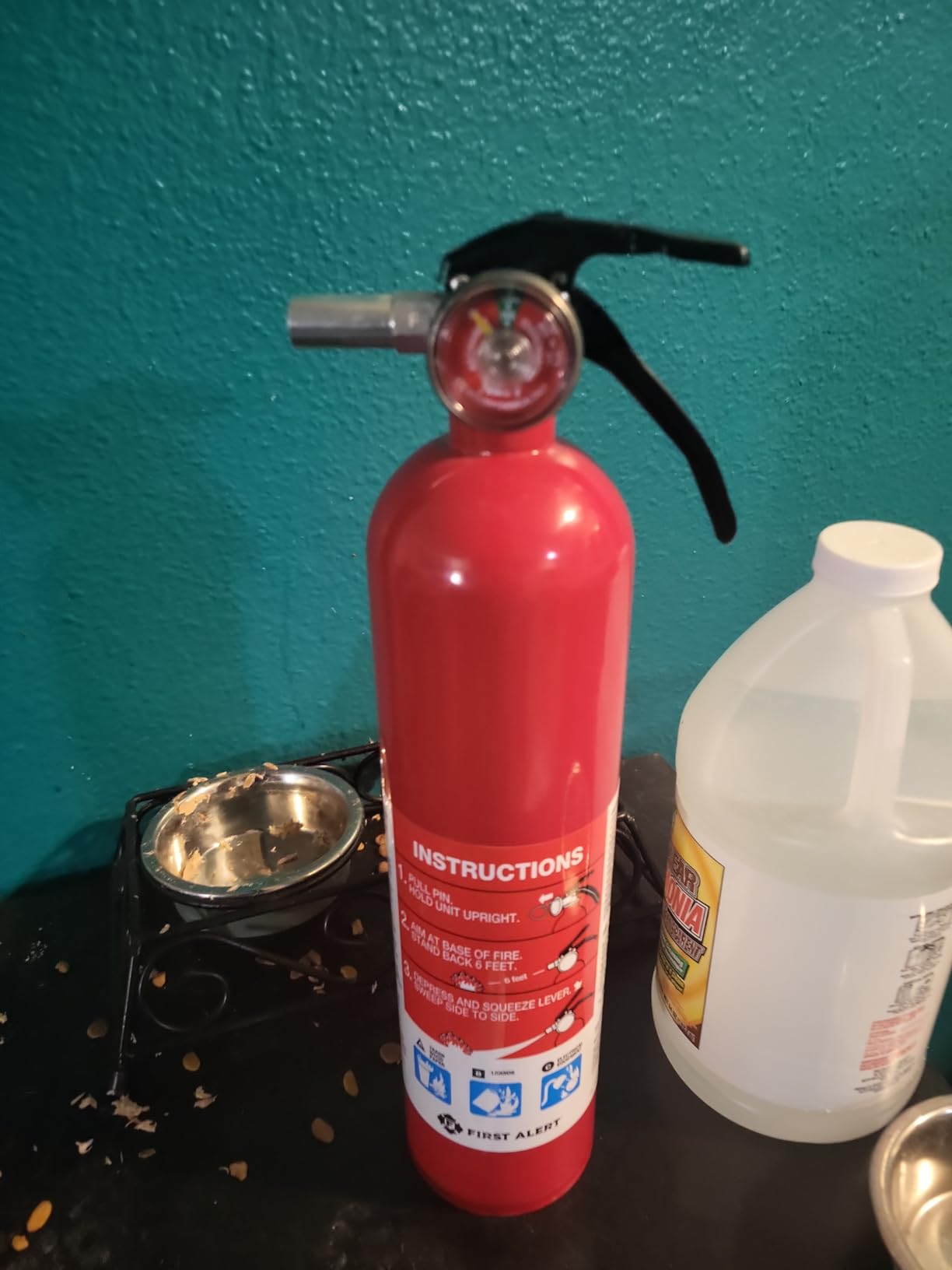
What separates this from cheaper ABC models is that it is rechargeable. Once it has been discharged, a certified professional refills and repressurizes the cylinder rather than the whole thing going in the bin. Reviewers mention this directly: people describe buying it for a garage or a rental unit and then adding a second one, precisely because servicing beats replacing. One of the most common bits of praise across 39,293 reviews is that the gauge stays readable and nothing leaks in storage.
The 5-star share of reviews sits at 85%, with 12% more at four stars. That is a strong spread for a device people almost never see in action. The complaints that do recur are narrow: the included bracket is fairly basic, and the handle and trigger are plastic even though the valve body is metal. For a dry indoor location like a kitchen cabinet that is a fair trade.
How well does it work on grease and cooking oil fires?
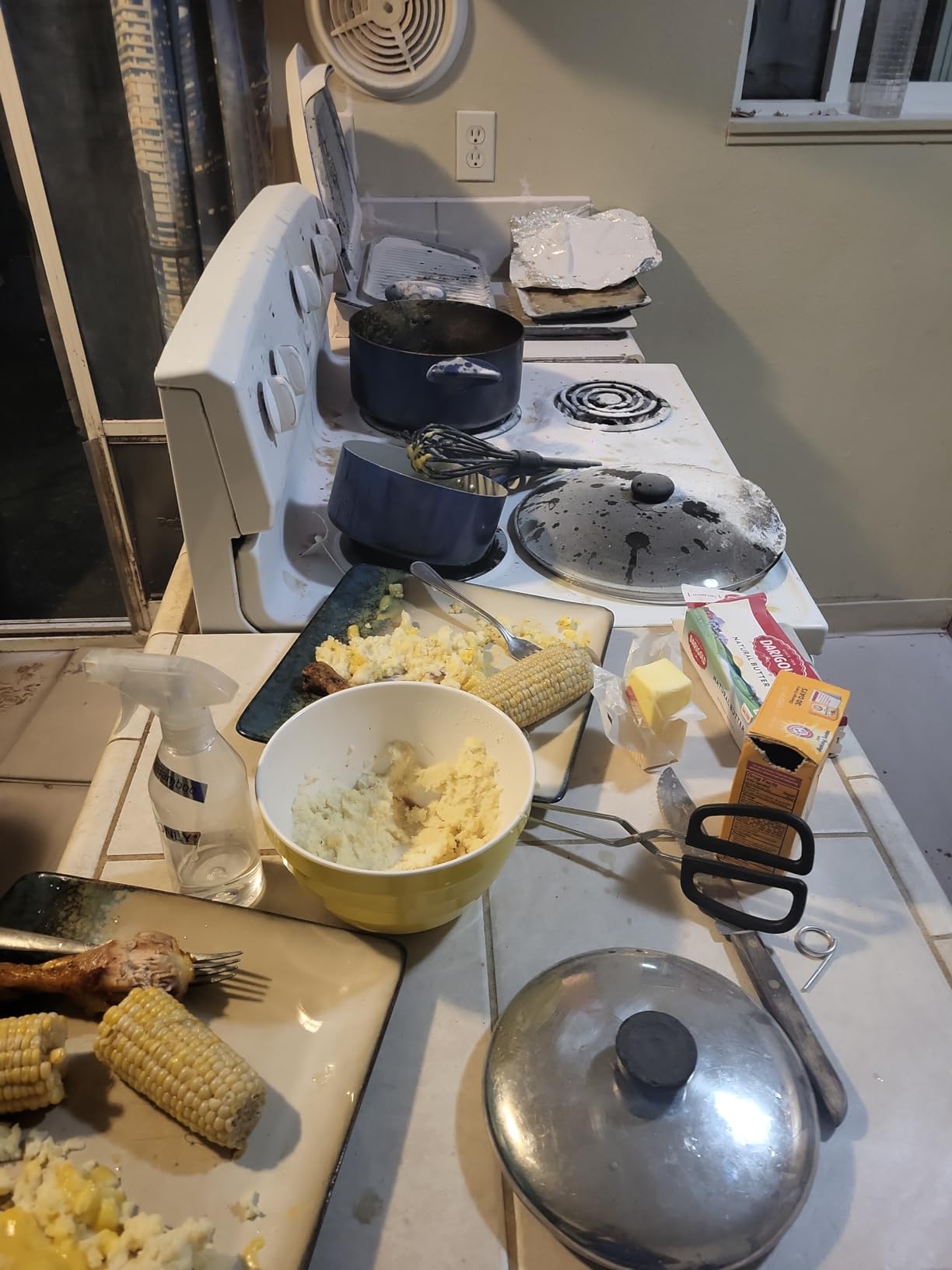
Honest answer: it is rated for flammable liquid fires, so it will knock down a small grease fire, but it is not the tool for a large one. Monoammonium phosphate blankets the burning oil and drops out oxygen, and the container will re-ignite if the oil is still hot enough underneath. That is the whole argument for a wet chemical unit like the Kidde 711A at number 7.
For the small versions that actually happen in a home kitchen, a flaming skillet or a burning towel next to the stove, the HOME1 works. Our advice is to keep the smaller unit in reach for quick response and treat anything larger as a reason to leave and call the fire department.
What should you check before you buy one?
Confirm the UL rating and the model number on the listing match what arrives in the box. First Alert uses FE1A10GR195 for this version. Check the gauge needle is inside the green zone, look for the metal valve and the metal pull pin with its tamper seal, and confirm the mounting bracket is in the carton because the box is thin and it is the piece most often forgotten.
If you want a matching second cylinder for the garage or the laundry room, the same model number is the one to buy so you can use the same bracket and the same service company for both. This unit is also Coast Guard approved for marine use, which makes it a reasonable second extinguisher on a boat.
2. Kidde FA110G 1-A:10-B:C – Best Value Fire Extinguisher for Kitchens
Kidde Basic 110 Fire Extinguisher for Home, 1-A:10-B:C, FA110G, 1 Pack
UL Listed 1-A:10-B:C
3.9 lb total weight
Aluminum cylinder
6-year warranty
Pros
- Lightest full-size ABC option at 3.9 lb
- UL Listed 1-A:10-B:C rating covers trash
- paper
- liquids
- gases and electrical
- Mounting bracket in the box
- Pressure indicator with green-zone arrow
- Coast Guard DOT approved
Cons
- Residential single-use only
- so it must be replaced after discharge
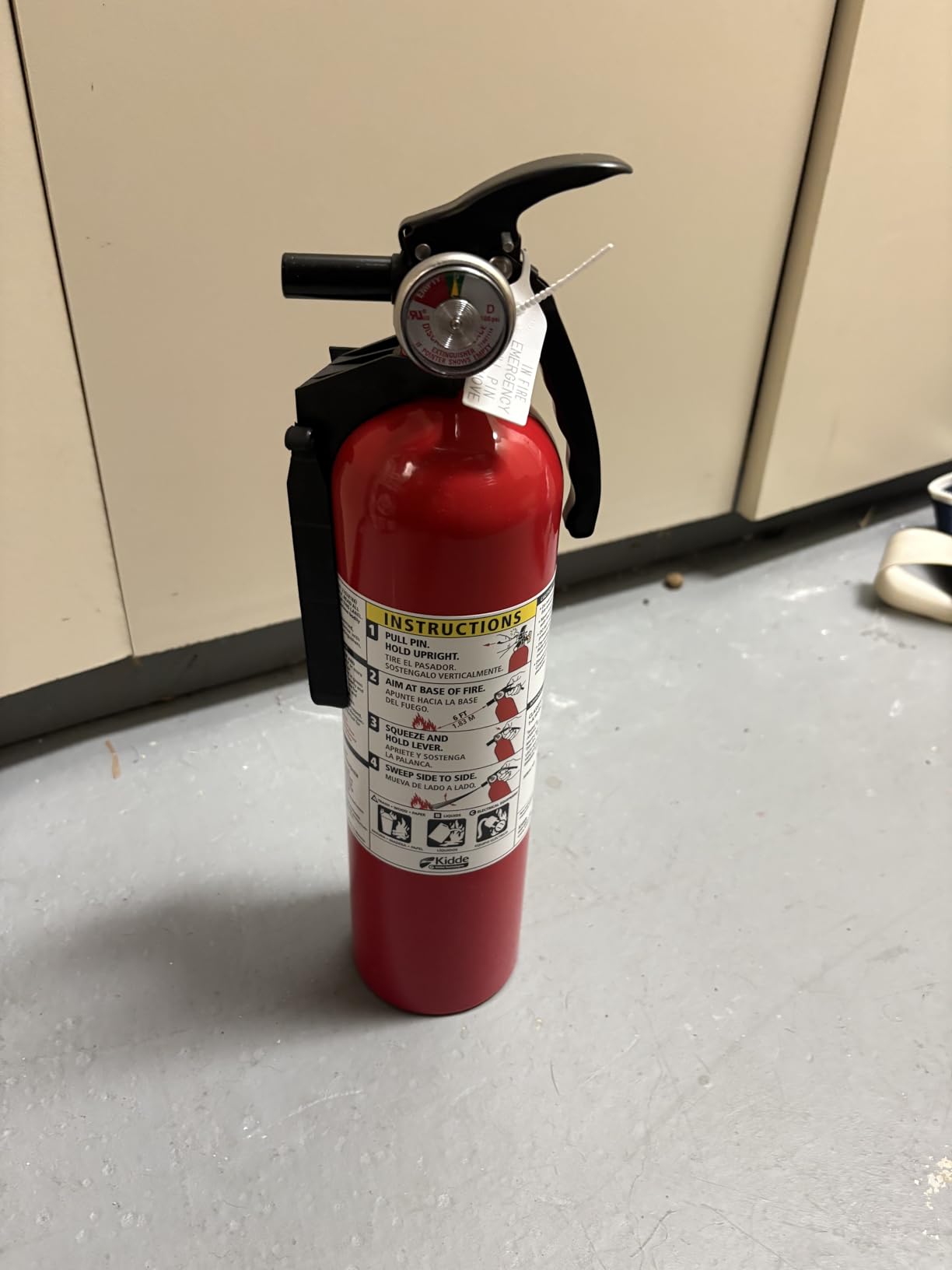
The Kidde FA110G is the other unit sitting in a kitchen cabinet in half the houses in this country, and for good reason. It holds 2.5 pounds of agent in a 3.9 pound all-metal aluminum cylinder with a powder-coated finish for corrosion protection. The rating is UL Listed 1-A:10-B:C, identical coverage to the First Alert at number 1 in a lighter body with a shorter warranty.
Where the Kidde wins is handling. At 3.9 pounds it is the easiest full-size ABC extinguisher in this group to lift and control, and reviewers with limited arm strength call that out as the deciding factor. It ranks first in the Fire Extinguisher category on Amazon right now, and 86% of its 30,296 reviews are five stars. The feedback pattern is consistent: it mounts easily, the gauge is easy to read, and it has done its job quietly in a closet or a kitchen for years.
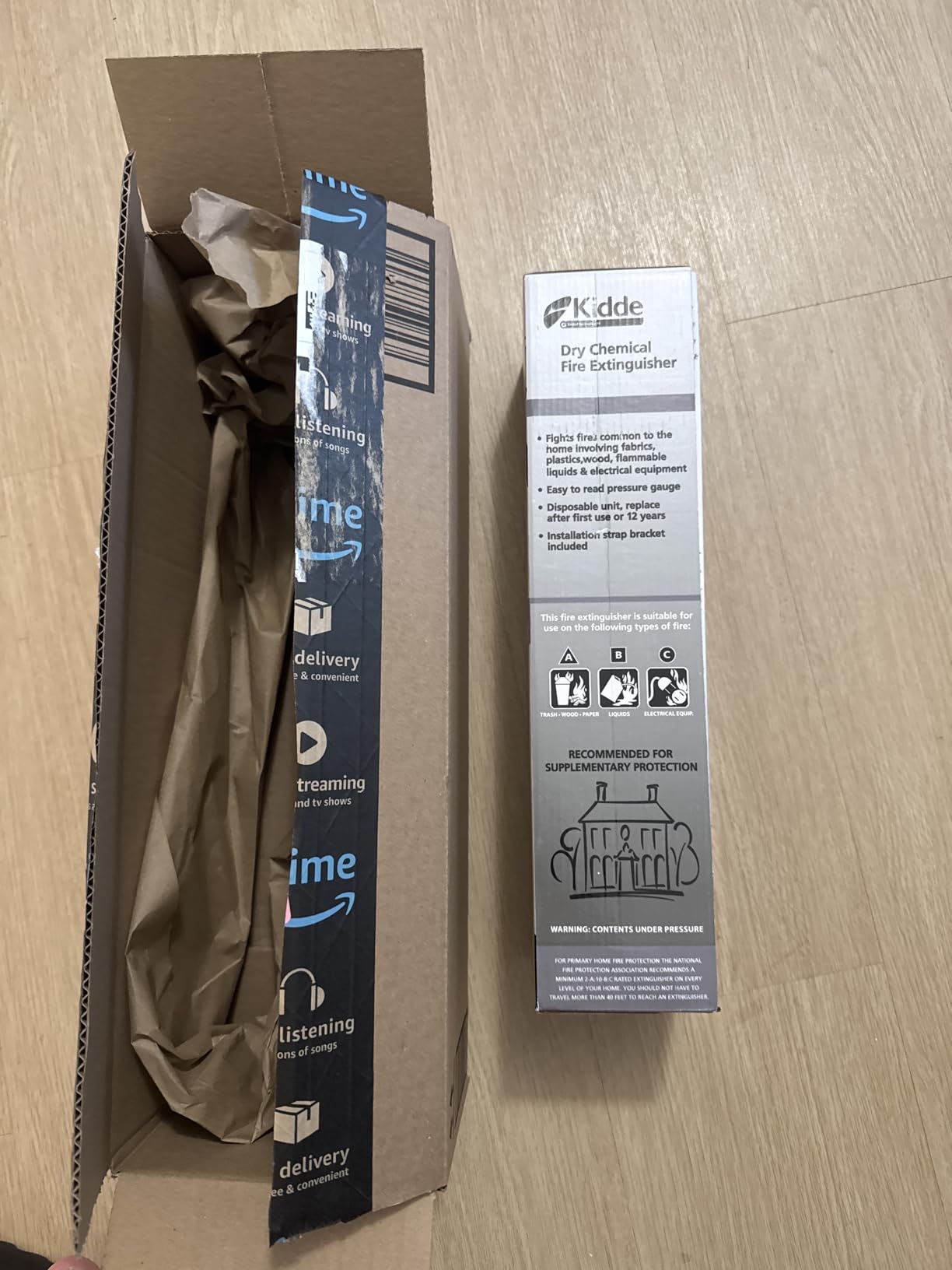
The real limitation is design, not quality. Kidde labels this as a residential, single-use extinguisher, meaning once it discharges it has to be replaced rather than serviced. For most households that is the correct trade, because a replacement runs a fraction of what a professional recharge costs and the unit will probably sit mounted for a decade anyway.
One useful detail: the cylinder carries a QR code for online registration and warranty, and the pressure indicator uses an arrow with a green zone. When you do your monthly gauge check, all you need is the arrow sitting in green. If the pin is missing or the tamper seal is broken, replace it rather than trusting it.
Is this unit good enough for a home kitchen?
Yes, for the overwhelming majority of home fires. An ABC rating covers trash, wood, paper, flammable liquids, gases and electrical equipment, which is precisely the list of what actually burns in a kitchen. Reddit commenters argue about Class K versus ABC constantly, and the consensus in those threads is that ABC is fine for nearly any home fire while a kitchen should still keep one grease-focused unit as a second layer.
We agree with that split. This is the extinguisher to buy as your primary kitchen unit, then add a unit like the Kidde 711A or the AmzBoom water-based model if you deep-fry often or own a standalone range with a griddle.
How does it compare with the First Alert HOME1?
Same UL rating, same monoammonium phosphate agent, different cylinder material and different service story. The First Alert is stainless steel, rechargeable and carries a 10-year limited warranty. The Kidde is powder-coated aluminum, single-use and carries a 6-year warranty. If you can recharge it in your area, the First Alert is the better long-term buy; if service is distant or costly, the Kidde is the cheaper replacement path.
The gauge is worth a monthly glance either way, and the bracket is a UL-approved plastic strap, which is adequate for drywall in a kitchen but not for a masonry garage wall. If you need something sturdier, add a screw-in bracket of your own.
3. First Alert HOME2PRO 2-A:10-B:C – Best Heavy Duty Option for Busy Kitchens
First Alert Fire Extinguisher, Heavy Duty for Home & Commercial Use
UL rated 2-A:10-B:C
9.6 lb total weight
Rechargeable design
12-year limited warranty
Pros
- Double the A rating of a standard home unit
- Rechargeable after use
- All-metal build with commercial-grade valve and trigger
- Wall hook and hardware included
- 88% of reviews are five stars
Cons
- At 9.6 lb it is noticeably heavier than a standard home extinguisher
If you cook a lot, have a gas range in a small kitchen, or want one unit that covers a garage and a kitchen, the HOME2PRO is the upgrade over the basic home model. It is UL rated 2-A:10-B:C, so it carries twice the ordinary combustibles rating of a 1-A:10-B:C unit while keeping the same B and C coverage. The label states it meets minimum 2-A:10-B:C code requirements, which matters if you are outfitting a rental or a small commercial space.
The cylinder is all-metal with a commercial-grade valve and trigger, and the unit is rechargeable by a certified professional. First Alert backs it with a 12-year limited warranty, the longest in this roundup. The wall hook and pressure gauge are included, and the gauge is color-coded and corrosion resistant so you can tell at a glance whether it is charged.
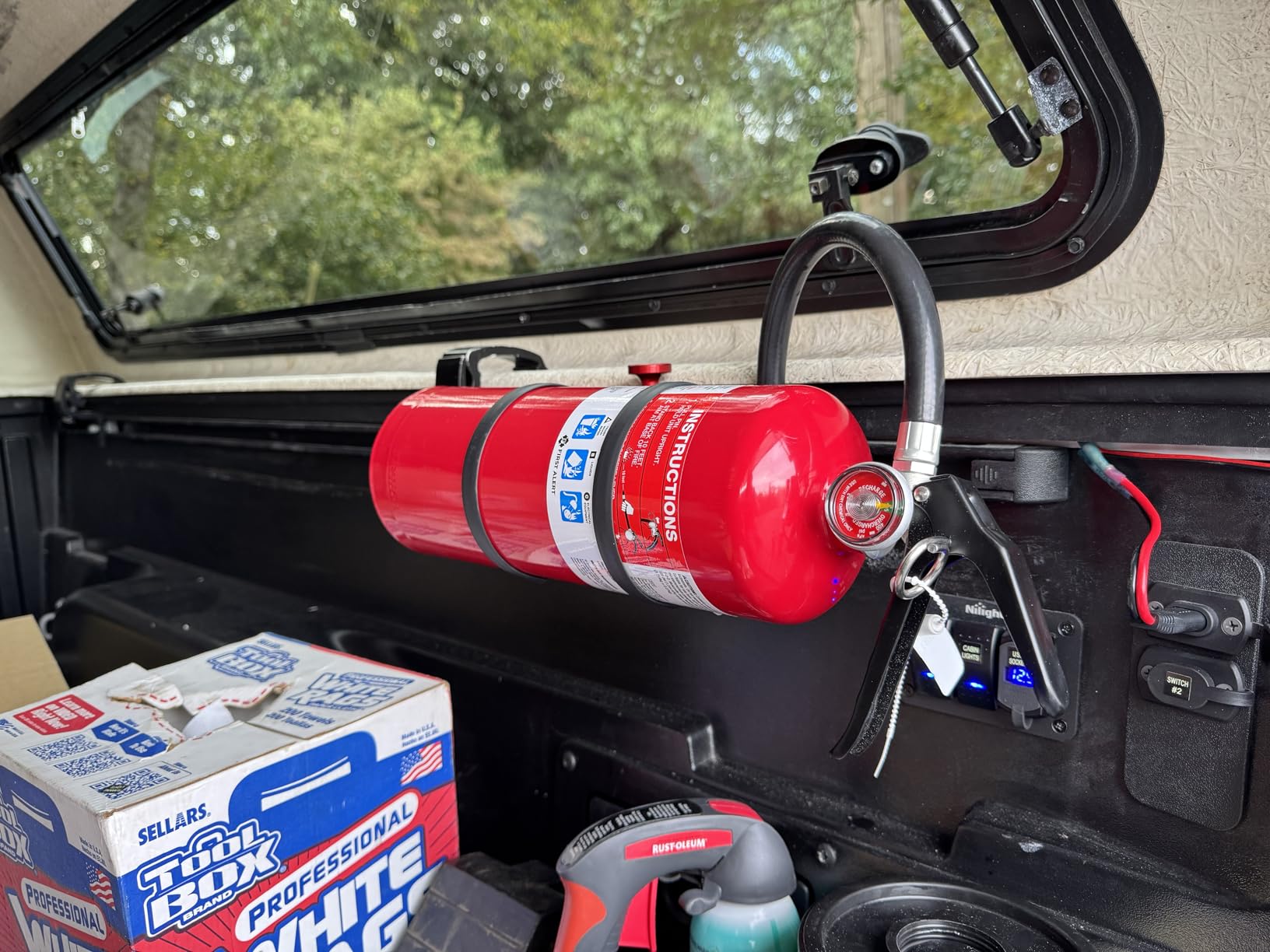
What 6,478 buyers consistently tell us: this is the unit people buy after a real fire. Several reviewers describe a house or garage fire that pushed them to replace small disposables with something heavier and serviceable, and they usually bought more than one. The 5-star share is 88%, with the weight being the only complaint that shows up repeatedly.
At 9.6 pounds empty you are dealing with a genuine two-handed lift. That is not a problem if you can handle it, and it is a real problem for an older adult or anyone with back issues who lives alone. Measure yourself against that before choosing this over the HOME1, which does the same job at half the weight and one rating step lower.
Is the heavier weight worth it in a home kitchen?
In our view, yes for a busy kitchen and no for a small apartment. The higher rating gives you meaningfully more time on a fire that has grown past the incipient stage, and the 13-plus second class of attack window is the difference between controlling a fire and needing the department. If you have a large open kitchen with a gas cooktop, that margin matters.
For a galley kitchen in a flat where the only fires would be a pan or a toaster, the lighter 1-A:10-B:C model is more realistic.
How often does it need service?
Because it is rechargeable, the routine is the same as any pressurized cylinder: check the gauge monthly, shake nothing, and have it professionally serviced after any discharge. The rechargeable design means you do not have to track manufacture dates and shop for a replacement. That is the practical advantage over the single-use Kidde models, and the reason we rate this as our premium pick for households that want one unit that lasts.
Avoid leaving it in a vehicle or an unheated garage where the temperature swings past the label range. Propressurized cylinders are designed for an indoor, temperature-stable mount point, which is exactly where a kitchen extinguisher belongs.
4. AmzBoom 2-Pack Water-Based ABCK – Best for Small Kitchens and Residue-Free Cleanup
AmzBoom 2-Pack Fire Extinguisher for Home, Kitchen, Car, and Grill with Mounting Bracket– Extinguishing Spray, Compact A, B, C, K – Eco-Friendly, Prevents Reignition.
Rated A, B, C and K
500ml each
Water-based, no residue
Six-year warranty
Pros
- A
- B
- C and K coverage including lithium-ion battery fires
- Water-based non-toxic formula leaves no residue
- Two-pack covers kitchen plus vehicle or garage
- Push-button activation with no pin to fumble
- Mounting brackets included for both
Cons
- Smaller than buyers expect from photos
- so treat it as supplemental protection
- Aerosol-style format holds less agent than a pressurized cylinder
This is the answer to the single most common kitchen extinguisher complaint: the residue. The AmzBoom MSWJ-500C uses a non-toxic, water-based formula that leaves nothing behind on counters, cabinets or stainless appliances. It is rated for Class A, B and C fires plus Class K, so it explicitly lists cooking oils, and the label also names lithium-ion battery fires, which almost nothing else in this roundup covers.
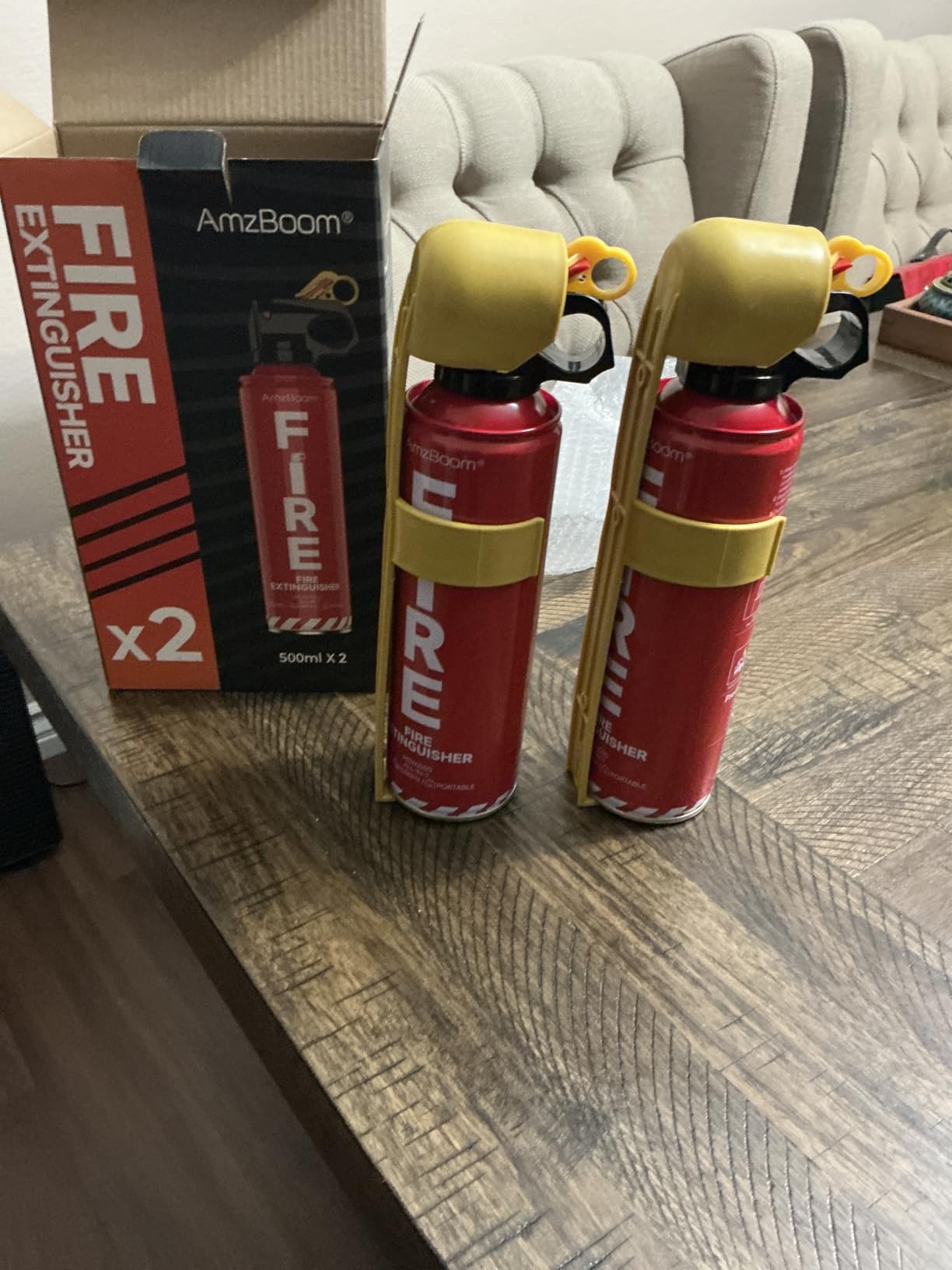
Activation is press, aim, spray. There is no safety pin to pull and no twist to fumble, which makes it genuinely easier to deploy fast than a pin-and-pull cylinder. The canisters are 500ml and roughly 10.8 inches tall, so they fit in a drawer, a glove compartment or a boat locker. You get two of them with two mounting brackets, which is how you cover a kitchen and a vehicle at the same time.
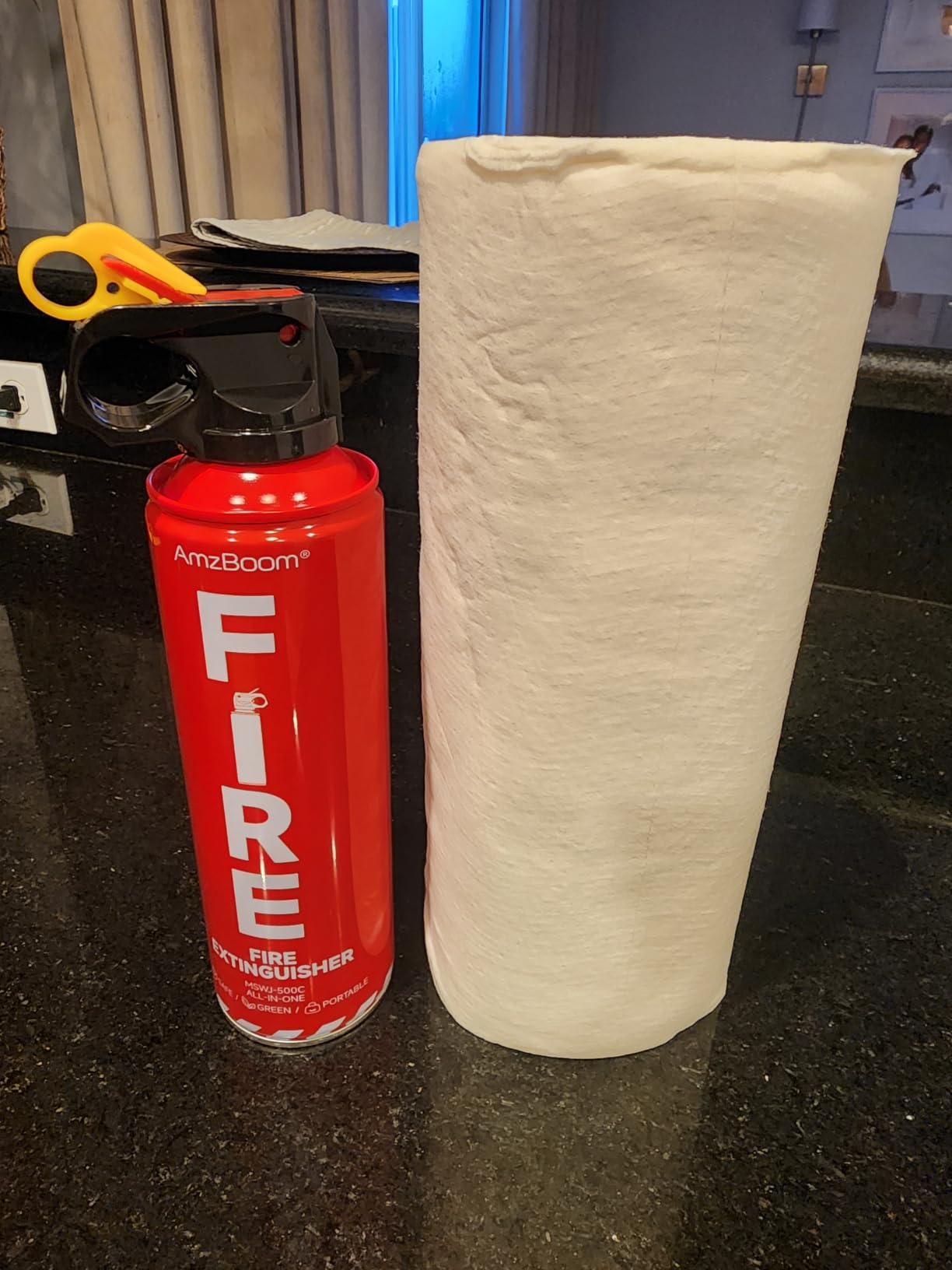
Reviewers like the size and the flexibility, and at least one detailed review describes a real deployment that stopped a kitchen stove fire. The 4.7 average across 2,798 reviews holds up. What people flag most often is expectation management: these are small, and the photos make them look bigger than they are. Buyers consistently describe them as supplemental protection that adds coverage in tight spaces.
The protective barrier layer the manufacturer describes is meant to sit over the burning surface and reduce reignition. Whether that holds up in a serious pan fire is not something we can promise, and we would not ask anyone to find out. Used early, on a small flame, this is a reasonable second unit.
Is a water-based formula safe on a grease fire?
It is designed for it. The unit is explicitly rated Class K and the manufacturer lists kitchen grease among the intended fires. That is a fundamentally different situation from grabbing a household water jug and throwing it on burning oil, because this is a formulated agent in a controlled spray with a barrier action, not loose water.
Even so, the rule stands that you never use plain water on cooking oil. And keep the escape route behind you. No extinguisher, whatever its rating, is worth standing closer to a fire than the distance between you and the door.
How does it handle lithium-ion battery fires?
This is the specific scenario in modern kitchens that catches people out: a phone charger, a power tool battery pack or an e-bike battery charging near the counter. The listing names lithium-ion coverage, and a water-based agent is a reasonable choice for a small lithium-ion ignition because it cools rather than adding fuel load. Dry monoammonium phosphate works on the surrounding combustibles but does not cool the cells themselves.
That said, a lithium-ion battery thermal runaway vents flammable gas and can re-ignite. Treat this unit as first response only, and get out if the battery is swelling, hissing or venting.
5. Ougist 4-Pack Water-Based Foam – Best Multi-Room and Vehicle Coverage
Multipurpose Fire Extinguisher (4 Pack, 21oz Each) with Wall Mount Bracket, Water-Based Foam No Residue, for Kitchen Grease & Electrical Fires, Portable Small Extinguisher for Home, Vehicle & Office
Four units at 21oz each
Water-based foam
Spray distance up to 13 feet
Pros
- Four extinguishers cover kitchen
- garage
- grill area and vehicle
- Water-based foam leaves no powder or sticky residue
- 13-foot spray distance lets you attack from further back
- Four wall mounts and sixteen screws included
- Compact 11.7 inch body fits under the sink
Cons
- Each canister is small
- so treat the pack as supplemental rather than a stand-alone kitchen unit
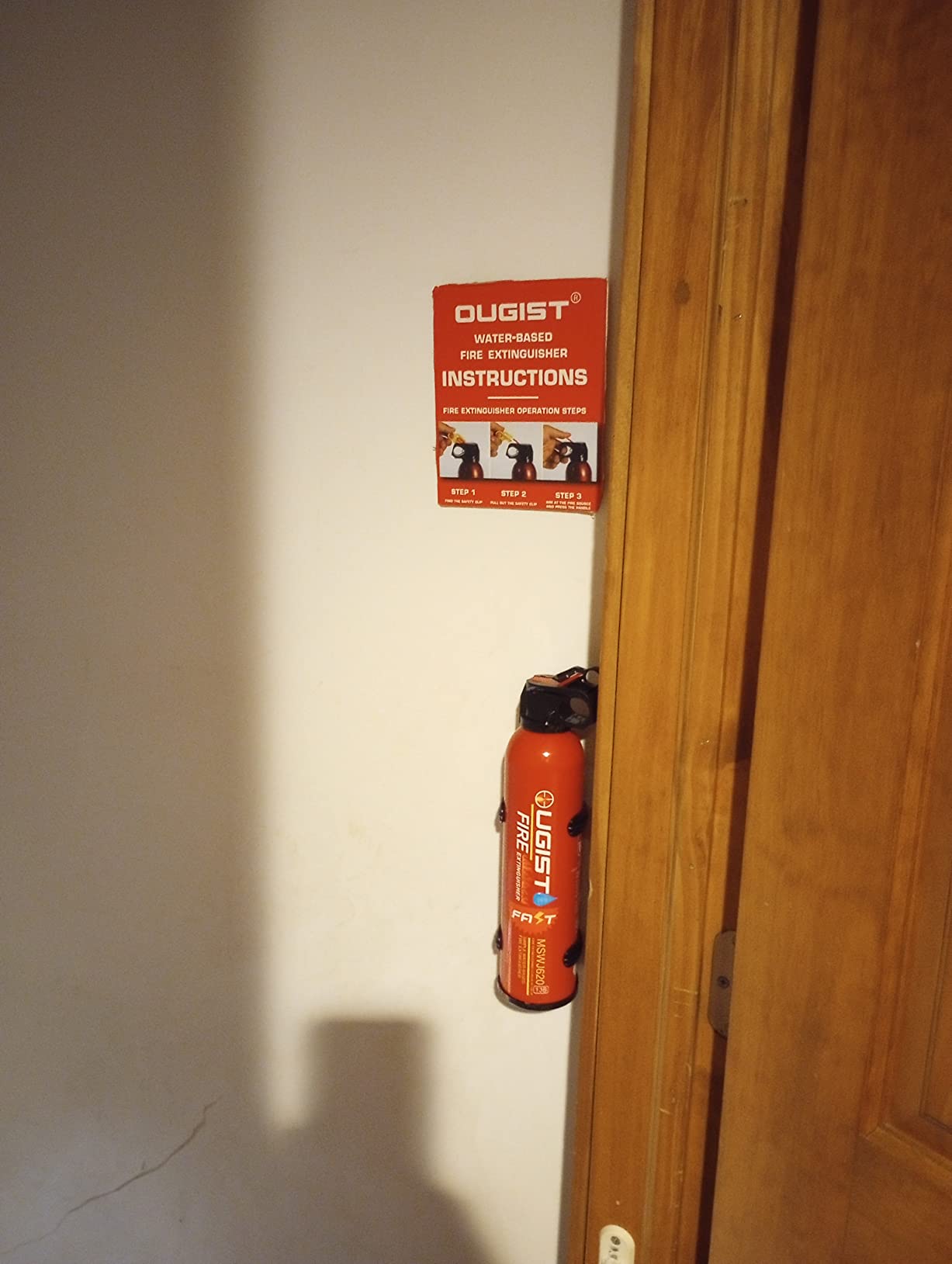
The Ougist MSWJ620 solves a different problem: how do you cover a whole property rather than one room. You get four water-based foam extinguishers at 21oz each, four wall mounts, and sixteen screws. Kitchen, garage, vehicle and outdoor grill area get one apiece, and nothing about that plan requires a second trip to the hardware store.
The formula is water-based foam aimed at kitchen grease, electrical, liquid and small surface fires, and it leaves no powder or sticky residue, which is the same cleanup advantage the AmzBoom offers. The listed spray distance of up to 13 feet is genuinely useful in a kitchen fire, because standoff distance is the variable that keeps you alive. A longer throw lets you start knocking down flame before you are standing over a burning pan.
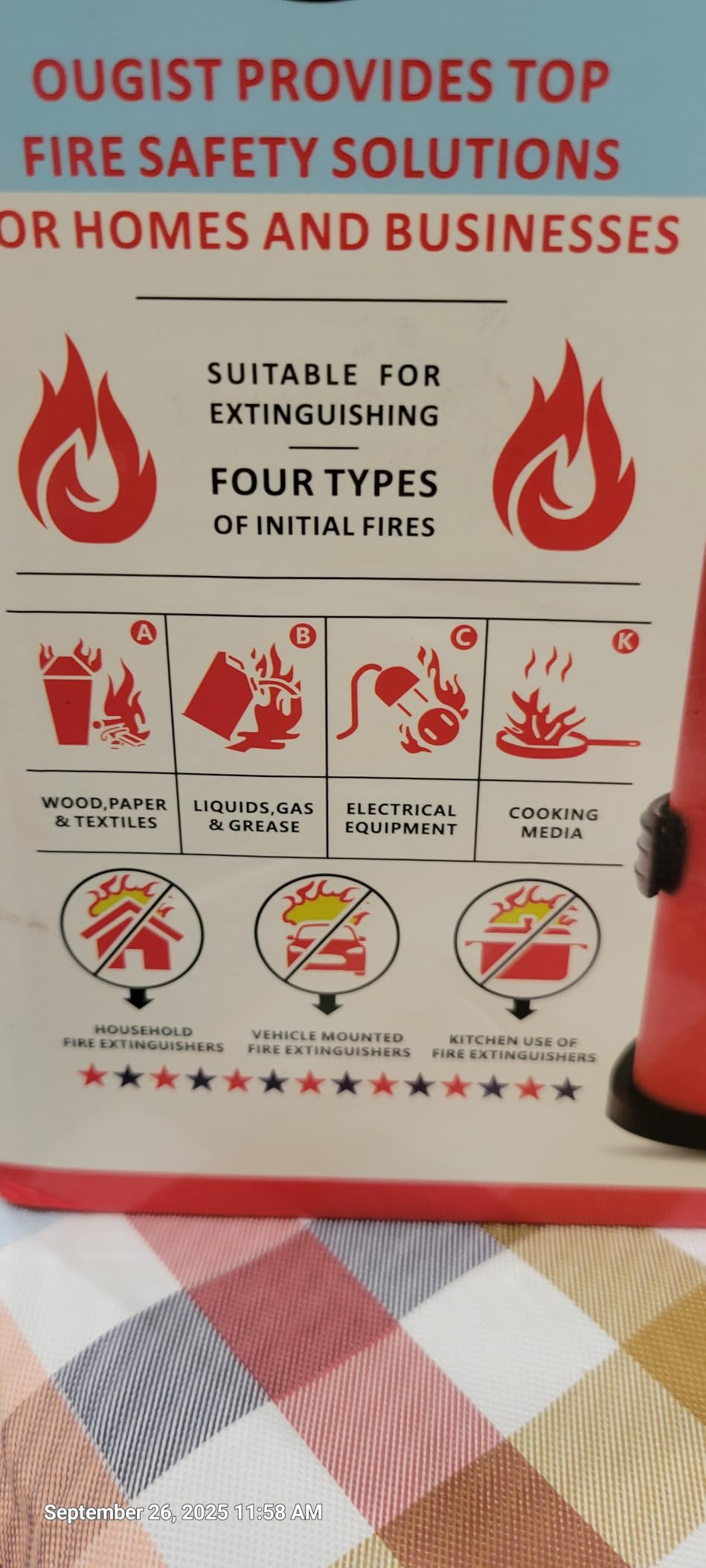
Activation is a push button, and each canister is about 11.7 inches tall and 3.3 inches wide, so under-sink, trunk, glove box, truck, boat and RV storage are all realistic. Reviewers frame this four-pack as good value for covering several places at once and say the tight-fitting brackets and residue-free cleanup are the standout qualities. Many also note, honestly, that they have never had to deploy one.
Be clear-eyed about the trade: 21oz of agent per canister is not going to hold a fire that a 5 lb cylinder holds. Several owners describe these as right for a cabinet, a car or a grill rather than a large fire. Used early and calmly, that is still a real layer of protection.
Is four small extinguishers better than one large one?
For coverage, clearly yes. Four rooms and a vehicle each with their own unit beats one unit that has to travel with you, and dispersion is a real fire-safety principle. The FIRE PREVENTION WEEK recommendation for a home is more than one extinguisher on more than one floor for exactly this reason.
For capacity on a single serious fire, no. If you want both, pair this pack with a 1-A:10-B:C or 2-A:10-B:C cylinder in the kitchen and you have covered the early-stage small fires everywhere plus the larger one where it matters most.
What do reviewers say about mounting and storage?
The mounts are the part reviewers compliment most, and they mention that the brackets fit closely to the wall so the canister does not swing or fall forward. Storage in a boat locker or a truck cab is called out as a genuine use rather than marketing, and several owners note the water-based formula does not corrode like a dry chemical can when it lives in a damp vehicle.
Do not store these where temperatures freeze solid or exceed very hot conditions, and do the same monthly gauge habit as with a cylinder unit even though there is no traditional pressure gauge to read. Check that the pin and the nozzle are clear and that the canister is not dented or rusted at the seam.
6. Ougist FF1KG 2.5 lb ABC – Best Quick-Release Design for Users Who Need It Fast
Ougist ABC Fire Extinguisher for Home & Vehicle – 2.5 lb 1-A:10-B:C Rated, Dry Chemical Fire Safety with Quick-Release Handle, Certified for Kitchen/Car/Boat Use-Model FF1KG
1-A:10-B:C ABC dry chemical
4.4 lb total weight
Thick-wall carbon steel
2.5 lb of agent
Pros
- Patented handle clears the safety pin with no twisting
- 1-A:10-B:C handles grease
- electrical and fuel fires
- Thick-wall carbon steel cylinder
- Includes wall hook
- location arrow sign and inspection record card
- Rated from 140F down to -22F
Cons
- Residential single-use unit that must be replaced after discharge
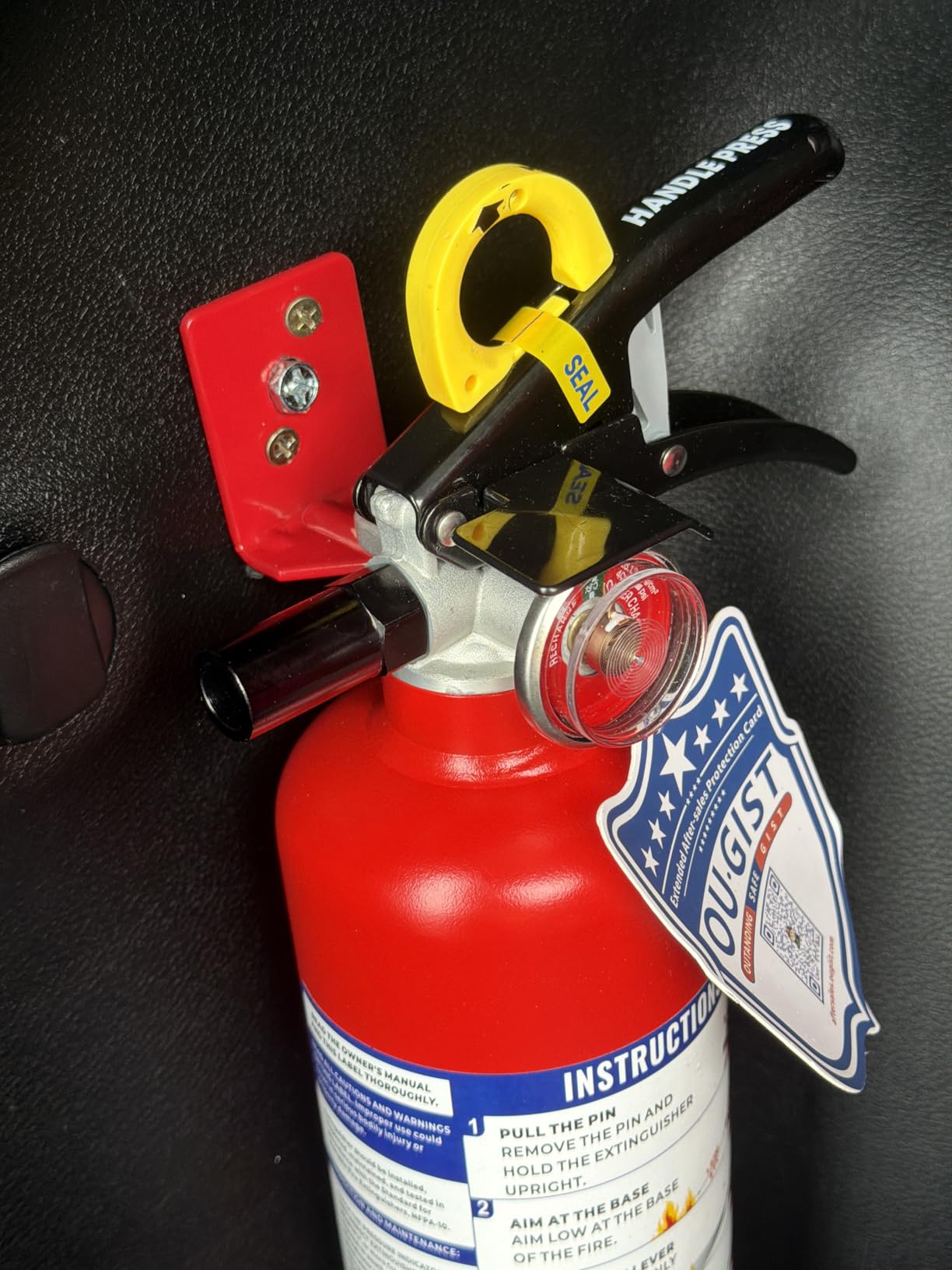
The single most praised feature in 872 reviews of this Ougist FF1KG is the handle. It is patented and removes the safety pin without any twisting or fiddling, which sounds like a small thing until you imagine trying to pull a tight pin with arthritic hands while a pan is on fire. The 5-star share is 92%, the highest in this roundup, and reviewers repeatedly name that handle as the reason.
The rest is a competent, honest 2.5 lb ABC dry chemical unit. It carries a 1-A:10-B:C rating for grease, electrical and fuel fires, a thick-wall carbon steel cylinder, and a 2.5 pound charge inside a 4.4 pound unit. It also has the widest operating temperature range here, rated from 140F down to -22F, so it works in a garage, a car or a northern porch without seasonal worry.
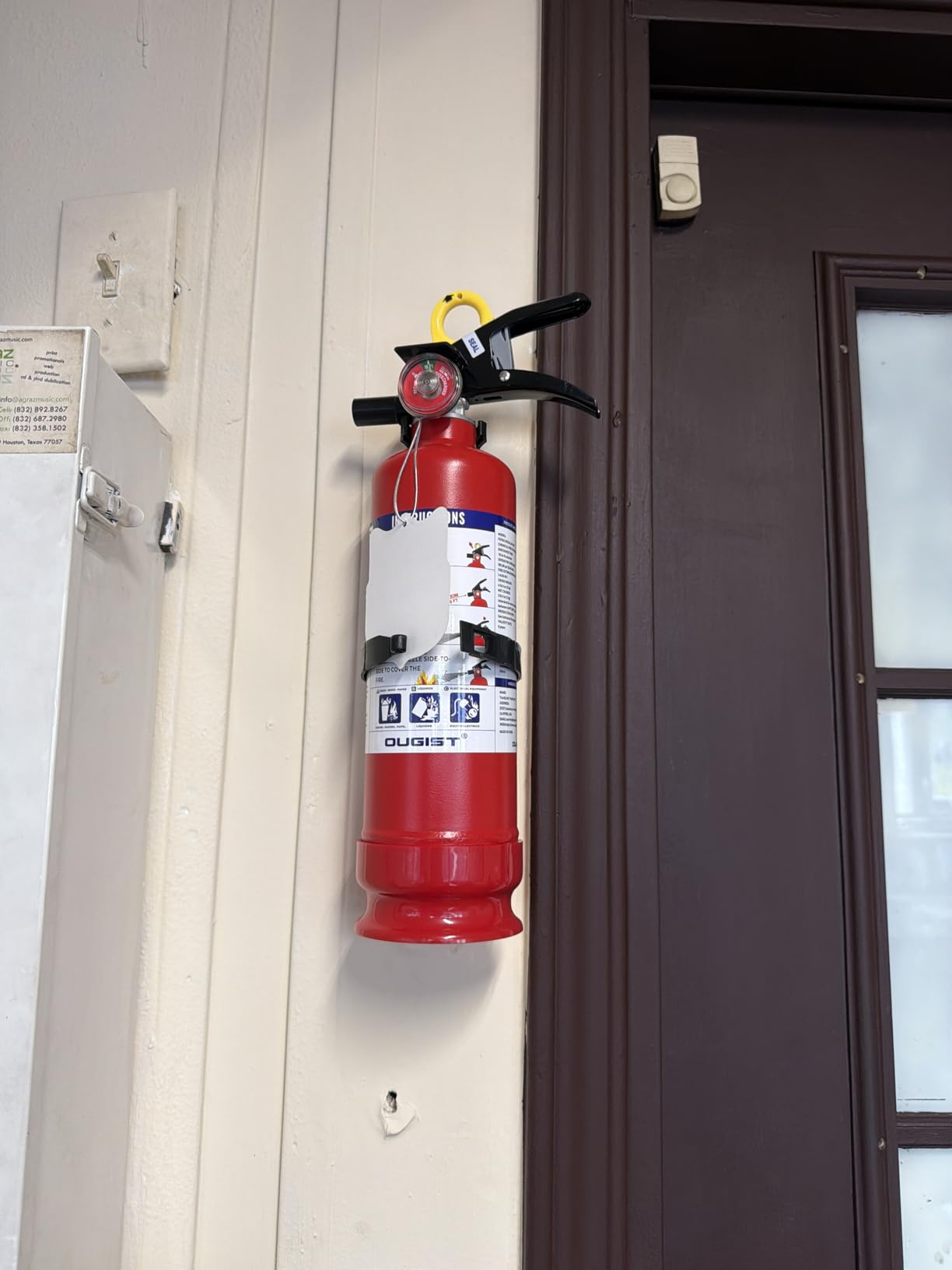
Two details in the box are worth more than they appear. The wall-mount hook comes with a location arrow sign, which is the simplest way to stop a household from passing the extinguisher every day without noticing it. And there is an inspection record card, which is a paper habit that makes the monthly check actually happen.
Like the Kidde FA110G, this is a residential single-use design and it must be replaced after a discharge. That is the trade for the carbon steel body and the convenience handle. Reviewers also mention clear gauge readability and comfortable carry weight as secondary positives.
Who benefits most from the quick-release handle?
Older adults, anyone with limited hand strength or dexterity, and households where a panic response means fumbling. If you are choosing between two ABC units with identical ratings and only one has a handle that removes the pin in a single motion, that is the better extinguisher for you. Speed of deployment matters more than most spec sheets admit.
The same feature helps if you wear glasses, if you are holding a pan lid in your other hand, or if you are dealing with a fire while supporting someone. Anything that removes a step between noticing the fire and starting the attack is worth paying for.
Is it OK for a kitchen?
Yes. Class B coverage covers flammable liquids and grease, so it will handle a small grease fire, and the thick-wall carbon steel is a durable build. Like the other dry chemical options here, it leaves corrosive powder residue on counters and appliances after a discharge, so keep the distance and clear the area afterwards.
If residue is the deciding factor for your kitchen, the water-based options at numbers 4 and 5 exist precisely for that reason. If durability, temperature range and a fast handle matter more, this is the pick.
7. Kidde 711A RESSP – Best Dedicated Kitchen and Grease Fire Extinguisher
Kidde Kitchen Fire Extinguisher, 711A, RESSP
Purpose-built for grease fires
2.5 lbs of agent
Flared nozzle
8-10 second discharge
Pros
- Designed specifically for tough kitchen grease fires
- Flared nozzle reduces oil splashing during discharge
- Non-toxic agent that will not damage kitchen appliances
- White finish blends into kitchen cabinetry
- Wall hanger included and gauge is easy to read
Cons
- Residential single-use only
- Short 8-10 second discharge time and 5-foot range limit it to small incipient fires
Only one extinguisher in this roundup was designed for a kitchen, and this is it. The Kidde 711A RESSP is built specifically to stop grease fires, and the differences from a generic ABC unit are in the hardware. The nozzle is flared, which spreads the agent and cuts down on the oil splashing that turns a controllable fire into a spray of burning grease across your counters.
The agent is non-toxic and will not damage expensive kitchen appliances, and the finish is white rather than red, so it sits against pale cabinetry without looking like industrial equipment in a domestic room. It carries a metal valve assembly with a rust- and impact-resistant handle, an easy-pull safety pin, a readable pressure indicator, and a 6-year warranty with a UL-approved wall hanger in the box.
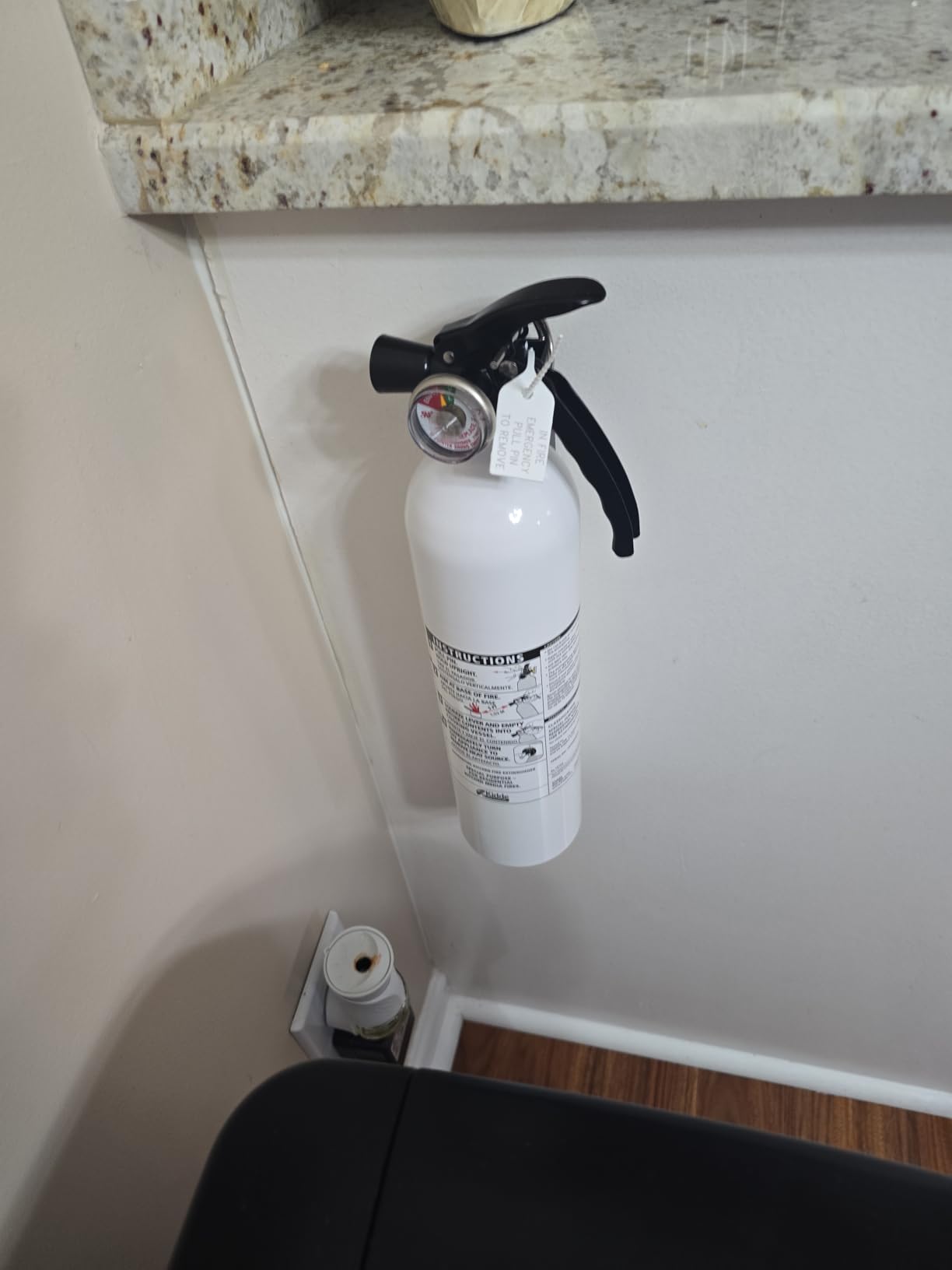
Reviewers frame this as the extinguisher actually made for the job rather than a general-purpose unit pointed at the kitchen, and that is exactly how we read the spec sheet. Coverage is listed at 6-8 square feet, discharge time is 8-10 seconds and range is 5 feet, with 100 PSI operating pressure. That is a short attack window and it is honest to call it an incipient-fire tool.
Several reviewers pair it with a fire blanket, and that combination is genuinely the strongest kitchen setup we found: the blanket smothers a small pan fire with no residue at all, and this unit is your backup when the blanket is not enough. The single-use limitation is accepted rather than criticised across reviews.
Is a dedicated kitchen unit worth buying alongside an ABC model?
For most homes, yes. The ABC unit is the general-purpose layer covering almost everything; this one is the specialist that is actually built for the highest-consequence kitchen fire. Forum answers to the Class K versus ABC question land in the same place: ABC handles nearly every home fire, and a kitchen should still keep one grease-focused unit.
It becomes essential if you deep-fry, run a standalone range, own a built-in outdoor grill, or cook with large quantities of oil. It becomes optional if you never fry and your only cooking is a stovetop with a lid within reach.
What about a fire blanket instead?
A fire blanket is better for one specific job: a small fire in a pan or a shallow tray, where you can safely slide the blanket over the vessel and it seals out oxygen completely with zero residue. It is faster than any extinguisher and it does no damage to your appliances.
It is useless the moment the fire is bigger than the pan, has spread to the backsplash or the range, or involves an electrical fault. That is the gap the 711A fills. Our advice is to own both, mounted in the same reachable spot, and to know which one to grab: blanket for the pan, extinguisher for everything else.
8. Amerex B500 5 lb ABC – Best for Larger Fires and Open Kitchens
Amerex B500 Fire Extinguisher, 5 lb. ABC Dry Chemical
Class A:B:C ABC dry chemical
5 lb agent
14-second discharge time
6-year warranty
Pros
- Large 5 lb agent capacity for fires beyond small home unit range
- Class A
- B and C coverage including live electrical equipment
- All-metal valve construction with an aluminum valve
- 14-second discharge time gives a longer attack window
- Wall bracket included
Cons
- Bulkier and heavier than residential kitchen units
- Dry chemical residue is corrosive on appliances and counters
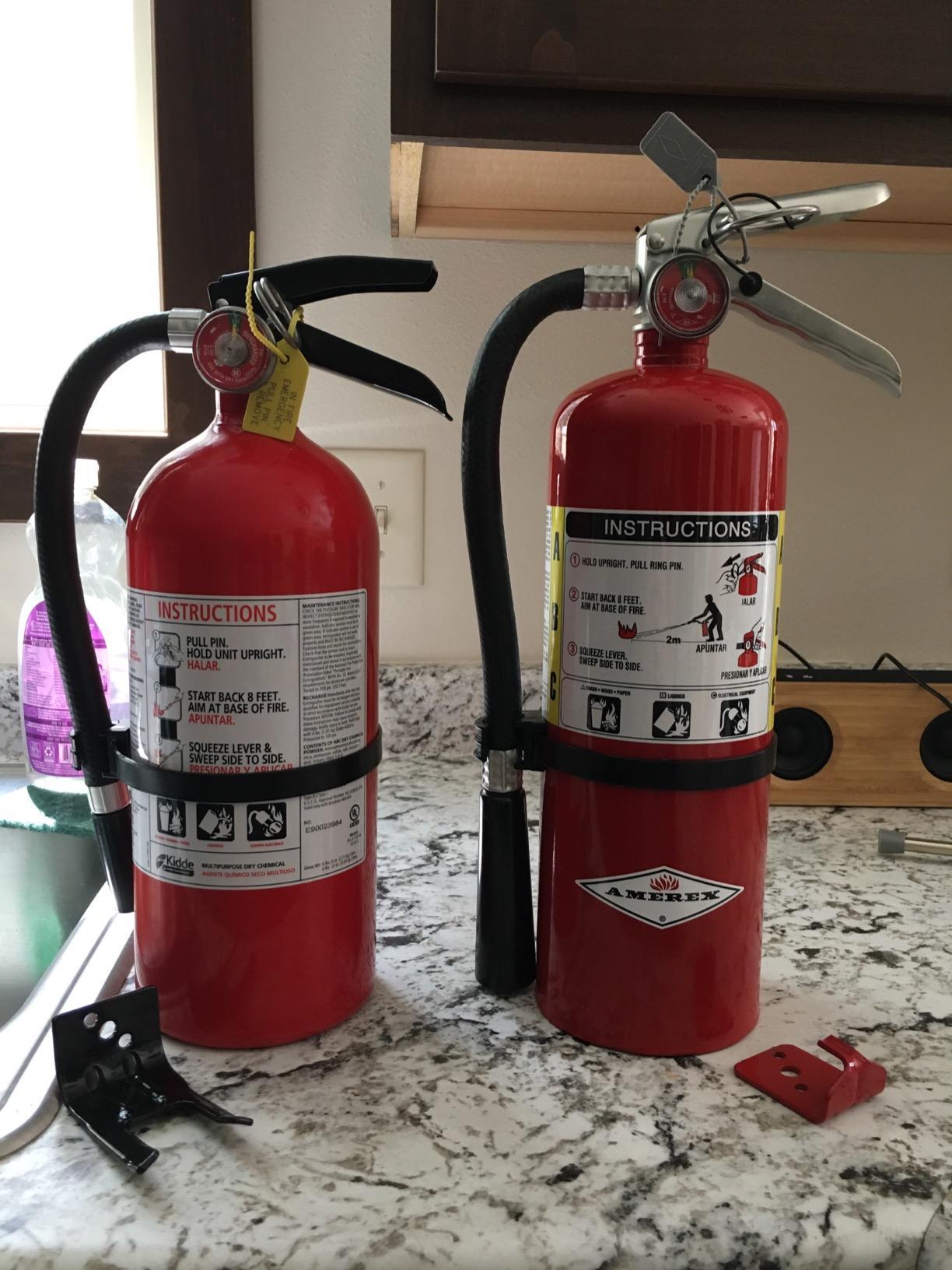
The Amerex B500 is the oldest design in this roundup and it is still the one we would pick for an open-plan kitchen that also serves as a living space. Five pounds of agent with a 14-second discharge time gives you a far longer attack window than any of the home units here. When the fire is not a single pan but a range with a towel caught in the burner, that window is the thing that matters.
Construction is all-metal with an aluminum valve, and the wall bracket is included. The rating is Class A:B:C ABC dry chemical, covering ordinary combustibles, flammable liquid spills and live electrical equipment. Amerex backs it with a 6-year warranty.
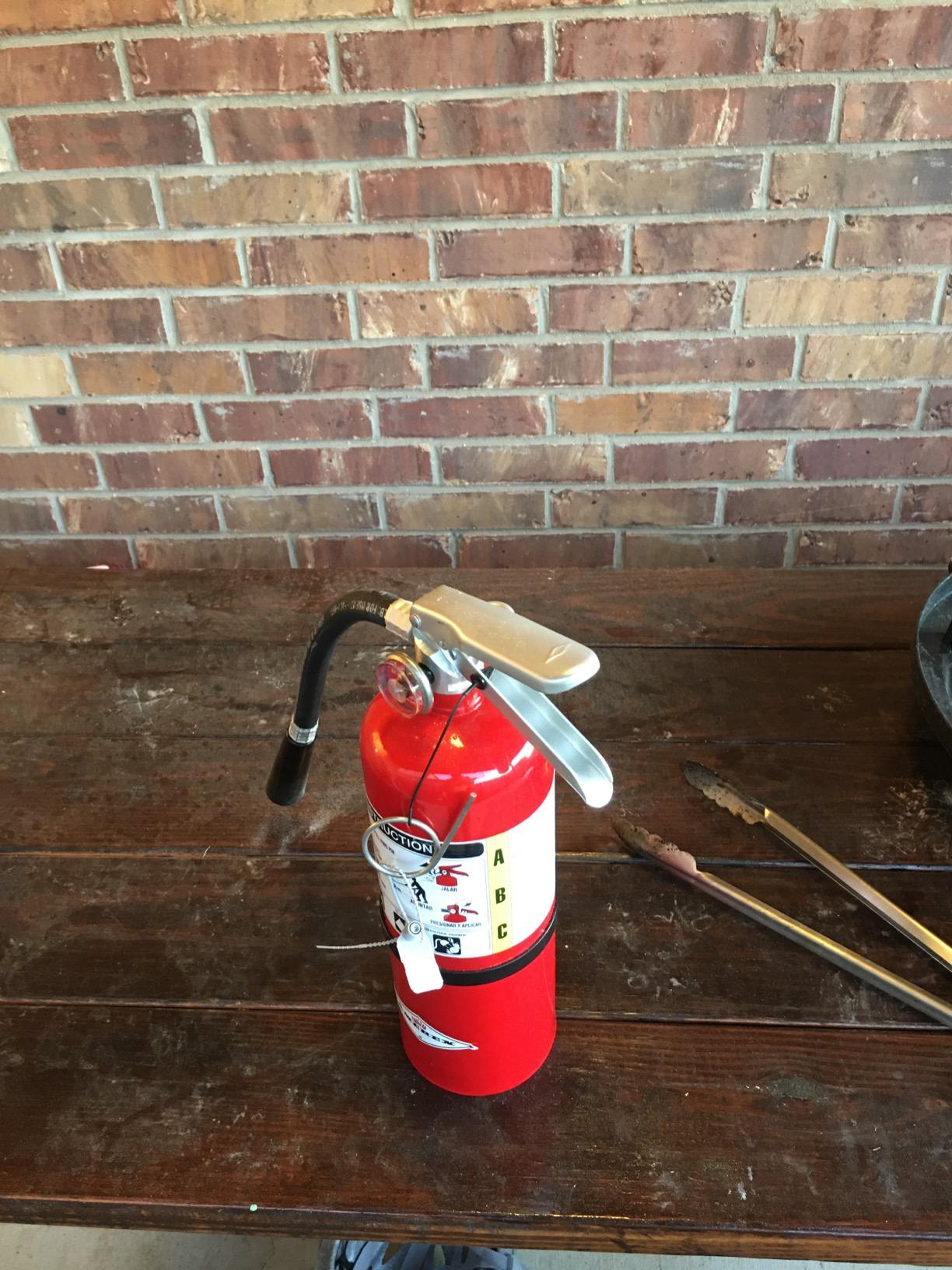
Its 4.6 average across 2,321 reviews sits slightly below the home units, and the 1-star share of 4% is the largest here. The pattern behind that is consistent and understandable: people who buy a 5 lb cylinder for larger capacity report being happy with the metal valve and the discharge time, while others struggle with the bulk in a domestic kitchen.
That is the honest trade. If your kitchen is tight and you have never had a fire beyond a pan, this is more machine than you need. If you have an open kitchen, a gas cooktop, or you want one extinguisher that genuinely covers a garage plus a kitchen, the capacity earns its place.
Is 5 lb too heavy for a home kitchen?
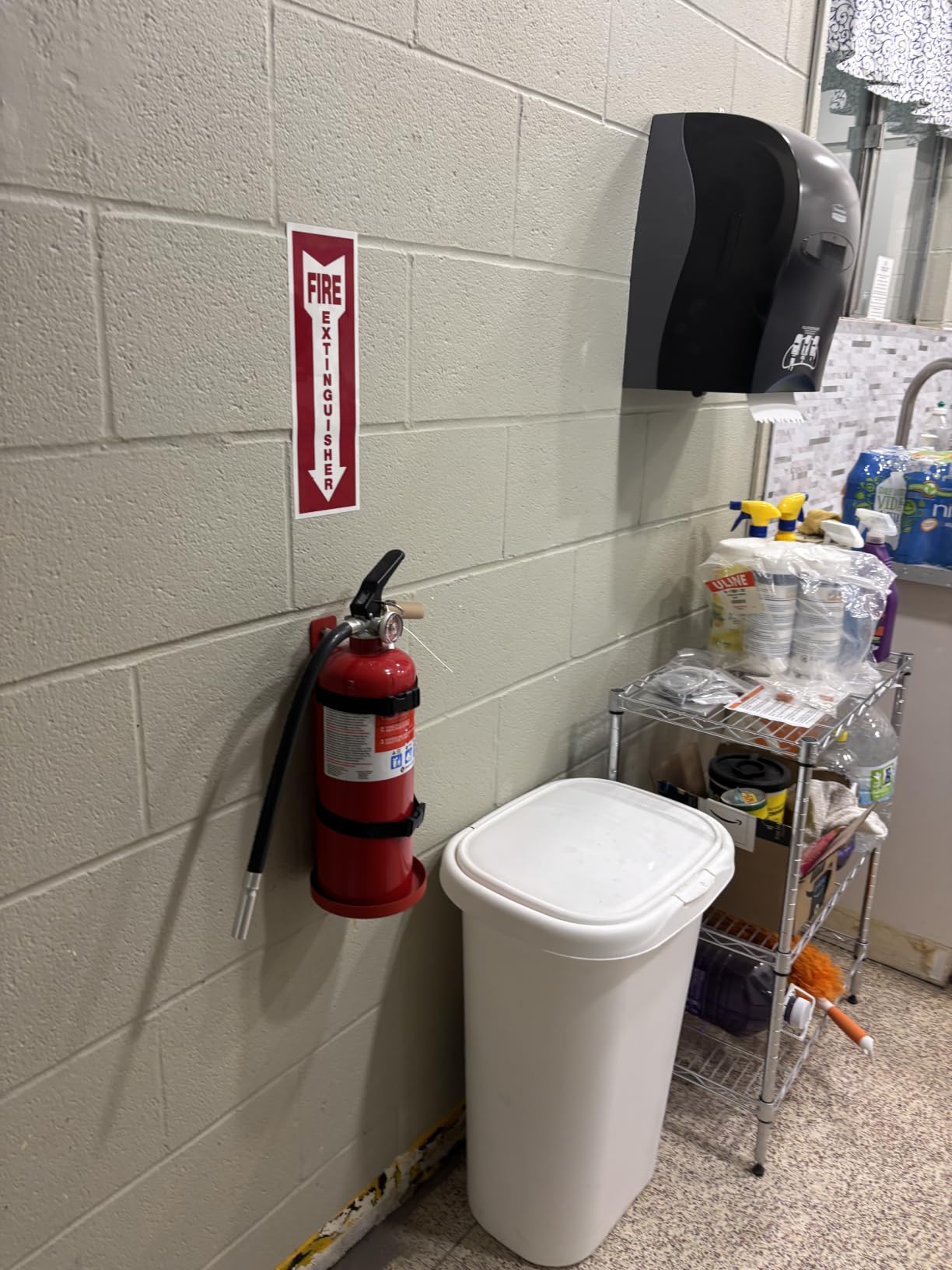
It is manageable, but it is a two-handed carry and you need to plan the mount so it does not have to be lifted over a counter or around a corner. Mount it near the exit on the wall, at a height an adult can reach comfortably, not low behind a bin and not up above head height.
Check yourself against the alternative honestly. If you are over 65, have any back or shoulder condition, or would need to lift this quickly while panicked, choose the 1-A:10-B:C or 2-A:10-B:C model instead. Capacity you cannot lift quickly is capacity you do not have.
How do I plan around the residue?
Assume powder will end up on nearby surfaces and plan for it. Before you buy, decide which wall the unit goes on and keep that side of the kitchen clear of anything you would not want to wipe down: move the toaster, shift the knife block, cover the range hood control panel area. Dry monoammonium phosphate is mildly acidic and should not be left on stainless steel or cabinet finishes.
If the room you are protecting is full of stainless appliances and you want zero cleanup, choose a water-based unit instead. That is the entire reason the AmzBoom and Ougist foam packs exist in this category.
9. Amerex B417T 2.5 lb ABC – Best All-Metal Build
Amerex B417T, 2.5 Pound ABC Dry Chemical Class A B C Multi-Purpose 2.5 Pound Fire Extinguisher with Wall Bracket
ABC dry chemical 2.5 lb
All-metal fittings
Class A B C coverage
Wall bracket included
Pros
- All-metal fittings with no plastic components
- Amerex B-series available in 2.5
- 5
- 10 and 20 lb capacities
- Users compare build quality favourably with professional alarm-company units
- Wall bracket included for mounting
Cons
- Wall mount is occasionally missing from the box and ships as a basic hook
- Dry chemical residue needs cleanup near appliances
The Amerex B417T is the pick if you are fussy about what is inside the handle. Every fitting is metal, with no plastic components in the valve or trigger assembly, and reviewers call that out as noticeably better build quality. Several buyers state plainly that it feels comparable to the extinguishers sold by professional alarm and fire companies, at a lower cost.
The rating is multi-purpose Class A, B and C dry chemical at 2.5 pounds, and the wall bracket is included. The size of the advantage here is the B-series family. The same platform is offered in 2.5, 5, 10 and 20 pound capacities, so if you outgrow this one you move up a size within the same design rather than learning a new mechanism.
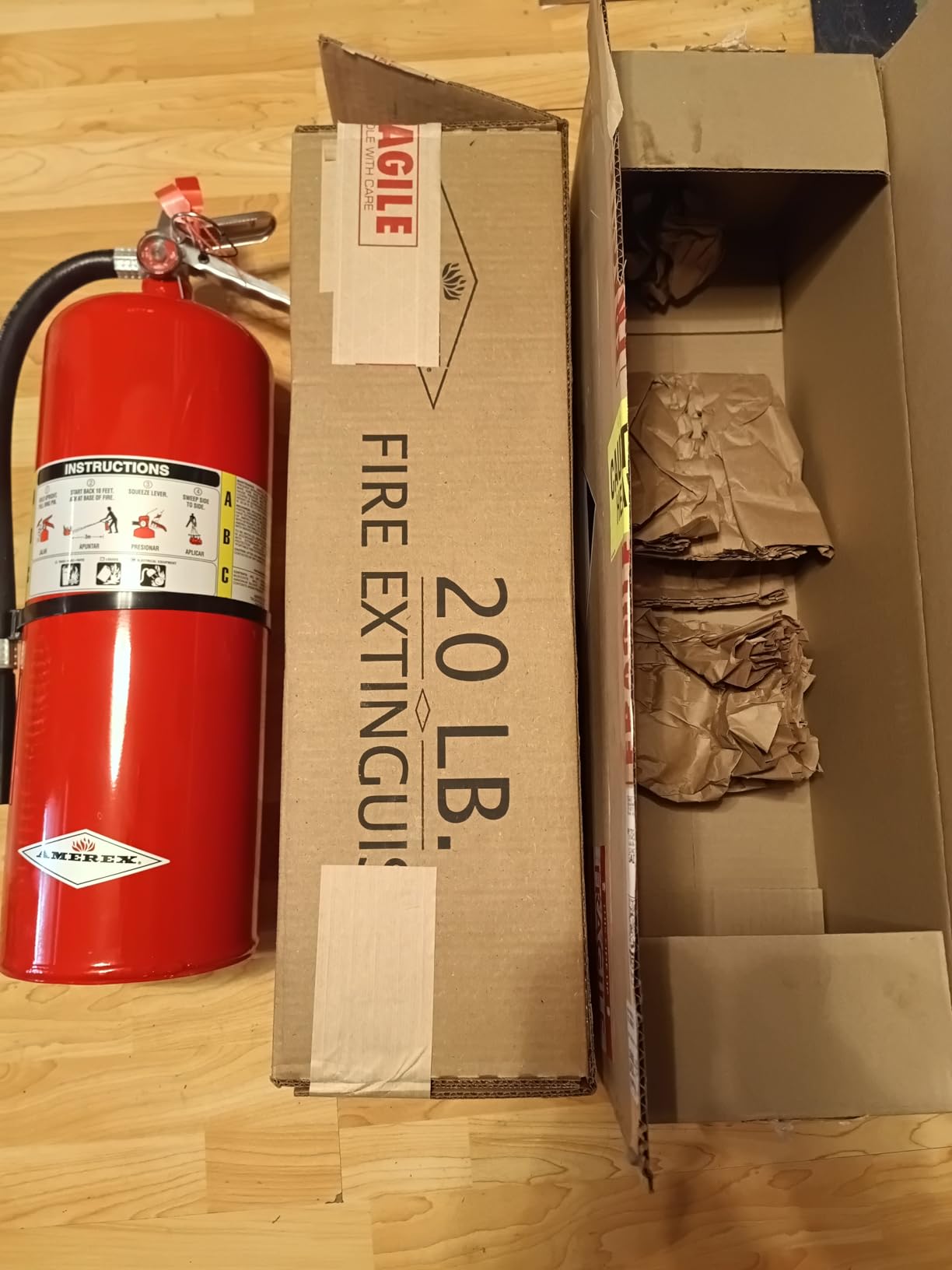
Its 4.6 average across 1,326 reviews carries the highest 1-star share in the group at 6%, and the reason is almost always the same thing: the wall mount. Buyers on several sizes of this family report the bracket missing from the box or arriving as a very basic hook instead of the strap-style stand they expected. That is an easy fix, but it is a real packaging flaw and you should factor in buying a bracket separately.
Otherwise the feedback is steady. The metal construction holds up, the gauge reads clearly, and people running a small business or working out of a home shop appreciate the durability. If you dislike plastic handles, this is the one to shortlist.
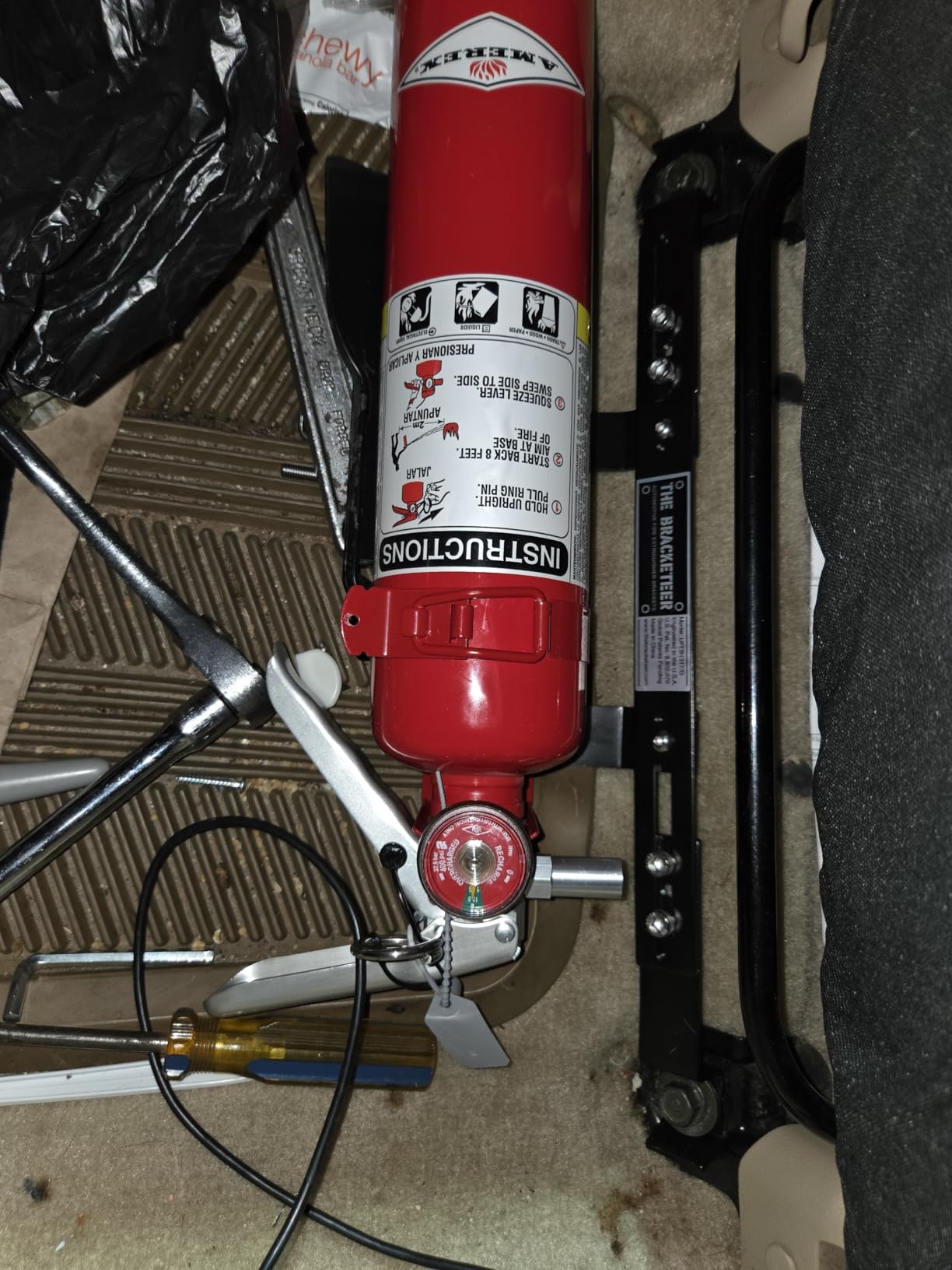
Is an all-metal extinguisher actually safer in a fire?
More durable is the accurate claim. A plastic handle can crack, deform or be brittle after years in a hot garage or in direct sun, and a metal handle will not. That matters most in environments where temperature cycling happens, such as a car boot, a garage, or an outdoor kitchen area.
For a dry interior kitchen mount, plastic handles on the home units are genuinely fine. This is a quality and longevity upgrade rather than a safety necessity, and it is worth taking if you were going to mount the unit somewhere that gets hot or cold.
Should I choose this over the Kidde FA110G?
They share a 1-A:10-B:C style rating and a similar single-use design. The Amerex wins on materials and family sizing. The Kidde wins on weight, on being a named long-established listing with tens of thousands of reviews, and on the six-year warranty that matches this one.
If you want the same unit available in 10 and 20 pound sizes for a garage or workshop later, start here. If you want the lightest unit you can grab quickly and the largest review base to reassure you, choose the Kidde.
10. Kidde KD176-340ABC 3-A:40-B:C – Best High-Capacity Whole-Home Unit
Kidde Full Home Fire Extinguisher, 3-A:40-B:C, KD176-340ABC
UL rated 3-A:40-B:C
5.5 lbs of agent
13-15 second discharge
12-year service-free design
Pros
- 3-A:40-B:C is the highest rating in this roundup
- 5.5 lbs of agent with a 12-18 foot discharge range
- Aluminum body is large but still manageable
- Cited by owners for passing home inspection requirements
- Easy-to-read pressure gauge with green-zone arrow
Cons
- Wall hanger ships without screws so mounting hardware must be sourced separately
- Dry chemical residue on appliances and counters
- Heavier than a kitchen-specific unit at 8.25 lb
For the highest rating in this group, the Kidde KD176-340ABC is the answer. It is UL rated 3-A:40-B:C, which means three times the ordinary combustibles rating of a standard home unit and four times the flammable liquid rating, and it holds 5.5 pounds of monoammonium phosphate agent. Discharge time runs 13-15 seconds with a 12-18 foot range, so you can start the attack from across a galley kitchen.
The valve assembly is metal with a rust- and impact-resistant handle and an easy-pull pin, and the unit is described as a 12-year service-free design backed by a 6-year limited warranty. The gauge uses the green-zone arrow system, and a UL-approved wall hanger is included. At 8.25 pounds it is heavier than a kitchen-specific unit but still a manageable two-handed lift, which reviewers with older households specifically note.
A pattern shows up in these reviews that you will not see anywhere else in the roundup: owners using this unit to satisfy inspection requirements. Foster care, daycare licensing and home inspections all call for a rated extinguisher with a published UL classification, and people say this model passes. If you run a home-based business or have a landlord or inspector involved, that is a decisive reason to choose it.
The recurring practical complaint is small and fixable: the wall hanger ships without screws. Buy four screws and a suitable wall anchor before you mount it. The 1-star share is 3%, and most of those trace back to the missing hardware rather than the extinguisher itself.
Does a 3-A:40-B:C rating matter in a kitchen?
It matters for the scenario where the fire has already escaped the pan. The A rating governs how much ordinary material such as cabinetry, wall paint and shelving the unit can handle before the extinguishing agent is exhausted. A 3-A unit carries far more capacity for that phase than a 1-A unit, which is exactly the phase where most home fire deaths happen.
If you are only ever going to deal with a small pan fire, the extra rating never gets used and you are carrying 8.25 pounds for nothing. If you want a unit that can be the primary extinguisher for a kitchen, a garage and a workshop, this rating makes it the single best-value choice on the list.
Is it better than two smaller extinguishers?
For a single serious fire, yes. For everyday coverage across a property, no. Most home fire-safety guidance still recommends more than one extinguisher and more than one floor, and a large cylinder cannot be in two places at once.
Our resolution for most households is the combination we settled on ourselves: this high-capacity unit near the back door or in the garage, plus a compact 1-A:10-B:C cylinder inside the kitchen. That pairing covers the incipient fire where you can still act, and the developed fire where you need real capacity.
Which Fire Extinguisher Class Does Your Kitchen Need?
Your kitchen presents four different fire types, and the letter rating on the label tells you which agent works on which. This is the single most important thing to understand before buying, because it is what forum arguments about Class K versus ABC come down to.
Class A is ordinary combustibles: paper, wood, cloth, cardboard and plastics. A burning dish towel or a box of cereal boxes next to the stove is Class A.
Class B is flammable liquids, which in a kitchen means cooking oil, grease and solvents. This is the rating that covers a grease fire.
Class C is live electrical equipment: a toaster, microwave, fridge or outlet that has arced. The rule here is that you de-energise the source first if it is safe to do, then fight the fire.
Class K is cooking media specifically: vegetable oil, animal fat and grease. It is the narrowest and most specialist rating, and it exists because cooking oil behaves in ways other fuels do not.
Here is how the agents differ in practice:
ABC dry chemical (monoammonium phosphate) covers A, B and C. It smothers and cools, it is cheap and widely available, and it leaves a corrosive powder that must be cleaned off surfaces.
Wet chemical Class K agent forms a cooling foam blanket over burning oil, cutting off oxygen and cooling the fuel at once. It leaves a mess but it is far less damaging, and it is the only agent specifically engineered to stop re-ignition of hot oil.
Carbon dioxide displaces oxygen and leaves no residue, which is why it suits server rooms and electrical equipment, but it has a limited discharge time and a serious cold-discharge hazard.
Water mist or water-based foam cools without the powder residue. Small aerosol and canister formats in this category are useful as a second layer in tight spaces rather than a replacement for a full-size cylinder.
You will also see Purple K mentioned, which is potassium carbonate based wet chemical. It remains a listed agent for some applications, but the modern home kitchen answer is usually an ABC cylinder plus a wet chemical or water-based second unit.
The practical answer to which class your kitchen needs: an ABC-rated unit as your primary, and a Class K or water-based unit as your second. Skip the Class B-only product. A Class B extinguisher covers flammable liquids but not electrical equipment or ordinary combustibles, which leaves a real gap in a kitchen full of plugged-in appliances.
How We Picked the Best Fire Extinguishers for Kitchens
We built the list around the way a kitchen fire actually unfolds: a pan catches, you have seconds to react, and you want the unit already mounted and in your hand. That shaped everything we weighted.
UL rating and capacity first. Every extinguisher here carries a published UL rating with real numbers rather than vague quality claims. A 1-A:10-B:C rating is the floor for a home kitchen; anything higher is a bonus we explain per product.
Agent choice matched to the risk profile. Dry chemical for coverage, wet chemical or water-based for grease and for cleanup consequences. We weighed residue seriously because dirty cabinets after a small fire is a real complaint in homeowner forums.
Handling under stress. Weight, handle mechanism, pin removal and gauge readability all matter more than people expect. A unit nobody can lift or operate while panicked is not protection.
Mounting hardware. We checked whether a bracket is in the box, whether it suits drywall or masonry, and whether screws are included. Several products in this roundup ship a hook without fasteners.
Service life and warranty. Rechargeable cylinders with metal valves are preferred over single-use disposables where the rating matches, and we noted the published warranty on every product.
Review depth and consistency. We weighted listings with thousands of reviews that describe the same strengths and weaknesses, rather than small samples with perfect scores. Where reviews report a real deployment we said so, because that is the rarest and most useful thing a review can tell you.
What we could not test is the discharge itself. Nobody discharges a test extinguisher in a controlled kitchen fire, so every assessment of agent performance rests on the manufacturer chemistry, the published UL classification and the pattern of what owners report after real use. We would rather tell you that plainly than imply we lit a pan on purpose.
Where to Mount a Kitchen Fire Extinguisher
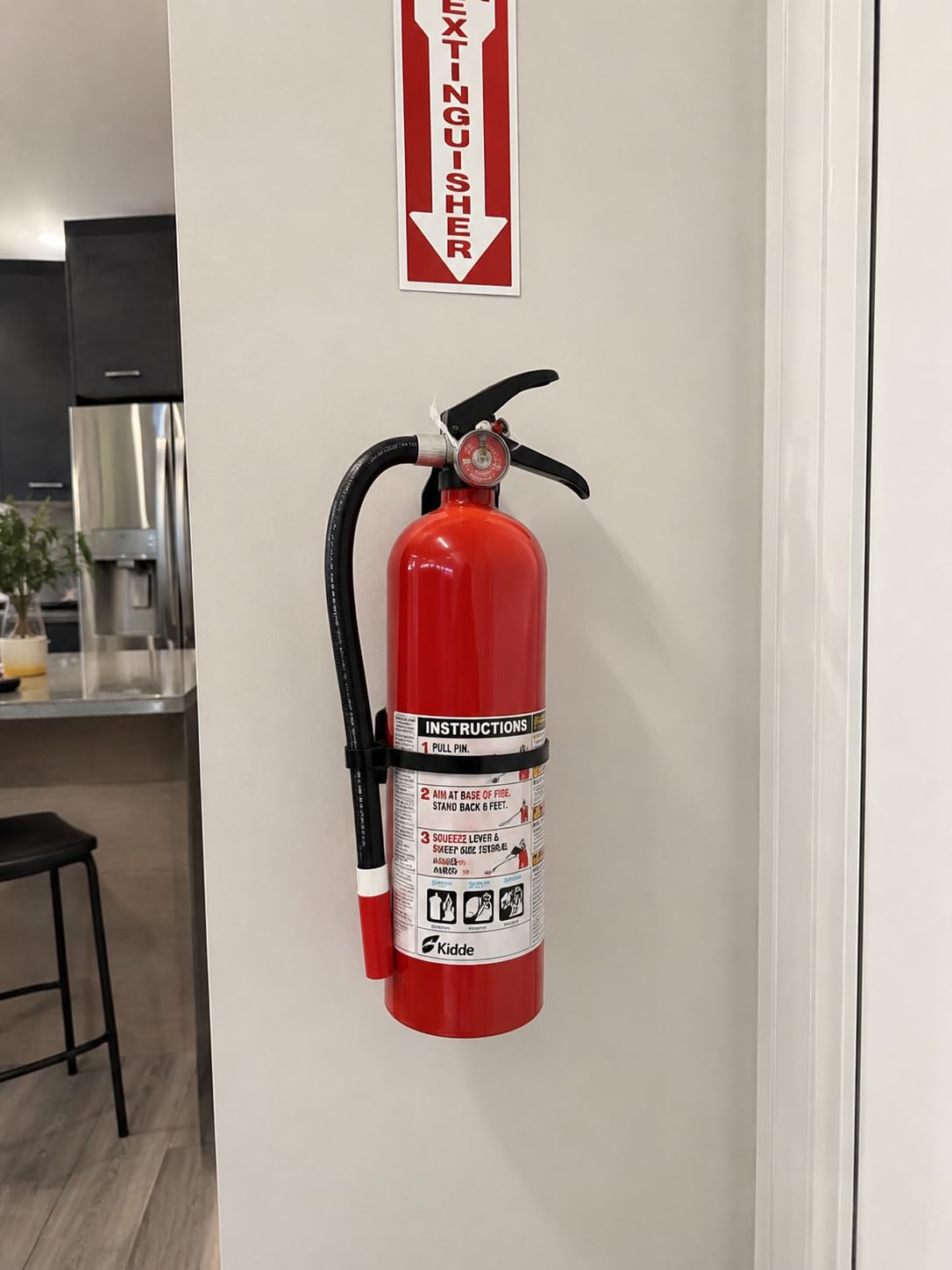
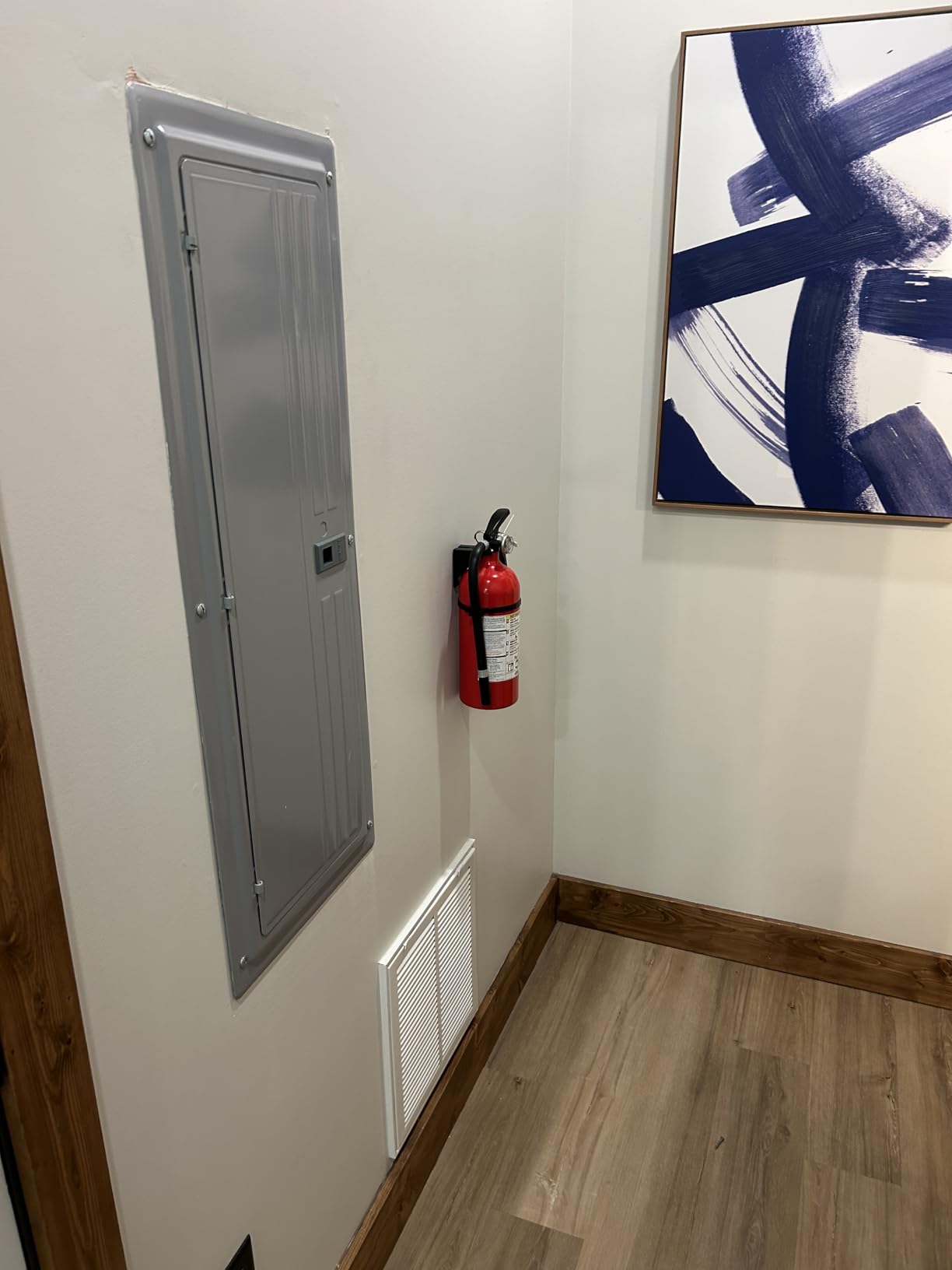
Mount it near an exit, not next to the stove. This is the placement rule that matters most, and it is the one people get wrong. If the extinguisher is above or beside the range, reaching it means standing between yourself and the only way out.
The practical guidance is to mount it on an exit wall within roughly 10 feet of the kitchen, between the kitchen and the door you would use to leave. Aim for a height where an adult can lift it without standing on a stool, and low enough that it is not behind a bin or a countertop appliance.
Keep the area around it clear. We read review after review of people who mounted an extinguisher and then buried it behind recycling bins, a microwave, or a stack of mail. A fire blanket belongs near the stove because it is used on a pan; an extinguisher belongs on the wall you will run past on the way out.
Two more practical points. If you own more than one extinguisher, spread them across floors and rooms rather than clustering them, because a kitchen-only unit does nothing for a fire that started in a laundry room and spread. And if you have a gas range, the shutoff valve should be something you have used at least once, not something you are reading about for the first time during an emergency.
We also like the location arrow sign that ships with the Ougist FF1KG, and it costs nothing to make your own. A small sign on the wall showing where the extinguisher hangs helps everyone in the house find it in a smoke-filled room.
How to Use a Fire Extinguisher: The PASS Technique
PASS is the standard four-step method taught by fire services worldwide. Learn it before you need it, because under adrenaline you will not be improvising a technique for the first time.
P – Pull. Pull the pin. This breaks the tamper seal and releases the trigger. Aim low and make sure the nozzle or hose is clear before you squeeze.
A – Aim. Aim at the base of the fire, not at the flames. Flames are the visible symptom; the fuel at the base is what you are actually extinguishing.
S – Squeeze. Squeeze the handle to discharge. On a canister unit, press the button and sweep. Release to stop the flow so you do not empty the cylinder with nothing to show for it.
S – Sweep. Sweep side to side across the base of the fire until it goes out. Keep watching it, because embers in grease and oil can re-ignite within seconds.
Two techniques specific to kitchen fires change the outcome. First, for a pan fire, do not spray the flames from above or stand directly over the vessel. Approach from the side with your back to a clear exit path, and start with a short burst from the furthest point you can reach.
Second, if you have a Class K unit with a flared nozzle, it is designed to lay a blanket over the burning oil. Follow the nozzle instructions, because those units have a specific application pattern that differs from a standard ABC sweep.
And the rule that overrides everything else: if the fire does not go out within the first attempt, or if you are not certain the unit is rated for that fuel, you leave. Close the door behind you to slow the fire, call the emergency number from outside, and do not go back in. An extinguisher is for a small fire you can reach from a standing position, not for a fire that is filling the room.
Fire Extinguisher Maintenance and Inspection Schedule
Reading the pressure gauge is the whole job, and it takes ten seconds a month. Every pressurized cylinder in this roundup uses a colour-coded gauge where the needle sitting in the green zone means charged. Green means serviceable. Anywhere else means call a service company or replace the unit.
Here is the routine we recommend, and it is deliberately simple so that you actually do it.
Monthly: read the gauge and confirm the needle is in the green. Confirm the safety pin is in place and the tamper seal is unbroken. Confirm nothing has been removed or borrowed from the unit.
Every six months: lift the unit off its bracket or turn it over. Powder and agents compact over time, and turning the cylinder keeps the agent loose and flowing. Check the cylinder for dents, rust at the seam or corrosion around the valve.
Annually: check the hose or nozzle for cracks and blockage. Check that the wall mount is still tight and that the unit has not been painted over or moved somewhere damp. If the unit is rechargeable, have it professionally serviced on the schedule your service company recommends.
On lifespan, there are two schools. Residential single-use units are commonly replaced on a cycle of roughly 10 years even if unused, and disposable consumer units with plastic handles are usually swapped sooner. Rechargeable metal units can be serviced indefinitely as long as the pressure test passes. If your gauge is green and the cylinder looks sound, the practical advice is that a metal, rechargeable unit with a published warranty is a long-term purchase, not a consumable.
Every extinguisher here carries a stated warranty, from 6 years on the Kidde FA110G and Amerex B500 up to 12 years on the First Alert HOME2PRO. Photograph the model number, the UL rating and the date on the cylinder when you install it. When something goes wrong, that record is what you hand the service company.
Finally, do not test the unit by squeezing the handle. If you want to check the mechanism, the inspection record card and manual that ship with the Ougist FF1KG describe how to verify operation without discharging.
Cleaning Up After an Extinguisher Discharge
No competitor we researched covers this, and it is the question homeowners actually ask afterwards. Which surfaces are damaged, what removes the residue, and what do you throw away.
Dry chemical residue. Monoammonium phosphate is a fine acidic powder that will eat into stainless steel, aluminium and painted cabinet finishes if you leave it. Start dry: vacuum or wipe up the bulk with a dry cloth first, because smearing it with a wet rag pushes it into the grain. Then use warm water with a small amount of dish soap, working in small sections and drying immediately. On stainless steel, wipe with the grain and rinse with clean water to avoid etching marks. Do not use steel wool or an abrasive pad.
Wet chemical and foam residue. Much easier. Wet chemical Class K agents and water-based foams are designed to be washed away with warm soapy water. Expect a greasy film on the stovetop and walls rather than a corrosive powder film. Still clean it promptly, because warmed residue becomes a sticky layer around burner grates and drip pans.
What gets thrown away. Any food, packaging or porous material that came into contact with dry chemical. Wipe down or replace anything that absorbed agent rather than trying to wash it. On a built-in grill, plan for a full service of the burners and drip tray after a discharge rather than a quick wipe.
Protecting the next one. Keep a roll of paper towels and a bottle of dish soap next to the extinguisher mount. That is the whole kit. It sounds trivial, and it is the difference between a ten-minute cleanup and an afternoon of scrubbing.
If your cleanup list extends beyond the kitchen, the same rules apply to the grill area and to any camp kitchen you haul to a field. We covered both in our guides to propane fire pits and camp kitchens, where open flames and canvas sit much closer together than they do in a house.
Frequently Asked Questions
What type of fire extinguisher is best for a residential kitchen?
An ABC-rated dry chemical unit rated at least 1-A:10-B:C is the best primary choice for a residential kitchen. It covers ordinary combustibles, flammable liquids and live electrical equipment, which covers nearly every home kitchen fire. Add a wet chemical Class K or water-based second unit if you deep-fry often or own a built-in grill.
What size fire extinguisher should I use in my kitchen?
A 1-A:10-B:C unit holding about 2.5 to 3 pounds of agent is the practical home choice. It weighs under 5 pounds empty, so any adult can lift it quickly. Move up to 2-A:10-B:C or a 3-A:40-B:C model only if you have an open kitchen, a gas range, or need one unit to cover a garage as well.
Is an ABC fire extinguisher ok for a kitchen?
Yes. ABC covers Class A combustibles, Class B flammable liquids and grease, and Class C electrical fires, which is effectively every fire a home kitchen produces. Its one drawback is residue: monoammonium phosphate powder is mildly acidic and must be cleaned off stainless steel and cabinet finishes after discharge.
What chemical is used in a K-type fire extinguisher?
A K-type extinguisher uses a wet chemical agent, most commonly potassium carbonate or potassium acetate based, applied at low flow to form a cooling foam blanket over burning oil. Some units use a pre-mixed surfactant solution instead. The blanket smothers the fire and cools the fuel below its ignition point.
Can a Class K fire extinguisher be used on any class of fire?
Class K units are purpose-built for cooking media and should not be relied on as your only extinguisher. Wet chemical works well on grease and oil but can damage electrical equipment and is not rated for ordinary combustibles in most home units. Keep an ABC cylinder as your primary and the Class K unit as your second.
Do I need a 5 lb or 10 lb fire extinguisher?
For a home kitchen, most households do not need either. A 1-A:10-B:C or 2-A:10-B:C cylinder handles incipient kitchen fires and stays light enough to lift quickly. A 5 lb unit makes sense in an open kitchen or one that also serves a garage. Commercial kitchens usually need larger units under local fire code.
Are First Alert fire extinguishers rechargeable?
Some are. The First Alert HOME1 rated 1-A:10-B:C and the HOME2PRO rated 2-A:10-B:C are both rechargeable by a certified professional after use, and both carry long limited warranties. Other First Alert home models are single-use residential units that must be replaced after discharge. Check the label for the word rechargeable.
How long is a kitchen fire extinguisher good for?
Check the gauge monthly; a needle in the green zone means the unit is charged and serviceable. Disposable residential units are commonly replaced on roughly a 10-year cycle even if never used. Rechargeable metal units can be serviced indefinitely as long as they pass a pressure test and the cylinder shows no corrosion or dents.
What fire extinguisher do you need for a commercial kitchen?
Commercial kitchens need a Class K wet chemical extinguisher rated under UL 300, plus a Class ABC unit for the surrounding combustibles, and usually a hood suppression system on the cooking line. The specific capacity, number of units and service intervals are set by local fire code and the authority having jurisdiction, so confirm requirements with your local fire department before ordering.
Should I use water on a grease fire in the kitchen?
No. Never put water on a cooking oil or grease fire. The water flashes to steam and can splatter burning oil across your counters, cabinets and range, spreading the fire. Turn off the heat if it is safe, cover the pan with a metal lid or a fire blanket, and use a Class K or ABC dry chemical extinguisher if the fire is not immediately smothered.
Conclusion: Our Best Fire Extinguishers for Kitchens
The best fire extinguishers for kitchens are the ones you can reach, lift and operate before panic takes over. Our First Alert HOME1 at number 1 is the pick for most homes because it is rechargeable, all-metal, and rated 1-A:10-B:C, which covers the full range of fires a kitchen produces. The Kidde FA110G is the lighter and cheaper alternative if service is distant or replacement is your preferred route.
Then add a second unit aimed at your specific risk. The Kidde 711A is the only purpose-built kitchen model here, with a flared nozzle that reduces splashing on a grease fire. The AmzBoom and Ougist packs cover multiple rooms and leave no corrosive residue. If you have an open kitchen or a gas range, the First Alert HOME2PRO or the Kidde KD176-340ABC gives you the capacity for a fire that has already spread.
Whatever you choose, mount it on an exit wall rather than beside the range, pair it with a fire blanket for pan fires, and get into the habit of a ten-second monthly gauge check. We also wrote up portable cooking setups if you want a second kitchen away from the house, and outdoor cooking is where grease fires start most often, so our picks for propane fire pits are worth a look before the season turns.
Nobody buys an extinguisher expecting to use it. Every owner we read hopes the gauge needle sits in the green for the whole life of the unit.