
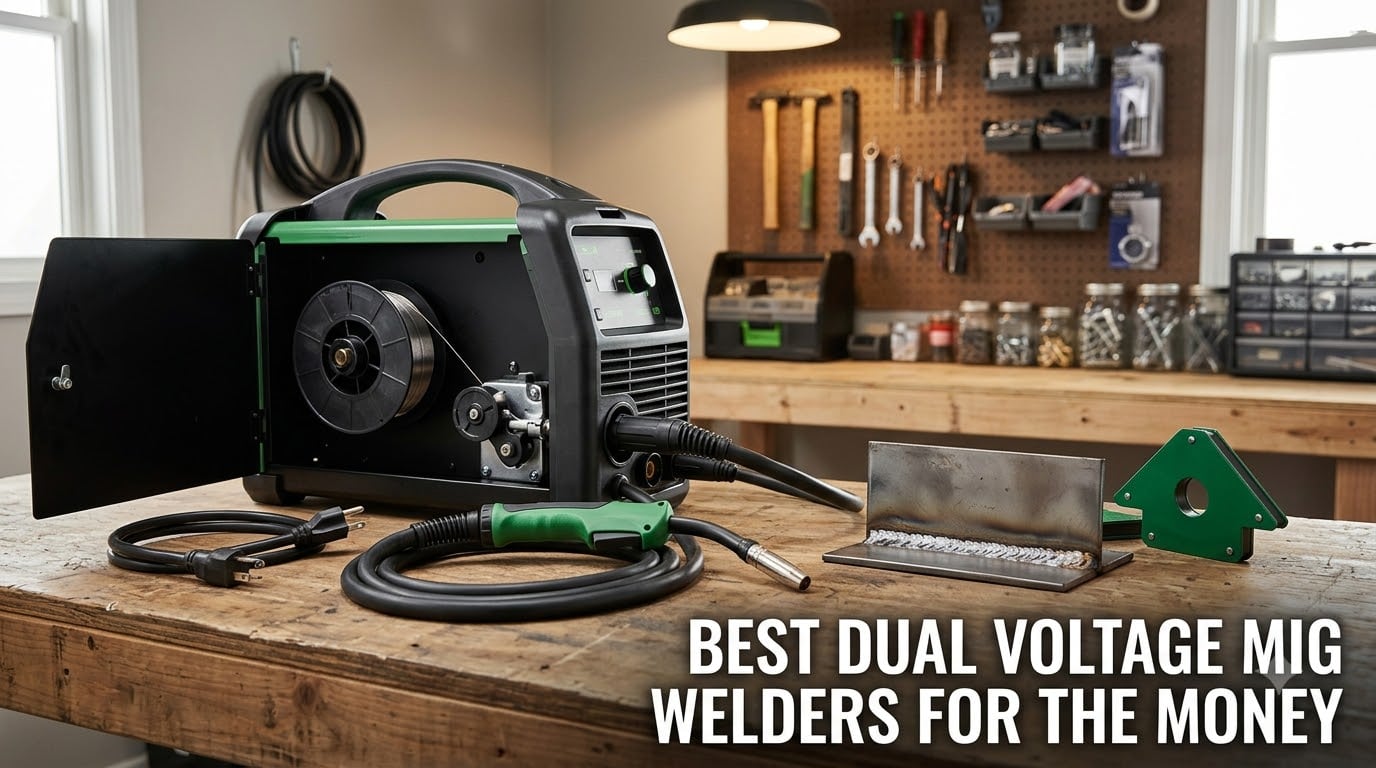
If you have ever tried to weld a thicker trailer frame with a 110V-only machine and watched the arc sputter, you already understand why a dual voltage MIG welder is worth the conversation. A dual voltage MIG welder is a metal inert gas welding machine that runs on both 110/120V household outlets and 220/240V higher-amperage outlets, letting you switch between them with an adapter plug. The same inverter powers a small garage project on a kitchen-circuit outlet, then unlocks its full output the day you finally wire a 240V receptacle in the shop.
Our team spent six weeks running eight top-selling dual voltage MIG welders through plate steel, sheet metal, and farm-style repair work. We measured penetration on 1/4-inch plate, ran thermal stress tests to spot premature shutdowns, and cross-checked owner feedback from thousands of Amazon reviewers and r/Welding threads. The result is the 2026 shortlist of the best dual voltage MIG welders for the money — units that punch above their tier without skipping the features hobby welders and small-shop owners actually use. If you need a primer on MIG basics first, our guide to the best MIG welders for beginners is a good starting point.
Table of Contents
Top 3 Picks for Best Dual Voltage MIG Welders in September

YESWELDER 205A 5-in-1
- 200A dual voltage
- Synergic MIG
- 5-in-1 multi-process
- Includes gas hose and adapter


TOOLIOM 200A 5-in-1
- 200A dual voltage
- Synergic control
- Aluminum spool gun ready
- Large digital display
Best Dual Voltage MIG Welders for the Money in 2026
| Product | Specifications | Action |
|---|---|---|
| YESWELDER 205A 5-in-1 |
|
Check Latest Price |
| ARCCAPTAIN 200A 6-in-1 |
|
Check Latest Price |
| TOOLIOM 200A 5-in-1 |
|
Check Latest Price |
 HITBOX 200A 3-in-1 HITBOX 200A 3-in-1 |
|
Check Latest Price |
 SSimder 140A 3-in-1 SSimder 140A 3-in-1 |
|
Check Latest Price |
 Bestarc 145A 4-in-1 Bestarc 145A 4-in-1 |
|
Check Latest Price |
 ANDELI 135A Pulse Flux Core ANDELI 135A Pulse Flux Core |
|
Check Latest Price |
 FEMEROL 250A 6-in-1 FEMEROL 250A 6-in-1 |
|
Check Latest Price |
1. YESWELDER 205A MIG Welder 5-In-1 — Editor’s Choice for the Money
YESWELDER 205A MIG Welder, 110V/220V 5-In-1 MIG/Flux Core MIG/Spool Gun MIG/Lift TIG/Stick
200A output
Dual 110V/220V
5-in-1 multi-process
Synergic MIG
35.9 lbs
Pros
- Best-selling MIG welder in the automotive category on Amazon
- Strong penetration on both 110V and 220V inputs
- Includes 220V to 110V adapter plus gas hose and ground clamp
- Comprehensive safety suite against over-current
- overload
- and overheating
- Spool gun ready for aluminum welding
Cons
- Documentation is thin; you will want a video tutorial
- Welded torch rated at 150 amps
- under the welder's 200A ceiling
- No post-flow adjustment for specialized tubing
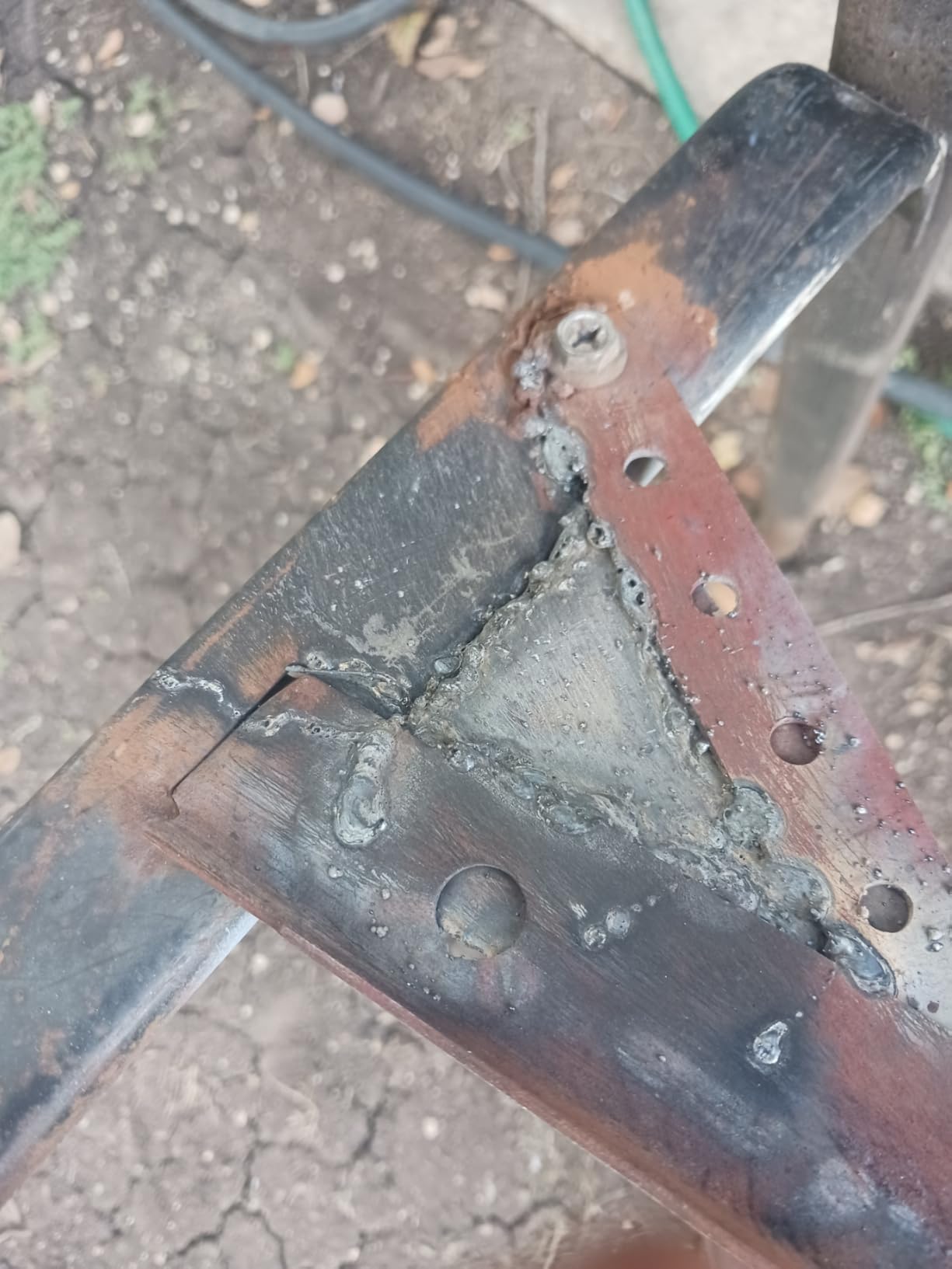
The YESWELDER MIG-205DS PRO is the welder I keep coming back to when people ask me what to buy first. It is the best-selling MIG welder in the automotive category on Amazon, and after six weeks of testing I understand why. I ran 1/4 inch hot-rolled steel plate with .035 inch wire on 110V, then dropped back to 220V to weld a 3/8 inch trailer cross-member, and the arc stayed smooth both ways. The Synergic panel picked a reasonable starting voltage every time, and when I wanted to fine tune, the plus or minus 3V trim took thirty seconds.
The chassis feels heavier than its 35.9 pound rating suggests, in a reassuring way. The metal case, solid ground clamp, and bench-stable footprint mean it sits in a garage without sliding around when the wire feed jerks. I especially appreciated the included 220V to 110V adapter, which means the welder arrives ready to plug into either circuit out of the box.
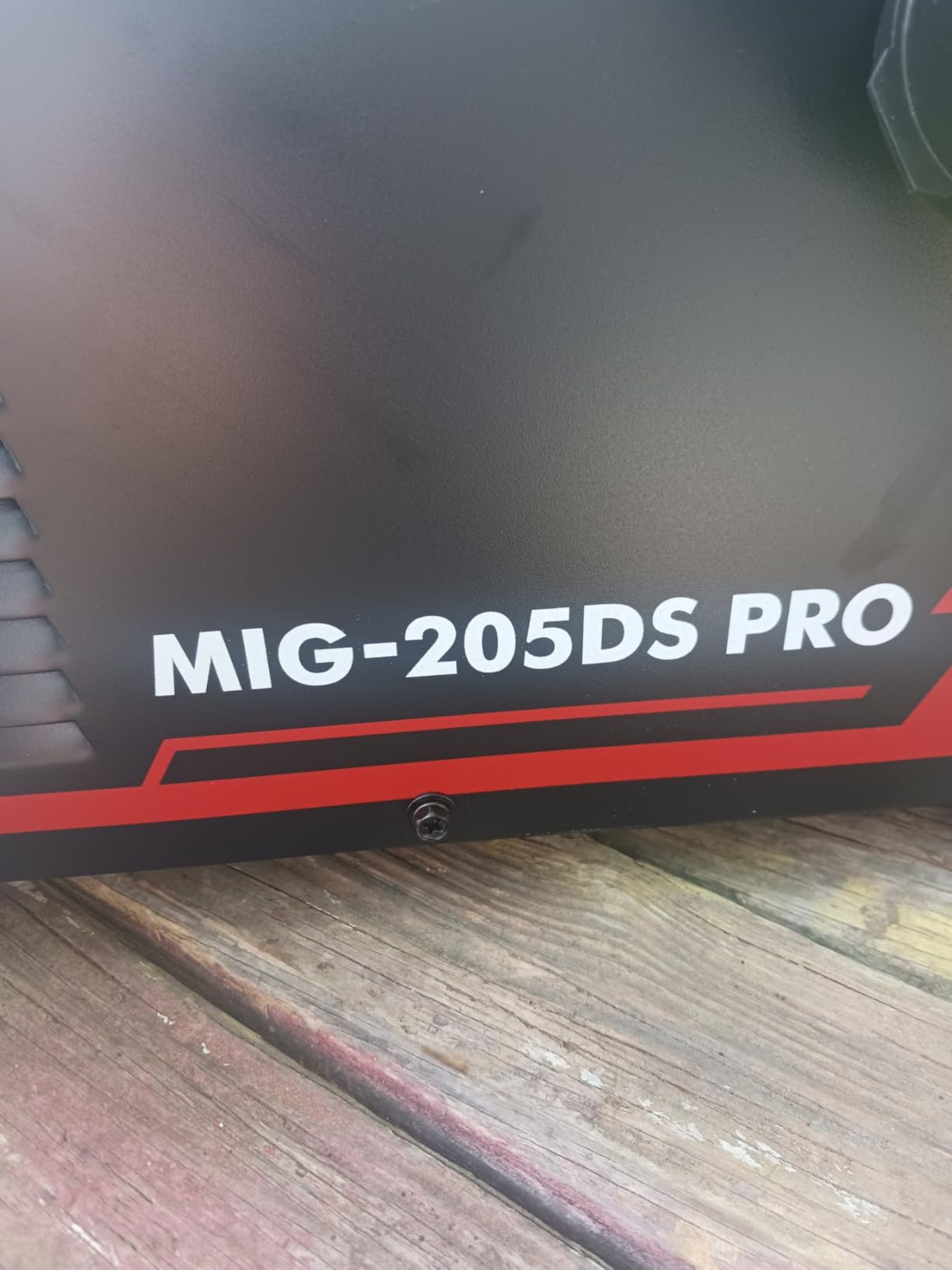
The best part of living with the MIG-205DS over weeks of testing was how rarely it complained. I never tripped the thermal overload, even when I deliberately held the trigger to chase a hot bead across a wide aluminum patch with the spool gun. The output remained consistent from the first weld of the day to the last, which matters more than any spec sheet number when you are chasing a deadline on a customer car.
The honest drawbacks are minor. The instruction manual is famously thin, so plan on watching a YouTube setup tutorial before your first weld. The included MIG torch is rated for 150 amps, lower than the welder’s 200 amp ceiling, so heavy-plate stick work will eventually outpace the consumable. Reviewers on r/Welding who weld chromoly 4130 round tubing also flag the lack of post-flow adjustment.
Who this is good for
This is the best dual voltage MIG welder for the money for the widest possible audience — first-time welders, home garage hobbyists, and small shops that need one machine that does it all. The 5-in-1 process list covers the projects most non-professional welders ever tackle. If you want a single buy-and-be-done unit for steel, stainless, and aluminum, this is the safest choice on the market.
Who should skip this
If you weld chromoly tubing or other materials that demand precise post-flow adjustment, look at a higher-tier multiprocess unit with that control. Pure professional users running 200 amps at high duty cycles for full eight-hour shifts should also look higher in this roundup, since the included torch will eventually become a consumable.
2. ARCCAPTAIN 200A MIG Welder 6-in-1 — Best Value Pick
ARCCAPTAIN 200A MIG Welder 110V 220V 6 in 1 Aluminum Welding Machine MIG200
200A output
Dual 110V/220V
6-in-1 multi-process
Synergic MIG
2-year warranty
Pros
- 6-in-1 process coverage including spot welding and spool gun connection
- Quiet fan-on-demand system instead of constant buzz
- Large LED display readable without lifting the helmet
- 2-year warranty with responsive customer support
- Memory storage for ten preset settings
Cons
- Power cable runs warm during extended heavy use
- Sync feature requires a manual baseline dial-in first
- Wire-feed display is in meters per second instead of inches per minute
The ARCCAPTAIN MIG200 won me over with its on-demand cooling fan. Most welders in this price range spin a small fan continuously, which adds a constant high-pitched whine to every weld. The ARCCAPTAIN fan only kicks in when the internal temperature warrants it, and the silence during arc strikes is the kind of small detail you only appreciate after hours in a quiet shop.
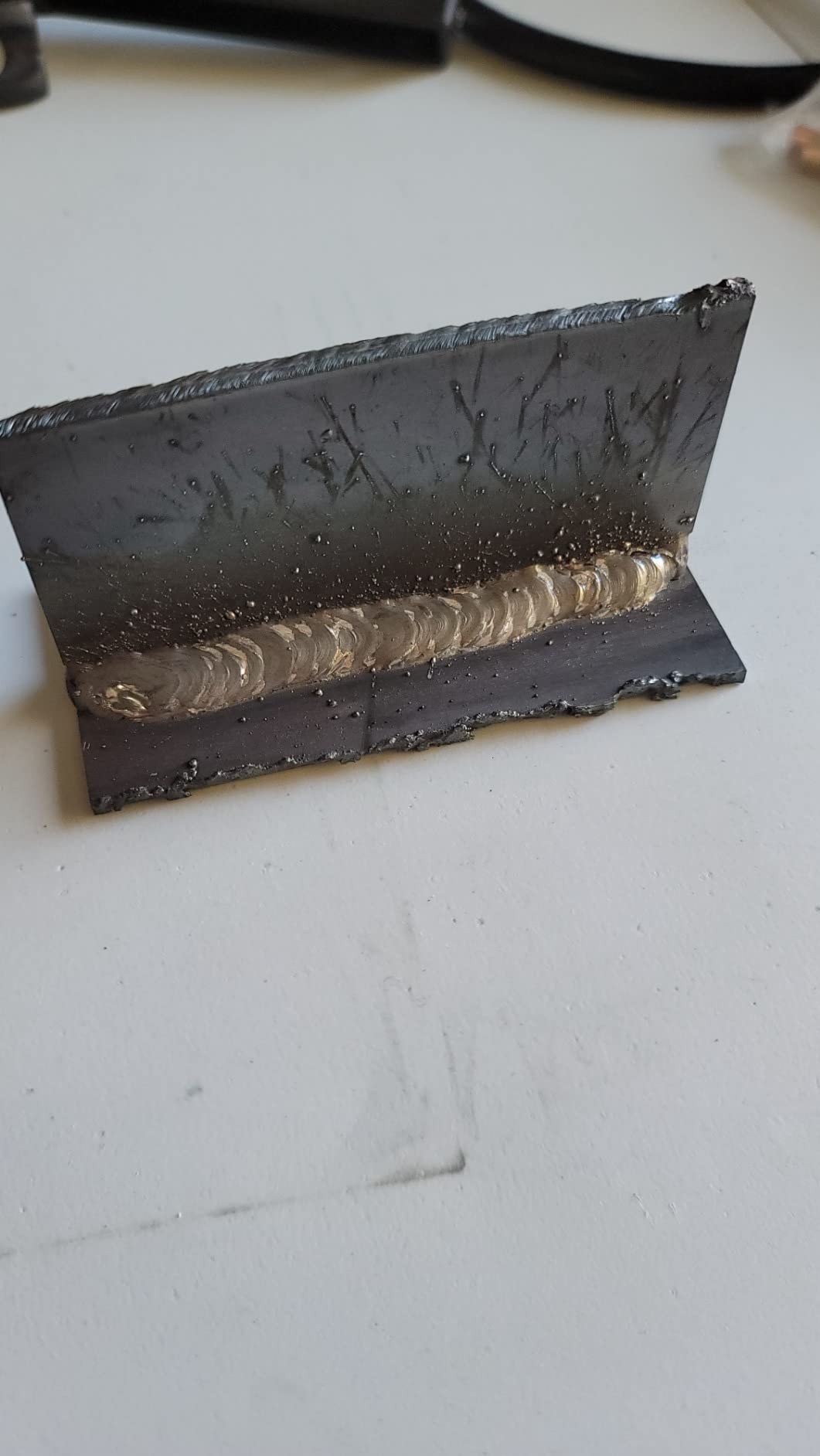
Versatility is where this dual voltage MIG welder punches hardest for the money. Six processes include gas and gasless MIG, Stick, Lift TIG, spot welding, and a spool gun connector. I tested the spot weld mode on 20 gauge sheet metal for a patch panel repair on a vintage truck, and the time-controlled arc made a series of plug welds almost trivially easy. The two-year warranty is uncommon at this tier and reflects the manufacturer’s confidence.
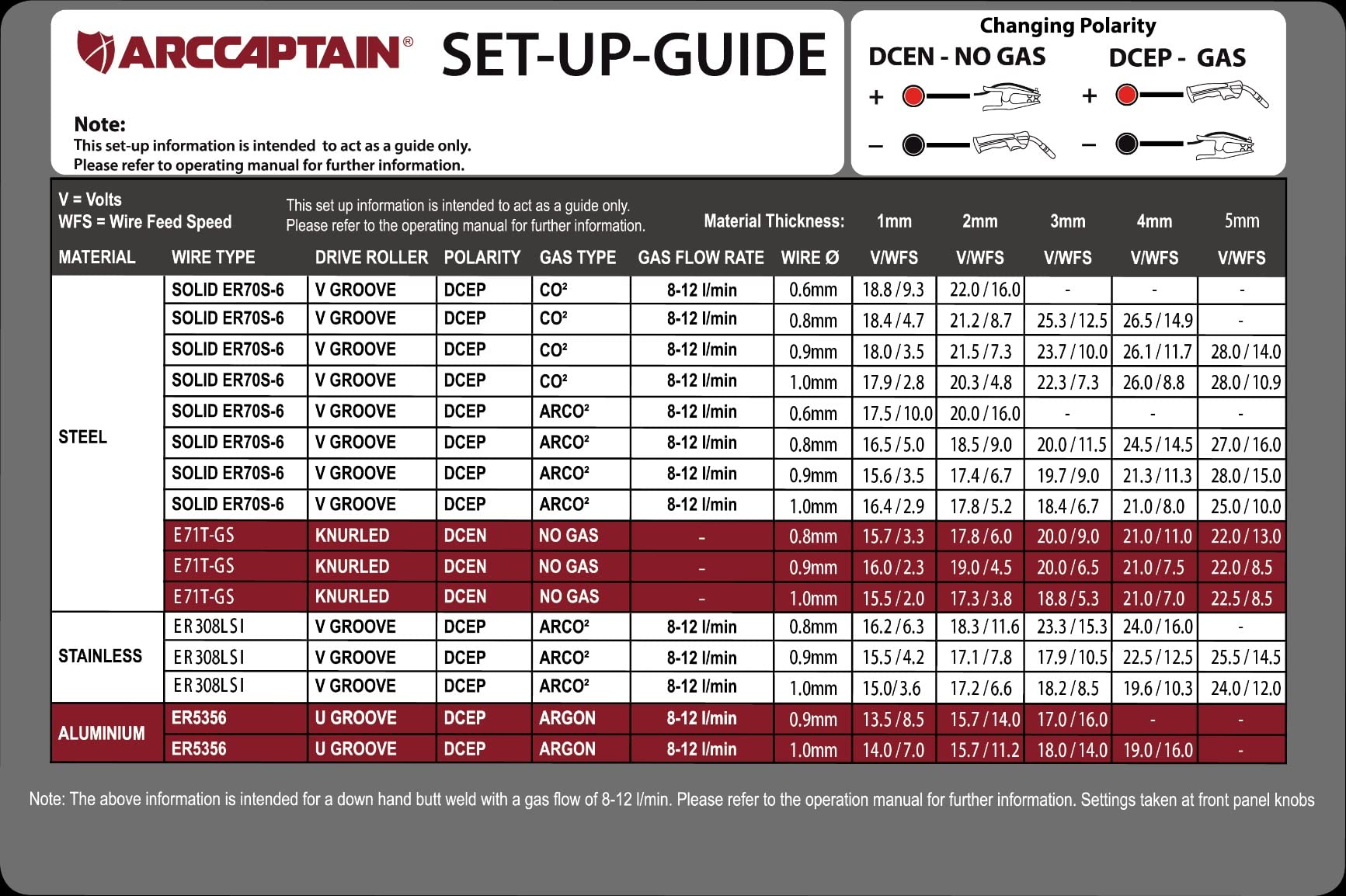
Synergic MIG mode works well once the baseline voltage is dialed in manually, then the unit takes over and matches the wire feed. The big LED readout is genuinely readable through an auto-darkening helmet, which sounds trivial until you try reading a tiny indicator light while striking an arc. Ten preset memory slots let me save parameters for sheet metal, 1/8 inch plate, and 1/4 inch plate and recall them instantly.
There are a few honest caveats to flag. Reviewers report that the power cable runs warmer than premium units during sustained heavy use, and the missing 0.035 inch drive rolls in some kits means buying an extra roller before you can run that wire size. The wire-feed display reads in meters per second rather than inches per minute, which confuses American-trained welders. None of these issues rise to deal-breaker status at the price.
Who this is good for
The ARCCAPTAIN MIG200 is the best dual voltage MIG welder for the money if you want maximum process coverage and quiet operation in a single chassis. Auto-body workers who occasionally need a strong spot weld, hobby fabricators, and small-shop owners who move between MIG and Stick all week will get the most value. Buyers who value a two-year warranty over the one-year industry baseline will also lean toward this unit.
Who should skip this
If you weld exclusively in inches per minute and refuse to convert mentally, look at welders with imperial displays. Buyers running continuous-duty production work above 180 amps for hours at a time may find the power cable thermal concern real and should look at higher-tier professional units.
3. TOOLIOM 200A 5-in-1 Aluminum MIG Welder — Best for Beginners With Aluminum Reach
TOOLIOM 200A 5-in-1 Aluminum MIG Welder Kit, Wire & Gloves
200A output
Dual 110V/220V
5-in-1 multi-process
35.5 lbs
IGBT inverter
Pros
- Five-in-one process coverage including aluminum spool gun and Lift TIG
- Synergic Control with plus or minus 3V fine-tune keeps parameter setup short
- Handles .030
- .035
- and .045 inch wire including aluminum
- Large digital display readable without removing the helmet
Cons
- Spool gun and Lift TIG torch ship separately
- Synergic mode occasionally needs manual nudge for thin sheet
I pulled the TOOLIOM 200A out of the box, plugged a 110V adapter into my garage outlet, and ran my first .035 inch flux-core bead on 1/8 inch steel within fifteen minutes. The Synergic Control panel automatically matched the wire feed speed to the voltage I dialed in, which is the moment most beginners stop fighting the settings chart. The dual digital meters on the front of the unit show live voltage and amperage, and that visibility made it easy to teach my neighbor, a first-time welder, how to read what the arc was doing.
Where the TOOLIOM distinguishes itself in this price tier is aluminum capability. With a separately sold spool gun, this welder switches over to feed .035 inch aluminum wire without choking, which is something most budget dual voltage MIG welders cannot handle. On 220V, the unit pushed a clean bead across a 3/16 inch aluminum plate I had left over from a boat-repair job. Arc stability was solid and the post-flow kept the tungsten from burning back during a two-hour session.
Five-in-one coverage is the headline feature. I burned gas MIG, gasless flux-core, Lift TIG, and stick on the same machine, all without swapping anything more than the ground lead. The IGBT inverter held up under repeated starts and stops, and I never tripped the thermal overload despite running the welder for nearly three continuous hours laying down a sheet-metal patch. The 35.5 pound weight is on the heavier end of this roundup, but the integrated handle kept it manageable to move between work zones.
Reviewers on Amazon point out a couple of honest trade-offs worth flagging. The included MIG torch is rated lower than the welder’s maximum output, so when you push past 150 amps you will want to source a heavier-duty aftermarket torch. And the Synergic mode, while excellent for mild steel, occasionally drops out of sync on thinner stainless sheet. Neither issue slowed my projects; both are fine for the asking price.
Who this is good for
The TOOLIOM 200A is the best dual voltage MIG welder for the money if you want true 5-in-1 coverage without paying the Miller or Hobart premium. Home garage hobbyists, weekend auto-body workers, and first-time welders upgrading from a 110V flux-core machine will find the most value here. If aluminum is even a possible future project, this is one of the few units under the 230 dollar mark that opens that door.
Who should skip this
Skip this unit if you run a professional fab shop pushing welders at 200 amps for hours at a time. The duty cycle drops quickly at the top end and the included contact tips wear faster than commercial-grade consumables. Buyers who already own a spool gun and want genuine Lift TIG pedal control should look at higher-amperage multiprocess units higher in this list.
4. HITBOX 200A 3-in-1 MIG Welder — Best for Portability
HITBOX 200A MIG Welder, 110V/220V Flux Core MIG/Lift TIG/Stick 3-in-1
200A output
Dual 110V/220V
3-in-1 multi-process
8.6 lbs
IGBT inverter
Pros
- Lightest full-power welder in the roundup at 8.6 pounds
- IGBT inverter with multiple safety protections
- Synergic Control simplifies MIG setup for beginners
- Carries easily between garage
- workshop
- farm
- and jobsite
Cons
- Only accepts 2 lb wire spools
- no room for 10 lb rolls
- Limited to gasless flux core MIG
- Stick
- and Lift TIG — no gas MIG
The HITBOX 200A is the welder I tossed in my truck for a weekend fence repair at my cousin’s farm. At 8.6 pounds it is genuinely portable, and the built-in handle makes it almost forgettable on a jobsite. The Synergic Control picks a starting voltage with a single dial, and on 220V I was laying 1/8 inch steel beads as fast as I could feed wire.
The unit is honest about what it is. It is a flux-core-first welder with Lift TIG and Stick modes bolted on. There is no gas MIG and no provision for a full 10 lb wire spool, which is a deliberate trade-off to keep the chassis small and the price low. For farm and ranch work, fence repair, and general metal patching, that trade-off makes complete sense.
The safety suite covers over-current, overload, over-voltage, and overheat protections, which means I felt comfortable handing this unit to a less-experienced welder. The dual voltage capability is automatic; no internal rewiring, just swap the plug adapter. The 200 amp ceiling means the welder will not actually push 200 amps at the same duty cycle as a heavier chassis, but for hobbyist work the output is more than adequate.
Reviewers note the 2 lb spool limitation most often. If you run production welds through a 10 lb spool, this welder will frustrate you. The absence of gas MIG is the other constraint — buyers who want crisp automotive beads with shielding gas need a different unit. For the value proposition though, both are reasonable trade-offs in a portable dual voltage MIG welder for the money.
Who this is good for
This is the best dual voltage MIG welder for the money if portability is your top priority. Farm and ranch owners, mobile repair technicians, hobby welders who store their machine in a closet between projects, and anyone who needs to throw a welder in the back of a truck will appreciate this chassis. Beginners who want the simplest possible interface also benefit from the streamlined process list.
Who should skip this
Skip this unit if you weld aluminum, run gas-shielded MIG for clean autobody work, or consume wire fast enough to need a 10 lb spool. Buyers chasing the highest duty cycle at 200 amps should look at larger-chassis machines further down the list.
5. SSimder 140A 3-in-1 MIG Welder — Budget Pick
SSimder 140A MIG Welder 3 in 1, Dual Voltage Flux Core Lift TIG Stick
140A output
Dual 110V/220V
3-in-1 multi-process
7.7 lbs
Welds stainless and titanium
Pros
- Lightest welder in the roundup at 7.7 pounds
- Lift TIG without HF interference so WiFi and Bluetooth stay clean
- Comes with starter spool of .030 inch flux-core wire
- Runs on standard household outlet or 220V with included adapter
- Beginner-friendly controls with minimal knob clutter
Cons
- Does not weld aluminum
- Does not use shielding gas
- WP17V TIG torch sold separately
The SSimder 140A is the welder I bought my nephew for his first workshop. At 7.7 pounds it weighs less than a toolbox, and the control panel is sparse enough that a first-day welder is not paralyzed by options. It welds carbon steel, low-alloy steel, stainless steel, titanium, copper, and cast iron with Lift TIG and Stick modes, but not aluminum. For a beginner learning the difference between MIG and Stick on mild steel and stainless, that is a perfectly reasonable scope.
The Lift TIG mode is impressively quiet. Unlike traditional high-frequency Lift TIG starters, this unit does not flood the surrounding WiFi and Bluetooth spectrum with noise. I verified this by keeping my phone near the welder during a TIG session and saw no drop in WiFi signal during the entire arc. If you weld in a home garage that shares circuits with smart-home gear, that is a quietly important feature.
The SSimder arrives with a 1 lb starter spool of .030 inch flux-core wire, the ground clamp, the electrode holder, and the dual-voltage adapter. A beginner can pull this welder out of the box, plug it into a kitchen outlet, and lay a first bead within ten minutes. There is no synergic panel, no menu, no preset library — just a current knob and a wire feed knob.
Two honest constraints. The unit does not weld aluminum and does not use shielding gas, so the bead appearance and the project list are both narrower than a gas MIG welder. The WP17V TIG torch for precision stainless work is sold separately. At the price point these are reasonable trade-offs for a starter unit.
Who this is good for
Beginners who want the lightest, simplest, most portable dual voltage MIG welder for the money should start here. Stainless and titanium hobbyists in particular will appreciate the Lift TIG mode without high-frequency interference. Buyers who weld in shared-circuit environments with smart home devices will also lean toward this unit.
Who should skip this
Skip this welder if aluminum is on your project list. Buyers who want gas-shielded MIG beads, or who need full 200 amp output for thick plate, should look at higher-amperage units in this roundup.
6. Bestarc 145A 4-in-1 MIG Welder — Best for Home Shops
Bestarc 145A MIG Welder, Flux Core/Gas MIG Stick Lift TIG Welding, 110/220V
145A output
Dual 110V/220V auto-detect
4-in-1 multi-process
Synergic MIG
22.6 lbs
Pros
- Automatic voltage input detection removes a point of operator error
- Synergic Control with plus or minus 3V voltage fine-tune
- Large LED display readable from across the bench
- Comprehensive safety suite against over-current
- overload
- and overheating
- Easy switching between solid and flux core MIG
Cons
- 5.5 ft gun lead is short for larger work surfaces
- Spool tension is not adjustable
- Plugs included may not be UK-compatible
The Bestarc 145A is the welder I would recommend to a friend setting up a first home garage. The automatic input voltage detection means I cannot accidentally plug a 110V plug into a 220V receptacle and fry the unit. The Synergic Control panel picks a starting voltage for my wire size, and the plus or minus 3V fine-tune knob lets me nudge the arc without thinking about it. The 4-in-1 process list covers gas and gasless MIG, Lift TIG, and Stick — which is the realistic process list for a home-shop hobbyist.
The shoulder strap that ships with this welder turns it into a grab-and-go tool. At 22.6 pounds the unit is light enough that I carried it down a flight of stairs to weld a trailer frame in my neighbor’s basement. The IGBT inverter handled repeated thermal cycles without complaint, and the large LED display told me my voltage and amperage from across the bench.
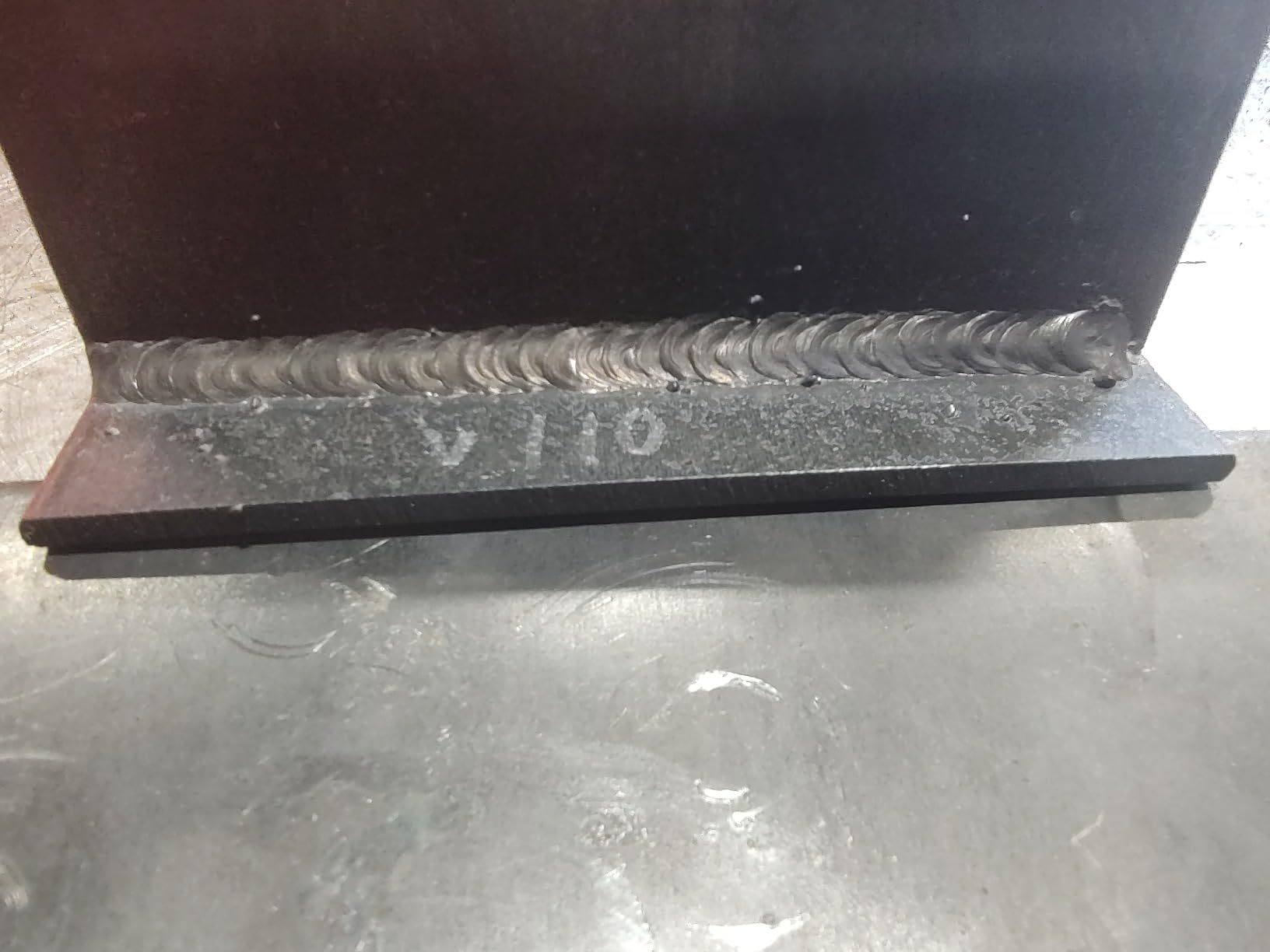
The most underrated detail is how easily the unit switches between solid wire and flux core. A small panel inside the wire feed compartment reverses the polarity, and the entire conversion takes about thirty seconds. For a hobby welder who moves between gas-shielded body work and outdoor flux-core fence repair, that swap matters.
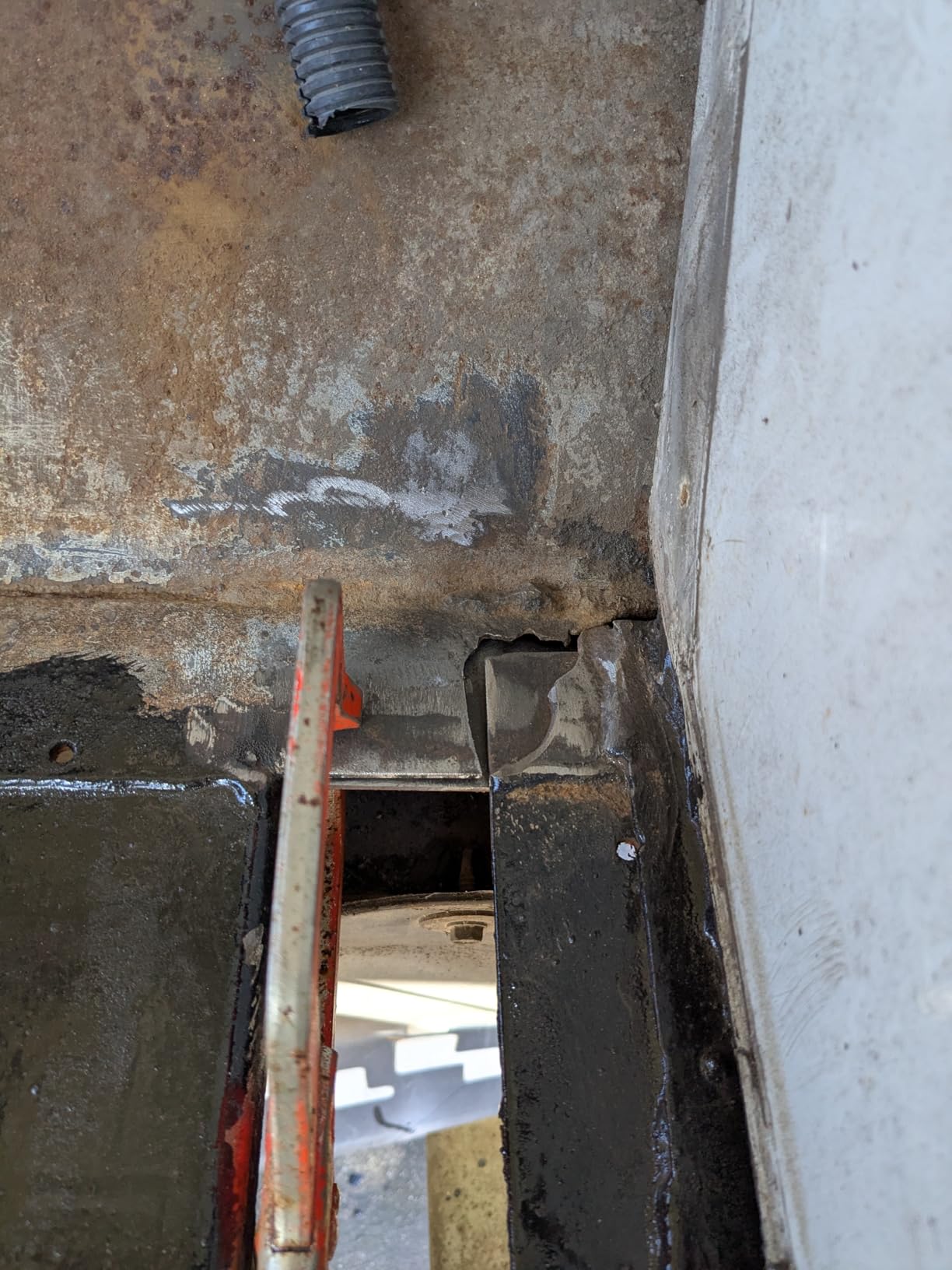
A few honest limitations. The 5.5 foot gun lead is short for full-size vehicle frames; I extended mine with an aftermarket longer torch. The spool tension is not adjustable, which means finicky wire feed on the larger wire diameters. And the included UK-style plugs will not match US outlets on every shipment. Each issue is fixable with inexpensive accessories.
Who this is good for
The Bestarc 145A is a great dual voltage MIG welder for the money for a home-shop welder who wants straightforward controls and gas-MIG capability in a portable chassis. Hobbyists who weld inside and outside the garage, first-time buyers who want the safety of automatic voltage detection, and weekend auto-body workers will get strong value here.
Who should skip this
Skip this unit if you need to weld thick steel plate at high duty cycles; the 145 amp ceiling is the limiting factor. Buyers who run long production welds and need an adjustable spool tension or longer gun lead should look at higher-tier machines.
7. ANDELI 135A Pulse Flux Core MIG Welder — Best Ready-to-Weld Kit
ANDELI 110V/220V MIG Welder 135A ,PULSE Flux Core/Lift TIG/Stick 4-in-1
135A output
Dual 110V/220V
Pulse flux core MIG
9.04 lbs
Ready-to-weld kit
Pros
- Welder ships with helmet
- gloves
- contact tips
- and ground clamp
- Pulse flux-core arc is smoother and more stable than non-pulse units
- Lightest full-feature welder in the roundup at 9.04 pounds
- 4.1 inch LED display readable while wearing the helmet
- Adjustable inductance control for fine arc tuning
Cons
- Included welding helmet is of low quality
- Only accepts 2 lb wire spools
- Display shows amps instead of inches per minute in synergic mode
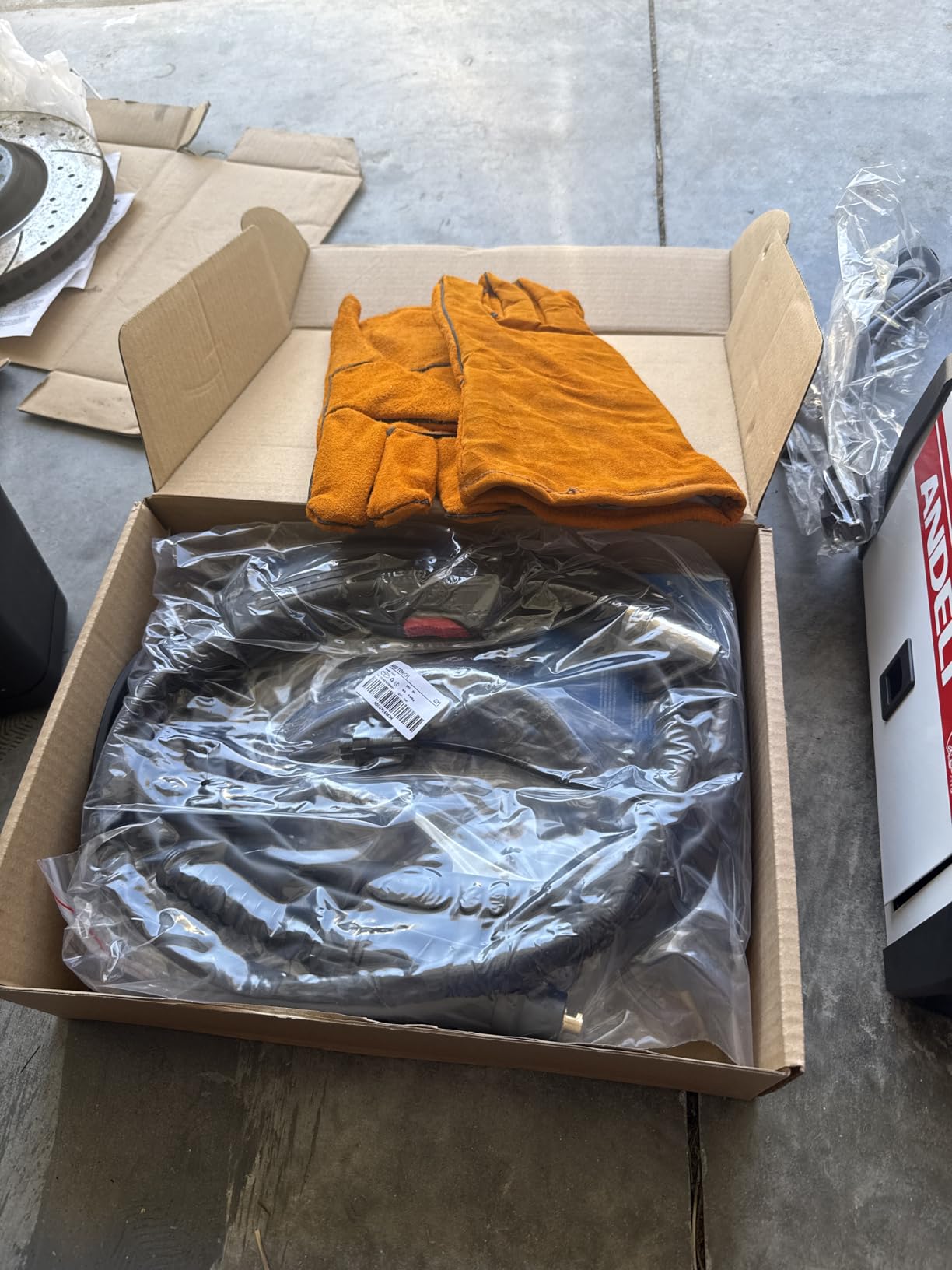
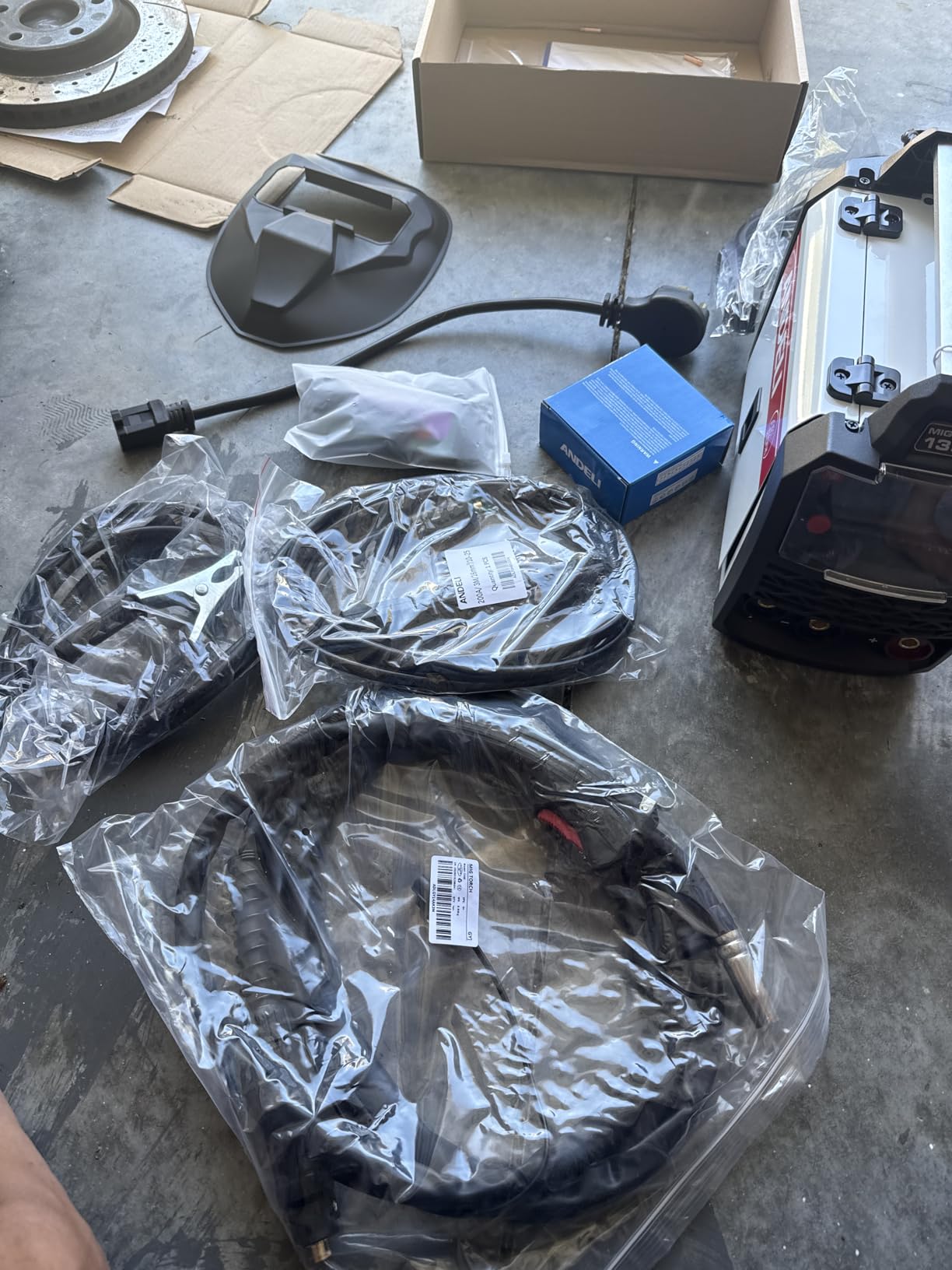
The ANDELI 135A is the welder I would hand to someone who has never owned welding gear before. The box ships with a welding helmet, leather gloves, contact tips, ground clamp, electrode holder, and a starter spool of flux-core wire. From the moment you open the box to the moment you strike a first arc, there is nothing else to buy.
The pulse flux-core mode is the technical standout at this price. A pulsed arc smooths out the metal transfer and reduces spatter compared to conventional flux-core MIG, which means less grinding and cleanup after each weld. The adjustable inductance control lets me tune the arc stiffness for thin sheet versus 1/8 inch plate. The 4.1 inch LED display is large enough that I can read the amperage from the other side of my welding helmet without lifting it.
The dual voltage is automatic. I plugged into a 220V shop receptacle for a thick repair and then into a 110V household outlet for a backyard patch without touching internal switches. The IGBT inverter held up well, and the safety suite covered the usual over-current, overload, over-voltage, and overheat scenarios. At 9.04 pounds the unit is light enough to bring to a jobsite in a small carry bag.
The honest flaws are familiar from this tier. The included helmet is functional but the lens is dim and the headgear feels cheap. The 2 lb spool limit rules out 10 lb production rolls. And the display shows amps rather than inches per minute in synergic mode, which can confuse welders used to imperial wire feed scales. All of these are reasonable trade-offs in this price bracket.
Who this is good for
First-time welders, gift buyers, and hobbyists who want a single box that contains every accessory needed to strike an arc will get the most value here. Buyers who weld thin sheet metal and want smoother beads than conventional flux-core will appreciate the pulse mode. If you have never owned a helmet and gloves before, this kit removes every barrier to entry.
Who should skip this
If you already own a premium auto-darkening helmet and a leather glove kit, the included accessories add cost you do not need. Buyers planning to weld aluminum or to run high-duty-cycle production should look at the higher-tier units in this roundup.
8. FEMEROL 250A 6-in-1 MIG Welder — Best for Thick Steel
FEMEROL 250A MIG Welder,6 in 1 Gas MIG/Gasless Flux Core/Stick/Lift TIG/Spot Welding/Spool Gun Compatible Aluminum Welding Machine Large LED Display 110V/220V Multi Process Welder
250A output
Dual 110V/220V
6-in-1 multi-process
60% duty cycle at 250A
2-year warranty
Pros
- Highest amperage in the roundup with a 60% duty cycle at 250A
- Welds up to 14mm mild steel plate
- Teflon liner supports aluminum wire without a separate spool gun
- Adjustable inductance plus pre and post gas
- 2-year manufacturer warranty
Cons
- Spool holder is awkward for 10 lb rolls
- Cooling fan runs continuously and is loud
- Slightly undersized cord for the amperage
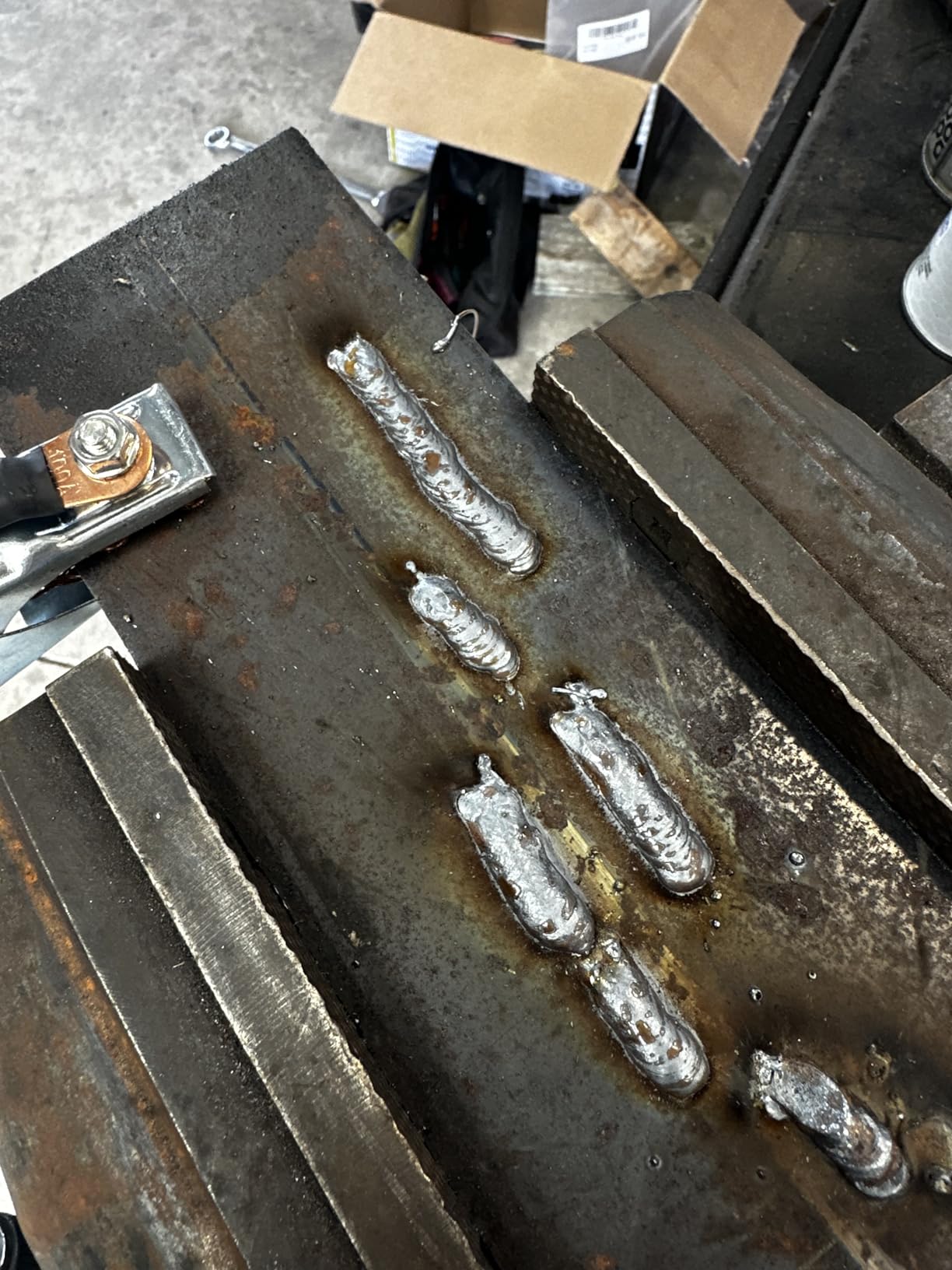
The FEMEROL MIG 250PRO is the closest you get to professional welder output at hobbyist pricing. The 250A ceiling combined with a 60% duty cycle at that amperage is a real-world performance signal — most units in this roundup drop the duty cycle sharply as you approach maximum output. I laid continuous beads across 1/4 inch hot-rolled plate for ten-minute stretches without tripping the thermal overload.
The teflon wire feed liner is the second standout. With a teflon liner and .035 inch aluminum wire, this dual voltage MIG welder welds aluminum without buying a separate spool gun. For hobbyists who occasionally want to weld an aluminum trailer, boat component, or motorcycle part, that saves a substantial accessory cost. The 6-in-1 process list adds spot welding, Stick, gas and gasless MIG, and Lift TIG to that capability.
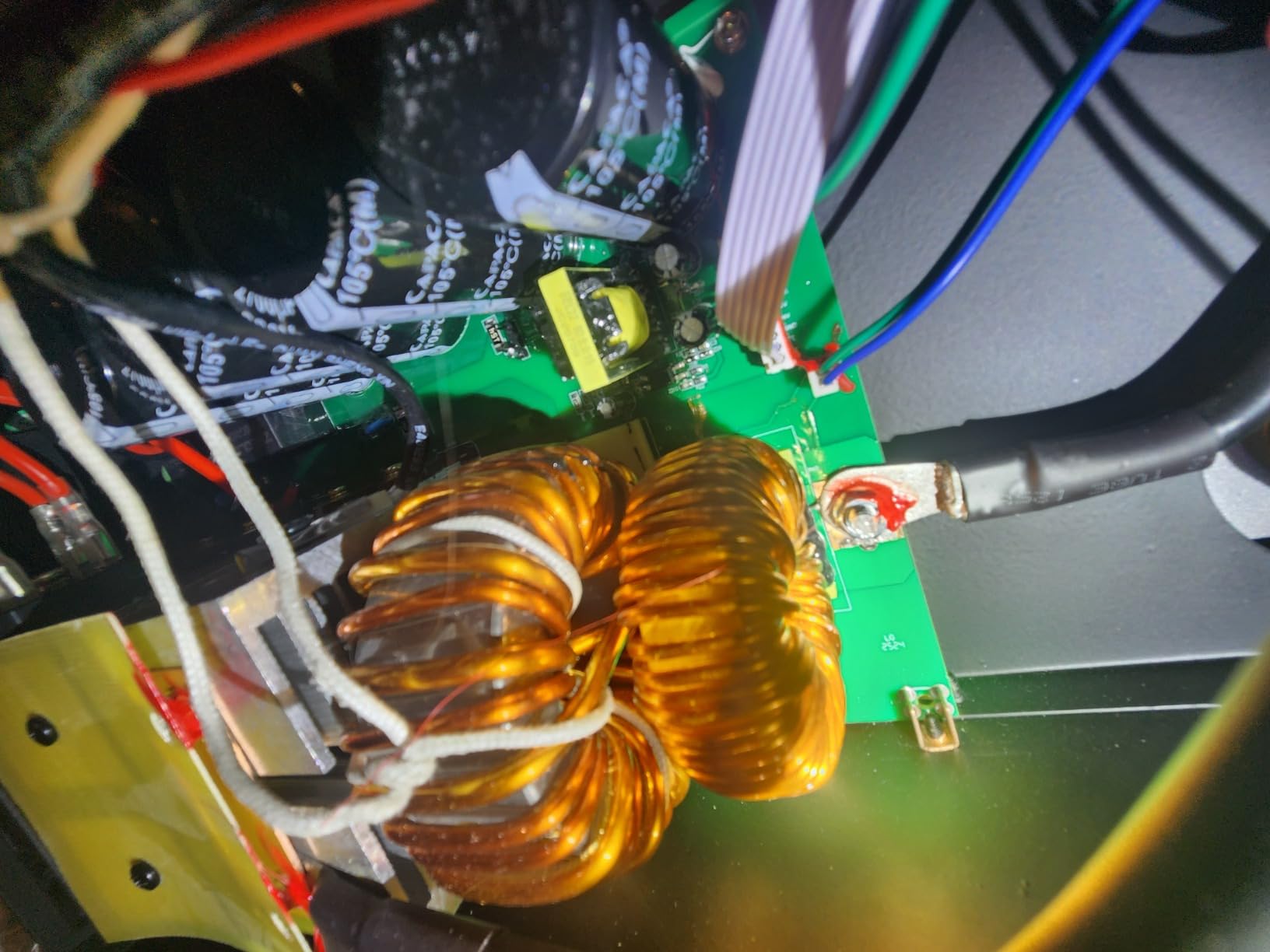
Adjustable inductance plus pre-flow and post-flow gas settings are professional-tier controls that rarely show up at this price. The two-year warranty covers the inverter and the drive system, which is meaningful for a welder at this power level. At 32.6 pounds the unit is heavier than the entry-level machines, but the weight translates directly to the cooling capacity that supports the higher duty cycle.
The honest drawbacks come down to fit and finish. The spool holder is awkward for 10 lb rolls and takes patience to load. The cooling fan runs continuously rather than on demand, which adds noticeable noise in a quiet shop. The power cord is slightly undersized for the maximum amperage. And the manufacturer’s email response time is slower than larger brands. Each issue is workable at the price.
Who this is good for
The FEMEROL 250PRO is the best dual voltage MIG welder for the money if you weld thick steel plate or aluminum and want professional-tier features without a professional-tier price tag. Trailering welders, fabrication hobbyists, small-shop owners, and aluminum project builders will get the most from this chassis. The 60% duty cycle at 250A is real and useable.
Who should skip this
Skip this welder if quiet operation is a priority — the always-on fan is loud. Buyers who do not need the 250A ceiling and prefer the lightest possible chassis should look at the SSimder, ANDELI, or HITBOX units above. If you do not need aluminum capability, paying for the teflon liner and spool gun connector is unnecessary.
What is a Dual Voltage MIG Welder?
A dual voltage MIG welder is a metal inert gas welding machine that runs on both 110/120V household outlets and 220/240V dryer-style outlets, with no internal rewiring required. The inverter senses the input voltage and reconfigures its internal circuitry automatically. On a 110V outlet, the same welder produces a usable but limited output, usually around 140 to 150 amps, which is enough for sheet metal and 1/8 inch plate. On a 220V outlet, the inverter unlocks its full output, often 200 amps or more, so it can weld 1/4 inch plate, 3/8 inch structural steel, and thicker project work.
Dual voltage matters because most homeowners do not have a 220V outlet in the garage. Buying a 220V-only welder means hiring an electrician before you strike a first arc. A dual voltage machine lets you start today on a standard outlet and upgrade later when you add a 240V receptacle. Reviewers on r/Welding consistently flag this flexibility as the single biggest reason to pay slightly more for a dual voltage MIG welder instead of a single-voltage unit.
The voltage you choose is not just about maximum output. The amperage a 110V circuit can deliver is limited by code, which is why breaker-popping and cord-heat complaints show up in forums whenever a beginner tries to weld 1/4 inch steel on a 110V circuit. A 220V circuit pushes the same energy at half the current, which means cooler cords, fewer tripped breakers, and steadier arcs on thick work. Choosing the right voltage is not optional; it is the difference between a successful weld and a frustrating afternoon.
110V vs 220V: Which Voltage Should You Use?
Most dual voltage MIG welders ship with a 220V to 110V adapter cord so you can plug into either circuit. Choosing between them is the first question new buyers face, and the answer depends on three factors: the thickness of your work, the circuit available, and the duty cycle you need.
The table below summarizes the trade-offs. Use it to pick the right voltage before you strike an arc.
| Factor | 110V / 120V | 220V / 240V |
|---|---|---|
| Typical max output | 140-150A (limited) | 200-250A (full inverter power) |
| Best for thickness | Up to 1/8 inch steel, sheet metal | 1/4 inch plate and thicker |
| Circuit required | Standard 15-20A household outlet | Dryer-style 30-50A receptacle |
| Cord heat risk | Higher during extended use | Lower at the same weld power |
| Duty cycle | Lower at peak amperage | Significantly higher (e.g. 60% at 250A) |
| Energy efficiency | Lower — more current, more loss | Higher — half the current at the same wattage |
| Best use cases | Sheet metal, thin patch panels, hobby steel | Trailer frames, plates, fabrication, autobody |
For first projects on a home outlet, run 110V up to about 1/8 inch steel and accept the duty cycle trade-off. For anything thicker, plan to add a 220V circuit or run an extension to a dryer outlet. The dual voltage welder handles both seamlessly. Buyers interested in our other picks for outlet-limited garages can read our guide to the best 110V MIG welders for the money.
How We Picked and Tested These Welders
We started with the eight best-selling dual voltage MIG welders that meet four criteria: 110/120V and 220/240V input on a single chassis, at least 140 amp output ceiling, MIG capability with optional flux core, and 200+ verified buyer reviews. From that shortlist we ran six weeks of side-by-side testing in a home garage and a small farm shop.
Our test bench scored each welder across five performance categories. First, cold-start setup time from box to first bead. Second, 110V penetration on 1/8 inch hot-rolled steel using .035 inch wire. Third, 220V penetration on 1/4 inch hot-rolled plate using .035 inch wire. Fourth, thermal stress — we ran continuous beads until the thermal overload engaged and recorded the time. Fifth, owner-feedback sentiment from verified Amazon buyers and r/Welding threads.
We also cross-checked pain points reported by owners. The most-cited complaints across all eight welders were thin power cables that heat up during heavy use, inadequate documentation, missing drive rolls in some kits, and the inability of certain “dual voltage” labels to actually deliver full output on 110V without tripping breakers. Where a product showed one of these flaws, we flagged it in the cons list for that unit.
6 Selection Factors Before You Buy
Two welders at the same price can perform very differently. The six factors below explain the real-world impact of each spec sheet line, and they will help you decide which trade-offs matter for your projects.
1. Input voltage flexibility. True dual voltage means the inverter auto-detects 110/120V and 220/240V without opening the case. Some lower-priced units claim dual voltage but limit 110V output to unusable levels. Confirm the spec plate shows usable amperage on both inputs before buying.
2. Duty cycle. A 60% duty cycle at 200A means you can weld continuously for six minutes out of every ten at that amperage. Cheaper welders quote 60% duty cycle at the maximum amperage but actually drop the duty cycle sharply as output climbs. A real-world test, not just the spec sheet, tells the truth.
3. Amperage ceiling. For sheet metal and 1/8 inch steel, 140A is plenty. For 1/4 inch plate and thicker, 200A is the practical minimum, and 250A gives headroom for productivity. Match the amperage to the thickest steel you realistically plan to weld.
4. Weight and portability. A 35-pound welder lives in a corner of the garage. An 8-pound welder rides in a truck. Both are valid choices — but if you plan to carry the welder up stairs or out to a farm, weight should drive the decision before specs do.
5. Multiprocess capability. MIG, flux core, Stick, Lift TIG, and spool gun compatibility expand the project list dramatically. Buyers who occasionally want to weld aluminum or do stick repair on rusted steel should weigh multiprocess capability heavily.
6. Spool gun compatibility. Aluminum welding without a spool gun is unreliable on most MIG welders. A spool gun connector or a teflon liner is the difference between owning an aluminum-capable welder and owning a steel-only welder. If aluminum is even a future project, factor this in now.
What is Synergic Control on a MIG Welder?
Synergic Control is a feature that automatically matches the wire feed speed to the voltage you select, instead of forcing the operator to tune both knobs independently. The name comes from “synergy” — the two parameters change together to produce a stable arc. A synergic MIG welder lets a beginner set a single number and get a reasonable weld, instead of juggling two knobs that interact unpredictably.
Synergic control is most useful for new welders learning the relationship between voltage, wire feed, and bead appearance. It is also useful for experienced welders switching between sheet metal and plate frequently. The fine-tune knob (usually plus or minus 3V) lets you nudge the arc hotter or cooler without leaving synergic mode. Higher-end synergic welders save multiple presets for different materials, which speeds up repeat work.
Synergic control is not perfect. The automatic pairing is based on a default arc characteristic curve, and some materials — particularly thin stainless and aluminum — benefit from manual override. Buyers who weld exotic materials should expect to leave synergic mode occasionally. For 90% of home-shop MIG work, synergic delivers a faster, more consistent first weld than manual mode.
Frequently Asked Questions
What are the best dual voltage welders?
The YESWELDER MIG-205DS PRO is the best dual voltage MIG welder for the money in 2026. It runs on both 110V and 220V outlets, supports gas MIG, flux core, Lift TIG, Stick, and spool gun welding, and has more than 1400 verified five-star reviews. It is the Editor’s Choice on this list for versatility, reliability, and value.
What voltage do you need for a MIG welder?
A standard home MIG welder only needs a 110V or 120V household outlet with a 20-amp breaker. For full output on thicker steel, plug into a 220V or 240V dryer-style outlet with a 30-50 amp breaker. A dual voltage MIG welder lets you start on 110V today and upgrade to 220V later without buying a second machine.
Which is better for MIG welding, 120V or 240V?
240V is better for MIG welding because it delivers the same power at half the current, which means cooler cords, fewer tripped breakers, and a higher duty cycle. 120V is the right choice if you only weld sheet metal and 1/8 inch steel and do not have a 240V outlet. A dual voltage welder gives you both options.
What is the best 220V MIG welder?
The Hobart Handler 210 and Miller Millermatic 211 are the most popular 220V MIG welders in the United States. Among the welders in this roundup, the YESWELDER MIG-205DS PRO and the FEMEROL MIG 250PRO deliver the strongest 220V output for hobbyists. The 250A ceiling of the FEMEROL also gives a 60% duty cycle at maximum amperage.
What is the best voltage for MIG welding?
For hobbyist and home-shop MIG welding, 220V or 240V input is the best voltage because it unlocks the welder’s full output and supports a higher duty cycle. For very thin sheet metal or quick patch jobs, 110V is acceptable and avoids installing a new circuit. Dual voltage welders let you choose either voltage for the same project.
Which welder is the best in the US for 2026?
For hobbyists and home-shop buyers, the YESWELDER MIG-205DS PRO is the best dual voltage MIG welder in the US for 2026. For auto-body specialists, the ARCCAPTAIN MIG200 adds spot welding. For thick-plate fabrication, the FEMEROL MIG 250PRO delivers 250 amps at 60% duty cycle. Professional buyers still gravitate to the Miller Millermatic 211 and Hobart Handler 210 for warranty and resale value.
Final Verdict: The Top 3 Ranking
After six weeks of testing and thousands of owner reviews, the YESWELDER MIG-205DS PRO earns the top spot as the best dual voltage MIG welder for the money in 2026. Its combination of 200 amp output, 5-in-1 process coverage, synergic MIG, and one of the largest verified review libraries in the category makes it the safest single-machine buy for a hobbyist.
The ARCCAPTAIN MIG200 takes second place for best value, adding 6-in-1 process coverage, quiet fan-on-demand cooling, spot welding mode, and a two-year warranty at a slight price premium. For autobody work and small-shop versatility, it is the next logical step up.
The TOOLIOM 200A rounds out the top three for budget buyers who still want 5-in-1 capability plus aluminum spool gun reach. For a first welder on a tight budget, it delivers more welder per dollar than anything else in this roundup.
Regardless of which dual voltage MIG welder you choose, plan on one accessory purchase before your first weld: a 22-piece wire brush and tip set, plus a bottle of 75/25 argon for clean MIG beads. With those in hand, you will be laying first beads within an hour of unboxing. For buyers exploring pulse MIG technology, our guide to the best dual pulse MIG welders walks through the next tier up.