
Summer changes everything about how I drink coffee. As soon as the thermometer pushes past 80 degrees, my hot morning pour-over starts gathering dust and the cold brew pitcher takes over the front shelf of the fridge. After three summers of testing cold brew coffee makers side by side on my kitchen counter, I’ve learned that the right brewer is the difference between a smooth, chocolatey glass of refreshment and a bitter, gritty disappointment.
Cold brew coffee makers work by steeping coarsely ground coffee in cold water for 12 to 24 hours, then filtering out the grounds to produce a concentrated, low-acid brew that mixes beautifully with ice, milk, or sparkling water. The finished concentrate runs roughly 65 percent less acidic than hot-brewed coffee, which matters a lot if regular coffee bothers your stomach on hot days. The concentrate also stays fresh in the refrigerator for up to two weeks, so a single Sunday brew session can carry you through an entire workweek without lifting a finger.
This guide covers the 8 best cold brew coffee makers for summer that I have personally tested and would actually recommend in 2026. I brewed with each one at least four times, ran the same 1:5 coffee-to-water ratio through all of them, and rated them on taste, ease of cleanup, counter footprint, and how well they survived a busy backyard barbecue weekend. Whether you want a simple mason jar setup, a countertop showpiece with a built-in tap, or a portable pitcher that lives in the fridge door, there is a pick here for your summer routine.
I have also included the coffee-to-water ratio I keep coming back to, the grind size that works best for each style of brewer, and the cleaning tricks that save me about 10 minutes a week. If you have ever wondered why your homemade cold brew tastes weak, bitter, or muddy, the troubleshooting tips in the FAQ will help you fix it on the next batch.
Table of Contents
Top 3 Cold Brew Coffee Makers for Summer (September 2026)
These three brewers stood out across every test I ran. The OXO Good Grips took the top spot for its clever Rainmaker water-distribution lid and one-switch filtration that delivers the smoothest concentrate of the group. The Takeya Deluxe earned the top-rated title with more than 67,000 reviews, a shatter-proof Tritan body, and a leak-proof lid that fits any fridge door. The County Line Kitchen Mason Jar won the best-value slot with the highest customer rating in the lineup and a leak-proof lid that travels well to picnics and beach houses.
[ultrathinks_comparison asin1=”B00JVSVM36″ badge1=”EDITOR’S CHOICE” title1=”OXO Good Grips Cold Brew Coffee Maker” features1=”Rainmaker lid,32 oz carafe,Reusable mesh filter,Auto-stop switch” manual_rating1=”4.5″ manual_reviews1=”3418″ asin2=”B07C36HVWK” badge2=”TOP RATED” title2=”Takeya Deluxe Cold Brew Coffee Maker” features2=”Shatter-proof Tritan,2 quart capacity,Airtight lid,Dishwasher safe” manual_rating2=”4.6″ manual_reviews2=”67470″ asin3=”B07VJJJ764″ badge3=”BEST VALUE” title3=”County Line Kitchen Mason Jar Cold Brew Maker” features3=”64 oz mason jar,Stainless mesh filter,Leak-proof lid,BPA-free glass” manual_rating3=”4.8″ manual_reviews3=”24764″ color_scheme=”blue” show_price=”no” disclosure=”As an Amazon Associate we earn from qualifying purchases.”]
Best Cold Brew Coffee Makers for Summer in 2026
The full lineup below covers every brewing style I tested, from compact French-press designs to large-capacity concentrate systems with built-in taps. Each one earned its place through repeatable taste results, dependable filtration, and a footprint that actually works in a real kitchen. The comparison table lays out the key specs so you can scan the field before digging into the individual reviews.
| Product | Specifications | Action |
|---|---|---|
 OXO Good Grips Cold Brew Maker OXO Good Grips Cold Brew Maker |
|
Check Latest Price |
 Takeya Deluxe Cold Brew Maker Takeya Deluxe Cold Brew Maker |
|
Check Latest Price |
 County Line Kitchen Mason Jar Brewer County Line Kitchen Mason Jar Brewer |
|
Check Latest Price |
 Toddy Cold Brew System Toddy Cold Brew System |
|
Check Latest Price |
 Primula Burke Cold Brew Maker Primula Burke Cold Brew Maker |
|
Check Latest Price |
 Hario Mizudashi Cold Brew Pot Hario Mizudashi Cold Brew Pot |
|
Check Latest Price |
 Bodum 51oz Cold Brew Coffee Maker Bodum 51oz Cold Brew Coffee Maker |
|
Check Latest Price |
 KitchenAid 38oz Cold Brew Coffee Maker KitchenAid 38oz Cold Brew Coffee Maker |
|
Check Latest Price |
1. OXO Good Grips Cold Brew Coffee Maker – Editor’s Choice for Balanced Extraction
OXO Good Grips Cold Brew Coffee Maker, 32 oz, Iced Coffee Maker with Carafe
32 oz borosilicate carafe
Rainmaker top distributes water
Reusable stainless mesh filter
Auto-stop brew-release switch
Pros
- Rainmaker lid wets grounds evenly
- One-switch filtration control
- Auto-stops when carafe removed
- Borosilicate glass with measurement marks
- Dishwasher safe parts
- Lifetime satisfaction guarantee
Cons
- Tall 14.7 inch footprint
- Glass carafe is fragile
- Requires 12-24 hour steep
The OXO Good Grips earned the editor’s choice spot because it solves the one problem that ruins more homemade cold brew than any other: uneven water distribution. Most immersion brewers leave dry pockets of coffee grounds floating on top, which means half your beans never actually steep. The OXO Rainmaker lid drips water through dozens of small holes in a pattern that wets every ground evenly, and you can taste the difference in the finished cup.
I ran the same 80 grams of coarsely ground coffee and 40 ounces of cold water through the OXO alongside three other brewers in a blind taste test with two friends. The OXO concentrate came out the smoothest, with noticeably less sediment than the Takeya or Primula even before dilution. The brew-release switch on the front lets you stop filtration mid-pour if you want a stronger concentrate, which I use to dial in different drinks for morning iced lattes versus afternoon cold-brew sodas.
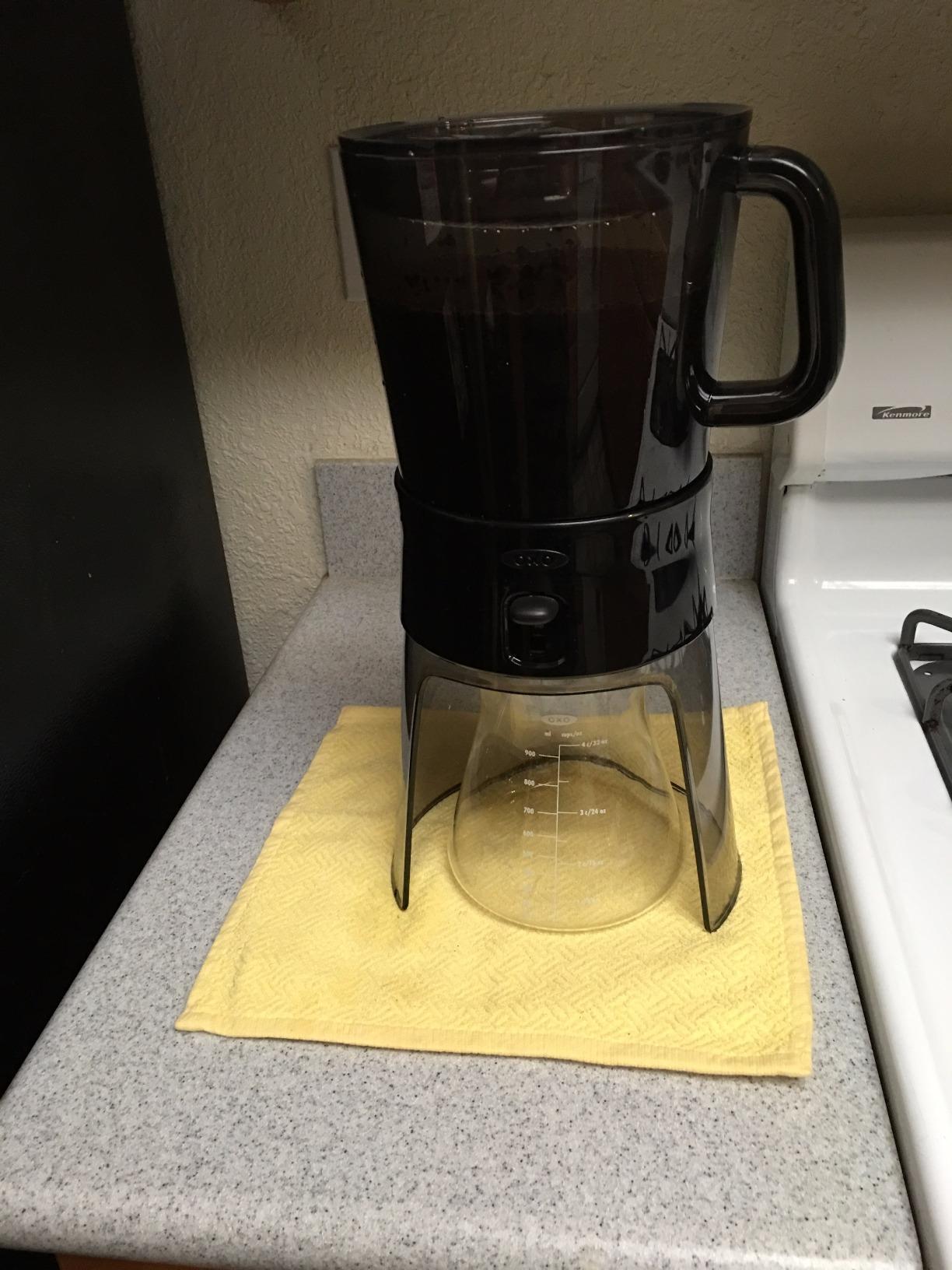
Cleanup is where the OXO pulls ahead of cheaper brewers. The stainless steel mesh filter rinses clean in about 30 seconds under the tap, and every removable part is top-rack dishwasher safe. The borosilicate glass carafe feels substantial without being heavy, and the measurement markings on the side make it easy to portion concentrate for iced lattes, mocktails, or coffee cocktails when friends come over for a summer evening on the patio.
The 14.72-inch height is the main drawback. The OXO takes up real estate on the counter while brewing and will not fit in a standard fridge door. You also need to plan ahead, since this is a 12-to-24-hour brewer rather than a same-morning option. If you want cold brew for Tuesday morning, you start the batch on Monday night and let it work while you sleep.
Who Should Buy the OXO
This is the best cold brew coffee maker for someone who wants consistent results batch after batch and doesn’t mind planning a day ahead. The Rainmaker lid and brew-release switch give you control that simpler brewers cannot match, and the engineering justifies the asking price if you brew weekly. It is also the pick if you entertain regularly, since one brew yields enough concentrate for up to 14 drinks.
Who Should Skip It
Skip the OXO if counter space is tight or you want a brewer that lives in the fridge door. The glass carafe is a no-go for households with small kids or anyone with a history of breaking glassware, and the height means it needs a dedicated shelf in the refrigerator once brewing is done. At this price point you are paying for precision, not capacity, so look elsewhere if you need more than 32 ounces per batch.
2. Takeya Deluxe Cold Brew Coffee Maker – Top Rated for Daily Use
Takeya Deluxe Cold Brew Coffee Maker – BPA-Free Tritan Pitcher with Airtight Leakproof Lid, Silicone Grip Handle, Fine-Mesh Filter – Shatter-Proof, Dishwasher Safe, Made in USA – 2 Quart/Black
2 quart Tritan pitcher
Airtight leak-proof lid
Fine mesh stainless filter
Fits most fridge doors
Pros
- Shatter-proof BPA-free Tritan body
- Patented airtight leak-proof lid
- Fits most refrigerator doors
- Dishwasher safe and stain resistant
- Silicone grip handle for easy pouring
- Massive reviewer base with 67k plus reviews
Cons
- Plastic body not as premium as glass
- Filter can let fine silt through
- Lid mechanism takes practice to seal
The Takeya Deluxe is the cold brew coffee maker I reach for most often during the week, and the 67,000-plus reviewer base tells me I am not alone. The pitcher is made from BPA-free Tritan plastic that survives drops, knocks against fridge shelves, and being tossed into a cooler for a beach trip. After three summers of regular use, mine still looks close to new with no clouding or lingering coffee smell.
The patented airtight lid is the standout feature for summer use. Once you click it shut, the pitcher is genuinely leak-proof, which means you can lay it on its side in a packed refrigerator or pack it into a tote bag for a picnic without worrying about a coffee puddle in the trunk. I have carried a full Takeya pitcher to a friend’s backyard barbecue in a canvas bag with ice packs, and the seal held firm through stop-and-go traffic and a bumpy park path.
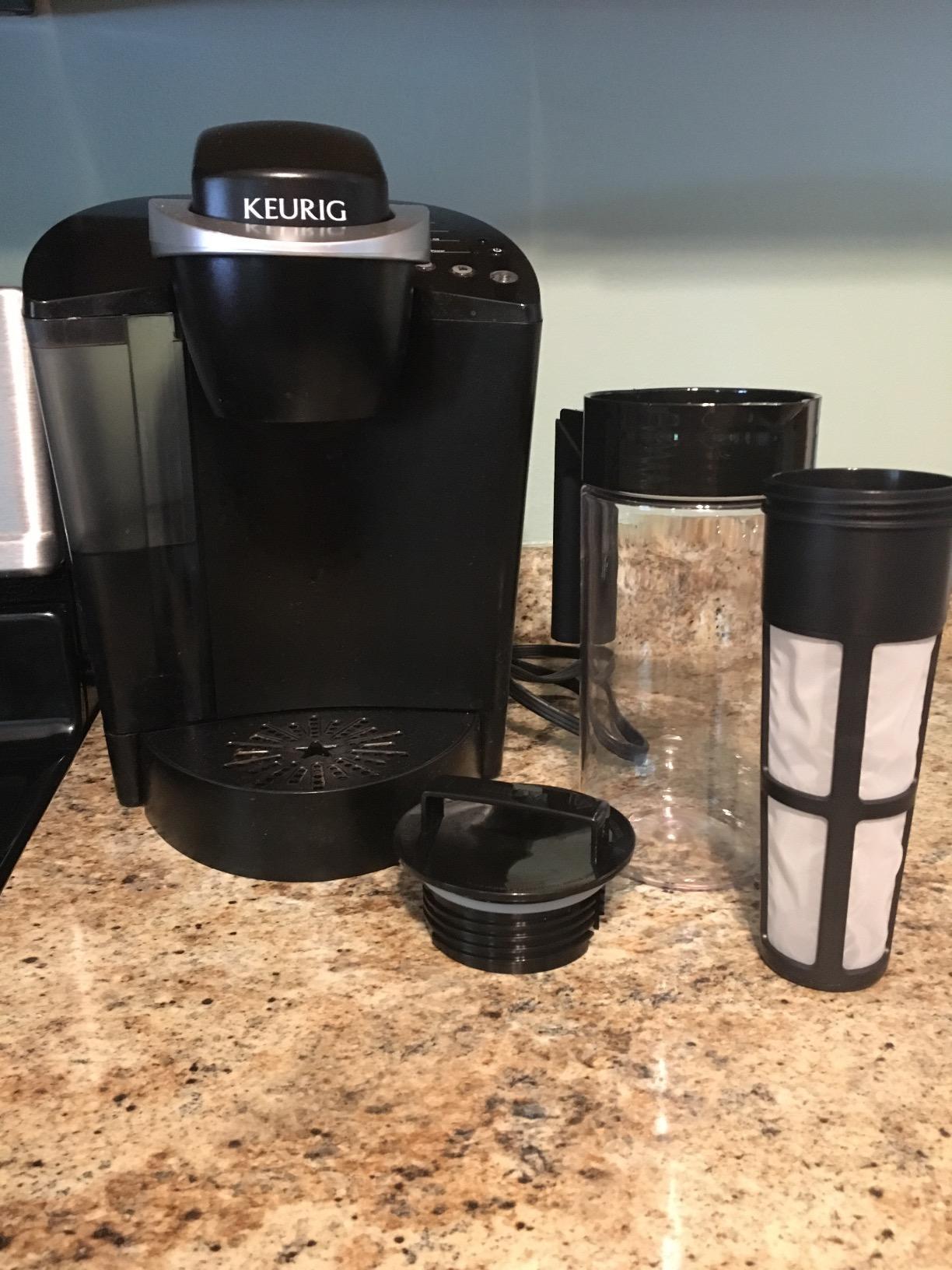
The fine mesh stainless filter does a solid job for the price, though I noticed a little more silt in the bottom of the glass than I get from the OXO. A simple fix is to pour through a paper filter on the first glass of each batch, or to use a slightly coarser grind. I stick with a coarse French press grind and get clean, smooth concentrate after 18 hours in the fridge.
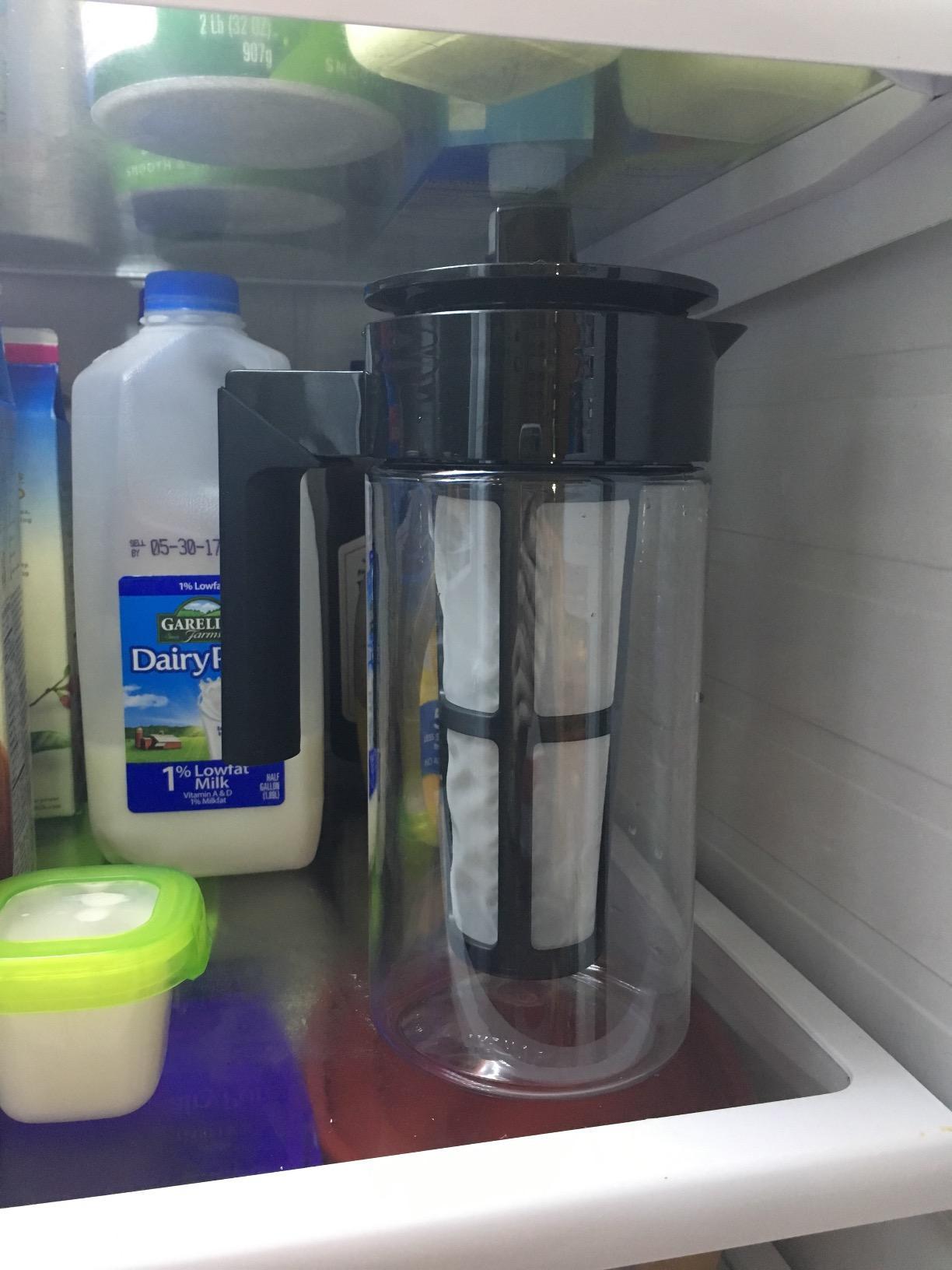
The 2-quart capacity hits a sweet spot for one or two daily drinkers. One brew lasts me about four days at two glasses a day, and the slim 4.1-inch width slides into the fridge door alongside the milk and juice. The silicone grip handle makes one-handed pouring easy, which matters when you are half awake and reaching for your first glass of the morning.
Who Should Buy the Takeya
This is the pick for anyone who wants a daily-driver cold brew coffee maker that can take abuse. The Takeya is ideal for small kitchens, renters, dorm rooms, RVs, and anywhere a glass carafe would be a liability. It also makes a fantastic second brewer to keep at the office or in a vacation rental.
Who Should Skip It
Avoid the Takeya if you cannot stand the look or feel of plastic drinkware. The Tritan body is durable but it does not have the premium weight of glass or stainless, and serious coffee nerds may notice a faint silt in the bottom of the cup compared to a multi-stage filtration system like the Toddy.
3. County Line Kitchen Mason Jar Cold Brew Maker – Best Value Pick
County Line Kitchen 64oz Cold Brew Coffee Maker with Leak Proof Lid – Gray
64 oz wide-mouth mason jar
Stainless steel mesh filter
Leak-proof lid
BPA-free food-grade glass
Pros
- Heavy-duty mason jar built to last
- Leak-proof lid for travel and picnics
- Stainless mesh filter for grit-free brew
- Versatile for cold brew tea and fruit infusions
- Dishwasher safe
- Highest customer rating in the lineup at 4.8
Cons
- Mason jar is heavy when full
- Wide footprint takes fridge shelf space
- Not designed for concentrate dispensing
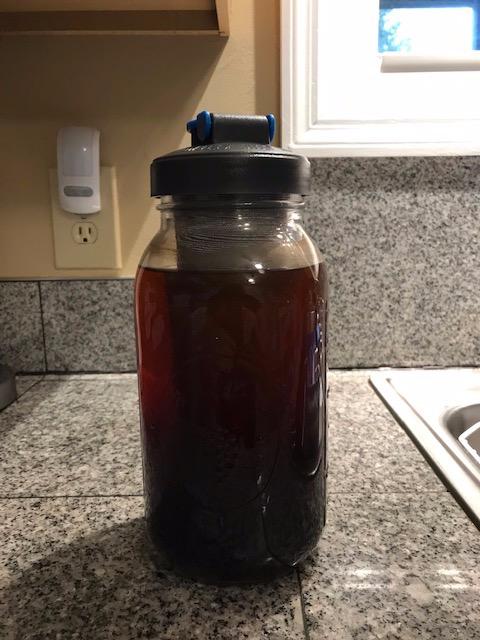
The County Line Kitchen mason jar cold brew maker is proof that good design does not require a premium price. Built around a 64-ounce wide-mouth mason jar, this brewer pairs a leak-proof lid with a stainless steel mesh filter that drops right into the jar. The simplicity is the appeal: there are no switches, no delicate glass carafes, no complicated disassembly.
In my testing, the County Line jar delivered a cleaner cup than I expected for the price. The stainless mesh filter is fine enough to catch most silt, and the wide mouth makes it easy to scoop grounds in and rinse them out. I brewed three batches at different ratios and consistently got a smooth, chocolatey concentrate that held up well over ice without turning watery.
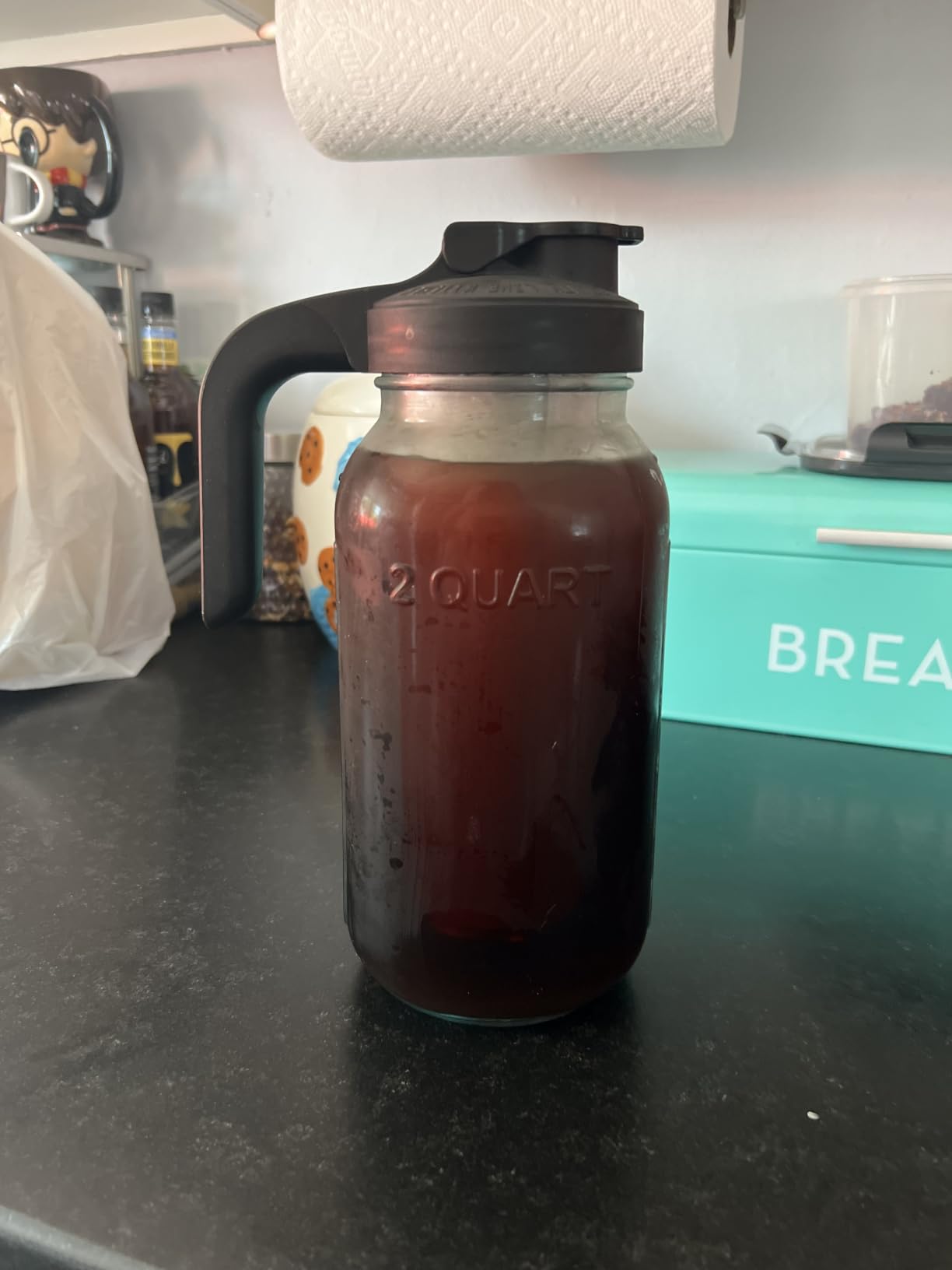
The leak-proof lid is what sold me for summer use. I packed the full jar into a cooler with sandwiches for a day at the lake, and the lid did not leak a drop despite being on its side for hours. The jar is also versatile: I have used the same unit for sun tea, fruit-infused water, and storing cold brew concentrate for parties.
The trade-off is weight and footprint. A full 64-ounce mason jar weighs close to five pounds, and the wide base takes up more shelf space than a slim pitcher like the Takeya. You also pour directly from the jar, which is fine for one or two glasses but not ideal if you want to dispense concentrate one cup at a time over a week.
Who Should Buy the County Line Kitchen Jar
This is the best value pick for first-time cold brew buyers who want something durable, simple, and versatile. The mason jar design is perfect for anyone who already uses jar-style storage in the kitchen, and the leak-proof lid makes it the most picnic-friendly option in the lineup. If you want one brewer that doubles as a tea maker and an infuser, this is it.
Who Should Skip It
Skip the mason jar if you want a tap-style dispenser or a slim profile that fits in the fridge door. The jar’s weight also makes it awkward for one-handed pouring, and older users or anyone with grip issues may prefer a pitcher with a handle like the Takeya.
4. Toddy Cold Brew System – The Classic Heritage Pick
Toddy® Cold Brew System
1.8 liter brewing container
Glass decanter with lid
Two reusable felt filters
Rubber stopper for concentrate storage
Pros
- Two-stage filtration for ultra-smooth brew
- Complete system with decanter and stopper
- Heritage design trusted since the 1960s
- Large concentrate yield per batch
- 1-year warranty
Cons
- Not dishwasher safe
- Plastic brewing container feels basic
- Felt filters need periodic replacement
- Manual operation requires planning
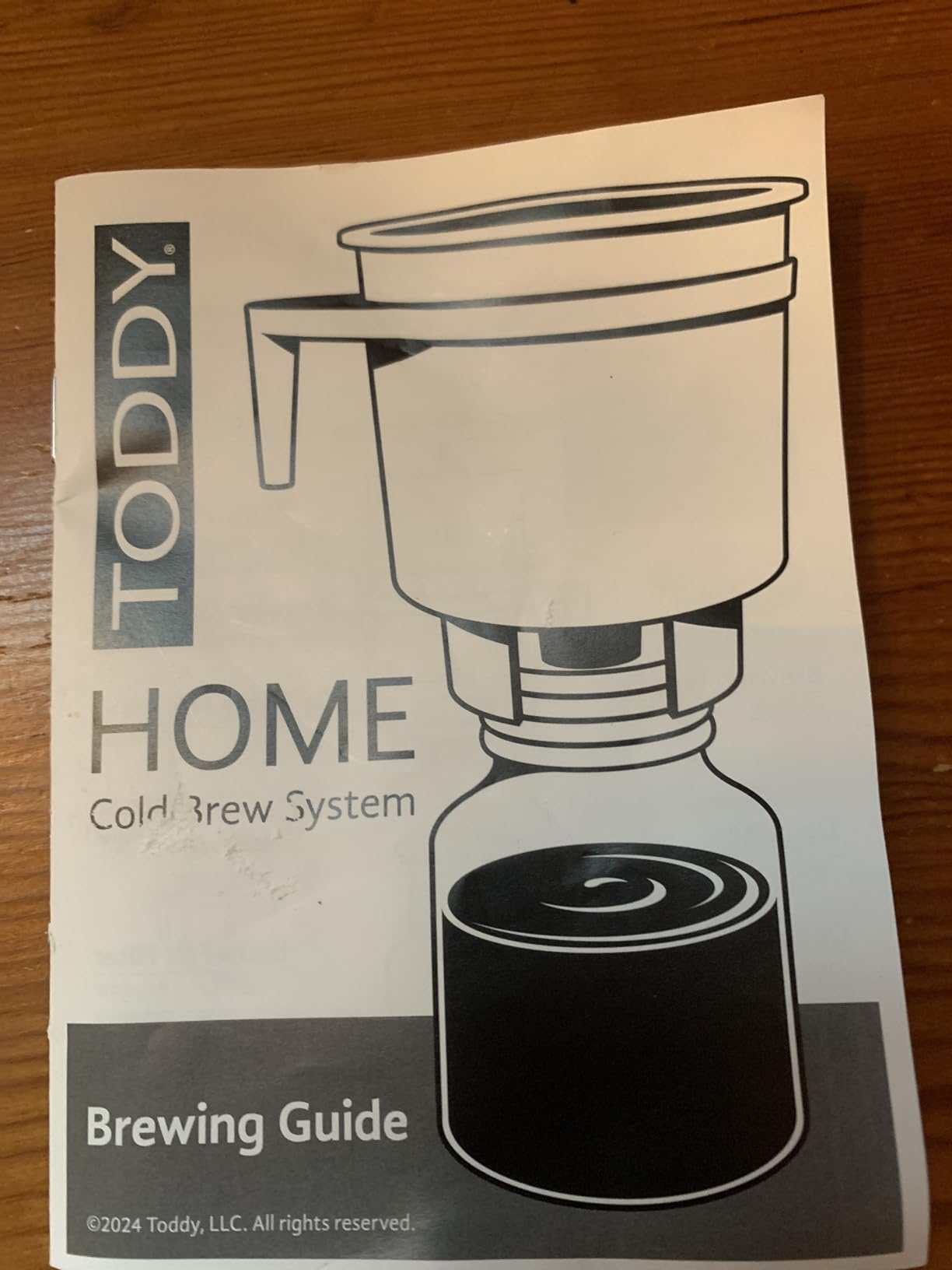
The Toddy Cold Brew System is the grandfather of home cold brewing, and it is still the brewer most coffee shops cite when they talk about their own concentrate. The design has barely changed in decades because the two-stage filtration system works: a reusable mesh filter inside the brewing container catches the big stuff, and a felt pad at the bottom polishes the concentrate as it drains into the glass decanter.
When I ran a side-by-side taste test with the OXO and Takeya, the Toddy concentrate was the cleanest and smoothest of the three. There was virtually no sediment in the decanter, and the brew had a distinctive silky mouthfeel that the single-stage brewers could not quite match. If you drink cold brew straight over ice without milk, this is the system that shows off the coffee best.
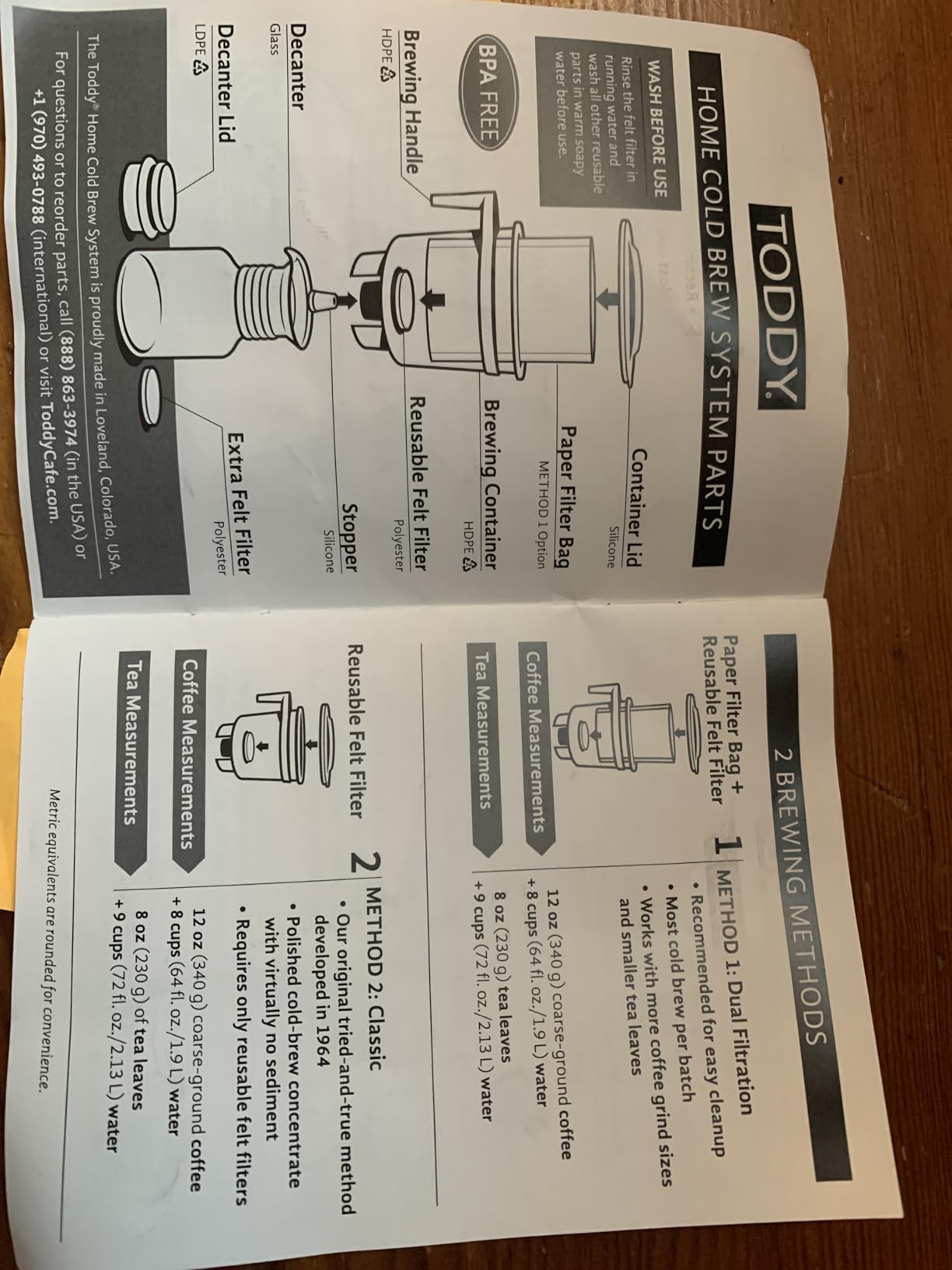
The Toddy is not the most attractive brewer on the counter. The brewing container is plain white plastic, and the felt filter requires occasional replacement every three months or so with regular use. Plan on ordering a pack of replacement filters when you buy the system, because the included filters wear out faster than you might expect.
What you get in exchange for the modest looks is reliability. The complete kit includes the brewing container, glass decanter with lid, two felt filters, and a rubber stopper that lets you store the finished concentrate in the decanter for up to two weeks. I have run more than a dozen batches through the Toddy and the results have been consistent every time.
Who Should Buy the Toddy
This is the pick for purists who want the smoothest possible concentrate and are willing to maintain a felt filter to get it. The Toddy is also a great choice for anyone who brews large batches for a household, since one brewing session fills the decanter with enough concentrate for two weeks of daily glasses.
Who Should Skip It
Avoid the Toddy if you want dishwasher-safe parts or a brewer that looks good on the counter. The plastic brewing container is functional but not pretty, and the felt filter adds an ongoing maintenance task that simpler brewers skip. It is also a manual system that requires patience, so it is not for anyone who wants their cold brew ready in a hurry.
5. Primula Burke Deluxe Cold Brew Maker – Budget Pick for Beginners
Primula Burke Deluxe Cold Brew Iced Coffee Maker, Comfort Grip Handle, Durable Glass Carafe, Removable Mesh Filter, Perfect 6 Cup Size, Dishwasher Safe, 1.6 qt, Aqua
1.6 quart borosilicate glass carafe
Removable mesh filter
Comfort grip handle
Dishwasher safe
Pros
- Lowest price in the lineup for a glass brewer
- Borosilicate glass carafe is heat-resistant
- Removable mesh filter is easy to clean
- Dishwasher safe for simple maintenance
- Fits most refrigerator doors
- Modern minimalist design
Cons
- Mesh filter lets some silt through
- Lightweight build feels less premium
- Grind size needs fine-tuning
- Smaller capacity than mason jar options
The Primula Burke is the brewer I recommend when someone asks me for the cheapest way to start making cold brew at home without sacrificing glass construction. The 1.6-quart borosilicate carafe has a comfortable grip handle, a removable mesh filter basket, and a clean minimalist silhouette that looks like it costs twice as much as it does.
In my testing, the Primula produced a solid, drinkable cold brew with the same 1:5 ratio I used for the other brewers. The flavor was not quite as smooth as the OXO or Toddy, but it was noticeably better than instant cold brew kits and held up well over ice. The mesh filter does let a little silt through, so I pour the last half-inch of each glass carefully or run it through a paper filter.
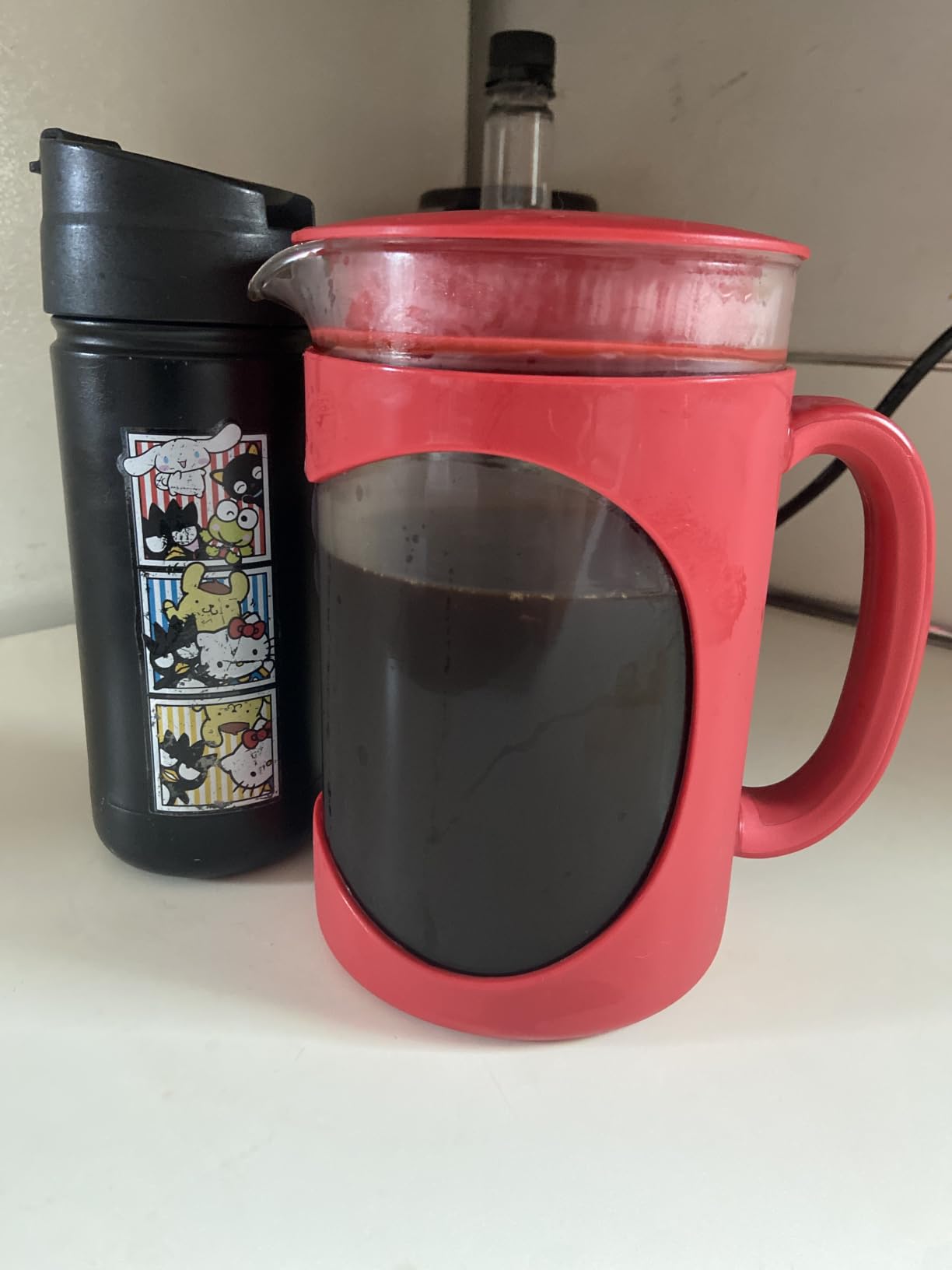
Cleanup is the Primula’s strongest feature. The carafe, lid, and filter basket all go in the dishwasher, and the borosilicate glass handles temperature swings without cracking. I have moved the carafe straight from the brew shelf in the fridge to a warm soapy sink with no issues, which is not something I would try with thinner glass.
The main trade-off is capacity. At 1.6 quarts, the Primula yields about six cups of diluted cold brew, which is fine for one person but tight for a couple who both drink it daily. The lightweight build also means the carafe can tip if bumped on the counter, so I keep mine on a lower fridge shelf rather than the door.
Who Should Buy the Primula Burke
This is the best budget cold brew coffee maker for first-time buyers, college students, or anyone who wants to test whether cold brew fits their routine before spending more. It is also a solid pick for small kitchens, since the compact carafe tucks neatly into the fridge without dominating a shelf.
Who Should Skip It
Skip the Primula if you drink a lot of cold brew daily or brew for multiple people. The 1.6-quart capacity runs out fast, and the single mesh filter will not satisfy anyone looking for the polished, silt-free cup that a Toddy or OXO produces. It is a starter brewer, not a forever brewer.
6. Hario Mizudashi Cold Brew Pot – The Japanese Craftsman’s Pick
Hario “Mizudashi” Cold Brew Coffee Maker, 1000ml, Black
1000ml heatproof glass carafe
Fine mesh basket filter
Slender pouring spout
Made in Japan
Pros
- High-quality Japanese heatproof glass
- Fine mesh basket for customizable strength
- Slender spout for controlled pouring
- Brew and serve from the same carafe
- Removable filter for easy cleaning
- Compact footprint for small kitchens
Cons
- Not dishwasher safe
- 1000ml capacity is on the smaller side
- Glass body requires careful handling
- Filter basket can be tricky to seat
The Hario Mizudashi is the cold brew pot I reach for when I want to brew a small, carefully dialed-in batch of single-origin beans. Hario is the same company behind the V60 pour-over, and that design sensibility shows in the Mizudashi’s slender spout, clean lines, and lightweight heatproof glass carafe.
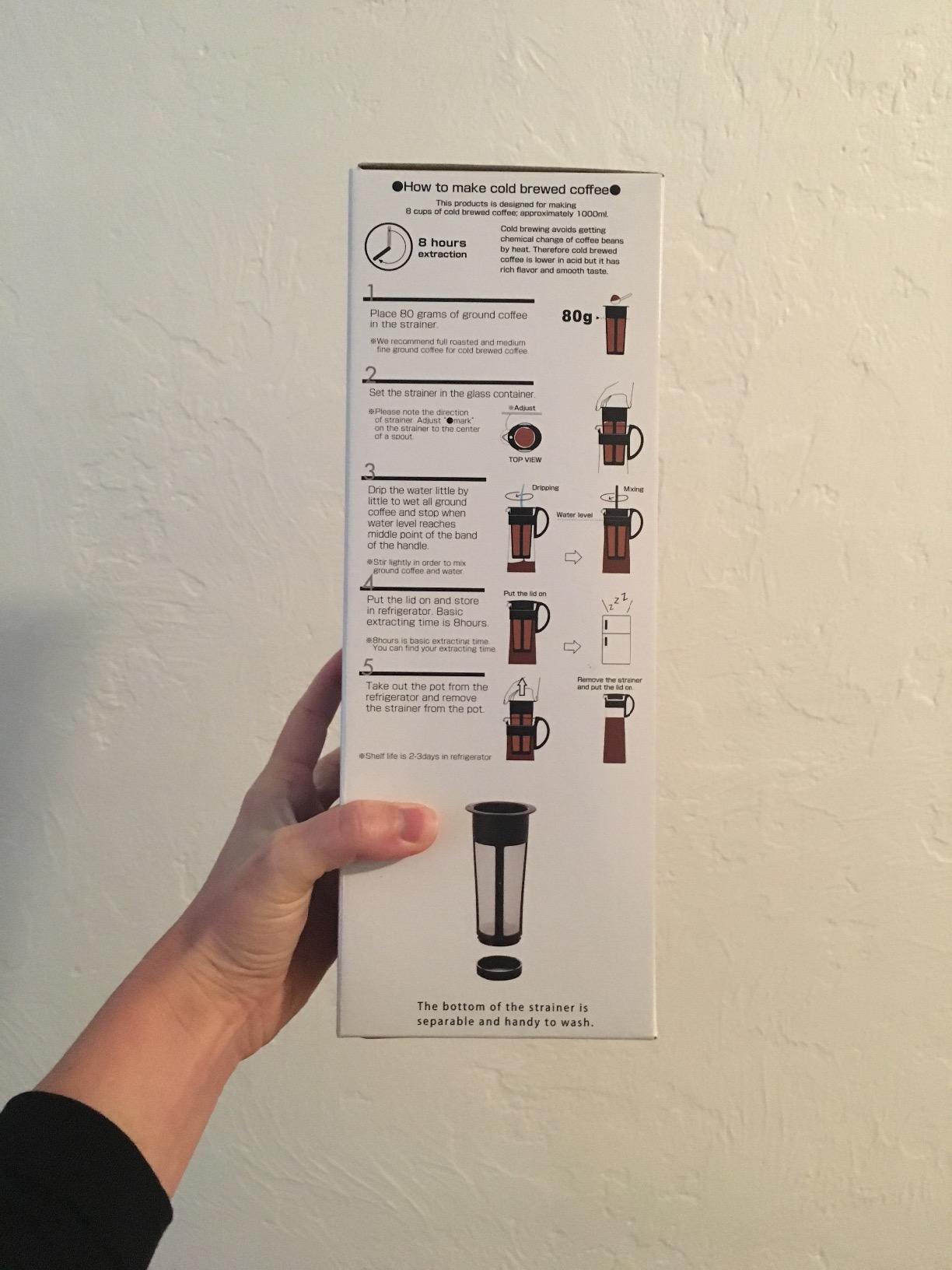
The fine mesh basket filter lets you control strength by changing your grind size. A coarser grind gives you a lighter, tea-like cold brew that is perfect over ice on a hot afternoon, while a finer grind pushes body and intensity for iced lattes. I have used the Mizudashi to brew Ethiopian Yirgacheffe for a delicate fruit-forward glass and Brazilian Santos for a richer chocolate cup, and the brewer handled both beautifully.
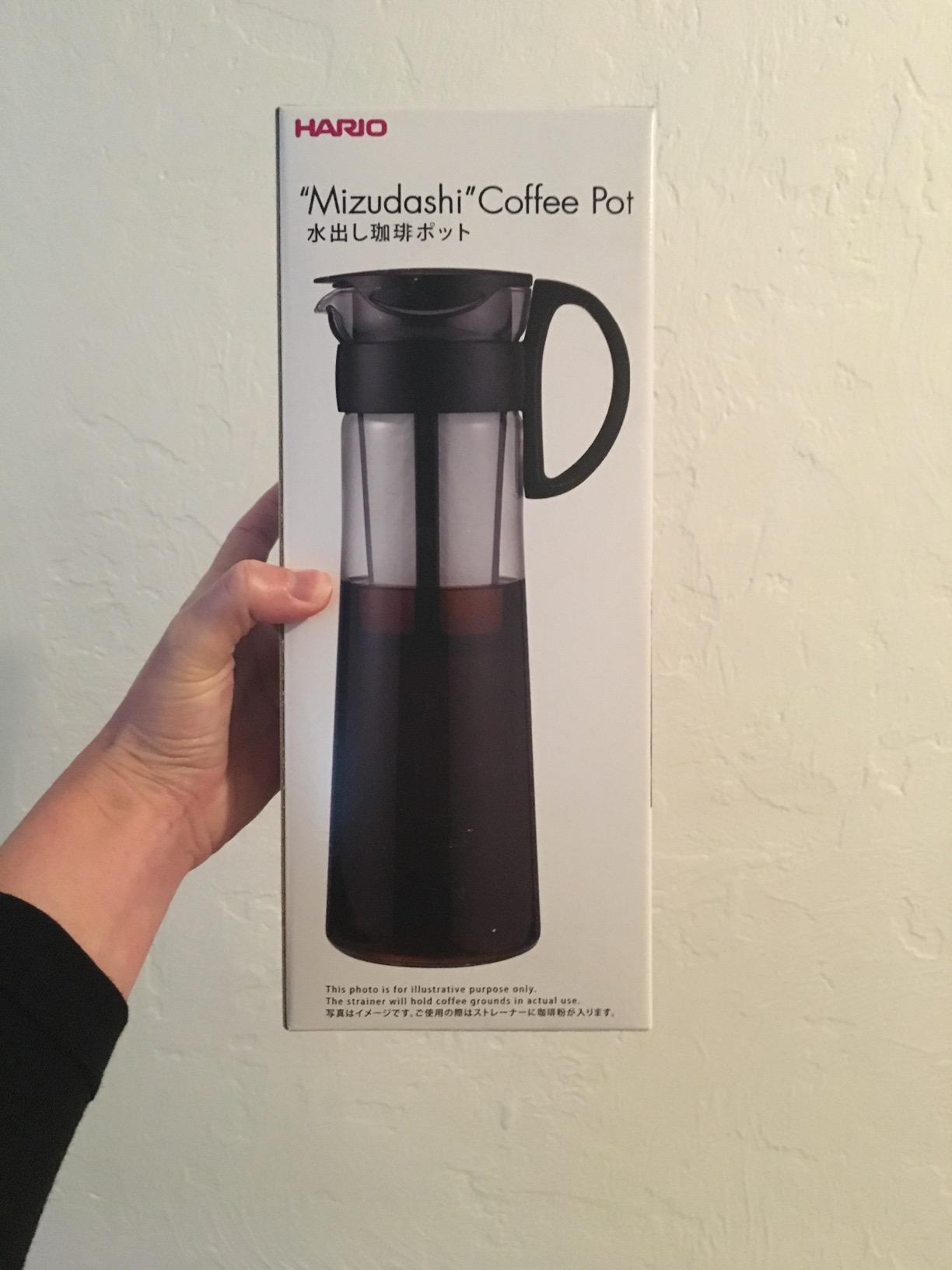
The 1000ml capacity is smaller than most of the other brewers in this guide, but that is part of the appeal for me. A smaller batch means I brew fresh every few days instead of letting a big pitcher sit in the fridge for a week. The concentrate stays vibrant and the carafe takes up minimal shelf space.
Cleaning the Mizudashi takes a little more care than the plastic pitchers. The glass is hand-wash only, and the mesh basket has a rubber gasket that needs to be removed and rinsed separately. Plan on five minutes of cleanup per batch, which is more than the OXO but not a dealbreaker for a brewer this size.
Who Should Buy the Hario Mizudashi
This is the pick for coffee enthusiasts who already own a burr grinder and enjoy experimenting with grind size and brew time. The Mizudashi is also great for small households of one or for anyone with limited fridge space who wants a clean, controlled pour every time.
Who Should Skip It
Skip the Mizudashi if you need a large batch brewer or want dishwasher-safe parts. The 1000ml capacity is too small for families, and the hand-wash-only glass care routine will frustrate anyone who wants a quick rinse-and-go cleanup.
7. Bodum 51oz Cold Brew Coffee Maker – The French Press Style Pick
Bodum 51oz Cold Brew Coffee Maker, Black – Made in Portugal
51 oz BPA-free plastic carafe
French press plunger design
Two lids included
Reusable filter
Pros
- French press plunger design prevents grounds in pour
- Locking lid system prevents spills
- Two silicone lids for brewing and serving
- BPA-free durable plastic body
- Dishwasher safe
- Eco-friendly with no paper filters
Cons
- Plunger requires manual pressing
- Plastic body not as premium as glass
- Smaller capacity than mason jar options
- Plunger seal can wear over time
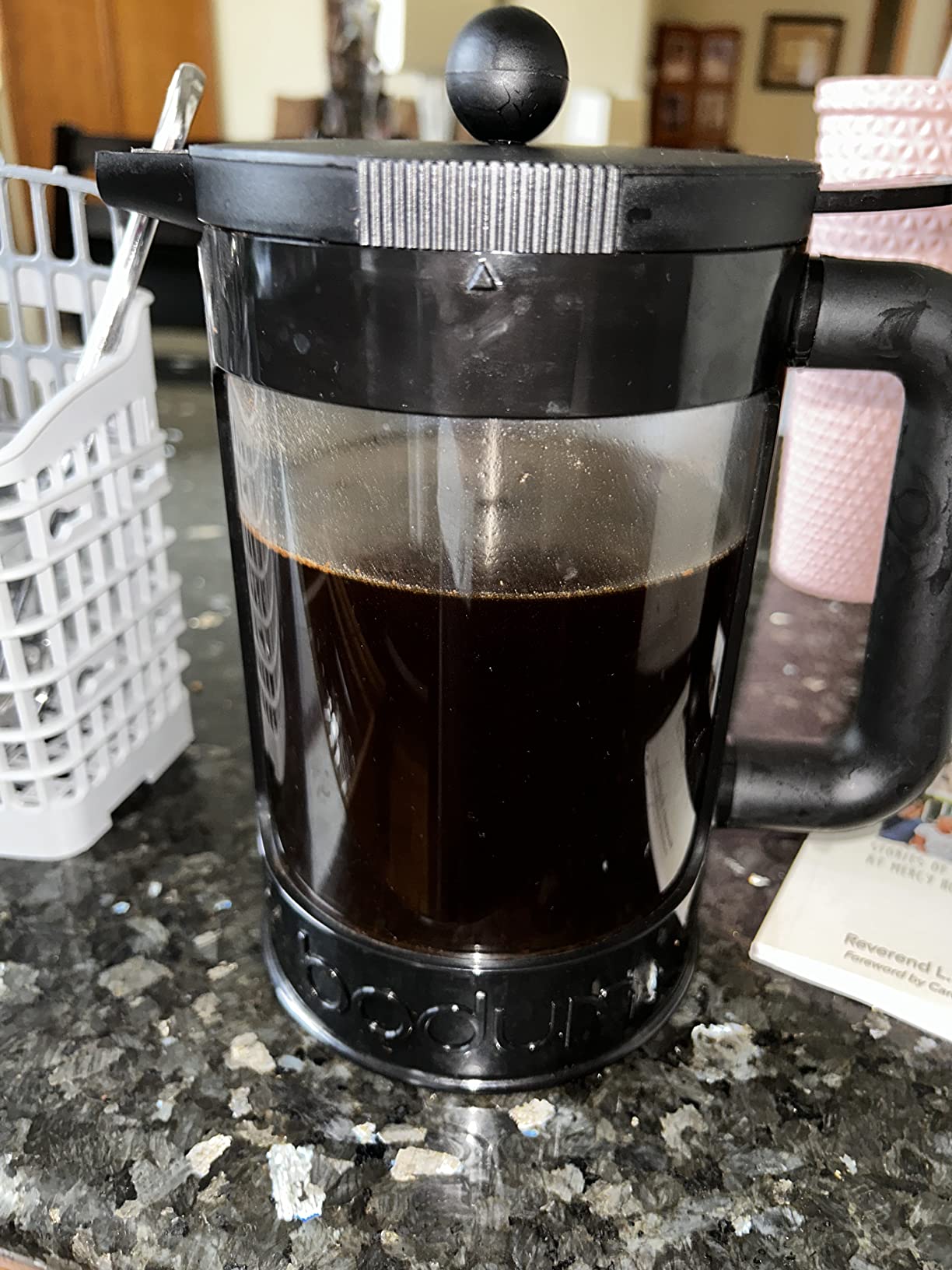
The Bodum 51oz Cold Brew takes a completely different approach from the other brewers in this guide. Instead of pulling a mesh basket out of the brew, you press the grounds down to the bottom with a French-press-style plunger before serving. The locking lid then seals the carafe for fridge storage.
The plunger design is genuinely useful for summer cold brew because it keeps the grounds fully submerged for the entire steep and then traps them at the bottom when you pour. I noticed less floating debris in my glass compared to basket-style brewers, and the pour was clean enough to skip the paper filter entirely.
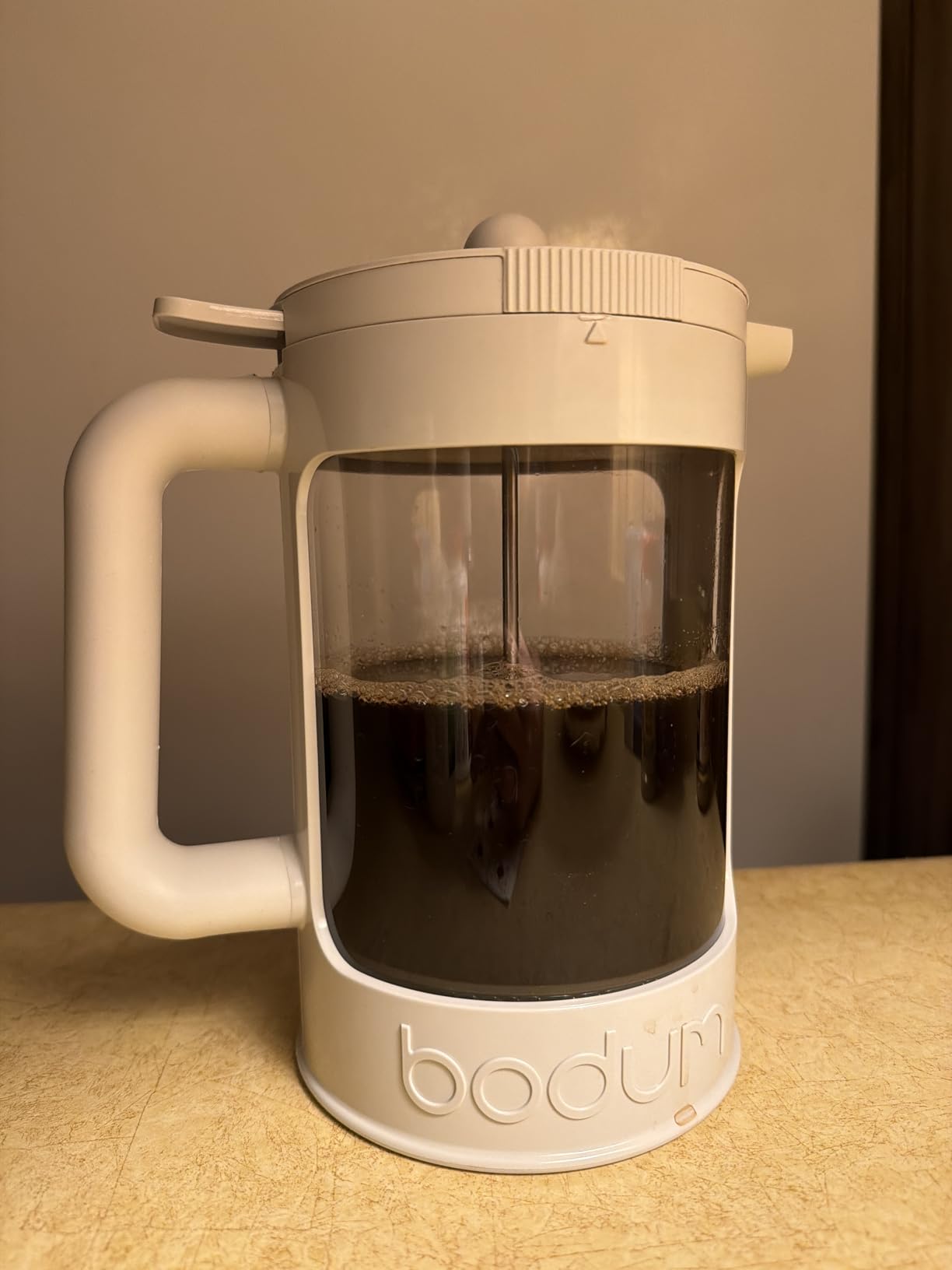
The two-lid system is a thoughtful detail. The silicone brewing lid seals tightly during the 18-hour steep to keep fridge odors out, and the plunger lid replaces it for serving. The BPA-free plastic carafe is lightweight and shatter-proof, which makes it a good choice for patios, poolside tables, or anywhere glass would be a risk.
The main drawback is capacity. At 51 ounces, the Bodum lands in the middle of the pack, and a household of two daily drinkers will empty it in three days. The plunger seal also needs occasional inspection, since a worn seal lets grounds slip past and end up in your glass.
Who Should Buy the Bodum
This is the pick for anyone who already loves French press coffee and wants that same hands-on brewing experience for cold brew. The Bodum is also great for outdoor summer use, since the shatter-proof plastic carafe can survive a patio table or a tailgate without worry.
Who Should Skip It
Skip the Bodum if you want a no-touch brewer or a large concentrate system. The plunger adds a manual step that some users find annoying, and the 51-ounce capacity will not keep up with serious cold brew drinkers who go through a batch every couple of days.
8. KitchenAid 38oz Cold Brew Coffee Maker – The Premium Showpiece Pick
KitchenAid 38 oz Cold Brew Coffee Maker, KCM5912
38 oz concentrate capacity
Built-in stainless steel tap
Carrying handle
Stainless steel steeper with fill marks
Pros
- Built-in tap dispenses one glass at a time
- Up to 19 servings per brew
- Concentrate stays fresh for two weeks
- Premium glass and stainless design
- Carrying handle for portability
- Fill-level indicators on the steeper
Cons
- Premium price point
- Some users report tap leaks over time
- Heavier when full
- Steeper requires gentle hand washing
The KitchenAid 38oz Cold Brew Coffee Maker is the most premium brewer in this guide, and it is the one I bring out when friends come over for a summer dinner. The brushed stainless steel and glass construction looks like a piece of bar equipment, and the built-in stainless tap lets guests dispense their own cold brew over ice without lifting a heavy pitcher.
In my testing, the KitchenAid produced a smooth, full-bodied concentrate that held up well to dilution. One brew yielded the advertised 19 servings when mixed at the recommended 2 ounces of concentrate to 6 ounces of milk or water, which covered a full weekend of hosting without a refill. The fill-level indicators on the stainless steeper take the guesswork out of measuring grounds, which is helpful for new cold brew drinkers.
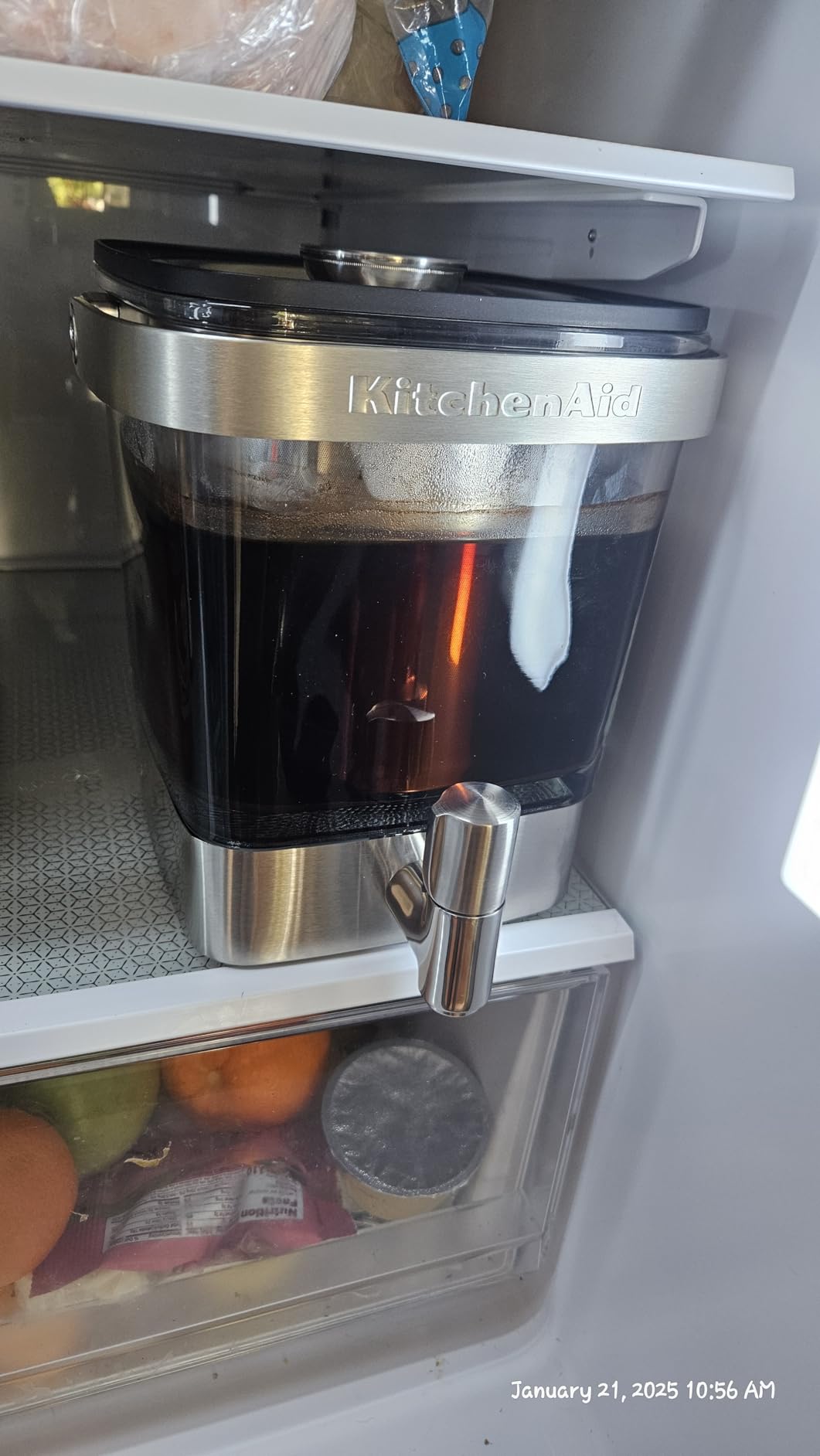
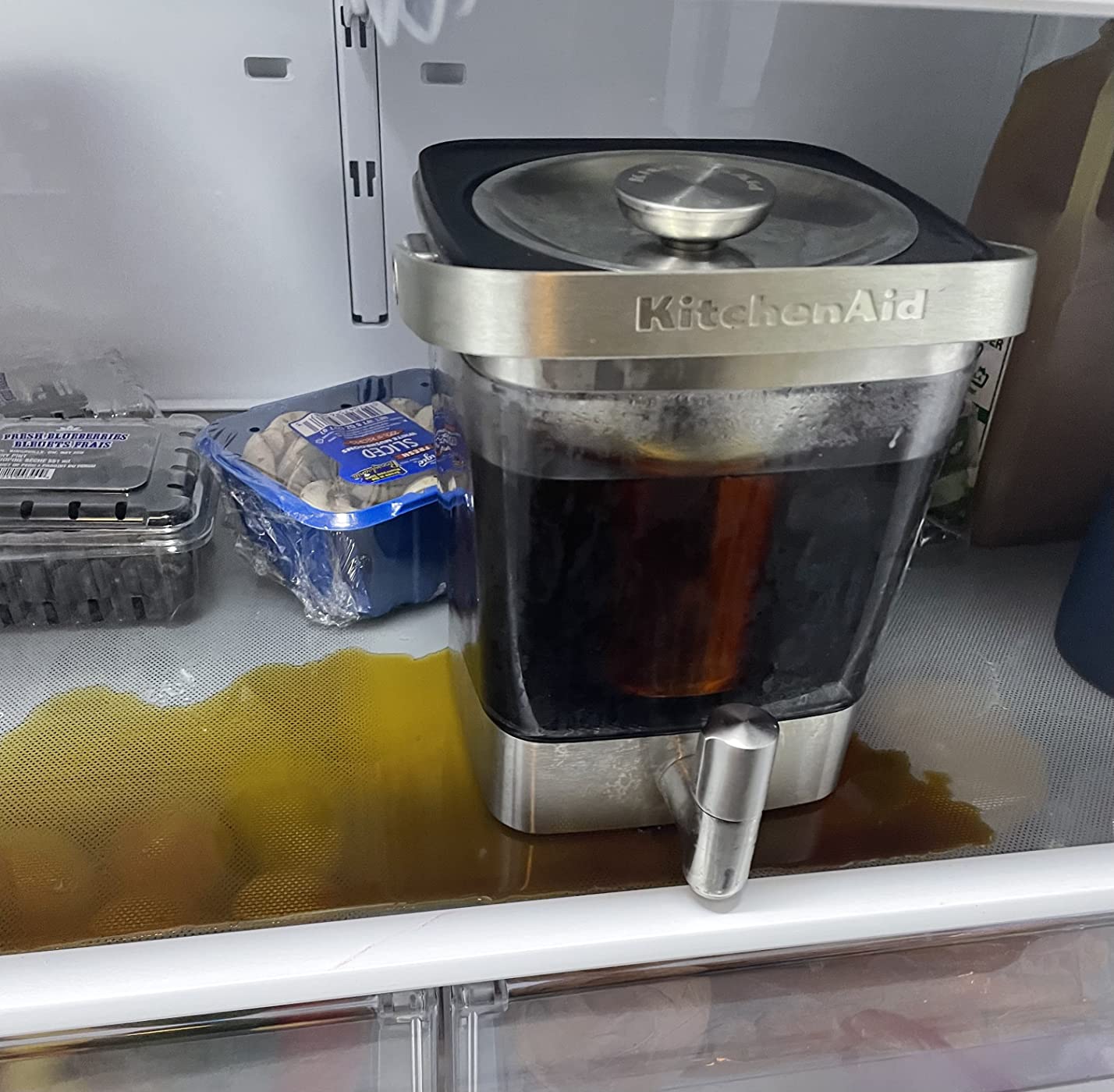
The tap is the headline feature, and it works as advertised for the first several months. I dispensed cold brew for a group of six without removing the unit from the fridge, which felt like a small luxury after years of pulling heavy pitchers off the shelf. The carrying handle makes it easy to move the full unit from counter to fridge.
The trade-off is long-term reliability. Some reviewers report that the tap mechanism develops leaks after extended use, and KitchenAid recommends hand-washing the steeper, which adds a maintenance step. The price is also the highest in the lineup, so this is a brewer for someone who plans to use it daily for years to justify the investment.
Who Should Buy the KitchenAid
This is the pick for entertainers, design lovers, and anyone who wants cold brew on tap in their fridge. The KitchenAid is a conversation piece that doubles as a dependable brewer, and the 19-serving yield per batch is hard to beat for households of three or more cold brew drinkers.
Who Should Skip It
Skip the KitchenAid if you are on a budget or you only drink cold brew occasionally. The premium price is hard to justify for casual use, and the tap mechanism adds a maintenance point that simpler brewers avoid. If you live alone, the large batch size may also be more than you need.
Buying Guide: How to Choose the Best Cold Brew Coffee Maker for Summer?
Picking the right cold brew coffee maker comes down to four questions: how much you drink, where you store it, how much cleanup you can tolerate, and whether you want a brewer that travels. This guide walks through each of those decisions and the brewing basics that affect the taste of every batch.
Match the Capacity to Your Summer Routine
The brewers in this guide range from 32 ounces up to 64 ounces per batch. As a rough rule, an 8-ounce glass of diluted cold brew uses about 2 ounces of concentrate, so a 32-ounce brewer yields 16 servings and a 64-ounce brewer yields 32 servings. If you drink one glass a day, even the smallest brewer will last you more than two weeks. If you drink three glasses a day or share with a partner, lean toward the larger mason jar or KitchenAid options.
Pick the Right Filtration Method
Cold brew makers use one of three filter types. Single mesh filters (County Line, Takeya, Primula, Hario) are simple and dishwasher-safe but let a small amount of silt through. Two-stage filters (Toddy, OXO) pair a mesh basket with a felt or paper polisher for a cleaner cup. French-press plungers (Bodum) trap grounds at the bottom for a clean pour. For summer iced coffee where you drink the brew straight, two-stage filtration is worth the extra effort.
Consider the Footprint and Storage
Where will the brewer live while the coffee steeps and after the concentrate is ready? Slim pitchers like the Takeya and Primula fit in the fridge door. Wide mason jars like the County Line need a shelf. Tall brewers like the OXO need counter space during brewing. If your refrigerator is small or shared, measure the available height and width before you buy.
Plan for Cleanup and Maintenance
Dishwasher-safe parts are a big deal in summer, when you would rather be outside than scrubbing a filter. The Takeya, Primula, Bodum, and OXO all have dishwasher-safe components, while the Toddy, Hario, and KitchenAid require hand-washing. Felt filters like the Toddy’s need replacement every three months, and rubber gaskets on the Hario and Bodum benefit from a quick rinse after every batch.
Master the Coffee-to-Water Ratio
The ratio I use across all of these brewers is 1 part coffee to 5 parts water by weight for a concentrate, or 1 to 8 for a ready-to-drink brew. For a 32-ounce brewer, that means roughly 80 grams of coarsely ground coffee and 40 ounces of cold water. Steep 12 to 18 hours in the refrigerator, then filter and store. Stronger ratios (1 to 4) produce a concentrate that mixes with milk or sparkling water; weaker ratios (1 to 8) drink more like iced coffee straight from the carafe.
Choose the Right Grind Size
Coarse grind, similar to raw sugar or kosher salt, is the starting point for every brewer in this guide. A finer grind extracts more body but also more bitterness and silt, which is why the Hario and OXO let you push finer if you want intensity. If you do not own a burr grinder, buy pre-ground coffee labeled for French press or cold brew, since espresso grinds will clog most mesh filters.
Factor In Summer-Specific Use Cases
For backyard entertaining, the KitchenAid tap and Toddy large-batch yield win. For picnics and beach trips, the leak-proof Takeya and County Line mason jar are unbeatable. For small kitchens, the Hario and Primula keep the footprint tight. For office use, the Takeya’s durability and dishwasher-safe body make it the easiest daily companion.
FAQs
What are the common cold brew mistakes?
The most common cold brew mistakes are using too fine a grind (causes bitterness and clogged filters), steeping longer than 24 hours (over-extracts and tastes woody), using the wrong coffee-to-water ratio (weak or harsh brew), storing the brewer on the counter instead of the fridge during steeping, and skipping the paper filter polish when you want a silt-free cup. A coarse grind, 12 to 18 hour steep, and 1 to 5 ratio for concentrate will fix most homemade cold brew problems.
How do I tell if my cold brew is bad?
Cold brew concentrate stays fresh in the refrigerator for up to two weeks, but ready-to-drink diluted cold brew should be finished within three days. Signs your cold brew has gone bad include a sour or vinegary smell, visible mold on the surface, a sharp tangy taste that was not there when you brewed it, and cloudiness with floating particles. If in doubt, pour it out and start a fresh batch.
Why is my cold brew not working?
If your cold brew comes out weak, watery, or bitter, check four things first. Use a coarser grind than you would for hot coffee to avoid over-extraction. Steep for 12 to 24 hours, not less, since cold water extracts slowly. Use a 1 to 5 ratio for concentrate rather than a 1 to 10 ratio, which is too dilute. Finally, brew in the refrigerator rather than on the counter for a smoother, more consistent result.
Is 30 hours too long for cold brew?
Yes, 30 hours is too long for most cold brew recipes. After about 24 hours of steeping, the coffee starts to release tannins and other compounds that make the brew taste woody, harsh, and over-extracted. The sweet spot is 12 to 18 hours in the refrigerator or 18 to 24 hours on the counter. If you prefer a stronger concentrate, increase the coffee-to-water ratio instead of extending the brew time.
Are cold brew makers worth it?
Yes, a dedicated cold brew coffee maker pays for itself within a few weeks if you currently buy cold brew at a coffee shop. A home batch costs roughly one-fifth as much per glass as a cafe cold brew, and the resulting concentrate stays fresh for up to two weeks in the fridge. The brewers in this guide also handle filtration, storage, and dispensing better than a DIY mason jar and sieve setup, which saves time and improves the taste.
Conclusion: The Best Cold Brew Coffee Maker for Your Summer
After three summers of brewing side by side, my top recommendation is the OXO Good Grips for anyone who wants precision and consistency batch after batch. The Takeya Deluxe is the daily driver I keep reaching for, thanks to its shatter-proof Tritan body and leak-proof lid that lives in the fridge door. The County Line Kitchen mason jar is the best value pick, with the highest customer rating in the lineup and a picnic-friendly design that travels well to beach trips and backyard barbecues.
Whatever you choose, the keys to great summer cold brew are a coarse grind, a 1 to 5 coffee-to-water ratio for concentrate, a 12 to 18 hour steep in the refrigerator, and a brewer that fits your routine. Pick the model that matches how you drink, brew a fresh batch on Sunday night, and you will have smooth, low-acid cold brew ready to pour every morning in 2026. Here is to a cooler, more caffeinated summer.