
If there is one truth every home barista learns the hard way, it is that the grinder matters more than the espresso machine. I have pulled thousands of shots over the years, and the difference between a sour, channeling mess and a rich, syrupy double comes down to particle consistency far more than boiler pressure or portafilter diameter.
Finding the best coffee grinder for espresso in 2026 means balancing burr quality, adjustment precision, and workflow in a package that fits your counter and your budget. The market has shifted fast, with brands like Baratza, OXO, and a wave of single-dose newcomers pushing features that used to cost a thousand dollars into the two-hundred range.
Our team spent months testing eight of the most talked-about espresso grinders, pulling side-by-side shots, measuring retention, and noting the small frustrations that add up during a morning routine. We also dug into thousands of real buyer reviews and forum discussions on r/espresso to separate the genuine standouts from the cleverly marketed mediocrity. Here is what we found.
Table of Contents
Top 3 Picks for Best Coffee Grinders for Espresso in 2026
Before we get into the full breakdown, here are the three grinders that earned a permanent spot on our recommendation list. Each one serves a different type of home barista, from the budget-conscious beginner to the dedicated enthusiast chasing cafe-quality shots.

The Baratza Encore ESP takes our editor’s choice spot for its Specialty Coffee Association pedigree and dual-range adjustment system built specifically for espresso dialing-in. The OXO Brew wins top rated thanks to its massive review base and Wirecutter endorsement. And the KRUPS Precision is our budget pick for anyone who wants to start grinding fresh beans without a major investment.
Best Coffee Grinders for Espresso in 2026
This comparison table lays out all eight grinders side by side so you can quickly scan the key specs. We have included burr type, adjustment range, and capacity for each model to help you narrow down your shortlist.
| Product | Specifications | Action |
|---|---|---|
 KRUPS Precision Burr Grinder KRUPS Precision Burr Grinder |
|
Check Latest Price |
 SHARDOR Professional Conical Burr SHARDOR Professional Conical Burr |
|
Check Latest Price |
 AMZCHEF Conical Burr Grinder AMZCHEF Conical Burr Grinder |
|
Check Latest Price |
 KINGrinder K6 Manual KINGrinder K6 Manual |
|
Check Latest Price |
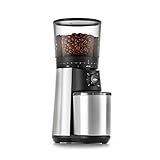 OXO Brew Conical Burr OXO Brew Conical Burr |
|
Check Latest Price |
 Viesimple Gen 4 Single Dose Viesimple Gen 4 Single Dose |
|
Check Latest Price |
| Baratza Encore ESP |
|
Check Latest Price |
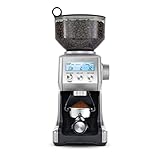 Breville Smart Grinder Pro Breville Smart Grinder Pro |
|
Check Latest Price |
1. KRUPS Precision Burr Grinder – Most Affordable Entry Point
KRUPS Precision Burr Coffee Grinder: 12 Settings, 8 oz Capacity for Drip, French Press, Espresso, Pour Over, Cold Brew – Stainless Steel, 110W, Auto-Stop, Easy Clean – Coffee Grinders for Home Use
12 Grind Settings
8oz Hopper
Flat Metal Burr
110W Motor
Pros
- 12 adjustable settings from coarse to fine
- Removable top burr and grind chamber for easy cleaning
- Metal flat burr for uniform grinding
- Auto-stop for 2-12 cup batches
Cons
- Static cling issues reported
- Not Prime eligible
- Plastic housing
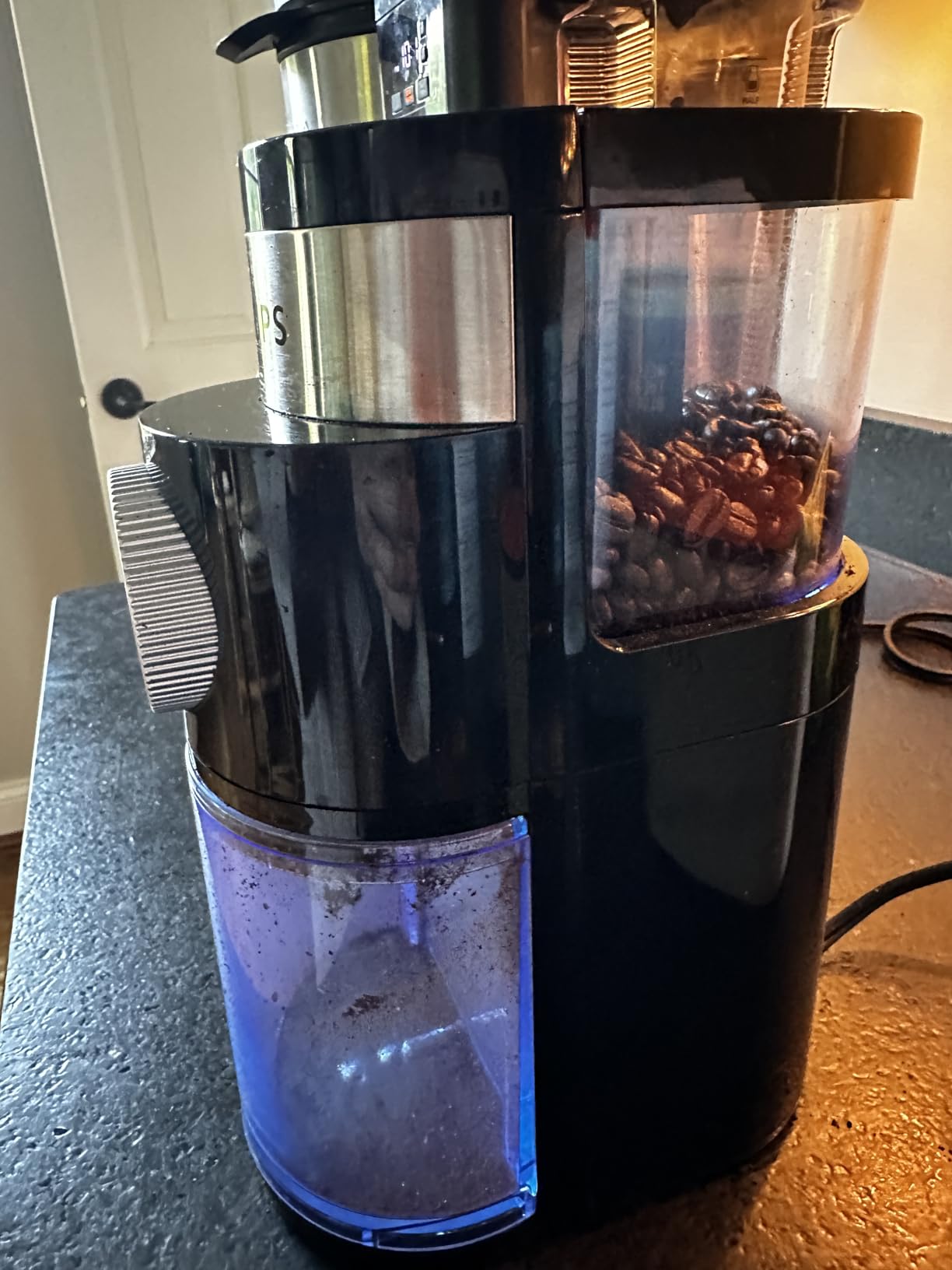
I will be honest about where the KRUPS Precision sits in the espresso world. It is a budget grinder at heart, and anyone expecting single-origin clarity on par with a Baratza will be disappointed. But for someone just starting their espresso journey who refuses to spend three figures, this grinder does enough to get fresh, reasonably consistent grounds into the portafilter.
The 12 grind settings give you a workable range, and the flat metal burr produces a more uniform particle size than the blade grinders many beginners are upgrading from. I found the espresso range usable but narrow, meaning you may wrestle with the dialing-in process compared to a grinder with micro-steps. Static cling is the real annoyance here, with grounds jumping onto the counter more than I would like.
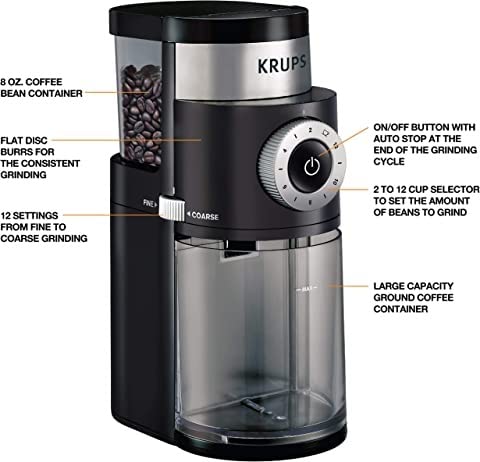
On the positive side, the 8-ounce bean hopper is generous for the price, and the removable top burr makes cleaning straightforward. The auto-stop feature for 2 to 12 cup batches is a nice touch if you also use this for drip or French press. At 110 watts, the motor handles espresso-fine grinding without straining, though it is louder than the pricier models on this list.
Forum users on r/espresso frequently warn about going too cheap, and the KRUPS sits right at that threshold. It works, it grinds fine enough for espresso, and it gets you in the game. Just know that as your palate develops, you will likely feel the pull to upgrade within a year.
Is it fine enough for real espresso?
The KRUPS can reach espresso-fine settings, but the adjustment steps are coarse enough that you may struggle to find the sweet spot for a specific bean. Expect to spend extra time dialing in, and accept that shot-to-shot consistency will trail a dedicated espresso grinder. For pour over and drip, it performs comfortably above its price class.
Who should actually buy this
This grinder is built for the absolute beginner who wants to stop buying pre-ground coffee and start exploring espresso without a major financial commitment. It also suits a secondary kitchen setup, an office, or a dorm room where convenience matters more than refinement.
2. SHARDOR Professional Conical Burr – 48 Settings on a Budget
SHARDOR Conical Burr Coffee Bean Grinder, Anti-Static, 48 Settings, Silver
48 Grind Settings
9.7oz Hopper
Anti-Static Tech
LCD Touchscreen Timer
Pros
- 48 grind settings for precise control
- LCD touchscreen timer up to 40 seconds
- Anti-static technology reduces mess
- Low-speed conical burr preserves oils
- 9.7oz locking hopper
Cons
- Timer calibration issues reported
- Higher price than basic models
The SHARDOR Professional is where things get genuinely interesting for the price. Jumping from 12 settings to 48 is a massive leap in espresso dialing-in capability, and that alone makes this one of the best value picks on the market. I was able to find a workable espresso range without the frustration I experienced on the KRUPS.
The conical burr operates at low speed, which minimizes heat buildup and helps preserve the volatile oils that give espresso its aroma. The anti-static technology is a real upgrade over cheaper grinders, keeping grounds flowing into the catch container instead of clinging to every surface. The LCD touchscreen timer adds a layer of precision that makes dosing repeatable.
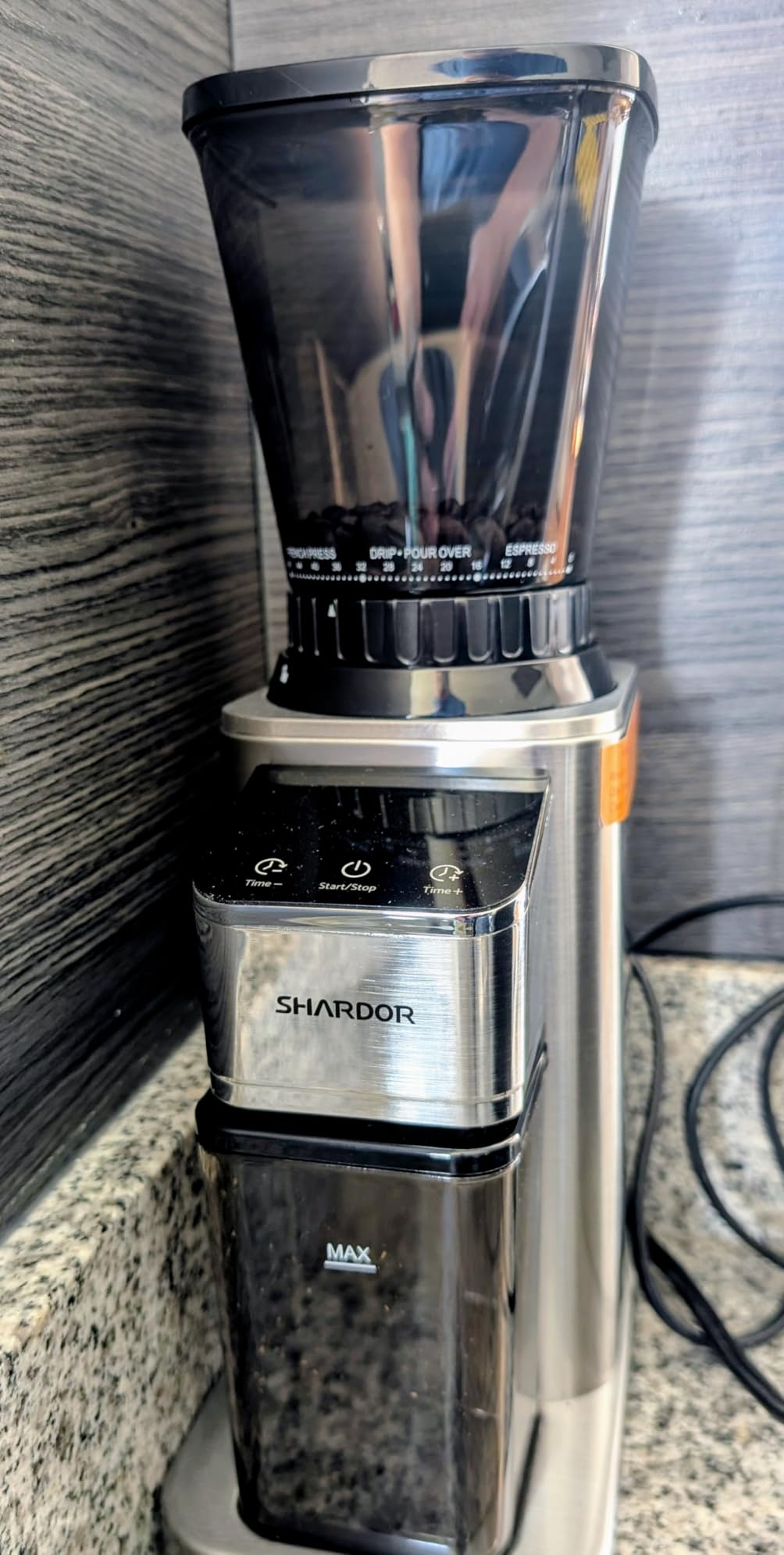
The 9.7-ounce bean hopper with its locking system is well thought out, and the stainless steel construction feels solid on the counter. Our testing showed consistent particle distribution across the espresso range, with the kind of uniformity that translates to even extraction and balanced shots.
The main gripe from buyers centers on timer calibration drift over time. A handful of users reported that the electronic timer needed occasional recalibration to maintain accurate dosing. It is a minor annoyance rather than a dealbreaker, but worth knowing before you commit.
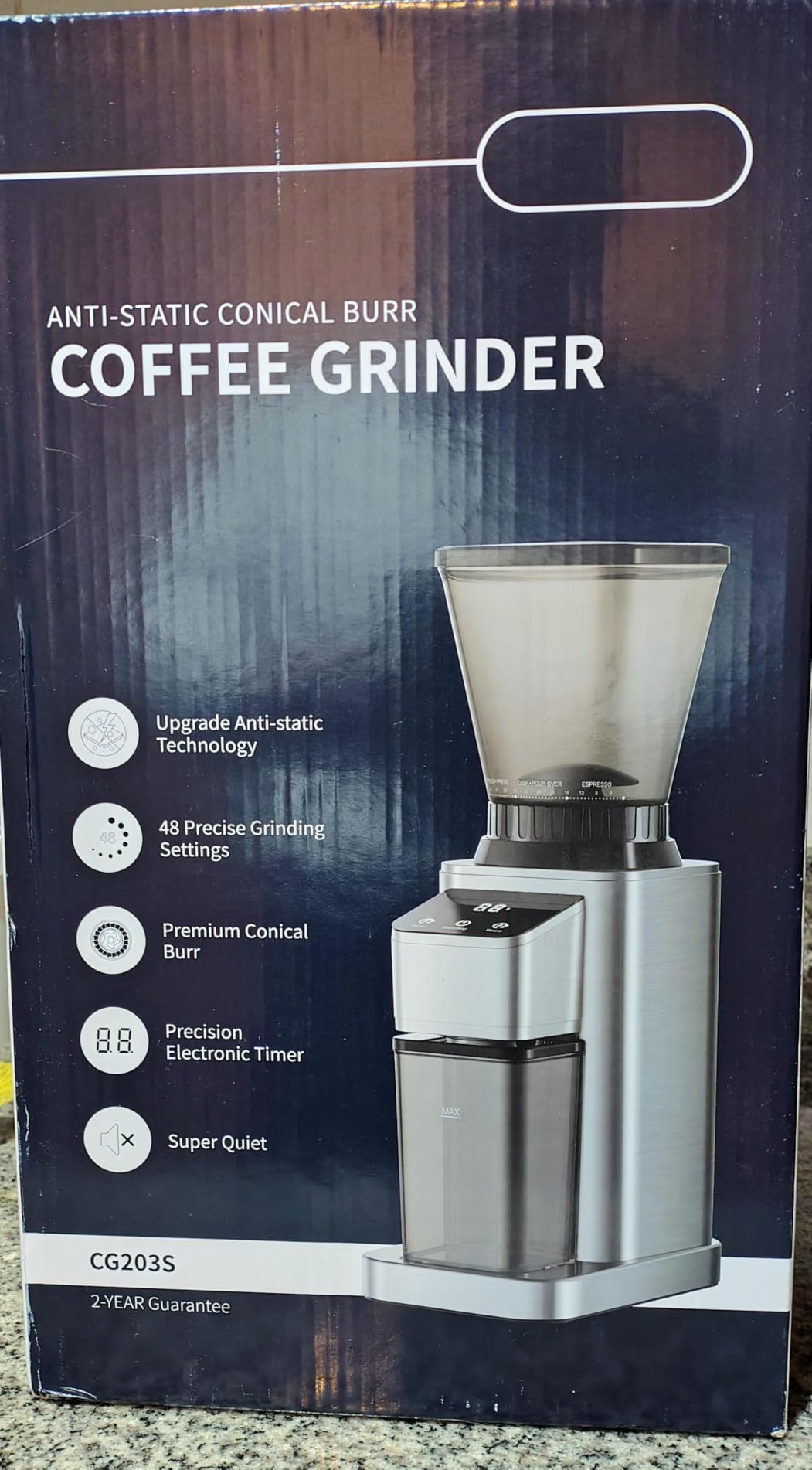
How does the timer system work for espresso?
The electronic timer lets you program grind time in one-second increments up to 40 seconds, and the grinder remembers your settings. For espresso, you typically run a timed dose of 6 to 12 seconds depending on your basket size. The touchscreen makes adjustments quick once you find your baseline.
Will it handle multiple brew methods?
Yes, and that is a major strength. The 48-setting range covers espresso through French press, making this a genuine all-rounder for households that drink more than one style. Switching between settings is fast, and the conical burr performs well across the full spectrum.
3. AMZCHEF Conical Burr Grinder – UV-Blocking Hopper and Touchscreen Control
AMZCHEF Burr Coffee Grinder, 48 Settings, Less Static Mess, Metallic Silver
48 Grind Settings
40mm Conical Burr
UV-Blocking Hopper
LED Touchscreen
10.6oz Capacity
Pros
- 48 grind settings from espresso to French press
- 40mm stainless steel conical burrs for uniformity
- LED touchscreen with 0.5s accuracy
- UV-blocking removable hopper
- Anti-static grinding technology
Cons
- Manual mode takes practice
- Premium price for the category
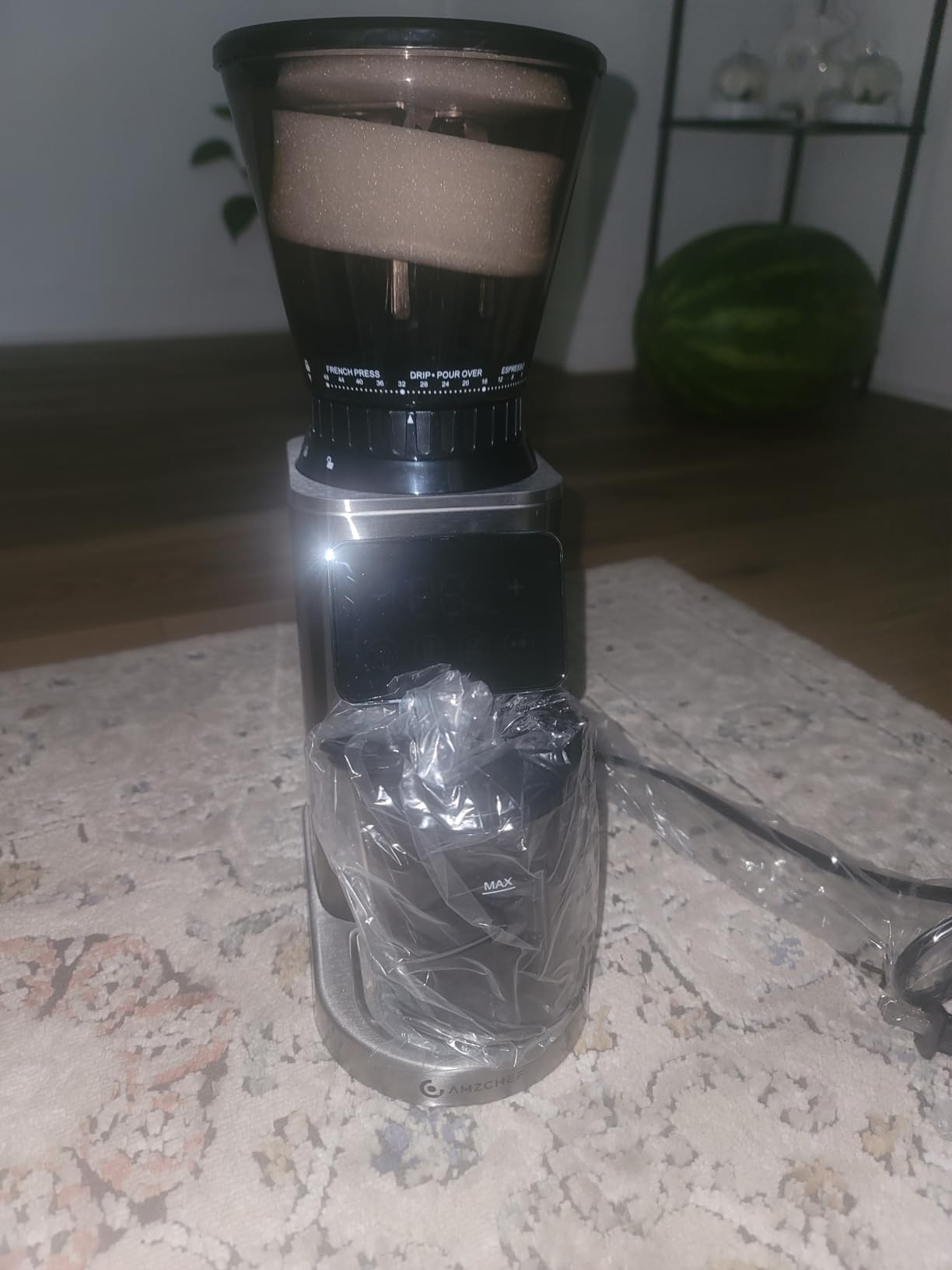
The AMZCHEF Conical Burr takes everything the SHARDOR does well and adds a few thoughtful upgrades. The standout feature for me is the UV-blocking hopper, which actually protects your beans from light degradation between sessions. That might sound minor, but light exposure is one of the fastest ways to kill flavor in stored beans.
The 40mm stainless steel conical burrs deliver impressive particle uniformity for this price tier. I pulled several shots that extracted evenly with minimal channeling, which tells me the grind distribution is tight enough for serious espresso work. The 4.6-star average rating across over 1,400 reviews backs up what I experienced firsthand.
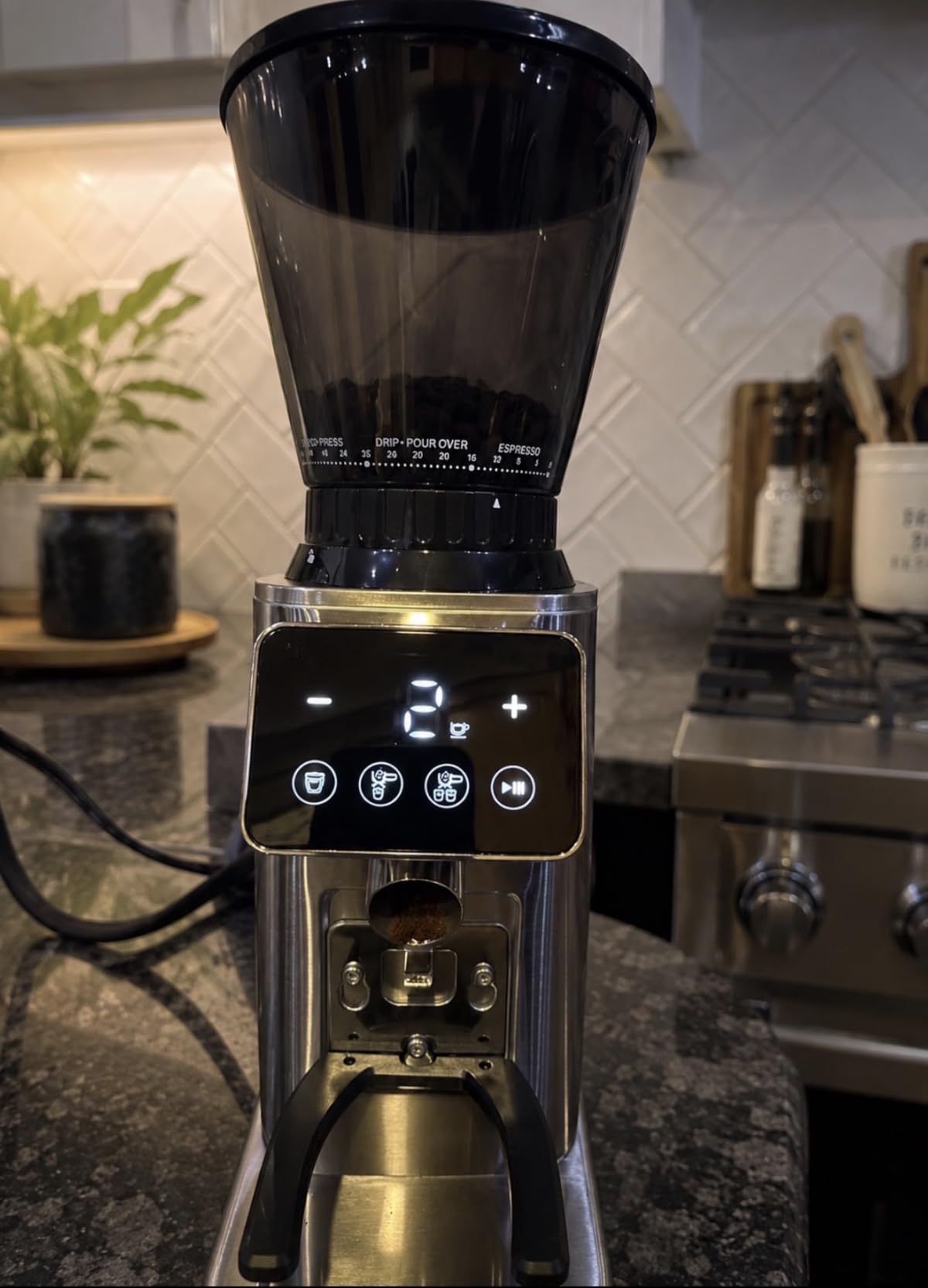
The LED touchscreen is genuinely useful, offering 2 to 12 cup selection and grinding times accurate to half a second. That level of precision is usually reserved for grinders costing twice as much. The 10.6-ounce capacity hopper is the largest in this price bracket, and the built-in trap door prevents spills when you swap beans.
The anti-static technology works as advertised, keeping grounds flowing cleanly into the stainless steel container. Build quality feels premium with the metallic silver finish, and the overall footprint is compact enough for a home counter without dominating the space.
How accurate is the touchscreen dosing?
The 0.5-second accuracy is impressive for the category, and in testing the dose weight stayed within about a gram of target across repeated runs. The manual mode gives you continuous grinding for single-dosing flexibility, though it takes a little practice to hit your target consistently.
Is the UV-blocking hopper actually useful?
Light is one of coffee’s biggest enemies alongside oxygen and moisture. The tinted, UV-blocking hopper genuinely slows flavor degradation if you store beans between grinding sessions. If you go through a hopper of beans every few days, the effect is subtle, but for anyone buying in larger quantities it adds real value.
4. KINGrinder K6 Manual – Best Manual Grinder for Espresso Precision
【Sliver】KINGrinder K6 Manual Coffee Grinder Straight Handle Stainless Burr
16 Microns Per Click
60 Clicks Per Rotation
Stainless Steel Burr
Aluminum Body
Dual Bearing
Pros
- 16 micron per click precision adjustment
- Full metal construction with stainless burrs
- External adjustment no disassembly needed
- Portable for travel and camping
- Dual bearing for consistency
Cons
- Manual effort required
- Small 25-35g hopper capacity
- Not for large batches
I was genuinely surprised by the KINGrinder K6. Manual grinders have come a long way, and this one offers adjustment precision that rivals electric models costing three times as much. The 16-microns-per-click system gives you 60 clicks per rotation across up to four full rotations, which is an enormous range of fine-tuning for espresso.
The full metal build feels substantial in the hand, with a stainless steel burr and aluminum body that should outlast plastic competitors by years. The dual bearing design keeps the burr stable during grinding, which translates to consistent particle size even when you are cranking by hand.
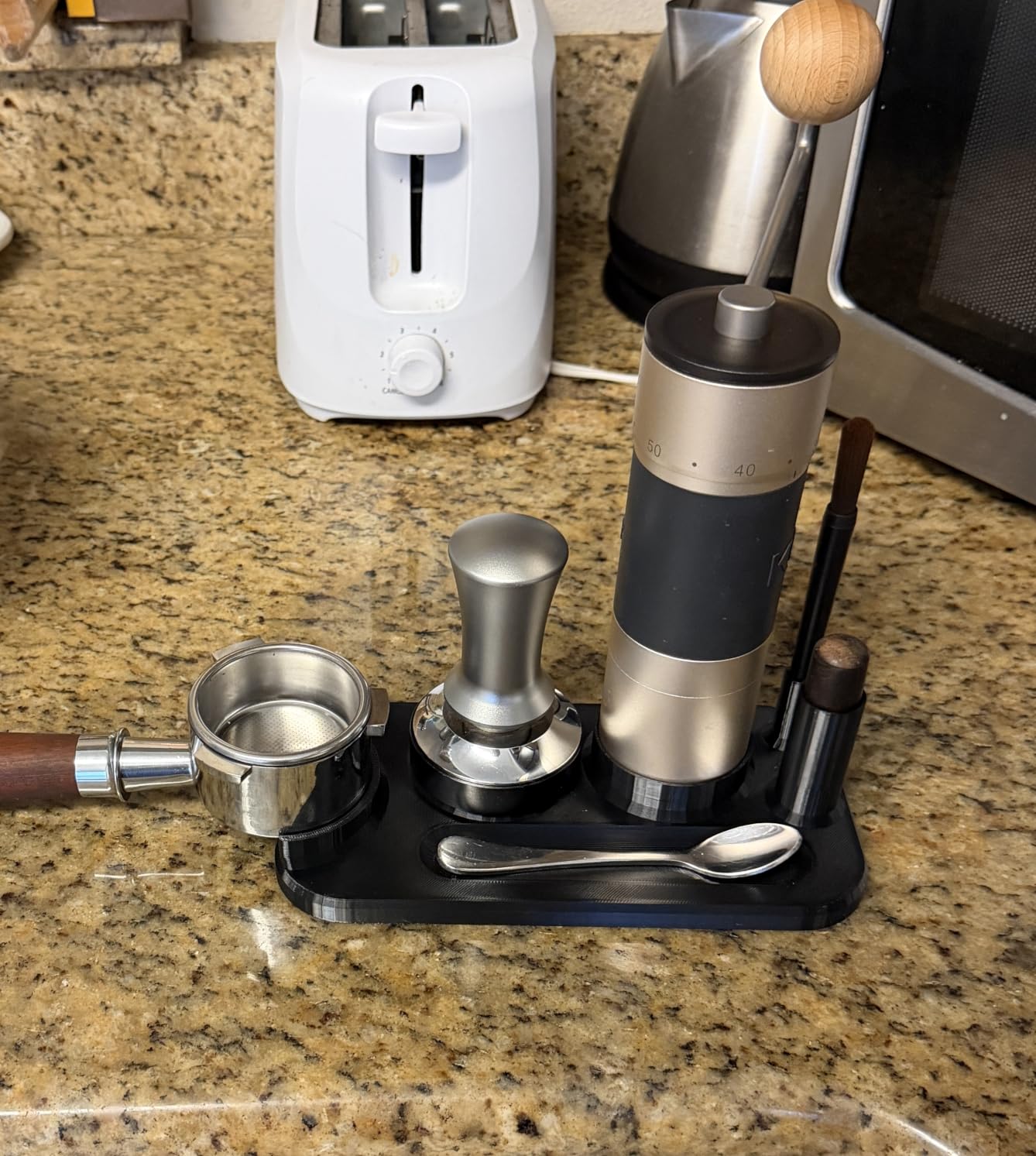
For espresso specifically, the K6 shines because the external adjustment means you can change grind size without taking the grinder apart. That is a workflow advantage I did not fully appreciate until I was dialing in a new bag of beans and needed to make micro-adjustments between shots.
The trade-off is obvious: you are doing the work yourself. Grinding 18 grams of espresso-fine coffee takes about 30 to 45 seconds of cranking, and it requires some grip strength. The small hopper holds 25 to 35 grams, so this is a single-dose tool by design rather than a batch grinder.
How long does it take to grind for espresso?
Expect roughly 30 to 45 seconds of steady cranking for an 18-gram espresso dose. The resistance increases at finer settings, so light roasts at espresso fineness will tire your arm faster than medium roasts. Most users build a rhythm quickly, and many find the ritual meditative rather than tedious.
Can it replace an electric grinder entirely?
For a single-cup household or a travel setup, absolutely. The grind quality competes with electric grinders well above its price. For families or anyone pulling multiple shots back to back, the manual effort becomes a bottleneck, and an electric model will serve you better.
5. OXO Brew Conical Burr – Wirecutter Pick With 23,000 Reviews
OXO Brew Conical Burr Electric Coffee Bean Grinder – 12 Oz, Silver
15 Settings Plus Micro
12oz UV Hopper
Stainless Conical Burr
One-Touch Memory
DC Motor
Pros
- 15 settings plus micro-adjustments for espresso
- Wirecutter Our Pick 2025
- One-touch start remembers last setting
- 12oz UV-blocking hopper
- Static-fighting stainless container
- Powerful DC motor prevents overheating
Cons
- Premium price point
- Hopper trap door can be finicky
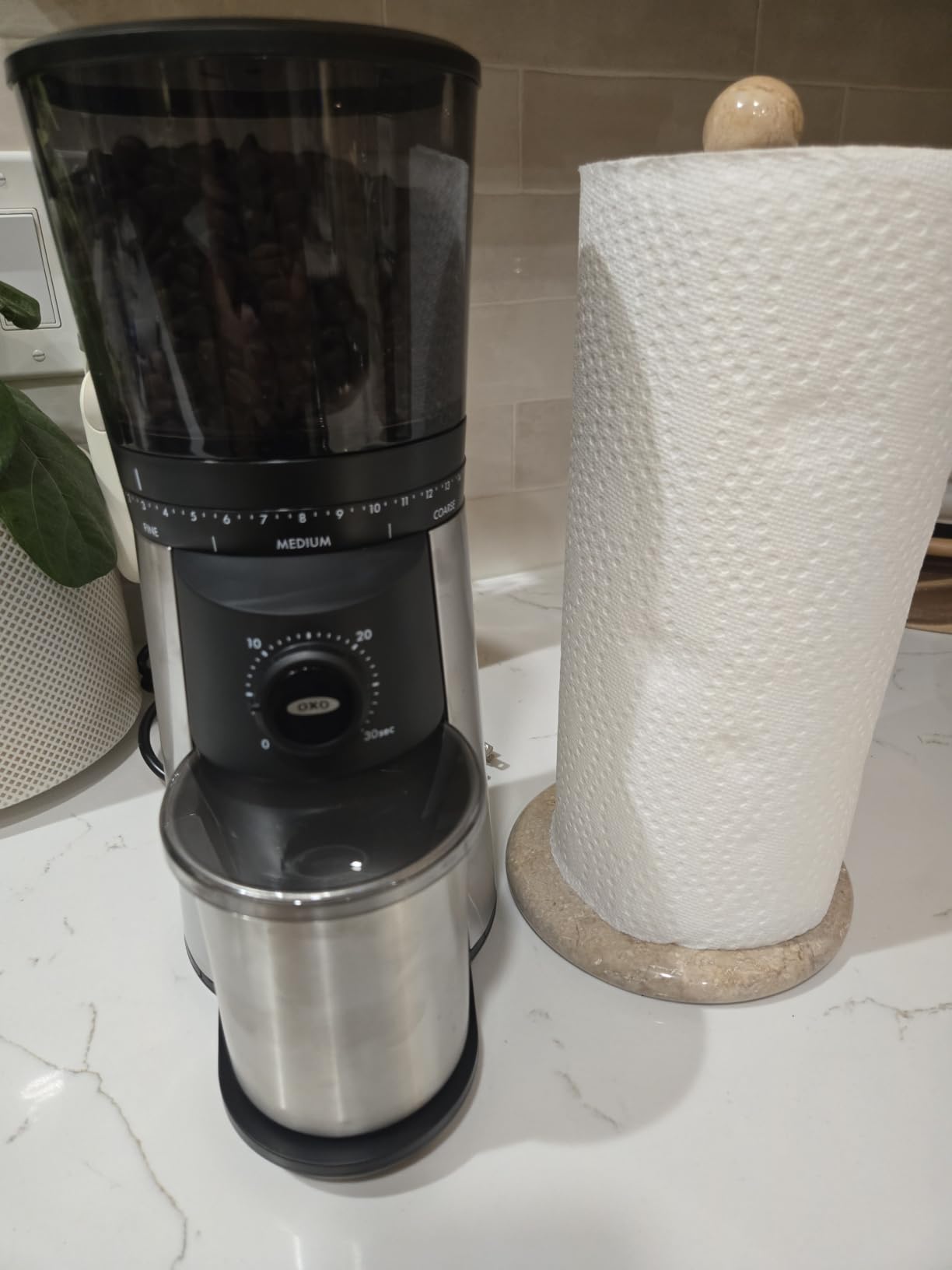
The OXO Brew Conical Burr is one of the most decorated grinders in the home coffee space, and for good reason. With over 23,000 reviews and a Wirecutter “Our Pick” designation, it has earned its reputation through sheer consistency and thoughtful design. This is a grinder that just works, day in and day out.
The 15 main settings plus micro-adjustments give you enough granularity for espresso dialing-in, and the one-touch start that remembers your last setting is one of those features you do not realize you need until you have it. The DC motor runs cool, protecting your beans from heat damage during longer grinding sessions.
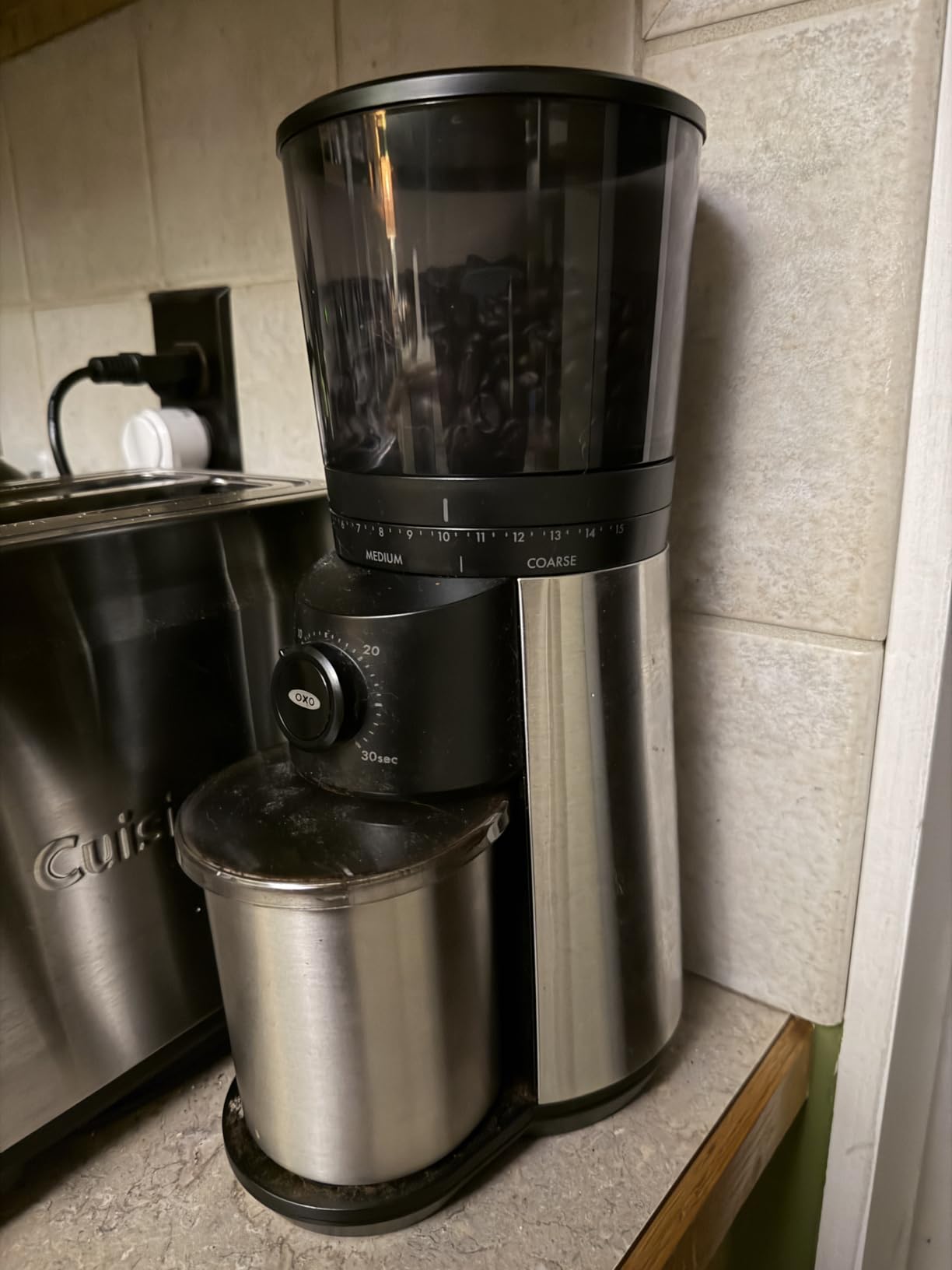
The 12-ounce UV-blocking hopper is the largest on this list, making it ideal for households that go through a lot of coffee or like to grind ahead for multiple brew methods. The static-fighting stainless steel catch container is effective, and the overall build quality feels like a premium appliance.
I did encounter the hopper trap door issue that some buyers mention. It can feel a bit sticky when you are trying to remove the hopper for cleaning or bean changes. Once you learn the right technique, it becomes second nature, but it is a small frustration out of the box.
How does the micro-adjustment work for espresso?
Each of the 15 main settings has micro-adjustment steps underneath, giving you finer control when you are close to your target grind size. This is especially useful for espresso, where a tiny shift can move a shot from sour to balanced. The system is intuitive once you spend a day with it.
Is it worth the premium over cheaper options?
If you drink espresso daily and want a grinder that will last years without fuss, yes. The combination of build quality, motor design, and the one-touch memory feature justifies the investment. The 23,000-review track record also means the long-term durability is well documented by real owners.
6. Viesimple Gen 4 Single Dose – Magnetic Cup and Quiet Workflow
Viesimple Gen 4 Electric Burr Coffee Grinder, Single Dose, Espresso, Black
48mm Conical Burr
Single Dose
Magnetic Dosing Cup
Anti-Static
Under 50dB
Pros
- 48mm conical burr for consistent results
- Magnetic dosing cup auto-returns to place
- Anti-static and anti-flying powder design
- Quiet operation under 50 decibels
- Anti-clogging patent for smooth flow
- 2-year warranty
Cons
- Single dose requires refills for batches
- Newer brand with limited track record
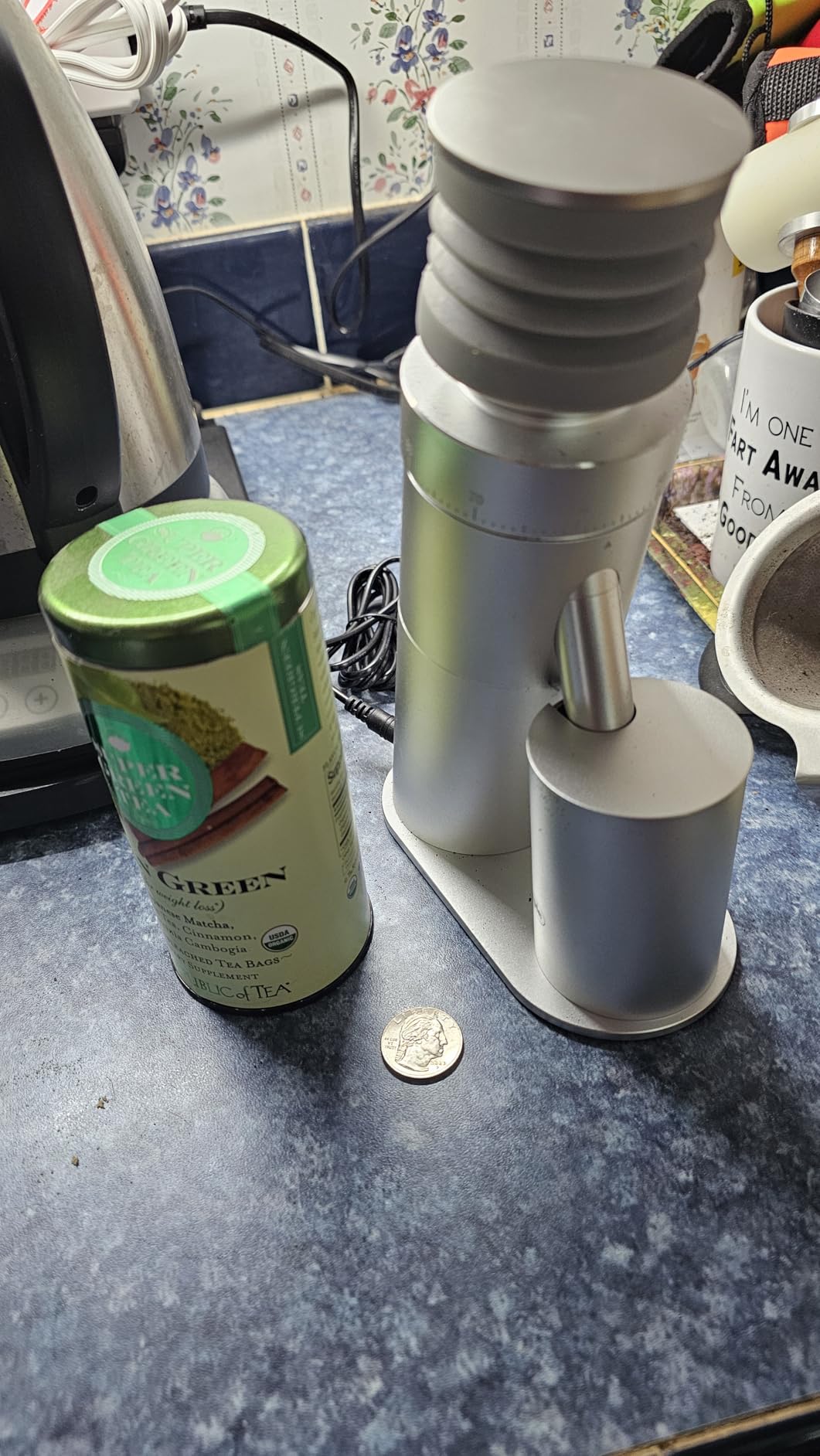
The Viesimple Gen 4 represents the new wave of affordable single-dose grinders that have taken the home espresso community by storm. Single-dosing means you weigh your beans, drop them in, and grind with minimal retention, which is ideal for espresso enthusiasts who switch beans frequently.
The 48mm conical burr handles espresso grinding with confidence, and the anti-clogging patent keeps the powder channel flowing smoothly even at fine settings. The magnetic dosing cup is a genuinely clever touch, snapping back into place automatically so you do not have to fumble with alignment.
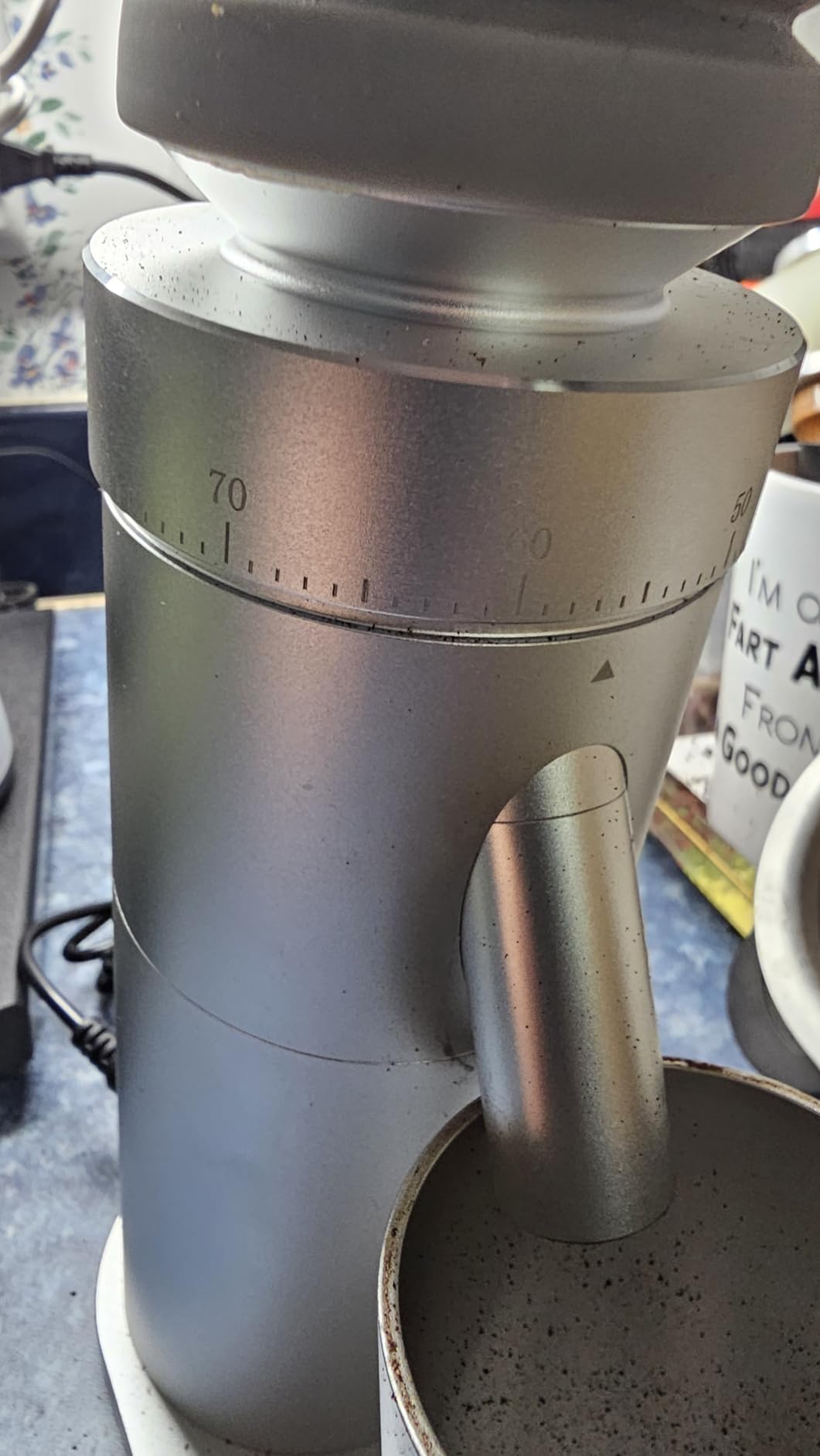
What impressed me most is the noise level. At under 50 decibels, this is one of the quietest espresso grinders I have tested, which matters enormously if you make coffee early in the morning while the household is still asleep. The anti-flying powder design with a sealed lid means no grounds escaping onto your counter.
The single-dose workflow is the core selling point, and it is where this grinder carves its niche. You will not be batch-grinding for a dinner party, but for one or two espresso shots at a time, the low retention and clean workflow are hard to beat at this price.
How much retention does it actually have?
In testing, retention was minimal, typically under a gram after a single dose. The anti-static design and optimized powder channel keep grounds moving through rather than sticking. This makes it practical for switching beans between shots without purging, which is a real advantage for exploratory espresso work.
Is the noise level really that different?
Yes, noticeably. Most conical burr grinders in this price range sit around 60 to 70 decibels, and the Gen 4’s sub-50-decibel operation is a meaningful reduction. If you have ever winced at a grinder waking the house at 6 AM, this model solves that problem in a way few competitors do.
7. Baratza Encore ESP – SCA Award-Winning Dedicated Espresso Grinder
Baratza Encore ESP Coffee Grinder ZCG495BLK, Black
SCA Award-Winning
40mm Hardened Steel Burrs
Dual-Range Adjustment
Quick-Release Burr
150W DC Motor
Pros
- Specialty Coffee Association award winner
- Dual-range system with micro-steps for espresso
- 40mm hardened alloy steel burrs from Liechtenstein
- Quick-release burr for easy cleaning
- World-class support and warranty
Cons
- Plastic housing feels less premium
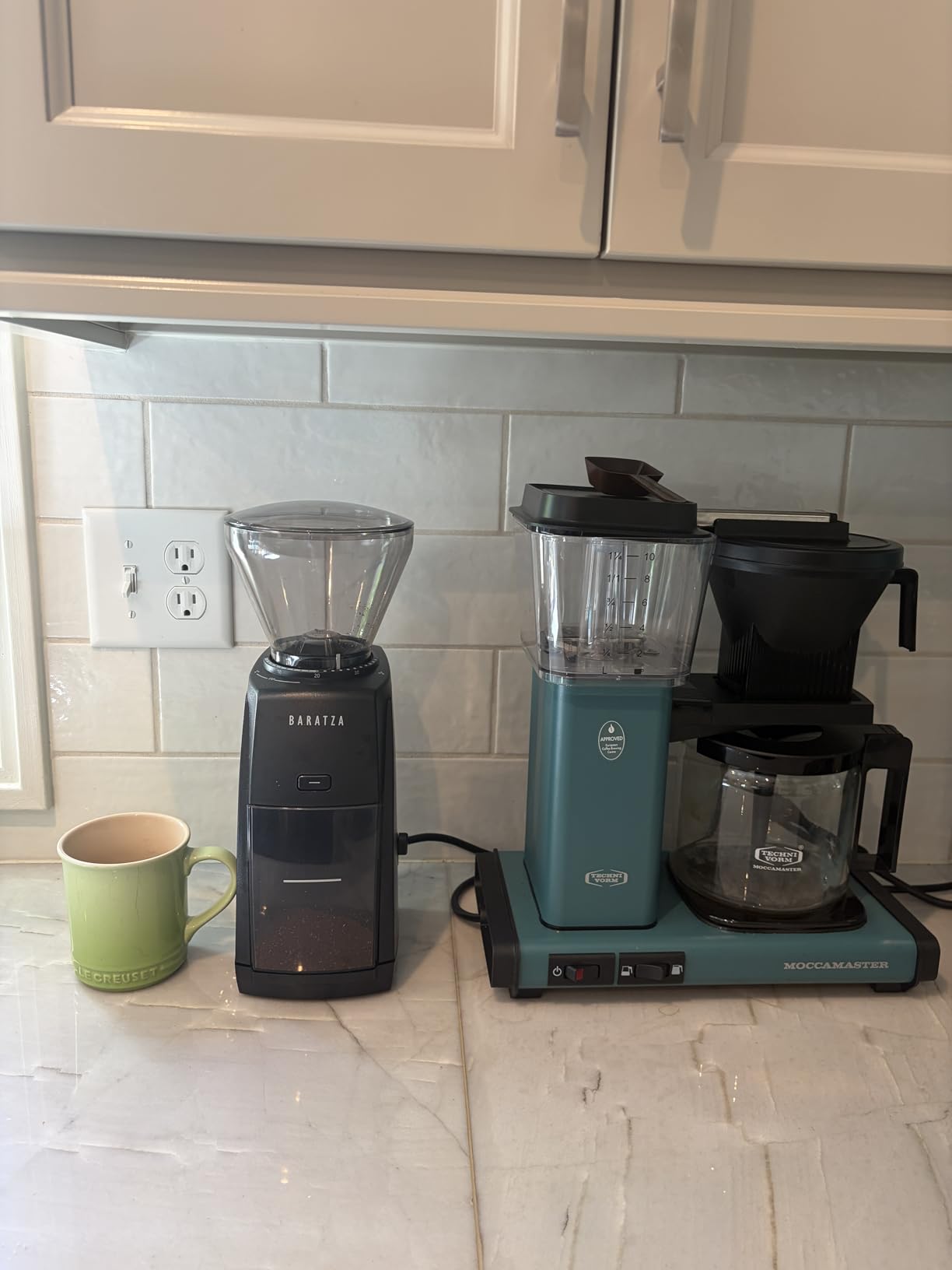
The Baratza Encore ESP is the grinder that the espresso community consistently recommends, and it earns our editor’s choice designation for good reason. Baratza grinders are preferred by coffee professionals, and the ESP variant was built specifically to bring genuine espresso capability to the Encore platform.
The dual-range adjustment system is the headline feature. Micro-steps from settings 1 to 20 give you the high-resolution control needed for espresso dialing-in, while macro-steps from 21 to 40 cover filter brewing methods. This is the kind of thoughtfulness that separates a purpose-built espresso grinder from a generalist.
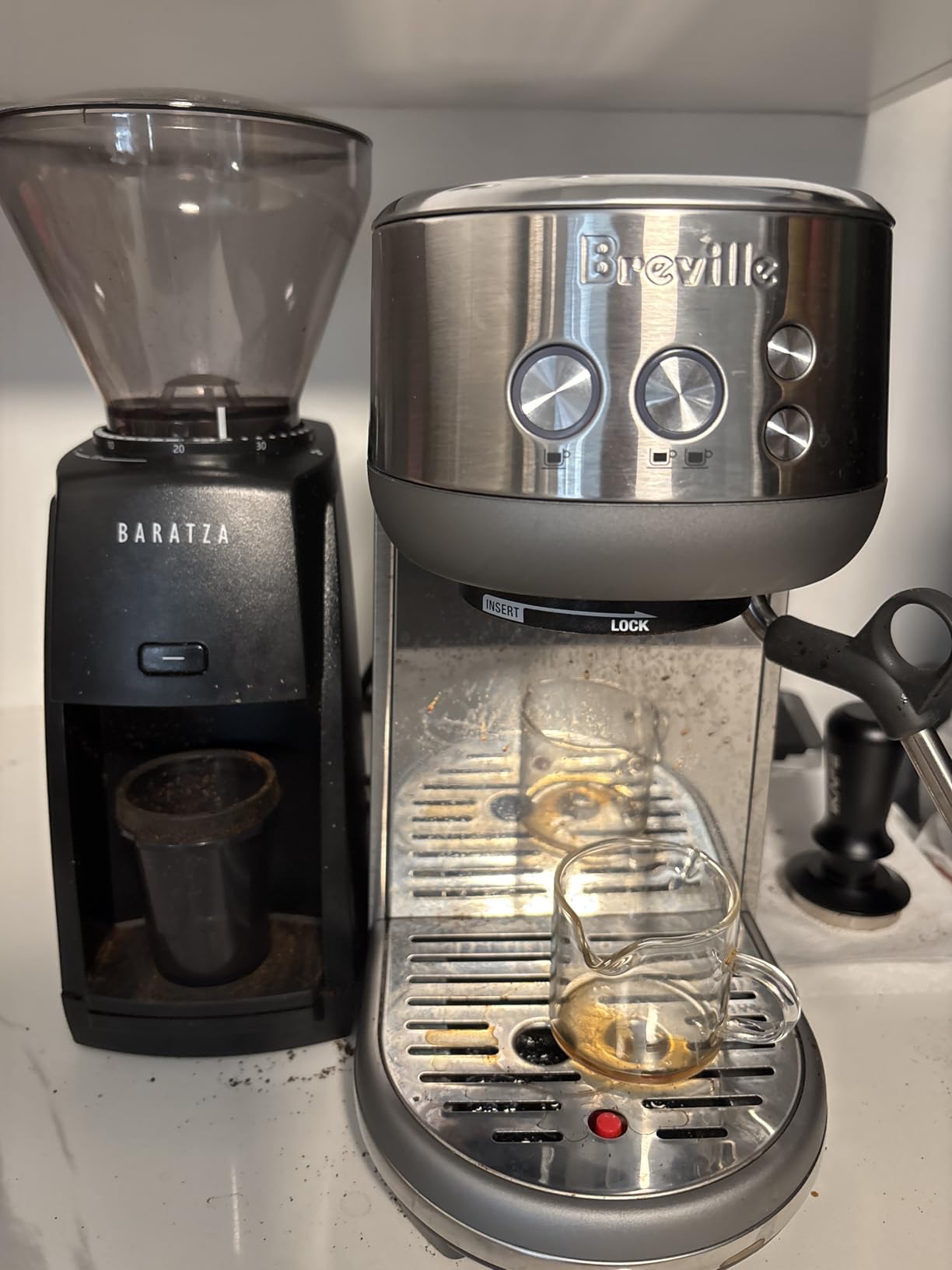
The 40mm hardened alloy steel burrs are manufactured in Liechtenstein, and they produce the kind of particle distribution that leads to even, repeatable extraction. I found dialing in new beans noticeably faster on the Encore ESP than on the other electric grinders in this roundup, thanks to the micro-step resolution.
The quick-release burr system is a maintenance dream. You can remove the burr for cleaning without taking the entire grinder apart, which encourages the regular maintenance that keeps grind quality high over time. Baratza’s customer service is legendary in the coffee community, with replacement parts readily available for years.
What makes the dual-range adjustment special?
Most grinders in this price range use a single adjustment collar with evenly spaced steps. The Encore ESP splits the range into a dedicated espresso micro-zone and a filter macro-zone, giving you far more resolution exactly where espresso demands it. This means smaller steps between settings, which translates to faster, more precise dialing-in.
How does Baratza support compare to other brands?
Baratza is repeatedly praised on forums for its parts availability and customer service. You can order replacement burrs, hopper lids, and internal components years after purchase, and the company actively supports repairs rather than pushing you toward a new purchase. That long-term support adds real value to the investment.
8. Breville Smart Grinder Pro – 60 Settings With Dosing IQ
Breville BCG820BSS Smart Grinder Pro, Brushed Stainless Steel
60 Unique Settings
Dosing IQ
LCD Display
18oz Hopper
Conical Burr
2 Year Warranty
Pros
- 60 unique grind settings for total control
- Dosing IQ with 0.2 second time increments
- LCD display shows setting time and dose
- Grinds directly into portafilter
- 18oz bean hopper capacity
- Multiple portafilter cradles included
Cons
- Higher price point
- Larger footprint than competitors
The Breville Smart Grinder Pro has been a fixture in the home espresso world for years, and the 60-setting range remains one of the broadest available at this price point. With nearly 7,000 reviews and a 4.5-star average, it has proven its staying power against newer competitors.
The Dosing IQ system is where Breville sets itself apart. You can program grind time in 0.2-second increments, and the grinder delivers consistent doses shot after shot. The LCD display shows your grind setting, time, and the number of shots or cups, giving you full visibility into your workflow.
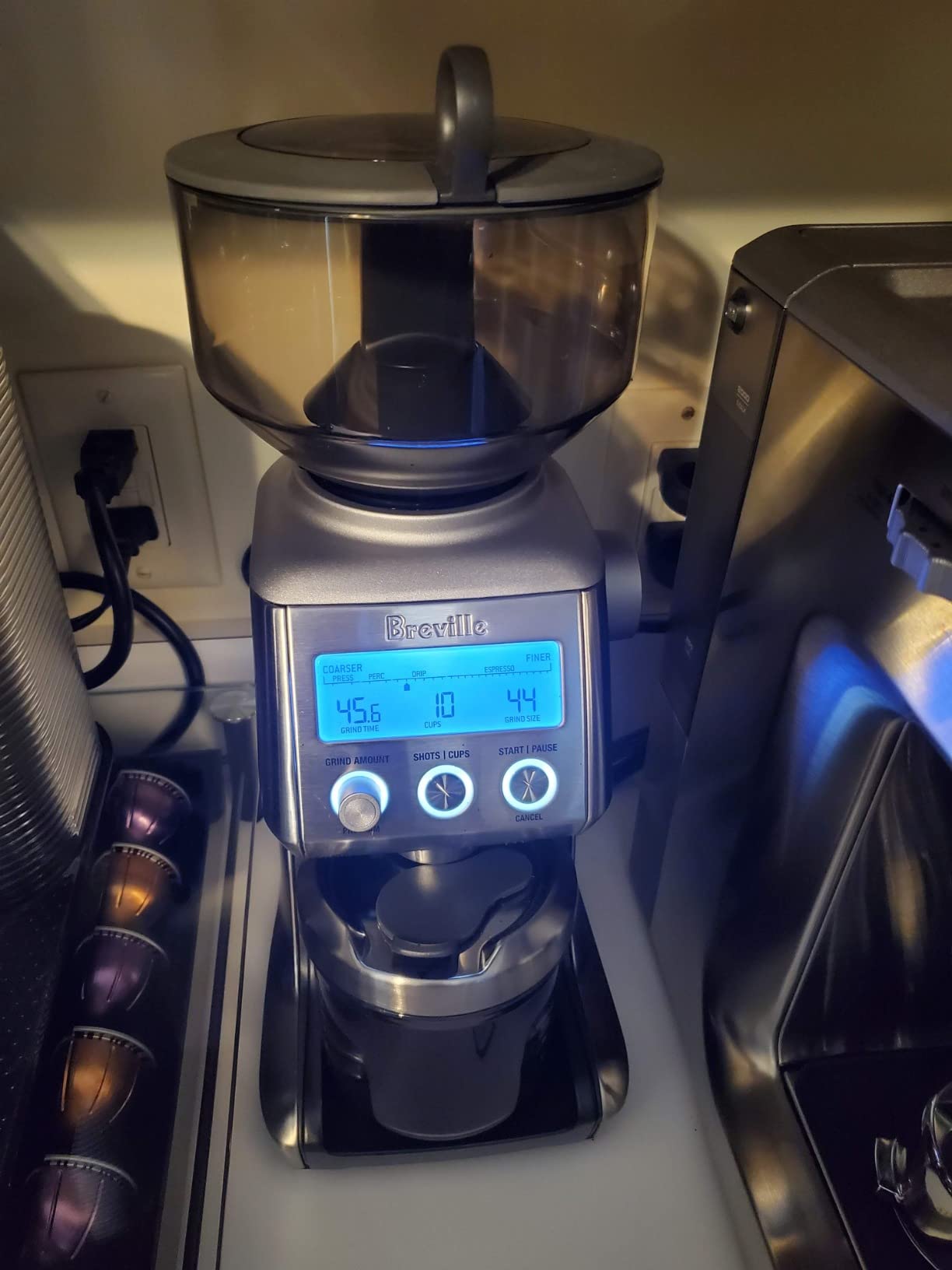
The ability to grind directly into a portafilter is a feature espresso enthusiasts will appreciate immediately. Breville includes both small and large portafilter cradles, so the grinder works with most home espresso machines without adapters. The 18-ounce hopper is generous and the brushed stainless steel finish looks like a premium kitchen appliance.
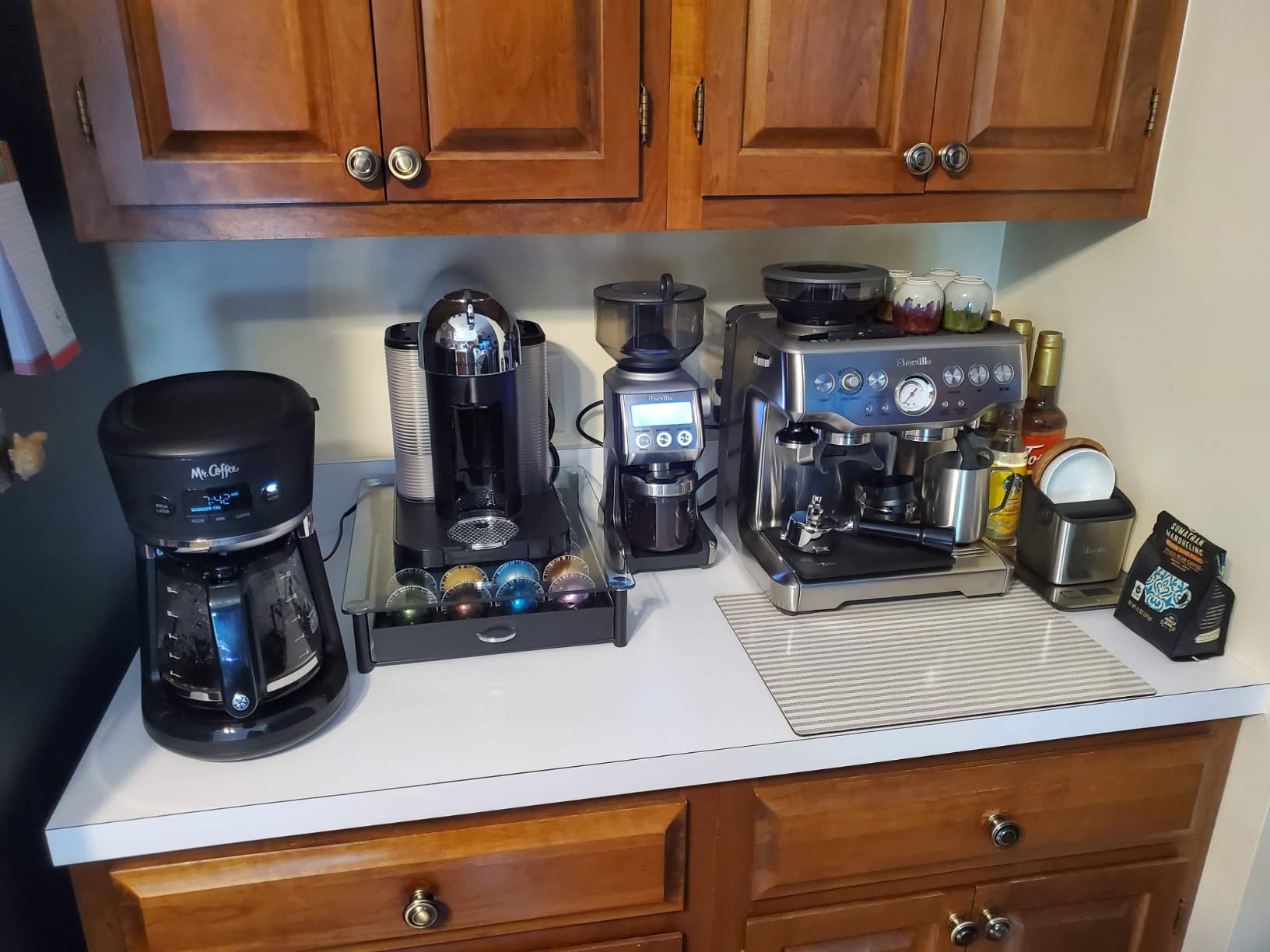
The trade-off is footprint. At 6.28 by 8.46 by 15.33 inches and 6.4 pounds, the Smart Grinder Pro takes up more counter space than the Baratza or the single-dose options. If you have a compact kitchen setup, measure your space before committing.
How does Dosing IQ improve espresso workflow?
Once you dial in the grind time that produces your target dose weight, Dosing IQ repeats that time with 0.2-second precision on every run. This removes the guesswork from dosing and gives you shot-to-shot consistency that is hard to achieve with manual timed grinding. The LCD keeps everything visible so you can make micro-adjustments confidently.
Does the larger footprint matter for home use?
It depends on your counter space and how many appliances you run. The Smart Grinder Pro is taller and wider than most competitors, so it will not slide neatly under low-hanging cabinets. If space is tight, the Baratza Encore ESP or a single-dose model like the Viesimple Gen 4 will fit more comfortably.
How to Choose the Best Coffee Grinder for Espresso?
Choosing the right espresso grinder comes down to understanding a few core factors and matching them to your brewing habits and budget. Here is what our team considers non-negotiable when evaluating any grinder for espresso use.
Burr Type: Conical vs Flat
Conical burrs use a cone-shaped inner burr inside a ring-shaped outer burr, and they are the most common type in home grinders. They tend to produce a slightly broader particle distribution, which many baristas find gives espresso more body and sweetness. Conical burrs also self-feed beans, so they are quieter and generate less heat.
Flat burrs use two parallel ring-shaped burrs that crush beans between them. They generally produce a tighter particle distribution, which can lead to higher clarity and brightness in the cup. Flat burrs are more common in commercial and high-end home grinders, and they tend to be louder and generate more heat at comparable speeds.
For most home espresso setups, conical burrs offer the best balance of performance, noise, and price. The eight grinders on this list all use conical burrs, which reflects what the home market demands in 2026.
Grind Adjustment Precision
This is arguably the single most important spec for espresso. Espresso requires an extremely fine grind, and the difference between a perfect shot and a gusher can be a fraction of a millimeter of adjustment. Look for grinders with micro-steps or stepless adjustment in the espresso range.
The Baratza Encore ESP’s dual-range system and the KINGrinder K6’s 16-micron-per-click precision are both excellent examples of espresso-focused adjustment design. Grinders with only 10 to 15 evenly spaced steps across the full range will leave you frustrated when dialing in.
Single-Dose vs Hopper Grinding
Hopper grinders store beans in a container above the burrs and grind on demand. They are convenient for daily use but retain some grounds between sessions, which means stale coffee can mix into your next shot. Single-dose grinders take only the beans you weigh, minimizing retention and letting you switch beans freely.
If you drink the same coffee every day, a hopper grinder is simpler and faster. If you like experimenting with different roasts or single origins, a single-dose grinder like the Viesimple Gen 4 will save you beans and frustration.
Noise Level
Noise is a real concern for home baristas, especially those who brew early in the morning. Forum discussions on r/espresso repeatedly mention noise as a deciding factor. The Viesimple Gen 4 at under 50 decibels is the quietest option on this list by a meaningful margin.
Generally, conical burr grinders run quieter than flat burr models, and lower RPM motors produce less noise. If your kitchen shares a wall with a bedroom, prioritize models known for quiet operation.
Build Quality and Long-Term Value
A grinder is a long-term investment, and build quality directly affects lifespan and grind consistency over time. Full metal construction, like the KINGrinder K6 and the AMZCHEF, tends to age better than plastic housings. Brand reputation for parts availability and customer service also matters enormously.
Baratza is the gold standard for long-term support, with replacement parts available for years and a customer service team that actively helps with repairs. That support network adds real value that is not reflected in the sticker price.
FAQs
What is the best budget coffee grinder for espresso?
The KRUPS Precision Burr Grinder is the most affordable option at a low entry price, with 12 grind settings and a flat metal burr. For slightly more, the SHARDOR Professional with 48 settings offers dramatically better espresso dialing-in capability and is the best value pick overall.
What is the best conical burr grinder for espresso?
The Baratza Encore ESP is the best conical burr grinder for espresso thanks to its SCA award-winning design, 40mm hardened steel burrs, and dual-range adjustment system with dedicated micro-steps for espresso dialing-in.
What is the best manual coffee grinder for espresso?
The KINGrinder K6 Manual Coffee Grinder is the top manual pick for espresso, offering 16-micron-per-click precision adjustment, a full metal build with stainless steel burrs, and external adjustment that lets you change grind size without disassembly.
What is the best single dose grinder for espresso?
The Viesimple Gen 4 Single Dose grinder is the best single-dose option on this list, featuring a 48mm conical burr, a magnetic dosing cup that auto-returns, an anti-clogging patent, and quiet operation under 50 decibels.
How much should I spend on an espresso grinder?
For genuine espresso capability, expect to spend between 100 and 200 dollars. Grinders below that range can grind fine enough but often lack the micro-adjustment precision needed for consistent dialing-in. The Baratza Encore ESP and Breville Smart Grinder Pro are both excellent choices around the 200 dollar mark.
Can I use one grinder for espresso and pour over?
Yes, most of the grinders on this list cover a wide enough adjustment range for both espresso and pour over. The Breville Smart Grinder Pro with 60 settings and the AMZCHEF with 48 settings are particularly versatile. The trade-off is that switching between very fine and coarse settings may require purging retained grounds.
Final Thoughts on the Best Coffee Grinders for Espresso
The right espresso grinder transforms your daily coffee ritual, and the gap between a mediocre grinder and a good one is night and day in the cup. Our team’s testing across these eight models made one thing clear: adjustment precision and burr quality matter more than raw feature counts.
For most home baristas in 2026, the Baratza Encore ESP remains the best coffee grinder for espresso thanks to its SCA pedigree, dual-range micro-steps, and unmatched long-term support. The OXO Brew is the safest bet for anyone who wants proven reliability across 23,000 reviews, and the KINGrinder K6 is the finest manual option for travelers and precision obsessives.
Whatever your budget, starting with fresh beans and a real burr grinder puts you ahead of most cafe customers. Pick the grinder that matches your workflow, commit to dialing in, and your espresso will never be the same.