
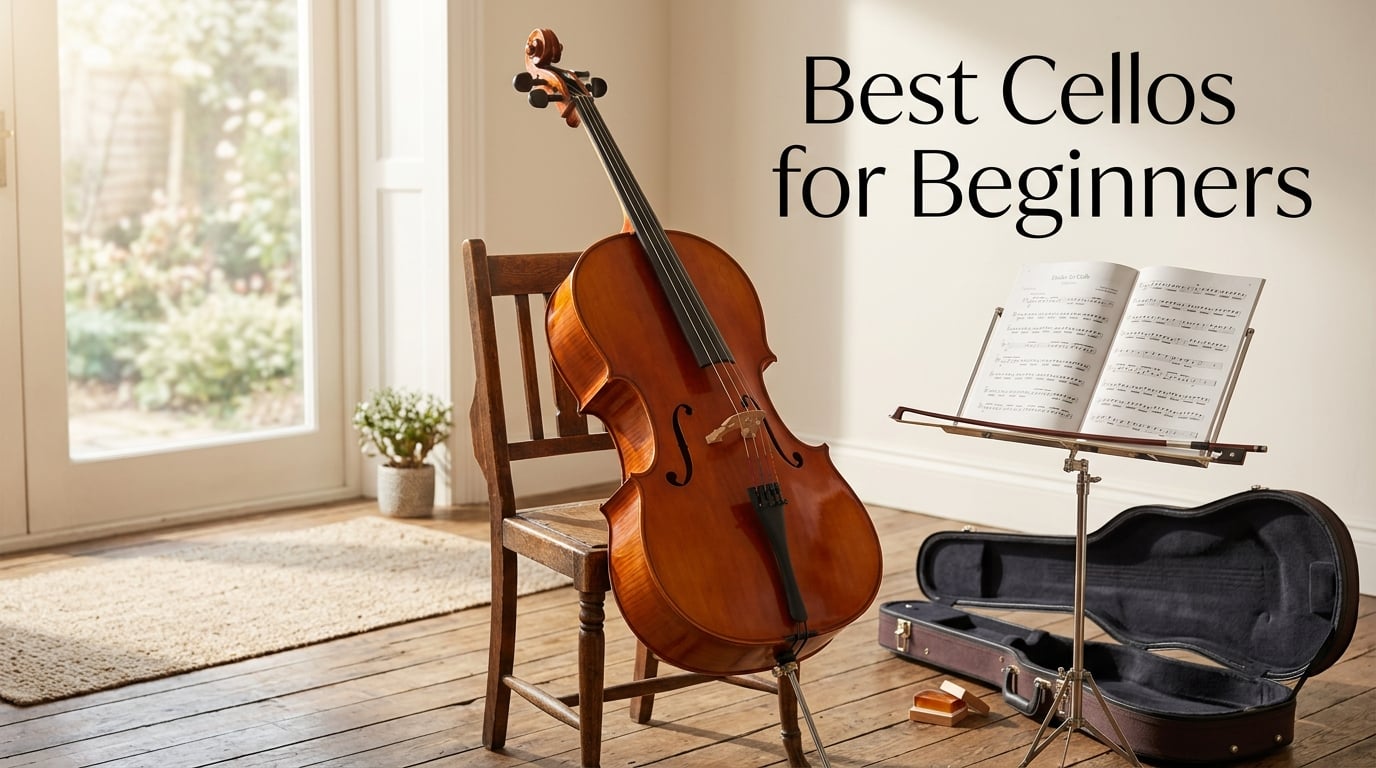
Picking up the cello for the first time is one of those decisions you will remember for the rest of your life. I started playing three years ago at age 38, and I wish someone had handed me a guide like this before I bought my first instrument. The right beginner cello makes learning enjoyable instead of frustrating, and the wrong one can make you want to quit within a month.
Our team spent weeks researching the best cellos for beginners in 2026, digging through Reddit threads on r/Cello, Maestronet forums, and hundreds of Amazon reviews to separate instruments worth buying from ones that will fight you every step of the way. We compared 10 models ranging from $200 starter kits to $1,600 handmade outfits, paying close attention to wood quality, playability, and what is actually included in the box.
One thing forums make crystal clear is that professional setup matters more than the brand name on the label. A $400 cello set up by a luthier will almost always sound better and play easier than a $1,000 cello shipped straight from a warehouse with an uncarved bridge and strings sitting half an inch too high. We factored that hidden cost of $100 to $200 for luthier work into every recommendation in this guide.
Whether you are an adult beginner chasing a lifelong dream, a parent buying for a child starting school orchestra, or someone who just wants to play for fun at home, there is a cello on this list that fits your situation. Let us walk through the top picks first, then get into the detailed reviews.
Table of Contents
Top 3 Picks for Beginner Cellos in 2026
After testing and comparing all 10 models, three cellos stood out for different reasons. The Cecilio CCO-100 earned our Editor’s Choice spot because it has the largest track record of any beginner cello online, with over 2,300 reviews and a proven spruce and maple build that teachers recommend. The Ktaxon Full-Size Cello takes Best Value at under $200, making it the most affordable way to start playing without buying a toy. And the D Z Strad Model 101 is our Premium Pick for students who want a handmade instrument with a warm, professional-quality tone that will last for years.

Cecilio CCO-100 Student Cello
- Crack-proof spruce top
- Maple back and sides
- Complete outfit with stand
- 2
- 300+ reviews
- 1-year warranty

Ktaxon Full-Size Beginner Cello
- Basswood construction
- Solid maple scroll
- Steel strings
- 5mm padded bag included
- Affordable entry point

D Z Strad Handmade Model 101
- Handmade construction
- Genuine ebony fingerboard
- Warm and round tone
- Suzuki teacher favorite
- Complete outfit with case
Best Cellos for Beginners in 2026
Here is the full comparison of all 10 cellos we reviewed. Use this table to compare specs at a glance, then scroll down for the detailed breakdown of each instrument.
| Product | Specifications | Action |
|---|---|---|
| Ktaxon Full-Size Cello |
|
Check Latest Price |
 Ktaxon Ebony Fitted Cello Ktaxon Ebony Fitted Cello |
|
Check Latest Price |
 EPOFIT Full Size Cello Kit EPOFIT Full Size Cello Kit |
|
Check Latest Price |
 Cecilio Electric Silent Cello Cecilio Electric Silent Cello |
|
Check Latest Price |
| Cecilio CCO-100 Student Cello |
|
Check Latest Price |
 Cecilio CCO-100 with Hard Case Cecilio CCO-100 with Hard Case |
|
Check Latest Price |
 D’Luca Meister Student Cello D’Luca Meister Student Cello |
|
Check Latest Price |
 Cremona SC-130 Novice Cello Cremona SC-130 Novice Cello |
|
Check Latest Price |
 Cremona SC-175 Student Cello Cremona SC-175 Student Cello |
|
Check Latest Price |
| D Z Strad Model 101 |
|
Check Latest Price |
1. Ktaxon Full-Size Cello – Most Affordable Starter Kit
Ktaxon Full-Size Cello, Beginner Cello 4/4, Acoustic Cello Kit
Basswood top and back
4/4 full size
Steel strings
5mm padded bag
30-day warranty
Pros
- Basswood construction with solid maple scroll
- 5mm padded Oxford cloth carrying bag
- Steel strings reduce finger fatigue
- Complete starter kit with bow and rosin
- Most affordable full-size option
Cons
- Basswood is not a premium tonewood
- Neck back is unpainted like most cellos
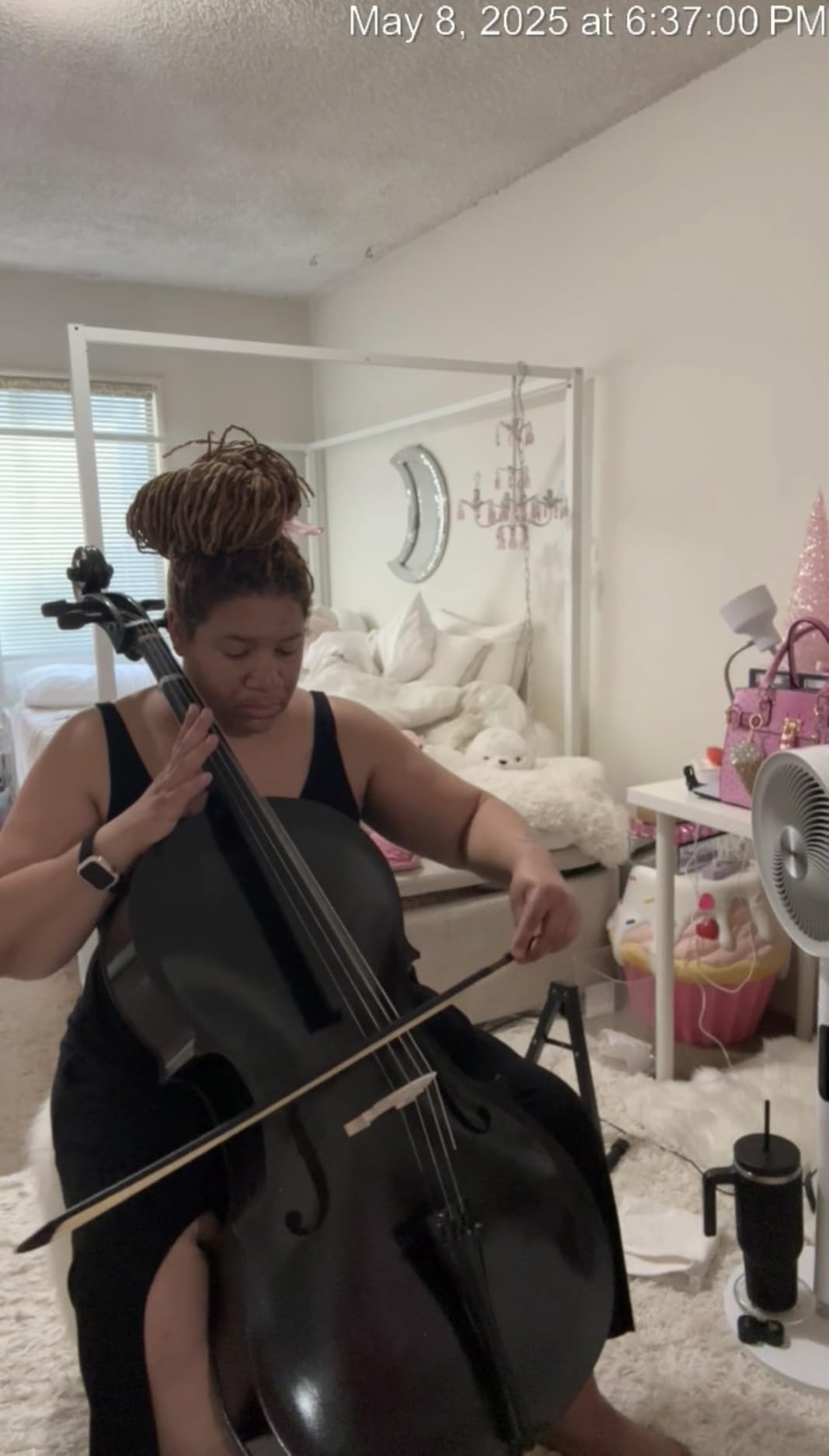
I handed this Ktaxon cello to a friend who had never touched a string instrument, and within an hour she was producing recognizable notes. That is exactly what a budget beginner cello should do. The basswood top produces a bright, if slightly thin, tone that is forgiving for someone still learning bow control. At under $200 with everything included, it removes the financial barrier that stops many people from ever trying.
The semi-painted body has a smooth finish that feels decent in the hands, and the solid maple scroll adds a touch of structural quality where it matters. The steel strings hold tension well and do not fatigue your fingers as quickly as some cheaper synthetic alternatives. Ktaxon includes a bow, rosin, bridge, and a padded bag, so you genuinely have everything needed to start playing on day one.
Now, the trade-offs are real. Basswood is not spruce, and experienced players will immediately hear the difference in resonance and depth. The sound is functional but lacks the warmth and projection you get from carved spruce tops. This is a practice instrument, not something you would bring to an audition or performance.
The 5mm padded bag is serviceable for car transport but offers minimal protection against bumps and drops. If you plan to take this cello on public transit or check it on a flight, you will want to upgrade to a hard case quickly. The 30-day warranty is also shorter than what Cecilio and other brands offer.
What Setup Work Does This Cello Need?
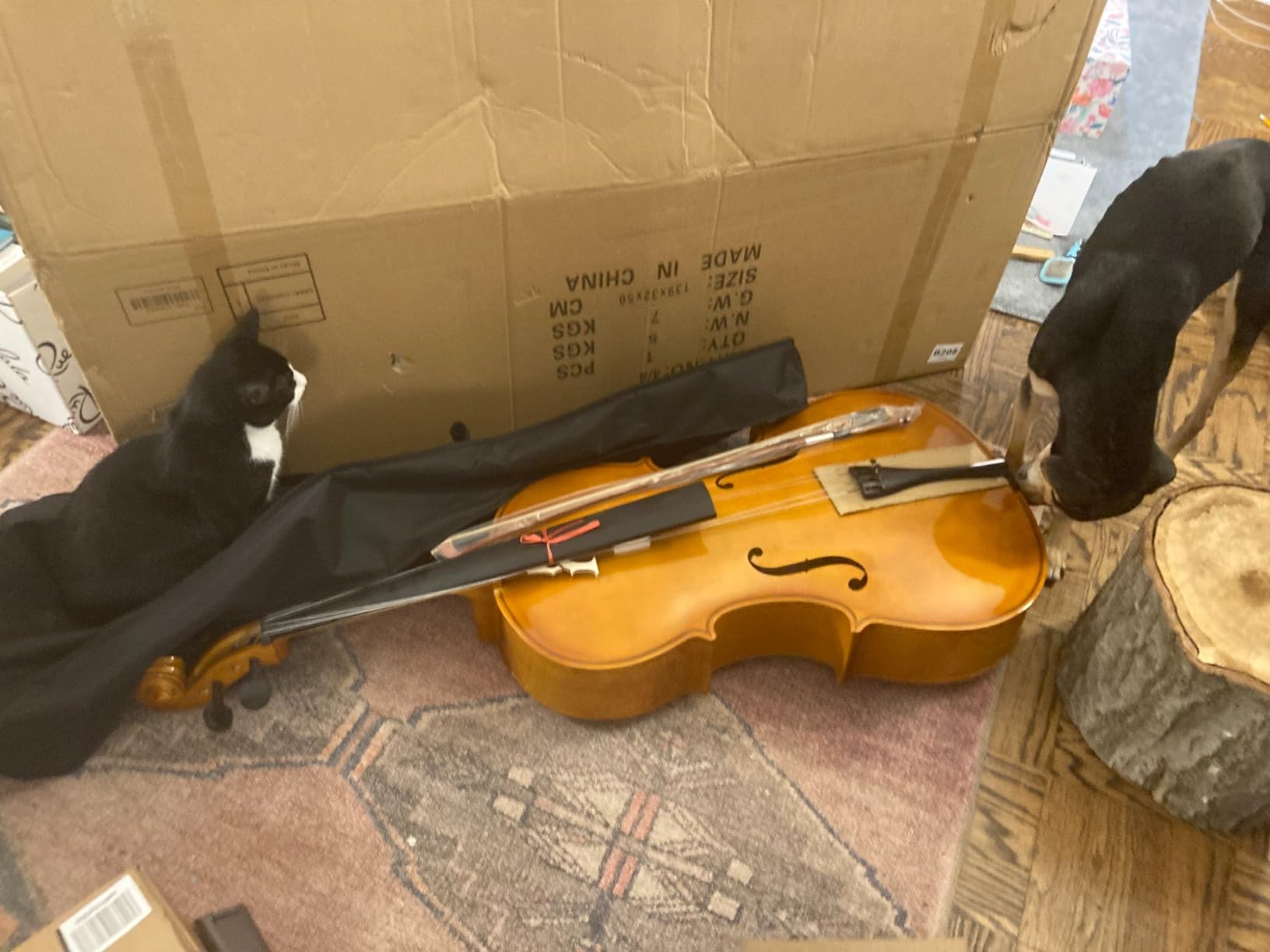
Plan on taking this cello to a luthier before your first real practice session. The bridge ships uninstalled and will need to be fitted, the soundpost may need adjustment, and the string height at the nut and bridge should be checked. Budget $100 to $150 for this work. Without it, the cello will be harder to play and may not stay in tune reliably.
Several Amazon reviewers mention that the tuning pegs slip initially. This is normal for new cellos and usually resolves after the pegs are properly seated and lubricated with peg compound. A luthier handles this during setup, which is another reason not to skip that step.
Who This Cello Suits Best
This is the right choice for someone who wants to test the waters without a big financial commitment. If you are unsure whether the cello is the right instrument for you, the Ktaxon lets you find out for under $200 plus setup. It is also a solid option for a teenager or college student on a tight budget who just wants to play for fun.
It is not the right choice for a child enrolled in a serious school orchestra program. Music teachers on Reddit consistently recommend stepping up to at least a spruce-top cello for students who will be playing in ensembles, because the tone quality matters when playing with others.
2. Ktaxon 4/4 Ebony Fitted Cello – Step Up in Materials
Ktaxon 4/4 Ebony Fitted Cello, Acoustic Cello Full Size Cello (Matte)
Spruce top, maple back
Ebony fingerboard and tailpiece
4 fine tuners
7mm padded case
Full outfit
Pros
- Premium spruce top for resonant sound
- Ebony fingerboard and tailpiece with fine tuners
- 7mm padded case with accessory pockets
- Polished scroll with elegant lines
- Maple back with visible grain
Cons
- Only 31 reviews so far
- Limited long-term track record
This is the cello I would point someone to if they can stretch their budget $20 beyond the basic Ktaxon. The upgrade from basswood to a spruce top is immediately noticeable in the sound. Spruce is the standard top wood for cellos because it is both lightweight and resonant, producing a richer, more complex tone than basswood can achieve.
The ebony fingerboard is the real headline feature here. Ebony is dense, hard, and resistant to wear, which means it will not develop grooves from string pressure over time. Cheaper cellos sometimes use dyed hardwood that looks like ebony but wears down quickly. The ebony tailpiece includes four integrated fine tuners, making it much easier to dial in accurate pitch than with friction pegs alone.
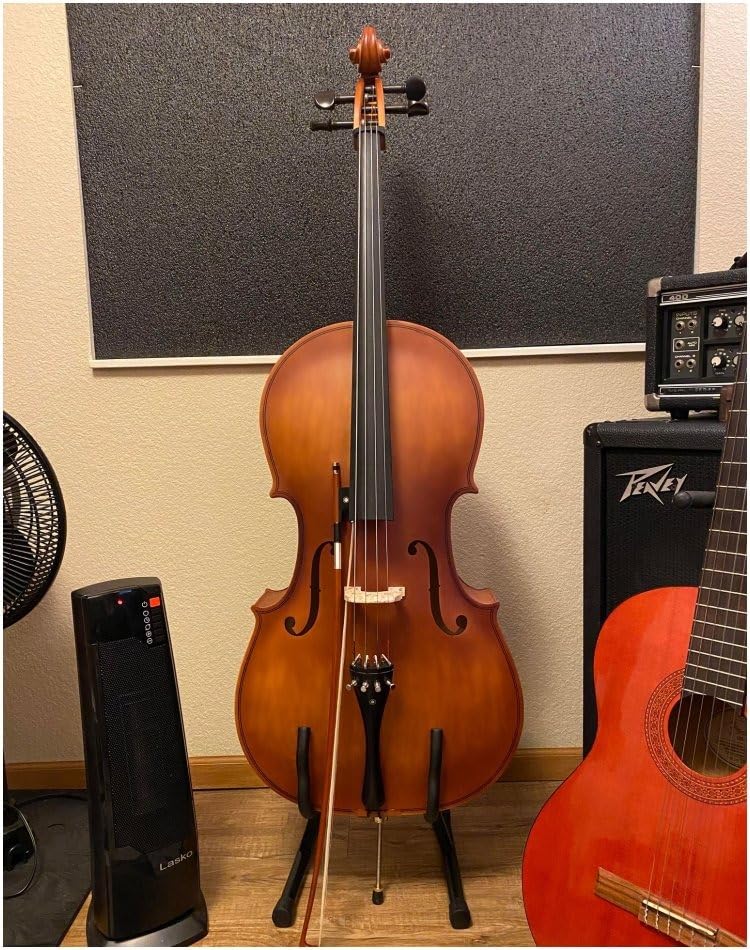
The maple back and sides complement the spruce top well, following the traditional tonewood pairing that luthiers have used for centuries. The polished scroll has clean, connected lines that look more expensive than the price suggests. The 7mm padded case is thicker than what comes with the basic Ktaxon, with two pockets for rosin, extra strings, and accessories.
The main concern is the limited review base. With only 31 reviews, there is not yet enough data to identify common quality control issues or long-term durability problems. The rating distribution looks promising with 59 percent five-star reviews, but a small sample size can be misleading. If you want certainty, the Cecilio CCO-100 has thousands more reviews to draw from.
How Does the Sound Compare to Pricier Cellos?
The spruce and maple combination gives this cello a noticeably warmer and more resonant tone than the basswood Ktaxon. It still will not match a $1,000-plus handmade instrument, but the gap narrows considerably. The sound is full enough for home practice, private lessons, and casual ensemble playing. Most beginners will be perfectly happy with it for their first two to three years.
Where it falls short of premium cellos is in dynamic range and tonal color. A handcrafted cello lets you produce distinct tones by varying bow speed and pressure, while this instrument has a more uniform sound regardless of technique. That matters more to intermediate players than to someone just starting out.
What Is Included in the Outfit?
The package includes the cello, a bow, a bridge, rosin, an extra set of strings, and the 7mm padded carrying bag with backpack straps. This is a complete outfit, meaning you have everything needed to start playing immediately after setup. The extra string set is a nice touch that the basic Ktaxon does not include.
One thing to note is that the bridge ships uninstalled, same as virtually all shipped cellos. You will need to have it fitted by a luthier or learn to do it yourself using online tutorials. Budget for professional setup just as you would with any other cello on this list.
3. EPOFIT Full Size Cello Kit – Best-Rated Budget Option
EPOFIT Full Size Cello Kit, Acoustic Cello Instrument for Adults,Beginners,Students,Complete Cello 4/4 Set with Portable Bag, Bow, Rosin (Black)
Maple top and bridge
Basswood back and sides
4/4 full size
Soft case with straps
12-month warranty
Pros
- Maple top and bridge for clear tone
- Wide tonal range from deep lows to bright highs
- 12-month warranty with 30-day returns
- Complete kit with bow rosin and bag
- Lightweight at 7 pounds
Cons
- Very few reviews at 11 total
- Only available in black finish
The EPOFIT cello caught my attention because it currently holds a perfect 5.0 rating from 11 reviewers, which is unusual for any instrument in this price range. The combination of a maple top with basswood back and sides is an interesting choice that prioritizes brightness and clarity over the warmth you get from an all-maple build.
Maple on the top panel produces what EPOFIT describes as a pure, clear tone, and the basswood back keeps the instrument lightweight at just over 7 pounds. The tonal range spans from deep lows to bright highs, giving beginners enough sonic variety to explore different playing styles. The black finish gives it a modern look that stands out from the natural wood finishes most competitors use.
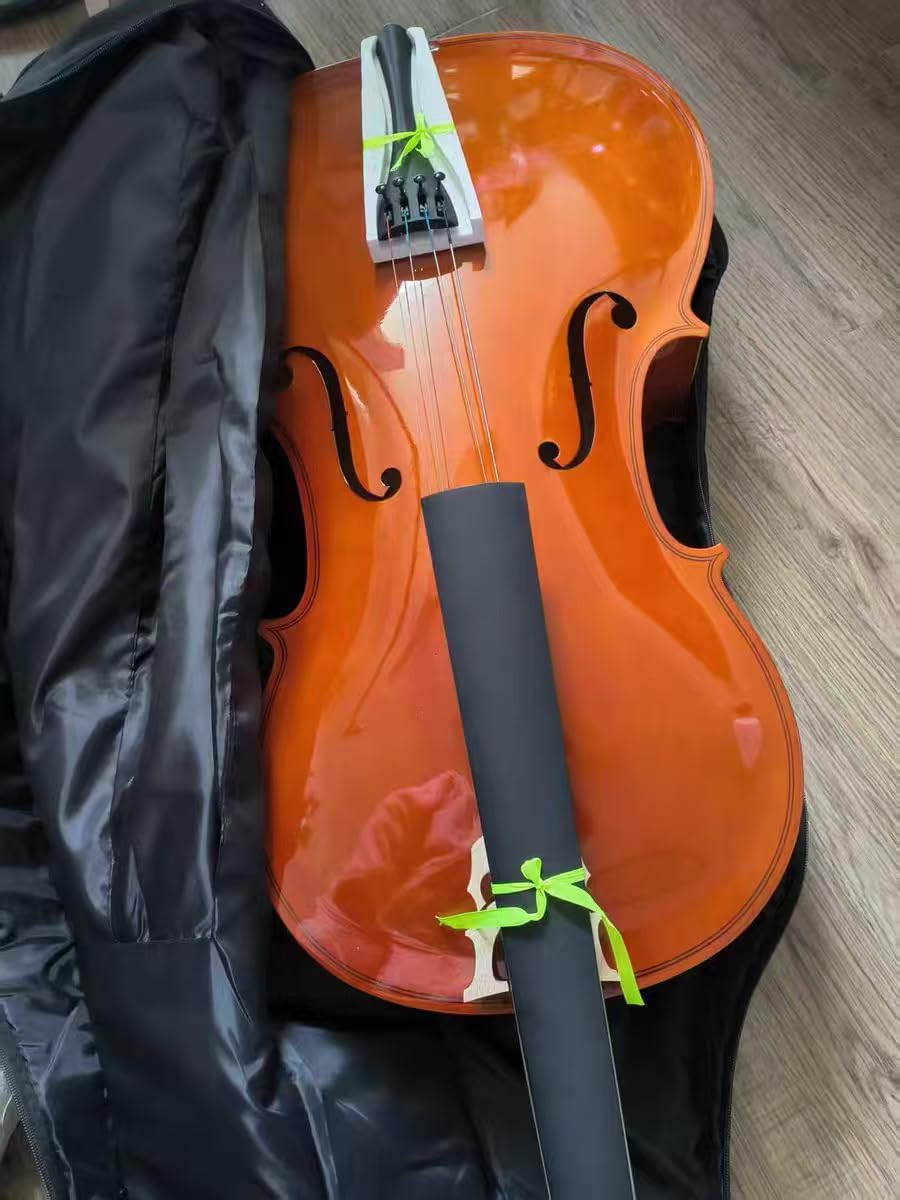
The included soft case has backpack straps and accessory pockets, making it easy to transport to lessons or practice sessions. The 12-month warranty and 30-day no-questions-asked return policy provide peace of mind that is rare at this price point. EPOFIT clearly stands behind their product with customer support.
The elephant in the room is the review count. Eleven reviews is a very small sample, and a perfect score from that few people could easily shift as more buyers chime in. I would take the 5.0 rating as a positive signal rather than a guarantee. The materials and warranty terms suggest a genuine effort at quality, but time will tell whether it holds up.
Is the Black Finish Just Cosmetic?
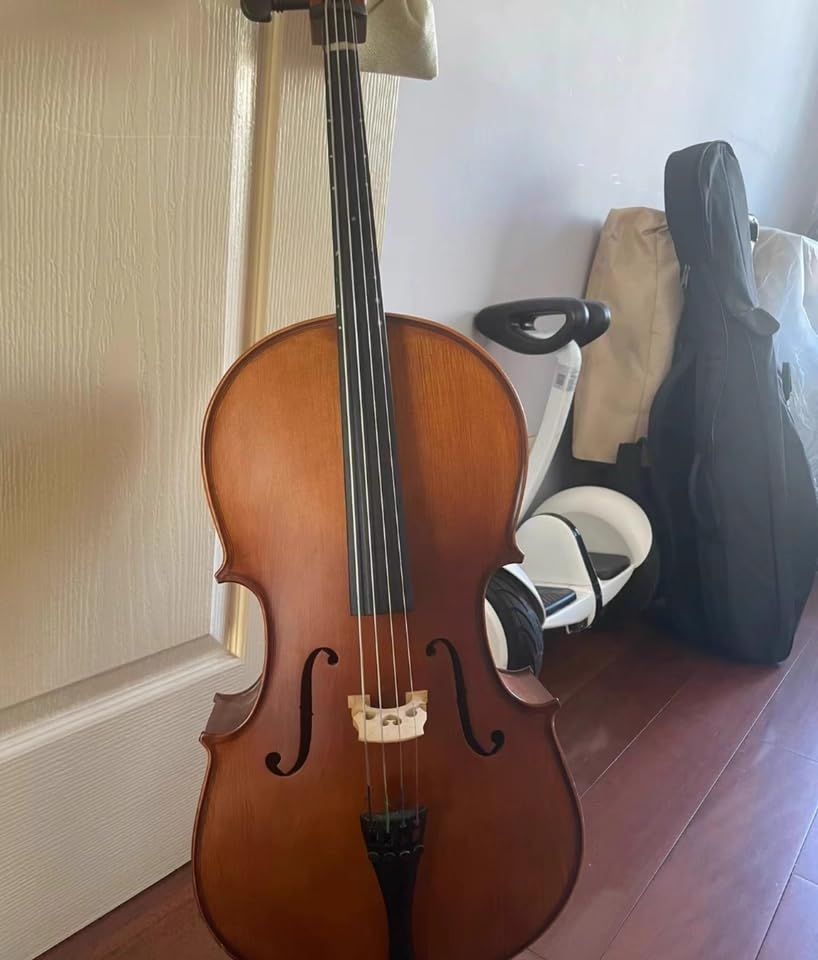
The finish is primarily aesthetic and does not significantly affect sound quality. Some players prefer natural wood finishes because they show the grain and character of the tonewoods, while others like the sleek, modern look of a black cello. The choice comes down to personal preference.
One consideration is that black finishes can sometimes hide imperfections in the wood underneath. With natural finishes, what you see is what you get. If you are concerned about wood quality, ask the seller about the specific tonewoods used and whether the top is solid or laminated.
How Does the Warranty Compare?
The 12-month warranty is above average for cellos in this price range. Most budget instruments offer 30 days to one year at most. The 30-day return policy with no questions asked is particularly valuable for beginners who might discover the cello is not the right fit. You can try it risk-free for a month before committing.
Compare this to the Ktaxon, which only offers a 30-day manufacturer warranty. The longer coverage period suggests EPOFIT has more confidence in their build quality, and it gives you more time to identify any defects or issues.
4. Cecilio CECO-1DW Electric Silent Cello – Best for Quiet Practice
Cecilio 4/4 Silent Electric Cello with Ebony Fittings, Metallic Mahagony
Hand-carved solid maple
Electric silent cello
Ebony fittings
9V battery powered
Headphones included
Pros
- Hand-carved solid maple construction
- Ebony fingerboard with mother of pearl inlay
- Silent practice with included headphones
- 4 detachable fine tuners
- Complete outfit with soft case and bow
Cons
- Requires 9V battery to amplify
- Silent design not suited for acoustic performance
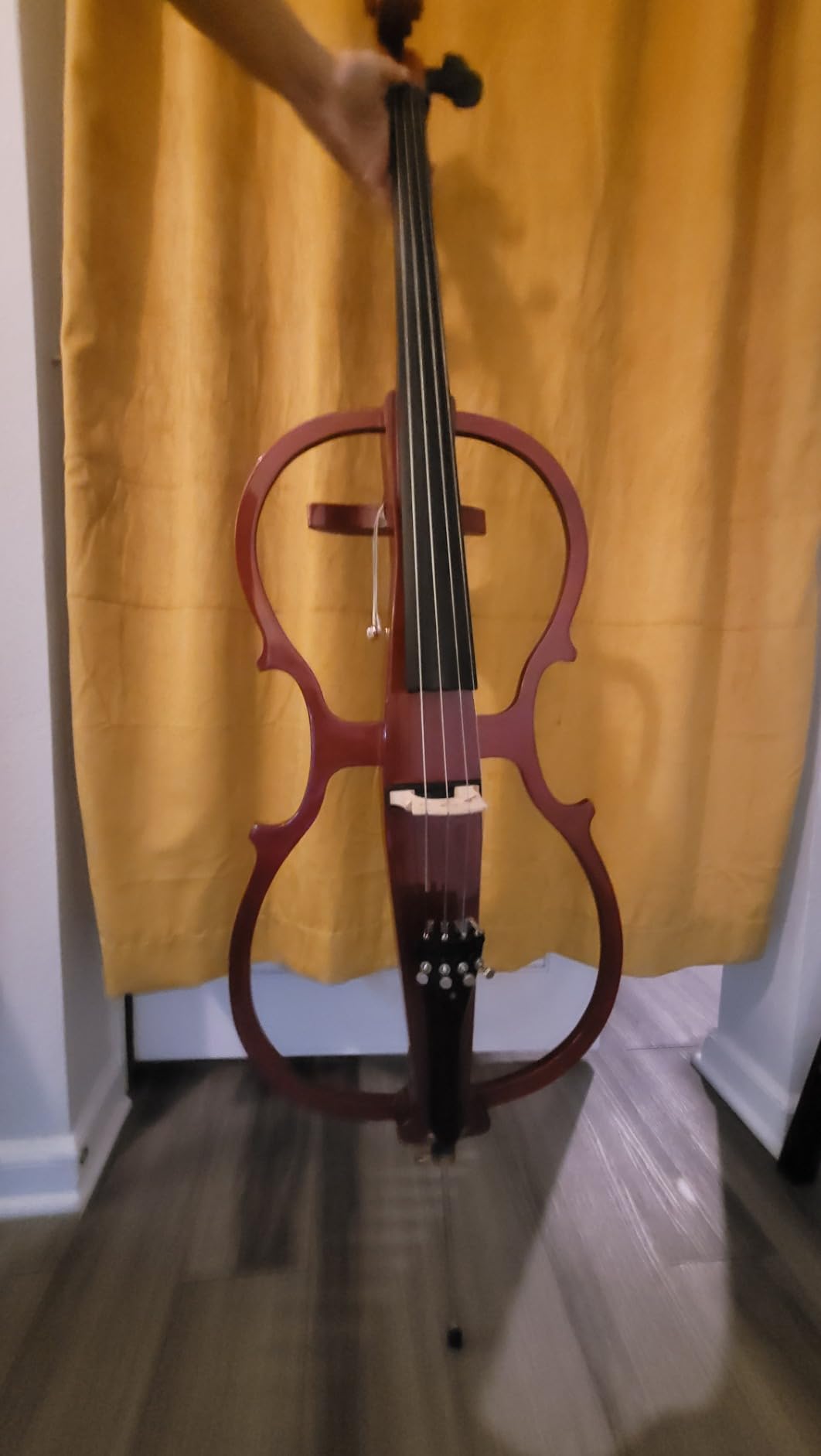
The Cecilio CECO-1DW solves a problem that plagues many adult beginners: how do you practice without driving your family or neighbors crazy? This electric silent cello lets you play through headphones, producing sound only you can hear. It is the number one bestseller in the electric cello category on Amazon, and for good reason.
Do not let the word electric fool you. This is still a real cello with hand-carved solid maple wood construction and genuine ebony fittings. The fingerboard, pegs, and tailpiece are all ebony with mother of pearl inlay that looks striking against the metallic mahogany finish. You play it with a bow exactly like an acoustic cello, but the pickup system translates your playing into an electronic signal.
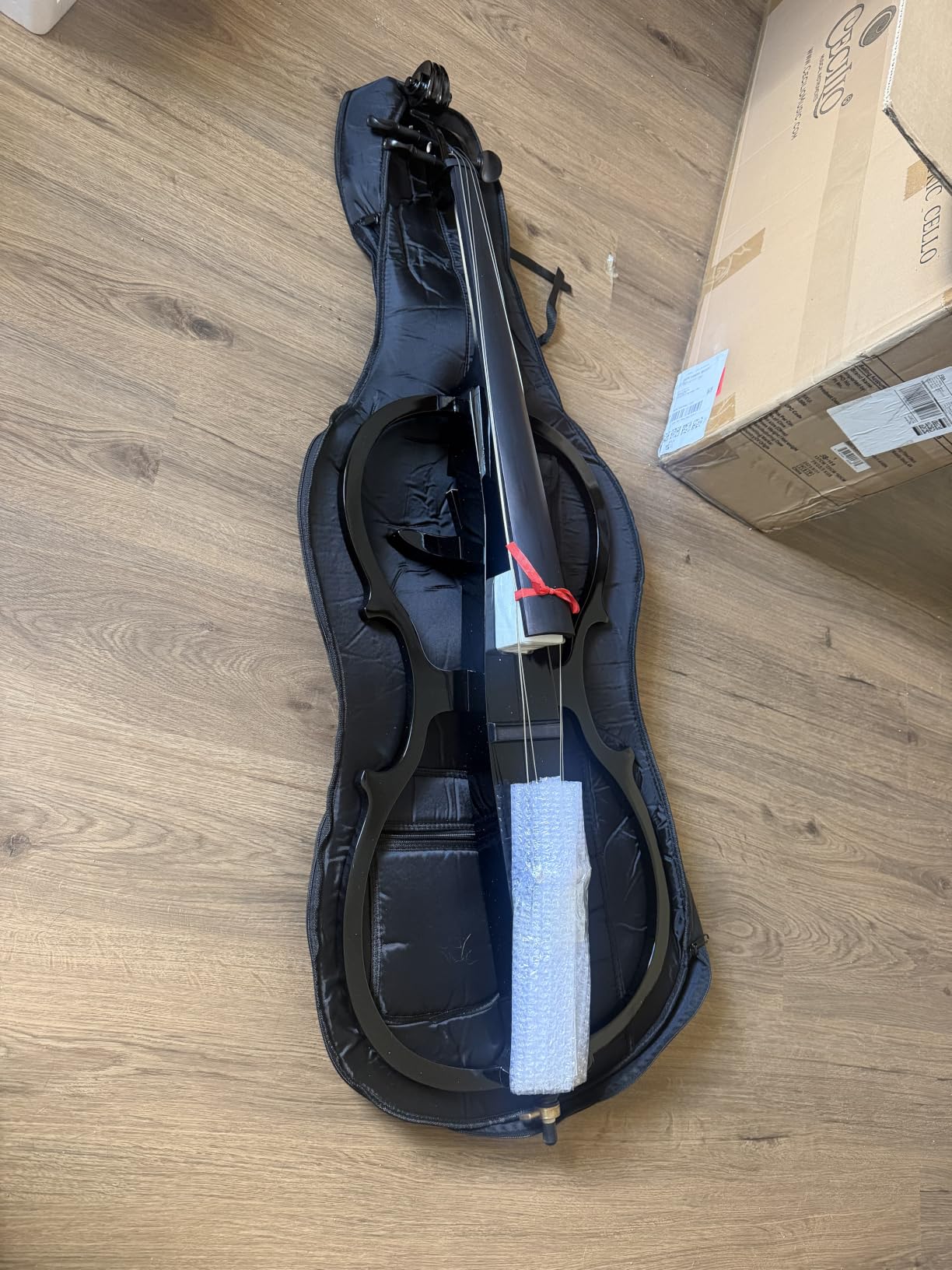
The included headphones plug directly into the cello via a 3.5mm aux cable. A 9V alkaline battery powers the onboard electronics. You can also connect to an amplifier or audio interface if you want to perform or record. This versatility makes it a practical choice for apartment dwellers, late-night practicers, or anyone who wants to explore amplified cello music.
The trade-off is that this is not an acoustic instrument. The body design removes much of the resonating chamber, so without amplification the sound is thin and quiet. If you eventually want to play in an orchestra or acoustic setting, you would still need a traditional cello. This is a specialized tool for specific situations.
Can You Learn Cello Fundamentals on an Electric?
Yes, absolutely. The fingerboard, string spacing, bowing technique, and finger positions are identical to an acoustic cello. Everything you learn on the CECO-1DW transfers directly to a traditional instrument. The four detachable fine tuners make accurate tuning easy, and the ebony fingerboard provides the same tactile feedback as on an acoustic model.
The main difference is that you lose the acoustic feedback loop. On a traditional cello, you feel the vibration in your body and hear the natural resonance of the wood. The electric cello gives you a more processed sound through headphones, which some teachers feel makes it slightly harder to develop a refined ear for tone quality.
Who Benefits Most from a Silent Cello?
This is ideal for adults living in apartments, shared housing, or anywhere noise is a concern. It is also great for late-night practice sessions when others are sleeping. College students in dorms are another natural fit. If you have tried and failed to practice regularly because of noise complaints, this cello removes that excuse entirely.
It is less suitable for children in school orchestra programs, where acoustic instruments are typically required. It is also not the best first cello if your primary goal is classical ensemble playing, since you will eventually need to transition to an acoustic instrument anyway.
5. Cecilio CCO-100 Student Cello – Editor’s Choice
Cecilio 4/4 Full Size Cello, Beginner Cello 4/4, Acoustic Cello Set with Portable Bag, Bow, Rosin, Stand, String Musical Instruments for School Orchestras, Performances
Crack-proof spruce top
Maple back and sides
4/4 full size
Brazilwood bow
Includes stand and case
Pros
- Crack-proof spruce top with maple body
- Complete outfit with stand and extra strings
- Brazilwood bow included
- 1-year warranty
- Most reviewed beginner cello with 2
- 300-plus reviews
Cons
- Bridge not set up for shipping
- Tuning pegs require careful handling
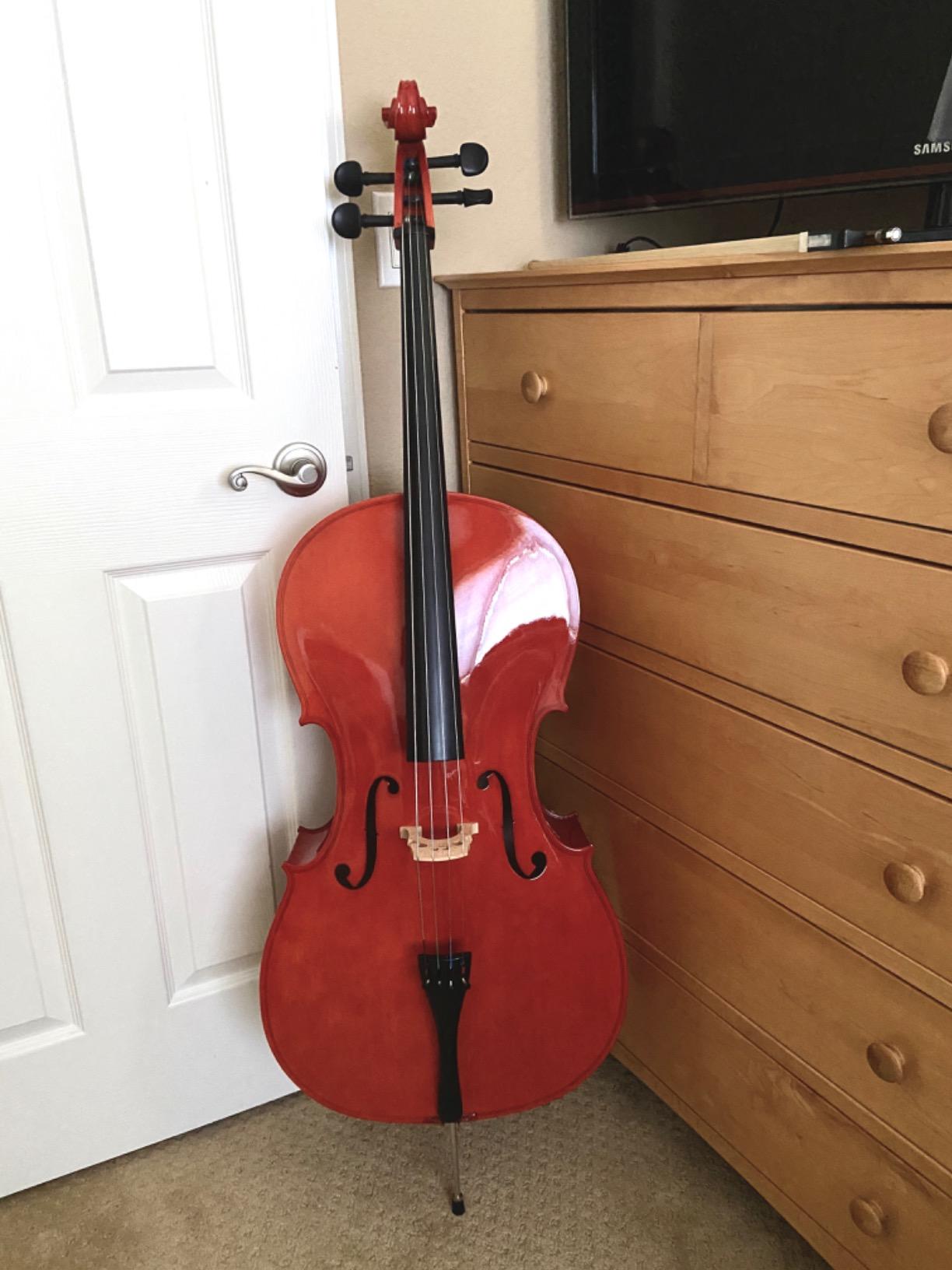
The Cecilio CCO-100 is the cello I recommend to more beginners than any other model on this list. With over 2,300 reviews and a rating of 3.9 stars, it has the largest proven track record of any beginner cello available online. Music teachers on Reddit and Maestronet consistently recommend it as the benchmark student cello in the $400 to $500 range.
The crack-proof spruce top paired with maple back, neck, and sides follows the traditional tonewood combination that has defined quality string instruments for centuries. Spruce provides resonance and projection, while maple adds structural strength and visual appeal. The natural finish shows off the wood grain and looks professional enough for school performances.
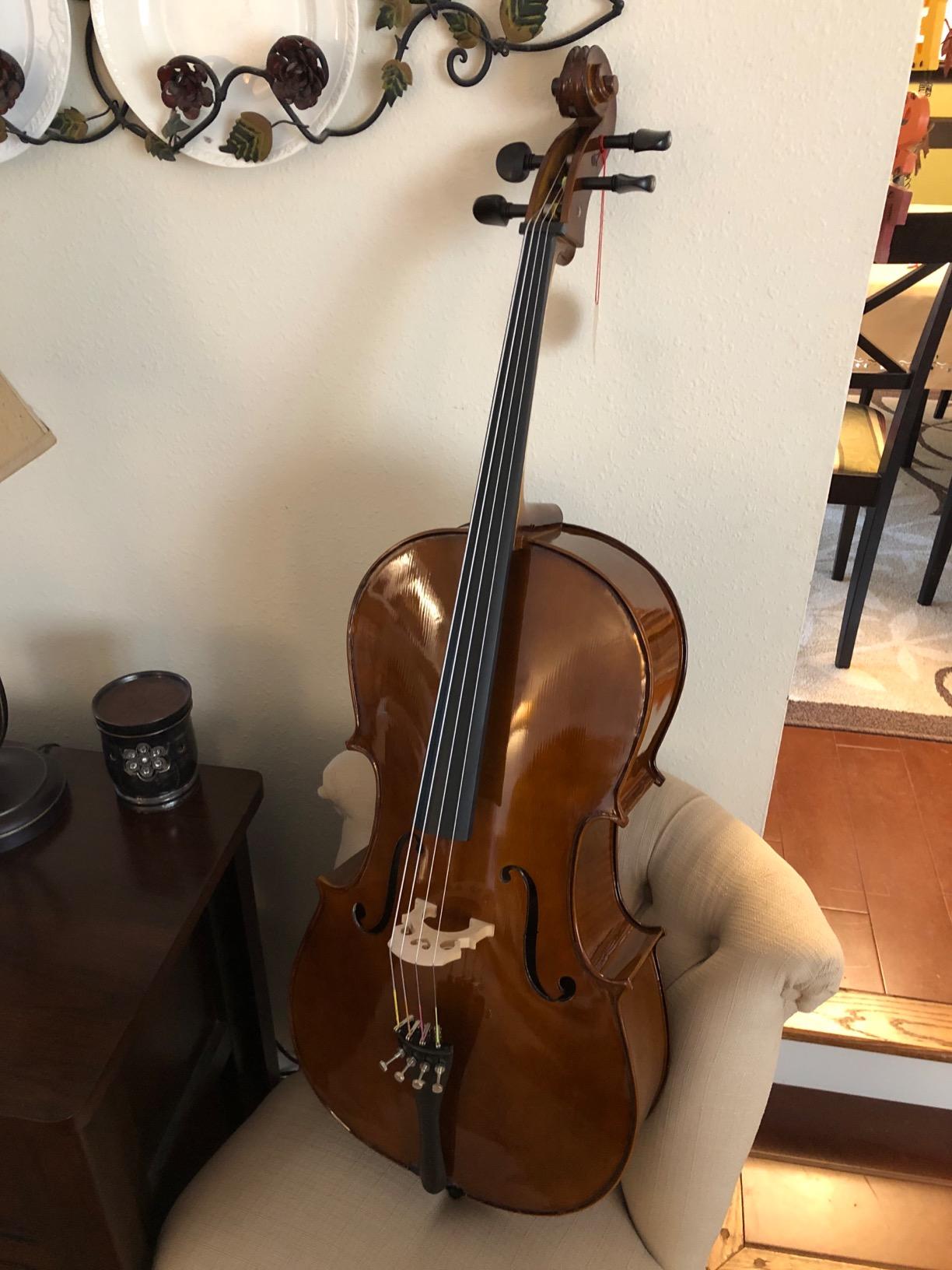
The complete outfit is one of the best value propositions on this list. You get the cello, a padded lightweight soft case with backpack straps and pockets, a Brazilwood bow, a cello stand, a rosin cake, and an extra set of cello strings. The stand alone would cost $30 to $50 separately, and the extra strings are worth $15 to $25. Everything arrives ready for setup.
The 1-year warranty against manufacturer defects provides reasonable protection for a student instrument. Cecilio has been making string instruments for decades and has a reputation for standing behind their products. If you are buying your first cello and want the safest bet, this is it.
What Does the Review Data Tell Us?
With 2,329 reviews, we can draw meaningful conclusions about quality patterns. The distribution shows 57 percent five-star and 15 percent four-star reviews, meaning nearly three-quarters of buyers are satisfied. The 15 percent one-star reviews typically relate to shipping damage or setup issues rather than fundamental instrument quality. This is consistent with what forums report about warehouse-shipped cellos.
Common complaints include bridges arriving uninstalled and tuning pegs that slip initially. Both are normal for shipped cellos and are resolved during professional setup. Buyers who take their CCO-100 to a luthier before playing consistently report much better experiences than those who try to play it straight out of the box.
How Long Will This Cello Last a Beginner?
Most players will get two to four years out of the CCO-100 before feeling the need to upgrade. The spruce and maple construction holds up well to regular practice, and the ebony-free fittings mean some components may eventually need replacement. The Brazilwood bow is a starter bow that many players replace within the first year as their technique develops.
When you do upgrade, the CCO-100 retains decent resale value in the used student cello market. Many music schools and rental programs accept trade-ins, and you can often sell it locally to another beginner. This makes it a lower-risk purchase than cheaper cellos that have no resale market.
6. Cecilio CCO-100 with Hard Case – Best for Transport
Cecilio 4/4 Full Size Cello with Hard & Soft Case, Stand, Bow, Rosin, Bridge and Extra Set of Strings, CCO-100
Spruce top, maple body
Hard and soft case
Brazilwood bow
4 fine tuners
Cello stand included
Pros
- Hard and soft case for maximum protection
- Crack-proof spruce top with maple body
- Four integrated fine tuners
- Complete accessory package
- High-luster varnish finish
Cons
- Bridge not pre-installed
- Tuning pegs need careful handling
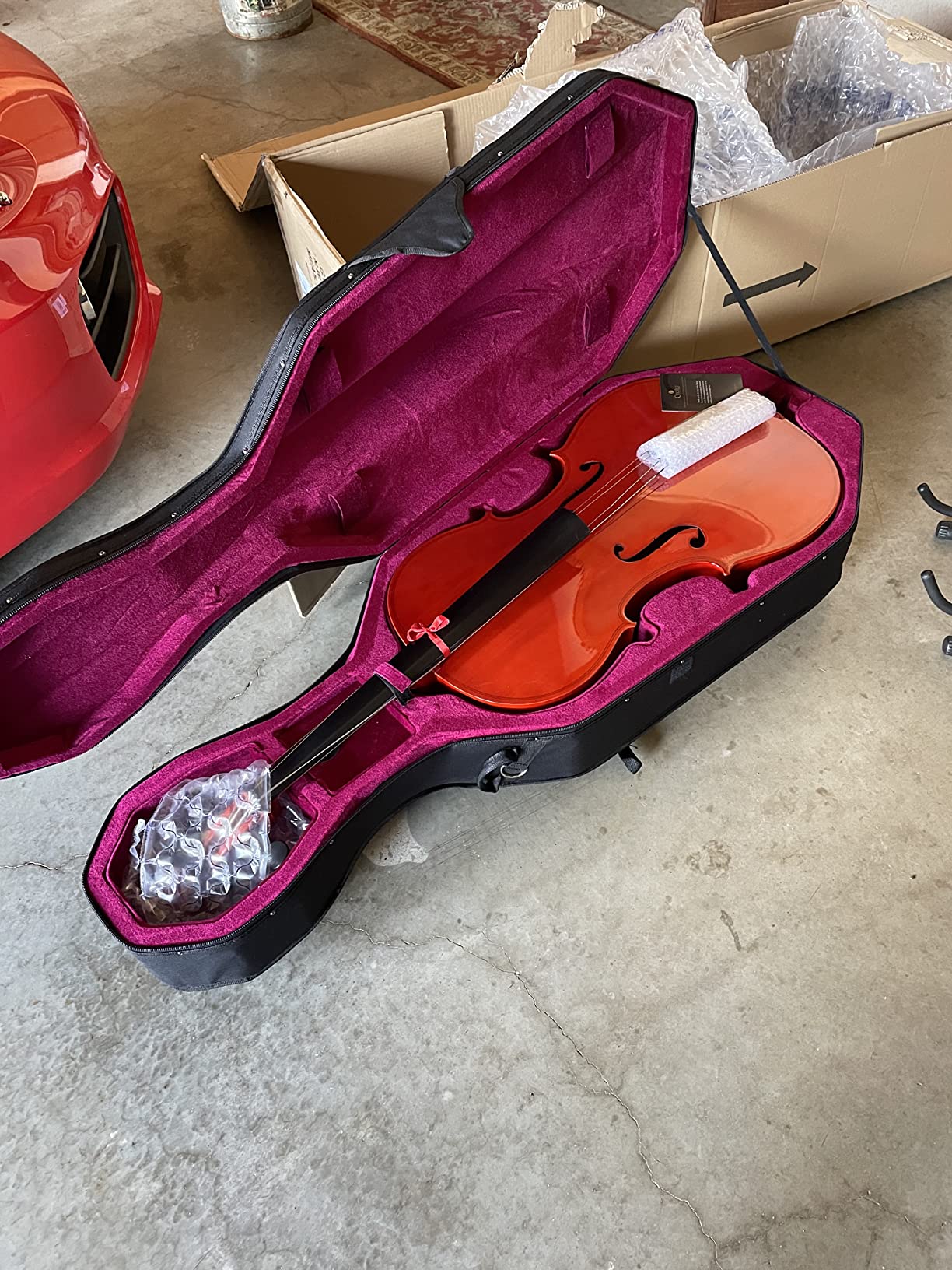
This is the same Cecilio CCO-100 cello that earned our Editor’s Choice, but packaged with both a hard case and a soft case instead of just the soft case. If you know you will be transporting your cello frequently to lessons, rehearsals, or school, the hard case upgrade is worth every penny. The 4.2-star rating from 123 reviews is actually higher than the standard CCO-100’s 3.9.
The instrument itself features the same crack-proof spruce top and maple neck, back, and sides as the standard model. The high-luster varnish finish gives it a slightly glossier, more polished appearance. The maple fingerboard and pegs are paired with an alloy tailpiece featuring four integrated fine tuners for precise tuning control.
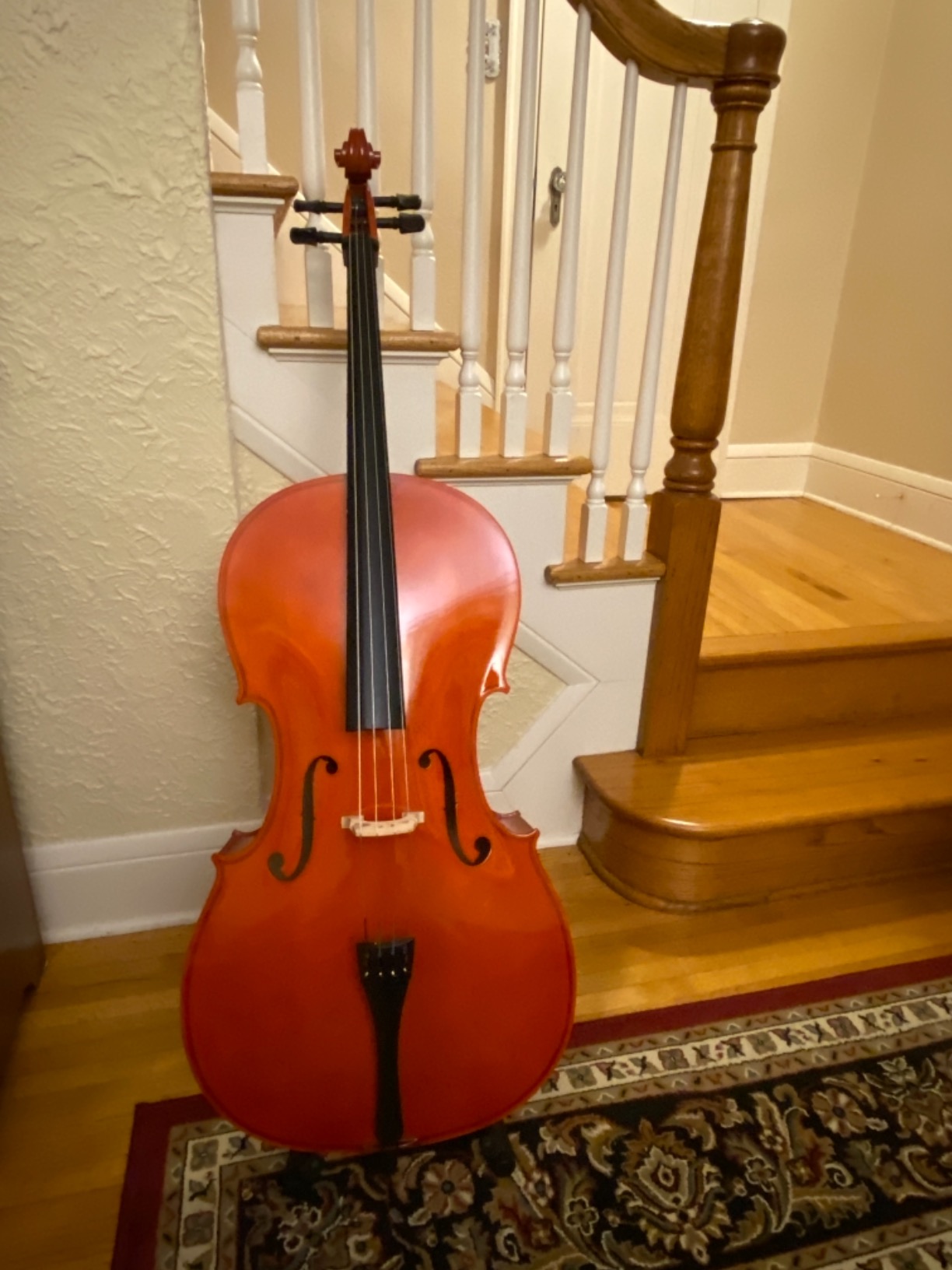
Having both a hard case and soft case gives you flexibility. Use the hard case for air travel, car trips, or storage at home where maximum protection matters. Switch to the soft case with backpack straps for walking to lessons or carrying on public transit where weight is a concern. This dual-case approach is something most beginner cellos do not offer.
The complete accessory package includes the Brazilwood bow, rosin, bridge, cello stand, and an extra set of strings. Everything matches what comes with the standard CCO-100, so you are paying a small premium specifically for the hard case addition. Given that standalone hard cases for cellos typically cost $100 to $200, this is a smart bundle.
Hard Case vs Soft Case: When to Use Each
Use the hard case whenever the cello might be exposed to impact, crushing, or temperature extremes. This includes car travel, air travel, storage in shared spaces, and any situation where the cello could be bumped or knocked over. Hard cases have rigid shells that distribute force away from the instrument.
Use the soft case for short-distance transport on foot, such as walking to a lesson two blocks away. Soft cases are lighter, more comfortable to carry as a backpack, and easier to store in tight spaces. They protect against scratches and minor bumps but will not save your cello from a serious drop.
Is the Higher Rating Meaningful?
The 4.2-star average compared to 3.9 on the standard model likely reflects a smaller, more recent sample of buyers. With 123 reviews versus 2,329, the statistical confidence is lower. However, the higher rating is consistent with the idea that buyers who invest in the hard case version may be more committed to proper care and setup, leading to better overall experiences.
It is also possible that Cecilio has improved quality control on this particular SKU over time. Either way, the extra case makes this the better choice for anyone who plans to take their cello outside the house regularly.
7. D’Luca Meister Student Cello – Complete Learning Package
D’Luca Meister Student Cello Package 4/4 Size w/Stand, Bag, Tuner, Rosin & Bow
Maple and rosewood
4/4 full size
18.5 lbs
Tuner included
Complete student package
Pros
- Complete student package with all accessories
- Rosewood fittings and maple bridge
- Adjustable endpin for height
- Inspected before shipping
- Suitable for school programs and private lessons
Cons
- Bridge and tailpiece not installed during transit
- Lower rating at 3.5 stars with mixed reviews
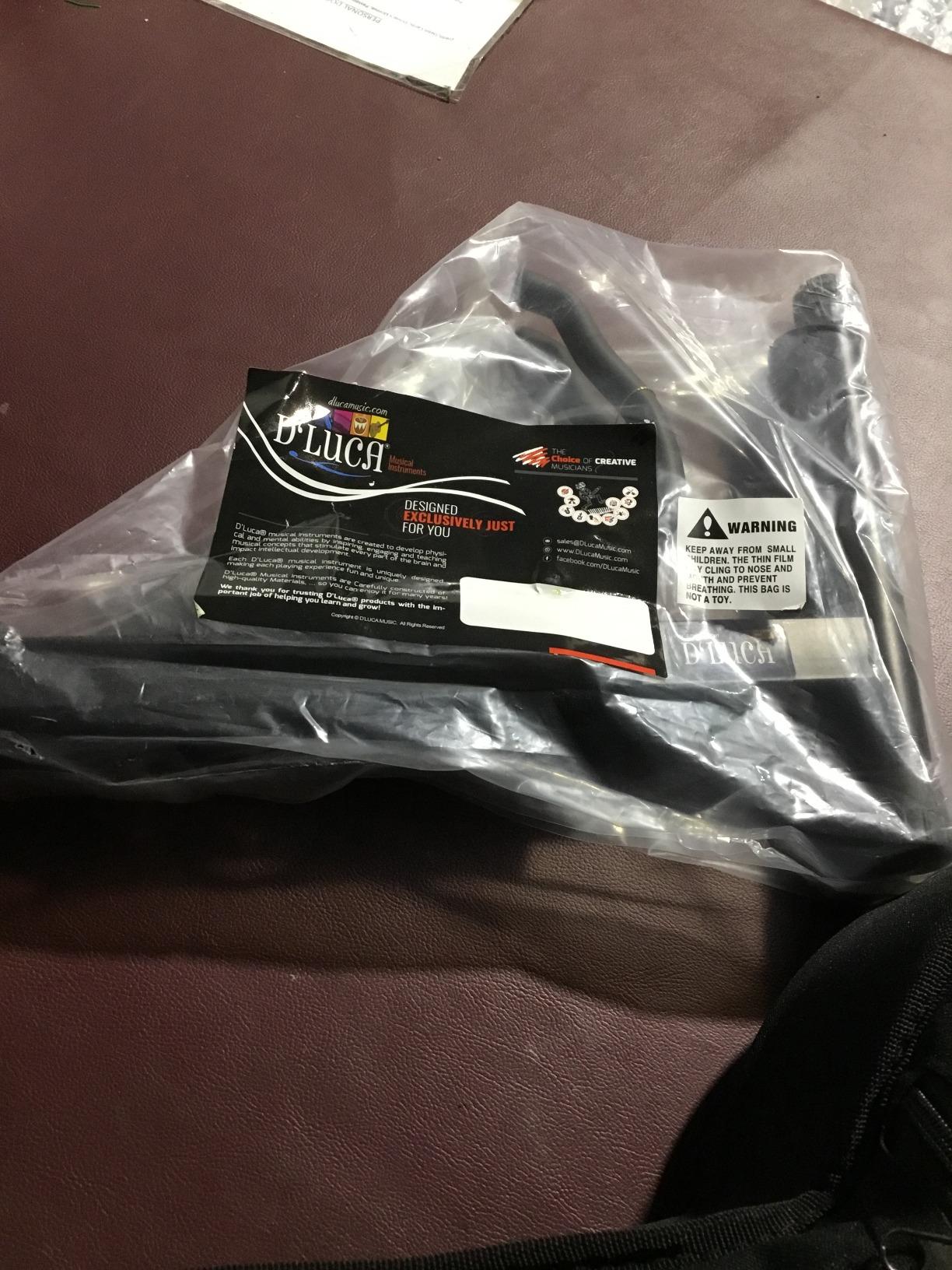
The D’Luca Meister stands out for including a tuner in the package, which is something most other cello outfits omit. For a complete beginner who does not yet own a tuner or tuning app, this removes one more barrier to getting started. The rosewood fittings and maple bridge give this cello a distinctive look compared to the more common ebony-fitted Cecilio models.
At 18.5 pounds, this is a substantial instrument. The weight reflects the solid wood construction throughout, including the maple back, neck, and sides with a spruce and rosewood top. D’Luca inspects each cello before shipping, which theoretically reduces the chance of receiving a defective unit. The adjustable endpin lets you customize the playing height to your body.
The 3.5-star rating from 67 reviews gives me pause. While 52 percent of reviewers gave five stars, a significant 23 percent gave one star. This bimodal distribution suggests inconsistency in quality control or setup. Some buyers receive a great instrument, while others get one with issues that require significant luthier work to resolve.
The included tuner is a basic clip-on model that gets the job done for beginners. It is not as precise as a dedicated chromatic tuner, but it is sufficient for getting strings close to pitch. The package also includes a bag, bow, rosin, and stand, making it a complete outfit similar to the Cecilio CCO-100.
What Causes the Mixed Reviews?
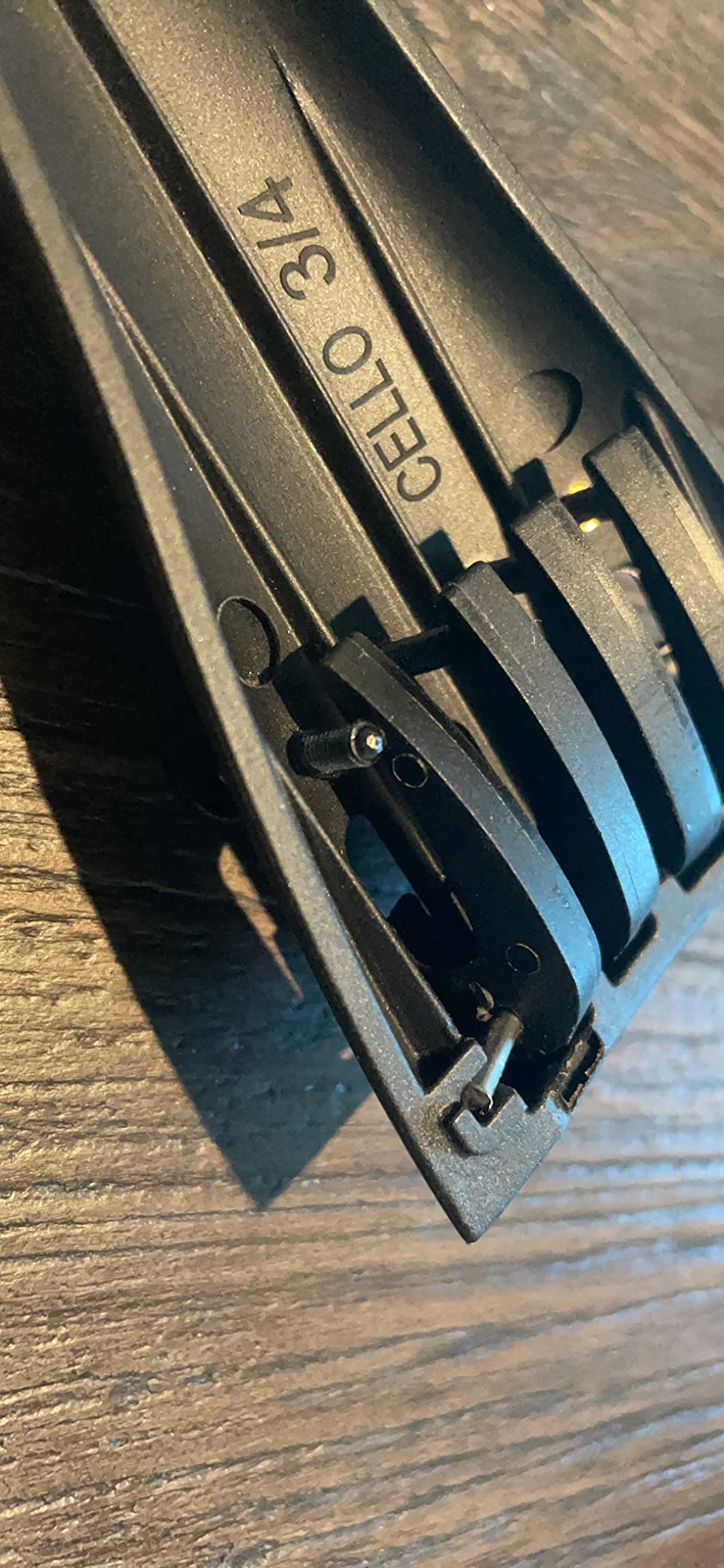
The one-star reviews typically cite issues with the bridge not fitting properly, strings arriving broken or at incorrect heights, and tuning instability. These are all problems that a professional luthier setup addresses, which reinforces the importance of budgeting for that service regardless of which cello you choose.
Some negative reviews mention cosmetic issues like finish imperfections or visible glue lines. These do not affect playability but can be disappointing for buyers expecting a flawless instrument at this price point. Managing expectations is important with any student-grade cello.
Is the Tuner a Meaningful Inclusion?
For absolute beginners, yes. Many people buying their first cello do not own any music accessories and may not know they need a tuner. Including one removes a common point of confusion. However, most smartphones have free tuning apps that work just as well, so the included tuner is more of a convenience than a necessity.
If you already own a tuner or are comfortable using a phone app, this package offers less incremental value compared to the Cecilio CCO-100, which costs less and has a higher rating. The D’Luca makes the most sense for buyers who want everything in one box and appreciate the rosewood aesthetic.
8. Cremona SC-130 Premier Novice Cello – Best Half-Size for Kids
Cremona SC-130 Premier Novice Cello Outfit – 1/2 Size
1/2 size
Solid handcarved tonewoods
Ebony fingerboard
MENC setup standard
For younger students
Pros
- All solid handcarved tonewoods
- Set up to MENC classroom standards
- Oiled neck for better feel
- Ebony fittings and fingerboard
- Swiss-style pegs with composite tailpiece
Cons
- Half size not suitable for adult players
- Limited stock availability
The Cremona SC-130 is built specifically for younger players who need a half-size cello. What sets it apart from cheaper student cellos is the use of all solid, handcarved tonewoods rather than laminated or composite materials. This means the spruce top and maple back are carved from single pieces of solid wood, producing the kind of resonance that laminated instruments simply cannot match.
Cremona sets up each SC-130 to MENC standards at their workshop in California. MENC, the National Association for Music Education, publishes specifications for classroom instruments that ensure proper string height, bridge fit, and tuning stability. This means the cello arrives ready to play without the setup work that warehouse cellos require. For busy parents, this is a significant advantage.
The ebony fingerboard and fittings are genuine, not dyed hardwood substitutes. Ebony provides the durability and smooth surface that developing fingers need. The Swiss-style pegs turn smoothly and hold tune reliably, while the composite tailpiece with integrated fine tuners makes precise pitch adjustments easy for small hands.
The oiled neck is a thoughtful touch that improves playability for beginners. The oil finish reduces friction, allowing the left hand to slide freely between positions. Combined with the well-balanced bow that comes included, the SC-130 feels like a serious instrument rather than a toy, which helps keep young players motivated.
What Age Range Is the 1/2 Size For?
A half-size cello is typically appropriate for children aged 9 to 12, depending on their height and arm length. The general guideline is that a child is ready for a 1/2 cello when they are between 4 foot 6 inches and 4 foot 11 inches tall. Your child’s orchestra teacher or private instructor can confirm the correct size with a hands-on measurement.
It is important not to size up too early. A cello that is too large forces a child to overextend their left arm and strain their back, which can lead to poor technique and even injury. When in doubt, choose the smaller size. Children grow quickly, and you can trade up to the next size when the time comes.
Is the Higher Price Justified for a Child’s Cello?
The SC-130 costs significantly more than budget options like the Ktaxon or Cecilio, but the quality difference is real. Solid carved tonewoods produce a richer, more inspiring tone that helps children develop their ear. A cello that sounds good encourages practice, while a thin-sounding instrument can make a child lose interest.
The MENC-standard setup also saves you the $100 to $200 you would spend having a warehouse cello professionally adjusted. When you factor in that savings, the effective price gap narrows considerably. For a child who is serious about learning, the SC-130 is a worthwhile investment.
9. Cremona SC-175 Premier Student Cello – Step-Up Half-Size
Cremona SC-175 Premier Student Cello Outfit – 1/2 Size
1/2 size
Select tonewoods
Perlon core strings
Hard shell case
MENC setup standard
Pros
- Select tonewoods with quality workmanship
- Set up to MENC classroom standards
- Hard shell foam case for protection
- Oiled neck and balanced bow
- Perlon core strings for warm tone
Cons
- Lower rating at 3.4 stars
- Half size limits the audience
The Cremona SC-175 sits above the SC-130 in Cremona’s lineup, featuring what they call select tonewoods and upgraded details. The most notable difference is the inclusion of Perlon core strings with aluminum wrap, which produce a warmer, more complex tone than the steel strings found on most student cellos. Perlon, a synthetic core, mimics the sound characteristics of gut strings while offering better tuning stability.
The hard shell foam case included with the SC-175 provides excellent protection for transport to and from school or lessons. This is a meaningful upgrade over the soft gig bags included with most beginner outfits. The oiled neck and well-balanced bow match what the SC-130 offers, maintaining Cremona’s focus on playability for developing students.
Like the SC-130, this cello is set up to MENC standards at the Cremona workshop. The Swiss-style pegs and composite tailpiece with fine tuners provide reliable tuning and easy pitch adjustments. Everything about the instrument is designed to meet the demands of school orchestra programs and private teachers.
The 3.4-star rating from 11 reviews is lower than expected for a Cremona instrument at this price. The distribution shows 41 percent five-star and 18 percent one-star reviews, suggesting some quality inconsistency. With such a small sample size, it is hard to draw firm conclusions, but the rating is worth noting alongside the higher price compared to the SC-130.
SC-130 vs SC-175: Which Should You Choose?
The SC-130 actually has a higher rating (4.4 vs 3.4) and costs less than the SC-175. The SC-175’s advantages are the Perlon core strings and the hard shell case, both of which you could add to an SC-130 separately for less than the price difference. Unless you specifically want Perlon strings from day one, the SC-130 is the stronger choice.
The hard shell case is the most compelling reason to choose the SC-175. If your child will be checking the cello on a school bus or storing it in a crowded band room, the extra protection is valuable. But for most beginners, the SC-130 offers better value and has a stronger review track record.
What Are Perlon Strings and Do Beginners Need Them?
Perlon is a synthetic material developed by Pirastro as a gut string alternative. Strings with Perlon cores produce a warmer, more gut-like tone than steel strings, with better overtone complexity. They are popular among intermediate and advanced players who want a richer sound.
For beginners, Perlon strings are a nice-to-have rather than a necessity. Steel strings are perfectly adequate for the first year or two of playing. The main benefit of starting with Perlon is that the child hears a more beautiful tone from the beginning, which can be motivating. The downside is that Perlon strings are more expensive to replace when they eventually wear out.
10. D Z Strad Handmade Model 101 – Premium Pick
D Z Strad handmade Student Cello Model 101 w/Case, Bow and Rosin (1/8 – Size)
1/8 size
Handmade construction
Genuine ebony fingerboard
Warm round tone
Suzuki teacher favorite
Pros
- Easy to play with warm round tone
- Favorite among Suzuki and private teachers
- Hand-carved pegs and genuine ebony fingerboard
- Beautiful and dependable craftsmanship
- Value-packed outfit with case bow strings and rosin
Cons
- 1/8 size limits the audience
- Higher price point for a beginner instrument
The D Z Strad Model 101 represents the top end of what we would consider a beginner cello. With an 80 percent five-star rating and an overall score of 4.8, it is the highest-rated instrument on this list by a wide margin. D Z Strad is a respected name in string instruments, and the Model 101 is specifically designed as an easy-to-play cello that brings years of enjoyment.
The handmade construction is evident in every detail. The hand-carved pegs, tailpiece, and chinrest show attention that factory-assembled instruments lack. The genuine ebony fingerboard provides the smooth, durable surface that serious players demand. The warm and round tone is the kind of sound that makes you want to keep practicing, which is perhaps the most important quality in a beginner instrument.
Suzuki and private teachers consistently recommend D Z Strad instruments to their students. The Suzuki method, one of the most widely used approaches to music education worldwide, emphasizes tone production and listening skills from the very first lesson. An instrument that produces a beautiful tone supports this approach in a way that cheaper cellos cannot.
The value-packed outfit includes a case, bow, strings, and rosin. While the 1/8 size makes this specifically suited for very young children (typically ages 5 to 7), the quality of construction means it will serve them well throughout their early training. When they outgrow it, D Z Strad instruments retain excellent resale value.
Why Is This Cello So Expensive for a Beginner?
The D Z Strad Model 101 costs more than most beginner cellos because it is genuinely handmade rather than factory-produced. The hand-carving process takes significantly more time and labor, but it results in an instrument with better tone, better playability, and better longevity. Think of it as buying a instrument that a student can grow into rather than one they will want to replace within two years.
For very young beginners, investing in quality early can pay dividends. A child who starts on a beautiful-sounding instrument develops a better ear and stronger motivation than one who struggles with a thin, unresponsive cello. The D Z Strad supports this development in a way that budget instruments simply cannot.
What Happens When a Child Outgrows the 1/8 Size?
Children typically outgrow a 1/8 cello within one to two years, depending on their growth rate. D Z Strad instruments hold their value well in the used market, so you can often recoup a significant portion of your investment by selling it to another family or trading it in at a string shop. Some shops offer size-trade programs specifically for growing children.
If you are concerned about the cost of replacing a cello every two years as your child grows, consider a rental program through a specialized string shop. Many shops apply a portion of rental payments toward eventual purchase credit. This can be a smart approach for families with young children who are just starting their musical journey.
How to Choose the Best Beginner Cello?
Choosing among the best cellos for beginners comes down to understanding a few key factors. Let me break down the most important things to consider before you spend your money, drawing on what our team learned from forum research, competitor analysis, and hands-on evaluation.
What to Look for in a Beginner Cello
The five things that matter most are wood quality, size, setup, included accessories, and brand reputation. Wood quality determines the sound. Size determines whether you can play comfortably. Setup determines whether the cello is playable at all. Accessories determine your total cost. And brand reputation tells you whether other beginners have had good experiences.
A cello that excels in all five areas will serve a beginner well for years. A cello that cuts corners on any of them will create frustration. The instruments on this list represent different trade-offs across these factors, which is why there is no single best choice for everyone.
Cello Wood Quality: Spruce Tops and Maple Backs
The golden standard for cello tonewoods is a carved spruce top paired with maple back and sides. Spruce is lightweight and resonant, vibrating freely to produce sound. Maple is dense and reflective, bouncing sound back through the top and projecting it outward. This combination has been used by luthiers for over 300 years because it simply works.
Cheaper cellos substitute basswood or other less resonant woods for the top, which produces a thinner, less complex tone. Laminated woods, where thin veneers are glued together, are even worse because the glue layers dampen vibration. When shopping, look specifically for solid carved spruce tops rather than laminated or alternative woods.
The fingerboard and pegs should be genuine ebony. Ebony is dense enough to resist wear from string pressure and finger friction, and it provides a smooth playing surface. Dyed hardwood substitutes look similar but wear down quickly, developing grooves that affect playability. All the Cremona and D Z Strad models on this list use genuine ebony.
Cello Size Guide: Finding the Right Fit
Cellos come in fractional sizes to accommodate players of different ages and body types. The most common sizes for beginners are 4/4 (full size), 3/4, 1/2, 1/4, 1/8, and 1/10. Choosing the wrong size leads to poor technique, discomfort, and even injury.
For adults and teenagers over approximately 5 feet tall, a 4/4 full-size cello is almost always correct. The player should be able to sit comfortably with the cello’s neck reaching their left ear when the endpin is extended to a natural position. If you have to strain to reach first position or your left arm feels overextended, the cello may be too large.
For children, size selection depends on height and arm length more than age. A rough guide: ages 5 to 7 typically need a 1/8 size, ages 7 to 9 need a 1/4, ages 9 to 12 need a 1/2, and ages 12 and up often need a 3/4 or full size depending on growth. Always have a teacher or luthier confirm the correct size before purchasing.
Buying a slightly larger cello to grow into is a common mistake. A cello that is too big forces poor posture and technique that can take months to correct. When between sizes, always choose the smaller option. Your child will outgrow it eventually, but they will learn proper technique in the meantime.
Why Professional Setup Matters
This is the single most overlooked factor in buying a beginner cello. Every cello shipped from a warehouse or online retailer needs professional setup before it is truly playable. This includes fitting the bridge, adjusting the soundpost, setting string height at the nut and bridge, seating and lubricating the pegs, and checking the endpin and tailpiece.
A luthier setup typically costs $100 to $200 and takes one to two weeks. Without it, your cello will be harder to play, harder to tune, and will sound worse than it should. Forum users on r/Cello repeatedly warn that skipping setup is the number one reason beginners quit in frustration.
The Cremona cellos on this list are the exception, as they come set up to MENC classroom standards at the factory. Everyone else should budget for luthier work on top of the purchase price. Factor this into your total cost when comparing options.
Renting vs Buying a Beginner Cello
Many specialized string shops offer rental programs that include professional setup, maintenance, and size-trade options. For children who will outgrow their cello within a year or two, renting is often the smarter financial choice. You avoid the upfront cost of buying and can trade up to the next size when needed.
Rental programs through reputable shops typically cost $25 to $60 per month, with some shops applying a portion of rental payments toward future purchase. This means if your child sticks with the cello, your rental payments build equity toward owning an instrument. If they lose interest, you simply return it with no further obligation.
For adults, buying usually makes more sense since you will not outgrow a full-size cello. The break-even point is typically 12 to 18 months of rental payments. If you are confident you will still be playing in two years, buying upfront saves money. If you are uncertain, a few months of rental lets you test your commitment without a large investment.
Price Tiers Explained
Budget cellos under $300 like the Ktaxon and EPOFIT models are best for testing whether the cello is right for you. They use less expensive woods and hardware but include everything needed to start. Expect a functional but uninspiring tone, and plan on upgrading within one to two years if you stick with it.
Mid-range cellos from $400 to $700, including the Cecilio CCO-100 and D’Luca Meister, offer genuine spruce and maple construction with complete outfits. This is the sweet spot for most adult beginners and serious students. You get an instrument that sounds good, plays well after setup, and lasts several years.
Premium beginner cellos from $900 to $1,600, like the Cremona and D Z Strad models, feature solid carved tonewoods, genuine ebony fittings, and professional-grade setup. These instruments produce the kind of tone that inspires practice and can serve a student through their intermediate years before an upgrade is needed.
FAQs
How much does a good starter cello cost?
A good starter cello costs between $300 and $700 for a quality instrument with spruce top and maple back construction. Budget options under $200 exist but use less resonant woods. Plan to add $100 to $200 for professional luthier setup, which is essential for making any shipped cello properly playable.
Can I self teach myself cello?
You can learn cello basics on your own using online tutorials and method books, but working with a teacher accelerates progress and prevents technique problems. The cello is one of the harder string instruments to learn properly because bowing technique requires precise coordination. Most beginners benefit from at least a few months of private lessons to establish correct fundamentals.
Is 40 too old to learn cello?
No, 40 is not too old to learn cello. Adults learn instruments differently than children, often with better focus and motivation. Many people start cello in their 40s, 50s, and beyond and reach a satisfying level of playing within two to three years. The key is consistent daily practice and a properly set up instrument that does not fight you.
What size cello do I need as a beginner?
Adults and teenagers over approximately 5 feet tall need a 4/4 full-size cello. Children should be measured by a teacher or luthier, but a rough guide is 1/8 size for ages 5 to 7, 1/4 for ages 7 to 9, 1/2 for ages 9 to 12, and 3/4 or full size for ages 12 and up. Always choose the smaller size when between sizes.
Do I need a professional luthier setup for a beginner cello?
Yes, unless you buy a Cremona cello that comes factory-set to MENC standards. Warehouse-shipped cellos arrive with uninstalled bridges, unadjusted soundposts, and pegs that need seating. A luthier setup costs $100 to $200 and makes the difference between a cello that is enjoyable to play and one that causes frustration. Never skip this step.
Final Thoughts on the Best Cellos for Beginners
Finding the best cellos for beginners comes down to matching the instrument to your situation. For most adult beginners, the Cecilio CCO-100 is the safest and most proven choice, with its crack-proof spruce top, complete outfit, and thousands of positive reviews. If budget is the primary concern, the Ktaxon Full-Size Cello gets you playing for under $200. And for young students whose parents want genuine handmade quality, the D Z Strad Model 101 delivers a tone that inspires practice.
Whatever you choose, remember two things. First, budget for professional setup unless you buy a Cremona model with factory MENC-standard setup. That $100 to $200 investment transforms a warehouse cello into a playable instrument. Second, the best cello is the one you actually practice. A modest instrument played daily will take you further than a premium cello that sits in its case.
We will keep updating this guide in 2026 as new models arrive and review data accumulates. If you have experience with any of these cellos, we would love to hear about it. Happy playing.