
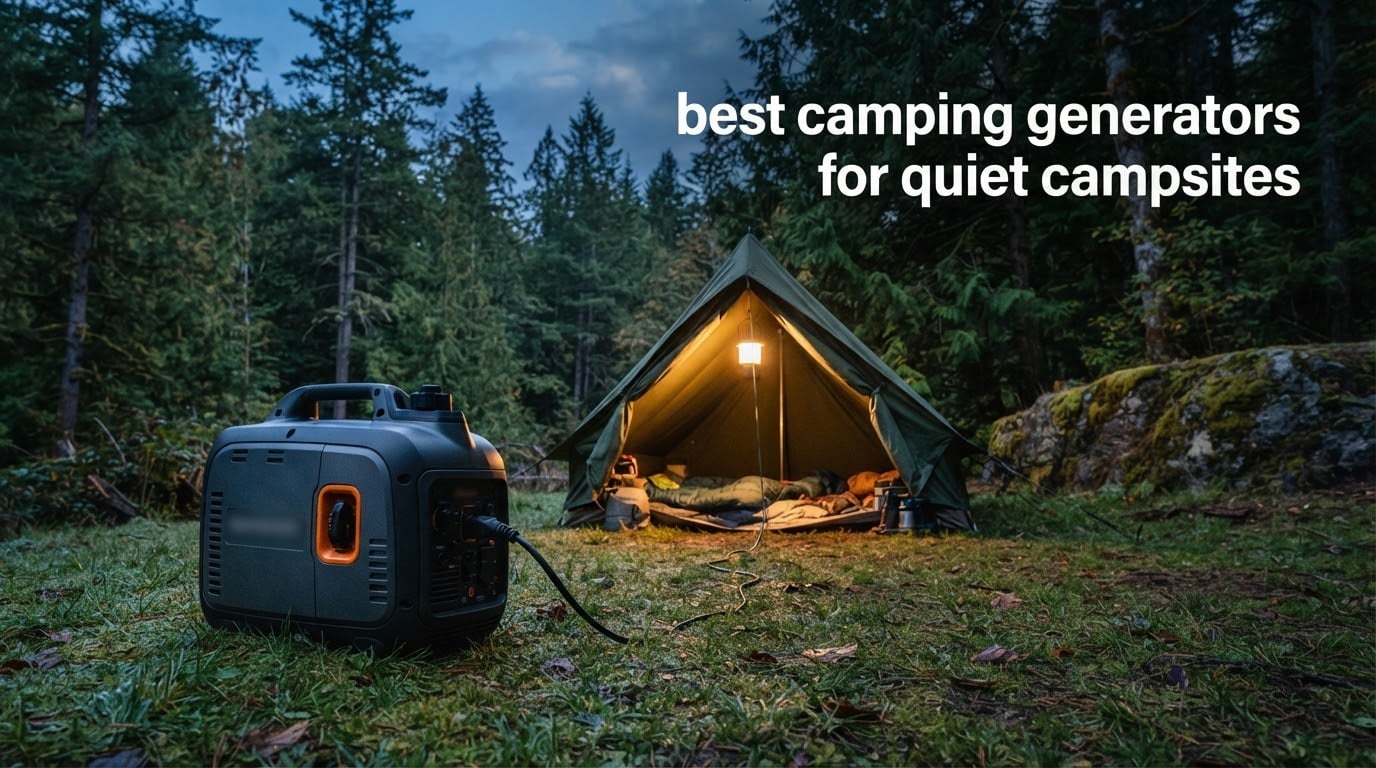
If you share a campsite, the decibel rating matters more than the wattage. Our pick for the best camping generators for quiet campsites is the WEN 56235i, a 39-pound inverter unit that reviewers describe at conversation level, with fuel shutoff and a 10-hour runtime on a one-gallon tank. We compared 10 portable inverter and open-frame models side by side, ranked by published dB, running watts, fuel type, weight and runtime.
One correction before the list: the dB number on the box is measured at low load, and the unit gets noticeably louder the moment it ramps up. Owners across camping and RV forums keep repeating the same thing, that a small inverter can be hush at idle and audible under a real load. Everything below reports the published figure and tells you what to expect in practice.
We also cover the rules most guides skip, including the fact that campground quiet hours are commonly 8pm to 8am rather than the widely assumed 10pm to 6am, and that many sites cap noise near 60 dB. If you are still weighing brands, our picks for the best portable camping generators for RVs and the best RV generators for camping cover the hookup side of the same decision.
Table of Contents
Top 3 Picks for Quiet Campsites in 2026


Best Camping Generators for Quiet Campsites (October 2026)
The table lists every unit we reviewed in the order we recommend them. Published dB figures are included because that is the number you will be judged on at a shared site, but read the load notes in each review before you commit.
| Product | Specifications | Action |
|---|---|---|
| WEN 56235i 2350-Watt Super Quiet Inverter |
|
Check Latest Price |
 Oxseryn 4400-Watt Inverter RV Ready Oxseryn 4400-Watt Inverter RV Ready |
|
Check Latest Price |
| Champion 4000-Watt RV Ready Inverter |
|
Check Latest Price |
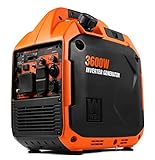 WEN 56360i 3600-Watt RV-Ready Inverter WEN 56360i 3600-Watt RV-Ready Inverter |
|
Check Latest Price |
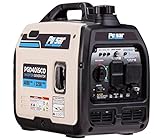 Pulsar PGD40ISCO 4000W Ultra Light Pulsar PGD40ISCO 4000W Ultra Light |
|
Check Latest Price |
 Oxseryn 2800-Watt Inverter with USB-C Oxseryn 2800-Watt Inverter with USB-C |
|
Check Latest Price |
 PowerSmart HB5020 2500-Watt Inverter PowerSmart HB5020 2500-Watt Inverter |
|
Check Latest Price |
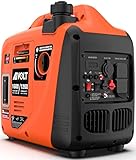 AIVOLT 1600W Super Quiet Inverter AIVOLT 1600W Super Quiet Inverter |
|
Check Latest Price |
 ERAYAK 4500W Inverter with Eco Mode ERAYAK 4500W Inverter with Eco Mode |
|
Check Latest Price |
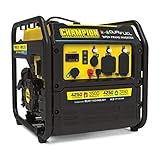 Champion 4250-Watt Dual Fuel Inverter Champion 4250-Watt Dual Fuel Inverter |
|
Check Latest Price |
1. WEN 56235i 2350-Watt Inverter: Best Overall for Quiet Campsites
WEN Super Quiet 2350-Watt Portable Inverter Generator with Fuel Shut Off, Gasoline Power, Ultra Lightweight (56235i), Black
39 pounds
1900 running watts, 2350 surge
10 hours on 1 gallon
Fuel shutoff
Pros
- Conversational noise in eco mode
- 39 pounds is a genuine one-person lift
- 10-hour runtime on a one-gallon tank
- fuel shutoff protects the carburetor
- 2x 120V outlets plus 12V DC and 2x USB
Cons
- Sustained output measured near 1850W
- high inrush loads must be started one at a time
- low-oil shutdown can trigger on gentle slopes
- magnetic dipstick widely recommended
This is the unit we keep coming back to. At 39 pounds it is the second-lightest in the group, and 2627 reviews at 4.5 stars is the largest owner base in the roundup. Reviewers consistently describe conversation-level noise in eco mode, and one owner measured 62 dB at 21 feet under real load rather than the lab figure.
It ran a Dometic 13,500 BTU rooftop air conditioner for owners who fitted a soft-start device, which is a surprising result from a 79cc four-stroke engine. Starting was reliable on the first or second pull, including at 16 degrees Fahrenheit on a winter weekend. The fuel shutoff switch drains the carburetor before shutdown, and that discipline protects the engine over a long season.
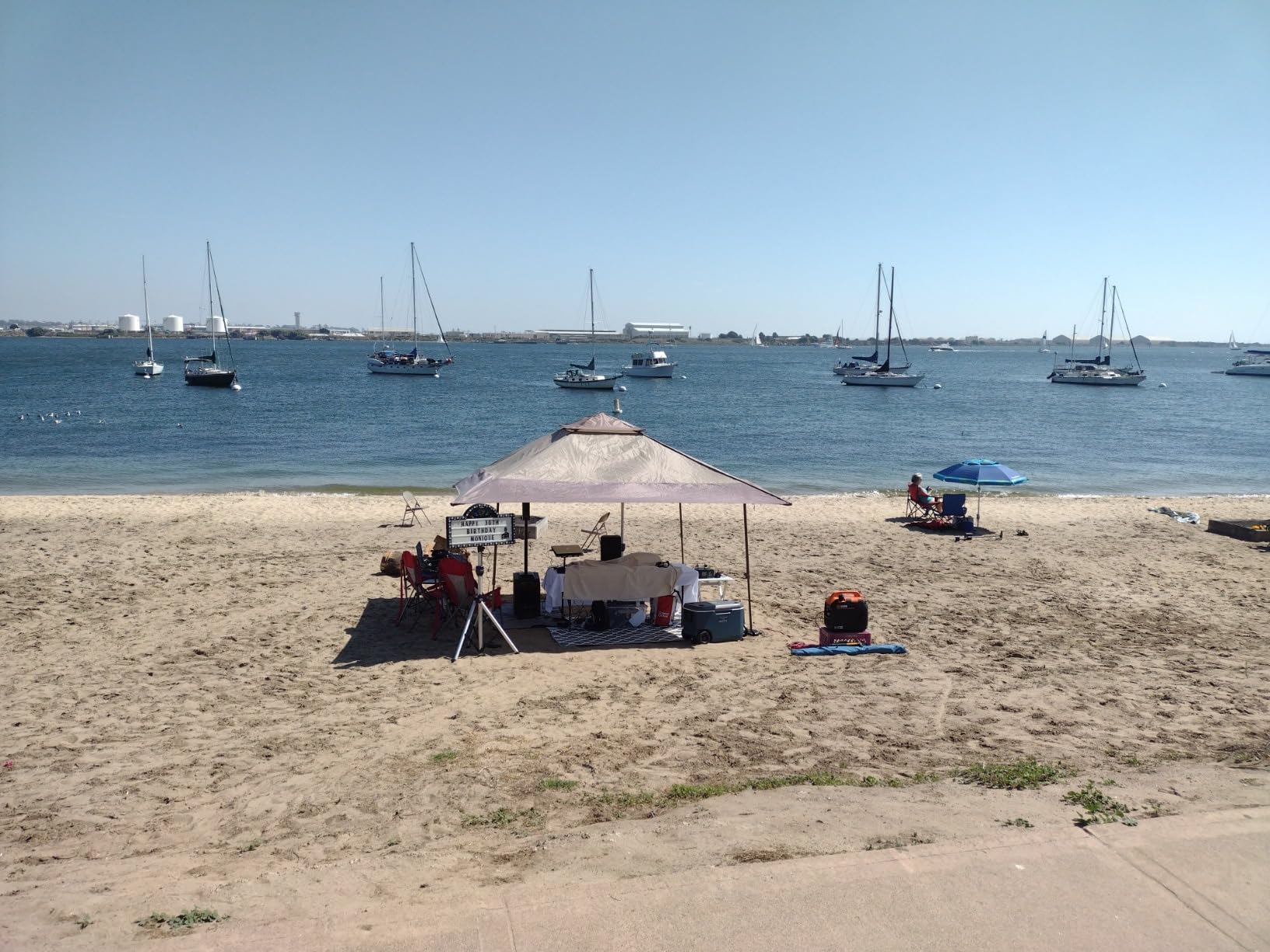
The honest limits are surge headroom. Sustained output measured around 1850W in use, a little under the 1900W nameplate, and large motors such as refrigerators and air compressors need to be started one at a time or the overload light trips. Out of the box some units pulse briefly at no load until the governor screw is adjusted, and the low-oil sensor can trip on a site that is not perfectly level.
There is no hour meter and no oil filter, so a magnetic dipstick is the widely recommended add-on. One reviewer reported an engine failure at roughly 167 hours followed by a long wait on repair parts, which is the main reason we would not call this a forever purchase.
Check the noise floor before you commit
What matters at a campsite is the floor noise, and this unit’s floor is the reason it wins. Owners running it beside a tent at a busy site report that neighbors do not react, which is the only test that counts at 9pm in July.
Place it 20 to 30 feet from camp on soft ground and use eco mode for the fridge, phone charging and lights. Most of the complaints trace back to a heavy load running in full-throttle mode, not to the unit itself.
Skip it if your load is an air conditioner
If you are running a 13,500 BTU rooftop unit plus a microwave, you will be running near the ceiling constantly. The WEN 3600W or the Champion 4000W handles that headroom without the same strain.
A soft-start device helps a great deal, and plenty of owners never need anything larger. Just know that you are spending your margin before the trip even starts.
2. Oxseryn 4400-Watt Inverter: Most Running Watts
Oxseryn Power Equipment 4400 Watts Inverter Generator Gas Powered, Portable Open Frame Generator, Low Noise with ECO Mode, RV Ready, Emergency Home Backup
3400 running watts, 4400 peak
14 hours at 25% load
72 dBA at 23 feet
56 pounds
Pros
- More running watts than most quieter units
- 14-hour runtime at 25% load from two gallons
- built-in RV port
- fuel gauge for at-a-glance checks
- factory-tested before it ships
Cons
- 72 dBA is louder than the 58 to 64 dBA class leaders
- open frame is more exposed than a shrouded inverter
- one-year manufacturer warranty
- 208cc engine is a larger and thirstier motor
This is the pick for a large rig or a long trip where watts matter more than whispers. 4400 peak and 3400 running watts puts it in the middle of this roundup’s power band, and the 14-hour runtime at 25% load from a two-gallon tank with a fuel gauge means you can run lights, a fridge and charging cables for a full day and a night without a refill.
The outlet panel includes two 120V AC ports, a 12V DC port and a native RV port, so a travel trailer connects without an adapter. At 56 pounds it is still a two-person carry but not a back problem. Reviewers treat it as a value-first choice: more running watts and a longer tank-to-tank interval than most of the premium quiet units here, with acceptable rather than class-leading noise.
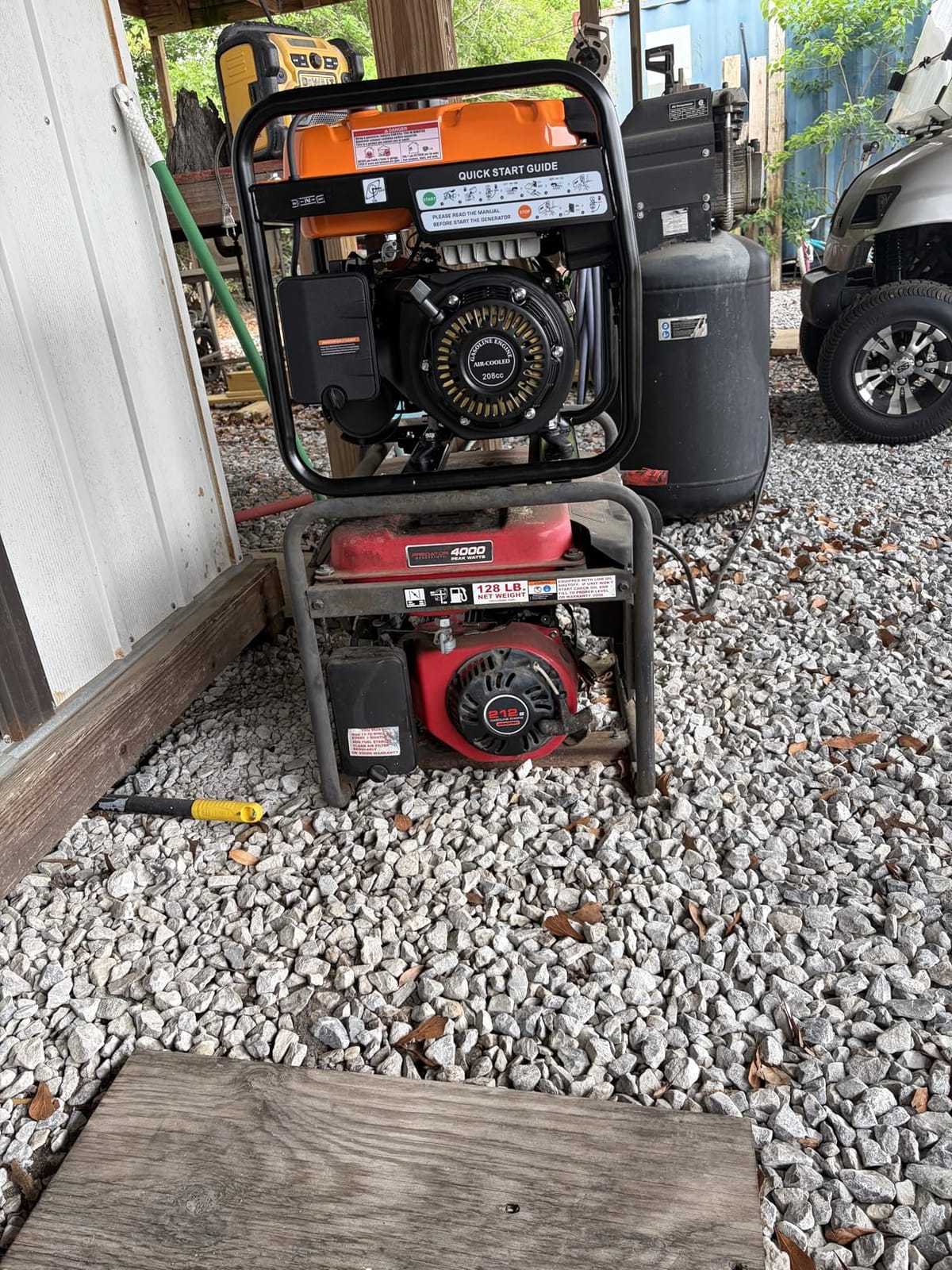
Now the part that matters if you are near other people. 72 dBA from 23 feet is the loudest published figure in this roundup, and the open-frame design radiates more of it than a fully shrouded inverter would. That is fine for daytime work and emergency home backup. During quiet hours at a shared site, we would run it only when genuinely needed.
The one-year manufacturer warranty is also among the shortest here, and the 208cc engine is a bigger motor that drinks more than the 79cc and 80cc units in the small inverter class. Treat that as the trade for the output.
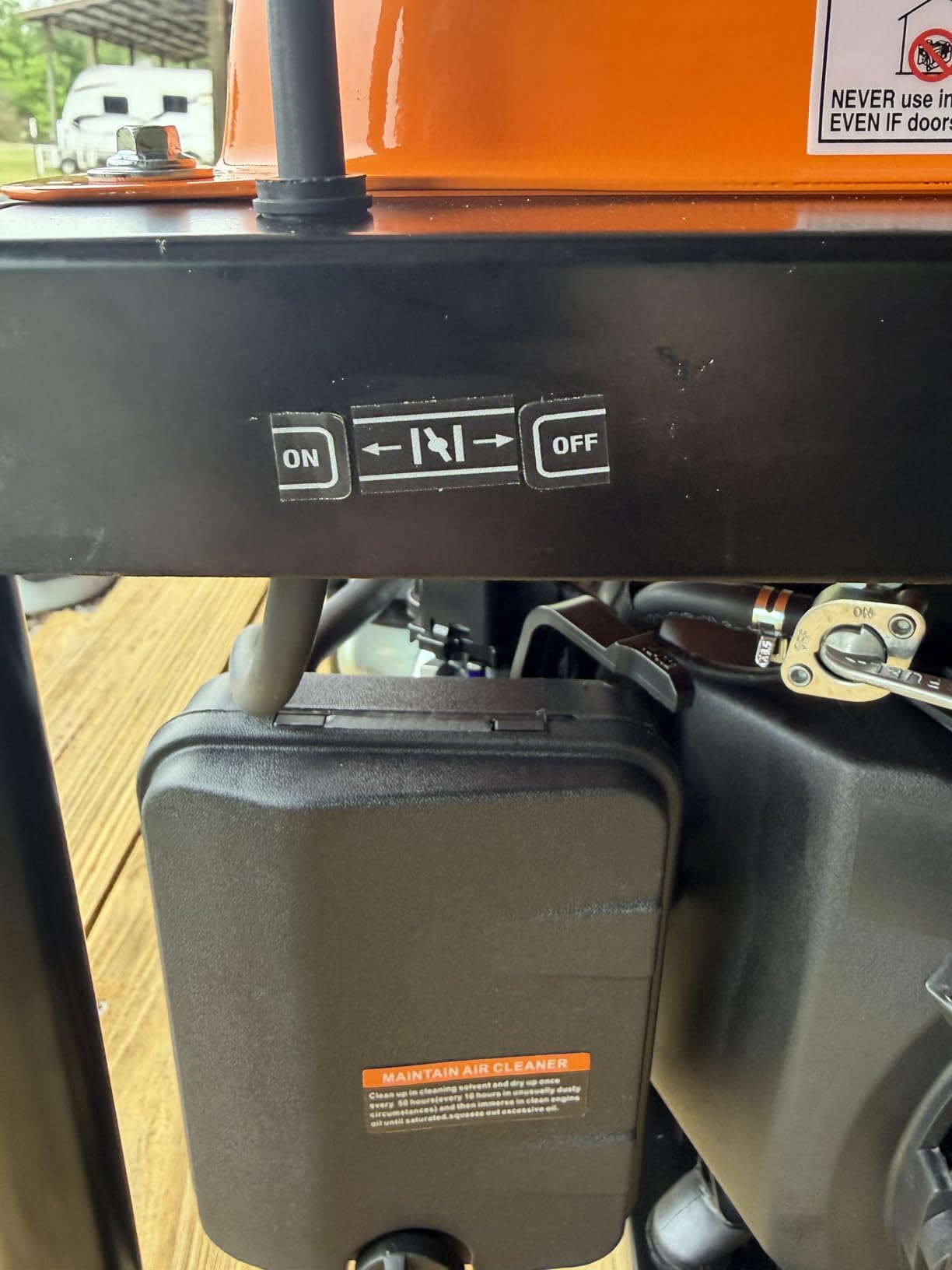
Check the noise floor for high-output units
Open frames do not absorb sound, so a 72 dBA rating is closer to what neighbors hear than a fully enclosed unit at the same number would be. Treat the published figure as honest rather than optimistic, and plan your quiet hours around it.
Eco mode at 25% load is where the 14-hour figure comes from. If your real draw is a rooftop air conditioner, expect considerably less runtime and a louder engine speed.
Skip it if you are the quiet site
On an open field with no neighbors, this is an excellent tool. Pitched 30 feet from someone else’s tent during the 8pm to 8am quiet window, an enclosed model in this roundup gives you similar power at a much lower sound level.
Buy this one for capability. Buy something quieter for manners.
3. Champion 4000-Watt RV Ready Inverter: Top Rated
Champion 4000-Watt RV Ready Portable Inverter Generator
3000 running watts, 4000 start
64 dBA at 23 feet
48.1 pounds
CO Shield shutoff
Pros
- Highest-rated model in the roundup at 4.6 stars
- under 49 pounds for 4000 watts
- CO Shield carbon monoxide auto shutoff
- TT-30R RV outlet and parallel ready
- 3-year warranty with lifetime technical support
Cons
- Costs well above the entry-level units for similar wattage
- 10-hour runtime trails several cheaper competitors
- parallel kit and remote accessories sold separately
At 4.6 stars with 84% five-star reviews, this is the best-rated model we reviewed, and the consensus around it is unusually specific: low weight, clean 4000-watt output and a 64 dBA rating that works at campground sites. It delivers 4000 starting watts and 3000 running watts from a 149cc four-stroke engine at 48.1 pounds, which is remarkably light for the class.
The output is clean at under 3% total harmonic distortion, so laptops, cameras and CPAP machines are safe. The 120V 25A TT-30R outlet means an RV plugs straight in, and parallel-ready outlets let you pair it with a second 4000-watt Champion and double your output if a trip outgrows the first unit.
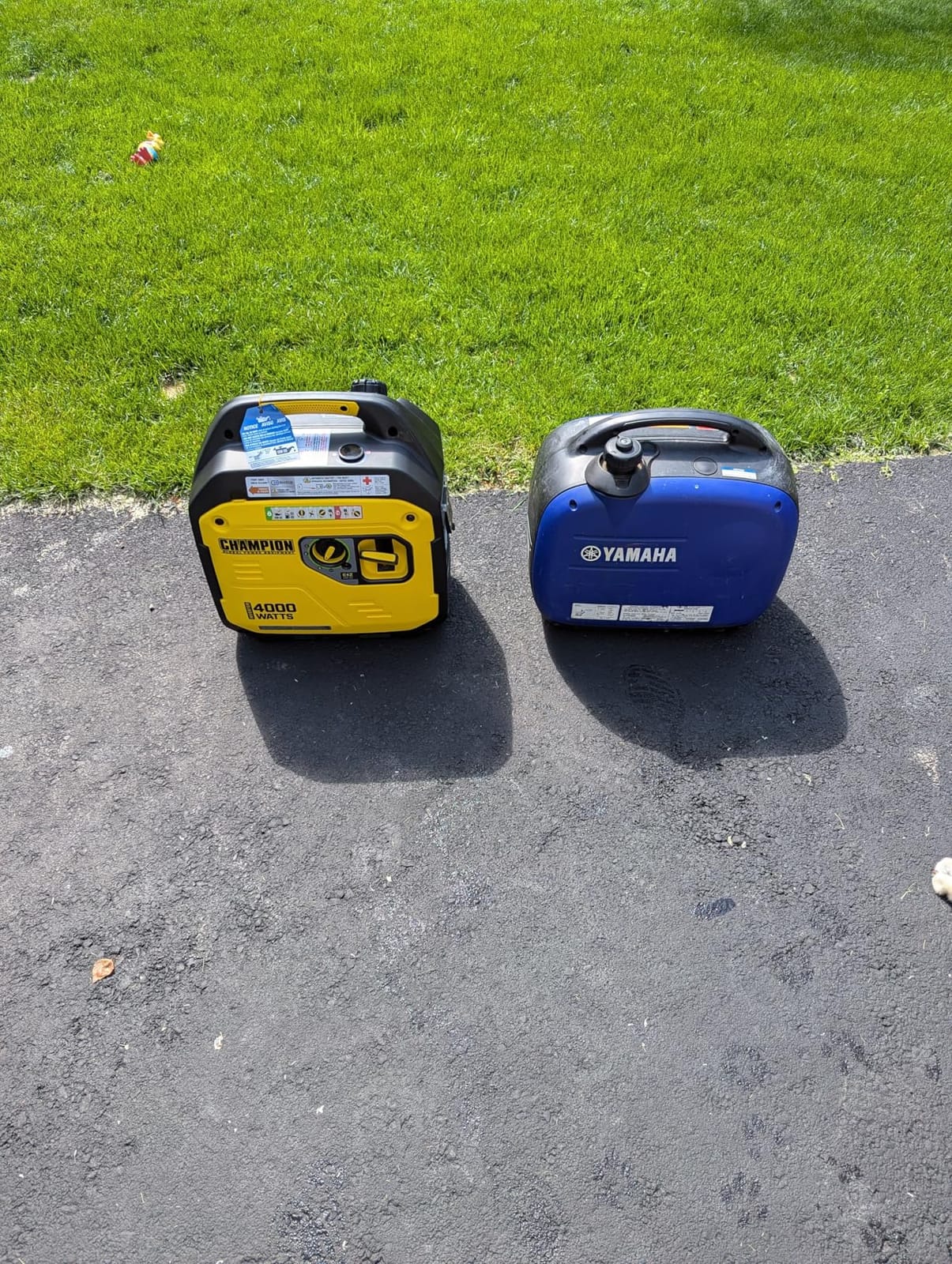
The CO Shield carbon monoxide auto shutoff is a feature only one other model in this list matches, and on a topic where safety and quiet hours collide it matters more than another 100 watts. Owners who have camped and run it for home backup describe it as dependable and genuinely quiet for 4000 watts.
What you give up is value. It sits well above the entry-level units here and commands a premium for similar inverter wattage. The 10-hour runtime is also shorter than several cheaper competitors at 25% load, and the parallel kit plus any remote accessories are extras.
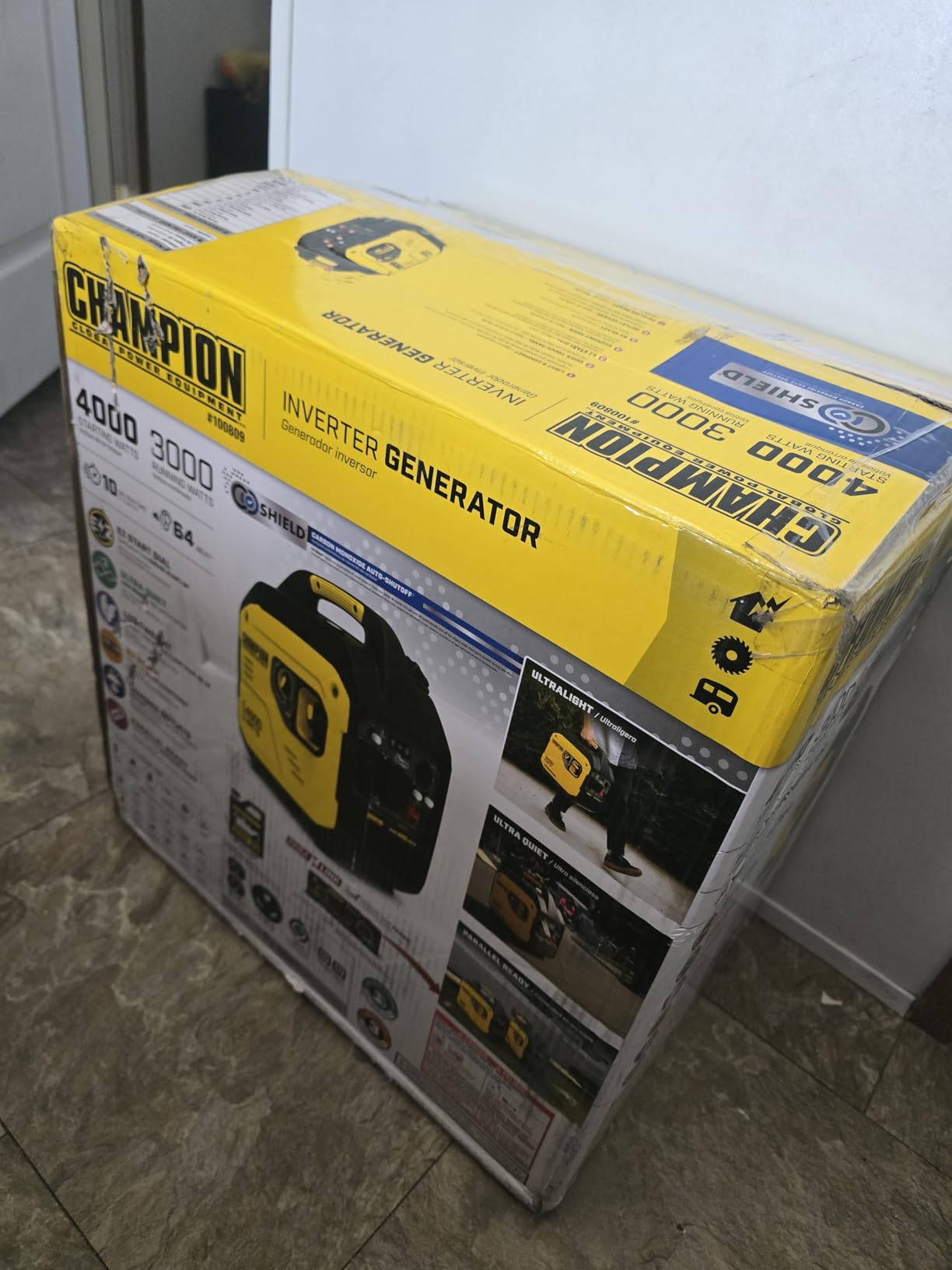
Check the noise floor for a 4000-watt unit
64 dBA at 23 feet is respectable for this much power, and it sits just inside the range most campgrounds tolerate during quiet hours. Reviewers running it in RV parks report no complaints from neighbors.
Keep it on a 20 to 30 foot standoff and use economy mode overnight. Under sustained high load the engine speed rises, so placement does more for neighbors than any spec sheet number.
Skip it if budget is the deciding factor
If wattage alone is the goal, the 4400-watt open-frame unit above gives you more running watts and longer runtime, accepting a much louder footprint. The Champion wins on weight, safety shutoff and warranty, not on cost.
Buyers who want the lowest cost per watt should look elsewhere. Buyers who want the best-supported 4000-watt inverter with a CO shutoff should stop here.
4. WEN 56360i 3600-Watt Inverter: Best for RV Trailers
WEN 3600-Watt Portable Inverter Generator, RV-Ready, Quiet and Lightweight with Fuel Shut Off (56360i)
2900 running watts, 3600 surge
46.3 pounds, enclosed
TT-30R outlet, fuel shutoff
Pros
- Quiet operation in a 46-pound fully enclosed package
- native TT-30R RV outlet
- 2900 rated watts handles a microwave and fridge together
- fuel shutoff extends carburetor life
- three-year warranty
Cons
- 5-hour rated runtime is among the shortest here for the tank size
- costs more than the 2350W model if you do not need RV output
- 149cc engine is heavier to pull-start
- 4.4 rating with an 8% one-star share
This is the middle step up from the WEN 56235i, and for a travel trailer it is the more sensible one. The 149cc engine produces 3600 surge watts and 2900 rated watts, which is enough to run a microwave, a portable refrigerator and small loads at the same time without flirting with the ceiling.
Six outlets is a generous panel for the class: two three-prong 120V receptacles, a TT-30R RV receptacle, a 12V DC receptacle and two 5V USB ports. At 46.3 pounds it stays in one-person-carry territory, and the fully enclosed body does a better job of containing noise than any open frame here.
The disappointment is runtime. The 1.6-gallon tank is rated for 5 hours, among the shortest figures in this group for the tank size, and owners who expected a full night on that capacity are the source of most of the one-star share. Plan refills into the schedule or carry a second approved fuel container.
Worth noting that the 149cc engine is meaningfully heavier to pull-start than the 79cc units. If you start it repeatedly on a cold morning, that difference adds up. For anyone not using an RV outlet, the 2350W model is the smarter spend.
Check the noise floor for enclosed mid-size units
Enclosure does real work here. A fully shrouded body at 3600 watts produces a flatter, lower sound than an open frame at the same output, and owners report it disappearing into campsite background rather than cutting through it.
Enclosed units also need airflow clearance. Give it the standard 20 to 30 foot standoff on soft soil and it stays well inside typical 60 dB campsite expectations.
Skip it if you camp long days on one tank
A 5-hour runtime is workable for a weekend with a planned refill and poor for a week of boondocking. If your trip is measured in days away from a fuel station, the runtime figures on the Champion dual fuel or the ERAYAK matter far more than this wattage step.
Everything else about this unit is the right side of the line. It is the tank size that gives us pause.
5. Pulsar PGD40ISCO 4000W: Quietest for 4000-Watt Loads
Pulsar PGD40ISCO Ultra Light Quiet 4000W Portable Gas Inverter Generator, white
3200 rated watts, 4000 peak
59 dBA
47.3 pounds
A/C up to 13500 BTU
Pros
- 59 dBA is among the quietest ratings in the roundup
- handles air conditioning up to 13500 BTU per the manufacturer
- light 47.3 pound aluminum and steel build
- parallel ready
- 3-year warranty
Cons
- Only 4 hours of runtime at half load from a one-gallon tank
- three outlets total
- no fuel gauge reported by owners
- 9% one-star share hints at durability questions
If your priority is decibel at real wattage, this is the interesting one. 59 dBA for 4000 peak and 3200 rated watts puts it in the quiet class where most competitors at this output are not, and it lands below the 64 dBA figure of both Champion models here. Owners confirm the headline claim, that the unit runs noticeably quiet for the power it delivers.
At 47.3 pounds in aluminum, steel and plastic, it is light for the class. The manufacturer rates it for air conditioning units up to 13,500 BTU, it is parallel ready, and the clean white finish is a small nicety that stands out among the usual black and orange units. A 3-year limited warranty is included.
The trade is fuel. A one-gallon tank gives 4 hours at half load, the shortest fuel endurance in this roundup, and several reviewers call that a real constraint for long camp days. There is no fuel gauge reported by owners, so you are estimating rather than checking.
Three outlets is on the low side, so an RV with several live circuits will need an adapter. The 9% one-star share is higher than most models here and suggests durability complaints that reviewers do not detail, which is worth weighing against a 4.4 average.
Check the noise floor for high-wattage quiet units
This is the closest thing in the roundup to a quiet 4000-watt unit, and the 59 dBA figure is the reason it exists on this list. It sits in the same band as the small 2500-watt units despite carrying far more load capacity.
Owners running it in close campsites confirm the number holds in practice. That is the test that separates a real quiet rating from a lab figure.
Skip it if you camp for days without refueling
Four hours at half load changes the planning. Every day of your trip needs a fuel stop or a spare approved container, and at 3200 rated watts you will often be near half load rather than under it.
For a weekend of quiet nights, this is an excellent unit. For a week-long boondocking trip, the endurance numbers push you toward a bigger tank instead.
6. Oxseryn 2800-Watt Inverter: Best for USB-C Charging Loads
Oxseryn 2800-Watts Portable Inverter Generator, Gas Generators for Home Use, Camping, Super Quiet Emergency Home Backup, with Fuel Shut Off, 1.1Gal Fuel Tank, 39Lbs, EPA Compliant
2000 running watts, 2800 peak
Under 58 dBA at 23 feet
9 hours at 25% load
40 pounds
Pros
- Sub-58 dBA at 23 feet in the quiet class
- 9-hour runtime at 25% load on a 1.1-gallon tank
- 40 pounds with a carry handle
- USB and Type-C ports are unusual and useful
- fuel shutoff and ECO mode included
Cons
- 2000 running watts is modest for air conditioning
- one-year manufacturer warranty
- high-altitude kit sold separately and required above 4000 feet
- no RV TT-30R outlet
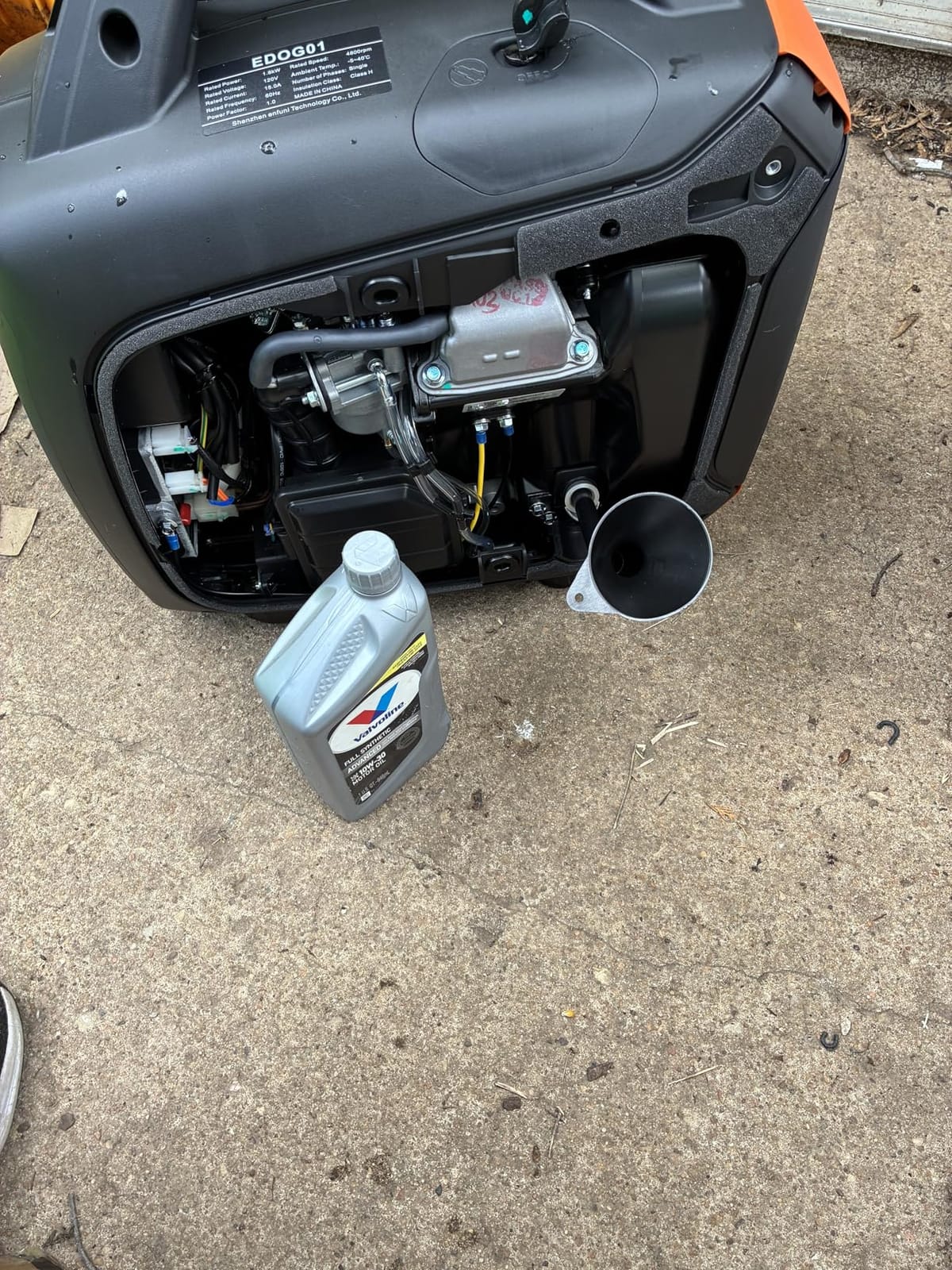
This is the electronics-and-fridge unit. 2800 peak and 2000 running watts from a 79.8cc four-stroke engine, a 1.1-gallon tank with a built-in fuel indicator, and up to 9 hours at 25% load. The output is clean at under 3% total harmonic distortion, which is what makes it safe for laptops, drones, cameras and even charging a power station.
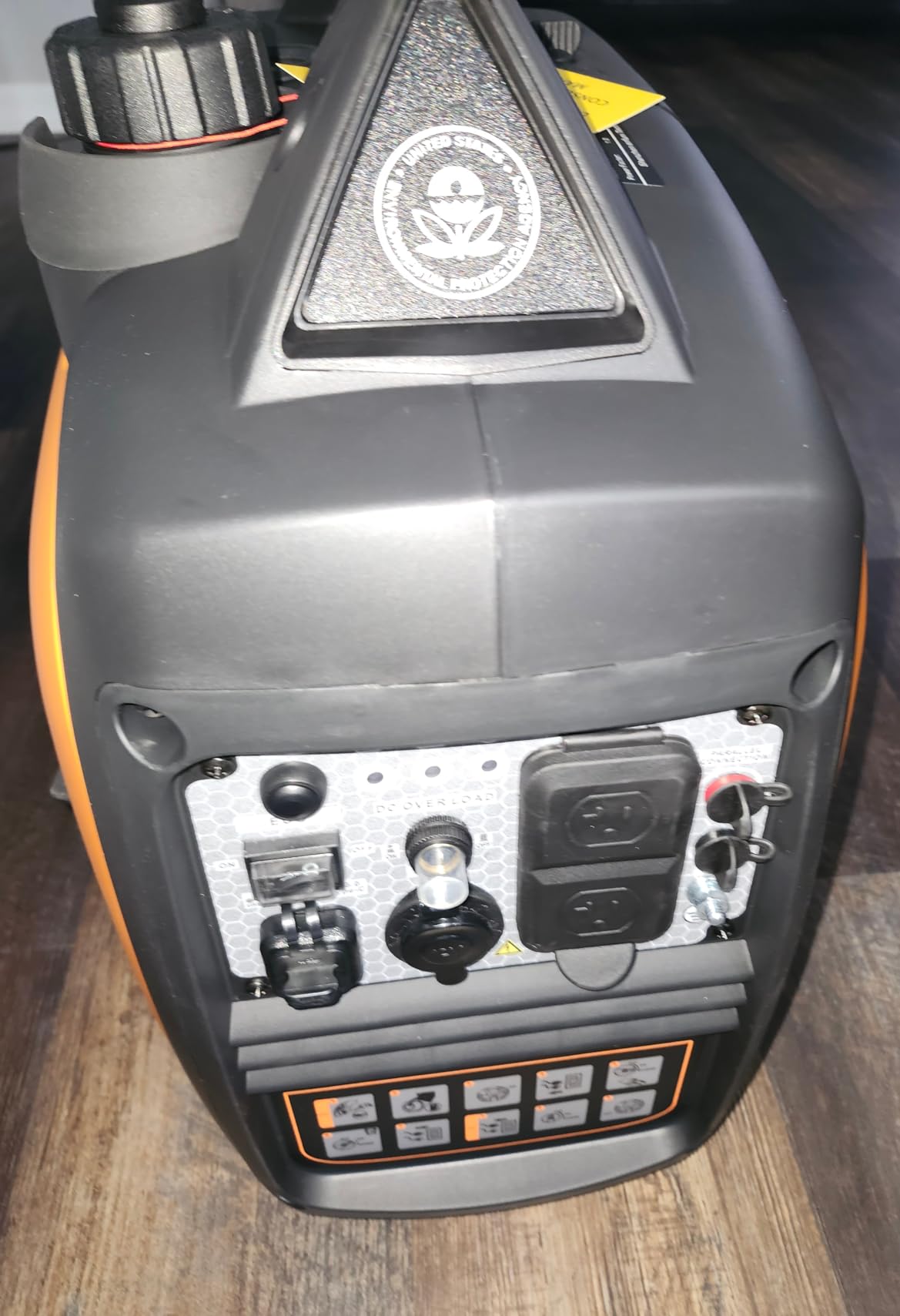
The panel is unusual at this level: two 120V AC ports, a 12V DC port, a USB port and a Type-C port. If your camp is a photography or drone setup, or a work trip with a laptop and several phones, that is genuinely useful. At 40 pounds with a built-in handle, one-person loading is easy.
The catch is ceiling. 2000 running watts will run a portable refrigerator, lights, a CPAP machine and chargers with room to spare, but it is not enough for RV air conditioning or a microwave at the same time. For mountain campers, note that a high-altitude kit is recommended above 4000 feet and is not included, which reduces output further in exactly the places where quiet camping happens.
The one-year manufacturer warranty is another mark against it, and there is no RV outlet on the panel.
Check the noise floor for electronics-first units
Under 58 dBA at 23 feet means you can hold a conversation beside it. For a campsite where the generator runs all night beside a tent with a sleeping baby, that floor is the whole point.
Eco mode and the fuel shutoff switch both do their jobs here. The low-load behaviour is what determines whether 9 hours is real.
Skip it if you carry a microwave or an air conditioner
Two thousand running watts sounds like a lot until a coffee maker and a portable air conditioner land on it at the same time. At that point you are at the ceiling and the noise floor rises with the engine speed.
Everything lighter than that, this handles well and quietly. Anything with a compressor in it, look one tier up.
7. PowerSmart HB5020 2500-Watt Inverter: Best Value Quiet Pick
PowerSmart 2500 Watt Portable Inverter Generator for Camping
1900 rated watts, 2500 peak
52 dBA at 23 feet
39.7 pounds
Up to 8 to 11 hours
Pros
- 52 dBA at 23 feet is the lowest published figure here
- 1900 rated watts of clean under-3% THD power
- 1.06-gallon tank covering a full camping day
- 39.7 pounds for a one-person lift
- 2-year warranty with lifetime support
Cons
- 1900 running watts is among the lowest in the group
- no RV-ready outlet
- ABS plastic housing is less durable in a drop than a metal frame
This is the sleeper of the roundup. 52 dBA from 23 feet at 25% load is the lowest published noise figure of any unit we reviewed, quieter than a normal conversation, and it comes with 1119 reviews at 4.5 stars, one of the deepest support bases in the roundup. The sales ranking in Outdoor Generators backs that up.
Power is 2500 peak and 1900 rated watts at under 3% total harmonic distortion, which is right for phones, tablets, laptops, a small refrigerator and lights. The 1.06-gallon tank is rated anywhere from 8 to 11 hours depending on load, and at 39.7 pounds this is one of the three lightest models here. A 2-year warranty comes with free lifetime technical support.
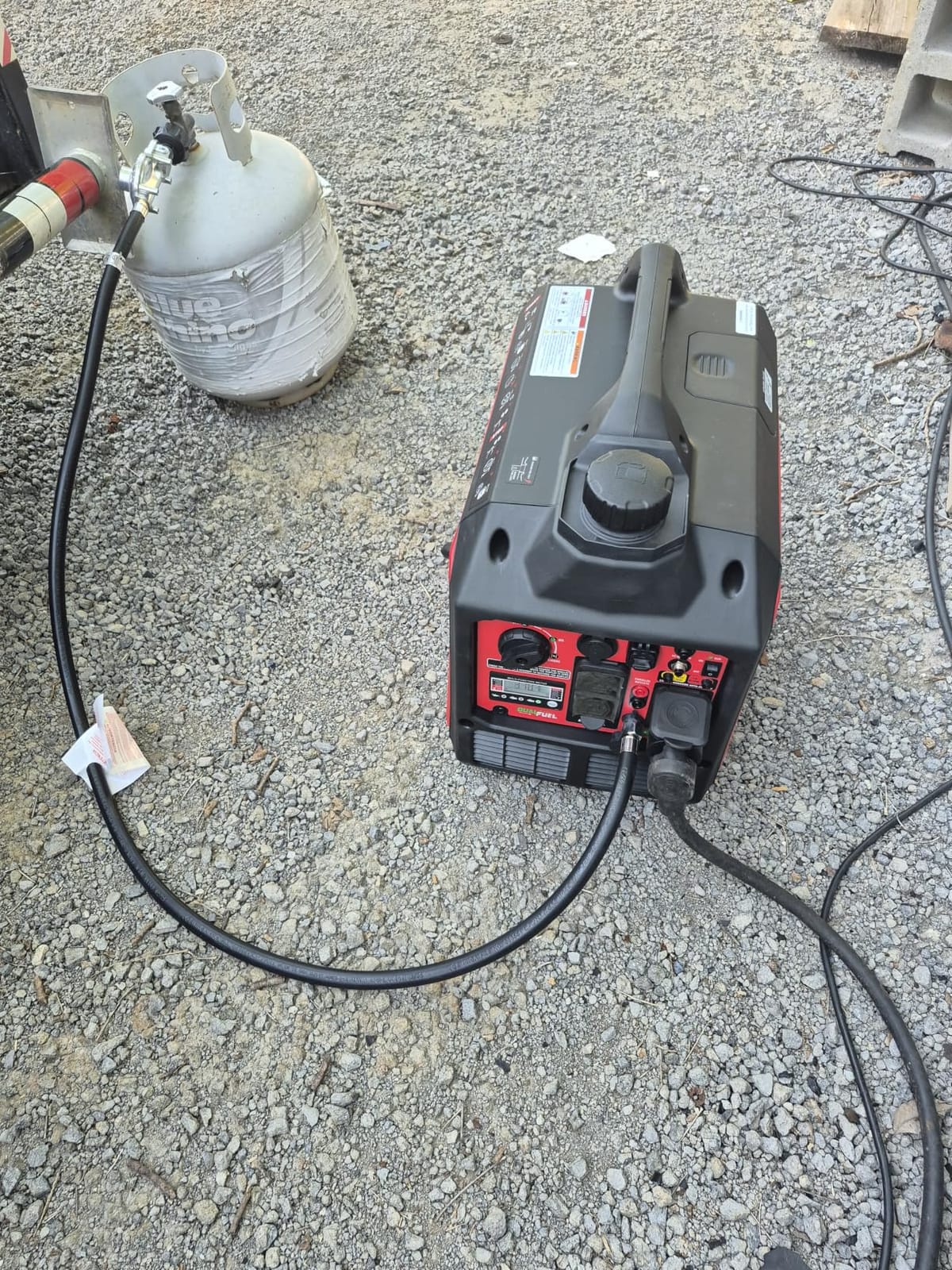
The ABS plastic housing is the one physical concern. It is lighter than metal in the carry, and lighter in a drop too, so if your generator lives in the bed of a truck rather than a storage box, that is worth thinking about. A magnetic dipstick and regular oil changes are the long-term ownership story here, as they are for most small four-stroke engines.
Buyers consistently praise the quietness and the fuel endurance for electronics-light loads. The limits show up in the 1900W ceiling and the lack of an RV outlet.
Check the noise floor for the quietest unit here
At 52 dBA this is the quietest published rating in the group, and it is the reason the unit wins our value badge. It is a rare combination: the lowest number, a large review base, and a 4.5 average.
At 25% load the engine is barely working. That is when you get the full-night quiet that lets you keep it running past quiet hours without a conversation with the site next door.
Skip it if you need an RV outlet or heavy loads
There is no RV-ready socket, so travel trailer owners need an adapter and lose the clean single-cord setup. At 1900 running watts, a microwave plus a refrigerator is a stretch.
Tent campers, car campers and anyone running a CPAP machine and a small cooler are the people this unit was built for. If you are powering a travel trailer, read the WEN 56360i review instead.
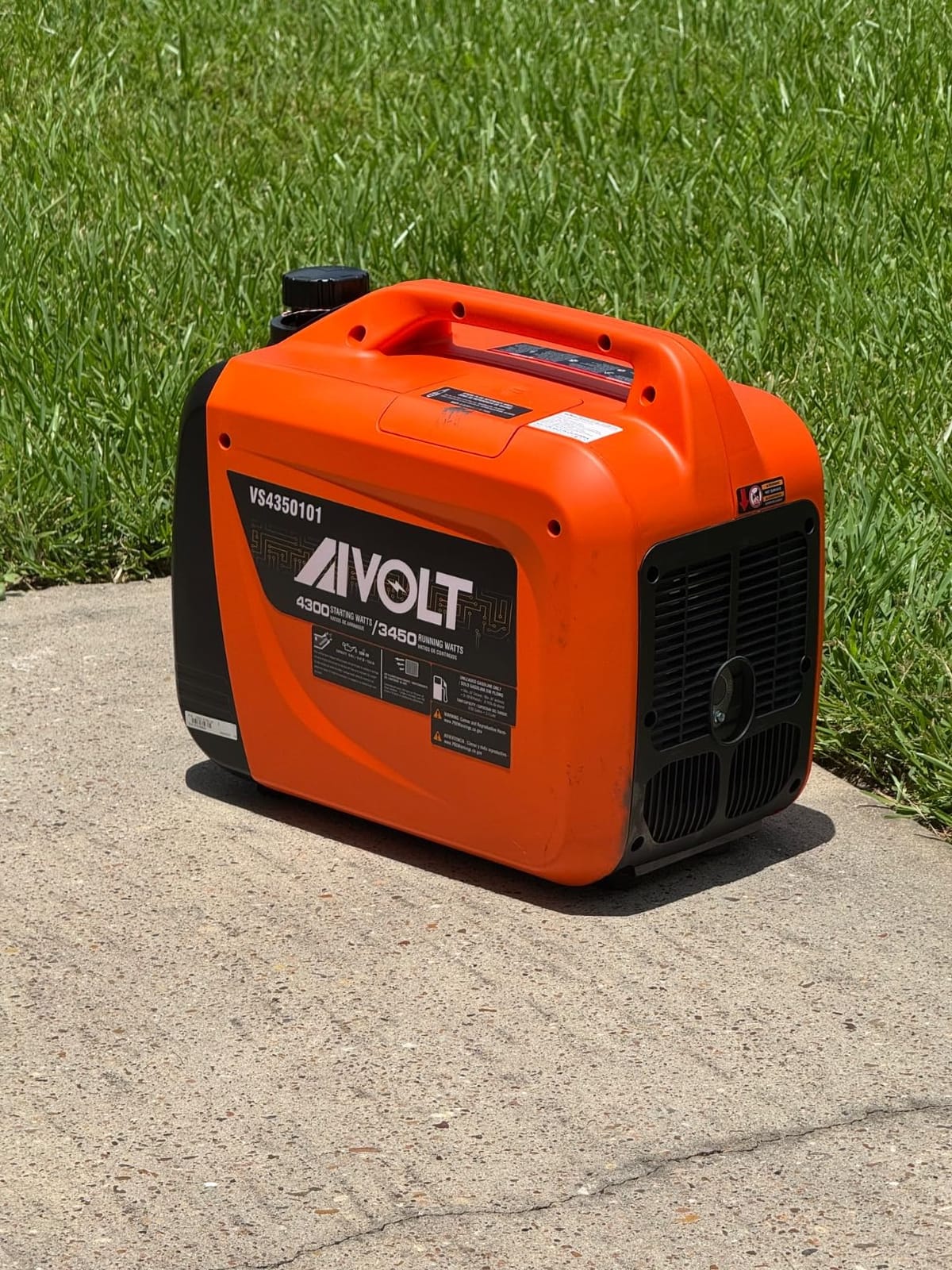
8. AIVOLT 1600W Inverter: Lightest to Carry
AIVOLT 1600W Super Quiet Inverter Generator 28lbs Portable for Camping
1260 running watts, 1600 start
28 pounds
57 dBA at 23 feet
8 hours at 25% load
Pros
- Lightest model in the roundup at 28 pounds
- 57 dBA is quiet enough for conversation beside it
- 8-hour runtime at 25% load in eco mode
- CO Alert auto shutoff with low-oil and overload protection
- hour meter and status lights
Cons
- Lowest average rating in the group at 4.1 with a 12% one-star share
- only 1260 running watts
- engine oil is not included
- not legal for sale or use in California
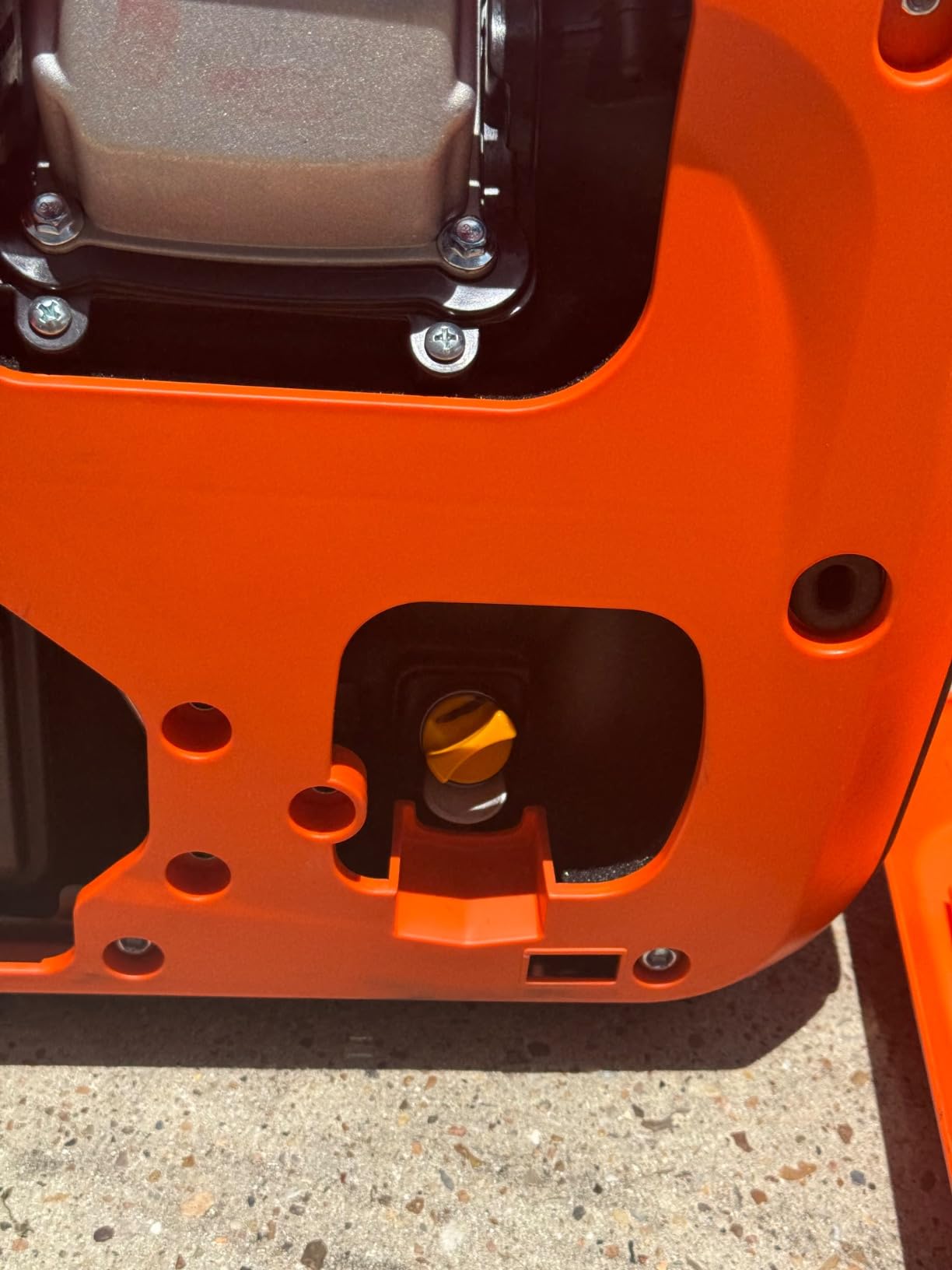
At 28 pounds, this is the only ultralight model in the roundup and it is genuinely easy to carry solo. A 60cc engine with copper windings has little mechanical noise to begin with, which is the root of the low decibel figure. For anyone with back issues, that weight is not a minor feature.
Noise is 57 dBA at 23 feet, quiet enough to hold a conversation beside, and the 3.5-gallon tank delivers 8 hours at 25% load in eco mode, 2 hours at full load. The safety set is unusually complete for this level, with CO Alert auto shutoff, low-oil shutdown and overload protection.
The feature list keeps surprising for the class: an hour meter, three indicator lights, two 120V outlets and two Type-A and Type-C USB ports, plus optional parallel capability. It is ANSI/PGMA G300-2018 compliant and EPA approved, though not for sale in California under emissions rules.
1260 running watts is a hard ceiling. It handles phones, laptops and a small refrigerator and little else. The 4.1 average is the lowest here, with a 12% one-star share reflecting durability complaints over time, and engine oil is not included, so it will not start until you add it.
Check the noise floor for ultralight units
A 60cc engine at 28 pounds is quiet partly because it is not producing much mechanical noise in the first place. 57 dBA puts it in the same band as much larger machines, which is a real result.
The hour meter is a quiet winner too. On a small unit with a small tank, knowing your run hours is how you avoid stale fuel.
Skip it if your load has a compressor in it
1260 running watts will not carry a portable air conditioner, a microwave or a coffee maker without drama. This is a lights-and-charges-and-small-fridge machine.
If your camp load is bigger than that, the added carrying comfort is not worth the compromises. Check the PowerSmart or the WEN 56235i instead.
9. ERAYAK 4500W Inverter: Best for Long High-Power Runs
ERAYAK 4500W Portable Inverter Generator for Home Use, Super Quiet Small Generator for Camping Outdoor Emergency Power Backup, Gas Powered Engine, ECO Mode, EPA Compliant
3500 running watts, 4500 peak
60.5 dBA with Eco Mode
Up to 16 hours
TT-30R outlet
Pros
- 3500 running watts handles a 15000 BTU camper air conditioner per owner reports
- up to 16 hours with 0.21 gph at 25% load
- 60.5 dBA is low for a 4500W class machine
- TT-30R plus 120V
- 12V and USB-C on one panel
- 3-year warranty
Cons
- One reviewer reports overload trips on air conditioner start
- louder in full-load mode than the spec sheet implies
- engine oil is not included
- no built-in fuel gauge
- 54 pounds is among the heavier models
This is the endurance pick among the high-wattage units. 4500 peak and 3500 running watts, a 2.25-gallon tank, and a claimed runtime of up to 16 hours drawing 0.21 gallons per hour at 25% load. One motorhome owner reports running a 15,000 BTU camper air conditioner, a microwave and a refrigerator together on it.
The noise figure is 60.5 dBA with Eco Mode, which reviewers comparing units side by side in campgrounds call the quietest they encountered in the 4500-watt class. Total harmonic distortion of 0.2% to 1.2% makes it safe for laptops, CPAP machines and mobile devices, and it is 50A parallel ready for 7000W rated in pairs.
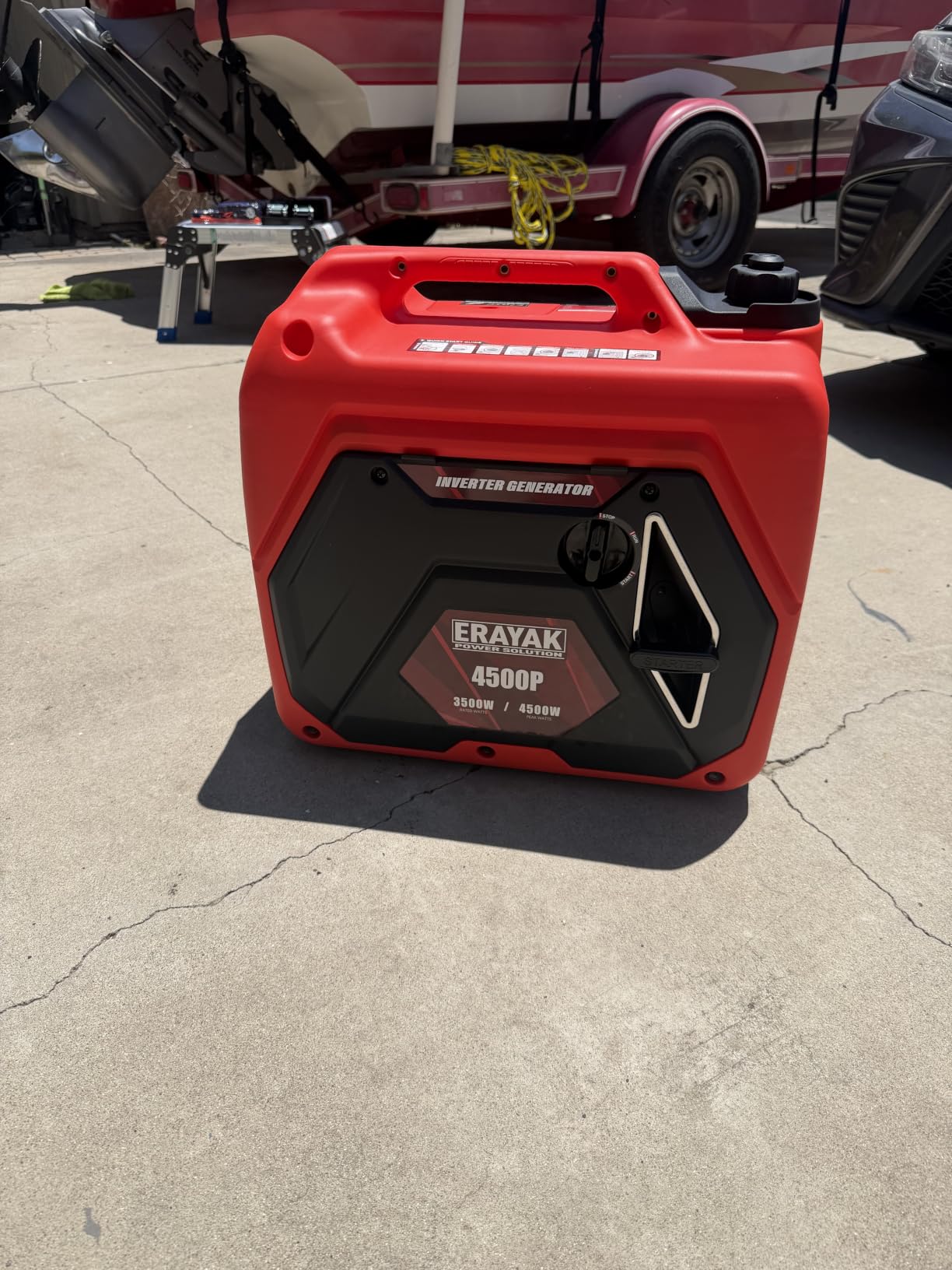
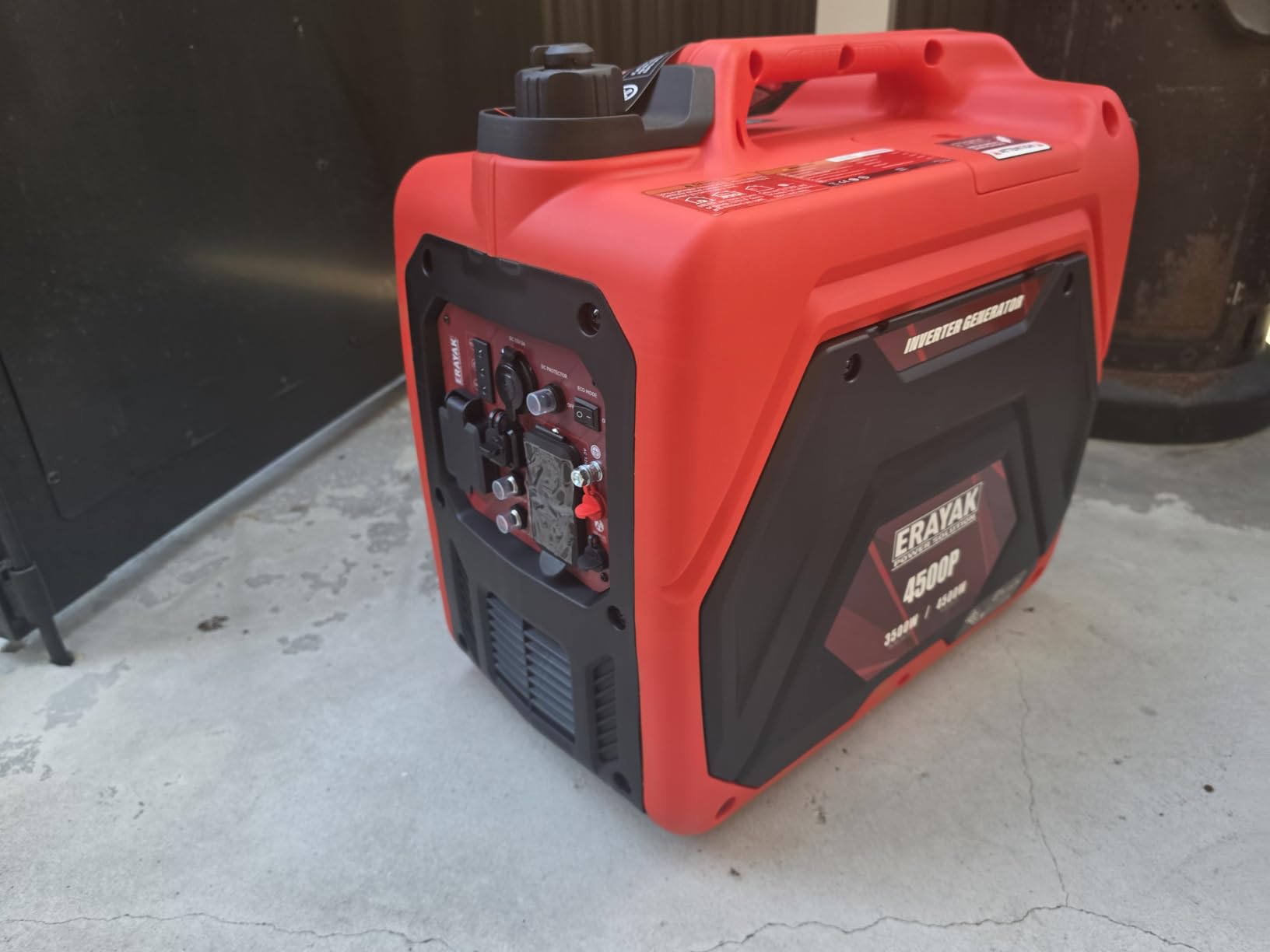
The panel is well laid out: a 30A TT-30R outlet, two 120V AC outlets, a 12V 5A cigarette lighter socket, USB-A and USB-C. An accessory bag with a spare spark plug and battery clamps is included, and owners describe customer service as prompt and courteous.
The caveats are real. One reviewer reports it tripped immediately on a 4500W-rated unit when running air conditioning and returned it. It is notably louder in full-load turbo mode than the spec sheet suggests. Engine oil is not included, so it will not start until you add it, and there is no built-in fuel gauge.
Check the noise floor for big inverters
The 60.5 dBA figure is achieved in eco mode, and the difference under full load is the gap owners keep mentioning. If your camp load sits near 3500 watts all evening, you will hear more than 60.5 dBA.
Run eco mode overnight for the fridge and chargers, and save the full-load noise for short bursts. That is where this unit’s design pays off.
Skip it if the highest review count matters to you
With 281 reviews, this is the thinnest owner base in the roundup, and one reported overload trip on a 4500W-rated unit is a data point you cannot dismiss. It is also 54 pounds, among the heavier models here.
The runtime and the outlet selection are exceptional. The support history is younger than the alternatives, so we would test it hard on a first trip.
10. Champion 4250-Watt Dual Fuel: Best for Dual Fuel Flexibility
Champion 4250-Watt Dual Fuel Portable Open Frame Inverter Generator, CARB
3500 running watts, 4250 start
Gasoline or propane
Up to 22 hours
64 dBA
Pros
- Up to 22 hours on a four-gallon tank
- the longest endurance figure here
- 64 dBA is quiet for a 4250-watt open frame
- 30A RV outlet plus two 20A household outlets
- economy mode
- runs on gasoline or the included propane hose
Cons
- Heaviest model here at 79 pounds and a two-person lift
- open frame is bulkier with a much larger footprint
- parallel kit and remote start sold separately
- open frames radiate more noise than enclosed inverters
Dual fuel is the reason to buy this one. It runs on gasoline or propane with the included LPG hose, and that is not a convenience feature at a campsite. It means a long trip does not depend on finding a gas station, and it lets you store propane instead of stale gasoline between trips. Dual-fuel capability is a repeated recommendation from owners for exactly that peace of mind.
The output is 4250 starting watts and 3500 running watts from a 224cc four-stroke engine, and the four-gallon tank gives up to 22 hours on gasoline, by far the longest figure in this roundup. The panel includes a 120V 30A RV outlet, two 120V 20A household outlets and a 12V DC outlet with a dual USB adapter.
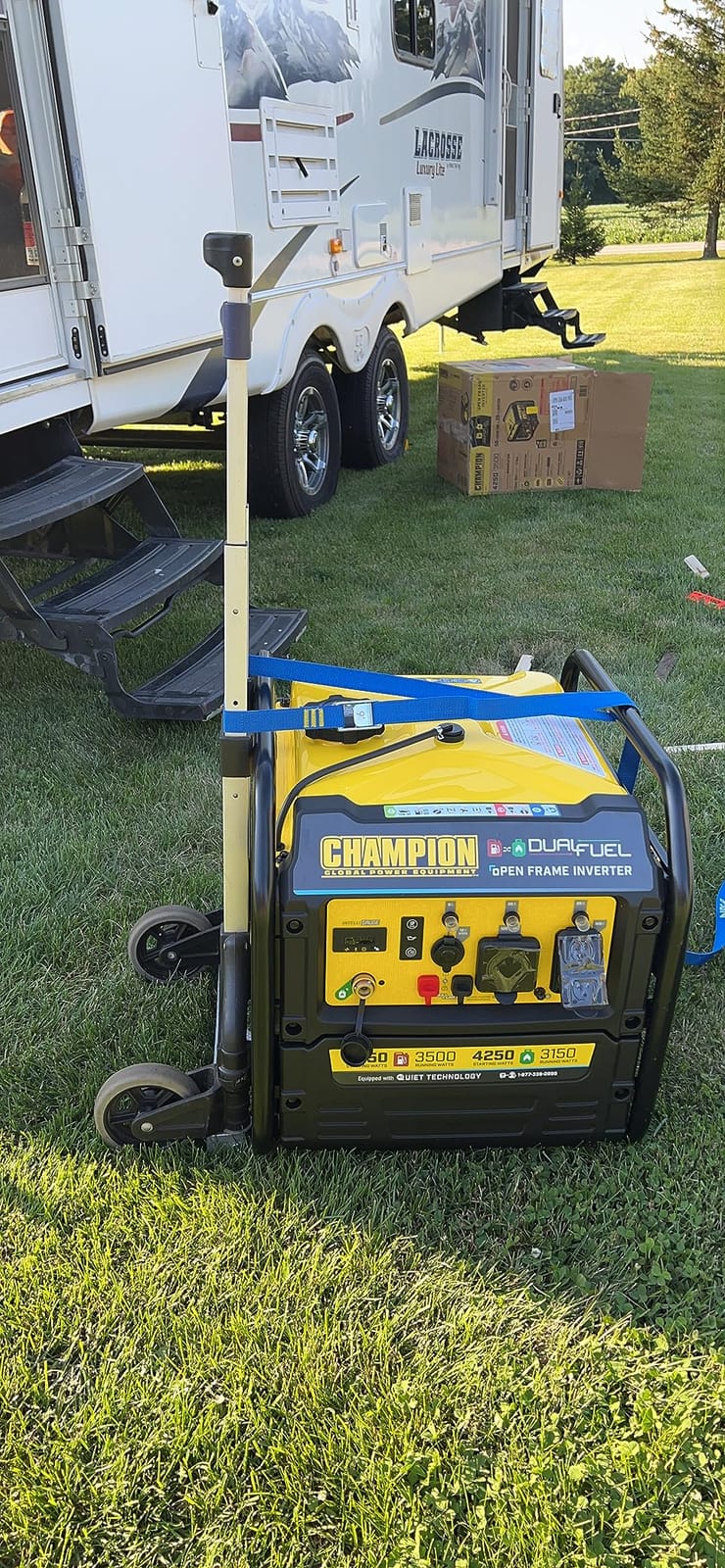
Champion describes the digital hybrid design as 50% quieter and 20% lighter than a traditional 3500-watt unit, with 64 dBA from 23 feet. Economy mode extends engine life and fuel economy, and it is parallel ready with the optional ParaLINK kit. A 3-year limited warranty comes with free lifetime technical support.
The weight is the reality check. At 79 pounds this is the heaviest model in the roundup and a two-person lift at minimum, and the open frame has a much larger footprint than any enclosed inverter here. Open frames radiate more noise, so the marketing number should not be read as quiet-class. Reviewers acknowledge the weight and bulk is what rules it out for anyone carrying a generator alone.
Check the noise floor for dual fuel units
64 dBA is respectable for a 4250-watt open frame, but the enclosure matters more than the number. Anything in this class radiates more than a fully shrouded inverter, and you will hear it when it loads up.
If you are choosing dual fuel for propane availability, accept the open-frame footprint and give it a 30 foot standoff. That combination works at most RV parks and larger dispersed sites.
Skip it if you carry your own power
At 79 pounds and roughly 28 by 23 inches, this is not something you lift into a truck bed alone, and it is not a small-camp carry. The trade you are making is 22 hours of runtime and fuel flexibility for bulk.
For truck campers with a bed and a second pair of hands, that is a good trade. For tent campers or anyone with a back issue, the enclosed units in this list are lighter and quieter.
Campground Quiet Hours and Generator Etiquette
Quiet hours at most campgrounds and USFS sites run from 8pm to 8am, not the 10pm to 6am that a lot of guides assume. That two-hour difference at each end is exactly when a generator running past the legal line will be heard by the most people.
Noise caps near 60 dB are the common figure. That is why we front-loaded the decibel reference above, and why anything published above 64 dB needs a plan for quiet hours.
Some sites restrict or ban generators outright. Buying before checking your destination can waste the entire purchase. Check the specific campground’s generator policy before you pack.
Positioning is your responsibility. The 20 to 30 foot standoff most guides mention is the difference between a neighbor noticing and a neighbor complaining.
Idle load is the deciding variable. Forum consensus is clear that most complaints come from generators running hard, not generators running at conversation level.
The pattern owners describe is always the same: you cannot hear it inside your own camper, so you do not think about it, and the tent on the other side of the fire ring can. A 52 dBA unit at 25% load and a 72 dBA unit at full output are the same neighbor risk at different operating points.
How to Place and Dampen a Generator for Less Campsite Noise
Placement and simple physical changes do more for your neighbors than any model choice, and they are free. Owners on camping forums share these same tactics.
Set it 20 to 30 feet from camp, downwind of your tent, on the side away from neighboring sites. Sound falls off quickly with distance, and this is the single most effective step.
Choose soft ground. Grass or soil absorbs exhaust noise that a gravel pad or bare rock reflects straight back at you. Concrete is the worst surface available.
Point the exhaust away from camp, and never toward a neighboring tent or a vehicle with open windows.
Build a plywood baffle box with an open top. Forum owners report it takes roughly 20 dB off a running generator. It is the most talked-about DIY modification on the RV forums.
Extend the exhaust pipe on an RV-mounted unit. One owner added about 5 feet and reported a meaningful reduction.
None of these replace a quiet unit, but together they are the difference between a neighbor who nods and a neighbor who knocks on your tent flap at 9pm.
Buying Guide: Inverter, Watts, Fuel and Weight
Inverter or conventional?
Inverter generators use a variable-speed engine that throttles RPM to match the load instead of running at full speed, which cuts noise, improves fuel economy and produces clean stable power. That clean output is why inverter units are the default recommendation for laptops, cameras, CPAP machines and portable refrigerators, and why they are easier on sensitive electronics than a conventional open-frame set.
The downside is real: less starting headroom for high-inrush loads, a higher purchase price, and a smaller maximum output in most cases. A conventional generator gives you surge capacity and raw watts more cheaply, and it announces its presence from 100 feet.
Running watts vs starting watts and the 80% rule
Running watts is what the unit sustains; starting watts is the short burst a motor needs to get going. Size on running watts and leave 20% headroom, which is the 80% rule: add your running loads, then divide by 0.8 to get the size you need.
A coffee maker, a microwave and a portable air conditioner are all compressor loads that trip smaller units. A common camp load of a 12V refrigerator, a CPAP machine, a couple of laptops and LED lighting sits comfortably inside a 1900-watt unit. Add a 1500-watt microwave and you want 3500 running watts or more.
For RV sizing, a 30A RV pulls 3600 watts on its own before you add anything, and a 13,500 BTU rooftop air conditioner typically wants 2500 to 3000 watts running. A 5000-watt generator will run a 30A RV comfortably, and a 3500-watt unit will run one with careful load management. Our picks for the best RV generators for camping go deeper on the hookup side of that calculation.
Fuel type and runtime
Gasoline gives the most usable output and the widest refuel network, but it goes stale in storage. Propane stores indefinitely and is the safer choice at a campsite. Dual fuel gives you both, and forum owners recommend it repeatedly for trips far from a gas station.
Read the runtime figure carefully, because the load changes it. 14 hours at 25% load means something very different once a rooftop air conditioner is running. The Champion 4250 dual fuel at up to 22 hours and the ERAYAK at up to 16 hours are the endurance picks here; the Pulsar at 4 hours is built for weekends.
Weight and safety
Quiet inverter units are often the heaviest in class, and lift-in and lift-out is a real test that no decibel rating accounts for. The AIVOLT at 28 pounds and the WEN 56235i at 39 pounds are one-person carries. The Champion 4250 at 79 pounds is a two-person lift. Check whether your unit has a CO sensor with auto shutoff: the AIVOLT and the Champion 4000W both have it, and on a shared site that layer is worth insisting on.
Gas Generator vs Portable Power Station
There is no completely silent gas generator, and that is the honest answer to the question we hear most. A combustion engine makes noise because it burns fuel. A portable power station makes none at all, which is why zero-noise seekers end up there.
The power station case is real: silence, no fumes, no fuel storage, no carbon monoxide risk, and no quiet hours to think about. The catch is capacity. A power station is sized in watt-hours and it holds a fraction of what a generator burns through. If your load is a portable refrigerator, a CPAP machine, phones and laptops, a mid-size station covers a full day. If your load includes a microwave, a power tool or a rooftop air conditioner, you will be recharging it constantly from a solar panel, and many campgrounds restrict solar charging to about two hours in the morning and two in the evening and will fine people who ignore that.
Use a gas generator when your load has a compressor in it or you need multi-day endurance. Use a power station when noise is the dealbreaker and your load is electronics-only. Our guide to industrial solar generators covers the larger end of the battery side.
Carbon Monoxide and Campsite Generator Safety
Carbon monoxide is colorless and odorless, and it kills campers every season who run a generator in the wrong place. The rules are short and not negotiable.
Never run a generator inside a tent, a camper, a vehicle or an enclosed space, even with the door cracked. Tents and pop-ups do not ventilate.
Always outdoors, downwind and away from open windows, doors and vehicle intakes.
Use a CO-shutoff unit where you can. The AIVOLT CO Alert, the Champion 4000W CO Shield and the Oxseryn 4400W low-oil and overload protection all add a layer that costs very little to insist on.
Use approved outdoor-rated extension cords and keep the generator dry. Household indoor cords are a fire risk.
Let it cool before refueling, and use the fuel shutoff switch so the carburetor drains rather than gumming up over a season.
Check the site altitude. Above 4000 feet a high-altitude kit is needed on several of these engines, and it is sold separately on more than one model here.
Frequently Asked Questions
What is the quietest generator I can use for camping?
In this roundup the PowerSmart HB5020 has the lowest published figure at 52 dBA from 23 feet at 25% load, with the AIVOLT 1600W at 57 dBA and the Oxseryn 2800W at under 58 dBA close behind. The WEN 56235i is our overall pick because it pairs quiet running with 1900 running watts, a 10-hour runtime and a 39-pound weight. Remember that the published number is a low-load figure, so the sound rises under a real load.
Is there a completely silent generator?
No gas generator is completely silent, because a combustion engine makes noise. A portable power station produces zero noise and zero fumes, which is the only way to reach true silence. The trade is capacity and recharge time, and many campgrounds limit solar charging to short morning and evening windows.
How many dB is considered a quiet generator?
Under 60 dB is the practical line at a shared campsite. 50 to 60 dB is about a normal conversation, 60 to 70 dB is like a refrigerator running in a quiet kitchen, and 70 dB and above is loud enough to draw complaints at most campgrounds and USFS sites.
What is the 80% rule for generators?
The 80% rule says you should not run a generator above 80% of its rated output. Add up the running watts of everything you plan to power, then divide that total by 0.8 to get the size you need. This keeps headroom for starting surges from motors and compressors.
What is the downside of an inverter generator?
The main downsides are less surge headroom for high-inrush loads, a higher purchase price than a conventional set, and lower maximum output in most cases. They also need clean fuel and regular maintenance to keep running well. In exchange you get lower noise, better fuel economy and clean power for sensitive electronics.
Will a 5000 watt generator run a 30 amp RV?
Yes. A 30A RV connection draws 3600 watts at full capacity, and a 5000-watt unit runs that comfortably with headroom left over. A 3500-watt unit can run one with careful load management, but you should not run a rooftop air conditioner and a microwave at the same time.
How far away should a generator be from a campsite?
Between 20 and 30 feet from your tent, downwind, on soft ground such as grass or soil rather than gravel or concrete. Sound falls off quickly with distance, and soft ground absorbs exhaust noise that hard surfaces reflect straight back at you.
Can you run a generator in a tent?
No. Never run a generator inside a tent, camper or vehicle, even with a door or window cracked open. Carbon monoxide is colorless and odorless and can build up to dangerous levels without warning. Run it outdoors only, and place it downwind and away from open windows and vehicle intakes.
Conclusion
The WEN 56235i is our pick among the best camping generators for quiet campsites, because it balances the three things that matter at a shared site: a conversation-level noise floor, enough running watts for a real camp load, and a 39-pound weight one person can actually lift. The PowerSmart HB5020 is quieter on paper at 52 dBA, and the Champion 4000W is the better choice if you need RV power or a carbon monoxide shutoff.
Whichever you pick, check your destination’s generator rules before you buy, set the unit 20 to 30 feet out on soft ground, and remember that quiet hours usually start at 8pm. That single placement habit does more for campsite harmony than any spec on this list.