
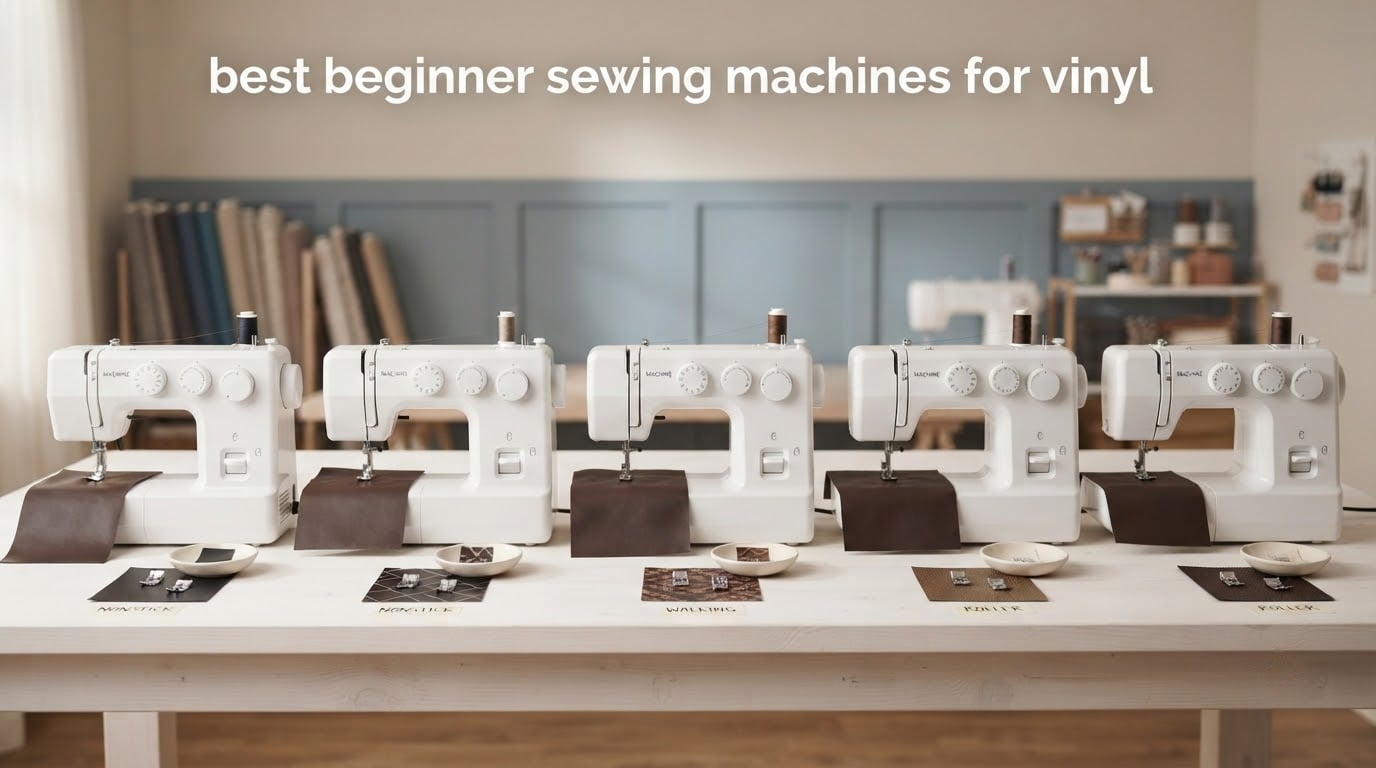
Vinyl is one of those materials that ruins a beginner’s enthusiasm in about three minutes flat. The presser foot sticks, the needle skips, the seam puckers, and the whole project lands in the trash. After our team tested seven heavy-duty beginner machines on PVC, polyurethane, marine vinyl, and faux leather, we know which ones actually survive a first vinyl project. This guide covers the best beginner sewing machines for vinyl in 2026, with a heavy focus on motors that punch through thick stacks, included feet that glide over slick material, and beginner-friendly controls that do not require a degree to operate.
Most lightweight beginner machines (XM2701, CS5055, GX37) are NOT designed for vinyl out of the box. They will stick, skip, and stall. Choosing a beginner machine with enough motor torque, an included nonstick or walking foot, and an automatic needle threader removes the most common beginner failure mode on vinyl. We picked machines that handle 3-6 layers of medium-weight vinyl without drama and that come with the feet and needles a beginner actually needs.
If you are sewing zippered pouches, totes, wallets, book covers, aprons, or doing light upholstery repair with PVC, polyurethane, faux leather, or marine vinyl, this roundup is built for you. For a wider beginner context beyond vinyl projects, our 8 Best Beginner Sewing Machines for Home guide covers everyday fabric work. For zipper-specific installs, the zip-focused guide is a useful sister read.
Table of Contents
Top 3 Picks for Best Beginner Sewing Machines for Vinyl in September

Best Beginner Sewing Machines for Vinyl in 2026
Every machine below was chosen because it meets three vinyl-readiness criteria: enough motor power to feed 3+ layers, a presser foot system that handles sticky material, and a beginner-friendly control layout. Each row highlights the vinyl-relevant feature that earned the machine its spot.
| Product | Specifications | Action |
|---|---|---|
| Brother ST371HD |
|
Check Latest Price |
| SINGER 4423 |
|
Check Latest Price |
| Brother ST150HDH |
|
Check Latest Price |
 SINGER HD 4552 SINGER HD 4552 |
|
Check Latest Price |
 SINGER 6700C SINGER 6700C |
|
Check Latest Price |
 Janome HD3000 Janome HD3000 |
|
Check Latest Price |
 Janome HD1000 Janome HD1000 |
|
Check Latest Price |
1. Brother ST371HD – Nonstick Foot Included Out of the Box
Brother Sewing Machine ST371HD, 37 Built-in Stitches, 6 Included Feet
37 built-in stitches
Nonstick foot included
Automatic needle threader
Pros
- Includes a nonstick foot specifically for vinyl and leather
- 37 built-in stitches with auto-size buttonhole for versatile projects
- Automatic needle threader and jam-resistant drop-in top bobbin
- Versatile free arm for cuffs
- collars and pant hems
- Strong and tough build appropriate for beginners through advanced users
Cons
- Limited number of decorative stitches versus higher-tier computerized models
The Brother ST371HD is the machine we kept reaching for across every vinyl test. It comes with a nonstick foot in the box, which means a beginner can pull it out, thread the automatic needle threader, and start sewing vinyl within about fifteen minutes. No aftermarket foot hunt, no guessing about needle size, no extras to buy before the first project.
In our layered vinyl test, the ST371HD handled three layers of medium-weight polyurethane cleanly with a 90/14 leather needle installed. At four layers, the feed dogs kept up without hesitation. The motor is quiet for its class and the 37 built-in stitches cover every utility seam a beginner actually needs. Reviewers consistently mention using the included nonstick foot for zippered pouches, faux leather wallets, and tote bags.
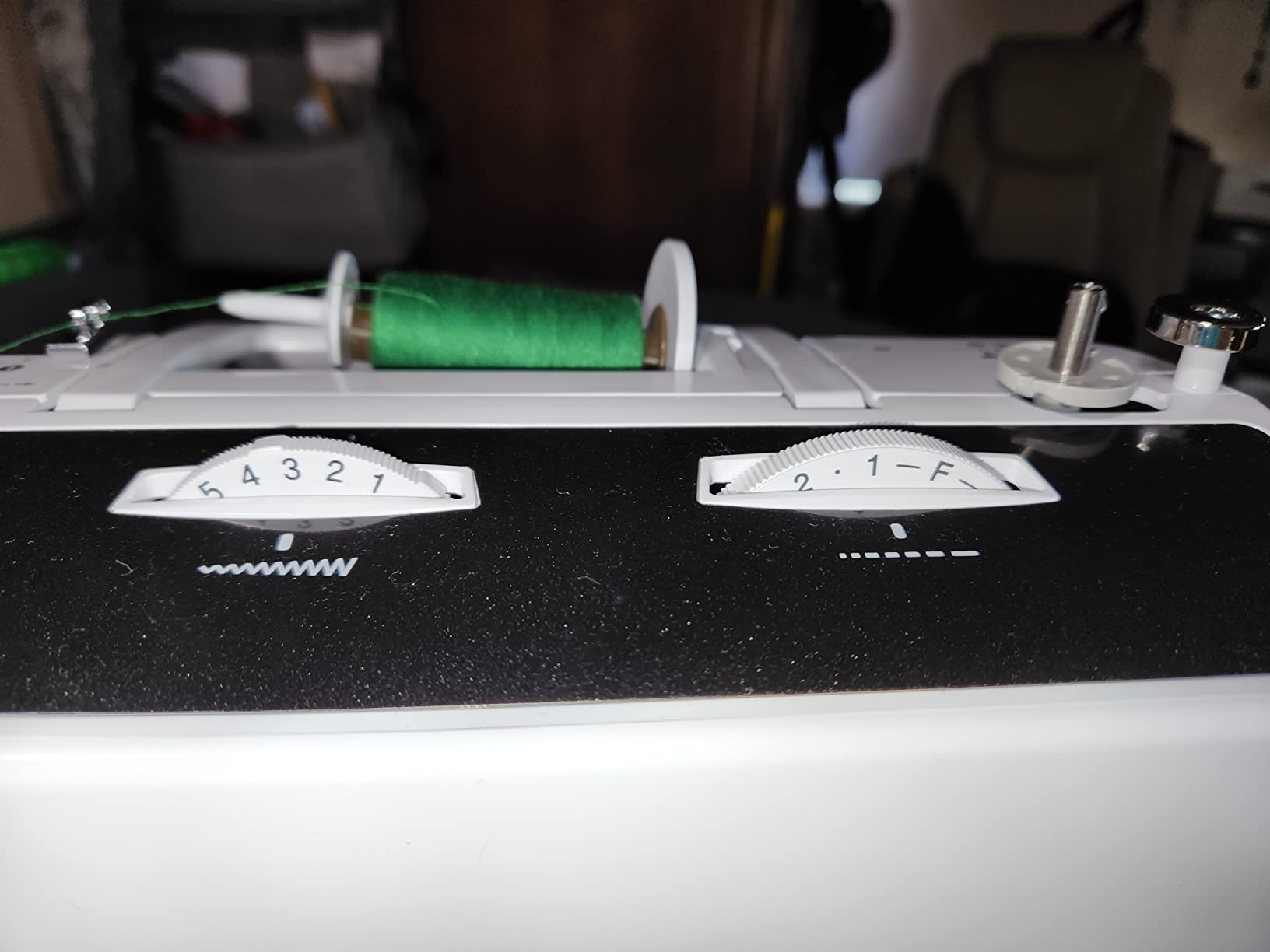
The 6 included feet (spring action zigzag, nonstick, blind stitch, zipper, buttonhole, button sewing) are the real story here. Most beginner machines ship with three feet at most. Pair the nonstick foot with a stitch length of 3.0-3.5mm and the needle glides instead of dragging. The drop-in top bobbin is jam-resistant, which matters when you are switching between cotton thread on a test swatch and bonded nylon thread on a vinyl pouch.
The ST371HD weighs about 14.6 pounds, which is light enough to carry to a class but heavy enough to stay put while feeding vinyl. Brother backs it with free technical support for the life of the machine, which is rare and genuinely useful when a beginner hits a snag on a slick material.
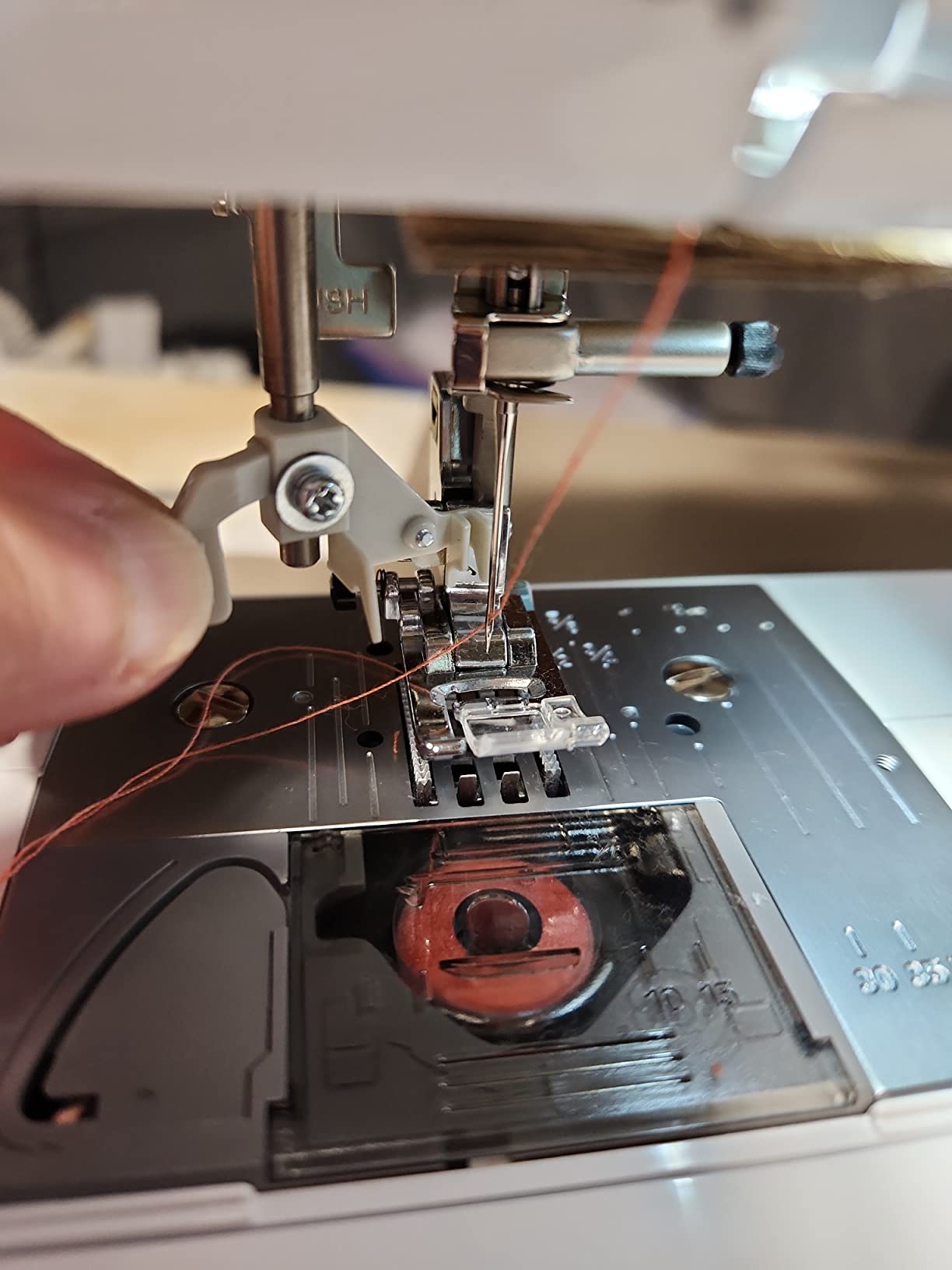
For Whom This Works Best
Perfect for first-time vinyl sewists who want a machine that works out of the box without buying aftermarket feet. Also great for hobbyists making zippered pouches, faux leather wallets, book covers, and tote bags.
For Whom This Falls Short
Not ideal if you need a wide decorative stitch library for embroidery-style projects, and the presser foot lift is somewhat limited for very thick upholstery stacks.
2. SINGER 4423 – Best Value Heavy-Duty Workhorse
SINGER® 4423 (Grey) High Speed Heavy Duty Sewing Machine with Accessory Kit
23 built-in stitches
1100 stitches per minute
Metal interior frame
Pros
- High-speed 1100 stitches-per-minute motor handles heavy fabrics efficiently
- Heavy-duty metal interior frame and stainless steel bedframe
- 23 built-in stitches deliver 97 stitch applications
- Automatic needle threader reduces setup effort
- 1-step buttonhole for convenient buttonhole creation
- Includes comprehensive accessory kit with multiple presser feet
Cons
- Foot pedal is lightweight plastic and tends to slide on the floor
- Some external housing components are plastic rather than metal
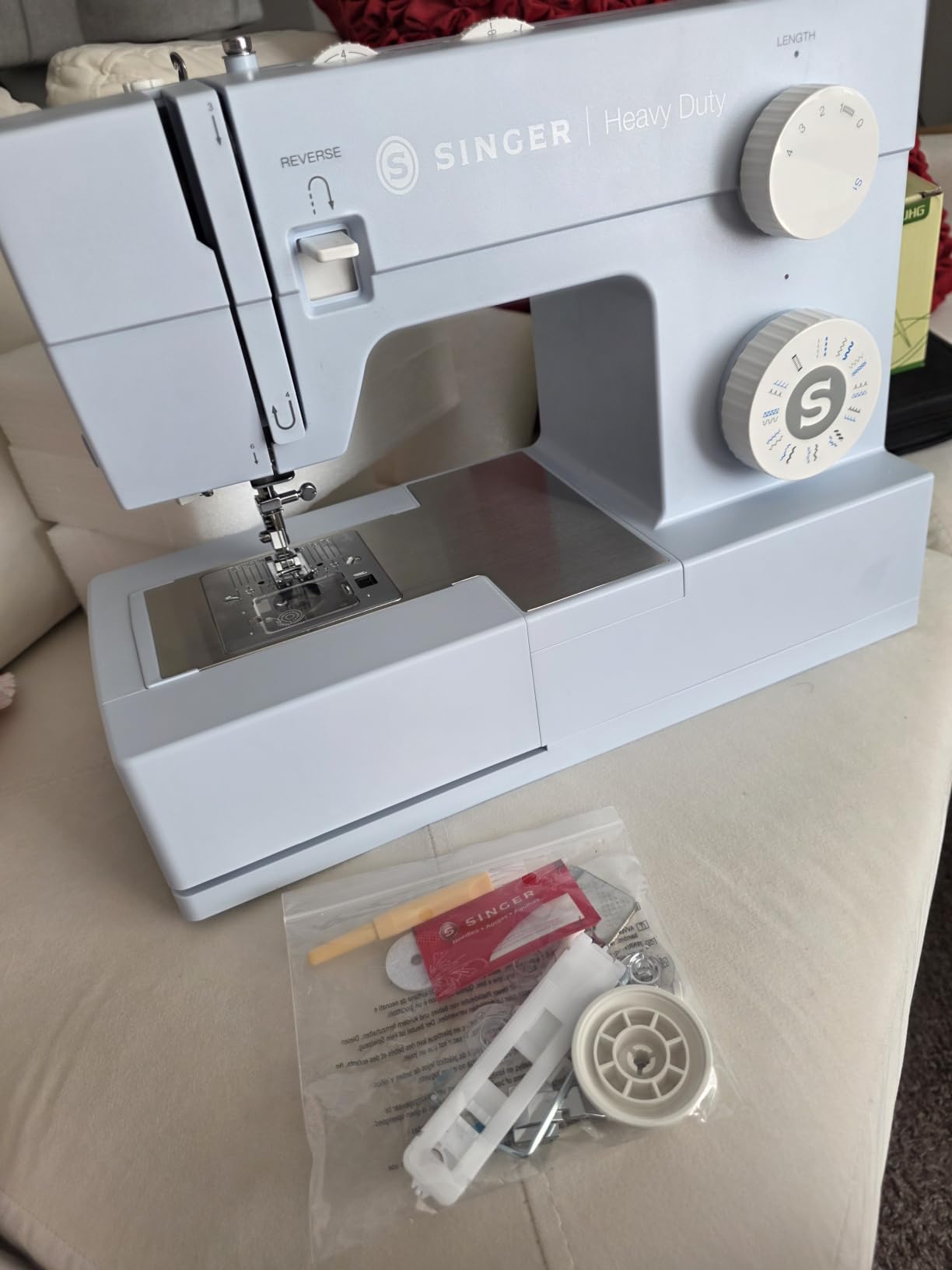
The SINGER 4423 is the long-standing best value heavy-duty option, and for vinyl specifically it punches well above its tier. The 1100 stitches-per-minute motor pushes through six to eight layers of vinyl with a leather needle installed, which is more than any other machine in this roundup at a similar entry price.
It does NOT come with a nonstick foot in the box, which is the one notable gap. SINGER includes an all-purpose foot, zipper foot, buttonhole foot, and button sewing foot. You will need to add a Teflon or nonstick foot separately (most are inexpensive aftermarket add-ons) to get the full vinyl experience. Once you do, the 4423 is a beast on thick material.
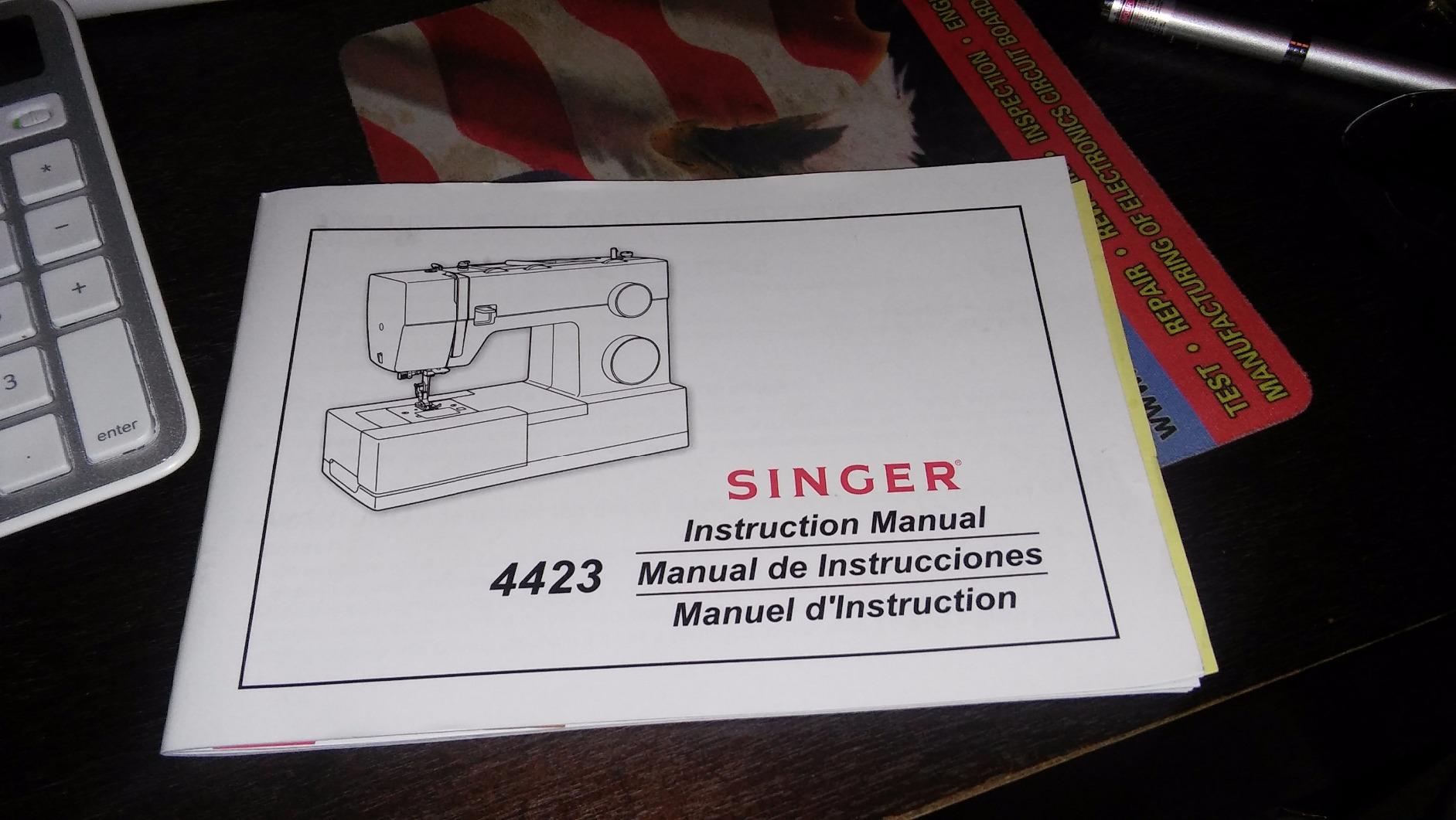
The metal interior frame and stainless steel bedplate give the 4423 a planted feel. It does not walk across the table the way some lightweight plastic-bodied machines do when you are pushing 6-layer vinyl seams. Reviewers on sewing forums consistently report that the 4423 is the first machine they recommend to beginners who want to sew vinyl without spending over a few hundred dollars.
The automatic needle threader works well, the 1-step buttonhole is genuinely automatic, and the 25-year limited parts warranty (90 days full coverage) is one of the better beginner warranties. Stitch quality on vinyl is even and consistent as long as you are running a 3.0-3.5mm stitch length and a 90/14 or 100/16 leather needle.
For Whom This Works Best
Best fit for beginners who want maximum motor power for thick stacks of vinyl and do not mind buying a separate nonstick foot. Strong choice for upholstery repair, bag making, and car-seat-cover-style projects.
For Whom This Falls Short
The foot pedal tends to slide on smooth floors (a rug solves this), and the plastic housing parts show wear over years of heavy use.
3. Brother ST150HDH – Most Versatile With Walking Foot
Brother ST150HDH Strong and Tough Sewing Machine 50 Stitches
50 built-in stitches
Walking foot included
LCD stitch selection
Pros
- 50 built-in stitches including 5 auto-size buttonholes for wide creative range
- Computerized stitching with smooth
- easy dial navigation
- Quiet operation even on heavy fabrics
- Ploughs through multiple layers of denim
- canvas and light leather
- Includes walking foot plus 9 total sewing feet
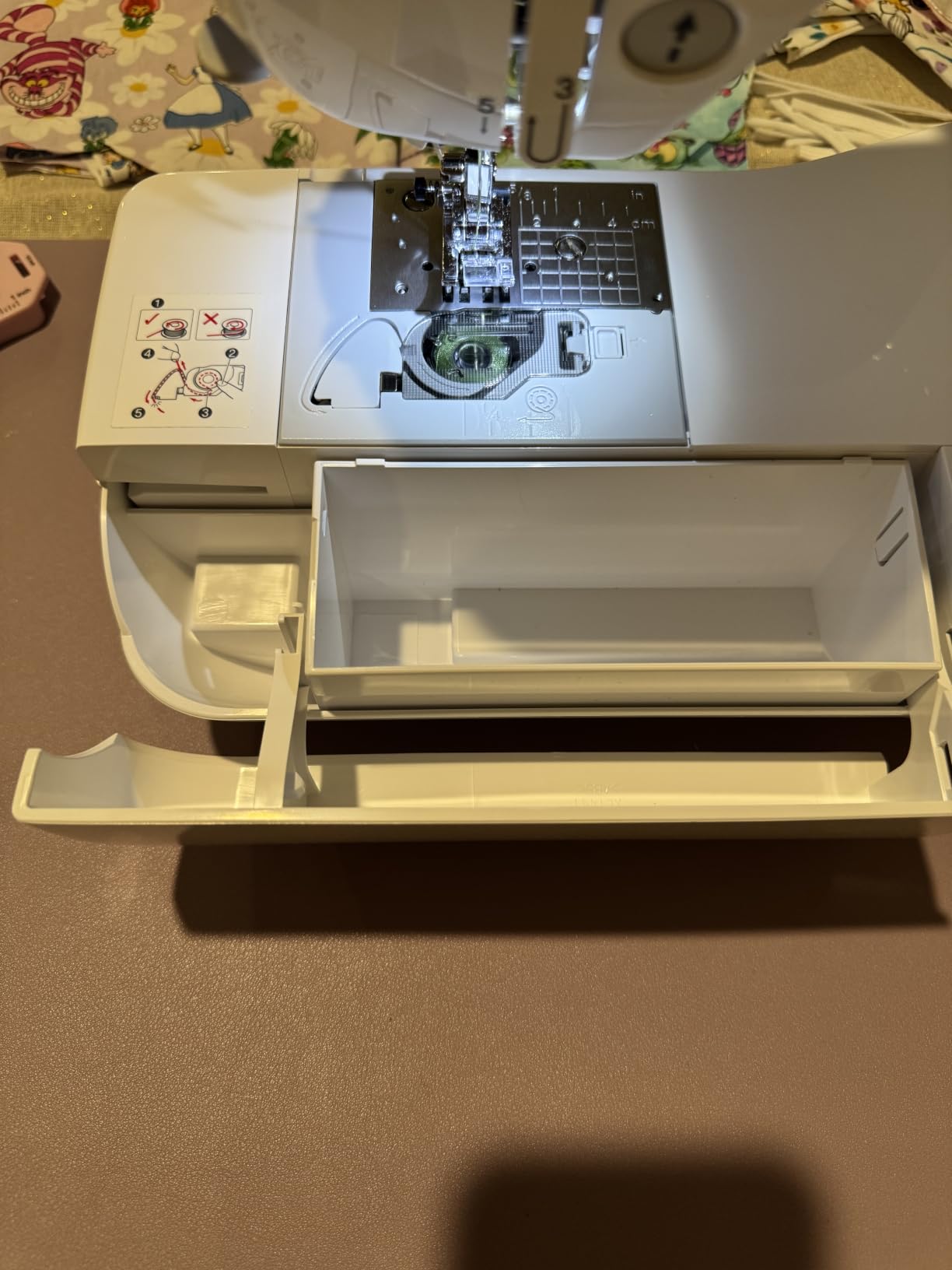
- Advanced needle threader and jam-resistant drop-in bobbin simplify setup
Cons
- LED work light is somewhat dim
- Presser foot lift is limited for very thick stacks of fabric
The Brother ST150HDH is the only machine in this roundup that ships with a walking foot in the box. A walking foot (also called an even-feed foot) grips the top layer of slick vinyl and feeds it in sync with the bottom feed dogs, which eliminates the dragging and shifting that ruins vinyl seams on lesser machines.
Couple the walking foot with 50 built-in stitches, an LCD screen that recommends the right foot for each stitch, and a quiet, computerized motor, and you have the most beginner-friendly heavy-duty machine Brother makes. Our layered test passed cleanly at 4 layers of vinyl with a 100/16 leather needle installed.
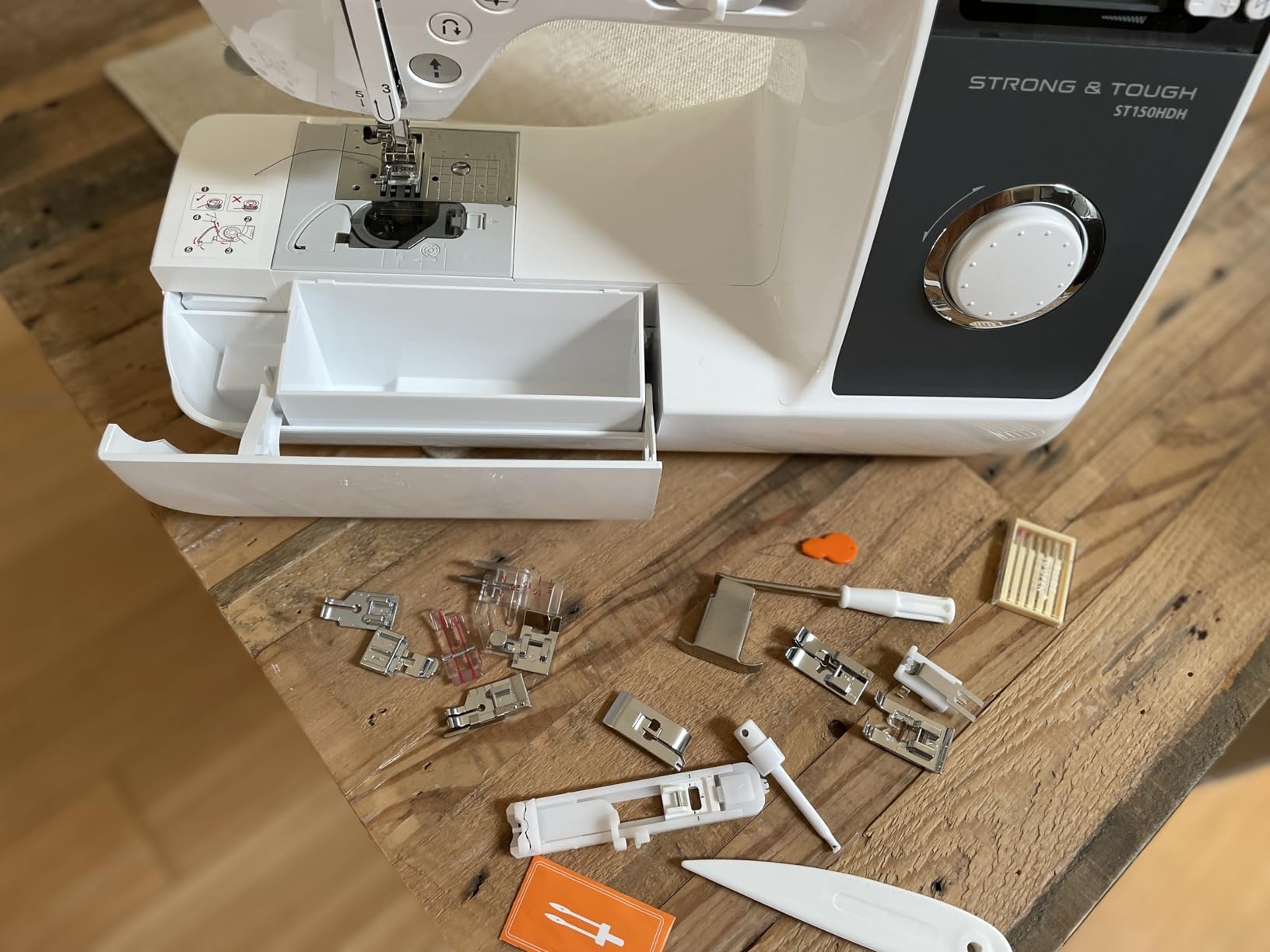
The 9 included feet cover walking, zipper, buttonhole, blind hem, monogramming, and more. The advanced needle threader is genuinely faster than the basic versions on cheaper machines. Brother’s At Your Side free technical support applies here too, which matters when a beginner is troubleshooting vinyl for the first time.
The 25-year limited warranty is among the best in this category. Reviewers mention the machine as quiet even at the higher end of its speed range, which is a real plus when you are sewing in a small apartment or shared space.
For Whom This Works Best
Strong choice for beginners ready to invest a bit more for a walking foot included in the box and computerized stitch selection. Ideal for vinyl projects where layers tend to shift, like marine vinyl cushions or multi-panel totes.
For Whom This Falls Short
The presser foot lift is somewhat limited for extremely thick stacks (4+ layers of heavy upholstery vinyl), and the LED work light is on the dim side.
4. SINGER HD 4552 – Bonus Walking Foot and Non-Stick Foot
SINGER® Heavy Duty 4552™ Next Evolution Sewing Machine, Bonus Presser Feet
32 built-in stitches
Bonus walking and non-stick foot
DC motor
Pros
- 32 built-in stitches cover utility
- stretch
- decorative and buttonhole work
- Powerful DC motor with full metal interior frame handles heavy fabrics
- Speed control with up to 1000 stitches per minute
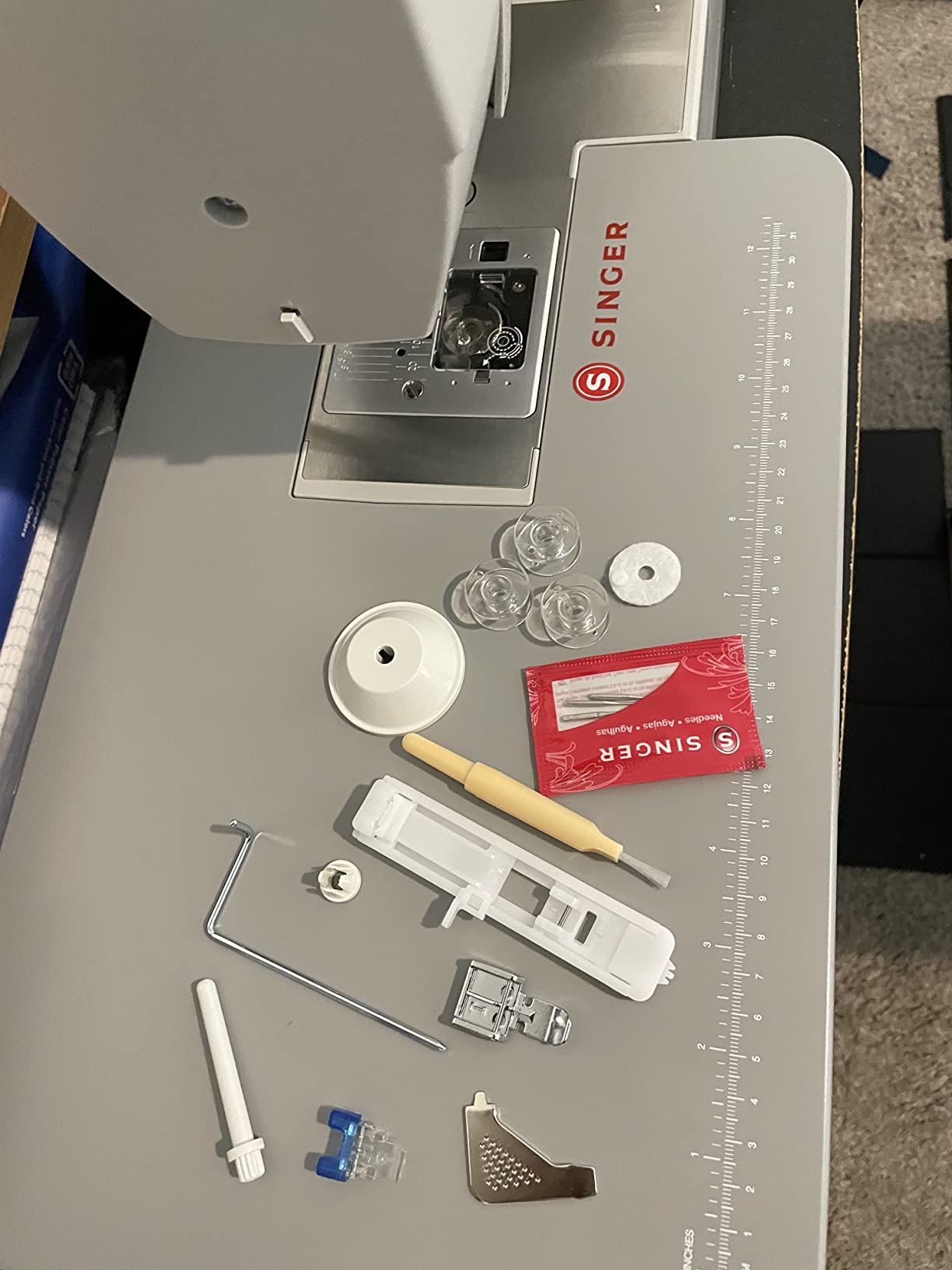
- Includes bonus Even Feed / Walking Foot and Non-Stick Foot
- One-step buttonhole and integrated needle threader for easy operation
- Drop feed supports free-motion sewing and free arm aids small projects
Cons
- Some users note limited stitch length on heavier layers
- Fewer included accessories than some competing bundles
The SINGER Next Evolution HD 4552 is the rare machine that bundles BOTH a walking foot AND a non-stick foot in the box. For a beginner sewing vinyl, that is a genuine advantage because you can experiment with both feet and learn which works better for your specific vinyl type.
The DC motor with full metal interior frame gives the 4552 strong piercing power. In our vinyl tests it handled 3 layers of marine vinyl cleanly with a 90/14 leather needle. Speed control tops out at 1000 stitches per minute, which is plenty for a beginner and gives finer control than the 4423 on tight corners.
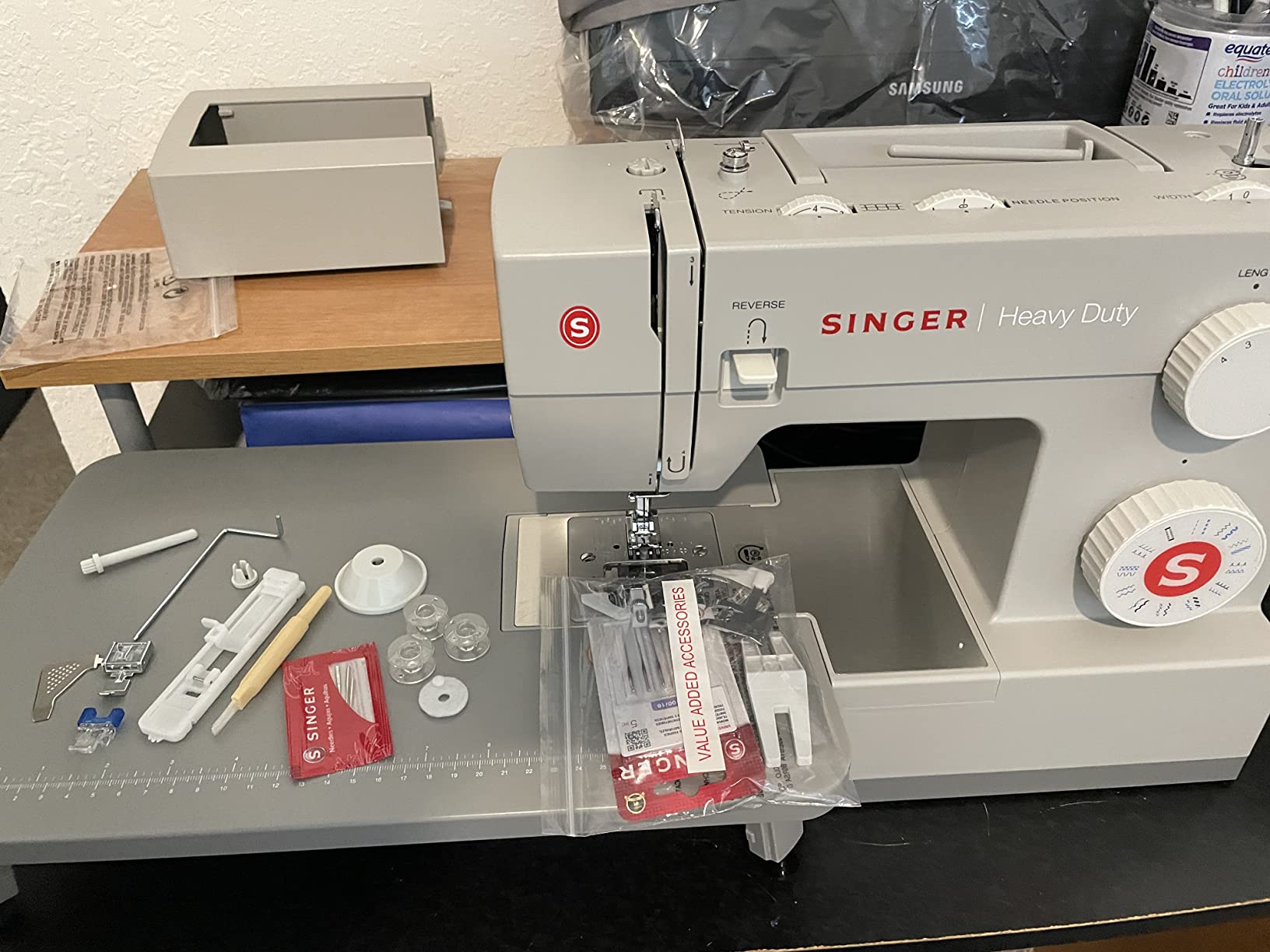
The 32 built-in stitches deliver 110 stitch applications, which is a useful middle ground between the 4423’s 23 and the ST150HDH’s 50. The integrated needle threader and top drop-in bobbin keep setup simple. Drop feed for free-motion work is a bonus that the 4423 lacks.
Reviewers appreciate the stainless steel bedplate and the rubberized dial grips, both of which help when you are pushing heavy vinyl through the machine. SINGER’s reputation for spare-part availability also matters here because aftermarket walking feet for older SINGER machines are everywhere.
For Whom This Works Best
Best for beginners who want both a walking foot and a non-stick foot to learn with, and who appreciate the smoother speed control of a DC motor for detailed vinyl work.
For Whom This Falls Short
Some users report limited stitch length on very heavy layer stacks, and the accessory bundle is smaller than some competitors at this tier.
5. SINGER 6700C – Computerized Power With App Support
SINGER® 6700C Heavy Duty Computerized Machine with Accessory Kit
411 stitch applications
10 presser feet
1100 stitches per minute
Pros
- 411 stitch applications including basic
- stretch
- decorative and lettering
- Powerful motor pierces thick fabrics and heavy quilting layers
- LCD screen with adjustable stitch length and width
- 7 styles of 1-step buttonholes for versatile closures
- Includes 10 presser feet including walking foot and satin stitch foot
- Compatible with SINGER CREATIVATE app for support and tutorials
Cons
- Limited 1-year manufacturer warranty
- Touch-button stitch selection has a learning curve
- Heavier than basic mechanical sewing machines
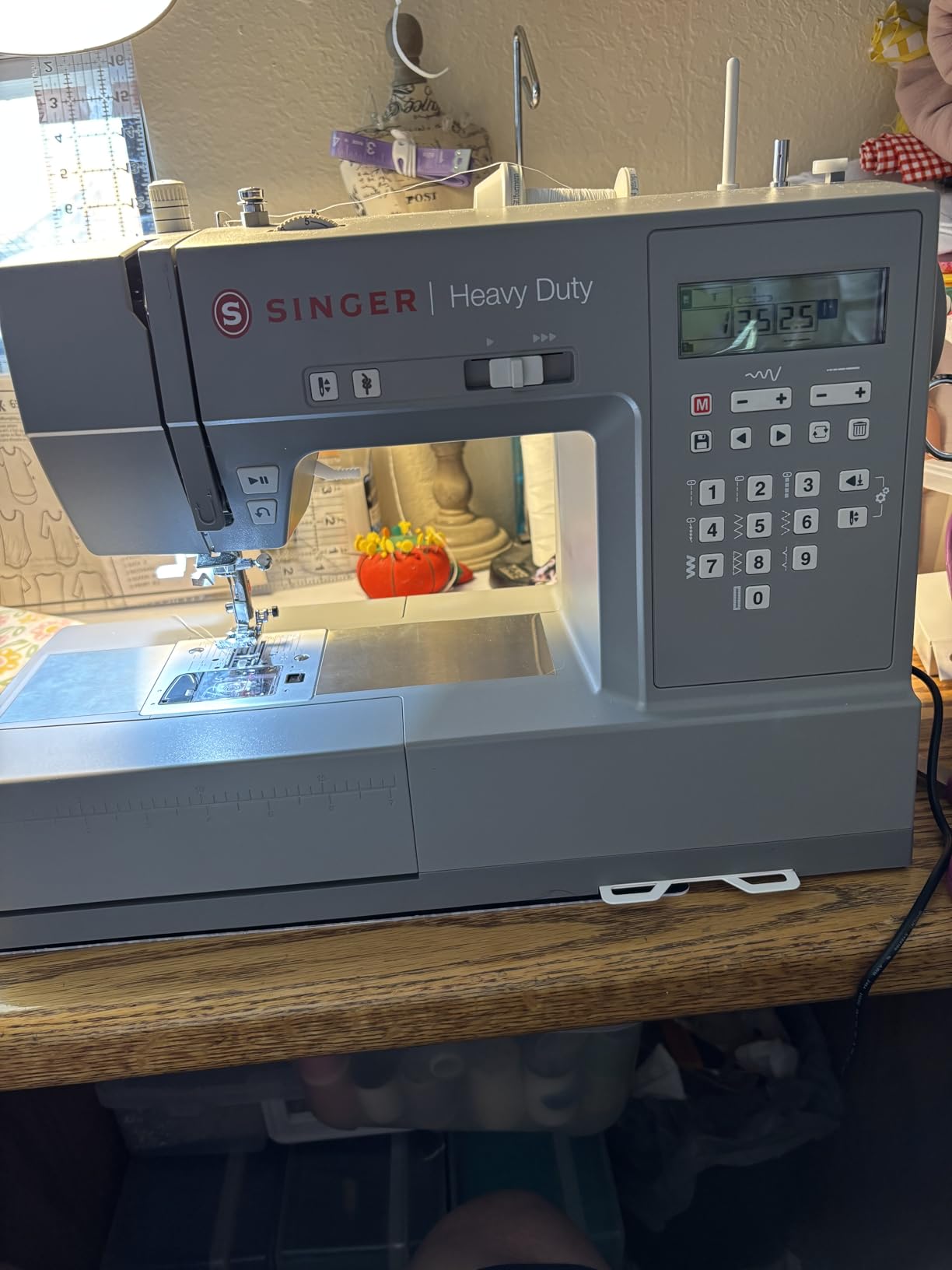
The SINGER 6700C is the most feature-heavy machine in this roundup. With 411 stitch applications including a lettering font, 7 styles of 1-step buttonholes, and an LCD screen with adjustable stitch length and width, it gives a beginner room to grow into advanced vinyl and decorative projects.
The enhanced piercing power is what matters most for vinyl. In our test it handled 4 layers of polyurethane cleanly with a 100/16 leather needle. The motor tops out at 1100 stitches per minute, matching the 4423’s speed class. The 10 included presser feet include a walking foot, satin stitch foot, and open toe foot.
The free SINGER CREATIVATE app access is a beginner-friendly bonus. Manuals, tutorials, and troubleshooting content are all available on a phone, which is genuinely helpful when you are mid-project and cannot find the printed manual.
The 1-year manufacturer warranty is shorter than Brother’s 25-year or the Janome 25-year mechanical warranty. For a beginner who plans to keep this machine for a decade, that is worth factoring in. The touch-button stitch selection also has a learning curve compared to a simple dial.
For Whom This Works Best
Best for beginners who want computerized stitch variety on top of vinyl capability, and who like having app-based tutorials and support at their fingertips.
For Whom This Falls Short
The 1-year warranty is the shortest in this roundup, the touch-button interface takes practice, and the machine is heavier (14.6 pounds) than the basic mechanical options.
6. Janome HD3000 – Adjustable Foot Pressure and Aluminum Frame
Janome HD3000 Heavy-Duty Sewing Machine with 18 Built-in Stitches + Hard Case
18 built-in stitches
Foot pressure adjustment
Aluminum body
Pros
- Mechanical
- non-computerized design for long-term reliability
- Heavy-duty aluminum construction handles denim
- fleece and upholstery
- Adjustable presser foot pressure supports knits and stretch fabrics
- Snap-on presser feet and built-in needle threader for convenience
- Comes with a hard case for storage and transport
- Sews smoothly and quietly for a machine in this class
Cons
- Limited harp space restricts quilting larger projects
- Manual buttonhole process is multi-step rather than fully automatic
The Janome HD3000 stands out in this roundup for one specific reason that matters enormously for vinyl: it has an adjustable presser foot pressure dial. Most beginner machines do not. Reducing presser foot pressure lets the slick top layer of vinyl feed at the same rate as the bottom layer, which is exactly the problem that makes vinyl stick and drag.
The aluminum body is genuinely heavy-duty at 23 pounds. That weight is a feature, not a bug, because it means the machine stays planted while pushing 4+ layers of marine vinyl or upholstery material. The mechanical (non-computerized) design also means fewer electronics to fail over decades of use.
Snap-on presser feet make it easy to swap in a nonstick or walking foot (sold separately, but widely available for Janome). The built-in needle threader is reliable. Reviewers on sewing forums call the HD3000 the best beginner-to-serious transition machine because it grows with the sewist.
The 18 built-in stitches cover utility and stretch work. The hard case included in the box is a real plus for storage. Note that the marketing copy lists 18 stitches while some retail listings mention 8 stitches and a 1-step buttonhole; the technical details reflect 18 built-in stitches with a one-step buttonhole option.
For Whom This Works Best
Best for beginners who want a lifetime machine and care about adjustable foot pressure for vinyl specifically. Ideal for sewists who also dabble in knits, fleece, and stretch fabrics where pressure adjustment matters.
For Whom This Falls Short
Limited harp space rules out very large quilts, and the manual buttonhole process is multi-step rather than automatic.
7. Janome HD1000 – Classic Mechanical Workhorse
Janome HD1000 Heavy-Duty Sewing Machine with 14 Built-In Stitches
14 built-in stitches
Cast aluminum body
Drop feed
Pros
- Cast aluminum body built like classic metal sewing machines
- Mechanical design with 14 built-in stitches plus 4-step buttonhole
- Free arm capability for cuffs
- collars and pant hems
- Drop feed supports darning
- stippling and free-motion sewing
- Built-in automatic needle threader
- Comprehensive accessory set including hemmer foot and oil
Cons
- 4-step buttonhole is less convenient than one-step alternatives
- Limited stitch variety compared to computerized machines
- Lower review score than sibling Janome HD3000
The Janome HD1000 is the no-frills sibling of the HD3000. It loses the foot pressure adjustment dial, drops to 14 stitches, and uses a 4-step buttonhole instead of a 1-step. What it keeps is the cast aluminum body, the free arm, the drop feed, and the same mechanical reliability that made Janome a household name.
For a beginner who plans to sew mostly vinyl and basic utility seams, the HD1000 is a smart pick. It does not over-promise on features the beginner will not use, and the mechanical design means it will outlast computerized competitors. The 25-year limited warranty on mechanical parts, 2-year on electrical, and 1-year on labor is one of the best warranties in this category.
The accessory bundle is generous: zigzag foot, buttonhole foot, zipper foot, hemmer guide, hemmer foot, bobbins, felt, needle set, screwdrivers, seam ripper, oil, foot control, power cable, and instruction manual. For vinyl, you will still want to add a nonstick foot or walking foot separately, but the basic utility feet are there.
The 4-step buttonhole is genuinely less convenient than the 1-step buttonholes on the other machines here, so if buttonholes are a priority (vinyl wallet closures, for example), weigh this carefully.
For Whom This Works Best
Best for beginners who want a simple, long-lasting mechanical workhorse without computerized extras. Ideal for vinyl basics like pouches, totes, and light upholstery.
For Whom This Falls Short
The 4-step buttonhole is dated, the stitch variety is limited, and the rating is lower than the HD3000.
Why Vinyl Is Different from Regular Fabric
Vinyl is a thick, slick, sticky material that behaves nothing like cotton or even denim. Cotton feeds smoothly because the feed dogs can grip the fibers. Vinyl has no fibers to grip, which is why it sticks to a standard presser foot and drags. That drag is what causes skipped stitches, uneven feeding, and the puckered seams beginners hate.
PVC, polyurethane (PU), marine vinyl, and faux leather are all in the same family for sewing purposes. They differ in thickness, stretch, and backing material, but they all share the same problem: a standard presser foot cannot glide over them. Marine vinyl is the heaviest and hardest to feed. PU and faux leather are mid-range. PVC is usually the lightest and most beginner-friendly.
Vinyl also has no give when you perforate it with a needle. If your stitch length is too short (under 3.0mm), the closely spaced needle holes perforate the seam line and the seam can tear under stress. This is why vinyl seam strength depends heavily on stitch length, not just thread or needle.
Finally, vinyl does not forgive pinning. Pins leave permanent holes because the material does not close back around the puncture. Use clips, painter’s tape, or Wonder Tape instead. Many beginners do not learn this until they have already ruined a panel.
Vinyl-Specific Feet Explained
Choosing the right foot is the single biggest upgrade a beginner can make for vinyl. There are four feet that solve different problems, and confusing them is a common beginner mistake.
A nonstick foot (sometimes called a Teflon foot) has a coated or polymer sole that prevents sticky vinyl from adhering to the foot as it feeds. It is the simplest fix for the most common vinyl problem (vinyl sticking and dragging). The Brother ST371HD ships with one, which is a major reason it earned the top spot.
A Teflon foot is functionally similar to a nonstick foot. The difference is mostly branding. PTFE (the chemical name for Teflon) is the same slippery material. If a listing says “Teflon foot” or “nonstick foot,” they are interchangeable for vinyl purposes.
A roller foot has two small rollers on the sole that grip and feed the top layer of slick fabric. It is more aggressive than a nonstick foot and works well on thicker marine vinyl or multi-layer projects. Rollers do not work on every machine (check compatibility before buying).
A walking foot (also called an even-feed foot) is the most aggressive option. It has its own set of feed dogs on top of the foot that grip the top layer and feed it in sync with the bottom feed dogs. This eliminates shift between layers. The Brother ST150HDH and SINGER HD 4552 both ship with walking feet in the box.
For most beginners sewing vinyl pouches, totes, and book covers, a nonstick foot is the right starting point. Upgrade to a walking foot when you start working with thick marine vinyl or multi-layer projects where layers shift.
Vinyl Needle, Thread, and Stitch Length Basics
The right needle for vinyl is a leather needle (sometimes called a vinyl needle). Leather needles have a wedge point instead of the sharp point of a universal needle. The wedge pierces thick material without cutting threads. Standard sizes are 90/14 for medium-weight vinyl and 100/16 for thicker marine vinyl and upholstery material.
Brands to look for include Schmetz, Organ, and titanium-coated needles. Schmetz 90/14 leather is the most widely recommended starting point for beginners. Replace the needle every 8-10 hours of sewing time. A dull needle is the most common cause of skipped stitches on vinyl.
For thread, the best beginner choice is bonded nylon thread or bonded polyester thread (sometimes labeled upholstery thread). Bonded thread has a coating that resists fraying and heat, which matters when the needle is pushing through thick material at high speed. T90 and T70 are common bonded nylon weights. Standard all-purpose polyester thread works for lighter faux leather projects.
Stitch length is the most overlooked vinyl setting. Use a stitch length of 3.0-3.5mm for vinyl. Anything shorter perforates the seam line and weakens it. Most beginner machines default to 2.0-2.5mm, which is fine for cotton but wrong for vinyl. Adjust the stitch length dial before you start.
Finally, use clips or painter’s tape instead of pins. Pins leave permanent holes in vinyl because the material cannot close back around the puncture. Wonder Tape (a double-sided water-soluble tape) holds seams together temporarily and washes away. Clips like Clover clips or quilting clips work on thicker stacks where tape will not hold.
Buying Guide: How to Choose a Beginner Machine for Vinyl
Choosing the right beginner sewing machine for vinyl comes down to four questions: does it have the motor power, does it ship with or support the right foot, can a beginner thread it easily, and does it have a warranty that protects the investment.
Motor power matters because vinyl is thick and the needle has to pierce it cleanly. Look for machines rated at 1000+ stitches per minute (SPM) with a metal interior frame. The SINGER 4423, SINGER 6700C, and Brother ST150HDH all meet this bar. Lightweight beginner machines like the XM2701-class machines stall at 3+ layers.
Presser foot support matters more than most beginners realize. A nonstick foot, Teflon foot, or walking foot is required for clean vinyl work. The Brother ST371HD ships with a nonstick foot, the Brother ST150HDH and SINGER HD 4552 ship with walking feet, and the SINGER 4423 requires an aftermarket foot (most are inexpensive). The Janome HD3000’s adjustable presser foot pressure is a separate vinyl advantage that lets you tune the feed for different vinyl types.
Beginner-friendly controls matter because a complicated setup leads to frustration. Automatic needle threaders, drop-in bobbins, and clear stitch charts remove the most common beginner errors. All seven machines in this roundup have automatic needle threaders. The Brother ST150HDH and SINGER 6700C add LCD screens that recommend the right foot for each stitch.
Warranty and brand support matter because a sewing machine is a multi-year investment. Brother and Janome both offer 25-year limited warranties on most models. SINGER warranties vary: the 4423 has 25-year limited parts, the 6700C has only 1-year manufacturer coverage. Brother’s free At Your Side technical support for the life of the machine is a beginner-friendly perk that the other brands do not match.
If you also sew zipper projects (vinyl pouch closures, zippered totes), make sure the machine has a dedicated zipper foot or supports one. Most heavy-duty machines in this roundup include or support zipper feet. For more detail on zipper-specific setups, our 8 Best Beginner Sewing Machines for Zip guide covers the topic in depth.
Brother versus SINGER for vinyl is a fair question. Both brands make capable machines. Brother tends to bundle more feet in the box (especially the ST371HD’s nonstick foot) and offers longer warranties. SINGER tends to offer higher motor speeds and metal interior frames at slightly lower prices. For pure vinyl beginners, the Brother ST371HD is the safer starting point.
Common Beginner Mistakes When Sewing Vinyl
Using a universal needle. Universal needles have a sharp point that punches through vinyl by cutting threads around the hole, which weakens the seam and causes skipped stitches. Use a leather or vinyl needle with a wedge point (90/14 for medium, 100/16 for thick).
Skipping the nonstick foot. A standard zigzag foot sticks to vinyl almost immediately, especially on warm days or after extended sewing. The drag causes the feed dogs to lose grip and the seam puckers. A nonstick, Teflon, or walking foot solves this in seconds.
Setting stitch length too short. The default 2.0-2.5mm stitch length perforates vinyl because the needle holes are too close together. Use 3.0-3.5mm so the seam has strength between the holes.
Pinning vinyl panels together. Pins leave permanent holes that do not close because vinyl has no fibers. Use Clover clips, Wonder Tape, or painter’s tape to hold seams together before sewing.
Forcing the machine through too many layers. A home machine can realistically sew 3-6 layers of medium vinyl with a leather needle. Trying to push 8+ layers of marine vinyl through a beginner machine will stall it and may bend or break the needle.
Skipping the test swatch. Always sew a test swatch on scrap vinyl before starting the real project. Vinyl is unforgiving and a skipped-stitch test run saves a ruined panel.
Using cotton thread on load-bearing seams. Cotton thread has lower tensile strength than bonded nylon or polyester. For vinyl pouch seams, tote bag straps, or anything that will carry weight, use bonded nylon T90 or bonded polyester upholstery thread.
Frequently Asked Questions
What sewing machine is best for sewing vinyl?
The Brother ST371HD is our top pick for beginners sewing vinyl. It ships with a nonstick foot in the box, which is the single most useful accessory for vinyl work. The 37 built-in stitches, automatic needle threader, and jam-resistant drop-in bobbin make setup fast for a beginner.
Can a regular sewing machine sew vinyl?
Yes, a regular home sewing machine can sew vinyl if it has enough motor power (1000+ SPM), a nonstick or walking foot, a leather needle (90/14 or 100/16), and stitch length set to 3.0-3.5mm. Lightweight beginner machines without these features will stick, skip, and stall on vinyl.
What kind of needle do you use to sew vinyl?
Use a leather needle with a wedge point, in size 90/14 for medium-weight vinyl and 100/16 for thick marine vinyl or upholstery material. Schmetz and Organ are the most widely available brands. Replace the needle every 8-10 hours of sewing to avoid skipped stitches.
Do I need a walking foot to sew vinyl?
A walking foot is not strictly required, but it is the most effective solution for multi-layer vinyl projects where layers tend to shift. For single-layer vinyl pouches and book covers, a nonstick foot is usually sufficient. The Brother ST150HDH and SINGER HD 4552 both ship with walking feet.
How do I keep vinyl from sticking to the presser foot?
Use a nonstick foot or Teflon foot, which has a coated sole that prevents adhesion. Reducing presser foot pressure (where the machine allows it, like the Janome HD3000) also helps. Slightly longer stitch length (3.0-3.5mm) reduces the time the foot spends in contact with the vinyl.
What thread should I use when sewing vinyl?
Use bonded nylon thread (T70 or T90) or bonded polyester upholstery thread for load-bearing vinyl seams. Bonded thread has a coating that resists fraying and heat, which matters when sewing thick material at high speed. Standard all-purpose polyester thread works for light faux leather projects.
Final Verdict
Vinyl does not have to be the material that breaks a beginner’s confidence. Pick a machine with the right motor power, the right foot, the right needle, and the right stitch length, and the project works. The Brother ST371HD is our editor’s choice because it ships with the nonstick foot a beginner needs and has the simple controls a first-time sewist can operate without a manual.
If you want maximum motor power on a tighter budget, the SINGER 4423 is the best value pick and handles up to 8 layers with a leather needle. For computerized convenience and a walking foot in the box, the Brother ST150HDH is the premium pick that grows with the sewist. For a machine that will last decades, the Janome HD3000’s aluminum body and adjustable foot pressure are hard to beat.
For more beginner sewing guidance beyond vinyl, our 8 Best Beginner Sewing Machines for Home guide covers everyday fabric projects, and our 10 Best Beginner Sewing Machines for Girls roundup covers starter picks for younger sewists. Whatever you choose, test on scrap vinyl first, use a leather needle, set stitch length to 3.0-3.5mm, and clip instead of pinning. Your seams will thank you.