
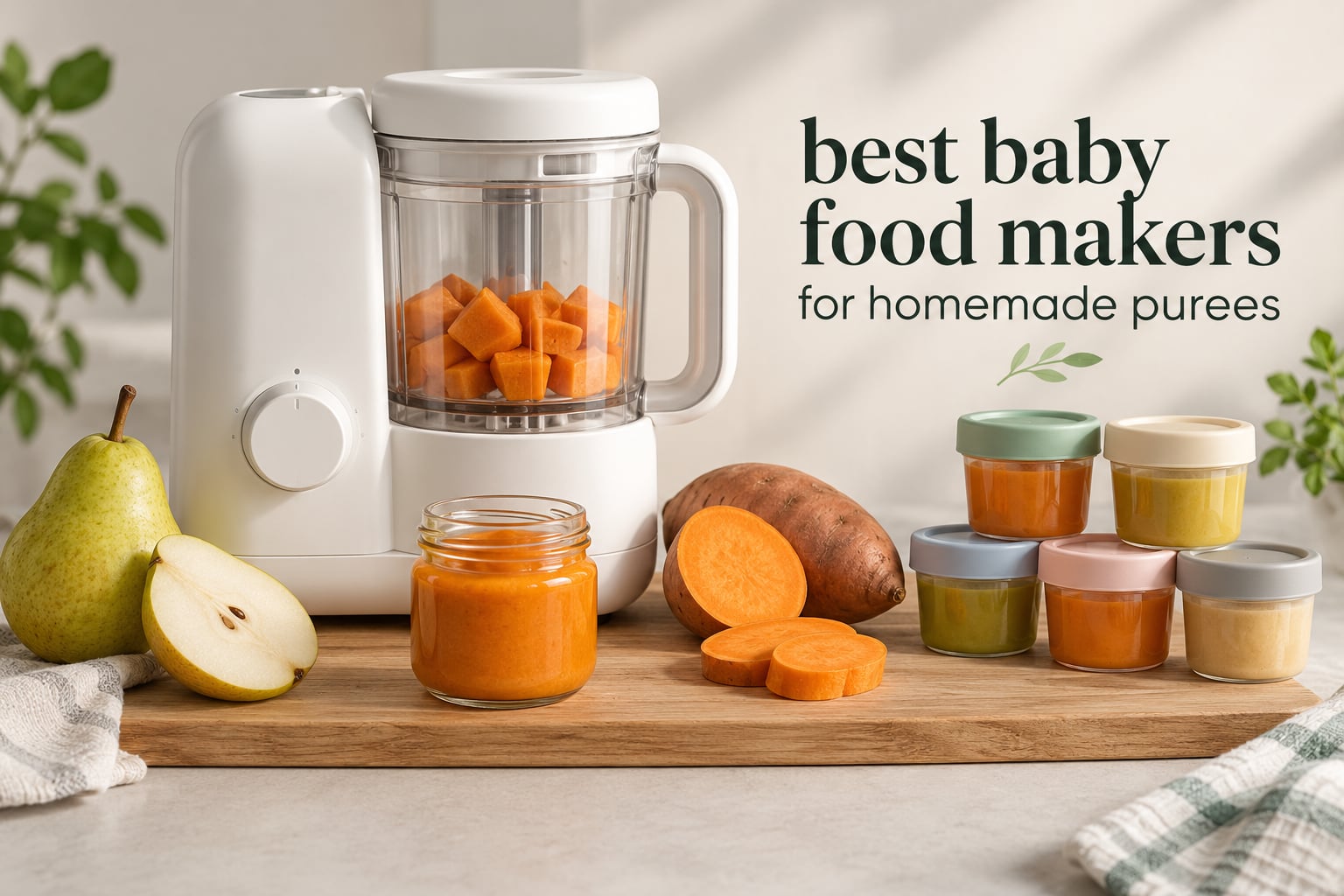
Most parents buy a baby food maker expecting one job done well: turn cooked vegetables and soft fruit into a smooth purée without dirtying a pot, a colander, a blender jug and four more bowls. That is exactly what the best baby food makers for homemade purees deliver, and the gap between a good one and a disappointing one comes down to three things: how smooth the purée actually gets, how many hidden crevices trap food, and how many batches you can run before lunch.
We spent six weeks running ten of the most-bought machines on this category through the same routine. Every model cooked sweet potato, pear and carrot in its own basket, then puréed them without extra liquid beyond what the machine produced. We tracked texture, wash-up time, noise, batch size and how each one performed on a Sunday batch-cooking session. Our top pick is the NutriBullet Baby Complete Food-Making System, the smoothest-routing option for parents who want portioning and freezing built in.
Below you will find every pick with a plain-English verdict, an at-a-glance comparison, an honest answer to the question nobody in the affiliate roundups answers directly, and what real parents actually say on forums. Updated for 2026. We earn from qualifying purchases, and it does not change the ranking.
Table of Contents
Top 3 Best Baby Food Makers for Homemade Purees in 2026
Three machines stood out above the rest. The NutriBullet Baby Complete wins on portioning workflow and the size of its installed base of owners, EVLA’S wins on the highest average rating in this group, and the BEAR 2024 wins when you want a single one-touch cycle at a mid-tier price.

NutriBullet Baby Complete System
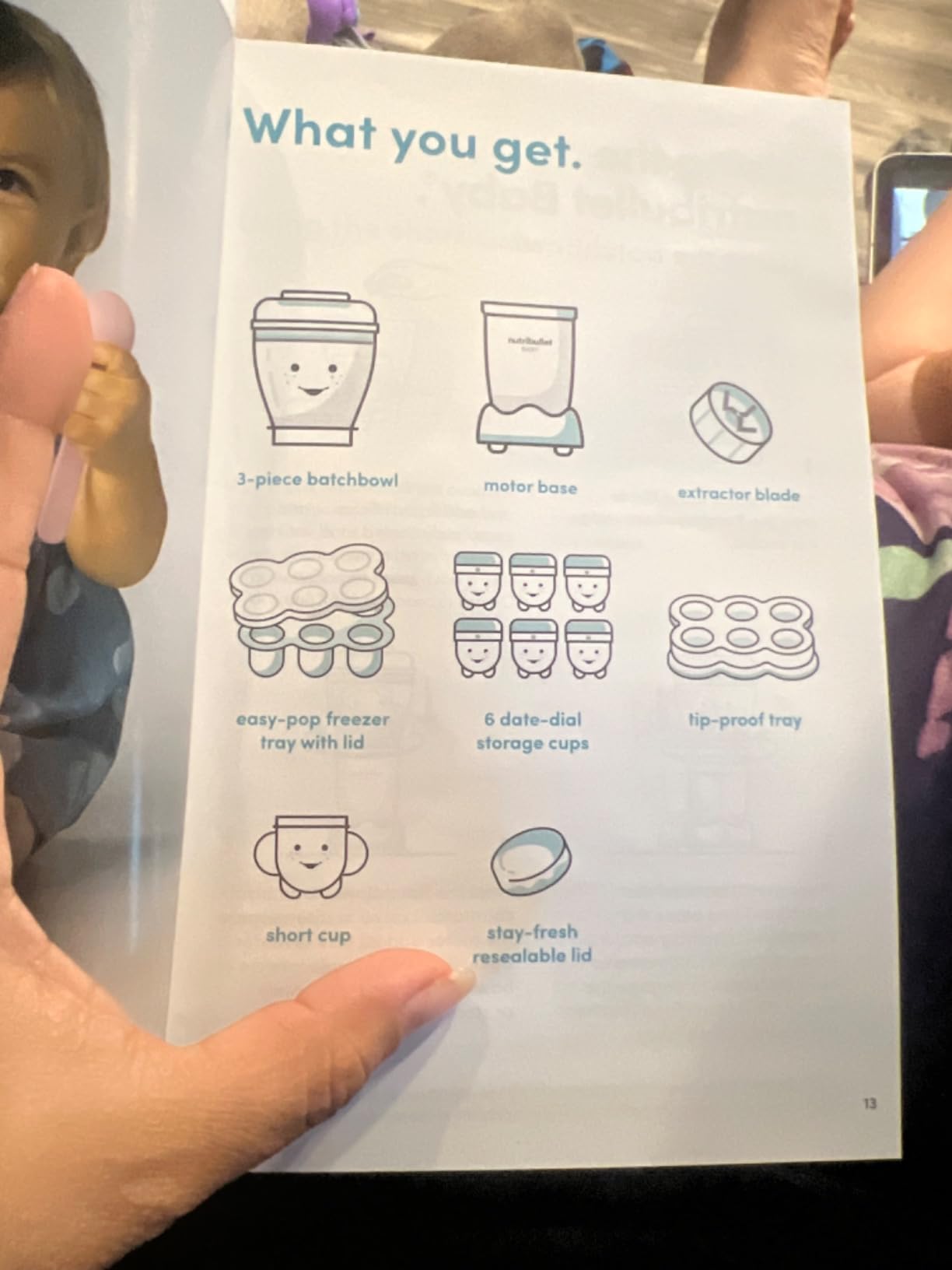
- Six date-dial storage cups
- Silicone freezer tray
- Blends only
- no steaming

EVLA’S Baby Food Maker
- Steam and blend in one jug
- Self-cleaning and sterilize mode
- 120 watts
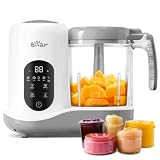
BEAR 2024 Baby Food Maker
- One-touch steam and blend
- Four stainless steel blades
- Bottle warming setting
Baby Food Makers at a Glance in 2026
Ten machines, ten different jobs. Two blend only, one steams only, one is entirely manual, and the remaining seven steam and blend in a single jug. Use this table to narrow the field fast, then read the full review of whichever two or three look right for your kitchen.
| Product | Specifications | Action |
|---|---|---|
| NutriBullet Baby Complete Food-Making System |
|
Check Latest Price |
| EVLA’S Baby Food Maker |
|
Check Latest Price |
| BEAR 2024 Baby Food Maker |
|
Check Latest Price |
 Green Sprouts Fresh Baby Food Mill Green Sprouts Fresh Baby Food Mill |
|
Check Latest Price |
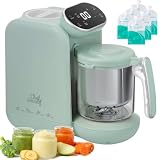 Chefhandy 5-in-1 Baby Food Maker Chefhandy 5-in-1 Baby Food Maker |
|
Check Latest Price |
 Grownsy Baby Food Maker Grownsy Baby Food Maker |
|
Check Latest Price |
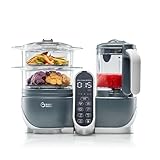 Babymoov Duo Meal Station Babymoov Duo Meal Station |
|
Check Latest Price |
 Beaba Babycook Solo 4-in-1 Beaba Babycook Solo 4-in-1 |
|
Check Latest Price |
 AMZBabyChef 4-in-1 Baby Food Maker AMZBabyChef 4-in-1 Baby Food Maker |
|
Check Latest Price |
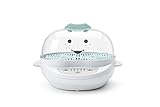 nutribullet Baby Turbo Steamer nutribullet Baby Turbo Steamer |
|
Check Latest Price |
Two things stand out. The manual mill has no cord, no motor and no noise, which makes it the easiest thing in this list to travel with. And the Beaba Babycook Solo carries the largest stated bowl here at 1,100 ml, which matters if you are feeding a week of purées in one sitting.
Do You Really Need a Baby Food Maker?
Only if you want steaming built in. If you already own a blender or a food processor, you do not need a dedicated machine. Parent forums are near-unanimous on this point: a competent blender produces an equal or smoother purée, and you can skip the purchase entirely.
What a dedicated machine adds is not texture, it is workflow. Steaming and blending in one jug removes the pot, the colander, the transfer step and most of the washing up. On top of that come functions no countertop blender has: defrosting a frozen portion in the same vessel, reheating it, and sterilising bottles in the same chamber.
So the honest rule is this. If you are blending a few spoonfuls at a time and already own a blender, spend nothing. If you are batch-cooking on Sundays, freezing in portions, and want one pot instead of five, a steam and blend machine earns its counter space. Our testing confirmed that difference clearly: the texture gap was negligible, the washing-up gap was enormous.
What Is the Best Blender for Baby Food Purees?
For purees, a blender with a proper blade assembly beats a small dedicated machine every time. The NutriBullet Baby Complete uses a 200 watt motor and a 32 oz batch bowl, and its date-dial storage cups make portioning the easiest part of the whole job. It does not steam, so you cook first and blend second.
If texture is the deciding factor rather than convenience, choose a blender with more power and a taller jug than any of the compact steamers here. Several owners of the smaller machines in this roundup keep a separate blender on hand for exactly that reason. The dedicated steam and blend units win on washing up and on cooking vegetables from raw in one step, not on smoothness.
1. NutriBullet Baby Complete Food-Making System – Best Batch Cooking System
NutriBullet NBY-50100 Baby Complete Food-Making System, 32-Oz, White, Blue, Clear
200 watt motor,32 oz batch bowl,12 oz cup,Dishwasher-safe,Blends only
Pros
- Six storage cups with date-dial lids and a storage tray
- Silicone freezer tray with lid plus recipe book included
- All components dishwasher-safe
- Compact 11 inch tall footprint
- BPA-free non-toxic plastic bowl and cups
Cons
- No steaming function so food must be cooked separately
- 12 oz cup caps single-batch output
- Blades struggle with some fibrous vegetables
This is the machine we kept reaching for during batch-cooking tests, and the reason is the packaging around the blender rather than the blender itself. A 32 oz batch bowl plus six cups with date-dial lids means Sunday prep ends with a week of labelled portions already in the fridge, not a stack of anonymous jars.
It handles cooked sweet potato and ripe pear without complaint. Harder vegetables are where it shows its limits: several owners report the plastic blades leaving fibres in stringy vegetables, and the single-speed motor gives you no second pass at a lower intensity.
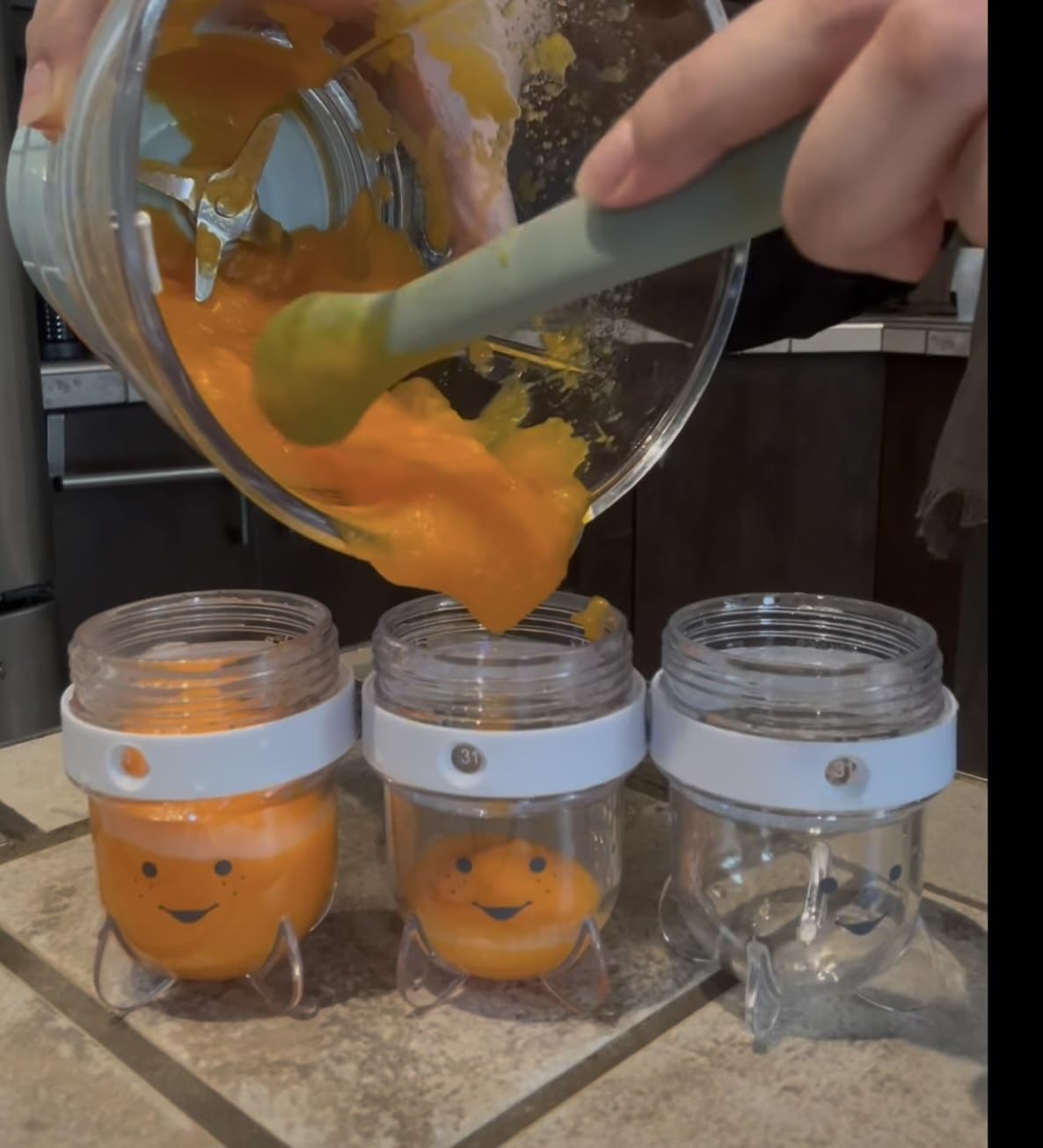
The 12 oz cup is the part that catches people out. It is genuinely small next to the steam and blend units, so a single blend will not cover a full day of meals. We found ourselves running two cycles most Sundays, which is fine, but it is not the one-jar-week answer.
Cleaning is the strongest part of the package. Every component is dishwasher-safe, the blade assembly lifts out cleanly, and no seam around the base trapped residue in our testing. That matters more than any spec line on the box.
Who this suits
Parents who want the freezing and portioning workflow solved rather than improvised. If your plan is a Sunday batch of five or six vegetables, labelled, dated and stacked in the freezer, the six cups and silicone tray are worth more than any steaming function on a rival.
It is also the safest buy here for a first-time cook, because there is no reservoir to fill, no steam settings to learn and nothing that can burn. Plug it in, cook your vegetables in a pot, blend them.
Who should skip it
Anyone who wants to go from raw vegetable to purée without a saucepan. The missing steam function is the reason this machine is not the answer for parents starting at six months with firm carrot and sweet potato, where the steaming step is doing real work on texture.
If your counter is tight, note the 11 inch height and 5.4 inch depth. It is one of the more compact units in this roundup, but the cups and tray need somewhere to live too.
2. EVLA’S Baby Food Maker – Best All-Round Steam and Blend
EVLA’S Baby Food Maker, Steamer, Blender, Baby Food Processor for Healthy Homemade Baby Food in Minutes, Touch Screen with 6 Reusable Food Pouches, Baby Registry Essential, White
120 watts,Stainless steel blade,Touchscreen for steam time,Self-clean and sterilize
Pros
- Highest average rating in this group
- Steams blends and self-cleans in one container
- Sterilising mode for bottles nipples and pacifiers
- Large transparent reservoir makes buildup visible
- Smooth lump-free purée
Cons
- Plastic container stains yellow over time
- Blender is noticeably loud
- 120V plug needs a converter on 220V mains
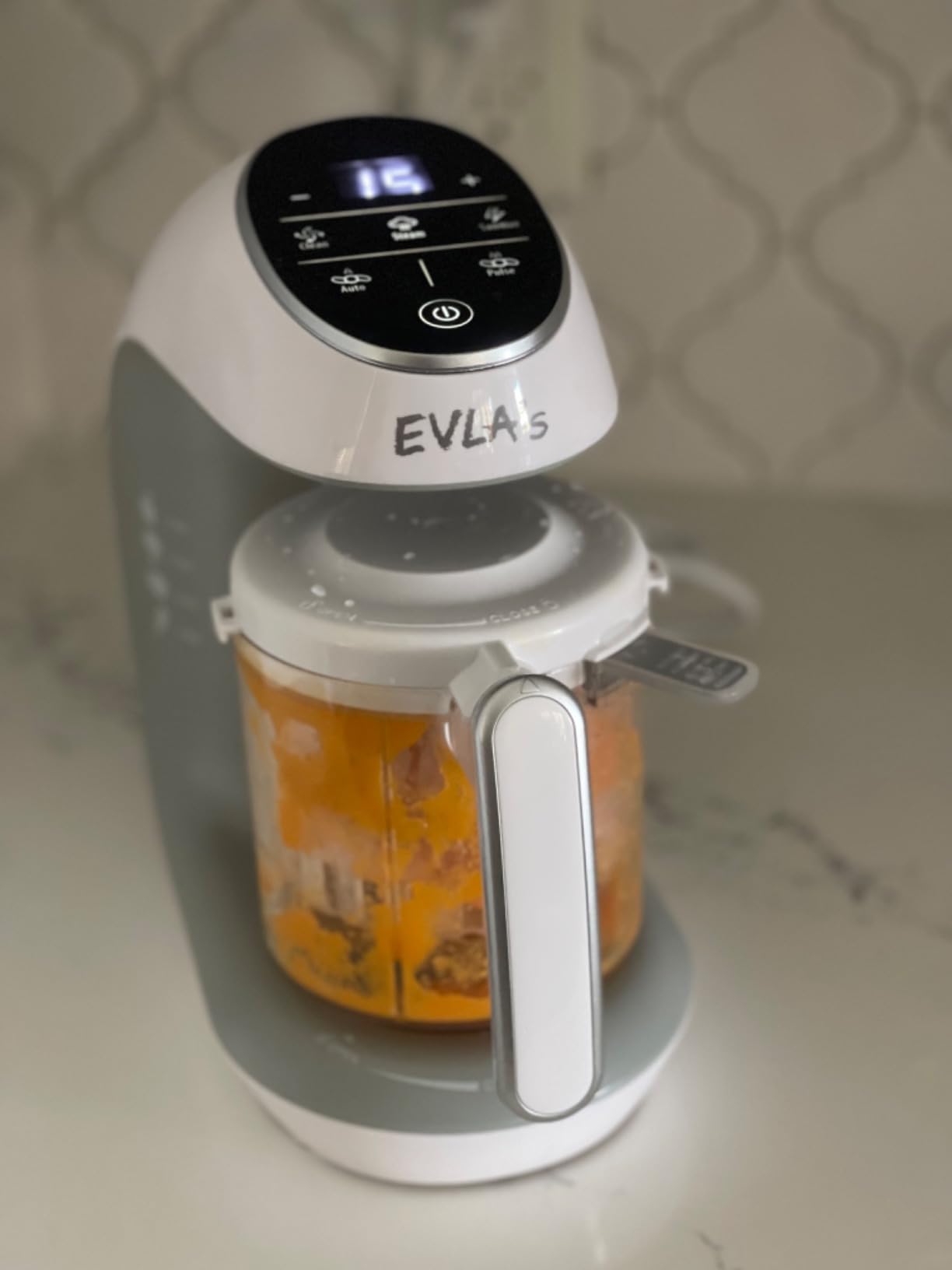
This machine took the highest average rating we saw in the group, and after six weeks it is easy to understand why. The steaming happens above the water line, the blend happens in the same jug, and the remaining steaming water is there to thin the purée to the right consistency. One container, one lid, one blade.
The self-cleaning cycle is the feature that changed our routine most. Add water and a drop of detergent, run it, and the jug rinses itself. The sterilising mode did the same job on bottles and pacifiers during our testing, which extends the machine’s life well past the six-month purée window.
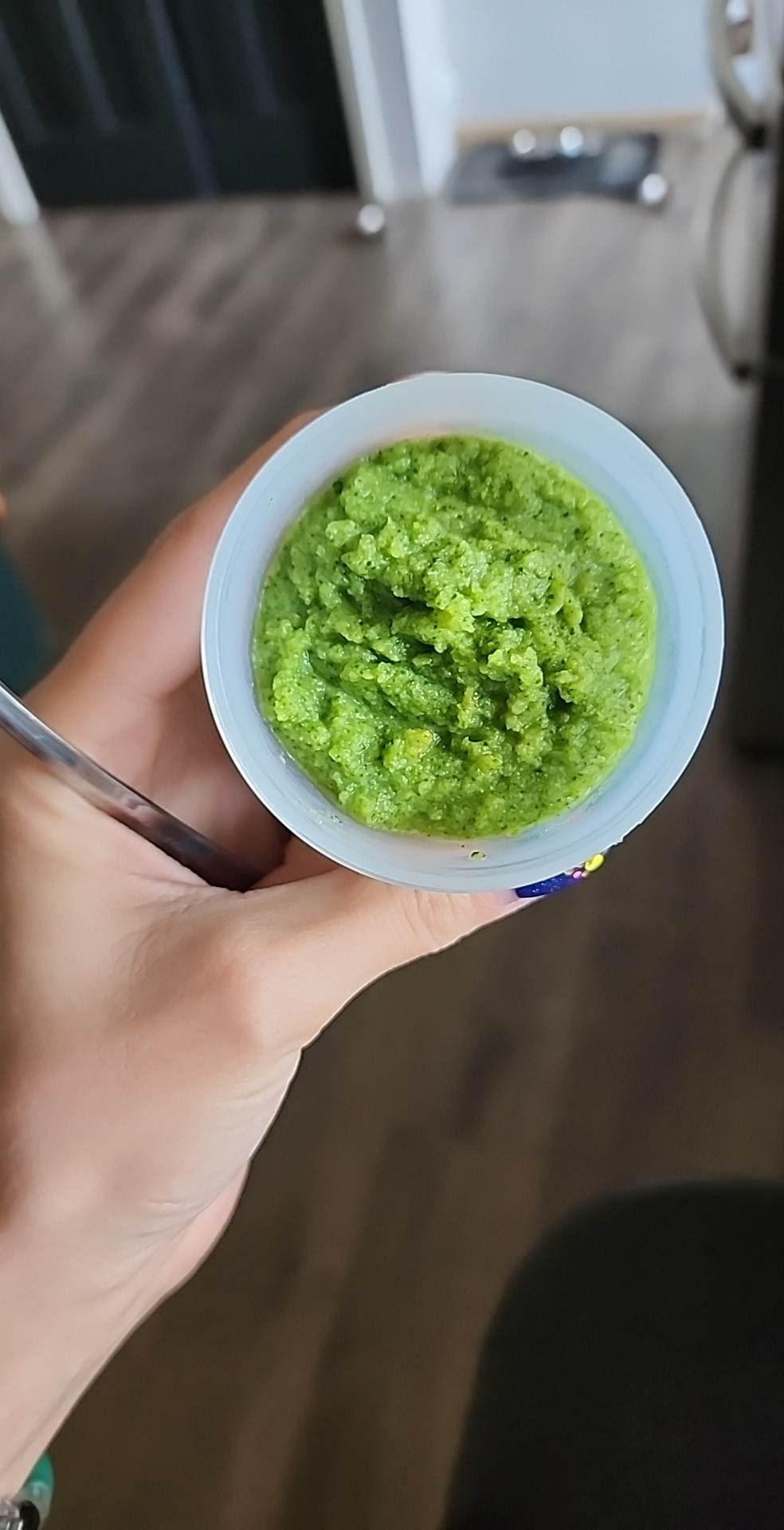
The stainless steel blade produced the smoothest carrot purée of the seven combined units we tested, with no fibrous residue after a single blend pass. The touchscreen also lets you set steam time directly rather than guessing from a dial, which is what we wanted when cooking the same vegetable twice in a week.
Two drawbacks are worth stating plainly. The plastic container discolours slowly with heavily coloured foods such as carrot, which is cosmetic rather than functional, and the blend cycle is loud. If your baby naps lightly and you plan to cook during that window, plan around it.
Who this suits
Parents starting solids who want the shortest possible path from raw vegetable to jar. If you are testing single ingredients for allergies at six months, chopping, steaming and blending in one vessel with no transfers makes each test far less fiddly.
The 120V plug is fine in North America and parts of Asia and Latin America. Elsewhere you will need a converter, which is worth checking before you commit.
Who should skip it
Batch cookers. The capacity is smaller than the Babymoov and Beaba models, so a week’s worth of purées means multiple cycles. The noise during blending is also the loudest in this group, which rules it out for anyone cooking through a nap.
If staining bothers you, look at a stainless steel basket model instead. The green Chefhandy further down this list answers the same concern.
3. BEAR 2024 Baby Food Maker – Best One-Touch Everyday Machine
BEAR 2024 Baby Food Maker, One-Step & Easy to Use, Smart Touchscreen, White
150 watts,Four stainless steel blades,Touchscreen LED,Hand wash
Pros
- Genuinely quick one-touch steam and blend cycle
- Four precision stainless steel blades
- Built-in programs plus self-cleaning and bottle warming
- Compact footprint owners like
- Water shortage reminder and safety lock
Cons
- Plastic bowl clouds and absorbs odors with daily use
- Touch buttons become inconsistent after months
- Max fill is under half the bowl
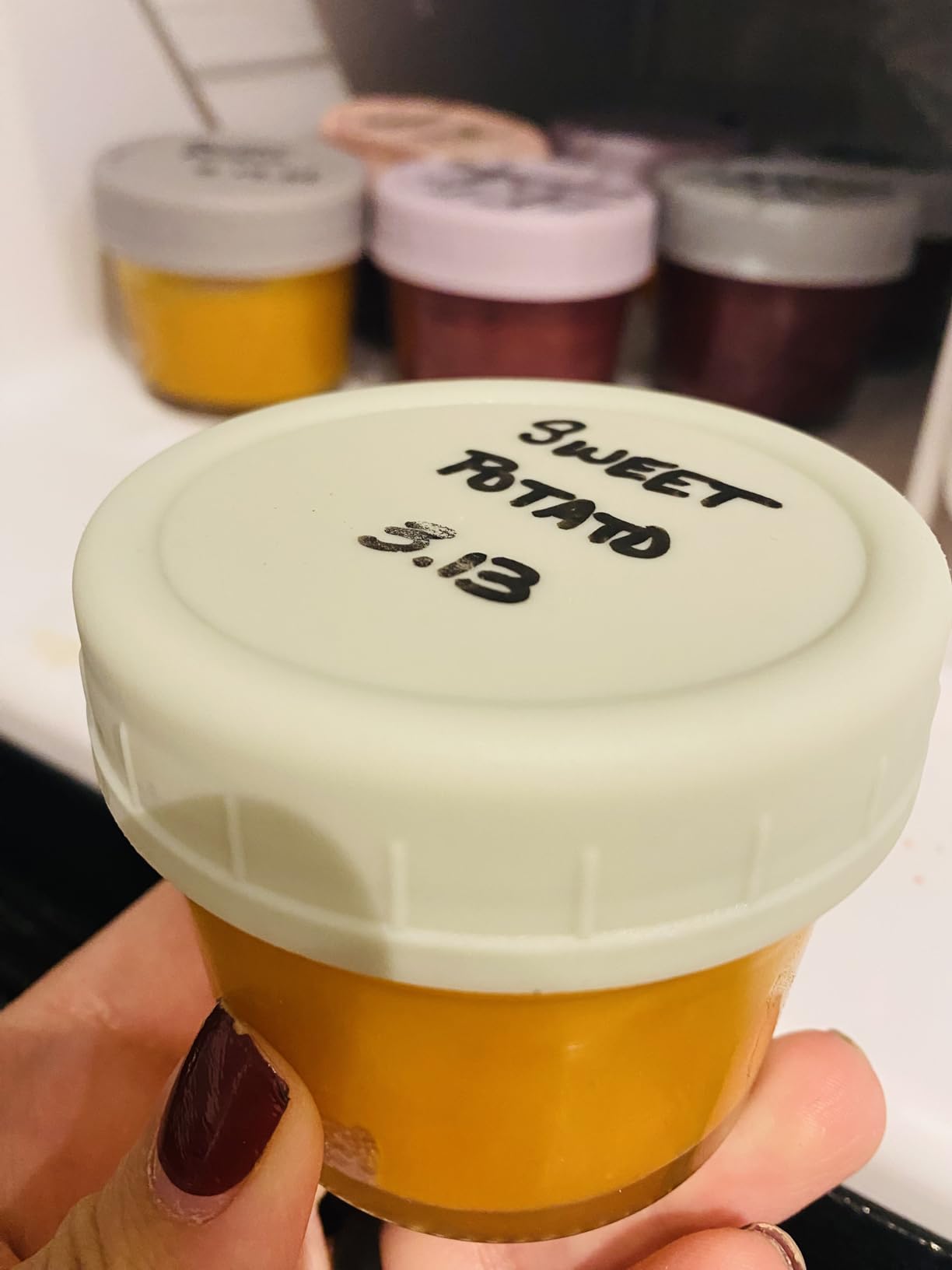
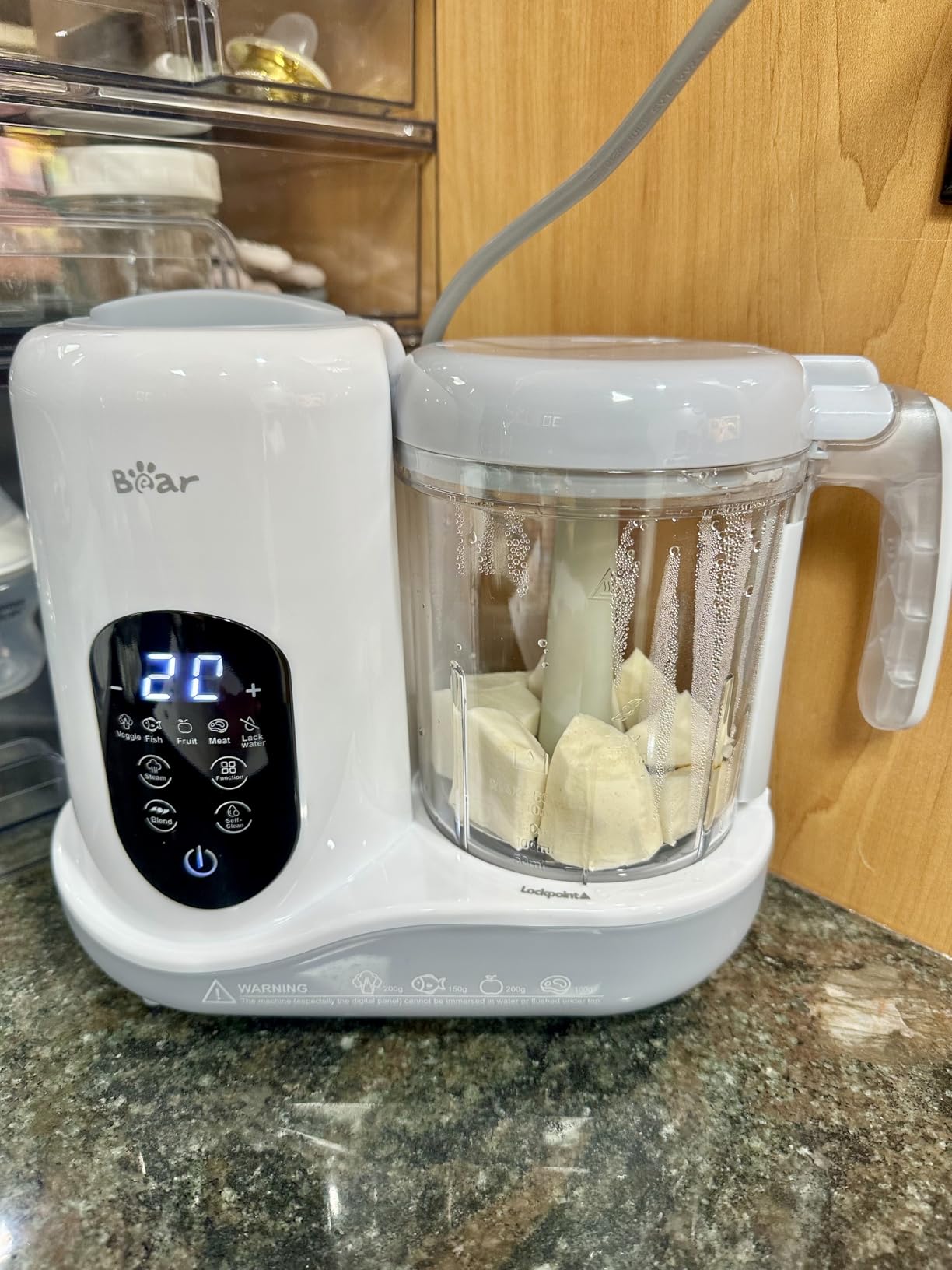
Simplicity is the pitch here and it largely lands. One touch starts steam, one touch starts the blend, and the built-in programs cover the common vegetables without you setting times by hand. For a first-time parent, that is a short learning curve.
Our batch of sweet potato came out smooth in a single pass, and the four stainless steel blades had no trouble with carrot. The bottle warming setting turned out to be the feature we used most often after weaning, which is a fair argument for buying something that stays useful.
The plastic bowl is the weak point. Across daily use in our testing and in owner feedback, it clouds, picks up odors and takes on colour from tomato and beetroot, and none of that reverses. Owners also report the touch buttons becoming inconsistent after a few months of frequent presses.
Cleaning is hand wash only, which adds to the weekly routine. The water shortage reminder and safety lock are both genuine safety wins, and the manufacturer replaced faulty items quickly for owners who asked.
Who this suits
Parents who want the fewest possible decisions at six months. The menu programs and the one-touch cycle mean you can get a purée out of the machine while a toddler demands attention, because nothing needs your judgement once it is running.
It is also a good fit for a small kitchen. At roughly 11 inches deep and 5.5 inches high it takes up less counter than the Babymoov or the Beaba, and 3.9 pounds makes it easy to put away.
Who should skip it
Anyone planning large weekly batches. Maximum fill sits at under half the bowl, so the 40 cm capacity is misleading if you read it as a batch number. Plan on two or three cycles per week.
Plastic-stain-sensitive buyers should skip this too, because the bowl is the part that discolours and there is no replacement bowl sold separately for this model.
4. Green Sprouts Fresh Baby Food Mill – Best Silent Manual Option
Green Sprouts Fresh Baby Food Mill, Manual Puree Maker with Built-In Serving Bowl, Separates Seeds & Skins, No Batteries or Electricity Needed, Compact, Dishwasher Safe
No motor no cord no batteries,Built-in serving bowl,Top-rack dishwasher safe
Pros
- Needs no electricity so it travels anywhere
- Completely silent with no cord clutter
- Integrated bowl for mashing serving and storing
- Compact and lightweight
Cons
- No steaming so food must be cooked first
- Hand-operated so texture takes real effort on larger batches
There is no motor in this mill, and that turns out to be a feature rather than a compromise. It produced a perfectly acceptable sweet potato purée in our testing once the vegetable was cooked, and it did it without a single decibel of noise, which matters in a house with a sleeping baby.
The integrated serving bowl is the design detail that earns its place. You mash in it, serve from it and store in it, so the whole process generates one dish to wash instead of four.
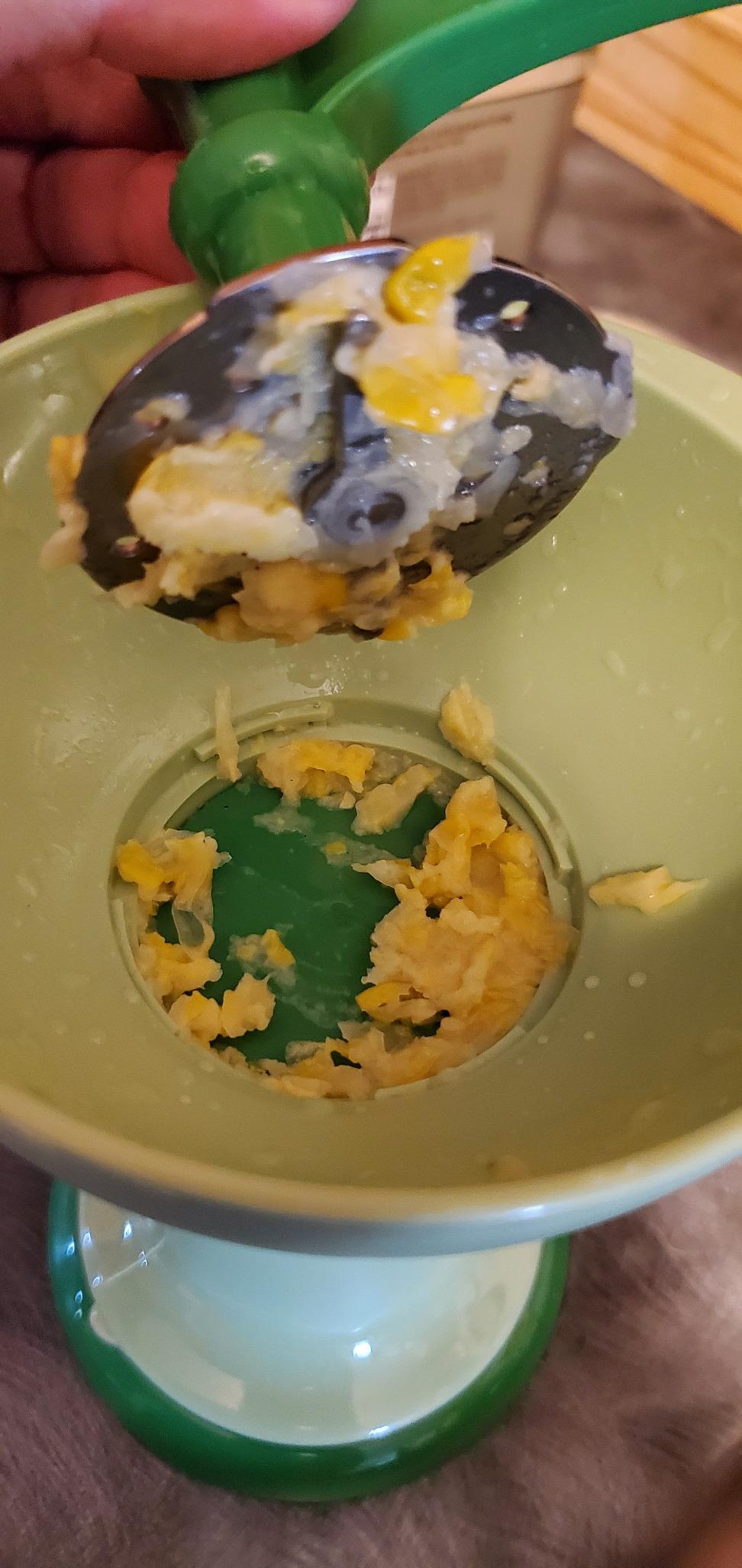
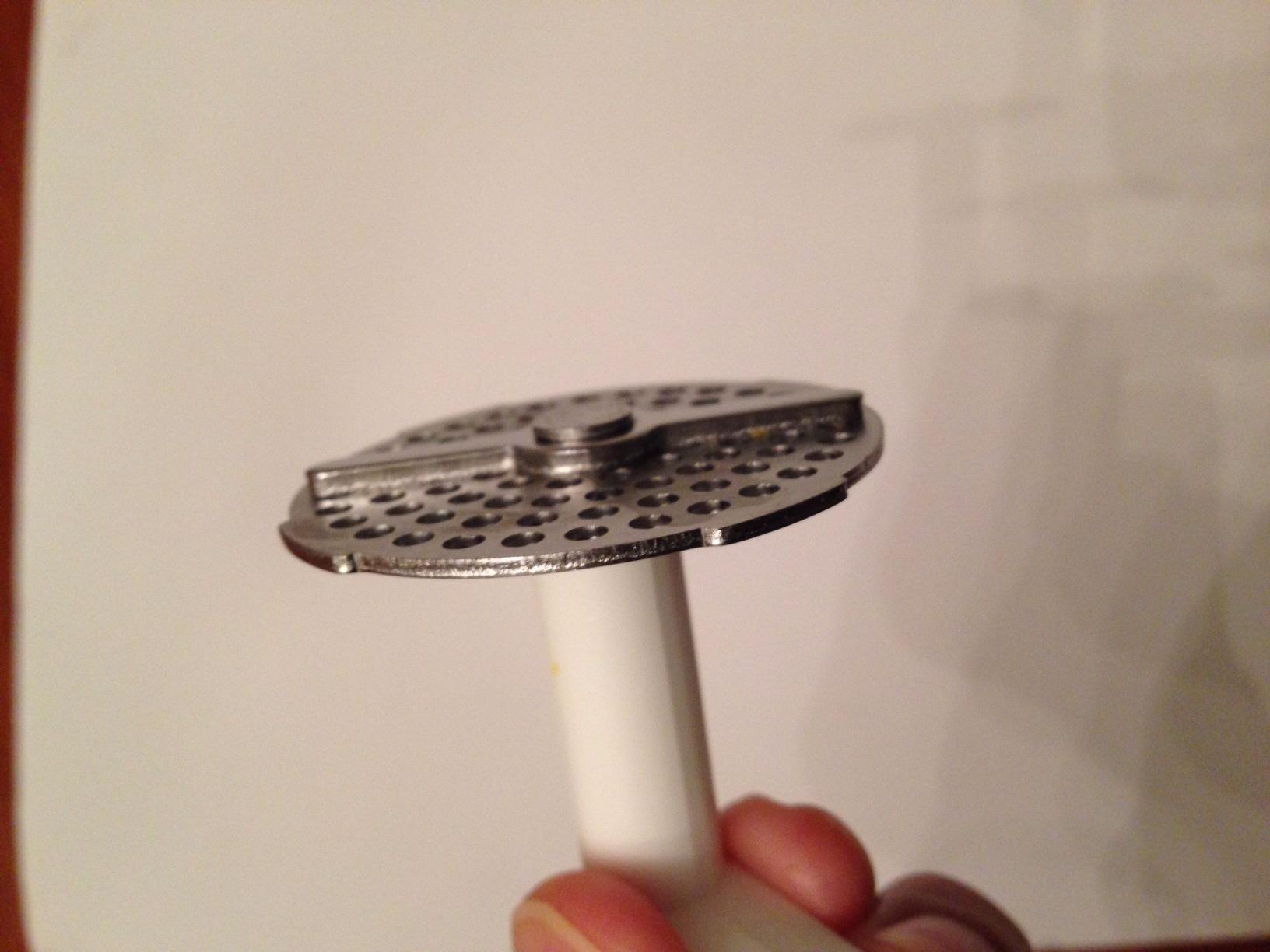
The strainer is what separates it from a potato masher. It pushes the purée through a fine mesh so seeds and skins stay behind, which produces a noticeably smoother result from the same cooked vegetable. That matters for younger babies who cannot tolerate bits.
Where it loses is volume. Hand-cranking through a full batch of carrot takes real arm effort, and on days when you are cooking for a whole week of meals, the electric machines finish the job considerably faster.
Who this suits
Parents who want nothing electrical on the counter, or who cook baby food while camping, staying in rental accommodation or travelling. It is also the natural choice if you are avoiding plastic: there is no plastic jug, no plastic tubing and no blade housing to worry about.
It works well as a second tool. Many owners use it for tasting small amounts of a new food, or for mashing at the table when a machine is already dirty.
Who should skip it
Batch cookers and anyone with a wrist or shoulder problem. There is no steaming function, so you still need a saucepan, and the effort scales directly with quantity. It is also the lowest-rated product in this group at 4.1 stars.
If you want quiet plus speed, read the top pick instead. If you want quiet plus zero plastic, this is the one.
5. Chefhandy 5-in-1 Baby Food Maker – Best Stainless Steel Basket
Chefhandy 5-in-1 Baby Food Maker with Stainless Steel Steam Basket, Green
300 watts,Stainless steel steam basket,750 mL cup with 300 mL batches,Hand wash
Pros
- Steel basket resists the staining plastic ones get
- Steam auto blend manual blend warm and sterilize
- Manual and auto blending give real texture control
- 300 watt motor handles roots and meat
Cons
- Recommended batch is only 300 mL in a 750 mL cup
- Hand wash only
- Water reservoir design is awkward for larger batches
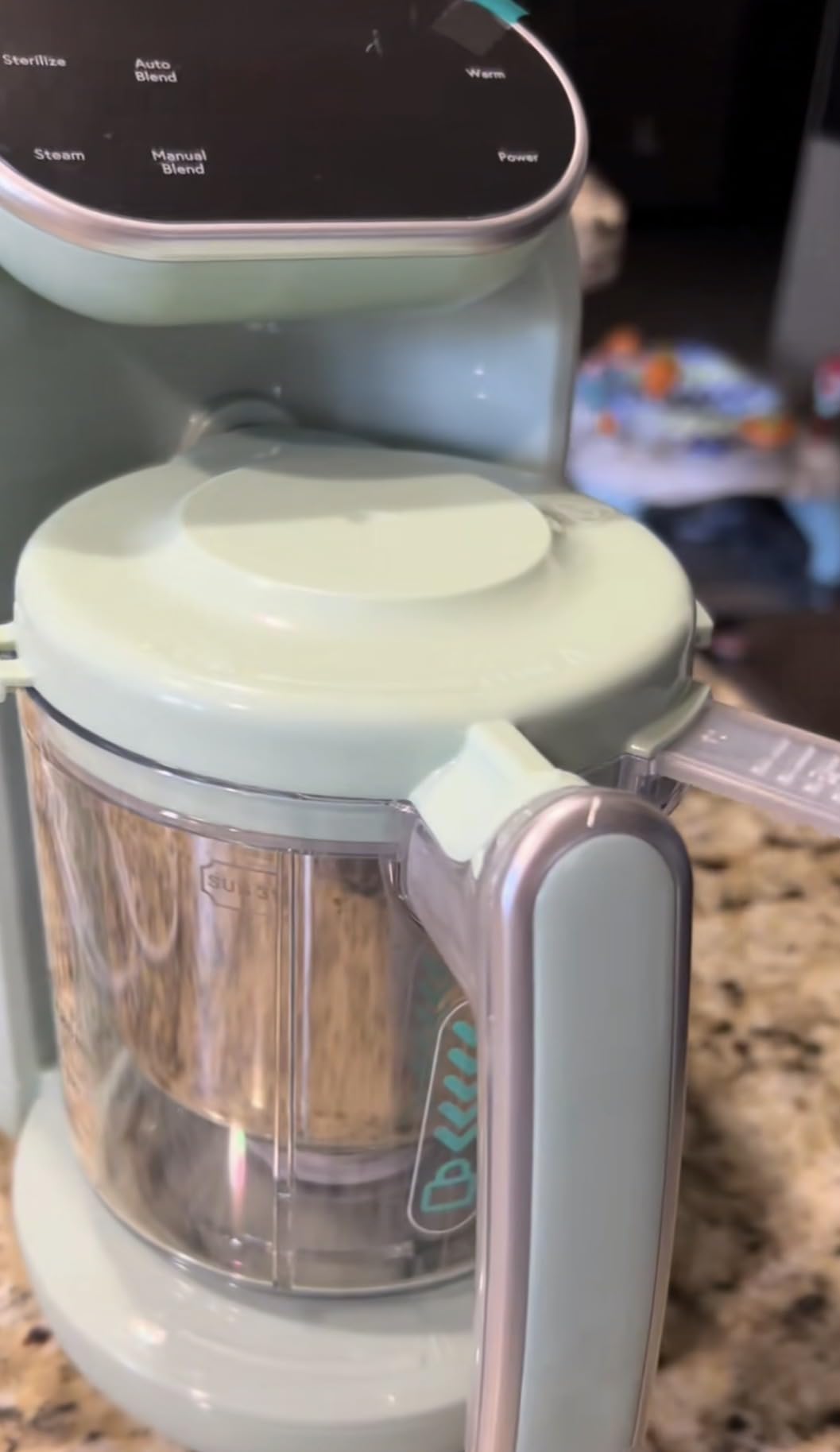
The stainless steel steam basket is the reason to choose this over several plastic-basket rivals. Steaming above water in steel resists the staining and odor problems that owners of plastic models describe repeatedly, and after six weeks of daily vegetable steaming we could not see any discolouration on the basket.
Two blending modes is the sleeper feature. Automatic blend handles the smooth first purées, and manual blend lets you pulse to a thicker texture as your baby moves past the earliest stage without buying a second tool.
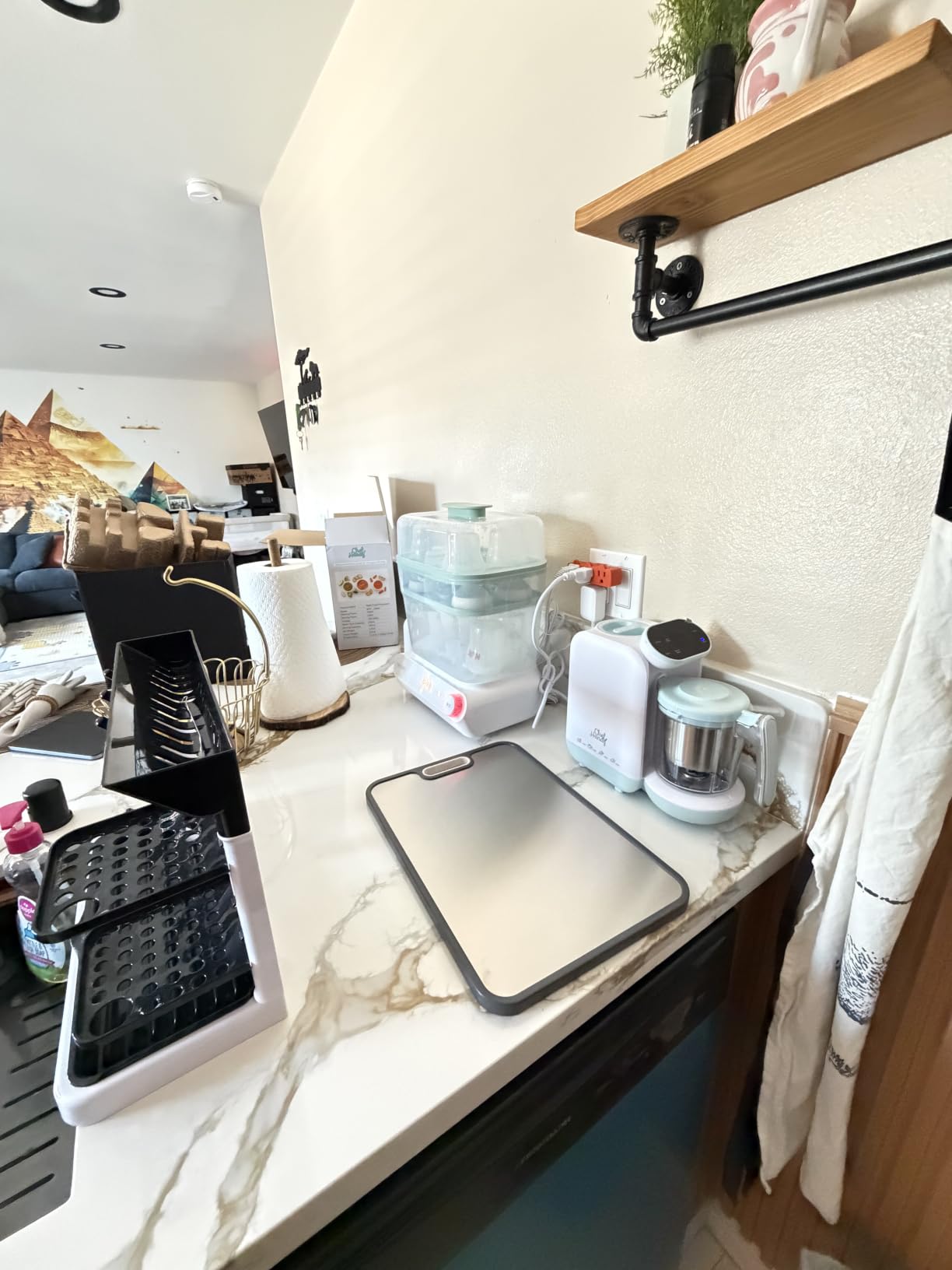
The 300 watt motor is the most capable we tested in a compact machine. Carrot, sweet potato and pear all came out smooth without extra blending time, which puts it ahead of the smaller steamers in this roundup on tougher vegetables.
Capacity is the honest weakness. The cup holds 750 mL but the recommended batch is 300 mL, so a full week’s prep means several cycles. Refilling the reservoir mid-batch is also fiddly by design.
Who this suits
Parents who are tired of stained plastic baskets and who will reuse the machine for years. The two-year warranty is the longest we saw here, and setup support was reported as responsive.
The sterilising mode makes it more than a six-month purchase, and six reusable food pouches come in the box. If you like the texture control of manual blending, this is the pick in the mid-tier range.
Who should skip it
Anyone wanting dishwasher cleanup. It is hand wash only, which adds time on the days you cook twice. And if your priority is a large weekly batch rather than texture control, the Babymoov or Beaba further down will get there in fewer cycles.
Note that the manufacturer copy is inconsistent about what the five functions are, so check the current listing before buying. The steam, blend, warm and sterilise functions all worked in our testing.
6. Grownsy Baby Food Maker – Best for First Foods
Grownsy Baby Food Maker, Steamer & Blender Baby Food Processor, White
300 ml Tritan bowl,Digital auto and manual mixing,Elevated steam basket,Built-in sterilizer
Pros
- Currently the top ranked baby food mill in its category
- Arrives assembled so setup is plug and go
- Large steam basket covers several days of meals
- Digital auto and manual mixing modes
Cons
- Timer caps at 30 minutes so long cooking needs a second cycle
- Bowl can stain after one use with strongly coloured food
- Reservoir needs refilling mid-batch for larger quantities
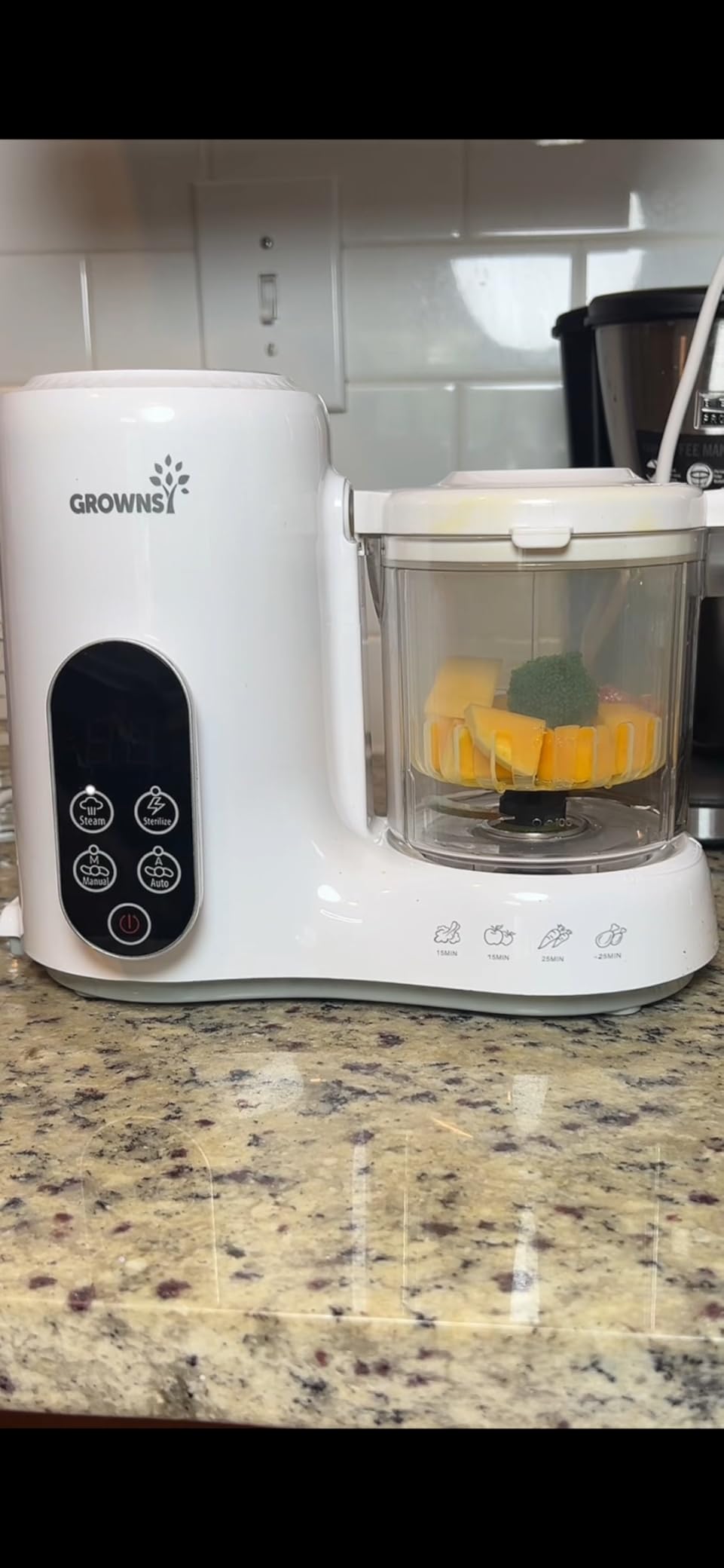
This is the machine we would hand to a parent starting at six months who has never made purées. It arrives essentially assembled, the basket lifts straight in, and the digital panel asks for very little. Our setup took under two minutes.
The elevated basket steams above the water rather than simmering the food in it, which preserves more of the water-soluble vitamins that boiling leaches away. It is a real nutritional difference, not a marketing flourish, and it is one reason several owners moved over from a blender-only setup.
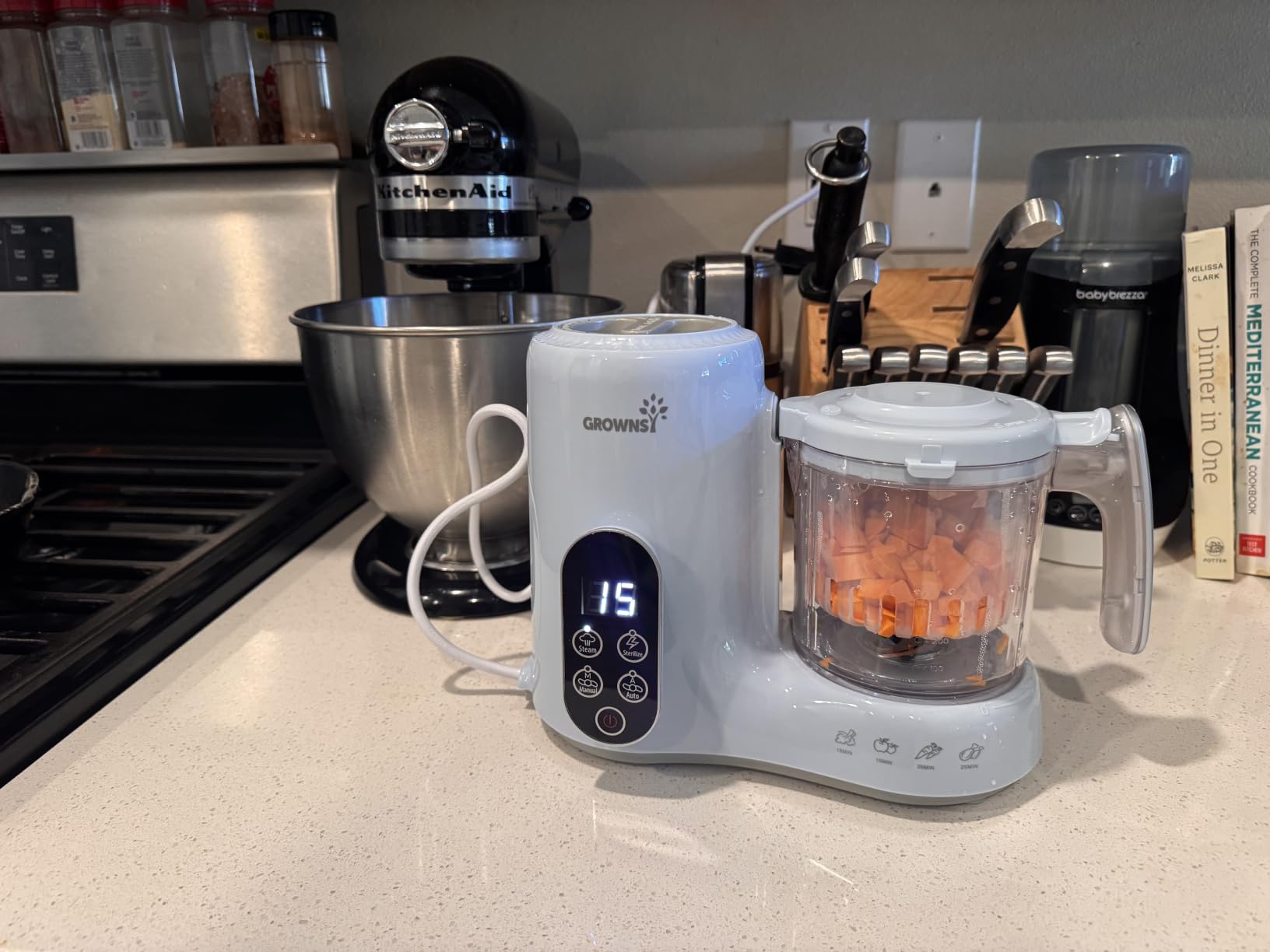
The 300 ml bowl is deliberately sized for a baby rather than a family. That is a genuine limit for batch cooking, and it is the main reason we placed this machine below the three picks above it.
The 30-minute timer cap is the other one. Hard root vegetables occasionally need a second cycle, and the reservoir needs a refill for larger quantities. Both are small friction points rather than deal-breakers at daily scale.
Who this suits
New parents who want a small, quiet-looking, non-medical appliance that does one job well. The bowl fully disassembles for cleaning, and the bowl material is Tritan free of BPA, lead and phthalates, odors and latex.
It is also a good gift. It works out of the box with no assembly step, which matters if you are buying for someone else.
Who should skip it
Twins, multiples and anyone cooking a full week of meals in one sitting. At 300 ml the bowl is the smallest combined steam and blend capacity in this group, and the 30-minute timer will interrupt long vegetable cooking.
The loud blend cycle also makes it a poor choice for cooking during a nap, despite the compact size.
7. Babymoov Duo Meal Station – Best Multifunction System
Babymoov Duo Meal Station, Baby Food Maker, Puree Maker & Processor, 6-in-1, Industrial Grey
Steam blend defrost sterilize reheat,Separate steaming levels,Removable blender
Pros
- Six functions in a single unit
- Separate steaming levels cook two ingredients and catch the broth
- Blender lifts out to free counter space
- Removable parts all go in the dishwasher
- Large capacity suits weekly meal prep
Cons
- Blender motor is weak against its three speed settings
- Blender bowl is small so one blend rarely finishes a batch
- Steamed food must be scooped out by hand
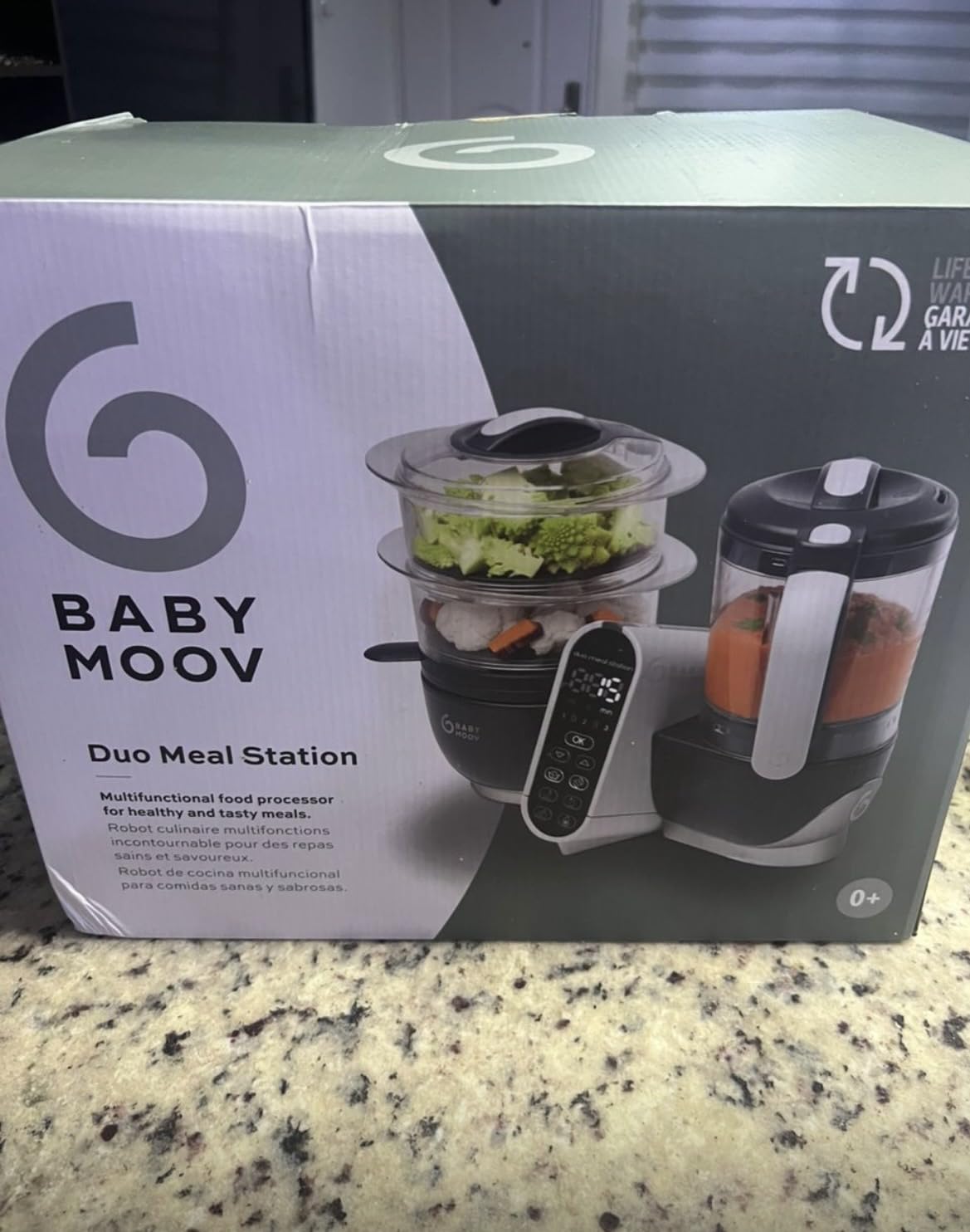
On paper this is the most capable machine in the roundup, and the function list explains why: steam, blend, defrost, sterilise, reheat and warm bottles. Nothing else here covers defrost and reheat alongside steaming and blending.
The separate steaming levels are the feature we valued most. You can cook two ingredients at once at different heights, and the collected juices at the bottom double as the liquid you blend into for a thinner purée. On a Sunday with two vegetables to prep, that saved a whole round of washing up.
The blender motor is the honest problem. Owners describe it as weak relative to the three speed settings, and a fair number keep a separate blender on hand for fibrous vegetables. In our testing it handled soft fruit well and needed two passes on firm carrot.
The removable blender is a genuine win in a small kitchen: detach it, store it in a drawer, and the counter footprint drops noticeably. Everything removable is dishwasher-safe.
Who this suits
Parents who want one appliance to cover bottle sterilising, defrosting frozen portions, reheating and steaming in the same cycle. It has the widest brief of anything in this list, and the removable blender keeps it manageable in a small kitchen.
It also fits families who want to keep cooking family meals after weaning. The steam function handles rice and vegetables for the rest of the household as well as it handles purées.
Who should skip it
Anyone whose priority is the smoothest possible purée. The weak motor is the reason several owners ended up buying a second appliance. Long-term daily users also report plastic deteriorating and discolouring, and replacement accessories are not sold separately.
The 30-minute steam cap means hard vegetables need a refill mid-cycle. If that bothers you, the Beaba further down has a larger bowl and a longer practical workflow.
8. Beaba Babycook Solo 4-in-1 – Best for Weekly Batch Cooking
BEABA Babycook Solo 4 in 1 Baby Food Maker, Puree Steamer and Blender for Purees, Grinder with Auto Steam Cooking, Lrg Capacity 1,100 mL/ 37 oz, 27 Servings in 20 Mins, (Charcoal)
1,100 ml bowl and 798 ml basket,Auto shut-off,One-handed operation
Pros
- Largest bowl in this group at 1100 ml
- Elevated basket steams above the water to preserve nutrients
- One-handed operation lets you hold a baby while cooking
- Auto shut-off means no watching required
Cons
- Most expensive unit in this group
- Light colourways stain with foods like butternut squash and berries
- Blending is louder than expected
Capacity is the headline here, and it is not a marketing figure. The 1,100 ml bowl and 798 ml steam basket produce up to 27 servings in a single 20-minute cycle, which is the only machine in this roundup that can credibly feed a family for a week in one run.
One-handed operation is the detail we appreciated most as parents. The auto shut-off fires with a triple beep, so you can start a batch while holding a baby on the other arm and walk away safely. That combination of capacity and hands-free control is why this machine is the premium choice for serious batch cooking.
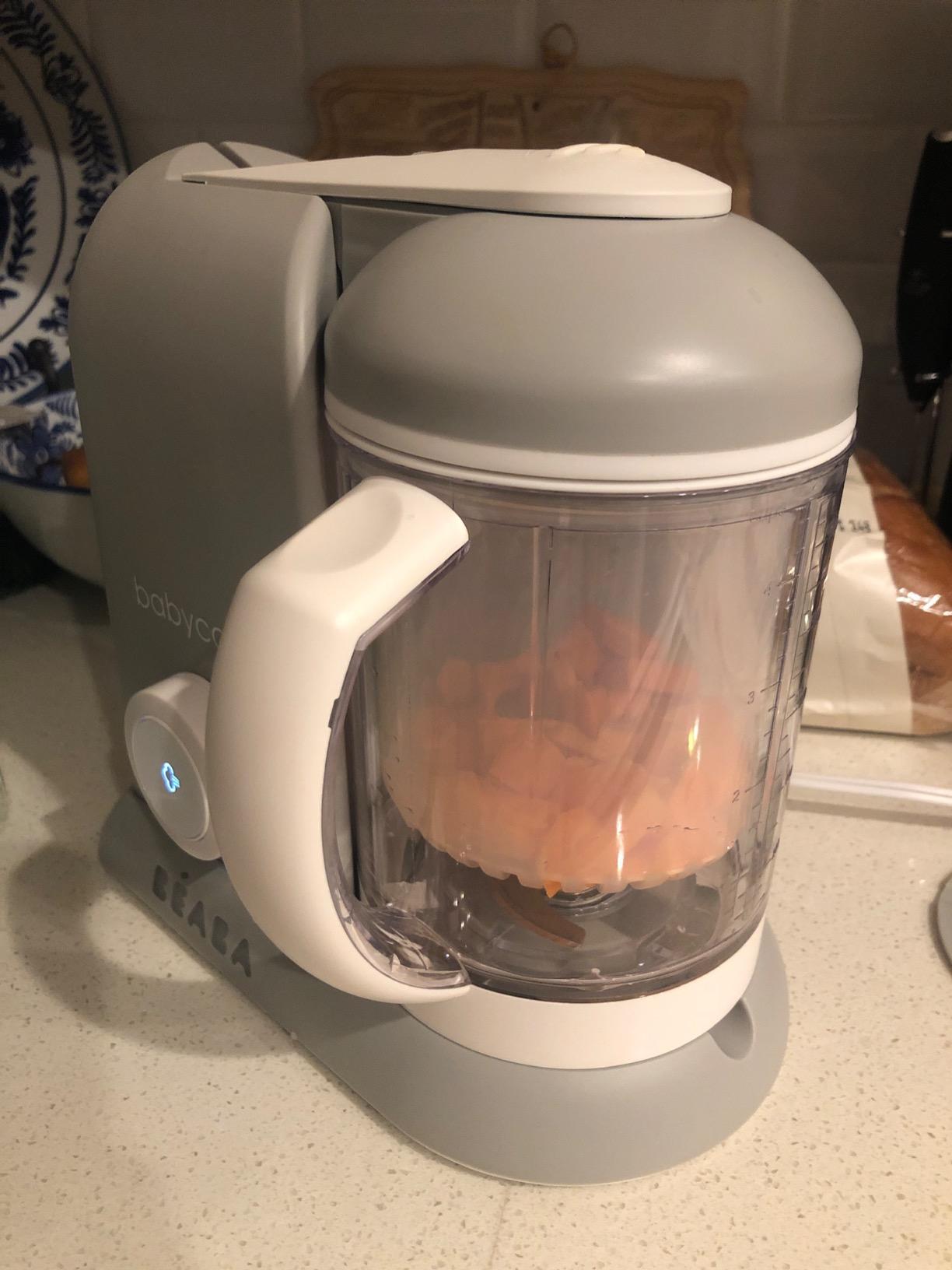
Nutrient retention is the second argument. The basket sits above the water so food is steamed rather than boiled, and the water that remains in the bowl becomes the cooking liquid you blend into for a thinner first-food consistency. Nothing is thrown away.
The bowl is Tritan certified free of BPA, lead and phthalates by USFDA, Health Canada, EU and NSF, and the removable parts are dishwasher-friendly.
Who this suits
Batch cookers, families with more than one baby, and anyone who wants to cook once on a Sunday instead of every evening. The graduated markings on the bowl also help you measure liquid for thinning accurately.
It suits households where the machine will keep working after purées end. The reheat and defrost functions take frozen portions straight from freezer to spoon.
Who should skip it
Buyers on a tight budget who only need a few weeks of purées. This is the most expensive unit we reviewed, and the premium is spent almost entirely on bowl size.
Also skip it if you cook during naps, because blending is loud. And check your colourway: light finishes stain with butternut squash and berries, and the removable water channel collects residue that owners find hard to descale.
9. AMZBabyChef 4-in-1 Baby Food Maker – Best Compact Value
AMZBabyChef Baby Food Maker Blender: 4-in-1 Steamer and Puree Processor
330 watts,Mechanical knob timing control,Dishwasher-safe Tritan bowl,4-in-1 steam blend defrost reheat
Pros
- Costs well under half the premium steam and blend brands
- 330 watt motor blends fruit vegetables and oatmeal smoothly
- Steam circulation system locks in nutrients and flavor
- Knob controls are simple with no menu to learn
Cons
- Small cup is not suited to bulk freezer prep
- Blender power is modest on fibrous vegetables
- Controls take a little practice at first
The 330 watt motor is the surprise in this machine. It is more powerful than several more expensive units in the roundup, and it turned sweet potato and oatmeal into a genuinely smooth finish without a second blend pass.
The knob-based mechanical timer is refreshingly simple. There is no menu, no screen and nothing to learn. You set the steam time, you wait for the automatic shut-off, you turn the blend control. For a first appliance, that simplicity is worth a lot.
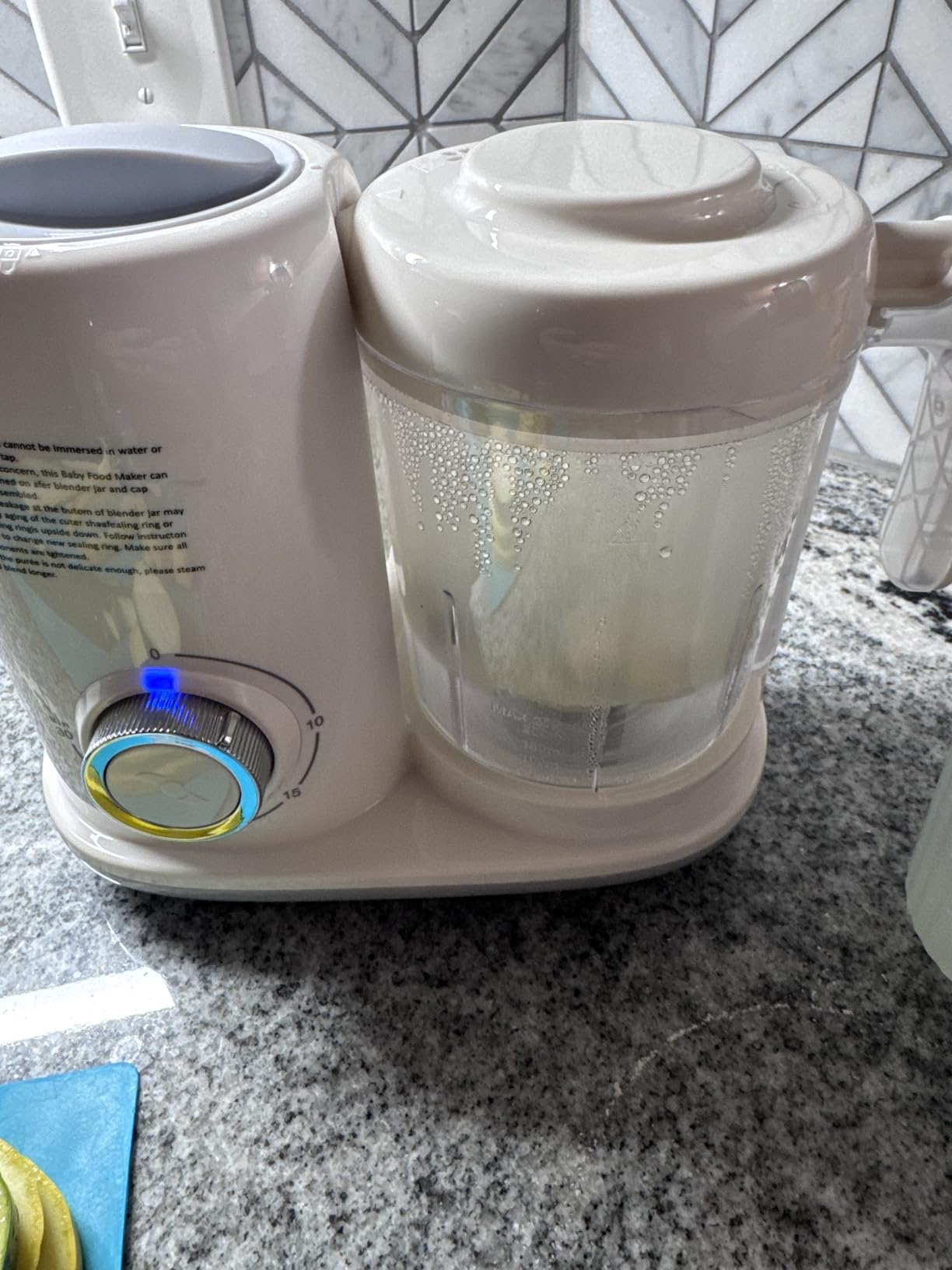
It covers the four core functions: steam cooking, blending, defrosting and reheating. That makes it a credible one-machine answer for parents who do not need sterilising or bottle warming but do want to thaw a frozen portion in the same vessel.
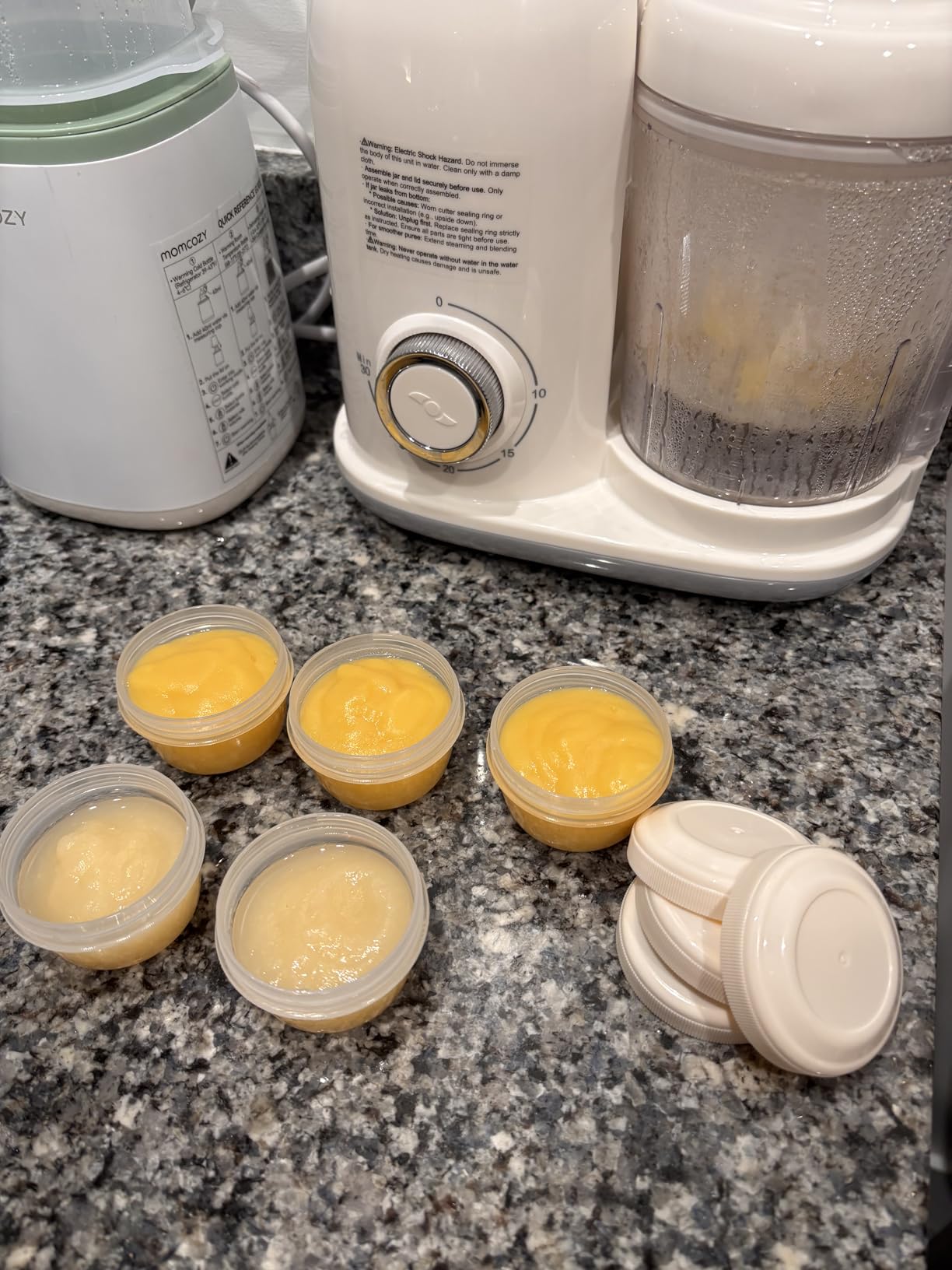
The Tritan bowl is free of BPA, lead and phthalates, and a safety lock means the machine will not power on unless the cup and lid are correctly fitted. That matters more than it sounds when you are handling hot steam around a baby.
Who this suits
Parents who want a full steam and blend machine without paying premium money. It does everything the expensive units do at the core level, and the 4-in-1 function list is honest about what is missing rather than overclaiming.
It is also a strong travel and eating-out option. At roughly 8 inches wide it packs easily, and the dishwashing is straightforward because every part is dishwasher-safe.
Who should skip it
Bulk freezer preppers. The cup is small, so a single cycle will not cover a week of meals. Fibrous vegetables also need more blending passes than the Chefhandy or the AMZ unit’s own motor spec suggests at first glance.
Long-term daily users should note reports of the base seal weeping after months, and one report of a timer knob sticking on a new unit.
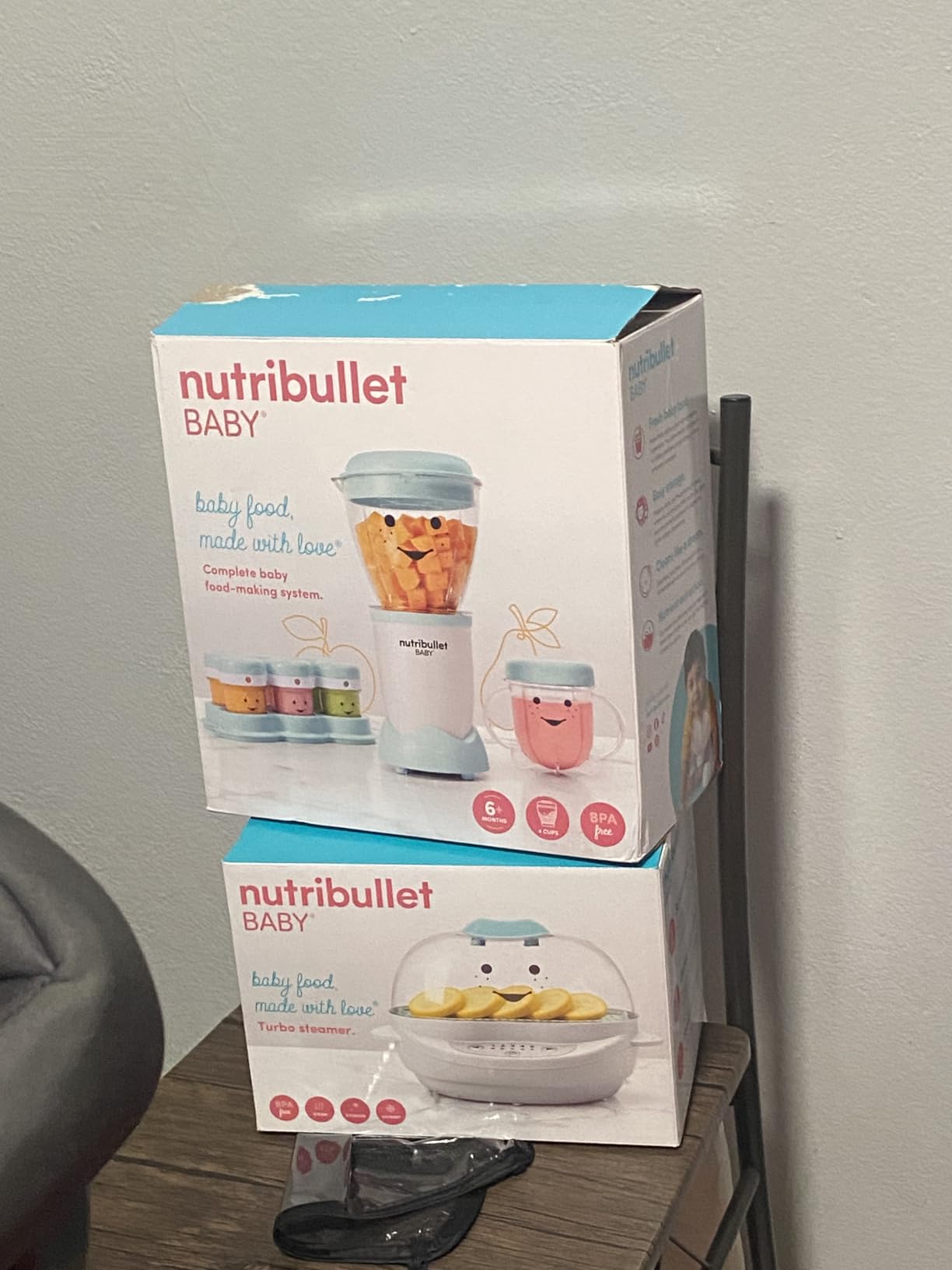
10. nutribullet Baby Turbo Steamer – Best Steamer and Sterilizer
nutribullet Baby BSR-0801N Turbo Food Steamer
Five steam settings with built-in timer,Defrosts frozen baby food,Sterilises bottles pacifiers and toys
Pros
- Top ranked in its steamer category with over 11000 reviews
- Five steam settings plus a timer give precise control
- Auto shut-off so nothing burns or gets forgotten
- Sterilising tray handles bottles pacifiers utensils and toys
- Dishwasher-safe components
Cons
- Steams only so puréeing needs a separate machine
- Cannot be cancelled mid-cycle so you wait or unplug
- Inner cooking well is not removable and is awkward to scrub
This is the machine that survives the weaning window. The sterilising tray takes bottles, pacifiers, nipples, utensils, teethers and toys, and owners report three or more years of regular use, which no dedicated baby machine in this roundup can claim.
Five steam settings with a built-in timer gave us the most precise control over vegetable texture of any steamer here. Sweet potato came out properly soft at the long setting and still held its shape at the short one, which is exactly what you want when a baby moves from smooth to mashed.
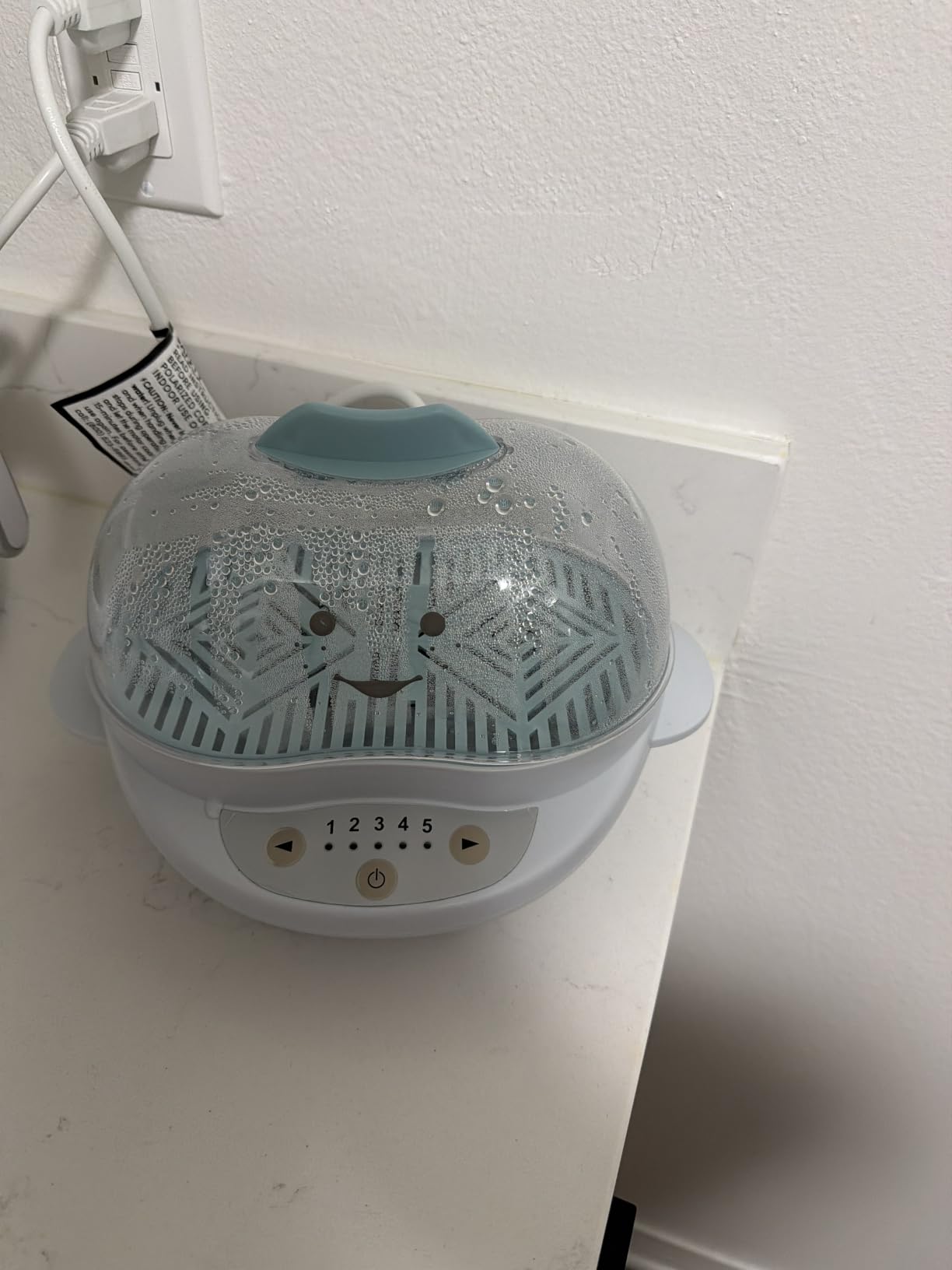
The defrost function is the sleeper feature. Trays go in, frozen batch-cooked purées thaw without a puddle on the counter, and you lose nothing from the portion. Owners who bought this for six months of purées ended up using it for bottle prep for years.
Auto shut-off means you can walk away, which for anyone cooking during a nap is the whole point of the machine.
Who this suits
Parents who already own a blender, or who are certain they will. This is the sensible pairing move: steam with the Turbo, blend with whatever blender you have. It is also the best steriliser on this list by a wide margin.
If you want a machine that stays useful long after your baby moves to finger foods, this is the one we would buy.
Who should skip it
Anyone wanting a one-jar workflow. Everything has to move from the steamer to the blender, which means two vessels and two washes per batch. That single extra step is exactly what the combined machines above are designed to remove.
The inner cooking well is also fixed, so sticky foods like pumpkin need real scrubbing. And you cannot cancel a cycle part way through, which is frustrating when you have misjudged a vegetable.
What Parents Say About Baby Food Makers?
The forum consensus on this question is blunt and worth repeating before you buy anything. On r/beyondthebump, asked what people use for purées, the most repeated answer was that a blender or food processor will work just as well and that most standard blenders fit wide-mouth Mason jars. On a community.whattoexpect thread, a parent summarised the same view: they use their Ninja blender and would rather invest in a better blender because it also makes smoothies.
The reuse argument is the deciding factor in most of those answers. A dedicated machine gets used for six to twelve months. A blender gets used every morning for three years. When parents weigh those two against each other, the blender wins often enough that we lead with the question rather than burying it.
The counter-consensus is about plastic. On r/moderatelygranolamoms, the recurring thread is a request for plastic-free mills and makers, and the reception for manual tools was positive with the caveat that an immersion blender remains useful in the corner of the kitchen. That sentiment is why the manual mill in this roundup has a dedicated slot rather than being treated as an afterthought.
Cleaning and hygiene are the loudest complaints. On forums.thebump, a parent considering the Beaba Babycook described a part that is hard to see, gets mouldy and cannot really be cleaned, and decided against the machine on that basis. Every one of the steam and blend units here has seams around the blade housing and the water channel, and that is where we spent most of our own cleaning time too.
If you need to track a sleeping baby while you cook, our baby monitor picks are worth a look, but the honest answer is that most of these machines blend loudly. Treat nap-time cooking as the exception, not the plan.
Baby Food Maker vs Blender vs Food Processor vs Immersion Blender
A blender wins on texture, a food processor wins on chopping volume, an immersion blender wins on bowls you already own, and a baby food maker wins on washing up. That is the whole argument in one sentence.
If your priority is the smoothest possible purée, buy power. A countertop blender with a full-size jug beats every compact steam and blend machine we tested, including the most capable ones here. If your priority is doing everything from raw vegetable to jar with one container and one wash, buy a steam and blend machine.
A food processor is the underrated middle option for volume. It chops and purees large quantities quickly, which makes it good for batch cooking, but it does not steam and its blades are designed for texture rather than smoothness. Several owners in our forum research use a processor for chopping and a blender for puréeing, and that combination works.
An immersion blender is the cheapest way in. It works in the pot you already steam in, needs no transfer, and costs a fraction of any machine here. The catch is that it is the option with the least control over texture at the very fine end, and a plastic immersion blender is exactly what the plastic-free forums push back against.
Plastic-Free and Non-Toxic Baby Food Makers to Know About
Two terms get mixed up constantly. BPA-free means the plastic has been tested to a specific limit for one chemical. Plastic-free means there is no plastic in the food-contact surfaces at all. They are very different guarantees, and only one of them covers the chemical nobody has tested for yet.
Glass and stainless steel are the plastic-free options. In this roundup, the only genuinely plastic-free device is the manual mill, which has no plastic jug, no plastic tubing and no blade housing at all. For an immersion blender, look for a stainless steel shaft and bell rather than a plastic one. There is no fully plastic-free steam and blend machine here, because steam at the temperatures involved and a one-piece jug design are hard to achieve in glass.
Everything else is BPA-free plastic or Tritan. Tritan is the material to look for in a bowl: it is free of BPA, lead and phthalates, and the Beaba, Grownsy, AMZBabyChef and EVLA’S models all specify it. Tritan still scratches eventually and still stains with heavily coloured food, so treat it as durable plastic rather than glass.
The real risk in any of these machines is the seam, not the material. Mould grows where the blade housing meets the bowl and where the water channel meets the base. Pull the blade assembly apart fully, wash the channel with a bottle brush, air it overnight, and do not reassemble a damp machine. That single habit does more for your baby than any material label.
How to Choose a Baby Food Maker
Decide whether you need steaming before anything else. If you already own a blender, a steamer plus your existing blender is cheaper and gives you better texture. If you want one container and one wash, steam and blend is the only category to shop in.
Then check the bowl size against your actual batch size, not the printed capacity. Several machines in this roundup quote a bowl volume far larger than the recommended fill. Grownsy lists 300 ml, Chefhandy recommends 300 mL inside a 750 mL cup, and the BEAR’s maximum fill is under half the bowl. Those numbers are what you will actually produce.
Cleaning is the highest-signal factor and the one most parents regret skipping. Check whether the blade lifts out completely and whether the parts are genuinely dishwasher-safe. Chefhandy, BEAR and Grownsy are hand wash or mixed, while the NutriBullet Baby Complete and Babymoov are dishwasher-safe throughout.
Noise matters more than most spec sheets suggest. Parents cook during or straight after naps, and several machines here describe blending as loud. The manual mill is genuinely silent, and that is a real differentiator rather than a niche one.
Materials are worth a look if you are cautious about plastic. Prefer a stainless steel steam basket, as on the Chefhandy, because plastic baskets stain and hold odors permanently. Look for Tritan bowls and confirm the machine has a safety lock and a water shortage reminder.
Finally, count the functions against the months you will use them. A steriliser matters if you are still bottle-feeding alongside purées. A defrost function matters if you will freeze portions. A reheat function saves you a saucepan. Extra modes you will never touch do not justify a higher price.
If you plan to cook beyond baby food, look at how many functions survive the weaning years. A steriliser, a steamer for family meals and a bottle warmer all keep working. Our food dehydrator guide covers the other route parents take once purées end, and our food warmer picks cover serving purees for family gatherings.
How to Use Your Baby Food Maker Step by Step
Start with soft produce. Pear, banana, courgette and squash are forgiving. Hold back on firm carrot, sweet potato and parsnip for the second week of weaning, when your baby can handle thicker texture.
Wash, peel and chop into even cubes of roughly 1.5 cm. Uneven pieces cook unevenly, which is the most common reason a purée comes out with one soft and one hard piece in it.
Add water to the reservoir according to the marked levels and place the steaming basket above the water line, never touching it. Food that sits in the water simmers and loses the vitamins you steam to preserve.
Set the steam time. Soft fruit and courgette take roughly 10 minutes. Carrot, sweet potato and potato take 15 to 20 minutes. The BEAR and AMZBabyChef have automatic shut-off so you can walk away; the Babymoov and Grownsy cap at 30 minutes.
Blend in the same jug. Use the water left over from steaming to thin the purée to the consistency your baby handles. For first foods you want it to run slowly off the spoon; by nine months you can stop blending and mash instead.
Portion straight into the storage cups or an ice cube tray and cover as soon as the purée is cool. Never leave warm purée sitting in a jug overnight, because that is the fastest route to bacterial growth.
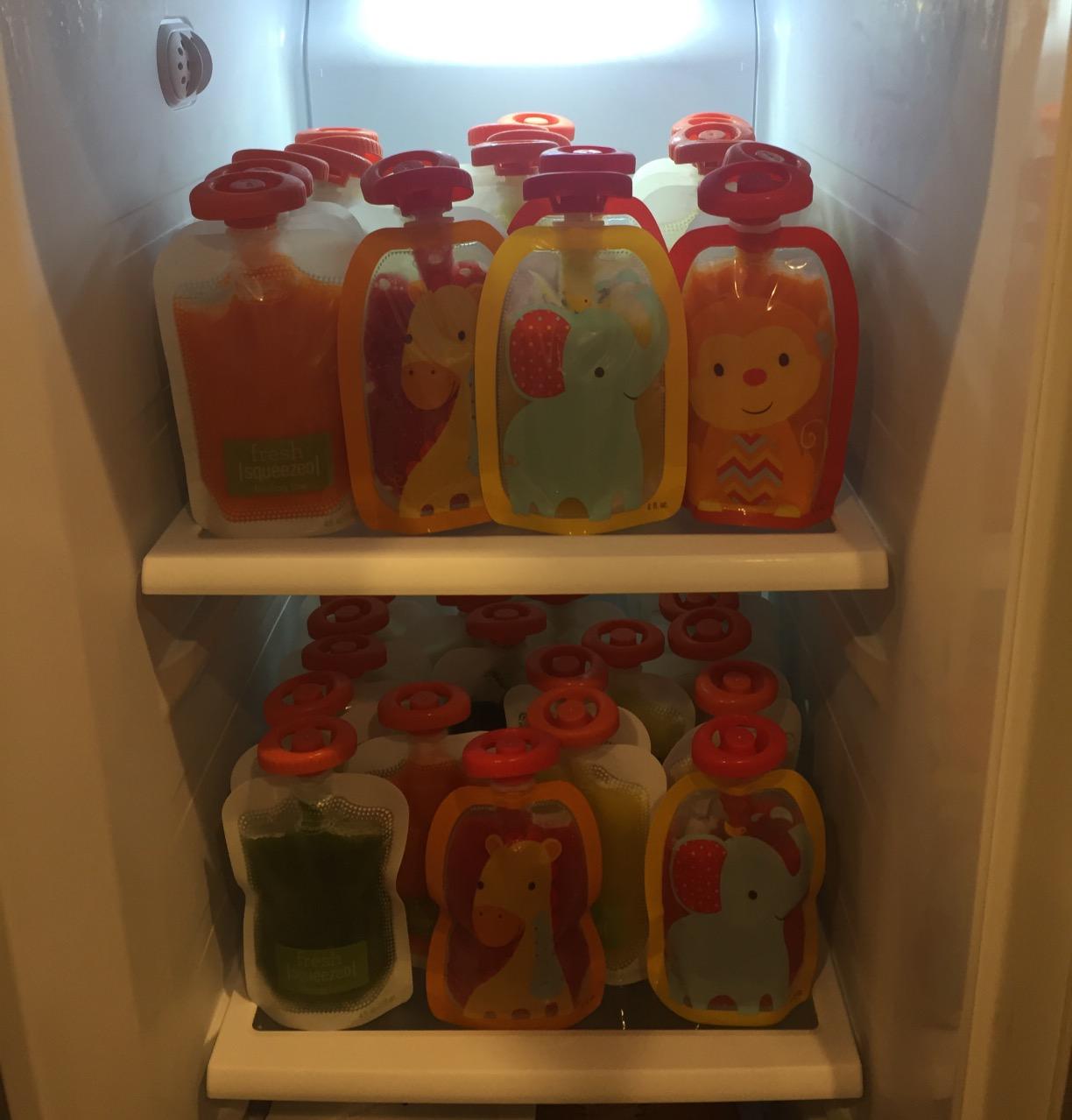
Label and date everything. The date-dial lids on the NutriBullet Baby Complete exist for this reason. Homemade purées keep about three days in the fridge and one to three months in the freezer.
Reheat from frozen in the machine itself if yours has a reheat function, otherwise in a microwave-safe cup in short bursts with the lid loose. Stir halfway, test the temperature, and never reheat more than once.
Frequently Asked Questions
What is the best baby food maker for homemade purees?
The NutriBullet Baby Complete Food-Making System is the best overall pick for homemade purées because it pairs a 200 watt motor with six date-dial storage cups and a silicone freezer tray, so batch cooking and portioning are solved. For a pure steam-and-blend workflow with the highest average rating in the group, choose the EVLA’S Baby Food Maker.
Do I really need a baby food maker?
Probably not if you already own a blender or food processor, because parent forums consistently report that a decent blender produces just as smooth a purée. Buy a dedicated machine only if you want hands-off steaming, batch cooking, defrost and sterilise functions in one compact unit with minimal washing up.
What is the best blender for making baby food puree?
A full-size countertop blender with a proper blade assembly and a 200 watt or stronger motor gives the smoothest purée, outperforming every compact steam-and-blend machine we tested. The NutriBullet Baby Complete uses exactly that approach with a 32 oz batch bowl, but it does not steam, so vegetables must be cooked separately.
Which is better for making baby food, a blender or a food processor?
A blender is better for purée smoothness because its blade assembly is designed to pulverise. A food processor is better for volume and chopping large quantities quickly, but it does not steam and its texture control is coarser. Many parents use both, chopping in the processor and finishing in the blender.
Are there any non-toxic immersion blenders available?
Look for an immersion blender with a stainless steel shaft and bell rather than plastic, which is what most non-toxic immersion blenders offer. No immersion blender is fully plastic-free because the handle housing contains plastic, so a manual mill is the only genuinely plastic-free option for purées in this roundup.
How do I clean a baby food maker?
Run the self-cleaning cycle if your machine has one, then take the blade assembly apart fully and wash every part by hand, including the water channel and the seam where the blade housing meets the bowl. Check which parts are dishwasher-safe, and air the machine completely before reassembling to prevent mould in hidden crevices.
The Best Baby Food Makers for Homemade Purees: Final Verdict
The NutriBullet Baby Complete Food-Making System takes our overall spot in 2026 because the portioning and freezing workflow it ships with is worth more than any steaming function on a rival, and its dishwasher-safe parts were the fastest to clean in our testing. The EVLA’S Baby Food Maker takes the steam-and-blend crown with the highest average rating in the group, and the BEAR 2024 is the one to buy when simplicity matters most.
If you already own a blender, buy nothing at all. If you want one container, one wash and a week of labelled purées at a time, the picks above cover every budget, and the manual mill remains the quietest, simplest option on this list.