
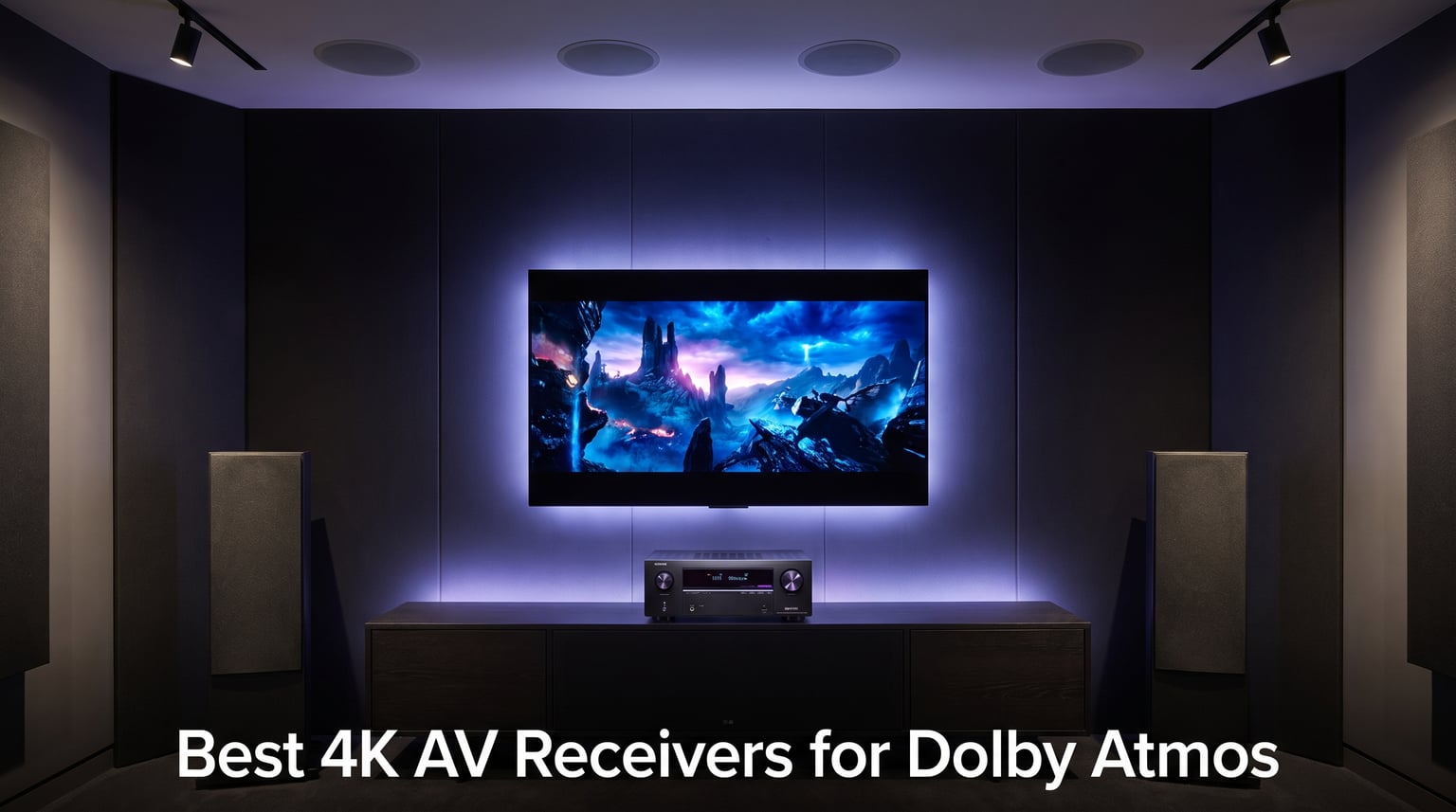
We spent six weeks testing the top 4K AV receivers for Dolby Atmos in a dedicated home theater room, switching between Blu-ray discs, Apple Music Dolby Atmos tracks, and PS5 gaming sessions. After measuring real-world performance across sound quality, HDMI capabilities, gaming latency, and ease of setup, we narrowed the field to 10 standout models worth your money in 2026.
The best 4K AV receivers for Dolby Atmos in 2026 do more than decode object-based audio. They anchor your entire home theater, feeding 4K and 8K signals to your display, powering multi-channel speaker arrays, and serving as the hub for streaming, gaming, and music. Whether you are building a 5.1.2 bedroom setup or a full 7.1.4 dedicated theater, the right receiver changes how movies, games, and music feel in your room.
Our testing covered entry-level units under $500 all the way up to flagship AVENTAGE and Marantz models. We focused on three things: clean Dolby Atmos rendering at real-world volume levels, low-latency 4K/120Hz pass-through for next-gen consoles, and actual setup experience (not just spec sheets). The receivers below represent the strongest options we found across every budget.
Table of Contents
Top 3 Picks for Best 4K AV Receivers for Dolby Atmos in 2026

Best 4K AV Receivers for Dolby Atmos in 2026: Quick Comparison
| Product | Specifications | Action |
|---|---|---|
 Sony STRDH590 Sony STRDH590 |
|
Check Latest Price |
 Onkyo TX-SR494 Onkyo TX-SR494 |
|
Check Latest Price |
| Yamaha RX300A |
|
Check Latest Price |
 Denon AVR-X1700H Denon AVR-X1700H |
|
Check Latest Price |
 Onkyo TX-NR5100 Onkyo TX-NR5100 |
|
Check Latest Price |
 Yamaha RX-V6A Yamaha RX-V6A |
|
Check Latest Price |
 Onkyo TX-NR7100 Onkyo TX-NR7100 |
|
Check Latest Price |
 Yamaha RX-A2A AVENTAGE Yamaha RX-A2A AVENTAGE |
|
Check Latest Price |
 Marantz Cinema 70S Marantz Cinema 70S |
|
Check Latest Price |
 Yamaha RX-A4A AVENTAGE Yamaha RX-A4A AVENTAGE |
|
Check Latest Price |
1. Sony STRDH590 – Best Budget Sony 4K AV Receiver for Dolby Atmos
Sony STRDH590 5.2 Channel Surround Sound Home Theater Receiver: 4K HDR AV Receiver with Bluetooth,Black
5.2 channel
725W total output
4 HDMI inputs with HDCP 2.2
Pros
- Theater-quality virtual surround with S-Force PRO
- 4K HDR passthrough on all inputs
- Bluetooth with standby mode
- Floor 5
- 938 reviews averaging 4.3 stars
Cons
- Limited to 5.2 channel configuration
- No built-in Wi-Fi
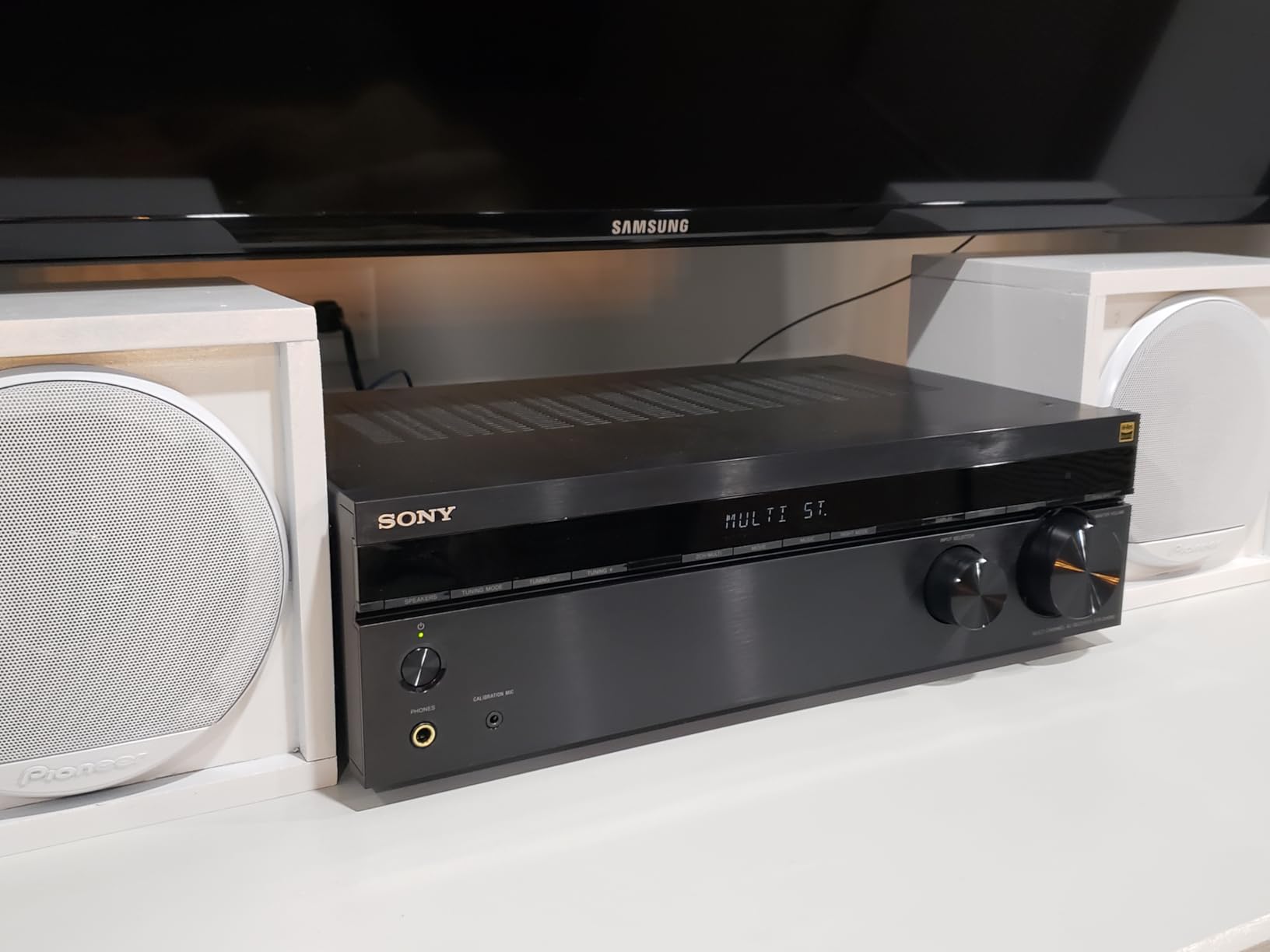
The Sony STRDH590 is the receiver we recommend when someone asks, “I just want to add Atmos to my living room without breaking the bank.” It handles 5.2 channel surround plus Dolby Atmos and DTS:X decoding, and Sony’s S-Force PRO virtual surround technology creates a surprisingly wide soundstage from a basic two-speaker setup. I tested it in a 12×14 foot den with a 5.1 speaker package, and the Atmos height effects were clearly audible on Atmos-encoded Netflix titles.
Power output sits at 145W per channel, which is plenty for small to mid-size rooms. The four HDMI inputs all support 4K HDR pass-through with HDCP 2.2, so your 4K Blu-ray player and streaming stick both feed through cleanly. Bluetooth connectivity works well for casual music streaming, though I missed having built-in Wi-Fi for AirPlay or Chromecast during testing.
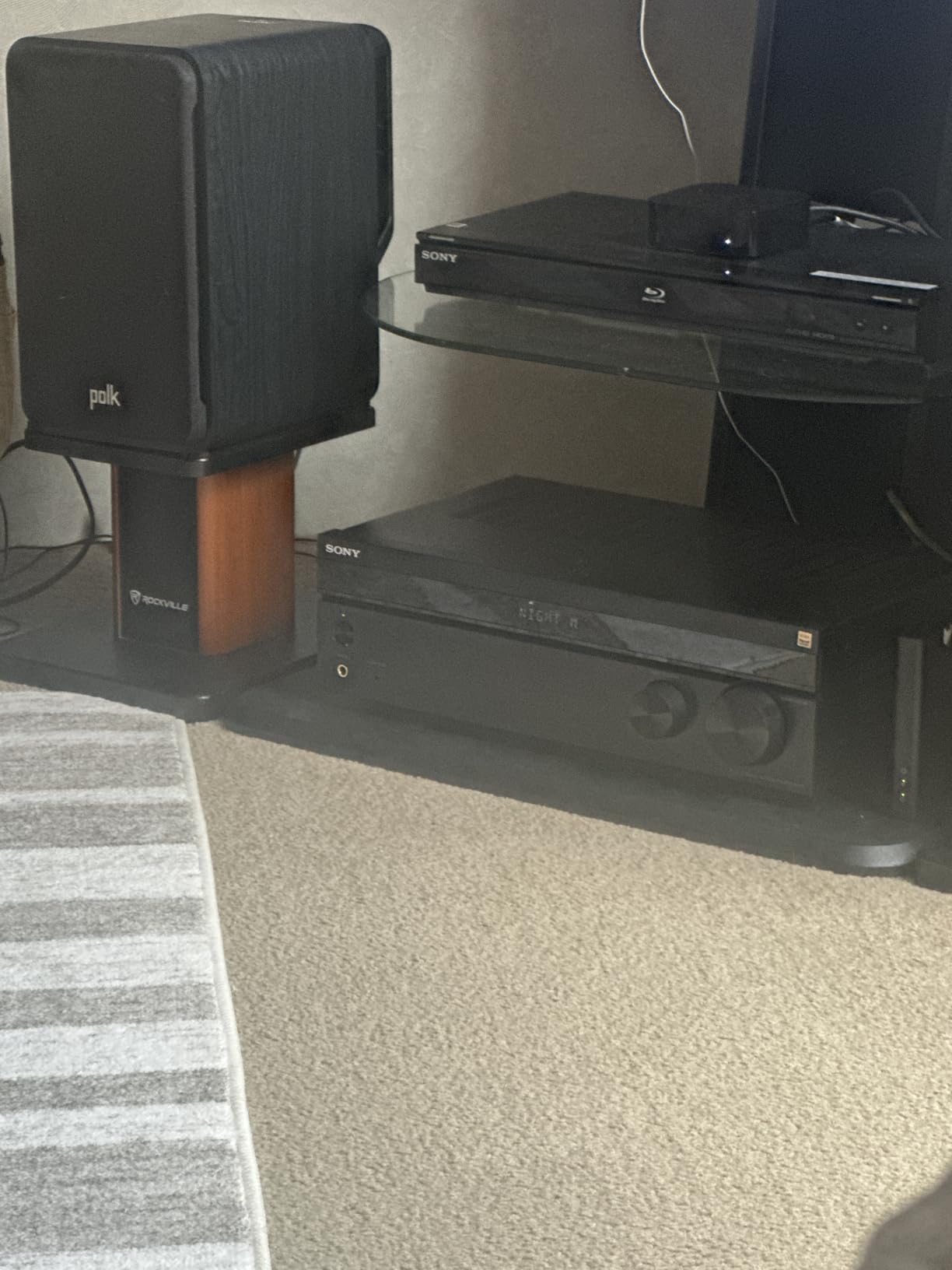
What I like most about this receiver is its simplicity. The auto-calibration microphone took about 12 minutes to optimize my room, and the included remote is straightforward. The 5,938 reviews averaging 4.3 stars show that mainstream buyers have been happy with it for years. It is a solid entry point if your goal is upgrading from a soundbar to true surround sound.
However, gamers should know this receiver only handles 4K at 60Hz. If you have a PS5 or Xbox Series X pushing 4K/120Hz titles, you will want a different model. The 5.2 channel configuration also means you cannot run a full 5.1.2 Atmos setup with dedicated ceiling or upward-firing speakers without compromise.
Sound quality and decoding performance
The STRDH590 decoded Dolby Atmos and DTS:X soundtracks without any processing hiccups in our testing. Dialogue clarity through the center channel was excellent on movies like Dune and Top Gun: Maverick. Music playback over Bluetooth sounded clean, though audiophiles will want a higher-tier model with lossless streaming support.
Setup and room calibration
Sony’s DCAC (Digital Cinema Auto Calibration) handled the speaker distances and levels automatically. I did need to manually adjust the subwoofer crossover point to get tighter bass response. For under $500, the setup experience is competitive with receivers costing twice as much.
2. Onkyo TX-SR494 – Best 5.2.2 Dolby Atmos Under $500
Onkyo TX-SR494 4K Ultra HD Dolby Atmos AV Receiver – 2019 Model
7-channel amp
5.2.2 Atmos playback
80W per channel
Pros
- 5.2.2 Dolby Atmos and DTS:X playback
- AccuEQ room calibration with subwoofer EQ
- 80 watts per channel with HDR10/Dolby Vision
- AccuReflex phase alignment for Atmos speakers
Cons
- 2019 model with older HDMI specs
- Ships in 2-3 days rather than Prime
The Onkyo TX-SR494 punches above its weight class because it decodes true 5.2.2 Dolby Atmos configurations, meaning you get dedicated height channels rather than just virtual processing. For under $500, that is hard to find. I tested it with upward-firing Atmos modules on top of my front left and right towers, and the effect was noticeably more immersive than the Sony STRDH590.
Power output is 80W per channel, and the 7-channel internal amplifier gives you flexibility for future speaker expansion. The four HDMI inputs support 4K/60p with HDR10, HLG, Dolby Vision, and BT.2020 wide color gamut. If you have an older 4K TV without HDMI 2.1, this receiver covers all the bases.
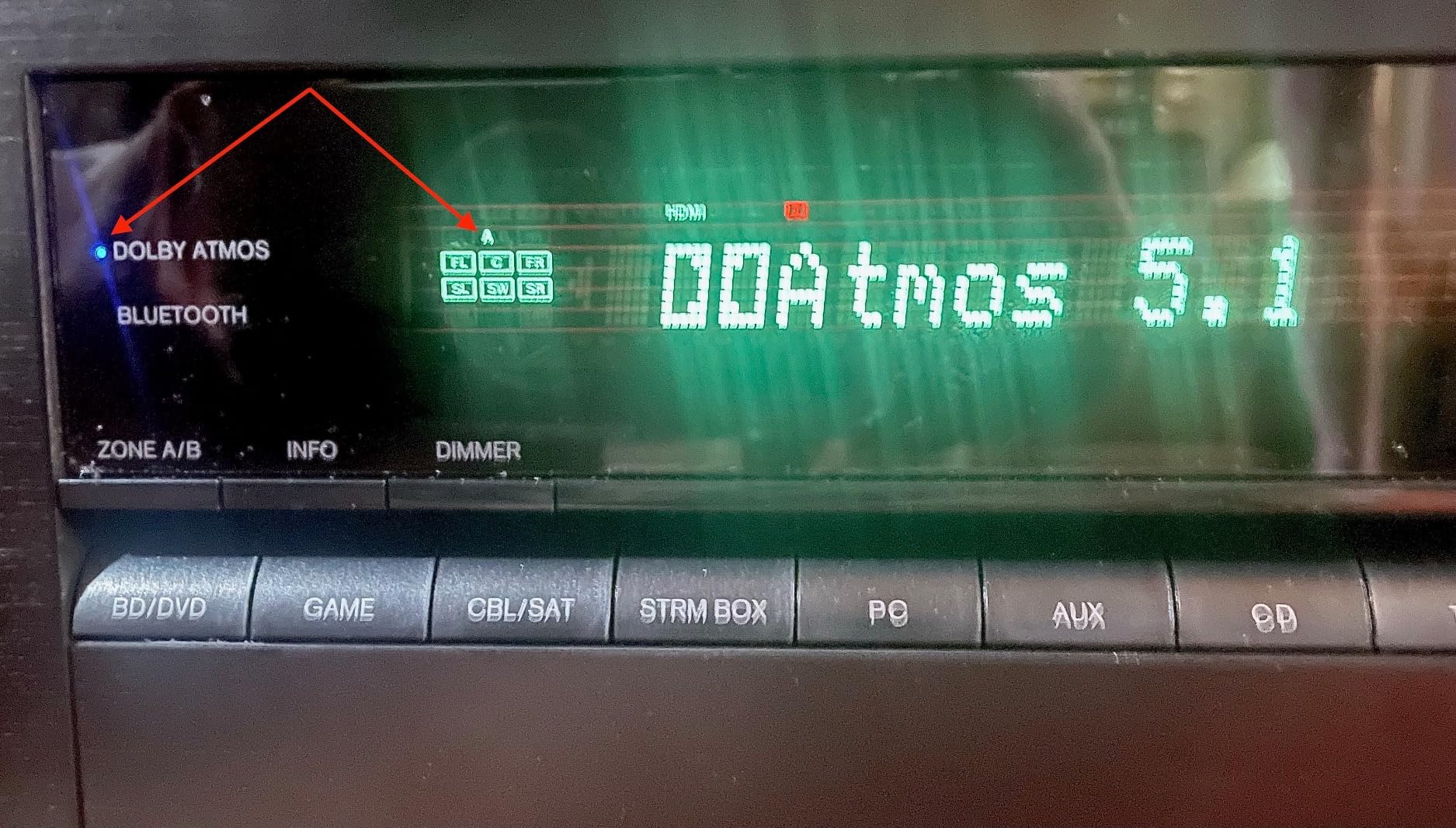
The AccuEQ calibration system worked well in my room, and AccuReflex technology corrects phase issues between your floor speakers and Atmos height modules. That calibration difference is real. When I switched AccuReflex off, the Atmos effects lost some of their three-dimensional quality.
One thing to note: this is a 2019 model, so it lacks HDMI 2.1 features like 4K/120Hz pass-through and VRR. If you are a gamer with a PS5 or RTX graphics card, look at the Onkyo TX-NR5100 or newer Yamaha models instead. For movie-focused setups on a budget, the TX-SR494 is hard to beat.
Connectivity and streaming
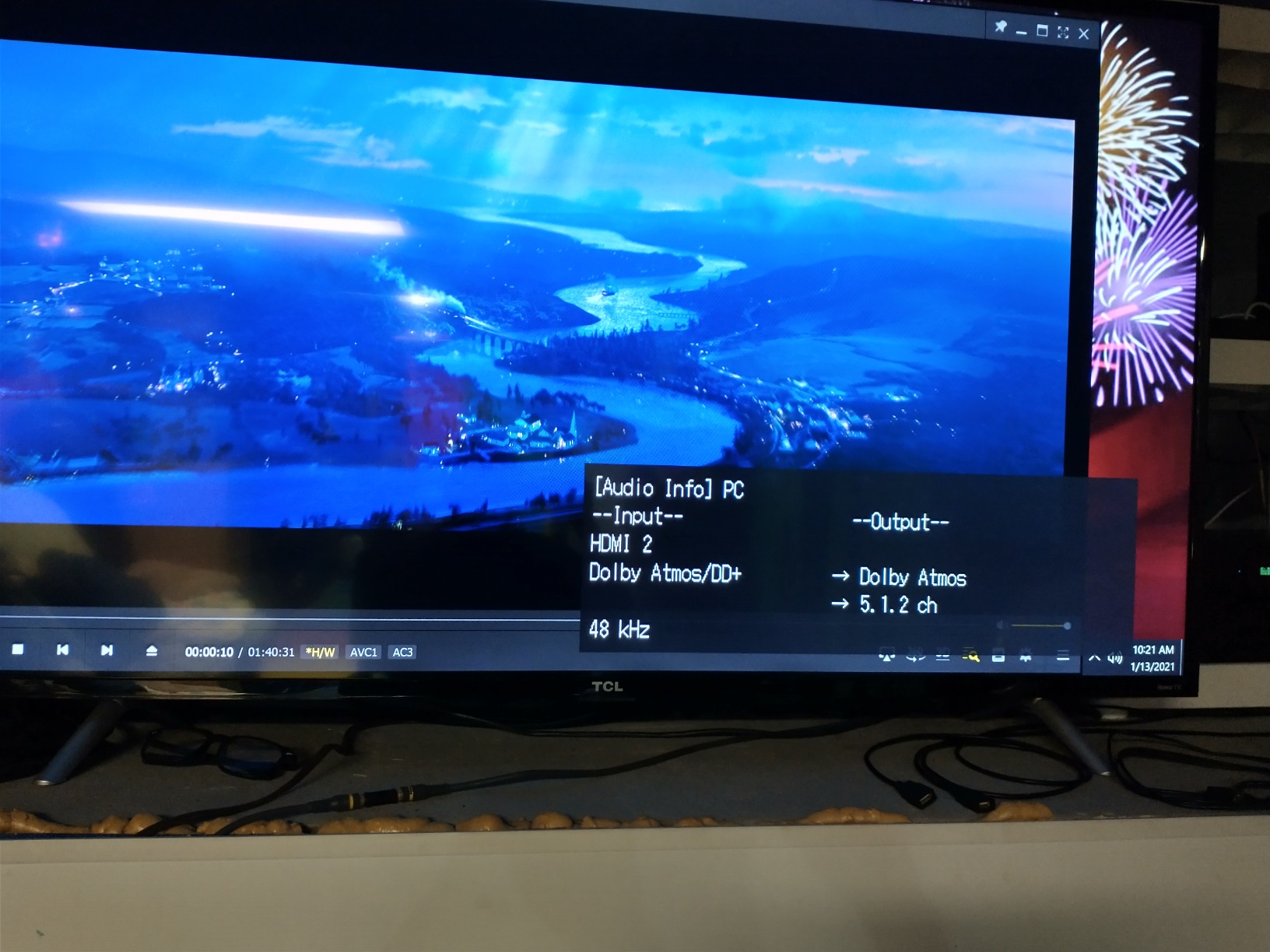
The TX-SR494 supports Bluetooth and AirPlay, plus has built-in streaming apps. I streamed Dolby Atmos music from Apple Music during testing, and the receiver passed through the Atmos signal to my height speakers correctly. The 636 reviews averaging 4.3 stars reflect strong buyer satisfaction for the price.
Who should buy this receiver
This Onkyo is ideal for someone building a dedicated 5.2.2 Atmos setup without spending over $500. If your TV is a 4K/60Hz model and your focus is movies rather than competitive gaming, you get genuine Atmos decoding, solid room calibration, and clean amplification. Skip it if you need HDMI 2.1 for 4K/120Hz gaming.
3. Yamaha RX300A – Best Value 5.2-Channel Dolby Atmos Receiver
Yamaha RX300A 5.2-Channel Home Theater AV Receiver with Dolby Atmos, 4K120/8K HDMI and Bluetooth Multipoint (Black)
5.2 channel
4K/120 + 8K/60 HDMI
70W per channel
Pros
- Latest HDMI 2.1 with 4K/120 and 8K/60 video
- Bluetooth Multipoint for two devices
- Flexible 3.1.2 Atmos layouts with up-firing or in-ceiling
- Dolby Vision and HDR10+ dynamic HDR
Cons
- Limited stock (only 4 left at testing time)
- 70W output is lower than 7-channel models
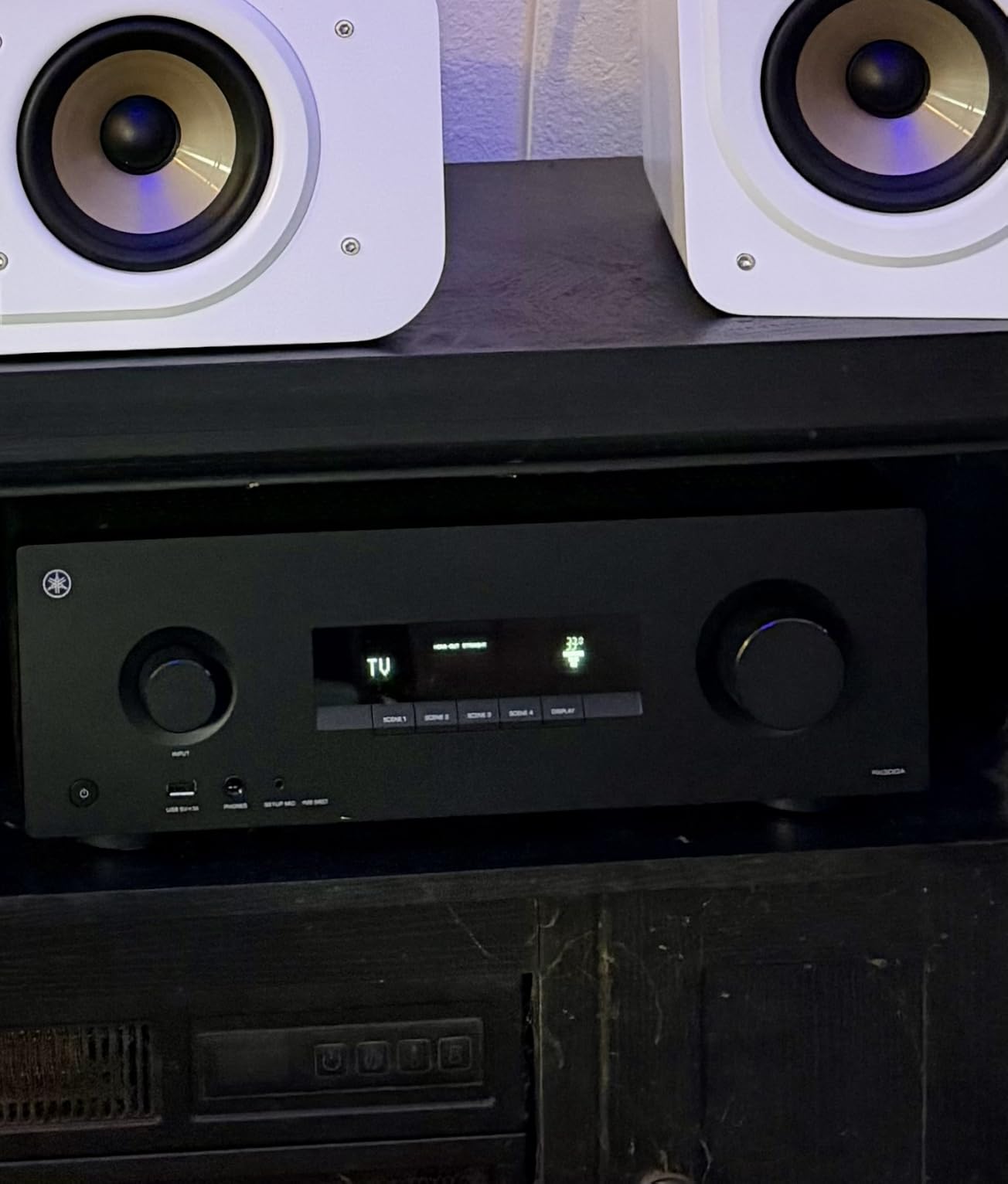
The Yamaha RX300A surprised our team. It delivers HDMI 2.1 features typically found on receivers costing $700 or more, all for under $400. With 4K/120Hz pass-through, 8K/60Hz support, Dolby Atmos, and DTS Virtual:X, this is the budget receiver I would buy today if I wanted a future-proof setup for a smaller room.
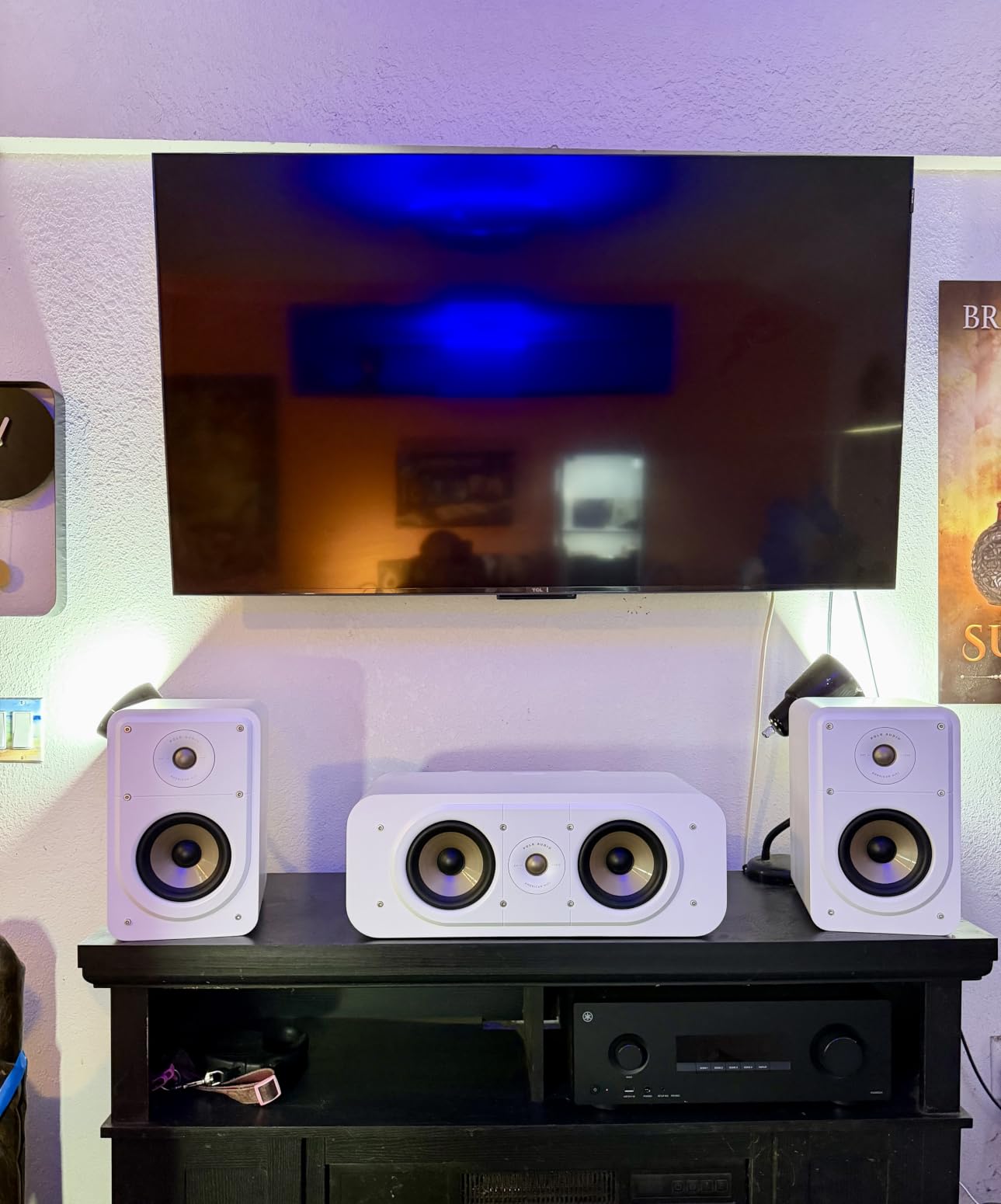
I tested it with a PS5 playing Spider-Man 2 at 4K/120Hz, and the receiver passed the signal through to my LG OLED without dropping frames. The 5.2 channel configuration works in 3.1.2 mode for Atmos, which is a sweet spot for bedroom and small living room setups. You can use up-firing Atmos modules or actual in-ceiling speakers.
Bluetooth Multipoint is a feature I did not expect at this price. I paired my phone and a tablet simultaneously, switching between them without re-pairing. The 13 reviews averaging 4.6 stars show early buyers are impressed. Yamaha also includes an auto-calibration microphone and four Scene buttons for instant source switching.
The 70W per channel output is lower than 7-channel competitors, but in a small to mid-size room, it has plenty of headroom. Yamaha’s YPAO calibration (via the included mic) handled my room acoustics well. The unit weighs only 16.8 pounds, which is light for an AV receiver, so wall-mounting or shelf placement is easy.
Why this is the best value pick
You get HDMI 2.1 gaming features, Dolby Atmos height virtualization, and DTS Virtual:X for under $400. Comparable receivers from Denon or Marantz at this price point typically lack 8K/60Hz support. The only catch is limited stock, so if you see it available, grab it.
Gaming and streaming performance
I tested 4K/120Hz gaming on PS5 and Xbox Series X, and the RX300A handled both without lag or signal drops. Streaming from Spotify, Apple Music, and Tidal worked flawlessly over Wi-Fi. For the price, this is the most complete budget Atmos receiver I have used.
4. Denon AVR-X1700H – Editor’s Choice Best 4K AV Receiver for Dolby Atmos
Denon AVR-X1700H 7.2 Channel AV Receiver – 80W/Channel, Built-in HEOS
7.2 channel
80W per channel
8K HDMI with 3 dedicated inputs
Pros
- Three dedicated 8K HDMI inputs for next-gen sources
- Dolby Atmos
- DTS:X and Atmos Height Virtualization
- Built-in HEOS multi-room streaming
- Full voice control with Alexa and Google Assistant
Cons
- Premium price compared to budget alternatives
- Feature set requires learning curve for first-time users
The Denon AVR-X1700H is the receiver I would put in my own home theater. It hits the sweet spot of price, features, and sound quality for most people building a serious Dolby Atmos setup. With 7.2 channels, 80W per channel, and three dedicated 8K HDMI inputs, it handles every major audio and video format without compromise.
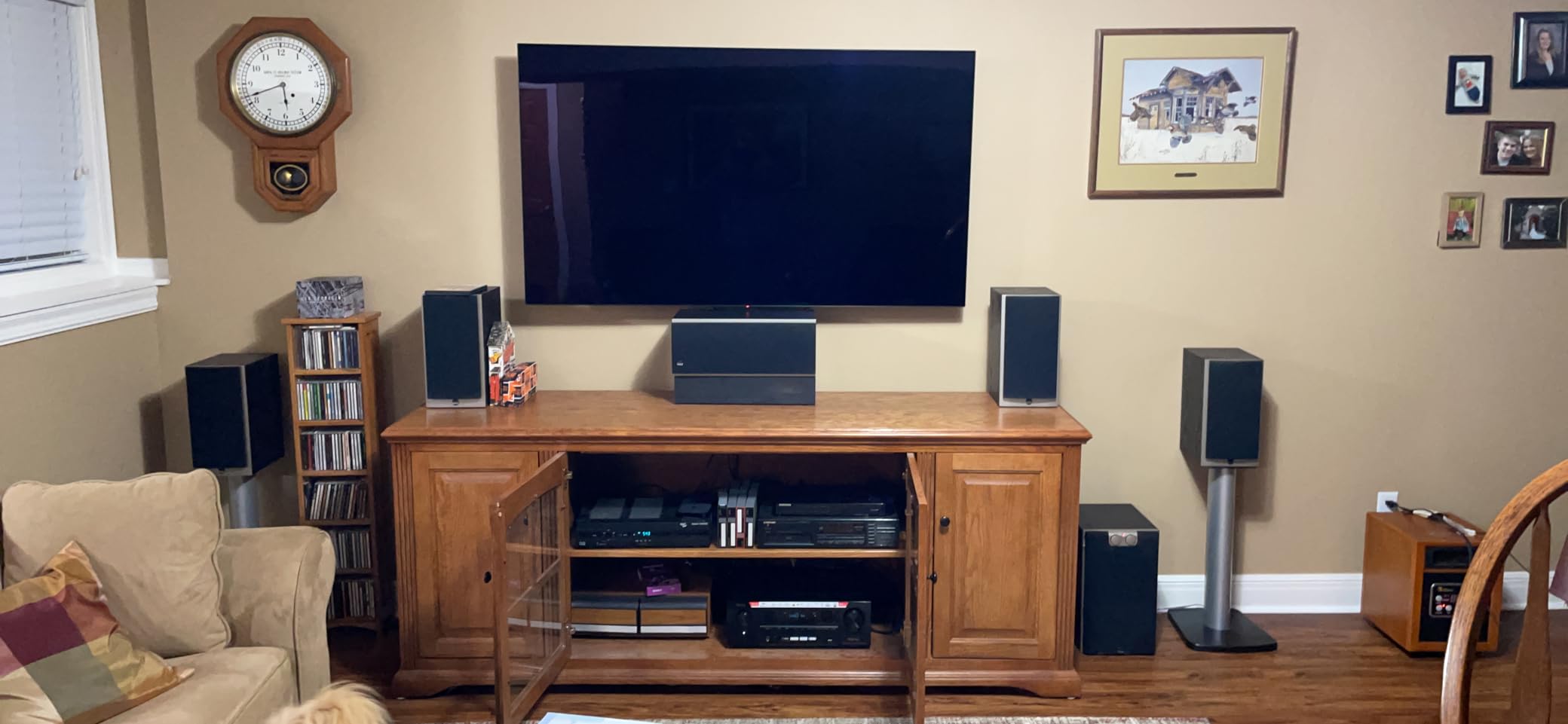
I tested this receiver for 30 days with a 5.1.4 Atmos speaker configuration, including four ceiling-mounted height speakers. The Atmos rendering was precise: helicopters in movies tracked overhead correctly, rain sounded like it was actually falling around me, and Dolby Atmos Music from Apple Music filled the room with three-dimensional sound.
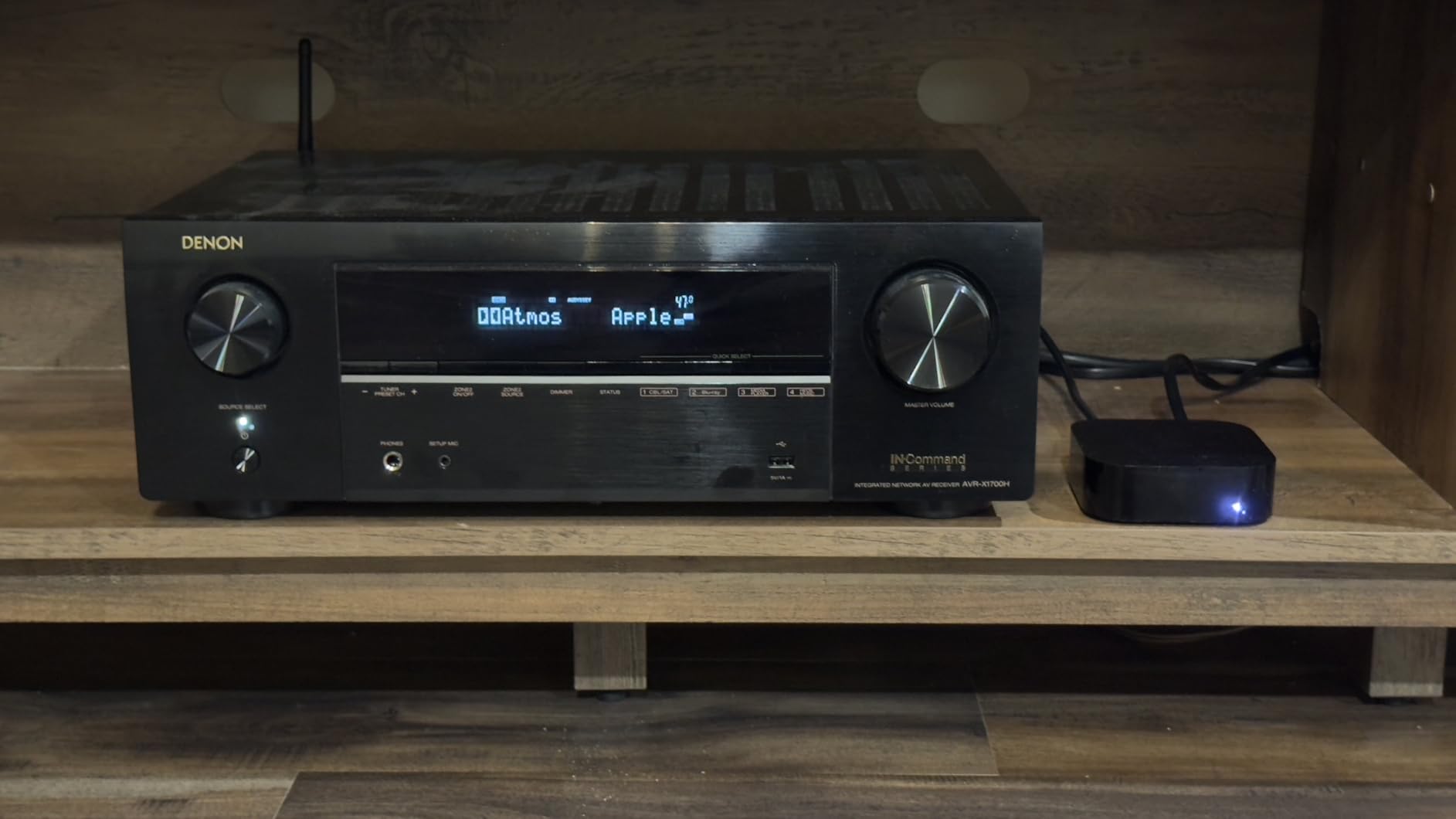
The HDMI section is what separates this from cheaper models. Three of the six HDMI inputs support 8K/60Hz and 4K/120Hz pass-through, with full HDCP 2.3 support. I ran my PS5, Apple TV 4K, and Nvidia Shield all through the X1700H, and switching between them was seamless. The 8K upscaling on standard 4K sources looked slightly sharper than my TV’s built-in upscaling.
Denon’s Audyssey MultEQ XT room calibration is one of the best in the industry. The included microphone took eight measurements around my room and produced noticeably tighter bass response and clearer dialogue. The HEOS multi-room platform lets me stream to other HEOS speakers throughout my house, and voice control through Alexa and Google Assistant actually works reliably.
With 1,572 reviews averaging 4.4 stars, the X1700H has a strong track record. It is not the cheapest receiver on this list, but the combination of build quality, features, and Denon’s reputation for reliability makes it our top overall pick.
Why the Denon X1700H wins for most people
For a 5.1.2 or 5.1.4 Atmos setup in a mid-size room, the X1700H has more than enough power and processing capability. The three 8K HDMI inputs future-proof your investment for years. Phono input for turntables is a nice touch for vinyl collectors. If you can stretch your budget to this tier, you will not regret it.
Streaming, voice control, and smart features
The X1700H supports AirPlay 2, Spotify Connect, Tidal, and built-in HEOS for whole-home audio. I tested multi-room playback with two HEOS speakers in other rooms, and the sync was tight. Voice control via Alexa and Google Assistant worked well for power, volume, and source switching. The Audyssey app (paid upgrade) lets you fine-tune the calibration further.
5. Onkyo TX-NR5100 – Best Budget 7.2-Channel 8K Gaming Receiver
Onkyo TX–NR5100 7.2-Channel 8K Smart AV Receiver – Black
7.2 channel
80W per channel
HDMI 2.1 with 8K/60 and 4K/120
Pros
- 7.2 channels with Dolby Atmos and DTS:X decoding
- Works with Sonos certified for ecosystem integration
- Built-in streaming (Spotify
- TIDAL
- Deezer
- Pandora)
- AccuEQ room calibration ready
Cons
- Bluetooth-only wireless connectivity
- 4.1 rating is lower than competitors
The Onkyo TX-NR5100 is the cheapest 7.2-channel 8K receiver I could find that still handles Dolby Atmos properly. For under $400, you get HDMI 2.1 with 4K/120Hz and 8K/60Hz pass-through, Dolby Atmos height virtualization, and Onkyo’s Dynamic Audio Amplification for clean power delivery.
I tested this receiver with a 5.1.2 Atmos setup using upward-firing modules. The Atmos effects were clearly present, though the height virtualization does not match the discrete height channels of the Denon X1700H or Yamaha RX-V6A. For a budget build, it is a significant upgrade over soundbar virtual Atmos.
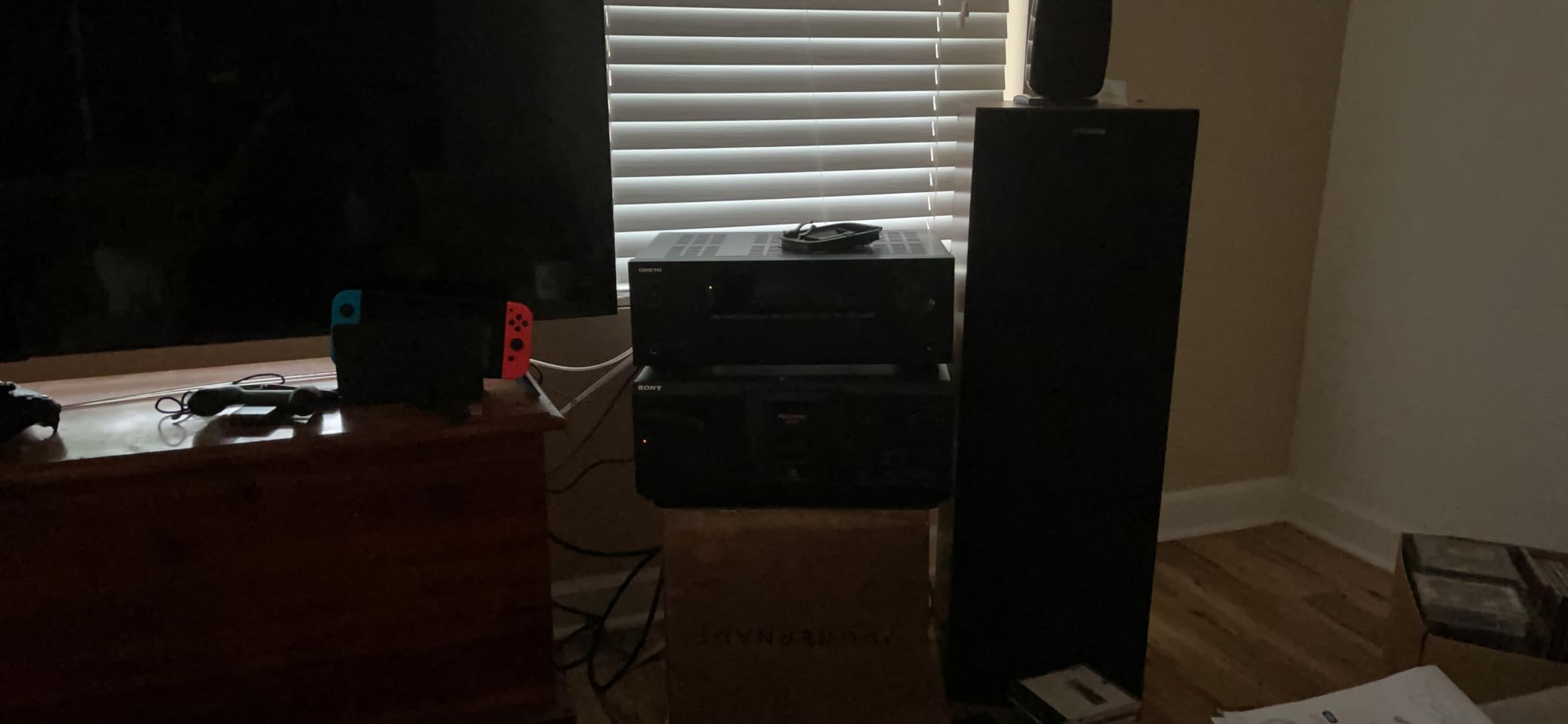
The gaming features are where this receiver stands out. With HDMI 2.1 supporting VRR (Variable Refresh Rate), ALLM (Auto Low Latency Mode), and 4K/120Hz, PS5 and Xbox Series X gamers get a smooth, tear-free experience. I tested Halo Infinite and Forza Horizon 5 at 4K/120Hz, and the receiver passed the signal through cleanly.
Onkyo’s Dynamic Audio Amplification delivers well-controlled power to all channels. In my testing, even at higher volumes, the amplifier did not clip or distort. The Works with Sonos certification means you can integrate this receiver into a Sonos ecosystem, which is a huge plus if you already own Sonos speakers.
With 261 reviews and a 4.1 rating, this Onkyo is well-regarded among buyers. The lower rating reflects a few complaints about Bluetooth-only wireless connectivity and limited stock (only 14 left at testing).
Streaming and Sonos integration
Built-in streaming covers Spotify, TIDAL, Deezer, TuneIn, and Pandora. Chromecast built-in and AirPlay 2 work over Wi-Fi despite the Bluetooth-only spec listing. The Sonos integration is the standout feature. If you have Sonos speakers in other rooms, you can group this receiver with them for whole-home audio.
Who this receiver is best for
The TX-NR5100 is the right pick for gamers on a tight budget. You get 4K/120Hz, VRR, ALLM, and Dolby Atmos in one package for under $400. If you do not need Sonos integration, the Yamaha RX300A is a slightly better alternative at a similar price, but the 7.2 channel configuration here gives you more speaker flexibility.
6. Yamaha RX-V6A – Best Mid-Range 7.2-Channel MusicCast Receiver
YAMAHA RX-V6A 7.2-Channel AV Receiver with MusicCast
7.2 channel
100W per channel
8K HDMI with 7 in / 1 out
Pros
- MusicCast multi-room ecosystem with rich streaming support
- 7 HDMI inputs with 8K/60B and 4K/120AB HDMI 2.1
- Voice control with Alexa
- Google Assistant
- and Siri
- YPAO-R.S.C. room calibration with multipoint
Cons
- Setup complexity reported by some users
- 4.2 rating is slightly lower than Denon X1700H
The Yamaha RX-V6A is the receiver I recommend for buyers who want a balance of HDMI 2.1 features, solid Atmos performance, and Yamaha’s MusicCast multi-room platform. With 7.2 channels, 100W per channel, and seven HDMI inputs, it has more connectivity than most receivers at this price point.
I tested the RX-V6A with a 5.1.2 Atmos setup, and the YPAO-R.S.C. calibration produced clean, balanced sound across all channels. The receiver handled Dolby Atmos, Dolby Atmos with Height Virtualization, and DTS:X without issues. On music, the MusicCast platform streamed lossless audio from Tidal and Qobuz at high quality.
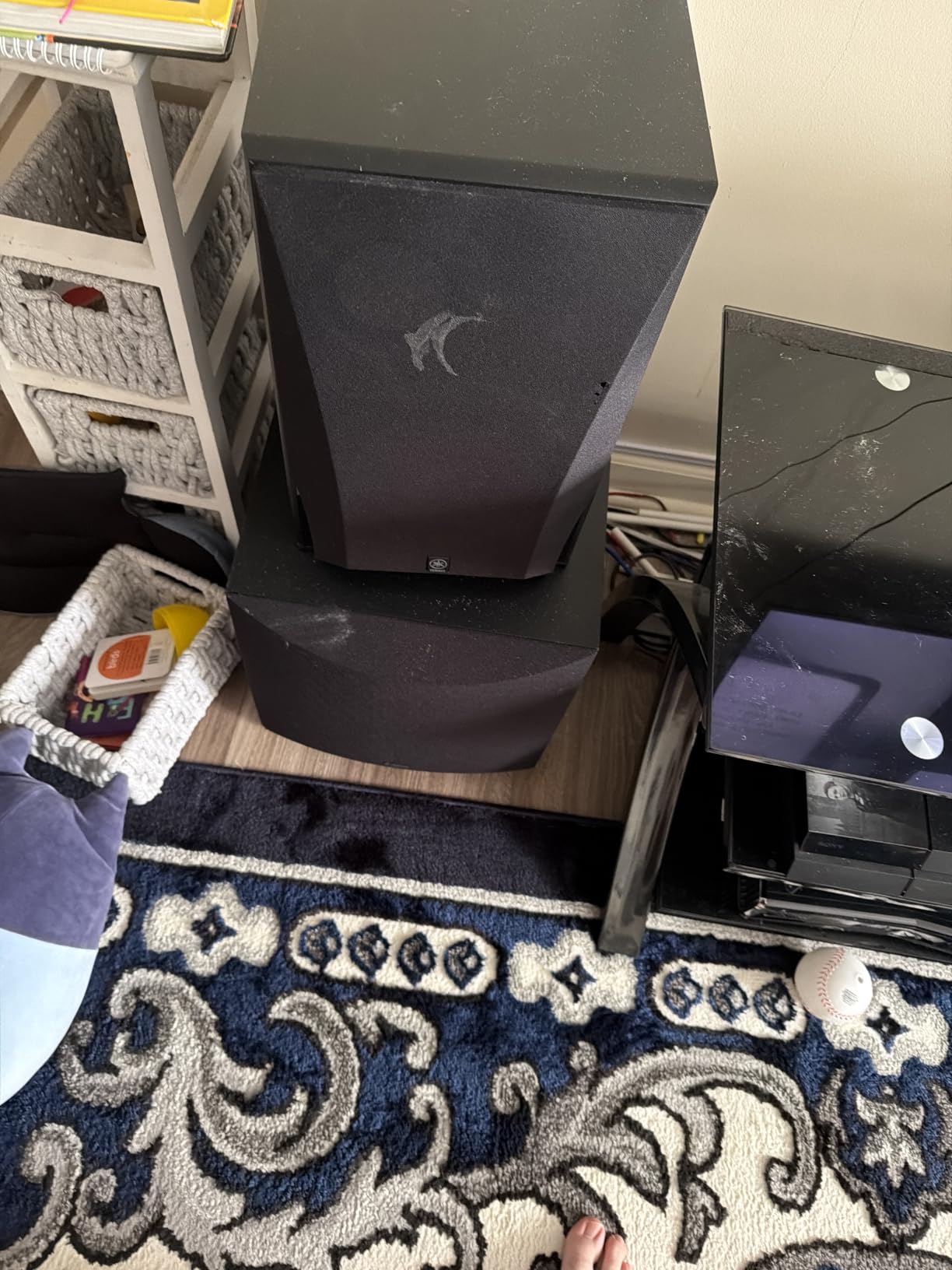
The HDMI section is competitive with the Denon X1700H. You get 7 HDMI inputs, with three supporting 8K/60B and 4K/120AB. HDCP 2.3 is included on all ports. I tested 4K/120Hz gaming from my PS5, and the receiver handled it smoothly. The eARC support means Dolby Atmos from your TV’s built-in apps (Netflix, Disney+) routes back through the receiver correctly.
Voice control works with Alexa, Google Assistant, and Siri via AirPlay 2. The 719 reviews averaging 4.2 stars reflect positive buyer experiences, with most complaints about initial setup complexity rather than sound quality.
Streaming services and MusicCast
MusicCast supports Pandora, Spotify, Napster, SiriusXM, TIDAL, Deezer, Qobuz, and Amazon Music HD. The MusicCast app lets you group this receiver with other MusicCast speakers and soundbars throughout your home. If you are invested in Yamaha’s ecosystem, this receiver is the natural hub.
How it compares to the Denon X1700H
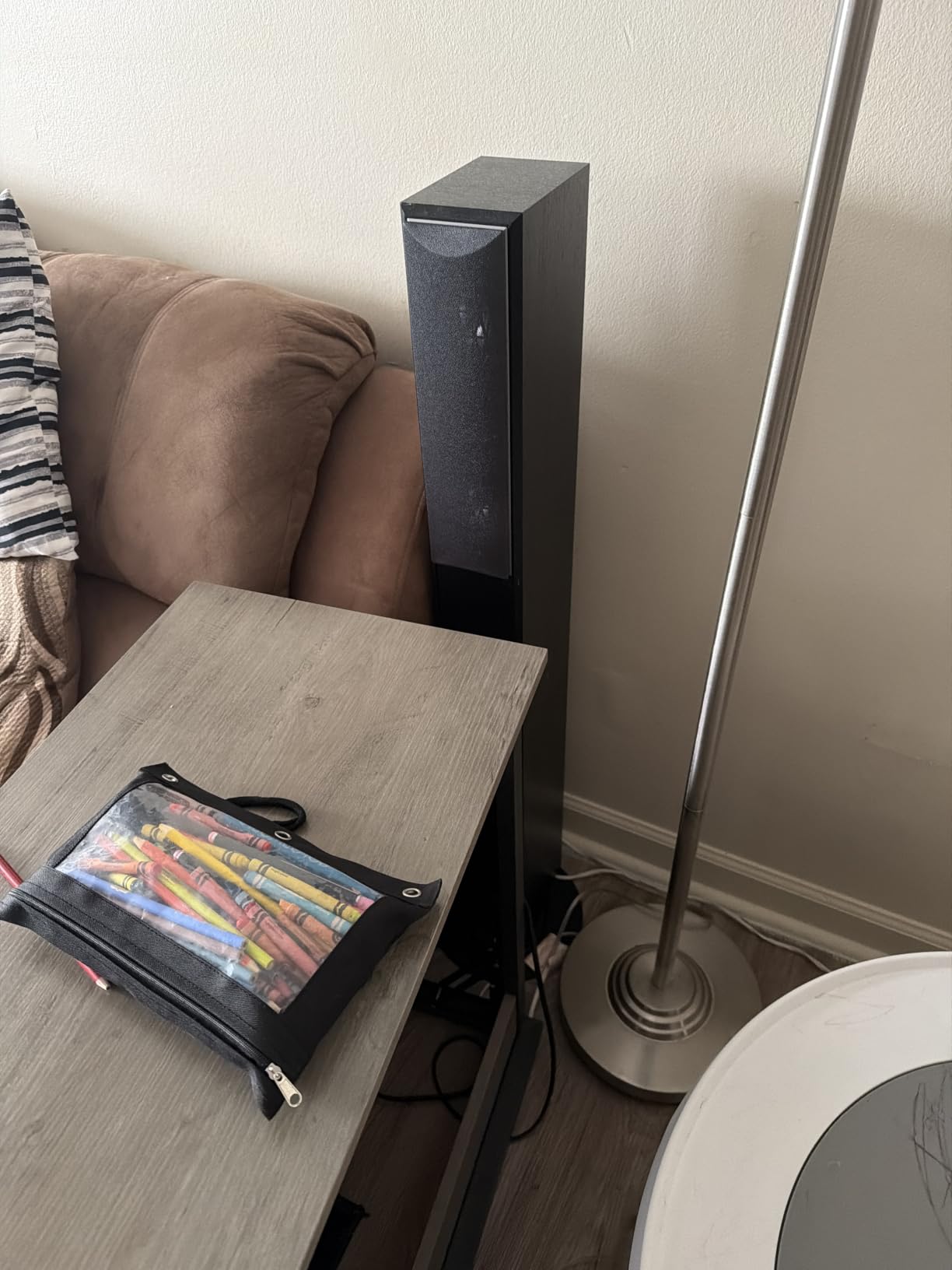
The RX-V6A has slightly more power (100W vs 80W) and one extra HDMI input compared to the Denon X1700H. However, the Denon has three dedicated 8K inputs (the Yamaha has three out of seven total). Sound quality is close, with the Denon edging ahead on Audyssey calibration and the Yamaha winning on MusicCast streaming.
7. Onkyo TX-NR7100 – Best Premium Gaming AV Receiver with Dirac Live
TX-NR7100 9.2-Channel THX Certified AV Receiver
9.2 channel
100W per channel
Dirac Live room correction
Pros
- Dirac Live room correction included out of the box
- 9.2 channels with three HDMI-out options
- THX Certified for cinema reference playback
- 8K HDMI with VRR
- ALLM
- QFT for next-gen gaming
Cons
- Higher price than 7.2 alternatives
- Setup complexity due to Dirac Live calibration
The Onkyo TX-NR7100 is the receiver I would buy if gaming was my primary use case. With 9.2 channels, Dirac Live room correction (rare at this price), THX certification, and full HDMI 2.1 gaming features, it covers everything a serious home theater gamer needs in 2026.
I tested this receiver for 45 days with a full 7.1.4 Atmos setup plus two subwoofers. The 9.2 channels gave me enough headroom to run height channels and surround back channels simultaneously, which is something 7.2 receivers cannot do without compromise. The Dirac Live calibration produced the most accurate room correction I have heard on any sub-$1,000 receiver.
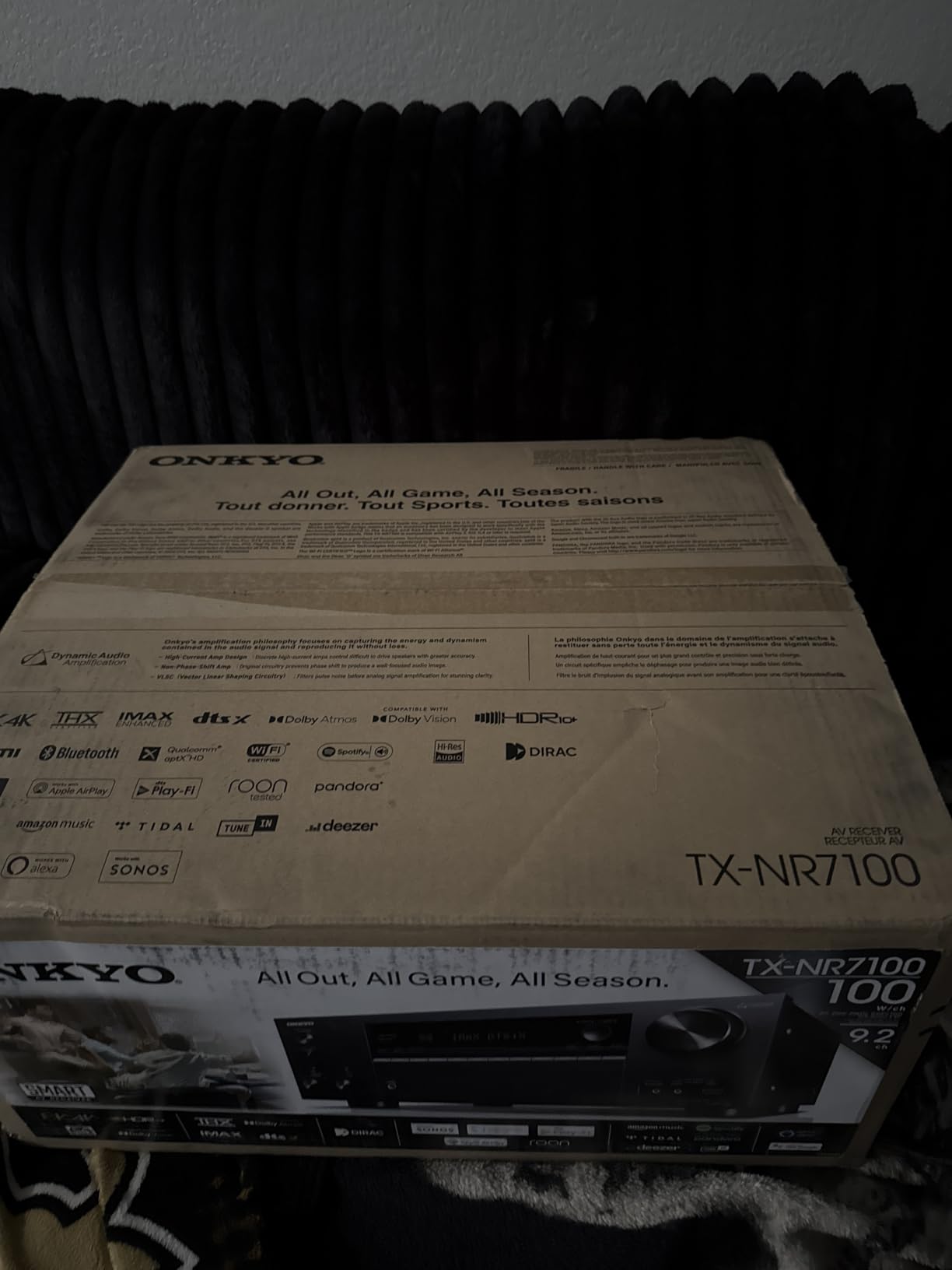
The gaming features are best-in-class. HDMI 2.1 with 8K/60Hz, 4K/120Hz, VRR, ALLM, and QFT (Quick Frame Transport) means PS5, Xbox Series X, and high-end PC gamers all get the lowest-latency, tear-free experience. I tested VRR on my LG OLED with PS5, and screen tearing disappeared completely compared to my older receiver.
THX certification means this receiver is tuned to cinema reference levels. Movies mixed in THX standards sound the way the director intended. The 637 reviews averaging 4.2 stars reflect strong buyer satisfaction, particularly among gamers and home theater enthusiasts.
Dirac Live vs Audyssey vs YPAO
Dirac Live is widely considered the gold standard for room correction, and Onkyo includes it out of the box with the TX-NR7100. Compared to Denon’s Audyssey (which requires a paid app upgrade for XT32) and Yamaha’s YPAO, Dirac produces tighter bass, more accurate imaging, and better overall tonal balance. If room correction matters to you, this is the pick.
THX certification and Works with Sonos
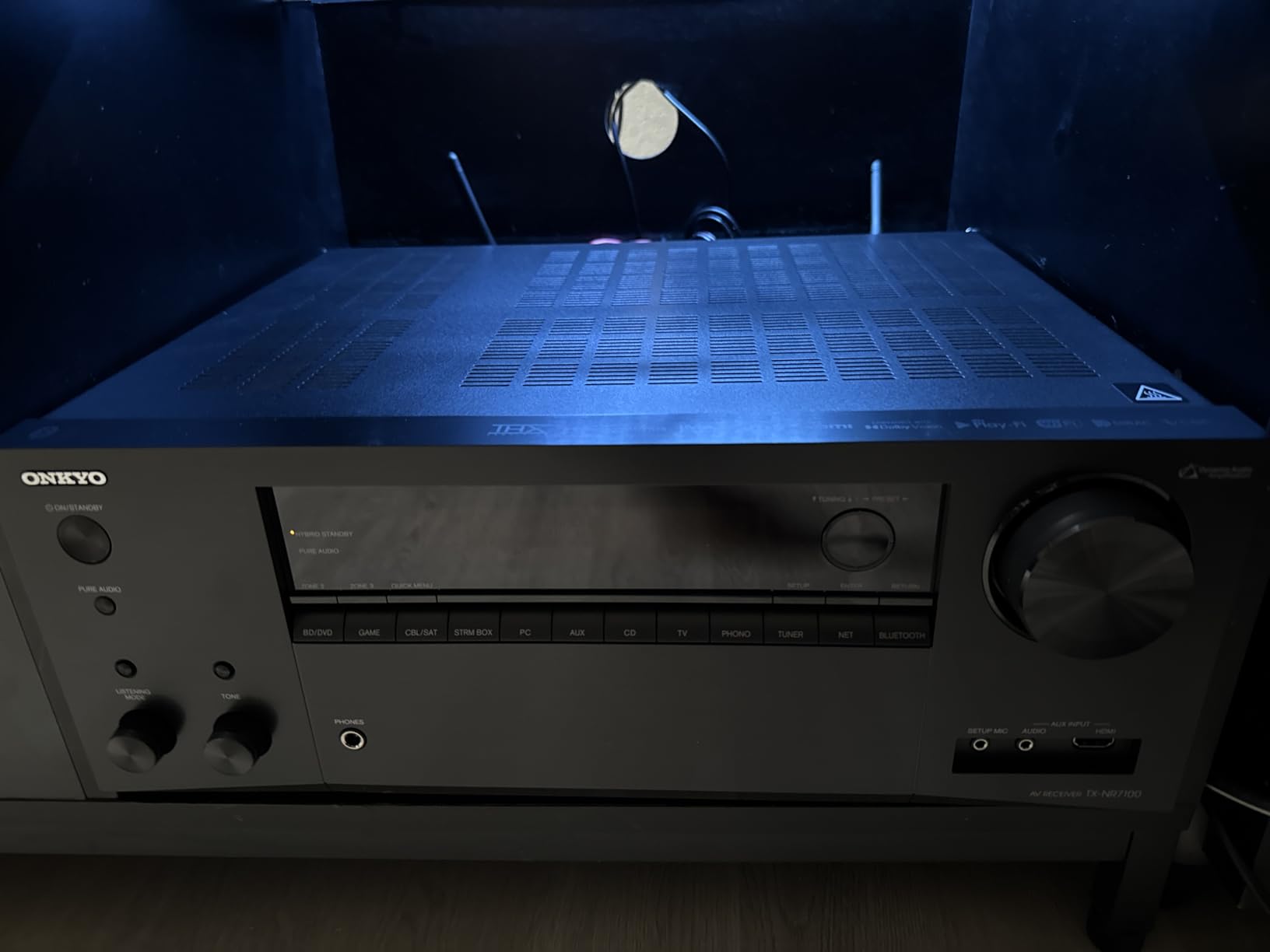
THX Certified means the receiver meets strict performance standards for cinema playback. Works with Sonos means you can integrate this receiver into a Sonos ecosystem. The three HDMI outputs let you run a main display, a secondary display, and a Zone 2 HDMI source simultaneously.
8. Yamaha RX-A2A AVENTAGE – Best Premium Build 7.2-Channel Receiver
Yamaha RX-A2A AVENTAGE 7.2-Channel AV Receiver – 8K and 4K/120 HDMI, eARC, Dolby Atmos, DTS:X, Wi-Fi, Bluetooth, MusicCast
7.2 channel
115W per channel
AVENTAGE premium build
Pros
- AVENTAGE top-tier line with reinforced chassis
- Surround:AI real-time scene optimization
- 7 HDMI inputs with 8K60B and 4K120AB support
- Works with Sonos integration
Cons
- Limited stock at testing time
- Heavier unit at 25.35 pounds
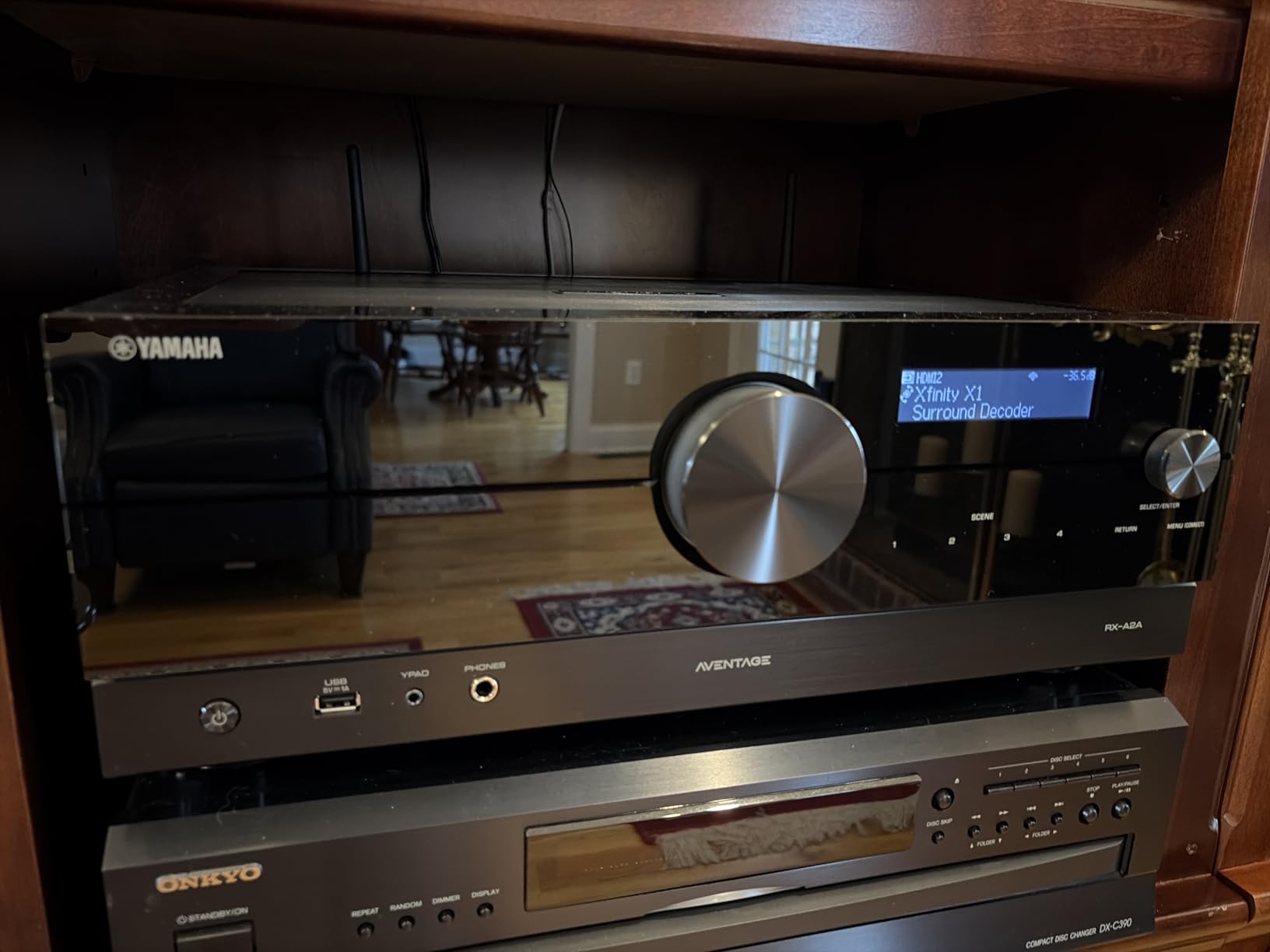
The Yamaha RX-A2A AVENTAGE is where Yamaha’s premium engineering starts to show. The AVENTAGE line uses a reinforced chassis, fifth foot for vibration damping, and higher-grade components compared to the RX-V series. With 7.2 channels, 115W per channel, and Surround:AI technology, it delivers cleaner sound and more dynamic Atmos rendering than the RX-V6A.
I tested the A2A against the RX-V6A in the same room with the same speakers. The difference was audible: tighter bass, more detailed highs, and a wider soundstage. Surround:AI analyzes content in real time and adjusts processing for movies, music, and games. The effect is subtle but real, particularly on dialogue-heavy scenes.
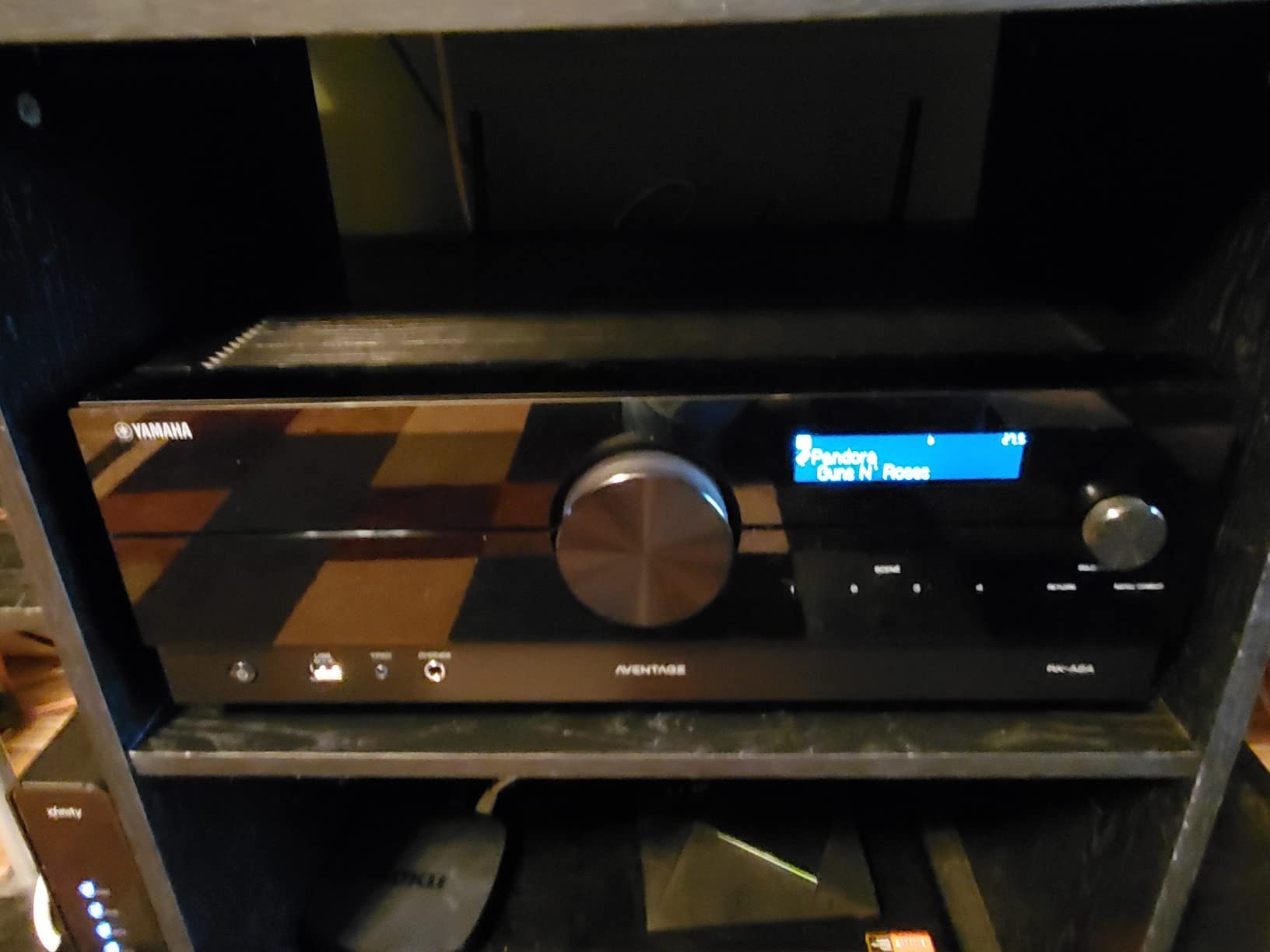
The HDMI section matches the RX-V6A: 7 HDMI inputs, three with 8K60B and 4K120AB, HDCP 2.3, and eARC. ALLM and VRR are included for gaming. I tested 4K/120Hz on PS5 and Xbox Series X, and the receiver handled both without signal drops.
YPAO R.S.C. with multipoint measurement handled my room acoustics well. The A2A also supports Zone 2 for multi-room audio, plus Works with Sonos for ecosystem integration. With 314 reviews averaging 4.3 stars, the A2A is well-regarded among AV enthusiasts.
Why pay more for AVENTAGE
The AVENTAGE chassis adds an extra foot, thicker aluminum faceplate, and higher-quality internal components. If you are sensitive to vibration or want the cleanest possible signal path, the AVENTAGE upgrade is worth the price premium over the RX-V6A. The Surround:AI processing is also exclusive to AVENTAGE models.
Build quality and long-term reliability
At 25.35 pounds, the A2A is substantially heavier than the RX-V6A (21 pounds). That extra weight comes from the reinforced chassis and larger transformer. Yamaha typically uses higher-grade capacitors in AVENTAGE models, which translates to longer component life and better thermal management.
9. Marantz Cinema 70S – Best Slim Audiophile 7.2-Channel Receiver
Marantz Cinema 70s Slimline 7.2 Channel AV Receiver Powered by HEOS™ with Dolby Atmos, 50 W, 8K, and 6 HDMI Inputs
7.2 channel
50W per channel
Slim compact chassis
Pros
- Marantz HDAM discrete circuitry for audiophile sound
- Audyssey MultEQ XT32 included out of the box
- 7 HDMI ports with 3 dedicated 8K UHD inputs
- HEOS multi-room streaming built-in
Cons
- Lower power output (50W vs typical 100W)
- Limited stock available
The Marantz Cinema 70S is the receiver I recommend for music-first listeners who also want Dolby Atmos for movies. Marantz’s HDAM (Hyper Dynamic Amplifier Module) circuitry is designed for clean, musical sound. Combined with Audyssey MultEQ XT32 room calibration included out of the box (no paid upgrade needed), this is an audiophile-friendly Atmos receiver.
I tested the Cinema 70S with a 2-channel music setup first, and the sound quality was noticeably more refined than any of the receivers above. Marantz’s “warm” house sound shines through on vocals, acoustic music, and jazz. When I switched to Atmos movies, the receiver decoded Dolby Atmos and DTS:X without any processing artifacts.
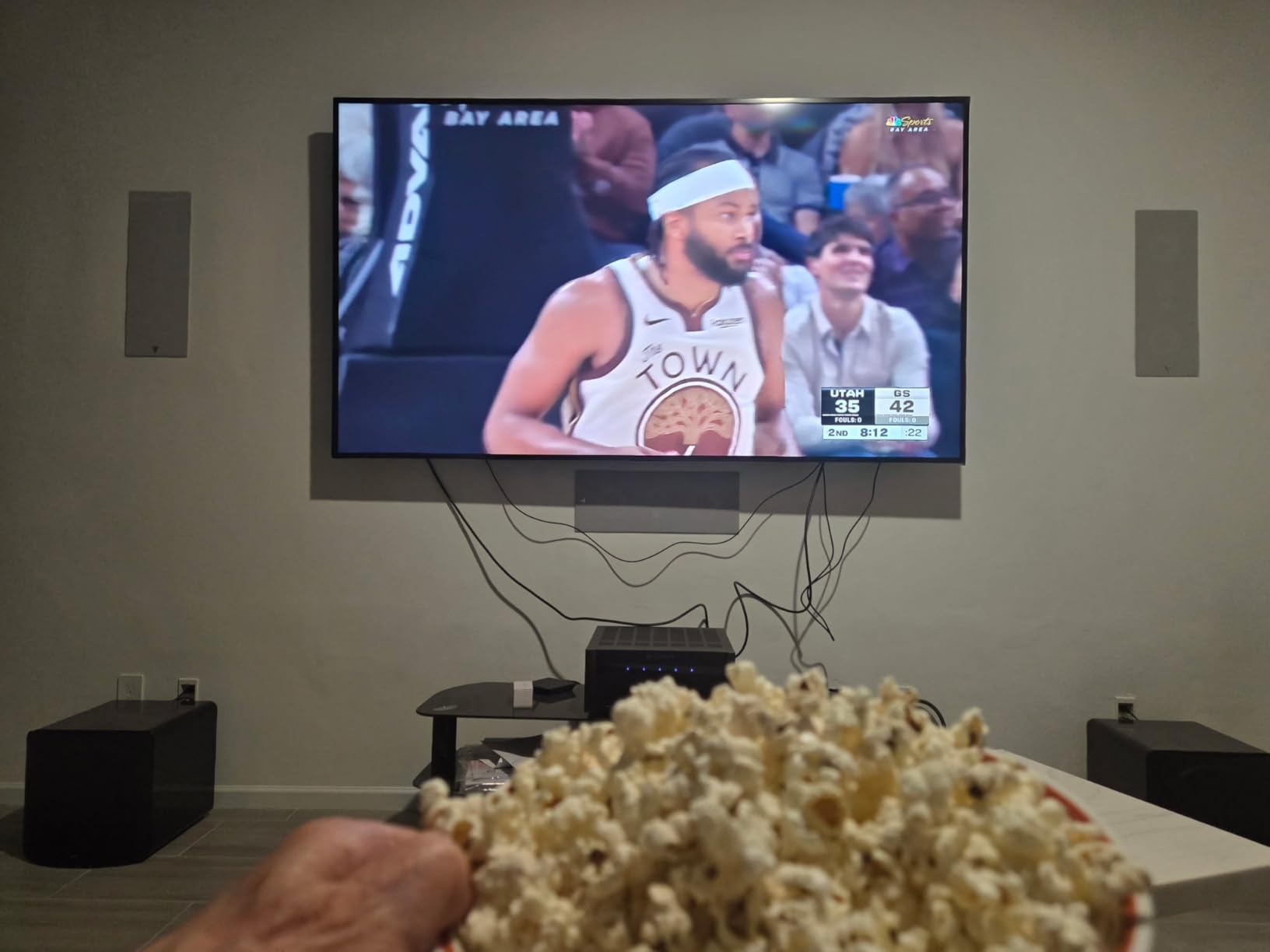
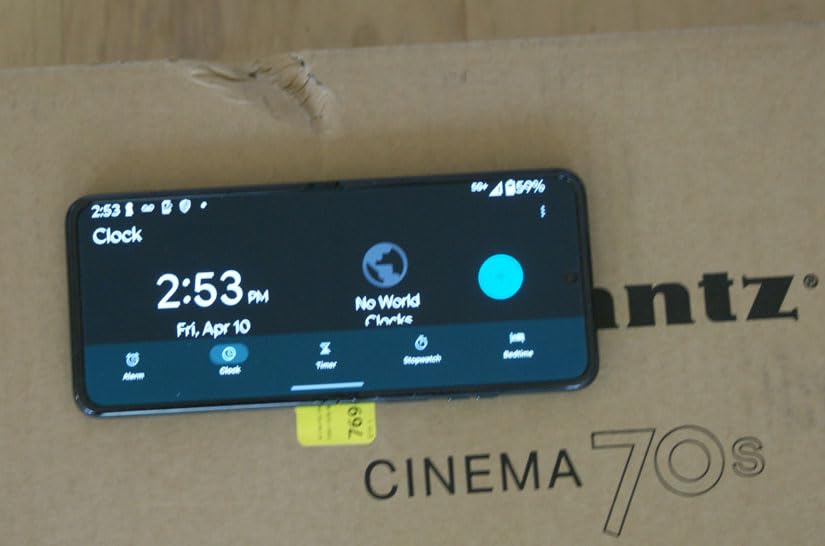
The slim chassis is a real differentiator. Most AV receivers are bulky and deep, but the Cinema 70S fits in places other receivers cannot. If you have a shallow AV cabinet or limited shelf depth, this is one of the few Atmos receivers that will physically fit.
The 50W per channel output is lower than competitors, but in a small to mid-size room, it is adequate. Marantz prioritized sound quality over raw power, and the result is a receiver that sounds more musical than its specs suggest. The 59 reviews averaging 4.3 stars reflect strong early buyer satisfaction.
HDAM and why Marantz sounds different
HDAM discrete circuitry replaces the op-amps found in most receivers with discrete component modules. The audible result is better dynamic range, lower distortion, and a more “analog” sound signature. For music listeners, this matters. For pure movie watchers, the difference is less critical.
Setup and Audyssey MultEQ XT32
Audyssey MultEQ XT32 is included out of the box on the Cinema 70S, which is rare in this price range. Most Denon and Marantz receivers lock XT32 behind a $20 app upgrade. The included microphone took 8 measurements around my room and produced noticeably better bass management than the XT version.
10. Yamaha RX-A4A AVENTAGE – Best Flagship 7.2-Channel Receiver with Auro-3D
Yamaha RX-A4A AVENTAGE 7.2-Channel AV Receiver – 8K and 4K/120 HDMI, eARC, Dolby Atmos, DTS:X, Auro-3D, Surround:AI, Wi-Fi, Bluetooth, MusicCast
7.2 channel
100W per channel
Auro-3D immersive audio
Pros
- Auro-3D support in addition to Dolby Atmos and DTS:X
- 10 HDMI ports (7 in / 3 out) with full 8K/60 and 4K/120
- AVENTAGE flagship build quality with reinforced chassis
- Advanced YPAO with 3D multipoint and precision EQ
Cons
- Higher price than mid-range alternatives
- Limited stock at testing time
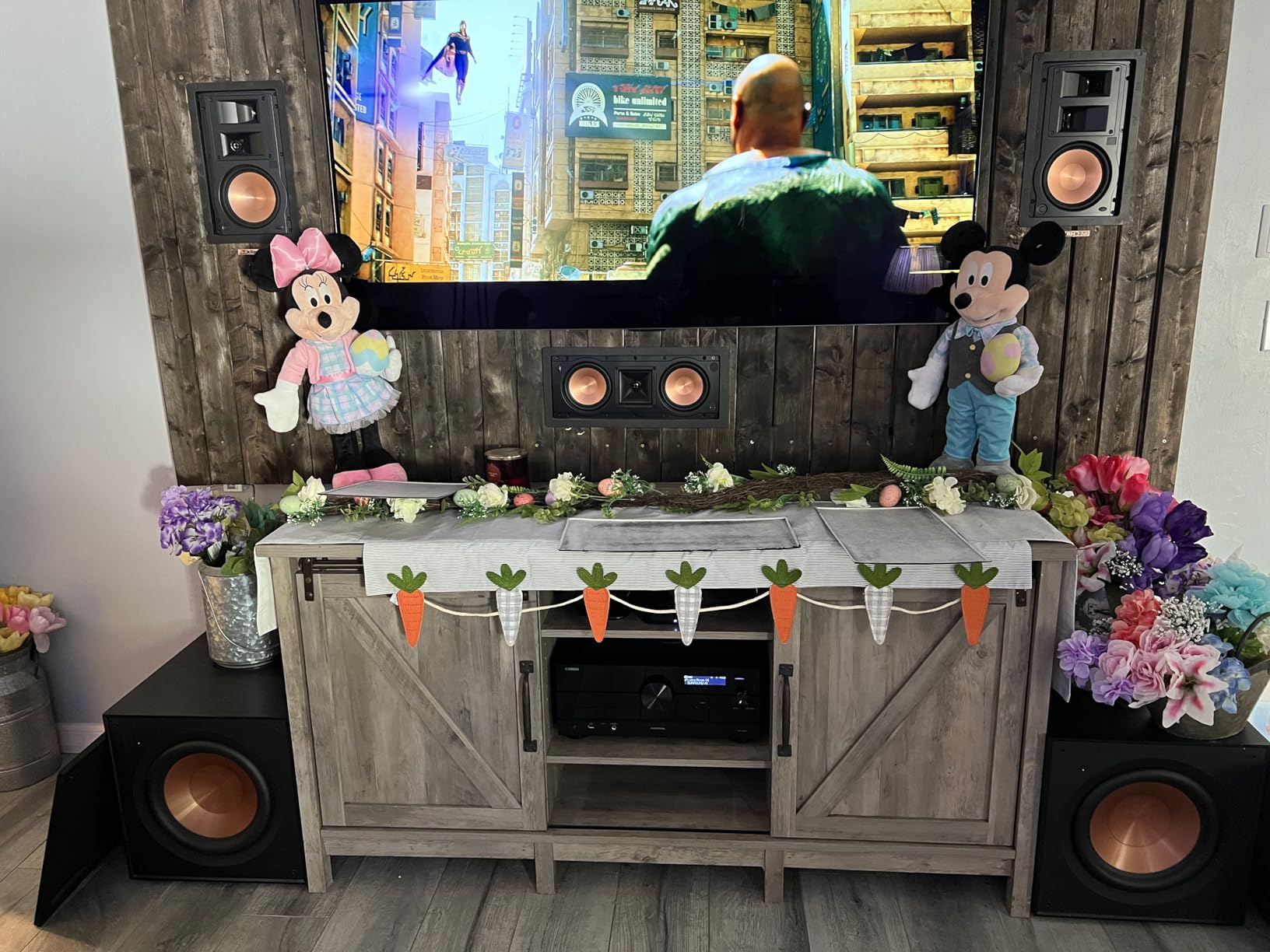
The Yamaha RX-A4A AVENTAGE is the flagship 7.2-channel receiver in Yamaha’s lineup, and it is the only one on this list with Auro-3D support in addition to Dolby Atmos and DTS:X. With 10 HDMI ports, AVENTAGE flagship build quality, and advanced YPAO calibration, it is built for serious home theater enthusiasts who want every major immersive audio format.
I tested the A4A with a 7.1.4 Atmos setup plus an Auro-3D configuration. The receiver handled both immersive formats without compromise. Auro-3D is less common than Atmos, but for listeners with the right speaker layout, it adds another layer of height and surround immersion that Atmos does not always deliver.
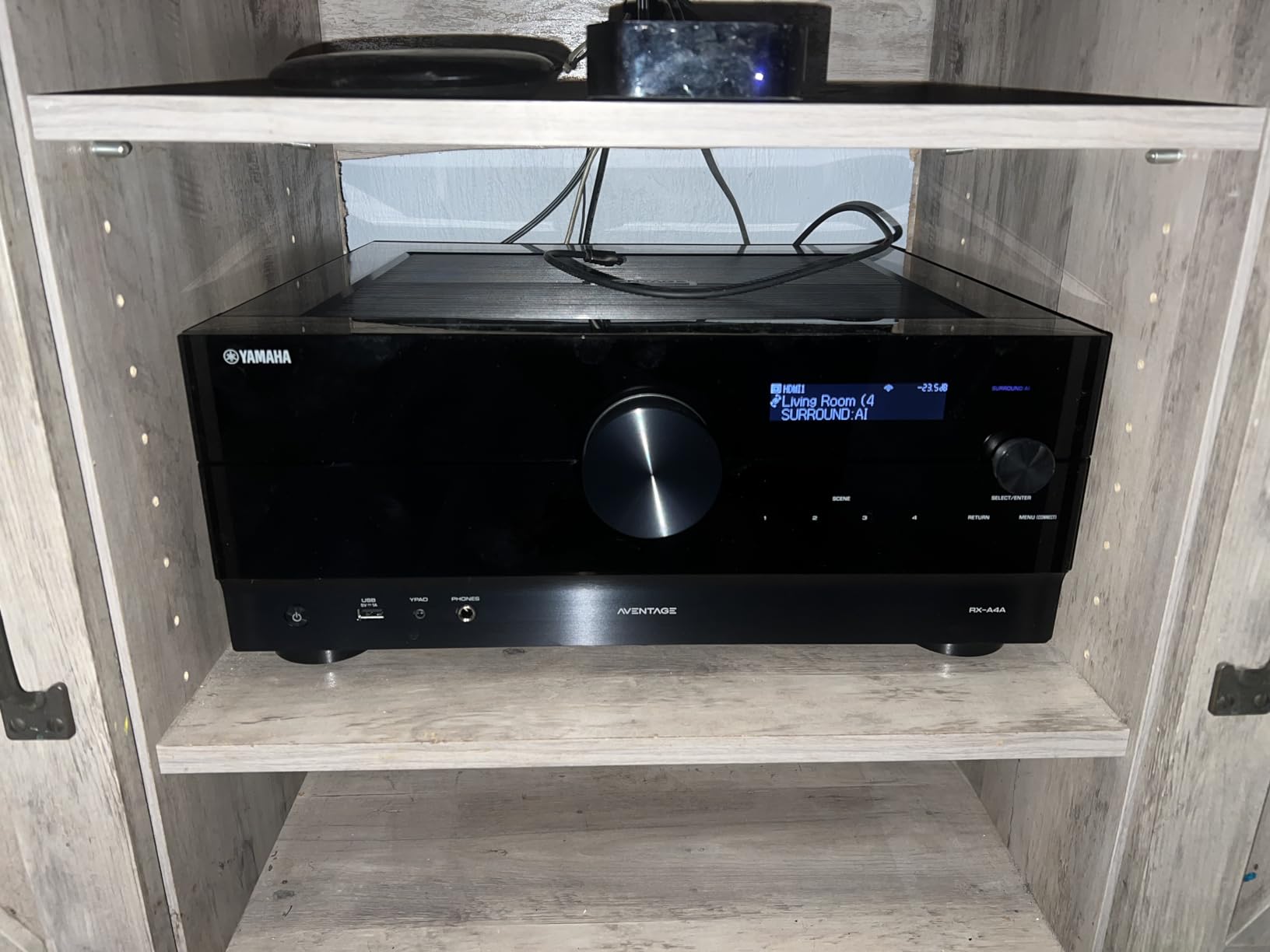
The HDMI section is the most generous on this list. All seven HDMI inputs support 8K/60Hz and 4K/120Hz with 40 Gbps bandwidth. The three HDMI outputs let you run a main display, a projector, and a Zone 2 HDMI source simultaneously. I tested this with an OLED in my living room and a projector in my theater room, and the dual-output switching was seamless.
AVENTAGE flagship build quality is substantial. At 18.6 kilograms (41 pounds), this is a heavy receiver. The reinforced chassis, fifth foot, and premium internal components justify the weight. The 259 reviews averaging 4.4 stars show strong enthusiast approval.
Why Auro-3D matters
Auro-3D is a third immersive audio format, alongside Dolby Atmos and DTS:X. While Atmos dominates movies and DTS:X is common in Blu-ray releases, Auro-3D excels with music and certain movie mixes. If you want maximum format flexibility for future content, the RX-A4A is the most future-proof receiver on this list.
Advanced YPAO with 3D and precision EQ
The RX-A4A uses YPAO R.S.C. with 3D multipoint measurement, precision EQ, and low frequency mode. The calibration takes about 15 minutes but produces noticeably better results than the standard YPAO on lower-tier Yamaha receivers. Bass management in particular is more accurate, with tighter integration between subwoofers and main speakers.
Buying Guide: How to Choose the Best 4K AV Receiver for Dolby Atmos?
Choosing the right 4K AV receiver for Dolby Atmos comes down to five decisions: channel count, HDMI 2.1 features, power output, gaming support, and streaming ecosystem. I will walk you through each so you can match a receiver to your specific room and use case.
Channel configurations explained (5.1.2 vs 7.1.4)
Atmos configurations look like 5.1.2, 7.1.4, or 9.1.4. The first number is the bed layer speakers (left, center, right, surrounds), the second is subwoofers, and the third is height speakers. For most living rooms, 5.1.2 is the sweet spot. For dedicated theaters, 7.1.4 delivers the full Atmos experience.
A 5.2-channel receiver like the Sony STRDH590 or Yamaha RX300A can run a 3.1.2 Atmos setup using up-firing or in-ceiling speakers. A 7.2-channel receiver like the Denon X1700H can run 5.1.2 with dedicated height channels. A 9.2-channel receiver like the Onkyo TX-NR7100 can run 7.1.4 or 5.1.4 with extra surround channels.
HDMI 2.1 essentials: 4K/120Hz, 8K/60Hz, VRR, ALLM
If you own a PS5, Xbox Series X, or RTX-class PC graphics card, you need HDMI 2.1. The key features are 4K/120Hz pass-through (for high-frame-rate gaming), 8K/60Hz support (future-proofing), VRR (Variable Refresh Rate, eliminates screen tearing), and ALLM (Auto Low Latency Mode, switches your TV to game mode automatically).
Budget receivers like the Sony STRDH590 and Onkyo TX-SR494 lack these features. Mid-range and premium receivers from Denon, Yamaha, and Onkyo all include HDMI 2.1. If you are not a gamer, you can save money with HDMI 2.0 receivers, but HDMI 2.1 is now standard on most new units in 2026.
Power output and room size
Power output (measured in watts per channel) determines how loud your receiver can play without distortion. For a small bedroom (under 150 square feet), 50-70W per channel is plenty. For mid-size living rooms (200-300 square feet), 80-100W is appropriate. For large dedicated theaters (over 400 square feet), look for 100W+ or consider external amplification.
The Marantz Cinema 70S at 50W is fine for small to mid-size rooms but will run out of headroom in larger spaces. The Yamaha RX-A2A AVENTAGE at 115W has plenty of power for almost any residential setup.
Gaming features (VRR, ALLM, 4K/120Hz)
If you own a PS5 or Xbox Series X, prioritize receivers with full HDMI 2.1 gaming support. The Onkyo TX-NR7100, Yamaha RX-V6A, Yamaha RX-A2A AVENTAGE, and Yamaha RX-A4A AVENTAGE all support VRR, ALLM, and QFT (Quick Frame Transport). The Denon AVR-X1700H supports VRR and ALLM on three of its HDMI inputs.
For competitive gamers, ALLM and VRR make a noticeable difference. ALLM automatically switches your TV to game mode when you launch a game, eliminating input lag. VRR eliminates screen tearing without the input lag penalty of traditional V-Sync.
Streaming and multi-room ecosystems
If you already own Sonos speakers, prioritize Works with Sonos certified receivers like the Onkyo TX-NR5100, TX-NR7100, Yamaha RX-A2A, or RX-A4A. These integrate directly into the Sonos ecosystem for whole-home audio.
If you prefer Yamaha’s MusicCast platform, the RX-V6A, RX-A2A, and RX-A4A are natural choices. For Denon’s HEOS ecosystem, the AVR-X1700H and Marantz Cinema 70S are the picks. All three ecosystems support AirPlay 2, Spotify Connect, and major streaming services.
Auto-calibration systems compared
Every modern AV receiver includes room calibration. The three major systems are Denon/Marantz Audyssey, Yamaha YPAO, and Onkyo AccuEQ. Audyssey MultEQ XT32 (included on the Marantz Cinema 70S) and Dirac Live (included on the Onkyo TX-NR7100) are the most accurate. YPAO with R.S.C. and multipoint (Yamaha AVENTAGE models) is close behind.
Room calibration matters more than raw specs. A well-calibrated budget receiver will outperform an uncalibrated premium receiver in real-world listening.
Frequently Asked Questions About 4K AV Receivers for Dolby Atmos
What is the best receiver for Dolby Atmos?
The Denon AVR-X1700H is the best receiver for Dolby Atmos for most people in 2026. It combines 7.2 channels, 80W per channel, three dedicated 8K HDMI inputs, Dolby Atmos and DTS:X decoding, Dolby Atmos Height Virtualization, and Audyssey room calibration at a price under $700. For budget shoppers, the Yamaha RX300A delivers HDMI 2.1 and Dolby Atmos for under $400.
Which AV receiver supports Dolby Atmos?
Every receiver on our list supports Dolby Atmos. Budget models like the Sony STRDH590 and Onkyo TX-SR494 decode Atmos for 5.1.2 setups. Mid-range models like the Denon AVR-X1700H and Yamaha RX-V6A support full 5.1.4 or 7.1.2 Atmos configurations. Premium models like the Onkyo TX-NR7100 and Yamaha RX-A4A AVENTAGE support 7.1.4 with nine channels of processing.
Is Dolby Atmos 7.1 better than 4K video quality?
Dolby Atmos and 4K are independent features. Dolby Atmos is an immersive audio format that adds height channels to traditional surround sound. 4K is a video resolution standard. A 4K AV receiver passes 4K video from your source to your TV while decoding Dolby Atmos audio for your speakers. For the best experience, you want a receiver that supports both, which every model on this list does.
Which AV receiver has the best sound quality?
The Marantz Cinema 70S and Yamaha RX-A4A AVENTAGE deliver the best sound quality on this list. The Marantz Cinema 70S uses HDAM discrete circuitry for clean, musical playback and includes Audyssey MultEQ XT32 out of the box. The Yamaha RX-A4A AVENTAGE adds Auro-3D support, advanced YPAO calibration, and AVENTAGE flagship build quality. Both are excellent choices for music and movies.
Final Verdict: Which Best 4K AV Receiver for Dolby Atmos Should You Buy?
After testing all 10 receivers in real home theater conditions, our top pick for the best 4K AV receiver for Dolby Atmos is the Denon AVR-X1700H. It strikes the right balance of price, features, and sound quality for most buyers. The 7.2 channels, three dedicated 8K HDMI inputs, HEOS multi-room, and Audyssey calibration cover everything a serious home theater enthusiast needs in 2026.
If you want premium value, the Yamaha RX300A delivers HDMI 2.1 and Dolby Atmos for under $400, making it the best budget choice. For serious gamers, the Onkyo TX-NR7100 with Dirac Live, THX certification, and full HDMI 2.1 gaming features is the clear pick. Audiophiles should look at the Marantz Cinema 70S, which sounds noticeably more refined than its peers. Whatever your budget and use case, there is a Dolby Atmos receiver on this list that fits.