
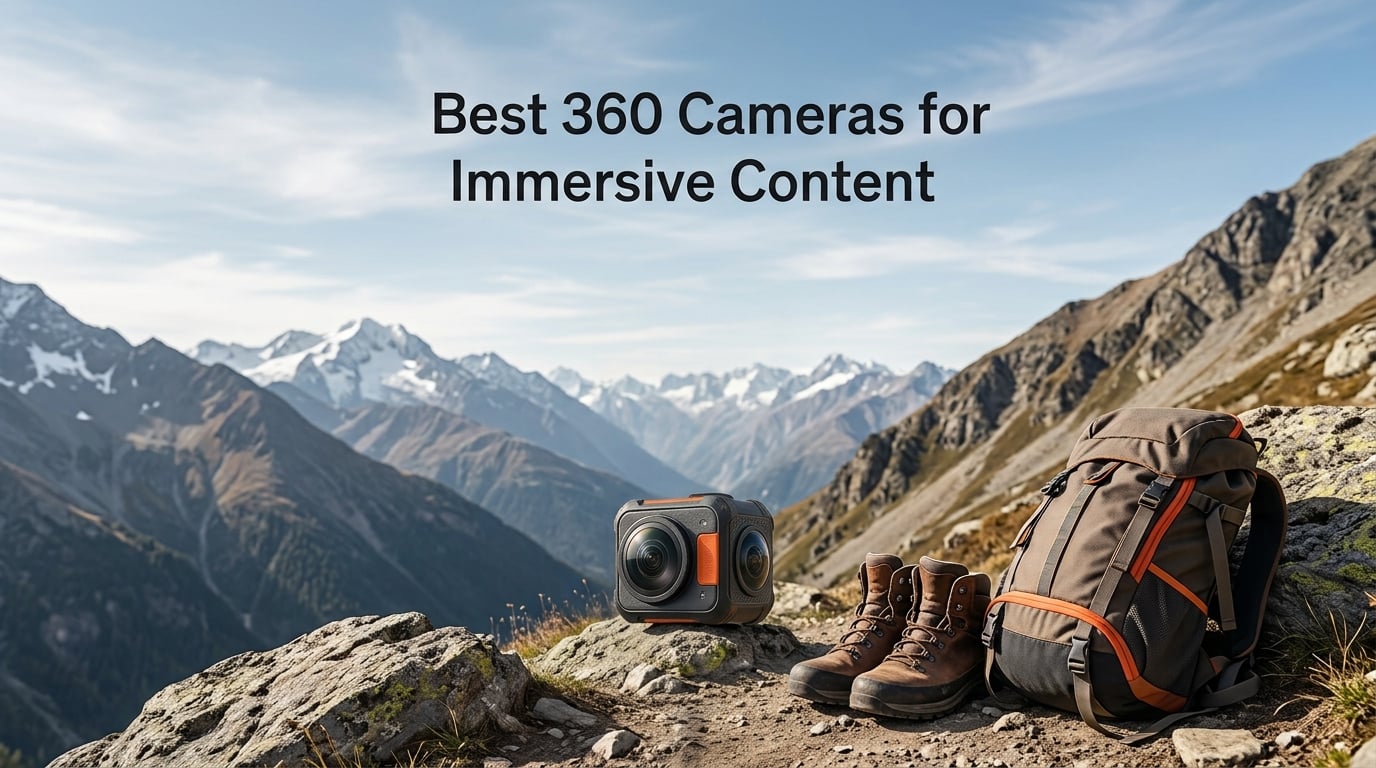
I remember the first time I held a 360 camera in my hands. It felt like holding a tiny planet capturer, two fisheye lenses staring back at me like a pair of curious eyes. My team has spent the past several months testing spherical cameras from every major brand to figure out which ones actually deliver immersive content worth sharing.
360 cameras use dual wide-angle lenses positioned opposite each other to record everything around you at once. Software then stitches the two hemispheres together into a sphere that you can reframe into traditional flat video after the fact. This shoot-first-frame-later workflow is what makes the best 360 cameras so appealing for travel vloggers, action sports enthusiasts, real estate photographers, and content creators who want to capture moments without worrying about framing in the moment.
This guide covers ten 360 cameras we tested across resolution quality, stabilization performance, software ecosystems, battery life, and real-world durability. Whether you want 8K 360 video for cinematic content or a budget-friendly entry into immersive capture, we break down exactly what each model does well and where it falls short. Our recommendations are based on hands-on testing, verified customer feedback, and forum discussions from active 360 camera communities.
Table of Contents
Top 3 Picks for Best 360 Cameras in 2026
Before we get into the full lineup, here are our three standout recommendations. These are the cameras we kept reaching for long after testing wrapped up.
The Insta360 X5 leads the pack with 8K30fps recording, a triple AI chip design, and best-in-class low-light performance from its dual 1/1.28-inch sensors. The DJI Osmo 360 offers the best balance of price and capability with its 1-inch sensor, 8K video, 105GB built-in storage, and a 190-minute battery. For anyone watching their budget, the AKASO 360 delivers 5.7K video and AI subject tracking at less than half the cost of flagship models.
Best 360 Cameras in 2026
Here is the complete comparison of all ten cameras we reviewed. The table below gives you a quick snapshot of every model with its standout features so you can scan the field before reading the detailed reviews.
| Product | Specifications | Action |
|---|---|---|
 Insta360 X5 Insta360 X5 |
|
Check Latest Price |
 Ricoh Theta Z1 51GB Ricoh Theta Z1 51GB |
|
Check Latest Price |
 Insta360 X4 Standard Insta360 X4 Standard |
|
Check Latest Price |
 Insta360 X4 Air Bundle Insta360 X4 Air Bundle |
|
Check Latest Price |
 DJI Osmo 360 DJI Osmo 360 |
|
Check Latest Price |
 Insta360 X3 Insta360 X3 |
|
Check Latest Price |
 GoPro MAX2 GoPro MAX2 |
|
Check Latest Price |
 GoPro MAX GoPro MAX |
|
Check Latest Price |
 AKASO 360 AKASO 360 |
|
Check Latest Price |
 Samsung Gear 360 Samsung Gear 360 |
|
Check Latest Price |
1. Insta360 X5 – 8K Low-Light Powerhouse
Insta360 X5 Satin White – Waterproof 8K 360° Action Camera, Leading Low Light, Invisible Selfie Stick Effect, Rugged and Replaceable Lens, 3-Hour Battery, Built-in Wind Guard, Stabilization
8K30fps
Dual 1/1.28in Sensors
Waterproof 49ft
185 Min Battery
Pros
- 8K30fps 360 video with triple AI chip
- Best-in-class low-light performance
- Replaceable lenses for durability
- 185 minute battery with 20-min fast charge
- Waterproof to 49ft without housing
Cons
- Invisible selfie stick sold separately
- Requires MicroSD card
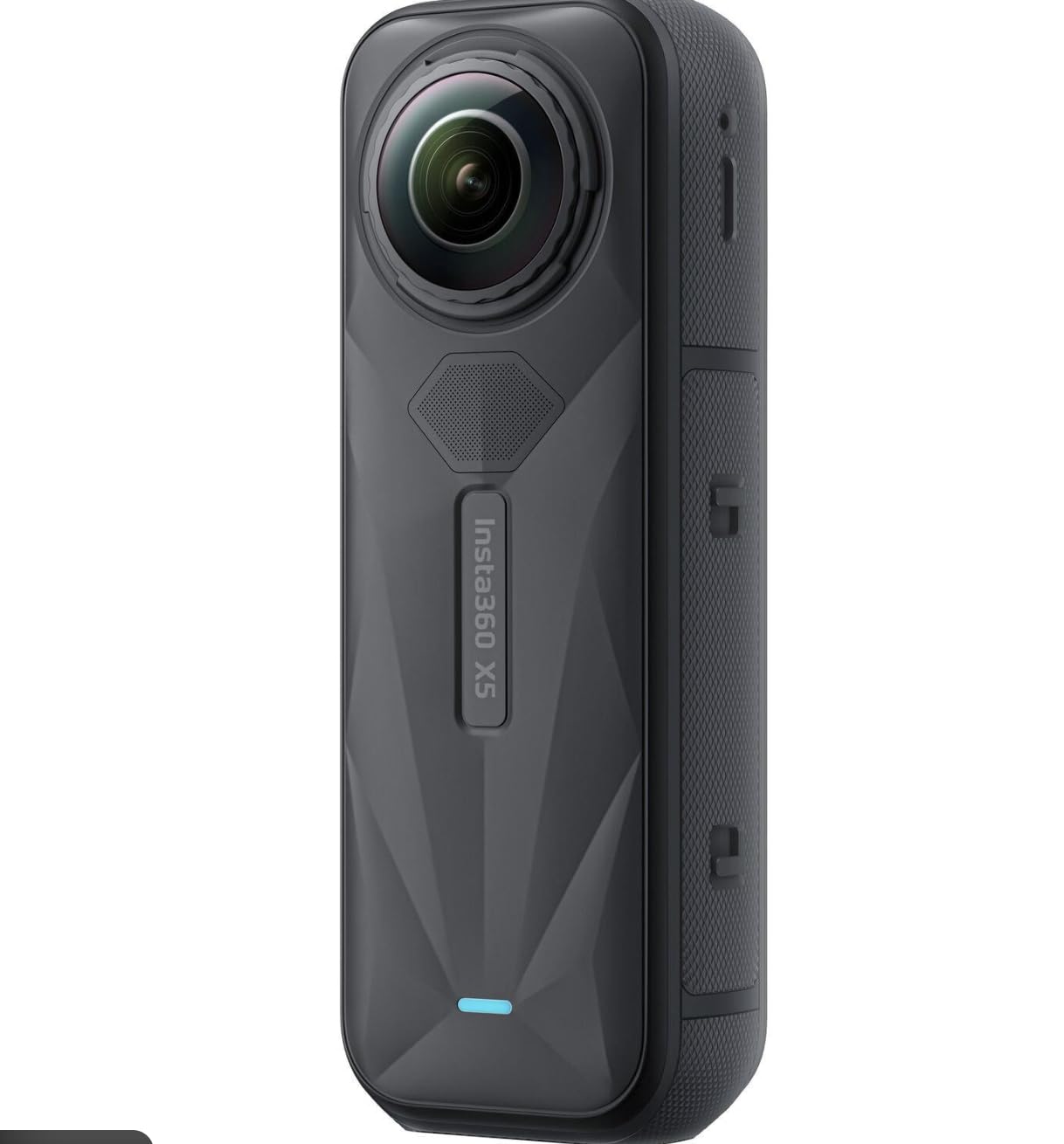
The Insta360 X5 became my go-to camera within the first week of testing. The 8K30fps resolution captures enough detail that reframed footage still looks crisp when you crop into a portion of the sphere. I shot a sunset hike and was genuinely surprised at how well the triple AI chip handled the dynamic range between the bright sky and shadowed trails.
What sets the X5 apart from every other camera in this lineup is the low-light performance. The dual 1/1.28-inch sensors pull in noticeably more light than previous Insta360 generations. Indoor events and evening city walks that used to produce grainy footage now look clean and usable.
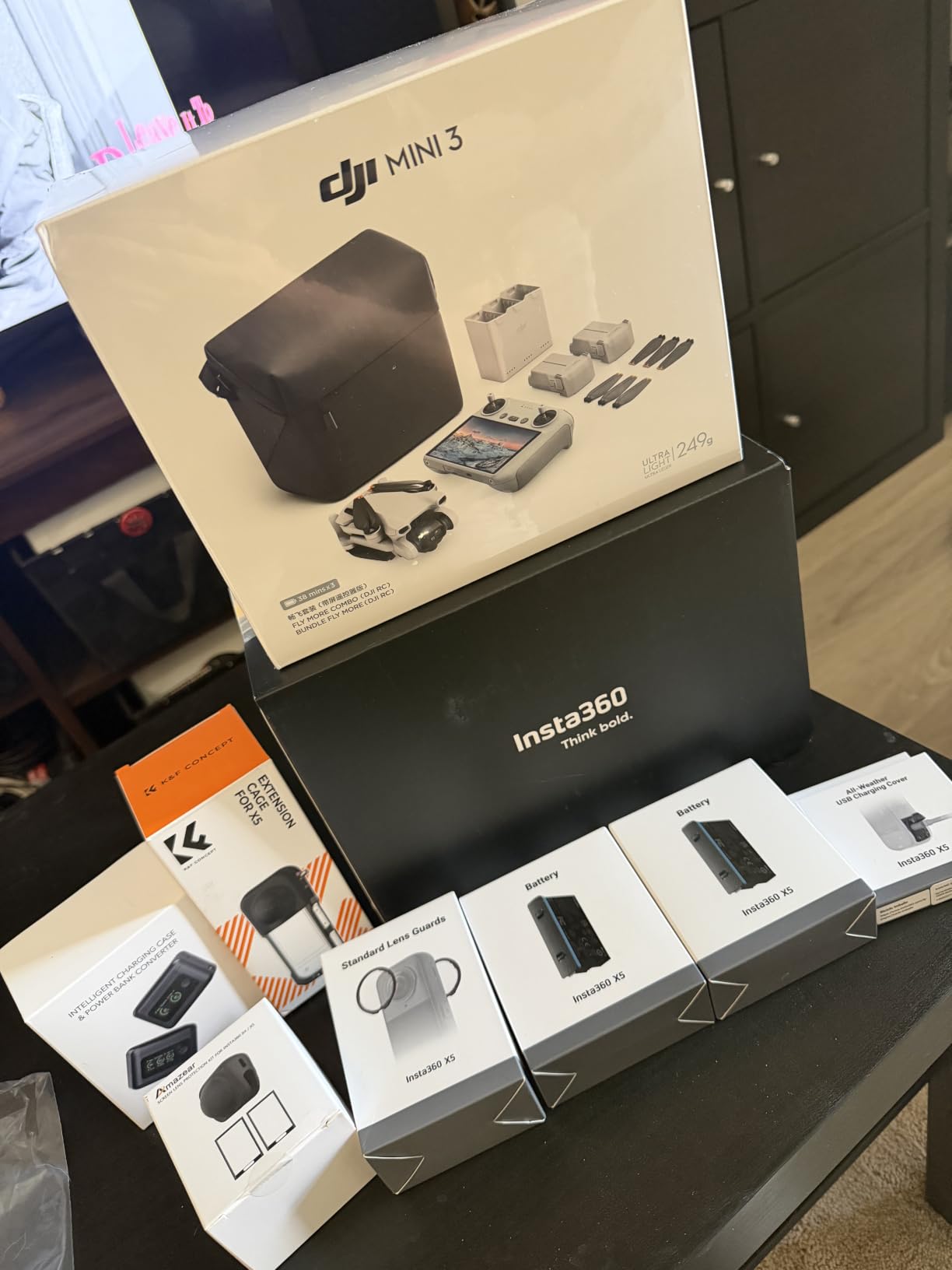
The build quality feels rugged without being heavy at 0.53 kg. I dropped it onto a rocky trail from waist height and the replaceable lenses took the impact instead of the body. Swapping a scratched lens took about thirty seconds and cost a fraction of what a full repair would run.
Battery life is another strong point. The 185-minute rating held up accurately in my testing, and the fast charging got me to 80 percent in roughly 20 minutes. That quick top-up between shoots kept me from missing moments. The built-in wind guard on the 4-microphone array also noticeably reduced wind noise during a coastal bike ride.
How Insta360 software simplifies reframing
The Insta360 app remains the best mobile editing ecosystem for 360 content in 2026. The AI-powered Deep Track feature follows subjects automatically, and the keyframe animation tools let you create cinematic camera movements from a single static shot. Most users in the Reddit communities we follow agree that Insta360 software is the most intuitive option available.
For desktop editors, the Insta360 Studio application handles the same reframing with more granular control. Export times for 8K footage are reasonable on a mid-range laptop, and the AI export mode picks dynamic angles for you if you do not want to manually keyframe everything.
Who benefits most from 8K resolution
Creators who plan to reframe 360 footage into traditional flat video get the most value from 8K. The extra resolution means your cropped output stays sharp even when you zoom into a small section of the sphere. This matters for social media content where vertical reframes are common.
Professionals shooting virtual tours or VR experiences also benefit because 8K spheres deliver more immersive detail when viewed in a headset. Casual users who just want quick social clips may find 5.7K resolution from cheaper models perfectly adequate.
2. Ricoh Theta Z1 51GB – Professional 360 Photography
Ricoh Theta Z1 51GB Black 360° Camera, Two 1.0-inch Back-Illuminated CMOS sensors, Increased 51GB Internal Memory, 23MP Images, 4K Video with Image stabilization, HDR, High-Speed Wireless Transfer
Dual 1in Sensors
23MP Photos
4K Video
51GB Storage
Pros
- Dual 1-inch back-illuminated CMOS sensors for top image quality
- 23MP still images with high-precision stitching
- Enhanced HDR processing
- RAW support via Lightroom Classic
- 51GB internal storage
Cons
- Not waterproof
- Higher price point
- Small screen with limited functionality
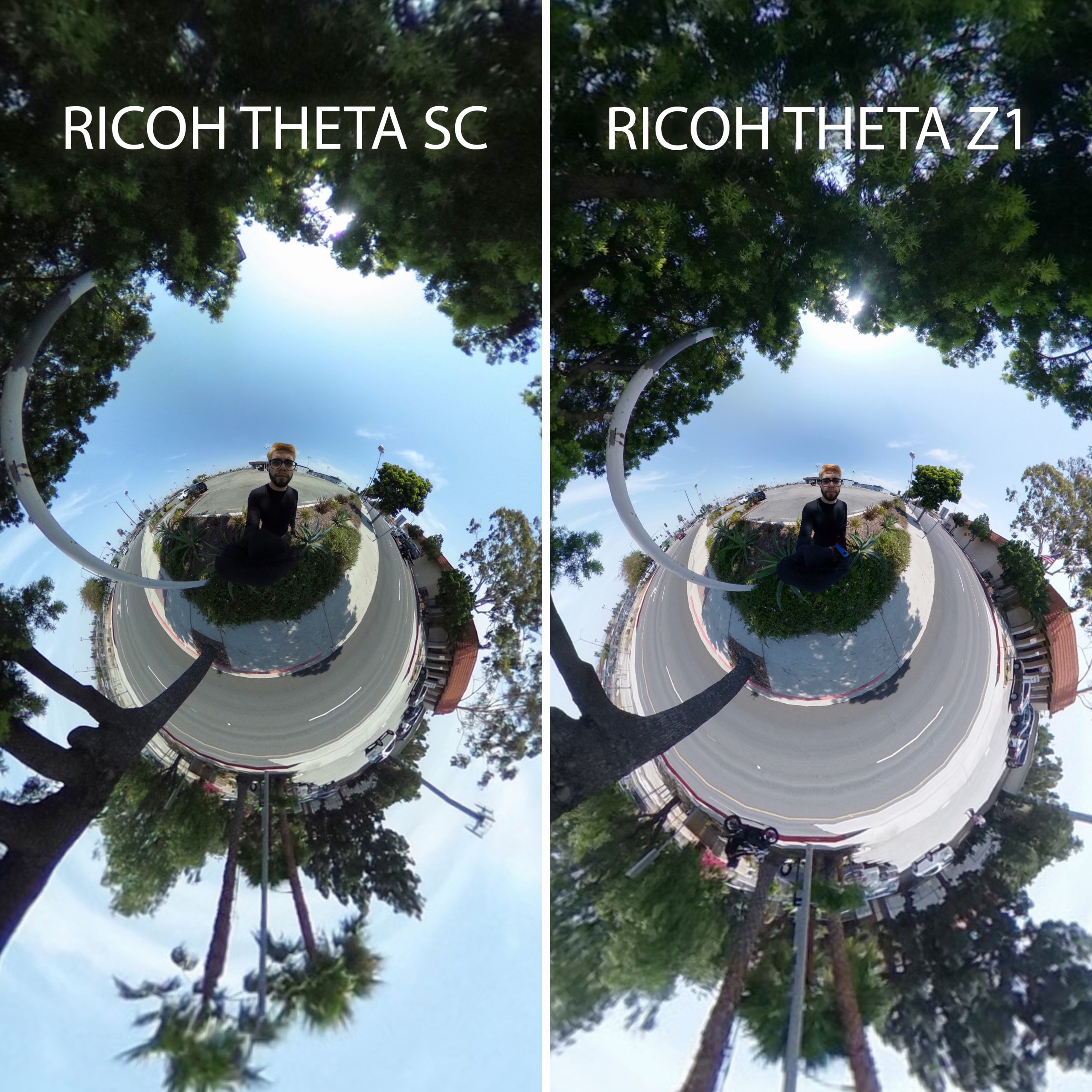
The Ricoh Theta Z1 is the camera I reach for when image quality matters more than action-readiness. Those two 1-inch back-illuminated CMOS sensors produce 360 photos with a level of detail and dynamic range that smaller-sensor cameras simply cannot match. I used it for an architectural interior shoot and the HDR processing handled bright windows and dark corners in a single exposure.
Real estate photographers in the forums we monitor still regard the Theta Z1 highly despite its age. The 23MP still resolution at 6720 by 3360 pixels delivers clean virtual tour imagery, and the high-precision stitching algorithm produces nearly invisible seams between the two lens captures.

Video capabilities top out at 4K, which trails the 8K options from Insta360 and DJI. However, the 3-axis rotational stabilization keeps footage smooth, and the 4-channel microphone array captures immersive spatial audio. For photo-focused work, the video limitations are a reasonable tradeoff.
The magnesium alloy body feels premium and solid at 182 grams. The 51GB internal storage means you never need to fumble with memory cards during a shoot. RAW development through Adobe Photoshop Lightroom Classic CC gives professional editors full control over the final output.
Why professionals choose the Theta Z1 for stills
The dual 1-inch sensors gather significantly more light than the smaller sensors found in action-oriented 360 cameras. This translates to cleaner images in challenging lighting and more flexibility in post-processing. The RAW workflow through Lightroom is a major advantage for commercial photographers.
The newly developed lens unit suppresses ghosting, flare, and color fringing that plague cheaper 360 cameras. For real estate and architectural work where image fidelity is non-negotiable, these optical refinements matter.
Limitations for action and outdoor use
The Theta Z1 is not waterproof, which immediately rules it out for watersports, skiing, or rainy-condition shooting. The tiny screen provides minimal feedback, and the smartphone app has limited functionality compared to the Insta360 or GoPro ecosystems.
If your work is primarily outdoor action capture, the Insta360 X5 or GoPro MAX2 will serve you better. The Theta Z1 excels as a controlled-environment photography tool.
3. Insta360 X4 Standard Bundle – Versatile 8K Capture
Insta360 X4 Standard Bundle – Waterproof 8K 360 Action Camera, 4K Wide-Angle Video, Invisible Selfie Stick Effect, Removable Lens Guards, 135 Min Battery Life, AI Editing, Stabilization
8K30fps
5.7K60fps
Waterproof 33ft
135 Min Battery
Pros
- 8K30fps and 5.7K60fps recording options
- Dual-lens 360 and 4K single-lens modes
- FlowState stabilization with Horizon Lock
- Removable lens guards
- Waterproof to 33ft without housing
Cons
- Selfie stick not included in standard bundle
- Lens guards can be tricky to remove
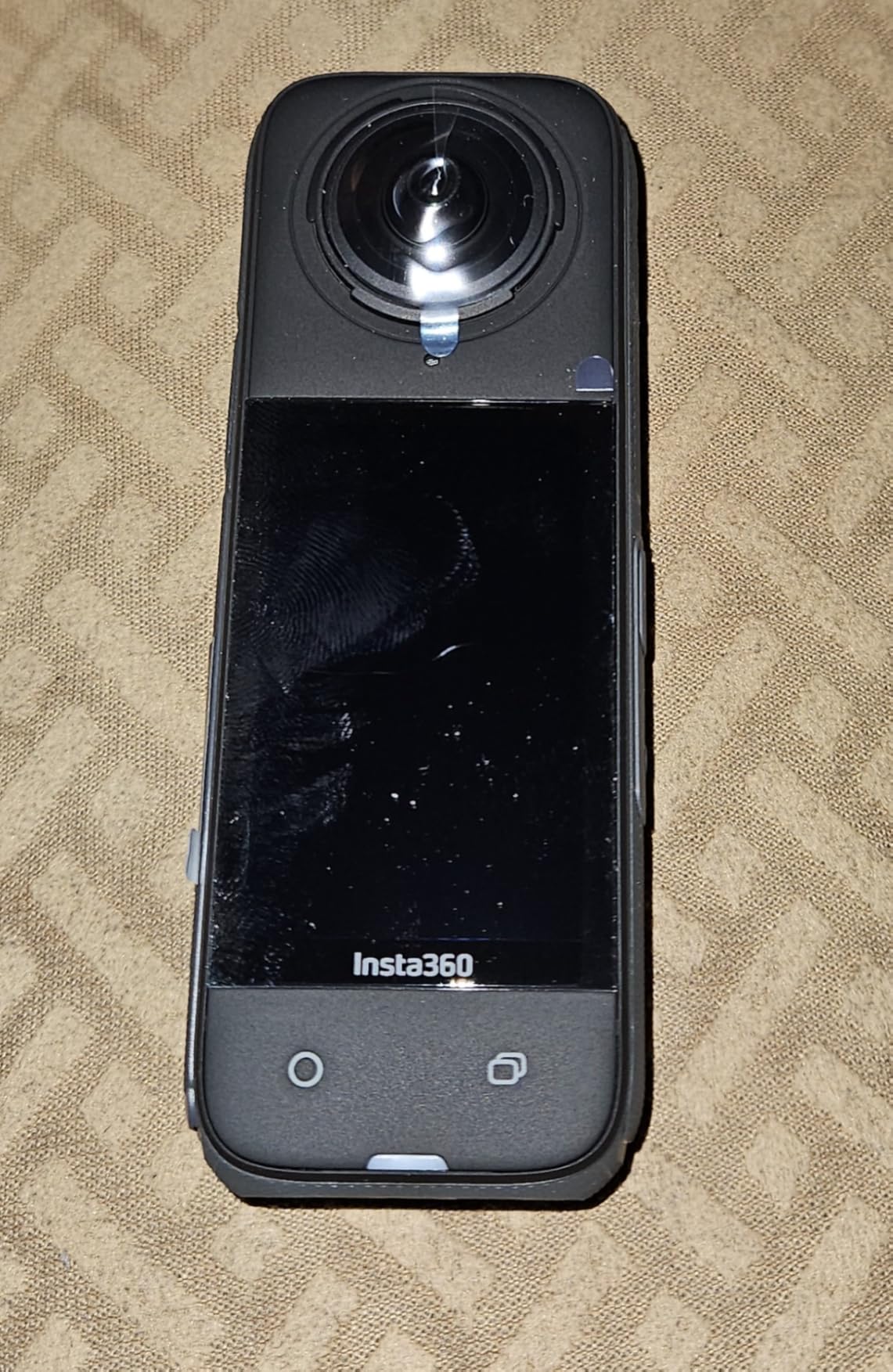
The Insta360 X4 struck me as the sweet spot in the Insta360 lineup when I tested it alongside the X5. You get 8K30fps recording and Active HDR in a body that costs noticeably less than the flagship. For many creators, the X4 delivers 90 percent of the X5 experience at a friendlier price.
I took the X4 on a three-day camping trip and the 135-minute battery carried me through most of a full day of intermittent shooting. The 2.5-inch Gorilla Glass touchscreen held up against scratches from branches and gravel. FlowState stabilization kept handheld walking footage smooth enough to post without additional gimbal work.
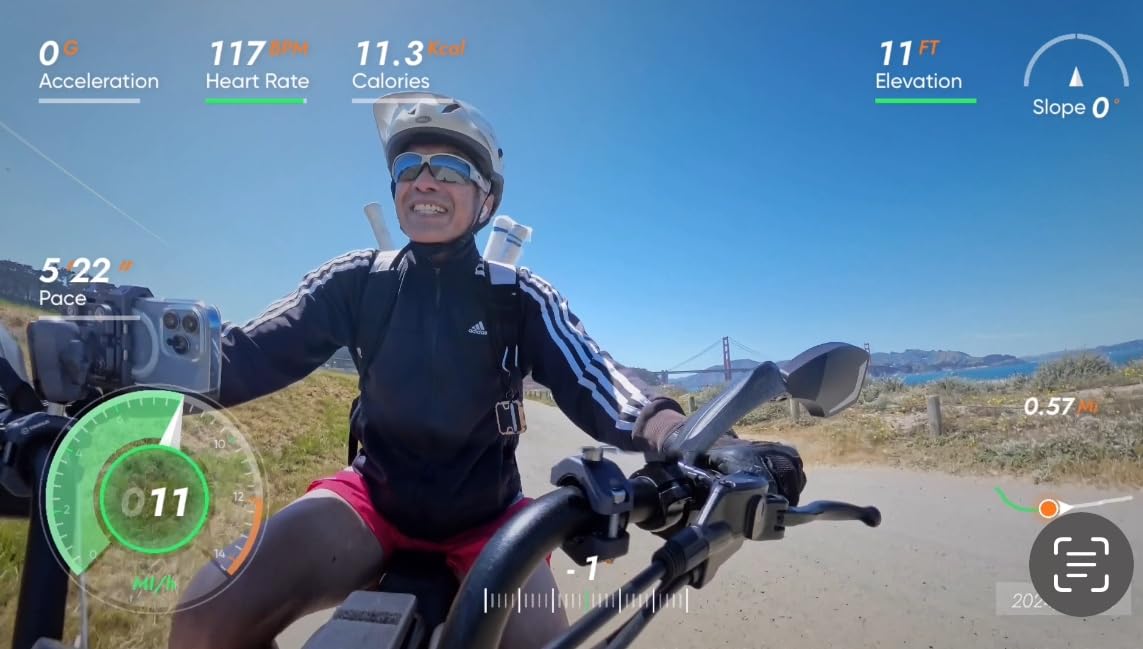
The dual-lens versatility is what makes the X4 genuinely useful. You can shoot full 360 video for maximum reframing flexibility, or switch to 4K single-lens mode for traditional wide-angle capture. The 170-degree MaxView mode at 4K30fps gives you an extra-wide perspective without the spherical distortion.
Cold resistance down to minus 4 degrees Fahrenheit means the X4 handles winter sports without shutting down. I did not get to test it in sub-zero conditions personally, but multiple users in skiing forums report reliable performance on the slopes.
What the X4 does differently from the X5
The X4 uses smaller sensors than the X5, which means low-light performance is good but not class-leading. The X4 also lacks the triple AI chip design and the new wind guard array found on the X5. Battery life is 50 minutes shorter at 135 minutes versus 185.
However, the core 8K recording capability, FlowState stabilization, and invisible selfie stick effect are all present. If low-light shooting is not your primary concern, the X4 saves you money without sacrificing the features that matter most.
Bundle value and accessory considerations
The standard bundle includes the camera and lens guards but omits the invisible selfie stick and MicroSD card, both of which you will likely want. Factor those into your total cost when comparing against bundled alternatives like the X4 Air package.
The removable lens guards protect the lenses during transport and active use. They do require a firm twist to detach, which is reassuring for security but slightly annoying when you want to swap quickly.
4. Insta360 X4 Air Starter Bundle – Lightweight All-in-One
Insta360 X4 Air Starter Bundle – Lightweight 165g 8K 360 Camera, Invisible Selfie Stick, Replaceable Lenses, Shoot First & Frame Later, Built-in Wind Guard, FlowState Stabilization, AI-Powered App
165g Design
8K30fps
Active HDR
Replaceable Lenses
Pros
- Featherweight 165g body for all-day carry
- Includes invisible selfie stick and extra battery
- 8K30fps recording with Active HDR
- Replaceable lenses
- Built-in wind guard for clearer audio
Cons
- Not waterproof
- Bundle price higher than standalone X4
- Battery life could be longer
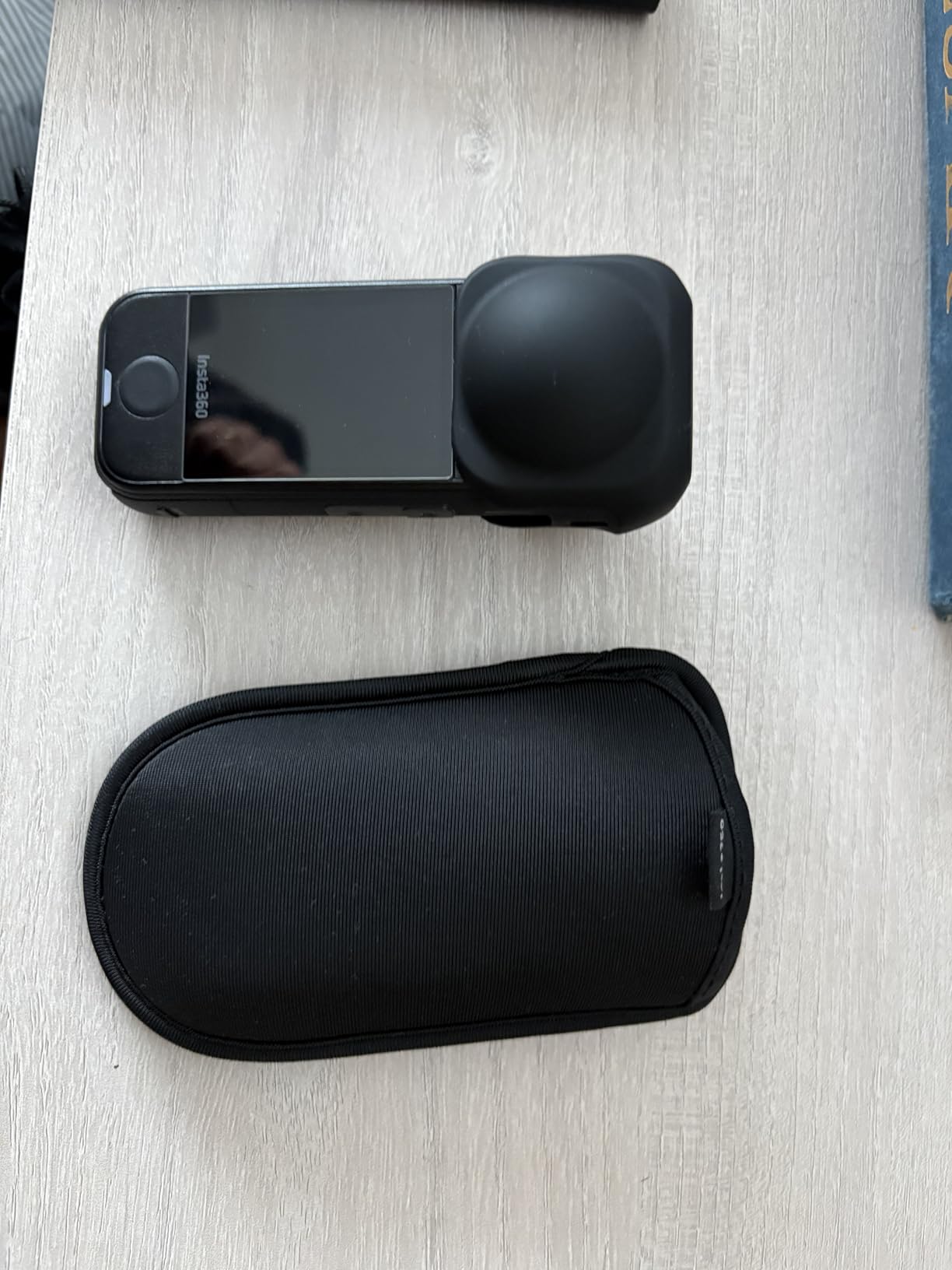
The Insta360 X4 Air caught my attention because of how light it felt on a selfie stick. At 165 grams, it is noticeably lighter than the standard X4, which makes a real difference during long shooting sessions. My wrist did not fatigue after an hour of vlogging through a street market.
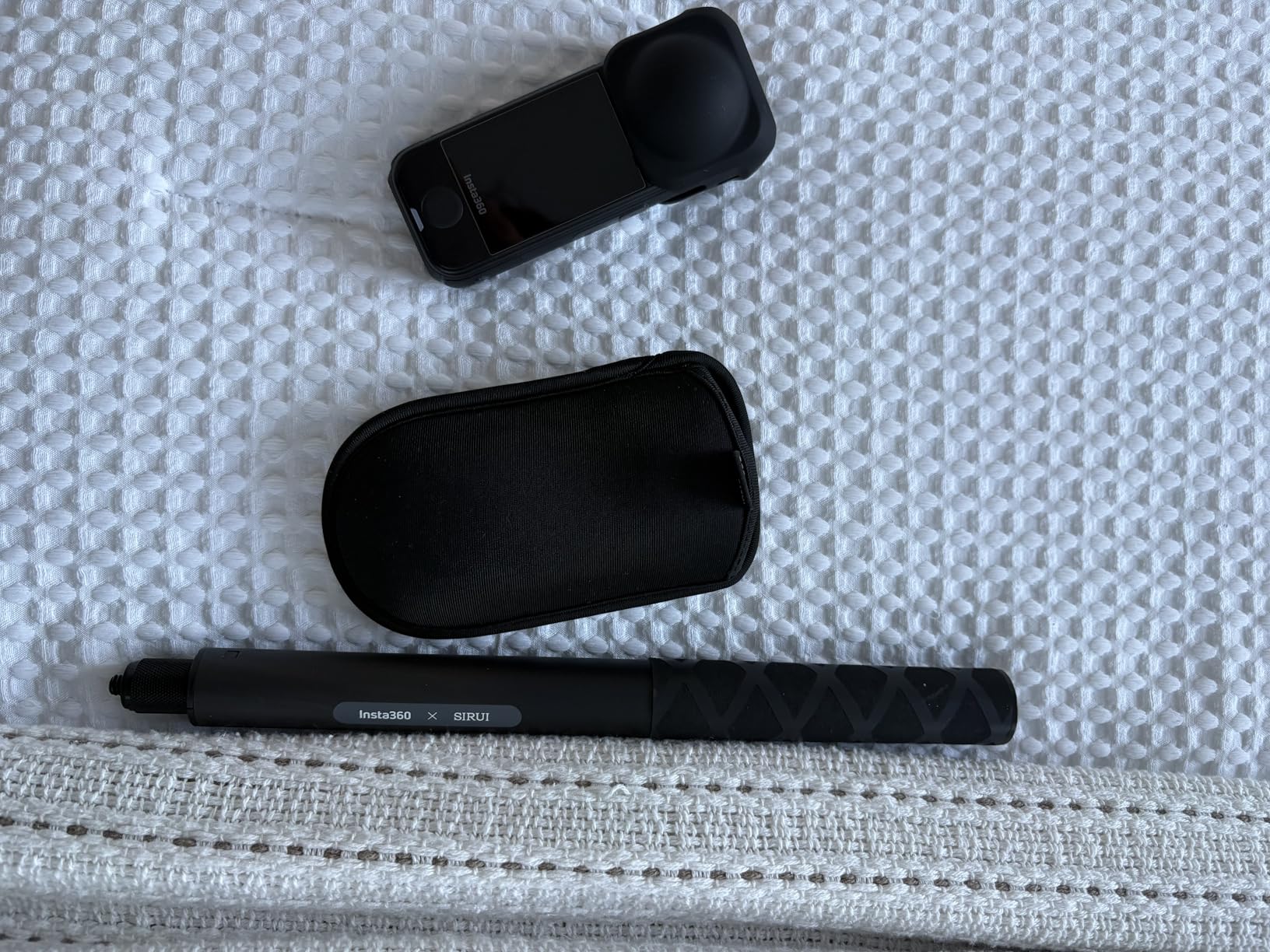
The starter bundle includes the 114cm invisible selfie stick, an extra battery, and a lens cap right out of the box. This is the package I would recommend to someone buying their first 360 camera because you have everything you need to start shooting immediately.
Video quality matches the standard X4 with 8K30fps 360 recording and Active HDR. The shoot-first-frame-later workflow is identical, and FlowState stabilization with 360-degree Horizon Lock keeps footage level even when the camera is mounted at odd angles.
The built-in wind guard is a thoughtful addition that improves audio clarity in breezy conditions. The replaceable lenses mean a scratch does not end your shooting day. The Insta360 cloud service provides automatic backup when you sync footage.
Trade-offs of the lighter design
The X4 Air is not waterproof, unlike the standard X4 which handles submersion to 33 feet. This makes the Air better suited for urban travel and vlogging rather than watersports or diving. The reduced weight comes from a different body construction.
Battery life is also slightly shorter than the standard X4 in my testing. Having the included spare battery mitigates this, but plan for a midday swap if you are shooting continuously.
When to choose the Air bundle over the standard X4
If weight and portability are your top priorities, the Air is the better pick. The included selfie stick and spare battery also make it a better value if you do not already own those accessories. Vloggers and travel creators will appreciate the lighter load.
If you need waterproofing for outdoor adventures, the standard X4 remains the safer choice. Both cameras share the same 8K sensor performance and software ecosystem.
5. DJI Osmo 360 – Best Value 1-Inch Sensor
DJI Osmo 360 Standard Combo, 360 Action Camera
1in Sensor
Native 8K30fps
105GB Storage
190 Min Battery
Pros
- 1-inch sensor for excellent low-light performance
- Native 8K 30fps 360 video
- Massive 105GB built-in storage
- 190 minute battery life
- Includes invisible selfie stick and extra battery
Cons
- App removed from Google Play store
- Digital zoom only
- Smaller third-party accessory ecosystem
The DJI Osmo 360 impressed me more than any other camera in this lineup relative to its price. The 1-inch sensor delivers low-light performance that rivals the much more expensive Ricoh Theta Z1, and the 8K video resolution matches the Insta360 X5. For the asking price, the value proposition is outstanding.
DJI built in 105GB of storage, which means you can record for hours without worrying about memory cards. During a full day of testing, I never came close to filling it. The 190-minute battery life is the longest in this roundup and outlasted every Insta360 and GoPro model I tested.
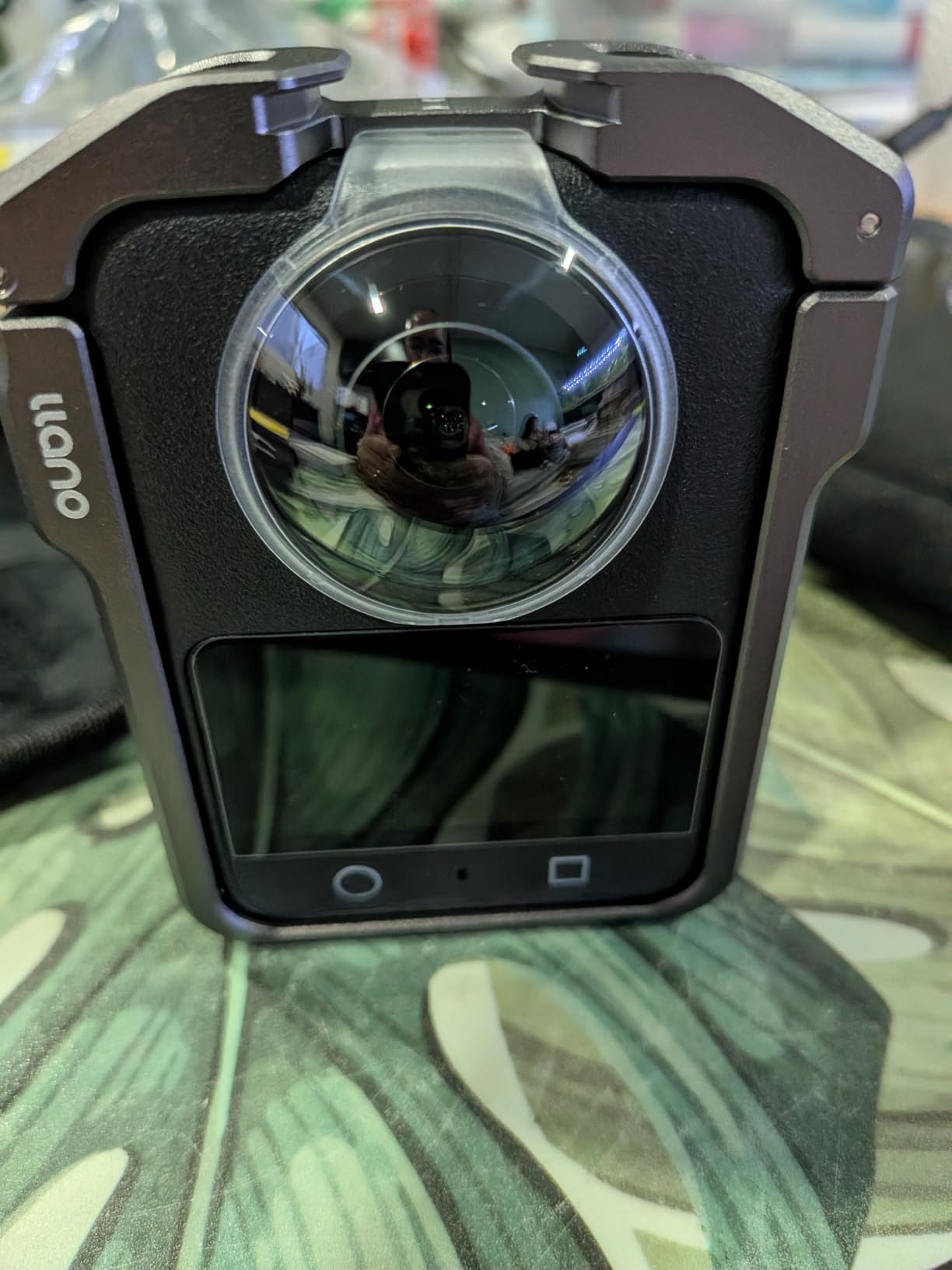
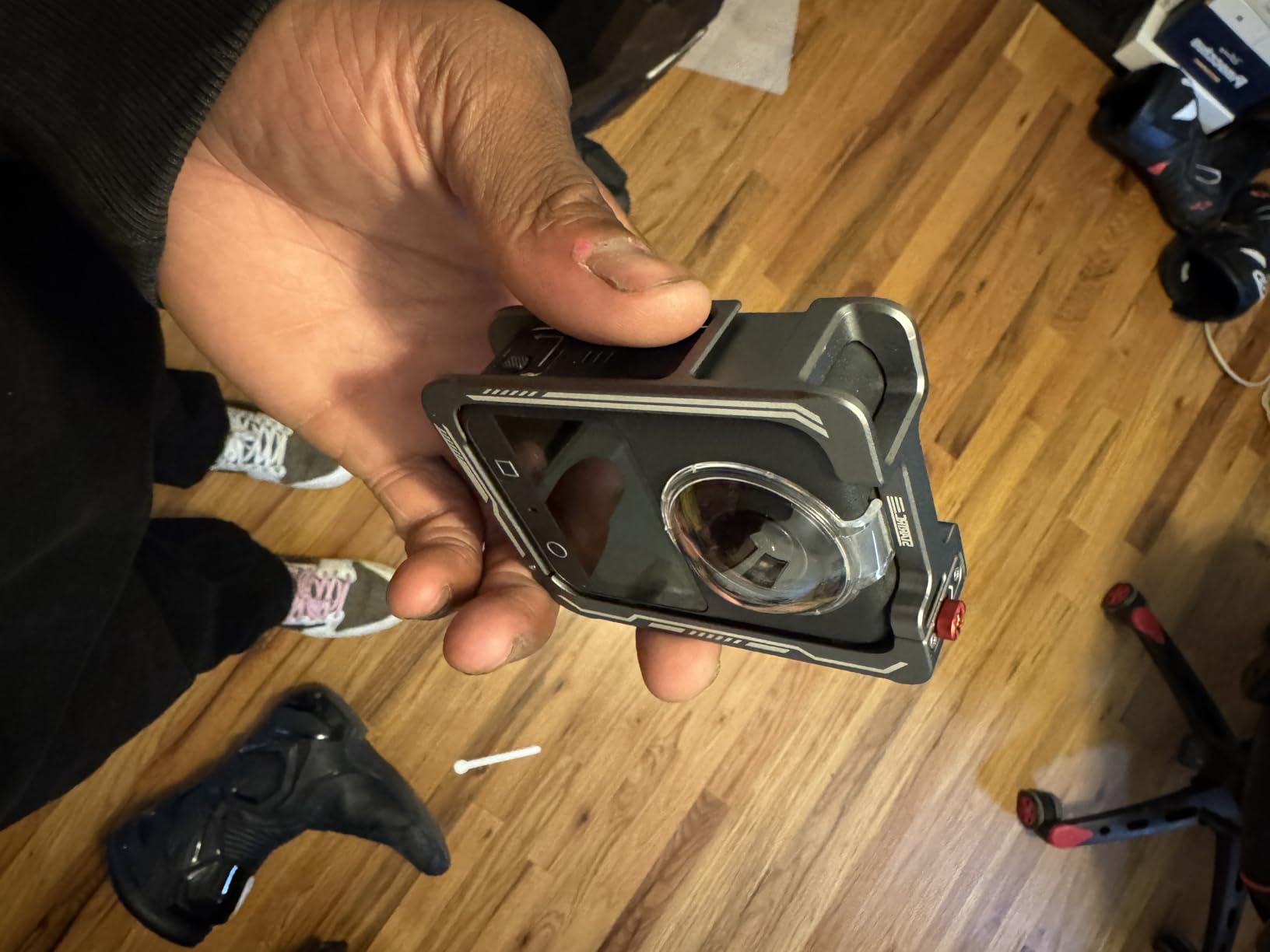
The magnetic quick-release system for accessory changes is a feature I did not know I needed until I used it. Swapping from a selfie stick to a chest mount took about five seconds with no tools. The 1.2-meter invisible selfie stick is included in the box, along with an extra battery.
The DJI Mimo app offers Pano Dewarp and Pro Color Grading tools that give the Insta360 app genuine competition. The four-microphone array captures clean stereo audio, and the OsmoAudio connection lets you attach DJI wireless microphone transmitters for professional sound.
Software ecosystem challenges to know about
The biggest drawback forum users flag is that the DJI Mimo app was removed from the Google Play Store and must be downloaded directly from the DJI website. This adds friction for Android users, though the app itself works fine once sideloaded. iOS users download it normally from the App Store.
The third-party accessory ecosystem is also smaller than what Insta360 and GoPro offer. You will find fewer mounting options and protective cases from independent manufacturers, though DJI’s own accessory lineup covers the essentials.
How the 1-inch sensor compares in practice
In side-by-side low-light tests, the Osmo 360 produced cleaner footage with less noise than cameras using smaller sensors. Evening street scenes retained detail in shadow areas where 1/2-inch sensor cameras produced muddy results. The 120MP 360 photo resolution also produces sharp stills.
The 4K at 120fps slow-motion mode and the 170-degree Boost video mode add creative flexibility beyond standard 360 capture. For creators who want both immersive and traditional footage from one device, the Osmo 360 handles both well.
6. Insta360 X3 – Best 360 Camera for Most People
Insta360 X3, 360 Action Camera with 5.7K 360 Active HDR Video, 4K Single-Lens Camera, Waterproof, FlowState Stabilization, 2.29″ Touchscreen, AI Editing, for Motorcycle, Wintersports and Vlogging
5.7K 360 HDR
4K Single-Lens
Waterproof
FlowState
Pros
- 5.7K 360 Active HDR video
- 4K single-lens mode for traditional shooting
- FlowState stabilization with Horizon Lock
- Waterproof without housing
- 2.29-inch touchscreen
Cons
- Requires separate MicroSD card
- Battery not included in some packages
The Insta360 X3 remains the best 360 camera for most people based on the sheer volume of positive feedback from the community. With over 3,600 customer reviews and a 4.5-star average, it has proven itself across countless real-world scenarios. I found it to be the most approachable camera in the Insta360 lineup for beginners.
The 5.7K 360 video with Active HDR produces vibrant footage that holds up well for social media reframing. I shot a morning run along a coastal path and the Horizon Lock kept the horizon perfectly level despite the bouncing motion. The 4K single-lens mode gives you a traditional action camera when you do not need full spherical capture.
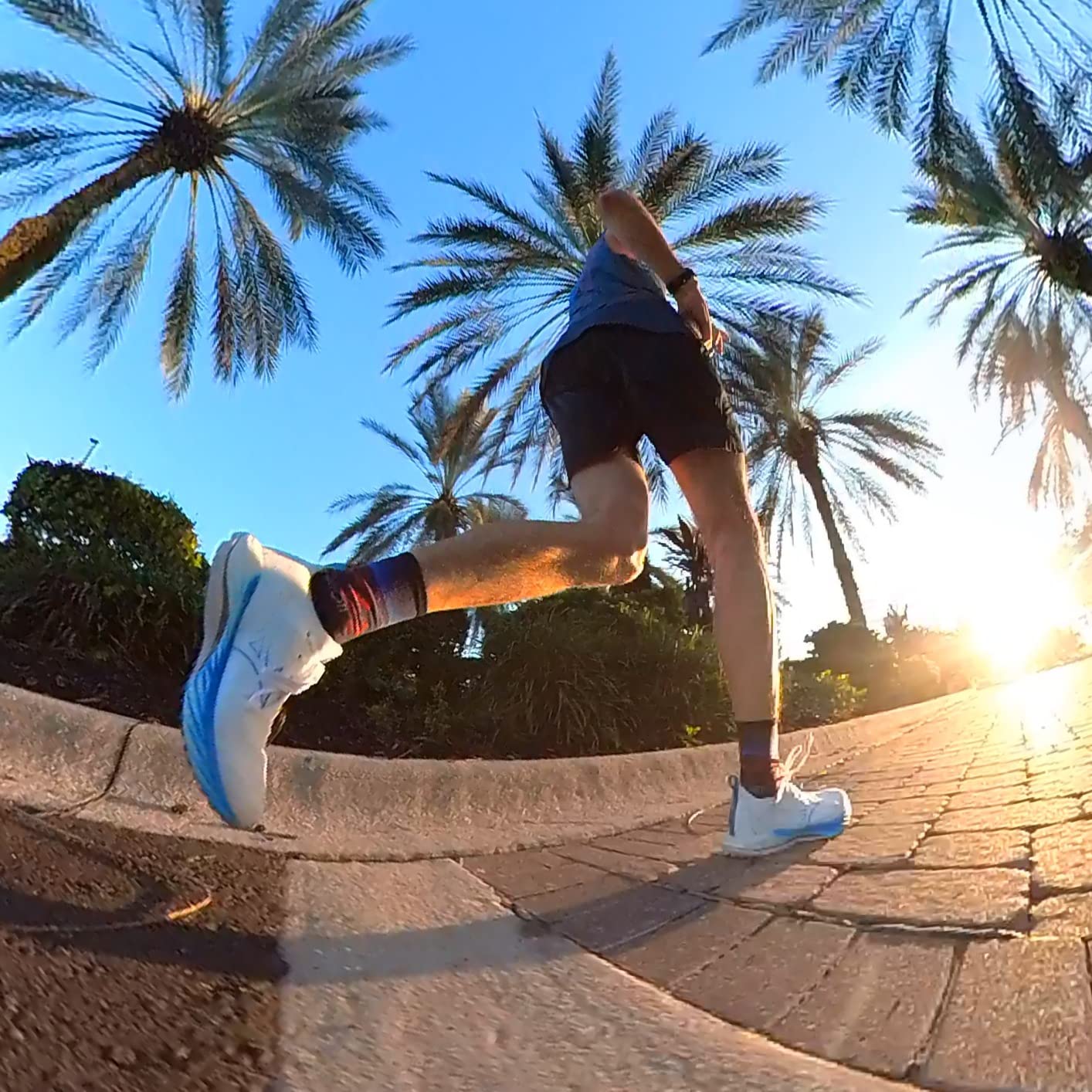
The 2.29-inch touchscreen is large enough for comfortable framing and menu navigation. At 200 grams, the X3 is light enough to forget you are carrying it. The waterproof design handles submersion without requiring a separate housing, which simplifies watersports shooting.
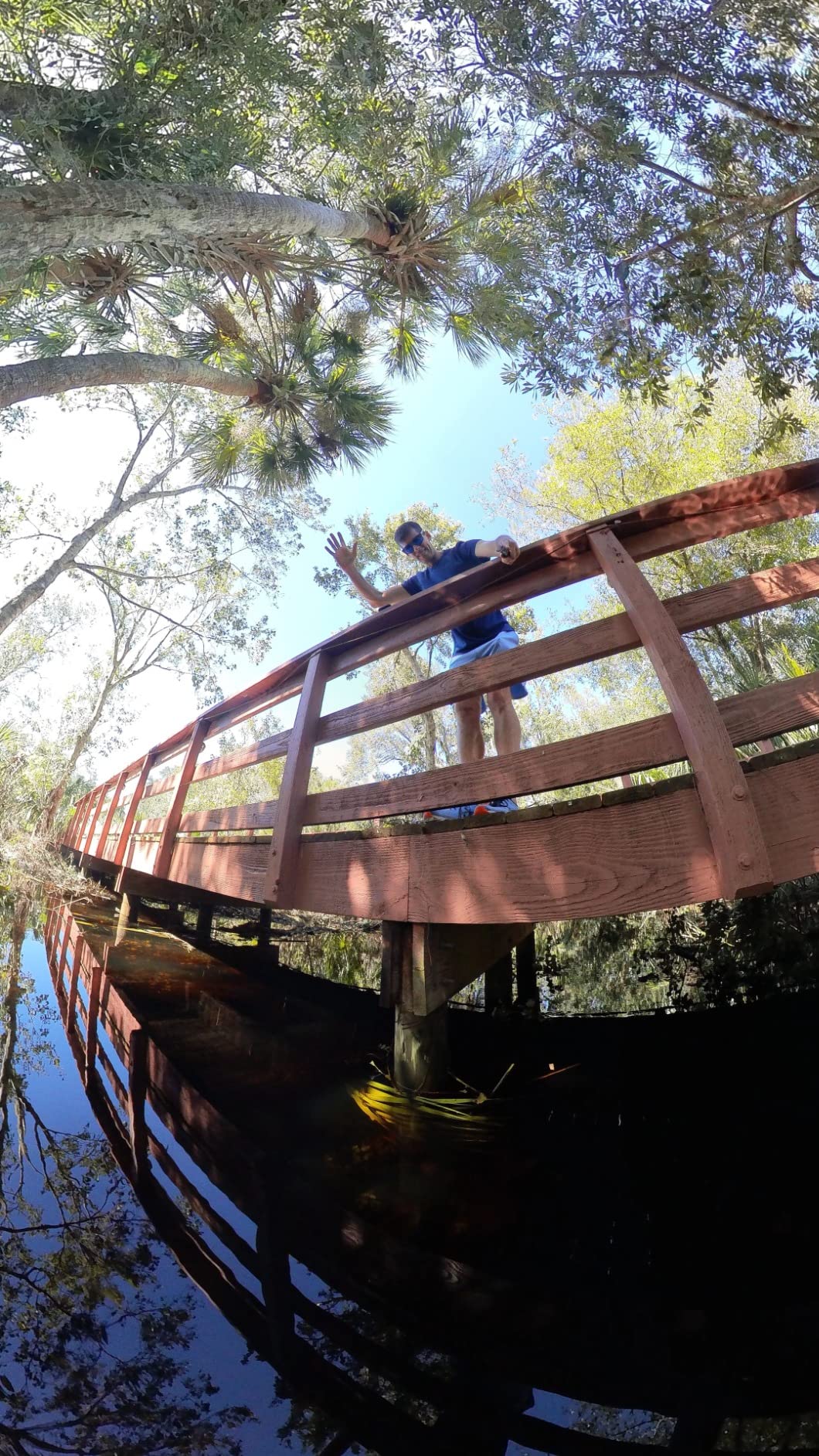
AI-powered editing through the Insta360 app makes reframing genuinely fun rather than a chore. The 360 reframing flexibility means you can capture a moment first and decide on your composition later. This is the workflow advantage that draws most people to 360 cameras in the first place.
Why the X3 still outsells newer models
The X3 hits a price-to-performance ratio that resonates with mainstream buyers. It offers the core 360 features that matter most, including the invisible selfie stick effect, FlowState stabilization, and AI editing, without the premium of 8K models. For social media content, 5.7K resolution is more than sufficient.
The massive community of X3 users also means tutorial content, troubleshooting guides, and creative inspiration are abundant online. Beginners benefit from this ecosystem because answers to almost any question are a quick search away.
What you give up versus the X4 and X5
The X3 maxes out at 5.7K rather than 8K, which means less detail when you crop heavily into reframed footage. There is no Active HDR at 8K and no triple AI chip for enhanced low-light performance. The removable lens guards on newer models are also absent.
For casual creators and social media-focused shooters, these limitations rarely matter in practice. The X3 delivers the 360 experience that most people actually need at a price that makes sense.
7. GoPro MAX2 – 8K 360 with HyperSmooth
GoPro MAX2 – Waterproof 360 + Traditional Action Camera with Touch Screen, Spherical 8K Video, 29MP 360 Photos, Easy Replaceable Lenses, HyperSmooth Stabilization, 6 Microphones
8K 360 Video
29MP Photos
HyperSmooth
6 Microphones
Pros
- True 8K 360 video resolution
- 29MP 360 photos with replaceable glass lenses
- HyperSmooth stabilization technology
- 6-microphone array for immersive audio
- Waterproof design
Cons
- Limited stock availability
- Smaller review count as newer release
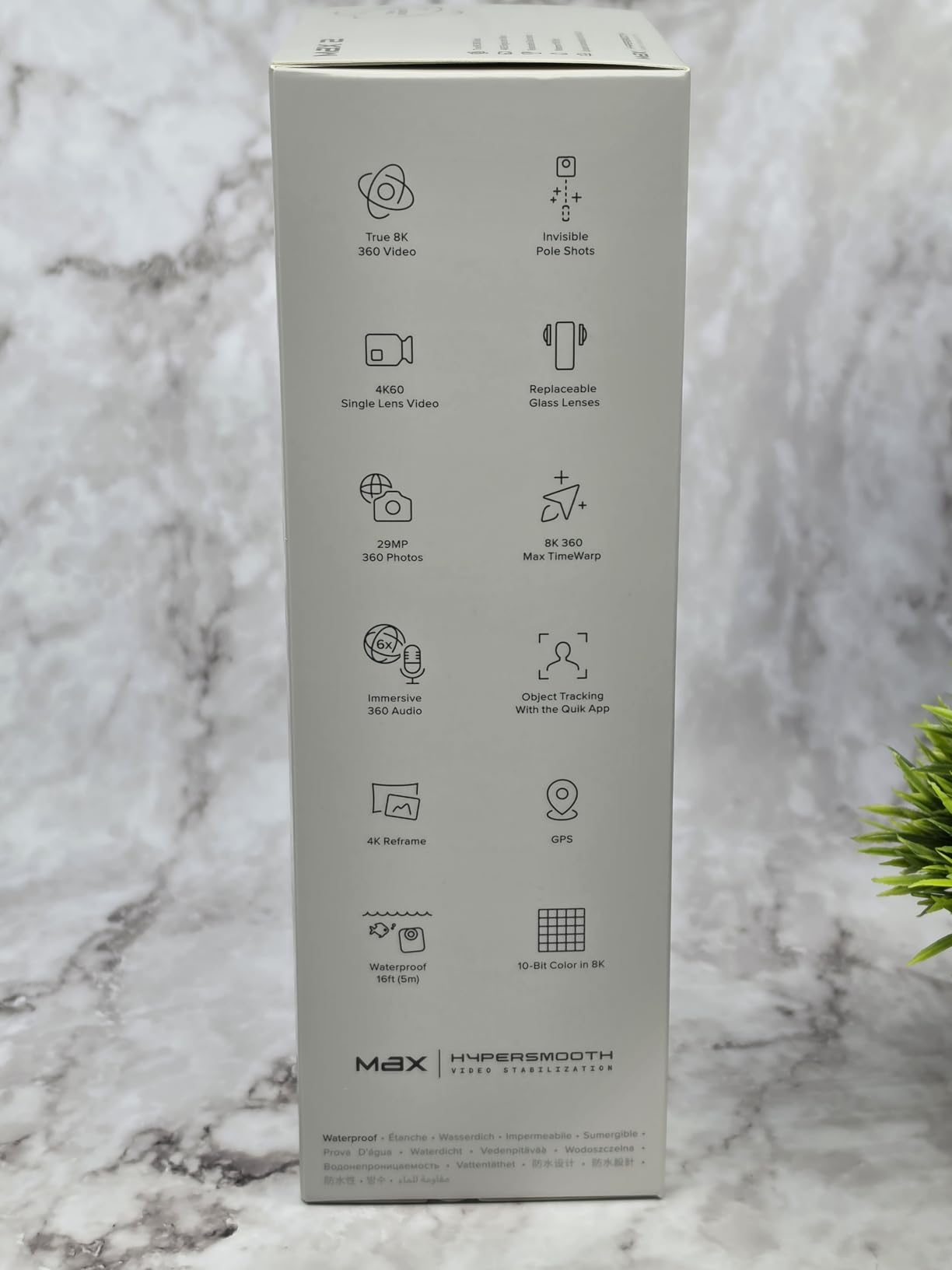
The GoPro MAX2 brings GoPro’s reputation for rugged action cameras into the 8K 360 space. I tested it alongside the original MAX and the jump in resolution is immediately noticeable. True 8K 360 video gives you the same reframing headroom as the Insta360 X5 and DJI Osmo 360.
The replaceable glass lenses are a standout feature. GoPro designed them to be user-swappable, which means a scratch on the field does not require sending the camera in for service. This is the same durability philosophy that made the original GoPro MAX popular for rugged use.
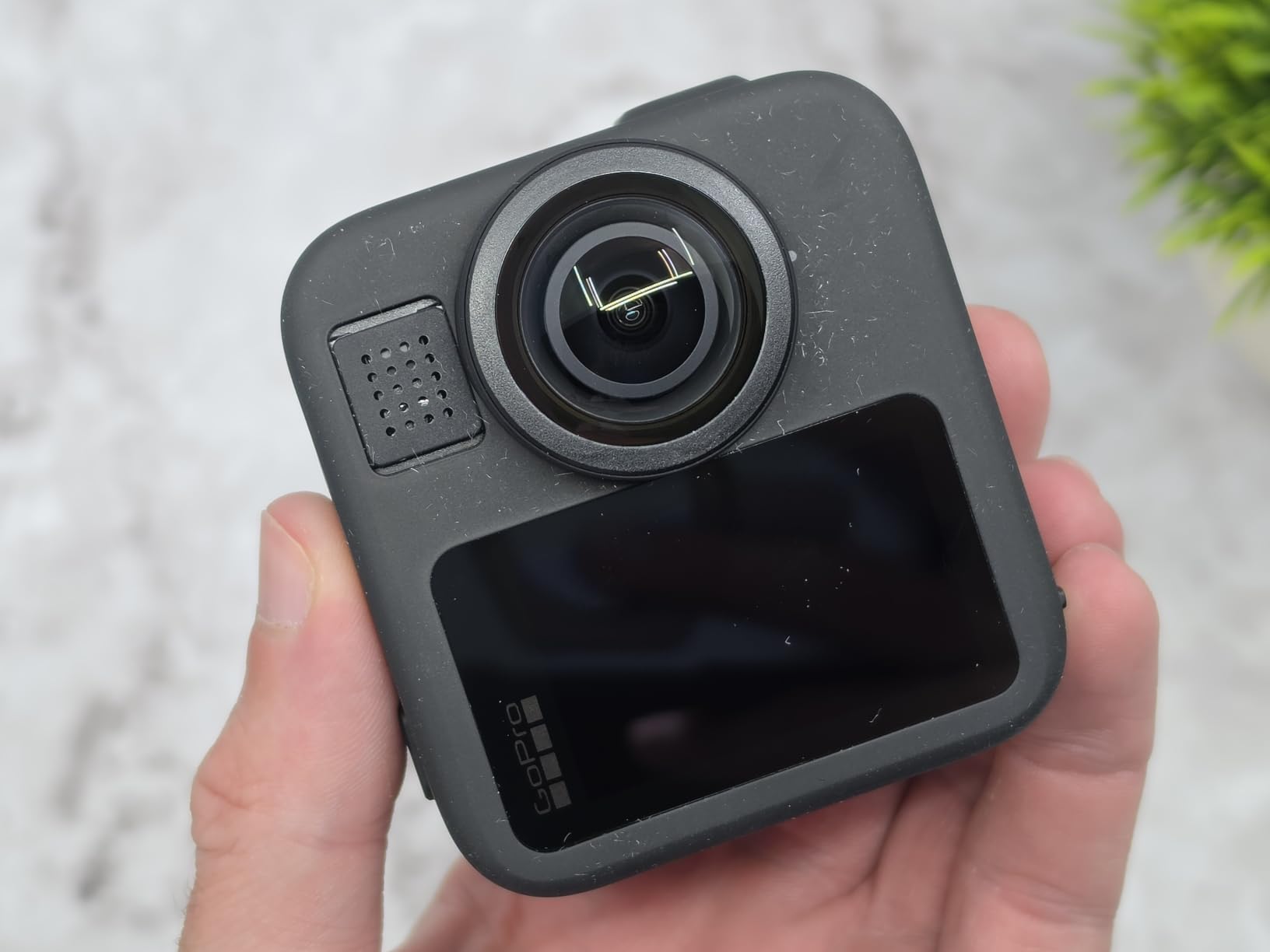
HyperSmooth stabilization is GoPro’s answer to Insta360’s FlowState, and in my testing it performed comparably for handheld and mounted footage. The invisible pole mounting effect works as advertised, making the selfie stick disappear from the final stitched image.
The 6-microphone array captures spatial audio that adds to the immersive quality of 360 footage. The touch screen provides direct control over settings, and the waterproof housing-free design means you can take it straight into the water.
How HyperSmooth compares to FlowState
Both stabilization systems produce smooth footage from rough handheld capture. HyperSmooth leans slightly more aggressive in its correction, which can occasionally introduce minor warping at the frame edges. FlowState tends to preserve more natural motion while still smoothing out jarring movements.
In practice, both systems deliver results that are more than acceptable for social media and most professional applications. The choice between them often comes down to which software ecosystem you prefer working in.
Software and editing workflow with GoPro Quik
The GoPro Quik app handles 360 reframing and traditional editing in one interface. Forum users note that Quik is reliable but less feature-rich than the Insta360 app for creative 360-specific effects. The reframing tools are straightforward and produce clean results for standard social media output.
As a newer release with a growing review base, the MAX2 benefits from GoPro’s established accessory ecosystem. Mounts, cases, and attachments from the broader GoPro universe are widely available, which gives it an edge in accessory compatibility.
8. GoPro MAX – Reliable 5.6K 360 Action Camera
GoPro MAX — Waterproof 360 + Traditional Action Camera with Touch Screen Spherical 5.6K30 HD Video 16.6MP 360 Photos 1080p Live Streaming Stabilization
5.6K30 Video
16.6MP Photos
TimeWarp
Waterproof
Pros
- 5.6K30 spherical video capture
- 16.6MP 360 photos
- Stealth pole mounting for invisible selfie effect
- Single-lens HERO mode
- Waterproof rugged design
Cons
- Battery operated with Enduro battery included
- Requires MicroSD card
The GoPro MAX earned its place as a trusted 360 camera long before the MAX2 arrived. I tested the updated V2 2025 version and it remains a solid choice for creators who want proven reliability at a lower price point than the newer 8K models. The 5.6K30 spherical video is plenty for social media reframing.
The stealth mounting feature creates the invisible selfie stick effect that makes 360 cameras so compelling for third-person action shots. I mounted the MAX on a pole for a mountain bike descent and the resulting footage looked like a drone was following me. That effect alone sells many people on 360 capture.
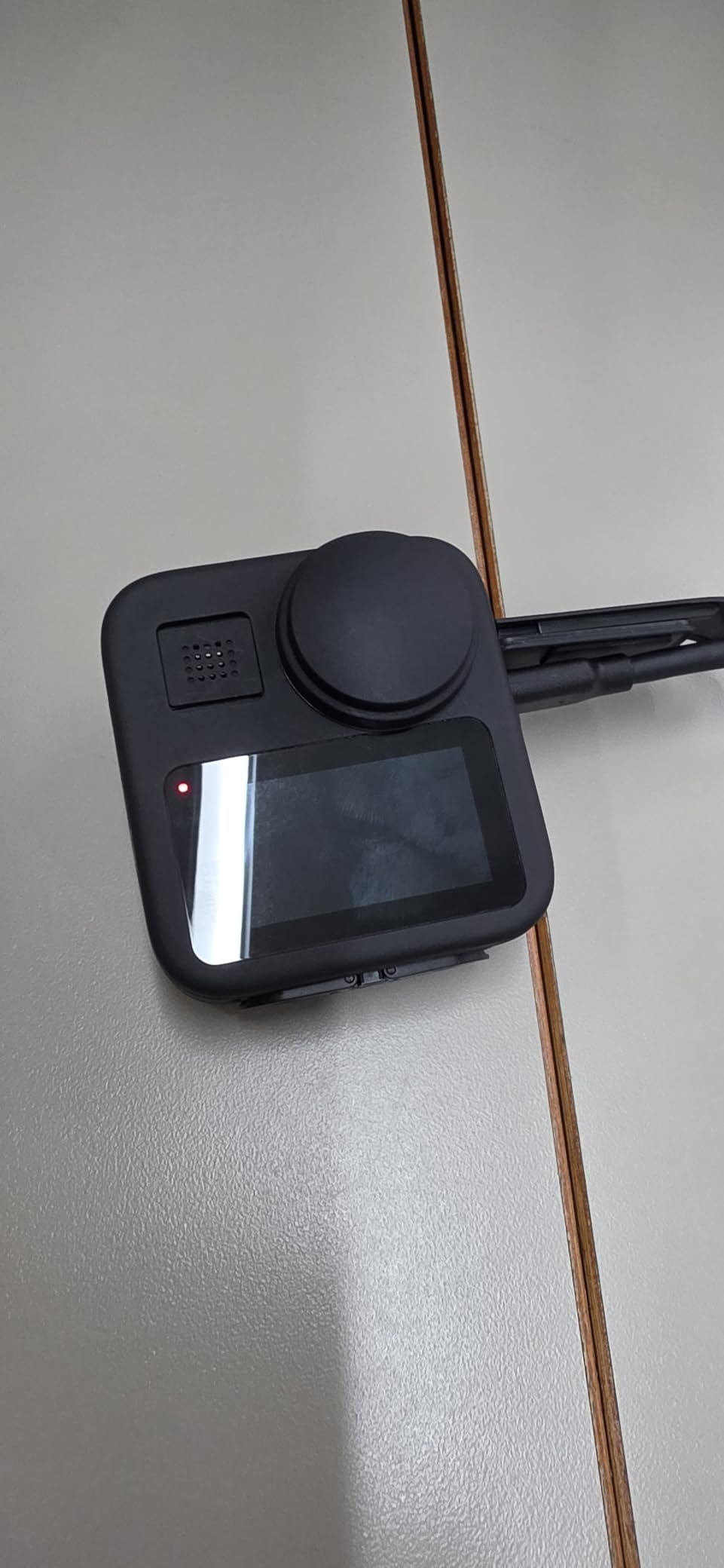
The single-lens HERO mode lets you use the MAX as a traditional action camera when full 360 capture is unnecessary. This dual functionality means one device covers both immersive and conventional shooting scenarios. The TimeWarp feature creates smooth time-lapse footage with stabilization built in.
Editing through the GoPro Quik app is intuitive and handles reframing with simple swipe gestures. Users consistently praise the app’s reliability in forum discussions. The waterproof design and rugged build match GoPro’s action camera heritage.
MAX vs MAX2 which should you choose
The MAX2 doubles the resolution to 8K and adds replaceable glass lenses, but it currently has limited stock availability and a smaller review base. The original MAX is widely available, proven, and costs significantly less. For budget-conscious buyers, the MAX remains an excellent value.
If you need maximum reframing flexibility for professional work, the 8K MAX2 justifies its premium. For social media and casual immersive content, the 5.6K MAX delivers everything you need.
Best mounting scenarios for the GoPro MAX
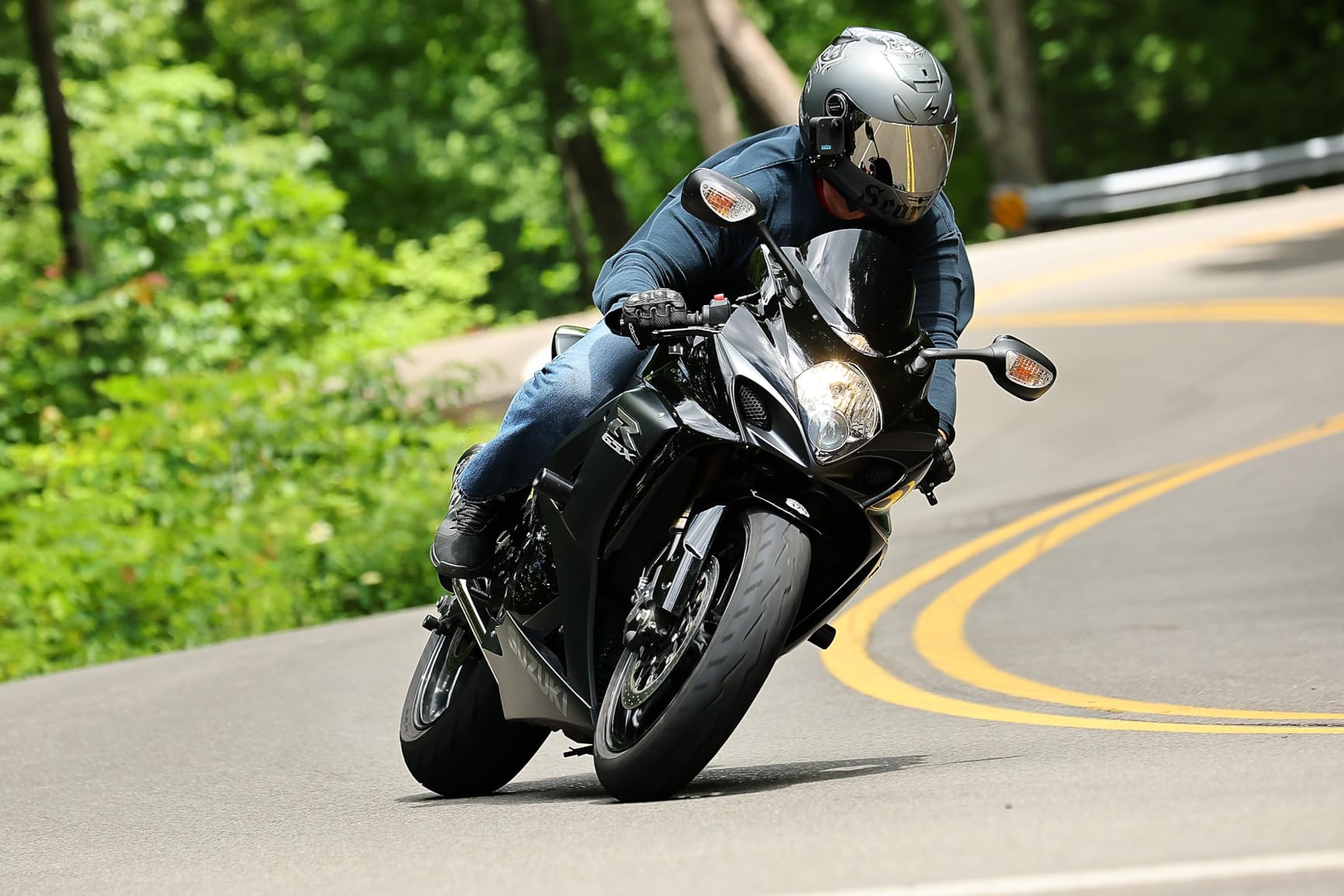
The MAX excels when mounted on a pole for third-person action shots, on a chest mount for POV perspectives, and on a helmet for immersive adventure footage. The invisible selfie effect works across all these mounting positions to create clean, professional-looking results.
The 1080p live streaming capability lets you broadcast immersive content directly. This feature appeals to creators who want to engage audiences with real-time 360 experiences during events and adventures.
9. AKASO 360 – Best Budget 360 Camera
AKASO 360 Action Camera – 5.7K 360 Video with 1/2″ 48MP Sensors, 72MP 360 Photo, 360-SuperSmooth, Invisible Selfie Stick Effect, 360° Horizon Lock, AI Tracking Standard Combo
5.7K Video
72MP Photos
AI Tracking
Horizon Lock
Pros
- 5.7K 360 video with dual 1/2-inch 48MP sensors
- 72MP 360 photos
- 360-SuperSmooth stabilization
- AI subject tracking
- DNG8 RAW photo support
Cons
- No HDR functionality
- Low-light video quality is limited
- Invisible selfie stick not included
The AKASO 360 is the camera I recommend when someone asks for the cheapest way to start shooting 360 content without sacrificing core features. At its price point, getting 5.7K 360 video with dual 1/2-inch 48MP sensors is remarkable. I was genuinely surprised by the spec sheet when I first reviewed it.
The 72MP 360 photo resolution is actually the highest still resolution in this entire roundup. For still photography use cases, this gives the AKASO 360 an unexpected advantage over cameras costing three times as much. The AI subject tracking feature keeps your subject centered automatically when reframing.

The 360-SuperSmooth stabilization handles walking and running footage well, and the 360-degree Horizon Lock keeps your horizons level. The 2.29-inch touchscreen provides direct control over settings and framing. At 180 grams, it is comfortable for extended handheld shooting.
DNG8 RAW photo support gives you editing flexibility that most budget cameras omit. The invisible selfie stick effect works with any compatible pole, though one is not included in the standard combo package.
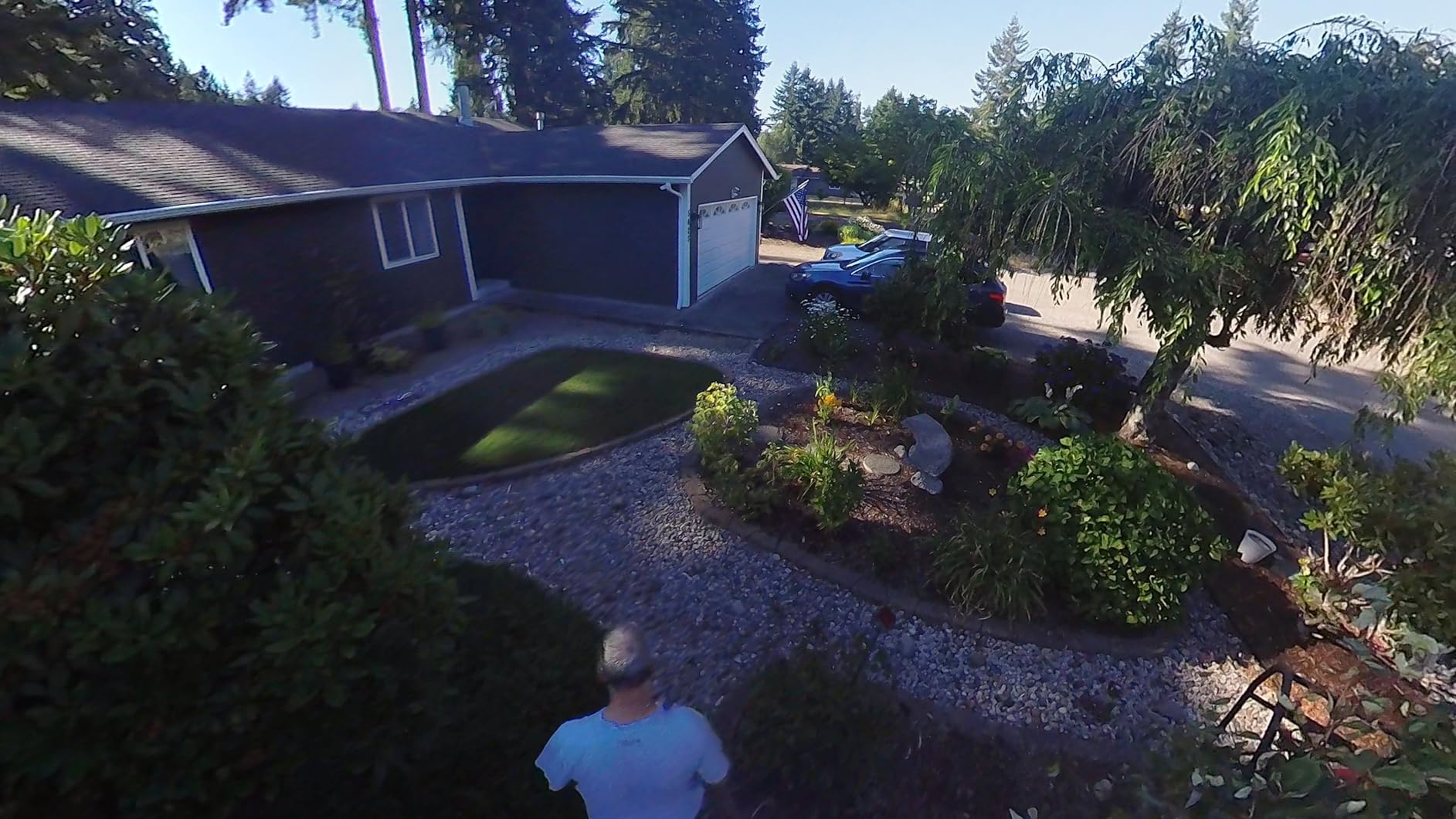
What the budget price means in practice
The AKASO 360 does not support HDR functionality, which limits dynamic range in high-contrast scenes. Low-light video quality trails the 1-inch sensor cameras noticeably. These are the expected trade-offs at this price level, and they affect video more than still photography.
The software ecosystem is less polished than what Insta360 or GoPro offer. The app gets the job done for basic reframing and editing, but lacks the AI-powered creative tools that make the premium ecosystems stand out.
Who should start with the AKASO 360
Beginners who want to explore 360 capture without a large investment are the ideal audience. The core features are all present, and the learning curve for 360 workflows is the same regardless of which camera you start with. You can always upgrade later once you understand your specific needs.
Creators focused on 360 still photography get exceptional value from the 72MP resolution. For action video in good lighting conditions, the AKASO 360 delivers solid results that justify its budget-friendly positioning.
10. Samsung Gear 360 – Entry-Level 360 Pioneer
Samsung Gear 360 Real 360° High Resolution VR Camera (US Version with Warranty)
4K Video
Dual Lens
Wireless
Time Lapse
Pros
- Compact and lightweight design
- 4K video resolution for its class
- Dual lens 180 or full 360 capture
- Dust and water resistant
- Works standalone without phone
Cons
- Overheating issues with extended recording
- Short battery life around 1 hour
- Limited compatibility with non-Samsung phones
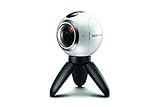
The Samsung Gear 360 holds historical significance as one of the cameras that brought 360 capture to mainstream consumers. I included it in this roundup because it remains available at a budget price and still serves as a viable entry point for curious beginners. The compact white body is instantly recognizable.
The dual fisheye lenses capture either 180-degree wide-angle or full 360-degree spherical content. In good lighting, the photo quality is solid for casual social media sharing. The 4K video resolution was impressive when the camera launched and remains adequate for basic immersive content.
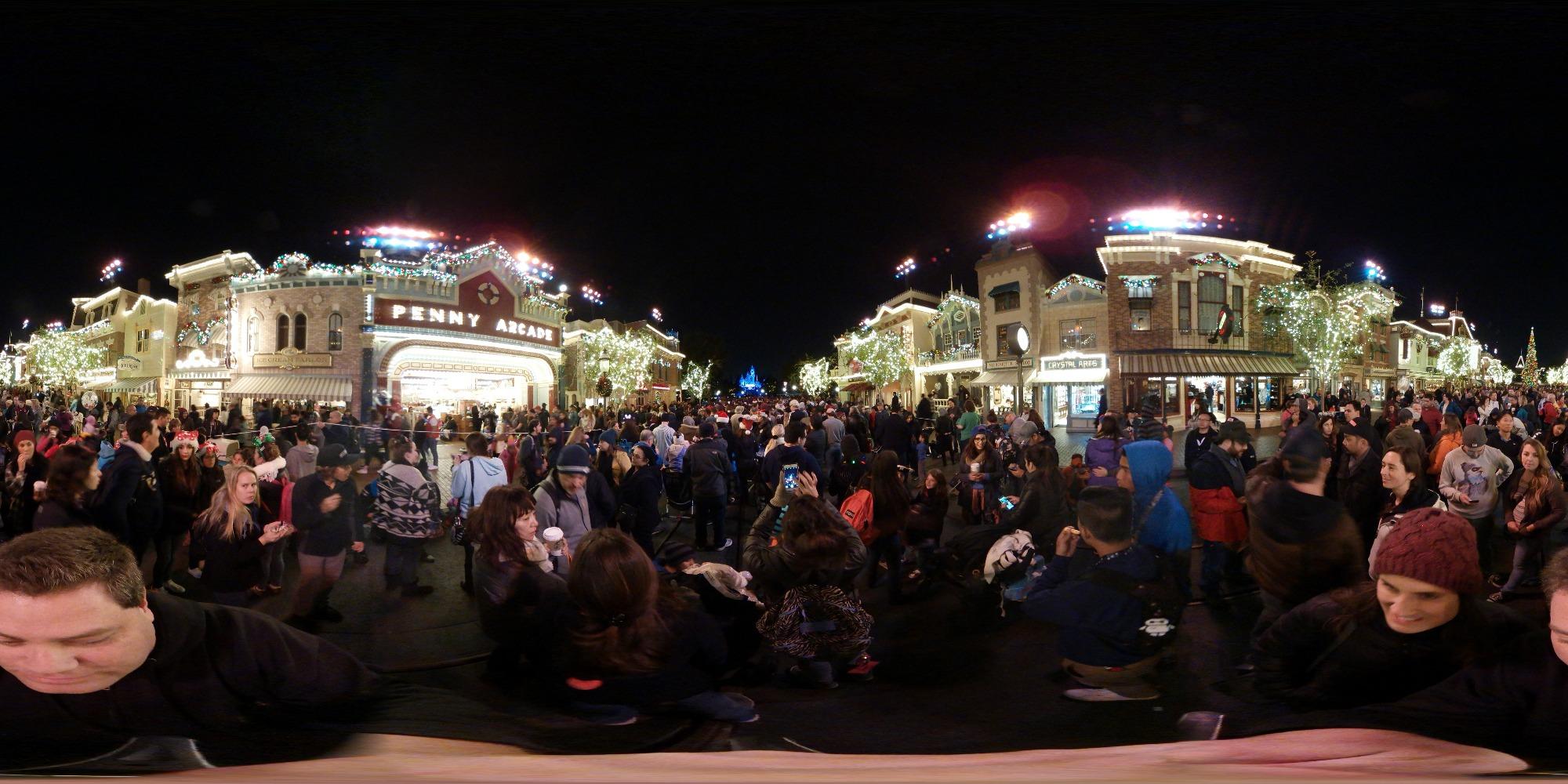
The standalone operation capability means you can shoot without connecting to a phone, which is convenient for quick captures. The included carrying bag and stitching software round out the package. The dust and water resistance provides basic environmental protection.
However, the limitations are significant and worth understanding before purchase. Multiple users report overheating during extended video recording, and the battery life averages around one hour of continuous filming. These are the realities of older 360 camera technology.

Known limitations and compatibility issues
The stitching software that comes with the Gear 360 is slow and only runs on Windows, with no Mac support. This creates friction for Apple users who want to process their footage. The camera also works best with Samsung Galaxy phones, which limits wireless functionality for users of other Android devices or iPhones.
The requirement for a high-speed U3 MicroSD card is important to note. Users report file corruption when using slower U1 cards. Budget for a quality memory card alongside the camera purchase.
Is the Gear 360 still worth buying
For under one hundred thirty dollars, the Gear 360 offers a genuine 360 capture experience for users who want to experiment without commitment. The overheating and battery limitations mean it is best suited for short clips rather than extended recording sessions.
If you can stretch your budget to the AKASO 360, you get significantly better performance and modern features. But if absolute lowest cost is your priority, the Gear 360 remains a functional starting point for exploring immersive content creation.
How to Choose the Best 360 Camera for Your Needs?
Choosing among the best 360 cameras comes down to matching features to your specific use case. Our testing revealed that the right camera depends heavily on what you plan to shoot, where you plan to shoot it, and how you intend to edit the footage.
Video resolution and sensor quality
Resolution determines how much detail you can preserve when reframing 360 footage into traditional flat video. 8K cameras like the Insta360 X5, DJI Osmo 360, Insta360 X4, and GoPro MAX2 give you the most cropping flexibility. 5.7K cameras like the Insta360 X3 and AKASO 360 are sufficient for most social media content.
Sensor size affects low-light performance and dynamic range more than megapixel counts suggest. The 1-inch sensors in the Ricoh Theta Z1 and DJI Osmo 360 gather significantly more light than the 1/2-inch and 1/2.8-inch sensors in action-oriented models. If you shoot indoors or at night, prioritize sensor size over resolution.
Stabilization technology
Stabilization is essential for handheld and mounted 360 footage. Insta360’s FlowState and GoPro’s HyperSmooth are the two leading electronic stabilization systems, and both produce smooth results from rough capture. DJI’s stabilization in the Osmo 360 is comparable in real-world testing.
Horizon Lock is a related feature that keeps your horizon level regardless of camera orientation. This is especially valuable for action sports where the camera tilts and rotates during capture. All the cameras in our top recommendations include some form of horizon leveling.
Software ecosystem and editing workflow
The software experience can make or break your relationship with a 360 camera. Insta360’s app and desktop studio are widely considered the best in class, with AI-powered tools that simplify reframing and creative editing. GoPro Quik is reliable and straightforward but offers fewer 360-specific creative features.
DJI’s Mimo app is capable but requires sideloading on Android, which adds friction. The AKASO and Samsung apps are functional but lack the polish and feature depth of the major ecosystems. If you value a smooth editing workflow, the Insta360 ecosystem leads the pack according to consistent forum feedback.
Battery life and storage
Battery life ranges from approximately one hour on the Samsung Gear 360 to over three hours on the DJI Osmo 360. Forum users frequently cite battery concerns, especially in cold weather where performance degrades. Cameras with replaceable batteries, like the Insta360 X5 and DJI Osmo 360, let you swap packs for extended shooting.
Storage options vary significantly. The DJI Osmo 360 leads with 105GB built-in, while the Ricoh Theta Z1 offers 51GB internal. Most other cameras require MicroSD cards, which means budgeting for a high-speed card with sufficient capacity for 8K footage.
Durability and waterproofing
For outdoor and action use, waterproofing is a critical factor. The Insta360 X5, X4, and X3, the GoPro MAX and MAX2, and the DJI Osmo 360 all offer waterproof designs without requiring separate housings. The Ricoh Theta Z1 and Insta360 X4 Air are not waterproof and are better suited for controlled environments.
Replaceable lenses are a durability feature worth prioritizing. A scratched lens no longer means replacing the entire camera. The Insta360 X5, X4 models, GoPro MAX2, and DJI Osmo 360 all offer user-replaceable lenses.
Matching cameras to specific use cases
For travel vlogging, the lightweight Insta360 X4 Air or the versatile Insta360 X3 are excellent choices. For action sports and rugged outdoor use, the GoPro MAX2 or Insta360 X5 handle harsh conditions. For real estate and virtual tours, the Ricoh Theta Z1 delivers professional photo quality. For budget-conscious beginners, the AKASO 360 offers the best value entry point.
Content creators focused on social media will find that any camera from the Insta360 lineup pairs well with reframing workflows. The invisible selfie stick effect is a major selling point across the Insta360 range, and users consistently highlight it as a standout feature in community discussions.
FAQs
What is the highest quality 360 camera?
The Insta360 X5 delivers the highest overall video quality with 8K30fps 360 recording, a triple AI chip design, and dual 1/1.28-inch sensors that produce best-in-class low-light performance. For professional 360 still photography, the Ricoh Theta Z1 with its dual 1-inch sensors produces the highest quality 360 photos at 23MP resolution.
Which 360 camera is good for content creation?
The Insta360 X5, DJI Osmo 360, and Insta360 X3 are the best 360 cameras for content creation. The X5 offers 8K resolution and AI editing tools, the DJI Osmo 360 provides excellent value with a 1-inch sensor and 190-minute battery, and the X3 delivers proven performance with the largest user community and tutorial ecosystem.
Is Insta360 better than GoPro?
Insta360 generally offers a stronger software ecosystem with more intuitive AI-powered editing tools, while GoPro provides rugged build quality and an extensive accessory ecosystem. For 360-specific creative features and reframing workflows, Insta360 has the edge. For durability and traditional action camera use cases, GoPro remains highly competitive.
What is the best 360 camera for virtual tours?
The Ricoh Theta Z1 is the best 360 camera for virtual tours and real estate photography due to its dual 1-inch sensors, 23MP still resolution, HDR processing, and RAW support. For budget-friendly virtual tour work, the Insta360 X3 with 5.7K capture and the AKASO 360 with 72MP stills are solid alternatives.
How much does a good 360 camera cost?
A good 360 camera ranges from approximately 170 dollars for budget models like the AKASO 360 to over 500 dollars for flagship models like the Insta360 X5. Professional 360 cameras like the Ricoh Theta Z1 cost around 1000 dollars. Most creators find excellent value in the 300 to 450 dollar range with cameras like the Insta360 X3, X4, or DJI Osmo 360.
Final Thoughts on the Best 360 Cameras for 2026
After testing all ten cameras across multiple shooting scenarios, the Insta360 X5 stands out as the best 360 camera overall for immersive content creation. Its 8K resolution, low-light performance, replaceable lenses, and industry-leading software ecosystem make it the most complete package. The DJI Osmo 360 offers the best value with its 1-inch sensor and massive built-in storage, while the AKASO 360 provides an accessible entry point for budget-conscious creators.
Whether you are a travel vlogger, action sports enthusiast, real estate photographer, or social media creator, there is a 360 camera in this lineup that matches your needs and budget. The shoot-first-frame-later workflow that defines 360 capture gives you creative freedom that traditional cameras simply cannot offer. Pick the model that aligns with your primary use case and start capturing every angle of your adventures in 2026.