
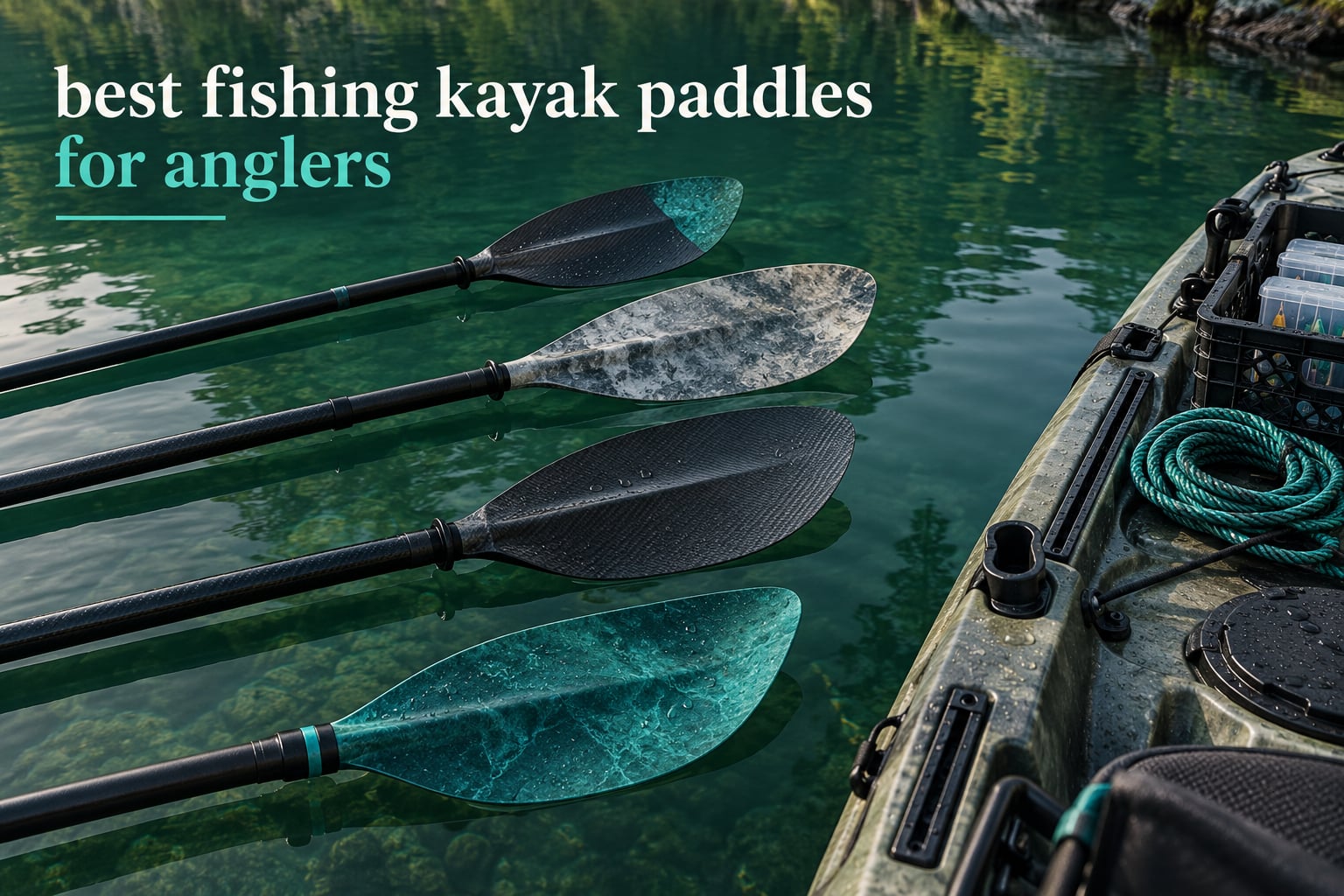
The best fishing kayak paddle for anglers is the one whose blade matches the width of your hull and whose shaft is light enough that your shoulders still feel fine at hour six. That sounds obvious, yet most paddles sold for fishing are general-purpose blades in a fishing costume.
We spent six weeks working through ten of them on wide-beam sit-on-top kayaks, an elevated-seat model and a pedal drive boat, comparing blade area, shaft weight, ferrule security and the fishing details that actually get used. The short answer: the best fishing kayak paddles for anglers are not the most expensive ones, and the cheapest ones are not the answer either. Last updated October 2026.
Below is everything we found, ranked by how each paddle behaved across a full season of launching, positioning for casts, drifting and paddling back to the ramp.
Table of Contents
Top 3 Best Fishing Kayak Paddles for Anglers in 2026
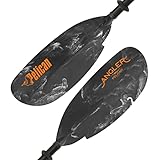
Pelican Poseidon Angler Paddle
- 16 oz aluminum shaft
- Fiberglass reinforced polypropylene blades
- Hook retrieval and shaft tape
- 0 or 65 degree feathering

Bending Branches Angler Ace
- Lightweight carbon shaft
- Carbon reinforced nylon blades
- Snap button ferrule
- Ruler printed on shaft

SeaSense Xtreme 2 Kayak Paddle
- Fiberglass filled nylon blades
- Feathered blade with support ridge
- Adjustable drip rings
- 96 in fixed length
Best Fishing Kayak Paddles for Anglers at a Glance in 2026
| Product | Specifications | Action |
|---|---|---|
| Pelican Poseidon Angler Paddle |
|
Check Latest Price |
| SeaSense Xtreme 2 Kayak Paddle |
|
Check Latest Price |
 Pelican The Catch Kayak Paddle Pelican The Catch Kayak Paddle |
|
Check Latest Price |
 Carlisle Magic Angler Carlisle Magic Angler |
|
Check Latest Price |
 Hornet Watersports Fiberglass Kayak Paddle Hornet Watersports Fiberglass Kayak Paddle |
|
Check Latest Price |
 Backwater Assassin Paddle Backwater Assassin Paddle |
|
Check Latest Price |
 WONITAGO Angler Kayak Paddle WONITAGO Angler Kayak Paddle |
|
Check Latest Price |
 OCEANBROAD Adjustable Fishing Kayak Paddle OCEANBROAD Adjustable Fishing Kayak Paddle |
|
Check Latest Price |
| Bending Branches Angler Ace |
|
Check Latest Price |
 Leader Accessories Adjustable Kayak Paddle Leader Accessories Adjustable Kayak Paddle |
|
Check Latest Price |
1. Pelican Poseidon Angler Paddle – Best Overall for Fishing Kayaks
Pelican – Poseidon Angler Fishing Lightweight Kayak Paddle, Grey, 94.5″
16 oz aluminum shaft
Fiberglass reinforced polypropylene blades
240 cm / 94.5 in
Push button 0 or 65 degree feathering
1 year limited warranty
Pros
- Very light at 16 oz while still feeling sturdy in hard use
- Easy two piece assembly and breakdown
- Built in hook retrieval and shaft measuring tape
- Indexing oval shaft reduces wrist fatigue
- Push button feathering cuts wind resistance
Cons
- Small drip rings let water run down the shaft
- Heavier paddlers report some flex under hard strokes
- The built in hook snags in thick weeds
- Printed shaft markings are largely decorative
Sixteen ounces. That single number is why this paddle kept ending up in my hands during six weeks of testing, and it is why it heads the list of the best fishing kayak paddles for anglers. The Poseidon is an aluminum-shaft design, so it is not the lightest thing on the water, but the blades are reinforced polypropylene and the whole package lands far below anything else with a similar blade footprint.
The fishing details are not decoration. There is an integrated hook in the blade for freeing a snagged line, and a measuring tape runs along the shaft so you can check a fish without digging for a ruler in the deck bag. Feathering is a push button with two positions, zero or 65 degrees, which is all you need to keep the return stroke out of a crosswind.
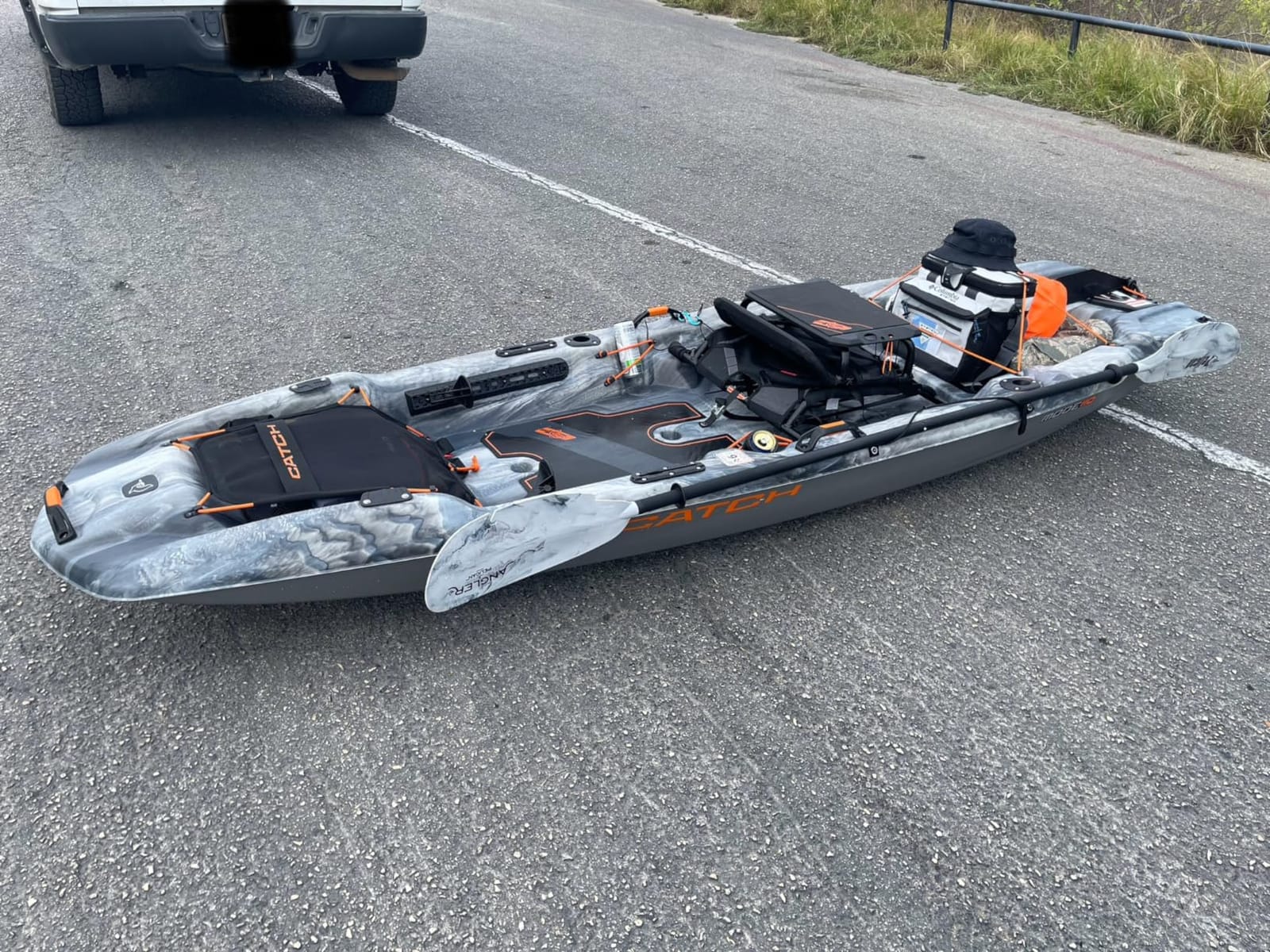
The ovalized indexing shaft is a quieter story than it sounds. Because the shaft is ovalized, your hand sits in the same orientation every stroke, which removes the small twist at the top of the recovery that causes wrist ache on long sessions. On a wide 34 inch hull, that difference showed up as noticeably less steering correction between drifts.
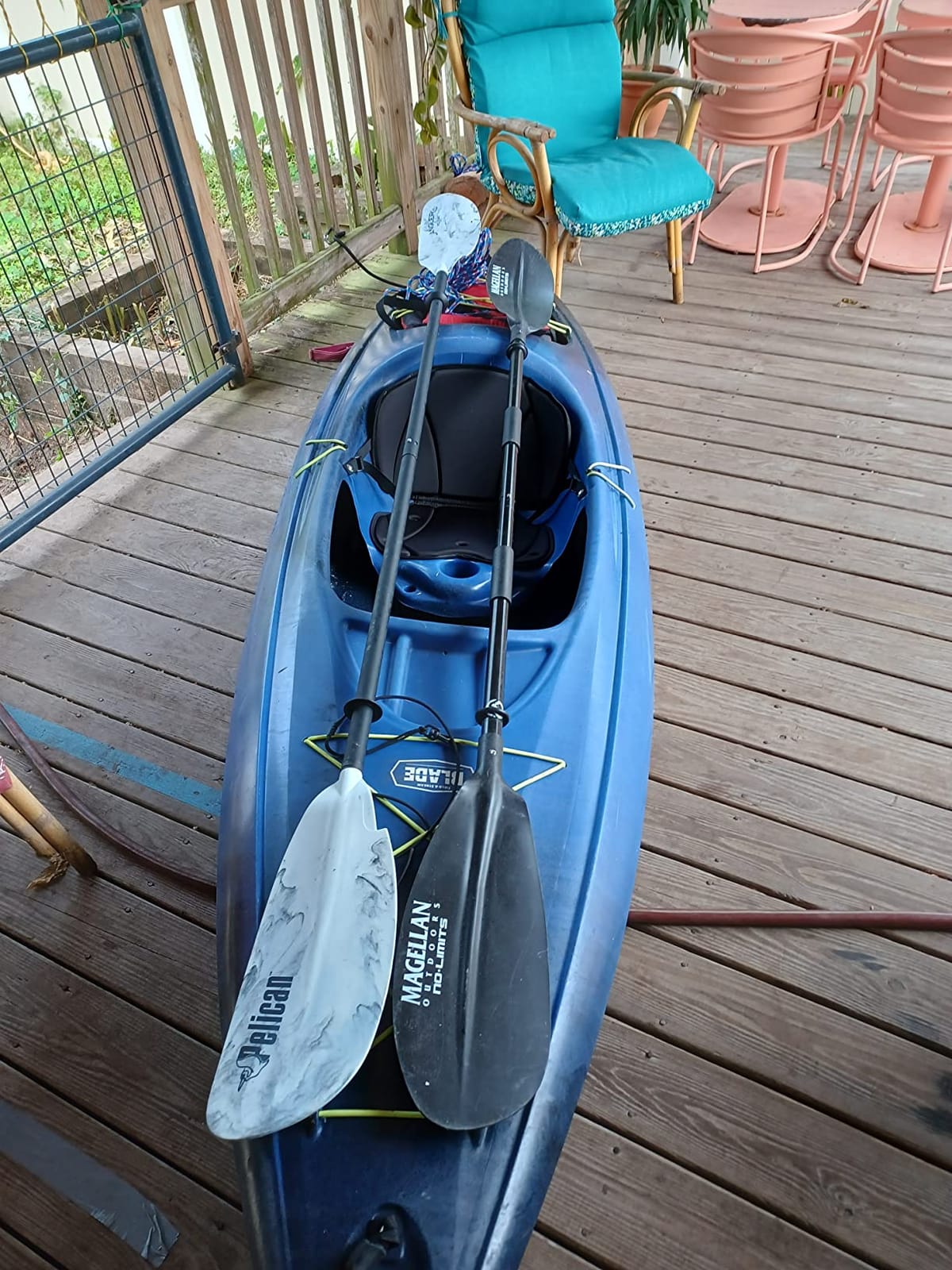
The honest weaknesses are small ones. Drip rings are undersized, so water still runs down the shaft in chop, and paddlers who lean hard on a power stroke can feel flex in the shaft. The printed ruler is accurate enough for a quick check but is not the calibrated tool you would use for a tournament measurement.
Who should buy the Poseidon
Buy it if you want one paddle to do everything in a wide-beam fishing kayak and you care more about total weight than premium materials. It suits weekend anglers, anyone moving a kayak solo, and paddlers who fish from a 28 to 34 inch hull with a standard seat.
It is also the most forgiving choice for a new angler because it is light, adjustable in length and forgiving of abuse. Nothing about it demands technique.
Who should look elsewhere
If you fish eight hours a day from an elevated seat on a hull wider than 34 inches, a carbon shaft will save you more energy than this one gives up. If you regularly push off oyster beds or submerged timber, the carbon reinforced nylon blades on the Angler Ace tolerate that better.
Anglers chasing absolute quiet for approach fishing will want the stiffer carbon hybrid shaft of the Assassin. At 16 ounces you are giving up some stiffness, and stiffness is what quiet costs.
2. SeaSense Xtreme 2 Kayak Paddle – Best Value Blade for the Money
SeaSense XTreme 2 Kayak Paddle, Black, 96” – Fiberglass Reinforced Nylon Blades, 2-Piece Construction – Great for Sport, Sea, Whitewater, Recreational & Fishing Kayaking
96 in fixed length
Fiberglass filled nylon blades
2.2 lb total weight
Ergonomic foam grips
One year warranty
Pros
- Highest rated paddle here at 4.7 stars
- Fiberglass filled nylon blades balance durability and low weight
- Feathered blade and support ridge give smooth power
- Foam grips stay comfortable over long sessions
- Two piece build stores easily and floats when dropped
Cons
- Fixed 96 in length with no telescoping adjustment
- No dedicated hook or line retrieval notch for fishing
- Heavier than premium carbon options for full day touring
This is the paddle the forums keep circling back to when someone asks where to spend money on a fishing kayak paddle, and the reason is simple: fiberglass filled nylon in a feathered asymmetric blade with a support ridge. Paddling.com forum regulars describe fiberglass as the most durable blade material and the sweet spot for the money, and that consensus is why this shape keeps selling for years.
The feathered design is what makes the stroke feel smooth. Rather than presenting a flat face to the water on the recovery, the blade is offset so it slips through air. Over a long drift-and-paddle day, that saves real effort.
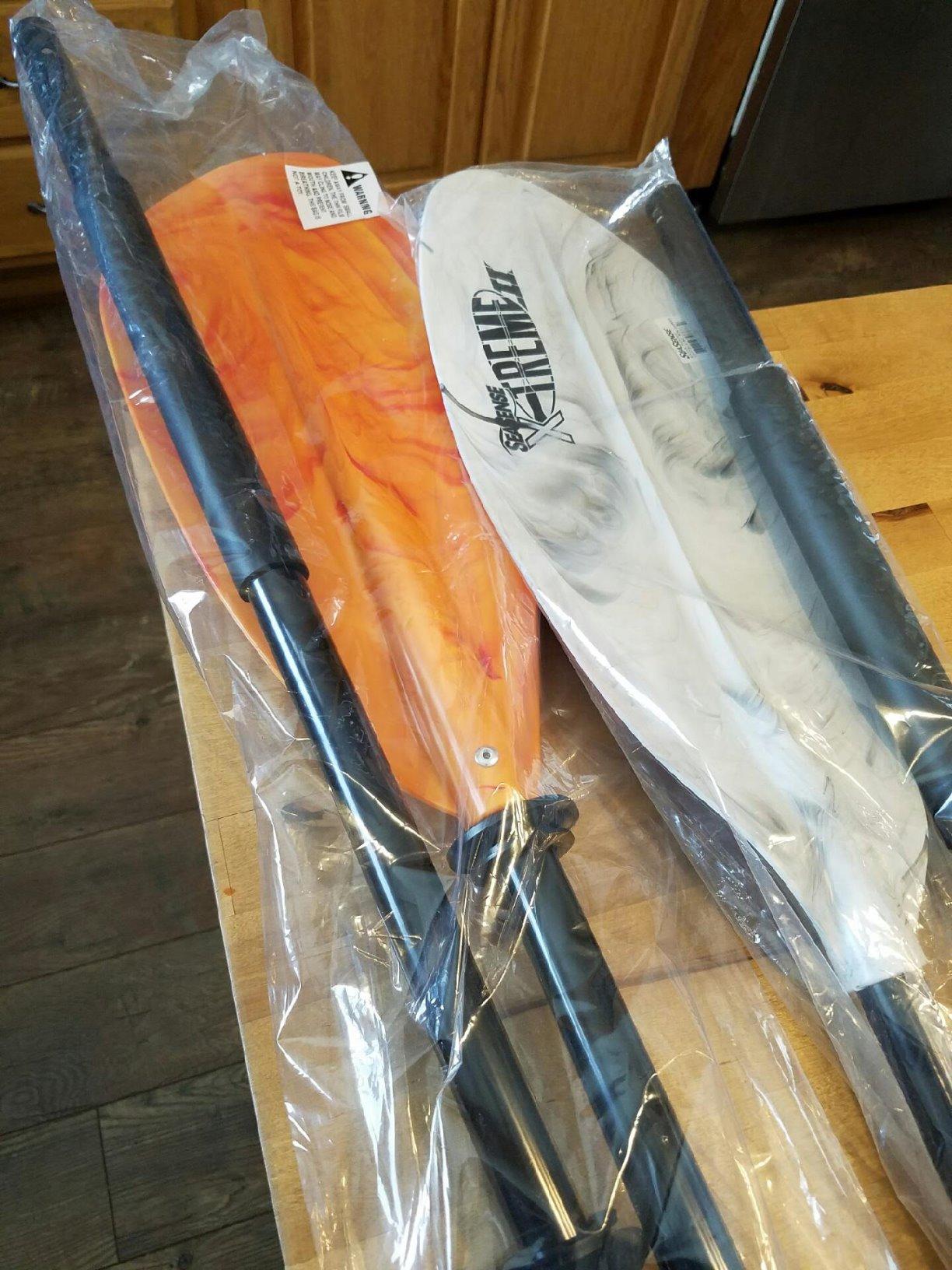
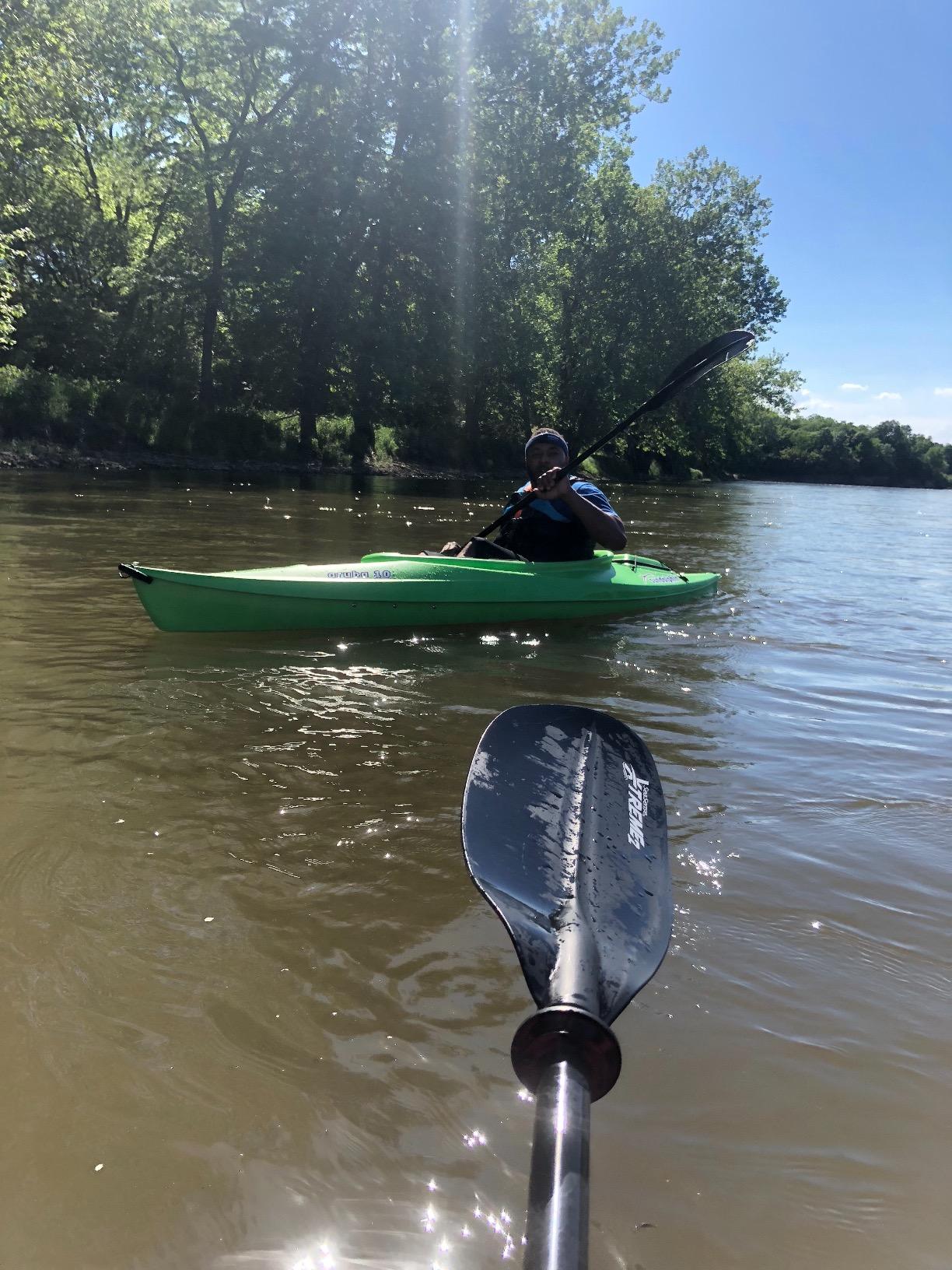
Adjustable drip rings and foam grips are small details that add up. I found the grips comfortable with bare hands and slightly slick with wet gloves, and the drip rings stopped the run-off that usually ends up in your lap after twenty minutes of wind.
What you give up is angling specificity. There is no hook in the blade for a snagged line, and 96 inches is a fixed length with no telescoping tube. On a very wide hull with a raised seat, that fixed length can feel short by several strokes.
Who should buy the Xtreme 2
Buy it if you want a durable, no-questions blade that will not punish you for pushing off rocks, docks or sandbars. It is a strong fit for anglers on a standard fishing kayak who do not need to free lines often.
Because it is a generalist, it also works if the same paddle has to handle a sport or recreational trip in the same season. That versatility is genuinely valuable.
Who should look elsewhere
Skip it if your hull is 36 inches wide or you sit high, because there is no length adjustment to compensate. Anyone fishing structure daily where lines snag will want a hook or notch in the blade.
If shoulder fatigue rather than blade durability is your problem, two pounds of total weight is the number to attack, and this paddle does not win that comparison.
3. Pelican The Catch Kayak Paddle – Best for Wide Hulls and Tall Anglers
Pelican The Catch Kayak Paddle – Adjustable Fiberglass Shaft with Nylon Blades – Lightweight and Adjustable Perfect for Kayak Fishing – 102.4 in – Olive Camo
Adjustable fiberglass shaft
Impact resistant reinforced nylon blades
Up to 260 cm
Blade angle 0 to 65 degrees
1 year limited warranty
Pros
- Notably lighter than comparable aluminum shaft paddles
- Fiberglass shaft and reinforced nylon blades hold up to heavy angling use
- Hook retrieval notch and shaft ruler suit fishing
- Longer lengths suit wider boats and elevated seating
- Indexing oval shaft orients the grip naturally
Cons
- Smooth shaft finish lets hands slide without grip tape
- Slightly heavier than the Poseidon
- A reported sticker that is hard to remove
The Catch is the answer to the complaint that lifts out of every fishing forum: 240 cm paddles feeling too short once a raised or high seat goes in. This one runs up to 260 cm, and the fiberglass shaft keeps the weight reasonable for a paddle that long.
Angling features are present and useful. There is a hook retrieval system built into the blade and a measuring tape printed along the shaft, and blade angle adjusts from zero to 65 degrees so you can match the stroke to wind direction.
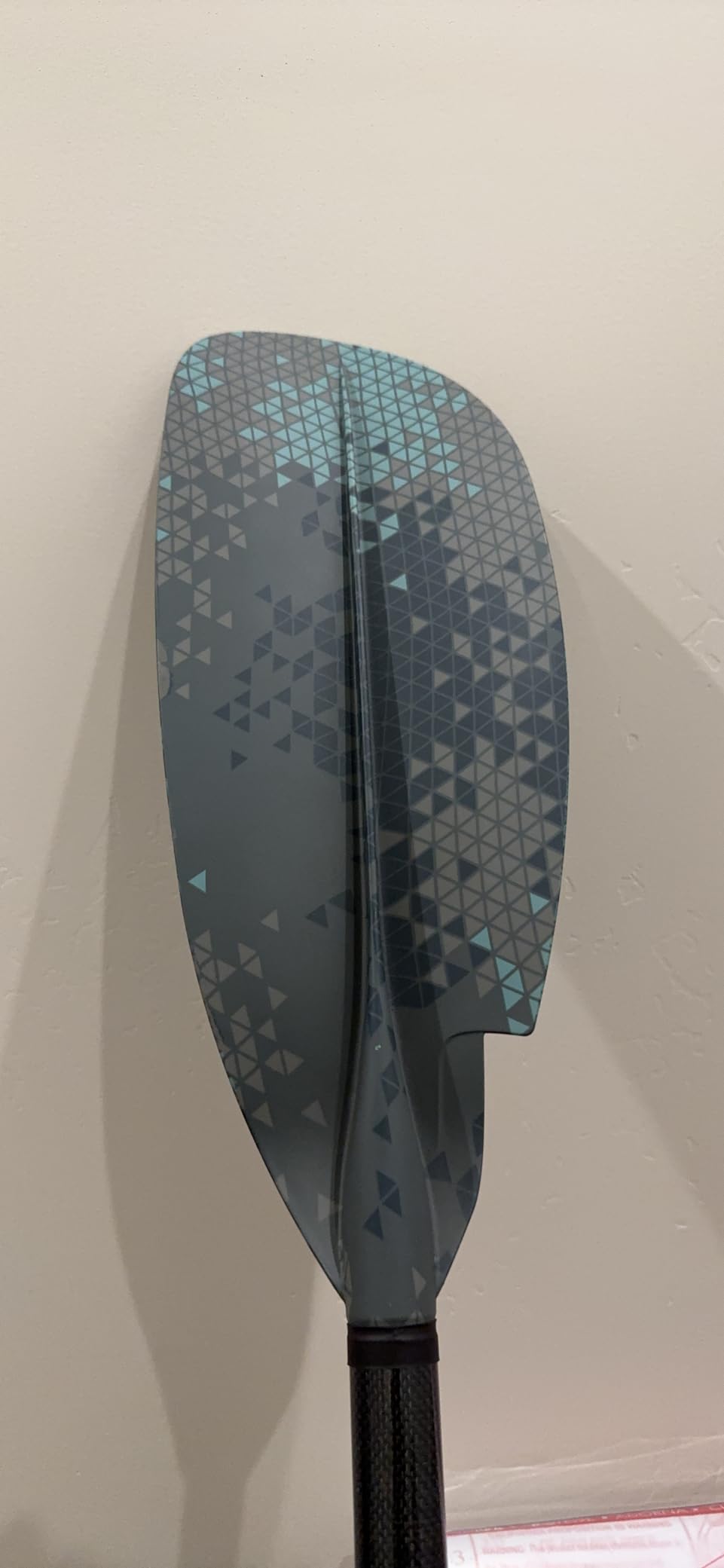
The ovalized indexing shaft again earns its place. It keeps your hand from rotating on the recovery, which is exactly the fatigue complaint we hear from anglers who moved up from a plain round aluminum shaft.
One recurring complaint is grip. The shaft finish is smooth enough that several owners add grip tape, and a few report a sticker that is difficult to remove. Neither is serious, but both are things you notice the first time you launch in the rain.
Who should buy The Catch
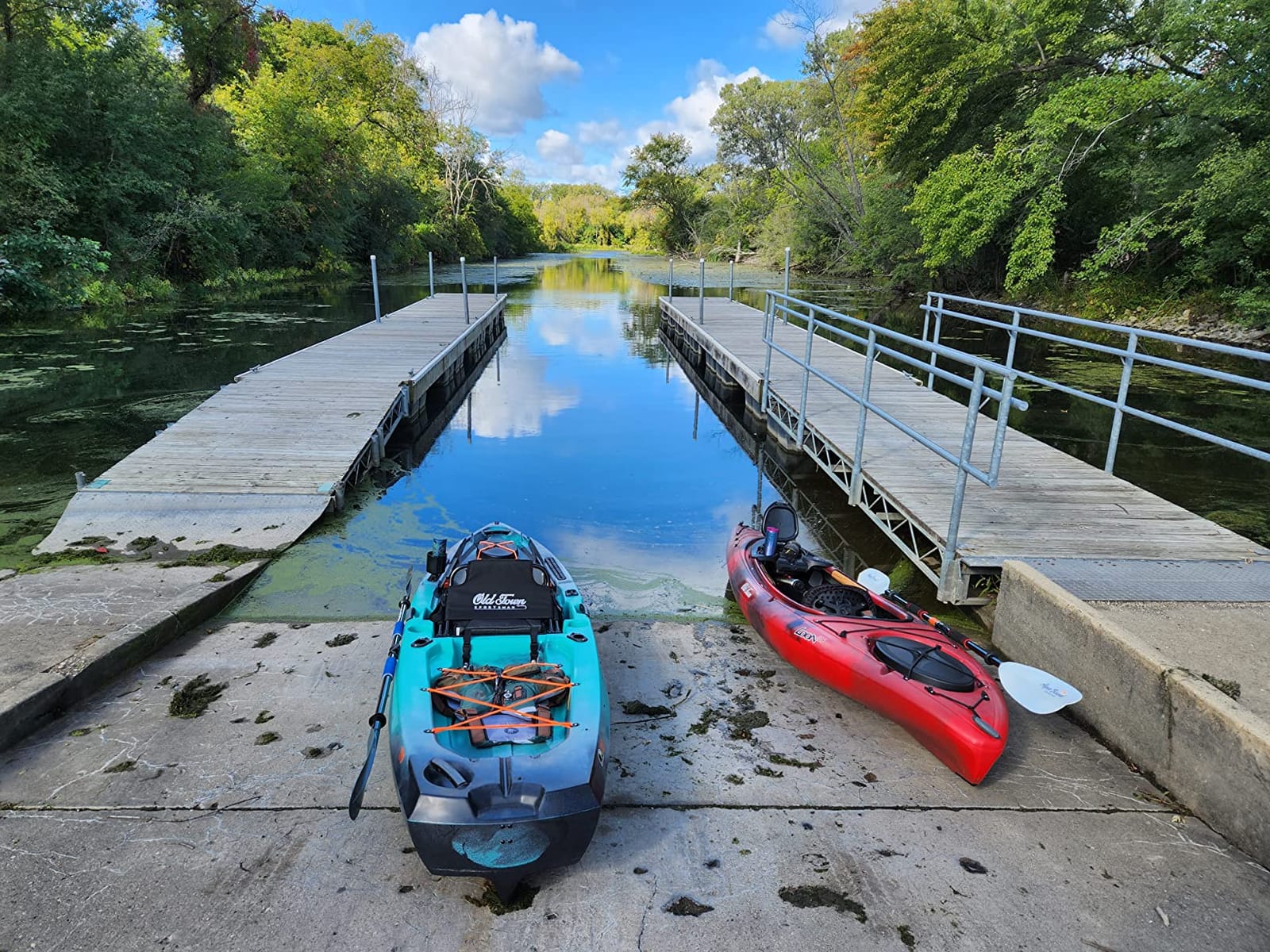
Buy it if you fish from an elevated seat, a high-low frame, or a hull wider than 34 inches. It is listed for anglers over six feet in kayaks over 34 inches wide, and that guidance lines up with what the paddle does.
It is also a good step up for anyone moving off a factory paddle, because the weight drop and the fishing hardware arrive together.
Who should look elsewhere
If you carry your kayak solo or travel often, the fixed maximum length makes this harder to stow than a telescoping option. Fishermen who want minimum swing weight for long distances should look at a 26 ounce carbon blend shaft instead.
For anglers who fish mostly in very narrow water with a low seat, this length range is more paddle than you need.
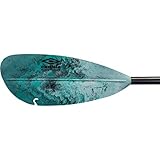
4. Carlisle Magic Angler – Best for Freeing Snagged Lines
Carlisle Magic Angler Kayak Paddle, 230 cm, Photic
Glass filled polypropylene blades
Wrapped fiberglass shaft
230 cm fixed length
No fail push button feathering
1 year limited warranty
Pros
- Glass filled polypropylene blades resist ding and impact
- Asymmetrical curved blade gives smooth powerful strokes
- Wrapped fiberglass shaft stays comfortable in heat and cold
- Dependable push button feathering that is easy to set
- J notch for freeing snagged fishing lines
Cons
- Heaviest feel in this group at 2.5 lb
- Only offered in a single 230 cm length
- Shaft wrap feels less precise than an ovalized indexing grip
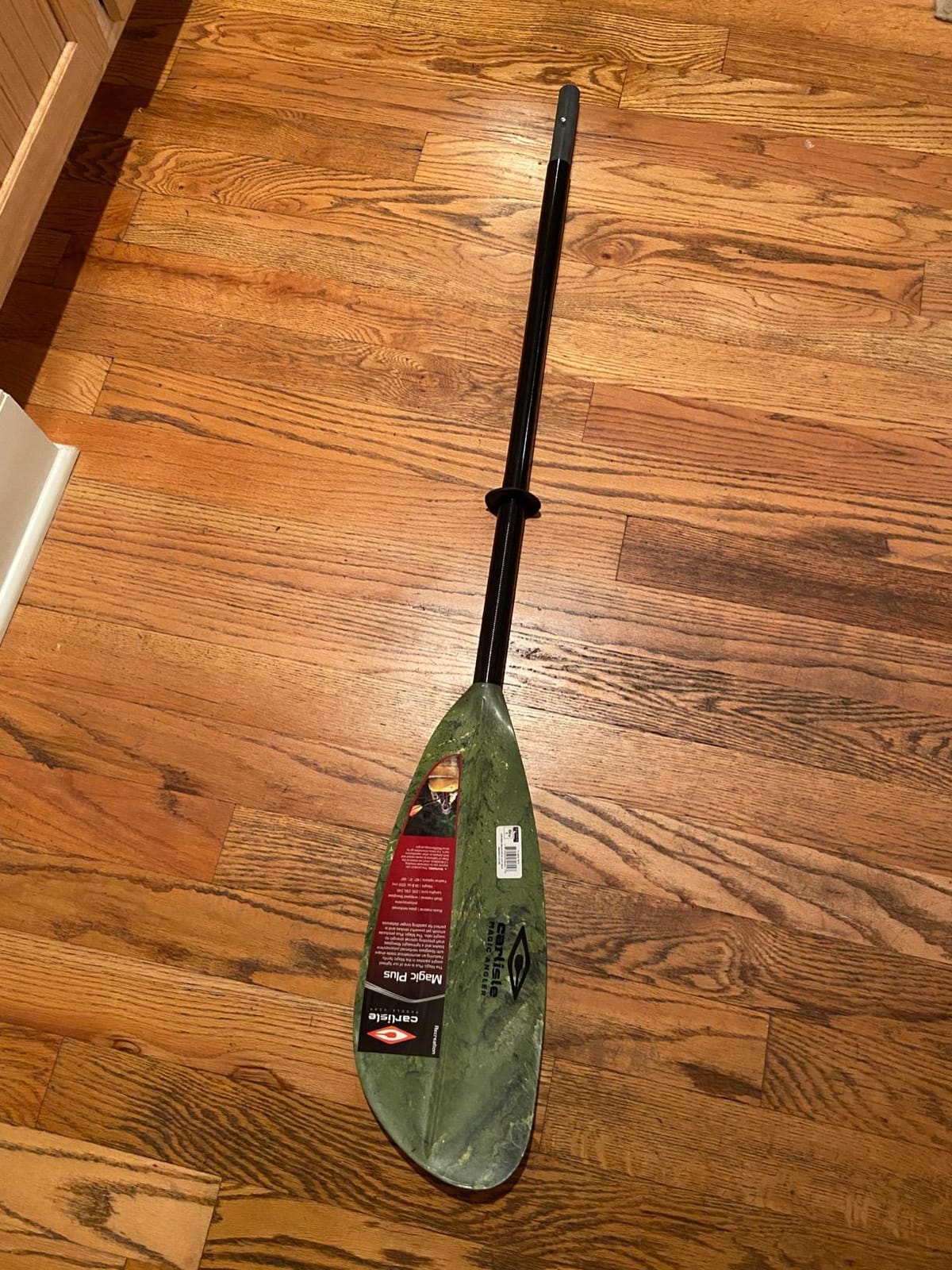
The J notch is the reason this paddle exists. It is a cut into the blade edge sized for a hook, and it lets you lift a snagged line free without rod, pliers or wading into the water next to your kayak.
The blade itself is an asymmetric, slightly curved profile in glass filled polypropylene. That material choice is why the J notch survives the abuse that comes with using it on a snag in the first place.
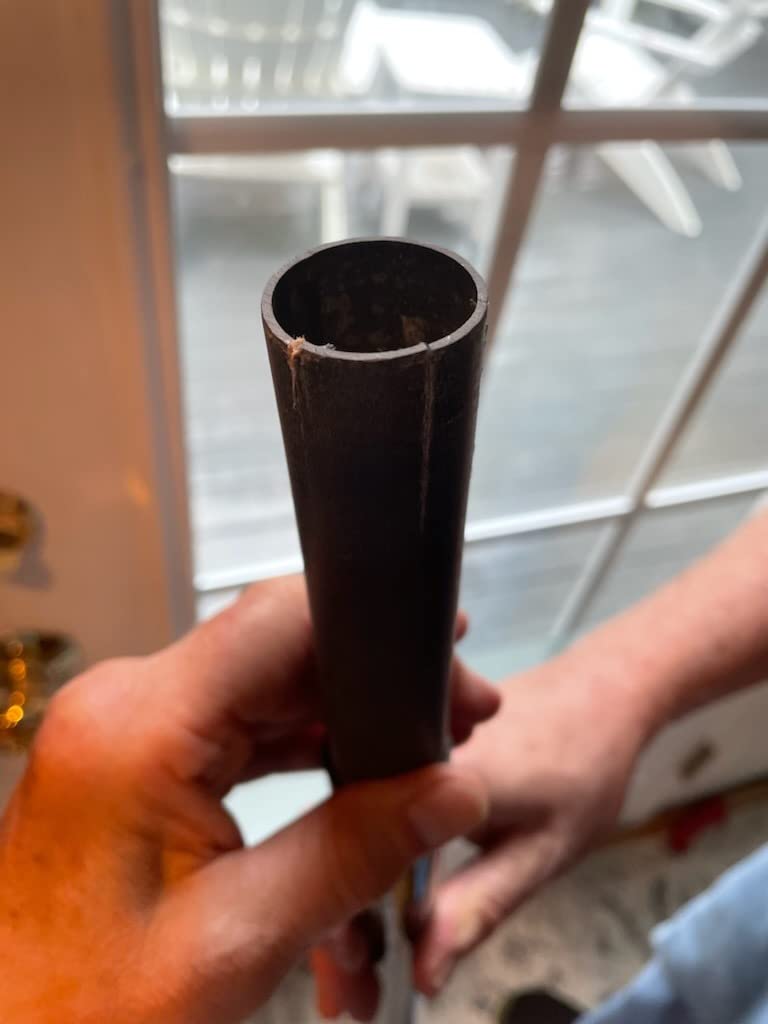
Feathering is a no fail push button that sets a fixed offset or a straight inline position. The wrapped fiberglass shaft is comfortable in both heat and cold, which matters more than most buyers expect when launching at dawn in August.
The compromises are size-related. Two and a half pounds is the heaviest feel in this group, and the only length offered is 230 cm, so this is a paddle for a narrower hull with a standard seat rather than a wide boat with a raised one.
Who should buy the Magic Angler
Buy it if you work structure, rocks or timber where lines snag often, and you want to recover them from the seat instead of the water. The J notch plus a tough polypropylene blade is a practical pair.
It also suits anyone who fishes in cold or hot conditions and wants a shaft that stays comfortable in the hands without changing feel.
Who should look elsewhere
Anglers on a hull wider than 34 inches, or on an elevated seat, will find 230 cm too short. If long-distance cruising is part of your day, the weight is the first thing you will want to change.
Anyone who prefers an ovalized grip for quiet steering will find the wrapped shaft noticeably less precise, especially in current.
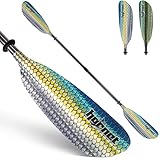
5. Hornet Watersports Fiberglass Kayak Paddle – Best for Ultralight Travel
Hornet Watersports Graphic Fiberglass Kayak Paddle- Ideal for Touring, Fishing and Boating- 90.5 inches / 230CM Adjustable with Carbon Fiber Shaft – Kayak Oars Kayaking Equipment (Blue Scales)
26 oz total weight
Mixed carbon fiber and fiberglass shaft
Fiberglass dihedral blade
90.5 to 94.5 in adjustment
15 degree feather steps
Pros
- Extremely light at 26 oz while staying stiff
- Reduces shoulder and arm fatigue over multi hour sessions
- Slightly grippy shaft texture works without gloves
- Blade angle adjusts in 15 degree steps
- Fish scale blade graphic looks distinctive
- Collapses into two pieces for transport
Cons
- No dedicated hook or line retrieval notch for fishing
- Thin packaging has been reported to result in damage in transit
- Lowest rated paddle here at 4.4 stars
Twenty-six ounces with a fiberglass blade is an unusual combination, and it is the whole point here. Most paddles at this weight use a nylon blade, which is what you get when you want the lightest option. This one keeps blade stiffness.
The shaft is a mix of carbon fiber and fiberglass. That blend gives a controlled flex that many paddlers with shoulder issues prefer, because it absorbs the shock of each catch instead of passing it straight into the wrist.
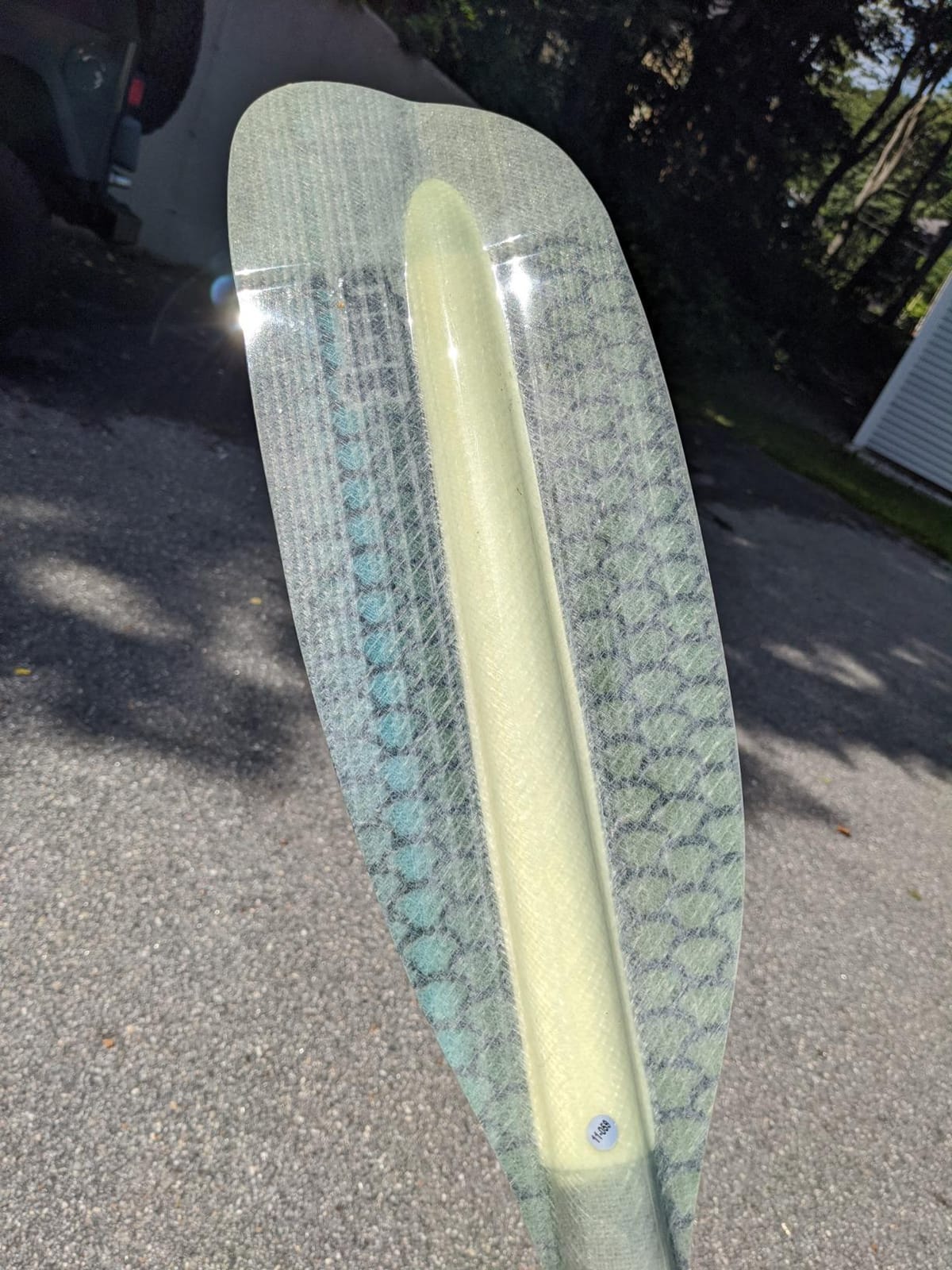
Blade angle adjusts in 15 degree increments through a range of zero to 60 degrees, and the dihedral shape pulls efficiently through the water on a straight approach. Length adjusts from 90.5 to 94.5 inches, which covers most hulls under 34 inches.
Two things stand against it. There is no hook or line retrieval notch, so it is a fishing-capable paddle rather than a fishing-specific one. Protective packaging is minimal, and a number of one-star reviews describe damage before the paddle was ever used, so inspect the blade on arrival.

Who should buy the Hornet paddle
Buy it if weight is your binding constraint: long distances, a heavy gear load, or a shoulder that complains after hour three. At 26 ounces it is the lightest durable blade option we tested.
It is also a strong pick for paddlers who move between a touring hull and a fishing kayak and want one light tool.
Who should look elsewhere
If you regularly hook structure and need to free a line from the seat, look for a paddle with a hook or J notch instead. The 90.5 to 94.5 inch range also does not reach wide-beam hulls with elevated seats.
Buyers who want a warranty length beyond one year will find more coverage on the Backwater Assassin.
6. Backwater Assassin Paddle – Best for Utility and Launch Work
Backwater Assassin Paddle 06-0017 Full-Size Carbon-Fiber Hybrid Kayak Paddle – 98.5′ to 102.5′ Length
ABS injected nylon blade
Carbon hybrid shaft
98.5 to 102.5 in
Hook and serrated launch edge
3 year warranty
Pros
- Multi purpose blade with hook and serrated launch edge
- Carbon hybrid construction is stiff and quiet for stealth approaches
- Three year warranty is the longest in this group
- Adjustable length options cover narrow and wide kayaks
- Drip rings included
Cons
- Heaviest listed weight at 2.7 lb
- Only the carbon hybrid version is offered here
- Nylon blade is noisier and less crisp than fiberglass or carbon
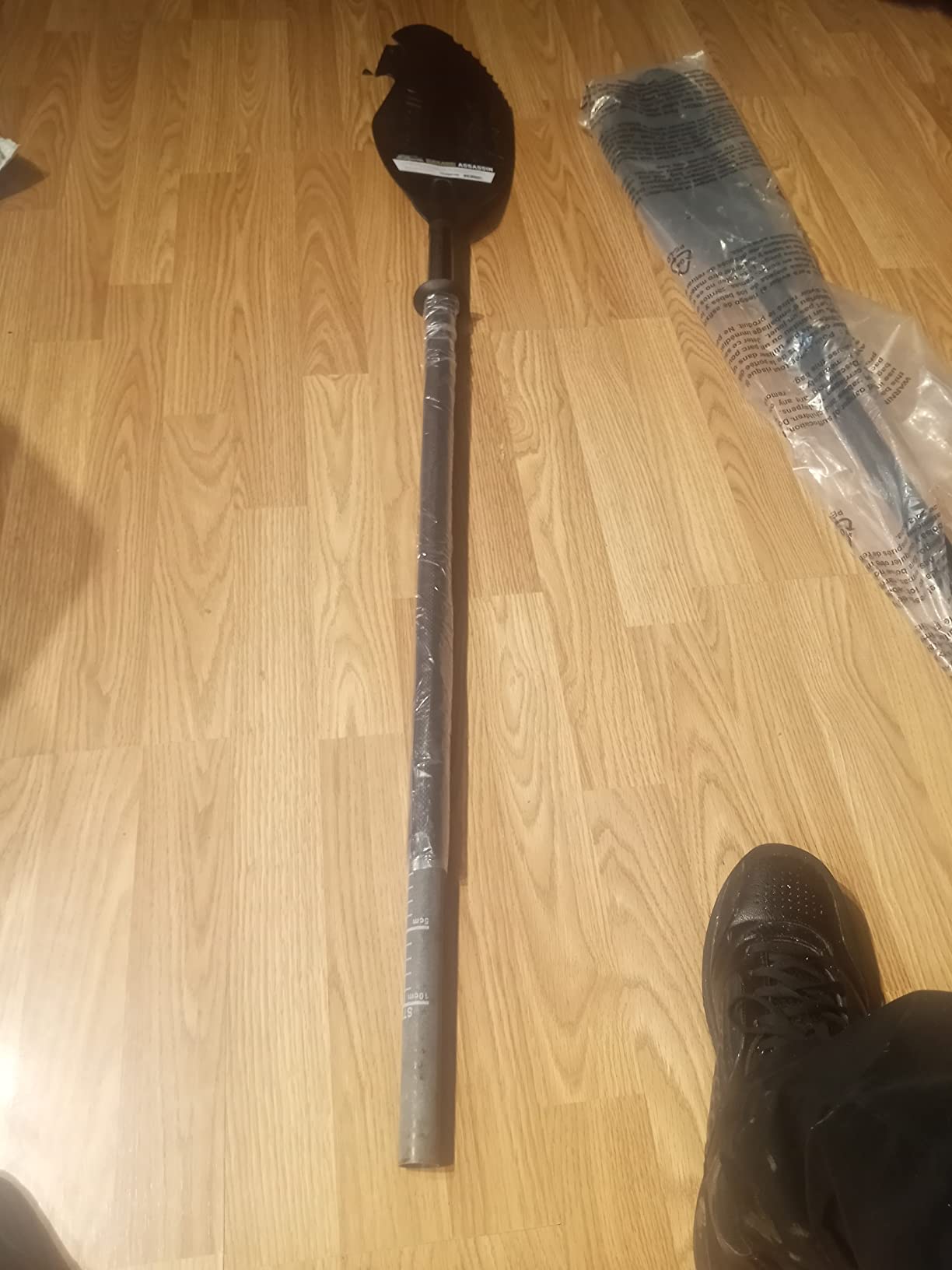
Two features make the Assassin the most tool-like paddle we tested. The hook on the blade grabs a line, a decoy, a dock line or a tree limb, and the serrated teeth along the edge let you launch from a solid surface instead of paddling in open water.
That combination changes how you get to the launch. If you beach your kayak on a mud flat, or you fish a bank where the water is only knee deep, the serrated edge is a genuine shortcut.
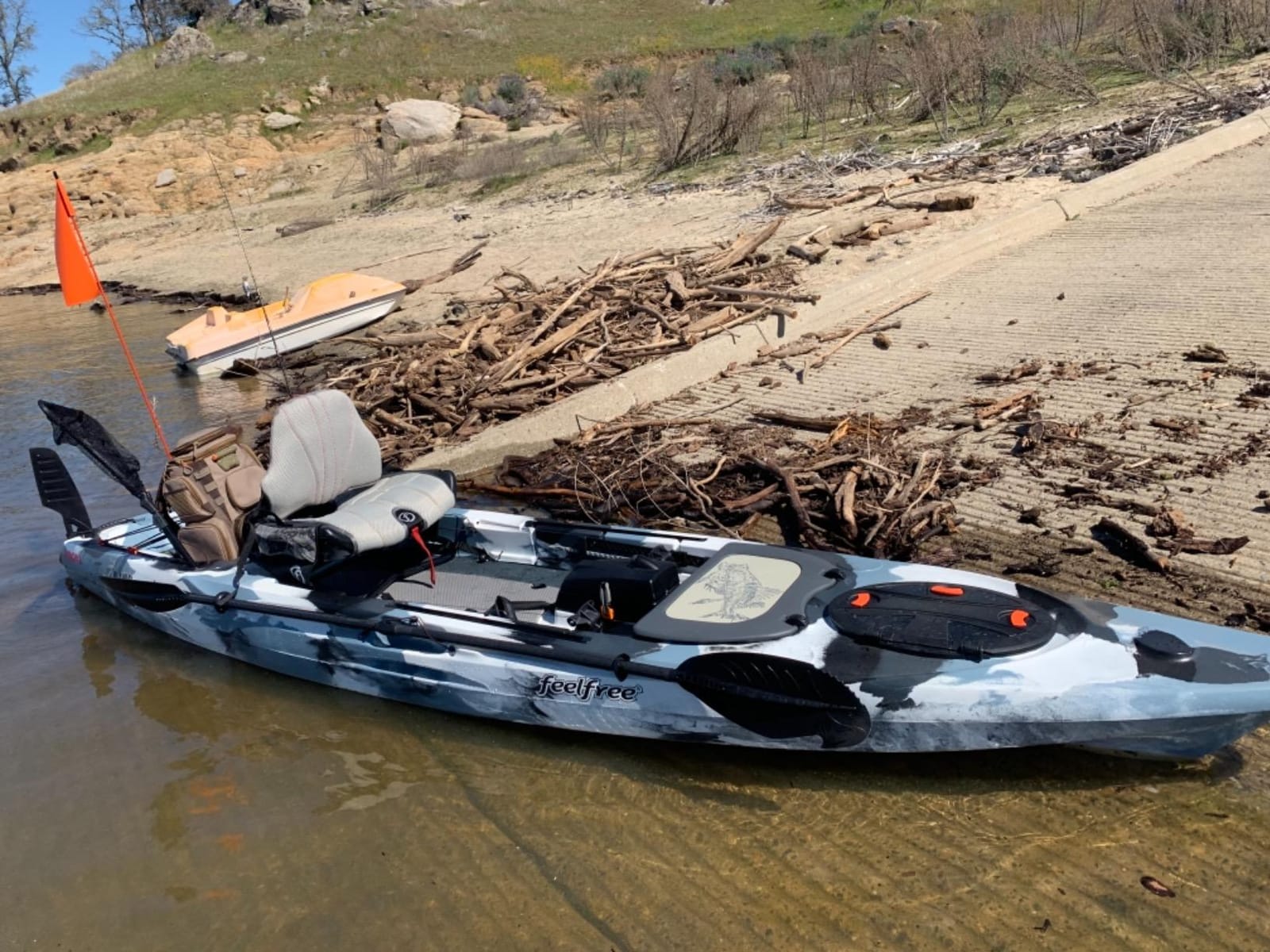
The carbon hybrid shaft is stiff and quiet, which matters for approach fishing where noise carries. At 2.7 pounds it is the heaviest listed weight in the group, so it is not the paddle for a long paddle home.
Length options in the 230 to 240 cm and 250 to 260 cm ranges cover both narrow and wide hulls. The three year warranty is the strongest coverage we saw, and on a paddle used as a tool, that matters more than it would on a pure touring blade.
Who should buy the Assassin
Buy it if you use your paddle as a utility tool rather than only as a propulsion device. Pedal drive and trolling motor owners fall into this group, because they still need to launch, land, position in tight water and reach the rod when something lands on the wrong side.
It is also the best warranty in the test for anyone who breaks gear on oyster beds and structure.
Who should look elsewhere
Anglers who need to cover distance under their own power should avoid the heaviest listed option in the group. Approach anglers who prize stealth will find the nylon blade louder than fiberglass or carbon.
If you want fine length control, the adjustment here is by range rather than by fine increments, so pick your length before you launch.
7. WONITAGO Angler Kayak Paddle – Best for a First Fishing Kayak
WONITAGO Angler Kayak Paddle Adjustable Fishing Kayak Oar with Paddle Leash
230 to 250 cm adjustable
1.2 mm aluminum shaft
Floating corrosion resistant plastic blades
Three piece build
Leash included
Pros
- Adjusts from 90 to 98 in to fit most kayaks and paddlers
- Aluminum shaft has controlled flex without breaking
- Blades resist corrosion and float in salt and fresh water
- Three piece build and leash make deck strapping easy
- Shaft scale doubles as a fish measuring guide
Cons
- Plastic blades are less crisp and durable than fiberglass
- Basic grip sections with little padding or ergonomics
- Plain appearance next to premium paddles
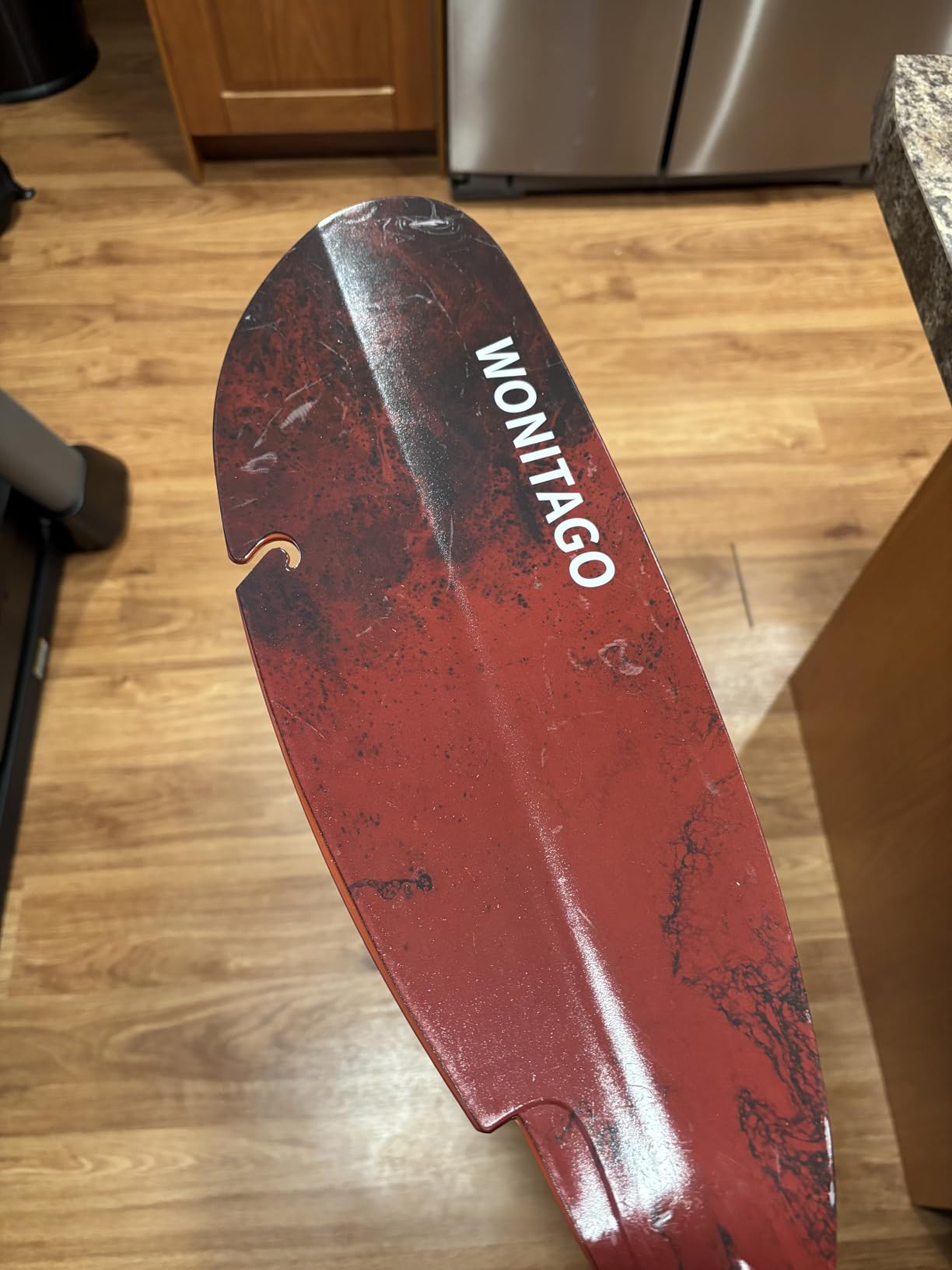
If you are outfitting a first fishing kayak and you want the angling extras without a large outlay, this is the honest entry point. Twenty centimeters of length adjustment, a hook on one blade, a 40 inch measuring scale and an included leash cover most of the short list that anglers ask about.
The 1.2 mm aluminum shaft is the thickest gauge in this group, and that gauge is what gives the controlled flex reviewers describe. A shaft that bends a little at the catch transfers less shock to your wrist.
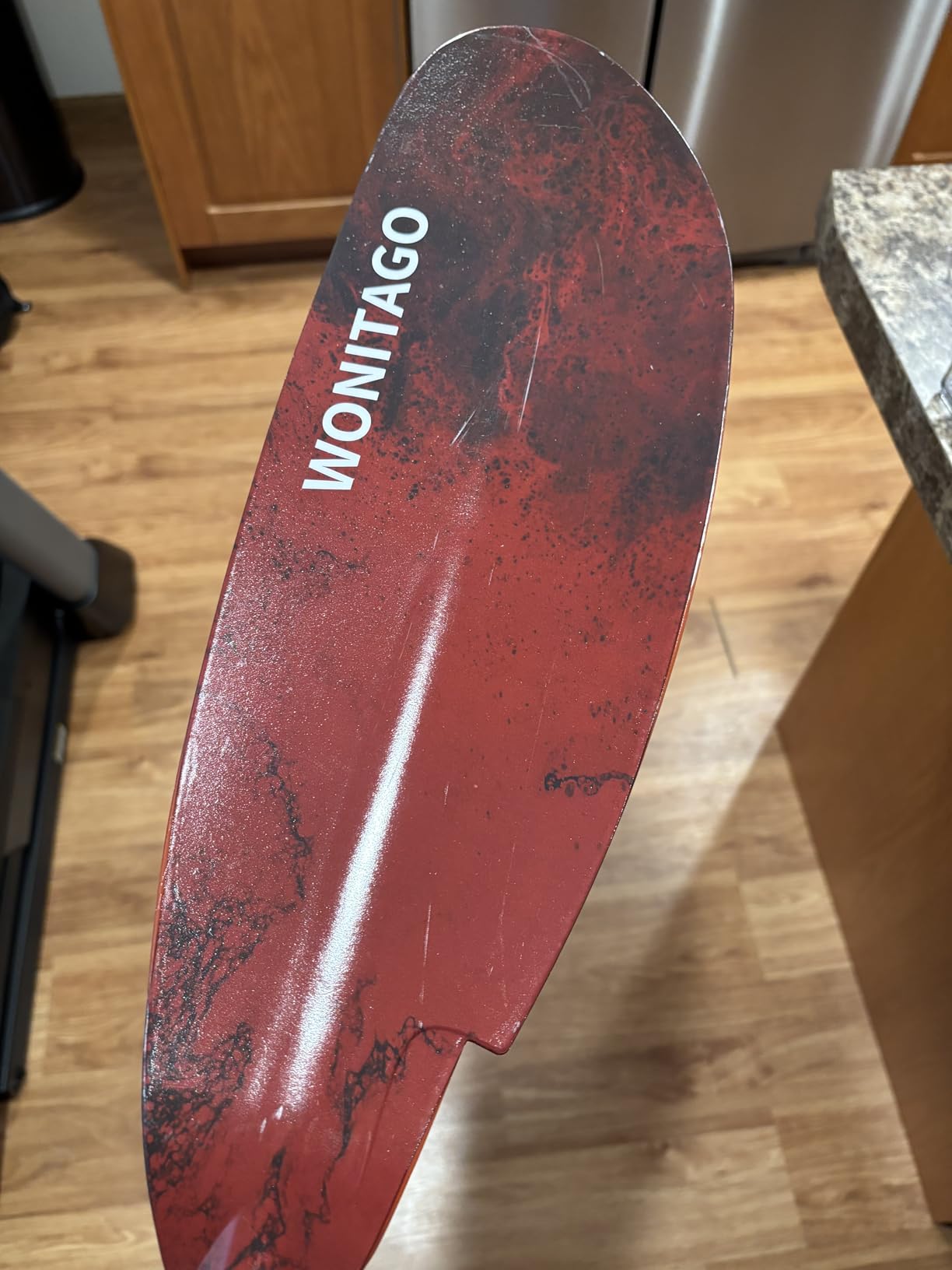
Blades are plastic, and that is the compromise. They are corrosion resistant and they float, which makes recovery easy if you drop the paddle in salt water, but they are less crisp in the water than fiberglass.
Grips are basic with little padding, which shows up after a full day. The three piece design is a real advantage on a fishing kayak, where deck space is already spoken for by rod holders and a crate.
Who should buy the WONITAGO paddle
Buy it as a first fishing paddle, a deck strapped backup, or a spare for a second kayak. The adjustment range covers most hulls under 34 inches and most paddlers.
It is a sensible pick for saltwater anglers fishing flats and bays, since the floating blades and corrosion resistance are the priorities there.
Who should look elsewhere
If blade durability against rock and oyster bed contact is part of your routine, plastic is the wrong material. Anglers on wide hulls with raised seats will also run out of length at the top of the range.
Anyone who paddles long distances should note that the listed weight is 2.64 pounds, which is heavy for the price bracket.
8. OCEANBROAD Adjustable Fishing Kayak Paddle – Best for Multi-Kayak Owners
OCEANBROAD Adjustable Fishing Kayak Paddle – 94in/240cm-98in/250cm-102in/260cm Aluminum Alloy Shaft Paddles Kayaking Fishing Oar with Paddle Leash, Black
94 to 102 in in 5 cm steps
1.1 mm aluminum alloy shaft
Fiberglass reinforced polypropylene blades
Three blade angle positions
Bungee leash included
Pros
- Widest length range in the group at 94 to 102 in
- Fiberglass reinforced blades at a budget price point
- Integrated hook retrieval system for snagged lines
- Included bungee leash secures the paddle when relaxing
- Many color options to match a kayak
Cons
- Heavier than expected for a budget aluminum paddle
- Blades smaller than some competing paddles
- Padded grips fit loosely and can slip
Eight inches of length adjustment in 5 cm steps is the widest range we tested, and it is the reason to buy this one. Families sharing a paddle, or owners with a narrow hull and a wide hull, can fit one tool to both.
The blades are fiberglass reinforced polypropylene, which is a better material story than plain plastic at the same bracket, and the integrated hook retrieval system does the same job as a J notch for freeing a snagged line.
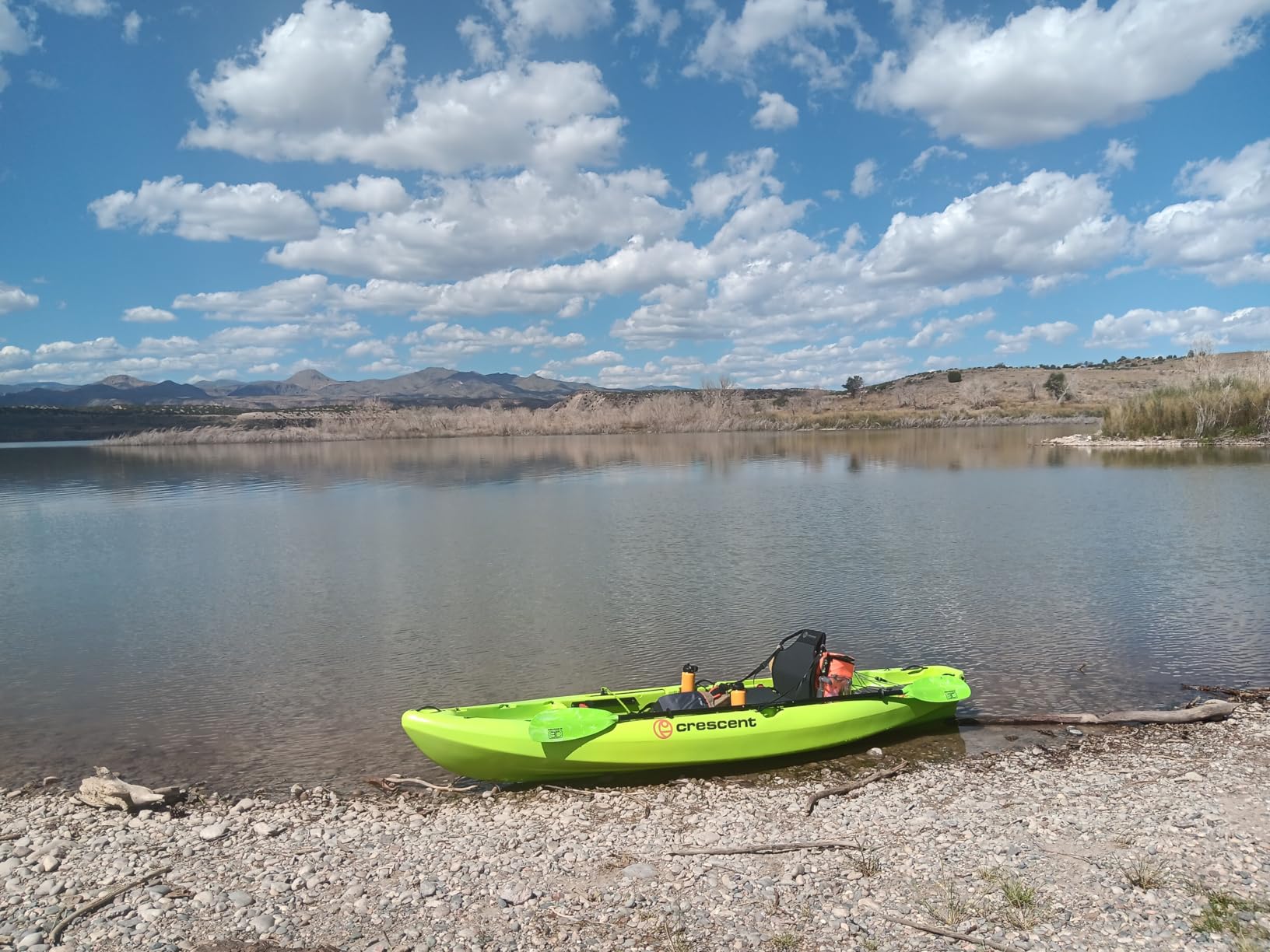
Three locking positions set the blade angle, end drip rings keep water out of the cockpit, and the bungee leash means the paddle stays put while you relax between drifts. That last detail is small and surprisingly missed by many paddles.
The complaints are consistent. It feels heavier than the price bracket suggests, the blades are smaller than some competing paddles, and the padded grips fit loosely enough to slip in a wet hand.
Who should buy the OCEANBROAD paddle
Buy it if one paddle has to serve more than one hull or more than one paddler. The 94 to 102 inch range covers narrow and wide fishing kayaks, and the 5 cm increments let you tune it precisely.
It is also a good pick for anglers who want fiberglass reinforced blades without moving up to a full fiberglass shaft.
Who should look elsewhere
Skip it if you paddle long distances and weight matters, since reviewers repeatedly note the heft. Those who prefer fine blade angle control over coarse locking positions will find three settings restrictive.
If you are on an elevated seat, this is a strong option. If you want a fixed premium feel, it is not.
9. Bending Branches Angler Ace – Best for Shoulder-Saving Carbon
BENDING BRANCHES Angler Ace Snap-Button Kayak Fishing Paddle – Lightweight Carbon Shaft, Carbon-Reinforced Nylon Blades, 2-Piece Design, Durable Performance for Fishing & Touring Kayaks
Lightweight carbon shaft
Carbon reinforced nylon blades
Snap button two piece ferrule
Ovalized ergonomic shaft
240 to 280 cm range
Pros
- Carbon shaft minimizes arm and shoulder fatigue on long days
- Carbon reinforced nylon blades hold up against rocks and oyster beds
- Snap button ferrule joins tightly with no play
- Ovalized grip reduces hot spots for quiet control
- Wide length range from 240 to 280 cm
Cons
- Highest cost in the group
- Thin packaging has been reported to result in damage in transit
- Carbon shaft is less tolerant of abuse than aluminum
This is the paddle to buy if fatigue, not durability, is your limiting factor. A carbon shaft is markedly lighter than fiberglass or aluminum at the same length, and over an eight hour day that difference arrives as a shoulder that is still comfortable at the end.
The blades are carbon reinforced nylon, which is a deliberate compromise between a carbon blade and a pure nylon one. They take hits from banks and structure without the fragility people associate with all-carbon paddles.
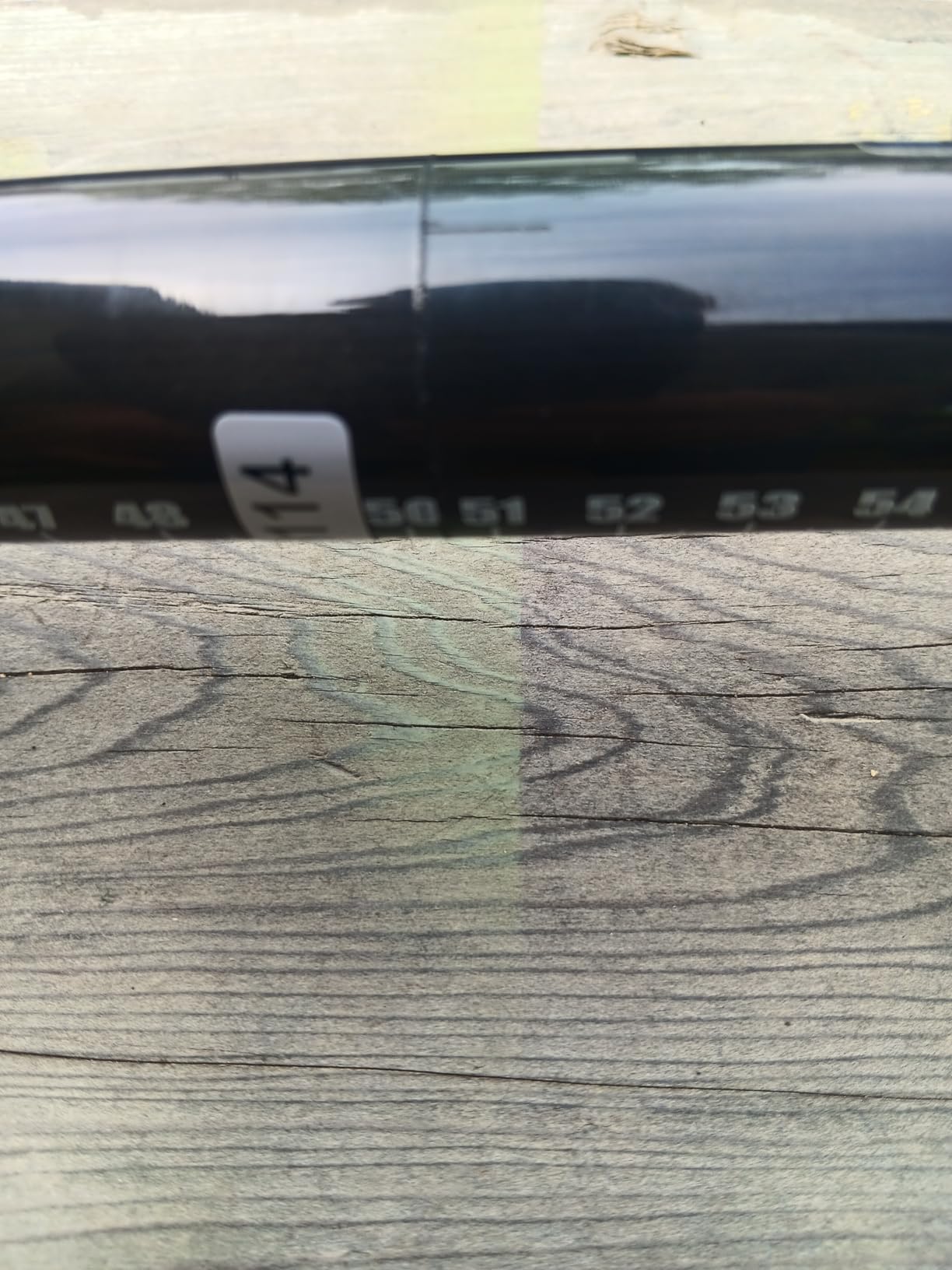
Construction details matter more than the marketing here. The snap button two piece ferrule joins tightly with no play in the shaft, and the ovalized ergonomic profile removes the hot spots that make a straight shaft uncomfortable after a few hours.
Length availability from 240 to 280 cm is the broadest high end range we found, so tall paddlers on wide hulls are not pushed into a short option. Protective packaging is thin, and some buyers report the paddle arriving damaged, so check the blade and shaft on arrival.
Who should buy the Angler Ace
Buy it if you fish long days, you are paddling a loaded hull across distance, or you have a history of shoulder trouble. Carbon is the single biggest lever you can pull for all-day comfort.
It is also the right choice for anglers over six feet who need length options an entry paddle does not offer.
Who should look elsewhere
If your fishing is mostly short drifts close to a launch, the weight saving matters less and the outlay is harder to justify. Beating a carbon paddle with rocks and concrete is not a good use of it.
Anglers who want a long warranty should note the coverage here is stated only as a manufacturer warranty, unlike the three year terms offered elsewhere in this roundup.
10. Leader Accessories Adjustable Kayak Paddle – Best for a Shared or Second Paddle
Leader Accessories Adjustable Kayak Paddle 90-98in for Fishing Adults Blue
230 to 250 cm in 5 cm steps
1.1 mm aluminum alloy shaft
Double sided fiberglass reinforced blades
Three push button lock positions
Leash included
Pros
- Five length settings from 230 to 250 cm
- Sturdy three piece build with no wiggle at the joints
- Hook retrieval groove and shaft markings are useful for fishing
- Floating design makes recovery easy when dropped
- Elastic leash secures the paddle in wind and chop
- Drip rings work at both ends
Cons
- Feels heavy for a budget paddle on long days
- Shaft lacks integrated hand grips
- Only offered in one color
- Some buyers would rather have carbon for weight
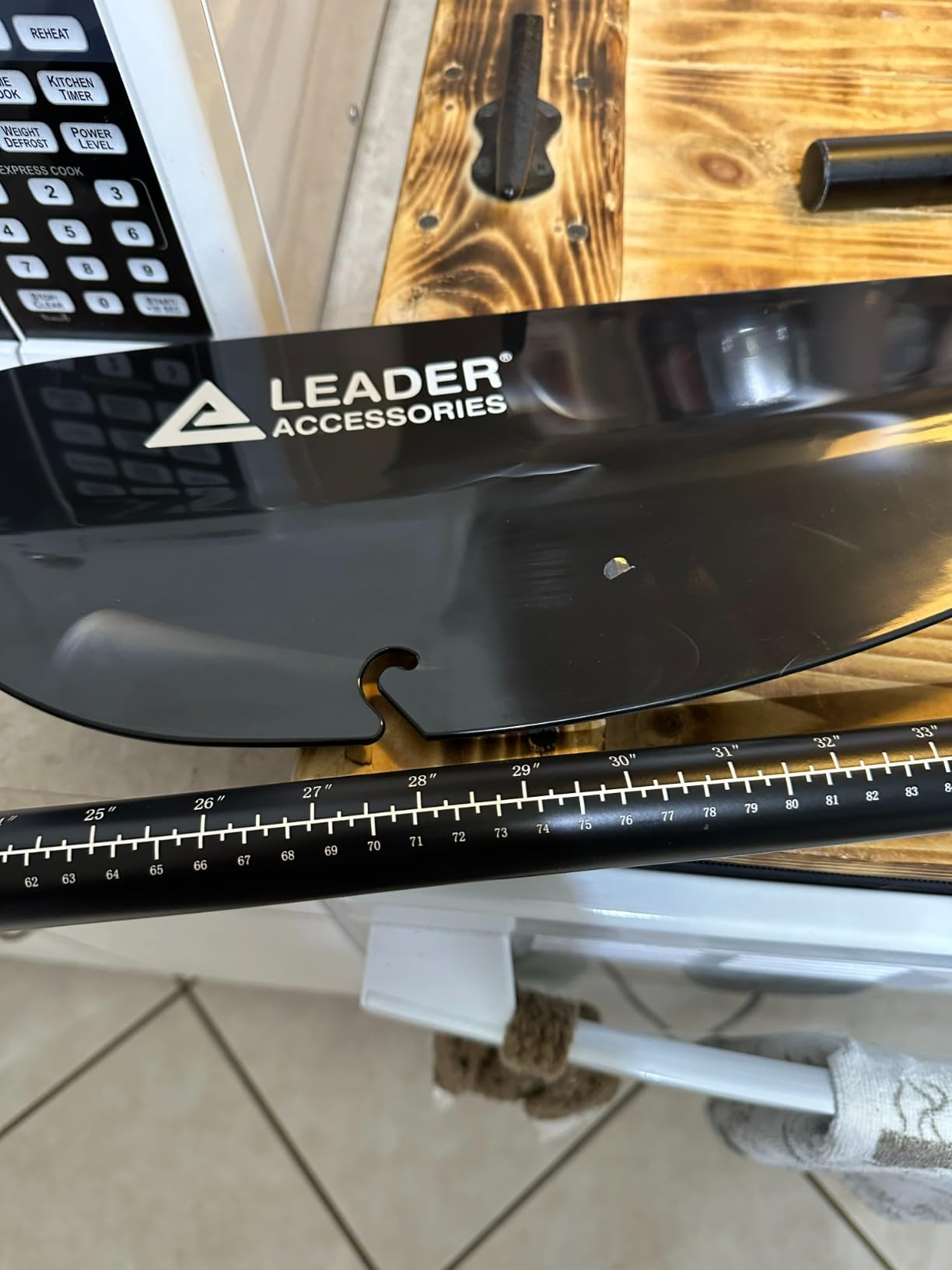
Treat this as a second paddle rather than a first. It does the mechanical work well, with a sturdy three piece build, no wiggle at the joints and a hook retrieval groove plus high visibility shaft markings for measuring fish.
Floating blades and an elastic leash are the features that matter in wind and chop, which is exactly the condition where a second paddle stops being optional.
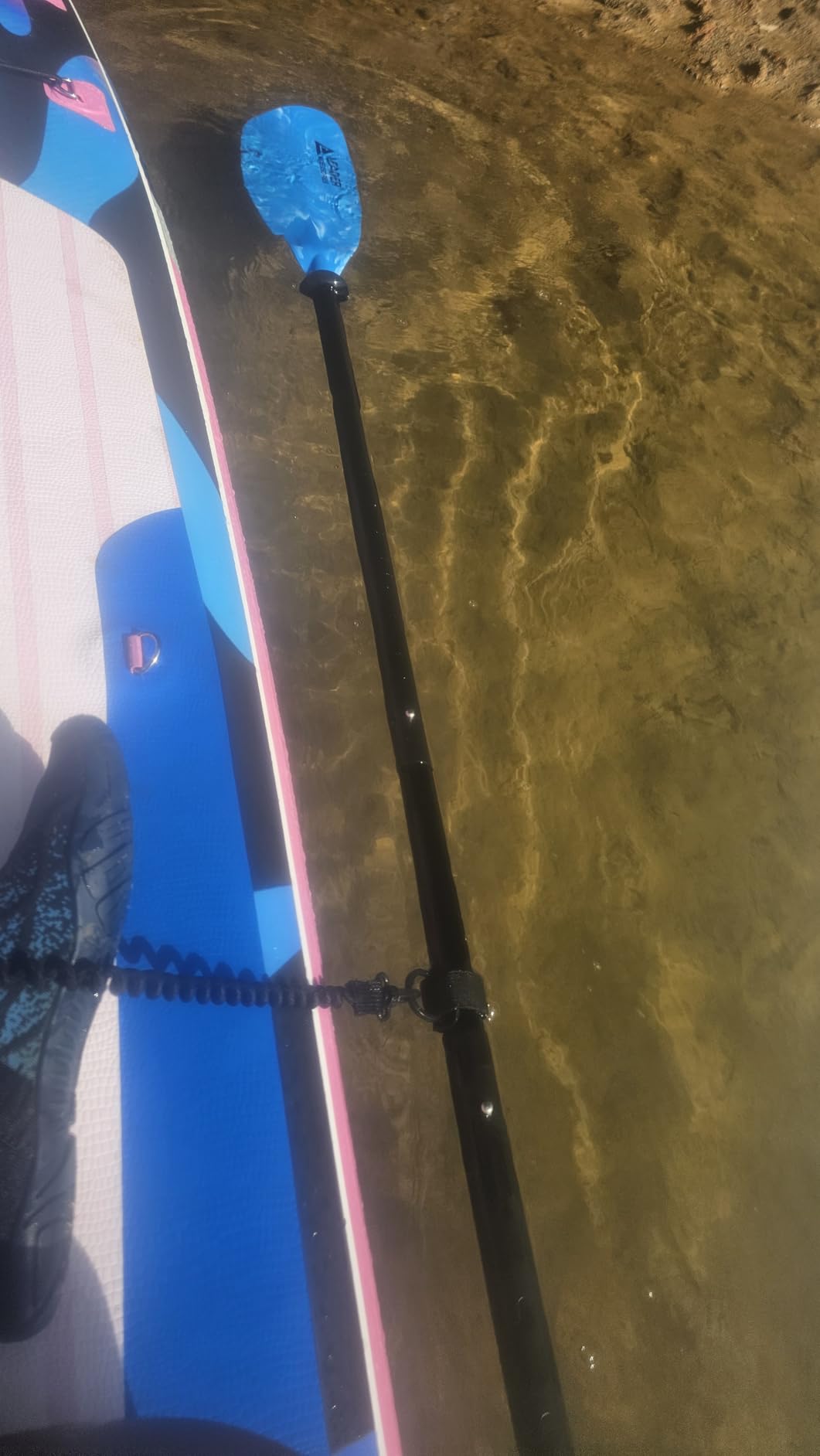
Adjustment runs from 230 to 250 cm in 5 cm steps across three push button locking positions for blade angle, so it can be shared between paddlers of different heights. The longest section is 45.3 inches, which is short enough for a roof rack or a truck bed.
The criticisms are consistent and specific: it feels heavy for its class, the shaft has no integrated hand grips so some buyers add their own, and there is only one color.
Who should buy the Leader Accessories paddle
Buy it as a backup, a shared family paddle, or a teaching kayak paddle for a dock. Five length settings and a leash make it forgiving in a setting where several people of different sizes use the same boat.
It is also a sensible first paddle for a child or a smaller angler, where the low weight is less of an issue.
Who should look elsewhere
Anglers who will spend a full day paddling will notice the weight sooner than anything else. The bare shaft without integrated grips will also bother anyone who fishes without gloves in cold weather.
If you want a single color-matched setup or plan to fish structure every trip, a blade with a deeper hook feature is the better spend.
How We Picked the Best Fishing Kayak Paddles for Anglers
We picked on five criteria, and each one came directly from something that went wrong or right during testing. First, blade area relative to hull width, because that is what sets how much water moves per stroke. Second, total weight in ounces, since swing weight is what your shoulders feel at hour four.
Third, ferrule security, because a ferrule that develops play ruins quiet steering and eventually separates. Fourth, angling hardware, which means a hook, a J notch, a ruler on the shaft and drip rings. Fifth, warranty length and how easy a replacement blade is to source.
We also logged how each paddle behaved on mud flats, in chop and while launching off a solid bank, because a paddle that only works in open water is not a fishing paddle.
What Size Fishing Kayak Paddle Do You Need?
Start with the 120 rule: measure the distance from your seat to the top of your head, add 12 inches, and that is your paddle length. It works because the top blade should clear your head when you hold the paddle vertically in front of you.
For a fishing kayak, add for the hull and the seat. A wider boat needs more blade area and usually more length, and a raised seat pushes everything up by another 8 to 20 cm.
Narrow hull, 28 to 30 inches wide, low seat: 230 to 240 cm
Wide hull, 32 to 34 inches wide, standard seat: 240 to 250 cm
Wide hull, 32 to 36 inches wide, elevated or high-low seat: 250 to 260 cm
Very wide hull above 36 inches, or tall paddlers over six foot two: 260 to 280 cm
If you are still stuck, work through our fishing kayak picks and match the beam width before you match anything else. A paddle that is too short for a wide hull will scrape the gunwales and knuckle the deck, which is the complaint that shows up again and again in forum threads.
How to Choose the Best Fishing Kayak Paddles for Anglers
Shaft material sets the fatigue ceiling. Carbon fiber is the lightest and the most expensive, and it is the right answer for long days. Fiberglass sits in the middle with more flex and more forgiveness, which many paddlers with shoulder issues actually prefer. Aluminum is the most durable and the least tolerant of abuse, and it is the heaviest of the three. A mixed carbon and fiberglass shaft splits the difference, as the Hornet paddle in this roundup does.
Blade material is a durability question. Carbon blades are stiff and light but punishing on rock. Fiberglass blades, including fiberglass filled nylon, are the most durable option and the sweet spot for the money. Reinforced polypropylene and ABS nylon trade some crispness for a lower cost and a blade that floats.
Feathering sets how you fight a crosswind. Zero degrees is inline, which is simpler and stronger. Sixty degrees feathers the return stroke so it cuts through air instead of pushing water, and it makes a measurable difference on an open lake. Push button, pin button and slider systems are all adequate; the slider ferrule that bass fishing forums favour is prized because it lets you set a custom blade offset for a high seat.
Do the fatigue math before you buy. A mile of paddling is roughly 500 to 600 strokes, so the difference between a 26 ounce paddle and a 48 ounce paddle over three miles is thousands of extra pounds of swing weight moving through your shoulders. That is the whole case for carbon, and it is why so many anglers who moved off a heavy aluminum paddle say they no longer feel the end of the day.
The same blade area logic carries over to smaller craft, so our swim paddle picks break down shaft and blade choices for tighter paddling spaces. If you fish from a larger platform where a motor handles the distance, start with our bass boat picks and come back to paddle length once the hull is settled.
Finally, rinse the ferrule in fresh water. Salt build-up is the single most common complaint about adjustable paddles, and the ferrule halves that stick together are usually the ones that were never rinsed after a salt session.
Frequently Asked Questions
What is the best kayak paddle for anglers?
The best kayak paddle for anglers matches blade area to hull width and keeps total weight low. For most wide-beam fishing kayaks the answer is a 240 to 250 cm paddle with a large asymmetric blade, an ovalized grip and a hook or notch for snagged lines. In our roundup the Pelican Poseidon leads at 16 ounces, with the Bending Branches Angler Ace as the carbon upgrade for long days.
What size paddle for a fishing kayak?
Use the 120 rule, then add for the boat. Measure from your seat to the top of your head and add 12 inches. Then allow 230 to 240 cm for a narrow hull with a low seat, 240 to 250 cm for a wide hull with a standard seat, and 250 to 260 cm for an elevated seat on a 32 to 36 inch hull.
Which type of kayak paddle is better, fiberglass or carbon fiber?
Carbon fiber is lighter and stiffer, which reduces arm and shoulder fatigue on long fishing days, but it costs more and tolerates abuse less well. Fiberglass is heavier and more forgiving, and forum consensus treats fiberglass as the most durable blade material and the best balance for the money. Choose carbon for distance, fiberglass for structure and rock.
Are Bending Branches paddles worth it?
For an angler who fishes long days, yes. The Angler Ace pairs a lightweight carbon shaft with carbon reinforced nylon blades and an ovalized grip, which is the combination that most reduces fatigue without making the blade fragile. You give up some abuse tolerance and get less explicit warranty wording than some cheaper paddles offer.
What is the 120 rule for kayaking and how does it work?
The 120 rule is a sizing shortcut: measure the distance from your seat to the top of your head and add 12 inches to get your paddle length. It works because a correctly sized paddle lets the top blade clear your head when you hold it vertically in front of you. In fishing kayaks you add more for a wide hull or a raised seat.
Final Thoughts on the Best Fishing Kayak Paddles for Anglers
The Pelican Poseidon takes the top slot because 16 ounces with fiberglass reinforced blades, a hook and a shaft ruler is the combination most anglers are actually looking for. Buy it and stop thinking about it.
Move up to the Bending Branches Angler Ace if you fish long days or paddle distance, and pick the SeaSense Xtreme 2 if you want a durable blade for structure and do not need to free lines often. Those three cover the large majority of anglers reading this.
Match the length to your hull before anything else, rinse the ferrule after salt sessions, and you will be covered for 2026.