
If you are starting out, the best cross country skis for beginners are short, forgiving classic skis with waxless grip and bindings already mounted on them. The best cross country skis for beginners in this guide are mostly complete packages, so a first-time skier opens one box and can go to the trail without sourcing bindings, boots or poles separately.
That last point matters more than any spec on the label. Forum threads on r/xcountryskiing and Telemark Talk keep circling the same trap: people buy a ski advertised as a bargain, then discover it was sold flat, and the real cost of a usable setup ends up far above what the listing implied. Five of the eight picks below arrive with bindings mounted, and four of those include boots and poles in the box.
One more thing to be honest about. Adult Nordic skis are a thin category with few written reviews, so the ratings in this guide are built on small numbers. I weighted review volume, spec completeness and how forgiving the geometry is, and I flag thin data where I find it rather than dressing it up.
Table of Contents
Top 3 Picks for the Best Cross Country Skis for Beginners in 2026

Whitewoods Cross Tour 3Pin 177cm
- Complete package with boots
- bindings and poles
- 177cm waxless classic ski
- 64-55-59 sidecut and laminated wood core
- Bindings pre-mounted so there is no setup

Whitewoods Cross Tour NNN 177cm
- Complete NNN package with boots
- bindings and poles
- 177cm waxless classic ski
- Standard NNN interface works with most rental boots
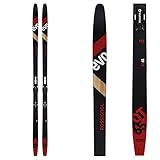
Rossignol Evo OT 65 Positrack
- Genuine Rossignol classic ski with Positrack grip
- Control step-in bindings already mounted
- Four length options from 165cm to 195cm
The Best Cross Country Skis for Beginners at a Glance in 2026
The table below lists every ski in the guide with the details that actually decide a purchase: whether it is a complete package, what kind of grip it uses, and whether it carries metal edges for ungroomed snow.
| Product | Specifications | Action |
|---|---|---|
| Whitewoods Cross Tour 3Pin 177cm |
|
Check Latest Price |
| Whitewoods Cross Tour NNN 177cm |
|
Check Latest Price |
 Whitewoods Outlander 139cm Whitewoods Outlander 139cm |
|
Check Latest Price |
 Whitewoods Whitetail NNN 170cm Whitewoods Whitetail NNN 170cm |
|
Check Latest Price |
| Rossignol Evo OT 65 Positrack |
|
Check Latest Price |
 Rossignol BC 80 Positrack 186cm Rossignol BC 80 Positrack 186cm |
|
Check Latest Price |
 Rossignol Evo XT 60 Positrack 175cm Rossignol Evo XT 60 Positrack 175cm |
|
Check Latest Price |
 Fischer Inspire EF Set 169cm Fischer Inspire EF Set 169cm |
|
Check Latest Price |
1. Whitewoods Cross Tour 3Pin Package 177cm: The Complete First Setup
Whitewoods Adult 75mm 3-Pin Cross Country Ski Package, 177cm – Skis, Boots, Bindings, Poles (40, 121-150 lbs.)
177cm waxless classic skis
64-55-59 sidecut, wood core
3-pin bindings pre-mounted
Boots and poles included
Pros
- Complete all-in-one package
- no extra parts to source
- Bindings arrive already mounted on the skis
- Lightweight cap construction is easy to carry
- Sizes 36 through 49 cover most adults
Cons
- 3-pin is less universal than NNN at rentals and repair shops
- 17 percent of ratings sit in the two-star band on durability
- Boots feel less supportive than higher-end NNN boots on long tours
Everything arrives in one box: 177cm skis, pre-mounted 3-pin touring bindings, boots and a pair of Nordic poles. For someone who has never clicked a Nordic boot into a binding, that removes the single most intimidating part of the first purchase, and the package weighs 12 pounds, so it is not a burden to carry from a car to a trailhead.
The ski itself is a classic cross country design with a laminated wood core under a lightweight cap and a powder tip, built on a 64-55-59 sidecut. That is a fairly wide underfoot platform for a ski this length, which is exactly what a beginner wants, because a wider waist gives you something to stand on when your weight is drifting forward. The base is machined negative waxless, so there is no kick wax to apply before or during the season.
Sizing is straightforward: this 177cm length is built for skiers between 121 and 150 pounds, and the boot sizes run from 36 to 49, so a household can share one package across several body sizes. The included boots use a 100g Thinsulate lining with a quick-dry liner and a removable insole, and the poles have a 15mm tapered shaft with adjustable padded straps.
What stands out most in the reviews is how rarely owners report setup problems. The binding plate is already drilled and mounted, the 3-pin system is a flat-heel touring design that steps in without a tool, and the ABS tail protector takes the beating that usually shows up first on a rental-grade ski.
Who this package suits
This is the pick for a first-time skier who wants a complete, working setup without research. The 177cm length and 121 to 150 pound window cover a large share of adults, and the waxless base removes the temperature-matching problem that makes most beginners quit in week one.
It also works well for a family or a group program, since the adjustable bindings and the wide boot size range mean one purchase can serve several people over a season. Telemark Talk regulars repeatedly recommend testing on a waxless ski before worrying about glide wax, and this is the simplest version of that test.
Where it falls short
The 3-pin binding is the main limitation. It is a real, working system, but it is far less common than NNN, which means fewer spare bindings, fewer compatible rental boots and fewer shops that can service it. If you expect to try Nordic skiing at a public centre that rents NNN gear, you will not be able to just show up in these boots.
The two-star share in the ratings also deserves a straight mention. A noticeable minority of owners report durability complaints, and boot support is described as thin compared with dedicated NNN boots on longer tours. For weekend recreational use that is an acceptable trade, but for someone planning 30km days in year two, the NNN package below is the better long-term base.
2. Whitewoods Cross Tour NNN Package 177cm: The Standard-Binding Alternative
Whitewoods Adult NNN Cross Country Ski Package, 177cm – Skis, Bindings, Boots, Poles (39, 121-150 lbs.)
177cm waxless classic skis
Rottefella NNN bindings pre-mounted
Boots and poles in the box
Pros
- NNN is the most widely supported Nordic binding system
- Rottefella NNN Touring bindings arrive mounted
- Boots reported comfortable even for wide feet
- Light package that is simple to carry
- Repeatedly described by owners as a first-season setup
Cons
- Boot laces may not tighten firmly enough for some feet
- Some owners report the liner losing shape over time
- Boots are described as less supportive on long tours
- Occasional reports of incomplete shipments
This is the same ski platform as the package above, converted to the binding system most Nordic centres actually use. The skis are 177cm with the same 64-55-59 sidecut, laminated wood core, powder tip and machined negative waxless base, but the bindings are Rottefella NNN Touring Basic units that are already mounted, with no mounting plates required.
Why that matters: NNN, sometimes called the New Nordic Norm, is the interface that most rental fleets, most Nordic centres and most repair shops support. Boots from an NNN system will step into an NNN binding and essentially nothing else, and getting this right on the first purchase saves the most common beginner mistake of ending up with gear that cannot be mixed.
Owner reviews describe the included Whitewoods 302-NNN boots as comfortable even for wide feet, with 100g Thinsulate lining and a quick-dry liner that dries out overnight rather than staying wet for a week. The package is 12 pounds with the same 15mm tapered Cross Trail poles, and the 177cm length again targets skiers between 121 and 150 pounds.
Several reviewers describe this as their first cross country ski package, which is useful context. It is being bought by people with no prior gear, and the recurring praise is about simplicity: one box, bindings already on, and a ski that works on a groomed classic track the day it is opened.
Who this package suits
Choose this if your local trail network is groomed Nordic centre terrain, because the NNN interface means you can rent NNN boots anywhere, borrow a spare pair, and get the bindings serviced without a specialist order. It is also the safer first buy for anyone who might want to join a club or a lesson group later, since clubs almost universally run NNN.
For a skier who plans to keep going past the first season, the standard binding is the more durable choice. When you eventually upgrade the skis, the boots and bindings from this package carry over, so the second purchase is skis alone rather than a whole new package.
Where it falls short
The complaint that comes up most is boot fit rather than ski performance. Owners report laces that will not pull tight enough to stop side-to-side foot movement, and a smaller number describe the liner bunching or losing shape after repeated use. If you have a high instep or a narrow heel, budget for a different boot or add a second pair of laces.
There is also a small share of reports about incomplete shipments and one account of a boot failing at the toe during first use. These are small numbers on a modest review count, but they are worth checking on arrival, because a missing binding or a cracked toe is a bad first impression of Nordic skiing.
3. Whitewoods Outlander 139cm: Skiing in Ordinary Winter Boots
Whitewoods Outlander 139cm Cross Country Ski Set – Snowshoe Grip, Nordic Glide, Brown
Hybrid ski and snowshoe design
129-109-127 profile with tip rocker
3/4 metal edges, fishscale grip
Single length fits up to 230 lbs
Pros
- Works with almost any standard winter boot
- Bindings adjust across roughly a womens 7 to a mens 13
- 3/4 metal edges hold up on icy and packed snow
- Fishscale center gives grip without kick wax
- Telescoping poles with a rubber walking tip included
Cons
- Narrow 139cm platform is less stable at speed than a full adult ski
- Strap bindings give less control than a real NNN or SNS binding
- Not a replacement for a proper Nordic ski on long or fast tours
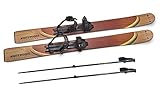
This is the odd one out in the guide, and it is here for a specific beginner problem: not wanting to commit to Nordic boots. The Outlander is a hybrid ski and snowshoe platform that works with almost any standard winter boot, which means you can try cross country skiing in the boots you already own while you decide whether the sport is for you.
Underneath it is a proper Nordic build rather than a toy. The laminated wood core sits under a Lyris sublimated topsheet with 3/4 metal edges, a fishscale center, a positive waxless die-cut base, a steering groove, and a 129-109-127 profile with tip rocker and moderate camber for grip and glide on icy or packed snow. The metal edges are the detail that matters most here, because they are what let the ski hold on crust.
Adjustability is the other strength. The bindings are pre-mounted using three M6 snowboard inserts and adjust from roughly a women’s size 7 to a men’s size 13 depending on the boot used, and the single 139cm length is rated for skiers up to 230 pounds. The included Appalachian poles are two-piece telescopic 6061 aluminum, adjustable from 115 to 140cm, with a rubber walking tip that lets you use them off the snow.
Who this set suits
It is built for a trial skier, a dog walker, a family that wants one set of gear in the trunk, or anyone on a hard budget. Reviews highlight exactly this use case, with owners pointing to rentals, group tours and beginner programs, and the whole package weighs 11 pounds.
It also suits anyone whose local access is a mix of groomed and ungroomed terrain. With 3/4 metal edges, a fishscale center and a wide 109mm waist, it is the most forgiving platform in the guide on variable snow, and the walking tip on the poles makes it genuinely useful for short trips across a snowy field.
Where it falls short
It is not a cross country ski in the technical sense, and treating it as one leads to frustration. The 139cm platform is narrow, which means less stability at speed, and the strap-style bindings give far less precise control than an NNN or SNS binding, so balance work and edging are noticeably weaker.
On long or fast tours it will feel like a compromise, and reviews that sit in the middle of the rating range point to the narrower, less demanding platform compared with full adult Nordic skis. If you already know you want to learn classic technique properly, spend the extra and buy one of the NNN packages instead.
4. Whitewoods Whitetail Metal Edge NNN 170cm: Metal Edges in a Box
Whitewoods Whitetail Adult Metal Edge Cross-Country NNN Ski Package – Skis, Boots, Bindings, Poles | 170CM (for Skiers 131-155 lbs.) (EU Boot Size: 39)
170cm ski for skiers 131-155 lbs
7/8 metal edges, waxless base
5 air-channeled laminated wood core
NNN bindings pre-mounted
Pros
- 7/8 metal edges over most of the edge length
- Air-channeled wood core is stiffer and more stable
- Complete NNN package with bindings
- boots and poles
- Four lengths available so weight can be matched
- Light 12 pound package
Cons
- Only four reviews
- so durability is not well documented
- Listed as an intermediate-level ski rather than a beginner model
- Four-length lineup means the sizing chart must be checked carefully
Metal edges are the feature most beginners underestimate. They let a classic ski hold an edge on hard, icy or refrozen snow, and without them a ski that feels fine in fresh snow becomes uncontrollable the first week the temperature drops and the groomer goes home. This package puts 7/8 metal edges on a complete, boxed setup.
The build is a 5 air-channeled laminated wood core with cap construction, a 68-60-65 sidecut, a powder tip, a machined negative waxless base and an ABS tail protector. That is a stiffer and more substantial platform than a fiberglass ski, and the wider 65mm waist adds stability for a skier who is still finding balance.
Rottefella NNN Touring Basic bindings are pre-mounted with no mounting plates needed, and the box also contains Whitewoods 302-NNN boots with Thinsulate lining and a pair of Cross Trail poles with a 15mm tapered shaft. Total package weight is 12 pounds, so it is still a car-boot load rather than a shoulder carry.
Who this package suits
This suits a skier in a region with variable conditions, where early-season crust and mid-season icy trails are as likely as soft snow. It is also a sensible choice for someone who wants a wood core from day one rather than starting on fiberglass and replacing it after two seasons.
The four-length lineup is the quiet strength. This model is offered at 160cm for skiers around 100 to 130 pounds, 170cm for 131 to 155 pounds, 180cm for 156 to 175 pounds and 190cm for 176 pounds and above, which means one model covers a family across a wide range of body weights.
Where it falls short
The honest problem here is data, not design. All four reviews are five stars, which is encouraging but far too small a sample to say anything about durability after a few seasons, and I would treat the perfect score as a signal rather than a conclusion.
It is also listed as an intermediate-level ski. That makes sense for the metal edges and the air-channeled core, but a stiffer construction punishes imperfect technique more than a soft beginner ski does, so a complete first-timer should take a lesson or two before a full day on it. Check the weight chart before ordering, because picking the wrong length is the most common avoidable mistake here.
5. Rossignol Evo OT 65 Positrack: The Budget Route Into a Real XC Ski
Rossignol EVO OT 65 IFP Positrack Mens XC Skis 195 W/Control Step in Bindings
65/60/53mm classic profile
Positrack waxless base
Activ Cap fiberglass construction
Control step-in bindings included
Pros
- Entry-level route into a genuine Rossignol cross country ski
- Positrack waxless base removes kick wax entirely
- Control step-in bindings are already mounted
- Four length options from 165cm to 195cm
- Fiberglass construction keeps the ski light and simple
Cons
- Fiberglass offers less damping and edge hold than a wood-core ski
- Boots and poles are not included
- Only three reviews
- so field feedback is limited
Everything before this one is a Whitewoods package. This is the first Rossignol, and it represents a different strategy: buy the ski, not the box. It is a genuine Rossignol cross country ski with a Positrack waxless base, supplied with Control step-in bindings already mounted, and the savings come from the fact that boots and poles are not part of the package.
Construction is Activ Cap with fiberglass, running on a 65/60/53mm profile with a medium sidecut and XC double camber. Double camber is worth a note for beginners: it gives a small amount of reverse camber at the tip and tail, which helps the ski track straight when you are gliding without pushing, and makes the recovery from a slip much less intimidating.
The Positrack base is a moulded pattern of scales in the base underfoot, which is the same grip principle as a fish scale ski. It needs no kick wax, no temperature matching and no scraping. It also does not ice up as readily as a mohair skin when the snow turns wet, which is a real advantage for coastal and low-elevation trails.
Who this ski suits
This is the pick for a skier who already owns boots, or who can borrow or rent a compatible pair. If you have an existing NNN or NNN-BC boot collection, this ski plus its pre-mounted bindings completes a working setup for the cost of one item, and the range of four lengths means you can match the ski to your weight rather than settling.
It is also the right choice for anyone who wants a Rossignol and expects to keep the skis for a few seasons. Rossignol is a core cross country brand rather than a general ski label, and the Evo OT platform is a simple, well-understood classic ski rather than a novelty design.
Where it falls short
Fiberglass is the trade-off. It keeps the ski light and predictable, which is good for learning, but it damps vibration less well than a wood core and holds an edge less firmly, so on icy early-season snow it will feel less settled than the metal-edged packages above.
Because boots and poles are excluded, the total cost of this option is not as simple as the ski listing suggests, and a complete first setup still needs a boot purchase. Only three reviews exist, all five stars with no recorded complaints, so the field feedback here is thin. Buy it for the spec sheet and the brand, not for a review history.
6. Rossignol BC 80 Positrack 186cm: One Ski for Groomed and Ungroomed
Rossignol BC 80 Positrack XC Skis w/BC Auto Bindings Sz 186cm
Wood core with full metal edges
Single camber with slight tip rocker
NNN-BC step-in bindings included
186cm for skiers 147-180 lbs
Pros
- Wood core and metal edges give a substantial
- damped platform
- Single camber with slight tip rocker makes turning and descending easy
- NNN-BC step-in bindings are pre-mounted and simple to enter
- Positrack base grips without kick wax
- Metal edges hold an edge on icy trails
Cons
- Only two reviews
- so there is little long-term owner feedback
- Boots and poles are not included
- Weight range starts at 147 lbs
- excluding lighter skiers
The BC 80 is the ski to look at if your access is mixed. Shallow local trail networks are the norm for most beginners, and the recurring forum complaint is that a wide backcountry ski is wonderful off the groomed track and useless inside a cut classic lane at a Nordic centre. The BC 80 is built to work in both, and it does it with a narrower 80mm platform than most backcountry models.
The construction is a lightweight, durable wood core with full metal edges, single camber and a slight tip rocker. Single camber plus tip rocker is a beginner-friendly combination: the rocker makes the tip rise and turn readily instead of diving, and single camber keeps the base flatter underfoot for a predictable push.
Bindings are NNN-BC step-in units, pre-mounted, and the boot compatibility note is specific: NNN-BC boots have a slightly wider sole than standard NNN and are not interchangeable with them in both directions. At 186cm the ski is built for skiers weighing 147 to 180 pounds, which is a real constraint for lighter beginners.
Who this ski suits
It suits a skier above roughly 147 pounds who wants one setup for a season of groomed track work with occasional ungroomed side trails. The metal edges and wood core handle crust and icy conditions, and the 80mm waist still tracks acceptably in a prepared classic lane.
It also works for anyone moving up from a shorter beginner setup who wants a ski that will not be outgrown quickly. The slight tip rocker and single camber make downhill turns easier, which is where new skiers most often lose confidence on a descent.
Where it falls short
The weight floor is the first problem. If you fall below 147 pounds, this ski is too long and too heavy to control, and the right answer is a shorter ski rather than a compromise. Second, only two reviews exist, both five stars, so there is essentially no long-term durability record to lean on.
Boots and poles are not included either, and the NNN-BC sole is a narrower ecosystem than plain NNN, so if you rent at a centre that issues standard NNN gear you will need to plan around that. Verify the boot standard before you commit, because mixing NNN and NNN-BC is the exact mistake that strands new skiers.
7. Rossignol Evo XT 60 Positrack 175cm: A Step-Up Length With No Extra Parts
Rossignol Evo XT 60 Positrack XC Skis w/Tour Step-in Bindings Sz 175cm
175cm classic ski length
Positrack waxless base
Tour step-in bindings included
Fiberglass and polypropylene build
Pros
- Tour step-in bindings make getting on and off straightforward
- Positrack base gives grip with no kick wax
- Sits between entry-level skis and full packages
- Lightweight fiberglass and polypropylene build
Cons
- Only one review
- so there is no meaningful owner feedback
- Boots and poles are not included
- Listed as an intermediate-level ski rather than a beginner model
The Evo XT 60 sits in the middle of the Rossignol classic range, and for a beginner the appeal is simple: a step-up length with a Positrack waxless base and Tour step-in bindings already fitted, with nothing else in the box. At 175cm it is longer than the packages at the top of this guide, which matters if you are moving up rather than starting.
Tour step-in bindings are the version to look for if you want to get out of your boots quickly on a break, a shuttle stop or a café run. The mechanism releases more readily than a touring binding that is designed to stay put, which is convenient for a skier who is still learning how the timing of the stride works.
Construction is fiberglass with polypropylene, so expect a light, predictable ski with less damping than a full wood core. The Evo XT designation tells you this is a trail-oriented classic ski rather than a touring model, and it is listed at an intermediate skill level.
Who this ski suits
This suits a skier who has already done a season on a shorter, softer ski and wants a longer platform without moving to a metal-edged touring ski. A 175cm length gives better glide on flat tracks and more stability as speed builds, which is often the point at which beginners decide to upgrade.
It also suits anyone who skis in short bursts, because the step-in Tour bindings make the transition from walking to skiing fast. On a trail with a lot of flat sections and junctions, that is a real convenience rather than a minor feature.
Where it falls short
There is one review behind this listing, and a single five-star rating with no written detail is not evidence. I include it because the specification is coherent and the model sits in a well-supported part of the Rossignol range, not because owner feedback supports it.
Boots and poles are excluded, and it is an intermediate-rated ski rather than a dedicated beginner model, so a first-season skier with no lessons under their belt will get less feedback from it than from one of the waxless packages. If you cannot find a local shop that stocks the Evo XT, serviceability is also a consideration.
8. Fischer Inspire EF Set 169cm: The Lightweight Cruising Build
FISCHER Inspire EF Set Nordic Cruising Ski Blue 169
169cm beginner-rated cruising set
Efficient Forward camber and Speed Grinding 2.0 base
Air Core Basalite construction
Supplied as a set
Pros
- Explicitly listed as a beginner-level ski
- Efficient Forward profile is tuned for easy kick and glide
- Speed Grinding 2.0 base is built for glide in variable snow
- Air Core Basalite lightweight construction
- 169cm ski length
Cons
- The most expensive product in the roundup
- Only one review
- so there is no meaningful owner feedback
- A 169cm length suits shorter skiers and limits terrain
The Fischer Inspire EF is the only ski in the guide explicitly rated for beginners by the manufacturer, and the spec sheet is built around a specific idea: make gliding easy so that a new skier spends their attention on balance instead of on base condition. Efficient Forward camber geometry and the Speed Grinding 2.0 base structure are the two features doing that work.
Underneath is Air Core Basalite construction with a Power Layer laminate and a Vario Crown profile. Air Core Basalite is a hollow box structure, which is how the ski stays light without going fully flexible, and a light ski is a genuinely beginner-friendly ski because you can move it around rather than dragging it.
At 169cm this is a short adult ski, and that is deliberate. Experienced skiers repeatedly tell beginners to subtract 5 to 10cm from their height, which is the opposite of alpine ski sizing and confuses nearly every newcomer. A 169cm ski is a good match for that rule, and it is the reason this set sits at the shorter end.
Who this set suits
It suits a shorter skier who wants a named beginner platform rather than a shortened adult ski. Because it is a set, the number of separate parts to source is lower than for a bare ski, and the beginner rating means the manufacturer has tuned the flex for someone still learning.
It also suits a recreational cruiser who wants a quiet, easy ski for Nordic centre tracks rather than anything technical. The combination of a light core and a glide-focused base rewards long, steady strides at conversational pace, which is what most social skiing is.
Where it falls short
It is the most expensive item in this roundup, and for a skier who is unsure they will stick with the sport, that is a lot to commit before a single lesson. A complete package at a lower tier can be resold or handed on, whereas a premium set rarely goes anywhere.
The 169cm length is also a real constraint rather than a detail. On long, fast tracks a shorter ski is less stable, and on deeper or wider terrain it floats less, so this is a groomed-track ski rather than an all-terrain one. And with a single review and no written detail, judge it on the spec sheet and a test glide, not on the rating.
How to Choose Cross Country Skis for Beginners
Everything in this guide comes back to five decisions, and each one is cheap to get right before you spend anything. The forum record on r/xcountryskiing is unusually consistent on all of them, which is why the buying guide below follows the order that beginners actually hit problems in.
Start classic, not skate
Classic skiing is the right first discipline for almost everyone. The stride is a kick backward and a glide forward, repeated in a diagonal-step pattern, and it does not require the edge control or balance that the V-shaped push of skate skiing demands. It is cheaper, more forgiving of a wobble, and far easier to do while talking to the person next to you.
Skate skis are widely described in forum threads as a learn-later purchase. They are also physically wider and stiffer at the tail, because the V-push needs a rigid platform to generate edge grip, and that combination is unforgiving of a beginner who is still finding their balance. Take skate up in season two or three, once classic technique is automatic.
If you are not sure, rent both for a day each before you buy. Many Nordic centres will do this, and an afternoon on skate skis will tell you within an hour whether you enjoy the harder technique or merely tolerate it.
Choose waxless grip, a skin, or kick wax
Waxless is the clear recommendation for a first pair. A waxless base carries a pattern of scales, a fish scale texture or a moulded Positrack surface in the base underfoot, and it grips by that texture alone, so there is no kick wax to apply and no temperature to match. That removes what experienced skiers consistently identify as the single biggest early barrier.
There are two other grip routes. A mohair skin is a strip of rabbit hair glued to the base, which is quieter and smoother than scales and does not ice up as easily, but it costs more and it wears out. Kick wax is the traditional answer: you apply a layer of grip wax for the day’s temperature and scrape it off at the end of the day, and matching the wax to the snow is a skill that a beginner does not need in season one.
One warning worth repeating from the forums: fish scales and Positrack surfaces can ice up and clump in warm, wet snow above roughly 40F. That is the most common complaint from new owners, because zero maintenance in cold snow is not zero maintenance in a mild coastal climate. If your winters are wet, a skin ski or a waxable setup ages better.
Size by weight and go shorter than you think
Ski length is the most common beginner mistake, and the reason is that most people size cross country skis like alpine skis. The alpine instinct says buy long. The cross country rule is the opposite: experienced skiers tell beginners to subtract 5 to 10cm from their height. A skier who is 175cm tall is well served by a ski in the 165 to 175cm range, not by the 190cm ski they assumed they needed.
Weight is a more reliable input than height, because the ski has to carry the skier. The packages in this guide use explicit weight bands: the Whitewoods 177cm models are built for 121 to 150 pounds, the Whitetail is offered at 160cm for 100 to 130 pounds, 170cm for 131 to 155 pounds, 180cm for 156 to 175 pounds and 190cm for 176 pounds and above, and the Rossignol BC 80 is for 147 to 180 pounds.
A ski that is too long is harder to turn, harder to stop and harder to keep centred, and those three difficulties are exactly what makes a beginner decide the sport is not for them. When in doubt, take the shorter option.
Boots and bindings are not interchangeable
This is the section that saves the most money. Nordic binding systems include NNN, NNN BC, TURNAMIC, Prolink, SNS and XPLORE, and a boot made for one of them will not reliably work with the others. SNS in particular is a genuinely separate standard from NNN, and mixing them means the toe does not engage the way it should, which on ungroomed snow can be a genuine hazard rather than an annoyance.
NNN-BC adds a further wrinkle: the BC sole is slightly wider than standard NNN, and the two fit in only one direction. Step into the binding and check that the toe piece fully closes over the boot before you clip in anywhere with metal edges or descents.
SNS, Polaris and a few other bindings are secured with a bolt through the ski rather than a plate, so a ski that came with one of them may not have the mounting pattern for an NNN plate. When buying used, this is the first thing to check, along with cracks around the insert and a binding that closes firmly.
Buy the package, not the flat ski
A flat ski is a ski with no bindings mounted. The word flat is not always obvious in a listing, and a bargain ski price often turns out to be the price of half a setup. The repeated beginner complaint is arriving at a shop with a cheap ski and discovering that bindings, boots and poles add far more than the ski itself.
My advice for a first purchase is to count the parts. A complete package contains skis, mounted bindings, boots and poles, and everything in this guide except the Rossignol skis is a box like that. If you do buy a bare ski, confirm the mounting plate pattern in writing before ordering, and price the bindings, boots and poles separately so the real total is visible.
Used and rental-fleet gear is genuinely reasonable value, and rental skis are usually well maintained because they are inspected constantly. The two things to check are the binding system and the base condition, and a ski with a badly iced or gouged Positrack or scale base should be passed over no matter how cheap it is.
Common Beginner Mistakes and Your First Ten Days on Snow
The three mistakes that ruin a first season are buying a ski that is too long, buying a flat ski without pricing the rest of the setup, and mixing binding systems. All three are avoidable with ten minutes of reading and a weight number.
For the first week on snow, keep the sessions short and the terrain flat. Rent a lesson if you can, and if you cannot, spend the first two sessions on the widest, flattest part of the loop doing nothing but kick and glide without poles. Add poles once the stride is consistent, because poles on an unstable stride will make falling more likely rather than less.
Ten days in, most skiers can hold a diagonal stride on a flat groomed track for twenty minutes. That is the point to reassess: keep the waxless classic setup if the answer is yes, and look at a metal-edged ski only once you are skiing ungroomed snow regularly. Sidehill and off-piste skiing is a second-season skill, not a first-week one.
If you use the setup for winter cardio rather than distance training, the same rule applies. Nordic skiing burns far more energy than walking on snow, so pair it with sensible recovery rather than with more training volume, and treat the first month as technique work. Our guide to the best cross training shoes for the gym covers the footwear side of that transition if you are moving between indoor and snow sessions, and if part of your winter is spent on water rather than snow, our best jet skis for beginners guide makes the same beginner-gear argument on a different surface.
Frequently Asked Questions
What are some good cross country ski sets for beginners?
The best all-in-one sets for a first season are the Whitewoods Cross Tour 3Pin 177cm package, which arrives with 3-pin bindings, boots and poles for skiers of 121 to 150 pounds, and the Whitewoods Cross Tour NNN 177cm package, which uses the more widely supported NNN system. Both use a waxless base, so no kick wax or temperature matching is needed. The Whitewoods Whitetail NNN 170cm package is the option if you want metal edges from day one.
What is the best brand of skis for beginners?
Rossignol, Fischer, Madshus and Salomon build most of the beginner skis on the wider market, and all of them make forgiving classic models with waxless bases. Brand matters less than the fit: a shorter ski matched to your weight from any of these brands will serve a beginner better than a premium ski that is too long. Choose the binding system first, since that dictates what boots and rental gear you can use.
How do I choose the right cross-country skis?
Decide classic over skate, choose waxless grip rather than kick wax, size by weight rather than height, and stay shorter than you expect. Experienced skiers tell beginners to subtract 5 to 10cm from their height. The packages in this guide list explicit weight bands, such as 121 to 150 pounds for the 177cm Whitewoods models and 131 to 155 pounds for the 170cm Whitetail, so you can match a length to your body rather than guessing.
How do I fit a ski boot to a binding?
The boot and binding must share the same system: NNN, NNN BC, TURNAMIC, Prolink or SNS boots do not work with the others. With step-in bindings, slide the boot forward until the toe piece is fully closed over the front of the boot, then push down and back to engage the heel. On NNN-BC skis, check that the wider BC sole still closes completely, because the two NNN standards fit in only one direction.
Are 20 year old skis still good?
Often, yes. A structurally sound ski with intact edges, a flexible core and a clean base can be serviceable for many years, and used rental-fleet gear is inspected so often that wear is usually visible. Check three things: cracks around the binding inserts, rust or chipping on the metal edges, and a base that has not been gouged or deeply iced. Replace the bindings if they are a system you cannot source, since an old binding is often the reason to skip a used ski.
Do I need to wax my beginner cross country skis?
Not if you buy a waxless ski. Scales, fish scale textures and the Rossignol Positrack pattern grip without applied wax, which is why waxless is the usual recommendation for a first pair. You do need glide wax for speed once you progress, and any waxable ski needs kick wax matched to the day’s temperature. One caveat: waxless surfaces can ice up in warm, wet snow above roughly 40F, so scrub the base if grip feels clumpy.
Final Thoughts on the Best Cross Country Skis for Beginners
The Whitewoods Cross Tour 3Pin 177cm package is the best cross country ski for beginners in this guide because it is the most reviewed complete setup, with bindings mounted, boots and poles in the box and a waxless base that needs no preparation. If you want the more universal NNN interface instead, the Cross Tour NNN package is the one I would actually own.
Skating Nordic centre tracks with a hybrid, picking up a longer Rossignol when you outgrow a soft ski, or stepping onto metal edges once you ski ungroomed snow regularly, all come later. Buy a short, forgiving, waxless classic setup, take a lesson if you can, and the rest of the sport sorts itself out over the first season.