
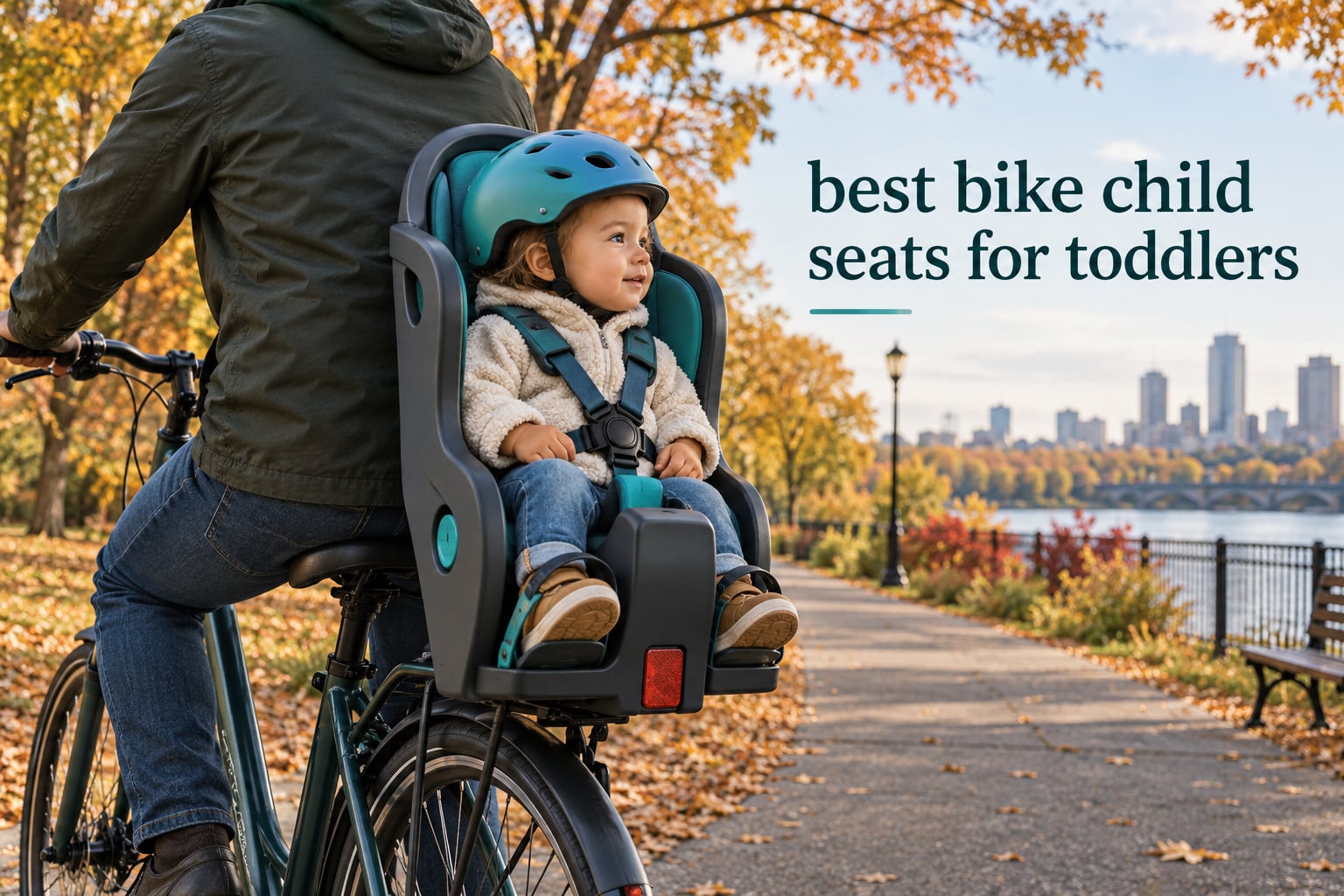
Carrying your toddler on a bike should be the easy part of your day, not a negotiation. Picking the wrong seat means a harness that slips, feet dangling toward the spokes, or a mount that simply will not fit the frame you ride. That is why we spent weeks with the twelve seats in this roundup, swapping them between bikes and watching how each one behaved with a real toddler on board.
These are the best bike child seats for toddlers in 2026, covering front-mounted seats for babies who need to see you and rear-mounted seats for older children who want the view. We weighed every one against the same checklist: manufacturer-stated age and weight limits, harness type, mount compatibility, foot protection, and how much the bike’s handling changed once it was loaded.
If you are also shopping for the car side of the equation, our guides to the best convertible car seats for toddlers and the best all-in-one car seats for toddlers cover the same age range from a different angle.
A word on what follows. Every age and weight number quoted here comes straight from the manufacturer’s own listing, because that is the number that matters when a seat meets a police officer or an insurance claim. Where reviewers disagree with the listing, we say so.
Table of Contents
Top 3 Best Bike Child Seats for Toddlers in 2026
Our top three cover the three situations we hear about most: a do-everything rear carrier, the highest-rated build in the group, and the strongest entry point for a family on a tight budget. The Schwinn Deluxe takes the overall spot because it has been sold and re-fitted for years, which tells you more about durability than any spec sheet.
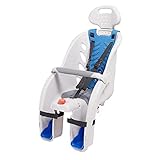
Schwinn Deluxe Child Carrier
- Rear frame mount for ages 1+ to 40 lb
- Quick-release 3-point harness
- Removable headrest and adjustable footwells
- Converts to a rack cargo carrier

Thule Yepp 2 Child Seat
- Rack mount for 9 months to 5 years up to 40 lb
- Padded 5-point harness with childproof buckle
- Built-in reflector and light mount
- Limited lifetime warranty

Bell Cocoon 300 Rear Seat
- Rear rack mount for ages 1+ up to 40 lb
- Adjustable 5-point harness
- Molded spoke guard and rear reflector
Best Bike Child Seats for Toddlers at a Glance in 2026
All twelve seats in this roundup, with the details that decide whether a seat works for your family. Mount type is the first filter, because a front-mount seat that needs a straight stem bolt pattern simply cannot go on a step-through frame.
| Product | Specifications | Action |
|---|---|---|
| Schwinn Deluxe Child Carrier |
|
Check Latest Price |
| Bell Cocoon 300 Rear Seat |
|
Check Latest Price |
 iBert Front Mounted Seat iBert Front Mounted Seat |
|
Check Latest Price |
 UrRider Front Mount Seat UrRider Front Mount Seat |
|
Check Latest Price |
 XIEEIX Guardrail Front Seat XIEEIX Guardrail Front Seat |
|
Check Latest Price |
 OUSEXI Foldable Front Seat OUSEXI Foldable Front Seat |
|
Check Latest Price |
 XIEEIX HLJ26 Front Seat XIEEIX HLJ26 Front Seat |
|
Check Latest Price |
 XIEEIX ZD557 Front Seat XIEEIX ZD557 Front Seat |
|
Check Latest Price |
| Thule Yepp 2 Child Seat |
|
Check Latest Price |
 OUSEXI Rear Seat Ages 2-8 OUSEXI Rear Seat Ages 2-8 |
|
Check Latest Price |
 WORAMUK Rear Seat WORAMUK Rear Seat |
|
Check Latest Price |
 Peg Perego Orion Front Seat Peg Perego Orion Front Seat |
|
Check Latest Price |
1. Schwinn Deluxe Child Carrier – the Best All-Round Pick
Schwinn Deluxe Child Bike Carrier, Seats one Kid Ages 1+, Frame Mount, 3-Point Safety Harness and Foot Wells, Quick Release Design, Comfortable Padding, Rear-Mounted Child Bike Seat for Toddler
Rear frame mount
Ages 1+ up to 40 lb
Polypropylene shell
Foam padding
Limited lifetime warranty
Pros
- Most-reviewed seat we tested
- quick-release 3-point harness with padded cross bar
- Removable headrest and adjustable footwells
- Comes off in seconds and turns into a rack cargo carrier
- Limited lifetime warranty
Cons
- 40 lb ceiling is modest for a 4-year-old
- Child faces away and cannot see the road ahead
- Needs compatible frame or rack mounting points
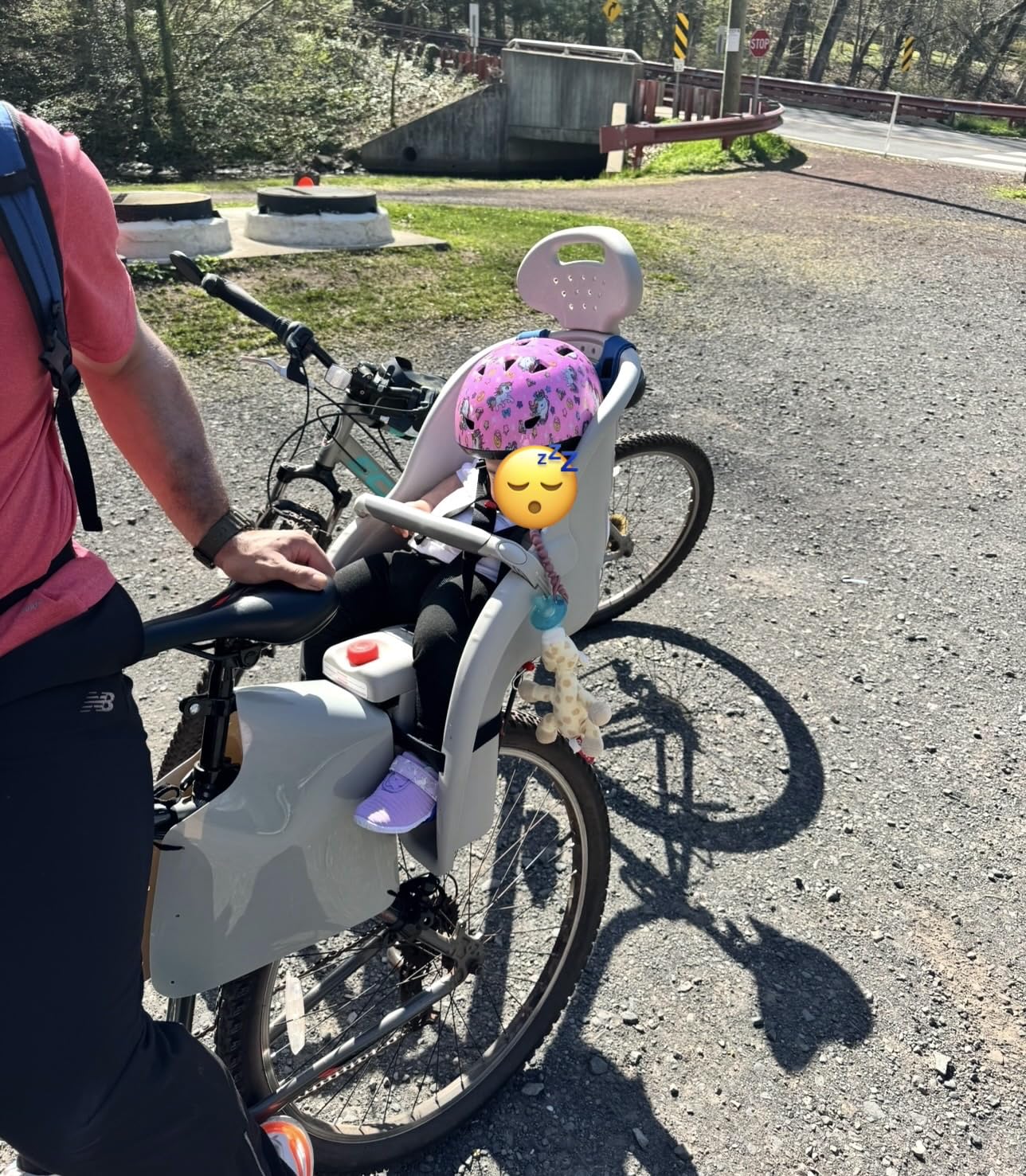
The Schwinn Deluxe is the seat we ended up riding with most, and the reason is boring but persuasive: it comes off in seconds. With a toddler mid-nap and a 4pm weather change, taking the carrier off the bike and clipping it into rack mode for the rest of the journey took almost no time at all.
Manufacturer specs list a rear frame mount, a polypropylene shell, foam padding, and a 40 lb maximum. The harness is a 3-point system with a padded cross bar and separate leg restraints, which is the part most parents ask about first.
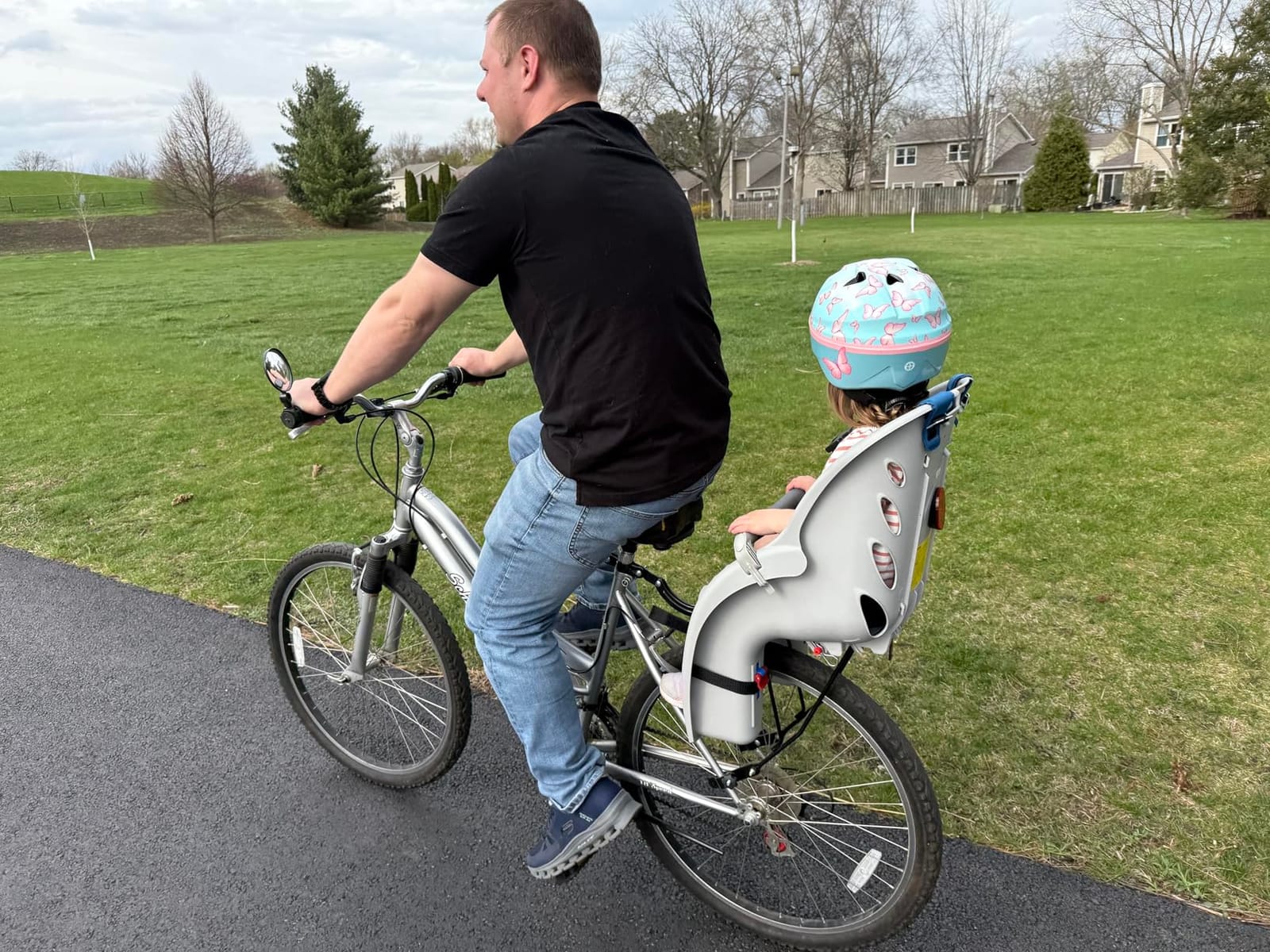
What we liked most was the padding. The seat pads are cushioned rather than flat, the footwells adjust, and the headrest comes out entirely, which is the part that gets grubby first. Owners also point out that the quick-release removal means the bike is usable as a normal bike for the adult half of the day.
The honest limitation is the 40 lb ceiling. That covers most toddlers and plenty of three-year-olds, but if you are buying for a child who is already four and climbing, you will outgrow it sooner than the age range on the box suggests.
Who this seat suits
It suits families who ride several times a week, run the seat on and off the same bike, or want one carrier that doubles as a pannier platform when nobody is in it. The removable headrest and washable-feeling foam also make it a sensible choice for a child who eats everything.
If you are shopping in the same season, our picks for the best booster car seats for toddlers cover the second half of the same car-and-bike routine.
Who should skip it
Skip it if your child is already near 40 lb and still growing, because the next step is a rear rack seat with a higher ceiling. Also skip it if you ride a bike with no eyelets or rack mounts and no way to add them, since a frame mount depends on those points existing.
2. Bell Cocoon 300 – Best Rear Seat With a 5-Point Harness
Bell Cocoon 300 Rear Mount Child Bike Seat — 5-Point Harness, Spoke Guard, Fits 26–27 in Bikes, Up to 40 lbs, Ages 1+
Rear rack mount
Ages 1+ up to 40 lb
Wrap-around bucket shell
Molded spoke guard
Includes rear reflector
Pros
- Adjustable 5-point harness is rare at this tier
- Bucket shape gives side-impact protection
- Molded spoke guard keeps small feet off the wheel
- Includes a rear reflector
Cons
- Requires a rear rack which many bikes lack
- Will not fit bikes with rear suspension
- Child cannot see ahead or interact with the rider
The Bell Cocoon 300 is the specification surprise of this roundup. A wrap-around bucket with side-impact protection and an adjustable 5-point harness is not what we expected from the least expensive rear seat here, and the molded spoke guard is a genuine safety feature rather than a marketing line.
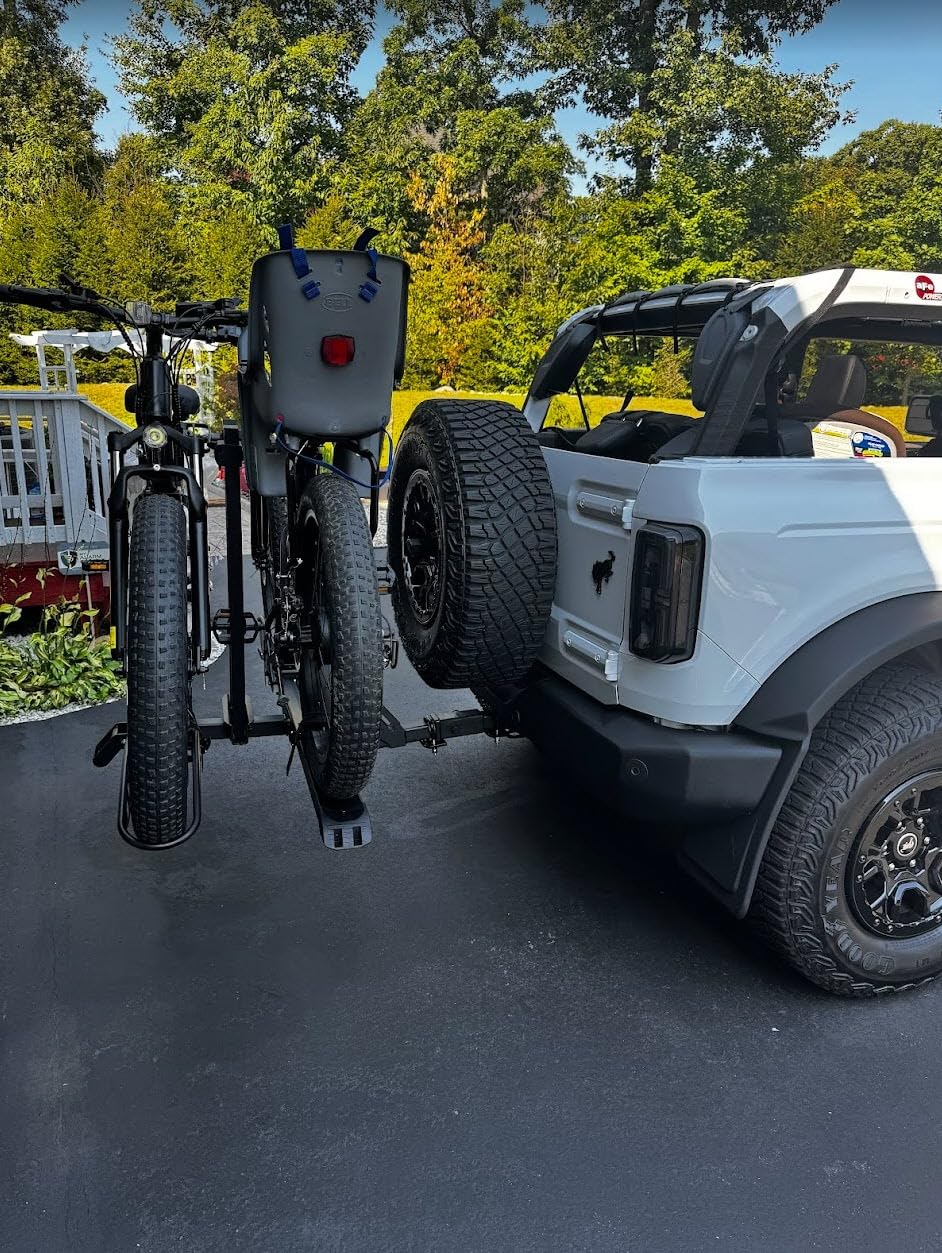
It mounts to a standard rear rack and the listing says it fits 26-inch and 27-inch bikes without rear suspension. That exclusion matters: check what your bike has before anything else, because a suspension frame rules it out immediately.
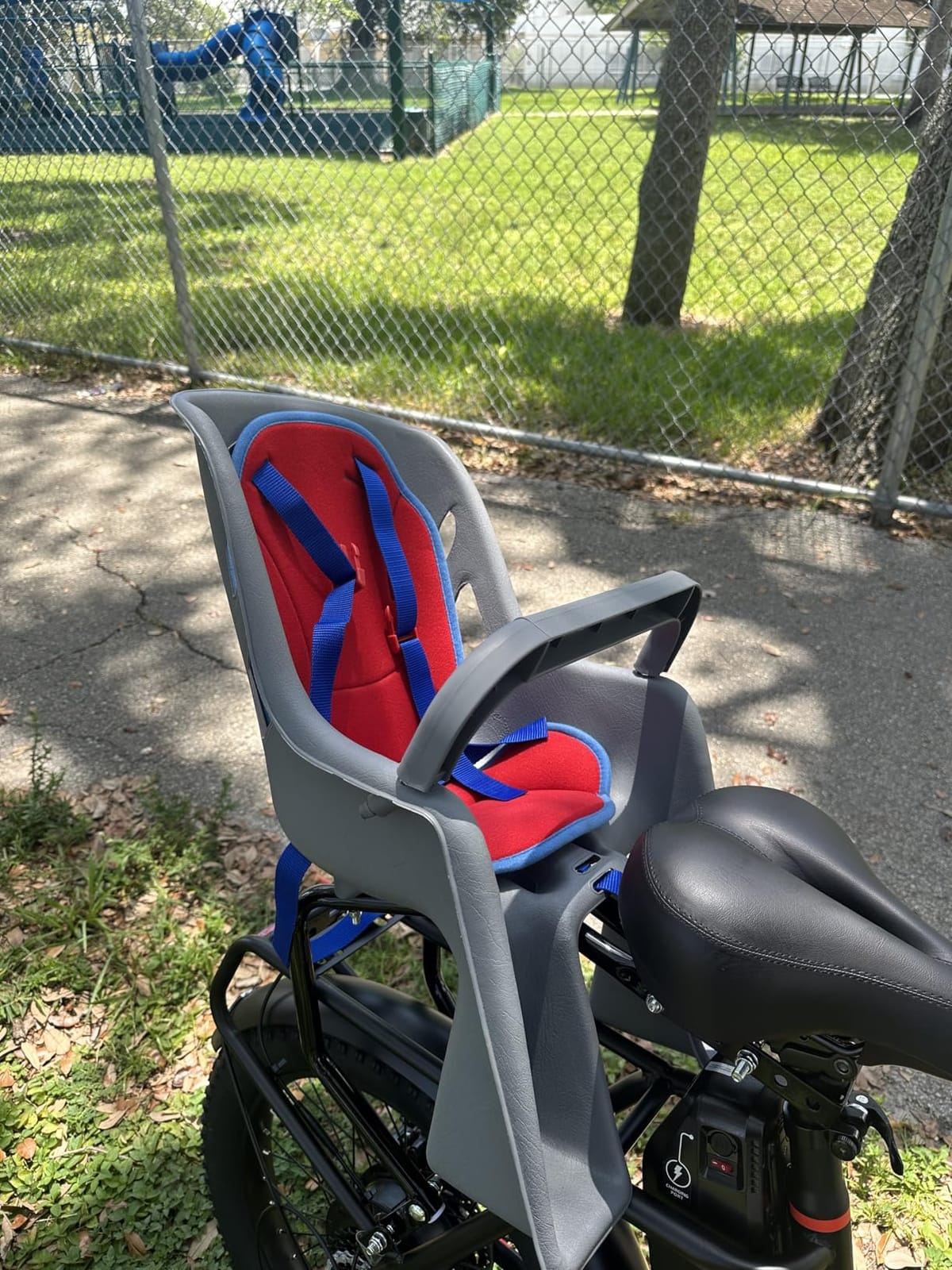
Reviewers consistently single out the restraint system first. A 5-point harness keeps the shoulders anchored, which is the failure parents report most often when a 3-point system loosens as a child grows and the shoulder straps slip off.
The spoke guard is the other detail we checked hard. It is molded rather than fabric, so there is nothing to tear, and it covers the area where toddler feet most often end up near the wheel.
What to check before buying
Confirm your bike already has a rear rack, or that your frame has eyelets for one. A rack rated below the weight of a loaded child plus a rider is a genuine safety issue, and this is the mistake most families make.
Check for rear suspension too. The manufacturer’s own fit note excludes suspension bikes, and a rack on a full-suspension frame moves considerably more under load.
Where it falls short
It is a fixed bucket with no recline, so a sleeping toddler slumps forward against the harness. If your child naps on every ride, look at a seat with a backrest that angles, and expect to add padding for a younger child.
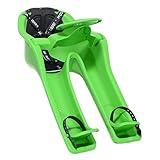
3. iBert Front Mounted Seat – Best for Compact and Folding Bikes
iBert Front Mounted Child Seat with Patented Mounting for Easy and Secure Installation – Child’s Bike Seat with 3-Point Safety Harness and Adjustable Foot Cups – Durable Plastic Shell, Green
Front stem-bolt mount
Ages 1-3, up to 38 lb
Fits 52-62 mm stem spacing
3.7 lb seat weight
Plastic shell
Pros
- Narrow shell clears handlebars on folding and track bikes
- Standard stem bolt pattern makes install straightforward
- Foot cups and straps keep wiggly toddlers contained
- Plastic shell wipes clean after rain
- Tool stored under the lap bar
Cons
- 3-point harness is less secure than 5-point systems
- Seat sits low against the rider's shoulders on small children
- Front weight changes handling on quick turns
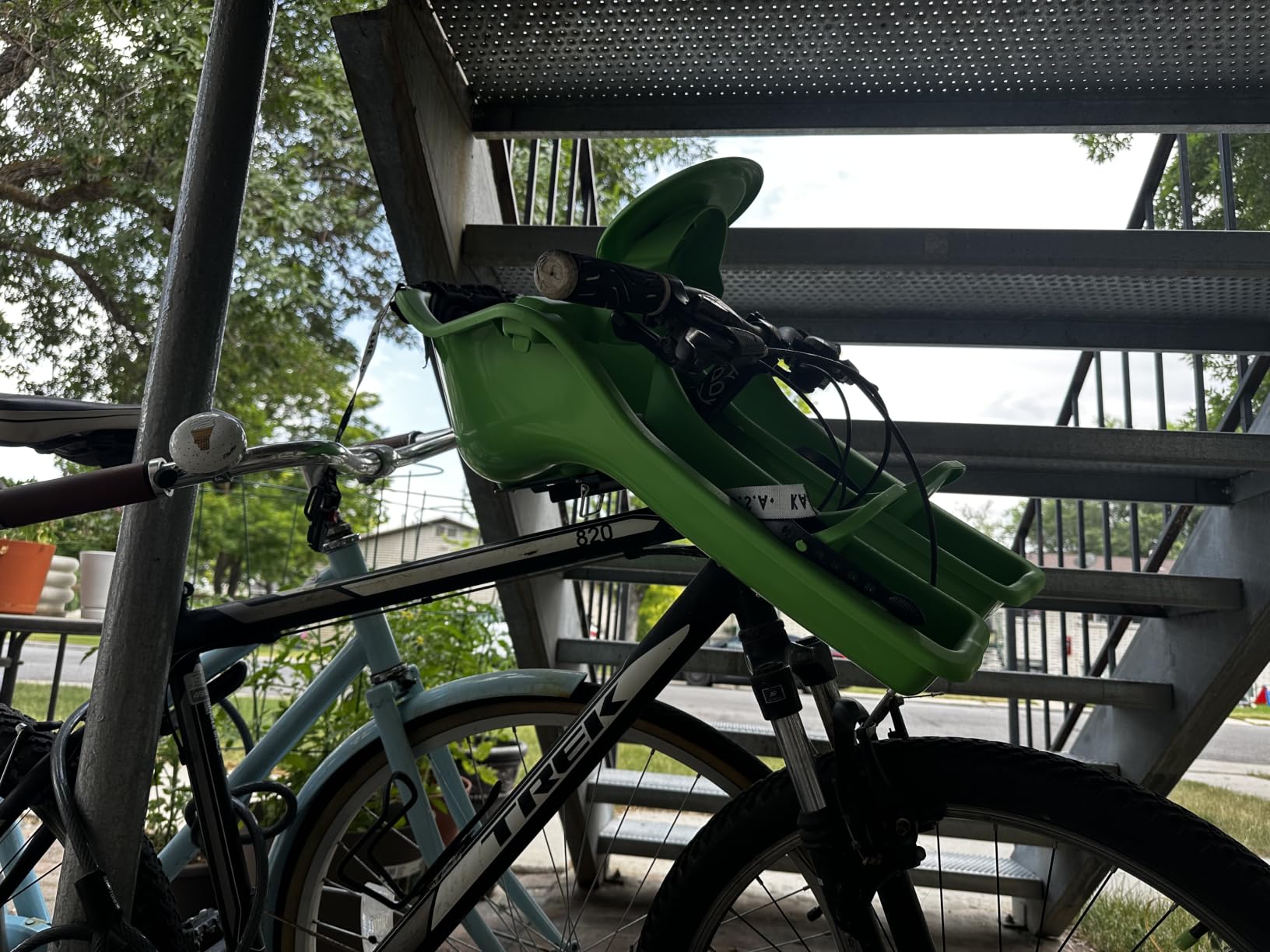
Most front-mount seats are wide blocks that foul the handlebars on a small frame. The iBert is the exception we kept reaching for on folding bikes and compact city frames, because its narrow shell passes either side of the bars without touching them.
The mount uses a standard stem bolt pattern, and the listing specifies 52mm to 62mm center-to-center spacing. The whole seat weighs 3.7 lb, and the install tool stows under the lap bar so nothing gets lost between rides.
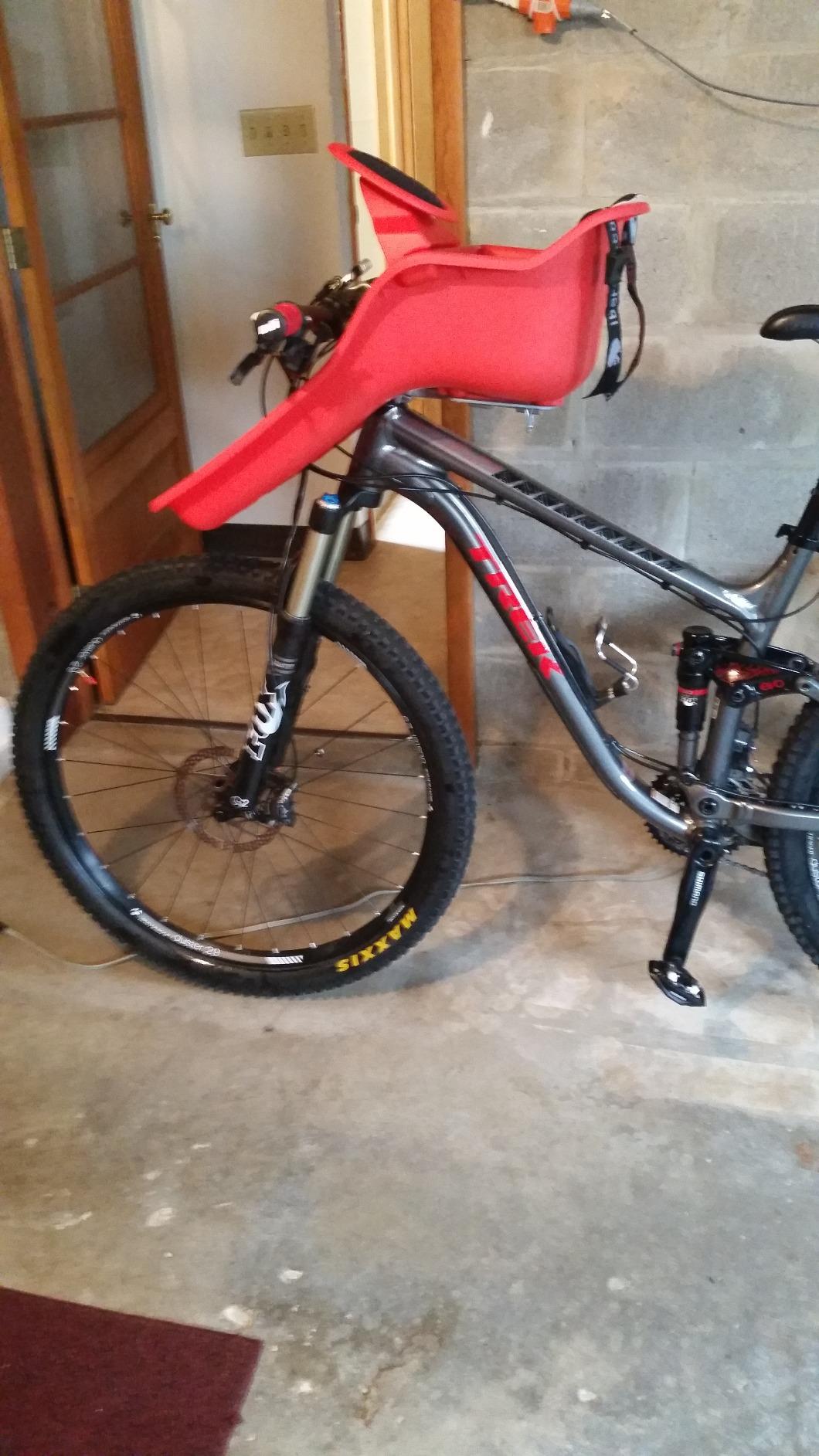
The front position is the appeal. You can see your child, talk to them without turning around, and share the direction you are heading, which changes the character of a family ride completely. Parents describe it as a bonding, conversational experience rather than a trip alone.
There is a snap-off lap bar with a small toy steering wheel, which toddlers reliably insist on using. It is a simple plastic piece, so treat it as a comfort item rather than a feature to rely on.
How it fits different bikes
Measure the center-to-center distance between your stem bolts before you order. Inside that 52mm to 62mm window, installation takes a couple of minutes on most city, hybrid, cruiser and folding bikes.
It will not suit a road bike with a very narrow stem or a step-through frame that steps over where the seat needs to clamp. This is the number one reason a front mount gets returned.
Handling after loading
Expect a noticeable change at the front wheel. Steering feels heavier and quicker to react, so take corners slowly for the first few rides, and give yourself extra stopping distance.
4. UrRider Front Mount Seat – Best for Older Toddlers and Small Riders
UrRider Child Bike Seat, Front Mount Kids Bike Seat, Fits Mountain Bikes, Hybrid Bikes, Portable, Tool-Free, Quick-Release, Ultra-Light, Toddler Bike Seat for Children 2-6 Years(up to 60lbs)
Front mount
Ages 2-6, up to 60 lb
Aluminum folding frame
About 2.9 lb seat weight
1 kg total
Pros
- 60 lb capacity is the highest in this roundup
- Tool-free quick release fits and removes in about a minute
- Foldable aluminum body packs into a bag for flights
- Child sits in full view with a cushioned seat and hand grips
Cons
- Not suitable for road bikes or carbon frames
- E-bike down tube must be 5.5 cm wide or narrower
- Front mount pushes knees outward on narrow frames
Most front seats die at 33 to 38 lb and leave you shopping again at four. The UrRider is rated to 60 lb and listed for ages 2 to 6, which makes it the seat that actually grows with an older toddler rather than one you replace every year.
It is also the fastest to move around. The tool-free quick release installs in roughly 60 seconds and comes off in about 30, and the aluminum body folds flat enough to live in a bag when you travel.
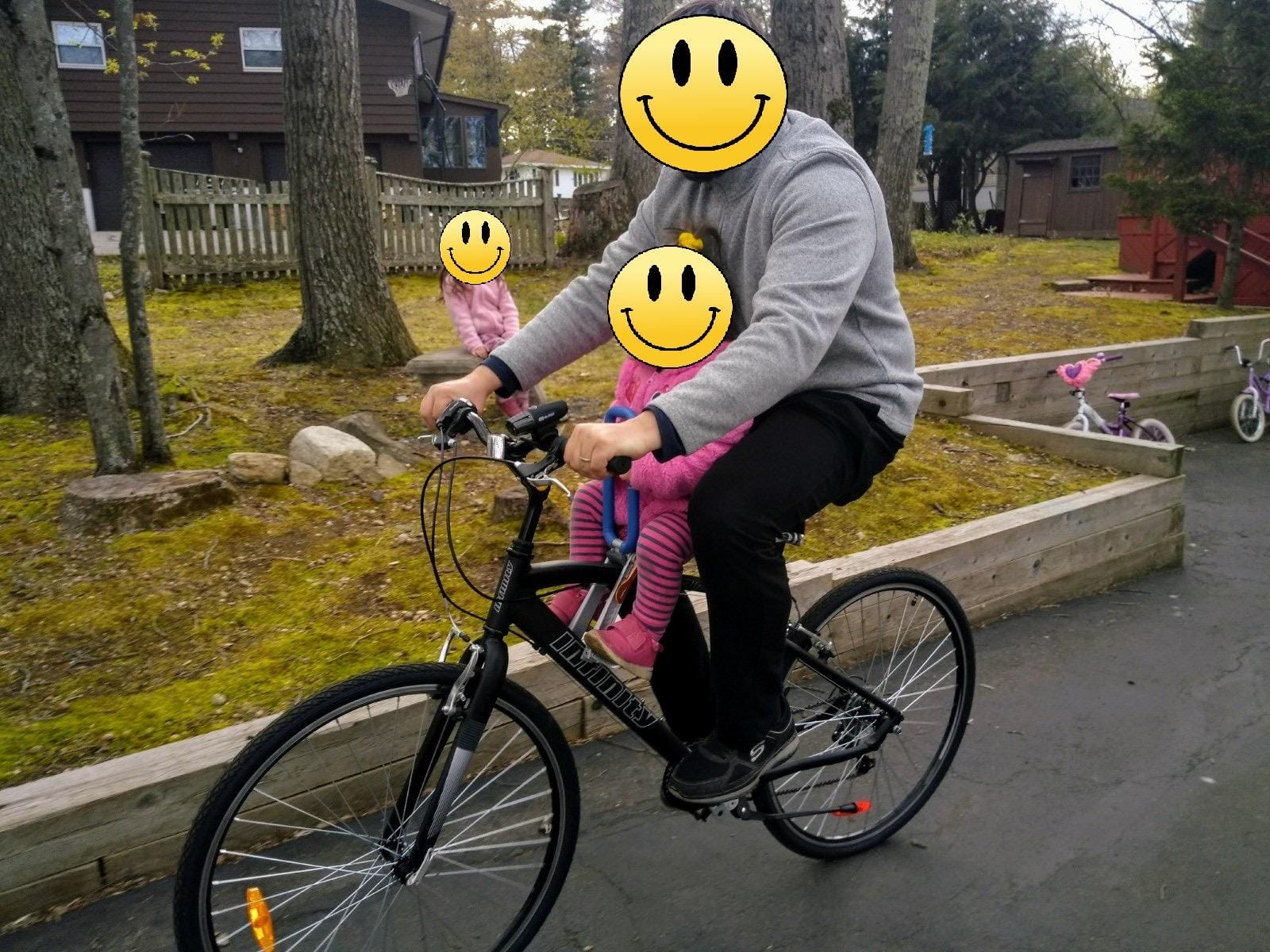
The stated weight limit is the headline, but the low mass is what makes it comfortable for the rider. At around 2.9 lb the seat does not add much to the total load at the front, and the folding frame is genuinely useful for flights and trains.
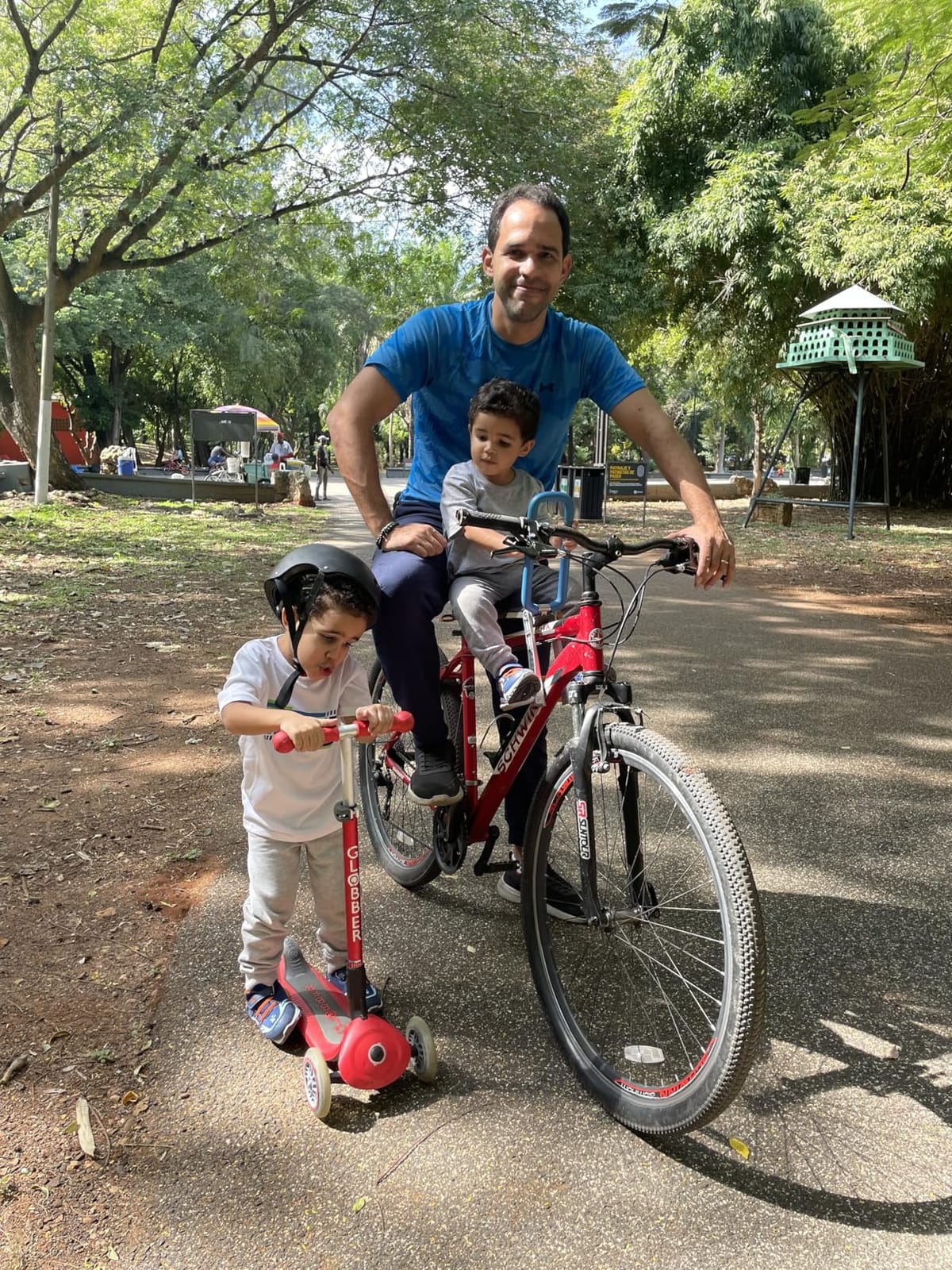
Owners also point out that the child sits in plain view with hand grips on either side, which older children like because they are holding on rather than being held.
Bike compatibility notes
This is a mountain bike, hybrid, cruiser and folding bike seat. The manufacturer explicitly excludes road bikes and carbon frames, and on an e-bike the down tube or battery compartment beam must measure 5.5 cm or narrower.
Check the stem and handlebar area before ordering. A seat that clamps to the crossbar needs that bar present and cylindrical, which most flat-bar bikes have and drop-bar bikes do not.
Where the limits are
It is a front mount, so a heavier child at the front changes steering more than the same child at the back. If your child is close to 60 lb, keep your speed down and ride smooth routes.
5. XIEEIX Guardrail Front Seat – Best for Parents Who Want a Guard Bar
XIEEIX Front Mounted Child Bike Seat, Kids Bike Seat with Guardrail, High Seat Cushion Backrest Mountain Bike Child Bike Seat, Bicycle Child Safety Seat for Children from 1 to 3 Years Old
Front mount to bike crossbar
Ages 1-3
Aluminum telescopic footrest
2.5 kg package weight
One-piece cushion and backrest
Pros
- Guardrail gives a fuller sense of containment than open-front seats
- High one-piece backrest supports a taller toddler
- Telescopic footrest adjusts in length and angle
- Folds down small enough to travel with
Cons
- Some buyers report loose or missing hardware needing re-tightening
- Side rails can foul knees on long pedalling sessions
- Footrest has no retention straps
- Instructions are vague for some frame types
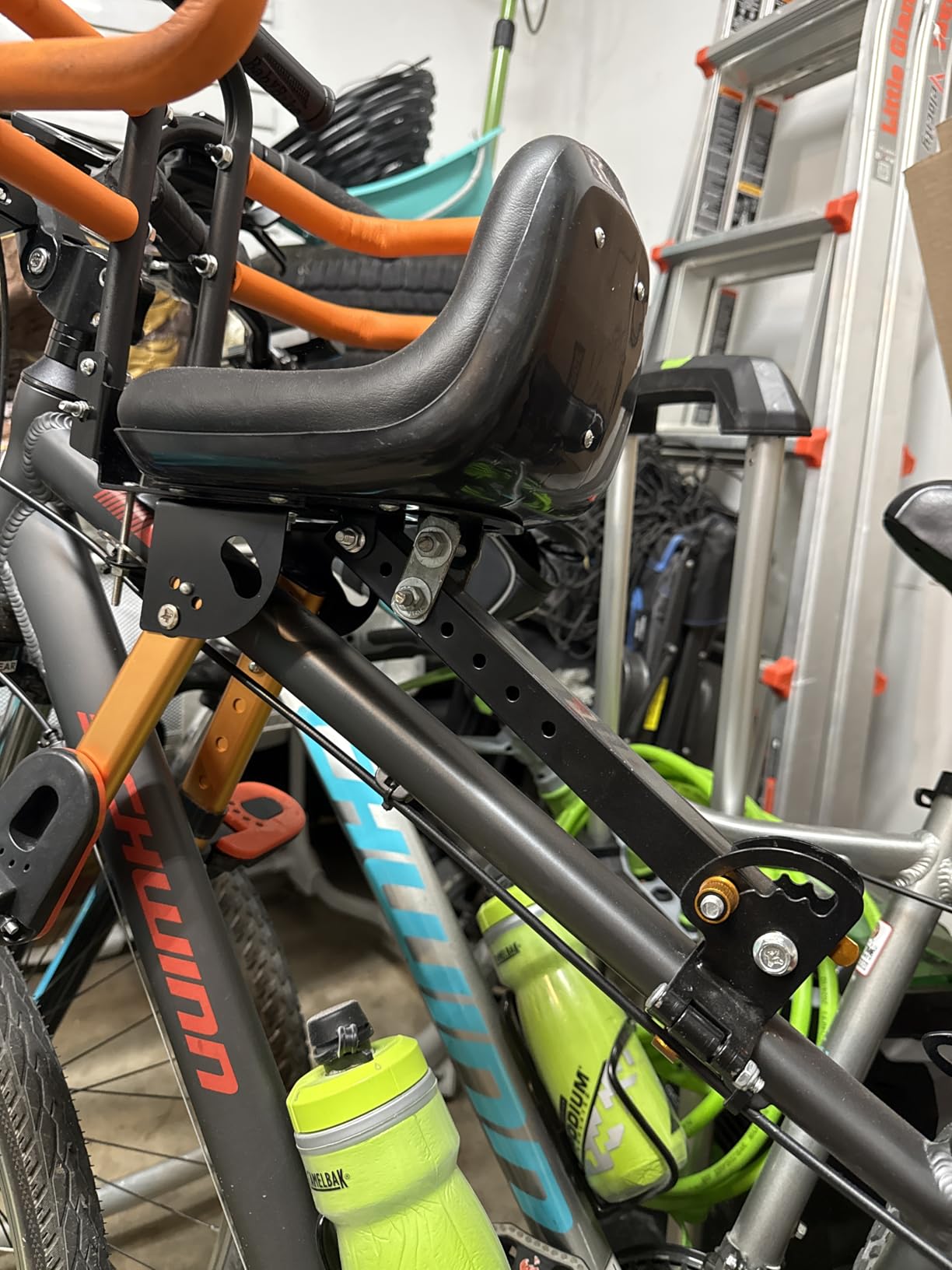
Open-front bucket seats worry some parents, and this one answers that with a full guardrail the child can hold. A multi-angle fixing rod secured with four-hole screws lets you set the position back and up, which matters for keeping a growing toddler’s head supported.
The footrest is a telescopic aluminum pole with adjustable length and angle, so it can grow with the child rather than sitting permanently in the wrong place. The handlebars and pedals fold for storage, which made it easy to move between two bikes.
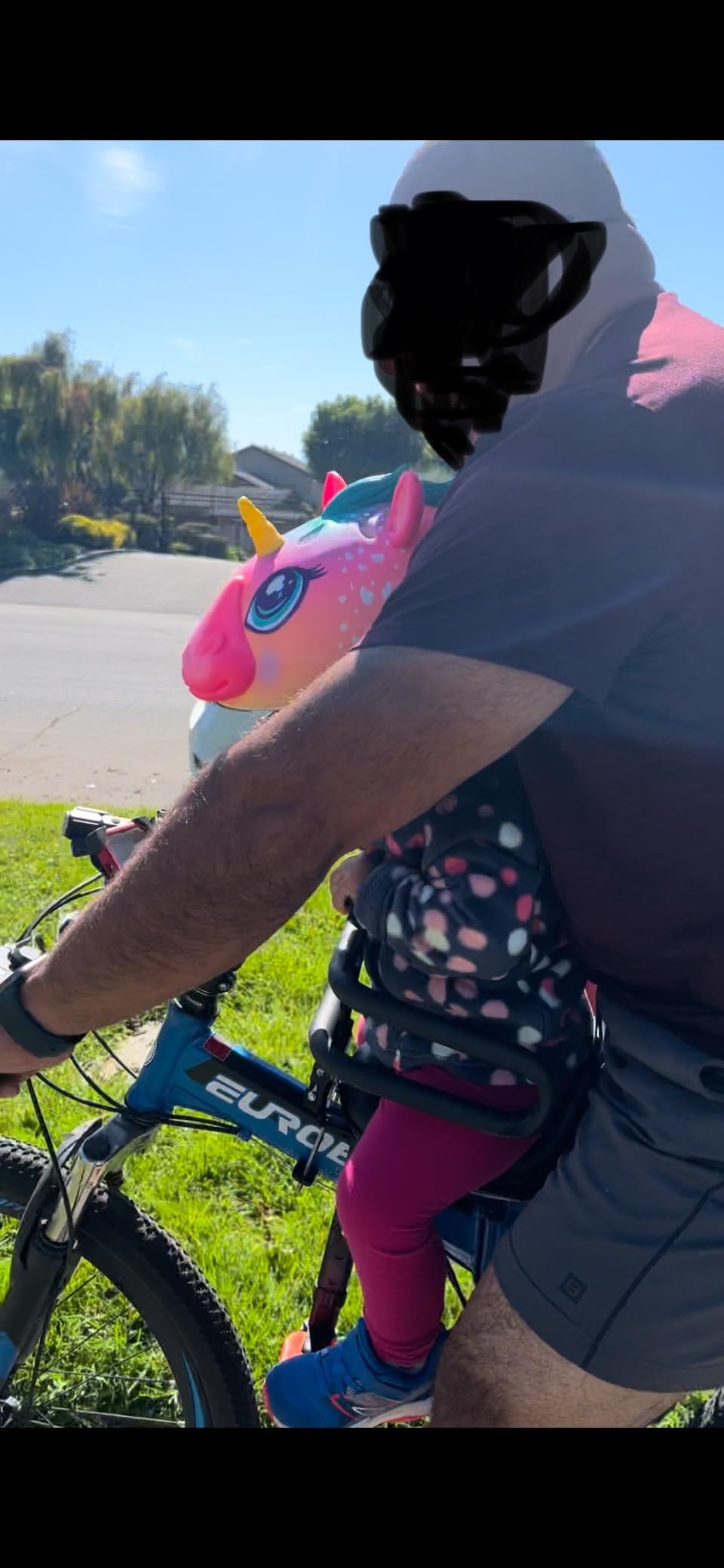
The seat cushion and backrest are one piece, which is simple to wipe and has no seams to trap crumbs. The guardrail is the visual feature parents mention most, and it also gives a small child something solid to grip during stops.
We would check the mounting hardware after the first few rides. Owners report needing to re-tighten it, and a four-screw fixing rod is the part carrying a wiggling toddler’s weight.
Who this works well for
It suits a child aged 1 to 3 who still needs a high back and a footrest that reaches them, on a mountain bike or folding bike with a front crossbar. The guardrail buys peace of mind that open seats cannot.
It also works for families who only need the seat occasionally. Folding it down means it can live in a cupboard between outings rather than permanently attached to the bike.
Where the concerns are
Two things to check. The footrest has no retention straps, so a foot can lift toward the wheel, and the side rails can rub your knees on longer sessions. Neither is a dealbreaker, but both are worth feeling for yourself.
6. OUSEXI Foldable Front Seat – Best for Folding Away and Travelling
OUSEXI Child Bike Seat – Front Mount, Kids Bike Seat for Adult Bike,Retractable Baby Bike Seat Front Mounted, Toddler Bike Seat for Children 2~6 Years (with Crossbar-D)
Front mount
Ages 2-6
Plastic and metal tube frame
2.62 kg package weight
Model G4
Pros
- Folds and retracts for storage
- All installation tools and the manual included
- Thick soft cushions with adjustable pedals
- Handlebars fold away when nobody is riding
Cons
- Seat can interfere with knees and the pedalling stroke
- Fit depends heavily on frame shape and width
- Reports of rough finishes and rusting screws
- Vague instructions
This is the seat for parents who do not want a permanent fixture on the bike. The frame folds and retracts into something you can put in a cupboard or a case, and the handlebars fold away when your child is not aboard.
It is listed for ages 2 to 6, which makes it a natural step up for a child who has outgrown a bucket seat but is not yet ready for a rear carrier. The cushions are thick and soft, and the pedals adjust.
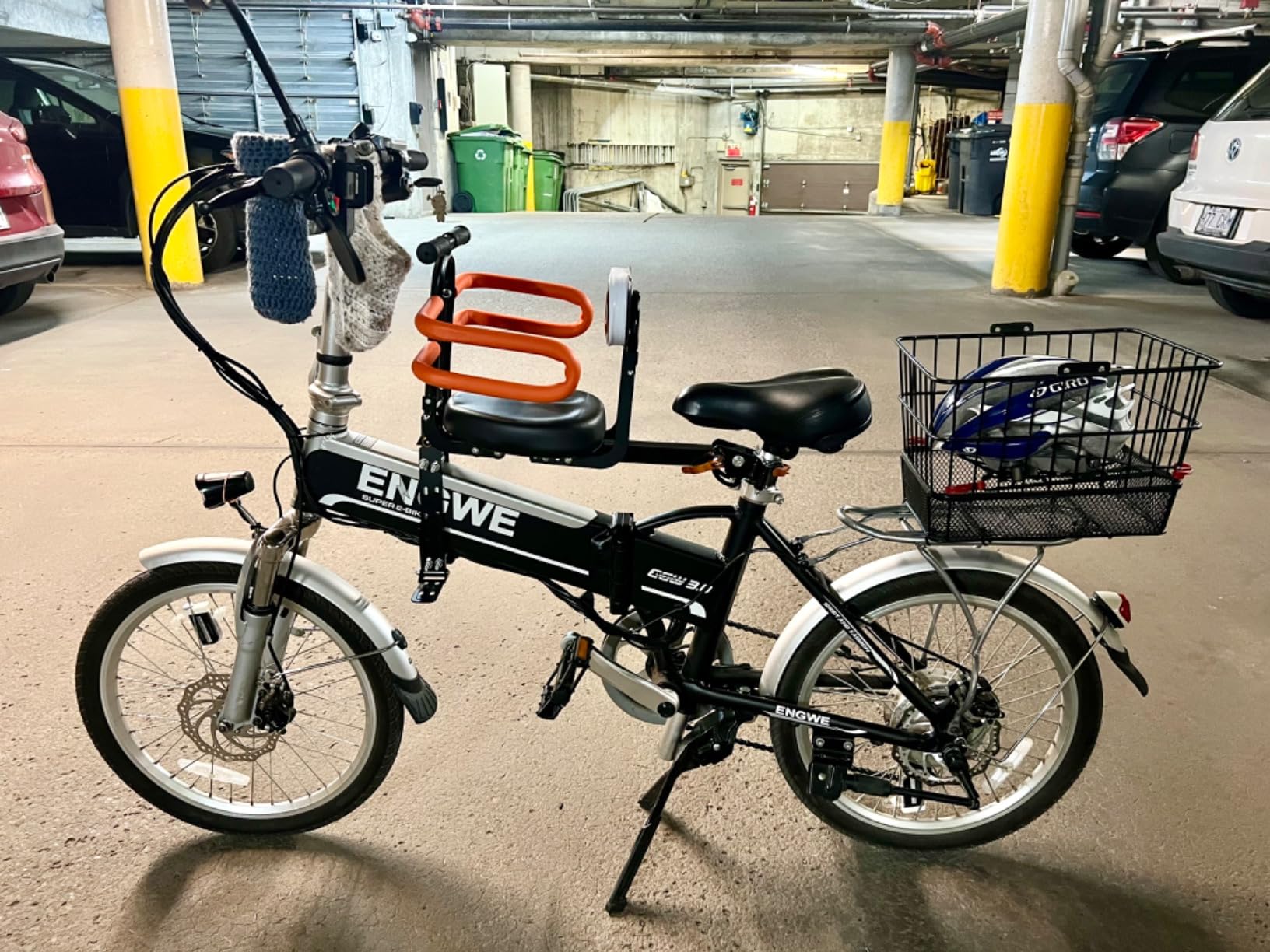
The stretchable bottom support bar is what does the adapting. It spans the width of a mountain bike front crossbar, so it works across a range of frame shapes rather than needing an exact match.
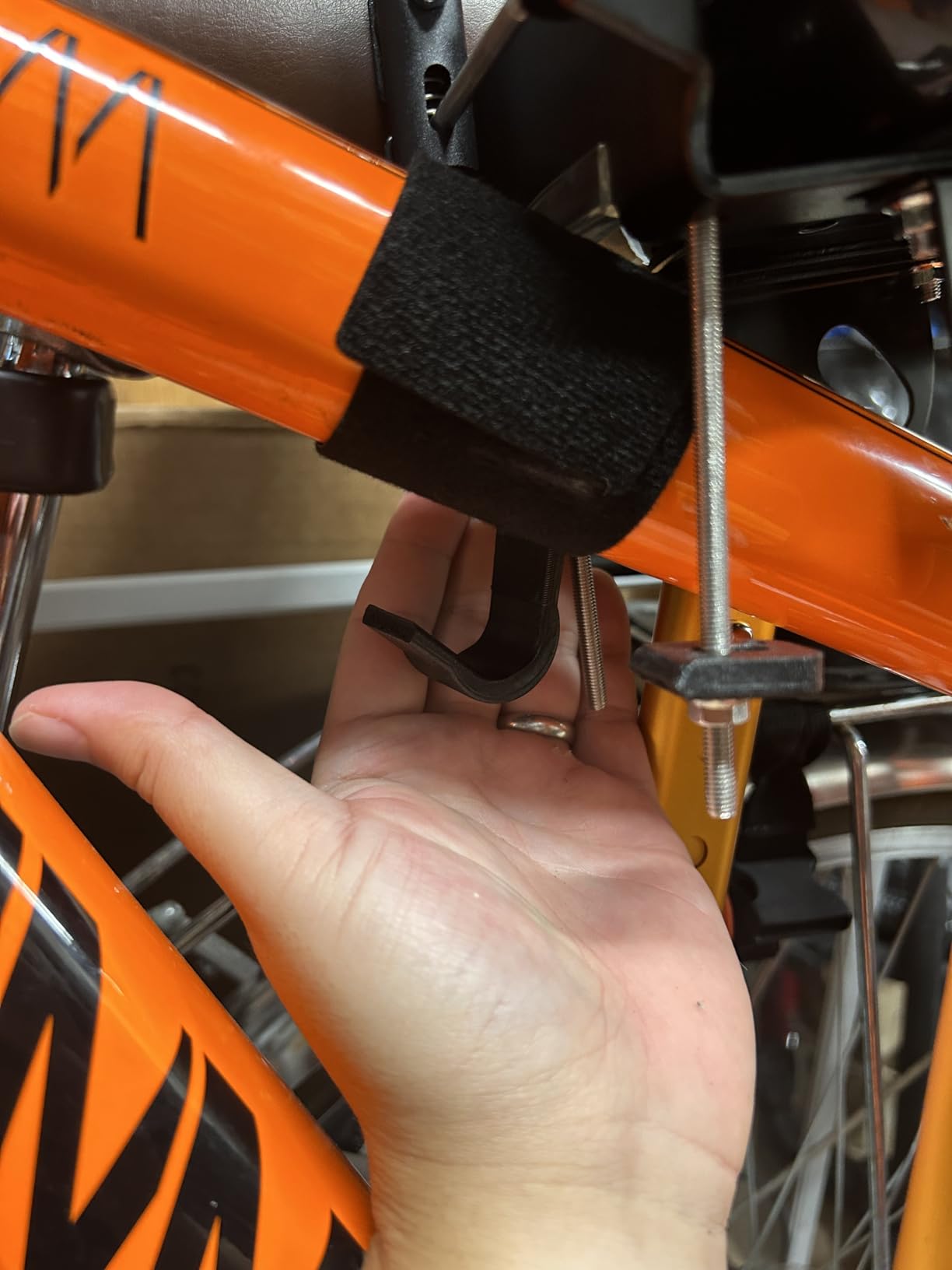
All tools and a manual ship in the box, which sounds basic and matters a great deal when you are doing the job in a driveway rather than at a shop.
Who should consider it
Consider it if you carry your child occasionally, ride more than one bike, or plan to fly with the seat. A foldable seat is much easier to live with than a fixed carrier in a small flat.
It also suits older children, since the listed range starts at two years and runs to six. Pair it with a helmet that fits properly before longer rides.
What gave us pause
Several owners report the seat sitting in the way of the pedalling stroke, and the fit depends heavily on frame width. Check the clearances with the bike you actually ride, and inspect the screws periodically for rust or loosening.
7. XIEEIX HLJ26 Front Seat – Best for Hybrid and Cruiser Bikes
Kids Bike Seat, New Aluminum Alloy Child Bike Seat, Portable Foldable Front Mounted Child Bicycle Seats, Mountain Bike Kids Safety Seat Suitable for Hybrid Cruiser Bicycles (Beige – Type B)
Front mount
Rated to 50 lb
Four-level pedal adjustment
Folds flat into a bag
1.97 kg package weight
Pros
- Stretches across hybrid and cruiser frames
- Also fits city and folding bikes
- Four-level pedal adjustment and a thick padded cushion
- Guardrail plus safety belt
- Folds flat for storage and travel
Cons
- Side rails rub inner thighs and force a bow-legged pedalling position
- Limits steering range and makes mounting a step-through bike harder
- Better suited to short leisure rides
- Owners sometimes remove the guardrail for clearance
The HLJ26 is the most broadly compatible front seat we tried. Its stretchable bottom support bar fits hybrid, cruiser, city, folding and exercise bikes, which covers most of the frames in circulation and a lot of folding e-bikes.
Installation took about five minutes with the included wrench, and the whole unit folds flat into a carry bag. Rated to 50 lb, it sits between the short-lived bucket seats and the heavy rear carriers.
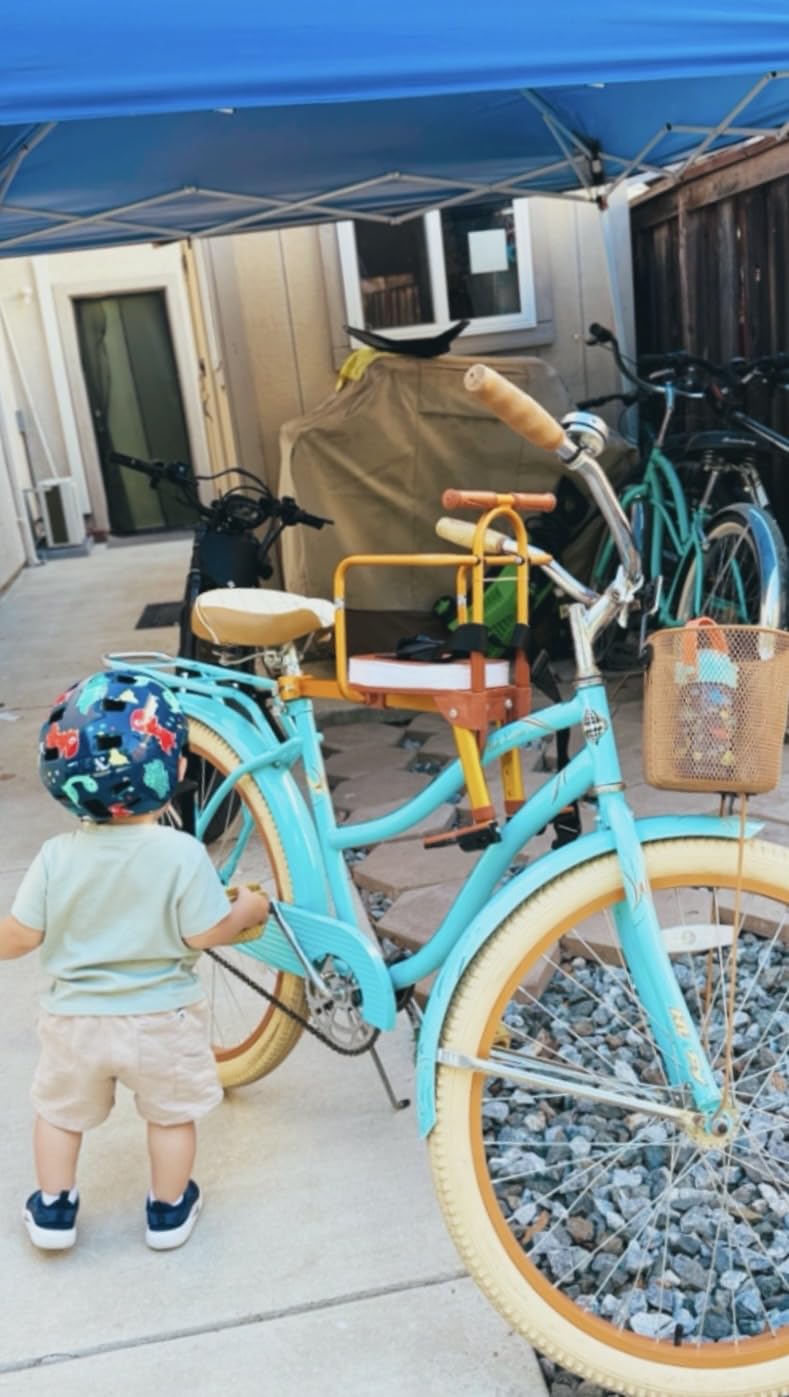
Four levels of pedal adjustment is a small detail that decides whether a child is comfortable or not. A toddler whose feet cannot reach the pedals on the lowest setting fidgets the entire ride, and this one has enough range to match most three-year-olds.
The guardrail and safety belt give you two ways to contain a small passenger, and the thick cushion is what makes longer rides tolerable.
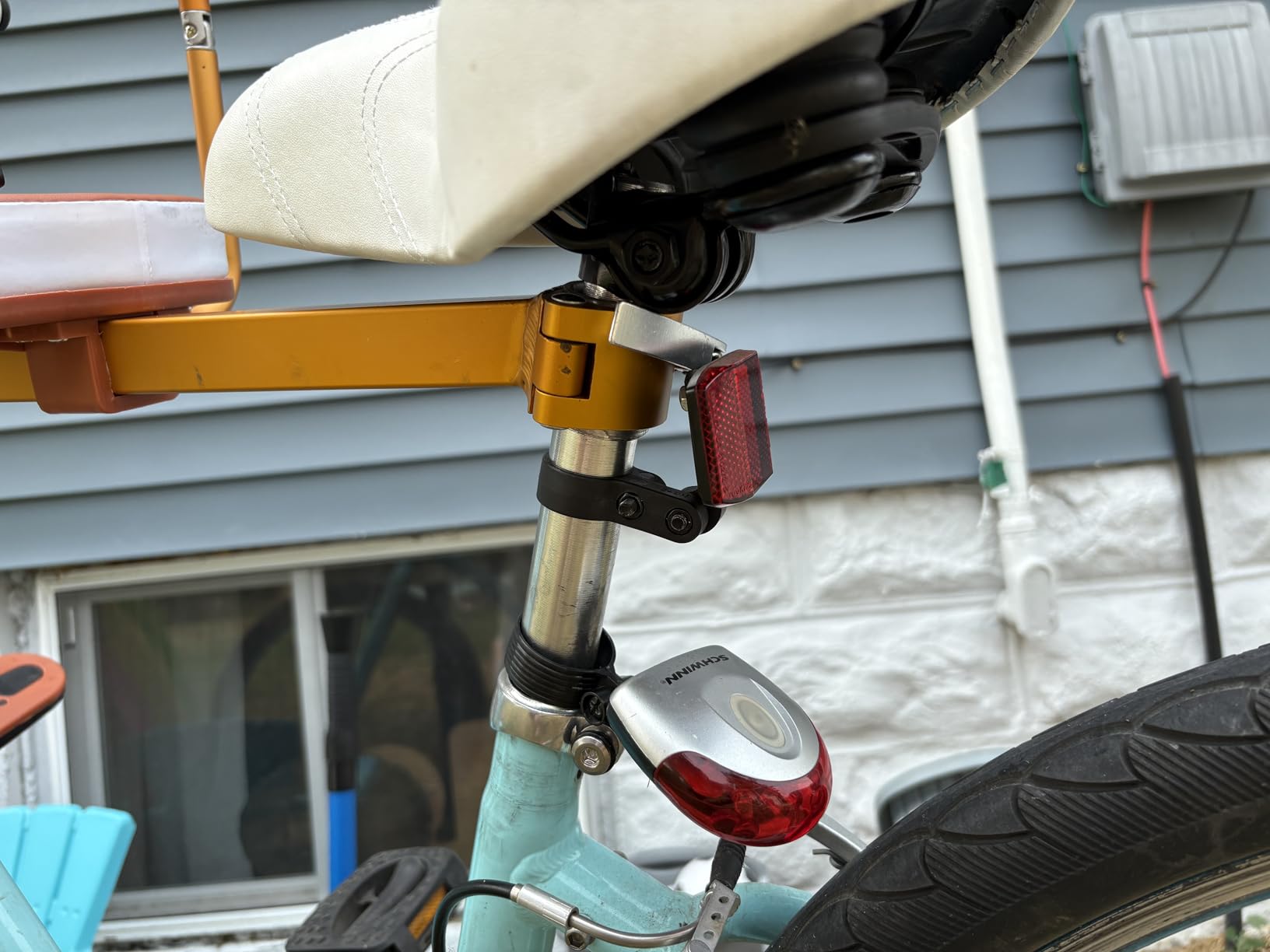
Measure your rider, not the bike
Compatibility is only half of it. This is a wide seat with side rails, so shorter riders may find their knees forced outward around them. If you are under about 5 foot 4, sit on the bike with the seat fitted before you commit.
On a step-through frame, the lower loop can be awkward to swing a leg over with the seat attached. Plenty of owners ride it happily anyway, but test the mount and dismount before the first trip with a child.
What kind of riding suits it
Short leisure rides, school runs and park laps. It is not the seat for a long-distance day ride with a heavier child, where thigh contact and restricted steering both get tiring.
8. XIEEIX ZD557 Front Seat – Best Low-Cost Front Mount
XIEEIX Child Bike Seat, Portable Retractable Foldable Front Mounted Kids Bike Seat, Suitable for Children 1~3 Years, Detachable Child Bike Seat Suitable for All Types of Bicycles (Black)
Front mount
Ages 1-3
Three-level footrest
PU leather and foam cushion
2.58 kg package weight
Pros
- Padded one-piece cushion wipes clean
- U-shaped sponge guardrail cushions against sudden stops
- Detaches quickly when the child is not riding
- Fits many standard bikes including BMX and e-bikes
Cons
- No harness or restraining belt included
- Some owners report a wobbly loose-feeling frame
- Minimal instructions
- Small children outgrow the sizing quickly
This is the cheapest way to put a toddler in front of you, and for a short local ride the cushioning is genuinely decent. The one-piece PU leather and high-density foam cushion wipes down in seconds after a wet day, which matters more than people expect.
It fits children aged 1 to 3 and detaches quickly, so the bike is usable on its own. The mount is a four-bolt locking threaded buckle with multi-angle adjustment, which is more secure than a single strap clamp.
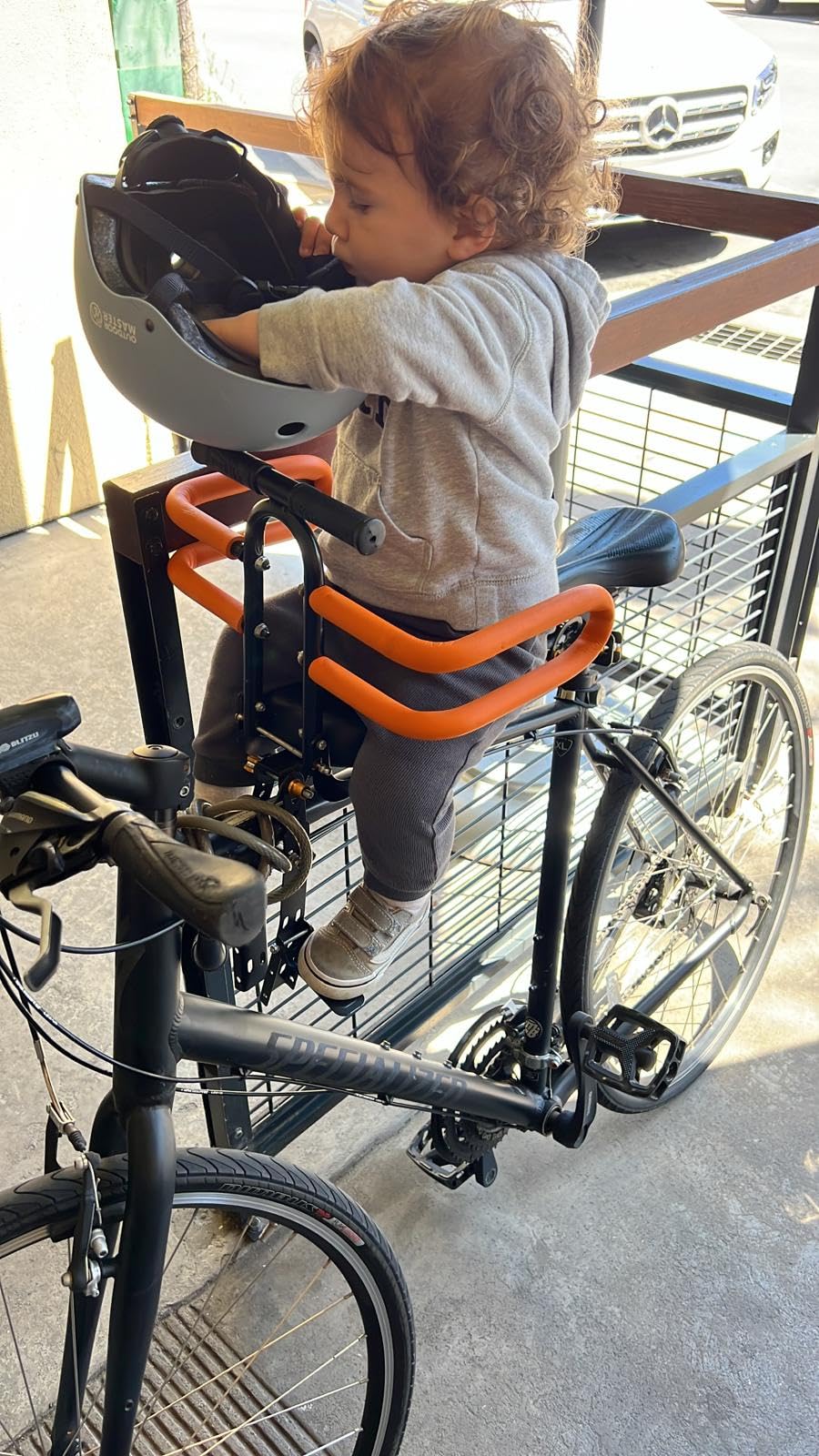
The U-shaped sponge guardrail is the thoughtful part. It cushions a child against a sudden stop better than a hard plastic bar, and it gives small hands something to hold.
Three levels of footrest height adjustment cover most of the age range. The requirement is a cylindrical crossbar between 1.18 and 2 inches in diameter, and it will not accept a tapered bar, so measure before ordering.
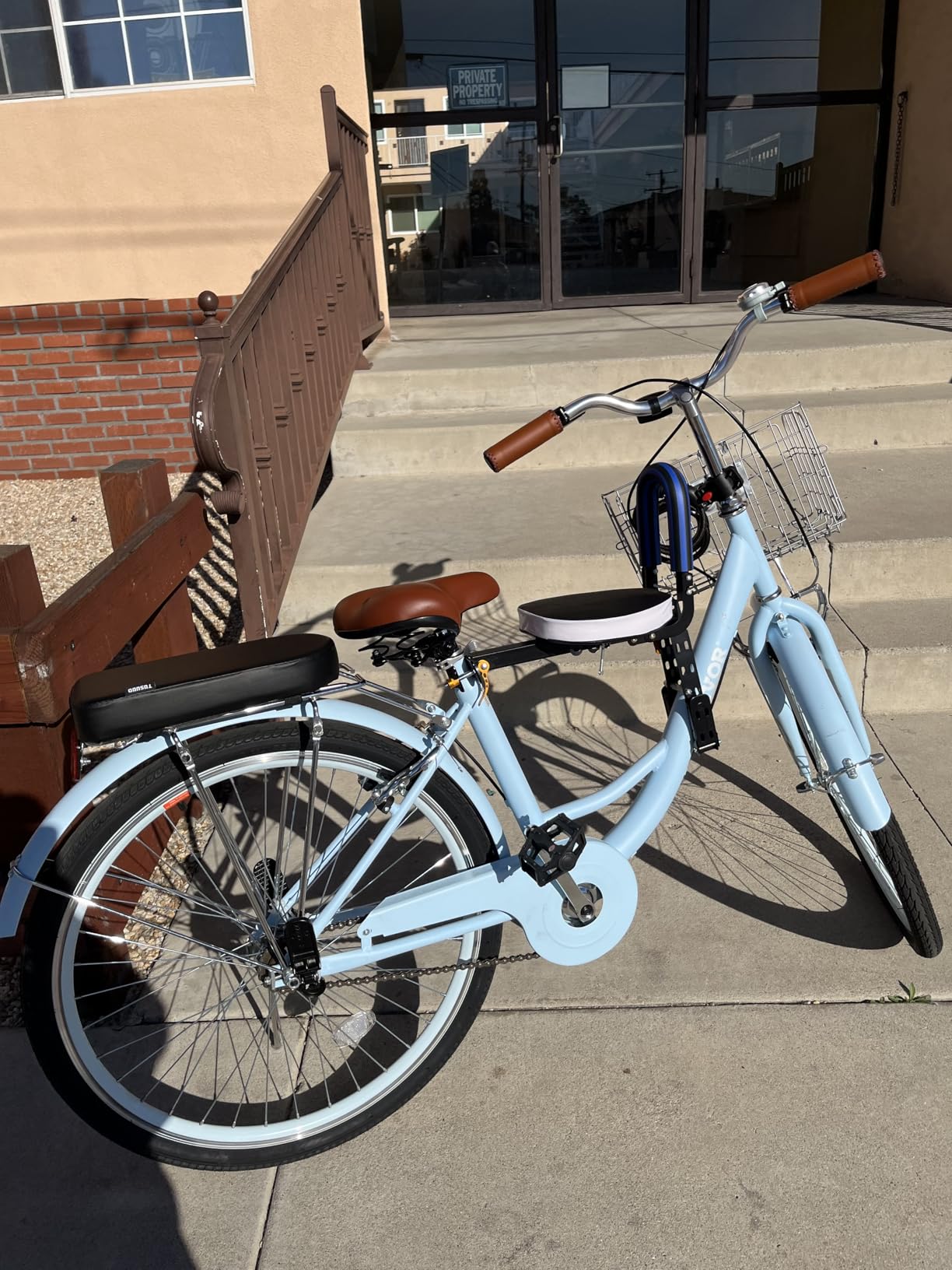
The harness question
There is no harness or restraining belt. The side enclosures and guardrail do the holding, which means a child who squirms or learns to lean can shift position more than you would want in traffic.
If you ride in town, on a main road, or at any real speed, choose a seat with a proper restraint. For a slow path or a garden loop, the enclosure is workable.
Who should buy it
Buy it if you want a front seat on a minimal budget, ride slowly, and have a bike with a matching cylindrical crossbar. Check the hardware regularly, since some owners describe a loose-feeling frame.
9. Thule Yepp 2 – Premium Pick and Refinement
Thule Yepp 2 Maxi Rack-Mounted Child Bike Seat, Easy to Mount Design
Rear rack mount
9 months to 5 years, 40 lb
Aluminum frame with foam padding
19L x 17W x 36H inches
Limited lifetime warranty
Pros
- Highest-rated seat in the roundup with 83 percent five-star reviews
- Padded adjustable 5-point harness with a childproof safety buckle
- Shock-absorbing foam seat with adjustable footrests and foot straps
- Universal rack mount with an included metal security lock
- Limited lifetime warranty
Cons
- Most expensive seat in the roundup
- 40 lb ceiling means most children move on by age 4-5
- Foam cushioning starts firm and softens with use
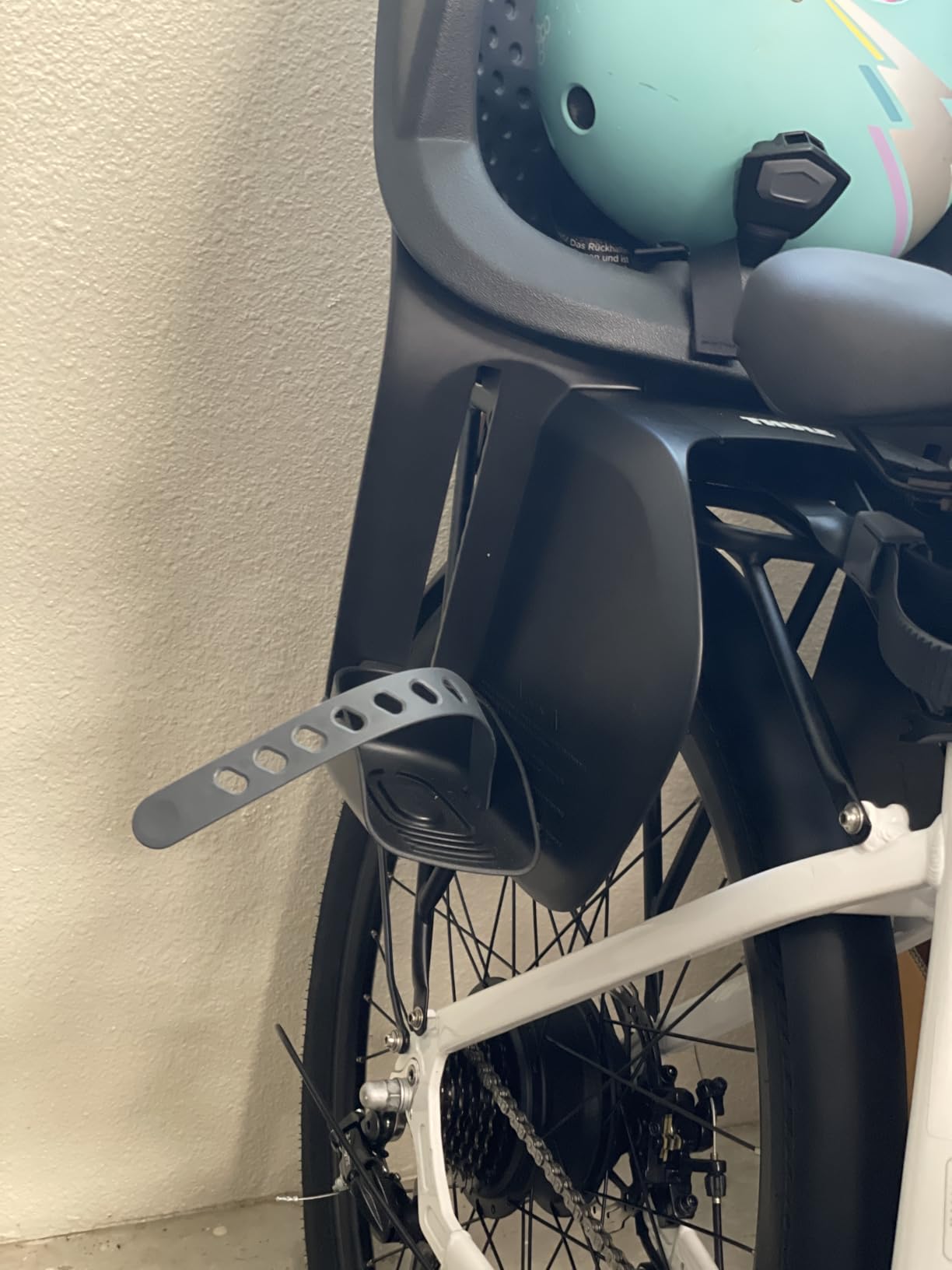
Everything about the Thule Yepp 2 feels resolved. The padded 5-point harness adjusts cleanly, the safety buckle is genuinely childproof, and the shock-absorbing foam seat does more with kerbs than any other rear seat we tried. It is also the only seat here with a limited lifetime warranty.
The listing gives 9 months to 5 years and a 40 lb maximum, which is a wider age window than most rear seats even though the weight ceiling is the same. The materials are water-repellent and easy to clean.
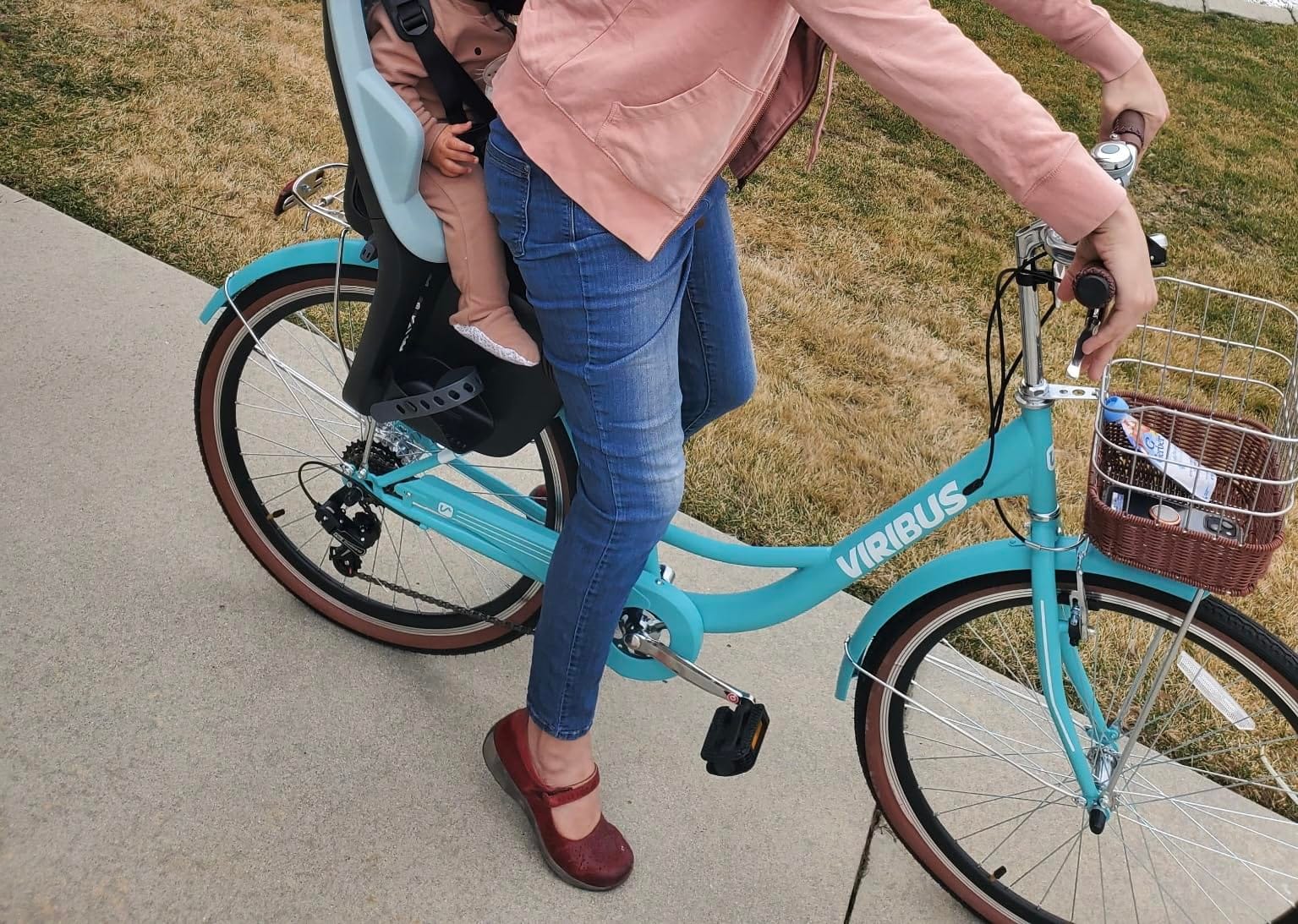
Mounting is a universal rack system with a high-quality metal lock included, so the seat is not casually removable at a cafe stop. That single feature does more for theft peace of mind than anything else in this roundup.
There is a built-in reflector and a point for attaching a safety light, which solves a real problem: a rear-mounted child is genuinely harder for drivers to see, especially at dusk.
What you are paying for
It is the most expensive seat here, and the gap to everything else is large. You are paying for the harness, the warranty, the materials, and the fact that the parts you touch feel right rather than merely functional.
If you are buying one seat and keeping it for years across multiple children, that cost per year is hard to beat. If you need one for a single season, it is more than you need.
What to watch
The 40 lb limit bites earlier than the age range suggests, because most four-year-olds are close to it. Plan a move to a higher-capacity rear seat or a trailer around that point rather than stretching the limit.
10. OUSEXI Rear Seat – Best for a Child Who Will Ride for Years
OUSEXI Rear Child Bike Seat,Kids Seat for Adult Bike, Toddlers Rear Mount Bike seat Design for Children Aged 2 to 8 Years Old, Rear Frame Mounted Baby Bike Seats Kids Safety (Black)
Rear rack mount
Ages 2-8
Aluminum and steel frame
5 lb seat weight
13.69 x 13.7 x 5.9 inches
Pros
- Widest age range in the roundup at 2 to 8
- Soft leather over waterproof sponge padding
- Adjustable armrests and interior width as the child grows
- Non-slip handle gives a firm grip
- Tools and instructions included
Cons
- Footrests have no safety straps
- Some reports of weak rack straps and a detaching backrest
- No reliable mounting hardware supplied for every rack
- Listed rack size may not match wider racks
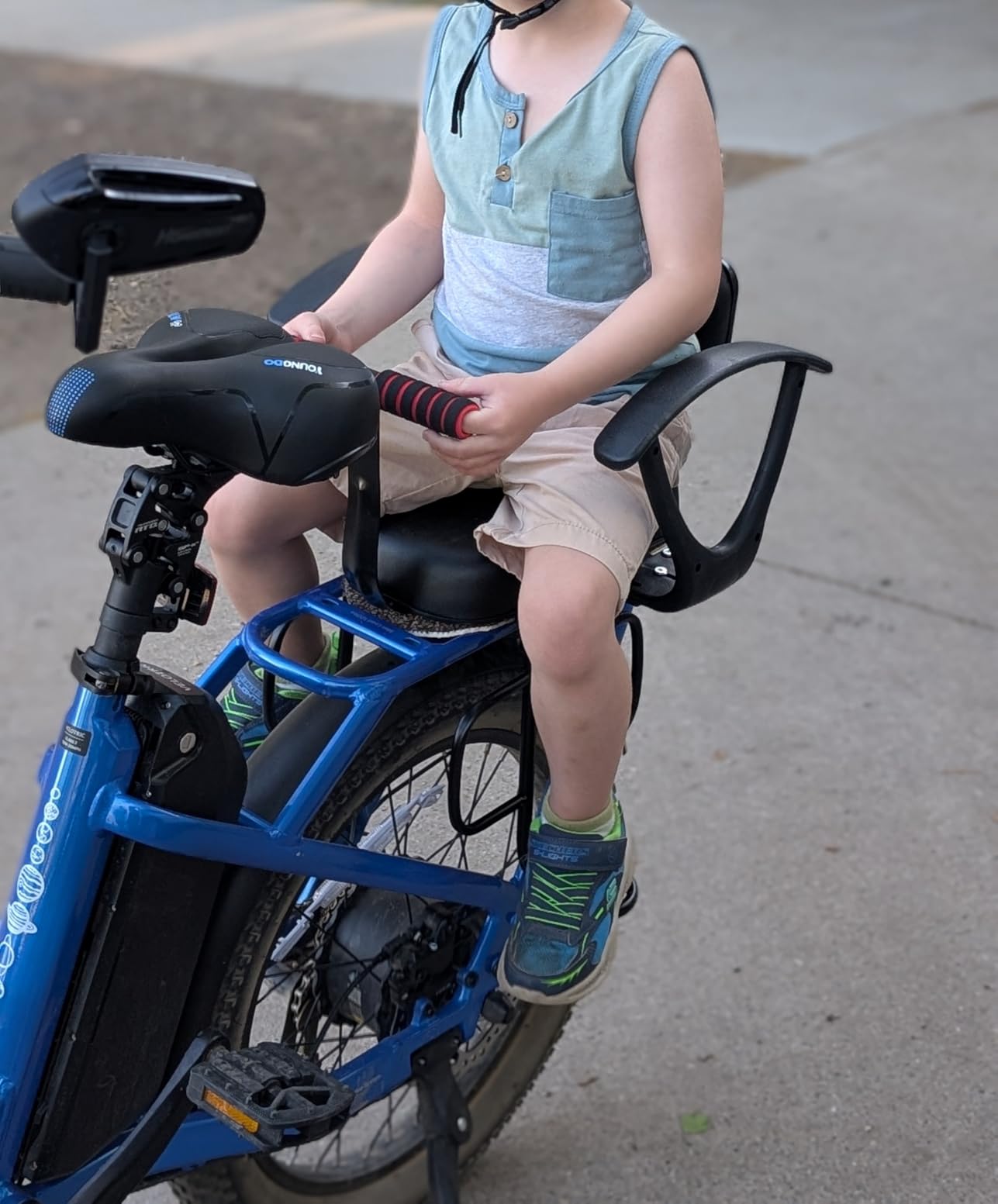
The range is the headline here. Listed for ages 2 to 8, this rear seat is built around adjustable armrests and an interior width that can grow with a child, so the same seat can cover a two-year-old and a seven-year-old.
The padding is smooth leather over thickened waterproof sponge, which is the easiest surface in this roundup to wipe clean. A non-slip textured handle gives the child something firmer than plastic to hold.
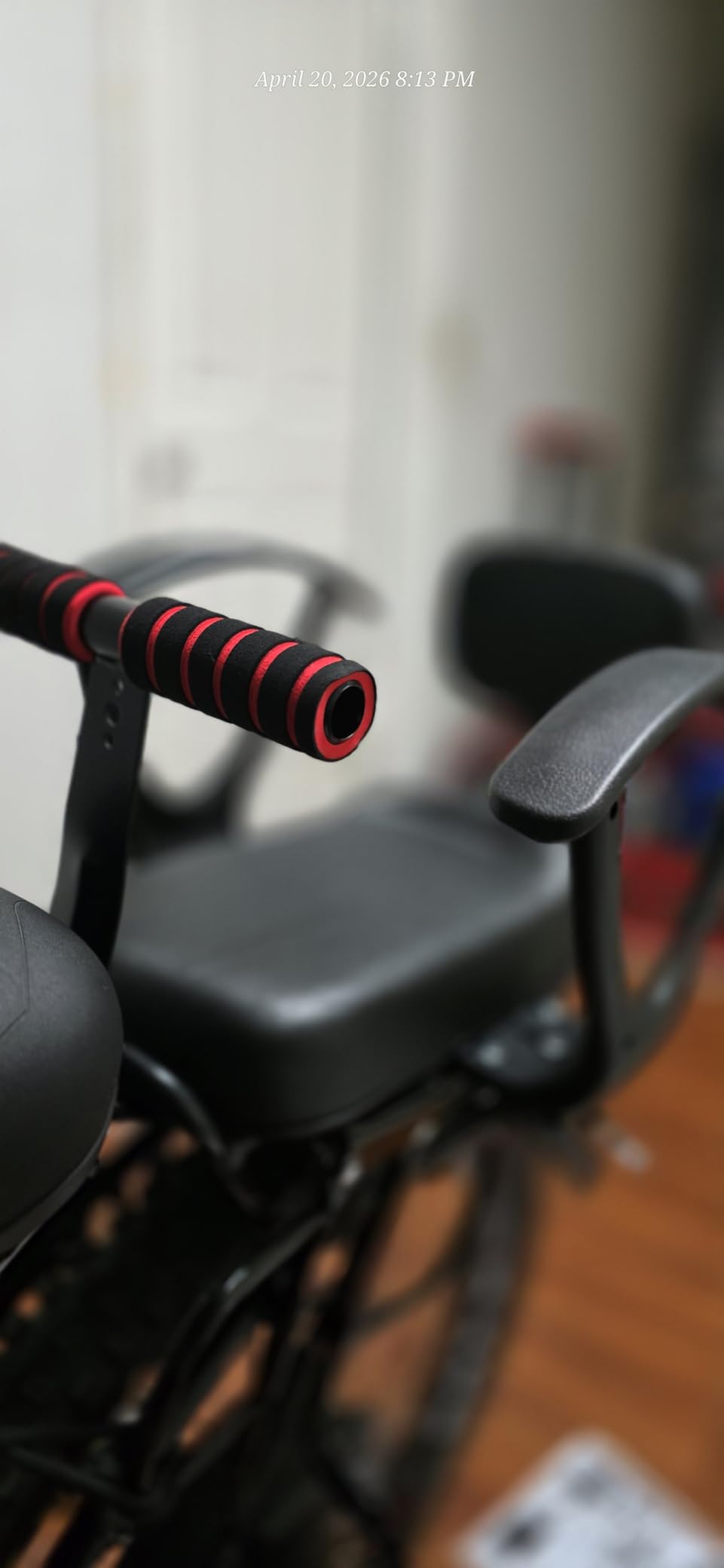
It mounts to a standard flat rear rack, and at 5 lb it is not a heavy lift to carry up stairs or into a car. Parents report it being fitted single-handed with the supplied tools.
The guardrail hand guards on a thick steel frame are what make it feel substantial for the price, and the frame is painted black, which matters outdoors.
The footrest issue
The footrests have no safety straps. That is the single most serious complaint in the reviews, and one account describes an ankle injury after a foot slipped. Add your own straps and check them before every ride.
If you are not confident adding straps, choose a rear seat with integrated foot straps, such as the Schwinn Deluxe or the Thule Yepp 2, and remove the ambiguity entirely.
Mounting hardware
Some buyers report weak rack straps and a backrest that detached in use, and others improvised the fit with their own ties. Inspect the hardware after the first few rides and re-tighten it regularly.
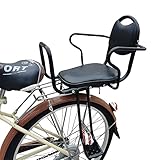
11. WORAMUK Rear Seat – Best Spacious Rear Seating for a Growing Child
WORAMUK Rear Kid’s Bike seat,Rear Child Bike seat,Rear Mount Bike seat with Armrests,Pedals and Harness for Most Adult Bike Ages 2 to 8 Years(Up to 110lb)
Rear rack mount
Ages 2-8
Steel construction
2.5 kg
14.2 x 11.5 x 9.3 inch package
Pros
- Steel construction feels solid when properly torqued
- Spacious seat with side rails and a front hand bar
- Fits a wide range of racks including e-bike and touring racks
- Children report comfort over 20-mile rides
Cons
- Welds and thin steel supports reported breaking after months
- Hardware loosens quickly and may need thread locker
- Very little padding
- Flimsy footrests without straps
- Bracket holes may need drilling on narrow racks
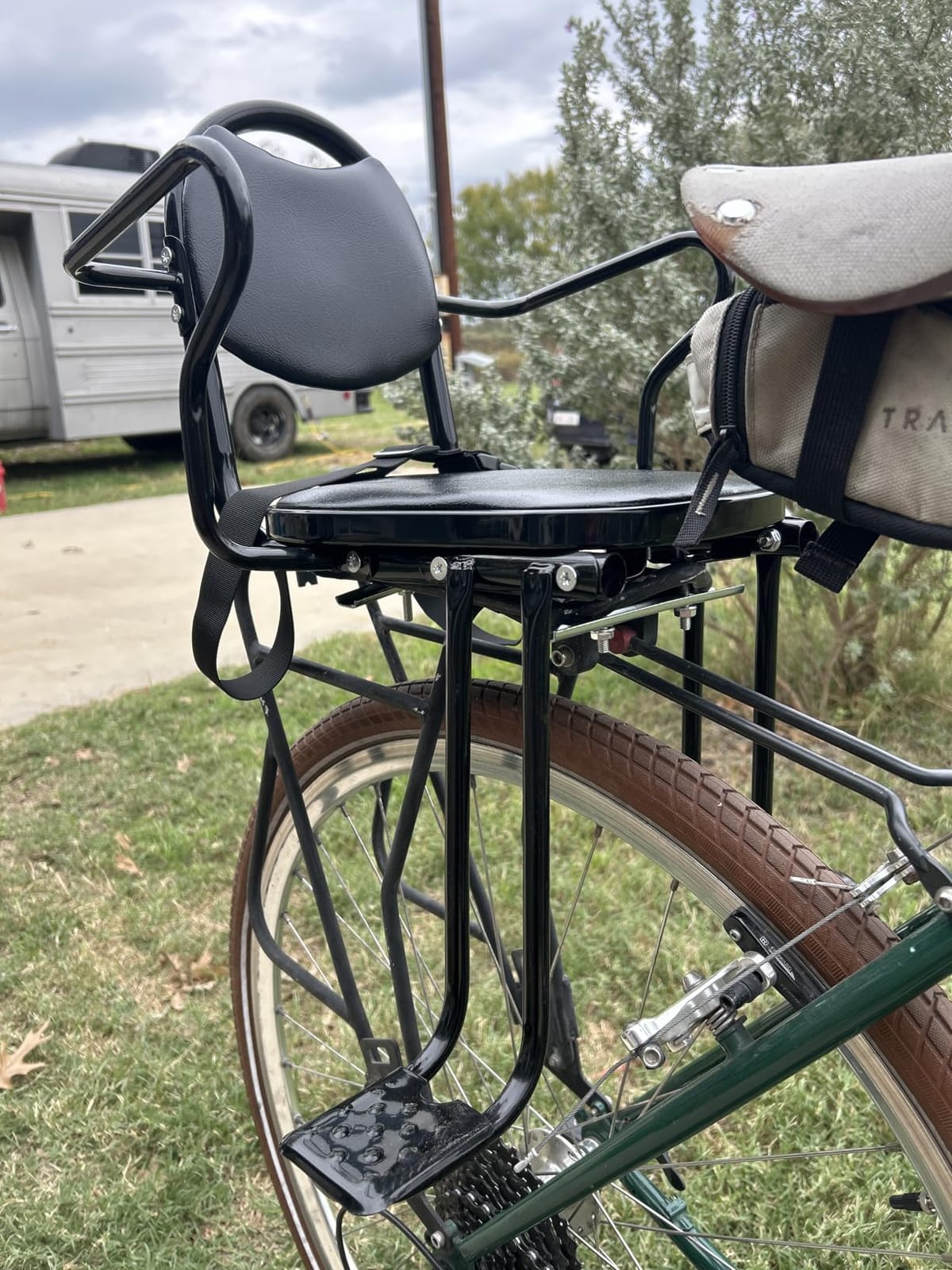
Where the other rear seats are compact, this one is roomy. Side rails, a front hand bar, armrests and a broad base give a larger child space to sit, and owners mention children staying comfortable over 20-mile rides.
It is steel, at 2.5 kg, and it fits a wide range of racks, including the wide racks found on e-bikes and touring bikes. The listing asks for a rack platform longer than 25 cm and wider than 20 cm.
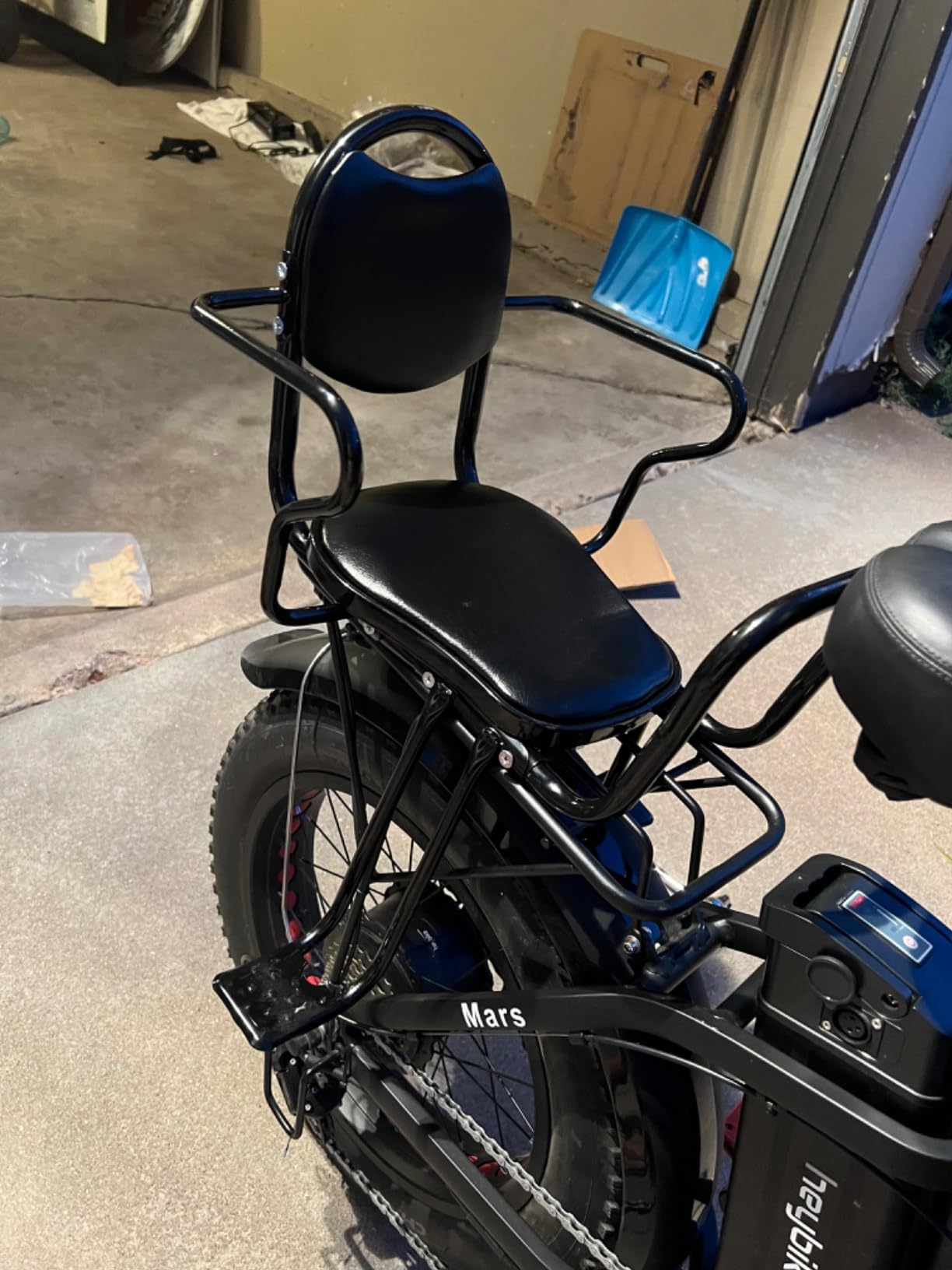
The safety belt across the front stops a small child sliding forward, and the cushion gives some comfort on rougher routes. The white clip groove on the underside has to face upward for the seat to lock in properly, which is worth checking after fitting.
We are more cautious about long-term durability than the star rating suggests. A meaningful share of reviews report weld failures within months and hardware that loosens quickly, sometimes requiring thread locker.
Who it suits
It suits a taller or older child who needs more room than a compact rear seat offers, on a bike with a wide rack platform. The generous hand bar also helps a child who is not yet strong enough to sit unsupported for long.
If you are comfortable with a monthly hardware check, the trade-off is manageable. Treat the torque on every bolt as a routine task rather than a one-off install step.
What gave us pause
Two warnings. The footrests are flimsy and have no straps, and the stated 2 to 8 age range looks optimistic given the maximum capacity listed. Measure your child rather than trusting the age band.
12. Peg Perego Orion – Best for One-Click Removal
Peg Perego Orion Front Mount Child Seat, Grey
Front mount
12 months to 33 lb
Fits 32-52 mm frames
Three-position footrests
4.9 lb seat weight
Pros
- One-click mount detaches in seconds
- Compact balanced front position that clears the rider's legs
- Three-position adjustable footrests grow with the child
- Adjustable 3-point harness with a quick-release bar
- Sturdy plastic adds little weight to the bike
Cons
- 33 lb limit is the lowest in the roundup
- Reduces handlebar steering range so tight turns need care
- No head rest for younger children
- Footrest latches are small and a child can free a foot
- Instructions are picture-only
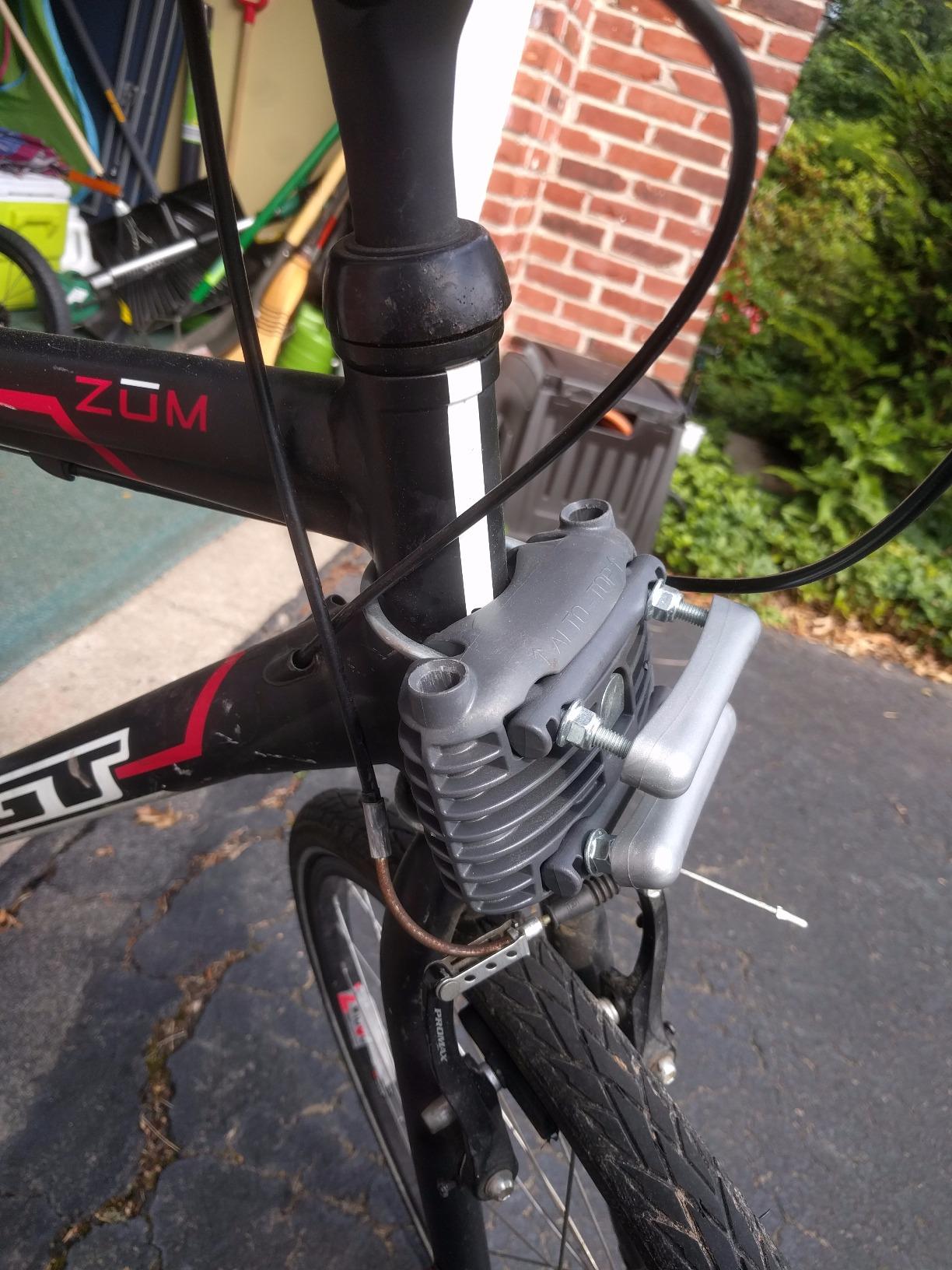
The Orion is defined by a single feature: it comes off in one click. If you share one bike between a solo commute and family rides, that difference changes the whole calculation, because the bike is genuinely usable without the seat fitted.
It fits frames from 32mm to 52mm in diameter, and the seat sits high and compact enough to stay out of the rider’s legs. Three-position footrests adjust as your child grows.
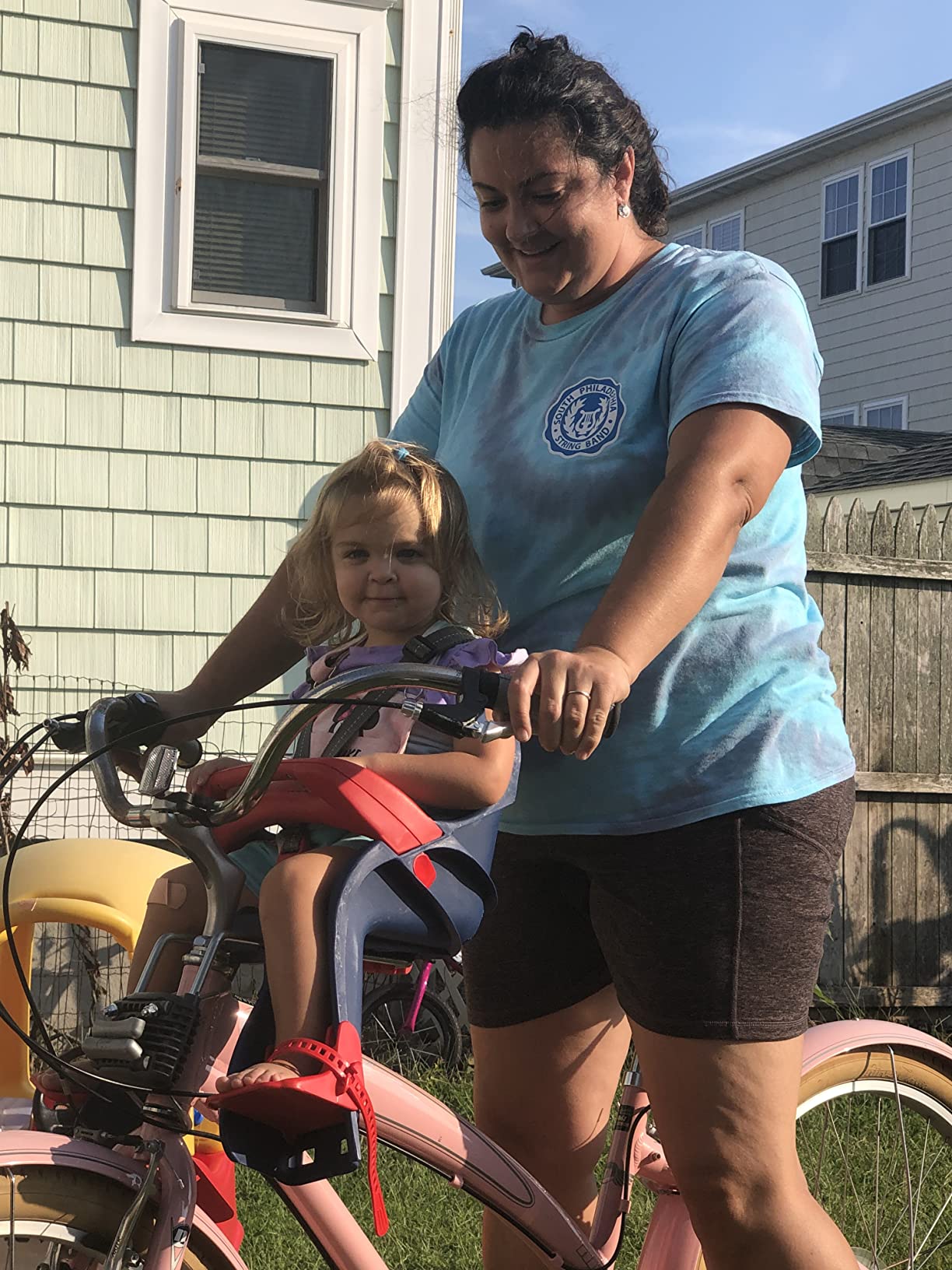
The shape is the other thing we liked. Unlike wide bucket seats, the Orion leaves knee clearance, so the pedalling stroke feels normal rather than bowed. A 2 year manufacturer warranty is included.
Owners consistently describe it as one of the best-balanced front mounts, and the adjustable-length 3-point harness with a quick-release safety bar handles a small child well.
Plan for the 33 lb ceiling
This is the important limitation. A 33 lb maximum is the lowest in the roundup, and many parents report reaching it sooner than expected. If your child is already walking and running confidently, buy the seat that comes after this one.
The absence of a head rest also shows early, because a younger child has nowhere to lean back on a longer ride.
Riding with it fitted
The seat narrows handlebar steering range, so tight turns need care and low-speed wobbles are common for new riders. Practice the mounted bike empty on a quiet path before the first trip with a child.
Front-Mounted vs Rear-Mounted Bike Seats for Toddlers
Neither position is safer in the way most parents expect. Rear seats carry a higher weight limit, so they last longer, and they keep the load behind the rider where a heavy child affects steering far less. Front seats let you see and talk to your child, and the extra weight at the front is noticeably easier to manage on a steady path.
Where rear mounts win is capacity and reach. If your child is over three or heading toward 40 lb and beyond, a rear rack seat keeps going while most front seats hit a ceiling. Front mounts also raise your child’s view, which matters to a toddler who wants to see where they are going.
On compatibility, the split is stark. A front mount needs a straight stem or a front crossbar, which rules out many step-through and drop-bar bikes. A rear rack mount needs eyelets or an existing rack, which rules out bikes with no mounts at all.
For most families the sequence is simple: start at the front while your child is small and wants to see you, then move to the rear when they outgrow the 33 to 38 lb front seats. Buy a front mount that detaches quickly, so you are not left with a single-purpose bike.
Will It Fit Your Bike? A Compatibility Checklist
Run through this list before you buy anything. Most return-backs and most disappointing rides come down to a mount that was never going to fit.
Front mounts: check that you have a straight stem bolt pattern or a cylindrical front crossbar. Measure center-to-center spacing if the listing quotes a range, and confirm the range includes your measurement. Step-through and women’s frames frequently cannot take a frame-mounted front seat at all.
Rear mounts: check for rack eyelets on the seat stays and seat tube, or an existing rack. Read the rack’s own weight limit and compare it with your weight plus the child. Carbon frames and hydraulic brake hoses leave limited space for a rack, and integrated brake routing can make mounting impossible without an adapter.
Both types: check the kickstand clears the seat, check the seatpost or stem height is adjustable enough to give you mounting clearance, and check that a dropper post is not blocking the mount. E-bikes add a constraint of their own, since down tubes and battery beams must stay within the seat’s width limit.
If you have two bikes or a second caregiver riding, budget for a second mounting kit. Many manufacturers sell the bracket or clamp separately, and a shop will usually fit it faster than a first attempt at home.
Keeping a Toddler Safe in a Bike Seat
Feet and spokes are the issue that comes up most. Feet dangling near the rear wheel is the most common injury reported from child seats, so a molded spoke guard or strapped footrests are not optional extras. Look for both, not one.
Harness fit decides whether the restraint actually holds. A 5-point system keeps the shoulders anchored as a child grows, while 3-point systems let shoulder straps slip off. Check the shoulder height after every growth spurt, and never ride with the harness worn like a coat.
A properly fitted helmet is worth the fuss, even though it is awkward. Buy a toddler helmet with a rounded rear that fits a reclined head, and expect to buy a second one as the child grows.
Before every ride, run a short check: harness snug with no twisted straps, footrests or straps holding both feet, guardrail and headrest in position, mount bolt tight, reflector and light working. Then practise the loaded bike empty, ideally with something heavy in the seat, before the first ride with your child.
Finally, dress for the weather. In cold months, a child seat poncho over clothing keeps hands free and fits over the harness, and layers under it beat a bulky coat that bunches at the shoulders.
What to Buy When Your Toddler Outgrows a Front Seat
Front seats have a short life. Most max out between 33 and 38 lb, and the Orion is the clearest example at 33 lb, so treat a front mount as a first stage rather than a long-term answer.
The step up is a rear rack-mounted seat with a 5-point harness and strapped footrests. The Schwinn Deluxe and the Thule Yepp 2 both hold 40 lb, and the Thule adds a 5-point harness, an integrated reflector and a limited lifetime warranty.
If your child is still under 40 lb and you want to keep riding with them facing forward, look for a front seat with a higher stated limit, such as the UrRider at 60 lb. Verify the mount fits your frame first, because the capacity is worthless if the seat will not bolt on.
Beyond that weight, a bike trailer or a cargo bike becomes the honest answer. A trailer pushes nothing onto the rider’s bike, holds two children, and gives a napping toddler somewhere to lie flat.
Frequently Asked Questions
At what age can a child safely ride in a bike seat?
Most child bike seats are listed from 9 or 12 months, which is when a baby can sit upright unsupported and hold their own head. The American Academy of Pediatrics advises waiting until at least 12 months. Weight matters more than age, so check the seat’s stated maximum and upgrade before your child reaches it.
What is the weight limit for a bike child seat?
Limits in this roundup run from 33 lb on the Peg Perego Orion up to 60 lb on the UrRider front seat. The Schwinn Deluxe and Thule Yepp 2 both stop at 40 lb, and the Bell Cocoon 300 also caps at 40 lb. Always use the manufacturer’s number rather than pushing a seat to its stated ceiling.
Front or rear child bike seat – which is safer?
Rear-mounted seats are generally considered safer for older children because they carry a higher weight capacity and keep the load behind the rider. Front-mounted seats let you see and talk to your child, and the front weight affects steering less. Many families use a front seat first, then move to the rear.
How do I install a bike seat for a child?
For a rear rack seat, fit a compatible rack, check its weight limit, then bolt or clamp the seat and run a torque check on every bolt. For a front seat, clamp to the stem or crossbar, confirm the spacing matches the listing, and tighten until secure. Practise with the empty seat loaded before riding with a child.
What type of bike is best for a 2-year-old child?
A step-through or city bike with rack eyelets suits a rear-mounted seat best, because the child loads easily and the seat stays clear of the rider’s legs. A front mount needs a straight stem, so a hybrid, cruiser or folding bike with a cylindrical crossbar is the practical choice. Avoid drop-bar road bikes with a child on board.
Do I need a helmet for my toddler in a bike seat?
Yes, a properly fitted toddler helmet is the right call, though it takes some practice to get used to. Choose a model with a rounded rear that fits an unsupported head in a reclined seat, and check the fit as the child grows. Replace the helmet after any significant impact.
How do I keep my child’s feet out of the spokes?
Choose a seat with a molded spoke guard, strapped footrests, or both, since feet near the rear wheel is the most common child seat injury. The Bell Cocoon 300 has a molded guard, the Schwinn Deluxe has strapped adjustable footwells, and seats with bare footrests need straps added. Check the feet before every ride.
Final Verdict: The Best Bike Child Seats for Toddlers in 2026
After weeks of swapping these twelve seats between bikes, the Schwinn Deluxe remains our pick of the best bike child seats for toddlers. It is the most reviewed seat we tested, it comes off and on in seconds, and the removable headrest and adjustable footwells handle the daily mess of a real child.
Buy the Thule Yepp 2 if you want the best harness, the best materials and a limited lifetime warranty, and accept the 40 lb ceiling. Buy the Bell Cocoon 300 for a 5-point harness and a molded spoke guard on a rear rack, and the iBert if your bike is small, folding or compact.
Whichever you choose, measure your bike before you order, respect the stated weight limit, and run one slow empty practice ride before the first trip with your toddler. Our picks for the best trampolines for toddlers cover indoor days when the weather rules the bike out.