
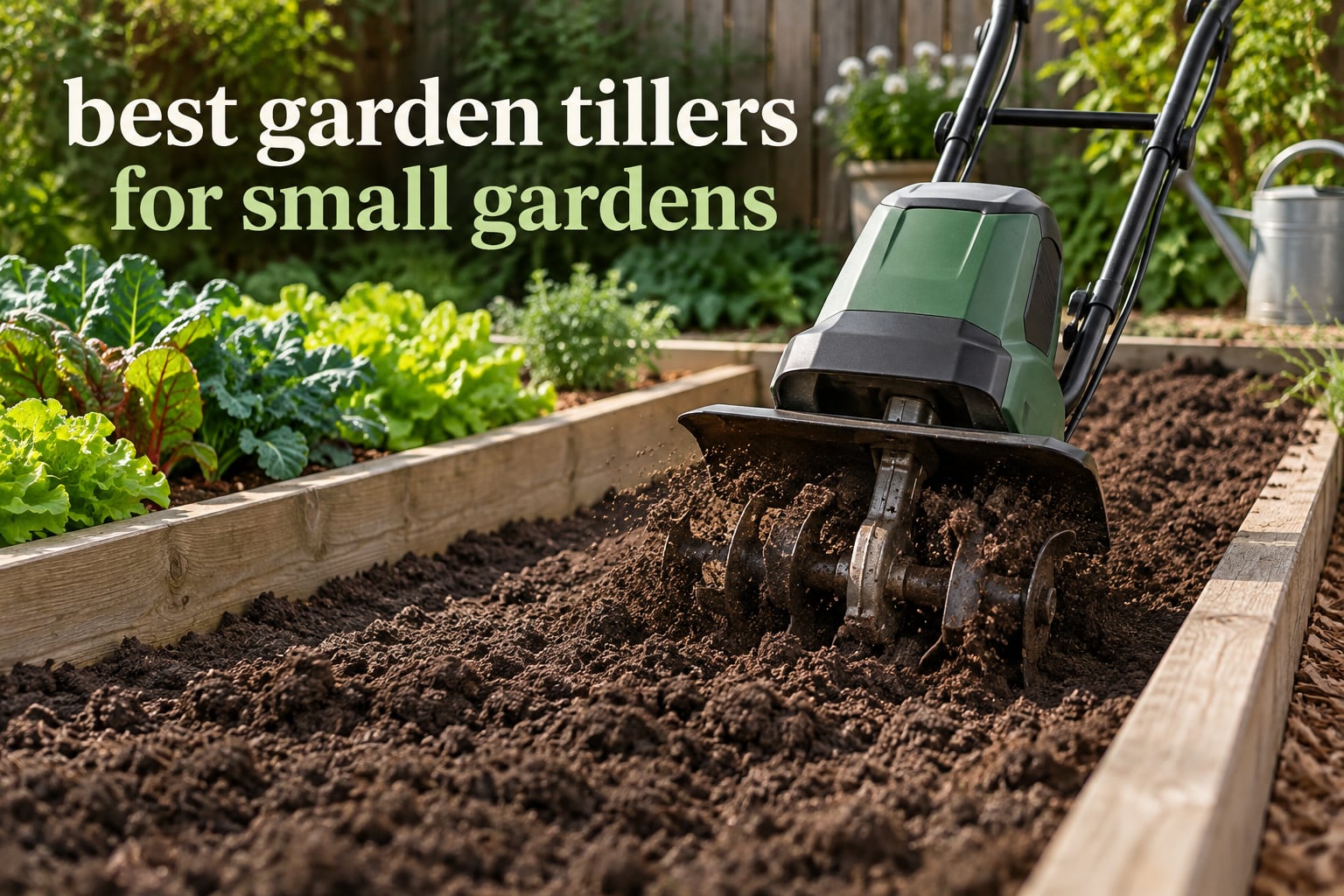
The best garden tillers for small gardens are compact machines that fit the bed, not the bed them. A 13.5-amp corded tiller with a 16-inch width handles most small plots fastest, a 7.5-inch corded model disappears into a 3-foot raised bed, and a cordless cultivator lets you work without a cable across the soil. Everything heavier than about 35 pounds is a liability once you are turning corners between beds.
That last point is where most best-tiller lists go wrong for you. The machines that top general roundups are usually 75 to 200 pound rear-tine gas tillers built for half-acre plots, and the honest truth is that you cannot lift one into a raised bed or turn it inside a 4-foot-wide bed.
So we judged all ten machines here on four things: published tilling width against your bed width, published weight against what you can lift, how easy it is to start, and how small it is when you need to store it. We also compared the details buyers actually complain about, from cord management to bolt loosening.
Below is the full list, followed by a size-matching guide, a power-source breakdown, a soil-type chart, and an honest look at when you should not till at all.
Table of Contents
Top 3 Picks: Best Garden Tillers for Small Gardens (October 2026)
Our three strongest picks split by job rather than by price. The Sun Joe is the machine that finishes a whole small plot fastest, the Garden Weasel hand tool is the highest-rated tool in the group, and the BILT HARD gives you the most tilling width per dollar spent.


Garden Weasel Double-Sided Hand Tiller
- Hand powered
- double-sided 3-prong head
- 5.28 oz
- lifetime guarantee
Quick Comparison of the Best Garden Tillers for Small Gardens
This table lists all ten machines with their published tilling width, weight, and the job each one suits best. Width is the single most important number for a small garden, because a machine wider than your bed cannot be turned inside it.
| Product | Specifications | Action |
|---|---|---|
 Sun Joe TJ604E Corded Electric Tiller Sun Joe TJ604E Corded Electric Tiller |
|
Check Latest Price |
 Earthwise TC70025 Corded Tiller Earthwise TC70025 Corded Tiller |
|
Check Latest Price |
| BILT HARD 14 in 10-Amp Corded Tiller |
|
Check Latest Price |
 Greenworks 40V Cordless Tiller Greenworks 40V Cordless Tiller |
|
Check Latest Price |
 Alloyman 20V Cordless Tiller Alloyman 20V Cordless Tiller |
|
Check Latest Price |
 MZK 20V Cordless Cultivator MZK 20V Cordless Cultivator |
|
Check Latest Price |
 Earthquake MC440 Mini Cultivator Earthquake MC440 Mini Cultivator |
|
Check Latest Price |
| Garden Weasel 91367 Hand Tiller |
|
Check Latest Price |
 Jardineer Hand Tiller Jardineer Hand Tiller |
|
Check Latest Price |
 BARAYSTUS Rotary Cultivator BARAYSTUS Rotary Cultivator |
|
Check Latest Price |
1. Sun Joe TJ604E: Best Overall Tiller for Small Gardens
Sun Joe Electric Corded Garden Tiller & Cultivator, Steel Tines, 13.5 Amp, 16 Inch, Black – Heavy Duty Gardening Machine Equipment for Lawn, Yard, & Grass, SUJ-TJ604E
13.5-amp corded motor
16 in tilling width
8 in depth
27.1 lb
Pros
- Widest cut of any pick here
- 17-year-old review base
- Tool-free assembly
- No fuel oil or pull cord
- Folds flat for the shed
Cons
- Cord clips are awkward to fit
- Small rear wheels roll poorly
- Two-piece handle flexes under load
The Sun Joe TJ604E is the machine I recommend to anyone with a plot rather than a set of narrow beds. It has 13.5 amps of motor, six rust-proof steel tines, and a published 16-inch tilling width that reaches 8 inches deep, which is the widest swath and the deepest reach of anything in this group.
Reviewers report it chewing through hard clay and packed soil to full depth, and several describe outperforming a rented gas tiller on the same ground. With more than 16,000 reviews behind it, this is the most-proven small tiller you can buy, which matters when a plastic gear case is the difference between a five-season tool and a two-season one.
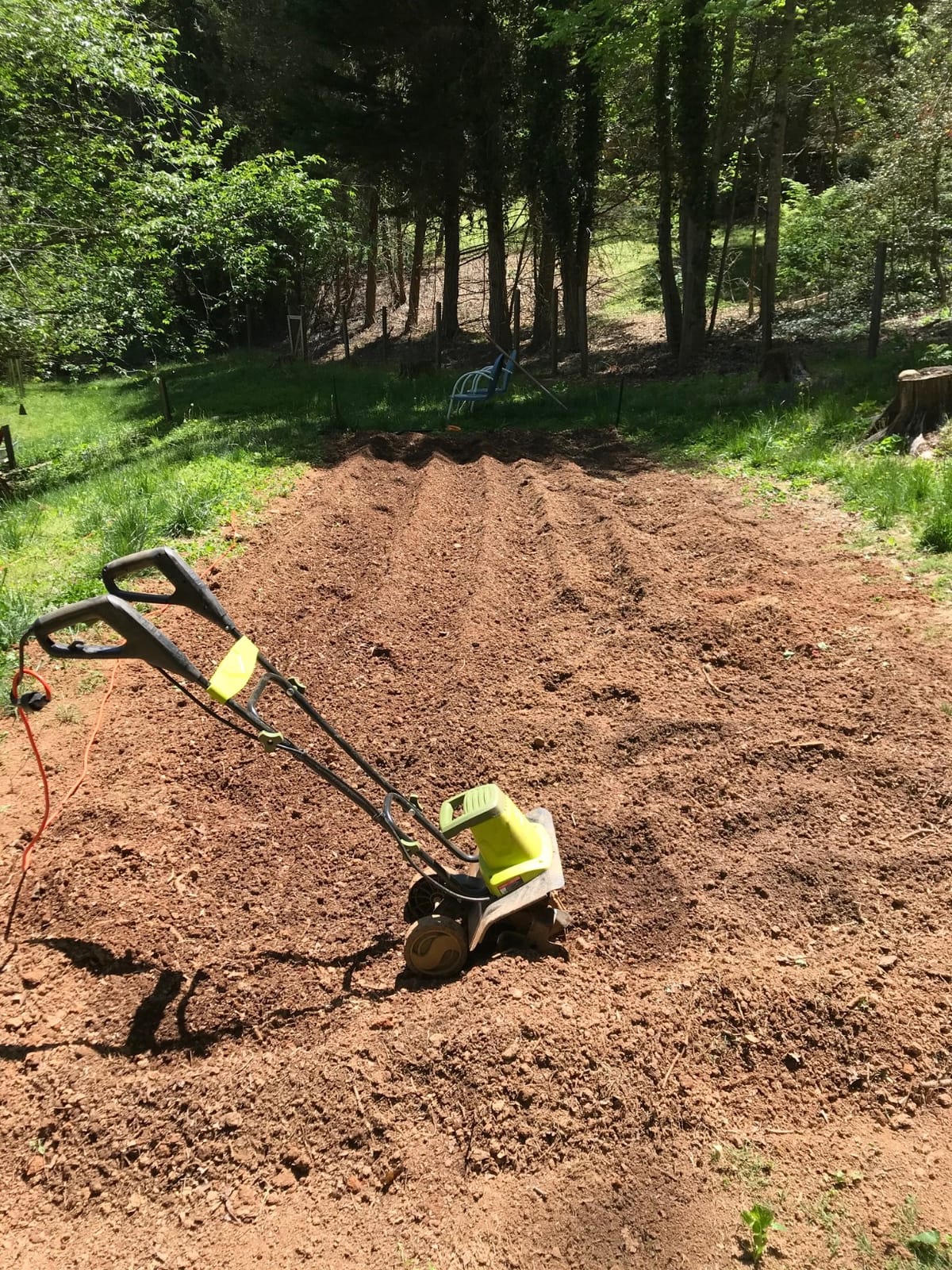
The practical details are unusually good for a corded machine. Assembly is tool-free, the handle folds flat for storage in a shallow shed, and three-position wheel adjustment handles both tilling depth and transport. It weighs 27.1 pounds, so it is heavy enough to resist bouncing out of a trench but still liftable by most people into a raised bed.
It also has the cleanest ownership story of any powered pick. There is no fuel to store in a small space, no oil to change, and no pull cord to yank, which matters if you share the tool with an older gardener or someone with a shoulder problem.
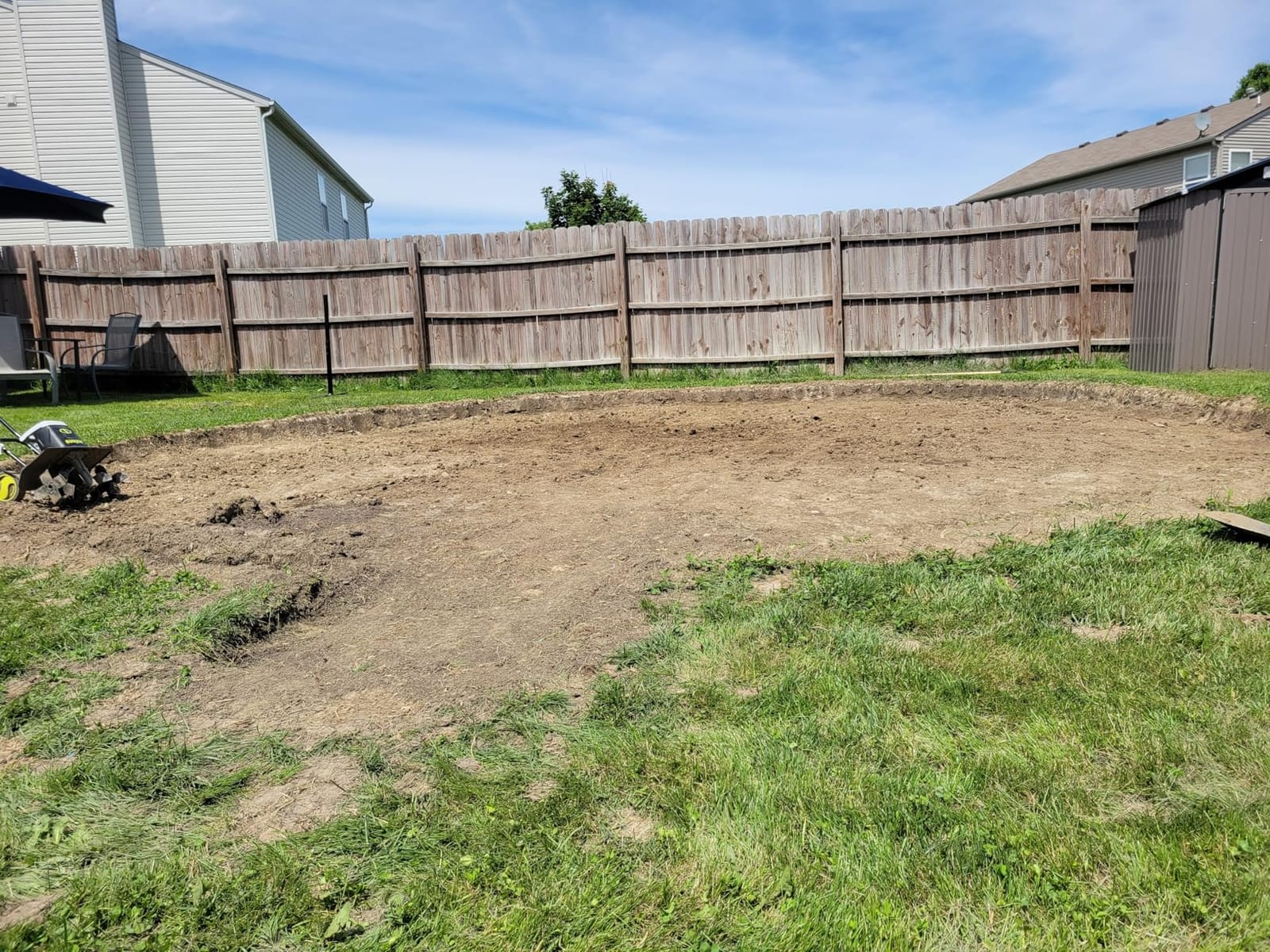
How it handles beds narrower than four feet
A 16-inch width still works inside a 3-foot raised bed because you have roughly 20 inches of leftover space on each pass, and the wheels let you line up for a second pass to catch the strip in the center. On a 4-foot in-ground bed you will cover it in three or four passes rather than six.
The turning radius is the thing to watch. Reviewers who work around corners report leaning on the handle bar to keep the machine tracking, and the small rear wheels make long moves across a lawn awkward. If your beds are scattered, this is where a lighter cultivator wins instead.
When to skip this machine
Skip it if you cannot get a heavy-gauge extension cord to the far end of the plot, because the included cord is short and cord management is the most repeated complaint across corded tiller reviews. The supplied wire clips for managing the cord are also widely reported as difficult to fit, and zip ties are the usual workaround.
It also has no rear depth spur, so the two-piece handle can flex and the tines can jump out of the trench in very hard ground. If your soil is rockier than a garden fork can handle, this is not the machine, and no amount of leaning will change that.
2. Earthwise TC70025: Best Tiller for Raised Beds
Earthwise TC70025 7.5″ 2.5-Amp Corded Electric Tiller/Cultivator, Grey
2.5-amp corded motor
7.5 in width
6 in depth
8.8 lb
Pros
- Weighs 8.8 pounds
- Quiet single-lever start
- Handles compost mixing
- Stores in a small shed
- Ideal for 3 by 8 ft beds
Cons
- Jams on stones and thick roots
- Leaves an untouched strip mid-bed
- Grass winds around the tines
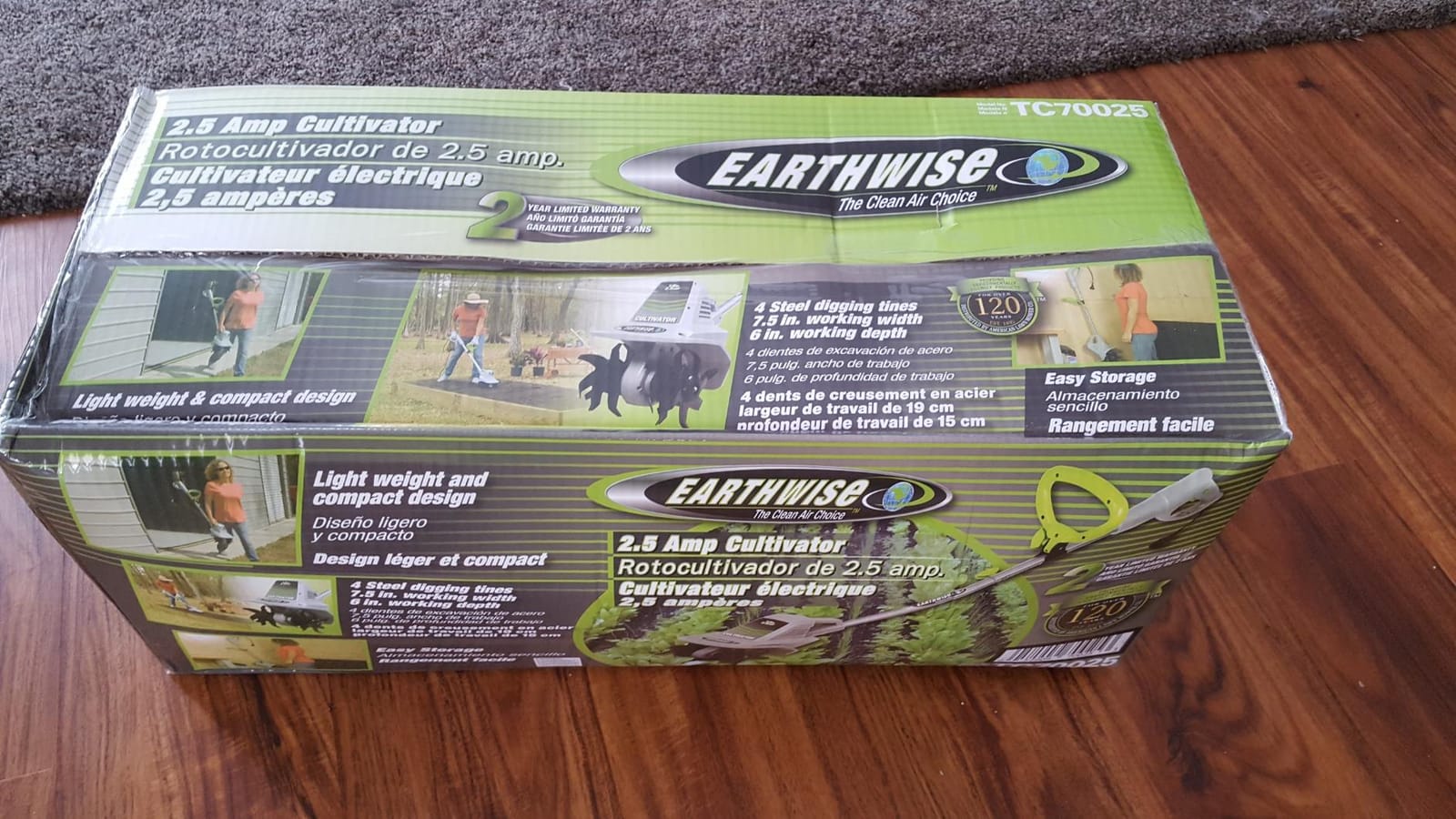
The Earthwise TC70025 is the pick when your growing space is made of frames rather than open rows. At 8.8 pounds it is the lightest powered machine here by a wide margin, and you can carry it one-handed from the shed to the far end of a bed without planning the route.
It cultivates and tills up to 7.5 inches wide and 6 inches deep with four durable steel tines, and a single lever switch starts it every time with no priming or pulling. Owners use it to break up compacted soil, work compost in, and clear weeds from flower beds between plantings.
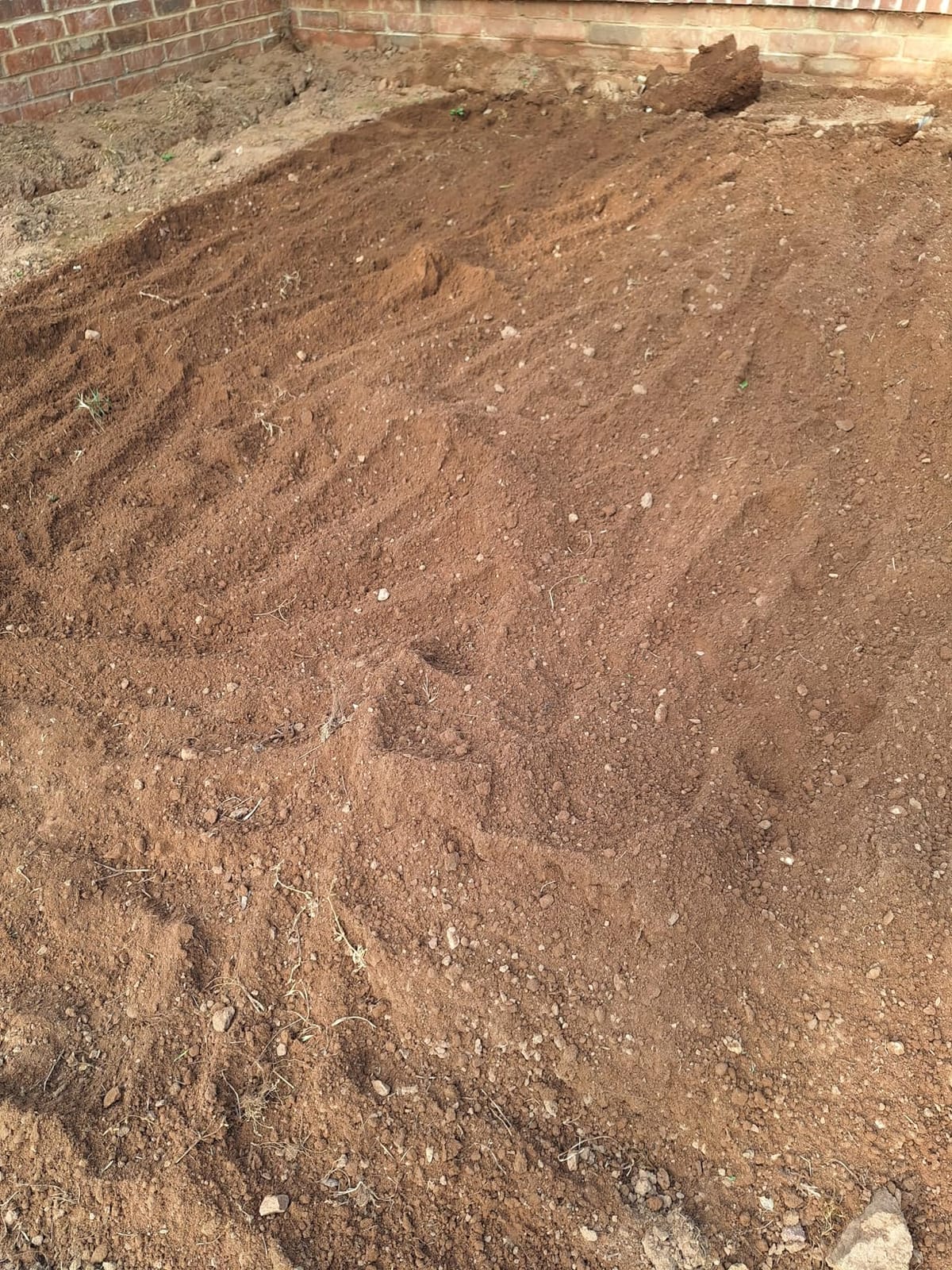
Reviews describe it as quiet enough for a neighbor-adjacent plot and controlled enough to place between plants without touching them. The soft ergonomic grip reduces hand fatigue on longer sessions, which is the reason many buyers keep it as a second tool alongside a bigger tiller.
Worth noting is the 2 year limited warranty and a metal construction rather than the all-plastic bodies that make many cheaper cultivators disposable after one season. It is not the tool for breaking ground, but it is very good at preparing ground that is already broken.
What a 7.5-inch width means for your beds
In a 3 by 8 foot raised bed you will make roughly four passes across the width, which keeps every pass inside the frame and away from the sides. In a 4-foot bed it becomes three passes with room to turn at the ends without clipping the timber.
The 6-inch depth specification is enough for annual bed prep and for mixing compost into the top layer. It is not enough to break a hardpan layer, so if you are opening a new bed for the first time, start with a fork or a heavier machine first and use this for the finishing pass.
When to pick something else
Reviewers are consistent about two limits: it lacks the torque to cut through thick roots or heavy clay, and it jams when it meets a stone. Long grass also winds around the tines and stops the machine, so mow or cut the bed back before you start.
Two smaller catches: the tine rows leave a strip of untouched soil in the center of the bed that you need a second angle to reach, and the motor is 110V/120V only, so it will not run on a 220V supply. There is also no kick stand, meaning it has to be set down fully flat when parked.
3. BILT HARD 14 in Corded Tiller: Best Value for a Small Plot
BILT HARD Electric Tiller Cultivator 14 inch, 10 Amp 4 Steel Tines Corded Tiller for Gardening with Foldable Handle, Portable Garden Rototiller with Adjustable Wheels
10-amp corded motor
14 in width
8.7 in depth
18 lb
Pros
- Strongest value in the set
- 14 in width at 18 lb
- Handles clay sand and grass
- Cuts grass sod and clay without stalling
Cons
- Single speed with no control
- Small wheels loosen or detach
- Roots and stones must be cleared first
The BILT HARD is the pick I keep recommending to people who want real tilling ability without stepping up to gas. Its 10-amp AC motor spins to 17,000 RPM, and four rust-resistant blades carrying four angled tines each turn at 360 RPM to cover 14 inches wide and 8.7 inches deep.
Owners report it out-performing their own gas tillers on the same ground, and it cuts through grass, clay, and sand without stalling. At 18 pounds it is light enough to rotate in a bed, and the foldable H-handle with four quick bolt knob combinations takes seconds to set up and fold away.
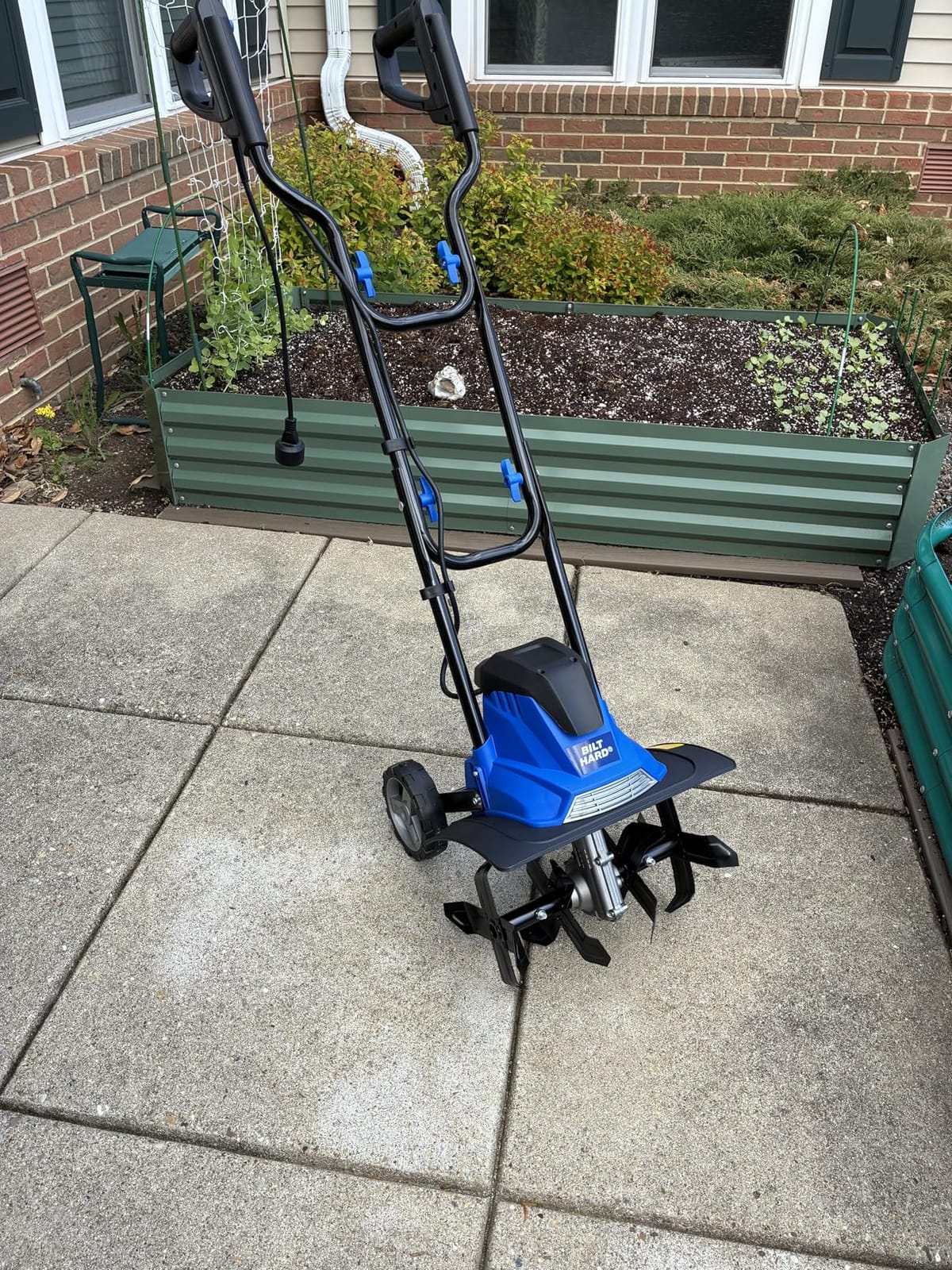
The 2-position 6-inch wheel adjustment switches between tilling and transport, and assembly is fast and simple with no special tools. Multiple passes in forward and reverse break hard topsoil effectively, which is the technique experienced operators use with a single-speed machine.
With 1743 reviews at a 4.6 average, the feedback base is large enough to trust for a tool at this level, and the sentiment is unusually consistent for the category. The complaints are about control and small parts, not about whether it tills.
How the single-speed drive actually works
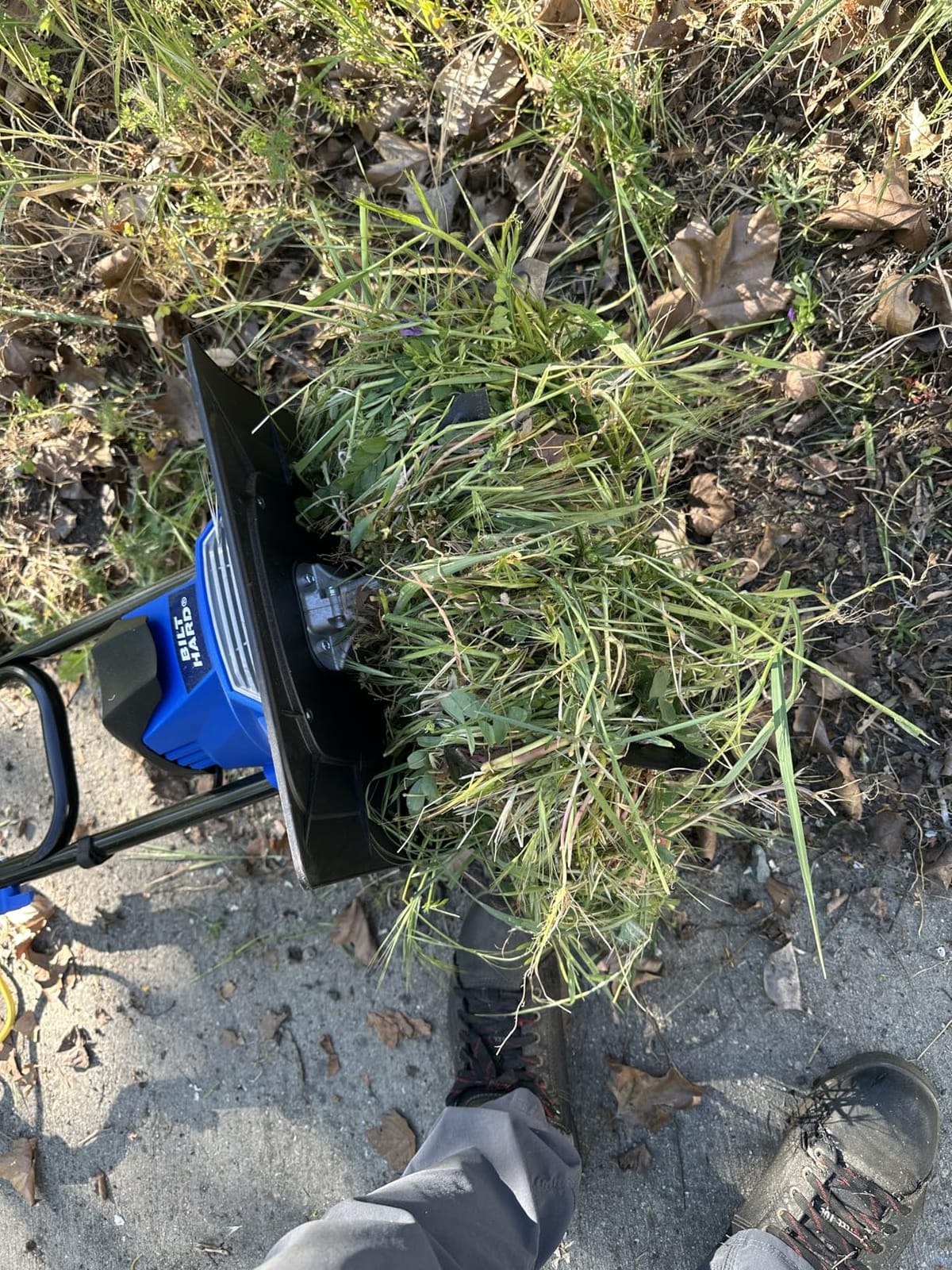
A single-speed motor gives you one option: forward rotation at full rate. In practice that means you walk forward, let it bite, then reverse out and make the next pass, using forward and reverse passes together to break hard ground rather than trying to control the rate.
Several reviewers note that it pulls itself forward and flings soil outside the bed, which is a real issue in a 4-foot frame. Expect to keep a firm grip and plan on a few passes to get an even result rather than a single clean cut.
Weak points to know about
The accessory wheels are the weakest component. Reviewers report the small wheels loosening or falling off within the first few uses, so check them before each session and expect to re-tighten. The machine also needs you to lean on the handles to keep it from bouncing out of the trench in hard soil.
Large roots and stones have to be removed before you begin, or the tines jam. That is the same caveat that applies to every small cultivator, but at 8.7 inches of published depth this one gets deeper than most, so the limitation shows up more often.
4. Greenworks 40V: Best Cordless Tiller for Wider Beds
Greenworks 40V 10″ Cordless Tiller / Cultivator, 4.0Ah Battery and Charger Included, Green
40V cordless
8.25-10 in width
45 min runtime
21 lb
Pros
- Adjustable 8.25 to 10 in width
- 45 min runtime per charge
- 6 in rear wheels for maneuvering
- 3-year tool and battery warranty
Cons
- Heaviest cordless option here at 21 lb
- Less effective in hard or compacted soil
- Runtime is not enough for large plots in one charge
The Greenworks 40V is the cordless option for anyone whose beds are wide enough to want a 10-inch cut without giving up battery power. The tilling width adjusts from 8.25 to 10 inches, so you can narrow it between plants and widen it for an open bed.
A 4.0Ah battery gives up to 45 minutes of run-time and recharges in 120 minutes, and the 6-inch rear wheels make it much easier to maneuver around the garden than a wheel-less cordless cultivator. It needs no gas, no oil, and produces no emissions, which matters in a small urban space.
The 3-year tool and 3-year battery warranty is the longest coverage on any cordless pick here, and the battery shares a platform with other 40V Greenworks tools, so if you already own the platform you only pay for the machine once.
Maintenance is genuinely zero, which is the argument for cordless over gas in a garage attached to a house. There is no fuel to store safely, no oil to change, and no carburetor to clean over winter.
Battery platform lock-in is the real decision
Before you buy, check which battery families you already own. The 40V Greenworks platform is shared across a wide tool range, so a second purchase is cheaper, but a competing platform means a separate battery and charger for the same garage.
Runtime is the practical limit. Forty-five minutes covers a raised-bed garden or a small plot comfortably, but if you are opening new ground on a larger area you will be stopping for a two-hour recharge mid-job, so plan the passes around that.
Where the rating slips
At 4.2 average with 1105 reviews, this sits below the corded electric picks on stars, and 8% of reviews are one-star. Owners are most often disappointed on deeper or harder cultivation relative to the price, which is a fair criticism of any battery machine in compacted soil.
It is also the heaviest cordless option listed, at 21 pounds, and the most expensive cordless cultivator here. If your soil is loose and already worked, you are paying for capability you will not use.
5. Alloyman 20V Cordless Tiller: Best for Long Battery Sessions
Alloyman 20V Cordless Tiller Cultivator, 360RPM Electric Garden Tiller, with 2 * 4.0Ah Batteries & Charger, 9In Tilling Width and 6.6In Depth Garden Rototiller for Lawn/Gardening/Soil Cultivation
20V cordless
two 4.0Ah packs
9 in width
6 in depth
14.4 lb
Pros
- Two 4.0Ah batteries included
- About 45 min per battery
- Detachable gear head clears weeds
- Adjustable auxiliary handle
- 9 in width and 6 in depth
Cons
- Weaker on compacted or rocky soil
- Battery and charger add carry weight
- No gas class torque
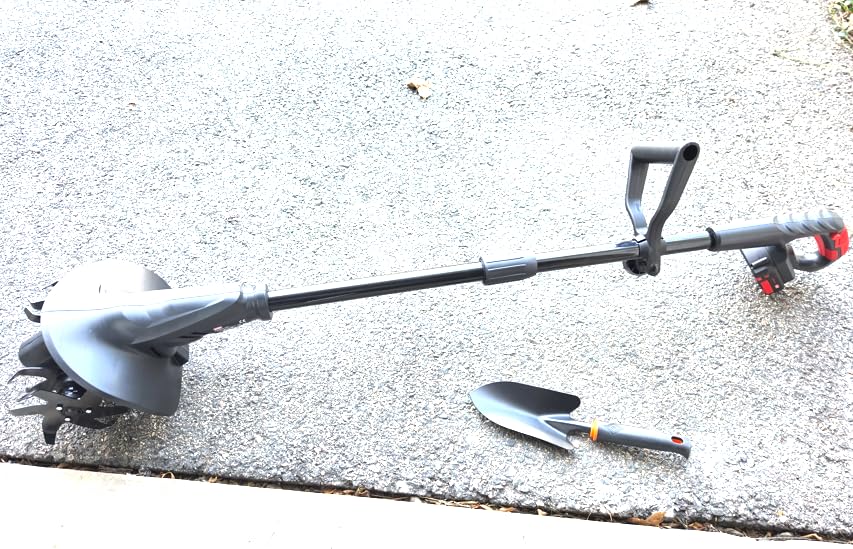
The Alloyman 20V solves the objection that kills most cordless cultivators: the recharge. Two 4.0Ah batteries ship in the box, so when the first pack drops you swap to the second and keep going while the first charges.
Four durable steel tines turn at up to 360 RPM to cover 9 inches wide and 6 inches deep, which is generous for a cordless machine and close to what the heaviest corded options manage. The batteries include overload and temperature protection, which is sensible given the conditions they work in.
The adjustable auxiliary handle lets a taller or shorter operator set a comfortable working height, and the detachable gear head means you can pull the gears off to clear tangled weeds out of the tine assembly rather than cutting them by hand. A safety button plus trigger interlock means the tool cannot start by accident.
It comes with a 45-day satisfaction guarantee and a 1-year warranty. At 14.4 pounds it is light enough to carry between beds one-handed, and there is no cord to snag on roots or drag across a bed surface.
Why the second battery matters more than the specs
On a single-battery cordless tool, a 45-minute limit is a hard stop mid-bed. With two packs, the swap takes seconds and the work continues while charging, which roughly doubles what you finish in one sitting without buying anything else.
That makes this the practical pick for someone splitting a plot into several raised beds, where you stop and move the machine often. The trade is weight, because the batteries and charger add carrying mass to a 14.4-pound base frame.
Where it stops short
This is a cultivator-class machine, not a tiller for hard ground. Reviewers note it is less suited to compacted or rocky soil than a corded or gas machine, which is the same ceiling described for most battery tools of this size.
Expect to use it for loosening clumps, aerating soil that has already been turned, and in-season weeding between rows. If your task is breaking new ground, choose a corded or gas machine instead.
6. MZK 20V Cordless Cultivator: Best for Narrow Paths
MZK 20V Cordless Tiller Cultivator, 8.5-Inch Steel Tines,360 RPM
20V cordless
8.5 in width
24 steel tines
10.4 lb
Pros
- No cord to trip over
- 10.4 lb carry weight
- Safety lock on the trigger
- 24 tines aerate in one pass
Cons
- Designed for pre-tilled soil
- Short work cycles with pauses for recharging
- 10% of reviews are one-star
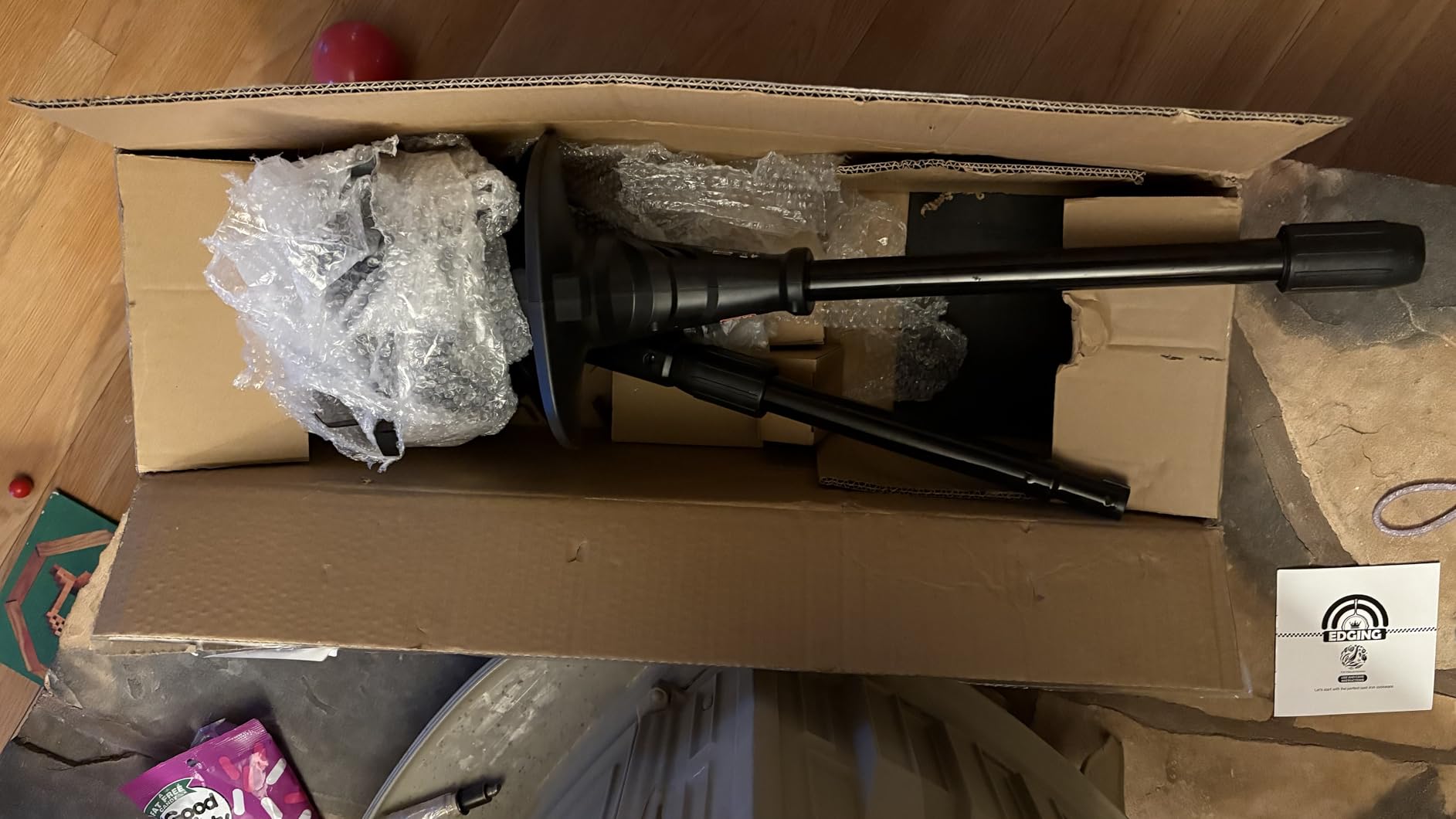
The MZK 20V is for the tight spaces between things: a narrow side path, the gap beside a shed, a bed corner a bigger machine cannot turn into. At 10.4 pounds with a 20V rechargeable battery, it is the easiest machine here to carry and reposition.
Twenty-four steel tines across an 8.5-inch cultivator width turn at 360 RPM to break up clumps and aerate soil in a single pass. The safety lock prevents accidental starts, and the ergonomic handle is shaped to reduce fatigue during a full bed of in-season weeding.
Two packs are included, so you are not committed to a single charge for light work. The real benefit in a small garden is that there is no extension cord to run over or trip on, which is the most repeated annoyance across corded tiller reviews.
It suits raised beds, flower beds, and lawn aeration, and it is quick to set up because there is no assembly beyond the handle and battery.
The job it is designed for
This is a cultivator, and the distinction matters. It loosens the top inch or two of soil that has already been turned, breaks surface crusts, and clears weeds between rows. It is not intended for breaking new, compacted ground, and forcing it to do so simply stalls it.
In practice that makes it a second-stage tool. Use a heavier machine or a fork to open a new bed once, then use this every season to keep it loose and weed-free without churning the structure.
Honest limitations
At a 4.3 average with 851 reviews, this sits a little below the corded electric picks on stars, and 10% of reviews are one-star. That share reflects a narrow job rather than a faulty product, but buyers expecting a tiller will be disappointed.
Battery capacity also means short work cycles with pauses for recharging, and the included packs are the smaller of the two cordless kits here. If you want to cover a full plot in one pass, the dual-battery Alloyman is the better fit.
7. Earthquake MC440: Best Mini Gas Cultivator
Earthquake 12802 MC440 Mini Cultivator with 40cc 4-Cycle Viper Engine
40cc 4-cycle engine
stand-up starting
32 pounds
5-year warranty
Pros
- Gas torque in a compact frame
- No oil and fuel mixing
- Quieter than a two-cycle engine
- Starts standing up behind the handles
- 5-year limited warranty
Cons
- Heaviest machine in the set at 32 lb
- Fullest maintenance of any pick
- Fuel storage adds to the footprint
The Earthquake MC440 is the only gas machine here, and it earns its place for one reason: a 40cc four-cycle Viper engine that delivers gas-level torque in a compact cultivator frame. If your soil is hardpan or clay, this is the machine in the group that will not simply stall.
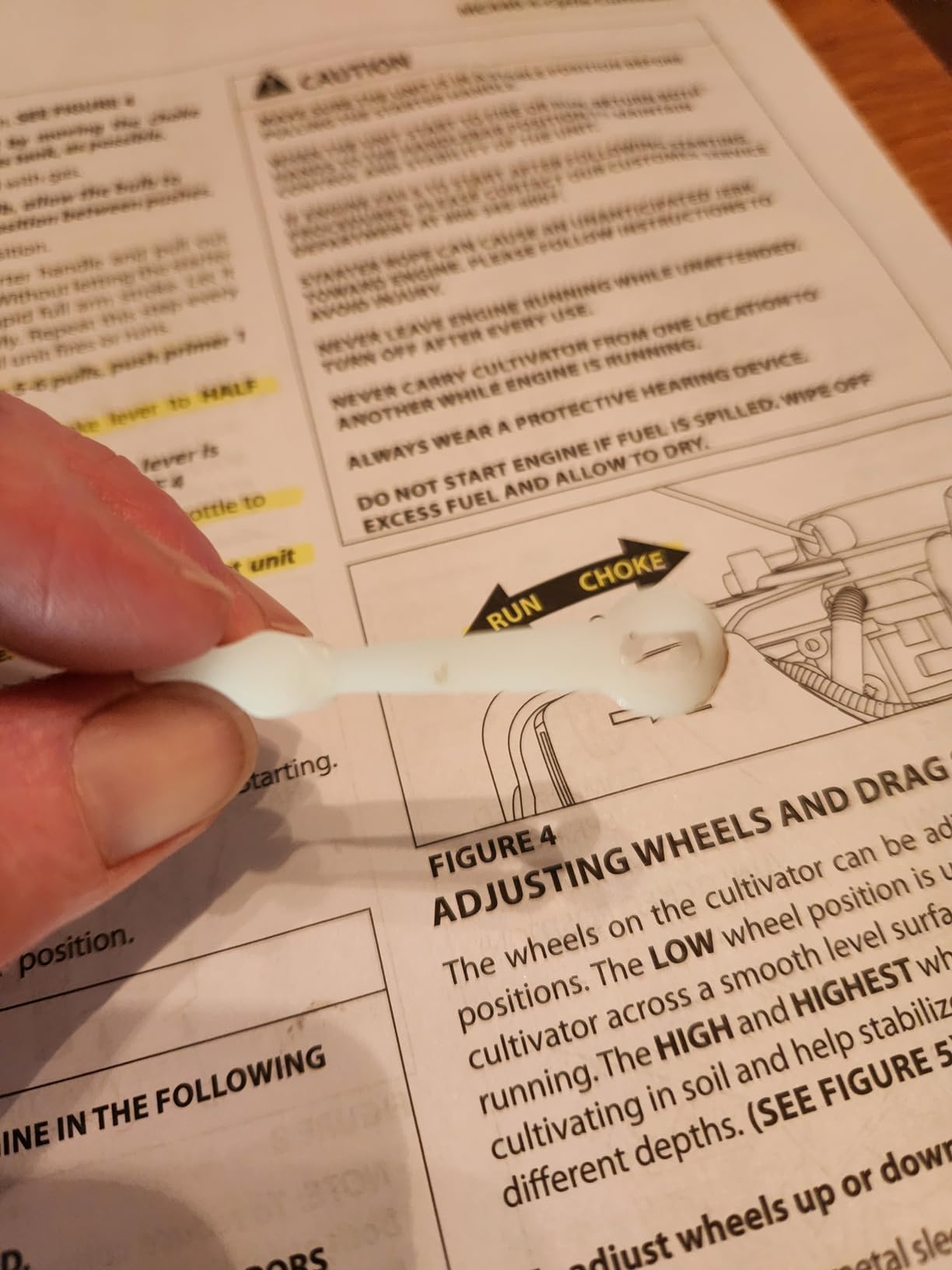
Being four-cycle, it runs on straight gas with no premixing, and the engine is quieter than a comparable two-cycle cultivator. Stand-up starting means you can start it from behind the handlebars without bending over, which is a real benefit if you have back or knee trouble.
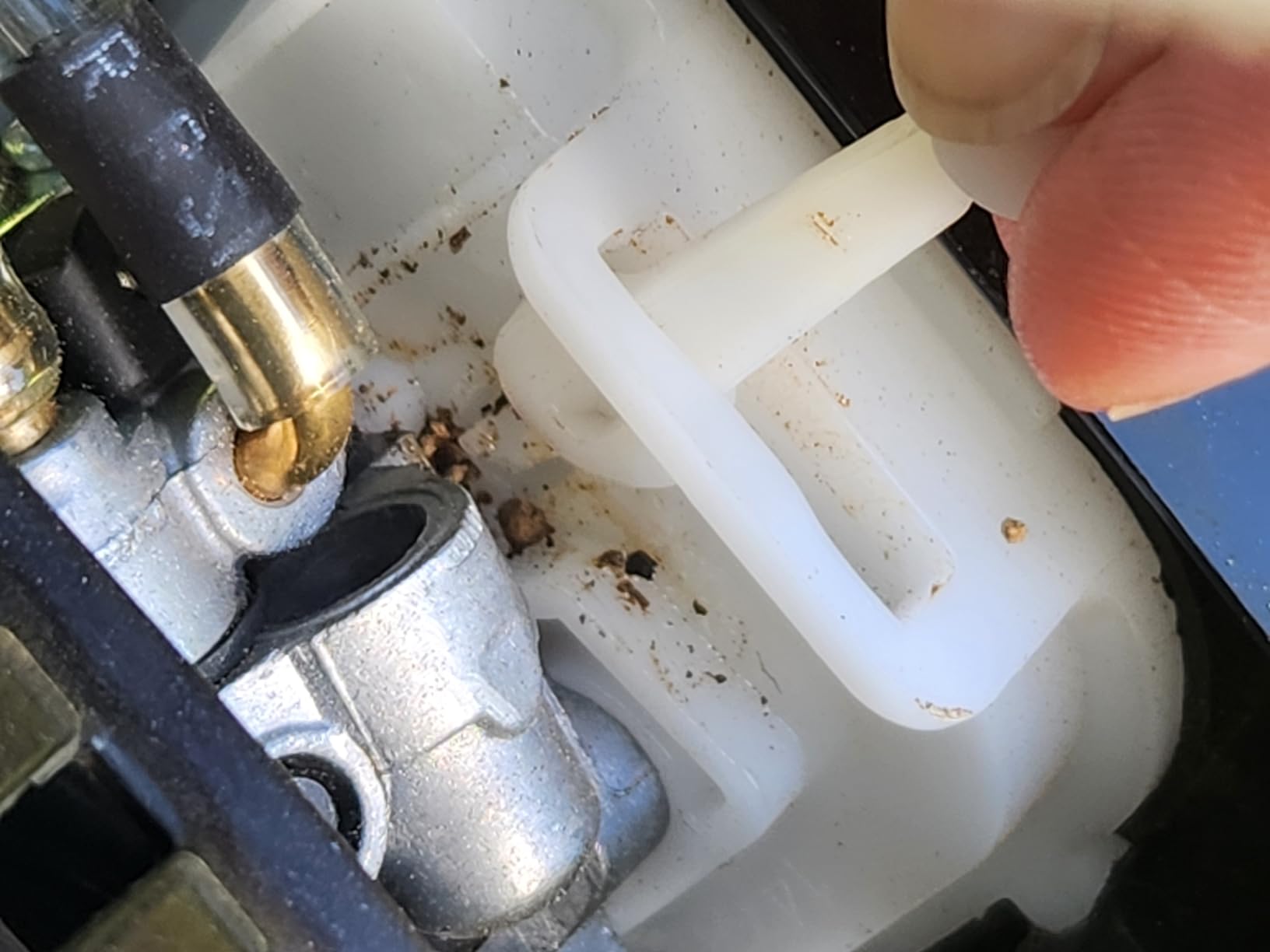
The air filter is designed to keep dirt outside the engine, which is the main reason small gas engines fail early, and optional edger and dethatcher kits expand it beyond tilling. The 5-year limited warranty is the longest in the group and the main reason the lower rating does not worry us as much as it would otherwise.
In a garden where storage space is genuinely tight, the trade is honest: a 32-pound machine plus a fuel container is more to find a home for than a 14-pound cordless cultivator.
What a four-cycle engine actually changes
A four-cycle engine has separate lubrication, so you pour gas in and go. No premixing bottle, no carburetor adjustment, no fouled plug from the wrong ratio, and no oil disposal. It also starts with a key-style or push start rather than a recoil cord in most configurations, which removes the single most-cited barrier for older and lower-strength users.
The running cost per hour is higher than any electric option, and it is the only pick here that needs a spark plug, an air filter, and periodic oil changes. That maintenance is the price of the torque.
When the gas option is not worth it
At a 4.0 average with 1074 reviews, this has the lowest average rating in the set, and 13% of reviews are one-star, the largest share in the group. Buyers most often report dissatisfaction with power delivery and maintenance for the price in small gardens.
It is also the heaviest machine listed at 32 pounds and by far the most expensive pick here. If your beds are already loose and your soil is not hard, you are carrying gas weight and gas maintenance for capability you will not use.
8. Garden Weasel 91367: Top Rated Hand Tiller
Garden Weasel Double-Sided Garden Cultivator/Tiller | Cultivate, Till, Break Up Soil | Planting and Gardening Hand Digging Tool, Heavy Duty Cultivator, Hand Tool Weeder | 91367
Hand powered
double-sided 3-prong head
5.28 oz
lifetime guarantee
Pros
- Highest rating in the set at 4.8
- 89 percent five-star feedback
- Works in both directions
- 5.28 oz carry weight
- Backed by a lifetime guarantee
Cons
- Hand power limits it to small areas
- Aluminium finish can corrode if left dirty
- Not for prying up hard-packed soil
The Garden Weasel 91367 is the highest-rated tool in the entire group, with a 4.8 average and 89% five-star feedback across 2234 reviews. For a hand tool, that is a remarkable distribution, and it comes from a simple design done properly: a three-prong cultivator head that works in both directions.
Because the head is double-sided, you can work forward and backward over the same spot without lifting and turning the tool. That single feature does more for control in a tight bed than any amount of motor power, and it weighs 5.28 ounces.
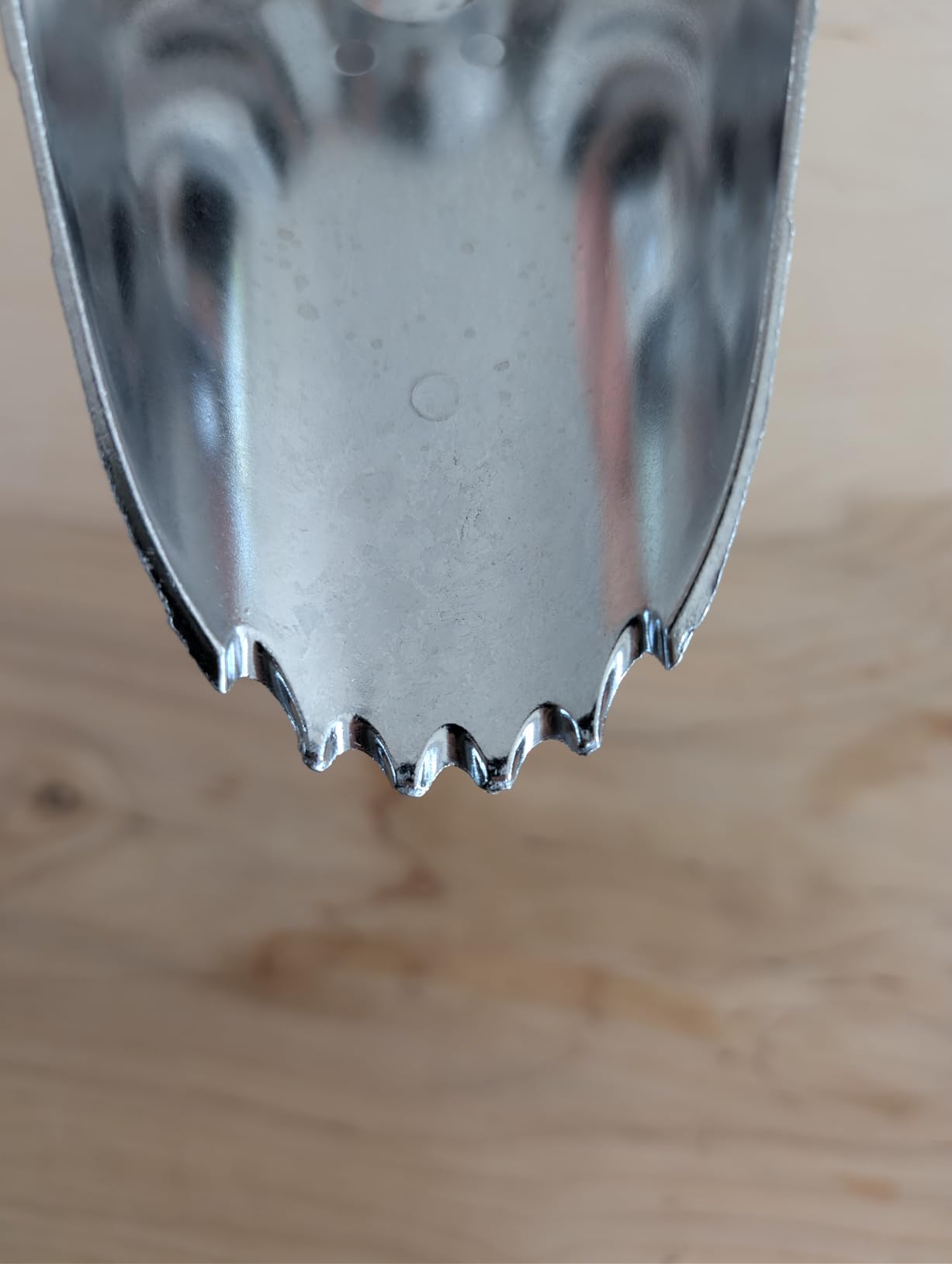
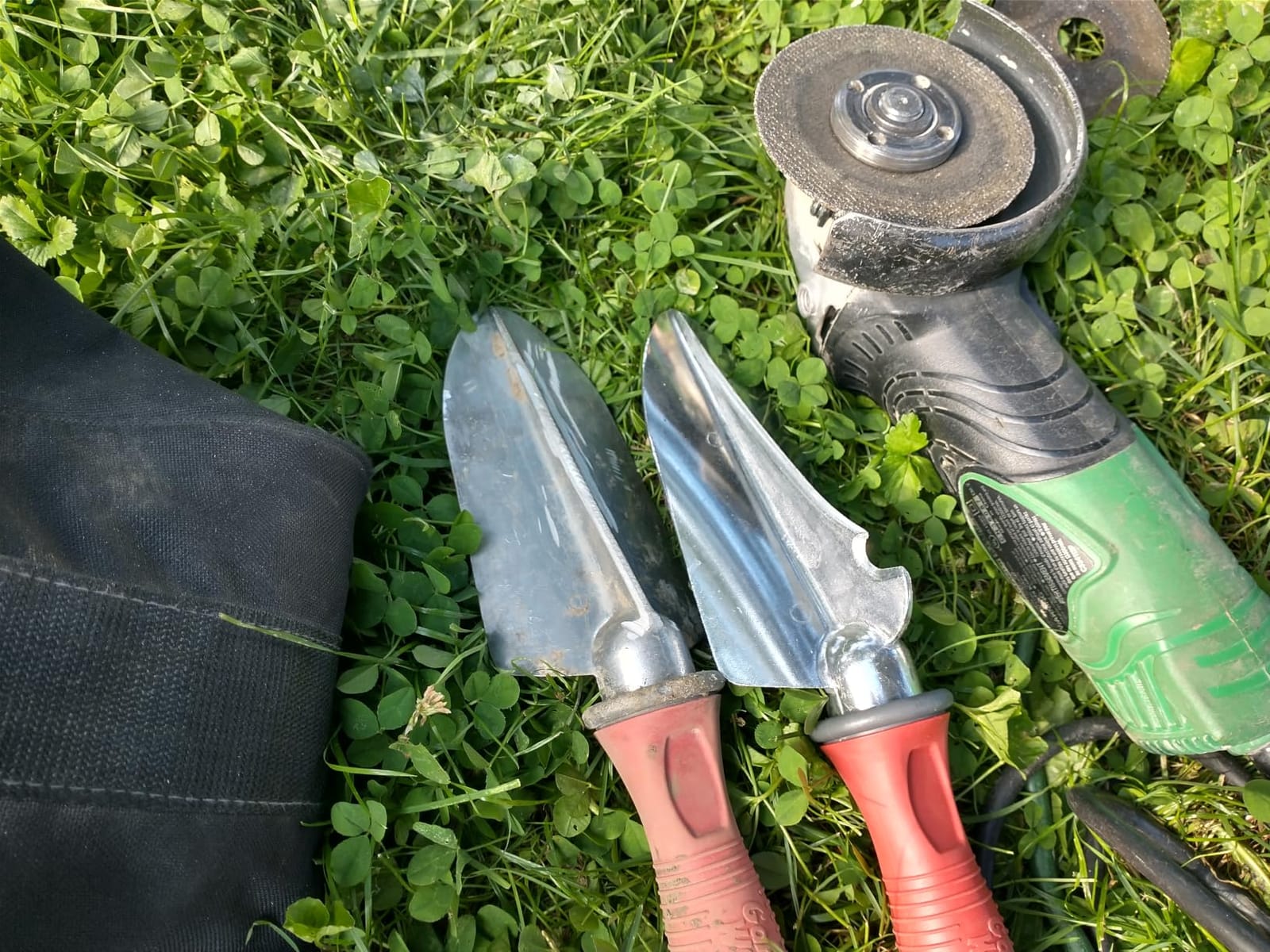
Owners describe the build as sturdy enough for heavy use in hard clay and rocky soil, with sharpened front teeth that bite into the ground and cut roots. The handle is light and balanced, which reduces hand fatigue, and the tool is designed and packaged in the USA with US-based support.
The lifetime guarantee against defects is the strongest warranty language in this roundup by a wide margin, and reviewers note the build is intended for decades of use rather than a single season of duty.
When a hand tool beats a powered tiller
Inside a 4-foot raised bed, a hand tool wins on several counts at once. You can work right up to the timber edge without a machine bumping it, you can reach around plants that are already growing, and there is no cord, no battery, and no fuel in a rental or small urban space.
It is also the right tool for seedbed finishing. Once a bed has been turned by a machine, this is what you use to produce the fine, even surface that small seeds need in order to germinate evenly.
Limits you should respect
Hand power means small areas and light, already-loosened soil. It is not designed to pry up hard-packed soil, and the tines can snap if you load them that way, so use it to finish work rather than to start it.
Two small practical notes: the aluminium finish can corrode if the tool is left dirty overnight, and no hanging strap or hook is supplied, so store it somewhere it will not sit in soil or water. Wipe it clean after each session and it will outlast the powered machines here.
9. Jardineer Hand Tiller: Best Manual Tool for Compacted Beds
Jardineer Hand Tiller for Gardening, Manual Twist Tiller Cultivator, Heavy Duty Garden Claw, Soil Loosener & Lawn Aerator for Soil Mixing, Garden, Flower Box and Raised Bed
Manual twist tiller
foot plate
curved handle
4.7 lb
Pros
- Foot plate drives tines with body weight
- Curved handle reduces back strain
- Sharp tines break hard clay
- Right size for raised beds and flower boxes
Cons
- Bolts need re-tightening every few uses
- Struggles in heavy dry clay unless watered in advance
- The claw does not close to pull weeds out
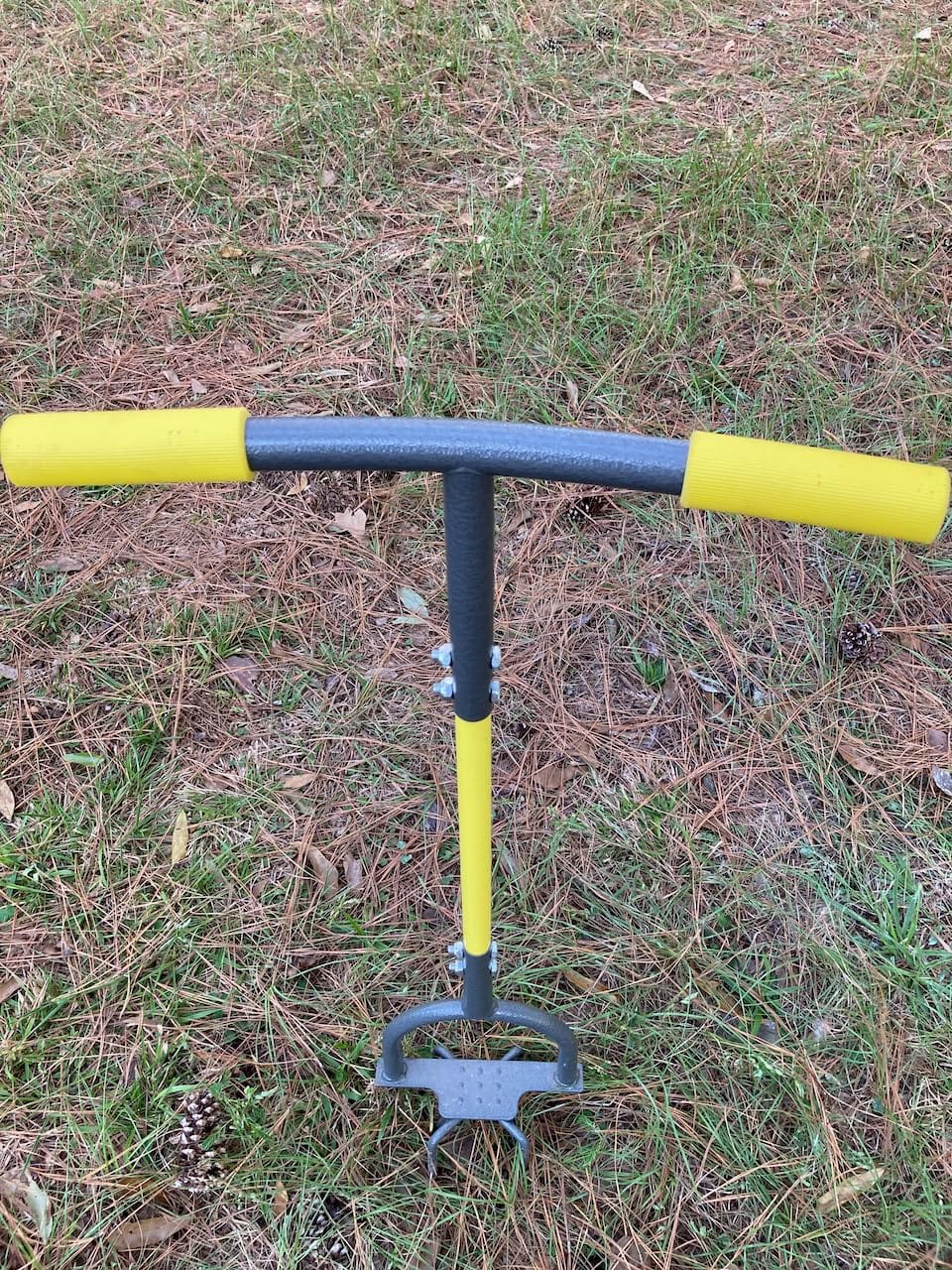
The Jardineer hand tiller is the manual answer for hard ground. Its anti-slip foot plate lets you stand on the tool and drive the tines into compacted soil with your body weight, which is the technique that separates a real twist tiller from an ordinary hand fork.
The curved long handle is what makes that technique usable. It keeps you working upright and reduces twisting effort and back strain, and at 4.7 pounds you can reposition it constantly without thinking about it. Reviewers highlight this as the difference between it and a cheap garden fork.
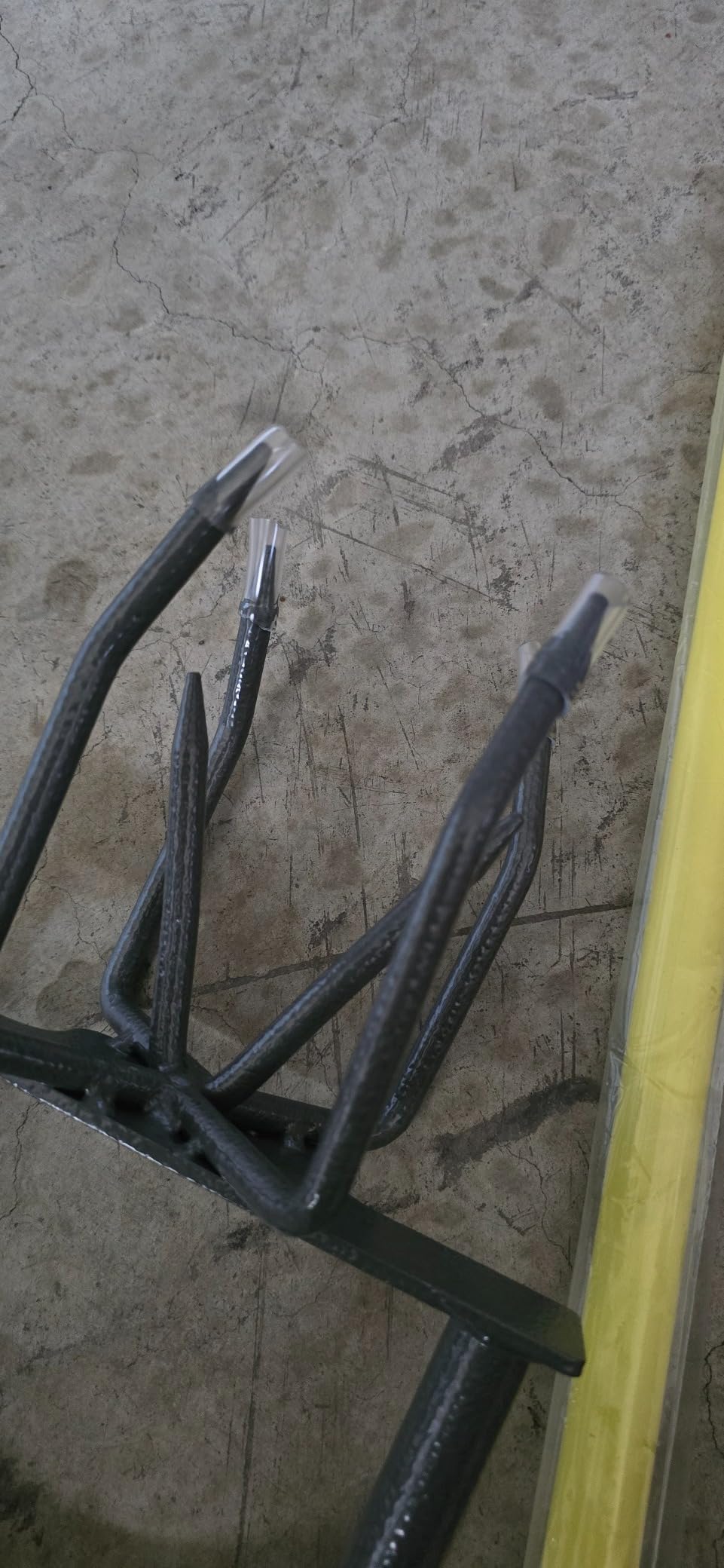
The razor-sharp powder-coated steel tines are used for weeding, deep tillage, aeration, and mixing compost or fertilizer into soil. It is well suited to flower boxes, raised beds, and the ground around shrubs, where a powered machine cannot physically fit.
Assembly takes minutes with the included wrenches and spare screws, and the 4.5 average from 1485 reviews is strong for a hand tool, with owners citing the foot plate and long handle specifically.
How the foot plate changes the effort
Without a foot plate you are pushing 4.7 pounds of leverage into soil that pushes back. With it, you stand on the plate, drive the tines in, twist, and pull. The difference in perceived effort is large enough that owners of both tool types describe manual tilling as manageable rather than punishing.
Work in short bursts, roughly a foot at a time, and lift the tool clear each time rather than trying to cover a whole bed in one pass. That keeps your back neutral and stops the tines from loading sideways until they bend.
Honest drawbacks
The bolts need re-tightening every few uses, which is the most common complaint and the reason to check them at the start of a session rather than mid-effort. It also struggles in heavy dry clay unless you water the bed in advance, so a day of watering the night before pays for itself.
Two limits worth stating plainly: the claw does not close to grip and pull weeds out of the ground, it loosens them, and weeds often come up in one large clump that has to be broken apart by hand. This is a soil tool, not a weeding tool.
10. BARAYSTUS Rotary Cultivator: Best for Reseeding Thin Lawns
BARAYSTUS Rotary Cultivator Garden Rotary Tiller Adjustable Stainless Steel Poles Hand Tiller for Soil Mixing or Reseeding Grass Lawn Tiller Total Length 57 Inch
Manual rotary head
57 in adjustable shaft
3 blade wheels
2.6 lb
Pros
- Rotary head covers ground much faster than a fork
- Adjustable 57 in length for comfortable height
- Three interchangeable blade wheels
- Soft anti-slip grips
- Tool-free knob connection
Cons
- Not for very hard or rocky soil
- Screws need periodic re-tightening
- Slower than a powered tiller on large areas
The BARAYSTUS is the one to pick when the job is thin soil rather than a vegetable bed. Its rotary head spins over a wide area, aerating and mixing soil much faster than a fork-type cultivator, which is exactly what you need to prepare a lawn for reseeding.
The four-section stainless steel handle adjusts to a 57-inch total length, so you can set the working height for your own height rather than bending over a fixed shaft. At 2.6 pounds it is the second-lightest tool here and the easiest to carry to a side yard.
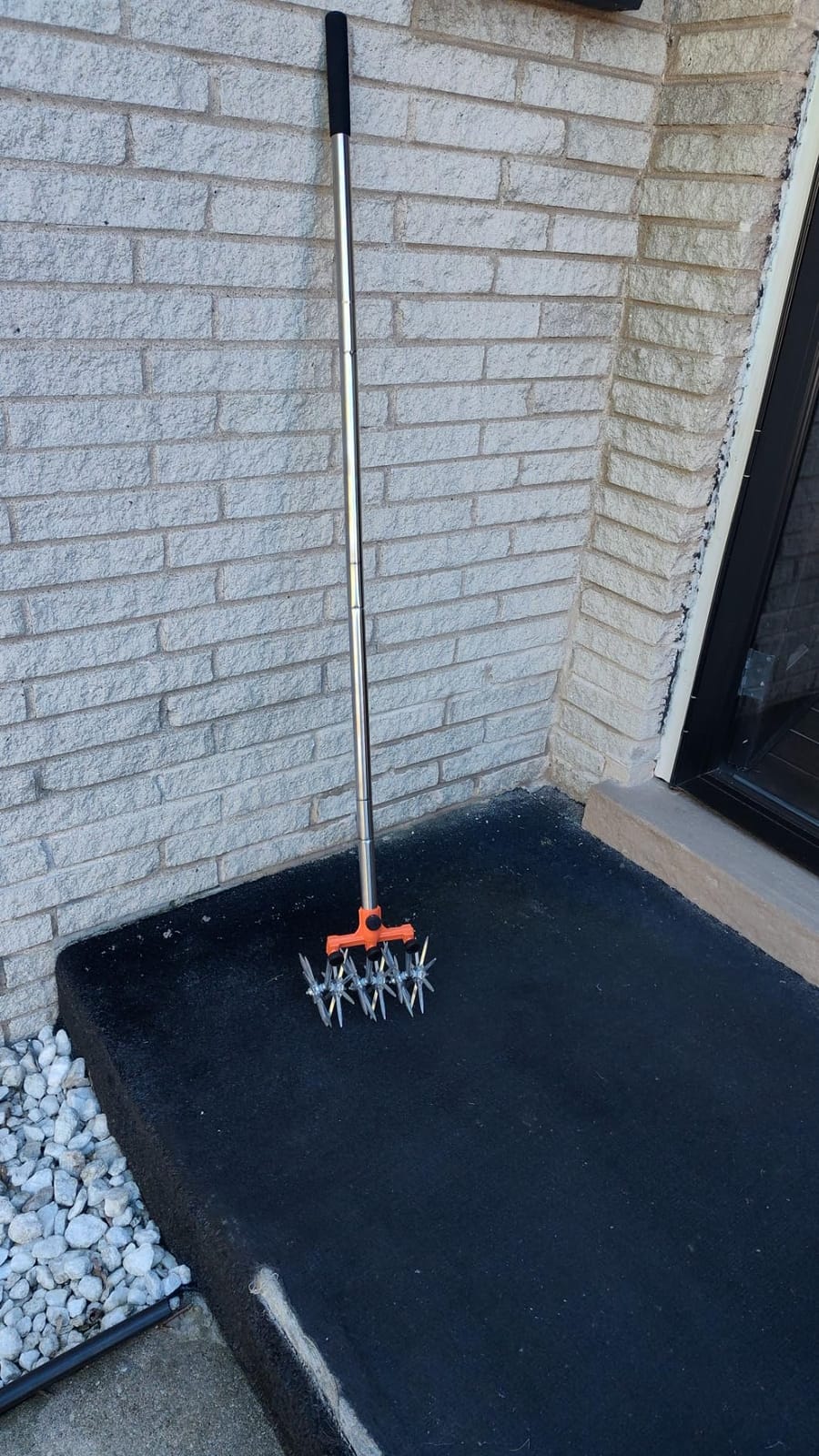
Three interchangeable rotary blade wheels cover different jobs: cultivating, reseeding, and weeding, changed with a tool-free round knob connection that needs no tools. The high-strength anti-rust aluminium tines and wheels resist the corrosion that ruins cheap hand tools, and the soft anti-slip grips stay comfortable in longer sessions.
It disassembles for storage, so it fits on a wall hook or in a narrow shed corner where a powered machine never could.
What it is genuinely good at
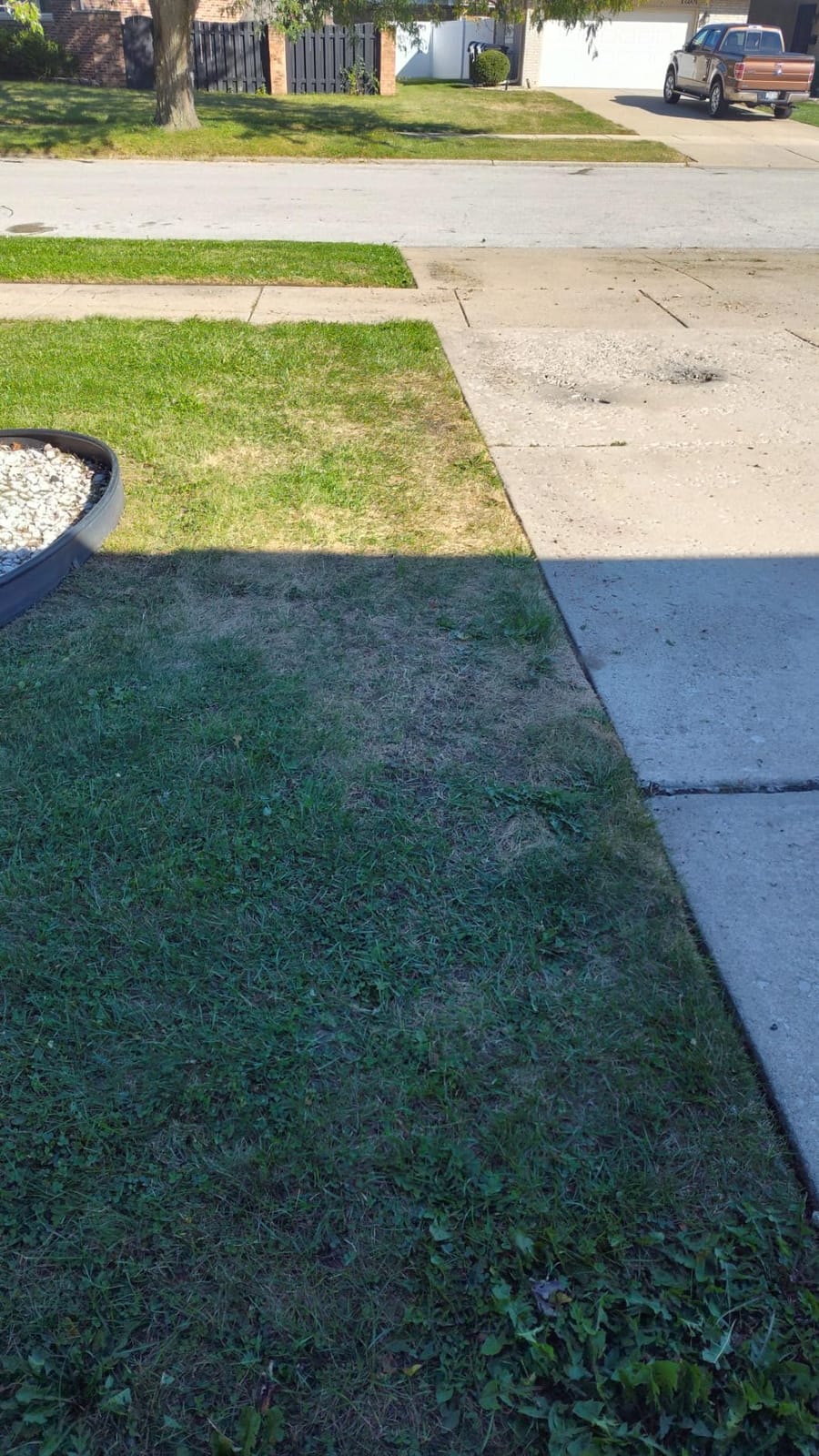
On a thin, already-worked surface, the rotary action is the point. Where a twist tiller concentrates force at three points, this head covers a wide swath with light, continuous pressure, which is what scatters seed evenly and levels a thin soil surface.
For a 4-foot bed that has been planted for two seasons and just needs a spring refresh, this is faster and gentler than a powered tiller. It will not damage established plant roots, which is the main thing you want between rows.
Where it struggles
The manufacturer warns against very hard or rocky soil, because the spike connection can loosen under that load, and reviewers confirm that screws need periodic re-tightening during use. Manual rotary action is also slower than a powered tiller once you move beyond a small area.
One counterintuitive note from buyers: on very light, loose soil the rotation can churn and compact rather than simply loosen. If your soil is already friable, a twist tiller such as the Jardineer gives you more control over depth.
How to Choose the Best Garden Tillers for Small Gardens
Choose a tiller for a small garden by measuring your bed width first, then checking your weight limit, then deciding on power. Everything else on the spec sheet is secondary for a plot this size.
1. Measure the beds, not the plot. The number that matters is the width of the narrowest bed you intend to work, because a machine wider than that cannot be turned inside it. A 3 by 8 foot raised bed is the common case, and a 7.5 to 10 inch width handles it comfortably.
2. Set a hard weight ceiling. If you cannot lift roughly 30 pounds one-handed, rule out every gas front-tine tiller regardless of what else it offers. Among the picks here, the Sun Joe at 27.1 pounds is the heaviest that stays practical, and the Earthwise at 8.8 pounds is the lightest powered option.
3. Check the start, not the power. Gas recoil cords are cited as a barrier for older users and anyone with back or shoulder issues. A push-button electric start or a four-cycle engine that starts standing up removes that problem entirely, which is why both features show up in our picks.
4. Plan cord reach before buying. For a corded tiller, work out the distance from your outlet to the far end of the plot and add the included cord length. A heavy-gauge outdoor extension cord is required, and cord management across the bed is the most repeated annoyance in corded tiller reviews.
5. Measure your storage space. A folding handle reduces the Sun Joe and BILT HARD to a flat panel, and the two manual tools collapse to a shaft. Anything that stays fully assembled at 30-plus inches tall needs a corner of the garage you may not have.
6. Match the machine to the soil, not the marketing. Published tilling depth matters more than horsepower. The BILT HARD reaches 8.7 inches and the Sun Joe 8 inches, while the lighter cultivators stop at 6 inches, which is enough for annual bed prep but not for hardpan.
Corded vs Cordless vs Gas for Small Plots
Corded electric wins on power and cost, cordless wins on freedom and quiet, and gas wins on torque. For a small garden the deciding factor is usually storage and start-up effort, not raw capability.
Corded electric. Unlimited run time, no battery platform to lock into, and the strongest motors in this group. The Sun Joe at 13.5 amps and the BILT HARD at 10 amps both handle hard clay that battery machines cannot. The cost is cord management and the need for an outdoor extension cord, plus the fact that both units are 120V only.
Cordless. No cable to snag on roots or drag across a bed, quiet enough for a shared fence line, and the easiest machines to carry between beds. Against that, run time of roughly 45 minutes per pack and a real ceiling on hard digging, plus the platform lock-in that decides your replacement battery cost later.
Gas. Torque when you are breaking clay or hardpan, four-cycle convenience with no premixing, and no cord to trip over. Against that, fuel storage in a small space, the fullest maintenance load of any option, and 32 pounds to lift. The Earthquake is the only gas pick here for that reason.
Manual. Nothing to store, charge, fuel, or maintain, and precise control in beds a machine cannot enter. Against that, the work is physical and the area you can cover in a session is small. For plots of a few beds, that trade is usually worth making.
One note on electric performance worth repeating from owner reports: corded electric users frequently describe far more torque than they expected, often comparing favorably to a small gas cultivator. The real limits are cord management and rocky soil, not raw power.
Tiller vs Cultivator: Which One a Small Garden Needs
A tiller goes deep and is for breaking new or compacted ground. A cultivator works the top inch or two and is for loosening soil that has already been turned, plus in-season weeding between rows.
That distinction decides the machine. In this roundup the BILT HARD and the Sun Joe are tillers, publishing depths of 8.7 and 8 inches, while the Greenworks 40V, the Alloyman, the MZK, and the Earthquake MC440 are cultivators with published depths around 6 inches or an adjustable narrower range.
For a small garden, the sequence usually works like this. Open new ground once with a tiller or a fork, then use a cultivator for every annual bed prep afterward. Tilling an established bed every year works more soil structure harm than good and is unnecessary for a plot this size.
You can also do both with one machine. Several picks here, including the Earthwise TC70025 and the Sun Joe, are sold as tiller and cultivator combinations, and the optional edger and dethatcher kits for the Earthquake extend the same idea further.
Match Your Soil Type to the Best Garden Tillers for Small Gardens
Match the machine to the soil. Loose, previously worked ground rewards the lightest tools, heavy clay needs genuine torque, and rocky or sandy ground punishes light cultivators that jam on the first stone.
Loose loam or previously worked beds. Any of the light cultivators here will do, and the lightest is best. The Earthwise TC70025 at 8.8 pounds or the MZK 20V at 10.4 pounds give the most control between plants, and the Garden Weasel is ideal for the final seedbed pass.
Heavy clay or hardpan. You need the Sun Joe TJ604E at 13.5 amps or the BILT HARD at 10 amps, and reviewers specifically report both chewing into clay. The Earthquake MC440 is the pick if you want gas torque, and the Jardineer hand tiller is the no-machine option if you can water the bed the night before.
Sandy or rocky ground. Avoid the lightest cultivators, because owners of the Earthwise and the MZK both report jamming on stones. Stiff, forward-throwing tines on a heavier machine work better, and cutting through tangled tree roots by hand before you start saves a tine set.
Thin soil over lawn for reseeding. The BARAYSTUS rotary cultivator is built for this, since its spinning head mixes and levels a thin surface quickly without churning the structure underneath.
When (and When Not) to Till a Small Garden
Till when the soil is workable, not when it is wet or when the bed is already in good shape. The most common small-garden mistake is tilling more often and deeper than the crop needs.
The squeeze test decides timing. Take a handful of soil and squeeze it firmly. If it holds together in a ball and leaves moisture on your palm, it is too wet and will compact into brick-like clods. If it crumbles immediately and feels dusty, it is too dry and tines will bounce off it. Aim for the middle, where the soil holds shape loosely and breaks apart with a light touch.
Till in spring once the soil has warmed and dried, and again in early autumn if you are adding compost for a winter cover crop. Most small beds need one pass at 4 to 6 inches, not the full 8-plus inches the machines can reach. Going deeper than your soil structure supports only creates more pore space you then have to re-compact by walking on it.
Skip tilling entirely if you can plant into the existing soil with a dibber. Established beds with healthy earthworms and organic matter do not need mechanical loosening every year, and a thick layer of compost applied on top will do the same work with less disruption.
Two safety basics before any machine starts: walk the bed and pull long grass, thick roots, and stones out by hand first, because they wrap tines and stall everything regardless of power. And wear gloves plus eye and ear protection, since the highest-pinch points are the tine housing and the rotating blade hubs.
How We Tested and What We Checked
We compared all ten machines against the same criteria, and every figure quoted in this guide is a published manufacturer or owner-reported specification rather than an estimate.
The checks were weight against what one person can lift, tilling width against a 3-foot and a 4-foot bed, tilling depth against the actual need in a small plot, start-up method, storage footprint, and the failure modes buyers report most often. Cord management, wheel durability, bolt loosening, and jam behavior carried real weight in the ranking.
We also applied a hard rule from owner feedback: anything above roughly 30 pounds has to earn its weight with torque, because below that line a heavy machine is just awkward. That rule is why the 75 to 200 pound rear-tine gas tillers that top general best-tiller lists appear nowhere in this roundup. If you do have a large plot, our rear tine tiller guide covers that class properly.
If you are laying out a plot from scratch rather than just tilling one, our guides to garden fencing for vegetable gardens and aeroponic tower gardens cover the two decisions people make first. If deer are the problem in your beds, our deer fencing for gardens guide explains the mesh options that work.
Frequently Asked Questions
What is the best tiller for a small garden?
The best tiller for a small garden is one narrower than your widest bed and lighter than you can lift one-handed. For most plots that is a corded machine around 10 to 14 amps, such as the Sun Joe TJ604E or the BILT HARD, because they reach 8 inches deep without needing fuel storage. Raised beds narrower than four feet suit a light cultivator like the Earthwise TC70025, and a hand tiller wins in beds a machine cannot enter.
What is the difference between a tiller and a rototiller?
There is no practical difference between the two words; a rototiller is a tiller. What matters is the machine class. A tiller works deep and is for breaking new or compacted ground, while a cultivator works the top inch or two of soil that has already been turned and is used for in-season weeding between rows.
Are electric rototillers worth it?
For a small garden, usually yes. Owners report that corded electric machines deliver far more torque than they expect, often comparing favorably to small gas cultivators, and the 13.5-amp Sun Joe reaches full 8-inch depth in clay. The real limits are cord management, the need for an outdoor extension cord, and 120V-only operation rather than raw power.
Which is better for my garden, an electric or a gas garden tiller?
Choose electric if your soil is loose or previously worked, since you get more power per unit of storage space and no fuel to store. Choose gas if you are breaking clay or hardpan, where torque decides the outcome. For a small plot the practical tie-breaker is storage and start-up effort, since gas adds a fuel container and the highest maintenance load of any option.
What tilling width do I need for a small garden?
Measure the narrowest bed you will work and pick a width that leaves room to turn at the ends. A 7.5 to 10 inch width handles 3-foot raised beds in three or four passes, while a 14 to 16 inch machine is faster on open plots. A machine wider than your bed cannot be turned inside it, which is the most common reason a big tiller goes unused.
What’s better, a front or rear tine tiller?
A front-tine tiller is the right choice for a small garden because it is lighter, narrower, and easier to turn between beds. Rear-tine tillers put the engine behind the tines, which improves control in straight compacted ground but adds 40 to 100 pounds and a wide turning radius. That extra weight and width is a liability when beds are under four feet across.
Is it hard to use a tiller?
It is manageable if the machine is matched to your bed. Clear long grass, roots, and stones by hand first, start at shallow depth, and work in passes rather than trying to reach full depth in one go. Recoil starts on gas engines are the main barrier, so a push-button electric start or a four-cycle engine that starts standing up is worth paying for if you have limited strength.
How deep should tillers go?
Four to six inches is enough for most small beds, and going deeper only works soil structure you will have to re-compact by walking on it. The deepest machines in this group reach 8 to 8.7 inches, which matters only when you are breaking hardpan or clay. Set the depth stake shallower for the first pass and deepen only if the soil beneath is actually compacted.
Final Verdict: The Best Garden Tillers for Small Gardens
The best garden tillers for small gardens share one trait: they fit the bed and the person. The Sun Joe TJ604E is our pick for most plots, with a 16-inch width, 8-inch depth, and the largest review base in the group, and it is the machine we would buy first.
For 3-foot raised beds, the Earthwise TC70025 at 8.8 pounds gives you more control than any powered machine here, and the Garden Weasel hand tiller is the highest-rated tool in the group. If you want the most capability per dollar, the BILT HARD reaches 8.7 inches deep at 18 pounds.
Measure your narrowest bed, keep the total weight under what you can lift one-handed, and start shallower than the machine can go. That is the whole method, and any of the ten machines above will handle the job once you match it to the soil.