
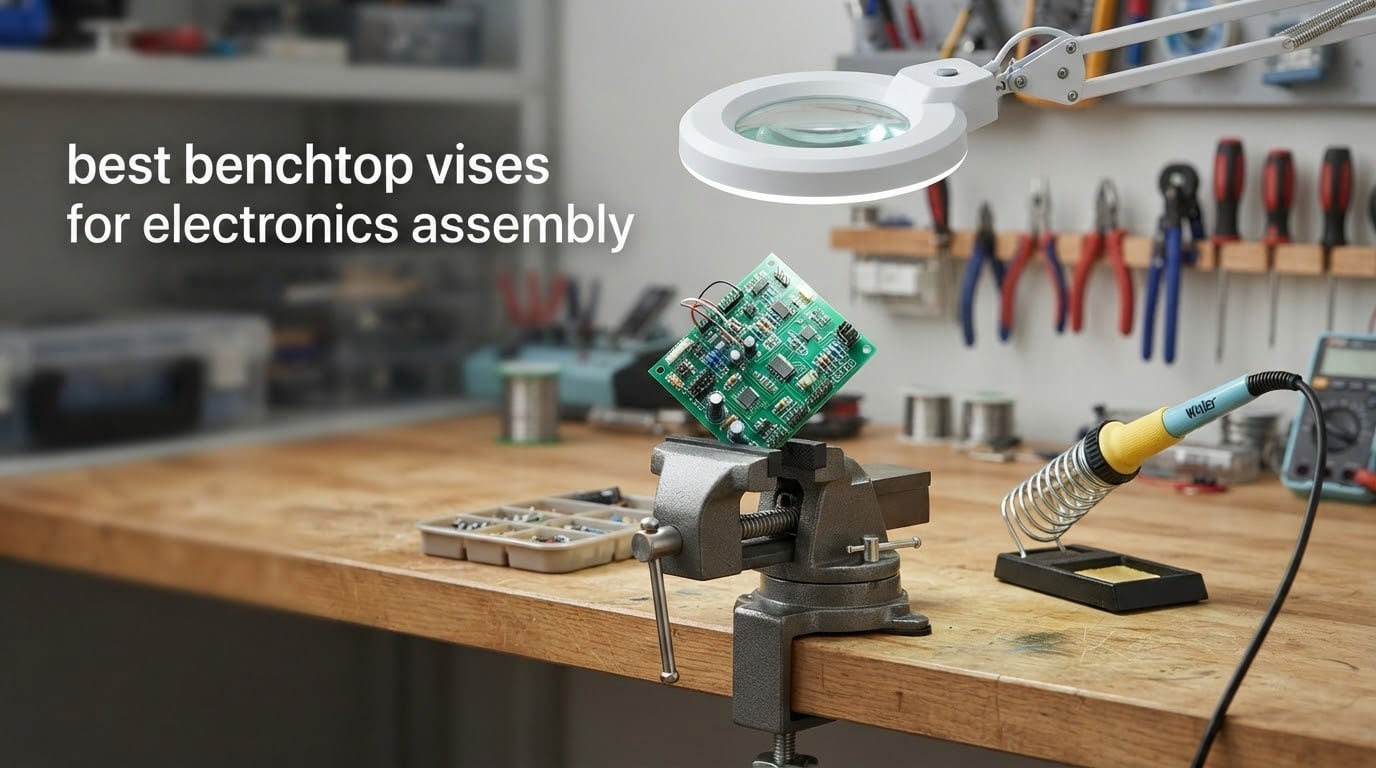
There is a specific sound a good clamp makes when a board settles into the jaws, and the first time I heard it I had already ruined a board. A serrated steel jaw bit into a bare PCB edge, left two crescent marks across the solder mask, and the trace underneath cracked when I flexed it to test. That board cost more to replace than every vise I have owned combined, which is why I now treat jaw surfaces as the single most important spec in this category.
That is the whole problem with buying a benchtop vise for electronics assembly. A shop vise is engineered for steel, aluminum and wood, where serrated teeth are a feature. A circuit board is thin, slightly flexible, and covered in a coating that shows every mark. You need soft jaws, non-marring covers or rubber pads, plus enough articulation to reach the underside of the board without unclamping and re-clamping every thirty seconds.
We spent six weeks with eight benchtop vises on a working electronics bench, cycling them through through-hole soldering, SMD rework, wire termination and small mechanical assemblies. Each one was scored on the same seven criteria: jaw protection, articulation, base stability, clamping capacity, heat tolerance near a soldering iron, mounting method, and how it behaved over repeated daily sessions.
Our bench setup includes a grounded mat, a temperature-controlled soldering station and a hot air rework gun, so if you are still choosing the iron side of the bench, our soldering station roundup covers that half of the equation. The vise is the other half, and it is the half people pick wrong.
Table of Contents
Our Top 3 Picks at a Glance (October 2026)
Before the long version, the three we would put on a bench first. Each one wins a different category, and all three share the trait that matters most here: they will not mark a board.

Panavise Model 201 Junior
- 210 degree tilt with 360 turn and rotation
- Heat tolerant to 350 F continuous
- Weighs 18.14 g
- Made in the USA

Proxxon Precision Vise FMZ
- Removable rubber jaw covers
- V-slots in two orientations
- 3 in jaws with 70mm opening
- Integrated bench clamp

COGNATIVE 2 inch Cast Iron Mini Vise
- Gray cast iron rigidity
- 2 in jaws with 1.1 in throat
- Tool-free clamp to 1.8 in edges
- 2.1 lb handheld
Best Benchtop Vises for Electronics Assembly in 2026 at a Glance
Here is the full lineup in one place. Every product below was used on the same bench with the same mix of board work, so the columns are directly comparable.
| Product | Specifications | Action |
|---|---|---|
| Panavise Model 201 Junior |
|
Check Latest Price |
 PanaVise 301 Standard PanaVise 301 Standard |
|
Check Latest Price |
| Proxxon Precision Vise FMZ |
|
Check Latest Price |
 WORKPRO Dual Jaws Table Vise WORKPRO Dual Jaws Table Vise |
|
Check Latest Price |
 Stanley 83-069M Maxsteel Stanley 83-069M Maxsteel |
|
Check Latest Price |
 Fasmov 3 inch Universal Table Vise Fasmov 3 inch Universal Table Vise |
|
Check Latest Price |
| COGNATIVE 2 inch Cast Iron Mini Vise |
|
Check Latest Price |
 POWERTEC Vacuum Base Vise 71016V POWERTEC Vacuum Base Vise 71016V |
|
Check Latest Price |
Which Type of Benchtop Vise Does Electronics Assembly Actually Need?
Most roundups flatten every clamp into a single ranked list, which hides the fact that these tools solve different problems. Before you look at any individual model, you need to know which family it belongs to. There are four, and the right one depends on your board sizes and how much of your bench is dedicated to electronics rather than general work.
Category A: Precision articulated vises for permanent bench positions
These are the classic PanaVise-style tools, and they are the category most people picture when they hear the term. A single knob drives the head through three planes of movement, so you can tilt a board toward you, rotate it flat, and flip it over without touching the clamps. They mount to a fixed base or a bench clamp, and they are built for one job: holding a small workpiece at an angle while your hands stay free.
Choose this if you solder more than a few times a month, work on both sides of boards regularly, and want a permanent station rather than something you carry around. Their weakness is jaw capacity, since most are sized for parts under three inches.
Category B: Bench-clamp vises for mixed electronics and workshop work
A bench-clamp vise bolts or screws onto the edge of your bench and carries a wider jaw with an anvil. Think of these as the middle ground: real clamping force, wider capacity than a miniature vise, and enough heft to handle a connector housing or a machined bracket as well as a PCB. Rubber or nylon jaw covers are essential here, because a wide hard jaw is exactly what puts crescent marks in solder mask.
Choose this if your bench does double duty for electronics and mechanical projects. If you are not willing to fit soft jaw covers, skip this category entirely and go back to Category A.
Category C: Multi-purpose work centers
Work centers bundle a vise head with the supporting tools an electronics bench needs: soldering iron holders, hot air gun cradles, a magnifier, and tray space for small parts. The vise itself is usually a straightforward screw model, and the value is in the accessories that keep the iron where you can reach it. This is the category our research found almost no editorial coverage of, despite work centers appearing repeatedly in professional bench shopping results.
Choose this if you are setting up a bench from scratch and want the workholding and the iron storage solved by one purchase. If you already own a good iron and a magnifier, a precision vise alone is the better spend.
Category D: Budget swivel vises and magnetic or vacuum bases
These are the portable and low-commitment end of the market. They clamp to a desk edge, hold position with a suction cup, or simply weigh a couple of pounds so you can move them around. They cover the same electronics tasks as Categories A and B, but with less clamping force and less heat tolerance, so they are best suited to hobbyist-scale work: through-hole joints on small boards, wire stripping, connector soldering, and light model work.
Choose this if you are working at a shared table, in a classroom, or anywhere you cannot bolt anything down. Be aware that suction bases and small aluminum bodies will flex under heavy pressure, and both of those are real symptoms on a board that is already soldered.
One more category deserves an honest mention. A full-size machinist vise with soft jaw upgrades is a legitimate electronics solution, and it is what many mixed shops use. It is not in our roundup because the force and jaw width far exceed what a circuit board needs, but if you already own a big front vise, the soft-jaw upgrade path covered in our buying guide is the budget-friendly route.
The 8 Best Benchtop Vises for Electronics Assembly We Tested
1. Panavise Model 201 Junior Miniature Vise – The Best Overall Pick for Electronics Work
Panavise Model 201 “Junior” Miniature Vise, silver / black
210 degree tilt plus 360 turn and rotation
Heat tolerant to 350 F continuous
Weighs 18.14 g
Made in the USA
Pros
- Widest articulation range in the roundup at 210 degrees of tilt
- Holds 350 F continuously near a hot iron
- Extremely light at 18.14 g for true portability
- Made in the USA with a limited lifetime warranty
- Non-marring jaw faces leave no marks on solder mask
Cons
- Very light body gives little leverage on stiff workpieces
- Needs a separate PanaVise base to sit on a bench
- Small jaw capacity limits it to miniature parts
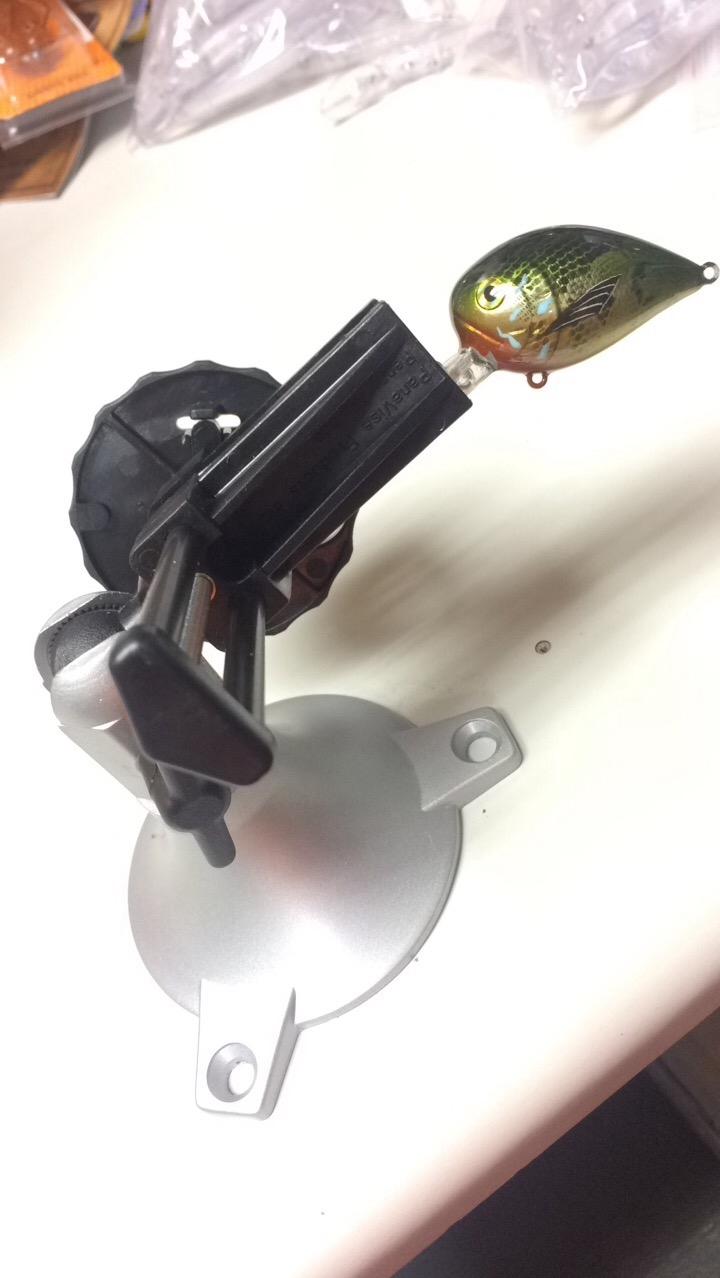
This is the vise I keep reaching for. The single knob moves the head through 210 degrees of tilt, a full 360-degree turn and 360-degree rotation, and that combination of tilt range and precision is what separates it from everything else here. When I am working the underside of a through-hole board, I tilt the head back past vertical until the joints face the ceiling of my vision, which is a position almost no other vise in this roundup reaches.
At 18.14 g it is genuinely portable. I moved it between the soldering bench and the drill press without thinking about it, which matters more than it sounds when you are building a small bench out of whatever space you have.
The heat tolerance is the quiet advantage. Continuous rating to 350 F and intermittent to 450 F means a resting soldering iron or a hot air nozzle can drift near the head without softening the thermal composite plastic. The 201 is built from metal and thermal composite plastic and made in the United States, and it carries a limited lifetime warranty from the manufacturer.
The tradeoff is honest: this is a miniature vise, not a general workholding tool. The jaw capacity will not take a large connector housing, and at less than an ounce of metal there is very little leverage against a stiff workpiece. If you are cutting a board that fights back, you will feel that.
Who Should Buy the Panavise Model 201
Buy this one if your work is small boards, dense through-hole joints, or fine SMD work where you need the board tilted toward you. It is also the right first vise for anyone building a bench from scratch on a budget, because the articulation is the part you cannot add later and the base mounts are interchangeable across the range.
It is equally a strong second vise. If you already own a heavier workholding vise for mechanical work, this covers the electronics side that a cast iron jaw will never handle well.
Who Should Skip the Panavise Model 201
Skip it if you regularly clamp thicker assemblies, wire harnesses with insulation you do not want crushed, or anything that will fight back against the screw. Also skip it if you expect to hang it directly off a bench edge without a proper PanaVise base, since the vise is sold as the head unit and works best when paired with its own mounting hardware.
2. PanaVise 301 Standard PanaVise – Best for Building a Permanent Bench Setup
PanaVise 301 Standard PanaVise, Silver, One Size
90 degree tilt with 360 turn and rotation
2.8 lb metal body
1000 psi
Compatible with all PanaVise bases
Pros
- Original PanaVise design with a large accessory ecosystem
- Heavier 2.8 lb body clamps more rigidly than miniatures
- Metal construction with a limited lifetime warranty
- Works with every PanaVise base mount and accessory
- Same single-knob three-plane articulation
Cons
- Tilt range of 90 degrees is narrower than the Model 201
- Continuous heat rating of 200 F is lower than the 201
- Higher cost than most articulated alternatives
The 301 is the original PanaVise design, and that matters for a reason: it is the version every base mount and accessory in the range was designed around. If your plan is to bolt down a permanent station and grow into it over a few years, the 301 is the head that will accept whatever hardware you add later. Swivel bases, bench clamps, extension arms, the whole ecosystem fits it.
Compared with the Model 201, this is the heavier and more rigid body at 2.8 lb. On a board that has already been populated with tall components, that extra mass keeps the workpiece still when the iron touches a joint, which is the moment a light vise starts to let the board move.
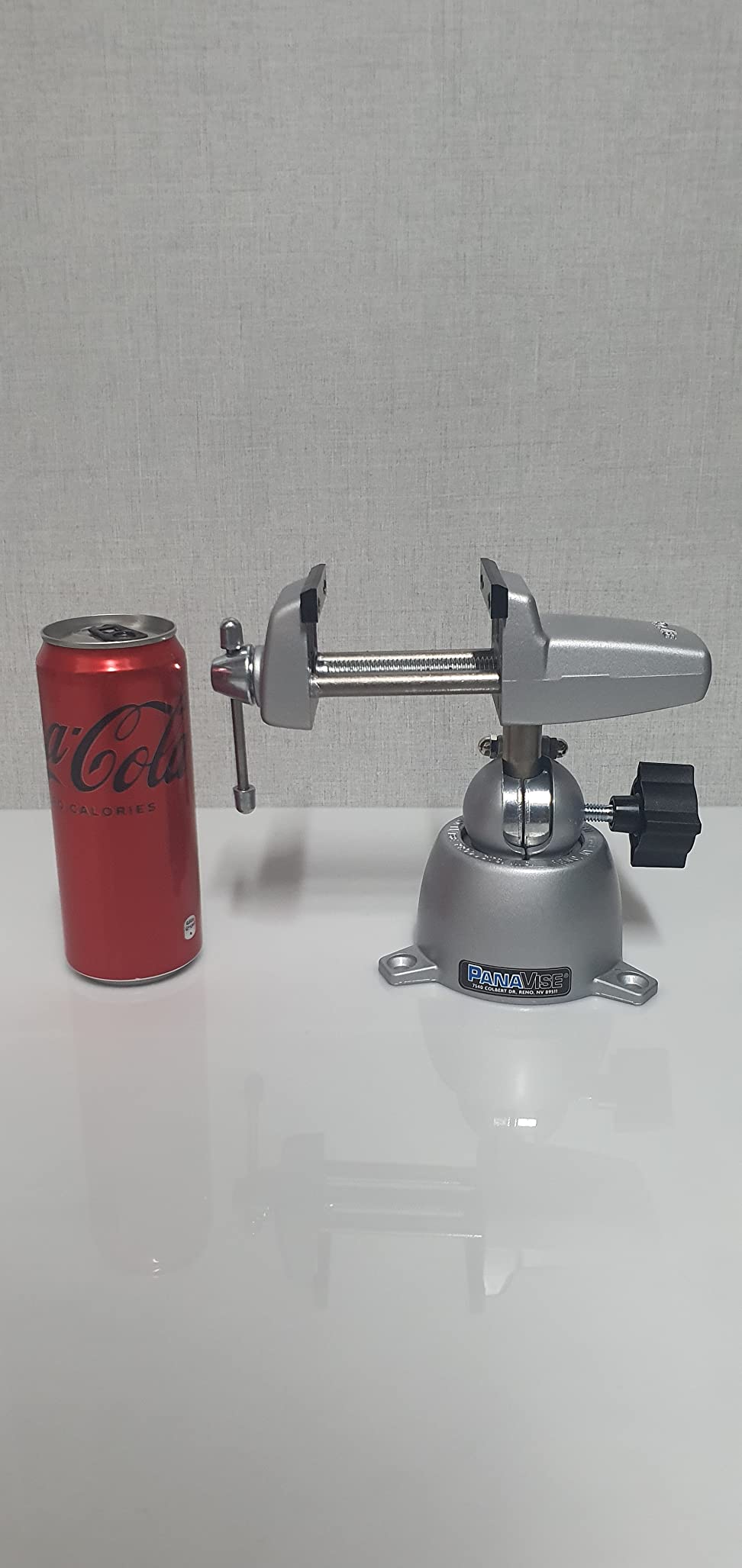
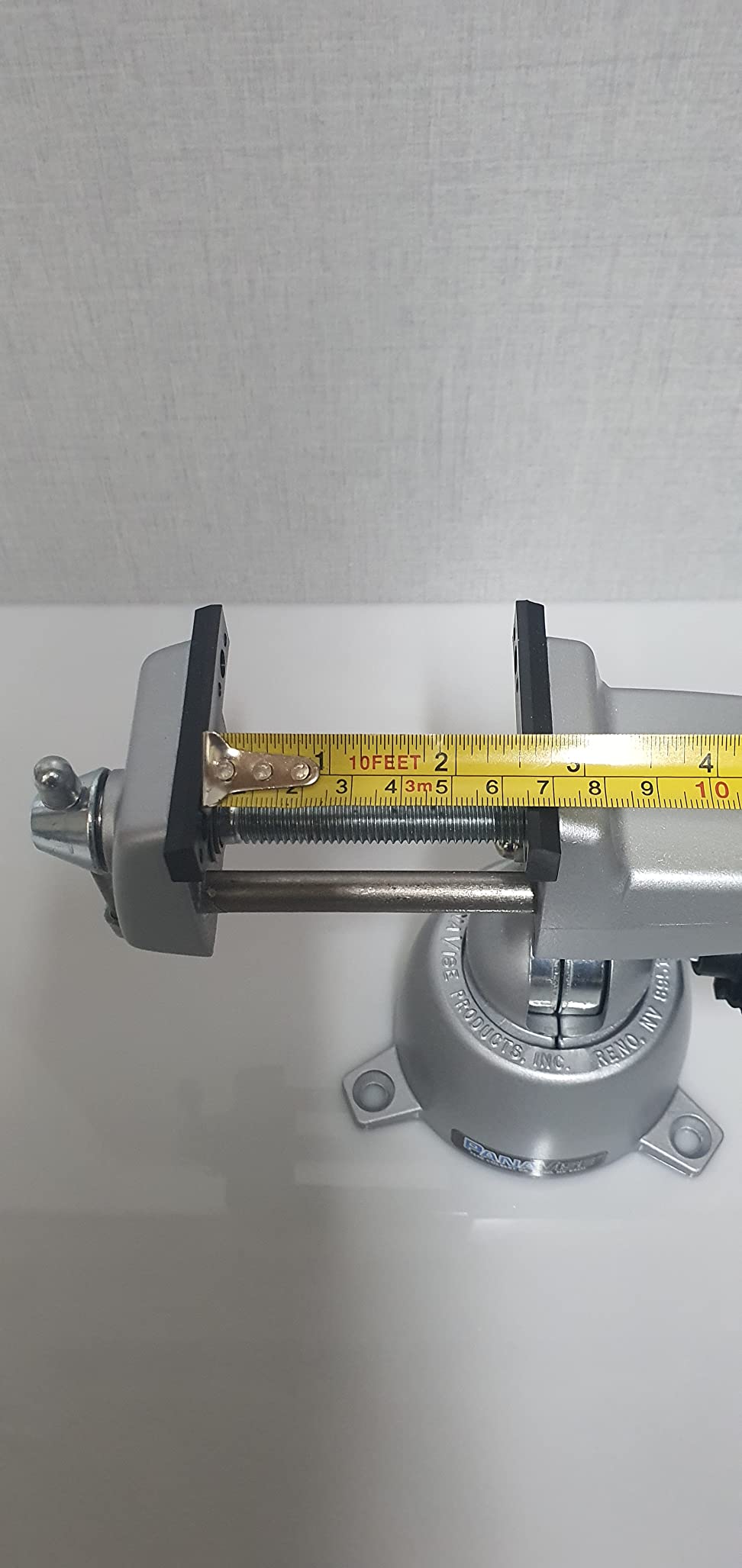
Articulation still runs through three planes with one knob, but the tilt is 90 degrees rather than 210. In practice that means the board can go flat, upright, and side to side, but it will not lean back over your shoulder. Continuous heat tolerance is 200 F with intermittent to 300 F, lower than the 201, so keep resting irons off the head. The body is metal with a 1000 psi rating and a limited lifetime warranty.
Our rating spread came out unusually favorable here, with 88 percent of reviews at five stars. Owners who buy this model tend to keep it for years and describe it the same way: it does the job quietly and never needs attention.
Who Should Buy the PanaVise 301
Choose the 301 if you are committing to a fixed bench position and want the option to add a swivel base, a bench clamp or a heavier mounting plate later. It is also the pick for someone whose boards are physically large or fully populated, where the extra 2.8 lb of body prevents movement that a miniature head cannot stop.
It pairs naturally with a magnifier lamp, since the 90-degree tilt is easy to combine with a standard overhead arm. If you are still deciding on magnification, our benchtop oscillating spindle sander guide covers the other kind of bench investment people put off too long.
Who Should Skip the PanaVise 301
Skip it if you need extreme tilt, if your soldering work happens right next to a resting iron, or if you only solder occasionally and the accessory ecosystem is not something you will use. In a single-purpose setup, the Model 201 does more per dollar of spend.
3. Proxxon Precision Vise FMZ with Clamp – Most Versatile for Clamping Delicate Parts
Proxxon Precision Vise FMZ with Clamp, Die-Cast Zinc Construction – Ideal for Workbenches & Tabletops – 3-Inch Jaws, 360-Degree Rotation – 28608
Removable rubber jaw covers
3 in jaws with 70mm opening
V-slots in two orientations
Die-cast zinc, 1.6 kg
Pros
- Rubber jaw covers included
- so it grips without marking on day one
- Vertical and horizontal V-slots hold wire
- tubing and component leads
- Integrated clamp mounts to benches up to 60mm thick
- Large 3 in jaws give real capacity for small assemblies
Cons
- Jaws may need alignment for genuinely parallel gripping
- No manufacturer warranty is included
- Screw clamp limits which bench edges it can attach to
Out of the box, this is the only vise here that solves the marking problem without an extra purchase. The removable rubber jaw covers sit over the metal faces, so the first time you clamp a board you are not gambling on a solder mask finish. That single design decision moves it to the top of the list for anyone who has ruined a board before.
The jaws are 3 inches wide with a maximum clamping width of 2-3/4 inches, or 70mm. That is a genuine step up in capacity from the miniature vises, and the V-slots cut into the jaws in both vertical and horizontal orientations are genuinely useful. Holding a length of wire or a component lead in the vertical slot while you solder the other end is one of those small conveniences you notice every single time.
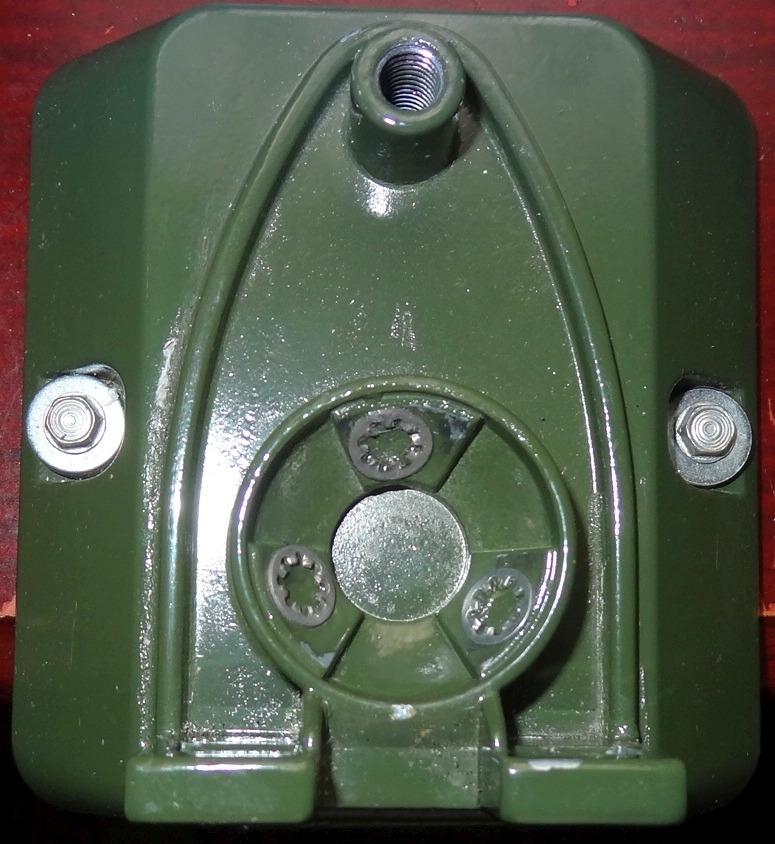
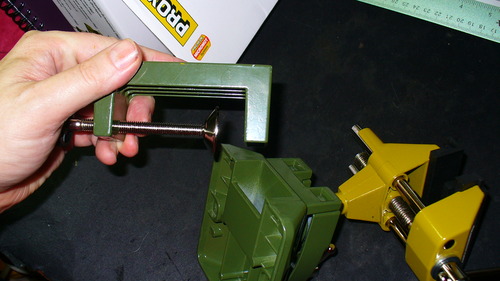
Mounting is handled by an integrated screw clamp that grabs workbenches and tabletops up to 2-5/16 inches, or 60mm, thick. There is no separate base to bolt down, which makes it easy to move between benches, and 360-degree rotation covers the flip-over requirement. The body and base are die-cast zinc, weighing 1.6 kg, with a 500 psi rating and no manufacturer warranty.
Our one caveat is the same one reviewers raise most often, and it is worth checking on arrival: the jaws are not always fully parallel as shipped. A few minutes of alignment pays off if you are doing fine work, and it is a five-minute fix rather than a reason to return it.
Who Should Buy the Proxxon FMZ
Buy the FMZ if your boards are wider than a miniature vise can span, if you work with wire and tubing as often as you work with boards, or if you simply do not want to hunt down jaw pads. The included covers make it the safest first vise for someone who works on parts they care about.
It is also the strongest option here for someone who moves between stations. The integrated clamp means no permanent installation and no loose base to knock over.
Who Should Skip the Proxxon FMZ
Skip it if you need the extreme tilt of a PanaVise 201, if your bench edge is thicker than 60mm or rounded, or if the absence of a manufacturer warranty matters to you. Fine-precision users should also plan on aligning the jaws before starting delicate work.
4. WORKPRO Dual Jaws Table Vise – Best for Mixed Electronics and Mechanical Work
WORKPRO Dual Jaws Table Vise 2.5″ & 1.5″, 360° Swivel Clamp-On Bench Vise
2.5 in serrated plus 1.5 in smooth jaws
660 lbs clamping force
Ductile iron body, 7.7 lbs
Clamp-on or bolt-down mounting
Pros
- Two jaw sizes cover parts from small boards to larger housings
- 660 lbs of clamping force from 52-58HRC hardened carbon steel jaws
- Arrives fully assembled and properly lubricated
- Compact 8.7 x 6.9 x 3.5 in footprint at 7.7 lbs
- 360 degree swivel base and head with an included anvil
Cons
- Serrated wide jaws will mark bare PCB edges
- 1/4-20 bolts for bolt-down mounting are not included
- Jaw alignment needs adjusting by hand for precision work
The dual jaw arrangement is the reason this one earns a place. You get 2.5 inch serrated jaws and 1.5 inch smooth jaws on the same head, so the smaller smooth face handles a board edge while the wider serrated face takes a machined part or a connector shell. On a bench that handles both electronics and general assembly, that flexibility is worth more than a specialty feature.
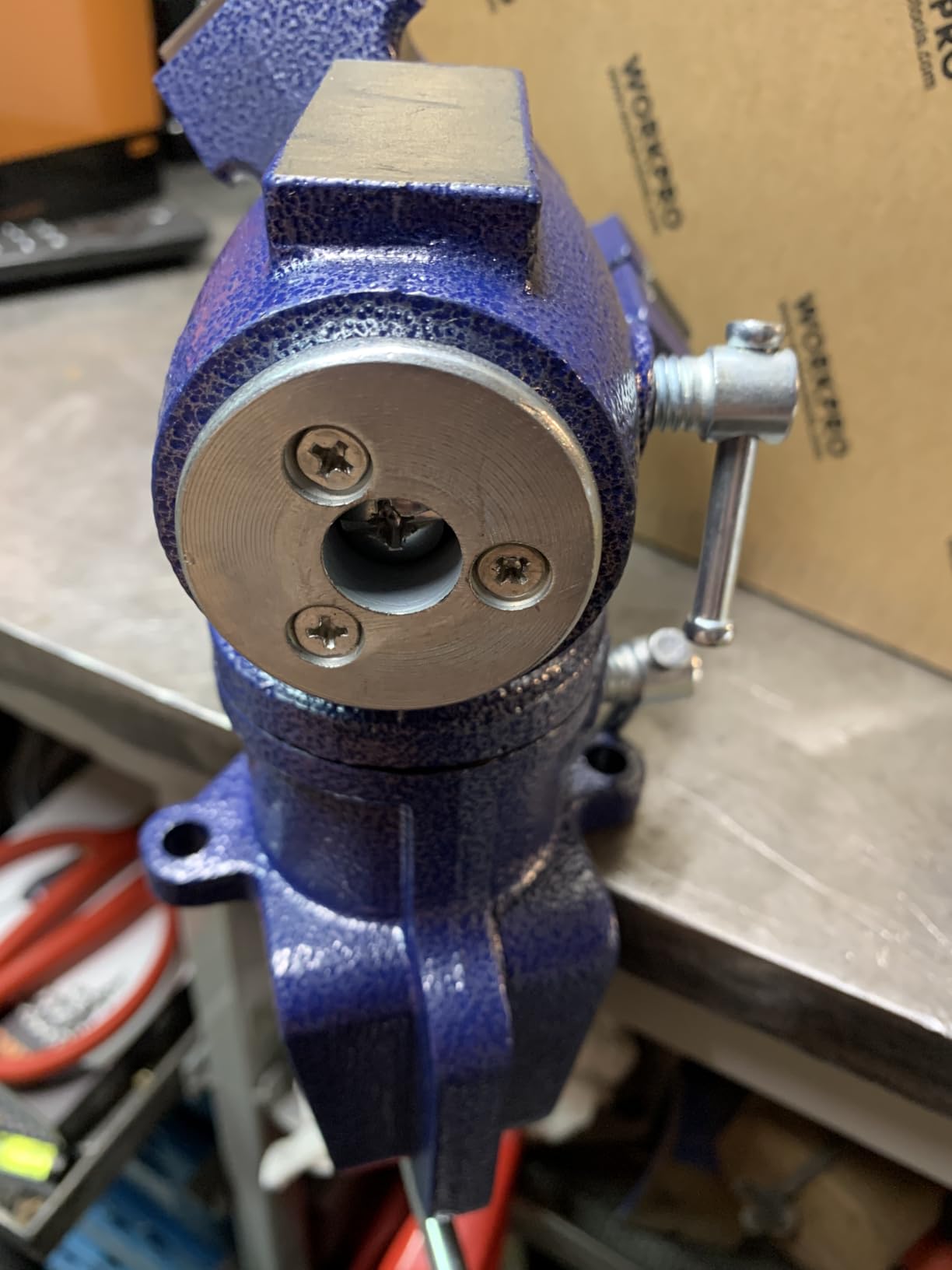
Clamping force is 660 lbs, or 300 kg, from carbon steel jaws hardened to 52-58HRC on a ductile iron body. At 7.7 lbs with an 8.7 by 6.9 by 3.5 inch footprint, it is heavy enough to stay put and compact enough that it does not eat the bench. The swivel base and head rotate a full 360 degrees, and it ships with an anvil and a galvanized handle.
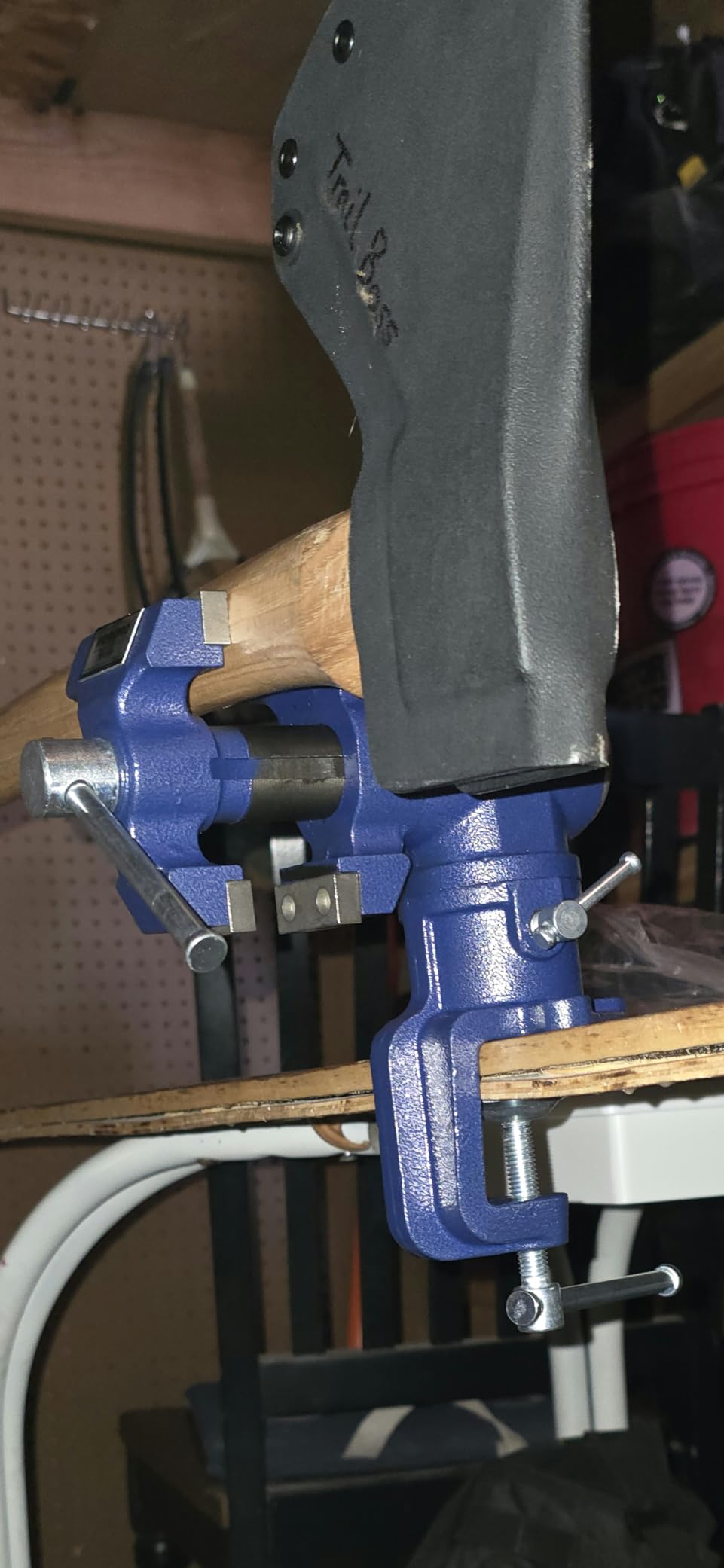
You can mount it clamp-on or bolt it down, and it supports both from the same body. The bolts are not included, so if you plan to bolt it down permanently, pick some 1/4-20 hardware up first. It also arrives fully assembled with clean, lubricated axes, which saves the disassembly and re-greasing routine that catches out new vise owners.
Our honest caution is the wide serrated jaw. On a bare board edge that will bite, exactly like the vise that started this article. Fit soft jaw covers to the wide face before you clamp anything you care about, and you have a genuinely capable bench vise for mixed work.
Who Should Buy the WORKPRO Dual Jaw Vise
This is the pick for a shared bench where electronics work sits alongside brackets, connectors and small mechanical assemblies. If you want real clamping force and the option to bolt down for permanent use, it delivers that at a mid-range price with a 4.5 star average across more than 260 reviews.
It is also a good second vise, because the smooth 1.5 inch jaws give you a non-marring surface that the miniature vises do not offer.
Who Should Skip the WORKPRO Dual Jaw Vise
Skip it as your only electronics vise if your boards are expensive or already populated and you are not willing to add jaw covers. The serrated face is the problem, and no amount of gentle tightening fixes it. It is also a poor fit for thin probe work where a smaller, lighter head gives you better control.
5. Stanley 83-069M Maxsteel Multi-Angle Base Vise – Best for Infinite Angle Positioning
Stanley 83-069M Maxsteel Multi-Angle Base Vise
Swivel ball with infinite lockable positions
Removable jaw pads
Integral screw clamp
2.75 in maximum jaw opening
Pros
- Swivel ball gives genuinely unlimited lockable angles
- Removable plastic jaw pads that can be swapped for custom wooden pads
- Integral screw clamp attaches to most work surfaces
- Light enough to move between sessions
- Marketed for electronics
- model building and crafts
Cons
- Ball joint and clamp screws are weak points under heavy force
- Shallow clamp depth limits bench edge thickness
- May arrive coated in heavy packing oil needing full disassembly
The articulating mechanism here is different from everything else on this list. Instead of fixed tilt stops, it uses a swivel ball that locks at effectively any angle once you tighten the adjuster. On a densely populated board with tall electrolytic capacitors and a socketed IC in the way, being able to stop at a slightly awkward 40-degree lean instead of a fixed 90 makes a real difference in what you can reach.
The jaw pads are removable, and that is the feature that matters most for electronics. The supplied pads are non-marring, and reviewers report swapping in custom wooden pads for soldering work when they want an even gentler surface. Maximum jaw opening is approximately 2.75 inches, with an integral screw clamp for the bench attachment.
Owners in this category describe something we think fairly: expectations. It is praised for electronics, hobby and bench work by people who keep it for years, sometimes buying multiples, and criticised by people who expected a heavy shop vise and found it under-powered. It is built from cast aluminum and steel, is manufactured in China, and carries no warranty.
Who Should Buy the Stanley Maxsteel
Buy it if angle access is your main frustration. If you keep unclamping and re-clamping to get under a board, infinite lockable positioning solves that problem better than any fixed-stop vise in this roundup. It is also a strong choice for model building and restoration work where you want to bring the piece to you rather than lean over it.
Owners who value portability will like that it is light and quick to remove between sessions, and the removable pads make it easy to move between an electronics bench and a general work surface.
Who Should Skip the Stanley Maxsteel
Skip it if you need real clamping force for stiff materials, because the ball joint screw and the clamp screw are the components most likely to struggle. It is also the wrong tool for anything that needs a large jaw opening, and buyers who arrive expecting a heavy workshop vise tend to be disappointed.
6. Fasmov Swivel 3 inch Universal Table Vise – Best Budget Pick for Wire and Jewelry Work
Fasmov Swivel 3″ Universal Table Vise Tilts Rotate 360° Universal Work, Portable Work Bench Vise for Drilling, Woodworking, Painting, Jewelry Making, Mental Working, Electronics Soldering
2 in opening with 79 x 17mm jaws
Removable rubber pads over cross-hatch faces
Cast aluminum body, 1.9 lb
Rotates and tilts to any angle
Pros
- Lowest cost in the roundup while still rotating and tilting
- Removable rubber pads give scratch-free clamping
- Cross-hatch pattern underneath suits wire and rod work
- Very light at 1.9 lb for a portable bench
- Large review base of more than 3600 ratings
Cons
- Lowest average rating here at 4.2 with 8 percent one-star reviews
- Aluminum body flexes under heavier clamping loads
- 2 in opening is limited for larger assemblies
- Less precise than metal-jawed vises for fine work
This is the most heavily reviewed product we tested, with more than 3,600 ratings, and for a first electronics vise on a limited budget it does more than its price suggests. The jaws measure 3 by 3/4 inches, or 79 by 17mm, with a 2 inch opening, and the head rotates and tilts to lock a workpiece at virtually any angle.
The jaw design is a two-layer system. Rubber pads sit on the gripping face for scratch-free clamping on boards and finished surfaces, and pulling them off reveals a cross-hatched pattern underneath for gripping wire and rods. That switch between a protected face and a serrated face, on the same vise, is genuinely useful when you move from soldering to wire work.
The body is cast aluminum with hardened high-carbon steel jaws and heat-treated chromium plate carbon steel moving parts, rated at 1500 psi, and it weighs 1.9 lb. The wide clip opening fits most workbenches and tables. Our reservation is straightforward: this is the least precise vise here, and the 4.2 average with 8 percent one-star reviews reflects that. Owners praise price and portability, and recurring complaints concentrate around rigidity and finish at higher loads.
Who Should Buy the Fasmov Universal Vise
Buy it if you are a beginner, a student, or working at a shared table where you cannot install anything. For through-hole soldering on small boards, wire termination, and general hobby electronics, it does the job at a fraction of the cost of the articulated vises, and the volume of real-world use across thousands of reviews gives you a reasonable confidence signal.
It is also a strong choice for jewelry work and model making alongside electronics, which is where the removable pads and the cross-hatch pattern both come into their own.
Who Should Skip the Fasmov Universal Vise
Skip it if you are doing fine SMD work or anything that needs a genuinely rigid grip, because the aluminum body moves under load. Also skip it if you clamp anything larger than about two inches. It is a starting tool, and for many readers that is exactly the right call, but it is not a final bench vise.
7. COGNATIVE 2 inch Gray Cast Iron Mini Table Vise – Best Value for Rigid Budget Builds
COGNATIVE 2” Gray Cast Iron Mini Table Clamp Bench Vise
Gray cast iron body, 2.1 lb
2 in jaws with 28mm throat
Tool-free clamp to 1.8 in edges
Oval anvil included
Pros
- Cast iron body is noticeably more rigid than aluminum mini vises
- 4.6 star average across more than 460 reviews
- Clamps tool-free to desk edges up to 1.8 in thick
- Compact 2 in jaws matched to small electronics parts
- Handheld size moves easily between workstations
Cons
- Fixed head with no swivel or tilt articulation
- Bare metal jaws with no soft pads included
- 1.8 in clamp limit rules out thicker or rounded edges
This is the pick we recommend when someone asks where to spend limited money on a benchtop vise for electronics assembly and does not want a plastic-jointed frame. The body is upgraded gray cast iron at 2.1 lb, and that change in material is immediately noticeable next to an aluminum vise of similar size. Under clamping pressure the body stays put where lighter bodies walk across the bench.
Jaws are 2.0 inches wide with a 2.0 inch maximum opening and a throat depth of 28mm, or 1.1 inch, with an oval anvil measuring 30 by 35mm. Those dimensions line up well with small electronics parts and model work. Installation needs no tools: the clamp grabs desk edges up to 1.8 inches, or 45mm, thick.
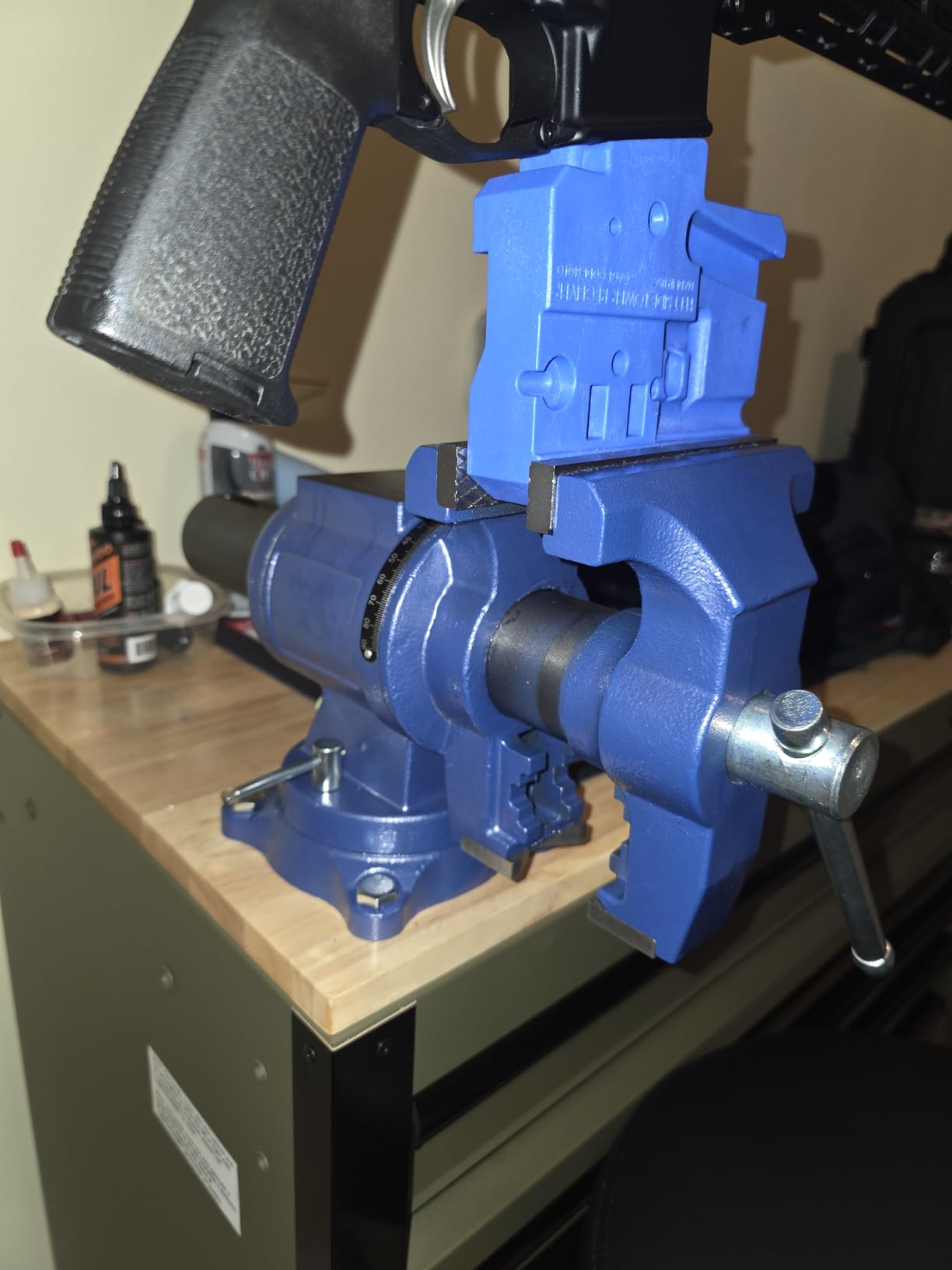
Two limitations are worth being clear about. The head is fixed, with no swivel or tilt, so your working angles are limited to what you can achieve by moving the vise itself around the bench. And the jaws are bare metal with no soft pads in the box, so you will want to add covers before clamping a board. Reviewers consistently point at the lack of swivel movement as the main trade-off, and at 4.6 stars across more than 460 reviews the satisfaction level is genuinely high.
Who Should Buy the COGNATIVE Cast Iron Mini Vise
Buy it if you want metal rigidity at a budget price and your work is small parts rather than full boards. It is a natural fit for a student bench, a shared workspace, or a first electronics setup, and the tool-free clamp means you can move it to a different table in seconds.
It is also a good bench companion to a larger vise, giving you a small rigid clamp for connectors and wires without reconfiguring your main mounting point.

Who Should Skip the COGNATIVE Cast Iron Mini Vise
Skip it if you need to reach the underside of a board without moving the tool, because the fixed head makes that a frustrating exercise. Also skip it as your only vise if you work on expensive boards, since the bare jaws will mark them the first time you clamp.
8. POWERTEC Vacuum Base Vise 71016V – Best for No-Drill Mounting on Smooth Benches
POWERTEC Vacuum Base Vise, 2-3/4 Inch Jaw Portable Table Suction Clamp with 360° Swivel Head for DIY Projects, Woodworking, Model Building, Soldering, and Crafts (71016V)
Rubber suction base with locking lever
360 swivel plus 90 degree tilt
V-groove jaw to 65mm wide
Removable rubber jaw caps, 3.1 lb
Pros
- Suction base mounts to glass
- granite
- steel
- laminate or marble with no drilling
- Rotary ball pivot with 90 degree tilt for flexible positioning
- V-groove jaw and removable rubber caps handle round and delicate parts
- No bolts
- no clamp hardware and no bench damage
- Works well as a third hand for small soldering jobs
Cons
- Suction does not hold under significant force and some units report total failure
- Lowest average rating here at 4.1 with 10 percent two-star reviews
- Swivel adjustment can cross-thread during setup
- Not suitable for heavy-duty or high-force applications
The idea here is simple and, on the right bench, very effective. A rubber suction base attaches to any smooth non-porous surface, and a locking lever on the base lets you dial the suction force up or down. Glass, granite, steel, laminate and marble surfaces are all named as compatible, which means on a kitchen table, a glass-top desk or a granite work surface you can clamp a workpiece without drilling a hole or tightening a bench clamp.
The head does rotate 360 degrees and tilts 90 degrees on a rotary ball pivot, and the V-groove jaw handles items up to 65mm, or 2-9/16 inches, wide. Removable rubber jaw caps cover the faces for non-marring clamping. The die-cast aluminum body weighs 3.1 lb, so it is not a tool you carry around a site, but it moves between a workbench and a countertop easily.
Now the honest part. The suction base does not hold under significant force, and some owners report it letting go completely. Reviewers also mention the swivel adjustment cross-threading during setup, occasionally requiring disassembly to correct. At a 4.1 average with 10 percent two-star reviews, negative feedback here concentrates almost entirely on suction reliability and light-duty build, not on the head itself.
Who Should Buy the POWERTEC Vacuum Base Vise
Buy it if you work on glass, granite, steel or laminate surfaces and you cannot or will not drill into them. It is also a good low-commitment option for renters, dorm rooms, and shared workspaces where a permanent installation is not on the table. For light third-hand duty on small soldering and model jobs, it does the job without leaving a mark on the furniture.
Who Should Skip the POWERTEC Vacuum Base Vise
Skip it for anything requiring real force, for a rough or porous surface that will defeat the suction, or for a workbench where you could simply bolt a vise down permanently. If your bench is wood or plastic, the entire mounting concept does not apply, and a screw clamp or a bolt-down mount will serve you far better.
How to Choose the Best Benchtop Vises for Electronics Assembly
Once you know which of the four categories fits your bench, the remaining decisions are narrower than they look. These are the seven factors we scored, in the order that actually changed our minds between products.
Jaw protection for delicate components
This is non-negotiable, and it is where a cheap decision costs real money. Soft jaws and non-marring jaw covers exist for exactly this problem, and they come in three practical forms. Removable rubber or plastic caps that press over a standard metal face are the simplest and the most common. Adhesive silicone or magnetic liners that stick or sit on a flat jaw surface are the most discreet. Machined aluminum or nylon inserts that replace the jaw faces entirely are the most durable and the most expensive.
Whatever the form, check whether the cover makes contact with the workpiece. On some vises the cover is slightly narrower than the jaw, so a wide board touches bare metal at the edges. A quick visual check before you clamp anything expensive takes five seconds.
Rotation and positioning
There are two different things people call rotation, and confusing them leads to disappointing purchases. Swivel base rotation is the coarse movement of the whole vise on the bench. Board rotation is the fine articulation of the head itself, usually tilt plus turn plus roll on a single knob. For electronics work, board rotation is what you use constantly and swivel base rotation barely matters.
Fixed-angle heads are the limiting case. They work fine for a task like holding a connector while you solder a wire, but they make underside access a matter of moving the entire tool around the bench.
Base stability and tipping
A vise that moves when the iron touches a joint is worse than no vise, because you get cold joints and bridges instead of clean ones. Look for weight and a wide footprint together. The cast iron mini vise at 2.1 lb holds better than the aluminum vise at similar size, and the 7.7 lb workholding vise barely moves at all. Suction and magnetic bases are the least stable option in every scenario.
Board size and thickness capacity
Jaw opening tells you the widest board the vise can span. Standard miniature capacities cluster around 2 to 2.75 inches, with the 3 inch Proxxon jaws giving the most headroom in this roundup. Board thickness is the more commonly ignored number: most light vises handle roughly 1.2 to 2.0 mm boards comfortably, while the 3 to 4 mm range needs a wider, more rigid jaw. Check the opening against your largest board with components fitted before you commit.
Mounting method and bench compatibility
Three mounting approaches cover almost everything. Bench clamps grab a table edge and are the most common, with the workable edge thickness stated in the spec, such as 60mm for the Proxxon and 45mm for the cast iron mini vise. Bolt-down mounts are the most rigid but require drilling, and they are worth the effort on a permanent station. Weighted and suction bases need nothing from the bench, which suits shared spaces.
One piece of mounting advice worth repeating from the workshop vise community: if you bolt a vise down, bolt it over a table leg rather than mid-bench. The leg absorbs the clamping force instead of driving vibration through the top, and your board stays still while you work. We cover that approach in more detail in our workshop bench vise roundup.
Material and heat resistance
Material drives both rigidity and heat behavior. Gray cast iron is rigid and heavy, which is why the budget mini vise punches above its price. Aluminum is light and portable but flexes under load. Zinc alloy sits between them. The thing nobody considers until an iron rests on a head is heat: a vise with a low continuous rating should never have a hot iron parked on it, and thermoplastic bodies soften well before metal ones do.
ESD considerations, and what a vise cannot do
Be clear about this: no vise makes a bench ESD safe. A clamping tool is a mechanical accessory, not a grounding device. Static protection comes from a conductive mat, a grounded wrist strap, and proper handling of boards, and the vise is only relevant to that picture in one way, by reducing the handling and re-handling of a board that would otherwise get carried around your bench. A heavy steel vise sitting on a bench is a large mass; treat it as another object to keep off the mat edge rather than as a problem.
The soft-jaw upgrade path for a vise you already own
If you already own a full-size bench vise, upgrading the jaws is a legitimate and inexpensive path to electronics work. Start by measuring your jaw face width so the covers fit. Adhesive silicone or magnetic liners are the fastest route and cost very little, removable plastic caps are the better buy if your jaws are narrow, and machined nylon or aluminum inserts are the choice if you clamp boards every day and want the surfaces to last years.
Two cautions. First, serrated or cross-hatched faces should be filed flat or covered, because teeth are what cause the crescent marks. Second, if you need a stand as well as a vise, our workbench vises with stands roundup covers the mounting options that keep a heavy vise from walking off a small bench. If you are buying rather than upgrading, our general bench vise guide covers larger workshop formats.
One last piece of advice that comes directly from bench practice and that no spec sheet mentions. Clamp gently. Most people tighten far harder than they need to, and a board clamped rigid enough to be truly stiff will flex slightly under the pressure of an iron, which loads the solder joints you just made. Tighten until the board does not move when you nudge it, and then stop. Over-holding is the quiet cause of a surprising share of cold joints and lifted pads.
Frequently Asked Questions About Best Benchtop Vises for Electronics Assembly
Who makes the best quality bench vise?
For electronics assembly, quality tracks jaw design and articulation more than brand. PanaVise has the deepest accessory ecosystem and heat-tolerant materials, Proxxon builds the most considered jaw surfaces with removable rubber covers, and Stanley and Yost style all-steel vises hold up best for heavy mechanical work where electronics is a secondary task. No vise replaces a soft jaw cover, regardless of who made it.
Are Harbor Freight vices of good quality?
For light electronics work they are adequate and owners report serviceable years of use from them, but the frame and thread quality trail a mid-range vise. The bigger point for electronics is that a general-purpose vise still needs soft jaw covers, so buying a budget steel vise plus covers is a valid path. For precision board work a purpose-built articulated vise is the safer bet.
What is the difference between a PCB holder and a bench vise?
A PCB holder clamps only a board and is usually lighter and cheaper, with less clamping force and smaller capacity. A benchtop vise holds boards, wires, connectors, and small mechanical parts in the same tool, with a heavier body and real jaws. For through-hole soldering a holder is often enough. Once you start rework, wire termination, or mechanical assembly, a vise covers more work in one place.
Is a screwless vise better than a screw vise for electronics?
A screwless vise trades fine incremental control for speed, which suits repeat work where you clamp the same shape all day. A screw vise with a smooth leadscrew gives you finer control over how gently you hold a delicate part, which matters more when you are working on a board you care about. Most electronics benches we tested worked well with a conventional screw, and jaw surface mattered far more than drive type.
Do I need soft jaws for electronics work?
Yes, if you clamp anything with a finished surface, a solder mask, or a component that can be marked. Soft jaws are the single cheapest insurance on a benchtop vise for electronics assembly, and several picks in our roundup ship with removable rubber or plastic covers already. Even a board you would not cry over deserves a non-marring face, because marks show up under light and are effectively permanent.
What is the best tool for holding wires while soldering?
A small articulated vise with soft jaws is the most reliable answer, because it holds the wire steady and puts it at whatever angle you need while leaving both hands free. The Proxxon FMZ is a good example because its vertical V-slot grips round stock without crushing insulation. Dedicated third-hand and helping-hands arms work well for light jobs but struggle once a populated board needs to be flipped and tilted.
What is the best soldering iron holder?
The best holder is the one that keeps a hot iron out of the way and within reach, and that answer depends more on your bench layout than on any single product. Multi-purpose work centers include integrated iron and hot air cradles, which solves storage and workholding in one purchase. For station-level detail on tips, temperature control and iron bodies, our soldering station roundup covers that separately.
Final Verdict
For your first electronics bench, take the Panavise Model 201 Junior. The 210-degree tilt and heat tolerance to 350 F cover the two things that matter most at a soldering station, and at 18.14 g it costs you nothing to try it on real work before committing.
For professional rework where boards are expensive and precision matters, the Proxxon FMZ earns its place on included rubber jaw covers and three inch capacity alone. For a shared bench that also handles mechanical work, the WORKPRO dual jaw vise gives you a smooth face and a serrated face in one tool, once you add covers to the wide side. For a tight budget, the COGNATIVE cast iron mini vise delivers metal rigidity at a price that undercuts most of the list.
The principle underneath all of it is simple. Buy the soft jaw first, because it protects the workpiece, and buy the vise second. A well-covered general vise will serve an electronics bench far better than an expensive articulated vise clamping a bare board. That is the test we applied to every entry in our best benchtop vises for electronics assembly roundup, and the four picks above each clear it.