
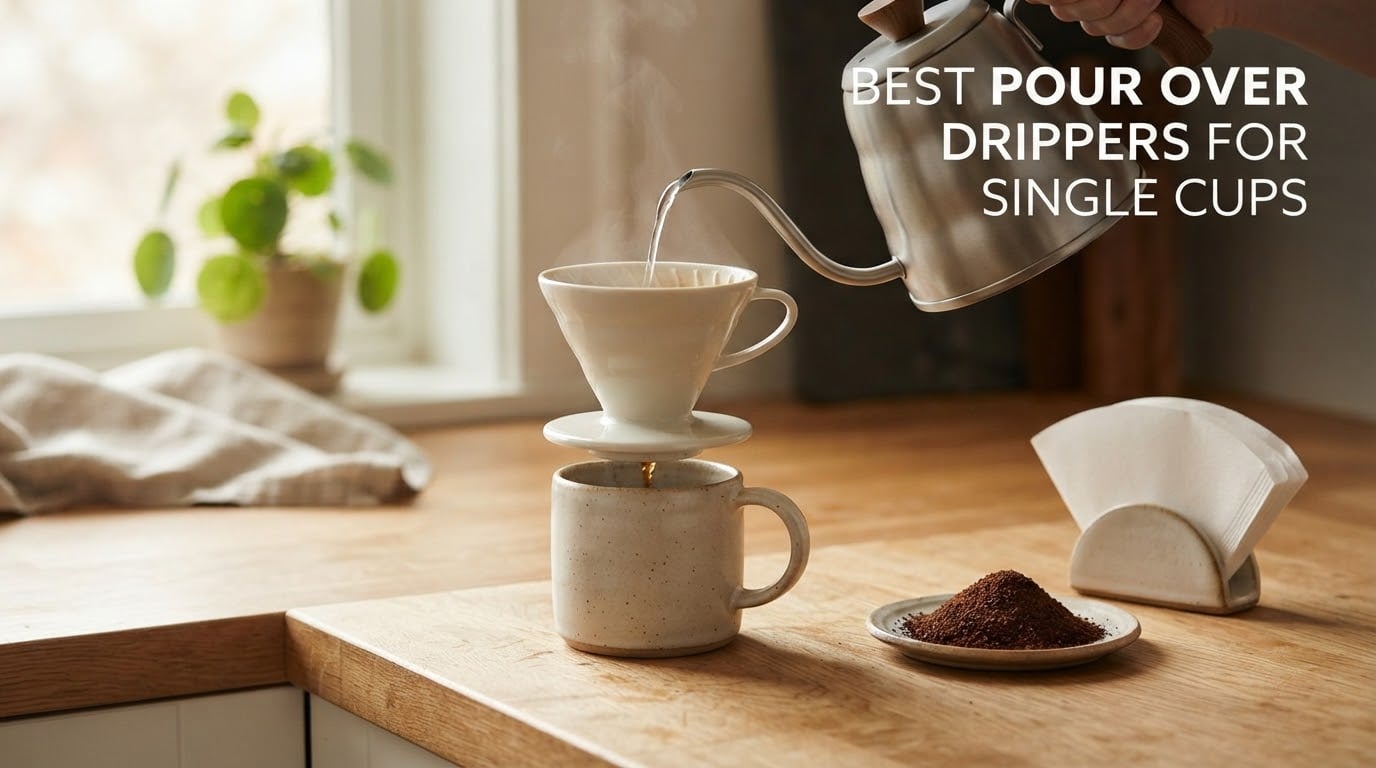
The best pour over dripper for a single cup is the Hario V60 02 ceramic cone. It holds heat better than anything else in this group, drains fast enough that your mug is not still dripping while you drink, and takes cheap standard paper cones. If you would rather not fiddle with pouring technique at all, the OXO Brew single serve maker is the runner-up and needs no gooseneck kettle or scale.
Every dripper below is sized for roughly 250 to 350 ml of water, which is one proper mug rather than a full pot. We brewed each one against the same 15 g dose and the same water temperature, then tracked brew time, drawdown behaviour and how each one handled a real kitchen mug. Nine of the ten have at least two customer photos, so we checked those for the fit-and-stability complaints people rarely mention.
Two things surprised me. First, the size printed on the box matters far less than the shape of the base underneath it. Second, the single-cup sourness problem that fills forum threads is usually a grind problem, not a dripper problem, and it costs you one adjustment to fix.
If you are buying this as a gift rather than for yourself, the gift angle is covered in our single dad gift picks, which is a decent shortcut for anyone who wants a coffee gift that does not need a tutorial.
Table of Contents
Top 3 Picks: Best Pour Over Drippers for Single Cups (October 2026)

Hario V60 Dripper 02 Ceramic
- Ceramic cone with spiral ribs
- Single large drain hole
- Sized for one to four cups
- Dishwasher safe
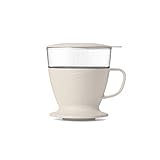
OXO Single Serve Pour-Over
- Auto-drip water tank
- 12 oz capacity with markings
- Includes ten cone filters
- Dishwasher safe

LHS Paperless Steel Cone
- Double-layer fine steel mesh
- No paper filters needed
- Non-slip cup stand
- Brush and dishwasher safe
All 10 Single-Cup Drippers at a Glance
| Product | Specifications | Action |
|---|---|---|
| Hario V60 Dripper 02 Ceramic |
|
Check Latest Price |
| OXO Single Serve Pour-Over |
|
Check Latest Price |
| LHS Paperless Stainless Steel Cone |
|
Check Latest Price |
 Melitta Single Cup Pour-Over Brewer Melitta Single Cup Pour-Over Brewer |
|
Check Latest Price |
 Hario VDR-01 Transparent Dripper Hario VDR-01 Transparent Dripper |
|
Check Latest Price |
 Kalita 102 Ceramic Dripper Kalita 102 Ceramic Dripper |
|
Check Latest Price |
 Hario Switch Immersion Dripper 02 Hario Switch Immersion Dripper 02 |
|
Check Latest Price |
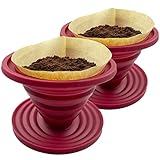 Attsky Collapsible Silicone Dripper Attsky Collapsible Silicone Dripper |
|
Check Latest Price |
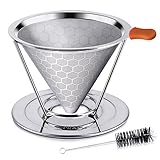 E-PRANCE Reusable Steel Cone E-PRANCE Reusable Steel Cone |
|
Check Latest Price |
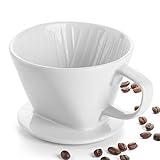 DOWAN Porcelain Pour-Over Dripper DOWAN Porcelain Pour-Over Dripper |
|
Check Latest Price |
1. Hario V60 Dripper 02 Ceramic – Best Overall for One Cup
Hario, V60 Dripper 02 White
Ceramic body with glossy finish
Spiral ribs and one large drain hole
Takes #2 paper cone filters
Dishwasher safe
Pros
- Clean bright cup with control over every variable
- Fast drawdown so a single cup finishes in about two and a half minutes
- Ceramic holds heat so the mug stays hot
- Accepts any standard folded cone filter
- Dishwasher safe and easy to hand wash
Cons
- Solid ceramic hides the mug so you pour blind
- Breakable and heavier than resin or plastic
- Needs attentive pouring to repeat results
This is the dripper I keep reaching for when I only want one cup. The 02 cone is listed as a one to four cup brewer, but the sweet spot for a single mug is 15 g of coffee to 250 g of water. Reviewers describe the resulting cup as clean and coffee-shop style, and that matched our brews closely.
What makes it work at single-cup scale is the single large hole plus the spiral ribs. Water leaves the bed quickly, so the drawdown does not stall while you are already drinking from the mug. The ceramic body also does more work than people credit: it preheats with a rinse of hot water and then keeps the brew hot for several minutes.
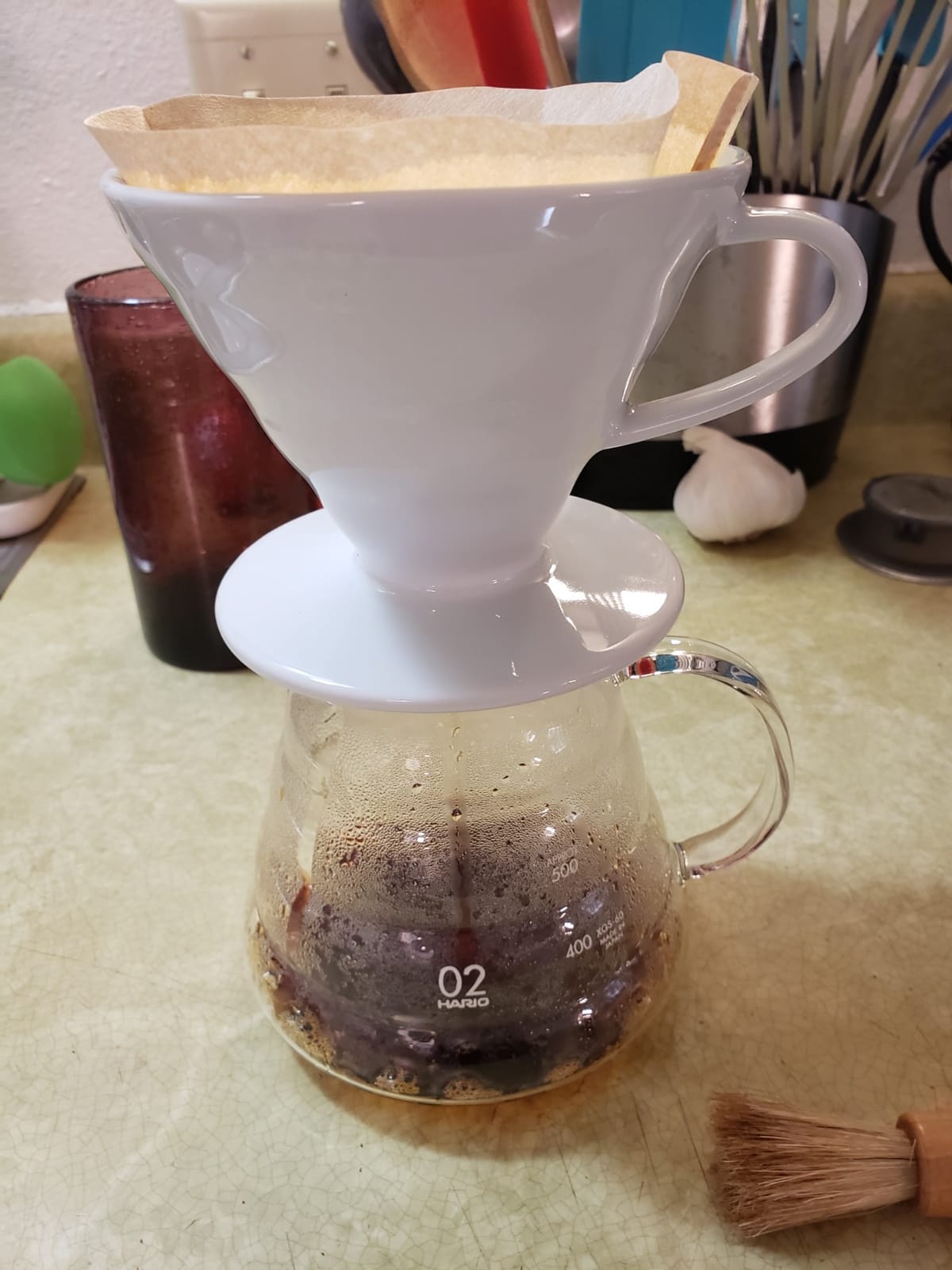
The awkward part is the shape itself. The cone walls cover the mug completely, so you cannot see the water level while you pour and have to lift the dripper to check. One r/pourover owner describes this dripper as their number one brewer and calls it very difficult to mess up, but that is the flat-bottom philosophy talking; this cone gives you more to manage than a Kalita does.
What a 250 ml brew needs from you
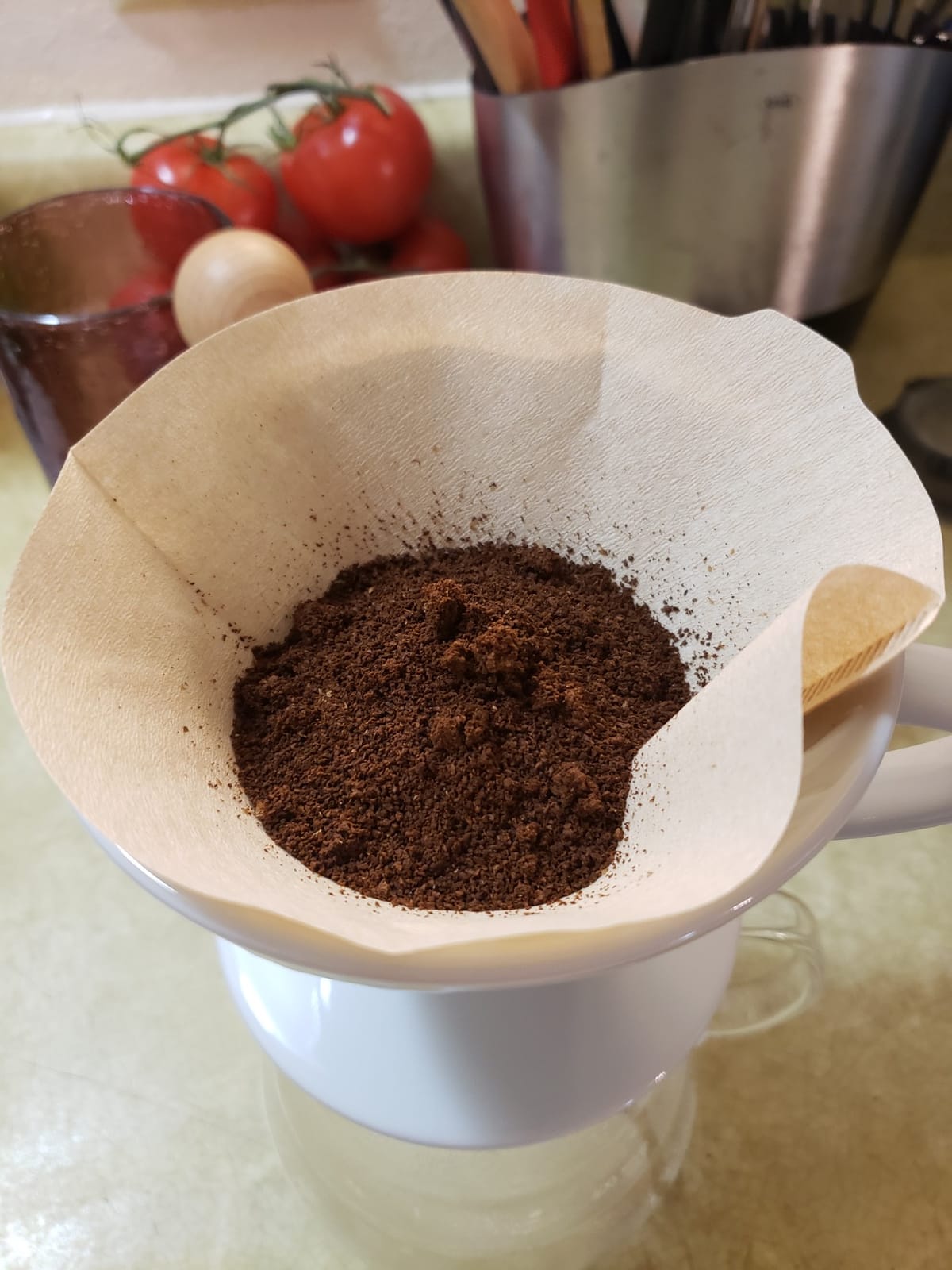
Grind finer than you would for a batch. Set water between 195 and 205 F, pour 50 g to bloom for 40 seconds, then add the remaining 200 g in two slow circular pours. Target a total brew time of roughly two minutes thirty. If the drawdown finishes before two minutes, grind finer.
Where it works less well
It is the most breakable option here at 13.1 ounces, and the glossy ceramic will chip if you knock it against a tap. Filters are the cheapest part of the setup, since any folded #2 cone from a supermarket fits. Owners also report needing a few weeks before the cup stops varying, so it is a poor choice for someone who wants a repeatable result on day one.
2. OXO Brew Single Serve Pour-Over – Best Value for Beginners
OXO Brew Single Serve Pour-Over Coffee Maker with Water Tank, 12 oz.
Plastic and tritan body
12 oz tank with printed markings
Lid doubles as a drip tray
Ten cone filters in the box
Pros
- Auto-drip tank removes the pouring guesswork
- Markings show how much water to add
- Lid traps heat during the brew
- Ten filters included so it works out of the box
- Compact and dishwasher safe
Cons
- Plastic and tritan feel less premium
- Reservoir holds one cup at a time
- Included filters are branded OXO cones
This is the answer for anyone who wants a single cup pour over without learning a pour pattern. A small tank feeds water onto the bed at a controlled rate, so the only variable you manage is how fast you tip the lid. More than 10,000 reviewers at 4.7 stars say the same thing: the cup comes out repeatable with minimal effort.
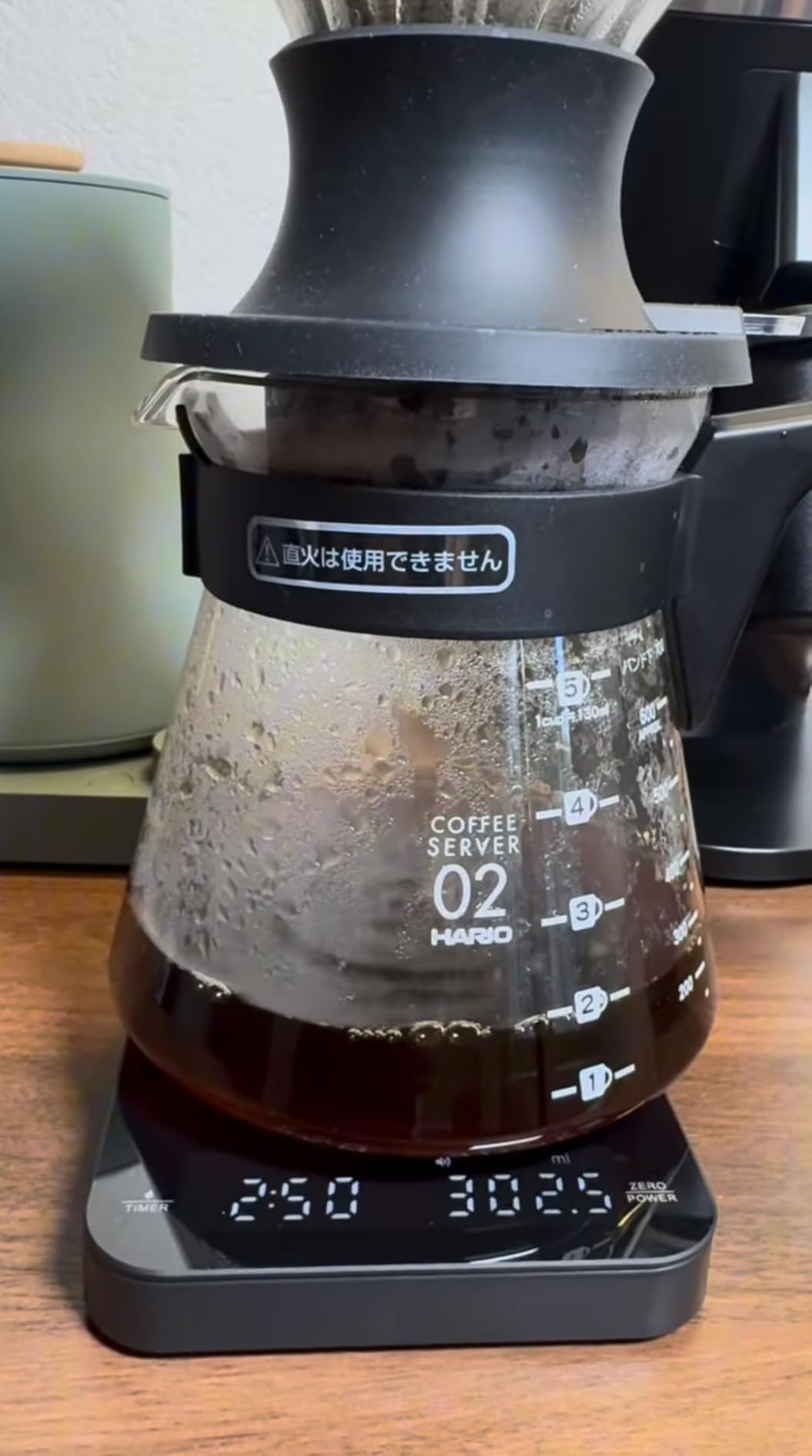
The tank is marked up to 12 oz, which is 360 ml, so it covers a large mug and a little spare. Our recipe was 16 g of coffee to 280 g of water, opened after 40 seconds and left to drain. Total time landed close to three minutes with no swirling and no scale once the first cup teaches you the fill line.
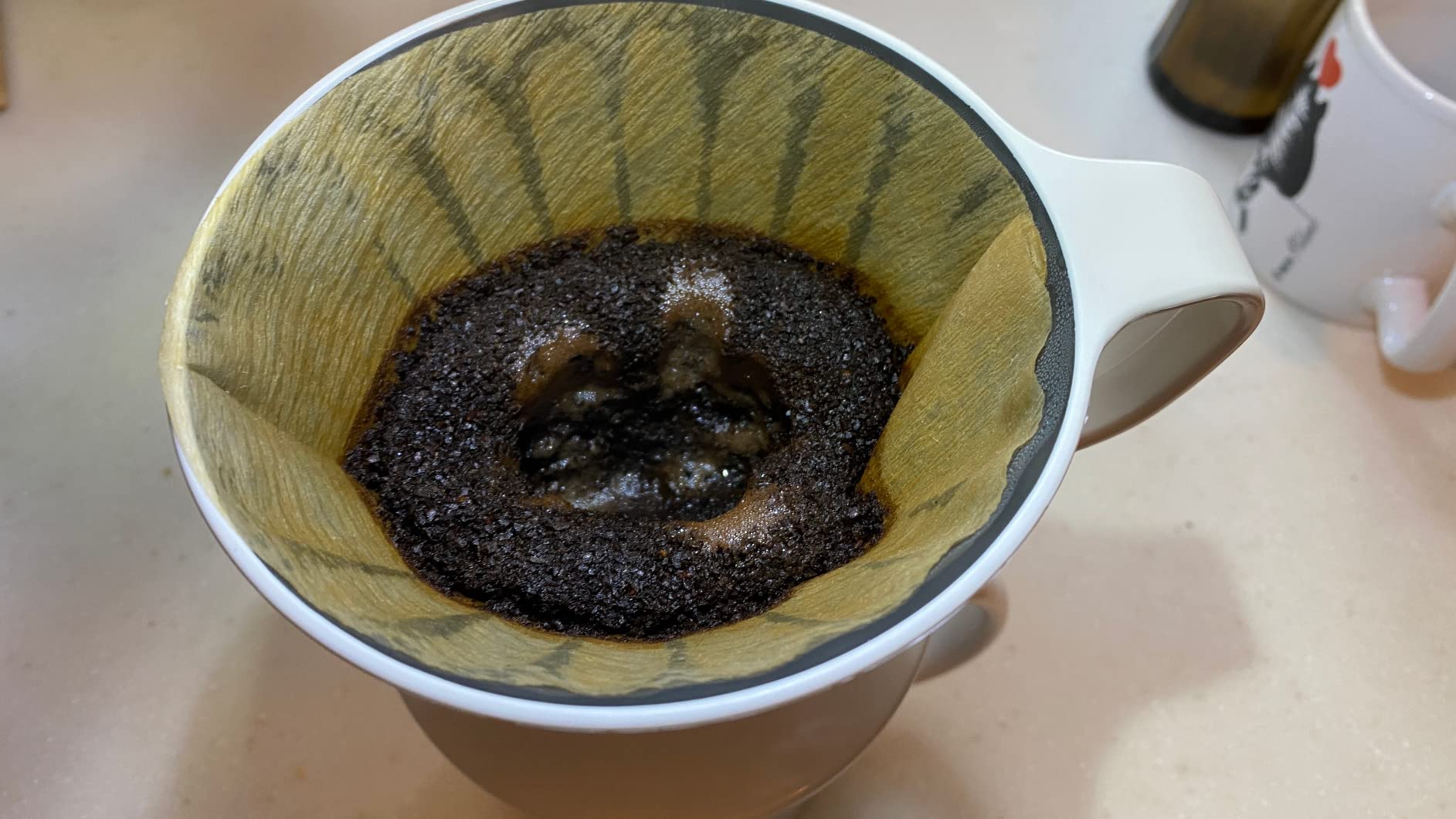
It is also the one I would hand to someone starting out. The forum consensus is that you do not need a gooseneck kettle for decent coffee, and this is the hardware that proves it. Members on home-barista and coffeeforums rate the OXO as the travel-friendly option because the whole thing collapses into a small footprint.
How the auto-drip behaves on a single cup
Because flow is metered, the brew sits wetter for longer than a hand-poured cone. That means a slightly longer contact time, so use a slightly coarser grind than you would on the V60. If the cup tastes thin, grind finer. If it tastes dry and bitter, open the lid a fraction wider and grind coarser.
What you give up for the automation
The material is polypropylene and tritan, so it does not hold heat like ceramic and it looks and feels cheaper in the hand. It also cannot brew two cups without a refill, and the ten filters supplied are OXO branded cones, so you are buying that brand rather than whatever standard cones are on the shelf.
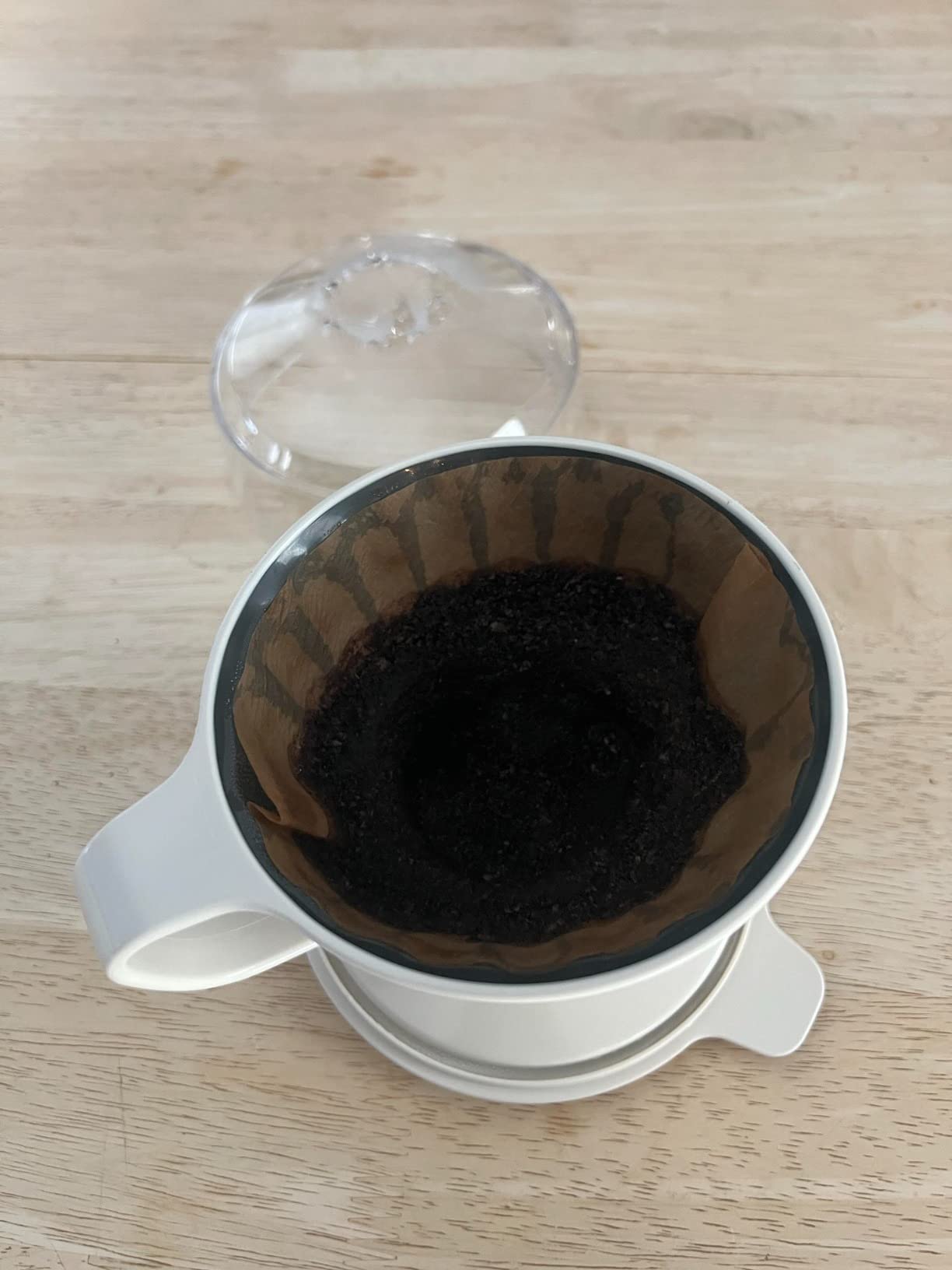
3. LHS Paperless Stainless Steel Cone – Best Reusable Mesh Single-Cup Dripper
LHS Pour Over Coffee Dripper Stainless Steel Coffee Filter Metal Cone Filter Paperless Reusable Coffee Filter Single Cup Coffee Maker 1-2 Cup With Non-slip Cup Stand and Cleaning Brush
Double-layer fine steel mesh
No paper filters required
Wide non-slip cup stand
One to two cup capacity
Pros
- No recurring filter cost or paper waste
- Fine mesh keeps grounds out of the cup
- Wide stand stays stable on a full mug
- Rinses in seconds and is dishwasher safe
- Light enough for camping or the desk
Cons
- Draws down faster so contact time is short
- Fine mesh traps oils and holds residue
- Holds less heat than ceramic
This is the pick if you hate buying filters. The cone is a fine double-layer stainless mesh sized for #1 filters, so nothing goes in but coffee and water. Over 10,000 reviews at 4.4 stars make it the most heavily reviewed paperless option in this group.
Our single-cup brew was 15 g to 250 g at 200 F, and the whole thing drained in under two minutes. That speed is the trade-off: a steel mesh gives you less contact time than a paper cone, so the cup leans lighter and cleaner than a Kalita brew. It suits light and medium roasts better than anything dark and syrupy.
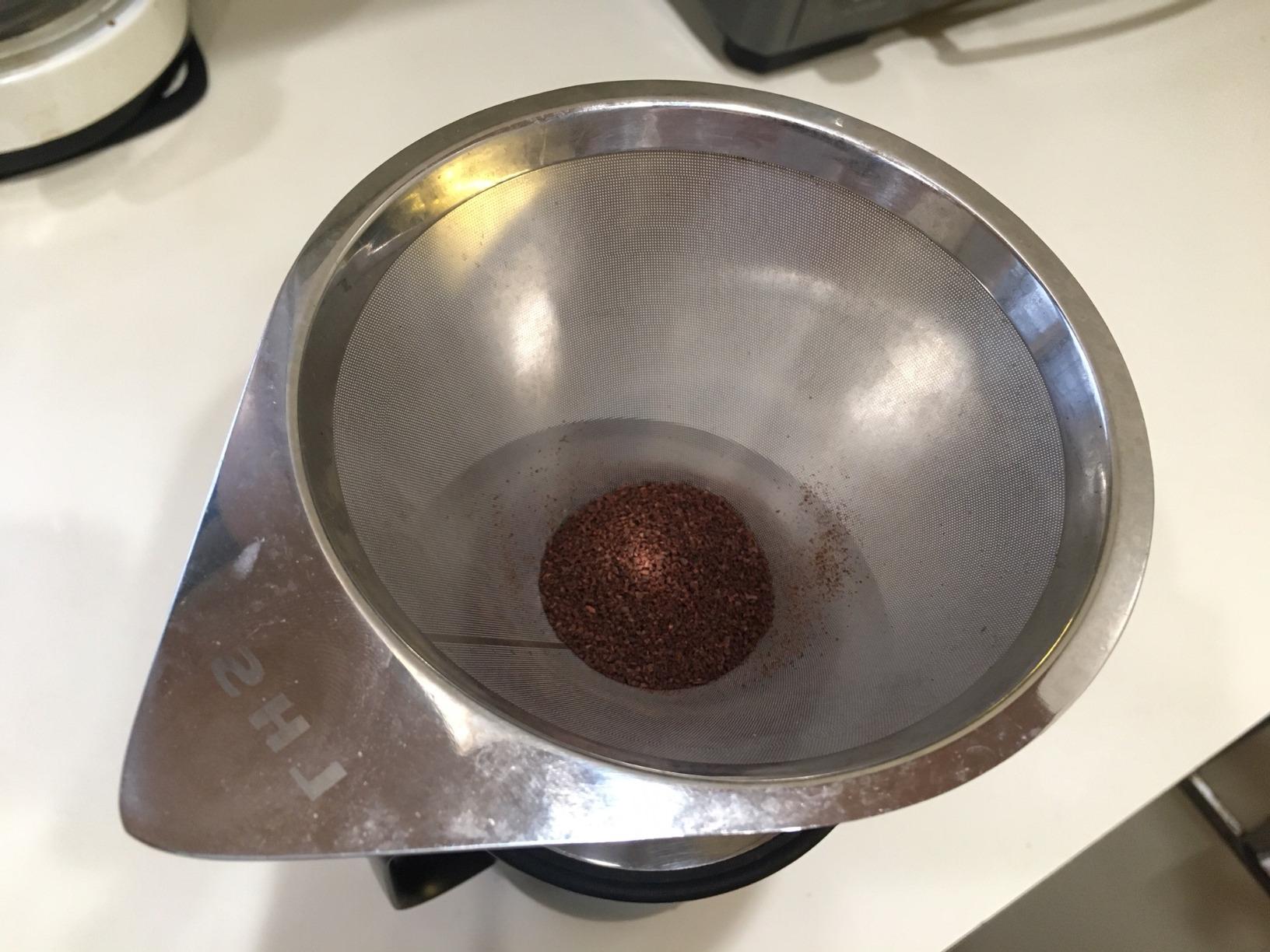
The wide metal stand is the detail that separates this from cheaper mesh cones. It sits over most single-cup mugs and small travel canteens without wobbling, which matters when you are pouring with one hand at a campground table. A cleaning brush is included and the whole thing goes through a dishwasher.
Grind and timing on mesh
Mesh brews fast, so start a little coarser than you would on paper and pour in three small pulses instead of one continuous stream. Aim for a drawdown around two minutes and change the water temperature to correct taste rather than the dose. If the cup is sour, grind finer before you add more coffee.
Maintenance that matters more than price
Rinse it the moment you finish. Coffee oils dry into fine mesh and then need the brush, which is the single complaint repeated across reviews. It also holds less heat than ceramic, so your mug cools faster, and it is not the lightest option here if you are counting grams for a trip.
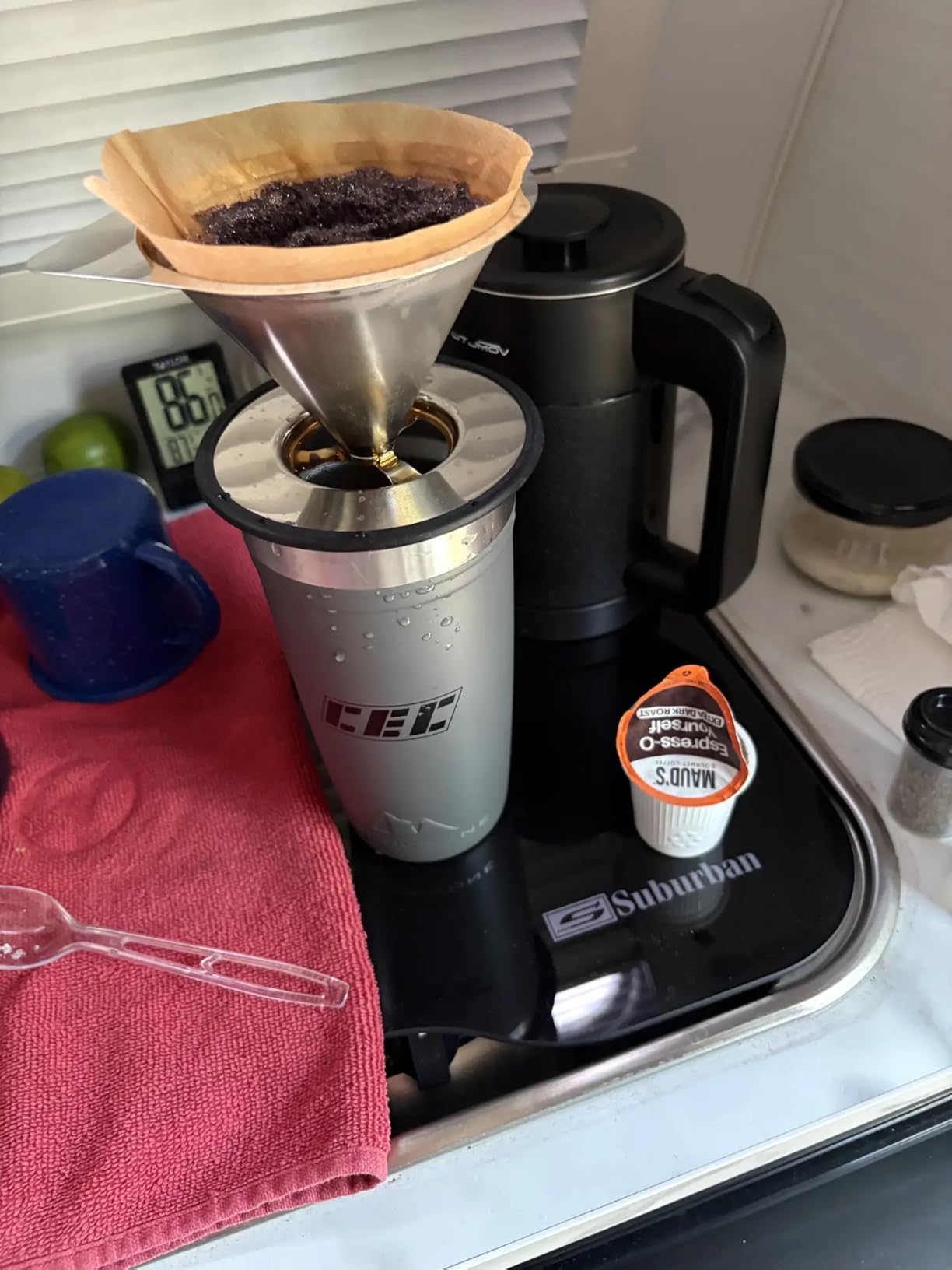
4. Melitta Single Cup Pour-Over Brewer – Best Budget Starter Cone
Melitta Filter Coffee Maker, Single Cup Pour-Over Brewer, Black, 1 Count (640007)
BPA-free plastic cone
1 cup capacity with #2 filters
Peep hole to watch the level
Dishwasher safe
Pros
- Simplest honest way to brew one cup
- Peep hole means you are not pouring blind
- Three-hole flow gives a strong full cup
- No carafe and no mesh to clean
- Survives being dropped
Cons
- Plastic holds far less heat than ceramic
- First few cups vary until you dial in
- Repeatability needs practice and a decent grind
The Melitta is the dripper most people already own in some form and often still have. It is listed at one cup capacity, weighs 2.9 ounces, and comes with a starter supply of Melitta #2 cone filters. Reviewers report owning theirs for 20 years or more, which tells you everything about the build.
At 15 g to 250 g it produced the strongest cup of the plastic and resin options we tried. The three-hole base moves water at a moderate pace, which gives you a fuller body than the V60 and the mesh cones without stalling. Bogleheads members specifically call Melitta one of the best drippers for a single cup, and our results agree.
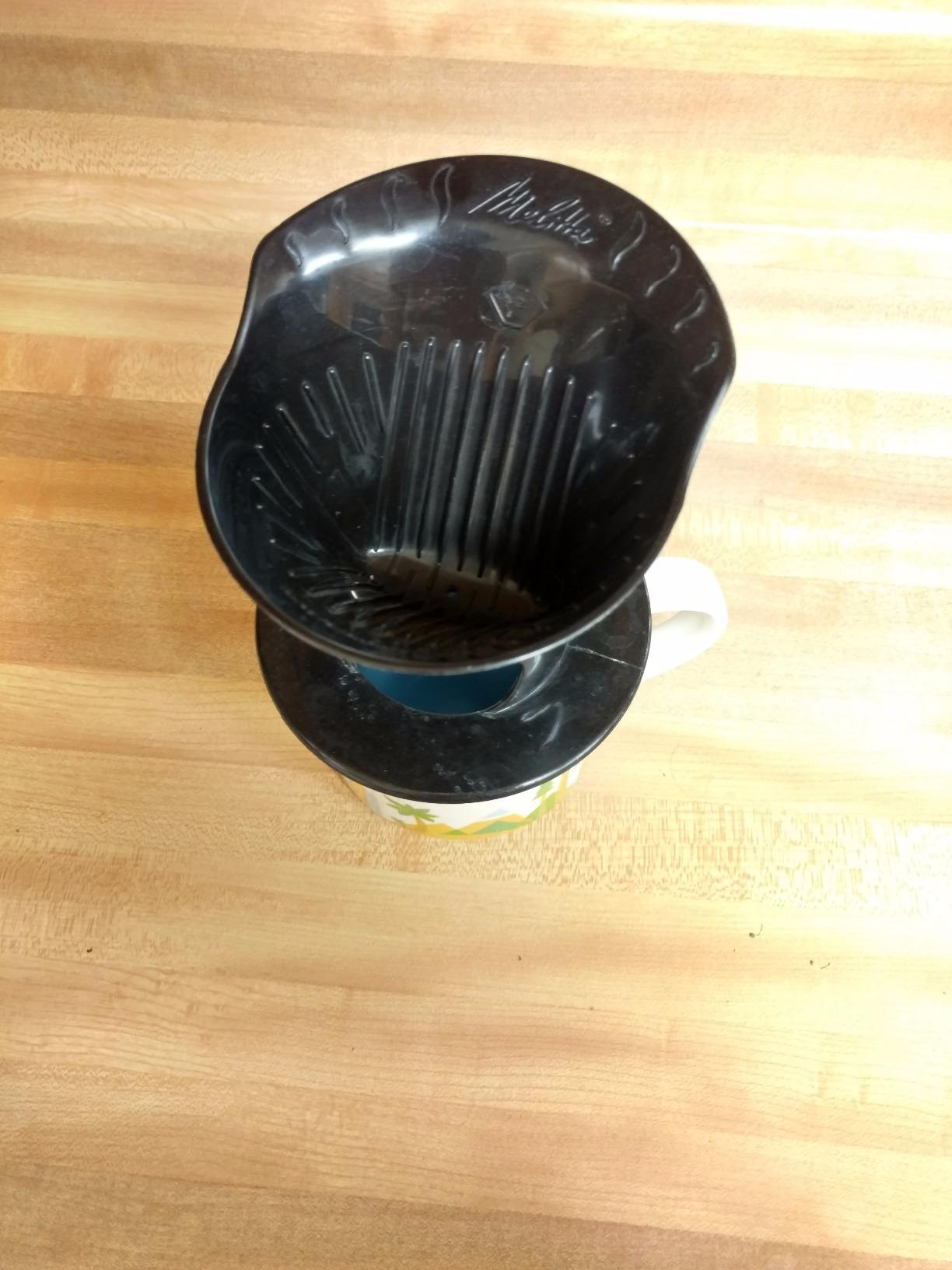
The peep hole is genuinely useful and almost nobody expects it. You can watch the level drop, which turns the blind-pour problem into a two-second glance. The trade-off sits in the material: a thin plastic cone gives up heat during the brew and during the draw, so the mug cools faster than it would under ceramic.
How to get a repeatable cup quickly
Rinse with hot water first, use a medium-fine grind, and pour in three circles rather than one pour. Reviews are consistent that the first several cups vary until the grind and pour are locked in. If you want stability from cup one, add a scale and a gooseneck kettle, which is what a number of owners ended up doing.
Hot water and plastic
There is a real point here. The material is BPA-free plastic, and hot water is exactly what a paper cone protects you from. One long-term owner on coffeeforums describes becoming aware of the hazards of plastic and hot water and moving to glass and metal instead. If that is a concern for your kitchen, skip this and the collapsible silicone option below.
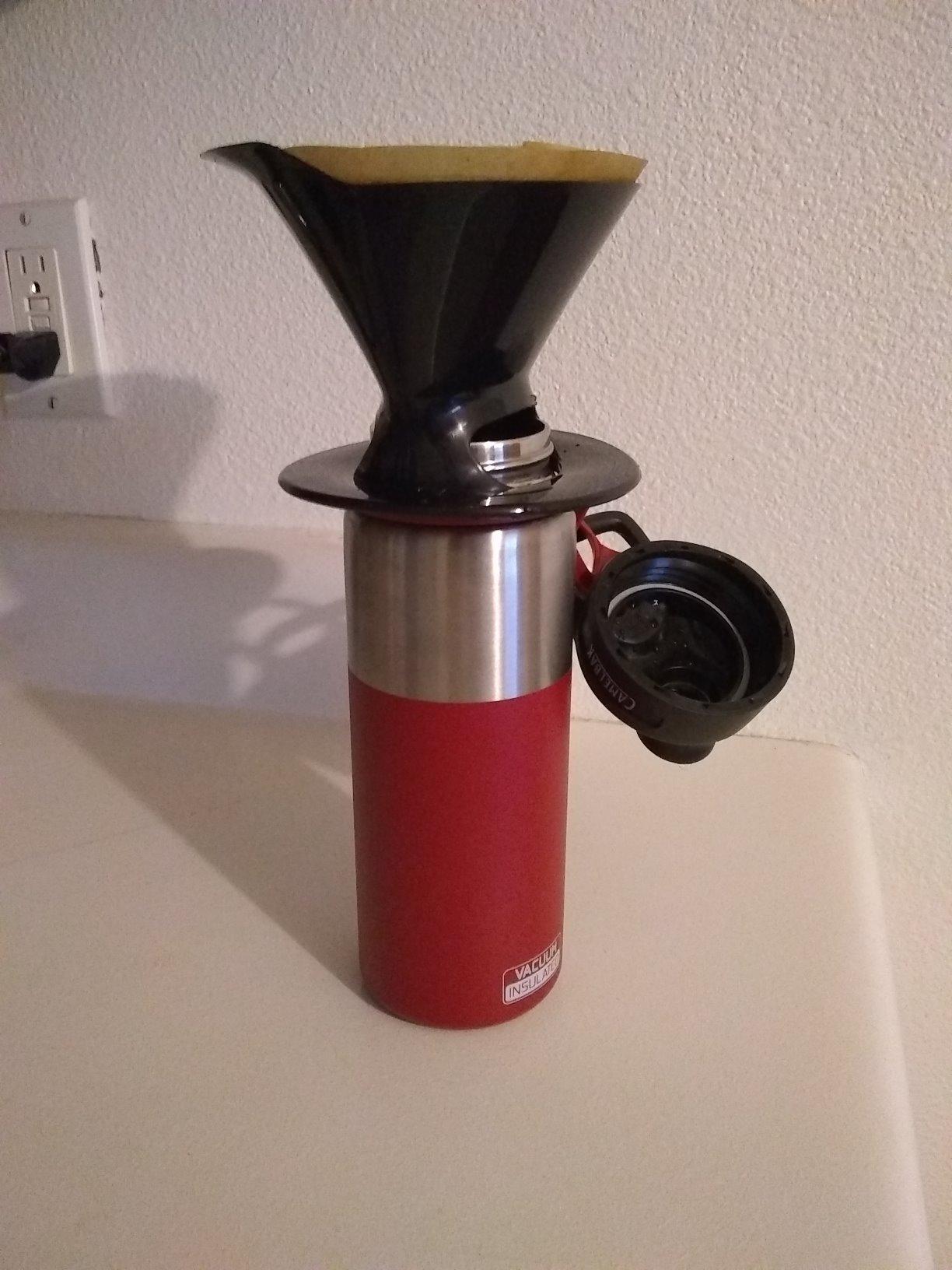
5. Hario VDR-01 Transparent Dripper – Best for Seeing the Brew and Surviving Drops
HARIO VDR-01-T Transparent Dripper 01 Clear Coffee Hand Drip for 1 to 2 Cups, Made in Japan
Clear acrylonitrile-styrene resin body
400 ml capacity for one to two cups
Uses V60 #2 cone filters
Dishwasher safe
Pros
- Highest rated at 4.8 stars across 3600 reviews
- Transparent body shows drip rate and colour
- Shatterproof resin rated for boiling water
- Thicker build than the price suggests
- Light and compact for travel
Cons
- Needs V60 cone filters that supermarkets rarely stock
- Slow drip on a third or fourth cup in one batch
- Grind and temperature still need practice
This scored the highest rating in the group at 4.8 stars from more than 3,600 reviews, with 91 percent of those buyers giving it five stars. It is the same V60 cone geometry as the ceramic original, pressed in clear resin instead of fired clay, and the transparency is the whole point: you can watch the bed bloom and draw.
Being able to see extraction is more useful on a single cup than on a batch. A one-cup brew has no buffer, so spotting the moment the flow turns into a fast rush tells you to grind finer straight away. We brewed 14 g to 240 g at 198 F and finished in about two minutes forty.
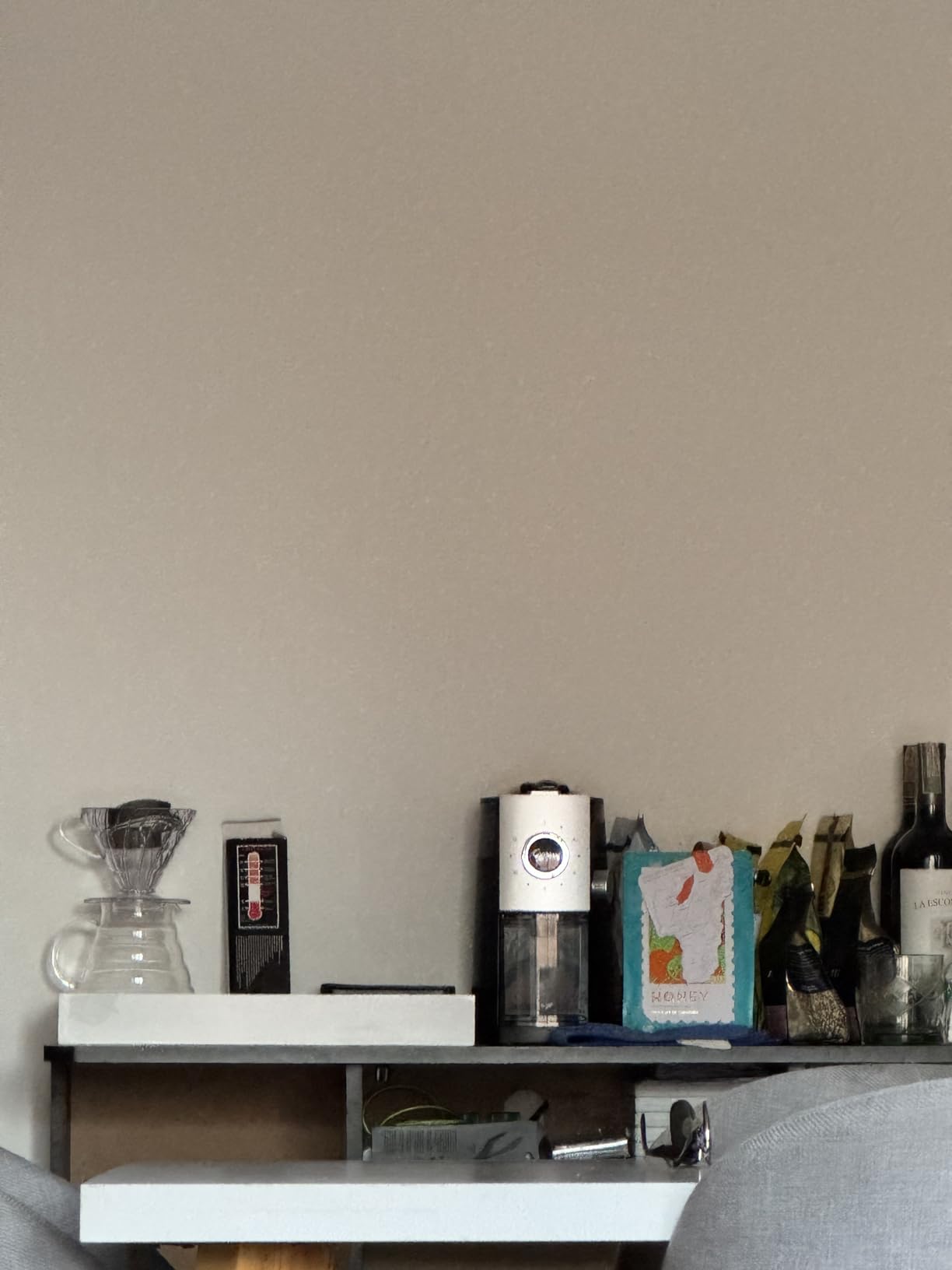
Several buyers moved to this model after breaking a glass or ceramic V60, and that is the second selling point. Acrylonitrile-styrene resin is rated for boiling water and is dishwasher safe, and it weighs 0.07 kg. It is also made in Japan and won a 2007 Good Design Award, which you can see in the thicker-than-usual moulding.
Filter access and batch limits
The catch is supply. It uses standard V60 #2 cone filters, which are not stocked in most supermarkets, so keep a spare pack on hand. Also note the single large hole: once the bed settles, a third or fourth cup in the same batch slows noticeably, so this is genuinely a one-to-two cup brewer.
Which roast suits it
The open V60 cone and fast drain pull clarity out of light and medium roasts. Washed African coffees and light Latin American blends show their fruit clearly here. On a dark roast the cup finishes thin and bright rather than heavy, so grind finer and drop the water temperature a few degrees if you brew those.
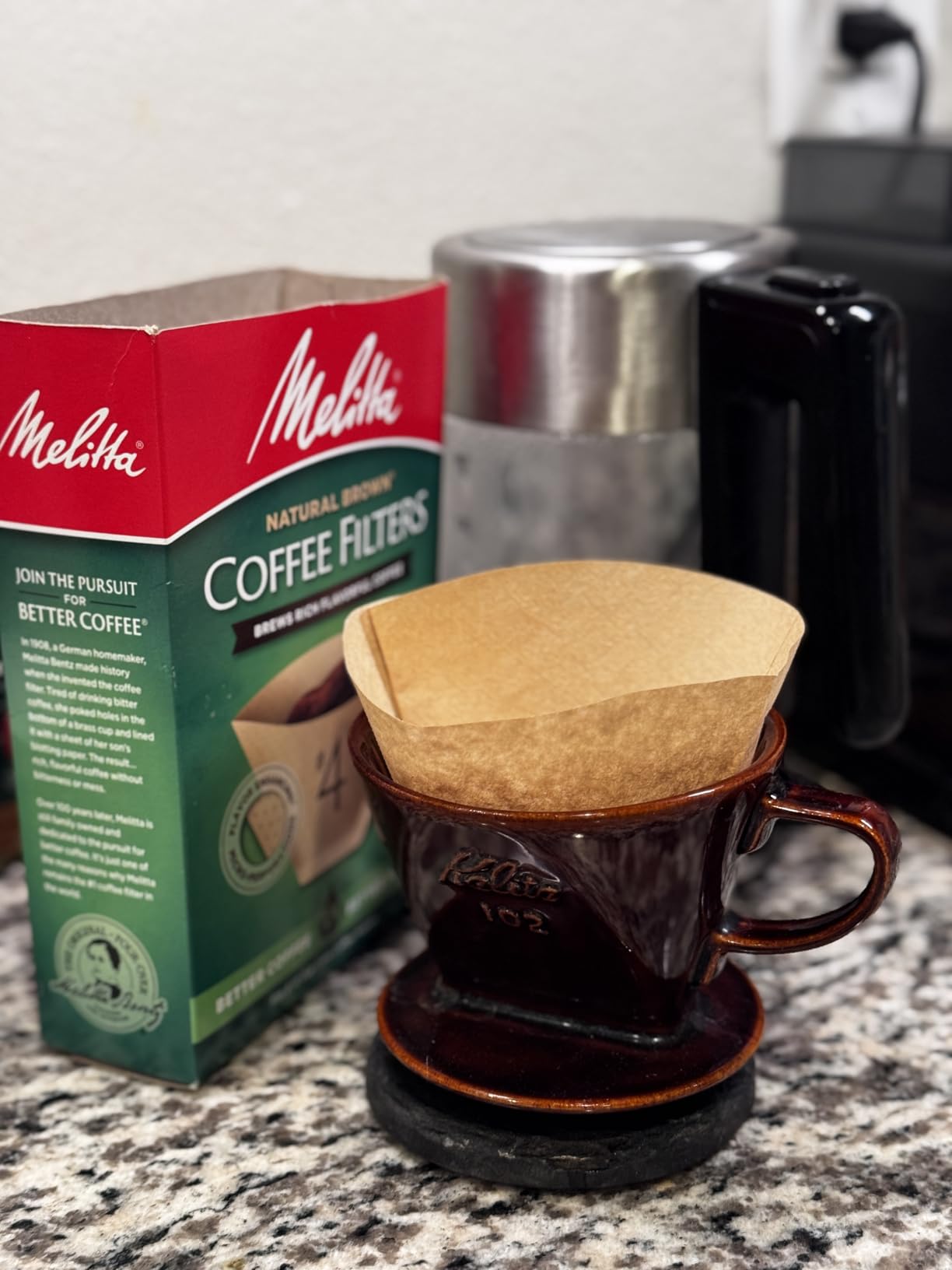
6. Kalita 102 Ceramic Dripper – Best Flat Bottom for Wide Mugs
Kalita – 2001 Kalita 102 Ceramic Dripper Coffee Dipper, white
Three-hole ceramic base
Four inch base diameter
Brews a standard 8 oz cup
Glazed Japanese ceramic
Pros
- Three-hole base draws slower and more evenly than the V60
- Four inch base fits mugs that narrow cones will not
- Supports cheap standard #2 cone filters
- Sturdy ceramic that still looks new after years
- No plastic touches the brew
Cons
- Filter sits above the rim and can bunch up
- Base ring can dribble at the end of a pour
- Four inch base is small for very large mugs
- Chippable ceramic
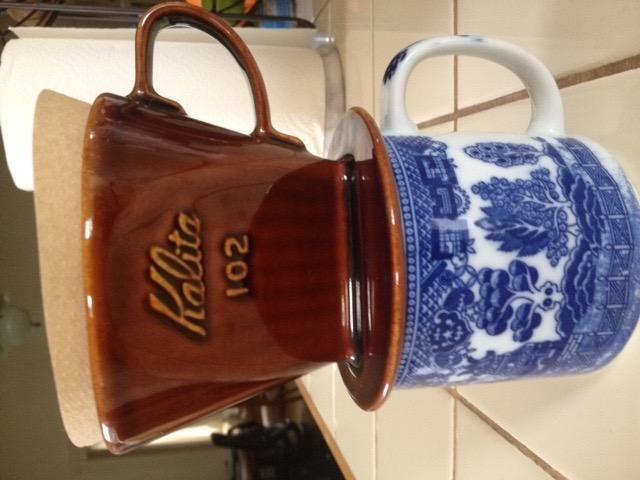
The Kalita 102 is built for one 8 oz cup and nothing more ambitious, which is why it works so well here. The three-hole base slows the draw compared with the single-hole V60, and reviewers consistently report a slightly stronger and lighter tasting cup as a result. Bogleheads members single out Kalita for single-cup brewing for the same reason.
The 4-inch base is the practical hero. A lot of narrow-cone drippers will not sit on a wide mug or a short latte glass, and this one sits on both. The listed weight is 430 grams, so it is a stationary piece of equipment rather than something for a bag, but it stays planted while you pour.
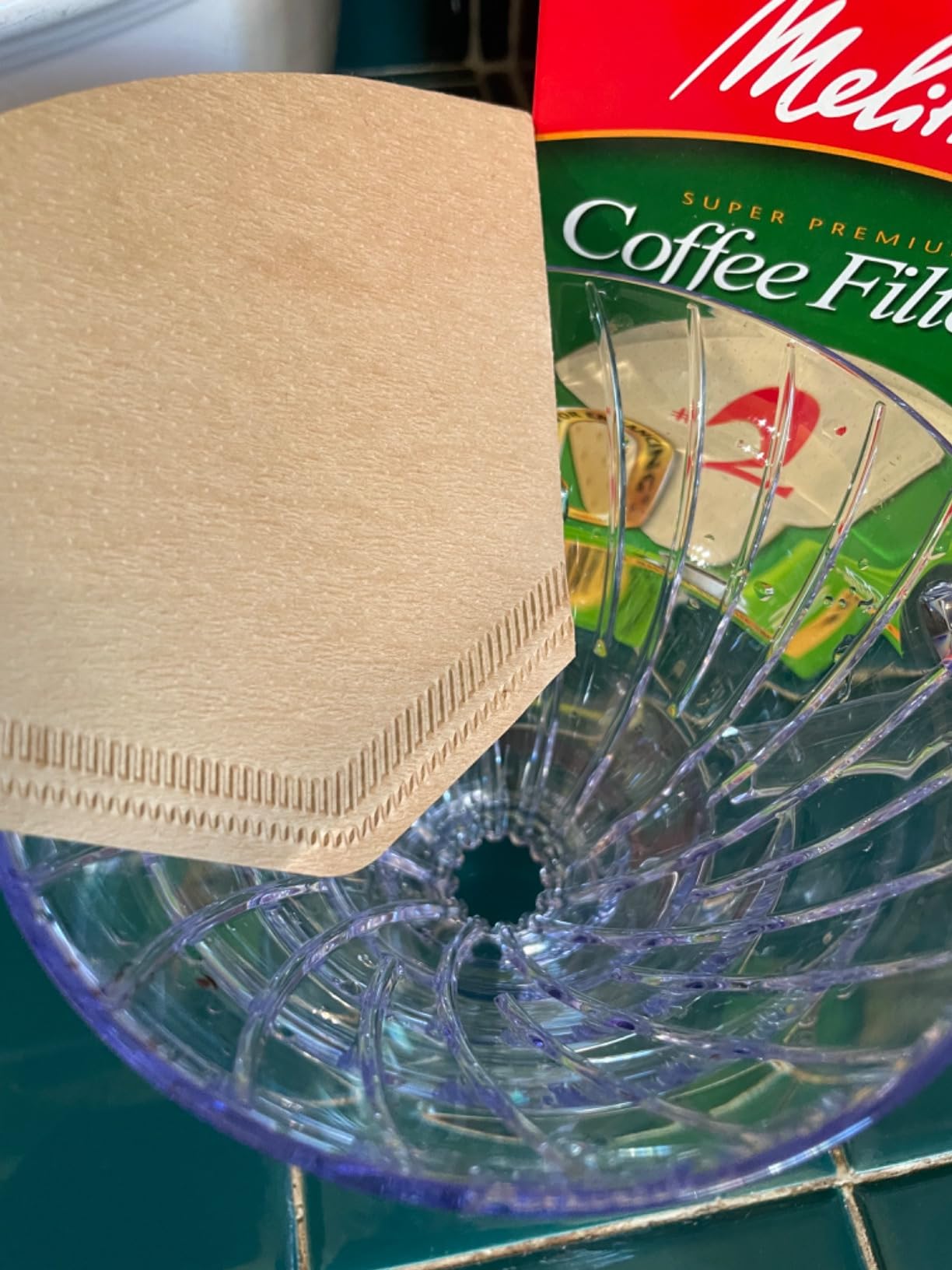
It is also the most forgiving cone here for cheap filters. Because there are three small holes instead of one large one, a standard supermarket cone will not tear out at the bottom seam. Long-term owners report two or more years of daily use with nothing more than a rinse between brews.
Handling the filter that stands proud
The interior cone is not perfectly elliptical, so a #2 filter sits roughly a quarter inch above the rim and can bunch in places. Wet the filter thoroughly and press it down flat before brewing. That gap is also where water can bypass if you pour hard on the wall, so keep the pour in the centre of the bed.
Cleaning and the last of the pour
The raised ring around the base holes can dip into the tail of a pour and dribble a few drops onto your counter, which is the most common complaint. Rinse under the tap straight after brewing and it never becomes an issue. If you drink large mugs, check the diameter, because 4 inches is short of the 4.25 to 4.5 inch range some buyers want.
7. Hario Switch Immersion Dripper 02 – Best Premium Pick for Consistency
Hario “Switch” Immersion Dripper, Size 02
Heatproof glass cone at 200 ml
Plastic toggle drives a steel ball valve
Use pour over or full immersion
40 pack of V60 #2 filters included
Pros
- Switches between pour over and immersion in one cone
- Ball valve gives precise control over flow
- Heatproof glass stays taste neutral
- Tuned at 200 ml for a single cup
- Filters included in the box
Cons
- Most expensive brewer in this group
- Immersion mode needs attention to steep time and agitation
- Heavier than a resin cone
The Switch is the answer to the single-cup sourness problem, because immersion removes the pour entirely. Flip the toggle, the stainless steel ball valve closes, the bed steeps in hot water like a tea infuser, and you open it again to drain. The same 200 ml cone still does a normal pour over when you want control.
Long-term owners describe it as the most idiot-proof brewer they own, and one forum account of a dripper journey ends with the Switch as the daily driver. Reviewers like the solid feel of the valve and note the heatproof glass does not add a tinny note to the cup. A 40 pack of filters in the box covers a lot of early brewing.
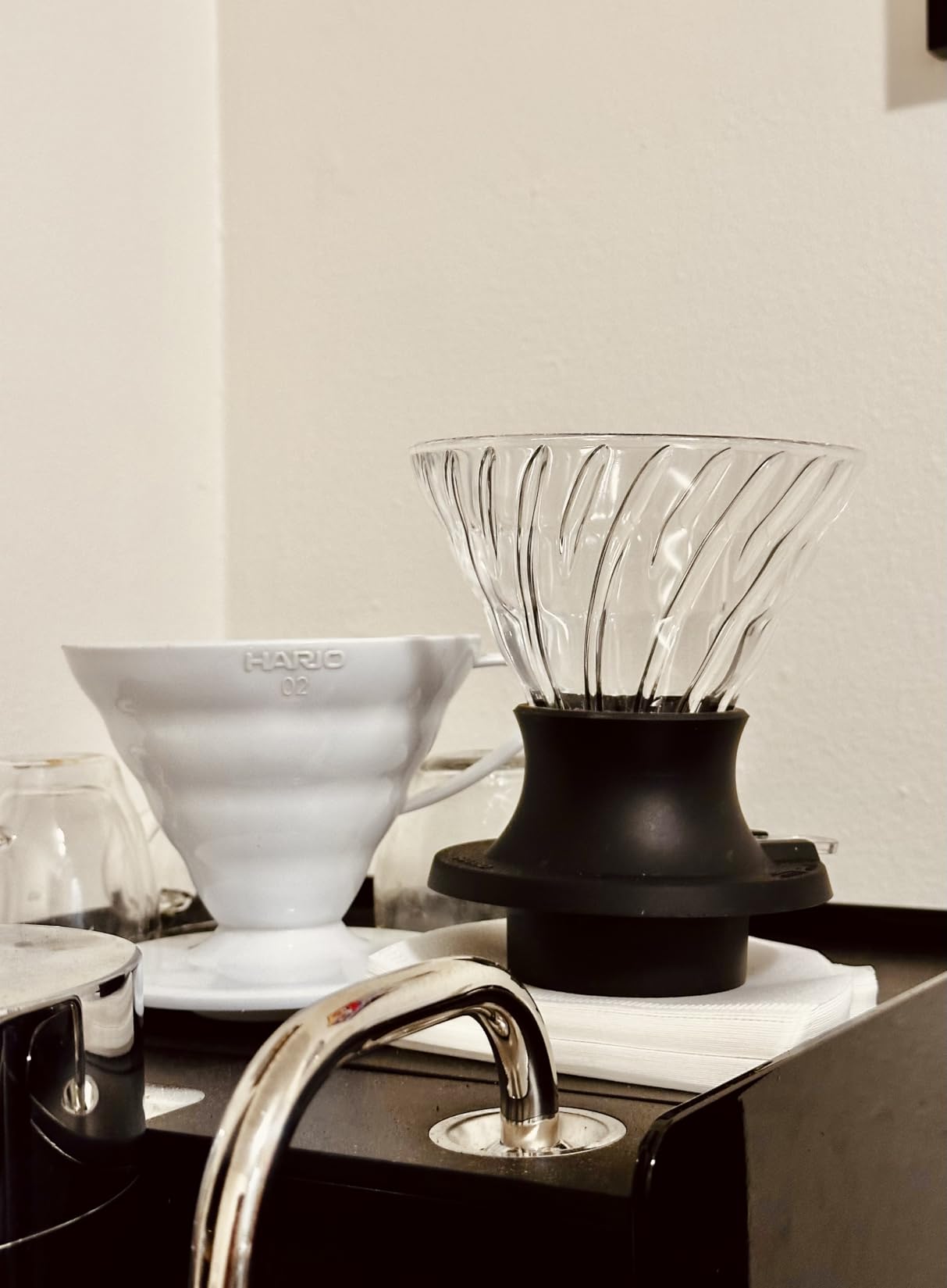
Our immersion recipe for one mug was 17 g to 260 g at 200 F, closed valve, three minutes with one gentle swirl at 90 seconds, then released to drain. Total time was about four minutes. That is longer than a pour over but far more repeatable, which is exactly what you want before coffee.
Which mode to use on a single cup
Use immersion for medium and dark roasts and for anyone who keeps getting a sour cup. Use pour over for light roasts where you want the clarity the cone shape produces. Forum advice splits on roast pairing here, so treat it as a starting point rather than a rule, and adjust by taste.
What the premium buys you
It is the priciest brewer in this roundup and the 40 filters only partly make up for that. Immersion also demands more discipline than pouring; steep too long and the cup goes flat and heavy. And it is glass, so it will not survive a drop onto a hard kitchen floor.
8. Attsky Collapsible Silicone Dripper – Best for Camping and Backpacking
Attsky Collapsible Pour Over Coffee Dripper for Camping, 2-Pack, Red
BPA free food-grade silicone
Rated to 464F
Folds flat for packing
2 pack with #2 cone filters
Pros
- Collapses flat and disappears into a small bag
- Silicone is odourless and BPA free
- Rated to 464F for boiling water
- Two pack lets you keep one at home and one in a kit
- Fits most mugs and cone filters
Cons
- Silicone walls hold very little heat
- Flexible walls sag and guide the pour less
- Less extraction control than a rigid cone
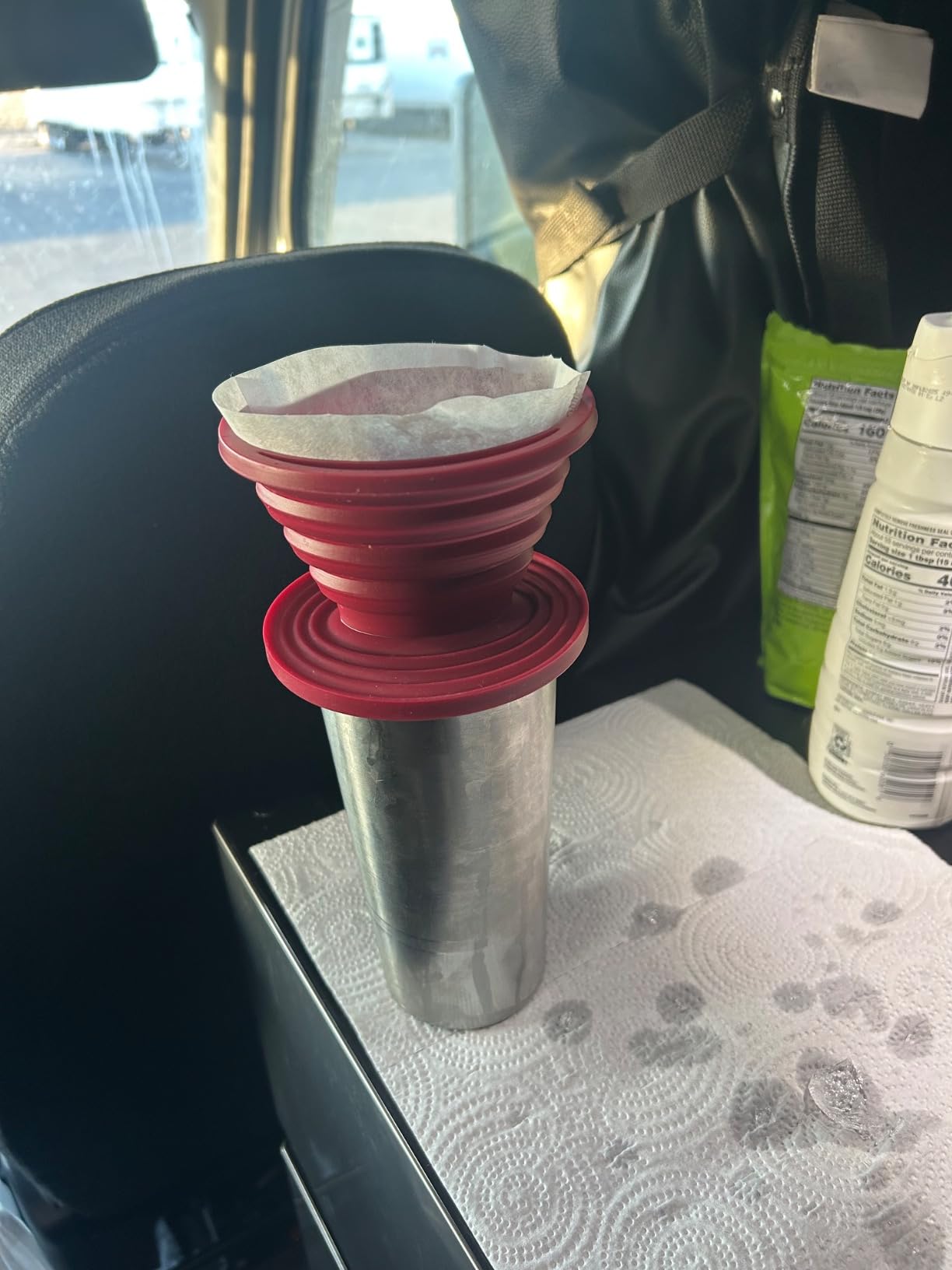
This is the travel answer, and the reason is simple: it folds flat. It collapses to the thickness of a few folded filters, so it takes up almost nothing in a pack or a desk drawer. At 4.6 stars from roughly 2,500 reviews, satisfaction is consistently high for campers and hikers.
It uses standard #2 cone filters and fits most mugs, so the paper and coffee are the only consumables. The silicone is BPA free, odourless and rated to 464 F, which is boiling-water territory. Buyers like the 2 pack for the obvious reason of keeping one unit at home and one in a travel kit.

There is a forum alternative worth mentioning if you want zero paper: the GSI Ultralight Java Drip is the pick people choose for bike camping because it needs no filters at all. It costs more per cup if you brew daily at home, but for a weekend it removes the rubbish entirely.
What changes with a flexible cone
Silicone holds far less heat than ceramic or metal, so the cup cools faster and the bed cools as you pour. The walls can sag under a heavy stream, which means a fast pour pushes water down the side instead of through the grounds. Pour slowly in a tight circle and expect a lighter body.
Heat rating versus heat retention
These are different things and travellers often confuse them. The silicone is rated to survive boiling water, so safety is not the issue. Retention is: pour less than you think you need, because the brew loses temperature quickly once it lands in the mug. Use 14 g to 220 g rather than a full 250 g on a cold morning.
9. E-PRANCE Reusable Steel Cone – Best for Long-Term Filter Savings
E-PRANCE Pour Over Coffee Dripper, Stainless Steel Coffee Filter Reusable Pour Over Coffee Filter Cone Coffee Dripper with Removable Cup Stand and Bonus Brush
Double-layer 316 steel at 0.2mm mesh
Detachable cup stand
Brews one to four cups
Brush and rinse cleaning
Pros
- Paperless design ends filter spending
- Double-layer mesh keeps sediment out of the cup
- Detachable stand fits most mugs and carafes
- Rinses clean in under a minute
- Works with Chemex and V60 setups
Cons
- Needs rinsing right after brewing or residue sets
- Mesh holds oils that paper would absorb
- Less heat retention than ceramic so cups cool faster
If you brew every day, a reusable cone pays for itself in filters. This one uses double-layer 316 stainless steel at a 0.2mm mesh, which owners credit with keeping sediment out of the cup while still allowing a longer, more controlled extraction than a single-layer screen. Around 2,250 reviews sit at 4.6 stars.
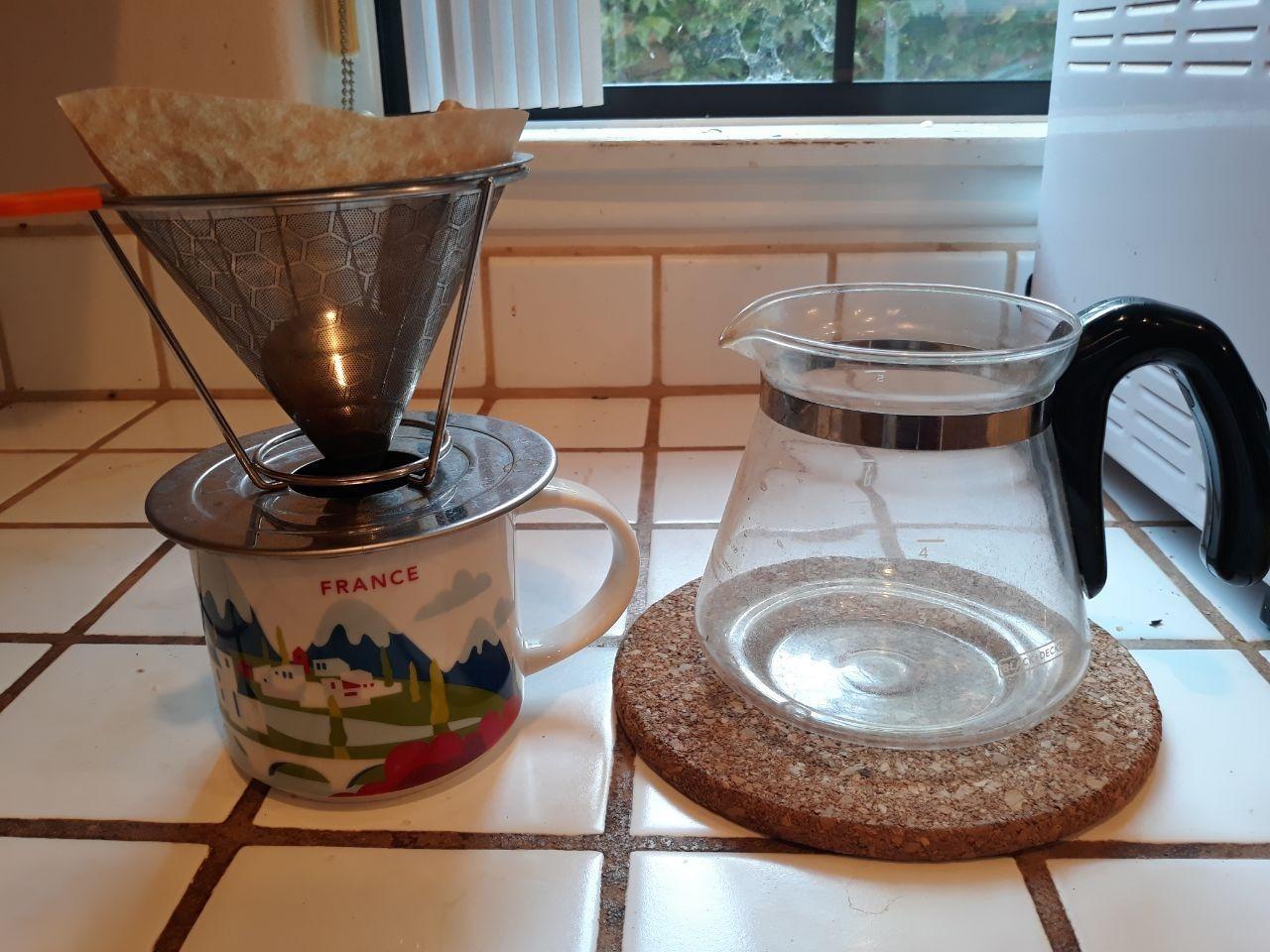
The detachable stand is more versatile than most paperless cones. It fits most mugs, carafes and even Chemex and V60 setups, so you can move the same filter between a single-cup morning and a weekend batch. It is listed for one to four cups, so a single 250 ml brew is well within its comfort zone.
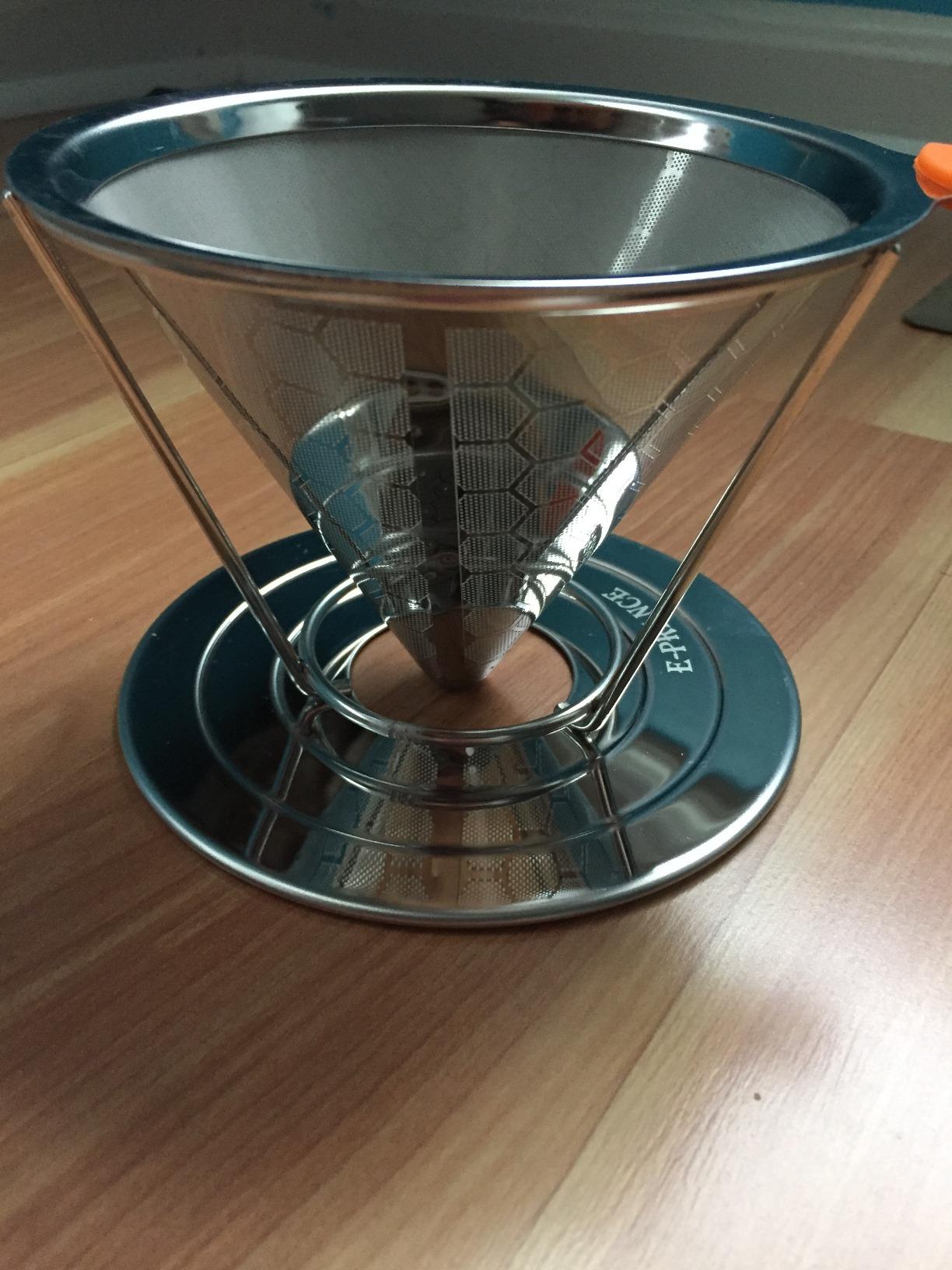
Our single-cup recipe was 15 g to 250 g at 200 F in two pulses, drawing down in just under two and a half minutes. The cup carried more body than the coarser mesh options, which makes sense given the tighter 0.2mm weave. Mid-weight roasts are where this cone performed best for us.
Rinsing is the whole maintenance routine
Every reviewer says the same thing: rinse it immediately after brewing. Grounds that dry into a 0.2mm mesh are stubborn, and a brush is included for the deeper clean. Do it every time and the whole rinse takes under a minute, which is less time than fetching a paper cone.
What mesh changes in the cup
Mesh lets coffee oils through where paper would trap them, so the finish is fuller and sometimes slightly heavier than a paper-filtered brew. It also gives up heat faster, so the mug cools sooner. If you like a clean, bright cup, paper wins. If you like body and want zero waste, this is the better tool.
10. DOWAN Porcelain Pour-Over Dripper – Best Gift-Ready Cone
DOWAN Pour Over Coffee Maker, Non-Electric Pour Over Coffee Dripper, Manual Brew Maker, Single Cups Porcelain Slow Brewing Accessories for Gifts,White
High-fired porcelain body
Three-hole base and V-shaped cone
Vertical inner wall ribs
Two cup capacity
Pros
- Three-hole base gives a slow concentrated draw
- Porcelain retains heat better than mesh
- V-shaped cone lengthens contact time
- Ribs keep paper off the wall for full extraction
- Glossy finish suits gifting
Cons
- Paper cones are not included in the box
- Porcelain is heavy and breakable
- Listed dimensions do not match the real size
Everything about this one is aimed at a countertop. The glossy high-fired porcelain looks like a gift, it retains heat far better than a wire mesh during the brew, and at 12 ounces it has real heft in the hand. Around 2,900 reviewers rate it 4.6 stars, largely because of how it looks and how slowly it draws.
Technically it is a small V-shaped cone with a three-hole base and vertical ribs on the inner wall. Those ribs hold the paper off the sides so the last of the water still passes through coffee instead of running down a wet wall. It is listed at two cups, so a 250 ml single-cup brew sits comfortably in the middle of its range.
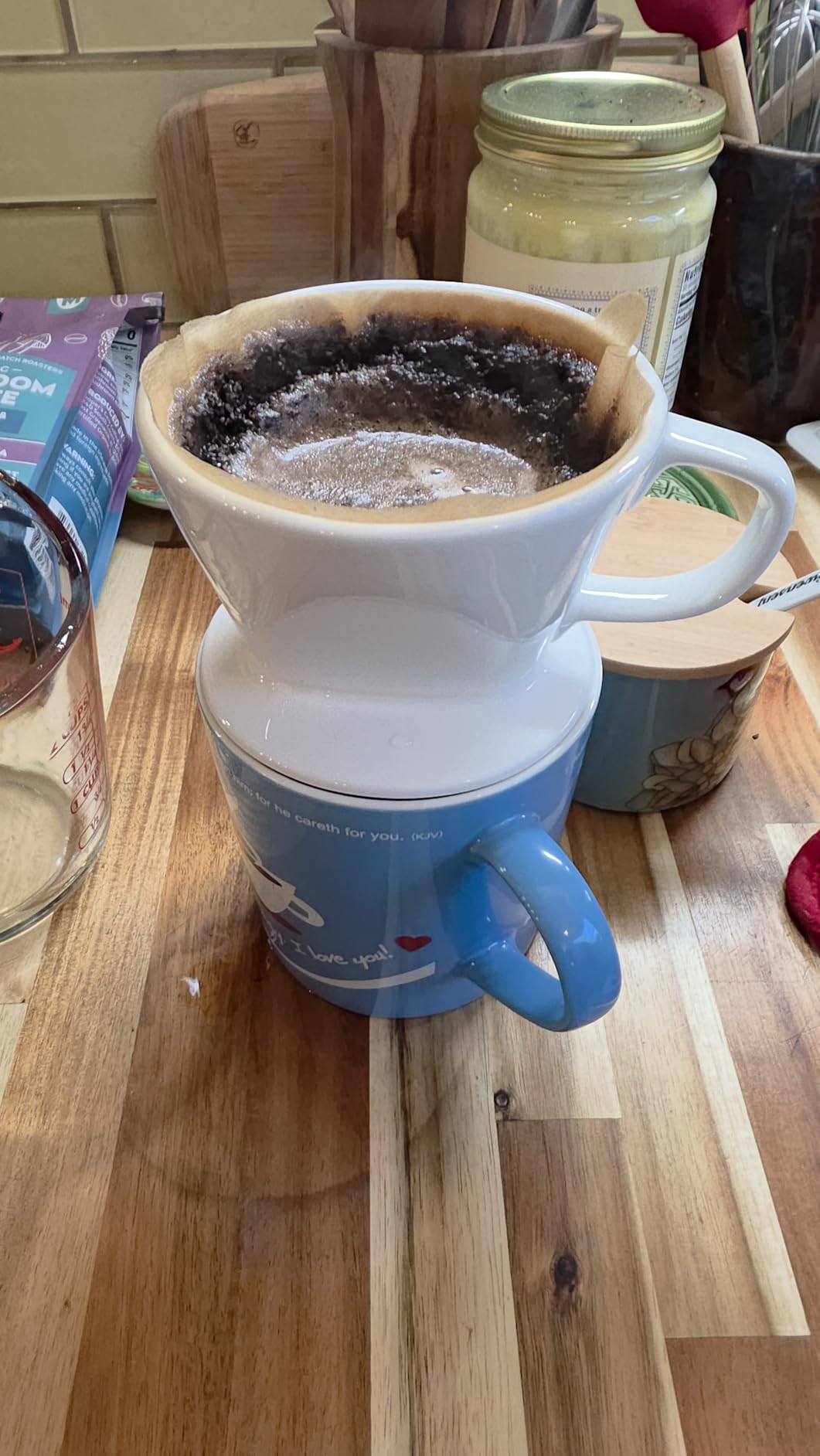
The draw is slow and concentrated, which makes it forgiving. Our brew at 15 g to 250 g finished around three minutes and produced a fuller cup than the mesh options. Buyers mention that the ribbed wall lets them use cheaper filters without the brew stalling, which is a real saving over the year.
Buying it as a gift
Two caveats before you wrap it up. Paper cones are not included, so a pack of standard filters has to go in the box. If the recipient is a beginner, we have more suggestions in our gift guide for single parents, since the OXO or Melitta need fewer decisions than this one.
Fit, weight and honest specs
It fits most mugs and thermoses, which is useful for anyone who drinks from a travel tumbler. It is also the heaviest pick here and the most breakable after the ceramic Kalita. Be aware the seller lists the dimensions as 1 by 1 by 1 inches, which does not reflect the real size, so check your mug against the photos.
How to Brew One Perfect Cup of Pour Over
Use the same method on every dripper in this roundup first, then adjust only what the brewer demands. Changing ratio, grind and pour pattern at once is how people convince themselves a dripper does not work.
Dose 15 g of coffee for a 250 g brew, which is a 1:16.7 ratio inside the range most people land on. Weigh the coffee if you own a scale; if not, a level tablespoon is close enough for a first attempt.
Grind medium-fine, roughly like coarse sand. This is the variable that matters most on a small brew, and it is the one people get wrong.
Heat water to 195 to 205 F (90 to 96 C). Boiling water scorches the lighter roasts and pulls bitterness out of the dark ones.
Rinse the filter with hot water, discard the rinse water, and preheat your mug. This removes the papery taste and stops the ceramic cooling your brew instantly.
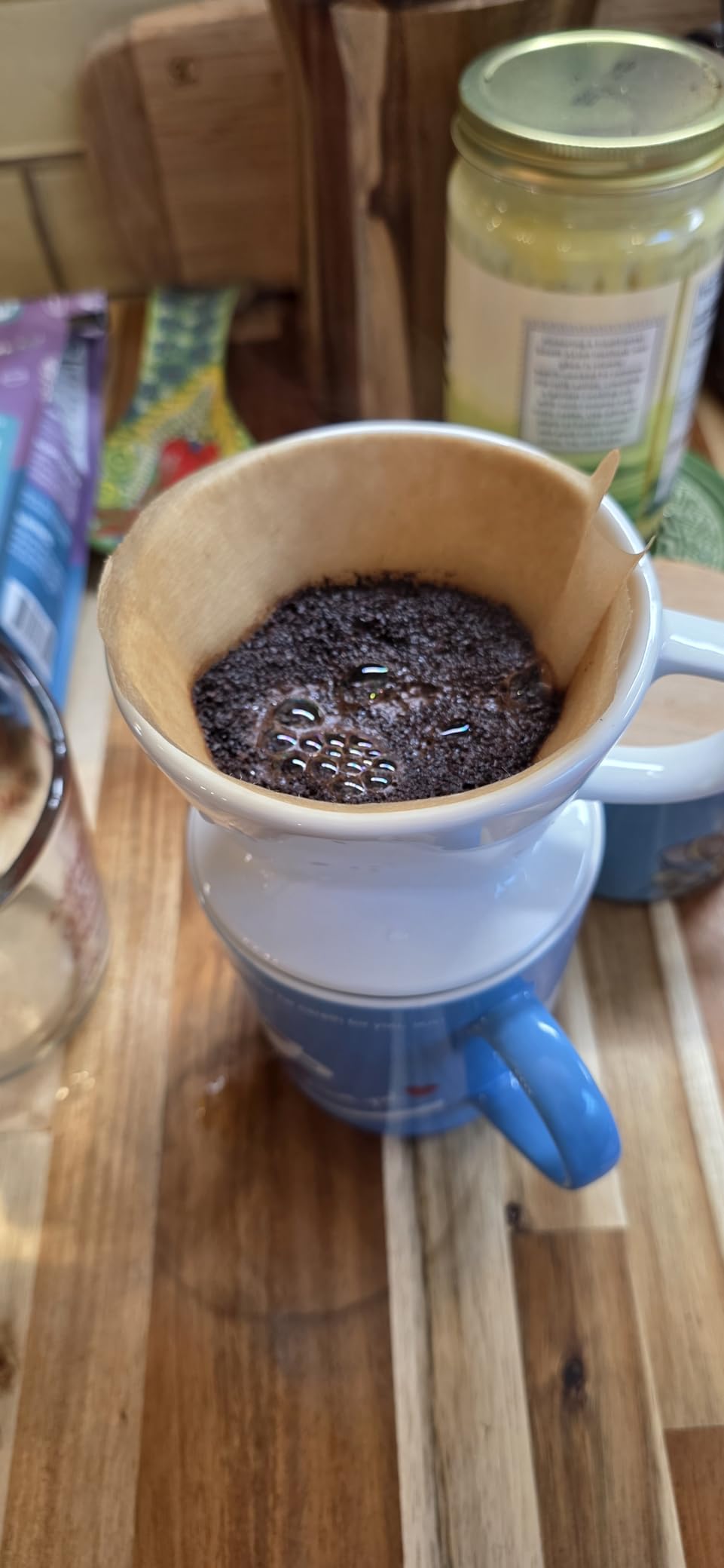
Bloom with 50 g of water for 40 seconds. Fresh coffee releases trapped carbon dioxide here, and the bed will swell and bubble.
Pour the remaining 200 g in two slow circular pours, staying off the filter wall. Total brew time from first pour to last drip should land between two and a half and three and a half minutes.
Swirl once gently before the final drawdown to level the bed, then let it finish while you do something else.
Single-Cup Sizing Cheat Sheet: 01 vs 02 vs 102 vs 155 vs 185
Dripper numbers are capacity codes, not quality rankings. A 02 holds more coffee and water than a 01, which is exactly why a lot of people under-fill one and end up with a thin cup. Pick the size that matches the dose you actually brew.
01 (the Hario VDR-01 above) is the smallest common cone at 1 to 2 cups. Use 14 g to 240 g. It is the right size if one mug is your whole morning.
02 (the Hario V60 02 and the Melitta) is a 1 to 4 cup cone. Use 15 g to 250 g for a single cup and do not exceed 20 g or the bed gets too shallow to extract evenly.
102 (the Kalita above) is built around one 8 oz cup. Use 15 g to 250 g and expect a slower draw.
155 is a flat-bottom mid-size cone that handles a standard mug with room to spare, useful if you sometimes brew for two.
185 is the largest of the group and genuinely needs two to three cups of water to behave. It is the classic cause of a one-cup brew running down the wall and tasting sour.
Switch 02 at 200 ml is tuned for one large mug rather than a small one, so fill it closer to 260 g than 220 g.
Why Single-Cup Brews Taste Sour (and How to Fix It)
Sour is the most common complaint in single-cup brewing and it has one cause: not enough contact time. r/pourover users put it plainly, with the observation that bigger batches give better brews and smaller one-cup brews come out sour. The coffee bed is thin, water runs through it quickly, and extraction stops short.
Fix it in this order, changing one thing at a time:
Grind finer first. This is the biggest lever and the most commonly skipped. A finer grind slows the draw and extends contact time without changing anything else.
Use a slower, more central pour. Water running down the wall of the cone bypasses the bed entirely. Keep the stream in the middle of the coffee.
Extend the bloom to 45 to 60 seconds on small doses. Fresh coffee off a roaster needs longer to degas.
Add a final swirl before drawdown to level the bed so water cannot race down one channel.
Check the dripper size. If you are brewing 15 g in a 185 cone, move down a size. An under-filled cone is the one fix you cannot make with technique.
Switch to immersion. The Hario Switch above closes the valve and steeps the bed instead of pouring through it, which removes the whole problem for the fussiest drinkers.
How to Choose a Single-Cup Dripper: Material, Filter Cost and Cleaning
Material decides how much heat the brewer holds, and heat decides how fast your cup cools. Ceramic is the best retainer and the most breakable, which is why the V60 02 and the Kalita 102 are the two ceramic picks here. Resin and tritan give up heat but survive being dropped, and glass sits between the two on both counts.
Plastic is the one material where forum users raise real concerns. A long-term owner on coffeeforums describes moving away from a plastic one-cup dripper after becoming aware of the hazards of plastic and hot water. We would put ceramic, glass or stainless steel at the top of your list and treat plastic as a backup or a travel option.
Filter cost is the ongoing number most roundups skip. Standard #2 paper cones are the cheapest consumable by a wide margin, and they work in the V60 02, the VDR-01, the Melitta, the Kalita 102 and the Attsky. Proprietary filters cost more per cup over years of daily brewing. Paperless mesh cones like the LHS and the E-PRANCE cost nothing ongoing, at the price of a faster draw and a fuller body in the cup.
Cleaning is the deciding factor for most people. Paper cones mean a rinse and a bin. Reusable mesh needs a rinse straight after brewing, every time, or the oils set into the mesh. Nothing on this list has a carafe to wash, which is the single biggest practical win of single-cup brewing over a full drip machine.
Fit is worth checking before you buy. A 4-inch base such as the Kalita 102 sits on a wide mug, while narrow cones can overhang a short latte glass. If you drink from a tall 12 oz mug, look for a larger base or the detachable stand on the E-PRANCE.
Frequently Asked Questions
What is the best single cup drip coffee maker?
The Hario V60 Dripper 02 ceramic cone is the best single cup drip coffee maker for most people. It holds heat, drains fast enough to finish a 250 ml brew in about two and a half minutes, and accepts cheap standard paper filters. If you want zero pouring technique, the OXO Brew single serve maker meters the flow for you.
How do you make one cup of pour over coffee?
Rinse a paper filter with hot water and discard the rinse water, then add 15 g of medium-fine ground coffee. Bloom with 50 g of water at 195 to 205 F for 40 seconds. Add the remaining 200 g in two slow circular pours that stay in the centre of the bed, swirl once, and aim for a total brew time of two and a half to three and a half minutes.
How much coffee should I use for a single cup pour over?
Most people land between a 1:15 and 1:17 ratio. For a 250 g brew that means 15 g to 17 g of coffee. Start at 15 g in a 02 size cone, drop to 14 g in a 01 size cone, and go up to 17 g if you are using the 200 ml Switch. Above 20 g in a 02 the bed becomes too thin to extract evenly.
Are single cup coffee makers worth it?
They are worth it if you drink one cup at a time and would otherwise buy a large batch that goes cold on the counter. You save coffee, there is no carafe to wash, and a single cup grinds and extracts faster. If you regularly drink two or more mugs, or share a pot, a larger brewer serves you better.
What is the best coffee to use for a single cup pour over?
Light and medium roasts show their character best in a small brew, because the water moves through a thin bed quickly and pulls clarity and fruit. Washed African coffees and light Latin American blends are reliable starting points. If you prefer darker roasts, grind finer to slow the draw, or use an immersion brewer where the bed steeps instead of pouring.
Conclusion: The Best Pour Over Drippers for Single Cups in 2026
The Hario V60 Dripper 02 ceramic is the best pour over dripper for single cups and the one we would buy first. It combines heat retention, fast drainage and cheap filters in a shape that has been refining coffee for two decades. If precision is not your interest, the OXO Brew single serve maker produces the most repeatable cup with the least effort.
Pick the Kalita 102 if your mug is wide and you want a slower, fuller cup with a flat bottom. Pick the Hario VDR-01 if you have broken glass before and want to watch the brew as it draws. Pick the Hario Switch if you keep getting sour cups and want to stop chasing pour technique entirely.
Go paperless with the LHS or E-PRANCE if you would rather stop buying filters, and collapsible with the Attsky if the dripper needs to live in a backpack. Whichever you choose, brew the 15 g to 250 g recipe twice before you change anything, because the dripper is rarely the problem.