
The best hiking boots for elk hunting are boots that stay dry, grip wet rock, hold an ankle under a heavy pack and survive ten days of mud, scree and snowmelt without falling apart. Every serious roundup agrees on the same four criteria: durable, waterproof, supportive and comfortable, paired with an aggressive outsole and enough shaft height to keep the ankle from rolling on a sidehill. Add the physical reality of an elk pack-out, roughly sixty to a hundred pounds of quarters and meat on your back, and cheap footwear stops being a money-saving move.
We spent weeks reading owner reviews, warranty claims and long-term service reports across ten pairs to build this list, and every boot here earns its place on construction rather than marketing. You will find rubber pac boots, leather hiking boots, insulated hunting boots and a couple of true hiking boots used as hunting boots, because that is exactly what the forums recommend.
That mix matters, and it is where most roundups go wrong. A forum thread that has ranked at the top of the results for this query for years does not name one boot, it names a system: carry a heavy boot for steep ground and a medium boot for moderate terrain. A second thread recommends a lightweight approach for anyone who wants comfortable miles. Our buying guide breaks that reasoning down so you can match a boot to the country you will actually walk.
If you are still outfitting the rest of your kit, our hunting backpacks for elk hunting guide covers what to carry before you worry about your feet.
Table of Contents
Top 3 Picks: Best Hiking Boots for Elk Hunting (October 2026)


All 10 Pairs Compared Side by Side
Scan the table first, then read the section that matches your season. Every weight, gram figure and shaft height below comes straight from the manufacturer specification and owner feedback.
| Product | Specifications | Action |
|---|---|---|
| MUCK Woody Max Boot |
|
Check Latest Price |
 MUCK Arctic Pro Insulated Boot MUCK Arctic Pro Insulated Boot |
|
Check Latest Price |
| Kenetrek Mountain Extreme 400 |
|
Check Latest Price |
 Irish Setter Wingshooter 7 inch Boot Irish Setter Wingshooter 7 inch Boot |
|
Check Latest Price |
 LaCrosse AlphaBurly Aero 17 inch Boot LaCrosse AlphaBurly Aero 17 inch Boot |
|
Check Latest Price |
 Irish Setter Elk Tracker 12 inch Boot Irish Setter Elk Tracker 12 inch Boot |
|
Check Latest Price |
 Kenetrek Hardscrabble Hiker Hiking Boot Kenetrek Hardscrabble Hiker Hiking Boot |
|
Check Latest Price |
 ROCKY Outback Gore-Tex Waterproof Boot ROCKY Outback Gore-Tex Waterproof Boot |
|
Check Latest Price |
 ROCKY Blizzard Stalker 1200G Boot ROCKY Blizzard Stalker 1200G Boot |
|
Check Latest Price |
 ROCKY Bearclaw Gore-Tex 200G Boot ROCKY Bearclaw Gore-Tex 200G Boot |
|
Check Latest Price |
1. MUCK Woody Max Boot: The Best All-Around Pick You Can Put On Cold Ground
MUCK Woody Max Rubber Insulated Men’s Hunting Boots
Stretch-fit comfort topline
Warm fleece lining
Extended rubber exterior
EVA contoured midsole
Pros
- Warm fleece lining seals out cold and debris
- Extended rubber exterior blocks water and adds toughness
- EVA contoured midsole cushions long days
- Comfortable from the very first wear with no break-in
Cons
- Moccasin-style build gives less ankle support than a tall lace-up boot
- Minimal midsole cushioning compared with insulated hunting boots
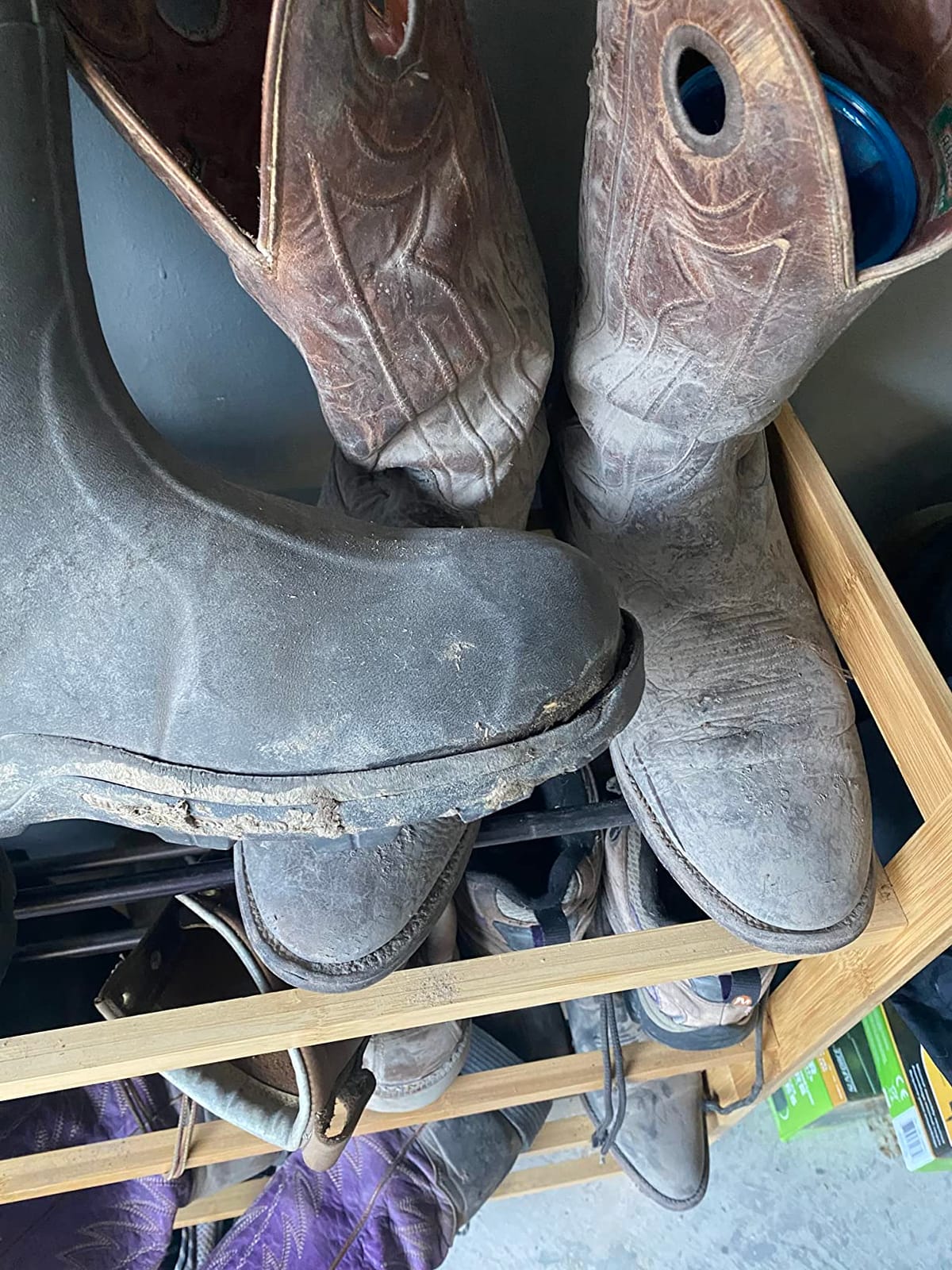
The Woody Max is the boot I recommend to anyone whose season starts before the snow does. It is a slip-on rubber boot with a fleece lining and a stretch-fit topline that seals the calf, and owners describe it as comfortable the first afternoon rather than the first month. That single fact removes the complaint that comes up more than any other in elk-hunting boot forums, which is that break-in pain always arrives on day one of the hunt.
Waterproofing is not a membrane claim here, it is a physical shell. The extended rubber exterior wraps the whole upper, so there is no seam for snowmelt to find and nothing to delaminate after a season of mud. Reviewers consistently describe these boots shrugging off slush and creek spray in a way that stitched leather and textile membranes struggle to match.
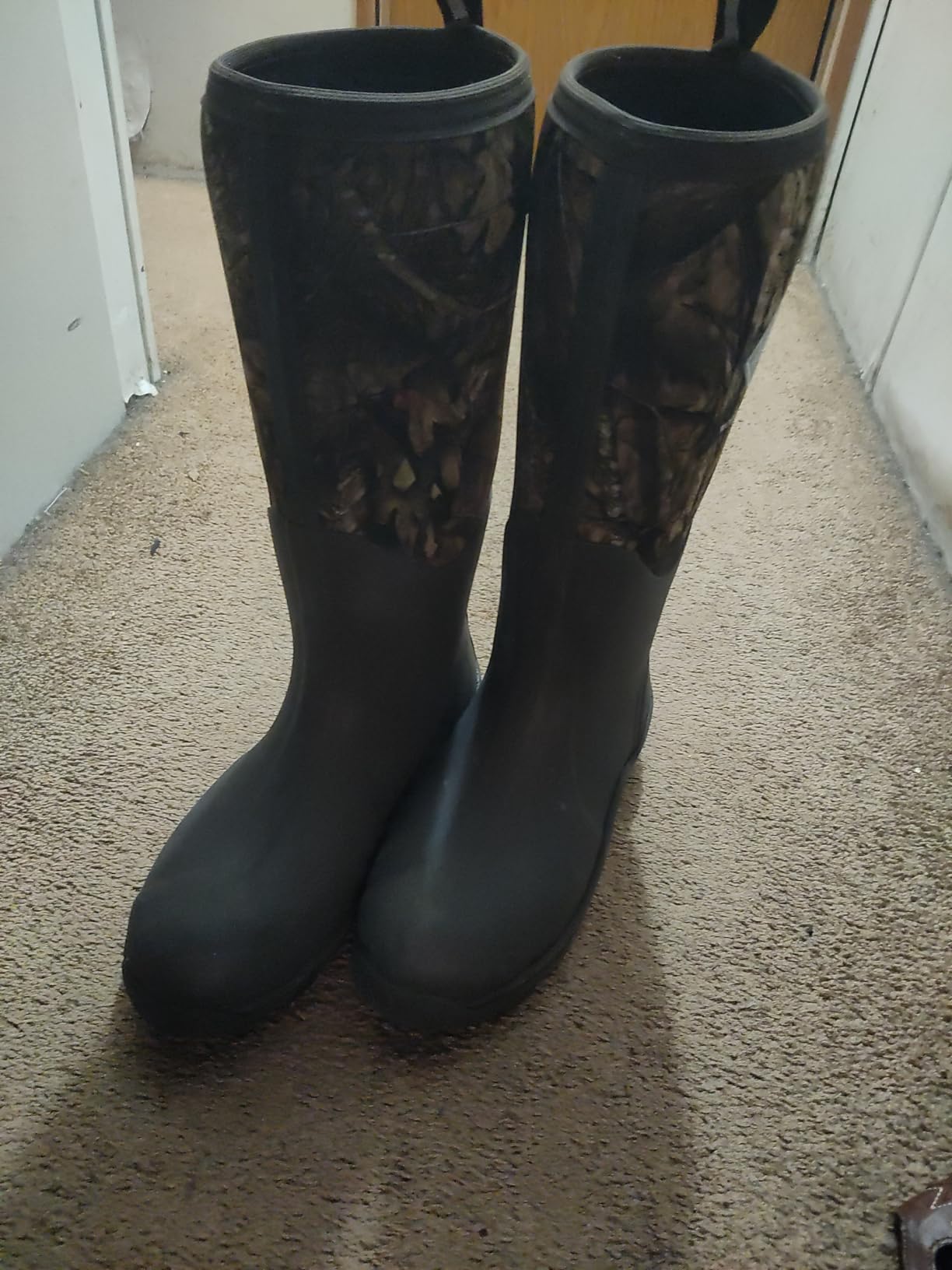
The catch is structure, and it is a real one. This is a moccasin-style boot with no lacing, so there is no way to tension the fit over the top of the foot and no shaft to brace the ankle. On a bench-country approach with a light pack that never matters. On a steep sidehill descent with sixty pounds on your back, you will miss the lacing that the Kenetrek and Irish Setter models give you.
Cushioning sits in the same category. The EVA contoured midsole takes the sting out of a long flat day hike and it is what most owners praise first, but it is a thin platform compared with the rigid nylon midsoles in the leather boots here. At 4.5 pounds for the pair, it is also not the lightest option, though it feels light on the foot because the flex point is forgiving.
What you will notice in the field
The stretch-fit topline does the job that a gaiter does on a laced boot. Snow that would otherwise run down the shaft of a mid-calf boot stops at the calf binding, and debris stays out of the boot through thick timber. Owners hunting in wet willow and creek bottoms say this is where the boot earns its place.
Durability is the strongest argument. A rubber shell does not crease, dry out or crack the way full-grain leather can when it is neglected, and cleaning is a hose-down. If you are buying one pair of boots and expecting them to last, this is the least complicated option.
Where it falls short
Ankle roll is the honest weakness. On off-angle traverse ground with a heavy load there is nothing bracing the joint, and no lacing to tighten the midfoot after hour three when your feet have swollen. Hunters packing out a full elk on steep ground will feel that more than anyone else.
There is also no insulation rating in the grams that hunting buyers normally compare, so you cannot dial warmth up or down. Fleece warmth is genuinely sufficient for early season and for most of a rifle season in moderate states, but it is not a spec you can plan a November hunt around.
2. MUCK Arctic Pro Insulated Boot: The Most Proven Waterproof Boot in the List
MUCK Men’s Mossy Oak® Country DNA™ Arctic Pro Boot, Brown & Mossy Oak Country, Size 10(M)
100% waterproof MUCKPROOF construction
8mm neoprene bootie
Bob-Tracker outsole
Lightweight EVA midsole
Pros
- Fully waterproof shell keeps feet dry in wet terrain
- 8mm neoprene bootie adds comfort without bulk
- Bob-Tracker outsole sheds debris and grips loose ground
- Lightweight EVA midsole carries long days
Cons
- Neoprene and rubber cannot be resoled like a welted leather boot
- Mid-calf shaft lets deep snow work into the top
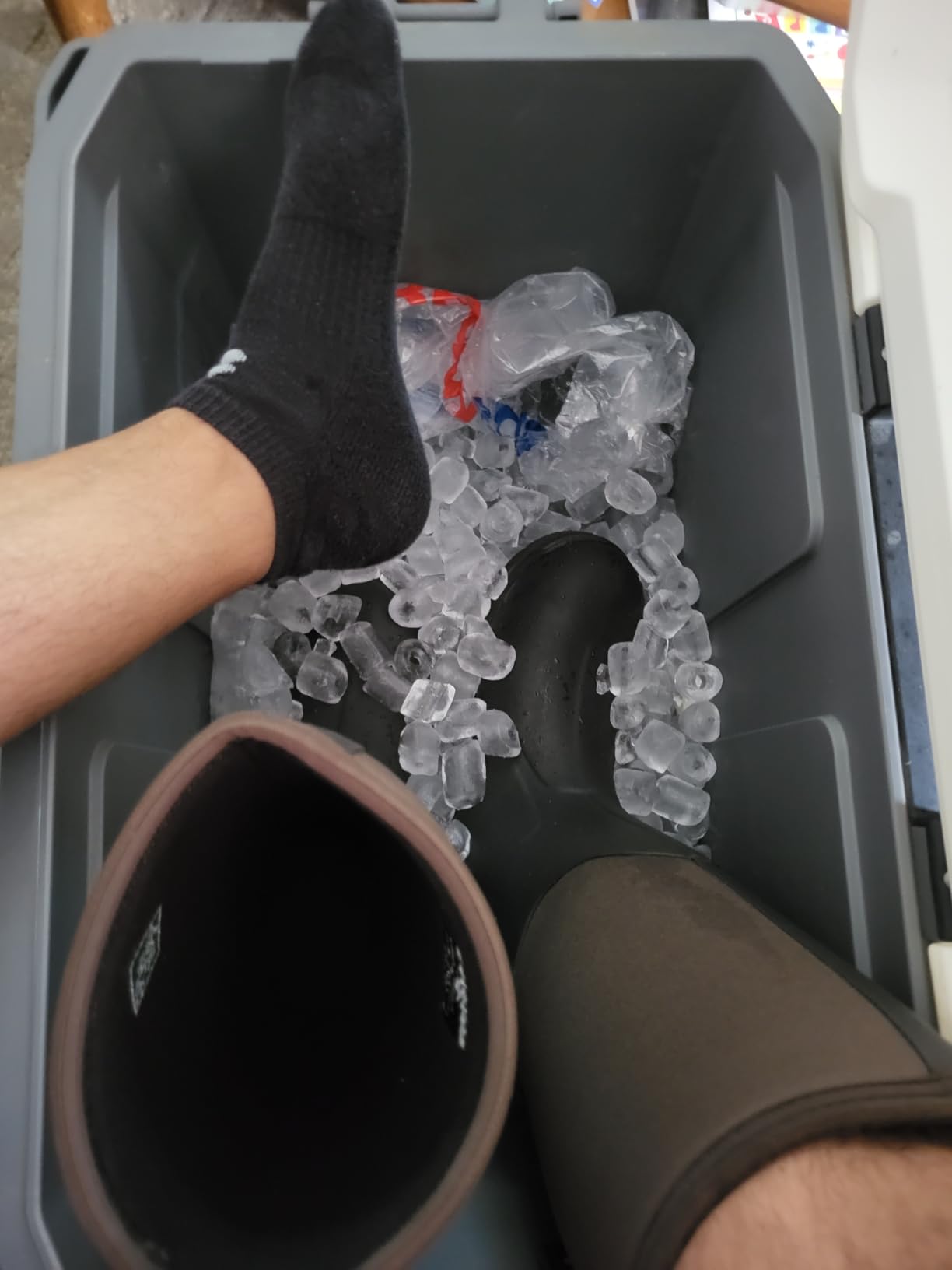
The Arctic Pro has the largest review base of anything we evaluated, and the reason is simple: it works. Owners across a decade of use describe the same three things, warm, completely waterproof, and grippy on wet ground and mud. For an elk hunter who will cross snowmelt streams repeatedly and does not want to think about membrane failure, that is a short list of requirements answered well.
The 8mm neoprene bootie is the piece most owners single out. It adds insulation and flex without the bulk of a thick felt liner, which is why the boot feels lighter on a long approach than its 6.5 pound shipping weight suggests. The Bob-Tracker outsole uses semi-spherical lugs that shed debris instead of gripping onto it, and reviewers credit it specifically on mud and slush rather than on dry rock.
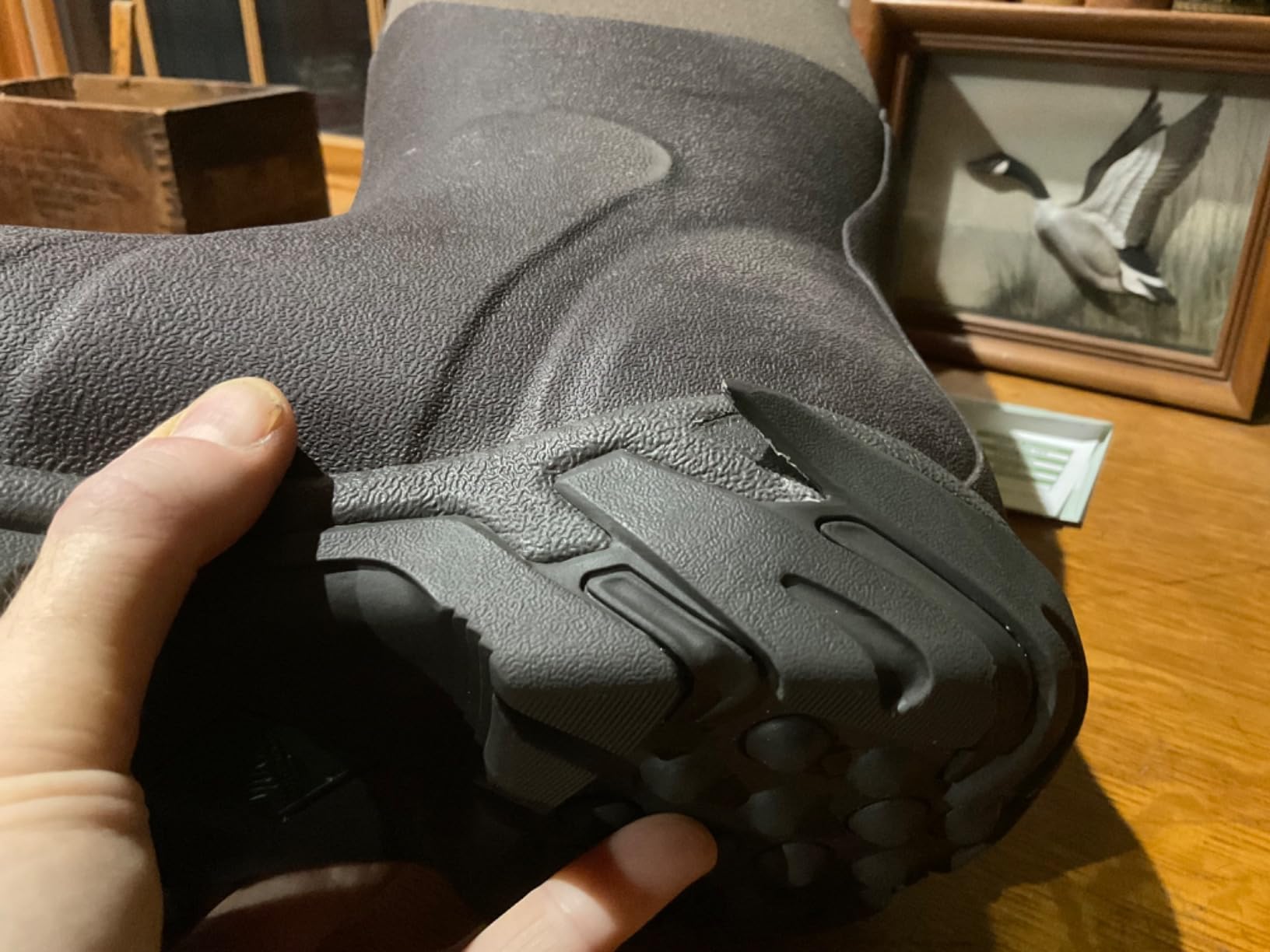
Two limits are worth stating plainly. The first is repairability, and it is structural rather than a quality issue: a neoprene and rubber boot has no welt to resole, so when the outsole eventually wears through you are replacing the boot rather than renewing it. For hunters who already own a resolable leather boot, that is an argument for keeping the leather one as the primary and using this as the wet-weather spare.
The second is shaft height. Mid-calf is deep enough for most snow but shallow enough that genuinely deep late-season snow can work over the top and down into the boot. If your season ends in deep November conditions, pair it with gaiters or choose one of the taller boots further down this list.
What you will notice in the field
The slip-on fit is the underrated feature. There are no laces to freeze stiff, nothing to re-tie after every creek crossing, and a pull-free entry that gets you moving at first light without fighting the tongue. For hunters who start before dawn in cold rain, that practical difference is worth more than a gram of insulation.
Owners also praise the range of camouflage and colour options, which sounds cosmetic until you realise how much of an elk hunt is spent glassing and moving through open timber where a dark shape ends a morning.
Where it falls short
There is no ankle support in any meaningful sense, for the same reason the Woody Max has none. This is a boot for flat-to-moderate ground, creek crossings and cold mud, not for a loaded descent off a steep bench.
Longevity is the second limit. Rubber and neoprene parts are not repairable, and heavy users report that outsole wear eventually ends the boot’s usefulness even though the shell is still intact. Buyers who want one boot for a decade should look at the welted leather models instead.
3. Kenetrek Mountain Extreme 400: The Boot Built for a Heavy Pack-Out
Kenetrek Men’s Mountain Extreme 400 Insulated Hiking Boots
2.8mm full-grain leather
400g Thinsulate insulation
Windtex waterproof membrane
10 inch tall shaft
Pros
- 10 inch shaft and 400g Thinsulate handle late snow and cold ridgelines
- Rigid 7mm nylon midsole supports heavy pack loads
- Windtex membrane keeps feet dry while still breathing
- Repairable through the Kenetrek website
Cons
- Runs wider than some wearers expect
- Very stiff sole feels awkward on wet decking
- One owner reports moisture after prolonged snow submersion
If your trip plan includes carrying an elk out on your own back, the Mountain Extreme 400 is the boot that stops being footwear and starts being load-bearing equipment. The rigid 7mm nylon midsole is the reason. It resists torsion under a sixty to hundred pound pack, and owners describe it as the difference between a heavy day and a trip that ends with the soles of their feet numb.
Everything else is built to match. A 10 inch shaft braces the ankle on sidehill descents, 400g Thinsulate covers most of a rifle season and pushes into late autumn, and 2.8mm full-grain leather with double and triple stitching survives brush and rock. The Windtex membrane is waterproof and breathable, and the K-Talon outsole with a reinforced rubber sole guard is rated for traction rather than for pavement.
The seamless one-piece vamp is a quieter detail that matters more than it sounds. No tongue seam means no ridge pressing across the top of the foot on a long climb, and reviewers hunting in these boots report no sore spots across full days of use.
What you will notice in the field
Stiffness is the defining characteristic and it cuts both ways. Owners who break these in properly describe the stiff platform as the most supportive boot they have ever worn, and one reviewer logged nine days of dawn-to-dusk backcountry hiking without a single blister. That is exactly the experience a pack-out demands.
There is also a footbed worth replacing. The supplied Kenetrek footbed has genuine arch support and a pronounced heel pocket, and a lot of owners swap in third-party insoles after the first season, which is normal for a boot of this class.
Where it falls short
Fit runs wide, and this is the most common sizing complaint. If you have a narrow or medium foot, try them in person where you can, and be prepared to adjust lacing tension across the instep rather than assuming the fit is wrong.
The stiffness also has a cost. On wet wooden stairs, decking or smooth rock slabs, a sole this stiff can feel awkward and slightly unstable, because the flex point that other boots rely on simply is not there. And with a 10 inch shaft carrying 400g of insulation, these are not the boots you want on a long flat miles-only day in September.
4. Irish Setter Wingshooter 7: The Best Lightweight Leather Option for Archery Season
Irish Setter Wingshooter 7″ Mens Hunting Boot, Dark Brown, 10
Full grain leather upper
UltraDry waterproof construction
Goodyear Welt resoleable
Steel shank
Pros
- Goodyear welt platform is resoleable
- Steel shank adds stability on uneven ground
- Full grain leather molds to the foot with little break-in
- Very wide size run including extra-wide and 16 inch models
Cons
- Standard widths run narrow so wide feet need the wide version
- 7 inch height offers limited ankle coverage
- Not insulated so it suits early season rather than deep cold
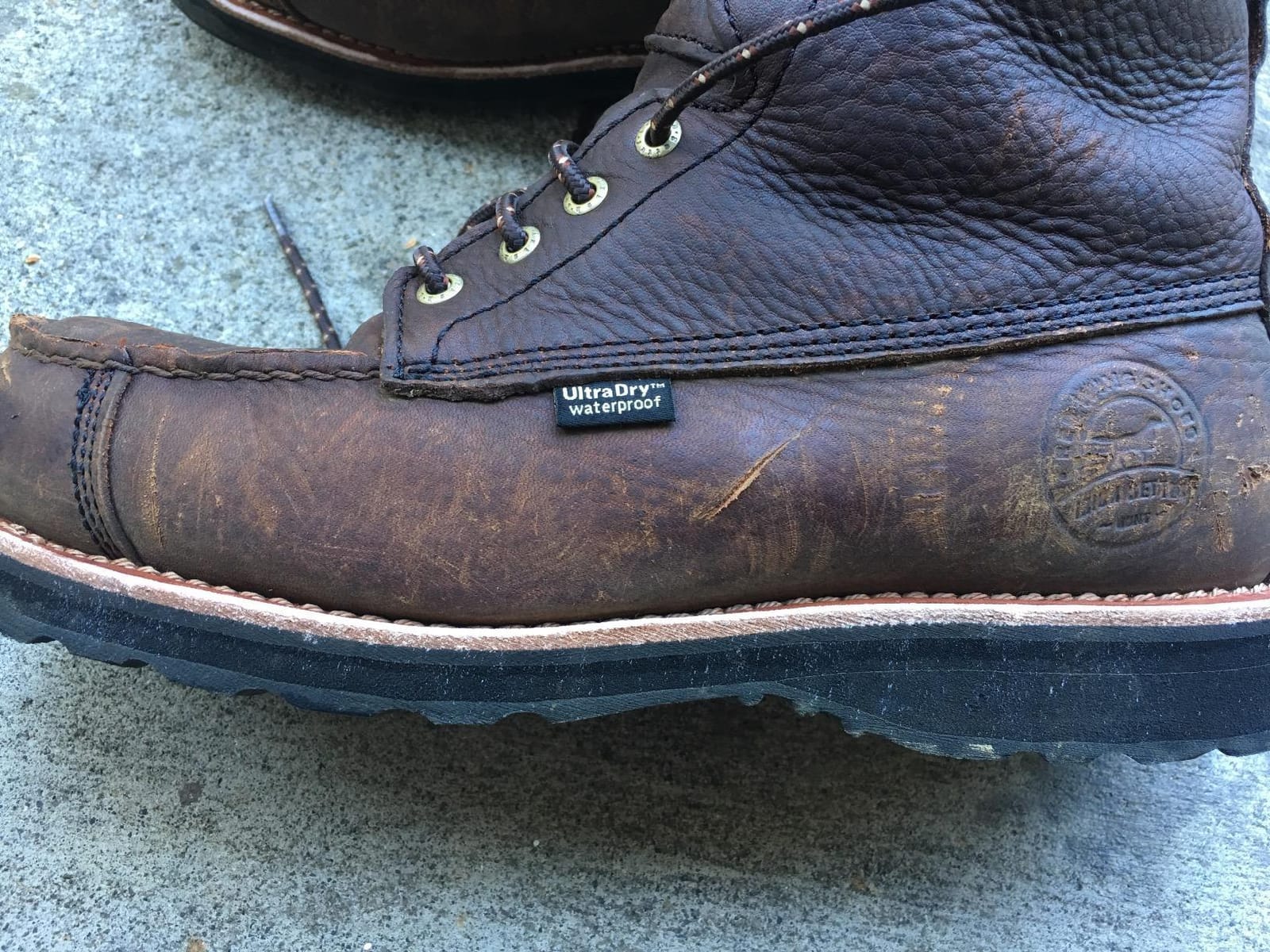
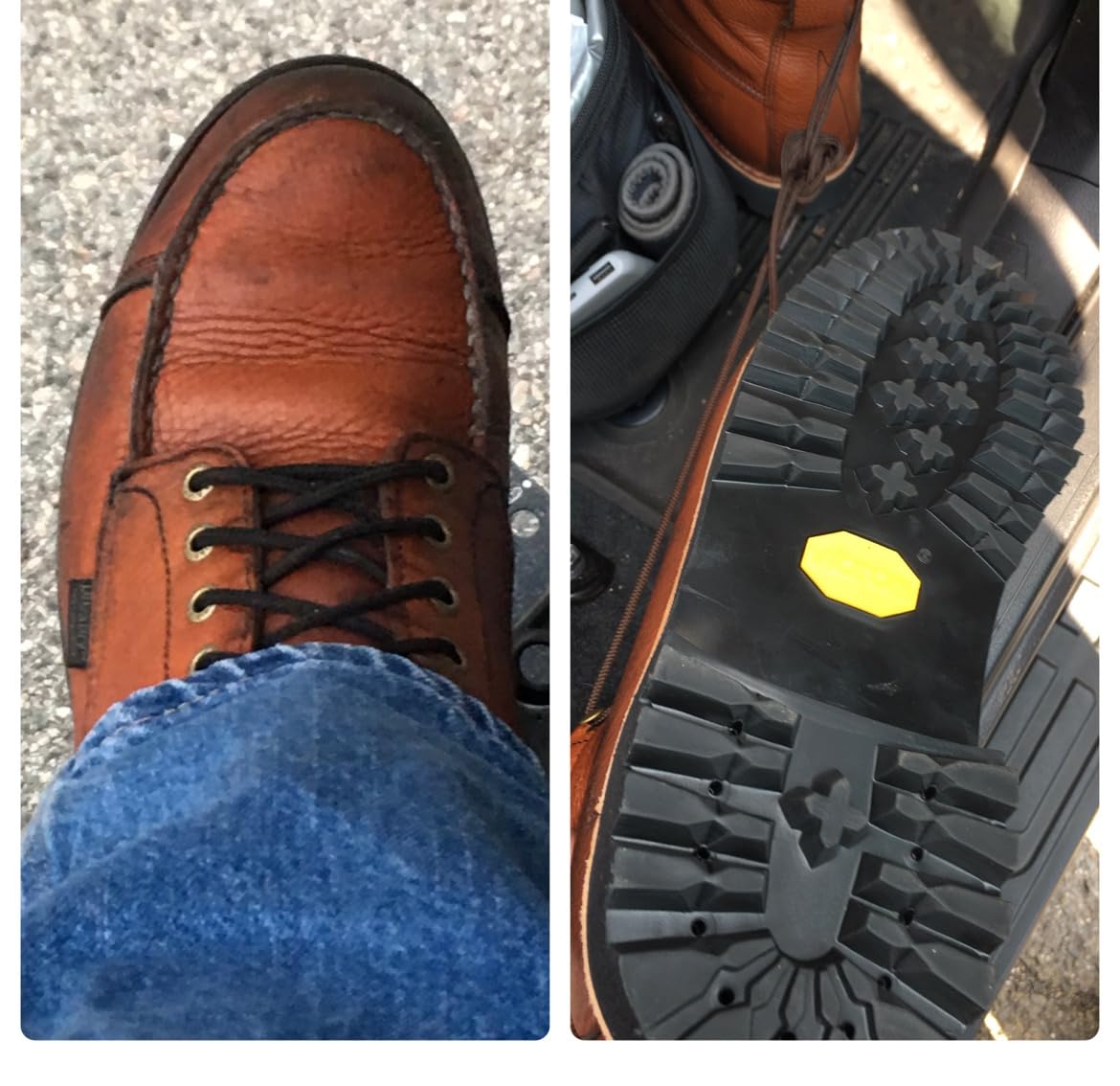
The Wingshooter is the value pick for September and October, and the reason is the Goodyear welt. A welted sole can be sent away and rebuilt when the outsole wears out, which means the initial purchase is the only real cost of this boot if you maintain the leather. In a category where most footwear is glued and disposable, that is a meaningful difference.
It is also light. At roughly two pounds it is among the least demanding boots here, and combined with the moisture-wicking nylon lining and removable polyurethane footbed it stays wearable for a full archery season of long, low-output days. The steel shank through the sole adds a surprising amount of stability for a boot this light, which owners credit on uneven ground.
The one issue that catches people is width. Standard widths run narrow, and a significant share of reviewers had to reorder in the wider version. If you have wide feet, order wide from the start rather than treating tightness as something to break in, because leather that is pulled tight across the forefoot will not relax into a comfortable fit the way stiff boot leather does.
There is no insulation here, so this is not a boot for standing in genuine cold. Pair it with a heavy wool sock and it handles most early-season mornings. Once temperatures drop, you want the insulated models further down.
What you will notice in the field
Break-in is almost a non-issue. Reviewers repeatedly mention little or no break-in at all, which is unusual for a full-grain leather boot and comes down to the fact that the leather here is thinner and less structured than a mountain boot upper. It means you can buy these a week before the season and still be comfortable on day one.
The UltraDry waterproof construction does the practical work in elk country. Mud, wet brush and shallow creek water are handled well, and the debris-shedding Prairie outsole pattern clears mud rather than loading up, which matters on repeated approaches through timber.
Where it falls short
Seven inches is not much shaft. On off-angle terrain this boot will not stop an ankle roll, and the light weight that makes it pleasant on a flat approach works against you on a steep descent with a load.
Two smaller notes from owners: the supplied laces are reported to fray and snap faster than the boot itself, and a resoleable boot still needs its leather conditioned to keep water out of the seams over the years.
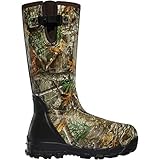
5. LaCrosse AlphaBurly Aero 17: The Boot for Deep Snow and Standing Water
LaCrosse Waterproof Hunting Boots, Realtree Edge 1000g, 10
Waterproof natural rubber construction
1600g Thinsulate Ultra
17 to 18 inch shaft
Engineered mud and snow tread
Pros
- 17 to 18 inch shaft blocks deep brush and wet snow
- 1600g insulation delivers serious standing cold
- Natural rubber shell is fully waterproof and easy to clean
- Multiple insulation weights available
Cons
- Rubber boots cannot be resoled and can crack with age
- Tall shaft is bulky on long approaches
- Less ankle articulation than a lace-up leather boot which tires the calf
There is a class of elk hunt where nothing short of a knee-high rubber boot is the right answer, and the AlphaBurly Aero is the one we would pack for it. Hunters who wade to reach a wallow, who glass from a seated position in genuine cold, or who work ground where snow drifts above the knee get a level of coverage no leather boot on this list provides.
1600g of Thinsulate Ultra insulation is the headline spec, and owners single it out as genuinely warm rather than merely warm. The natural rubber upper is completely waterproof and, practically, easy to hose clean at the end of a day when you are covered in mud that would take days to dry out of leather.
The weight is the honest drawback. Five pounds for the pair is heavy before you add the pack, and the tall shaft adds bulk that you feel most on the climb out rather than on the approach. Reviewers also note that the rubber shaft articulates less than a lace-up leather upper, so a long steep ascent produces calf fatigue sooner.
Then there is service life. Rubber hunting boots cannot be resoled, and the material eventually cracks with age and UV exposure. If you buy this for a handful of late-season hunts rather than as a permanent part of your kit, that is an acceptable trade. If you expect ten seasons of use, it is not.
What you will notice in the field
Water is simply not a problem. Owners describe standing in cold water and walking through saturated timber without any concern, which is the situation where a membrane boot can eventually leak at a flex point and a full rubber shell does not.
The Active Fit design keeps the upper secure through movement, so the boot stays put when you kneel, scramble over deadfall or climb a bank. Insulation weights are offered from 1000g up to 2000g, which means you can match the boot to a mild winter or a severe one rather than guessing.
Where it falls short
Fit is the practical issue many buyers meet first. A tall rubber shaft has no lacing to adjust, so the calf and instep volumes are fixed, and reviewers recommend checking the size chart carefully rather than ordering your usual size.
Rubber is also poor at breathability. In moderate temperatures during a long climb, that heat builds up in a way a leather or membrane hiking boot does not, which is why this style belongs at the cold end of the season rather than the mild end.
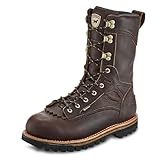
6. Irish Setter Elk Tracker 12: The Most Enduring Boot for Elk Hunters
Irish Setter Elk Tracker 12″ Mens Hunting Boot, Brown, 12
GORE-TEX waterproof full grain leather
1000g 3M Thinsulate Ultra
12 inch tall shaft
Goodyear welt sole
Pros
- GORE-TEX upper with 1000g insulation for elk country cold
- Goodyear welt resoleable with owners reporting 10+ years of service
- ScentBan odour control in the footbed and lining
- Removable cork EVA memory foam footbed molds to the foot
- Steel shank outsole gives traction and calf support
Cons
- Heaviest and bulkiest boot here at roughly 3 pounds per boot
- Stiff sole tires legs on long hard surface days
- Some early owners report sole layers separating before full break-in
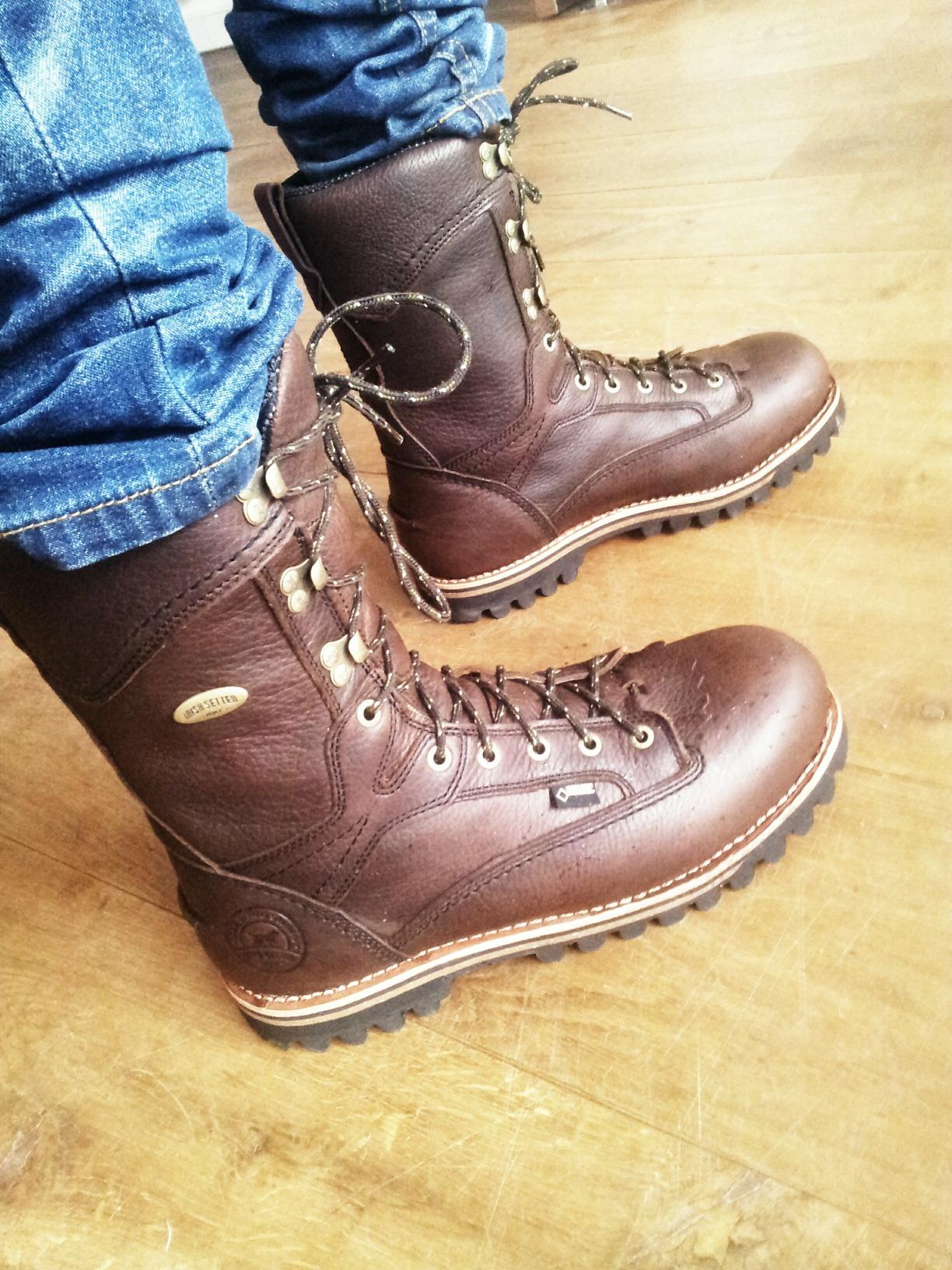
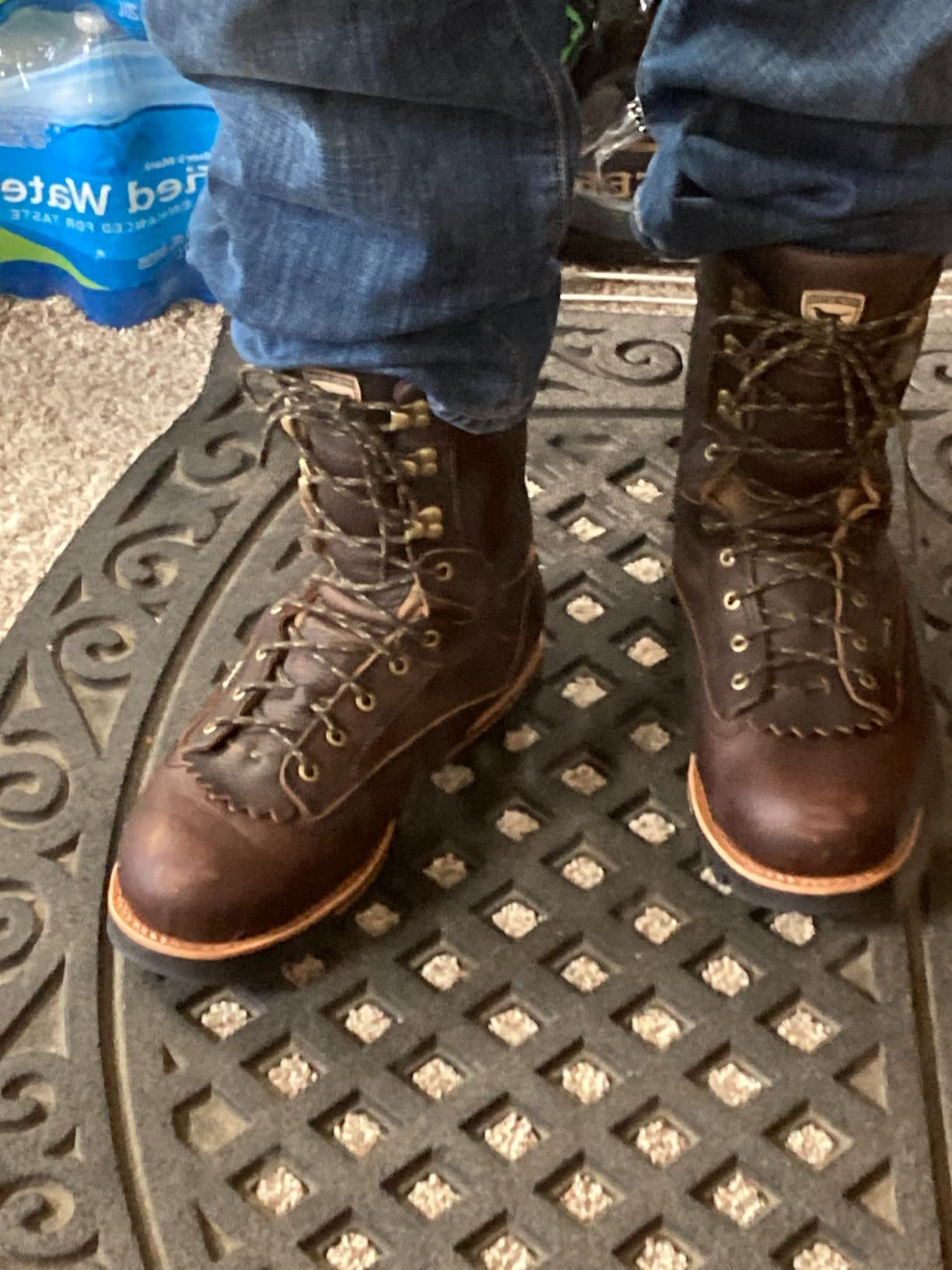
This is the boot the name on the box suggests it is, and the review pattern behind it is unusually consistent. Owners describe a three to six month break-in followed by years of dry, warm performance, and several describe ten-plus years of service with periodic resoling. For a hunter buying one pair of leather boots to last, that durability record is the reason this model keeps coming up.
The build is thorough. GORE-TEX waterproofing on a full-grain leather upper pairs with 1000g of 3M Thinsulate Ultra insulation, which covers genuine cold rather than just cool mornings. The Bulls-Eye Air Bob outsole carries a built-in steel shank for traction and calf support, and the removable cork EVA memory foam footbed is the kind of component owners keep rather than replace.
ScentBan odour-eliminating technology in both footbed and lining is a small detail that matters on a multi-day hunt, where a boot that stops smelling by day four is a genuine quality-of-life improvement nobody mentions in roundups.
What you give up is weight and flexibility. At roughly three pounds per boot this is the heaviest and bulkiest boot on the list, and owners specifically mention lower back and leg fatigue on long days over hard pavement or ice. The stiffness that makes it feel bombproof under a pack becomes a liability on a flat miles-only hike.
What you will notice in the field
The break-in is long, and reviewers describe it honestly as three to six months. That is the trade for the build quality. Boots bought in August and used hard from day one tend to produce the sole separation complaints, while boots eased into over weeks and hundreds of miles settle into a stable platform.
Once broken in, warmth and dryness are close to faultless. Multiple owners report multi-season performance in elk country conditions with no moisture reaching the foot, which is the outcome the GORE-TEX and insulation combination is designed for.
Where it falls short
Weight is the first thing anyone mentions and the reason it is not our top pick. On an approach where speed matters and the pack is light, the bulk is a real cost paid over every single mile.
Second, tread softens with years of use, and a handful of owners have had trouble reaching support after a stitching failure. Neither is a reason to skip the boot, but both are reasons to keep a second pair of lighter boots for scouting and short days.
7. Kenetrek Hardscrabble Hiker: The Best True Hiking Boot That Works on Elk
Kenetrek Men’s Hardscrabble Hiker Hiking Boots
2.8mm full-grain leather
Windtex waterproof membrane
7mm nylon midsole
7 inch lace-up shaft
Pros
- Arch support owners call the best they have found in any boot
- Sticky K-Talon tread gives sure footing on steep rocky ground
- Wide and narrow fit options solved chronic sizing problems
- Comfortable straight out of the box for a heavy duty boot
Cons
- Stiff out of the box and needs an extended break-in of months
- Bulky at roughly 3.5 pounds per pair for a 7 inch boot
- Thick sole raises the foot and can feel tall at first
This is the only boot on the list sold in the hiking category rather than the hunting category, and that is exactly why it matters. Hunters on the top-ranking forum thread for this query keep recommending hiking boots built by mountain brands, and the Hardscrabble is the version of that idea with the ankle coverage and traction an elk hunt needs.
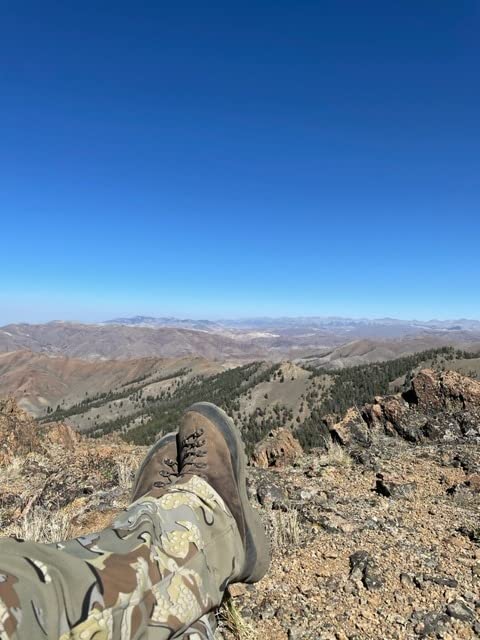
Arch support is the headline. Multiple owners independently describe it as the best arch support they have found in any boot, and hunters using them on long days report no sore spots at all. The 7mm nylon midsole under a 2.8mm full-grain leather upper gives a stable platform that carries a loaded pack without folding, and the K-Talon outsole pattern is genuinely sticky on wet rock and mud.
The fit breadth is unusually good for a heavy boot. Regular, wide and narrow options are all offered, and reviewers specifically credit the availability with finally solving recurring sizing problems after years of trial and error. That matters more than it sounds in a category where most brands offer a single width.
The Windtex membrane keeps the boot waterproof and reasonably breathable, which makes it a genuinely usable choice for the wet, mild side of the season as well as cold mornings.
What you will notice in the field
Lacing is the advantage over every rubber boot here. Seven eyelets and a lace-up closure let you tighten the midfoot after your feet swell on day three, which is one of the most common complaints about fixed-fit hunting footwear in multi-day hunts.
Owners describe the break-in as long but transformative. Once the leather has moulded over months and hundreds of miles, the boot becomes the most comfortable heavy boot they own, with a stability that lighter footwear cannot match on uneven ground.
Where it falls short
Out of the box it is stiff, and several owners describe months of discomfort before that transition happens. If your season starts in three weeks, this is the wrong boot to introduce at that point.
At roughly 3.5 pounds per pair for a 7 inch hiking boot, it is heavy by hiking standards, and the thick sole raises the foot enough that some people feel tall and slightly unstable during the first weeks. If your elk country is gentle and your days are long, our backpacking hiking boots guide covers lighter builds.
8. ROCKY Outback Gore-Tex: The Most Versatile for Wet Weather and Wide Feet
ROCKY Outback Gore-Tex Waterproof Boot, Light Brown, Size 10.5(WI)
GORE-TEX waterproof breathable construction
Full-grain leather upper
Terra Suspension footbed
Outback rugged terrain outsole
Pros
- GORE-TEX membrane handles rivers mud and cold rain
- Full-grain leather can be polished back to new condition
- Grippy Outback outsole on mud and rock
- True wide sizing with a roomy toe box for broad feet
Cons
- Some owners report outsole cracking and seam separation within a year
- Quality control varies with misaligned eyelets
- Not insulated so it is not a cold weather hunting boot
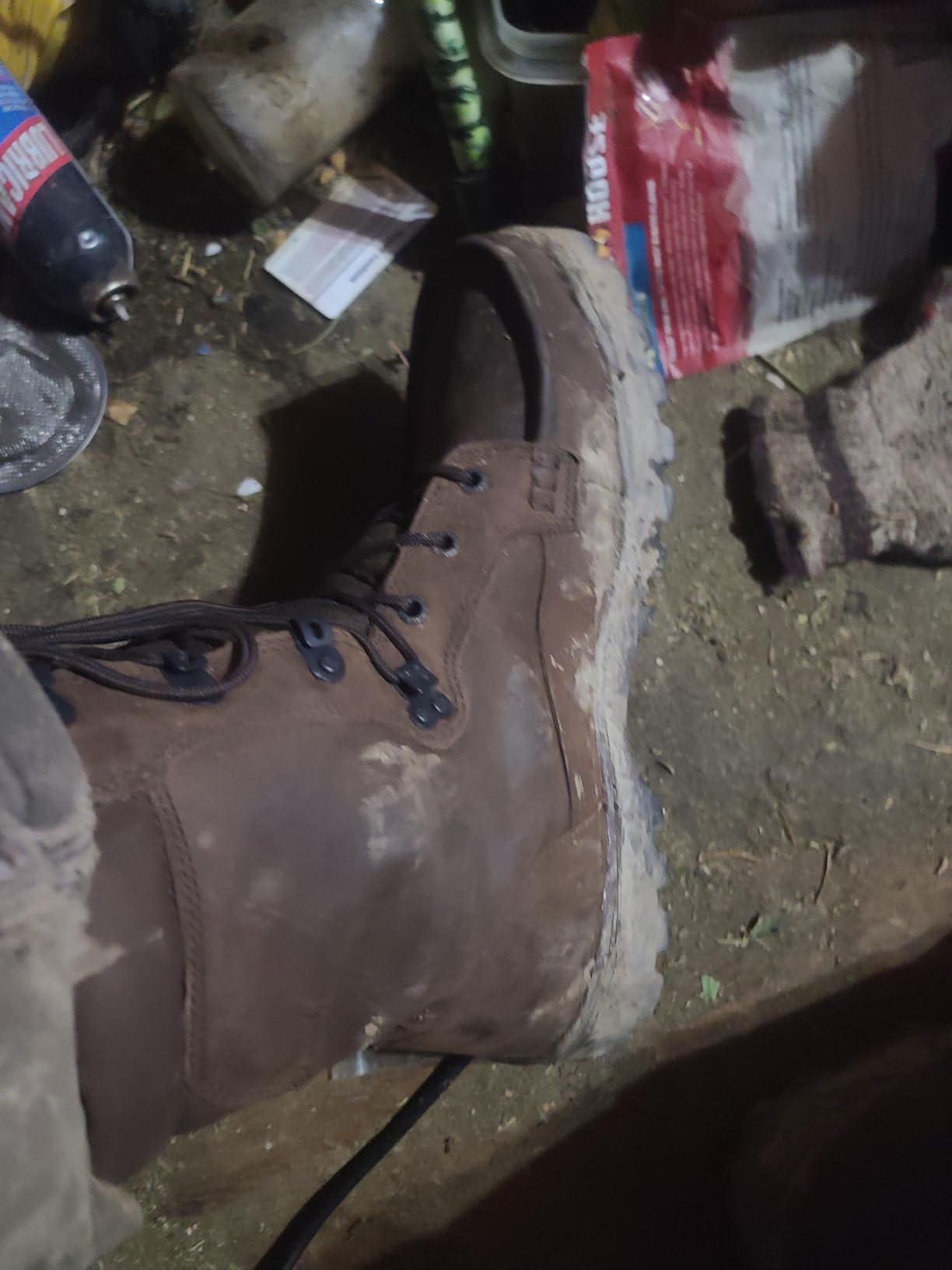
The Outback is the straightforward leather hiking boot, and for a hunter who mostly moves through wet forest rather than alpine terrain it does the job without any of the mountain-boot complications. The GORE-TEX membrane is the reason it earns a place in an elk roundup at all: water that would soak through a lighter hiking boot runs off this one, and owners mention rivers and cold mountain rain specifically.
Sizing is a genuine strength. Reviewers call the fit genuinely wide with a roomy toe box, which makes this one of the few boots here that works for broad feet without hunting for the wide version. The Terra Suspension footbed is comfortable enough that several owners have never swapped insoles, and the full-grain leather polishes back up rather than cracking out.
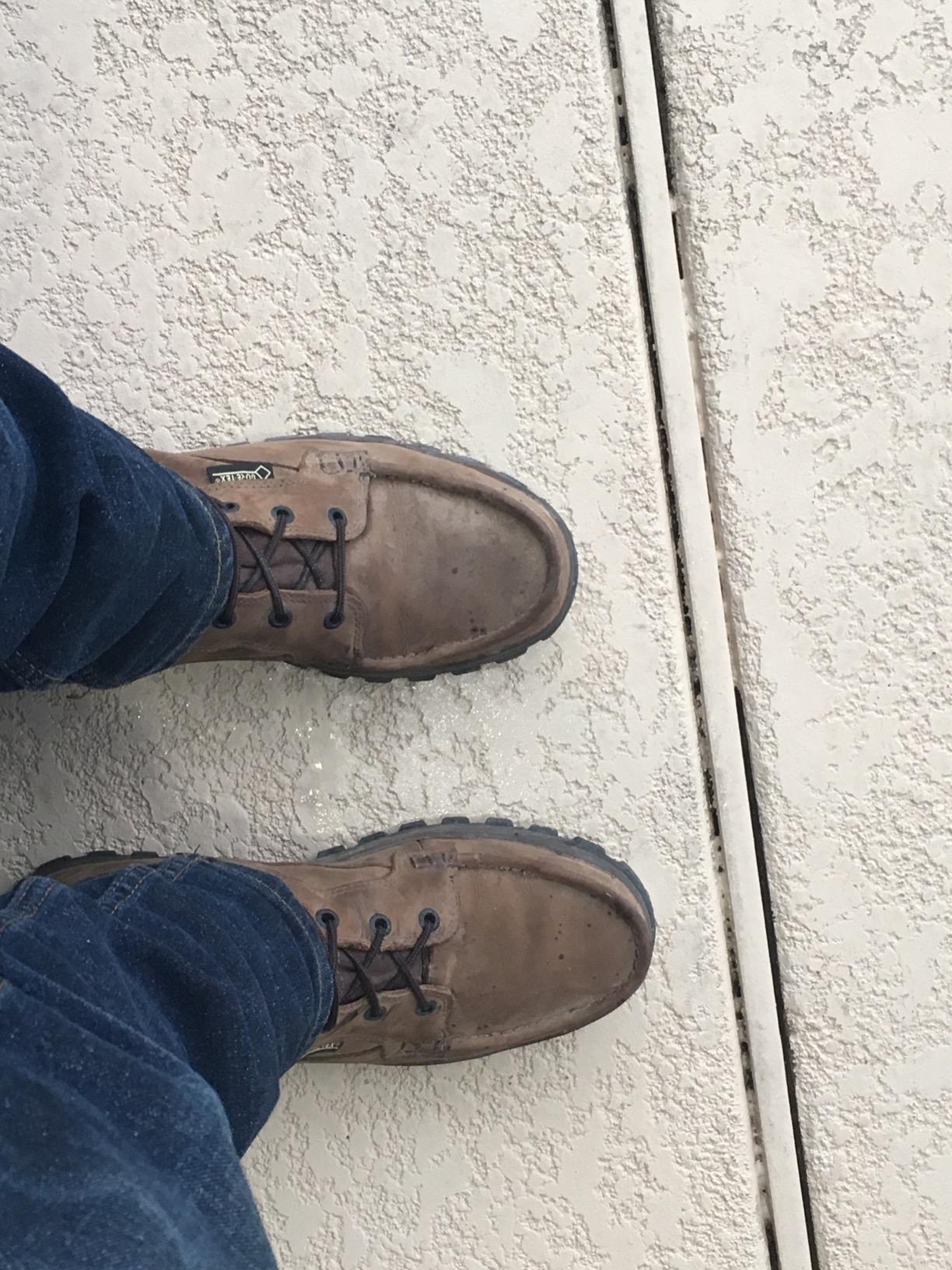
The rating is the lowest of the insulated group at 4.4, and the reason is durability rather than comfort. A handful of reviews describe outsole cracking and seam stitching separating within roughly a year, and several mention inconsistent quality control, misaligned eyelets and uneven side leather. Buyers who treat boots as disposable for a few seasons will be fine; buyers expecting a decade of service should weigh that against the welted models.
There is no rear pull loop, which is a small irritation on cold mornings, and no insulation, so this is an early-season and mild-weather boot by definition.
What you will notice in the field
Traction is the pleasant surprise. The Outback outsole is described as grippy on mud, rock and rough work terrain, and it is the pair several owners keep reaching for on wet logging ground where a softer hiking outsole would slick over.
Leather is also the right material for brush-heavy timber. It resists abrasion from deadfall and CRP far better than mesh or synthetic hiking uppers, and it can be treated, cleaned and re-polished in a way synthetics cannot.
Where it falls short
Long-term durability is the real limitation, and it is a mixed bag. Some owners report several years of use with the leather in good shape, while others report seam failure inside the first year, which tells you the quality range on this model is wide.
There is no insulation and no high shaft, so it is a boot for the mild and wet end of elk season. Pair it with a heavy sock and it handles cold rain; pair it with real cold and it will not.
9. ROCKY Blizzard Stalker 1200G: The Warmest Boot for Standing Cold
Rocky Men’s Blizzard Stalker Pro Hunting Boot,Brown/Mossy Oak,11 M US
1200 gram insulation
Waterproof construction
Durable rubber vamp
Padded collar and extended tongue
Pros
- Owners report warmth at temperatures down to -10F
- Waterproofing holds when wading and in deep snow
- A prior pair lasted 15 years of service
- Runs large so thick insulated socks fit
Cons
- Very stiff bulky sole is uncomfortable for stooping and hard on knees and hips
- Bulky profile makes the boot awkward in climbing tree stand straps
- Interior cuff is scratchy against the calf
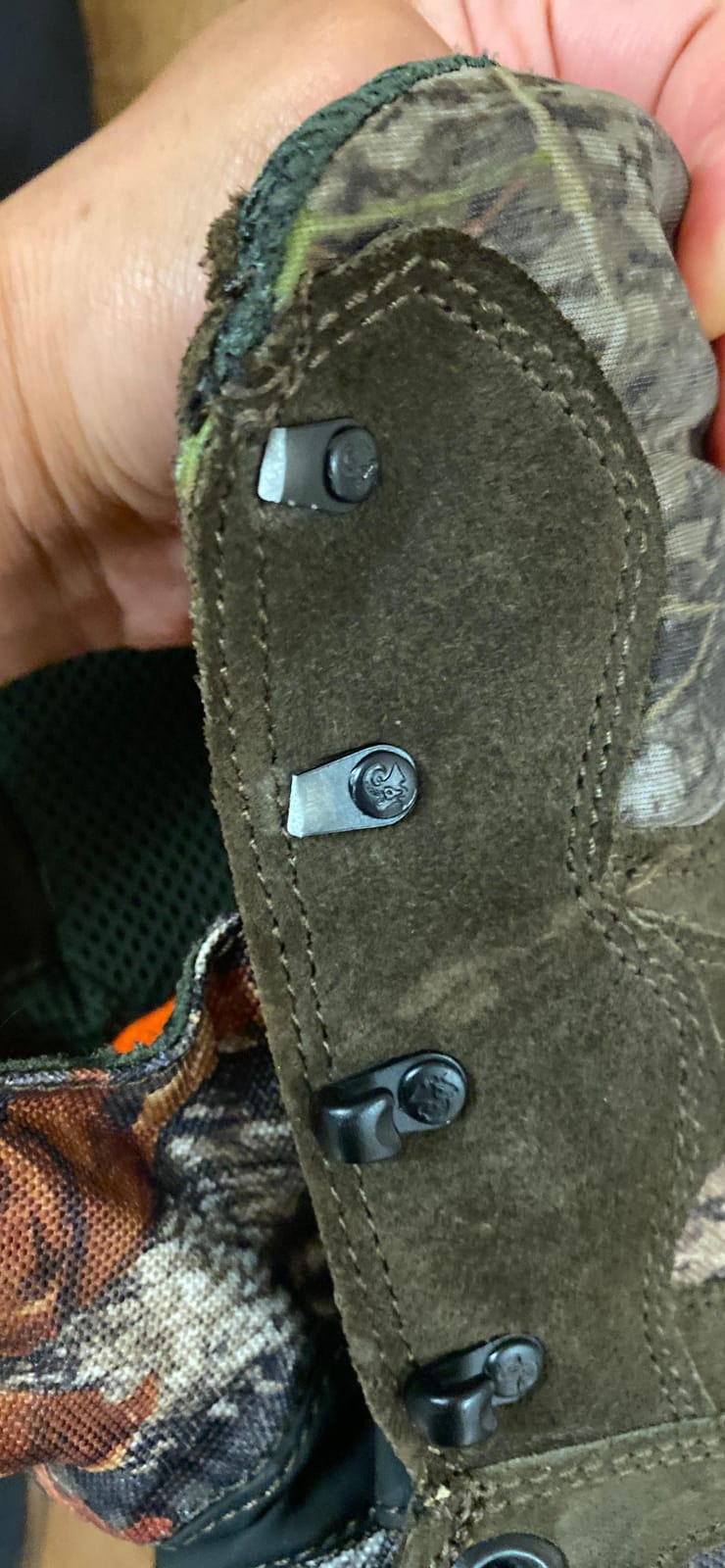
The Blizzard Stalker exists for one condition, and that condition is genuine cold. Owners report warmth at temperatures down to minus 10F, which is a claim few boots in this category make with actual numbers behind it. If your late-season hunt runs into that range, this is one of the few pairs here rated for it.
Waterproofing holds up in practice, according to owners who have used these across multiple Minnesota winters and through repeated wading. The rubber vamp takes the abrasion that would otherwise destroy a leather toe, and the padded collar with an extended tongue keeps snow out of the top of the boot during a long sit-and-wait glass.
Fit runs large, and reviewers recommend sizing down a full size so you can wear two pairs of socks without the heel lifting. That advice is unusual but it is repeated consistently, and getting it wrong here means a boot that is both cold and loose.
Durability is a genuine strength. One owner reports a previous pair lasting 15 years, which is the kind of track record you rarely see outside the welted leather models. The 1200 gram fill is a full pound of insulation, which is why the boot stays warm long after the body has stopped moving.
What you will notice in the field
The stiffness is the defining trait and the most common complaint. A sole this rigid is uncomfortable when stooping, kneeling or climbing into a tree stand strap, and owners say it is hard on the knees and hips over a long day.
The scratchy interior cuff is worth preparing for. It requires crew-length socks to protect the calf, and anyone wearing low socks will find it uncomfortable within hours.
Where it falls short
Bulk is unavoidable at this insulation level, and the boot is not rated to steel toe standard. If your hunting involves tree stands, a lot of kneeling or any work where you need precise foot placement, this is the wrong tool.
It is also a hunting boot rather than a hiking boot, which shows in the slight forward tilt of the shaft that creates an awkward gait until the boot is fully broken in. Long days of walking on hard pavement or rock will highlight that tilt more than any other boot here.
10. ROCKY Bearclaw Gore-Tex 200G: The Best Lightweight Insulated Boot for Fast Break-In
ROCKY BearClaw GORE-TEX® Waterproof 200G Insulated Outdoor Boot, Brown, Size 9.5(WI)
GORE-TEX waterproof membrane
BearClaw 3D outsole with ROCKY 3D welt
200g Thinsulate insulation
9 inch tall boot
Pros
- Comfortable out of the box with a fast break-in
- GORE-TEX held through standing water snow and shale
- BearClaw 3D outsole grips mud ice and steep ground
- Leather is easy to maintain and polish back to new
Cons
- Runs hot in mild weather despite the 200g insulation
- Top eyelet can dig into the ankle before the leather softens
- Removable brush guard kiltie is easily lost
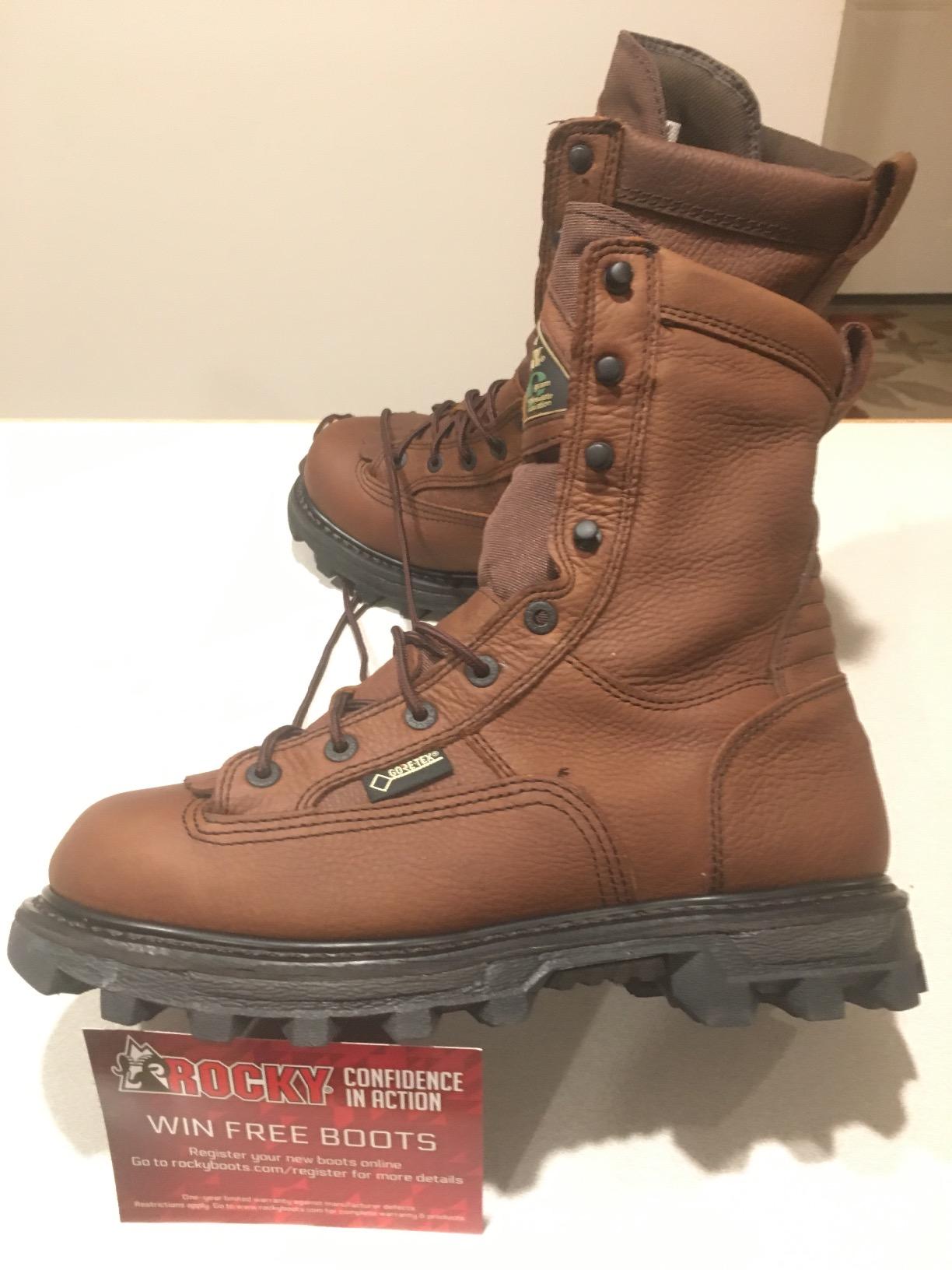
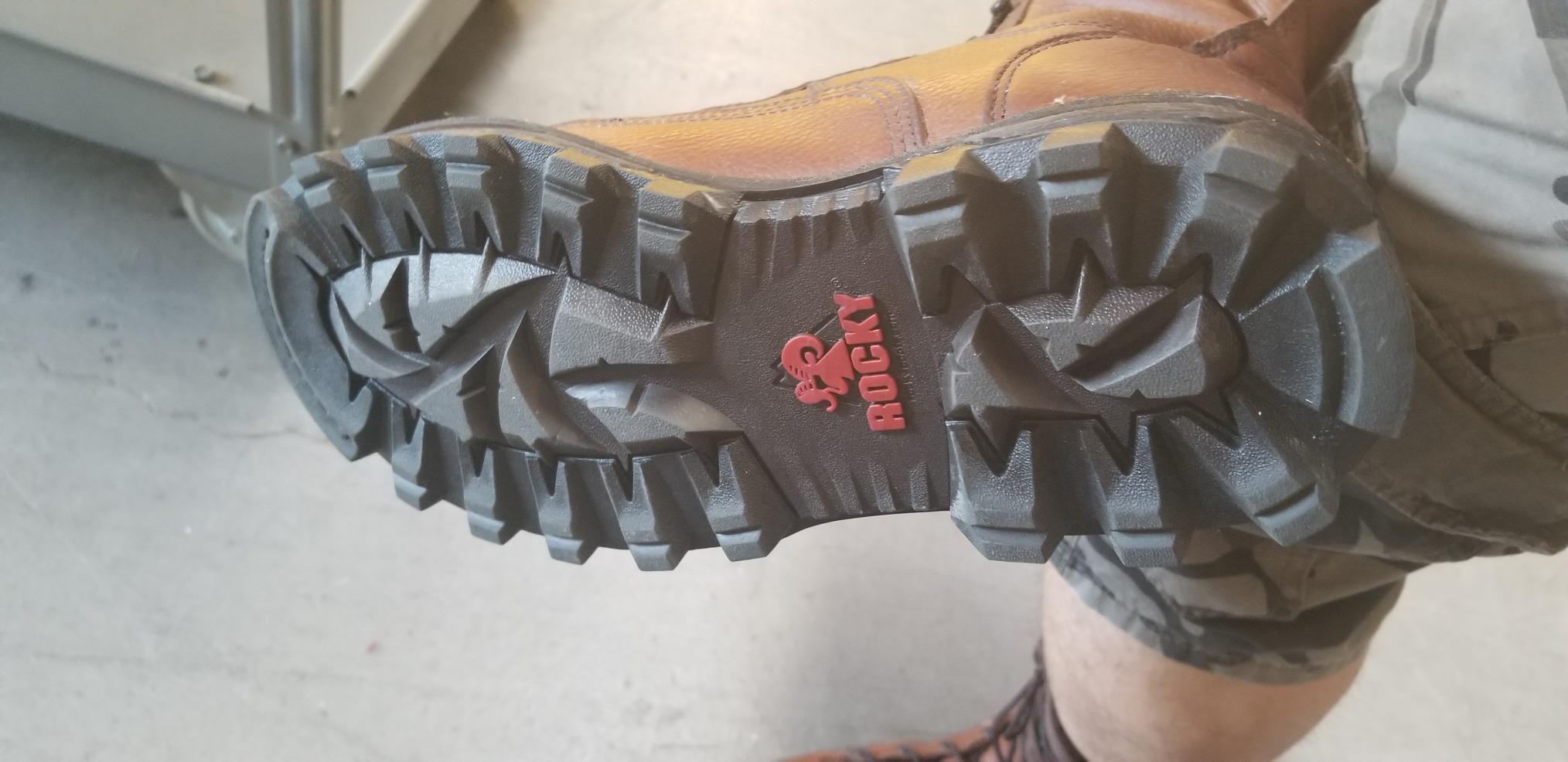
The Bearclaw is the compromise boot for someone who wants insulation and waterproofing without the three-month break-in of a heavy mountain boot. Owners repeatedly describe it as one of the most comfortable hunting boots they have worn straight out of the box, with no hotspots forming anywhere on long days. That is a rare and specific thing to be able to say about a 200g boot.
The GORE-TEX membrane is the specification that matters most and reviewers confirm it in real conditions, describing the boot holding water-tight through multi-day trips involving standing water, snow and shale. The BearClaw 3D outsole, paired with ROCKY 3D welt construction, delivers the traction that sidehilling demands, and the 9 inch height gives more ankle coverage than a low boot without the bulk of a tall one.
At 5.2 pounds per pair for a size 10, this is not a featherweight, and it is worth weighing against your day. It sits in the middle of the range here, heavier than the Irish Setter Wingshooter and lighter than the 12 inch Elk Tracker, which makes it a reasonable middle option for a hunter who wants one boot that covers September through November without a dedicated cold-weather pair.
The removable brush guard kiltie is a good idea that does not survive contact with real country. Multiple owners have lost the detachable piece in brush, so treat it as a spare part rather than a feature.
What you will notice in the field
Fast break-in is the reason to buy this over a heavier leather boot. The leather is soft enough to mould quickly, and owners report being comfortable within a few days rather than months, with no rubbing on the heel or the instep.
The leather also ages well. Owners report polishing these back to new condition over time, which partly offsets a rating that sits at the lower end of this roundup.
Where it falls short
Two hundred grams runs hot in moderate temperatures, and several owners use this boot year-round and note the heat on a warm climb. If your season is mostly September and October, you will be carrying insulation you do not need.
The rating reflects a small but vocal group of unhappy owners, and the top eyelet digging into the ankle before the leather softens is the specific complaint worth knowing about. The footbed also lacks the arch support of the Kenetrek models, which matters more on a long loaded day than most buyers expect.
Why Best Hiking Boots for Elk Hunting Are Not Always Hunting Boots
Yes, you can use hiking boots for elk hunting, and for a large share of hunters you should. A well-built waterproof hiking boot with a secure mid-height, aggressive outsole and a supportive footbed handles a September archery season and much of a rifle season in moderate states. Dedicated hunting boots earn their premium only when you need heavy insulation for late-season snow, a taller shaft for genuinely steep sidehills, or a resoleable welted build you can keep for a decade.
The reason the forum consensus on this query lands on two weights of the same boot rather than one perfect boot is that terrain, not brand, is the deciding variable. Steep ground justifies mass and stiffness because a rigid platform resists torsion when a loaded pack tips you downhill. Moderate ground punishes mass, because every extra pound per boot is repaid across every mile of the approach and again on the climb out. Pick the answer that matches your drainage rather than your brand loyalty.
Two hiking-built models made our list for exactly this reason. The Kenetrek Hardscrabble Hiker is catalogued as a hiking boot, sold in hiking widths, and gives you lacing to retension a swollen midfoot on day four of a hunt. The ROCKY Outback is also a hiking boot, and its genuinely wide sizing is something most hunting lasts will not offer.
How we chose these ten
We started with owner reviews rather than marketing copy, because on boots the spec sheet tells you what a manufacturer intends and the review tells you what the boot does in November. Every pick here has a meaningful review base, and we weighted long-term durability reports heavily. We then filtered for the four criteria every serious roundup agrees on: durable, waterproof, supportive and comfortable, plus an aggressive outsole and enough shaft height to protect the ankle.
Where we disagreed with the marketing, we went with the reported problems. Boots that owners describe as needing three to six months of break-in are labelled as such in their sections, and boots with reports of sole separation or outsole cracking inside the first year carry that warning explicitly.
Insulation by season, in plain numbers
Match grams to the phase of your season rather than to the weather forecast. Zero grams covers September and October archery seasons. 200g to 400g handles October rifle season in moderate states and covers the temperature band most of the country actually hunts in. 600g covers genuine November cold. 1000g and above is only worth carrying when you will be sitting still for hours in real cold, because the penalty is paid on every step of the approach.
The most common boot mistake in elk country is over-insulating. A hunter who warms up on the climb out and then steps onto a cold north-facing ridge in a sweat-soaked liner goes colder, faster, than a hunter who brought the right gram weight. Match the boot to the coldest hour of the coldest day you expect, not to the average.
Boot height and terrain
Seven to eight inches is enough for bench country, gentle drainage and long flat approaches. Nine to ten inches is where you want to be for steep sidehills and loaded descents, because the extra shaft is what resists the ankle roll that ends trips. Twelve inches and above buys coverage and warmth rather than stability, and it comes with the weight and bulk that go with it.
Crampons are worth considering only if your hunt sits in genuine alpine country. Most boots here will accept a strap-on crampon over the toe and heel, but a smooth or shallow-lugged outsole will not hold one safely, so check the outsole pattern before you plan on crampons at all.
Waterproofing and the sweat trade-off
In elk country, waterproof is almost always the right call. Snowmelt streams, mud and wet rock are near-certain rather than occasional. The sweat concern is real but it is managed at the sock and gaiter level, not by choosing a breathable boot that lets the creek soak you. Wear wool socks, change them when they are damp, and use breathable gaiters so the top of the boot can vent while the shell stays sealed.
Our cold weather hunting boots guide goes deeper on the insulation end of this if your season runs late.
Break-in, sizing and what the forums actually say
Full-grain leather does need breaking in, and the pain lands on day one of your hunt if you leave it late. Boots with a welted or stitched-down sole, a rubber gasket, or a softer synthetic-and-leather build break in far faster. Start at home with the boots you intend to hunt in, wear them with thick socks, and give leather weeks and hundreds of miles rather than days.
Sizing is the other place hunts get lost. Wide feet should order wide rather than trying to break leather tight across the forefoot. High arches do well in the boots here with a pronounced heel pocket and arch support, which is one of the reasons owners single out the Kenetrek models. And remember that feet swell over a multi-day hunt, so a laced boot you can retension is worth more than a fixed-fit boot that felt perfect in the shop.
The forum consensus on this question is worth knowing because it cuts across the roundups. The top-ranking thread recommends carrying the same brand of boot in two weights, heavy for steep terrain and medium for moderate. A second thread recommends a lightweight approach and names mountain and running-style brands for anyone who prioritises comfortable miles. The AI Overview for this query cites the Rokslide community for the view that alpine-capable mountain boots are the most reliable in high country. All three positions agree on one thing: weight selection is a terrain decision, and no single boot wins every hunt.
Frequently Asked Questions
Can I use hiking boots for elk hunting?
Yes, for most elk hunts. A well-built waterproof hiking boot with a secure mid-height, aggressive outsole and supportive footbed will handle a September archery season and even a rifle season in moderate terrain. Dedicated hunting boots earn their premium when you need heavier insulation for late-season snow, a taller shaft for steep sidehills, or a resoleable leather build you can keep for a decade.
How much insulation do I need for late season elk hunting?
Match grams to season phase. Use 0g for September and October archery seasons, 200g to 400g for October rifle season in moderate states, 600g for genuine November cold, and 1000g or more only when you will be standing still in real cold.
Should elk hunting boots be waterproof?
In elk country, almost always yes. Snowmelt streams, mud and wet rock are near-certain. Pair a waterproof boot with wool socks and breathable gaiters rather than relying on the boot alone to manage moisture.
What boot height do I need for steep elk country?
Seven to eight inches works for bench country and gentle approaches. Nine to ten inches is the right range for steep sidehills and loaded descents because the extra shaft resists ankle roll. Twelve inches and above adds coverage and warmth rather than stability, along with weight and bulk.
Are lightweight boots worth it for backcountry elk hunting?
On a ten-mile day with a 60 to 80 pound pack-out, every extra pound per boot is repaid as cumulative fatigue. Lightweight boots pay off in early season and on moderate ground. Below roughly 38 degrees, warmth matters more than weight, so switch to an insulated boot rather than pushing a light one further.
Do leather hunting boots need breaking in?
Full-grain leather does, and the discomfort usually lands on day one of your hunt. Boots with a stitched-down sole, a rubber gasket or a softer synthetic-and-leather build break in dramatically faster. Start the break-in at home, weeks ahead of the season.
How long do good elk hunting boots last?
Welded leather constructions can last a decade or more with periodic resoling, and owners report individual pairs of some models lasting 15 years. Rubber and neoprene boots cannot be resoled, so their life depends on the outsole and on how the rubber ages. Non-insulated hiking boots used hard on rock show seam and outsole wear sooner than insulated hunting boots used in the same window.
Final Verdict on the Best Hiking Boots for Elk Hunting
If we had to pick one pair to carry into elk country, the MUCK Woody Max is the safest choice. It is waterproof by construction, comfortable on day one, and carries the highest rating with a large review base of any boot we evaluated. Hand it to a hunter who has never broken in a boot in the field and it will simply work.
Everything else is conditional on your country. Choose the Kenetrek Mountain Extreme 400 if you are packing out a load and the ground is steep. Choose the Irish Setter Elk Tracker 12 if you want a leather boot you can resoled for a decade. Choose the LaCrosse AlphaBurly Aero 17 if you will be standing in deep snow and cold water. Choose the Kenetrek Hardscrabble Hiker if you want a real hiking boot that takes the abuse and gives you lacing.
That conditional framing is the whole answer to best hiking boots for elk hunting: there is no single best pair, only the pair that matches your season, your load and your terrain. Work out those three things before you buy, and start the break-in at home with the exact socks and gaiters you will wear in the field. Check the current listing for each boot when you are ready, and get them in the door well before opening day.