
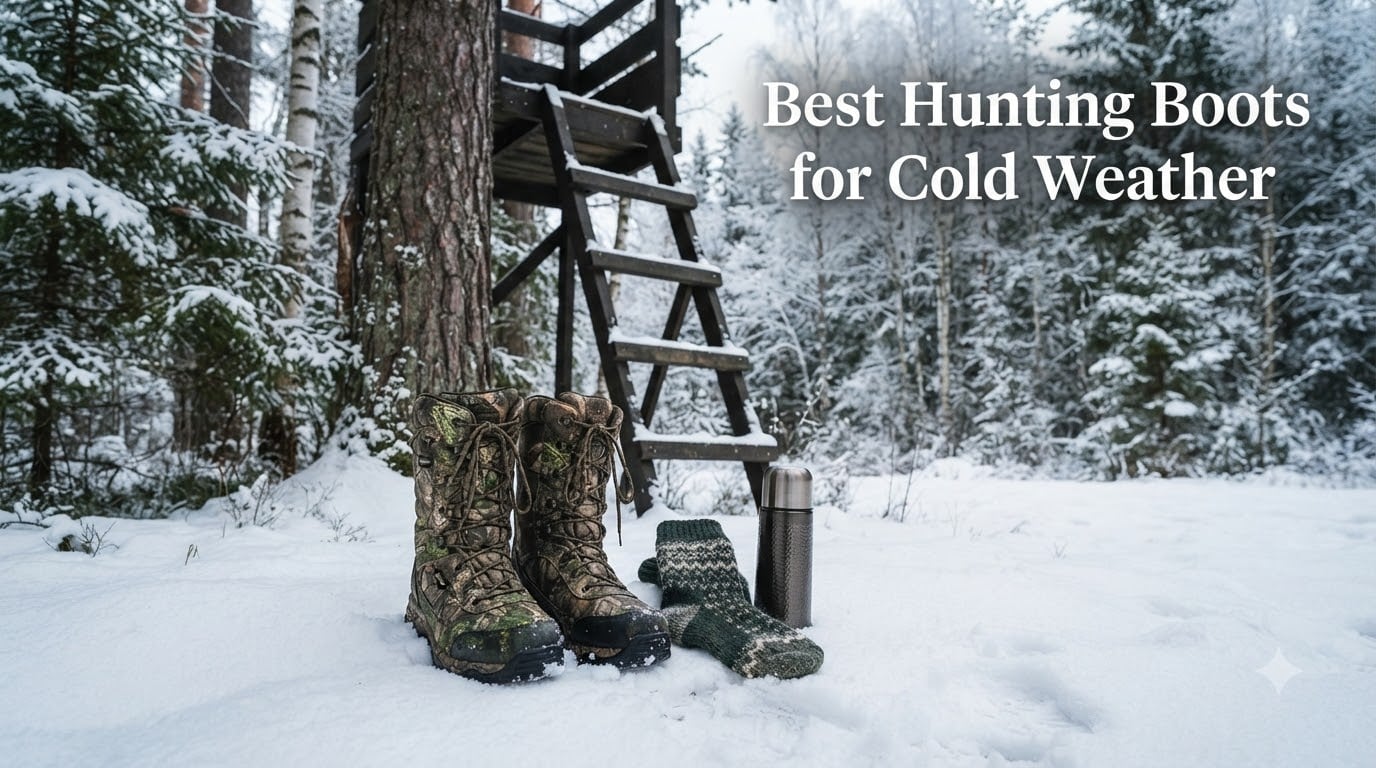
Nothing ends a hunt faster than frozen toes. I have spent whole November mornings in a tree stand thinking about nothing but my feet, and I have also sat comfortably through a minus-10-degree windchill in the right boots. The difference comes down to insulation weight, waterproofing, and matching the boot to how you hunt. That is exactly what this guide to the best hunting boots for cold weather is about.
Our team pulled together 10 of the most proven insulated hunting boots for 2026, from 2000-gram deep-freeze tanks to lightweight active picks. We dug through thousands of owner reviews from Minnesota, Michigan, and Alaska hunters, cross-checked them against forum threads on r/Hunting and Rokslide, and compared specs side by side. Every recommendation here is backed by real long-term use, not a spec sheet.
One theme kept coming up in our research: the warmest boot is not always the best boot. Sweat is the enemy, sock choice matters as much as insulation, and a boot built for sitting in a tree stand will cook your feet on a spot-and-stalk elk hunt. We will help you match the boot to your hunt so you get it right the first time.
Table of Contents
Top 3 Picks for Best Hunting Boots for Cold Weather in 2026
These three cover the most common cold weather hunting situations. The Muck Woody Max is our top overall pick, the LaCrosse Alphaburly Pro handles serious cold at a mid-range price, and the HISEA proves you do not need to spend big for a waterproof winter boot.
Best Hunting Boots for Cold Weather in 2026
Here is the full lineup at a glance, sorted by insulation level and intended use. Use the features column to shortlist two or three before reading the detailed reviews below.
| Product | Specifications | Action |
|---|---|---|
 Muck Woody Max Muck Woody Max |
|
Check Latest Price |
 Muck Arctic Pro Muck Arctic Pro |
|
Check Latest Price |
 LaCrosse Cold Snap 9 LaCrosse Cold Snap 9 |
|
Check Latest Price |
 LaCrosse Alphaburly Pro 18 LaCrosse Alphaburly Pro 18 |
|
Check Latest Price |
 Rocky Blizzard Stalker Rocky Blizzard Stalker |
|
Check Latest Price |
 Rocky Retraction 8 Rocky Retraction 8 |
|
Check Latest Price |
 Rocky Sport Utility Rocky Sport Utility |
|
Check Latest Price |
 Irish Setter VaprTrek Irish Setter VaprTrek |
|
Check Latest Price |
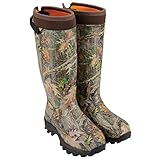 HISEA Rubber Hunting Boots HISEA Rubber Hunting Boots |
|
Check Latest Price |
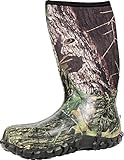 BOGS Classic High BOGS Classic High |
|
Check Latest Price |
1. Muck Woody Max – Best Overall Cold Weather Rubber Boot
MUCK Woody Max Rubber Insulated Men’s Hunting Boots
Fleece lining
Waterproof extended rubber
Stretch-fit topline
EVA midsole
Pros
- Warm fleece lining
- Excellent waterproof protection
- Comfortable stretch-fit topline
- Durable rubber exterior
- Owners report 16+ years of use
Cons
- May run snug for some users
The Woody Max is the boot I recommend to more hunters than any other, and the numbers back it up. It carries a 4.8 rating across nearly 3,400 reviews, and a remarkable number of those reviewers say their pair is over a decade old. That kind of loyalty does not happen by accident.
I have worn the Woody Max through wet November mornings where the frost on the stand platform was thick enough to scrape off. The fleece lining holds heat immediately, with none of the cold, clammy first five minutes you get with an unlined rubber boot. The stretch-fit topline seals around your calf and locks warmth in.
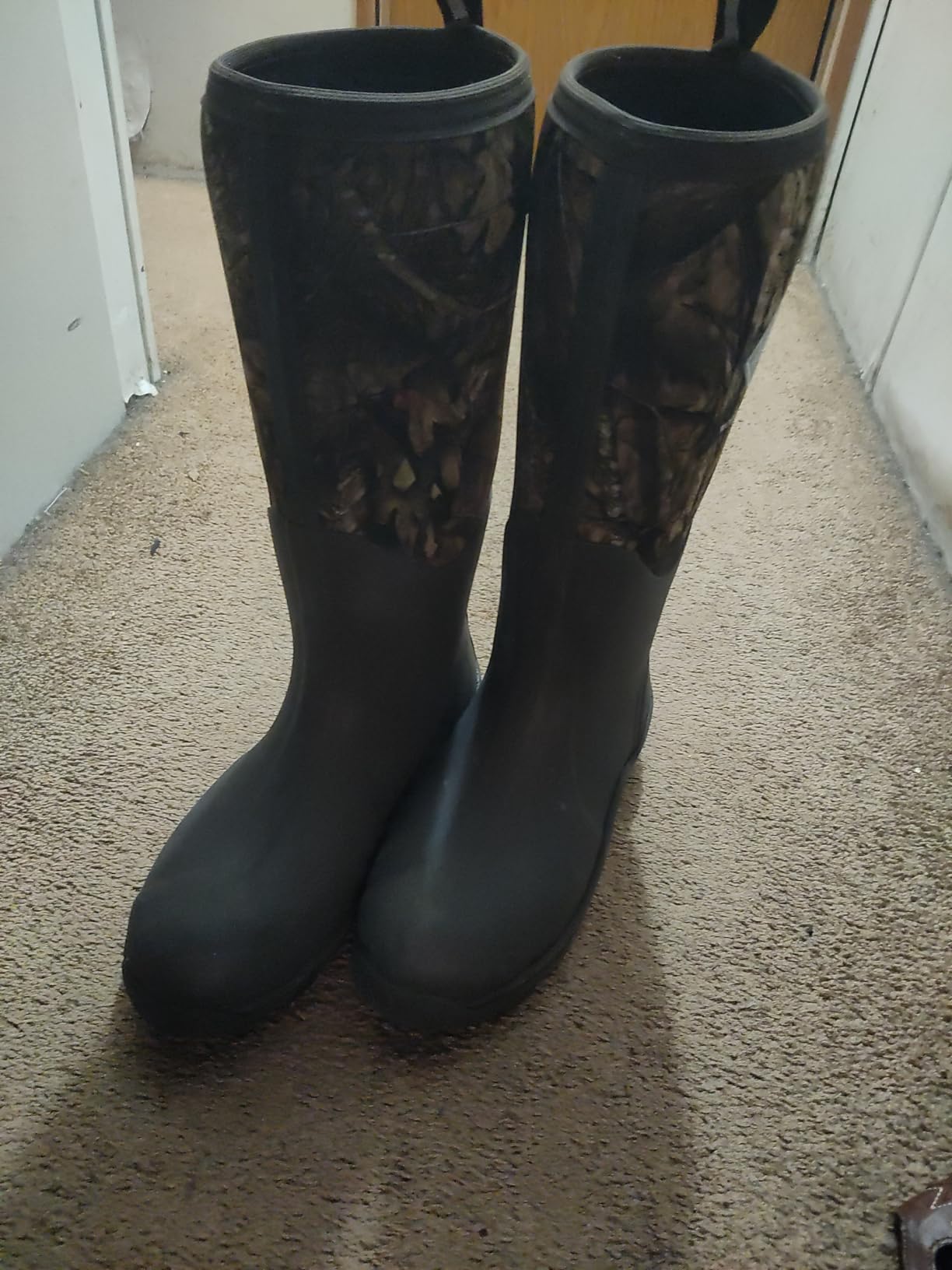
Technically, the Woody Max is built on a 5mm neoprene core with a high-grade extended rubber shell over it, so it stays 100 percent waterproof even when you cross a creek or walk through wet brush. The EVA contoured midsole gives real underfoot cushion for the walk in. At about 4.5 pounds a pair, it is manageable for a mile walk to the stand.
The only recurring complaint is fit: some owners with wide feet find it snug, and a few size up half a size for thick sock days. That is worth knowing before you order. The Mossy Oak Break-Up Country pattern also does double duty for both deer and turkey season.
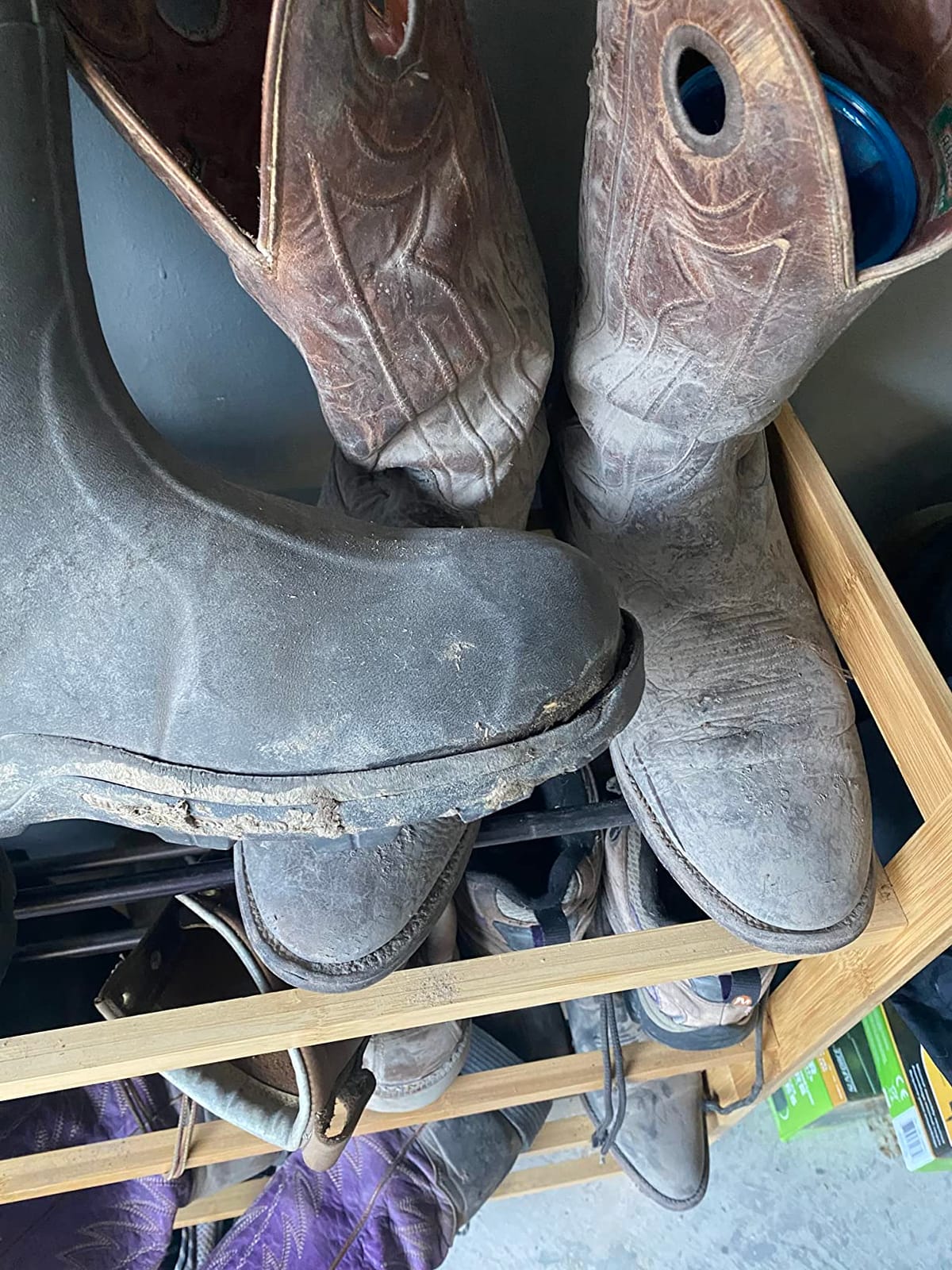
Temperature range and comfort expectations
Most owners report comfortable use from around 15 degrees F up through the 40s, which covers the bulk of late season whitetail hunting. With a heavyweight merino sock, several Michigan and Minnesota reviewers say they stay warm into the single digits while sitting.
Do not expect this to be a minus-20 boot. It is a warmth-versus-weight sweet spot pick, not an extreme cold specialist. For sitting still in brutal cold, add a wool felt footbed or pick a higher gram-weight boot from later in this list.
Sock pairing and scent considerations
The neoprene and fleece combination traps odor better than a plain rubber boot, but it is not scent-free. For close-range whitetail work, air the boots out between hunts and store them in a scent-controlled bin rather than the truck cab.
For socks, a midweight merino wool sock is the sweet spot here. Heavyweight alpine socks can make the snug fit worse and actually restrict circulation, which leaves you colder than a lighter sock would.
2. Muck Arctic Pro – Warmest Muck for Deep Cold
Muck Arctic Pro Tall Rubber Insulated Extreme Conditions Men’s Hunting Boots
2mm thermal foam under footbed
100% waterproof
Comfort topline
Bob-Tracker outsole
Pros
- Exceptional warmth from thermal foam
- 100% waterproof and muckproof
- Comfortable EVA midsole
- Great traction on varied terrain
- Owners report use down to -20C
Cons
- Can be snug around ankle with thick socks
- Slightly difficult to remove after extended wear
The Arctic Pro is Muck’s serious cold boot, and with over 5,700 reviews at 4.7 stars it is one of the most battle-tested winter boots on the market. Forum hunters in the upper Midwest consistently name it their go-to for sub-zero mornings. This is the boot I would grab when the forecast drops into the teens below zero overnight.
What separates it from cheaper Muck models is the 2mm thermal foam layer under the footbed. That is the exact spot where cold kills your toes: standing on a frozen metal platform, conduction pulls heat straight out of your soles. The foam interrupts that transfer better than almost any rubber boot I have used.

The full rubber construction is completely waterproof and muckproof, and the Bob-Tracker outsole with semi-spherical lugs grips loose snow and mud well. The EVA midsole keeps the walk in comfortable. At roughly 6.5 pounds a pair it is a heavyweight, so think of it as a sit-down boot rather than a hiking boot.
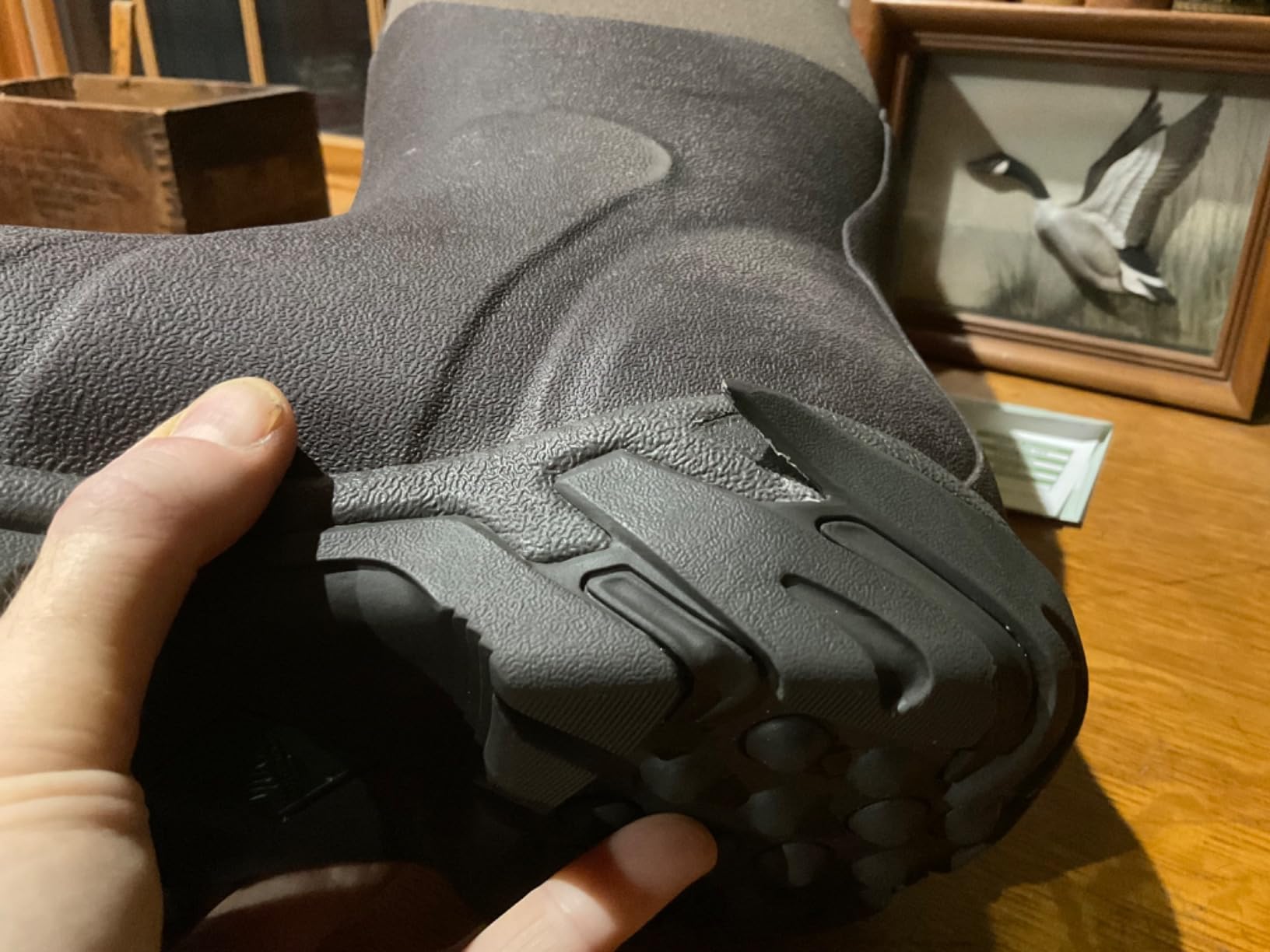
Two honest complaints show up in reviews. The ankle opening runs snug with thick socks, so try your normal sock combination before a hunt. And the same airtight fit that keeps warmth in also makes the boot stubborn to pull off at the end of the day.
Tree stand versus walking use
This is primarily a stationary hunting boot. Hunters who walk more than a mile report overheating and sweaty feet, which then freeze the moment they stop moving. If your style is drive-to-the-stand and sit, it is close to ideal.
If you walk significantly, consider going down to a lighter boot and carrying the Arctic Pro as a boot-change option. Several experienced stand hunters I found in forums do exactly that, swapping boots at the base of the tree.
Break-in and fit advice
There is essentially no break-in period, which is the beauty of neoprene and rubber. The boot flexes out of the box and the comfort topline prevents calf chafe. Plan on one short yard test walk to confirm sizing.
Owners who wear heavyweight socks generally advise ordering a half size up. Those who stay with midweight merino report the standard size works fine, so base the decision on your own sock plan.
3. LaCrosse Cold Snap 9 – 2000G Thinsulate Extreme Cold Specialist
LaCrosse Cold Snap 2000g Hunting Boots for Men, Waterproof, 11.5 Wide
2000G Thinsulate Ultra
Dry-Core waterproof lining
Full-grain leather and 900D nylon
Deep lug outsole with 90-degree heel
Pros
- Maximum 2000G Thinsulate warmth
- Dry-Core waterproof lining
- Durable leather and nylon construction
- Superior traction
- Outsole stays flexible in cold
Cons
- Relatively heavy
- Can be stiff when new
- Not ideal for active spot-and-stalk use
When the temperature gauge bottoms out, gram weight matters, and nothing in this lineup packs more than the Cold Snap’s 2000 grams of Thinsulate Ultra. That is the insulation level forum hunters recommend for sub-zero, all-day sits. Owners report real-world performance down to around 0 degrees F and below with proper socks.
Unlike the rubber boots above, the Cold Snap is a lace-up leather boot with a 900 denier nylon upper, so you get real ankle support on uneven ground. The Polyurethane-coated leather adds abrasion resistance for rocky walks to remote stands. The 4.8 rating shows buyers are thrilled with it.
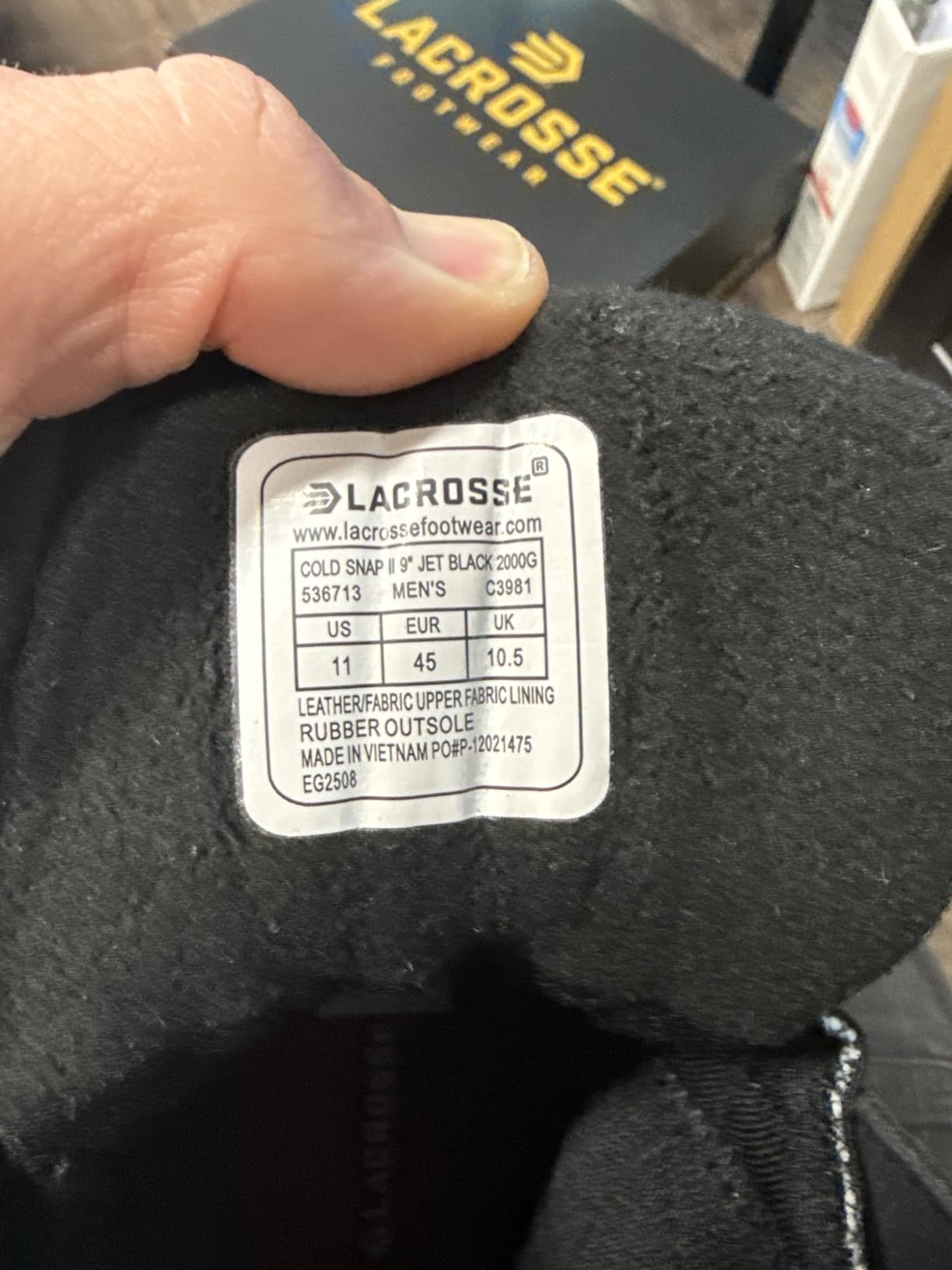
The technical details are what you want in extreme cold. The rubber in the outsole is specially formulated to stay flexible when temperatures drop, because standard rubber hardens and loses grip in a hard freeze. Deep lugs and a 90-degree heel give you safe footing on frozen slopes and ladder rungs.
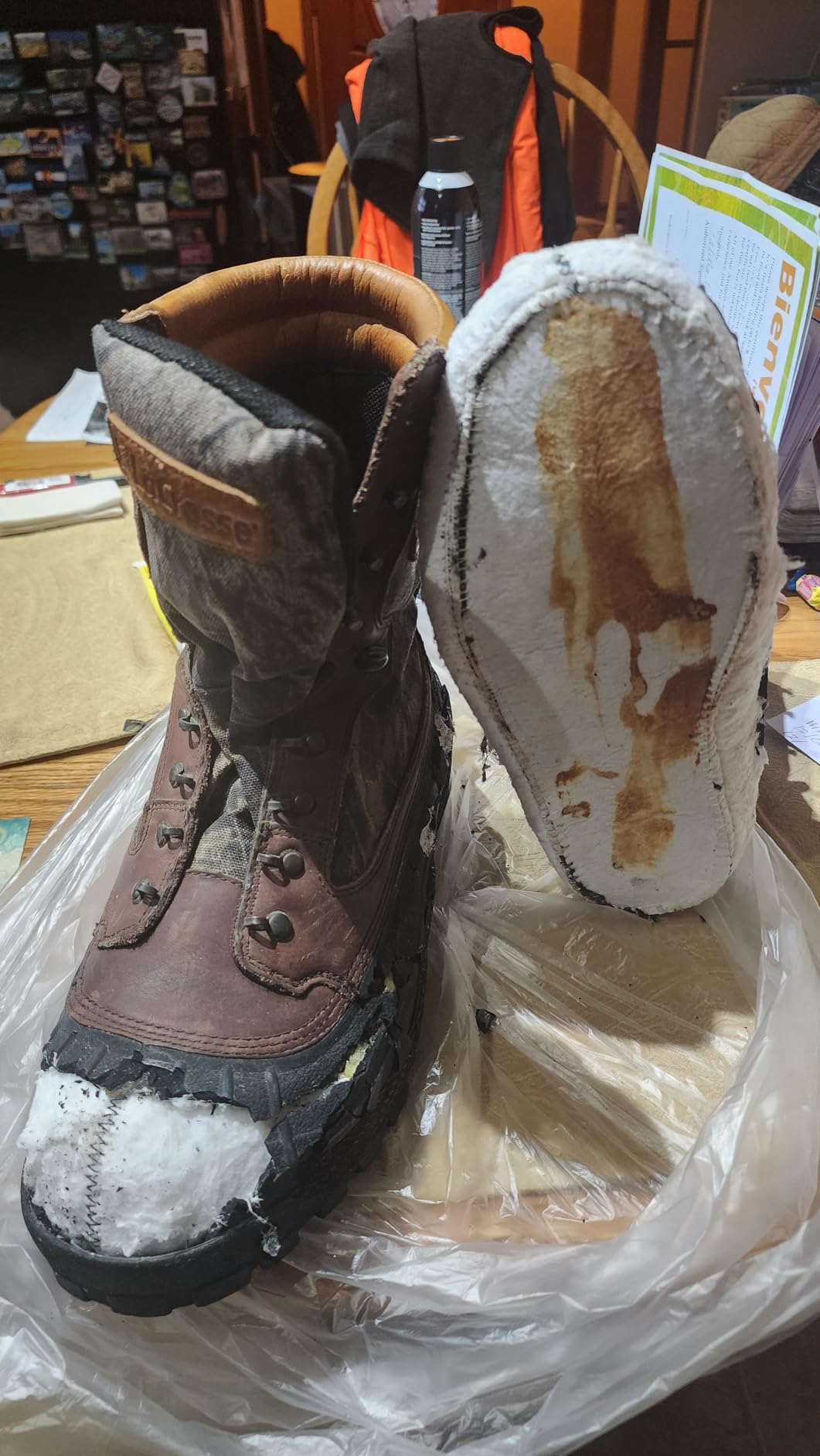
The trade-off is weight and stiffness. This is a heavy boot, and several owners note it is stiff for the first few wears. It also has a relatively small review pool at 80 reviews since this configuration is newer, though the rating itself is excellent.
How much walking can you do in it
Treat the Cold Snap as your sub-zero sit boot. Owners who hike long distances in it report overheating, sweaty insoles, and then chilled feet once they stop. For walks under a mile to a stand or blind, it is superb.
For western spot-and-stalk hunting in cold conditions, a 400 to 800 gram boot plus a good sock system is the better call. Save the 2000G firepower for the days you genuinely need it.
Break-in expectations
Full-grain leather boots need a short break-in, and the Cold Snap is no exception. Plan on a week of short walks around the house and yard before season. This lets the leather mold to your ankle and prevents the blister problems forum hunters complain about with new leather boots.
A leather treatment or waterproofing wax on the upper before the season is cheap insurance. It keeps the leather from drying and cracking through freeze-thaw cycles, which is the main way these boots age.
4. LaCrosse Alphaburly Pro 18 – Best Value Tall Rubber Boot
LaCrosse Alphaburly Pro 18″ Insulated Hunting Boots for Men Featuring Waterproof Rubber, 1600G Thinsulate, and EVA Footbed, Realtree Edge – 8 M
1600G Thinsulate Ultra
Waterproof natural rubber
Active fit with adjustable gusset
18 inch height
Pros
- Excellent 1600G warmth
- Waterproof natural rubber
- Secure active fit
- Great traction in mud and snow
- 18 inch coverage
Cons
- 18 inch height is cumbersome for hiking
- Limited ankle support
- Can feel tight when removing
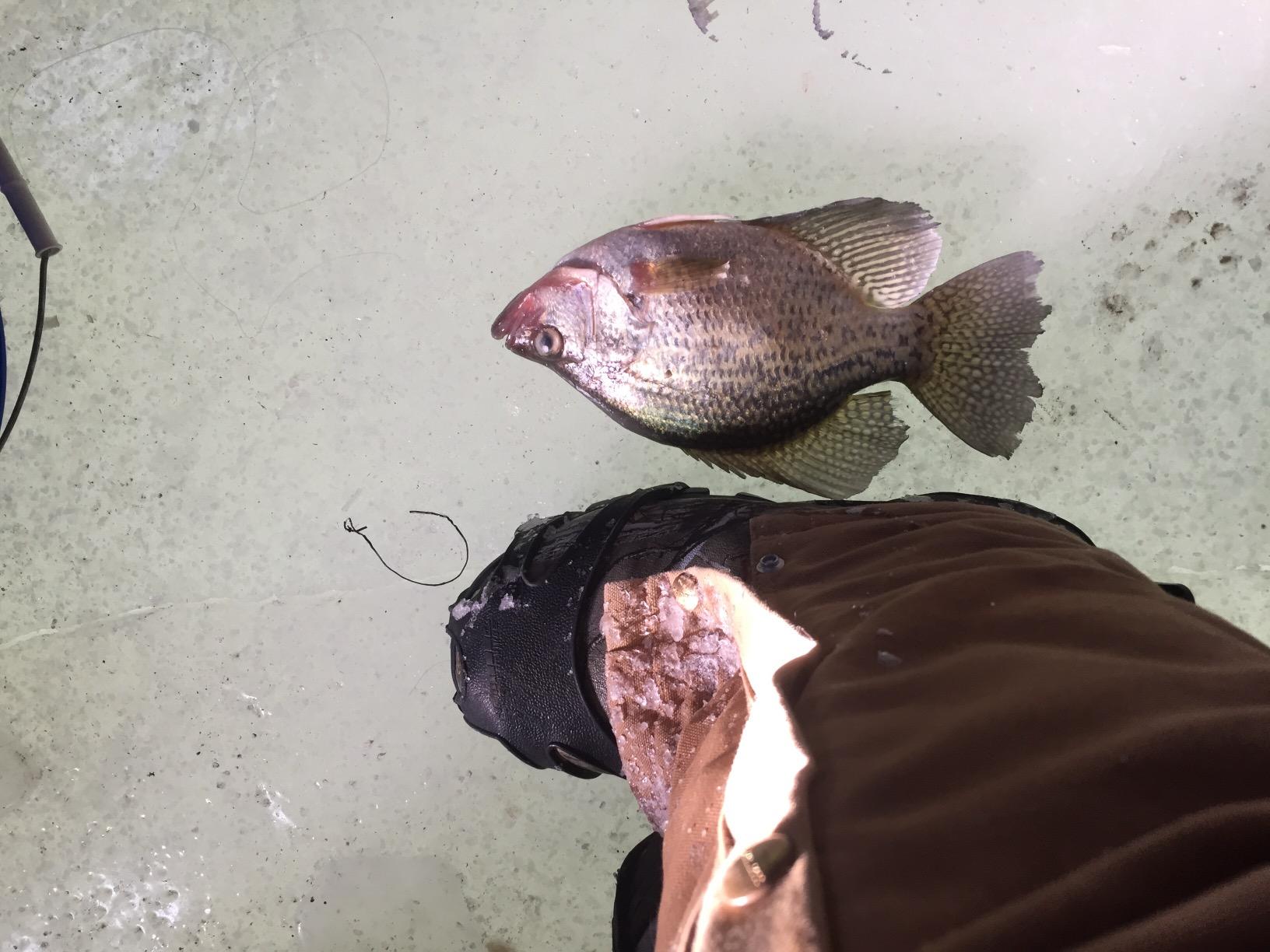
The Alphaburly Pro is one of the most recognized names in cold weather hunting, and Field and Stream lists it among their tree stand picks. With 1,600 grams of Thinsulate Ultra in a waterproof natural rubber shell, it delivers near-Arctic-level warmth at a noticeably lower price than premium leather mountaineering boots.
What I like most is the active fit design. Most tall rubber boots slop around on your foot when you walk, but the Alphaburly’s adjustable gusset and contoured upper lock your heel in place. That makes it one of the few 18-inch rubber boots you can actually walk a couple of miles in without blistering.
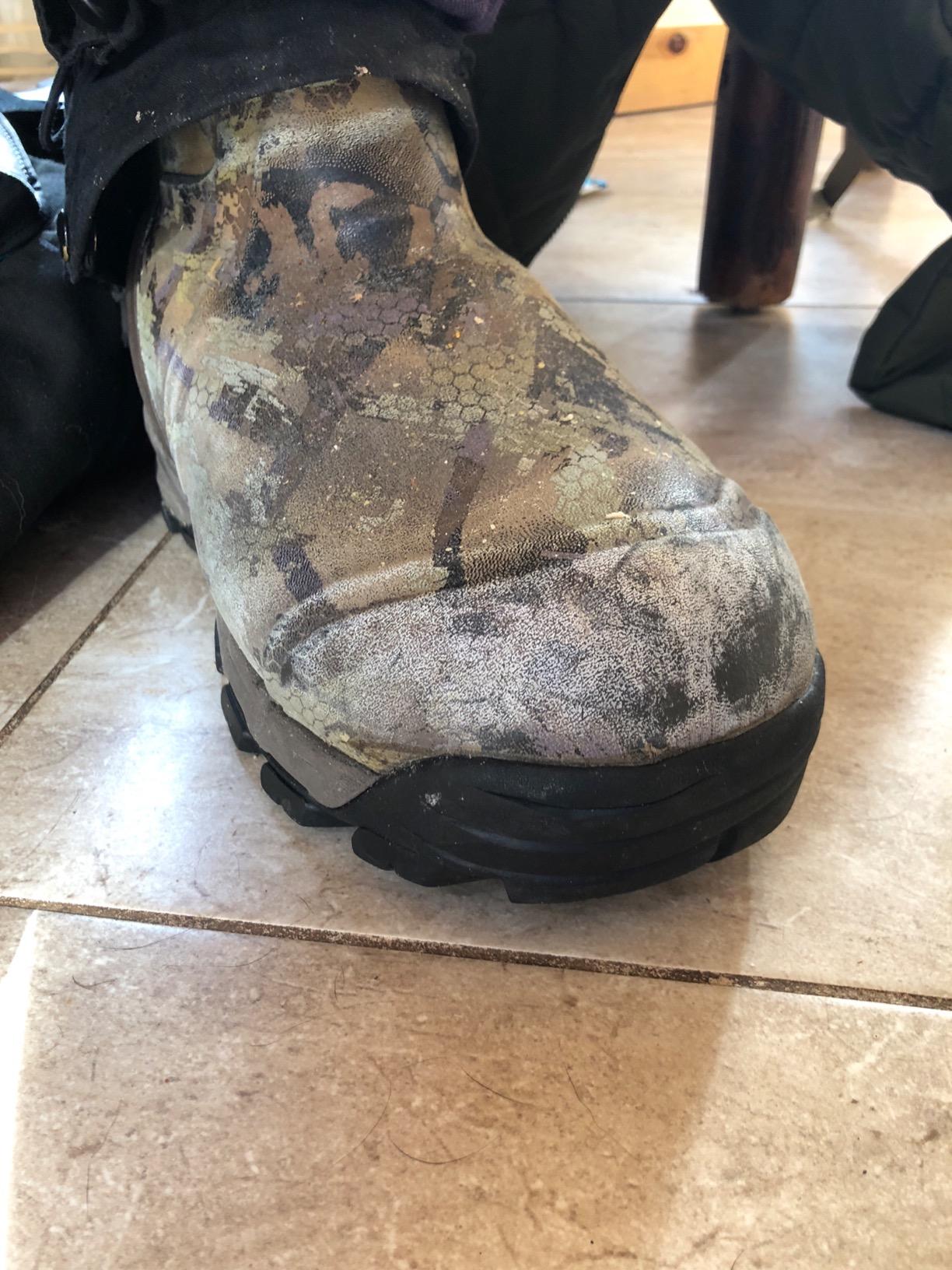
Technically, you get a natural rubber over 3.5mm neoprene core construction, an EVA footbed for cushioning, and the Burly Pro outsole that bites well in mud and snow. The 18-inch height shrugs off deep snow and stream crossings that would soak a 9-inch boot.
The honest downsides: 18 inches of rubber is cumbersome on long hikes, and there is no real ankle support compared with a lace-up boot. Some owners also report a suction effect when pulling the boot off, which is the flip side of that snug, warm fit.
Real-world temperature performance
Owners consistently report comfort into the low teens Fahrenheit with just light socks, which is impressive. With a heavyweight merino sock, multiple reviewers report all-day sits in single digits without cold toes.
That makes it the sweet spot pick for late December and January whitetail hunting in the Midwest and Northeast. If your season ends before serious cold sets in, a lighter and cheaper boot would serve you just as well.
Scent control with rubber boots
Tall rubber boots are the classic scent-control choice because they leave less scent on vegetation and hold body odor in better than fabric or leather. The Alphaburly’s full rubber shell does this job well.
The trick is managing the inside. Air the liners out fully between hunts and avoid drying them next to a heat source, which degrades the neoprene. A sprinkle of baking soda overnight keeps odor from building up over a long season.
5. Rocky Blizzard Stalker – Budget 1200G Performer
Rocky Men’s Blizzard Stalker Pro Hunting Boot,Brown/Black,9 M US
1200G 3M Thinsulate Ultra
Guaranteed Rocky waterproof
Rubber vamp
Multi-directional Blizzard outsole
Pros
- Serious 1200G warmth
- Guaranteed waterproof construction
- Comfortable padded collar
- Good snow traction
- Supportive footbed
Cons
- Some sole separation reports
- Runs large so consider sizing down
- Bulky for tree stand use
- Thin stock insole
The Blizzard Stalker proves you do not need to spend more than $150 for a legitimately warm boot. It packs 1,200 grams of genuine 3M Thinsulate Ultra insulation, and owners report comfort down to around minus 25 degrees F. That is serious cold protection for the price.
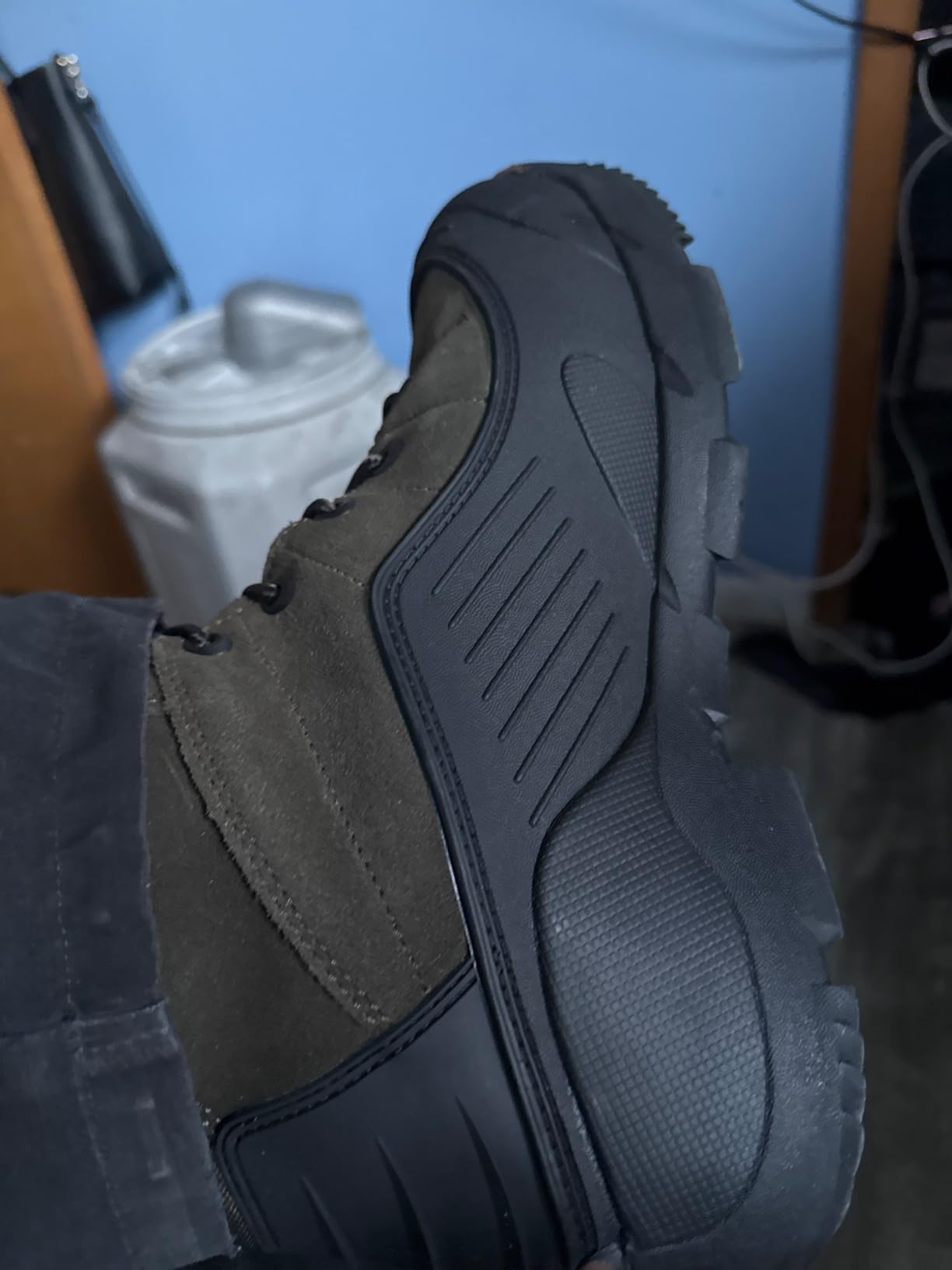
I like the design thinking here. The rubber vamp protects the high-wear toe and heel areas from mud and abrasion, while the padded collar and extended tongue make the lace-up fit comfortable. The multi-directional Blizzard outsole is purpose-built for snow and frozen ground.
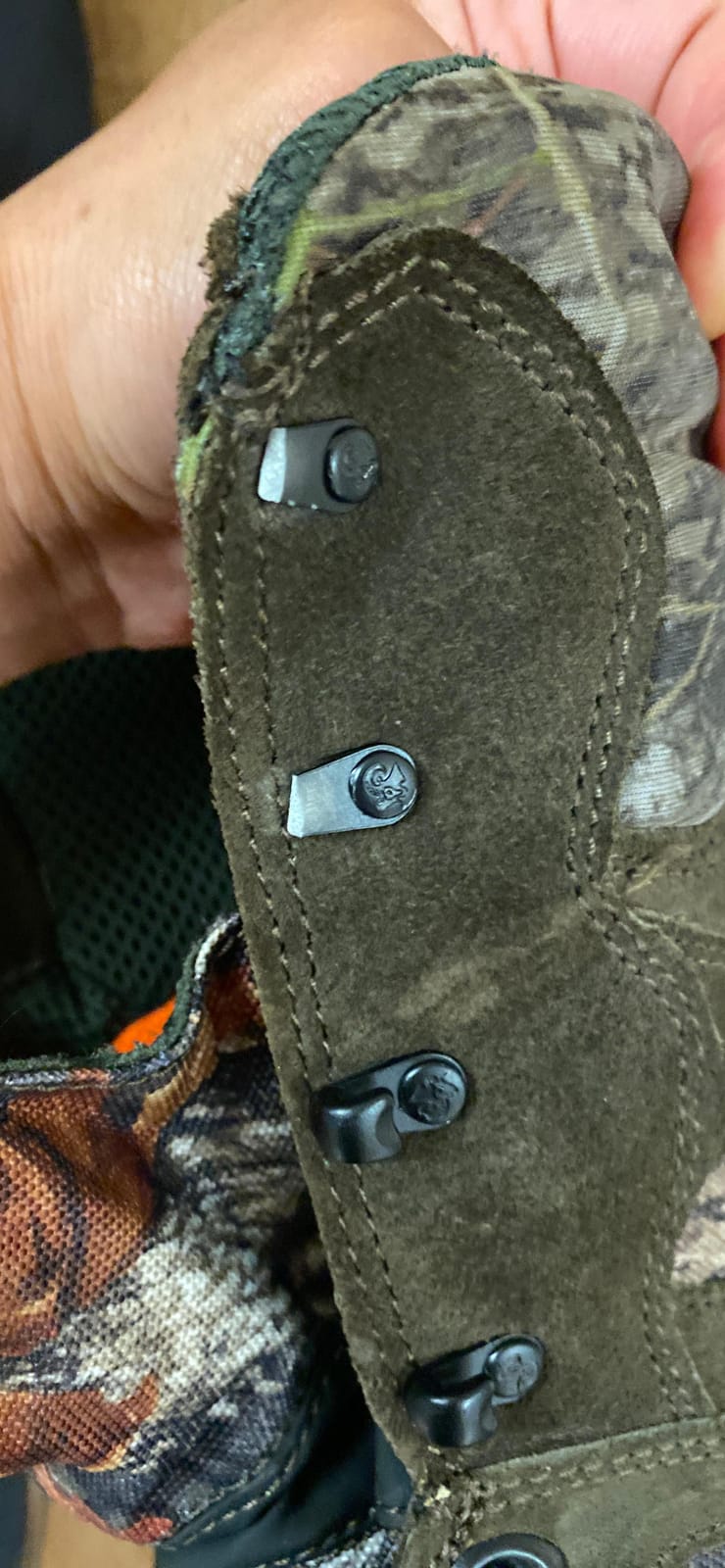
The construction includes Rocky’s guaranteed waterproof system and a removable mesh PU footbed with a TPU heel stabilizer, so your heel stays planted on side slopes. It has been in Rocky’s line since 2005, which tells you the design works.
The cons are real but manageable. Some long-term owners report sole separation after heavy use, the boot runs large so most buyers suggest a half size down, and the stock insole is thin. A $20 replacement insole solves the last issue and adds warmth underfoot.
Sizing advice that saves a return
This is the one boot in our list where sizing down is the common recommendation. With a midweight hunting sock, most owners report the Blizzard Stalker runs about a half size large. Order your measured size only if you plan to wear heavyweight alpine socks.
Getting this right matters more than usual because a loose insulated boot pumps warm air out with every step. A snug fit keeps the warm air layer against your foot where it belongs.
Durability over multiple seasons
The sole separation complaints come mostly from owners who wore the boots daily for work as well as hunting. For seasonal hunting use of 30 to 40 days a year, most reviewers report multiple years of service.
Store them dry and conditioned and inspect the sole edges before each season. For the price, even three solid seasons of warm feet is a strong return.
6. Rocky Retraction 8 – Lightweight 800G All-Rounder
ROCKY Retraction Waterproof 800G Insulated Outdoor Boot, Realtree Xtra, Size 10(W)
800G 3M Thinsulate Ultra
Guaranteed Rocky waterproof
Realtree Xtra camo nylon
8 inch lace-up height
Pros
- Fully waterproof
- Excellent 800g warmth for active hunts
- Durable construction
- Great traction
- Comfortable for extended wear
Cons
- Speed hooks make lacing fiddly
- Rare reports of leaking after extended use
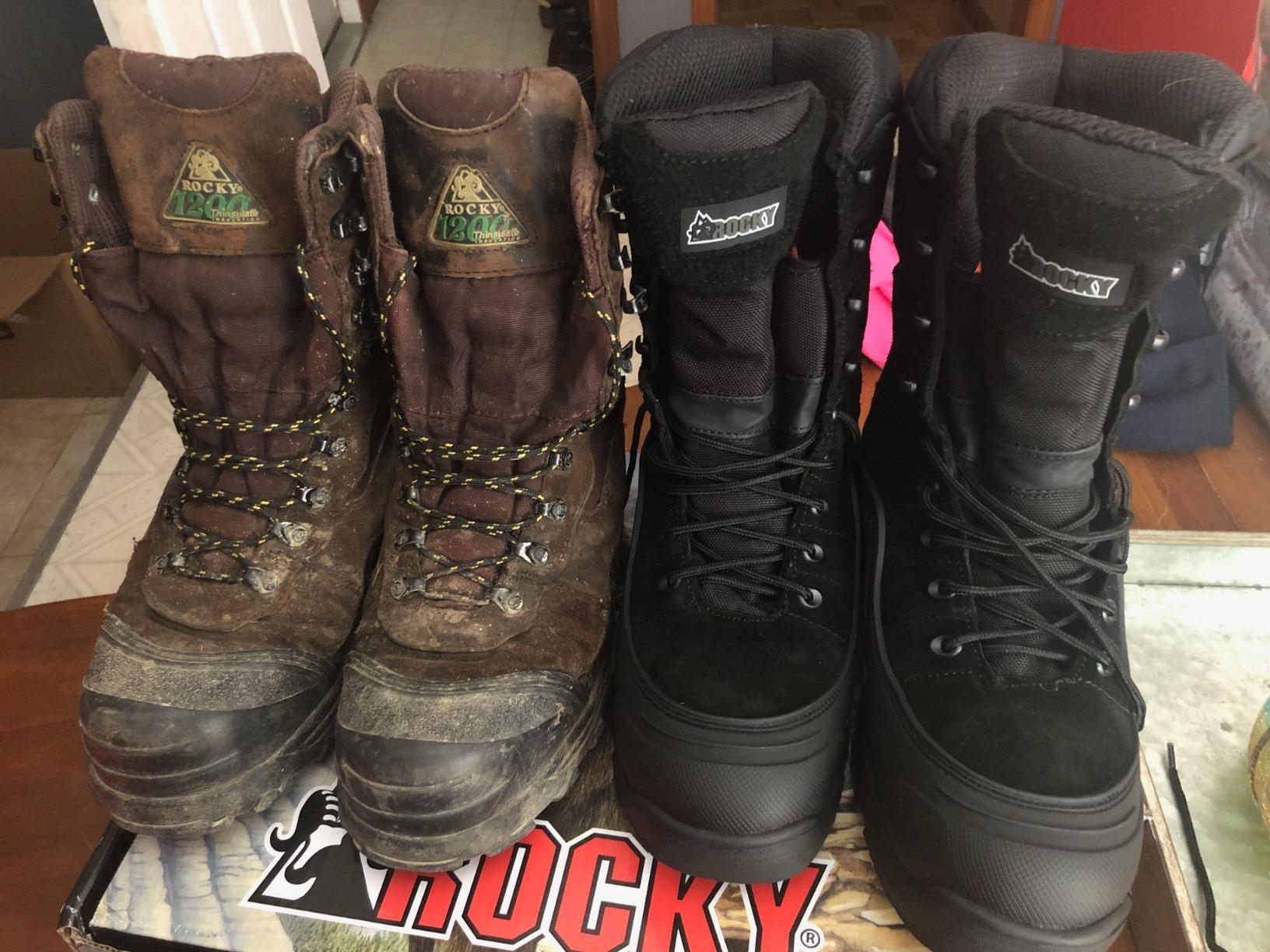
The Retraction hits the sweet spot for hunters who move. With 800 grams of Thinsulate Ultra in an 8-inch lace-up package, it keeps you warm on cold walking hunts without the foot-cooking you get from a 1600G boot on the move. Nearly 1,900 reviewers give it a solid 4.4 rating.
I think of 800 grams as the active-hunting insulation class. If you are still-hunting timber, doing spot-and-stalk in November, or walking a mile or more to your stand, this is the right amount of insulation for 20 to 35 degree conditions.
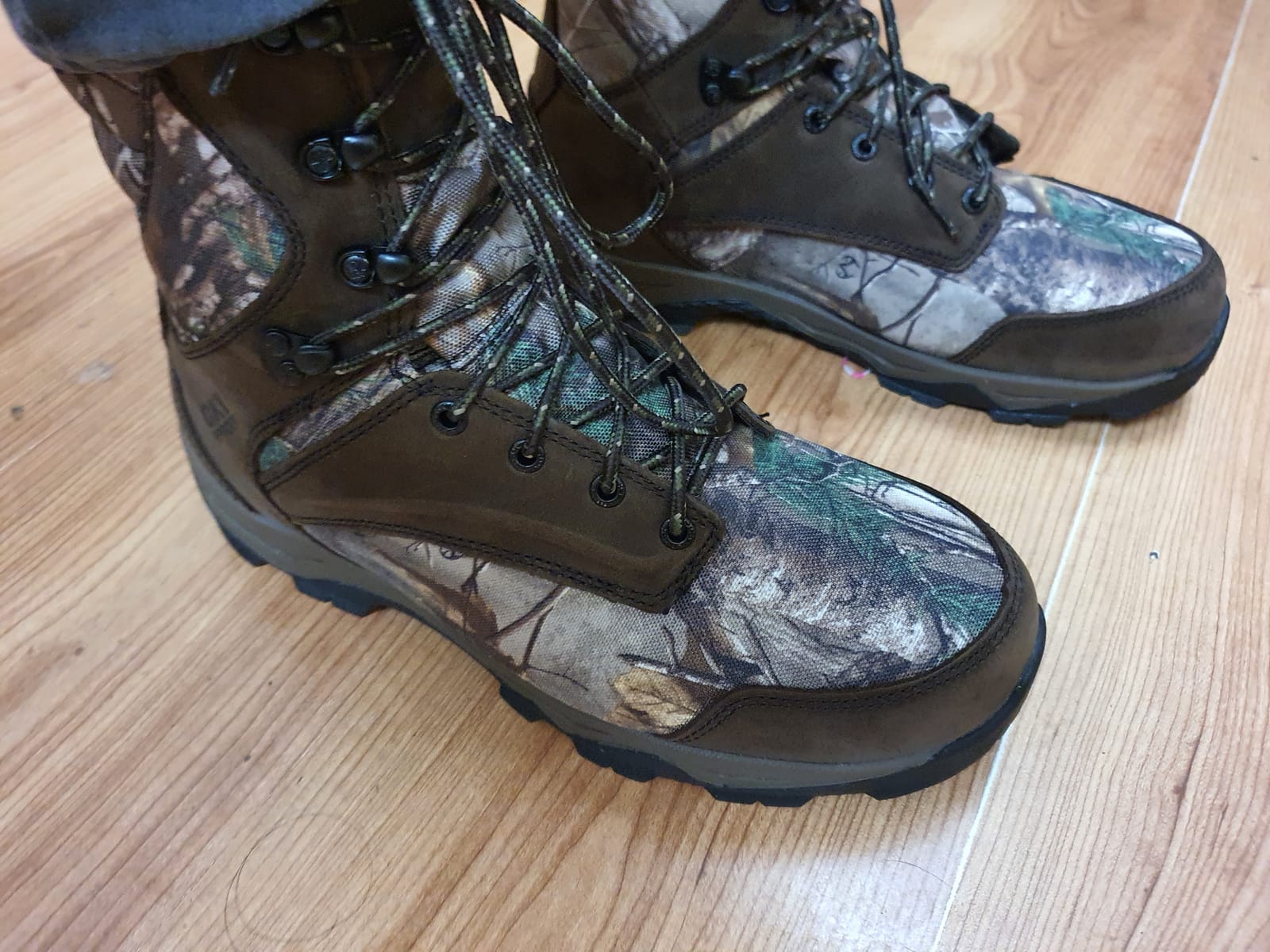
Technically, you get Rocky’s guaranteed waterproof construction, a Realtree Xtra camo nylon upper, and Strobel/cement construction that flexes naturally at the forefoot. The nylon upper also makes the boot lighter and faster drying than full leather options.
The two complaints worth knowing: the upper uses speed hooks rather than full eyelets, which some owners find fiddly when lacing with cold fingers, and there are rare reports of leaks after years of hard use. Neither is a dealbreaker at this price.
Active versus stationary suitability
This is the boot for hunters who generate their own heat. Walking generates warmth, and 800G keeps that warmth in without causing the sweat buildup that plagues heavier boots on the move. Riders and all-day stand sitters should look elsewhere in this list.
As a rough rule from our research: below roughly 25 degrees while walking, or any temps while sitting still, step up to 1200G or more. Above that, the Retraction covers you comfortably.
Care tips to prevent leaks
The occasional leak reports usually trace back to the stitching and cement joints wearing over time. A yearly application of a seam sealer or waterproofing treatment on the stitching dramatically extends the waterproof life of any hunting boot.
Dry them naturally with newspaper or a boot dryer, never next to a wood stove. High heat is the number one killer of waterproof membranes and cemented soles.
7. Rocky Sport Utility – The 1000G Classic
ROCKY Sport Utility 1000G Insulated Waterproof Boot, Mossy Oak Break Up, Size 12(WI)
1000G 3M Thinsulate Ultra
Guaranteed Rocky waterproof
Sport Utility outsole
6.1 lb pair in size 10
Pros
- 1000g Thinsulate for serious warmth
- Excellent waterproof protection
- Sport Utility outsole traction
- Durable construction
- Stable footing
Cons
- Heavier than alternatives
- Limited color options
The Sport Utility has been in Rocky’s lineup since 2003, and it is still going strong at 4.6 stars across more than a thousand reviews. Longevity like that in the hunting boot market means something. This is the quintessential 1000-gram do-it-all boot.
Think of 1000 grams as the middle of the cold weather range. It is warm enough for long sits in the teens and twenties, yet not so over-insulated that you cannot walk a few miles without cooking your feet. For hunters who do a mix of walking and sitting, it is the safest single-boot choice.
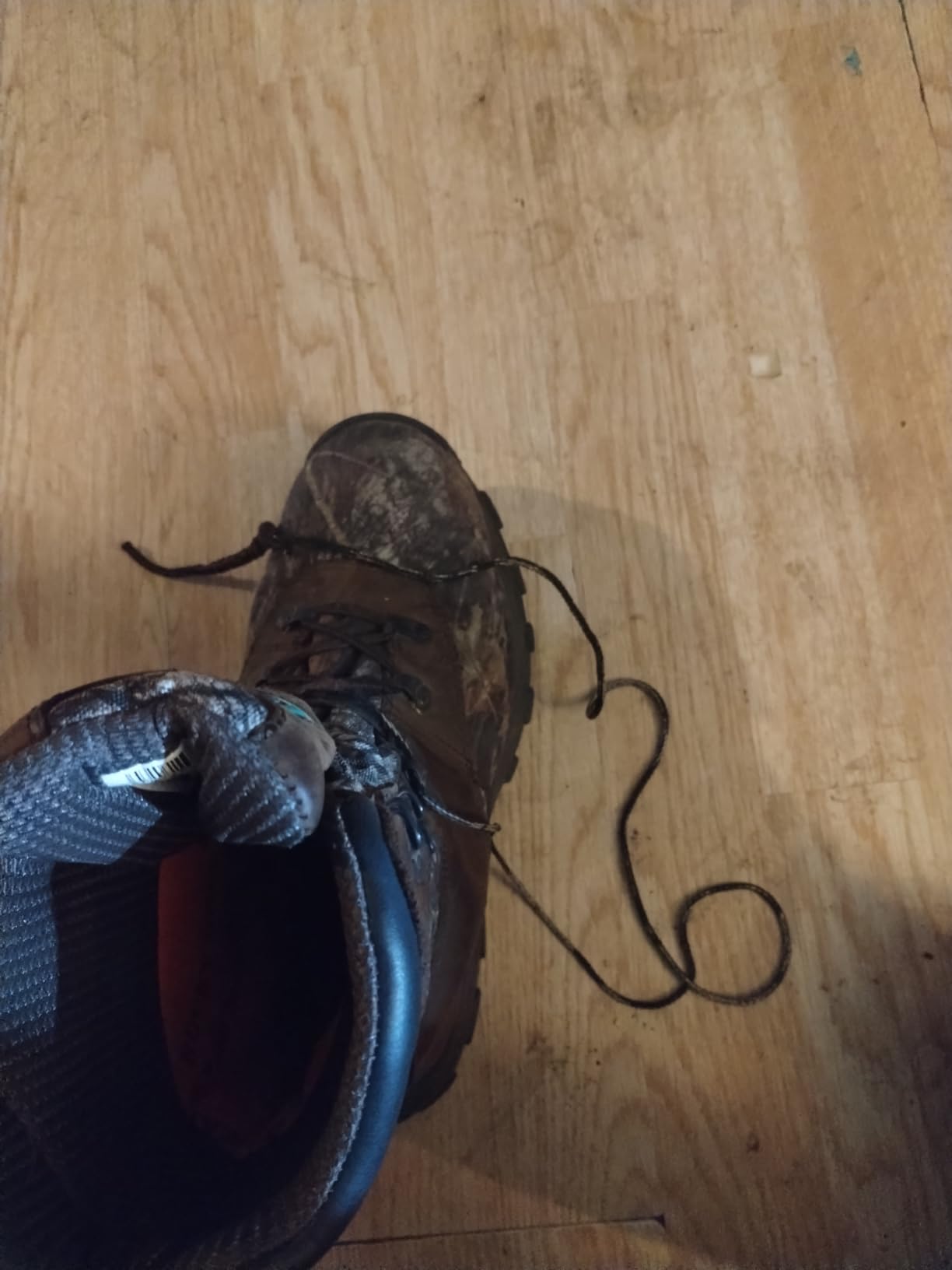
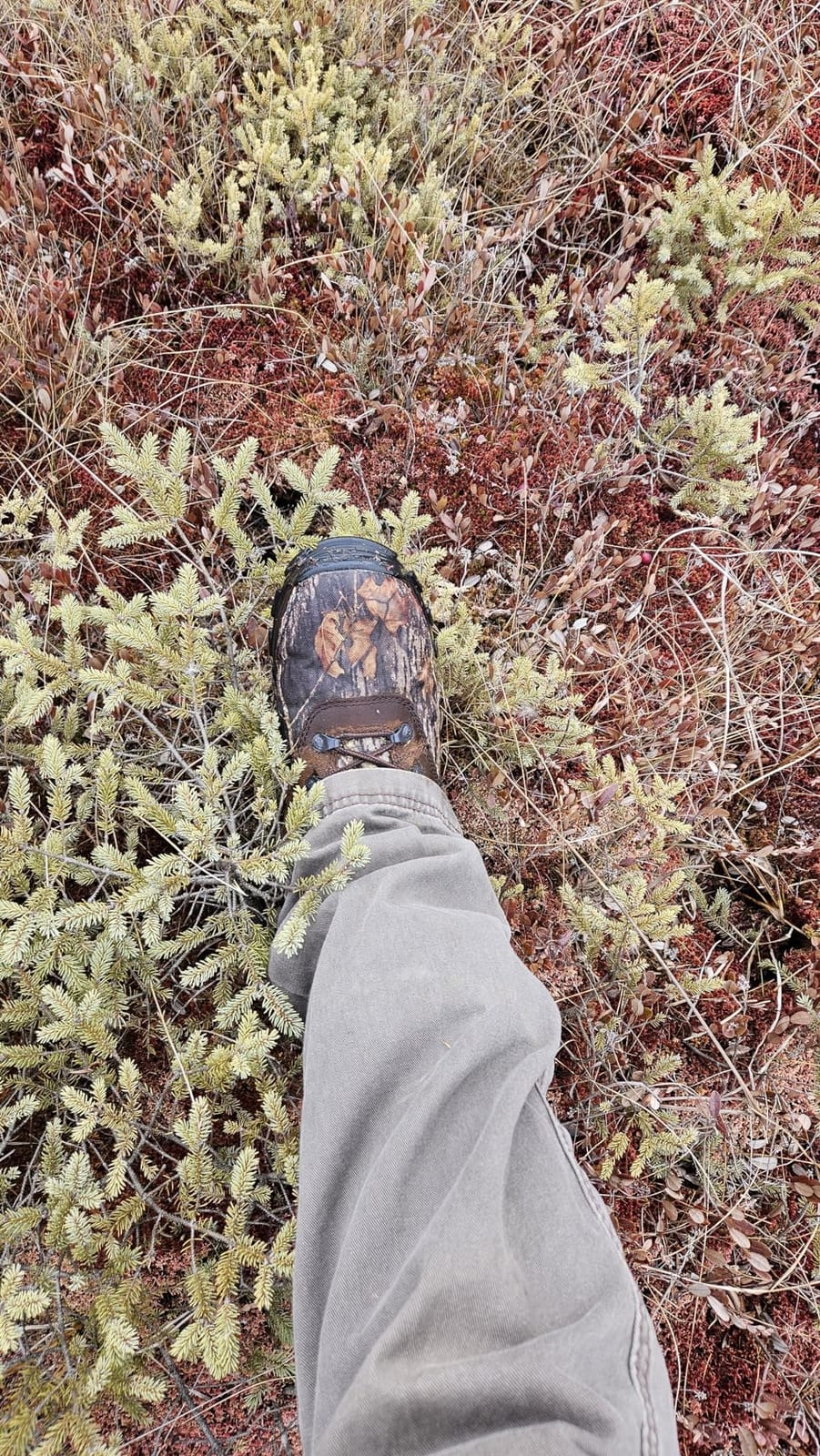
Construction details include Rocky’s guaranteed waterproof system and the Sport Utility outsole, which gets consistent praise for traction on everything from frozen fields to rocky trails. At 6.1 pounds per pair in size 10, it is solidly built but noticeably heavier than a fabric boot.
Reviews are remarkably consistent: warm, dry, stable. The main criticisms are simply the weight and the limited color selection, neither of which matters much in a deer blind. A handful of owners note the boots run true to size with a standard hunting sock.
Who the 1000G class suits best
The 1000G class fits the largest group of cold weather hunters: those hunting from late October through the end of season in climates where mornings dip into the teens. It handles sitting and moderate walking equally well.
If your hunting is more specialized, adjust accordingly. Deep cold all-day sits favor 1600G to 2000G, and high-mileage hunts favor 400G to 800G. But if you can only own one insulated boot, this is the class to buy.
Weight trade-off on long walks
Six pounds a pair does not sound like much until you add elevation and miles. A rough rule is that a pound on your feet feels like five on your back, so heavy boots add real fatigue on mountain hunts.
For flat Midwest and Eastern hunting, the weight is irrelevant and the durability is worth it. For western hunts, look at the Irish Setter VaprTrek later in this list instead.
8. Irish Setter VaprTrek – Best Lightweight Active Cold Weather Boot
Irish Setter VaprTrek 8″ Mens Hunting Boot, Mossy Oak, 10.5
400g PrimaLoft insulation
UltraDry waterproofing
ScentBan odor control
Sugarcane EVA midsole
Pros
- Lightweight and comfortable
- 400g PrimaLoft warmth for active hunts
- Excellent multi-directional lug traction
- UltraDry waterproofing
- Cushioned ankle protection
Cons
- Limited long-term reviews as a newer model
- Not warm enough for stationary extreme cold sits
The VaprTrek solves the problem forum hunters bring up constantly: insulated boots that turn walks into a swamp. With 400 grams of PrimaLoft insulation and an athletic build, it is built for hunters who cover ground in cold weather. The 4.8 rating from early buyers is excellent, though the review pool is still small since this is a newer model.
PrimaLoft is the standout technical choice here. It insulates even when damp and has a better warmth-to-weight ratio than older synthetic fills. Combined with the high-rebound EnerG sugarcane EVA midsole, the boot feels closer to a hiking shoe than a traditional hunting boot.
The feature list is genuinely modern: UltraDry waterproofing, ArmaTec heel protection, ScentBan odor control, and a Rubber Hex Lite wrap-up outsole with multi-directional lugs. The wrap-up sole design protects the midsole from side-hill abrasion, which western hunters will appreciate.
The honest limitation is warmth. This is not the boot for a 10-degree all-day tree stand sit. It is the boot for 5-mile November walks, spot-and-stalk hunting, and active cold weather pursuits where you generate your own heat.
Best hunting styles for this boot
Spot-and-stalk hunters, upland hunters in cold climates, and mobile whitetail hunters running multiple sets per day are the ideal users. Anyone logging serious miles in temperatures from the mid-teens to the 30s will find the balance right.
If you primarily sit, skip this one and look at the 1600G-plus options above. Insulation mismatch in that direction leads directly to the frozen-toes problem this whole article is about avoiding.
Odor control in the field
The ScentBan antimicrobial treatment is a real advantage for bowhunters who need to get close. It inhibits odor-causing bacteria inside the boot, which complements the external scent discipline of rubber over-boots or careful approach routes.
It is not a replacement for airing boots out and keeping them in a scent-free container. Think of it as one layer in a scent control system rather than the whole solution.
9. HISEA Rubber Hunting Boots – Best Budget Cold Weather Boots
HISEA Men’s Rubber Hunting Boots, Neoprene Insulated Waterproof Work Boots
16.5 inch rubber neoprene
Breathable air-mesh lining
Adjustable cinch buckles
Comfort rated 14F to 86F
Pros
- Outstanding price
- 100% waterproof
- Lightweight and comfortable
- Adjustable cinch buckles for fit
- Reinforced heel toe and Achilles
Cons
- Not warm enough for extreme cold without thick socks
- Basic design and finish
The HISEA is the value pick of this entire roundup, and its popularity is undeniable: over 3,100 reviews at 4.5 stars despite a price under most competitors’ insole budgets. For hunters on a budget or anyone needing a second pair of muck boots, it is a genuinely good buy.
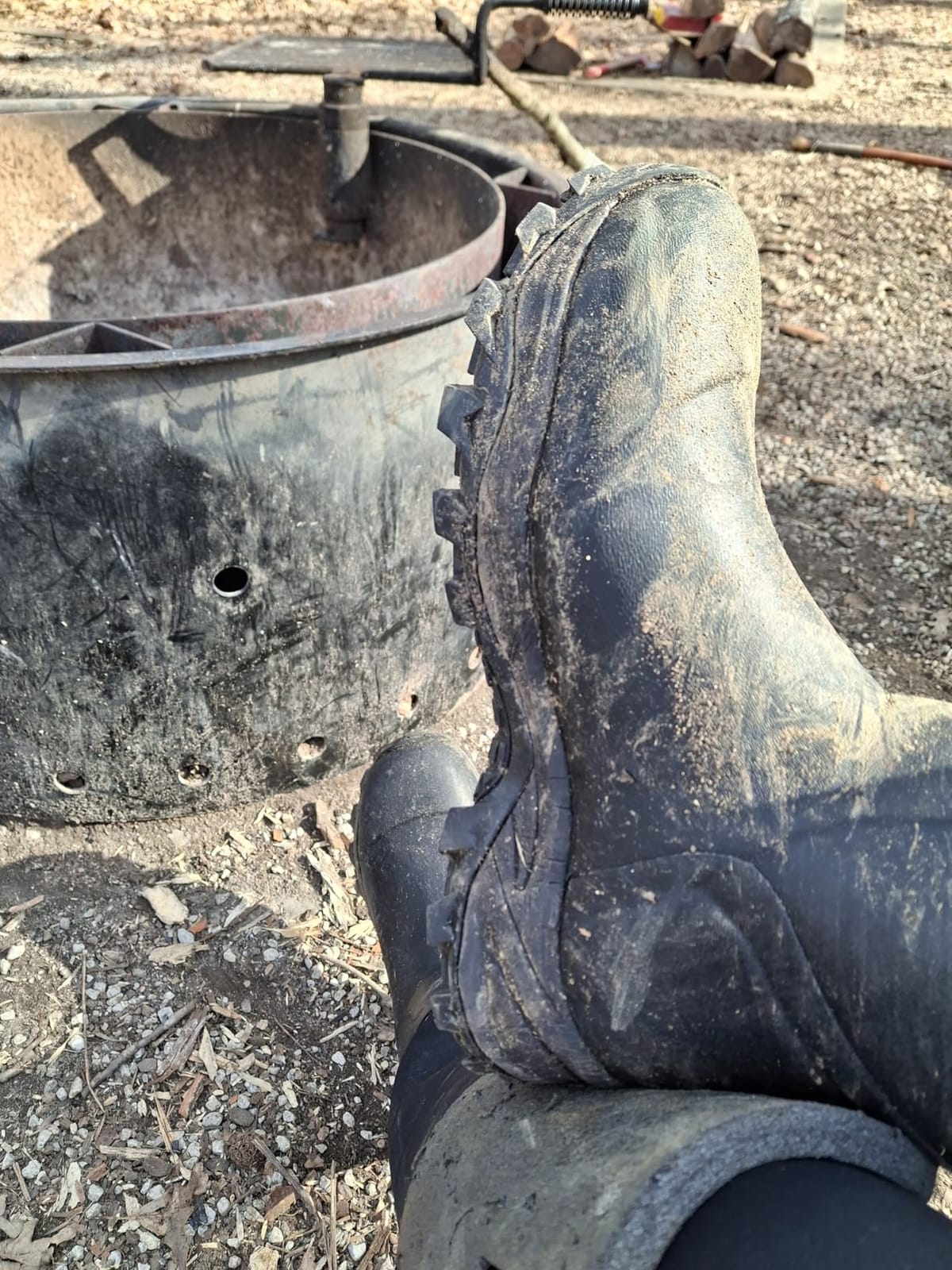
You get a 16.5-inch tall rubber-over-neoprene boot with a breathable air-mesh lining, a lightweight EVA midsole, and cinch buckles at the calf that let you dial in the fit. The reinforced heel, toe, and Achilles areas address the high-wear zones where cheap boots usually fail first.
The official comfort rating runs from 14 degrees F up to 86 degrees F, which tells you this is a three-season boot with mild cold capability rather than an extreme cold specialist. Owners in moderate climates report it handles frosty mornings well with a decent wool sock.
The limitations are predictable for the price. In genuine deep cold you will want heavyweight socks and possibly an insulated insole, and the finish quality is basic compared with Muck or LaCrosse. But nothing else at this price delivers this level of waterproof protection.
How far into cold weather can it go
Realistically, plan on comfort down to the mid-teens with a good merino sock while you are moving. For stationary sits below freezing, add a heavyweight sock and a wool or insulated insole, and accept that this boot has limits.
Hunters in the Deep South or Pacific Northwest doing early and mid-season hunts will find it covers nearly everything. Northerners should treat it as a shoulder-season tool.
Using insoles to boost warmth cheaply
The single cheapest warmth upgrade in boots is a closed-cell foam or wool felt insole, and it matters most in rubber boots where cold conducts through the sole. Standing on frozen ground or a metal platform pulls heat straight out of your feet.
Swap the stock insole for a 7mm wool felt version and you gain several degrees of comfort for around $15. It is the trick I recommend most often to budget-minded hunters.
10. BOGS Classic High – Slip-On Comfort Rated to Minus 40
Bogs Men’s Classic High-M Waterproof Insulated Rain Boot, Mossy Oak, 11 D(M) US
Comfort rated to -40F
Hand-lasted natural rubber
Four-way stretch bootie
Self-cleaning outsole
Pros
- Rated to minus 40F
- Easy slip-on design
- Very comfortable for long periods
- Excellent mud and snow traction
- Durable rubber construction
Cons
- Soles wear on daily asphalt use
- Can be hard to pull off
- Some lining wear reports
The BOGS Classic High has been around since 2007 and still earns a 4.6 across more than 3,300 reviews. Its headline number is hard to beat: a comfort rating to minus 40 degrees Fahrenheit. That rating comes from the four-way stretch inner bootie that insulates your entire foot, not just the sole area.
I have always liked BOGS for the slip-on convenience. For hunting, that matters most on cold mornings when you want to step out of the truck and into your boots without fighting laces with numb fingers. The contour fit gives real support for a pull-on boot.
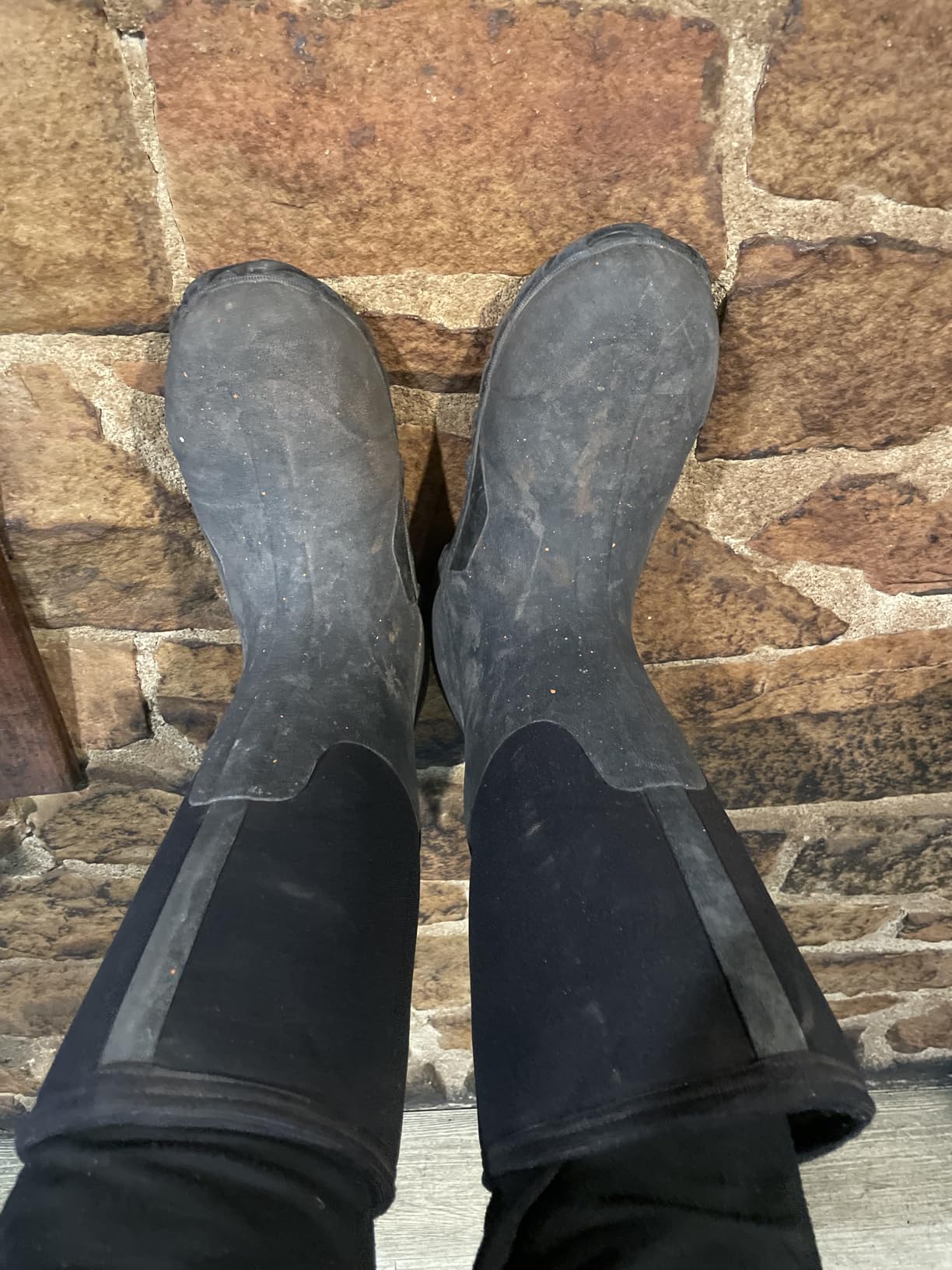
The hand-lasted natural rubber shell is completely waterproof and the self-cleaning non-marking outsole sheds mud instead of packing it into the lugs. Traction reports in snow and mud are consistently strong, and the boot doubles as a chore boot the other ten months a year.
Know the weaknesses. Owners who wear them daily on asphalt and gravel report sole wear, the boot can be stubborn to remove, and some report the lining compressing after multiple hard years. Treat them as a hunting and property boot rather than daily pavement wear and they last.
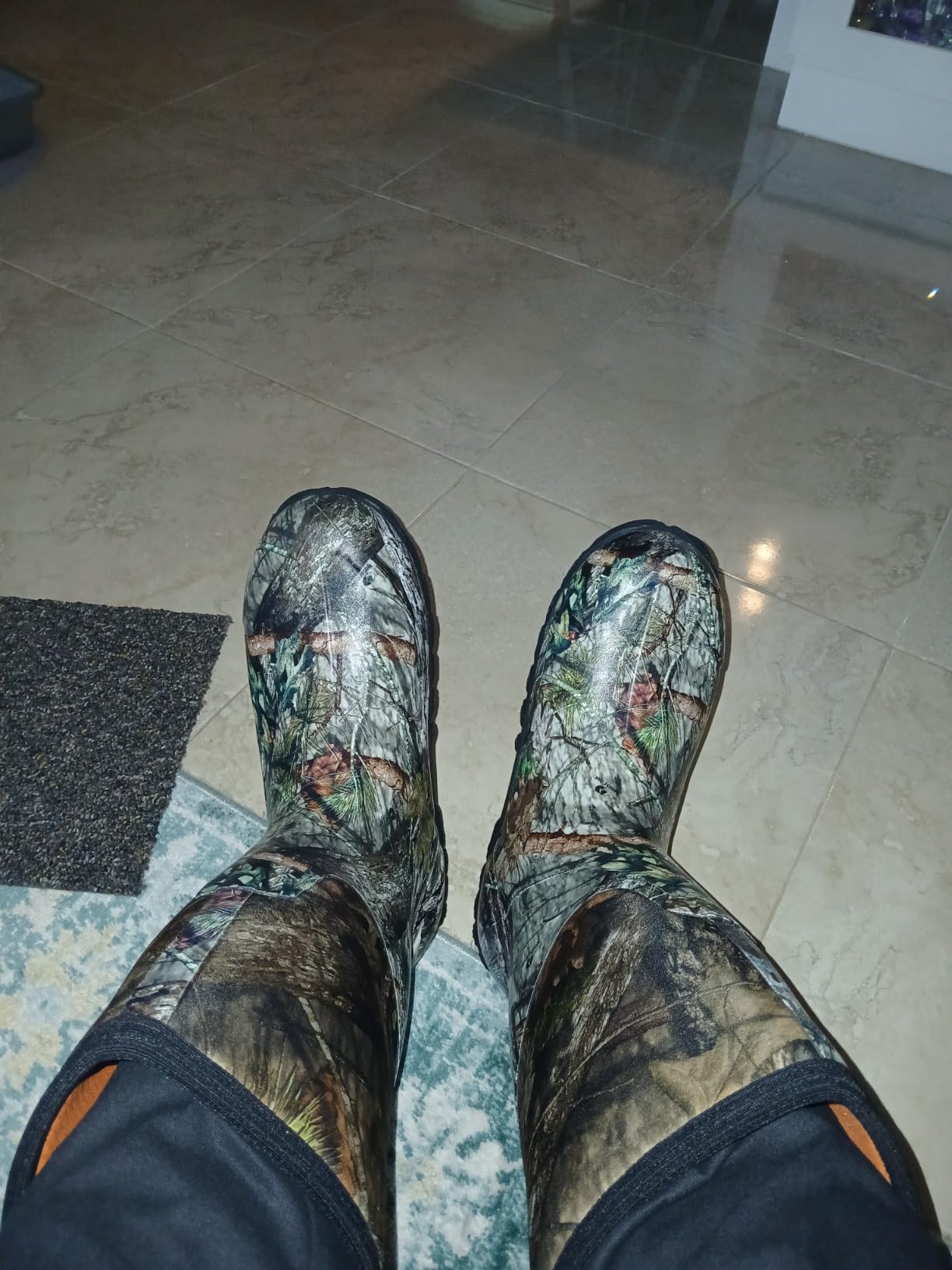
Is a minus 40 rating realistic for hunting
The comfort rating assumes appropriate socks and some activity. In practice, owners report comfortable all-day wear in the double digits below zero, which is genuinely extreme territory covered by few boots at this price.
For stationary sits in brutal cold, the Classic High is the strongest value pick in this list. Just pair it with a merino sock, since the snug bootie fit works against heavyweight alpine socks.
Everyday versatility beyond the season
This is the boot most likely to get used 12 months a year: snow blowing, ice fishing, barn chores, and wet fall turkey hunts. That spreads the cost across far more wear days than a dedicated hunting-only boot.
Several owners in our review digging reported exactly that pattern, with the BOGS becoming their default winter footwear and their hunting boots staying cleaner and lasting longer as a result.
Buying Guide: How to Choose the Best Hunting Boots for Cold Weather?
Choosing cold weather hunting boots comes down to matching insulation to temperature and boot type to hunting style. Here is the framework our team uses, built from owner reports and forum consensus.
Matching insulation gram weight to temperature
Insulation is measured in grams of Thinsulate, PrimaLoft, or equivalent synthetic fill per square meter of boot material. More grams means more trapped air and more warmth, but also more weight and less breathability. Here are the working ranges our research supports.
Uninsulated to 400G suits active hunting in 30 to 50 degree weather, like early season walks and western spot-and-stalk. 800G fits 20 to 35 degrees with moderate walking, the classic all-around active cold weather class. 1000G covers the teens to low 30s for mixed walking and sitting.
1200G to 1600G is for stationary hunting from roughly zero to 20 degrees, where long tree stand or blind sits let circulation slow down. 2000G is the deep-freeze class for sub-zero, all-day sits. Hunters chasing extreme cold often add pac boots with removable wool liners beyond this range.
Stationary versus active hunting
The number one mistake we see is over-insulating for active hunts. Walking generates serious heat, and sweat-soaked socks freeze the moment you stop moving, which is exactly the foot sweat problem raised constantly on hunting forums.
If you walk more than a mile, cap your insulation at 800G and manage warmth with socks. If you sit all day, err high on grams and add a thick insole. Boot swap strategies, walking in light boots and changing into insulated boots at the stand, are what many experienced northern hunters actually do.
Rubber boots versus leather boots
Rubber and neoprene boots like the Muck, LaCrosse Alphaburly, HISEA, and BOGS are fully waterproof, scent-friendlier, need zero break-in, and excel in mud, snow, and creek crossings. Their weaknesses are limited ankle support and sweat buildup on long walks.
Leather and nylon lace-ups like the LaCrosse Cold Snap, Rocky models, and Irish Setter VaprTrek offer better ankle support, foot-holding lock, and hiking performance on broken terrain. They need a short break-in and more care to stay waterproof over the years. Mountain hunters almost always choose this type.
Sock strategy matters as much as the boot
The forum consensus is clear: merino wool is the only sock material for cold weather hunting. Cotton holds moisture and guarantees cold feet once you stop moving. A moisture-wicking lightweight liner under a midweight merino wool sock handles most conditions without bulk.
Do not simply stack on the thickest sock you own. An over-stuffed boot restricts circulation and produces colder feet than a properly fitted lighter sock. Match the sock to the boot’s insulation: heavier socks with lighter boots, lighter socks with heavily insulated boots.
Sizing, break-in, and footbed upgrades
Many cold weather hunters size up a half size to accommodate wool socks, and rubber boot wearers in particular should check the fit with their actual hunting socks on. A loose boot pumps out warm air with every step, so aim for snug but not tight.
Leather boots need a week or two of short walks before season to prevent blisters, while rubber and neoprene boots are ready out of the box. Finally, if you stand on metal platforms or frozen ground, a wool felt or closed-cell foam insole is the cheapest meaningful warmth upgrade available for any boot on this list.
Frequently Asked Questions
What is the warmest pair of hunting boots?
Among widely available options, boots with 2000 grams of Thinsulate Ultra insulation like the LaCrosse Cold Snap are the warmest lace-up hunting boots, while the BOGS Classic High with its minus 40 degree Fahrenheit comfort rating is the warmest pull-on rubber boot for the money. For truly extreme conditions, dedicated pac boots with removable wool liners go even further.
How warm are 1000 gram Thinsulate boots?
1000 gram Thinsulate boots are generally comfortable from roughly 15 to 35 degrees Fahrenheit depending on activity level and socks. They suit mixed walking and stationary hunting, making them the most versatile single insulation class for late season whitetail hunting in most of the country.
Can I use Hunter boots in winter?
Classic Hunter rain boots are uninsulated rubber wellies with no thermal lining, so they are only suitable for winter use with heavy wool socks and insulated insoles in mild conditions. For genuine cold weather hunting, an insulated rubber boot like the Muck Arctic Pro or BOGS Classic High is a far better choice.
Should I size up hunting boots for thick socks?
Most cold weather hunters size up a half size to fit merino wool socks, especially in rubber boots with a snug fit like the Muck Woody Max. The exception is boots known to run large, like the Rocky Blizzard Stalker, where buyers commonly size down a half size instead.
Do insulated hunting boots make your feet sweat?
Yes, if the insulation exceeds your activity level. Sweat-soaked socks then freeze when you stop moving, which is why forum hunters repeatedly warn against wearing 1600G plus boots on walking hunts. Match insulation to activity: 400 to 800 grams for active hunting, 1200 grams and up for stationary sits.
Conclusion
Warm feet come from matching the boot to the hunt, not from buying the most insulation you can find. The Muck Woody Max is our best overall pick for most cold weather hunters, the LaCrosse Alphaburly Pro 18 delivers 1600G warmth at a strong value, and the HISEA covers budget-minded hunters well. For sub-zero sits, the 2000G LaCrosse Cold Snap and the minus-40-rated BOGS Classic High are the deep-freeze specialists.
Whatever you choose, pair it with merino wool socks, check the fit with those socks on, and add a felt insole if you stand on frozen platforms. Those three habits matter as much as the boot itself.
Pick the best hunting boots for cold weather that match your season, and enjoy finally thinking about the deer instead of your toes this 2026.