
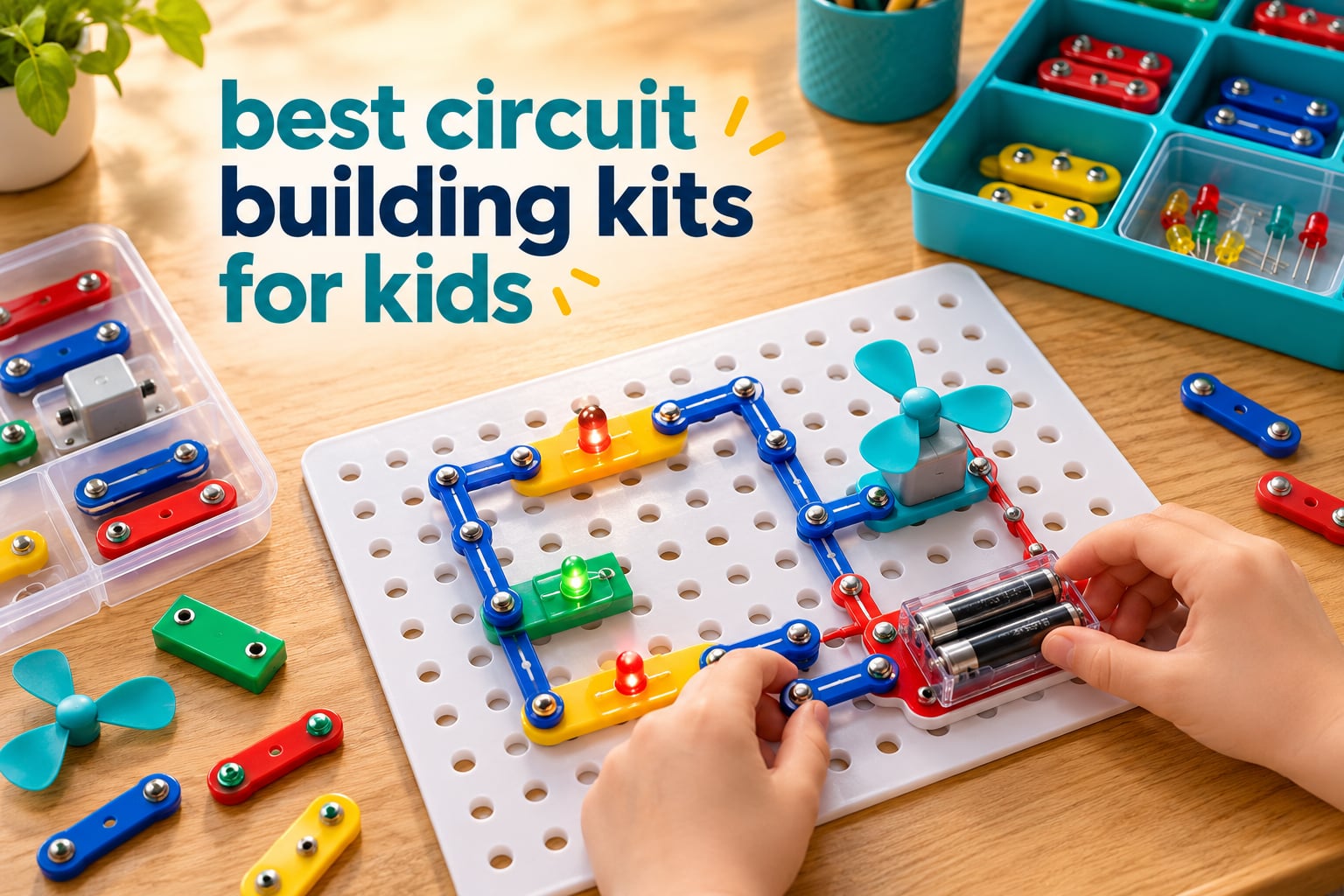
A circuit building kit is a STEM toy that gives children snap-together or clip-on components – LEDs, batteries, switches, motors, sensors and wires – so they can assemble working electrical circuits and start learning how everyday gadgets work. Most are designed for ages 4 to 14, with guided snap-together sets best for younger kids and breadboard or measurement kits better for tweens.
We spent weeks with these kits, breaking them down, counting the pieces, and reading the manuals the way a parent would rather than the way a manufacturer would. The result is our shortlist of the best circuit building kits for kids in 2026, organised by age so you can match a kit to the child in front of you instead of guessing.
Two things came out of the testing that surprised us. First, the advertised project count is the least reliable number on the box – one kit in this roundup claims more than 1,200 projects, but those are combinations of the same 66 modules rather than 1,200 distinct builds. Second, the snap-together format that makes these toys safe and satisfying also hides the theory, which is exactly the complaint parents raise on electronics forums when they ask how to go deeper than snap modules without jumping to soldering irons and microcontrollers.
If your child is ready for real electronics, this is the point where a solder-free kit stops being enough. Our guide to the best soldering irons for circuit boards covers the tools that open up the next tier, and we point you to the right age in the buying guide below.
Table of Contents
Top 3 Picks for the Best Circuit Building Kits for Kids in 2026


Teenii Electricity and Magnetism Kit
- Ammeter and voltmeter
- 18 experiments
- 50 pieces
- Wire-and-clip wiring
The Best Circuit Building Kits for Kids at a Glance in 2026
Every kit below runs on batteries and needs no soldering, with two exceptions worth noting: the Teenii set uses conventional wire-and-clip wiring, and the GadgetGlee set ships its batteries separately. Read the last column as the honest best fit, not the marketing line.
| Product | Specifications | Action |
|---|---|---|
| Snap Circuits Jr SC-100 |
|
Check Latest Price |
| Playz Advanced Circuit Board |
|
Check Latest Price |
| Teenii Electricity and Magnetism Kit |
|
Check Latest Price |
 Snap Circuits Beginner SCB-20 Snap Circuits Beginner SCB-20 |
|
Check Latest Price |
 Science Kidz 188 Experiment Set Science Kidz 188 Experiment Set |
|
Check Latest Price |
 National Geographic 120 Project Circuit Kit National Geographic 120 Project Circuit Kit |
|
Check Latest Price |
 SMILESSKIDDO 420+ Project Kit SMILESSKIDDO 420+ Project Kit |
|
Check Latest Price |
 Butterfly EduFields 10-in-1 Motor Kit Butterfly EduFields 10-in-1 Motor Kit |
|
Check Latest Price |
 Dr. STEM Toys Circuit Science Kit Dr. STEM Toys Circuit Science Kit |
|
Check Latest Price |
 Anyeve 448+ Project Circuit Kit Anyeve 448+ Project Circuit Kit |
|
Check Latest Price |
 GadgetGlee Battery Science Kit GadgetGlee Battery Science Kit |
|
Check Latest Price |
 VLGOEM 66 Piece STEM Kit VLGOEM 66 Piece STEM Kit |
|
Check Latest Price |
1. Snap Circuits Jr SC-100 – The Reference Starter Kit for Ages 8 and Up
SNAP CIRCUITS Jr. SC-100 STEM Electronics Kit, 100+ Projects, Ages 8+
100+ projects
29 snap modules
Snap board
4-color manual
640 g
Pros
- Over 100 projects from one box
- No tools or soldering required
- Clear color-coded manual graded by difficulty
- Very large review base for long-term feedback
Cons
- Teaches assembly faster than underlying theory
- Some projects share a base grid so only one runs at a time
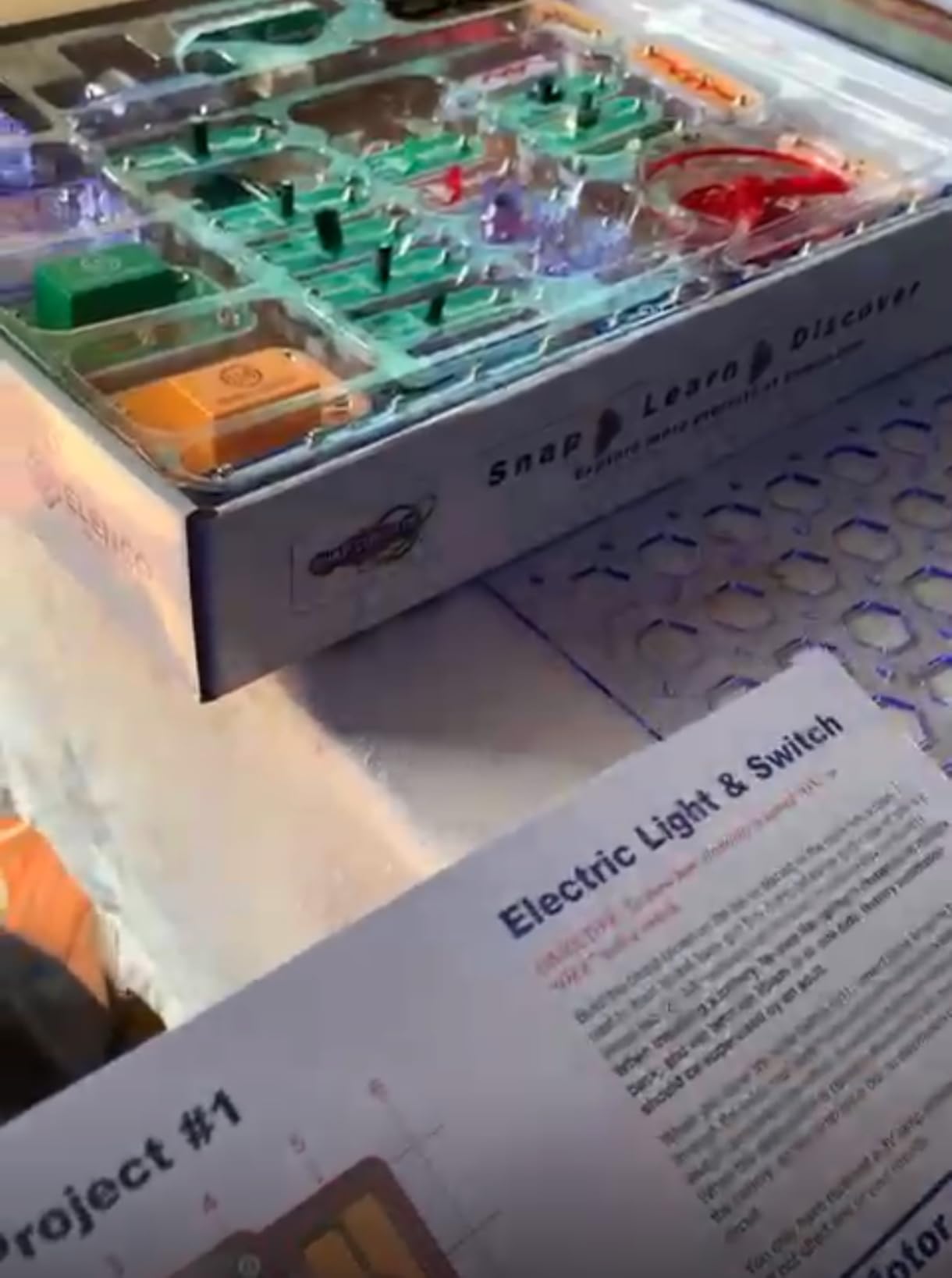
This is the kit most families end up with, and for good reason. It holds a 4.8 rating across more than 29,000 reviews, which is the widest owner feedback base of anything we tested. The box contains 29 snap modules, a plastic snap board and a full-colour manual, and the whole thing weighs 640 g.
The manual is the strongest part. Builds are graded from simple to harder, so a child can start on their own and climb without an adult narrating every step. The modules are colour-coded and numbered, which matters more than it sounds: a seven-year-old can find the right part without reading a paragraph.
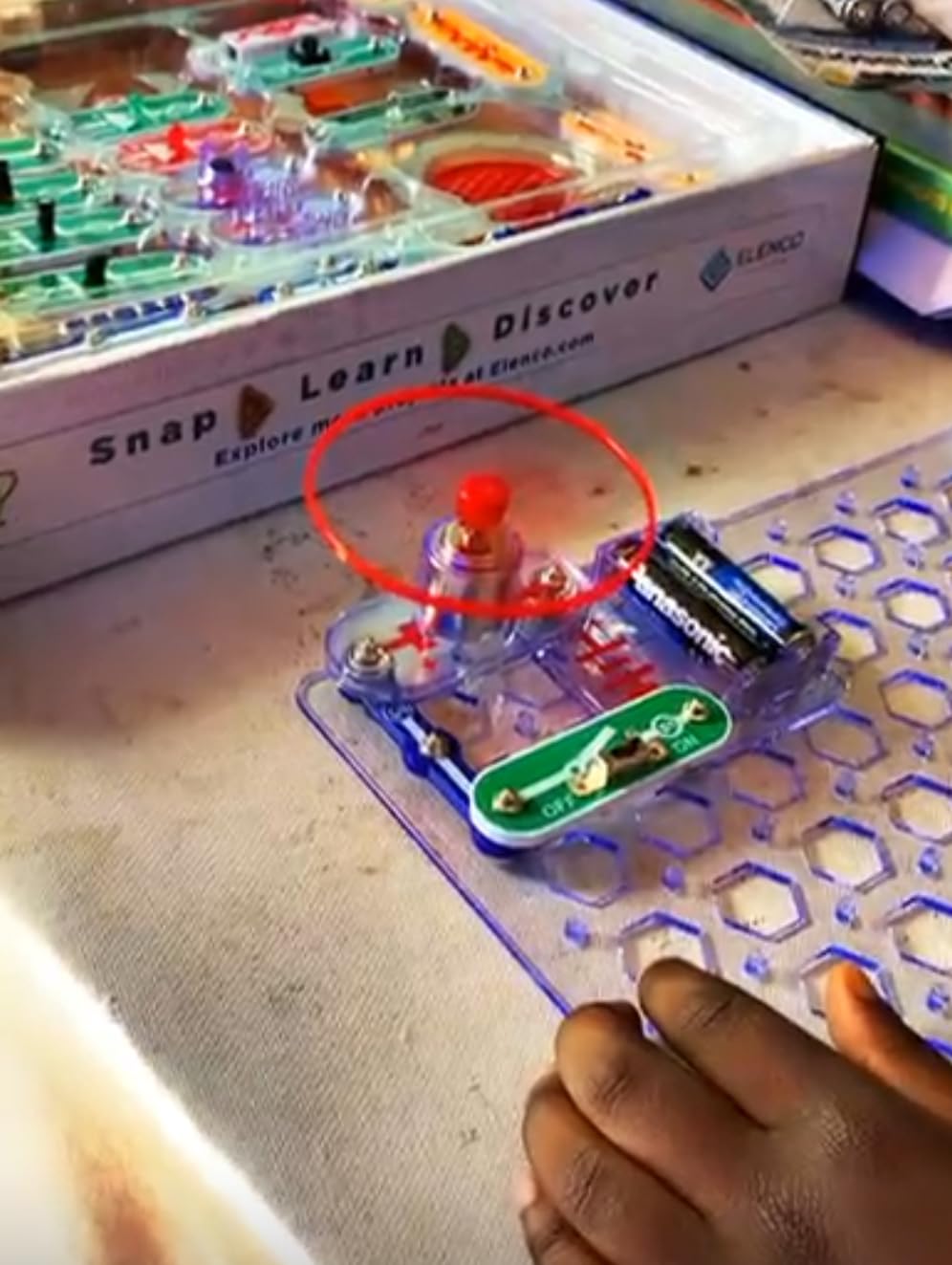
The honest caveat is the one parents raise most often on electronics forums. Snap-together format teaches the mechanics of assembly faster than it teaches electricity. A child can complete a working circuit and still not be able to explain why it works, or what a short circuit is and why it is a problem.
There is a second, smaller limitation. Some of the illustrated projects share the same base grid layout, so once you build one you effectively have to tear it down to build another. That is normal for the format and rarely a dealbreaker, but it does mean a kit sits well on one table rather than several.
What it teaches and who it suits
It teaches circuit assembly, cause and effect, and troubleshooting by prediction. For a child aged 8 to 11 it is the safest place to start, and it pairs with the same-system kits later if you want to keep going.
Parents of confident 8-year-olds will get real value here. Younger children tend to need an adult reading each diagram aloud, which turns the build into a shared activity rather than independent play.
Who should look past it
If your child already owns a Snap Circuits set and asks why the LED is dim, this is the wrong upgrade. The answer is a kit that measures things rather than just connecting them.
It is also a poor choice as a shared classroom set for 20 children, since the base board is a single surface and the projects are individual rather than paired.
2. Playz Advanced Circuit Board – The Widest Range of Working Outputs
Playz Advanced Circuit Board for Kids, Science Kits for Kids Age 8-12
328+ experiments
Large single board
AM/FM radio
64-page manual
Pros
- 328+ experiments on one board
- Working AM/FM radio fan and doorbell builds
- 64-page manual graded simple to challenging
- Largest review base in the premium tier
Cons
- Biggest and heaviest board in the roundup
- A 25+ experiment version exists so check the variant
- Younger children need help with complex wiring
This is the one to buy if your child wants a circuit kit that makes noise, moves and plays music. The build list includes a working AM/FM radio, a flying fan, animal sounds, a doorbell and LED lighting, and that range of outputs is what separates it from sets that only light up.
It carries 3,456 reviews at 4.6 stars, the second most tested product in this roundup, so the durability picture is well documented. The 64-page illustrated manual is graded, and owners credit it with letting kids work upward without hovering.
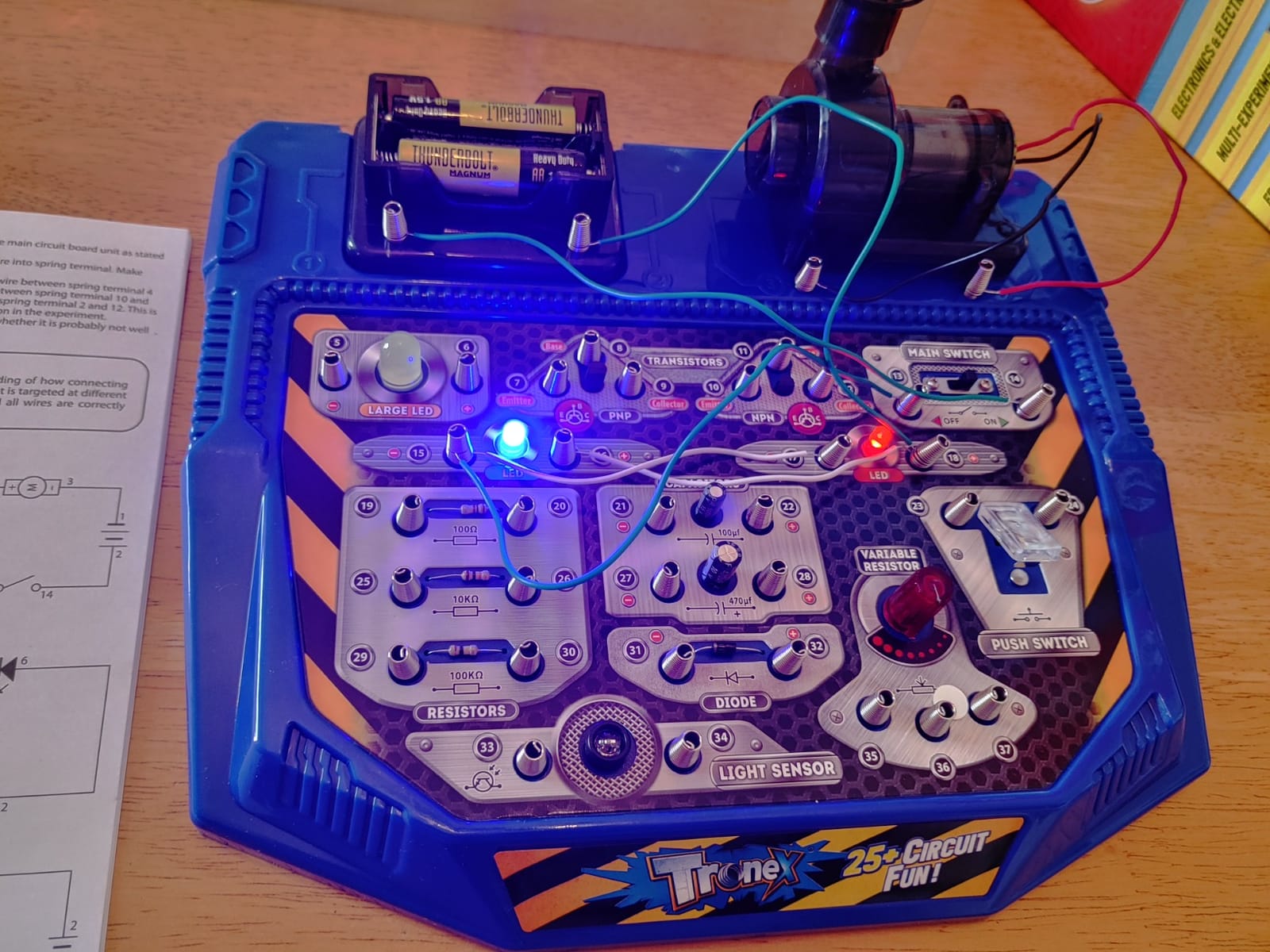
Size is the real trade-off. The board measures 21.7 by 15.6 inches and weighs 4 pounds, so it needs its own table or a dedicated shelf. On a small desk it will crowd out everything else, and you may want to plan where it lives before you buy it.
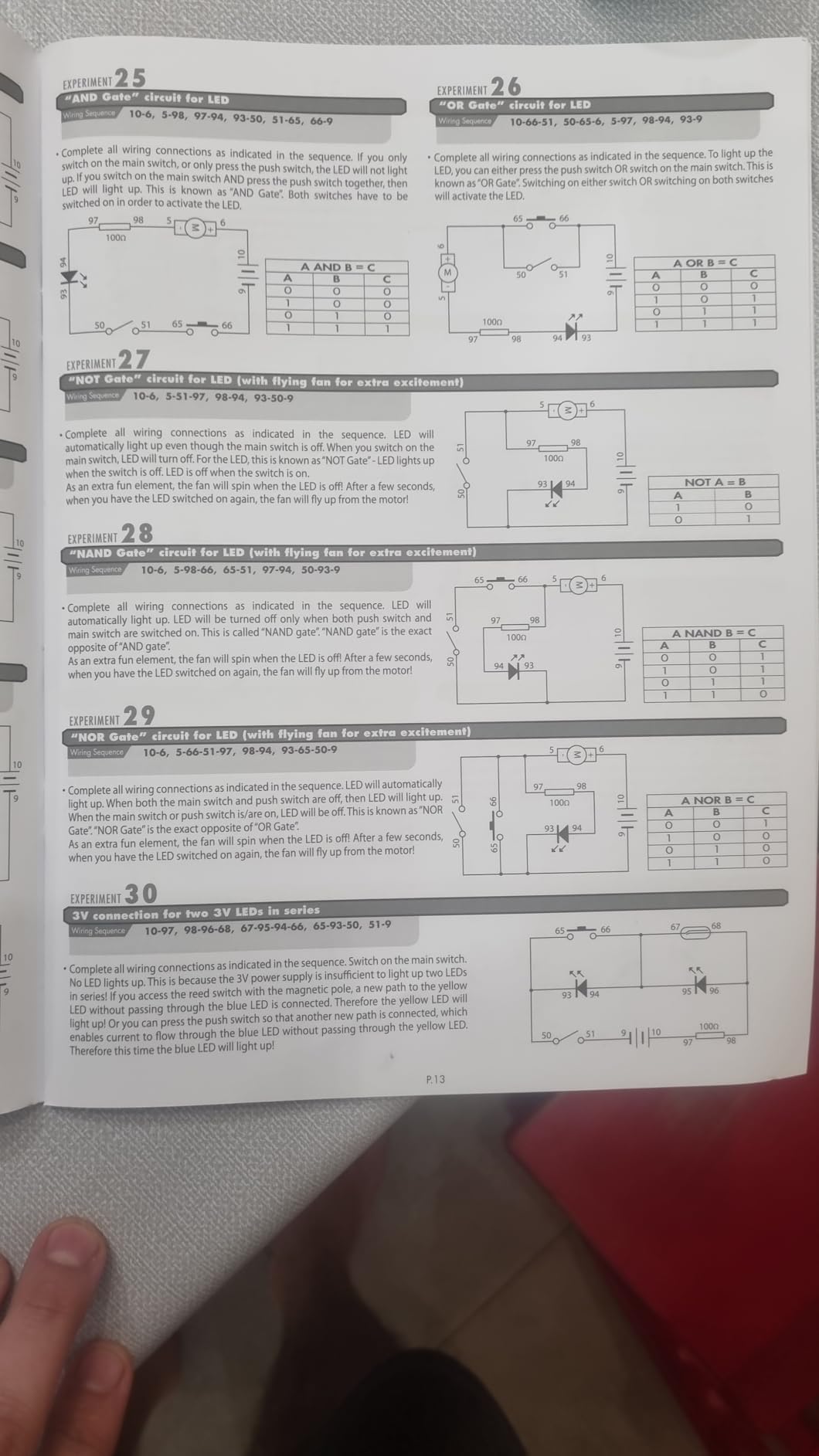
One practical warning from the reviews: a version of this product with only 25+ experiments also exists under a similar listing. Confirm the experiment count on the page you are buying from, because the two feel very different in the hand.
What it teaches and who it suits
It teaches output variety – that a circuit can make sound, motion and light as well as illumination. For a 9 to 12 year old who is bored by simple LED builds, the radio is usually the hook that keeps them going.
It is also a strong choice for a home lab setup where one child or a small group will use it over months rather than weeks.
Who should look past it
Skip it if space is tight or if you need something a small child can carry around. The board is not portable, and the more complex wiring needs an adult reader.
It also stays within the same snap-together logic as the cheaper kits, so it expands play value without adding real measurement or theory depth.
3. Teenii Electricity and Magnetism Kit – The Only Set That Actually Measures
Teenii Electricity and Magnetism Kit for Kids, STEM Science Experiments with Electric Circuits, Educational Physics Toy, Science Discovery Game for Boys and Girls 8+, 50 Pieces
Ammeter and voltmeter
18 experiments
50 pieces
40-page manual
Ages 8 to 18
Pros
- Only kit here with an ammeter and voltmeter
- 18 structured experiments from one battery upward
- Components feel higher quality than typical plastic kits
- Support replaced faulty kits quickly
Cons
- Some sets arrived with missing parts
- Copper coil was defective in some models
- English only manual with weak translation
- Wire-and-clip wiring is less forgiving for young children
This is the kit that answers the question parents keep asking on forums: how do I go past snap modules without going straight to a microcontroller? The answer is measurement. It ships with an ammeter and a voltmeter, so a child can read a value instead of guessing whether a circuit is on.
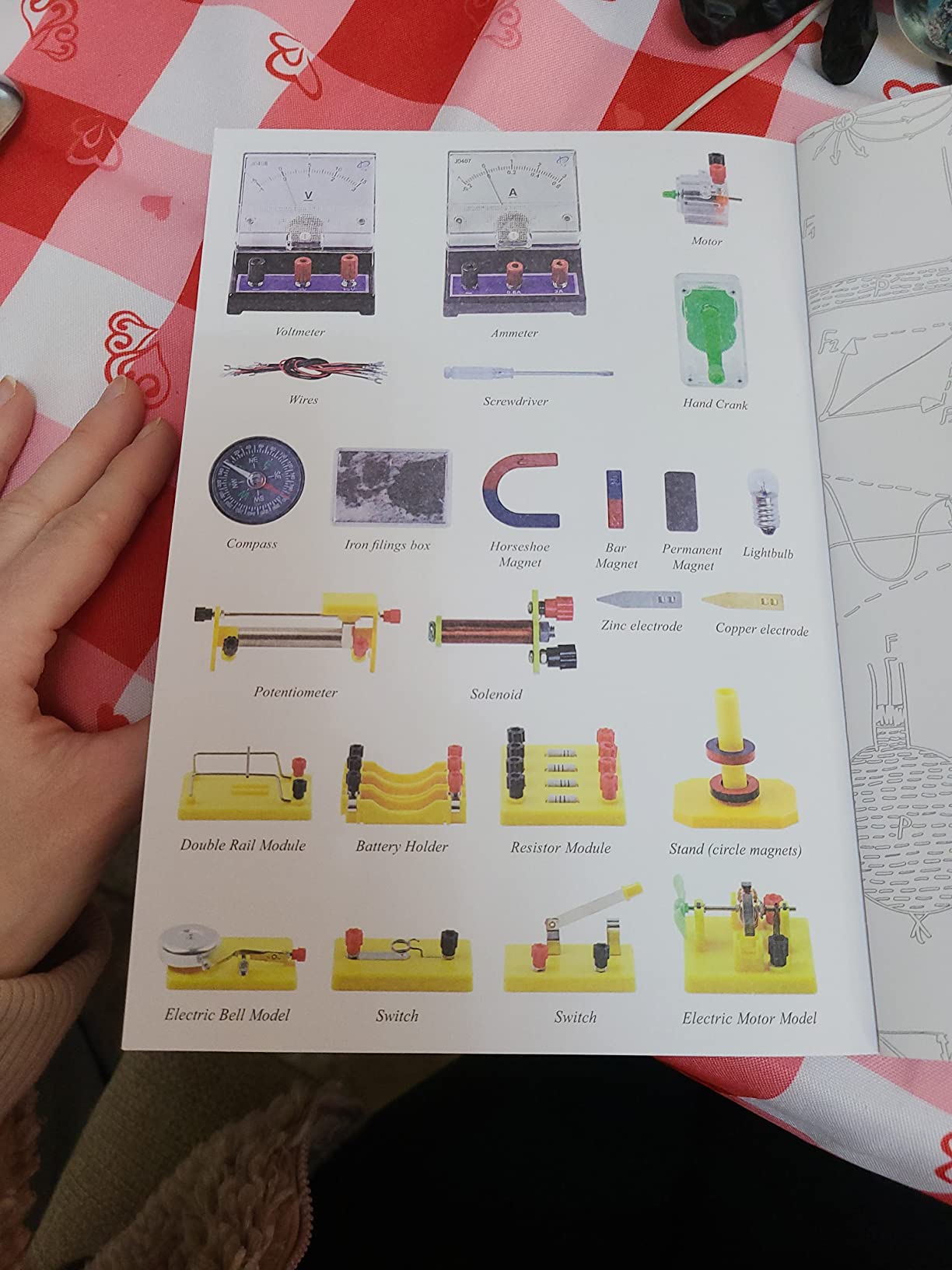
It is also not a snap-together kit. The 18 experiments use conventional wire-and-clip wiring across 50 components, including a hand crank generator, a fruit battery, copper and zinc electrodes, a solenoid and an electric motor. The design brief is an 8 to 18 year old range, and a parent reviewing as an electrical engineer singled out the conceptual clarity of the progression.
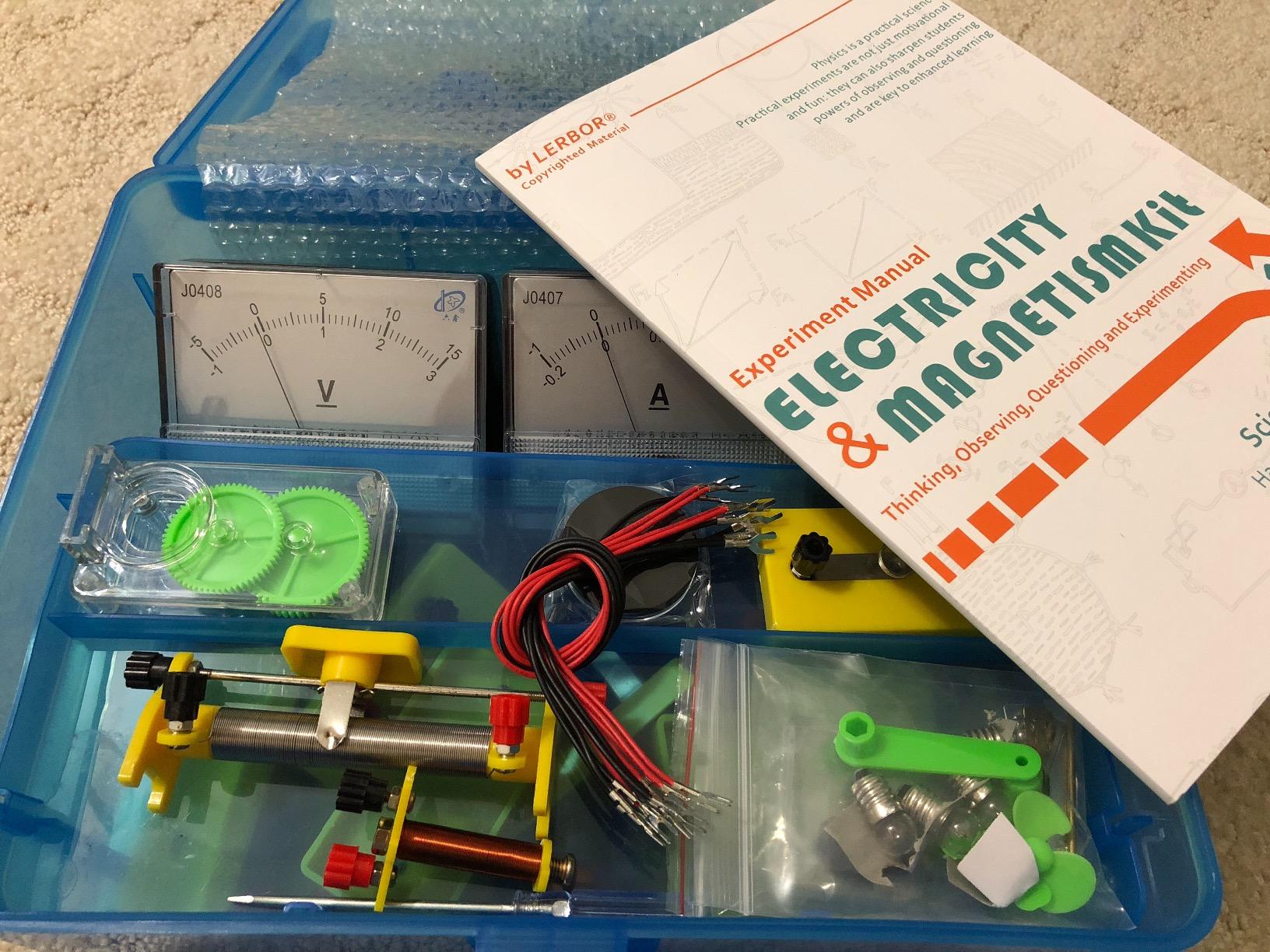
The 4.4 rating is lower than the snap kits, and the reason is quality control rather than concept. Reviews mention incomplete sets missing a solenoid or horseshoe magnet, a non-working compass, and a defective copper coil that needed repair. The upside is that several of those reviewers report Teenii’s support replaced the kit quickly.
The manual is another weak point. It is English only, and some printed versions are poorly translated, so check the language before buying for a child who does not read English comfortably.
What it teaches and who it suits
It teaches voltage, current and resistance as quantities. That is a genuine step up in abstraction, and it is the bridge many parents are looking for between a snap kit and a soldering bench.
It suits a 10 to 14 year old who asks how something works, a homeschooler building an electronics unit, and any adult who wants to learn alongside a child.
Who should look past it
Do not start a five or six year old here. Clip-and-wire connections need steady hands, and a loose wire reads as a broken circuit rather than a lesson.
It is also not a snap-compatible system, so none of these parts carry forward into the modular kits later in the list.
4. Snap Circuits Beginner SCB-20 – The Gentlest On-Ramp for Ages 5 to 9
SNAP CIRCUITS Beginner SCB-20 STEM Electronics Toy for Kids Ages 5-9
21 guided projects
Extra childproofing
Color-changing fan
Ages 5 to 9
Pros
- Built for ages 5 with extra childproofing
- 21 guided projects that build planning and troubleshooting skills
- Age-appropriate diagrams and language
- Includes a lighted color-changing fan
Cons
- Fewer components and less variety than the Jr kit
- Projects are basic and repeat more quickly
If your child is five, six or seven, this is the kit we would start with. The same Snap Circuits format as the reference kit, but with fewer, simpler projects, a smaller box at 11.7 by 7.4 inches, and extra childproofing on the components.
There are 21 unique projects rather than 100, and the manual uses shorter sentences and larger diagrams. Reviewers consistently praise the way it teaches switches and circuits without overwhelming, and it holds a 4.7 rating from more than 3,500 reviews.
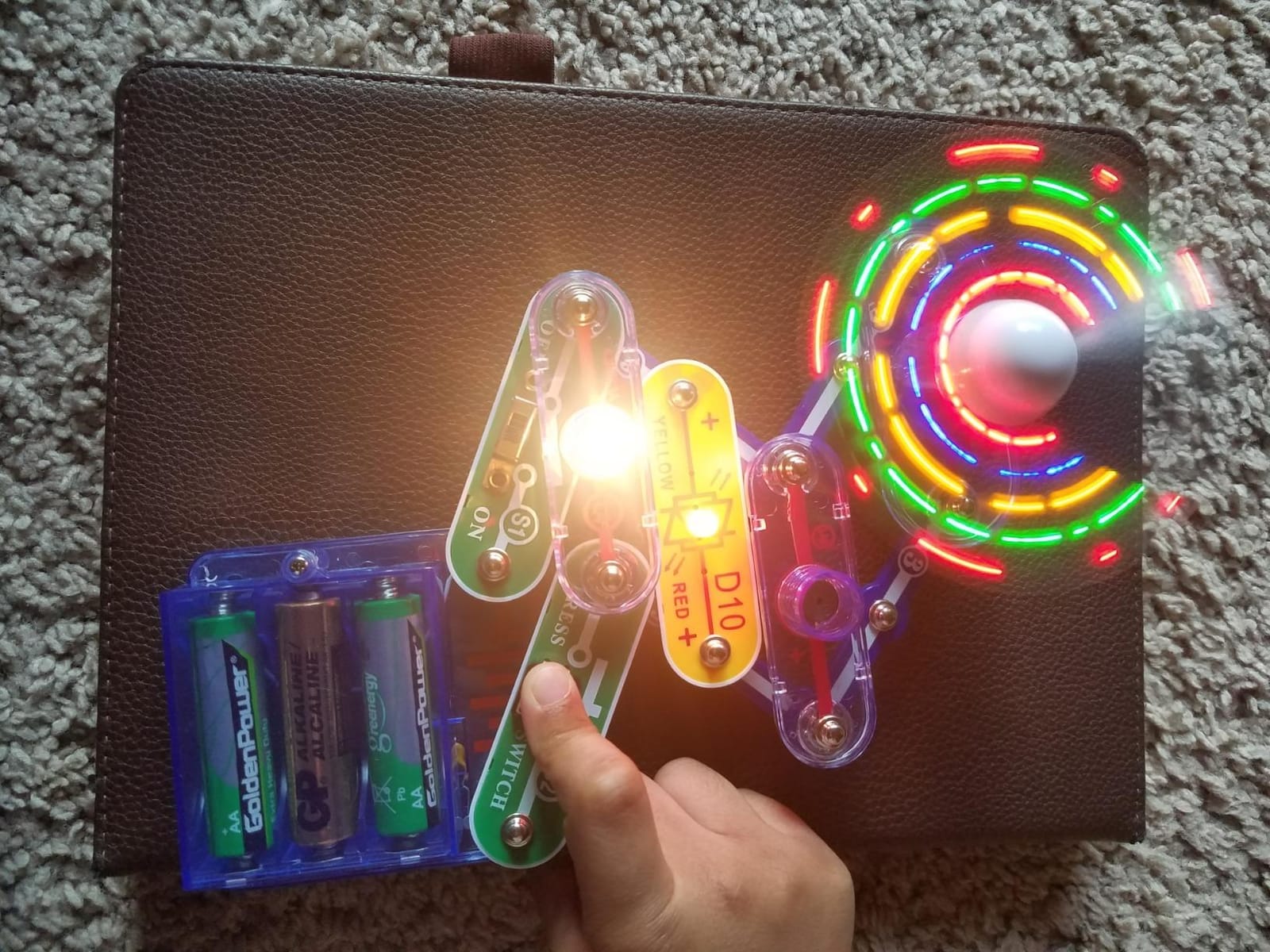
The lighted color-changing fan is the surprise hit. It is the component most often singled out by parents, because it is the first build where a child sees a circuit produce motion and colour at the same time.
The obvious trade-off is depth. Twenty-one projects is roughly a fifth of what the Jr kit offers, and the most common note in the reviews is that children outgrow it faster than expected, often inside a month.
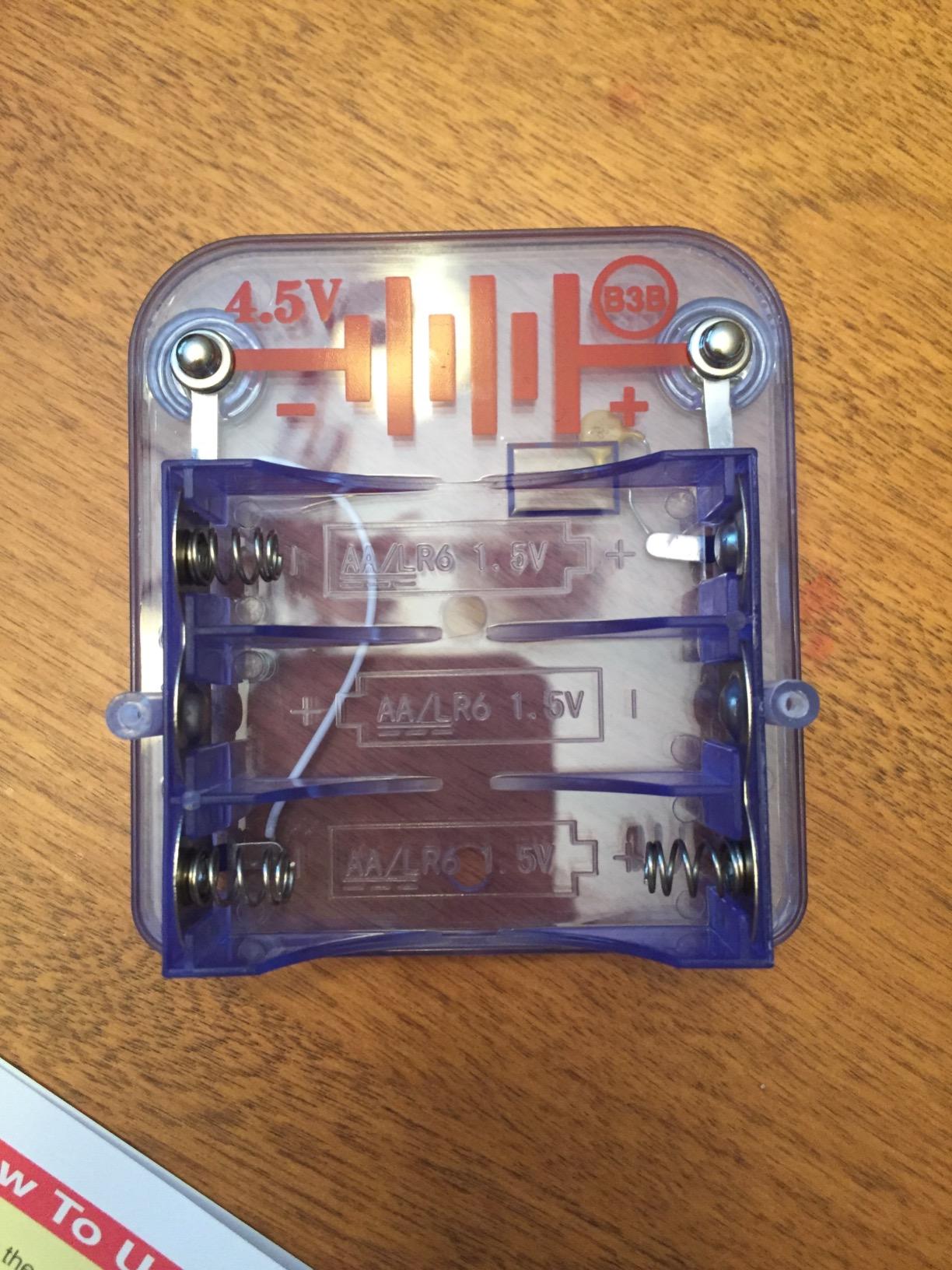
What it teaches and who it suits
It teaches that a circuit is something you assemble and that a switch changes an outcome. That is a genuinely useful first idea, and it lands better at age five than a longer project list would.
It suits a first electronics purchase, a birthday gift for a kindergartener, and a parent who wants a project that works with small hands and short attention.
Who should look past it
Skip it for a child who has already built circuits before. The limited component count shows quickly, and the natural upgrade is the Jr kit rather than another box from this range.
It is also a thin choice for a classroom, where one damaged set would be a meaningful loss.
5. Science Kidz 188 Experiment Set – The Most Experiments Per Box
Science Kidz Electronics Kit – 188 Science Experiments Set for Kids
188 circuit projects
Illustrated manual
Educational notes
US and EU standards
Pros
- 188 distinct circuit projects in one kit
- Tool-free snap parts for young children
- Colour manual with educational notes
- Components meet US and EU toy safety standards
Cons
- Long bulky box needs storage room
- Snap parts feel less refined than major branded kits
This set sells itself on volume: 188 circuit projects and experiments from a single box, aimed at ages 5 to 10. The circuits start simple and get harder through the manual, and the snap-together parts need no tools, which is the format most parents want for this age.
It holds 4.7 stars across more than 1,600 reviews, so the build quality record is solid enough to trust. The colour manual is illustrated and includes short educational notes alongside the steps, which adds a little of the explanation that pure snap kits skip.
The components are certified to US and EU toy safety standards. That is worth checking if the kit is going to a child who chews on things, which is a fair assumption at five.
What it teaches and who it suits
It teaches breadth of circuit types – lights, sound effects, moving parts – and the sequencing skill of working through a graded project list. For a 6 to 8 year old who likes variety more than depth, that is a good match.
It suits a family that wants one box to cover a long stretch of time, and it works well as a shared gift when several children take turns.
Who should look past it
It is not the set for a child who will build the same thing repeatedly. The snap parts are functional rather than refined, and reviewers notice when a component feels thin in the hand.
Also factor in the box: at 24.3 inches long it will not stand up in a cupboard, and it takes up more shelf space than the grid-based kits.
6. National Geographic 120 Project Circuit Kit – Best Instructions for Independent Building
National Geographic Circuit Kit for Kids with 120 Electrical Projects
120+ varied builds
QR video instructions
2.7 pounds
Ages 8 and up
Pros
- 120+ genuinely varied builds including a voice amplifier
- QR code links to video instructions
- Wire snap connections hold firmly
- Backed by a Toy of the Year winning manufacturer
Cons
- Wired snap connections are fiddly for younger hands
- Heavy and bulky box for the parts included
The standout feature here is the QR code that links to video instructions alongside the printed manual. For a child who builds faster than an adult can read, the video is a genuine unlock, and it is the most commonly praised element across the reviews.
The project list is unusually varied for the size: 120+ builds including a keyboard mode, a light show, a flying copter and a voice amplifier. That last one is the build children remember, because their own voice comes back louder.
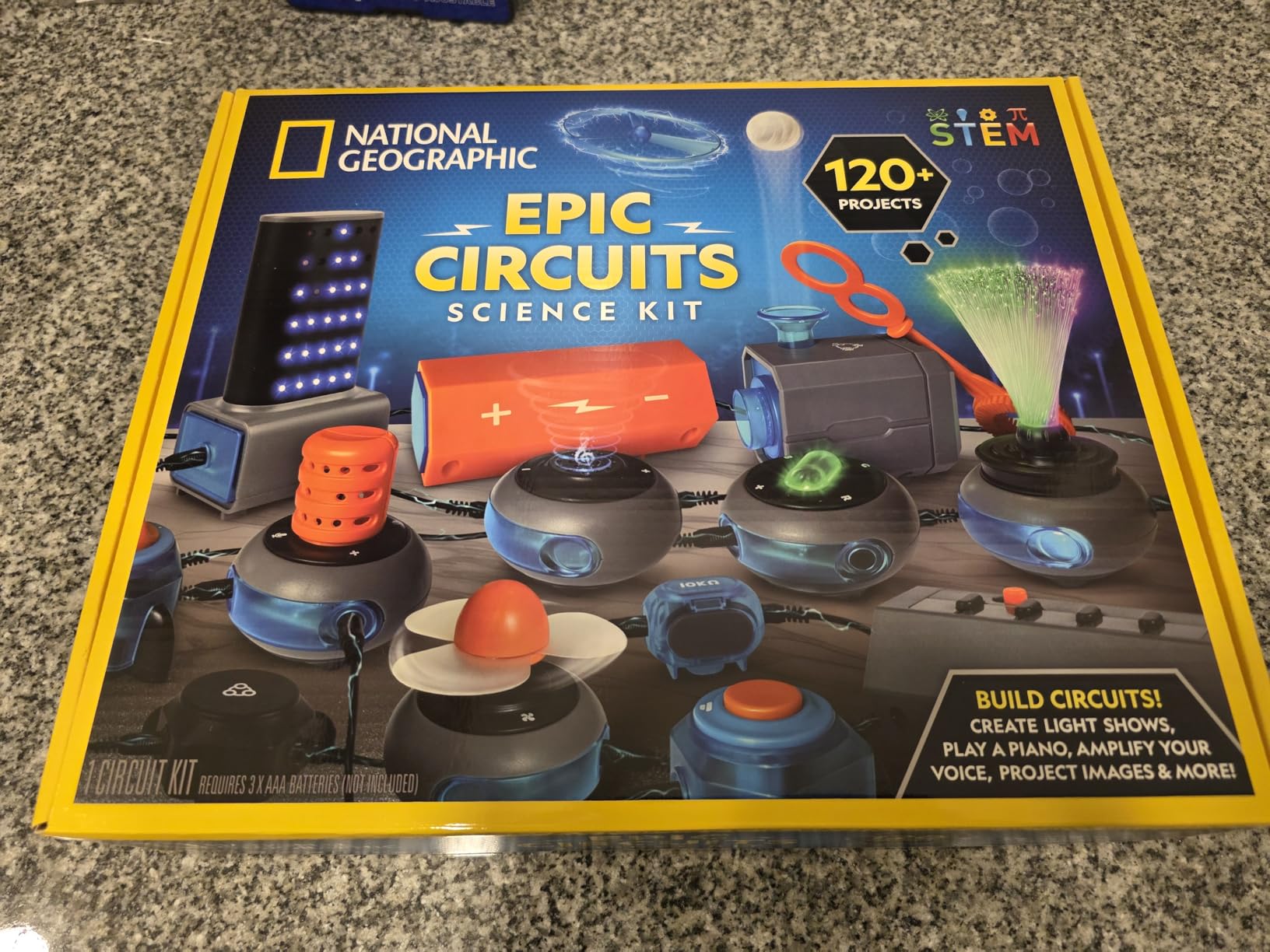
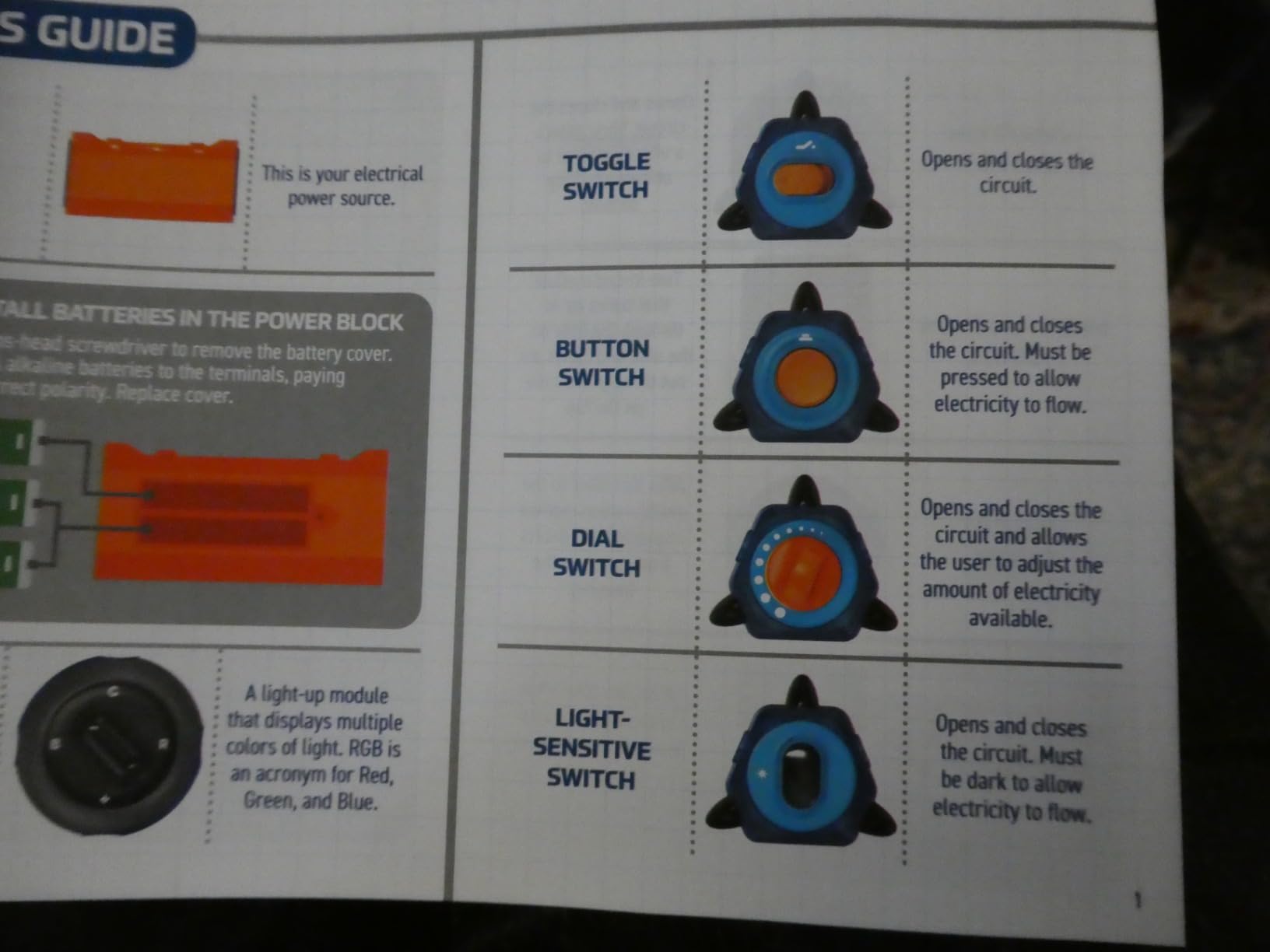
Connections here are wires that snap onto components rather than modules that press onto a grid. Reviewers say the connections hold firmly once made, but they are fiddly for small hands, and you will see frustration during assembly rather than after it.
At 2.7 pounds and 12 by 14.75 inches, the box is heavier than the number of parts would suggest. It is a kit that wants to live on a table, not in a toy cupboard.
What it teaches and who it suits
It teaches that a circuit can process as well as display, which the keyboard and amplifier builds make obvious. It suits an 8 to 11 year old who will work unsupervised and who struggles with printed diagrams.
It is also a good pick for a homeschool family that wants to move at its own pace through a long project list.
Who should look past it
It is a poor fit under age eight. The wire connections need dexterity that younger hands do not have, and the video instructions do not remove that problem.
Because the connections are wire-based, these parts do not carry across into a modular grid kit later, so treat it as a self-contained system.
7. SMILESSKIDDO 420+ Project Kit – The One to Buy for a Classroom
SMILESSKIDDO Science Kits Electronics STEM Kit 420+ Projects 35 Parts
420+ experiments
35 parts
37-page manual and cards
AA batteries not included
Pros
- 420+ experiments from 35 snap-together parts
- Specialty modules including spray RGB light and flying saucer
- 37-page colour manual plus four indicator cards
- No soldering or extra tools needed
Cons
- Elevated three-star share suggests some builds do not match the illustrations
- AA batteries must be supplied separately
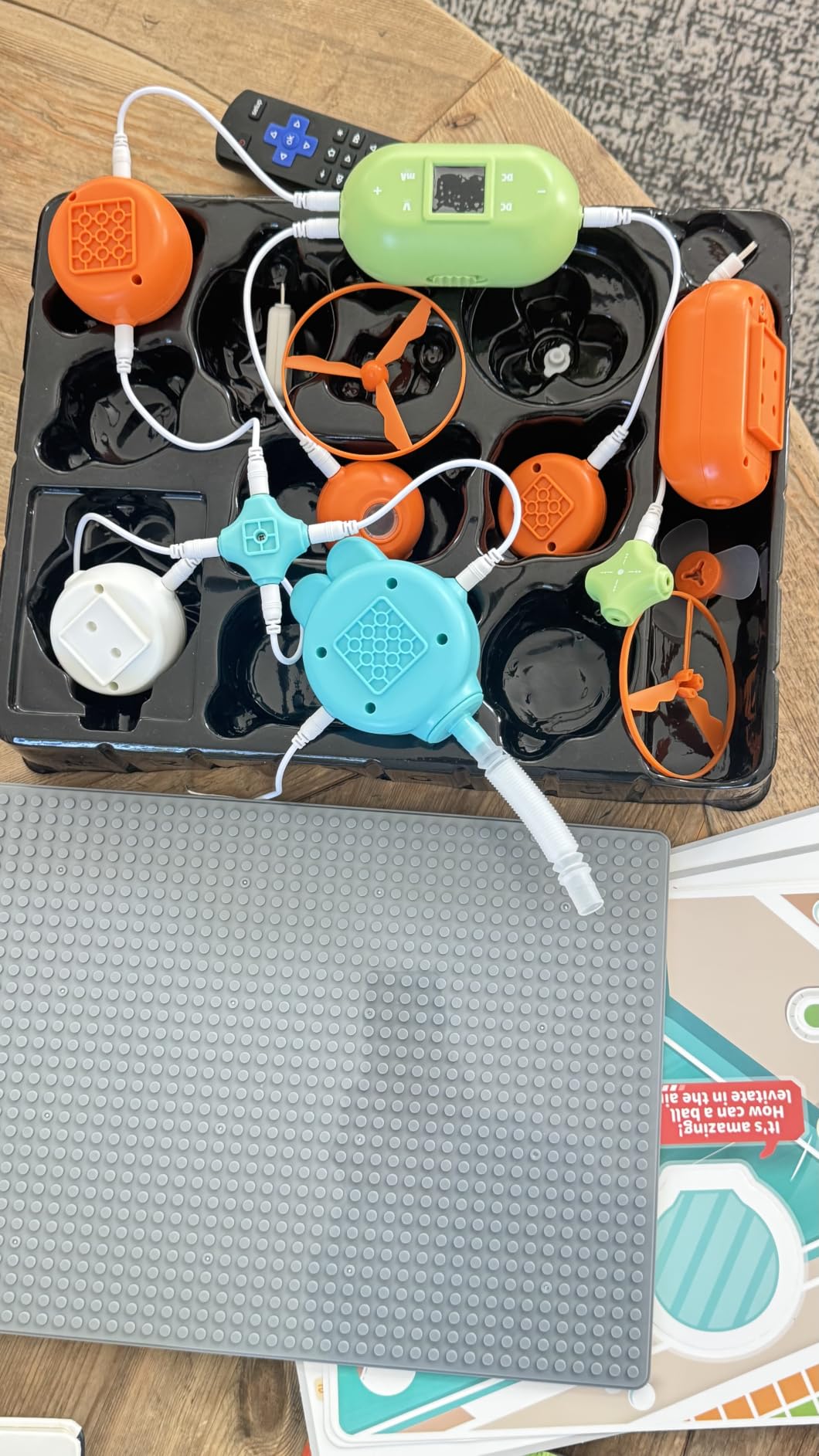
This is the pick for a maker space, a homeschool co-op or any situation where several children need structured work. Thirty-five snap-together parts feed more than 420 listed experiments, and the 37-page colour manual with four indicator cards gives an adult a way to run a structured session rather than improvising.
It teaches the two connection patterns explicitly – series and parallel – which most kits in this roundup mention in passing. The specialty modules are the interesting part: an RGB light, a spray module and flying saucer accessories go beyond the usual switch-and-bulb builds.
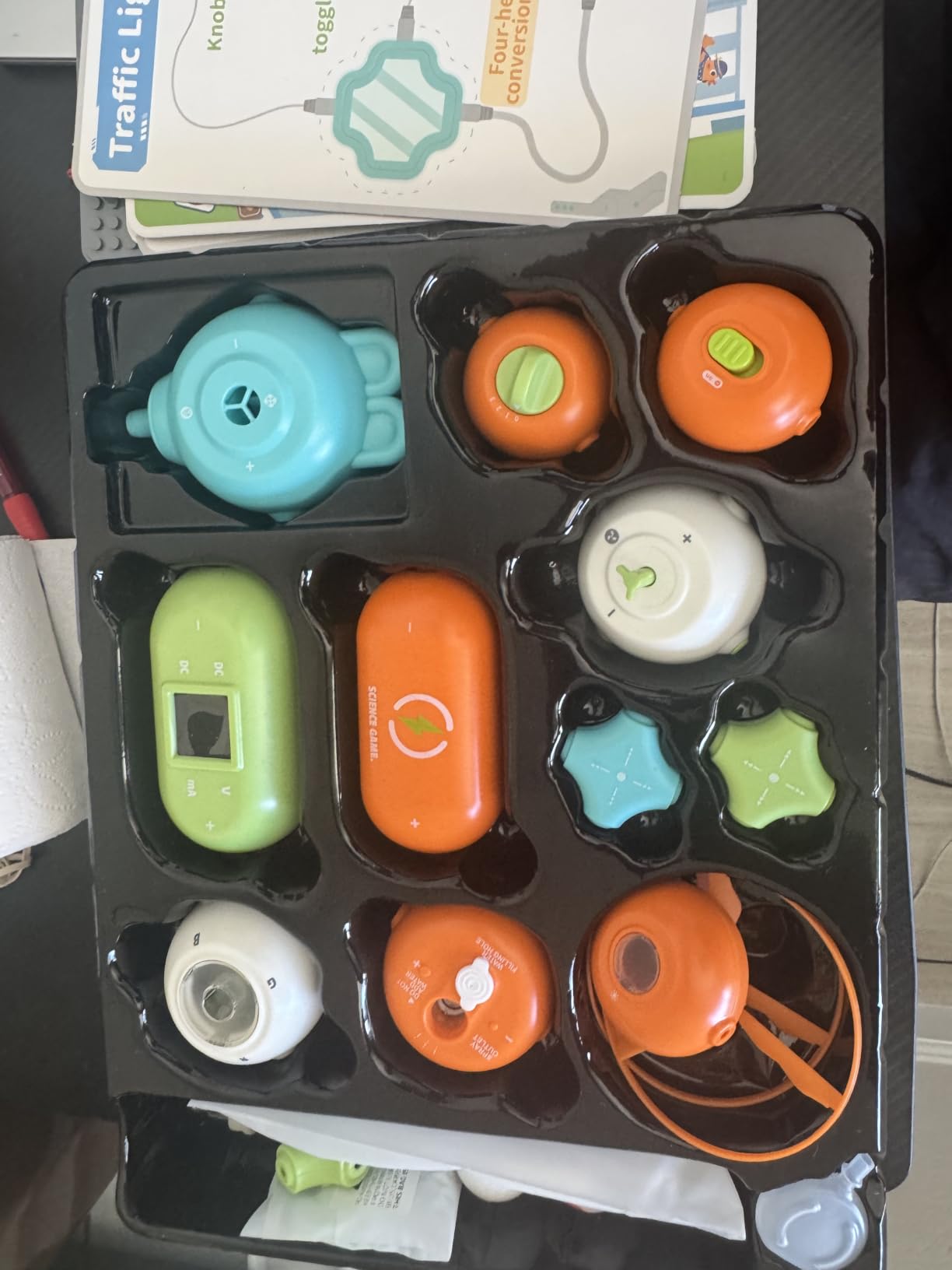
Quality is the open question. The rating is 4.5 with 76 percent five-star, but three-star reviews run at 11 percent, higher than in the well-established kits, and reviewers point to builds that do not behave quite as illustrated. On a classroom set that is tolerable; as a gift it is frustrating.
Two AA batteries are needed and not included. That is a small thing, but it is the reason a kit can sit unused on the morning you plan to use it.
What it teaches and who it suits
It teaches series versus parallel as a named concept and gives practice at following a graded build list independently. That combination is what makes it work for a group of children at different speeds.
It suits a classroom, a library makerspace, and a 7 to 10 year old who likes working through a long list.
Who should look past it
Pass on it if reliability matters more than volume, or if you are buying for a single child who will judge the kit by the first three projects that do not light up.
The indicator cards are also printed English, which is worth checking if your learners are working in another language.
8. Butterfly EduFields 10-in-1 Motor Kit – A Cheap and Charming First Build
Butterfly EduFields 10in1 STEM Electricity kit for Kids 5-8-12| Science Kit
10 motor activities
Wood and plastic build
340 g
Step-by-step illustrations
Pros
- Ten motor and gear activities that teach through building
- Illustrated steps a 9 or 10 year old can follow
- Small giftable box at 31 inches long
- Screen-free hands-on play
Cons
- All models share one base so only one runs at a time
- Materials described as flimsy in reviews
- Motor wiring and gadgets failing within days
- Despite the 5 plus label it suits ages 8 to 9 better
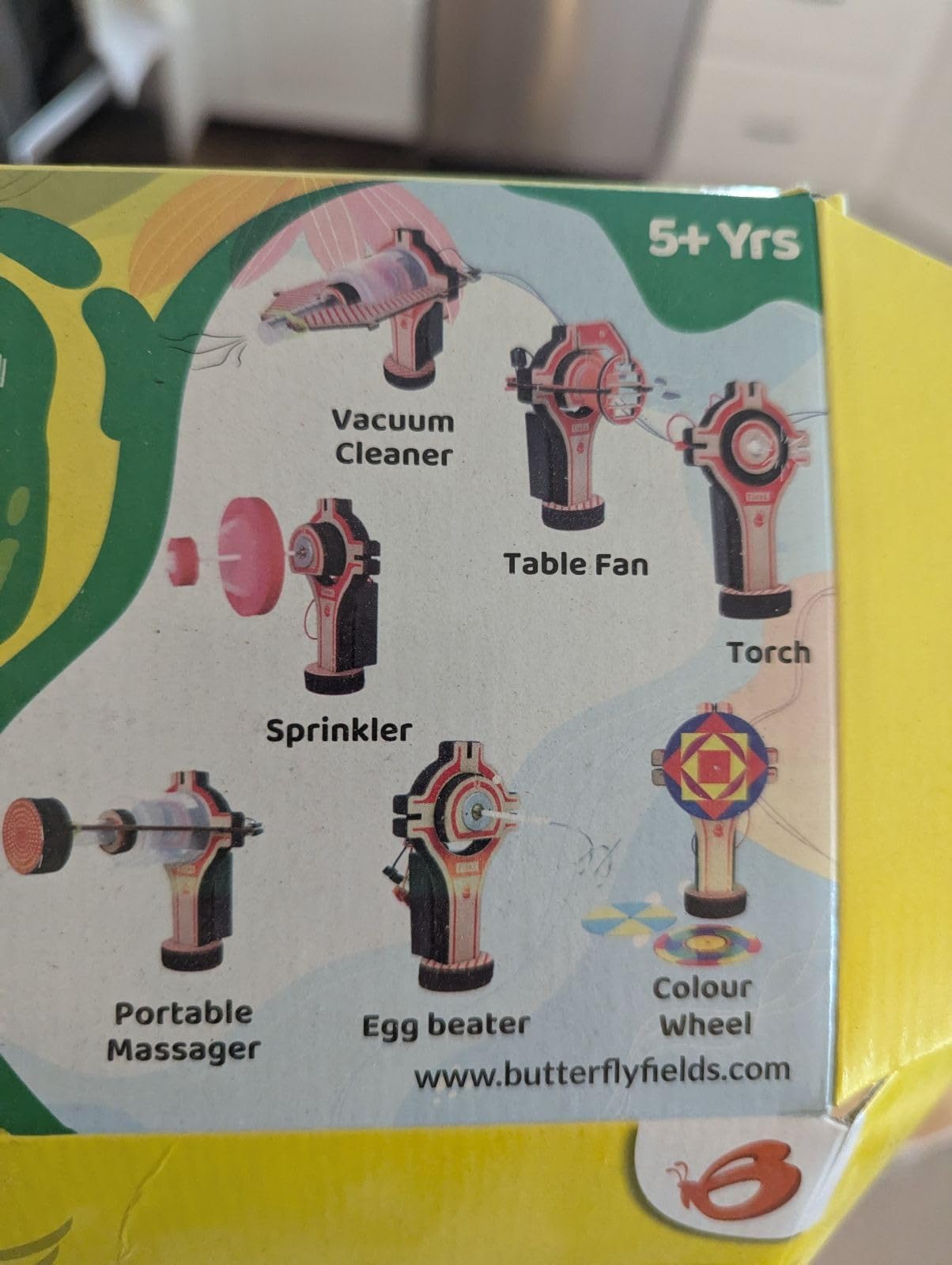
This kit is built around one idea: electric motors and gears. Ten activities run from simple powered movements up to more complex builds, and at 340 g it is the lightest thing we tested. The wood-and-plastic construction also makes it look completely different from the plastic grid kits, which matters if the kit is a gift.
Screen-free is the underrated feature here. A child can work through all ten projects in a couple of hours without a phone, a tablet or an adult narrating, and the illustrations are simple enough that a nine or ten year old can follow them alone.
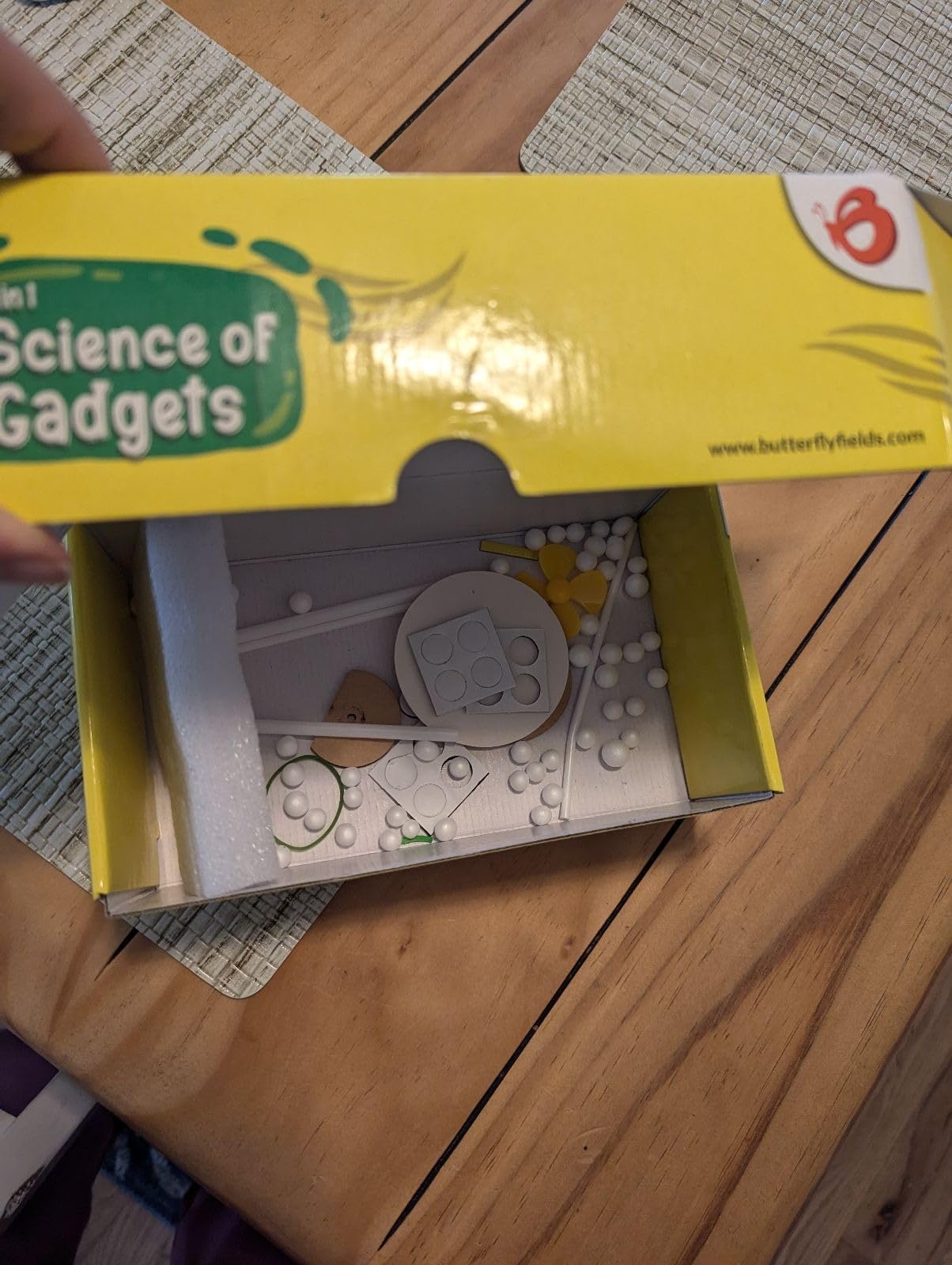
The build quality is where the money was saved. A steady share of reviews describe the materials as flimsy, report motor wiring or gadgets failing within days, and mention a battery pack that runs warm. Those are the same reviewers behind the 6 percent one-star share.
There is also a design constraint worth knowing before you buy. All ten models mount on one shared base, so only one can be operated at a time. That is fine for a single child and useless for siblings or a playdate.
What it teaches and who it suits
It teaches how motors, gears and switches convert electricity into motion, which is a more concrete entry point than abstract circuit theory. It suits a 7 to 9 year old and a birthday gift where the presentation matters as much as the project count.
It also works as a party favour or a return gift, because the box is small and the payoff is immediate.
Who should look past it
Skip it if you expect a kit to last years. The learning value is real, but the parts are the weak link and the single base limits it to a one-time experience.
Be careful with the age label. It is listed from five, but reviewers consistently place it at eight or nine.
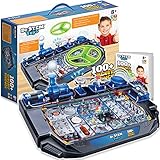
9. Dr. STEM Toys Circuit Science Kit – The Most Complete Single-Box Lab
Dr. STEM Toys Circuit Science Kit, Includes Over 100 Electrical Experiments with Lights, Sounds, and Action – for Boys and Girls Ages 8+
100+ experiments
Working radio
2.5 pounds
Ages 8 to 16
Pros
- Over 100 experiments with a wide range of outputs
- A working radio and motorized action builds
- Aimed at age 8 so kids can work independently
- Functions as a home or classroom lab
Cons
- Sits in the higher price band with a small review base
- Only a 30-day manufacturer warranty
- Highest share of one-star ratings in this roundup at 7 percent
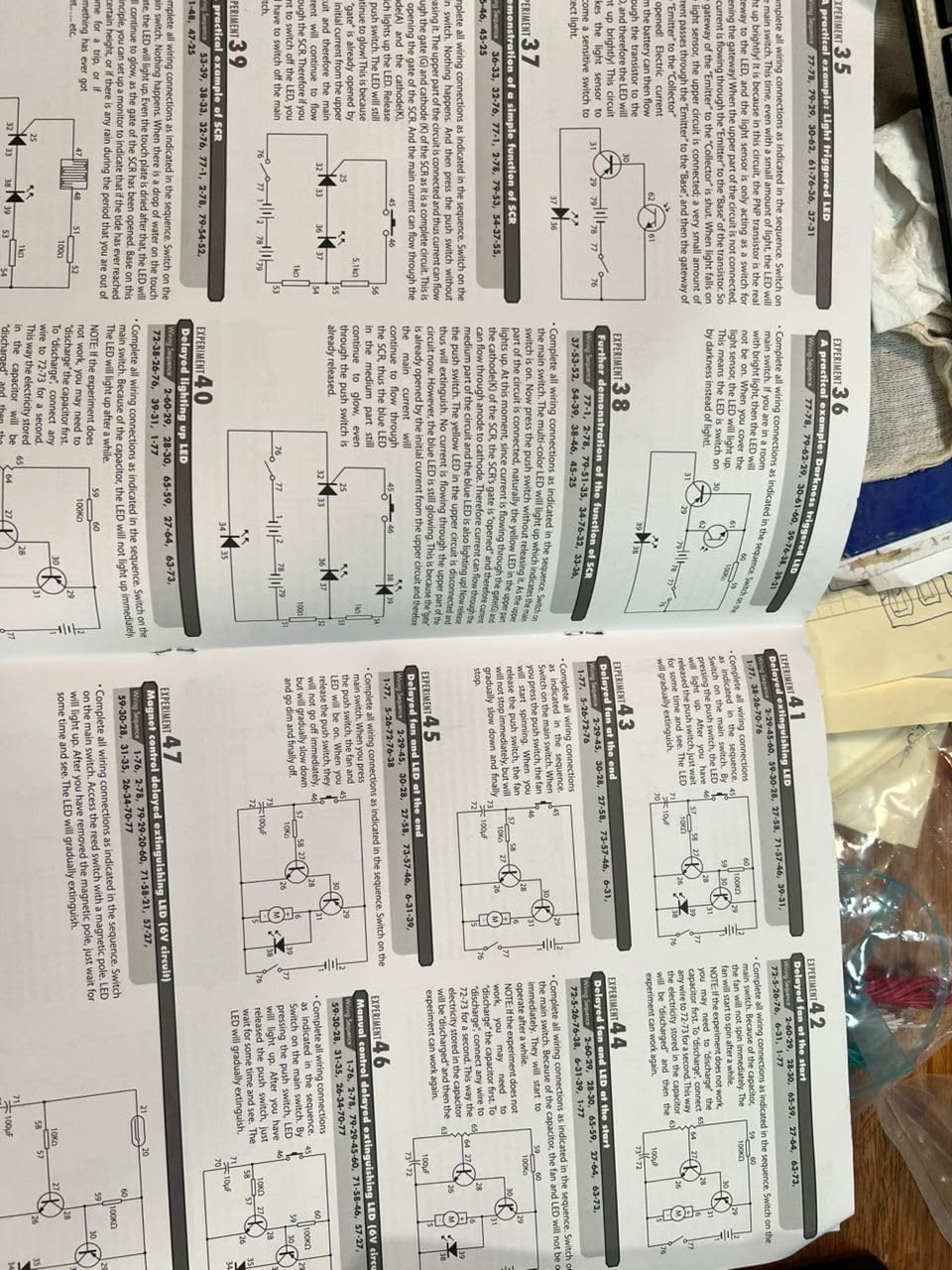
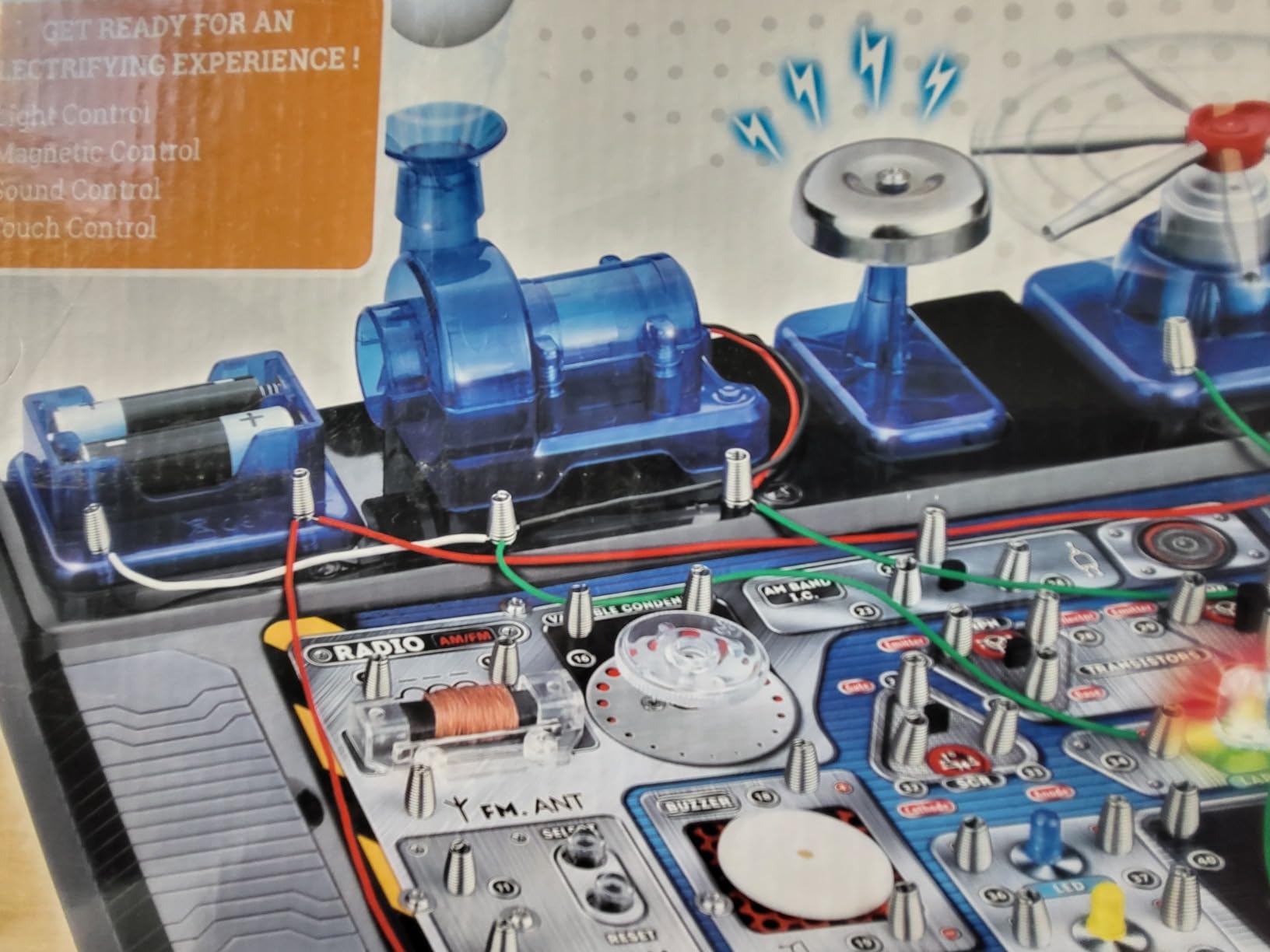
This is the most self-contained kit in the roundup. It presents as a lab rather than a toy: 100+ experiments covering lights, sounds, a floating ball, a ring-the-bell build, motorized action and a working radio. The 8 to 16 age range reflects that it is designed to be run without an adult hovering.
At 2.5 pounds and 17.5 by 13.5 inches it is substantial, and the mix of plastic, metal and paper components gives it more of a science-equipment feel than the all-plastic sets. Owners consistently describe it as a complete home or classroom lab in one box.
The thin spots are warranty and evidence. The manufacturer warranty runs 30 days, which is short next to kits that are warranted against manufacturing defects, and at 203 reviews this has the smallest feedback base among the higher-priced kits here.
Its one-star share of 7 percent is the highest in this roundup, above the 6 percent on the budget motor kit. That is not disqualifying on its own, but it is worth knowing if you are buying blind.
What it teaches and who it suits
It teaches breadth across electrical output types, and the radio build is the one that tends to convert a casual interest into a hobby. It suits an 8 to 13 year old, a classroom lab, and a family that wants one box to cover a term of work.
It is also a reasonable choice when you would rather not assemble several smaller kits yourself.
Who should look past it
Look elsewhere if you want a long-term guarantee on parts, or if you prefer buying a well-reviewed mid-tier kit with a much larger owner history.
It is also too advanced to be a first electronics experience for a six-year-old, even with the 8-plus label respected.
10. Anyeve 448+ Project Circuit Kit – The Best Reviewed for Ages 5 to 7
Science Kits for Kids, 448+ Projects Circuit Exploration Kits Educational Electronics Toys for Boys & Girls Hands-On Engineering Toy, Birthday, Halloween, Christmas Gift for Ages 5 6 7 8 9 10 11 12
448+ projects
32 circuit parts
Plastic base grid
Ages 3 to 12
Pros
- 448+ projects from 32 snap-together components
- Repeatedly praised for engaging 5 to 7 year olds independently
- Sturdy snap parts that survive reassembly
- Good spread of modules including RGB light and a mini vacuum
Cons
- Small parts are easy to lose and the storage tray is loose
- Younger children need help on the advanced projects
- Only one set of glowing cords and no extras available
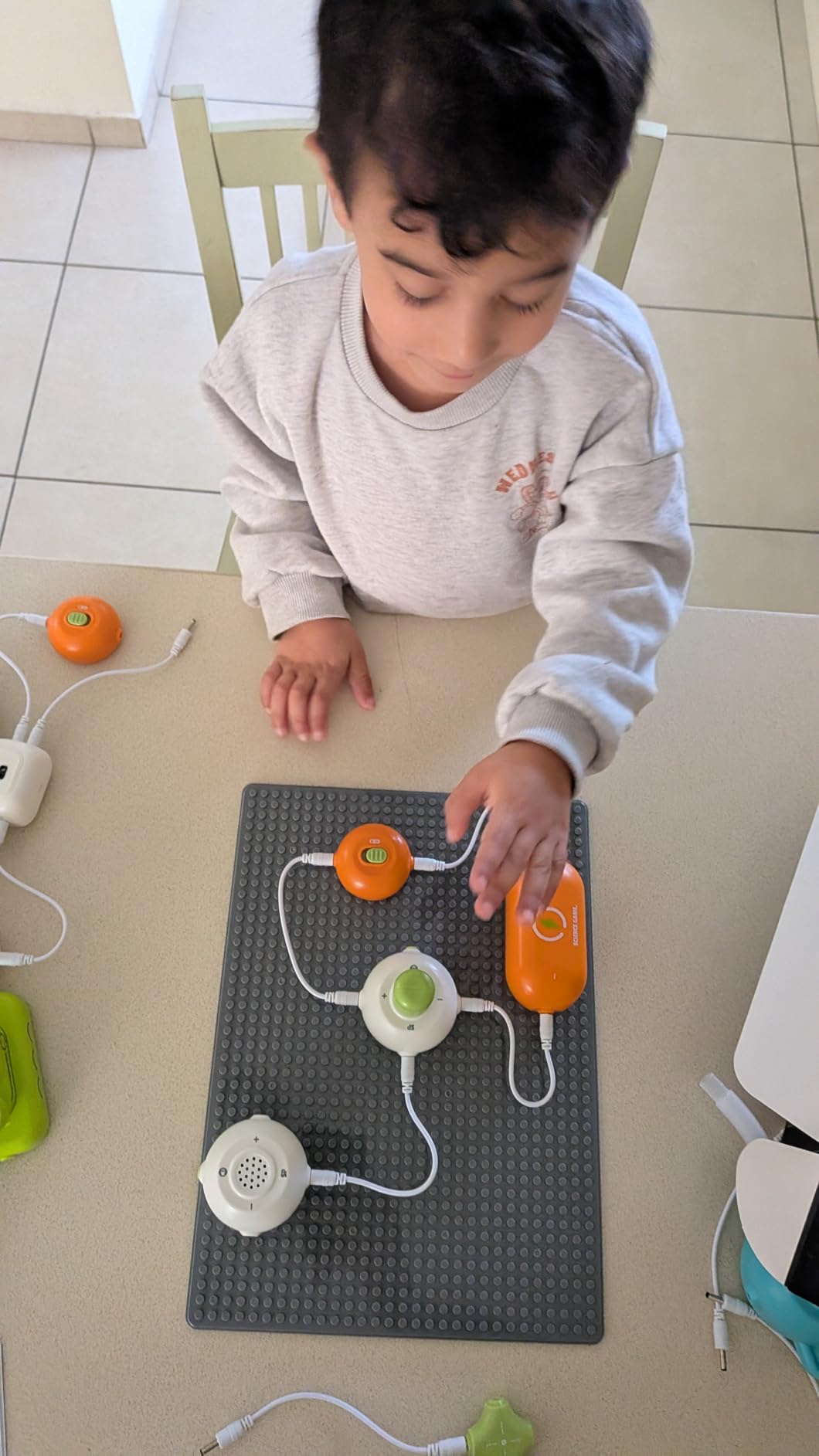
This is the kit that came most recommended by the youngest testers in our group. Grandparents and parents report five to seven year olds following the colour-coded instructions with little help and staying engaged for 45 minutes or more, and it holds 4.6 stars with reviews that are almost uniformly positive.
The box contains 32 circuit parts, a plastic base grid and a step-by-step manual. The modules include an RGB light, a flying saucer accessory and a mini vacuum, which gives more visual variety than a basic switch-and-bulb set at the same stage.
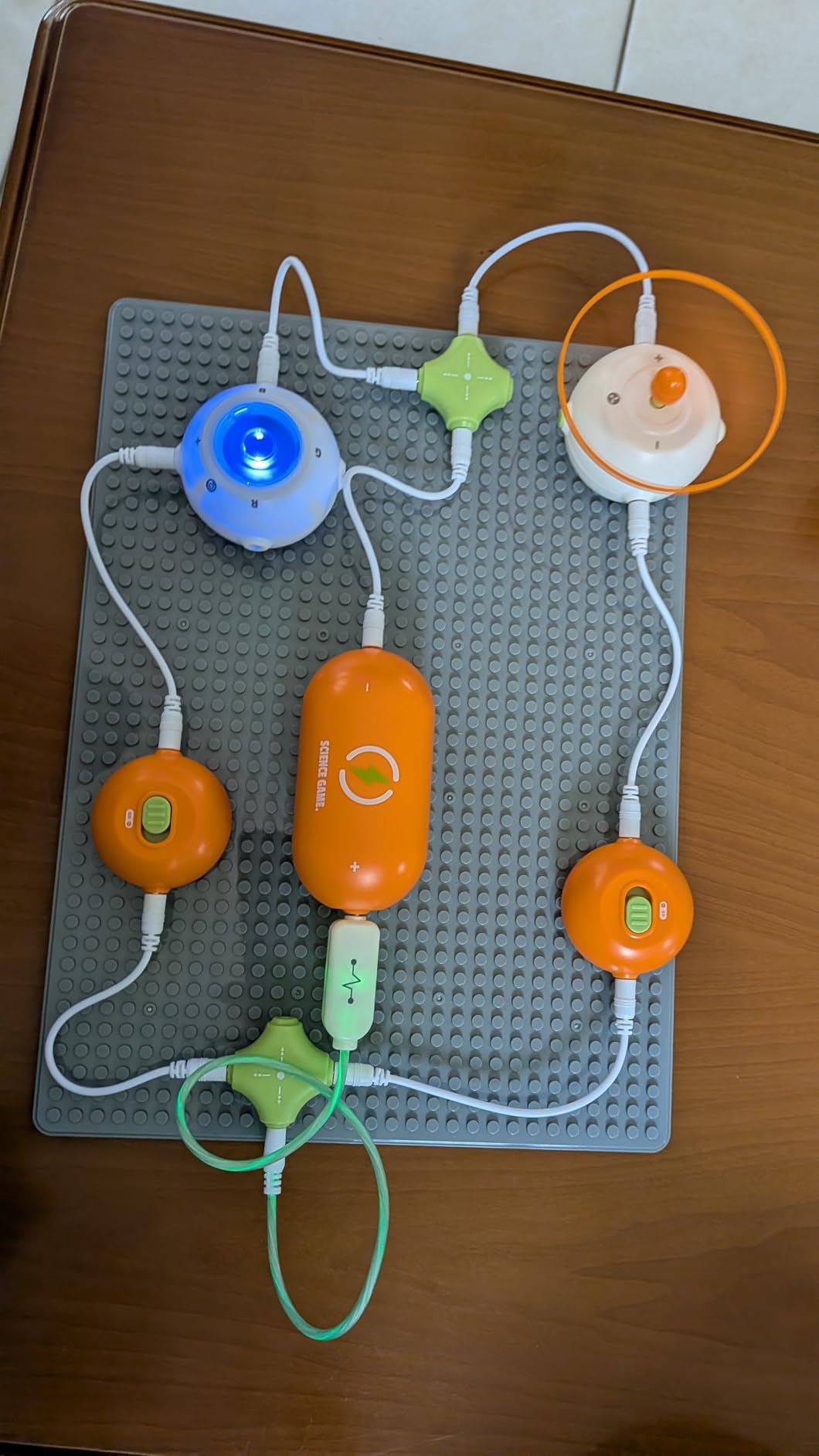
Two small problems recur. The storage tray is not secure, so parts migrate, and small pieces are easy to lose. Separately, only one set of glowing cords is included and extras cannot be bought, which limits a child’s ability to spot a gap in a circuit while debugging.
The advanced projects still need an adult nearby, which is normal but worth planning for if you are counting independent screen-free time.
What it teaches and who it suits
It teaches series and parallel connection by feel, which is a better fit for a six-year-old than a definition. It suits ages 5 to 7 working independently, and an 8 or 9 year old who likes a very long list.
It is also one of the few kits here that can absorb an adult and a child building together without either of them getting stuck.
Who should look past it
Pass if you need a physically secure parts storage system, because losing a module ends a build and the replacements are not sold separately.
It is not the right choice for a child who wants measurement or open-ended circuit design. The project count is high, but the builds stay within a fixed recipe format.
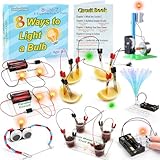
11. GadgetGlee Battery Science Kit – The Best for a Science Fair Project
STEM Electric Circuit Kit, Electricity Science Project Light Bulb Experiments for Kids Teens, Electrical Engineering Kits Age 8-12 12-14, Fruit Energy Projects Circuits Experiment
8 experiments in 7 packs
Series and parallel
Fruit battery
Photo instructions
Pros
- Eight distinct experiments including series parallel saltwater and fruit battery
- Each experiment packed separately in a numbered bag
- Called an ideal standalone circuit demonstration by a former science teacher
- Works well for science fairs and homeschool units
Cons
- Instructions are photographs only with small images and no text
- Fine insulated wires are hard for small hands to hold
- One reviewer found the hand crank and all LEDs non-functional
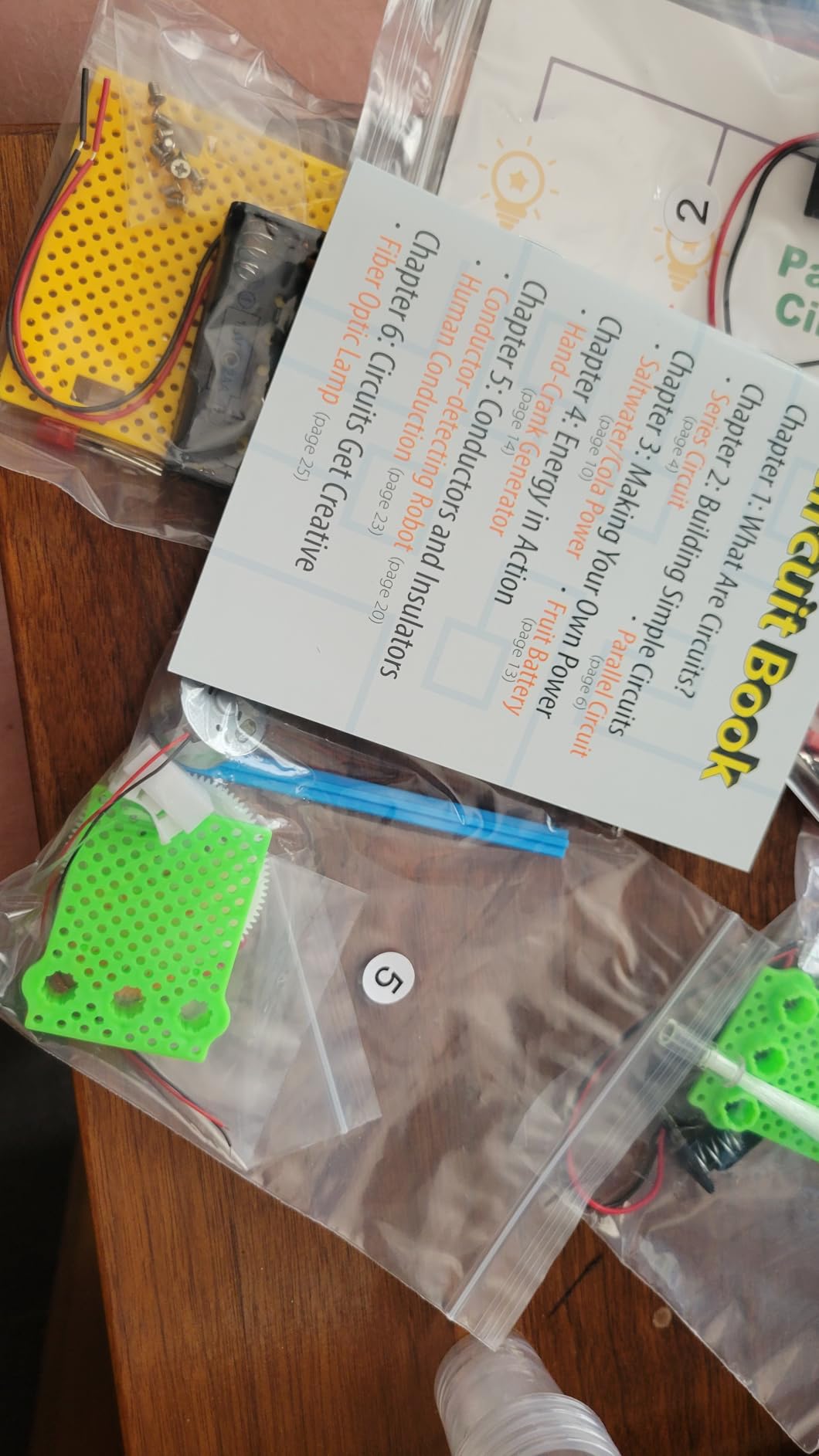
This is the smallest kit in the roundup at 6.41 by 4.87 inches, and that is a feature if you need something that fits in a school bag. Eight experiments are split across seven separately packed, numbered bags, so each session is self-contained and nothing goes missing between classes.
The experiments are the reason to buy it: a series circuit, a parallel circuit, saltwater power generation and a fruit battery. A former science teacher reviewing the kit described it as an ideal standalone circuit demonstration, and it suits a single science fair entry better than a 400-project grid kit.
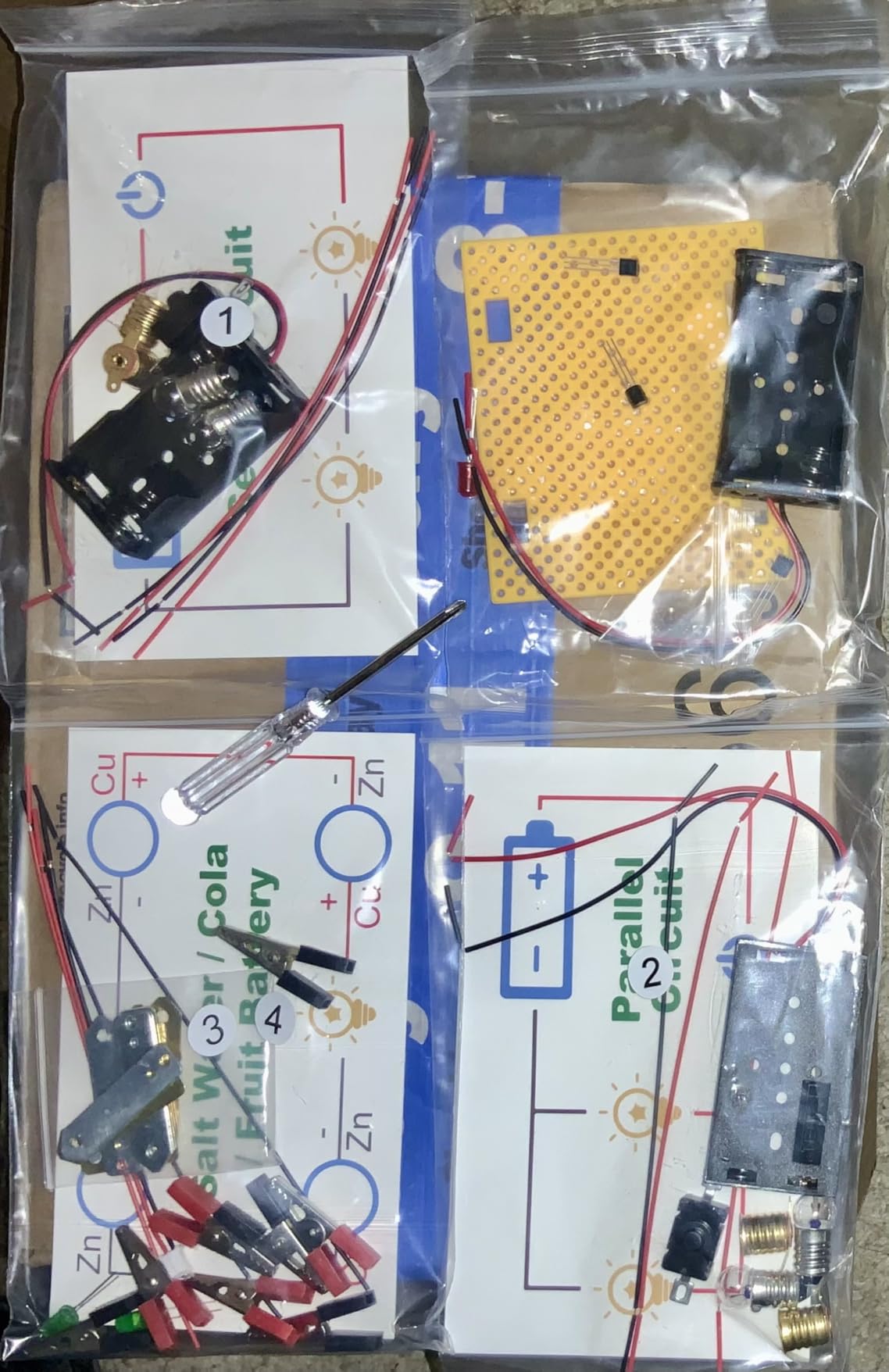
Two gripes come up repeatedly. The instructions are photographs only, with no written text and fairly small images, which is harder to follow than it should be. And the fine insulated wires are difficult for small hands to hold firmly, which produced intermittent bulb connections for at least one reviewer.
There is also a report of a hand crank generator and all included LEDs arriving non-functional. Batteries are needed and not included, so plan for two AA cells before the first session.
What it teaches and who it suits
It teaches the difference between series and parallel directly, and it lets a child generate power from fruit and salt water rather than only from a battery. It suits a 9 to 12 year old, a science fair, and a homeschool curriculum unit on electricity.
It is also the easiest kit here to hand to a child for a single afternoon and get back afterwards.
Who should look past it
Skip it for a younger child, because the thin wires need dexterity and the photo-only steps need someone who can read the sequence out.
It is also a poor long-term investment. Eight experiments run out, and there is no expansion path in the same system.
12. VLGOEM 66 Piece STEM Kit – The Largest Box of Parts
Science STEM Kits for Kids, Electronics Exploration Kit, 66 Pcs DIY Circuit Parts, Over 1200 Projects, STEM Educational Toy Gifts for Kids Boys Girls Ages 3 4 5 6 7 8 9 10 11 12, Color Project Manual
66 pieces
Color-coded parts
Plastic grid board
2.3 pounds
Pros
- 66 pieces in the box
- more than most kits in this roundup
- No tools or soldering on a color-coded grid
- Color project manual gives a structured path
- Parts can combine with other component kits
Cons
- The 1200+ project figure counts combinations rather than distinct builds
- Smallest review base among the higher-priced kits
- Age labeling is inconsistent across the listing at 3 to 14
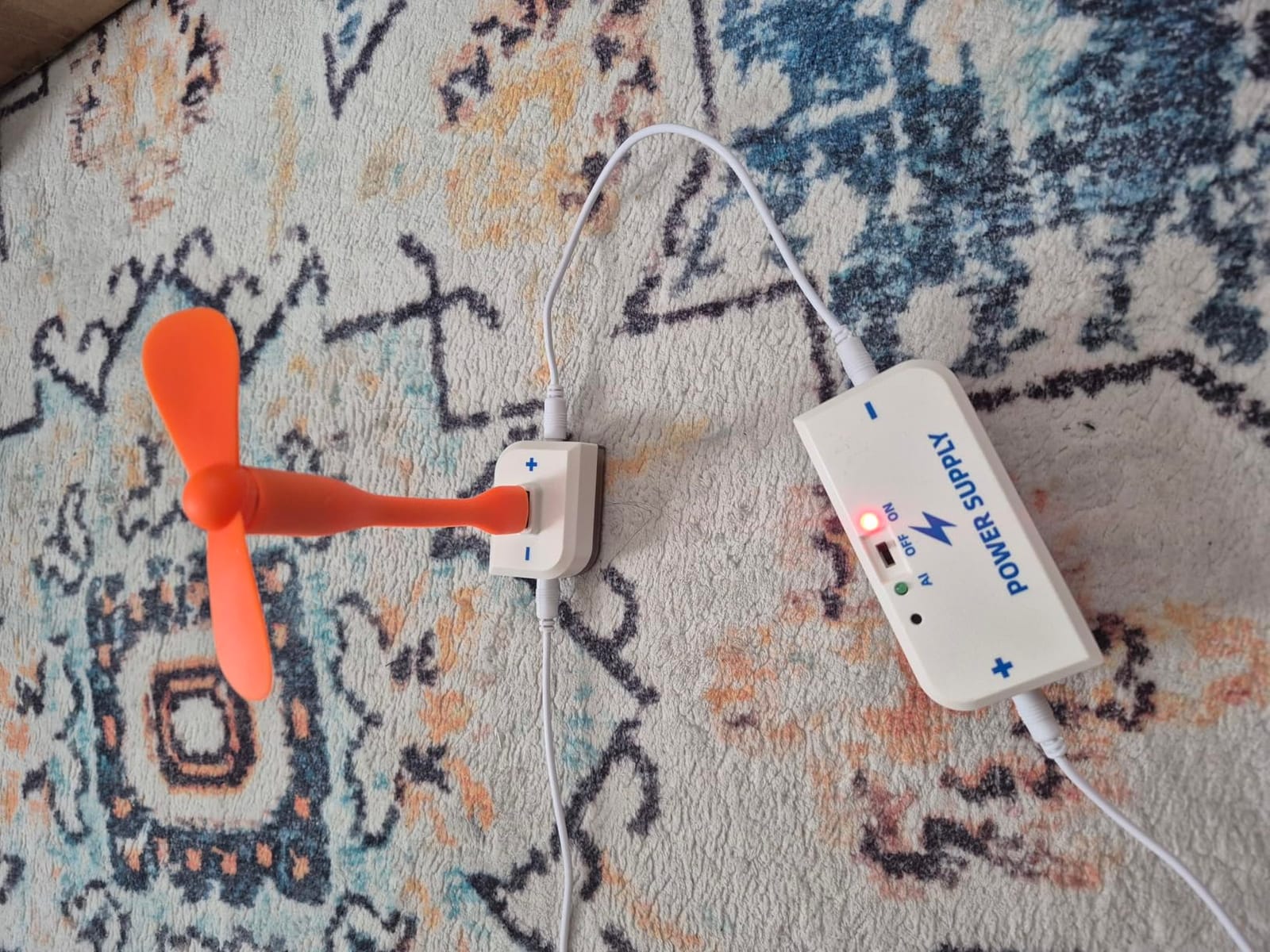
Sixty-six numbered, colour-coded pieces is a lot of hardware, and for a child who builds constantly and loses things, the sheer quantity is the argument. Everything snaps onto the included plastic grid with no tools, and the colour project manual lays out a structured route through the builds.
It runs without batteries for the basic projects, which removes one common frustration, and the listing notes that parts can be combined with other component kits to widen what is possible.
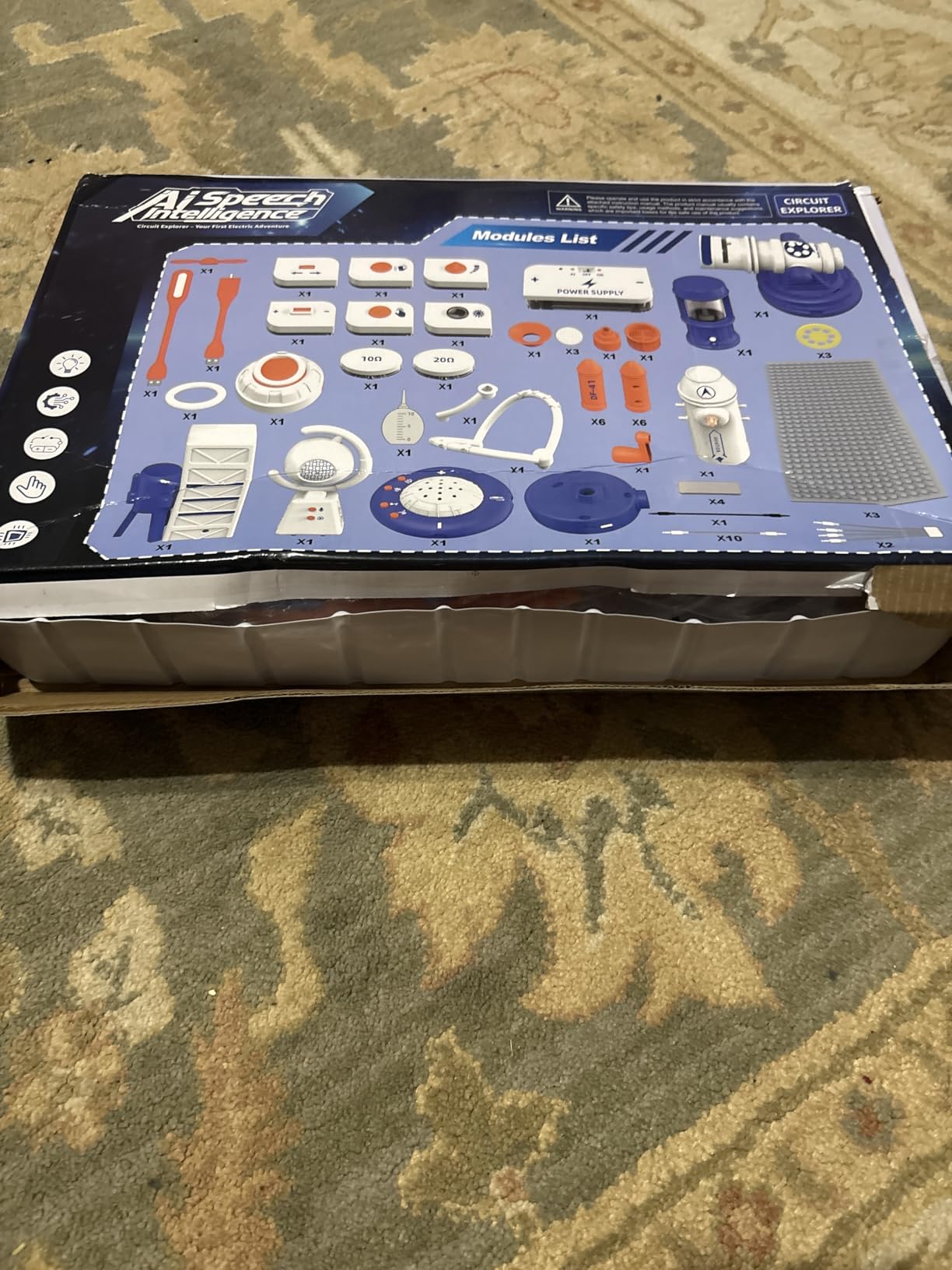
Now the number nobody repeats. The 1,200+ project claim counts combinations of the same modules rather than distinct designs, and a large share of the honest builds are variations of a handful of layouts. Treat it as a parts count dressed up as a project count.
Evidence is also thinner here than anywhere else in the roundup, with 170 reviews behind the 4.4 rating. The age labeling is inconsistent across the listing, ranging from three to 14, which is a sign the marketing copy was not reviewed by a person.
What it teaches and who it suits
It teaches module handling and following a structured manual over a long build list. It suits a 7 to 10 year old, a family that wants a shared box for two children, and anyone who wants spare parts on hand.
At 2.3 pounds and nearly 12 by 11 inches, it is a kit that needs a shelf of its own once the lid is off.
Who should look past it
Pass if you are buying on project count. You will not get 1,200 distinct builds, and buying on that number is how families end up disappointed.
It is also worth skipping if you want long-term owner evidence, because the review base is the thinnest of the higher-priced kits we tested.
How to Choose a Circuit Building Kit for Kids in 2026
The single most useful question is not how many projects it has. It is what your child will still be curious about in three months. Answer that first and the rest of the specification narrows quickly.
Match the kit to an age band
For ages 3 to 5, look for a small component count, childproofed parts and an adult in the loop. The Snap Circuits Beginner set and the Butterfly EduFields motor kit sit in this band, though reviewers place the latter closer to eight.
For ages 6 to 8, prioritise large colour-coded diagrams and modules that press rather than clip. The Science Kidz set and the Anyeve kit are the strongest fits here, with enough independence to keep a child occupied for 45 minutes.
For ages 9 to 12, wire connections become usable and project range matters more than part safety. This is where the Playz board, the National Geographic 120 kit and the Snap Circuits Jr kit do their best work.
For 13 and up, the deciding factor is whether the kit measures anything. At that point the Teenii set with its ammeter and voltmeter is a better buy than any snap system, and it prepares a child for breadboarding and microcontrollers rather than more assembly.
What the kit actually teaches versus what it claims
Snap-together kits teach assembly. That is genuinely valuable for a six-year-old and quickly runs out for a twelve-year-old. The complaint raised on electronics forums is precise: the projects do not explain what the components are doing, and a child can build twenty working circuits without learning what a short circuit is or why it is a problem.
A circuit needs three things to work – a power source, a conductive path and a load such as an LED or a motor. Most snap kits demonstrate that relationship without naming it. Kits built around measurement, like the Teenii set, name it. If your child asks why, buy the second kind.
Read the project count honestly
Two marketing patterns run through this category. The first counts small variations of the same base grid as separate projects. The second counts every possible combination of a module set, which is how a 66-piece box arrives at a 1,200-project headline.
A more useful number to look for is the component count and the number of genuinely distinct module types. Twenty-eight or thirty modules with a graded manual will outlast a headline figure built from combinations.
Instruction quality is the first thing parents should check
Reviews across this roundup mention dry, dense or badly translated manuals more than any other fault. Look for colour, large diagrams and a progression from simple to harder. A kit with photo-only instructions will frustrate a child who cannot yet read fluently, and a translated manual needs checking before you commit.
Video instructions, as on the National Geographic kit, solve this well for independent builders, though they introduce their own dependency on a device and a working link.
Module standards decide whether parts stay reusable
Snap Circuits uses a numbered, colour-coded module system, and parts from different boxes in the same range are designed to work together. That is a genuine advantage if you plan to buy more than one kit over the years.
Other systems in this roundup are self-contained. The Teenii wire-and-clip set, the National Geographic wired kit and the Butterfly motor kit do not carry their parts into a modular grid, so each purchase starts again. Where the build happens matters too, and a board of this size deserves its own surface rather than a shared one – our guide to kids’ study desks covers sizing for a permanent build space.
Safety: small parts, batteries and soldering
Every kit here is solder-free, which removes the sharpest risk. That said, most contain small parts that are a choking hazard under three, and batteries need to be handled by an adult for younger children. Two kits here ship without batteries included, so have spares ready.
Soldering-required kits exist, and community consensus on electronics forums places them firmly in the teen bracket. If you are considering that step, our best soldering irons for circuit boards guide is the place to start, and it should sit alongside a kit like the Teenii set rather than replace it.
Frequently Asked Questions
What is the best electronic kit for kids?
The Snap Circuits Jr SC-100 is the best all-round electronic kit for kids. It carries a 4.8 rating across more than 29,000 reviews, ships with 29 snap modules and a colour-coded manual, and needs no tools or soldering. For children under eight, the Snap Circuits Beginner SCB-20 is the gentler starting point.
What are the best electronic kits for beginners?
Three kits work well for a first electronics experience. The Snap Circuits Beginner SCB-20 suits ages 5 to 9 with 21 guided projects and childproofed parts. The Anyeve 448+ Project kit keeps five to seven year olds engaged independently with colour-coded instructions. The Science Kidz set offers 188 projects for a 6 to 8 year old who prefers variety over depth.
What is the best Snap circuit kit?
The Snap Circuits Jr SC-100 is the best Snap Circuits kit for most families, with 100+ projects, 29 modules and the widest owner feedback base in the category. Choose the Snap Circuits Beginner SCB-20 for a child aged 5 to 7, and the larger Playz Advanced Circuit Board if you want a working radio and motorized builds in one box.
What are some cool electronic projects I can build?
Popular builds across the kits we tested include a working AM/FM radio and doorbell on the Playz Advanced board, a voice amplifier and keyboard mode on the National Geographic 120 kit, a color-changing fan on the Snap Circuits Beginner set, and a fruit battery plus saltwater power generation on the GadgetGlee kit.
Are circuit kits safe for young children?
The kits in this roundup need no soldering, which removes the main risk. Most contain small parts that are a choking hazard under three, and several need AA batteries supplied separately. Check the stated age range, supervise younger children during assembly, and use a kit with childproofed components if your child is five or under.
What is better, Snap Circuits or a breadboard kit?
Snap Circuits are better for a first circuit and for younger children, because modules snap onto a grid and mistakes are easy to undo. Breadboard kits are better once a child wants to design circuits rather than assemble them, because parts are reusable in any layout. The Teenii Electricity and Magnetism kit is the middle path, since it measures voltage and current with an ammeter and voltmeter.
The Best Circuit Building Kit for Your Kid in 2026
There is one clear winner. The Snap Circuits Jr SC-100 takes the top spot among these best circuit building kits for kids because it pairs the highest rating in the group with the widest owner feedback base, and nothing else tested comes close on both. It is safe, tool-free, and its colour-coded manual is graded well enough for a child to work upward alone.
Buy the Playz Advanced Circuit Board if your child wants noise, motion and a working radio, and pick the Teenii Electricity and Magnetism kit if they have already started asking why – it is the only set here that shows them the answer on a dial.
For younger children, the Snap Circuits Beginner SCB-20 is the safest first box, and the Anyeve kit holds their attention longer than almost anything at that stage. Whichever you choose, ignore the headline project count, read the manual samples, and buy the kit that matches the age and the curiosity in front of you.