
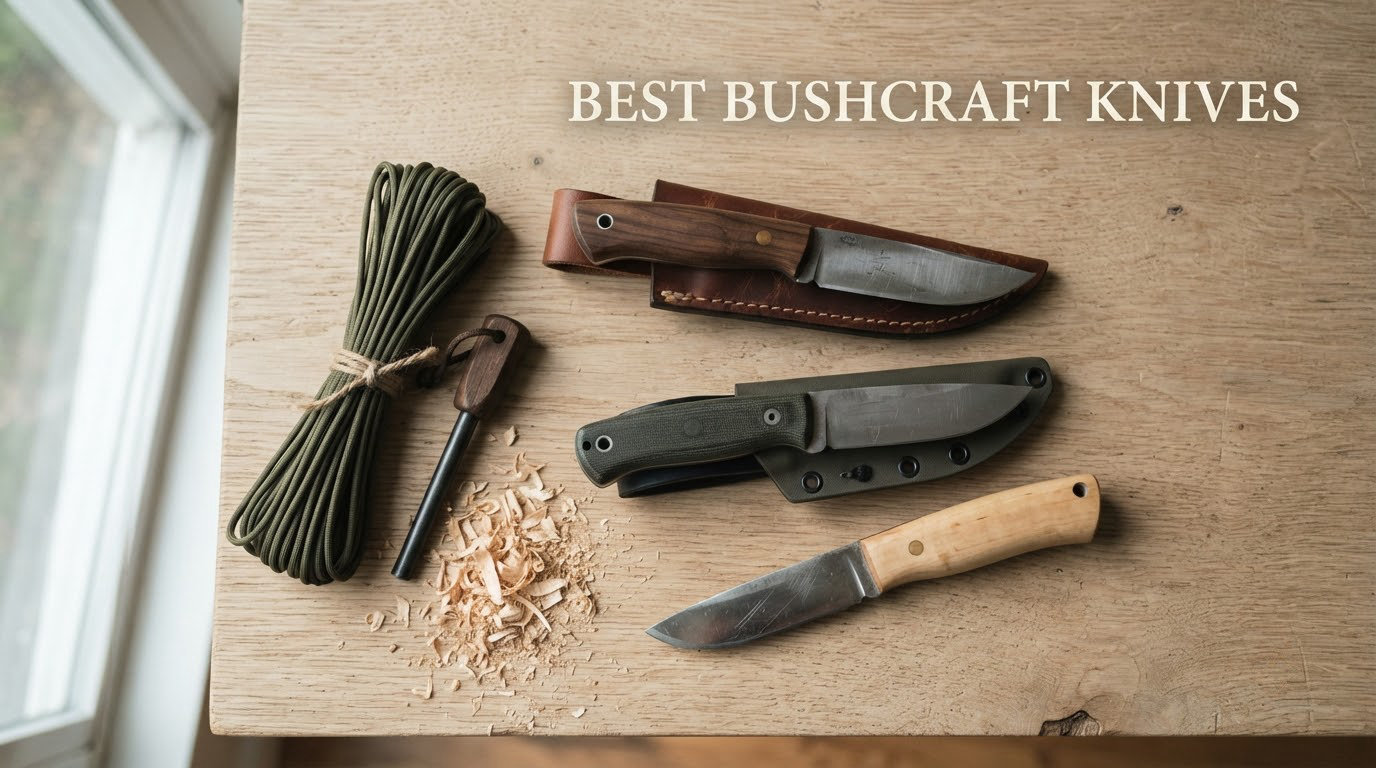
A bushcraft knife is a fixed-blade knife, usually full tang, with a thick spine and a simple grind, built to work wood, make fire and handle camp chores such as batoning, carving, feathersticking and shelter work. It is the most-used tool you will own on a trip, and the wrong grind or tang shows up fast.
If you only read one pick on this page, read the Morakniv Companion. It is the best overall bushcraft knife for most people in 2026 because the factory edge is genuinely sharp out of the box, the Sandvik 12C27 blade shrugs off wet weather, and the whole knife weighs less than most of a water bottle in your pack. Everything else here either does one job better or arrives as a fuller kit.
We compared ten fixed blades and folders on the things that actually matter in the field: batoning, carving, feathersticking, ferro rod strikes, handle security in wet hands, and how each one behaves after a season of hard use. No knife here is perfect, and every pick gets at least one honest con below.
One note before the list. A survival knife and a bushcraft knife overlap but are not the same thing. A survival knife is built around emergency use, escape and defensive retention, and those are qualities you can read about on a tactical forum. A bushcraft knife is built around geometry you use for hours, not minutes. If your interest is a smaller everyday folder, our guide to the best Japanese chef knives covers a different class of blade entirely.
Table of Contents
Top 3 Picks: Best Bushcraft Knives (October 2026)

Morakniv Companion
- Sandvik 12C27 stainless
- 4.1 inch blade
- 3.9 oz with sheath
- Ambidextrous handle


Morakniv Bushcraft Black
- Full tang carbon steel with DLC
- 4.3 inch blade
- Fire steel ready spine
The Best Bushcraft Knives at a Glance in 2026
| Product | Specifications | Action |
|---|---|---|
| Morakniv Companion |
|
Check Latest Price |
| Gerber Strongarm |
|
Check Latest Price |
| Morakniv Bushcraft Black |
|
Check Latest Price |
 Morakniv Kansbol Morakniv Kansbol |
|
Check Latest Price |
 Buck 110 Folding Hunter Buck 110 Folding Hunter |
|
Check Latest Price |
 Gerber Ultimate Gerber Ultimate |
|
Check Latest Price |
 Condor Bushlore Condor Bushlore |
|
Check Latest Price |
 Bloodline 1095 Full Tang Bloodline 1095 Full Tang |
|
Check Latest Price |
 BPSKNIVES Adventurer BPSKNIVES Adventurer |
|
Check Latest Price |
 ESEE PR4 ESEE PR4 |
|
Check Latest Price |
1. Morakniv Companion – Best Overall Bushcraft Knife for Most People
Morakniv Companion Fixed Blade Outdoor Knife with Stainless Steel Blade, 4.1-Inch, Military Green
Blade: 4.1 in Sandvik 12C27
Weight: 3.9 oz with sheath
Tang: 3/4, V-grind
Pros
- Sharpest factory edge in this group
- Stainless steel that shrugs off rain and damp camps
- 3.9 oz total weight
- Handle stays secure when wet or gloved
- Rounded spine throws sparks after light filing
Cons
- 3/4 tang rules out heavy batoning and prying
- Plastic sheath is basic
- QC variance shows as edge blemishes near the tip
I have carried more knives than I care to admit, and the Companion is the one that keeps ending up on my belt. The 4.1 inch Sandvik 12C27 blade arrives sharper than knives costing several times as much, and it stays sharp long enough that I rarely think about the stone in camp.
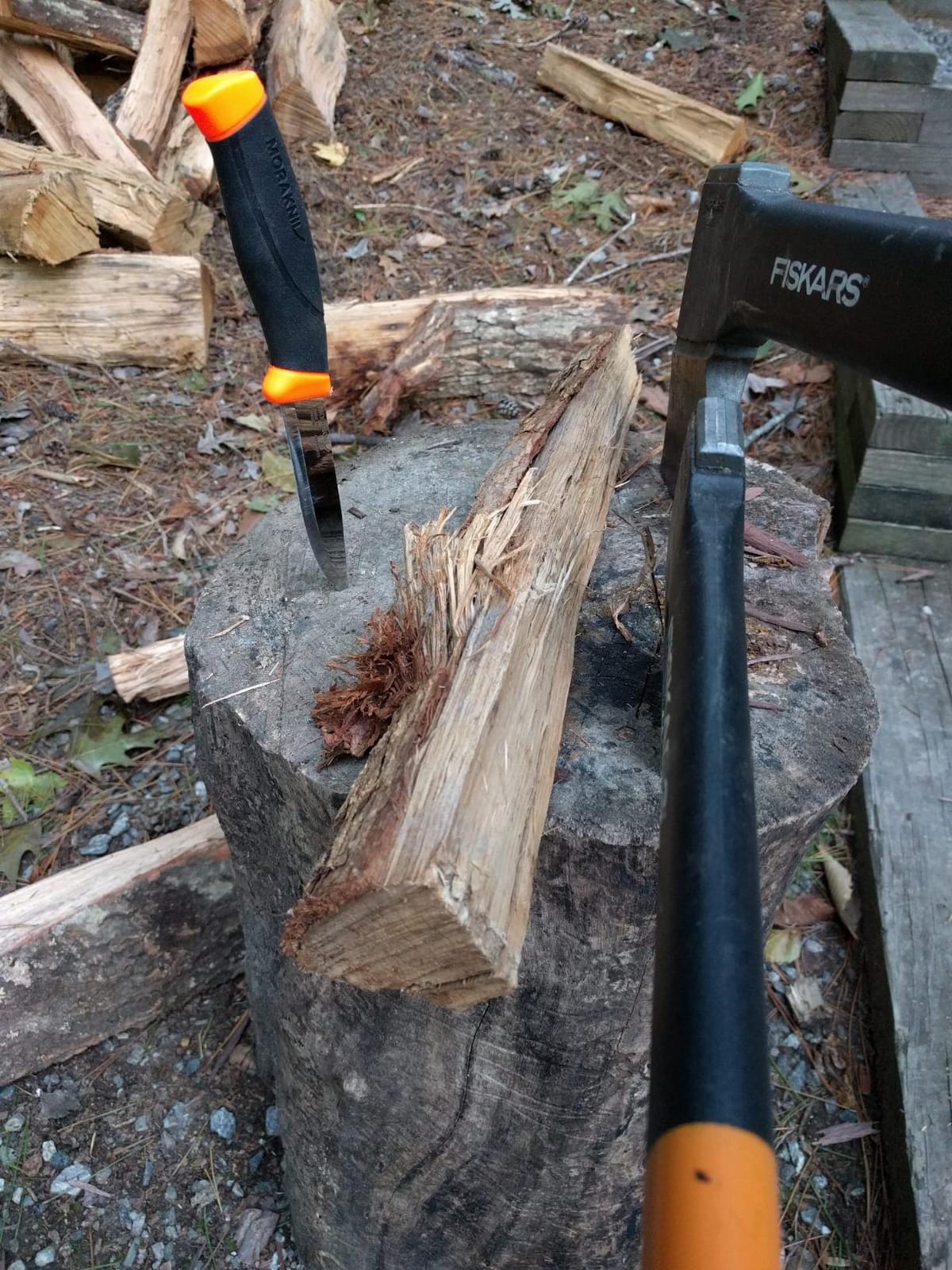
For bushcraft tasks it covers more ground than its size suggests. It feathers sticks cleanly, handles light batoning, notches and cuts cordage, and the tip is fine enough for detail work on a cooking stick. The rounded spine will not throw a fat ferro shower on day one, but a couple of passes with a file and it does the job.
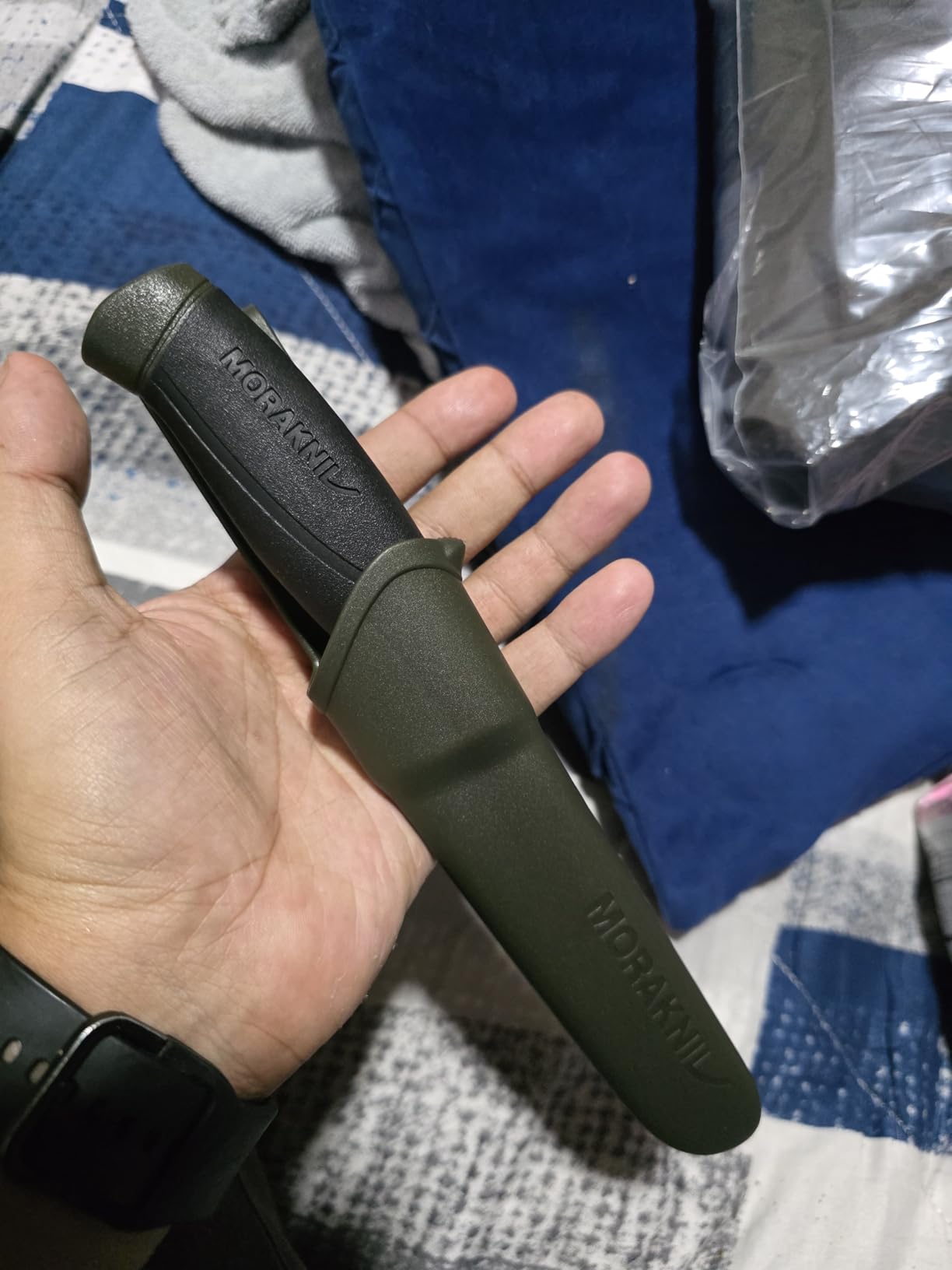
What sold me is the weight. At 3.9 ounces with the sheath, it simply disappears on a pack. The handle is a soft friction polymer with a finger guard, and it stays planted in wet or gloved hands, which is the thing that actually decides whether a knife feels safe in rain.
Community consensus lines up with our own read here. On r/Bushcraft, owners repeatedly name the Mora Companion as the first knife they recommend to beginners, and forum threads point to the factory edge and low weight as the reasons.
What to check before you buy
Decide how much abuse you plan to put through it. The 3/4 tang is fine for a season of feathersticking, carving and food prep, and it is not a batoning tool. Owners doing heavy splitting usually move up to a full tang model.
Plan for the sheath. The supplied plastic sheath holds the knife and has a belt clip, which is enough for day hiking. For a pack that gets tossed around, an aftermarket leather or Kydex sheath is a worthwhile add-on.
Where it falls short
The steel is a light-gauge stainless, which means it wants an edge refresh sooner than a thick carbon blade would. It also lacks the mass for chopping kindling into short pieces, so you will still want a small hatchet for the heavy fuel.
If you work in a wet coastal climate or freeze your pack solid overnight, the corrosion resistance is a genuine win. If you want a knife that can be abused as a pry bar, choose the Gerber Strongarm instead.
2. Gerber Strongarm – Best for Batoning and Heavy Abuse
Gerber Gear Strongarm – Fixed Blade Tactical Knife for Survival Gear – Coyote Brown, Plain Edge
Blade: 4.8 in 420HC
Cerakote finish
Weight: full tang, 90 degree spine
Pros
- Full tang 420HC survives batoning and prying
- Diamond textured rubber grip locks when wet
- Sheath mounts horizontally or as drop-leg
- 90 degree spine throws sparks unmodified
- USA made
Cons
- 420HC loses its edge faster than modern steels
- Thick saber grind is clumsy for fine carving
- Unsharpened swedge near the tip
- Polymer sheath can be brittle in cold
The Strongarm is the knife you hand to someone who wants to break things. Full tang 420HC with a Cerakote coating, a 4.8 inch drop point blade, and a squared spine that throws sparks off a ferro rod with no modification at all.
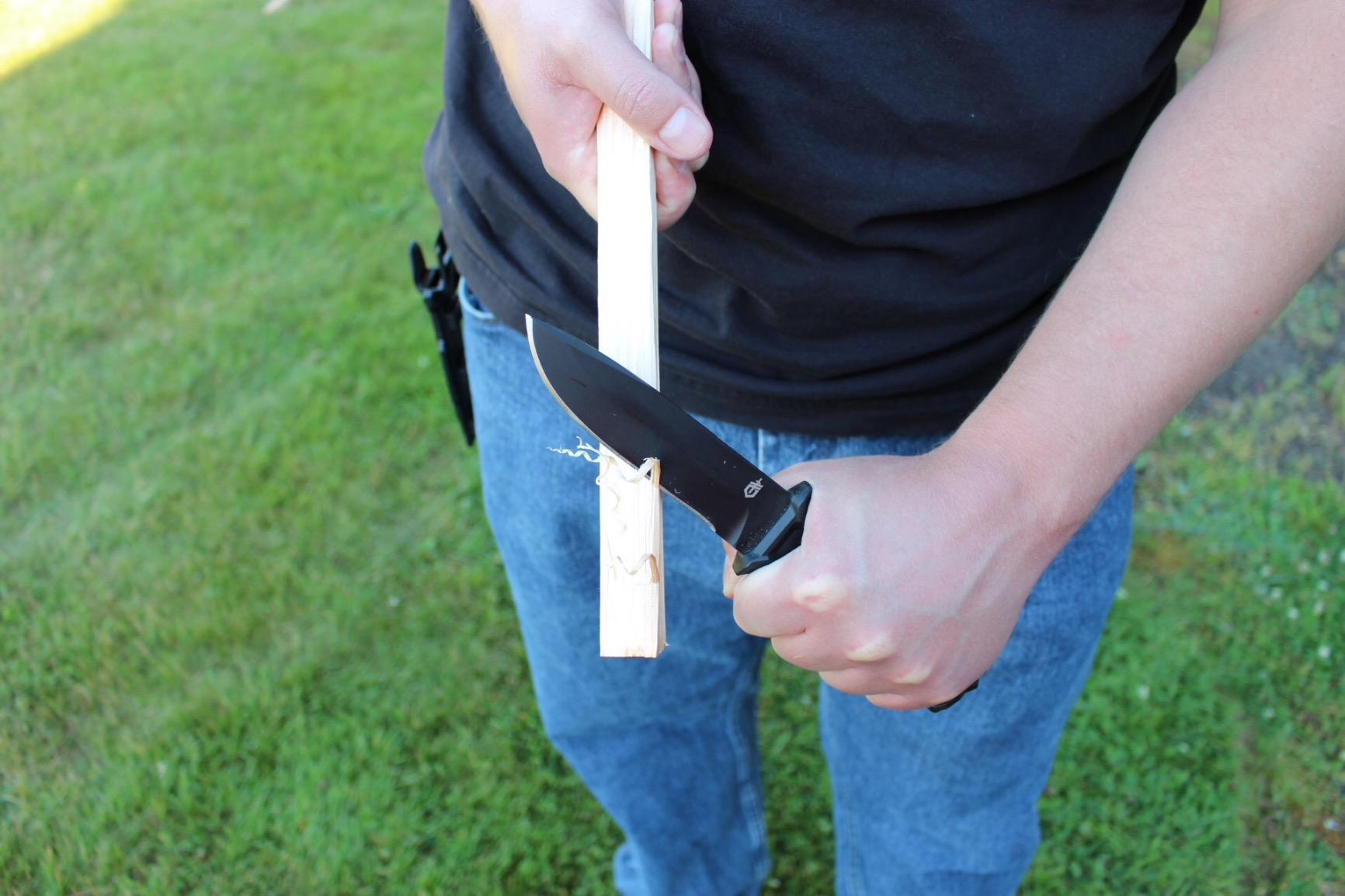
Batoning is where it separates from the lighter Moras in this list. The tang runs the full length of the handle, so the load spreads instead of concentrating at the shoulder, and the 0.4 kg total weight means it swings well when you are splitting rounds.
The sheath is the best mass produced carry system we tested. It snaps closed, it has a belt hook, and it mounts horizontally, vertically, as a drop-leg, or onto MOLLE. Owners moving from a lighter wood knife to this one usually mention the same thing: the grip never moves.
The diamond-textured rubber overmold is genuinely aggressive. Combined with the finger choil and the glass-breaker pommel, the Strongarm feels like a tool designed to be gripped hard with a gloved hand.
What to check before you buy
Look at the grind honestly. A thick saber profile is a slicing and chopping shape, not a carving shape. If your list is spoon carving and feathersticks first, the Condor Bushlore or the BPS Adventurer will make cleaner cuts with far less force.
Check the coating on arrival. Cerakote wears at the tip over time, and the 420HC underneath will spot sooner than bare stainless. Wipe it dry and oil it lightly if you live somewhere damp.
Where it falls short
420HC is a hard, resilient steel but not a modern edge retention steel. It dulls quicker than a powder metallurgy blade and needs touching up on a strop more often. For a knife you use every single day that is a fair trade, for a weekend tool it is mildly annoying.
The price also sits well above where the budget Moras live, and reviewers in the large owner base frequently point out that it has climbed since launch. You are paying for the tang, the heat treat and the sheath.
3. Morakniv Bushcraft Black – Best for Fire Starting
Morakniv Carbon Steel Fixed-Blade Bushcraft Knife with Sheath, Black, 4.3 Inch
Blade: 4.3 in carbon steel, 1/8 inch
Weight: 5.7 oz with sheath
Full tang, DLC coated
Pros
- Full tang carbon steel with DLC coating
- Spine ground for ferro rod use out of the box
- High friction rubber grip stays secure when wet
- Backs up the classic Mora shape with more steel
Cons
- Heavier than most Mora bushcraft knives
- Carbon steel still needs regular oiling
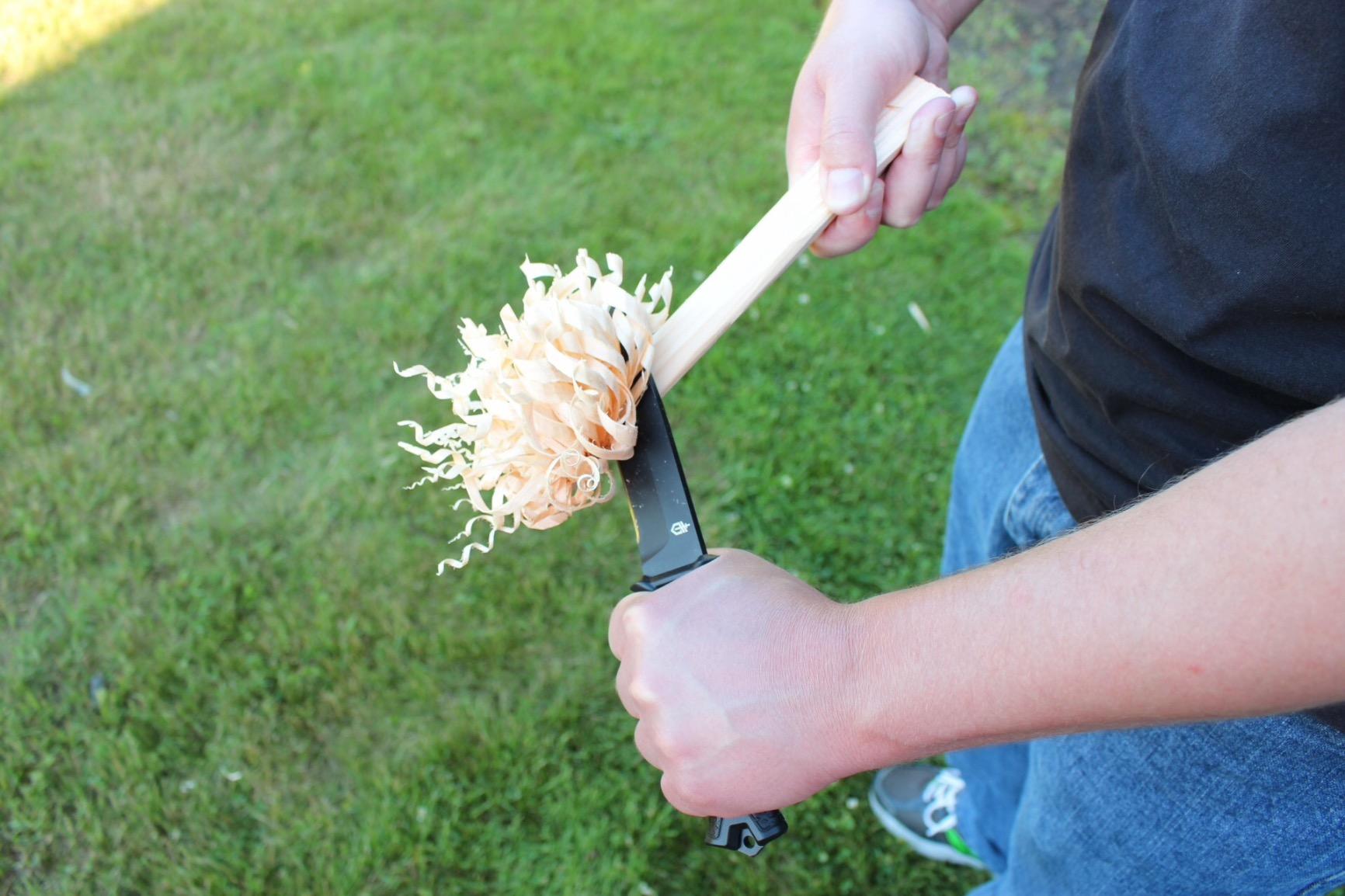
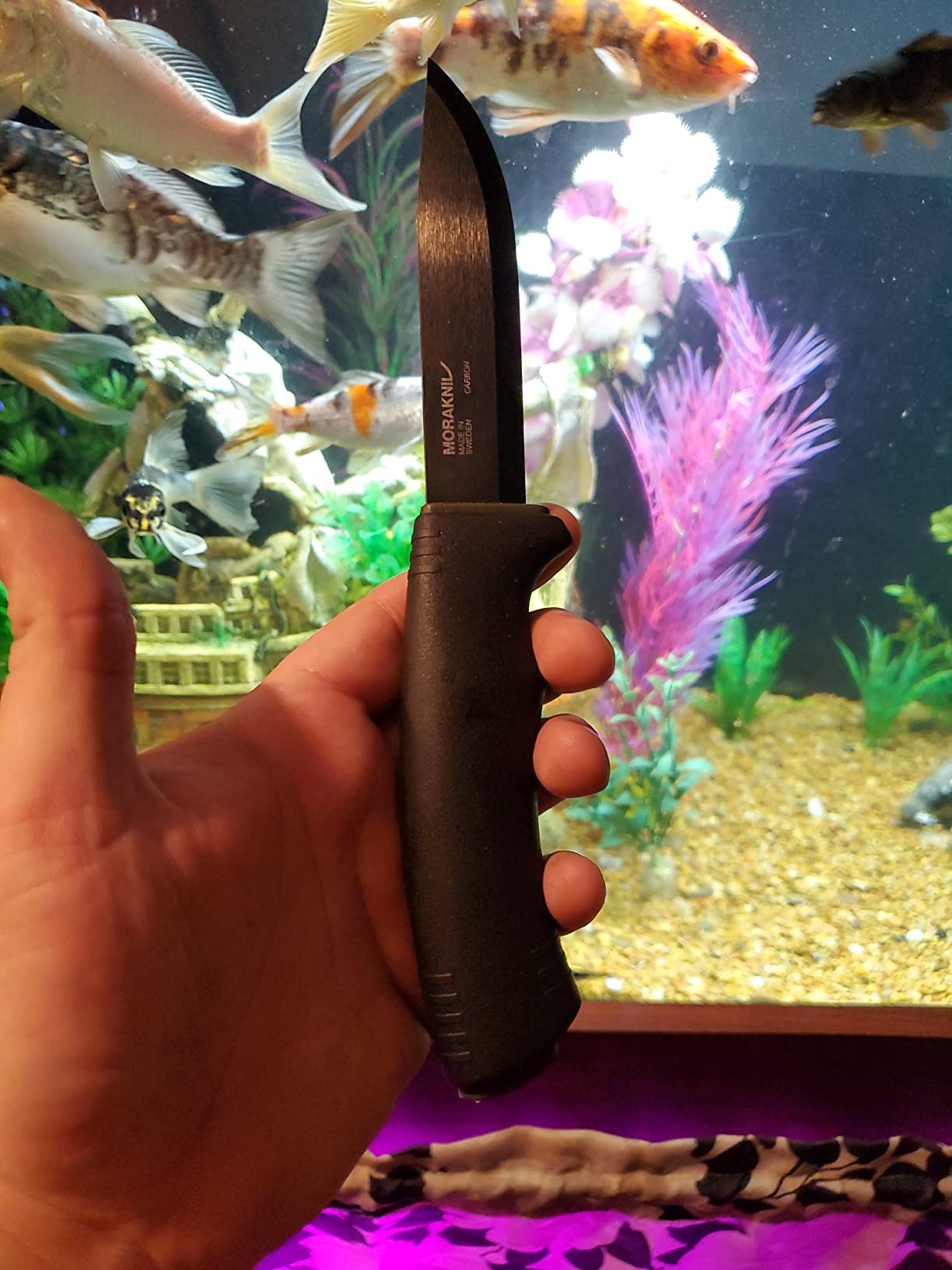
This is the step up for people who outgrew the Companion. The blade is 1/8 inch thick carbon steel under a tungsten DLC coating, it runs full tang through the handle, and the spine is ground specifically for striking a fire steel. That is the single most bushcraft-specific feature on any knife here.
Because it is carbon steel, it takes an edge more easily than the stainless Moras and holds a working edge through longer carving sessions. The DLC coating is not a coating you can ignore, it is what keeps the carbon from blooming orange in a wet pack for the first year of use.
At 5.7 ounces with the sheath, it is noticeably heavier than the Companion. In a day pack that is a fair trade for a tougher blade, but if you are counting every gram for an overnight, the lighter options make more sense.
The supplied plastic sheath has a single belt loop and no ferro rod pocket, so you will want a roll or a separate pouch for your fire steel. The handle is a high-friction rubber with a contoured shape that keeps the index finger seated.
What to check before you buy
Carbon steel means a maintenance habit, not a dealbreaker. Owners on r/Bushcraft and r/knives repeatedly warn that Mora carbon steel needs wiping and oiling in wet conditions, and that edges pit faster in sustained rain. A wipe dry and a drop of oil at the end of the day solves it.
Check your intended use for prying. The full tang makes it far stronger than a 3/4 tang, but it is still a knife edge and not a pry bar.
Where it falls short
It is heavier, and in a pack where every ounce counts that is the honest drawback. It is also not a fine slicer compared with a Kansbol, because the thicker stock and fuller profile resist the draw cut that thin blades excel at.
The warranty is one year, which is shorter than the lifetime coverage some of the premium picks in this list carry. For a knife used hard outdoors, that is worth factoring in.
4. Morakniv Kansbol – Best Value Bushcraft Knife
Morakniv Kansbol Stainless Steel Fixed-Blade Survival Knife With Sheath, Military Green, 4.3 Inch
Blade: 4.3 in Sandvik stainless
Weight: 4.7 oz
Two stage flat and scandi bevel
Pros
- Two stage bevel handles carving and fine slicing on one blade
- Light at 4.7 oz and well balanced
- 90 degree spine throws easy sparks
- Symmetrical knife and sheath suit either hand
Cons
- Not a full tang so no heavy batoning
- Blade thins to about a millimeter near the tip
- High friction handle takes practice to draw
- Two stage bevel needs more sharpening work
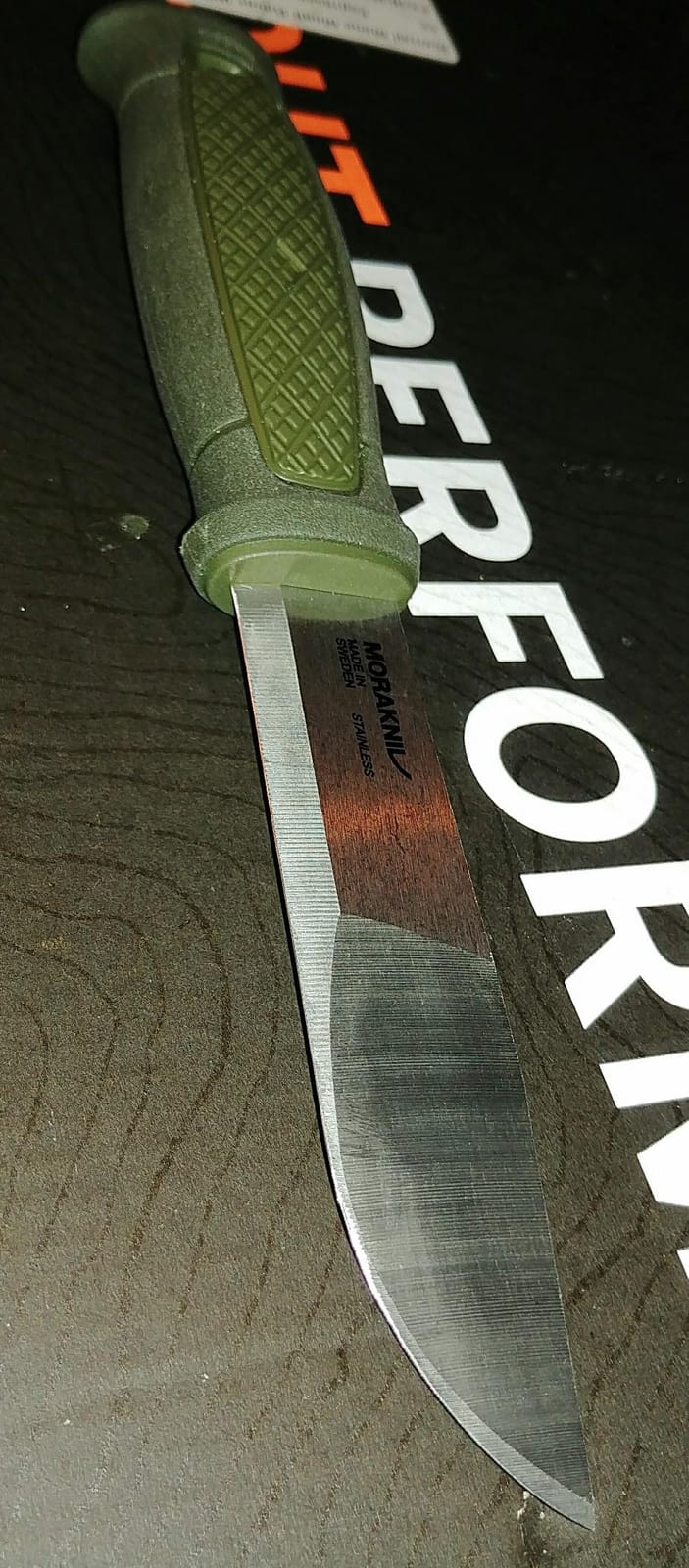
The Kansbol is the most interesting blade shape in this roundup. It has a two-stage bevel: a flat scandi section near the handle for wood, and a finer flat section near the tip for food and fish. One knife covers batoning-adjacent carving and camp filleting without a compromise.
It weighs 4.7 ounces and is balanced well enough that reviewers routinely compare food prep on it to using a kitchen knife. The Sandvik stainless takes an edge fast and resists the damp that ruins carbon steel in coastal camps.
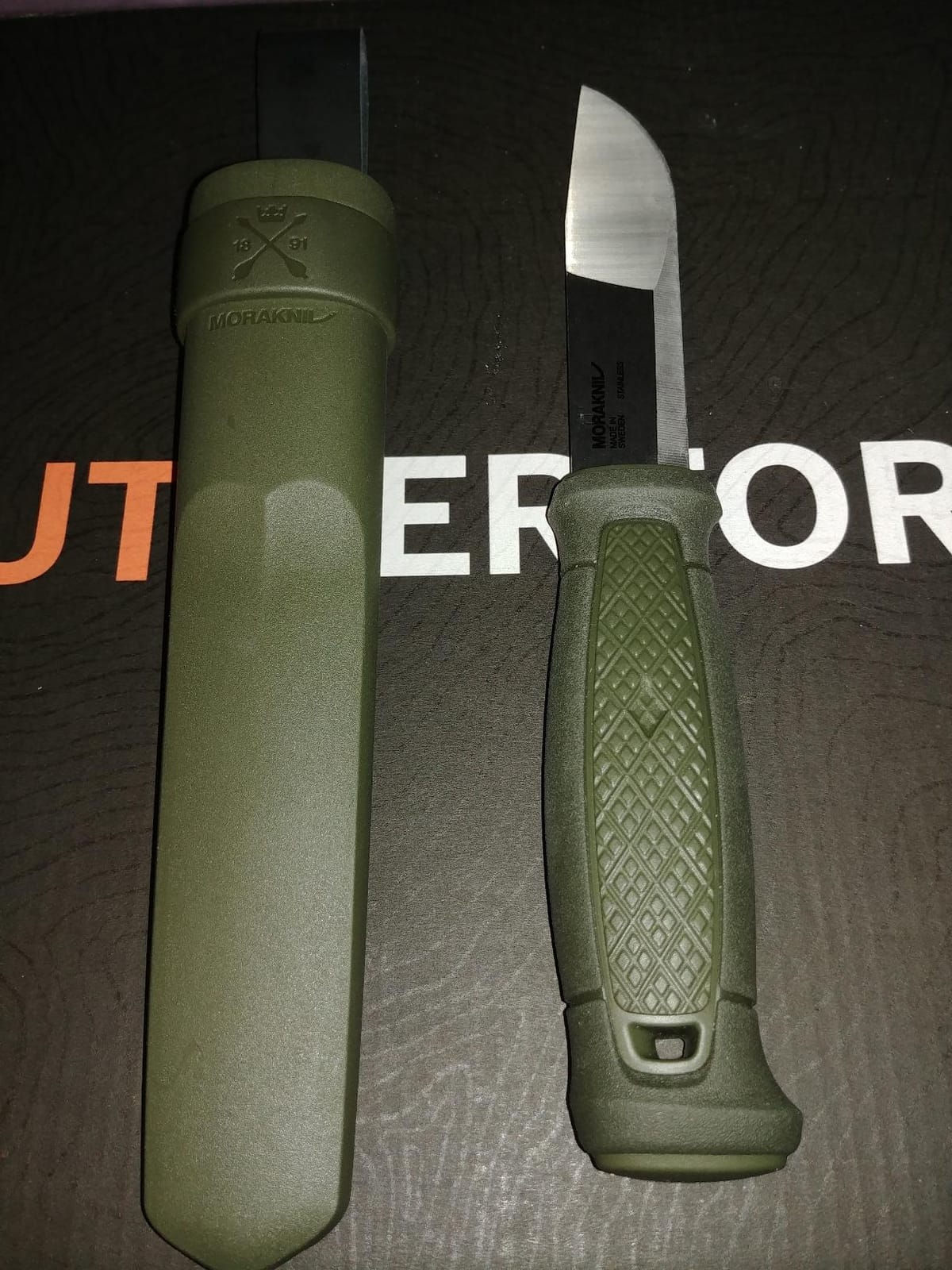
The whole knife and sheath are symmetrical, and the sheath has a click lock, so it carries for either hand without buying a second sheath. That is a small detail that matters a lot for anyone who is not right handed, and competitors mostly ignore it.
On forums, the recurring line is that the Kansbol is the best all-round woods knife in the Morakniv line, and owners with far costlier collections still reach for it when precision cuts are the order of the day.
What to check before you buy
Look at the tip. It tapers to roughly a millimeter, which some owners find visually and structurally anemic. For detail carving and fine slicing that taper is a feature, for poking a hole in a boot leather it is not.
Then look at your batoning expectations. The partial tang here is widely praised for light work and just as widely flagged as not for heavy splitting or prying. If that is your main task, go full tang.
Where it falls short
The two-stage bevel takes more effort to maintain than a single grind. Each pass on a stone has to follow the transition, and if you rush it you will round the shoulder where the two sections meet.
The high-friction handle is grippy but grabby, so drawing from the supplied sheath takes a few days of practice. Budget a week before you decide the knife is awkward rather than learning the draw.
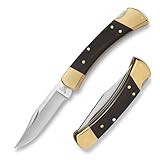
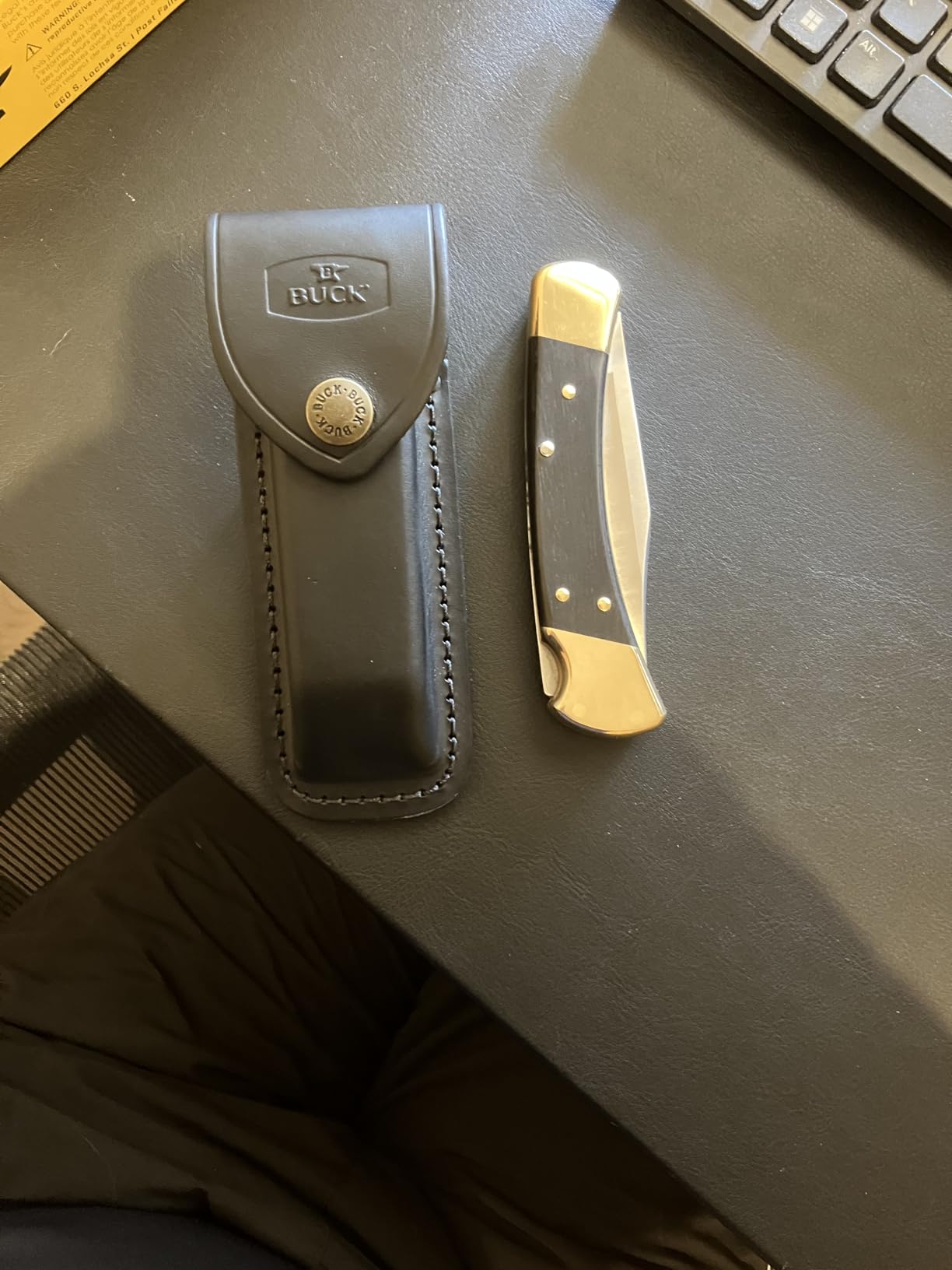
5. Buck 110 Folding Hunter – Best Folding Bushcraft Companion
Buck Knives 110 Folding Hunter Lock-back Knife, Brass Bolsters, Ebony Handles, 3-3/4″ 420HC Clip Point Blade with Leather Sheath
Blade: 3.75 in 420HC clip point
Weight: 7.2 oz
Closed: 4.875 inch
Pros
- Lockback is reliable and opens one handed from the nail notch
- Buck heat treat gives 420HC real edge holding
- Brass bolsters and ebony scales feel solid
- Leather sheath included
- Lifetime warranty and USA handcrafting
Cons
- Folding lockback so no batoning or prying
- 3.75 inch blade limits larger cutting tasks
- Plain edge only on this variant
Most bushcraft knives on this list are wrong for one specific job: living in a pocket and being ready instantly. The Buck 110 covers that job better than anything else here, and it has been doing it since the model line began decades ago.
The lockback is the strongest mechanism in folding knife history for a reason. It is positive, it is one handed from the nail notch, and it does not depend on a spring or a friction fit to stay open. A snap cut on a rope or a seatbelt is a realistic use, not a stunt.
The 420HC clip point takes Buck’s heat treat and holds an edge better than 420HC usually has any right to. The brass bolsters and ebony scales give it a dense, centred feel that disappears in the hand, and the included leather sheath has a snap and a belt loop.
As a companion to a full tang it is genuinely useful. Food prep, camp light tasks, cutting line, the kind of small precision work where you would not want to pull a 9 inch blade.
What to check before you buy
Confirm you are buying a knife, not a solution. A 3.75 inch blade on a 7.2 ounce package does not baton, does not chop and does not carve a bowl. If that is the job, this is the wrong tool and no amount of enthusiasm changes it.
Check the sheath. The genuine leather is included, which is unusual, and it is a belt-loop snap pouch rather than a belt-through holster, so plan your carry position.
Where it falls short
No half-serrated variant of this configuration is offered, so all fibrous cutting is plain edge. For rope and webbing a partially serrated edge would be faster, which is the one place this pick loses to the Gerber Ultimate.
It is also heavier than most bushcraft fixed blades here, at 7.2 ounces, so it does not solve an ultralight packing problem. It solves a readiness problem.
6. Gerber Ultimate – Best All-in-One Kit with Ferro Rod
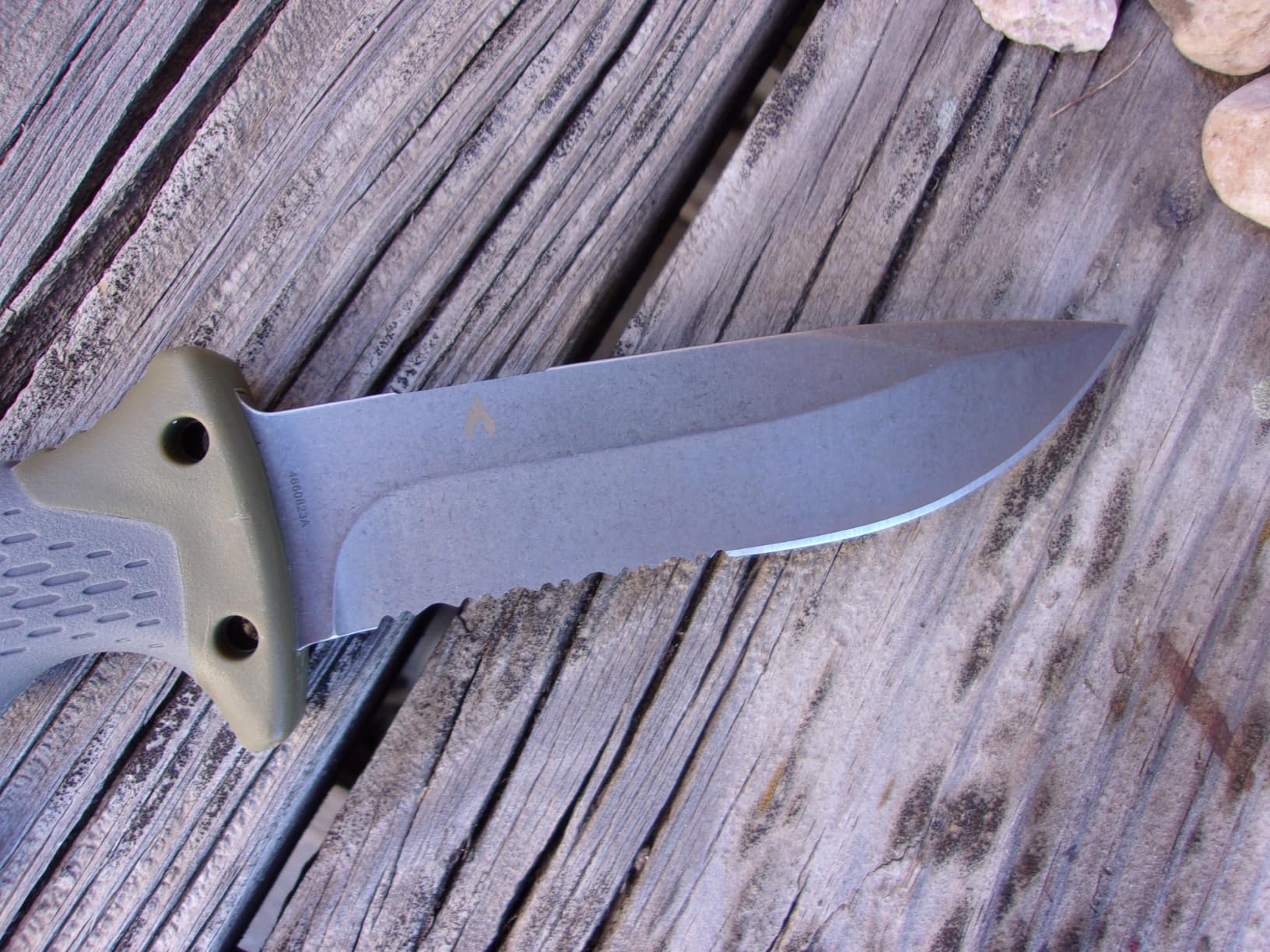
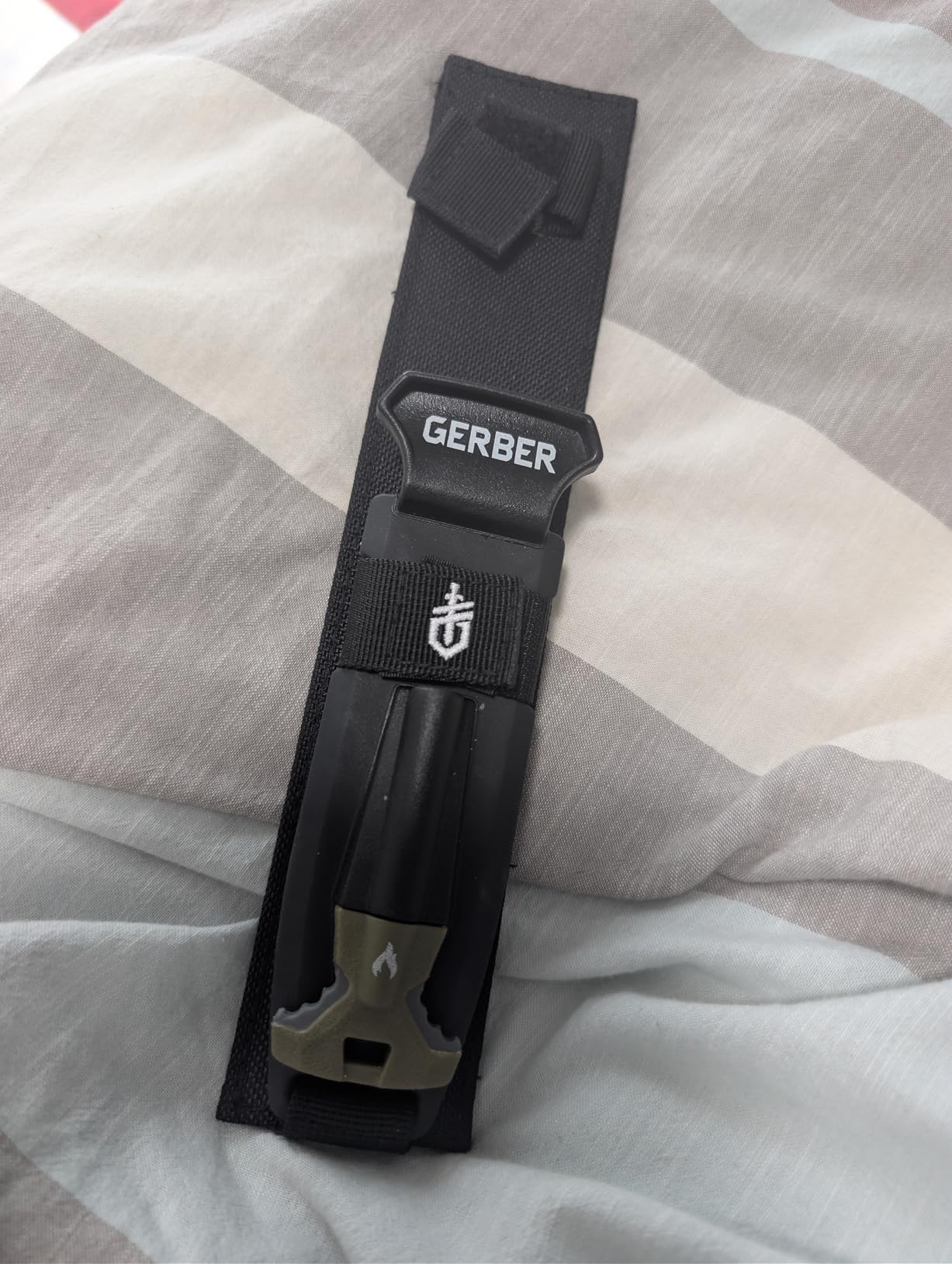
Gerber Ultimate Fixed Blade Knife w/Sheath, Knife Sharpener, Ferro Rod
Blade: 4.8 in half serrated stainless
Weight: 11.02 oz
Full tang, hammer pommel
Pros
- Sheath holds a sharpening stone and ferro rod
- Full tang with hammer pommel and whistle
- Textured rubber grip works in any condition
- Everything a beginner needs in one sheath
Cons
- Heaviest knife in this roundup at 11.02 oz
- Half serrated edge cannot be field sharpened
- Sharpener and rod bulk up the carry profile
Buy the sheath and you get the knife, a ferrocerium rod and a sharpening stone in one package. For someone starting out who does not yet know what they want to carry, that is a real answer, and it removes the most common beginner mistake of heading out with no way to make fire or restore an edge.
The blade is a full tang, 4.8 inch half-serrated drop point in stainless steel, with a hammer pommel and a built-in emergency whistle. Textured rubber handle, 10 inches overall.
Where it works is durability and convenience. One sheath, no separate rod to lose, no separate stone to leave behind. The full tang and the pommel mean it will not be the piece that fails on a weekend trip.
Reviewers consistently describe the extras as functional rather than premium. The rod sparks, the stone sharpens, neither is a luxury item, and that framing is fair.
What to check before you buy
Check the edge type against your tasks. A half-serrated section is excellent on rope, webbing and packaging, and genuinely poor at carving, food prep and any controlled push cut. If you carve, this is not the knife.
Check the weight. At 11.02 ounces it is the heaviest pick on this page by a wide margin, and the sheath extras add bulk you carry every single day whether you need them or not.
Where it falls short
A half-serrated edge is the one thing that limits this knife most. Serrations are slow to restore in the field, and a coarse stone will not put a clean edge back on them, so a dull serrated section stays dull.
At 11 ounces it is a trucker knife, a yard knife and a gift knife. It is not a backpacking knife, and it will not do the fine carving work that makes bushcraft rewarding.
7. Condor Bushlore – Best Full Tang Carver for the Money
Condor Bushlore Knife – Bushcraft Knife – 1075 High Carbon Steel – Walnut Handle – Scandi Grind – Small Fixed Blade Knives – Hand Crafted Leather Sheath – 3mm Thick – 4.3in Blade – 6.1 oz
Blade: 4.3 in 1075 carbon, 3mm
Weight: 6.1 oz
Full tang, scandi grind
Pros
- 1075 carbon steel takes a fast edge and is easy to hone
- Hand riveted leather sheath rivals knives far costlier
- Walnut handle can be refinished by the owner
- Square 90 degree spine for ferro strikes and bark shaving
Cons
- Carbon steel needs oiling after every use
- Shallow scandi rolls under heavy batoning
- Stamped lettering traps water
- Walnut scales dry out early
The Bushlore is the most convincing traditional bushcraft knife here. Full tang 1075 high carbon steel, a true scandi grind, a squared spine, and a walnut handle that sits in the hand like a tool rather than a gadget.
That scandi grind is the reason to buy it. One wide primary bevel from spine to edge means no secondary bevel to maintain and no hard shoulder at the edge, so carving pulls and push cuts are controlled almost entirely by angle and pressure. For a beginner learning to carve, that forgiveness matters more than any exotic steel.
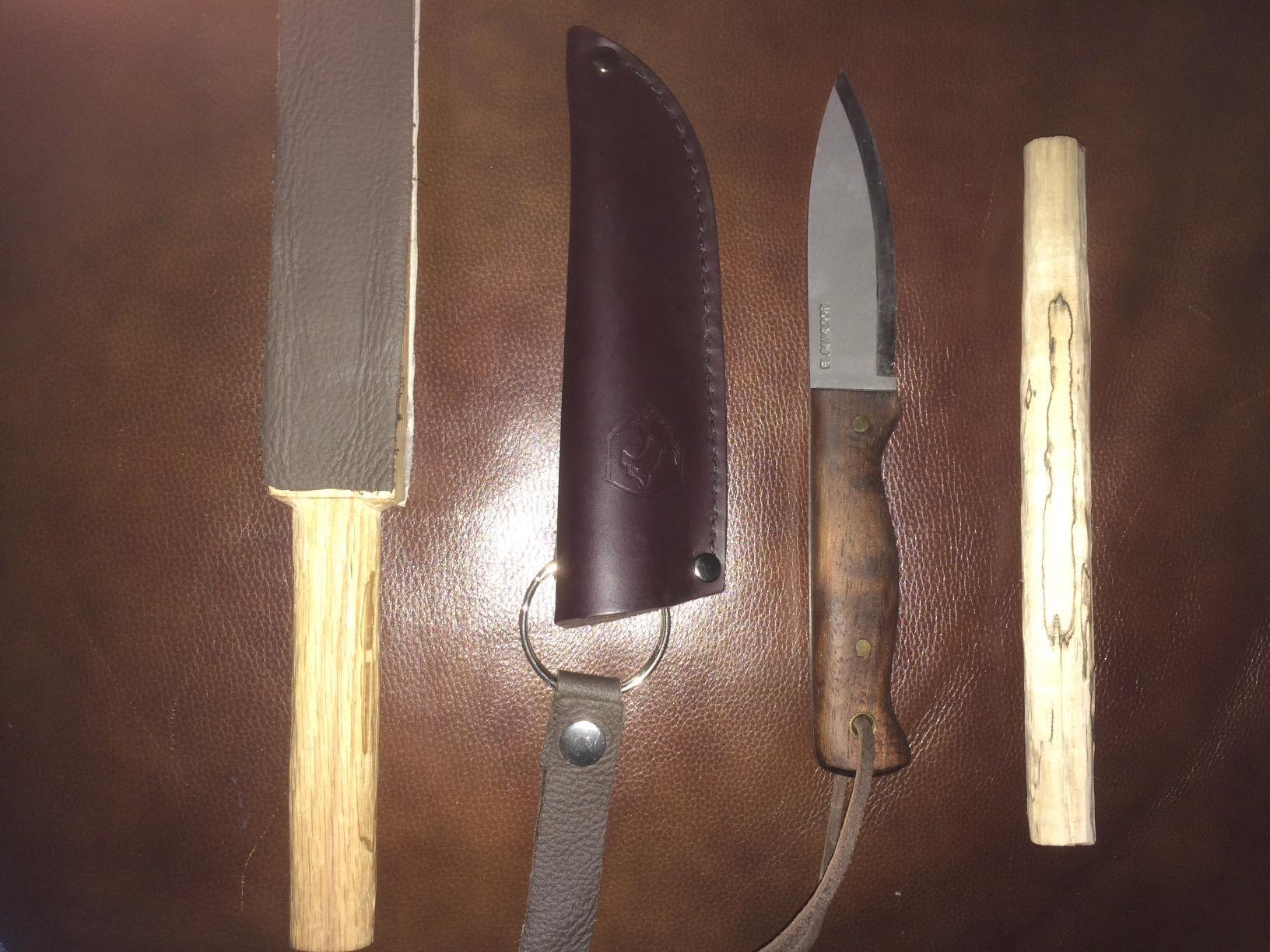
The leather sheath is the sleeper feature. Handcrafted, riveted, wax-cord stitched with a brass lanyard bushing, and owners frequently describe it as better than sheaths shipped with knives costing several times more.
The walnut scales can be sanded and re-oiled by the owner, so a knife that develops a handle shape for your hand over a few seasons is realistic here. That is a small thing that keeps giving.
What to check before you buy
Budget for a wet-weather routine. Carbon steel on this knife is not coated, it is bare, and owners say plainly that it needs oiling after every use. Forum regulars on r/Bushcraft treat this as normal ownership rather than a defect, and once it becomes habit it costs nothing.
Inspect the arrival condition. Some knives show deep stamped lettering on the blade facets that can trap water and spot, and a minority arrive with a duller tip or uneven handle fit. Check the tip in daylight before you rely on it.
Where it falls short
The shallow scandi angle rolls under heavy batoning, which means you will be touching up the edge more often than with a flat or saber grind. The grind is a carving grind, and pretending otherwise is how edges get ruined.
It is a right hand knife with no symmetrical option, and the walnut scales can dry out and need oiling earlier in their life than synthetic handles would. Neither is a dealbreaker, both are worth knowing.
8. Holtzman’s Gorilla Survival Bloodline – Best Complete Kit for Backpacking
Bloodline Fixed Blade Survival Knife – Full Tang 1095 High Carbon Steel Bushcraft & Hunting Knife with G10 Handle, Kydex Sheath & Ferro Rod – Holtzman’s Gorilla Survival
Blade: 4 in 1095 high carbon
Overall: 8.6 inch
Full tang, G10 handle
Pros
- True full tang 1095 carbon built for real batoning
- Textured G10 grips in wet or dry conditions
- Kydex sheath plus ferro rod and scraper included
- Balanced enough for feathersticks and camp chores
Cons
- Less steel and heft than premium American full tangs
- Higher price than others in its weight class
- Fewer owner reviews than the established models
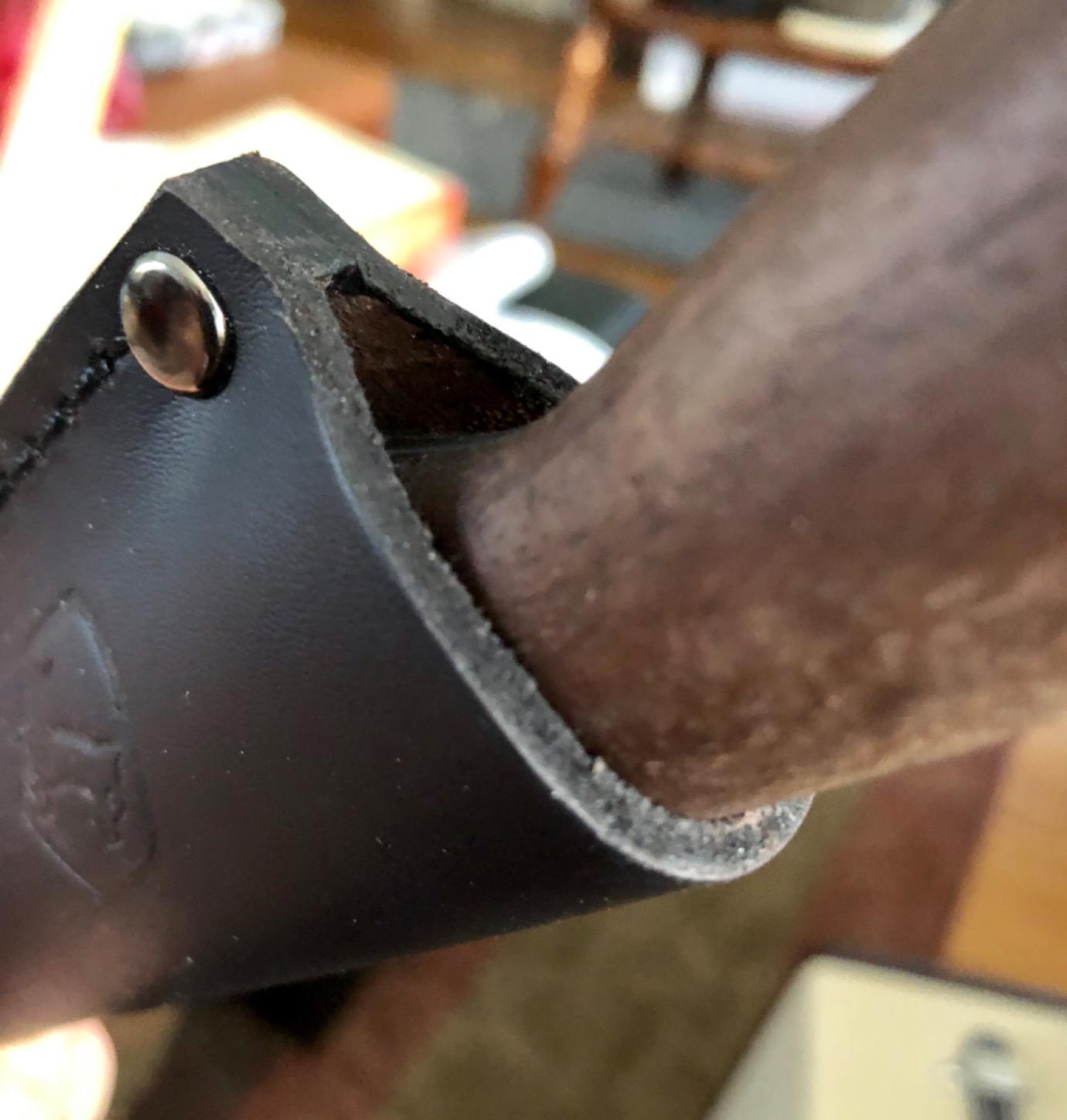
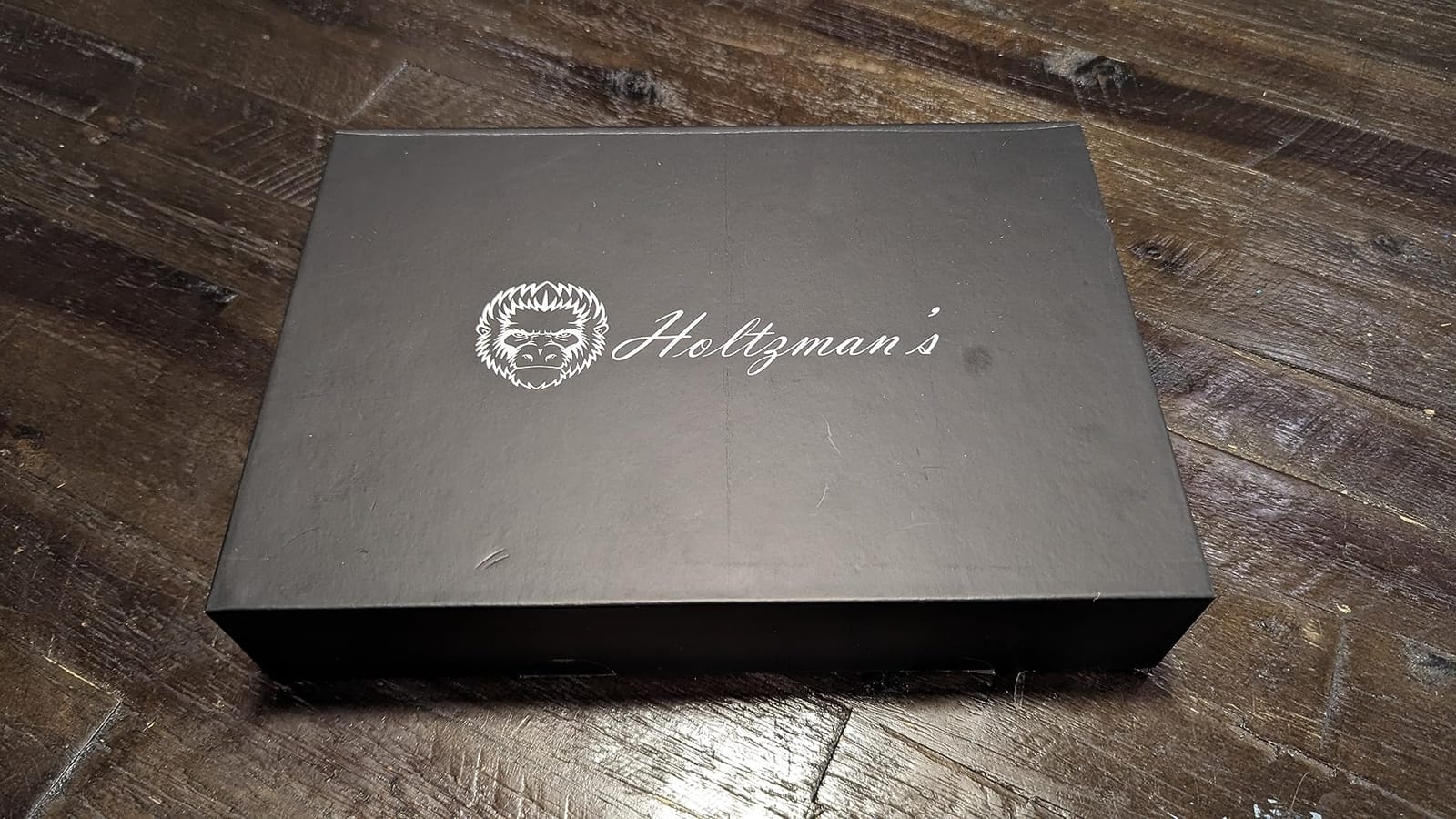
The Bloodline arrives with a custom Kydex sheath, a ferro rod, a scraper, paracord and mounting hardware in the box. That is a complete kit rather than a knife, and for someone building a first kit without hunting for parts it removes several decisions.
The blade is a full tang 1095 high carbon steel in a 4 inch package, 8.6 inches overall, with a textured G10 fiberglass handle. 1095 is a straightforward workhorse carbon steel that takes an edge easily and rewards a strop.
G10 handles are the standard bushcraft answer for a reason. They are a thermoset fiberglass laminate, they do not soften in cold weather, they do not swell in water, and a coarse-textured surface stays predictable when everything else on the knife is wet.
Owners consistently describe the fit and finish as practical rather than refined. The Kydex holds well, the clip is solid, and the knife is sized to sit in a pack without being noticed.
What to check before you buy
Check the actual heft. This is a 4 inch blade with a lighter overall build than the premium full tangs it resembles, and owners note that it carries less steel than American alternatives at a similar or higher price. If batoning is the headline task, look at the Gerber Strongarm or the ESEE PR4 instead.
Check the sheath mounting. It ships with a belt clip, and you will want to confirm the hardware suits your pack before you rely on it in a scramble.
Where it falls short
The review base is far smaller than the Morakniv, Gerber and Buck models on this list, which means fewer long-term data points and less feedback on long-run durability. That is a real consideration when you are buying something meant to last years.
It also costs more than several bushcraft knives that carry more steel. You are paying for the bundled kit and the Kydex sheath as much as for the blade.
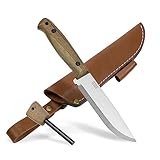
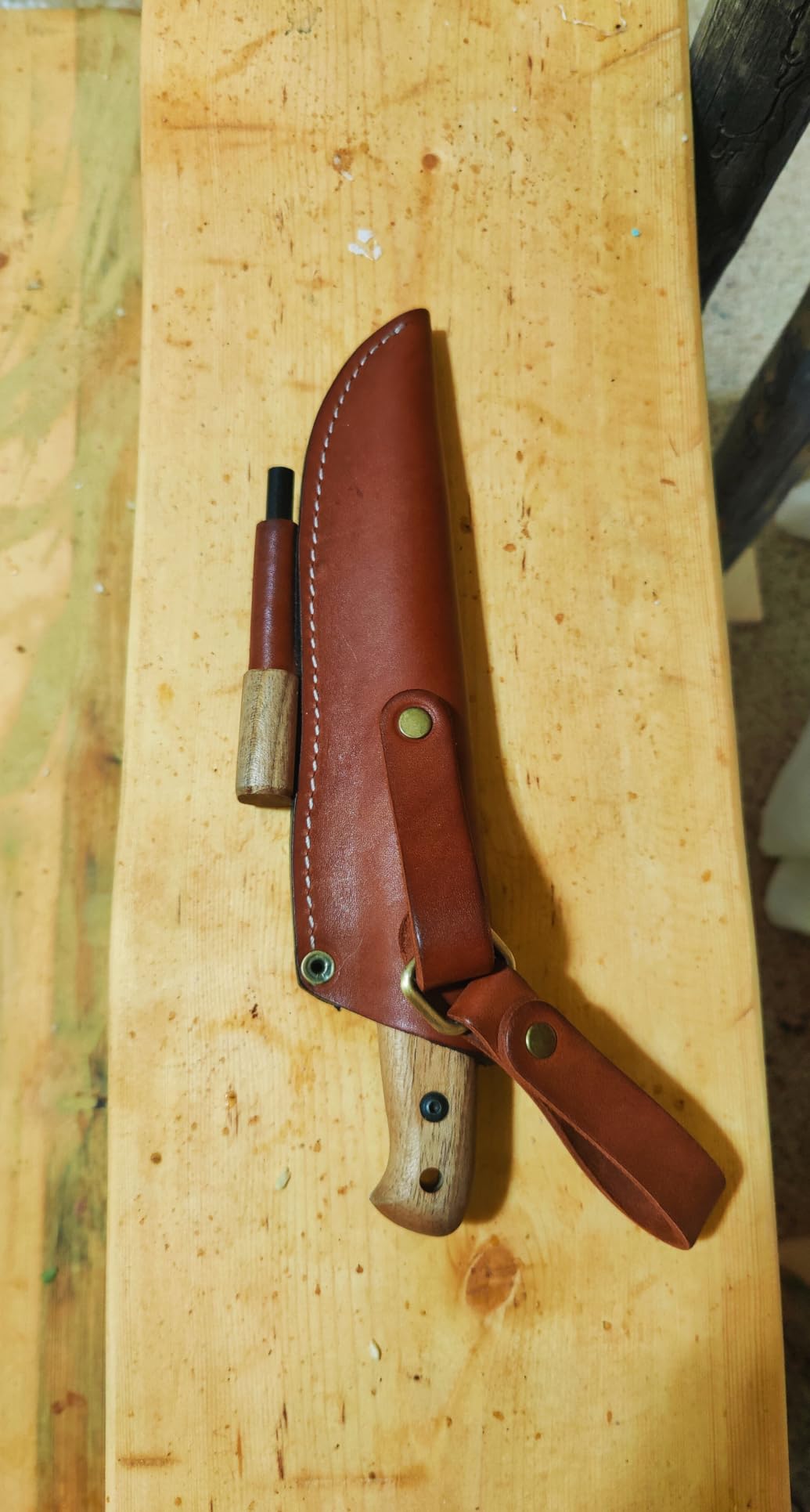
9. BPSKNIVES Adventurer – Best Nordic Puukko Style Carver
BPSKNIVES Adventurer – Bushcraft Knife – Fixed-Blade Carbon Steel Knife with Leather Sheath and Firestarter – Outdoor Full Tang Knives – Camping Knives – Survival Tactical Camp Knives
Blade: 5.3 in 1066 carbon, 56-57 HRC
Weight: 5.7 oz without sheath
True scandi grind
Pros
- True scandi on 1066 carbon arrives razor sharp
- Leather sheath is thick and cleanly stitched with no Velcro
- Walnut handle on screw pins that unscrew for cleaning
- Included ferro rod locks into the sheath and works off the spine
Cons
- QC variance on some knives
- Carbon steel discolors and needs oiling
- Blade arrives coated in gun oil
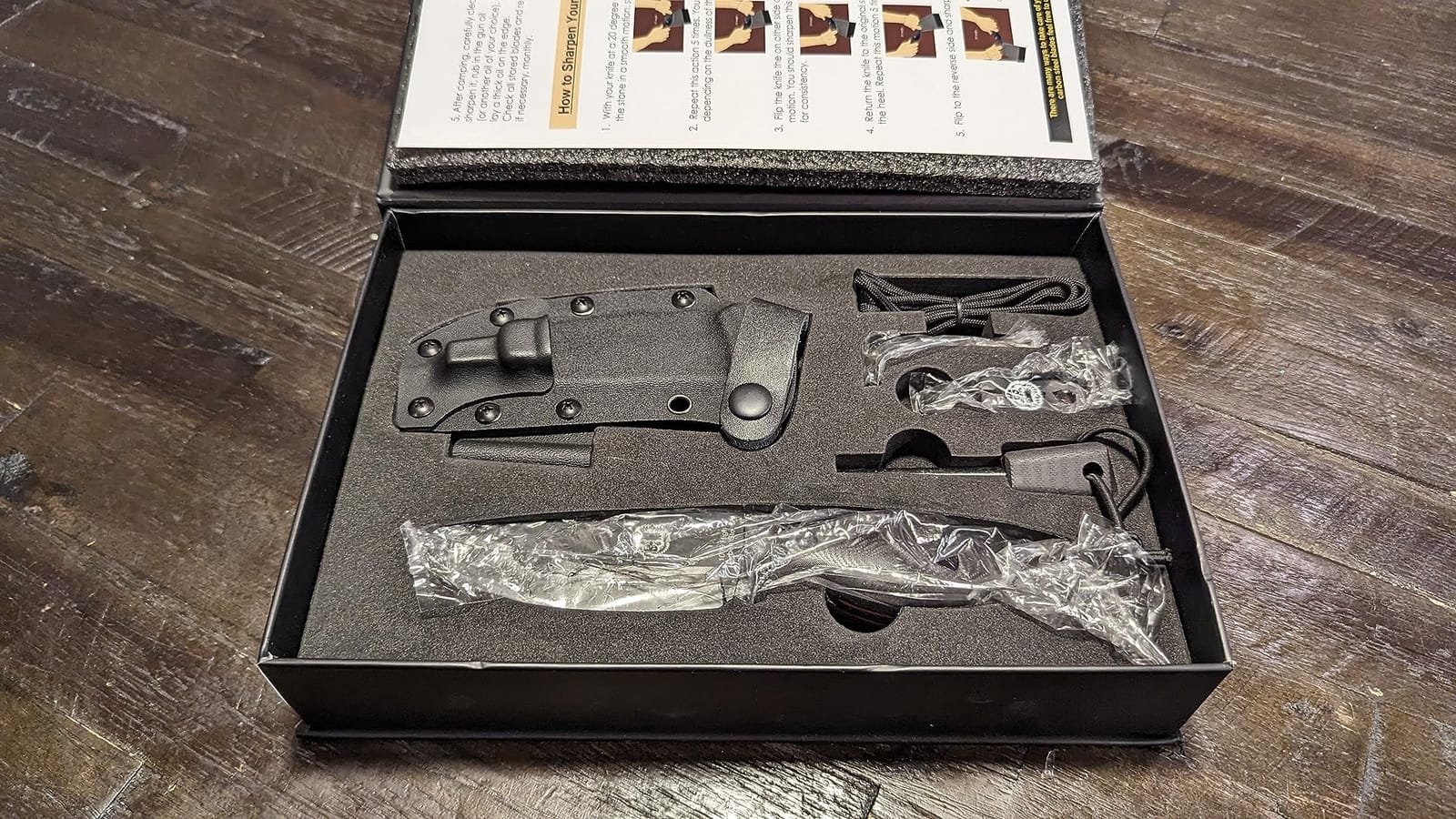
The Adventurer is the closest thing on this list to a traditional Nordic puukko: a 5.3 inch 1066 high carbon blade, a true scandi grind hardened to 56-57 HRC, and an oiled walnut handle. The geometry is heritage, not styling, and it shows in how the blade handles wood.
At 5.3 inches it is the longest blade in this roundup, and that length is the point. Long blade plus single wide bevel gives you a long, straight, easily controlled push cut, which is exactly what carving a spoon handle or a cooking stake requires.
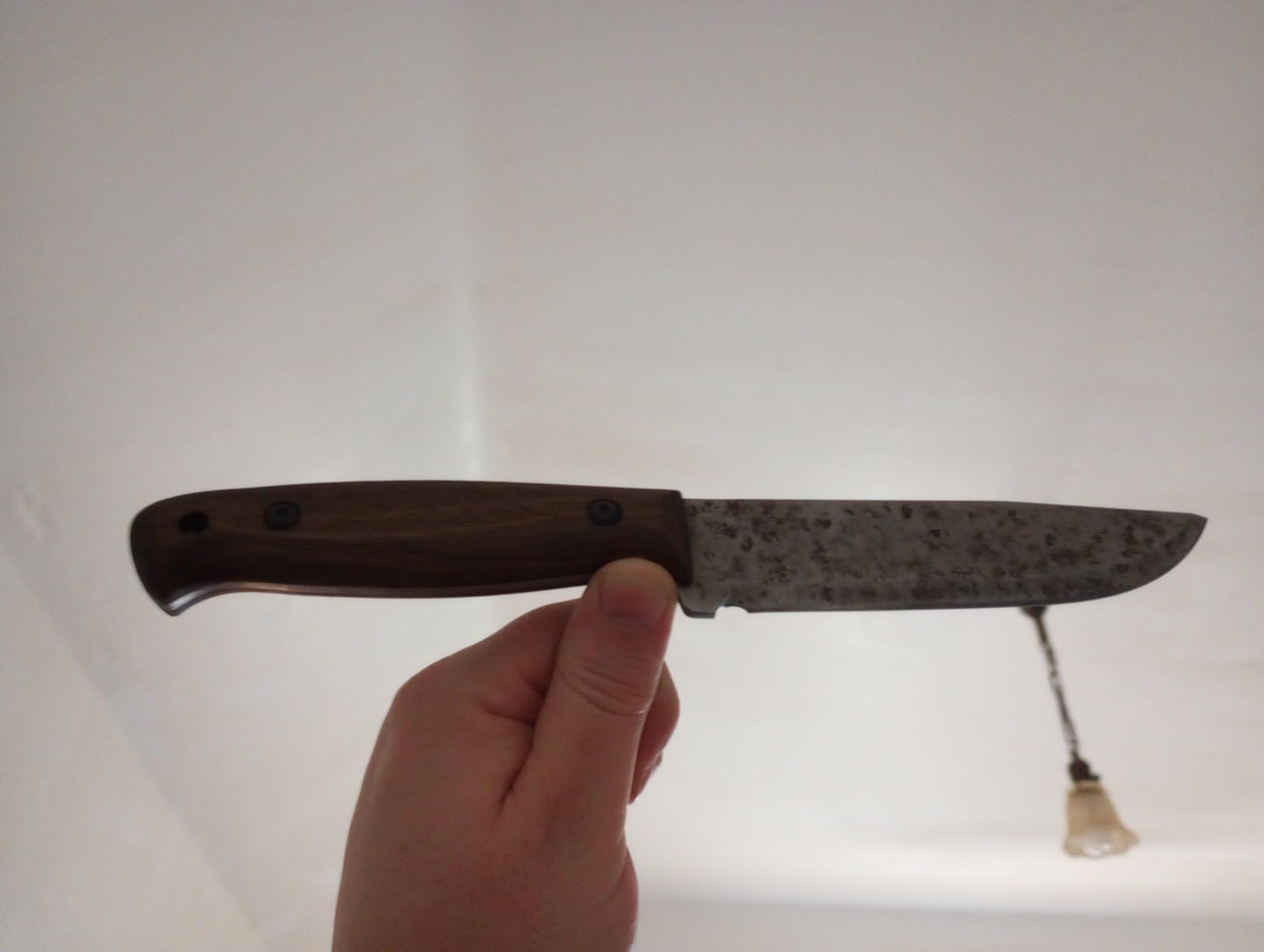
The leather sheath is the most praised component in the owner reviews. Thick, hand stitched, no Velcro and no plastic clamps, and it carries a ferro rod that locks into it and strikes off the spine. The screw-pinned handle can be fully disassembled for cleaning.
Made in Ukraine, and reviewers regularly compare the whole package favourably against knives costing several times as much. The score is the lowest in this roundup, and the reviews explain exactly why.
What to check before you buy
Inspect on arrival, carefully. The most common complaint across the owner base is assembly quality, with reports of uneven handle fit, a duller tip or a slightly uneven edge grind on some knives. It is hand assembly, so variance is expected, and checking takes two minutes.
Wipe the blade before first use. It ships coated in gun oil, which protects the carbon steel in transit but is not what you want on a food-contact or a precision cut.
Where it falls short
Carbon steel with no coating means discoloration and rust are part of the ownership, not a fault. Wipe dry, oil lightly, and it behaves. Skip that and the blade will tell you about it.
The 10 inch overall length can feel long in smaller hands, and the bundled ferro rod is functional rather than good. If hand size is a concern, the shorter scandi-grind options on this page will serve better.
10. ESEE PR4 – Best for Heavy Chopping and Prying
ESEE PR4 Fixed Blade Survival Knife –Field Tested, Durable and Reliable Bushcraft Knife with Dark Tan Sheath, Ideal for Survival, Outdoor Use, and EDC
Blade: 4.0 inch flat grind, 0.125 inch
Weight: 6.3 oz
1095 carbon at 55-57 RC
Pros
- Field tested 1095 carbon at a forgiving hardness
- Flat grind and thick spine handle batoning and prying
- Micarta handle resists moisture and stays secure
- Compact 4 inch edge at 6.3 oz is easy to carry
- USA made with a no questions lifetime warranty
Cons
- Most expensive pick in this roundup
- Black oxide 1095 needs regular oiling
- Flat grind and spear point are poor for fine carving
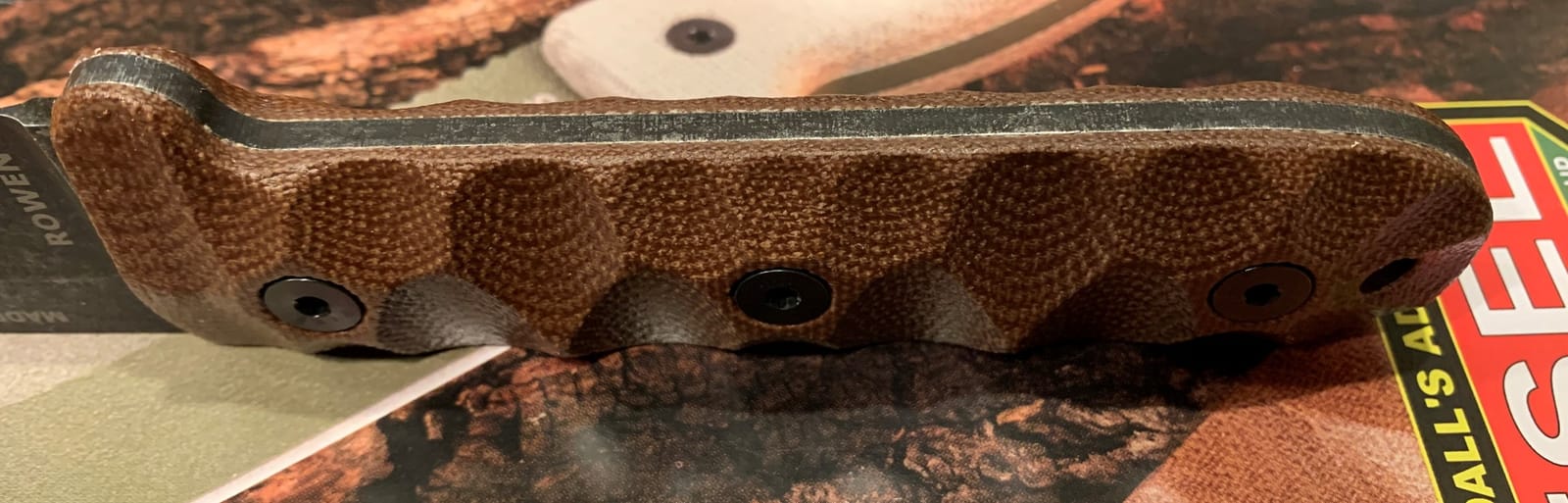
The PR4 is Patrick Rollins rendering of Horace Kephart’s field knife, and it is the most traditional design here. 1095 carbon steel at 55-57 RC, a flat grind, 0.125 inch spine, a sculptured Micarta handle and a simple tan leather pouch.
That hardness number matters. 55-57 RC is softer than most modern bushcraft steel, which means the edge rolls and reforms rather than chipping when you abuse it, and it is far easier to restore in the field with a stone. If your idea of bushcraft includes working hard, that is a feature.
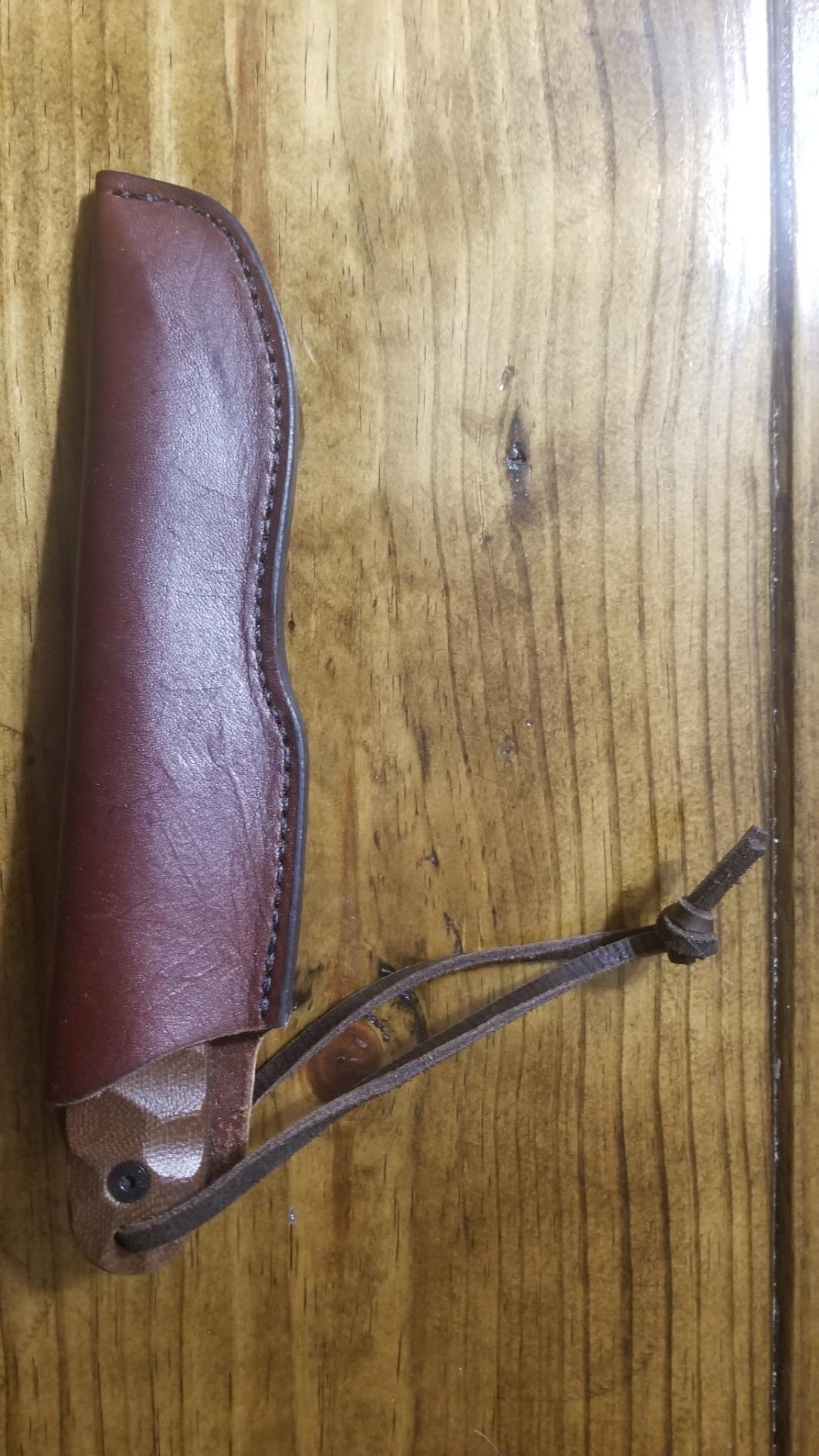
The flat grind and 0.125 inch thickness give it a chopping and batoning character that no scandi knife in this roundup matches. Owners describe prying bark, splitting rounds and general hard use without drama, and the lifetime warranty is the strongest coverage on this page.
At 4 inches of cutting edge and 6.3 ounces, it is also smaller and lighter than the abuse-resistance suggests. That combination is rare and it is the reason this pick finishes a list rather than leading it.
What to check before you buy
Check the task list against the grind. Flat grind, spear point, 1095 is a work knife, not a carver. Fine food slicing and controlled push cuts are weaker here than on the scandi-grind picks earlier in this list.
Check your climate. Black oxide 1095 needs oiling, and the same owners who praise its toughness mention surface rust in damp conditions. It is a five second fix, but only if you do it.
Where it falls short
It is the most expensive pick here, and forum sentiment is consistent that above a certain point the price stops being a purchase and starts being a collection decision. At 580 reviews it also has the smallest owner base in the roundup, so you have less community feedback to lean on.
Right hand only, and a plain leather pouch rather than a belt or MOLLE system. None of that is disqualifying, but all of it is a step back from the Strongarm on carry versatility.
How to Choose a Bushcraft Knife: Steel, Tang, Grind and Spine
Owners on r/Bushcraft check the same three things before anything else, and after several months of comparing knives we agree with the order: full tang, scandi grind, 90 degree spine. Everything past that is preference. Here is how the rest of the decision breaks down.
Carbon steel versus stainless steel. Carbon steel takes an edge faster, holds a finer edge and is far easier to sharpen with a stone in the field. It rusts, it needs oiling, and it will mark if you leave it wet. Stainless steel resists corrosion, survives a wet pack and a rainy week, and demands more effort and patience to hone. If you camp in the Pacific Northwest, on the coast or in the tropics, stainless is the safer default. If you camp in dry cold country and sharpen regularly, carbon rewards you.
Full tang, partial tang or hidden tang. A full tang runs the tang steel the full length of the handle, spreading batoning and prying loads along the whole grip. A partial tang, common on Mora models, runs part way and is perfectly capable for carving, food prep and light batoning, but is not a heavy abuse tool. A hidden tang is narrow and sits inside the handle, so the grip cannot take a beating. The honest answer to is a full tang always better is no. It is better if you baton, and irrelevant if you do not.
Blade grind by task. A scandi grind has one wide bevel from spine to edge. It is fast to sharpen, easy to maintain, pushes chips away from the cutting edge during carving, and is the standard for woodwork. A flat grind has a shallower primary bevel with a secondary bevel or microbevel, so it slices and pares better than a scandi at the cost of more sharpening work. A convex or high flat grind slices smoothly and holds an edge longer but resists a wire wheel. Pick the grind that matches your most common task, not the one that photographs best.
Spine design and fire starting. A squared, 90 degree spine strikes a ferrocerium rod directly. A rounded spine throws fewer sparks and needs a couple of passes with a file first. A thick spine also gives you a surface to crush or hammer tinder bundles. If you make your own fire, this is not a minor detail.
Blade length and weight. Under 4 inches is precise, light and suited to feathersticks and small food work. 4 to 5 inches is the general purpose zone and where most of these picks sit. 5 to 6 inches gives carving and batoning more momentum at the cost of pack weight. Over 7 inches is a chopping tool, and you are carrying an axe in knife form.
Handle material. Polymer and rubber grips stay grippy when wet and cheap, but contoured versions can create hotspots during long carving sessions. G10 is a thermoset fiberglass laminate that will not soften in cold, swell in water or slide out of a wet hand. Micarta and hardwood feel better and take a custom shape, and hardwood needs oiling. In cold weather, cold hands and a slippery handle are the same problem, which is why many experienced owners prefer synthetic handles.
Plain versus serrated edge. Plain edge for carving, food prep and controlled cuts, no debate. Serrations for rope, webbing and packaging, and only that. A half serrated blade is a compromise on both counts and the least satisfying edge type for actual bushcraft work. We covered this in more depth in our Leuku saw picks guide, where tooth geometry matters for a completely different reason.
Sheath and carry. The recurring complaint across owner communities is that supplied sheaths are the weakest part of an otherwise good knife. Retention, belt loops and clip durability are where budget models fall short. A knife you cannot draw one handed in the dark is a knife you will not reach for, so test the draw before you leave home.
Field care routine. Wipe the blade dry as soon as you stop using it, especially carbon steel. Put a light film of oil on the blade and the spine before you stow it. Store it dry and out of a damp sheath. Touch the edge up on a stone or strop when it stops shaving rather than when it goes dull. Stow the sheath separately or vented if you live somewhere wet. That is the whole routine, and it takes a minute.
Legal carry notes. Fixed blades are legal in most places but restricted in specific ones. Many cities and public buildings ban any knife with a blade over a certain length, and some national parks and transit systems restrict fixed blades outright. Check your local rules and your destination’s rules before you fly with one, and check the rules of every country you cross. Rules vary more than blade specs do.
Frequently Asked Questions
What is the best bushcraft knife on a tight budget?
The Morakniv Companion is the best bushcraft knife for buyers on a tight budget, with a 4.1 inch Sandvik 12C27 blade, a 3/4 tang and a 3.9 ounce total weight. The Morakniv Kansbol and the Condor Bushlore sit in the same tier, with the Bushlore adding a full tang 1075 carbon blade and a hand stitched leather sheath.
What is the best bushcraft knife for the money?
The Morakniv Companion. It arrives with the sharpest factory edge in this roundup, uses a rust-resistant stainless steel blade, weighs under four ounces with the sheath, and costs less than any full tang bushcraft knife on this page. It is the knife most owners recommend as a first bushcraft blade.
What steel is best for a bushcraft knife?
For dry climates and regular sharpening, high carbon steel such as 1075 or 1095 takes the finest edge and is the easiest to restore in the field. For wet climates, Sandvik 12C27 or 420HC stainless resists corrosion. Modern powder steels such as CPM-3V and MagnaCut are the premium middle ground, offering stainless handling with carbon level toughness.
Can you strike a ferro rod with a knife?
Yes, if the spine is squared to roughly 90 degrees. The Gerber Strongarm, Morakniv Kansbol, Condor Bushlore and BPS Adventurer all have a spine ready for a ferro rod on arrival. A rounded spine like the Morakniv Companion will still spark after a couple of light passes with a file, just less efficiently.
Is a full tang knife always better?
No. A full tang spreads batoning and prying loads along the whole handle, so it wins for heavy wood work. A partial tang on the Morakniv Companion or Kansbol handles carving, food prep and light batoning perfectly well. Choose the tang that matches the hardest task you actually plan to do.
Can you use a folding knife for bushcraft?
Yes, for precision and light work. The Buck 110 lockback handles food prep, line cutting and small camp tasks with a fast one-handed deploy. Folding knives are not suited to batoning, prying or heavy chopping, which is why most bushcrafters carry one alongside a full tang rather than instead of it.
How do I maintain a bushcraft knife in the field?
Wipe the blade dry right after use, especially carbon steel. Apply a light film of oil before stowing and store the knife dry. Touch the edge up on a stone or strop when it stops shaving cleanly. Serrated sections cannot be restored with a coarse stone, so plan sharpening around plain edges.
Which Bushcraft Knife Is Right for You
After comparing all ten, the Morakniv Companion is the best bushcraft knife in 2026 for most people. It is light, sharp from the factory, stainless for wet weather and cheap enough that a first mistake does not matter. If you want more knife than that, pick a different slot below.
For heavy batoning and hard use, the Gerber Strongarm with its full tang, thick profile and multi-mount sheath is the toughest pick here. For fire starting, the Morakniv Bushcraft Black has the spine ground for a ferro rod and the steel thickness to back it up. For the sharpest value in a well-balanced all-rounder, the Morakniv Kansbol is hard to argue with.
For a folder you can keep in a pocket, the Buck 110 Folding Hunter has no peer on this list. For a bundled kit that includes a ferro rod and sharpener, the Gerber Ultimate solves the beginner problem completely, at the cost of a serrated edge and 11 ounces. For a full tang carver that a beginner can grow into, the Condor Bushlore and the BPSKNIVES Adventurer are the two strongest, and the Adventurer’s longer blade suits larger hands.
For a complete backpacking kit in one box, the Bloodline 1095 ships with a Kydex sheath and ferro rod. For maximum toughness and the strongest warranty in the roundup, the ESEE PR4 wins on abuse resistance and loses on fine carving and cost.
Whichever one you choose, buy the knife, learn to sharpen it, and practise with it before the trip. A well-used budget knife beats a locked drawer premium one every time. If you want to keep sharpening edges and measuring work, our picks for the best measuring wheels for knives cover a related shop floor problem.