
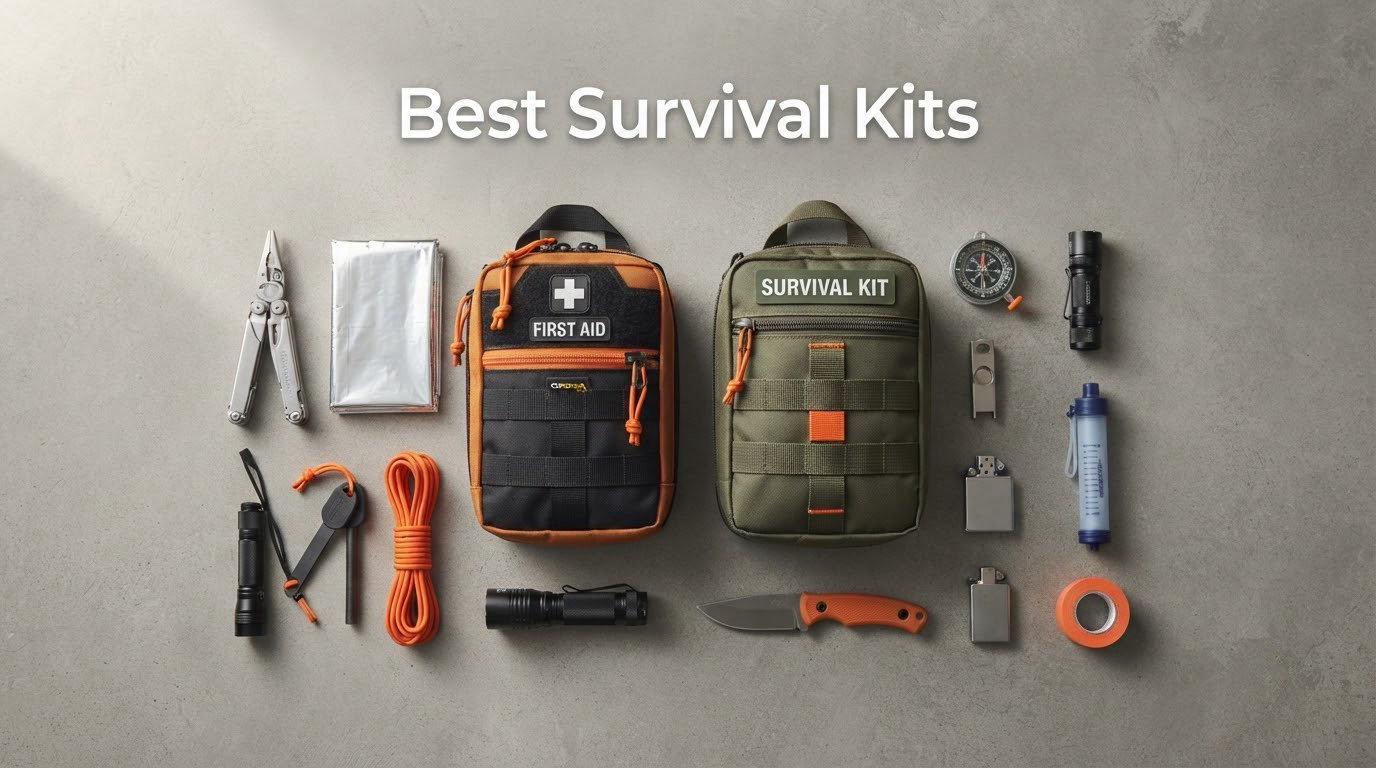
The best survival kit overall is the TRSCIND 14-in-1 Emergency Survival Kit — a 1.56 pound foam-cased box that fits a daypack or glovebox and covers fire, light, shelter, signaling and navigation. It is the pick for most people because it is the only kit here that is genuinely portable and still holds up at 4.7 stars across 9,619 reviews.
That said, “best survival kit” is a question with ten honest answers depending on where you are and what you are carrying. A solo hiker, a family of four sheltering in place for three days and someone keeping gear in a work desk are solving different problems, and the roundup below splits them by category rather than pretending one kit wins every scenario.
We compared all ten kits on the criteria that actually decide whether gear works at 2am in the rain: does it cover water, fire, shelter and first aid; is the container genuinely waterproof; how much does it weigh when you have to walk with it; and what does it leave out. We also logged the exact gaps reviewers call out, because the honest answer on pre-made kits is that most are decent starting points with specific holes.
Everything below was reviewed in 2026, and we updated it as the data moved. If you already know you want a three-day household bag, our 72-hour survival kit guide narrows the field further.
Table of Contents
Top 3 Picks: Best Survival Kits (October 2026)


Quick Comparison of All 10 Survival Kits
All ten kits, in rank order, with the features that separate them. Every row links straight through to the product listing.
| Product | Specifications | Action |
|---|---|---|
| TRSCIND 14-in-1 Survival Kit |
|
Check Latest Price |
| LUXMOM 142-Piece Survival and First Aid Kit |
|
Check Latest Price |
| Ready America 2-Person 3-Day Survival Backpack |
|
Check Latest Price |
 RIKOJUXI 262-Piece Survival Kit RIKOJUXI 262-Piece Survival Kit |
|
Check Latest Price |
 ANJiME 294-Piece Survival and Emergency Kit ANJiME 294-Piece Survival and Emergency Kit |
|
Check Latest Price |
 Monterra 250-Piece MOLLE Sling Bag Kit Monterra 250-Piece MOLLE Sling Bag Kit |
|
Check Latest Price |
 EVERLIT 72-Hour 3-Person Emergency Kit EVERLIT 72-Hour 3-Person Emergency Kit |
|
Check Latest Price |
 Verifygear 17-in-1 Survival Kit Verifygear 17-in-1 Survival Kit |
|
Check Latest Price |
 First My Family 4-Person 72-Hour Kit First My Family 4-Person 72-Hour Kit |
|
Check Latest Price |
 Angieast 35-in-1 Survival and First Aid Kit Angieast 35-in-1 Survival and First Aid Kit |
|
Check Latest Price |
Are Pre-Made Survival Kits Actually Worth It
Yes, with one condition: buy the kit for the container and the coverage, then replace the three or four components that disappoint. That is the honest answer, and it is more useful than either the marketing or the forum backlash.
The backlash is not invented. In the r/Survival and r/preppers threads behind this roundup, the recurring verdict is blunt: most pre-packed kits are filler. The specific complaints repeat almost word for word — cheap wire saws, fire steels that barely throw a spark, folding knives with liner locks that will not hold, and off-brand batteries that should be swapped before the kit is ever opened.
Look at our own review data and the pattern holds. The Verifygear 17-in-1 has reviewers reporting the included compass reads inaccurately. The RIKOJUXI 262-piece kit ships multiple compasses and knives that reviewers describe as none of them particularly accurate. The Monterra 250-piece arrives with no batteries at all and no dedicated place to keep spares. These are not vague complaints; they are named, specific parts failing their one job.
There is a second structural problem, and it is the one the community harps on most. Water procurement is missing from nearly every pre-made kit in this roundup. The TRSCIND 14-in-1 carries an emergency blanket, a wire saw and a flint scraper but nothing for purifying a litre of muddy water. So do the Verifygear, the Angieast and the RIKOJUXI. Only the two large 72-hour bags — the Ready America and the EVERLIT — actually ship drinkable water, and the EVERLIT adds purification tablets treating up to 25 quarts.
The third problem is piece-count inflation. A kit advertised at 262 or 294 pieces gets its number from tiny adhesive bandages, sewing needles and multi-tool spoons. The ANJiME 294-piece kit is the clearest example: the headline figure is impressive and the meaningful survival content is far smaller. Judge these kits by category coverage, not by the number on the front.
So buy the container, the blanket, the light and the organization. Then spend twenty minutes swapping the compass, replacing the fire starter, adding water purification and dropping in your own knife. If you carry a decent fixed blade already, a kit is mostly a safety net for the days your main gear is not on you.
One more thing worth saying plainly, because several threads in the forums push back on it hard: a kit is insurance, not a guarantee. The best survival kit in the world does nothing for you if you cannot start a fire in the rain or filter water you did not plan for. Gear buys you time. Skill is what uses that time.
1. TRSCIND 14-in-1 Survival Kit — Best Overall, Best for Everyday Carry
Gifts for Men Dad Husband, Anniversary Birthday Gifts Idea for Him Boyfriend Man- Survival Kit, Survival Gear and Equipment, Fishing Hunting Camping Accessories, Cool Gadgets(14 in 1)
14 pieces
1.56 pounds
8.07 x 4.92 x 2.1 inches
Waterproof foam interior
Pros
- Lightest serious kit in the roundup at 1.56 pounds
- Waterproof and shockproof foam interior keeps tools seated
- Wire saw
- blanket
- flint scraper and compass in one compact box
- Highest review count here at 9619 ratings
Cons
- Only 14 pieces so coverage is thinner than larger kits
- Smaller tools are entry-level rather than heavy-duty
- No water purification or food included
I keep this one in the centre console and it has earned its place there. At 1.56 pounds and roughly the footprint of a hard hat, it is the rare kit I will actually leave in the car instead of shoving in a drawer and forgetting.
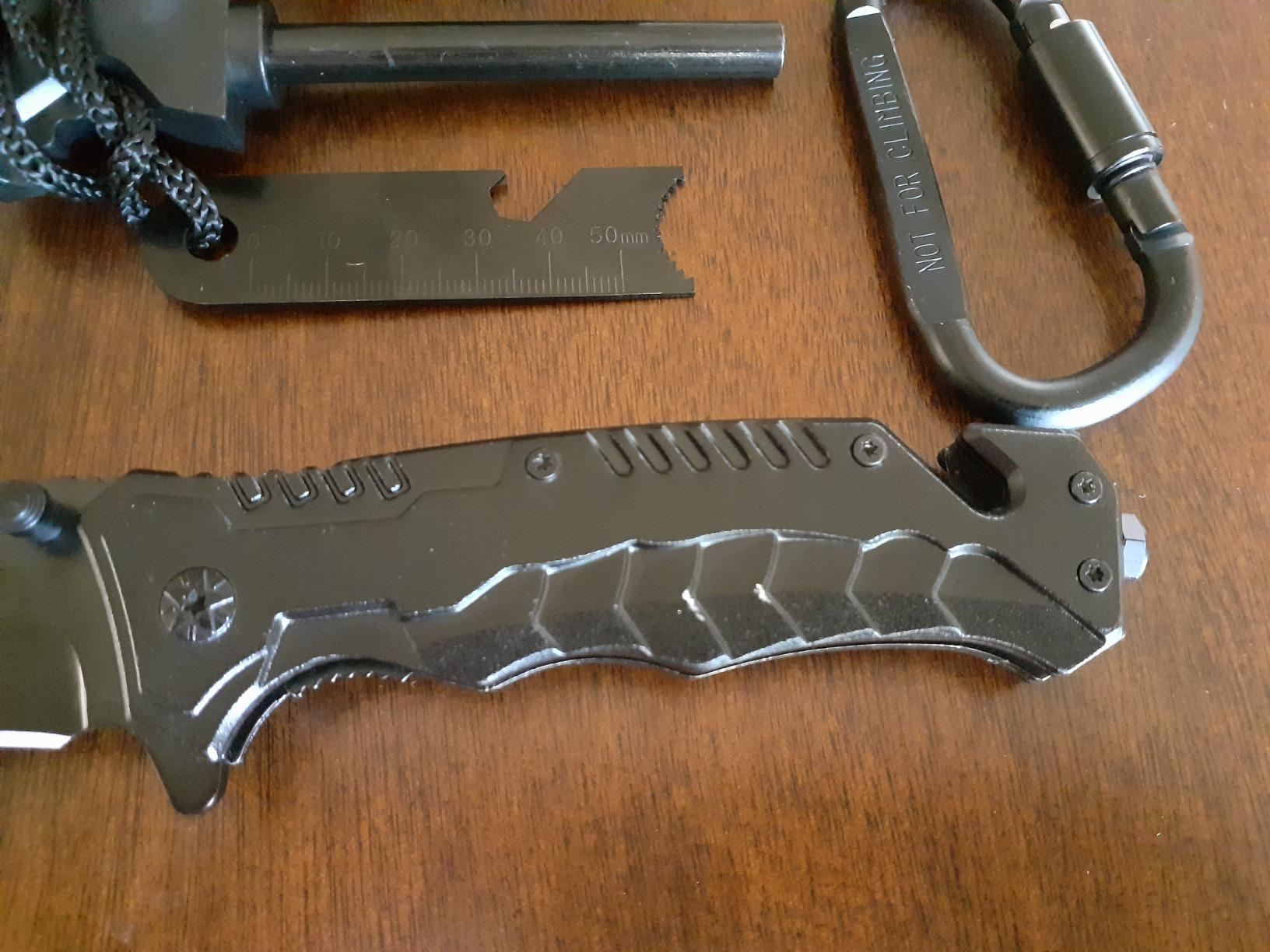
The case is the reason. It is a waterproof, shockproof foam interior, so the wire saw, the emergency blanket, the flint scraper, the flashlight, the compass and the credit-card-sized multitool all stay seated when you invert it over a rock. Most kits in this price bracket rattle, and a compass that has been rattling against a steel knife blade for a year is not a compass anymore.
Reviewers treat it as an easy stocking-stuffer kit that covers the basics without bulk, and 81 percent of ratings sit at five stars. That is the honest ceiling for this category — it does the small things well and delegates everything large to you.
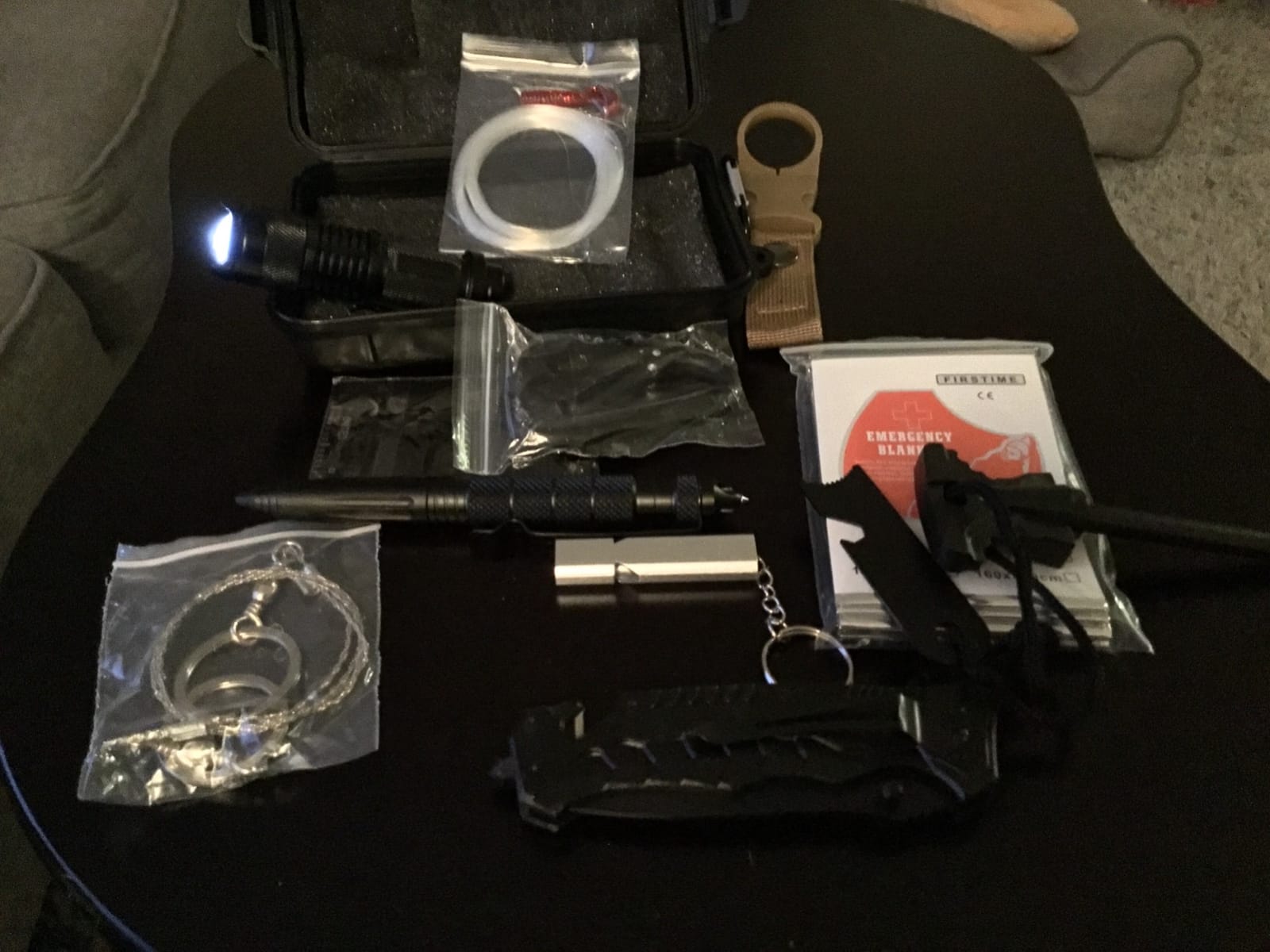
The build is stainless steel on the core tools with a one-year manufacturer warranty, and the 8.07 x 4.92 x 2.1 inch footprint means it slides into a daypack side pocket or a carry-on without being noticed. Compared with the 25-pound EVERLIT or the 16.75-pound family bag, the difference is not subtle. This is a kit you can lift with one arm at 3am.
What you give up is depth. Fourteen pieces is a lean inventory, and the tools are entry-grade: the flint scraper throws a spark but it is not a ferro rod, and the wire saw is a backup saw, not a woodworking tool. There is no water, no food and no radio.
What you actually get for the weight
Roughly one pound of your load is the case and the padding, which means the usable tool weight is closer to half a pound. For a day hike, a car kit or a desk drawer at work, that is the correct trade. Nothing else in this roundup carries a meaningful kit at this weight.
When to buy something else instead
Skip it if you are planning more than one night out, if anyone in your group is relying on it for hydration, or if you need a cutting tool with an edge that holds. Add your own fixed blade and a water filter and this becomes a genuinely solid grab-and-go box. Leave it as shipped and it is a good weekend kit and a weak emergency kit.
2. LUXMOM 142-Piece Survival and First Aid Kit — Best Value, Best for First Aid Depth
LUXMOM Survival Kit and First Aid Kit, 142Pcs Professional Survival Gear and Supplies Equipment with Molle Pouch, Gift for Fathers Day Men Dad Husband Camping Hiking Hunting Outdoor Adventure (Black)
142 pieces
9 x 6 x 5 inch pouch
600D nylon
MOLLE straps on back panel
Pros
- 106 of 142 pieces are first aid supplies
- MOLLE straps attach to a belt
- vest or larger pack
- 600D nylon pouch with room for personal add-ons
- Ranks in the top of Camping First Aid Kits
Cons
- Individual tools are smaller than buyers sometimes expect
- Build quality is mid-tier rather than heavy-duty
- Three-month warranty is the shortest here
This is the kit I recommend to people who ask which one has the most usable medical content, because the answer is genuinely 106 first aid pieces, not a token bandage roll padded out with junk. That single decision to merge a survival kit and a first aid kit in one pouch is the most useful thing in this roundup.
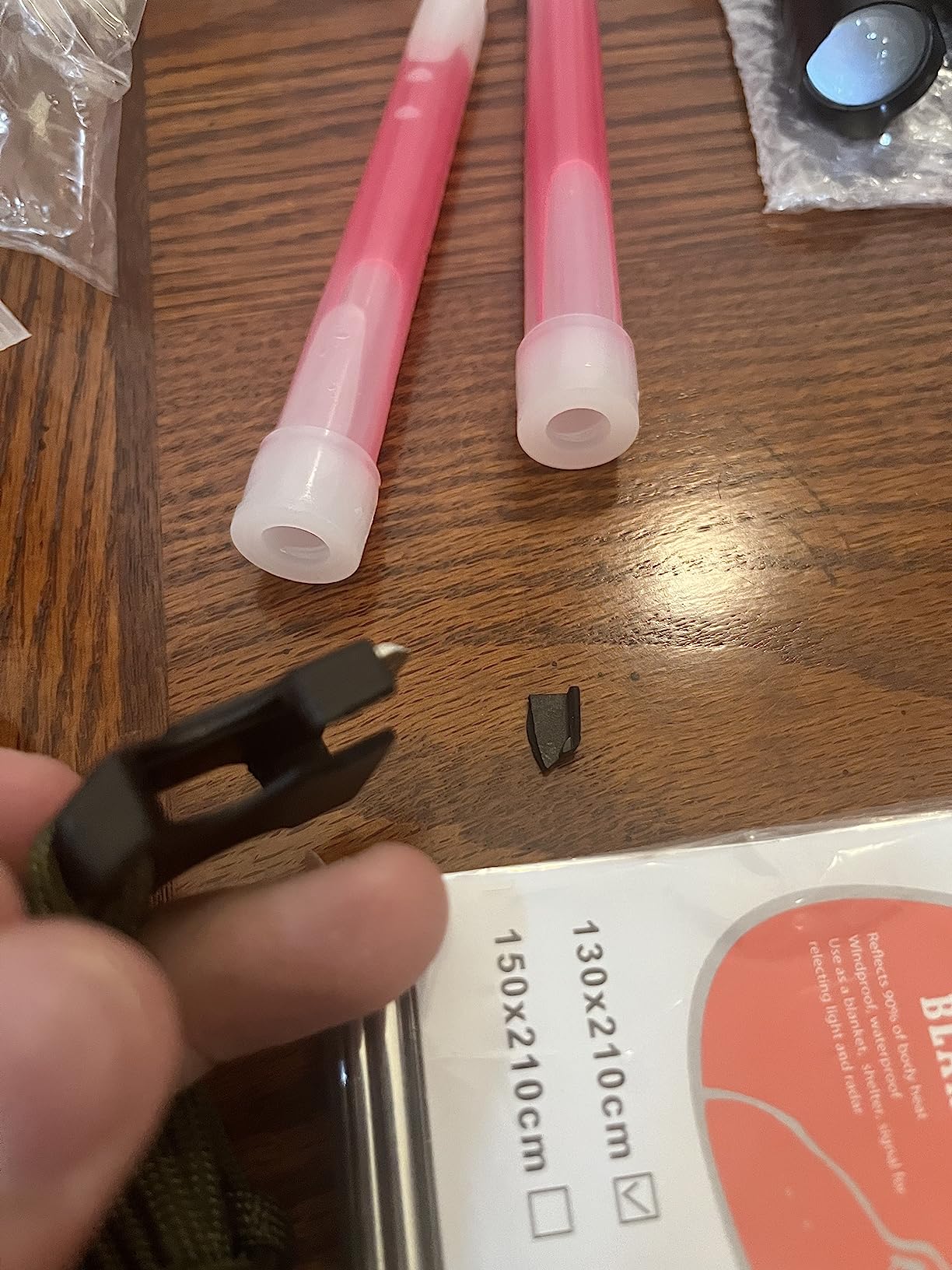
The rest of the inventory earns its place too: a hatchet, a 3-mode flashlight, a wire saw, parachute cord, an emergency blanket, a dual-tube whistle and a set of fire-starting tools. For a family camping trip or a hiking kit, that is a real coverage spread in a 9 x 6 x 5 inch 600D nylon pouch.
The MOLLE-compatible straps on the back panel are the detail I notice most. You can clip the whole pouch to a chest rig, a belt or the outside of a larger pack and keep 106 medical items off your back, which solves the real problem with big first aid kits: they are too bulky to carry and so they stay in the car forever.
The honest limitation is scale. Buyers sometimes expect full-size tools and find that some of the individual implements are miniature, and the build quality reads as mid-tier rather than heavy-duty. The warranty is three months, which is the shortest of the ten. None of that matters much for a first aid pouch, but it is a signal about the shell and the tool steel.
Why the first aid half is worth building around
Most pre-made kits include a token ten-piece first aid roll. This one is the outlier. If you are buying for a household with kids, for a group trip or for anyone who takes blood thinners, having a genuinely stocked medical pouch already packed is worth more than another fire starter.
Where the non-medical half falls short
The survival tools are adequate rather than good, and there is no water, no food and no water purification. If you want the same 142 pieces with a proper knife and a real fire starter, budget for swapping both. The pouch has room, which is exactly why it works as a starting point.
3. Ready America 2-Person 3-Day Survival Backpack — Best for Real 72-Hour Coverage
Ready America 70280 Emergency 2-Person 3-Day Survival Backpack
7.8 pounds
9.5 x 6 x 12 inches
2 food bars, 4800 calories
12 water pouches
Pros
- One of the few kits that actually ships calories and water for the stated duration
- 33-piece first aid kit with bandages
- wipes and pain relief
- Owner's card reminding you to check expiration dates
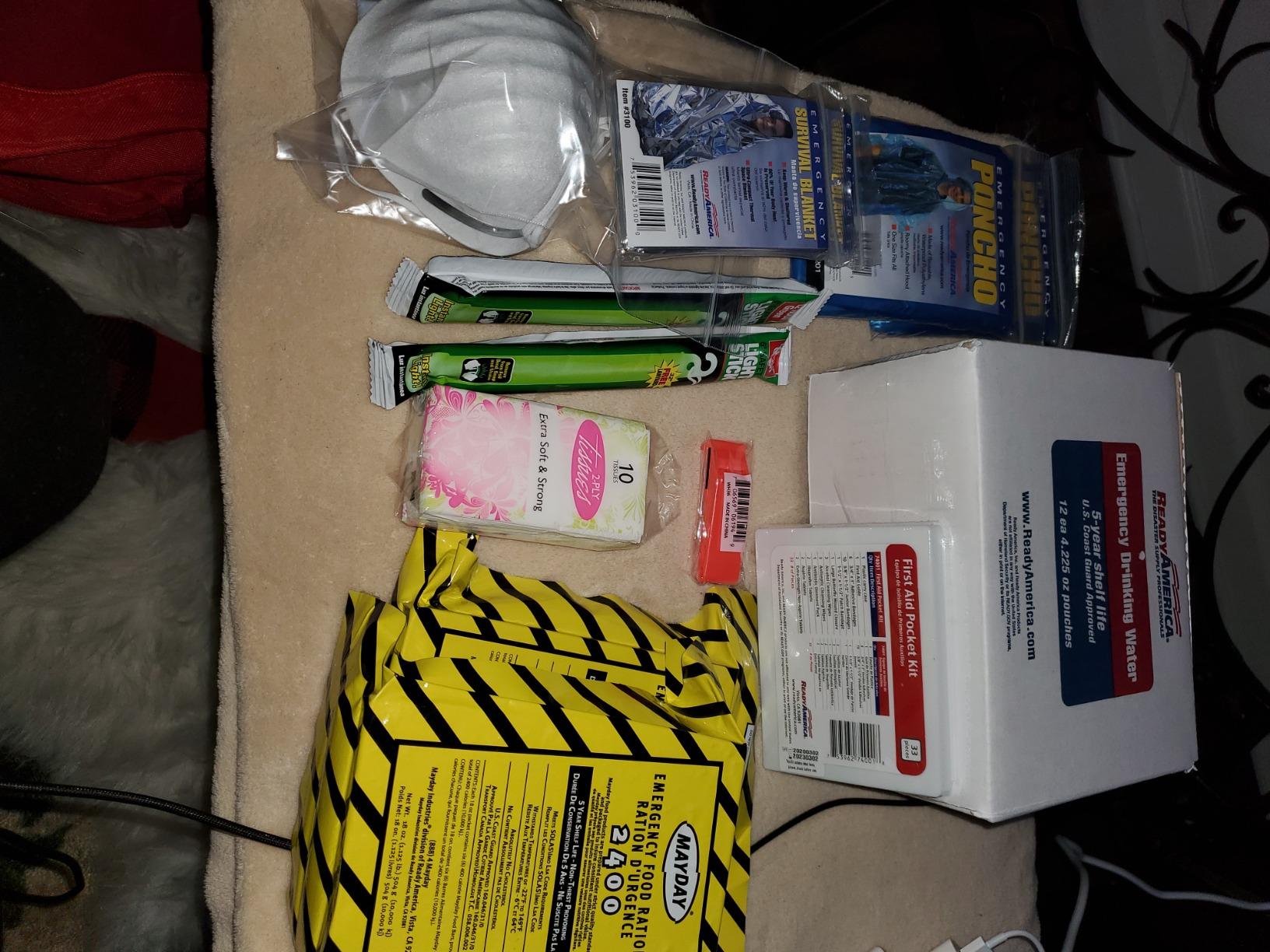
- 2 ponchos and 2 survival blankets
Cons
- Rations and water are minimal for a full 72 hours
- Backpack shell is basic and reviewers expect wear over time
- Leaves room to add your own gear
This is the one I recommend when someone wants an actual 72-hour answer rather than a box of tools, and it is the only kit in the roundup where the food and water are matched to the stated duration.
Two food bars totalling 4,800 calories with a five-year shelf life and twelve sealed water pouches at 4.225 oz each. That is the number that separates it from every other kit here, and it is the number most kits quietly omit. Alongside that you get a 33-piece first aid kit, dust masks, nitrile gloves, two emergency ponchos, two survival blankets, two twelve-hour light sticks and a safety whistle.
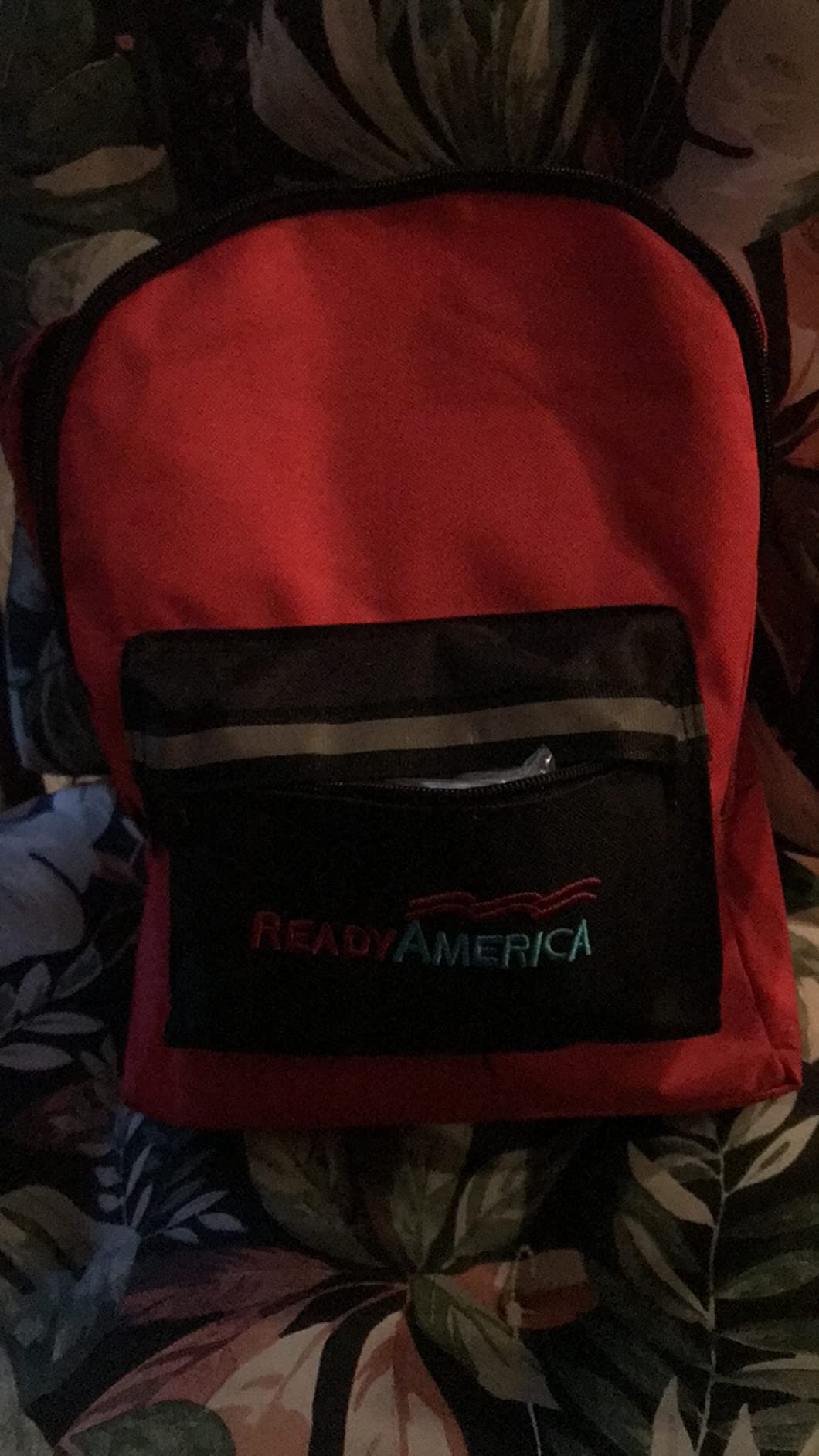
Buyers treat it as the long-standing go-to for car and workplace kits, and 80 percent of ratings are five stars. The owner’s card reminding you to check expiration dates is a small touch that more manufacturers should copy, because shelf-life anxiety is the single most common complaint in the survival community and nobody else addresses it on the insert.
What it is not, however, is comfortable. At 7.8 pounds and 9.5 x 6 x 12 inches, this is a pack you lift into a boot or a closet, not one you walk with. Forums describe 16 to 20 pound go-bags as useless on foot, and this sits at the lighter end of that problem without solving it.
Why the food and water actually matter
Hydration and calories are the two things every forum thread identifies as the gap in pre-made kits. This bag closes both for two people, and the five-year shelf life means you can buy it and not think about it for years. Buy two, one for the car and one for the house, and rotate the water pouches annually.
What the basic shell costs you
The nylon backpack is serviceable rather than good, and reviewers expect it to wear out over time. The rations are also lean for a genuine three days, so for a real family scenario you would add food. The manufacturer warranty covers defects only, which tells you what kind of object you are buying.
4. RIKOJUXI 262-Piece Survival Kit — Best for Tools and Camp Gear
Survival Kit, 262Pcs Survival Gear and Supplies with First Aid Kit Pouch and Crossbody Bag, Emergency Kit with Tent, Camping Axe Hammer, Survival Shovel w/Pick, Bug Out Bag Gifts for Men Women
262 pieces
8 x 7.5 x 10.63 inches
17-inch axe with hammer
2-in-1 shovel with pick
Pros
- Full-size 17-inch axe and shovel are unusual in a kit at this level
- MOLLE crossbody bag with multiple compartments and D-rings
- Emergency tent
- blanket
- wire saw
- rope
- compass and fishing kit
- 72 hours of lighting via flashlight
- lamp and glow sticks
Cons
- Some reviewers report missing or incomplete pieces on arrival
- Multiple compasses and knives included
- none of them particularly accurate
- Heavier than comparable kits due to the tool count
Axe and shovel. That is the headline, and it is genuinely unusual to find a 17-inch multifunctional axe with a hammer head and a carbon steel 2-in-1 shovel with a pick inside the same bag as an emergency tent, a blanket and a fishing kit.
If your idea of an emergency includes a week of camping, wildfire evacuation or building something, this is the most tool-forward kit in the roundup. It is the closest thing here to a traditional camp supply kit rather than an emergency pouch.
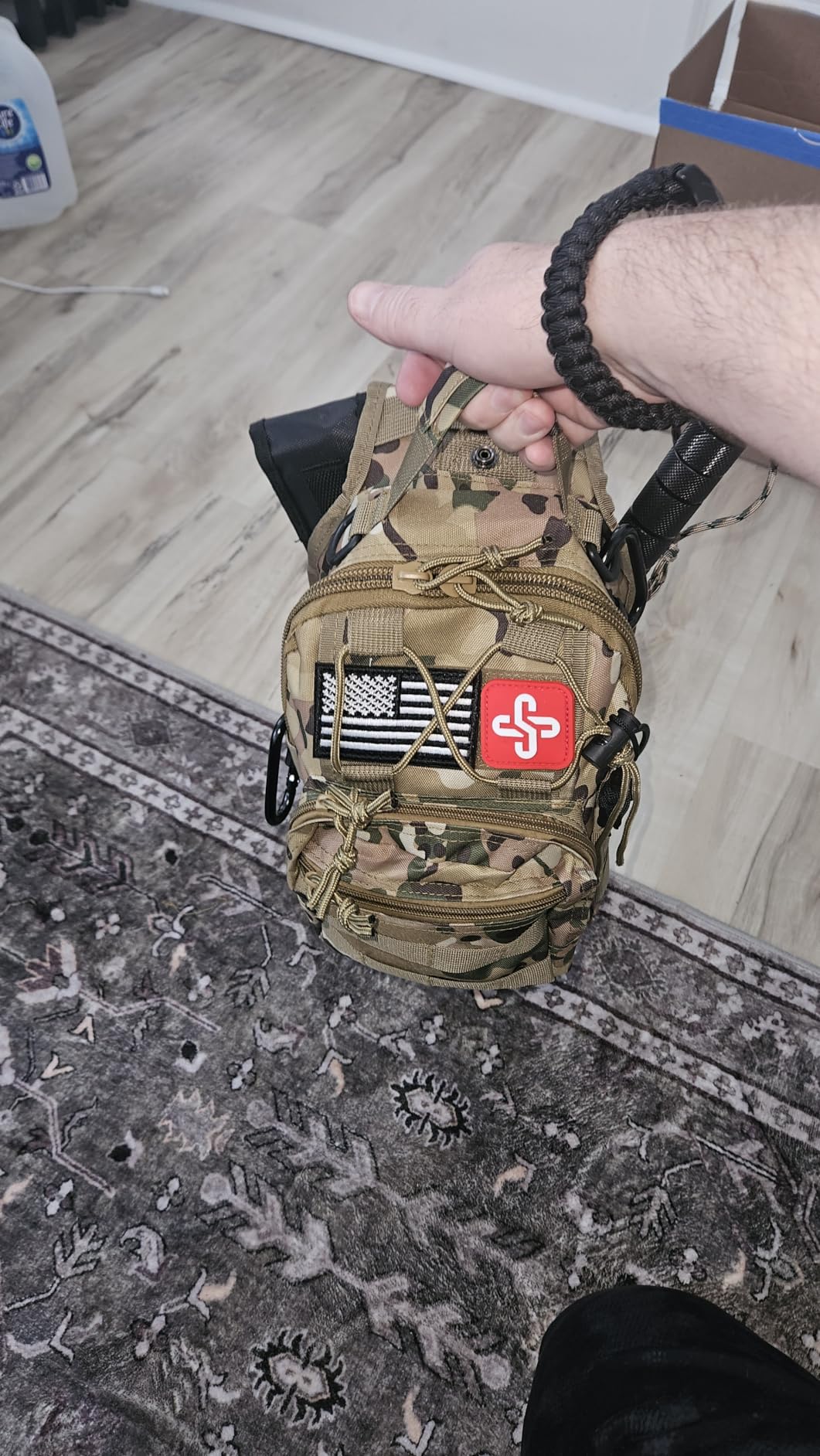
The MOLLE-compatible straps, D-rings and detachable crossbody strap mean you can wear it as a bag or configure it onto a pack, and the multiple compartments keep the 262 pieces from becoming one undifferentiated pile. It is one of the few kits that ships with organization built in rather than an afterthought.
The problems show up in the same places as everywhere else in this category. Reviewers report missing or incomplete pieces in some shipments, which is worth checking the moment the box arrives. And the inclusion of several compasses and several knives, none of them accurate, is the piece-count padding problem in its clearest form.
When the axe and shovel earn their place
Firewood, a shelter frame, a trail marker, a storm-damaged fence. For anyone who spends real time outdoors, those two tools replace items you would otherwise have to buy and carry separately. The carbon steel construction is the right call for the price tier and it is a real tool, not a plastic imitation.
Why the weight is harder to move than it looks
Buyers note it is heavier than comparable kits because of the tool count, and 8 x 7.5 x 10.63 inches of axe head and shovel blade is dense rather than bulky. This is a car trunk and campsite kit. It is not a backpack item, and treating it as one is how people end up leaving it behind.
5. ANJiME 294-Piece Survival and Emergency Kit — Best for Organized Medical Supplies
Survival Kit, 294 Pcs Survival Gear Emergency Supplies First Aid Kit
294 pieces
4.96 pounds
1000D nylon MOLLE crossbody
11 x 9 x 6 inch bag
Pros
- Largest piece count in the roundup with a full tool complement
- Separate bright-red first aid pouch with tourniquet and trauma shears makes medical supplies easy to find
- 1000D nylon crossbody bag attaches to vests
- packs and belts
- Includes axe
- folding shovel
- paracord
- knife
- tent
- blanket
- whistle
- compass
- fire starter and LED headlamp
Cons
- Newer listing with a smaller review base than the established kits
- Some small tools feel light-duty at this piece count
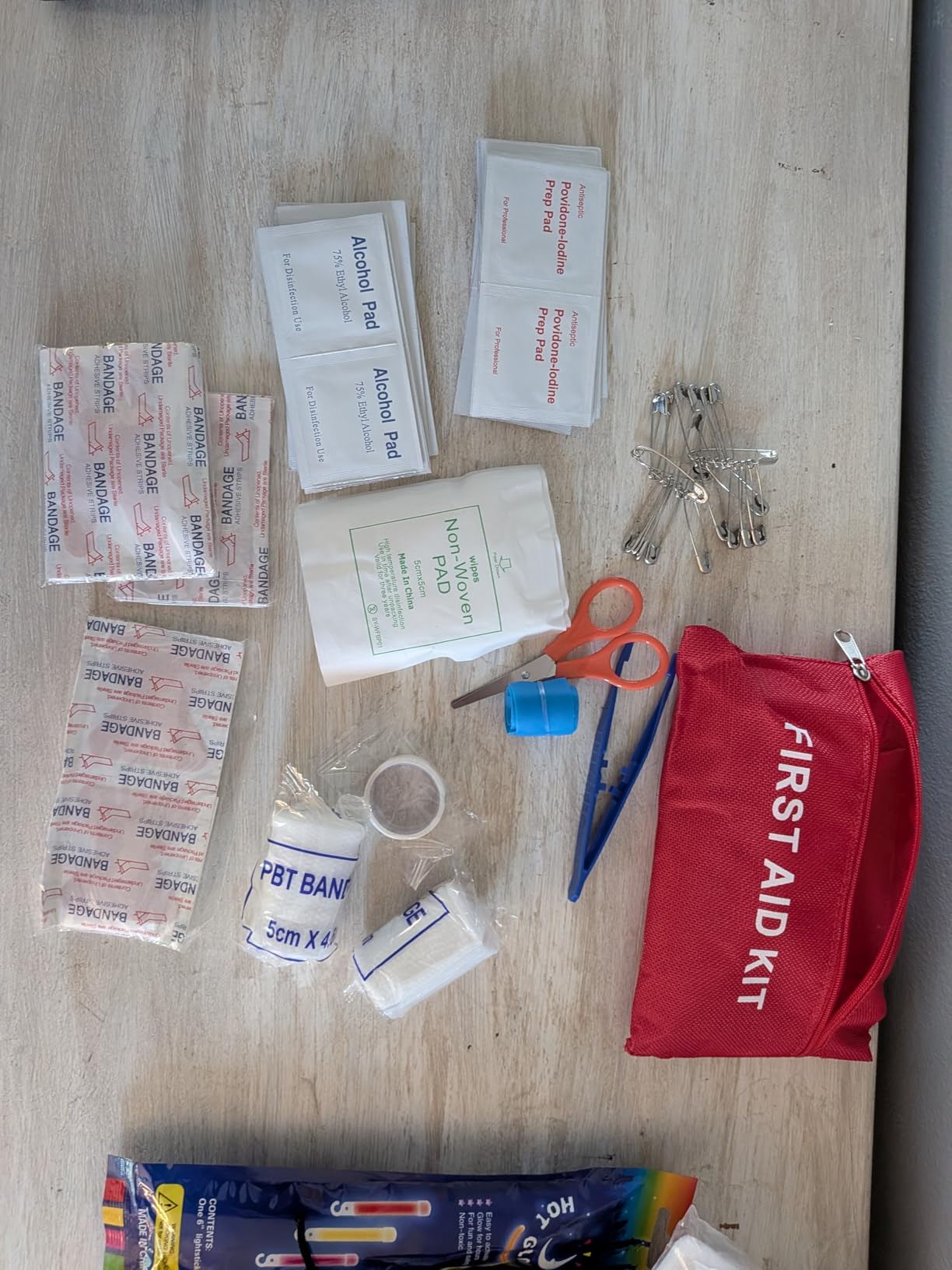
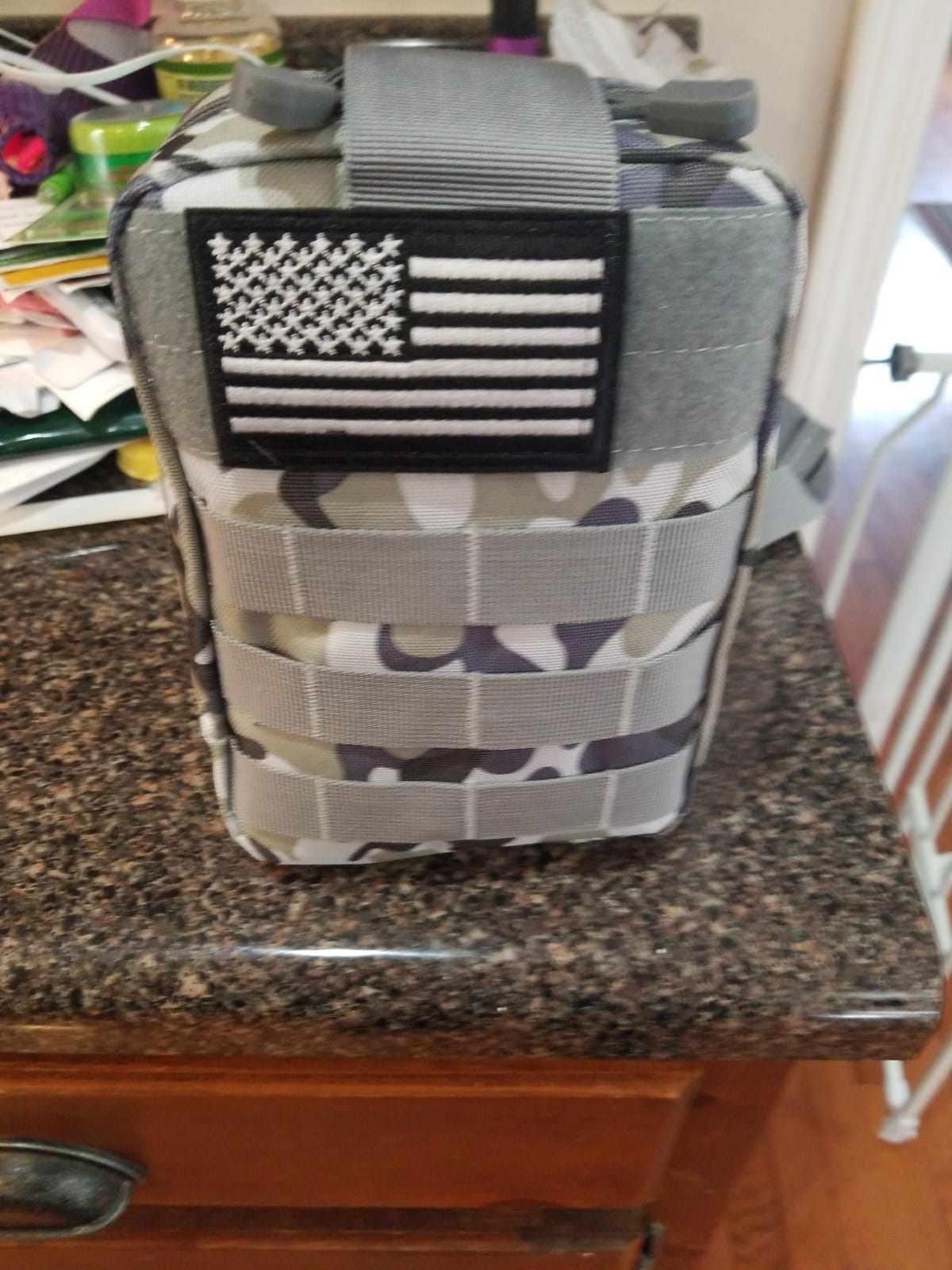
The idea I like most here is the bright-red first aid pouch that separates the medical supplies from everything else. In an emergency you do not want to dig through 294 pieces hunting for a tourniquet, and this is the only kit in the roundup where that problem has been designed around rather than ignored.
Inside that pouch you get a tourniquet and trauma shears, which puts it closer to an IFAK than a standard first aid roll. The rest of the bag is a full tool complement: multi-functional axe, folding shovel, knife, paracord, wire saw, emergency tent, blanket, whistle, compass, fire starter, an LED headlamp, a glass-breaker tactical pen and a rain poncho.
At 4.96 pounds and 11 x 9 x 6 inches in a 1000D nylon MOLLE crossbody, it packs tighter than the RIKOJUXI despite carrying more pieces. The nylon is heavier duty than the 600D on the LUXMOM pouch, and the attachment points let it ride on a vest or a belt instead of taking up pack space.
The caveat is history. This listing first became available on January 31, 2026, so its 1,465 reviews are recent rather than deep, and 79 percent five-star with 14 percent four-star is a solid but not fully weathered record. It has climbed to the number 11 rank in Sports & Outdoors first aid kits quickly, which says something.
Why the separate medical pouch is the deciding feature
Color coding is unglamorous and it is the single change that most improves how fast a kit works under stress. A red pouch is findable in low light with shaking hands. Everything else in this bag is capable, but the medical separation is what makes it feel considered rather than assembled.
What a 294-piece number does and does not tell you
It tells you the manufacturer counted. It does not tell you the axe holds an edge, that the compass is accurate, or that the headlamp batteries were included. Treat the count as a sign of breadth, then go read the actual component list and check the batteries, which is the exact complaint raised against the Monterra kit below.
6. Monterra 250-Piece MOLLE Sling Bag Kit — Best for Everyday Carry
Monterra Survival Kit, 250 Pcs, Emergency Gear and Supplies, First Aid, Bug Out Go Bag, EDC, Molle System Backpack, Hiking, Camping, Outdoor Accessories, Hunting Gifts for Men.
250-piece set
12 x 9 x 6 inches
11L 600D oxford sling bag
180-piece first aid component
Pros
- 11L sling bag is larger than most competitors and leaves room for personal gear
- Sturdy folding knife and bright adjustable flashlight with strobe mode
- Bag stays organized after opening and repacking
- Tactical pen with glass breaker for vehicle escape
Cons
- First aid section lacks antiseptic wipes or cream
- Batteries are not included and there is no dedicated storage for spares
- Tool components are small and light-duty
The bag is the reason to buy this one. An 11L MOLLE sling bag in 600D oxford, with an adjustable strap, is a genuinely useful carry system in a way that most hard plastic cases are not, and reviewers specifically call out that it stays organized after repeated opening and repacking.
For a concealed-carry pocket, a motorcycle saddlebag, a work desk or a bike pannier, a sling that keeps its layout is worth more than another fifty pieces. The tactical pen with a glass breaker is a small, sensible inclusion for vehicle escape.
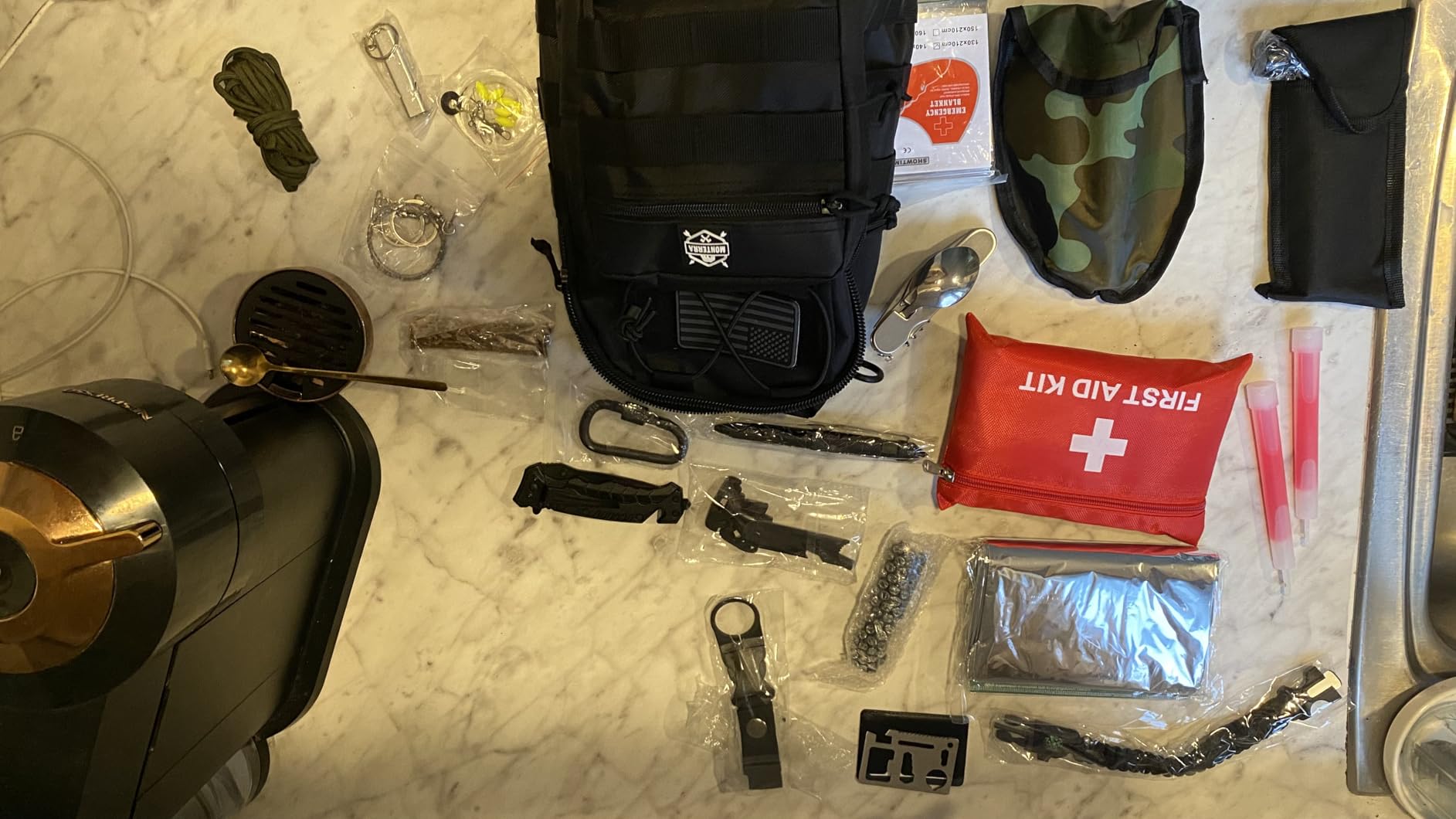
Two components stand out as genuinely better than the roundup average: the folding knife, described as very sturdy, and the bright adjustable flashlight with a strobe mode. In a kit where the community’s standard complaint is flimsy liner-lock folding knives, a knife that holds up is worth noting.
The medical side is the weak half. The first aid section lacks antiseptic wipes or cream, and batteries are not included with no dedicated storage for spares, so the flashlight does not work out of the box. That second point is the single most fixable flaw in this roundup: buy four cells and the kit is ready.
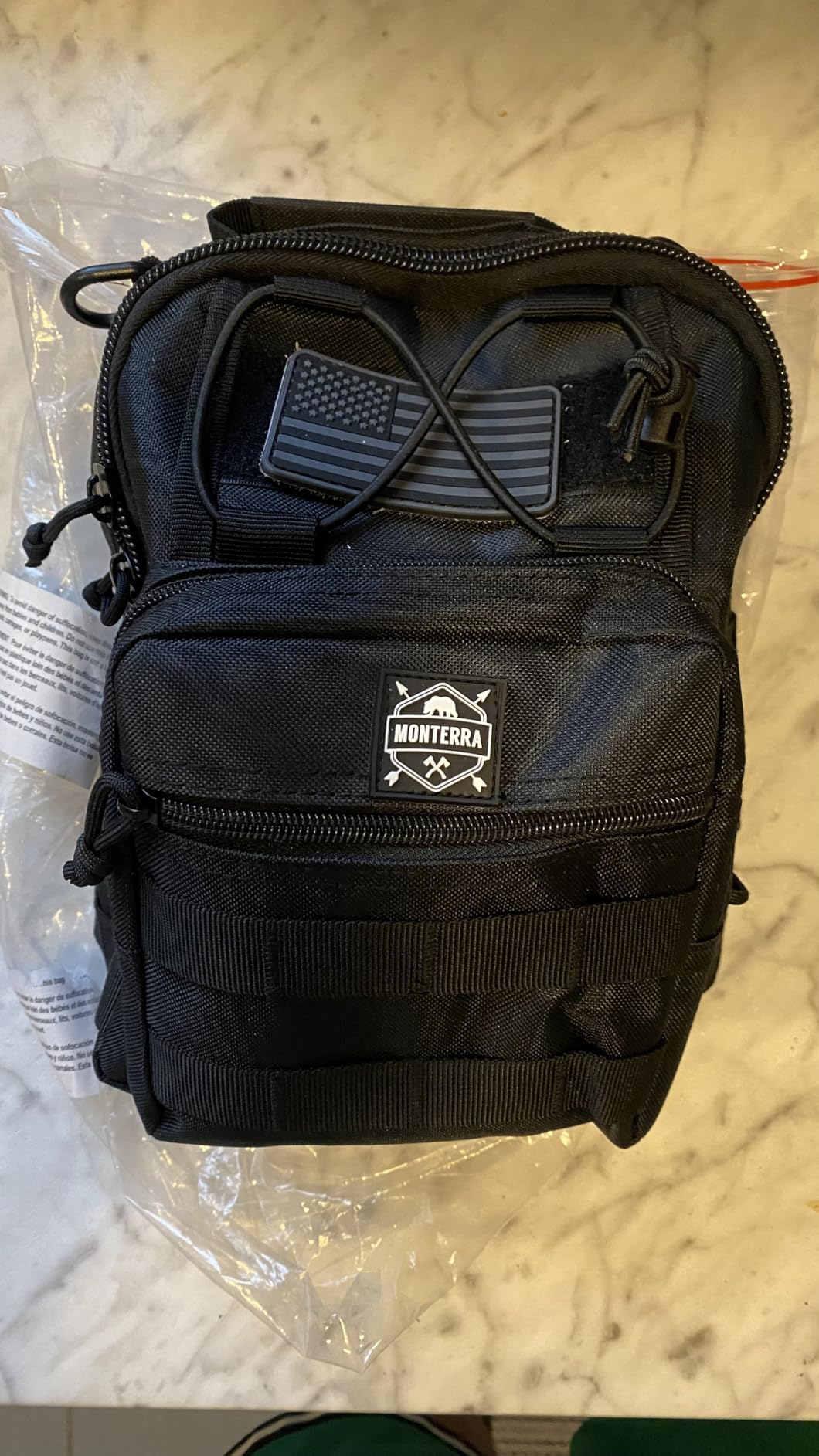
What a real sling bag changes
A MOLLE sling carries like a small daypack and stows flat when empty. That means you can wear it on a walk, leave it in a vehicle without a rigid case cracking in heat, and pack personal gear into the leftover space. Very few of the other kits here can be worn as a bag.
Why you need to add two things before you rely on it
Antiseptic wipes or cream for the first aid section, and batteries for the flashlight. Both are ten-minute fixes. The off-brand battery complaint that echoes across forum threads about cheap kits starts with kits like this one, where the cells simply were not in the box.
7. EVERLIT 72-Hour 3-Person Emergency Kit — Best for a Three-Person Household
EVERLIT 72 Hours 3 Day Earthquake Emergency Kit Bugout Go Bag Emergency Kit Survival Kit Backpack for Family, Preparedness for Hurricanes, Floods, Tsunami, Other Disasters
72 hours for 3 people
25 pounds
17 x 12 x 12 inches
1000D polyester MOLLE pack
Pros
- Most genuinely comprehensive option in the roundup
- 36 water pouches and 3 food bars with a 5-year shelf life
- Water purification tablets treating up to 25 quarts
- 200-piece medical supply set with a CAT tourniquet
- 3-in-1 hand-crank flashlight
- radio and phone charger
Cons
- At 25 pounds it is far too heavy to carry any real distance
- One reviewer found several water pouches had burst in transit
- Only 160 reviews
- so a thinner record than most
This is the most complete kit we looked at, and also the one that most obviously does not fit on a person. Twenty-five pounds, 17 x 12 x 12 inches, and it is worth being blunt about both halves of that.
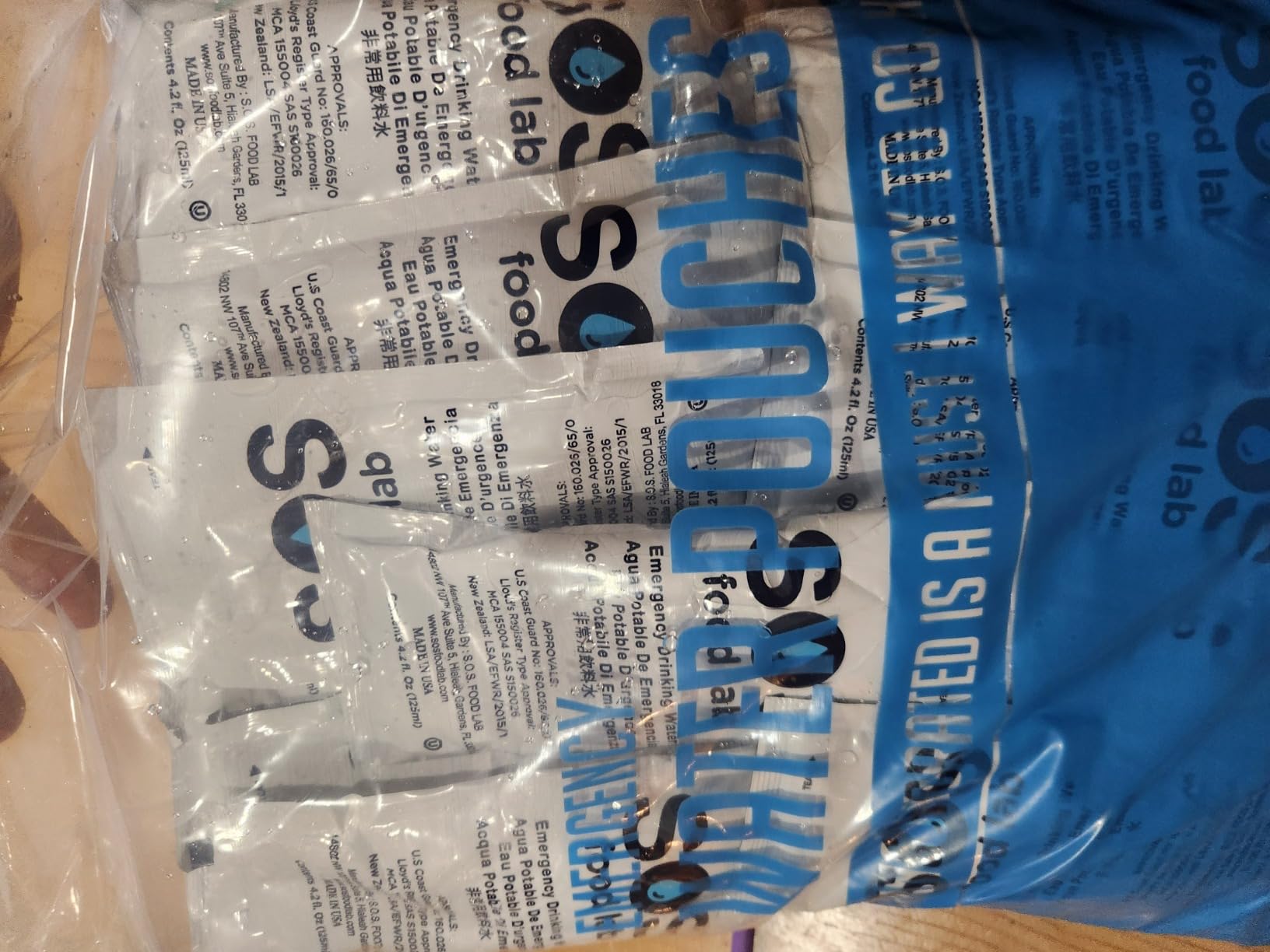
The contents are what you would want in a genuine three-day shelter-in-place event: 36 packs of 125ml emergency drinking water, three packs of 3,600 calorie food bars with a five-year shelf life, water purification tablets treating up to 25 quarts, and a 200-piece medical supply set that includes a CAT tourniquet. The 3-in-1 hand-crank flashlight, radio and phone charger covers lighting, receiving and power in one device with no batteries to go dead.
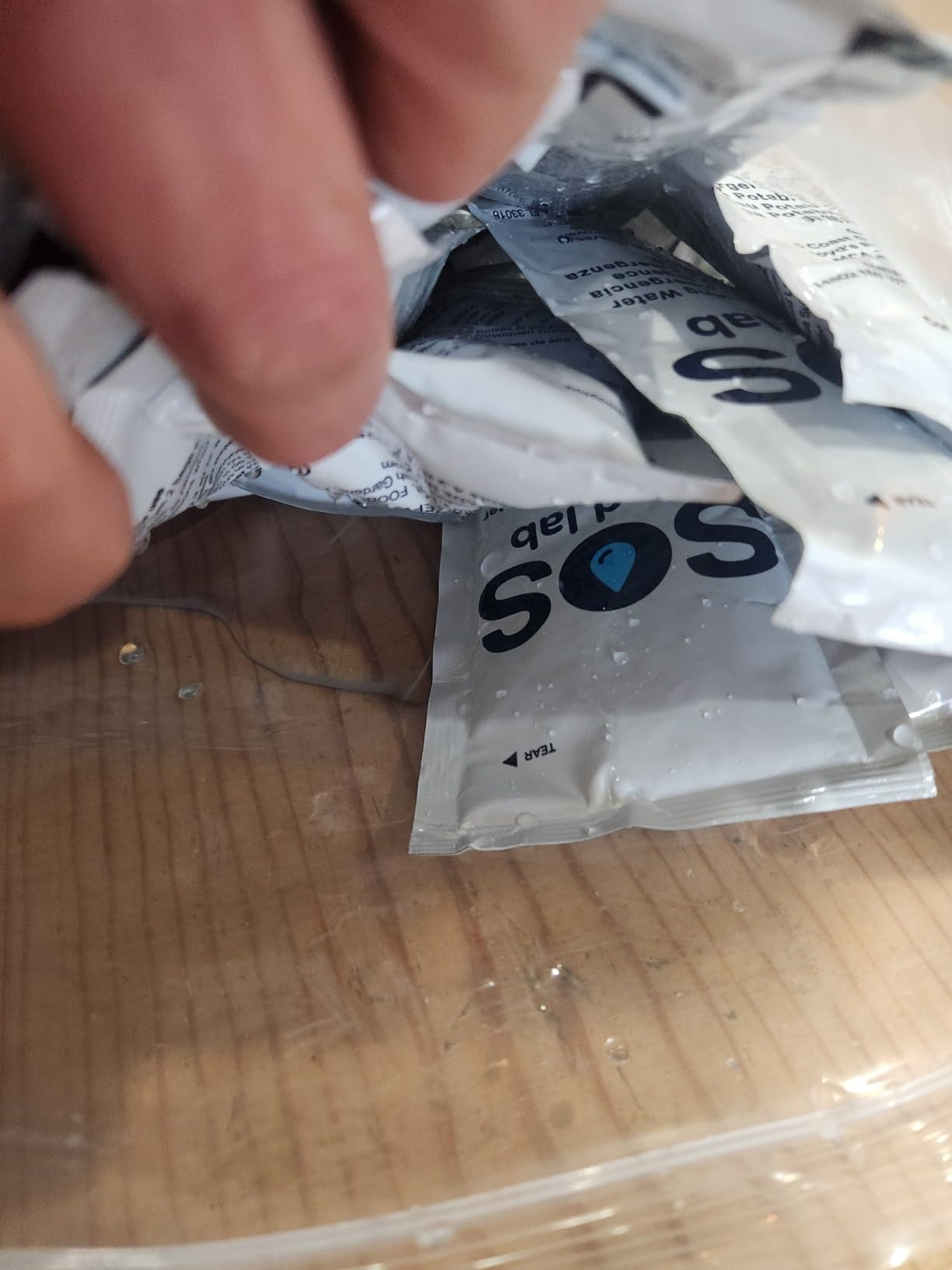
For earthquake, hurricane, flood or tsunami shelter-in-place, this is the most defensible single purchase in the roundup. The 1000D polyester MOLLE backpack has multiple compartments and, critically, extra room to add your own gear. The calorie and water provisioning meets published FEMA guidance, which almost nothing else here can claim.
Twenty-five pounds is the whole problem. Forums are blunt that 16 to 20 pound go-bags are already unusable on foot, and this is beyond that. It is a grab-and-leave-it-from-the-shed kit, not a walking kit. The review base is also the thinnest here at 160 ratings, and one reviewer found water pouches burst in transit and dampen the contents, so inspect the pouches on arrival.
Why the water and calorie figures are the headline
Hydration, then calories, then everything else. The EVERLIT is the only kit in this roundup where a family of three has both covered for 72 hours before adding anything, and the five-year shelf life means it can sit in a closet without a rotation schedule. That is a real advantage over any tool-only kit.
Who must not buy this as their only kit
Anyone who might have to walk more than a few hundred metres from where the bag is stored. If a flood or fire puts you on foot, twenty-five pounds ends the bag’s usefulness quickly. Pair it with a light walkable kit like the TRSCIND rather than relying on it alone.
8. Verifygear 17-in-1 Survival Kit — Best Budget Starter
Survival kits 17 in 1, Emergency Survival Gear and Equipment, Cool Gadgets for Men Camping Fishing Hunting Outdoor
17 pieces
1.3 pounds
4.3 x 1.9 x 5.9 inches
Large-capacity waterproof case
Pros
- Lowest entry point in the roundup with a solid 17-piece inventory
- Waterproof case keeps small parts from scattering
- Tactical flashlight
- paracord bracelet and emergency blanket included
- Works as a compact vehicle or starter kit
Cons
- Several reviewers report the included compass reads inaccurately
- Not all contents fit inside the hard case
- Small tools such as the multi-tool
- pen and screwdrivers feel flimsy
At the low end of this roundup, the Verifygear 17-in-1 is a legitimate first purchase for someone who owns nothing at all. Seventeen pieces in a large-capacity waterproof case, at 1.3 pounds, with a 4.3 x 1.9 x 5.9 inch footprint that fits a glovebox or a bike pannier.
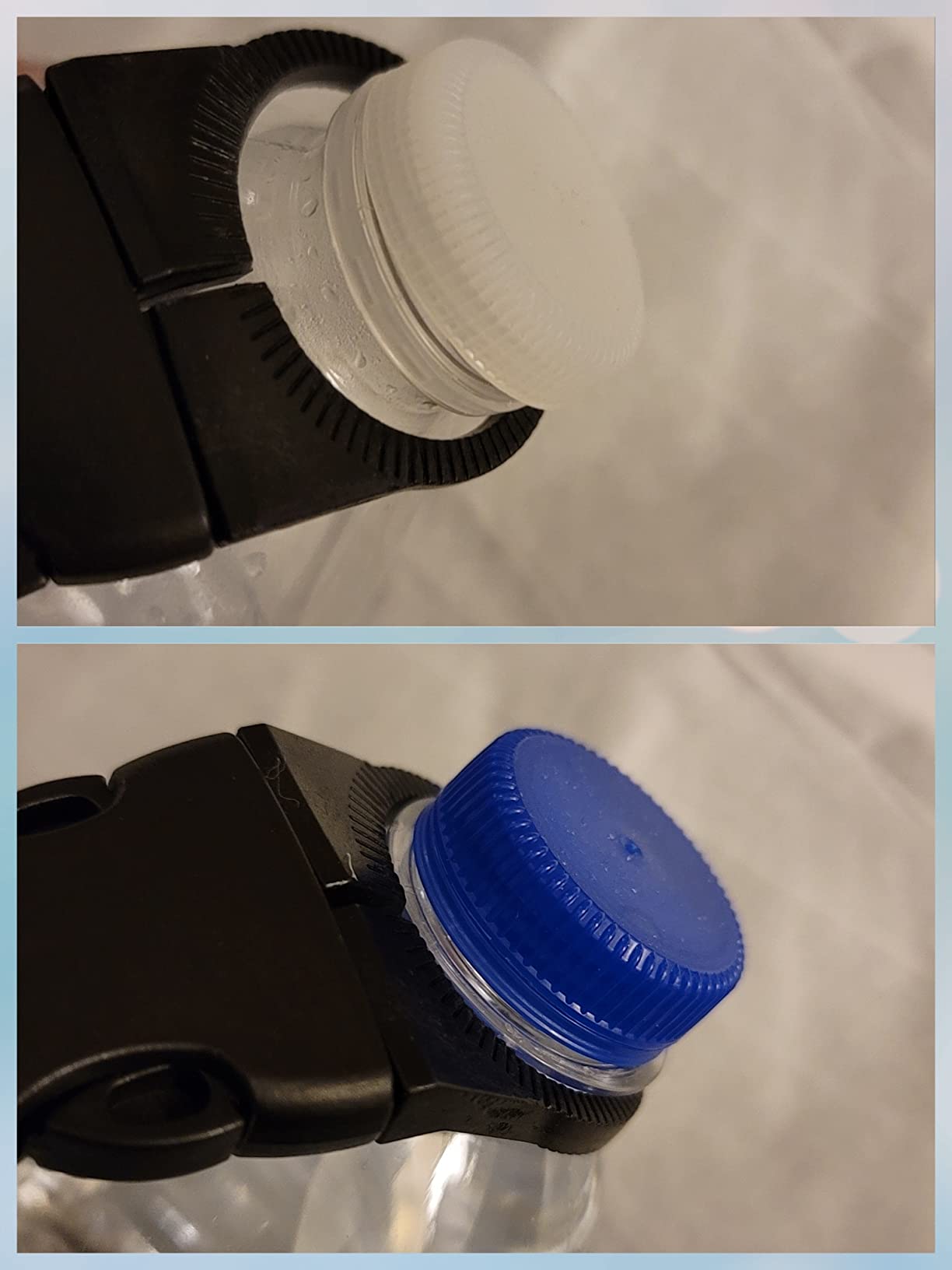
The inventory is better balanced than the piece count suggests: a tactical flashlight, tungsten fountain pen, compass, water bottle clip, two screwdrivers, a multifunctional spork, a wire saw, knives, a 5-in-1 survival rope bracelet, a fire starter, a multifunctional card, a D-ring carabiner and a first aid blanket. That is a real spread across light, cutting, fire, water access and signaling.
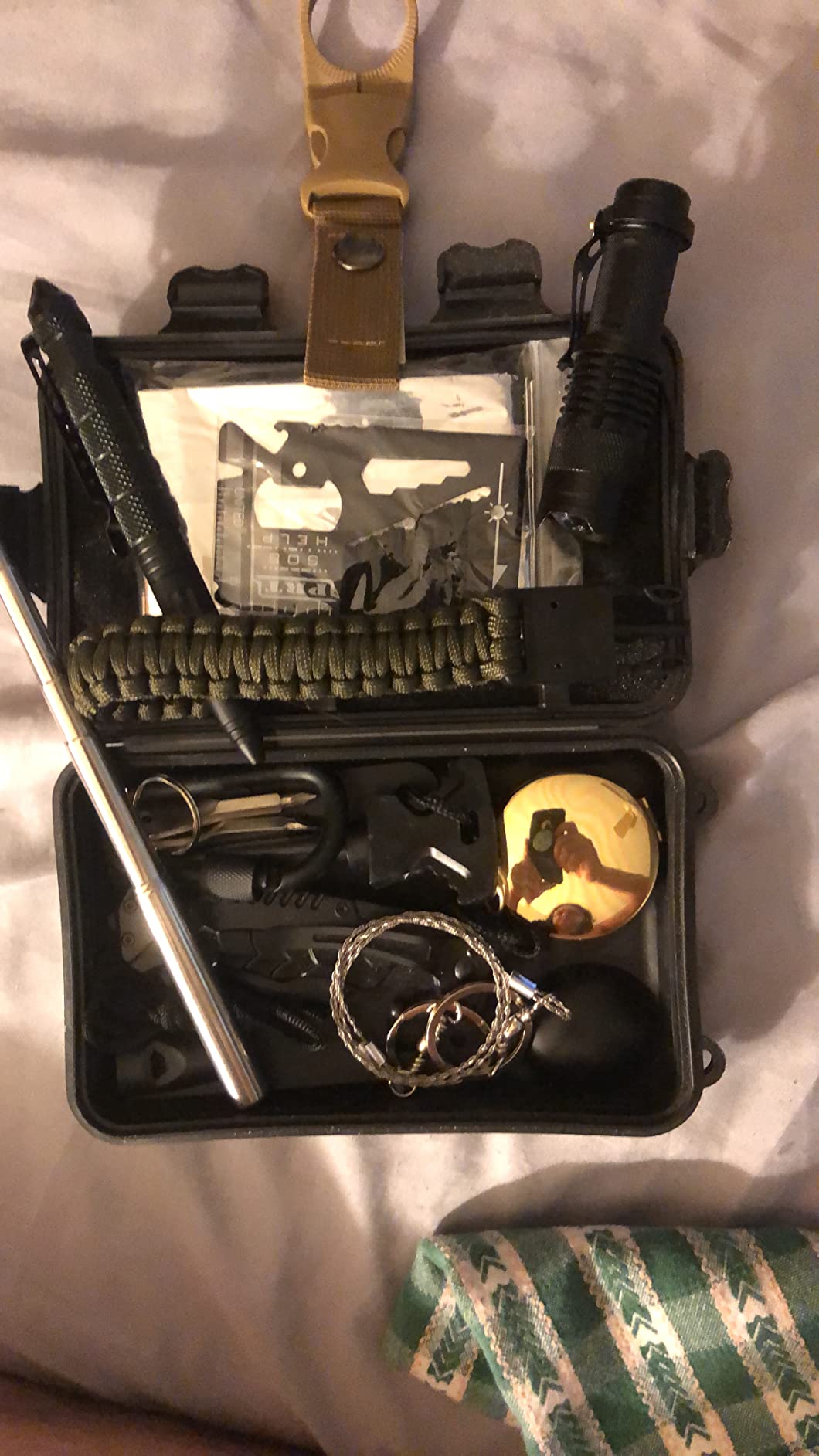
With 6,063 reviews at 4.6 stars and 74 percent five-star ratings, it has a deeper record than several pricier kits here. Reviewers describe it as a useful, compact vehicle or starter bug-out kit with strong gifting appeal, which is roughly the right way to think about it.
The recurring gripe is compass accuracy, which is worth taking seriously given how often navigation fails. A secondary issue is that not all contents fit inside the hard case, so a pouch is effectively part of the kit. Several small tools, including the multi-tool, the pen and the screwdrivers, read as flimsy under load.
What 17 pieces buys when you are starting from zero
More usable category coverage per unit of money than anything else at this entry point. You get fire, light, cutting, a saw, cordage, a blanket and a container that keeps it all together. That is a genuine foundation rather than filler, and it is a better first kit than a 250-piece box of miniature tools.
Which two pieces to replace first
The compass and the small hand tools. Navigation is the one failure you cannot work around, and a wrist compass that reads inaccurately is arguably worse than none because you trust it. Swap in a real knife and a proper fire steel, and this becomes a serviceable car or bike kit.
9. First My Family 4-Person 72-Hour Kit — Best for a Family of Four
First My Family All-in-One 4 Person, 72 Hour Emergency Survival Kit for Fires, Earthquakes, Hurricanes, Floods, Tsunami and Other Disasters – Premium Black Backpack
4 people, 72 hours
16.75 pounds
18 x 16 x 12 inches
85-piece first aid kit
2 AA batteries included
Pros
- Contents exceed Red Cross preparedness guidelines
- Large roomy backpack with extra compartments and space for personal items
- One reviewer reported contents survived 24 hours of flood water and wiped clean
- Food and water rations for four
- 2 AA batteries included
Cons
- Very heavy and awkward to carry any distance
- Branding printed on the outside of the bag advertises its contents
- Food rations may need supplementing for a full four-person 72-hour scenario
This is the one designed for the most people, and the distinguishing feature is that its contents exceed Red Cross preparedness guidelines. That is a claim almost no competitor in this roundup can make, and it is the reason a family of four should look here first.
You get an 85-piece first aid kit, food and water rations for four people, shelter and warmth materials, and two AA batteries in the box. The backpack is waterproof, roomy and built with extra compartments, so it doubles as the bag you pack personal documents, medication and clothing into.
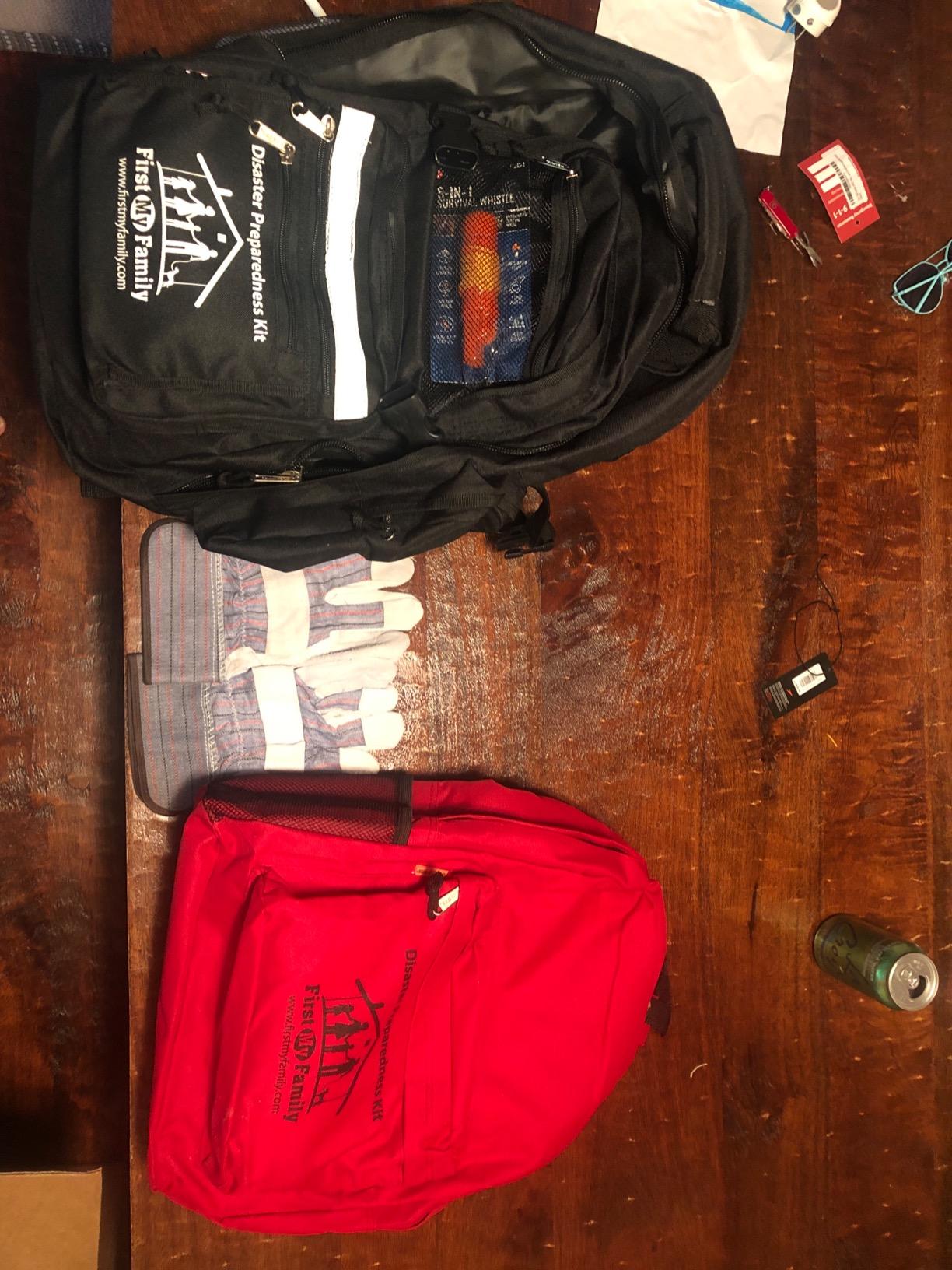
One reviewer reported that the contents survived 24 hours of flood water and wiped clean, which is the kind of field report you rarely get from a gear roundup. With 80 percent five-star ratings and a listing that has been available since September 2014, it is also one of the more established products we reviewed.
Sixteen point seven five pounds is heavy and awkward to move, and the printed branding on the outside advertises exactly what is inside, which is a real drawback if the bag is visible in a car. Consistent buyer advice is to treat it as a strong starter and add your own food for a genuine four-person, three-day scenario.
Why the Red Cross guideline claim matters
Preparedness guidelines give you a floor to check a kit against, and this is the only product here that explicitly clears one. For a family buying once and hoping to never use the bag, an authority-backed contents standard is worth more than another fifty pieces of unlabelled gear.
Where the printed branding becomes a problem
Anyone storing this in a visible vehicle location is advertising a full emergency inventory to anyone who looks. The theft concern comes up repeatedly in forums, and a labelled preparedness bag is a marked target. Keep it indoors and out of plain sight, or use an unmarked bag of your own.
10. Angieast 35-in-1 Survival and First Aid Kit — Best for Camping and Night Skills
Angieast Survival Kit 35 in 1, First Aid Kit, Survival Gear, Survival Tool Gifts for Men Boyfriend Him Husband Fathers Day Camping, Hiking, Hunting, Fishing
35 pieces
1.11 pounds
6.6 x 4.3 x 1.9 inches
Waterproof and shockproof foam case
Pros
- 35 pieces packed into the lightest and smallest footprint in the roundup
- Waterproof and shockproof case with organized foam layout
- Includes fishing tools
- fire tinder
- a multi-tool spoon and fork
- band aids and alcohol pads
- Good beginner kit and popular gift
Cons
- Compass and paracord durability questioned by some reviewers
- Tools are lightweight plastic rather than heavy-duty field gear
At 1.11 pounds, the Angieast 35-in-1 is the lightest kit here and the one I would hand to someone who wants to learn rather than someone facing a crisis. Thirty-five pieces in a 6.6 x 4.3 x 1.9 inch sponge-filled waterproof and shockproof case.
The camping bias is clear in the contents: fishing tools, fire tinder, a multi-tool spoon and fork, band aids and alcohol pads, plus a compass, wire saw, emergency blanket, flint stone, flashlight, tactical pen, paracord bracelet, whistle and carabiner. That is a night-around-the-campfire inventory rather than a disaster inventory.
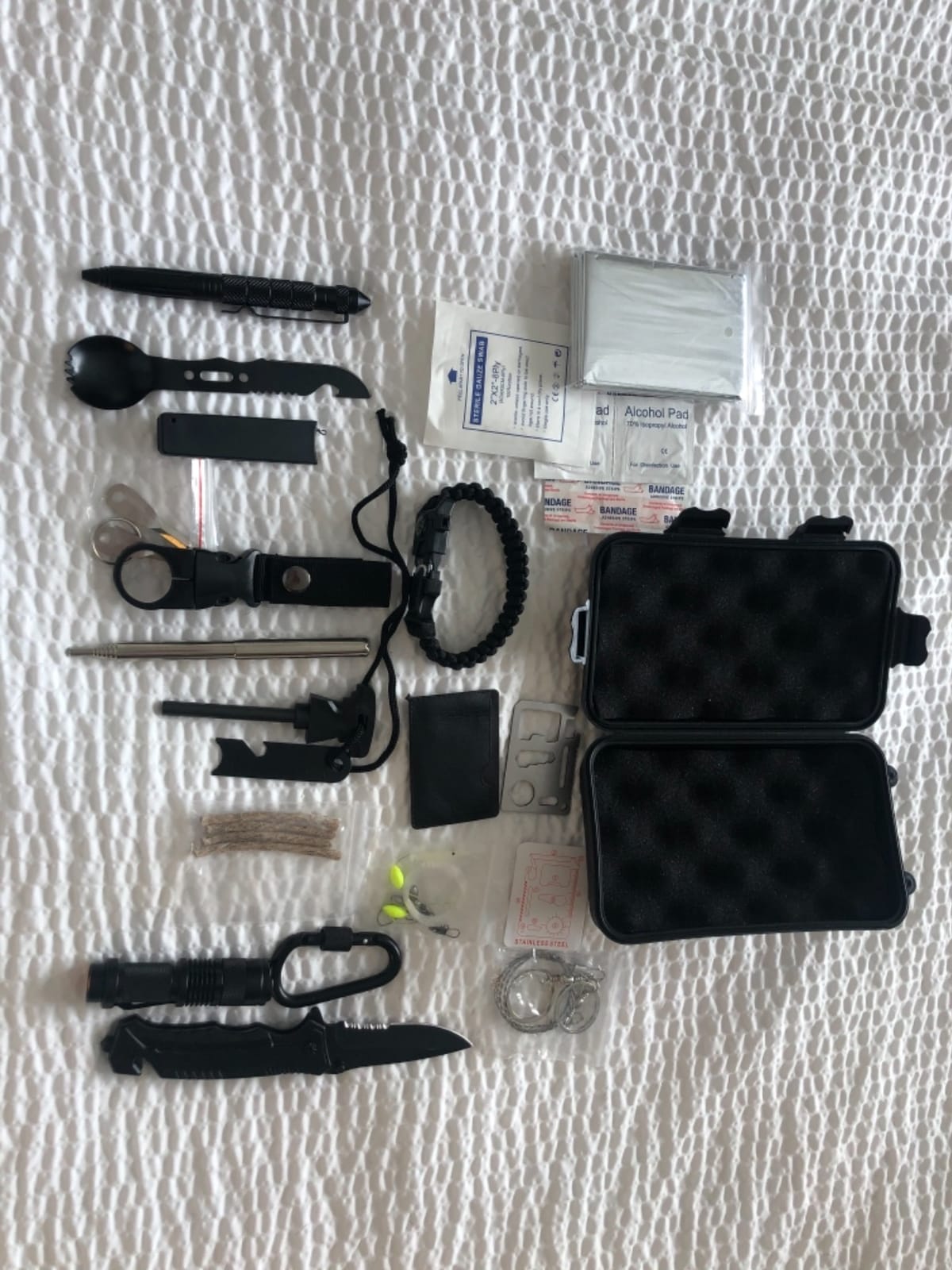
With 3,105 reviews at 4.6 stars and 75 percent five-star ratings, it is well established as a first kit. Reviewers call it a fun, inexpensive introduction to survival gear, and the organised foam layout means each tool has a defined slot instead of rattling loose in a bag.
The critical reviews are the honest ones: this is a teaching starter kit, not equipment to depend on. Some reviewers question the durability of the compass and the paracord bracelet, and the tools are lightweight plastic rather than heavy-duty field gear. The manufacturer listed is Gemagic.
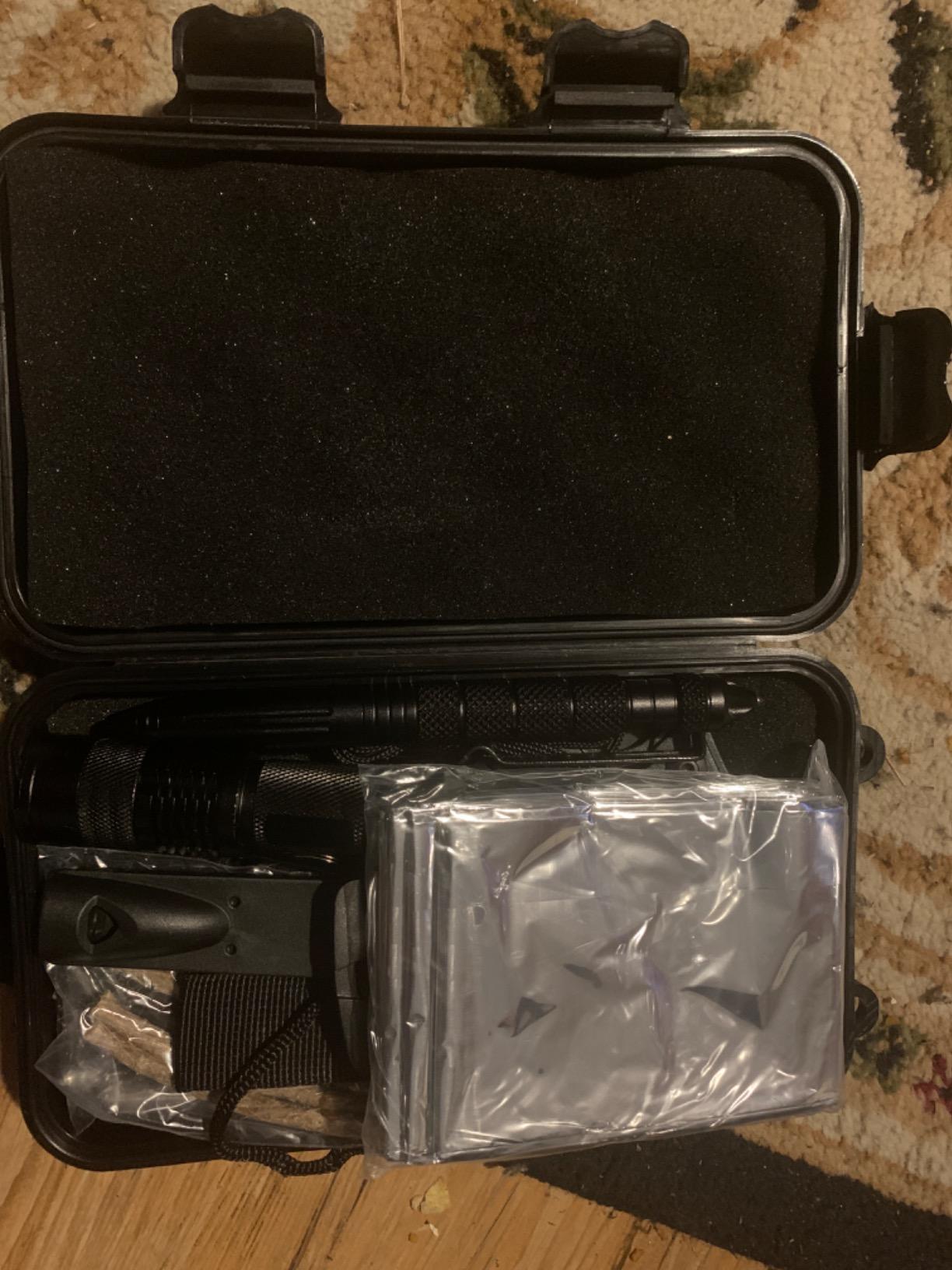
Why the foam layout matters more than the piece count
A foam cut-out means you can see at a glance whether a tool is missing, and the case stays closed. That is a genuine advantage over kits shipped in cardboard boxes with loose items, which is one of the standing complaints in the forums. The sponge also absorbs the drop that cracks hard plastic cases.
Who should treat this as a teaching kit only
Anyone preparing for a real emergency rather than a weekend outdoors. Plastic tools, a questionable compass and no water, food or purification mean this does not cover the survival priority order. Use it to learn what a kit contains, then replace the weak parts before it becomes your actual emergency gear.
How to Choose a Survival Kit That Fits Your Situation
Every kit in this roundup is a reasonable purchase for somebody. The wrong kit is the one bought for a scenario you do not have. Work through these seven criteria in order and the choice makes itself.
1. Match the kit to the scenario, not the marketing
A solo day hiker needs something under two pounds that they will actually carry. A driver needs a glovebox kit with a light and a knife. A household preparing for a hurricane needs food, water and a real first aid kit for three days. A wilderness camper needs a fire-starting and water-treatment capability that a household kit often omits entirely. Decide which of those you are, then buy for it.
2. Judge component quality, not piece count
A 294-piece number is inflated by adhesive bandages, sewing needles and multi-tool spoons. What matters is whether the knife holds an edge, whether the fire steel throws a spark in damp conditions, and whether the compass reads accurately. Ten genuinely good tools beat two hundred and ninety-four filler pieces, and this roundup is a catalogue of that gap.
3. Weigh what you can actually move
This is where most go-bags fail. Anything above fifteen pounds becomes a car-and-closet object rather than something you can carry, and the forum consensus is that a pack you cannot walk with defeats the purpose of a go-bag. If you need a large kit for a household, pair it with a light one you can wear.
4. Check the container, not just the contents
A waterproof, shockproof case with a foam cut-out or organised compartments is worth real money. It protects the tools, it lets you spot a missing item, and it stops the small parts scattering. Kits shipped in a cardboard box with a plastic bag inside are the format the community complains about most.
5. Look at the medical half honestly
Check whether the kit has antiseptic wipes, not just bandages. A tourniquet and trauma shears move a kit toward an IFAK, which is a meaningful upgrade for vehicle and workshop kit. The LUXMOM 142-piece and the ANJiME 294-piece are the two here with real medical depth.
6. Verify water and food, or plan to add them
Almost no kit outside the two large 72-hour bags ships anything drinkable. Decide now whether you are buying calories and water or tools. If tools, budget for water purification tablets or a filter and a high-calorie ration, because the community is unanimous that this is the number one gap in pre-made kits.
7. Remember the 5 C’s of survival gear
Cutting, Cover, Container, Comfort and Calories is the classic shorthand, and there are competing variations that swap in fire, shelter and water. Map it onto whichever version you use and you have a fast checklist for any kit: something to cut with, something to cover you, a container, some comfort, and food. Most cheap kits score well on the piece count and badly on all five.
What a Survival Kit Should Contain
FEMA and the American Red Cross both recommend keeping a stocked emergency kit on hand, and both point to the same core categories. Here is that guidance organised into the five buckets, in survival-priority order rather than in the order manufacturers pack them.
Hydration. Drinking water plus a way to treat more. Containers or sealed pouches for the stored supply, and either purification tablets or a filter for water you have to source yourself.
Shelter and warmth. An emergency blanket, a bivy or a tarp, ponchos, and something that keeps you out of the wind. The FERNO emergency blanket and the two-poncho pairing in the Ready America kit are the baseline here.
Fire and light. A ferro rod or fire steel with tinder, waterproof matches, a headlamp or flashlight plus spare batteries, and glow sticks for when the batteries die.
Food and tools. High-calorie ration bars, a multi-tool or fixed blade, a wire saw, 550 paracord, duct tape, a whistle, a signal mirror and a compass.
First aid. Wipes and antiseptics, gauze and tape, bandages, pain relief, gloves, a mask, and a tourniquet if the scenario justifies it.
Now the fix-it list, because almost every kit in this roundup is missing the same five things. Add these and any of the ten kits above gets materially better.
A water filter or purification tablets, since none of the tool-only kits ship either.
A real cutting tool. Replace the supplied folding knife with a fixed blade you trust.
A working fire starter. A spare ferro rod costs very little and the supplied one is usually the weakest part.
Spare batteries for every light in the kit, which the Monterra and several others omit entirely.
A signalling device. A whistle on a lanyard costs almost nothing and carries further than your voice.
Bug Out Bag vs Survival Kit vs Get-Home Bag
These three get used interchangeably, and confusing them is how people end up with the wrong object. Here is the plain distinction.
A survival kit is supplies in a container. It has no bag of its own necessarily, it makes no claim about how long you will be out, and its size is set by the scenario rather than the person. Most of the kits in this roundup are survival kits in the strict sense.
A bug out bag or go-bag is a grab-and-leave evacuation bag, typically sized for three to seven days, built to be carried out of a building quickly. It needs clothing, footwear, medication, documents, cash and a water container, not just tools. That is why forum threads keep asking which pre-loaded go-bag is best, and why the answer is usually a decent bag that you fill yourself.
A get-home bag is the lightest of the three, kept at work or school and designed to get you from a workplace back to family rather than to survive off-grid. A day of supplies, a change of clothes, a charger and a rain layer is the correct contents list.
The practical result: you probably want more than one. A vehicle survival kit plus a home bug out bag plus a small get-home bag at work is a common-sense ready setup, and it is far more useful than one oversized bag you can never lift.
Where to Store Your Kit and How to Maintain It
Stocking one kit in one place is the most common mistake people make. The community standard is a layered approach across four locations, and each layer covers a different failure.
Your backpack. A light kit like the TRSCIND or the Angieast, plus your own knife. This is the layer that travels with you and the only one that helps if you are away from a vehicle.
Your vehicle. A glovebox or console kit for roadside and breakdown situations. Rotate it twice a year, because heat and cold in a parked car degrade batteries and food.
Your home. The largest 72-hour kit you can lift, stocked where you can reach it in under a minute. Shelter-in-place events do not care how fast you can run.
Your workplace. A get-home bag with three days of supplies. For most people this is the layer they are most often missing entirely.
On vehicle storage, be honest about the trade-off. A visible, labelled preparedness bag in a car is a theft target, which is exactly the concern the First My Family branding raises. Keep it in the boot rather than the cabin, out of plain sight, and accept that a determined thief is not the threat model you are planning for.
For shelf life, the pattern in the community threads is simple. Check food bars and water pouches annually, even when the printed date is five years out, because heat shortens both. Swap the batteries in every flashlight and headlamp every year, since alkaline cells leak and a leaking cell inside a foam-lined case ruins the kit. And write the purchase date on the outside of the bag, because a readiness kit nobody remembers checking is a readiness kit that quietly expires.
Frequently Asked Questions
Are pre-made survival kits worth buying?
They are worth buying for the container, the organization and the coverage they provide, but you should plan to replace two or three components. Across this roundup the most common gaps are a compass that reads inaccurately, a weak fire steel, no water purification, and missing batteries. Buy the kit, then swap the compass, add water treatment, and add your own knife.
What is the difference between a bug out bag and a survival kit?
A survival kit is supplies in a container with no fixed duration and no bag of its own. A bug out bag is a grab-and-leave evacuation bag sized for three to seven days that must be carried out of a building quickly, so it also needs clothing, footwear, medication, documents and cash. A get-home bag is lighter still, meant to take you from work back to family.
What are the 10 must-have survival items?
In survival-priority order: drinking water, a water filter or purification tablets, an emergency blanket or bivy, a ferro rod with tinder, a headlamp with spare batteries, a fixed blade knife, 550 paracord, a whistle or signal mirror, a first aid kit with antiseptic wipes, and a high-calorie food ration. Ordering matters because water and shelter outrank everything else.
What does FEMA recommend you purchase for an emergency?
FEMA and the American Red Cross recommend stocking water, ready-to-eat food, a first aid kit, flashlights and spare batteries, an emergency radio, a whistle, heavy shoes, a first aid manual, blankets or a bivy, and a signal device for each family member. The two large 72-hour bags reviewed here, the EVERLIT and the First My Family kit, are the ones that explicitly meet or exceed those preparedness guidelines.
What is the best emergency kit for a family of four?
The First My Family All-in-One 4-Person 72-Hour kit is the most directly built for that scenario, with rations for four, an 85-piece first aid kit, shelter and warmth materials, and contents that exceed Red Cross preparedness guidelines. It weighs 16.75 pounds, so pair it with a light walkable kit rather than expecting to carry it far.
How long does survival kit food last?
The food bars in the 72-hour kits reviewed here carry a five-year shelf life, and the water pouches are sealed single-serve portions. Even so, check both annually, because heat accelerates degradation. The Ready America kit ships an owner’s card reminding you to check expiration dates, and that habit is the single most useful thing you can add to a pre-made kit.
The Bottom Line on the Best Survival Kits
After comparing all ten, the TRSCIND 14-in-1 remains the best survival kit for the widest range of people, because it is the only one here that is genuinely portable at 1.56 pounds and still carries a waterproof, shockproof case, a saw, a blanket, a light and a compass.
Pick your category winner for the scenario you actually have. The LUXMOM 142-piece kit wins on real first aid depth. The Ready America and EVERLIT bags are the only two that ship calories and water for their stated duration, and they are the right answer for shelter-in-place. The Monterra sling bag is the one to wear, and the First My Family kit is built for a household of four at Red Cross guideline coverage.
Whichever you choose, add water purification, a knife you trust, spare batteries and a whistle before you rely on it. Then put a copy of your kit list somewhere you will find it, and check the dates once a year. The best survival kits are the ones that are already in your hands when things go wrong, and these are the best survival kits for getting there in 2026.