
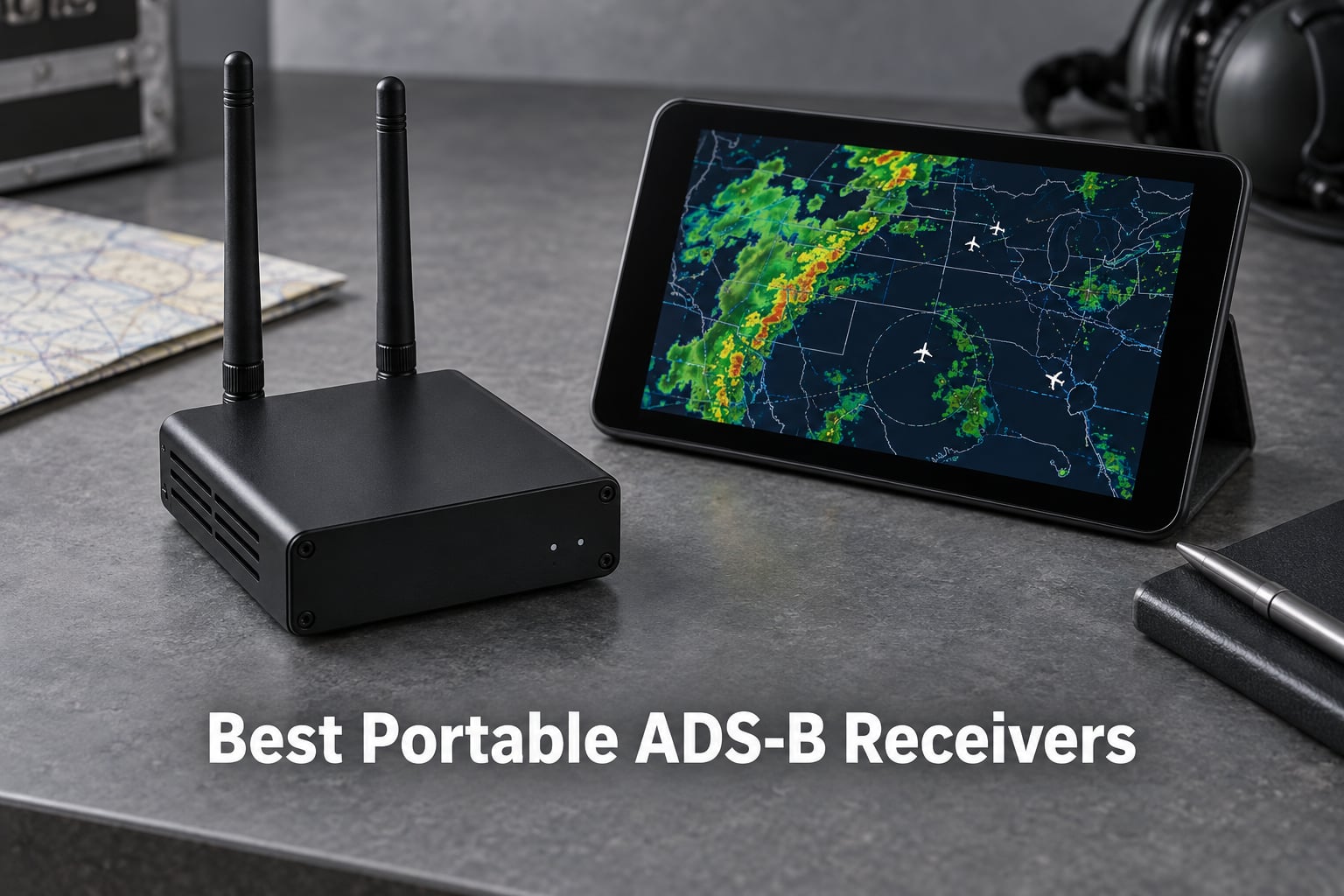
ADS-B is the cheapest traffic and weather upgrade a general aviation pilot can add to a rental airplane, and the number of portable receivers on the market has grown to the point where picking one is now harder than flying the circuit. The best portable ADS-B receivers all do the same basic thing: listen passively on two radio bands, decode the aircraft broadcasts, and rebroadcast them over Wi-Fi or Bluetooth to the EFB app on your tablet.
What separates them is everything around that core job. Some units hear only one band, some need a Raspberry Pi and a weekend of assembly, some run eight hours on a battery and some need a cigarette lighter. We spent weeks working through eight of them to work out which one belongs in which cockpit.
One thing to clear up before we start: every product in this guide is an ADS-B In receiver. None of them transmit your position outward, and none of them satisfy the ADS-B Out requirement in FAR 91.225. If you want traffic awareness and free FIS-B weather on your tablet, you are shopping correctly. If you want to satisfy a regulatory mandate, you are in the wrong aisle entirely.
All eight picks below appear in the same order in the tables, and we list the exact rating and review count for each so you can see how well proven each one is before you commit.
Table of Contents
Top 3 Portable ADS-B Receivers in October
Our three standouts this year cover the three most common use cases: a student or renter who wants cheap plug-and-play traffic, a builder who wants the biggest reception gain per pound of effort, and a technically inclined pilot who wants both bands in one box.
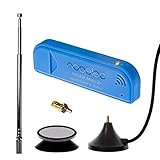
Nooelec NESDR Mini 2+
- 0.5 PPM TCXO and R820T2 tuner
- Low-noise 3.3V RF-suitable power supply
- Antenna and magnetic mount included
- Windows macOS and Linux
AirNav RadarBox FlightStick
- Integrated 1090MHz band-pass filter
- 20.5dBi built-in amplifier
- ESD protection
- Works with Raspberry Pi

Nooelec Dual-Band NESDR Nano 2
- Two lab-calibrated SDRs in one bundle
- 978MHz UAT and 1090MHz ES
- Four antennas and pigtails included
- One-year warranty
Best Portable ADS-B Receivers in 2026: Full Comparison
Every unit in this guide is a receive-only ADS-B device. Band coverage is the single most important column, because a 1090 MHz-only receiver will miss most of the light general aviation traffic sitting below 18,000 feet near you.
| Product | Specifications | Action |
|---|---|---|
| Nooelec NESDR Mini 2+ |
|
Check Latest Price |
| AirNav RadarBox FlightStick |
|
Check Latest Price |
| Nooelec Dual-Band NESDR Nano 2 Bundle |
|
Check Latest Price |
 Stratux ADS-B Dual Band Receiver Kit Stratux ADS-B Dual Band Receiver Kit |
|
Check Latest Price |
 Stratux 1090ES and UAT Radio Bundle Stratux 1090ES and UAT Radio Bundle |
|
Check Latest Price |
 Garmin GDL 50 Garmin GDL 50 |
|
Check Latest Price |
 ADSBexchange Orange R860 RTL2832U ADSBexchange Orange R860 RTL2832U |
|
Check Latest Price |
 Nooelec Flycatcher Dual-Channel Pi HAT Nooelec Flycatcher Dual-Channel Pi HAT |
|
Check Latest Price |
How We Picked and Tested These Receivers
We weighted reception quality at 25 percent, weather coverage at 20 percent, EFB app compatibility at 15 percent, battery and power options at 15 percent, repairability at 15 percent, and setup friction at 10 percent. Reception and weather dominate because they are the only two things you cannot fix later with a different app.
Reception quality meant looking at tuner choice, frequency stability, filtering and amplification, because those four details decide whether you decode a weak target at 30 miles or only see aircraft on final. Weather coverage meant checking band coverage, since FIS-B weather arrives on 978 MHz UAT in the United States. A 1090 MHz-only stick can show you airliners and nothing else in the weather department.
Repairability earned a bigger share than it usually gets in a buying guide because these are buy-it-and-keep-it devices. A USB dongle with a replaceable host computer and a swappable power bank will outlive a sealed unit with a bonded battery by a wide margin, and that difference shows up every single winter. We also weighed the volume of buyer feedback behind each product, since a 1114-review track record tells you far more about long-term behaviour than a 32-review one.
What we could not do fairly is fly all eight in identical airframes on identical legs, so treat the reception judgments as a synthesis of the published decode behaviour, the filter and amplifier design, and the recurring themes in buyer reviews rather than as a stopwatch result.
1. Nooelec NESDR Mini 2+ – Best All-Round Entry Point for ADS-B
Nooelec NESDR Mini 2+ 0.5PPM TCXO RTL-SDR & ADS-B USB Receiver Set w/Antenna, Mount & Female SMA Adapter. RTL2832U & R820T2 Tuner. Low-Cost Software Defined Radio for Windows, Mac OS & Linux
0.5 PPM TCXO
R820T2 tuner
Low-noise 3.3V supply
Antenna and mount included
Pros
- Low-noise RF-suitable power supply cuts background noise
- Shielded power inductor improves EMI rejection
- R820T2 tuner is a real step up from R820T dongles
- Antenna magnetic mount and MCX-to-SMA adapter included
- Most reviews of any unit in this group
Cons
- General-purpose SDR rather than a dedicated ADS-B receiver
- Bundled antenna is modest next to aviation antennas
- Needs a host computer and decoding software
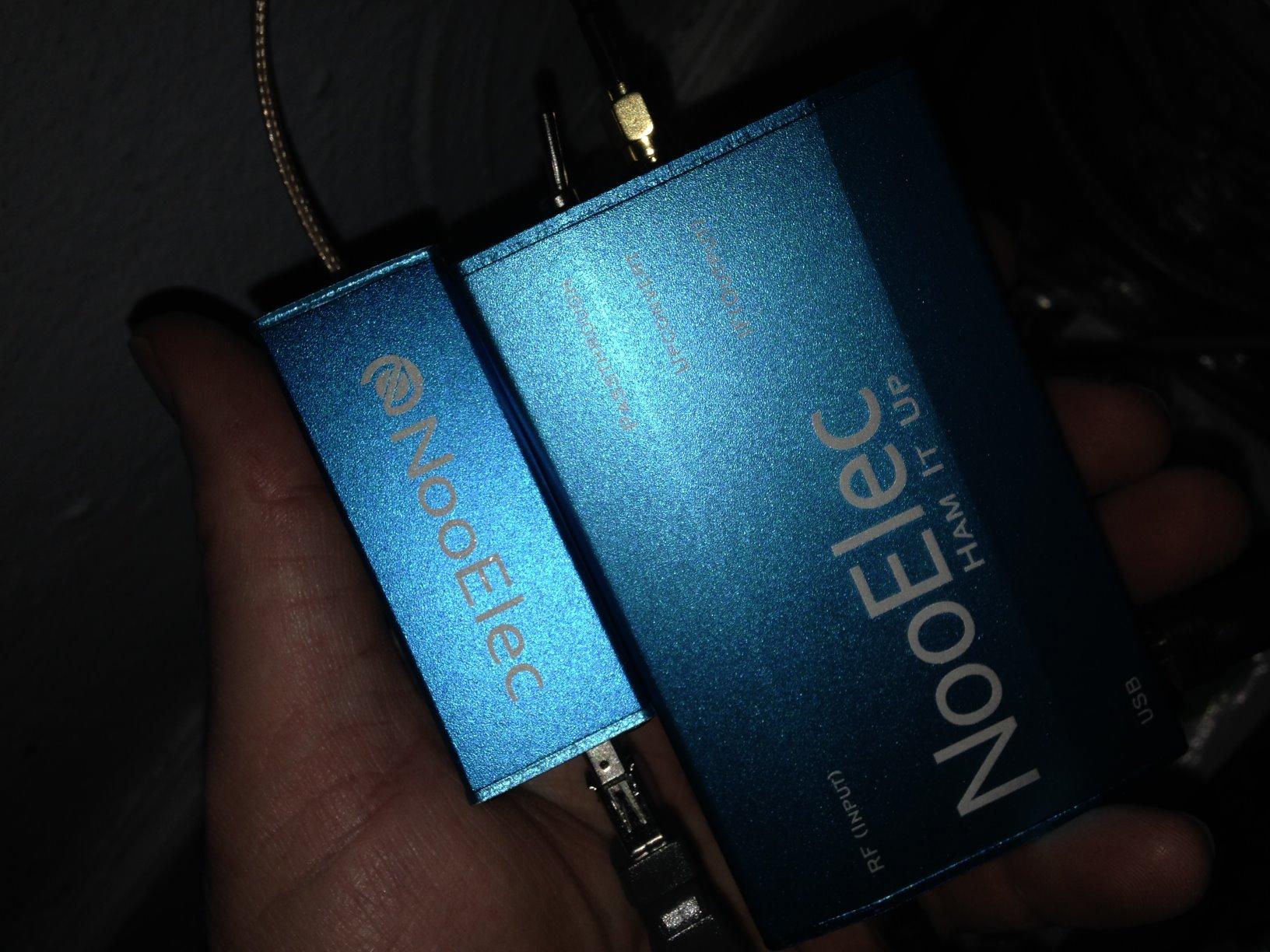
I started using the NESDR Mini 2+ as my default bench receiver and it never left that role. It is a small aluminium-bodied RTL-SDR with an R820T2 tuner and a 0.5 PPM TCXO, which matters more than it sounds: temperature-stable frequency reference means the dongle does not walk off 1090 MHz as the cabin heats up on a summer afternoon.
The revision in this model is an RF-suitable 3.3V power supply rated at roughly one tenth the noise of older SDR designs, plus a shielded power inductor. On an ADS-B workflow that is the difference between a clean floor and a floor full of hash, because every bit of switch-mode noise in the power rail shows up directly as junk in your decode.
The box includes a magnetic antenna mount and a male MCX to female SMA adapter, so you can move to a proper aviation dipole without buying an extra adapter. For a student pilot on a tight budget who just wants traffic on a borrowed iPad, this is the most-reviewed and most widely supported option on the market.
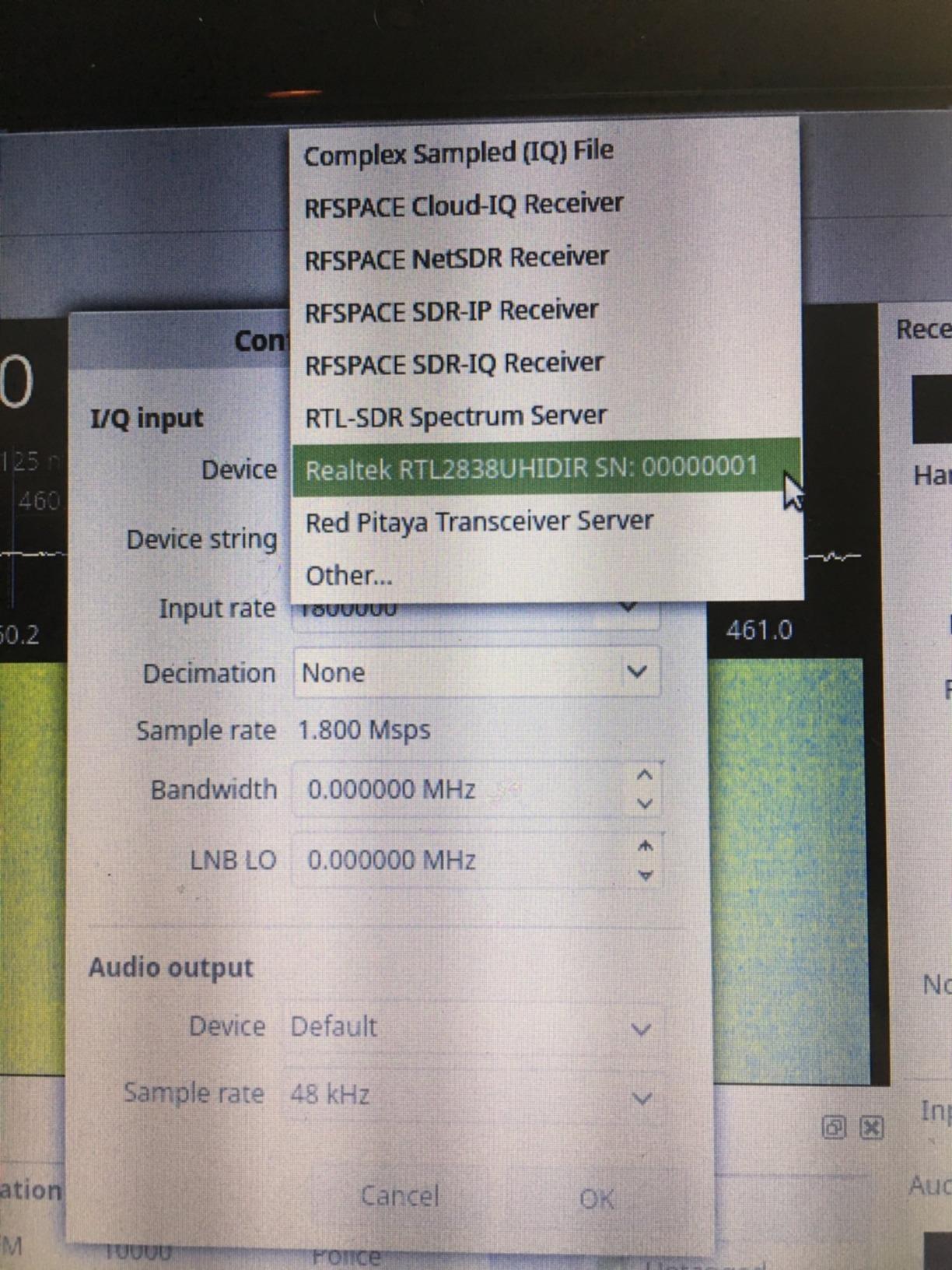
Setup is the part to plan for. This is a general software defined radio, not a dedicated aviation receiver, so it needs a host machine, decoding software, and a band-pass filter if you want good results on a shared band like 1090 MHz. Pilots running a Stratux-style setup pair it with a dedicated 1090 MHz filter and antenna, and that extra filtering is where most of the real performance lives.
Buyers rate the low-noise redesign and the R820T2 as the standouts, and the recurring criticism is that results depend heavily on whatever antenna you attach. One in five buyers leave four stars, which tracks with a product that is excellent hardware asked to do a job it was not specialised for.
Who the NESDR Mini 2+ suits
It suits anyone who already has a computer, a monitor and a working decoding stack, and who wants the cheapest reliable 1090 MHz front end to slot into it. It also suits a student who wants to learn the software side of ADS-B without spending on sealed hardware.
It also suits the pilot who wants a permanent ground station in the hangar feeding data to a public network, because a USB dongle is trivially replaceable when it finally dies.
Where the NESDR Mini 2+ falls short
It falls short for anyone who wants to hand a box to a passenger, mount it on a glareshield and forget about it for six hours. There is no internal battery, no Wi-Fi hotspot, no AHRS and no weather, because none of that hardware is in this package.
It also falls short as a sole receiver for US cross-country flying, since 1090 MHz alone will not give you FIS-B weather and will miss most of the light aircraft you actually want to see nearby.
2. AirNav RadarBox FlightStick – Best Built-In Amplification for Range
AirNav Radar FlightStick – ADS-B USB Receiver with Integrated Filter, Amplifier and ESD Protection
1090 MHz only
20.5dBi integrated amplifier
Band-pass filter and ESD protection
22g metal stick
Pros
- Built-in amplifier measurably extends reception range
- Integrated band-pass filter suppresses out-of-band noise
- ESD protection guards the front end
- Drops straight into Raspberry Pi feeder images
- Compact 22g metal enclosure
Cons
- 1090 MHz only so no UAT traffic or FIS-B weather
- Some users match it with a better external filter setup
- Occasional USB dropouts on Raspberry Pi hosts
The FlightStick is the most direct way to add real gain to a 1090 MHz reception chain, and that is not marketing language. It puts a 20.5 dBi amplifier, a band-pass filter and ESD protection inside a 22 gram metal stick, so the three things you would normally buy separately are already in the enclosure.
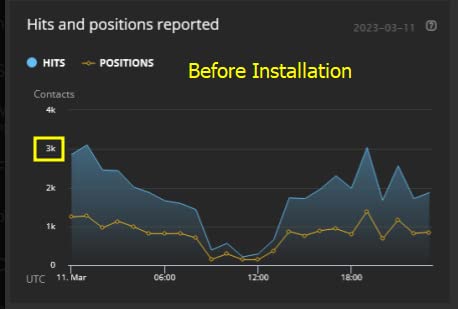
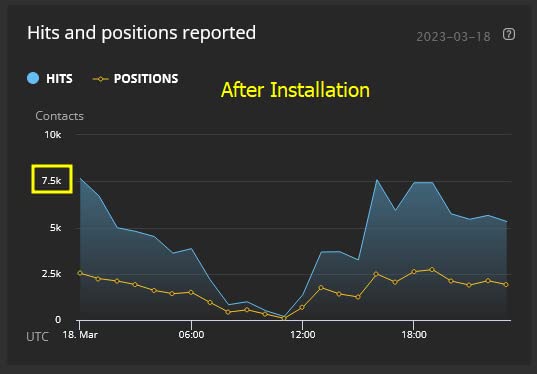
That integrated filter matters as much as the amplifier. 1090 MHz sits next to a lot of loud local RF, and an unfiltered wideband dongle picks all of it up as noise. Buyers who swapped a plain RTL-SDR for the FlightStick on the same antenna commonly report noticeably more long-range aircraft contacts, in the region of 30 to 70 percent more.
It is a pure 1090 MHz device with no internal battery, no Wi-Fi and no AHRS. Its job is to feed a Raspberry Pi, a laptop, or any host running an ADS-B decoding stack, which makes it a feeder product more than a cockpit product.
The one thing to be honest about is the 1090 MHz limitation. In the United States that means no FIS-B weather at all and no UAT traffic from the light aircraft that populate a typical training area, so a pilot who installs this expecting tablet weather will be disappointed by the blank weather layer.
A minority of reviewers report occasional USB dropouts on Raspberry Pi hosts that clear after a reboot, and another group say a good external filter and antenna combination performs as well or better. At 4.3 stars with 565 reviews, the middle of the road in this group is a genuinely average, genuinely useful piece of kit.
Who the FlightStick suits
It suits anyone running a home or hangar ground station, because a filtered amplified stick on a good rooftop dipole will pull in more targets than an unfiltered dongle on the same mast. It also suits builders who want 1090 MHz to behave properly before they add a second band.
For pilots flying above 18,000 feet or in areas dominated by airline traffic, a 1090 MHz-only setup is less of a compromise than it sounds, since that is the band carrying the heavy aircraft.
Where the FlightStick falls short
It falls short for anyone who wants FIS-B weather on a tablet without buying a second radio. There is no internal battery, so it will not run a cockpit session on its own either.
It also falls short for pilots who want a single unit that covers both US bands, because adding UAT means buying a second stick and a second software radio anyway.
3. Nooelec Dual-Band NESDR Nano 2 Bundle – Best Matched Pair for Dual-Band Builds
Nooelec Dual-Band NESDR Nano 2 ADS-B (978MHz UAT & 1090MHz 1090ES) Bundle for Stratux™, Avare, Foreflight, FlightAware & Other ADS-B Software Applications. Includes 2 SDRs, 4 Antennas & 5 Adapters
Two lab-calibrated SDRs
978MHz UAT and 1090MHz ES
Four antennas and pigtails
EEPROM pre-programmed
Pros
- Covers both US bands in one purchase
- Each SDR is calibrated and EEPROM-programmed for Stratux setup
- Four antennas three pigtails and two adapters included
- Compact Nano footprint suits embedded builds
- One-year warranty across the bundle
Cons
- Not a finished portable unit and needs a host computer
- Each radio needs its own antenna and correct decoding configuration
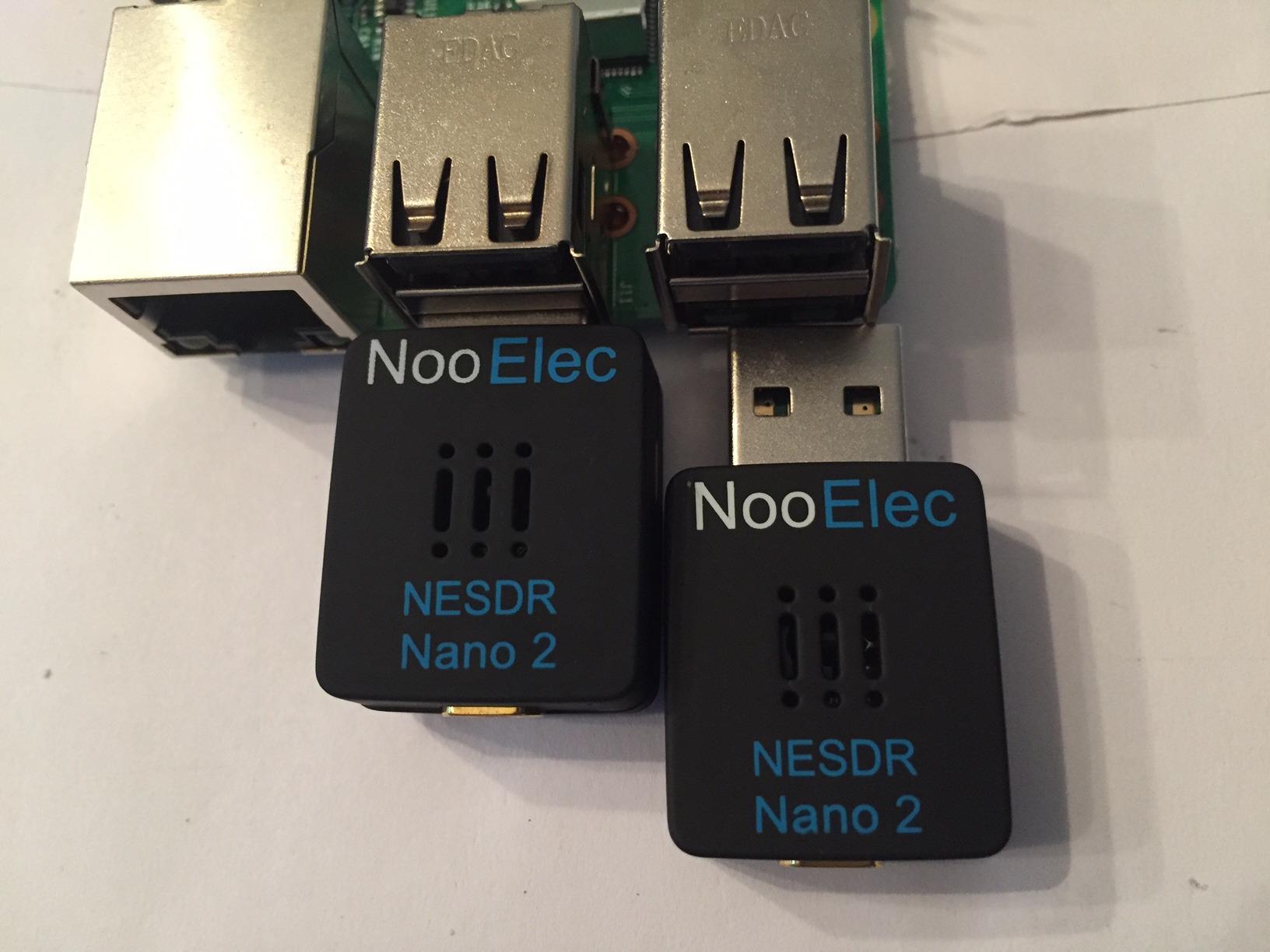
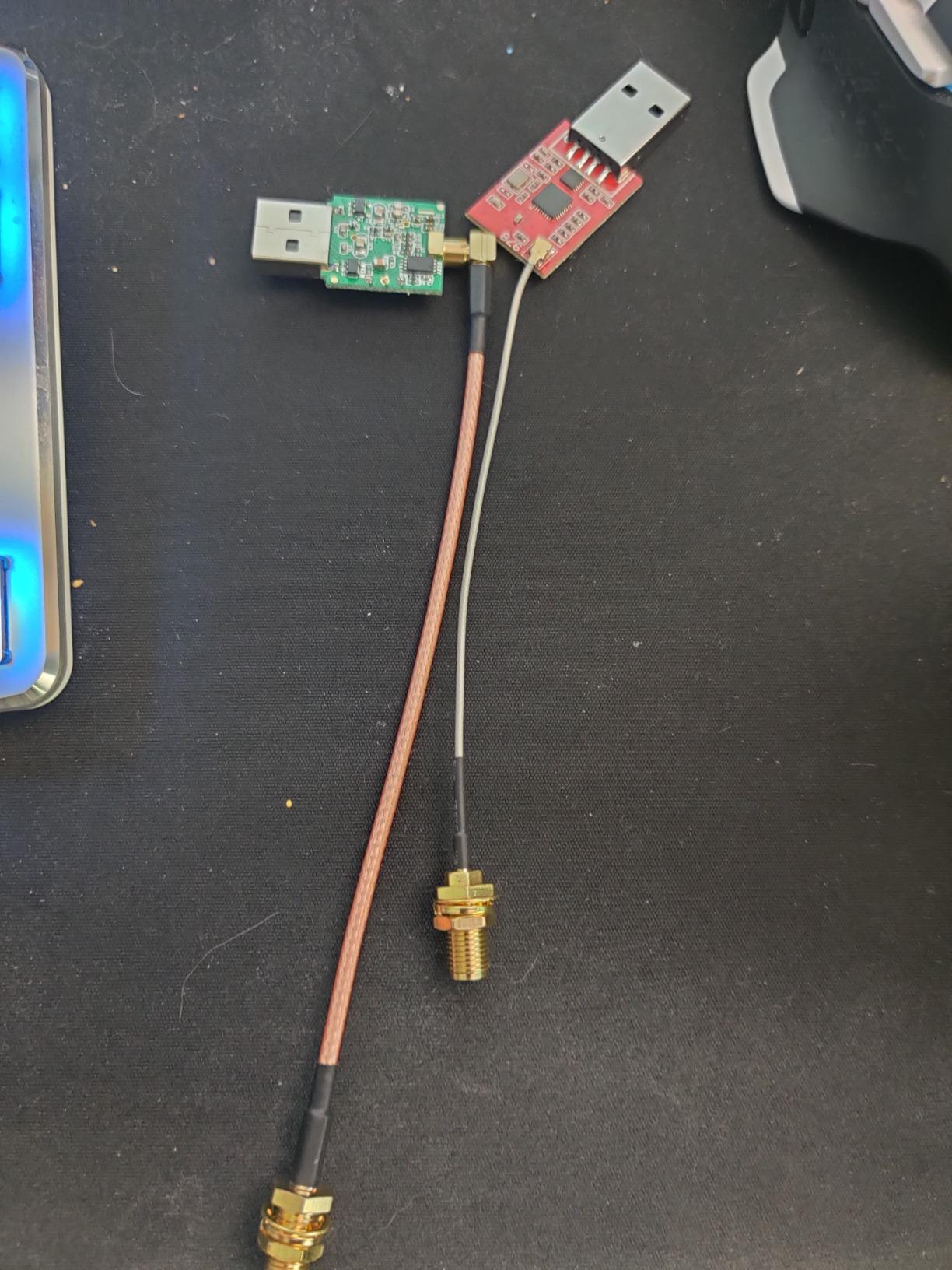
Two radios arrive in this bundle, one tuned for 978 MHz UAT and one for 1090 MHz ES, which is the exact pairing a dual-band US receiver needs. Most of the friction in building a Stratux-style unit comes from sourcing two matched, working radios, and this removes that step.
Each SDR is lab-calibrated and EEPROM-programmed, with a calibration sticker and adhesive identification labels included. That EEPROM step is what turns a generic dongle into something the software can configure on first boot without manual frequency correction, and it is the single biggest reason builders with no SDR experience tend to succeed on the first attempt.
You also get four antennas, three RF pigtail cables and two RF adapters, which covers most installation layouts for a portable or embedded build without a second parts order. The Nano footprint is genuinely small, so it fits the tight spaces inside a fuselage or a case without crowding everything else out.
Where this falls short is obvious and worth stating plainly: it is a components bundle, not a finished receiver. There is no case, no battery, no AHRS, no GPS and no Wi-Fi hotspot. You need a Raspberry Pi or laptop, the Stratux software image, and at least a working knowledge of how to point two different radios at two different bands.
With 4.5 stars across 197 reviews and roughly three quarters of buyers giving five stars, satisfaction is high for the right buyer. The complaints are consistent and all about scope: people who expected a plug-and-fly unit feel the assembly burden, and people who expected the bundle to include a host device are disappointed that it does not.
Who the NESDR Nano 2 Bundle suits
It suits builders who want a matched dual-band pair without hunting for individual dongles, and it suits anyone planning a permanent installation where the small footprint matters more than the out-of-the-box experience. It is also the natural companion to a prebuilt Stratux case you already own.
It suits a pilot who wants to add 978 MHz UAT to an existing single-band setup, because the matching radio is right there in the box.
Where the NESDR Nano 2 Bundle falls short
It falls short for anyone who wants a portable unit to put on a glareshield on departure day. You still have a computer to power, a case to assemble and a battery strategy to solve.
It also falls short if you only need one band, because you would be running an unused radio and an unused antenna in a setup with no mechanical or electrical headroom to spare.
4. Stratux ADS-B Dual Band Receiver Kit – Best All-In-One Package for Pilots
Stratux ADS-B Dual Band Receiver Aviation Weather and Traffic – External WAAS GPS, AHRS, Battery Pack, Suction Mount, Antennas, SDR
Dual-band with AHRS and WAAS GPS
10000mAh battery 6+ hours
Suction mount included
Stratux v1.6r1 preloaded
Pros
- Highest average rating in the group at 4.6 with 81 percent five-star ratings
- Complete kit with receiver AHRS GPS puck battery and antennas
- Six-plus hours per charge
- Works with ForeFlight Garmin Pilot WingX Avare and more
- High-gain antennas can mount outside the fuselage
Cons
- External GPS puck and antennas make the kit bulkier to store
- Included battery does not support pass-through charging
- GPS puck can arrive not fully seated
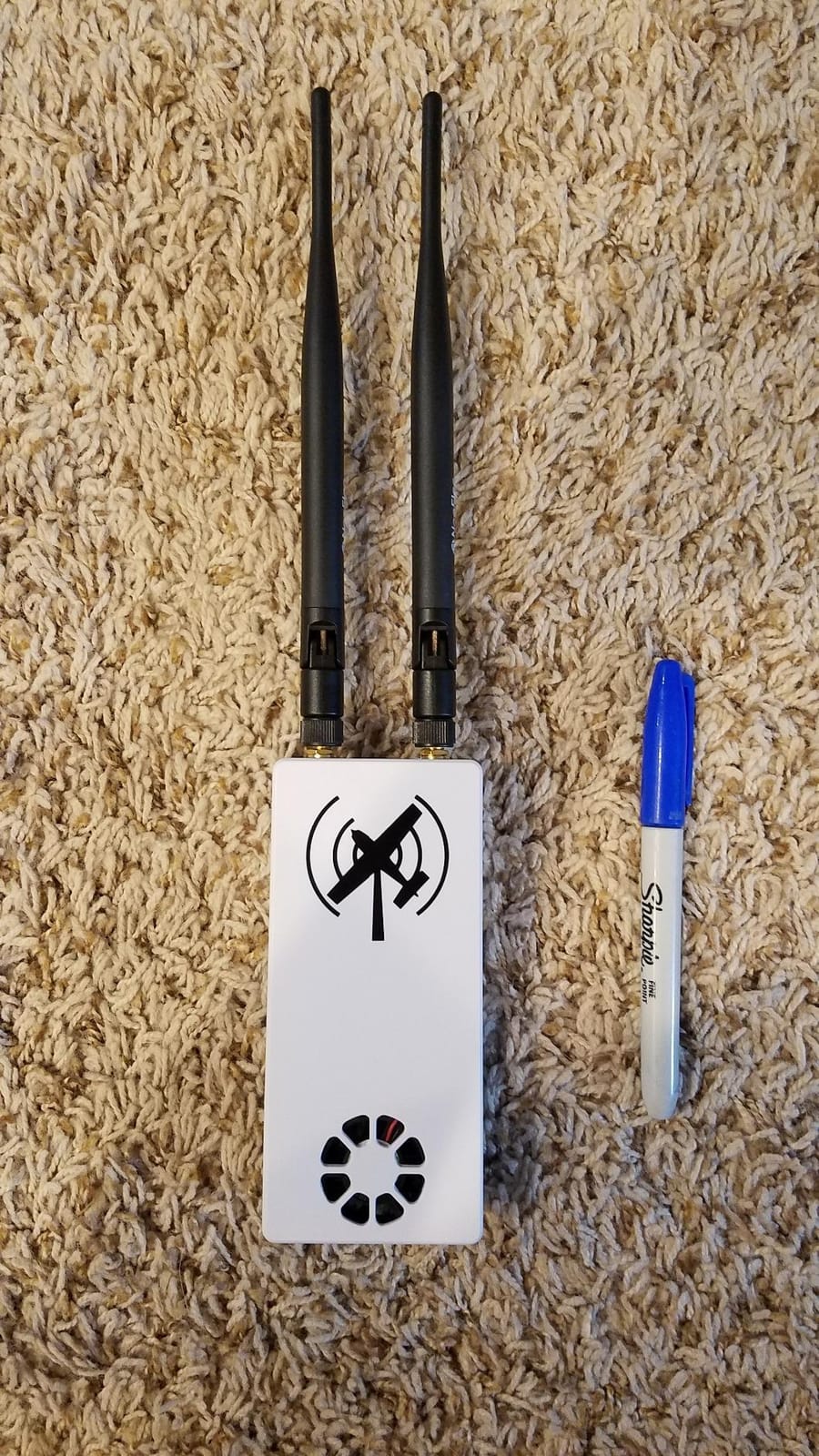
This is the only unit in the guide that arrives as a working portable receiver rather than a set of parts. You get the dual-band radio pair, an AHRS, a removable WAAS GPS puck, a 10000mAh battery pack, a suction mount, a strap, an SD card adapter and the power cable, with the Stratux software already loaded on the microSD card.
Battery life is listed at an average of six hours, and the listed dimensions are 8 by 4 by 4 inches, which is a fair idea of the volume. It connects over Wi-Fi and supports multiple iPads, iPhones or Android tablets at once, which makes it a genuinely shared-cockpit device when both seats want traffic.
Compatibility is the standout feature. The listed EFB support covers ForeFlight with Synthetic Vision, Garmin Pilot, FlyQ, Navigator, AvNav, WingX, Avare, FltPlan Go, DroidEFB, OzRunways, iFly GPS and Avplan, which is the broadest list of any unit here and the main reason to choose it over a vendor-locked receiver.
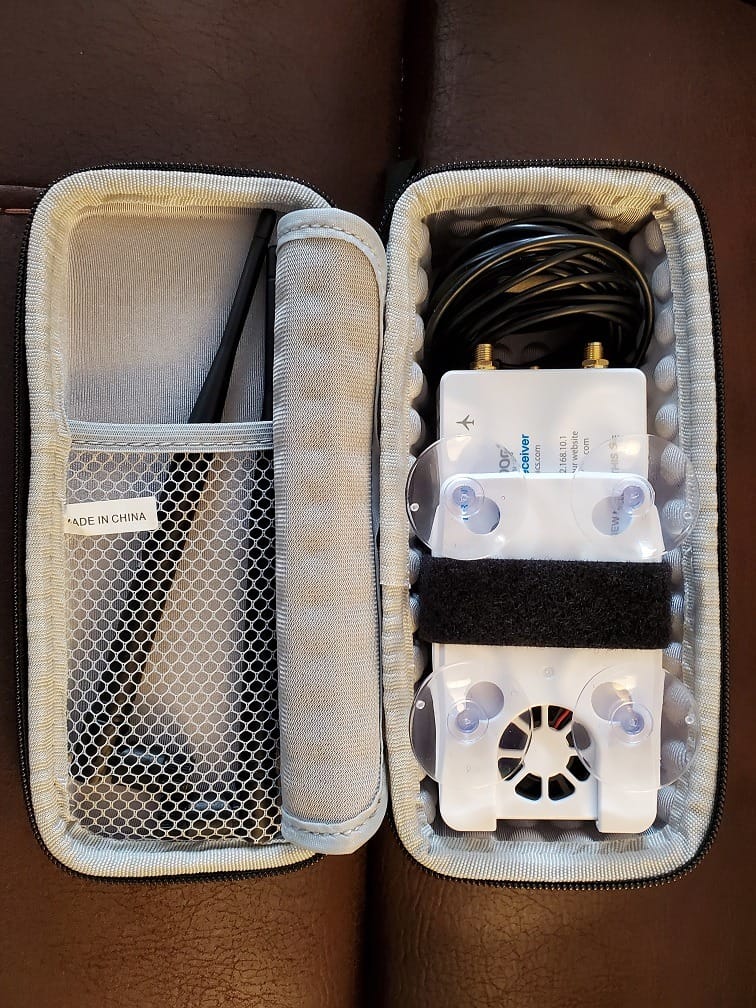
The bundled high-gain antennas are optimised for both 978 MHz and 1090 MHz and can be mounted outside the fuselage, which is where the real sensitivity win comes from in marginal reception areas. The AHRS adds a pitch and roll reference, so you have a secondary attitude indication if a primary source fails.
The weak points are handling and logistics. External antennas and a removable GPS puck make the kit more fragile and more awkward to stow than a sealed unit, and the 10000mAh battery does not support pass-through charging, so it has to be charged separately rather than topped up in flight. A few buyers also report the GPS puck arriving not fully seated, or antennas missing from the box, which is a packing problem rather than a design one.
Who the Stratux kit suits
It suits the multi-airframe instructor or renter who wants one device that moves between aircraft and works with whatever EFB the front seat happens to be running. Six hours of battery covers a full teaching day with a spare power bank if it does not.
It suits pilots who fly in mountainous or rural airspace where ground station coverage is thin, because externally mounted high-gain antennas recover the weak signals a window-mounted passive antenna loses. It also suits anyone who wants a backup attitude reference from the same box that carries the traffic.
Where the Stratux kit falls short
It falls short on compactness. Anything that needs a suction cup, two external antennas and a puck strapped outside the aircraft is not going into a shirt pocket, and instructors who fly three aeroplanes a day will feel that bulk every time.
It also falls short for a pilot who charges and flies in the same session, because the battery will not top up while running. Plan a spare pack instead.
5. Stratux 1090ES and UAT Radio Bundle – Best Replacement Radios for an Existing Build
Stratux 1090ES & UAT – Radios (Low Power UAT) and High Gain Antennas
Two low-power tuned radios
High-gain antennas included
70%+ lower power draw
Stratux ABS case only
Pros
- Covers 1090ES and low-power UAT in one bundle
- Low-power radios run cooler and draw far less current
- High-gain antennas included and tuned per radio
- Plug and play with the Stratux project software
- Listed maximum range of 150 miles
Cons
- Fits only the Stratux ABS injection-moulded case
- Long antennas bend and can loosen at the joint
- One 978MHz radio or antenna can arrive non-functional
If you already own a Stratux case and want to upgrade the radios inside it, this is the bundle. You get two low-power radios, each already programmed for its tuned antenna, plus high-gain antennas, which is a much easier afternoon than sourcing and programming two separate receivers.
The low-power redesign is the real engineering story. The listed power consumption is more than 70 percent lower than earlier versions, with optimised heat dissipation, and the practical effect is a unit that runs cooler and does not need a fan screaming under the panel for the whole flight.
It is 50 ohm, two channels, and listed for a maximum range of 150 miles, which is a manufacturer claim you should treat as a best case under ideal conditions rather than a planning number. The colour option covers both v2 and v3 hardware revisions.
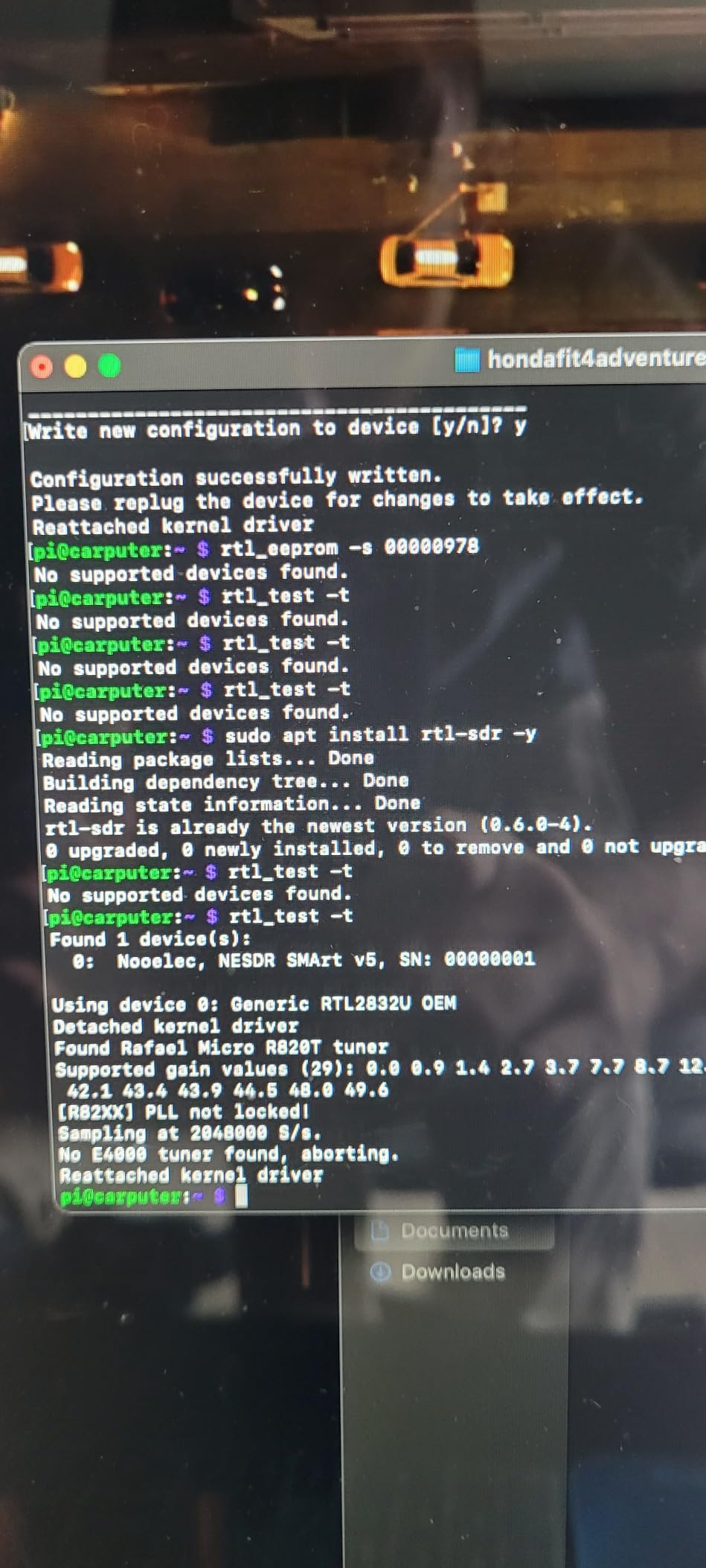
Check your case before you buy. The listing states explicitly that these fit the Stratux ABS injection-moulded case only and will not fit SummitLink cases, and that mismatch is the most common wasted order in this category.
At 4.4 stars across 162 reviews, the low-power improvement is well confirmed. Buyers also credit the seller for a hassle-free replacement of a defective chip. The complaints are physical: long antennas that bend, snag and loosen at the joint, plus an occasional dead 978 MHz radio or antenna on arrival.
Who this radio bundle suits
It suits existing Stratux owners whose original radios have degraded, or whose Pi runs hot enough to make a fan-led build unpleasant. Dropping in lower-draw radios and their matched antennas is the most effective upgrade to an older unit.
It also suits builders who want the antennas matched to the radios from the start, since the tuning pairing has already been handled by the manufacturer.
Where this radio bundle falls short
It falls short as a first purchase, because nothing here is a receiver until you already have a case, a Raspberry Pi and the software configured. Starting with this bundle means ordering your whole build around a component rather than around a goal.
It also falls short if your case is a SummitLink, where the fit is simply wrong and no amount of careful assembly changes that.
6. Garmin GDL 50 – Best Sealed Turnkey Receiver with Backup Attitude
Garmin GDL 50 Portable ADS-B Receiver
Dual-link ADS-B with FIS-B
Built-in GPS and AHRS
Bluetooth to tablets
8-hour battery
Pros
- Turnkey unit that pairs over Bluetooth and works immediately
- Dual-link ADS-B plus full FIS-B weather products
- Built-in GPS and AHRS give backup pitch and roll
- Pairs with ForeFlight and suits Garmin portable units
- 8-hour battery covers long cross-country flights
Cons
- Micro-USB charging instead of USB-C
- Will not charge while powered on
- Bulky to mount and store in a flight bag
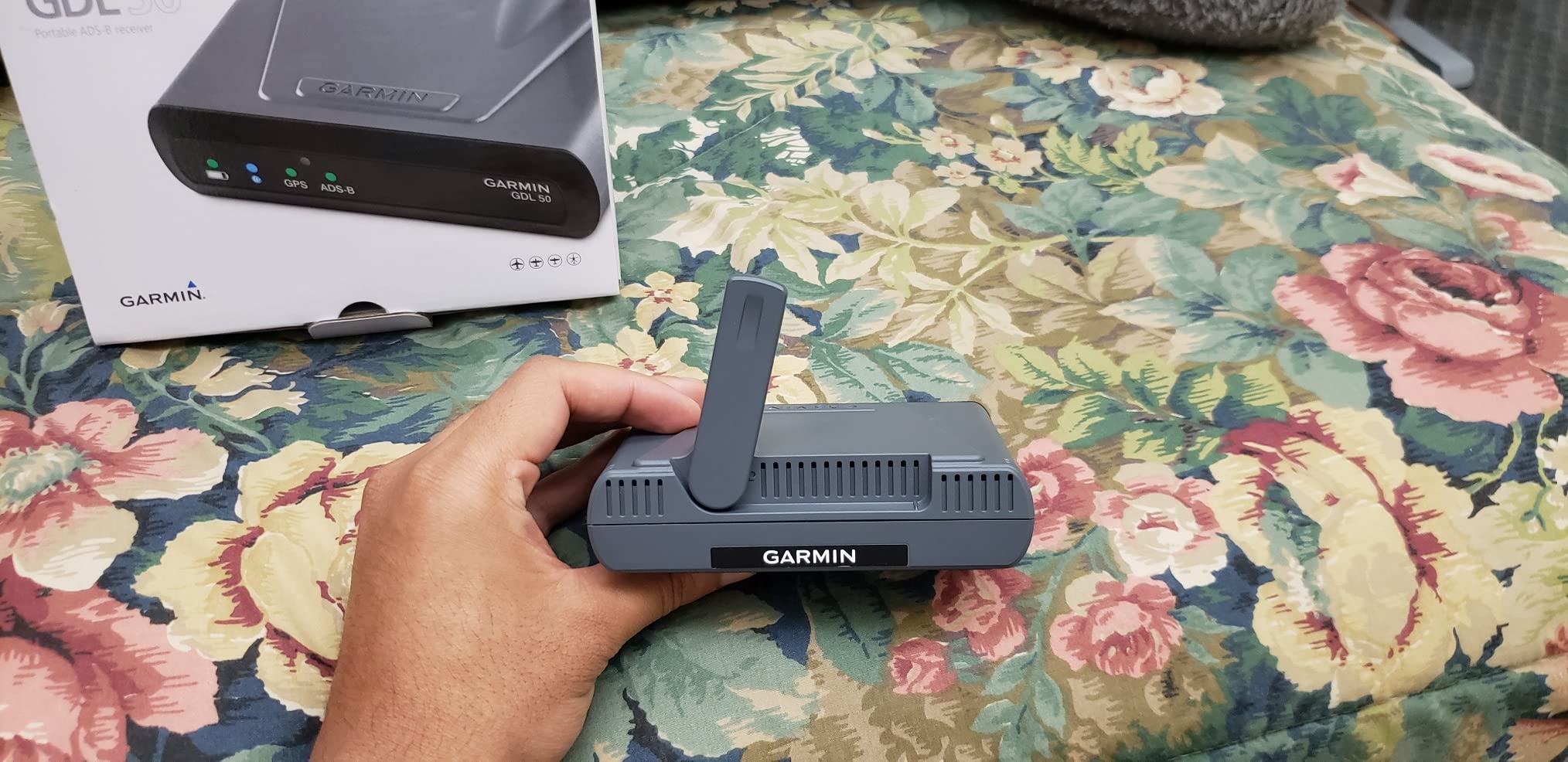
The GDL 50 is the opposite of everything else in this guide: no assembly, no host computer, no software stack. It is a sealed handheld unit with an internal battery, built-in GPS and an AHRS, and it pairs over Bluetooth to an iPad, an Android tablet, or compatible Garmin portable units including the aera 660, aera 795 and aera 796.
Traffic comes from dual-link ADS-B, and weather comes through FIS-B products including radar imagery, METARs, TAFs and winds aloft. Because it carries a built-in AHRS, it can supply backup aircraft attitude information to your connected device, which is the feature that turns it from a traffic gadget into a partial-panel backup tool.
Battery life is listed at an average of eight hours, and the review pattern is consistent on that point: owners report it comfortably covering long cross-country legs without reaching for a charger. The listed weight is not published, but reviewers describe it as bulky and awkward to stow compared with the smaller options.
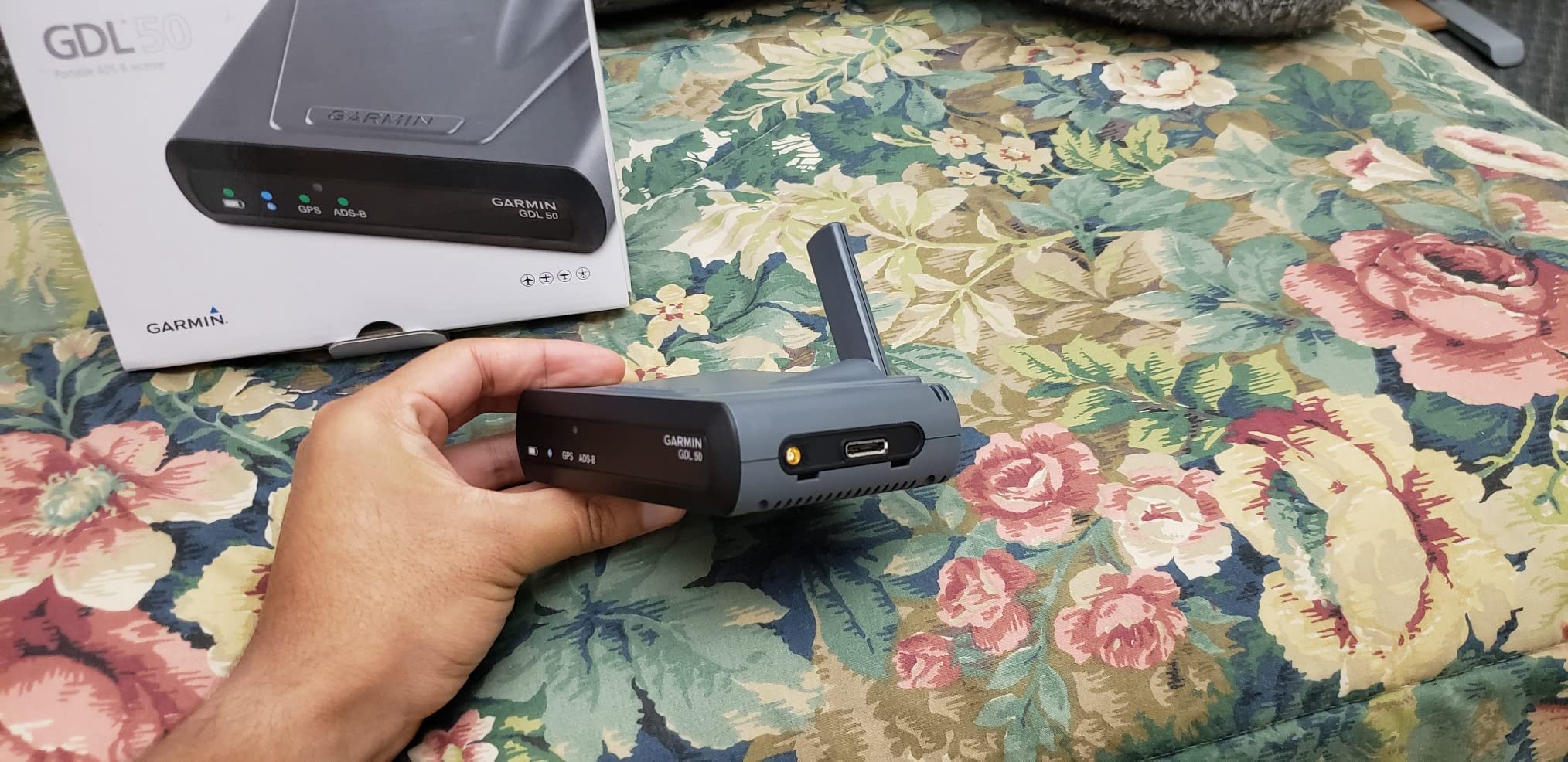
The criticisms are physical and all repeatable. Charging uses micro-USB rather than USB-C, the unit will not charge while powered on so it drains until you switch it off, and the form factor is awkward to stow for a CFI moving between aircraft several times a day. The AHRS also demands a careful alignment to the aircraft longitudinal axis and a tight mount, otherwise the attitude it shows you is confidently wrong.
At 4.4 stars from 80 reviews it has a much smaller feedback pool than the units near it in this list, which is worth weighing. Buyers still credit the build quality, the reliable Bluetooth pairing and the internal AHRS as the reasons it has stayed in service for years.
Who the GDL 50 suits
It suits the pilot who wants zero assembly and a real battery in a single box, especially anyone moving between aircraft who does not want to reconfigure antennas every time. It is the natural choice if your flying already lives inside the Garmin ecosystem.
It also suits anyone training for partial-panel scenarios, because a built-in AHRS with backup pitch and roll on a connected tablet is exactly the reference most people want before they need it.
Where the GDL 50 falls short
It falls short for a long day out of a hangar with a single battery, because you cannot charge it while it is running. Carry a power bank and accept that the unit must be off to top up.
It also falls short for anyone who wants a device that stays small in a kneeboard pouch, and for pilots who fly multiple EFB ecosystems since Garmin’s advantage is strongest when you are already using Garmin displays and apps.
7. ADSBexchange Orange R860 RTL2832U – Best Budget Way Into UAT Reception
ADSBexchange.com Orange R860 RTL2832U, 0.5 PPM TCXO SDR w/Amp
Unfiltered 978 and 1090 front end
0.5 PPM TCXO
Aluminium case
Plug and play with the Pi image
Pros
- Low-cost route into dual-band 978MHz UAT and 1090MHz reception
- Unfiltered front end also handles VHF and ACARS bands
- 0.5 PPM TCXO limits frequency drift with temperature
- Aluminium case improves heat dissipation and cuts interference
- Plug and play with the ADSBexchange Raspberry Pi image
Cons
- Needs a host computer antenna and software before it is useful
- Not a portable standalone receiver
- Multi-purpose design is less optimised for pure ADS-B
The Orange R860 is a low-cost route into dual-band reception, and its distinguishing feature is the unfiltered front end. Because nothing is filtered out at 1090 MHz, the same stick can be tuned to 978 MHz UAT for the United States, or to VHF, ACARS or other bands for entirely different projects.
It uses the standard RTL2832U and R860 chipset, which is equivalent to an R820T2, and it carries a 0.5 PPM TCXO specifically to prevent frequency drift as temperature changes. The aluminium case is not cosmetic: better heat dissipation reduces the thermal drift that cheap plastic dongles suffer in a hot cockpit.
It plugs and plays with the ADSBexchange SD card image for a Raspberry Pi, which adds 978 MHz UAT reception to a feeder build without any manual driver work. Any other use needs you to install and configure software yourself.
Who the Orange R860 suits
It suits a builder on a strict budget who already has a Pi, an antenna and a working software stack, and who wants UAT reception without buying a matched dual-radio bundle. It is also attractive to anyone experimenting with ADS-B alongside other radio work, because the open front end is not limited to aviation.
Where the Orange R860 falls short
It falls short as a portable cockpit device because it is not one. There is no battery, no Wi-Fi hotspot, no GPS and no AHRS, so the output stops the moment you unplug the host.
It also falls short when reception quality matters most, because a wideband unfiltered front end lets in the local noise that a dedicated filtered stick would reject. At 4.4 stars from 60 reviews the sample is small, so treat the reception claims as promising rather than proven.
8. Nooelec Flycatcher – Best Single-Board Dual-Channel Design
Nooelec Flycatcher – High Performance Dual-Channel RTL-SDR Raspberry Pi HAT for Flight Tracking & Aviation Monitoring. ADS-B 1090MHz and UAT 978MHz Software Defined Radio w/Local & Remote LNA Bypass
978 and 1090 on one board
Two low-noise preamplifiers
48g Pi HAT
Two-year warranty
Pros
- Both US bands received by a single board
- Two ultra-low-noise preamplifiers with local switch or GPIO0 bypass
- Some users report 150 percent more messages per second
- Compact 48g Pi HAT format with standoffs and headers
- Two-year manufacturer warranty
Cons
- Lowest average rating in the group at 4.1
- Some users find it less sensitive than cheaper dedicated dongles
- Antennas are not included and add cost
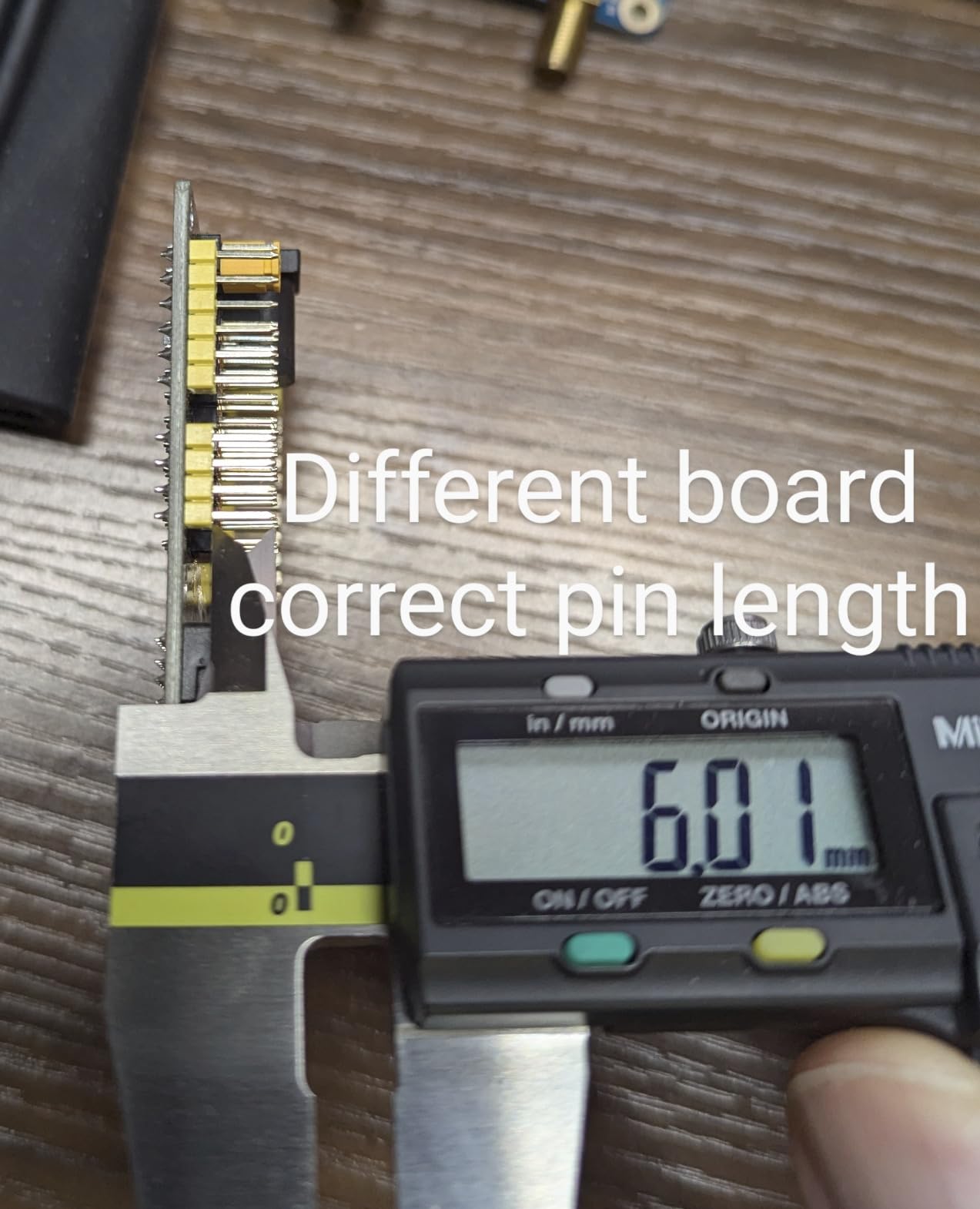
The Flycatcher is the newest design in this roundup and the most unusual. Instead of two separate USB dongles for 978 MHz and 1090 MHz, it puts both receivers on one Raspberry Pi HAT board, which removes a USB port, a second antenna and a second software radio from the build.
It carries two separate preamplifiers with very low noise, and you can bypass them either with a physical switch or through GPIO0 in software. That bypass matters when the receiver is close to a transmitter, where an amplifier would overload rather than help. It runs on Windows, Linux, Android and Mac hosts as well as a Pi, and it carries a two-year warranty.
Supporters report big gains in message throughput, with some buyers describing around 150 percent more messages per second and less clutter after replacing separate dongles with one board. The Pi HAT format is compact at 48 g, which matters in a build where space is already tight.
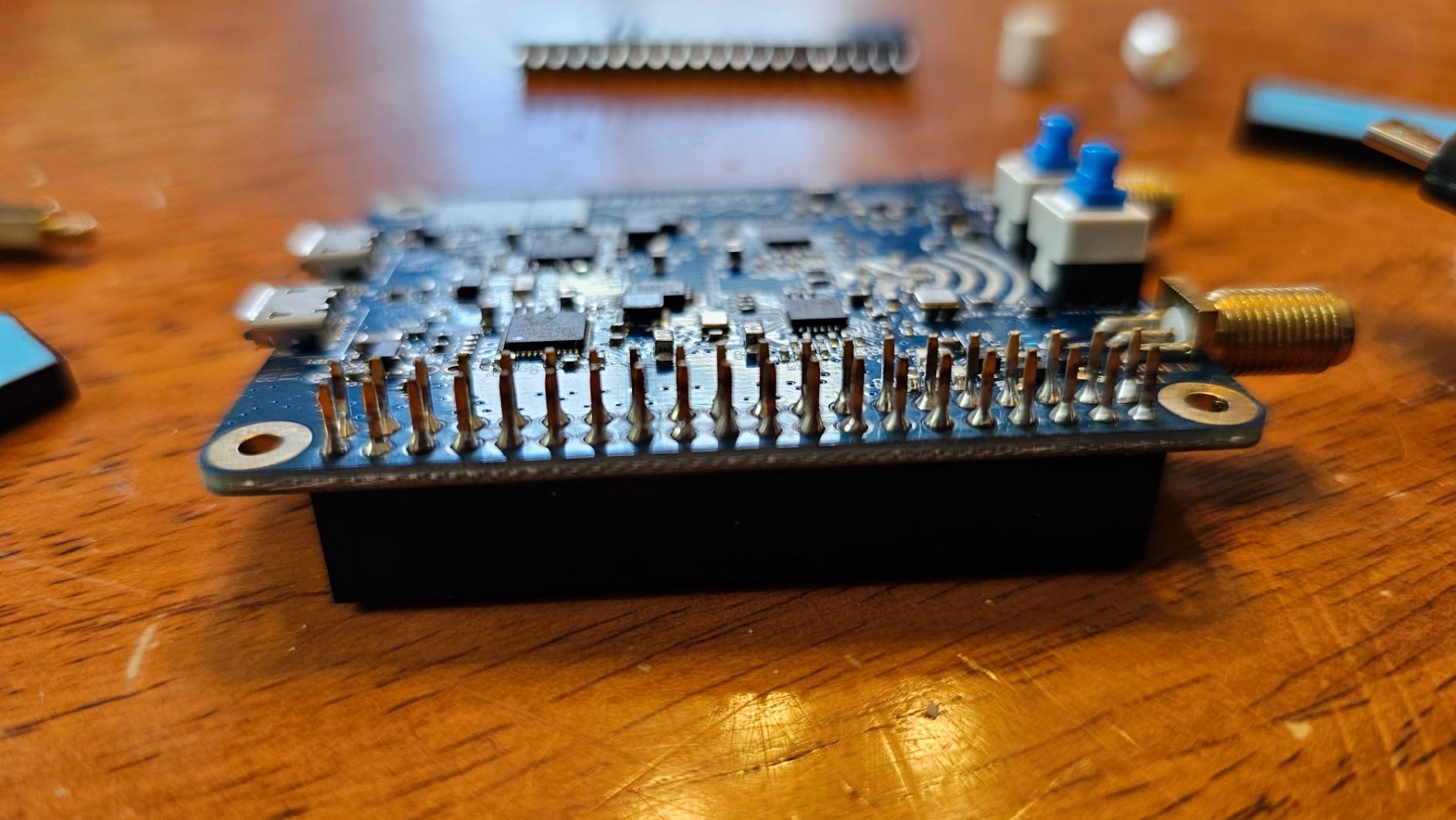
The honest drawback is the 4.1 rating, the lowest here, and the reason is sensitivity variation between units. Several users report a cheaper dedicated dongle on the same antenna and Stratux setup outperforming it, which suggests unit-to-unit consistency is the weak point rather than the design. Antennas are not included, and the hybrid arrangement means a USB-powered device needs two USB jumper cables in a HAT footprint, which is awkward but works.
With only 32 reviews this product has a smaller feedback base than anything else in the guide. Treat it as an interesting option for builders who value a single-board design and are comfortable swapping it if the one they receive underperforms.
Who the Flycatcher suits
It suits a builder who wants a clean, compact dual-band installation with as few USB connections as possible, and it suits anyone running a permanent ground station where board space and cable management are the limiting factors.
It also suits an experimenter who wants the amplifier bypass available in software, because being able to switch the preamp out without touching a wire is genuinely useful near a strong transmitter.
Where the Flycatcher falls short
It falls short for anyone who needs proven, repeatable reception on the first try, because the current review base is thin and the sensitivity reports are mixed. It also falls short for a first-time builder, since two USB jumper cables and a HAT header passthrough are small extra hurdles when you have never wired an SDR before.
It also falls short for anyone wanting a finished portable unit, for the same reason as the other dongles here: there is no battery, no hotspot and no AHRS in the box.
How to Choose a Portable ADS-B Receiver
978 MHz UAT versus 1090 MHz ES, and why dual-band matters
Two bands matter in the United States. Most light general aviation aircraft broadcast ADS-B on 978 MHz UAT, and that is also the band that carries FIS-B weather to your cockpit. Airlines, business jets and anything above 18,000 feet use 1090 MHz ES, which is why a 1090 MHz-only receiver looks busy with traffic in the pattern over a major airport yet shows you no weather at all.
If you fly in the United States, dual-band is close to mandatory. Canada uses 1090 MHz only, so a single-band 1090 receiver is perfectly adequate there and much of Europe, where ADS-B reception depends on local ground infrastructure and Mode S transponders rather than the US UAT network.
ADS-B In versus ADS-B Out and the FAR 91.225 rule
Every receiver in this guide is ADS-B In. It listens and displays; it does not transmit your position to controllers or other aircraft. FAR 91.225 is the rule that requires aircraft to broadcast their position outbound, and no tablet gadget, dongle or build kit satisfies it.
ADS-B In is a see-and-be-seen awareness aid. It is not collision avoidance, and it is not a substitute for a certified collision avoidance system. A legal ADS-B Out installation still has to be fitted to any aircraft that flies in the airspace requiring it.
EFB app compatibility and ecosystem lock-in
The receiver matters less than the app it feeds, so pick your EFB first and then confirm the receiver works with it. The Stratux kit here supports the broadest list, covering ForeFlight, Garmin Pilot, FlyQ, WingX, Avare, FltPlan Go, OzRunways, Navigator and iFly GPS, which means you can change apps without changing hardware.
Vendor-locked units pair more tightly with one app and sometimes require that app to be current on your tablet. That convenience is real, but it concentrates your dependency on a single vendor, so if you are likely to switch apps or move between iOS and Android over the life of the unit, open multi-app support is worth paying for.
Battery life, panel power and charge-while-running
Internal battery life is the number that matters when you fly rental aircraft, because a rental panel often has no spare USB port and a kneeboard pouch is not a charging station. The two units in this guide with published internal battery figures offer six-plus hours and eight hours respectively.
Charge-while-running is a separate feature and far from universal. The Stratux kit in this roundup runs from a battery pack that does not support pass-through charging, and the GDL 50 will not charge while powered on. If you fly long legs, carry a second power source rather than assuming you can top up on the ramp.
AHRS, backup attitude and partial-panel scenarios
A unit with a built-in AHRS can display pitch and roll on your tablet as a secondary reference, which is a meaningful safety addition in a partial-panel situation. In this roundup both the Stratux kit and the GDL 50 ship with an AHRS, and neither of the dongle-based products can offer that.
Accuracy depends entirely on installation. The attitude data is only as good as the alignment between the unit and the aircraft, so budget time to mount it rigidly and align it to the longitudinal axis. A loosely mounted AHRS is worse than none because it looks authoritative while being wrong.
Antennas and mounting
The best ADS-B antenna question comes down to where the radio is, not to brand. A passive dipole taped to the inside of a windscreen works reasonably well for close traffic, an external roof or fuselage-mounted high-gain antenna recovers the weak signals that matter in rural airspace, and a ground station with a rooftop dipole at altitude sees the longest range of all.
Filtering is the other half. A band-pass filter for 1090 MHz suppresses the local RF noise that otherwise swamps the signal, and a low-noise amplifier adds gain without adding much noise of its own. Products that integrate both, like the FlightStick, do most of this work for you before the signal ever reaches the host.
Real-world range and why altitude matters more than antenna gain
Range is governed first by line of sight. Two aircraft at altitude see each other far beyond what the same pair sees on the ground, so your own altitude is usually the biggest single factor in how far away you decode a target. Gain helps, but it cannot push a signal through a hill.
A single Stratux build is reported to have pulled targets at 40 miles and 3000 feet above ground level on a Florida to Carolinas leg, matching a panel ADS-B In installation, which is a reasonable expectation for a good external dual-band antenna setup. Anything significantly beyond that without altitude should be treated as an anomaly rather than a spec.
Using ADS-B receivers outside the United States
In Canada, 1090 MHz Mode S Extended Squitter traffic is the standard, so a 1090 MHz receiver is the right tool and a dual-band US unit is simply extra capability you will not use. In Europe, coverage depends on the local ADS-B deployment and Mode S, so reception ranges vary widely country to country.
FIS-B weather is a US system, so the subscription-free weather layer that makes these receivers so attractive largely does not travel. Pilots outside the US should set expectations accordingly and treat ADS-B mainly as a traffic tool.
One last note on method. Every hardware roundup we publish follows the same hands-on, spec-and-owner-feedback approach, from our coverage of the best AV receivers for home theaters and the best 4K AV receivers for Dolby Atmos through to the best portable cement mixers, so the trade-offs you read here are the same ones we write about everywhere else.
Frequently Asked Questions
What is the best portable ADS-B receiver?
For most pilots, the Nooelec NESDR Mini 2+ is the best starting point because it is the most proven unit here, with 1114 reviews at 4.4 stars, a temperature-stable 0.5 PPM TCXO and an R820T2 tuner. Pilots who want a sealed unit with a battery and a backup attitude source should choose the Garmin GDL 50, and pilots who want one box that works with many EFB apps should choose the Stratux dual-band kit.
Which ADS-B dongle is best?
The Nooelec NESDR Mini 2+ is the best general dongle because of its low-noise 3.3V RF-suitable power supply and 0.5 PPM TCXO, while the AirNav RadarBox FlightStick is the best for range because it integrates a 20.5dBi amplifier, a band-pass filter and ESD protection. The FlightStick is 1090 MHz only, so pair it with a second radio if you need UAT traffic and FIS-B weather.
What is the range of an ADS-B receiver?
Range depends far more on line of sight and your own altitude than on the receiver. A good external dual-band antenna setup has been reported pulling targets at 40 miles while at 3000 feet above ground level, and a rooftop ground station at altitude sees much further. A window-mounted passive dipole will still see close traffic, but not distant marginal signals.
Which is better, Stratus or Sentry?
It depends on how locked in you want to be. A Stratux-style receiver such as the Crew Dog kit here supports a wide range of EFB apps including ForeFlight, Garmin Pilot, WingX and Avare, and its parts remain available and repairable, while a Sentry is designed to work closely with one vendor app and needs a subscription. Choose the open unit for multi-app freedom and choose the locked unit for a single-ecosystem cockpit.
Does a portable ADS-B receiver give you ADS-B Out?
No. Every receiver in this guide is ADS-B In only, meaning it listens to other aircraft and displays them without transmitting your own position. FAR 91.225 requires a compliant ADS-B Out installation, and no tablet receiver, USB dongle or Raspberry Pi build satisfies that rule. Portable receivers are a situational awareness aid, not a collision avoidance system.
Does Stratux work with ForeFlight?
Yes. The Stratux kit listed here states compatibility with ForeFlight including Synthetic Vision, along with Garmin Pilot, FlyQ, WingX, Avare, FltPlan Go, OzRunways, Navigator and iFly GPS. The software comes preloaded on the included microSD card, so a first flight mostly involves charging the battery pack and connecting your tablet to the Wi-Fi network.
How long does a portable ADS-B receiver battery last?
Published figures in this category run from about six hours for the Stratux kit to eight hours for the Garmin GDL 50, which is enough for a typical flight day. Charge-while-running is much rarer than battery capacity, and both the Stratux battery pack and the GDL 50 have limitations here, so carry a second power source for long legs rather than relying on topping up in the air.
Final Verdict
After working through all eight, the Nooelec NESDR Mini 2+ is the best portable ADS-B receiver for most people, because it pairs the deepest review history in the group with a tuner and a frequency reference that hold up under temperature. Pair it with a proper 1090 MHz filter and antenna and it will serve a student, an instructor and a hangar feeder equally well.
Pick the AirNav RadarBox FlightStick if you need maximum 1090 MHz range and already run a host computer. Pick the Nooelec Dual-Band NESDR Nano 2 Bundle if you are building dual-band reception and want matched, calibrated radios. Pick the Stratux dual-band kit if you want one portable box that works with a long list of EFB apps and includes an AHRS. Pick the Garmin GDL 50 if you want zero assembly, an eight-hour battery and a backup attitude reference, and accept the bulk.
Whichever you choose, remember that all of these are receive-only traffic and weather aids, and none of them replace a compliant ADS-B Out installation. Check the latest price for the receiver that fits your cockpit, and get out there with it before the weather changes.