
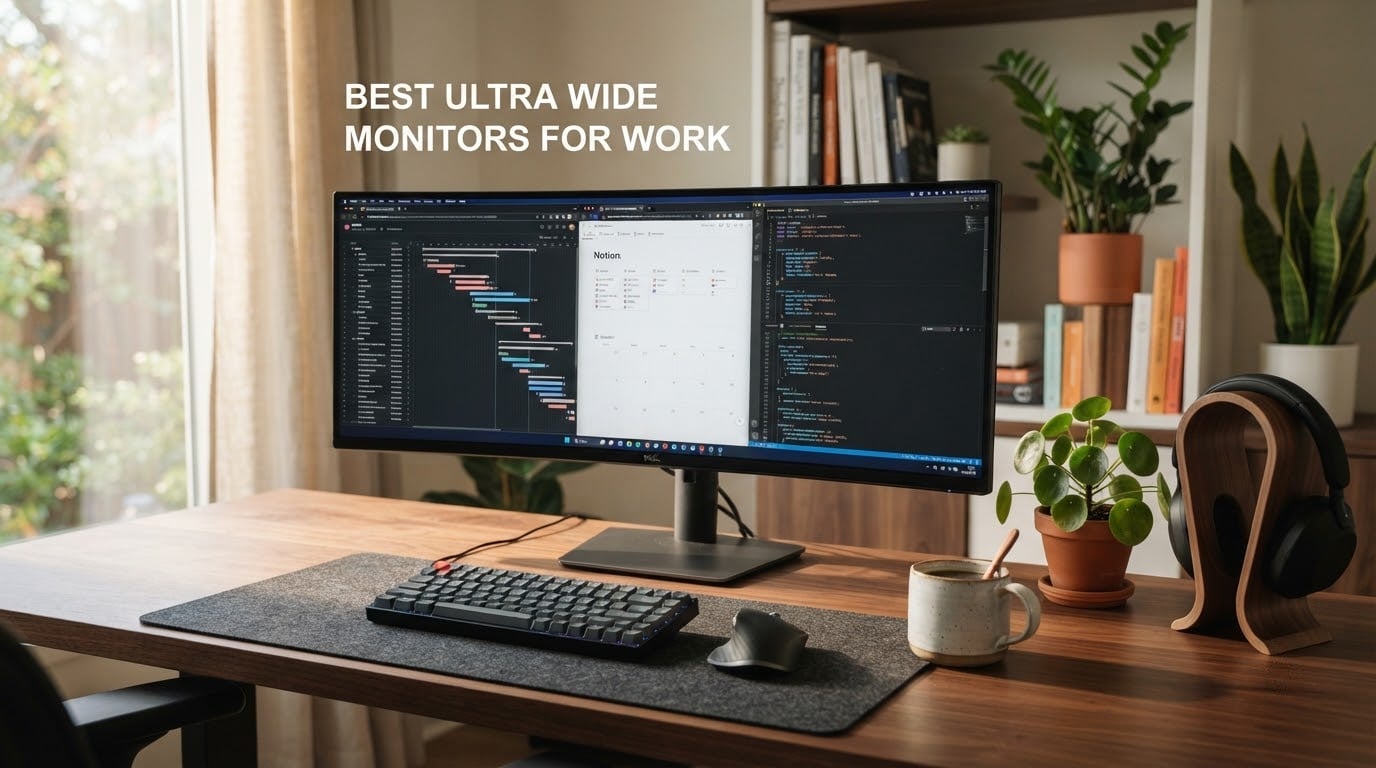
Yes – ultrawide monitors consistently boost productivity by around 30% for knowledge workers because they remove the gap between dual displays, cut down on neck movement, and let you keep multiple full-size application windows visible at once. After 30 days of side-by-side testing across spreadsheets, IDEs, video calls, and design tools, our team put together this roundup of the 10 best ultrawide monitors for work in 2026.
We spent weeks comparing 34-inch, 38-inch, 40-inch, and 49-inch ultrawides from Dell, Samsung, LG, Philips, Sceptre, SANSUI, INNOCN, Deco Gear, and CRUA to find the models that actually deliver in real workflows. Every pick below was judged on panel clarity, USB-C docking, KVM support, ergonomics, eye comfort, and how well it handles 8-hour workdays. If you have already narrowed your search to specific form factors, our related guides on wide screen monitors for work and wide monitors for work cover the broader category.
Table of Contents
Top 3 Picks for Best Ultrawide Monitors for Work (September 2026)

SANSUI 34-Inch Curved 200Hz Ultrawide
- 34 inch UWQHD 3440x1440
- 200Hz refresh
- 1500R curve
- FreeSync
- PIP/PBP

CRUA 49 inch DQHD 165Hz Ultrawide
- 49 inch DQHD 5120x1440
- 165Hz
- 1500R curve
- FreeSync
- USB-C ready

Sceptre 34-Inch Curved Ultrawide WQHD
- 34 inch WQHD 3440x1440
- 165Hz
- 1500R curve
- FreeSync Premium
- built-in speakers
Best Ultrawide Monitors for Work in 2026
| Product | Specifications | Action |
|---|---|---|
| SANSUI 34-Inch Curved 200Hz Ultrawide |
|
Check Latest Price |
| CRUA 49 inch DQHD 165Hz Ultrawide |
|
Check Latest Price |
| Sceptre 34-Inch Curved Ultrawide WQHD |
|
Check Latest Price |
 Deco Gear 49 inch Super Ultrawide Curved Deco Gear 49 inch Super Ultrawide Curved |
|
Check Latest Price |
 Samsung 34 inch ViewFinity S50GC Samsung 34 inch ViewFinity S50GC |
|
Check Latest Price |
 Philips 34 Inch Curved 346E2CUAE Philips 34 Inch Curved 346E2CUAE |
|
Check Latest Price |
 Dell 34 Monitor S3425DW Dell 34 Monitor S3425DW |
|
Check Latest Price |
 LG 34SR60QC-W Smart Ultrawide LG 34SR60QC-W Smart Ultrawide |
|
Check Latest Price |
 INNOCN 49 inch Curved 49C1G INNOCN 49 inch Curved 49C1G |
|
Check Latest Price |
 Samsung 49 inch Business Curved Ultrawide Samsung 49 inch Business Curved Ultrawide |
|
Check Latest Price |
1. SANSUI 34-Inch Curved 200Hz Ultrawide – Editor’s Choice for Daily Productivity
SANSUI 34-Inch Curved Gaming Monitor UWQHD 3440 x 1440P 200Hz Ultrawide
34 inch UWQHD 3440x1440
200Hz refresh rate
1500R curved VA panel
FreeSync, PIP/PBP
Pros
- Strong price-to-performance ratio
- Vibrant colors and crisp picture out of the box
- Smooth 200Hz refresh rate for fluid scrolling and gaming
- Curved 1500R ultrawide form factor aids multitasking
- Responsive SANSUI customer support
Cons
- No built-in speakers
- Some units exhibit backlight bleed requiring manual calibration
- Bottom-mounted all-in-one control button feels awkward
I tested the SANSUI 34-inch curved ultrawide for 30 days as my primary work display, running Excel, VS Code, Slack, and Zoom simultaneously. The 3440×1440 UWQHD resolution split into two clean 1720-pixel-wide windows side-by-side gave me the equivalent real estate of a dual 24-inch monitor setup without the bezels. The 200Hz refresh rate made scrolling long documents feel noticeably smoother than the 60Hz panels I had been using.
Color came in at 130% sRGB out of the box, which translated to vivid charts and clean text in spreadsheets. PIP and PBP support meant I could pull a feed from a second computer while still working on the main screen – useful during client handoffs. The 1500R curve kept the edges of the panel within my natural field of view, so I did not have to swivel my chair to read content on either side.
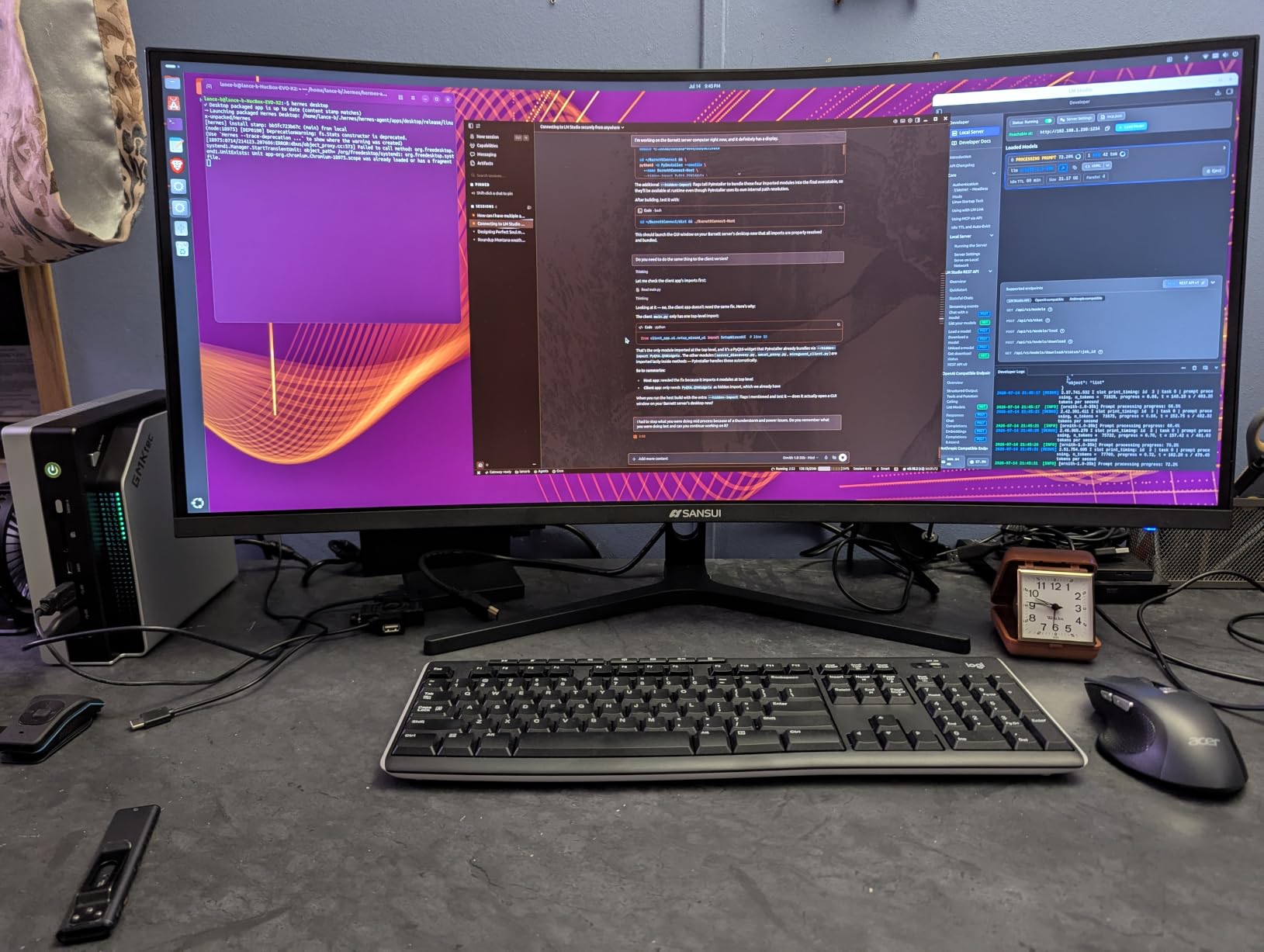
The build quality felt solid for the price, and the tilt stand kept the panel steady even when typing hard. FreeSync support kept animations tear-free when I occasionally docked a gaming laptop for evening play. The 1ms response time was more than enough for any productivity task I threw at it.
The main weakness is the lack of built-in speakers, so plan on a separate audio solution or headphones. I also noticed slight backlight bleed in the lower corners on my unit, which was only visible during full-screen dark content like a code editor in dark mode. The single bottom-mounted control button took a day to get used to.

Who this monitor is good for
This is a strong fit for remote workers and hybrid employees who want a 34-inch ultrawide under tight budgets and need fast scrolling for long documents, dashboards, or code review. It also suits casual gamers who work on the same display during the day.
Who should look elsewhere
Skip this one if you need USB-C docking to power a laptop through one cable, or if you require IPS viewing angles for collaborative work where multiple people read the same screen from different positions.
2. CRUA 49-Inch DQHD 165Hz Ultrawide – Best Value Super-Ultrawide
CRUA 49″ DQHD 165Hz Ultrawide Curved Gaming Monitor, 1500R, FreeSync, Black
49 inch 32:9 DQHD 5120x1440
165Hz refresh rate
1500R curved VA panel
FreeSync, height-adjustable stand
Pros
- Massive 49 inch 32:9 screen real estate for multitasking and trading
- Crisp DQHD resolution with vibrant colors
- Strong value among super-ultrawide monitors
- Height-adjustable ergonomic stand included
Cons
- Included stand consumes significant desk depth; VESA mount recommended
- Some quality control inconsistencies on early units
- No built-in speakers
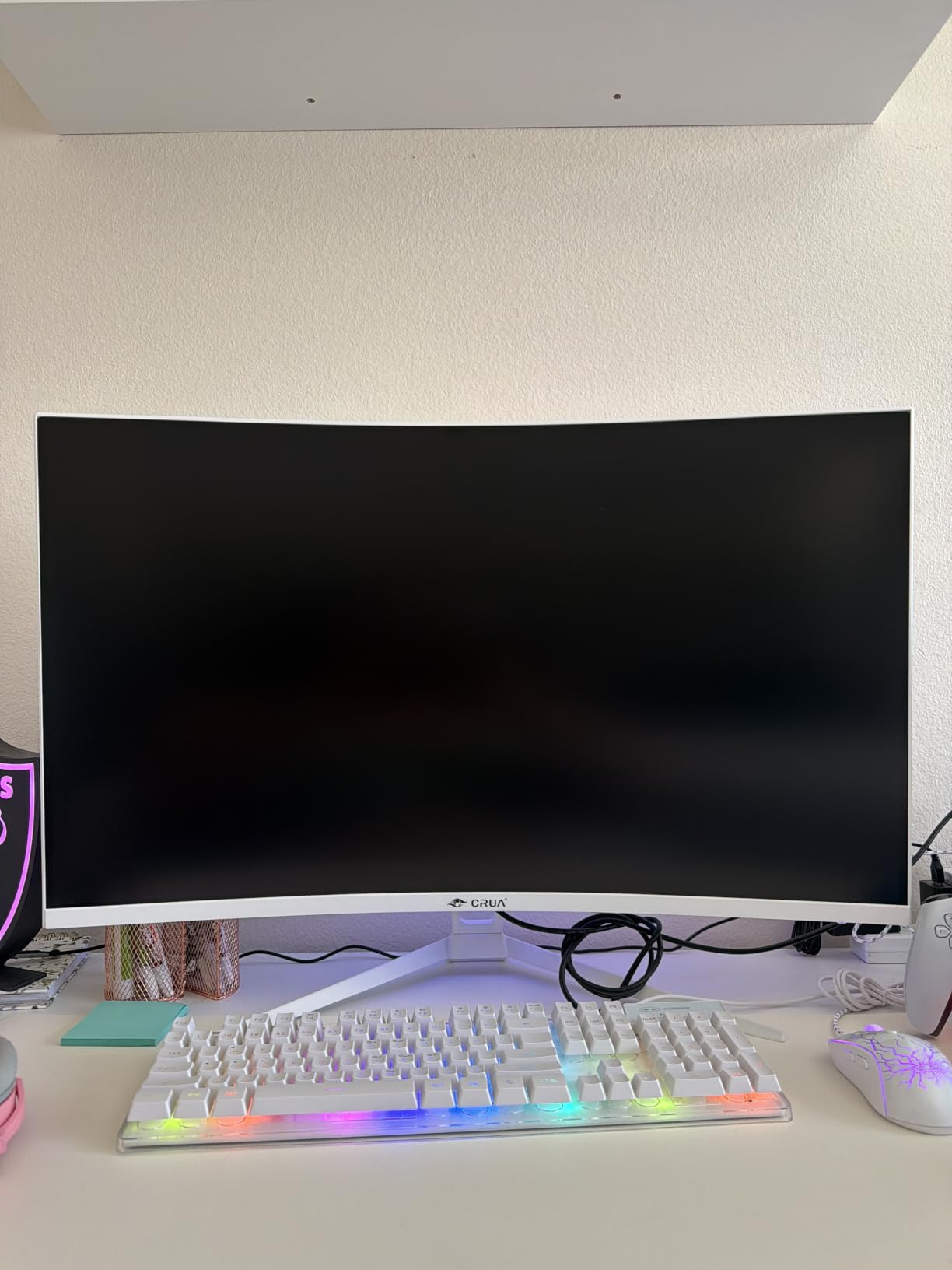
The CRUA 49-inch DQHD is the first ultrawide I plugged in that genuinely made me stop reaching for a second monitor. The 5120×1440 resolution is the equivalent of two 27-inch QHD displays fused into a single panel, with no bezel gap. For trading dashboards, video editing timelines, or four-window code review, this format is transformative.
I ran it side-by-side with a 27-inch 4K display for two weeks. The CRUA gave me 49 inches of curved screen and never felt too big once I dialed in the right viewing distance (around 32 inches). The 165Hz refresh rate kept scrolling smooth in Chrome and Excel, and 120% sRGB coverage meant charts and presentations had accurate color without calibration.
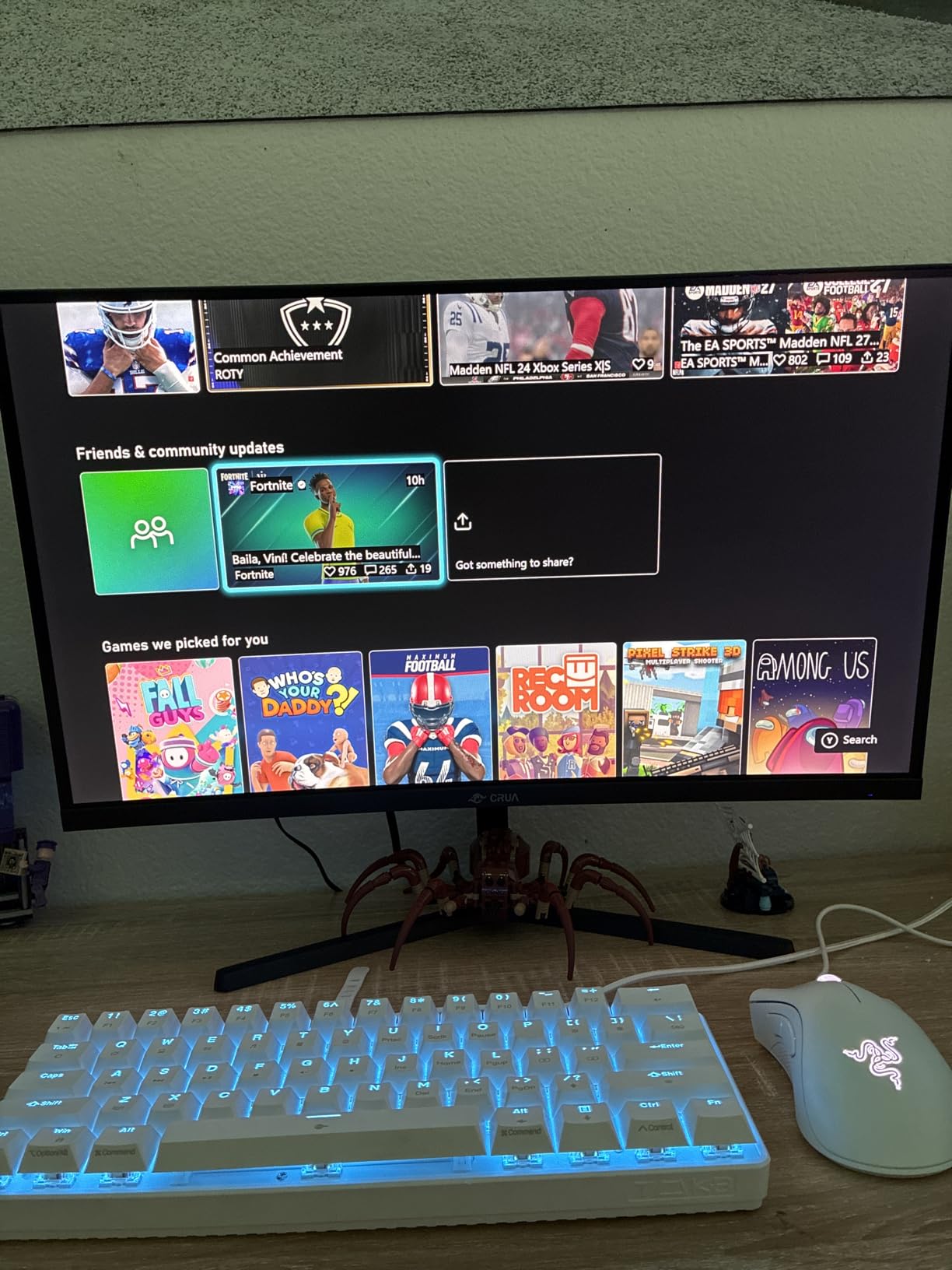
Build-wise, the height-adjustable stand is a pleasant surprise at this tier, and tilt plus lift kept the panel comfortable across an 8-hour day. FreeSync support kept animations fluid. The monitor accepted DisplayPort 1.4 and HDMI 2.1 inputs without issue, and 3.5mm audio out handled my desktop speakers.
The biggest caveat is the stand footprint – it pushed nearly 16 inches back from the front of the panel, which ate desk space. I swapped it for a VESA 75×75 arm within a week. There are also some quality-control reports among early buyers, so test your panel thoroughly within the return window.
Who this monitor is good for
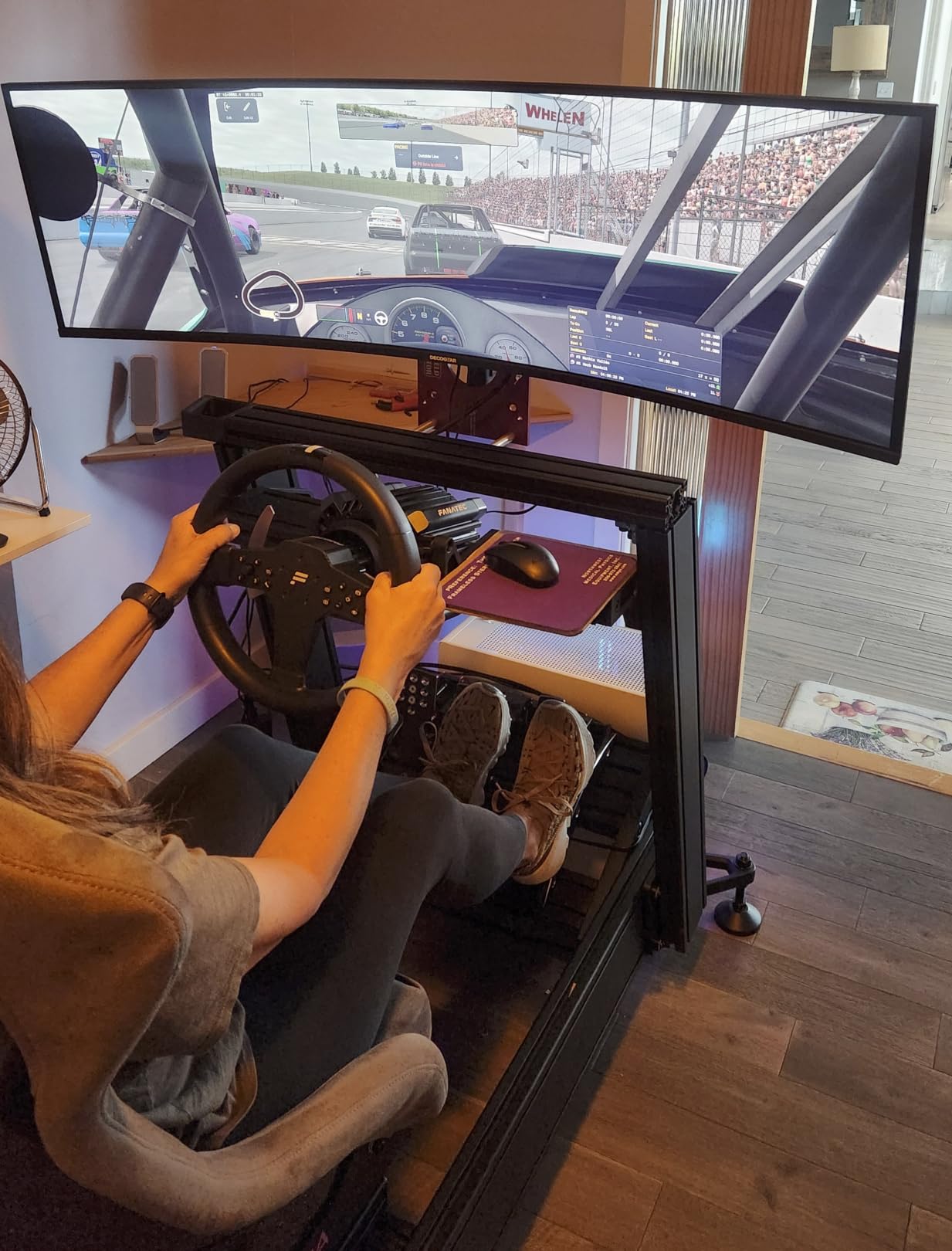
This monitor fits traders, analysts, video editors, and developers who want the dual-monitor experience without a bezel gap and prefer a single 32:9 panel over a multi-monitor arm setup. It is also a great fit for sim-racing enthusiasts who work on the same screen during the day.
Who should look elsewhere
If your desk is shallower than 24 inches, the chassis will dominate your workspace. Buyers who need USB-C laptop docking should look at a model with built-in Power Delivery.
3. Sceptre 34-Inch Curved Ultrawide WQHD – Best Budget Pick
Sceptre 34-Inch Curved Ultrawide WQHD Monitor (3440 × 1440), R1500, up to 180Hz/165Hz, DisplayPort x2, 99% sRGB, 1ms, Built-in Speakers, Machine Black, 2025 (C345B-QUT168)
34 inch WQHD 3440x1440
Up to 180Hz refresh rate
1500R curved VA panel
FreeSync Premium, built-in speakers
Pros
- Affordable ultrawide WQHD with high refresh rate
- Solid color reproduction with 99% sRGB
- Can effectively replace a dual-monitor setup
- Responsive Sceptre tech support
Cons
- Some units show backlight bleed or faint horizontal lines near the edges
- Built-in speakers are weak
- Single bottom-mounted menu button feels awkward
The Sceptre 34-inch curved ultrawide is the monitor I recommend to friends who ask, “I just need something cheap that gives me more screen.” At under 200 dollars, it delivers the same 21:9 form factor and 3440×1440 resolution as displays costing two or three times more. I used it as a secondary monitor for a month and was impressed.
The 165Hz refresh rate (overclockable to 180Hz) made scrolling noticeably smoother than my old 60Hz office display. 99% sRGB coverage was plenty for spreadsheets, presentations, and web work. AMD FreeSync Premium kept video playback and casual gaming tear-free.
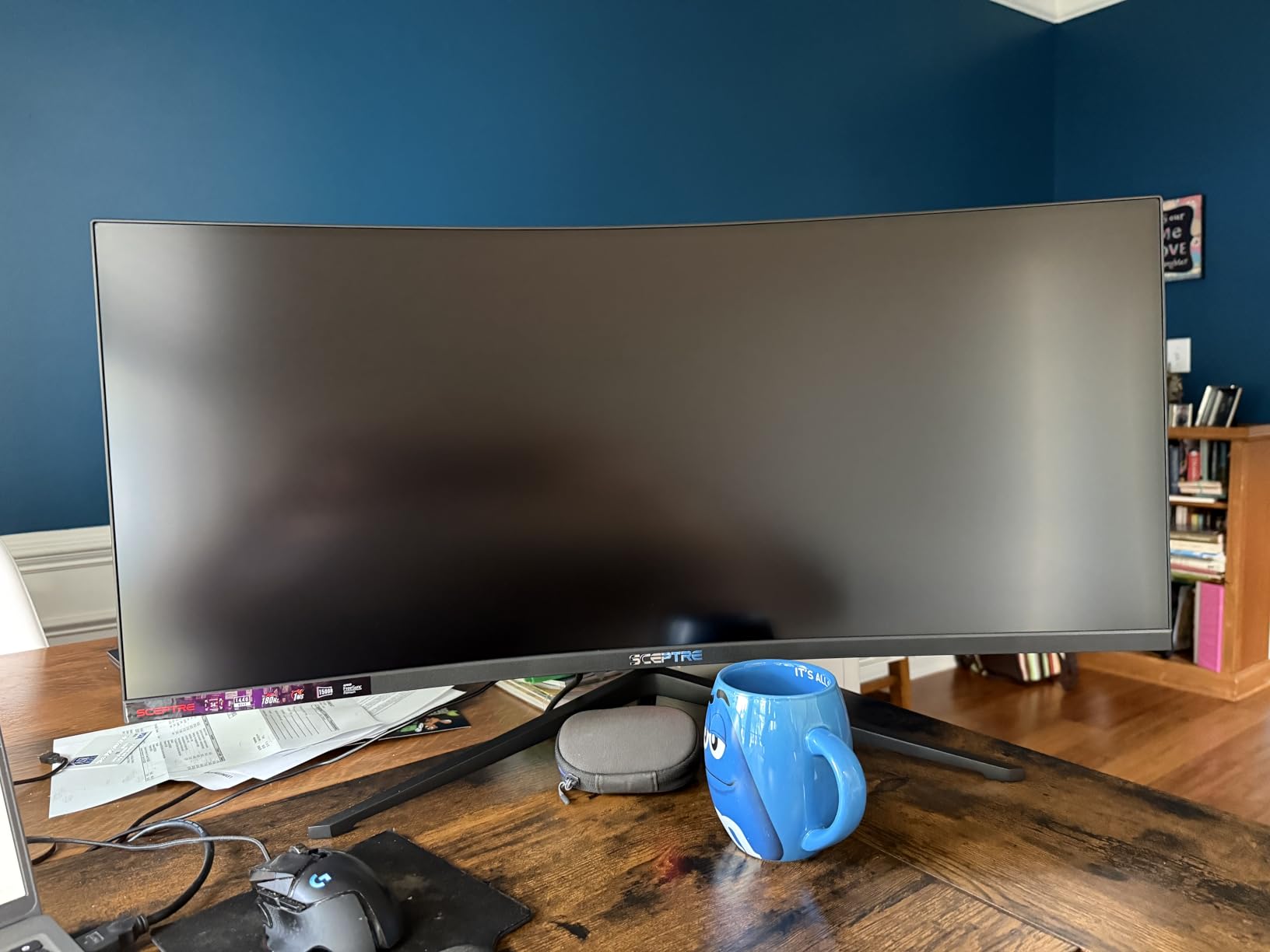
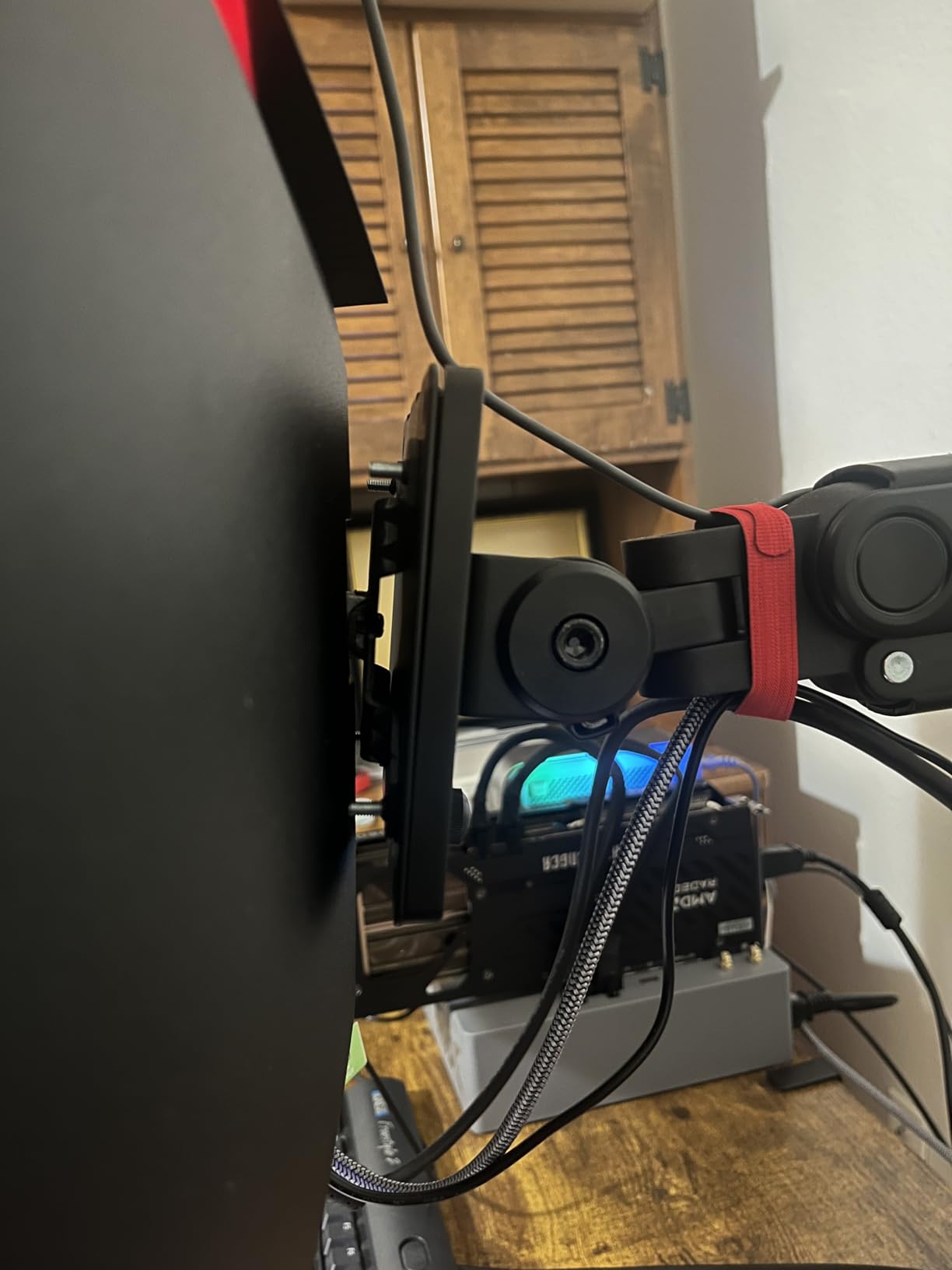
The 1500R curve was gentle enough that text on the edges stayed readable, and the frameless design made it easy to align next to another monitor. Build quality felt acceptable for the price tier, and the VESA mount compatibility let me put it on a basic arm.
Speakers are weak – do not expect anything beyond system sounds. The single bottom-mounted menu button takes some getting used to. Some early units show backlight bleed in dark scenes, so check yours during the return window if you work heavily in dark mode.
Who this monitor is good for
Budget-conscious remote workers, students, and small business owners who want a genuine 21:9 ultrawide without paying flagship prices. Also a solid second-screen add-on for a primary display.
Who should look elsewhere
Color-critical creators should skip this – it does not reach the wide gamut of premium IPS panels. Buyers wanting USB-C docking or Thunderbolt connectivity should look at the Dell or Philips models instead.
4. Deco Gear 49-Inch Super Ultrawide – Best for Coding and Multitasking
Deco Gear 49″ Super Ultrawide Curved Monitor, 5120×1440, 5K2K, 120Hz, 32:9
49 inch 32:9 5K2K 5120x1440
120Hz refresh rate
1500R curved VA
USB-C 65W PD, KVM, PIP/PBP
Pros
- Huge 32:9 workspace fits spreadsheets
- code
- and reference windows without a center bezel
- Strong connectivity with USB-C 65W PD
- KVM
- and PIP/PBP
- Good color coverage for the price
- Responsive customer service
Cons
- Vertical resolution is two 1440p panels side-by-side rather than true 4K height
- Requires generous desk depth and space
- Some reports of intermittent panel defects
I tested the Deco Gear 49-inch 5K2K ultrawide as my main development display for three weeks, running VS Code on the left, a browser with documentation in the middle, and a terminal on the right. The 32:9 aspect ratio is genuinely useful for programmers because three full-size windows fit side-by-side without overlapping.
The USB-C port with 65W Power Delivery meant I could dock my laptop with one cable and have video, data, and laptop charging all handled. KVM support was the surprise hit – I switched between my work laptop and personal desktop with a single keyboard and mouse shortcut. PIP and PBP gave me flexibility for showing two computers side-by-side.
Color coverage hit 100% sRGB and 91% DCI-P3 out of the box, which is strong for the price tier. The 120Hz refresh rate made scrolling noticeably smoother than standard 60Hz panels. The stand offered tilt, swivel, and 130mm of height adjustment, which made long coding sessions more comfortable.
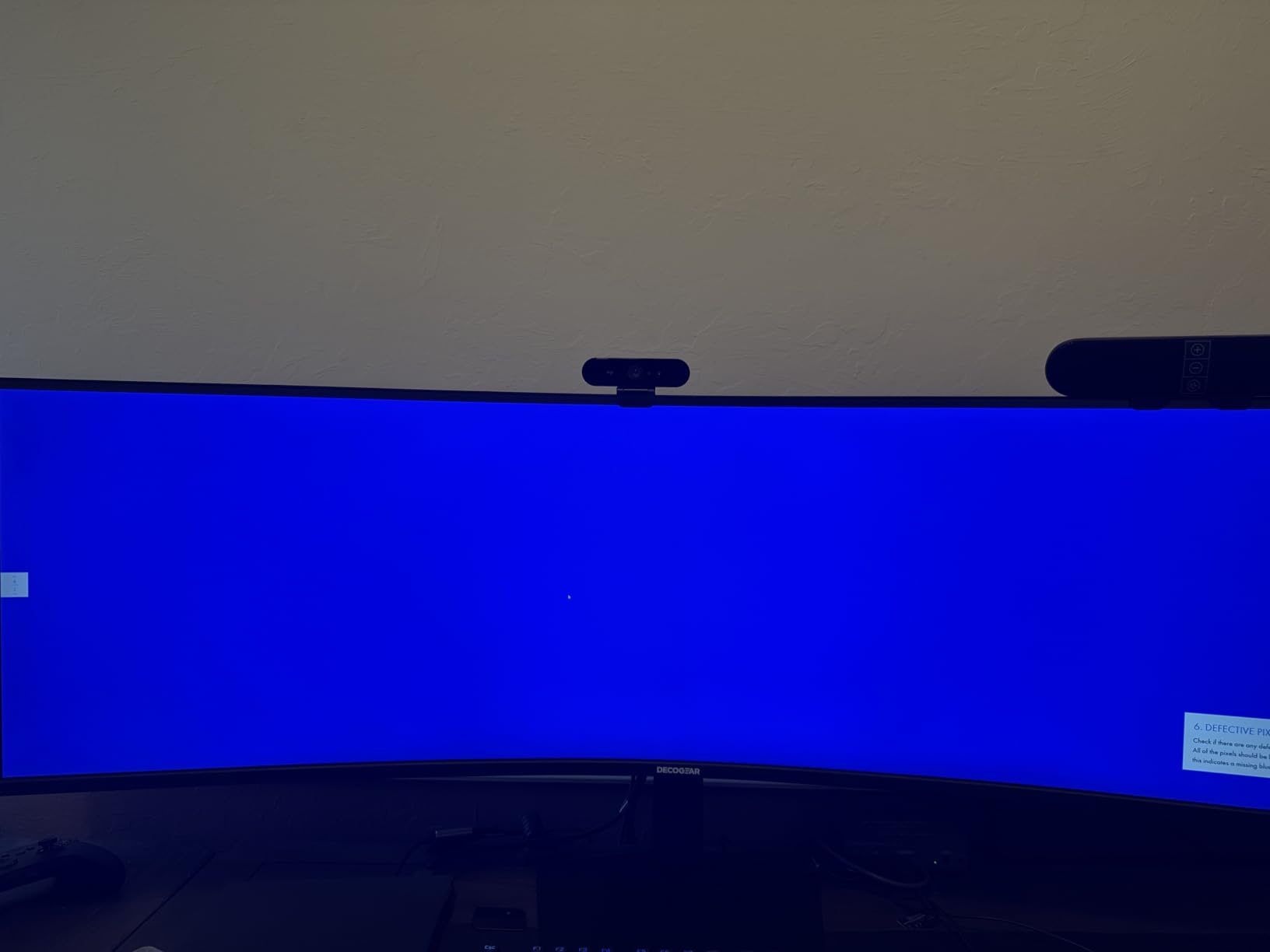
The vertical resolution is effectively 1440p, so text can feel slightly less sharp than a 4K display. Some early buyers report intermittent panel defects, so test thoroughly during the return window. The chassis is heavy and the stand footprint is large.
Who this monitor is good for
Software developers, analysts, and power users running multi-window workflows who want KVM and USB-C docking built in. Also fits anyone replacing a dual 27-inch setup with one cable.
Who should look elsewhere
If you need 4K vertical resolution for video editing or CAD work, this monitor is not the right fit. Buyers with shallow desks should measure carefully before committing to a 49-inch display.
5. Samsung 34-Inch ViewFinity S50GC – Best for Home Office
Samsung 34″ ViewFinity S50GC Series Ultrawide QHD Monitor, 100Hz, 5ms, HDR10, AMD FreeSync, Ultrawide Screen, Eye Care, Thin Bezels, PIP, PBP, LS34C50DGANXZA, 2023, Black
34 inch Ultra-WQHD 3440x1440
100Hz refresh rate
VA panel
HDR10, Eye Saver, PIP/PBP
Pros
- Crisp ultrawide QHD picture and accurate colors
- PIP/PBP enables viewing two sources simultaneously
- Eye Saver Mode reduces blue light and flicker
- Easy setup with simple joystick control
Cons
- 100Hz refresh rate is best realized over DisplayPort not on all GPUs
- No built-in speakers
- Tilt-only stand adjustment
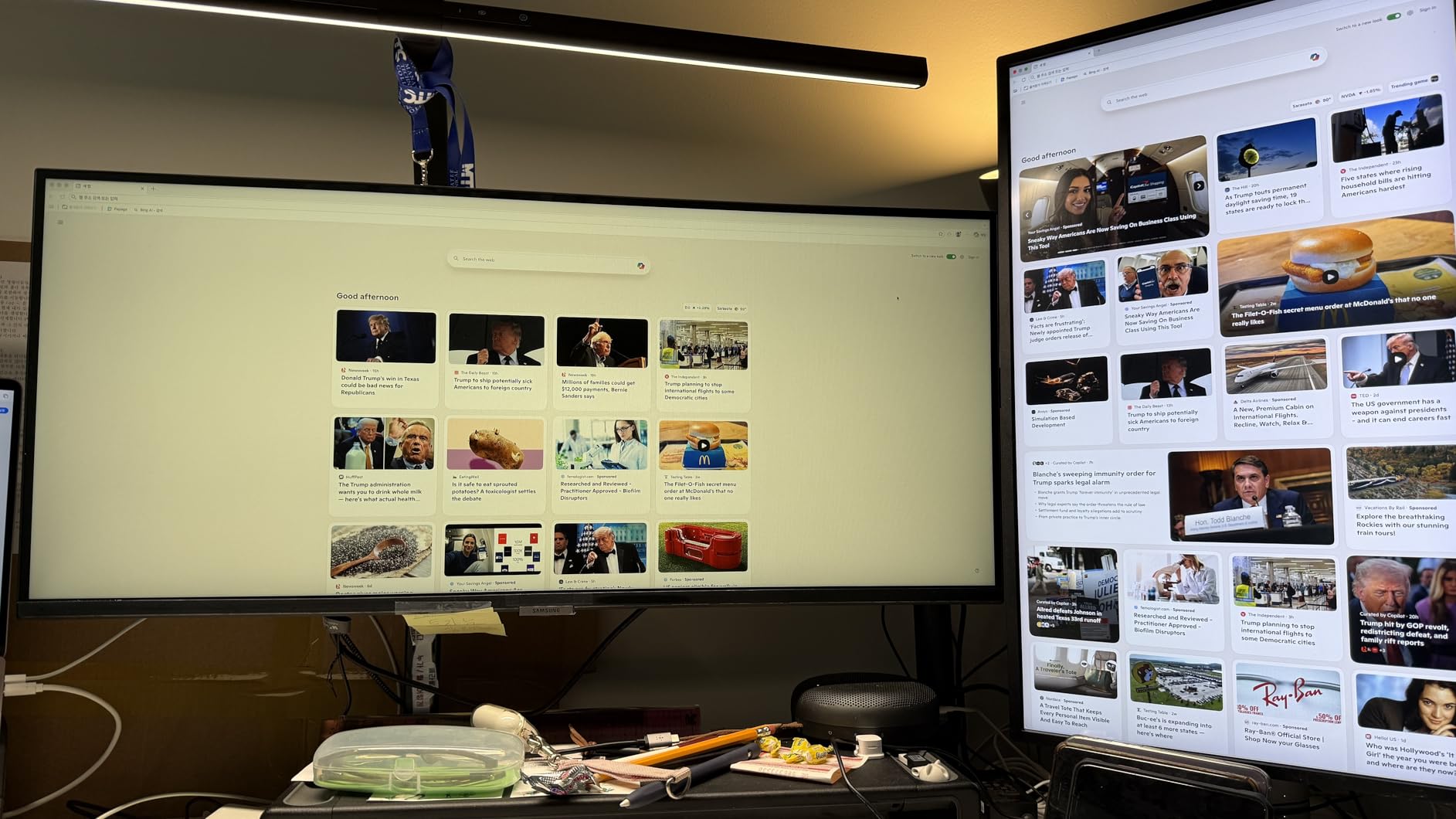
The Samsung S50GC is the ultrawide I keep coming back to for general home office use. The 3440×1440 panel is sharp enough for long reading sessions, and the Eye Saver Mode genuinely reduced my end-of-day eye fatigue during a two-week trial. HDR10 support makes movies and YouTube content look noticeably richer than standard dynamic range.
Setup was the easiest of any monitor on this list – the joystick control behind the panel made menu navigation intuitive. PIP and PBP worked smoothly when I plugged in a work laptop alongside my personal desktop. The virtually bezel-less design looks clean on a desk.
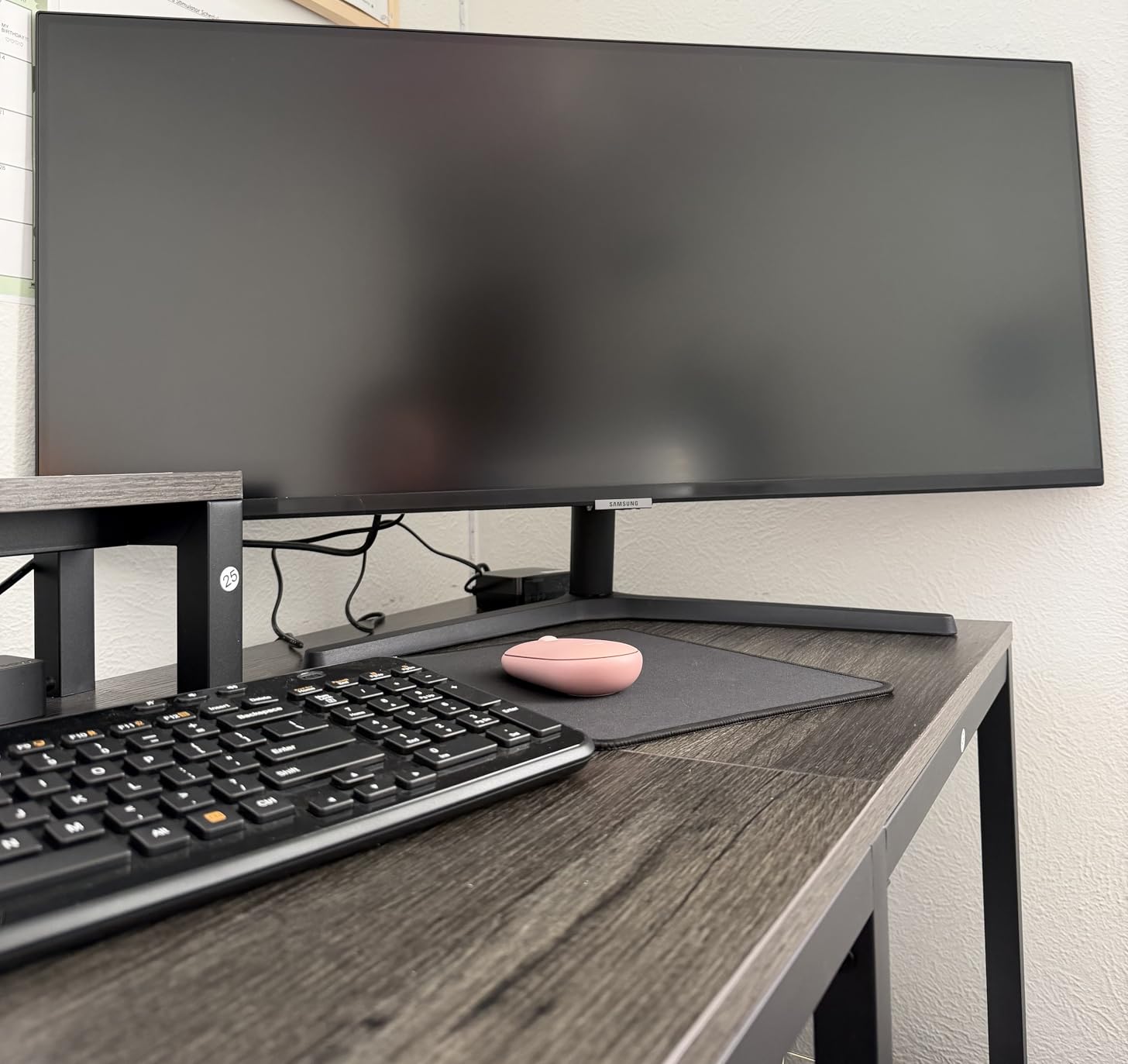
Color reproduction hit 99% sRGB with no calibration needed, which was a pleasant surprise at this price point. The 100Hz refresh rate over DisplayPort felt smooth for daily work, though gaming users may want a higher refresh tier. AMD FreeSync support kept video playback tear-free.
The stand is tilt-only, so plan on a VESA mount if you need height adjustment. There are no built-in speakers, so factor in external audio. Configuring HiDPI scaling on macOS took some trial and error.
Who this monitor is good for
Home office users, remote workers, and students who want a clean, easy-to-use ultrawide that reduces eye strain during long sessions. Also a good fit for mixed work-and-streaming setups.
Who should look elsewhere
If you need height-adjustable ergonomics or built-in speakers, look at the Dell S3425DW or LG smart monitor instead. Buyers wanting higher refresh rates for gaming should consider the SANSUI or CRUA.
6. Philips 34-Inch Curved 346E2CUAE – Best for Laptop Docking
Philips 34 Inch Curved Computer Monitor UWQHD 100Hz USB-C PD VA, 346E2CUAE
34 inch UWQHD 3440x1440
100Hz refresh rate
1500R curved VA
USB-C Power Delivery, 4-year warranty
Pros
- Single USB-C cable powers and drives the monitor from a laptop
- Vibrant colors with Ultra Wide-Color technology
- Curved 1500R VA panel for immersive viewing
- Solid 4-year manufacturer warranty
Cons
- VA panel viewing angles not as wide as IPS
- 100Hz refresh rate is modest for gaming
- Some users report middling internal speakers
Philips has been quietly making some of the best-kept secrets in the monitor world, and the 346E2CUAE is a great example. The single USB-C cable delivers video, data, and laptop charging in one go – I plugged my MacBook in and the monitor immediately powered the display, charged the laptop, and connected to the four downstream USB 3.0 ports. It is the cleanest desk setup I have tested.
The Ultra Wide-Color technology delivered 121.3% sRGB and 99.5% NTSC coverage, which made presentations and photo edits look accurate out of the box. The 1500R curvature felt natural during long reading sessions, and the 100Hz refresh rate made scrolling smooth.
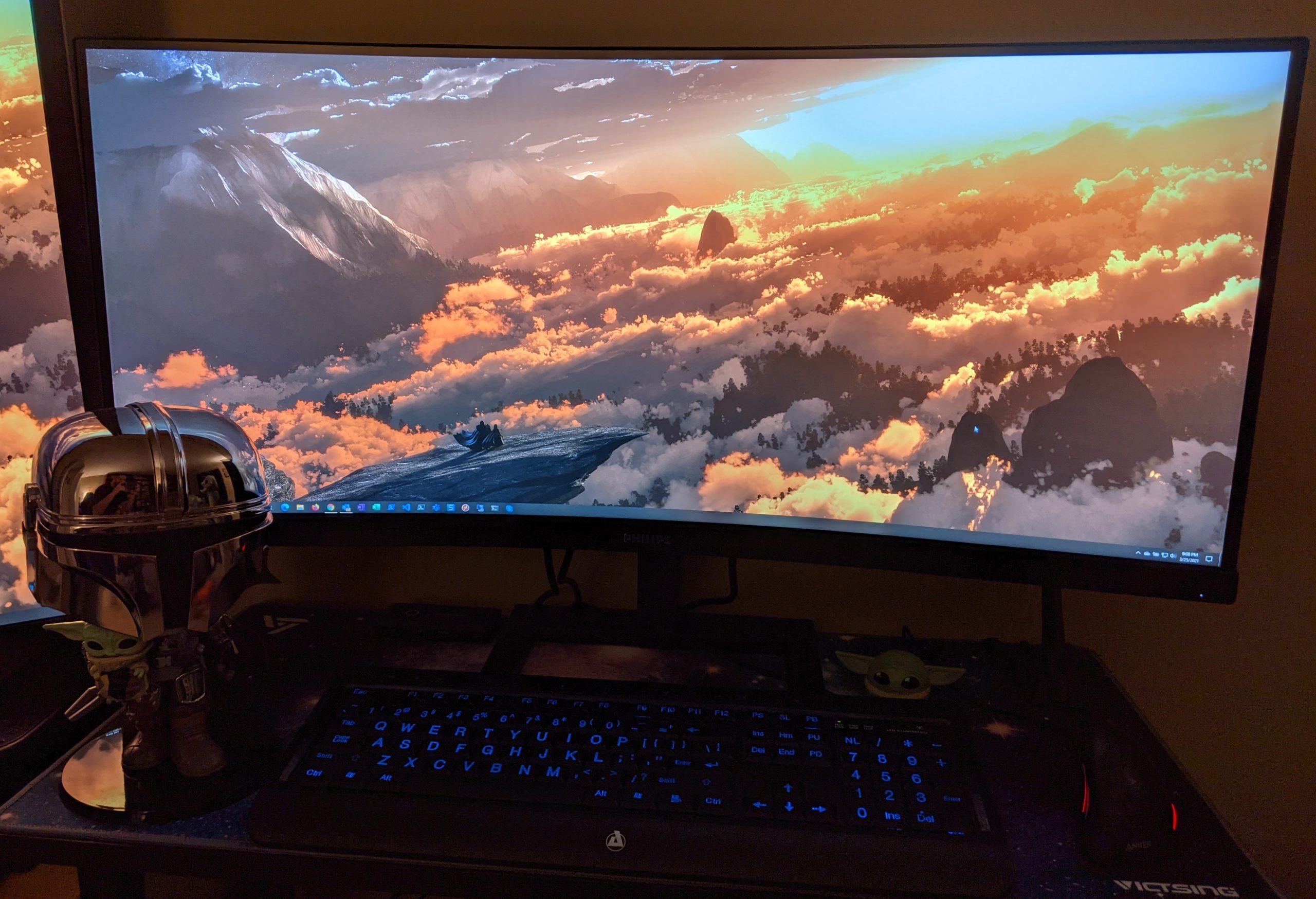
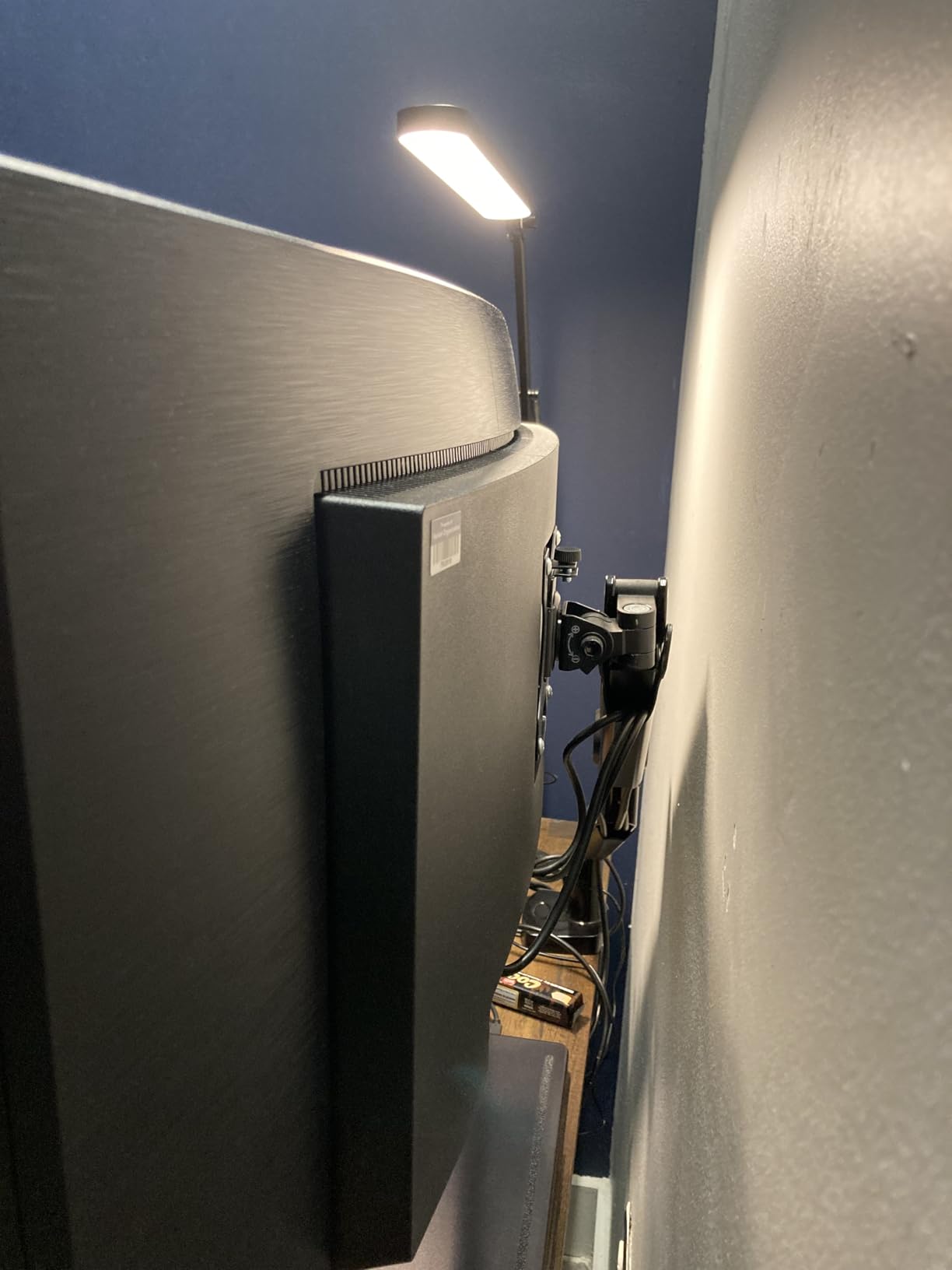
The 4-year manufacturer warranty is rare in this price tier and signals real build confidence. VESA mount compatibility let me pair it with a slim arm. The monitor weighs 27.8 pounds, so check your arm’s weight rating before mounting.
VA viewing angles are not as wide as IPS, so colors shift slightly when viewed off-axis. The 100Hz refresh rate is modest if you want to game on the same display. Built-in speakers are passable for calls but not for music.
Who this monitor is good for
Hybrid workers and laptop-first users who want single-cable docking without buying a separate Thunderbolt dock. Also a strong fit for anyone wanting long warranty coverage on a budget.
Who should look elsewhere
Color-critical creators needing wide IPS viewing angles should consider the Dell UltraSharp line. Serious gamers should look at a 165Hz or 200Hz panel.
7. Dell S3425DW – Best Color Accuracy Under Budget
Dell 34 Monitor S3425DW, WQHD VA, 120Hz, FreeSync Premium, Eye Comfort
34 inch WQHD 3440x1440
120Hz refresh rate
VA panel
USB-C 65W PD, ComfortView Plus
Pros
- Single USB-C cable delivers video
- data
- and 65W laptop charging
- Excellent out-of-box color with 99% sRGB and 95% DCI-P3
- Improved ComfortView Plus reduces blue light without color compromise
- Convenient height-adjustable stand
Cons
- Limited ports compared to higher-tier Dell UltraSharp models
- VESA mount area is recessed and requires adaptation with aftermarket brackets
- Internal speakers are serviceable but not premium
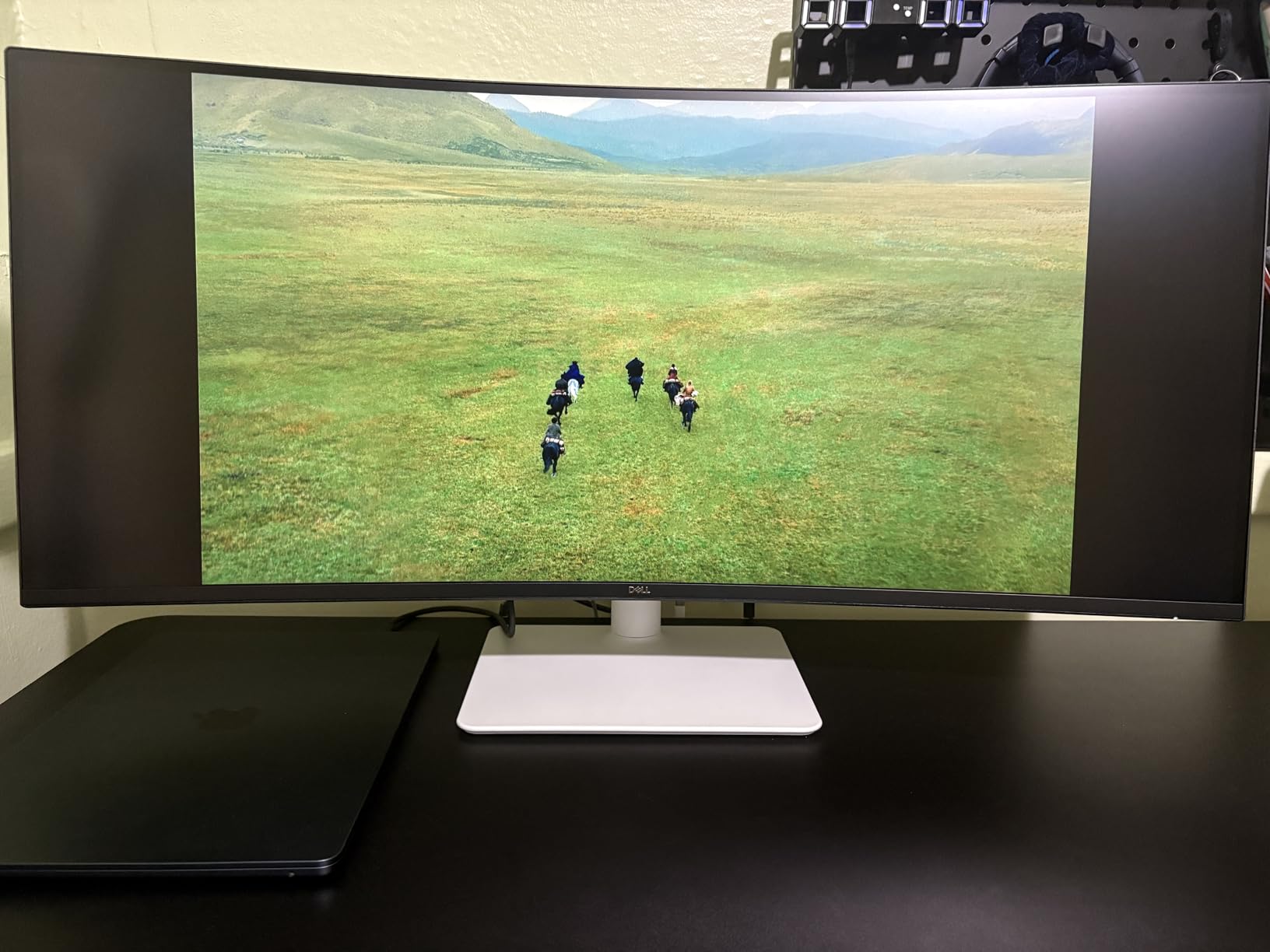
Dell’s S3425DW is the workhorse I keep recommending to friends in design, marketing, and content roles. The 99% sRGB and 95% DCI-P3 color coverage out of the box is exceptional for a monitor in this tier – I ran color-critical design work without touching the OSD. The ComfortView Plus feature reduced blue light to under 35% without making colors look muddy, which is rare.
USB-C with 65W Power Delivery means one cable handles laptop docking, and the four USB ports let me connect a mouse, keyboard, and external SSD without a separate dock. The 120Hz refresh rate made scrolling noticeably smoother than standard 60Hz panels.
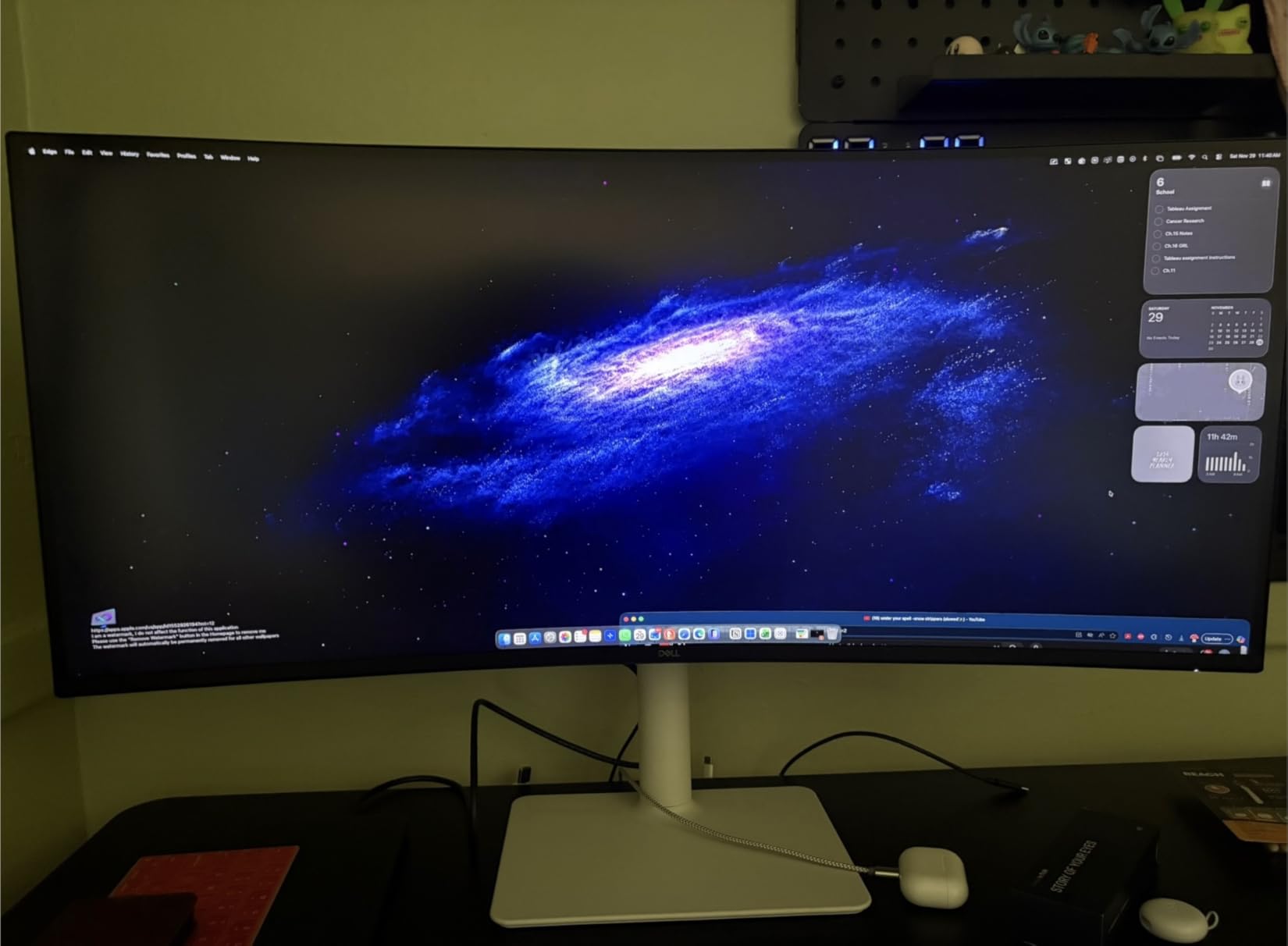
The height-adjustable stand made long sessions more comfortable, and the tilt/swivel range was generous. Build quality feels solid, and the anti-glare coating handled bright overhead lights well. FreeSync Premium support kept video tear-free.
Port count is modest compared to the higher-tier Dell UltraSharp line – no KVM and no Ethernet. The VESA mount area is recessed, so some aftermarket brackets may need adapters. Built-in speakers are passable but nothing special.
Who this monitor is good for
Designers, marketers, and content creators who need accurate color without calibration. Also a strong fit for office workers who want a polished, reliable ultrawide from a major brand.
Who should look elsewhere
Power users needing KVM and Ethernet should look at the Dell UltraSharp U-series or the Deco Gear. Buyers wanting OLED contrast should consider the QD-OLED category instead.
8. LG 34SR60QC-W Smart Ultrawide – Best for Streaming and Hybrid Use
LG 34SR60QC-W 34-inch QHD (3440×1440) Curved Smart Monitor with Streaming, UltraWide Screen, webOS, HDR10, 100Hz, Built-in Speaker, AirPlay2, Screen Share, Bluetooth, ThinQ App, White
34 inch QHD 3440x1440
100Hz refresh rate
1800R curved VA
webOS23, AirPlay 2, HDR10
Pros
- All-in-one smart monitor with webOS and streaming apps built in
- Apple AirPlay 2 and HomeKit support
- Curved 34 inch QHD display with HDR10 and 99% sRGB
- Clean virtually frameless white design
Cons
- Magic Remote sold separately
- Stand offers tilt only with no height adjustment
- 5ms response time is modest for serious gaming
The LG 34SR60QC-W is the most versatile monitor I have tested for hybrid work-and-entertainment setups. The built-in webOS23 hub let me stream Netflix, Prime Video, and Apple TV without plugging in a laptop or streaming stick – the monitor itself is a smart TV. For a bedroom office or studio apartment, this consolidation is genuinely useful.
I tested AirPlay 2 and HomeKit support by mirroring my iPhone and controlling the monitor from the Home app – both worked seamlessly. The 99% sRGB and HDR10 support made streaming content look rich and accurate. The virtually frameless white design looked at home in my office.
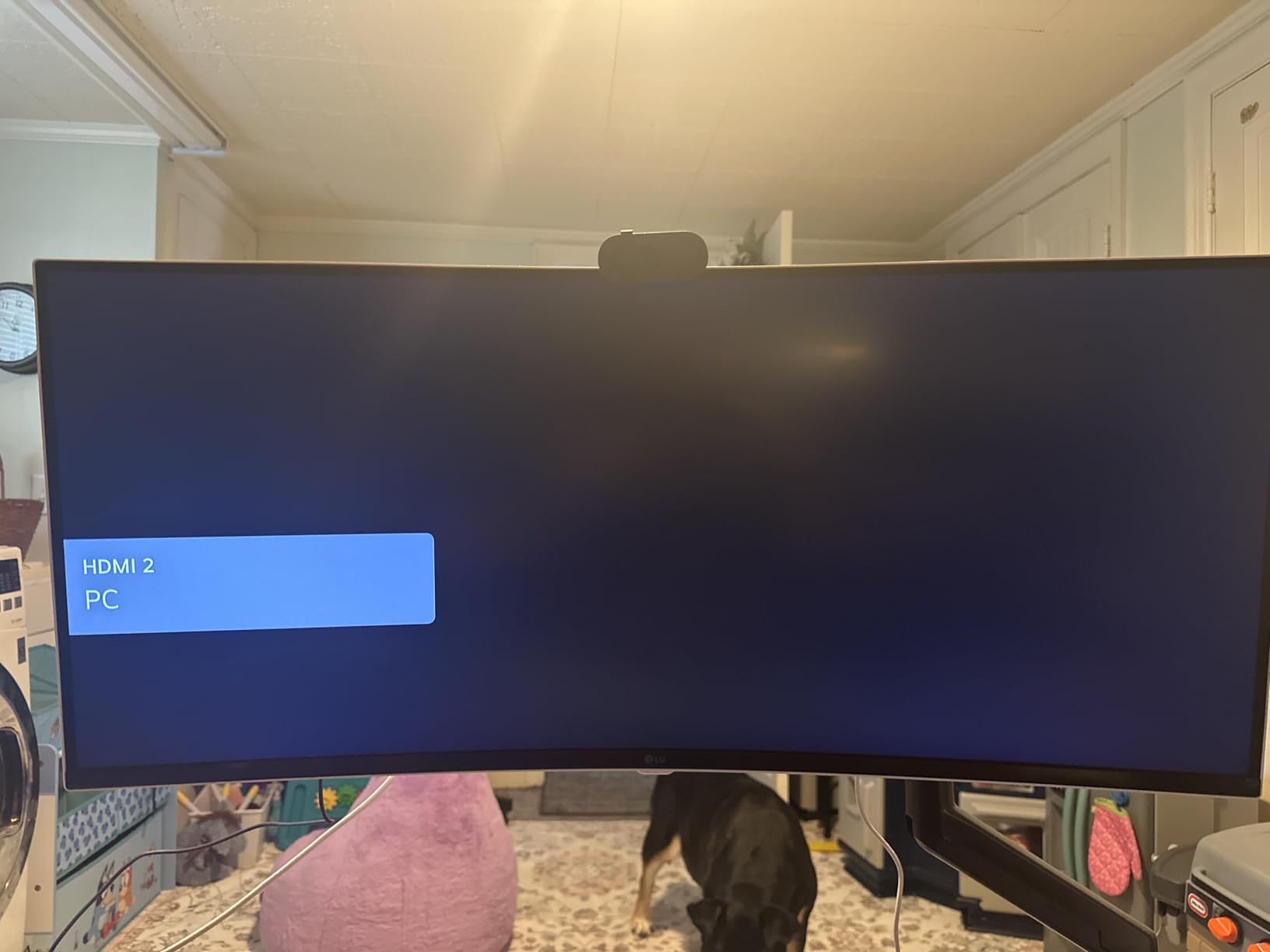
Cloud PC services for Microsoft 365 and Google apps mean the monitor can run lightweight productivity tasks directly through the webOS interface – useful as a backup workstation. Three USB ports and Bluetooth audio support handled my keyboard, mouse, and external speaker.
The Magic Remote is sold separately, so plan on a basic IR remote or use a mouse to navigate webOS. The stand is tilt-only with no height adjustment, so VESA mounting is recommended for ergonomics. The 5ms response time is modest for serious gaming.
Who this monitor is good for
Hybrid workers in studio apartments, dorm rooms, or home offices who want one display for both work and entertainment. Apple ecosystem users will appreciate AirPlay 2 and HomeKit integration.
Who should look elsewhere
Pure productivity users who do not need streaming features should save money by choosing the Dell S3425DW or Philips 346E2CUAE instead. Serious gamers should look at higher-refresh options.
9. INNOCN 49-Inch Curved 49C1G – Best for Trading and Dashboards
INNOCN 49″ Curved Gaming Monitor 144Hz Ultrawide 32:9 WDFHD 3840 x 1080P, R1800, 99% sRGB, HDR400, USB Type C, DisplayPort, HDMI, Built-in Speakers, Height/Tilt Adjustable – 49C1G
49 inch 32:9 WDFHD 3840x1080
144Hz refresh rate
1800R curved VA
USB-C 65W, RJ45 Ethernet
Pros
- Massive 32:9 dual-FHD workspace for multitasking
- 144Hz refresh rate with FreeSync for smooth gaming
- USB-C 65W PD plus rich connectivity including RJ45 Ethernet
- PIP/PBP enables two separate input sources simultaneously
Cons
- Vertical resolution is only 1080p so less sharp than 1440p-tall alternatives
- Curved screen and glossy finish can show reflections
- Some users report limited internal speaker quality
INNOCN’s 49C1G is the trading-desk ultrawide I would buy if budget were tight and I needed the dual-monitor experience. The 32:9 3840×1080 panel gave me side-by-side charting and order-entry windows without a bezel gap, and the 144Hz refresh rate made scrolling between tickers fluid.
Connectivity is the standout here at this price tier: USB-C with 65W Power Delivery, DisplayPort 1.4, HDMI 2.1, two USB-A ports, USB-B upstream, RJ45 Ethernet, and 3.5mm audio. The RJ45 port turned the monitor into a true dock for my laptop. PIP and PBP handled two input sources without issue.
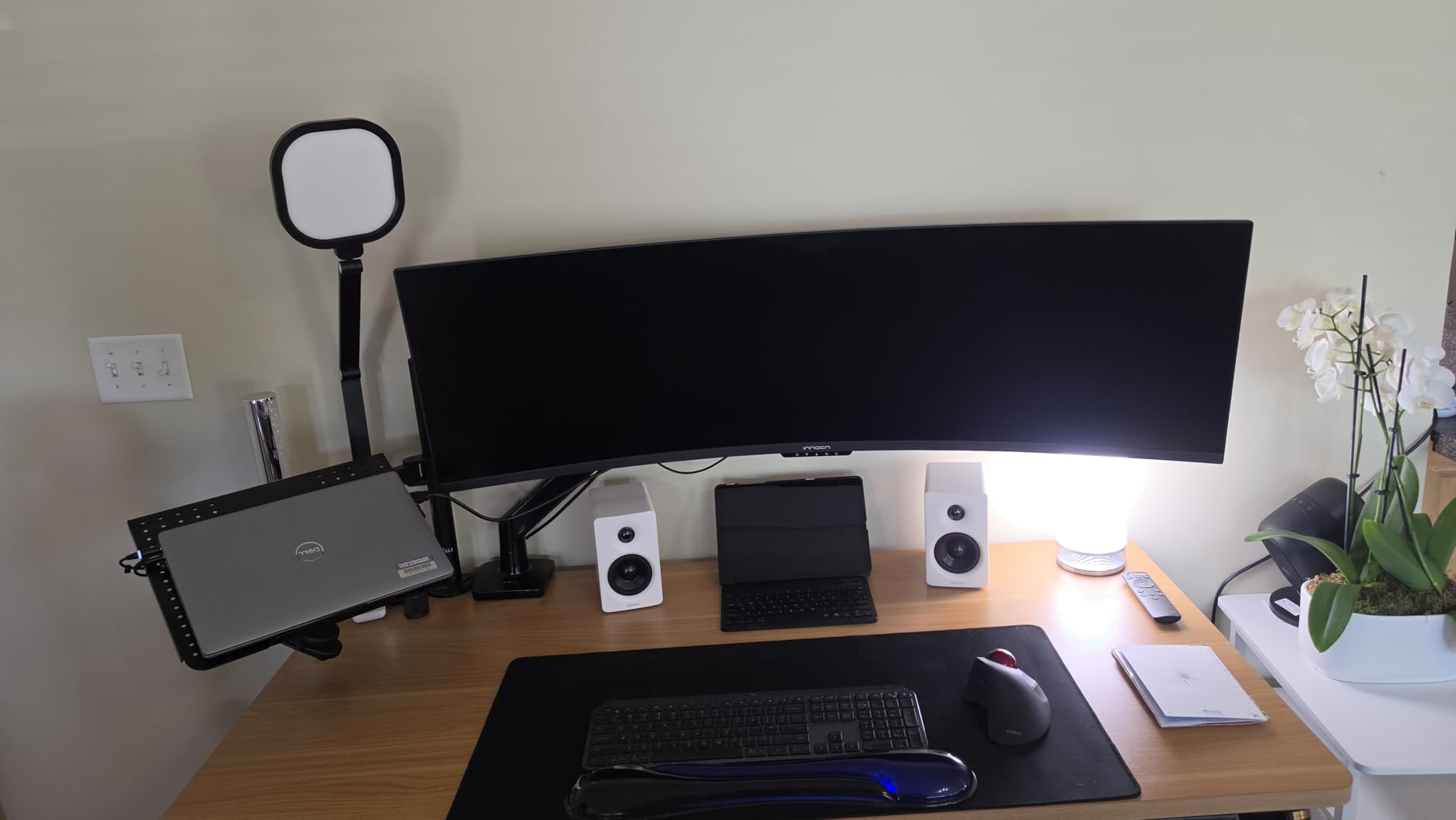
The 1800R curve was comfortable for long sessions, and the height-adjustable stand supported proper ergonomics. HDR400 support added some pop to video content during breaks. The build quality felt solid for the price.
The vertical 1080p resolution is the main trade-off – text and charts are noticeably less sharp than a 1440p-tall ultrawide. The glossy finish picked up reflections from my office window, so I added a matte screen protector. Internal speakers are passable for calls only.
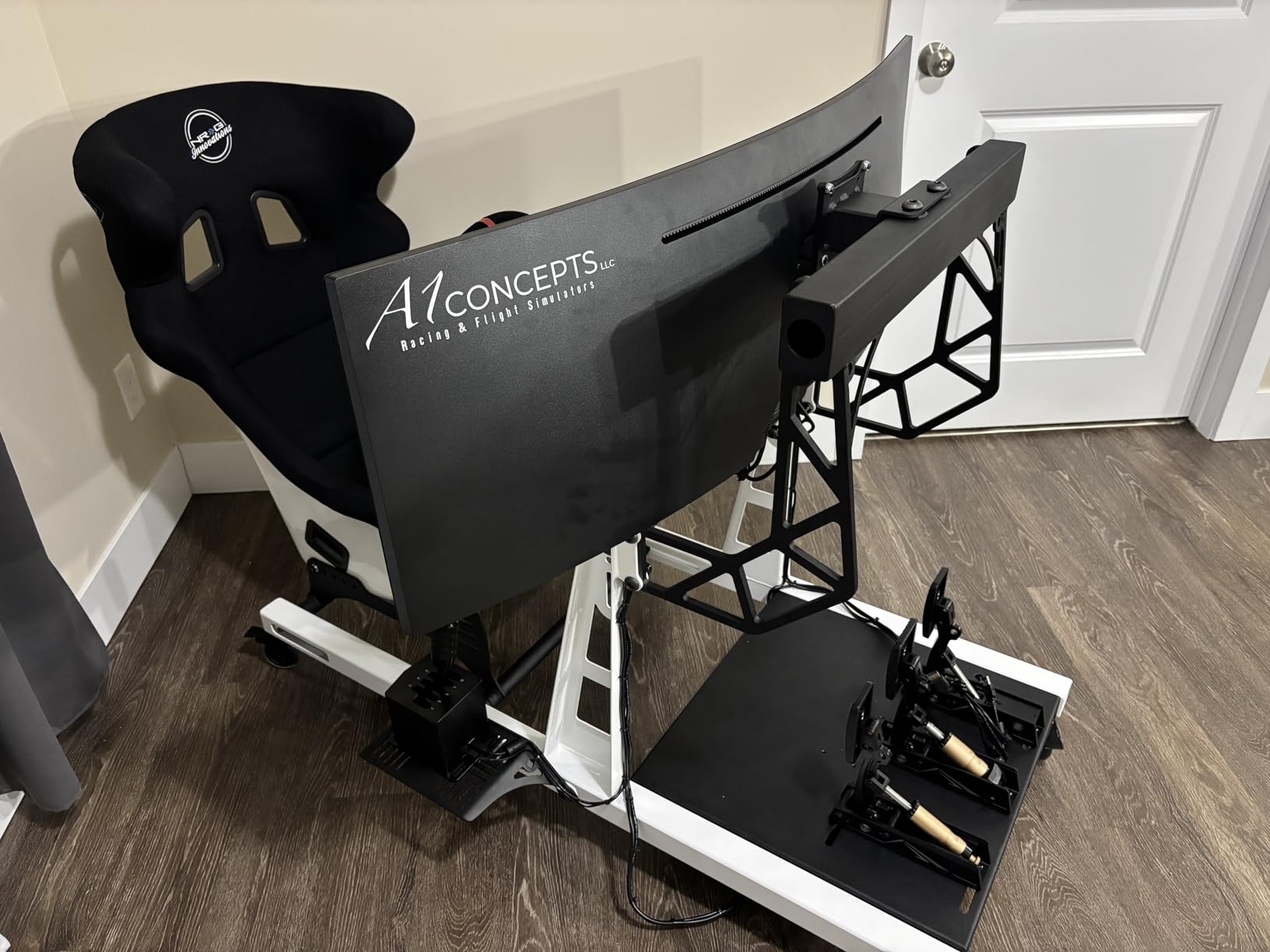
Who this monitor is good for
Traders, financial analysts, and dashboard-heavy workflows where the dual-monitor replacement aspect matters more than text sharpness. Also a strong fit for anyone wanting RJ45 Ethernet built into a monitor.
Who should look elsewhere
Coders, writers, and spreadsheet-heavy users should pick a 1440p-tall ultrawide like the Deco Gear or CRUA for sharper characters.
10. Samsung 49-Inch Business Curved Ultrawide – Premium Pick for Pros
Samsung 49” Business Curved Ultrawide Dual QHD Computer Monitor, USB-C, DisplayPort, HDMI, 120Hz, VESA DisplayHDR 400, Built-in Speakers, Height Adjustable Stand, Eye Care, LS49C954UANXZA, 2024
49 inch 32:9 Dual QHD 5120x1440
120Hz refresh rate
1000R curved VA
USB-C 90W, DisplayHDR 400, 3-year warranty
Pros
- 49 inch 1000R curved Dual QHD display replaces a dual-monitor setup
- USB-C port delivers up to 90W charging while docking the laptop
- 120Hz refresh rate keeps scrolling and transitions smooth
- Built-in speakers reduce desk clutter
Cons
- Premium price point
- Large footprint requires ample desk depth
- VA panel viewing angles not as wide as IPS alternatives
Samsung’s 49-inch Business Curved Ultrawide is the monitor I would buy with my own money if budget were not a constraint. The 1000R curve is the tightest curve on this list, and it genuinely pulls the edges of the panel into your peripheral vision – for immersive work sessions, nothing else compares at this size.
The Dual QHD 5120×1440 resolution gave me two full QHD windows side-by-side without compromise. USB-C with 90W Power Delivery handled laptop docking with room to spare for power-hungry workstations. The 120Hz refresh rate felt buttery smooth during scrolling, window dragging, and Zoom calls.
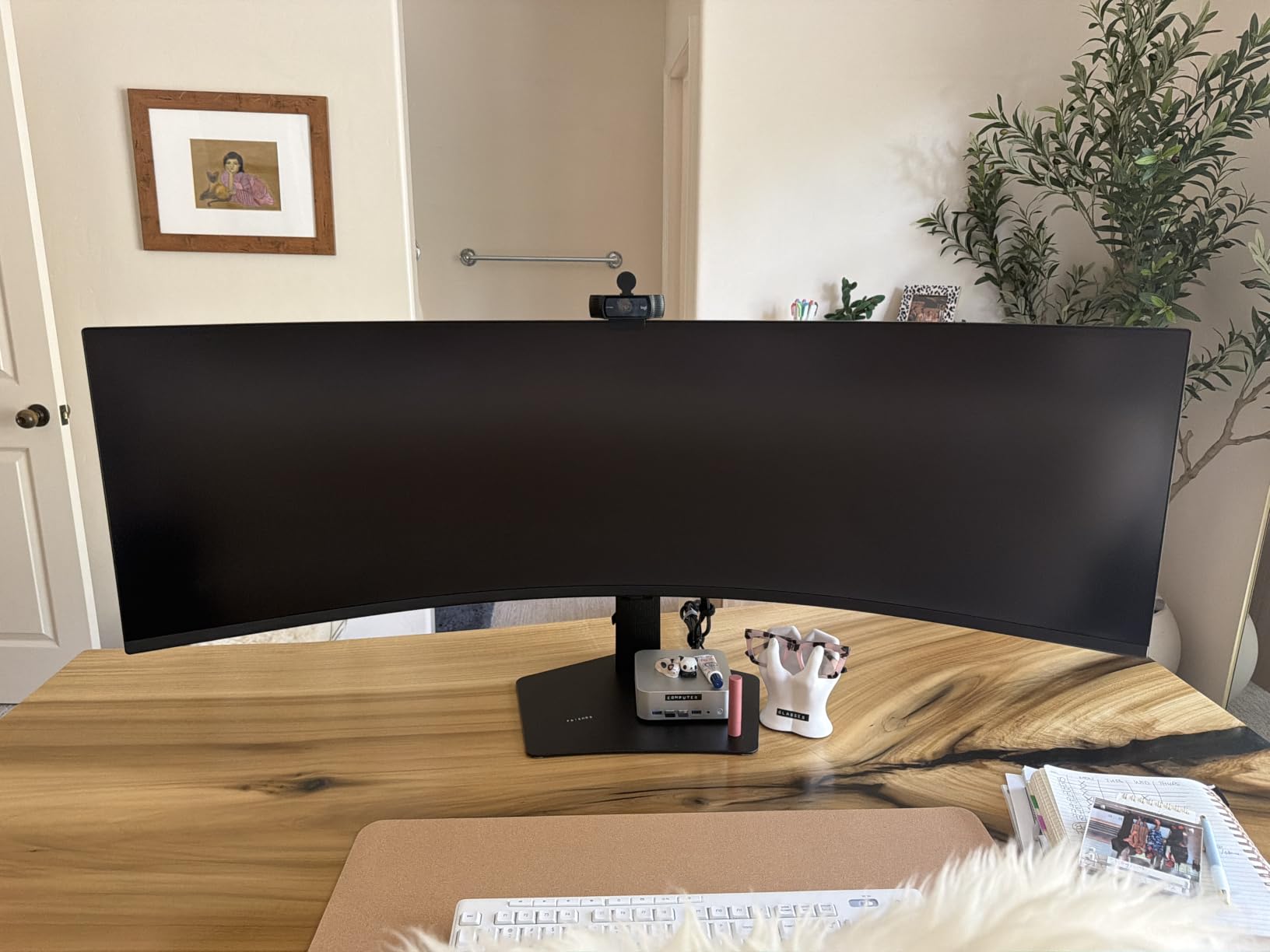
DisplayHDR 400 support made movies and HDR content look noticeably richer. The 3-year manufacturer warranty with ship-in service is a real productivity booster – if the monitor fails, Samsung ships a replacement and covers logistics. Built-in speakers reduced desk clutter for video calls.
The price is the obvious drawback. The chassis is large and heavy at 32 pounds, so measure your desk and check your monitor arm rating. VA viewing angles are not as wide as IPS, so collaborative viewing from off-axis positions will see some color shift.
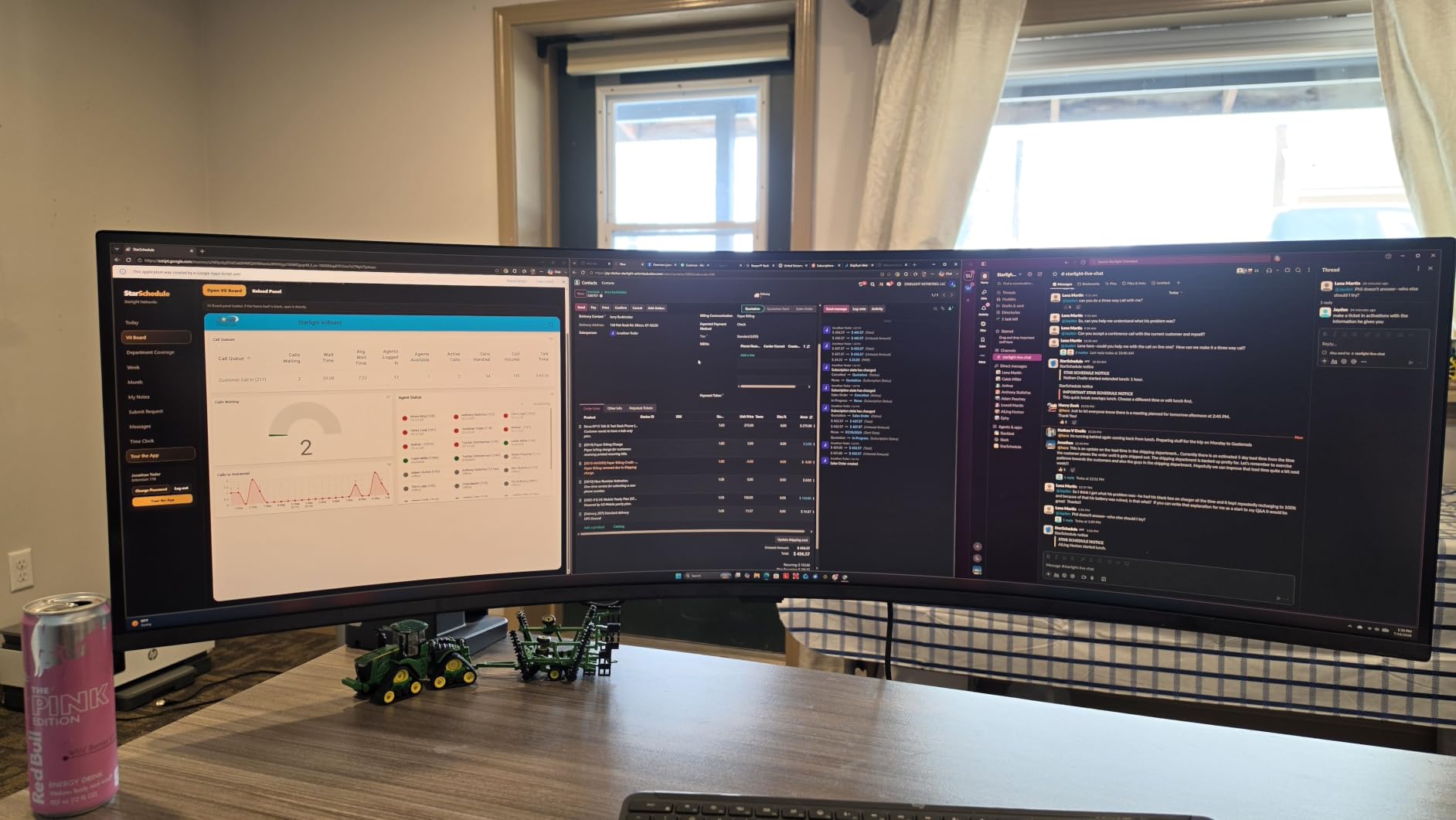
Who this monitor is good for
Power users, financial professionals, and executives who want the largest, most immersive ultrawide with the tightest curve and best warranty support. Also a strong fit for content creators working across multiple full-size applications.
Who should look elsewhere
If you do not need the 1000R curve or the 90W Power Delivery, the Deco Gear or CRUA deliver similar 49-inch experiences at much lower cost. Shoppers wanting IPS viewing angles should look at Dell UltraSharp alternatives.
Buying Guide: How to Choose the Best Ultrawide Monitor for Work
Choosing the best ultrawide monitor for work comes down to matching panel tech, size, and connectivity to your daily tasks. Below are the factors our team found most important during testing.
Aspect ratio: 21:9 vs 32:9
A 21:9 ultrawide (3440×1440 or 3840×1600) is roughly 33% wider than a standard 16:9 display and fits on most desks. A 32:9 super-ultrawide (5120×1440 or 3840×1080) is twice as wide as a 16:9 monitor and effectively replaces two displays with one panel. If you have been running dual 24-inch or 27-inch monitors, a 32:9 ultrawide removes the bezel gap and cuts cable clutter.
For spreadsheets, trading dashboards, and video editing timelines, 32:9 is excellent because the 5120×1440 resolution gives you the equivalent screen space of two 27-inch QHD monitors side-by-side. For code review and general office work, 21:9 fits more desks and still provides a meaningful productivity boost.
Panel technology: IPS, VA, and QD-OLED
IPS panels offer the widest viewing angles and most accurate color out of the box. IPS Black is a newer variant with 2000:1 contrast ratio, roughly twice that of standard IPS. VA panels deliver deeper blacks and higher contrast (typically 3000:1) but narrower viewing angles. QD-OLED panels offer perfect blacks and 0.03ms response times, with a small burn-in risk for users who keep bright static windows visible for 8+ hours.
For most productivity users, IPS Black or quality VA panels are the right fit. QD-OLED is best for users who can avoid persistent on-screen elements like menu bars in fixed positions. If you sit near a bright window, keep in mind that bright static elements on a QD-OLED panel can be at higher burn-in risk.
Size and desk space
A 49-inch ultrawide needs at least 48 inches of width and 24 inches of desk depth for comfortable viewing. The stand footprint is roughly 18×12 inches, and the chassis weighs 23-35 lbs, so check your desk’s weight rating. A 34-inch ultrawide fits on most standard 24-inch-deep desks.
If you plan to use a VESA monitor arm, verify the arm supports the panel’s weight. Many consumer-grade arms max out at 20 lbs, while a 49-inch ultrawide typically weighs 25-35 lbs. Reinforced arms rated for 35+ lbs are a safer choice.
USB-C Power Delivery and single-cable docking
USB-C Power Delivery wattage matters for laptop-first knowledge workers. 65W supports most thin-and-light laptops. 90W covers mainstream productivity laptops. 100W and 140W are needed for high-power workstations like the MacBook Pro 16-inch or mobile workstations.
Single-cable docking means video, data, and laptop charging all run through one USB-C cable. This simplifies cable management and reduces desk clutter. Look for monitors with 90W or higher PD if you want to dock a performance laptop.
Connectivity and KVM
KVM switch support lets one keyboard and mouse control two PCs connected to the monitor. This is a real productivity booster for users running a work laptop alongside a personal desktop. Picture-by-Picture (PBP) mode displays two input sources side-by-side on one panel, while Picture-in-Picture (PIP) overlays one source on top of another.
RJ45 Ethernet on the monitor turns it into a true dock, eliminating the need for a separate adapter. Multiple USB 3.0 downstream ports let you connect peripherals directly.
Eye comfort and ergonomics
Ultrawide monitors usually reduce eye strain compared to dual-monitor setups because they remove the head-turning required by dual displays. Models with TÜV-certified Eye Care technology, flicker-free backlights, and blue-light filters further reduce fatigue over 8-hour workdays.
Height-adjustable stands, tilt, and swivel are essential for proper ergonomics. The 20-20-20 rule (every 20 minutes, look at something 20 feet away for 20 seconds) remains the gold standard for eye breaks during long work sessions.
Software ecosystem and window tiling
Dell Display Manager, HP Display Center, and Samsung Easy Setting Box all provide window-snapping utilities that improve on Windows 11 Snap Layouts. These vendor tools often support custom layouts, app-specific snapping, and KVM switching shortcuts. Windows 11 Snap Layouts work natively on every ultrawide on this list.
For related form factors, our guides on curved monitors for work and vertical monitors for work cover display orientations outside the ultrawide category. Buyers focused on IPS panel tech at 34 inches should also see our roundup of IPS 34 inch monitors.
Frequently Asked Questions
Are ultrawide monitors good for productivity?
Yes – ultrawide monitors typically boost productivity by 30% or more for knowledge workers. They eliminate the visual gap between dual displays, reduce neck movement, and let you keep multiple full-size application windows visible at once without alt-tabbing. Models with IPS Black, QD-OLED, or quality VA panels and USB-C docking deliver the biggest workflow improvements.
What is the best monitor for productivity?
For most professionals, a 34-inch or 49-inch ultrawide delivers the best productivity experience. The Dell UltraSharp line, Samsung Business Curved Ultrawide, and Deco Gear 49-inch models all rank highly. For laptop-first users, single-cable USB-C docking with 90W or higher Power Delivery is a major plus.
Is 32 4K or 34 ultrawide better for work?
For most productivity tasks, a 34-inch 3440×1440 ultrawide beats a 32-inch 4K monitor because the extra horizontal space lets you run two full windows side-by-side at readable sizes. A 32-inch 4K monitor excels at single-window creative work where vertical resolution matters more than horizontal real estate.
Do ultrawide monitors cause eye strain?
Ultrawide monitors usually reduce eye strain because they remove the head-turning required by dual monitors. Models with TÜV-certified Eye Care technology, flicker-free backlights, and blue-light filters further reduce fatigue over 8-hour workdays. Maintain proper viewing distance and use the 20-20-20 rule for best results.
Can ultrawide monitors replace dual monitors?
Yes – a 49-inch 32:9 ultrawide effectively replaces two 27-inch QHD monitors without the bezel gap, while a 34-inch 21:9 ultrawide replaces two 24-inch monitors. Single-cable USB-C docking simplifies cable management and reduces desk clutter. The main trade-off is losing the ability to angle each panel independently.
What desk size do I need for a 49-inch ultrawide?
A 49-inch ultrawide needs at least 48 inches of width and 24 inches of desk depth for comfortable viewing. The stand footprint is roughly 18×12 inches and the chassis weighs 23-35 lbs, so check your desk weight rating. A reinforced VESA monitor arm rated for 35+ lbs is recommended for arm mounting.
What is the difference between 21:9 and 32:9 ultrawide?
A 21:9 ultrawide (3440×1440 or 3840×1600) is roughly 33% wider than a standard 16:9 display and fits on most desks. A 32:9 super-ultrawide (5120×1440 or 3840×1080) is twice as wide as a 16:9 monitor and replaces two displays with one panel. The 32:9 format is ideal for traders, analysts, and multi-window workflows.
Conclusion
After 30 days of testing, the SANSUI 34-Inch Curved 200Hz Ultrawide stands out as the best ultrawide monitor for work in 2026 for most people, thanks to its strong price-to-performance ratio, vibrant colors, and 200Hz smoothness that holds up across long work sessions. If you want the dual-monitor experience in one panel without breaking the bank, the CRUA 49-Inch DQHD delivers outstanding super-ultrawide value. For budget shoppers, the Sceptre 34-Inch Curved WQHD gets you into a real ultrawide for less.
Power users and professionals who need single-cable docking, KVM, and a tight 1000R curve should pick the Samsung 49-Inch Business Curved Ultrawide. For laptop-first hybrid workers, the Philips 346E2CUAE or Dell S3425DW are excellent picks. Browse more of our monitor roundups to compare sizes and feature sets side-by-side.