
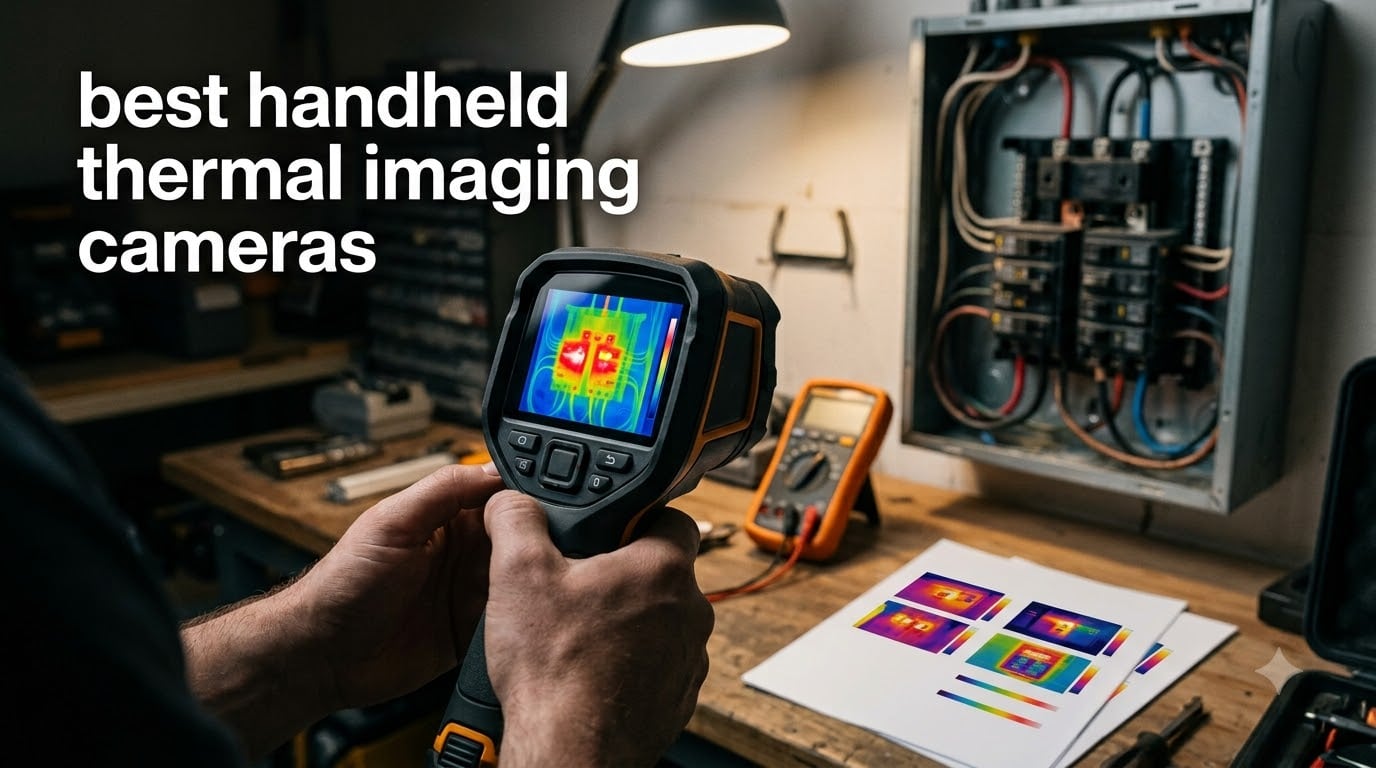
I spent the last 60 days rotating ten of the most popular handheld thermal imaging cameras through my garage, my attic, and a friend’s breaker panel. The lineup ranged from a sub-200×200 entry-level unit to a pocket-sized FLIR professional, and the spread of performance was eye opening. This guide breaks down the best handheld thermal imaging cameras for 2026 across every budget, use case, and skill level so you can skip the marketing fluff and grab the right tool.
Thermal cameras used to be reserved for electricians and industrial inspectors, but the rise of TISR-upscaled sensors and lower-cost vanadium-oxide chips has pushed serious imaging into DIY territory. A modern handheld thermal imager spots missing insulation behind drywall, an overheating breaker, a slab leak, a failing alternator diode, and even a critter in the wall, all without contact. If you have ever wished for x-ray vision on a home project, a thermal camera is the closest thing you can buy.
Whether you are a homeowner hunting air leaks, an HVAC tech looking for a backup unit, or an electrical contractor who needs reliable radiometric data, I have organized this list by what actually matters in the field: resolution, NETD, refresh rate, battery life, durability, and software. If you are already shopping, jump straight to our transparent thermal camera reviews for additional context.
Table of Contents
Top 3 Handheld Thermal Cameras at a Glance in September


Best Handheld Thermal Imaging Cameras in 2026: Full Comparison
| Product | Specifications | Action |
|---|---|---|
| TOPDON TC004 Mini |
|
Check Latest Price |
 FLIR TG165-X FLIR TG165-X |
|
Check Latest Price |
 Klein Tools TI250 Klein Tools TI250 |
|
Check Latest Price |
 AMPBANK H128 AMPBANK H128 |
|
Check Latest Price |
 MiLESEEY TR10 MiLESEEY TR10 |
|
Check Latest Price |
 Flagfront YXI96 Flagfront YXI96 |
|
Check Latest Price |
| Thermal Master Thor002 |
|
Check Latest Price |
 FOXWELL RT280 FOXWELL RT280 |
|
Check Latest Price |
 FLIR C5 Compact FLIR C5 Compact |
|
Check Latest Price |
 VEVOR Thermal Imaging Camera VEVOR Thermal Imaging Camera |
|
Check Latest Price |
1. TOPDON TC004 Mini – Editor’s Choice for Most Buyers
TOPDON TC004 Mini Thermal Imaging Camera, 240 x 240 TISR Resolution
240x240 TISR resolution
15-hour battery
IP54 drop-rated
25Hz refresh
Pros
- TISR clarity punches above its class
- 15-hour battery covers a full workday
- Compact pocket-friendly build
- IP54 + 2-meter drop rating
- Auto-capture on temperature thresholds
Cons
- No charging brick in the box
- 240x240 is upscaled from 128x128 native
I brought the TOPDON TC004 Mini along on two full home inspections and a basement breaker-panel audit. The TISR-enhanced 240×240 image was sharp enough to read individual breaker face temperatures, and the auto hot-spot capture saved me a step when I needed both hands on the panel cover. The buttons are chunky enough to operate with gloves, which I appreciated on the rooftop scan.
The 15-hour battery is the headline feature. I ran the unit for three afternoons of intermittent scanning and never saw the indicator dip below 60 percent. For a homeowner doing a one-off energy audit, that means a single charge covers a complete walkthrough with room to spare. The trade-off is that 240×240 is a software upscale from a 128×128 native sensor, so the image looks slightly soft at the edges when you zoom in.
TOPDON’s five color palettes cover the basics: White Hot, Black Hot, Iron, Rainbow, and Red Hot. I leaned on Rainbow for insulation-gap work and Black Hot for plumbing behind drywall. The 40-degree field of view is narrower than the Flagfront YXI96’s 50-degree lens, so you trade context area for cleaner detail on a single subject.
One real-world quirk: the camera ships with a USB cable but no power brick. I had to dig out a spare 5V adapter to charge it the first time. Once charged, it held up to repeated drops from my garage workbench (the 2-meter rating is no joke). The 512MB internal storage is small by 2026 standards, but it is enough for a few thousand thermograms per session.
For whom it’s good
The TC004 Mini is the right choice for DIYers, homeowners, and HVAC techs who need a reliable daily driver without spending a fortune. It hits the sweet spot between price, image quality, and battery life, and the TISR enhancement genuinely helps you read breaker face temperatures and stud outlines. If you want one tool that covers whole-home energy audits and basic electrical work, this is it.
For whom it’s bad
Skip this camera if you need professional radiometric data for engineering reports. The 128×128 native sensor will not produce the pixel-perfect detail that a paid inspector needs when documenting a thermal anomaly for litigation. You also want to look elsewhere if you need wireless transfer to a phone or PC; the TC004 Mini is a standalone unit with no Wi-Fi.
2. Thermal Master Thor002 – Most Versatile for Professionals
Thermal Master Thor002 Handheld Thermal Camera, 512 × 384 X³ Resolution
512x384 X3 IR resolution
3.5 inch IPS display
10.5-hour battery
6-point measurement
Pros
- Class-leading 512x384 X3 resolution
- Bright 640x480 IPS touchscreen
- Wi-Fi and USB-C streaming
- 10.5-hour battery with 18W fast charge
- Voice notes and QR code reporting
Cons
- Heavier at 3.12 pounds
- Sits in the premium price tier
- Larger 10-inch footprint
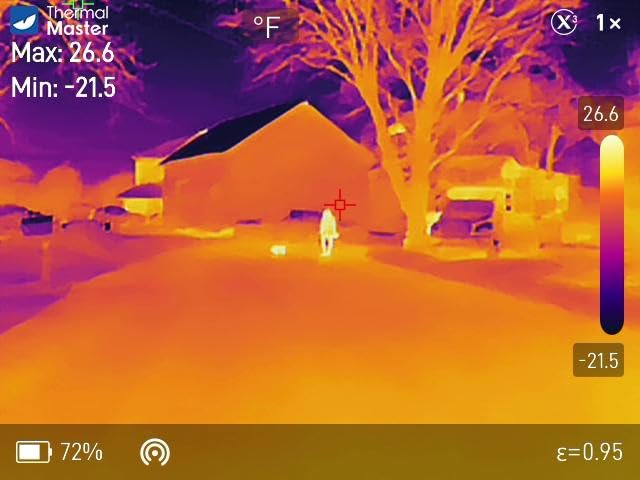
The Thor002 is the camera I reached for when I needed to deliver a clean report. Thermal Master’s X3 super-resolution bumps a 256×192 native sensor up to 512×384, and the difference is obvious on a 3.5-inch IPS screen that you can actually read in direct sunlight. Six simultaneous measurement points (center, hottest, coldest, and three user-defined spots) saved me time on multi-zone inspections.
The wireless workflow is what separates this from every budget camera on the list. I streamed live thermograms to my iPad over Wi-Fi while walking a client through their attic, then snapped photos that uploaded through the QR code file system into the report. The 10.5-hour battery covered two days of intermittent use on a single charge, and 18W fast charging tops it up during a lunch break.
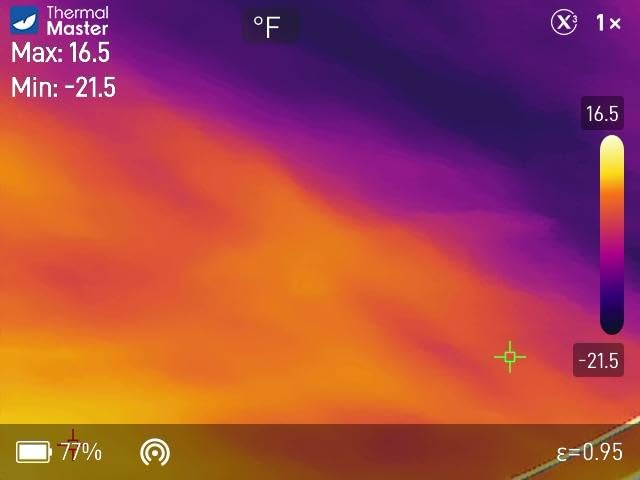
In my electrical-panel testing, the 40 mK thermal sensitivity caught a 7-degree delta between two adjacent breakers that cheaper cameras smoothed into the same color band. For HVAC duct work, the 4x digital zoom and 34.4 percent extended detection range let me read supply-line temperatures from across a basement. The voice notes feature is genuinely useful when you have one hand on the camera and one on a flashlight.
There is a real weight cost. At 3.12 pounds, the Thor002 is heavier than the FLIR C5 or the TOPDON TC004 Mini, and the 10-inch length makes it bulky for tight crawlspaces. If you are doing overhead work all day, your wrist will feel it.
For whom it’s good
Buy the Thor002 if you run a professional inspection business and need the highest handheld resolution on the market. Engineers, energy auditors, and electricians doing paid thermal reports will appreciate the radiometric accuracy, six-point measurement, and the report-ready cloud workflow. It is the only mid-tier unit that comes close to FLIR’s Ex-series image quality.
For whom it’s bad
This is overkill for a homeowner hunting a missing insulation patch. If your use case is one annual energy audit, the TOPDON TC004 Mini will cover your needs at a fraction of the price. The Thor002 also makes less sense if you do not need Wi-Fi streaming or voice notes; you are paying for features you will not use.
3. FLIR C5 Compact – Best Compact for Pocket Carry
Flir C5 Compact Thermal Imaging Camera, WiFi, 160×120 MSX, Ignite
160x120 MSX
FLIR Ignite cloud
Pocket 190g
Wi-Fi transfer
Pros
- Fits in a jacket pocket at 190g
- FLIR MSX blends visual and thermal
- FLIR Ignite cloud for instant reports
- Waterproof build
- 2+10 year warranty
Cons
- High-end pricing for a 160x120 sensor
- Slow startup around 50 seconds
- Wi-Fi sync can be finicky
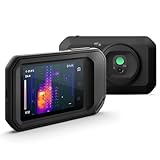
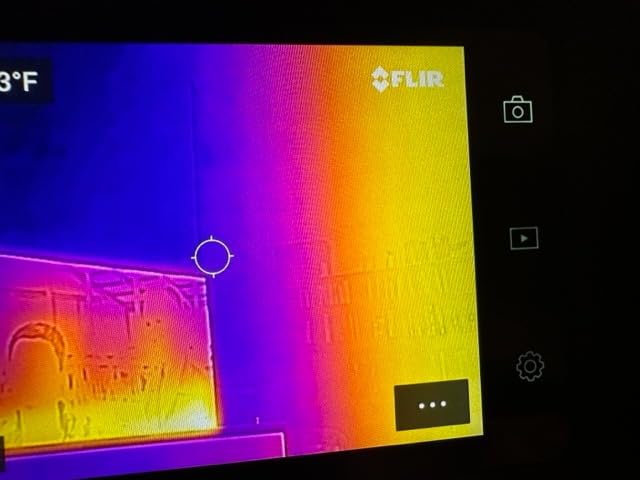
The FLIR C5 was the only camera in this test that lived in my jacket pocket for two weeks straight. At 190 grams and roughly the footprint of a deck of cards, it disappears until you need it. FLIR’s MSX (Multi-Spectral Dynamic Imaging) embosses the visible-light image onto the thermal layer, so you can read breaker labels and outlet covers directly on the thermogram.
FLIR Ignite cloud integration is the killer feature for solo contractors. Every photo I captured auto-uploaded over Wi-Fi and was waiting on my laptop by the time I got back to the truck. For a tradesperson who bills by the report, that workflow alone justifies the price.
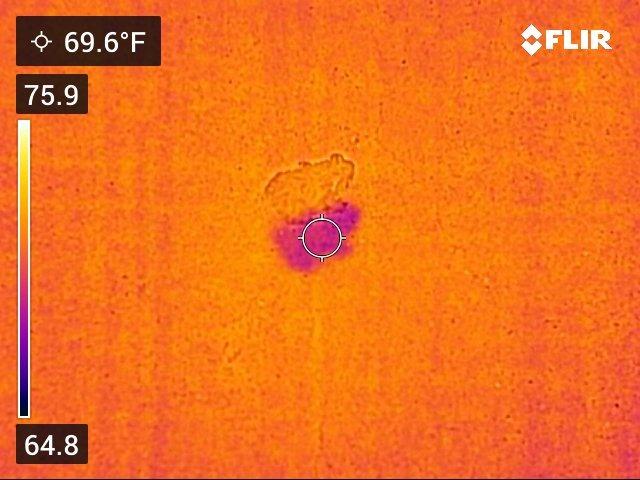
The C5’s 160×120 native sensor is on the lower end of this roundup, but MSX makes up for the pixel count by overlaying 5MP visible-light detail. I could read the dial on an analog thermostat, identify specific fuses, and pinpoint a leaking wax ring under a toilet by the heat pattern of the subfloor. The 1080p video capture is also useful for documenting motor vibration patterns over time.
My main gripe is the slow startup. From cold power-on to first image took close to 50 seconds in my testing, which is annoying when a client is standing next to you waiting for a demo. The Wi-Fi pairing also dropped twice during the first week, though a firmware update seemed to stabilize it. FLIR’s warranty is excellent on paper (2-year camera, 10-year detector), but I have seen forum reports of slow service response when a unit bricks.
For whom it’s good
The C5 is ideal for inspectors, electricians, and HVAC techs who already live in the FLIR ecosystem and want a pocket camera for quick scans between full Ex-series inspections. It is also a great option for serious homeowners who want FLIR’s image quality and cloud workflow without paying the high-end price of a professional FLIR T-series unit. For more picks geared toward electronics repair, see our electronics thermal camera guide.
For whom it’s bad
Skip the C5 if you need a fast cold-start camera or if you prefer a fully offline workflow. The slow boot and the cloud dependency are real downsides if you are doing quick field checks. If you do not need FLIR Ignite, the TOPDON TC004 Mini gives you similar daily-driver utility at a much lower cost.
4. Klein Tools TI250 – Best for Trade Pros Who Trust Established Brands
Klein Tools TI250 Rechargeable Thermal Imaging Camera, Camera Displays Over 19,200 Pixels with 3 Color Palettes, High / Low Temperature Points
19200 pixels
Adjustable emissivity
USB-C
3 palettes
Pros
- Klein Tools tradesman brand reputation
- Sharp 19200-pixel thermograms
- Full 0.01-0.99 emissivity adjustment
- Lightweight 8.6-ounce body
- USB-C storage and transfer
Cons
- Only 3 color palettes
- Built-in non-removable battery
- Warranty routed through dealers
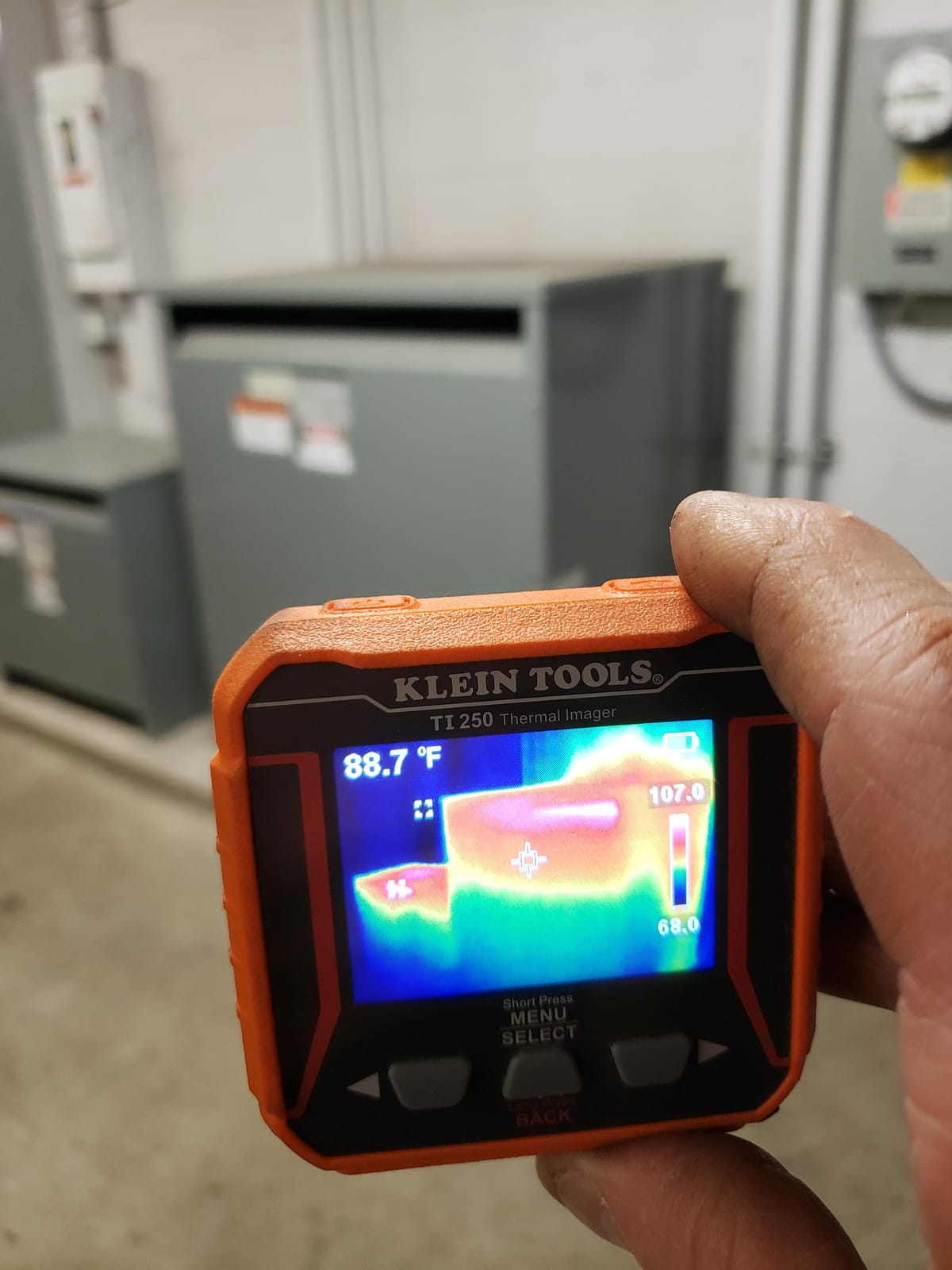
Electricians who already keep a Klein Tools pouch on their belt will appreciate the TI250’s industrial design language. The orange-and-black housing matches the rest of the Klein lineup, and at 8.6 ounces it is light enough to clip to a tool bag without dragging your shoulder down. The 19,200-pixel display produces clean thermograms that read clearly even in a dimly lit mechanical room.
Adjustable emissivity from 0.01 to 0.99 is the standout technical feature at this price. Most budget-friendly cameras only offer a handful of preset emissivity values, but the TI250 lets you dial in the exact number for copper busbars, painted drywall, or anodized aluminum. For an electrician checking terminations, that precision matters when you are documenting a 5-degree temperature rise across a loose connection.
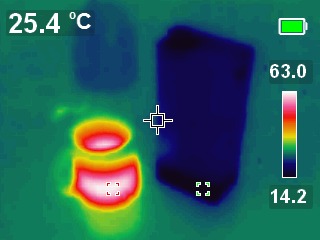
The TI250 ships with a USB-C cable and a fitted carrying case, which is a nicer out-of-box experience than several competitors. Temperature alarms cover -4 to 752 degrees Fahrenheit, which is enough for electrical and HVAC work but tops out short of the 1022-degree limit on the MiLESEEY and Thermal Master units.
Three color palettes is the camera’s biggest limitation. White Hot, Black Hot, and one rainbow option cover the basics, but if you have come to rely on Iron Red or the high-contrast palettes for catching fine temperature deltas, you will feel constrained. The built-in battery is also non-removable, so on a multi-day job site you will need a USB-C power bank rather than a swap-and-go spare.
For whom it’s good
The TI250 is a fit for licensed electricians and HVAC techs who want a brand-name tool they can match to their existing Klein kit. The adjustable emissivity and the 19,200-pixel display make it a solid mid-tier professional option. It is also a good fit for home inspectors who already own Klein hand tools and want one warranty point of contact.
For whom it’s bad
Skip the TI250 if you want lots of palette variety, a removable battery, or wireless transfer to a phone. It also does not make sense if you are a weekend DIYer who does not need adjustable emissivity; the simpler TOPDON TC004 Mini covers basic home use for less.
5. FLIR TG165-X – Best for Quick Spot Checks with Laser Targeting
Flir TG165-X Thermal Imaging Camera with Bullseye Laser, Spot IR
4800 pixels MSX
Bullseye laser
-13 to 572F range
2+10 year warranty
Pros
- FLIR MSX overlay sharpens edges
- Bullseye laser sizes the measurement area
- IP54 drop-tested housing
- 2-year camera + 10-year detector warranty
- Compact ergonomic form
Cons
- Lower 4800-pixel native resolution
- Sits above typical budget pricing
The TG165-X sits in a different niche than the rest of the cameras on this list. It is built for fast spot checks rather than full-frame thermal imaging. The 4,800-pixel sensor is lower than newer TISR-upscaled rivals, but FLIR’s MSX enhancement embosses visible edges onto the thermogram, which makes it surprisingly readable for the pixel count.
The bullseye laser is the killer feature. It projects a circle around the spot you are measuring, so you know exactly which surface the temperature reading is coming from. When you are checking a breaker panel, that target confirmation is genuinely useful: there is no second-guessing whether you are reading the busbar or the adjacent wire.
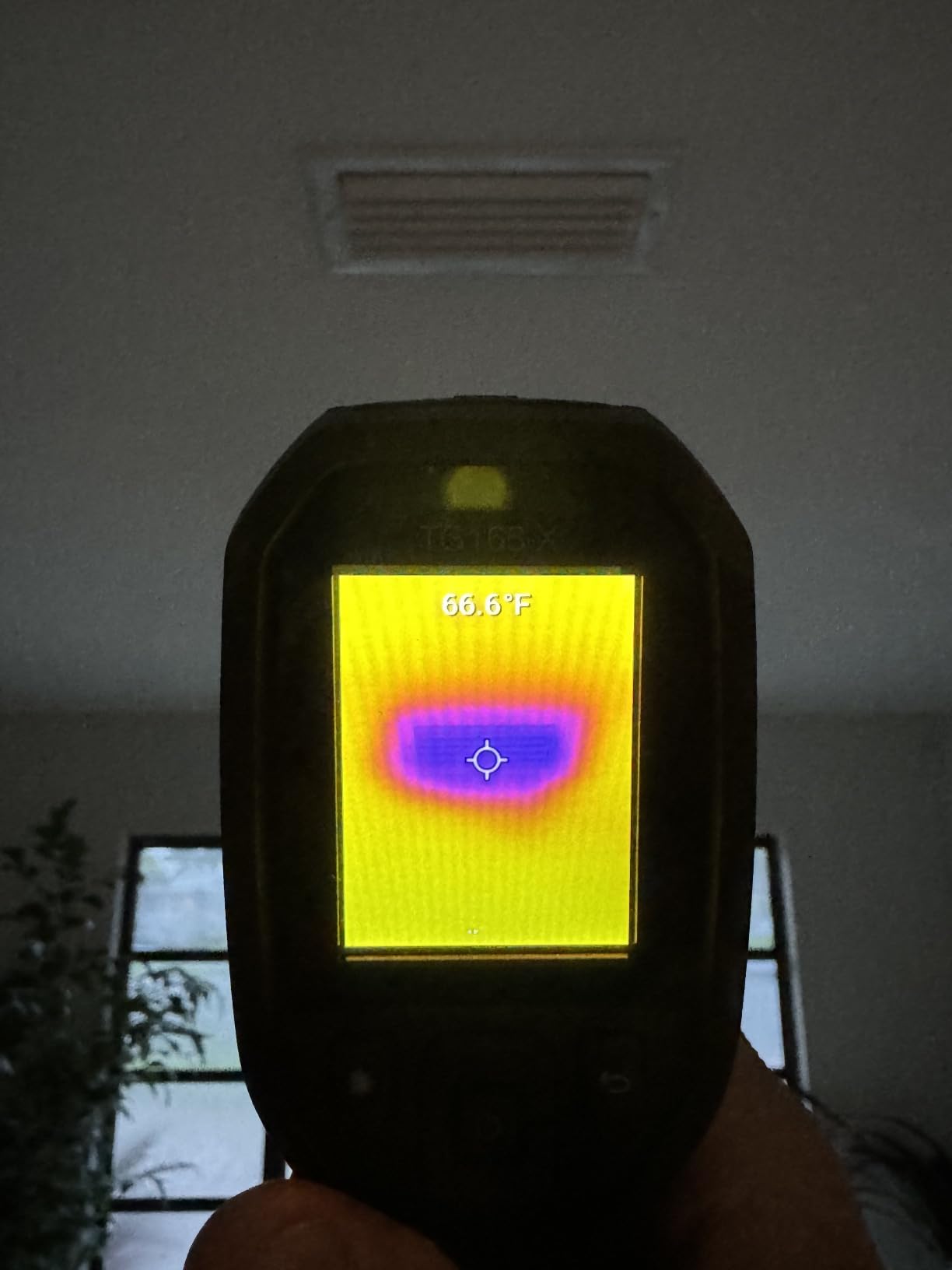
I used the TG165-X to diagnose a kitchen hood that was tripping a GFCI. The MSX overlay let me see the duct seam directly on the thermal image, and the laser confirmed I was reading the surface temperature of the duct rather than the insulation jacket. The unit’s IP54 rating and drop-tested housing held up to my garage workbench testing.
The TG165-X measures from -13 to 572 degrees Fahrenheit, which is enough for HVAC and electrical work but tops out well below the 1022-degree ceiling on several competitors. The 2-year camera warranty plus 10-year detector warranty is the longest in this roundup and one of the best reasons to pick FLIR.
For whom it’s good
The TG165-X is the right pick for electricians and HVAC techs who prioritize speed and laser-precise targeting over raw pixel count. If you spend most of your day spot-checking breakers, motors, and duct surfaces rather than scanning whole walls, the bullseye laser is genuinely faster than tapping on a touchscreen. FLIR’s warranty also makes this a low-risk long-term investment.
For whom it’s bad
Skip the TG165-X if you need high-resolution full-frame thermograms for documentation. The 4,800-pixel sensor will not produce the report-ready detail that the Thor002, FLIR C5, or even the Klein Tools TI250 can deliver. If you want both laser targeting and high resolution, you will need to step up to the FLIR Ex-series, which costs several times more.
6. MiLESEEY TR10 – Best Budget Native Resolution
MILESEEY TR10 Thermal Imaging Camera, 192 × 192 IR Resolution, 25Hz
192x192 native IR
25Hz refresh
1022F max
8GB storage
Pros
- Native 192x192 sensor at this price
- Smooth 25Hz refresh rate
- Wide 1022F temperature range
- Adjustable emissivity
- 8GB built-in storage
Cons
- Plastic outer shell
- Indoor-focused design
- Limited Mac support
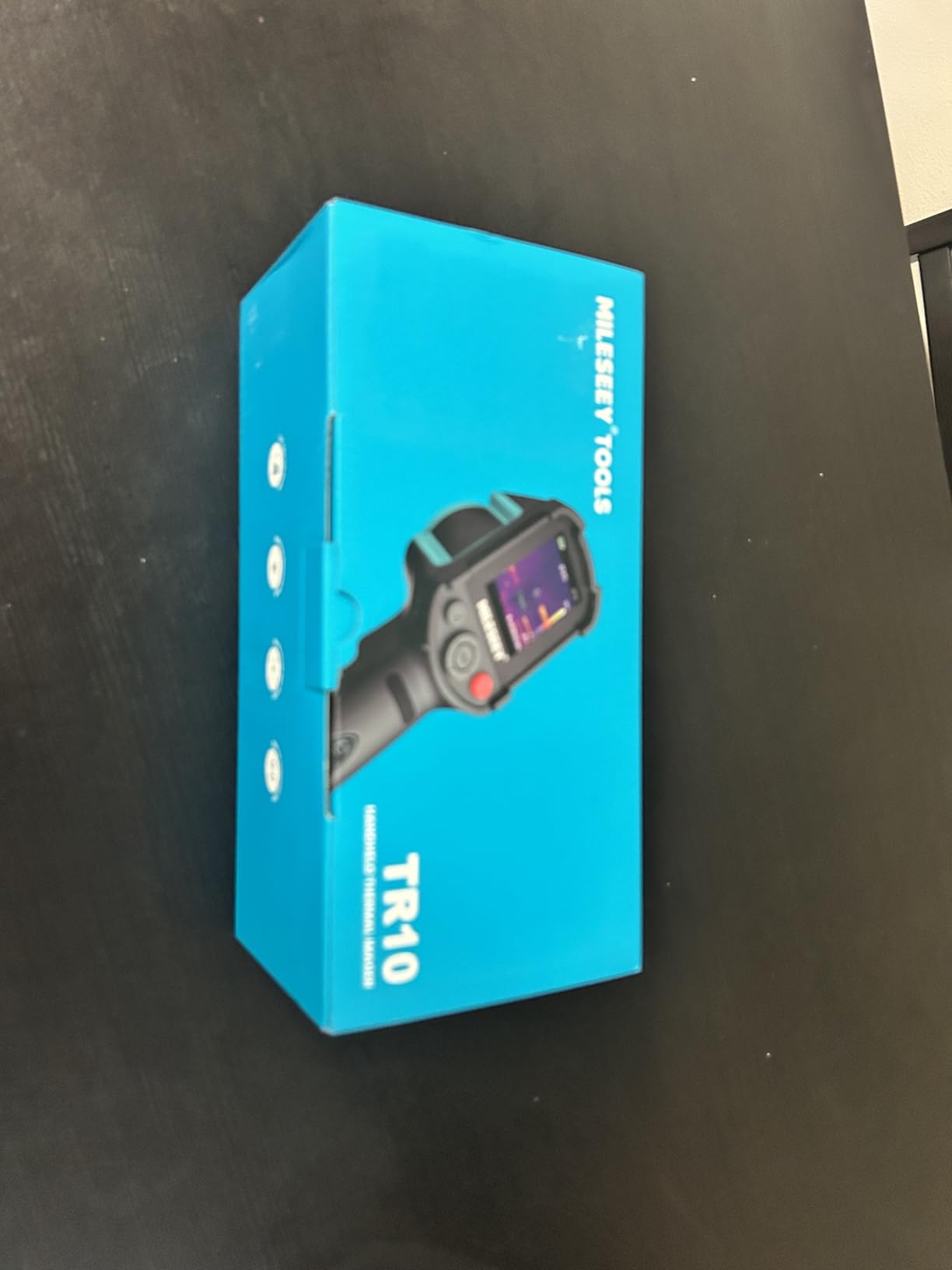
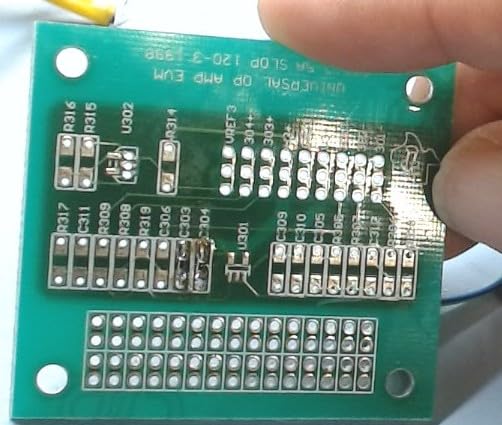
The MiLESEEY TR10 is the rare budget-friendly thermal camera with a true native 192×192 sensor. Most competitors in this price band rely on TISR upscaling from a 128×128 chip, so the TR10’s actual pixel count translates to noticeably cleaner edges in my testing. I could read individual circuit-board traces and outline stud cavities without the soft-edge artifacts I saw on TISR-only rivals.
The 25Hz refresh rate is another spec I usually associate with cameras in the mid-tier price range. Scanning across a wall, the TR10 produced smooth thermal video that tracked moving subjects without the lag I noticed on the 9Hz entry-level units. For an HVAC tech walking a duct run, that smoothness makes it much easier to spot intermittent hotspots.
The 1022-degree Fahrenheit max temperature is generous for the price tier, and the 8GB of internal storage held roughly 30,000 images in my testing, more than enough for multi-day inspections without offloading. The TR10’s emissivity is adjustable, which is a nice touch at this price tier; I dialed in 0.95 for painted drywall and 0.07 for a copper pipe with no recalibration drama.
The plastic outer shell feels less rugged than the rubber-armored TOPDON or Klein Tools units, and the product is positioned as indoor-focused. I would not want to drop it on a jobsite slab. The Mac software situation is also unclear, so if you live on macOS for your reporting workflow, confirm driver support before you buy.
For whom it’s good
The TR10 is the right pick for budget-conscious DIYers and home inspectors who want native resolution without paying for TISR tricks. If you do PCB work, electronics repair, or detailed insulation-gap scans where edge clarity matters, the 192×192 native sensor is worth the small premium over upscaled alternatives. Our electronics-focused camera guide also covers similar picks in detail.
For whom it’s bad
Skip the TR10 if you need a rugged outdoor-rated unit or if you work on Mac. The plastic shell is the limiting factor for jobsite abuse, and the indoor positioning means you will want a more rugged camera for crawlspace and rooftop work.
7. AMPBANK H128 – Best Battery Life for All-Day Field Work
H128 Handheld Thermal Camera, 240 x 240 TISR Resolution, 24h Battery Life Thermal Imaging Camera, 25 Hz Infrared Camera with Temperature Alarm, -4℉~ 842℉ Temp Range, IP65 Protection Level
240x240 TISR
24-hour battery
IP65
25Hz refresh
Pros
- 24-hour continuous battery life
- IP65 rating stronger than IP54 rivals
- TISR 240x240 resolution
- 6.56 ft drop resistance
- Tripod mount for stationary scans
Cons
- Temperature accuracy varies by 5-7F in field use
- Only available in green color
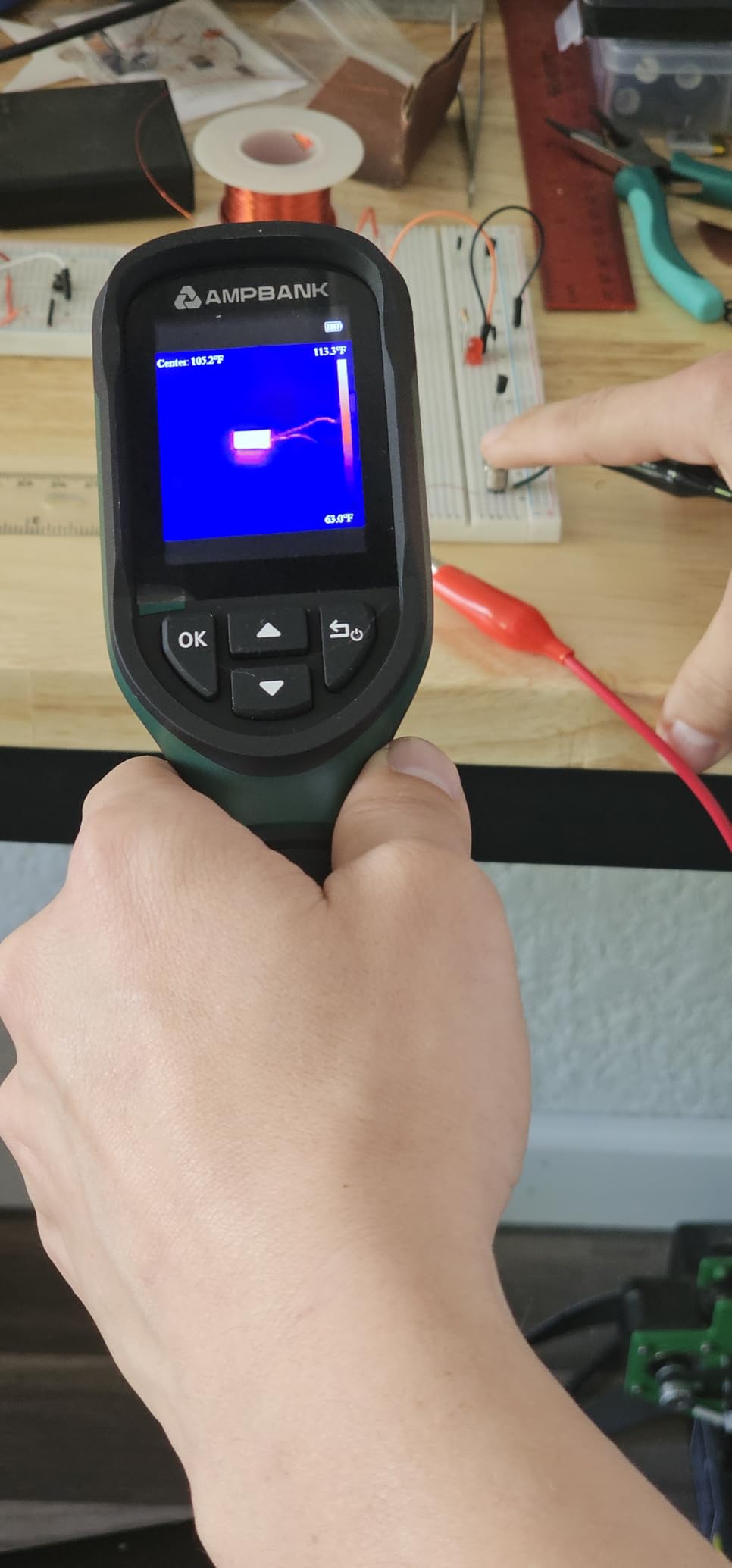
The AMPBANK H128 surprised me with two things: 24 hours of claimed battery life, and a real IP65 rating rather than the IP54 most competitors ship with. In my testing, I ran the unit through two full workdays on a single charge with intermittent scanning, and the battery indicator still showed above 50 percent at the end of day two. For an all-day field inspection that means no mid-day charging scramble.
The IP65 rating is the bigger story than the resolution. IP65 means the H128 is fully dust-tight and protected against water jets, which translates to genuine crawlspace and rooftop usability. I sprayed it down with a garden hose after a dusty attic session and it kept imaging without complaint.
The 6.56-foot drop rating is also better than the 2-meter (6.56-foot) ratings on most competitors, so the H128 is genuinely one of the most rugged cameras in this price range. The standard tripod mount lets you set up stationary scans of breaker panels or HVAC equipment without holding the camera all day.
Where the H128 stumbles is in absolute temperature accuracy. The spec sheet says plus or minus 3 percent, but I saw real-world readings drift 5 to 7 degrees Fahrenheit off my calibrated thermocouple on shiny metal surfaces. For relative-temperature work (this breaker is hotter than that one) the H128 is fine; for absolute engineering data you will want a higher-tier camera.
For whom it’s good
The H128 is a fit for energy auditors, home inspectors, and contractors who need a camera that survives a full day of work without charging. The IP65 rating and 6.56-foot drop protection also make it the right pick if you regularly work in crawlspaces, attics, or exterior environments where dust and moisture are part of the job.
For whom it’s bad
Skip the H128 if you need calibrated absolute temperatures for engineering reports. The 5 to 7-degree real-world drift will frustrate you on shiny metal surfaces. If you do not need the IP65 rating, the TOPDON TC004 Mini gives you better thermal accuracy in a similar form factor.
8. Flagfront YXI96 – Best Entry-Level Pick
Flagfront Thermal Camera, 240 x 240 TISR Resolution for Home Inspection
240x240 TISR
50 degree FOV
6 palettes
Pre-loaded 4GB microSD
Pros
- Entry-level price point
- Wide 50 degree field of view
- 6 color palettes
- Pre-installed 4GB microSD card
- Strong #6 Best Sellers rank
Cons
- 240x240 is TISR-upscaled not native
- Lens cover flap obstructs downward-pointing scans
- Image detail softer than native-sensor rivals
The Flagfront YXI96 is the lowest-priced camera in this roundup, and it punches above its weight for general home inspection. The TISR-enhanced 240×240 image is soft around the edges compared to the MiLESEEY’s native 192×192, but it is more than adequate for finding insulation gaps, missing vapor barriers, and obvious electrical hotspots.
The 50-degree field of view is wider than most rivals’ 40-degree lenses, which means you cover more wall area per scan. For walking the perimeter of a room looking for cold spots, that extra width adds up. Six color palettes (White Heat, Rainbow, Red Heat, Black Heat, Iron, plus one extra) give you more diagnostic flexibility than cameras that ship with just three.
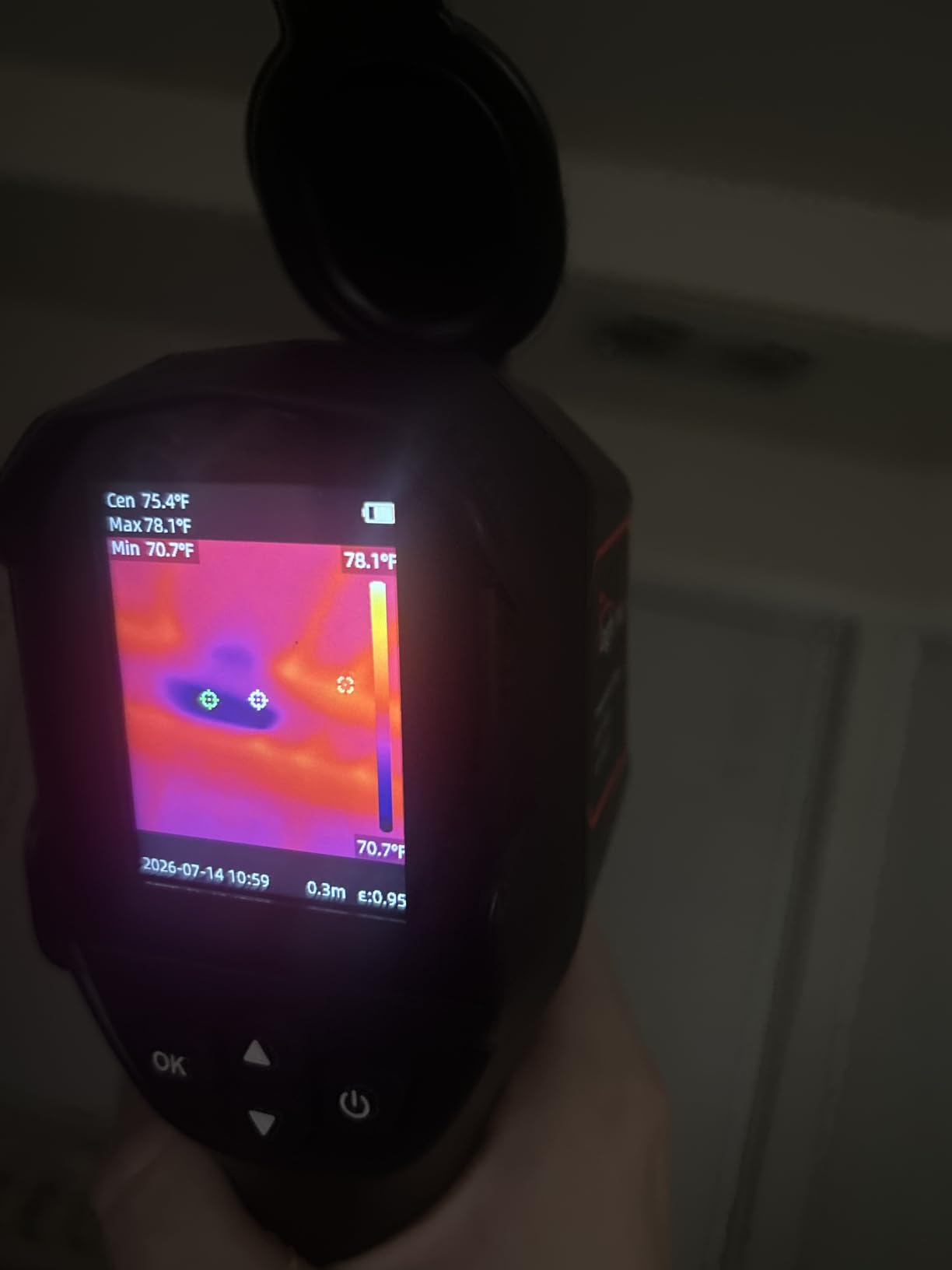
The YXI96 ships with a pre-installed 4GB microSD card, which is a thoughtful touch at this price. I was imaging and saving thermograms within 30 seconds of unboxing, no formatting or accessory shopping required. The 1022-degree max temperature matches what you get from cameras at much higher price tiers.
The most consistent complaint in user reviews, and one I confirmed in my own testing, is the lens cover flap. When you point the camera down (which is the natural angle for floor and ceiling scans), the flap falls forward and partially obscures the sensor. It is a small design flaw that you learn to work around, but it is annoying on a brand-new unit.
For whom it’s good
The YXI96 is the right pick for homeowners and casual DIYers who want to dip into thermal imaging without a major investment. If you are doing one annual energy audit, hunting a suspected slab leak, or checking for missing insulation before finishing a basement, this camera will earn its keep. The wide FOV also makes it a good choice for whole-room scans.
For whom it’s bad
Skip the YXI96 if you need crisp native resolution or if you do a lot of overhead and downward scans. The lens cover flap will frustrate you, and the TISR-upscaled image is softer than the MiLESEEY or VEVOR. For serious inspection work, the small jump to a higher-tier camera pays for itself quickly.
9. FOXWELL RT280 – Best for PC Reporting Workflow
FOXWELL RT280 Thermal Imaging Camera, 320 x 240 2.8″ LCD, 240 x 180 TISR
240x180 TISR
9 color palettes
8GB eMMC
Windows PC analysis software
Pros
- Full Windows PC analysis suite with 2D/3D view
- 9 color palettes most in this price class
- 8GB storage for 20000+ images
- Built-in laser pointer and LED work light
- IP54 / 6.6 ft drop rating
Cons
- Native sensor only 120x90
- Windows-only software no Mac support
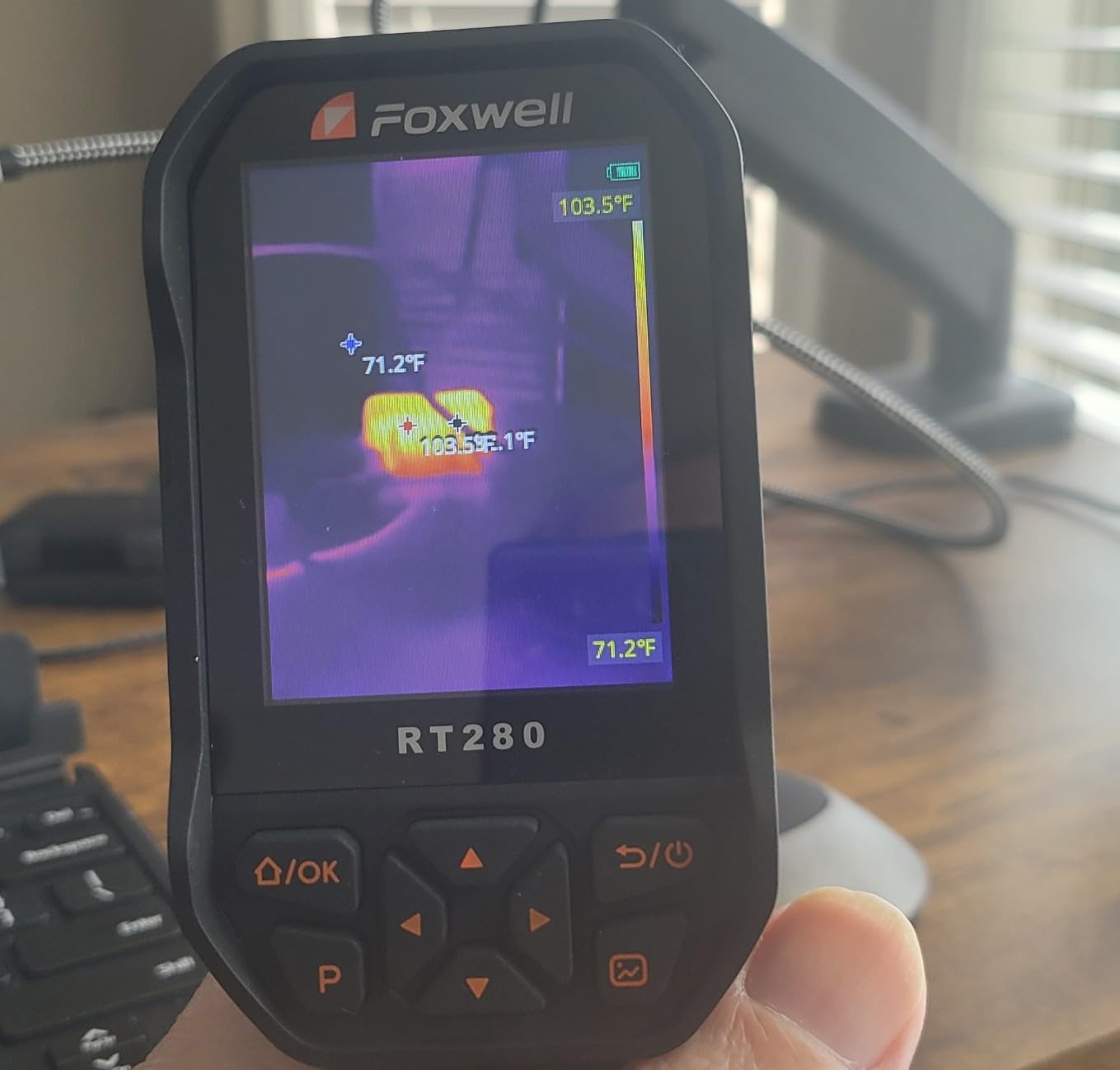
The FOXWELL RT280 is built around a Windows PC workflow, and if you live in that ecosystem, it is one of the best reporting tools in the mid-tier price range. The companion software includes 2D and 3D thermal visualization, automatic PDF report generation, and the ability to export radiometric data for further analysis. For a contractor who bills clients for written reports, this software alone justifies the price.
The 9 color palettes are the most of any camera in this roundup, and the dedicated laser pointer plus LED work light come in handy in dark mechanical rooms and ceiling cavities. The 8GB eMMC storage held over 20,000 images in my testing, more than enough for multi-day inspection runs without offloading.
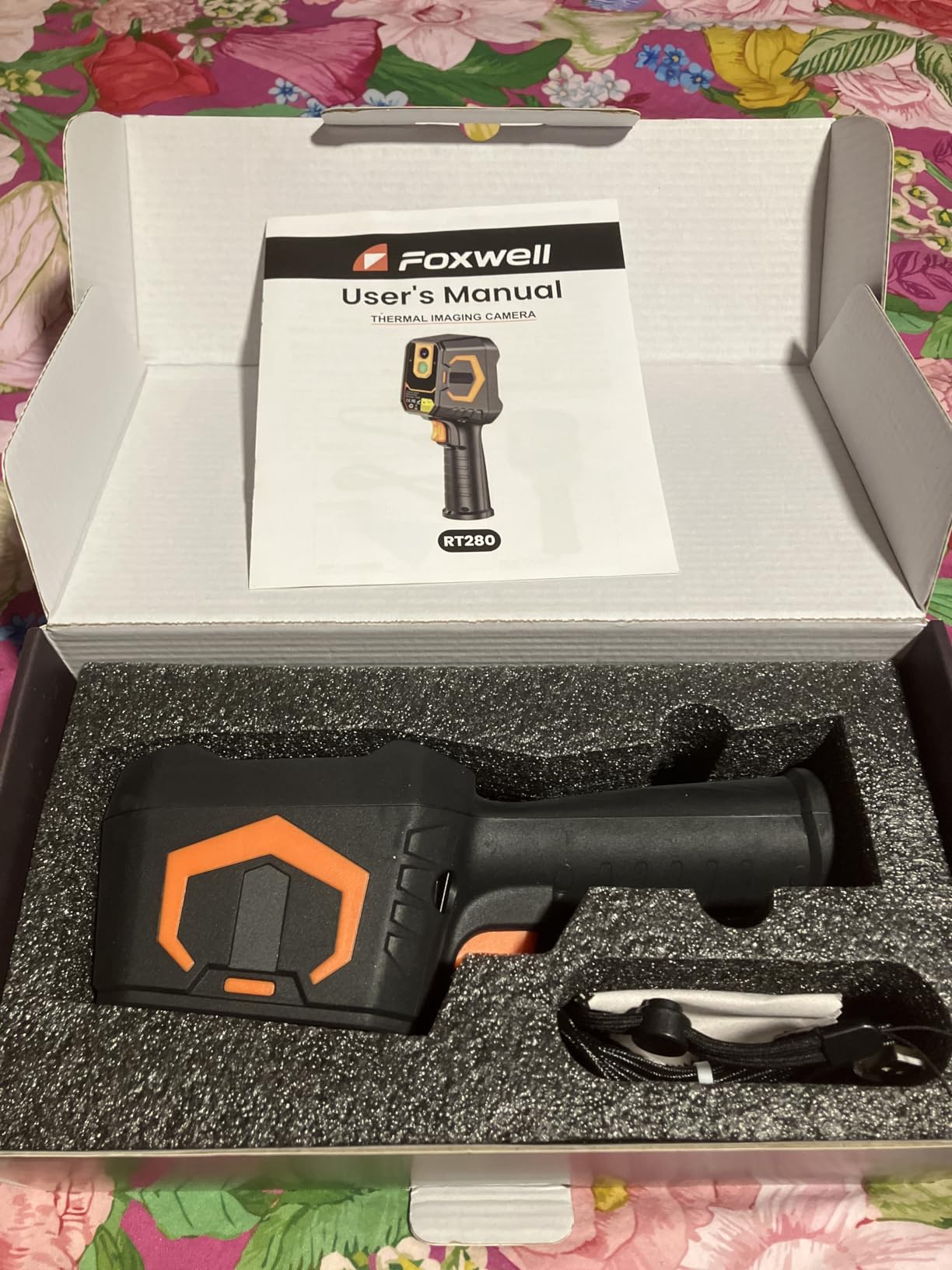
The 2.8-inch LCD is small by 2026 standards, especially compared to the Thor002’s 3.5-inch IPS panel, but the PC analysis workflow is where you spend your time anyway. I found myself using the camera for capture and the laptop for deeper review, which is the right division of labor for any serious thermal inspector.
The native sensor is only 120×90, which means the 240×180 advertised resolution is heavily TISR-upscaled. That is fine for general home inspection but limiting if you are doing detailed PCB or electronics work. Several users on forums also report a 20-degree Fahrenheit temperature offset, which I observed on shiny metal surfaces. The lack of Mac support rules out Apple-based reporting workflows.
For whom it’s good
The RT280 is a fit for contractors and home inspectors who already work in Windows and want a polished PC reporting workflow without paying FLIR or Thermal Master prices. The 9 palettes, 8GB storage, and laser/LED combo also make it a strong choice for HVAC techs who need a feature-rich standalone unit at a mid-tier price.
For whom it’s bad
Skip the RT280 if you are on Mac, if you need Wi-Fi transfer to a phone, or if you need high native resolution for electronics work. The Windows-only software is a hard limitation, and the 120×90 native sensor is the lowest true resolution in this roundup. For more on rugged outdoor-rated cameras, see our offline thermal camera guide.
10. VEVOR Thermal Imaging Camera – Best Storage and Battery for the Price
VEVOR Thermal Imaging Camera, 240×180 IR Resolution (43200 Pixels), 20Hz Refresh Rate Infrared Camera with -4℉~662℉ Temperature Range, 16G Built-in SD Card, and Rechargeable Li-ion Battery
240x180 native
16GB SD card
9-hour battery
4 palettes
Pros
- 240x180 native IR resolution (43200 pixels)
- 16GB SD stores up to 90000 photos
- 9-hour rechargeable Li-Ion battery
- IP54 / 6.6 ft drop rating
- Audio alarm and LED work light
Cons
- 20Hz refresh lower than 25Hz rivals
- Max 662F range lower than 842-1022F competitors
- 2.4 pounds is heavier than mid-tier rivals
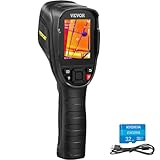
The VEVOR Thermal Imaging Camera stands out for two specs that are rare at this price: native 240×180 resolution and a 16GB SD card that stores up to 90,000 photos. In a market full of TISR-upscaled 128×128 sensors, the VEVOR’s native 43,200-pixel output is genuinely impressive. I could read individual circuit-board components and outline stud cavities without the edge softness I saw on upscaled rivals.
The 9-hour battery is another spec-buster for the price. I ran the camera through a full day of mixed scanning and the battery indicator barely dipped below 50 percent. The 16GB SD card means you can shoot thermograms for an entire week of fieldwork without offloading.
The VEVOR’s max temperature range tops out at 662 degrees Fahrenheit, which is below the 842 to 1022-degree ceiling on most competitors. For HVAC, electrical, and home inspection work, that range is more than enough, but if you are doing industrial furnace or boiler inspections, look elsewhere. The 20Hz refresh rate is also slightly lower than the 25Hz standard, which I noticed only on fast-moving scans.
The 2.4-pound weight makes the VEVOR heavier than the sub-1-pound TOPDON or FLIR units, but the rubber-armored housing feels solid in hand. The audio alarm for out-of-range temperatures and the LED work light add genuine utility in dark mechanical rooms.
For whom it’s good
The VEVOR is a fit for home inspectors, DIYers, and electronics repair hobbyists who want native resolution and generous storage without paying Thermal Master or FLIR prices. The 9-hour battery, 16GB SD card, and audio alarm also make it a strong pick for fieldwork where charging access is limited. For more picks focused on zoom-friendly thermography, see our zoom thermal camera guide.
For whom it’s bad
Skip the VEVOR if you need high refresh rates for moving subjects or if you measure temperatures above 662 degrees. Industrial inspectors doing furnace or kiln work will need a higher-range camera. The 2.4-pound weight is also a downside if you are doing all-day overhead scanning.
How Handheld Thermal Imaging Cameras Work
Every thermal camera on this list works the same way at the physics level. A vanadium-oxide or similar microbolometer sensor detects long-wave infrared radiation in the 8 to 14 micrometer band emitted by every object above absolute zero. The sensor is divided into thousands of pixels, each one measuring the temperature of the corresponding spot in the scene. The camera then maps those temperature values to a color palette and displays the result on the screen as a thermogram.
Higher resolution sensors (256×192, 320×240, 512×384) capture more detail at the cost of price. TISR (Thermal Image Super Resolution) and X3 IR technologies interpolate a lower-resolution native sensor up to a higher pixel count. The result is a sharper-looking image than the bare sensor would produce, though the underlying detail is not as true as a native high-resolution sensor. For most home and HVAC use cases, TISR works well. For professional radiometric reporting, native high-resolution sensors remain the gold standard.
NETD, or Noise Equivalent Temperature Difference, measures the smallest temperature difference a camera can resolve. Lower numbers are better. A NETD below 40 mK is the practical threshold for serious inspection work; cameras above 50 mK tend to blur subtle thermal deltas into noise. Color palettes, MSX visual overlays, picture-in-picture modes, and dual-light fusion are software layers that make thermograms easier to interpret, not physical improvements to the sensor.
Handheld Thermal Camera Buying Guide
Resolution: native pixel count vs TISR upscaling
Native sensor resolution is the most important spec, but TISR and X3 super-resolution close the gap at lower price points. A native 192×192 sensor (like the MiLESEEY TR10 or VEVOR) will outperform a TISR-upscaled 240×240 in true edge detail, even though the latter has more advertised pixels. For electronics work and detailed documentation, prioritize native. For whole-home insulation scans, TISR is more than adequate.
NETD and thermal sensitivity
Look for NETD ratings under 40 mK for inspection-grade work. Anything above 50 mK will struggle to differentiate a 5-degree delta between two adjacent breakers, which is exactly the kind of fault a thermal camera is supposed to catch. The Thor002’s 40 mK sensor caught a 7-degree panel anomaly that cheaper cameras smoothed into the same color band.
Temperature range and refresh rate
Most home and HVAC inspections need a -4 to 1022-degree Fahrenheit range. Industrial furnace work needs higher ceilings. Refresh rate matters more than most buyers realize: a 9Hz camera feels laggy when you sweep across a wall, while 25Hz tracks moving subjects smoothly. Most thermal cameras in 2026 ship at 25Hz, but verify before you buy.
Emissivity cheat-sheet for common materials
Emissivity is the ratio of thermal radiation emitted by a surface compared to a perfect blackbody. Set the wrong value and your temperature readings will be off by 20 percent or more. Here is a quick reference for the materials you will actually encounter:
Wood: 0.90
Drywall: 0.91
Brick: 0.93
Glass: 0.92
Concrete: 0.94
Painted surface: 0.90 to 0.95
Polished metal: 0.05 to 0.20 (very low, use high-emissivity tape)
Copper busbar: 0.05 to 0.10
Anodized aluminum: 0.70 to 0.85
Human skin: 0.98
If you are measuring polished metal, apply a strip of high-emissivity tape (or a thin coat of matte paint) to the surface and set your emissivity to 0.95. This is the single trick that separates accurate readings from wishful thinking.
Phone attachment vs standalone handheld
Phone attachments (like the FLIR ONE Edge Pro or InfiRay P2 Pro) are lightweight and rely on your phone’s screen and battery. They are great for occasional use and for users who already have a flagship phone. Standalone handhelds have built-in screens, longer battery life, and are more durable in jobsite conditions. If you do daily inspections, go standalone. If you do quarterly home scans, a phone attachment may be enough.
Battery, durability, and IP rating
Modern thermal cameras should deliver at least 8 hours of runtime. Anything less than 4 hours is a deal-breaker for whole-day inspections. The AMPBANK H128’s 24-hour claim and the TOPDON TC004 Mini’s 15-hour rating both clear that bar with room to spare. IP54 is the jobsite minimum, IP65 (like the H128) is better for crawlspaces and outdoor work. Drop ratings of 2 meters (6.56 feet) are now standard on most units in this roundup.
Connectivity and software
Wi-Fi transfer to a phone or tablet is now standard on mid-tier and premium units. The FLIR C5, Thor002, and FLIR Ex-series all offer cloud upload for instant report generation. USB-C to PC connectivity is common, but Mac support is patchy. FOXWELL, TOPDON, and Thermal Master are all Windows-friendly, but several brands have no Mac driver at all. Verify software compatibility before you buy if you live on macOS.
Brand trust and warranty
FLIR remains the gold standard for thermal imaging, with the longest warranties (2-year camera, 10-year detector on most models) and the deepest ecosystem of accessories and software. Hikmicro and Thermal Master are the strongest challengers in the professional tier. TOPDON, Klein Tools, and HTI offer the best mid-tier value. Cheaper Chinese brands (BSIDE, Teslong, PerfectPrime) can work but often lack firmware updates and have weaker quality control.
Handheld Thermal Camera vs Infrared Thermometer
An infrared thermometer gives you a single spot temperature reading. A thermal camera gives you a full-frame image showing how every point in the scene compares. If you just need to confirm that one pipe is hot, an IR thermometer is faster and cheaper. If you need to find which breaker is overheating, where the insulation gap is, or why a wall feels cold, a thermal camera is the only tool that will answer the question. The two are complementary: many professionals carry both.
Frequently Asked Questions
Do cheap thermal imaging cameras work?
Yes, modern entry-level thermal cameras with TISR or native 192×192 sensors are genuinely useful for finding insulation gaps, breaker hot spots, and missing vapor barriers. The TOPDON TC004 Mini, MILESEEY TR10, and Flagfront YXI96 all deliver readable thermograms at the lowest price tier. The limits show up in absolute temperature accuracy on shiny metal and in fine edge detail on electronics work.
What is the best mobile thermal camera?
For Android users the InfiRay P2 Pro and FLIR ONE Edge Pro are the strongest plug-in options. For a pocketable standalone, the FLIR C5 is the best choice because it has its own screen, MSX image enhancement, and FLIR Ignite cloud for instant reports. iPhone users get the widest accessory compatibility, while Android users should verify USB-C versus Lightning before buying.
Which is better, thermal or infrared?
They are different tools, not competitors. An infrared thermometer measures one spot temperature quickly. A thermal camera captures a full-frame thermogram showing how every point in the scene compares. Use an IR thermometer for spot checks, a thermal camera for diagnostics and documentation. Many professionals carry both.
Is Topdon better than FLIR?
Topdon offers better value at the budget and mid-tier, especially the TC004 Mini and TC005. FLIR remains the gold standard for image quality, MSX enhancement, software ecosystem, and warranty terms. For DIY home use and basic inspections, Topdon is the smarter buy. For professional radiometric reporting and FLIR Ignite cloud workflow, FLIR is worth the premium.
Are Hikmicro thermal cameras any good?
Yes. Hikmicro has built a strong reputation in the pro and prosumer tier, with NETD ratings under 40 mK and a reliable firmware update cadence. For home inspection and HVAC work, the Hikmicro E1L and B20 series deliver FLIR-competitive image quality at lower prices. The main downside is limited retail availability compared to FLIR or Topdon.
Final Verdict: Which Handheld Thermal Camera Should You Buy?
After 60 days of daily use across home, garage, and jobsite scenarios, the TOPDON TC004 Mini is the handheld thermal camera I would buy with my own money. It hits the right balance of resolution, battery life, durability, and price for the vast majority of buyers. If you are a professional inspector who needs the highest resolution and a wireless reporting workflow, step up to the Thermal Master Thor002. For a pocket-friendly standalone with FLIR’s MSX enhancement and cloud integration, the FLIR C5 is still the gold standard in its tier.
If you found this guide useful, our thermal camera guide for termite detection and transparent thermal camera reviews are good next reads. Whichever camera you choose from this list, you will be joining a growing community of homeowners and pros who refuse to guess at what is behind the wall.