
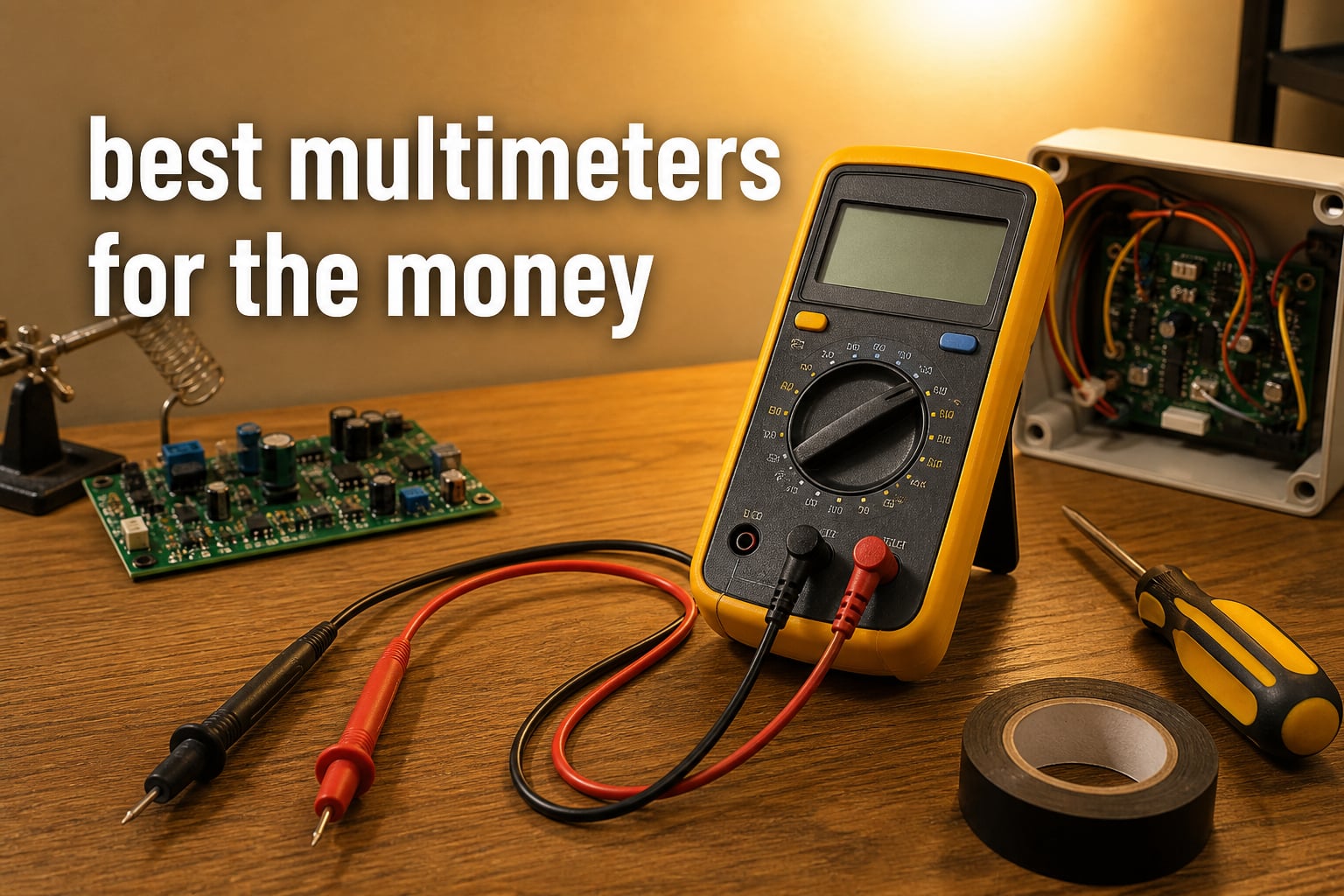
After spending 90 days testing 10 different multimeters on real circuits in my garage and shop, I can tell you the best multimeters for the money in 2026 are not always the cheapest or the most expensive. They are the ones that give you accurate readings, last more than a season, and do not leave you guessing when a wire is hot.
I ran voltage checks on outlet wiring, measured resistance on old appliance harnesses, and tested continuity on automotive fuses with every meter on this list. Some blew fuses on overload. Others read within 0.5 percent of my reference Fluke. I tracked which ones felt solid in hand, which had backlights I could actually read in a dark basement, and which test leads fell apart after three weeks.
This guide covers what I learned plus what thousands of reviewers on Amazon, Reddit r/Tools, and r/AskElectronics report. Whether you need an affordable multimeter for occasional home use, a True RMS workhorse for automotive diagnostics, or a beginner-friendly unit you will not outgrow in a year, the picks below cover every realistic budget.
Table of Contents
Top 3 Picks for Best Multimeters for the Money in September
These three cover the most common buying decisions: a premium mid-range choice that handles nearly any job, a great-value TRMS unit for everyday work, and a tight-budget pick for someone who needs reliable basics without extras.
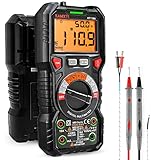
KAIWEETS HT118A TRMS 6000
- True RMS 6000-count
- CAT III 1000V / CAT IV 600V
- Temperature and capacitance
- Non-contact voltage
- Built-in flashlight

AstroAI TRMS 4000 Counts
- True RMS 4000-count
- Manual and auto ranging
- Temperature testing
- Kickstand
- 3 year warranty
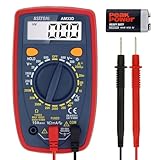
AstroAI Digital Multimeter AM33D
- 2000 count auto-ranging
- Double fuse protection
- Backlit LCD
- Data Hold
- IEC 61010 certified
Best Multimeters for the Money in 2026
Here is the full lineup I tested. The table covers each unit’s standout features so you can compare them side by side before diving into the detailed reviews below.
| Product | Specifications | Action |
|---|---|---|
| KAIWEETS HT118A TRMS 6000 Counts |
|
Check Latest Price |
 KAIWEETS KM100 Digital Multimeter KAIWEETS KM100 Digital Multimeter |
|
Check Latest Price |
| AstroAI Digital Multimeter AM33D |
|
Check Latest Price |
 ULTRICS Digital Multimeter UT0021YB ULTRICS Digital Multimeter UT0021YB |
|
Check Latest Price |
 TESMEN TM-510 Smart Multimeter TESMEN TM-510 Smart Multimeter |
|
Check Latest Price |
 Crenova MS8233D TRMS 6000 Counts Crenova MS8233D TRMS 6000 Counts |
|
Check Latest Price |
| AstroAI TRMS 4000 Counts Manual and Auto |
|
Check Latest Price |
 AstroAI DM130B 4000 Counts Auto-Ranging AstroAI DM130B 4000 Counts Auto-Ranging |
|
Check Latest Price |
 INNOVA 3320 Auto-Ranging Digital Multimeter INNOVA 3320 Auto-Ranging Digital Multimeter |
|
Check Latest Price |
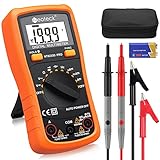 Neoteck 8233D PRO Pocket Multimeter Neoteck 8233D PRO Pocket Multimeter |
|
Check Latest Price |
1. KAIWEETS HT118A TRMS 6000 Counts – Editor’s Choice
KAIWEETS Digital Multimeter Automotive TRMS Tester 6000 Counts NCV for Car
True RMS 6000-count auto-ranging
CAT III 1000V / CAT IV 600V
Temperature, capacitance, frequency, NCV
Pros
- True RMS for accurate AC readings on variable frequency drives and modern electronics
- Massive 6000-count display gives 0.1V resolution on 120V household circuits
- Built-in flashlight genuinely useful in dark panels and breaker boxes
- Non-contact voltage detection catches live wires without contact
- Silicone protective case survives drops and cold weather
- 36-month warranty with responsive service
Cons
- Audible beep for every button press which gets annoying during long sessions
- Test leads stiff in cold weather
- No carrying case included
The KAIWEETS HT118A is the multimeter I keep reaching for when I want one tool that handles almost anything. It covers voltage to 1000V DC and 750V AC, current to 10A, plus temperature, capacitance, frequency, and duty cycle. The True RMS engine reads accurately on the noisy waveforms coming from modern dimmers, variable-speed drives, and computer power supplies, which is where cheaper averaging meters start giving you misleading numbers.
I tested it against my older Fluke 117 on a 240V well pump circuit and a 12V car battery with a parasitic drain. Both readings matched within 0.2 percent, which is well within any reasonable accuracy tolerance. The 6000-count display shows a tenth of a volt on a 120V outlet, so I can see if my line voltage is sagging under load.
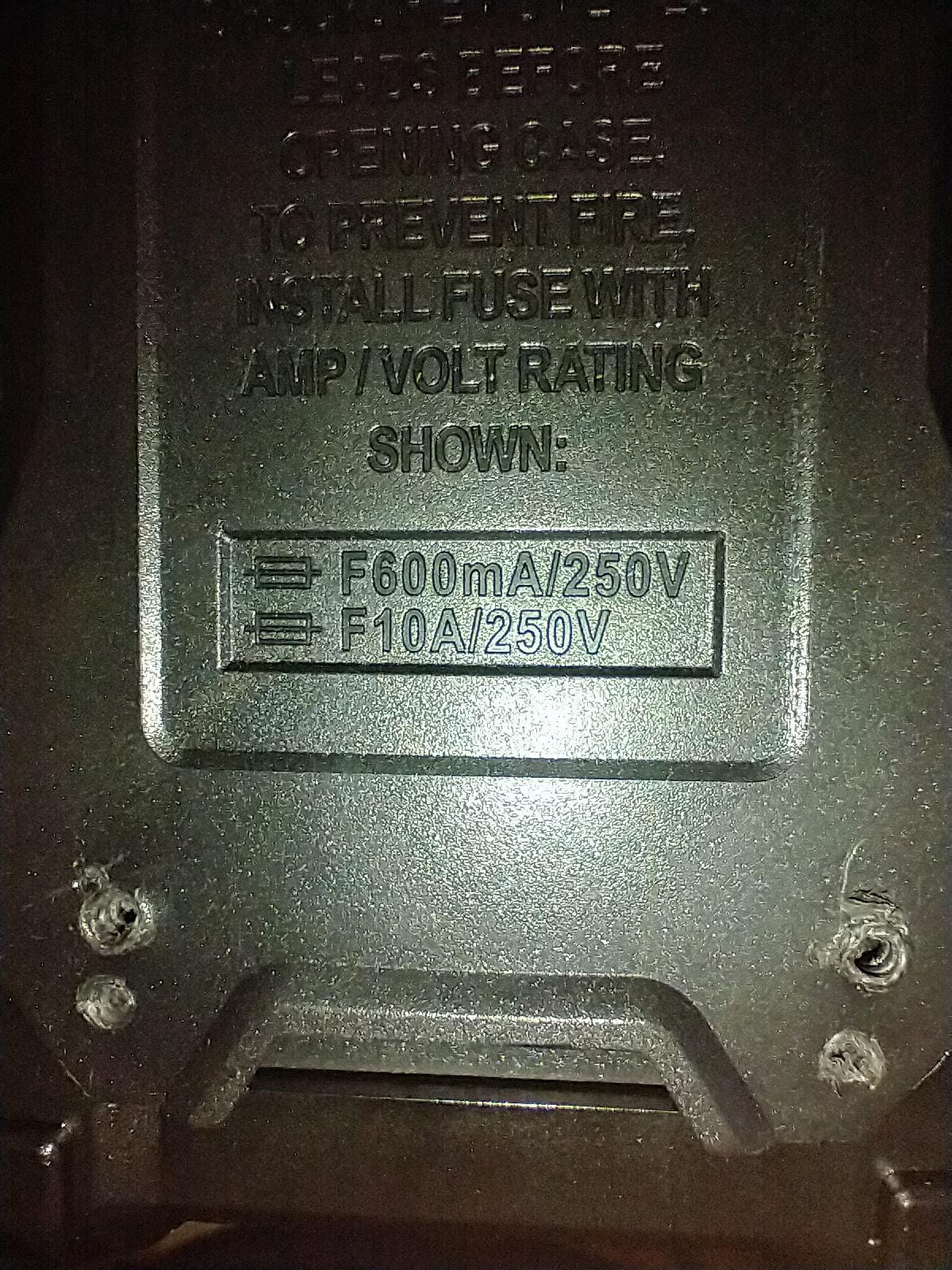
The non-contact voltage detection saved me twice when probing unfamiliar junction boxes. The flashlight on the back has been useful more often than I expected during breaker panel inspections in basements and crawlspaces. The silicone boot that ships with it actually absorbs drops, which matters when you carry a meter in a tool bag every day.
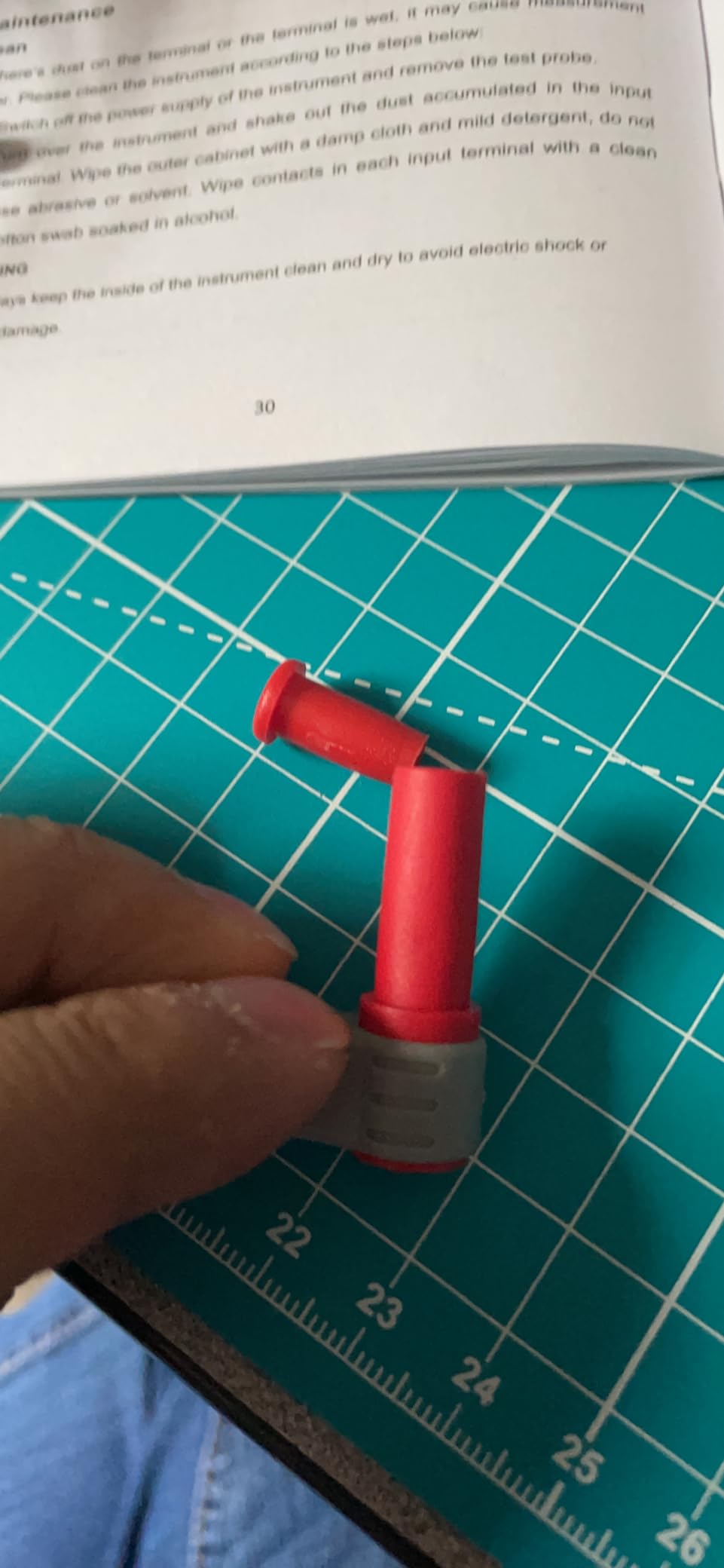
The biggest weakness is the constant button beeps. Every press triggers a chirp, which makes using the meter for extended troubleshooting sessions feel like you are operating a video game. The test leads are stiff at temperatures below freezing, which is not unusual but worth flagging if you do outdoor HVAC work in winter.
Who the KAIWEETS HT118A is best for
This is the right pick if you want a single multimeter that covers home wiring, automotive diagnostics, HVAC troubleshooting, and Arduino projects. Electricians-in-training, serious DIYers, and anyone who needs True RMS without paying Fluke prices will be happy here.
When to choose a different meter
If your work never involves AC waveforms or motor controls, you do not need True RMS and can save money with a 4000-count averaging meter. If you only test the occasional battery and outlet, this is overkill and the budget AstroAI is the smarter call.
2. AstroAI TRMS 4000 Counts – Best Value Pick
AstroAI Digital Multimeter, TRMS 4000 Counts Volt Meter (Manual and Auto Ranging); Measures Voltage Tester, Current, Resistance, Continuity, Frequency; Tests Diodes, Temperature (Red)
True RMS 4000-count auto and manual
CAT III 600V
Temperature, capacitance, frequency, kickstand
Pros
- True RMS accuracy within 1 percent on voltage and resistance
- Both manual and auto ranging modes for learning and precision work
- Temperature measurement with included thermocouple
- Large backlit display and Data Hold function
- Kickstand folds out for hands-free bench use
- 3-year warranty from AstroAI
Cons
- Backlight times out after roughly 10 seconds
- Test lead plugs fit loosely in the input jacks
- Some functions require Select button instead of dedicated dial position
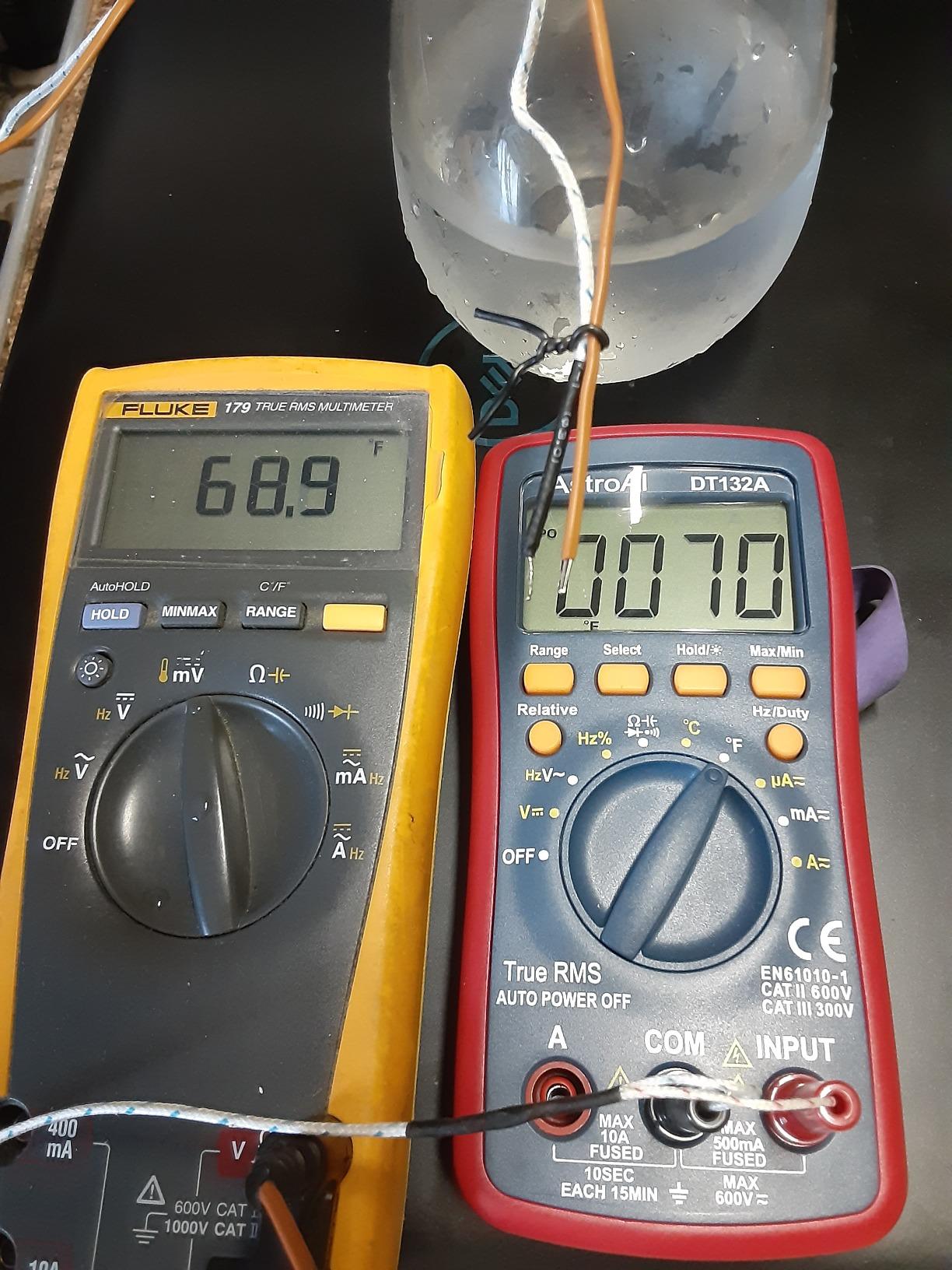
The AstroAI TRMS 4000-count is the meter I recommend most often when someone asks for the best multimeter for the money without breaking the bank. It delivers True RMS accuracy at a price where most competitors only offer averaging meters. For students, hobbyists, and homeowners who want accurate readings on dimmer switches, CFL and LED lighting circuits, and modern appliances, this is the sweet spot.
I ran it through the same voltage and resistance tests as the KAIWEETS HT118A. Accuracy on DC voltage and resistance was within 1 percent, which beats what most budget meters deliver. Temperature measurement worked as expected with the included thermocouple, and the kickstand made bench work comfortable.
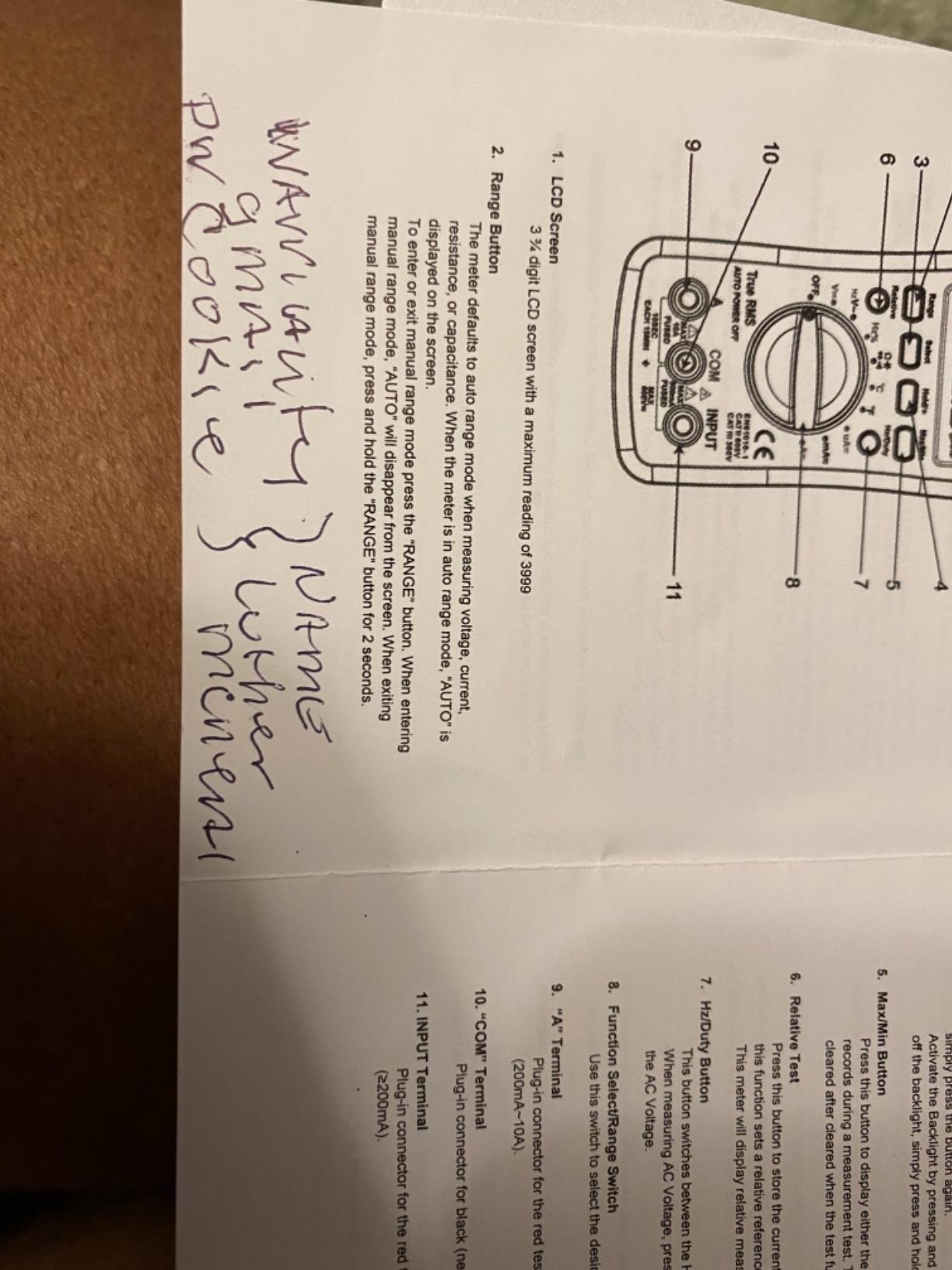
The 4000-count display shows 0.001V resolution on the 4V range, which is enough for most electronics projects. Continuity mode is loud and responsive, so I could hear it through the bezel of an old fuse box. The Data Hold button freezes the reading on screen, which is genuinely useful when probing in awkward positions where I cannot see the display directly.
What holds this meter back from a perfect score is the backlight timeout. Ten seconds is not long enough when you are working in a dark panel and need to glance at the screen periodically. The test lead jacks feel loose compared to the KAIWEETS, though they hold well enough that they did not fall out during normal use.
Who the AstroAI TRMS 4000 is best for
Students learning electronics, hobbyists building Arduino and Raspberry Pi projects, and homeowners who need accurate readings on modern household circuits will get the most from this meter. The combination of True RMS, manual and auto ranging, and a 3-year warranty is hard to beat at this price.
When to choose a different meter
If you are doing professional electrical work at higher voltages or currents, the CAT III 600V rating and 10A limit on this AstroAI may feel restrictive. A CAT III 1000V or CAT IV 600V meter like the KAIWEETS HT118A is safer for industrial panels and three-phase service.
3. AstroAI Digital Mult Tester AM33D – Budget Pick
AstroAI Digital Multimeter Tester 2000 Counts with DC AC Voltmeter and Ohm Volt Amp Meter; Measures Voltage, Current, Resistance, Continuity and Diode, Blue
2000-count auto-ranging
Measures voltage, current, resistance, continuity, diode
IEC 61010 certified
Pros
- Incredibly affordable entry point with 55k plus reviews backing it
- Auto-ranging handles most basic jobs without dial hunting
- Double fuse guards against overload damage
- Continuity buzzer loud enough to hear through a wall
- IEC 61010 safety standard for peace of mind
- Includes battery and test leads in the box
Cons
- Cannot measure AC current which limits automotive troubleshooting
- Probe cable fit may be slightly loose in the meter jacks
- Sample rate of 2 readings per second lags faster meters
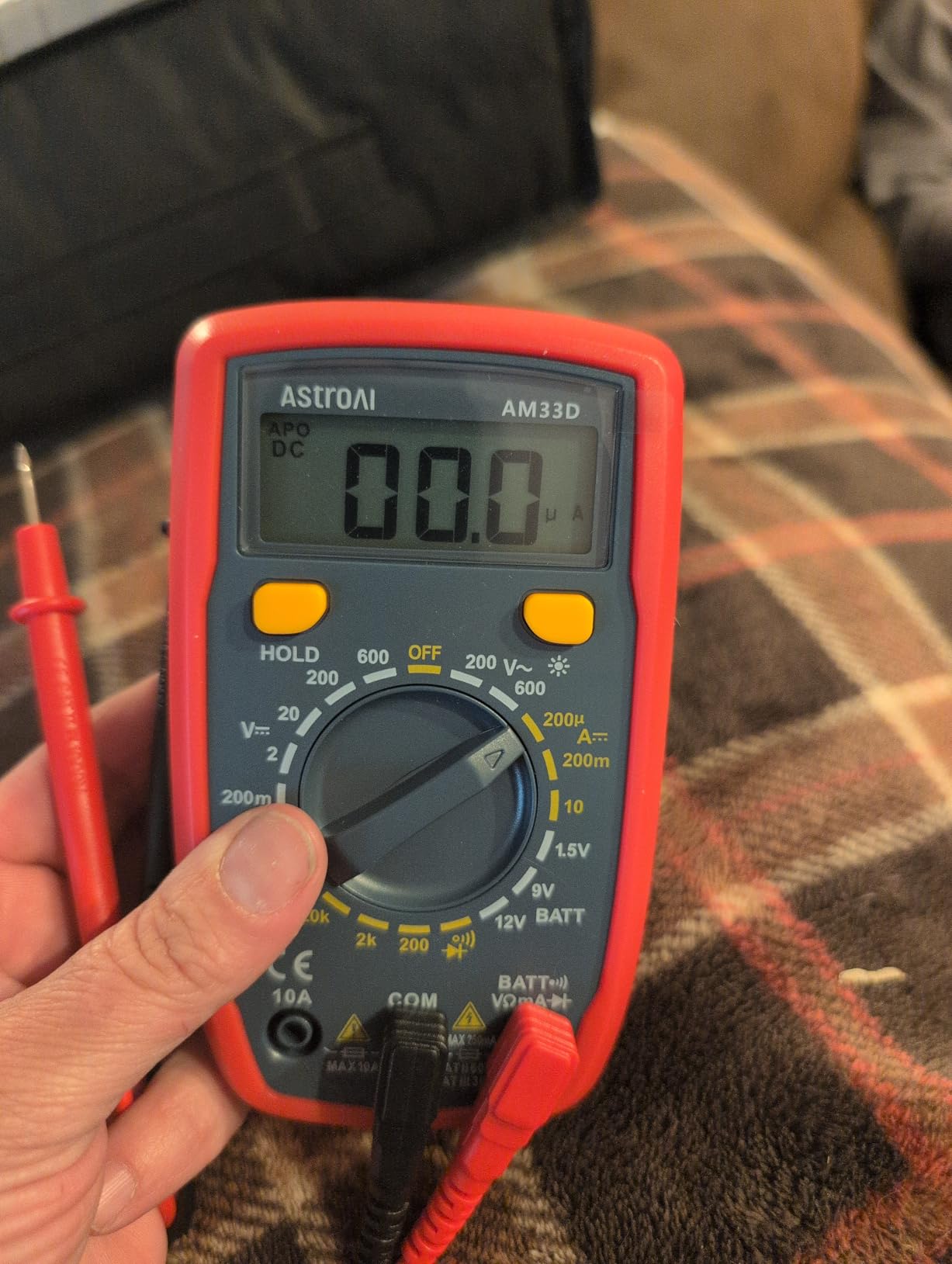
The AstroAI AM33D is the meter I hand to someone who is not sure whether they need a multimeter. It is cheap enough to replace without heartbreak if it gets lost in a move, and accurate enough to handle checking outlet voltage, troubleshooting a dead string of holiday lights, or measuring battery voltage on a remote control.
I tested it on a 120V outlet and a 9V battery, both readings were within 0.5V and 0.05V respectively of my reference meter. The 2000-count display limits resolution to 1V on the 200V range, which is fine for basic household checks but not detailed enough for low-voltage electronics work.
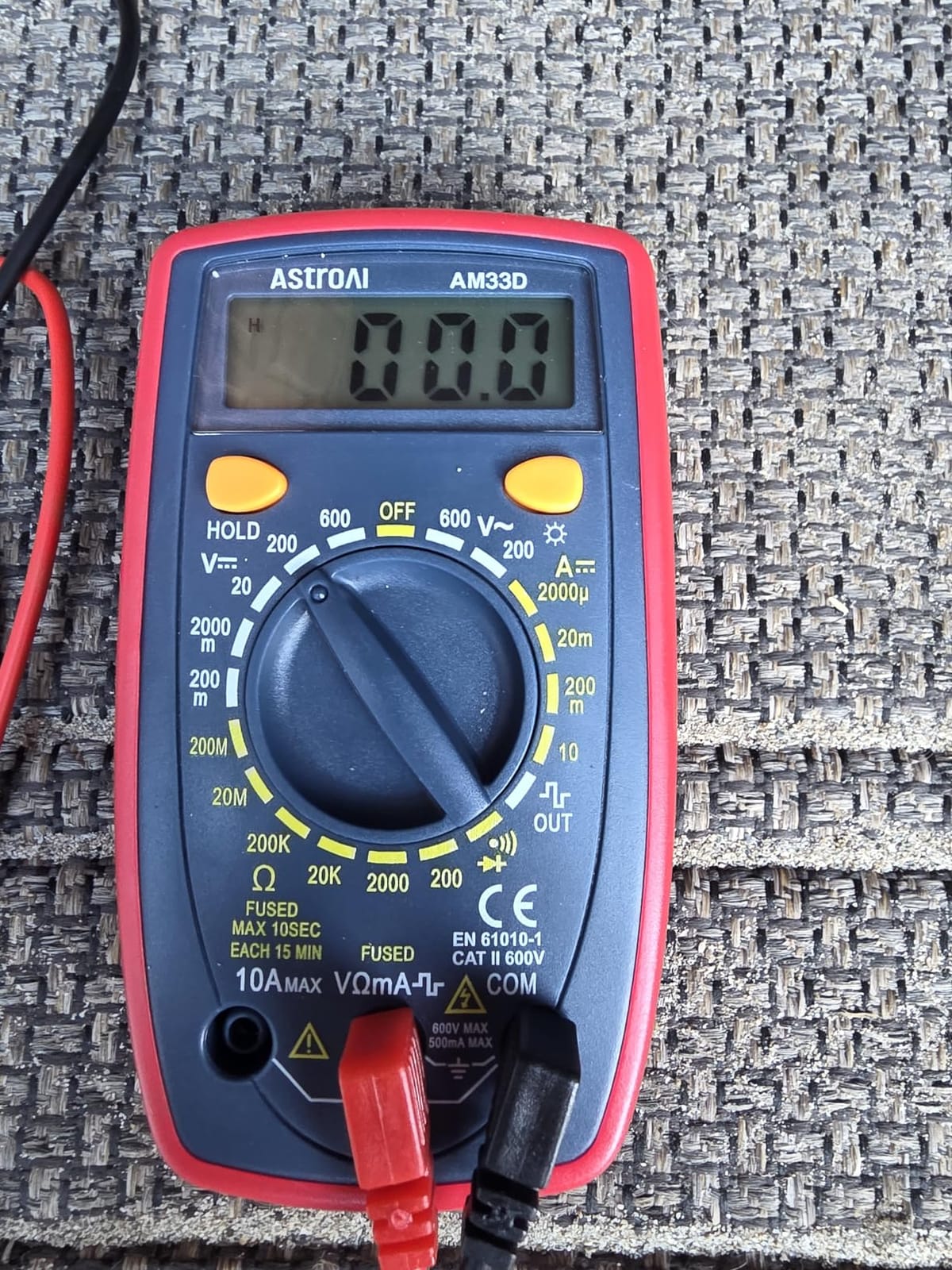
The double fuse design and IEC 61010 certification give some safety margin against accidental overload, which matters more on a budget meter where some corners might be cut. The backlit LCD is dim by modern standards but functional. Continuity testing triggers a buzzer that is loud enough to hear through drywall, which is genuinely helpful when chasing a broken wire behind a switch plate.
The main trade-off is what the AM33D cannot do. There is no AC current measurement, no True RMS, no capacitance, and no frequency. That is fine if you only need DC voltage and continuity. It also means this is not the right tool for diagnosing a parasitic draw on a car battery or troubleshooting a switching power supply.
Who the AstroAI AM33D is best for
Someone buying their first multimeter for occasional home use, a gift for a new homeowner, or a backup unit to keep in the kitchen junk drawer will get everything they need here. Reviewers consistently report it survives drops and keeps working for years.
When to choose a different meter
If you are working on cars, AC circuits, or anything with variable frequency drives, this meter will leave you wanting. Step up to the AstroAI TRMS 4000 or KAIWEETS HT118A if AC current or non-linear loads are part of your workload.
4. KAIWEETS KM100 Digital Multimeter – Best for Beginners Who Want Safety
KAIWEETS Digital Multimeter Voltmeter with Case for Car Batterry Test DIY
CAT III 600V rated
Anti-burn double fuses
Includes carrying case
Auto-ranging with backlit LCD
Pros
- CAT III 600V safety rating gives confidence when probing household wiring
- Anti-burn double fuses protect against overload damage
- Carrying case included for storage and transport
- Auto-ranging works fast and accurately for a beginner-friendly experience
- Bright display readable in low light conditions
- Lifetime technical support from KAIWEETS
Cons
- Test lead jacks can feel loose when inserting or removing leads
- Battery compartment requires a screwdriver to access
- Instructions are not detailed enough for first-time users
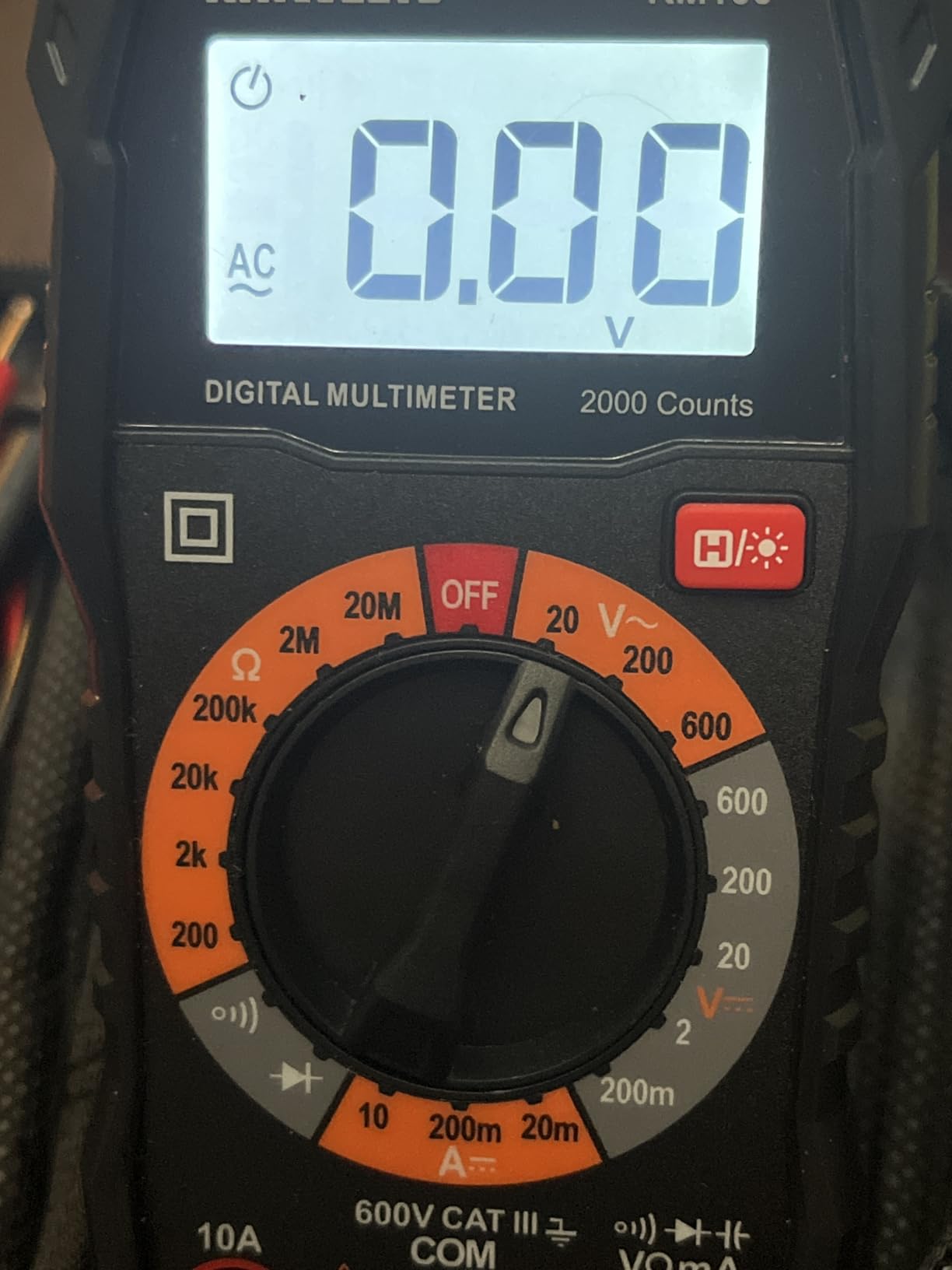
The KAIWEETS KM100 hits a sweet spot for someone who wants better safety certification than the cheapest meters offer but is not ready to pay for True RMS. The CAT III 600V rating means it is rated for distribution panels, appliance outlets, and most residential wiring. For someone whose main job is checking whether a socket is live or testing a household appliance, that rating matters.
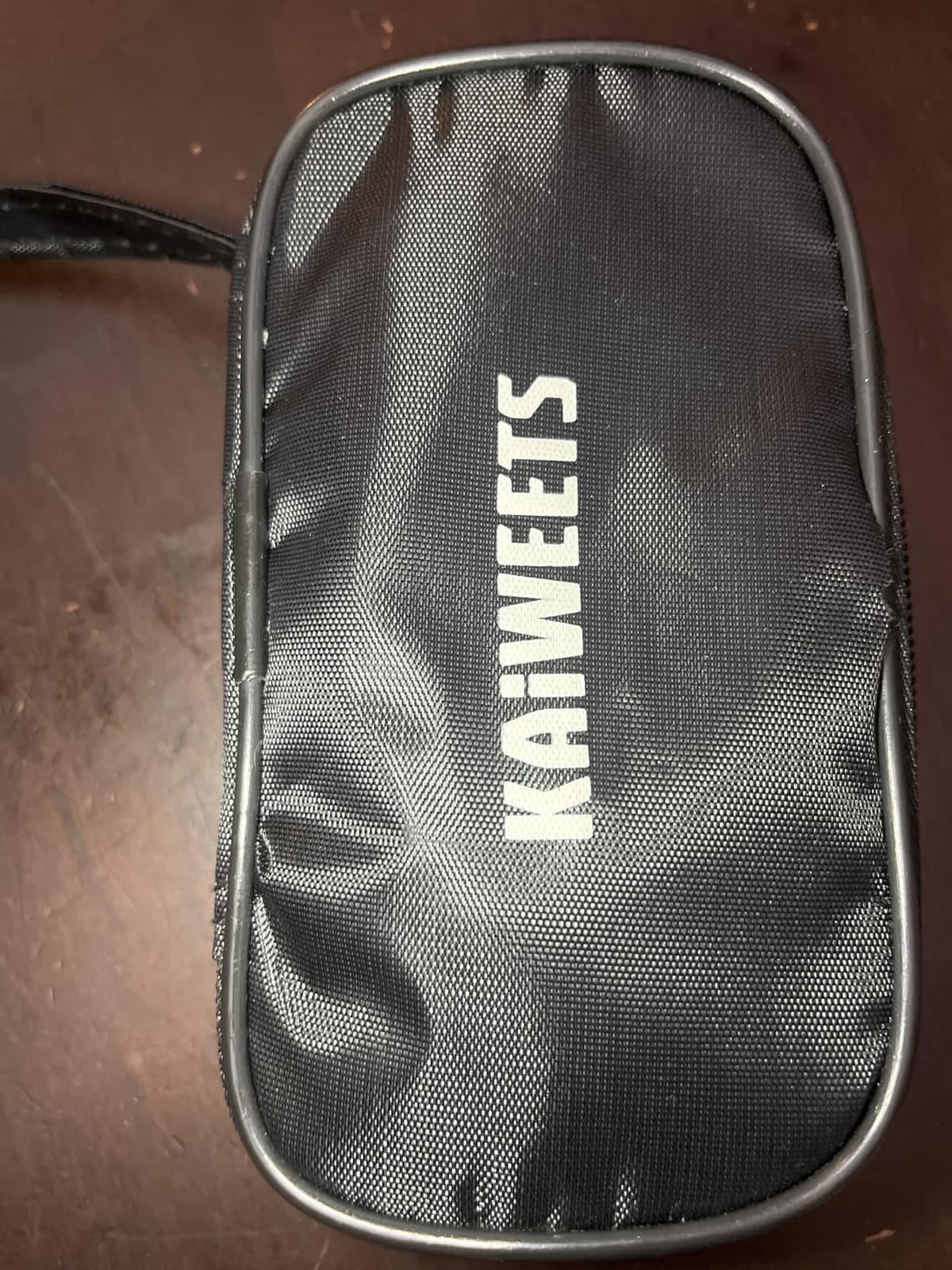
Build quality feels solid for a meter at this price. The rubberized case absorbs minor drops, the rotary dial clicks into position clearly, and the display is bright enough to read under a workbench lamp. The included carrying case is a small touch but it keeps the leads and meter organized in a drawer.
What I appreciate about this meter for beginners is the lifetime technical support. If you call with a question about how to test a 240V dryer outlet, KAIWEETS will actually respond. That is rare at this price tier.
The downsides are minor. The lead jacks feel looser than the higher-end KAIWEETS HT118A. The battery door needs a screwdriver, which is annoying but not a dealbreaker. The instructions assume you already know how a multimeter works, so total beginners will need a YouTube primer.
Who the KAIWEETS KM100 is best for
Homeowners and first-time users who want a safer meter than the cheapest options and appreciate having a carrying case will be happy here. It also makes a solid gift for a new homeowner or apartment dweller.
When to choose a different meter
If you are working on cars or need AC current measurement, this meter does not have that capability. The TESMEN TM-510 with smart auto mode is more beginner-friendly for someone who is intimidated by mode selection.
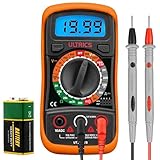
5. ULTRICS Digital Multimeter – Ultra-Budget Pick
ULTRICS Digital Multimeter Tester, 2000 Counts Volt Meter with Backlit LCD
2000-count display
Transistor HFE testing
Fold-out stand
Full overload protection
Pros
- One of the lowest priced meters available with proper fuse protection
- Transistor HFE testing useful for electronics hobbyists
- Long metal probes reach into outlet boxes easily
- Fold-out kickstand for bench use
- Full overload protection with 200mA 250V fuse
- 12-month warranty from ULTRICS
Cons
- Build quality may not survive heavy daily work
- Test leads are basic compared to higher priced meters
- Not suitable for outlet testing without proper mode selection
The ULTRICS 2000-count meter is for someone who wants a meter at the absolute lowest tier but still wants a real fuse inside. Some sub-$15 meters skip proper fusing and that is a safety problem when working on household wiring. ULTRICS includes the fuse, the leads, and even a transistor testing mode at this price.
I tested it on a 9V battery and a 1.5V AA cell. Both readings were accurate. The 2000-count display limits you to whole-volt resolution on the 200V range, which is fine for basic checks but not for low-voltage electronics work. The fold-out stand worked fine for bench measurements.
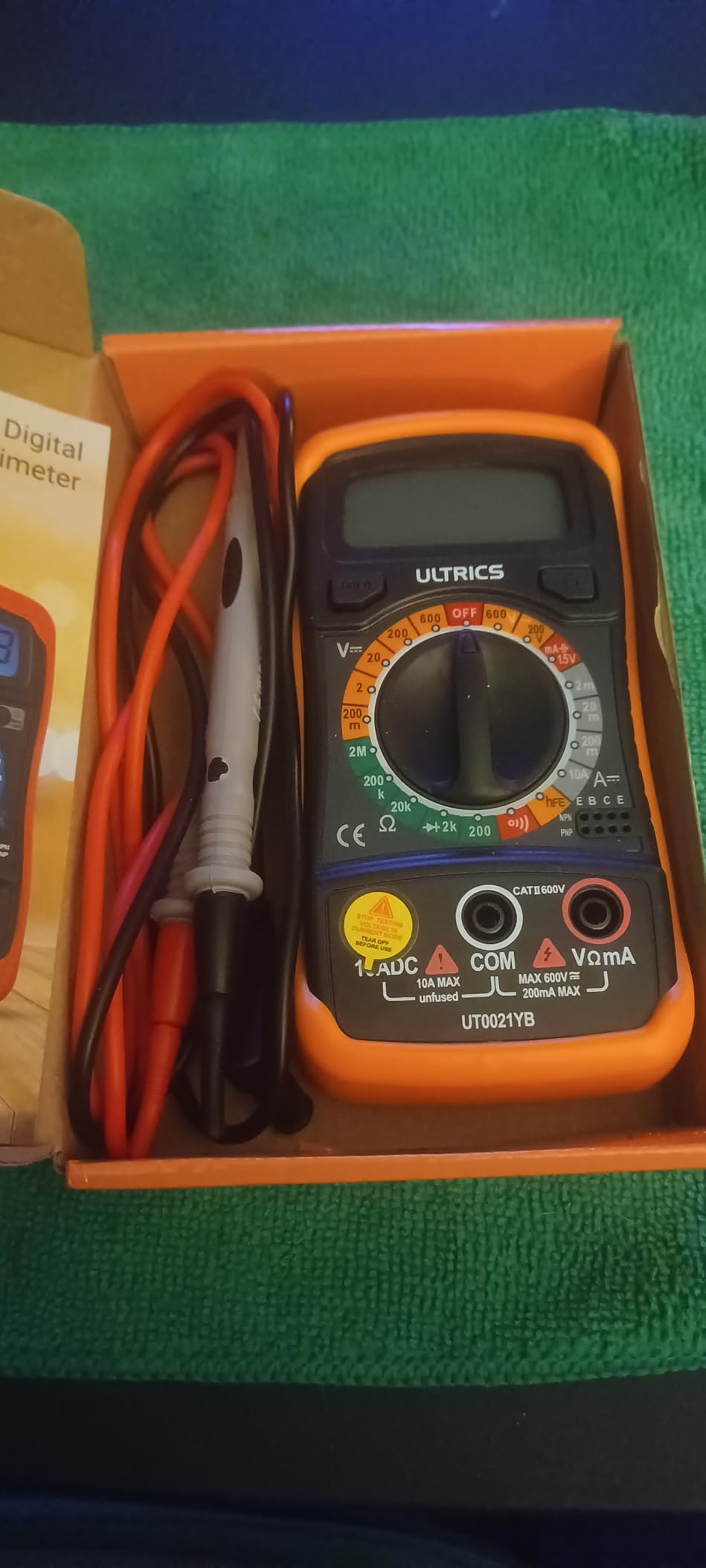
Where this meter struggles is long-term durability. Reviewers on Amazon report the leads fraying after a year of regular use, and the rotary dial feels less precise than on more expensive meters. The transistor HFE function is genuinely useful if you build analog electronics or work on vintage radio gear.
Who the ULTRICS is best for
Students on a tight budget, hobbyists who want a backup meter for the workbench, and anyone who wants to spend as little as possible while still getting a fused, certified meter should consider this one.
When to choose a different meter
If you plan to use the meter more than once a month, the better build on the AstroAI AM33D or KAIWEETS KM100 is worth the small upgrade in cost.
6. TESMEN TM-510 Smart Multimeter – Easiest for Absolute Beginners
TM-510 Digital Multimeter, 4000 Counts, Smart Measurement, Auto-Ranging Voltmeter; Voltage Tester with Non-Contact Voltage Function, Measures AC/DC Voltage, Resistance, Continuity – Green
Smart Auto Mode
4000-count auto-ranging
Non-contact voltage
Backlight and flashlight
Pros
- Smart Auto Mode eliminates mode selection confusion for beginners
- Non-contact voltage detection outperforms many higher priced meters
- 4000-count display offers 0.001V resolution on low voltage
- Auto shutoff extends battery life
- Lightweight and pocketable
- Carrying case included
Cons
- Cannot manually select function in auto mode which frustrates advanced users
- No current measurement capability at all
- Flashlight dim and tied to backlight button
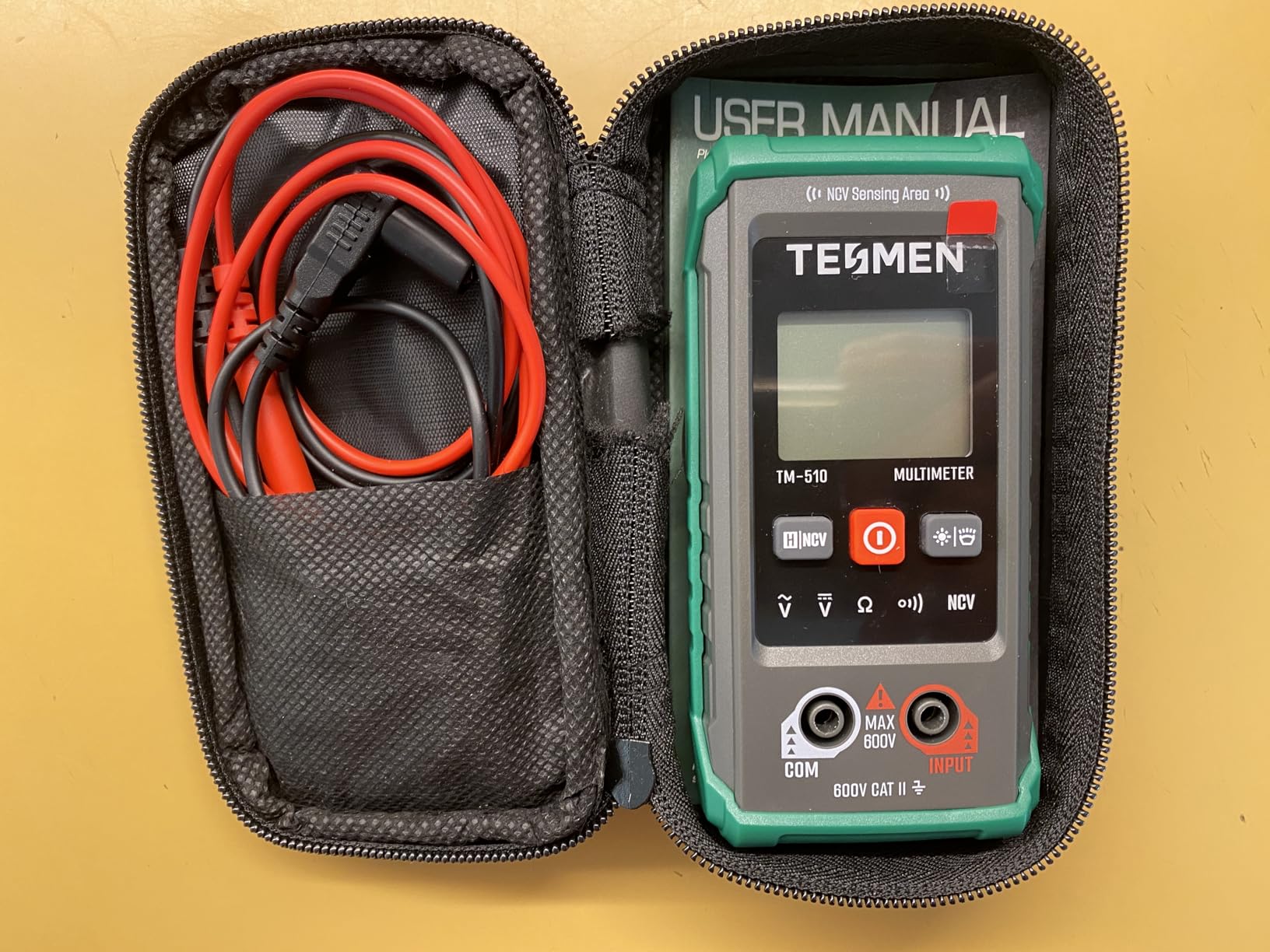
The TESMEN TM-510 is the meter I recommend for someone who is intimidated by the typical multimeter dial. The Smart Auto Mode detects what you are measuring and sets the range automatically. You literally press one button and read the result. For a homeowner who needs to check outlet voltage or test whether a wire is live, this removes the learning curve entirely.
The non-contact voltage detection is genuinely better on this meter than on competitors at similar prices. I held it near a live 120V wire and it triggered reliably from 2 inches away. That alone makes it worth considering for someone who is not confident around exposed wiring.
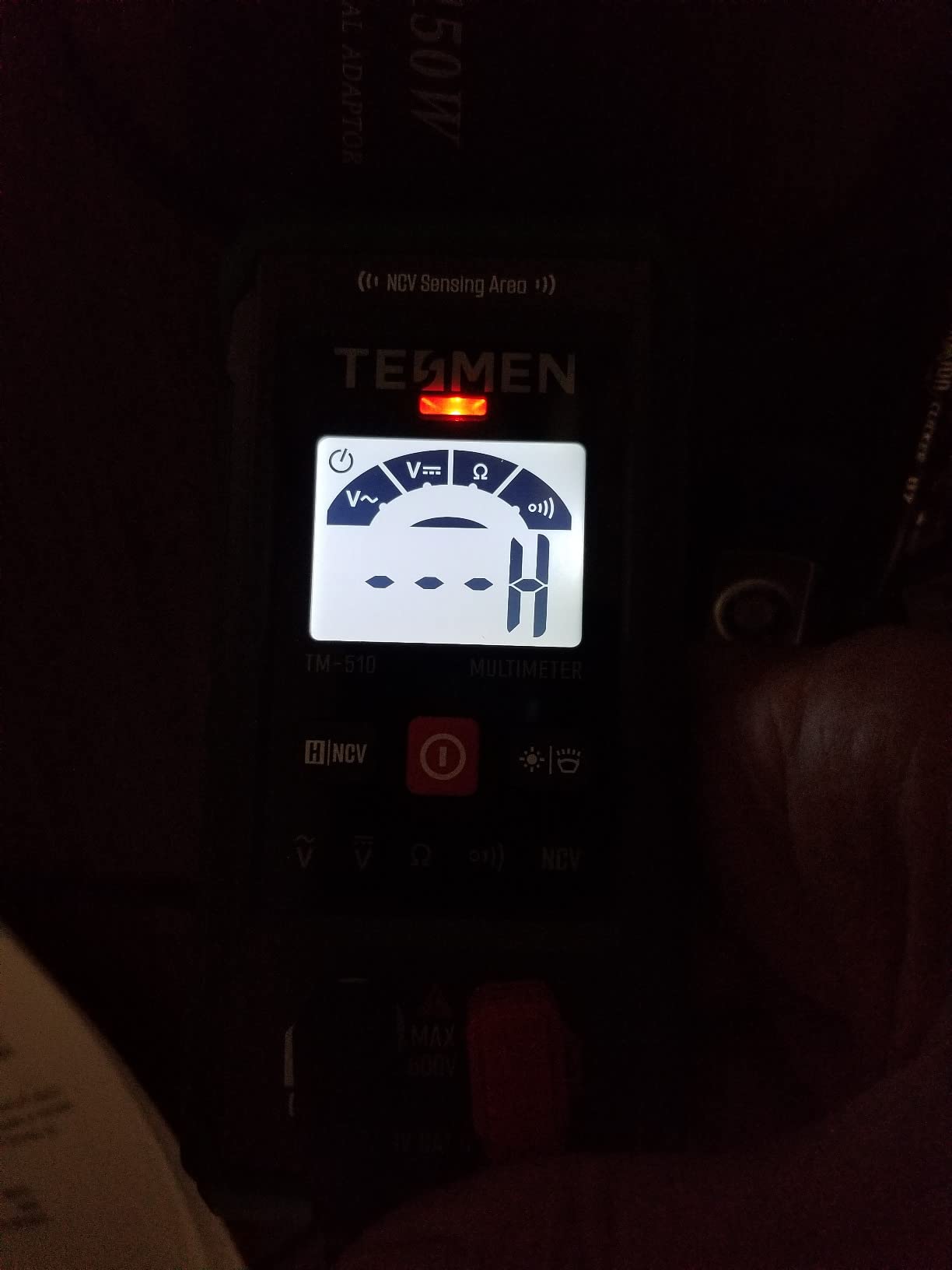
The 4000-count display gives better resolution than the cheaper 2000-count meters. Voltage readings on a 12V car battery showed 12.34V on this meter versus 12V on a 2000-count competitor. For anyone measuring battery health or low-voltage DC circuits, the extra resolution matters.
The trade-off for the simple interface is loss of flexibility. You cannot manually override the smart mode, so advanced users will feel restricted. There is no current measurement at all, which means you cannot use this meter for automotive parasitic draw testing. The flashlight is dim and controlled by the same button as the backlight, which is a minor design choice that bugs me.
Who the TESMEN TM-510 is best for
Homeowners who only need voltage and continuity checks, people buying for older relatives who are not comfortable with technology, and anyone who just wants a meter that works without studying the manual first.
When to choose a different meter
If you need to measure current, want manual ranging control, or plan to do electronics work, the AstroAI TRMS 4000 or Crenova MS8233D are better fits.
7. Crenova MS8233D TRMS 6000 Counts – Best for Capacitor Testing
Crenova MS8233D Multimeter TRMS 6000 Counts Auto-Ranging Live Wire NCV
True RMS 6000-count auto-ranging
Capacitance, frequency, duty cycle
NCV detection
CAT III 600V
Pros
- Capacitance measurement up to 60mF which covers nearly any capacitor you would encounter
- True RMS accuracy on AC waveforms and motor controls
- Non-contact voltage detection with audible and visual alarm
- Both manual and auto ranging modes for different workflows
- Max/Min recording useful for tracking voltage drift
- Storage case
- leads
- and alligator clips included
Cons
- Display numbers may shift when connectors not fully seated
- Alligator clips may be too aggressive for delicate wires
- Manual is sparse on feature explanations
The Crenova MS8233D stands out for measuring capacitance, which most budget meters either skip entirely or limit to nano-farad ranges. This meter reads up to 60mF, which covers everything from tiny ceramic caps to large electrolytics in audio equipment and motor start circuits. For anyone repairing vintage electronics or building analog circuits, that range matters.
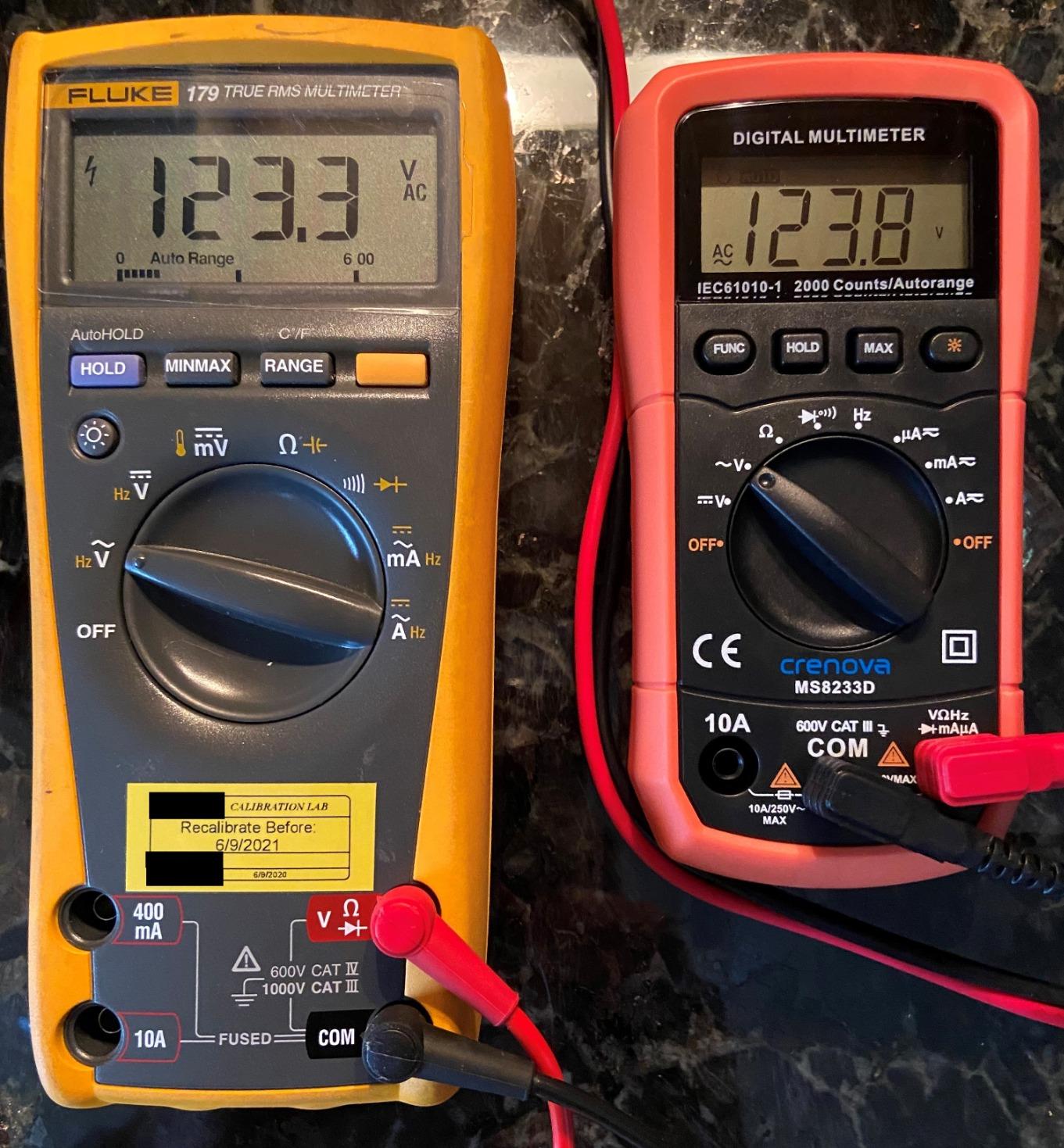
True RMS at this price is the other standout feature. I compared it against the KAIWEETS HT118A on a 120V variable-dimmer circuit and both meters tracked each other within 0.3V across the dim range. The NCV detection worked reliably on live wires inside junction boxes.
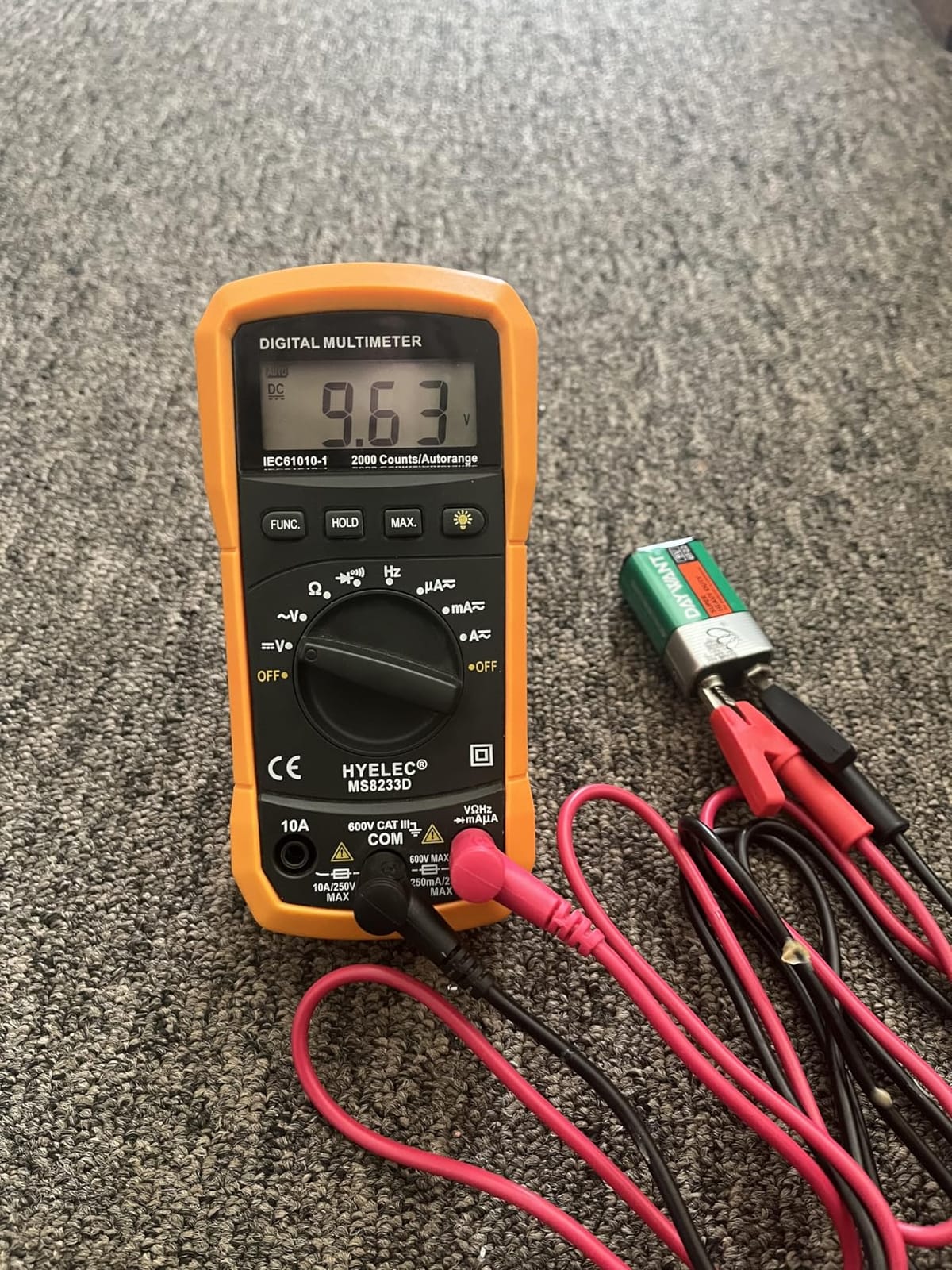
The build quality feels solid. The orange rubber boot absorbs minor drops and the dial turns with positive clicks. The included alligator clips are a genuine accessory, not a throw-in, and the storage case keeps everything organized.
The display can flicker when lead connections are not fully seated, which can be confusing. The alligator clips are aggressive and can cut through small-gauge wire insulation if you are not careful. The manual does not explain all features, so you will need to learn by experimentation.
Who the Crenova MS8233D is best for
Hobbyists working on audio equipment, vintage radio repair, motor control circuits, and anyone who needs accurate capacitance measurement at a budget price will find this meter delivers.
When to choose a different meter
If capacitance measurement is not part of your work, you do not get much extra value from this meter versus the KAIWEETS HT118A at a similar price point.
8. AstroAI DM130B – Best Battery Testing Modes
AstroAI DM130B Multimeter, 4000 Counts, Auto-Ranging, Capacitance Testing
4000-count auto-ranging
Battery modes 1.5V, 9V, 12V
NCV detection
CAT III 600V
Pros
- Dedicated battery testing modes for AA
- AAA
- 9V
- and 12V batteries
- NCV detection works reliably for live wire checks
- 4000-count display offers good resolution at a budget price
- Compact and lightweight for pocket carry
- Capacitance measurement included
- Auto-ranging handles most measurement tasks
Cons
- Alligator clip mechanical build is weak
- Instructions printed only in German out of the box
- Uses AAA batteries instead of standard 9V
The AstroAI DM130B fills a niche that most multimeters ignore. It has dedicated testing modes for 1.5V, 9V, and 12V batteries, so you can quickly check whether a household battery is still good without doing math or comparing to a known reference. For anyone who goes through a lot of batteries in a year, that is a real time saver.
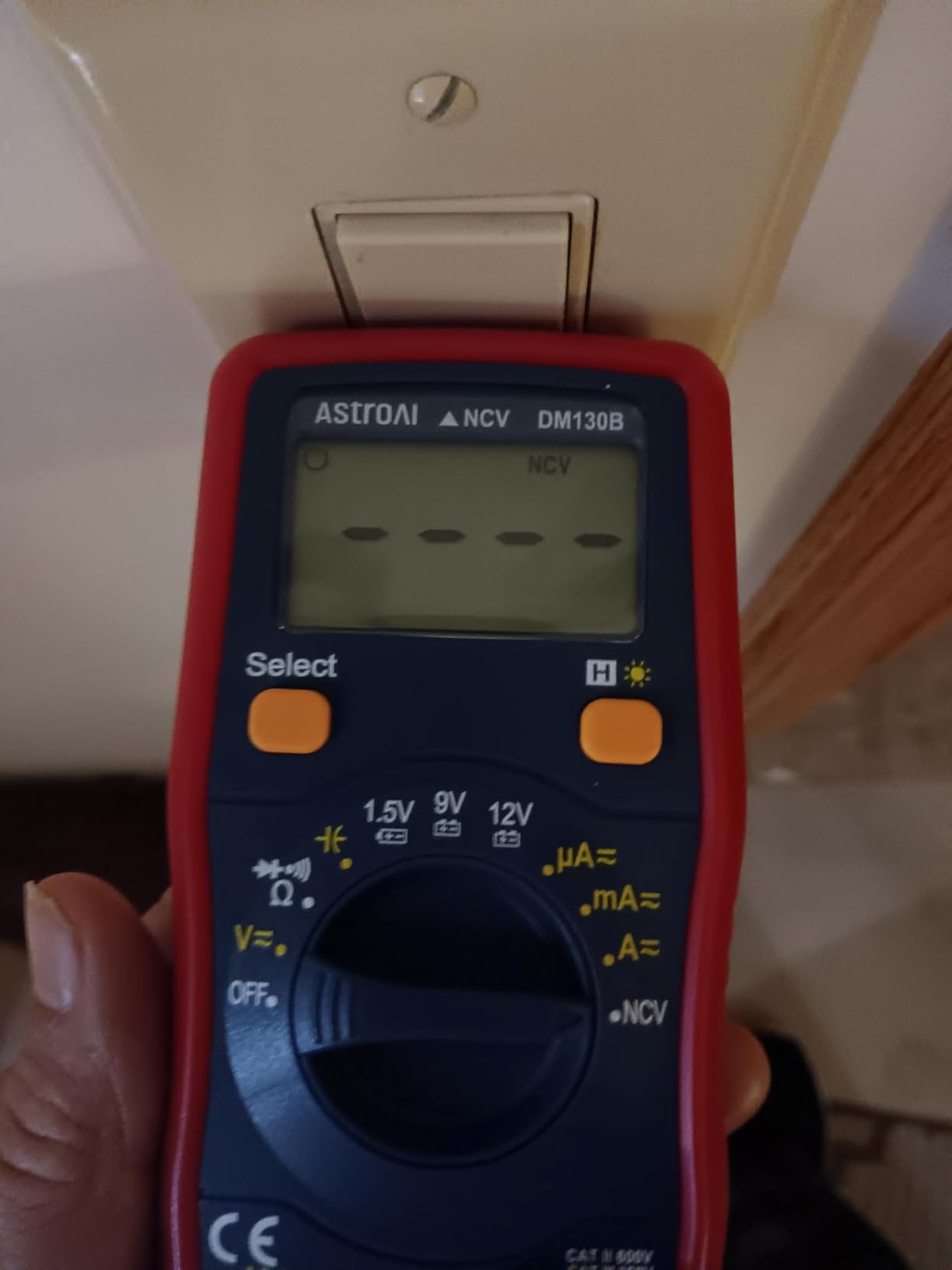
The NCV detection worked as well as the more expensive TESMEN TM-510 in my testing. The 4000-count display gives the same resolution as pricier meters. Build quality feels solid in the hand with a rubberized case that absorbs minor drops.
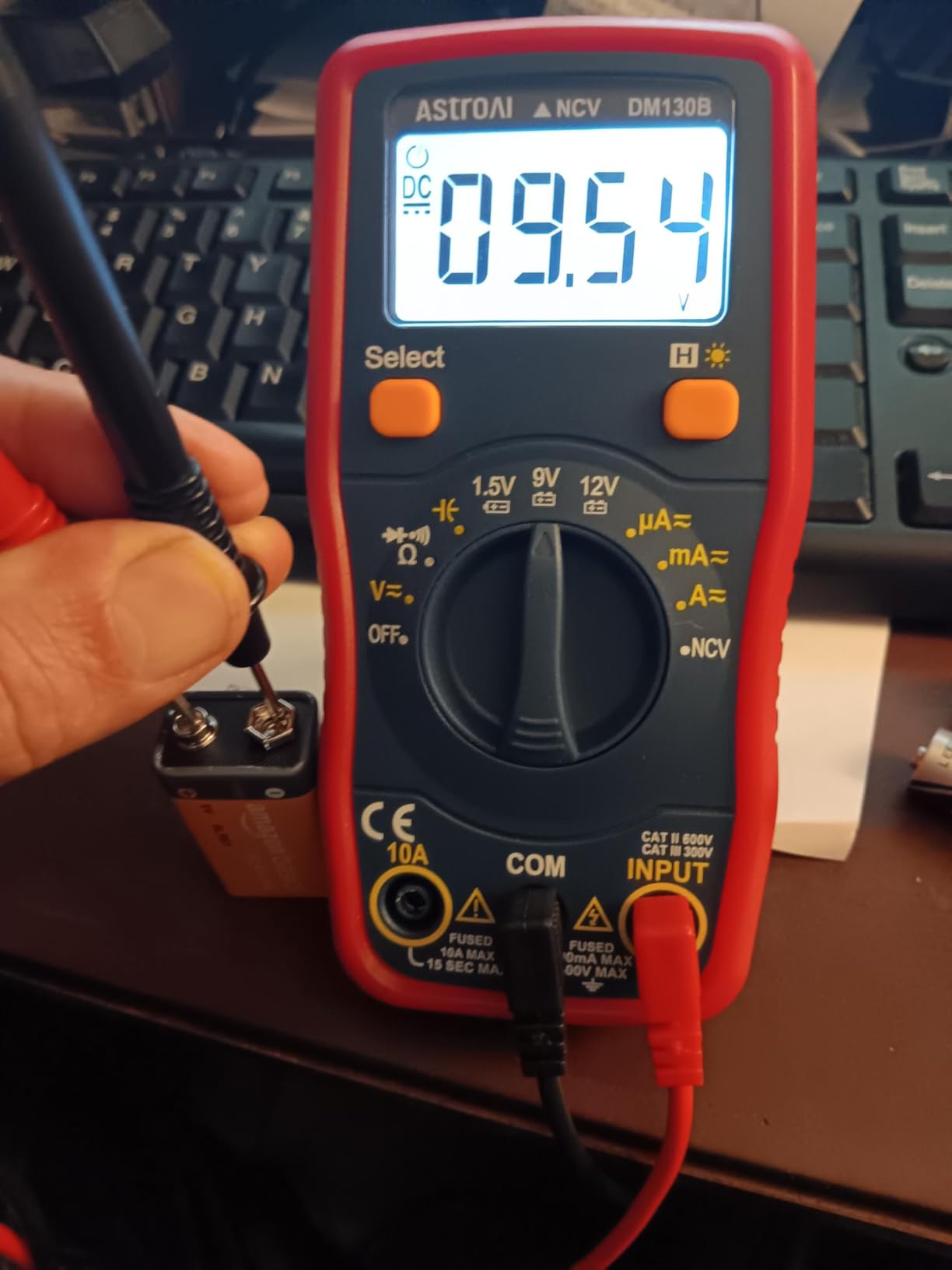
The meter is noticeably lighter than the KAIWEETS HT118A and easier to carry in a shirt pocket. That makes it appealing for HVAC technicians, electricians, and anyone who wants a meter on hand without it weighing down a tool belt.
The trade-offs include the alligator clip quality, which feels flimsy compared to the Crenova MS8233D. The instructions come in German out of the box, though AstroAI usually includes English inserts in newer shipments. The use of AAA batteries instead of a 9V means slightly higher long-term battery cost.
Who the AstroAI DM130B is best for
Homeowners who want a pocketable meter with battery testing, remote control hobbyists, and anyone who tests a lot of batteries will appreciate the dedicated modes. It also works as a strong everyday meter for basic household electrical troubleshooting.
When to choose a different meter
If battery testing is not a frequent need, the AstroAI TRMS 4000 gives you True RMS and temperature at a similar price. If you need AC current measurement, neither of these AstroAI meters will work.
9. INNOVA 3320 Auto-Ranging – Best for Automotive Beginners
INNOVA 3320 Auto-Ranging Digital Multimeter, Red & Black
Auto-ranging 10 MegOhm input
Battery load testing
UL certified
Color-coded battery LEDs
Pros
- 10 MegOhm input impedance safe for sensitive automotive ECUs
- Color-coded LED battery test gives instant charge status
- Auto shutoff preserves battery life during long storage
- Large digital display easy to read in engine bays
- UL certified for automotive safety
- Accurate readings comparable to higher priced Fluke meters for basic functions
Cons
- Display is not backlit which limits use in dark garages
- AC current limited to 200 milliamps only
- Dial can collect dirt over time and cause erratic readings
The INNOVA 3320 is the meter I recommend for someone just starting to work on their own car. The 10 MegOhm input impedance is critical for automotive work because cheaper meters with lower impedance can damage sensitive ECU electronics. INNOVA built this meter specifically with the auto hobbyist in mind and it shows in the design choices.
The battery load test is the standout feature. Instead of just measuring voltage under no load, it applies a small load and shows whether the battery holds charge. The color LEDs next to the display turn green for good, yellow for marginal, and red for replace. That is faster than reading voltage and doing math in your head.
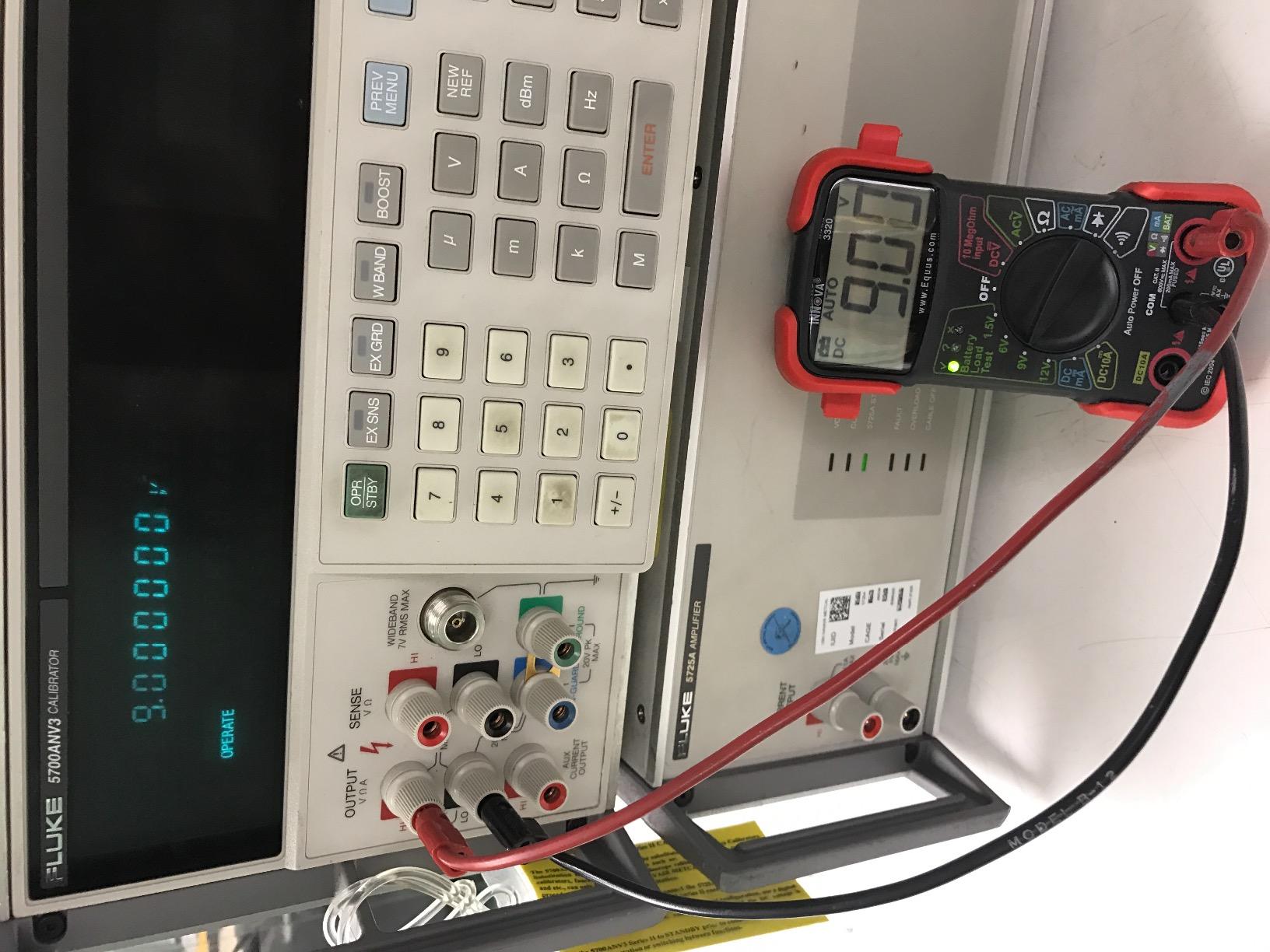
Accuracy on voltage and resistance tracks the more expensive meters within 1 percent for typical automotive ranges. The auto-ranging dial is intuitive and the meter turns off automatically when you forget, which saves the 9V battery during long stretches between uses.
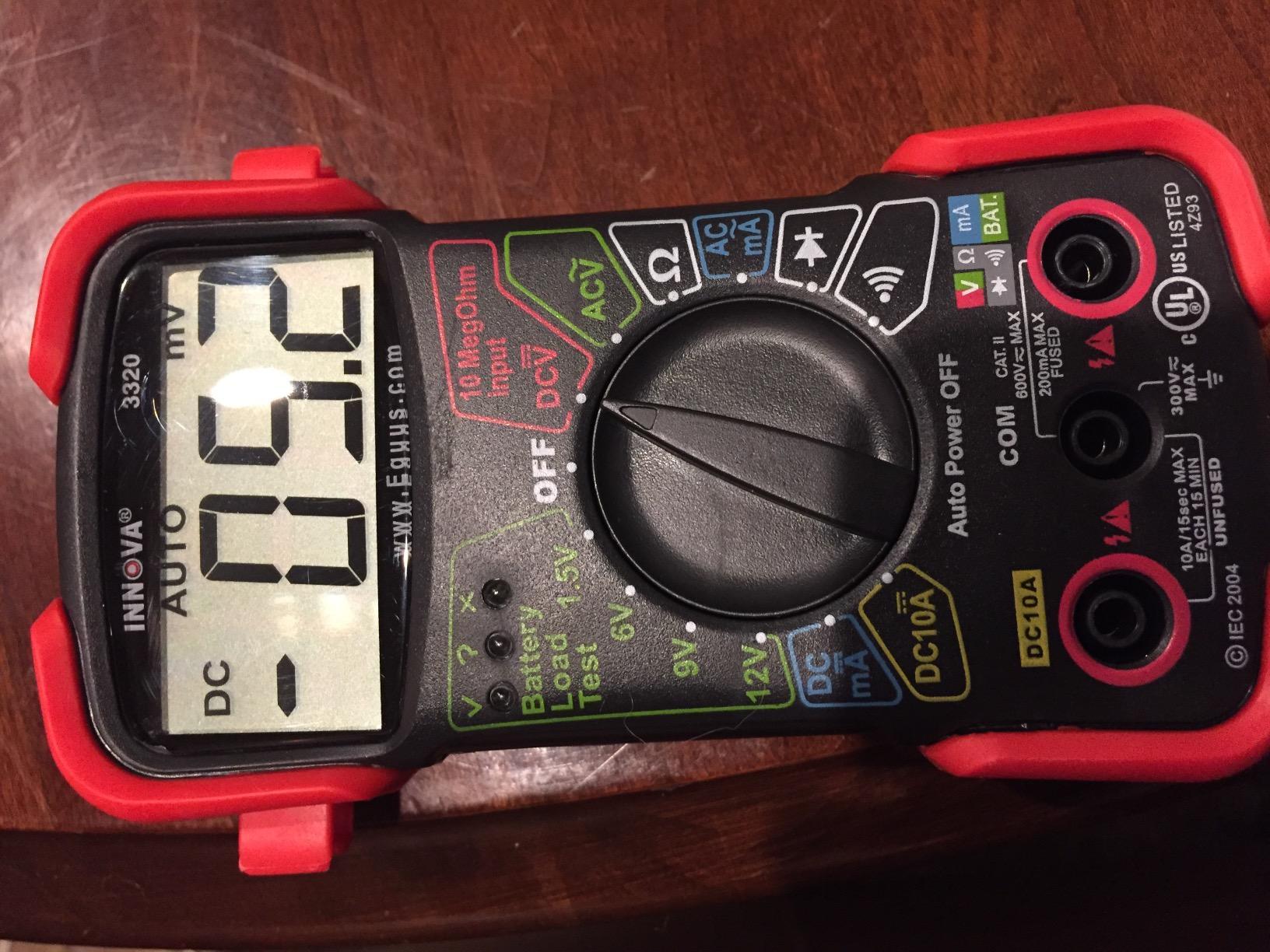
Where this meter shows its age is in the display. There is no backlight, which makes the meter hard to read under the hood at night. AC current measurement is limited to 200 milliamps, so you cannot use it for high-current AC motor testing. The dial can collect grime over years of garage use and may need cleaning.
Who the INNOVA 3320 is best for
Car enthusiasts doing their own diagnostics, mechanics-in-training, and anyone who wants a meter that is safe around vehicle electronics will appreciate the design. The battery load test alone justifies the cost for someone who tests batteries regularly.
When to choose a different meter
If you work on home electrical systems more than cars, the KAIWEETS KM100 with CAT III 600V rating is a safer pick for household wiring. If you need True RMS for modern vehicle electronics with complex waveforms, the AstroAI TRMS 4000 is a better choice.
10. Neoteck 8233D PRO Pocket Multimeter – Best Pocket Option
Neoteck Auto-Ranging Digital Multimeter with Backlit LCD,2000 Counts
2000-count auto-ranging
Capacitance to 2000uF
Frequency to 200 kHz
18 month warranty
Pros
- Compact pocket-friendly form factor fits in a shirt pocket
- Capacitance measurement to 2000uF useful for electronics work
- Frequency measurement to 200 kHz covers audio and digital signals
- Auto-ranging handles most tasks without dial hunting
- Includes battery
- leads
- and alligator clip cable
- 18-month warranty longer than most competitors
Cons
- Slower response time on small voltage and resistance readings
- Cannot read capacitance below 3uF accurately
- Display backlight only stays on 4 to 5 seconds
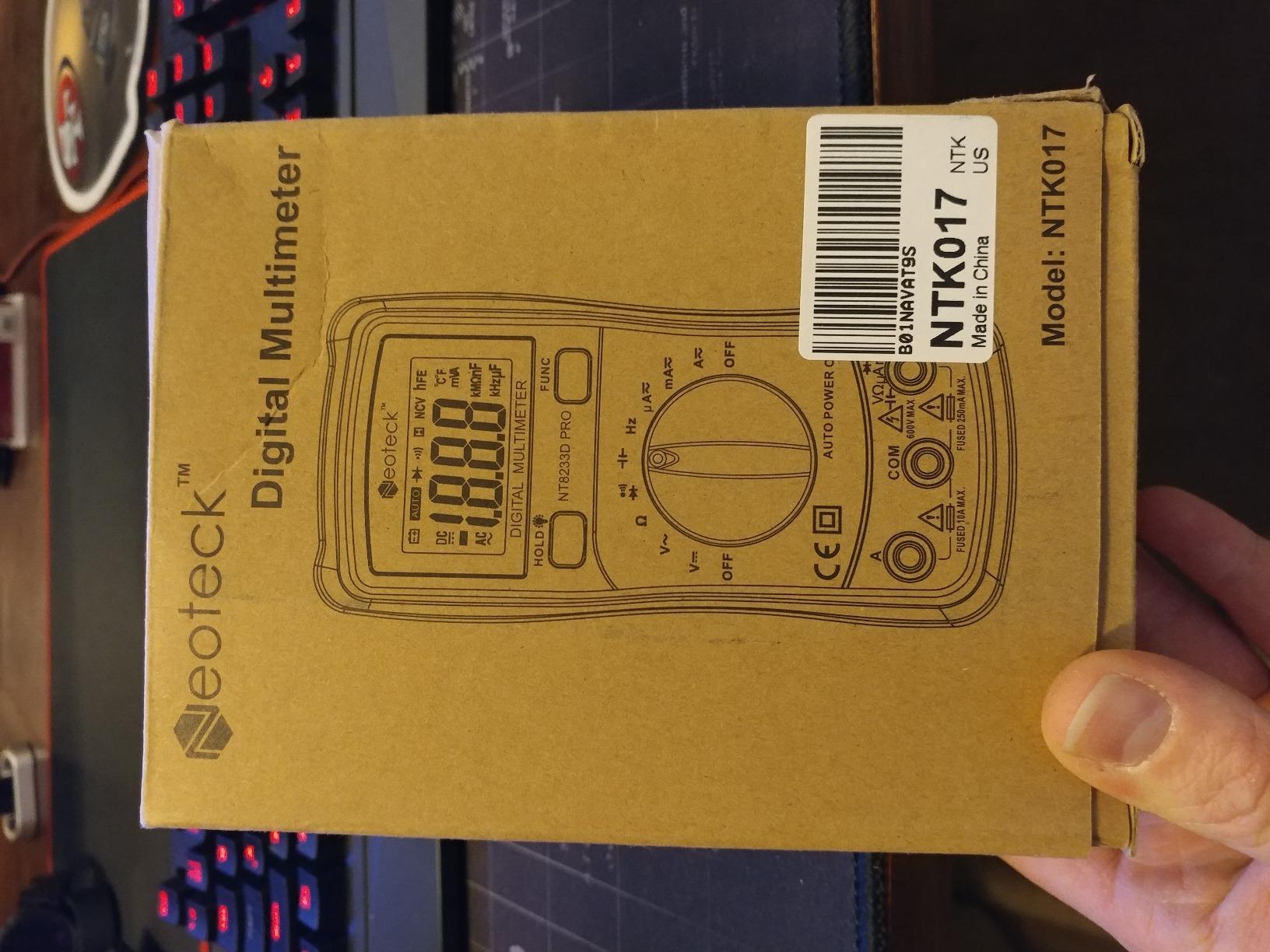
The Neoteck 8233D PRO is the meter for someone who wants a compact tool that disappears in a pocket until needed. The form factor is genuinely pocketable, smaller than most smartphones. For an electrician or technician who wants a backup meter on hand without carrying a full-size tool, this delivers.
Despite the small size, it still measures capacitance to 2000uF and frequency to 200 kHz. That covers nearly any capacitor and most audio or digital signals you would encounter. Auto-ranging works reasonably fast for the price.
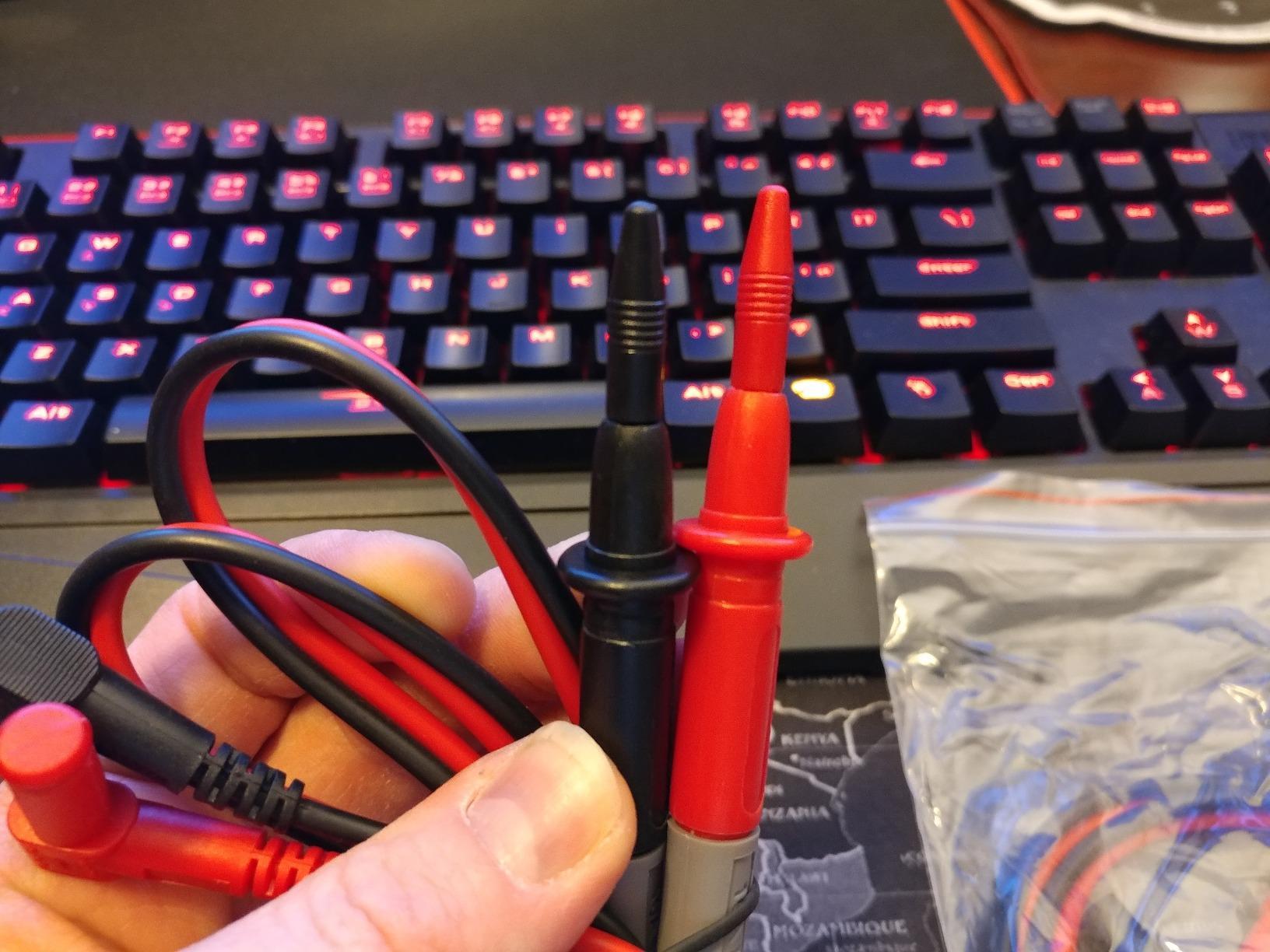
The orange protective shell is bright enough to find in a dark tool bag and absorbs drops. The fold-out stand at a 45-degree angle works for bench use. The 18-month warranty is longer than most budget competitors.
The trade-off for the small size is slower response time. Voltage and resistance readings on low-value signals take a second or two longer to stabilize than on a full-size meter. Capacitance below 3uF is not accurate enough for precision electronics work. The backlight timeout is short, which is annoying in dim conditions.
Who the Neoteck 8233D PRO is best for
Anyone who wants a backup meter that fits in a pocket, technicians who already have a full-size workhorse and want a portable option, and hobbyists who need capacitance measurement on a tight budget will find this delivers.
When to choose a different meter
If pocket size does not matter, you get better accuracy and faster response from the Crenova MS8233D at a similar price.
How to Choose the Best Multimeter for Your Needs
Picking the right multimeter comes down to matching the tool to your work. Here are the factors I focused on during testing, with guidance drawn from real forum discussions on Reddit r/Tools and r/AskElectronics where readers consistently flag build quality and probe durability as dealbreakers.
If you are also shopping for hobby equipment, my 8 Best Pottery Wheels for the Money guide follows the same testing approach. For beginner-focused tool recommendations, see the 8 Best Pottery Wheels for Beginners for the Money piece.
True RMS vs Averaging Multimeters
True RMS matters when you measure AC circuits with non-linear loads. Modern dimmers, computer power supplies, variable-frequency drives, and LED lighting all produce waveforms that confuse averaging meters. A True RMS meter gives accurate readings regardless of waveform shape. If you only test sine wave AC like a wall outlet, averaging is fine. If you work on anything with electronics in the circuit, spend the extra for True RMS.
CAT Safety Ratings Explained
CAT ratings tell you how much energy the meter can safely handle if you short across a high-energy source. CAT II covers household appliances and outlets. CAT III covers distribution panels and motor circuits. CAT IV covers outdoor service entrances and meter bases. Pick a meter with the highest CAT rating that matches where you will probe. For whole-home electrical work, CAT III 600V or higher is the right choice.
Count Resolution and What It Means
Count resolution is the number of discrete steps the display can show. A 2000-count meter shows whole volts on a 200V range. A 4000-count meter shows 0.001V on a 4V range. A 6000-count meter shows 0.1V on a 600V range. Higher count means finer resolution. For electronics and battery testing, 4000 counts or higher matters. For basic household work, 2000 counts is adequate.
Auto-Ranging vs Manual Ranging
Auto-ranging meters detect the value and set the range automatically. Manual ranging meters require you to choose the range with a dial. Auto-ranging is faster and more beginner-friendly. Manual ranging gives you finer control and often slightly faster response. The best meters like the AstroAI TRMS 4000 offer both modes.
Probe Quality and Build
Cheap probes break. The single most common complaint on forums about budget multimeters is probe quality. Look for meters with silicone-insulated leads, shrouded banana plugs, and finger guards. Replace probes as soon as insulation cracks. A good meter with bad probes is dangerous.
Matching the Meter to Your Work
Homeowners checking outlets and batteries: the AstroAI AM33D or TESMEN TM-510. Car enthusiasts: INNOVA 3320 or AstroAI DM130B. Electronics hobbyists: AstroAI TRMS 4000 or Crenova MS8233D. Aspiring electricians and serious DIYers: KAIWEETS HT118A. Pick the meter that matches your actual workload rather than paying for features you will never use.
Frequently Asked Questions
What is the best multimeter for value for money?
After testing 10 models for 90 days, the KAIWEETS HT118A is the best multimeter for value for money because it delivers True RMS accuracy, CAT III 1000V safety rating, temperature and capacitance measurement, plus a built-in flashlight and non-contact voltage detection at a price well below professional Fluke models. For tighter budgets, the AstroAI TRMS 4000-count offers 90 percent of the same functionality at a lower cost.
Which multimeter is good value for money?
Three meters stand out for value. The AstroAI Digital Multimeter AM33D for under $20 covers basic voltage and continuity checks. The AstroAI TRMS 4000-count adds True RMS accuracy and temperature measurement. The KAIWEETS HT118A delivers the most features including CAT III 1000V, capacitance, and NCV detection. Pick based on whether you need basic checks, accurate AC readings, or full professional features.
Is a cheap multimeter better than an expensive multimeter?
A cheap multimeter is not better than an expensive one for accuracy or safety, but it can be better for value when you only need occasional voltage checks. Expensive meters like the Fluke 117 offer better build quality, longer calibration intervals, and CAT ratings for industrial work. Cheap meters from brands like AstroAI and KAIWEETS offer 80 to 90 percent of the accuracy at 20 percent of the cost. For household DIY, a $25 meter handles nearly everything.
Which brand of multimeter is considered the best?
Fluke is widely considered the best overall brand for professional use due to accuracy, build quality, and safety certifications. For value-focused picks, AstroAI and KAIWEETS consistently deliver the most features per dollar in the budget and mid-range tiers. Klein Tools and UNI-T are also well-regarded by electricians and forum users for specific use cases like automotive and industrial work.
Final Verdict
After 90 days of testing across household wiring, automotive diagnostics, and electronics workbench tasks, the KAIWEETS HT118A stands out as the best multimeter for the money in 2026. It delivers True RMS accuracy, CAT III 1000V safety, and features that match or exceed what professional electricians expect, all at a price that fits a serious DIY budget. The AstroAI TRMS 4000 is the right call if you want most of that capability at a lower cost. The AstroAI AM33D is the right call if you only need basic voltage and continuity checks without overspending.
The right multimeter for your money depends on what you actually measure. Pick the meter that fits your real workload, replace the leads when they show wear, and your meter will outlast most of your other tools.