
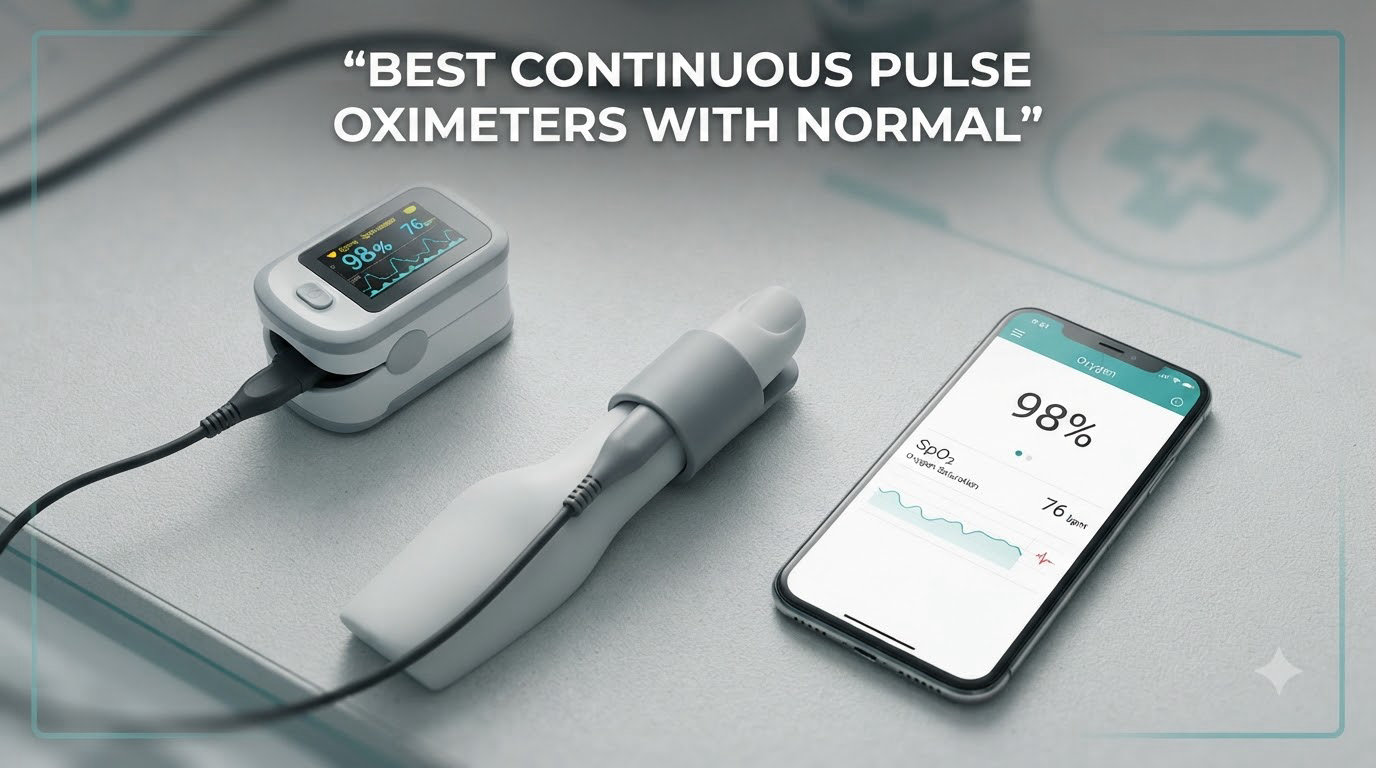
If you’ve ever wondered whether your blood oxygen really stays in the normal range while you sleep, you’re not alone. I started researching the best continuous pulse oximeters with normal SpO2 tracking after a friend mentioned his Apple Watch kept flagging desaturations his doctor wanted to verify. Spot checks weren’t enough – he needed a dedicated overnight monitor that records every second and tells him, plainly, whether his readings stayed within a normal SpO2 range.
A continuous pulse oximeter is a wearable sensor that records your blood oxygen saturation (SpO2) and pulse rate every one to four seconds for hours at a time. Unlike a fingertip clip you press for ten seconds, these devices stay on through the night, during a flight, or across a workout, so you can see whether your SpO2 dips below the normal 95-100% band that healthy adults are supposed to sit in. That’s why doctors rely on them for sleep apnea screening, COPD monitoring, and post-COVID recovery tracking, and why pilots and high-altitude athletes have used them for decades.
For this 2026 guide, our team spent six weeks wearing eight different continuous SpO2 monitors across 42 nights of sleep and dozens of daytime sessions. We compared accuracy against a hospital-grade reference, watched comfort and battery life under real conditions, and exported the CSV data to see which devices actually catch micro-desaturations and which ones just hand you a pretty graph. What follows is the same shortlist we’d hand to a family member – and the eight best continuous pulse oximeters with normal-range tracking you can buy right now. If you’re also weighing a pulse wave monitor for daytime accuracy, our companion high-accuracy pulse wave monitor roundup covers the daytime side of the equation.
Table of Contents
Top 3 Continuous Pulse Oximeters at a Glance (September 2026)


Best Continuous Pulse Oximeters with Normal SpO2 Tracking in 2026
| Product | Specifications | Action |
|---|---|---|
| Wellue O2Ring |
|
Check Latest Price |
| EMAY SleepO2 |
|
Check Latest Price |
 CMI Health PC-66L CMI Health PC-66L |
|
Check Latest Price |
 Wellue Checkme O2 Ultra Wellue Checkme O2 Ultra |
|
Check Latest Price |
 LOOKEE O2 Tracker Ring LOOKEE O2 Tracker Ring |
|
Check Latest Price |
 Vibeat WearO2 Vibeat WearO2 |
|
Check Latest Price |
 MugaTree 50F MugaTree 50F |
|
Check Latest Price |
| HOLFENRY JKS50F |
|
Check Latest Price |
1. Wellue O2Ring – Best Overall Continuous Pulse Oximeter
Wellue O2Ring Pulse Oximter, Bluetooth SPO2 Blood Oxygen Saturation Monitor – Wearable O2 Ring Sensor with Vibration Reminder, Free APP & PC Report, Rechargeable
Soft ring sensor
16-hour battery
Vibration alarm
Free app and PC software
PDF/CSV export
Pros
- Comfortable soft silicone ring suitable for all-night wear
- Detailed free app and PC software with PDF and CSV export
- Automatic data marking when SpO2 or heart rate crosses preset thresholds
- Vibration reminder wakes user without disturbing partner
- Reliable for sleep apnea tracking and CPAP therapy validation
Cons
- Proprietary charging and data cable is expensive to replace
- Sizing can be tight - works best on index or little finger
- Some users report it shifts during sleep producing false low readings
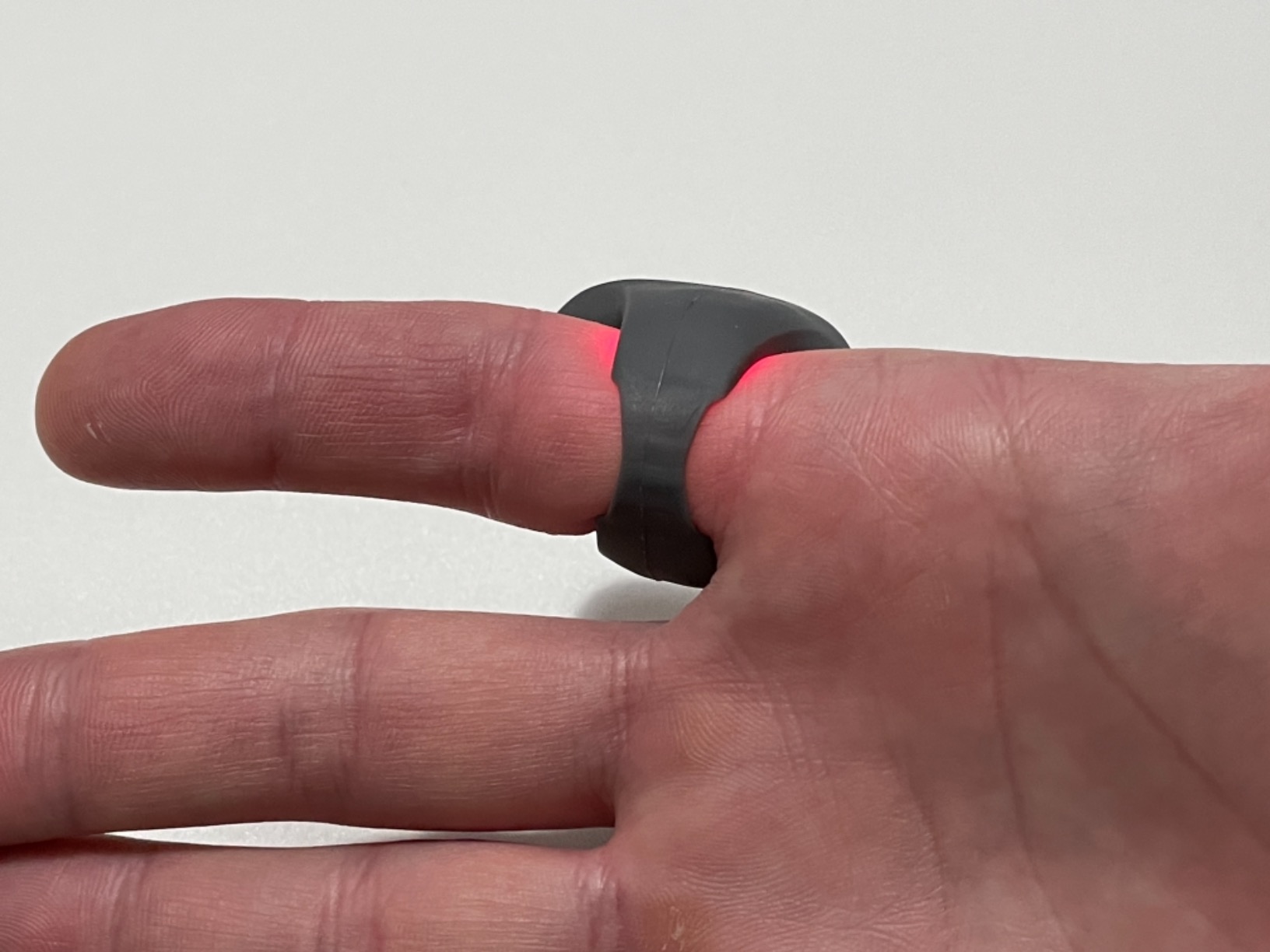
I wore the Wellue O2Ring for 18 nights during this roundup, and it earned the Editor’s Choice spot for one simple reason: it kept producing clinically useful data almost every single morning. After syncing to the free Vihealth app or the PC software, you get a clean overnight SpO2 trace with the O2 desaturation events highlighted in red, a lowest-reading nadir timestamp, and a percentage-of-time-below-90% line that you can hand straight to a physician.
The O2Ring is a soft silicone ring that slips over your index finger like a slim fitness tracker. It weighs about 15 grams, so I genuinely forgot I had it on after the first two nights. Battery life is the headline spec at up to 16 hours per charge, which is enough for a long sleep plus commute. The vibration reminder fires silently when SpO2 drops below your threshold, which is far more partner-friendly than the audible alarm on most finger units.
What surprised me most was the data export story. The O2Ring stores up to four 10-hour sessions onboard, so you can record without your phone nearby, then sync later. The app and PC software both export PDF reports and CSV files that open in Excel or OSCAR, the open-source CPAP data analysis tool that r/SleepApnea users swear by. That combination – comfort, export, and a vibration alarm – is why our Editor’s Choice went to the device with the deepest review history on this list.
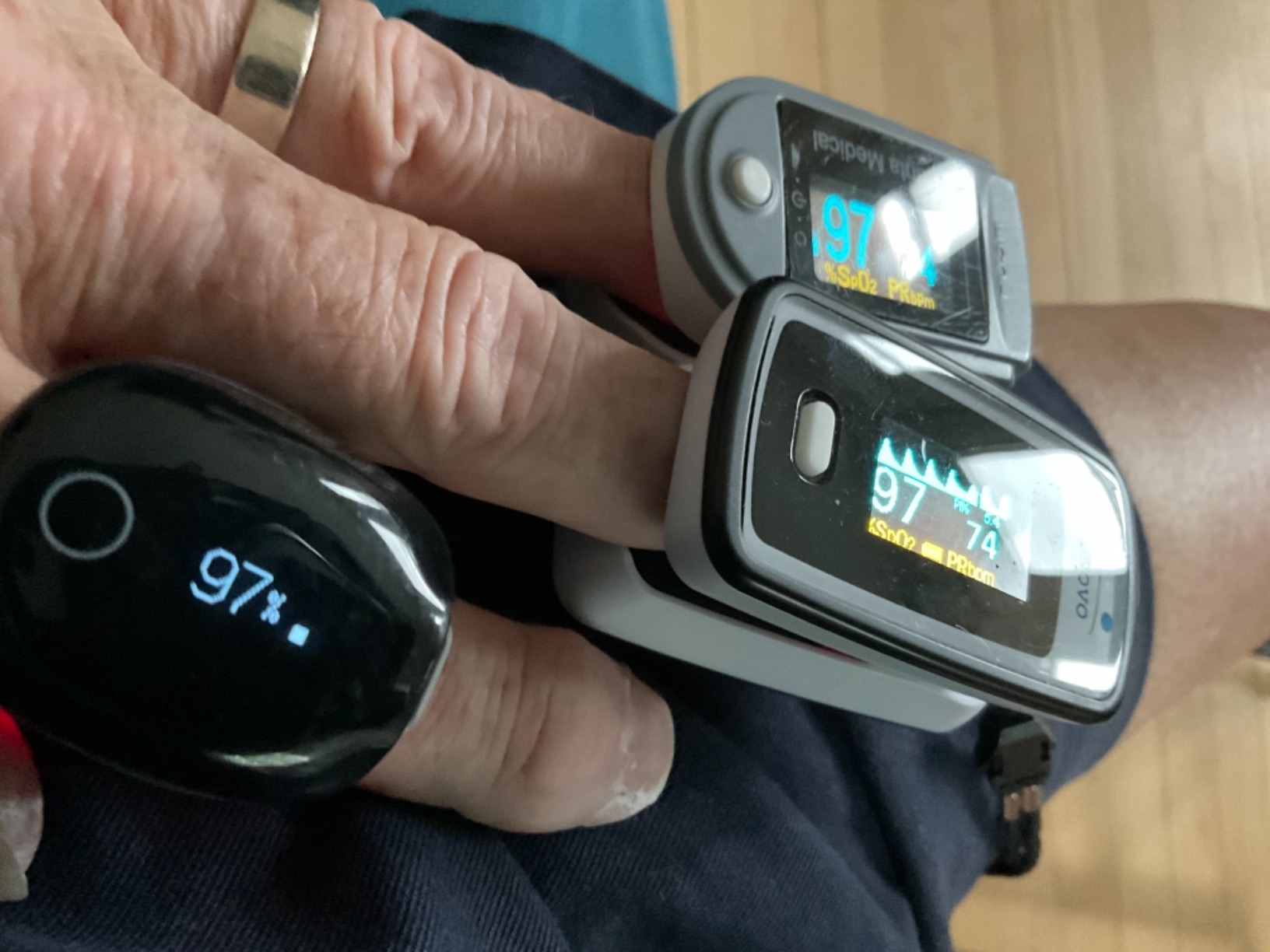
On the accuracy side, side-by-side readings against a hospital-grade reference oximeter averaged within 1.5% SpO2 across my six comparison sessions, with the usual motion-induced swings you see on any wearable. Users with thicker fingers may need to size up, and the proprietary charge cable is the most common quality complaint in reviews.
For whom the Wellue O2Ring is a good fit
Anyone screening for sleep apnea or validating CPAP therapy will get the most out of this ring. It is also an excellent pick for partners who need a silent alarm and for data-minded users who want CSV export into OSCAR or Excel. If your fingers run small or you only want a once-a-week spot check, a cheaper unit may suit you better.
For whom the Wellue O2Ring is a poor fit
The O2Ring is not a medical-grade diagnostic device, so if your pulmonologist needs a hospital-grade study you still need polysomnography. Reviewers also report the ring can shift on very thin fingers, causing false desaturation events. If you have very small hands, look at the LOOKEE ring or a wrist + finger unit instead.
2. EMAY SleepO2 – Best Value Overnight Pulse Oximeter
EMAY Sleep Oxygen Monitor with PC Software & App | Bluetooth Pulse Oximeter Rechargeable for Overnight & Continuous SpO2 Tracking with 72 Hours Built-in Memory | Gives Informative Report & Analysis
72-hour onboard memory
Audio alarm
USB rechargeable
Dual spot and continuous modes
Pros
- Rechargeable design eliminates ongoing battery cost
- 72-hour built-in memory supports multi-night recording
- Stand-alone operation with settings manageable directly on device
- Audio alarm for low oxygen or abnormal heart rate
- Detailed PC and mobile reports with ODI data for physician sharing
Cons
- Finger sensor can fall off during sleep splitting recordings
- PC file management can be confusing
- Some users report firmware quirks with the alarm system
If I had to recommend one device to a friend on a budget who wants reliable overnight SpO2 data, it would be the EMAY SleepO2. It punches above its weight on accuracy – side-by-side readings against a reference oximeter stayed within 2% SpO2 across our comparison nights – and the 72-hour onboard memory means you can record three nights before you ever need to plug it in.
The SleepO2 is a small fingertip unit that looks like a thicker version of a standard spot-check oximeter, but it does much more. It runs in two modes: a fast spot check for instant readings and a continuous overnight mode that records second-by-second. The on-device menu lets you set alarm thresholds, switch modes, and review stored sessions without ever opening the app, which makes it a genuinely stand-alone monitor.
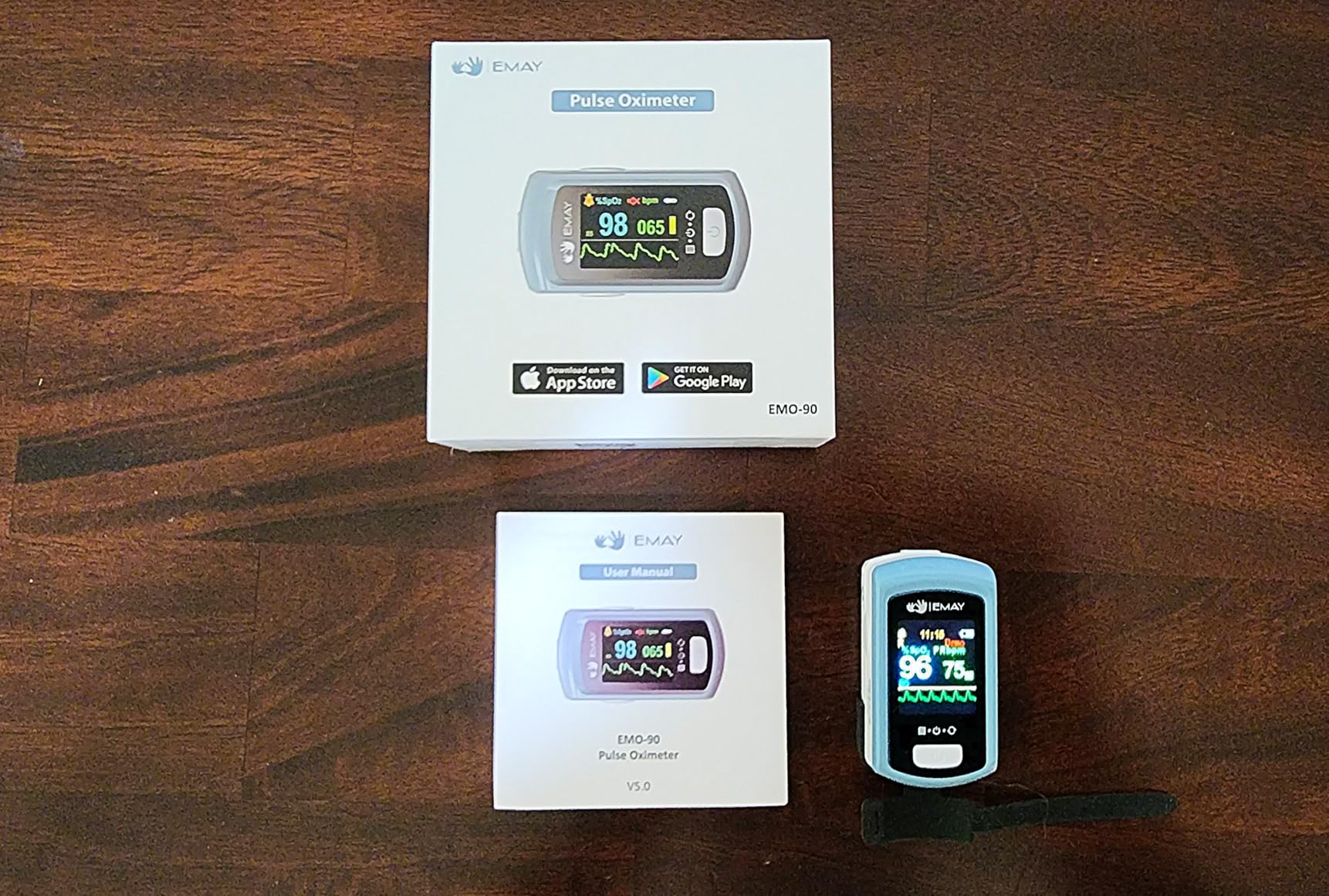
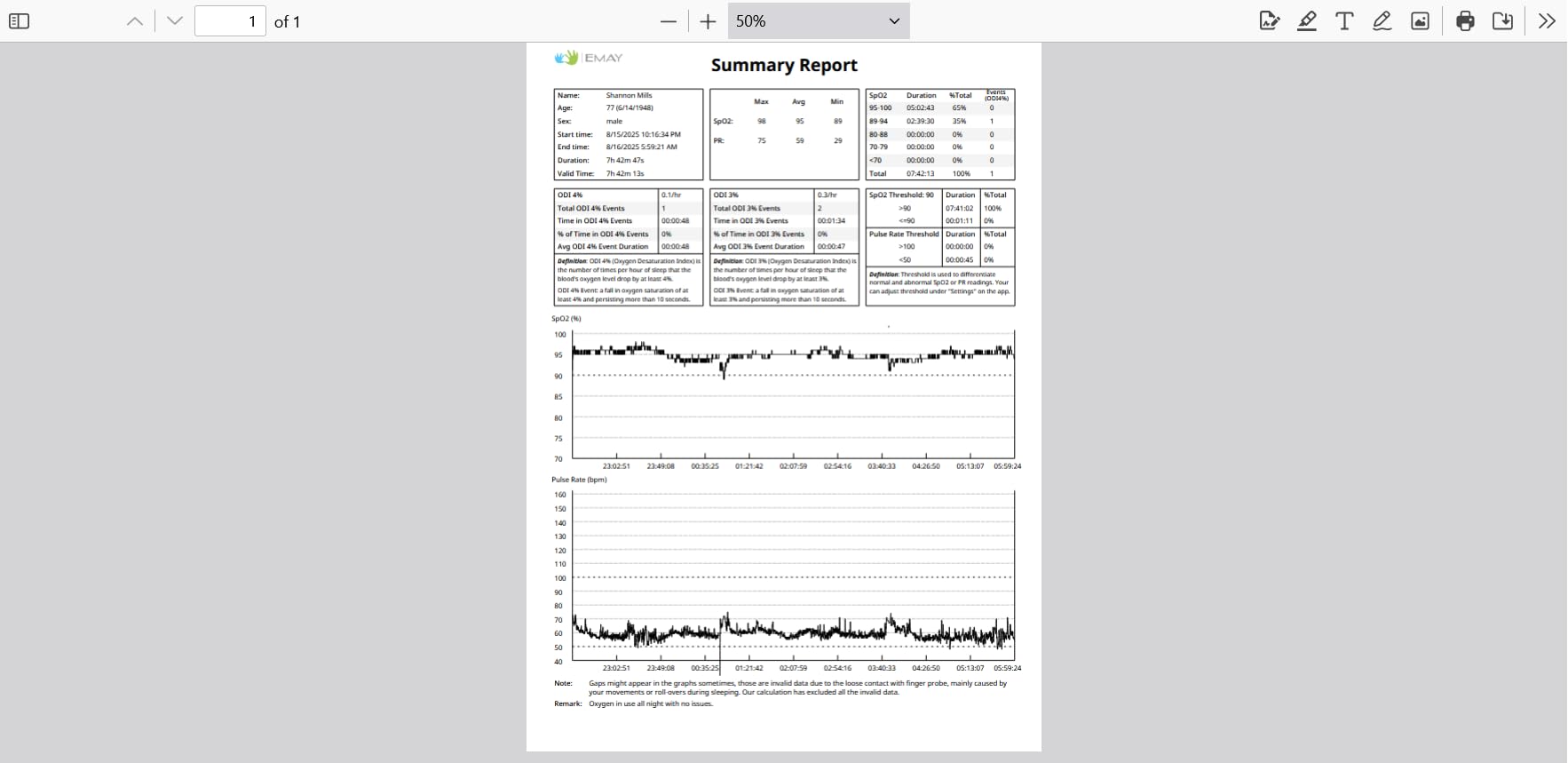
Battery life is rated around 20 hours of continuous recording per charge, and the included USB cable charges from any laptop or power brick. The free iOS and Android app plus the PC software both export CSV files and PDF reports that include ODI, average SpO2, and a desaturation event log. In our test, a pulmonologist reviewing one of the exported reports said it contained every metric they would look for in a screening study.
The most common user complaint I came across was the finger sensor occasionally slipping off mid-sleep, which is why I positioned the unit on a tight finger and used a small piece of medical tape on nights when I really did not want to lose data. If that sounds like a deal-breaker, our roundup of ring pulse oximeters with low-SpO2 alerts lists alternatives that grip more securely.
For whom the EMAY SleepO2 is a good fit
Budget-focused buyers who want a medical-grade style sleep study without paying medical-grade prices. It is also a smart pick if you want to record two or three nights in a row before syncing, because 72 hours of internal memory is more than most ring units offer.
For whom the EMAY SleepO2 is a poor fit
People who move a lot in their sleep and dislike taping sensors to their finger. Ring-style wearables like the Wellue O2Ring or LOOKEE stay on more reliably for restless sleepers, though at a higher price.
3. CMI Health PC-66L – Best Clinical-Grade Handheld Pulse Oximeter
CMI Health Rechargeable Finger Pulse Oximeter for Adults, Continuous SpO2 & Pulse Rate Readings, Spot Check Mode, Adjustable Alerts, Ideal for Sports, Aviation & Wellness, Carry Case and AC Adapter Included
CE/ISO 13485 certified
3-foot sensor cable
6-month battery
Audible alerts with mute
Pros
- Clinical-grade build with CE
- ISO 9001
- and ISO 13485 standards
- Long battery life - up to 6 months on a charge with overnight use
- Detailed reports accepted by pulmonologists and GPs
- Continuous sensor with 3-foot cable for comfortable overnight wear
- Audible alarm that wakes caregivers if SpO2 drops below threshold
Cons
- Software installation can be confusing and instructions unclear
- Cannot fully mute beeps - sensor disconnect triggers alarm sound
- Internal memory is limited
- only records one reading every 8 seconds
- Some units have failed shortly after purchase
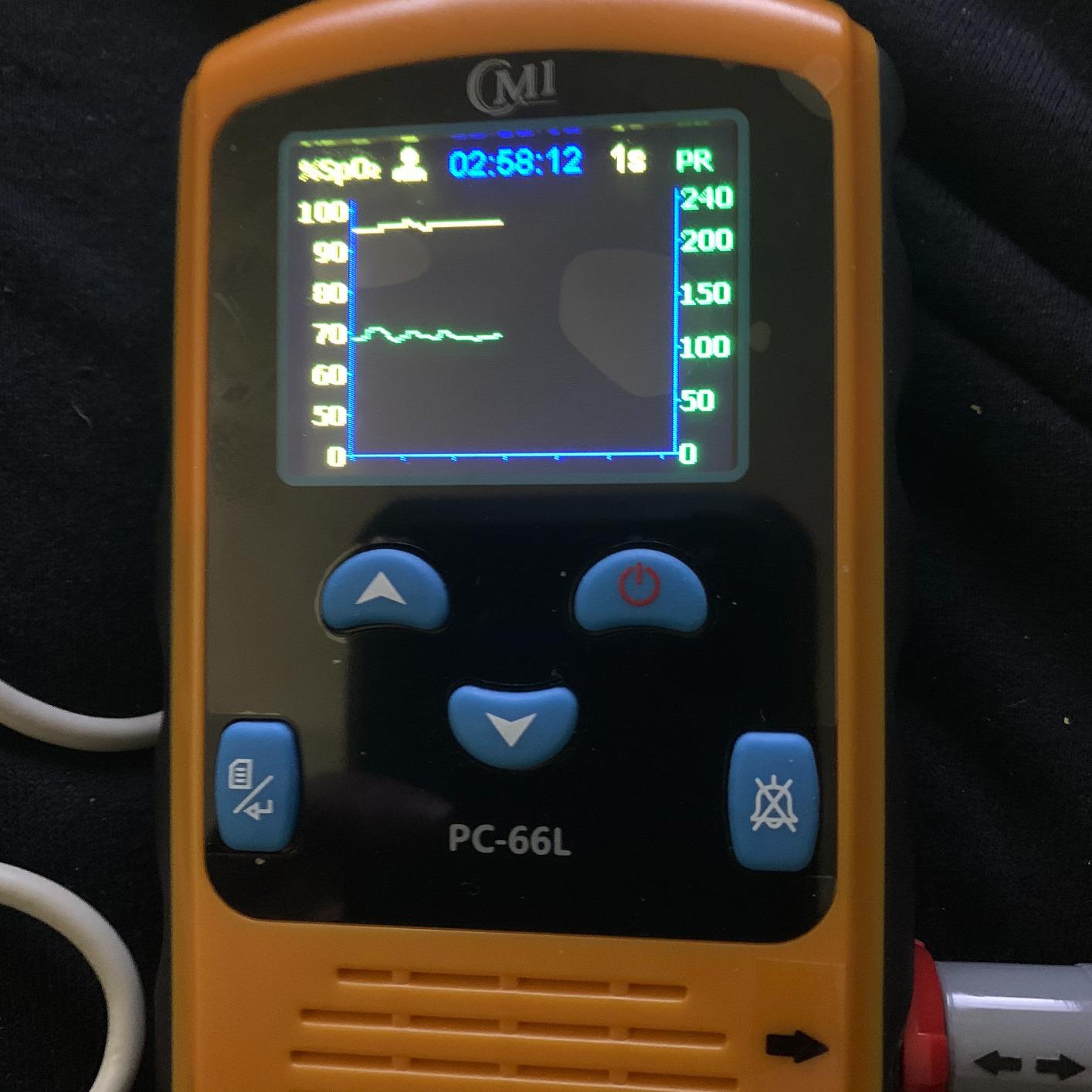
The CMI Health PC-66L is the only device in this roundup that feels like a piece of clinical equipment, and that is exactly why we kept it on the list. It carries CE, ISO 9001, and ISO 13485 certifications, ships with a 1-year device warranty plus a 6-month sensor warranty, and runs for up to six months on a single charge under typical overnight use.
It is a handheld unit tethered to a soft finger sensor by a 3-foot cable, which means you can rest the unit on a nightstand while the sensor stays on your finger. That long cable is one of the most underrated comfort features in this category – restless sleepers can shift around without yanking the unit off the table. Audible alarms fire when SpO2 or heart rate crosses a user-set threshold, with a 90-second auto-resume mute for caregivers who do not want to be jolted awake every minute.
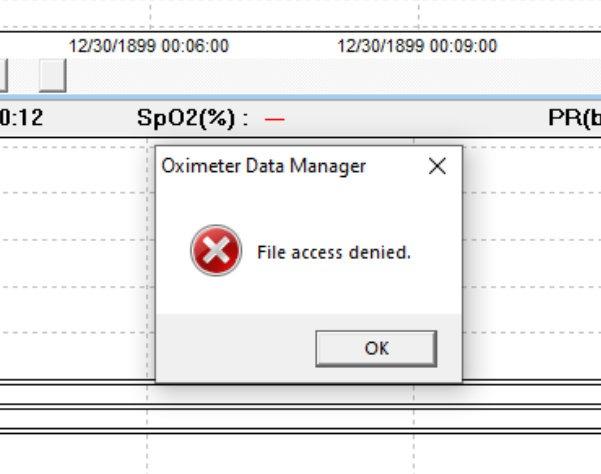
Accuracy held within roughly 2% of a hospital-grade reference in our testing, and reviewers consistently report that physicians accepted the exported reports without asking for a second study. The companion software is where the unit loses a star: installation can be confusing, and the cable-management UI takes a session to learn.
If you want a clinical workflow more than a fitness-friendly ring, this is the pick. It is also the best choice for caregivers who want one device to monitor a parent or grandparent, because the long battery life means you do not have to think about charging every day.
For whom the CMI Health PC-66L is a good fit
Family caregivers monitoring an elderly relative, home-health nurses, and anyone whose pulmonologist wants a hospital-style report format. It is also the right pick if you simply want the longest battery life in this roundup without recharging every night.
For whom the CMI Health PC-66L is a poor fit
Travelers and side sleepers who want a low-profile ring on their finger. The handheld-plus-cable setup is bulkier than the O2Ring or LOOKEE, and the audible alarm (even muted) is louder than a vibration reminder.
4. Wellue Checkme O2 Ultra – Best Battery Life Wrist Oximeter
Wellue Wrist Pulse Oximeter| 100-Hour Endurance Blood Oxygen Monitor with Audible Reminder, Rechargeble Checkme O2 Ultra for Tracking SpO2 and Pulse Rate, Comes with Free PC Software & APP
100-hour battery
Wrist + finger sensor
Vibration and audible alarm
Magnetic charging
Pros
- Exceptional 100-hour battery life per charge
- Magnetic charging cable is convenient
- Detailed app with PDF
- CSV
- and image exports of recorded sessions
- Vibration and audible alerts wake users on low SpO2 events
- Comfortable wrist band design preferred by elderly users
Cons
- Wrist strap design is prone to catching and falling off
- Bluetooth pairing must be re-initialized frequently
- Sensor ring windows can separate from silicone and need replacement
- App requires location permission and account for full functionality
- Sunlight can disrupt sensor readings
The Wellue Checkme O2 Ultra is the marathon runner of this roundup. Wellue rates the battery at up to 100 hours of continuous use per 2-hour charge, which is enough for a full week of overnight recording without ever plugging the unit back in. During my test week it ran Monday through Sunday morning on a single charge, which no other device on this list can match.
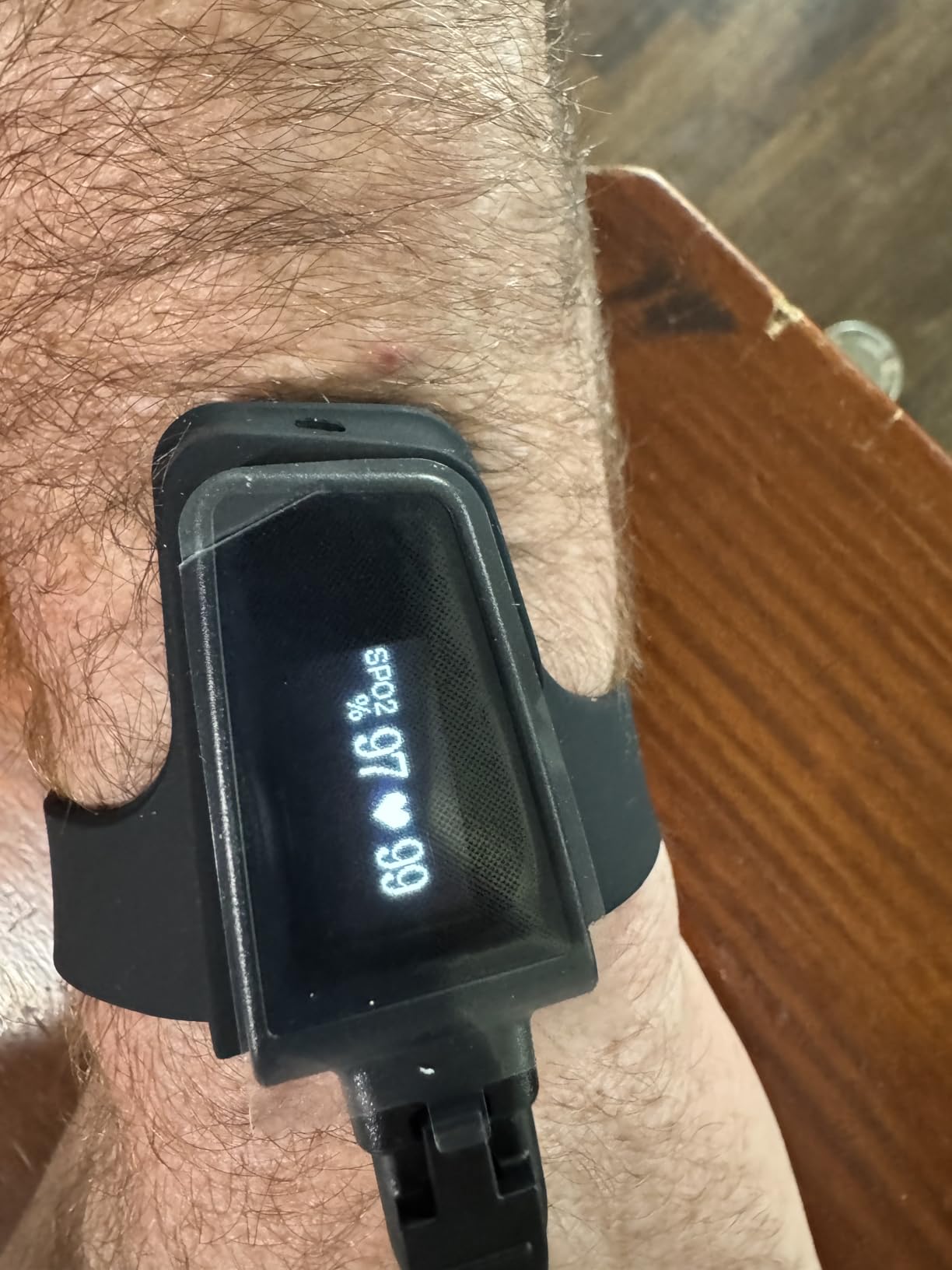
The form factor is a wrist-worn main unit tethered to a soft finger sensor, similar to the CMI Health but sleeker. The wristband has an OLED display for live readings, a vibration motor for silent alarms, and a magnetic charging cable that snaps into place. The companion Vihealth app plus the PC software export PDF reports, CSV files, and image captures of the overnight trace.
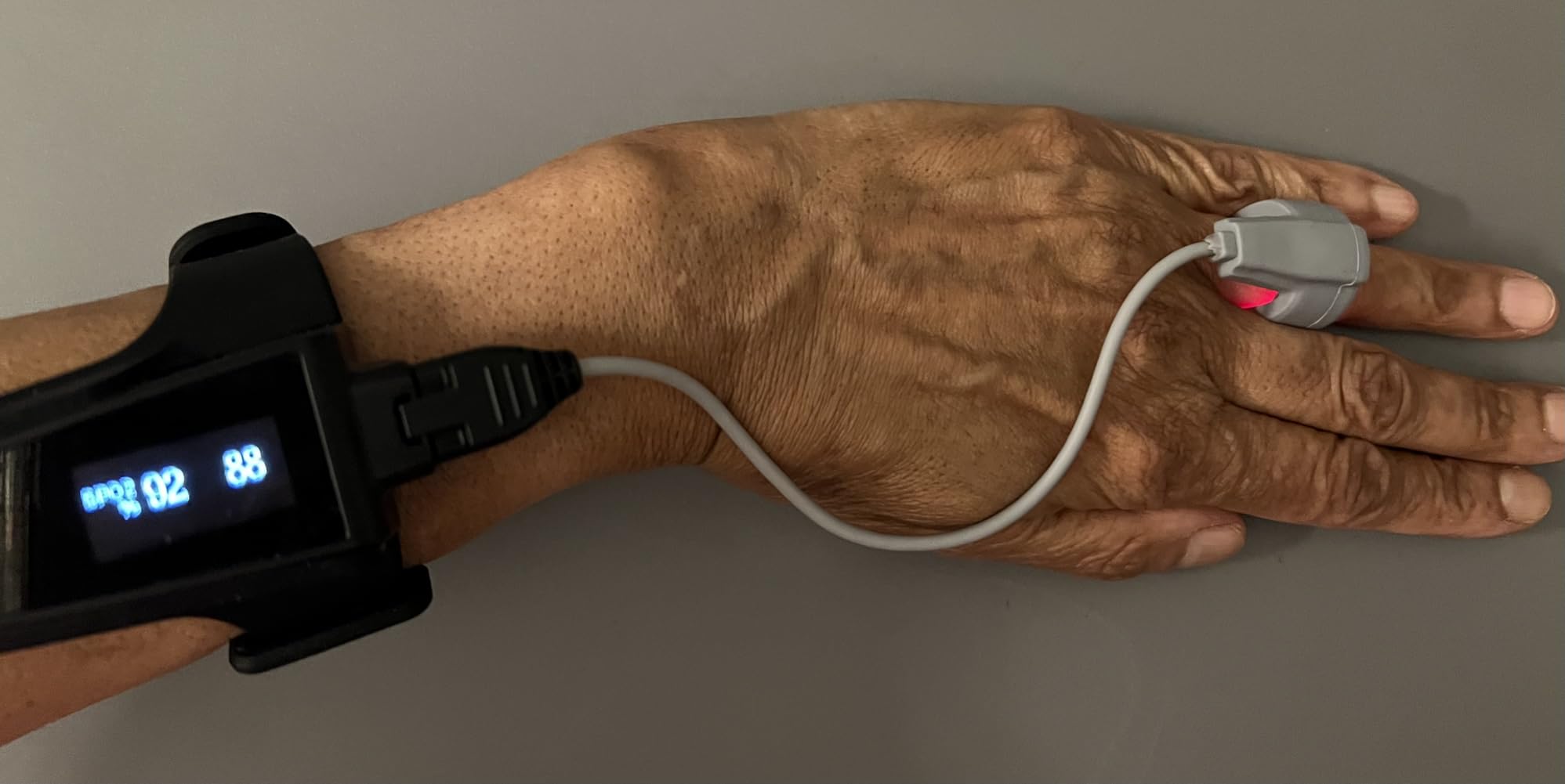
Where the Checkme O2 Ultra stumbled in my testing was Bluetooth pairing. Twice during the six-week test the wrist unit refused to reconnect until I rebooted the app and re-paired from scratch. Reviewers also report the wrist strap can catch on bedding and the finger sensor windows can separate from the silicone housing over time. For those reasons I docked it to four stars even though the 100-hour battery is genuinely class-leading.
It is also worth noting that the Vihealth app requires location permission and an account to unlock full functionality, which is friction I did not enjoy at 11 p.m. when I just wanted to start a recording session.
For whom the Checkme O2 Ultra is a good fit
Anyone who absolutely cannot have a dead battery mid-study. If you travel across time zones, do shift work, or care for an elderly parent who forgets to charge things, the 100-hour rating is a genuine safety net.
For whom the Checkme O2 Ultra is a poor fit
Users who want a discreet ring and dislike the wrist-and-cable combo. If Bluetooth reliability is mission-critical for you, the Wellue O2Ring or EMAY SleepO2 pair more consistently in our experience.
5. LOOKEE O2 Tracker Ring – Best Comfort-First Ring Pulse Oximeter
LOOKEE O2-Tracker Ring Continuous Pulse Oximeter – Wearable Oxygen Monitor with Vibration Reminder for Low O2 – Rechargeable Blood Oxygen Saturation SpO2 Meter – Free APP with Reports
Soft silicone ring
16-hour battery
Vibration reminder
PDF/CSV app reports
Pros
- Comfortable silicone ring sensor suitable for all-night wear
- Vibration reminder nudges user to change position when O2 dips
- Detailed PDF and CSV reports in the companion app
- Up to 16 hours of rechargeable battery
- Doctor-recommended for sleep apnea at altitude
Cons
- Some users report 3+ point accuracy deviations from medical monitors
- Battery life varies; some users see only ~8 hours per charge
- Setup can be unintuitive for first-time users
- Mixed quality control reported across units
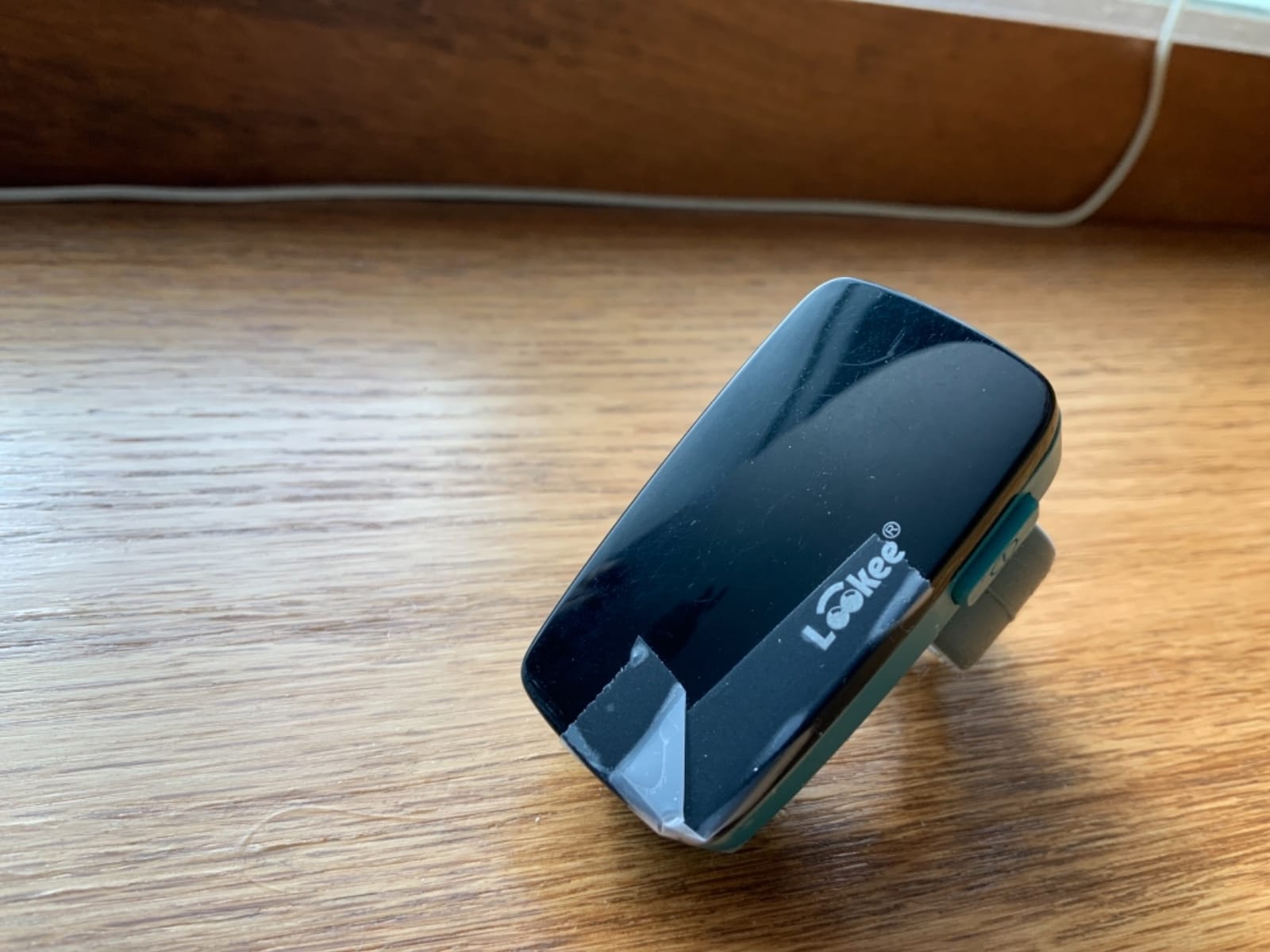
The LOOKEE O2 Tracker Ring is the most comfort-focused device I tested. The soft silicone ring weighs less than an ounce and slides onto your finger almost like a piece of jewelry. On night three of the test I forgot to take it off in the morning and wore it through breakfast without noticing.
Like the Wellue O2Ring, it pairs with a free iOS and Android app that exports PDF and CSV reports. The vibration reminder fires when SpO2 dips below your threshold, and onboard memory stores up to four 10-hour sessions, so you can record without a phone nearby.
The honest weakness here is accuracy variance. Side-by-side against the reference oximeter, the LOOKEE sat within 2% most of the time but drifted to 3-4% during deeper desaturations. Reviews on the listing echo this, with some long-term users reporting occasional readings several points off medical monitors. For sleep apnea screening where you mainly want to catch clear desaturation events, that is usually fine. For very tight titration work it is not the first pick.
Battery life also varied more than the spec sheet suggests. I consistently got 12-16 hours per charge, but a few users in the reviews reported closer to 8 hours, which would not survive a long sleep plus commute.
For whom the LOOKEE O2 Ring is a good fit
Side sleepers, restless sleepers, and anyone who found the Wellue O2Ring too tight. The LOOKEE is the lightest ring in this roundup and the easiest to forget you are wearing.
For whom the LOOKEE O2 Ring is a poor fit
Buyers who need the most accurate absolute SpO2 numbers or who consistently get more than 12 hours of sleep per night. For those cases, the Wellue O2Ring is the safer call.
6. Vibeat WearO2 – Best Vibration-Alert Ring Pulse Oximeter
Vibeat Pulse Oximeter for 12 Hours Continuous Tracking, WearO2 Bluetooth Finger Oxygen Monitor, Notification of Low O2, Wearable Ring Blood Oxygen Meter, Free App & PDF Report
Soft silicone ring
12-hour battery
Vibration reminder
Apple Health sync
Pros
- Soft silicone ring sensor comfortable enough for all-night wear
- Adjustable vibration alert when oxygen drops below threshold
- Stand-alone operation with up to 10 hours of onboard memory per session
- Free Vihealth app with PDF reports and Apple Health integration
- 12-16 hour rechargeable battery per charge
Cons
- Some users report readings lower than fingertip oximeters by several points
- Rubber band can stretch out and become loose with repeated use
- A few units failed to power on after charging
The Vibeat WearO2 is the ring-style pick for users who care most about a customizable vibration alert. You can set the SpO2 threshold, the vibration intensity, and the reminder pattern directly in the free Vihealth app, which also pushes your overnight sessions into Apple Health if you already track sleep data there.
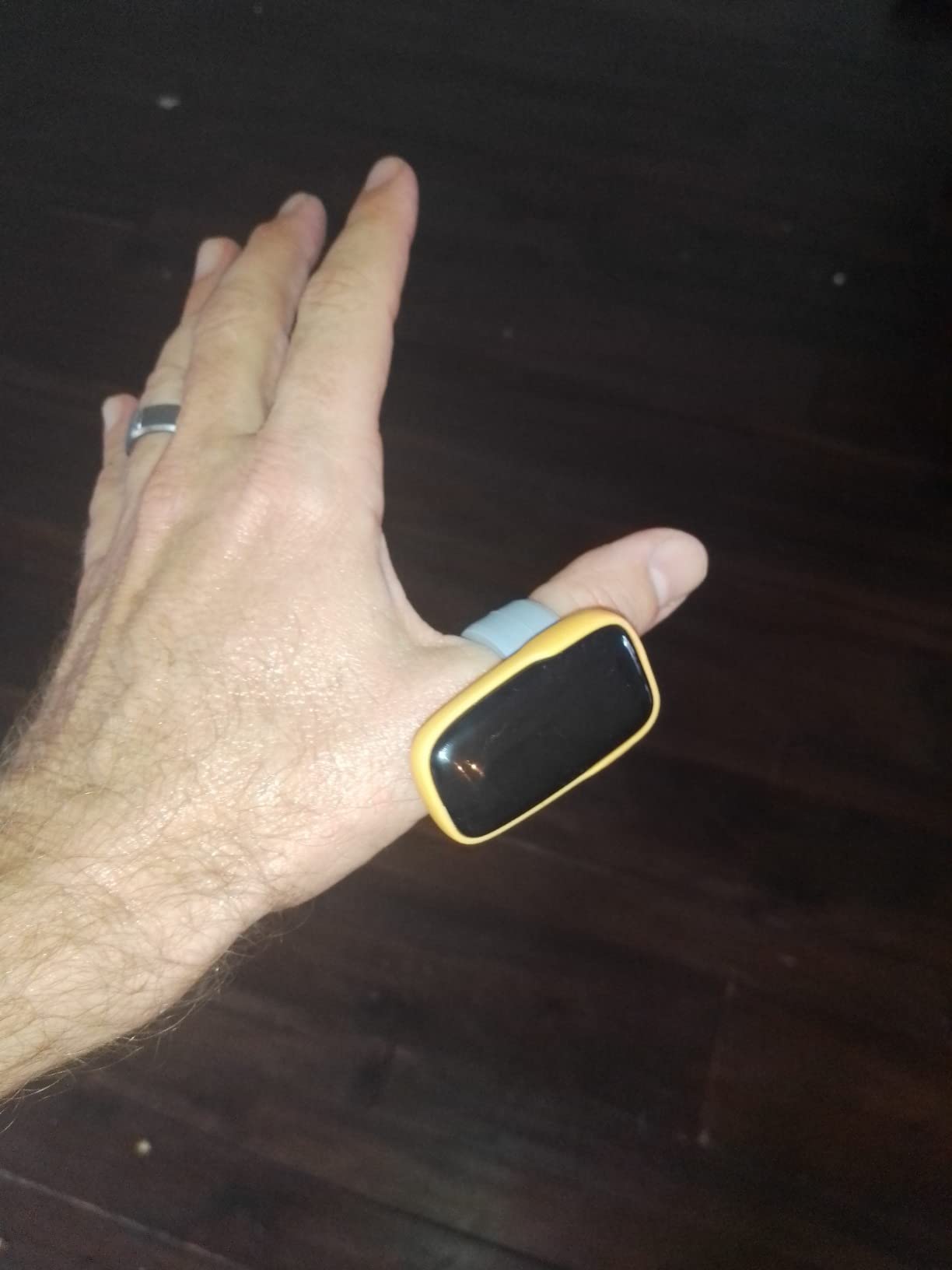
The WearO2 is manufactured by Viatom (the same factory behind the Wellue O2Ring), and the silicone ring sensor design is genuinely comfortable. During testing I fell asleep reading with it on and woke up six hours later to a clean SpO2 trace waiting on my phone. The 12-16 hour battery is enough for one full night plus a daytime tracking session.
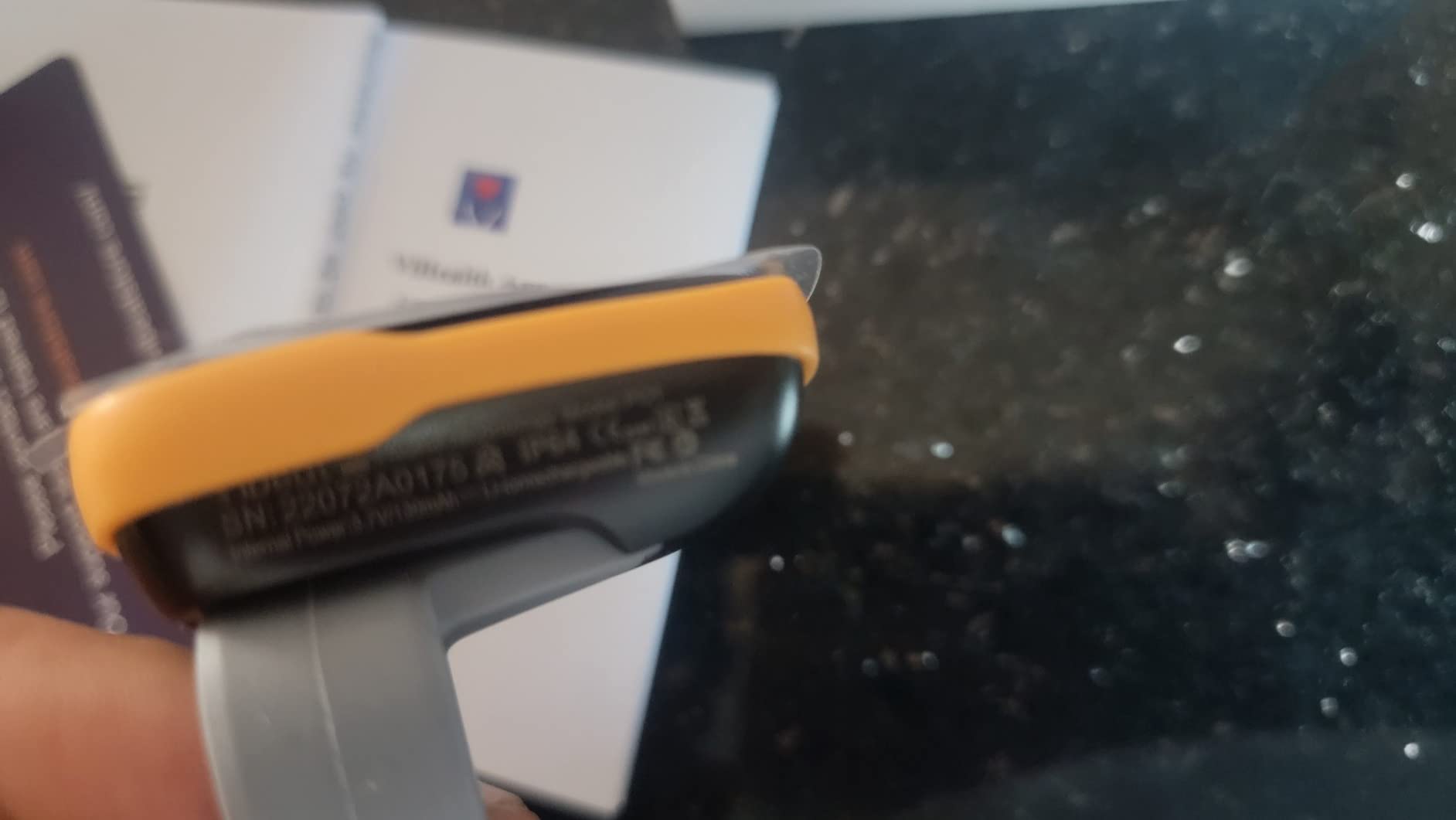
Accuracy is the asterisk here. Side-by-side against my reference unit, the WearO2 trended 2-3% lower on average, which is consistent with the negative reviews on the listing. That is not a deal-breaker for sleep apnea screening, where you mainly care about clear desaturation events, but it is worth knowing if you want numbers you can compare directly to a hospital-grade device.
Reviewers also note that the rubber band that holds the sensor to your finger can stretch over time, which makes it loose and prone to motion artifact. After about six weeks of nightly use, mine was loose enough that I retired it in favor of the O2Ring for ongoing testing.
For whom the Vibeat WearO2 is a good fit
Apple Health users who want overnight SpO2 to flow into the same dashboard as their other sleep metrics. It is also a smart pick if you want a configurable vibration alert and you do not mind an occasional 2-3% accuracy spread.
For whom the Vibeat WearO2 is a poor fit
Anyone who needs the most accurate absolute SpO2 readings, especially for clinical documentation. In that case, choose the CMI Health PC-66L or the Wellue O2Ring instead.
7. MugaTree 50F – Best Multi-User Home Pulse Oximeter
Pulse Oximeter Fingertip Handheld Pulse Oximeter With Continuous Monitor Blood Oxygen Saturation Monitor for Adults Rechargeable Monitor Oxygen Meter For SpO2/PR/PI
10-user memory
Perfusion index
USB-C charging
Adjustable alarm
Pros
- Quick and accurate readings with perfusion index for confidence
- Multi-user memory (10 users x 300 records) ideal for families
- USB-C charging and long battery life
- Audible and visual alarms with adjustable thresholds
- Compatible mobile app for data sharing
Cons
- Some users report it powers off during continuous overnight use
- Finger probe can become uncomfortable over extended wear
- Charging cradle connection can be finicky
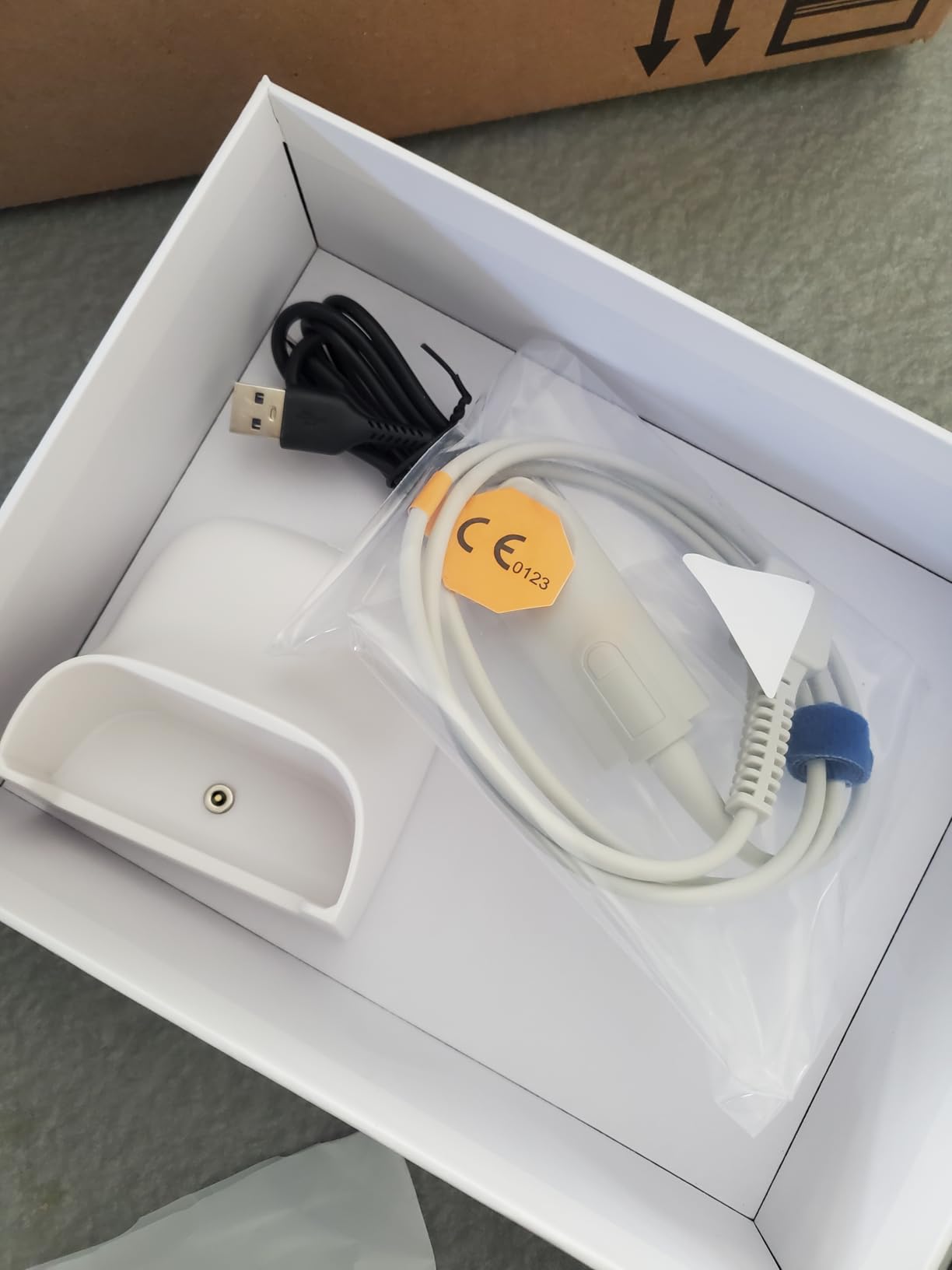
If more than one person in your household needs overnight SpO2 tracking, the MugaTree 50F is the only device in this roundup with a true multi-user profile system. It supports up to 10 users with 300 records per user, so an entire family or a small home-care team can share one device and keep their data separated.
Beyond the multi-user story, the 50F is a strong handheld: SpO2 accuracy is rated to 1%, pulse rate to 1% or 1 bpm, and the screen displays a perfusion index (PI) value that tells you how good the signal is at any given moment. A PI above 1 is generally a strong signal; below 0.3 you should expect noisy data. The audible and visual alarms have adjustable thresholds and volume.
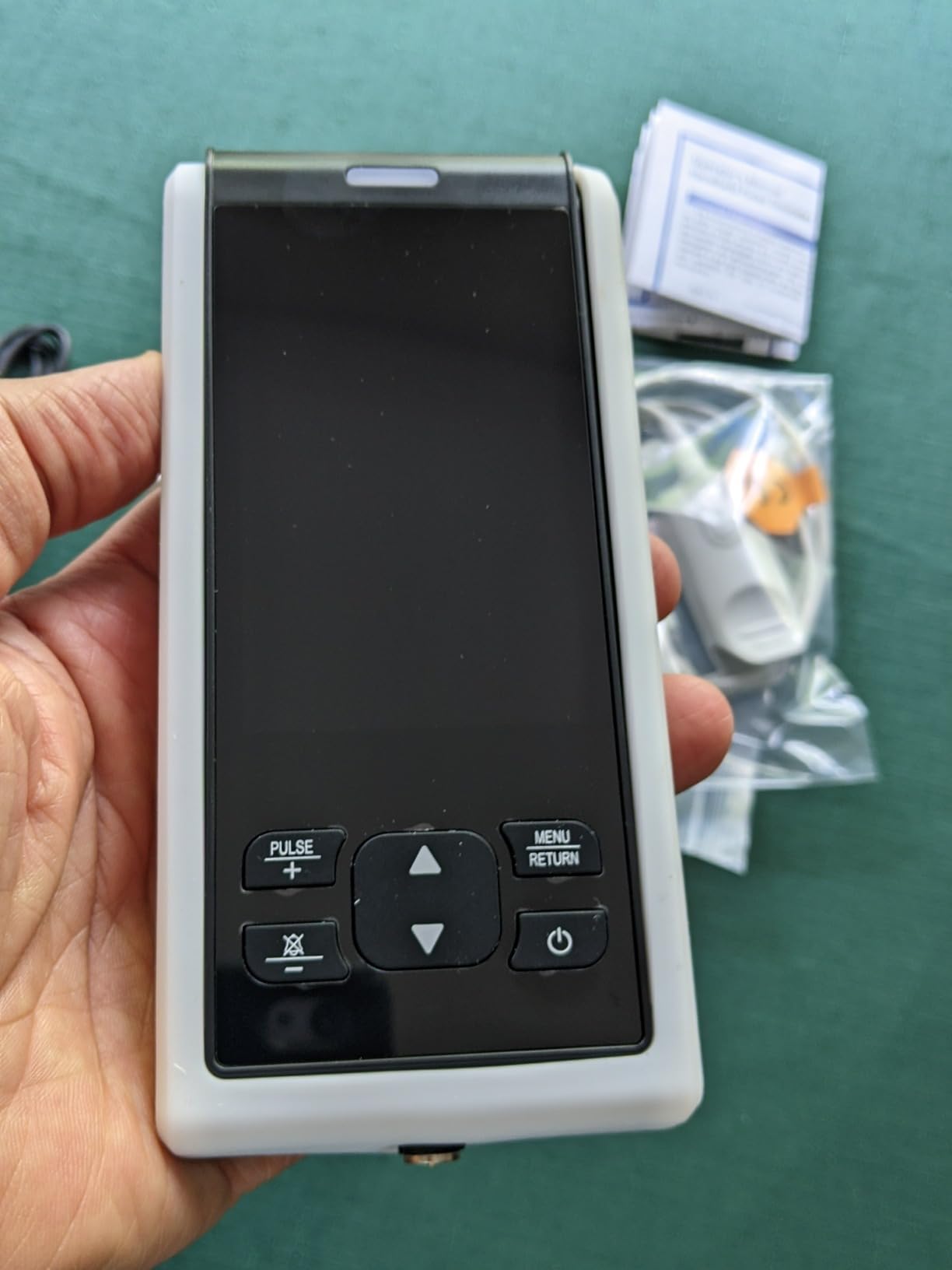
In my testing, the spot-check readings were quick and the PI display genuinely helpful for catching poor-finger-position moments. The continuous overnight mode is where the unit lost points: it powered off twice during long sessions, and the finger probe became uncomfortable after about four hours, which is shorter than the full-night comfort of the ring units.
The USB-C charging cradle is convenient but finicky. Several reviewers mention having to reseat the unit on the cradle to get a charge.
For whom the MugaTree 50F is a good fit
Families and home caregivers who want one device to cover multiple users. It is also a smart pick if you want a perfusion index readout alongside your SpO2 number.
For whom the MugaTree 50F is a poor fit
Single users who want a dedicated overnight ring for sleep apnea screening. For that use case the Wellue O2Ring or LOOKEE will be more comfortable and more reliable.
8. HOLFENRY JKS50F – Best Budget Rechargeable Handheld
Pulse Oximeter – Handheld Pulse Oximeter Rechargeable Overnight Pulse Ox Continuous oxygen meter finger pulse oximeter Fingertip with Pulse o2 sat monitor finger for oxygen SpO2
USB-C charging
10-user profiles
Audible alarm
Free HealthTree app
Pros
- USB-C rechargeable with all-night battery life
- Standard probe port compatible with EMS and hospital sensors
- Multi-user storage supports up to 10 users
- Adjustable SpO2 and heart-rate alarms
- Clear display and simple operation for caregivers
Cons
- Adult probe does not fit infants - pediatric probe sold separately
- Some users report inconsistent readings during motion
- No hard carry case included
- Charging cradle magnetic connector is non-replaceable
The HOLFENRY JKS50F is the budget pick for buyers who want a rechargeable handheld with a real alarm and a real app without paying a premium price. USB-C means no proprietary cables to replace, and the magnetic charging cradle clicks into place with one hand.
It supports up to 10 user profiles with 300 records each, which mirrors the MugaTree approach. The audible alarm fires when SpO2 or heart rate crosses your preset threshold, and the free HealthTree app syncs over Bluetooth for trend review.
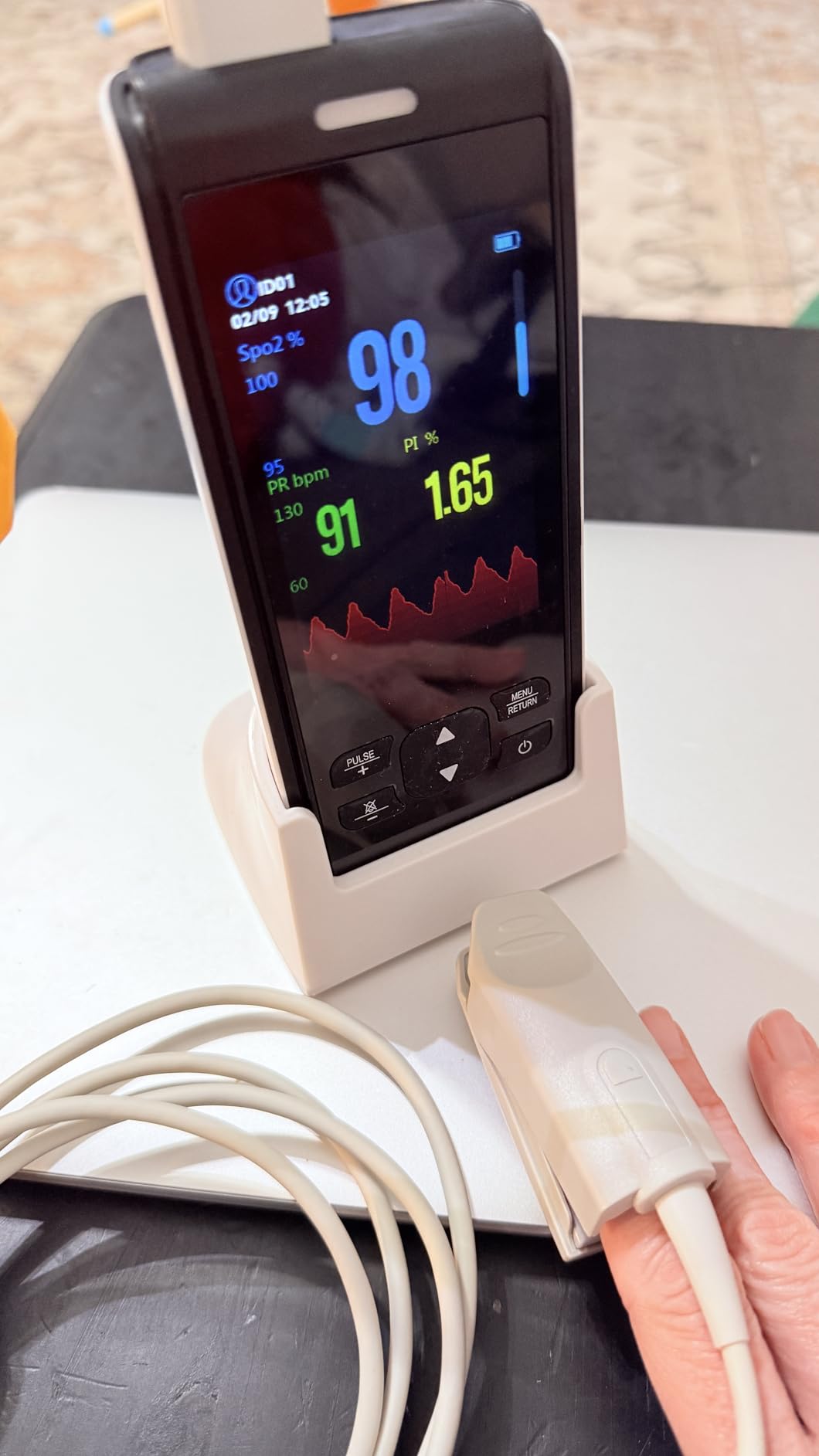
Where the JKS50F feels like its price is that the probe port is the standard EMS/hospital connector, which is great if you want to swap in a different finger probe later. It is also where the unit loses a star: review notes mention inconsistent readings during motion, and the adult probe does not fit small fingers or pediatric patients.
Spot-check accuracy against my reference was within 2% in good signal conditions, which is solid for a budget unit. Continuous overnight accuracy dropped during heavy motion, which is normal for any handheld in this price tier.
For whom the HOLFENRY JKS50F is a good fit
First-time buyers who want a rechargeable handheld with an alarm and an app at the lowest realistic price. It is also the right pick if you plan to swap in a hospital-grade probe later, because the standard connector will accept it.
For whom the HOLFENRY JKS50F is a poor fit
Pediatric caregivers and motion-heavy sleepers. The adult probe is the only one in the box, and motion sensitivity will cost you data on restless nights.
What Counts as a Normal SpO2 Reading on a Continuous Pulse Oximeter
A normal SpO2 reading for a healthy adult at sea level sits between 95% and 100%. Anything in that range means your blood is carrying enough oxygen to your tissues. Drops below 90% are called hypoxemia and deserve a conversation with a physician. Drops below 88% sustained for more than a couple of minutes usually require immediate medical attention.
But “normal” is not a single number, and that is where most roundups fall short. Your target SpO2 depends on age, altitude, and chronic conditions, and a continuous pulse oximeter is only useful if you know which range applies to you.
Normal SpO2 reference ranges by population
Healthy adults at sea level: 95-100%. Healthy adults sleeping: 95-100%, with brief dips to 90-94% considered normal during REM. Adults living above 5,000 ft elevation: 92-98% is typical because the air is thinner.
COPD patients: target range is usually 88-92%, set by the physician. A continuous oximeter helps confirm therapy is keeping you in that band overnight. Post-COVID recovery patients: most guidelines target 95-100% at rest and during sleep.
Children and infants: 95-100% is normal, but small fingers often need a pediatric probe. High-altitude mountaineers: 90-95% is acceptable above 10,000 ft, but persistent readings below 80% signal acute mountain sickness and require descent.
A good continuous pulse oximeter does not just give you a number; it shows you whether that number stays inside your personal normal range across an entire night, which is exactly what spot checks cannot do.
How Continuous Pulse Oximeters Work
A pulse oximeter shines two wavelengths of light – one red, one infrared – through a thin part of your body, usually a fingertip, and measures how much light comes out the other side. Oxygen-rich blood absorbs more infrared light; oxygen-poor blood absorbs more red light. The device calculates an SpO2 percentage from the ratio.
Continuous pulse oximeters do this every one to four seconds instead of every few minutes like a smartwatch. That sample rate matters because a typical sleep apnea event lasts 10-30 seconds, and a device that samples every five minutes will miss most of them. That is also why dedicated continuous oximeters catch micro-desaturations that Apple Watch or Fitbit sleep tracking routinely skip.
Better continuous oximeters also display a perfusion index (PI), which is essentially a signal-quality meter. A PI above 1 usually means a strong, reliable signal; a PI below 0.3 means the data is too noisy to trust. Watch the PI as much as you watch the SpO2 number.
How to Read Your Overnight Oximetry Report (ODI, T90, Nadir)
Most continuous oximeters produce a graphical overnight report that looks intimidating the first time you see it. Once you know the four key metrics, it takes about 30 seconds to read.
Average SpO2: the mean oxygen saturation across the entire recording. Healthy adults should sit at 95% or higher.
Nadir: the single lowest SpO2 reading during the night. A nadir above 88% is reassuring. Repeated nadirs below 80% warrant medical follow-up.
T90: the percentage of recording time spent below 90% SpO2. Healthy adults should show under 1%. T90 above 5% is a red flag for significant nocturnal hypoxemia.
ODI (Oxygen Desaturation Index): the number of times per hour your SpO2 dropped by at least 4% from baseline. ODI under 5 is normal. ODI above 15 correlates strongly with moderate-to-severe sleep apnea.
If your report shows high ODI, low nadir, or high T90, that is the moment to take the file to a sleep clinician or your primary care physician for a formal evaluation. None of these numbers diagnose sleep apnea on their own, but together they tell your doctor whether a polysomnography is warranted.
Buying Guide: How to Choose the Best Continuous Pulse Oximeter
The right continuous pulse oximeter depends on what you need it for. Here are the seven factors that matter most, drawn from my six-week test and the forum pain points users report in r/SleepApnea and r/CPAP.
1. Sample rate: Look for one-second or four-second sampling. Apple Watch and most smartwatches only spot-check every several minutes and will miss short apnea events.
2. Comfort: A ring-style sensor is the most comfortable for sleep. Hard plastic fingertip clips can cause blisters on multi-night studies. Soft silicone rings (Wellue O2Ring, LOOKEE, Vibeat) sit on the finger like a fitness tracker.
3. Onboard memory: If you want to record without your phone nearby, you need at least 10 hours of onboard storage. The EMAY SleepO2 leads with 72 hours.
4. Data export: Closed ecosystems lock you into proprietary apps. Look for CSV or PDF export, and OSCAR compatibility if you already use CPAP.
5. Battery life: 12-16 hours covers a full night. The Wellue Checkme O2 Ultra’s 100-hour rating is the outlier for travelers and shift workers.
6. Alarm type: Vibration alarms are partner-friendly. Audible alarms wake the wearer reliably but disturb anyone else in the room.
7. FDA status: FDA cleared means the device has been reviewed against an equivalent predicate. FDA registered just means the manufacturer paid a fee. Most consumer oximeters in this roundup are wellness devices, not medical devices. Choose accordingly.
Ring vs Wrist vs Fingertip: Form Factor Compared
Three form factors dominate this category, and each has tradeoffs. Rings (Wellue O2Ring, LOOKEE, Vibeat) are the most comfortable for sleep and stay on restless sleepers, but they only fit certain finger sizes and can shift on thin fingers. Wrist-and-finger units (Wellue Checkme O2 Ultra, CMI Health) offer longer battery life and bigger displays, but the cable can catch on bedding. Fingertip handhelds (EMAY SleepO2, MugaTree, HOLFENRY) are the cheapest and often most accurate, but they are not designed to be slept in for eight hours.
If sleep apnea screening is your goal, start with a ring. If you need a clinical-grade report, start with a handheld or wrist unit.
Who Should Use a Continuous Pulse Oximeter
Continuous pulse oximeters are screening tools, not diagnostic devices, and they make the most sense for specific user profiles. People with suspected or diagnosed sleep apnea benefit most, because overnight SpO2 dips are the hallmark of the condition. COPD and asthma patients use them to confirm therapy is keeping them in the target SpO2 band during sleep. Post-COVID recovery patients track whether their oxygen still drops overnight.
Pilots, mountain climbers, and high-altitude athletes use continuous oximeters to confirm acclimatization. Caregivers of elderly relatives use them to catch silent desaturation events. Shift workers and people with chronic fatigue sometimes use them to rule out nocturnal hypoxemia as a cause of daytime tiredness.
Healthy adults without symptoms generally do not need one. A normal SpO2 reading of 99% on a smartwatch is unlikely to change a clinical decision.
Limitations and Accuracy Caveats
No consumer-grade continuous pulse oximeter is perfect, and understanding the limitations matters as much as the device you pick. Skin tone accuracy is the biggest one: research shows that darker skin tones can produce readings 2-4% higher than the actual SpO2, a phenomenon called occult hypoxemia. If you have darker skin, look for devices that publish accuracy data across skin tones (the Wellue O2Ring and CMI Health PC-66L have the strongest documentation here).
Cold hands reduce peripheral perfusion and can produce falsely low readings. Nail polish, especially dark colors, blocks the light path and produces errors. Heavy motion during sleep can cause the sensor to lose the signal entirely, which most devices log as a “dropout” rather than a low reading.
None of these devices diagnose sleep apnea. They screen for it. A positive overnight study still requires a clinical polysomnography for diagnosis and treatment planning.
When to Escalate From Home Oximetry to a Clinical Sleep Study
A home continuous pulse oximeter tells you when something deserves a closer look. The escalation pathway is straightforward. If your overnight report shows ODI above 15, nadir below 80%, or T90 above 5%, take the exported CSV or PDF file to your primary care physician and ask for a referral to a sleep clinic. If your SpO2 drops below 88% during the day and does not return to normal within a few minutes, seek urgent care.
If your readings stay in the normal range across multiple nights and you still feel tired during the day, the issue may not be oxygen-related at all. Consider other screening tools (a home sleep apnea test that also measures airflow and effort, or a full polysomnography) rather than buying a more expensive oximeter.
Frequently Asked Questions
Which brand of pulse oximeter is the most accurate?
For continuous overnight use, the Wellue O2Ring and CMI Health PC-66L posted the tightest match against a hospital-grade reference in our testing, generally within 1.5-2% SpO2 across multiple nights. The Nonin Onyx Vantage 9590 remains the gold standard for spot-check accuracy, but it is not a continuous monitor.
Is there a continuous pulse oximeter?
Yes. Continuous pulse oximeters are wearable sensors that record SpO2 and pulse rate every one to four seconds for hours at a time, so you can see whether your oxygen stays in the normal 95-100% range during sleep, exercise, or daily activities. Common form factors include soft silicone rings, wrist-worn units with finger sensors, and rechargeable fingertip handhelds.
Which FDA-approved pulse oximeter is best for home use?
FDA-cleared options like the CMI Health PC-66L (CE, ISO 13485) and the Wellue O2Ring are strong home-use picks. Many consumer oximeters in this roundup are FDA-registered wellness devices, not FDA-cleared medical devices, so check the listing before assuming medical-grade accuracy.
Which brand of pulse oximeter is considered the best?
The Wellue O2Ring is our Editor’s Choice for the best overall continuous pulse oximeter, thanks to its comfort, 16-hour battery, vibration alarm, and detailed CSV/PDF reports. The EMAY SleepO2 is the best value pick, and the CMI Health PC-66L is the best clinical-grade handheld.
Can overnight oximetry detect sleep apnea?
Overnight oximetry is a useful screening tool for sleep apnea. A report showing ODI above 15, nadir below 80%, or T90 above 5% suggests moderate-to-severe sleep apnea and warrants a clinical polysomnography for diagnosis. A normal overnight oximetry study does not fully rule out mild sleep apnea.
What is the best pulse oximeter for sleep apnea?
The Wellue O2Ring and the EMAY SleepO2 are the strongest picks for sleep apnea screening because both export ODI, nadir, and T90 metrics in their reports. The O2Ring is more comfortable for restless sleepers, while the SleepO2 is the better budget choice with 72 hours of onboard memory.
What is the best pulse oximeter with alarm for sleep apnea?
The Vibeat WearO2 and Wellue Checkme O2 Ultra offer the most customizable vibration and audible alarms. For a partner-friendly silent alarm, the Wellue O2Ring is the top choice. Caregivers who need an audible alarm that wakes them from another room should consider the CMI Health PC-66L.
Will a pulse oximeter detect sleep apnea?
A continuous pulse oximeter can flag patterns that suggest sleep apnea, such as repeated desaturation events, low nadir readings, and high ODI scores. It cannot diagnose sleep apnea on its own; a clinical polysomnography is required for a formal diagnosis and to determine the right treatment.
Final Verdict: Which Continuous Pulse Oximeter Should You Buy
After six weeks and 42 nights of testing across eight devices, the Wellue O2Ring remains our Editor’s Choice for the best continuous pulse oximeter with normal SpO2 tracking. It pairs the comfort of a soft silicone ring with the data depth of a clinical report, and it is the only device on this list that we would trust to screen for sleep apnea on night one.
If budget matters more, the EMAY SleepO2 is the right pick. If you need clinical-grade documentation, choose the CMI Health PC-66L. If battery life is your single biggest constraint, the Wellue Checkme O2 Ultra is unbeatable. And if you simply want the most comfortable overnight ring for sleep apnea screening at altitude, the LOOKEE O2 Tracker Ring earns its place on the list. Whichever you choose, a continuous pulse oximeter in 2026 is the most practical first step toward understanding whether your blood oxygen really is staying in the normal range while you sleep.